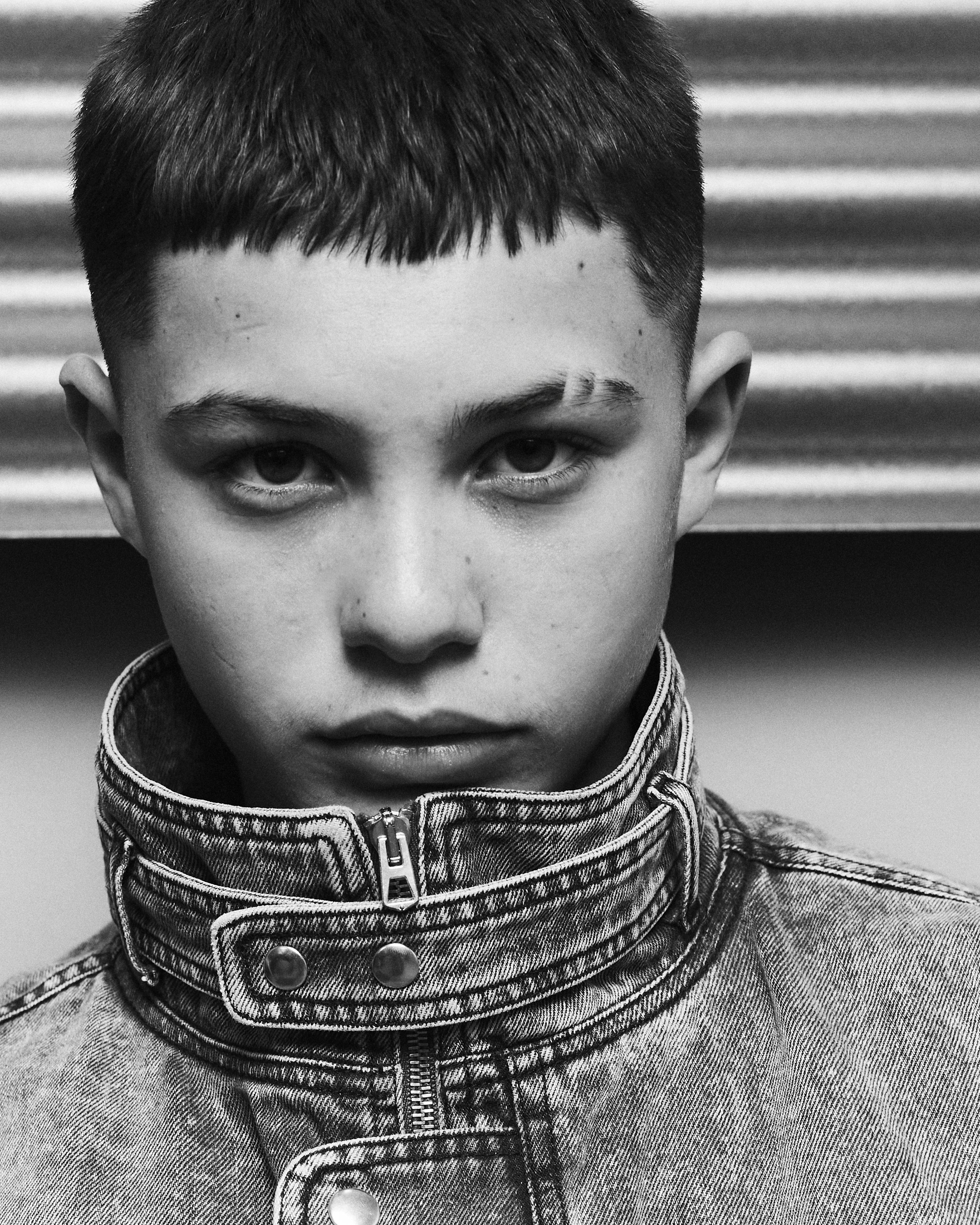
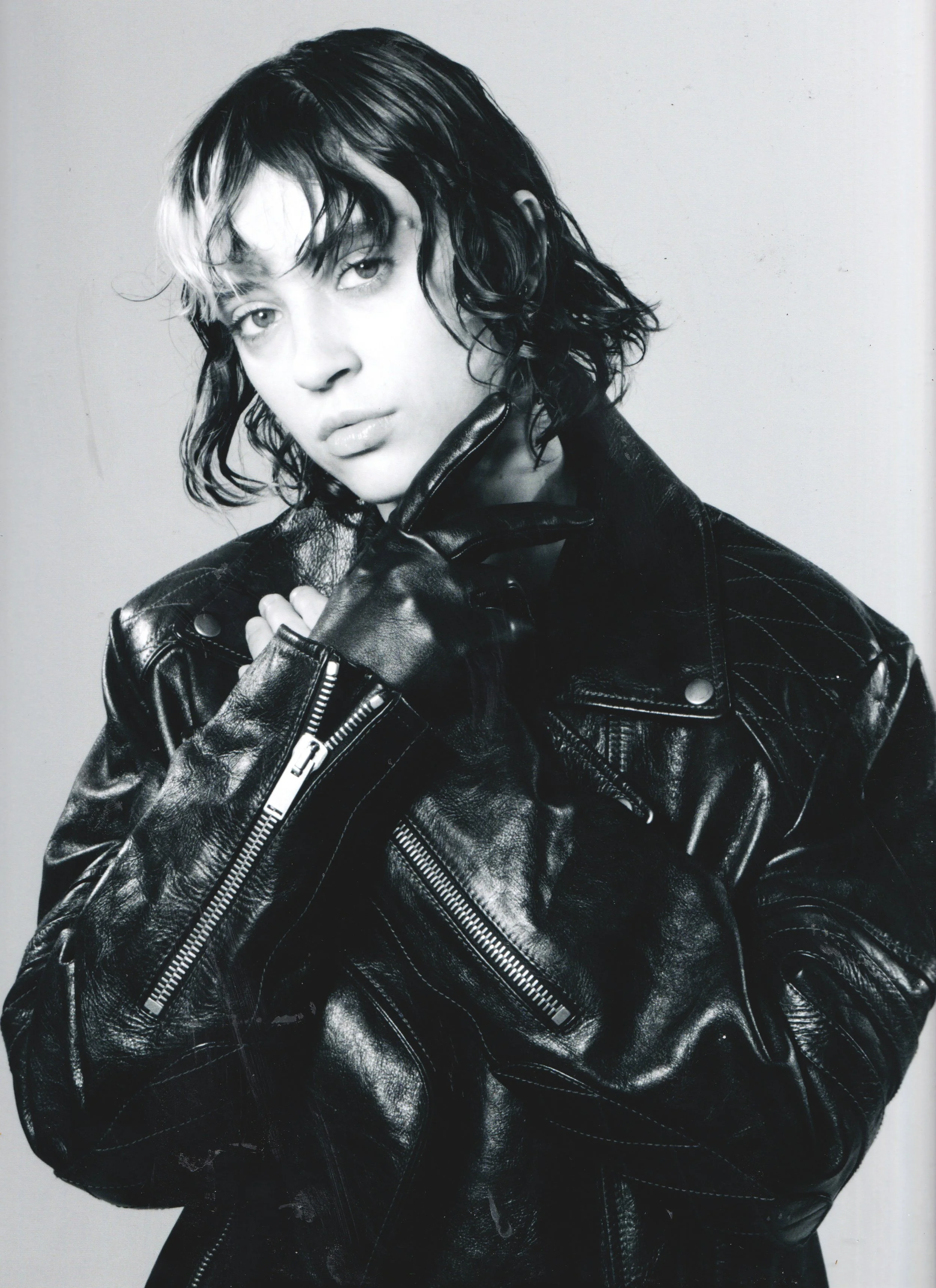
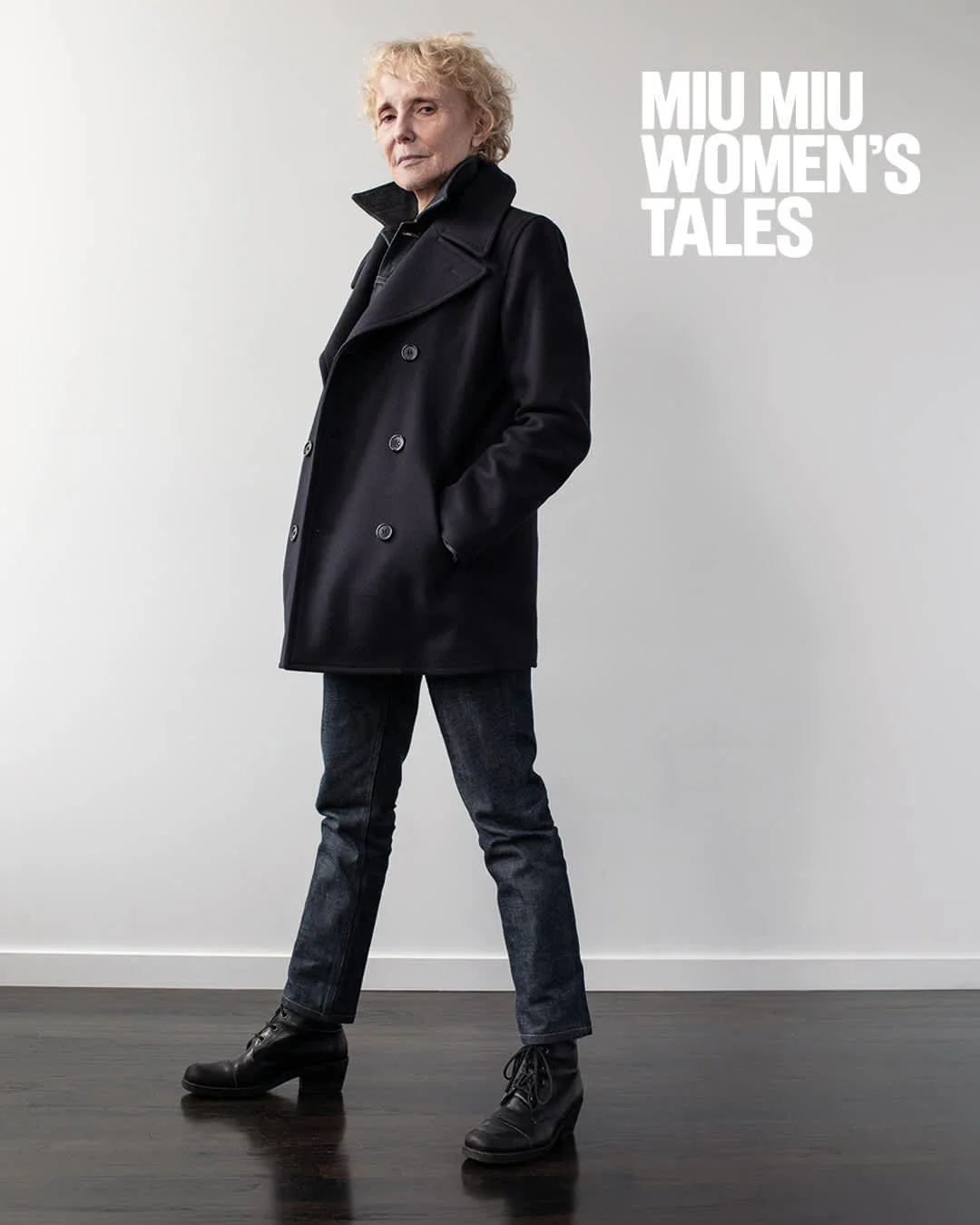
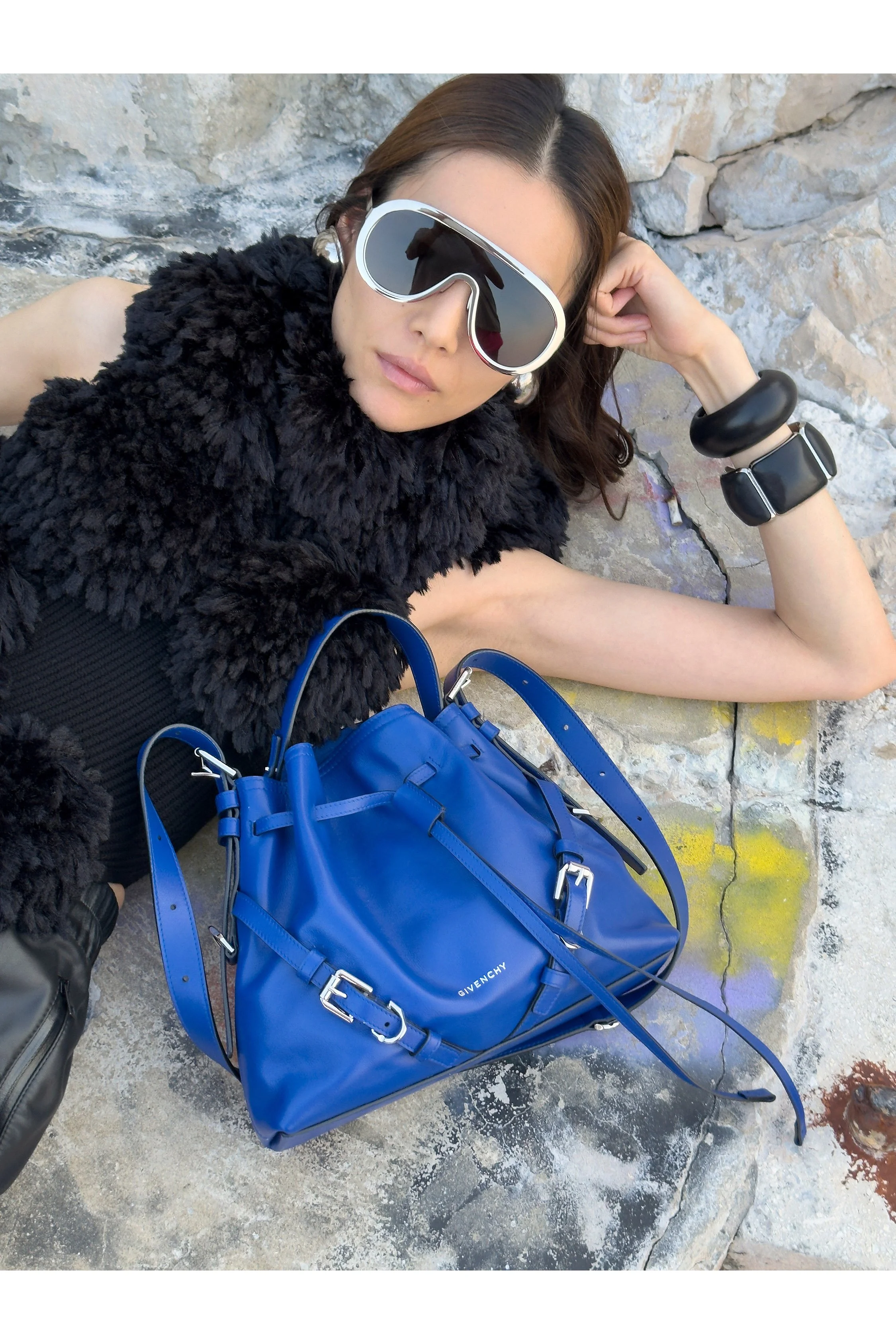
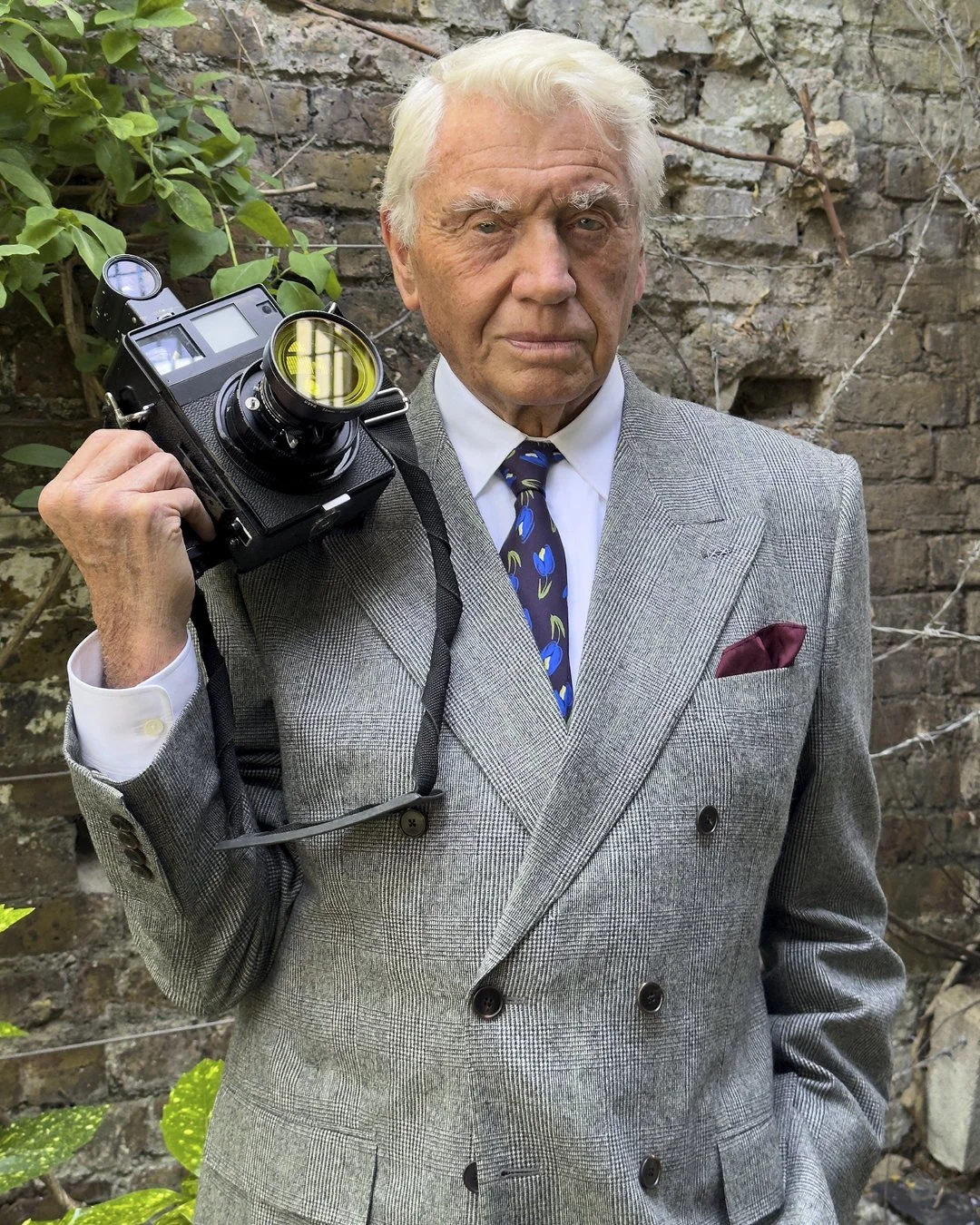
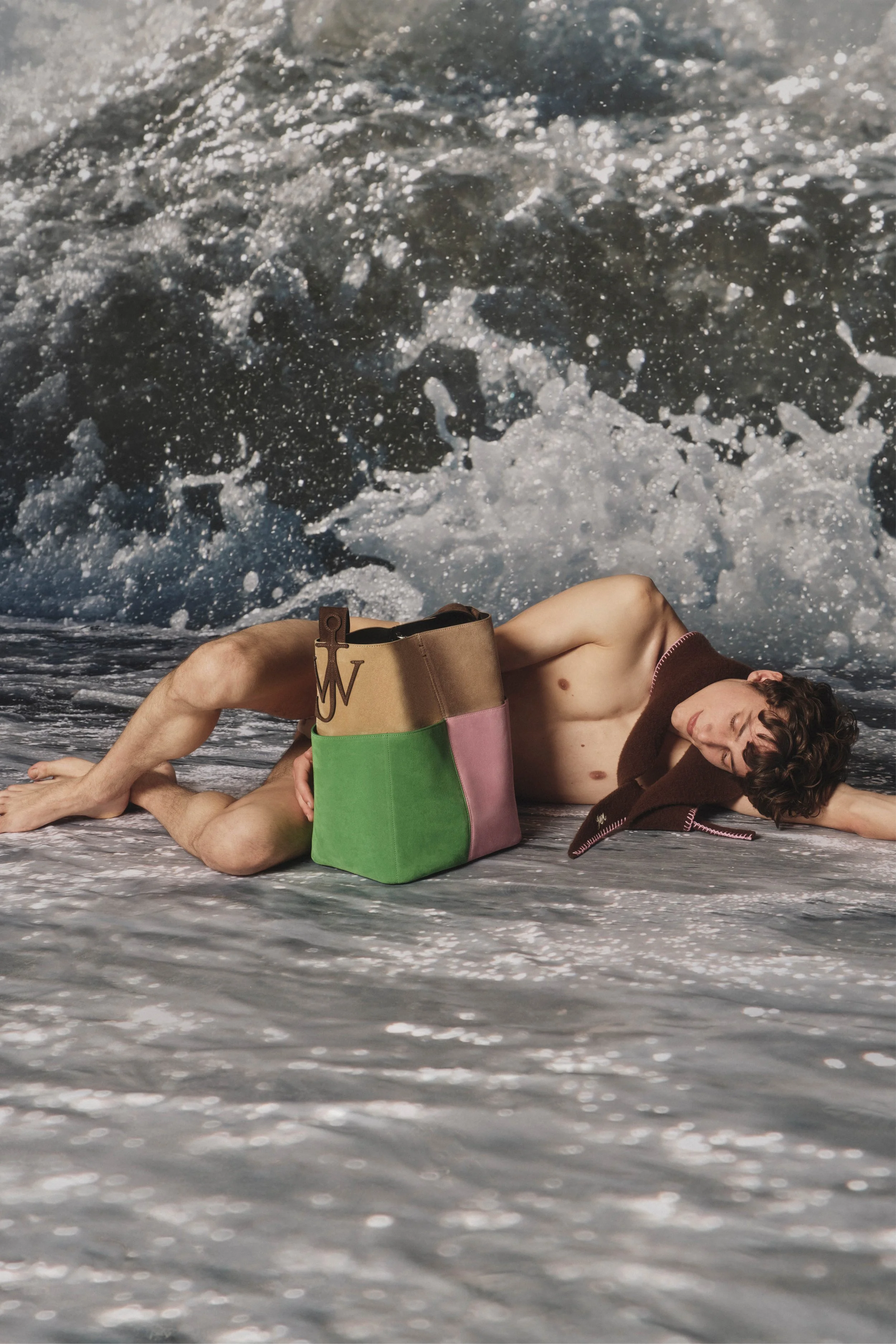
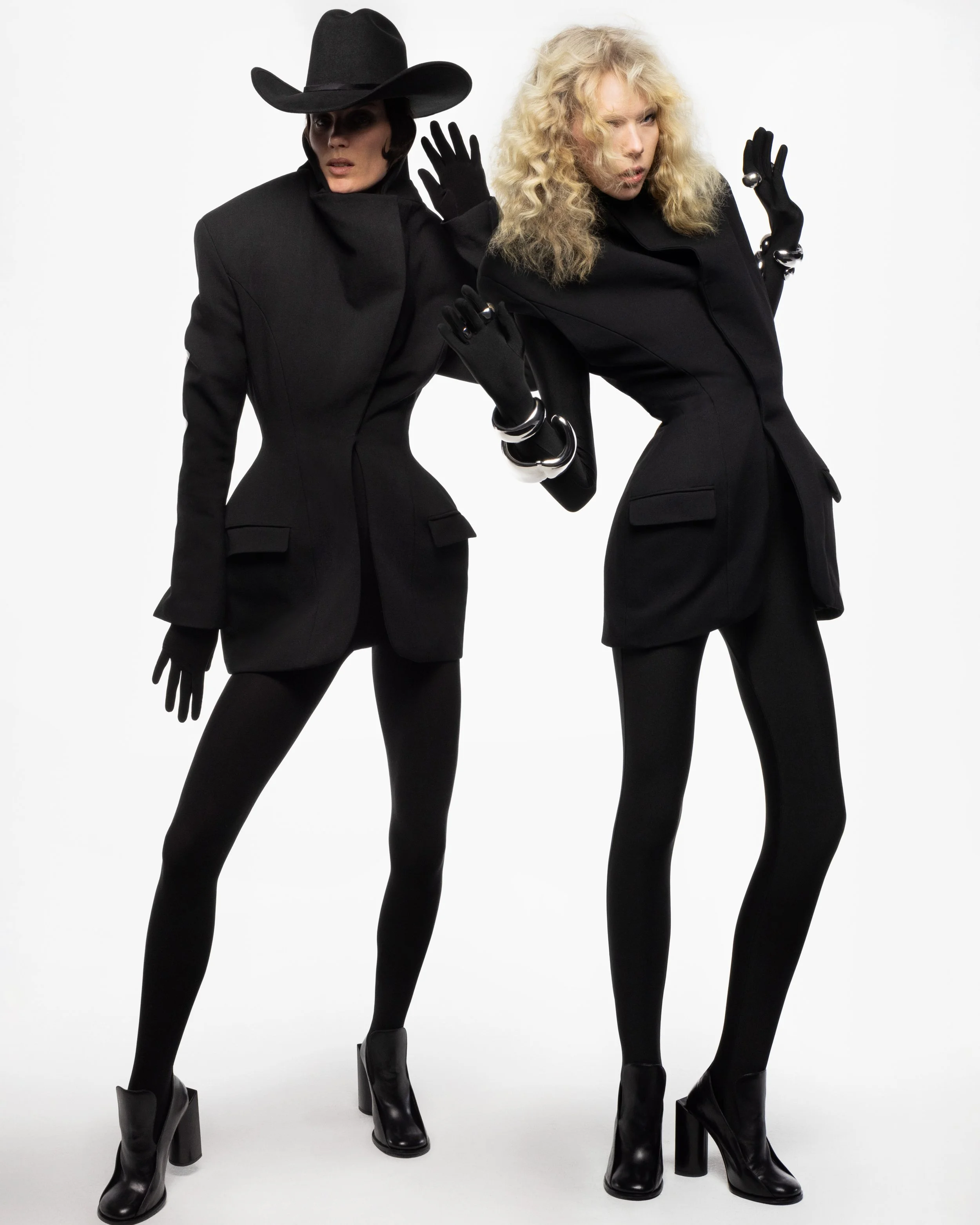
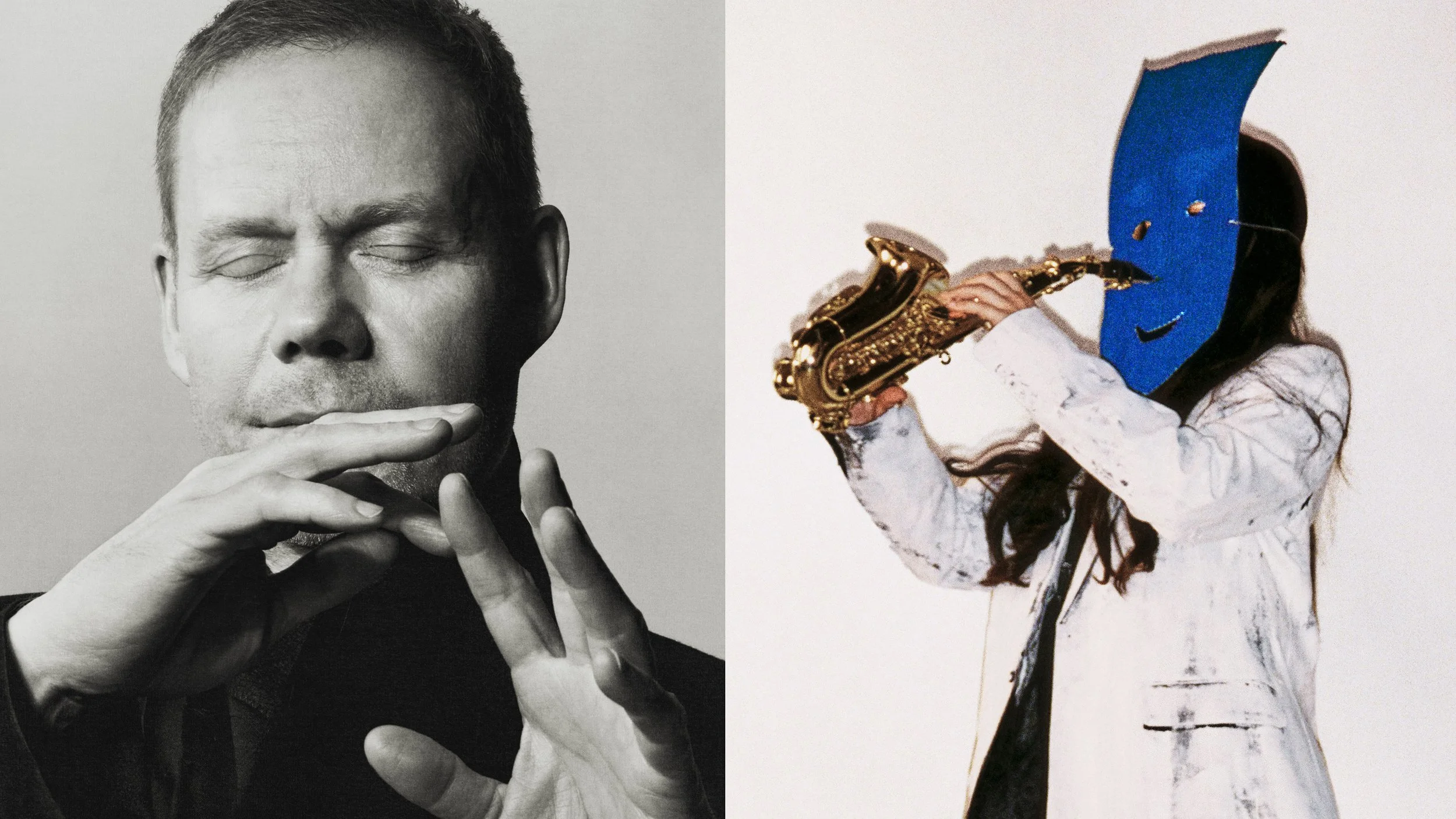
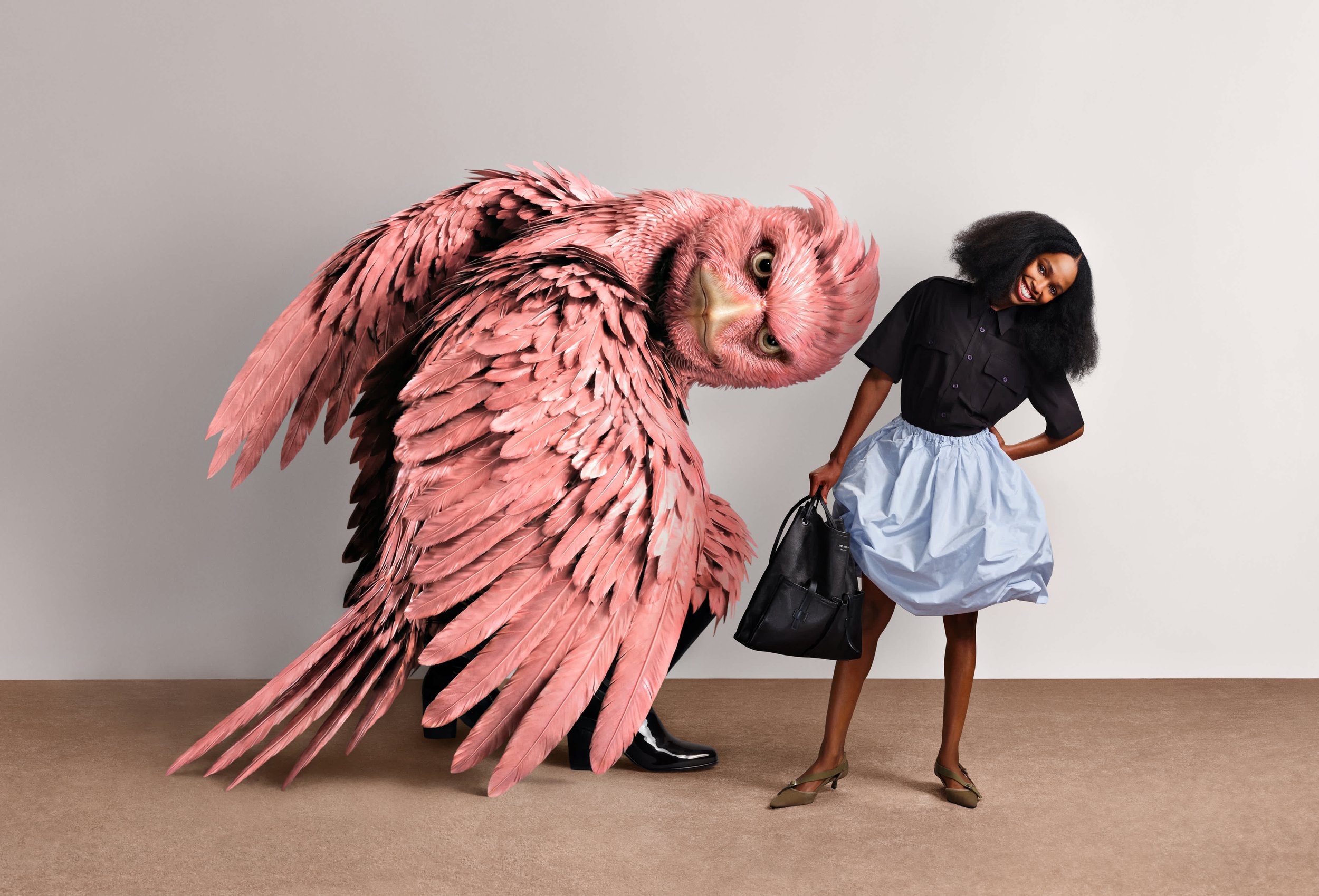
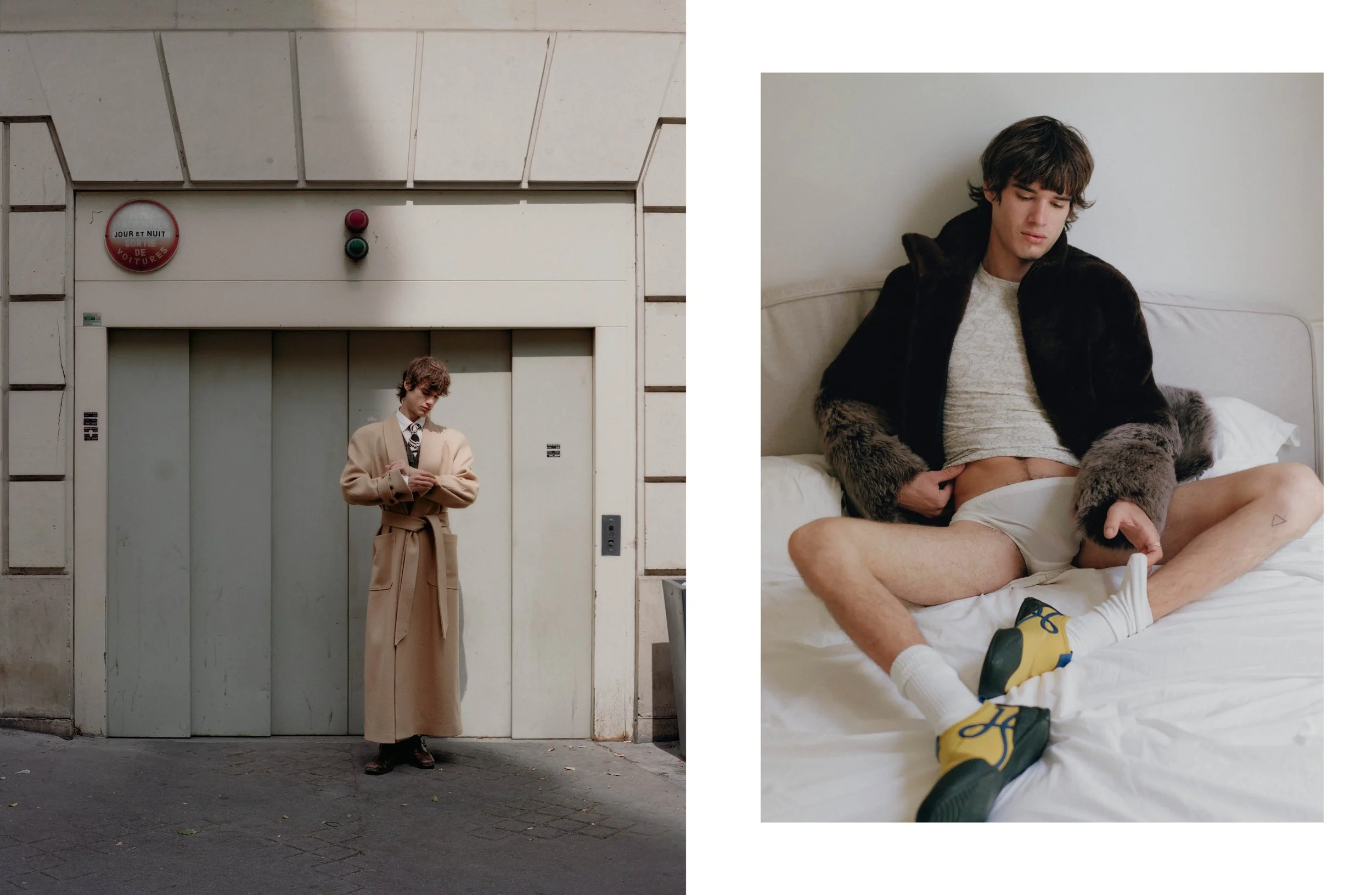
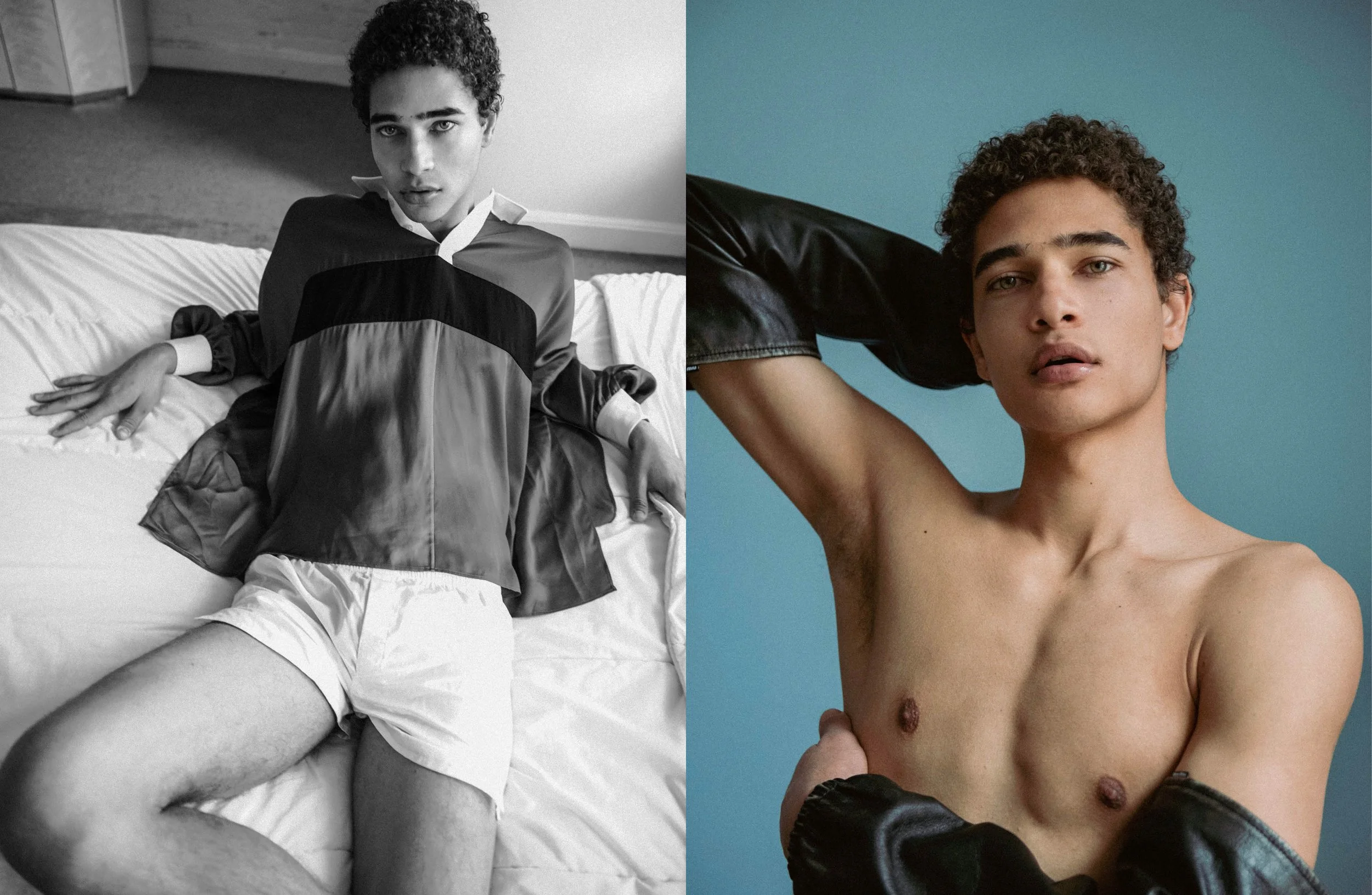
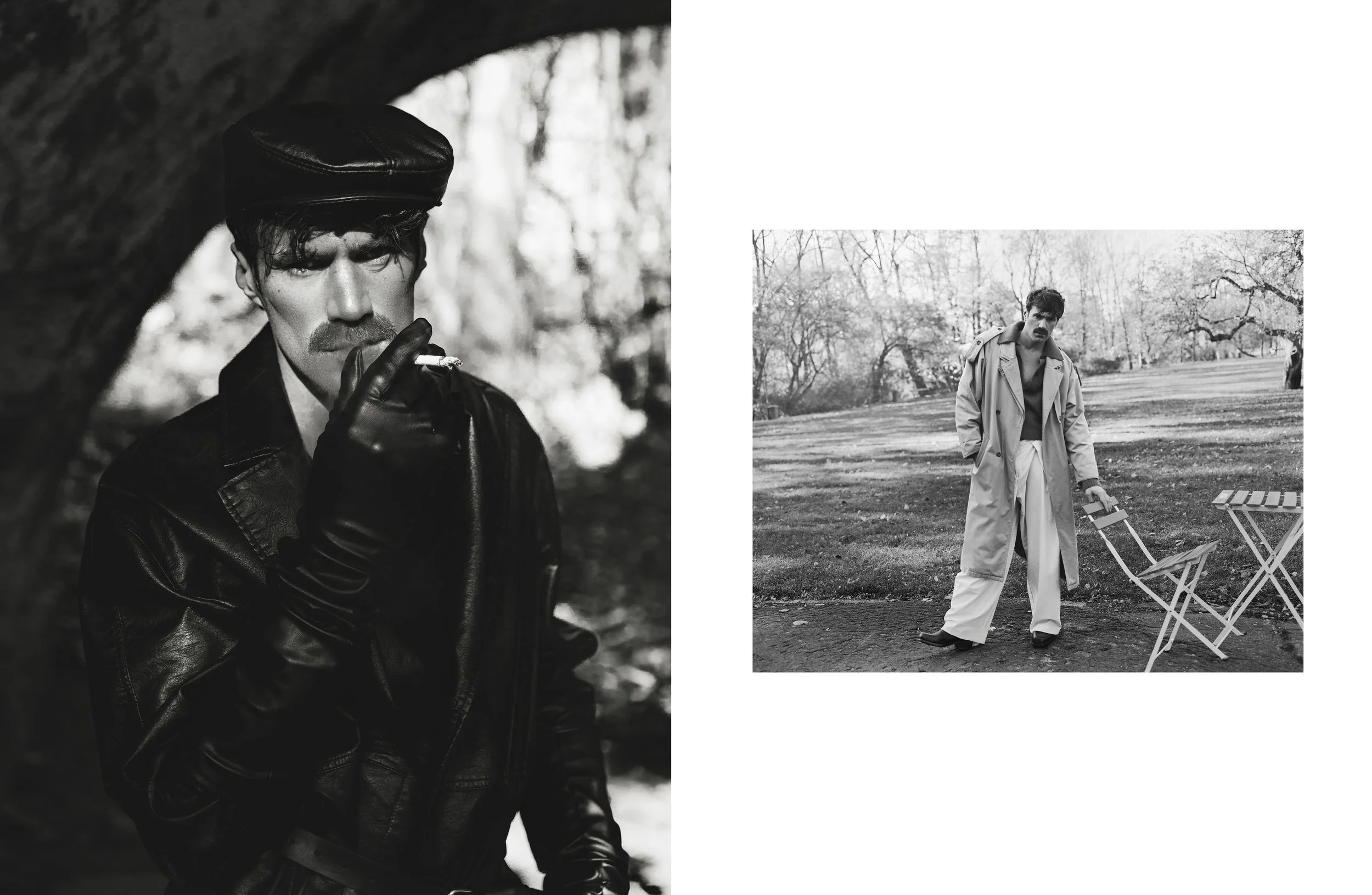
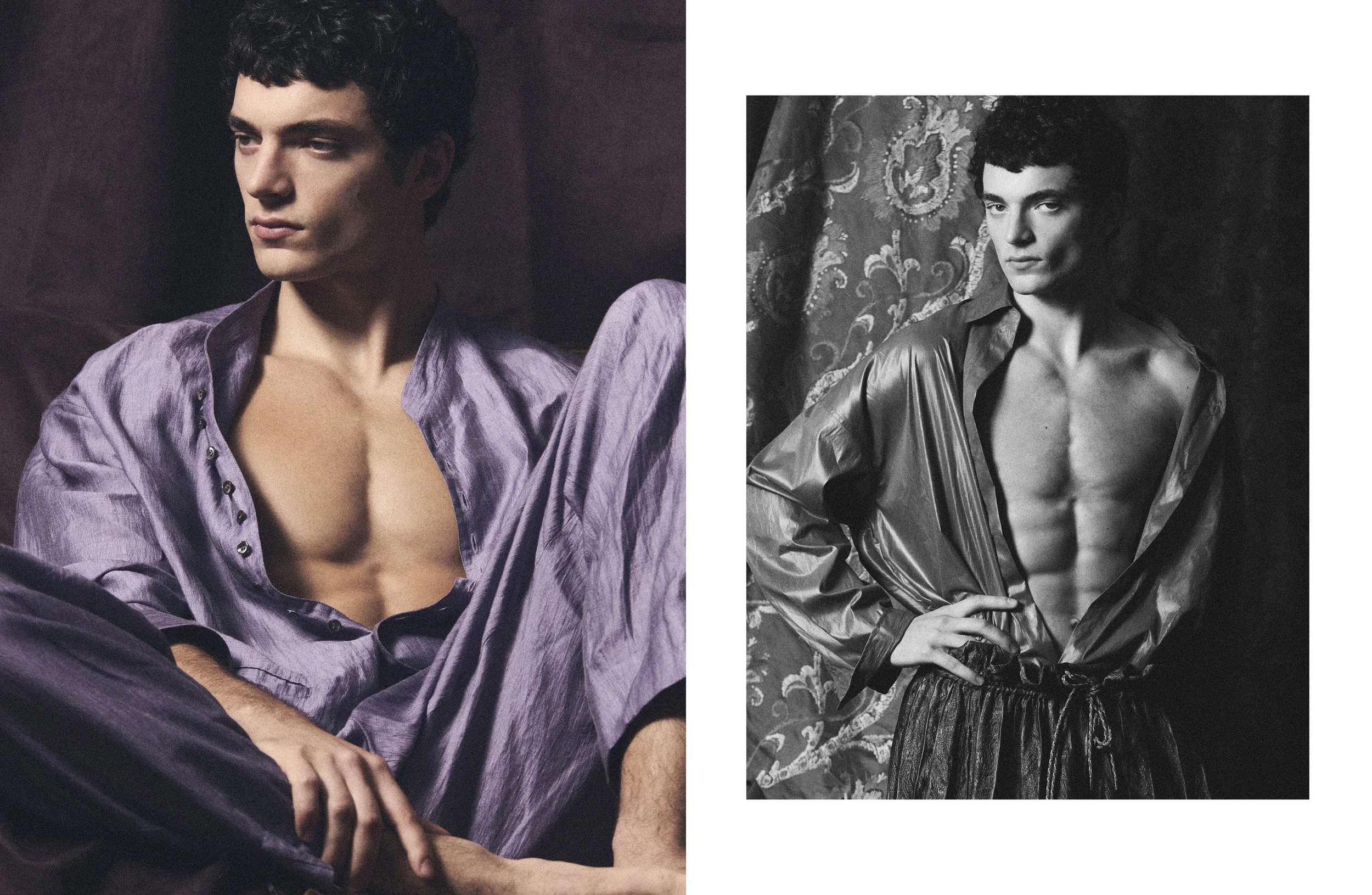
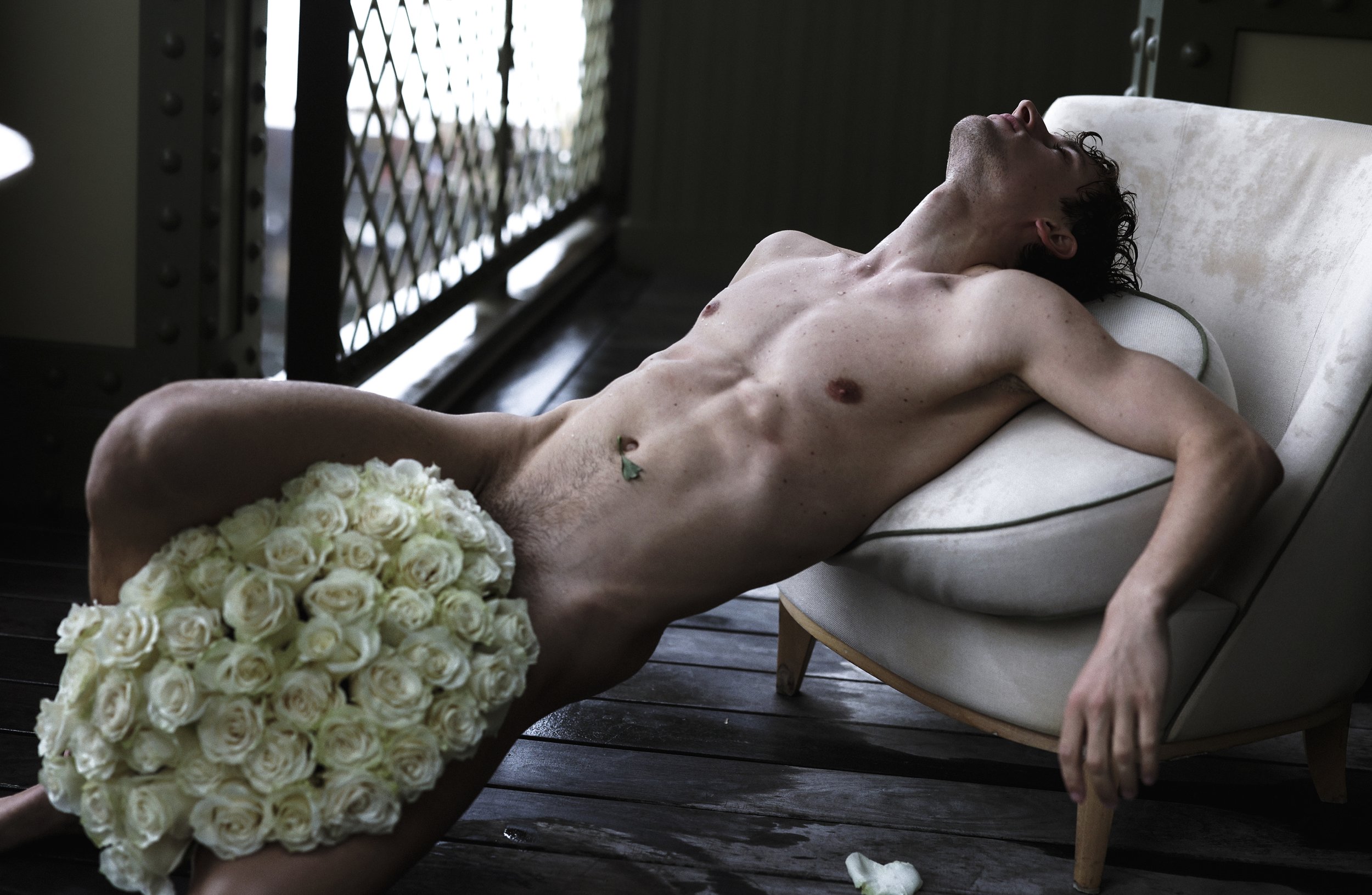
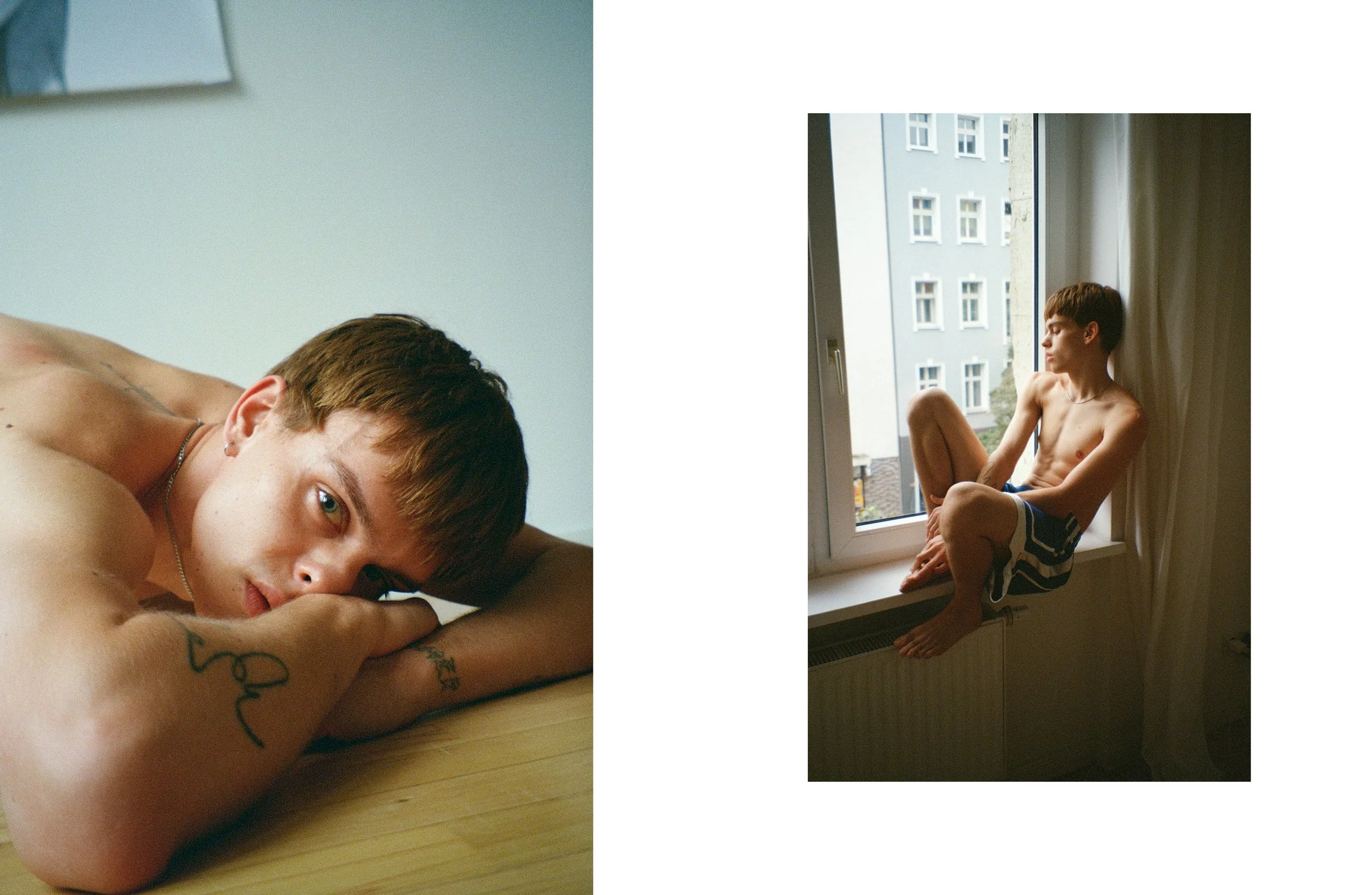
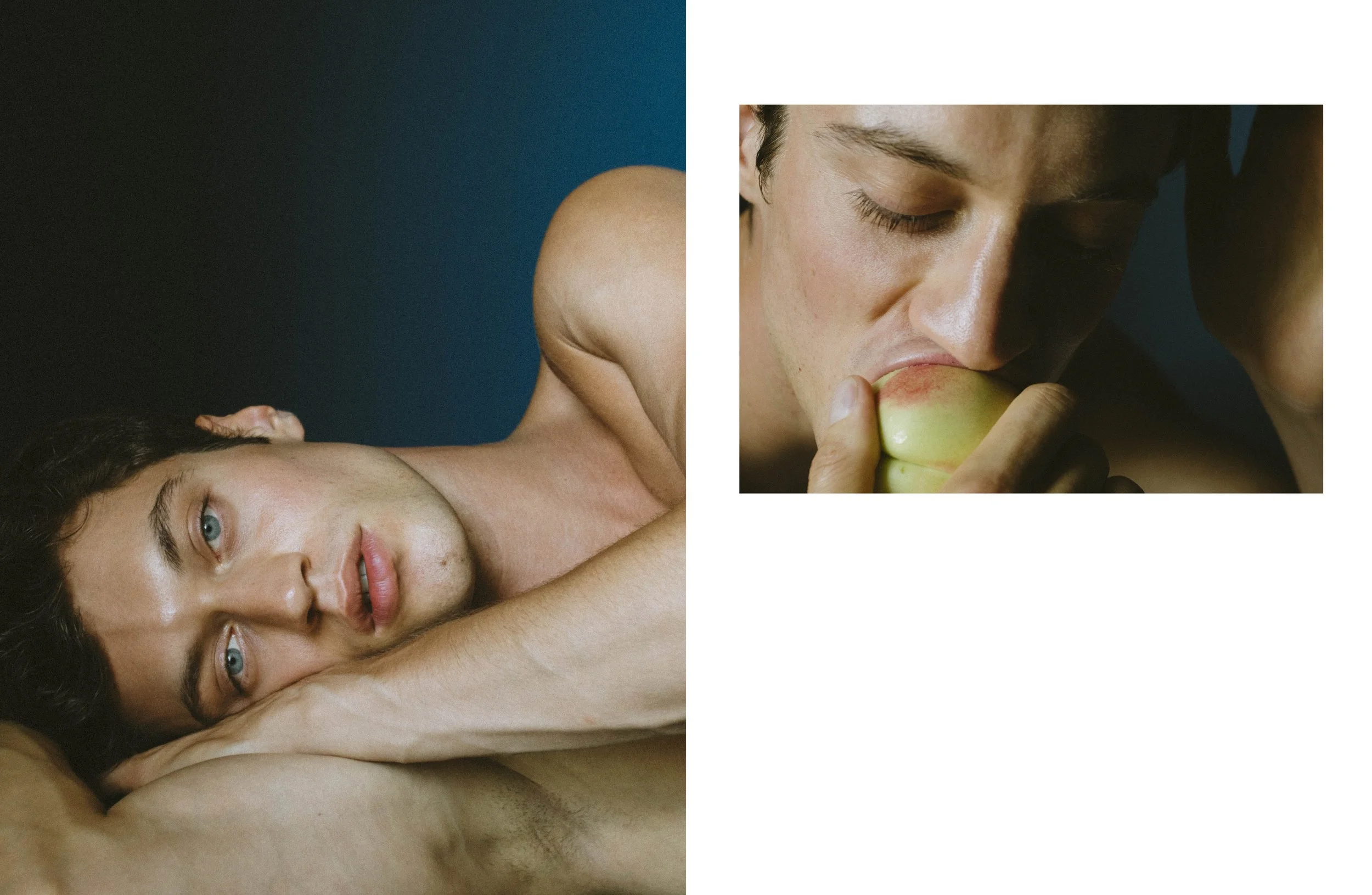
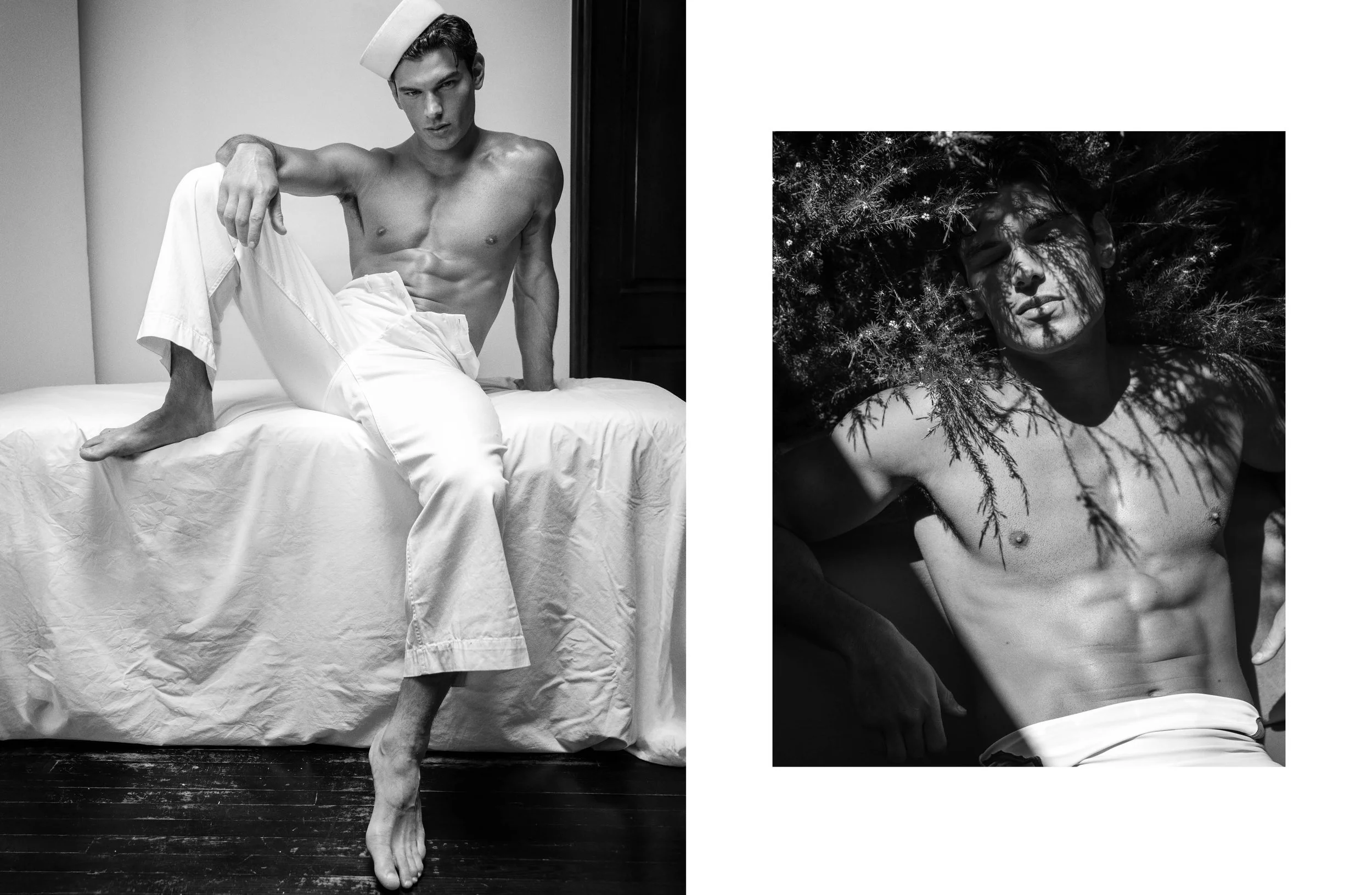
WE USUALLY ASSOCIATE DEATH WITH MYSTERY AND MELANCHOLY. YET EVEN IN LOSS, THERE CAN BE LIGHT AND LOVE. RUDY PANKOW EMBODIES THIS VERY IDEA IN HIS LATEST PERFORMANCE IN REMINDERS OF HIM. HIS CHARACTER, SCOTTY, IS A SYMBOL OF FREEDOM AND VITALITY, AND IT IS THIS CELEBRATION OF LOVE THAT GIVES THE MOVIE ITS HEART AND SOUL. PANKOW BRINGS SCOTTY TO LIFE THROUGH AN INTIMATE EXPLORATION OF THE CHARACTER’S DREAMS AND FEARS, PRESENTING HIM THROUGH A DEEPLY PERSONAL LENS. ALTHOUGH PANKOW NEVER IMAGINED HIMSELF IN THE INDUSTRY AS A CHILD, ACTING BECAME THE PATH THAT ALLOWED HIM TO TELL MEANINGFUL STORIES. WITH HIS NATURAL SENSITIVITY AND WARMTH, HE PROVES THAT EVEN IN THE SHADOW OF LOSS, THERE IS SPACE FOR CONNECTION AND HOPE.
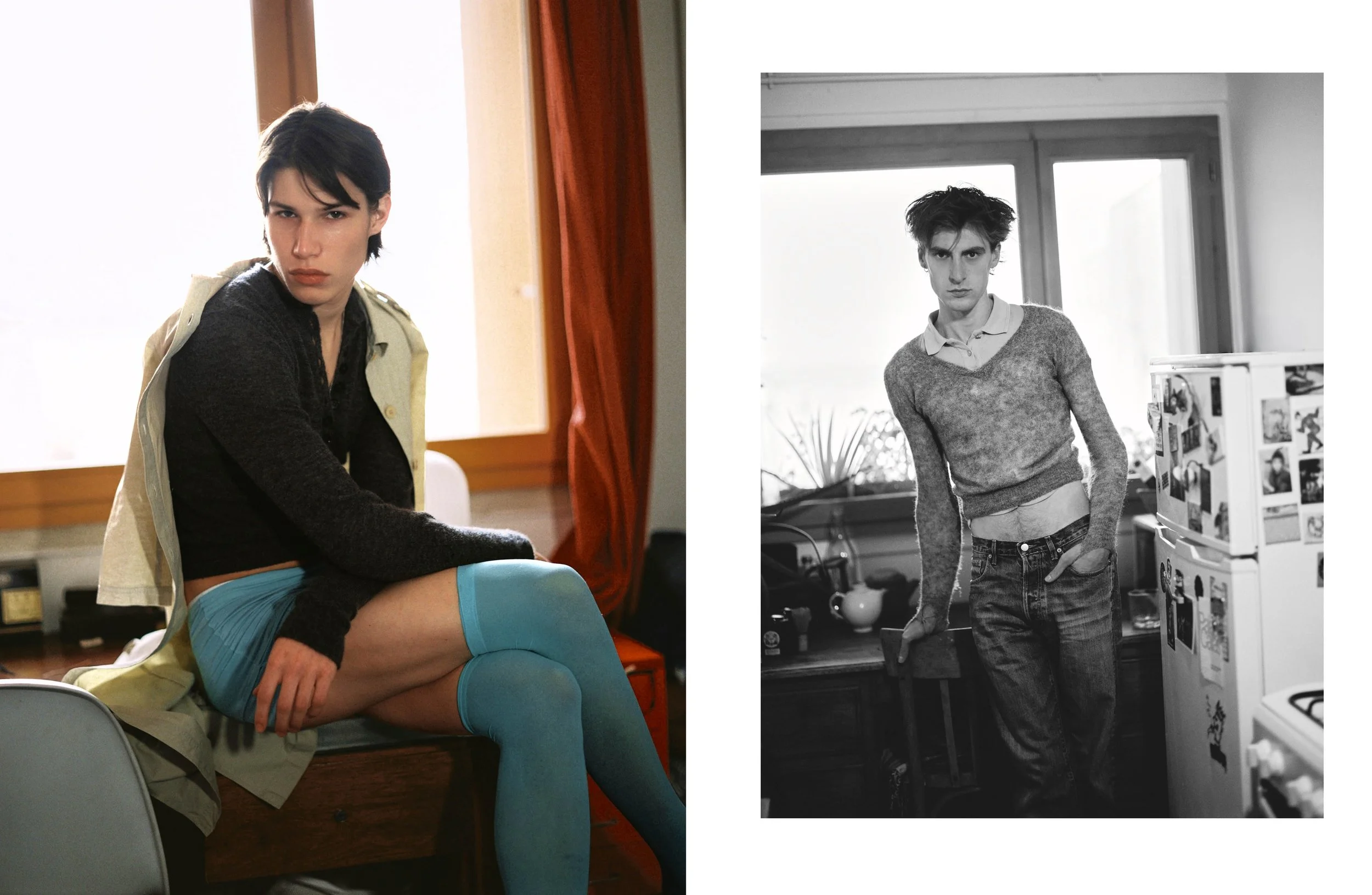
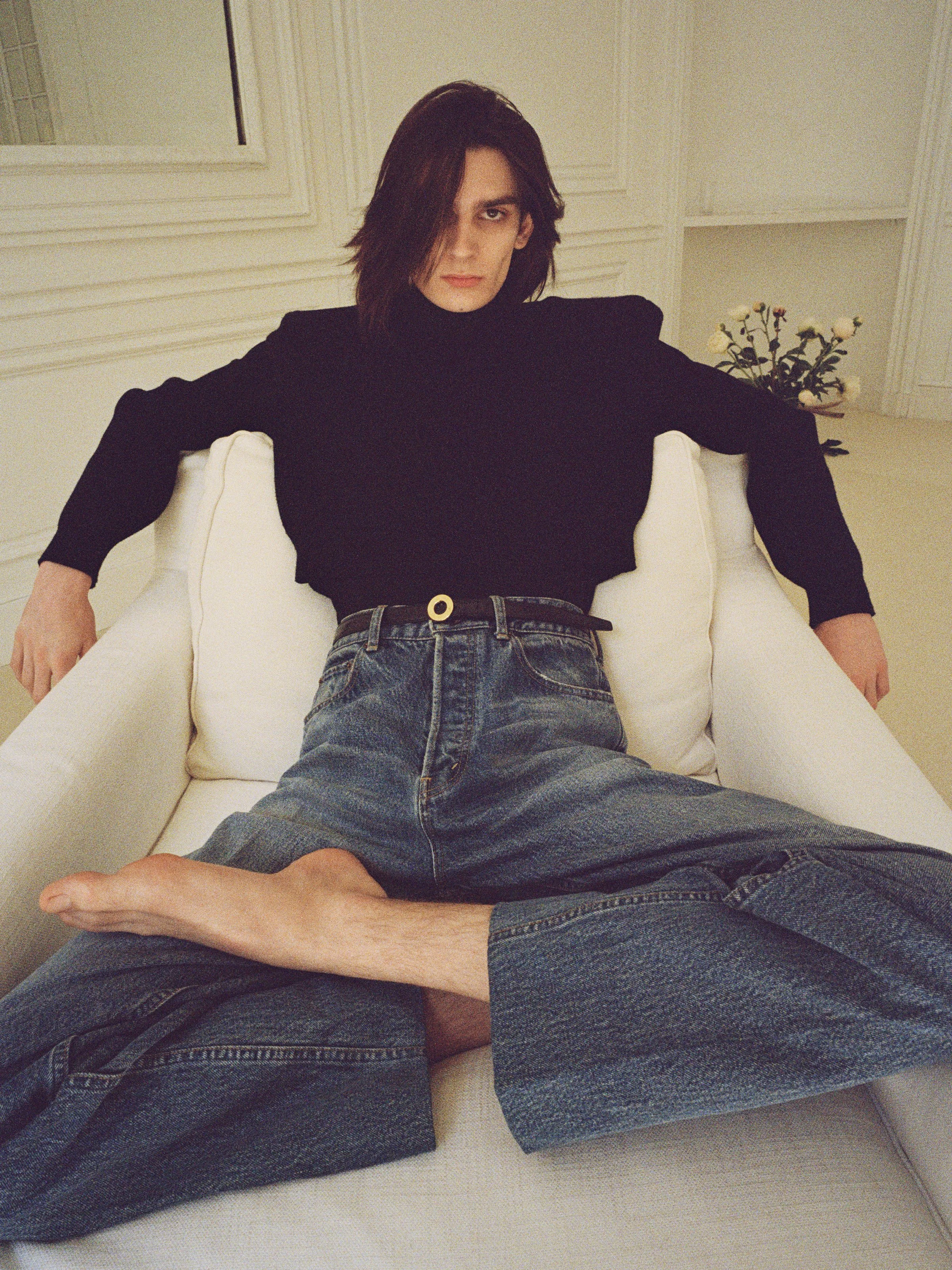
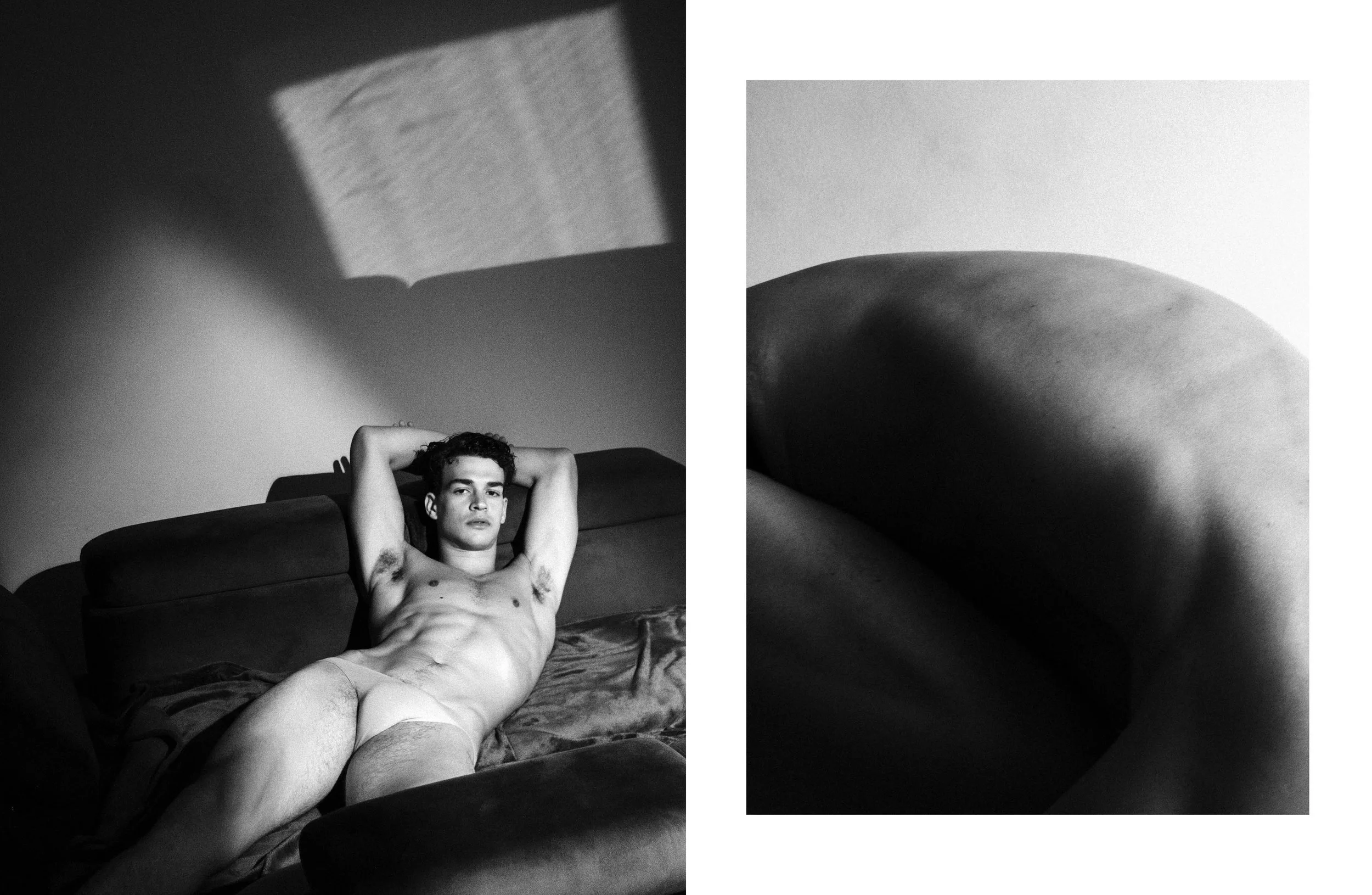
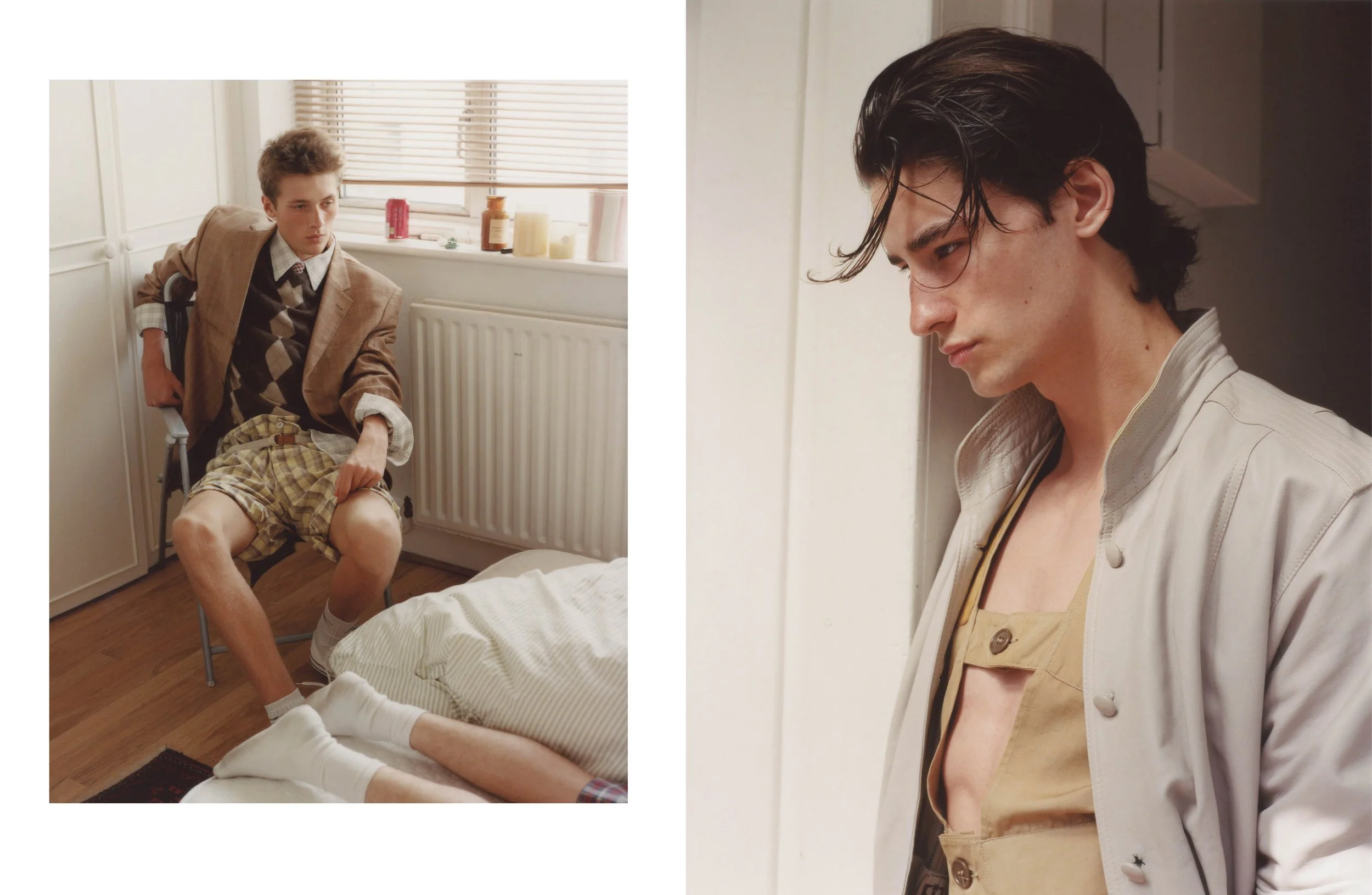
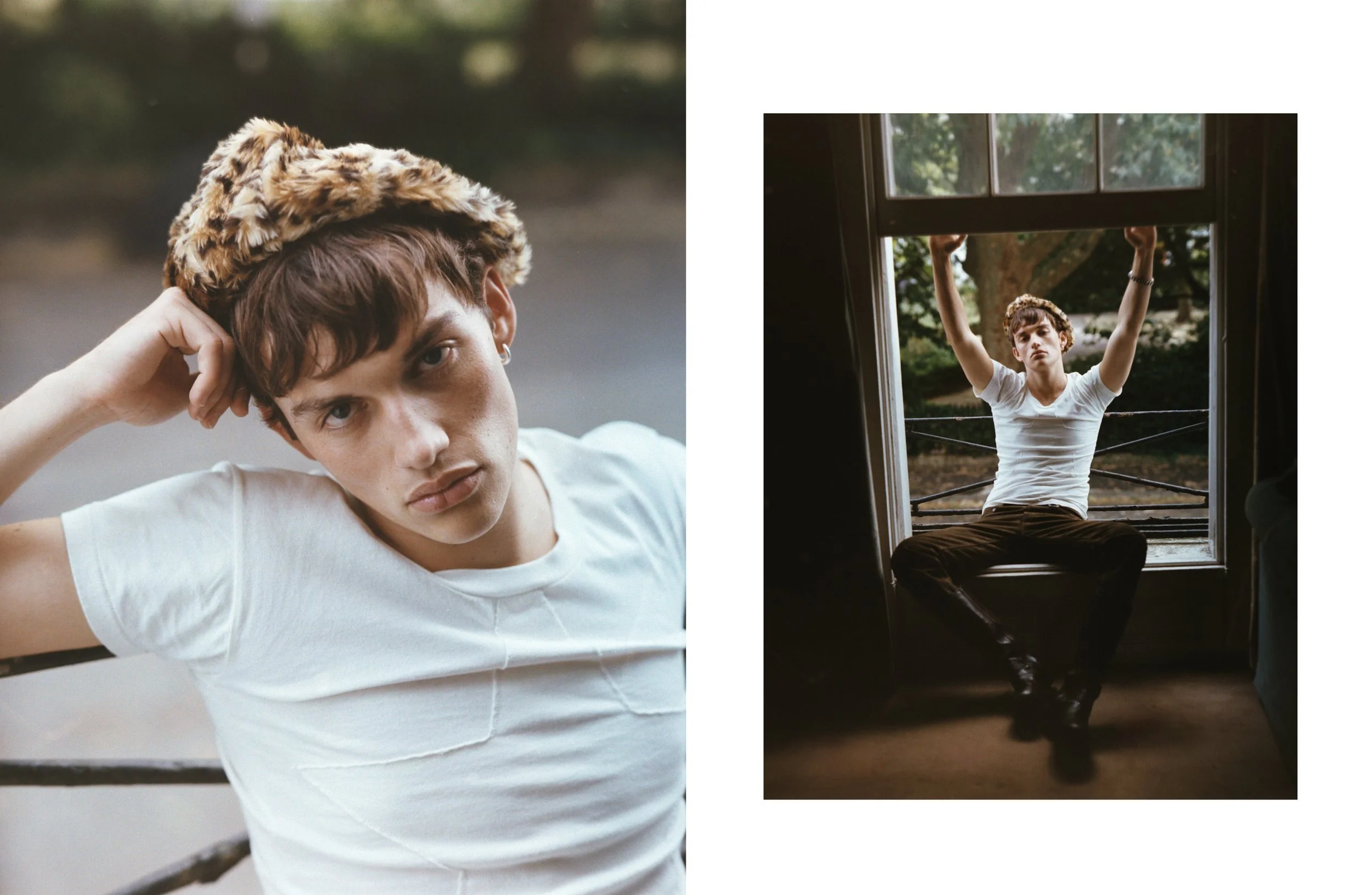
Left T-shirt and pants Zadig&Voltaire, belt stylist’s own
Right T-shirt and pants Zadig&Voltaire, boots Tom Ford, belt stylist’s own
What was it about acting that made you want to say, “This can be a career for me!”?
It really was a trial-and-error thing. I never had the dream of becoming an actor as a kid, and then it hit me in my senior year of high school. I was about to go to culinary school, and I was just like, “I am about to go into debt with an occupation I’m not sure I’m staying in.” And I just asked myself, “What do you love to do?” And the answer was, I love to tell stories. It doesn’t necessarily mean that acting was the only way to do that, but that’s when I realised I loved storytelling. And literally the next week, I had a golden opportunity with a friend who was in Los Angeles. And I was like, let’s do it.
Was there a specific movie, actor, or artist that inspired you in your approach to acting?
There are all those movies growing up that shape your imagination. And not gonna lie, one of those was Chitty Chitty Bang Bang. My mom made sure I watched that as a kid so many times. I don’t know why, but that’s such a vivid memory, and that movie, as well as Singin’ in the Rain. You can’t go wrong with Singin’ in the Rain. Those movies just kind of literally sing in your brain. The art of performing and doing musicals was put into me at a very young age. I just loved the idea of it.
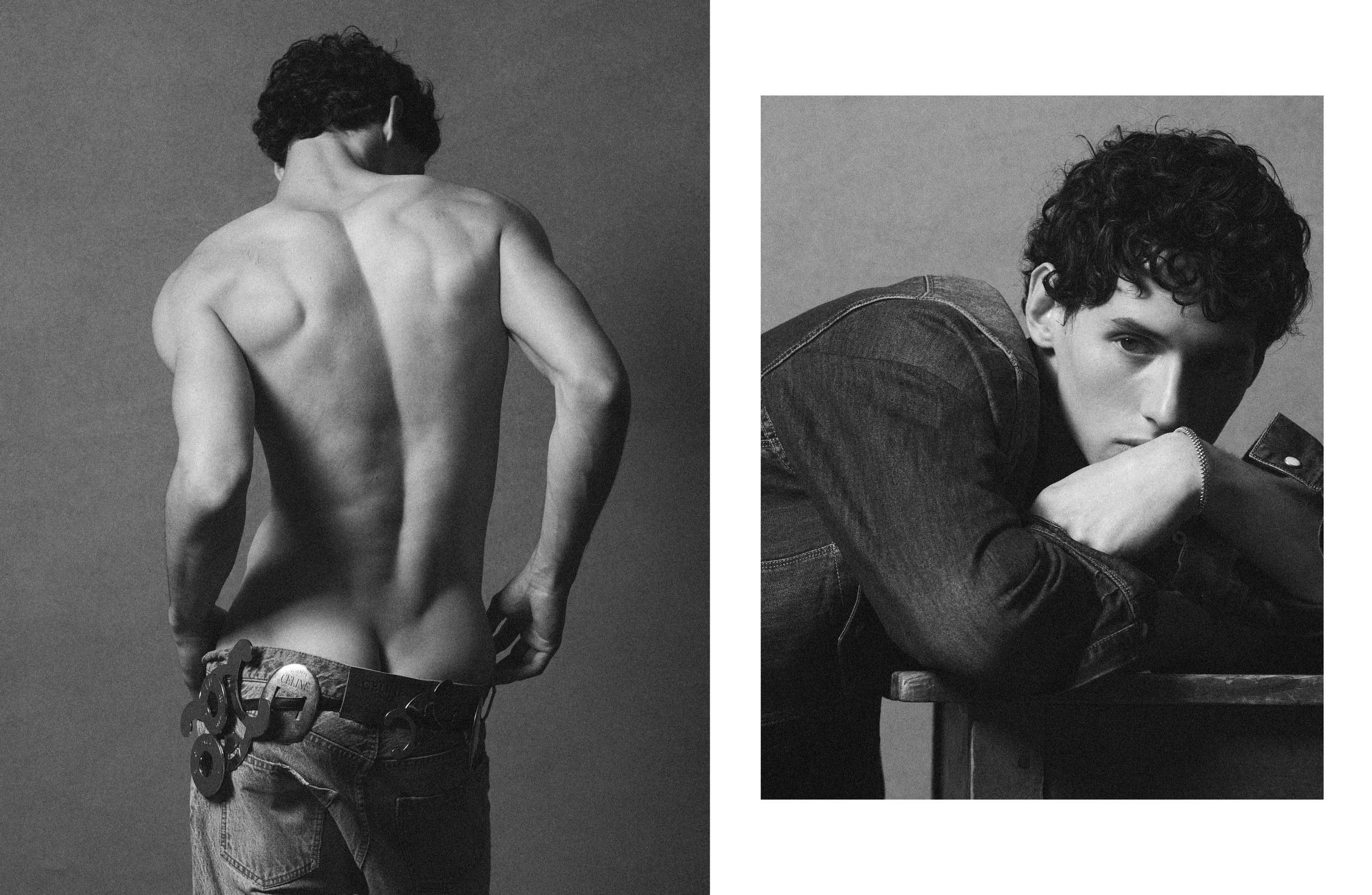
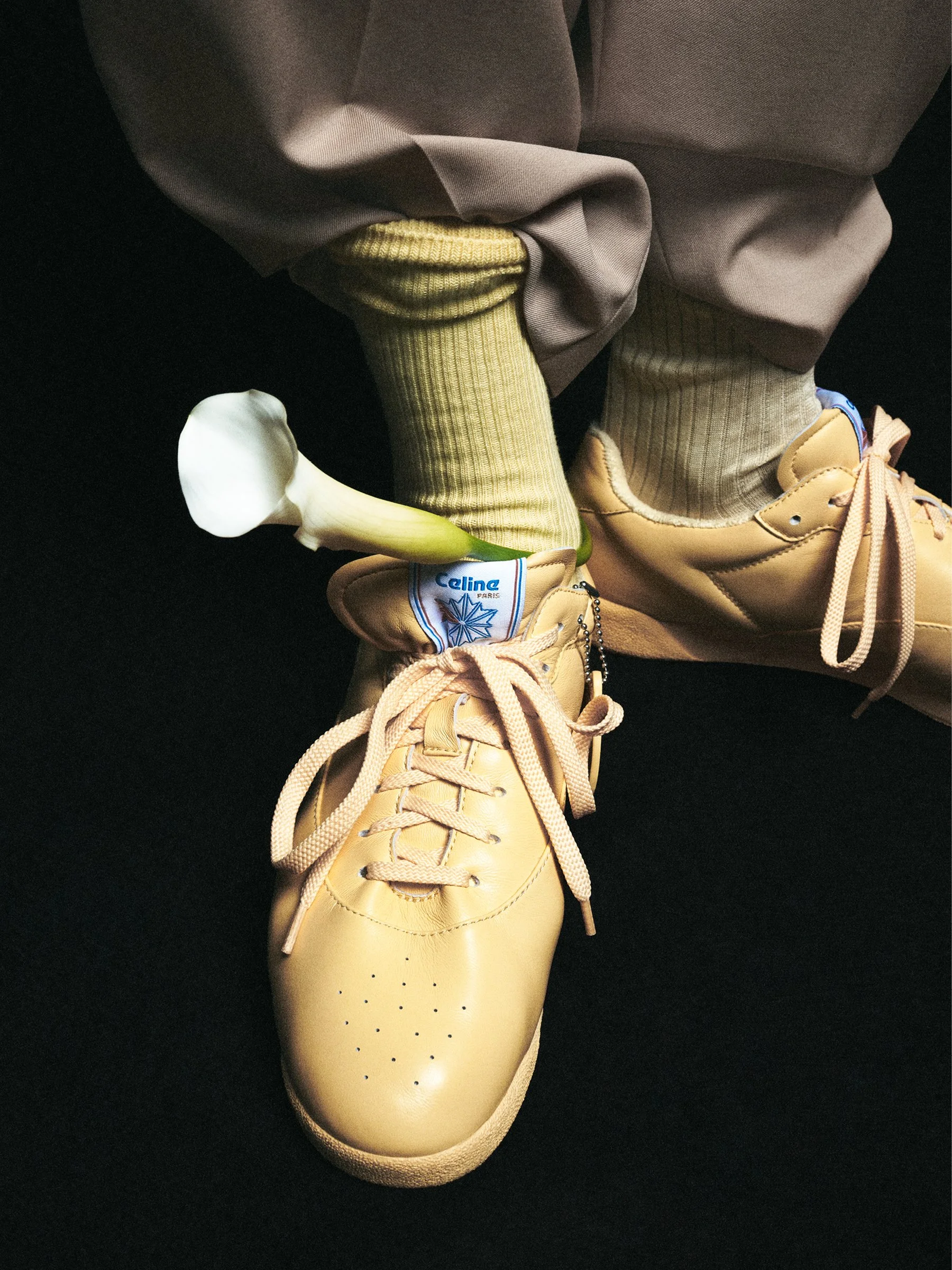
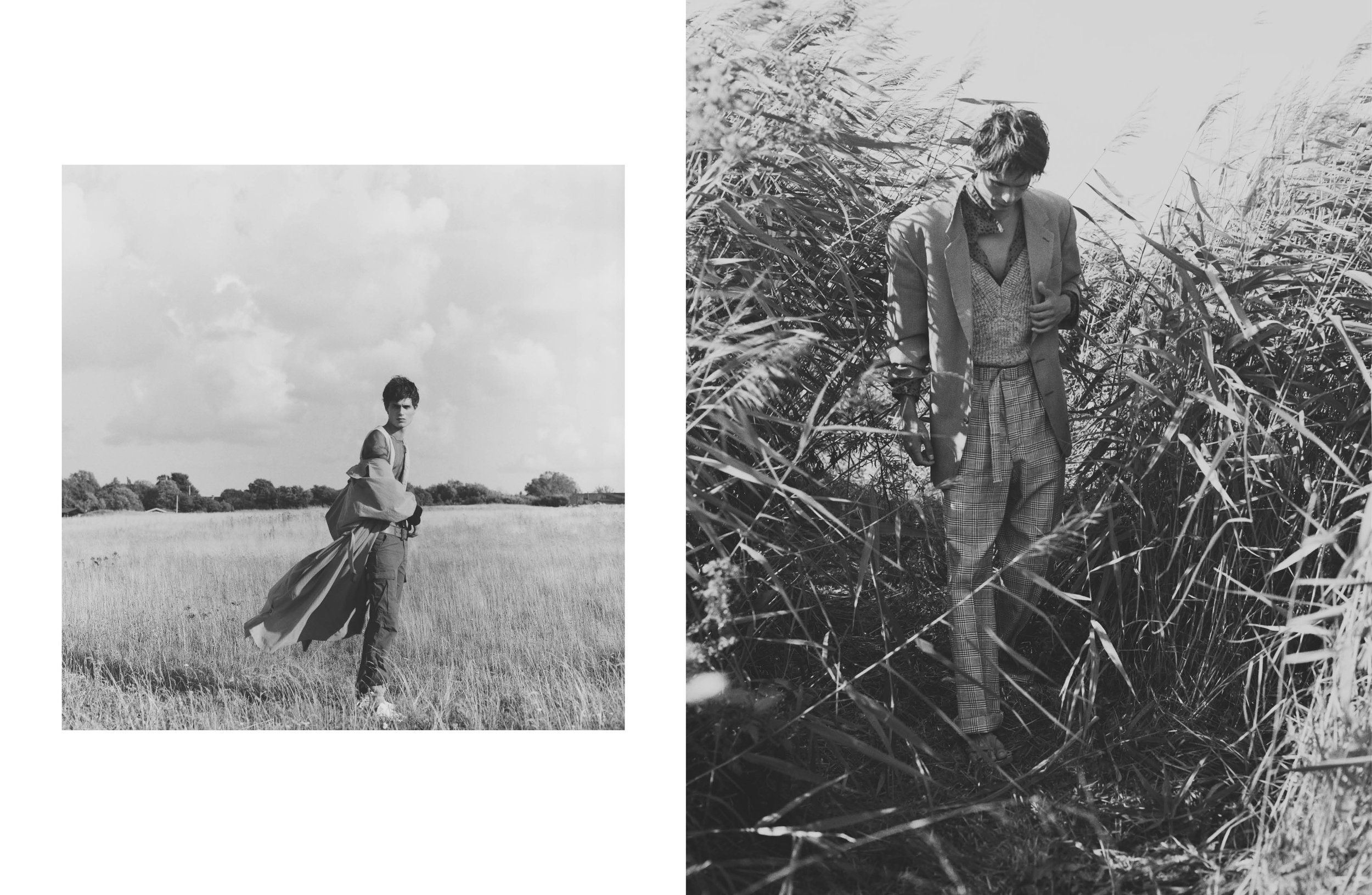
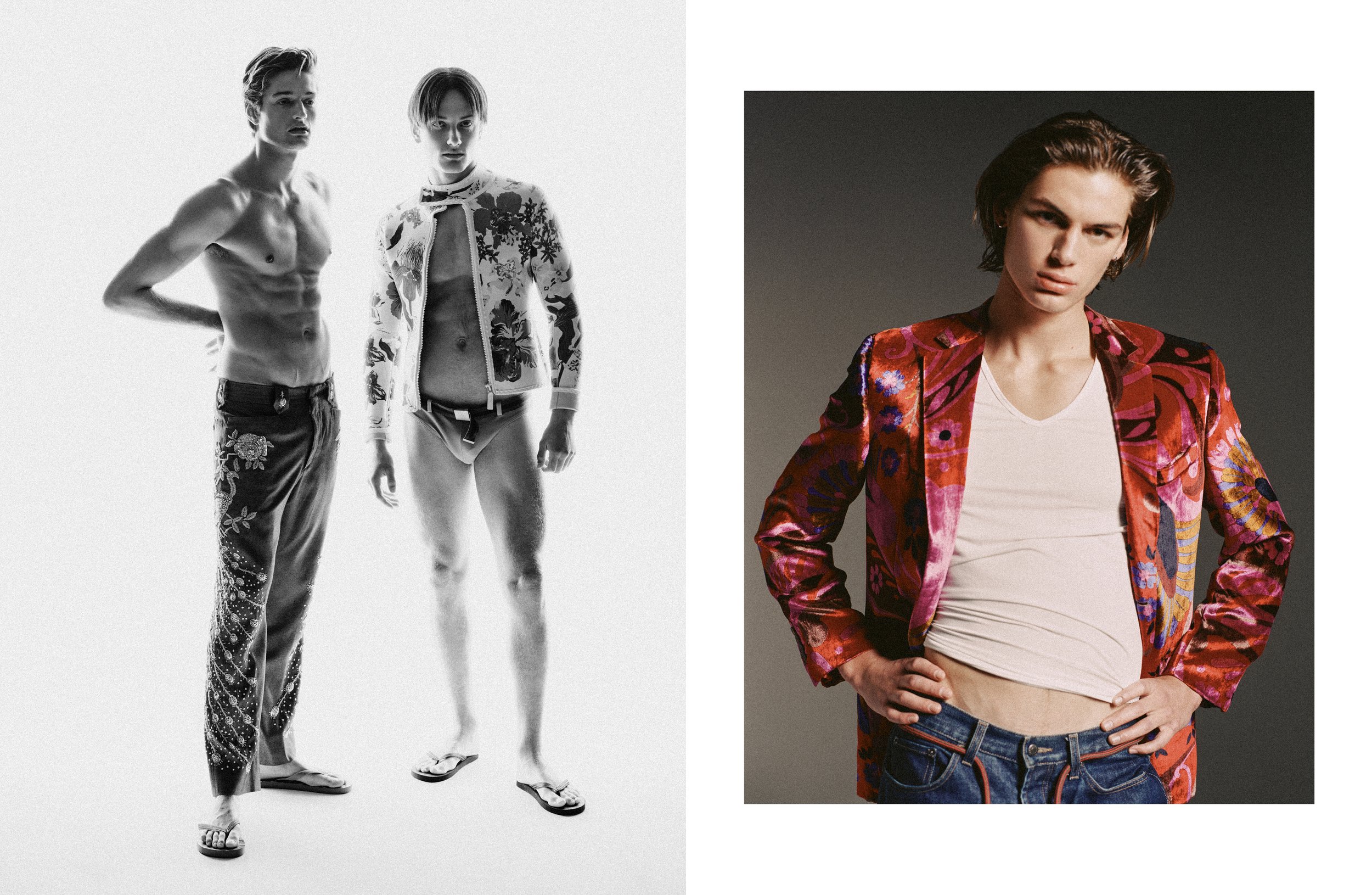
Left Pants, jacket and sweater Celine Homme
Right Full look Versace
And so, talking about Reminders of Him, what attracted you the most to Scotty when you first read the script?
With Scotty, immediately, I knew this kid was just so hungry for life and wanting to do it all. I got to be the light part of this film, rather than what Maika [Monroe] and Tyriq [Withers] have to deal with. So, I knew that my role on the chess field was to just lead with so much joy and so much enthusiasm for life, because that’s who Scotty is. And I’m attracted to those characters a lot, the ones that are just so ready to throw themselves into life.
That’s the thing, what we see of Scotty are flashbacks from the past, because he has already passed away. But every flashback, instead of being sad, feels very positive. So how did you approach him, knowing that?
I think there’s not too much time to make people fall in love with Scotty. There’s a little bit more time in the book. And in this film, I was like, “Oh, these scenes need to feel so free.” I think that was something Vanessa [Caswill] also said when we were filming, about the light. But also, how do you make something light? In my brain, to make something light is to be free. So whatever Maika and I were really feeling, we were able to play around. I don’t think everything made it in. I jumped across the hood of the car one time just for fun. It’s all part of it, that just kind of keeps it light and memorable. And that’s when I knew those scenes had to be that way.
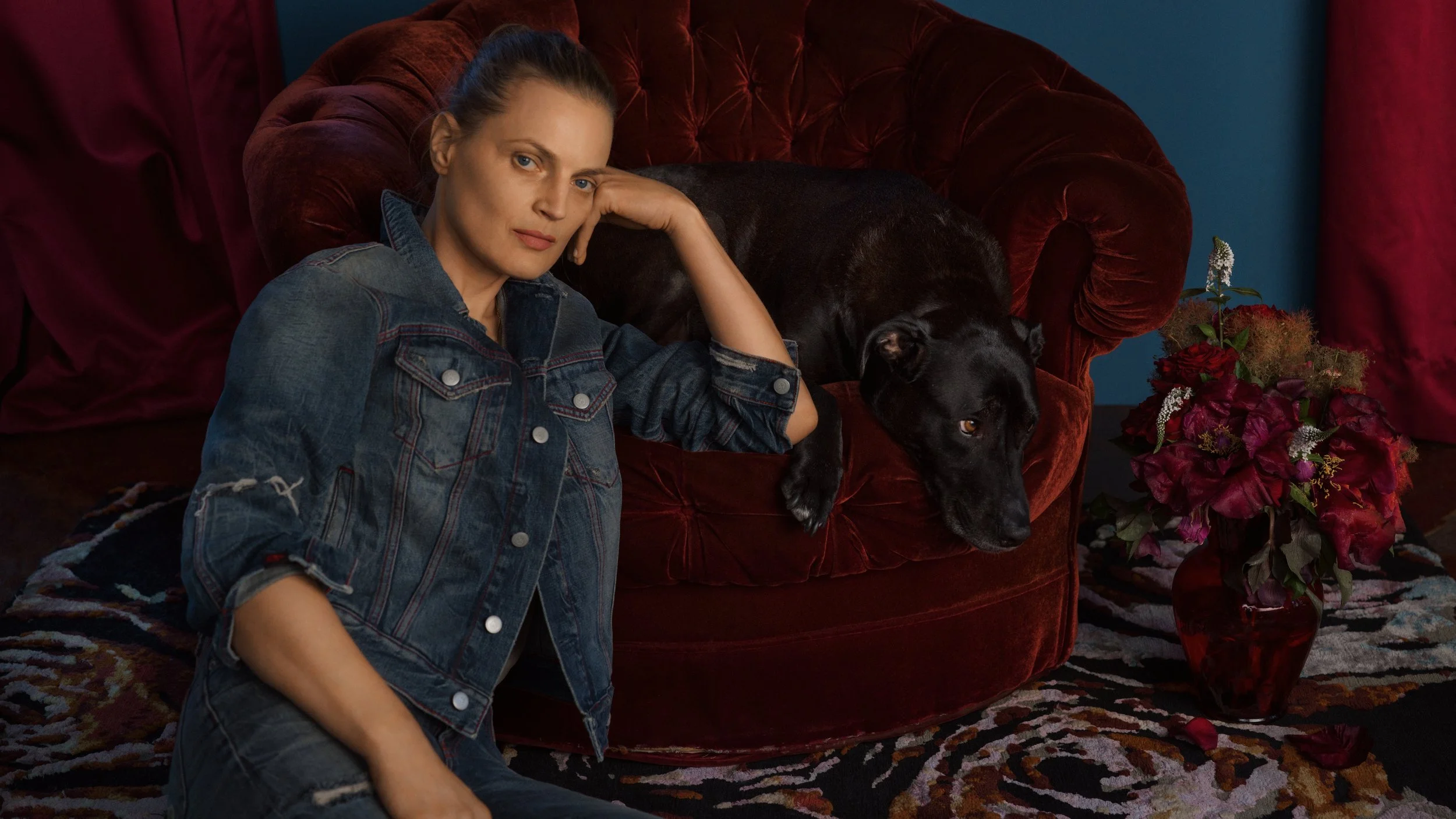
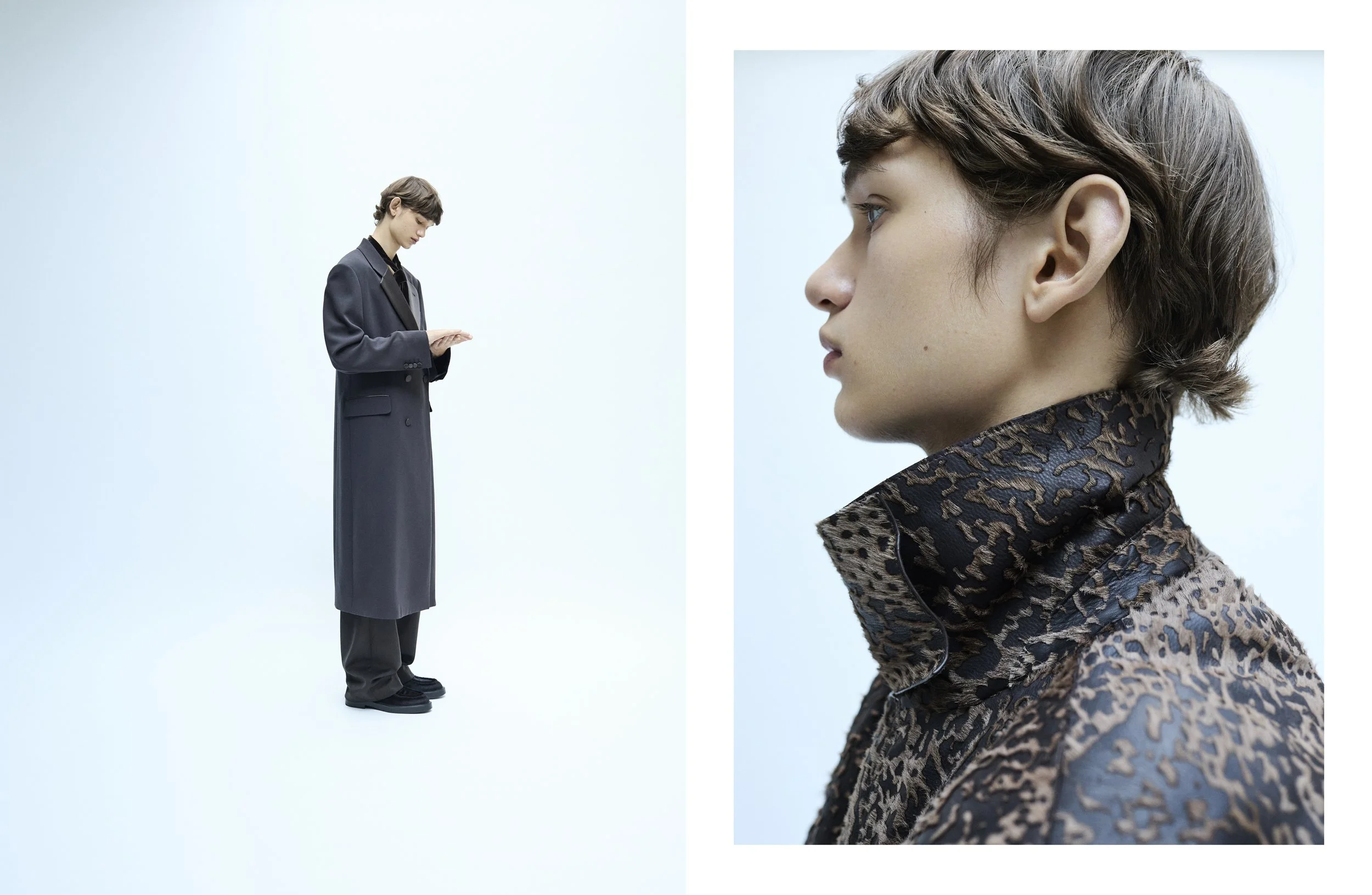
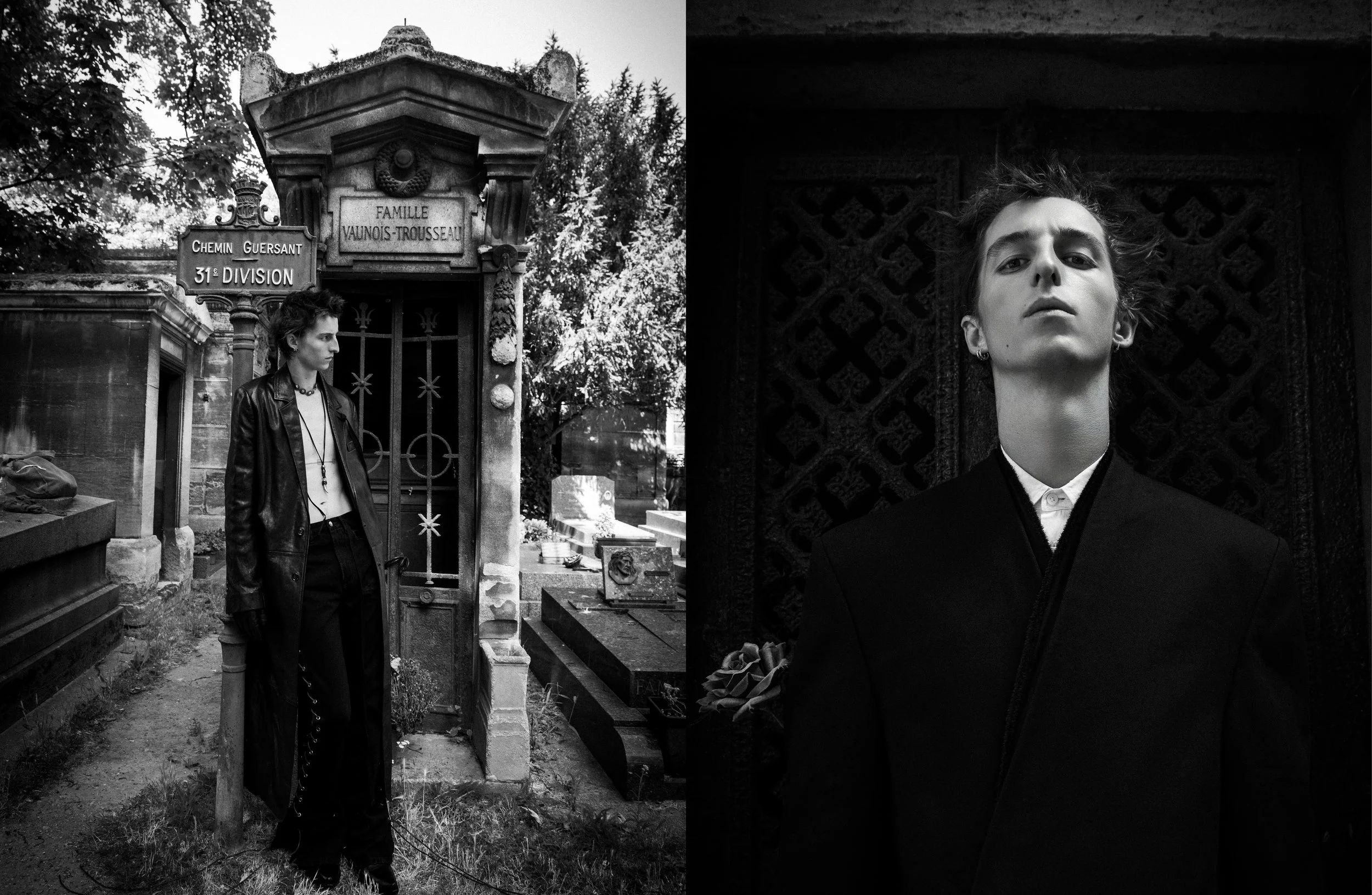
Full look Dior Men
And what exactly about Scotty allowed you to connect with him on a deeper level?
The joy. Knowing his fears as a person is the deepest way you can get to know anyone, knowing exactly what they’re afraid of. And for Scotty, it’s actually really hard to answer the question, what is Scotty afraid of? Because I think he’s in such a place where there really aren’t as many fears as I would say Ledger’s character has at his age, because he’s very content. I think he’s very content with who he is as a person. But I think something Scotty would be very afraid of is, truthfully, being alone.
So, how deep were you able to go into his story, his character development, and the little details that make someone more human, real, and relatable to others?
I talked to Vanessa about that exact thing, like, what are those little symbols you would touch on? He comes in wearing a heart T-shirt, and he’s the heart of this film. And I think the yellow, the joy, the brightness, all those themes for Scotty come through. And then the deeper elements that I did were all the sensitive aspects of it; where does Scotty feel? The best way I can put it is when you’re feeling connected to someone, there’s a part of you that’s buzzing. Sometimes it’s in your head. Sometimes you’re like, “Holy cow, I can’t think straight because this person is making me feel a certain way.” Sometimes it’s in your chest, and you feel your heart pumping. But for Scotty, I think he just can’t stand still. So for me, that was hard, because Vanessa was like, "This is a dreamy state, so it’s very calm.” And I was like, yeah, but Scotty is so excited right now, he can’t, he’s like twinkle toes. He’s feeling like he could float. So that’s what I was trying to bring to it.
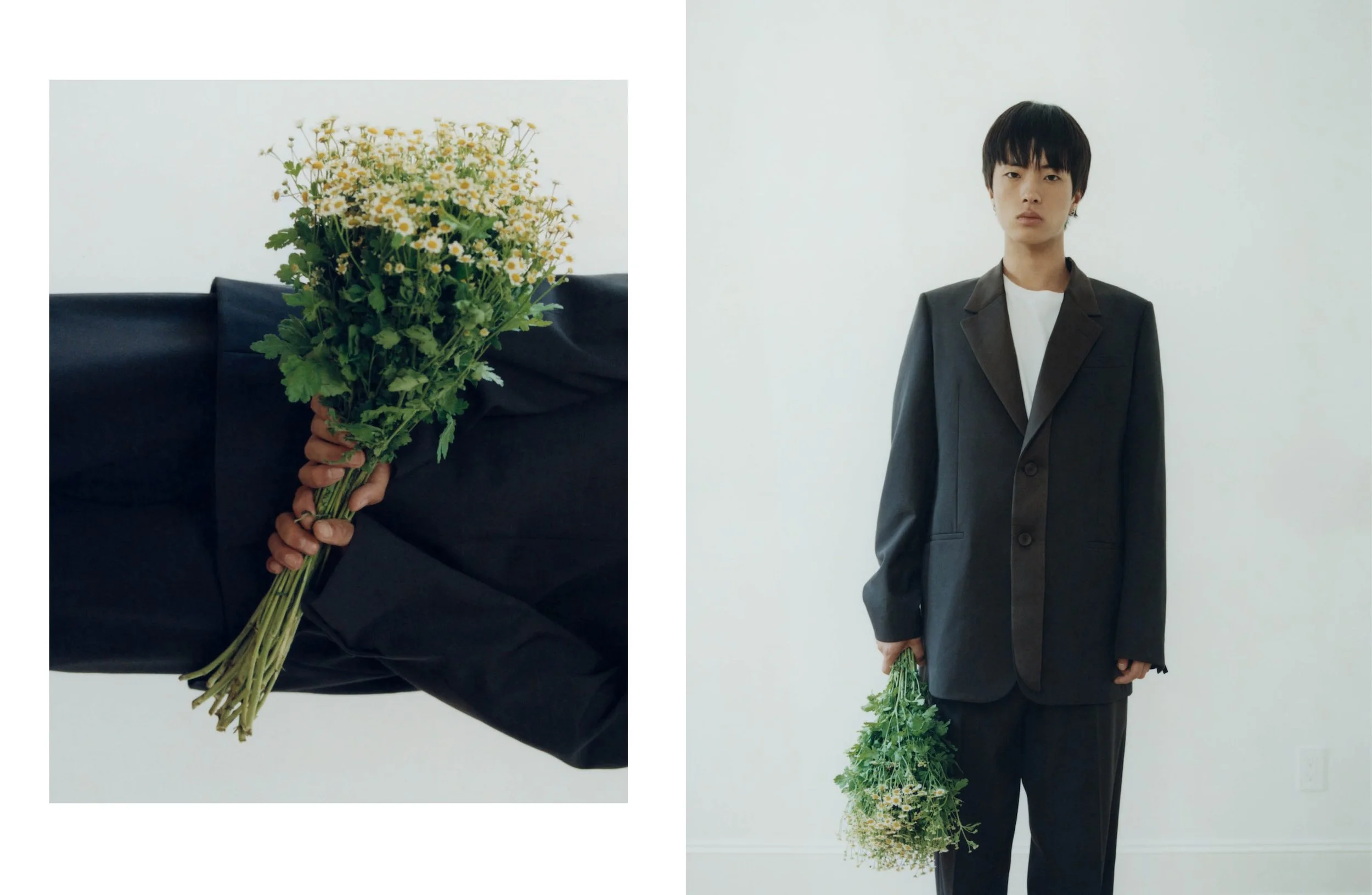
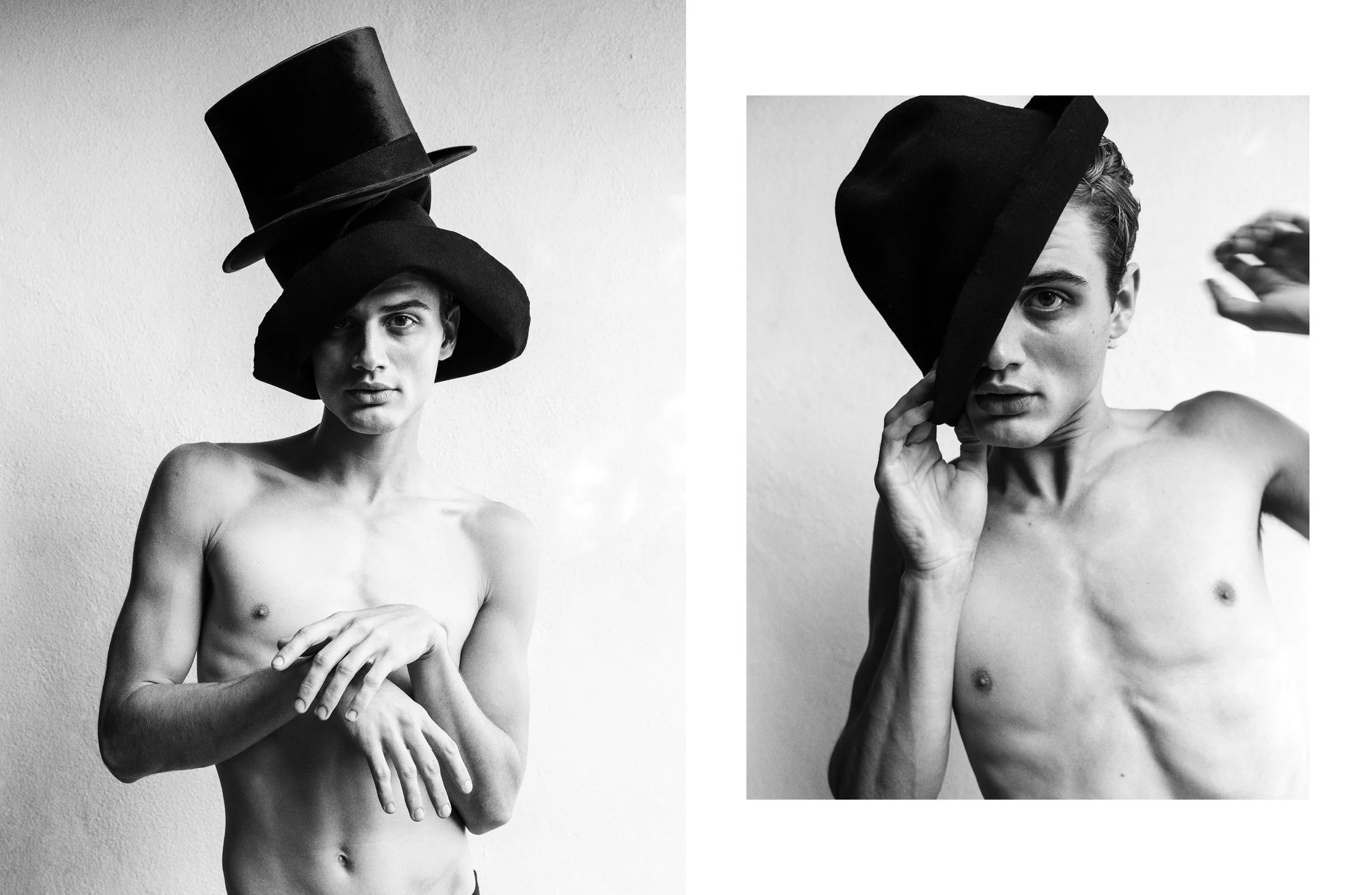
Left T-shirt and pants Zadig&Voltaire, belt stylist’s own, boots Tom Ford
Right Pants and jacket Zadig&Voltaire
And what do you hope audiences can take away from Scotty’s story and his role in the movie?
I hope people can learn from Scotty that it’s okay to stay in your hometown and be content with just that — the simple dreams. And I wouldn’t even say they’re simple. It’s just okay to feel that way and have that contentment in your heart. You can live a beautiful, fulfilled life with that. And yeah, if anything, I hope they just want to go out there and feel everything.
From the moment you started to now, how has your approach to developing a character changed?
I think I was really scared to fail in the past with an idea. So if I had an idea, I would be like, okay, I’m going to communicate it to everyone and why it’s happening. Now, I just trust the instinct that it’s a good idea and see the genuine reaction. You don’t always need to communicate it, because it becomes a genuine moment. I would say the communication of trusting your instincts is much stronger now.
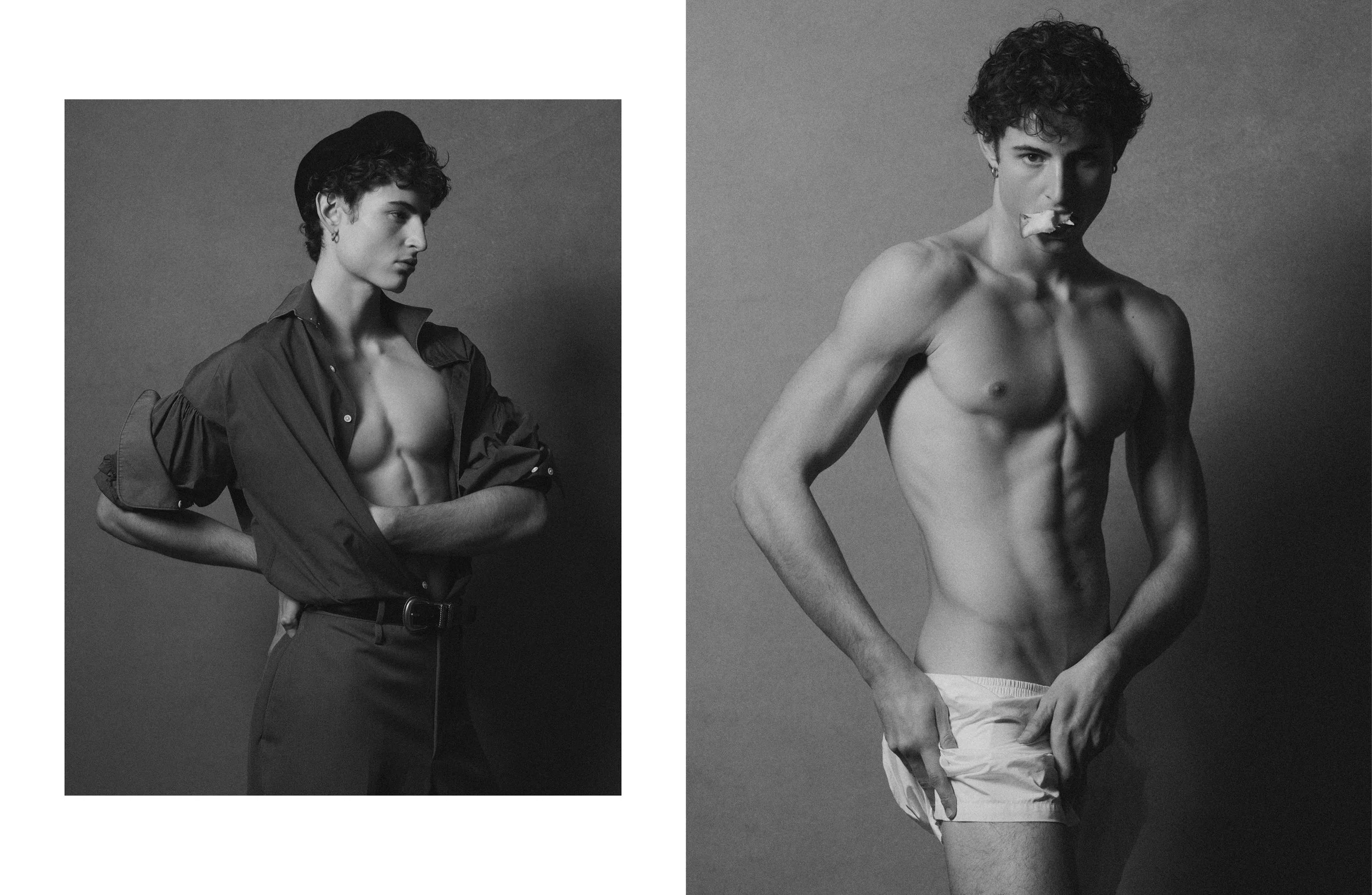
Left T-shirt and pants Zadig&Voltaire
Right Full look Versace
And what is the main trait of a character that is the most important to understand to portray them most accurately and allow the audience to connect with them?
There are no absolutes. For example, playing a villain, there needs to be some comedy in a villain to invite the audience into the character’s mind. You can’t just be an asshole to be an asshole. There’s a deeper truth, and the comedy shows why he’s a mean person. Where I’m trying to go with this is that it’s very grey, there’s no black and white. For Scotty, for example, there’s a lot of joy, all that light. But, as I said, there’s that fear of, okay, what if I am alone here in a small town? Knowing when to express that side of things, it doesn’t need to be said; it just needs to be felt. If that answers the question, I’d say you need to play the variations and find the moments to play those variations.
Where do you want to take your career in the future?
The first thing that popped into my mind was the balance between theatre and film. The balance between those two things would be amazing. Yeah, I think going to the stage and doing theatre as much as I can. But with respect to that, there’s a whole other community of things. I can’t just expect to jump into a different community of acting. There has to be training, a proper approach, and you kind of have to earn that.
Have you already stepped a little bit into it?
Yeah, I had the pleasure and honour of doing Romeo and Juliet with Diane Paulus at the ART in Boston, and I was able to play good old Romeo.
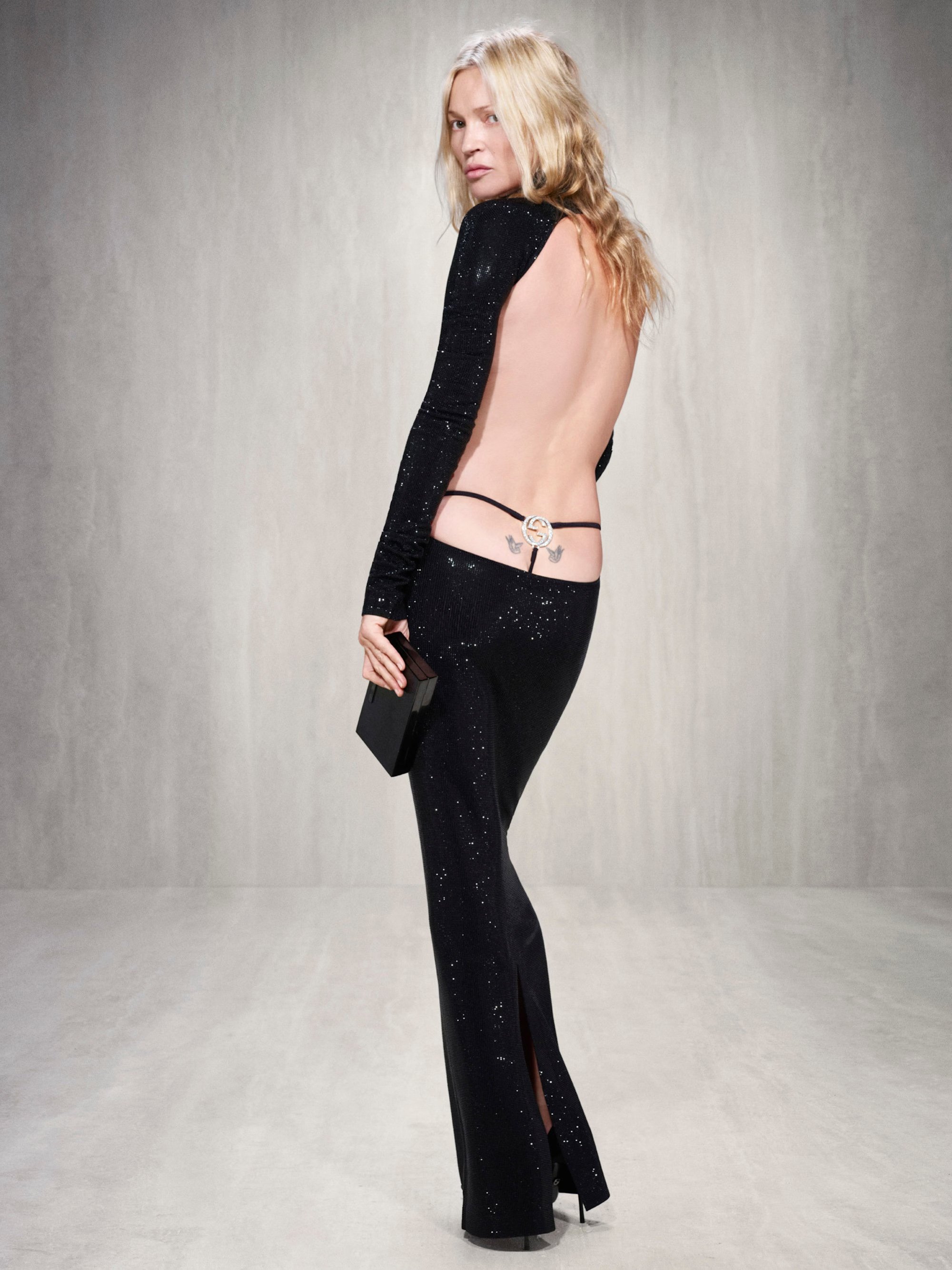
Full look Saint Laurent by Anthony Vaccarello
How cool! Did you enjoy performing in front of a live audience?
Yeah. I texted this to someone the other day. I did theatre, wanting to bring more theatrical training to film and to understand how to live through three to four pages of a scene in a play, which is actually quite short, and then maybe translate that to a two-page or half-page scene in a film. I wanted to have that thought process.
I came to find out that the biggest difference is that the audience is like a scene partner. You’re performing for their eyes, and you’re looking at their eyes. When you’re filming, you don’t have eyes other than your scene partners to look at. The audience is a third actor, basically. That’s the beauty of theatre; you think it’s just you and the other person on stage, but there’s always that third person you have to pay attention to.
But I think it also gives you more freedom to play a little with them, with their emotions, maybe improvise a bit more.
Yeah, absolutely. There were moments where we would hand things to them, and they would throw something back at us — like, do we toss something back, like an apple? It was different every single night. I could sit next to someone in the audience, in a completely different place, a completely different interaction. It was really cool.
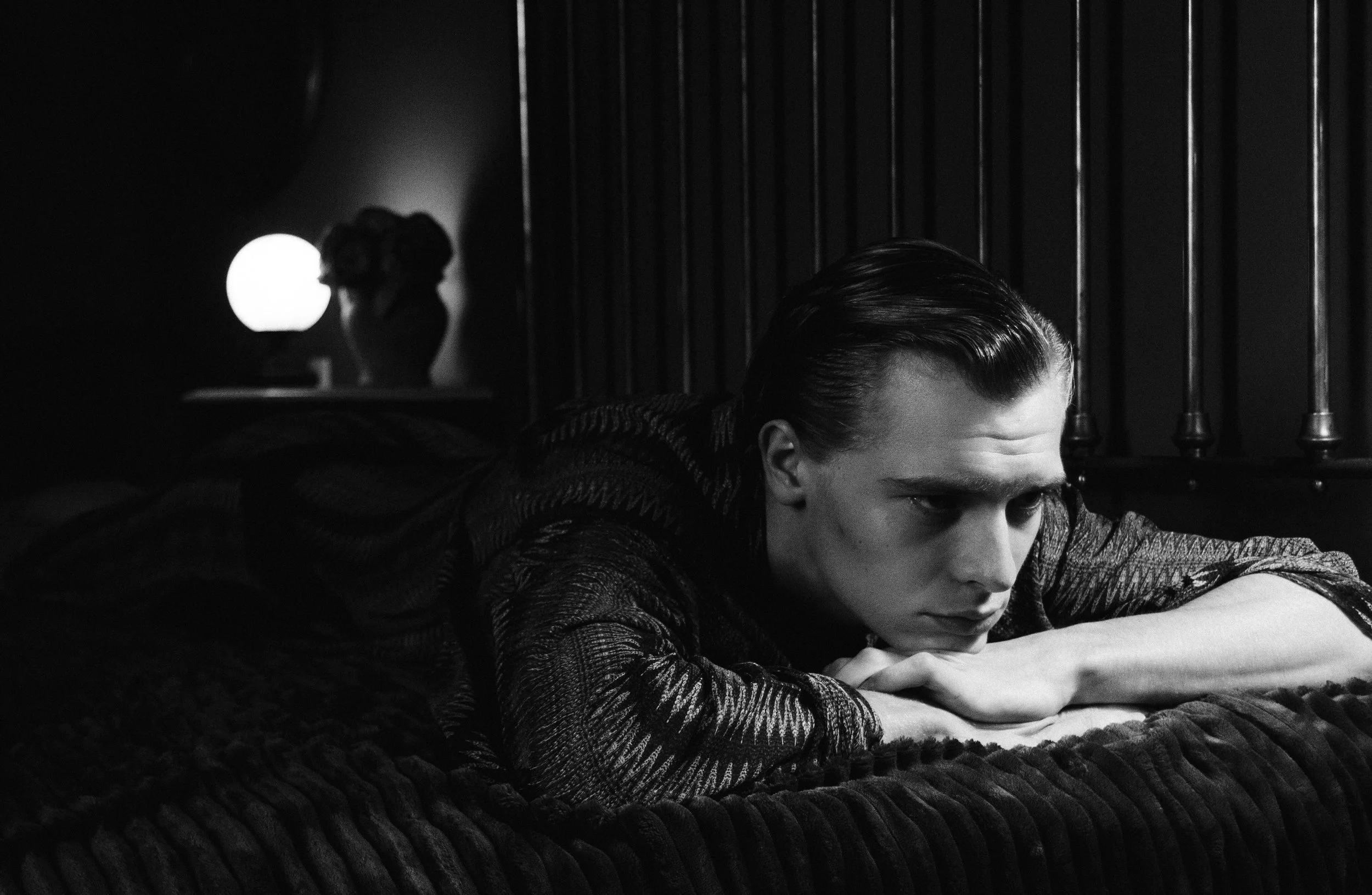
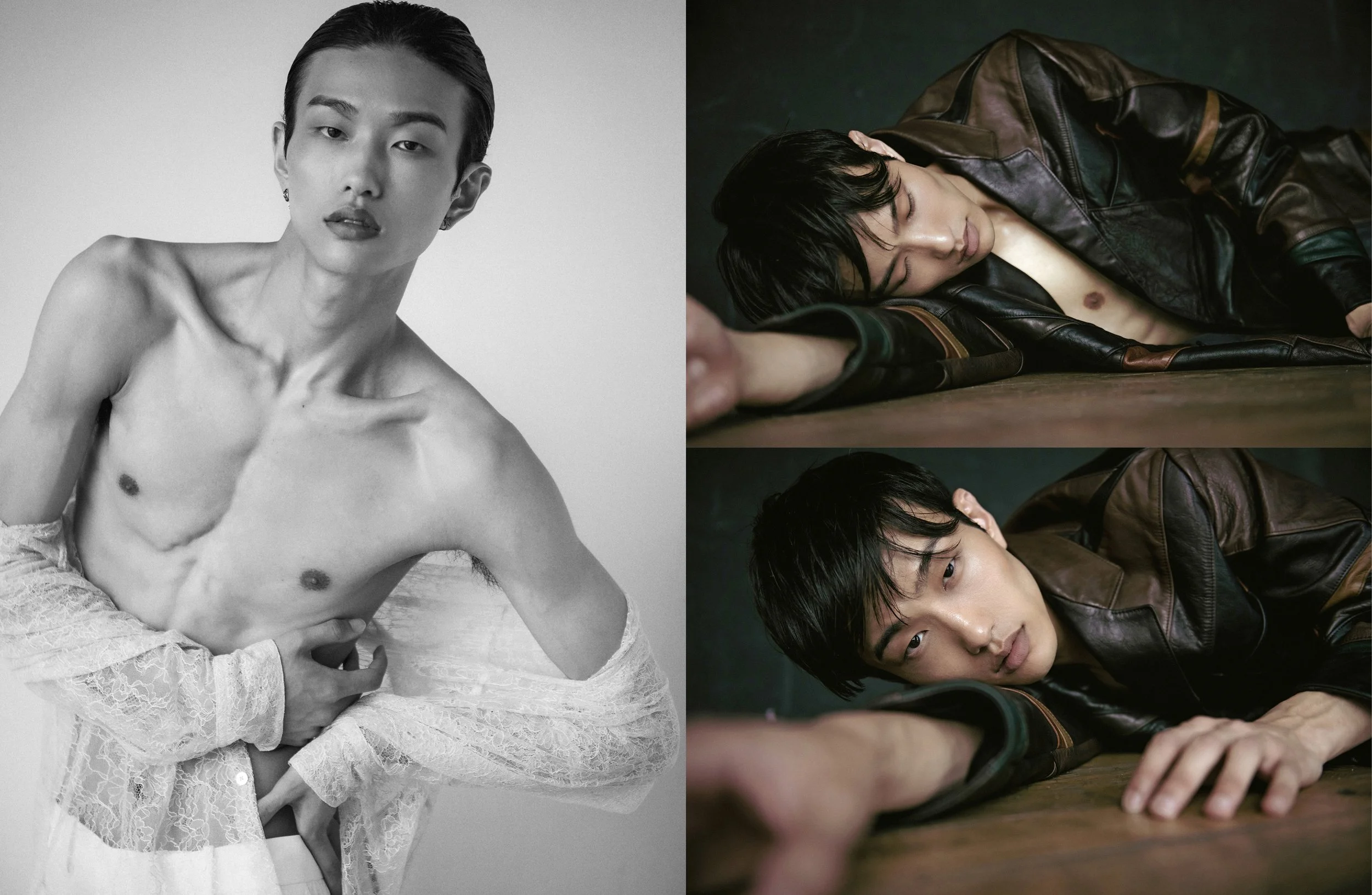
Left T-shirt Zadig&Voltaire
Right Pants and jacket Zadig&Voltaire, boots Tom Ford
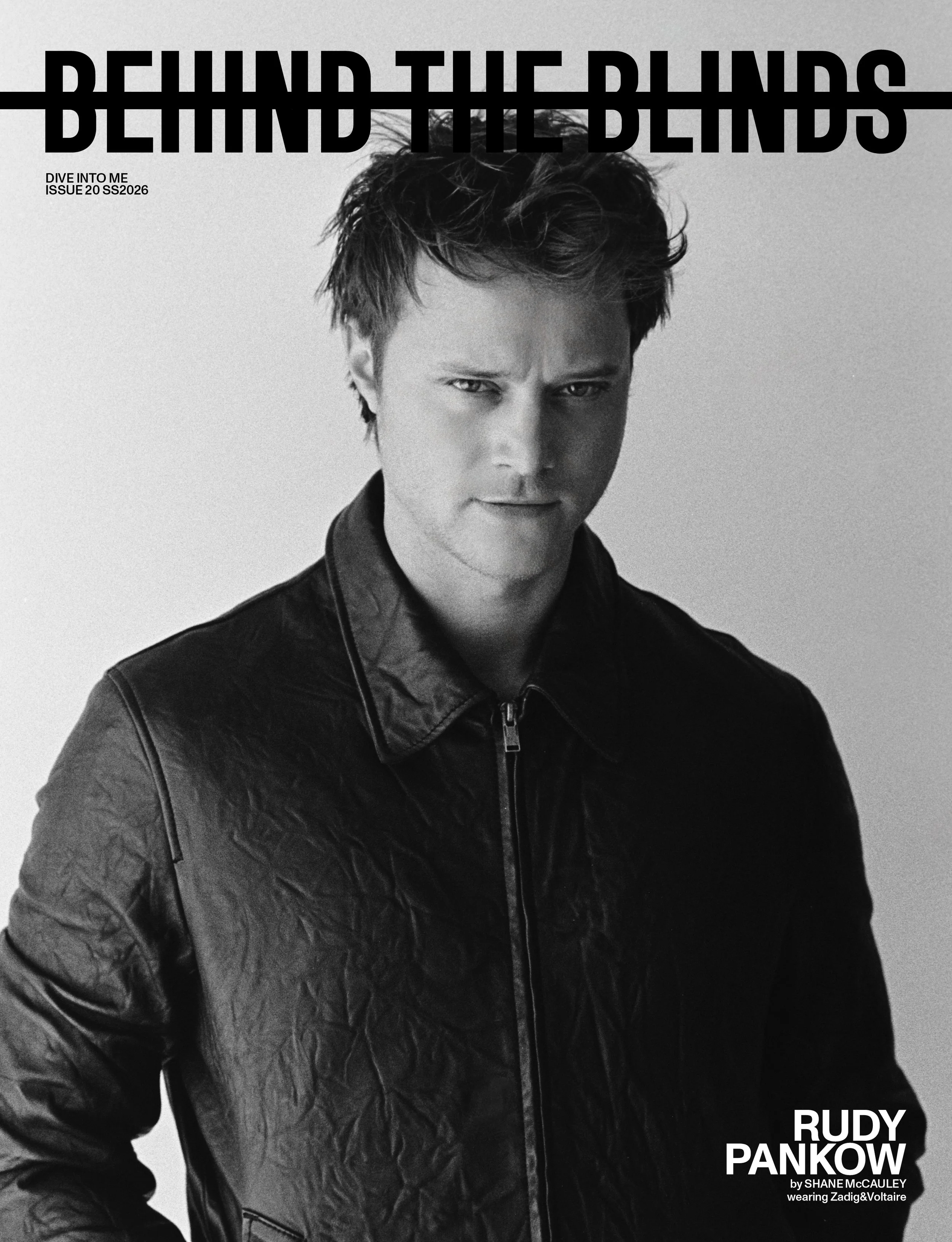
BTB20 DIVE INTO ME
RUDY PANKOW
by Shane McCauley
Issue SS26
+++
Delivery From April 26
Interview by Carolina Benjumea
Photography by Shane McCauley
Fashion by Sharon Chitrit
EIC Michael Marson
Casting by Imagemachine cs
Grooming by Christine Nelli at Forward Artists
Stylist’s assistant Alex Ben Naim