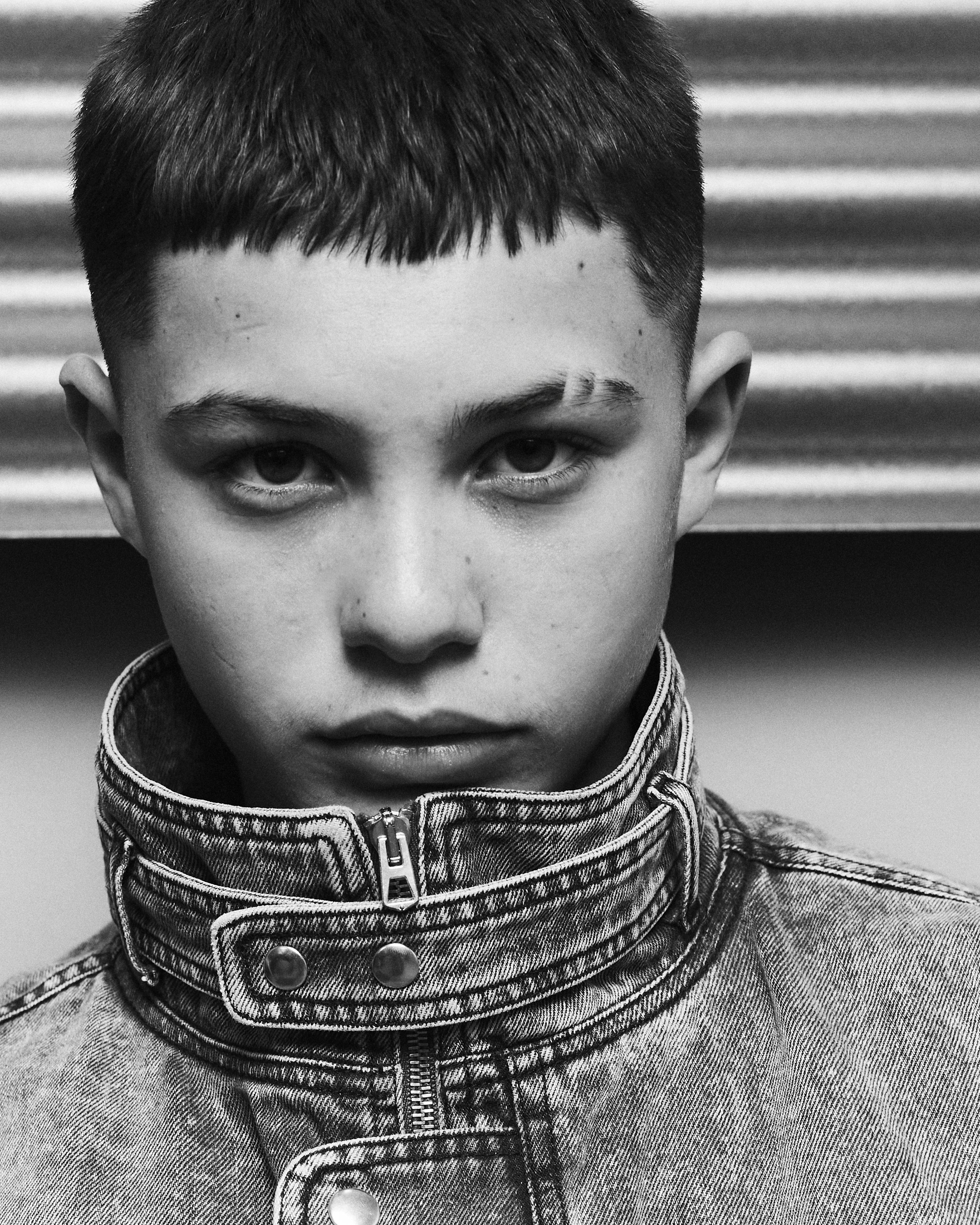
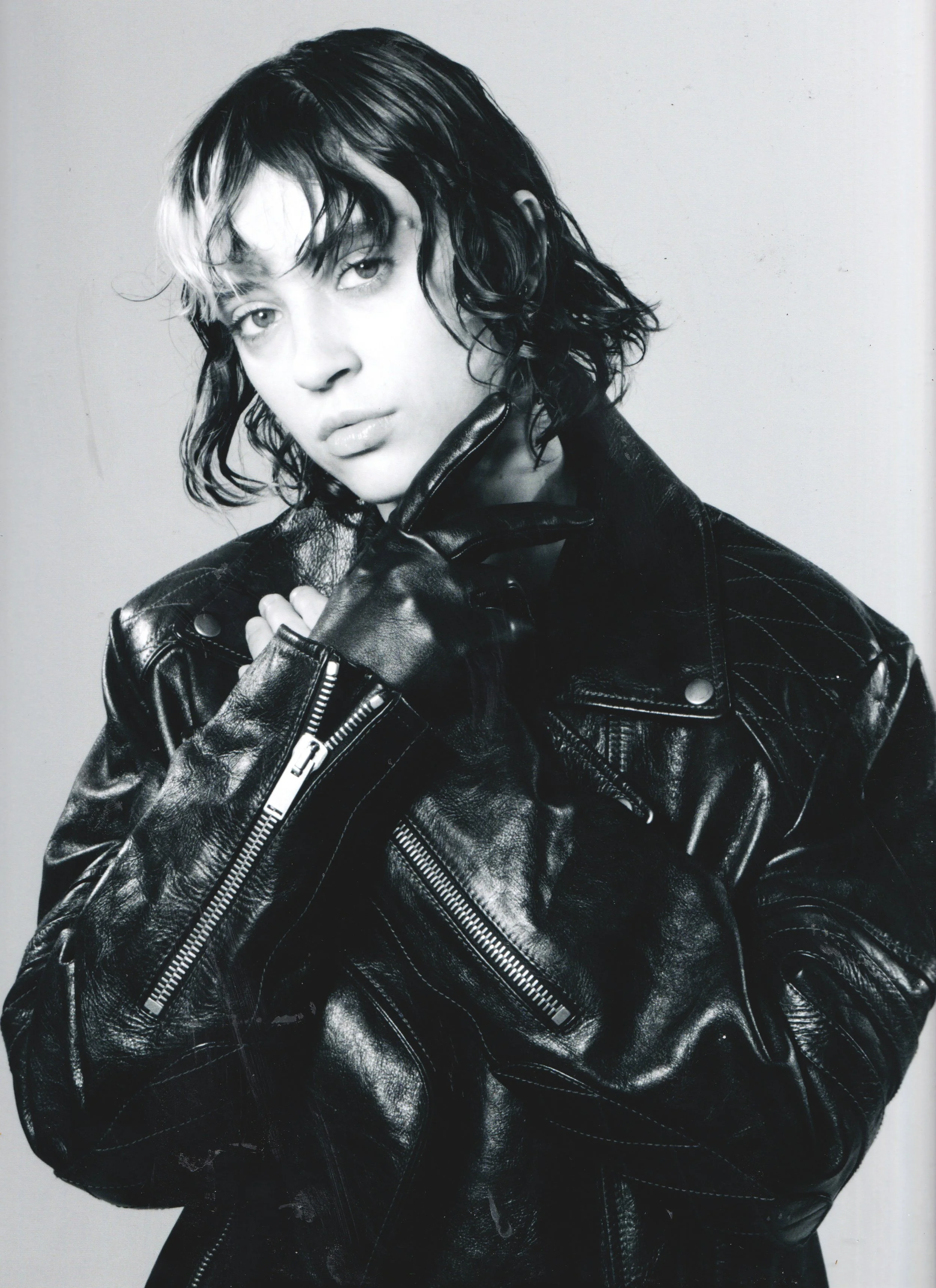
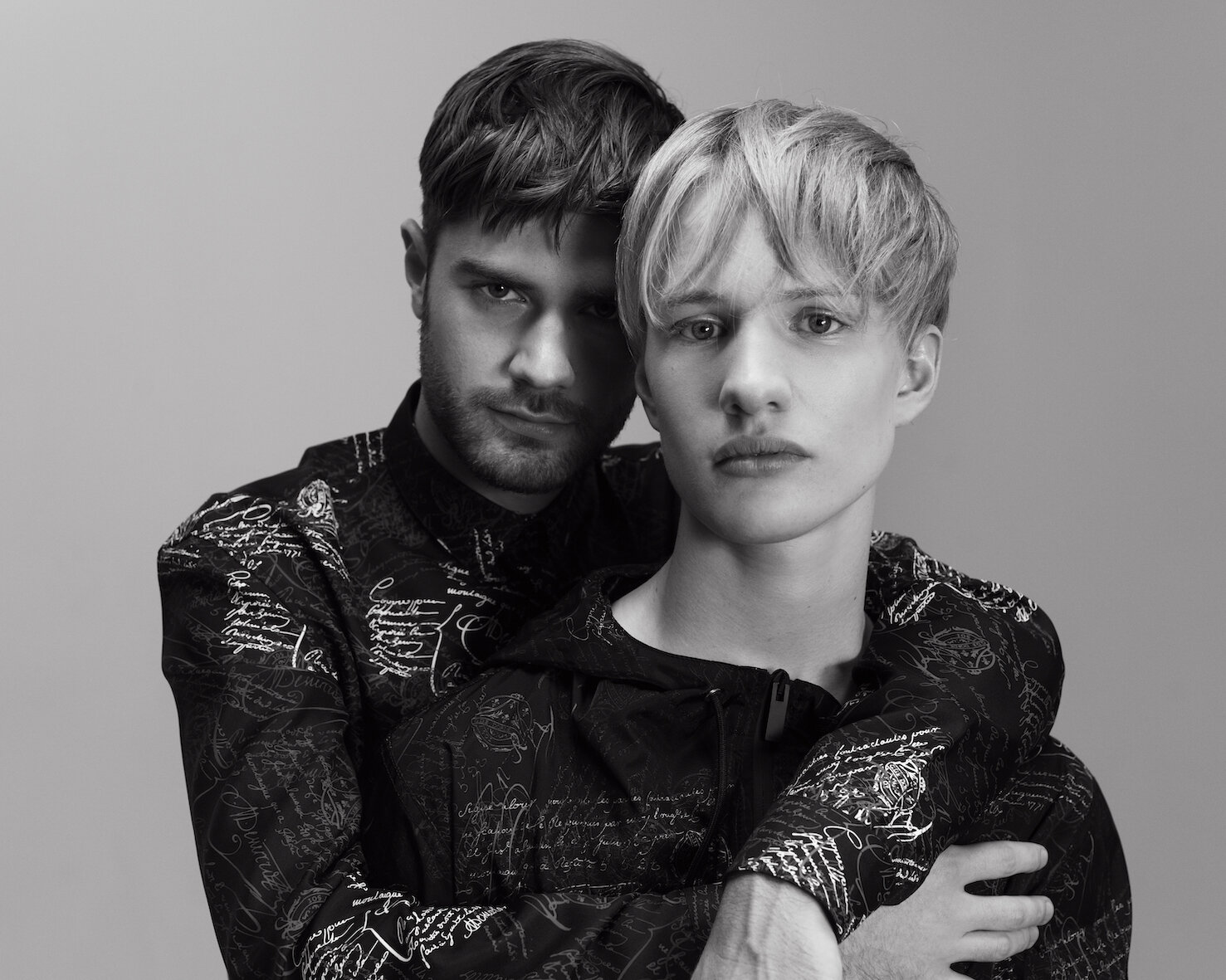
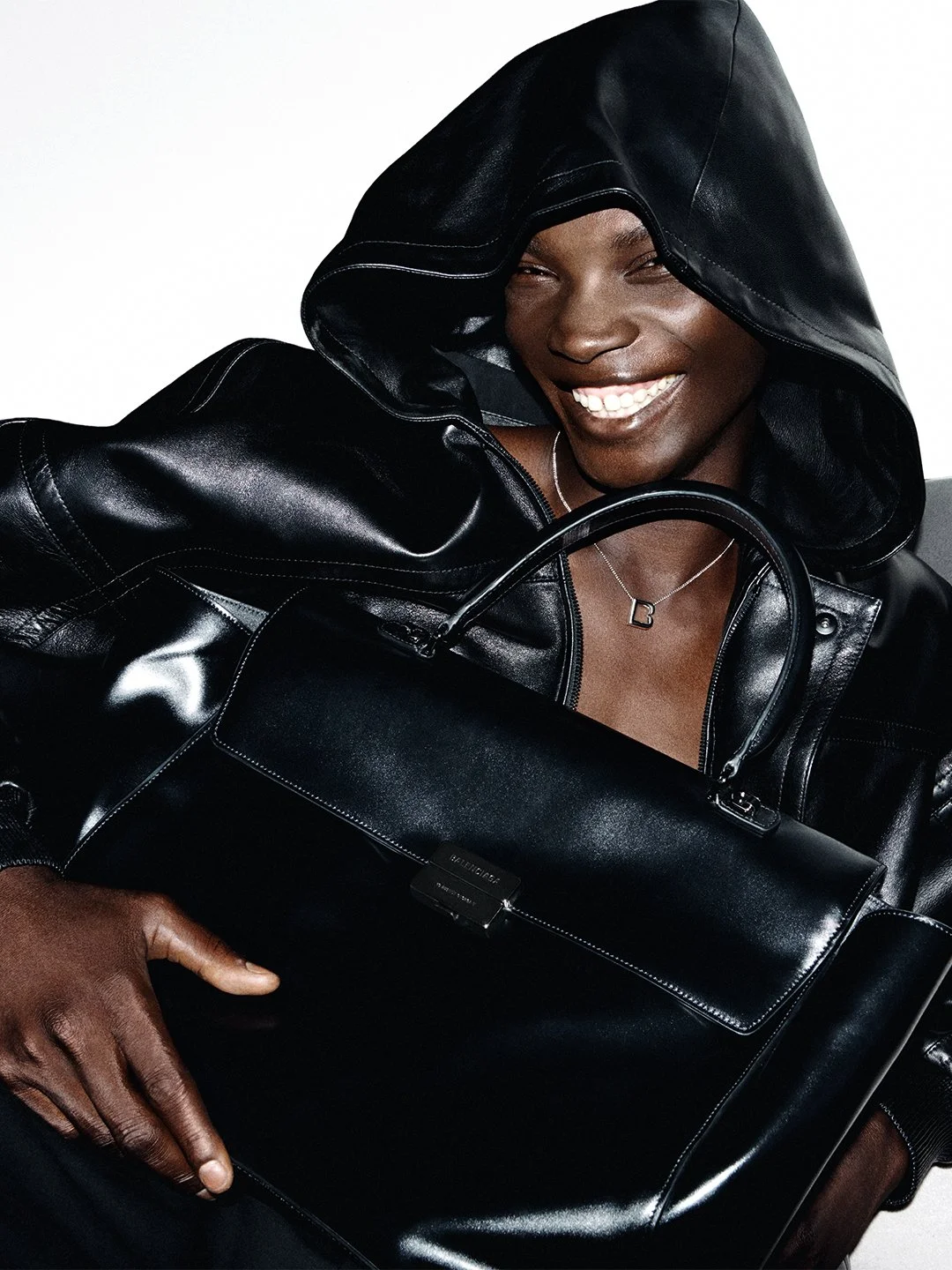
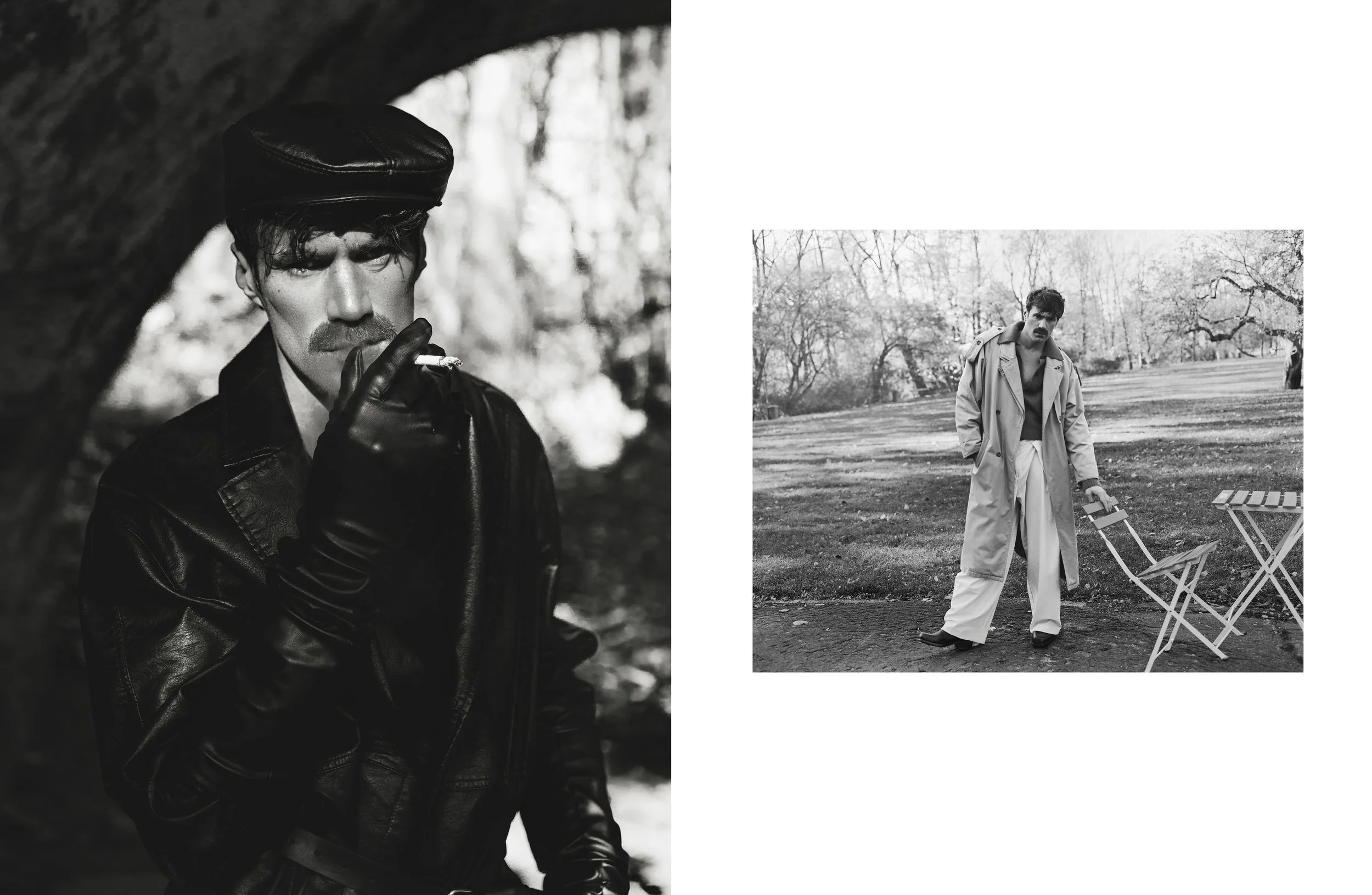
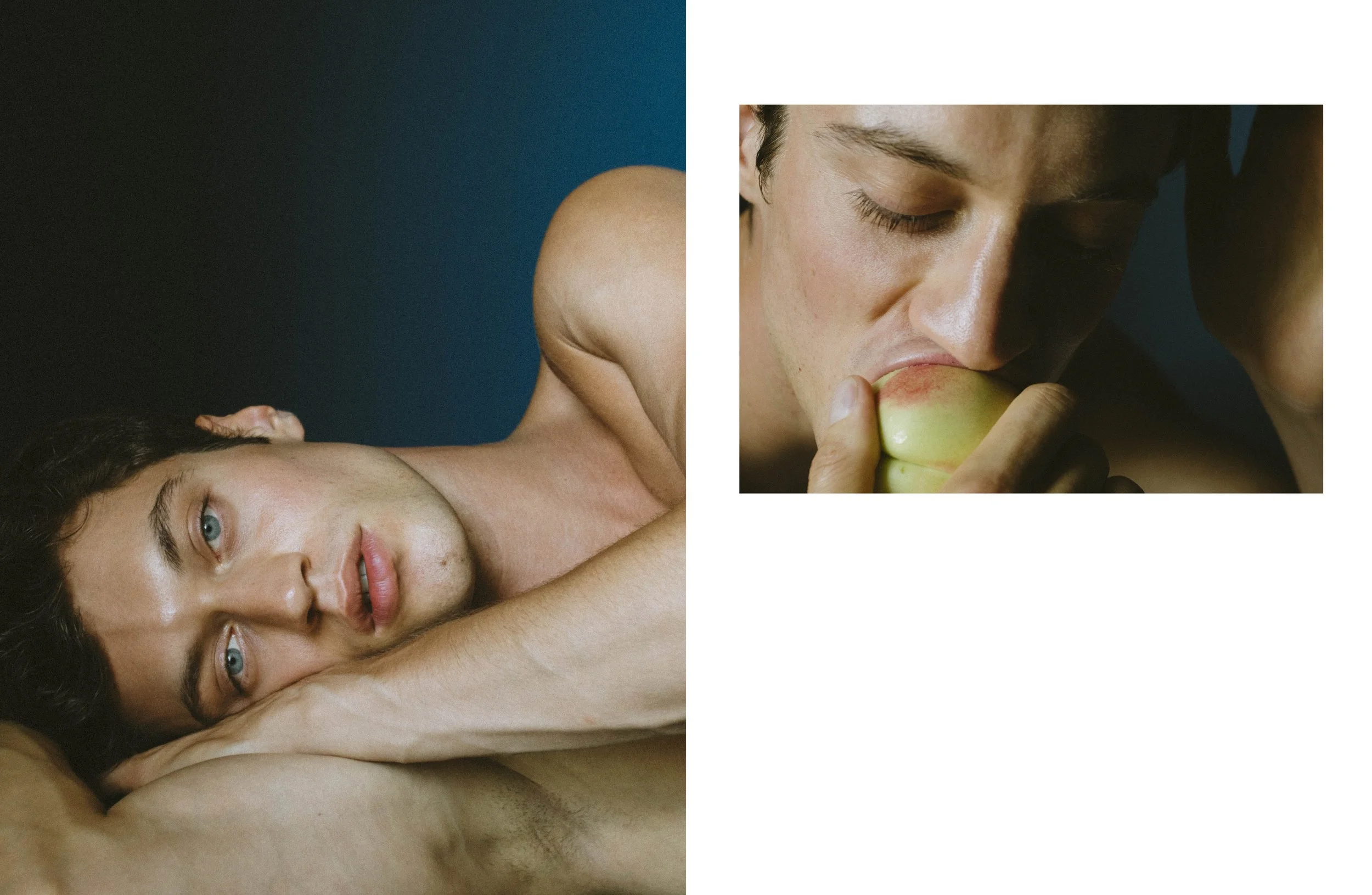
Jessé Rémond Lacroix, known simply as JESSÉ, performs Message Personnel, a deeply moving comedy show exploring his childhood and identity as a bullied queer boy who grew up without knowing his biological father. Premiering in 2022 to an audience of just twenty people, the show is now set to play the Cirque Royal in Brussels, a 2,000-seat venue. A firm believer that live comedy takes time, Jessé got his break when the producer of Florence Foresti, Laura Felpin, and Paul Mirabel spotted his talent and took him under her wing. He is now announcing the show’s final dates for 2027. Already a busy year for the comedian – now also a radio host and author – he recently released his novel Les Bateaux sur la terrasse. Describing himself as a “working machine,” Jessé views his work as a house of interconnected rooms, each exploring his stories through distinct formats and tones.
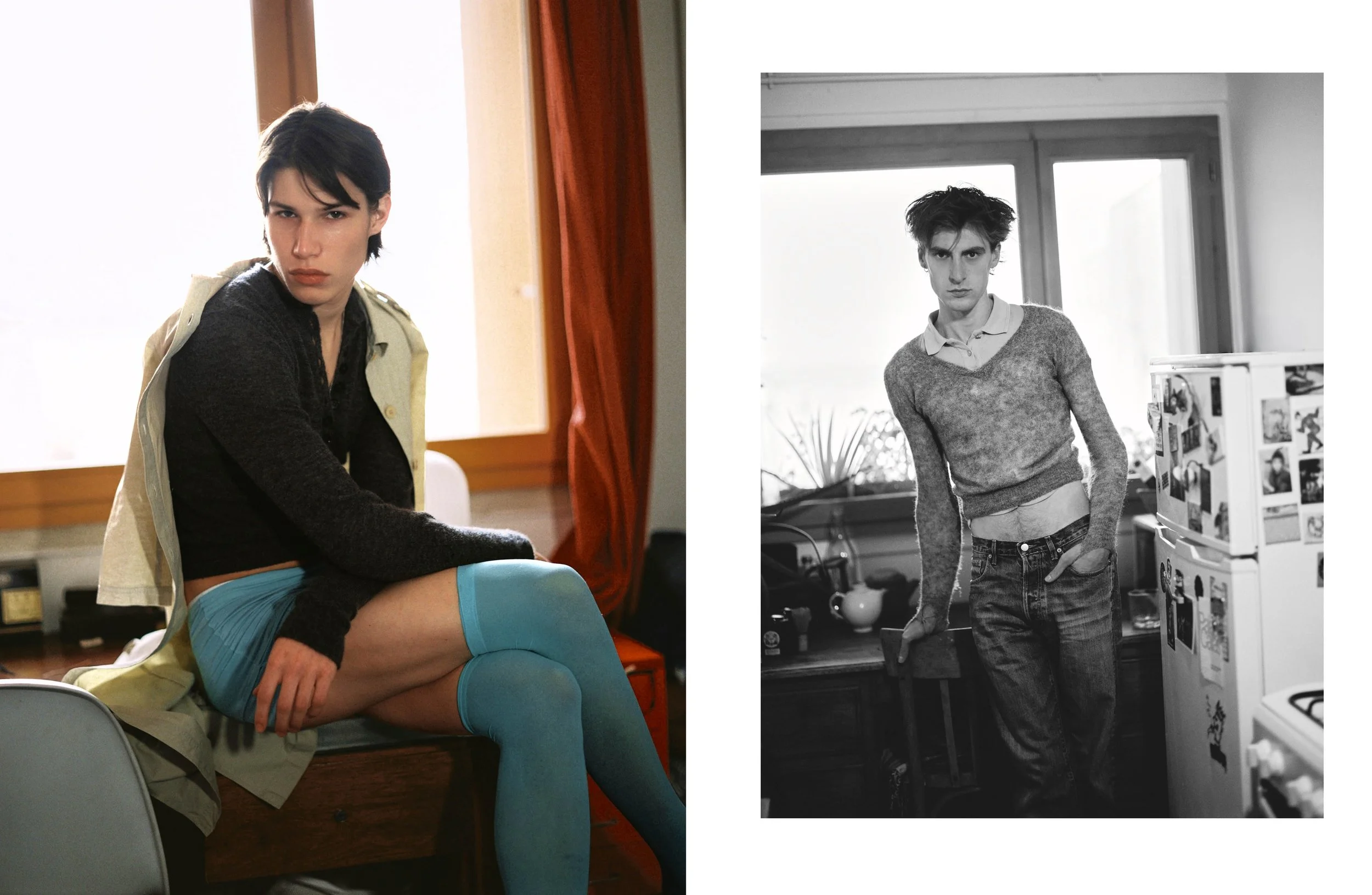
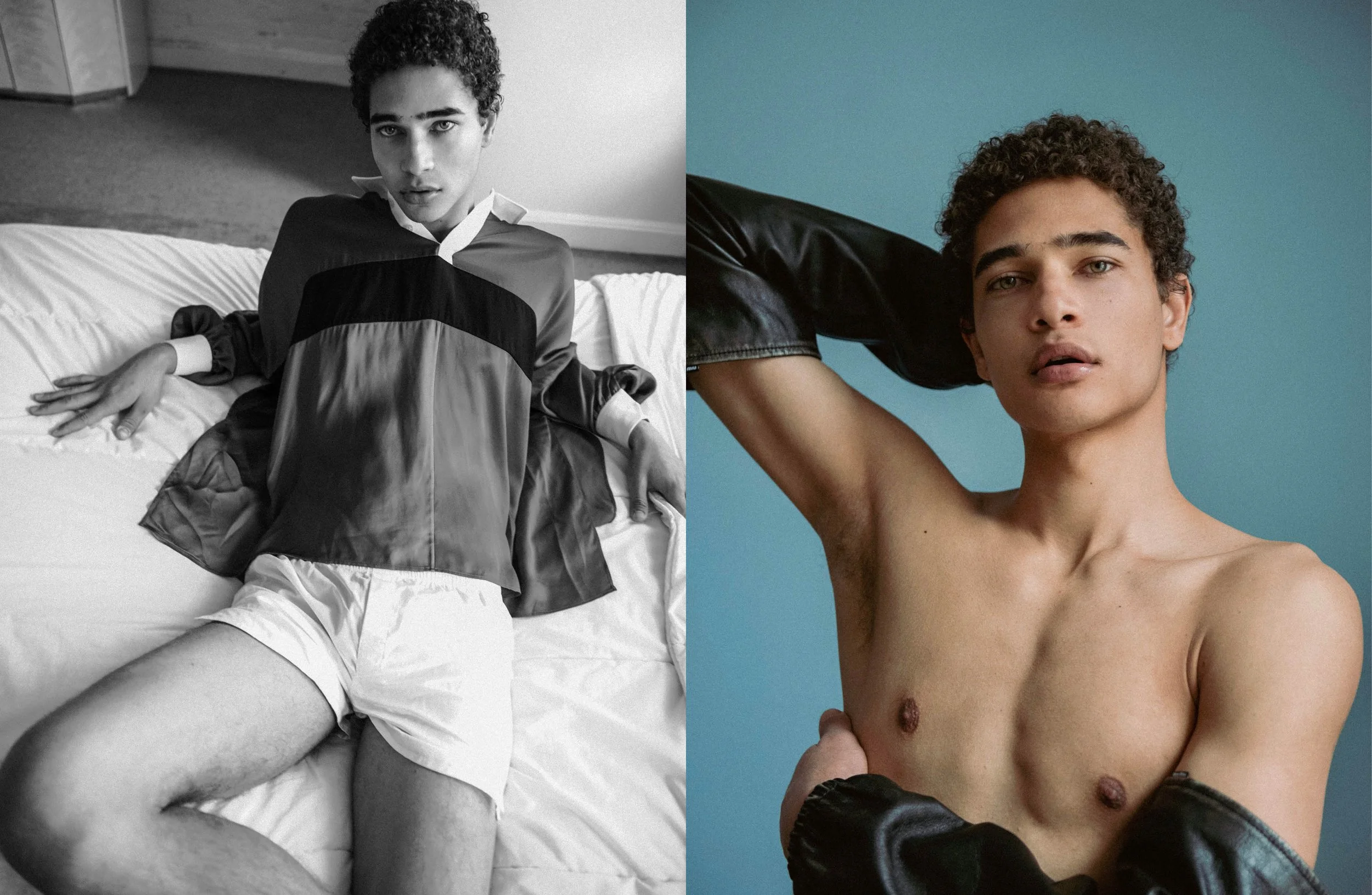
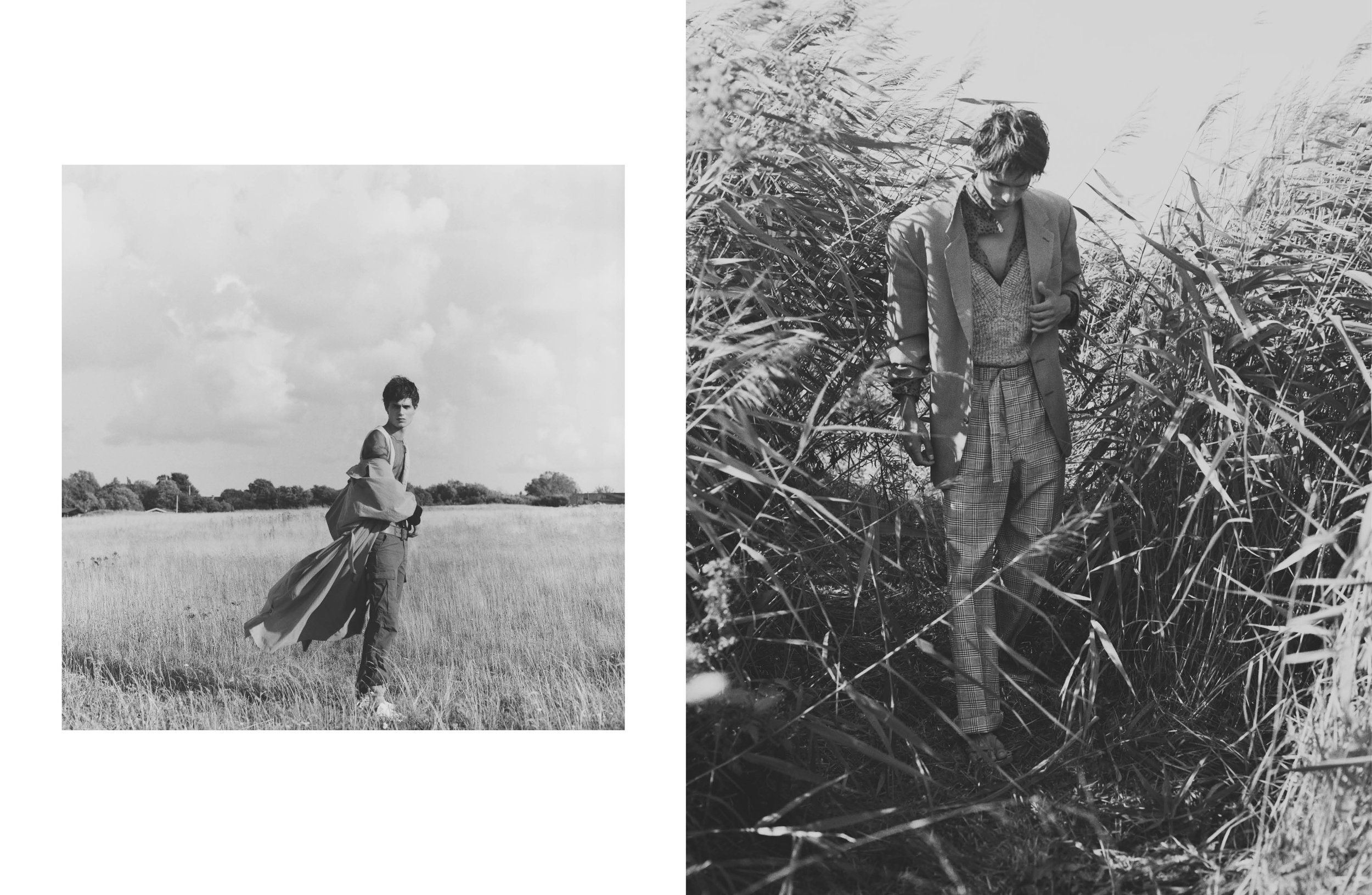
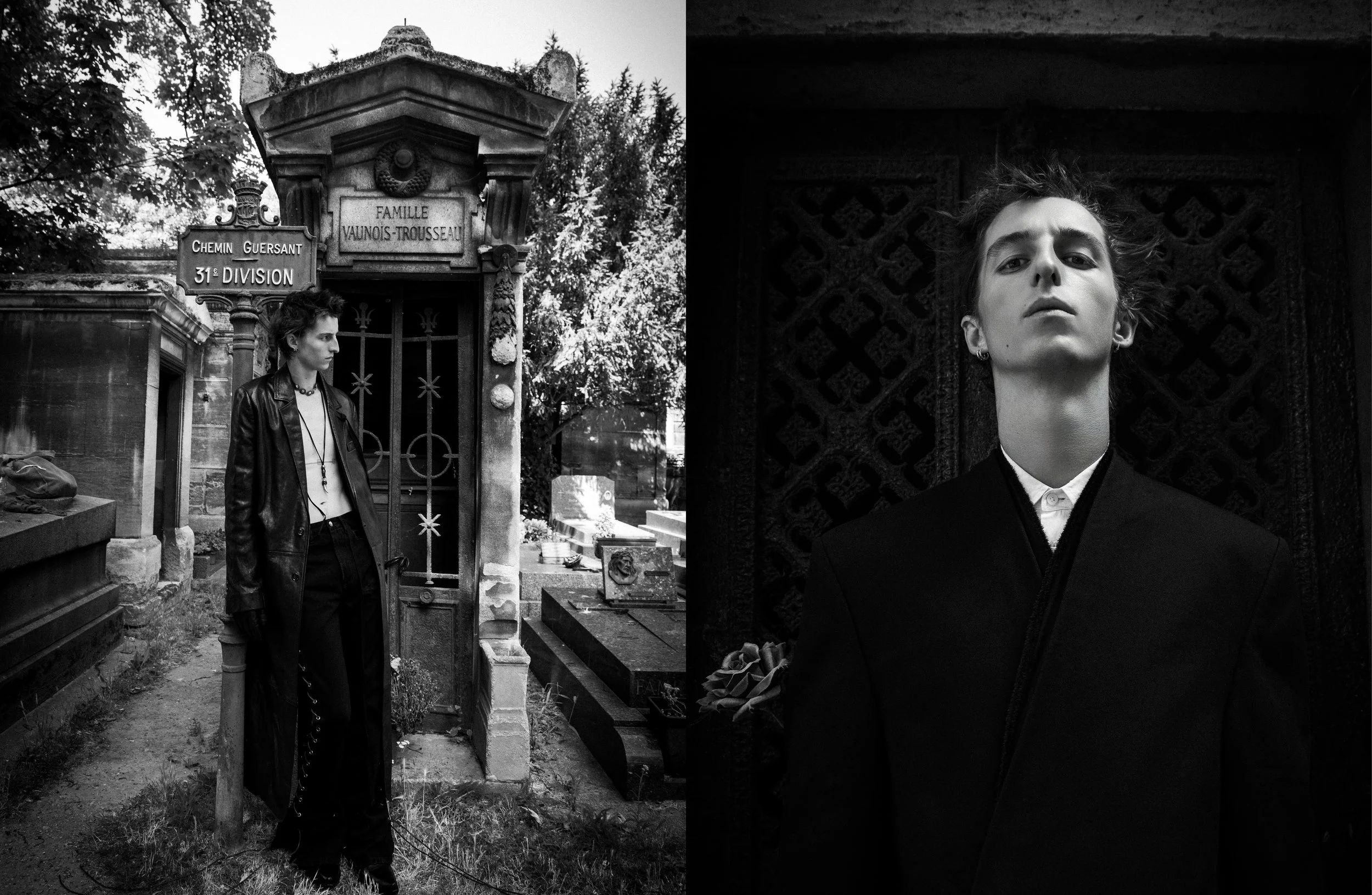
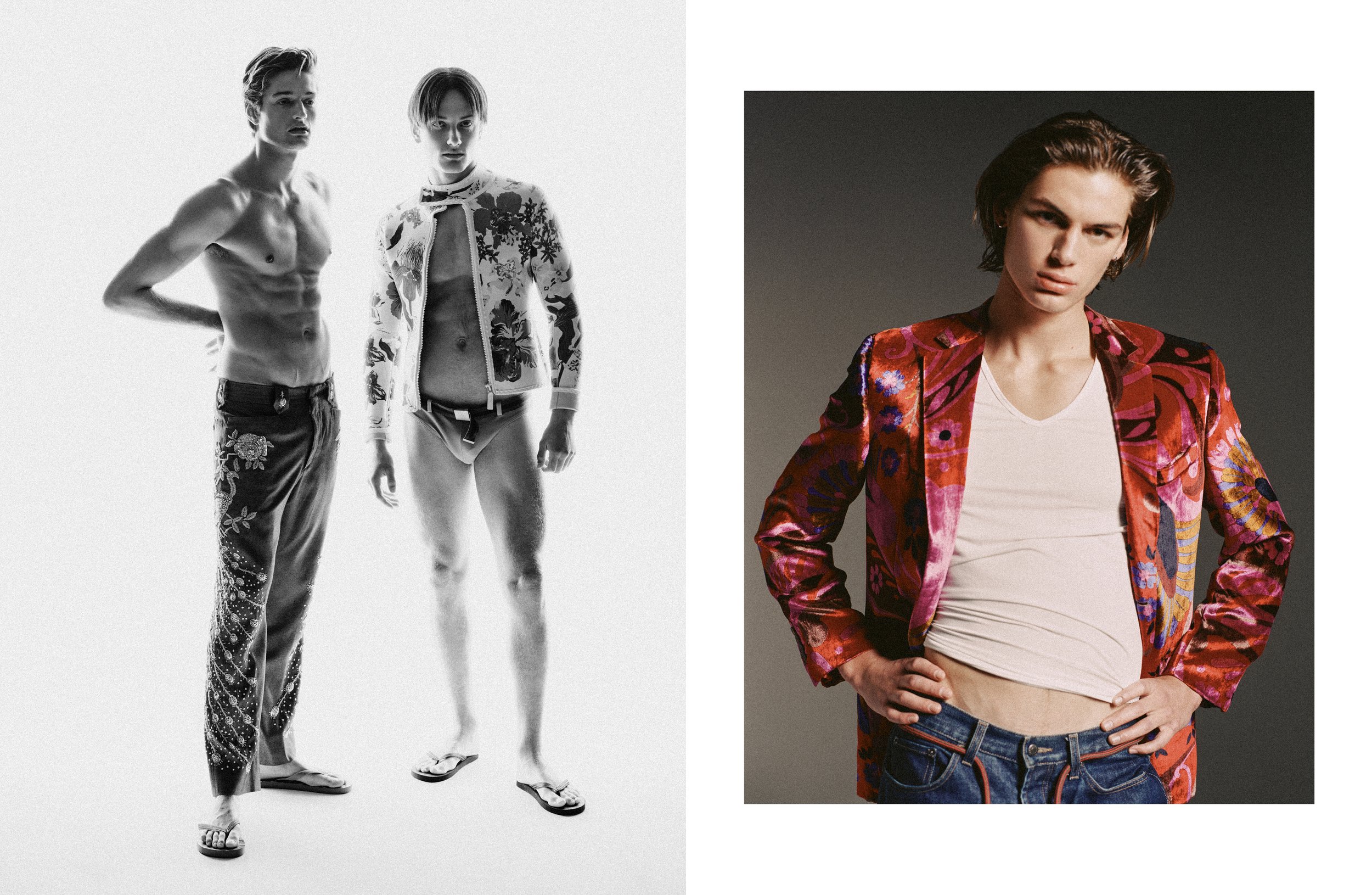
Left Full look Prada
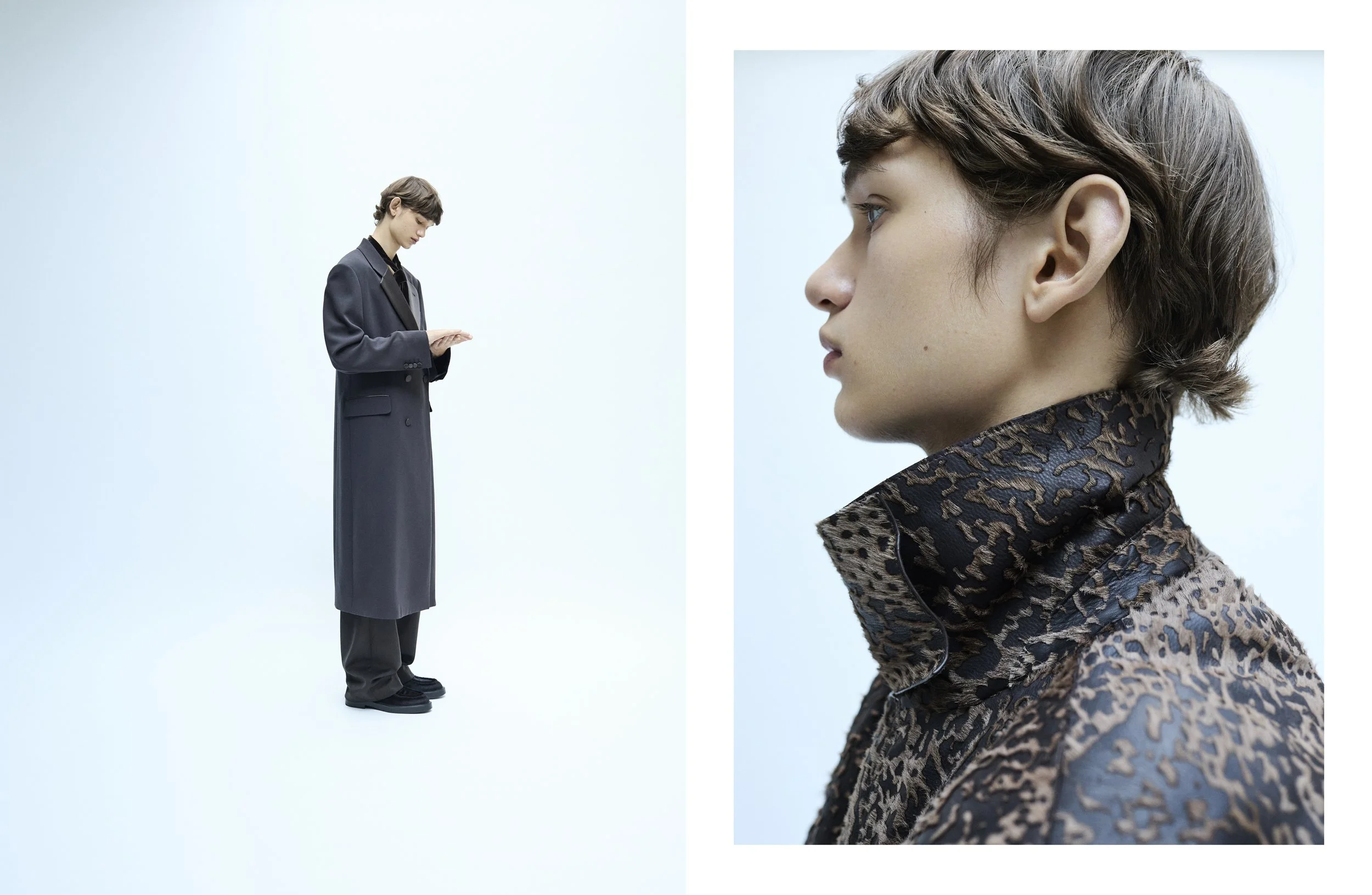
Right Coat Gucci
You started writing your show Message Personnel in 2021. How did the idea for the show come to you?
Well, I started this show during lockdown, when a lot of people, basically all my friends, were creating things and writing so as not to waste time while the world had stopped. So I started scribbling the first pages, the first lines of this show. Then the world started again. I kept going, finished writing it, and finally started performing it in February 2022 in a very small venue called La Petite Loge in Paris. I rented it myself, and it seated 20 people. It was once a week, and I basically prayed that people would notice me, that a producer would come.
How has the show evolved over the years, and how do you adapt to each crowd?
It’s changed a lot. When I’m on tour, I try to open the show differently in each location by talking about that city. Sometimes I have to cut things, add back in – that’s live performance, constantly moving and constantly evolving. Above all, I improvise quite a bit now. I discovered that I really like it. It’s maybe ten minutes total, but it changes everything depending on how the audience reacts.
And that creates real interaction with the audience.
That’s extremely important. That there’s real interaction, and it feels like we’re basically among friends.
In the show, you open up and tell a story based on your childhood. What did you want to express?
I was a child who had a pretty rough childhood because I was bullied in primary and middle school. I was a bit too effeminate for the pack. So there were insults, hits, humiliations. I was shaped by that. When I got to high school, it stopped, and I finally blossomed. The show talks about that: what becomes of a bullied child, and what becomes of the bullies. It also tells my personal story of not knowing my biological father. My mother cheated on my father and got pregnant by her lover, but my father still recognised me and raised me as his own son. So, in the show, I question that: whose children are we? Are we the children of those who raised us, or of those who planted the seed?
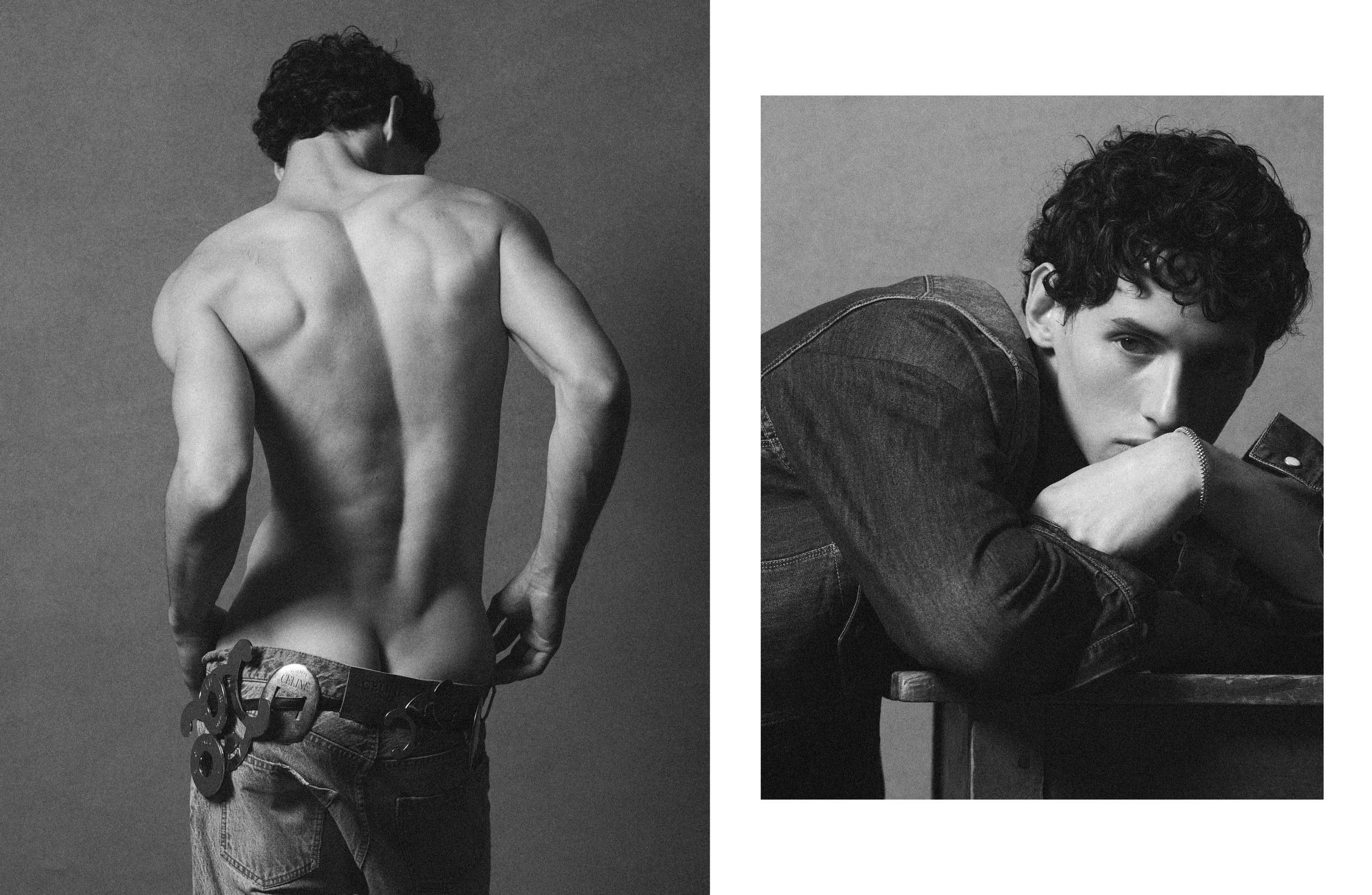
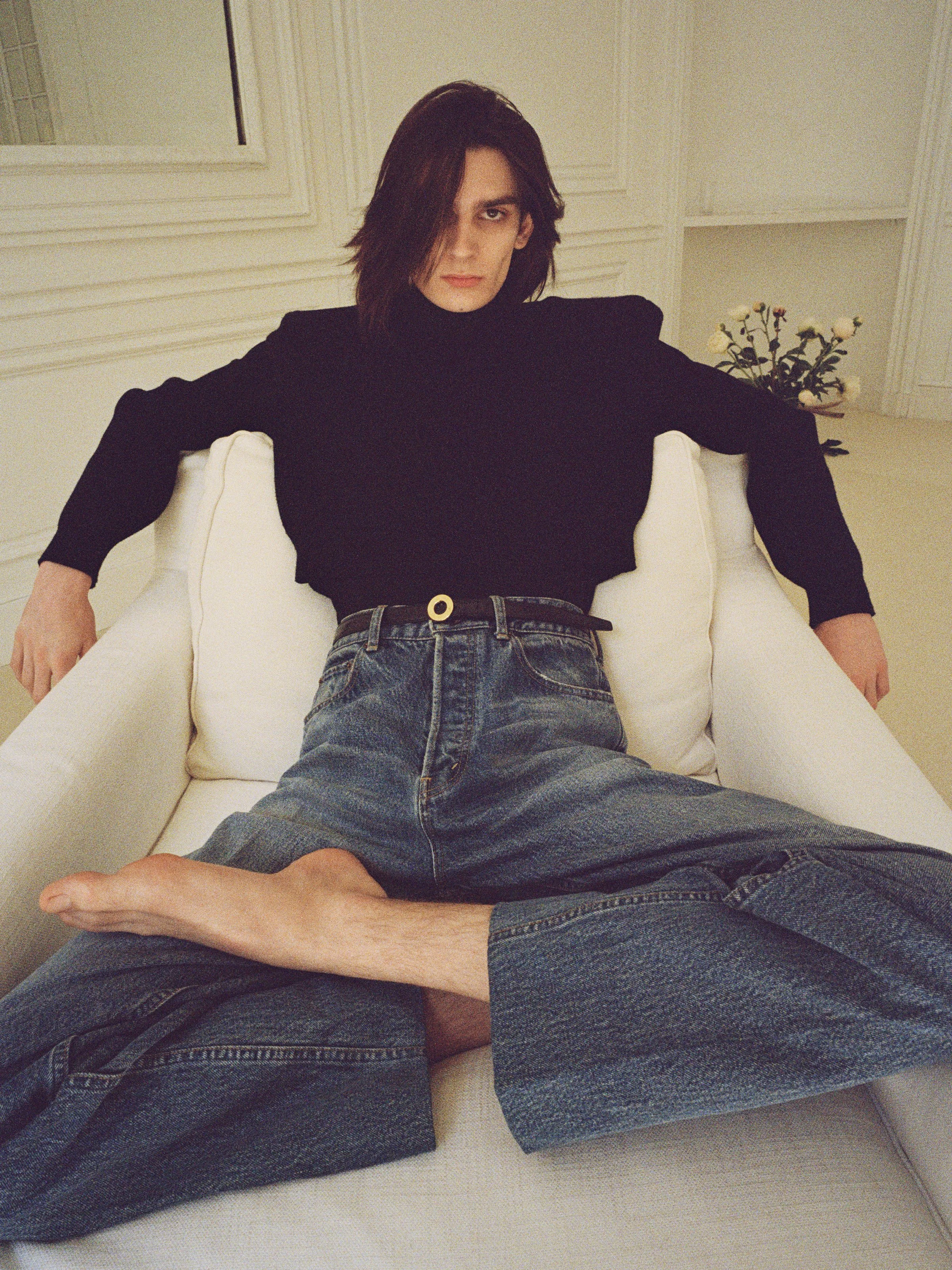
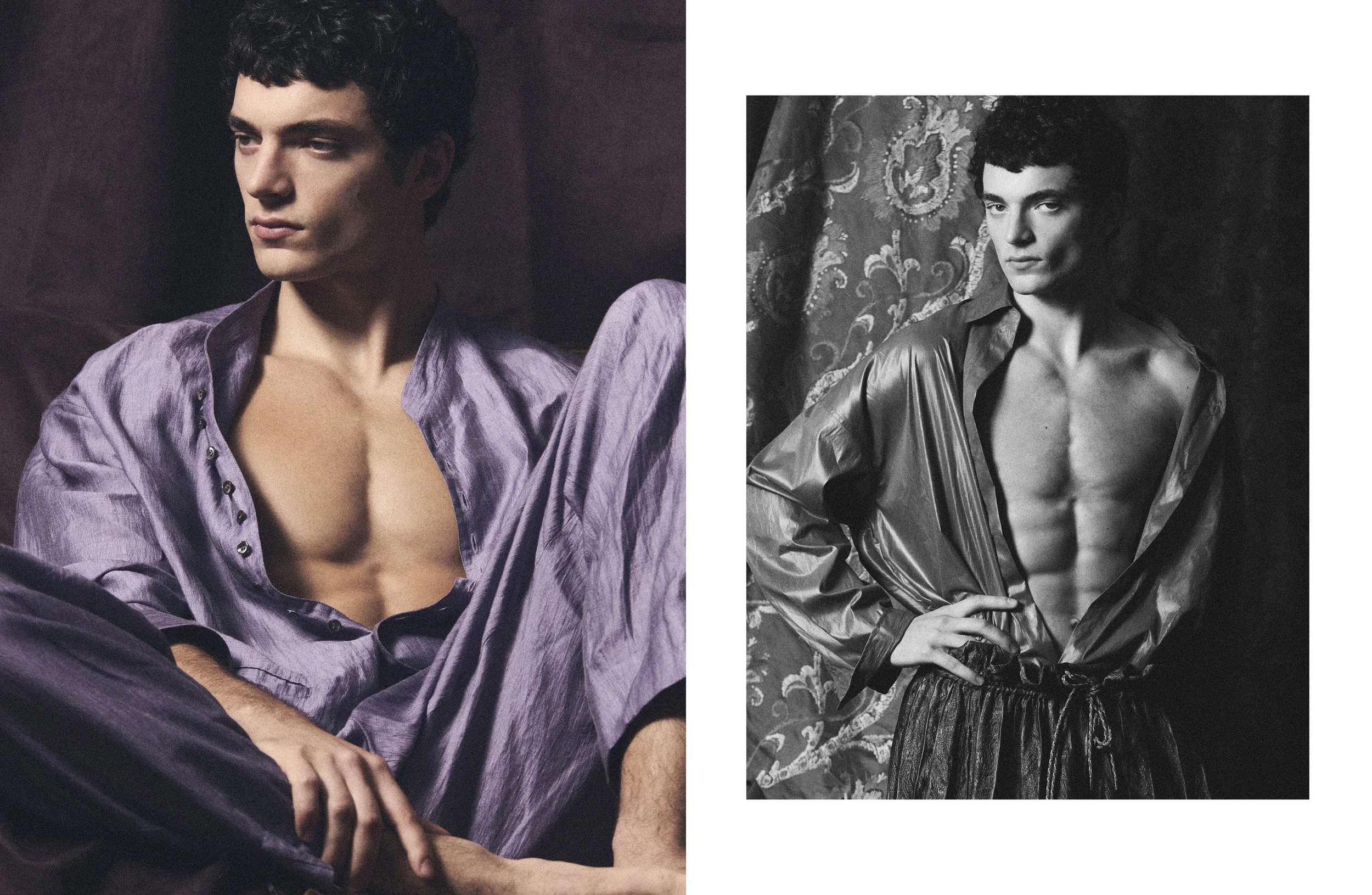
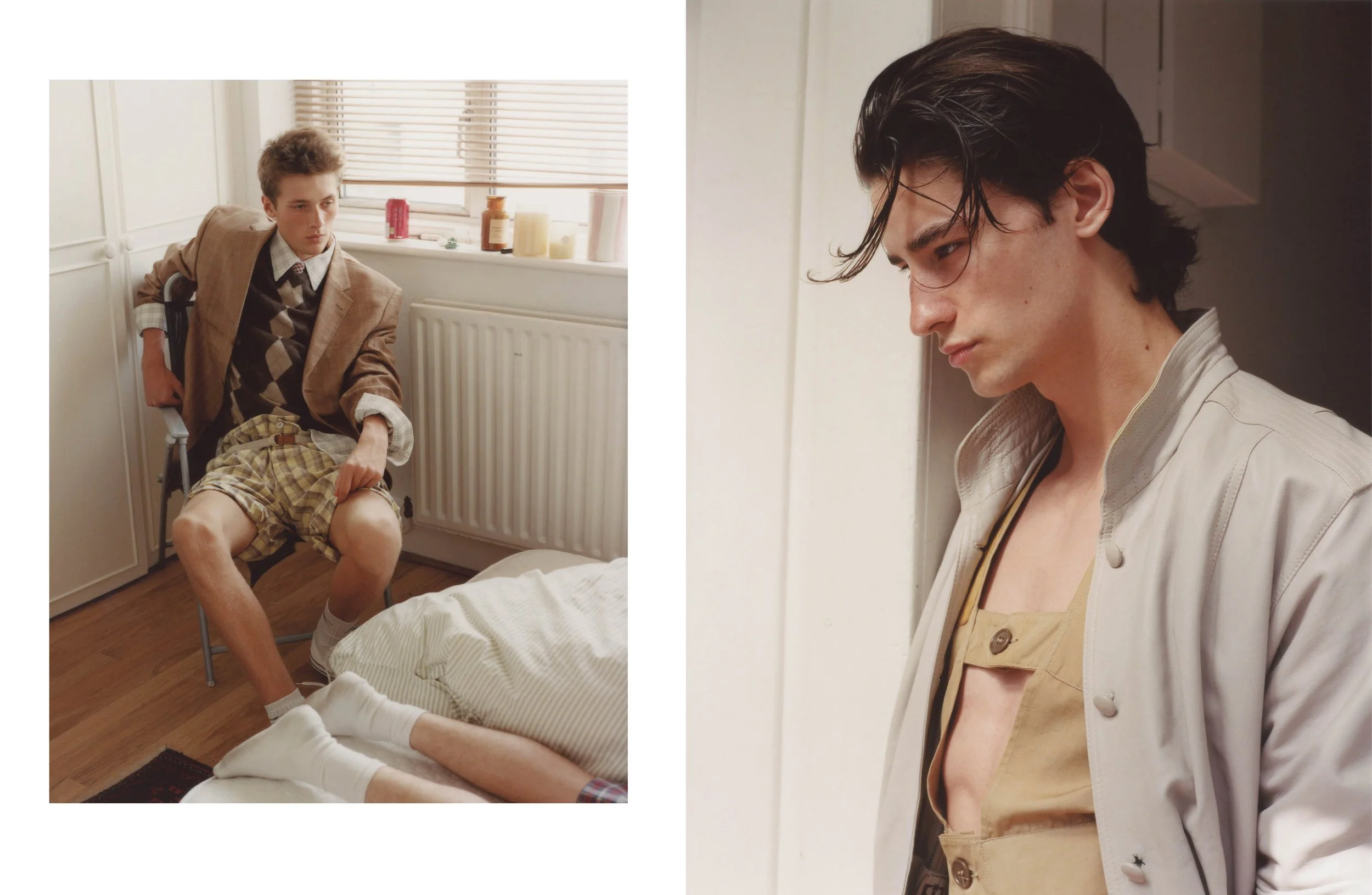
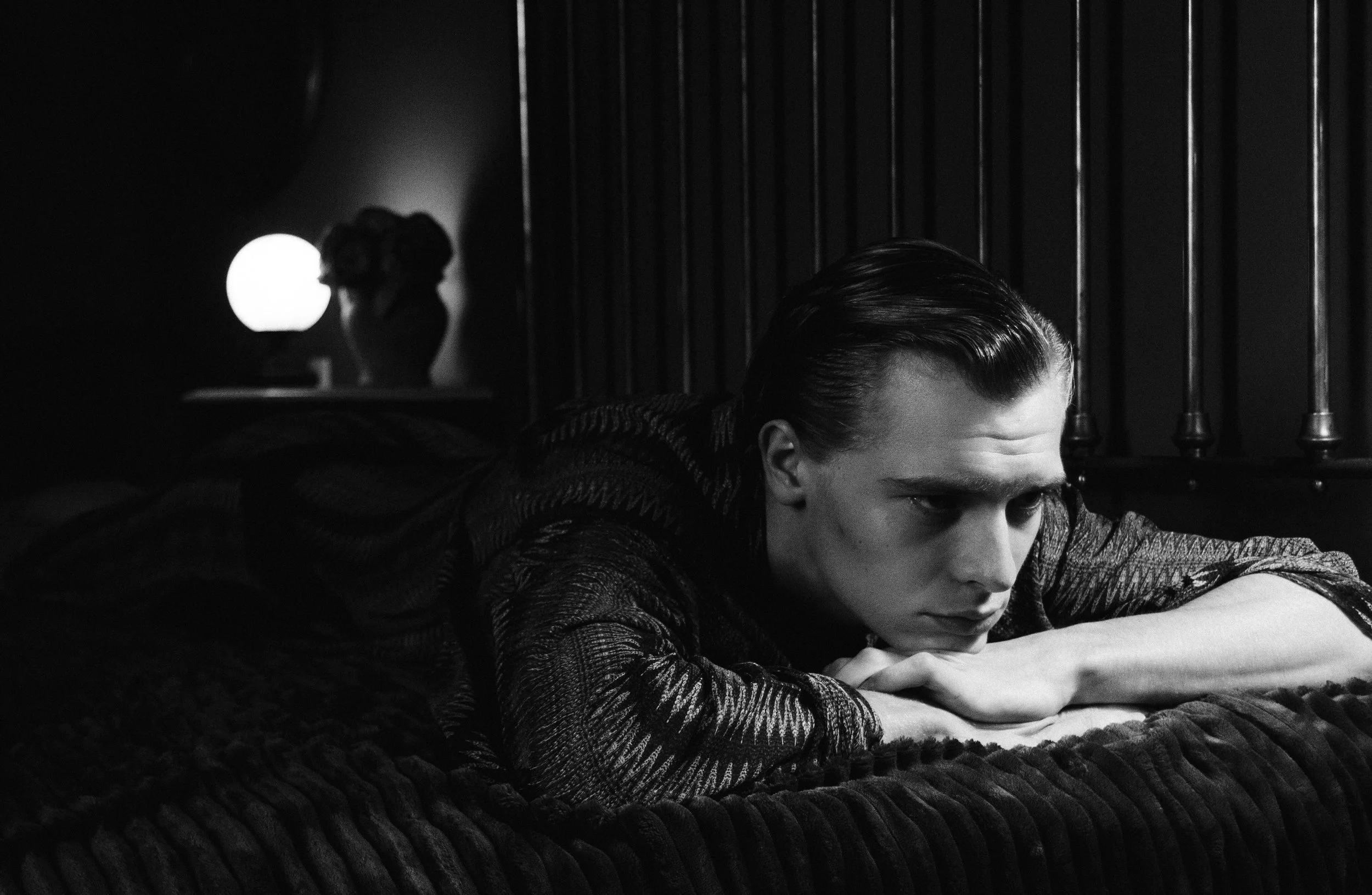
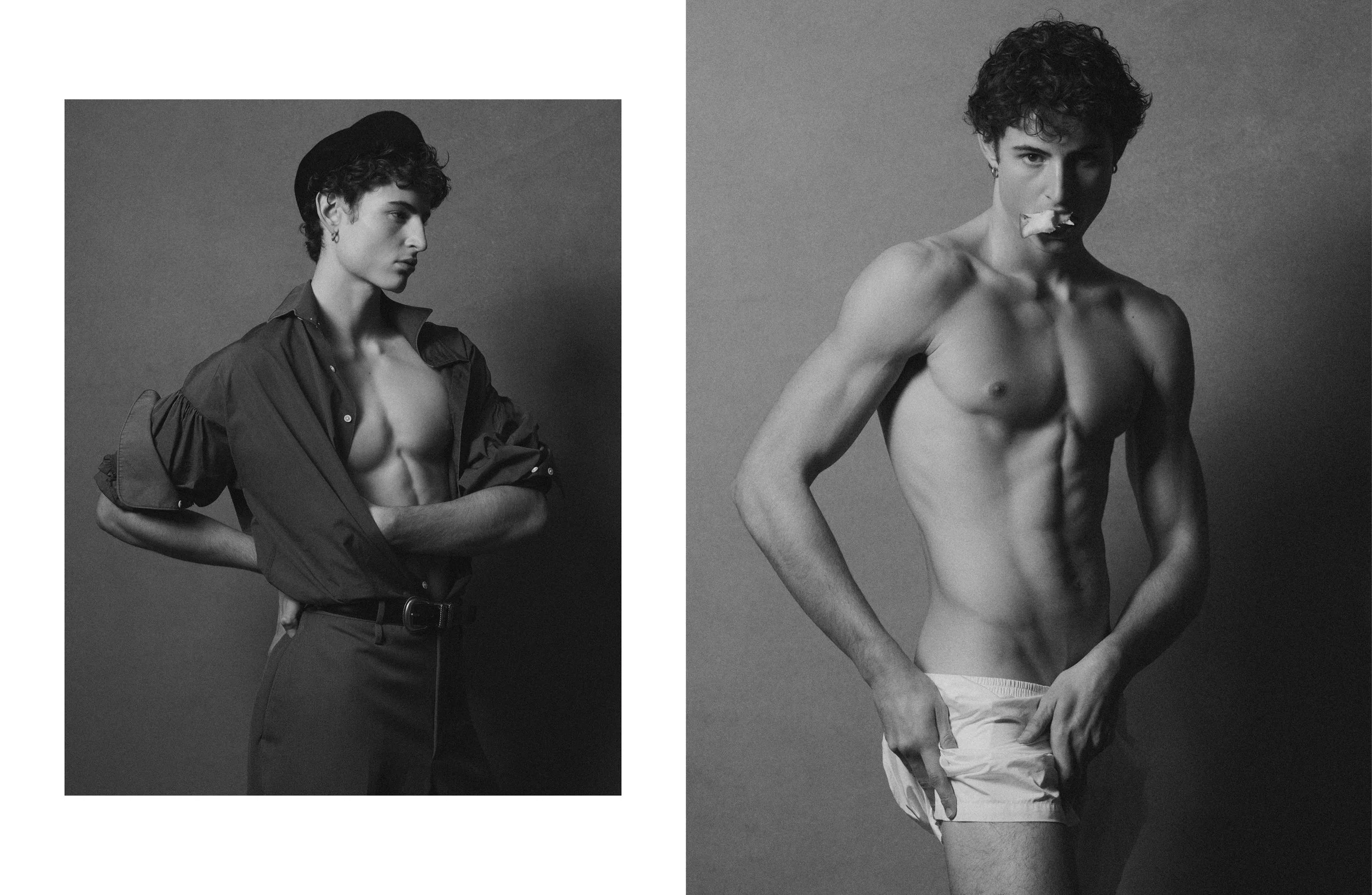
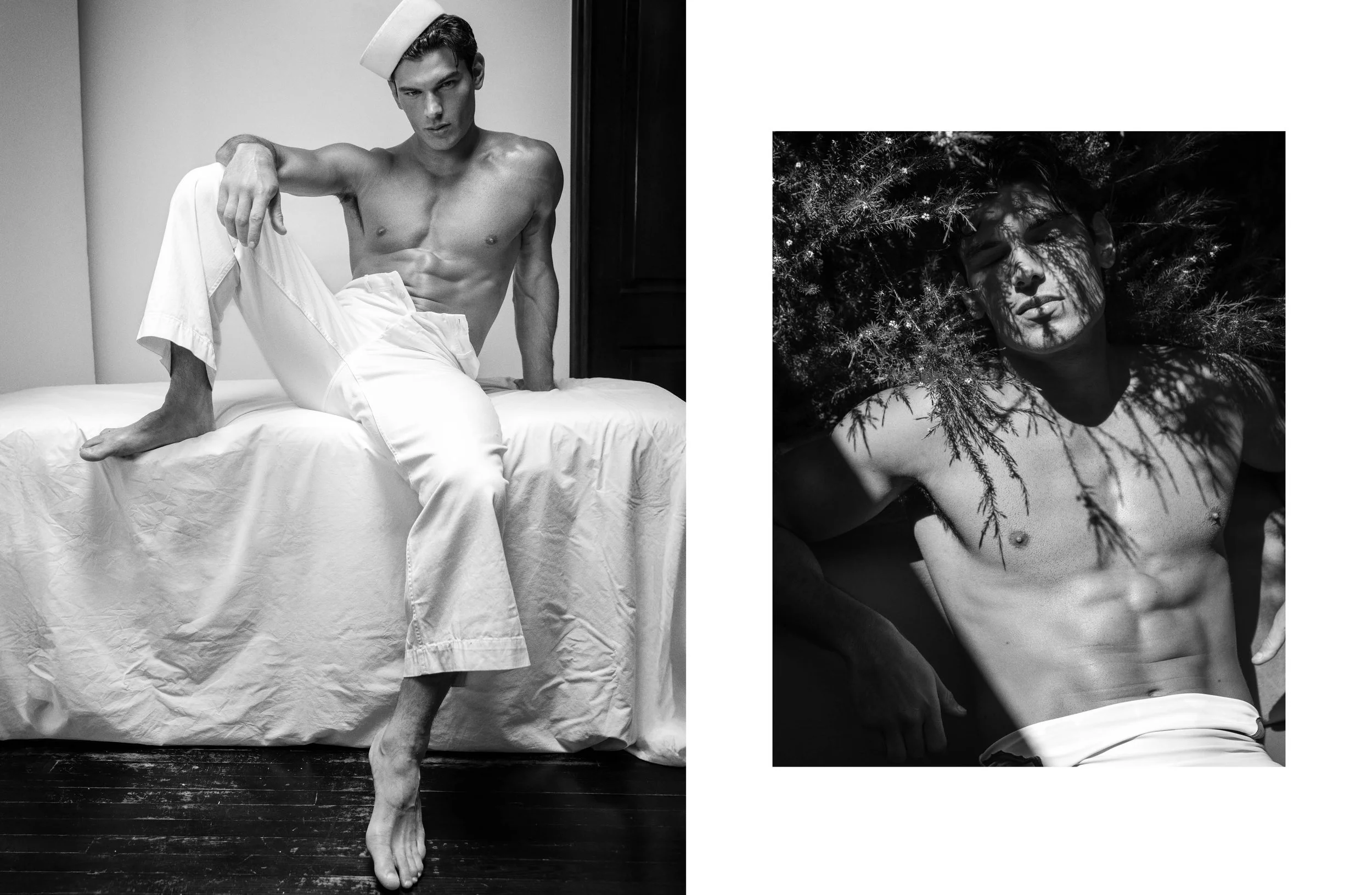
Left Sweater Vivienne Westwood
Right Jacket and pants Emporio Armani, shoes Tod’s
You tackle heavy subjects, but your humour oscillates between finesse and directness. How did you find the right balance to not be too shocking?
It’s a matter of dosage. The kind of humour I enjoy, like what Hannah Gadsby does, for example, is alternating between serious subjects and real dramatic stakes. The joke has to have a serious core, and then you wrap the seriousness in humour. I call them “turns”: jokes, jokes, then suddenly you turn and no more jokes. It’s about balance, about trial and error. You could do evenings where you realise, “Wow, that joke doesn’t work”. That’s why it takes time for a show to be ready.
How does your novel Les Bateaux sur la terrasse differ from the show?
The novel came from my mother seeing my stand-up and thinking, “In the show, he tells his father he loves him, but he never tells me.” That sparked a conversation between us where we misunderstood each other about things that had hurt me, things we reproached each other for. So I thought: I’ll write a novel about a mother and a son who don’t understand each other and who let silence grow too big. The novel is about breaking that silence and restoring speech in the bond between them.
How did your mother react to the book?
She was a bit stressed at first, but she reacted perfectly, and she let me write. She just asked to read it before it came out. I sent it to her, and she told me, “Thank you for this gift.” Because ultimately, the book is about love.
Green is very present in your visuals. Is it your favourite colour? Why that choice?
It’s actually my mother’s favourite colour, and then I realised it’s mine too. I even talk about that in the novel: can you genetically pass on a favourite colour? I find this watery green, this celadon green, very soft. It looked beautiful on the poster. Then it kind of took over: green set design, green costume. Suddenly, everything around me was green. There’s a contrast between the very polished, beautiful staging and some of my jokes.
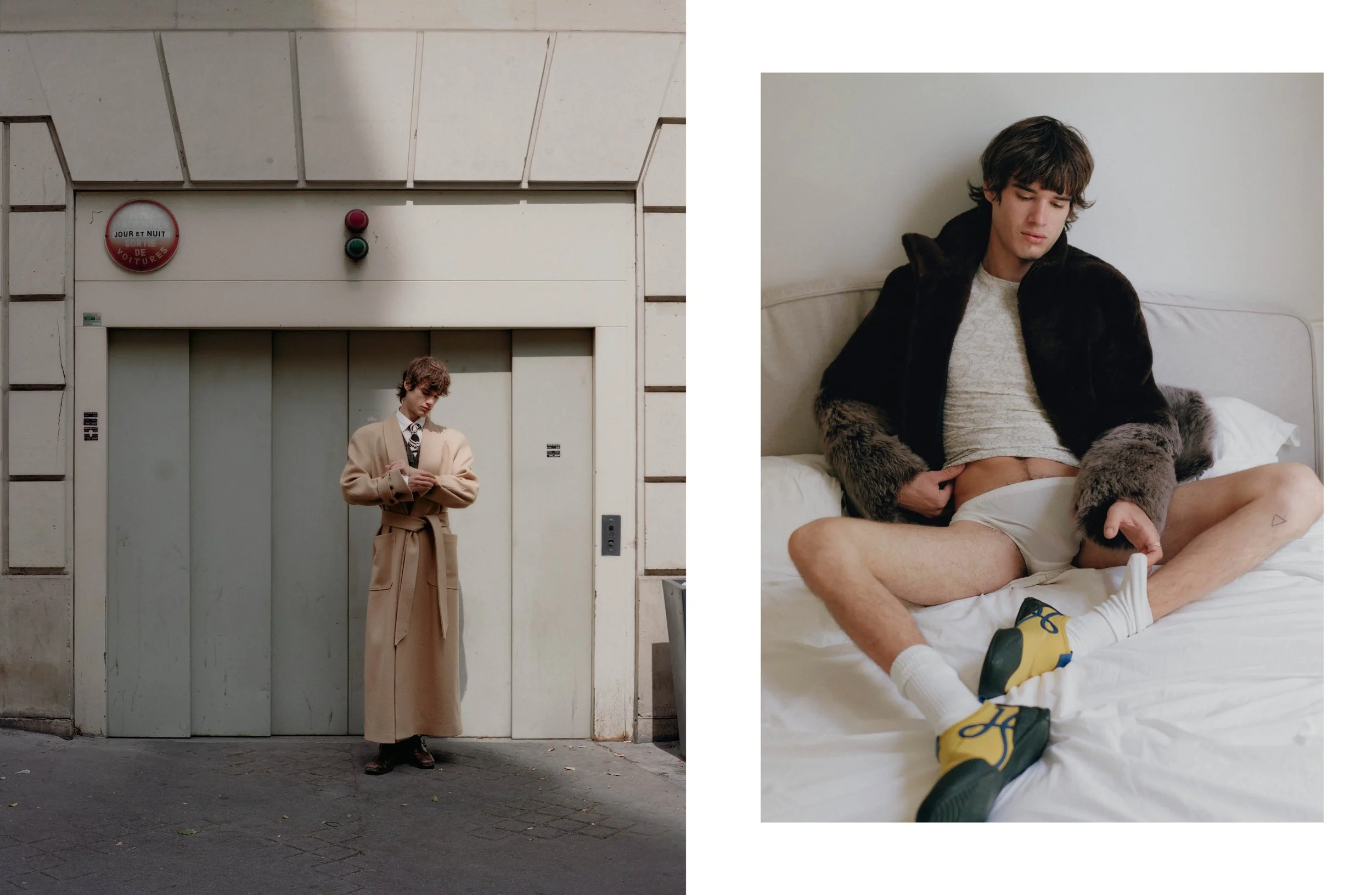
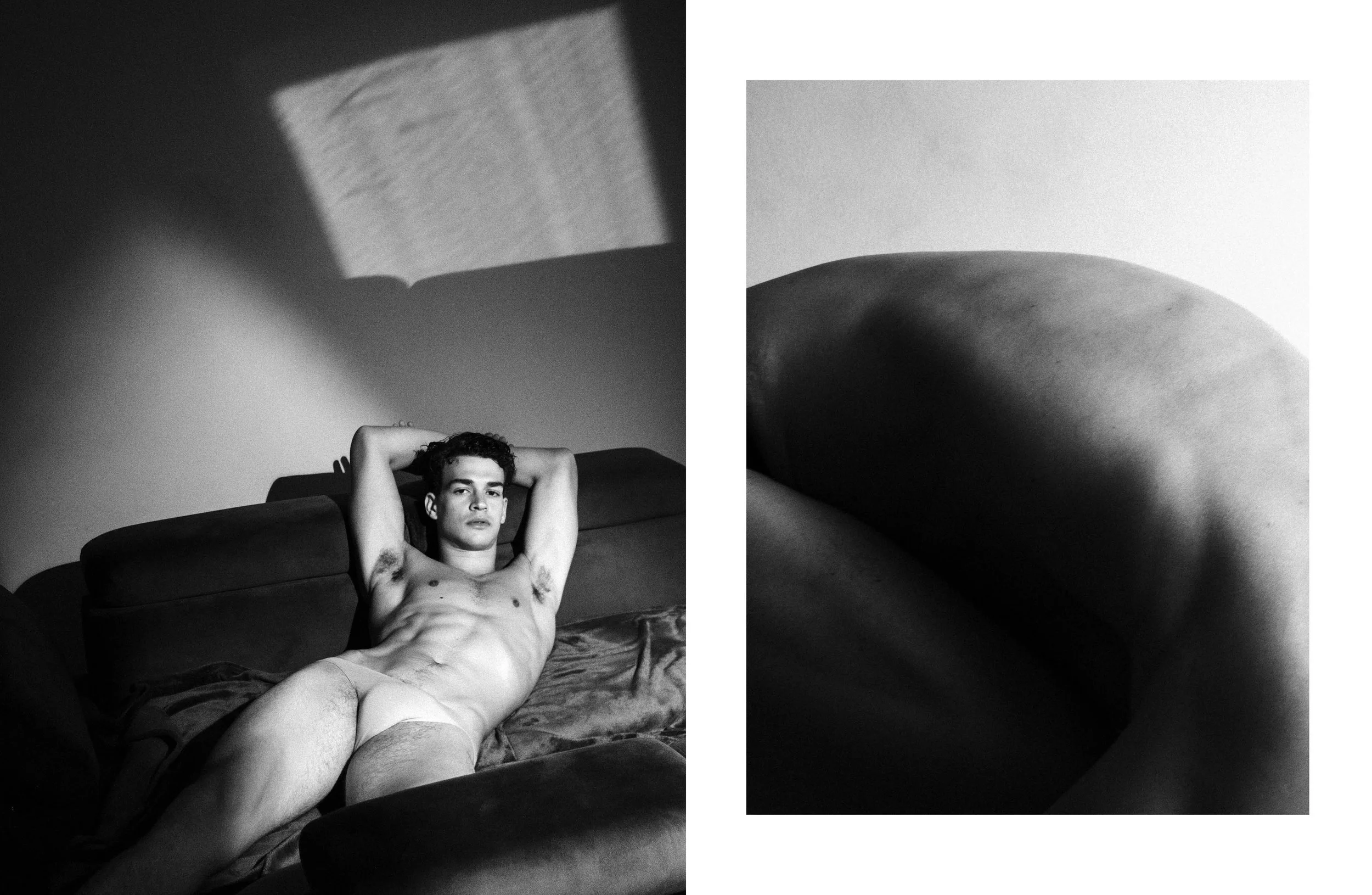
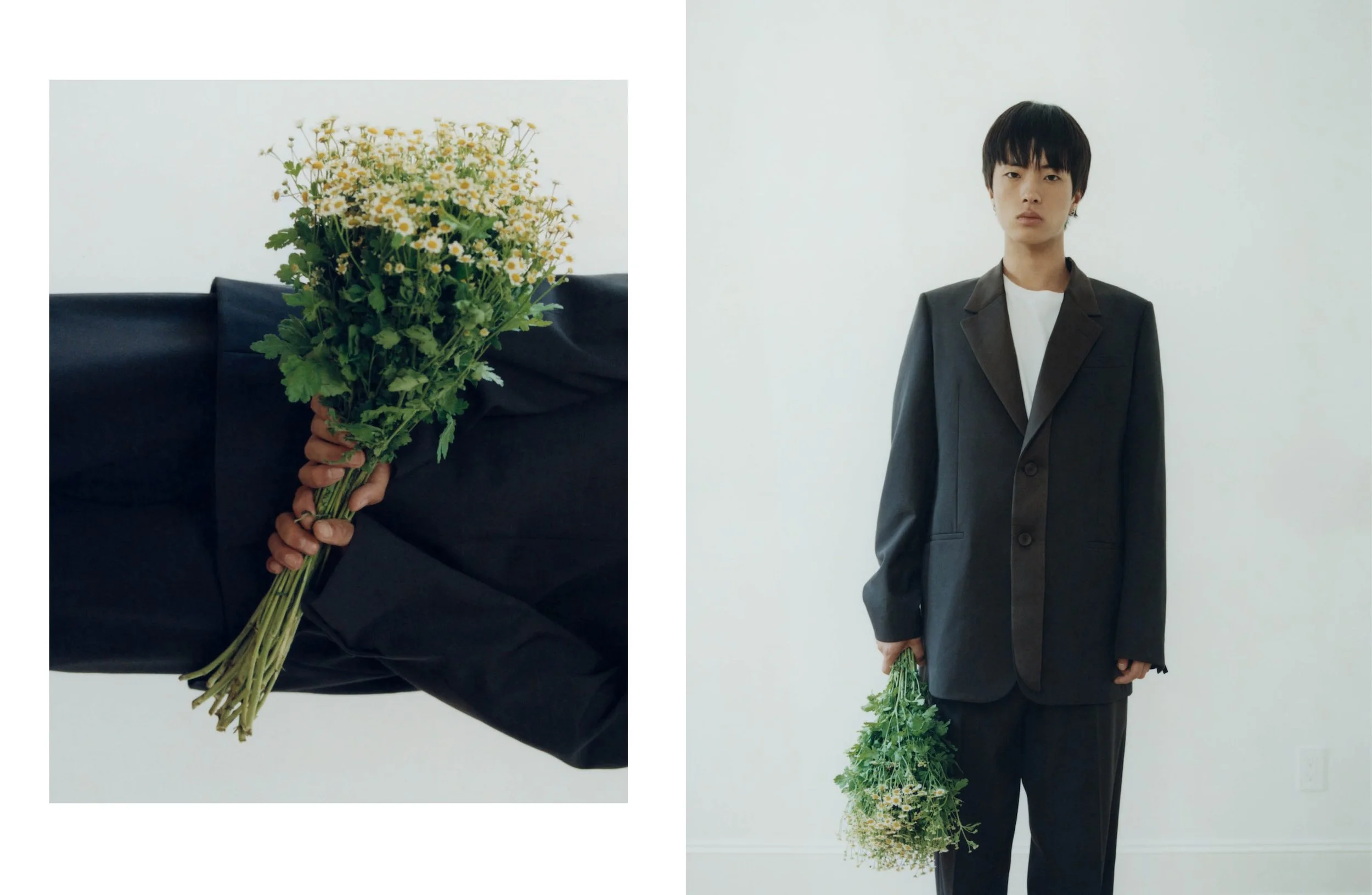
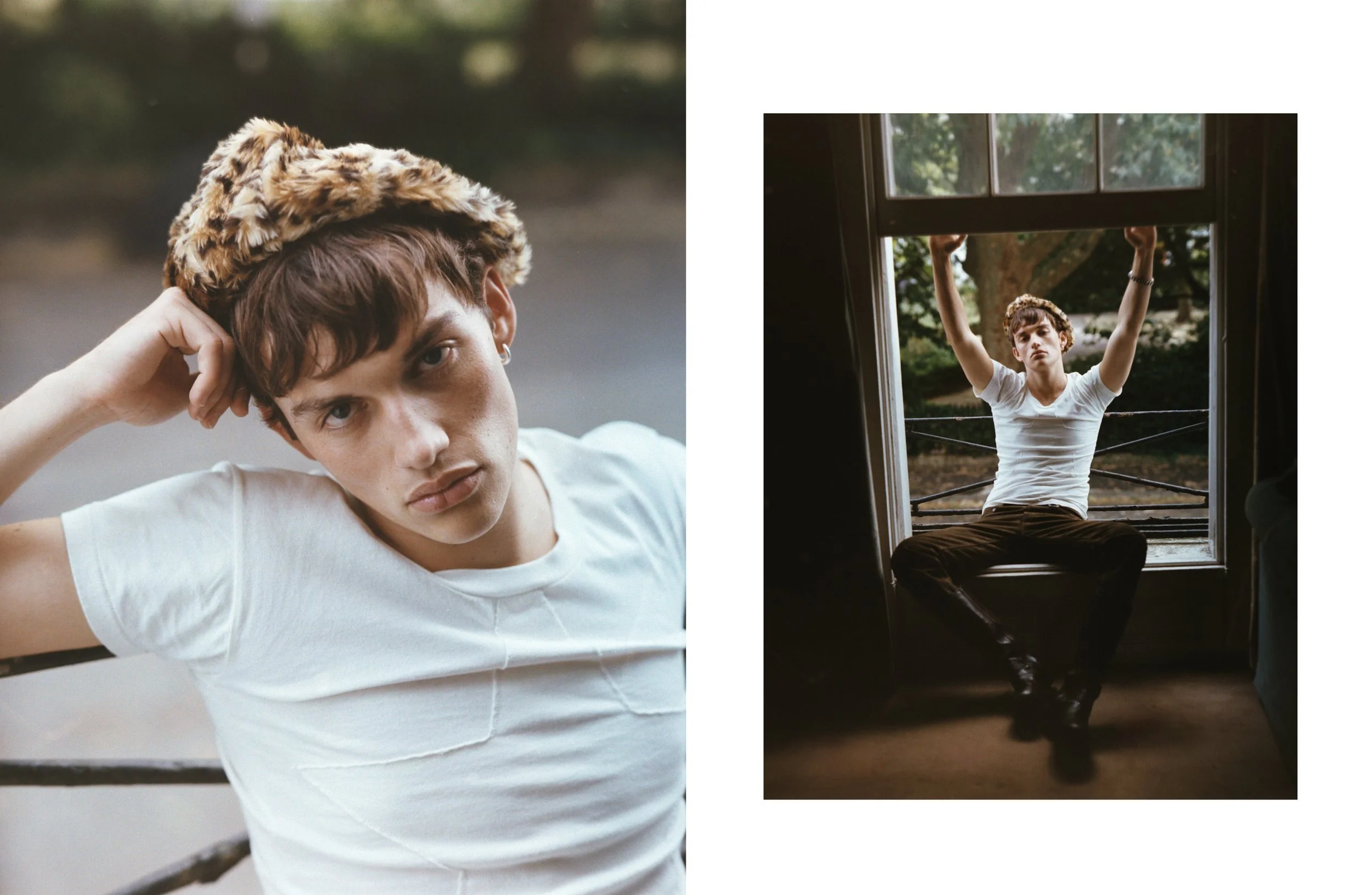
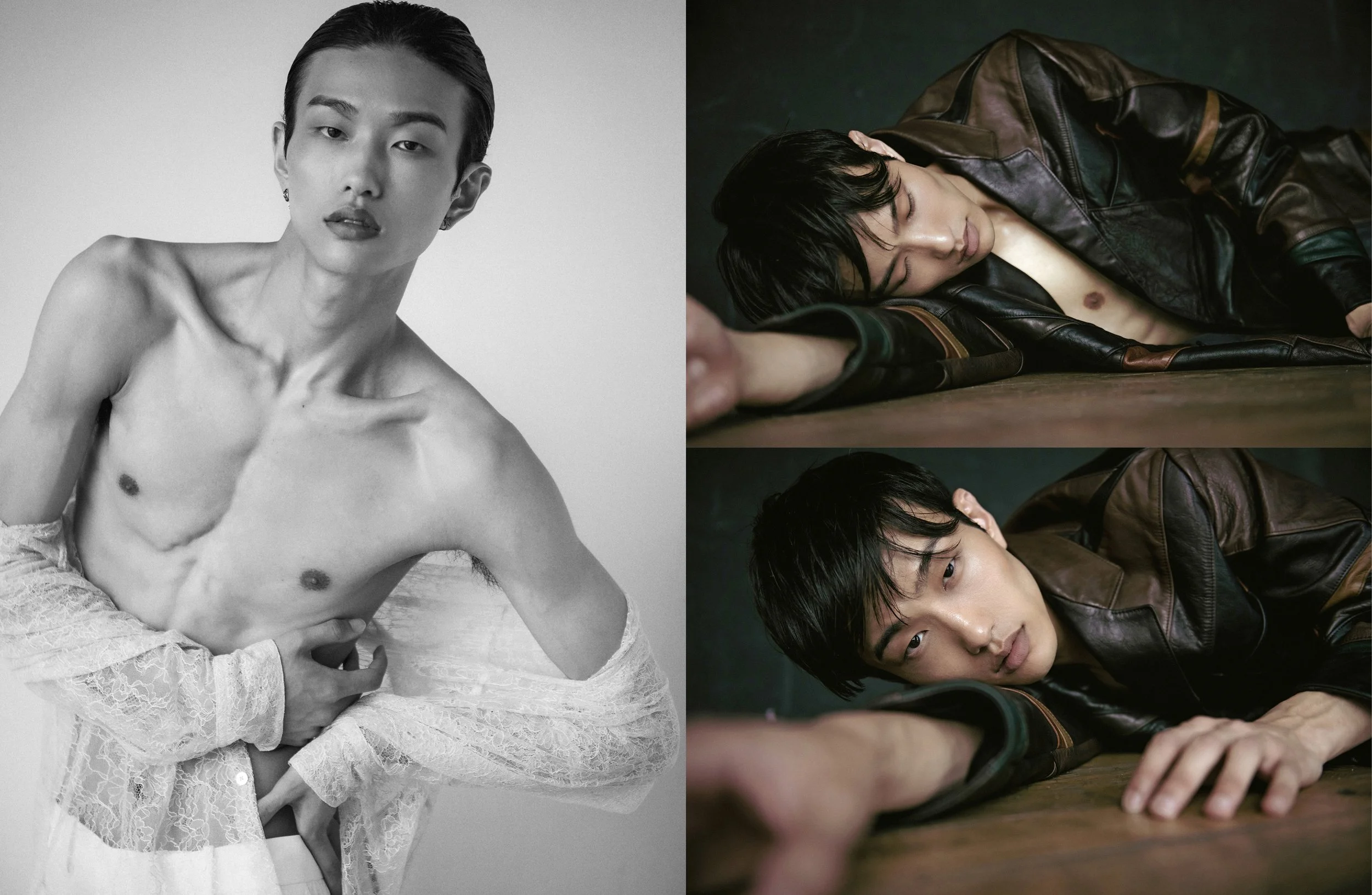
Left Coat Loewe, shirt The Frankie Shop, pants Givenchy by Sarah Burton, shoes Tod’s
Right Full look Fendi
How do you prepare your weekly radio column, given how busy you are?
It takes me about a week. I get the theme in advance. The column airs on Tuesday, so I usually start the previous Wednesday. I read the documentation the show’s team sends me, research the guest, and start thinking of jokes on Wednesday and Thursday. Friday and Saturday, I write. Sunday and Monday, I read it over and over, working on the rhythm. Tuesday, it’s go time.
France Inter is the biggest radio station in the country. How was it to talk openly about your homosexuality there?
It went extremely well. My first column went viral; there were millions of listens and views. I think it brought something that wasn’t there before: representation. We desperately need representation to exist. And my columns aren’t just crude jokes; there’s always something behind them. Sometimes they’re very sexual, sometimes not at all. I alternate, and the audience responds really well to them.
How does the relationship with the audience differ between the show, the novel, and the radio columns?
The column is three minutes long. Like in real life, you don’t really know someone after three minutes. Then the show is meeting me for an hour and a half, so you go much deeper, you see different layers of who I am. The novel is the most intimate; it’s closest to my heart. So, columns are the surface, the show goes inside me, and the book is the closest to my inner self.
Between the novel and the stage, you explore different languages and masks. How did you shift from stage language to the written form?
I wrote the novel in a similar way to the show, with unexpected turns. But I freed myself from the obligation to be funny all the time. In the novel, humour isn’t mandatory. That’s liberating, and you can write more beautiful sentences, with more freedom.
Were there particular writers who inspired you?
I read a lot. I started a book club a year and a half ago to share my readings. Annie Ernaux inspired me a lot. I’ve read Marguerite Duras, and more contemporary authors like Gabriel Tallent and Éric Chacour. Also, even Oscar Wilde. From all that, I tried to find my own style. It’s my first book, and I discovered my style while writing it. I knew my joke-writing style, but as a novelist, I had to discover who I was.
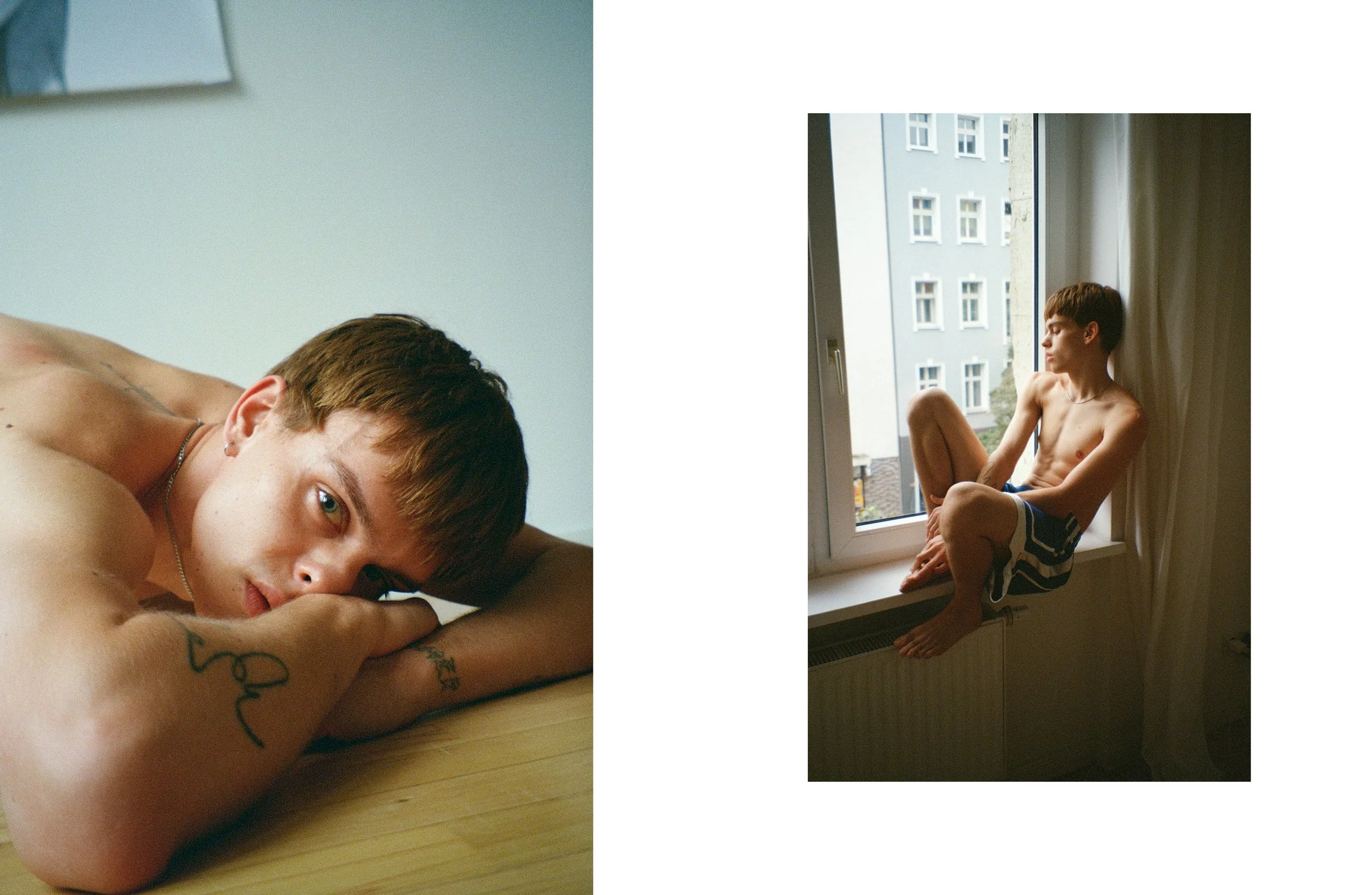
Coat Loewe, shirt The Frankie Shop, pants Givenchy by Sarah Burton, shoes Tod’s
Interview by Gabrielle Valda Colas
Photography by Laurent Humbert
Fashion by Jonathan Hayden
EIC Michael Marson
Casting by Imagemachine cs
Grooming by Céline Exbrayat
Stylist’s assistant Emma Siaut