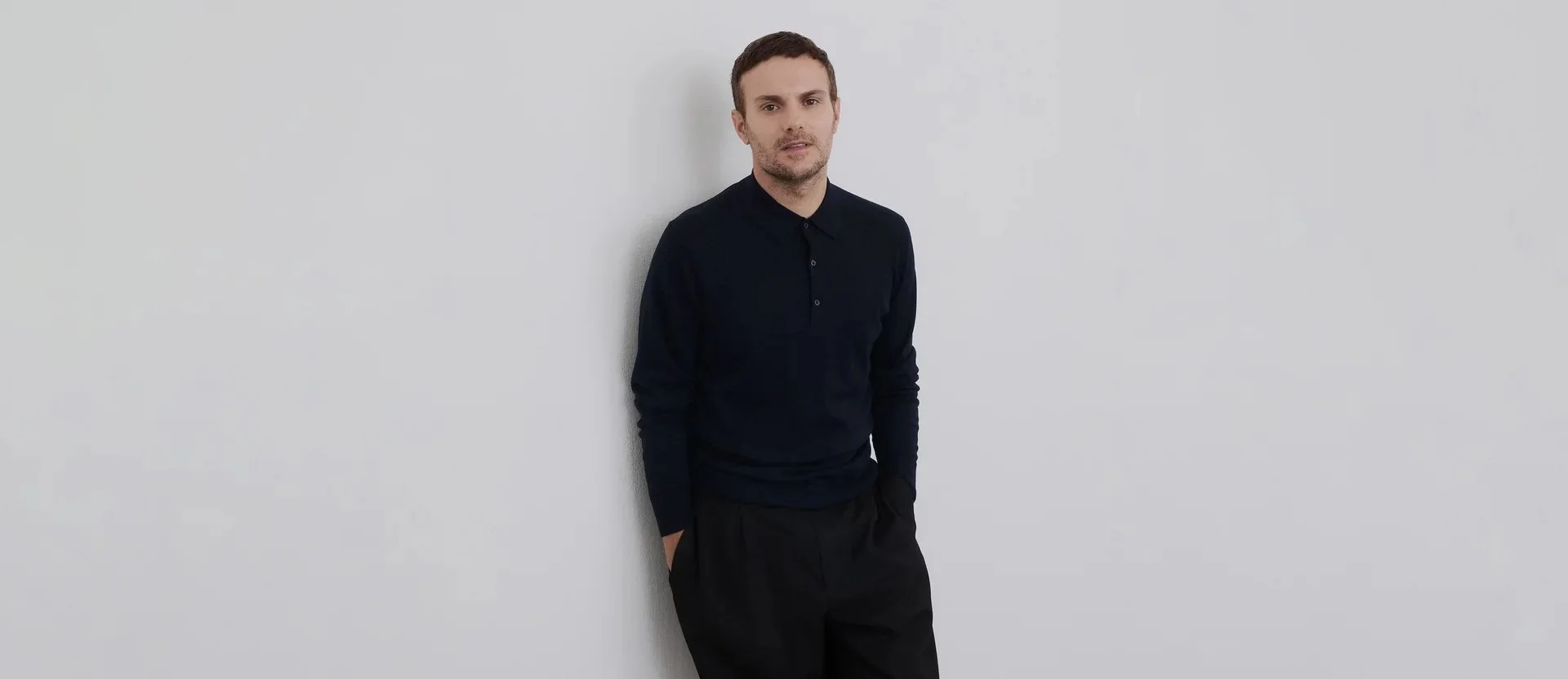
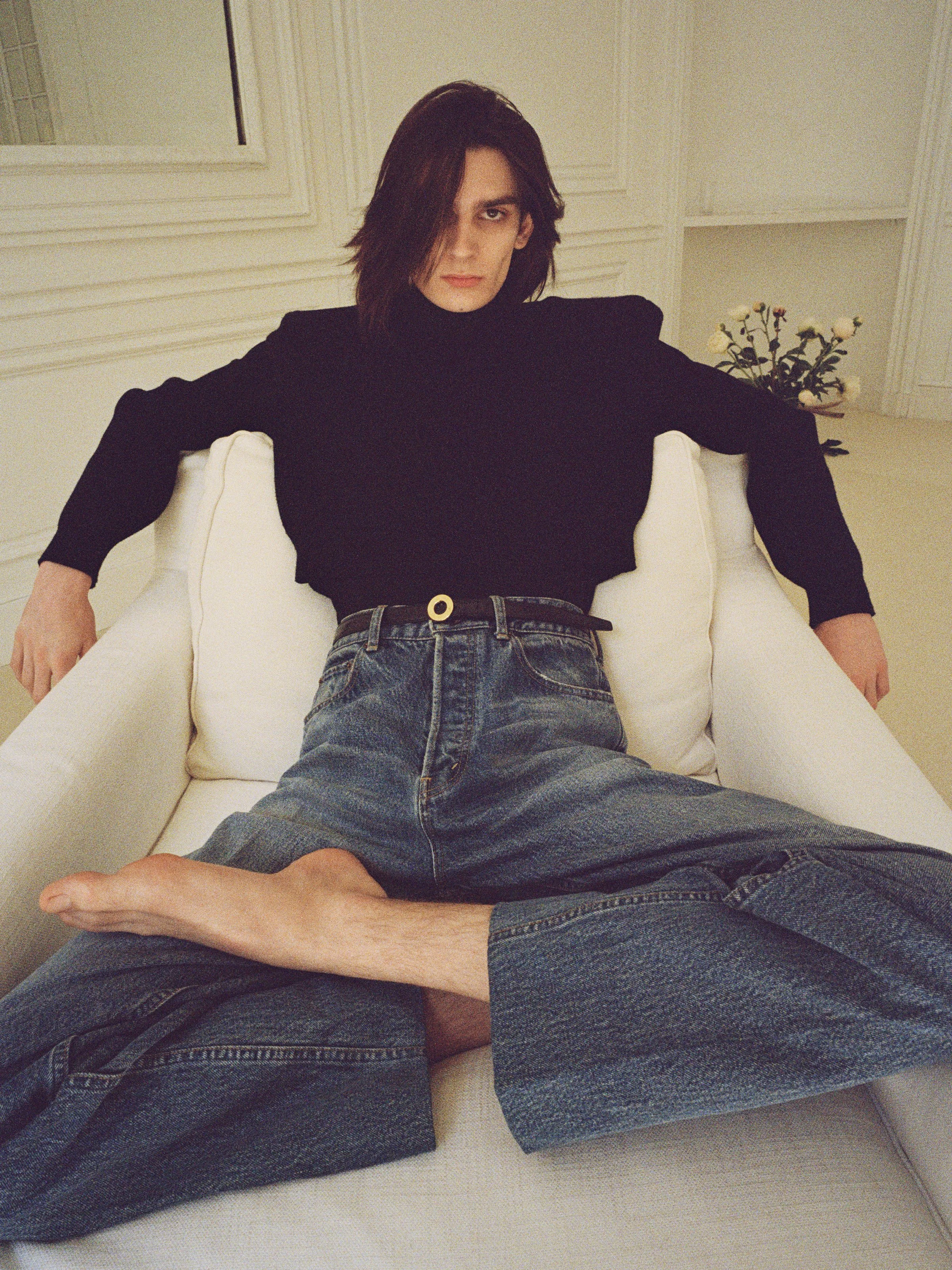
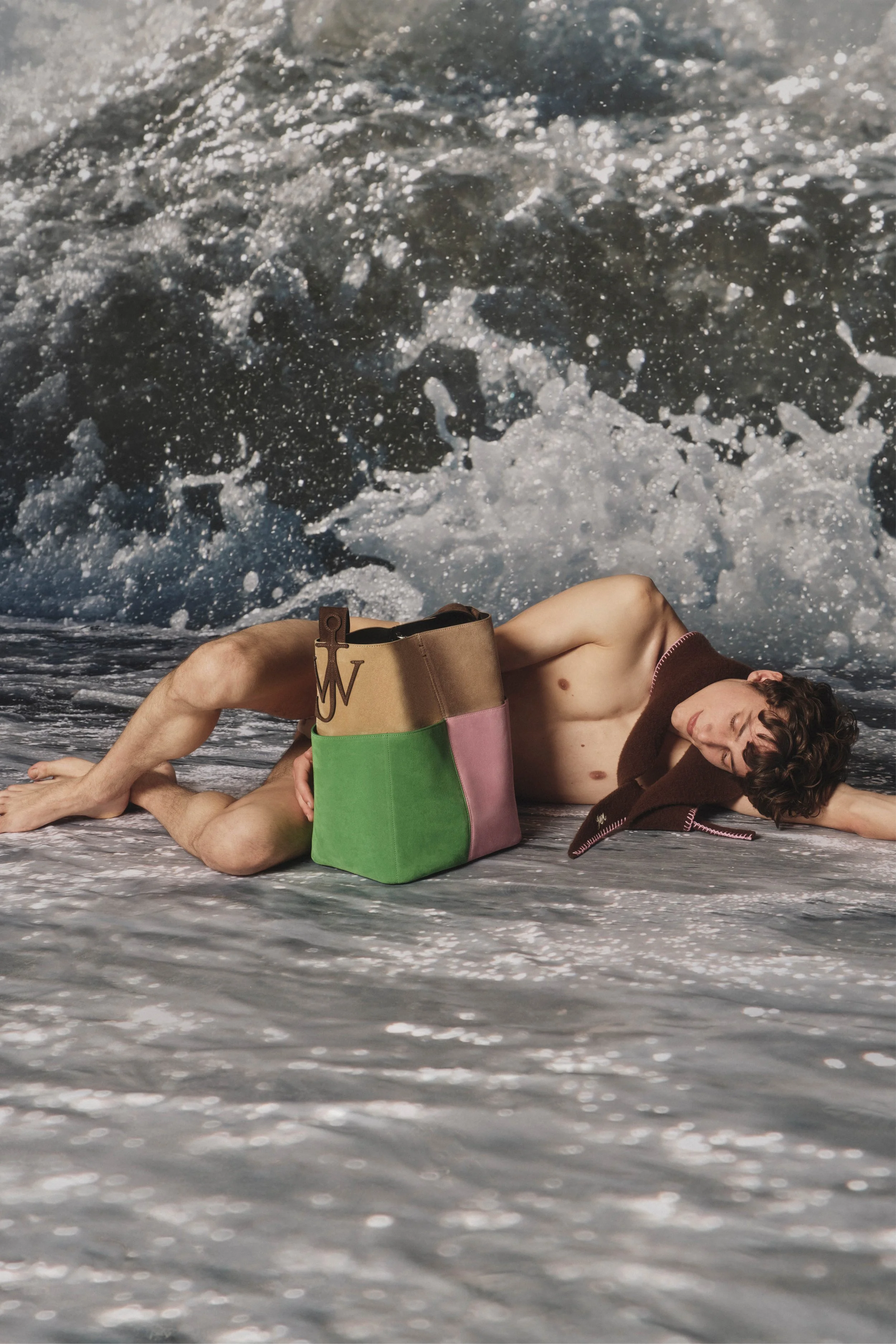
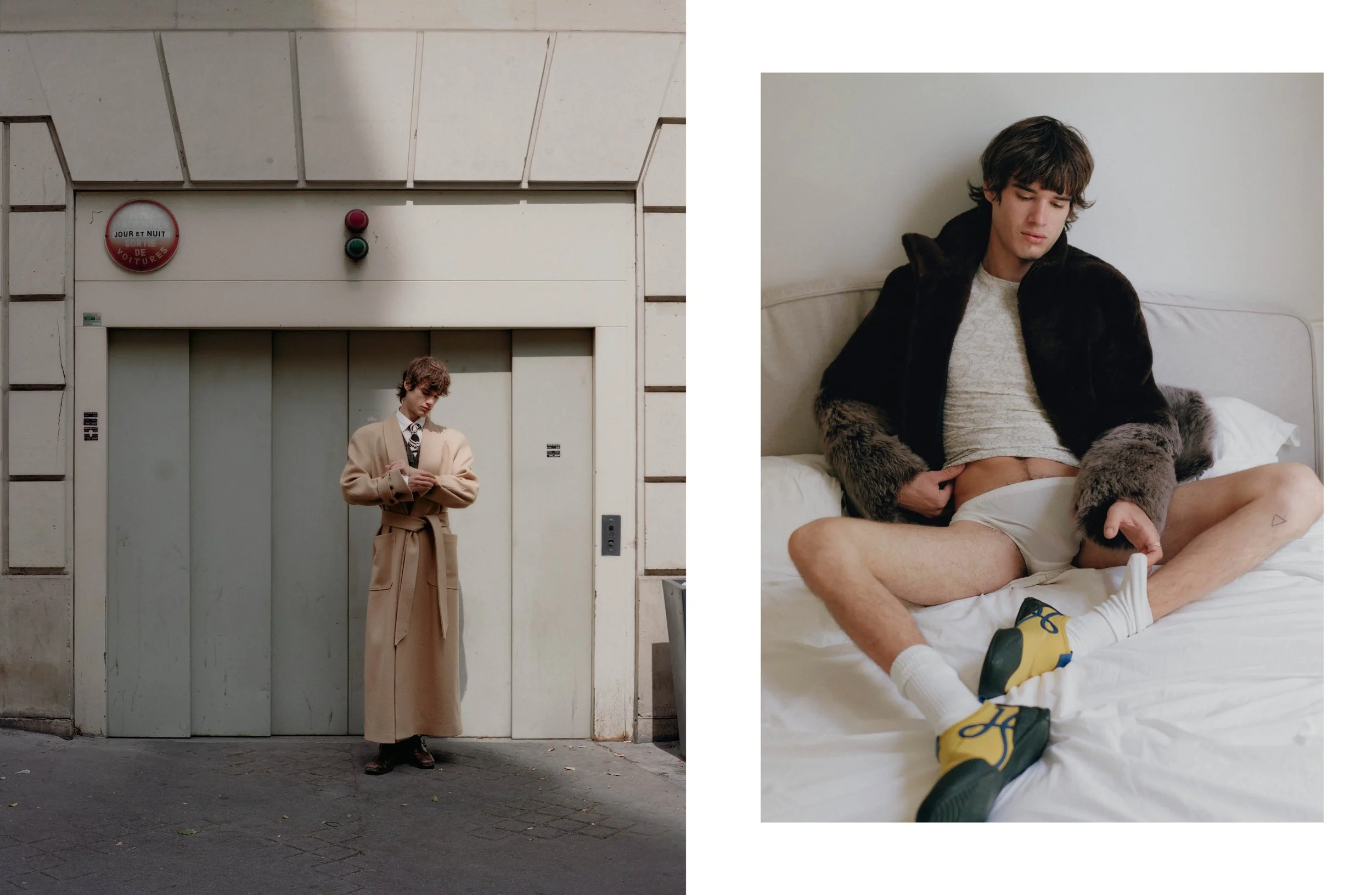
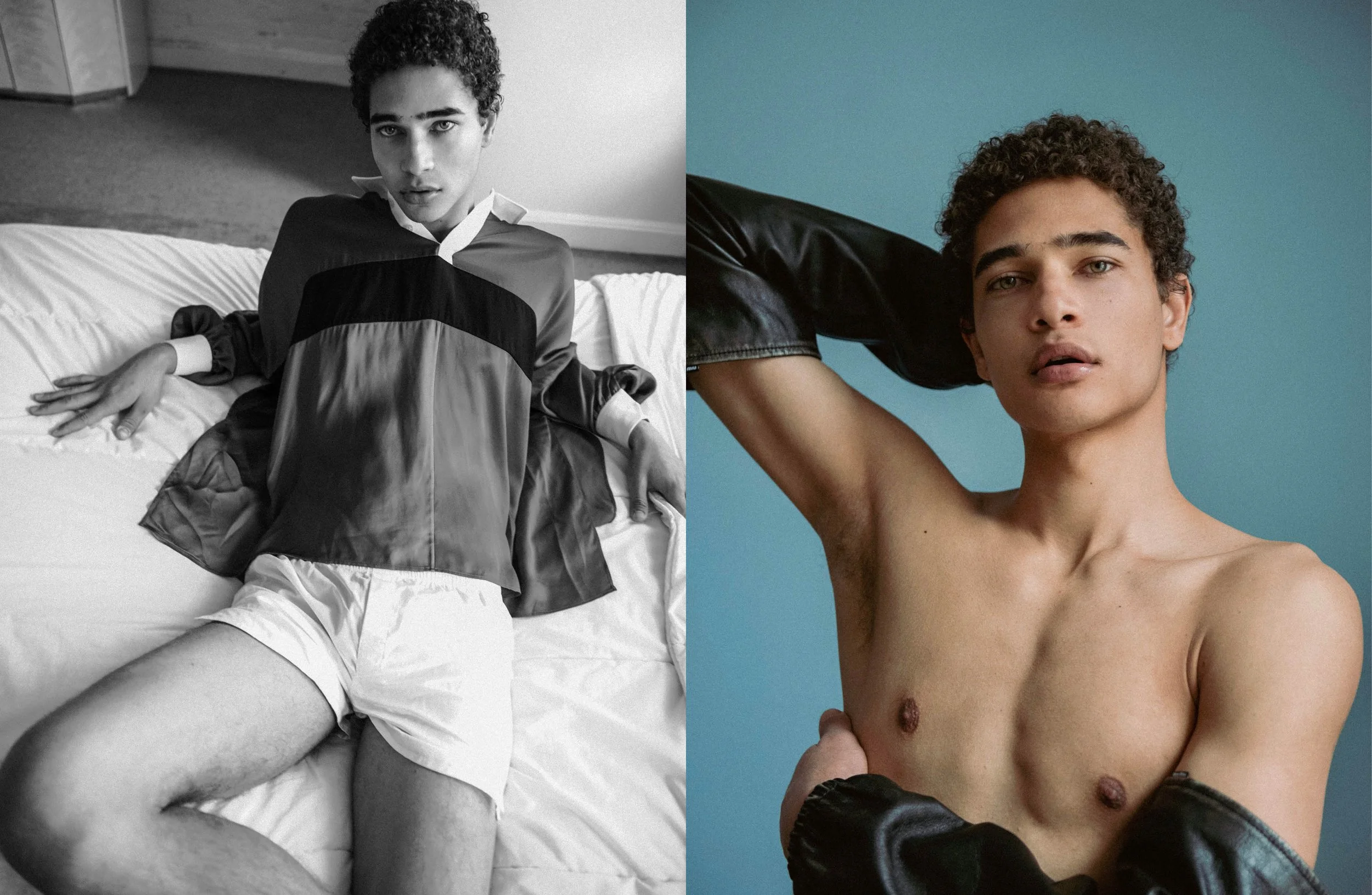
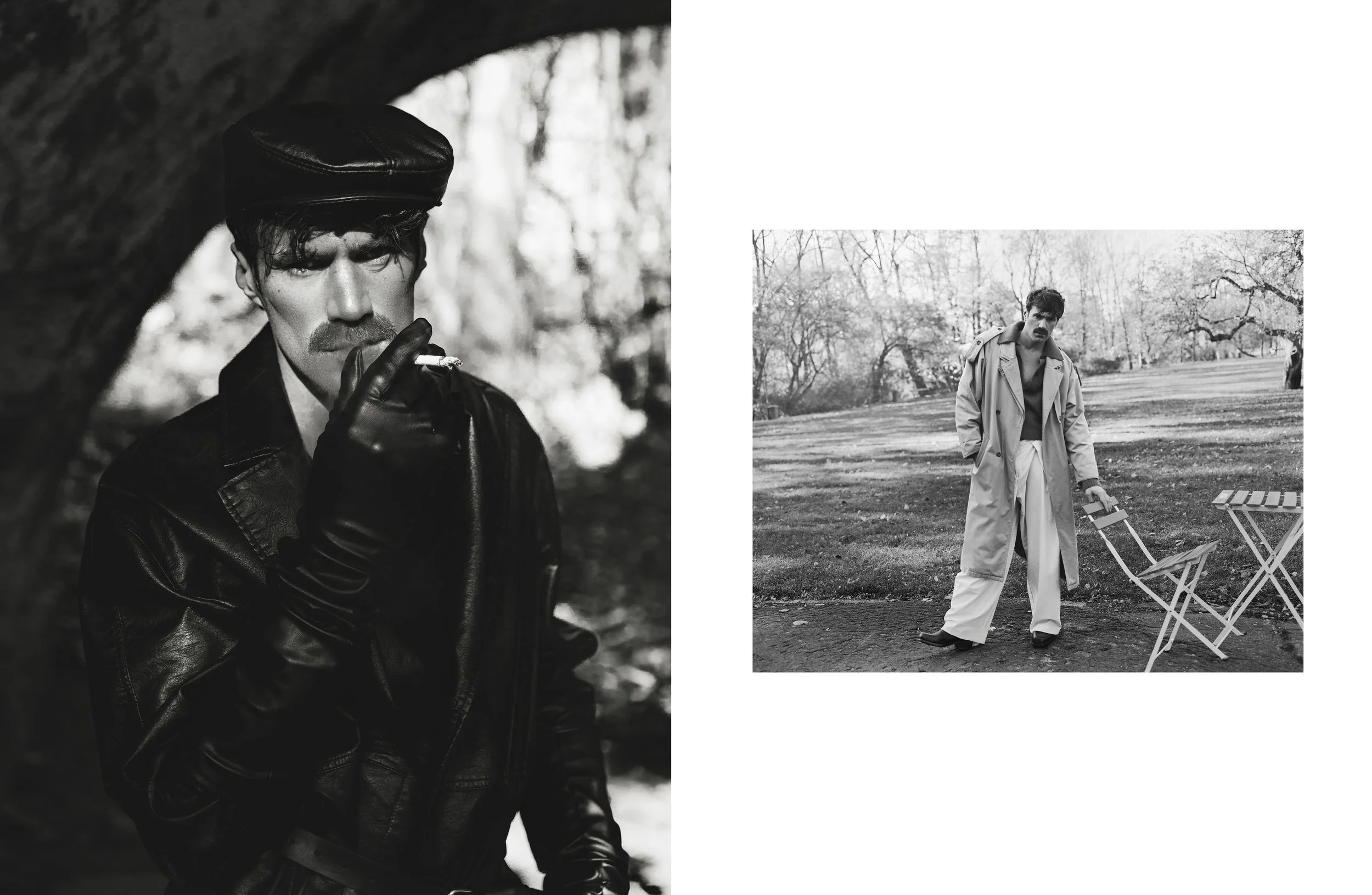
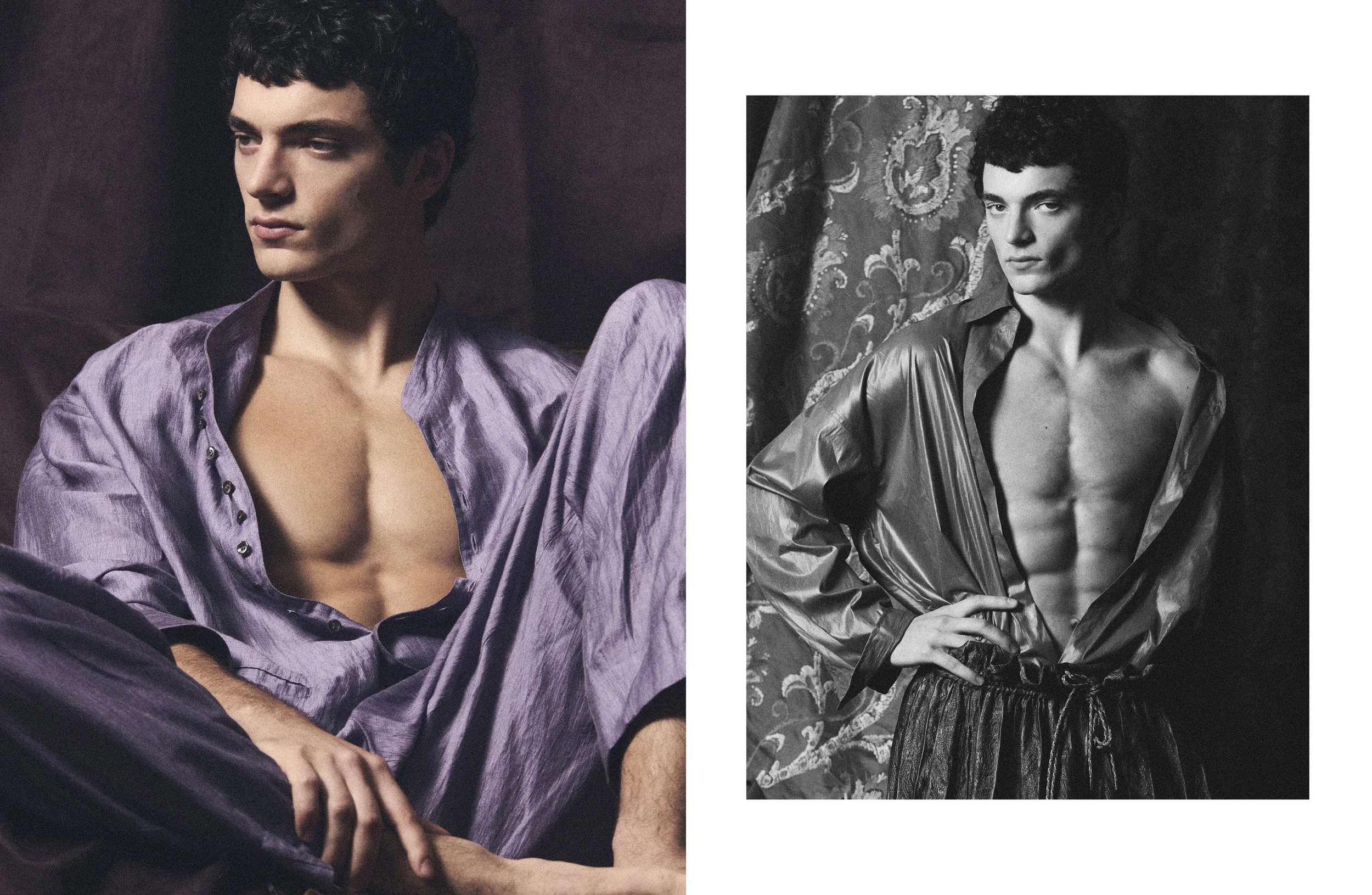
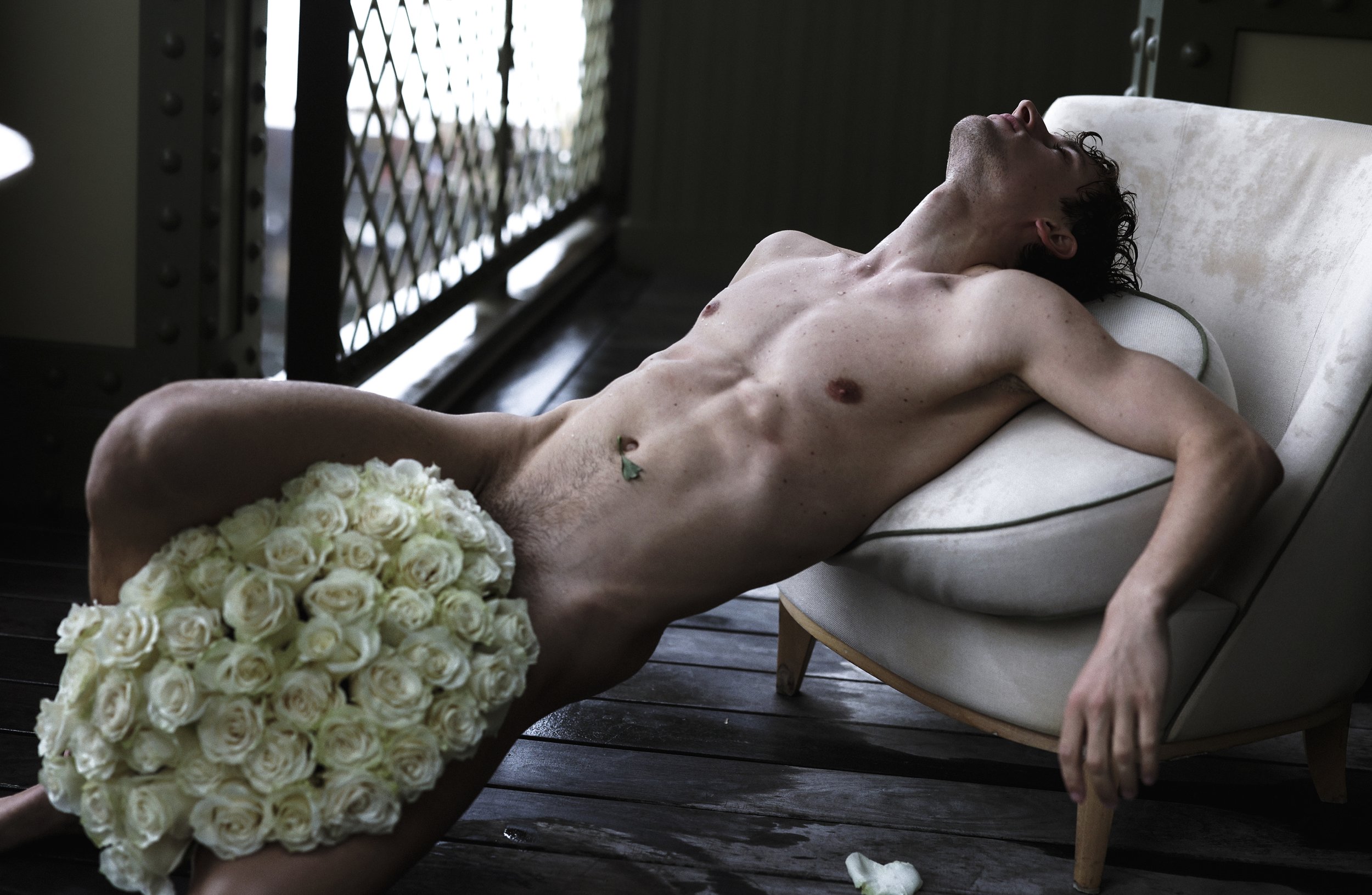
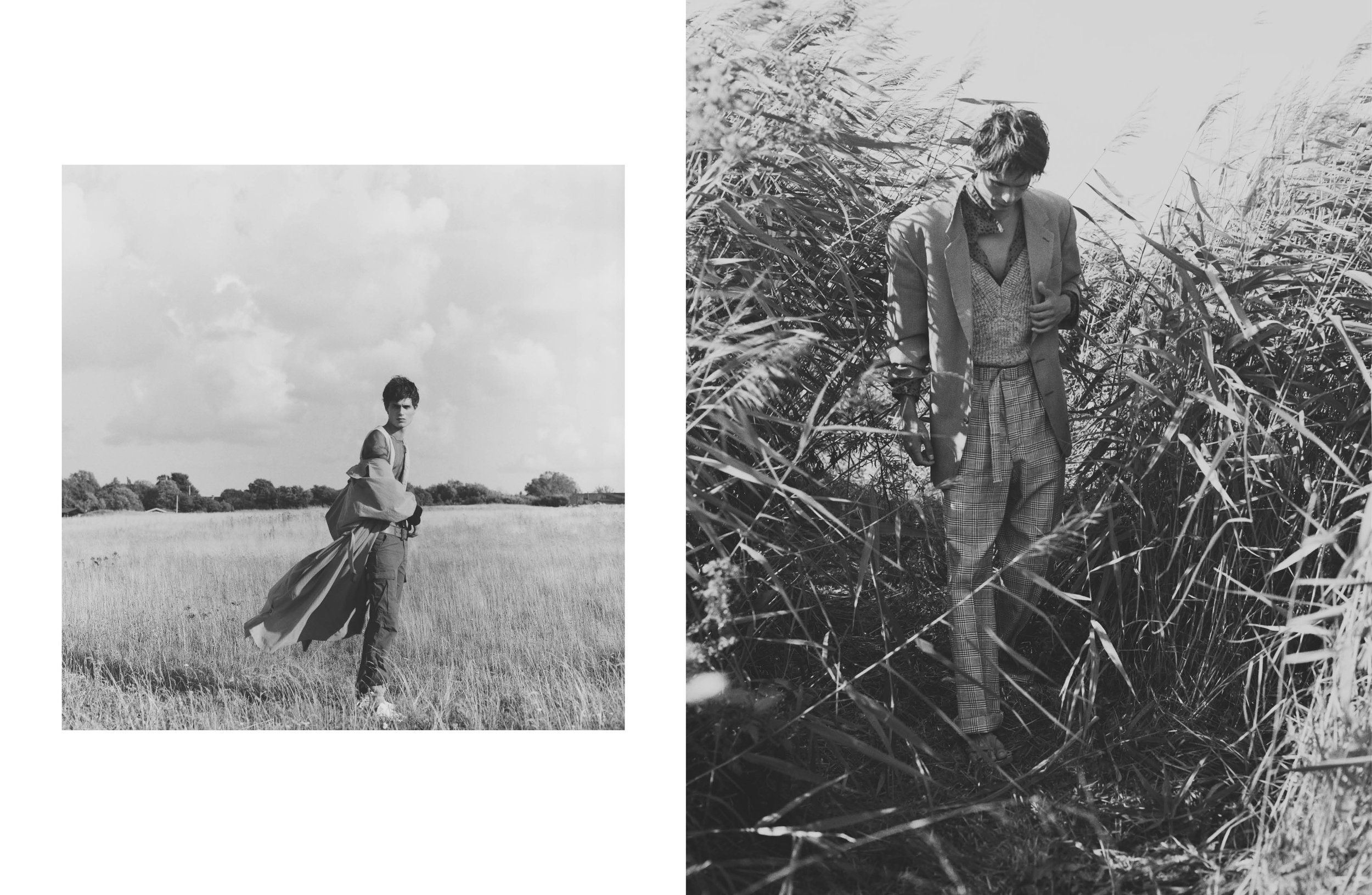
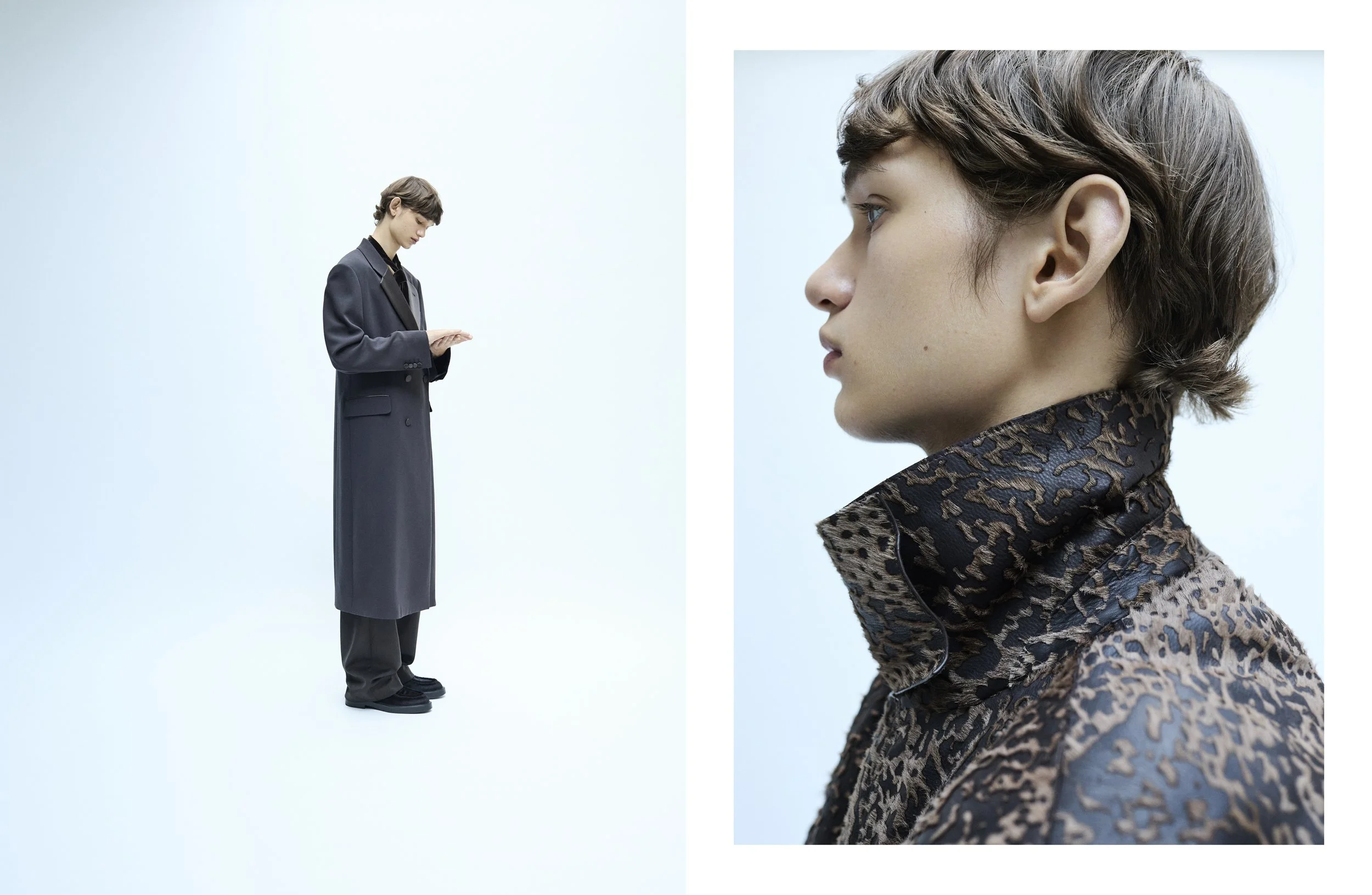
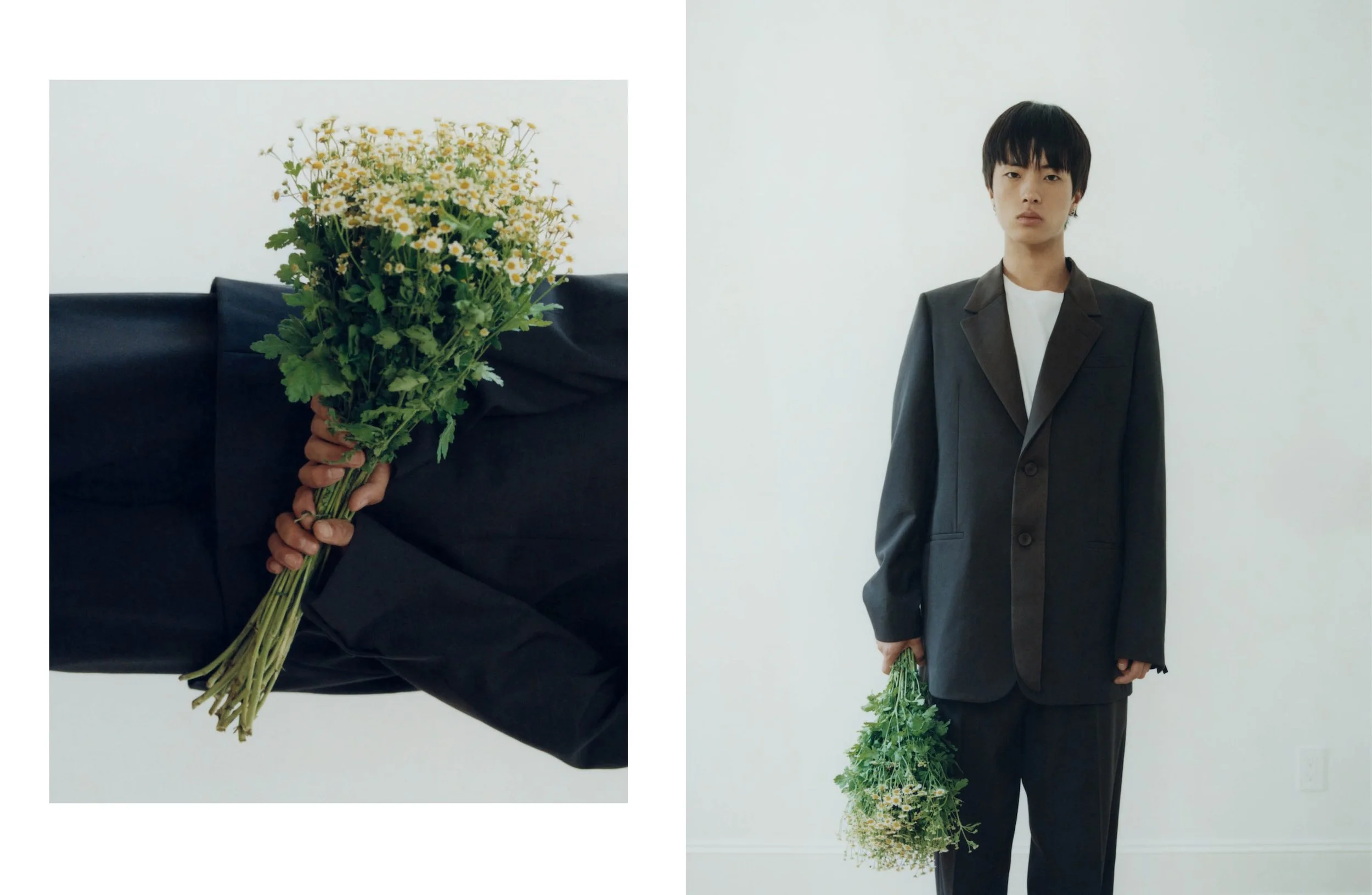
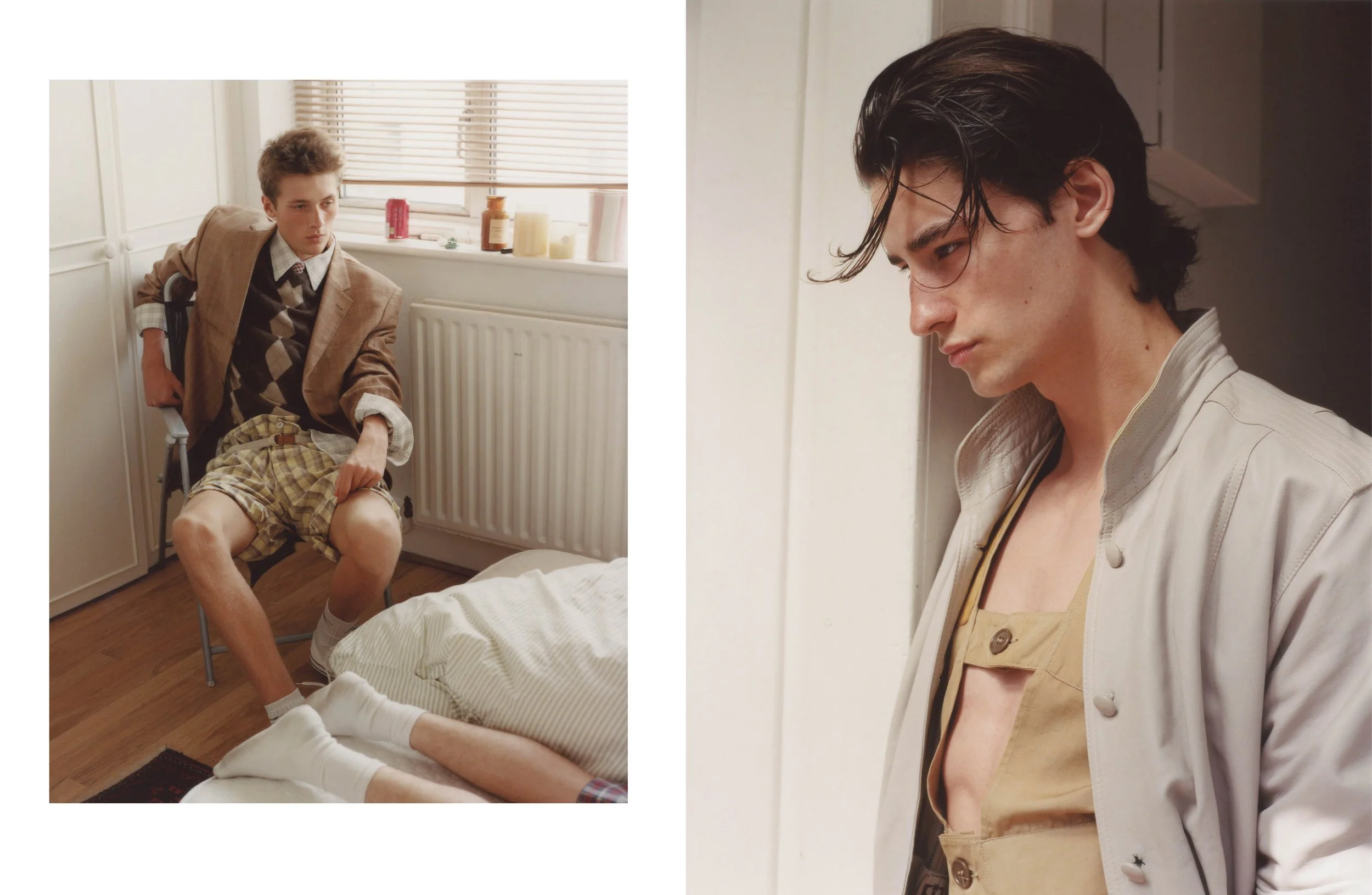
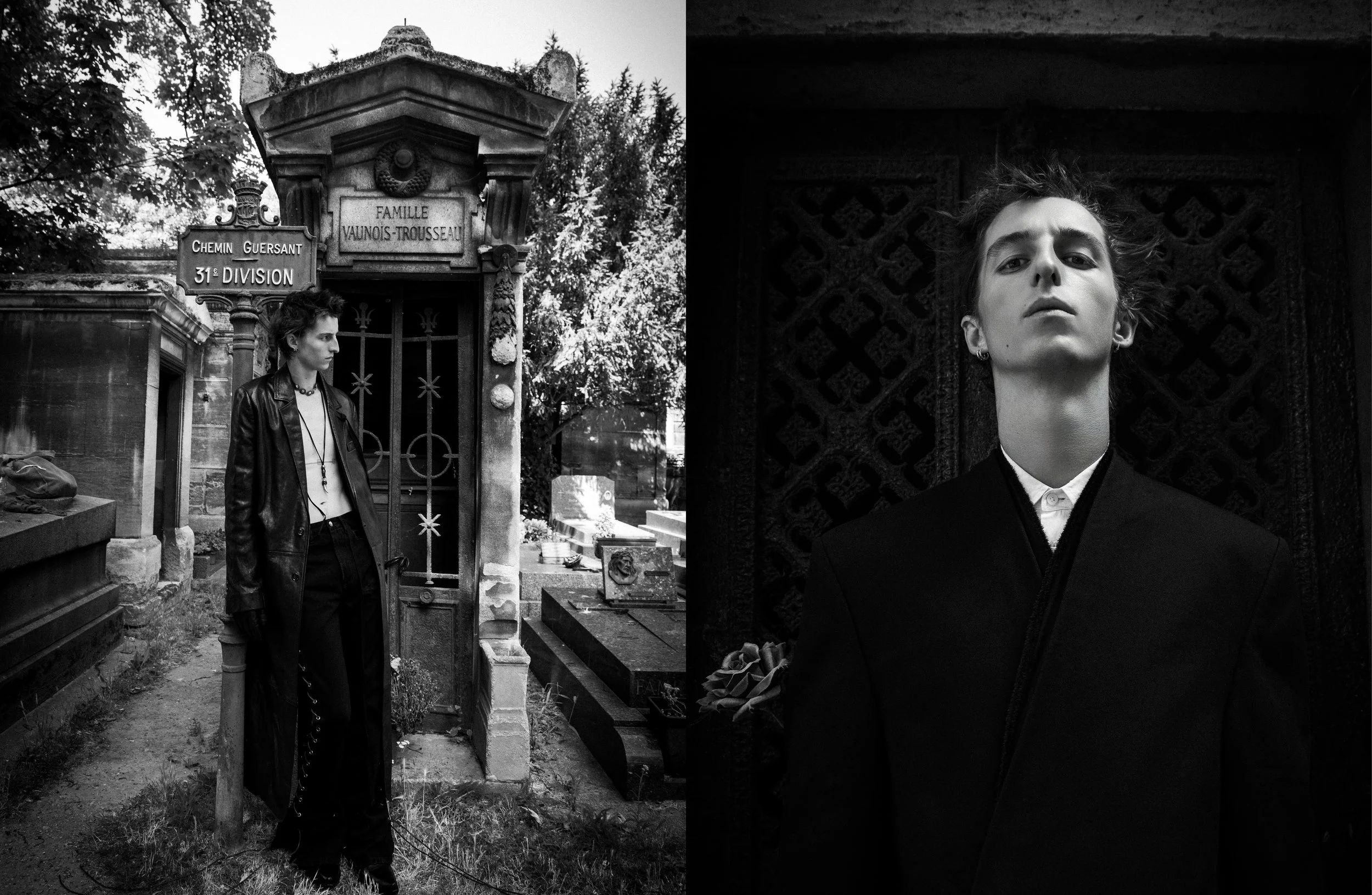
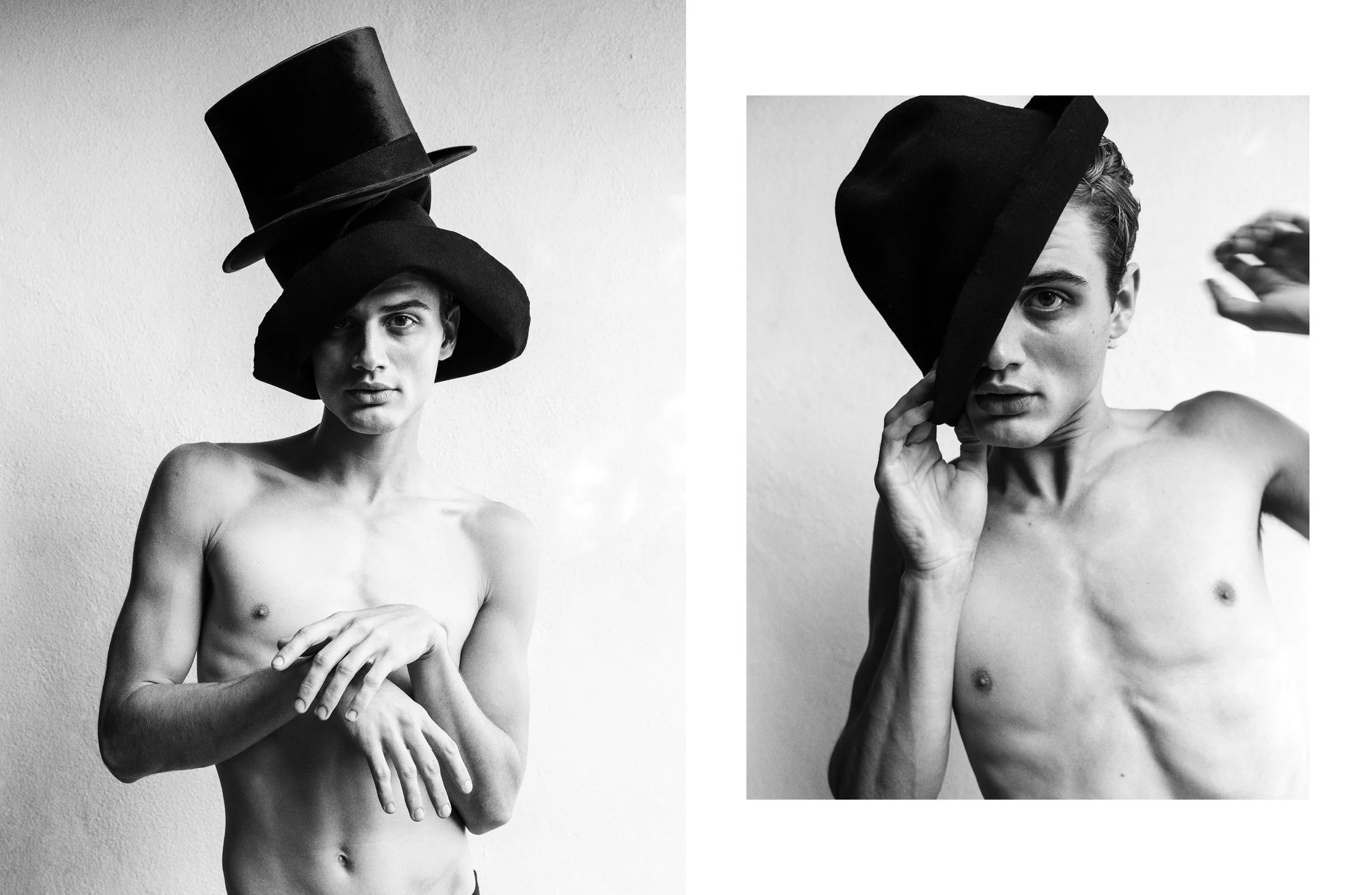
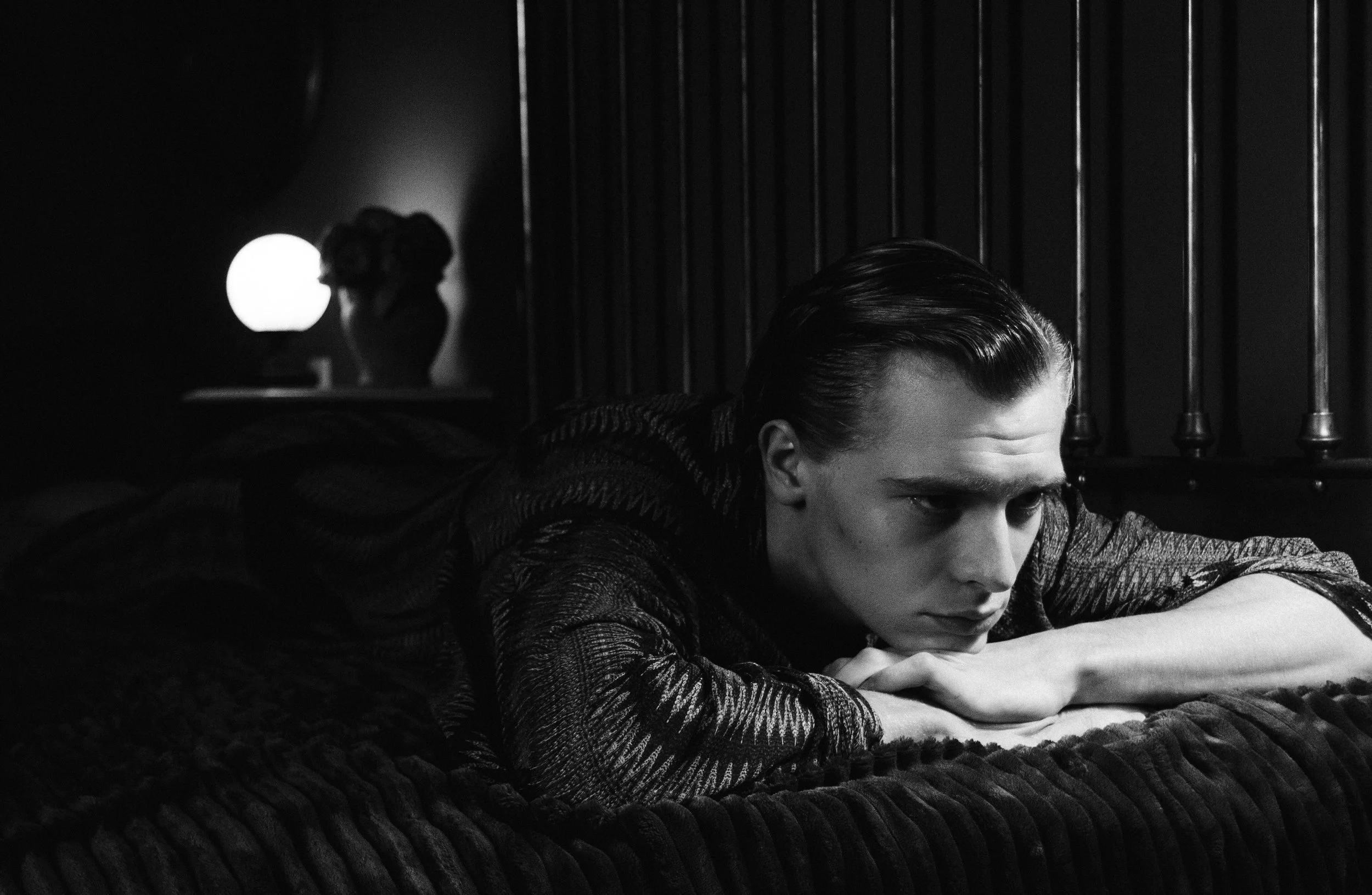
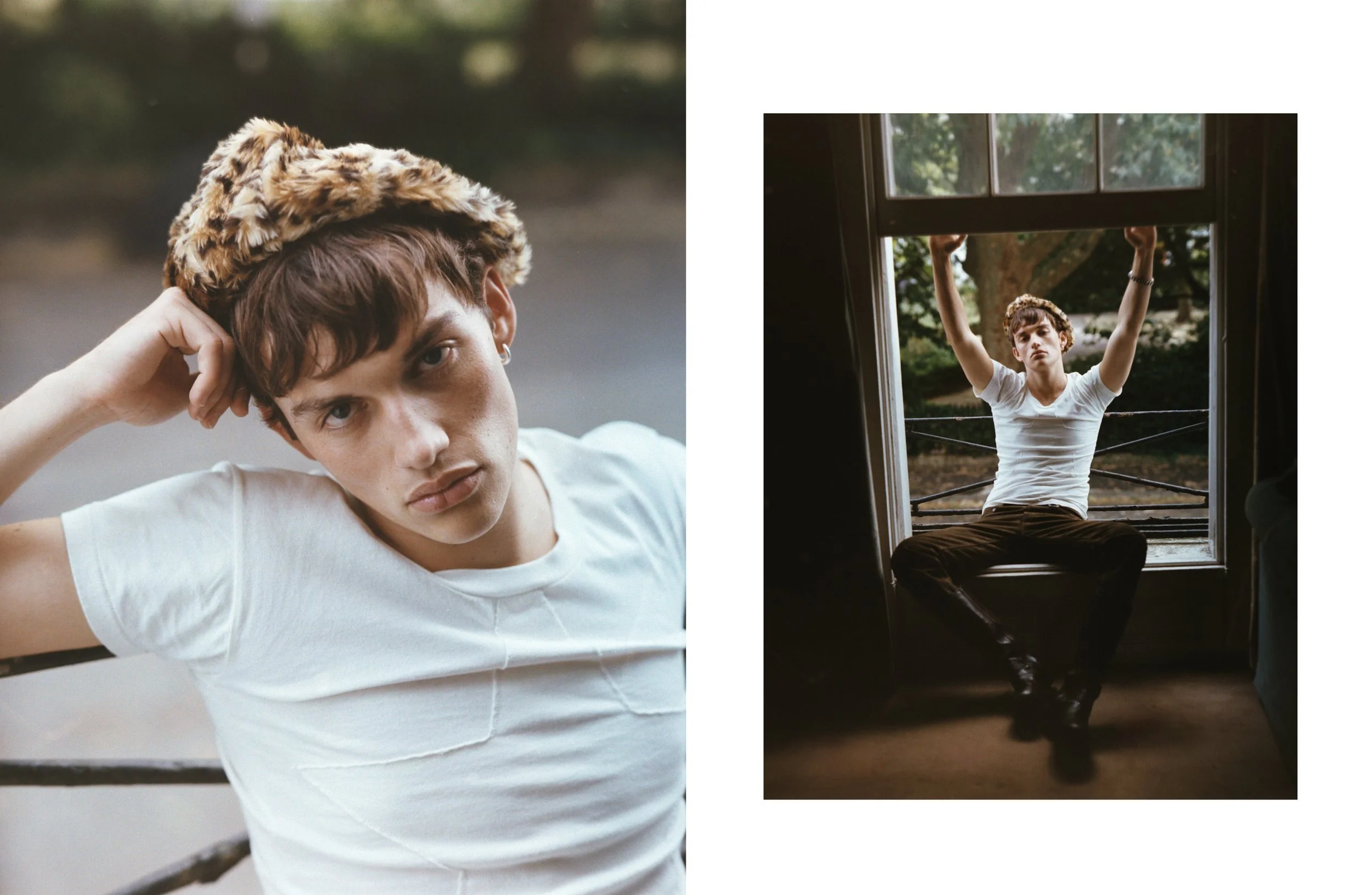
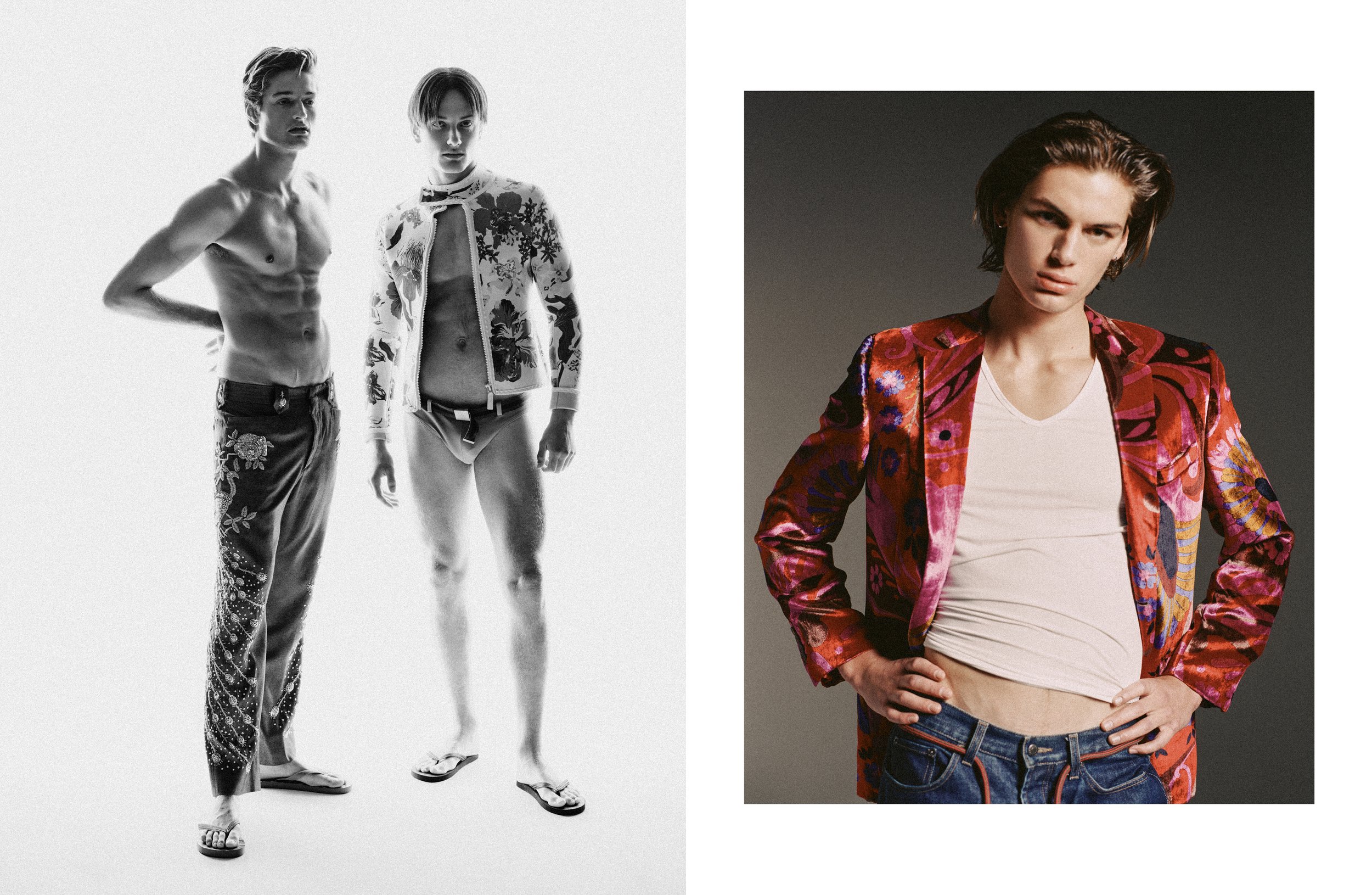
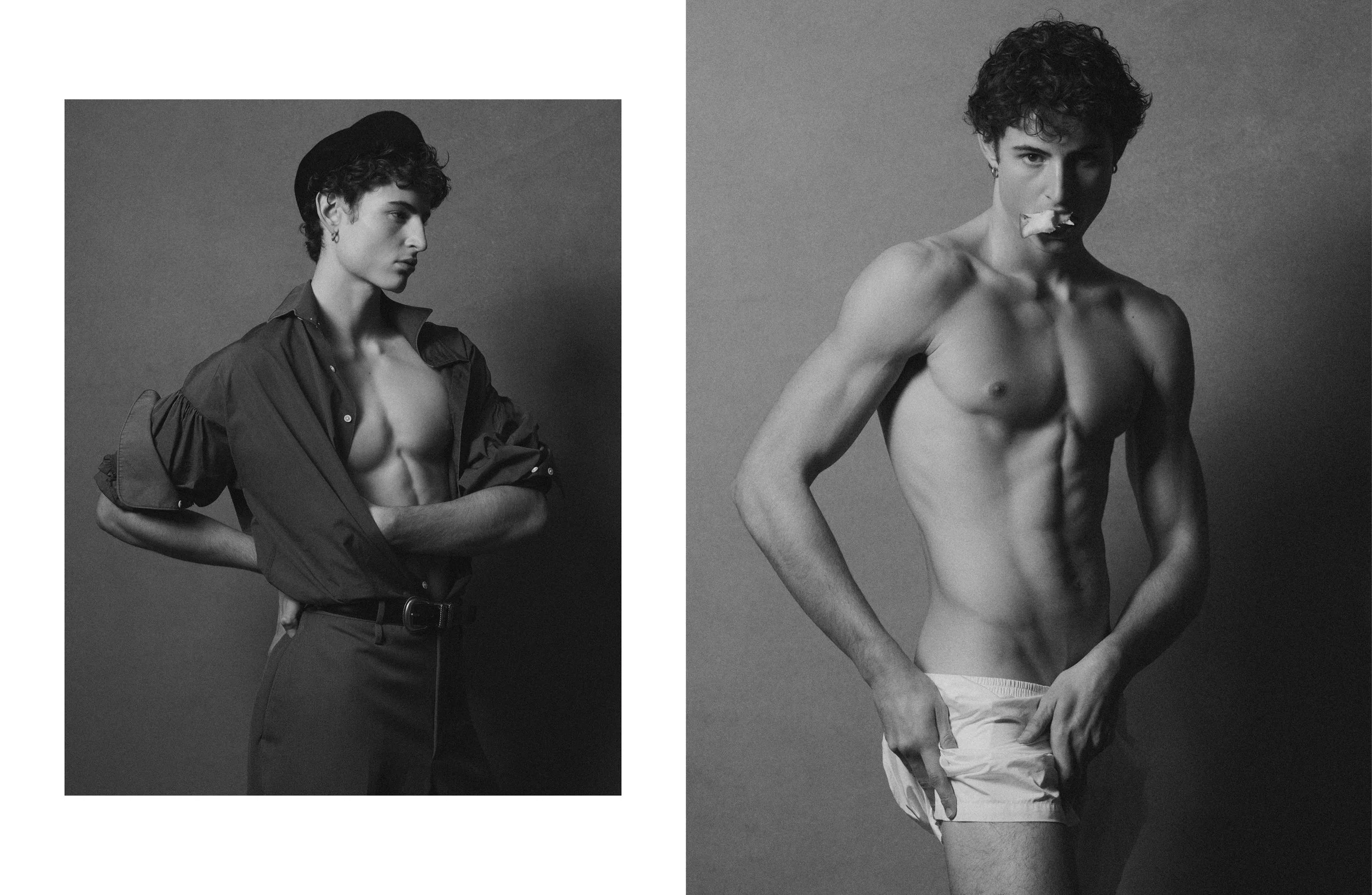
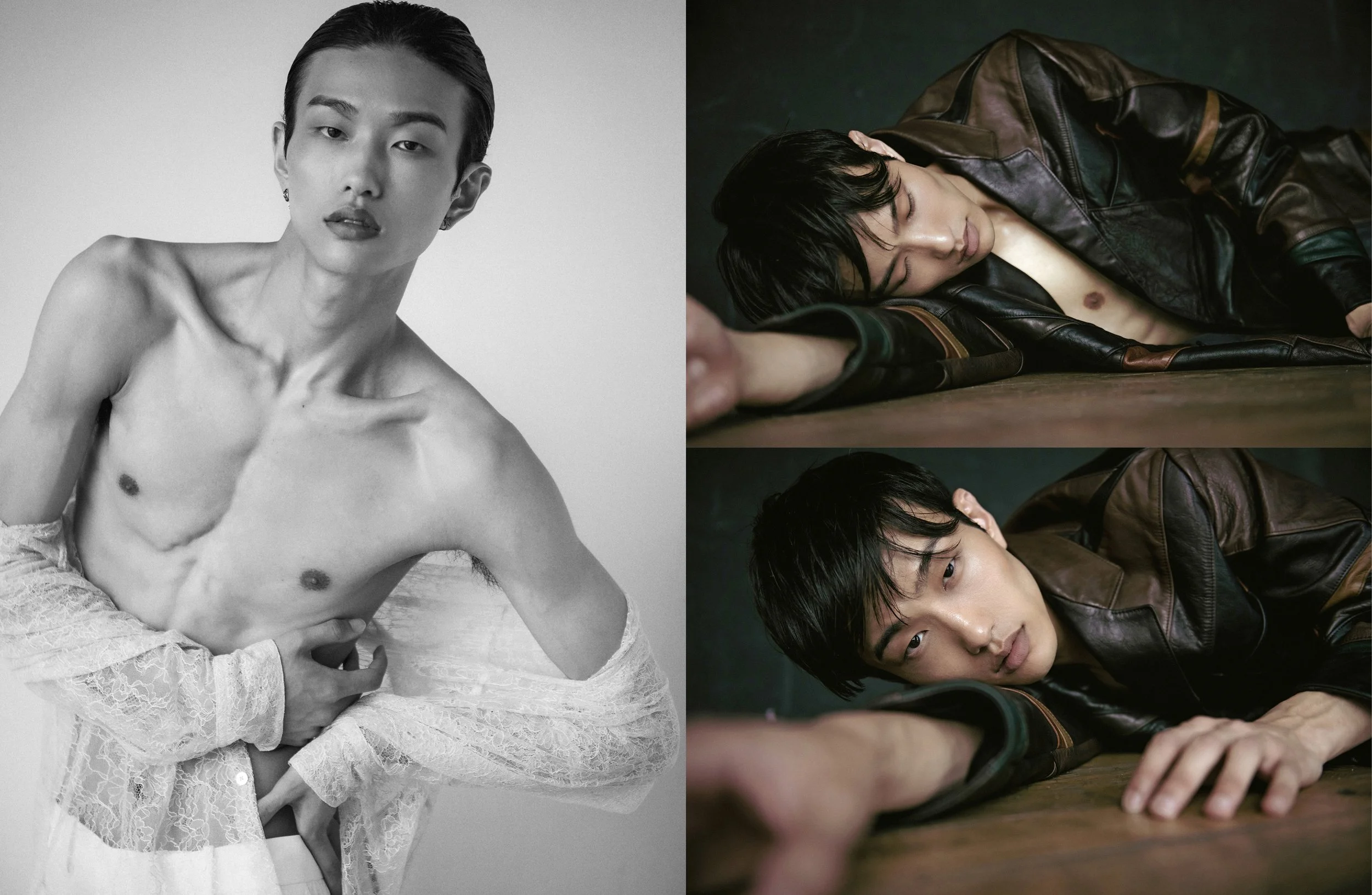
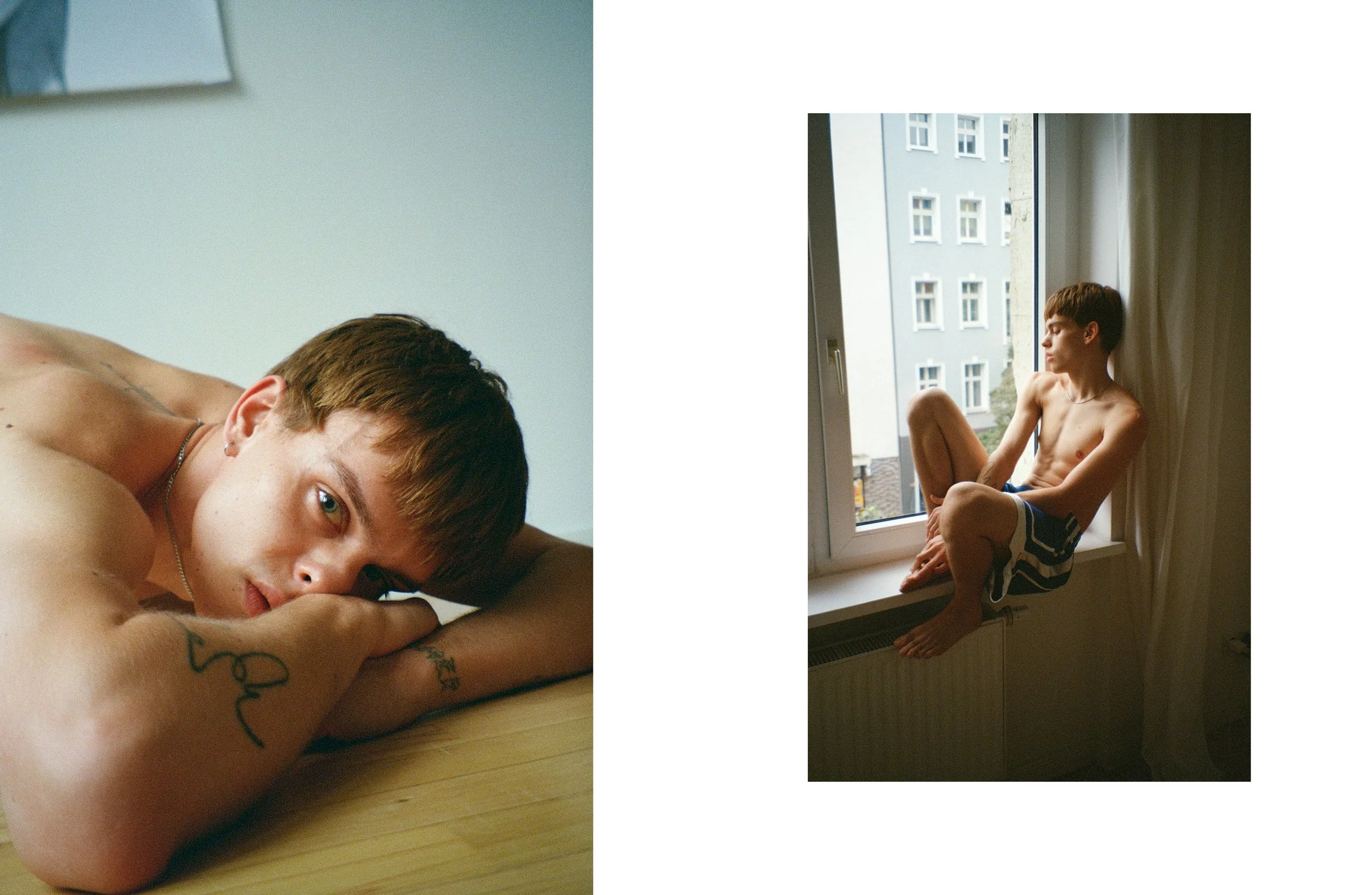
From humble beginnings in eastern France to appearing in Coralie Fargeat’s The Substance, OSCAR LESAGE left his hometown at the age of 16 to pursue acting and music. He has since appeared in major biopics, including the BBC’s Marie Antoinette and Bardot. This year, he stars as Hubert Blaché in HBO’s biographical mini-series about Alice Blaché, the first female director in the history of cinema. Oscar sits down with BTB to discuss his latest role, as well as his eagerness to collaborate with director Leos Carax.
You’ve just come back from a month and a half of filming in Canada. Can you tell us more
about your role in Alice?
For this role, honestly, since there’s very little information about Herbert Blaché, I didn’t do a huge amount of research. Bérénice Bejo, who plays Alice, had a lot of material about her, and Thibaut [Evrard], who plays her mentor as well, but for me, there wasn’t much. So, I focused more on Alice’s career and how cinema was made at that time. Herbert was an entrepreneur, a bold man, charming, but also someone who wanted a family life, who worked hard and was willing to go very far to provide for his family. The idea was to find a balance between all those aspects and play someone with many facets.
I saw it was an international co-production. Does that create a particular atmosphere?
Definitely. We shot in France, Belgium, and Montreal. In Montreal, even though they speak French, there’s a more American mindset. The crew was wonderful, and it was a real pleasure to work there. My role was bilingual, so I was switching between two languages. Three countries, two languages. It was a great experience.
Was it your first time in Montreal?
Yes. We shot in the same location and streets that were filmed for Once Upon a Time in America by Sergio Leone, which is my favourite film, so that really meant something to me.
In the series, you play the husband of a very influential woman, someone powerful and historically recognised.
It depends on the moment. There are times when she was not recognised at all, and not to spoil too much, but at the beginning of the series, you realise that for me it’s much easier to climb the ladder because I’m a man and because I speak three languages, whereas she has just as many skills, but she’s a woman. And at that time, it closed more doors than it opened.
What did this role allow you to explore, and what did it teach you about the history of cinema?
Humanly, what I loved most were the encounters and the journey itself. As for the history of cinema, I loved how, at the very beginning, it was not an industry at all. Just a few people who barely understood what they were doing and acted purely on instinct. There weren't any big crews yet. It was almost childlike in its setup. It reminded me of when I was a kid with my younger siblings, filming little scenes in our garden with a small camera, doing stop-motion and simple special effects. Early cinema was literally like that: very instinctive. Films that lasted less than a minute: comedies, or just shots of boats in a harbour, or people leaving a museum. What touched me was how innocent cinema was at the beginning, not driven by industry or profit.
You studied acting for eight years. Do you think you can become an actor through experience alone,
without formal training?
After eight years of theatre studies, I don’t think it’s absolutely necessary. Plenty of film actors have never set foot on a theatre stage. But at school, I discovered great authors, learned technical skills and discipline. Without school, I might have been more instinctive, but much less demanding and precise in my work. Instinct is crucial, but it’s not everything.
You made headlines at Cannes with a sign saying you were going to act in the next Leos Carax film. What was the intention behind that?
It’s part of a project I’m currently working on. It’s a documentary where I film myself doing everything I can to be cast in Leos Carax’s next film. That moment was like a performance that will be part of the project. I also released a song called Open Your Eyes, where I literally say, “Open your eyes, I’m made for you.” It’s obviously tongue-in-cheek, but Carax is my favourite director, and playing in one of his films would be a dream. It was a kind of love letter to him, pushing it as far as possible, until it becomes a bit uncomfortable.
You’re also a musician. How did music enter your life?
It developed alongside acting. I started playing guitar as a teenager. I liked singing, and I always loved writing as a way of expressing myself with my own words, since as an actor, you usually speak someone else’s. Before Covid, I bought a microphone and really got into music production. I made a song for my dog called Love My Dog, then over the years I made more tracks and released two EPs. I listen to a lot of different genres and am really inspired by artists like James Blake. He sings beautifully, experiments, and works with all kinds of artists.
Would you like to combine music and cinema in the future?
Absolutely. The dream would be something like Annette by Leos Carax: musical, dark, auteur cinema, stand-up: a perfect melting pot. Playing a musician would also really appeal to me.
What does music give you that acting doesn’t, and vice versa?
With music, since I do all my own compositions and instrumentals, it’s very solitary and pure creation. That speaks to me a lot. Cinema is the opposite: it’s collective, and you’re serving someone else’s vision. But I find freedom in both.
Interview by Gabrielle Valda Colas
Photography by Jorre Janssens
Fashion by Jonathan Huguet
All clothes and accessories FENDI
EIC Michael Marson
Casting by Imagemachine cs
Hair by Alex Lagardere
Make-Up by Paloma Azaid
Light assistant Charles Rabagny
Stylist’s assistant Rebecca Perrier and Juliette Maurel