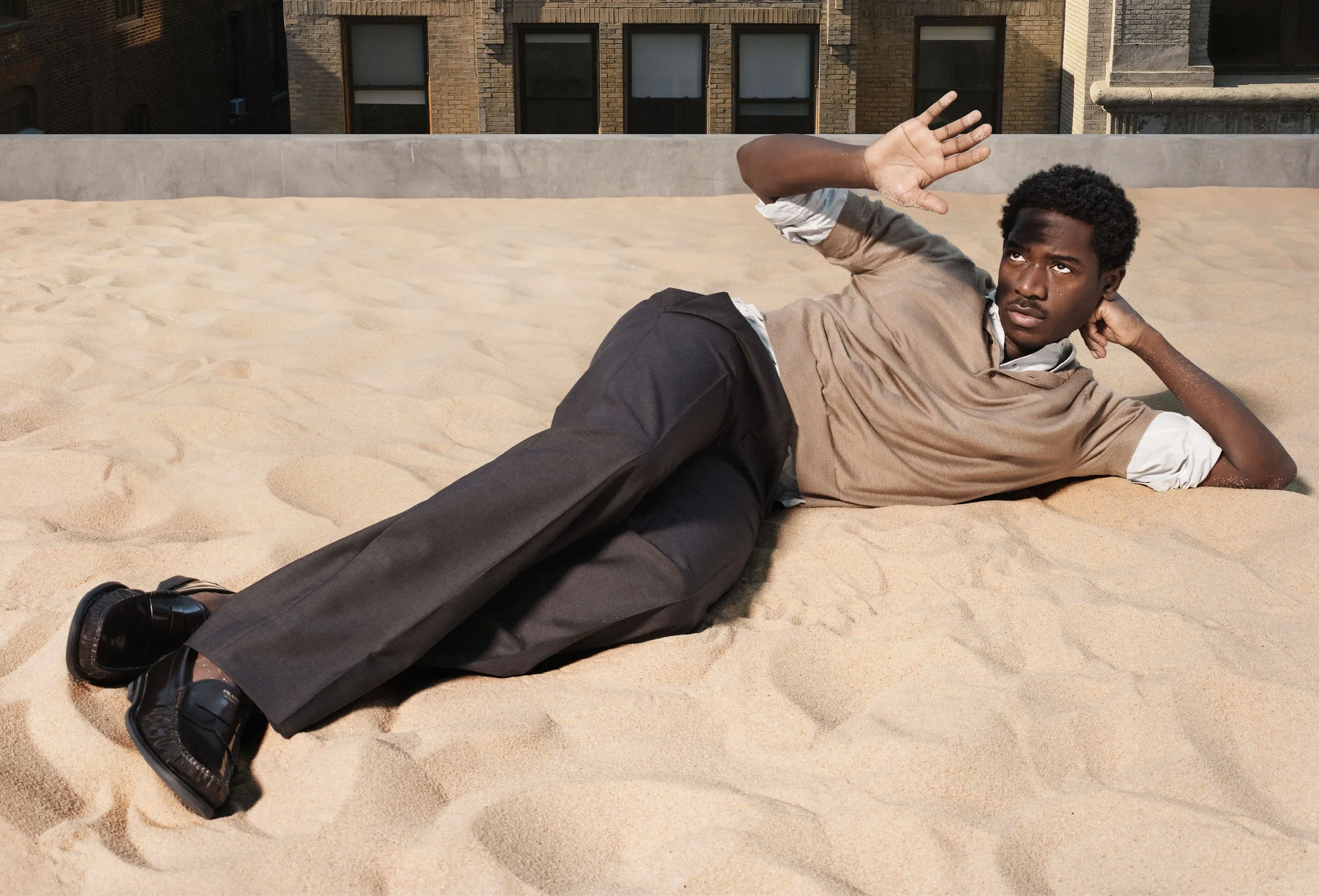
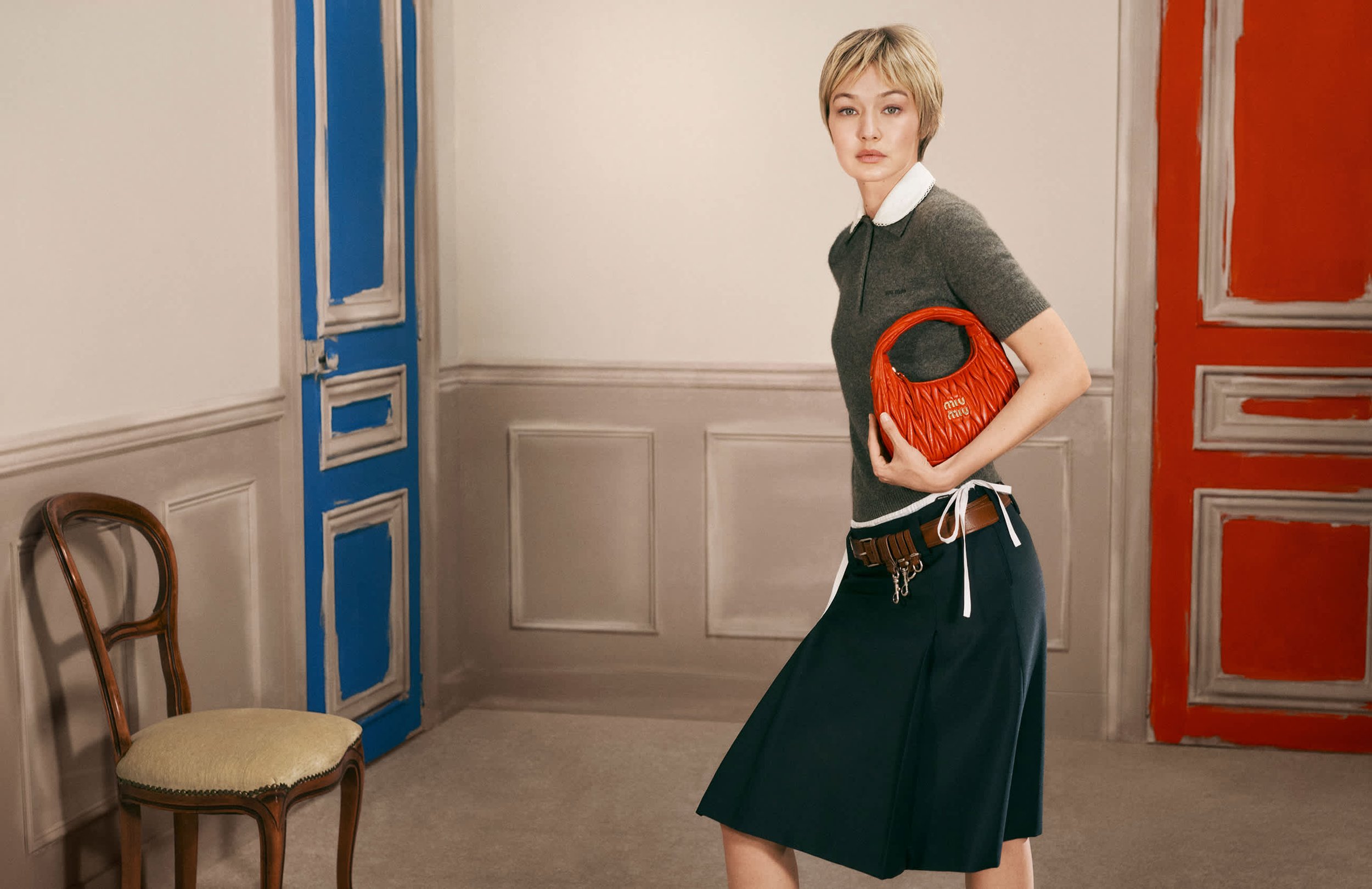
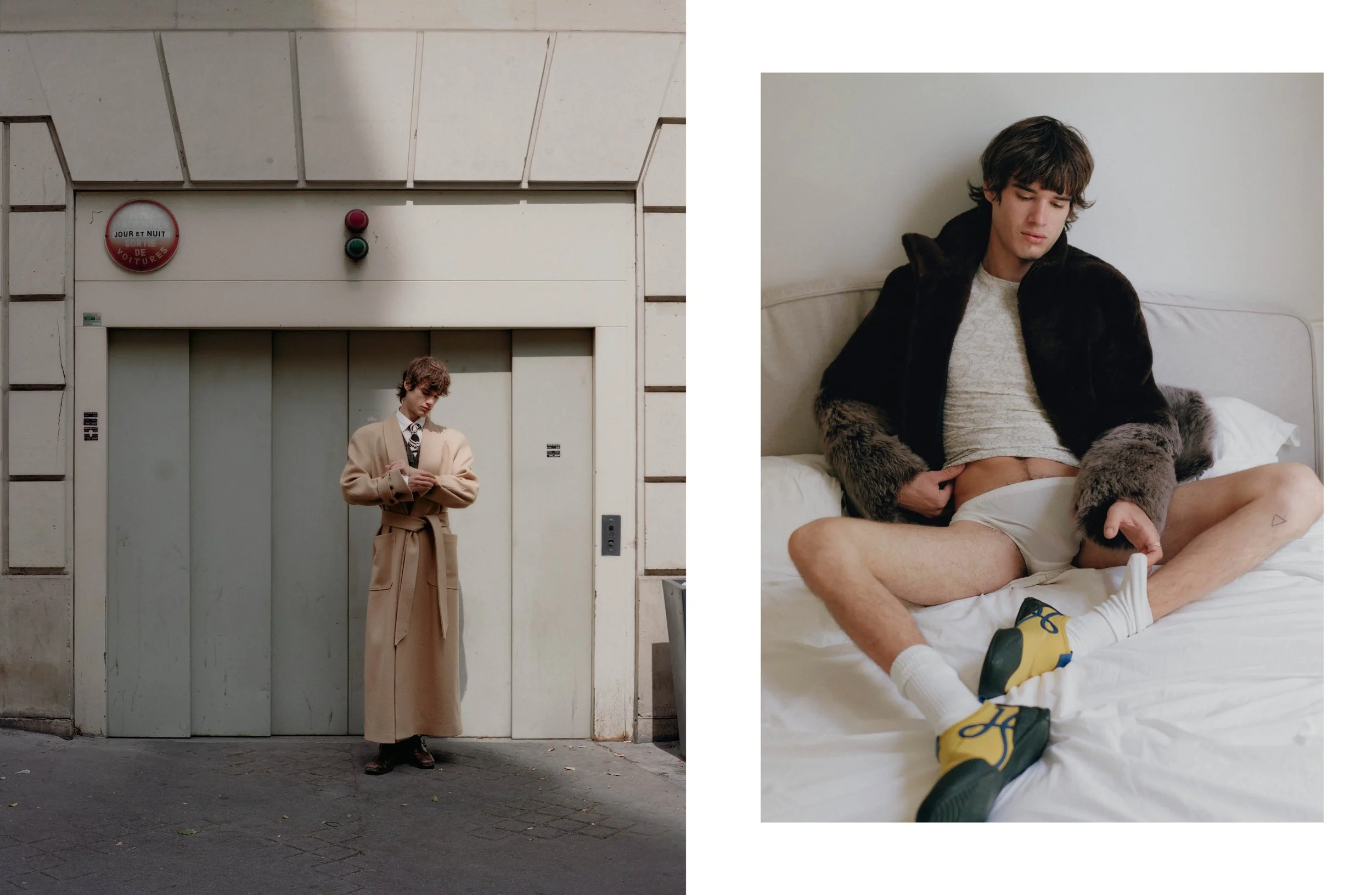
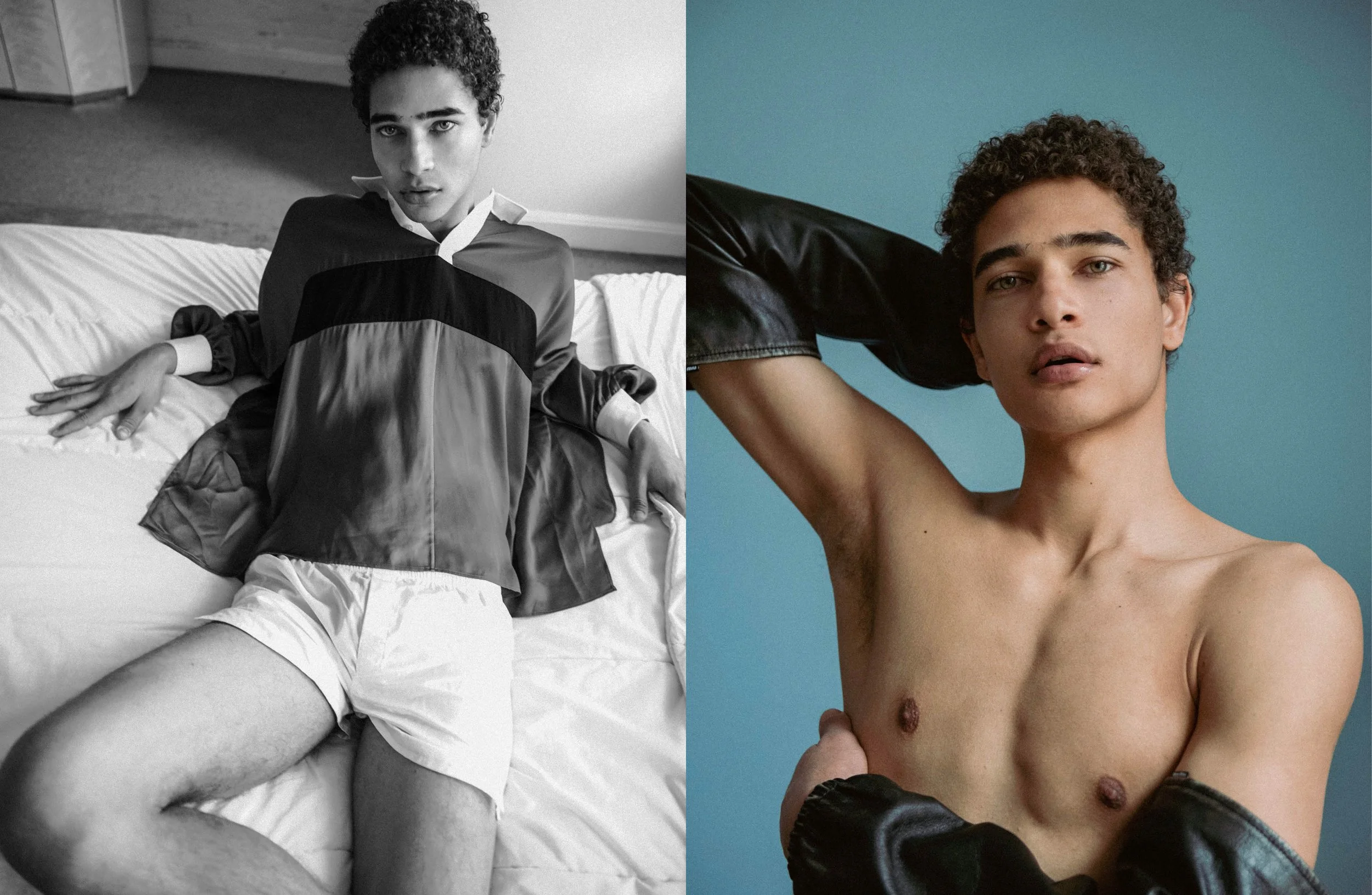
WHEN GUY RITCHIE TELLS YOU TO PUT DOWN YOUR “BACKPACK OF FEAR,” YOU DO AS YOU’RE TOLD. AND IT’S NOT UNTIL IT’S DOWN THAT YOU REALISE HOW HEAVY IT WAS. FOR MAX IRONS, THERE’S NOTHING QUITE LIKE LETTING GO. AS MYCROFT HOLMES IN YOUNG SHERLOCK, HIS ARRIVAL ON SET ALSO MEANT THROWING ALL PREPARATION TO THE OXFORD WIND. WHILE SHERLOCK HOLMES MIGHT DESCRIBE HIS “MIND PALACE” AS A METICULOUSLY ORGANISED ARCHIVE, IRONS DESCRIBES HIS AS “UTTER CHAOS.”
THROUGHOUT OUR CONVERSATION, ESPECIALLY AS WE TALK ABOUT HIS RECENT ADHD DIAGNOSIS, IT’S AS IF HE’S IDENTIFYING THE WEIGHT HE’S CARRIED – NEGATIVE SELF-TALK, A NEED FOR CONTROL, DOUBT – AND CLEARING IT OUT. HEAD UP, SHOULDERS LOOSE, FEET NIMBLE, IRONS IS LOOKING OUTWARD INSTEAD. AND NO, HE DOESN’T NEED TO KNOW WHAT’S COMING. LET IT COME.
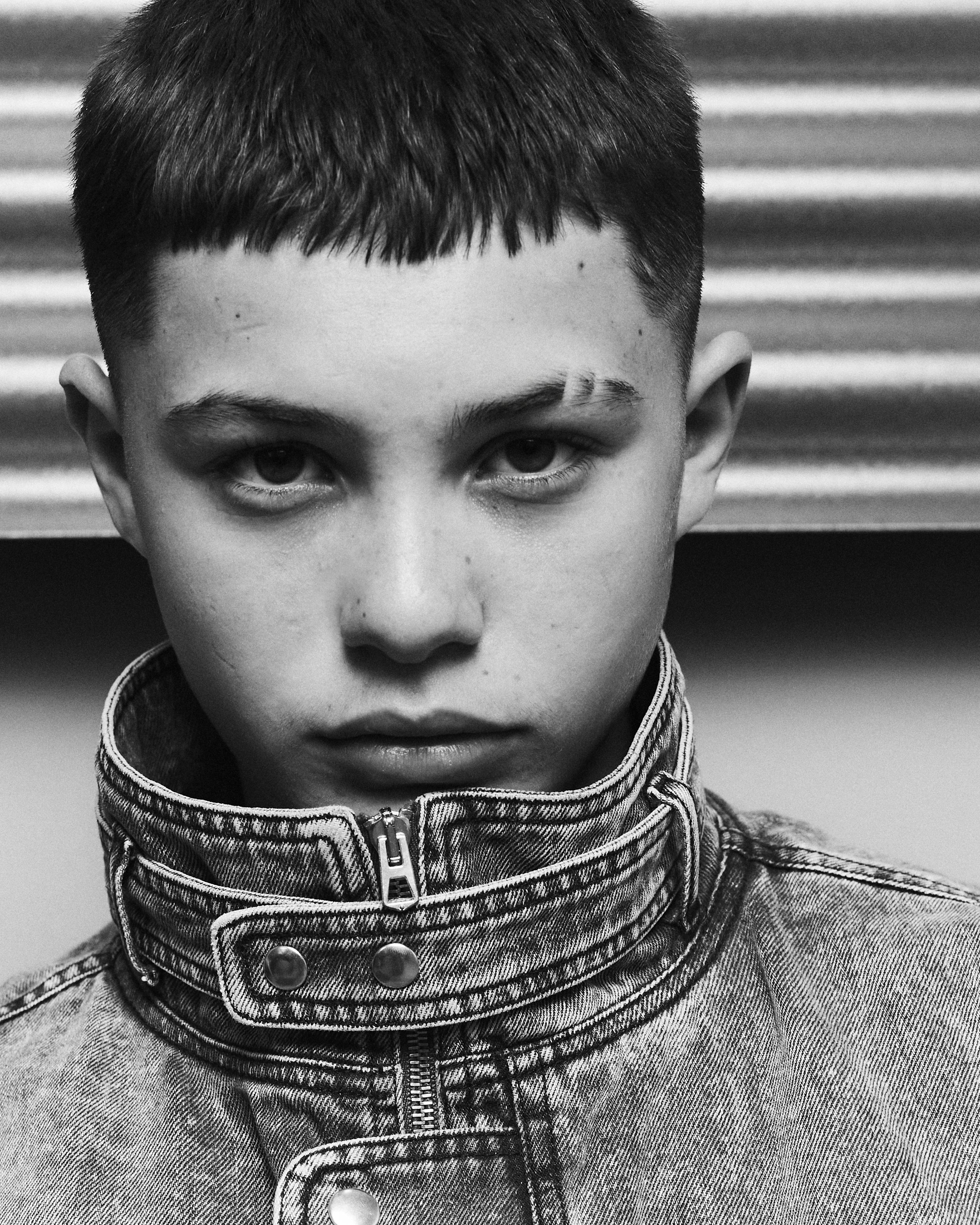
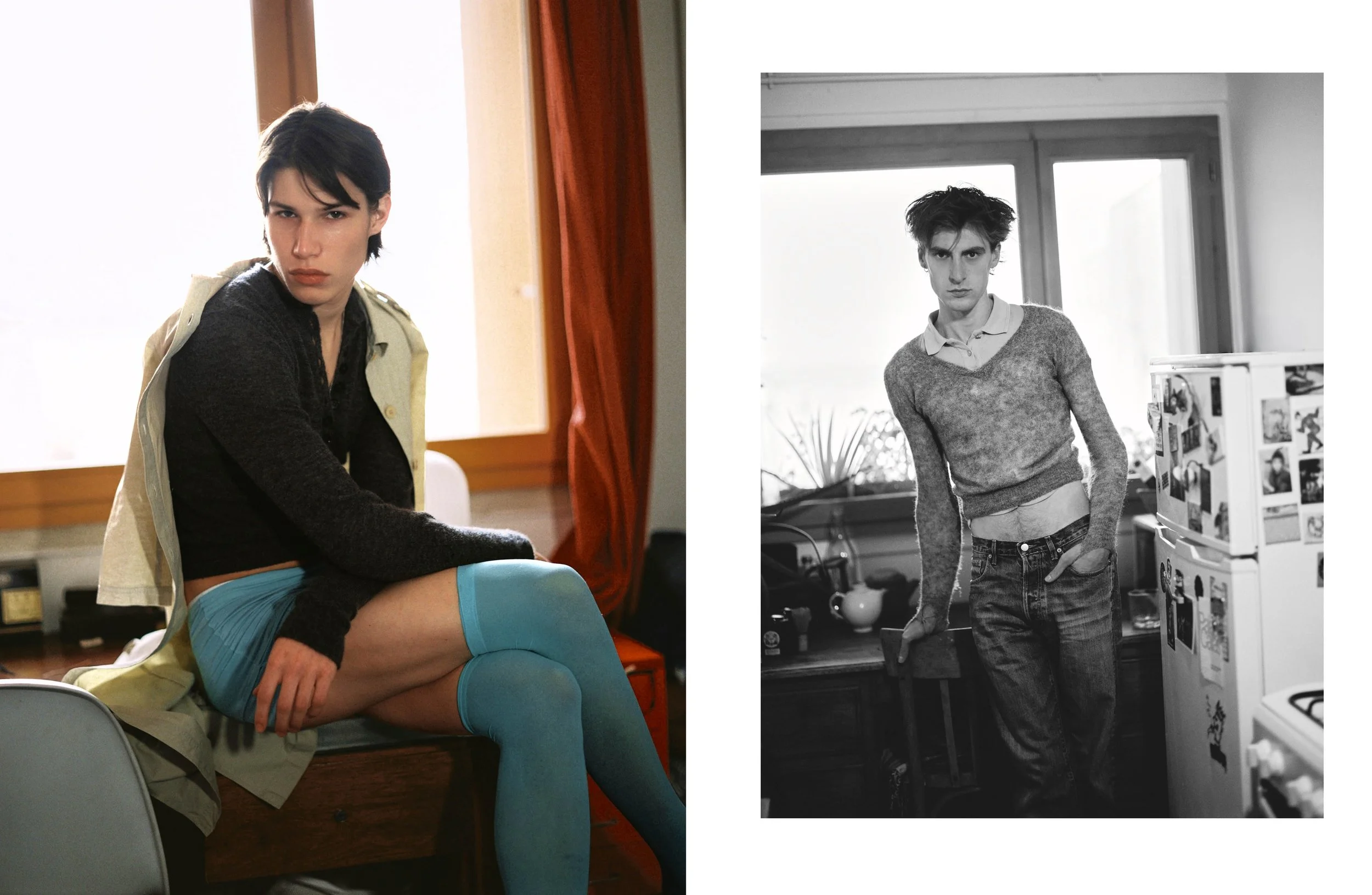
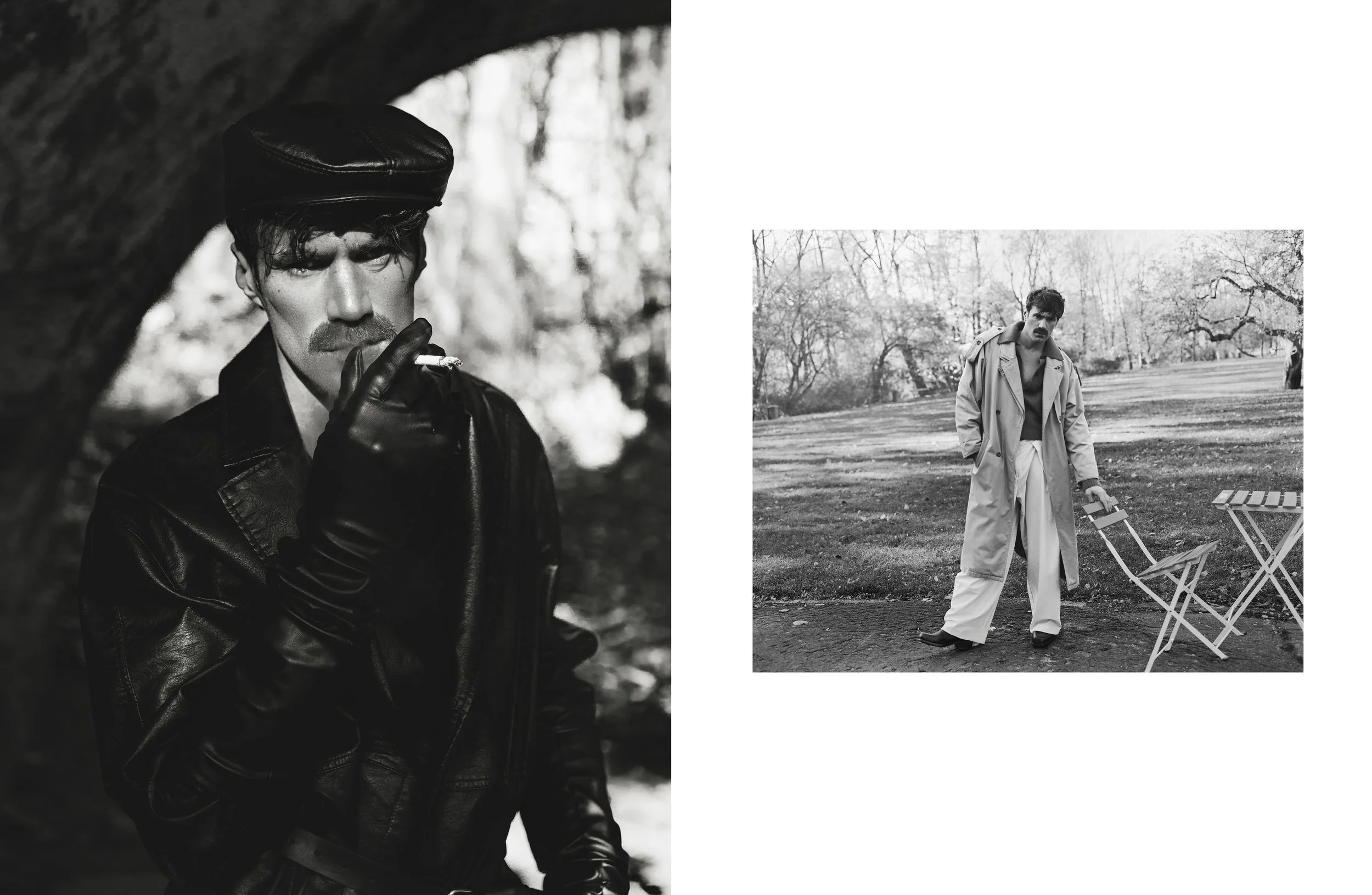
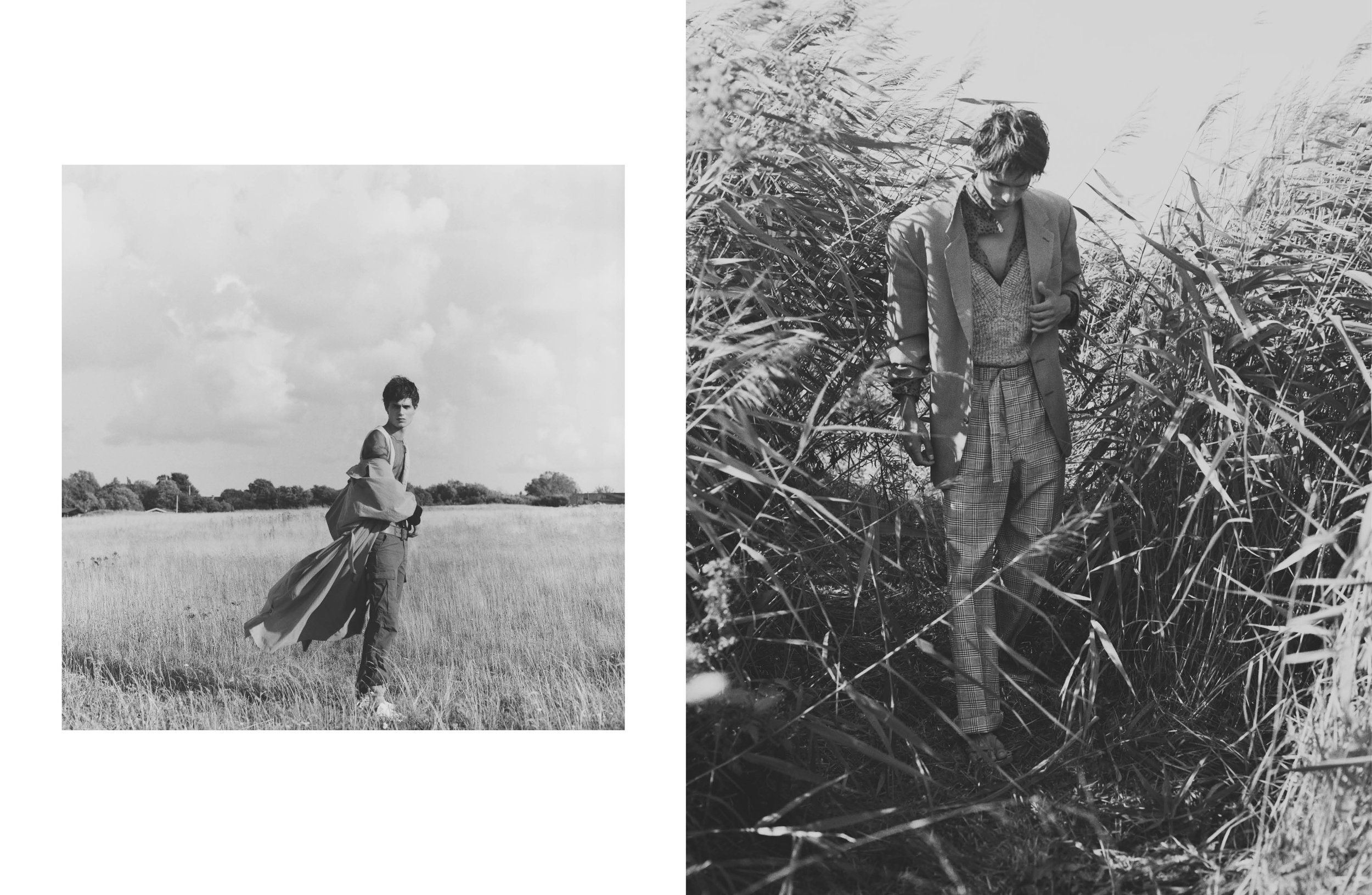
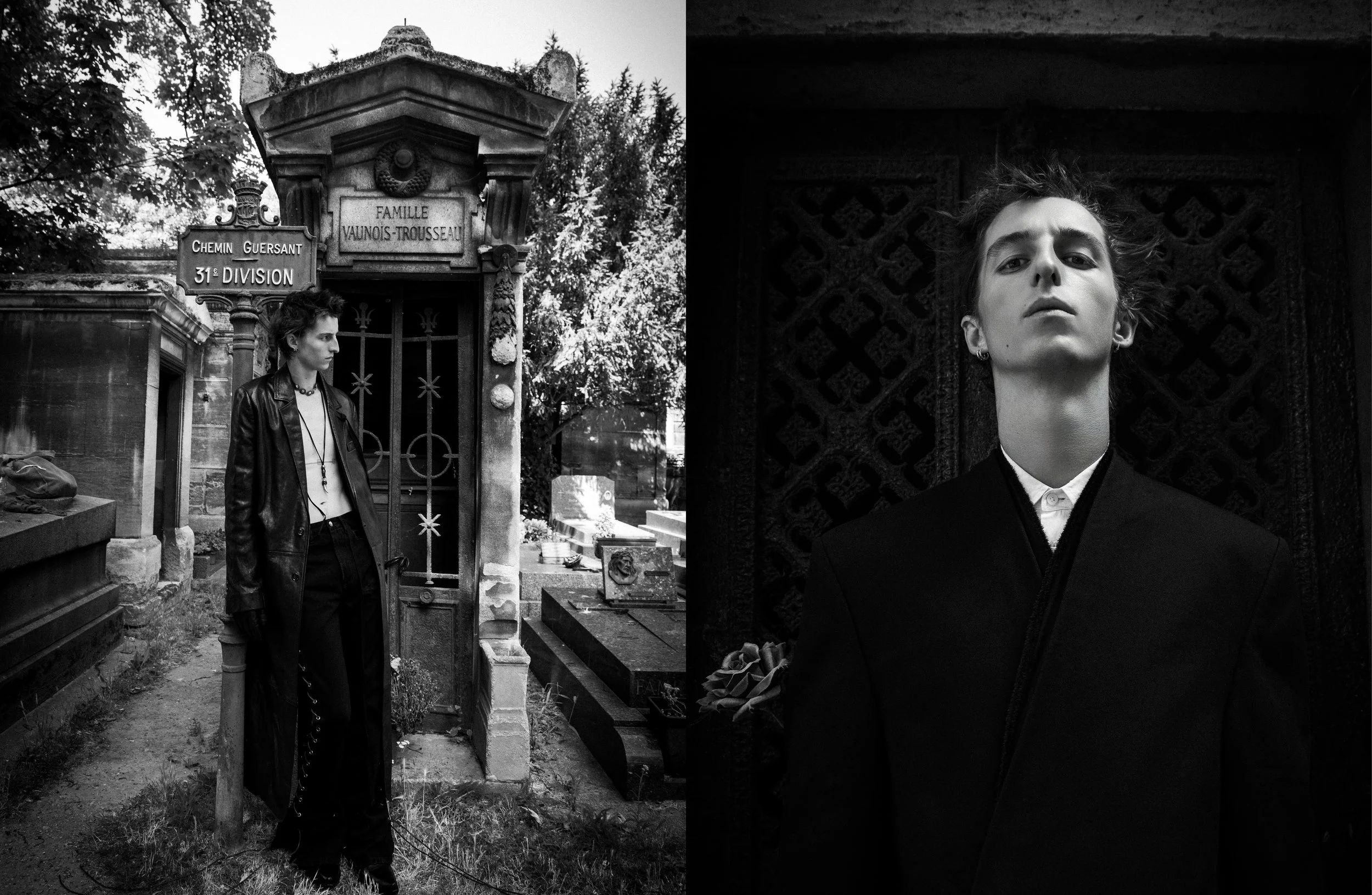
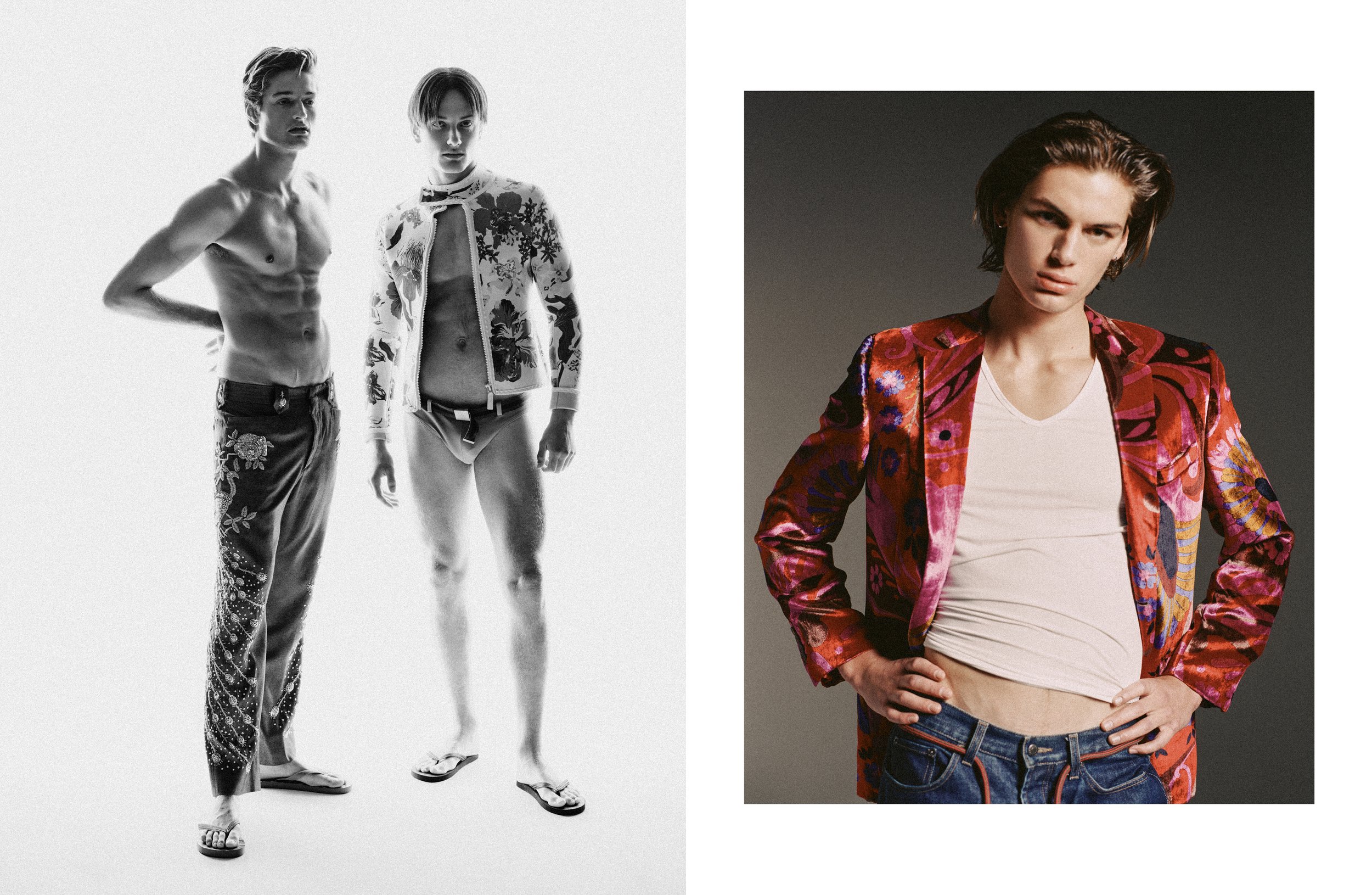
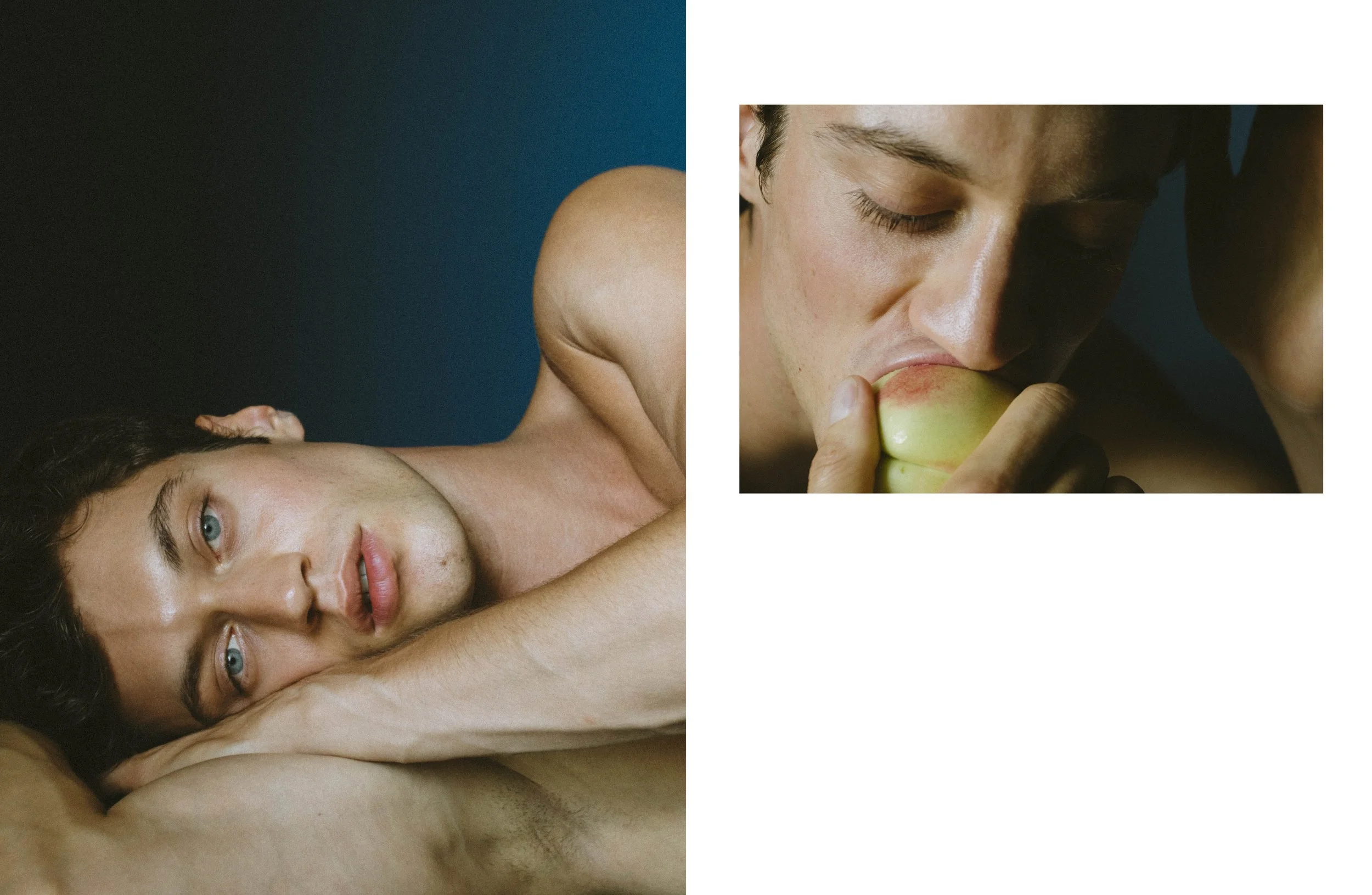
Left Full look Saint Laurent by Anthony Vaccarello
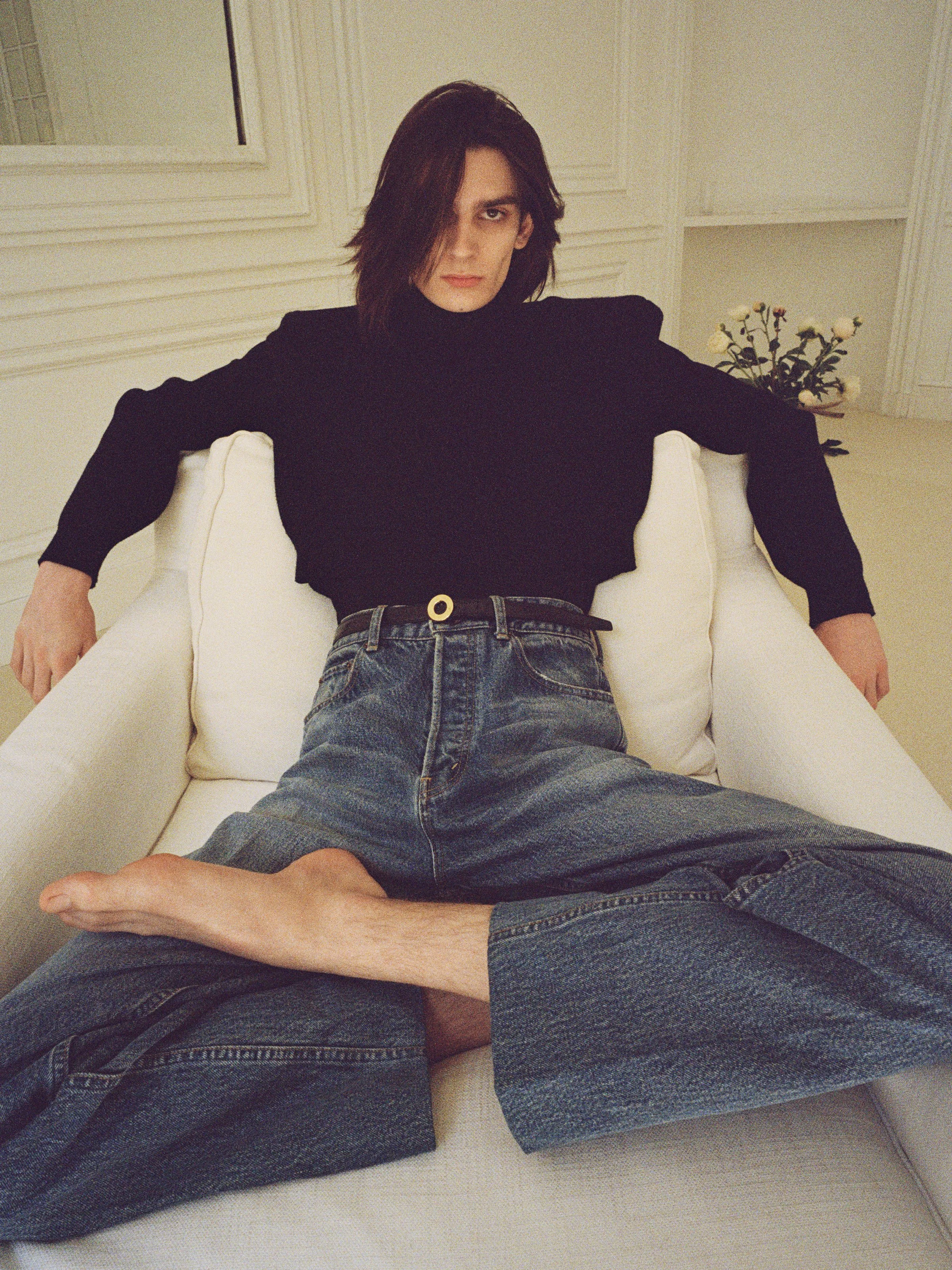
Right Full look Emporio Armani
Hey Max! How is your week starting?
My wife and daughter were away, so the house was unusually quiet, which I loved. But their return is pretty great too.
Some quiet time is lovely! I want to start by saying how much I genuinely love Young Sherlock. Let’s start with a fun Sherlock-based question. If you could describe your “mind palace,” what would it look like?
Utter chaos! Anyone who knows me would confirm this – I'm quite a disorganised human being.
I’ve read that Guy Ritchie also tends to choose chaos when directing, often changing the script and scenes at the last minute. How does external chaos bode with you?
I normally prefer order. Order feels like safety, compensating for my disorganised mind. For an actor, that comes in the form of preparation. I’ve always known this intellectually, but instinctively, I still reach for control. But surrendering that control, being footloose and nimble, is a far better route. You can tie yourself in knots with preparation. With Guy, literally five to ten minutes before shooting, the monologue you've spent weeks preparing is dramatically rewritten. It’s terrifying. He forces everyone to be free and trusting. It works, and it's fun. It's a lesson for me in life. Trying to anticipate everything is not the path to happiness. It's actually the path to a restricted life. You diminish your openness to the wonders and unexpected things life throws at you.
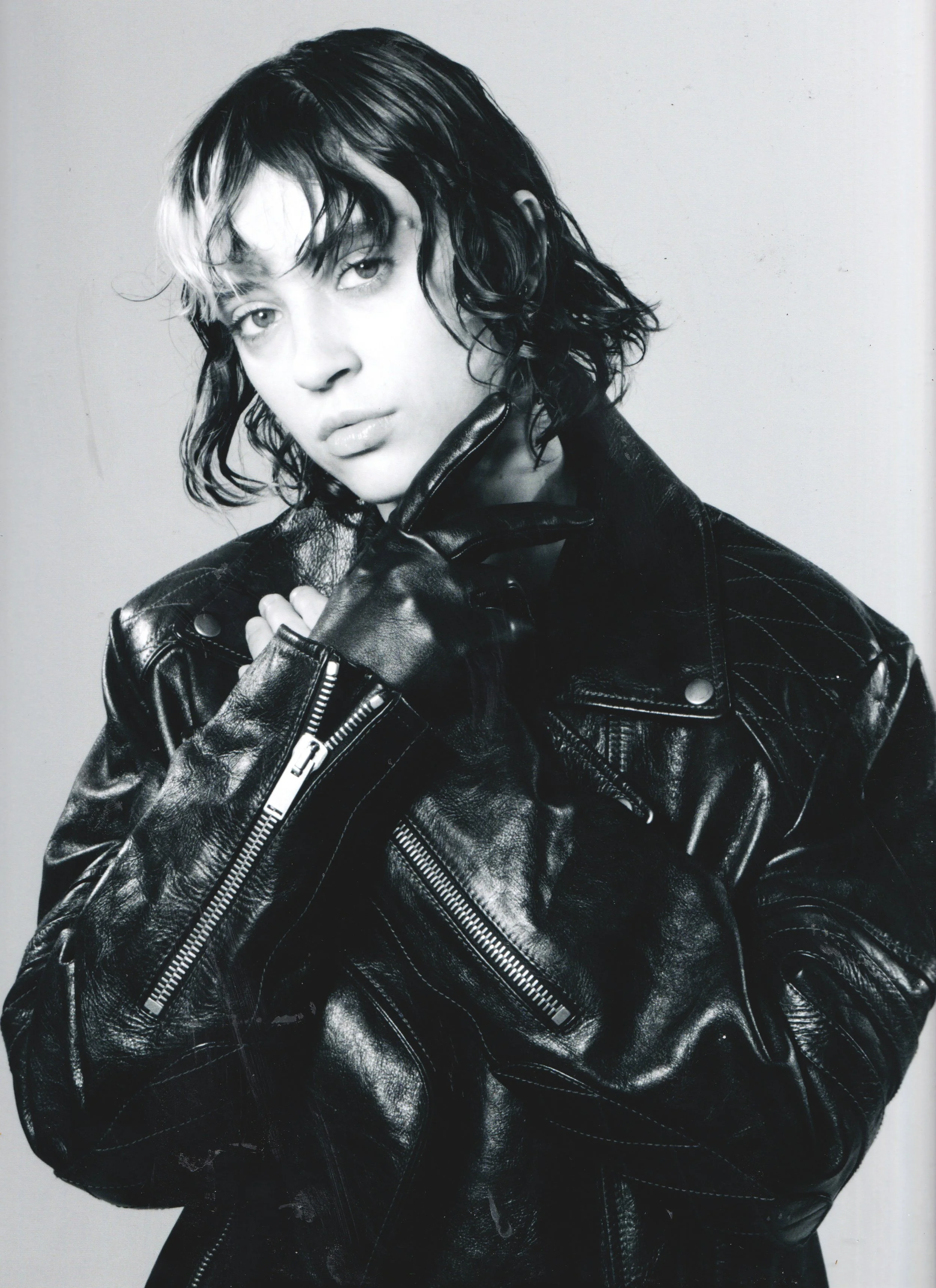
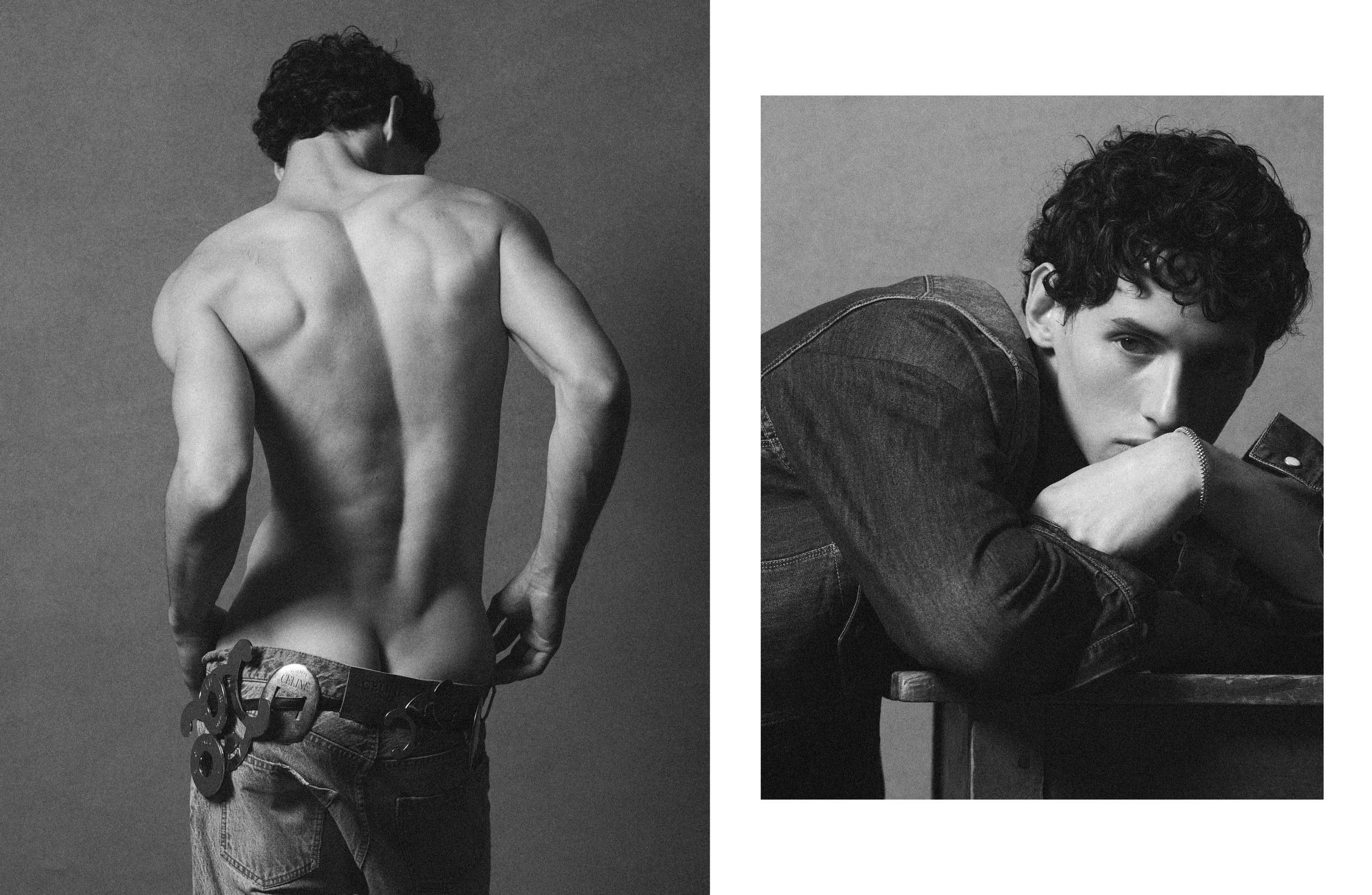
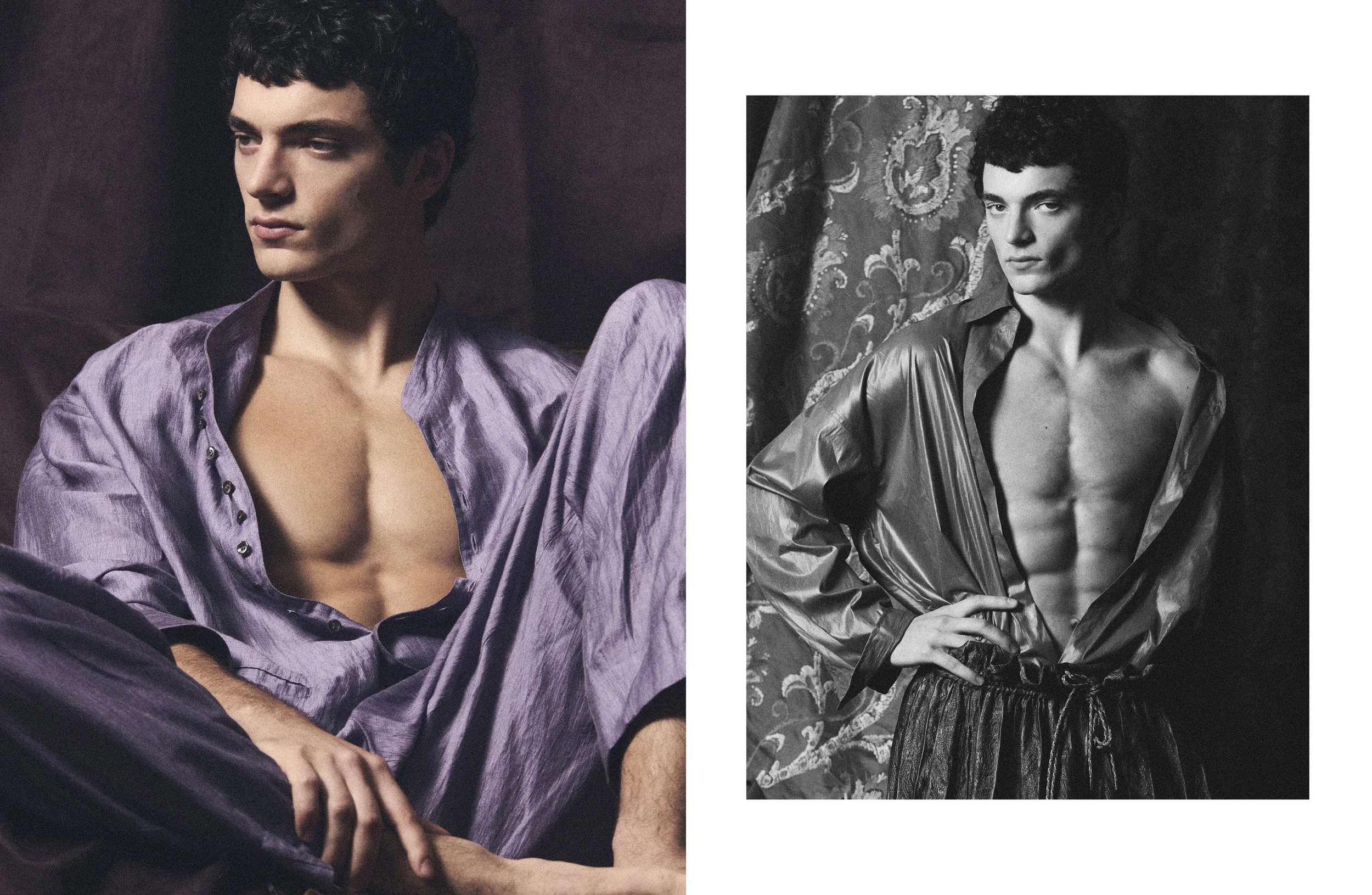
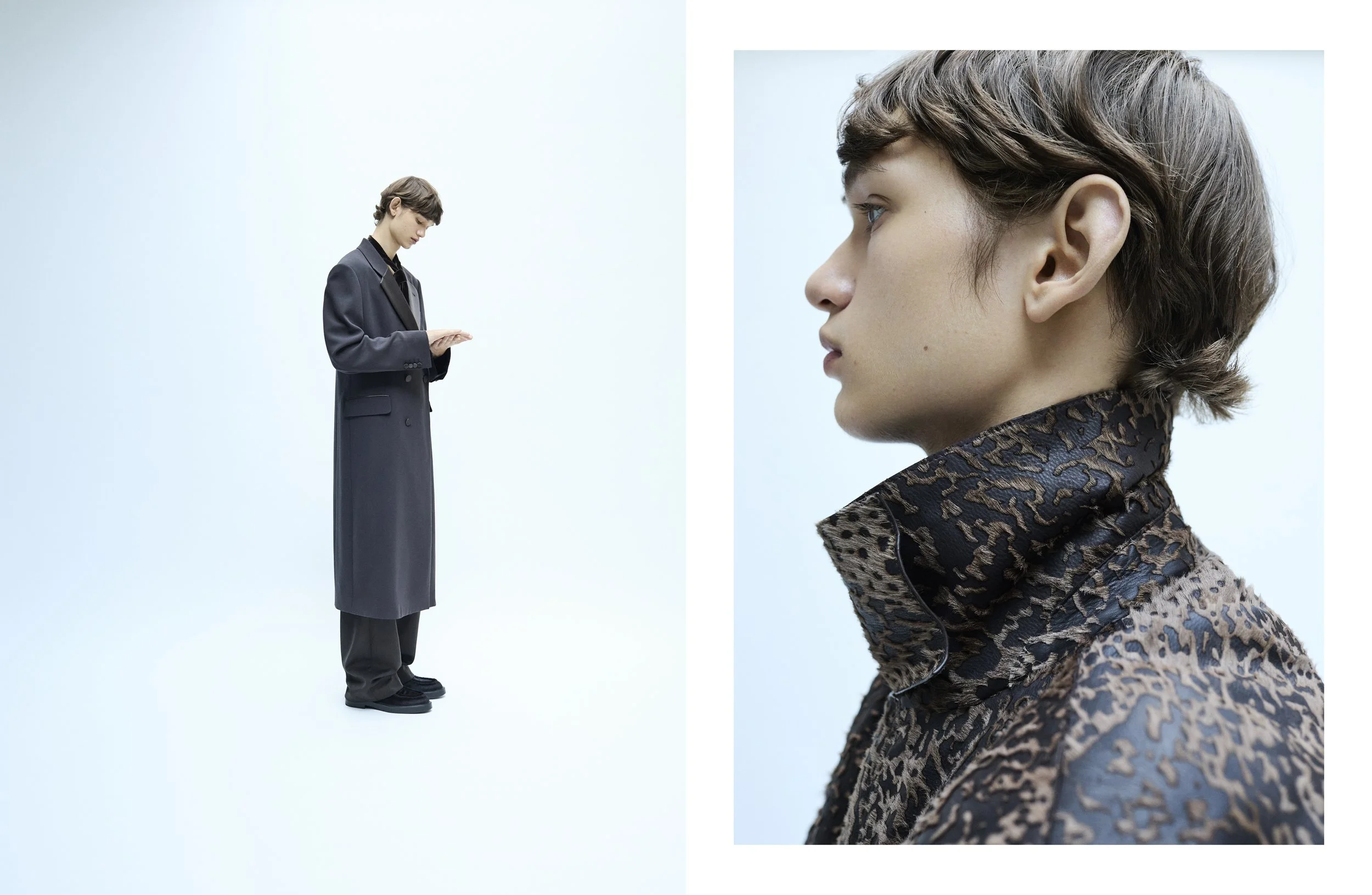
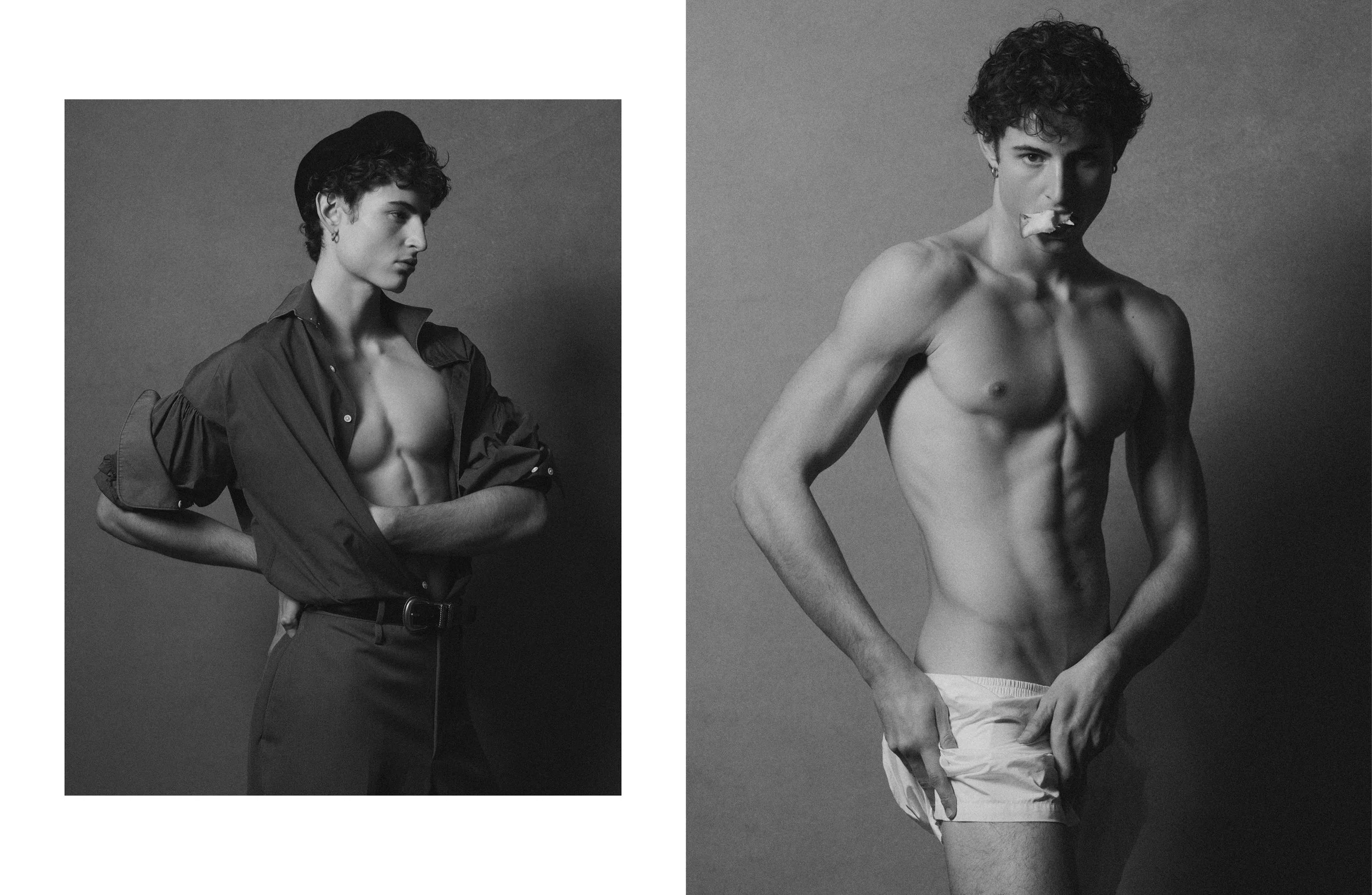
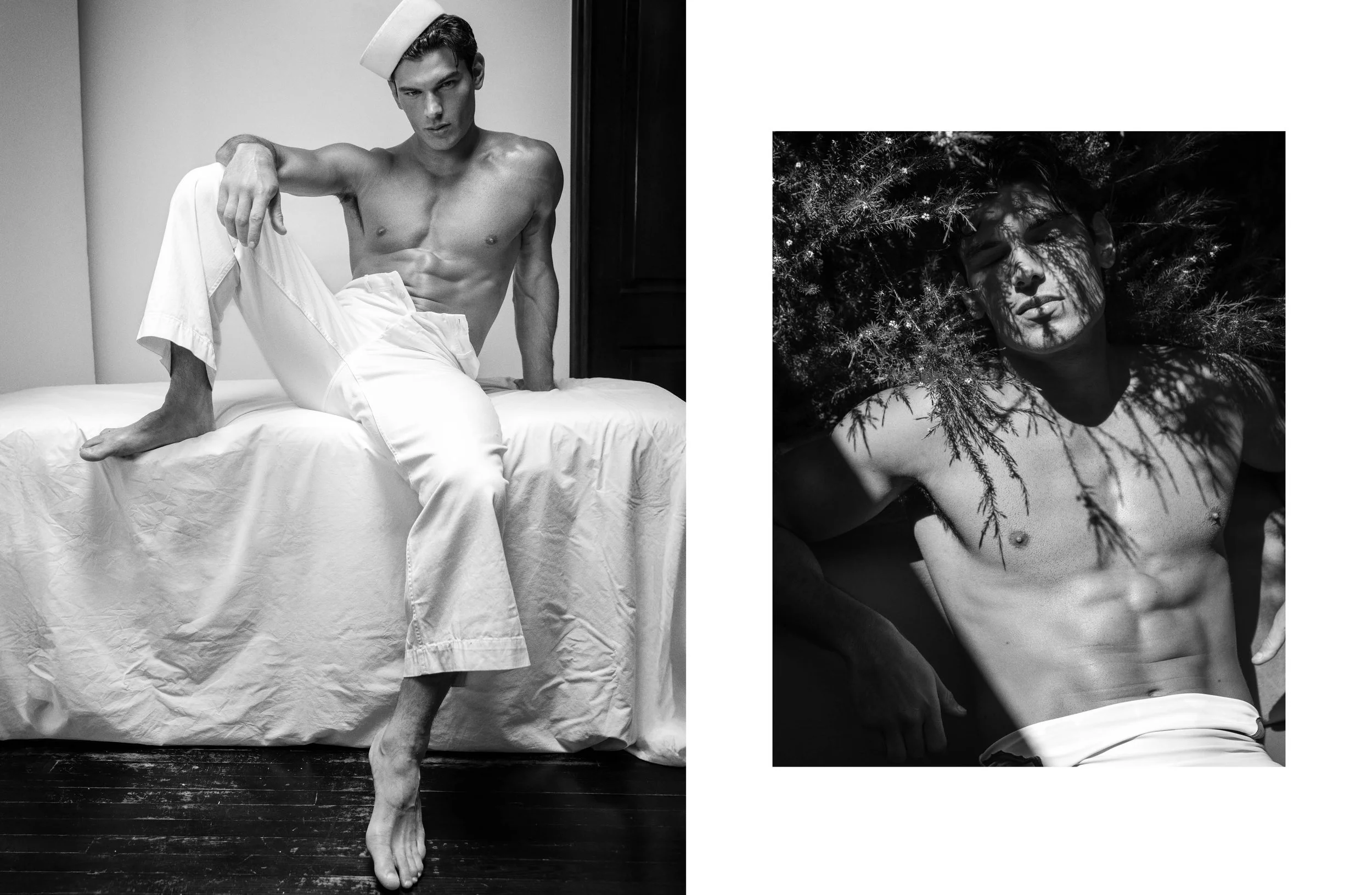
Left Full look Dior Men
Right Full look Louis Vuitton
There are so many uncontrollable elements in the entertainment industry. Has your relationship with control changed over time?
It is something I grapple with often. There’s no correct way to approach my industry. You can look at actors who have very tight control over their image and career choices. You need to be at a certain level to have that control. For the majority of us, you have to get familiar with rejection real quick. You have to get your head around the idea that it's not necessarily what you did in the audition. It may be how you look or other things. It’s fruitless to worry too much about it.
When I was younger, I used to get angry about certain things, like a director’s choice or approach to a scene. You fight your corner. Even though unpleasant, it feels like a good thing to do, but it can eradicate relationships. You learn to pick your battles. You also learn that you’re not right half the time. I don’t make a huge effort to control where I am in the industry. Doing so makes you look at yourself like a product. “How do I look?” “Am I attractive?” “Am I good enough?” I don't think happiness is at the end of any of those questions. In life, you want to look out at the wonder and beauty of things, not at yourself, constantly thinking about where you fit on a shelf. [That approach] may not win me an Oscar next year, but it will make me happier, which is more important to me.
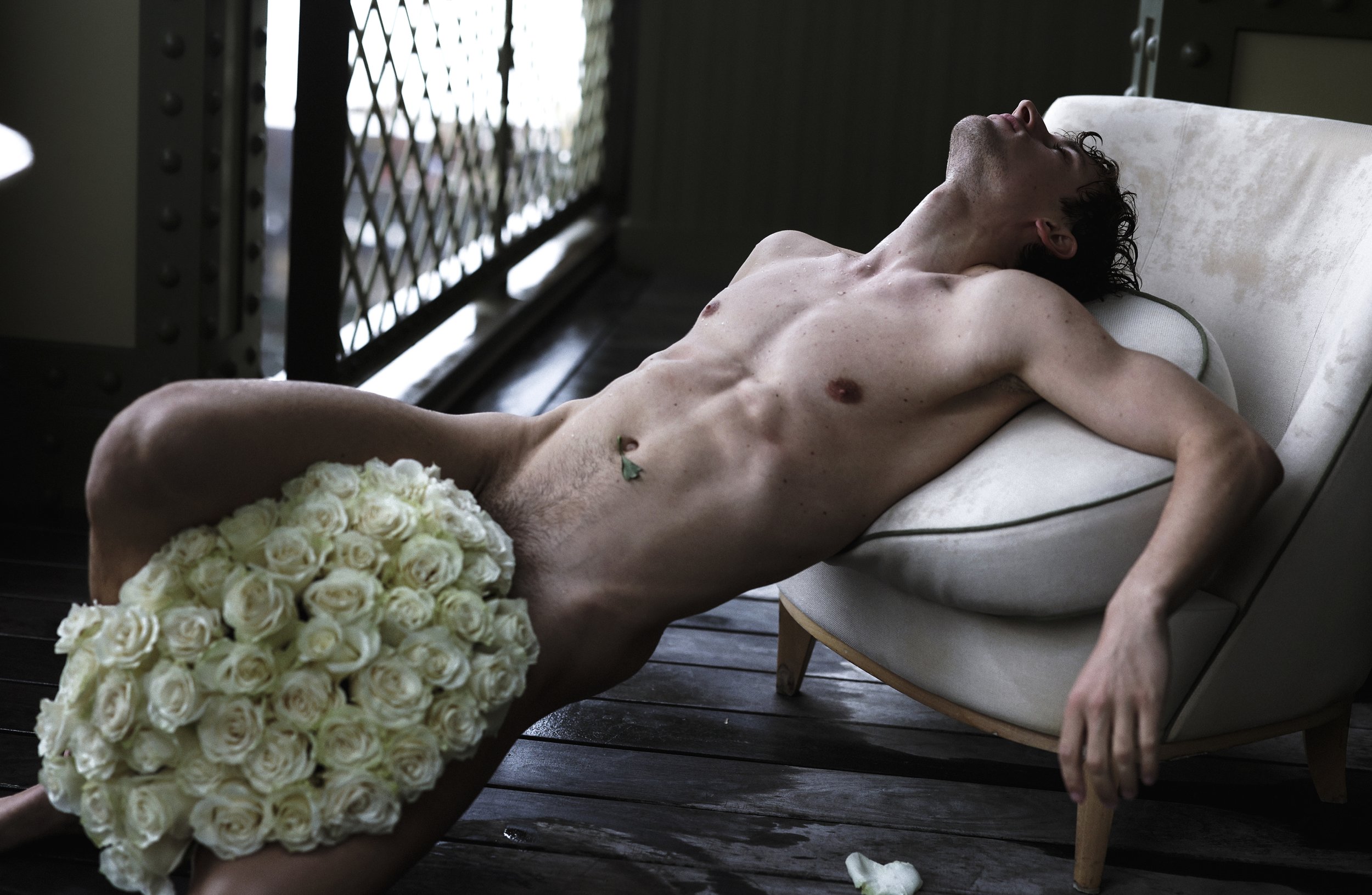
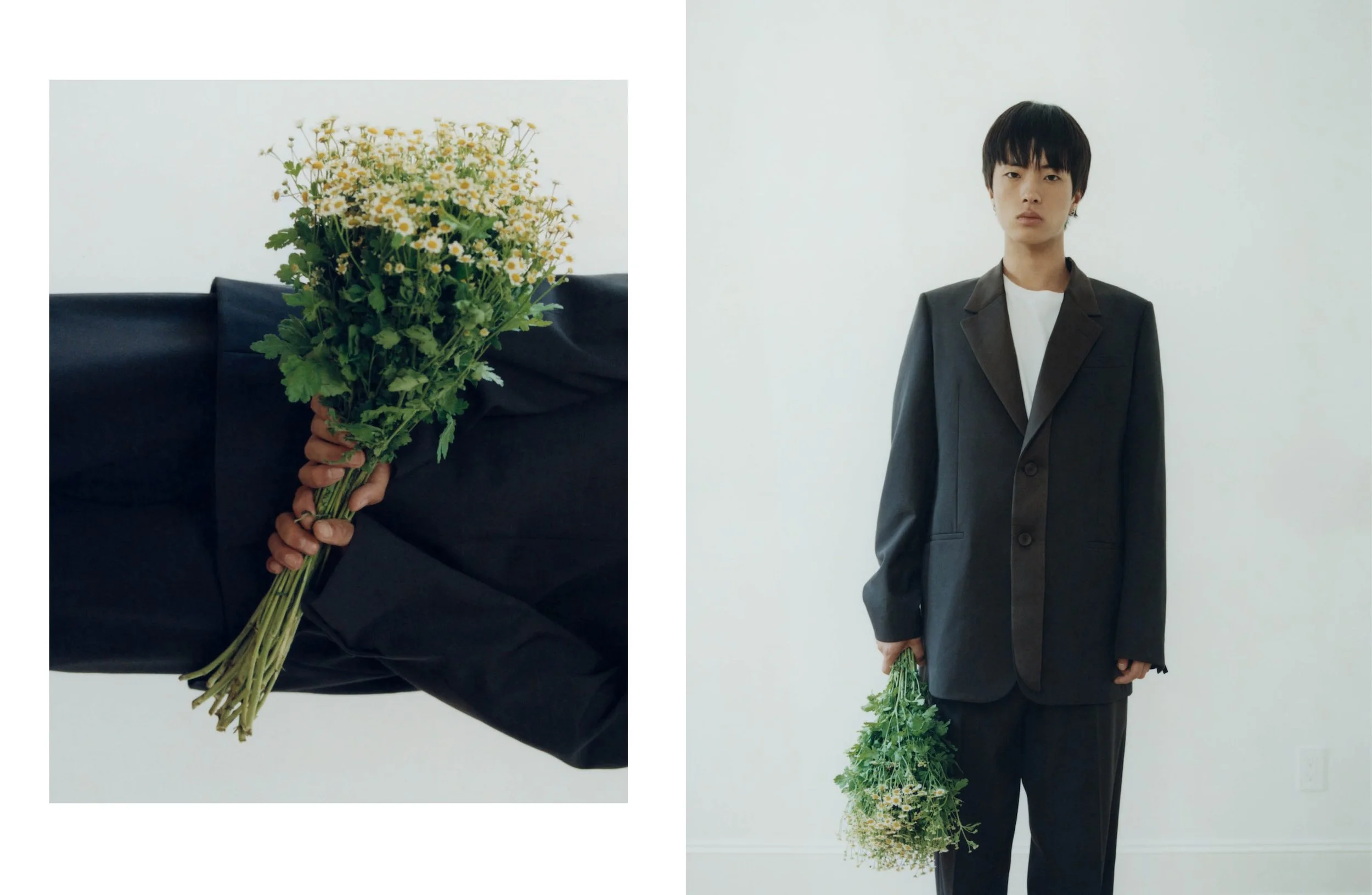
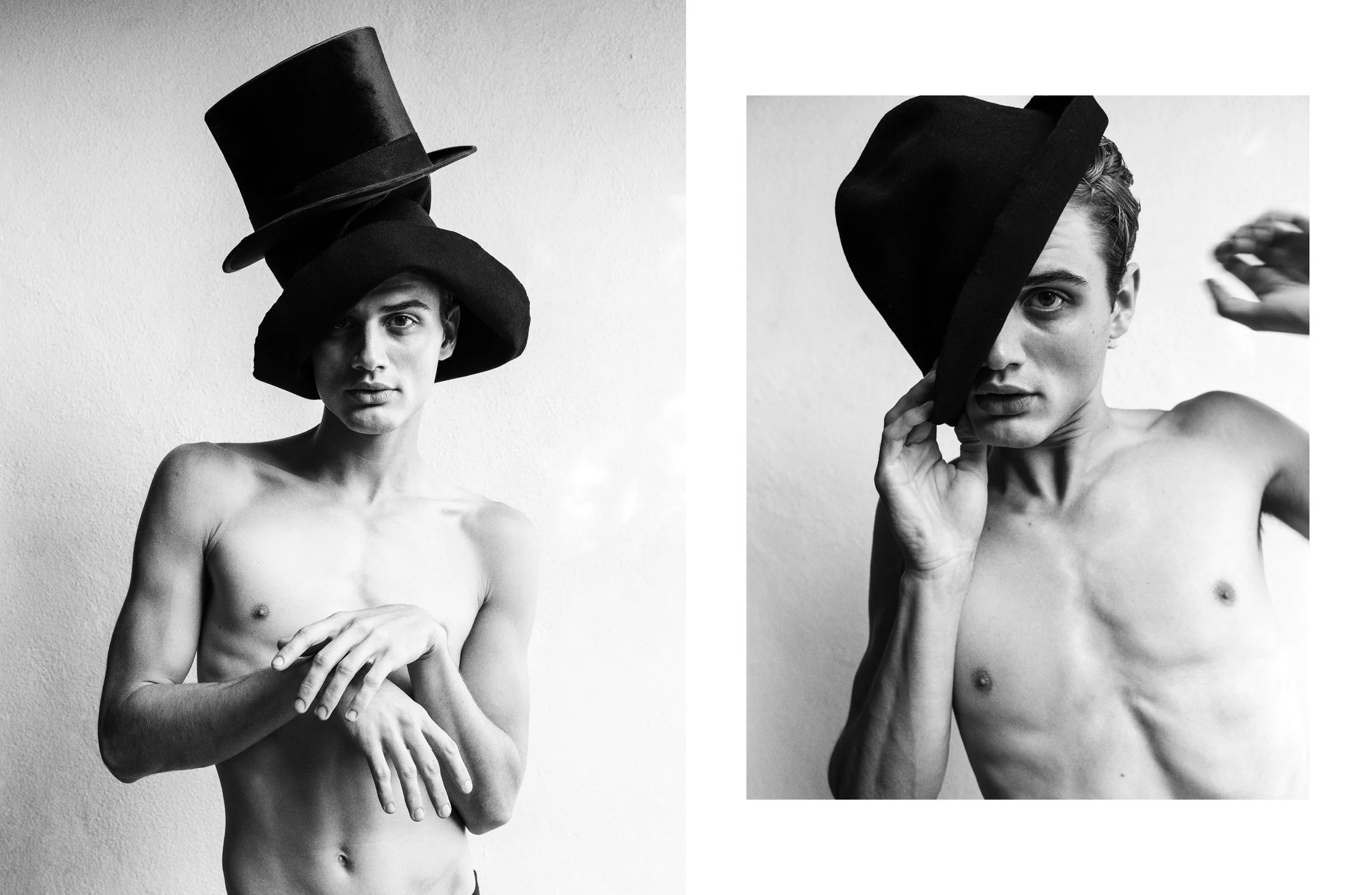
Full look Saint Laurent by Anthony Vaccarello
You have said that many actors are subconsciously frightened and protecting themselves. Some actors are drawn to playing characters because it can feel like a mask. Why were you drawn to it originally? What draws you in now?
Each job provides a different lesson. What first got me into it was just the doing of it. I did a play at school. I now know I have ADHD, but I didn't know this at the time. I knew I had dyslexia, so I hated academia, remaining engaged in class and exams. There was an opportunity to put on a theatre piece for charity. It was an intense piece of theatre. And it was the most engaging thing. I had control over all elements. No one was telling me to sit down, listen, and be still. I could do it my way. It was just me up on that stage. I continued to do more at school, and once school finished, I went abroad. I went to Nepal and directed street theatre for nine months. Then I came back, and I decided to go to drama school. If you can get through that in one piece and you enjoy it, you are on the right path.
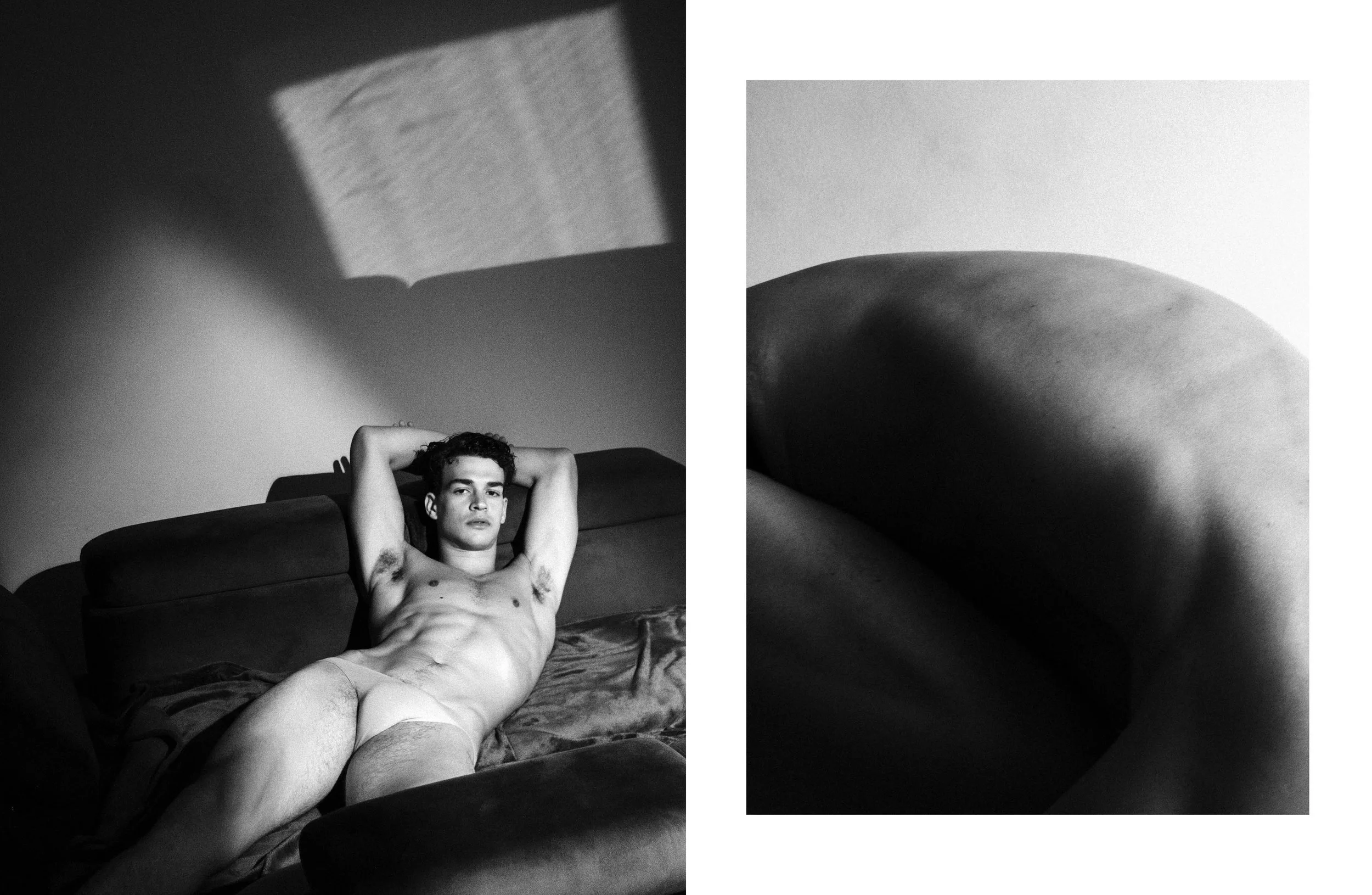
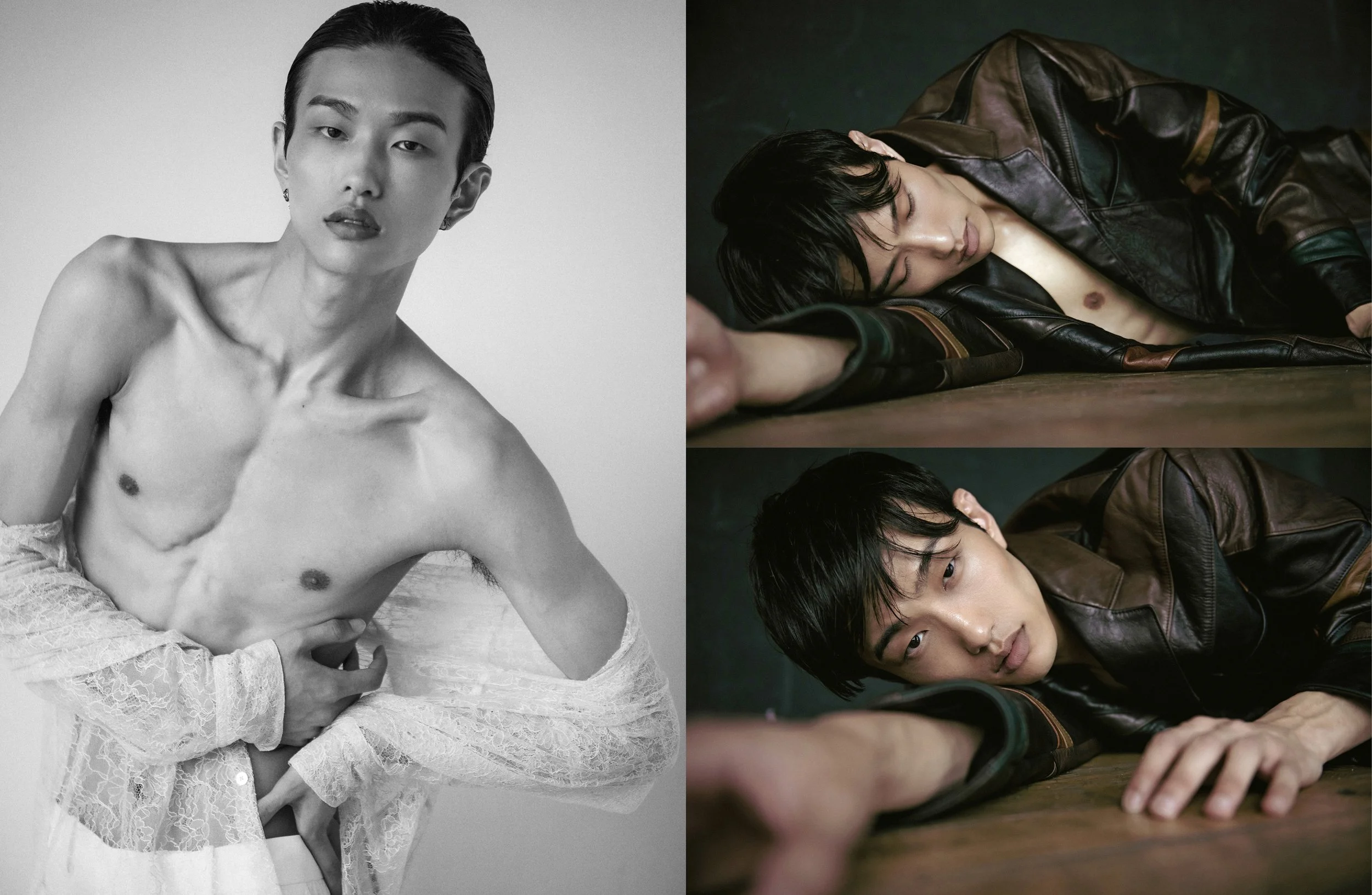
Left Jacket and coat Prada, watch Omega
Right Full look Dior Men
I think for a lot of actors, it fulfils something in them when they are young, and for some, that fulfilment changes as they change.
It allows you to be playful. I'm quite a playful person, so I can get that out. Each job has its own catharsis. I don't want to get into ADHD too much, but I was only diagnosed a little while ago. It’s a system-wide, deep-rooted condition. It affects every element of your life – how you see yourself and how you approach life. Because of that, I was in a defensive crouch throughout my school years and a lot of my early acting career. Acting, in some ways, felt like a test. You fail or succeed. You're often compared. You get a final grade in the form of reviews. ADHD can make acting very difficult because a lot of your attention is where it shouldn't be. Your mind is often very loud, critical, and negative: "You’re stupid, you’re failing.” That can leave little room for concentrating on being present. Post-diagnosis has been a real revelation in how I feel as an actor.
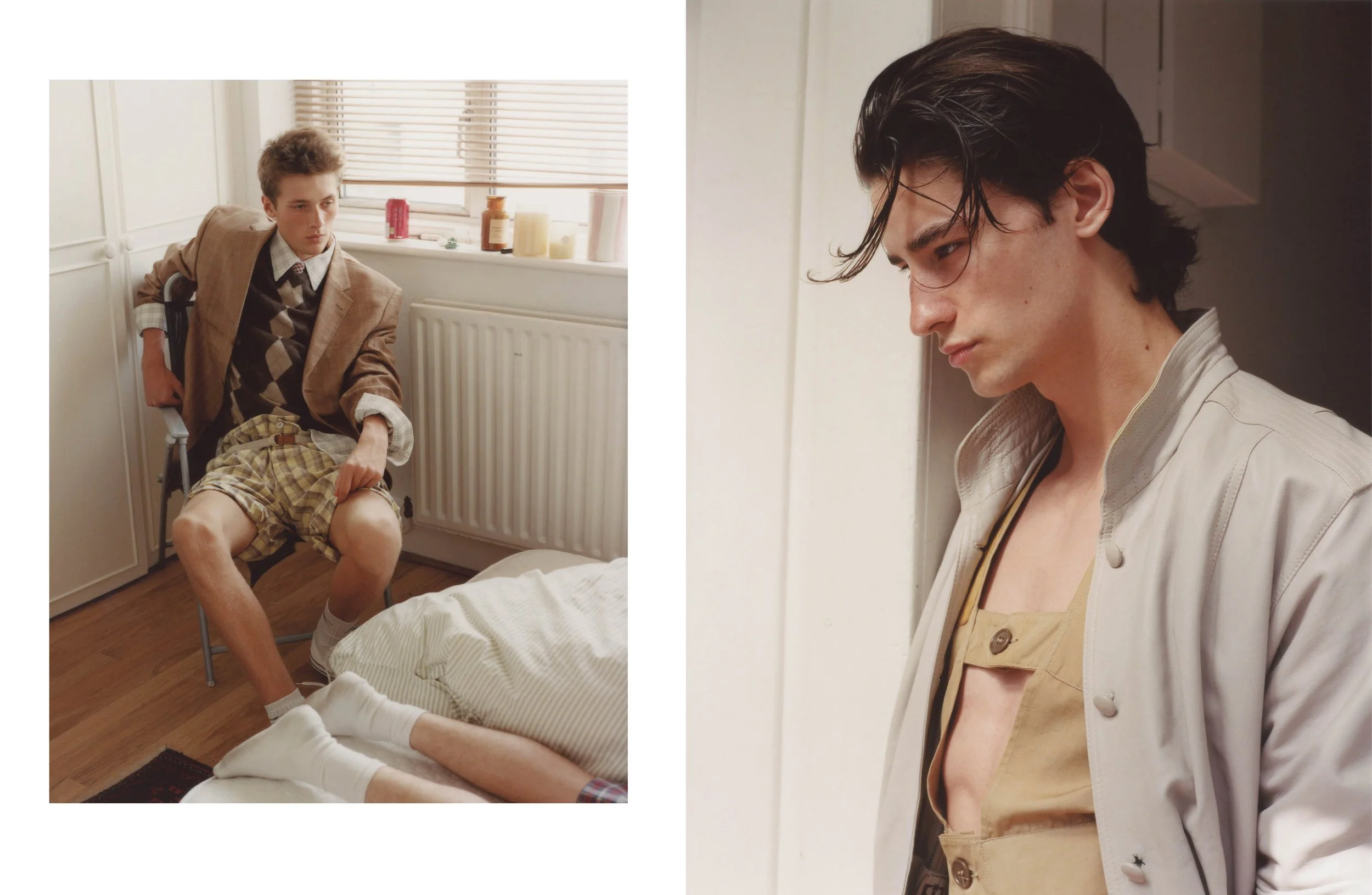
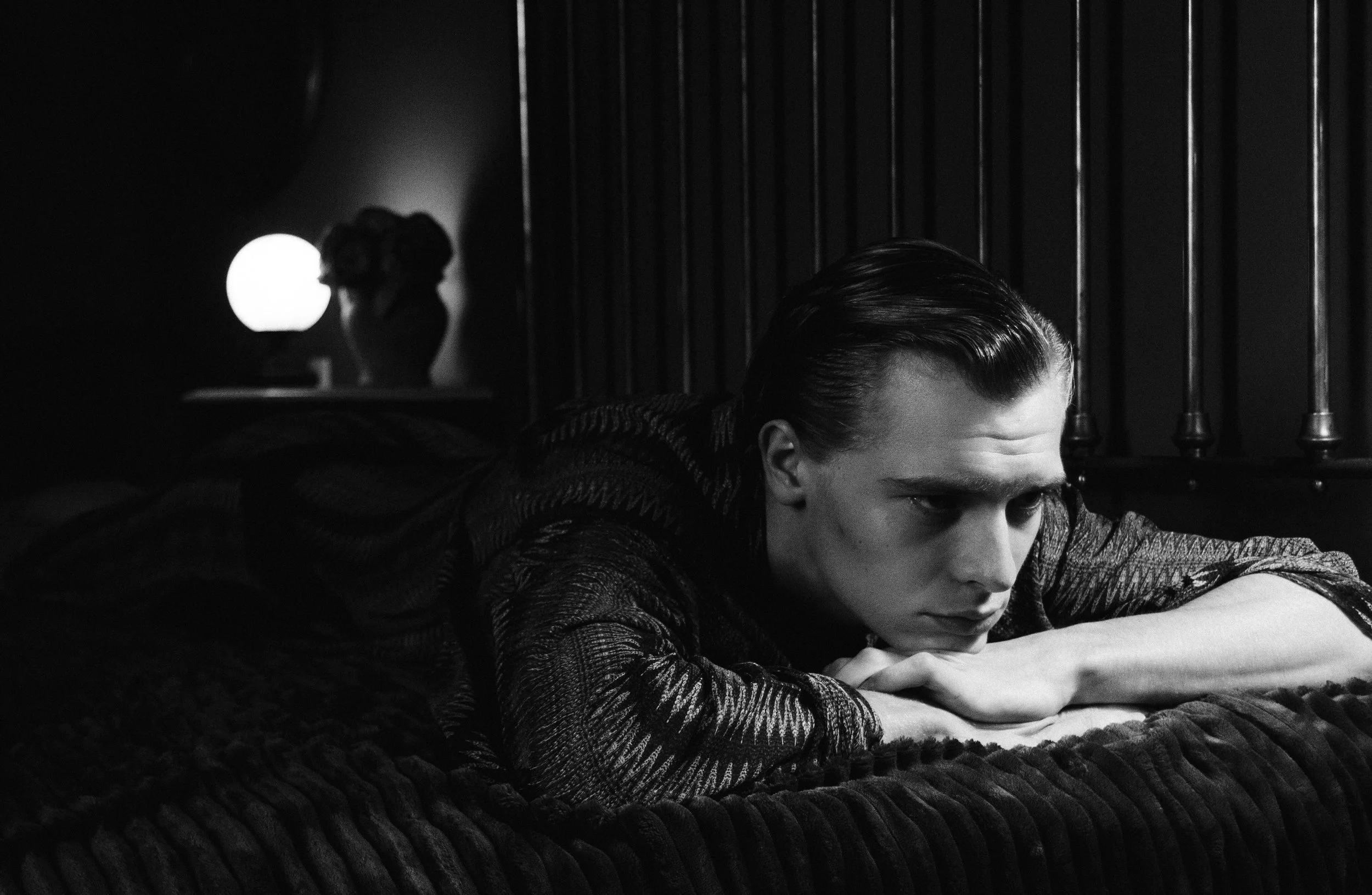
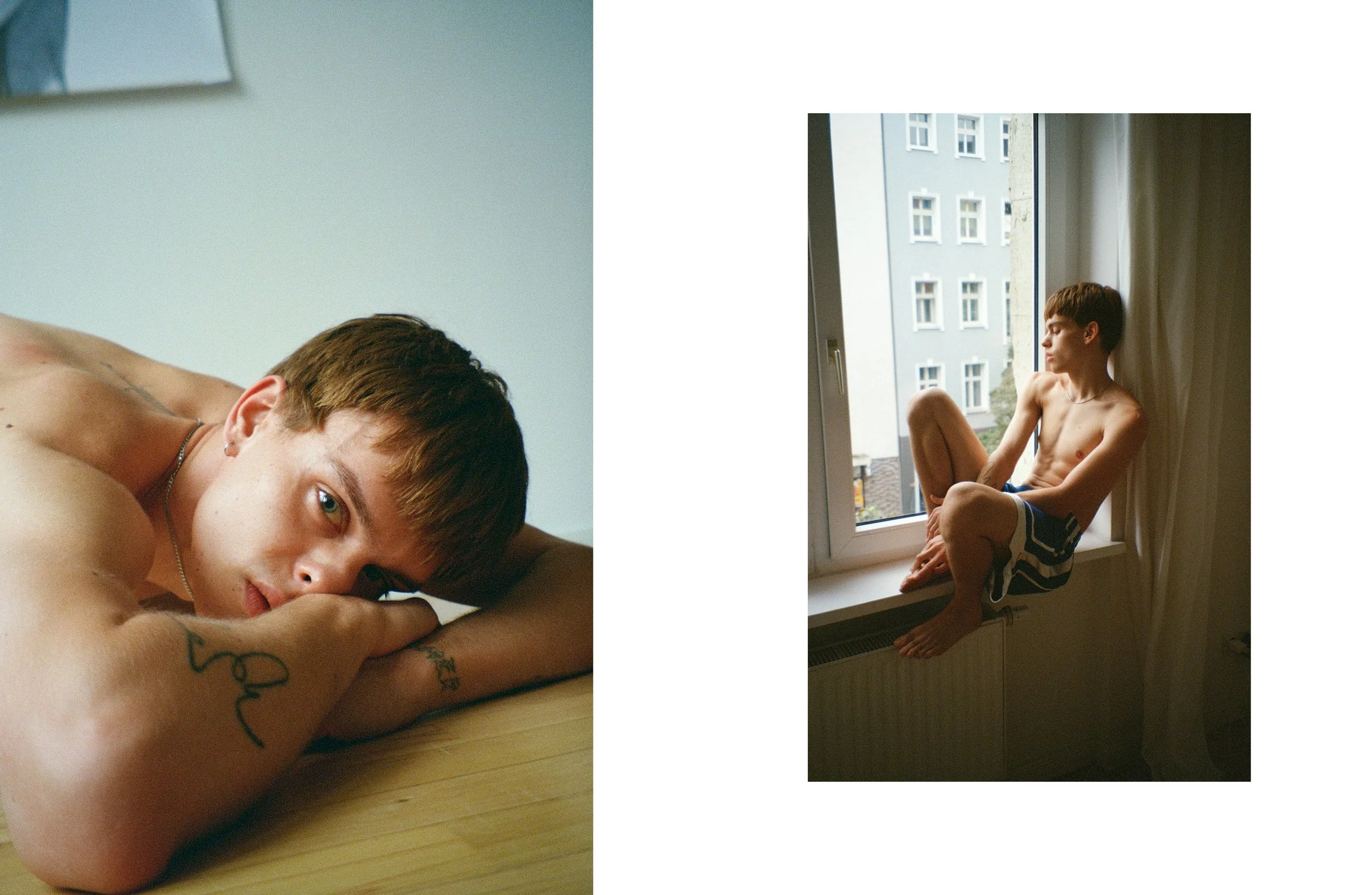
Left Full look David Koma, jewellery and watch Cartier
Right Full look Sweater, blazer and pants Fendi, shoes Jimmy Choo
That must be an incredible feeling. I have OCD, so while I can’t fully understand ADHD, I do understand the system-wide effect. While filming Young Sherlock, Ritchie pointed out that you were keeping your head down slightly, and he wanted you to feel confident. How has this observation stayed with you?
Thank you for doing such good research. He said that during a scene from the first episode. I was hanging my head, barely perceptibly, and he called cut. He said, "Why did you do that?" I said, "Why did I do what?" Guy’s quite an intimidating figure. He doesn't mince his words. He goes, "You're hanging your head." I said, “Oh, I didn't realise I was.” He said, "Stop doing that. You don't need to do that anymore. You've got everything you need." Then he said, "I wish I'd gotten to you twenty years ago.” It was one of those moments where the right person is on your path at precisely the right moment.
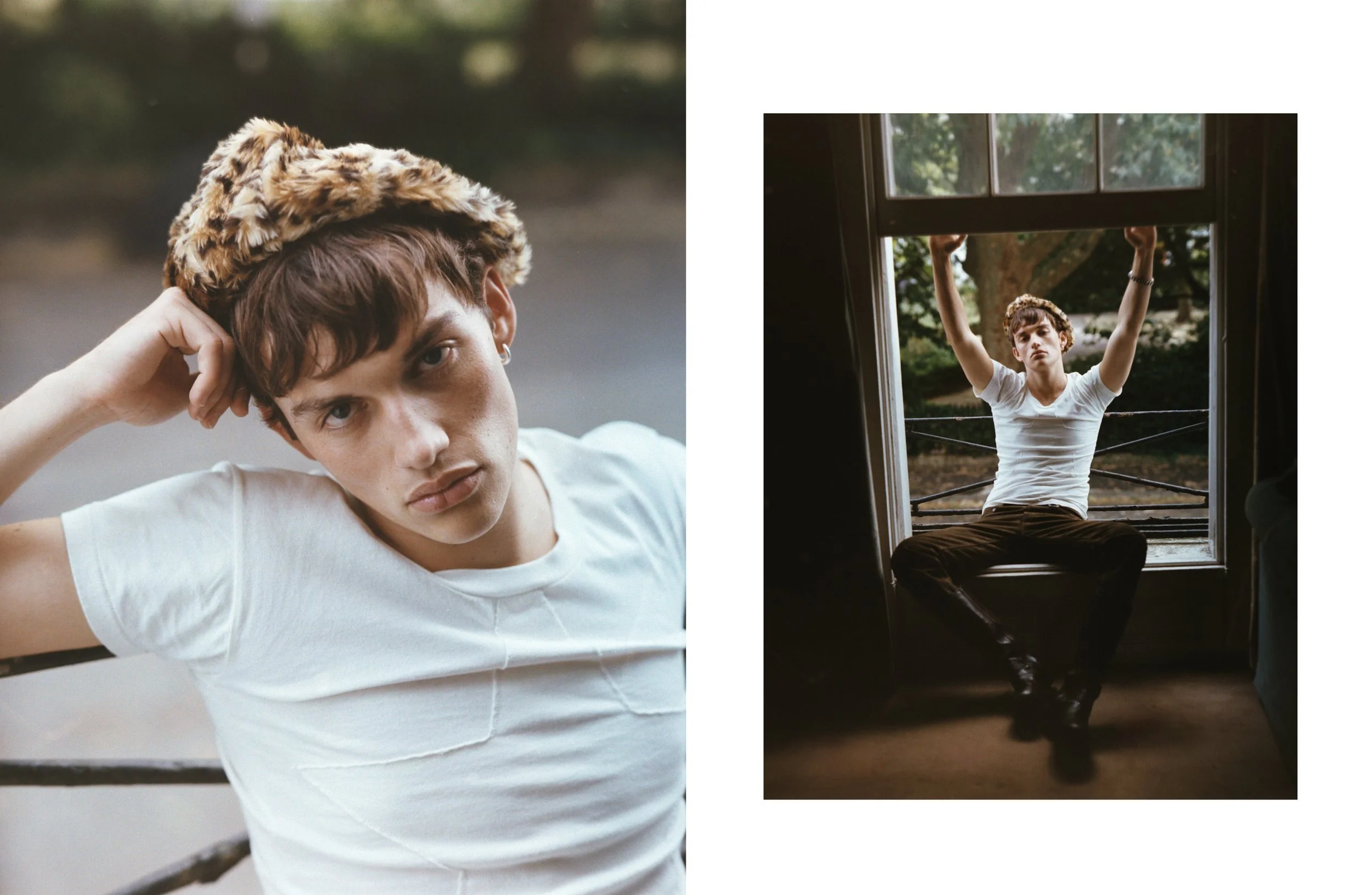
Left Full look Emporio Armani
Right Jacket and pants Paul Smith, shoes Jimmy Choo
It is incredible when someone notices something about you that you don’t notice yourself, and how that can stick with you.
To give you some sense of the time, this was before my diagnosis. In those six months, quite a lot of little things were happening, changing how I was viewing myself. What he identified so astutely was a certain amount of negative self-talk and a backpack of fear. He just said, “You don't need that anymore.” My diagnosis came along, and as you understand personally, it reframes your entire life. You look back over all the things you thought you were terrible at and the secret self-doubt that you don't tell anybody about. It reframed everything.
Full look Dior Men
I can relate completely. A lot of the cast have said, “The more fun we had, the better the scene turned out.” Is there any particular scene that sticks out in your mind where that rings especially true for you?
I can't think of any particular scene because it was all like that. Once you let go of the reins and just played with the other actors, it just happened. When you come in with that tight control – “I'm going to stand here, I'm going to say it this way, I'm going to do it as I've rehearsed” – you can come away frustrated because that's not the way other people work. To be loose, silly, and not afraid to make a fool of yourself is a good reminder.
Sweater, blazer and pants Fendi
Mycroft traditionally presents as rigid compared to Sherlock. How did this manifest physically for you?
Mycroft’s got a little bit of style. Guy was cautious about the rigidity. It's quite a boring quality to play. I don’t think Mycroft is physically rigid, but I think his approach to the world is. He's a believer in the systems and respects them. He's a bit of a yin to Sherlock's yang. Sherlock gets himself in a pickle, and there's Mycroft, within the system, lending a hand. Arthur Conan Doyle didn't write that much about Mycroft, but what he did write was that he was very intelligent, but quite lazy. He would take the shortest route from A to B. He would prefer not to get his hands dirty along that particular journey if he could. He had the Diogenes Club. Sherlock is out there opening all sorts of Pandora's boxes, and Mycroft is there to pull him back from the brink. Sherlock is also there to pull Mycroft away from his rigid way of being.
What can you share about what you have coming up next?
I’m doing Neuromancer, which is based on a William Gibson novel – one of the pillars of science fiction. The Matrix, for example, is inspired by Neuromancer. I think it's going to be amazing. The character I'm playing is very different for me. I’m excited to see what people think.
Left Full look Saint Laurent by Anthony Vaccarello
Right Sweater, blazer and pants Fendi
Interview by Tessa Swantek
Photography by Sylvain Homo
Fashion by Steven Huang
EIC Michael Marson
Casting by Imagemachine cs
Grooming by Sven Bayerbach at Carol Hayes Management using Daimon Barber
Stylist’s assistant Francesca Ward