Every fox has its hole. The saying is perhaps nowhere truer than in fashion. The industry game is one of matching: the right brand with the right creative director, the right legacy with the right point of view. It’s not an easy task to achieve, which is all the more reason for it. When there is a perfect match, there’s no greater satisfaction. Cue Meryll Rogge at Marni.
As soon as word got out that Rogge would be taking the mantle (of course, much earlier than the official announcement), there was a generalised sense of joy. Rogge, who previously worked at Marc Jacobs and Dries Van Noten before setting her own label, has long been an industry favourite. The elation we all felt wasn’t a matter of favouritism, but of the satisfaction felt when a perfect equation is achieved. Marni’s legacy is one of quirky, fun design with a functional twist. Rogge’s language captures offbeat femininity through slightly tweaked silhouettes and interesting prints. It’s hard not to see the resemblances.
Of course, mere aesthetic similarities don’t guarantee success. What does, however, is Rogge’s self-proclaimed love for the brand. In interviews leading to her debut, the designer recalls a Marni dress as her first designer purchase and a pair of Marni shoes she bought to celebrate her first paycheck. This adoration is palpable in Fall/Winter 2026. The opening look, a white fur coat over a black skirt with oversized paillettes, was neutral except for a red belt: a direct reference to the brand’s first show. The house, which initially opened to bring a more dynamic and youthful feel to fur, had a first collection that most wouldn’t recognise as Marni. Quite neutral and focused on its furry purpose, the first pop of colour was red.
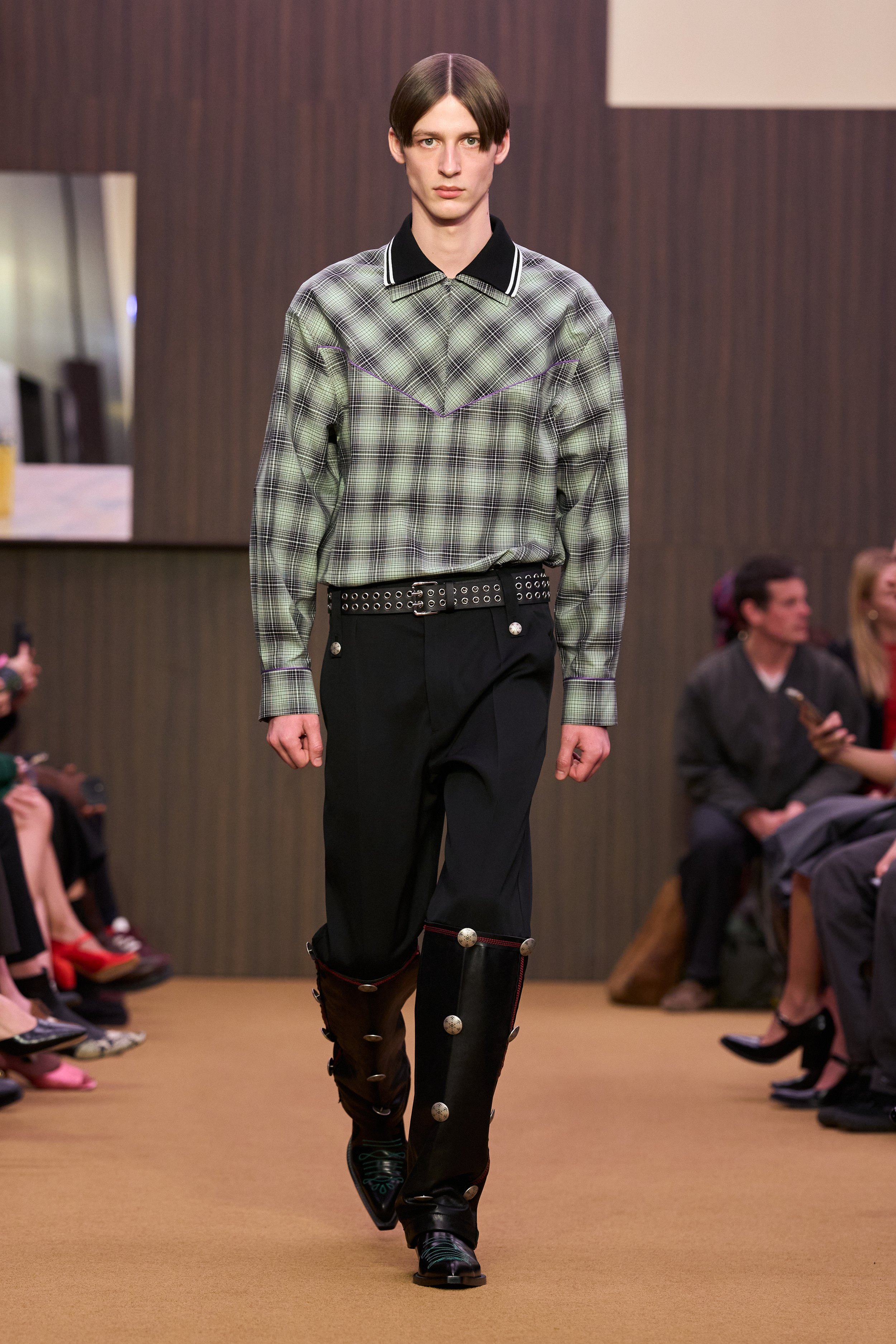
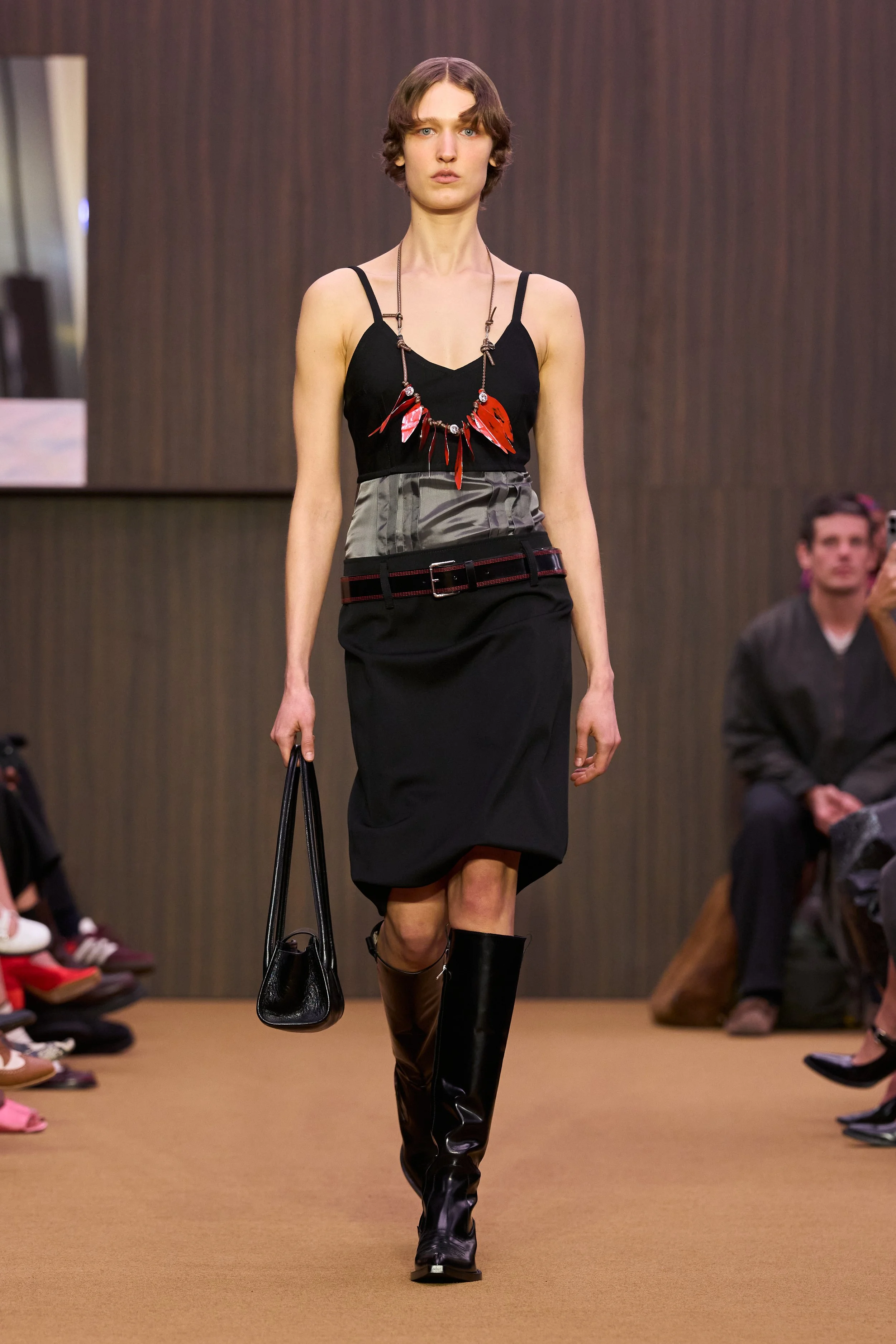
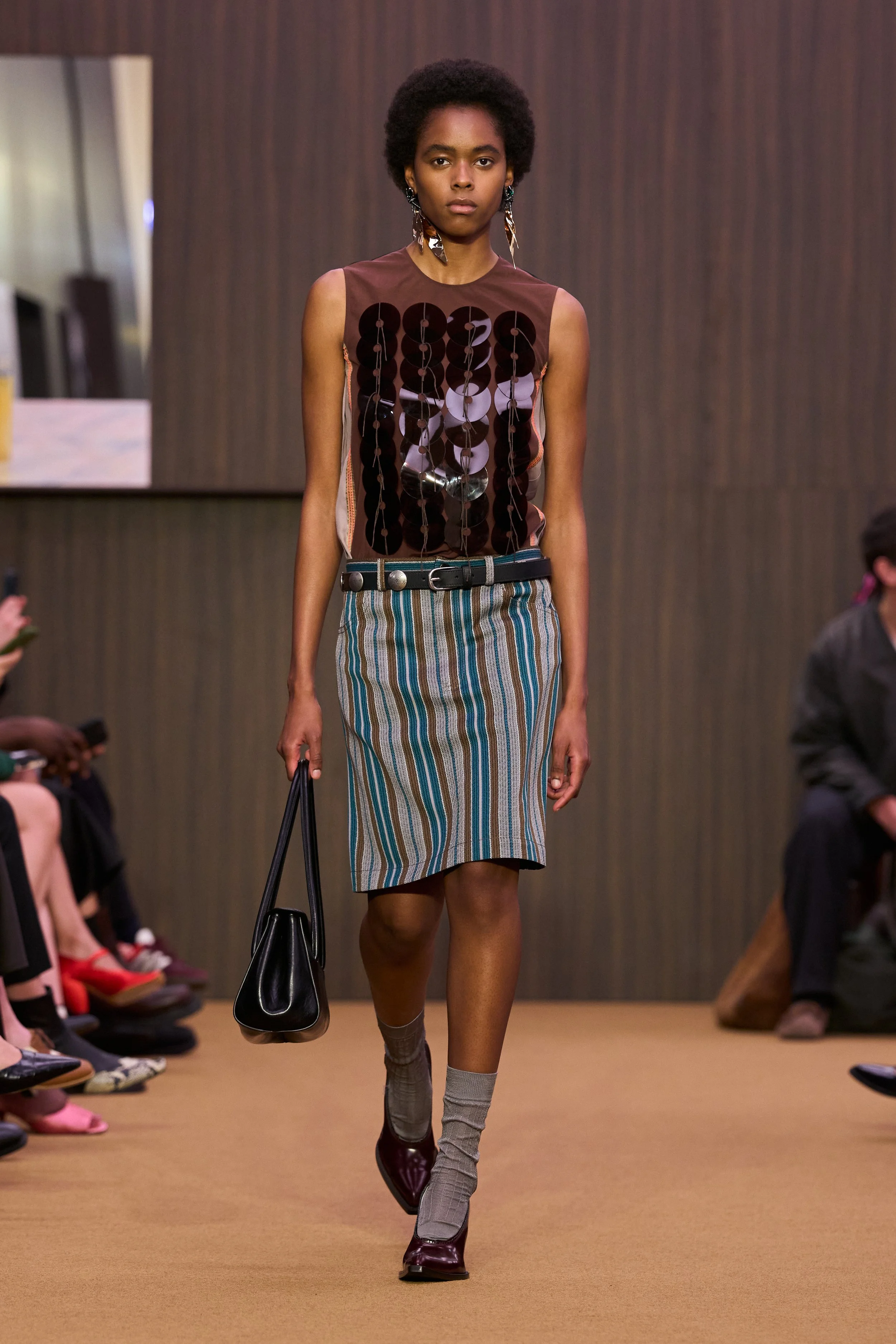
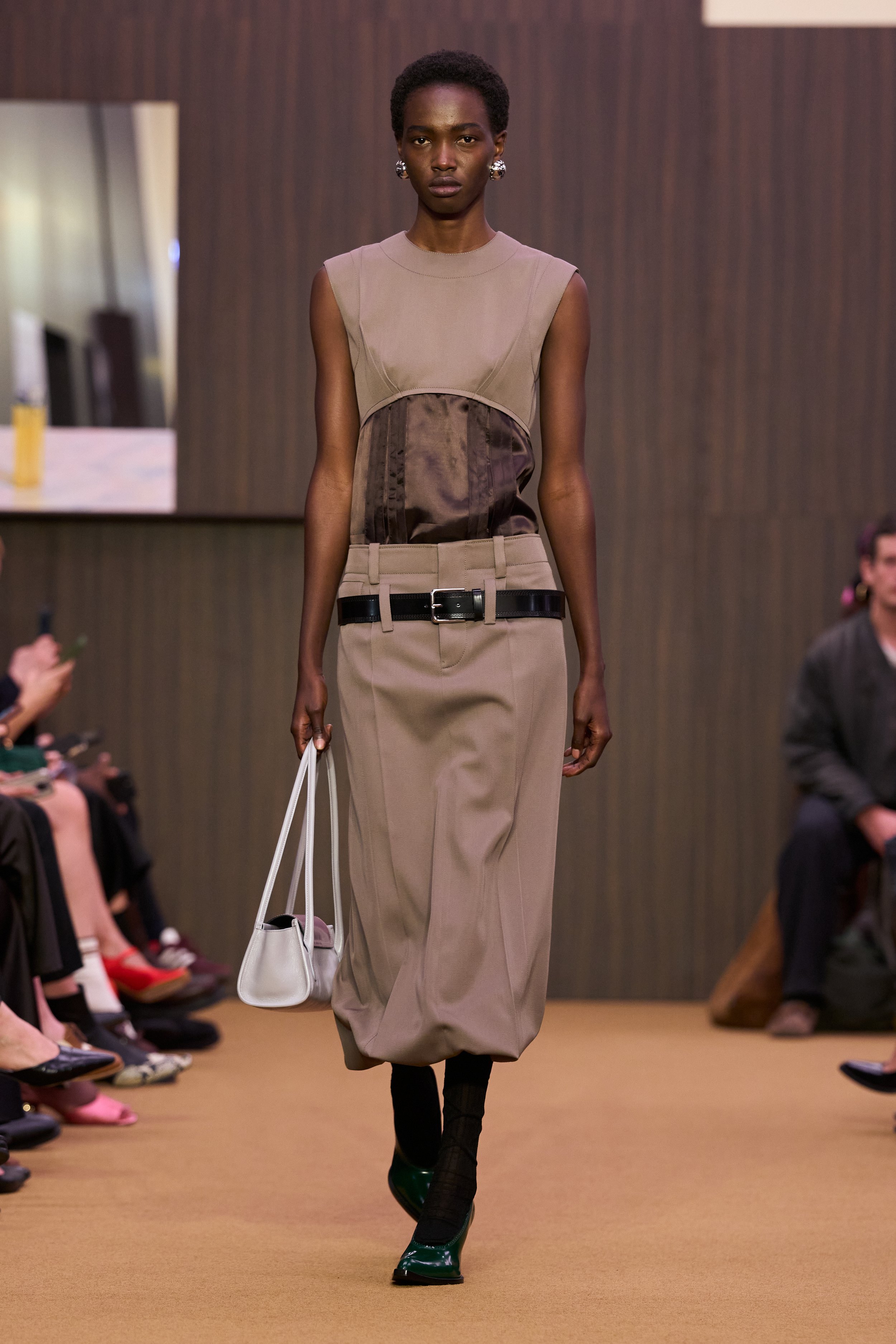
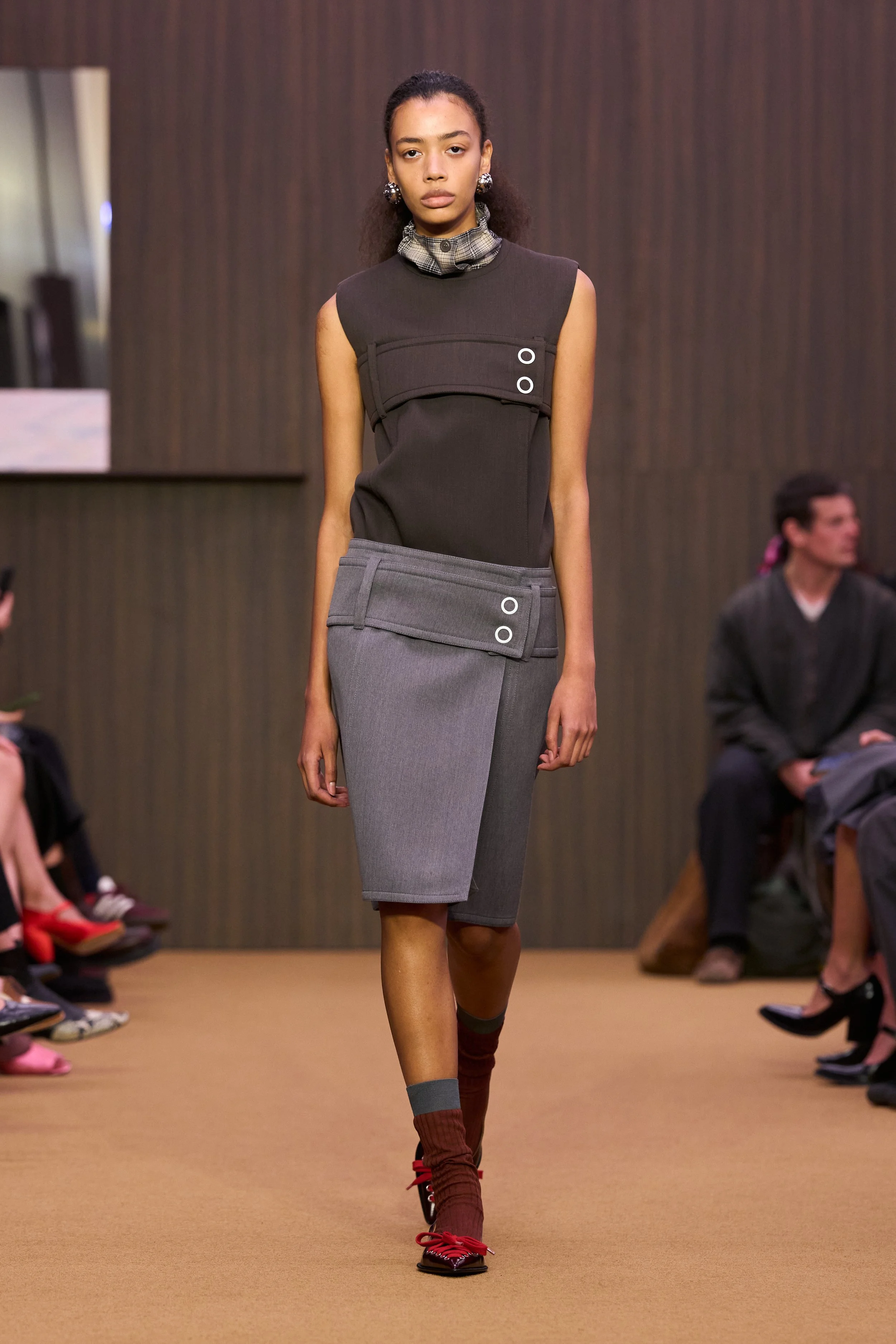
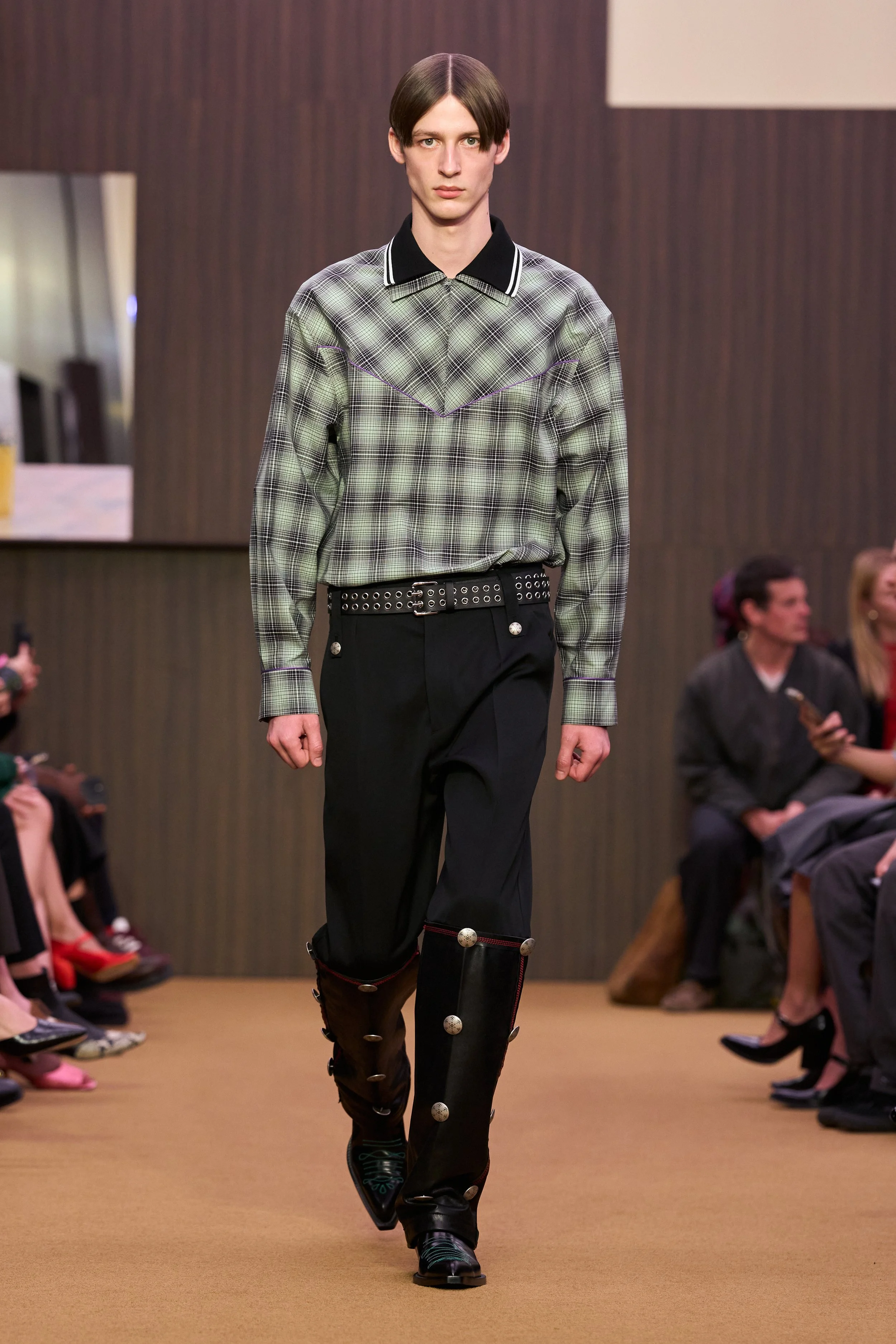
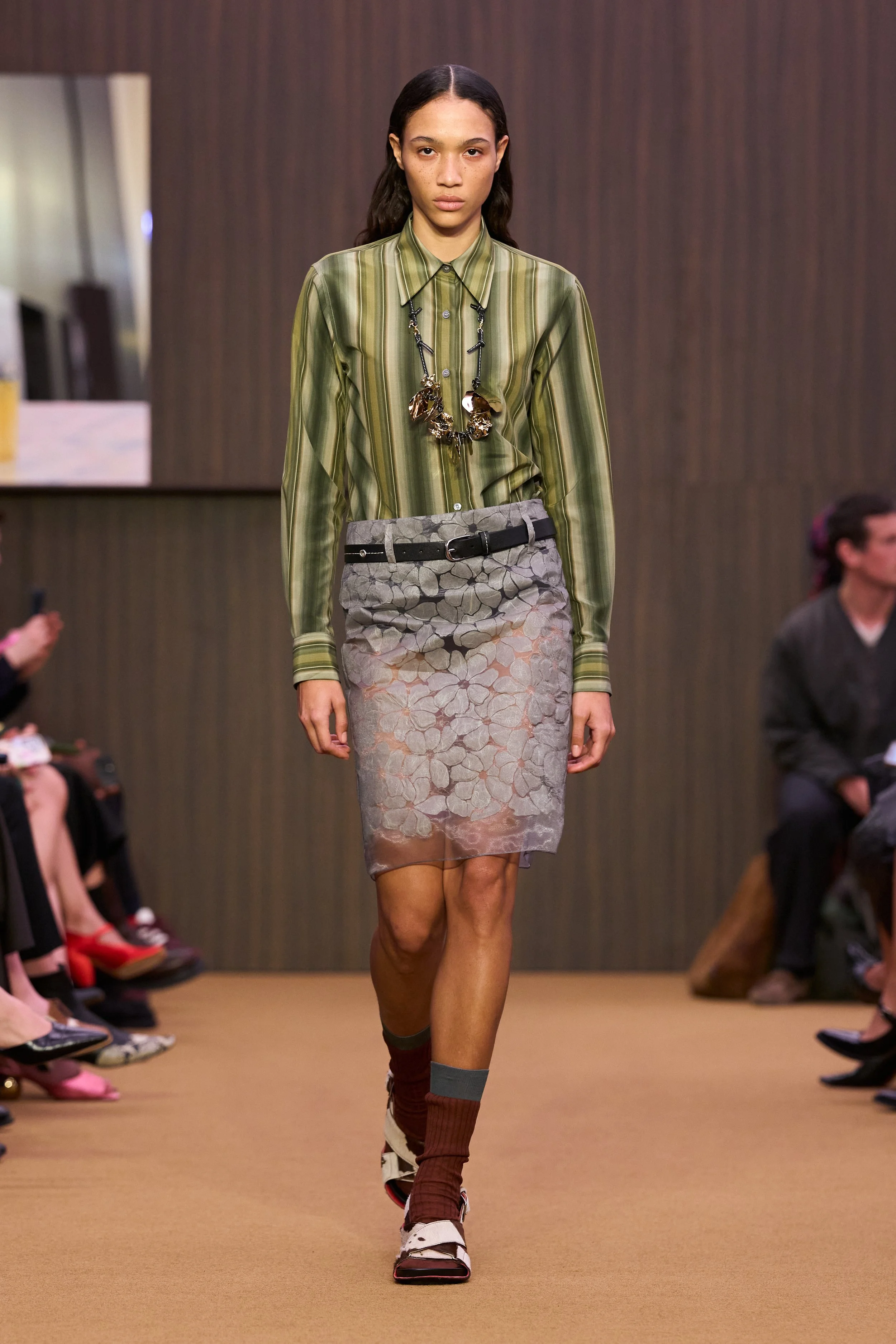
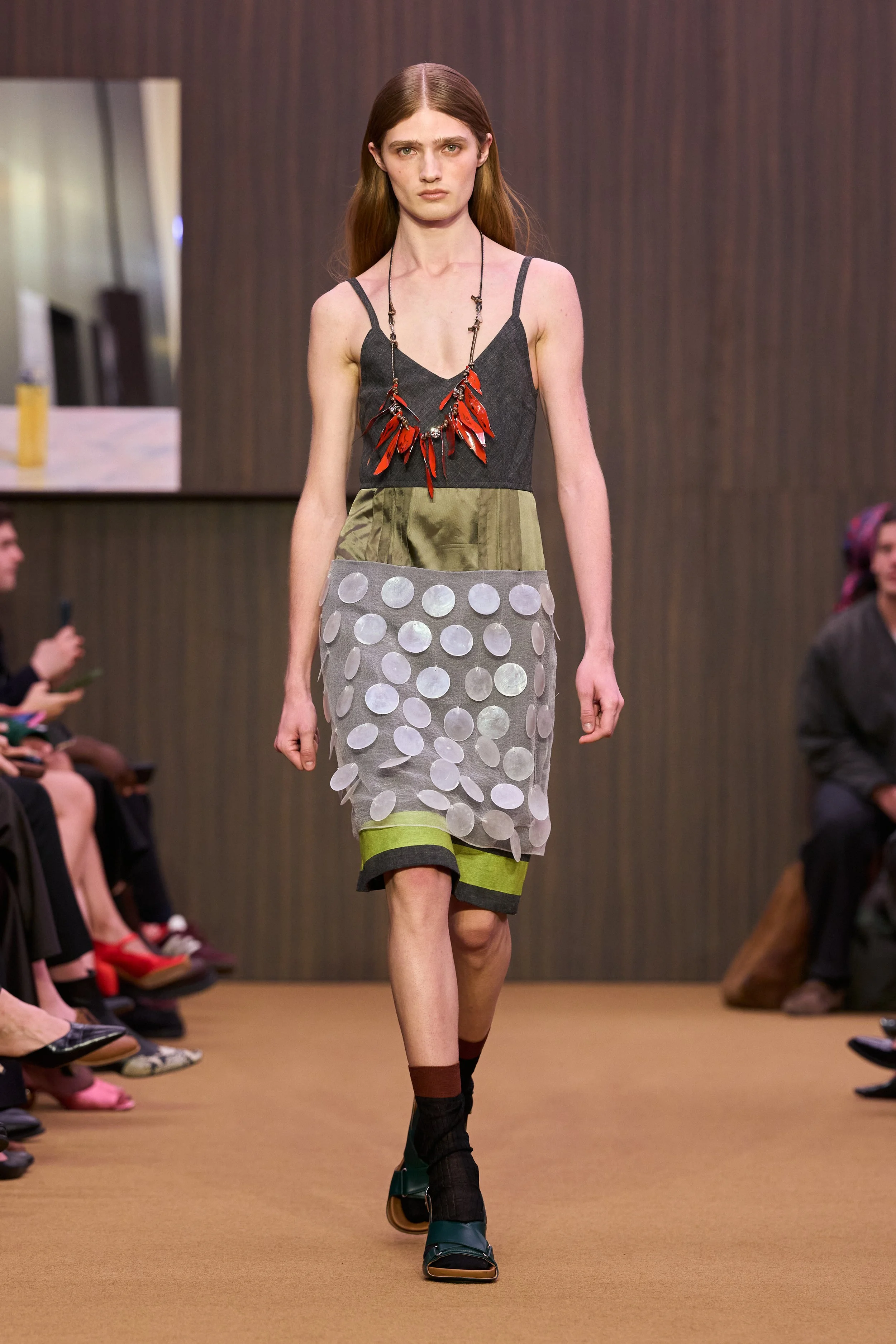
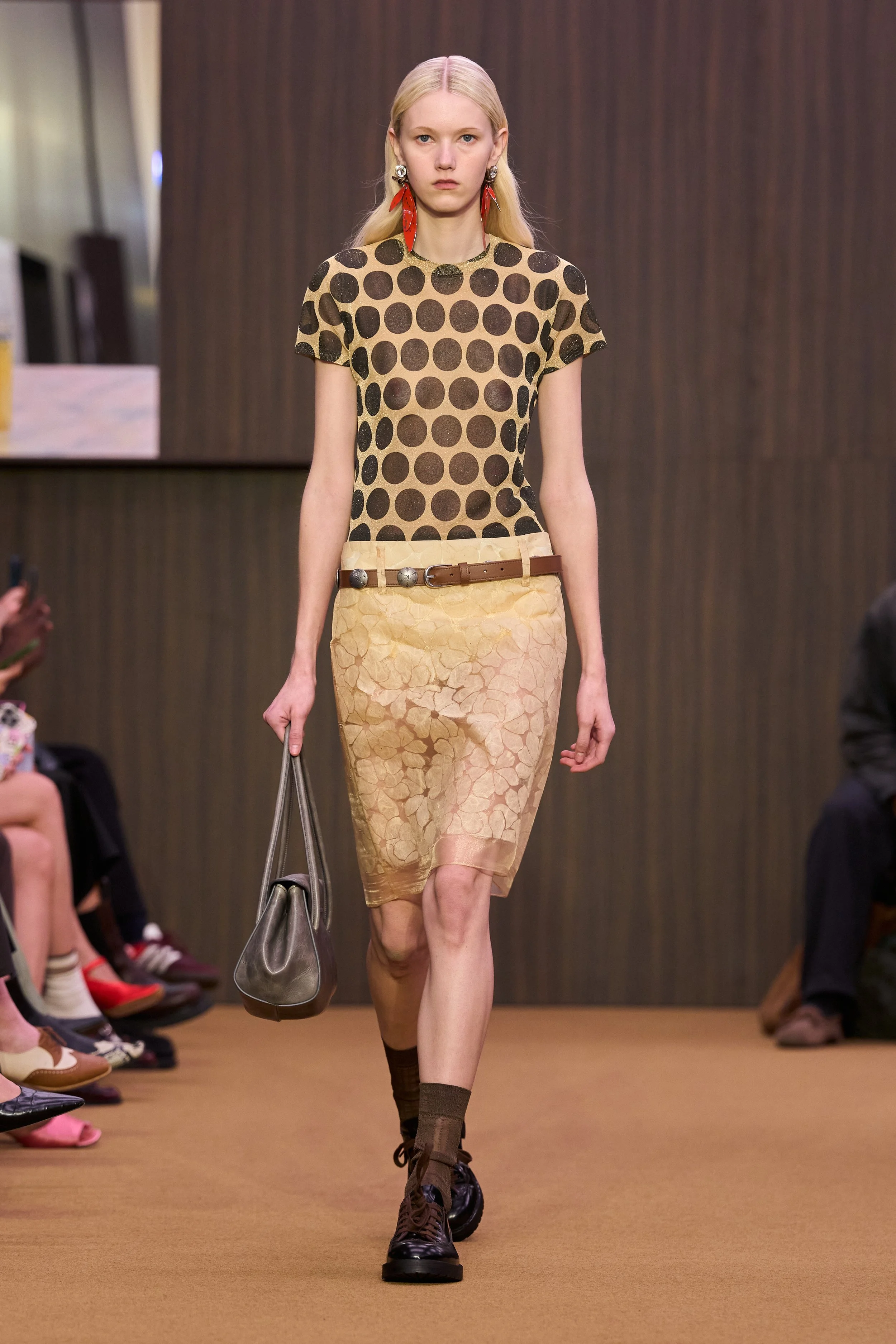
Rogge is careful not to be nostalgic. References to the brand’s first creative director and founder, Consuelo Castiglioni, were plentiful but never felt sacred. Castiglioni’s creative twists were re-twisted. Paillettes fill sleeveless tops. Matching sets have oversized buttons. Prints were as plentiful as they were fun. Layering is perfected as an art form in a floral translucent skirt paired with a tight polka dot T-shirt and a low-waisted belt.
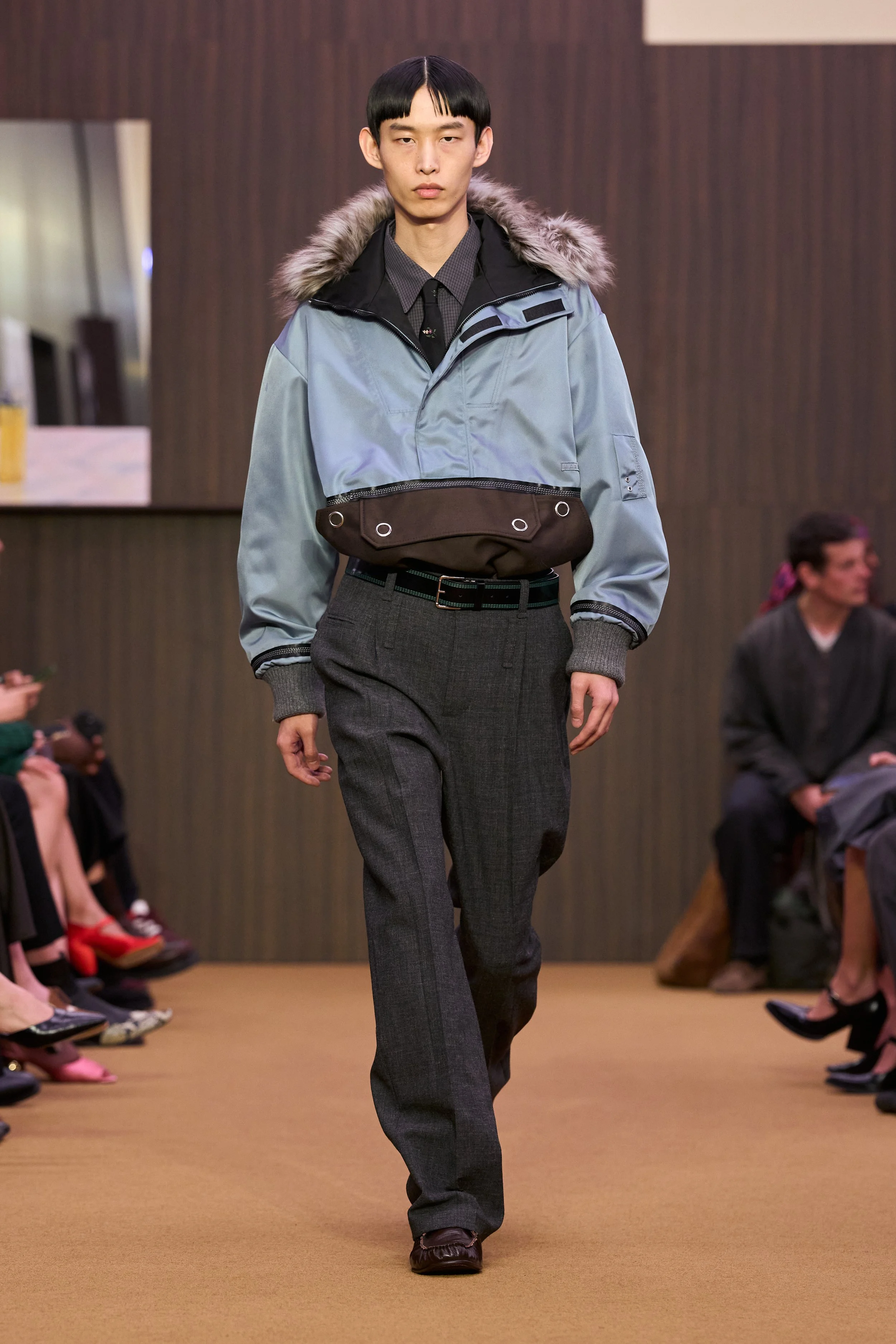
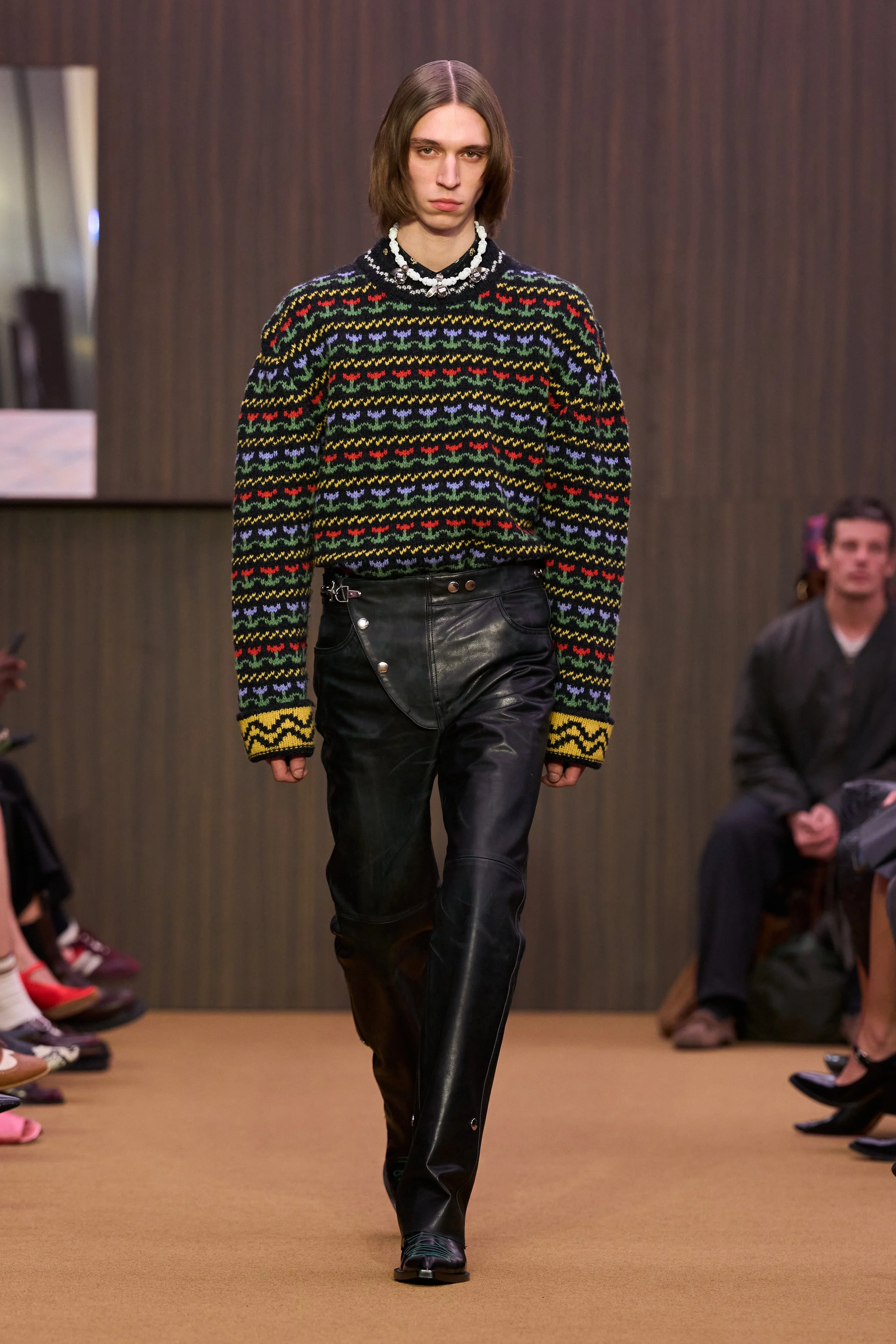
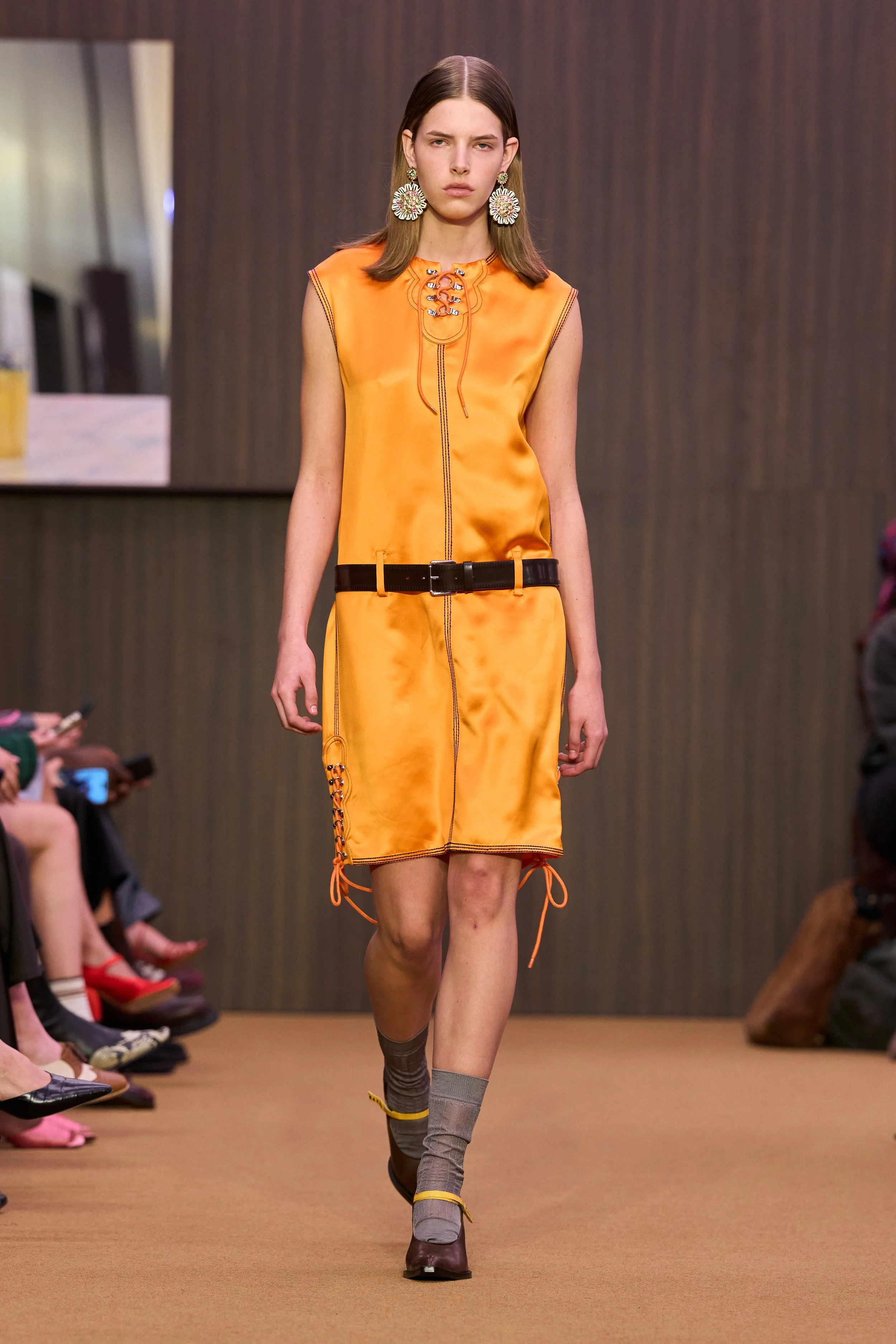
The collection had tinges of the ’70s in big earrings, silky shift dresses, and big, burly coats. A much-welcomed sensuality was introduced in thick patent leather skirts and knitted bloomers. A good fashion match isn’t about obedience but about the ability to respect the legacy while expanding its imagination. Instead of handling Marni’s legacy with gloves, Rogge is leaving her fingerprints.

Words by Pedro Vasconcelos