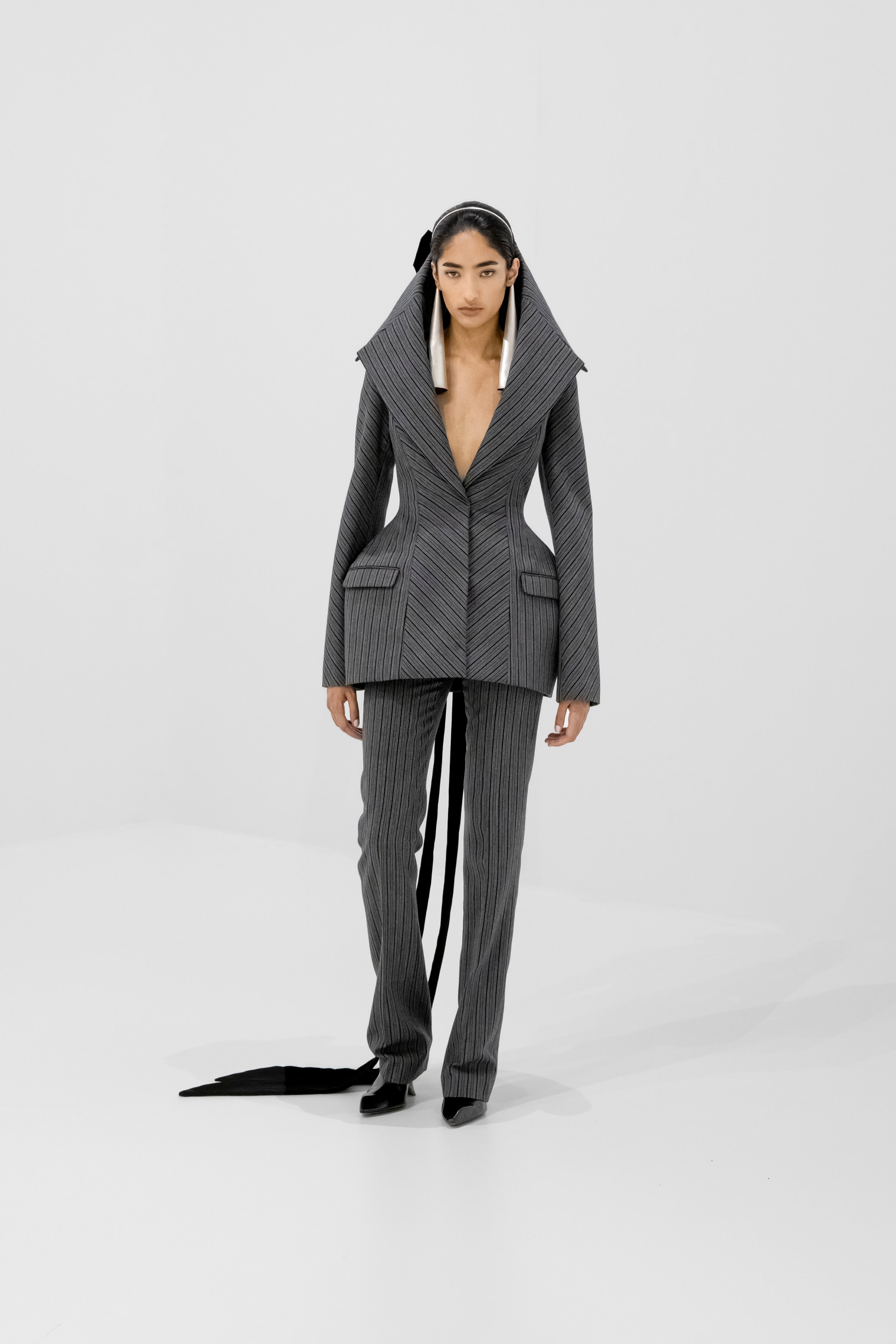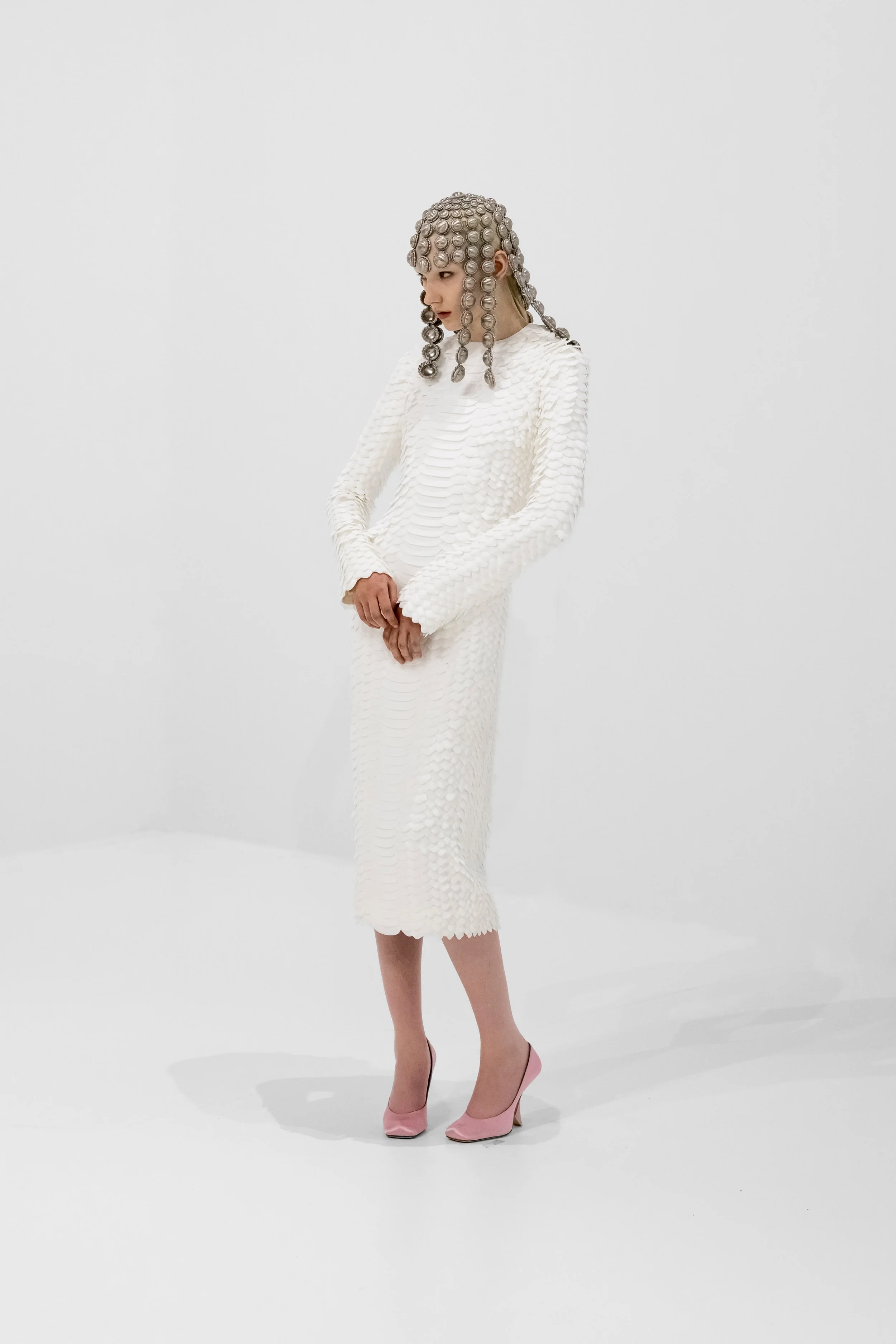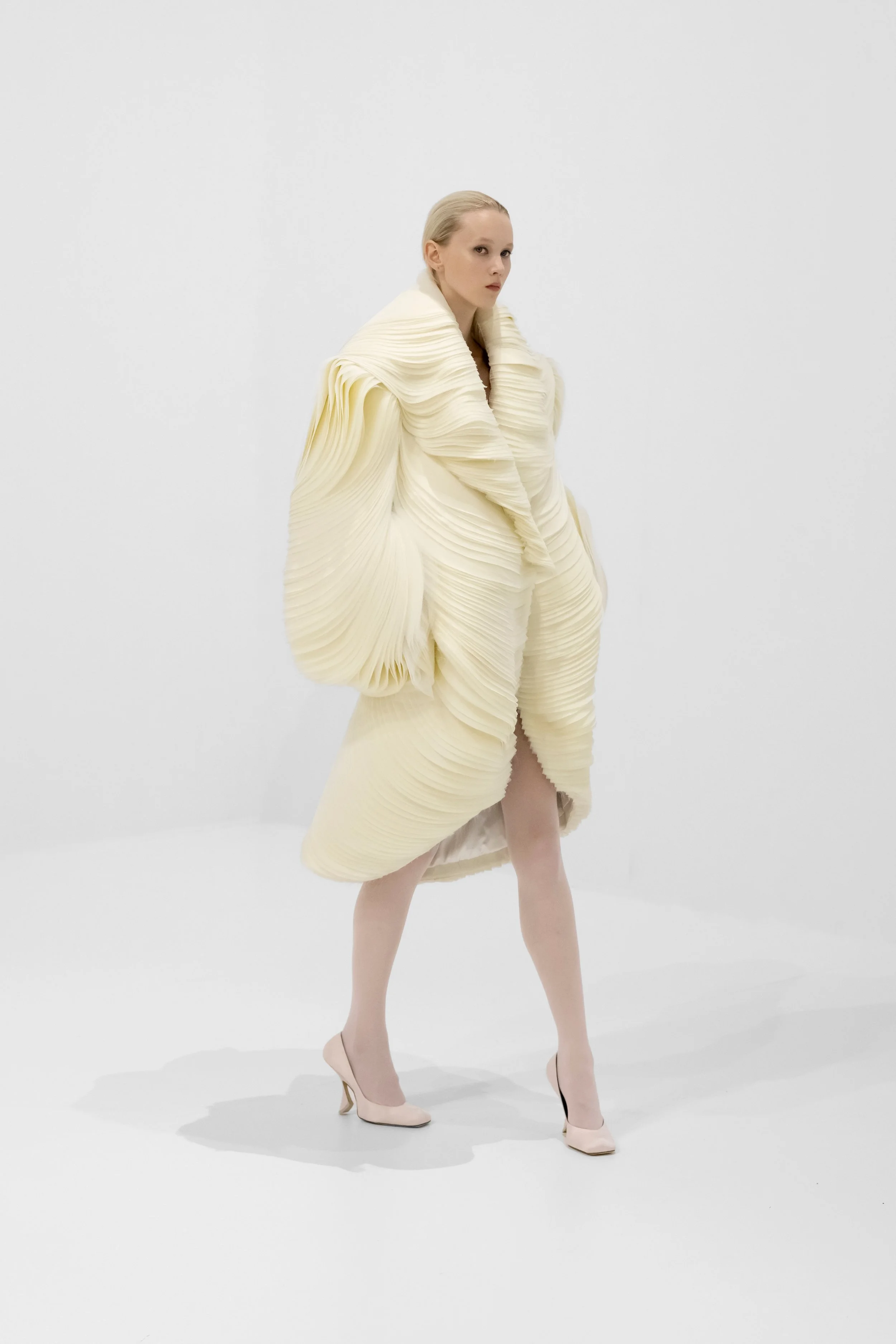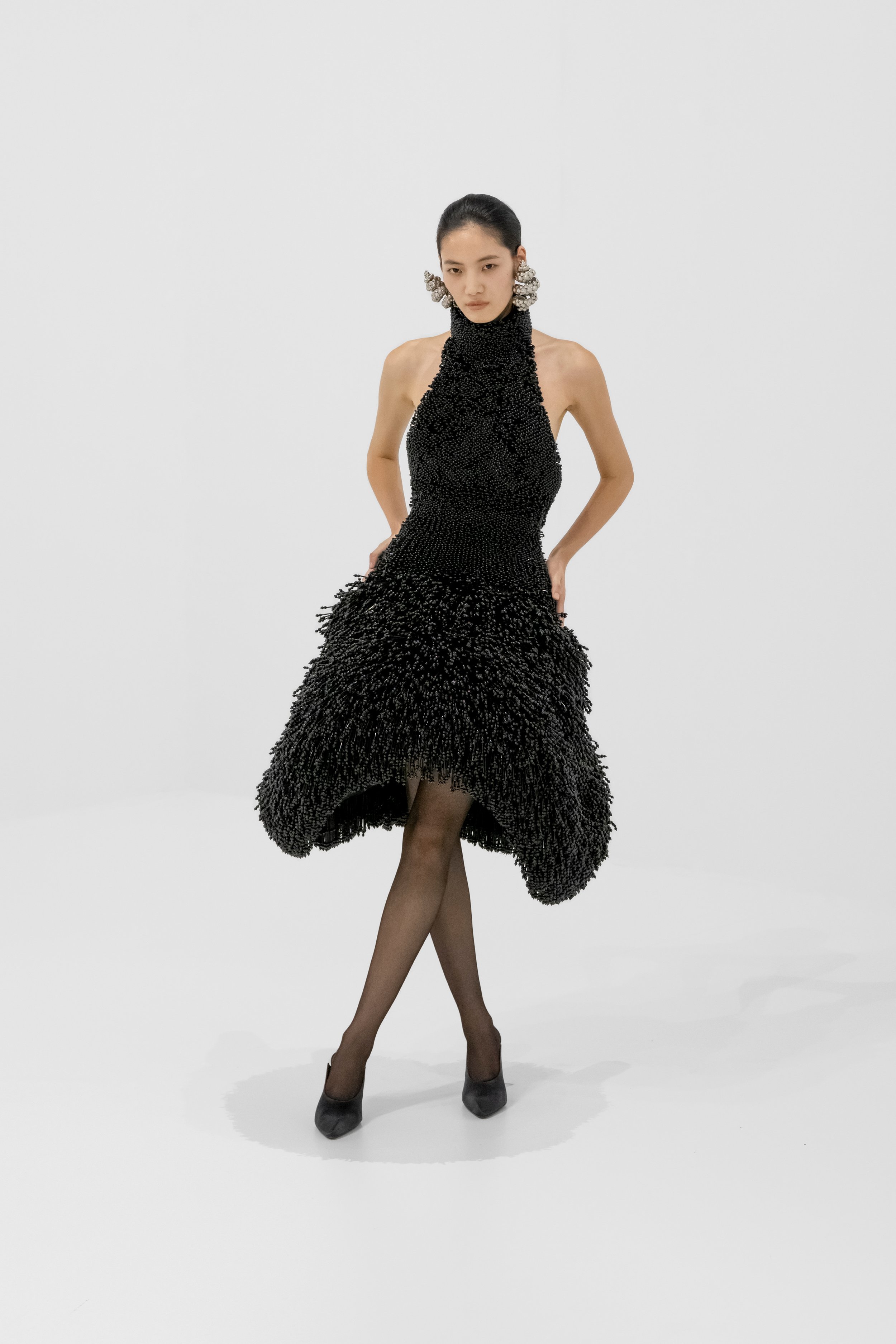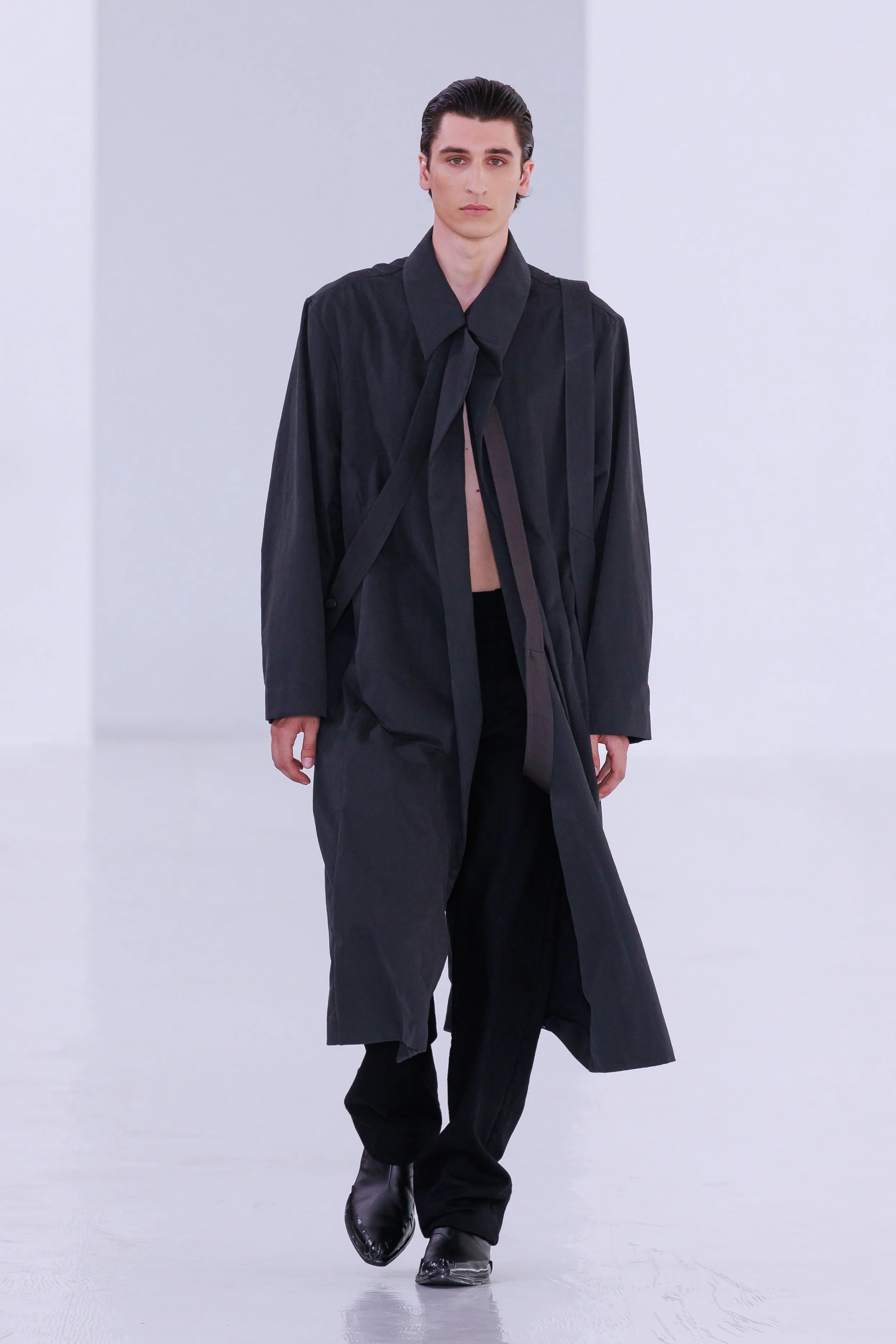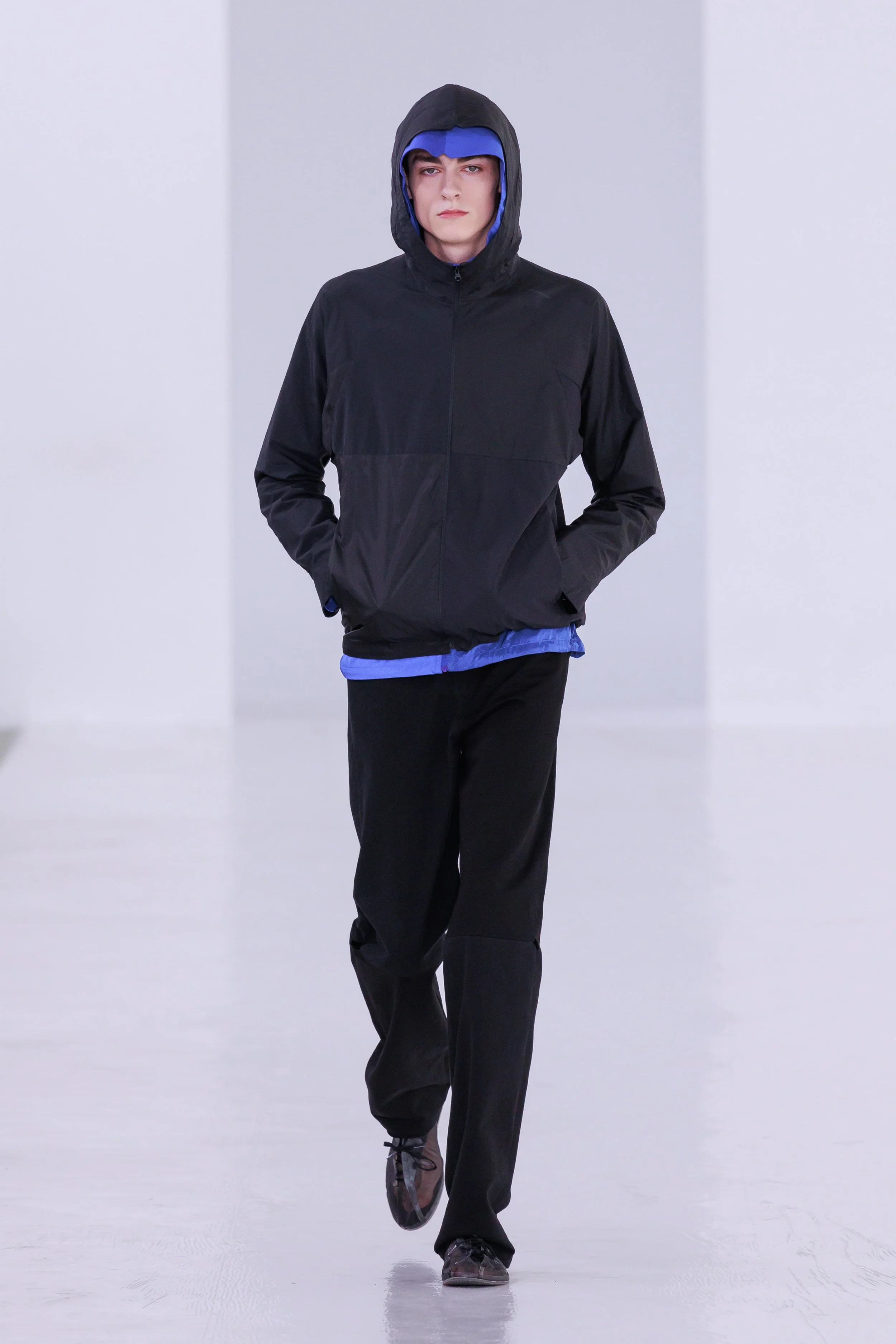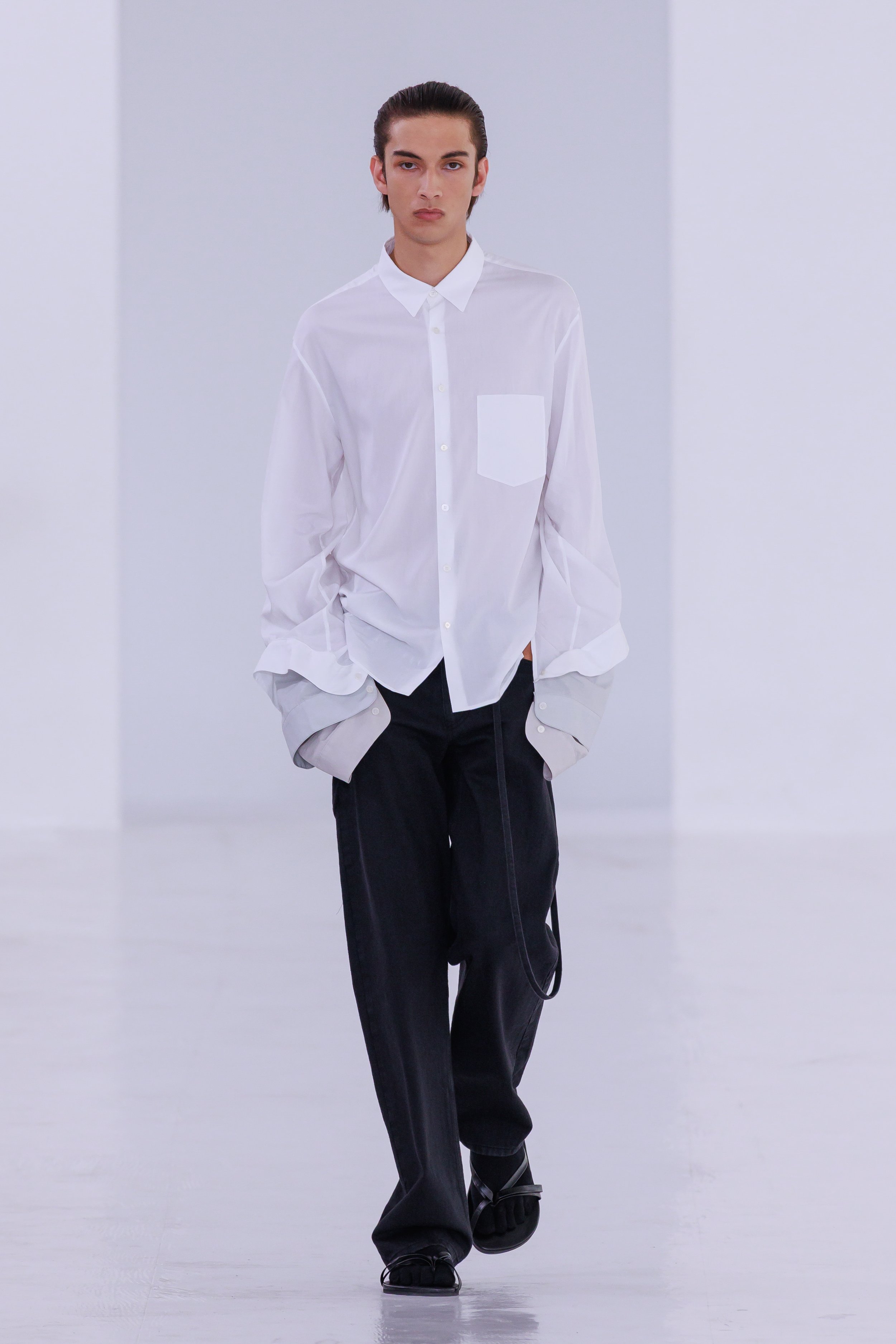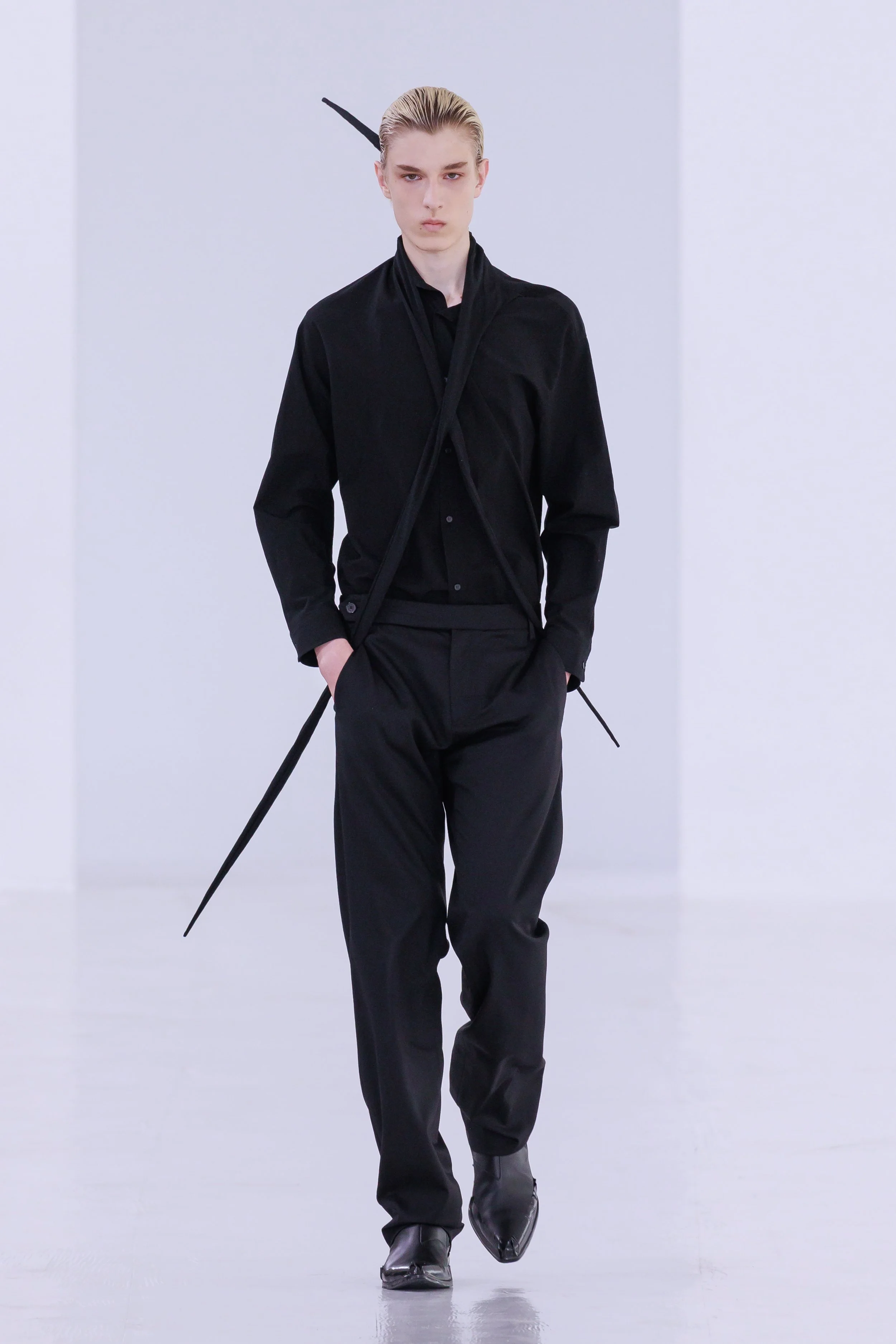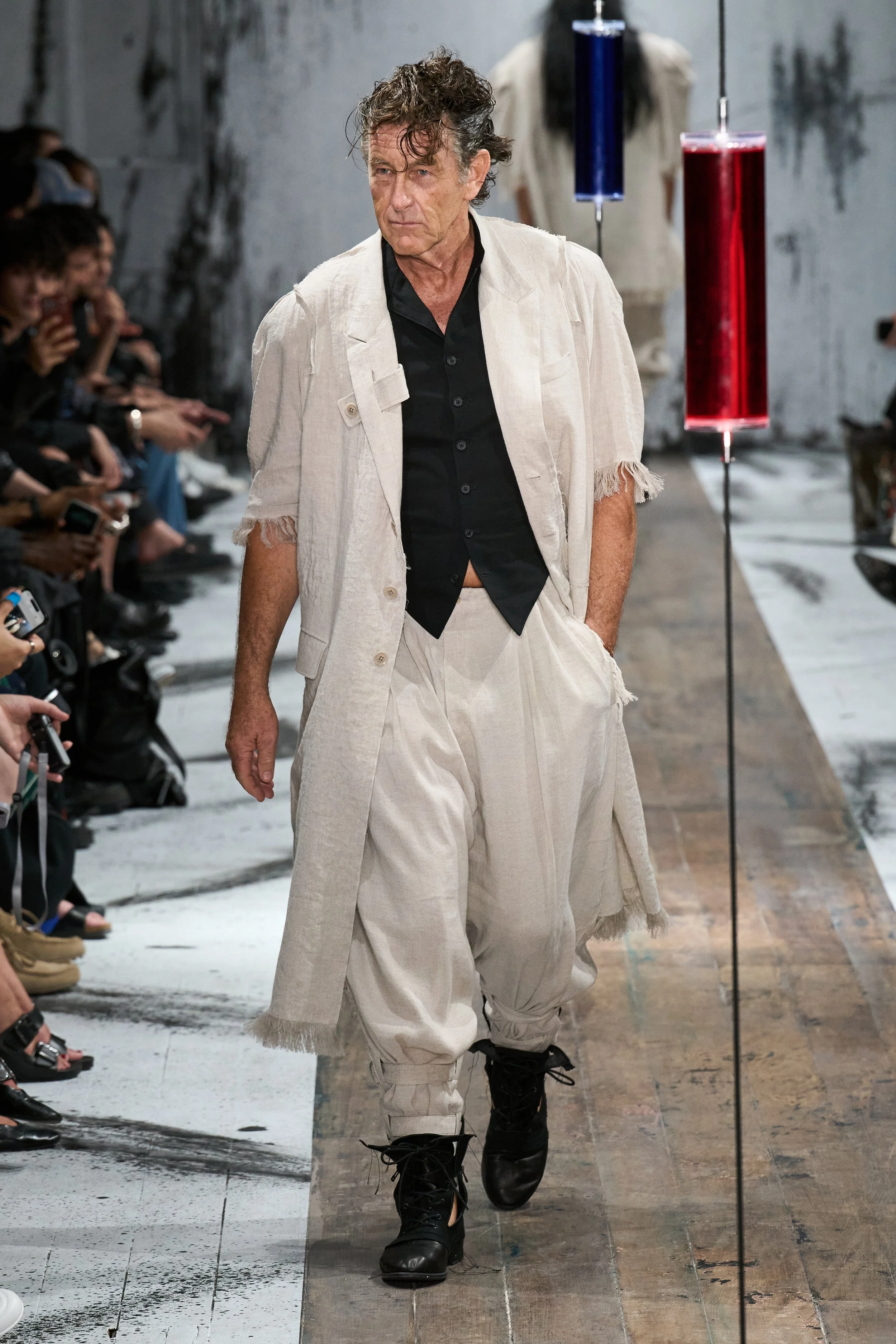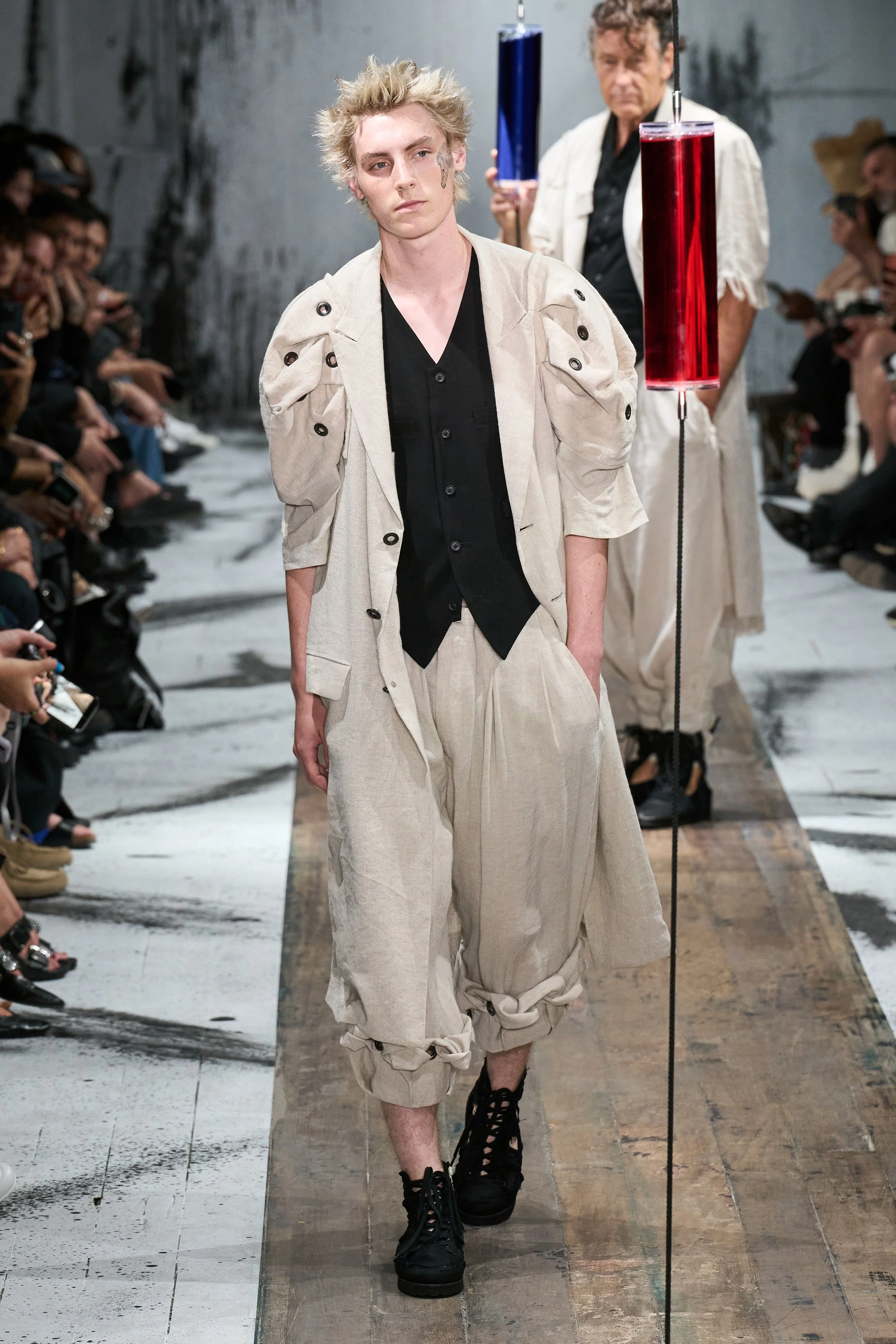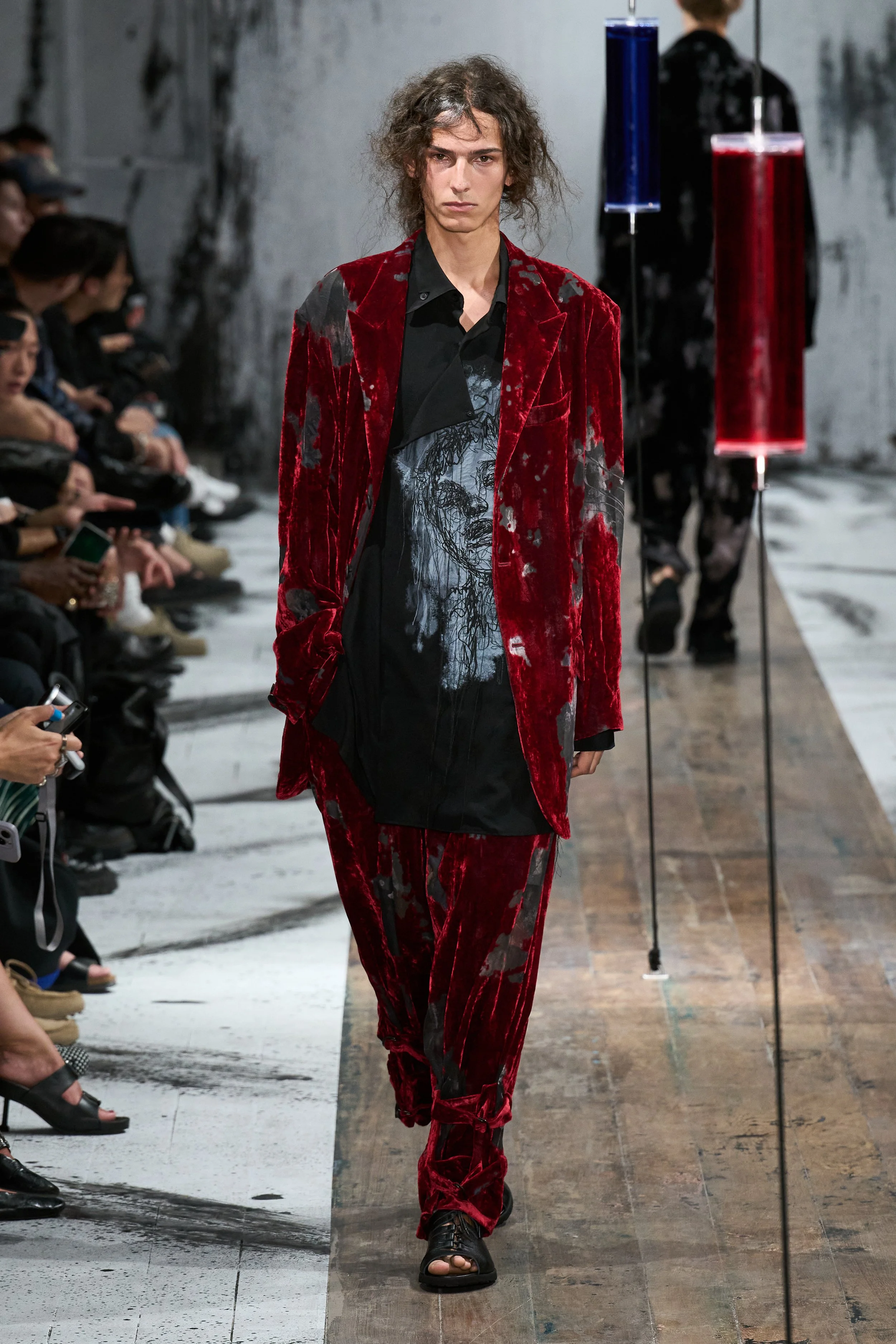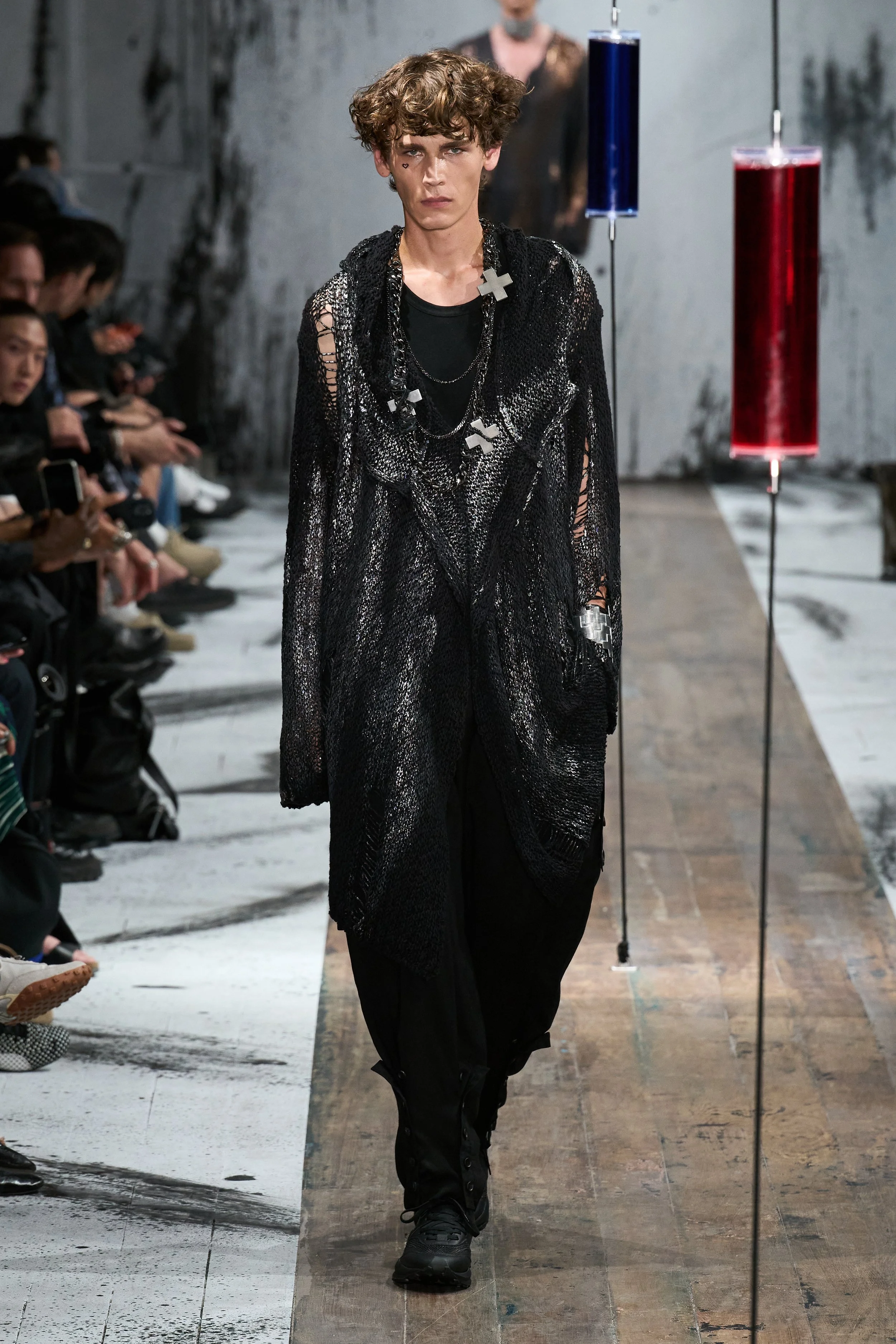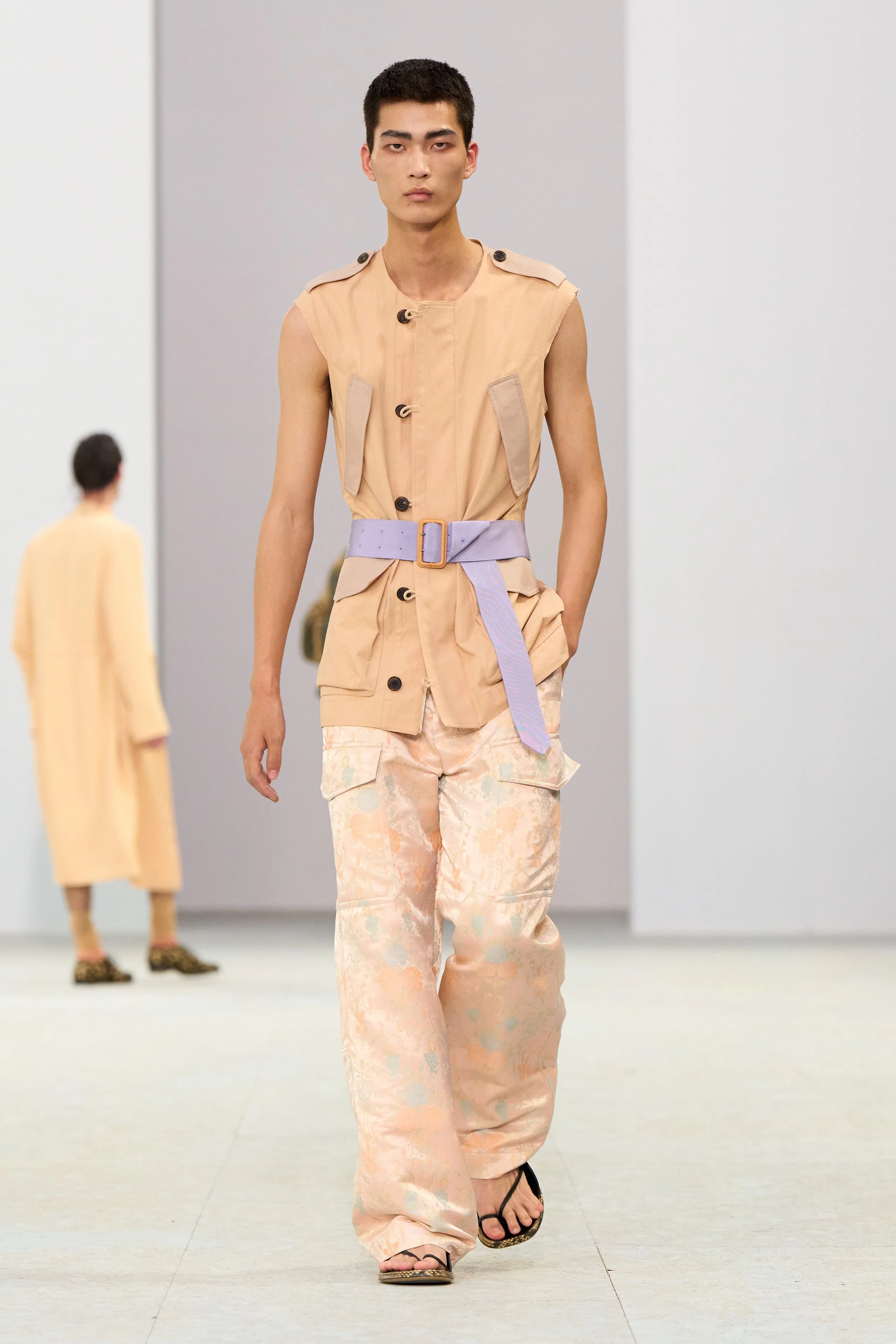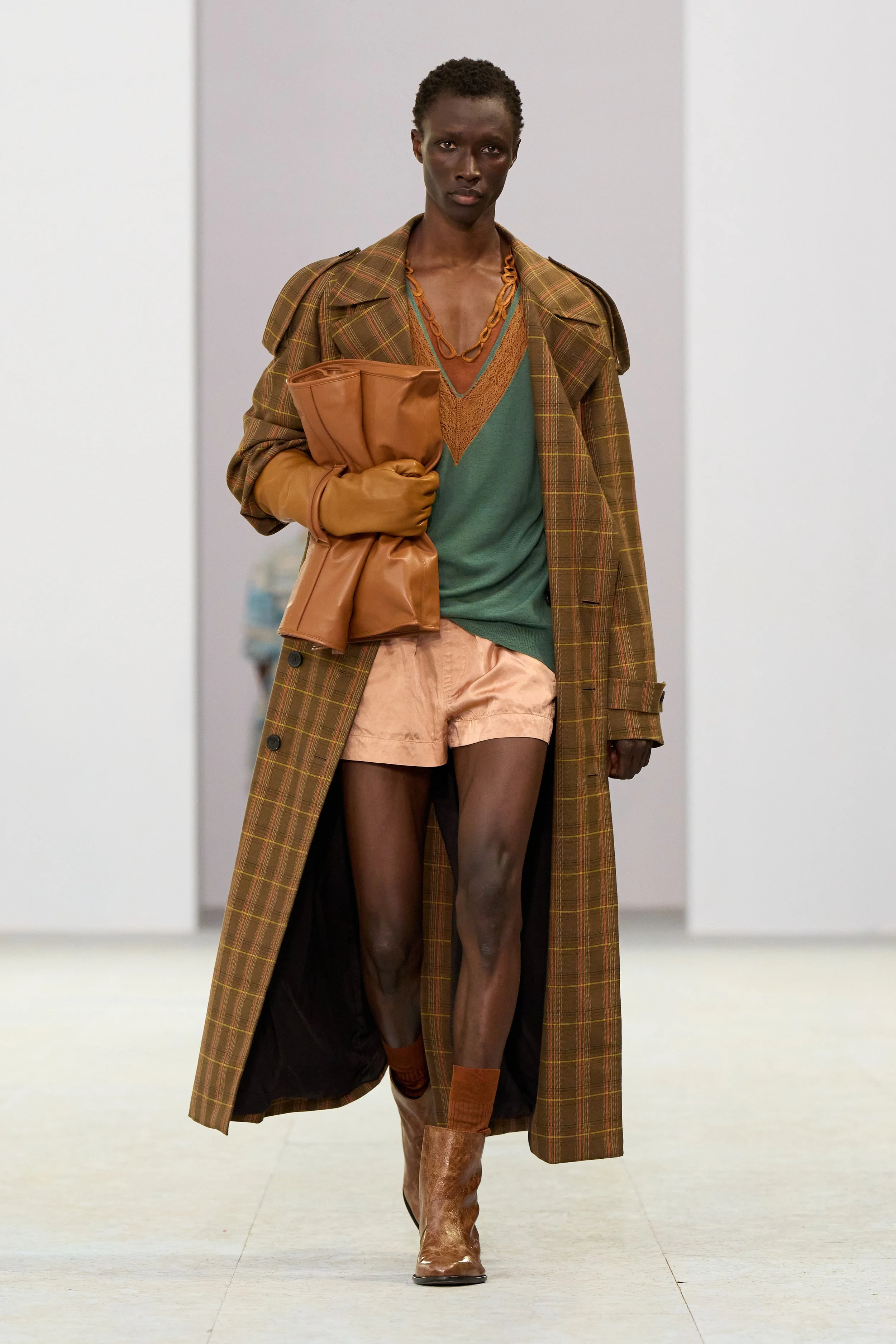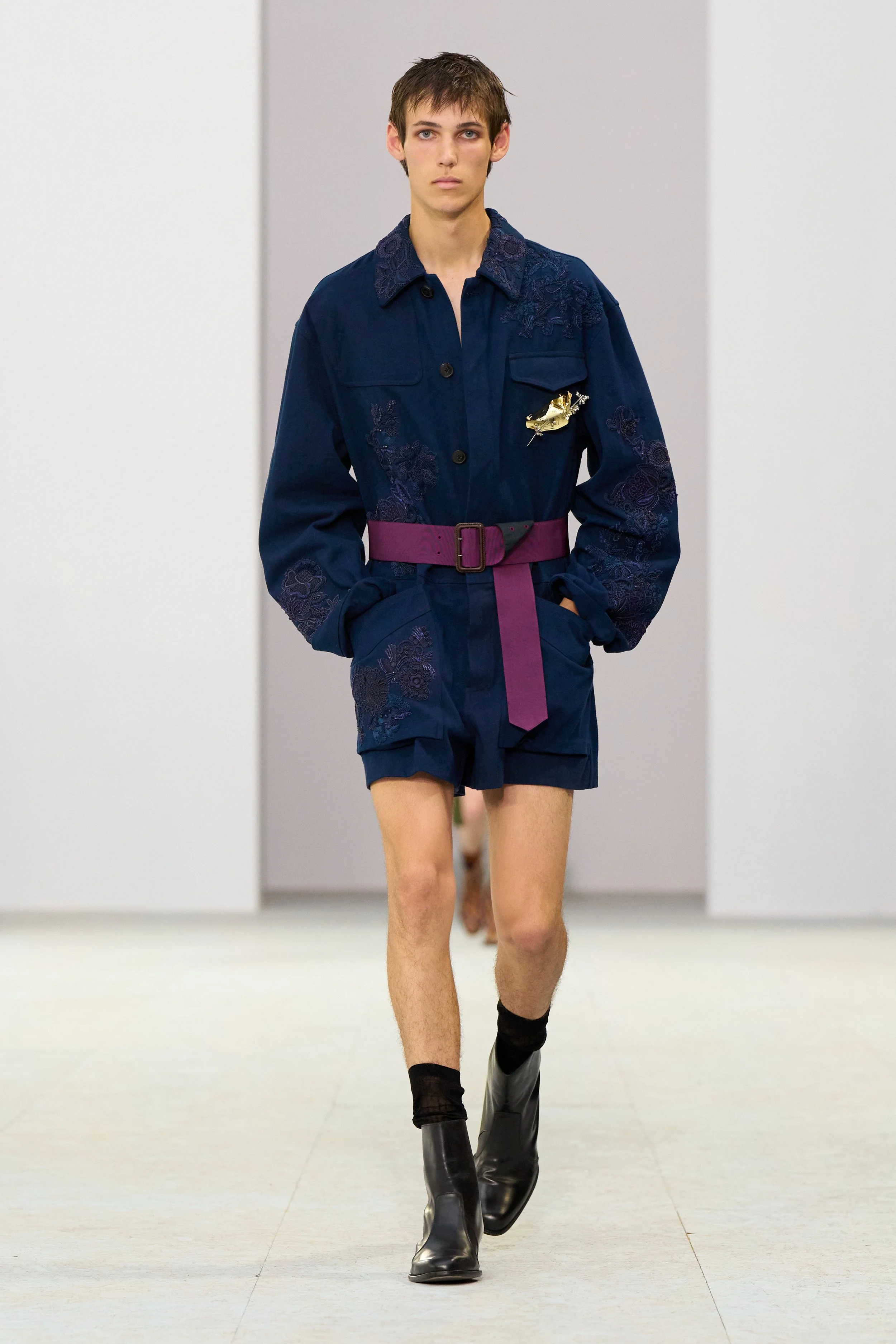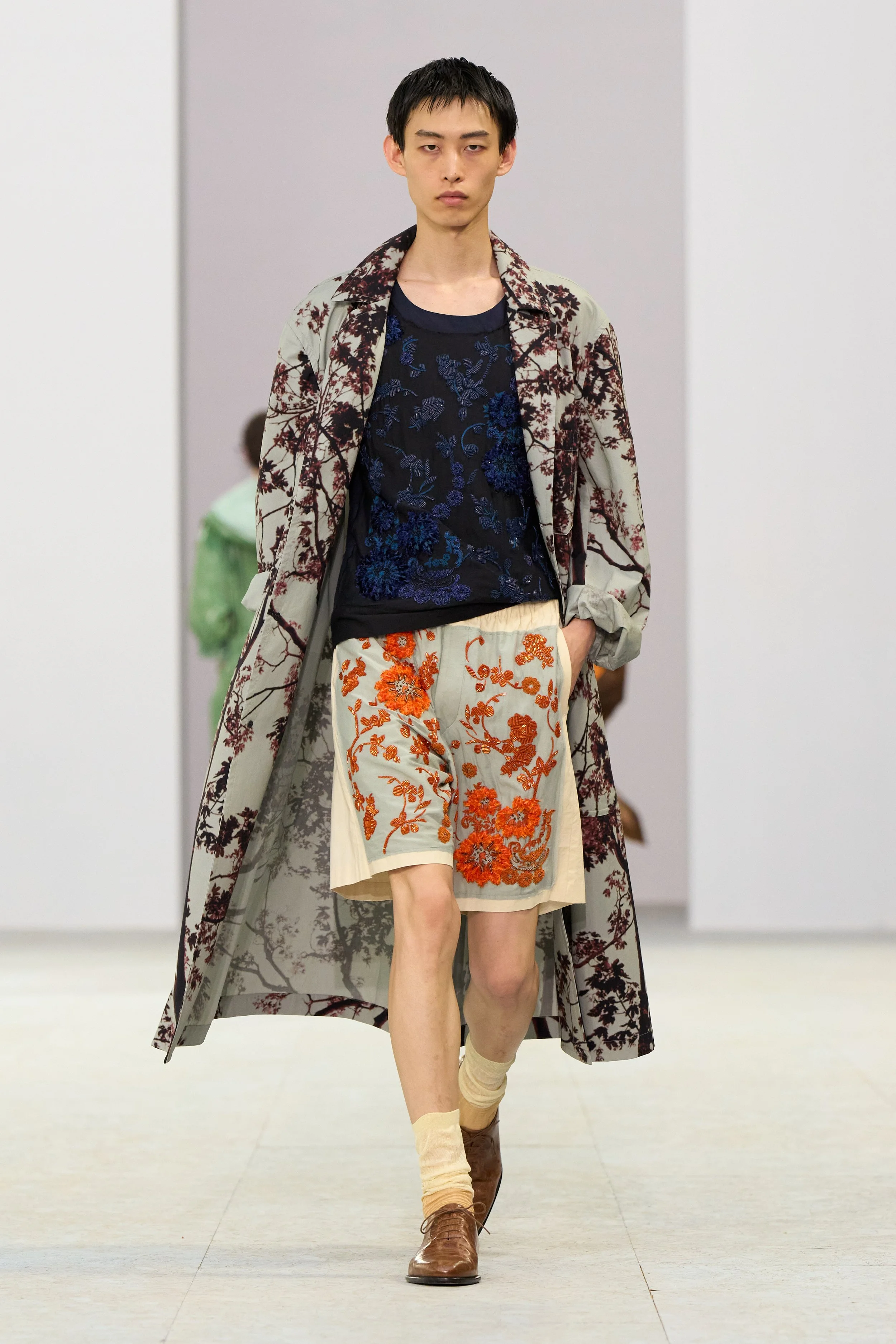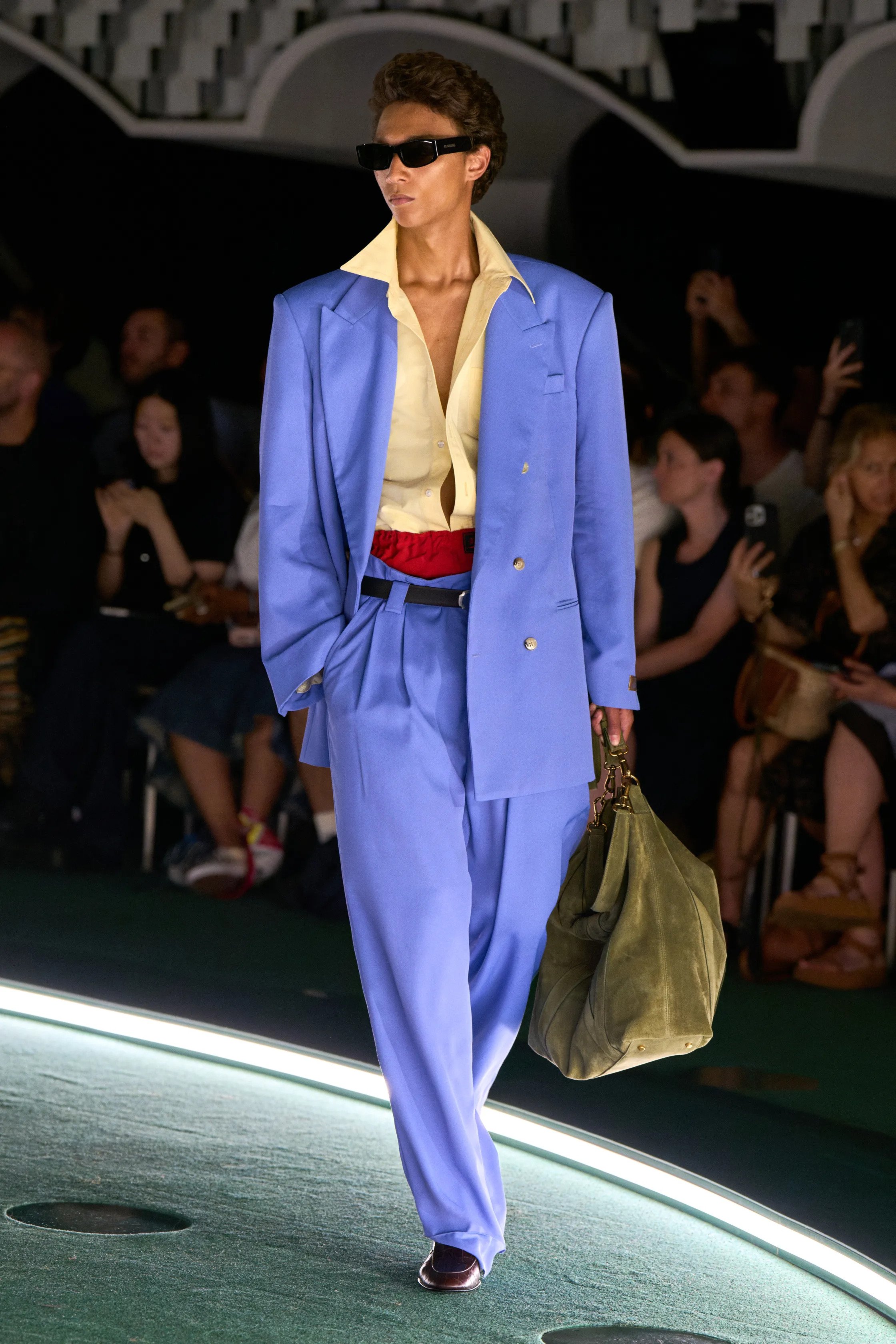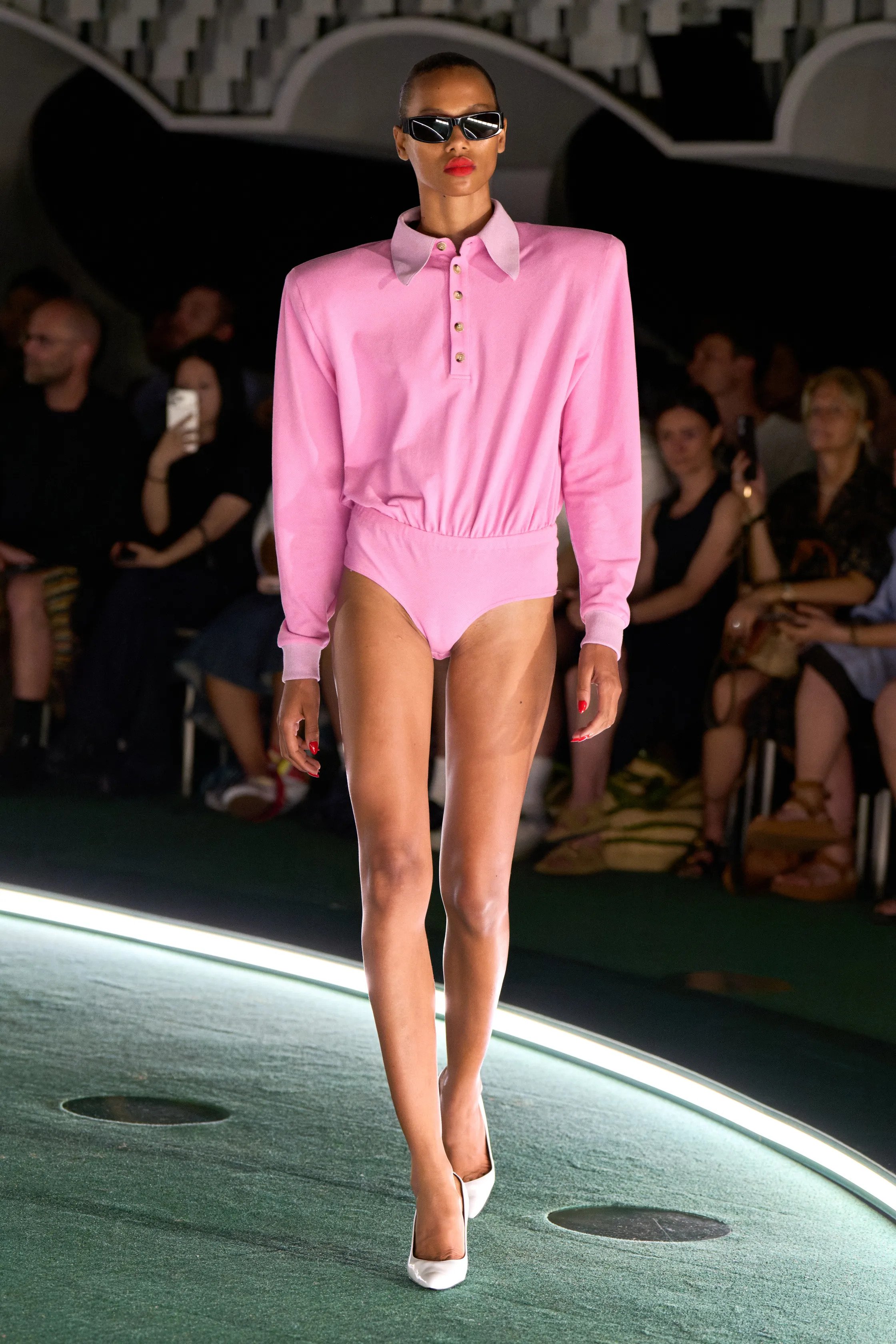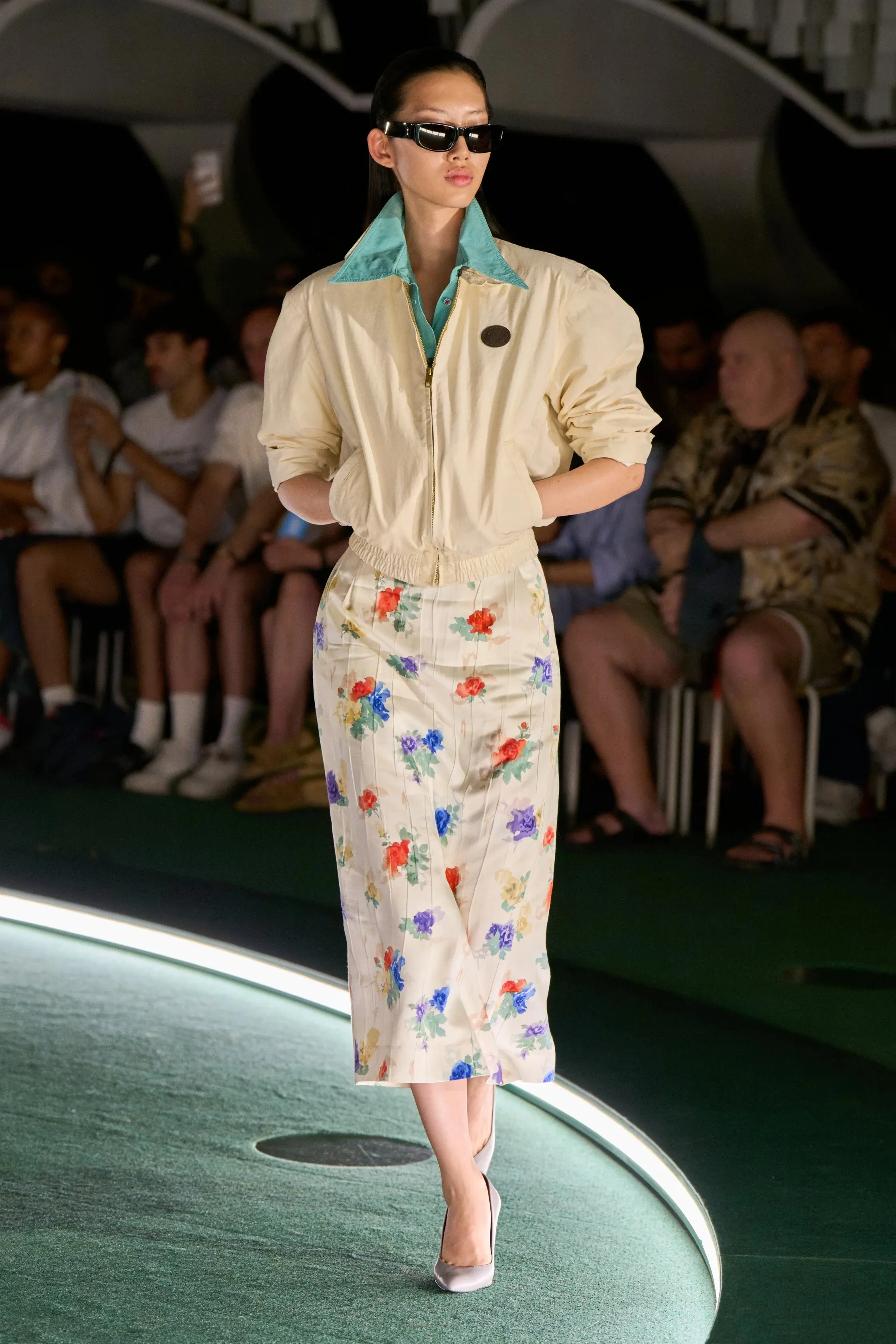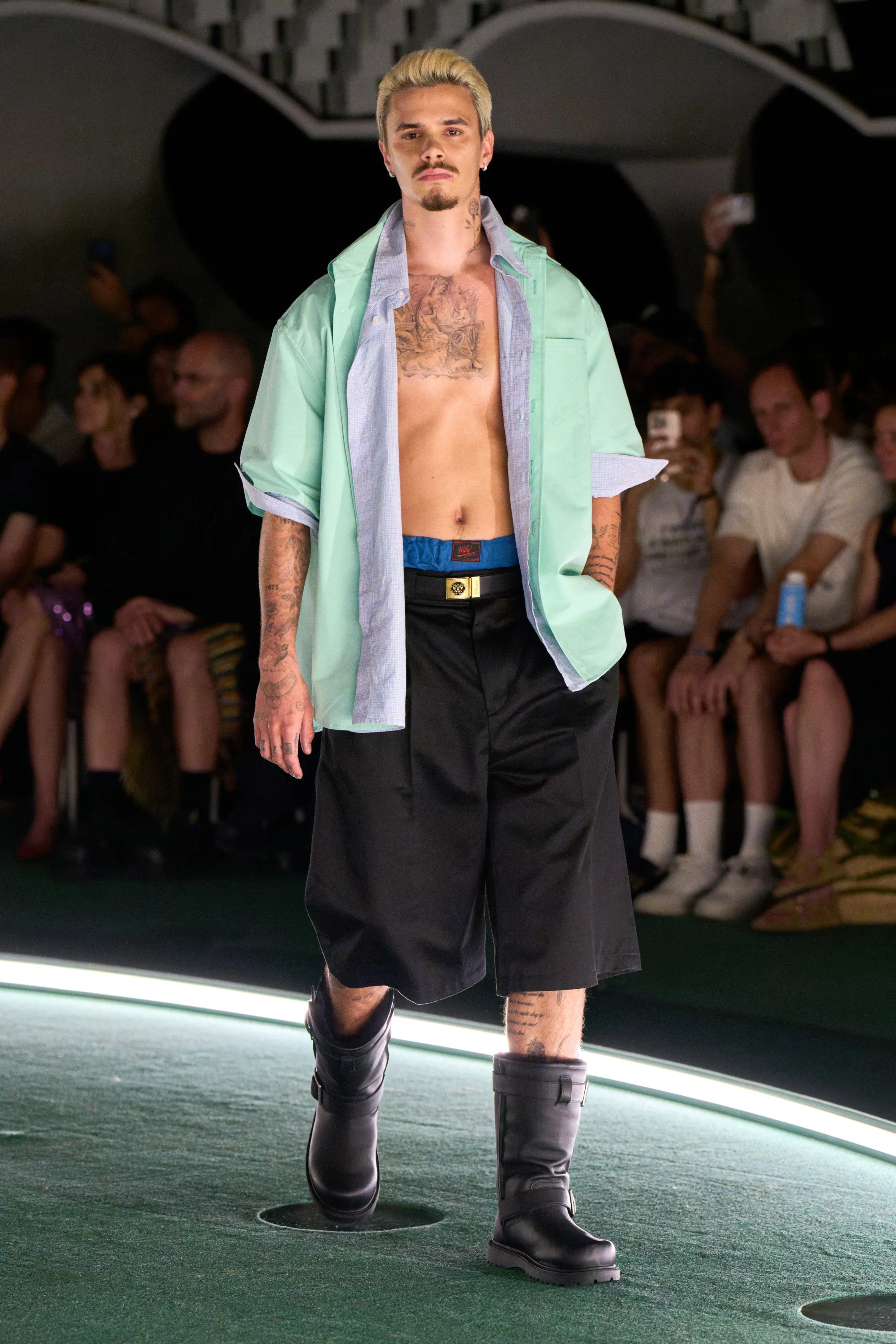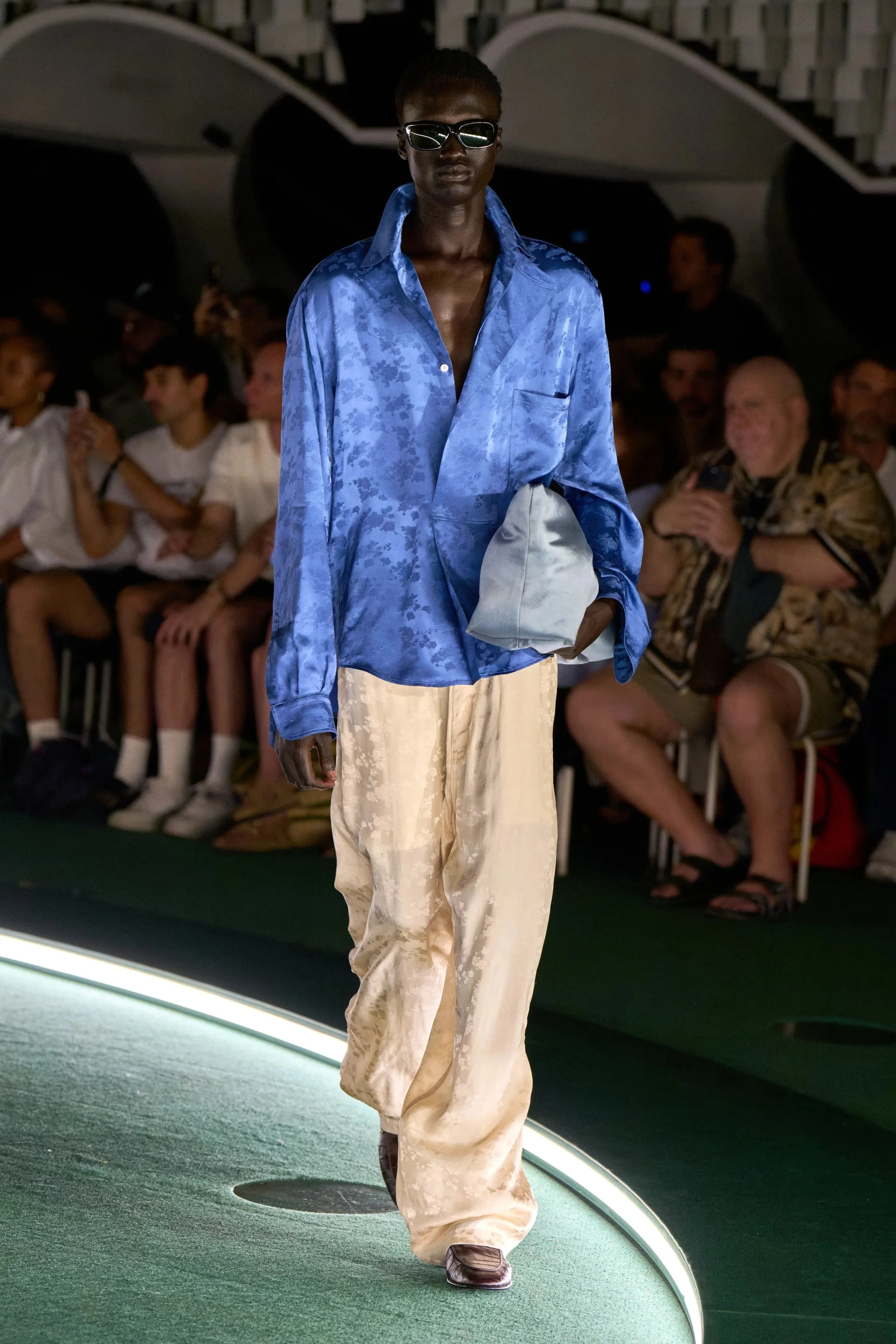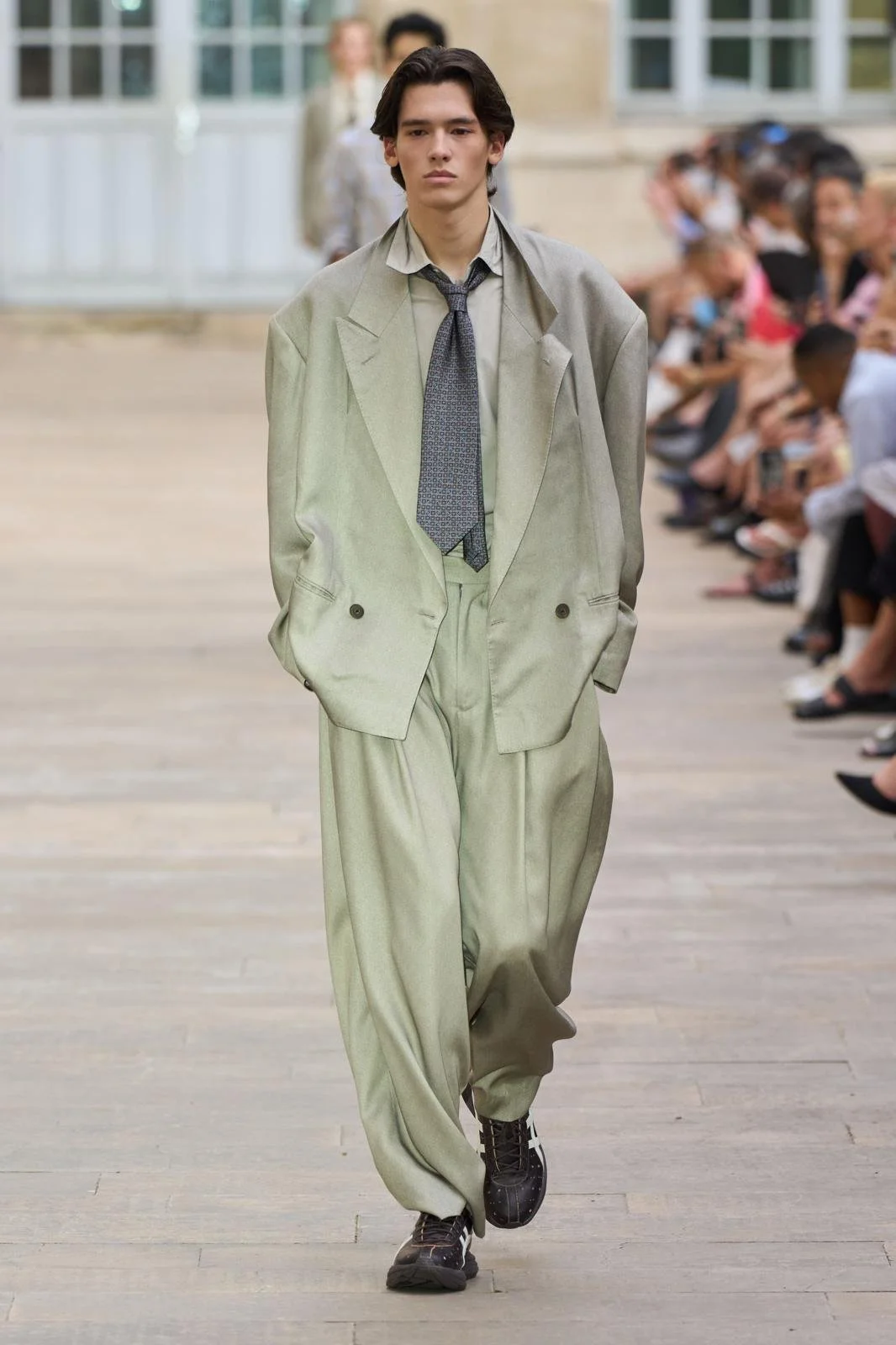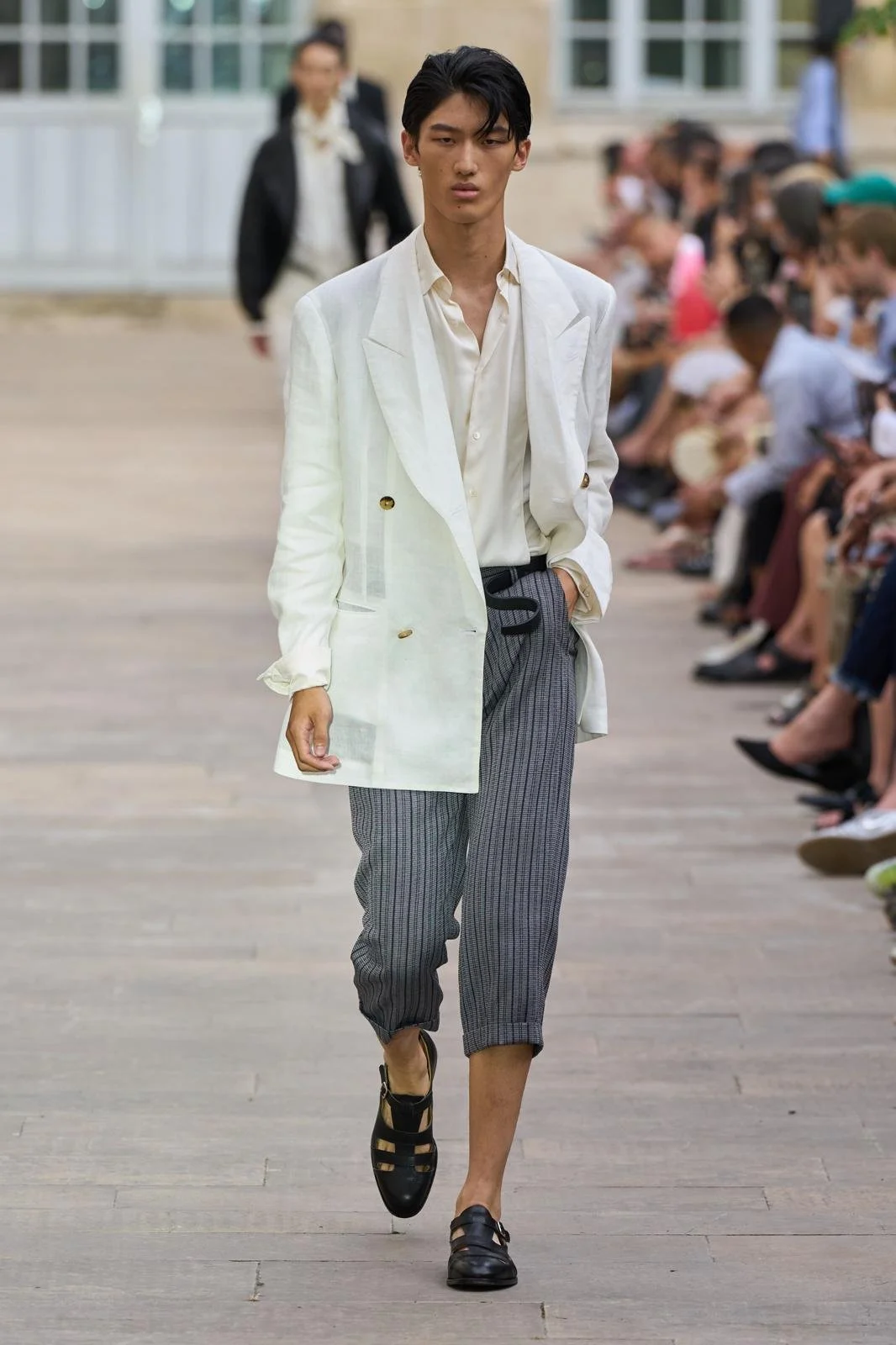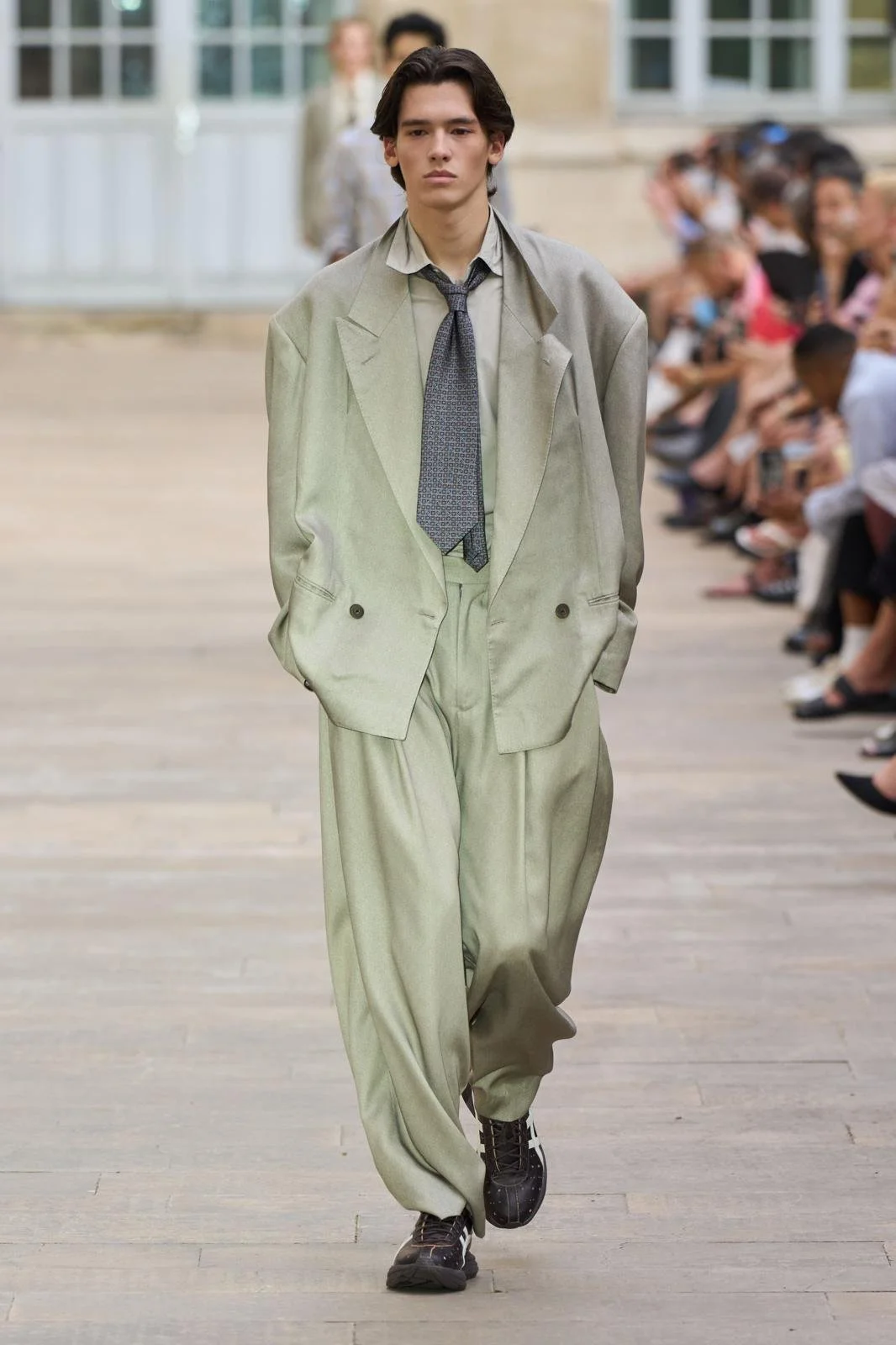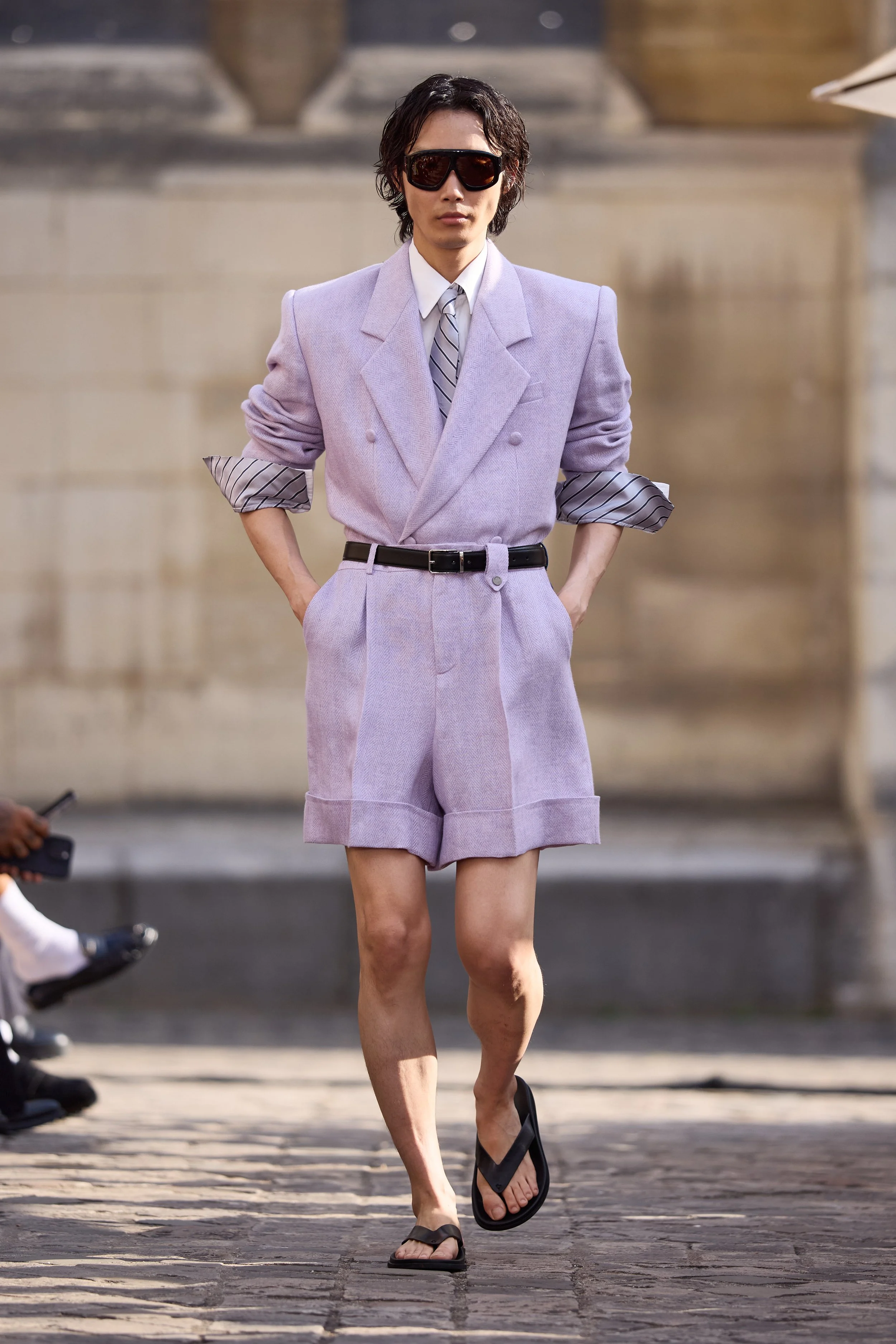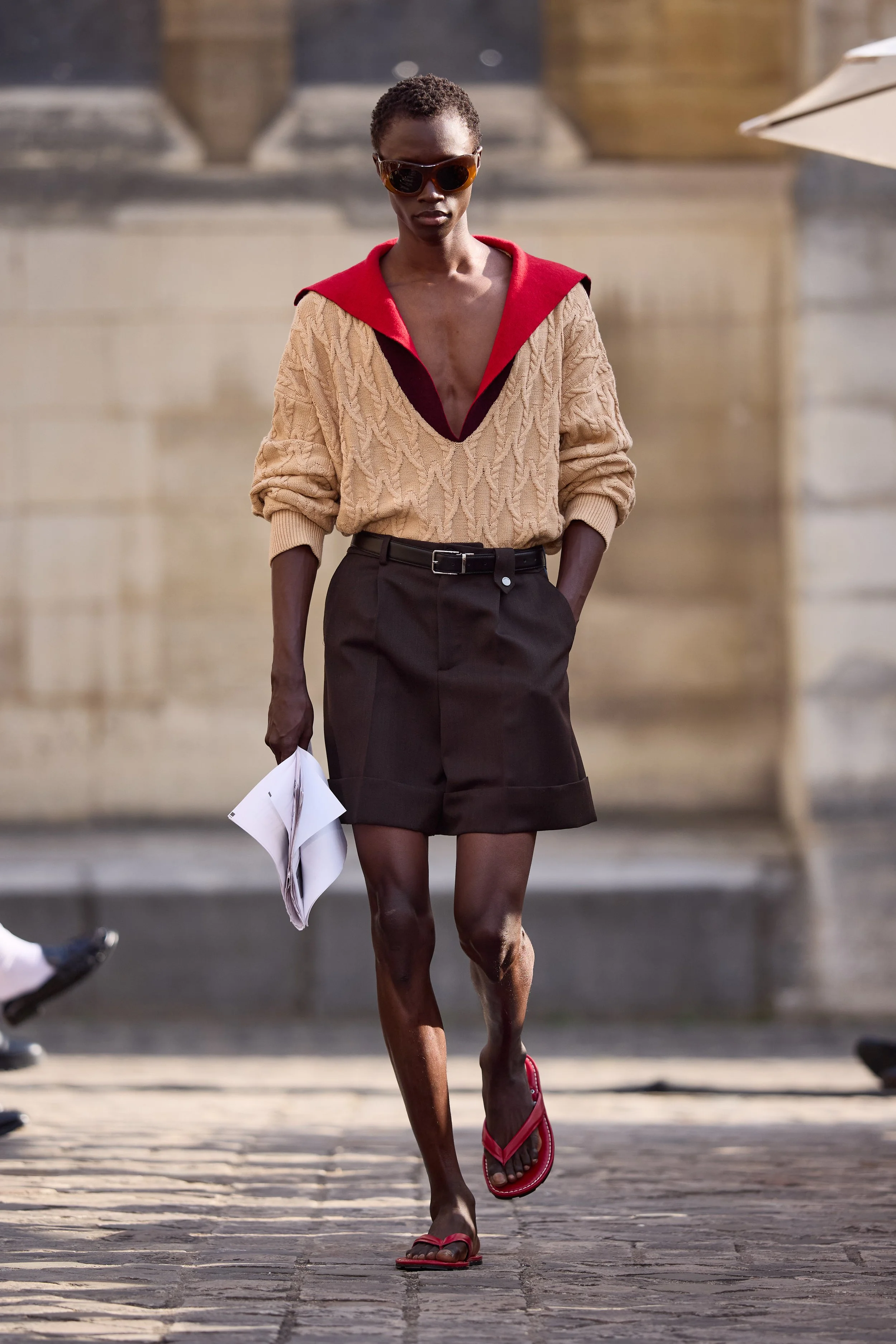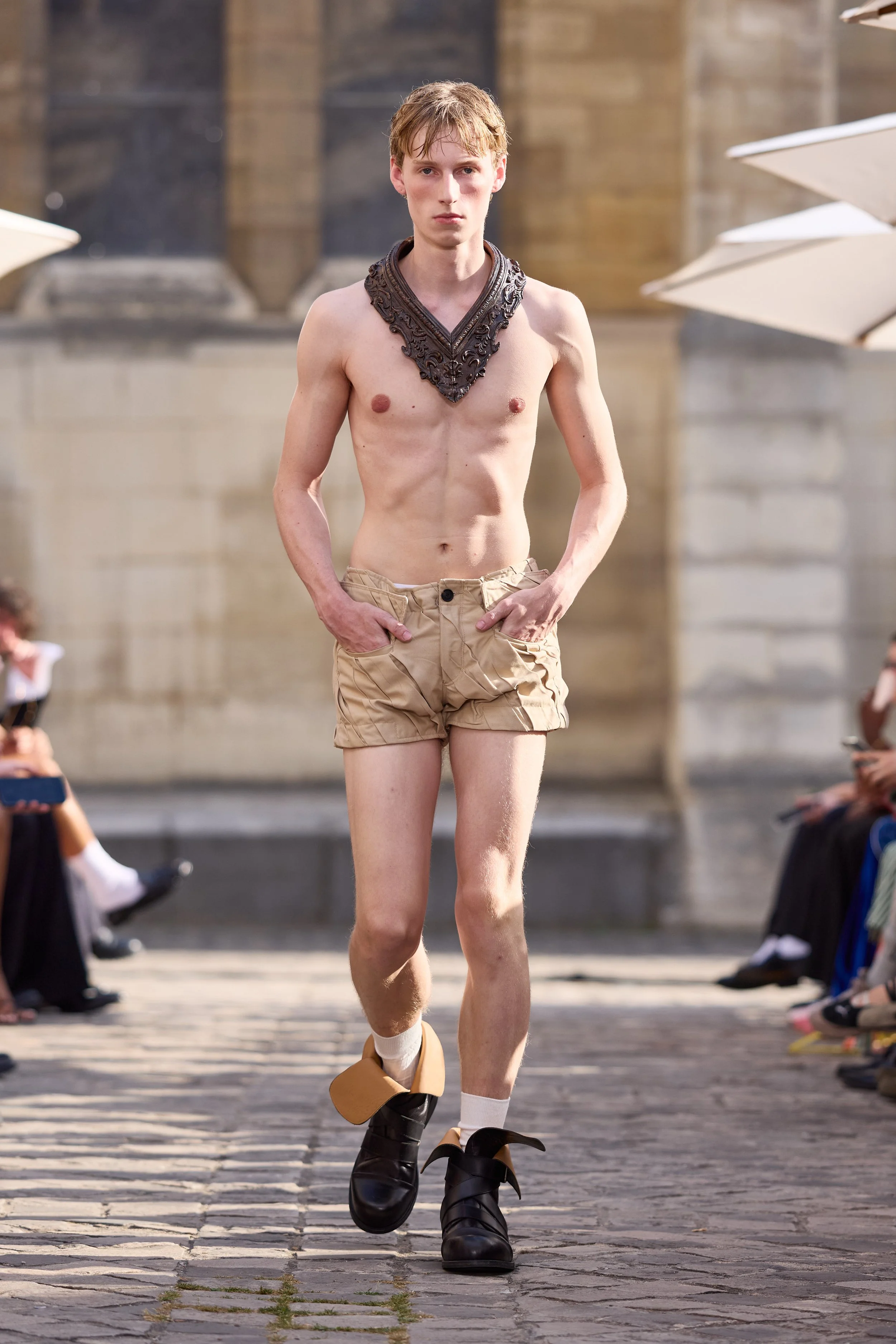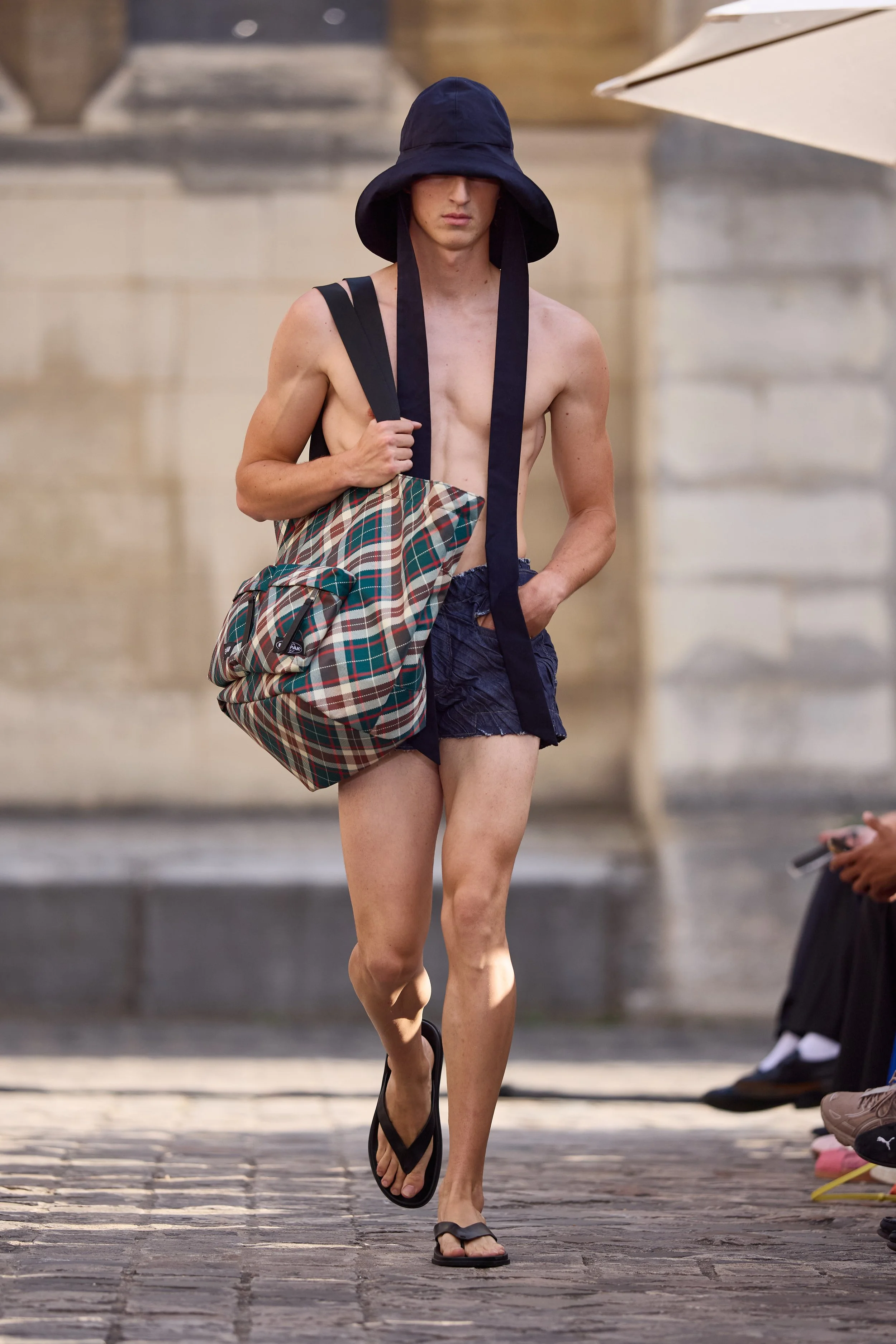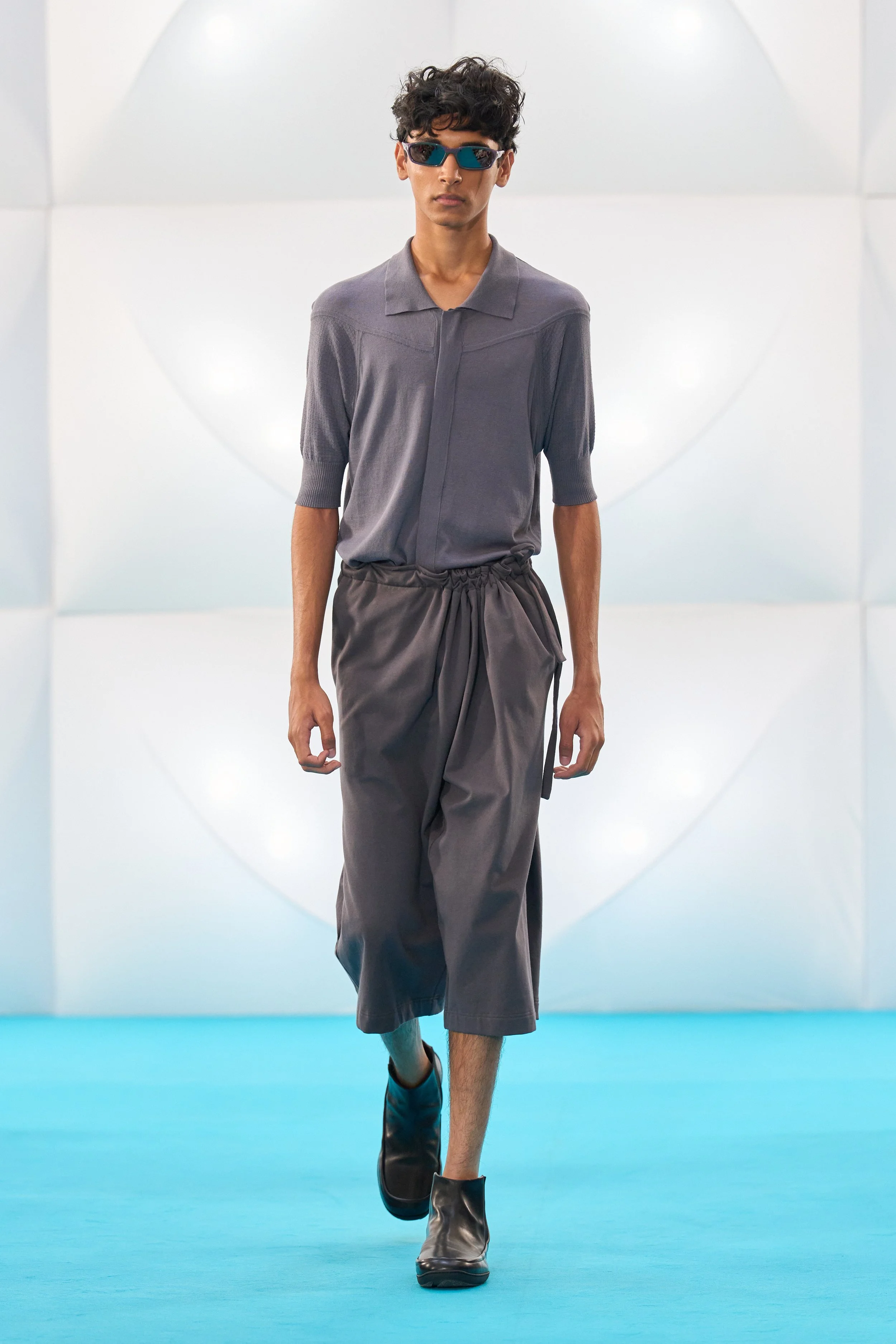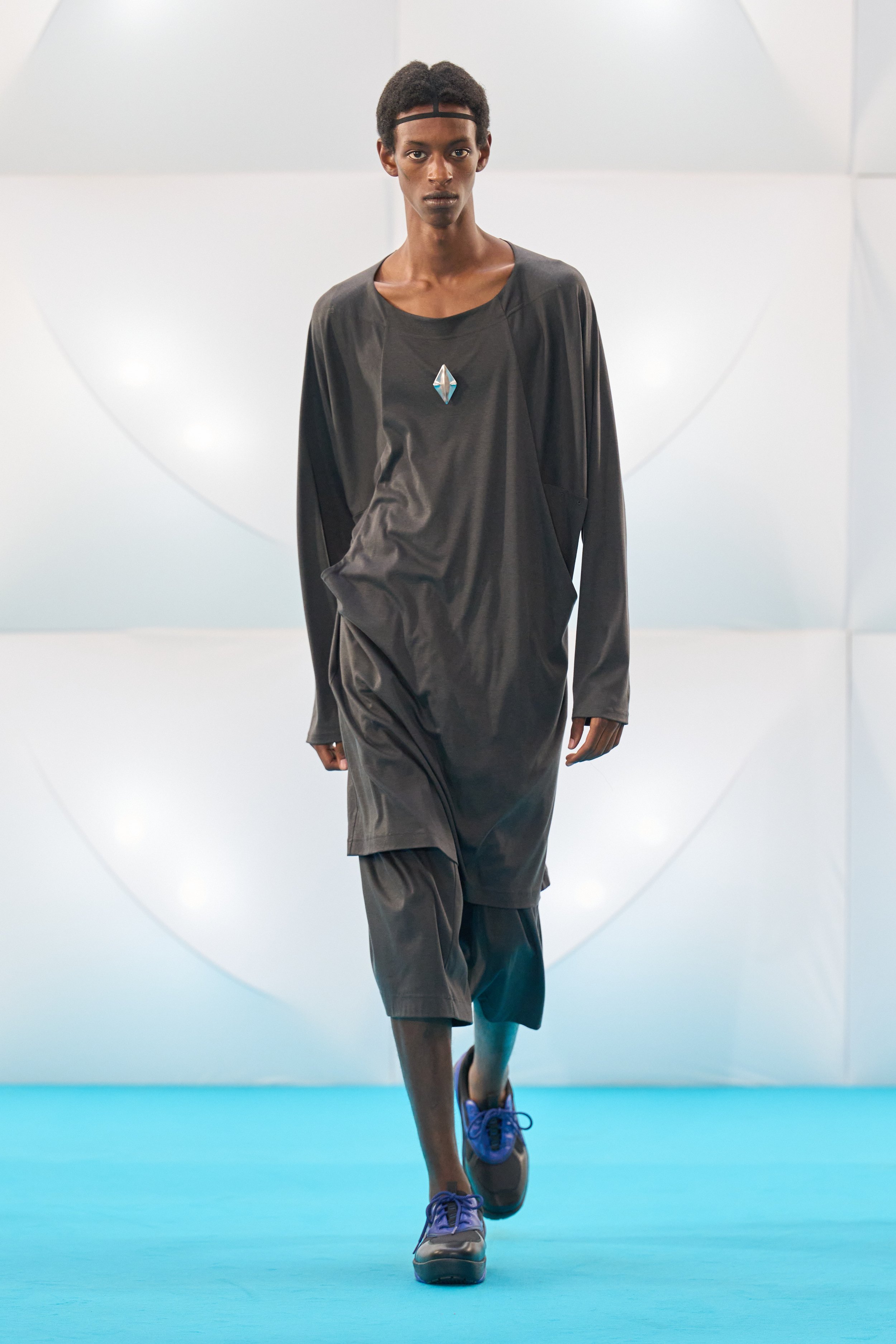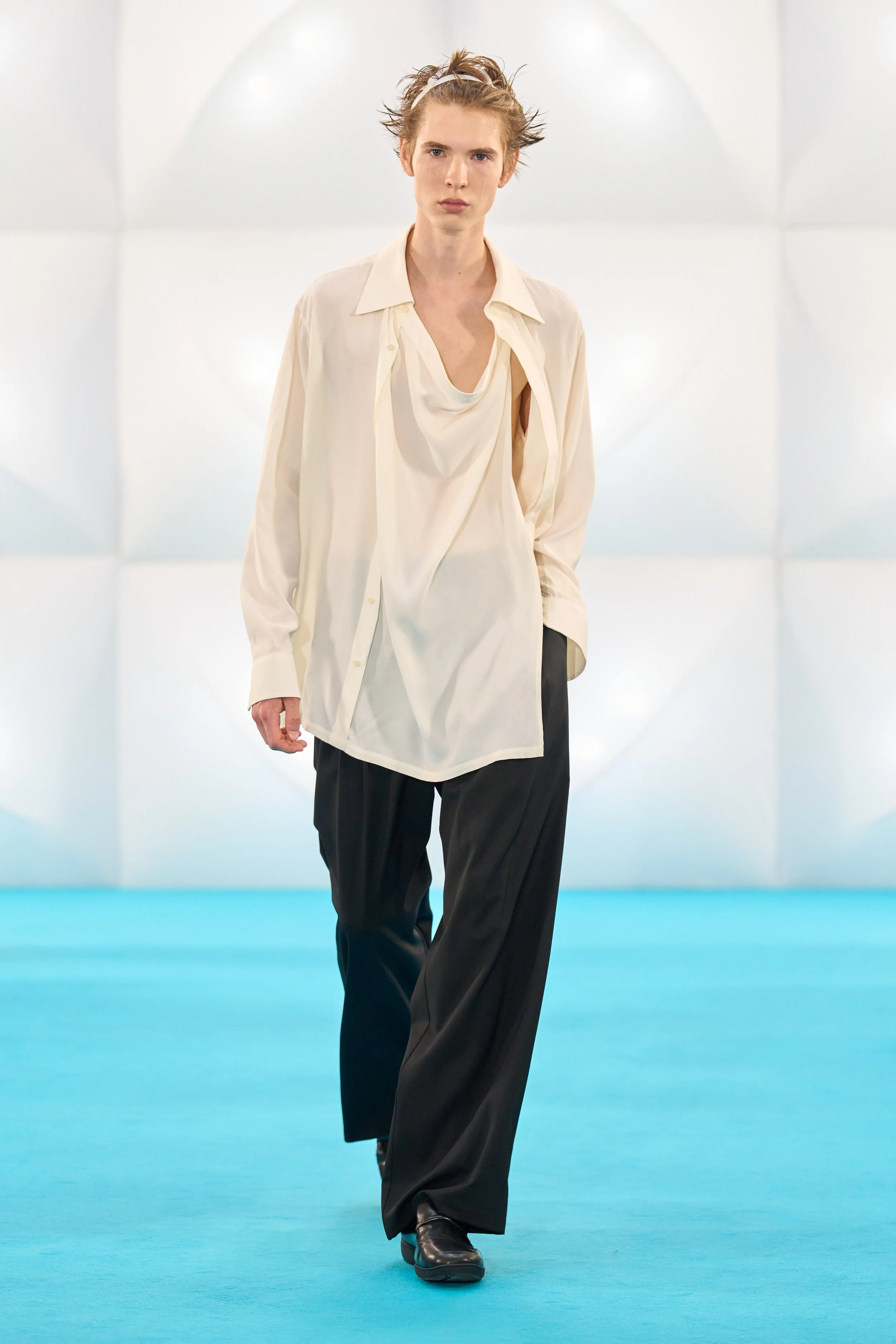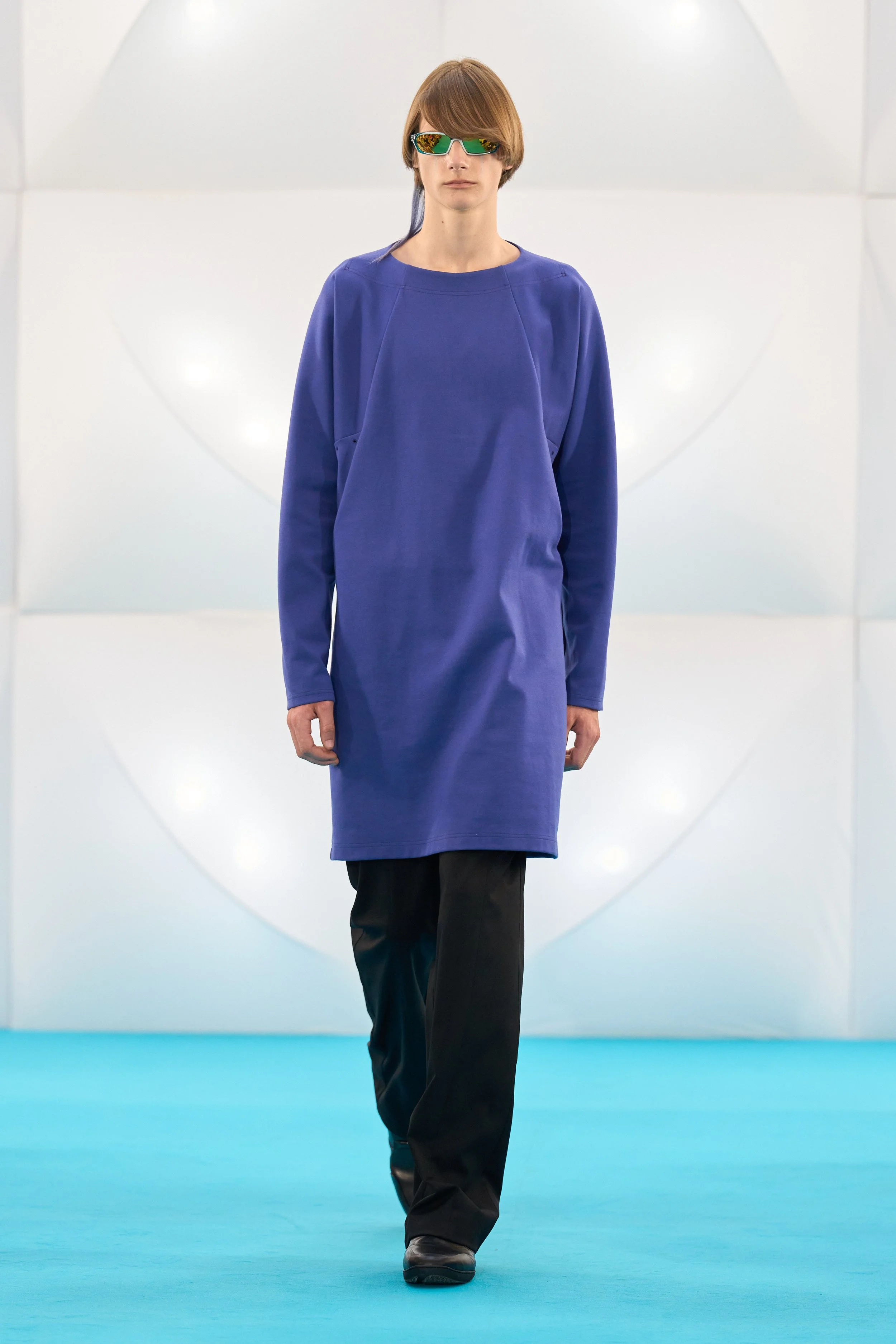
Last

SAINT LAURENT FW26

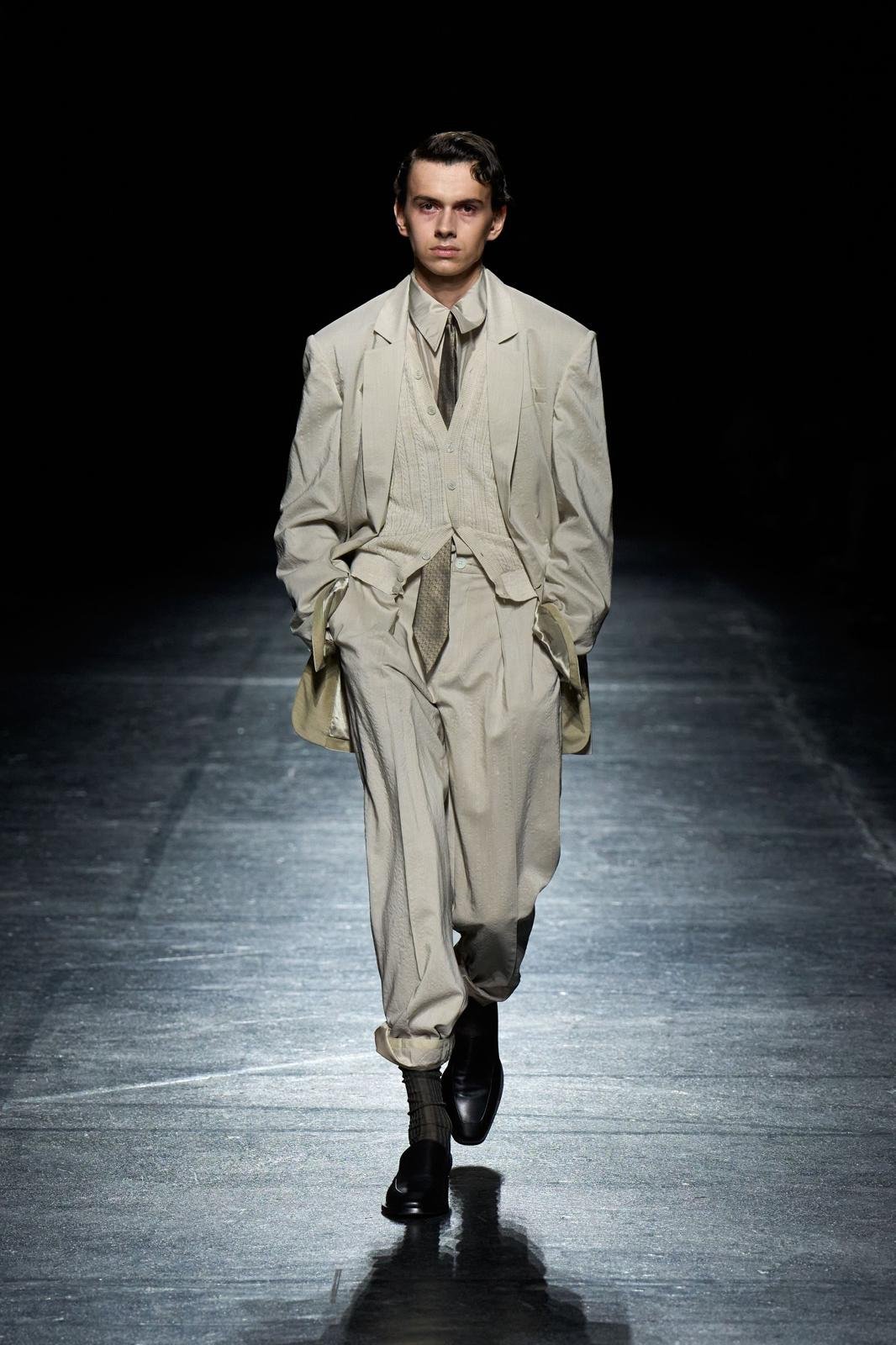
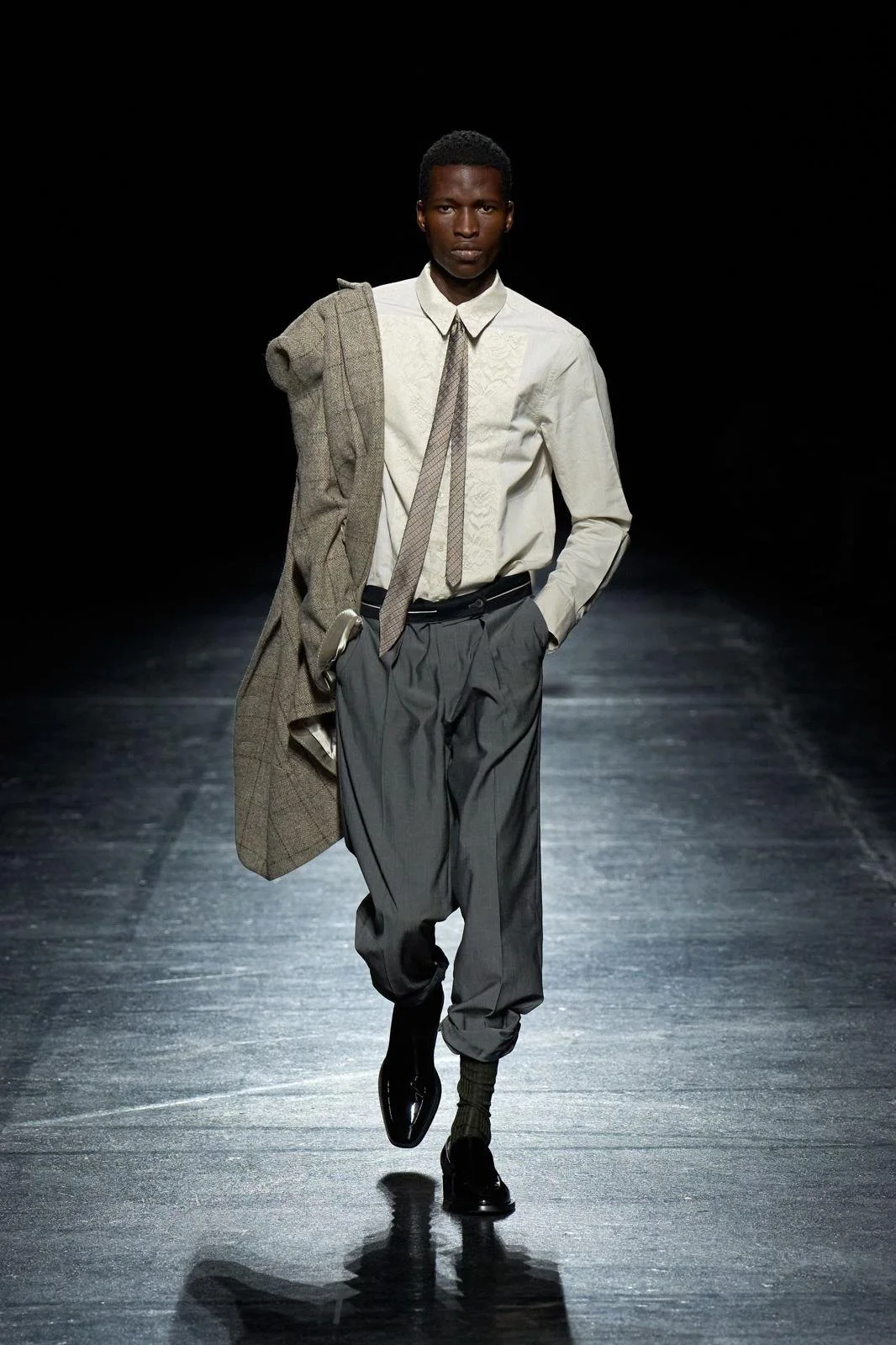
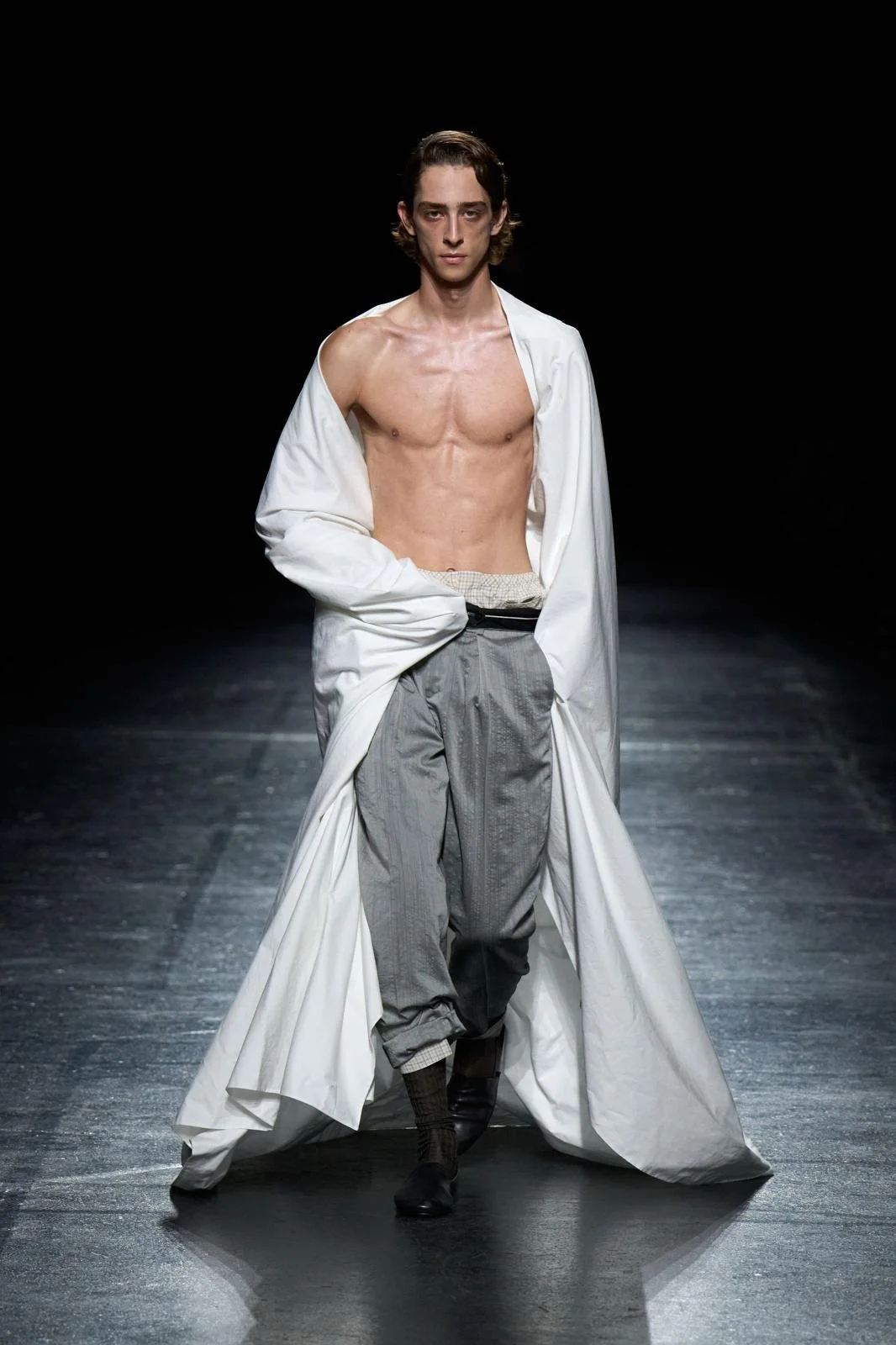
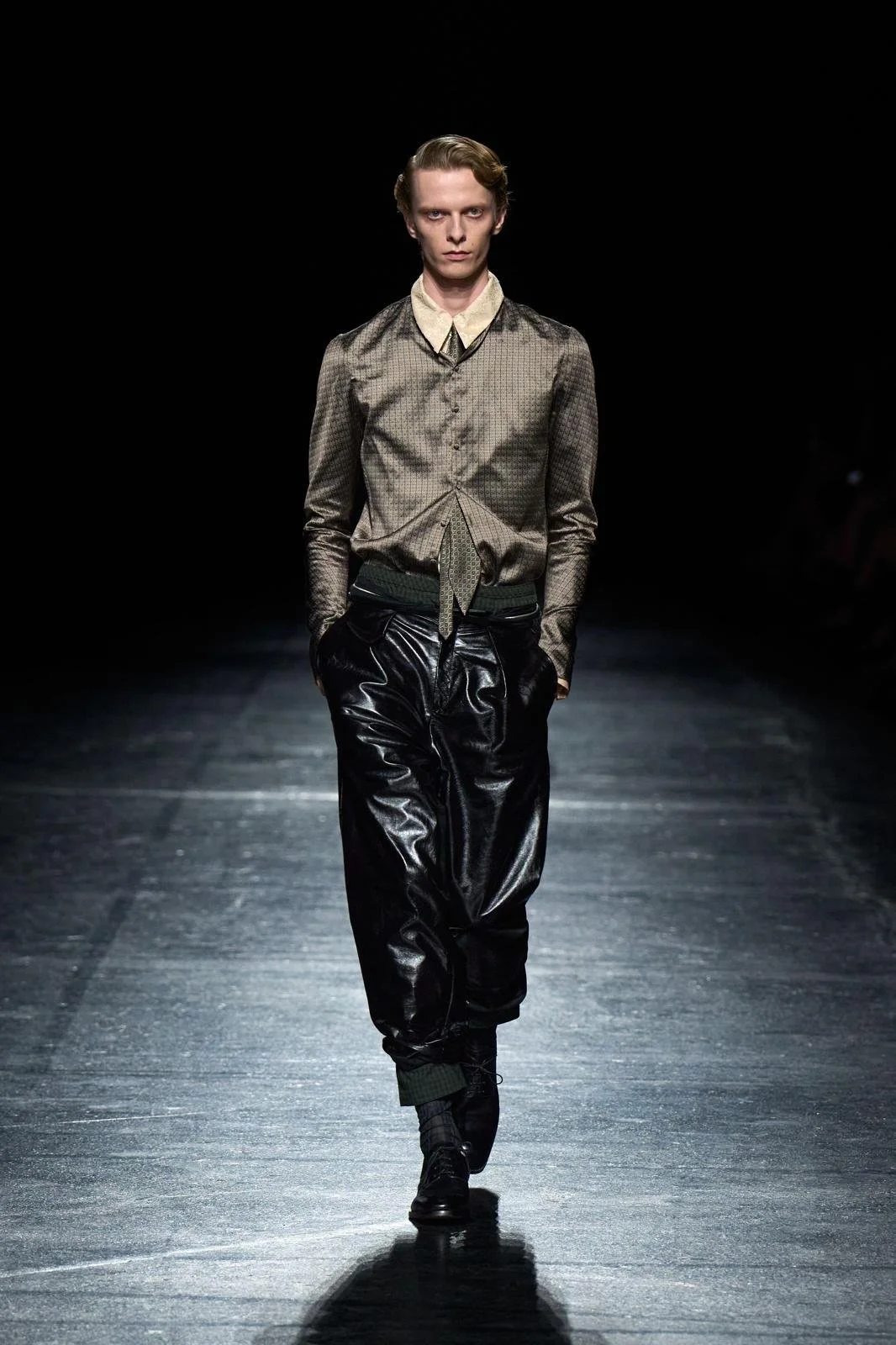
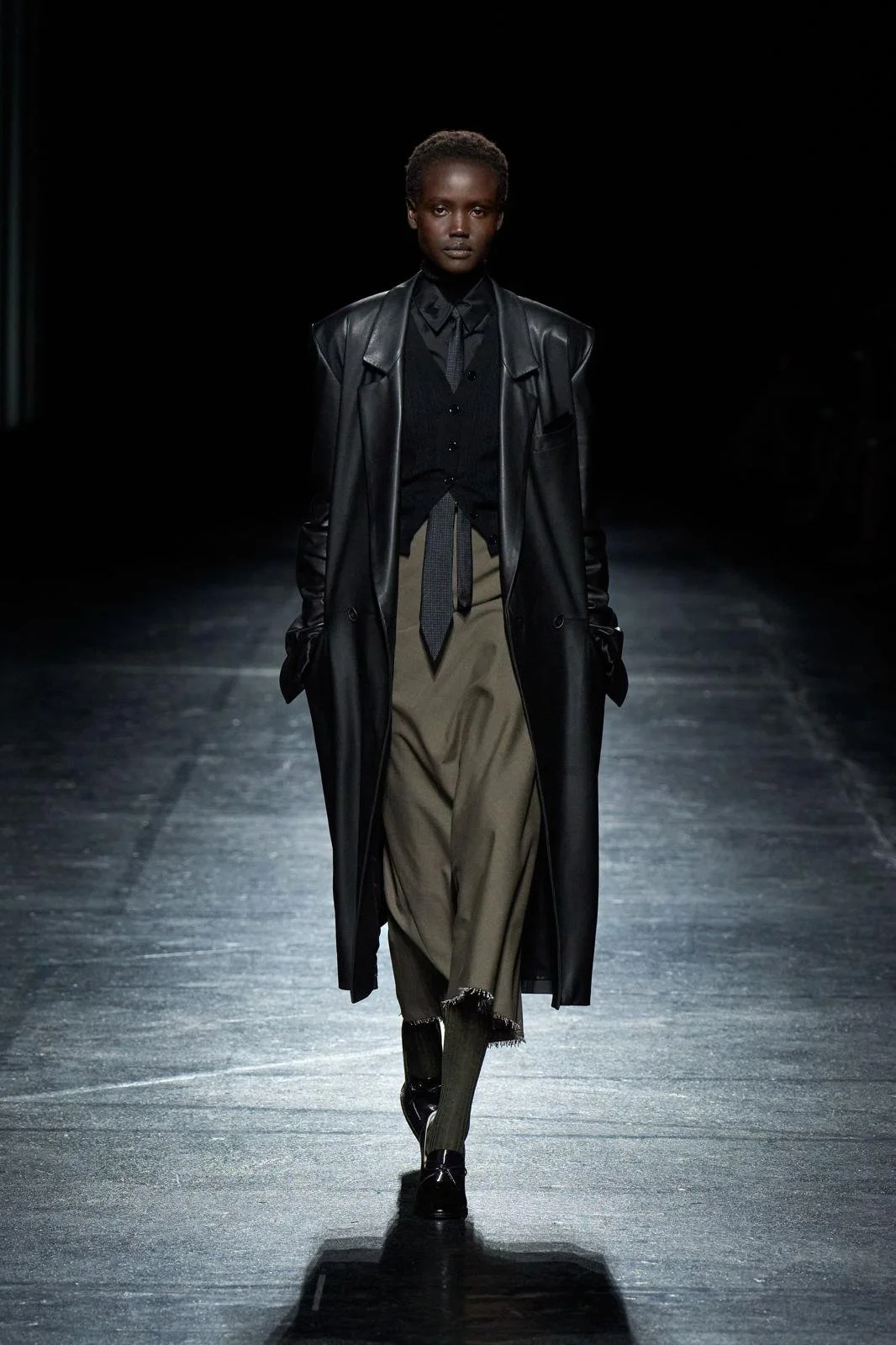
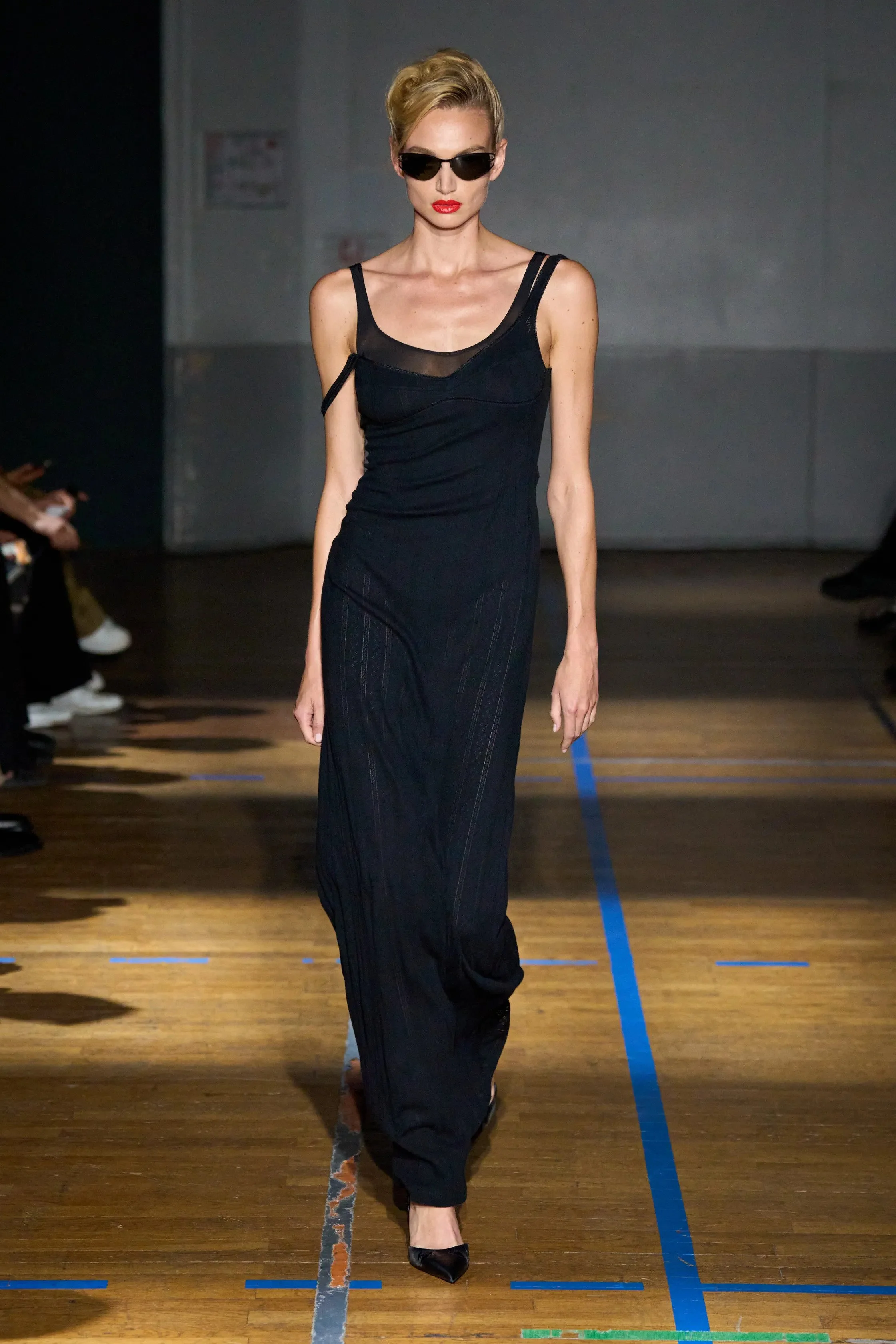
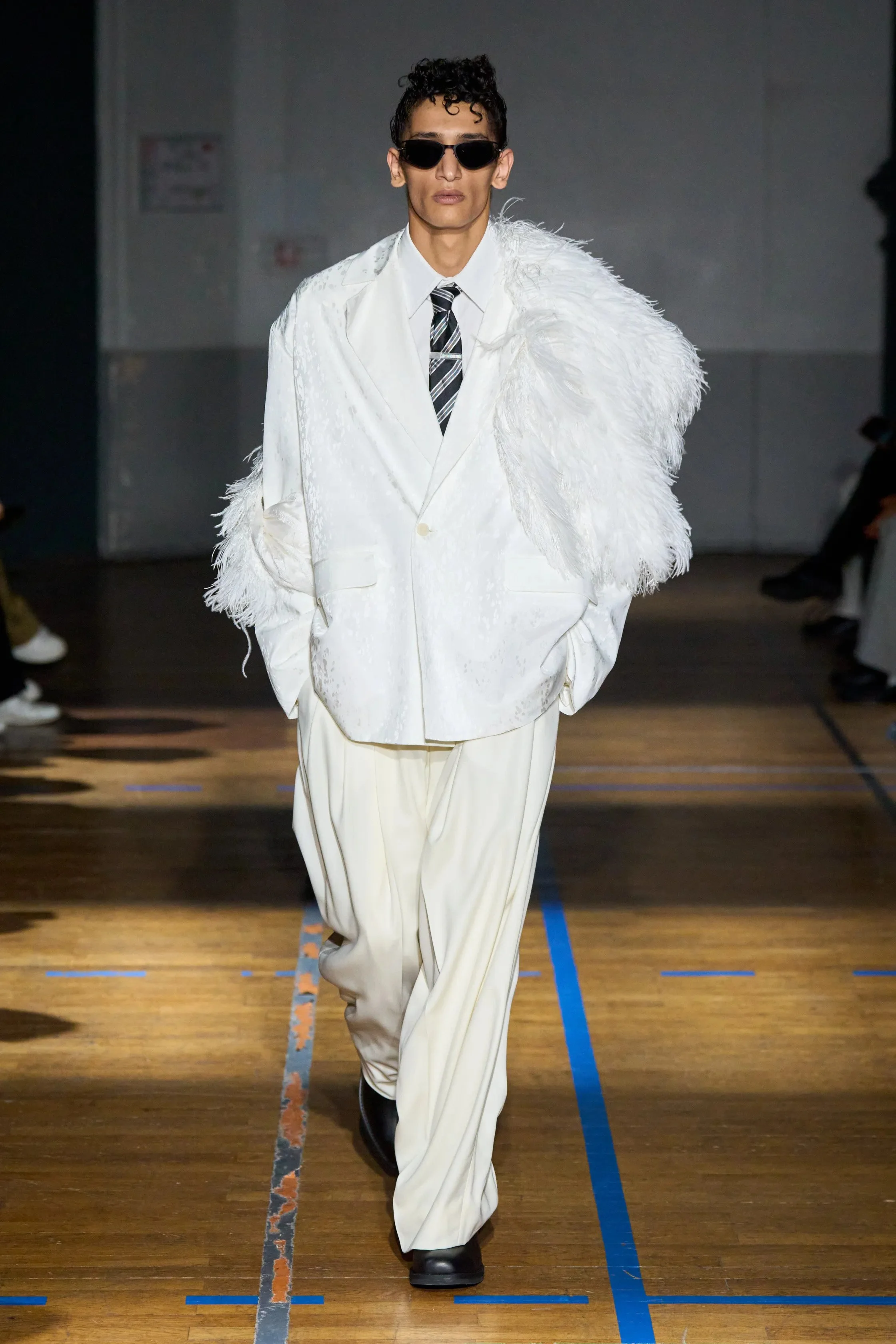
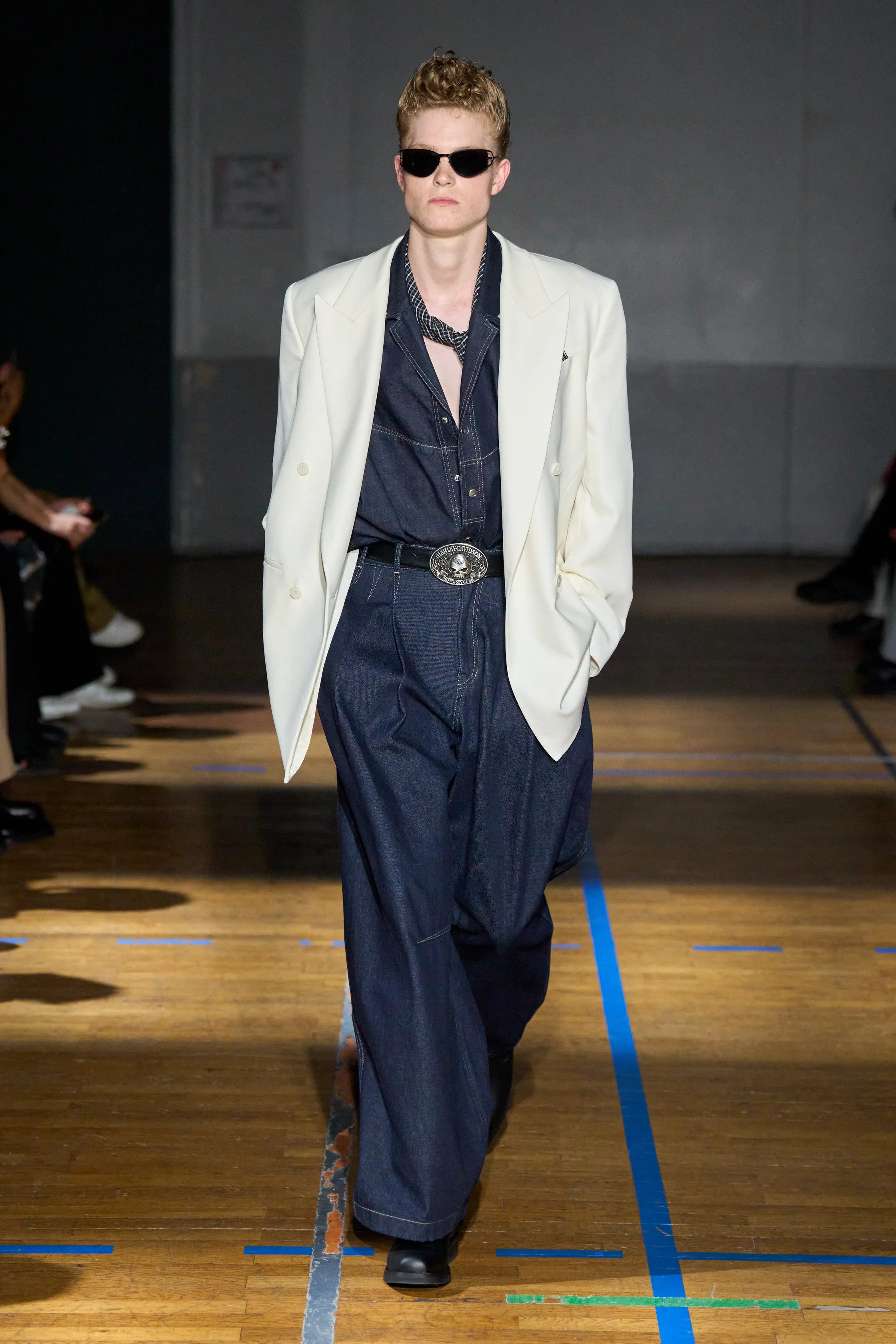
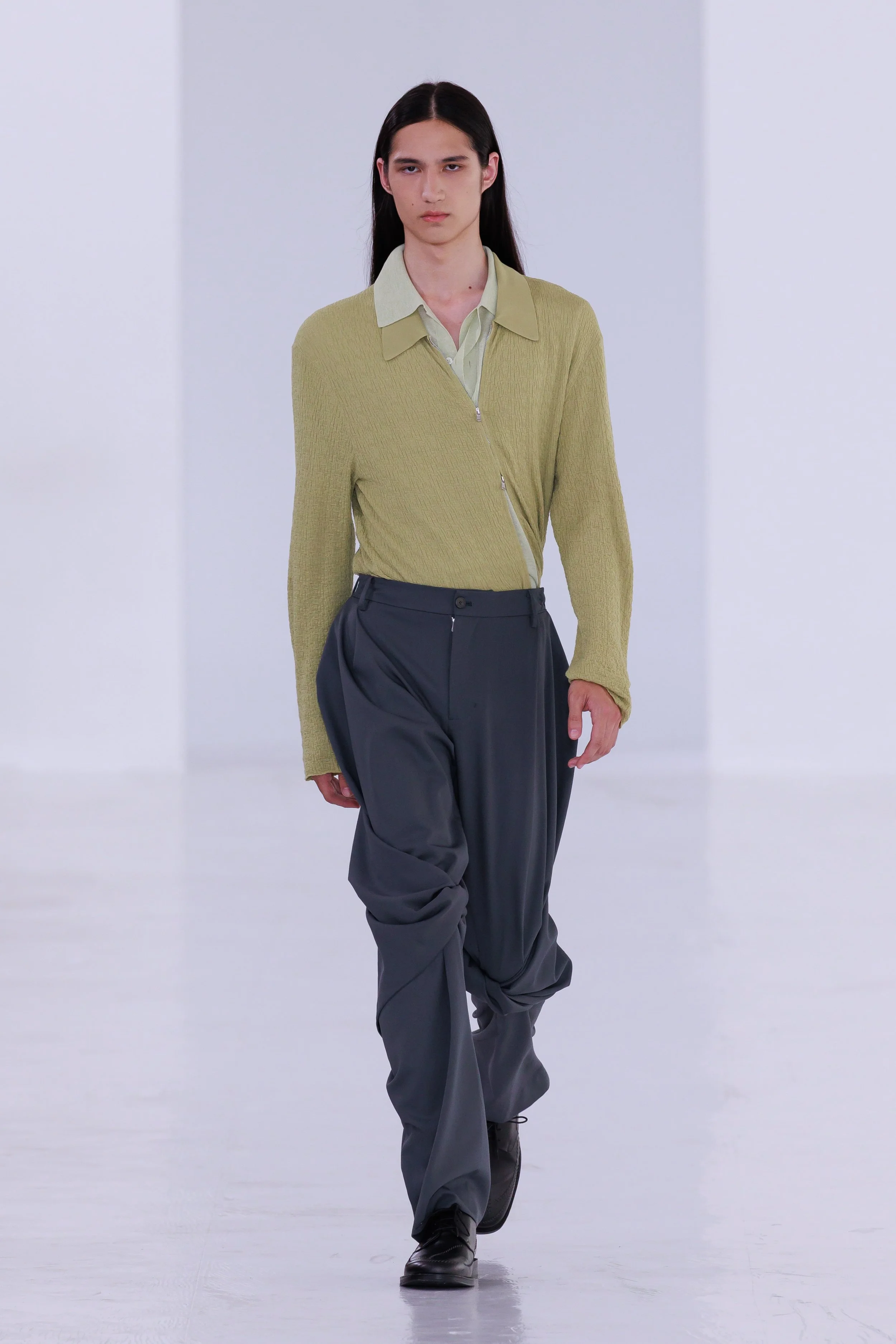
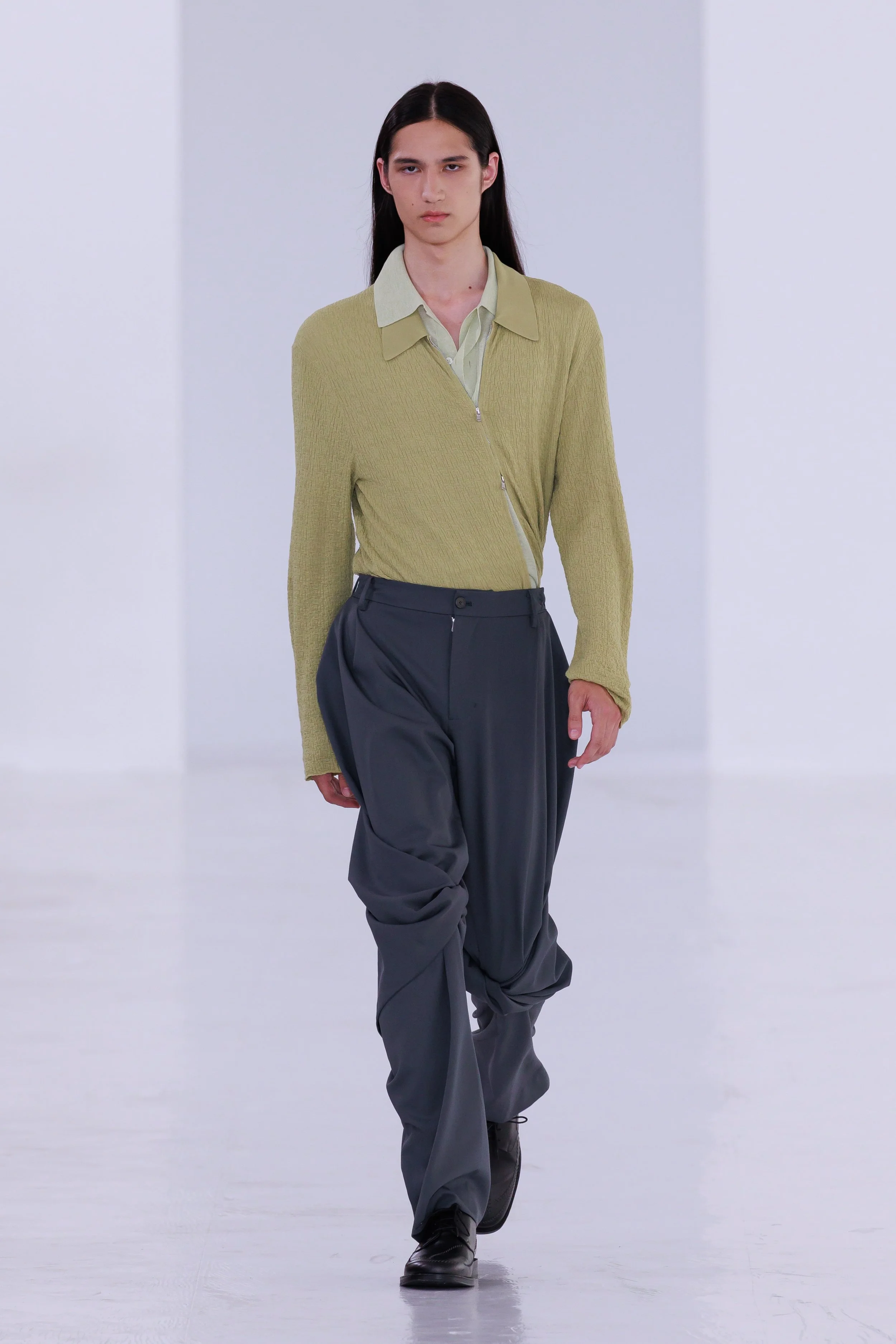
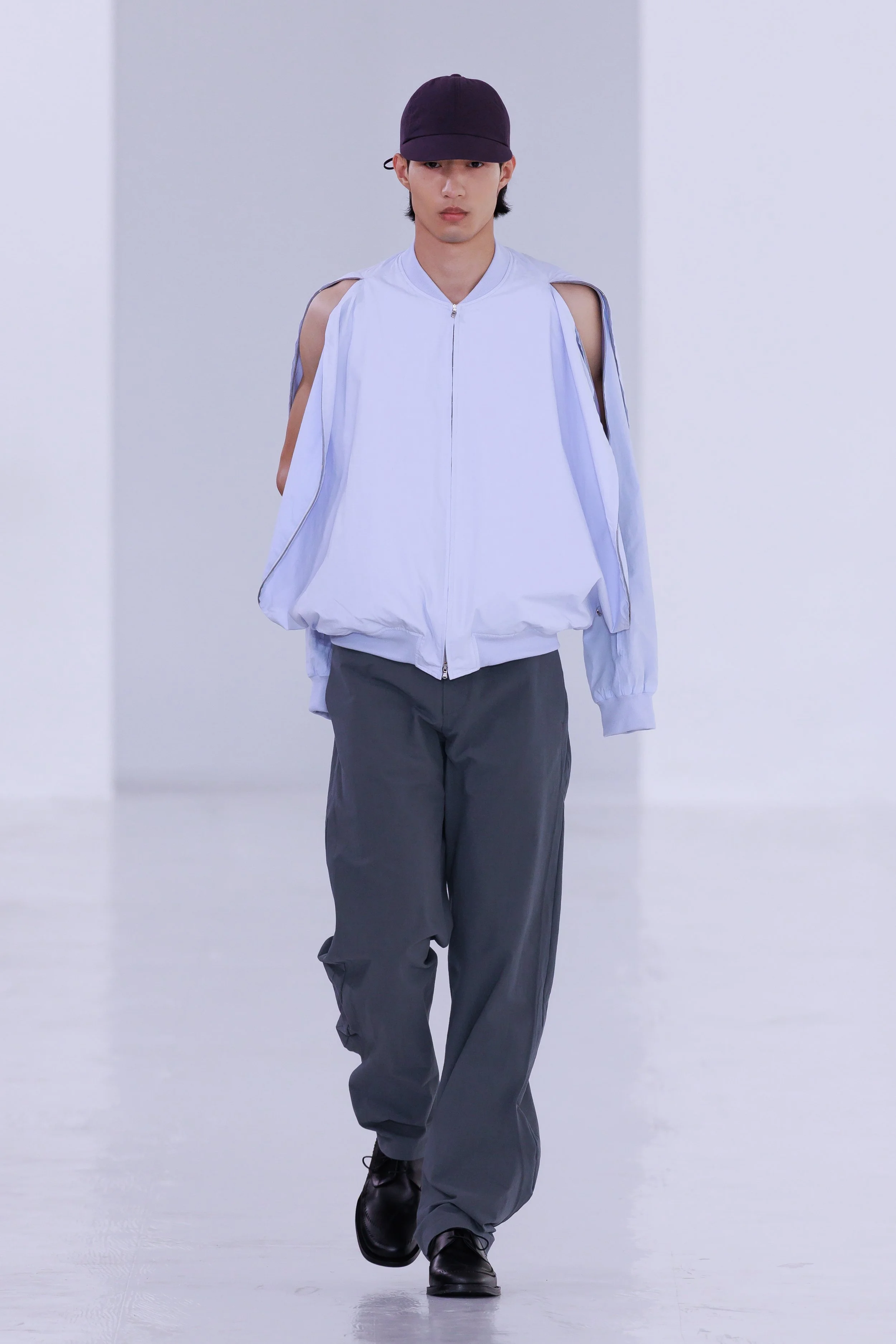
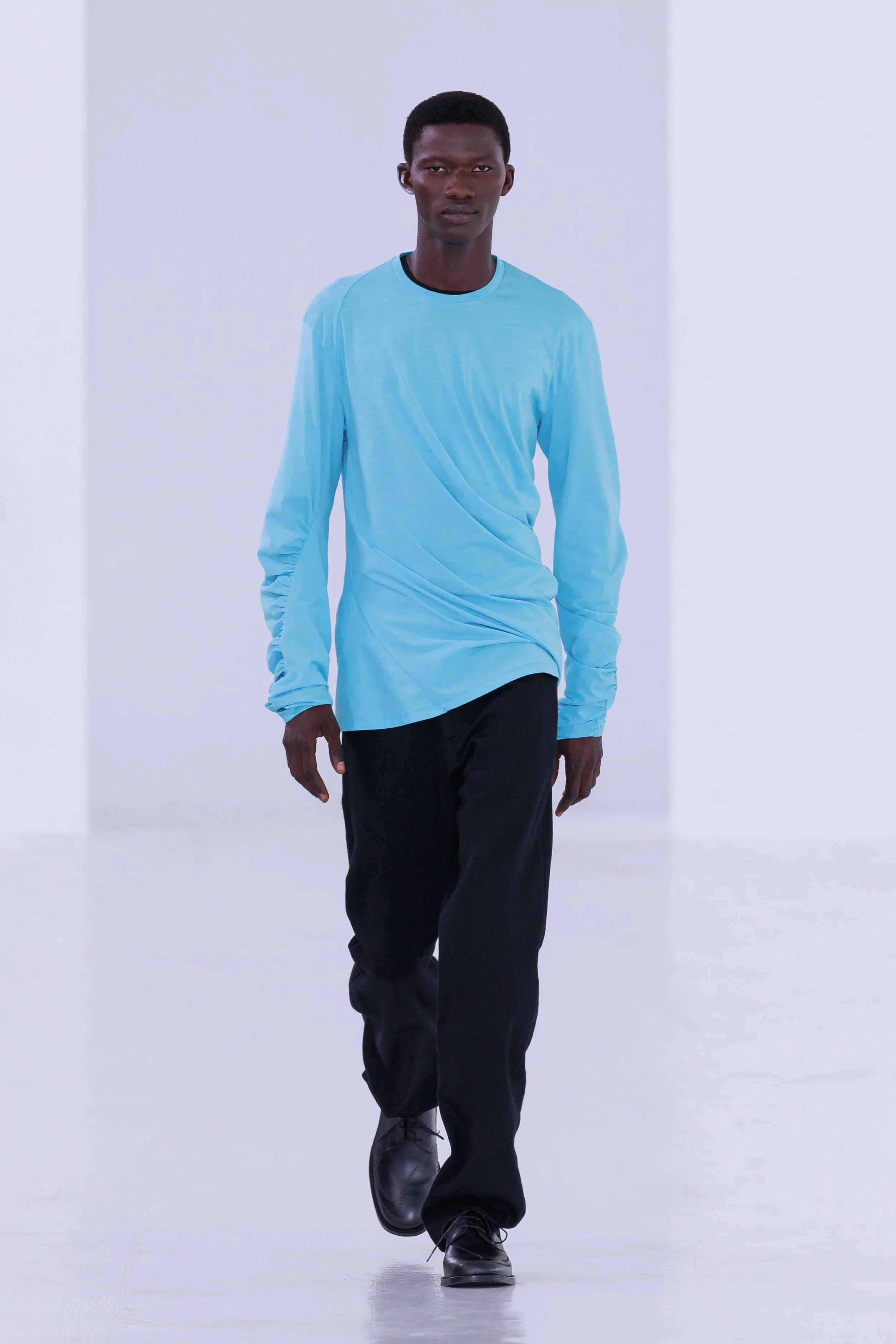
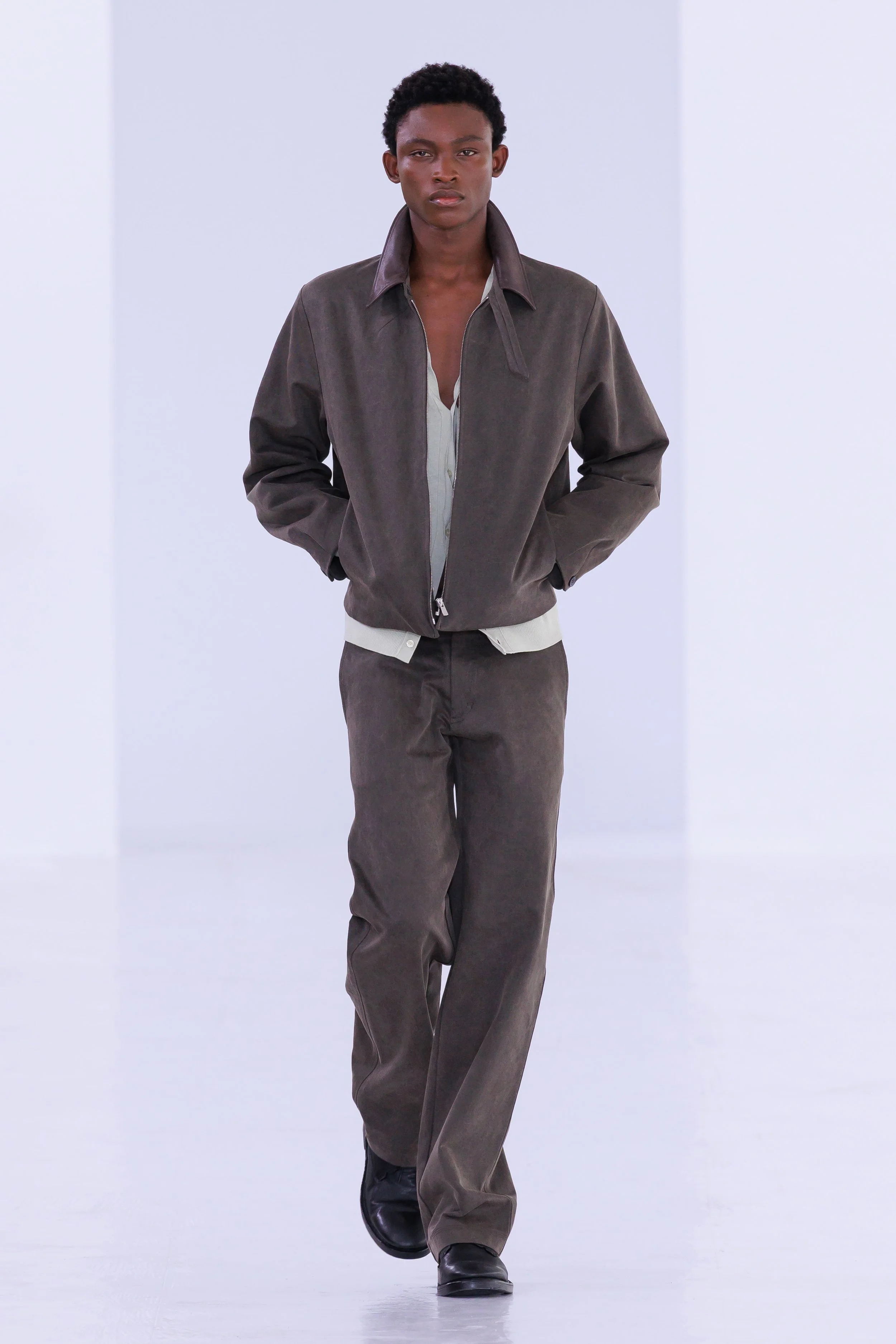
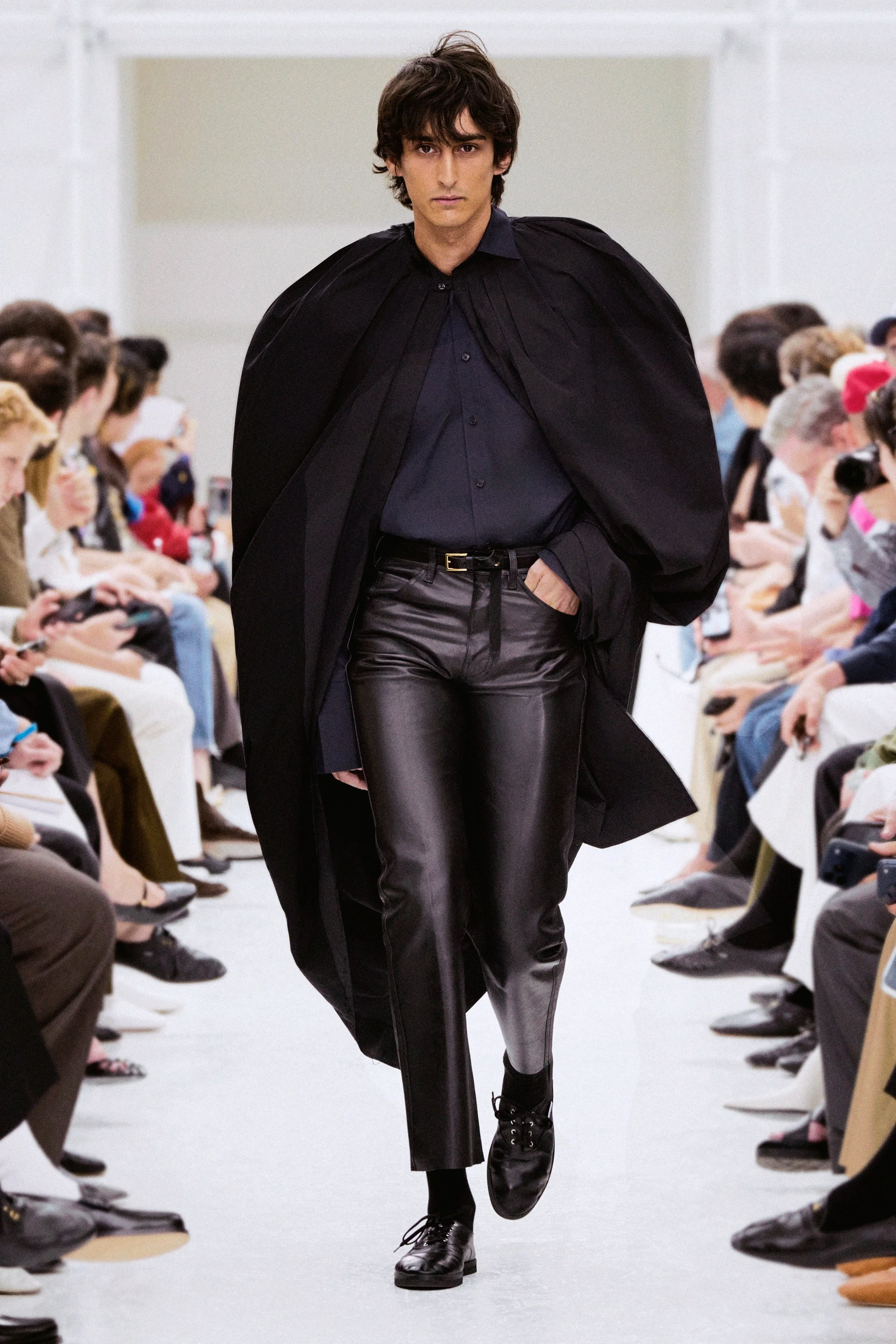
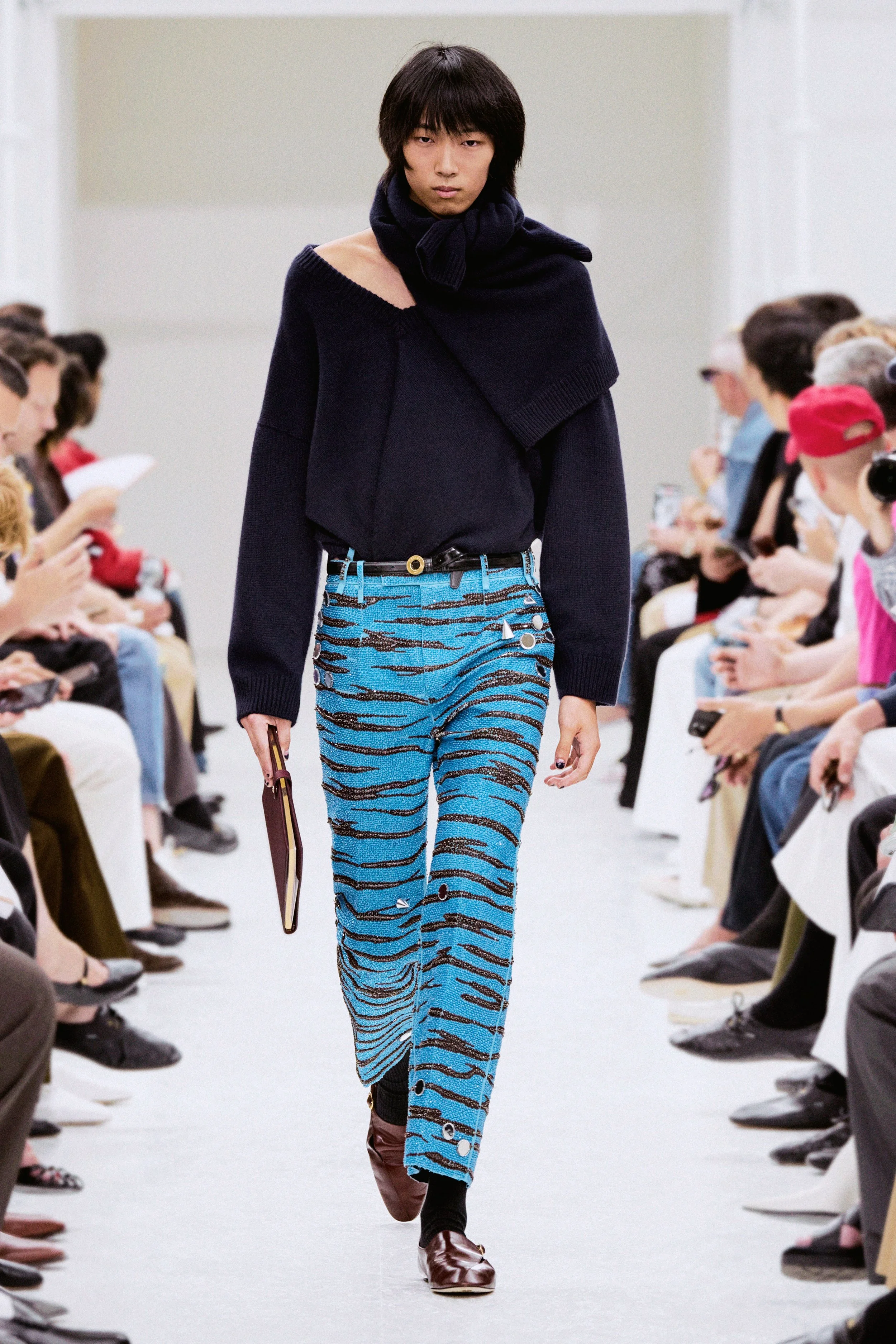
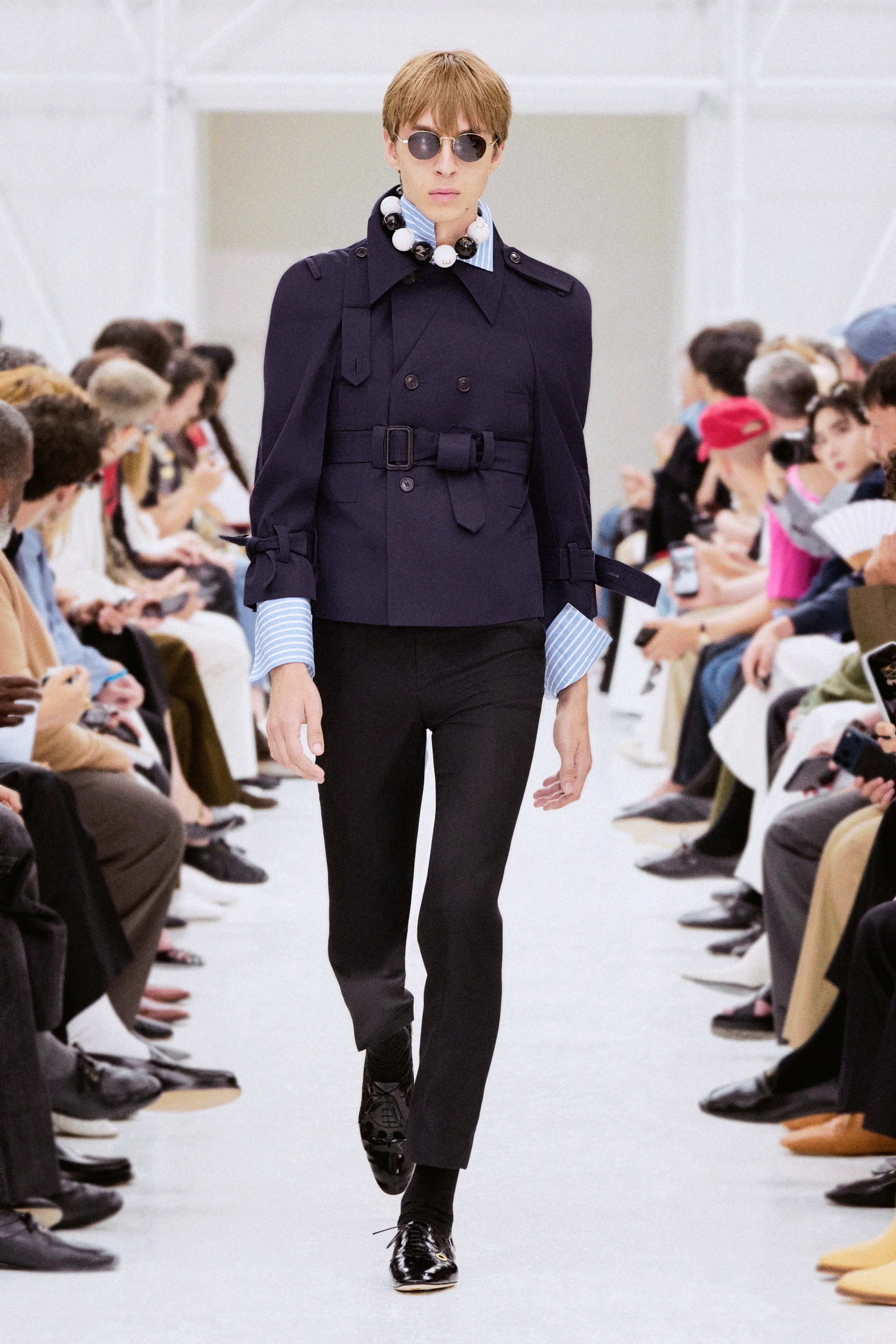
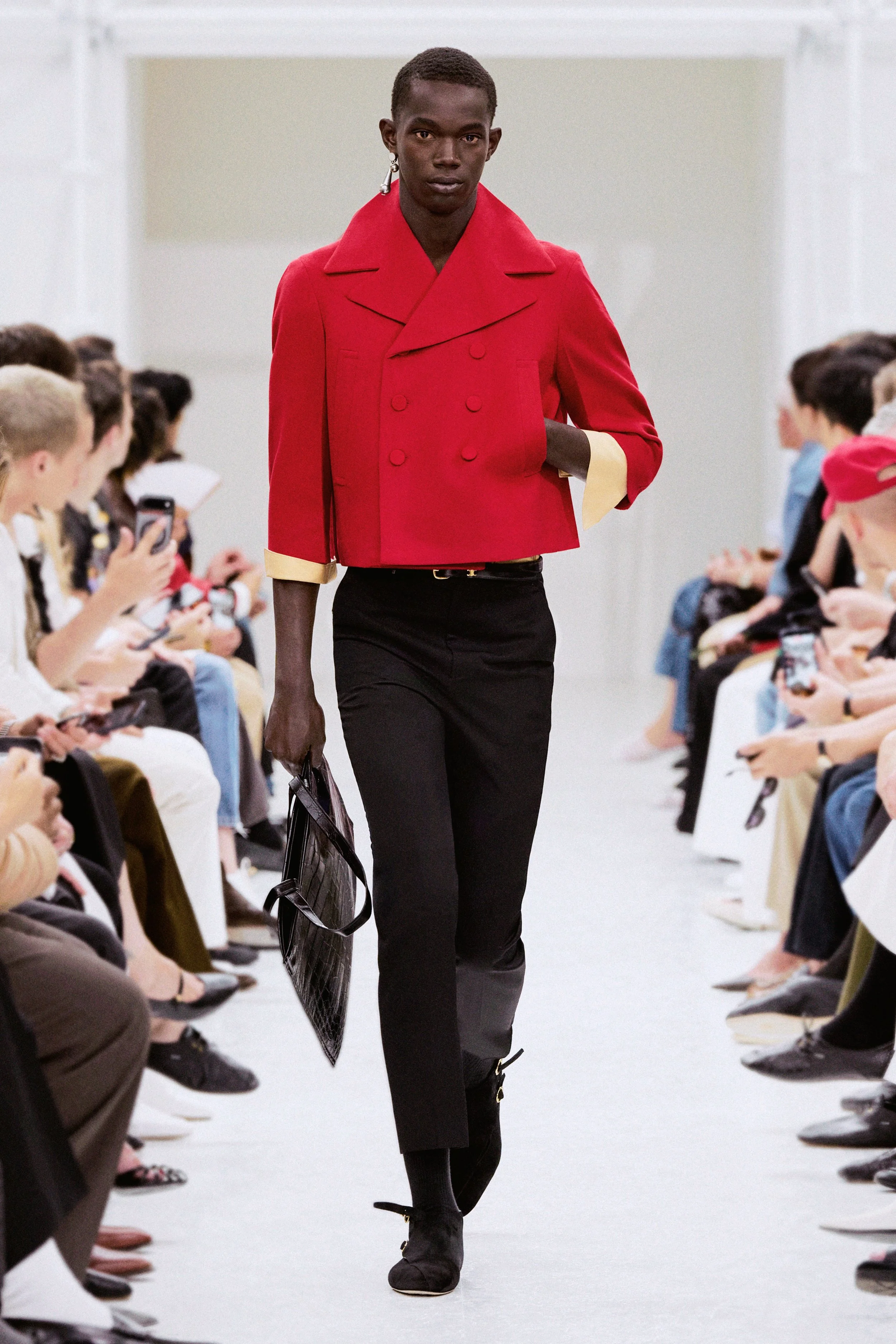
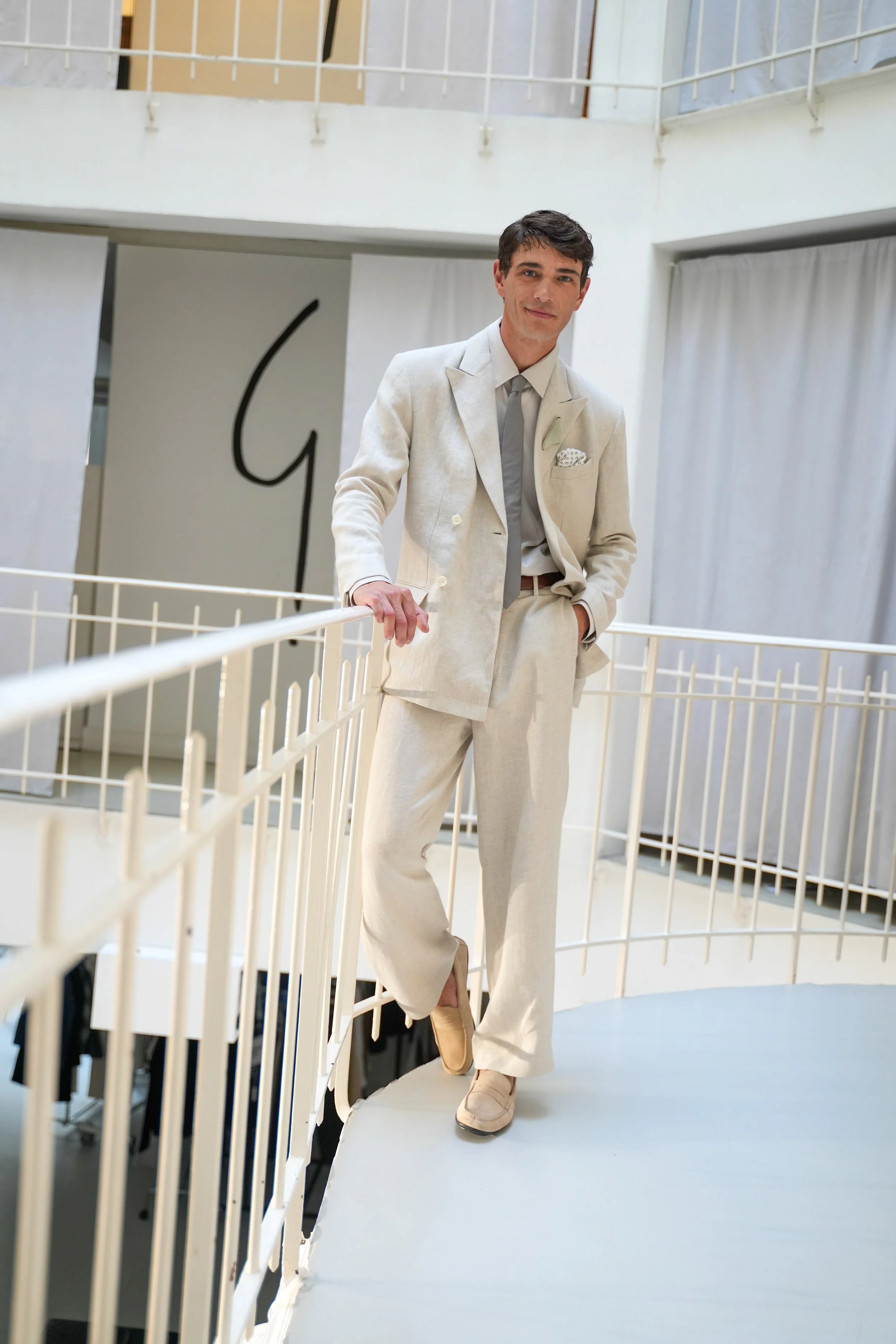
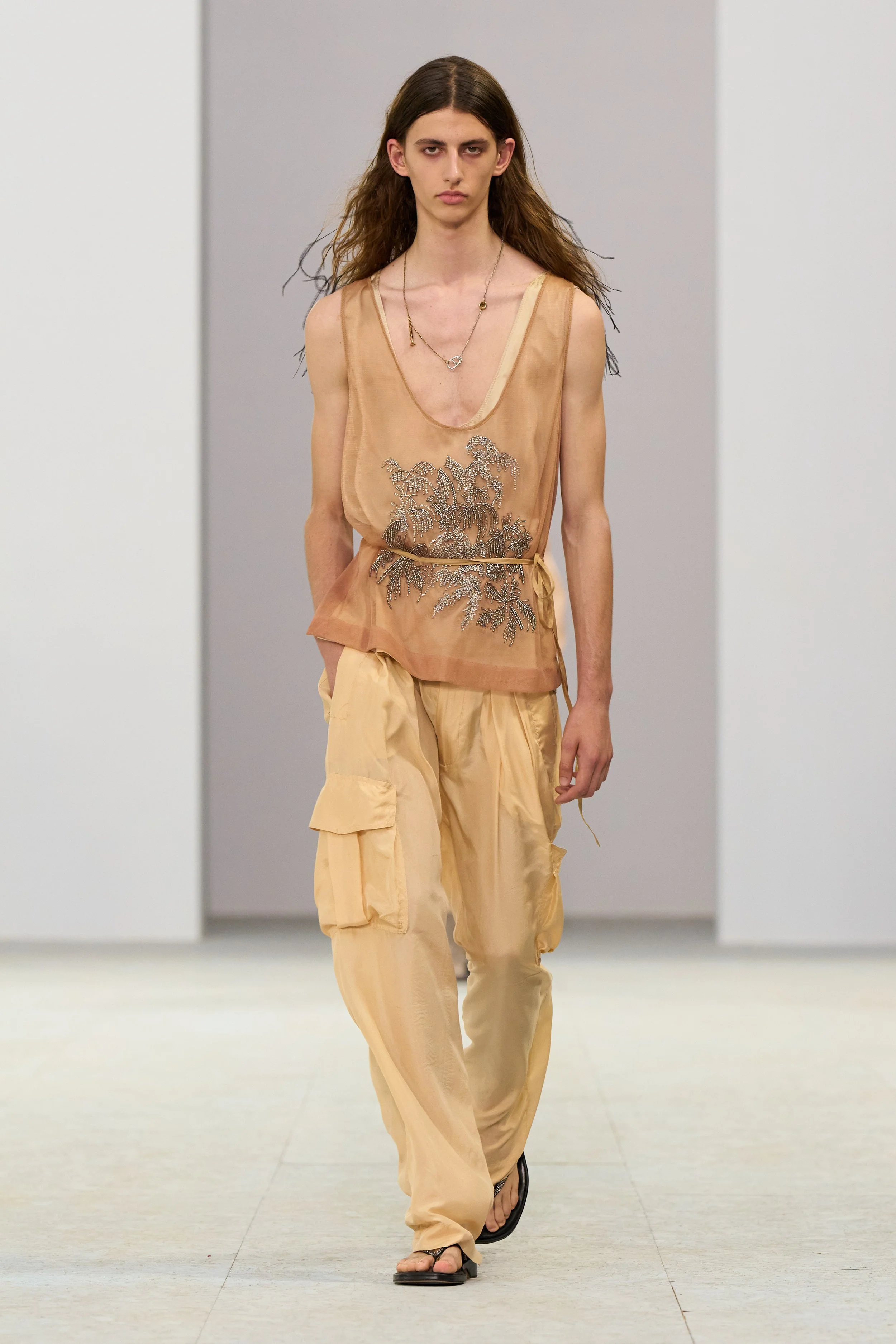
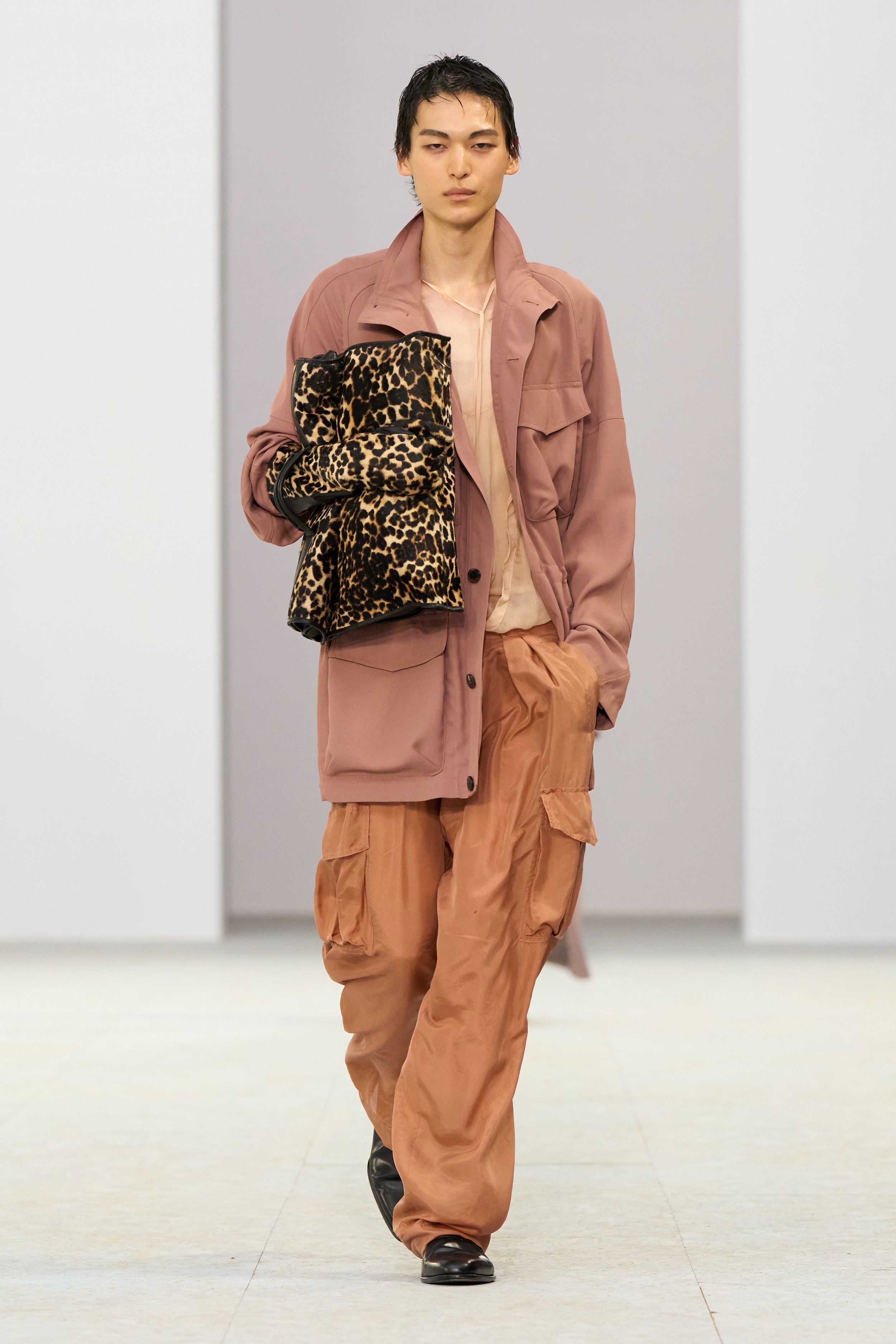
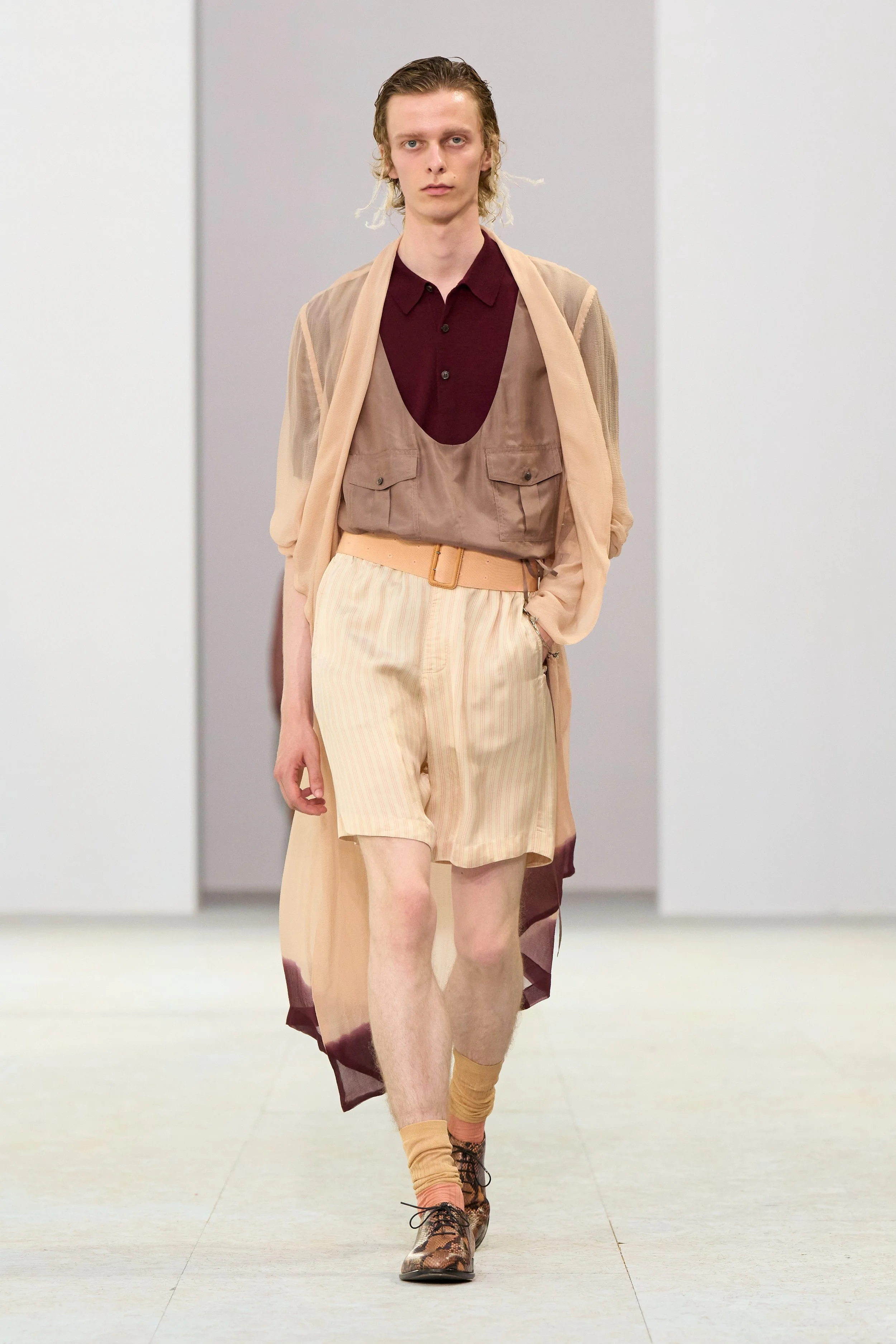
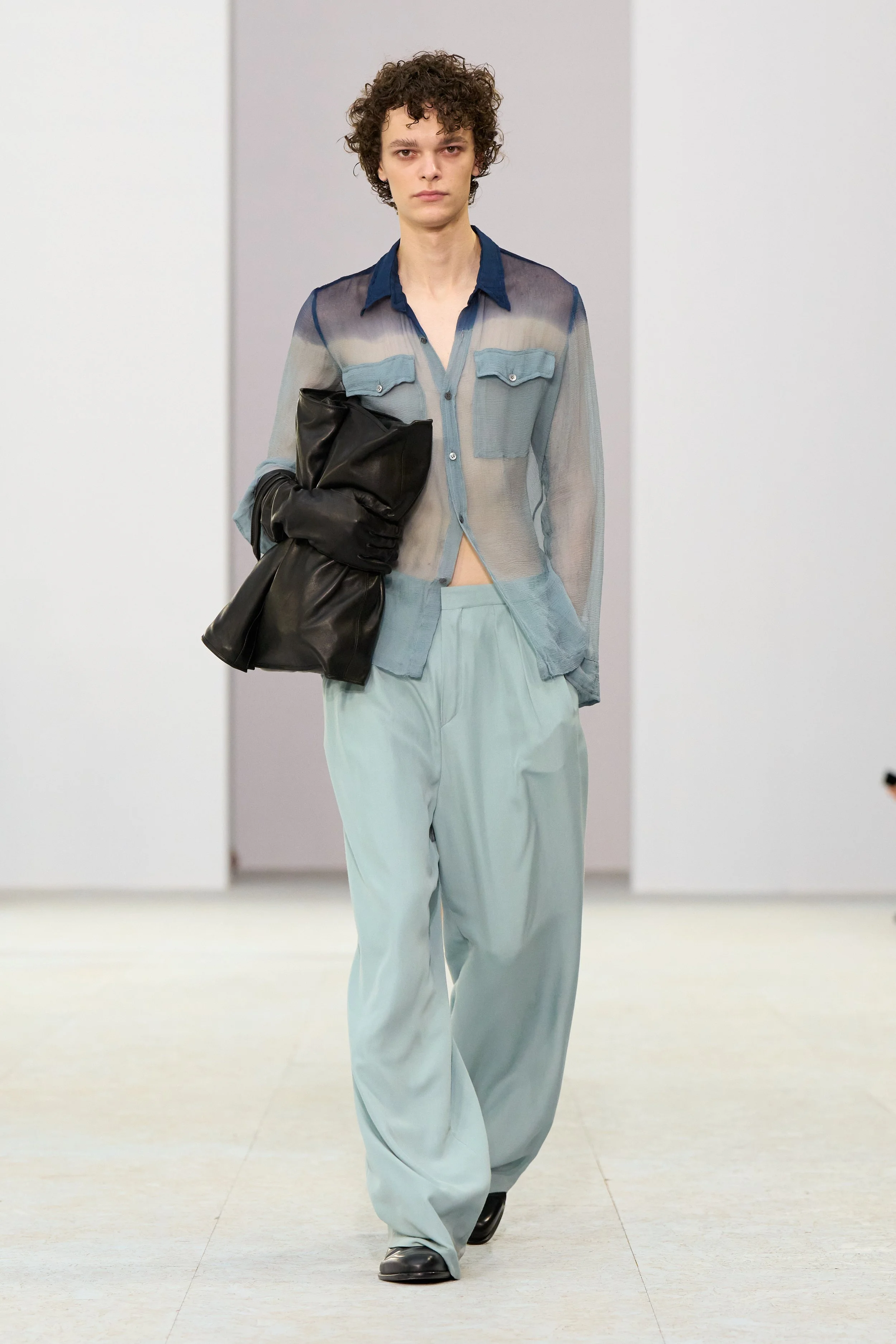
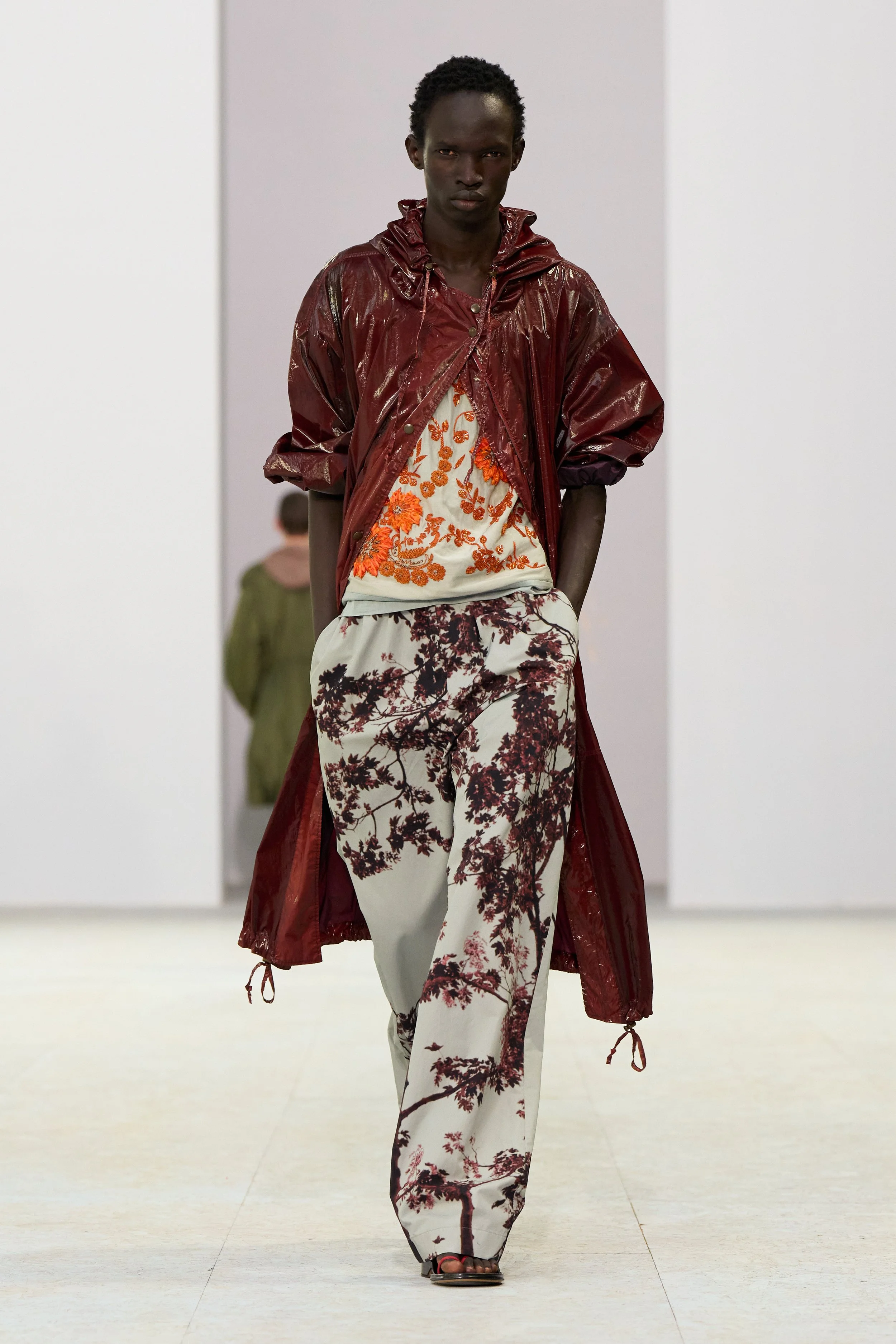
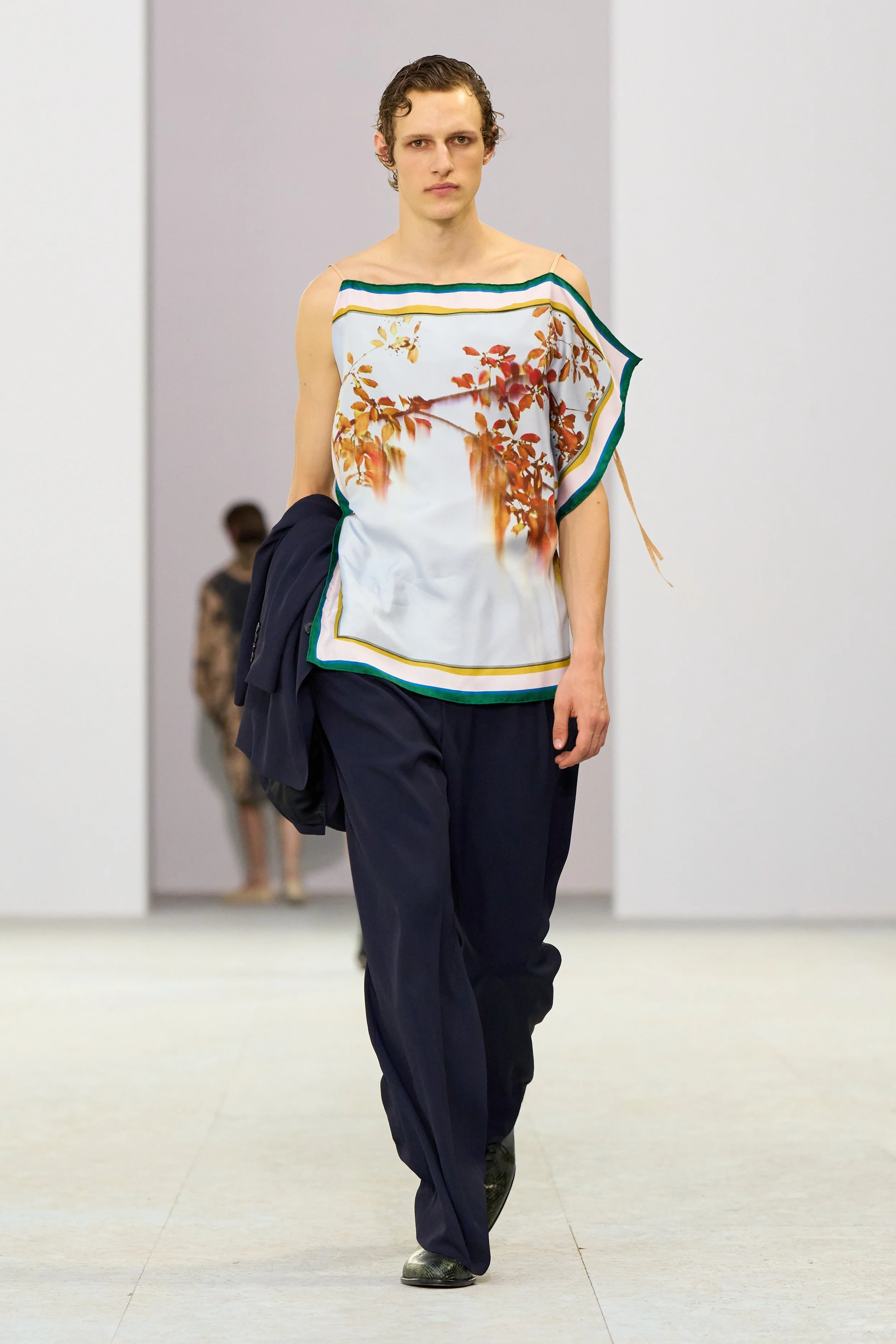
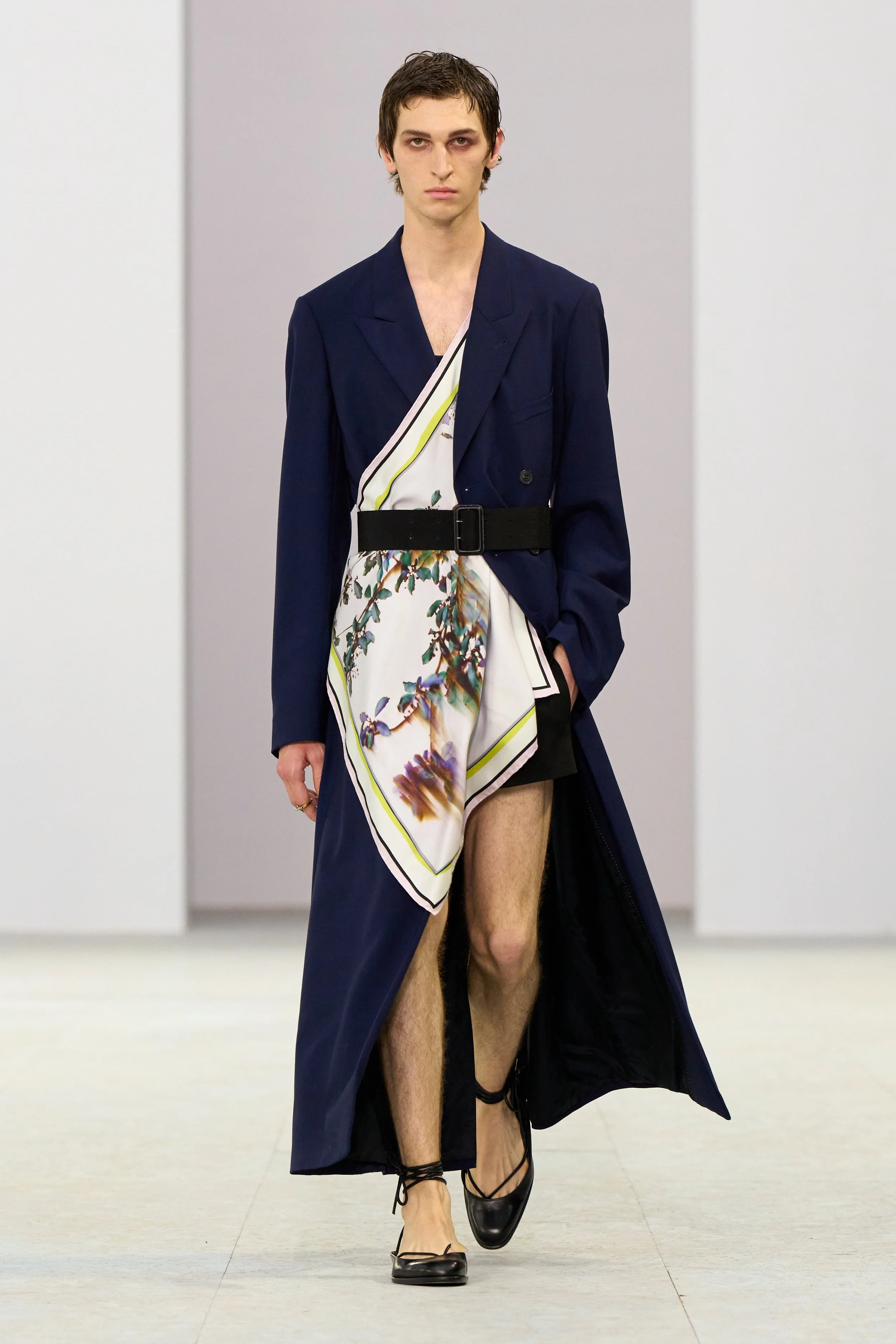
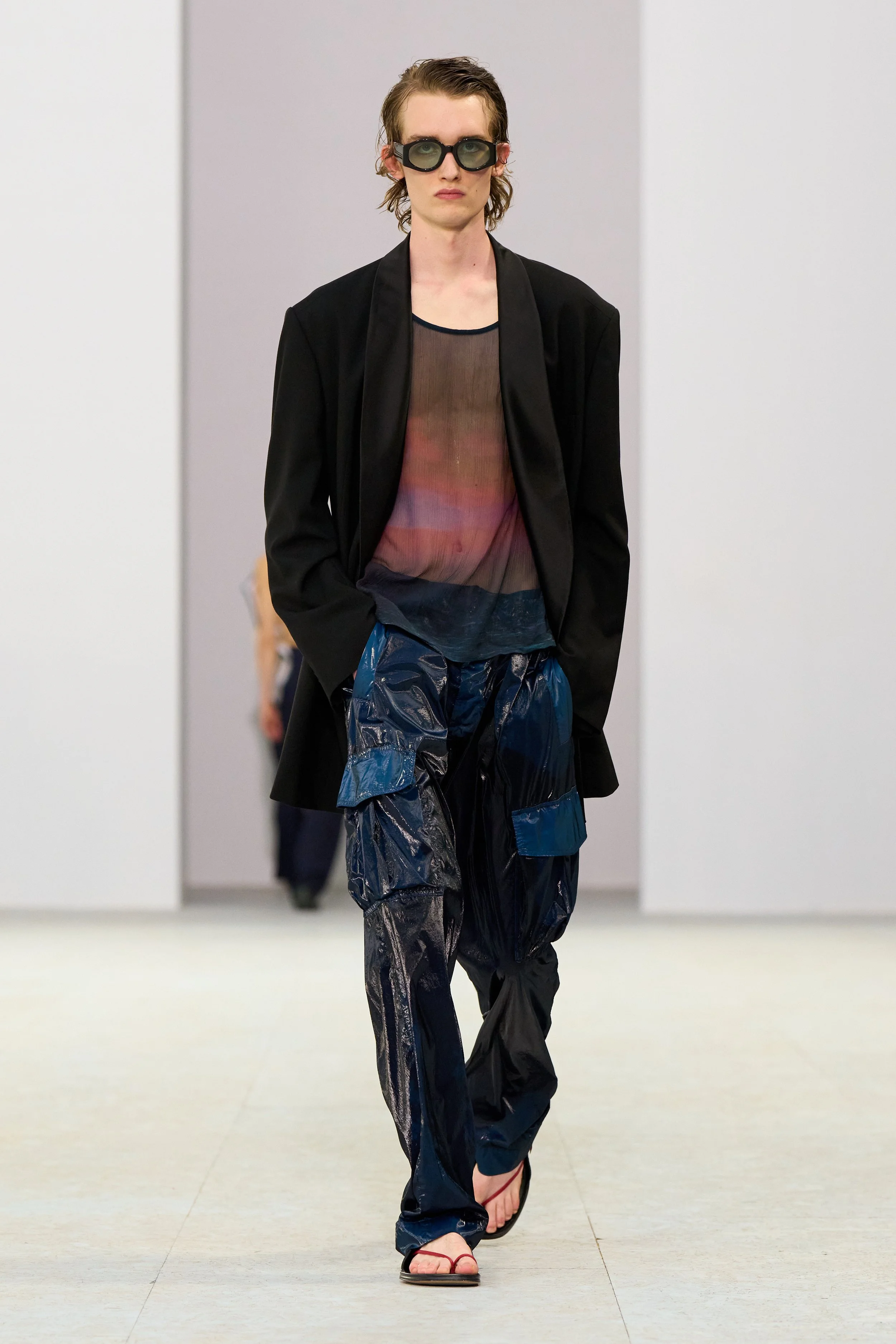
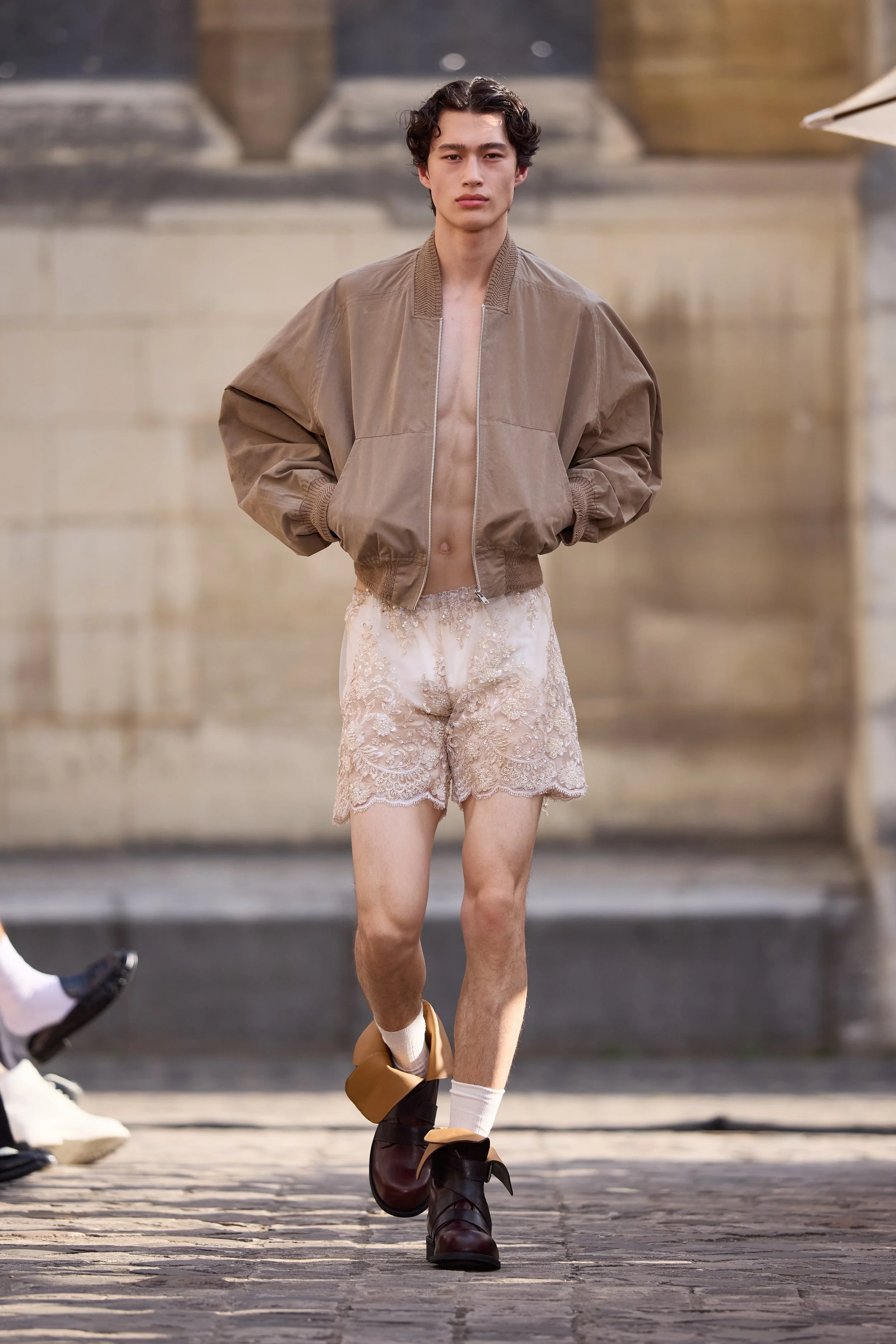
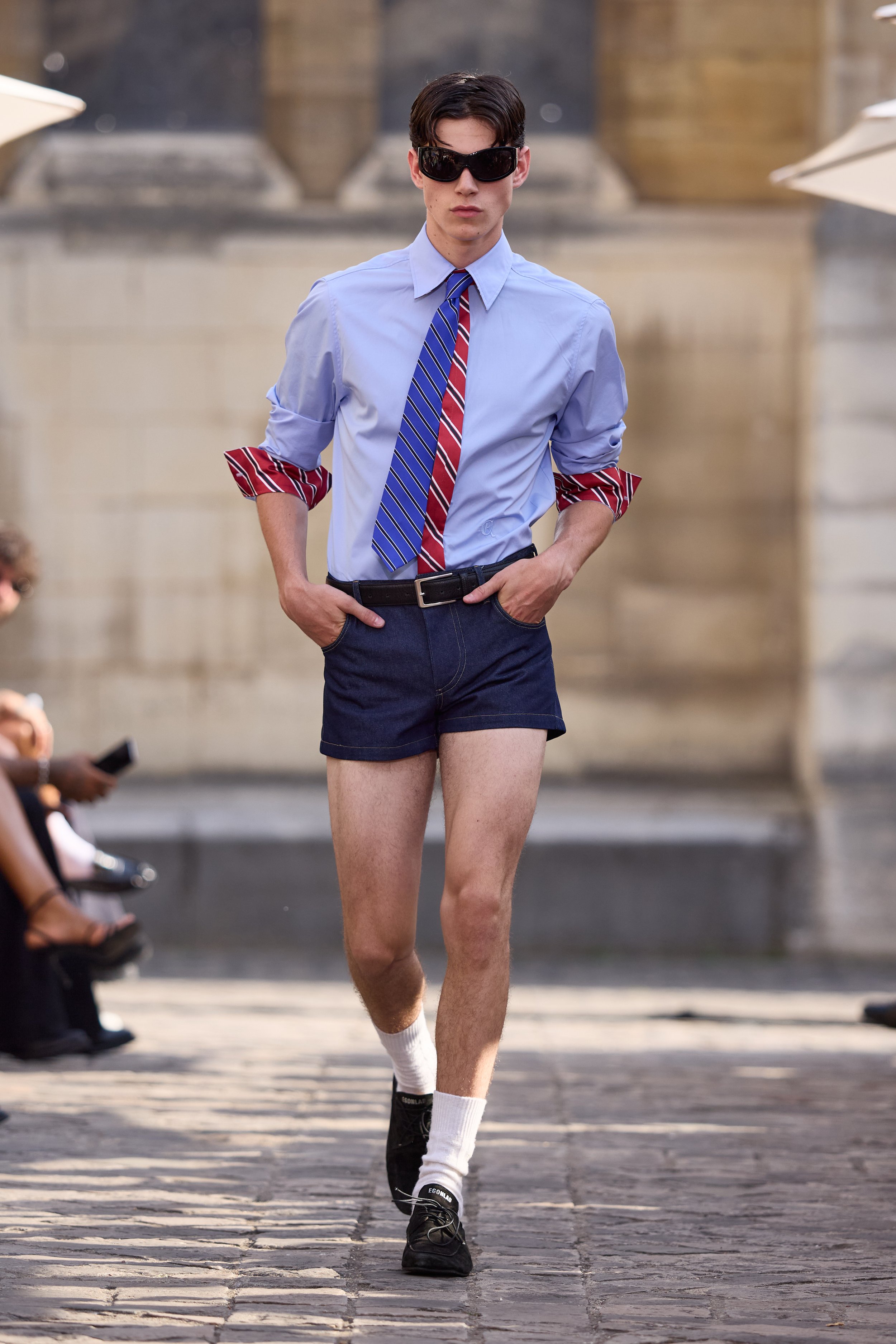
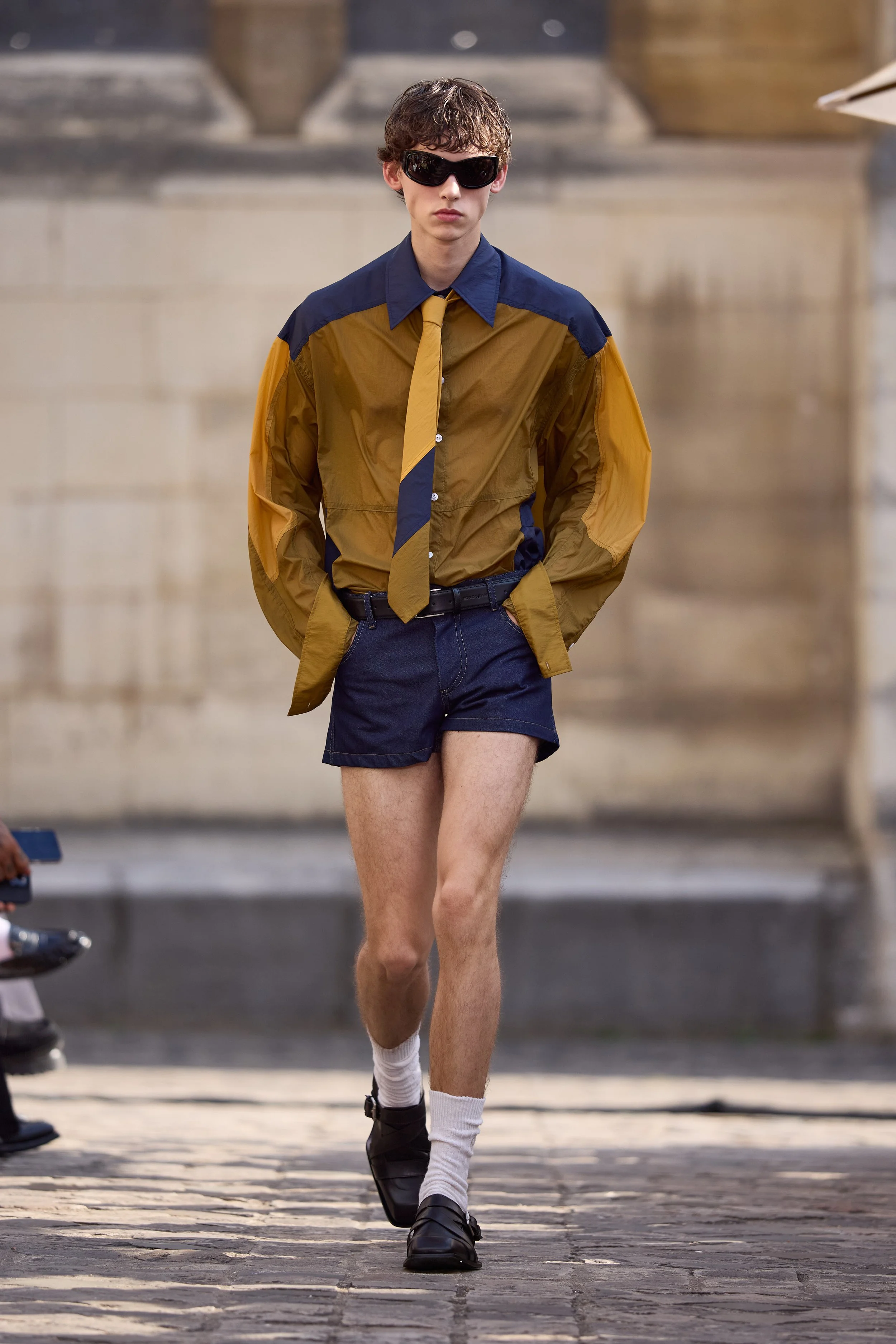
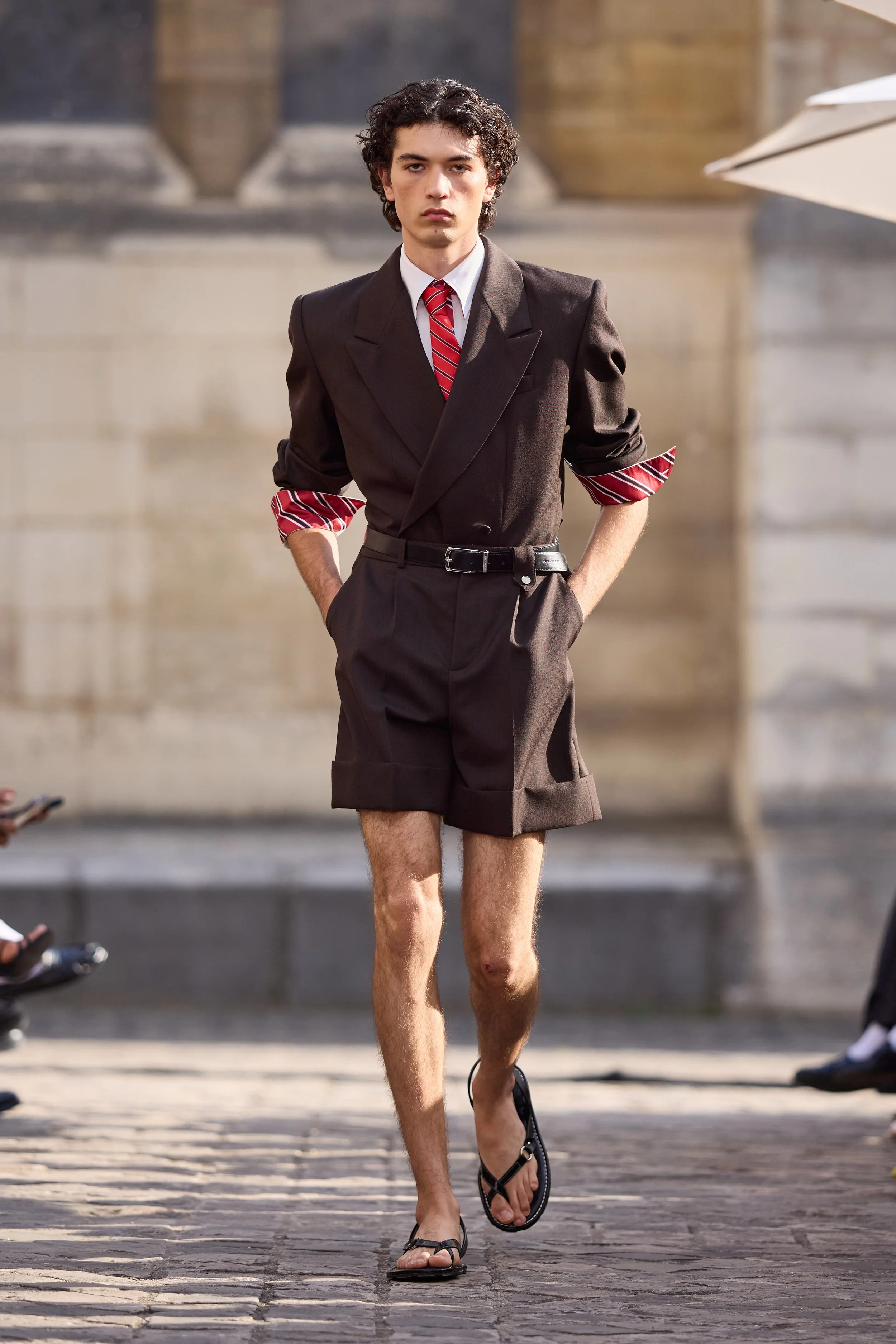
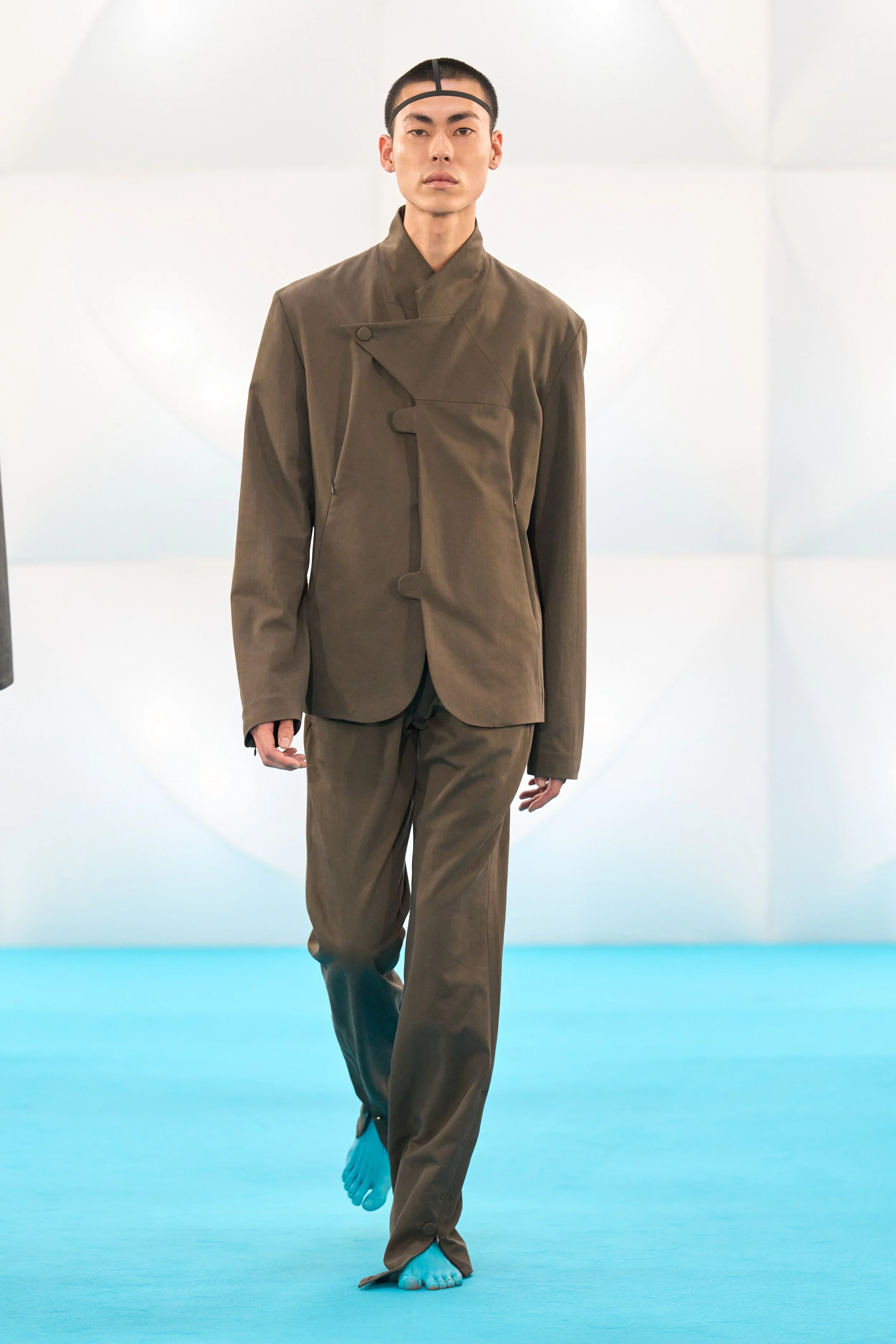
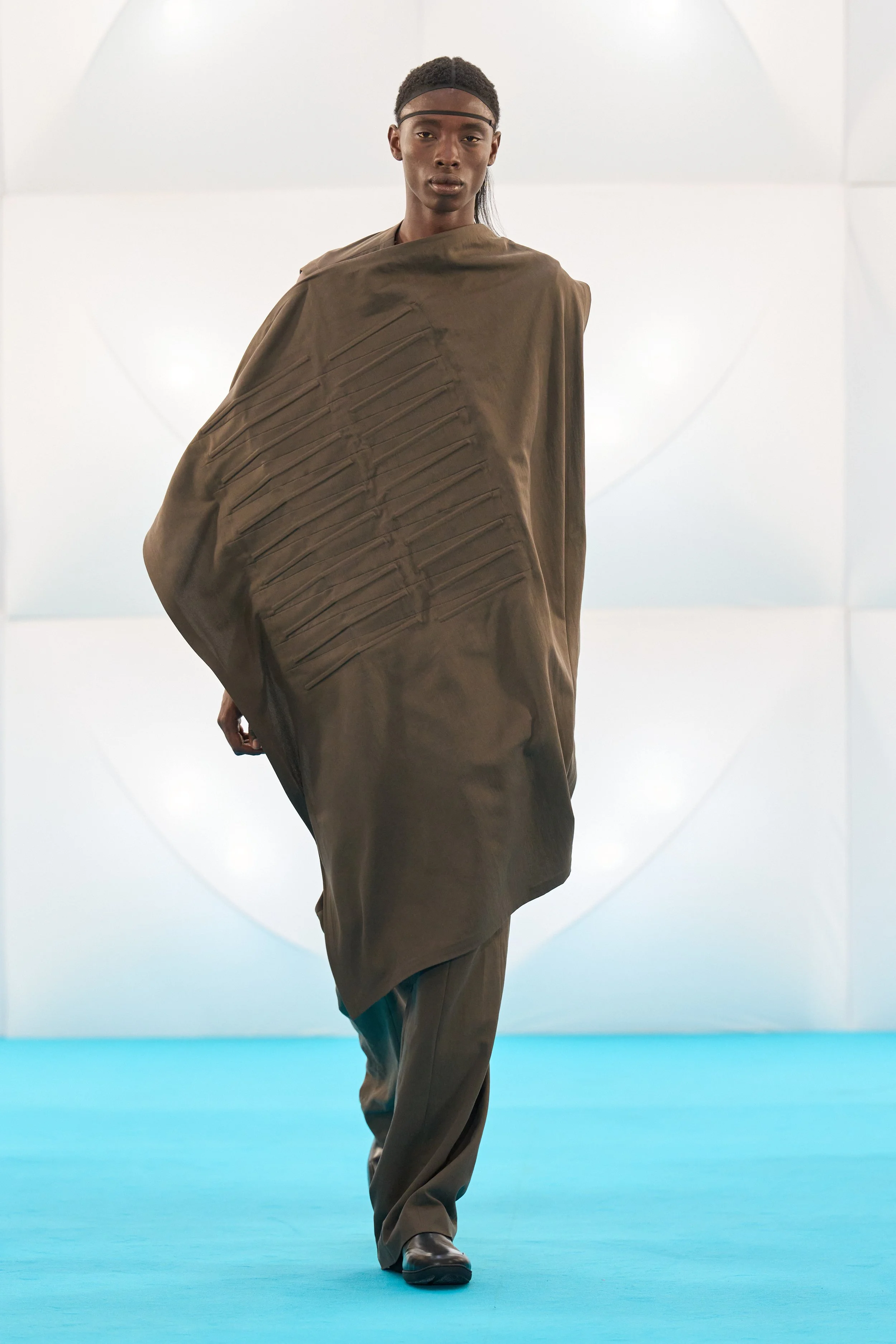
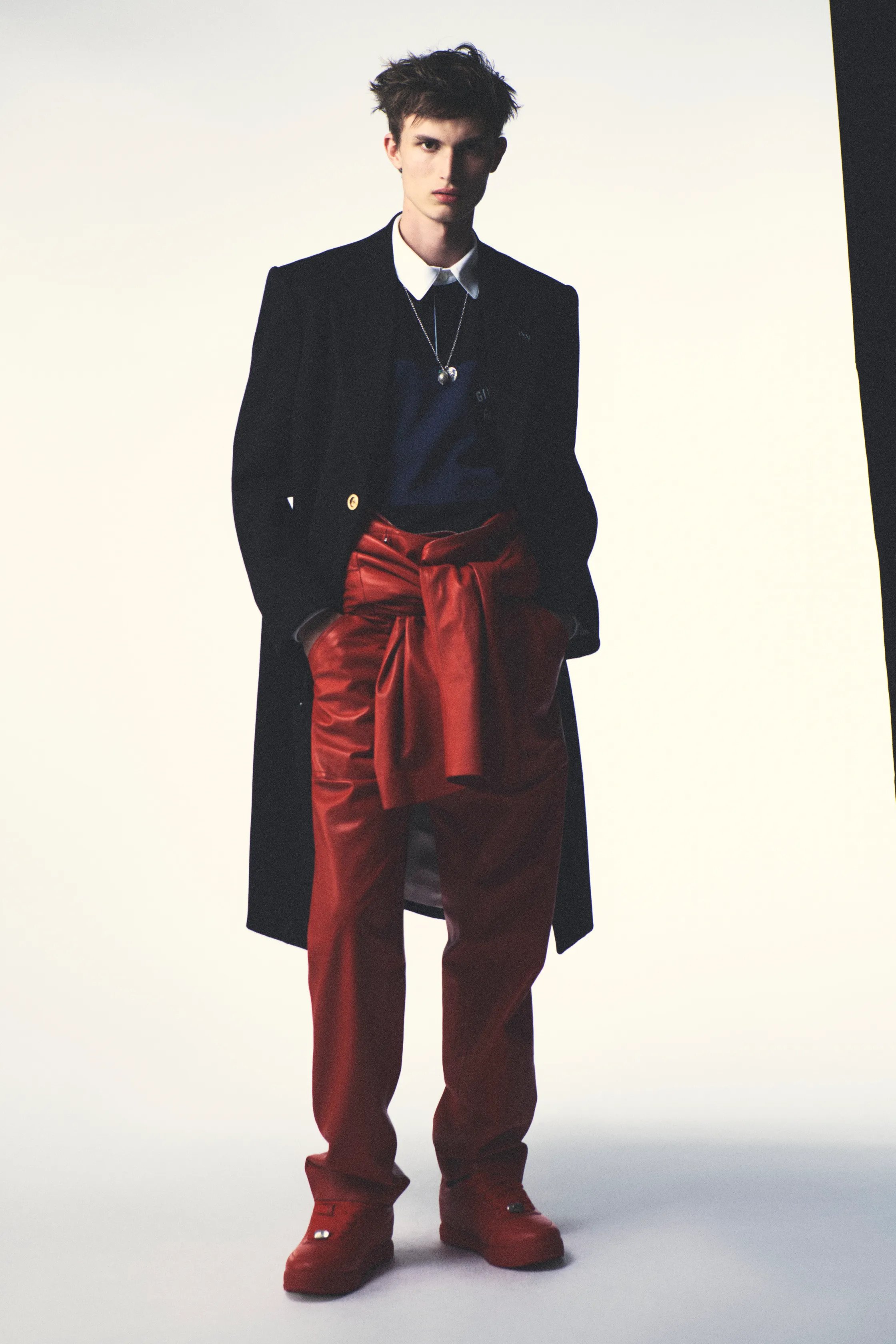
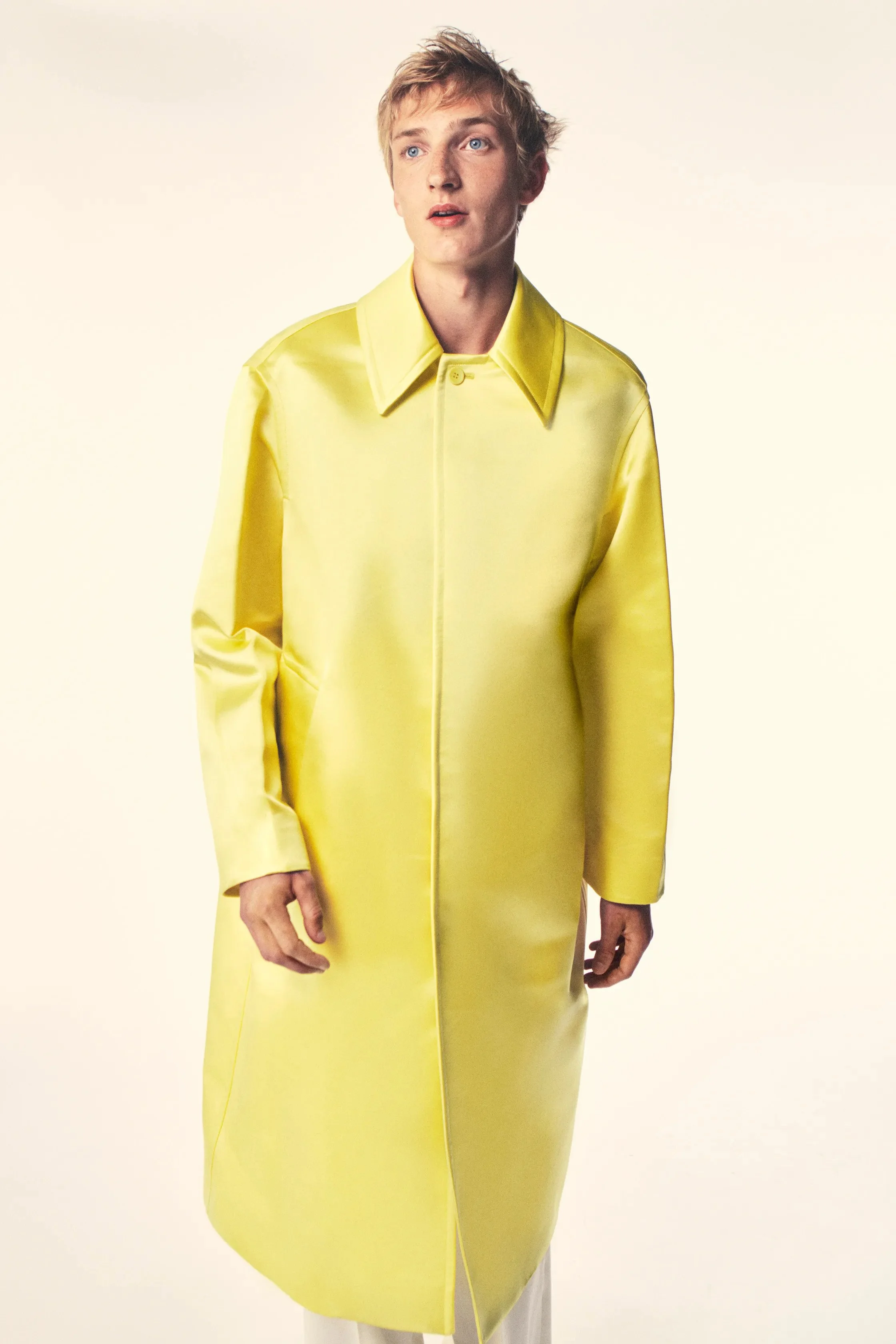
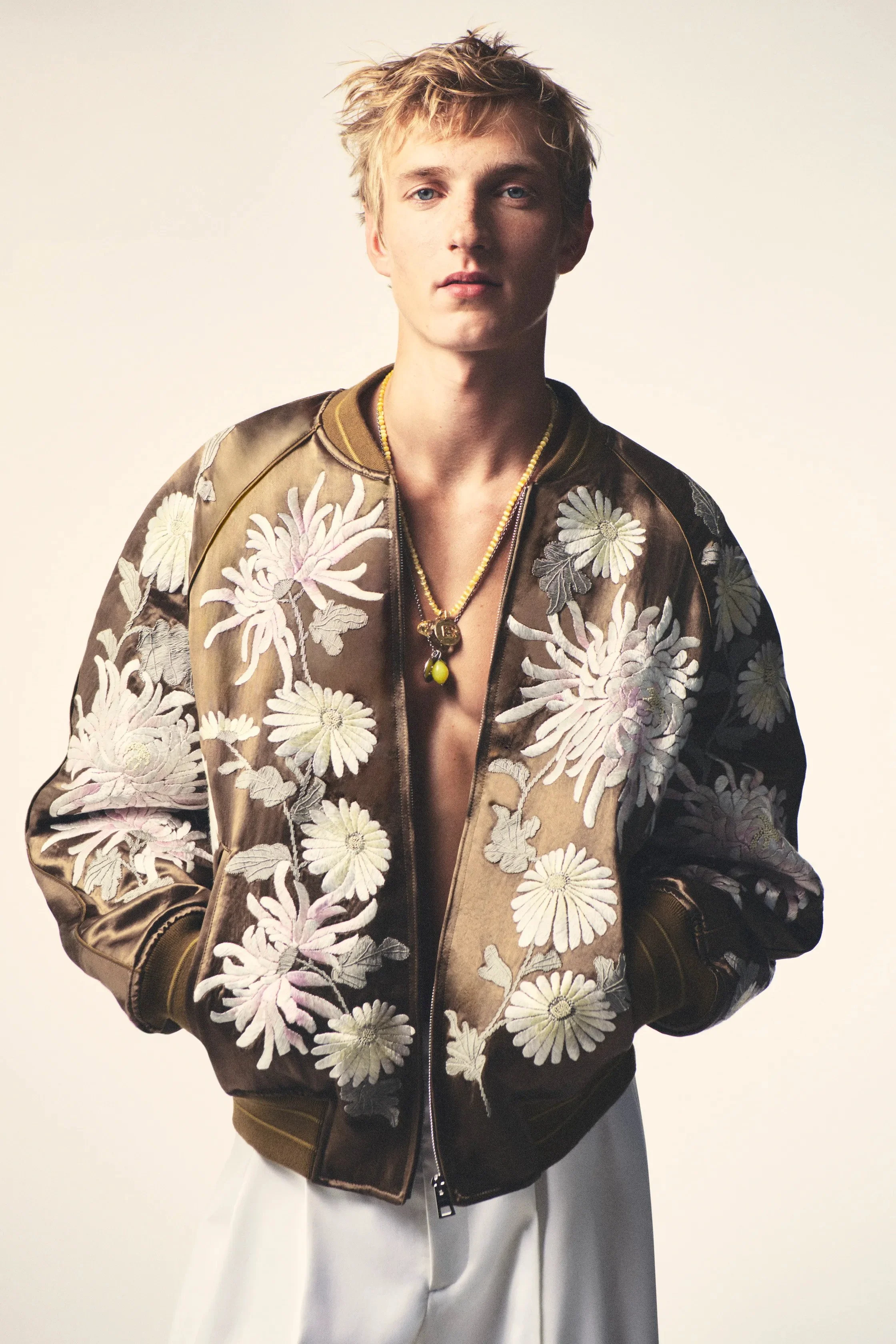
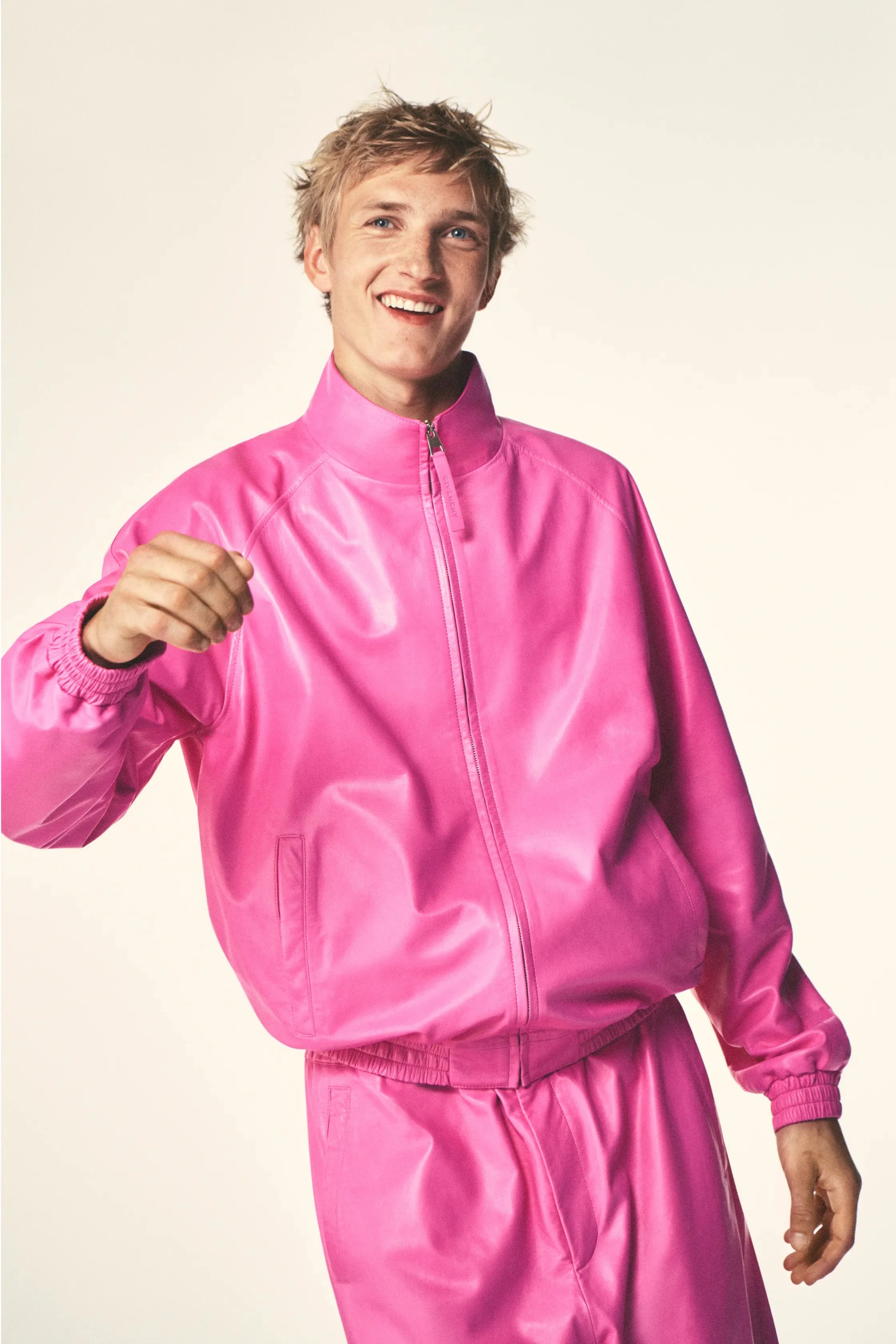
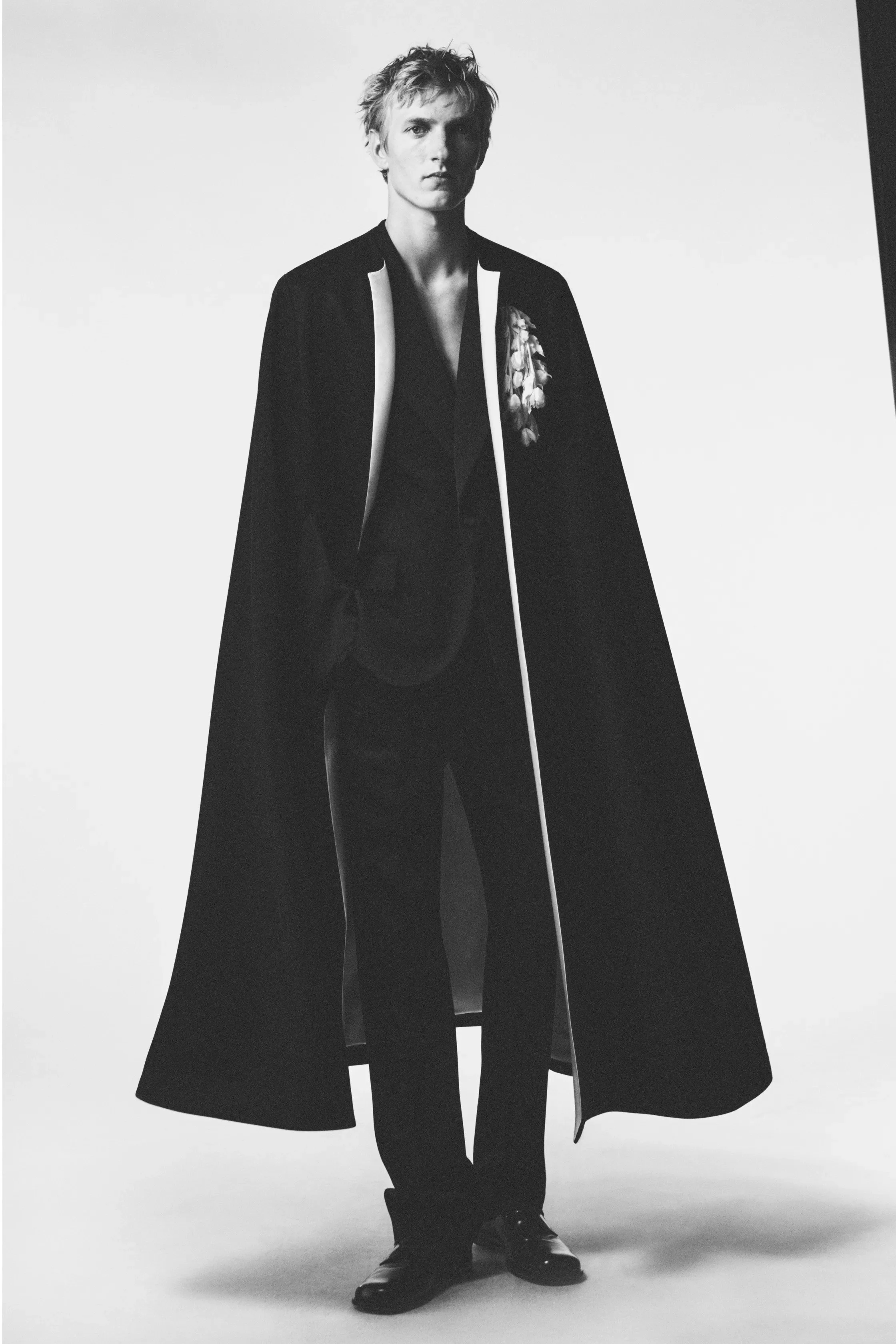
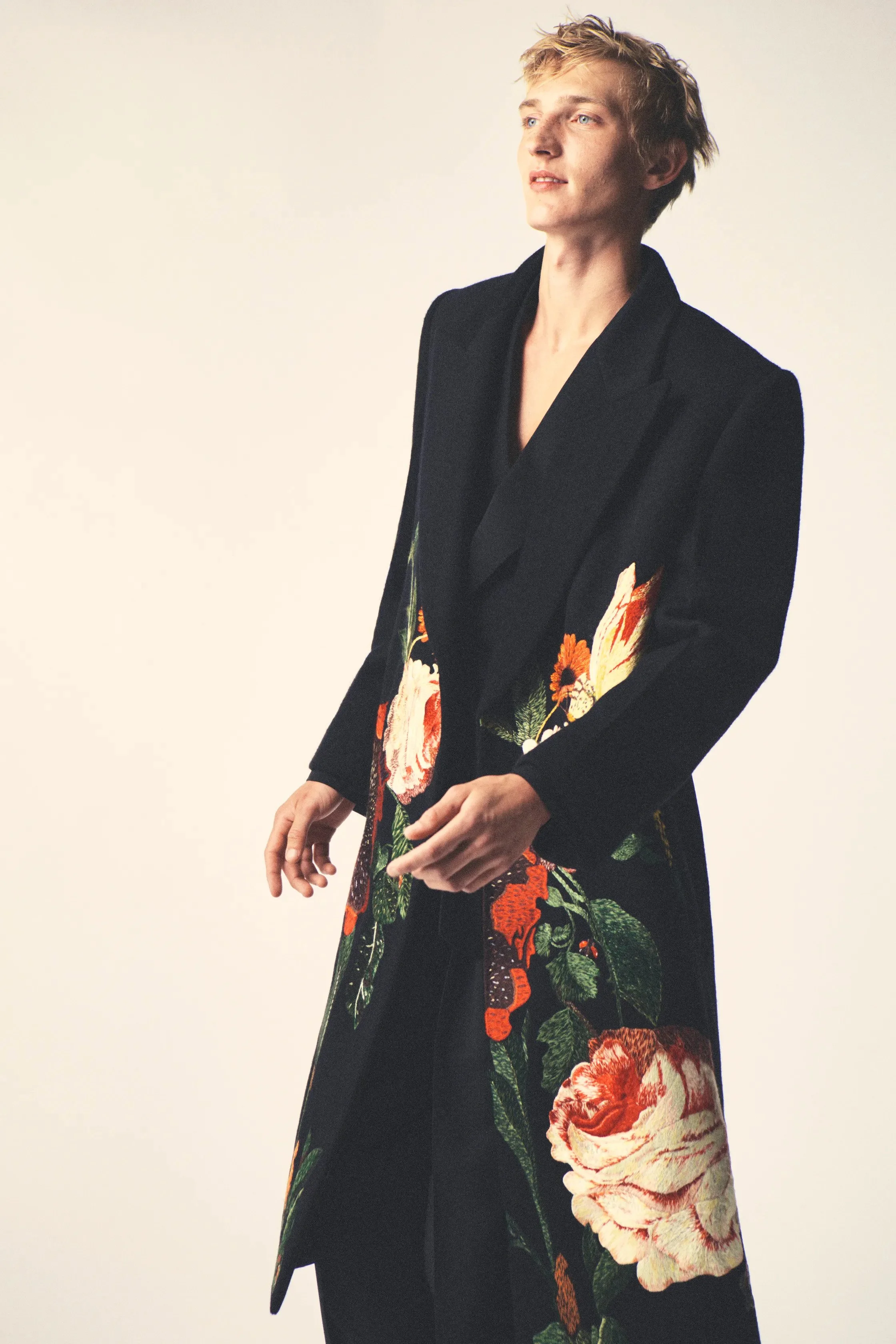
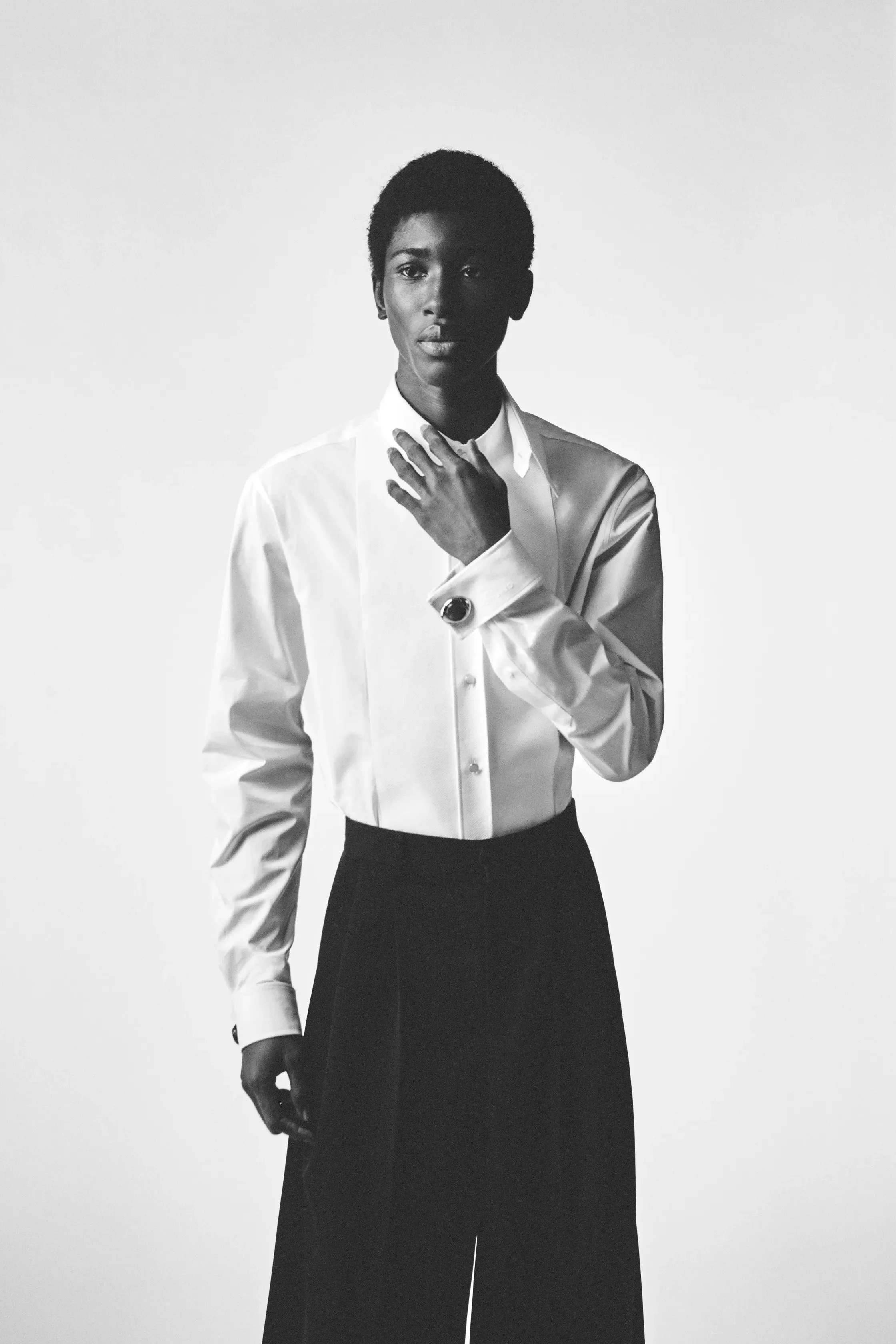
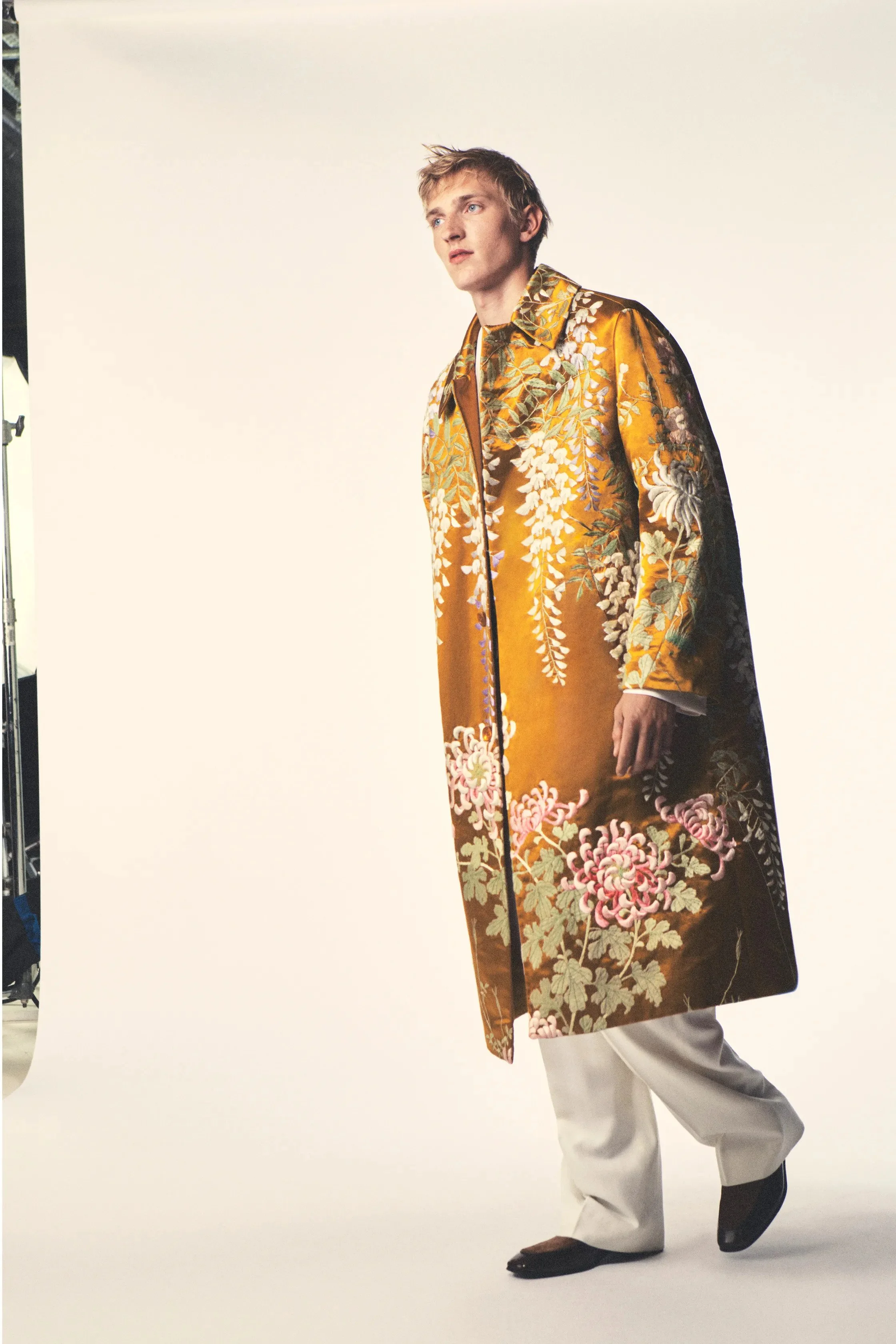
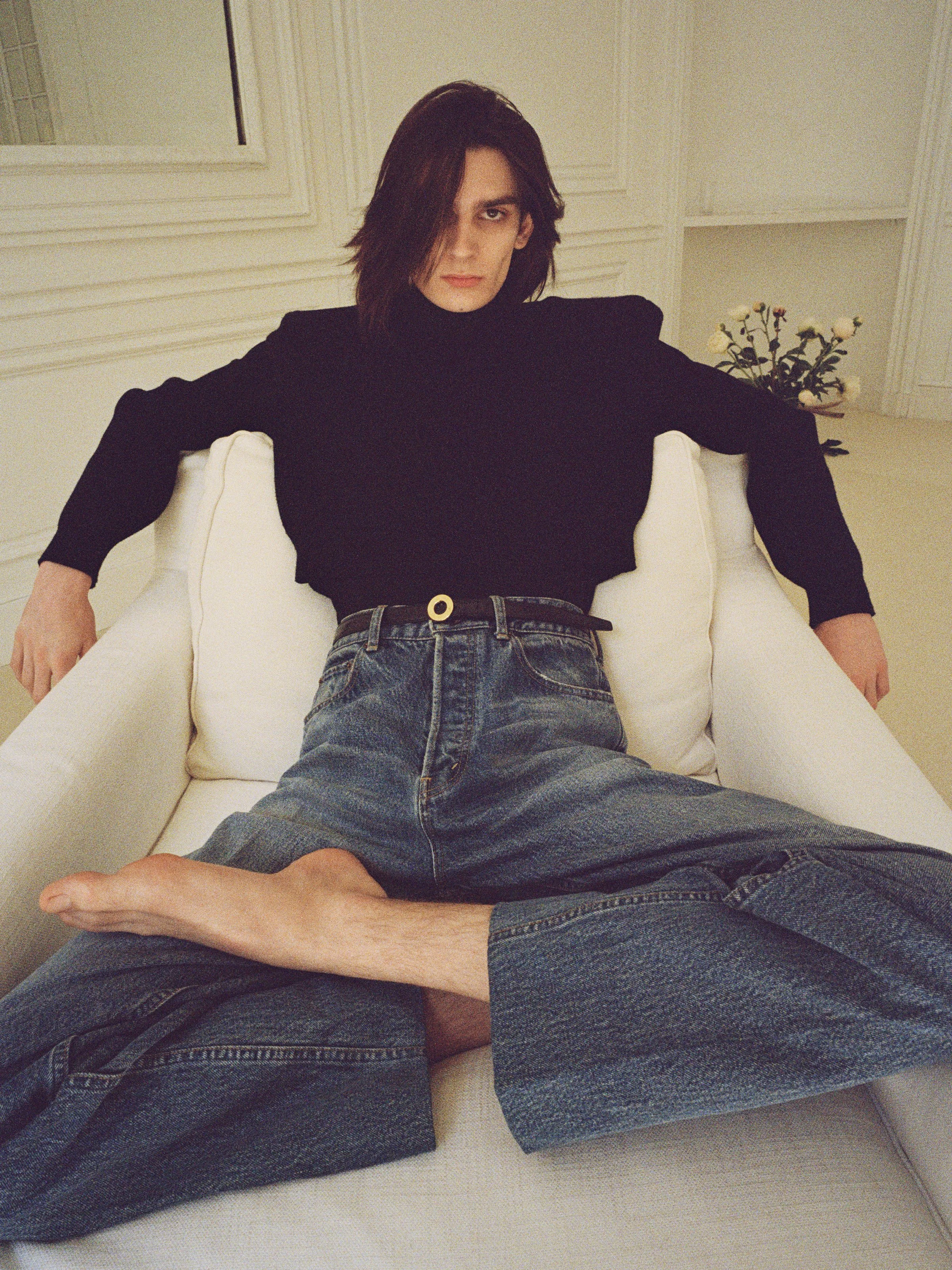
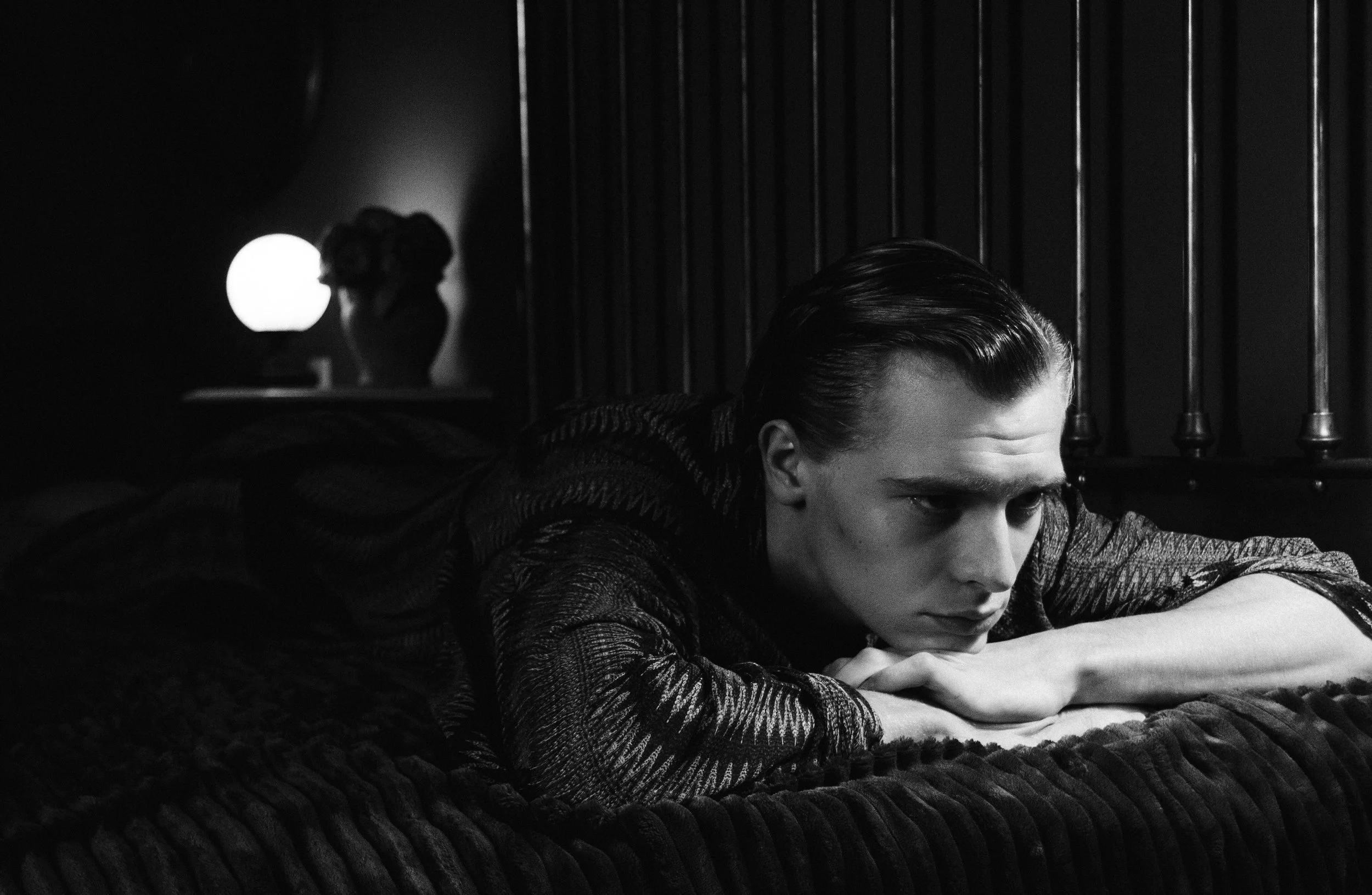
“Nobody can stay in the garden of Eden.” James Baldwin was right in Giovanni’s Room. We had only 12 minutes to see Saint Laurent’s Fall/Winter 2026 collection. The divine comparison is not hyperbole; we worship at Anthony Vaccarello’s altar. Which is why with every last-minute announcement of the menswear show, we get prepared to go on our knees (to pray, obviously). The designer’s command over menswear is such that more than unveiling collections, he’s revealing the zeitgeist’s latest obsessions. Every season, the image of masculinity is, if not redefined, at least tweaked.

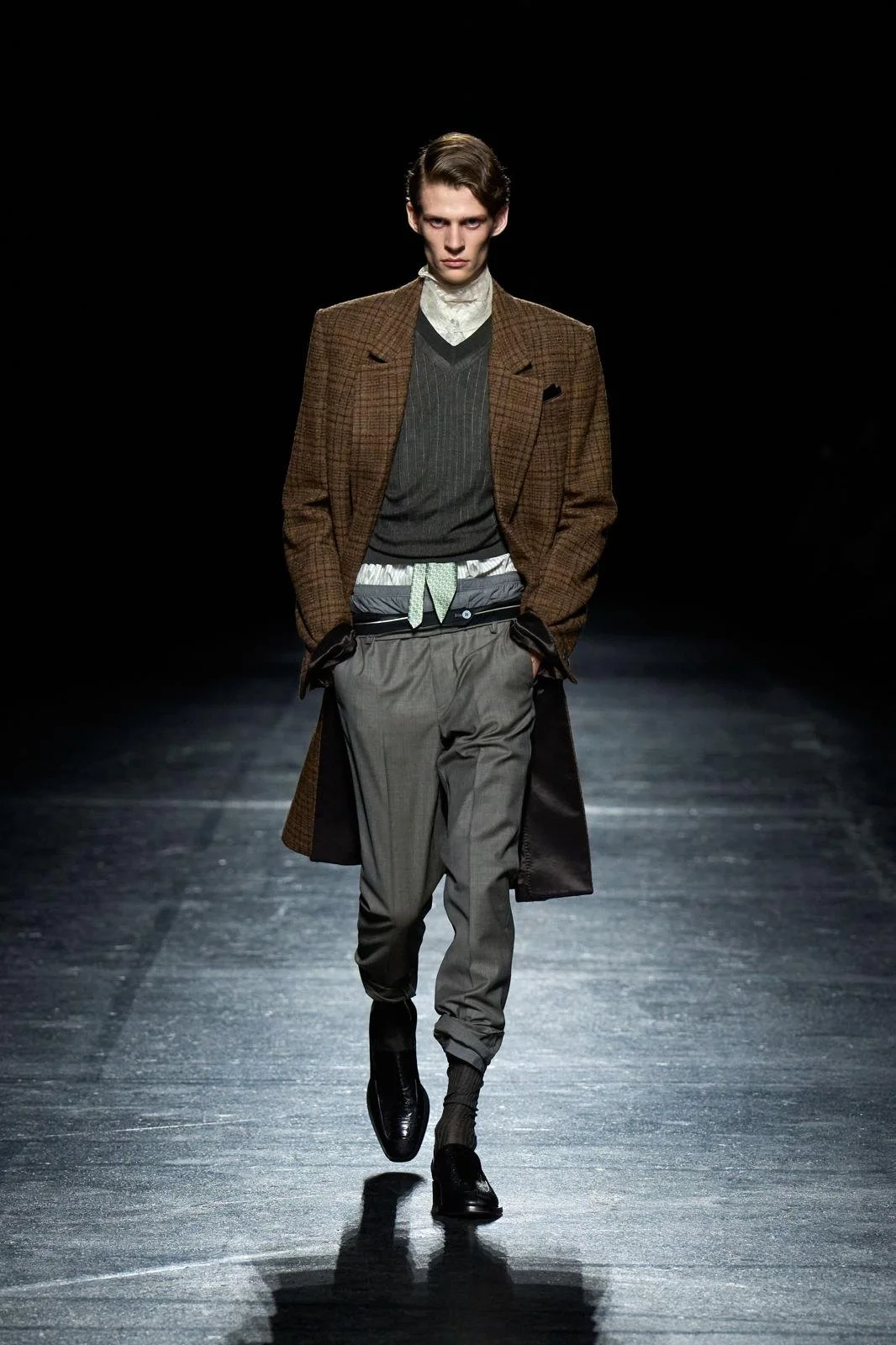
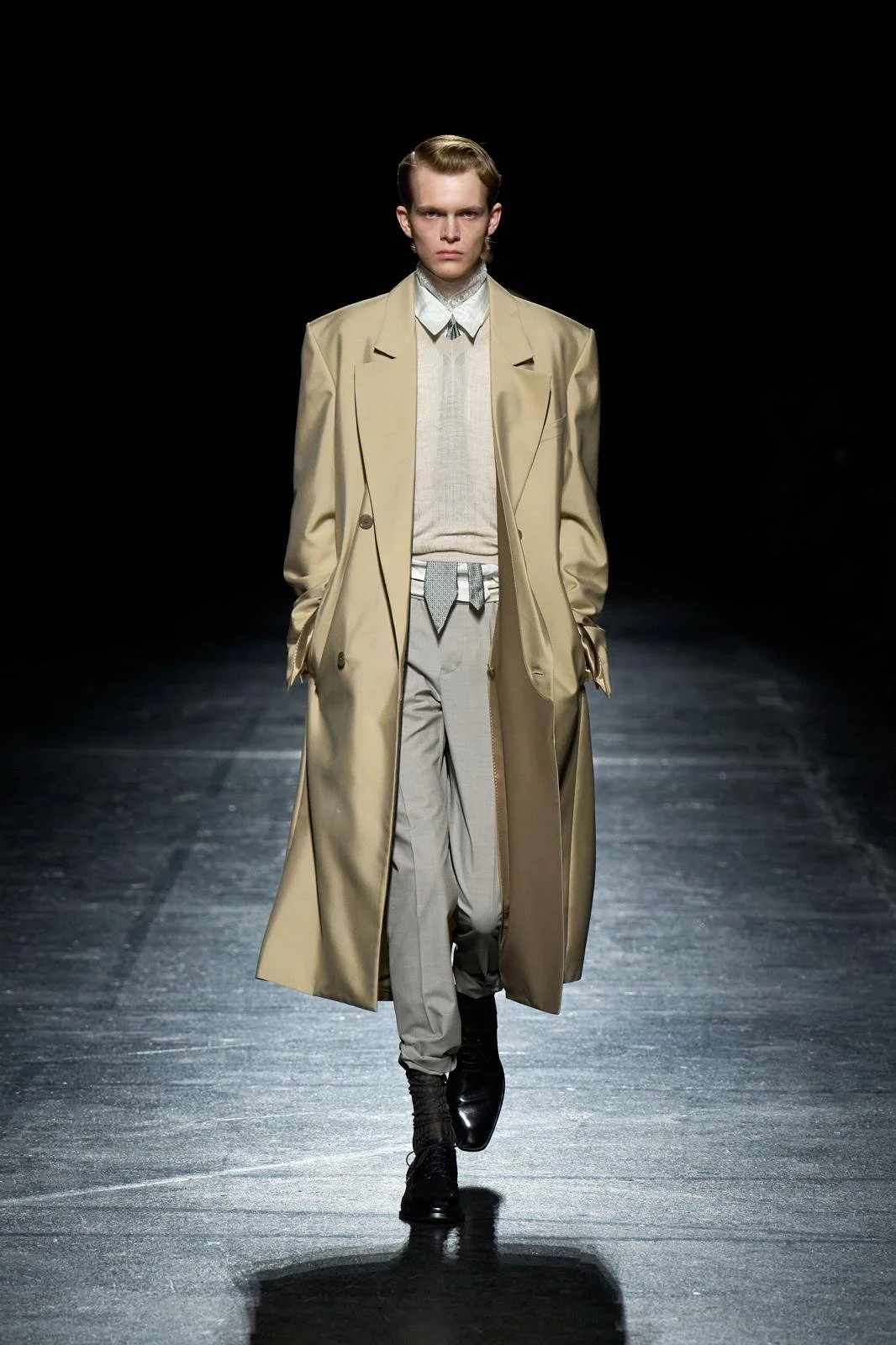
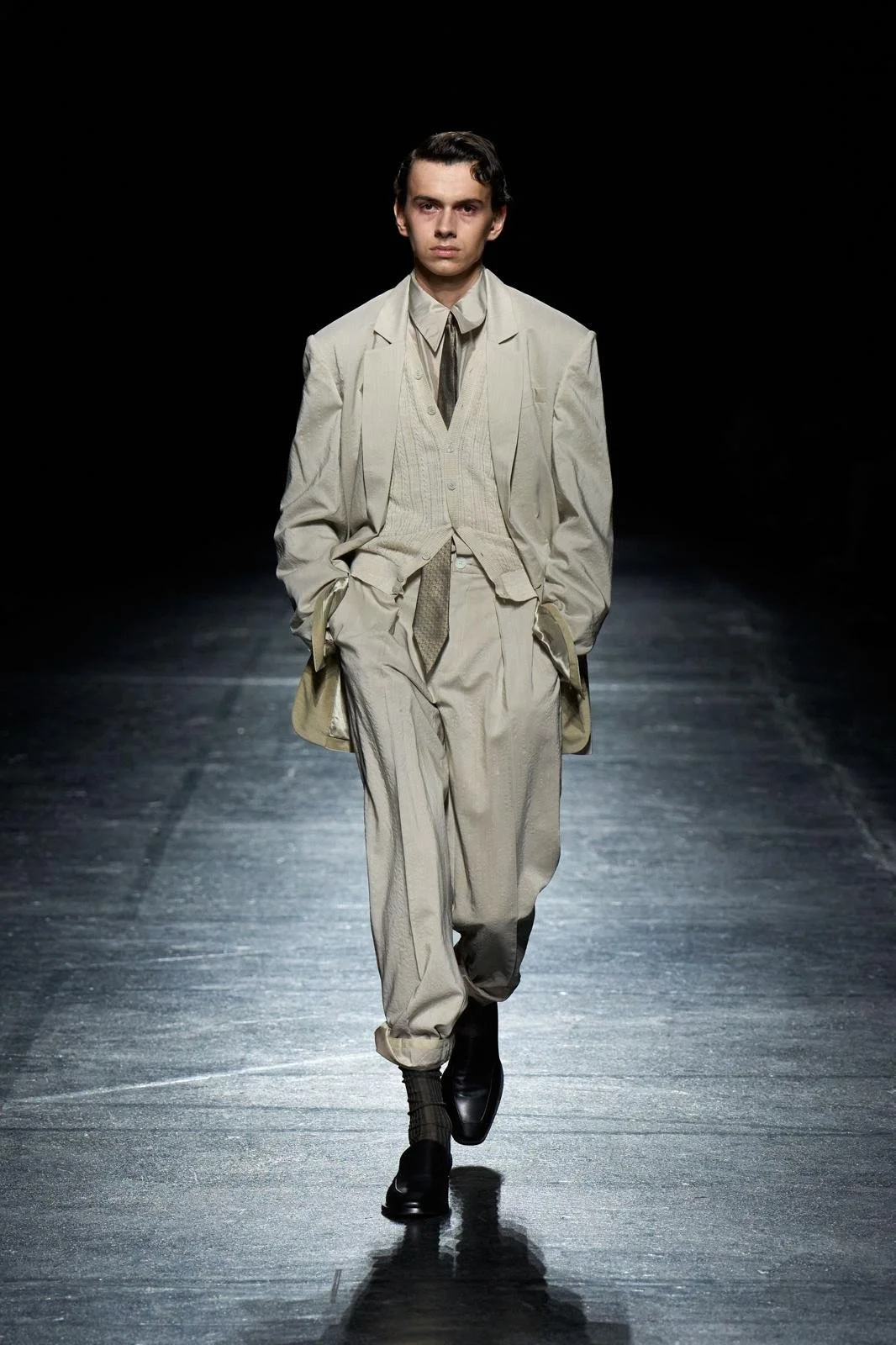
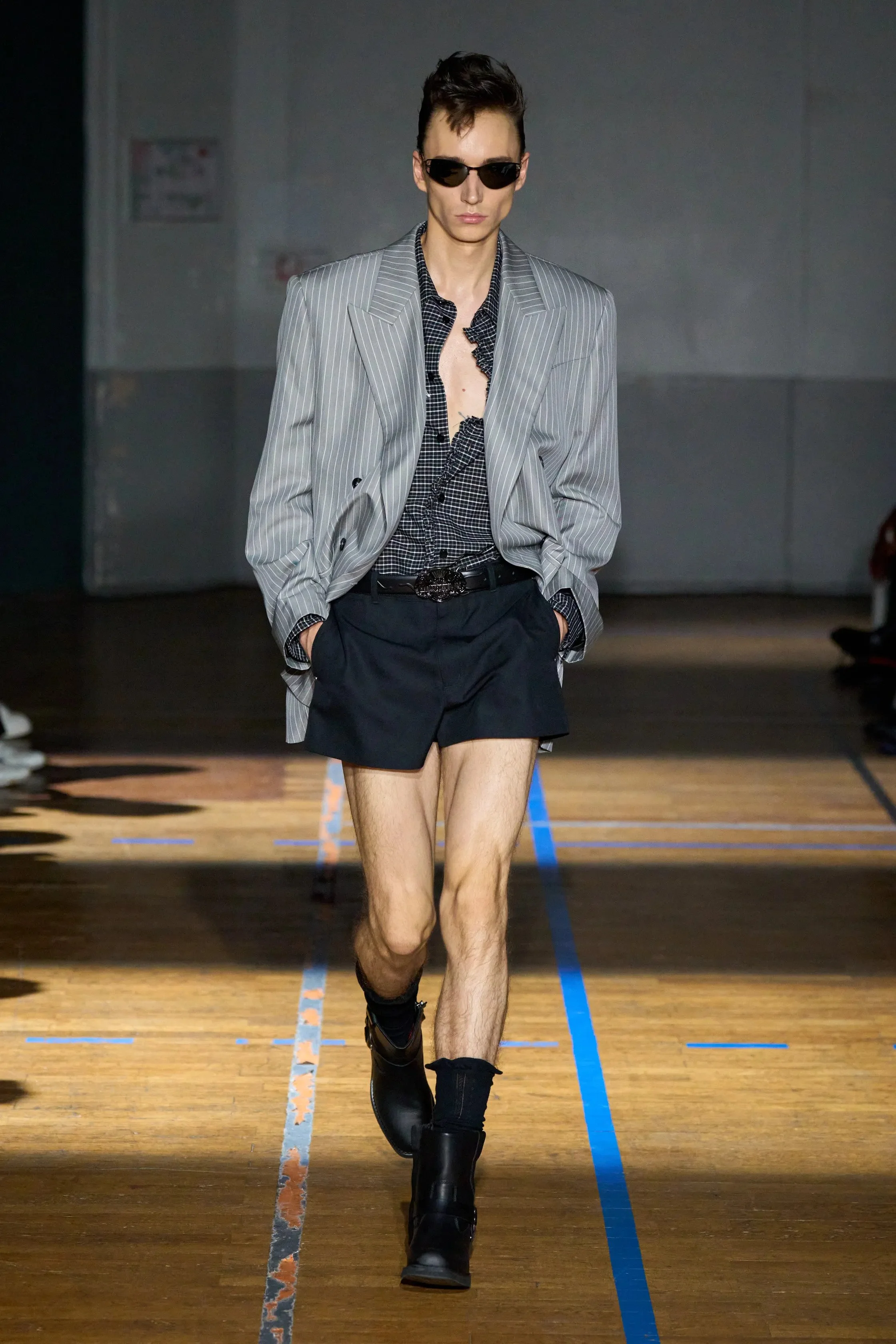
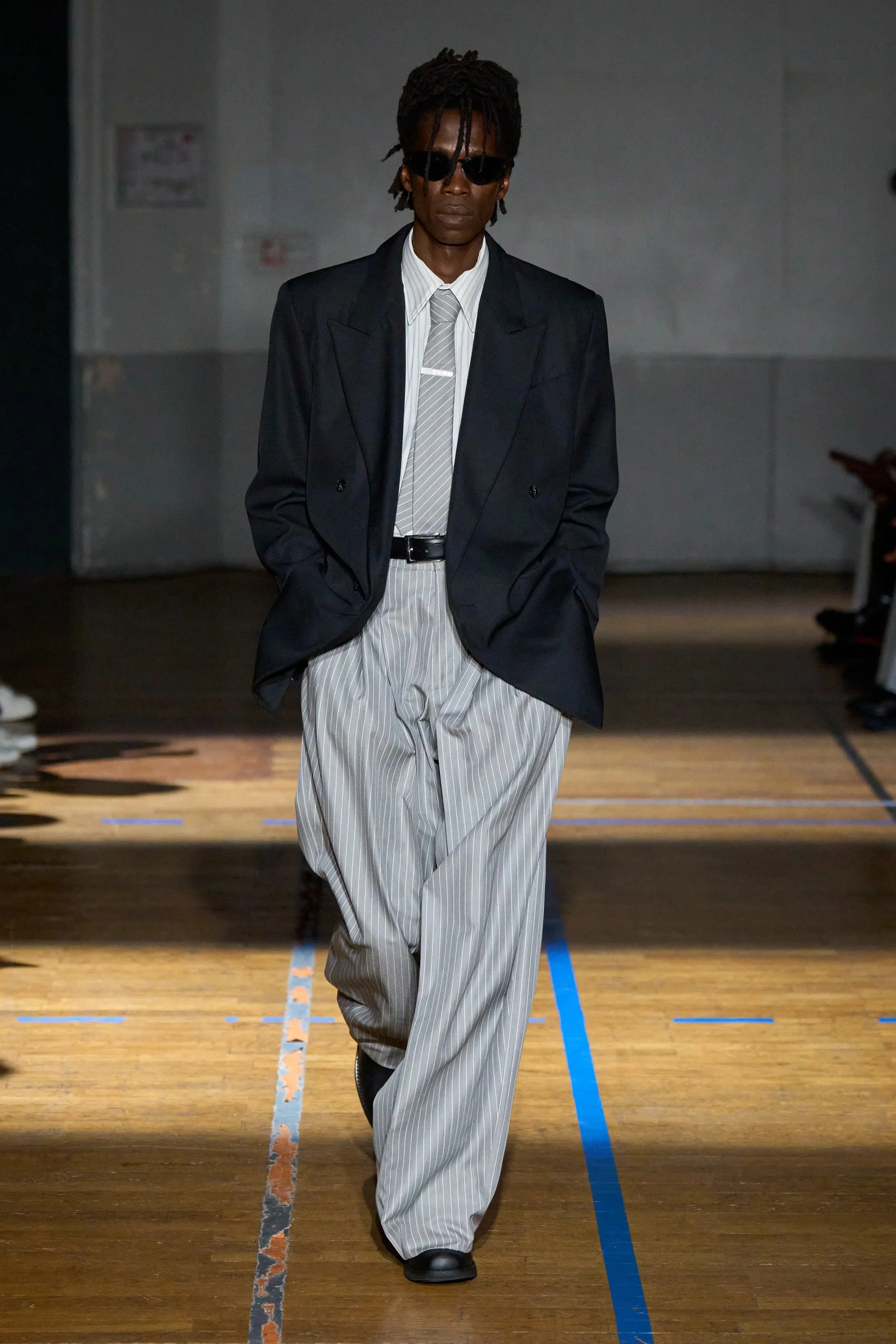
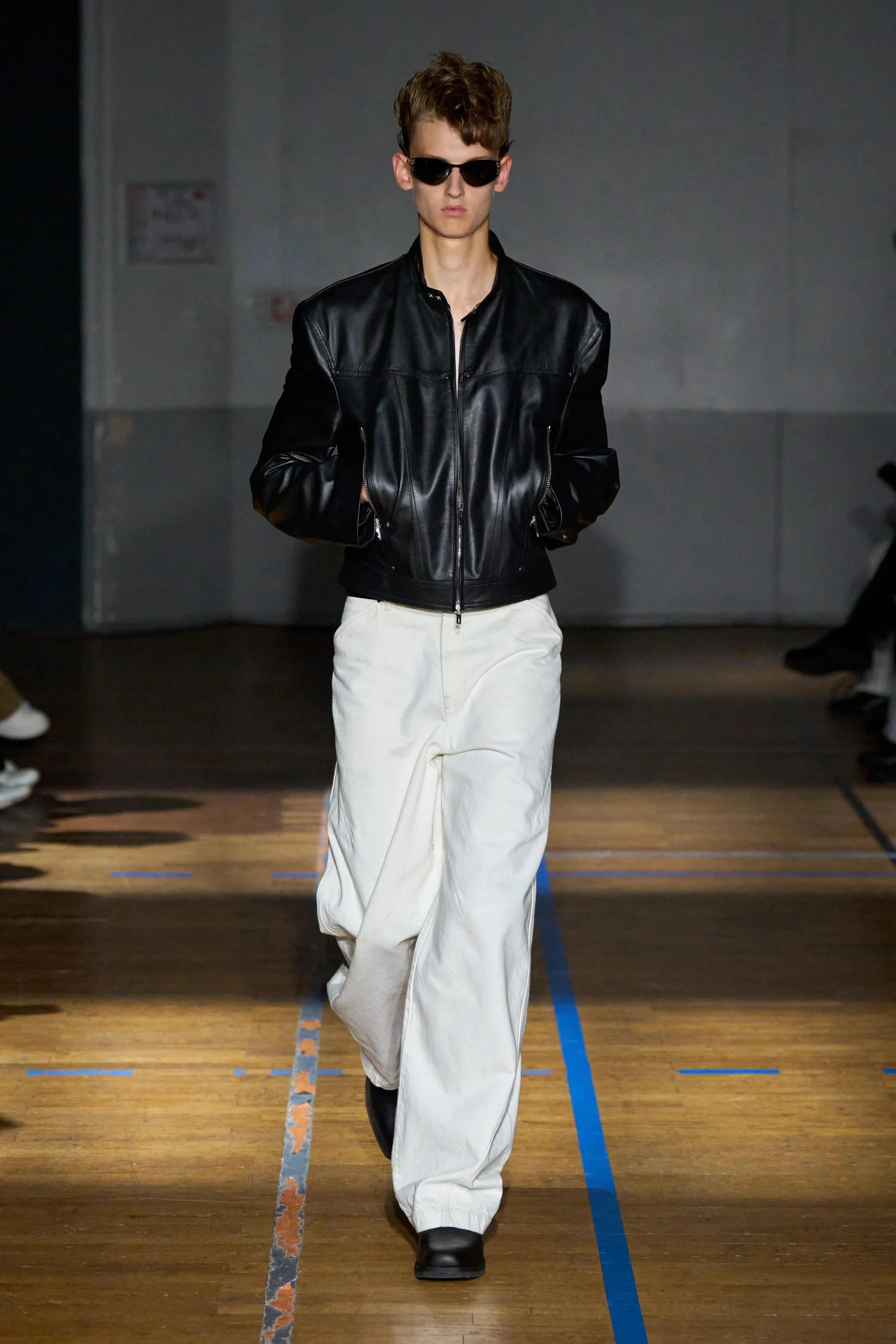
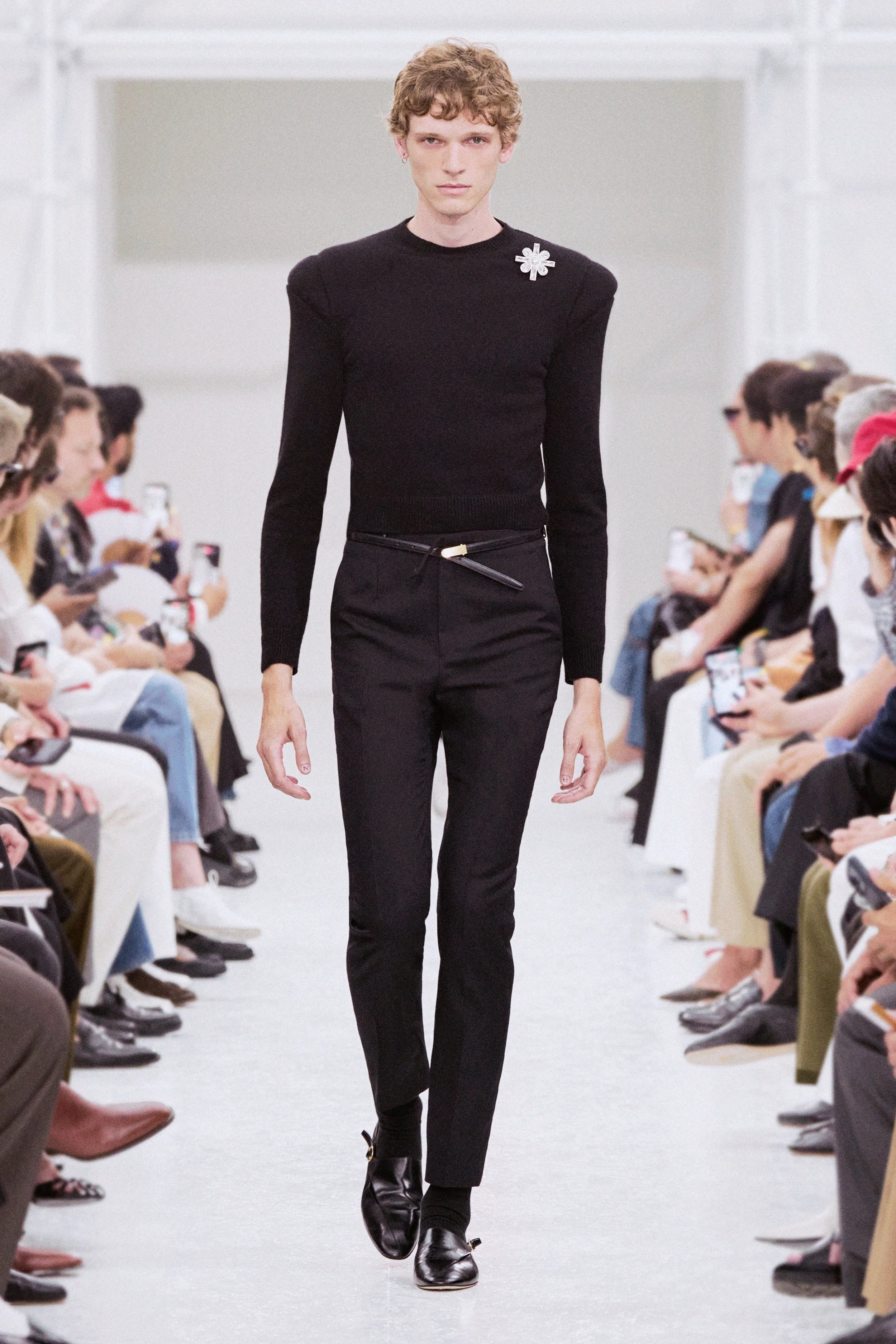
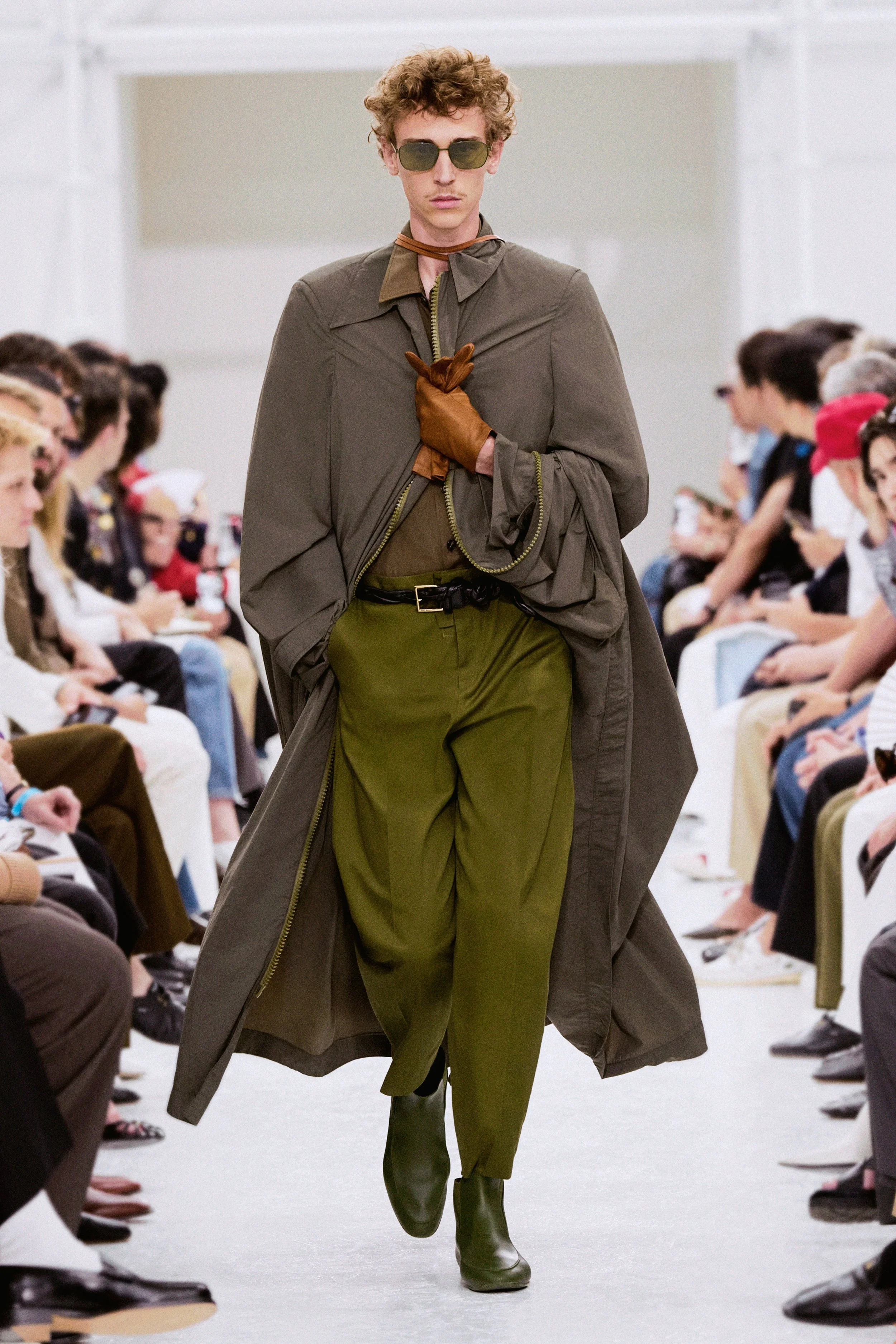
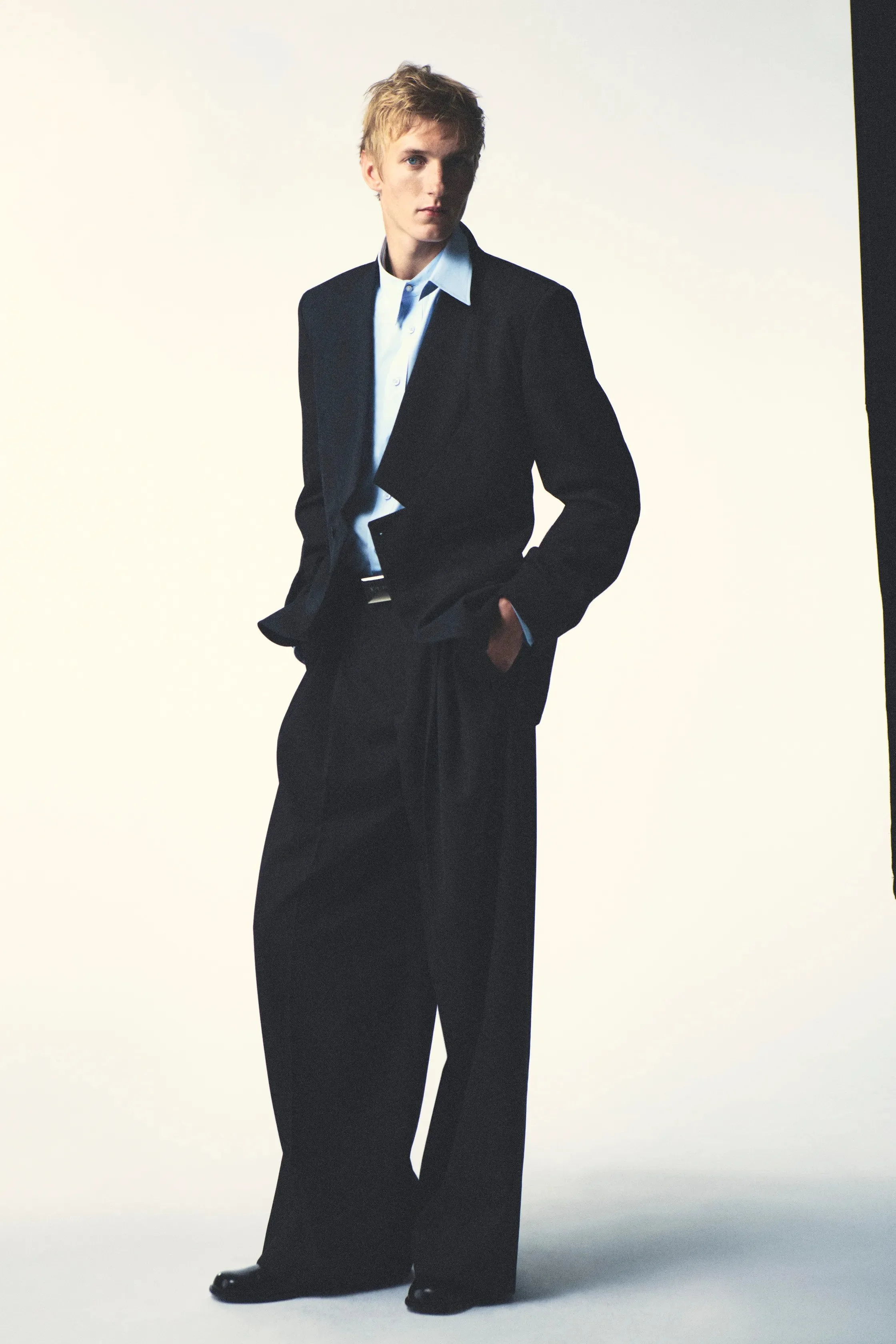
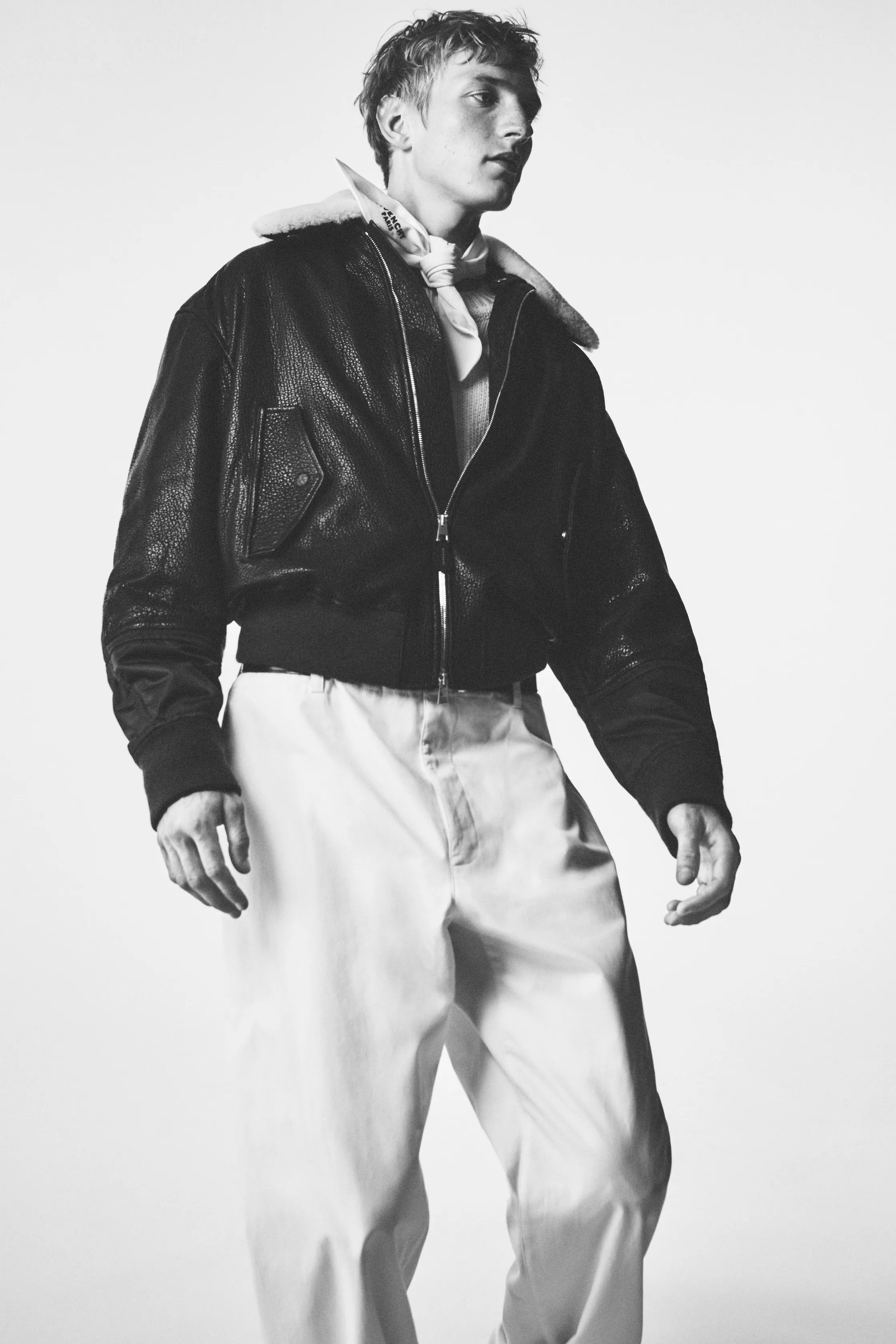
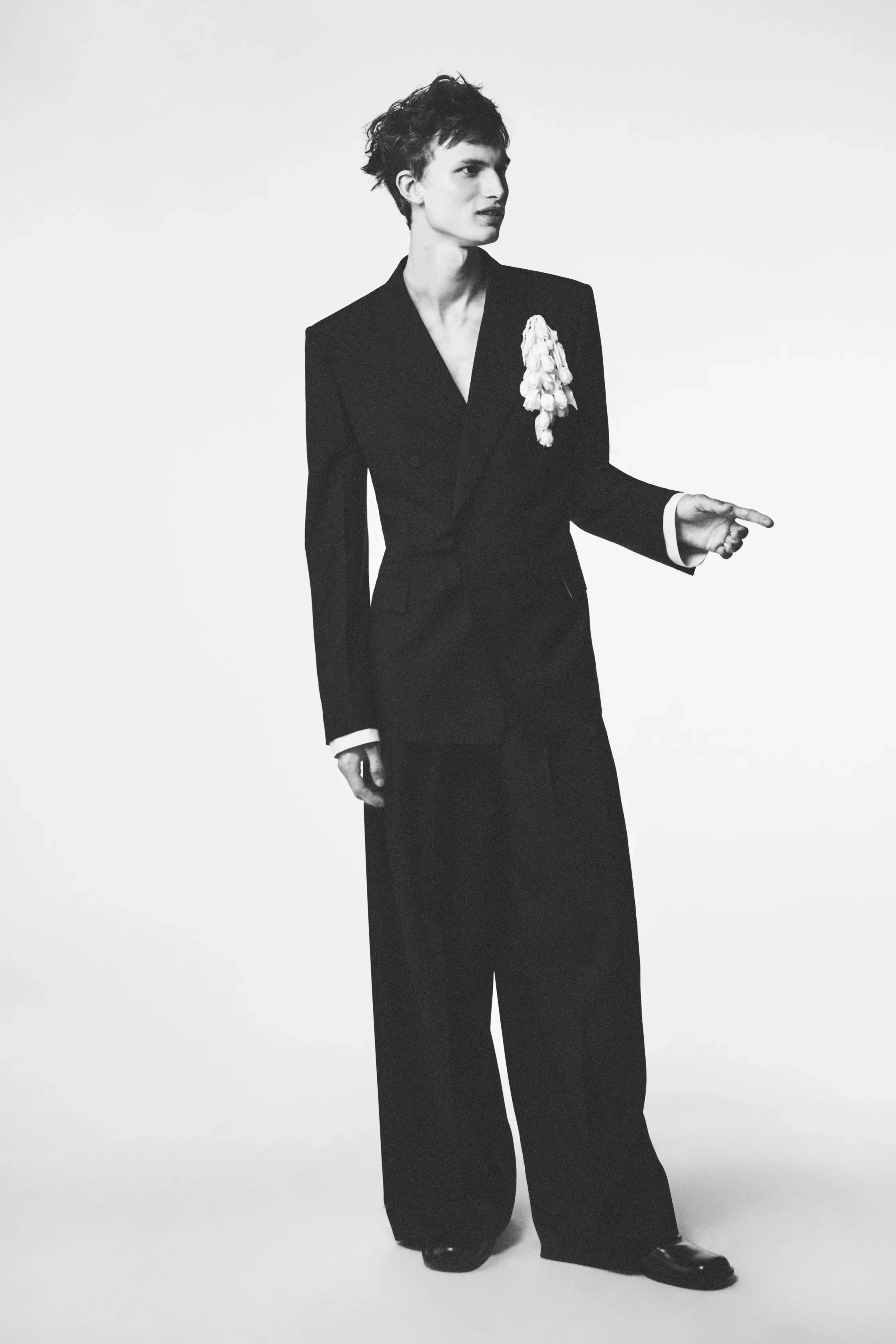
And so, we can’t help but have our stomach flutter when, in the usual venue, the Pinault Collection, the lights go out and the first silhouette is revealed against a molten gold backdrop. This season, it was a particularly strong shape. The recognisable wide shoulders were in deep contrast with a nipped-in waist. As the lights dimmed in, a beautifully cut double-breasted jacket was revealed, the slight hourglass shape only slightly off the traditional male ideal. As the collection progressed, more suits of similar cuts appeared, as did fur collars that completely hid models’ necks. One in particular, atop a tight knee-length cardigan, was a personal favourite.

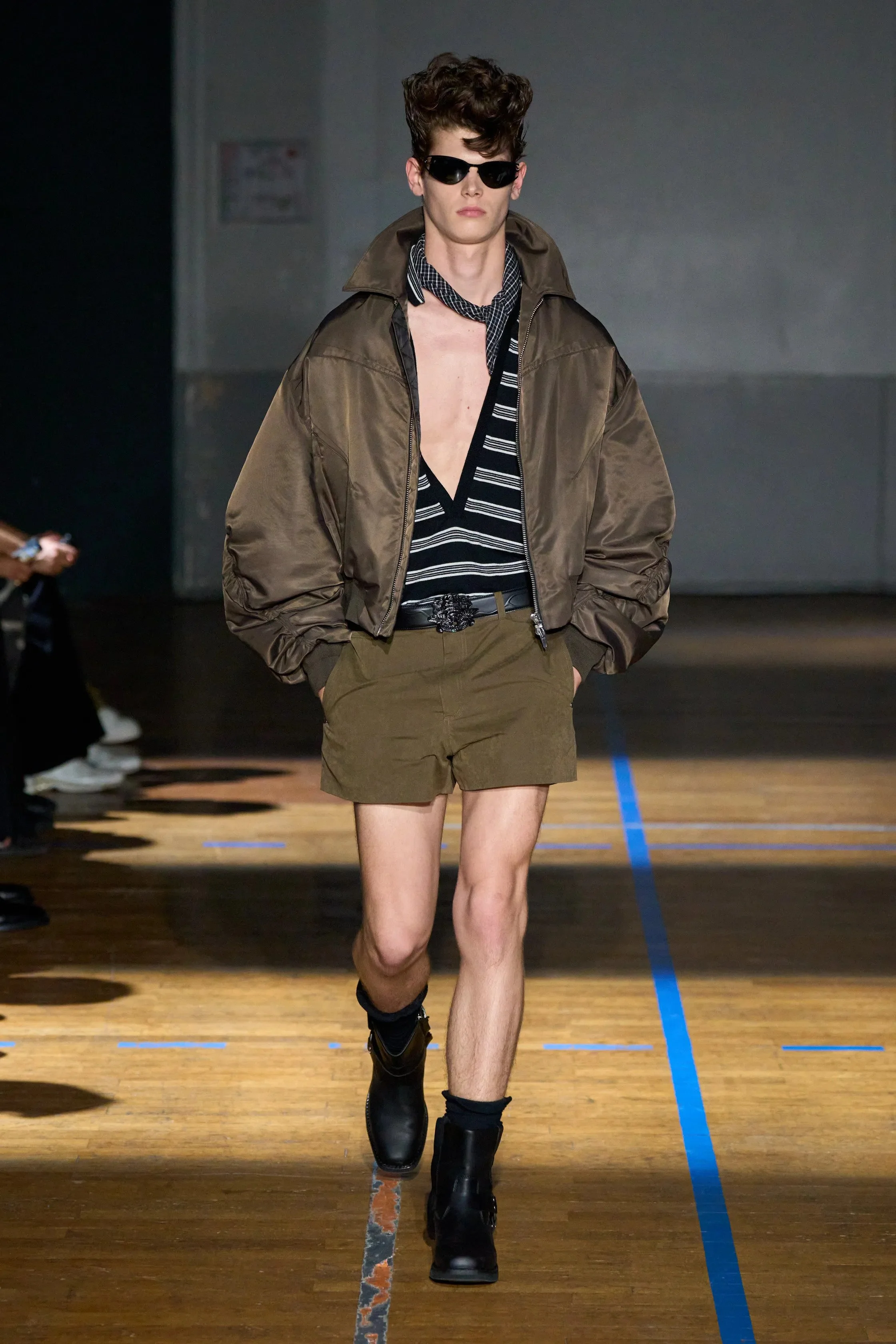
Scoop neck knits broke the tailoring streak. These were perfectly cropped and accompanied by a tucked-in ascot. Perhaps what is most compelling about Vaccarello’s menswear is its apparent queerness. For the past few seasons, the designer has been exploring it within the context of masculinity. Here, he takes on Baldwin’s aforementioned classic as a starting point. The author’s novel details the story of an American moving to Paris, finding his own homosexuality as a no longer avoidable fact.

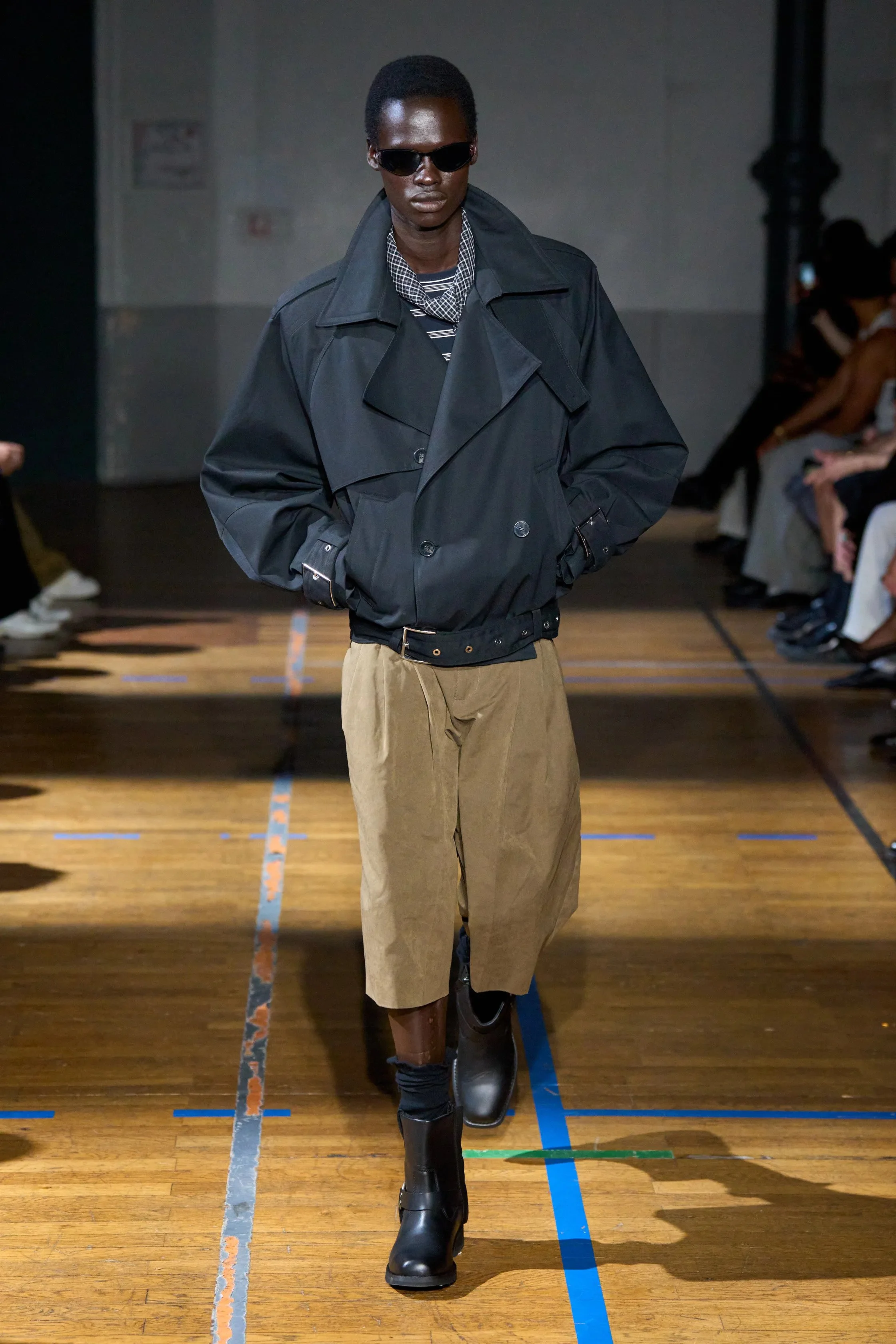
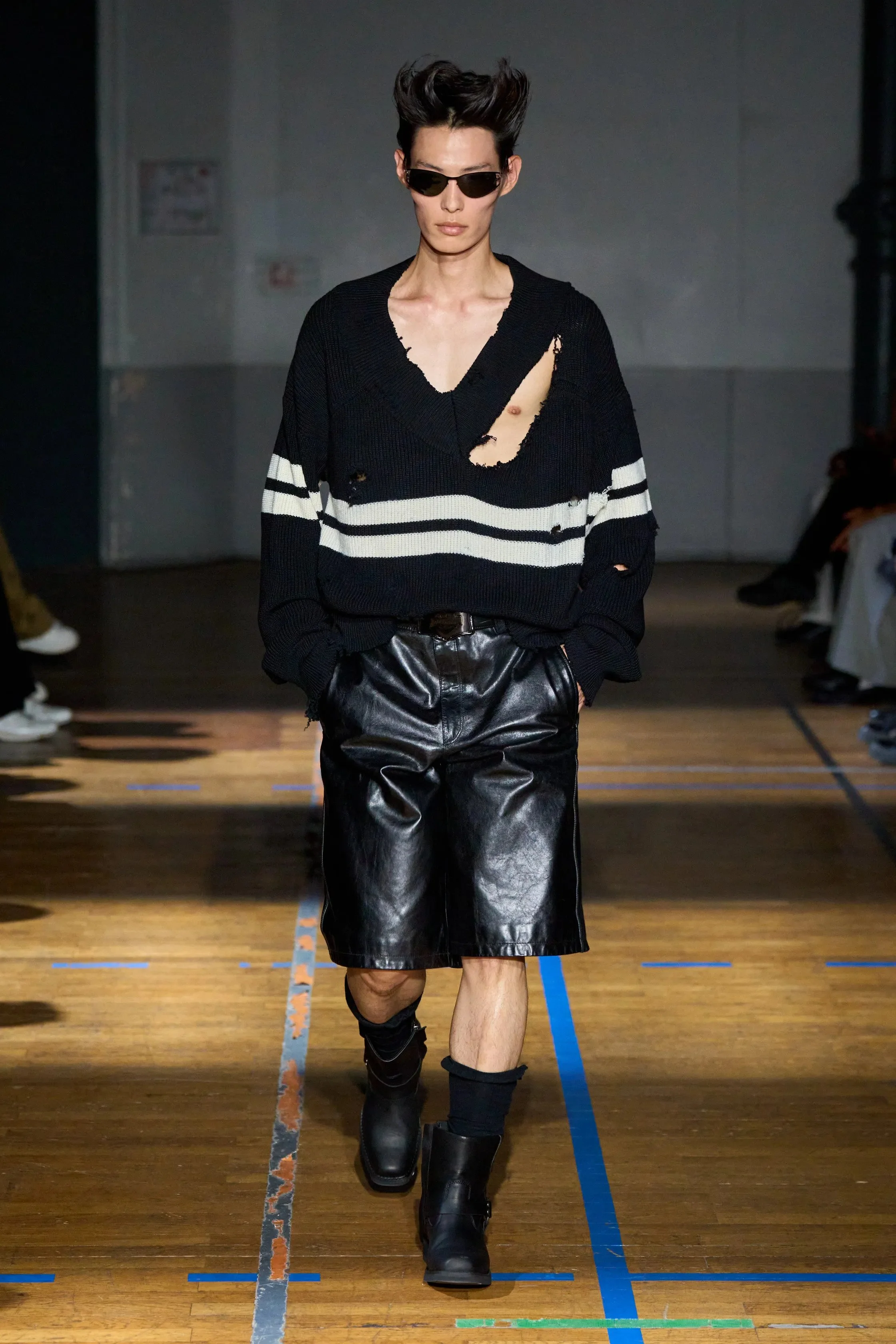
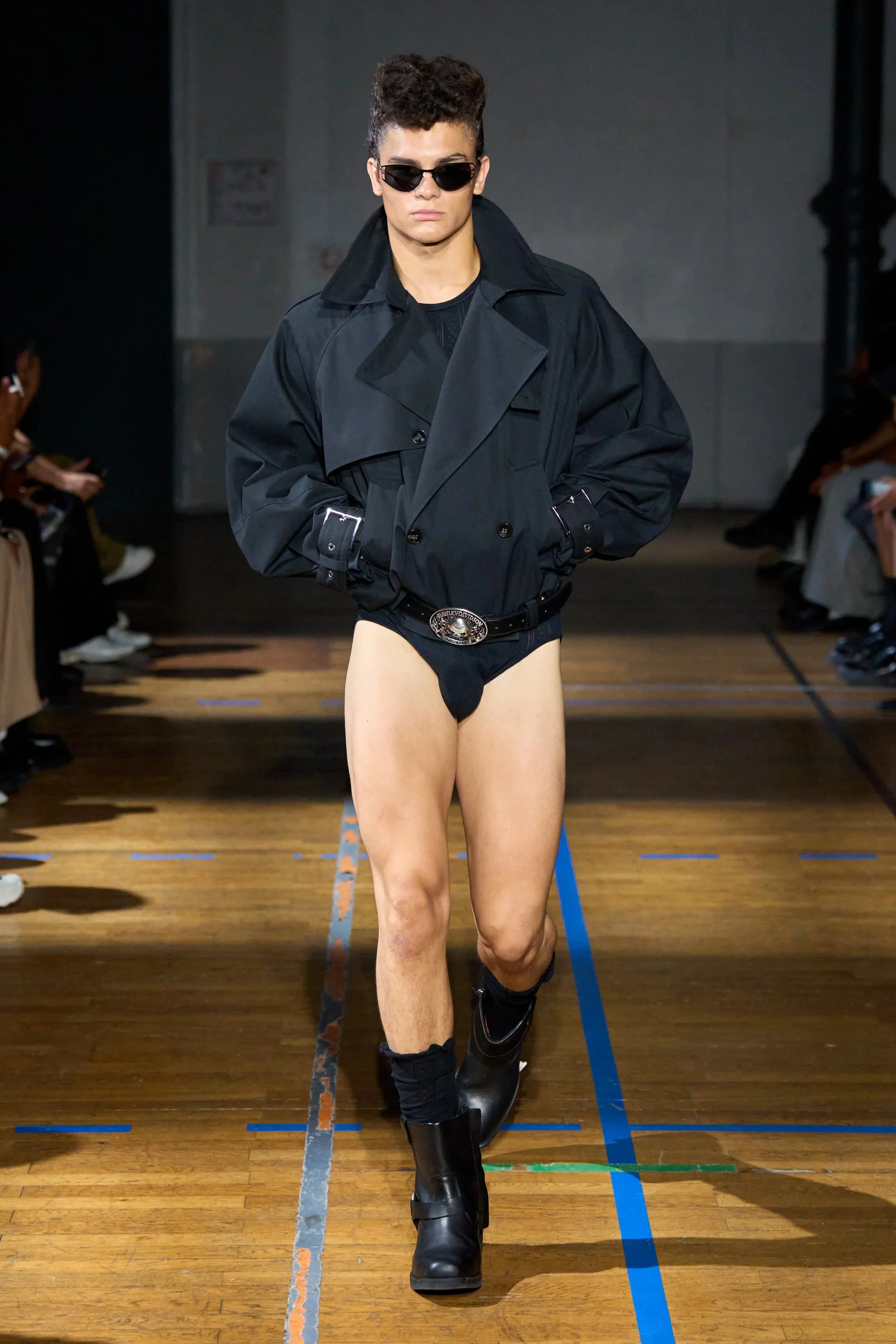
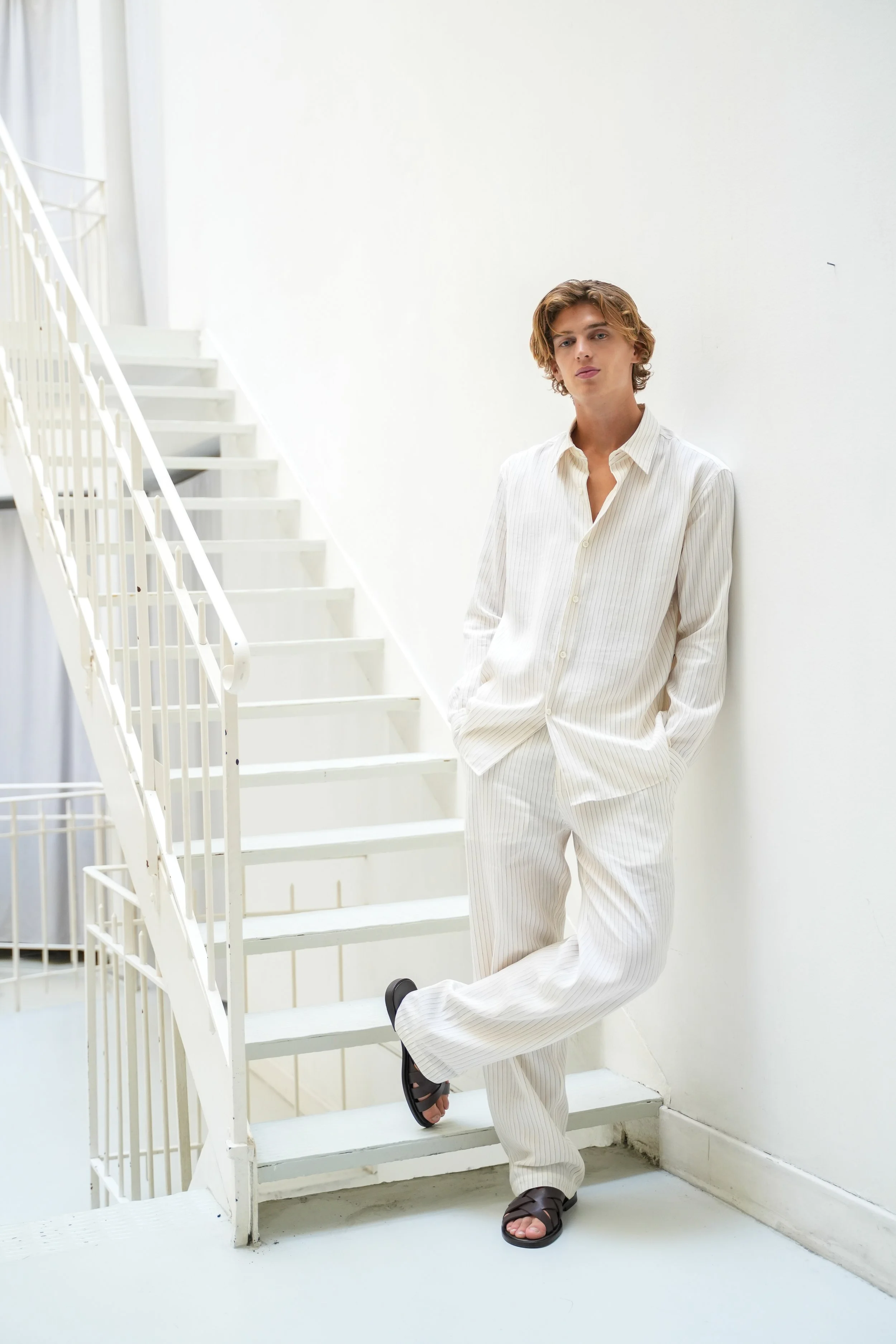
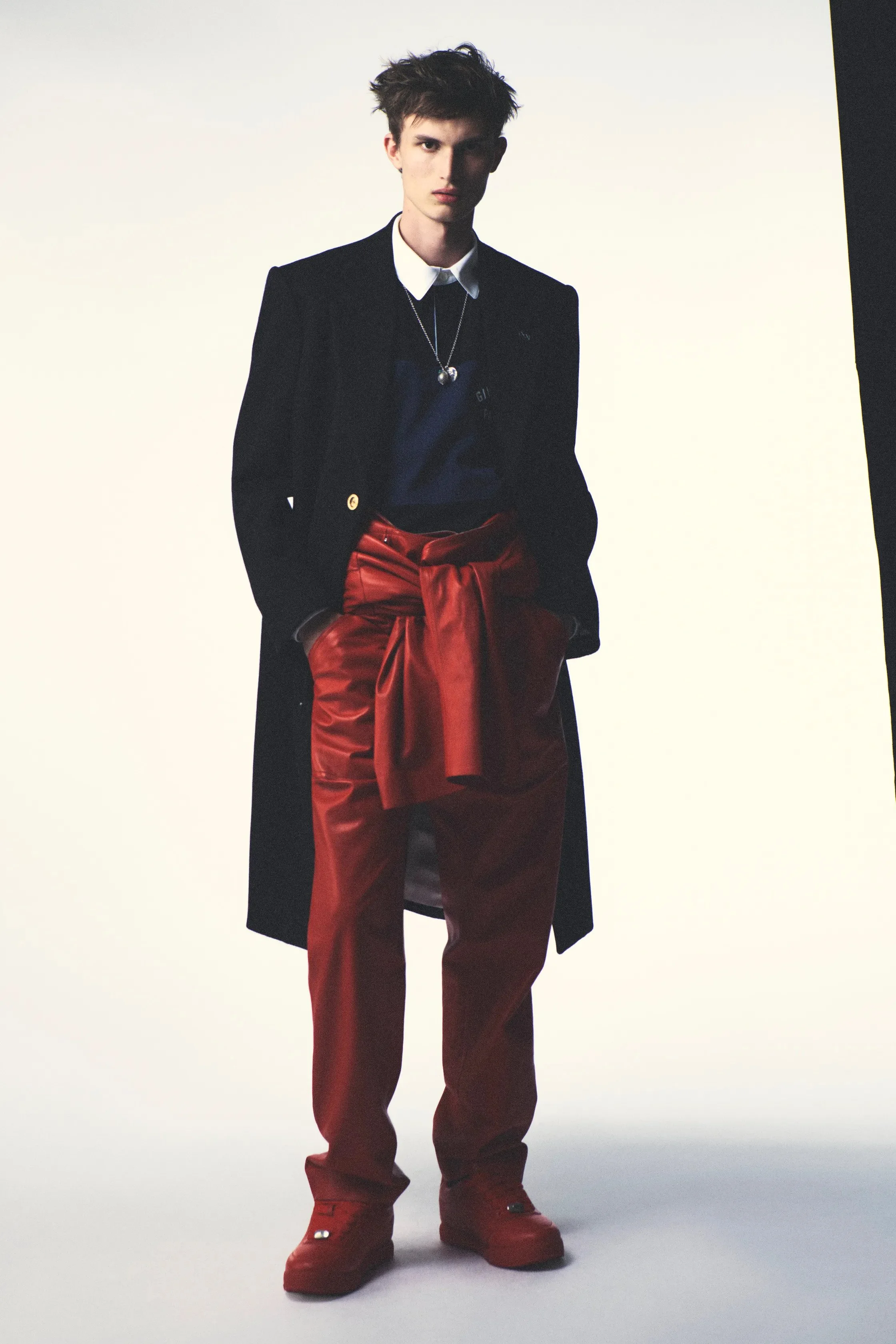
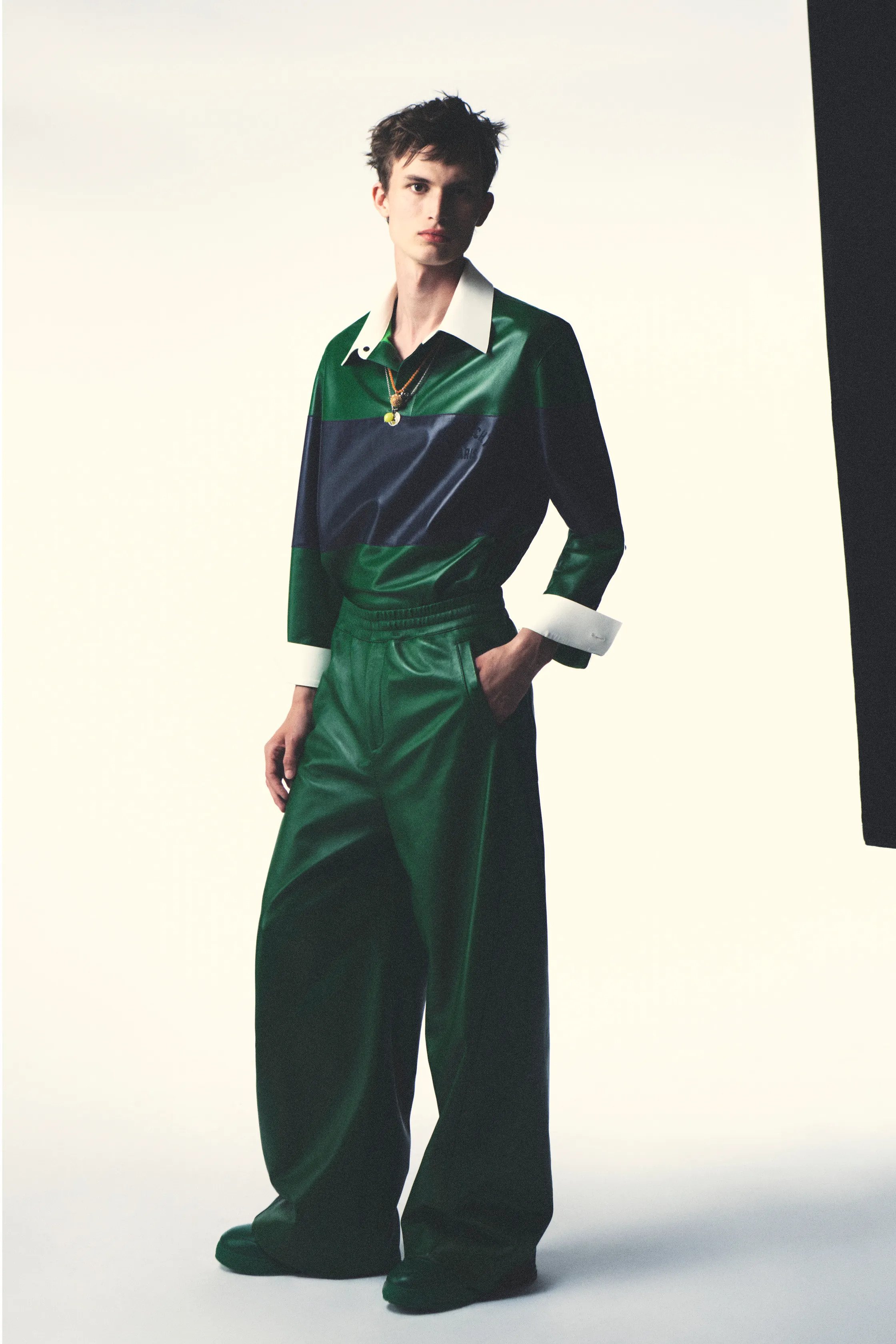
The collection illustrates the point beautifully. Galvanised by the inherent double life that queerness entailed in the 1950s, Vaccarello draws on the tension between private and public. Striped cotton sets resemble pyjamas, but are then layered under heavy coats and held at the neck with ties. Glossy over-the-knee boots pop out of tailored shorts. The texture reappears in ever-so-translucent trench coats. This latex-like finish, historically associated with queer sexual identity, is juxtaposed against the traditionally masculine origins of the silhouette.

Vaccarello’s Saint Laurent is not boundary-pushingly queer but intellectually so. Here, the historically shameful reality of queerness is explored through materiality. And still, if we were to take the garments at face value, their impact on visual culture exists outside their symbolic context. The Robert Mapplethorpe over-the-knee leather boots are proof of it. We can say for certain that the glossy tight boots will cause a similar effect. Vaccarello never overwhelms the silhouette with symbolism. Masculinity is adjusted through cut, texture, proportion, but never performance. Eden is closed. The garden is gone. But Saint Laurent shows us how to dress for what comes after.


Words by Pedro Vasconcelos
CHANEL HAUTE COUTURE SS26

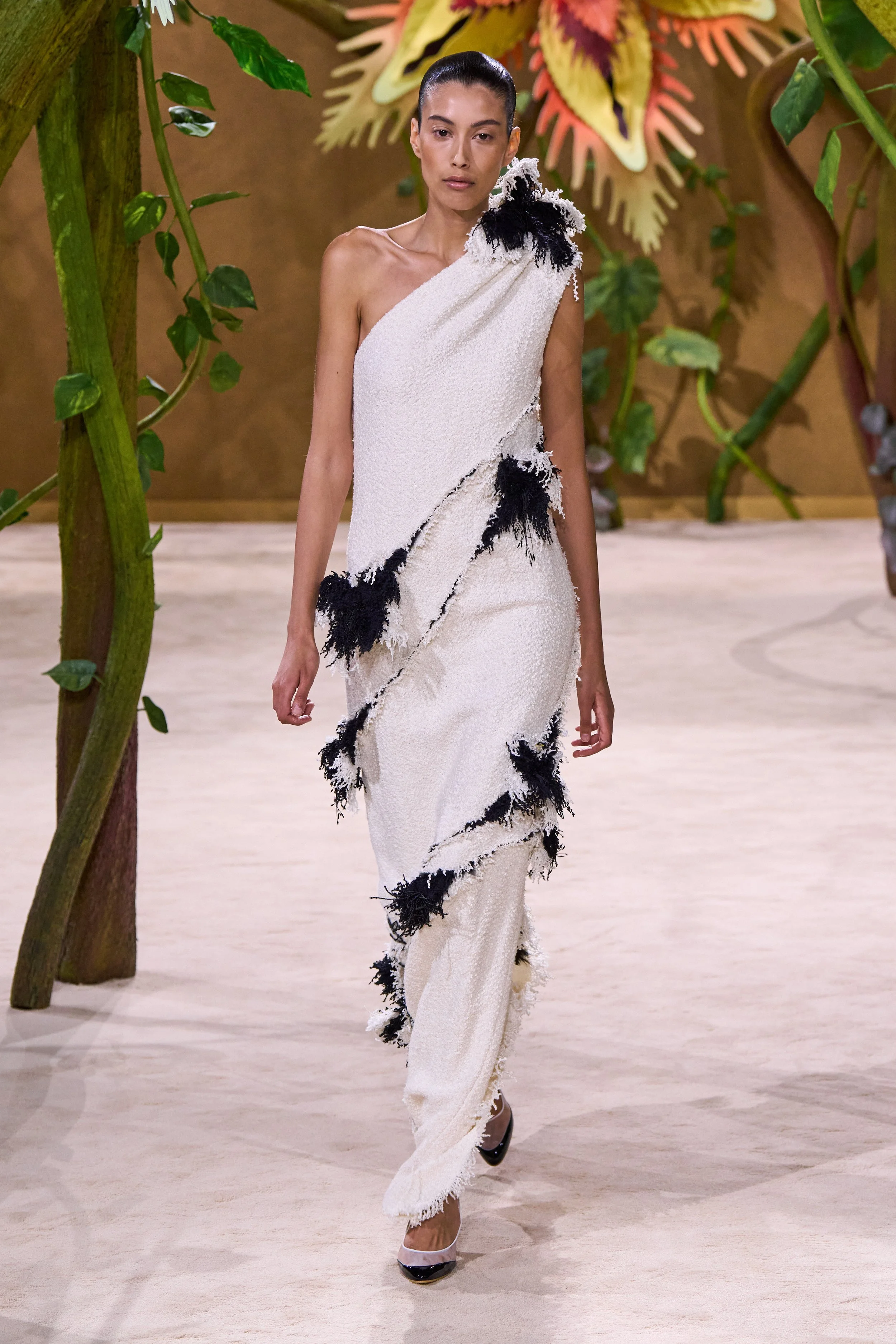
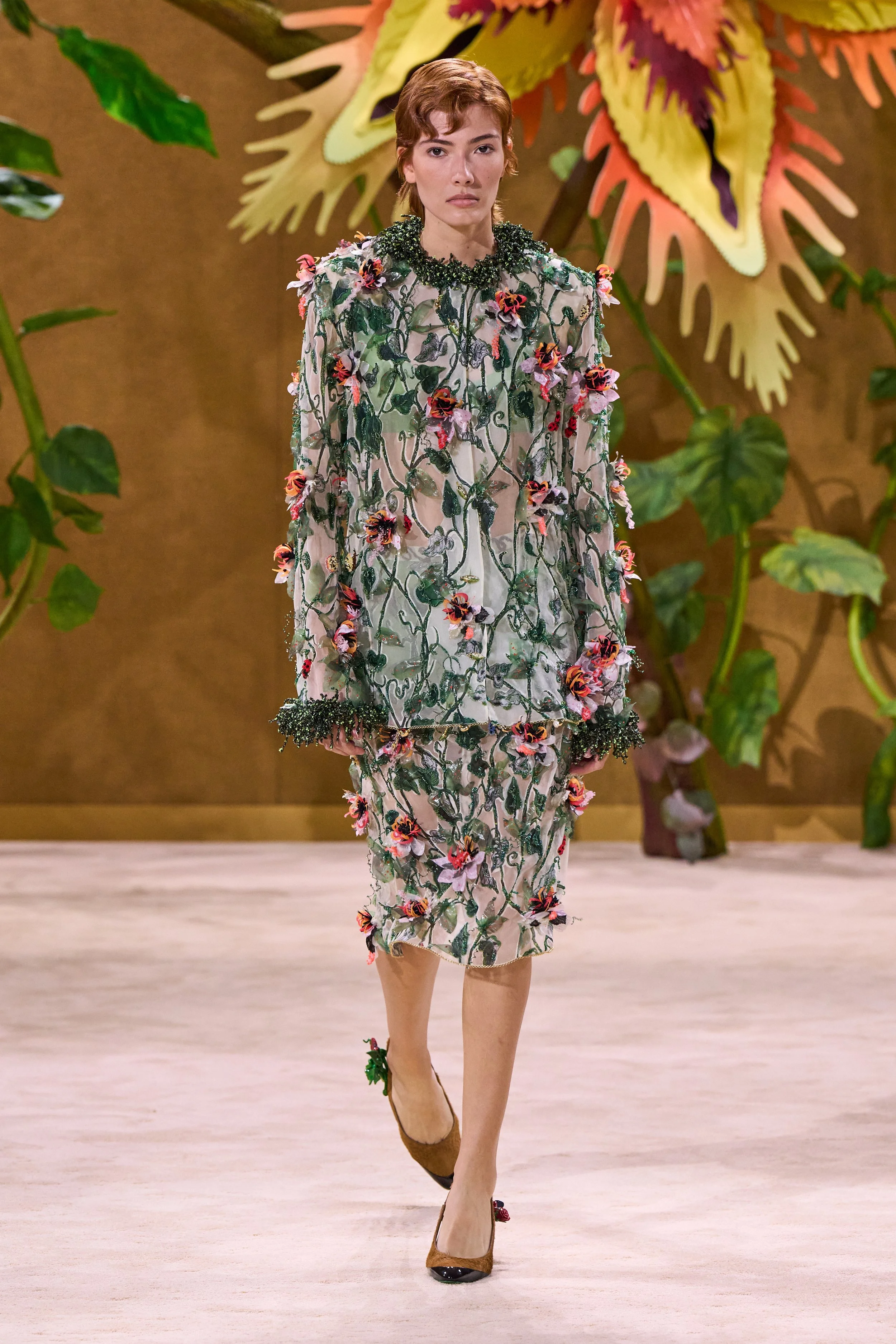
Stepping into the Grand Palais for Matthieu Blazy’s Haute Couture debut at Chanel felt like a meditation – or the best kind of hallucinogenic trip. For Spring/Summer 2026, the historical venue was transformed into a pastel-hued fantasy, with mushroom sculptures and pink weeping willows sprouting across the floor, offering a gentle escape from the severity of the world outside.

Blazy’s couture proposition was notably weightless in spirit. Despite the hundreds of hours of handwork embedded in each piece, the garments appeared effortless and unencumbered – a vision in direct dialogue with Gabrielle Chanel’s enduring philosophy of elegance through freedom of movement.

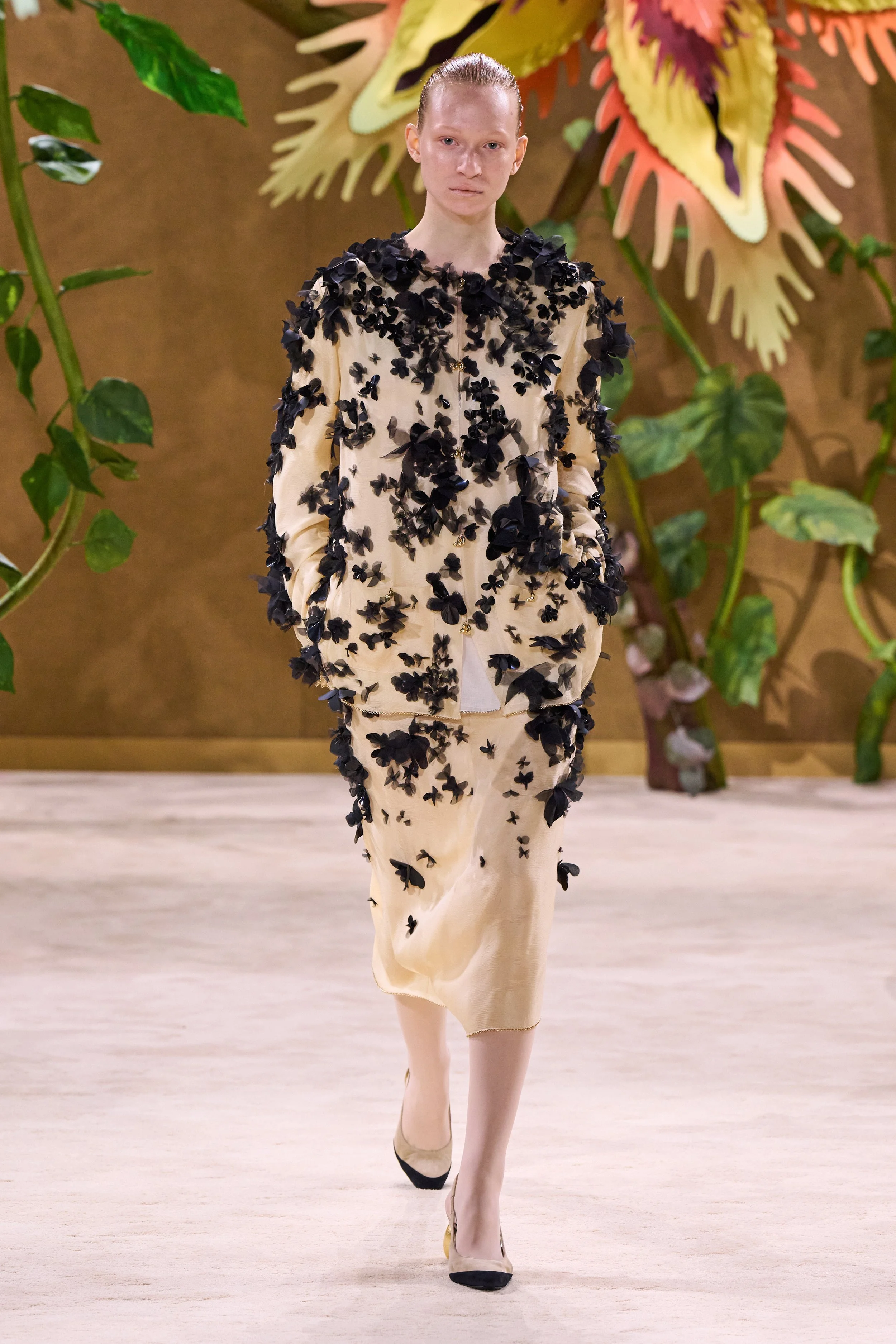
The collection opened with a procession of organza looks gliding down the runway to I Wonder from Disney’s classic, Sleeping Beauty. Transparent skirt suits floated across the space, anchored only by metal chains tracing the hems — a house signature reimagined as exposed ornamentation and embellished with miniature charms and pearls.

Accessories further fuelled the narrative. Organza flap bags mirrored the delicacy of the garments, each adorned with hand-embroidered love letters that clients will be able to personalise. The mushroom motif returned in whimsical form, appearing as appliqué on slinky silhouettes and even serving as a base for sculptural heels.

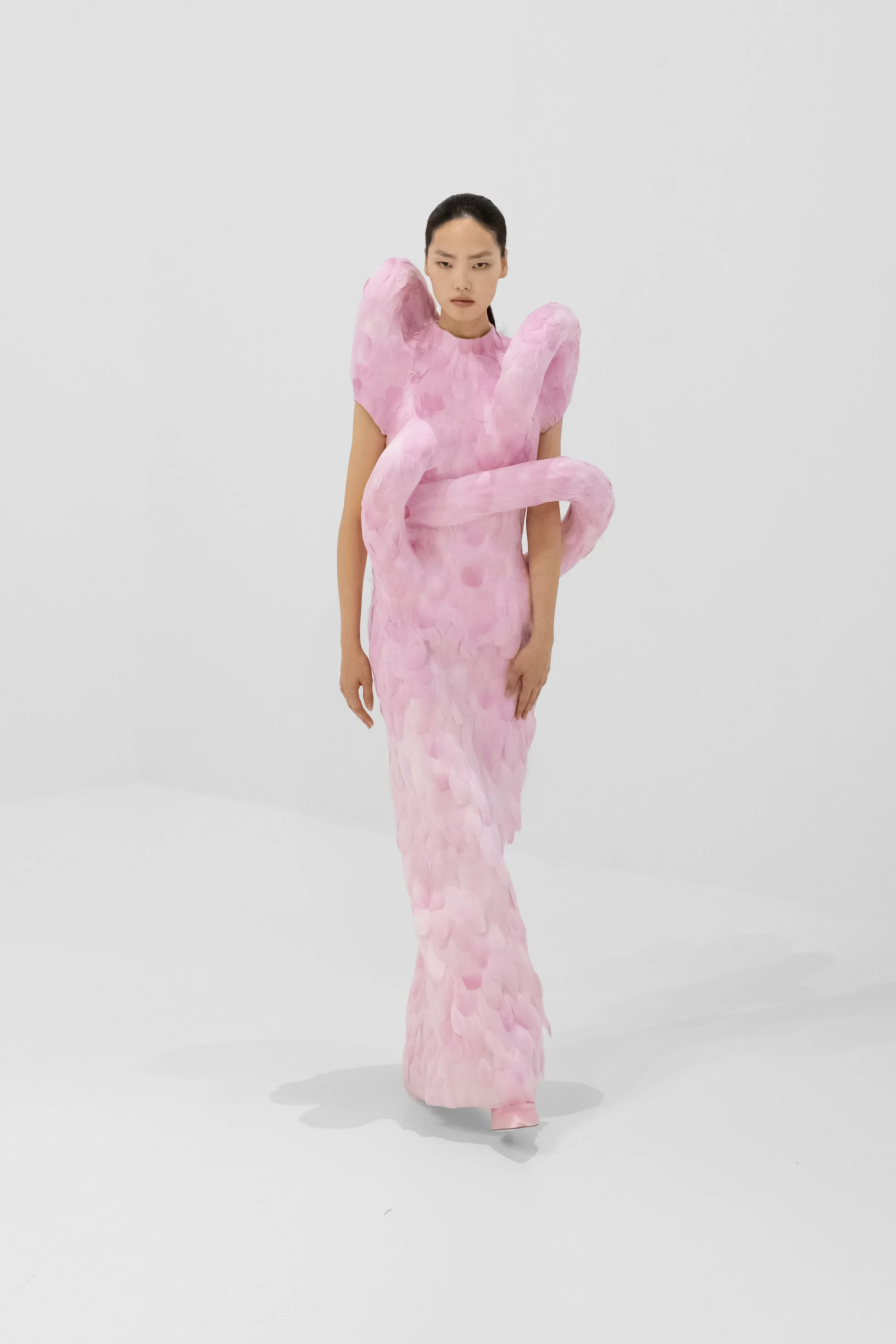
As the show progressed, fragility met structure. Gossamer skirts were paired with architectural jackets, creating a striking tension between softness and strength. A vivid red jacket with rounded sleeves and a rattan-like texture emerged as a standout moment. Featherwork reached its most dramatic expression in a look composed of a floor-length scarlet skirt and a cocooning, otherworldly top – an image that lingered long after the final walk.

Blazy’s debut did not seek spectacle through excess, but through an enchanting atmosphere: couture as reverie, Chanel as sanctuary.


Words by Martin Onufrowicz

DIOR HAUTE COUTURE SS26

For his first Haute Couture show at Dior, Jonathan Anderson explored the deep historical, technical, and artistic nature of haute couture, a French tradition that transforms as society and technology evolve. This very same idea of transformation and heritage is the core of the Spring/Summer 2026 collection.

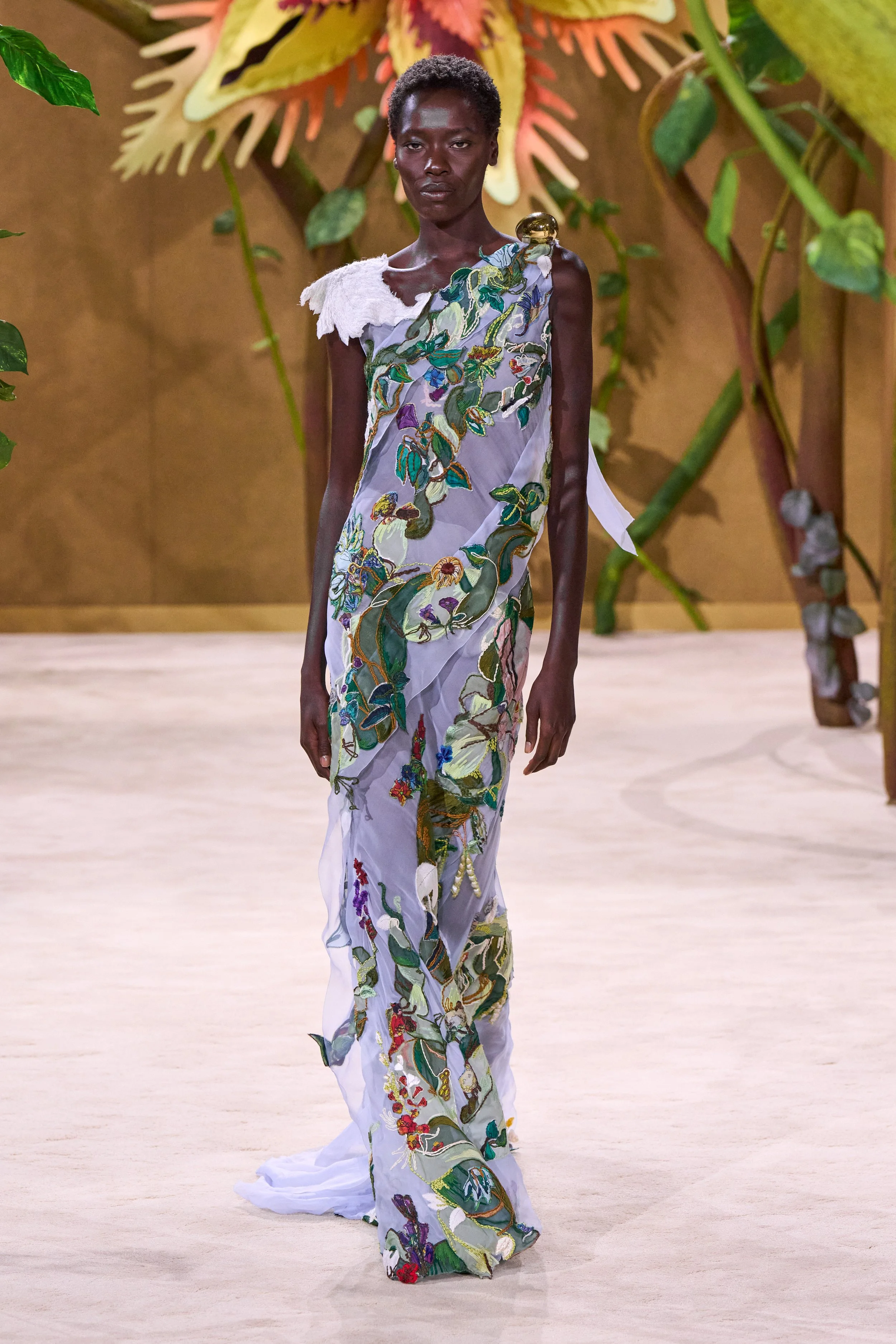
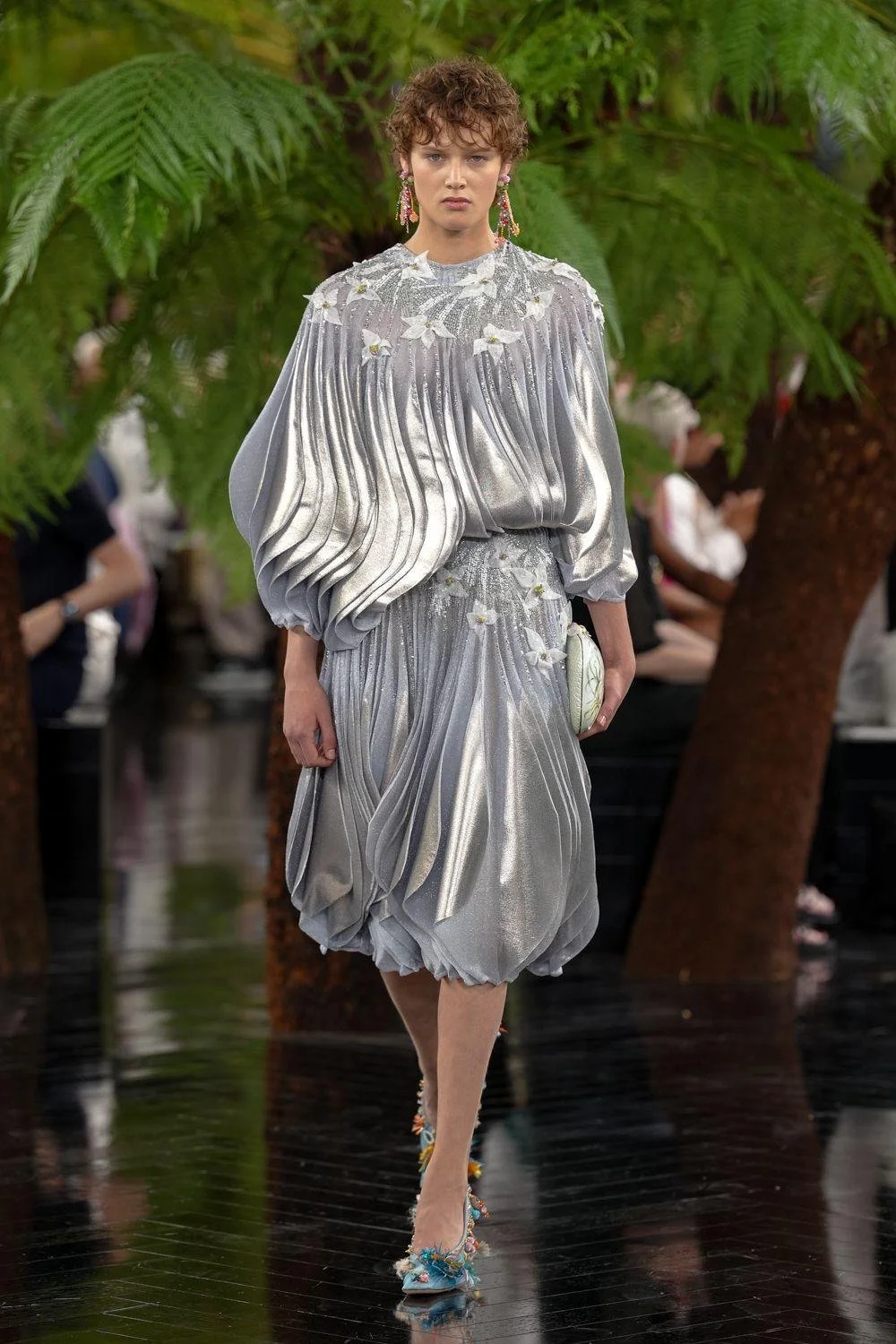
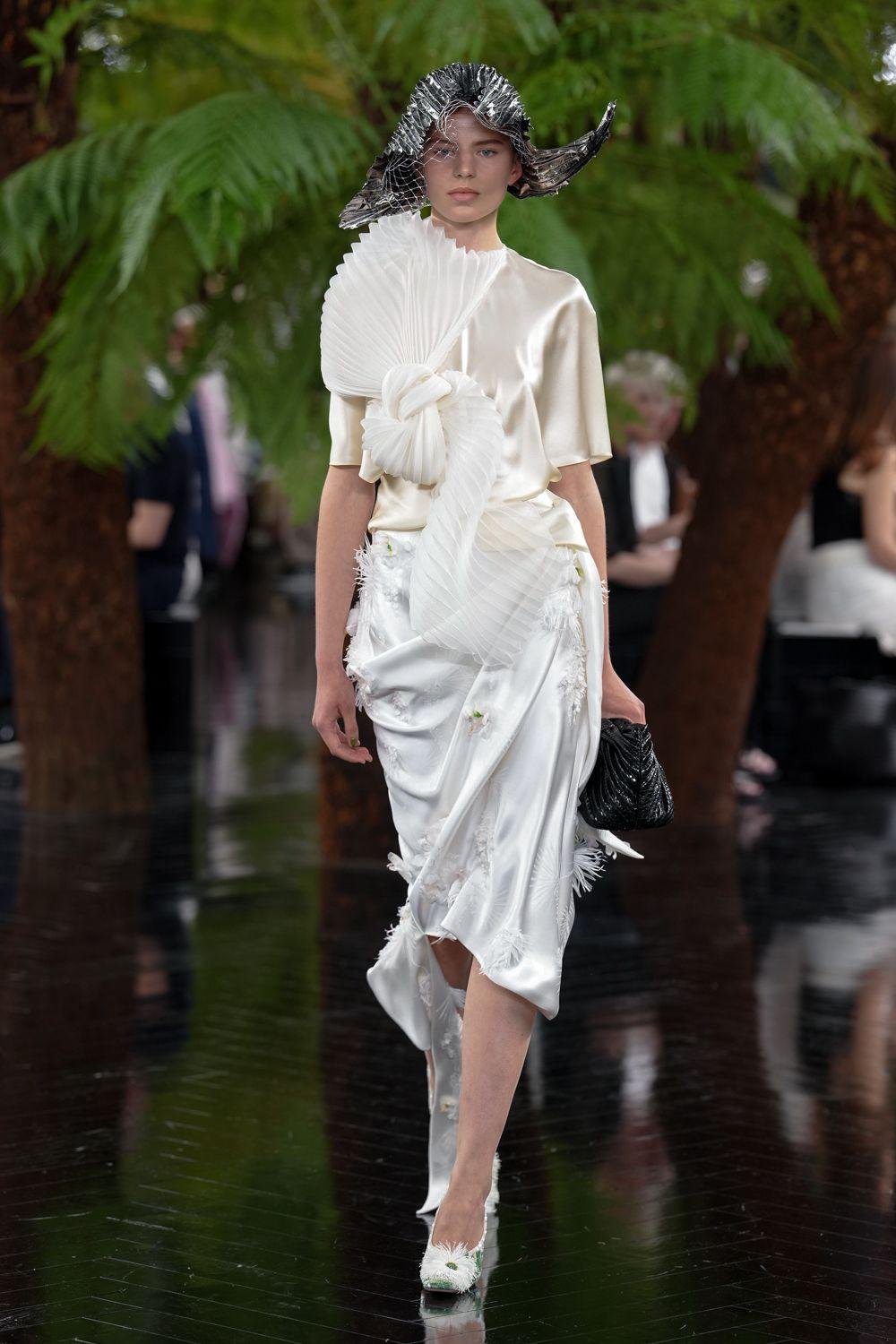
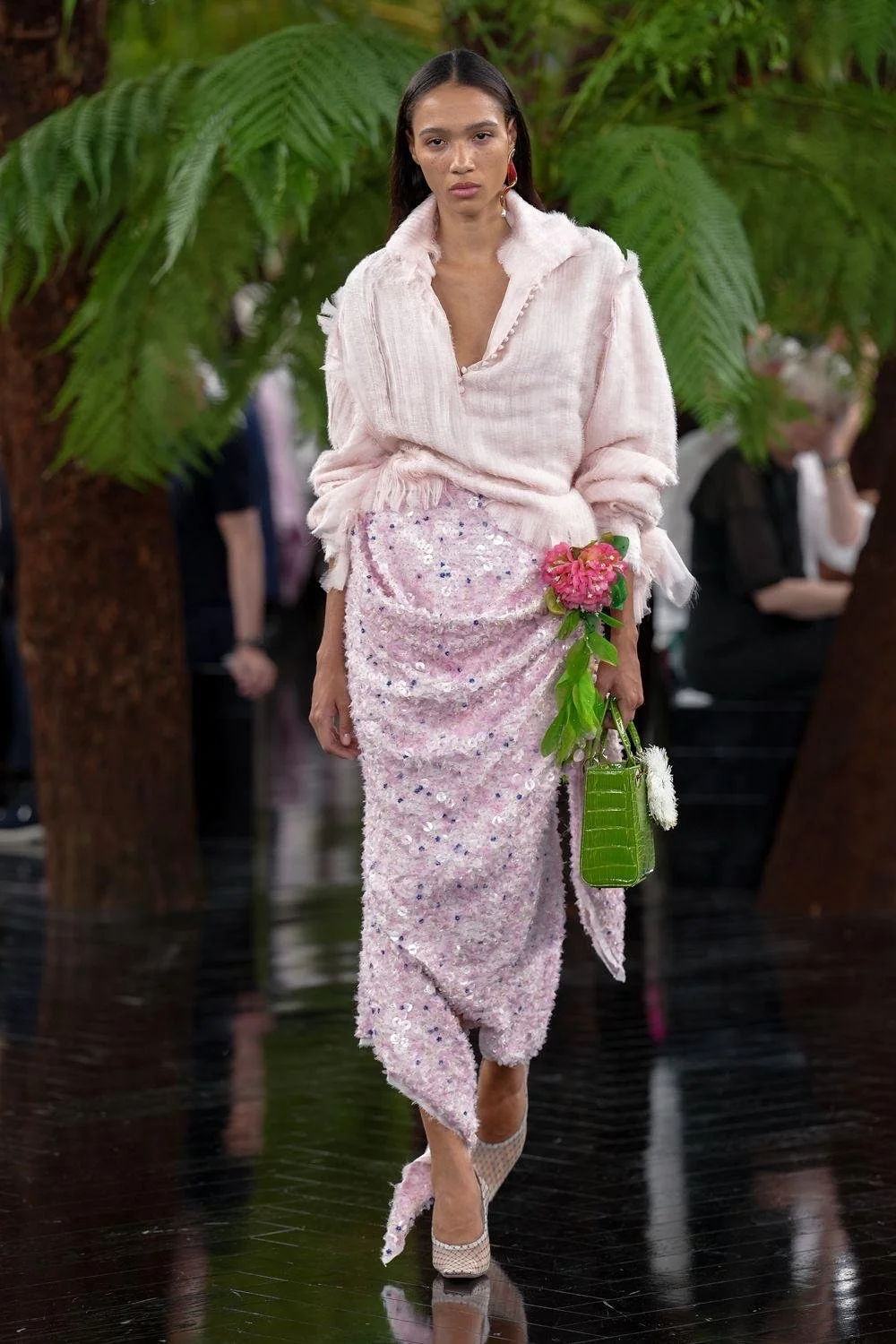
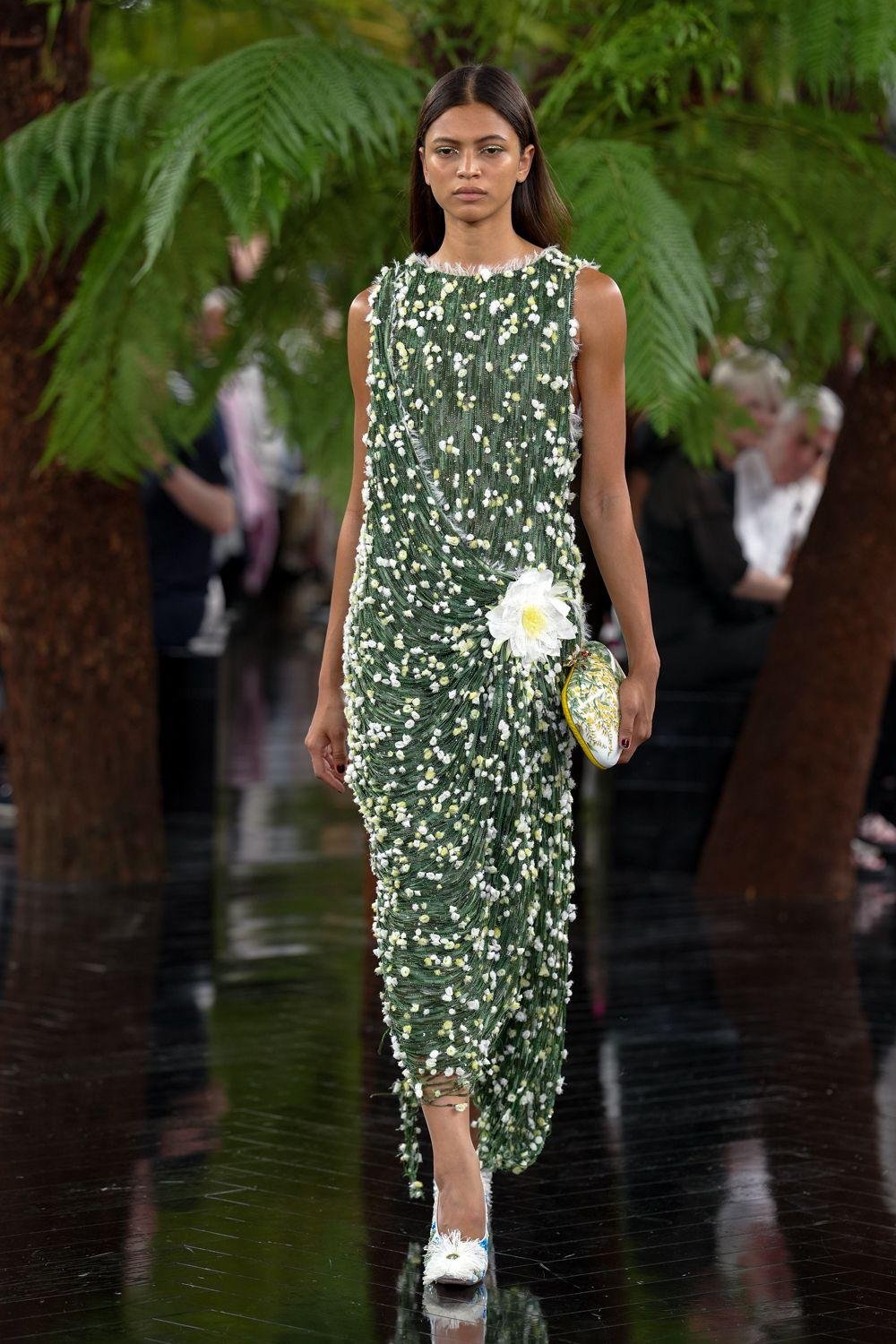
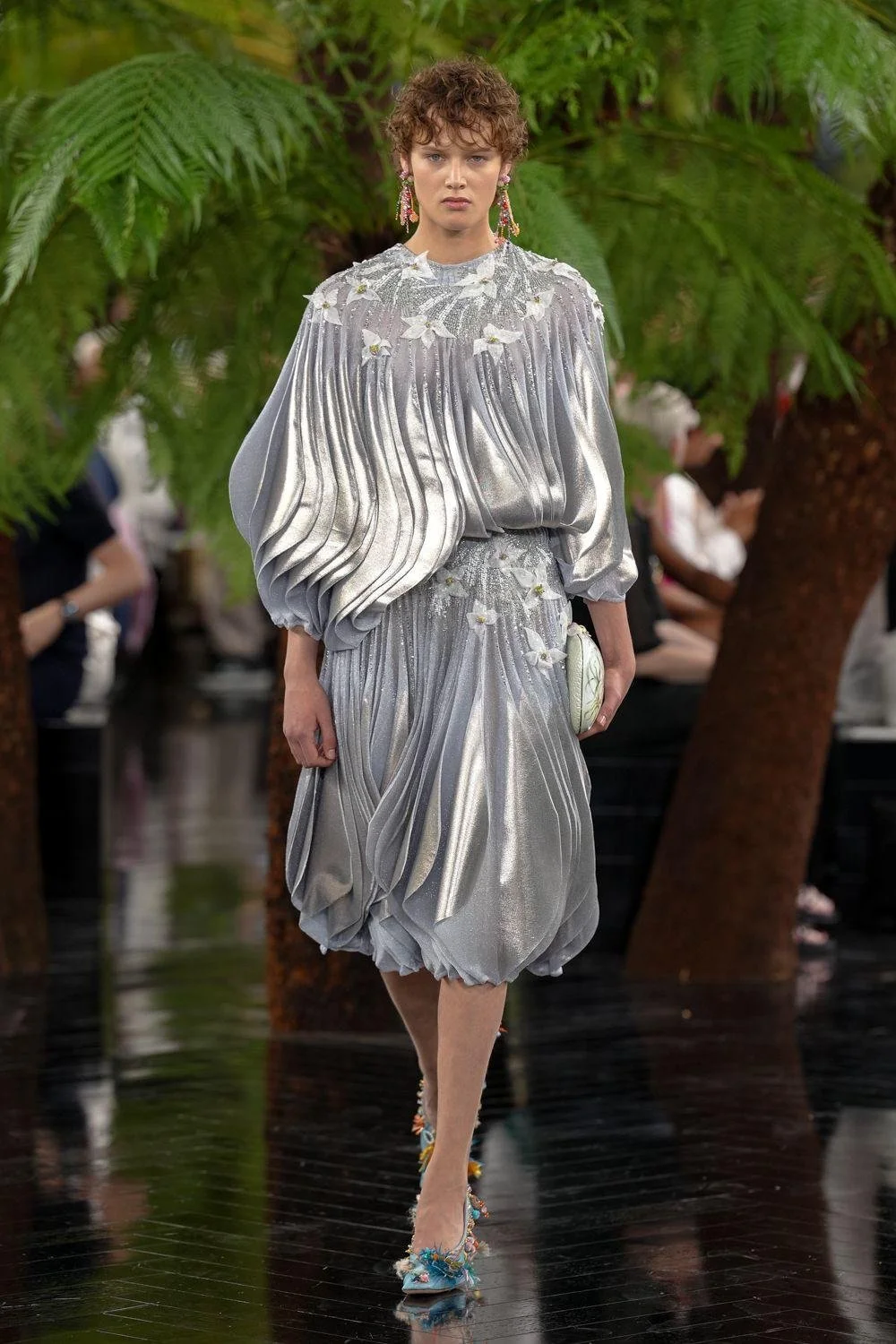
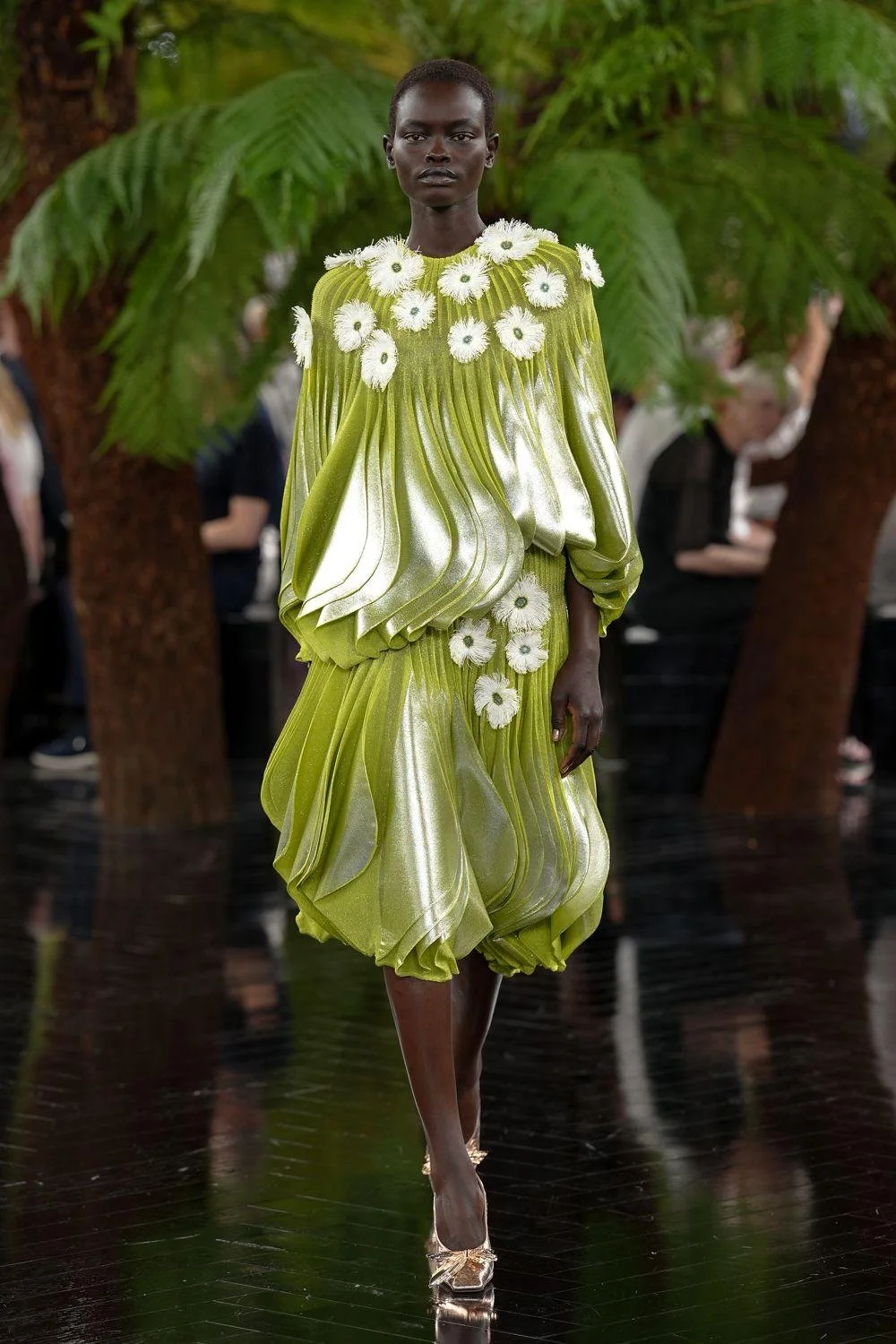
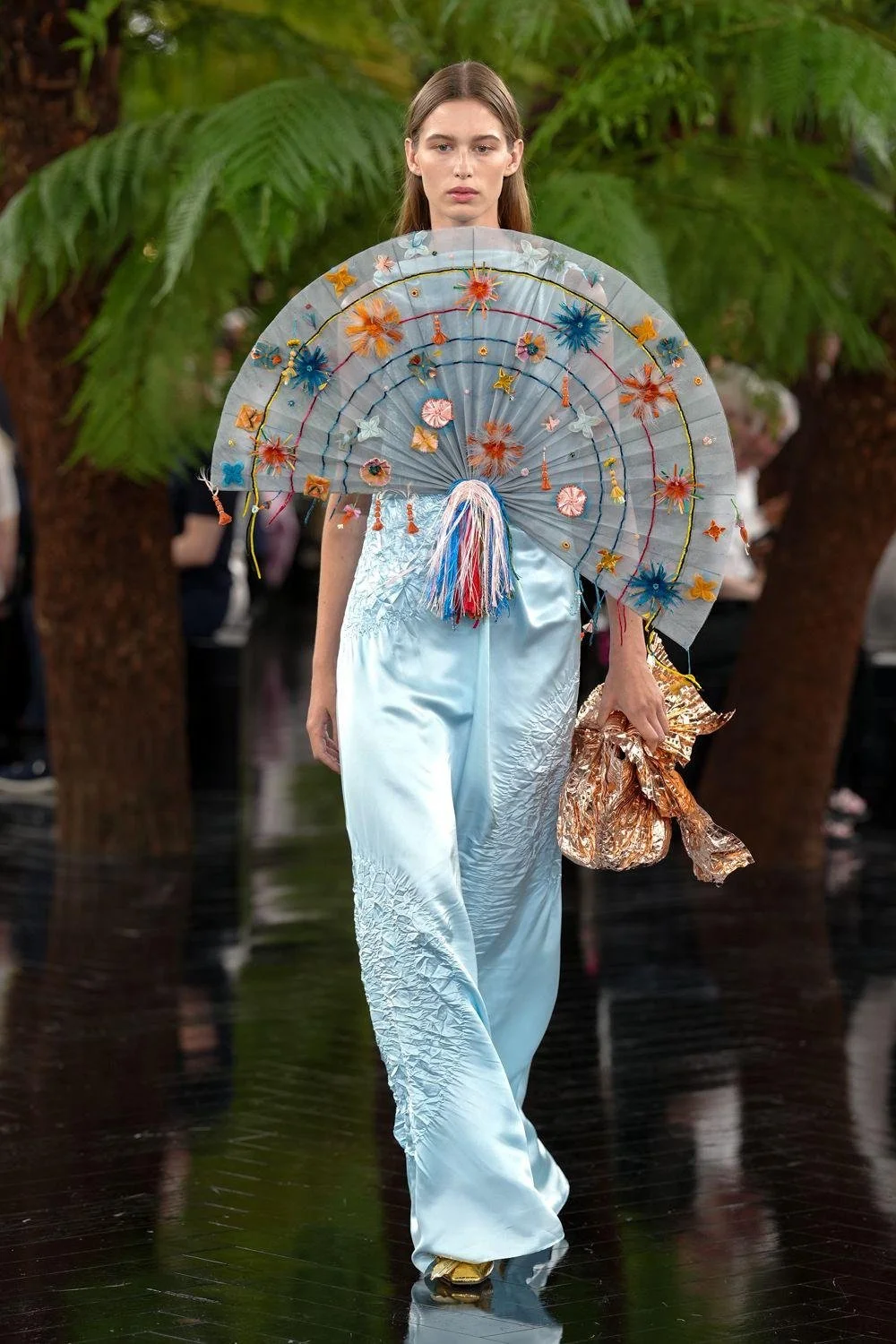
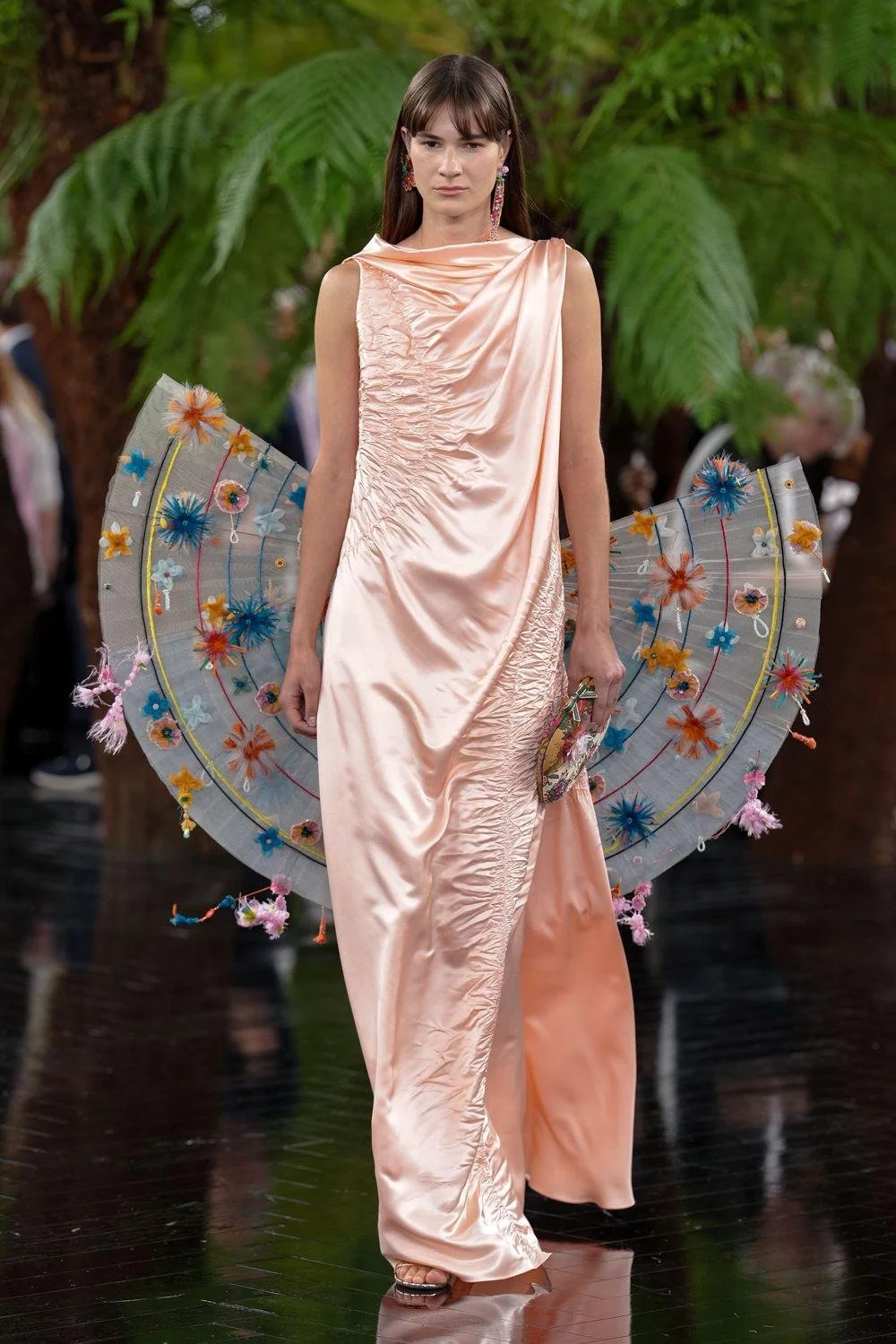
The show flawlessly portrayed the feminine essence of Dior, which has defined the brand's identity since its founding, as expressed through the innocence and delicacy of flowers by Anderson. Present throughout the vision in myriad ways, florals were interpreted in diverse poetic languages. They appeared as details on dresses and bags, as subtle prints and appliqués, and as staple pieces in their own right, from the venue’s ceiling decoration to 3D accessories, XXL earrings, or adornments on heels and bags.

Anderson’s distinctive approach to design was seen in the proportions and volumes. Balloon-shaped skirts, dresses and tops gave the collection a whimsical allure, while ruffles and draping in lightweight materials followed the models' natural movement as they walked down the runway.

The palette, dominated by soft hues and romantic pastels such as powder blue, pale yellow, and blush pink, gave an ethereal feeling, enhanced by feather-like appliqués that contributed to the sense of whimsy. Asymmetric constructions were paired with prints that granted the garments a sense of movement and a trompe-l’œil visual effect, while other pieces were an ode to timeless and refined construction.

Each garment delicately hugs the body, not in a restrictive way, but enveloping it in a subtle, natural manner. Organza, chiffon, and tulle create a lush yet delicate finish, while other silhouettes lean toward more constructed shapes, such as the iconic Bar Jacket. Anderson brought together the visions that have shaped the brand until now, from Raf Simons’ romanticism and John Galliano’s theatricality to the femininity of Monsieur Dior himself, immaculately embodying the dreamy nature of Haute Couture.


Words by Carolina Benjumea

AGNÈS B. FW26

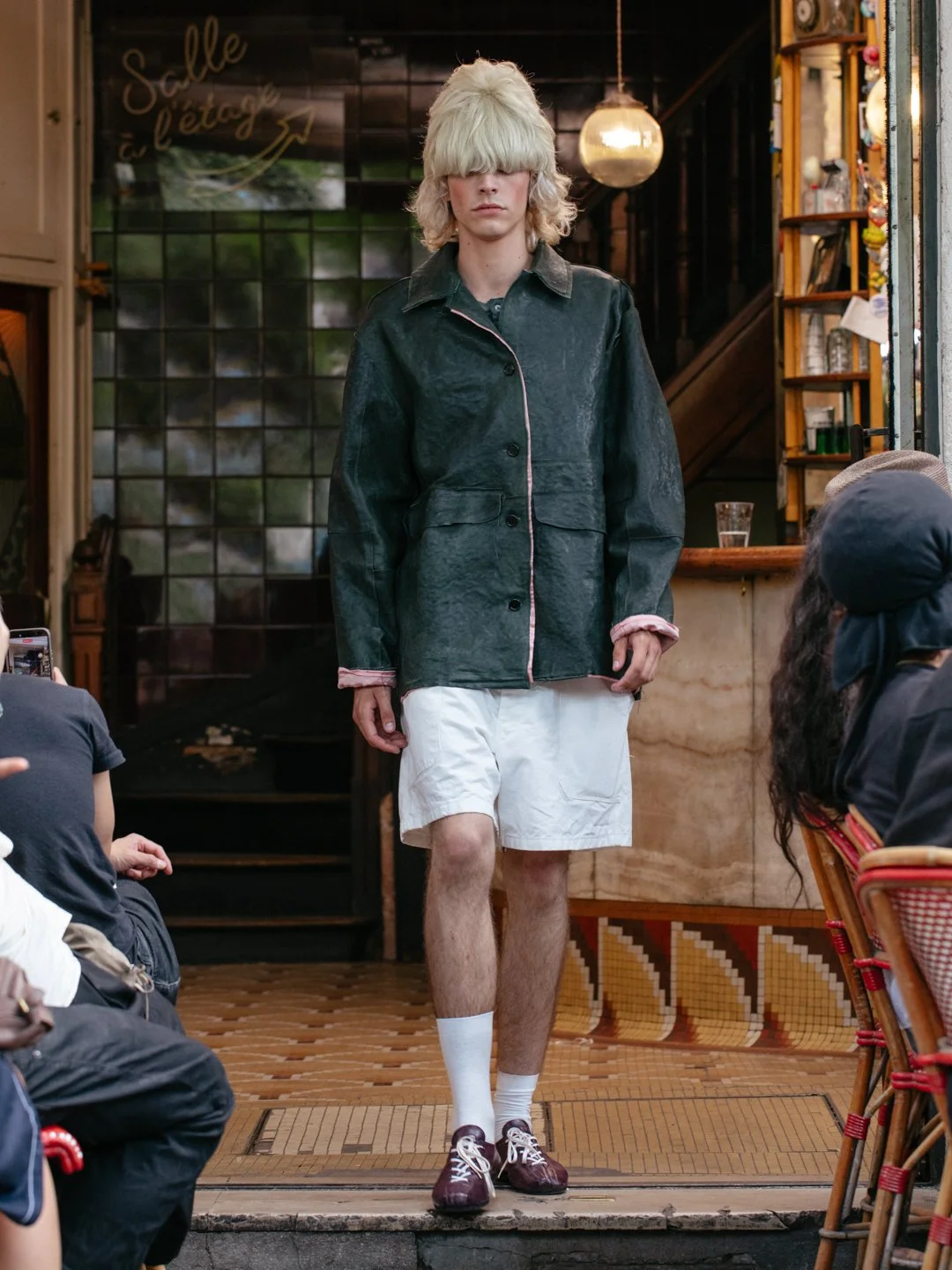
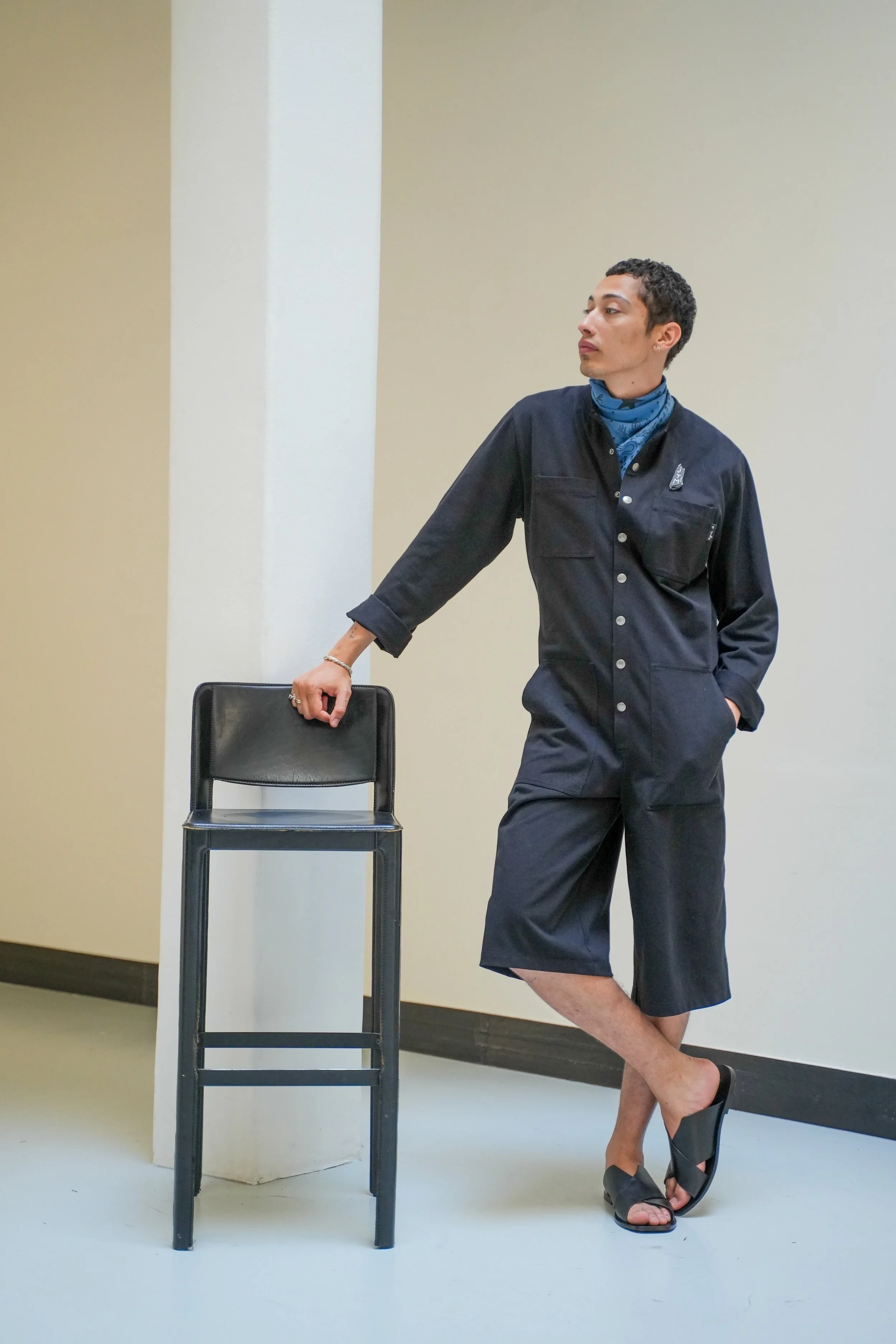
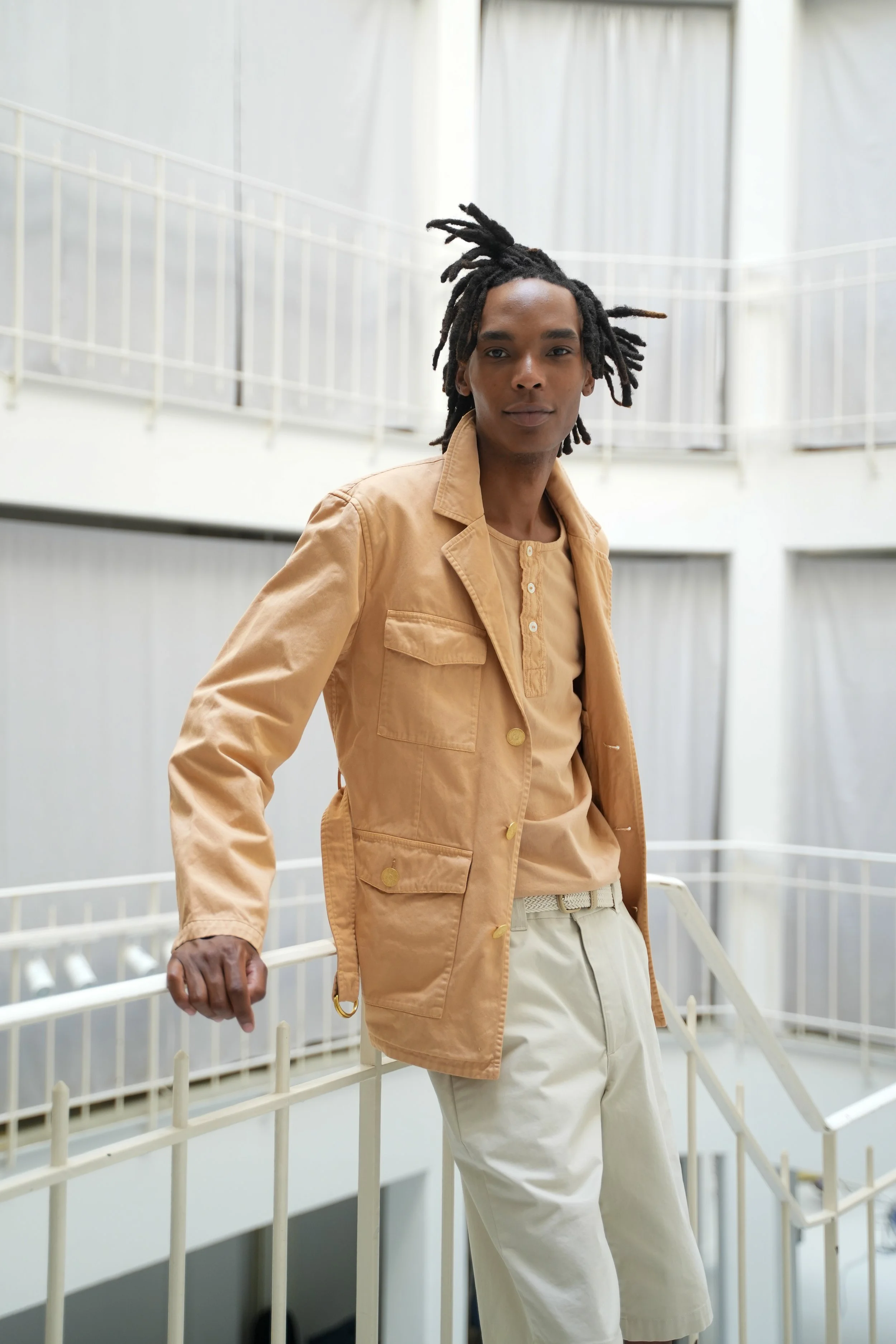
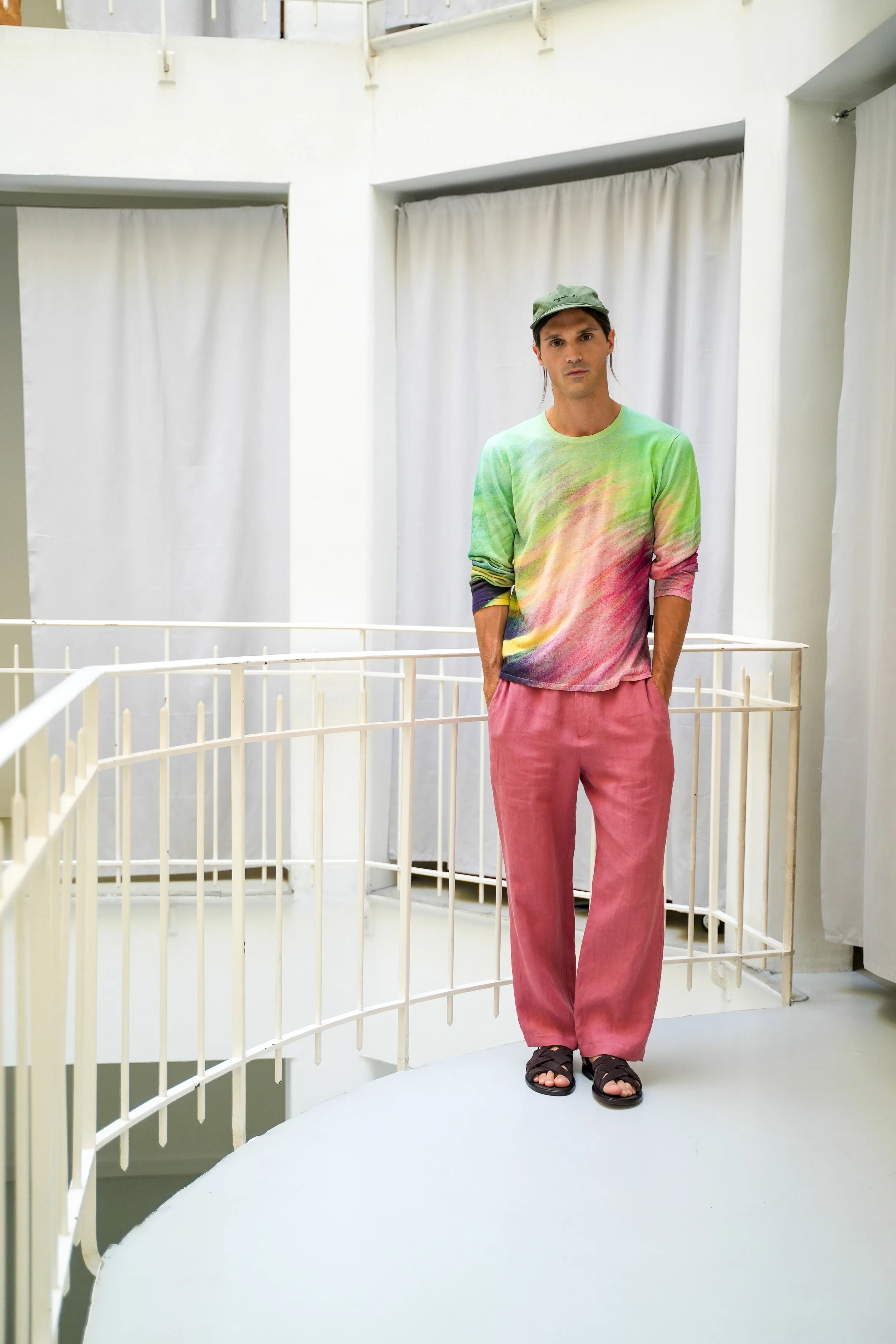
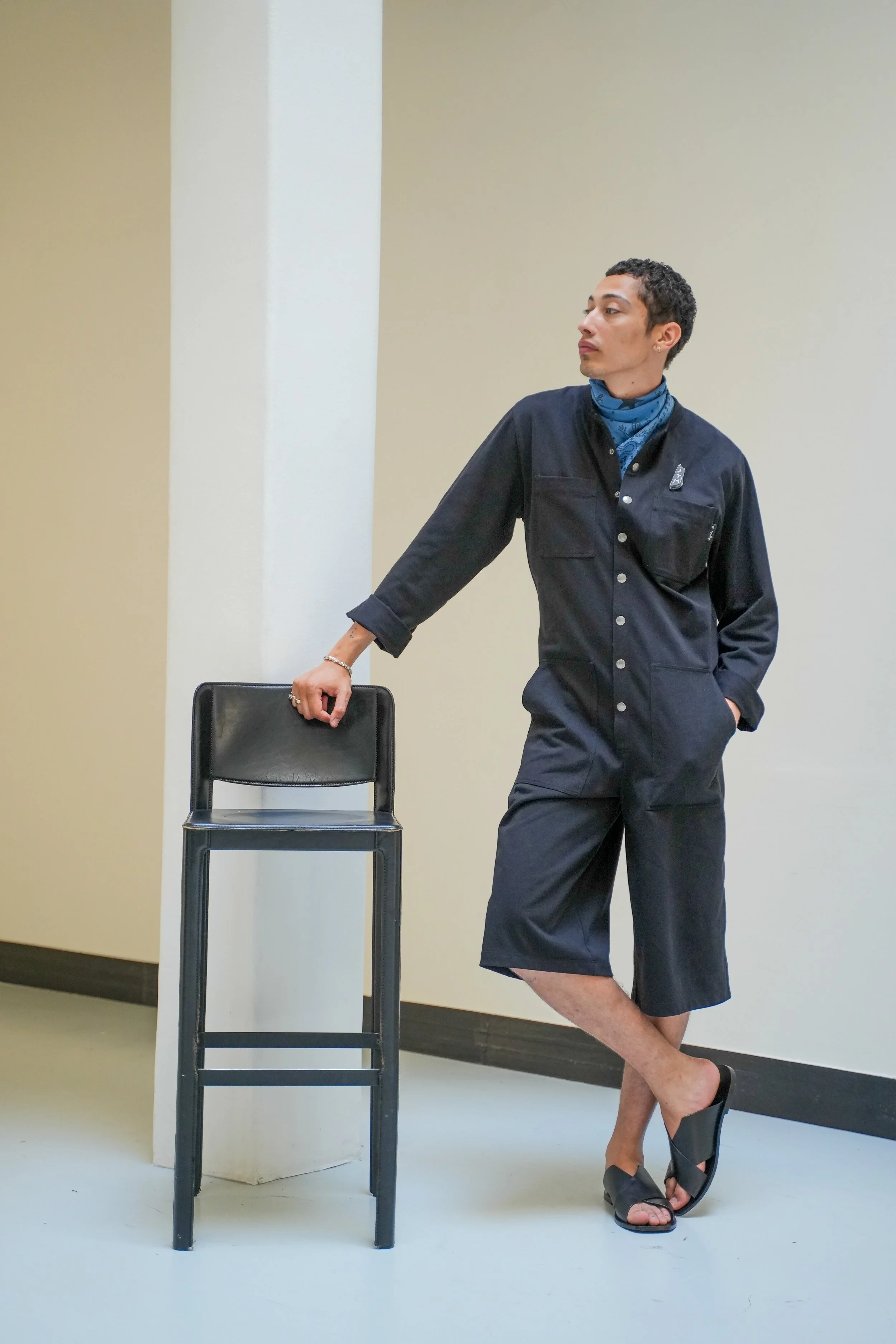
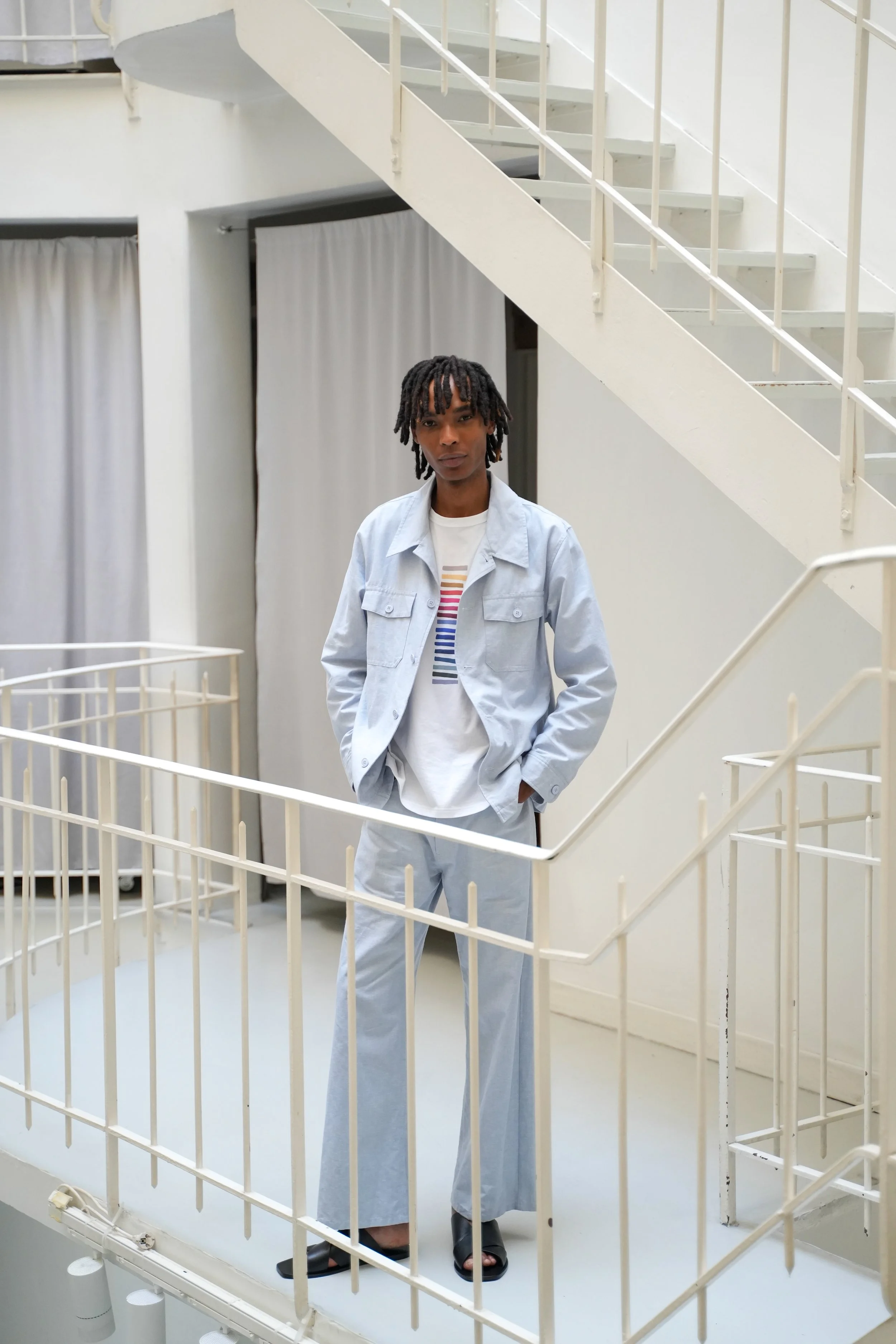
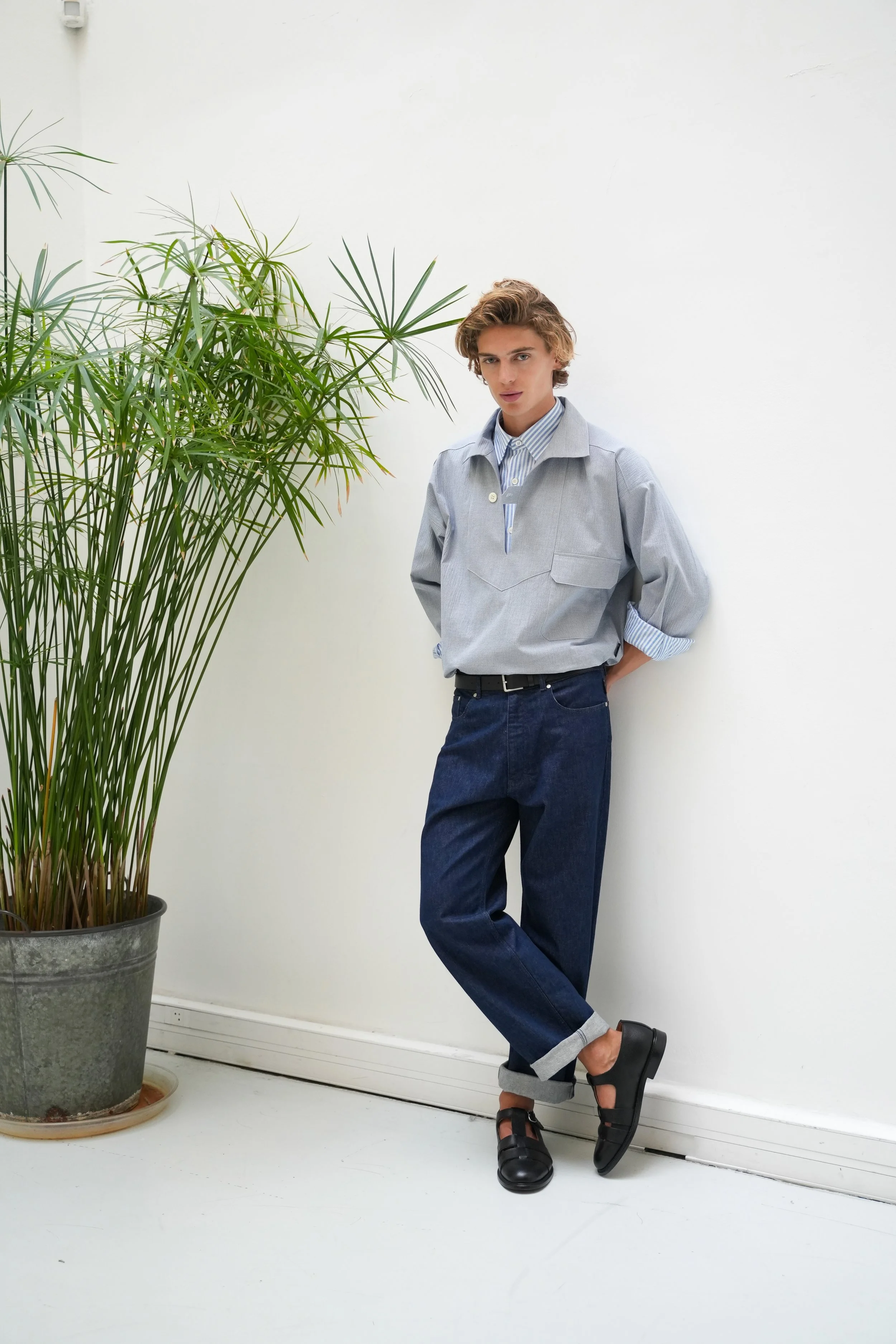
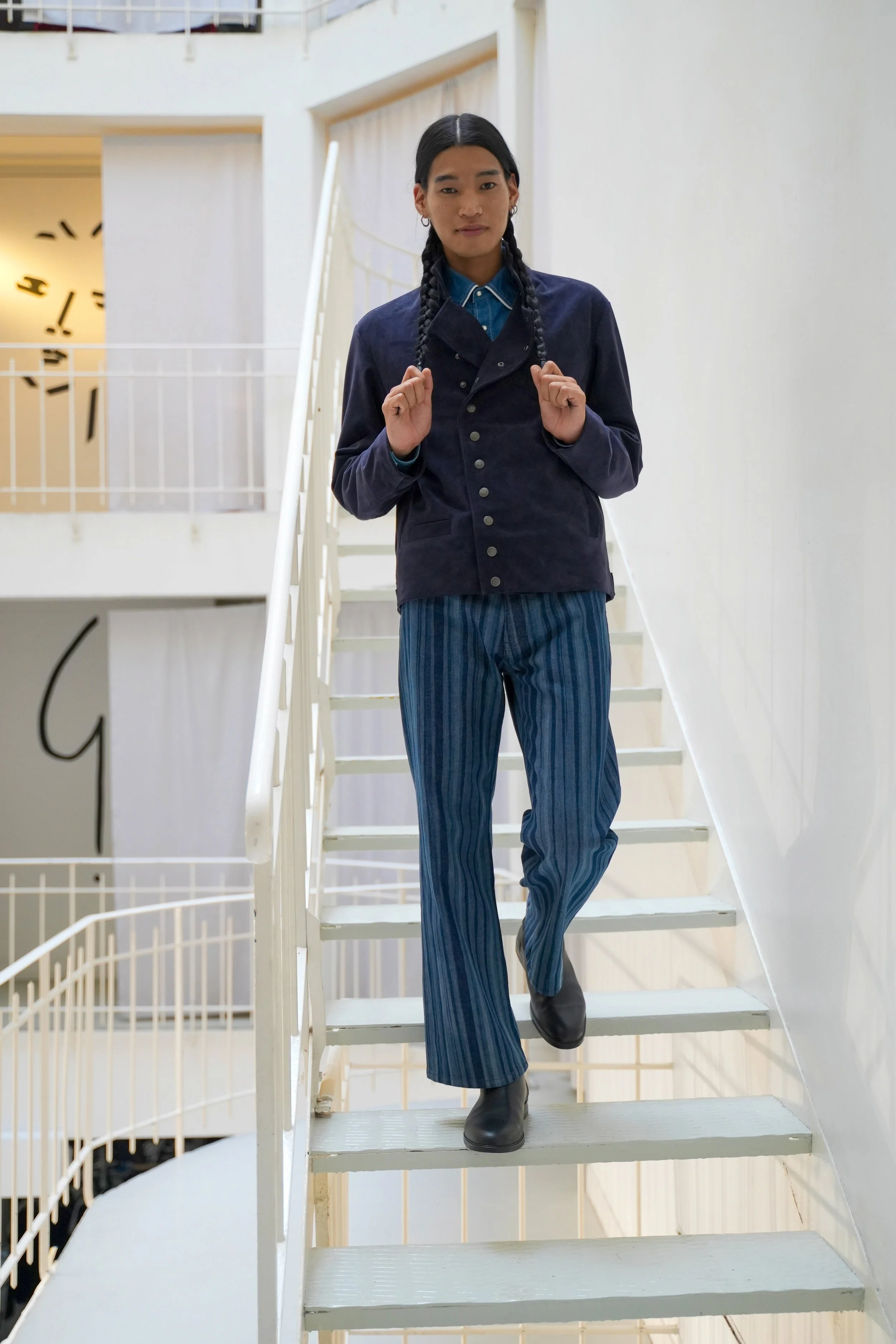
For Fall/Winter 2026, agnès b. presented a collection rooted in heritage and restraint. Eclectic yet timeless, the silhouettes are relaxed; instead of sharp tailoring, the pieces feel easy and adaptable to the everyday rush. The brand builds a narrative around texture, proportion, and attitude, presenting a wardrobe that’s thoughtful and mature. The focus is placed on construction and materiality, allowing silhouettes and fabrics to do the talking.

Proportions are explored in subtle ways, creating an interesting interplay between the classic and the modern. The colour palette features earthy tones with pops of burgundy, forest green, and indigo, while touches of pastel create a soothing effect. Texture plays a central role throughout: leather trousers and jackets contrast with knits, wool, and cotton, adding depth across the looks.

Layering is not obvious; instead, it feels like a natural outcome of pieces that belong together. Knitwear over shirts, scarves tucked into coats, and lightweight jackets worn with outerwear feel intentional and refined rather than excessive. Some looks convey an intellectual sensibility through tailored jackets, cardigans, and leather accessories, while others are more relaxed and casual, evoking off-duty moments and practical city life.

The collection introduces a softer version of masculinity, one that is not exaggerated; instead, it is seen as fluid and confident, without the need to perform it through specific codes. The show embodies a refined vision of modern menswear, with its emphasis on craftsmanship, layering, and subtle elegance, offering a wardrobe that’s both contemporary and enduring.


Words by Carolina Benjumea

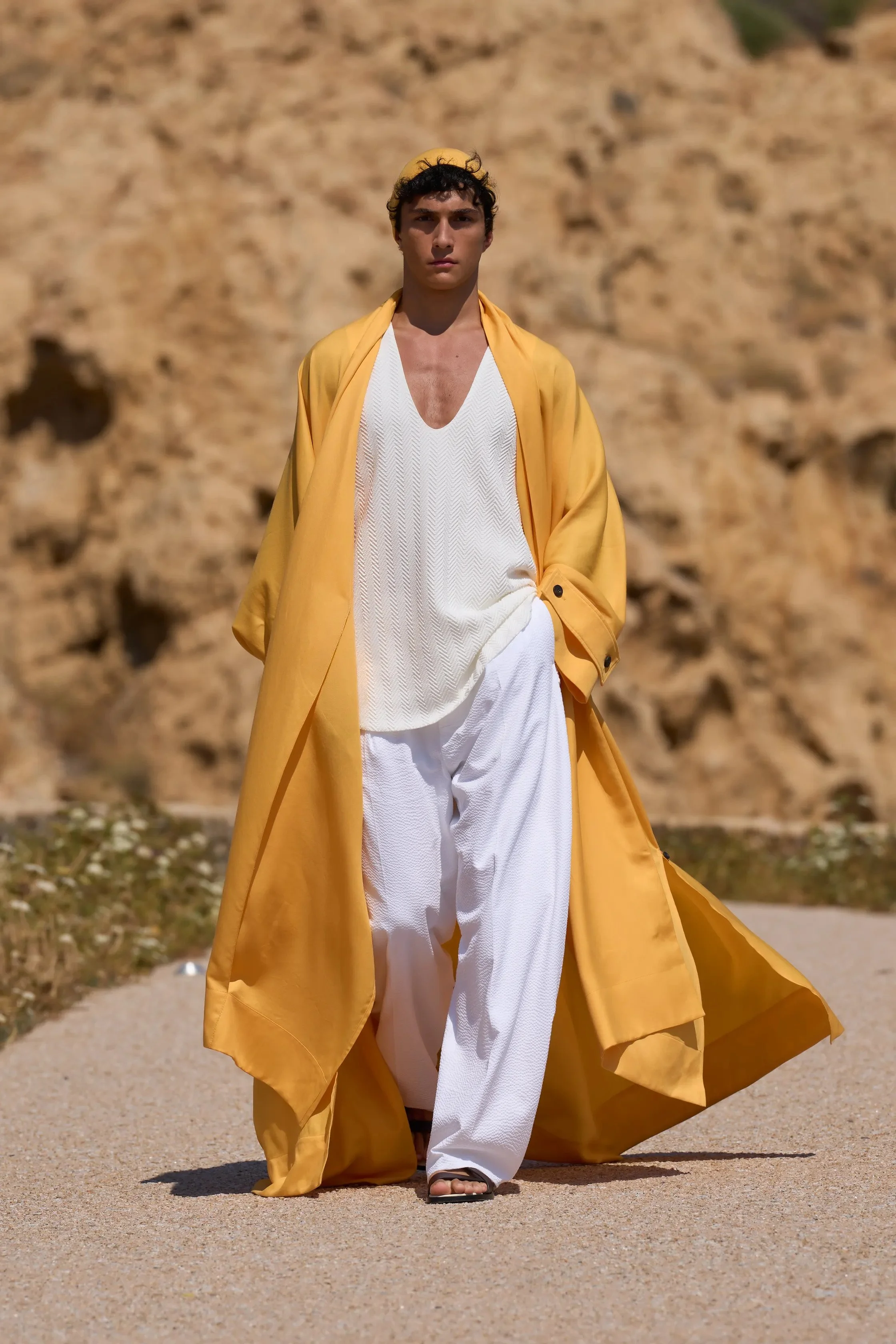
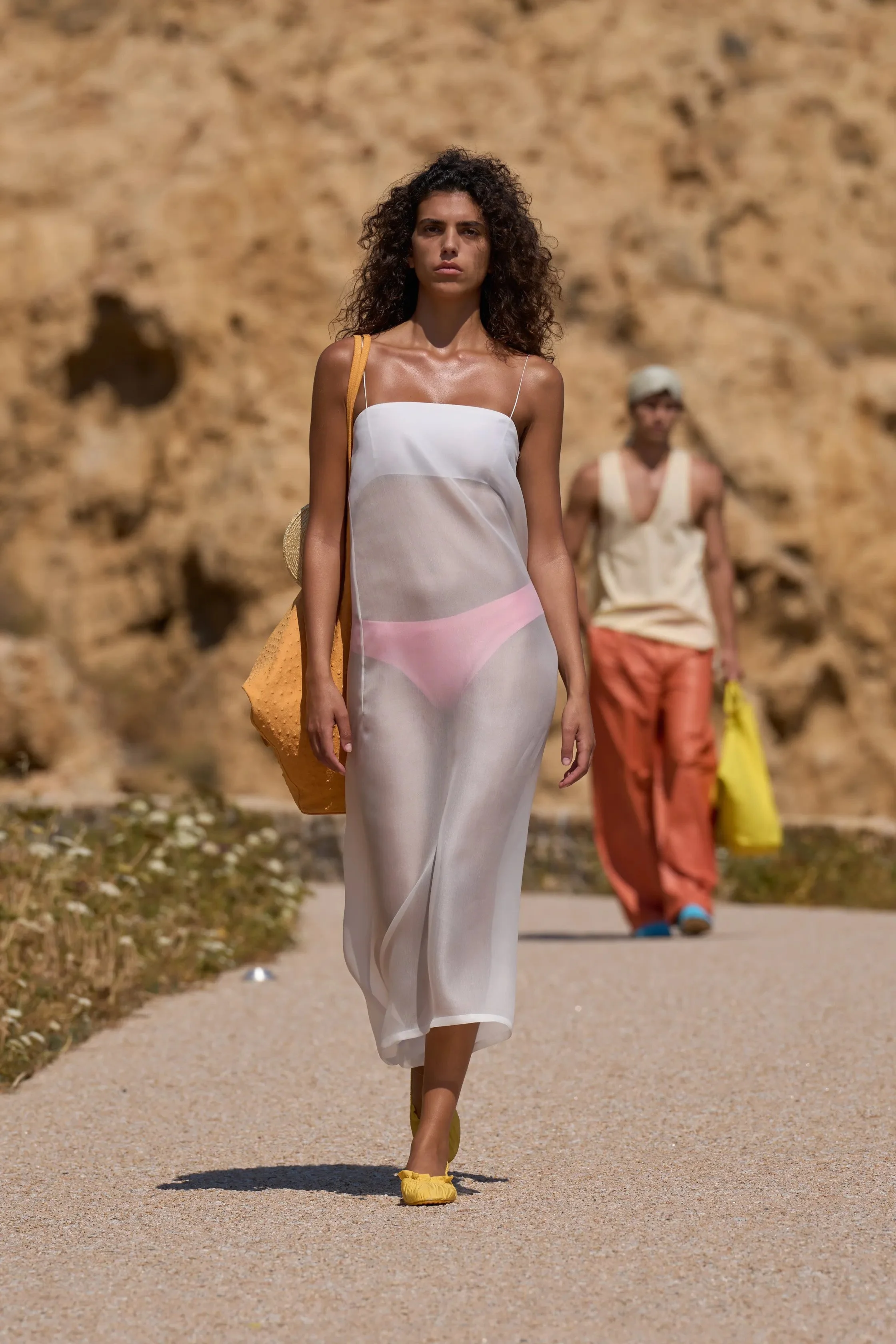
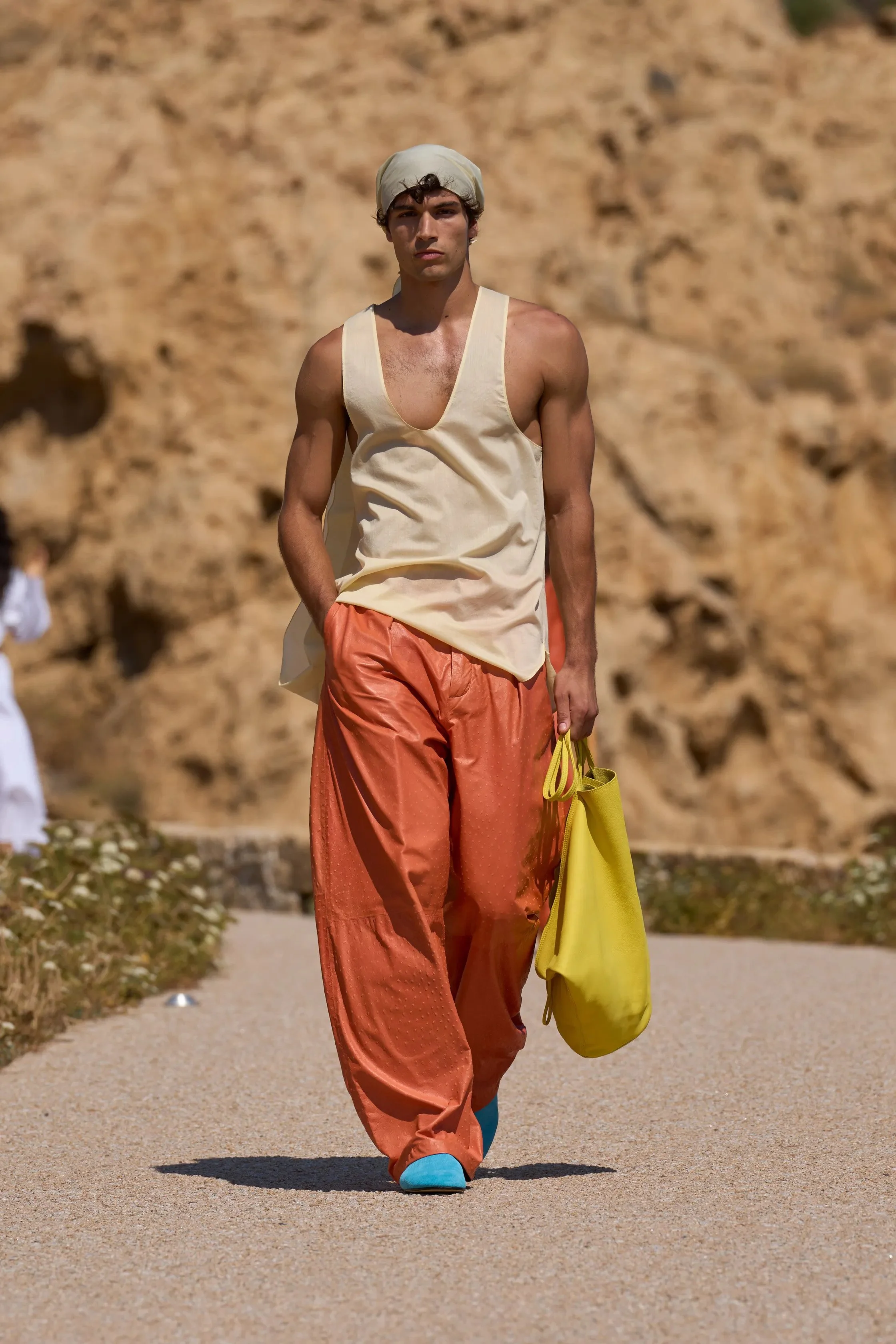
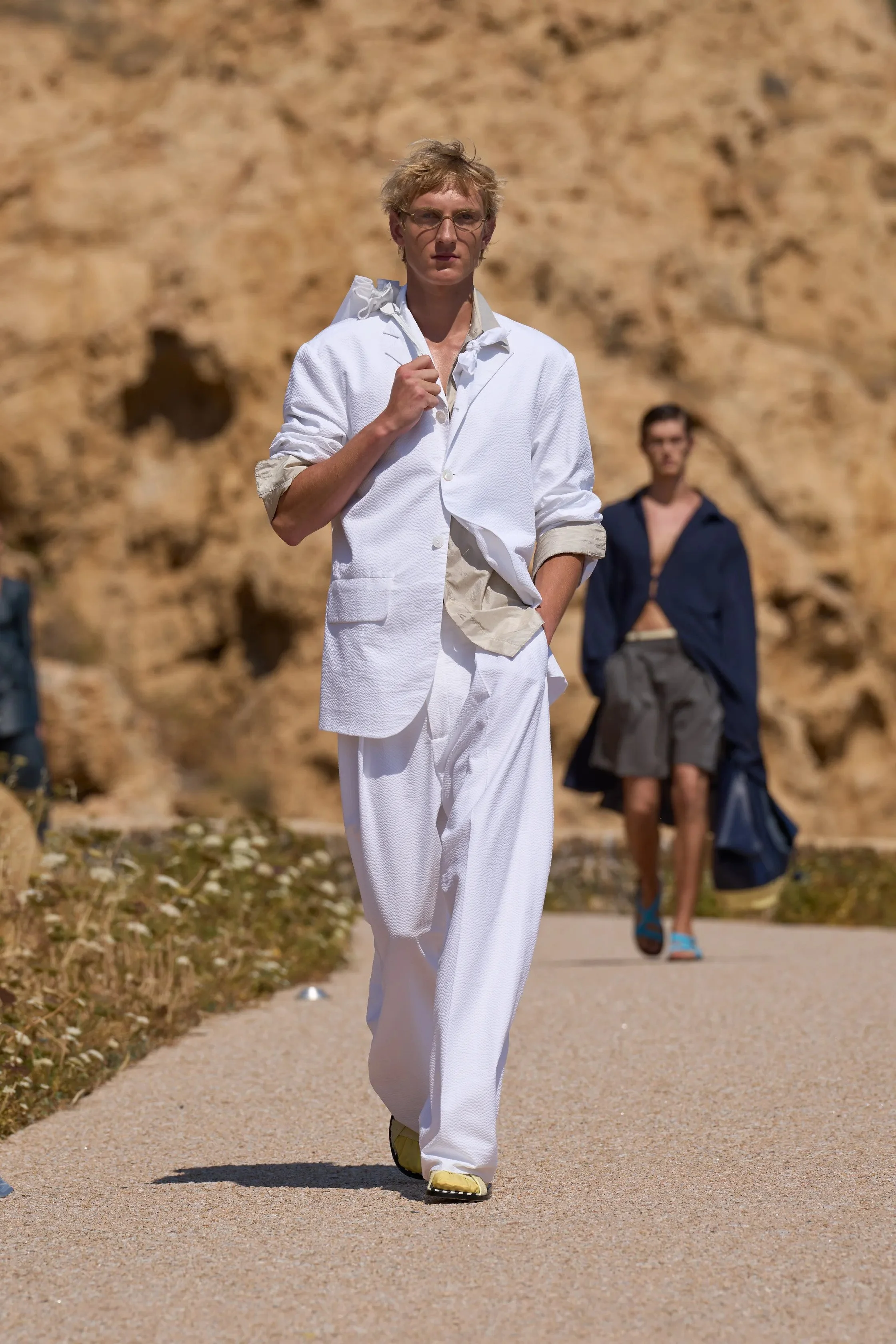
JACQUEMUS FW26

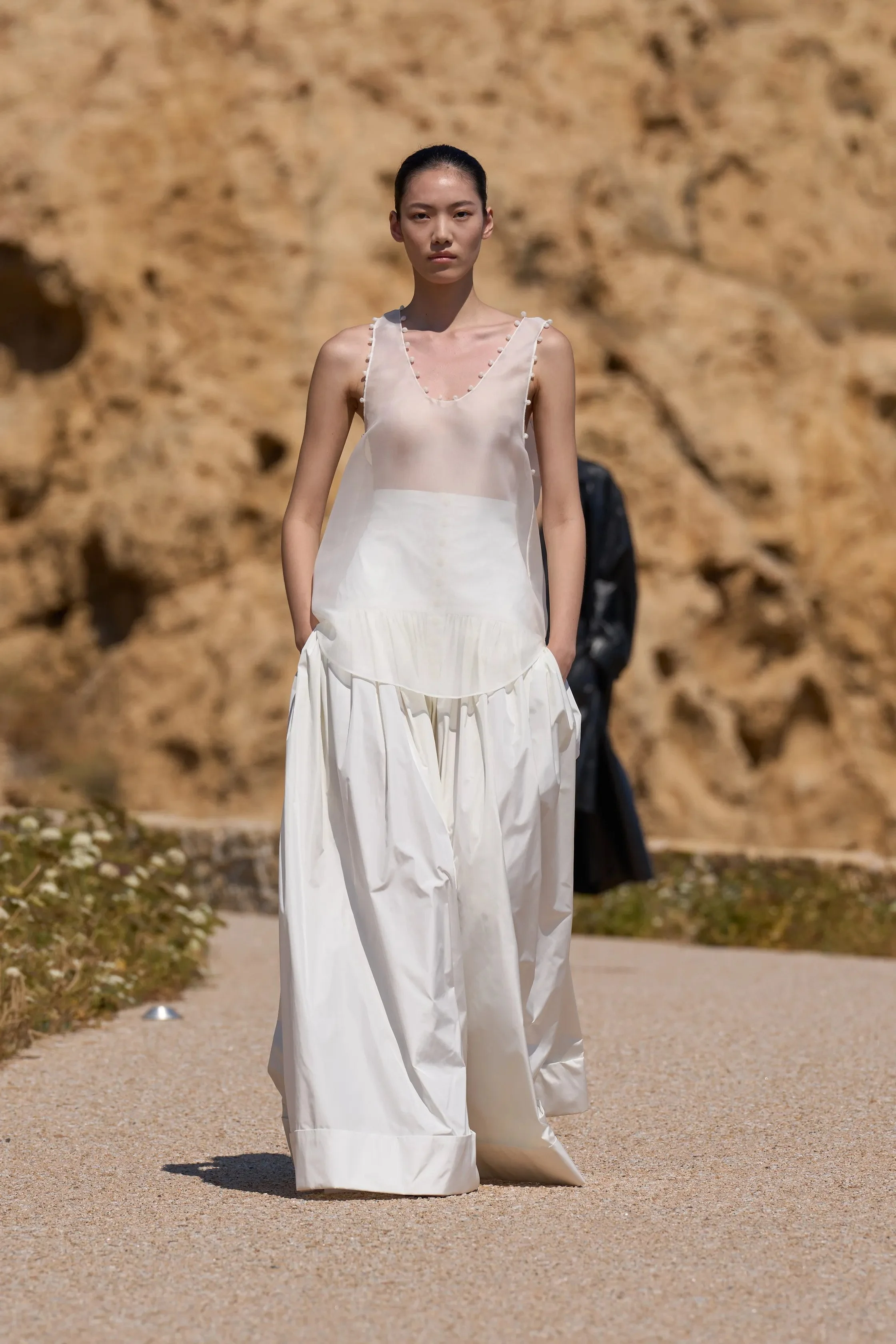
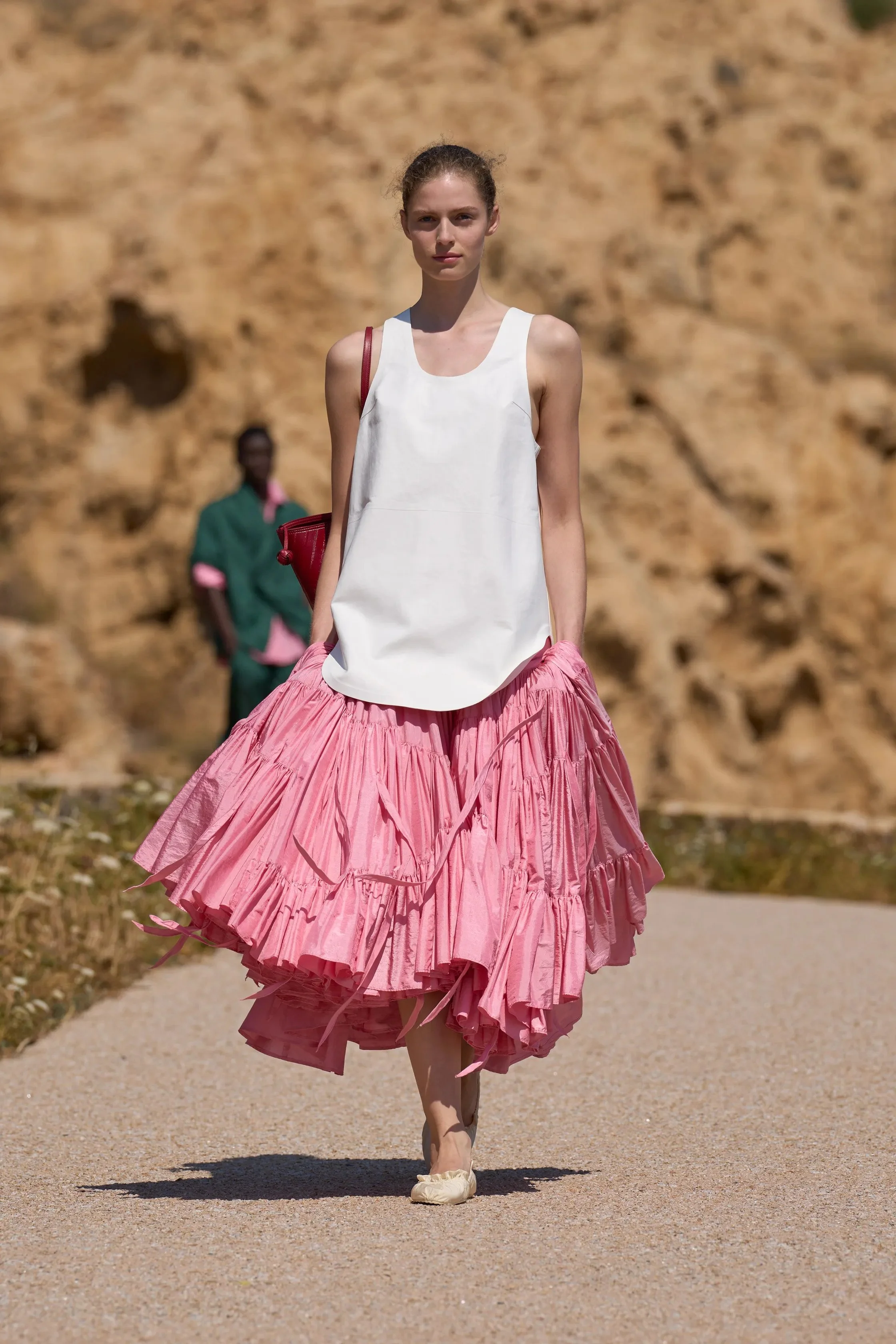
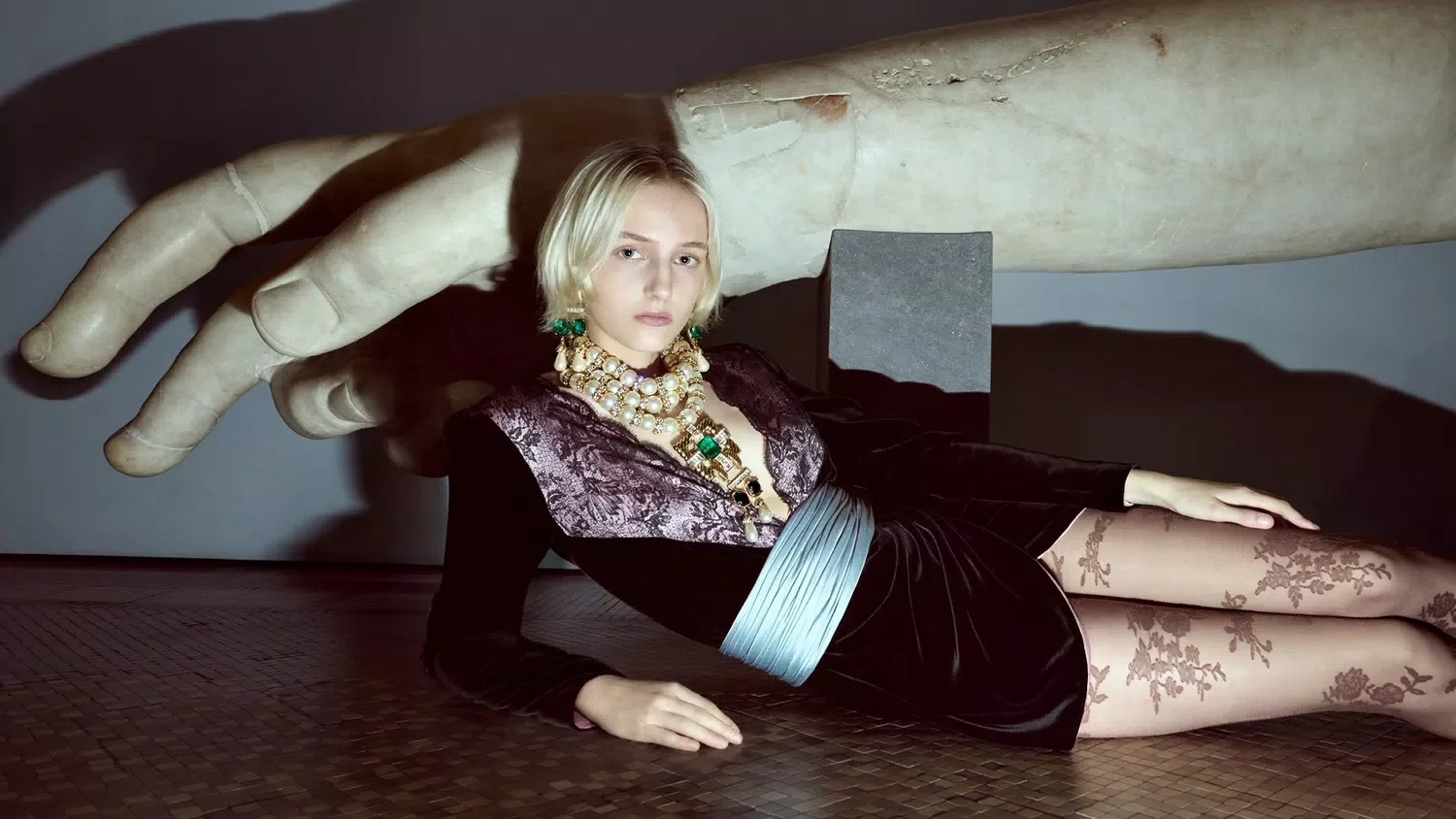
Jacquemus introduced its Fall/Winter 2026 collection, titled Le Palmier, inspired by the hairstyle popularised in the 1980s, and now worn by Mia, his daughter. This inspiration resonates with mothers and young girls around the world, something deeply ingrained in the essence of Jacquemus. This playful inspiration was accompanied by silhouettes drawn from the 1950s.

Presented at the Picasso Museum, the collection introduced a feminine allure dominated by hourglass figures and theatrical shapes. Some silhouettes recalled Dior’s New Look, while others felt more modern and playful. Overall, the collection evoked sensuality at its core.

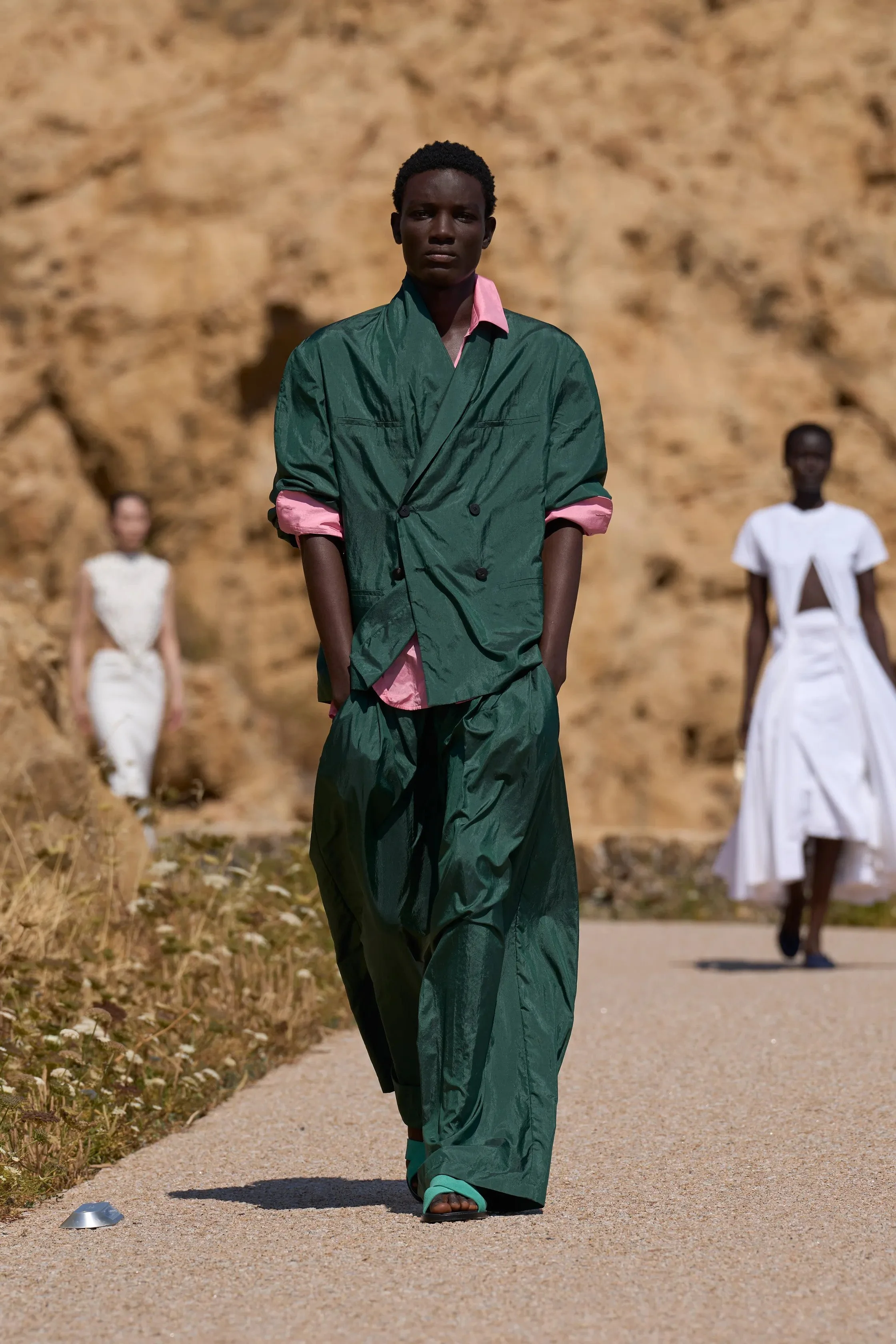
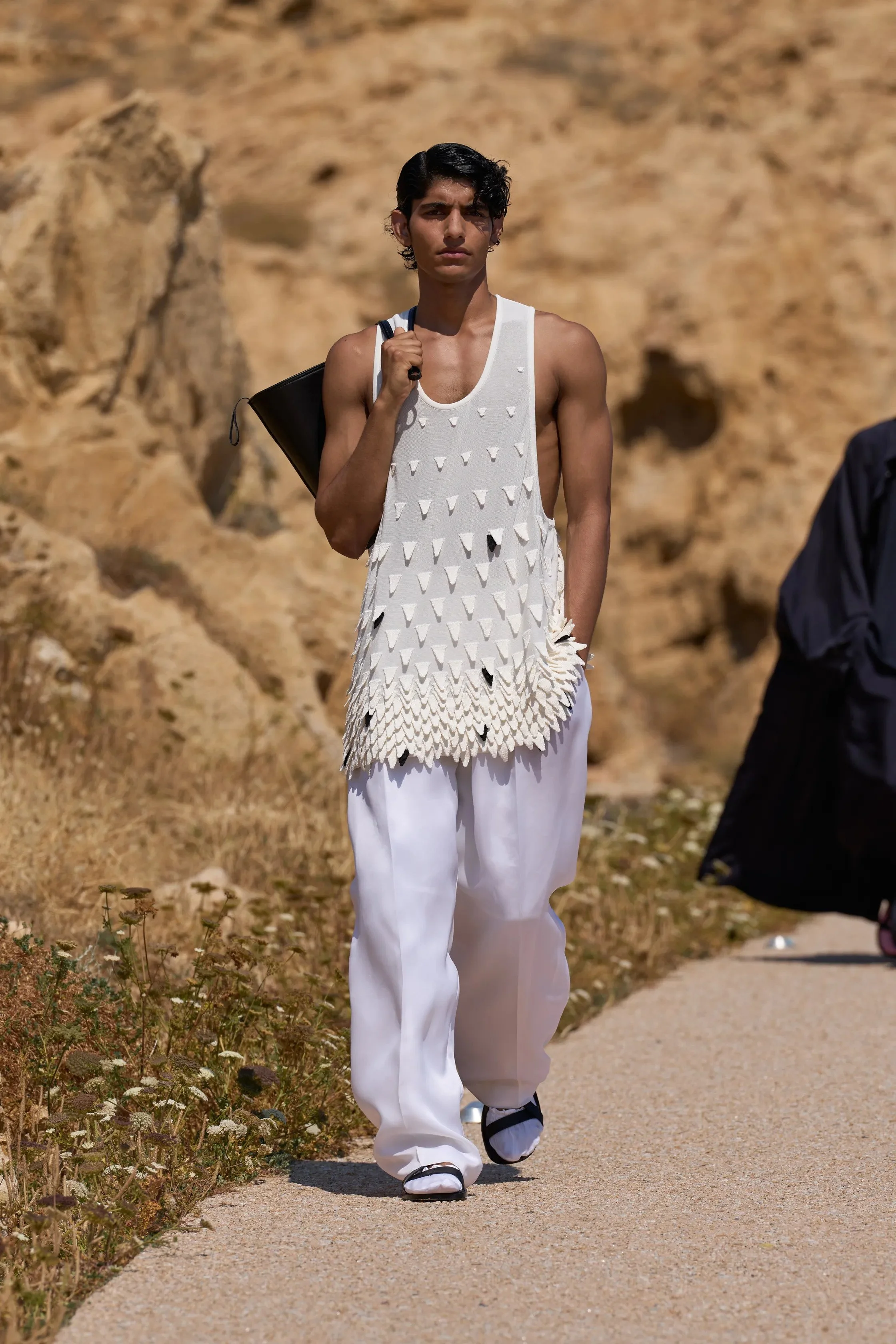
The masculine wardrobe was classic and restrained, consisting of tailored bermudas, jackets, and the timeless tuxedo, while the real drama emerged through the feminine silhouettes: puffed sleeves, ruffles, polka dots, capes, and form-hugging pieces.

Sculptural volumes complemented by organic shapes were at the centre of the collection. Cinched waists, wide hips, and midi lengths signalled a return to the classic silhouettes of the 1950s, while transparencies gave the collection a modern edge.

Some looks were complemented by structured, XXL dramatic hats, while others were styled solely with Le Palmier. Deconstructed pieces, such as the statement red dress, showcased technical precision and theatricality, while other designs highlighted movement and fluidity through light fabrics.

The collection felt glamorous and distanced itself from the youthful image of the Jacquemus girl. This season, she became a femme fatale through smart tailoring and garments that fit the body like gloves, creating a sexier vision of the brand.


Words by Carolina Benjumea

SACAI FW26

At the Sacai Fall/Winter 2026 collection, there is an air of refinement, craftsmanship, and casual allure – a style that feels as recognisable as it feels contemporary. The collection draws heavily from the men’s wardrobe staples through its shapes, constructions, and tailoring, from long coats to suit jackets and wide trousers. Some garments are softer and more fluid –  skirts, knits, and textured layers – creating a balance between the feminine and the masculine, yet the overall collection exudes a manly energy.

Elongated and fluid silhouettes create a look that feels as practical, almost technical. Proportions are carefully measured, with select pieces featuring volume to create interesting visual combinations. Leather jackets stand out as key pieces, giving the collection a rebellious edge.

A restrained colour palette dominates, with black, chocolate brown, oxblood, charcoal, and muted ivory, punctuated by a few blues and folk-inspired prints that contrast with the rest of the offering. These elements add rhythm and movement to otherwise minimal looks and act as points of artistic expression.

The play with deconstruction is visible through layering, but it is less pronounced than in past collections. This season, the silhouettes are elongated and relaxed, with styling that allows for movement. Coats, skirts, and trousers fall with grace, respecting the natural shape of the body. There is a tension between Sacai’s signature tailored constructions and the search for a softer side through light fabrics. Denim plays a significant role, contributing to laid-back silhouettes.


Words by Carolina Benjumea

COMME DES GARÇONS HOMME PLUS FW26

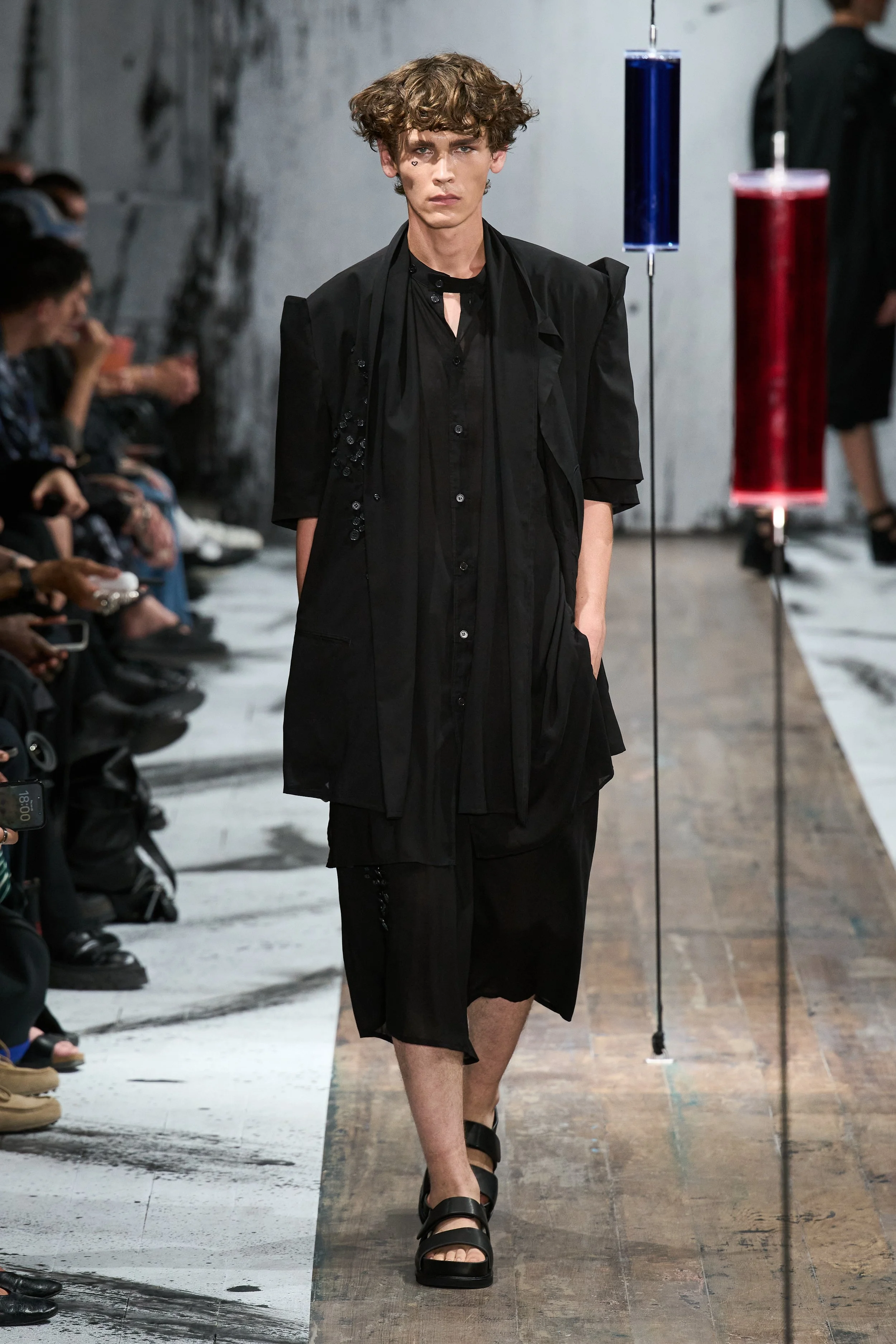
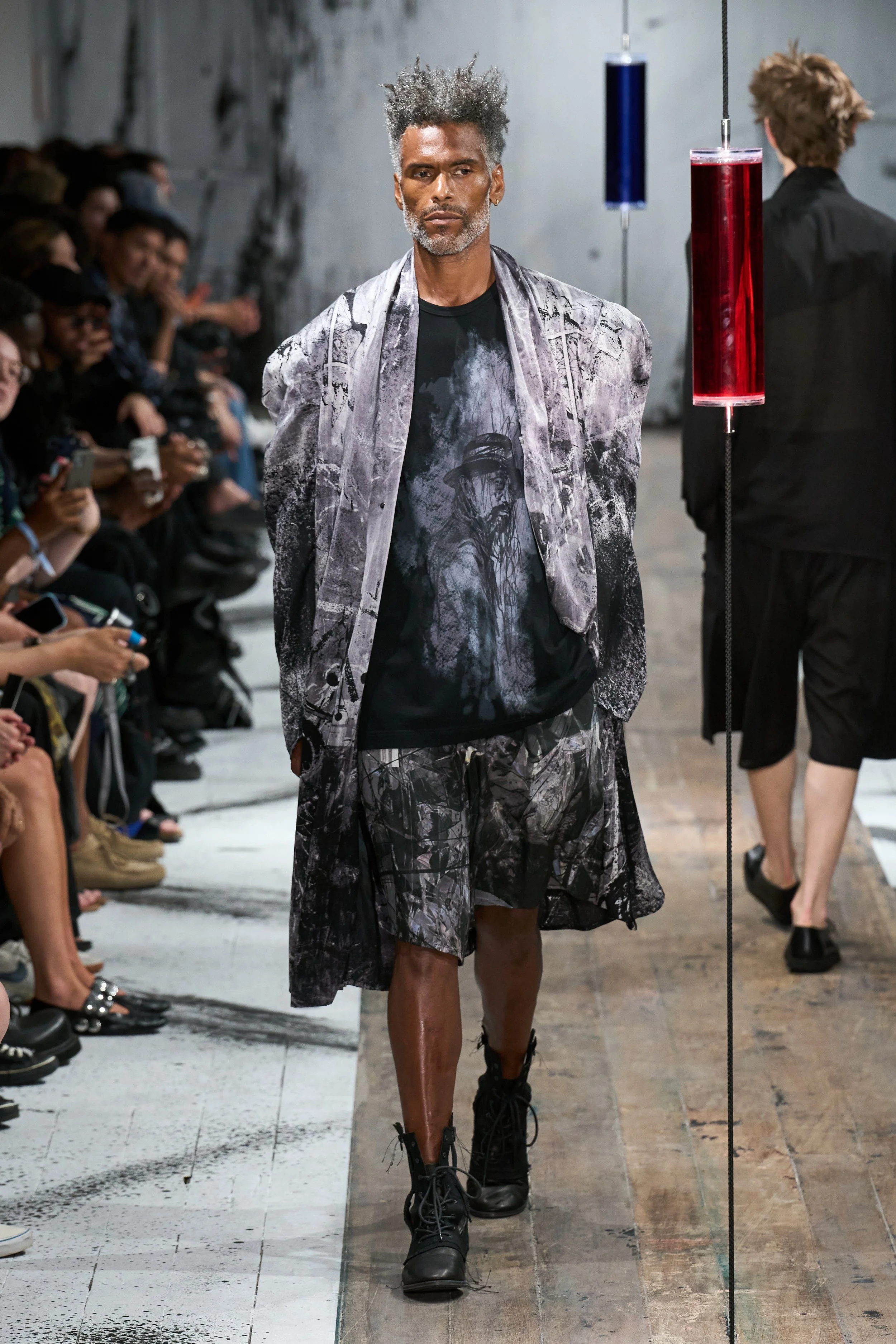
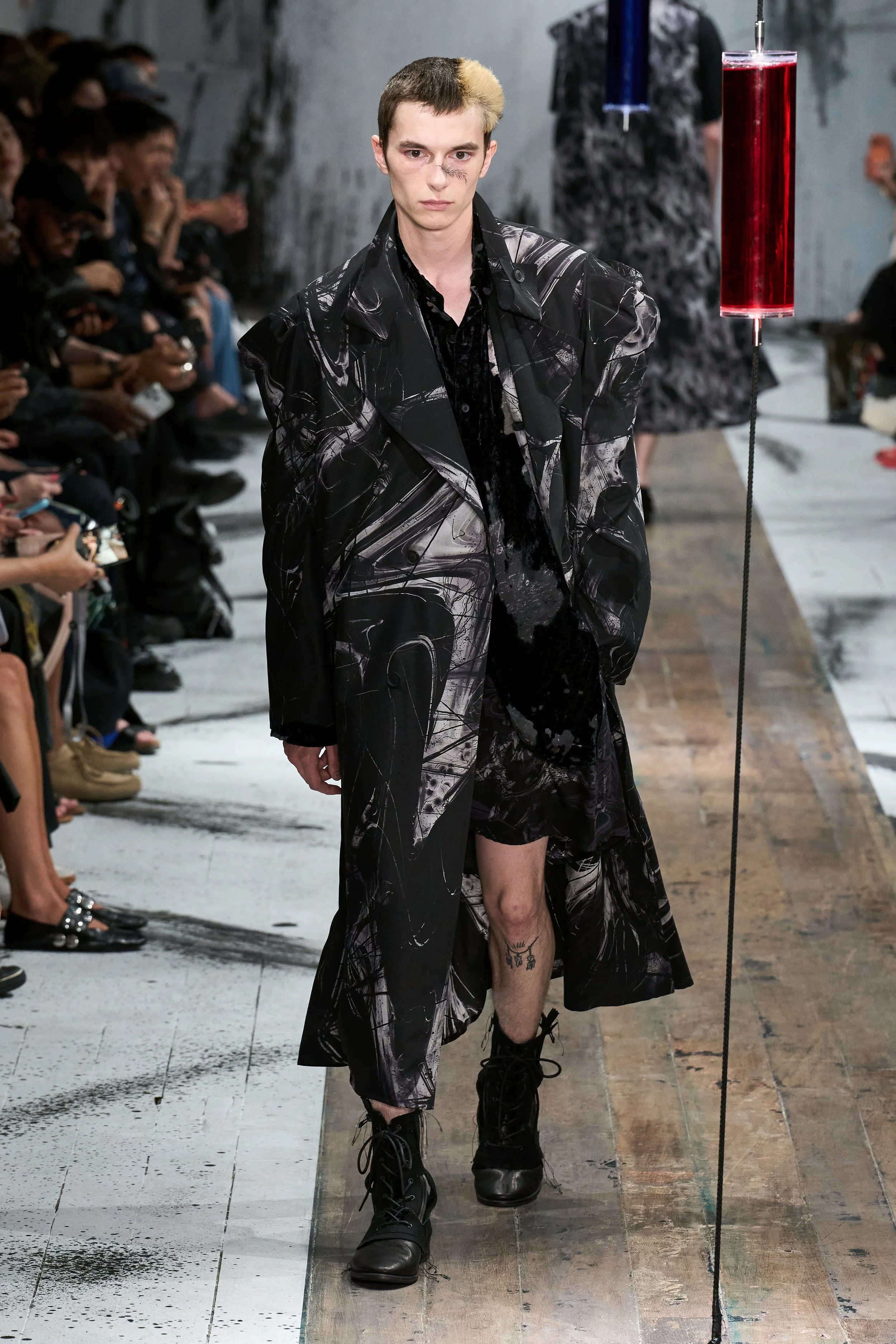
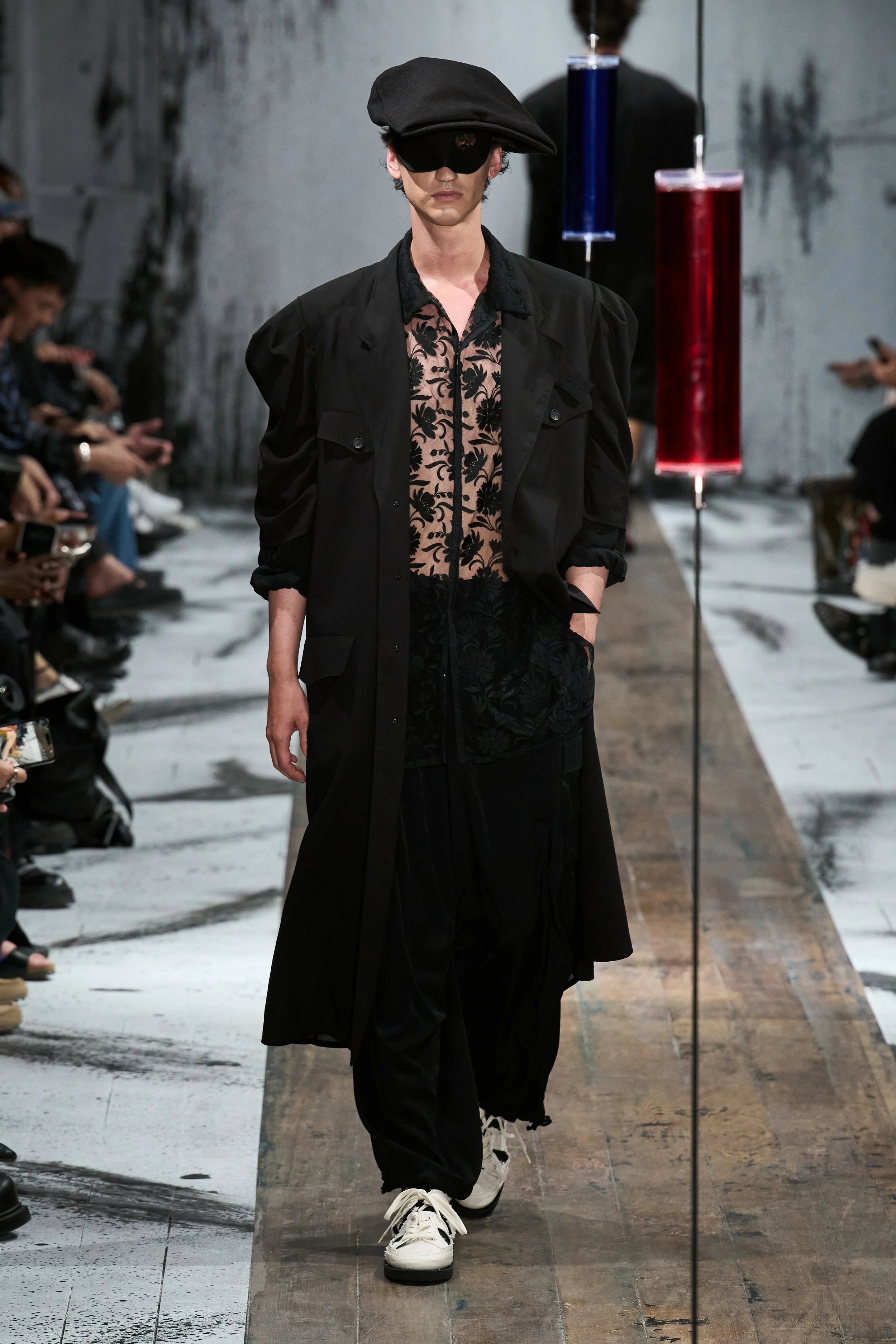
There’s a widely agreed-upon expectation when it comes to Comme des Garçons. Rei Kawakubo’s work is not only one of garment-making but of cultural commentary. Which is why, when modified Hannibal Lecter masks came down the runway for Homme Plus’ Fall/Winter 2026 show, immediate interpretations ran through my mind. For the past few seasons, the Japanese designer has drawn on global political turmoil. First, representing unwilling soldiers, then staging a search for a saviour. This time around, the cannibalistic messaging seemed apparent. But backstage, Kawakubo spoke of freedom. Named Black Hole, the collection spoke of cosmic unity.

With its title in mind, the show understandably opened with black tailoring. The designer’s deeply morphed silhouettes found their home in fractured tailoring. Double-breasted blazers were cut at a model’s belly button, paired with trousers that exploded at the knees, only to be contained at the ankle. As if attracted by mass, circular bulbs gravitated to the surface of a tailored jacket. There was a sense of unity, of continuity. Dresses wrapped a singular rectangular sheet around the body, darkness serpenting it.

While the bulk of the collection was plunged in the colour palette of a cosmic void (black, silver, grey), the finale sharply pivoted into blinding light – a symbol of emergence and renewal, perhaps. When it comes to astrophysics, we’ll listen to Kawakubo: light is on the other side of a black hole.


Words by Pedro Vasconcelos
KIKO KOSTADINOV FW26

For Kiko Kostadinov’s Fall/Winter 2026 show, we’re in a familiar location - a school gym in the 5th arrondissement. It’s a venue where, at least once a season, a designer stages their show. Although this choice didn’t seem a matter of convenience, more so of thematic context. In the bare-boned gym, only three structures stood: white, geometric-edged tombs, made by the artist Oscar Tuazon through cardboard and tape. The sculptures establish a conceptual baseline: bodies reduced to purpose and form.

Kostadinov ran a parallel exercise. He looked at garments in their most primordial shape, through their most fundamental purpose. He cleaned the slate of his idiosyncratic patterns and decorative quirks. The circumstantial hints were immediately proved correct when the first looks came out. A black cape-like coat overwhelmed the model’s frame, as if the fabric was placed organically on the body. The second look proposed an evolution; the cascading flow grew structure, becoming angular in the shoulders. This pattern repeated itself multiple times throughout the show. Kostadinov usually moves geometrically, functionally between silhouettes. Here, the process was made organic: shapes growing out of each other, seams evolving from previous movement like a tide, pleats gathering and expanding like breathing.

Kostadinov used the opportunity to flex his muscles. He isn’t a designer experimenting with the basics of garment-making; he’s translating it into his own language. On a black shirt, the collar was made perfectly rectangular. On a muted green dress, sleeves ballooned, blooming from the pleat carefully placed at the elbow length. The same technique evolved in a light seafoam shirt, where that same seam was now made triangular. The designer reaffirms his command of form.

As the show progressed, Kostadinov made sense of his tropes through a reconstructive approach. Flashes of ochre and vermillion totalised garments by the end of the show, even finding their way into geometric patterns. This wasn’t a stereotypically minimalist collection but a study on how structure is born, through repetition and evolution.


Words by Pedro Vasconcelos
DRIES VAN NOTEN FW26

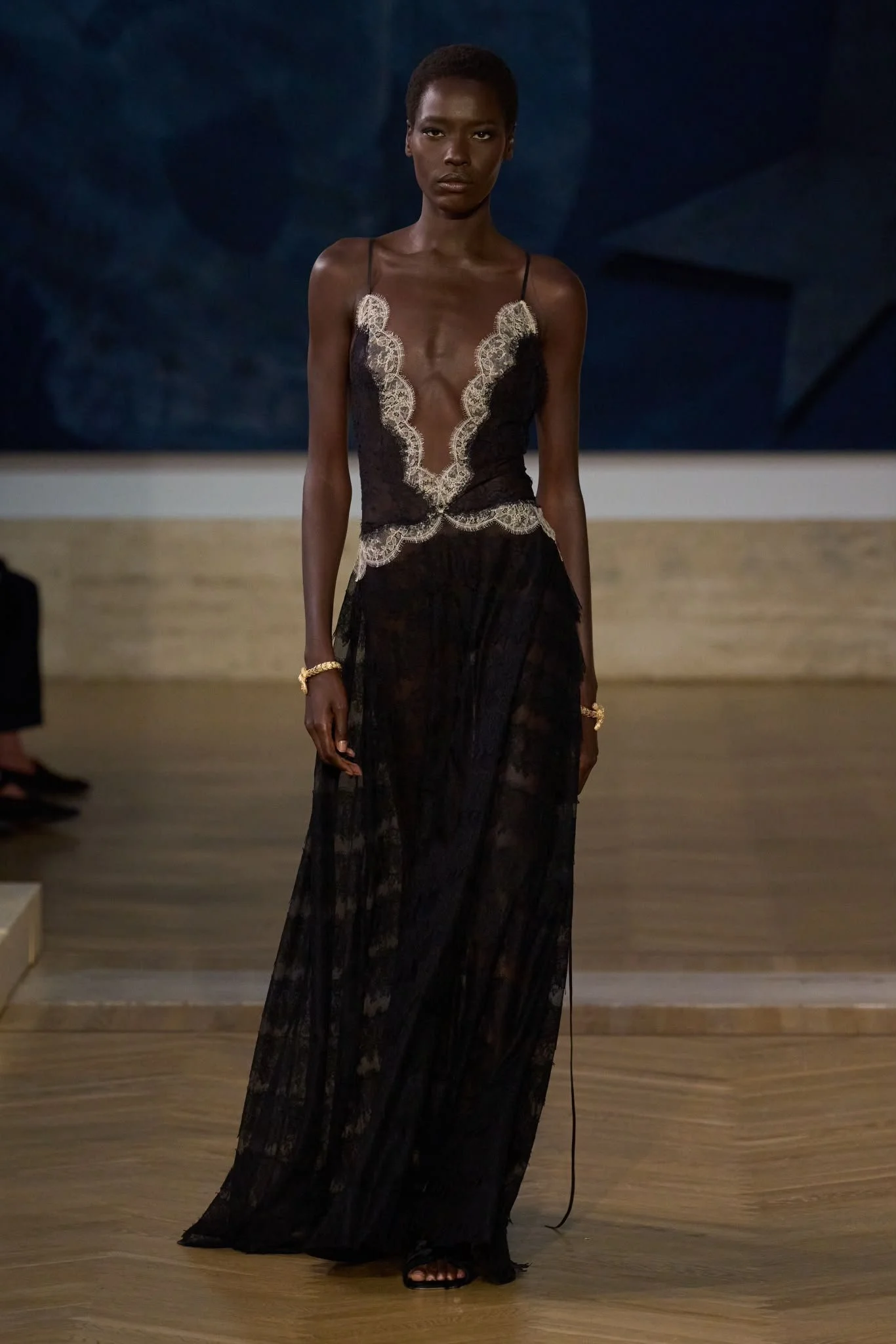
Thank god for Julian Klausner! Ever since taking over Dries Van Noten’s creative helm, the Belgian designer has created euphoric collections. He utilises the beloved language of the house to narrate beautiful stories. Fall/Winter 2026 speaks to a common, tender experience: outgrowing domestic familiarity. It’s a collection that hits close to home, or rather, far from it. If a personal interlude is permitted, I have recently moved away, alone with my objects, with my clothes. These have become anchors of my emotional connections. The rustling of clothes on your body becomes the closest you have to the touch of the ones you left behind. The knitted jumper made by a grandma. The pants stolen from a sibling. The watch given by a dad. These are proofs of life, of connection.

Klausner illustrates this growth in different ways; its most straightforward is undoubtedly through knitwear. Argyles and stripes are remixed, explored through the lens of the brand’s affinity for patterns. Prints are assembled and reassembled, juxtaposed through vertical zippers on tight jumpers. Knitwear is used to demonstrate familiar ancestry both in its conceptual sense and its literal one. Backstage, the Belgian designer speaks of the knit department at the brand, of wanting the collection to honour those who built the brand, season by season, before he arrived. Life imitates art.

The affection for print is dallied with through clever construction. An open-collared shirt that peeks through a cropped jumper, seemingly laid over a longer one, is all one piece. Tartan shirts are cut in half through light aprons/cummerbunds made to resemble the hem of another shirt.

Silhouette is just as much of a playground to convey the emotional message behind the collection. Tight leather jackets are cinched in by skinny belts, while oversized blazers totalize the upper body. Garments are worn not because of their fit, but because of their emotional value. Clothes don’t just dress the body, they keep it company. By folding memory into construction, he reminds us that growing up is less about rupture than it is about carrying what stays with you.


Words by Pedro Vasconcelos
MAGLIANO FW26

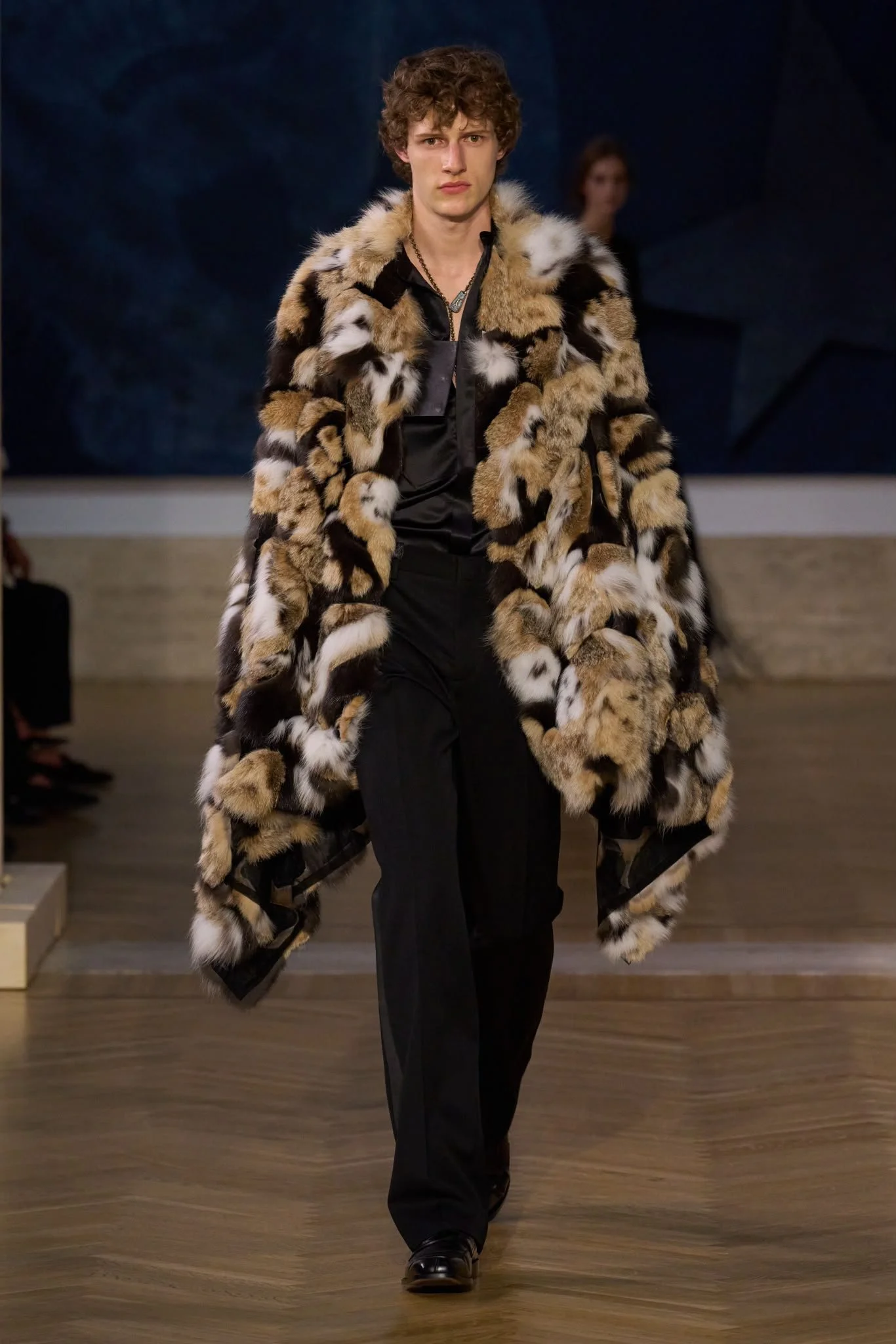
A visit to Magliano’s Instagram page reveals the brand’s mission statement in three provocative words: “Fucked up classics.” The cheeky slogan neatly encapsulates Luca Magliano’s design philosophy — one driven by a visible pleasure in crafting garments that are, in his own words, “precise in their chaos”.

Over the past few years, Magliano’s fascination with Italian provincial elegance has made a notable impact on Milan’s fashion scene. Now, the designer enters a new chapter, relocating his runway to Paris and unveiling a more streamlined vision that becomes less location-specific.

Titled Unplugged, the Fall/Winter 2026 collection excelled in outerwear and tailoring, showcasing Magliano’s unrivalled ability to make slouchy silhouettes read as deeply sensual. Roomy trousers and V-neck sweaters were reworked with literal twists: collars and waistbands curled inward, disrupting familiar proportions. XXL leather belts sat low on the hips, elongating the body, while an oversized wool blazer channelled just the right amount of ’80s macho bravado.

Magliano’s signature humour and social commentary surfaced throughout. A red silk shirt printed with tangled bunches of keys shared space with a chunky wool cardigan adorned with “ABCD” lettering — the “A” standing for Antifa, complete with the movement’s logo.

Elsewhere, refinement came deliberately undone: scarves emerged through slits in jacket collars, and the final look — a mismatched, oversized double-breasted suit — was punctuated by an untied bow tie, left hanging as a final gesture of dishevelled elegance.


Words by Martin Onufrowicz

WILLY CHAVARRIA FW26

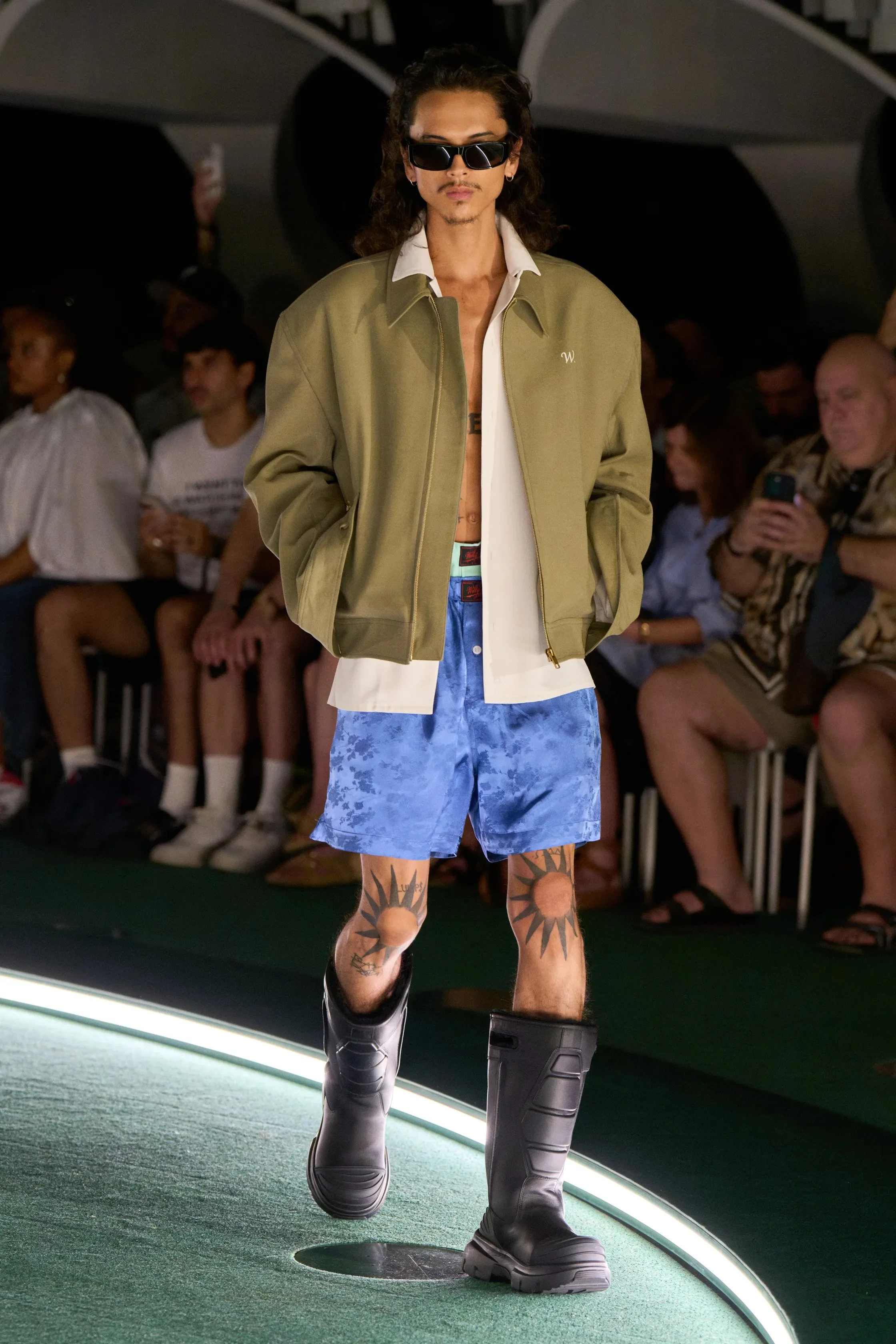
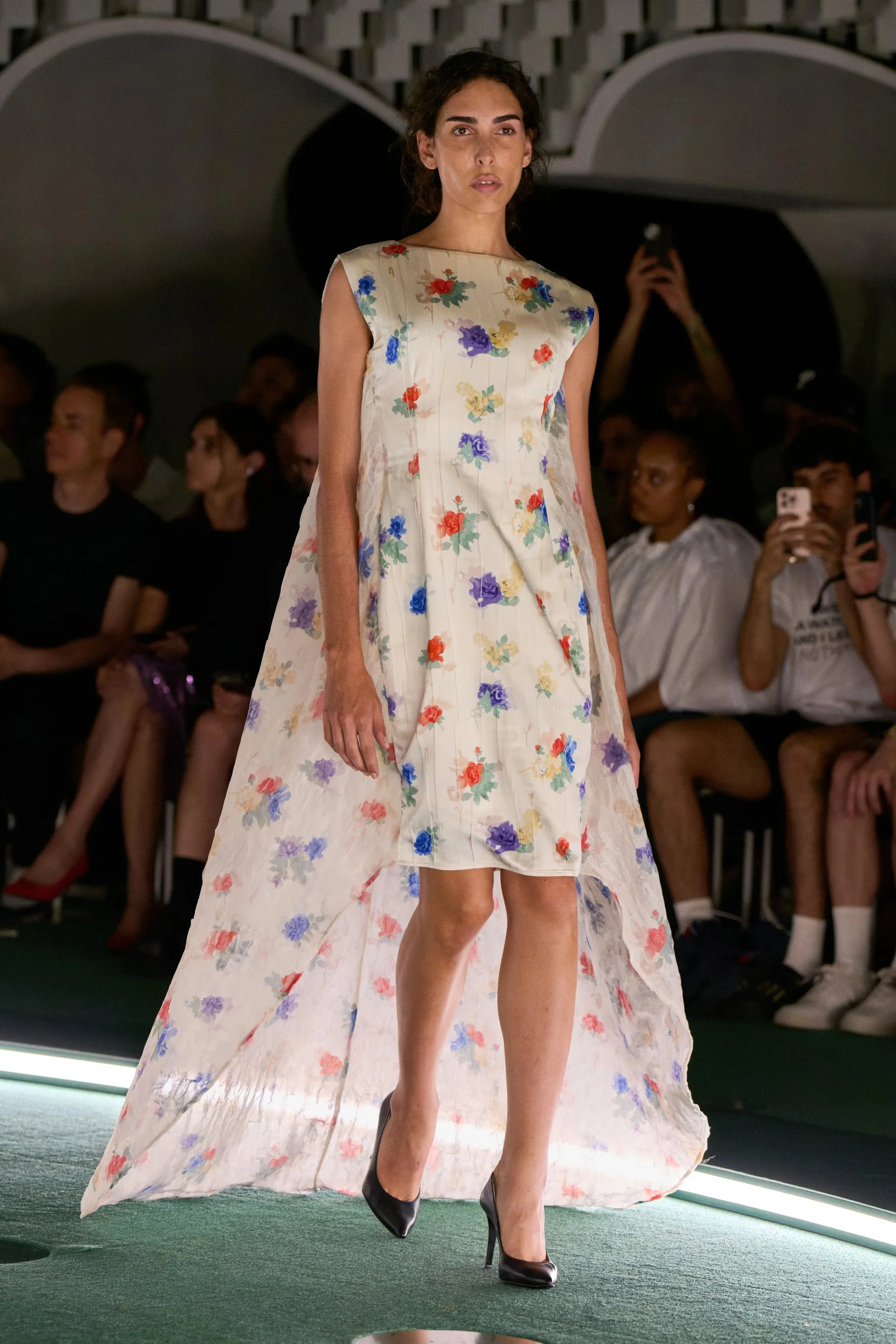
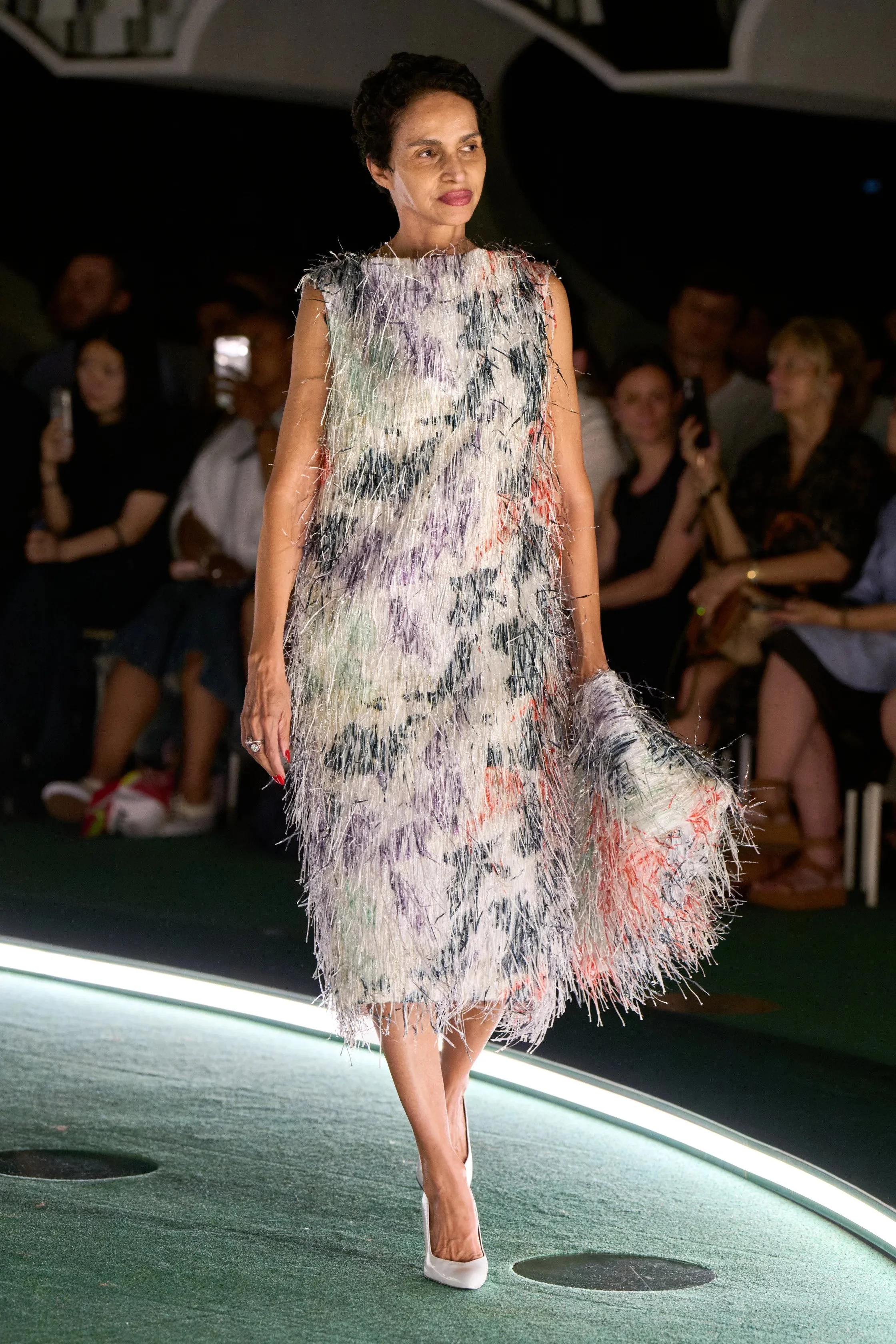
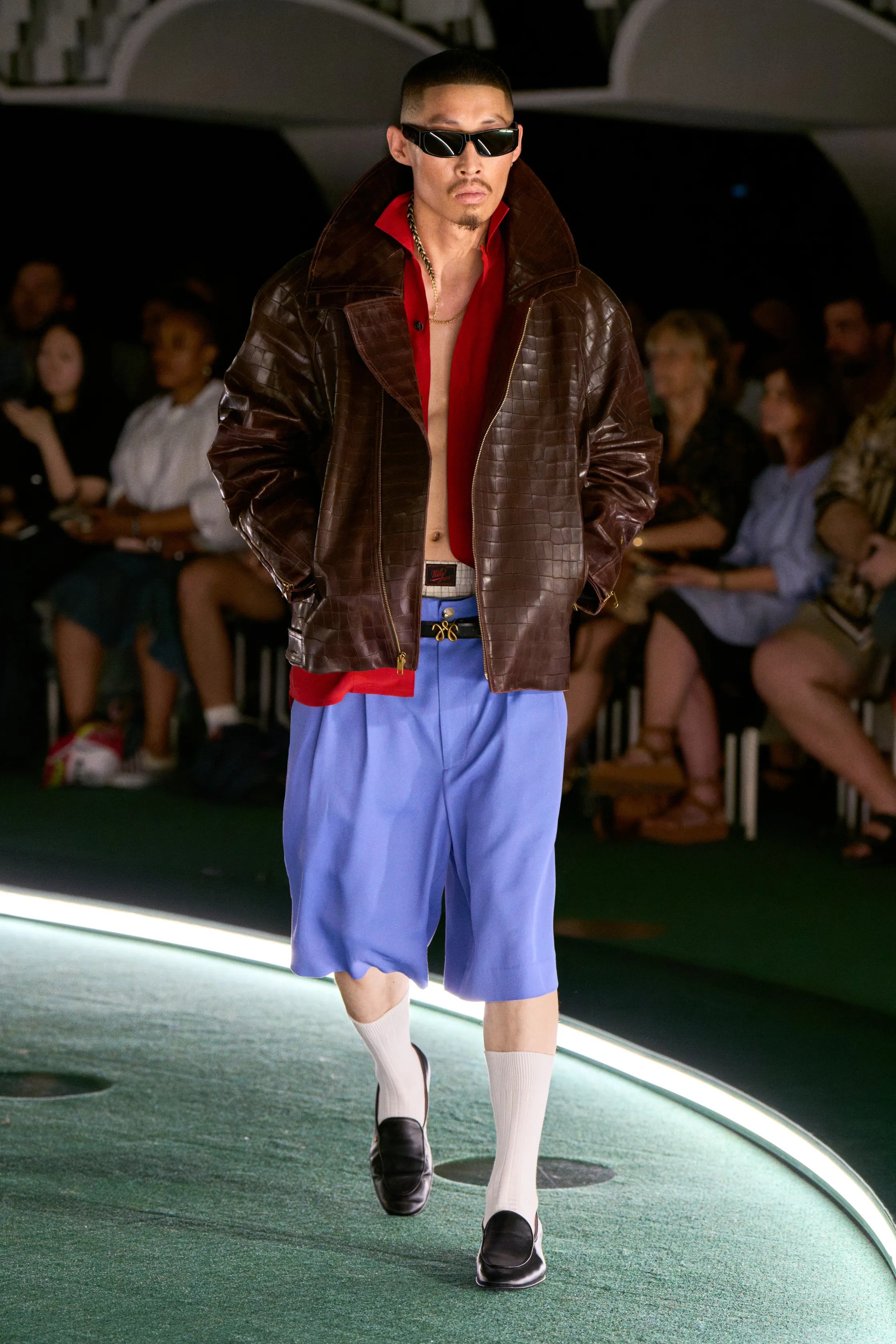
Willy Chavarria’s Fall/Winter 2026 show, Eterno, gathered more than 2,000 attendees in the audience, from fashion professionals to enthusiasts. Mon Laferte, a Chilean-Mexican artist, opened the spectacle with a heartfelt rendition of Femme Fatale in a cabaret-inspired performance.

The show unfolded in three stages, each shifting the storyline as the clothing and music evolved. One notable aspect of the designer is his ability to distance himself from the cliché of the Latino aesthetic while still celebrating its culture and subtly referencing its visual and cultural codes.

The model casting reflects the continent's multiethnic richness, a diversity further highlighted through its roster of talents, including Colombian Feid, Puerto Rican singer Lunay, Mexican groups Latin Mafia and Santos Bravos, and Italo-Egyptian singer Mahmood.

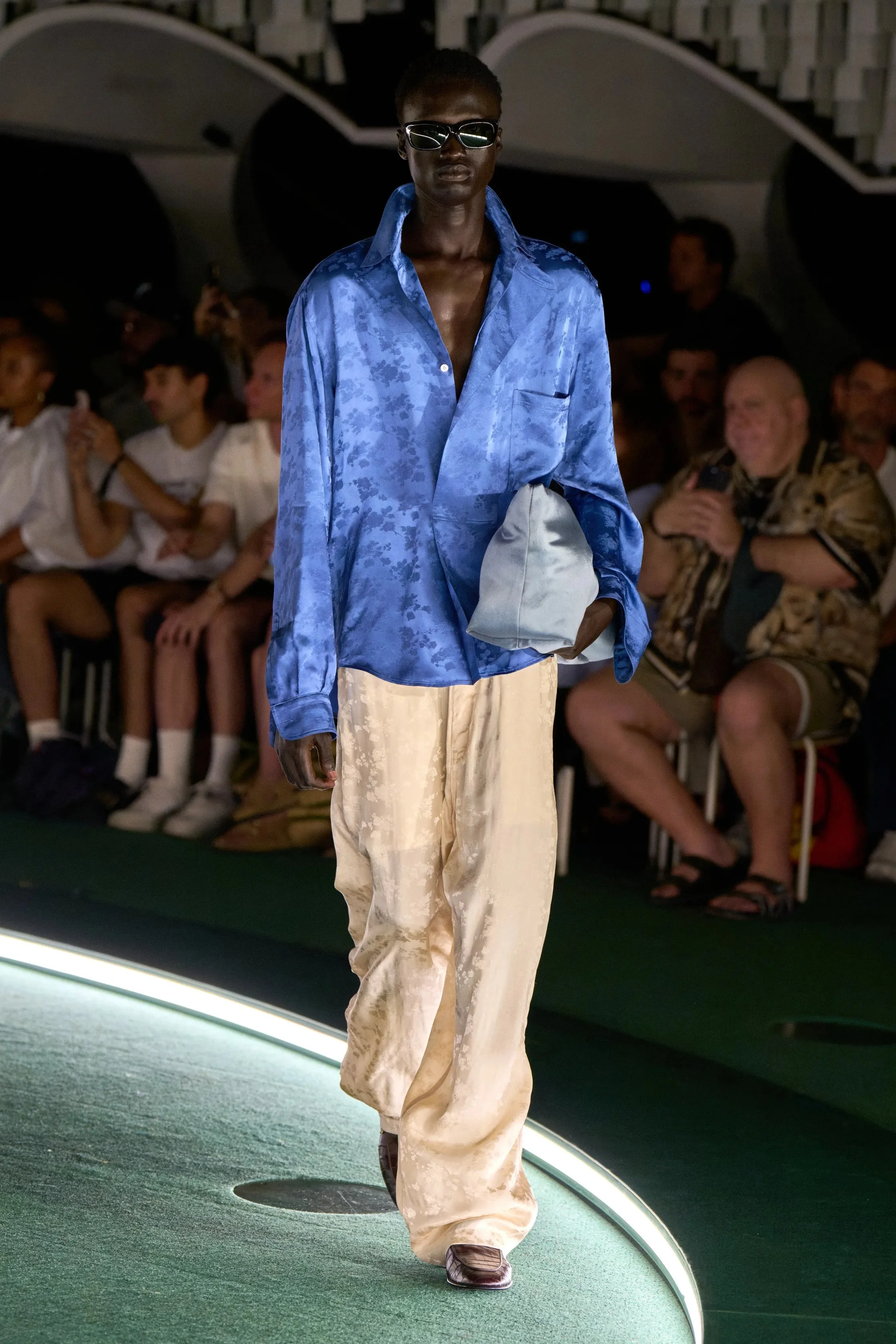
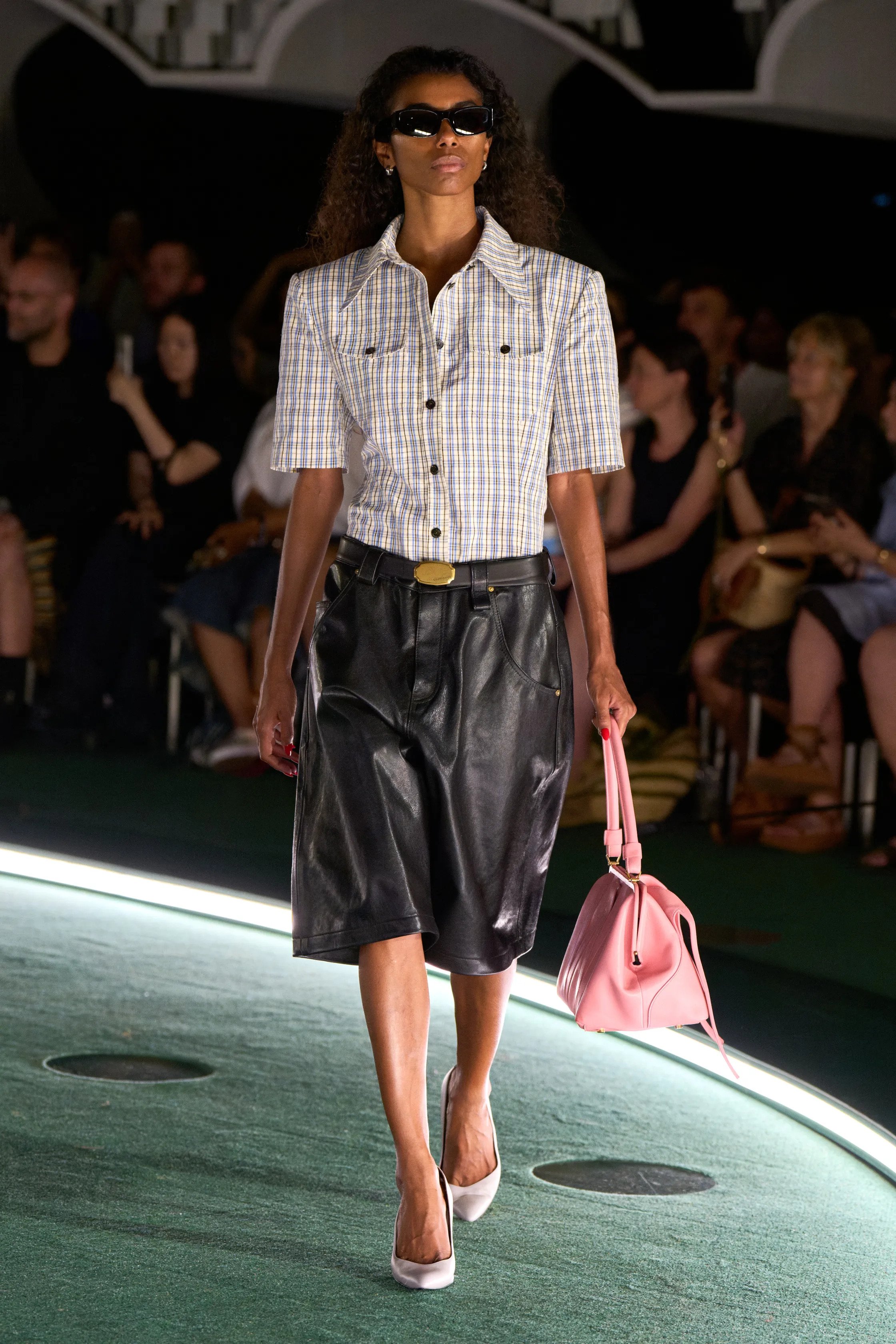
Suits tailored for both men and women opened the runway. For women, they were paired with pencil skirts that elongated the silhouette, creating a distinctly feminine aesthetic. For men, structured blazers and long coats were softened with vibrant shirts and pussy-bow blouses.

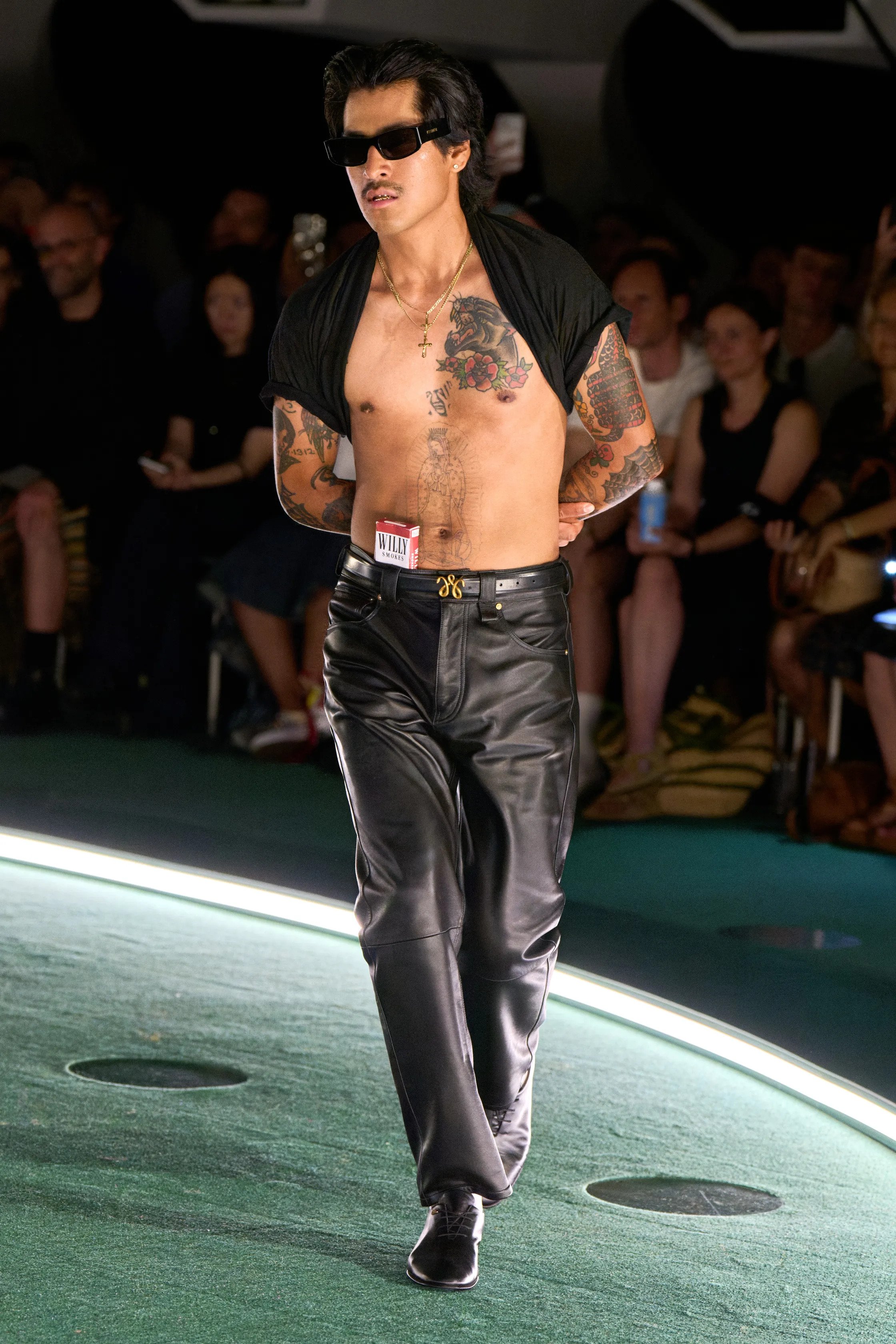
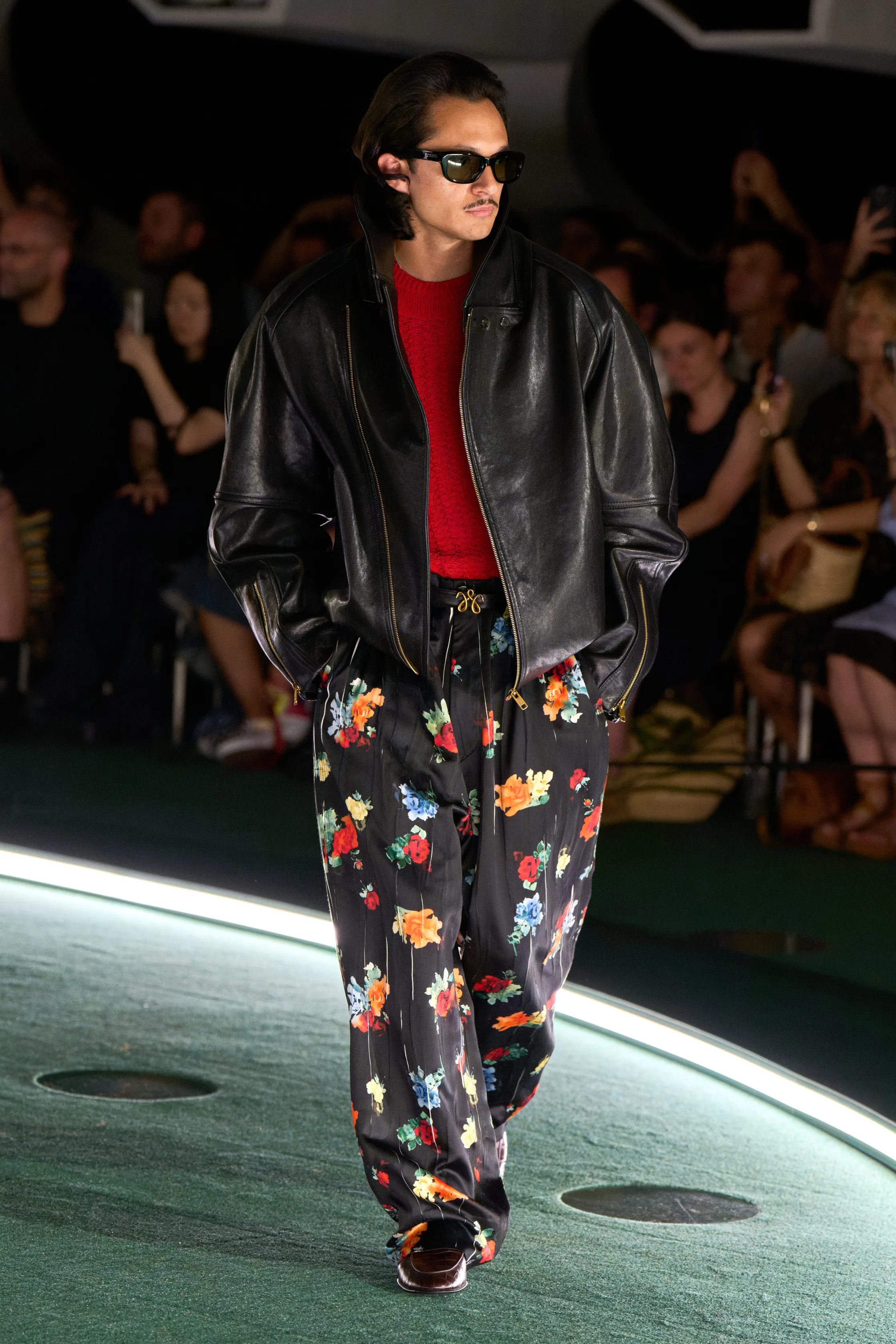
Satin fabrics and sequin dresses added a sense of classic glamour, while roses and animal prints reflected the kitsch imagination that thrives in Chavarria’s creative universe, delivering not just stylish clothing but culturally relevant garments. Then, the show transitioned from timeless allure to a Chicano aesthetic, represented by the designer’s signatures such as plaid shirts, bomber jackets, wide-leg jeans, tracksuits, strong shoulders, keychains, and shading hats.


Words by Carolina Benjumea

EGONLAB FW26

Feathers were the thread that united Egonlab’s Fall/Winter 2026 menswear collection. Presented through body-fitted tops worn under jackets, they created a refined and tender look, emphasising elongated necklines and evoking a phoenix-like sense of rebirth.

The collection plays with masculinity and femininity, expressed through tailored suits next to cut-out dresses and one-shoulder looks. Masculine garments such as hoodies and jackets were softened through tailoring and styling, creating an androgynous vision. Feathers catalysed this approach, lending a romantic sensibility that disrupted conservative ideas of manhood. Asymmetric cuts and oversized silhouettes were also part of the rich visual language. From its colours to its shapes and textures, there was a clear intent toward provocation and artistic radicalism.

Suits excelled in flawless tailoring, while shirts were, in some cases, oversized and partially unbuttoned. Trousers were long and fluid, and shoulders subtly exaggerated. The colour palette ranged from black, charcoal, deep oxblood, and grey to occasional pops of electric blue and red plaid that brought exciting tension. Sensuality was revealed through glimpses of skin and was not connected solely to femininity, but to attitude and confidence itself.


Words by Carolina Benjumea

ACNE STUDIOS FW26

Turning thirty is scary. Especially for those who still feel youth coursing through their veins. That was the fear that catalysed Acne Studios’ Fall/Winter 2026 collection. After three decades of the brand, Jonny Johansson wrestled with that transversal challenge. It’s even tougher when one thinks of the spot the brand occupies in the zeitgeist. Ever since its inception, Acne has been the brand of everyone’s youth. The Tumblr reblog candy, the Instagram screenshot magnet, the TikTok like bait.

Johansson thankfully resists the temptation to do a retrospective. It would be nonsensical for a brand that has always put itself forward. Still, this season, something is different. It’s not exactly a coming-of-age moment, more of a celebration over getting there. It isn’t nostalgia, and it isn’t a crisis. Acne Studios tropes are elevated, used to spin classics. Shirts are stitched together to become one. Polos are cropped and tight to the body. Suede loafers have tassels sketched on them in white.

Of course, the classics are omnipresent, even if slightly twisted. The printed jeans for which Acne has become synonymous in recent years are here, but now the same effect is passed into bags and shoes. Jackets have their heavy leather distressed. Camero bags are enlarged into the XXL weekenders of our dreams. It isn’t nostalgia, it isn’t crisis. It’s thirty.


Words by Pedro Vasconcelos
LGN LOUIS GABRIEL NOUCHI FW26

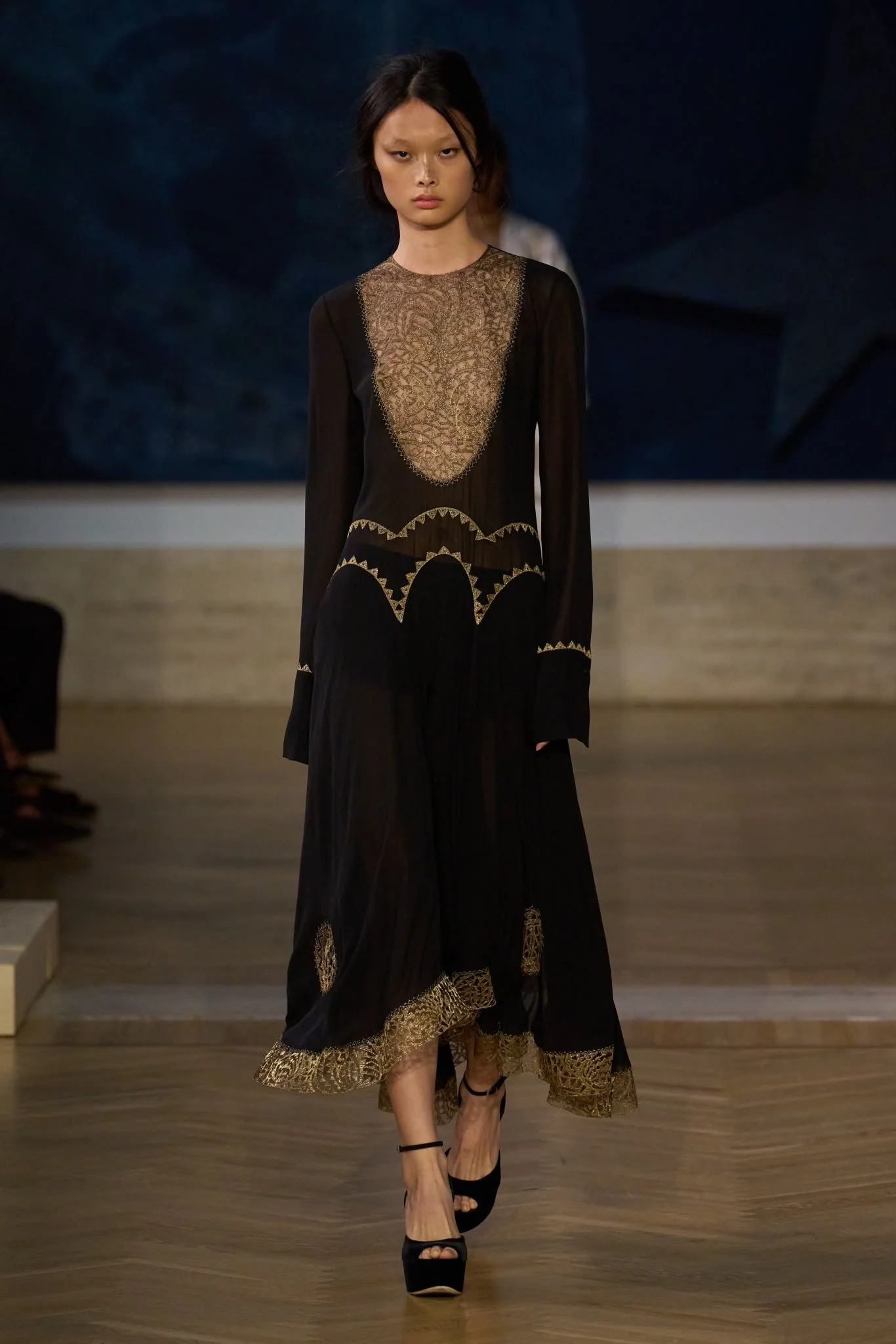
Louis Gabriel Nouchi can make anything sexy – even a gory sci-fi horror. Staying true to his signature method of building collections around literary and cinematic references, the French designer turned to the Alien franchise as his source of inspiration for Fall/Winter 2026.

Rather than leaning into a literal homage to Ridley Scott’s 1979 cult classic, Nouchi drew from the emotions the film stirred in him as a child: pure terror, tinged with fascination. Forbidden from watching Alien with his parents, he instead absorbed it through the muffled sounds drifting from the living room. That half-heard experience ignited his imagination and sparked an obsession with what he could not see. When he finally watched the films years later, their visuals only deepened his fixation on the franchise’s extraterrestrial mythology.

The show opened with one of Nouchi’s signatures: a sharp-shouldered grey suit, immediately subverted by a black headpiece obscuring the face. The piece recalled the saga’s infamous facehugger, the parasitic creature that latches onto its victims. As the collection unfolded, this motif reappeared in another headpiece, this time crafted from braided hair.

Several looks echoed the utilitarian spirit of Sigourney Weaver’s iconic boiler suit. A graphite ensemble paired a lightweight bomber with loose, unbelted cargo trousers, while a cropped cream fleece was styled with short shorts and a glimpse of LGN’s cult underwear line. Bare legs highlighted the footwear of the season: Bunny boots rendered in military beige and black.

The film’s viscous predators were also woven into the wardrobe. Their presence surfaced through glossy latex accents that coated wide ties, oversized trench coats and darkroom-ready trousers – garments that gleamed with the same unsettling allure as the creatures that inspired them.


Words by Martin Onufrowicz

RICK OWENS FW26

This season, Rick Owens explored the concept of modern authority. While other shows focused on dystopian visions, the designer’s Fall/Winter 2026 collection seems to have been inspired by the current state of the world and its leaders.

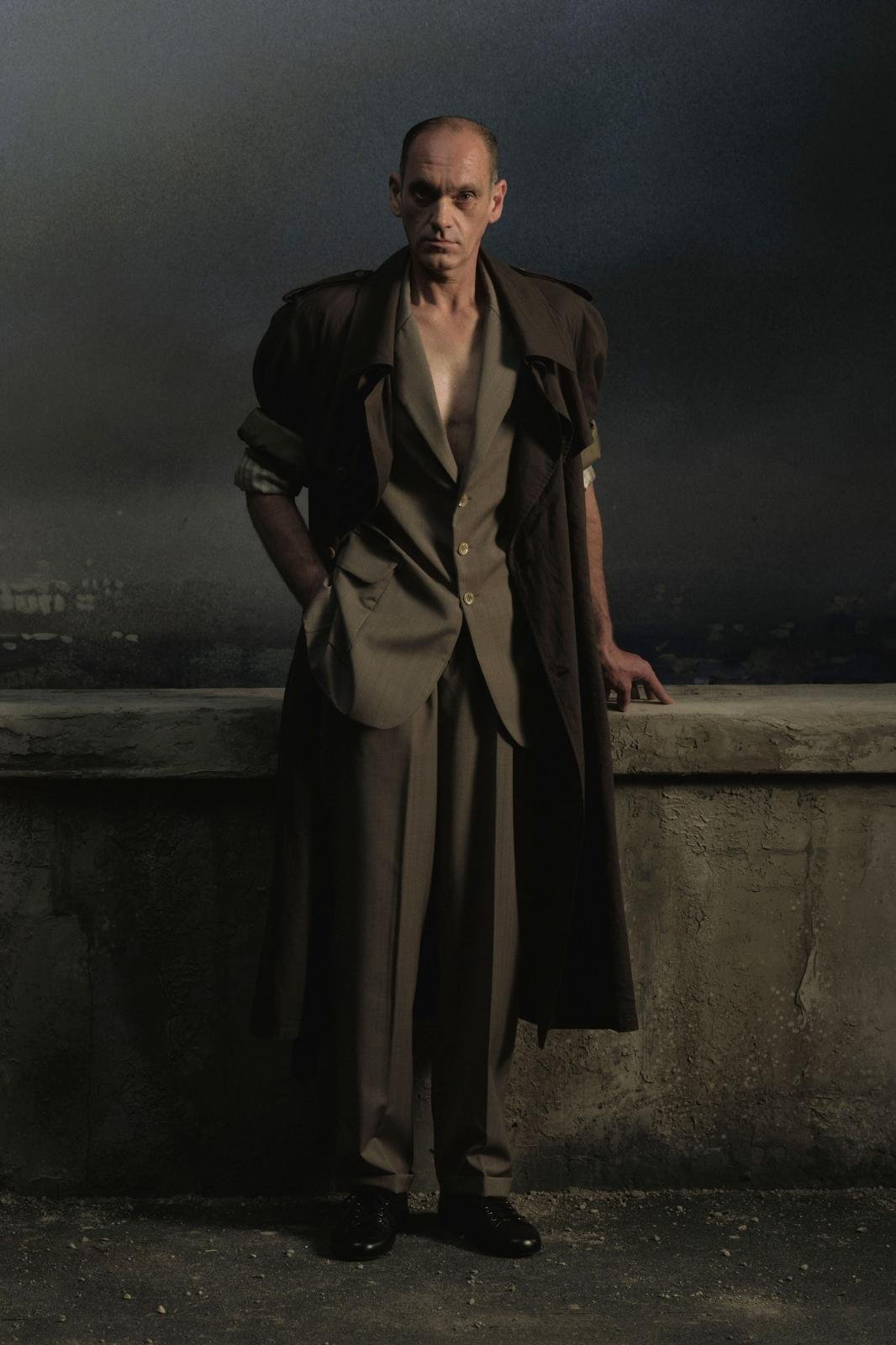
The smog created a dense environment, which merged with the dark and monumental statues of the models. Distressed materials, such as thick wools, faux fur, and patchwork, along with deconstructed pieces and monochromatic colours ranging from black and charcoal to taupe, greige, and dusty brown, evoked a harsh, raw aesthetic that at times brought a sense of discomfort.

Through its styling, the brand seeks a distortion of reality, an exaggeration of shapes. Yet the garments fit naturally to the body, a common feature of the brand’s collections and its relationship to the human form. Each look seems sculpted onto the wearer, acting as an extension of them rather than as an added accessory.

Faithful to his creative language, Owens introduced a collection of flawlessly made pieces presented through chaotic styling – an offering that speaks about the modern world and its spiralling disorder. More than clothing, Rick Owens is a concept, a social discourse, and a cultural moment that resonates with those who view life with the same distraught eyes as the designer.


Words by Carolina Benjumea

IM MEN FW26

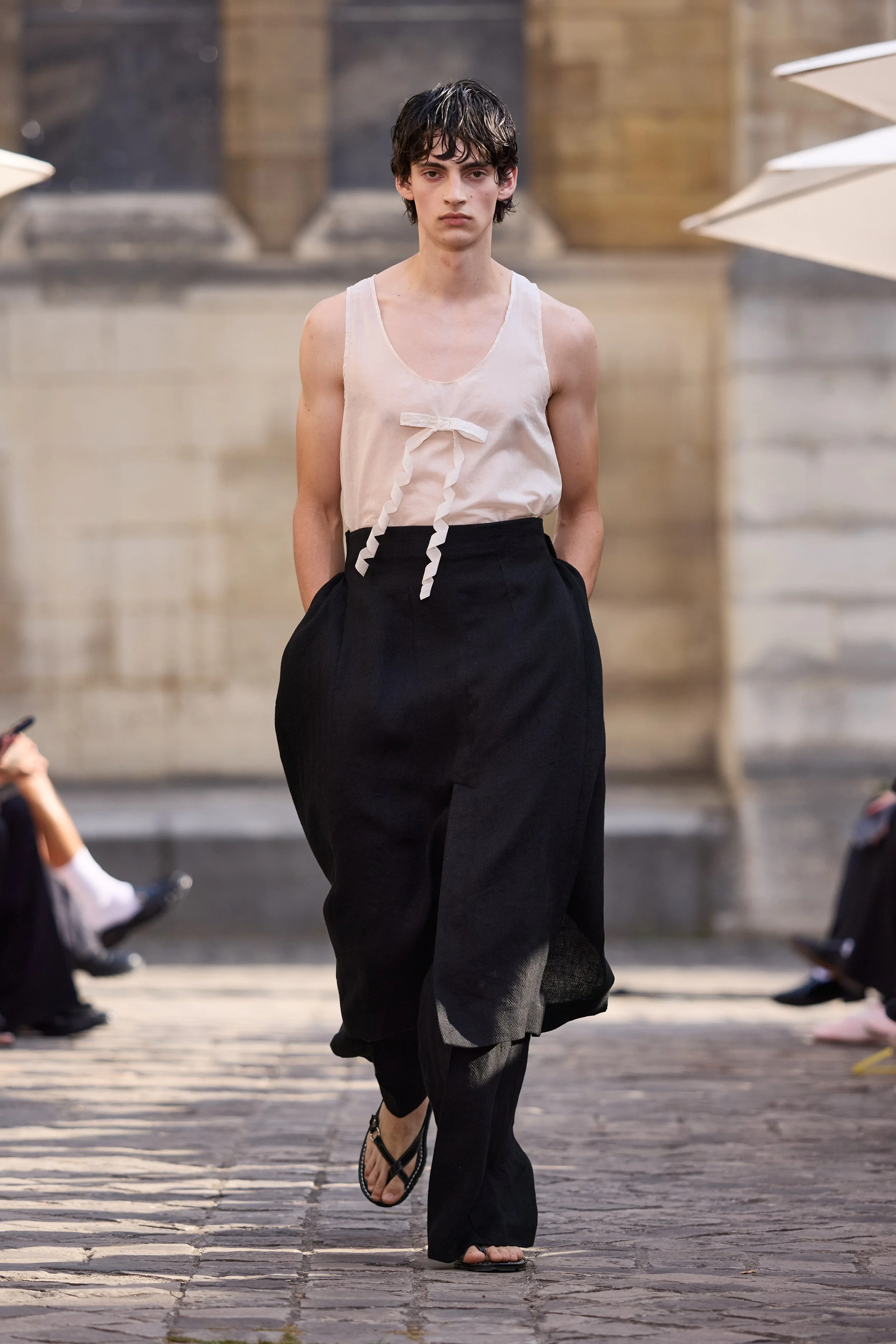
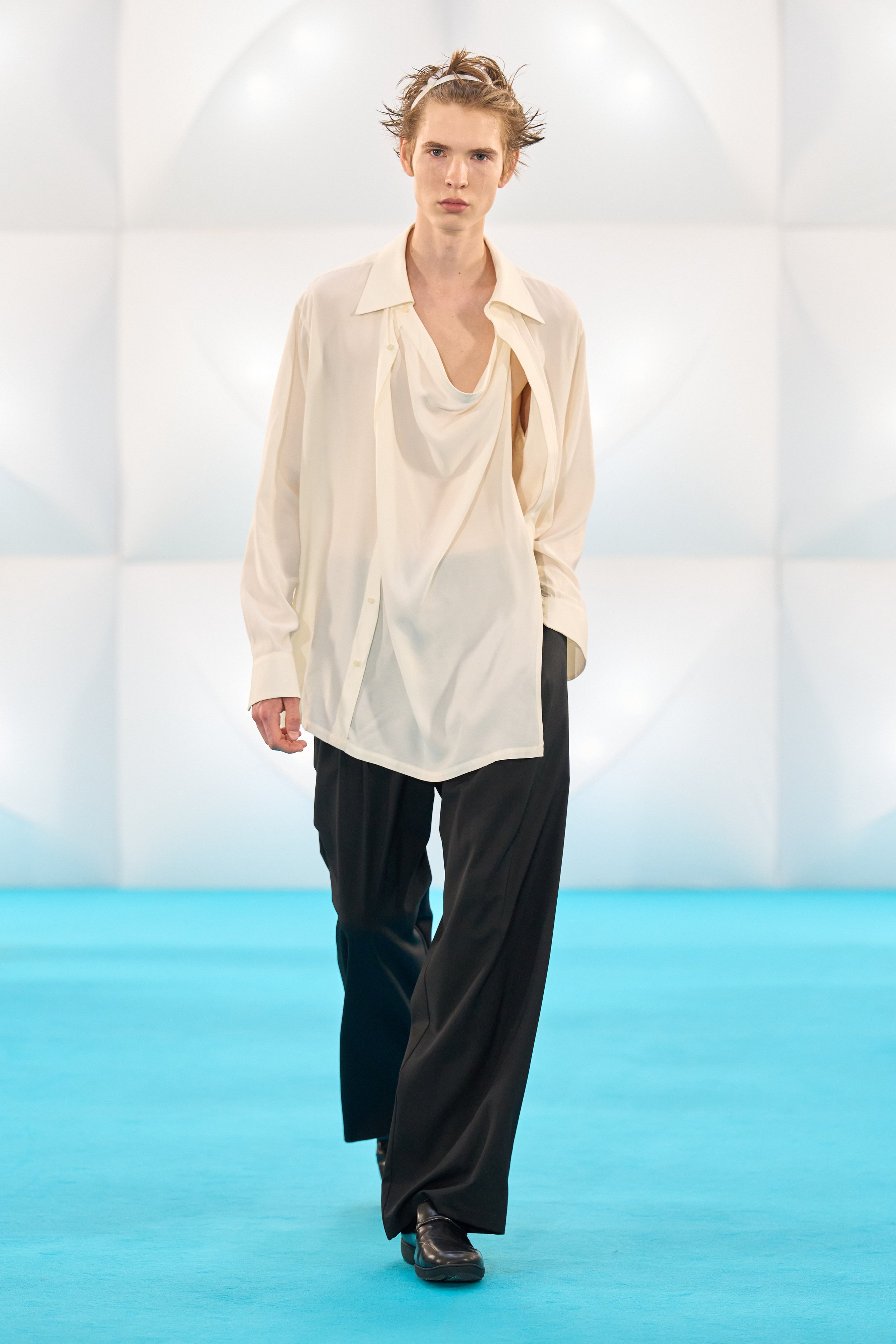
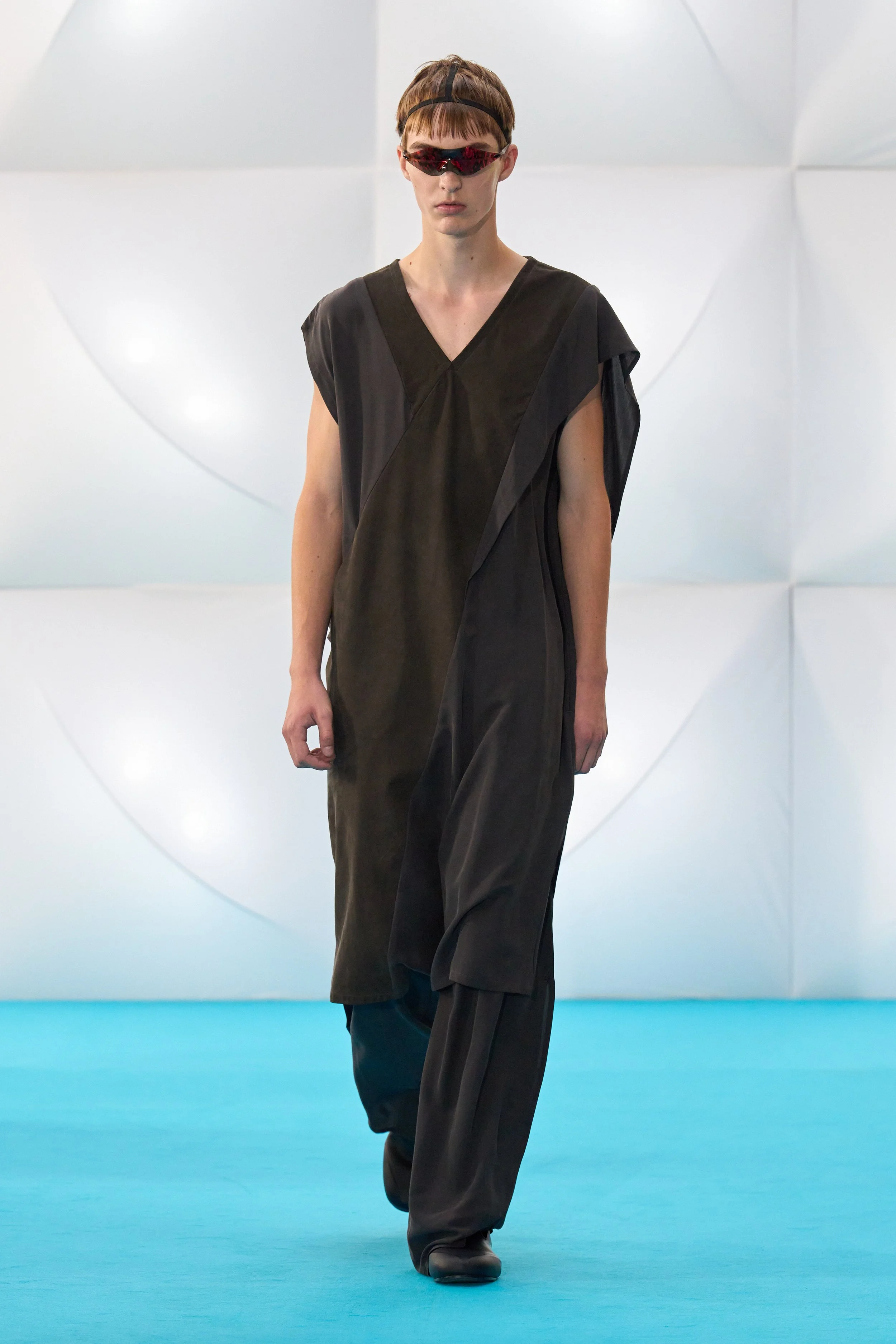
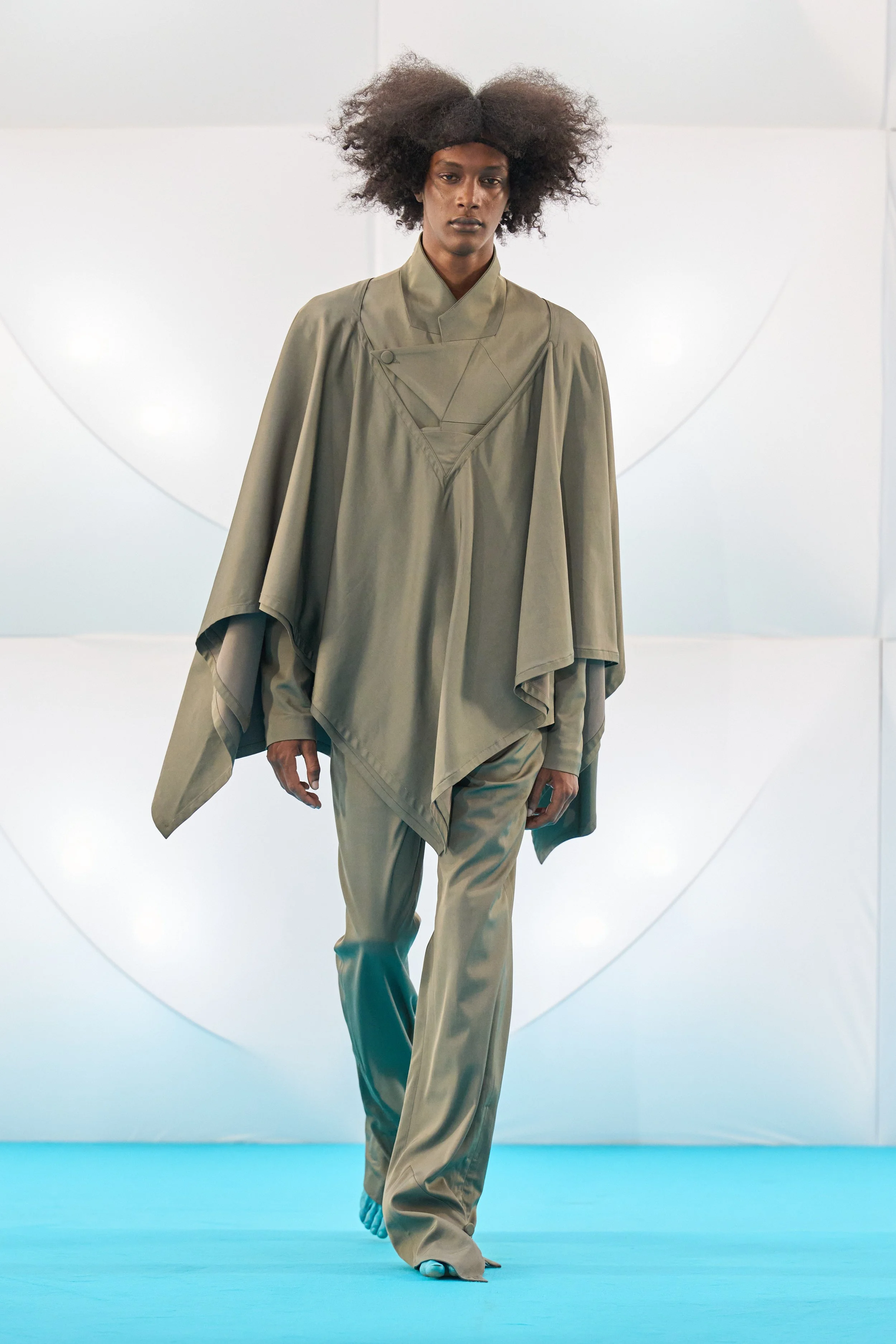
IM MEN’s Fall/Winter 2026 collection is an exploration of form, construction, and structure. Presented at the 13th-century Collège des Bernardins and titled Formless Form, the offering showcased garments that enveloped the body and created an almost religious aura.

Silhouette experimentations were at the centre of the collection through fluid draping and deconstructed garments. The body was left invisible, allowing the focus to rest solely on the sculptural nature of the pieces.

There was something architectural in the way the clothing was conceived: voluminous, vertical, and driven by intelligent construction rather than aesthetics alone. Oversized coats in wool and felted fabrics, wrap and robe coats in asymmetrical shapes, ponchos, capes, and long tunics defined the proposition.

The collection opened in black, which then transitioned into muted tones before bursting into electric, saturated shades, creating a sense of movement and transformation. The entire show unfolded like a meditative state, an introspective moment. Garments draped the body gracefully and were designed to layer seamlessly, reinforcing a sense of calm, continuity, and contemplation.


Words by Carolina Benjumea

DIOR MEN FW26

For his second season at Dior, Jonathan Anderson approaches the maison’s legacy differently. Where his debut felt almost pedagogical in its demonstration of respect, Fall/Winter 2026 saw him speaking the brand’s language with greater ease.

Silhouette remains Anderson’s sharpest tool. The bar jacket, long a symbol of Dior’s authority over the body, returns once more, though noticeably altered. Rendered in weightier fabrics than last season, the shape itself is made heavier.

Running parallel to Dior’s history is the presence of Paul Poiret, whose influence hovered heavily on the runway. It is a pointed reference. Poiret’s philosophy of dress stands in ideological opposition to Dior’s postwar reshaping of the female form. Anderson leans into this contradiction rather than smoothing it over. Billowing coats have expansive volumes. Slinky, shiny tank tops are almost literally paraphrased from Poiret’s ornate eveningwear.

We offer an interpretation: by interpolating silhouettes and stripping references of their original hierarchies, Anderson comments on luxury. Where craftsmanship and material excess were once its primary markers, now it's an act of creative assertion. Ornately embellished tops are worn with distressed skinny jeans (Hedi Slimane’s spirit lives on, thank god).

Instead of proving vehemence to Christian Dior alone, he’s creating a shared vocabulary, freely recombining references across eras. Slimane’s razor-thin silhouettes brush up against the theatricality of John Galliano’s Dior, both existing within the gravitational pull of the founder of the maison they all led at some point. The result is a collection that uses tradition not to stabilise the brand’s identity, but to push against the expectations that now surround it.


Words by Pedro Vasconcelos
AMI FW26

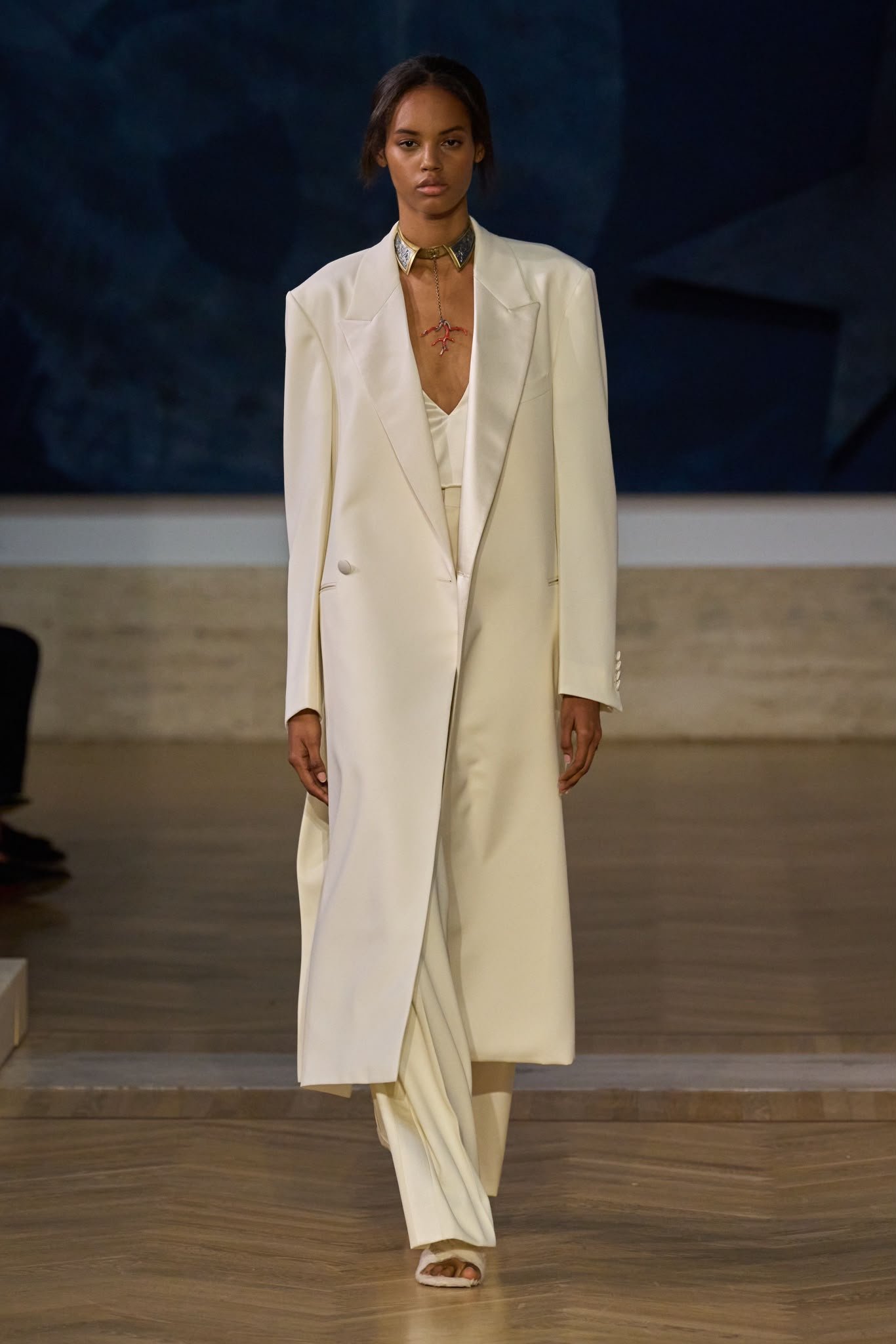
Among all brands inspired by “La Parisienne”, AMI is the one that best showcases Parisian chic through its collections. Each presentation feels like a walk through the streets of the city, interpreted in a modern way that appeals to an international audience.
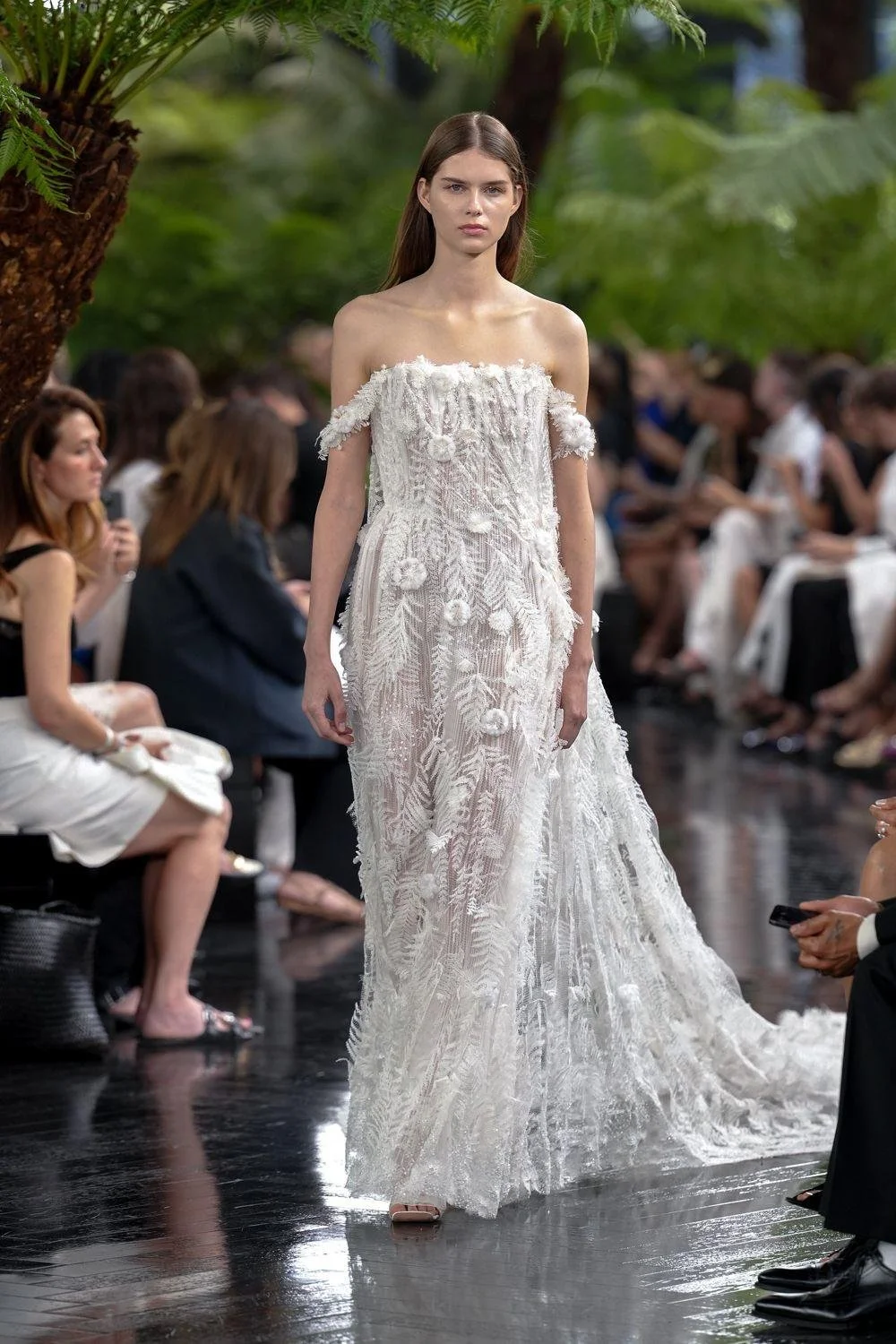
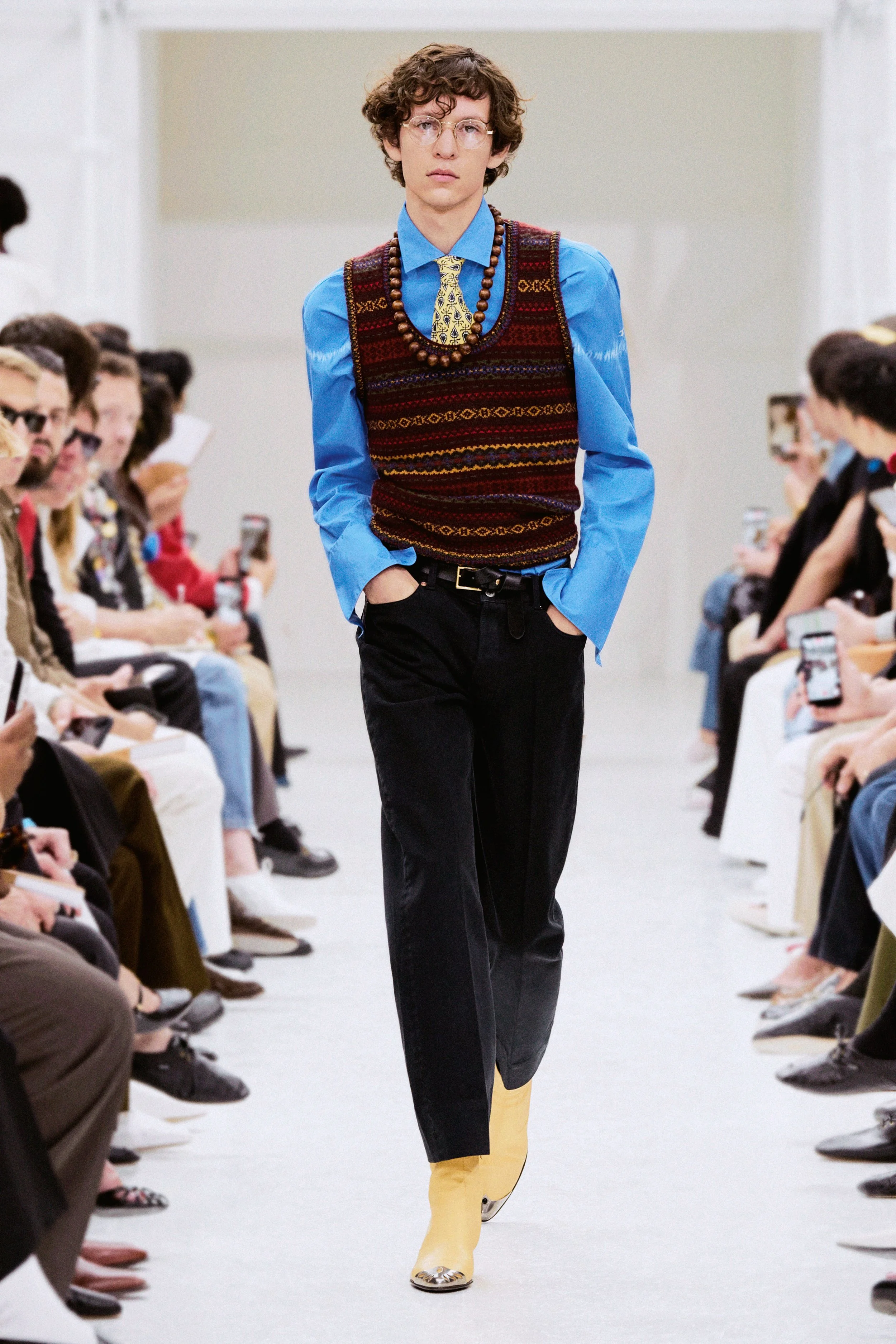
For the Fall/Winter 2026 collection, the industrial setting merged seamlessly with the minimalism of the pieces. Structured looks played with proportions, while the colour palette remained neutral. Lean lines define the silhouettes, from oversized coats and elongated skirts to relaxed trousers. Well-constructed pieces in luxurious fabrics are paired with voluminous shapes such as full skirts, ballooned trousers, and dramatic coats, creating contrast and breaking the otherwise minimalist aesthetic.

Throughout the years, AMI has mastered the art of layering, and this season was no exception. Shirts under knits and scarves tucked into coats felt purposefully styled rather than messy. The tie was worn in an easygoing, casual way, appearing youthful and creative.

While some pieces felt corporate-appropriate and intellectual, such as the shirts, loafers, and coats, others were better suited for a night of drinks and dancing, or even the Sunday-morning casual: featuring sneakers, sweats, and hoodies, paired with oversized, chic coats. Caps were added for a relaxed touch.

Strongly androgynous, the collection played with gender without attempting to “soften” masculinity or exaggerate femininity, something key to understanding the visual language of the brand; gender is expressed through attitude rather than clothing.


Words by Carolina Benjumea

KENZO FW26

For Fall/Winter 2026, Nigo didn’t look far for inspiration; instead, he returned home – to the basics and to the inner strength of Kenzo: the joyful, colourful essence of the house, and the richness of its constructions.

The designer presented Kenzo’s most intimate and toned-down collection to date. As a nod to the house’s origins, he sought to return to the founder’s home – Kenzo Takada’s house near the Bastille in Paris, built between 1988 and 1993 — creating a collection rooted in harmony, precision, and intimacy, with pieces adapted to every moment of a person’s life.

As a nod to both French and Japanese influences, the wardrobe feels equally practical and elegant. Think Japanese minimalism, with kimono-inspired pieces, merging with the French conception of understated refinement. Capes felt modern, and prints recalled the creative spirit of the brand –  from plaids, checks, and stripes to subtle geometrics. Florals were present throughout in a myriad of ways, lending a romantic aesthetic to the looks.

The body feels at ease in the clothing, with long lines, dropped shoulders, and comfortable fits suggesting movement and wearability. Textures are tactile and cosy, reinforcing the collection’s warmth and intimacy. Earthy, muted tones dominate, from camel, cream, chocolate brown, olive, charcoal, and navy, creating combinations that feel natural. Accents of mustard, forest green, and soft yellow add depth without disrupting the calm palette.


Words by Carolina Benjumea

LOUIS VUITTON FW26

Writing about Pharrell Williams’ work at Louis Vuitton calls for a recognition of the perspective he brings to the house. Williams embraces the position of creative director in a way that reflects his understanding of fashion as part of a broader creative ecosystem, not just the production of garments. With that in mind, the Louis Vuitton Fall/Winter 2026 collection felt especially compelling in its focus on confident, well-executed clothes.

At the Louis Vuitton Foundation, an indoor villa served as the setting for a collection filled with wardrobe staples. The show opened with powerful tailoring. Strong shoulders, long hems, nipped in waists. Almost immediately, the formal is tempered by technical functionalism. Hooded parkas replace blazers on top of ties. Shirts are embellished or crumpled, a feat ingeniously achieved through aluminium in the fabric.

There were elements of fun, of course – it’s still Vuitton, it’s still Williams. Shiny vinyl hid the classic LV monogram. Long coats were tied at the neck in wool pussy bows, the same that, in cropped leather jackets, were made from long belts. But, even in these moments of whimsy, pragmatism seeped through. Maybe it’s a sign of confidence. After more than two years, Williams is surer of himself, more comfortable letting clothes carry the performance.


Words by Pedro Vasconcelos