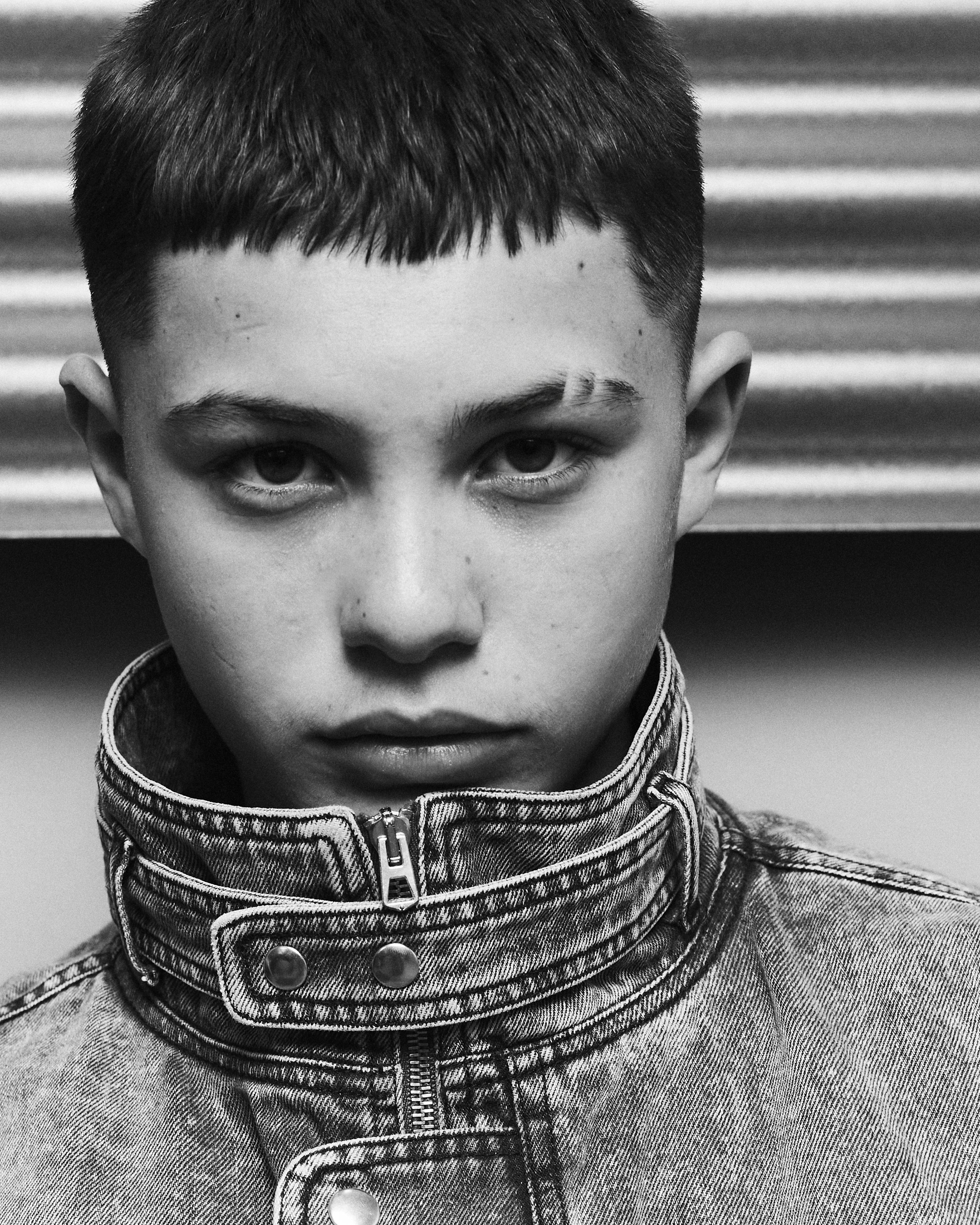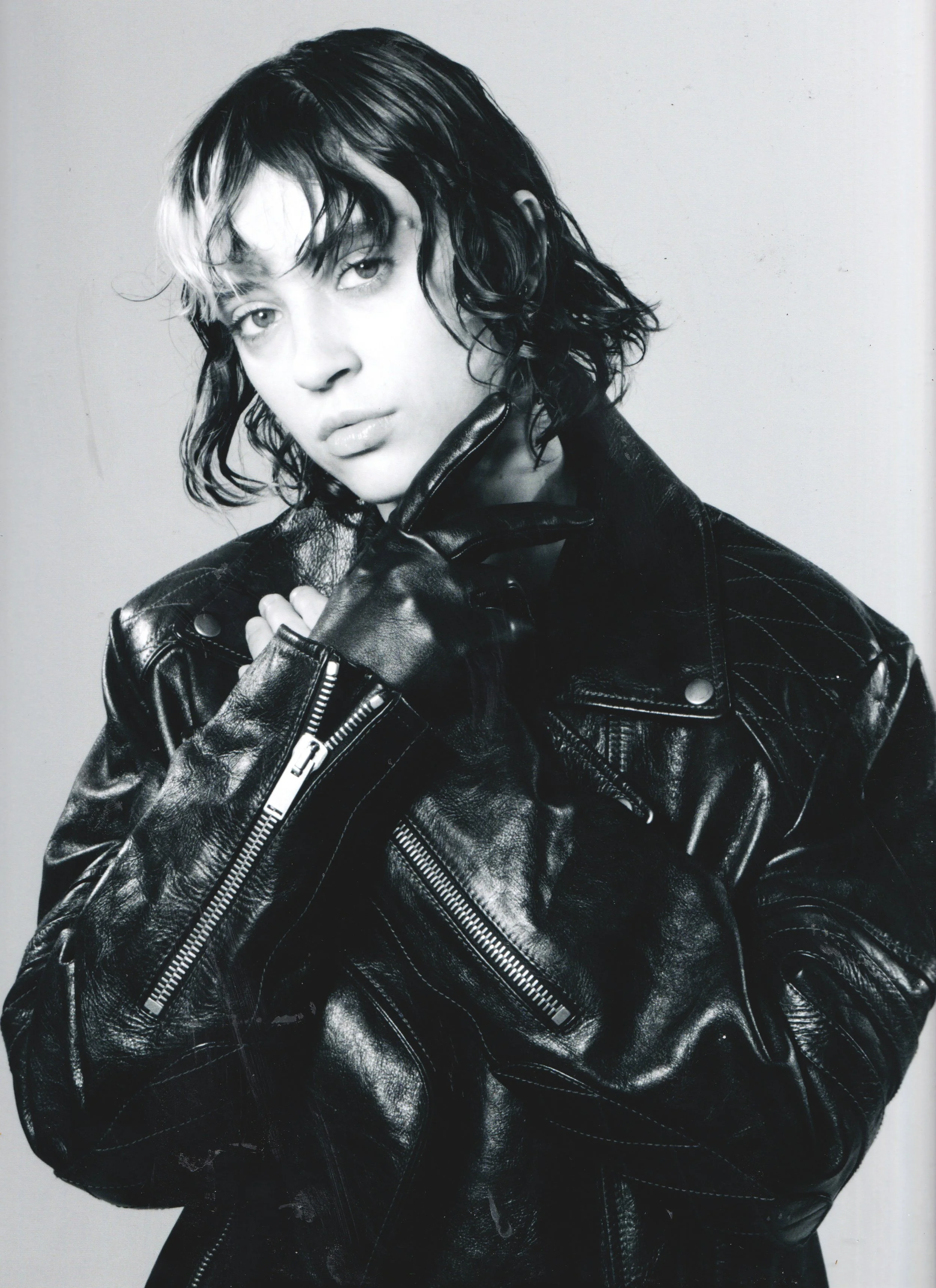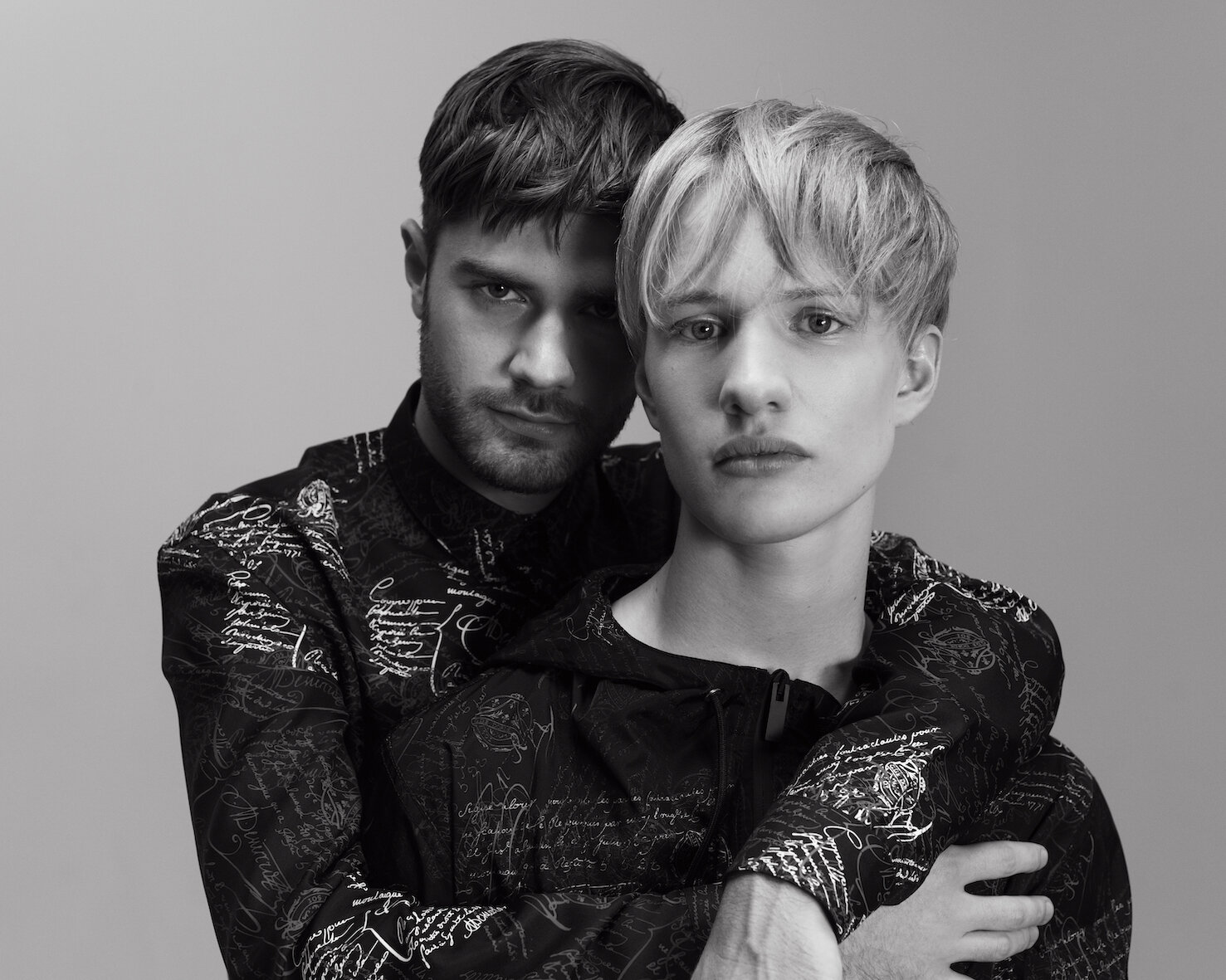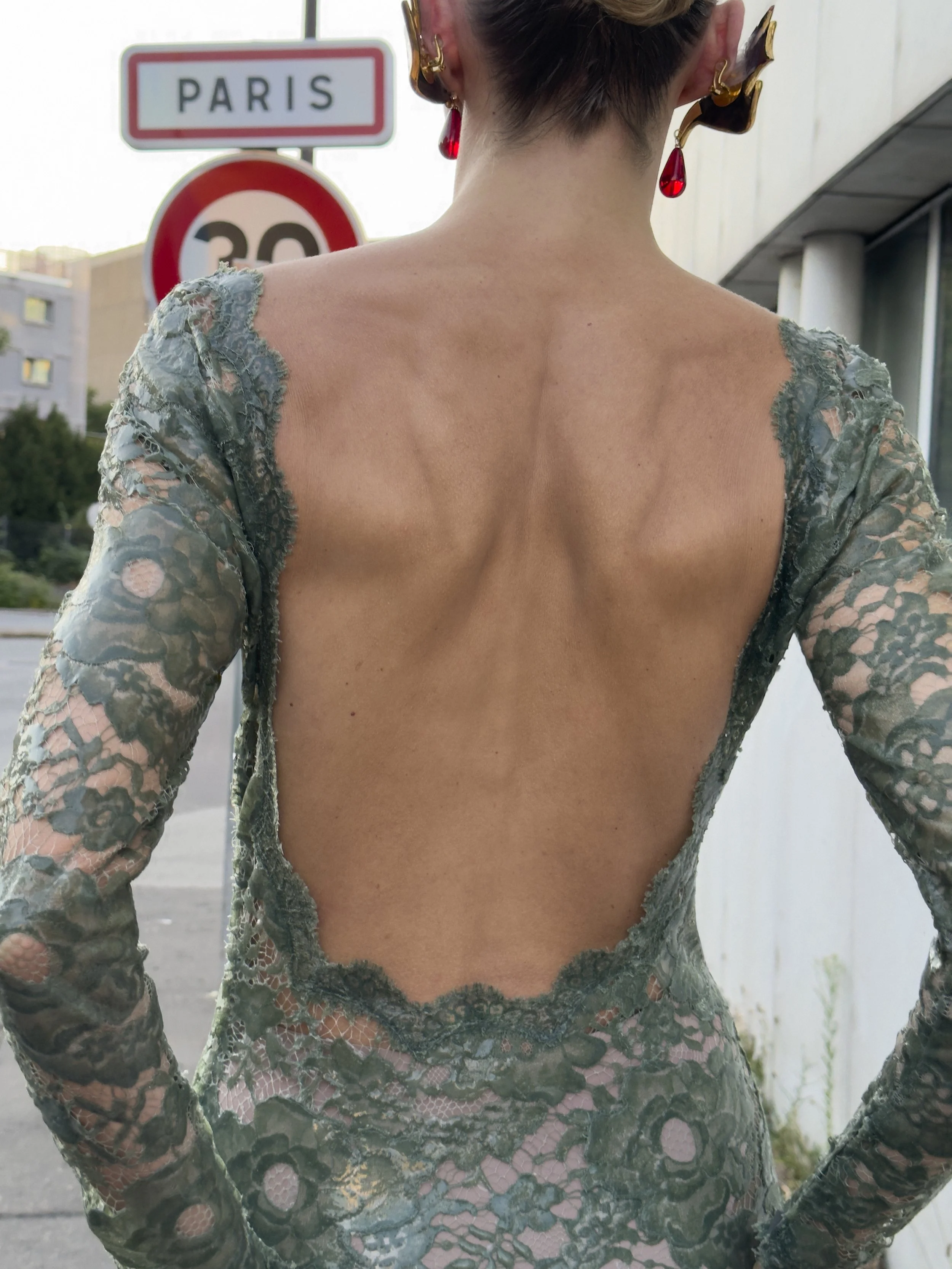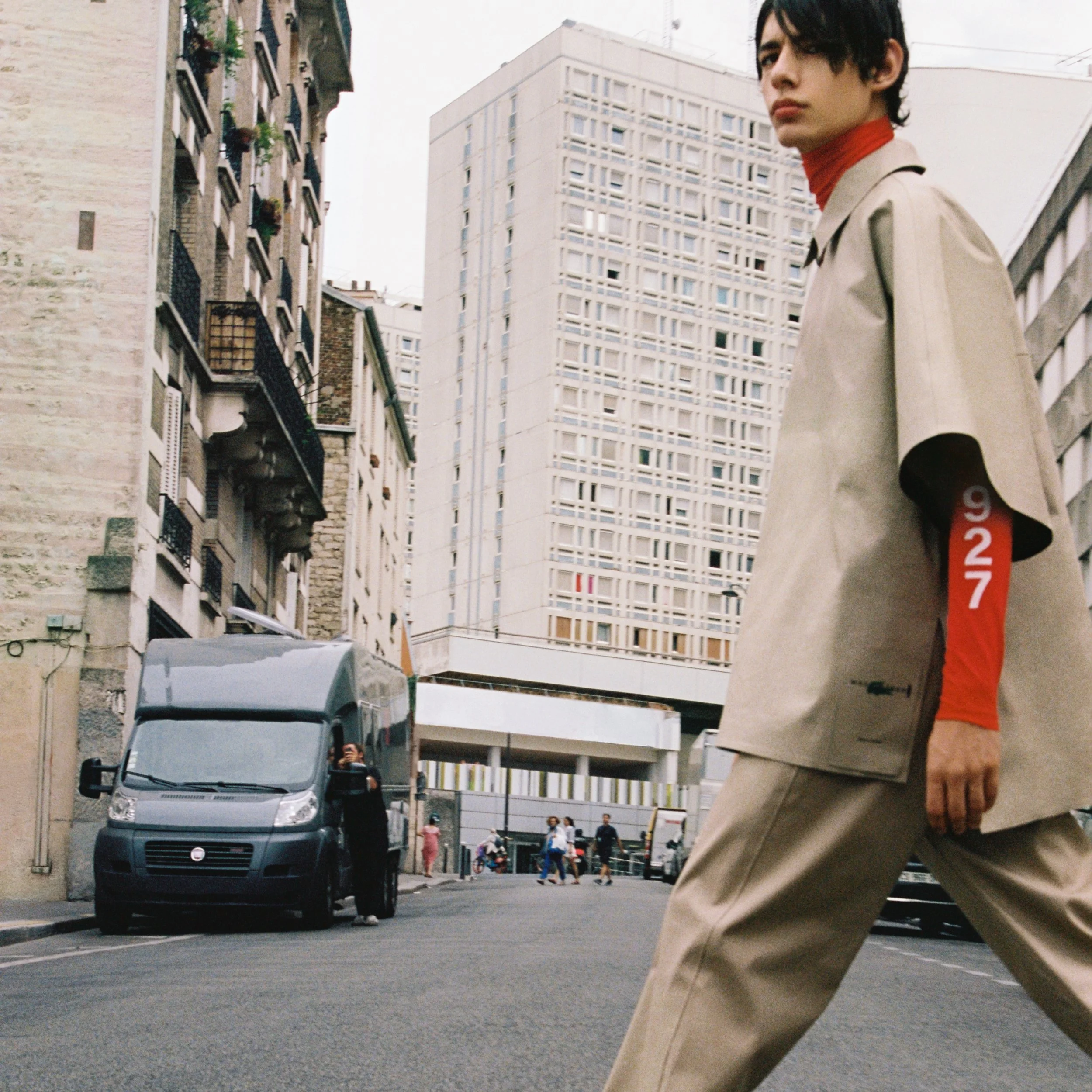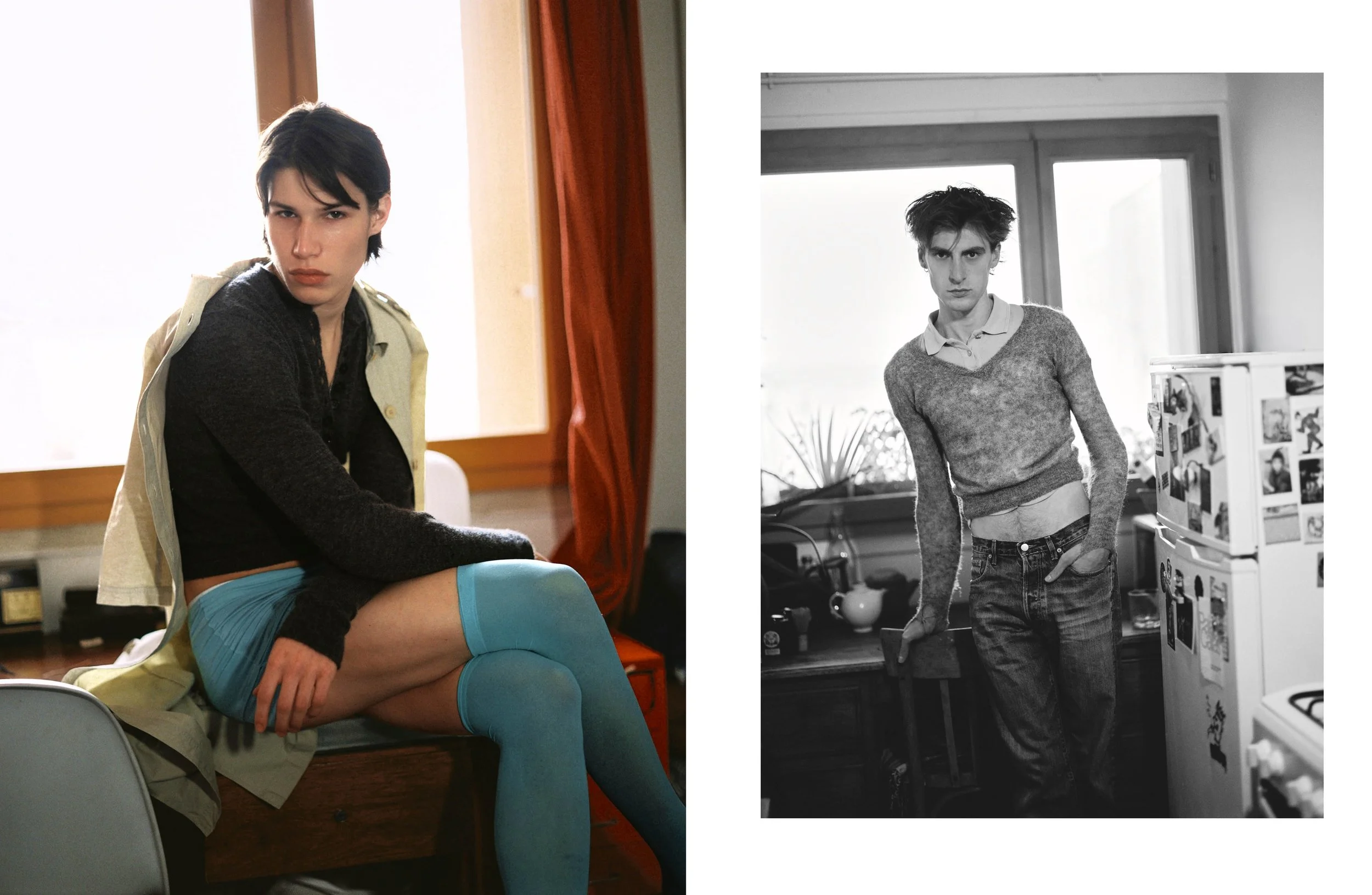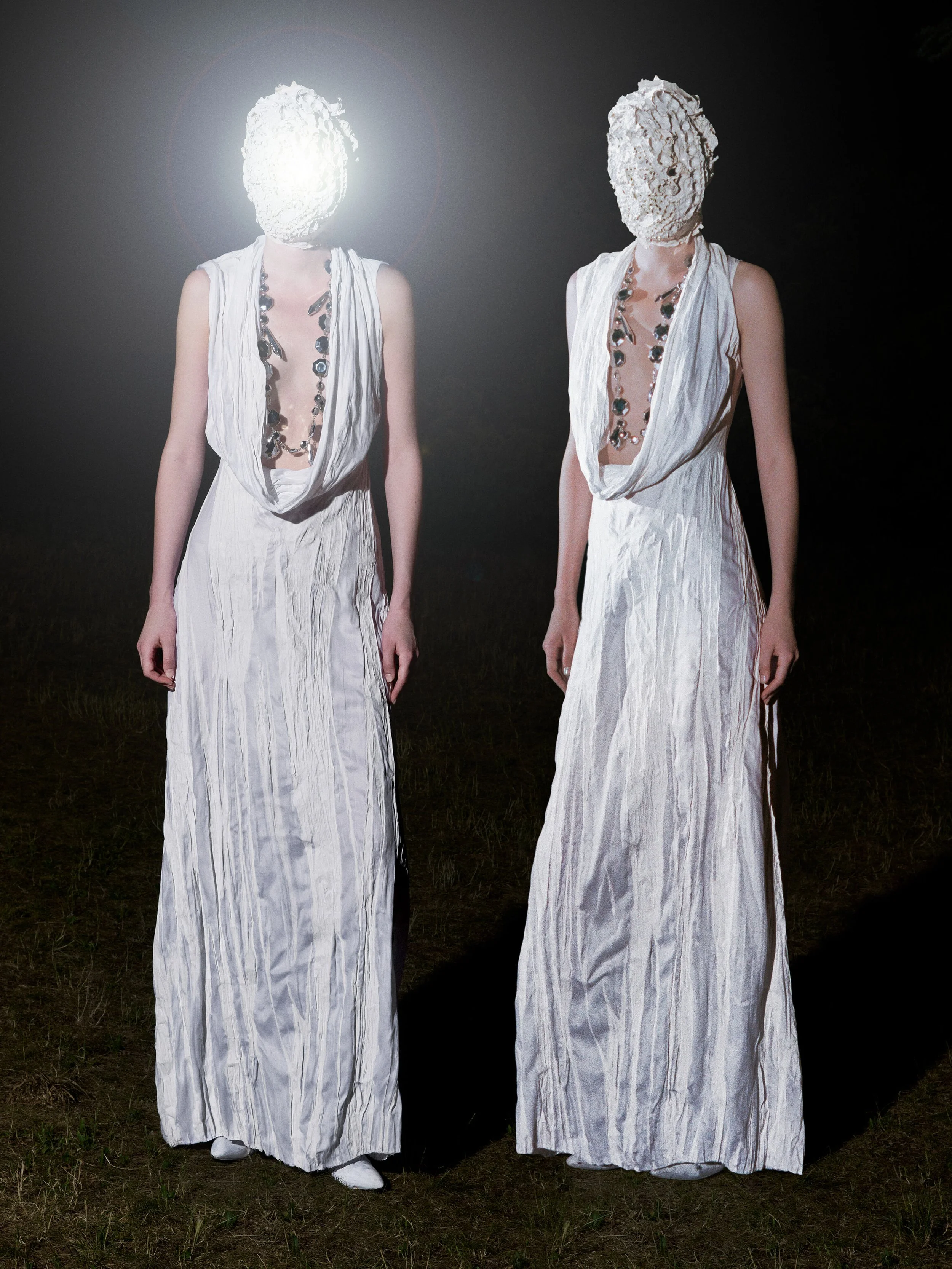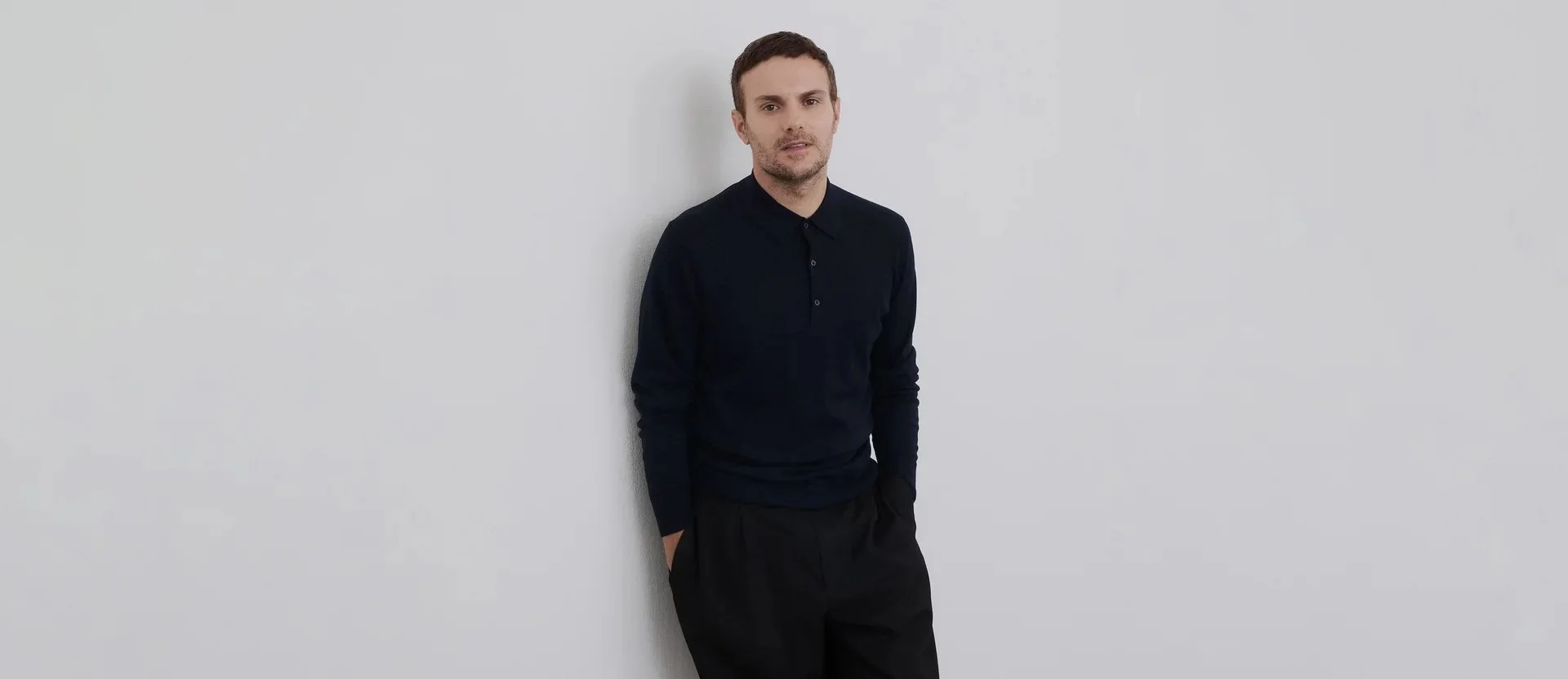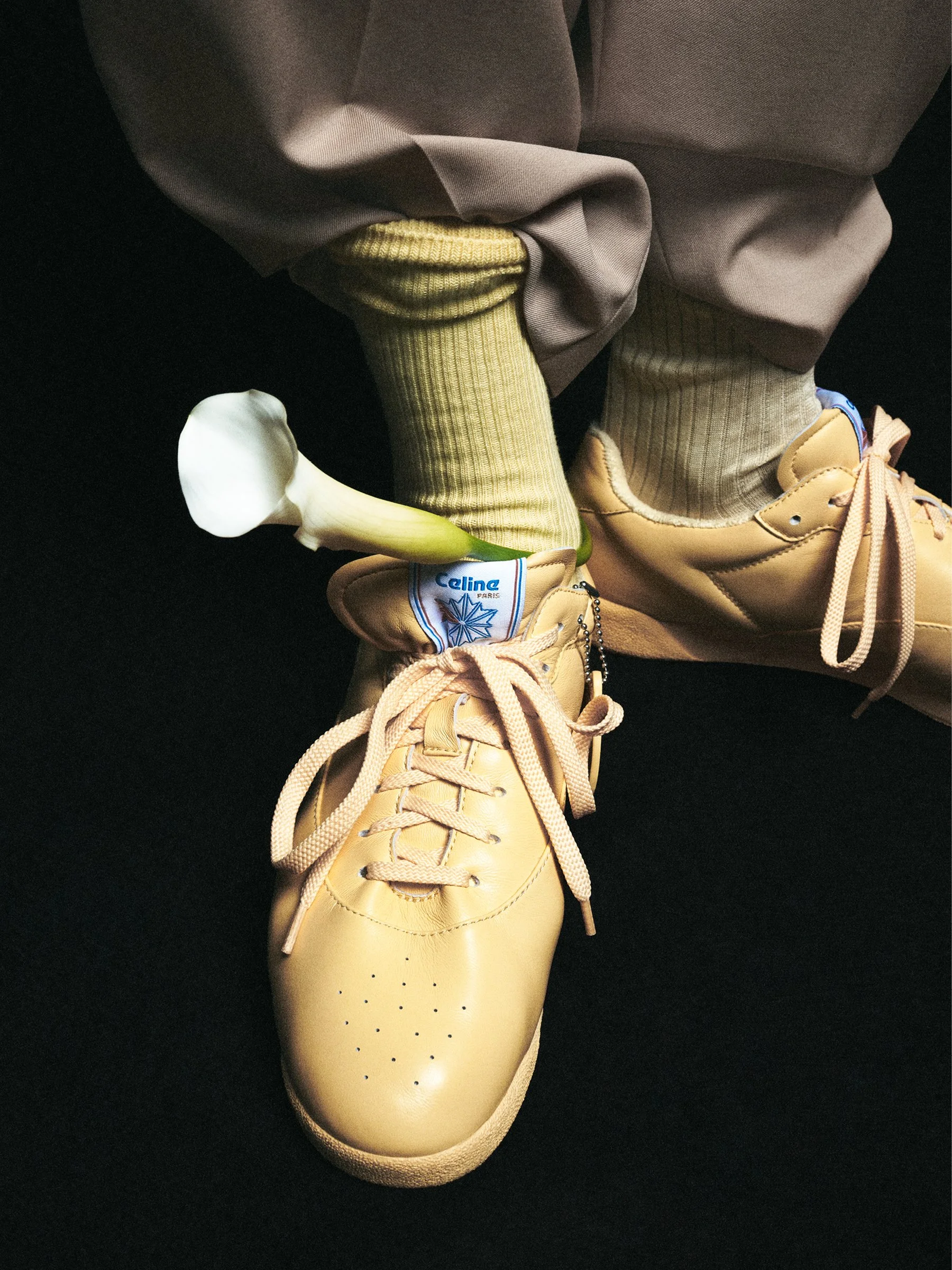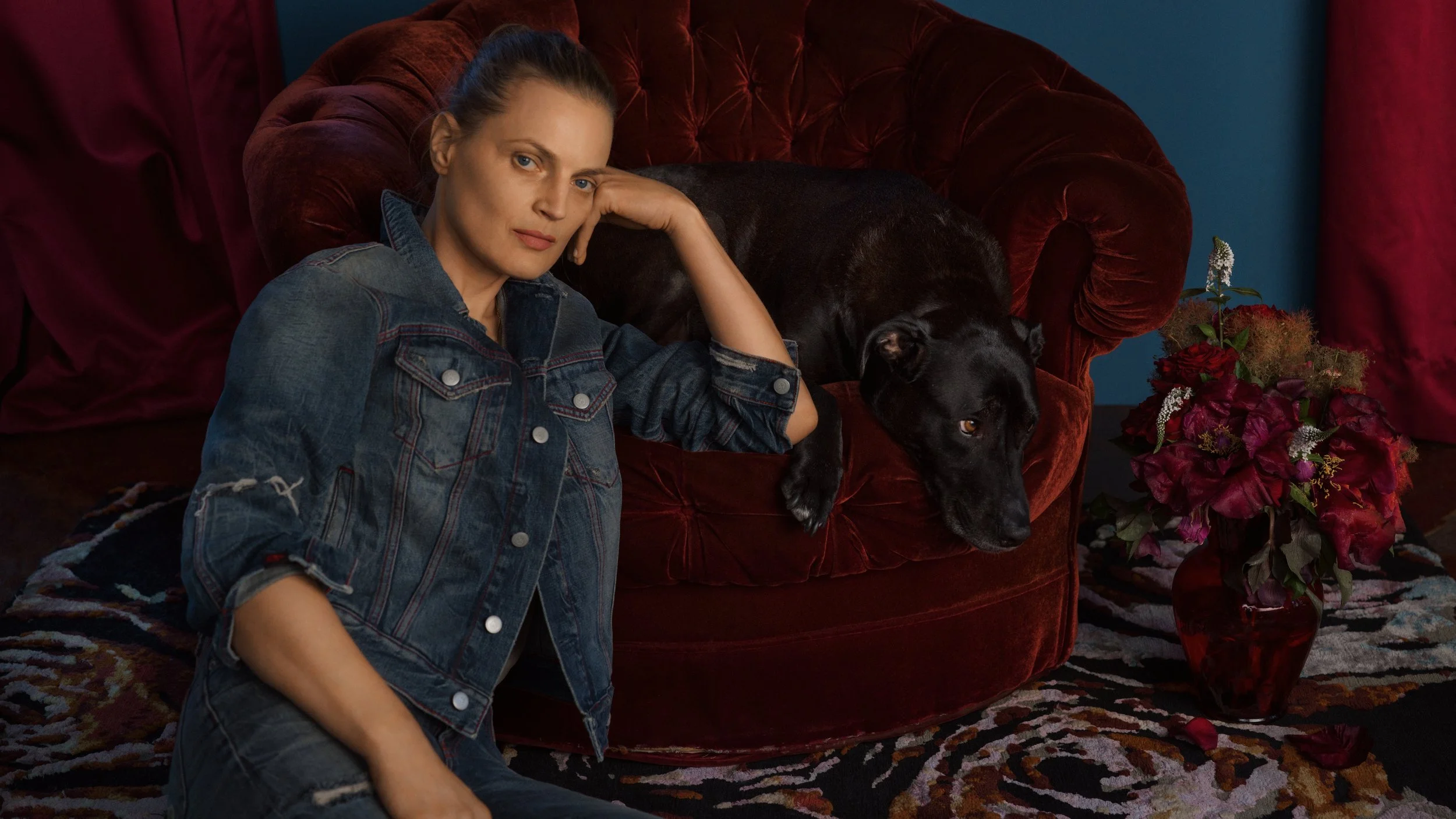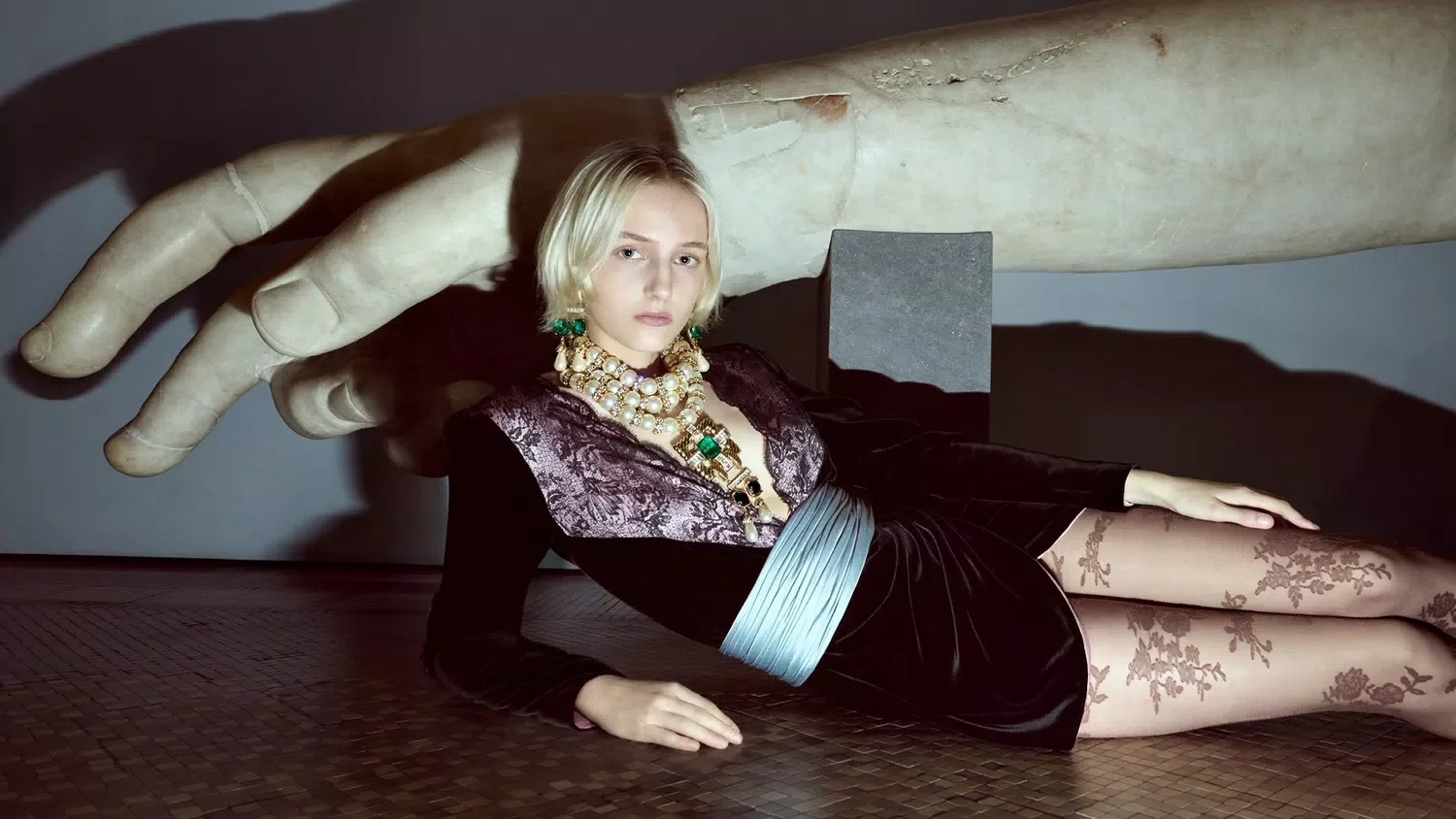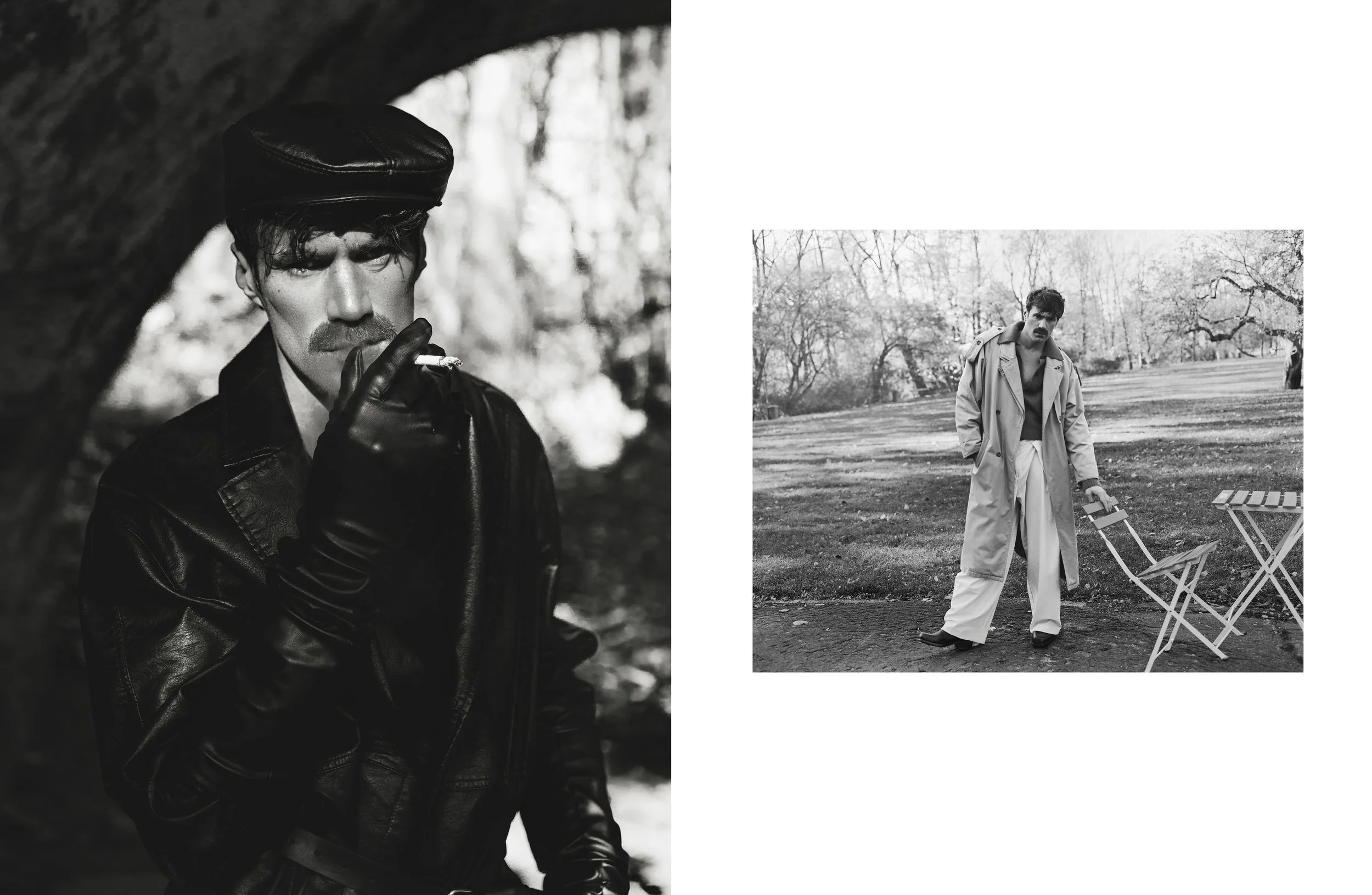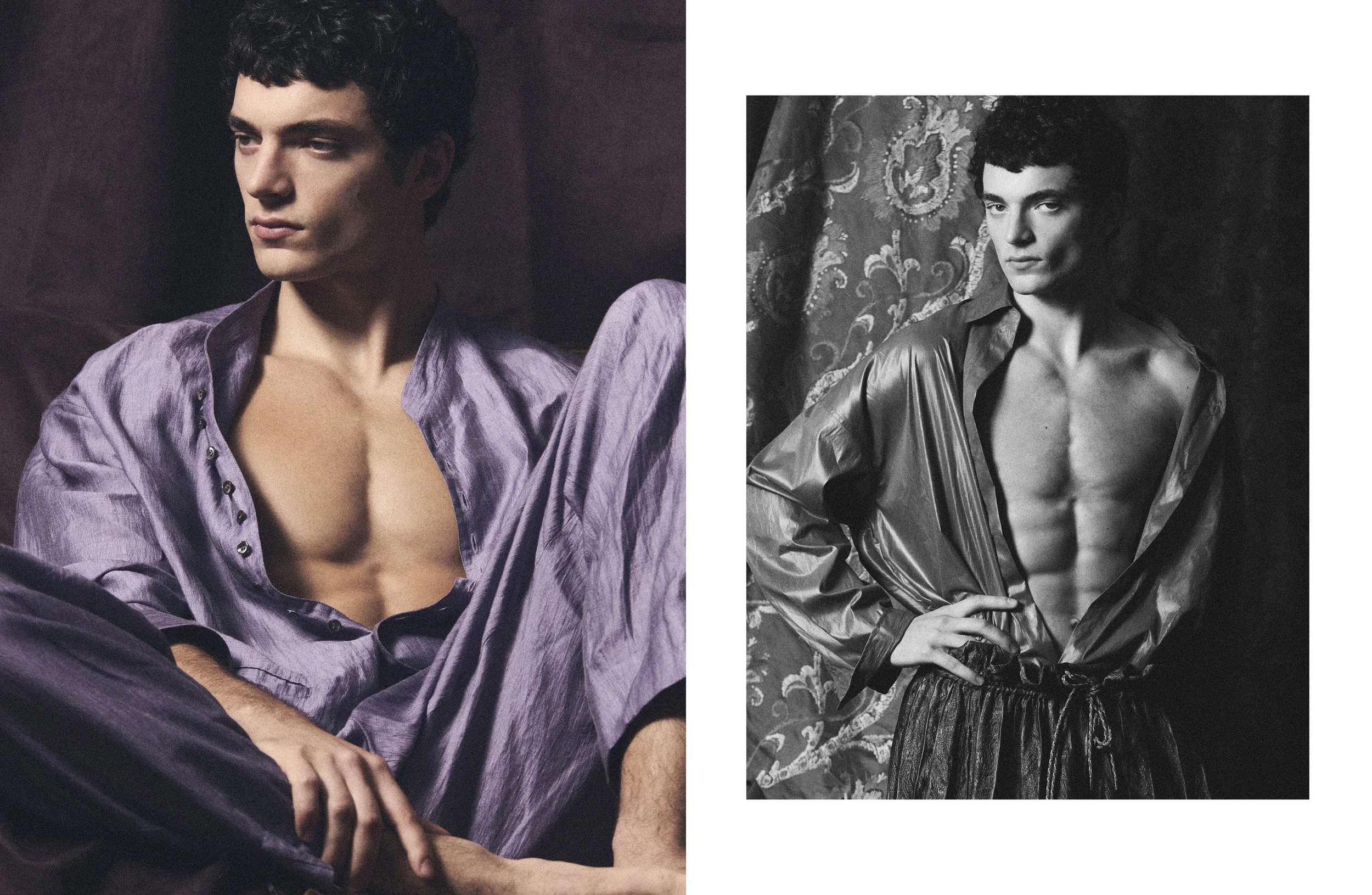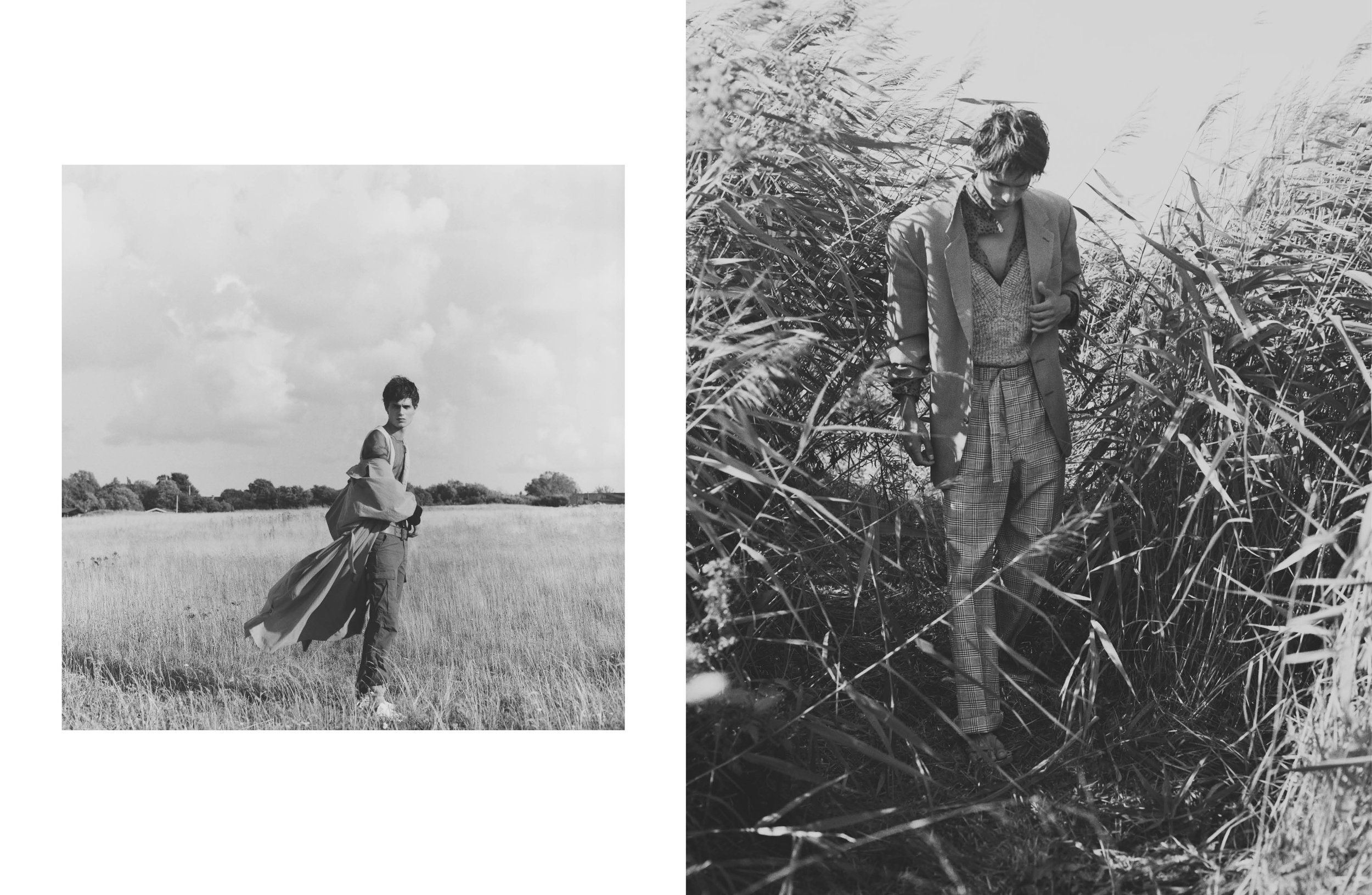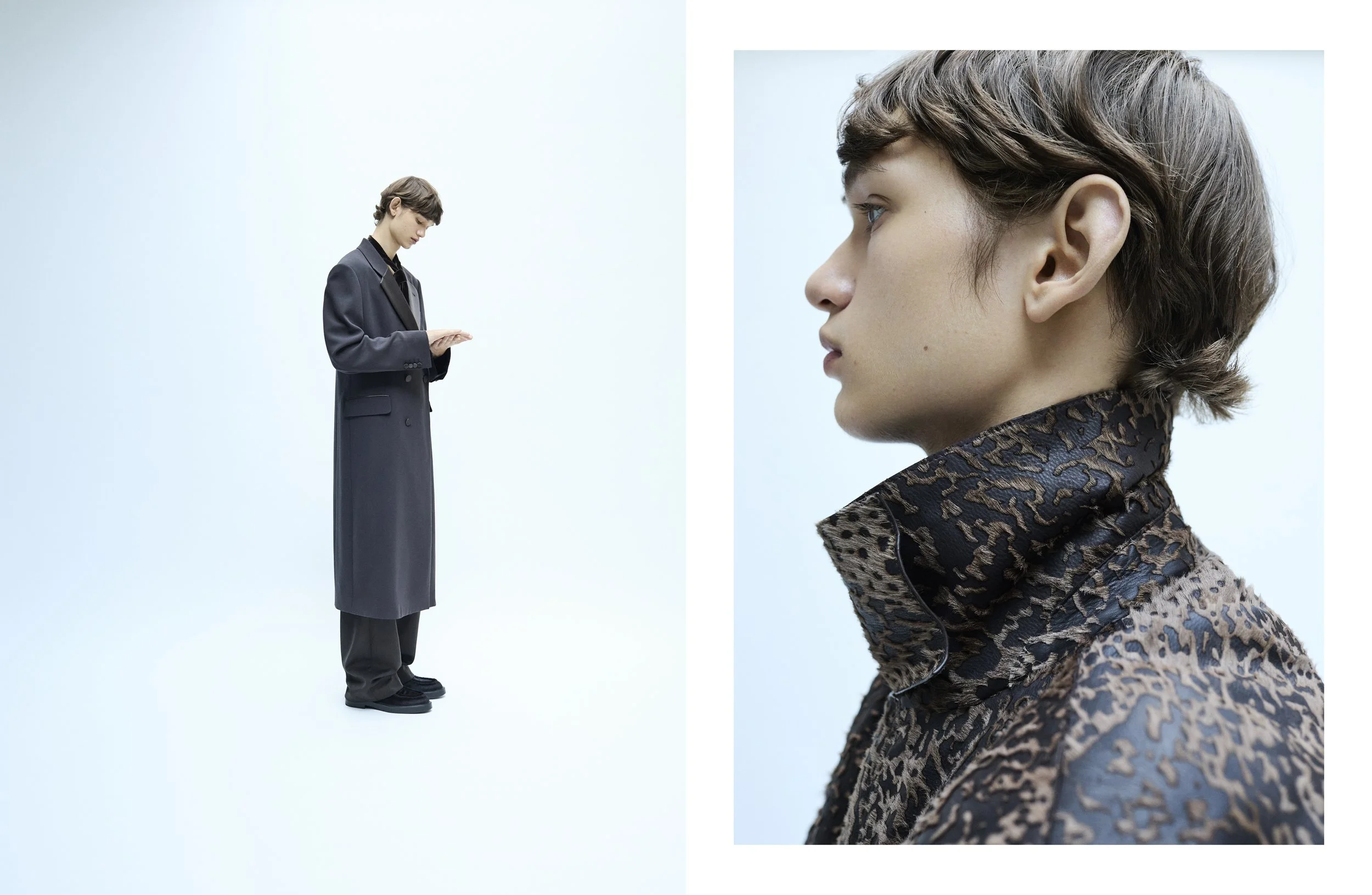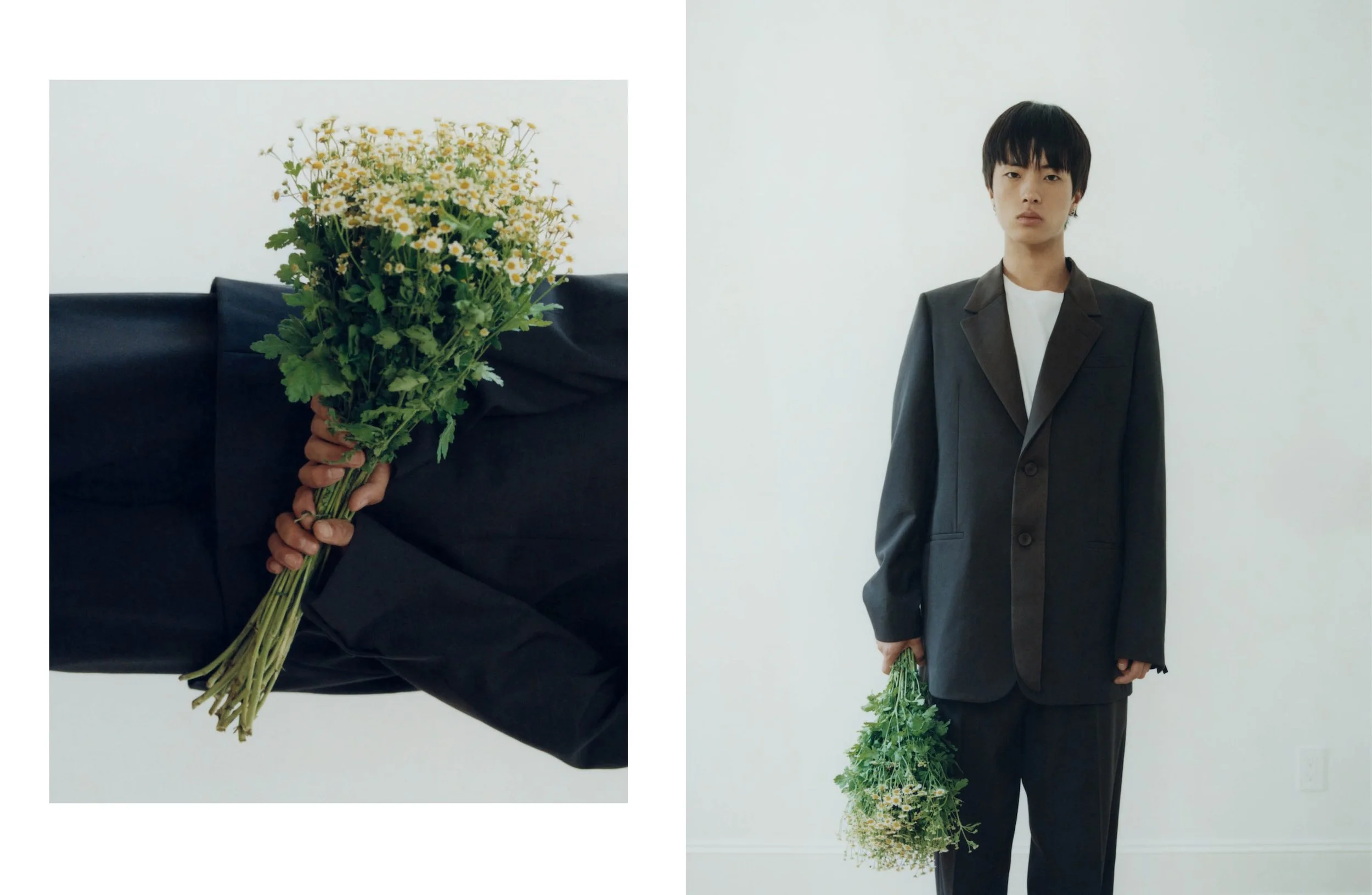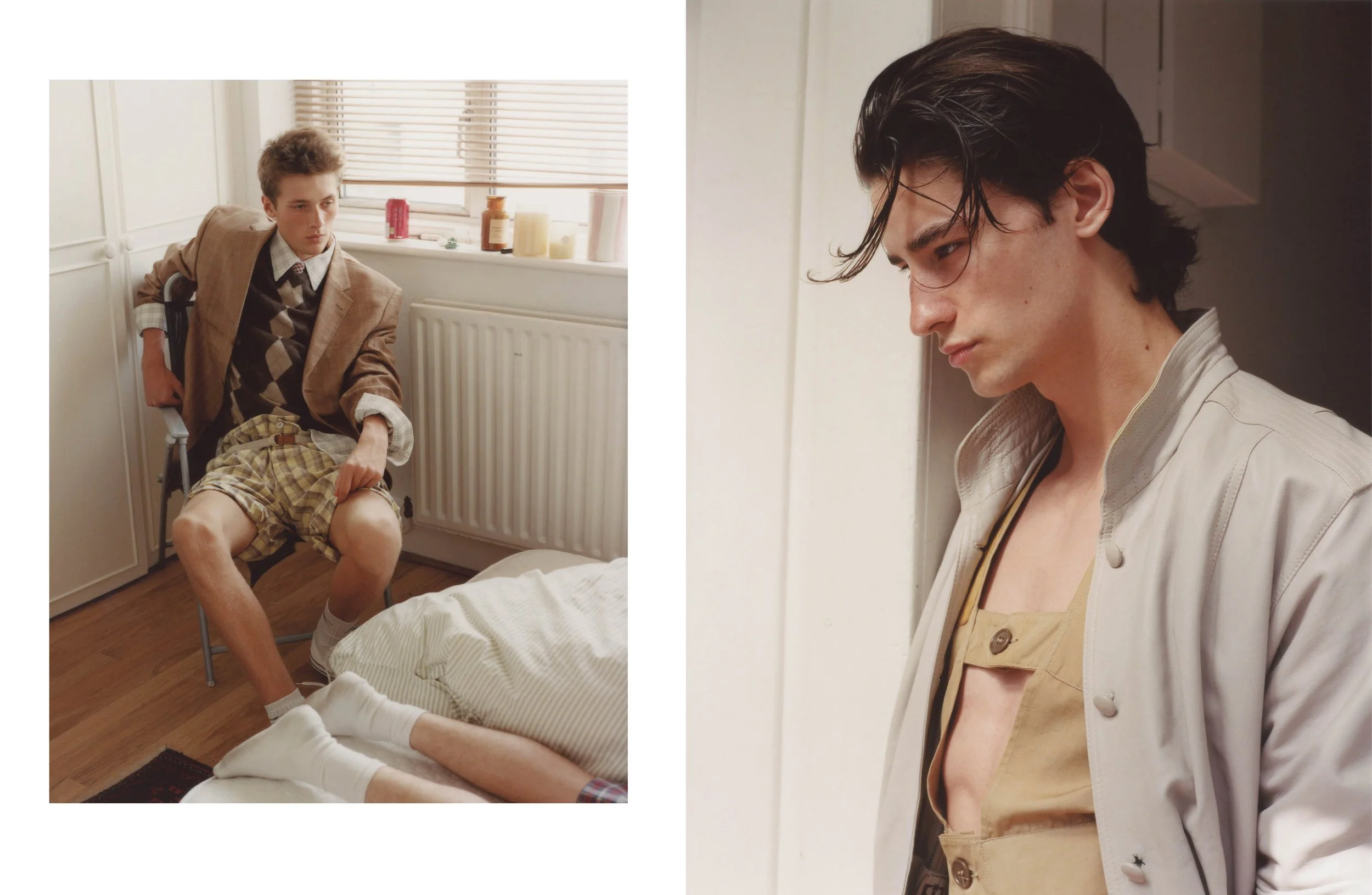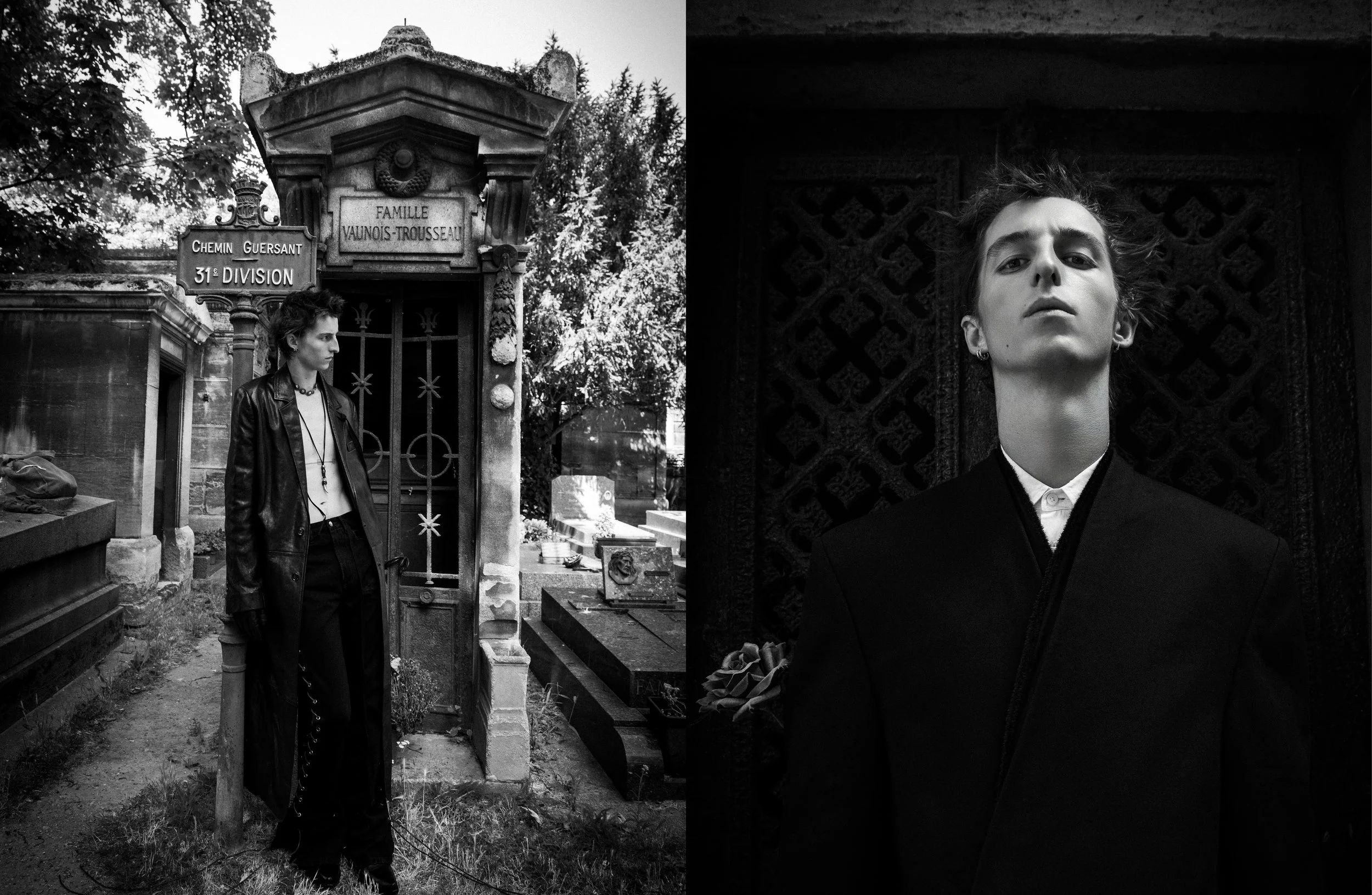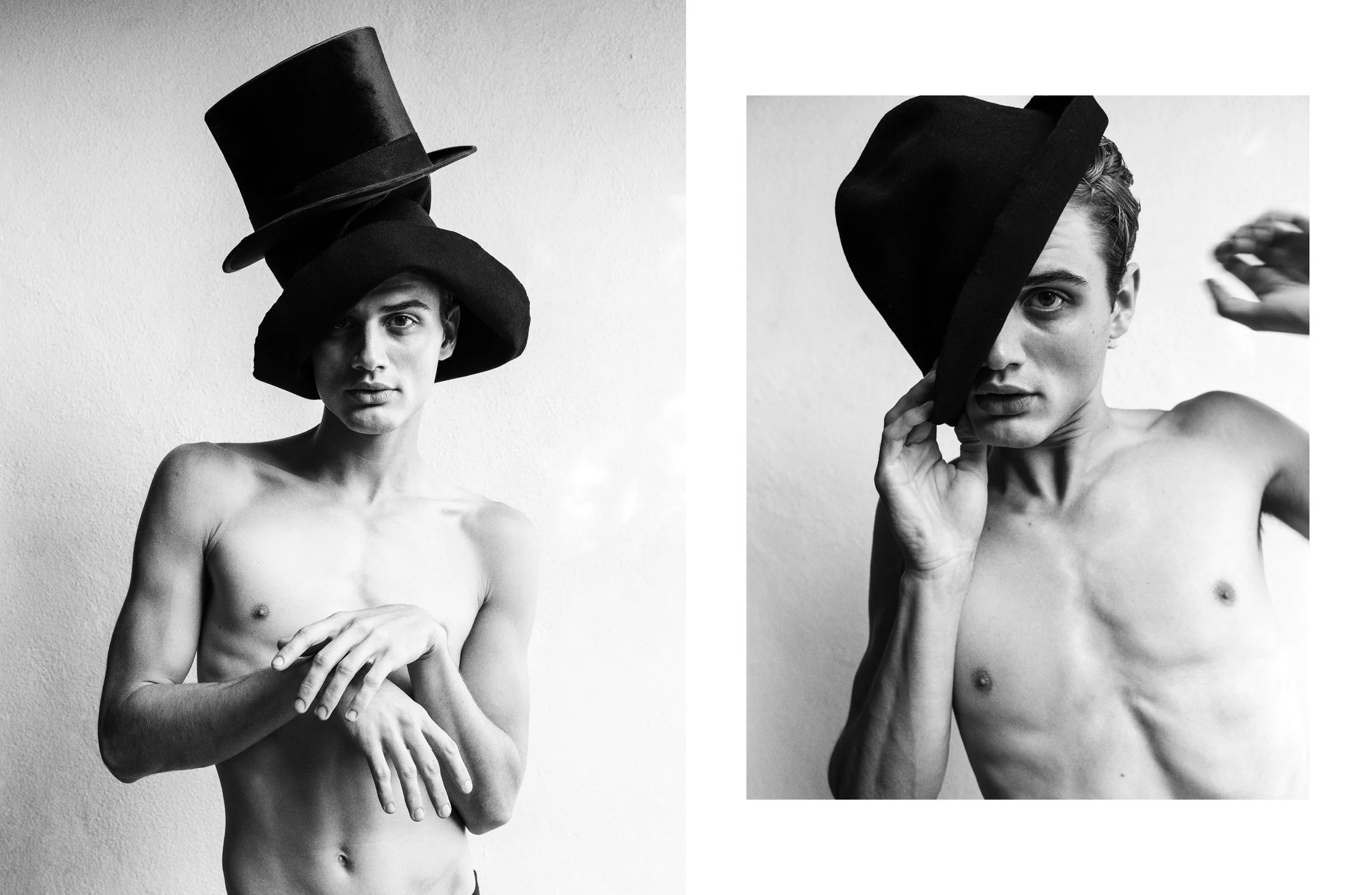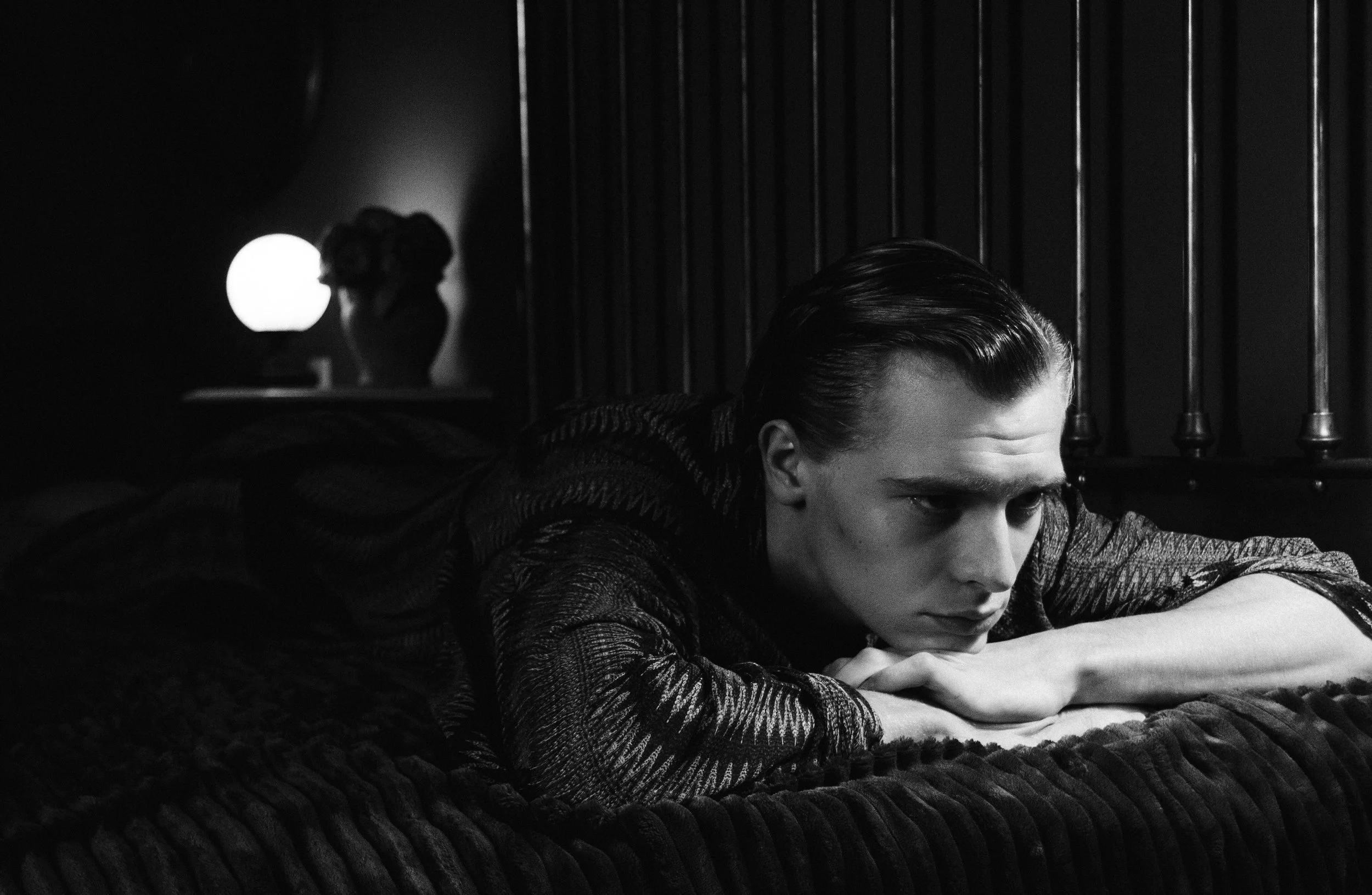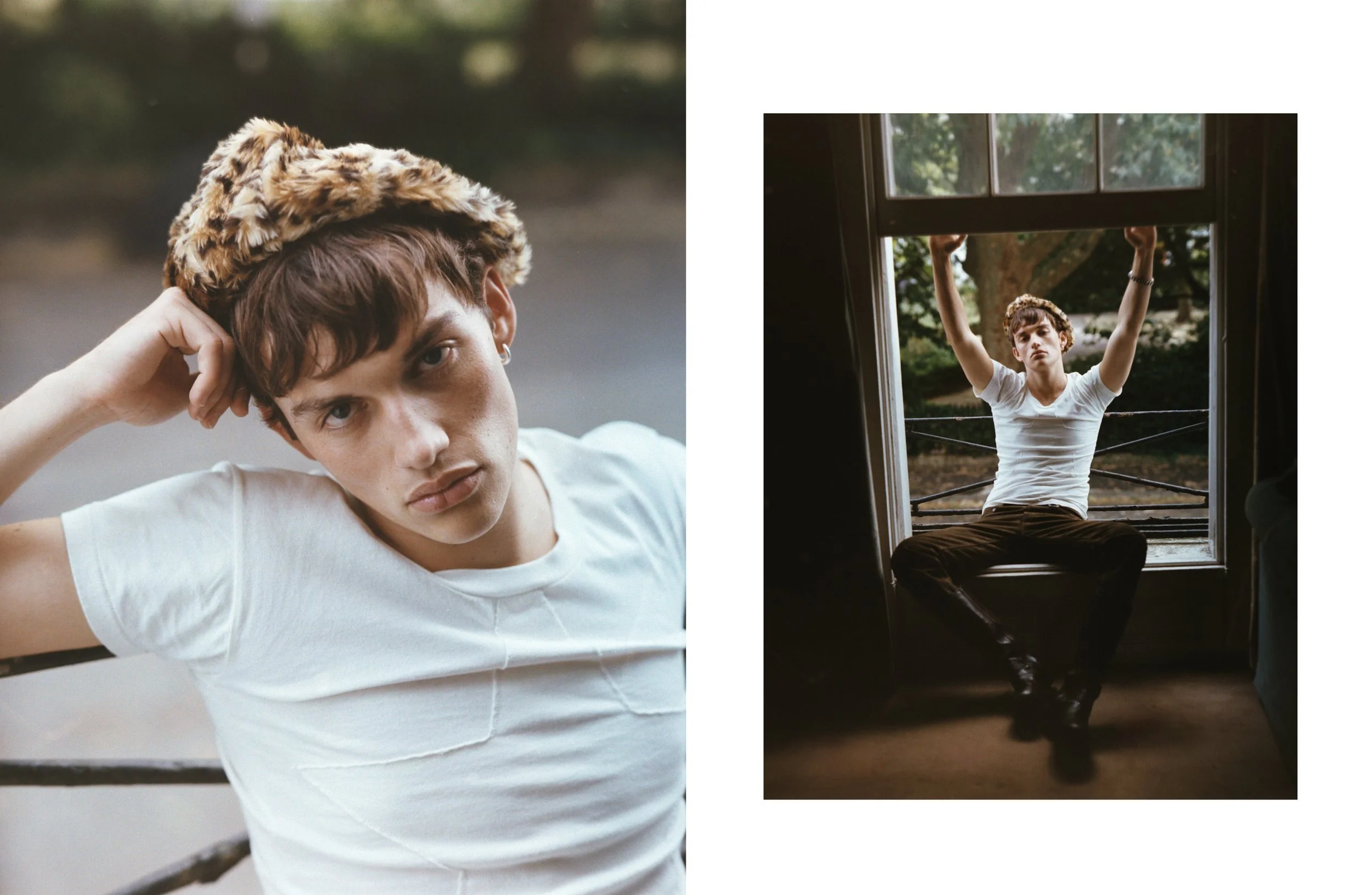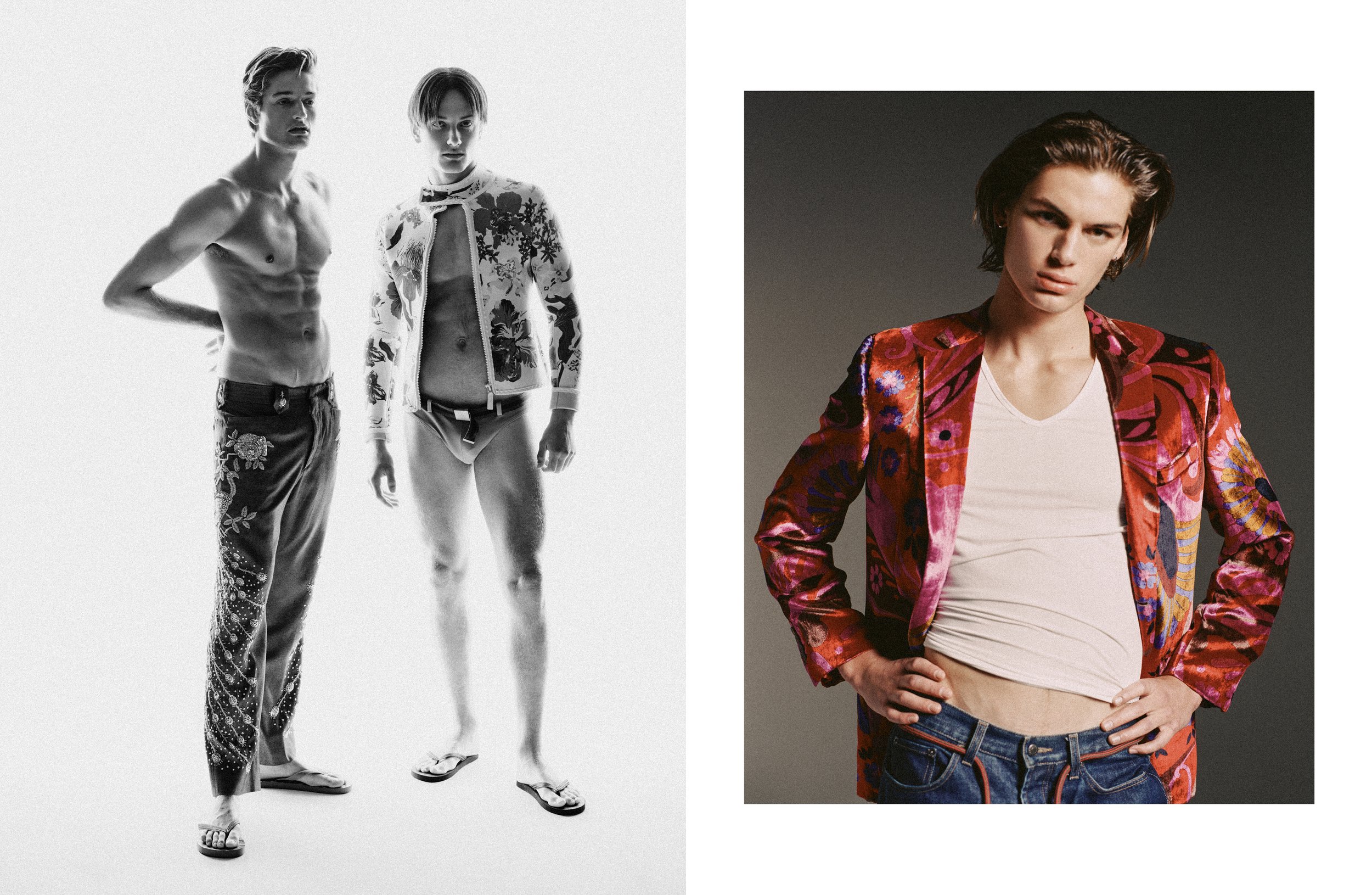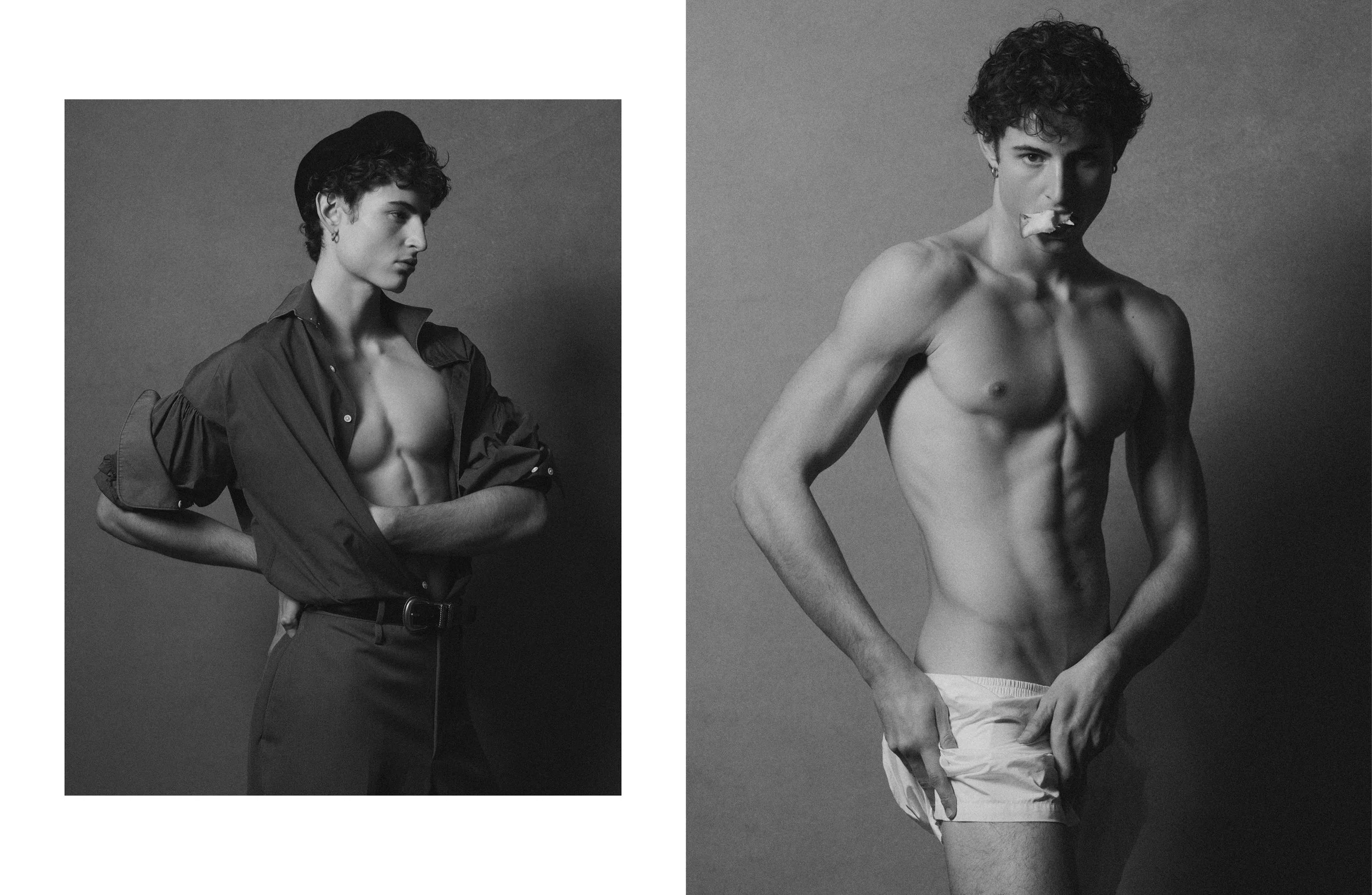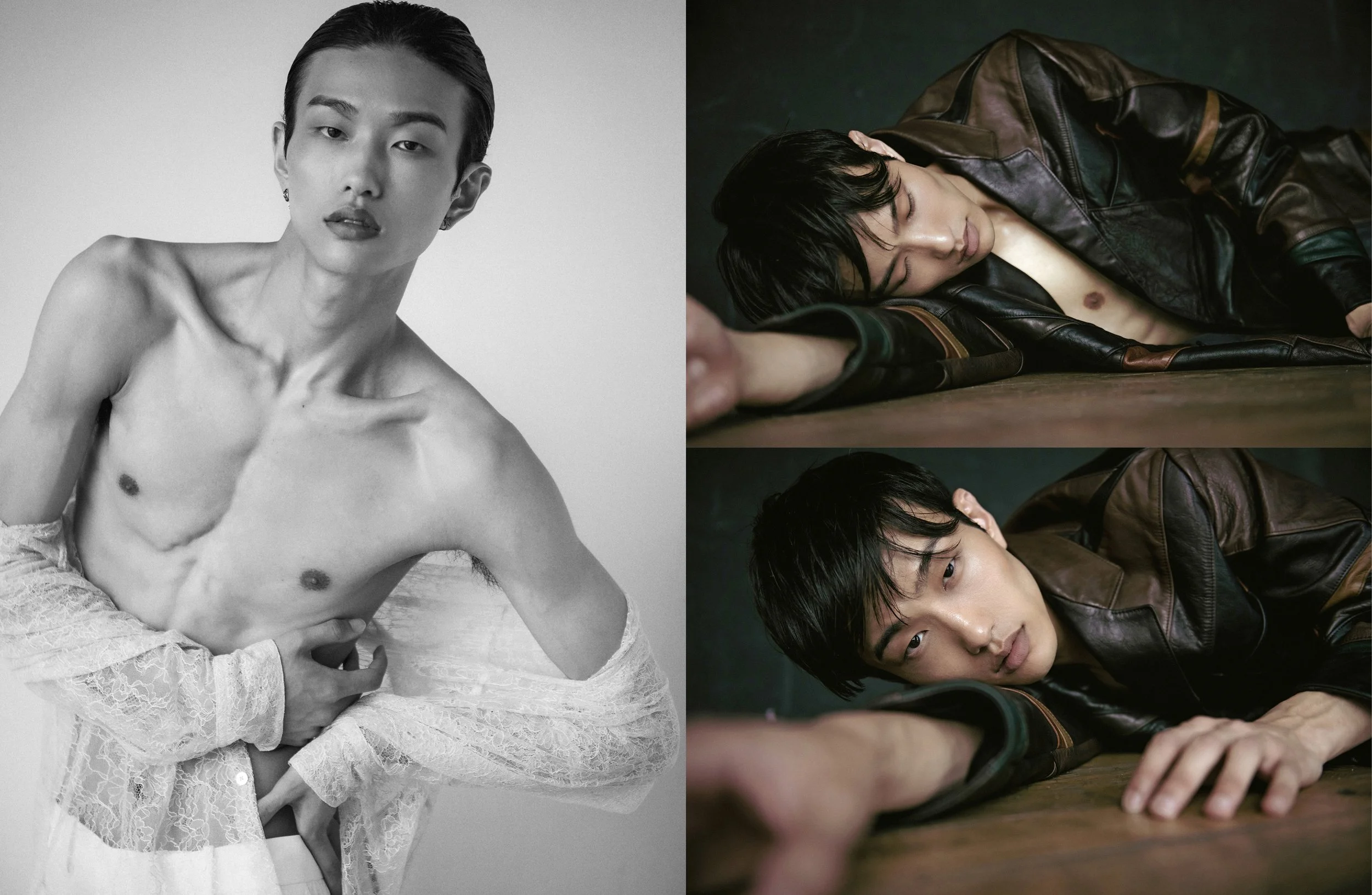
Thank god for Julian Klausner! Ever since taking over Dries Van Noten’s creative helm, the Belgian designer has created euphoric collections. He utilises the beloved language of the house to narrate beautiful stories. Fall/Winter 2026 speaks to a common, tender experience: outgrowing domestic familiarity. It’s a collection that hits close to home, or rather, far from it. If a personal interlude is permitted, I have recently moved away, alone with my objects, with my clothes. These have become anchors of my emotional connections. The rustling of clothes on your body becomes the closest you have to the touch of the ones you left behind. The knitted jumper made by a grandma. The pants stolen from a sibling. The watch given by a dad. These are proofs of life, of connection.
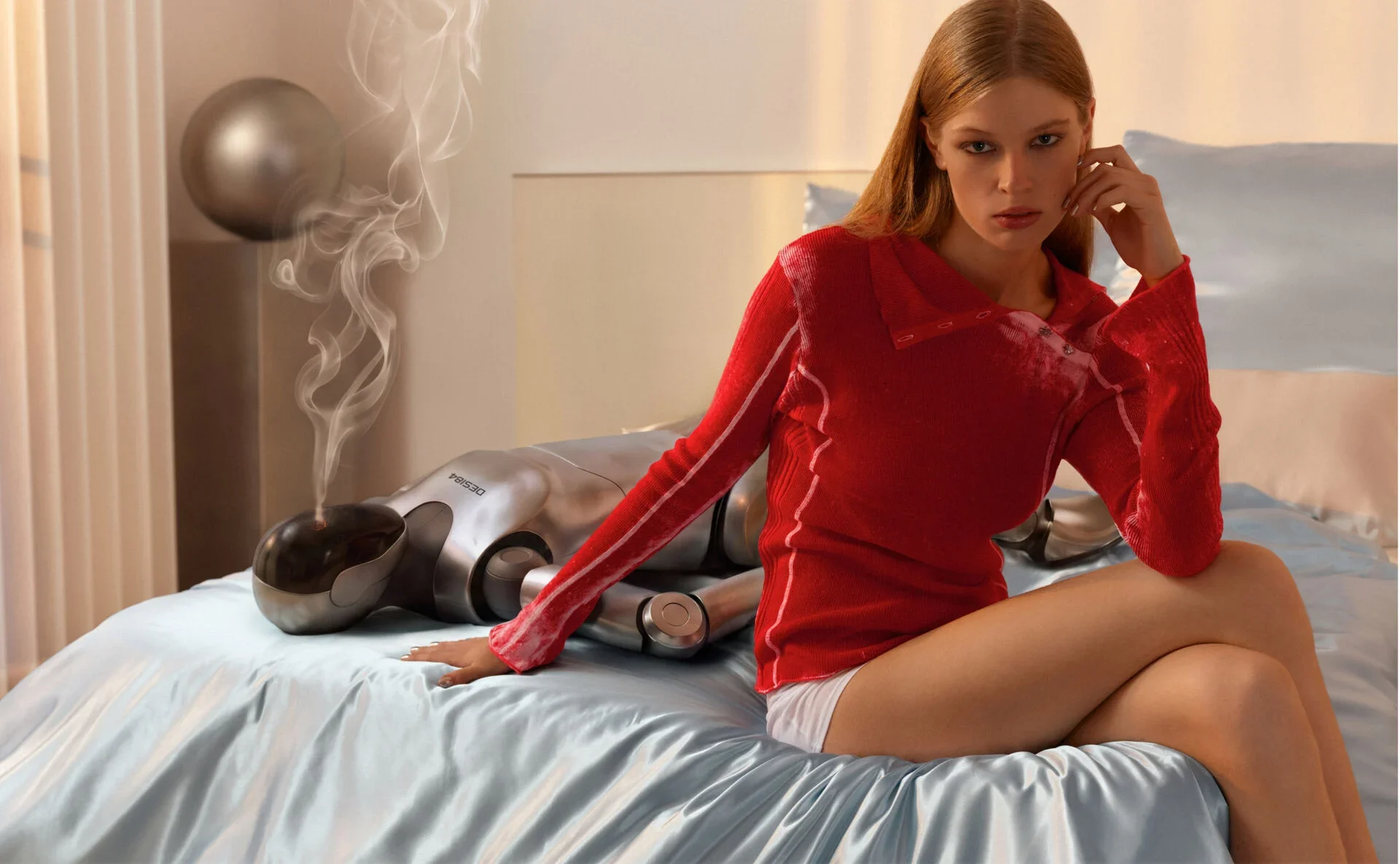
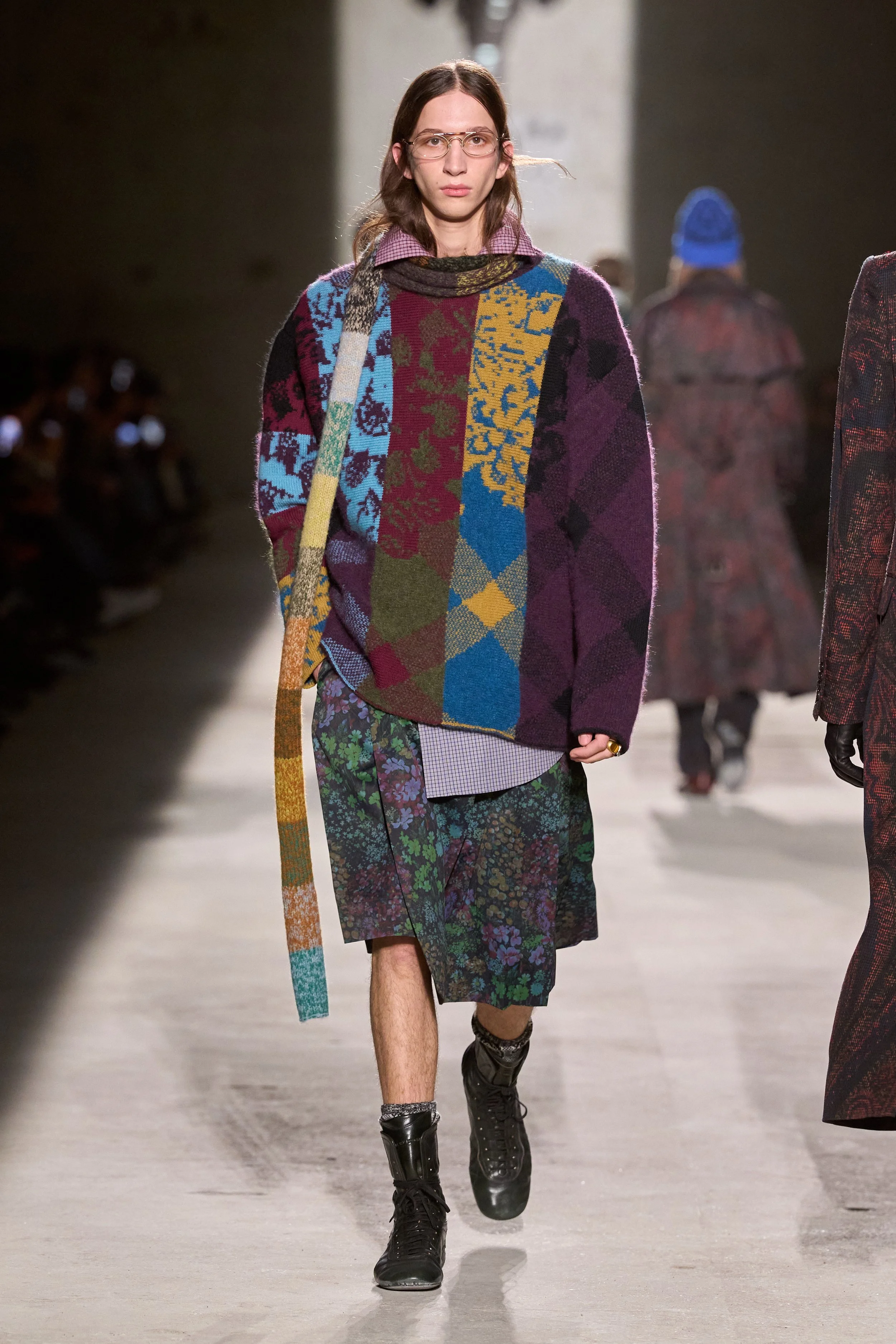
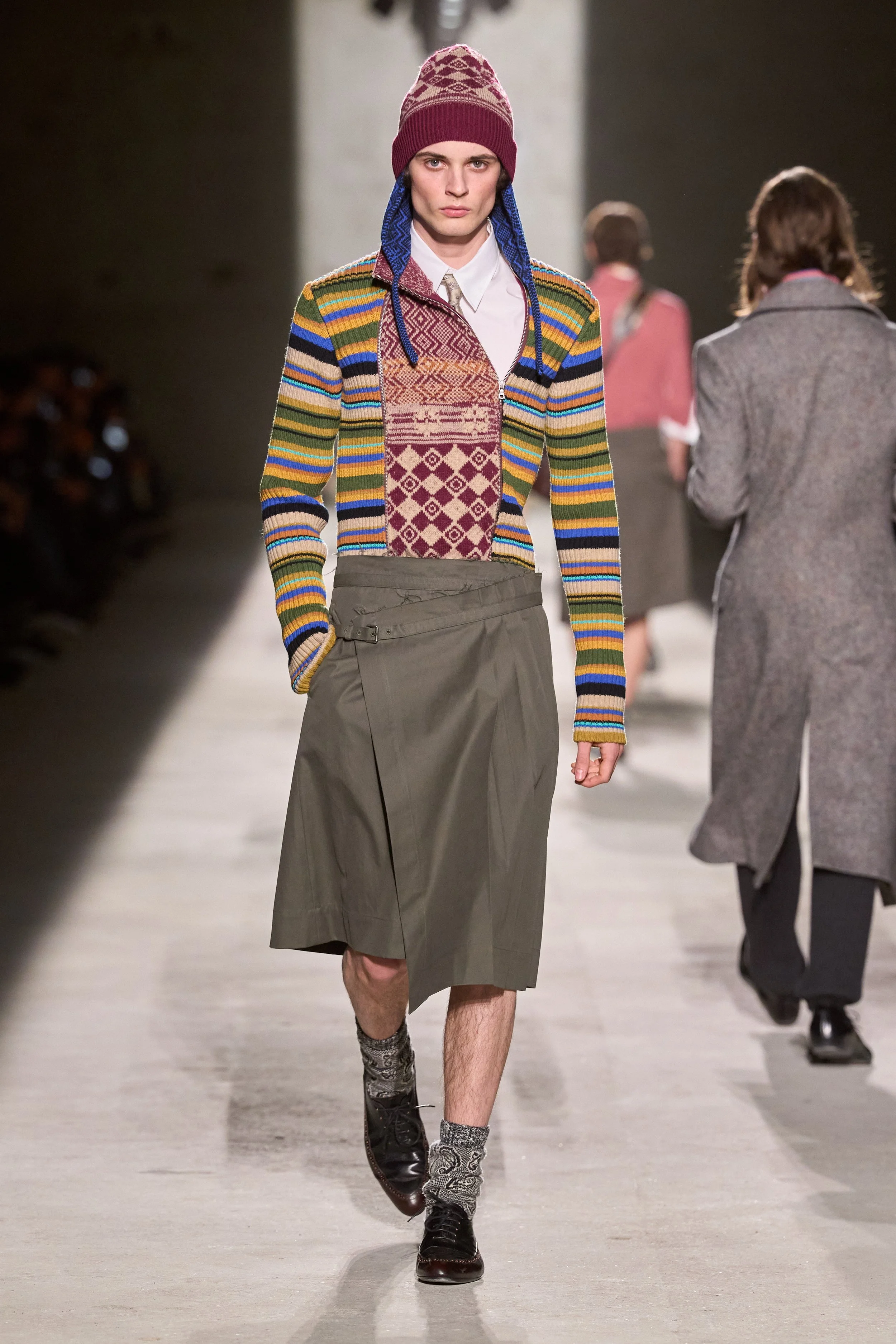
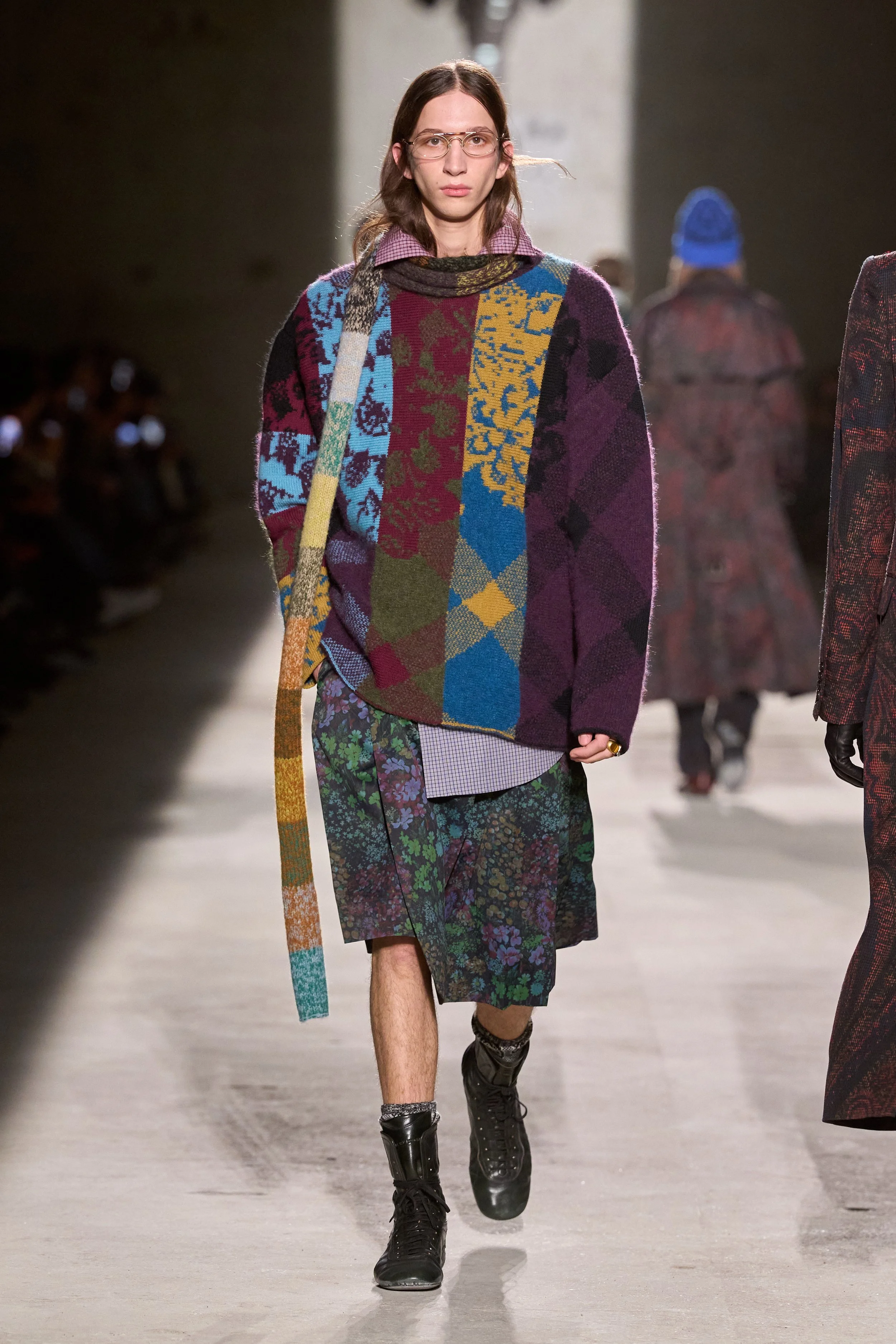
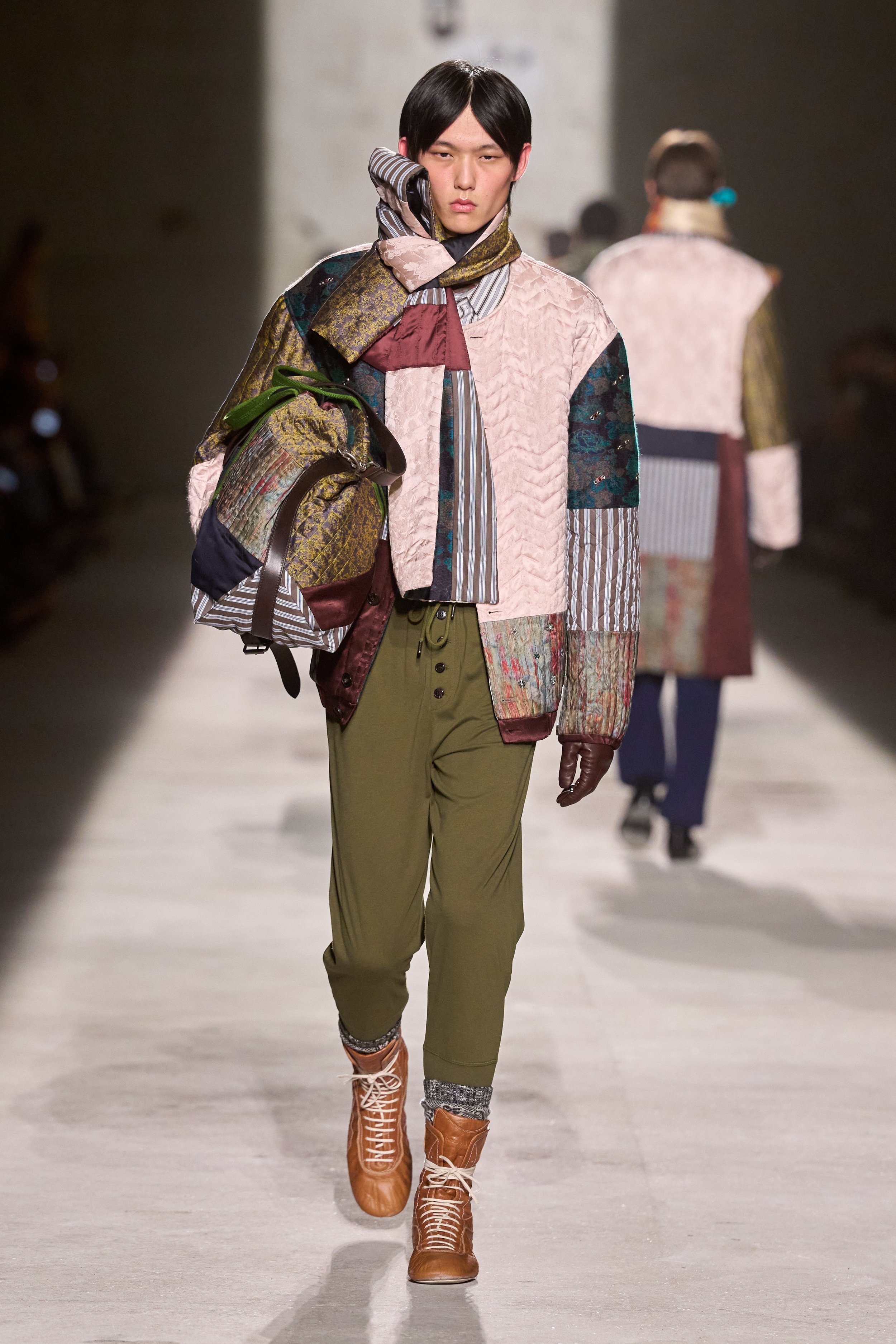
Klausner illustrates this growth in different ways; its most straightforward is undoubtedly through knitwear. Argyles and stripes are remixed, explored through the lens of the brand’s affinity for patterns. Prints are assembled and reassembled, juxtaposed through vertical zippers on tight jumpers. Knitwear is used to demonstrate familiar ancestry both in its conceptual sense and its literal one. Backstage, the Belgian designer speaks of the knit department at the brand, of wanting the collection to honour those who built the brand, season by season, before he arrived. Life imitates art.
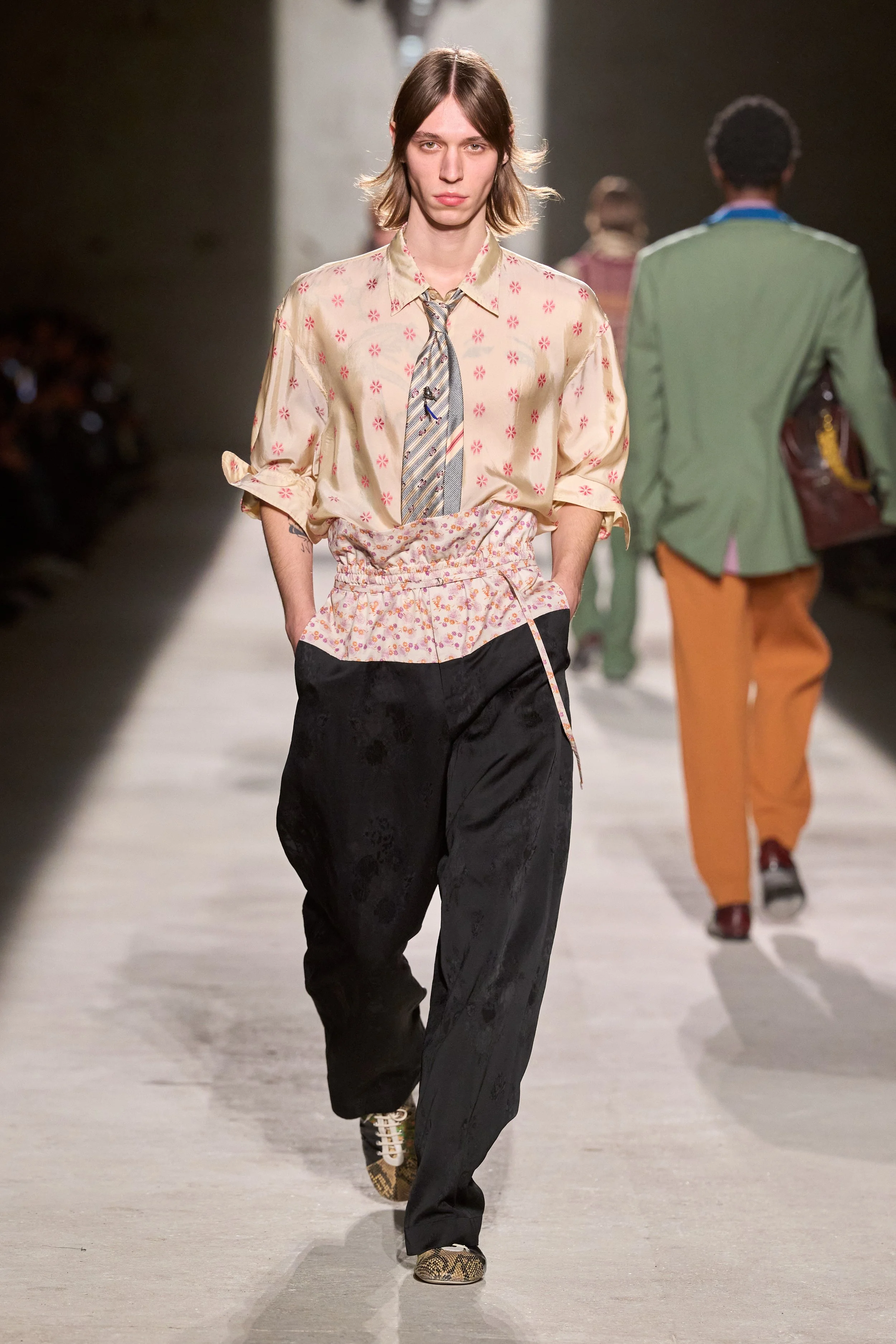
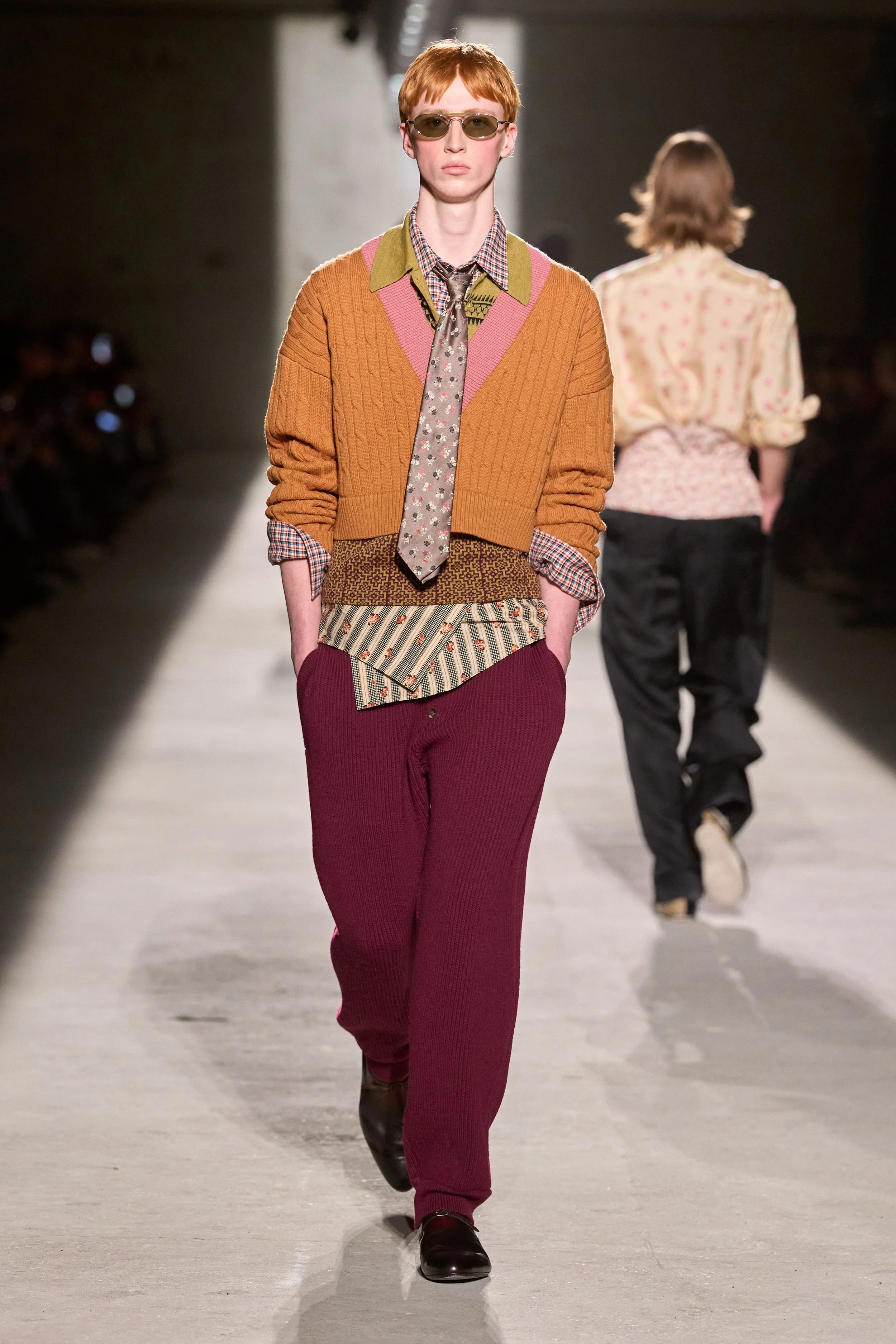
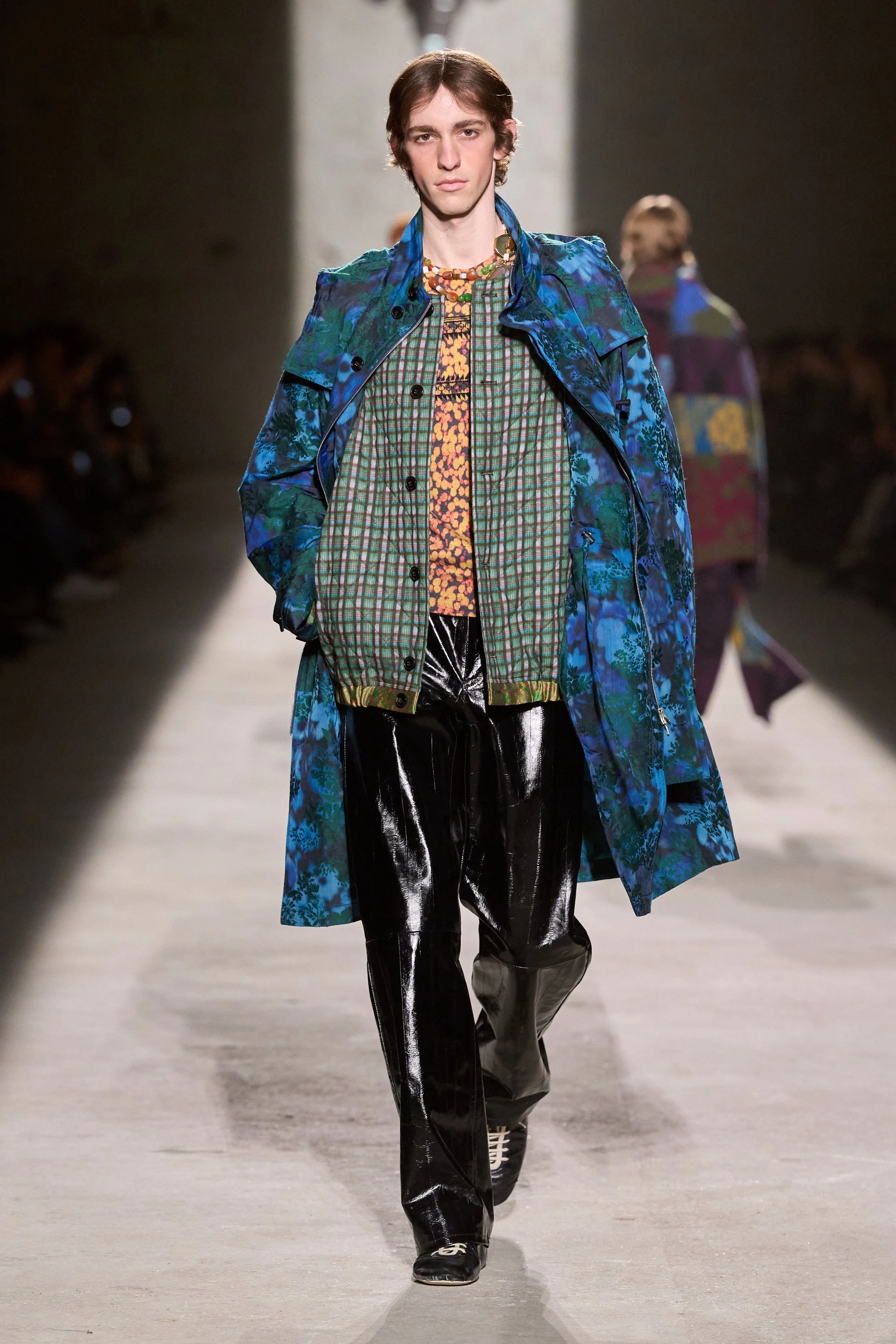
The affection for print is dallied with through clever construction. An open-collared shirt that peeks through a cropped jumper, seemingly laid over a longer one, is all one piece. Tartan shirts are cut in half through light aprons/cummerbunds made to resemble the hem of another shirt.
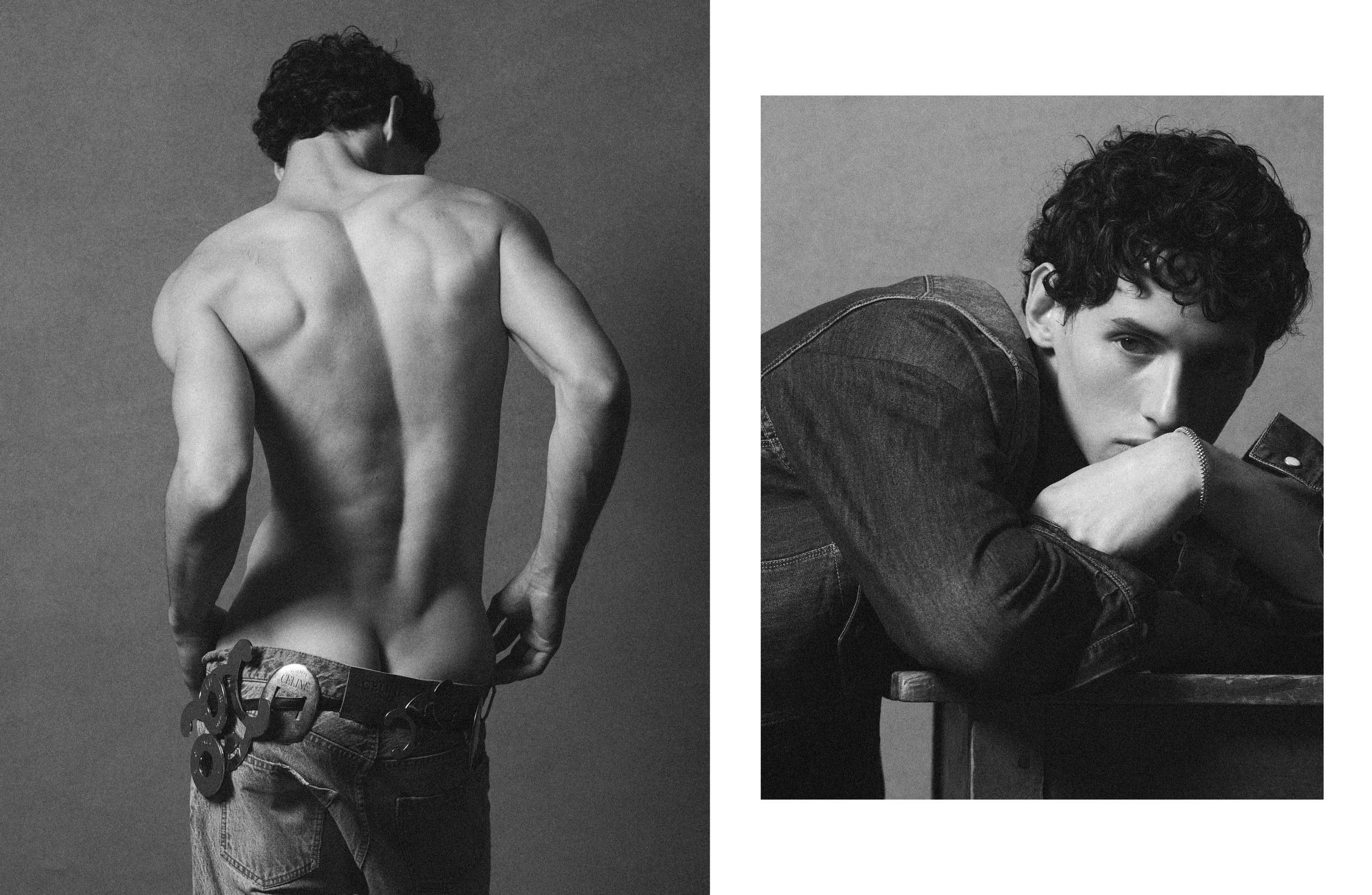
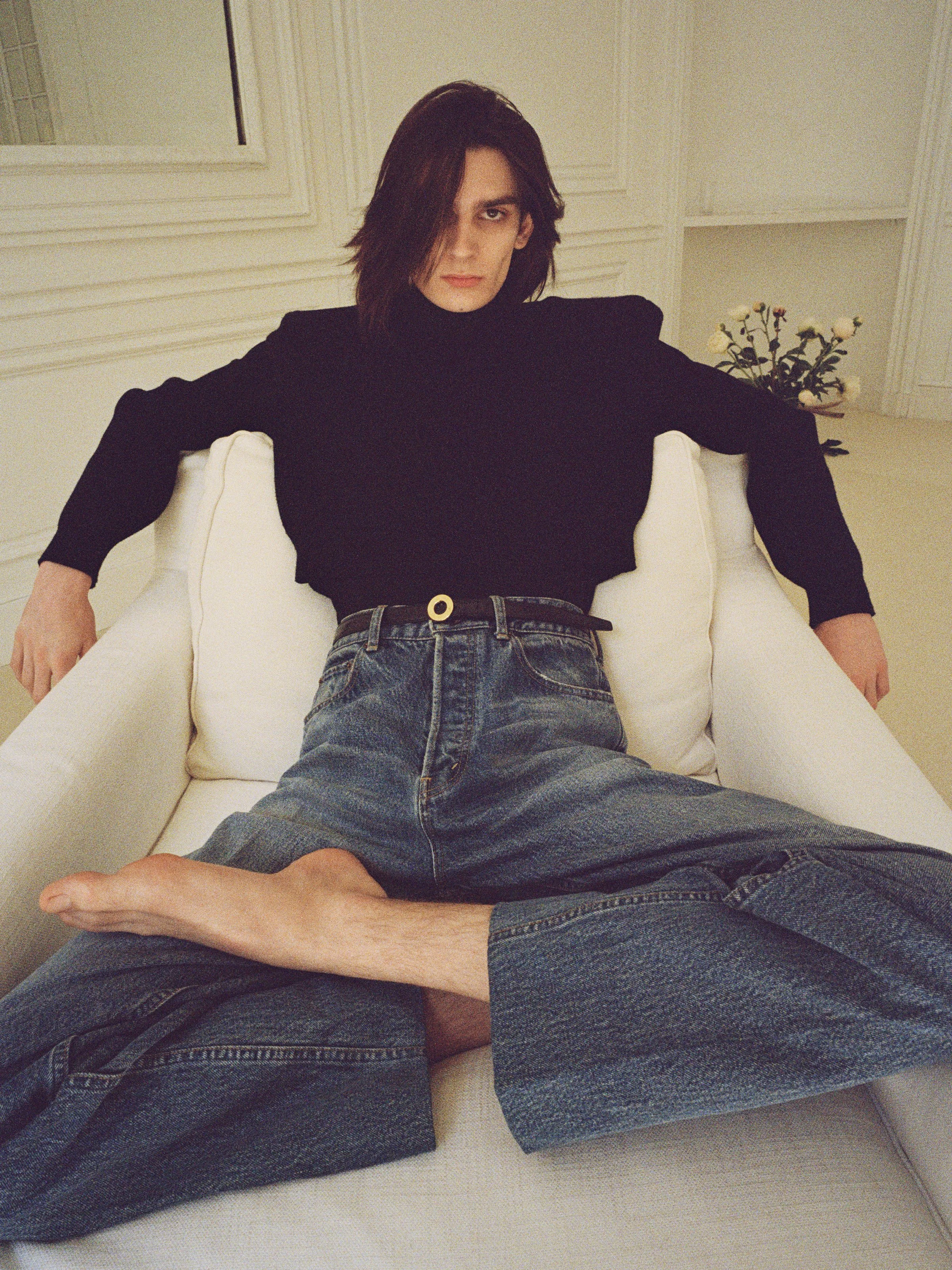
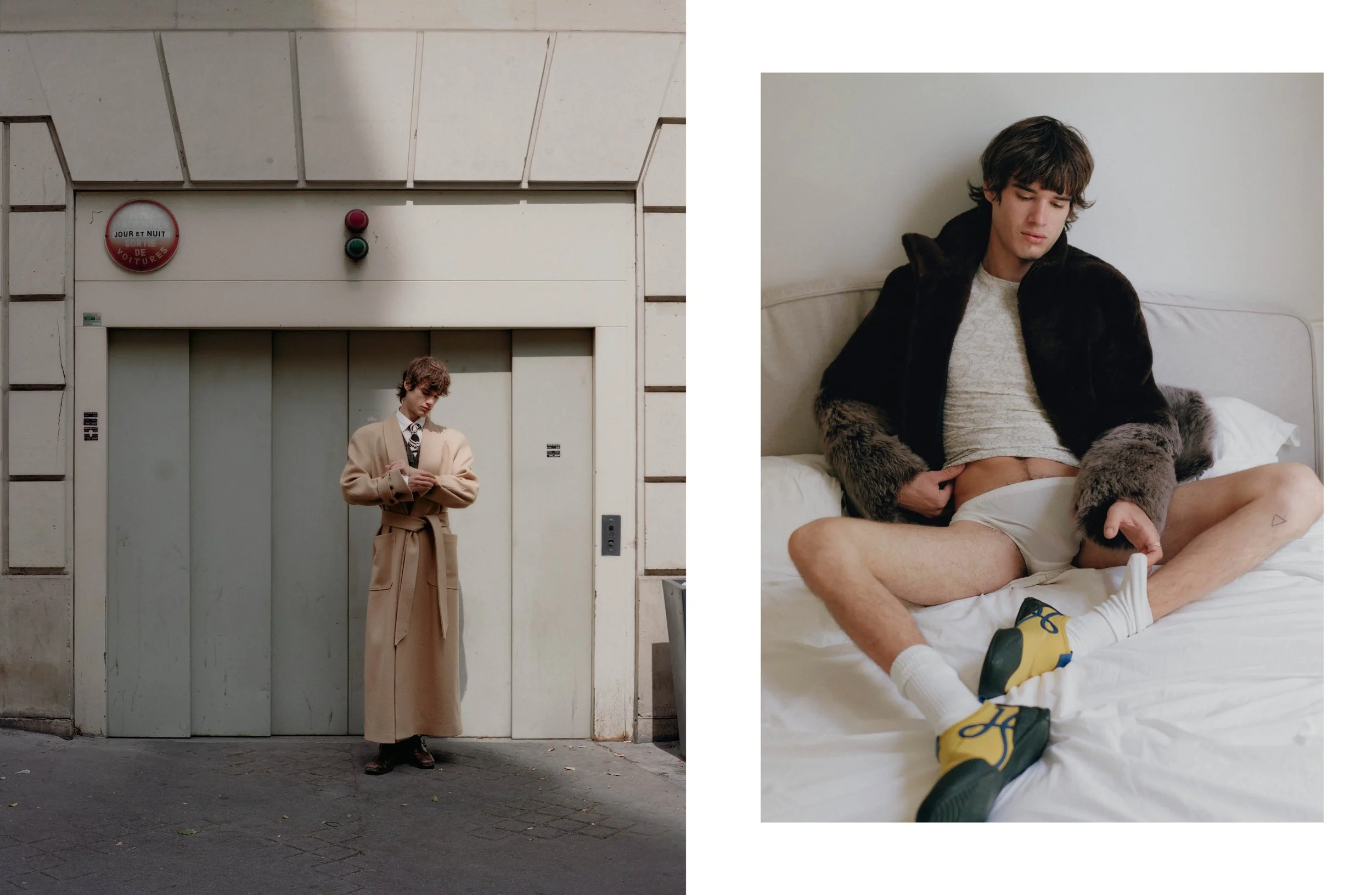
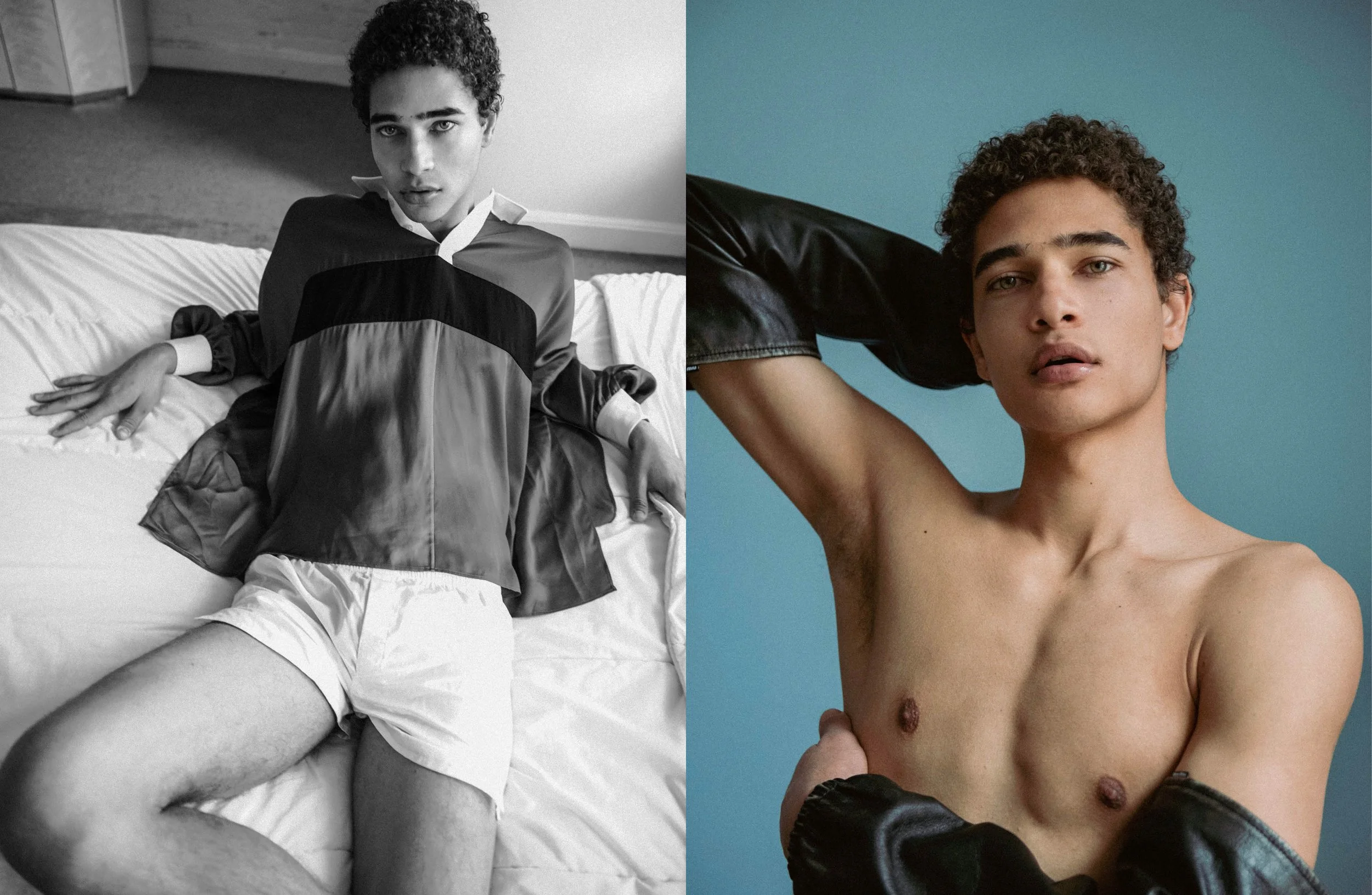
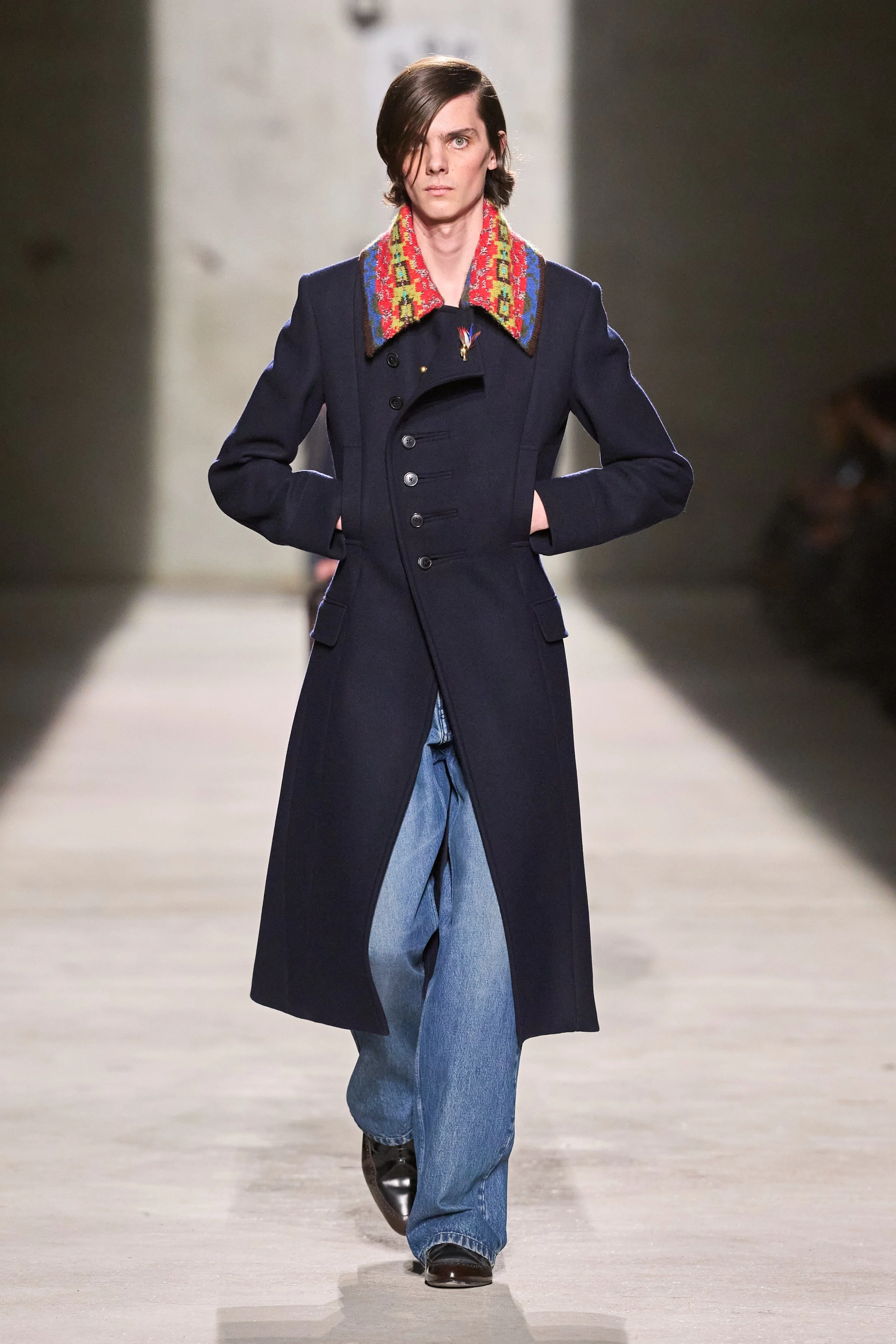
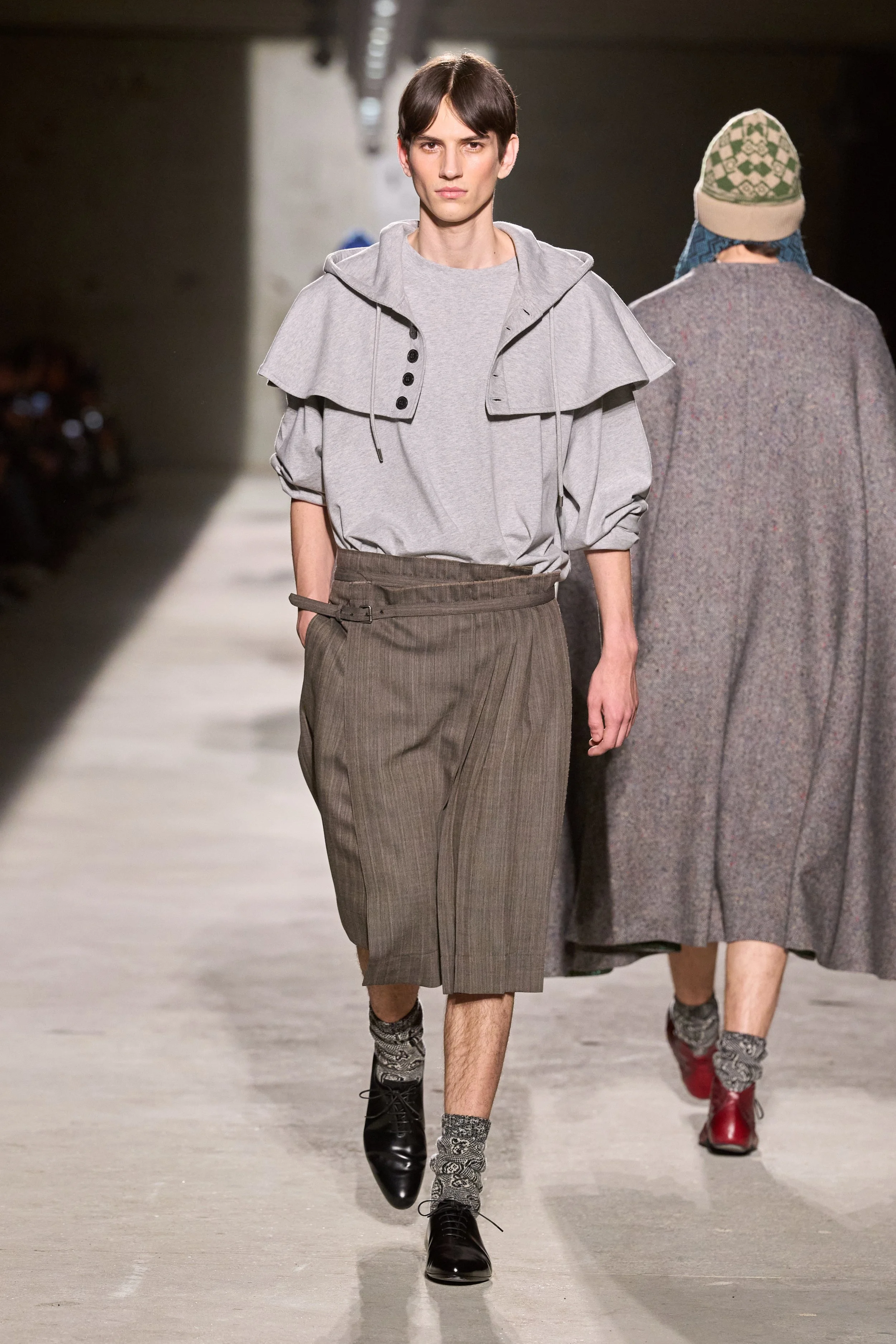
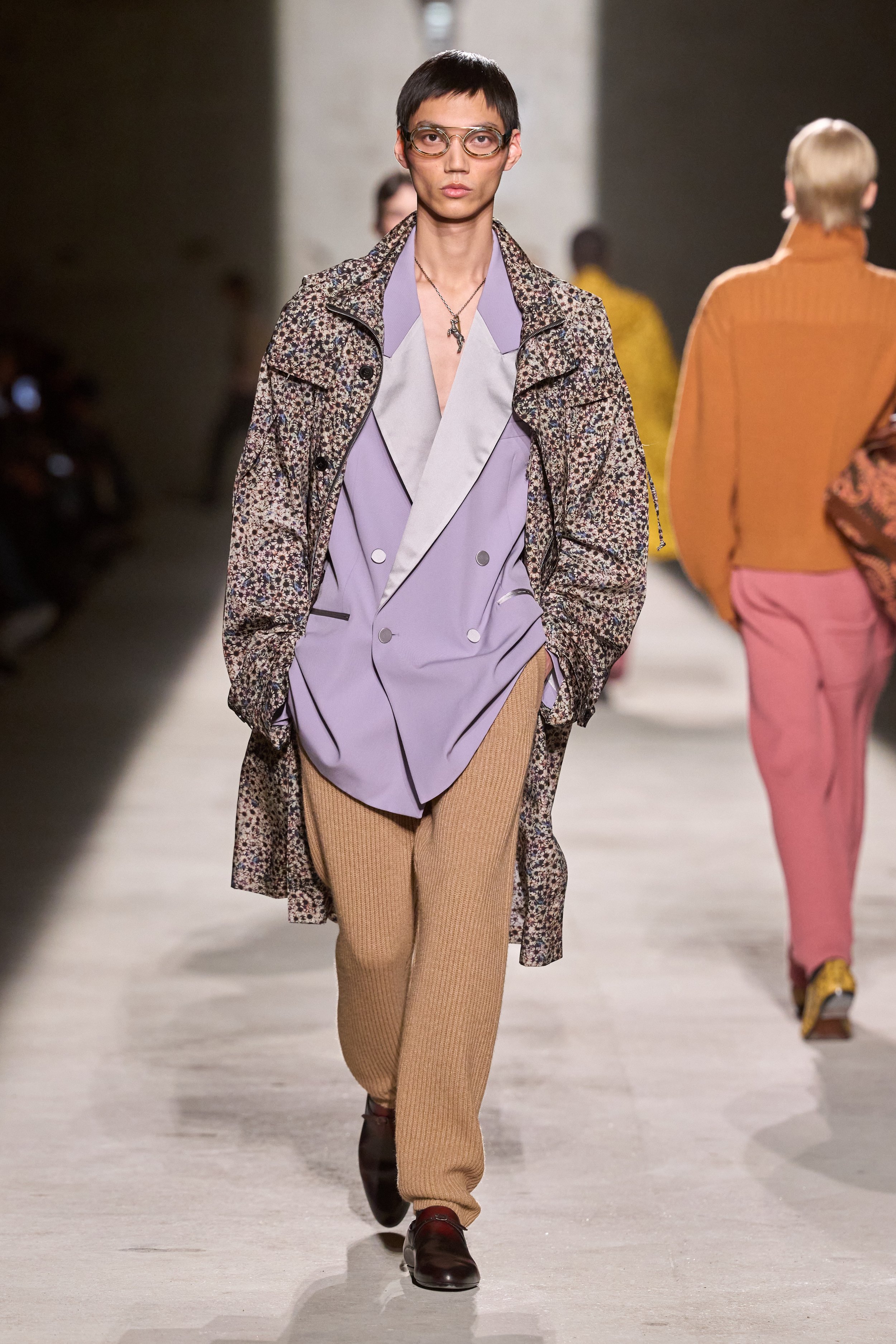
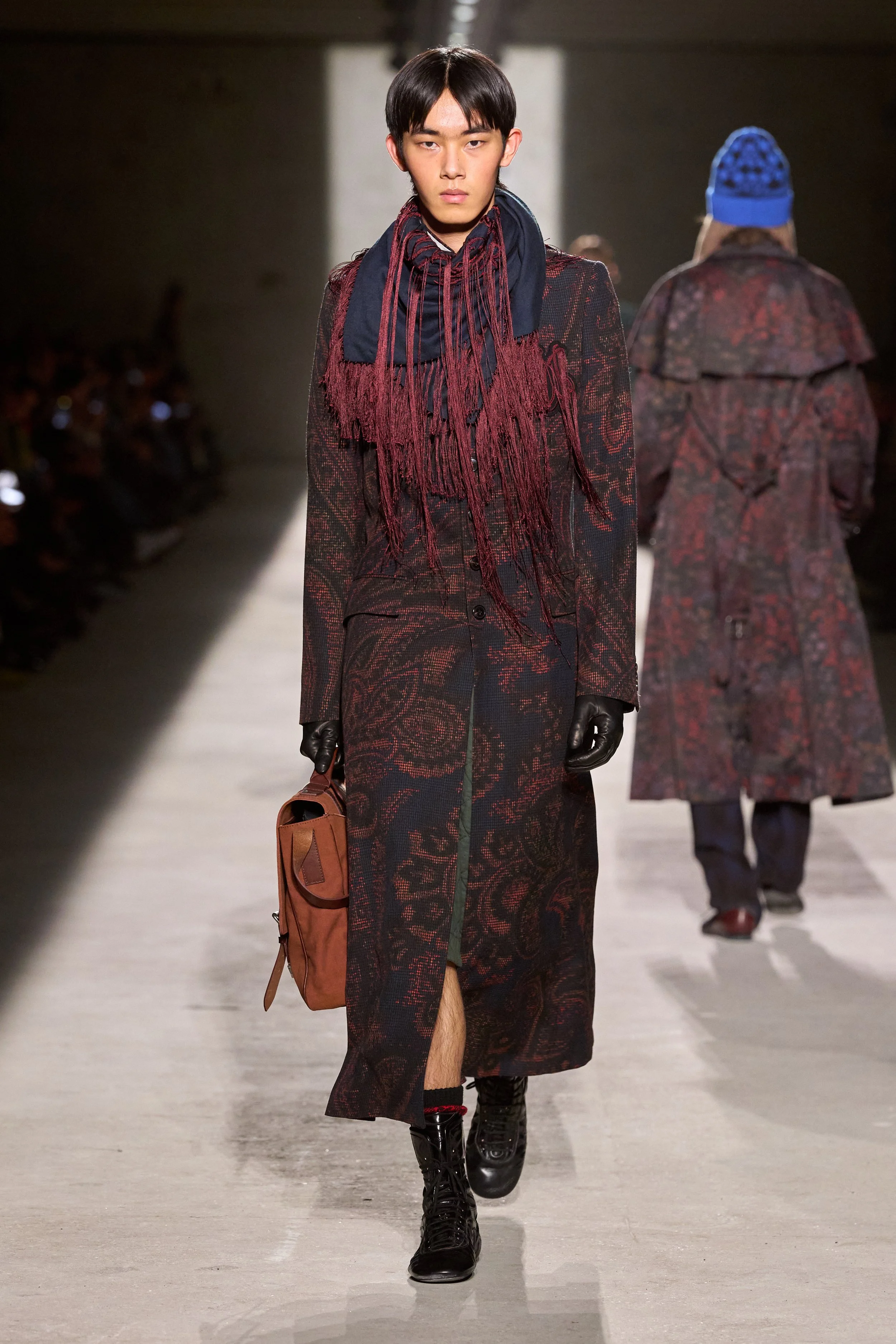
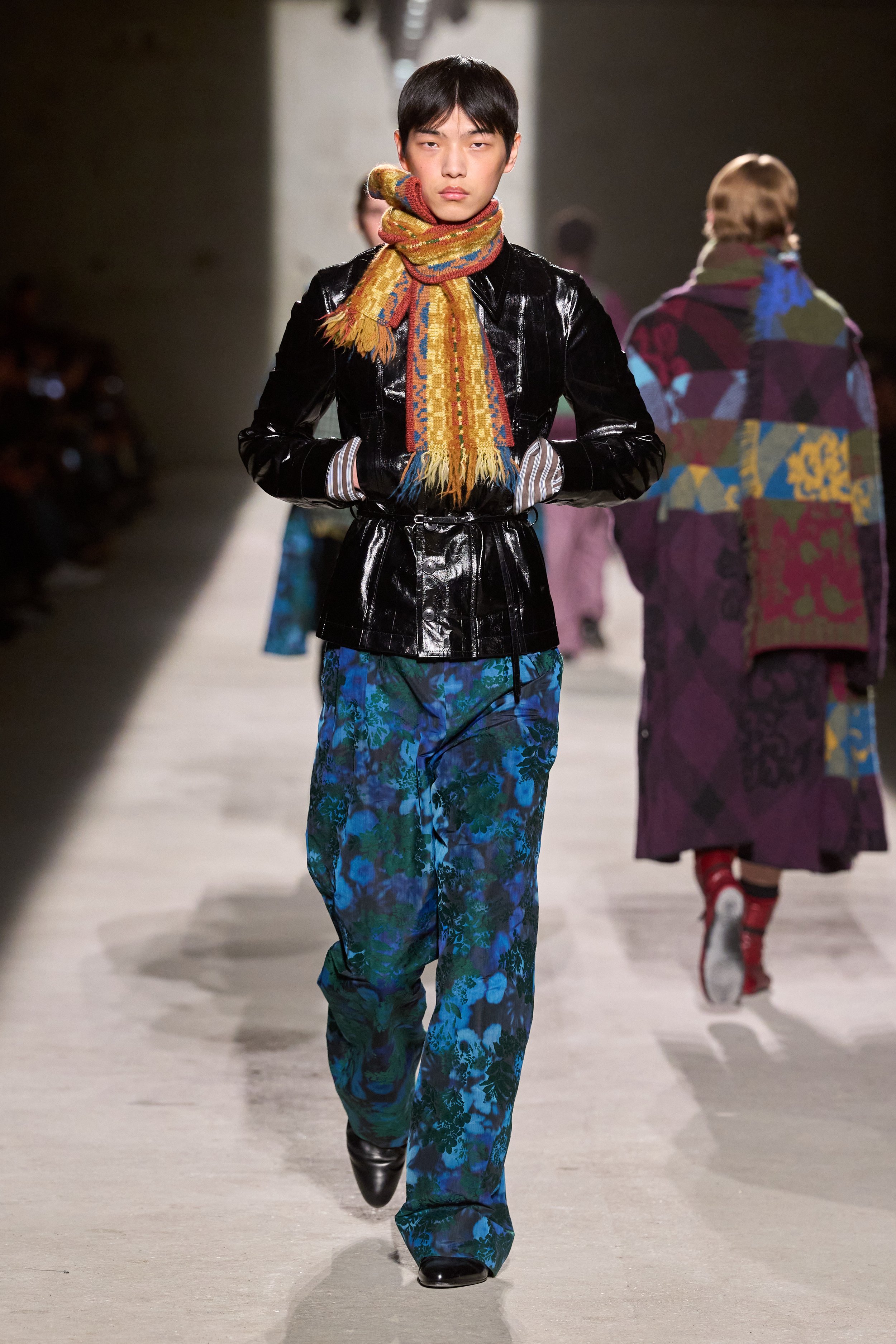
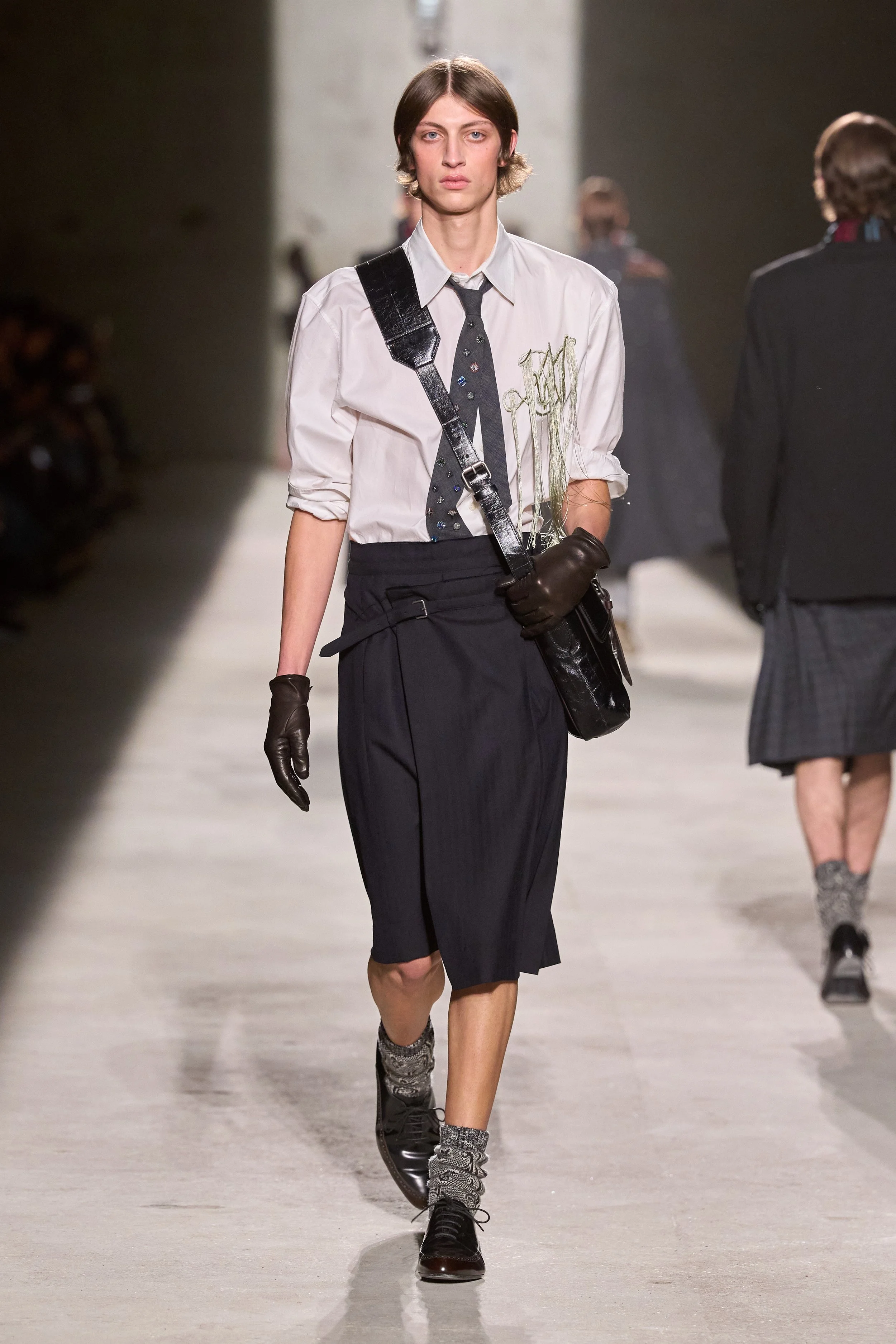
Silhouette is just as much of a playground to convey the emotional message behind the collection. Tight leather jackets are cinched in by skinny belts, while oversized blazers totalize the upper body. Garments are worn not because of their fit, but because of their emotional value. Clothes don’t just dress the body, they keep it company. By folding memory into construction, he reminds us that growing up is less about rupture than it is about carrying what stays with you.
Words by Pedro Vasconcelos