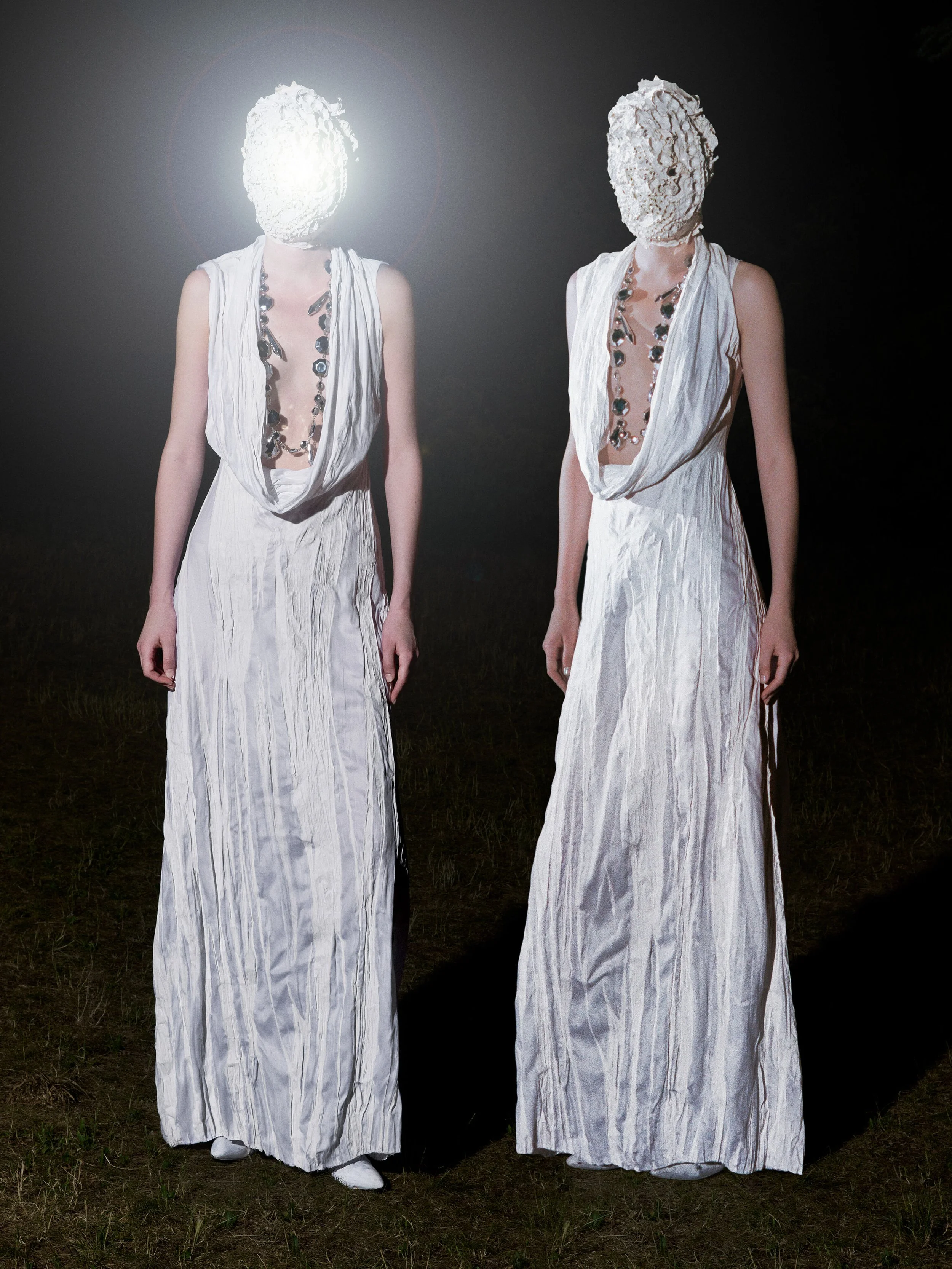
For Kiko Kostadinov’s Fall/Winter 2026 show, we’re in a familiar location - a school gym in the 5th arrondissement. It’s a venue where, at least once a season, a designer stages their show. Although this choice didn’t seem a matter of convenience, more so of thematic context. In the bare-boned gym, only three structures stood: white, geometric-edged tombs, made by the artist Oscar Tuazon through cardboard and tape. The sculptures establish a conceptual baseline: bodies reduced to purpose and form.
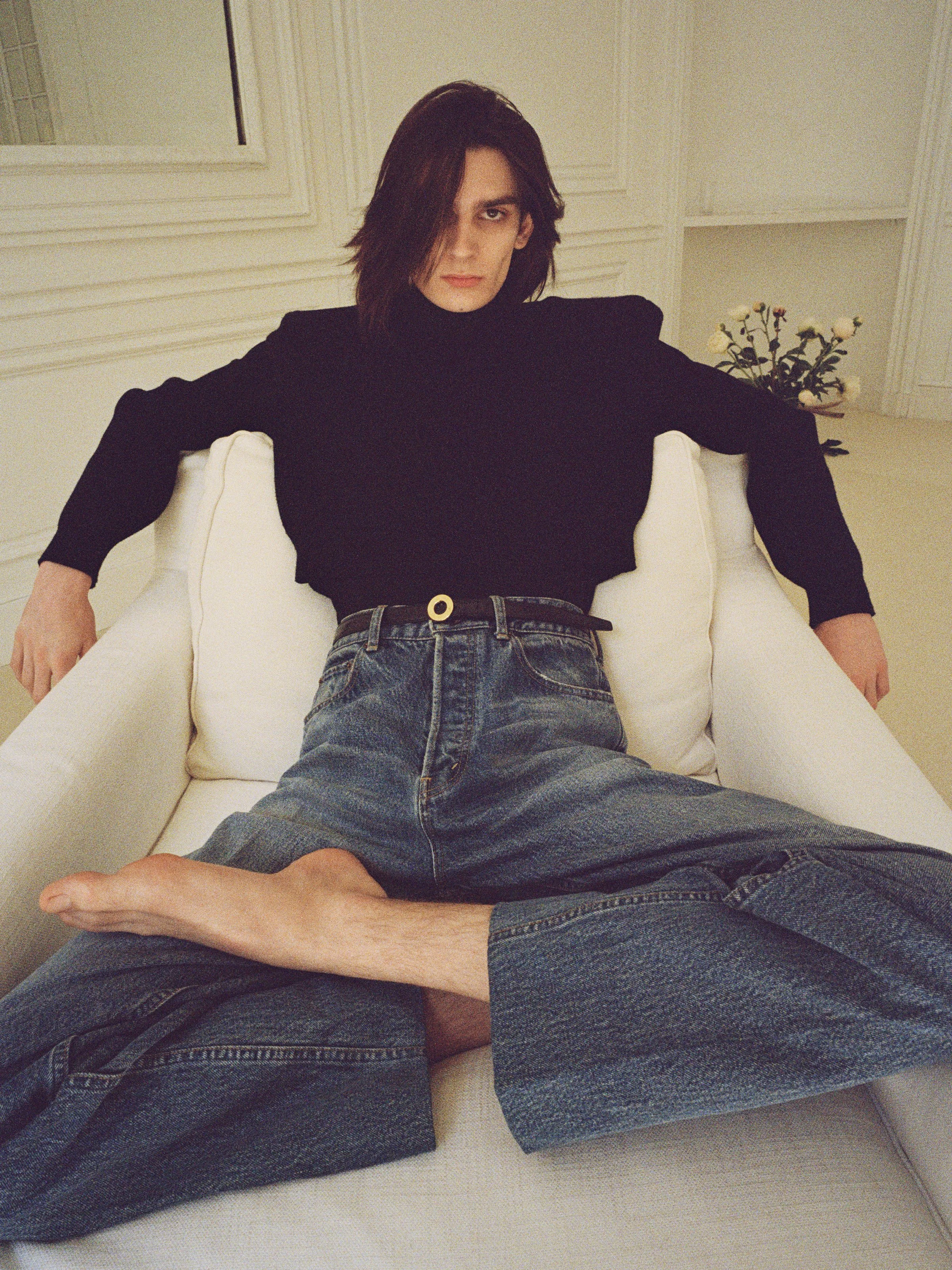
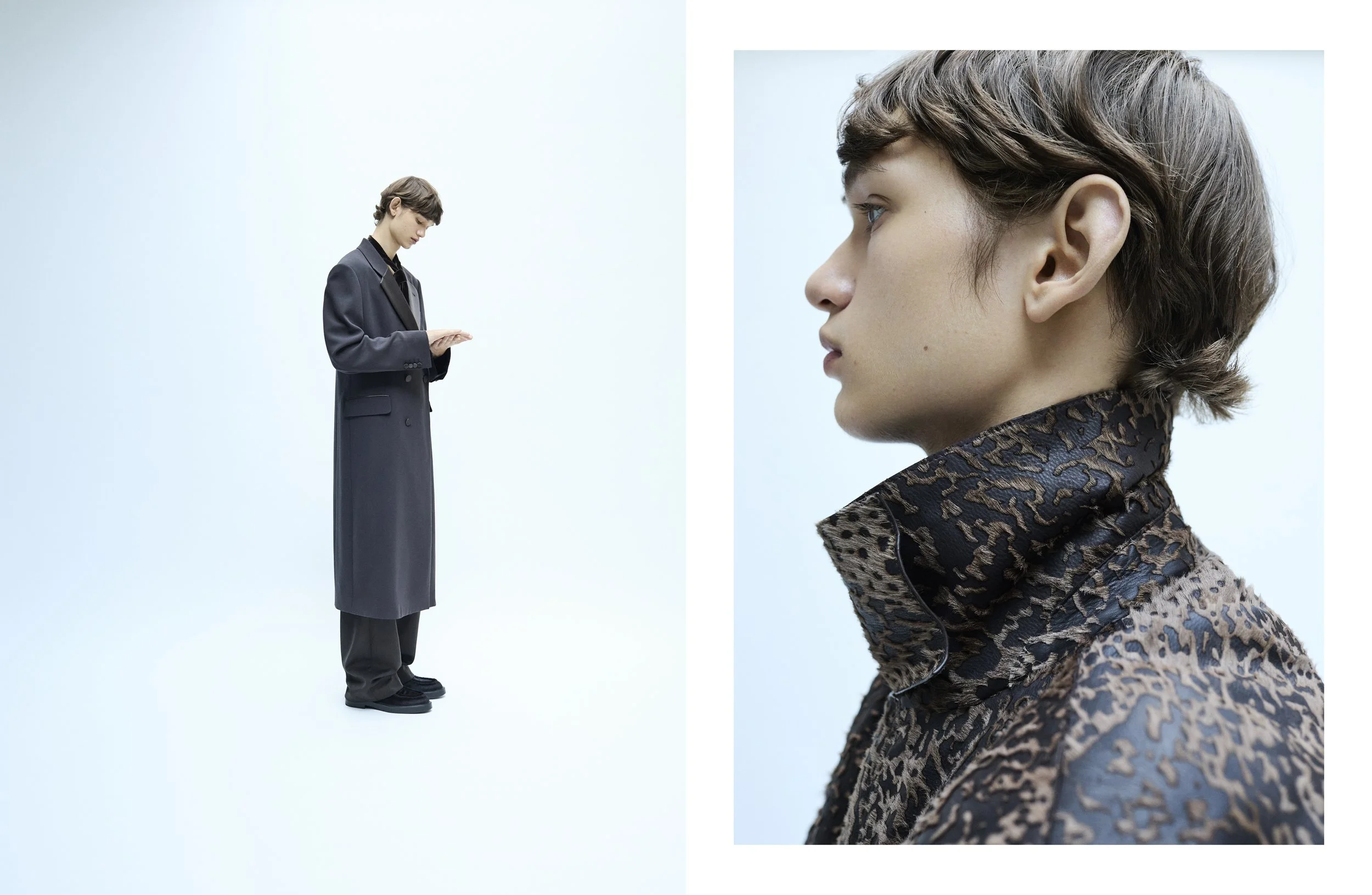
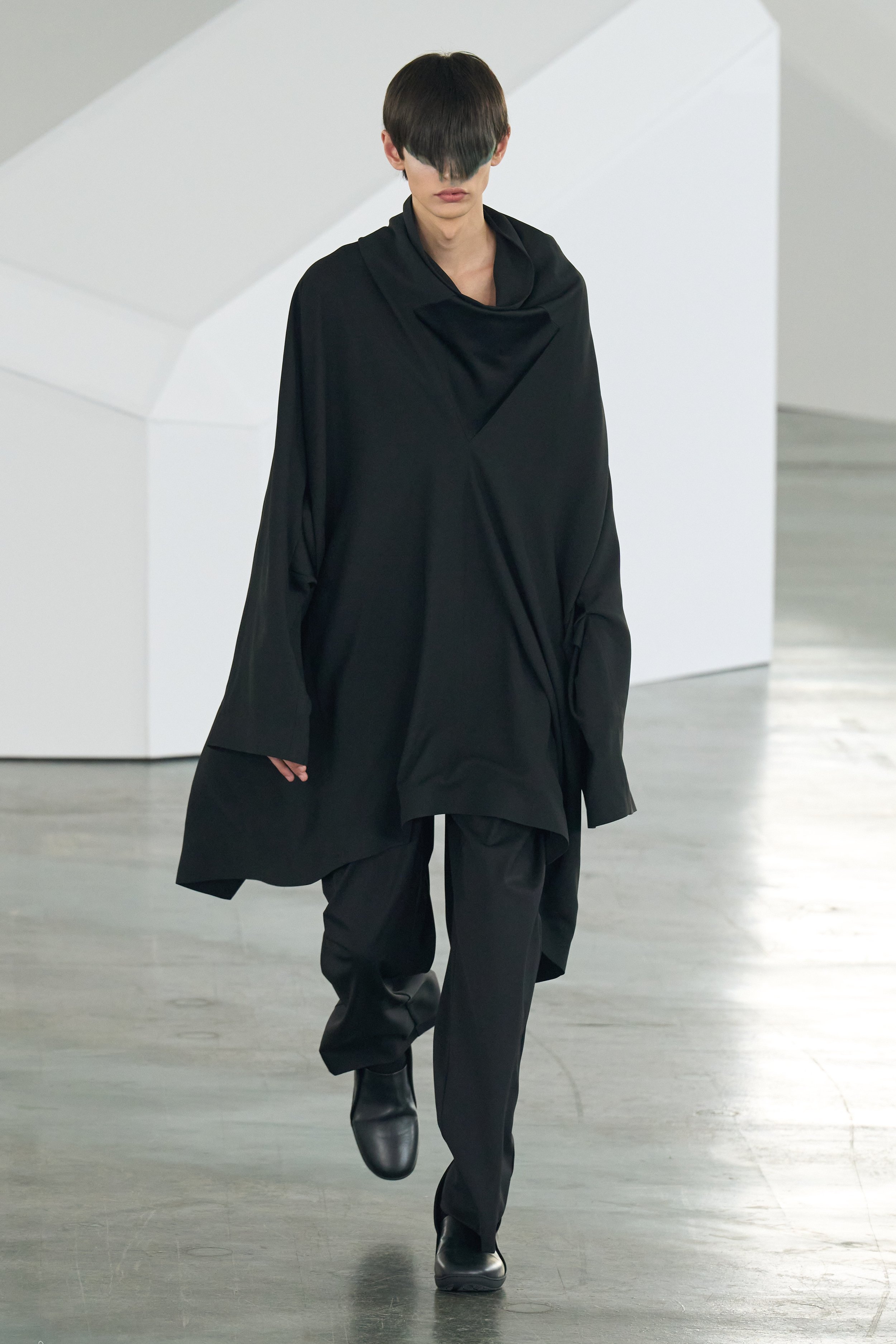
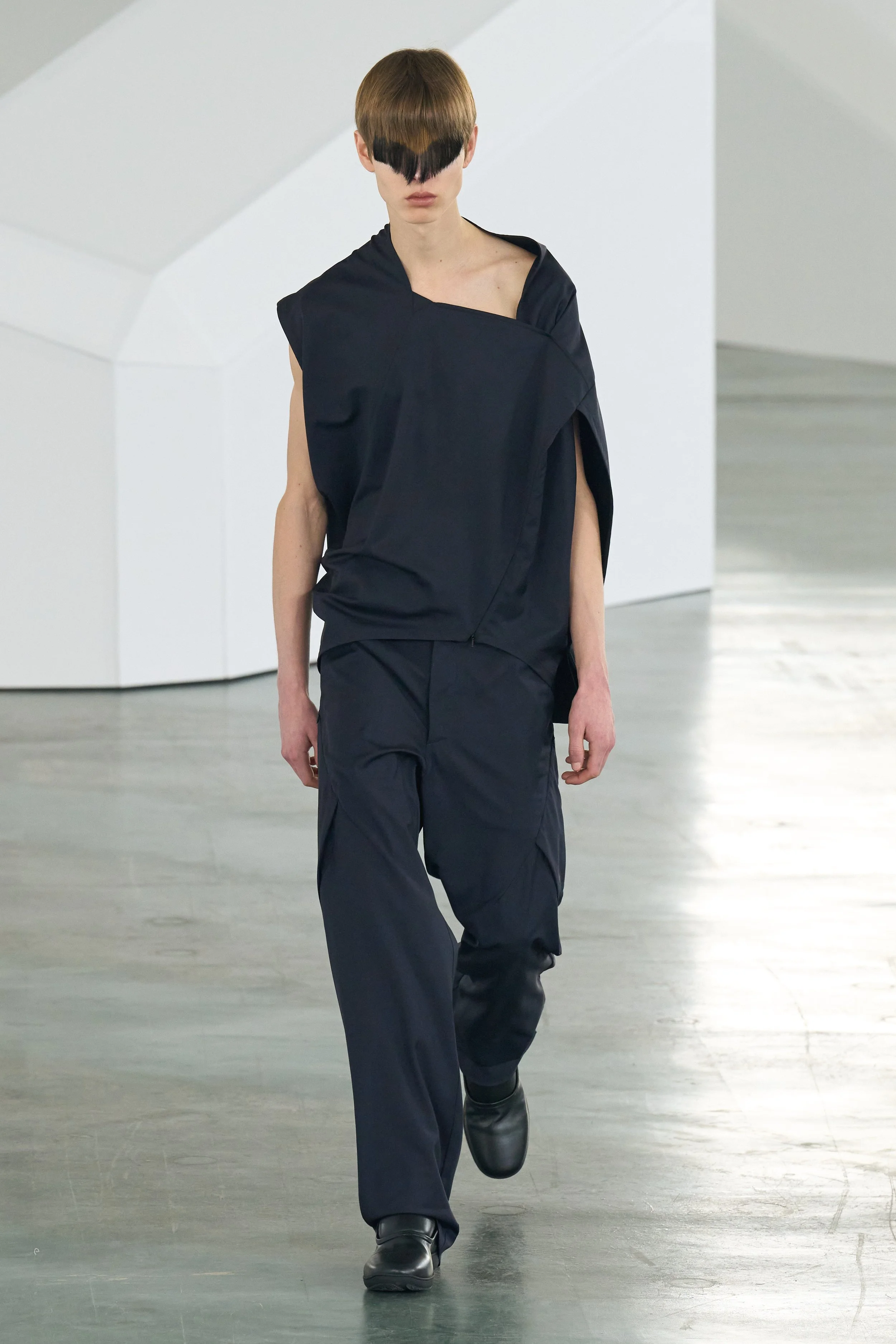
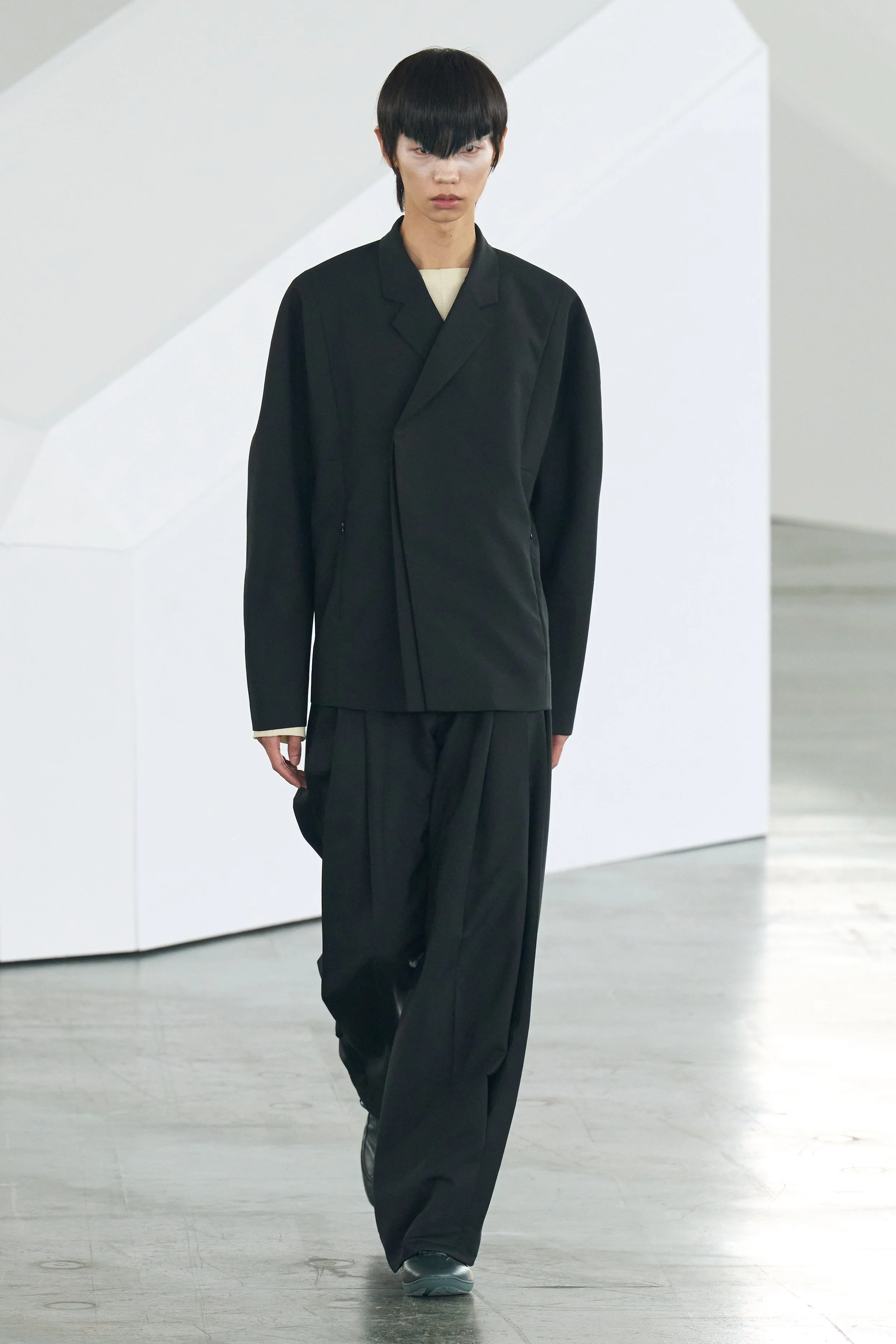
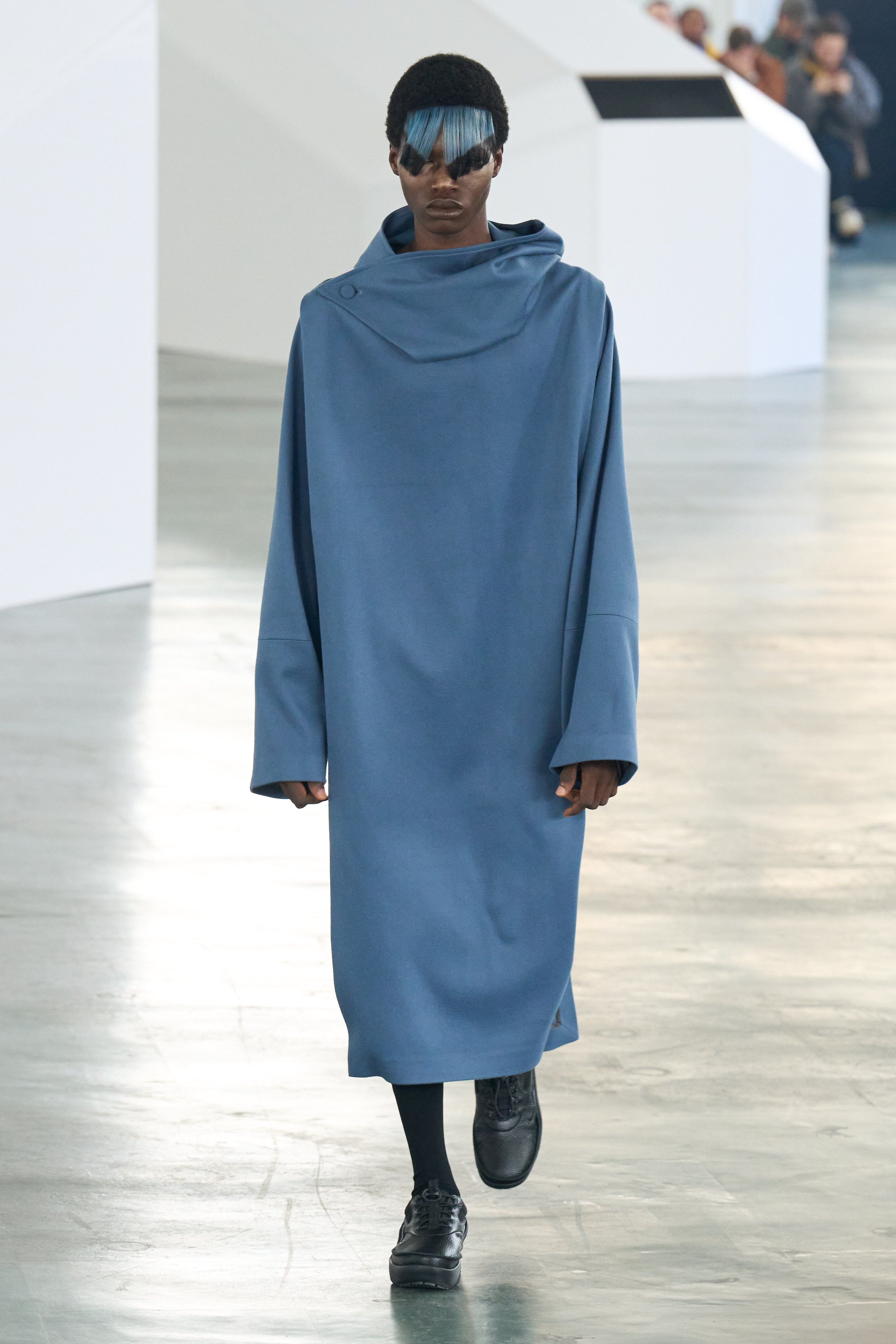
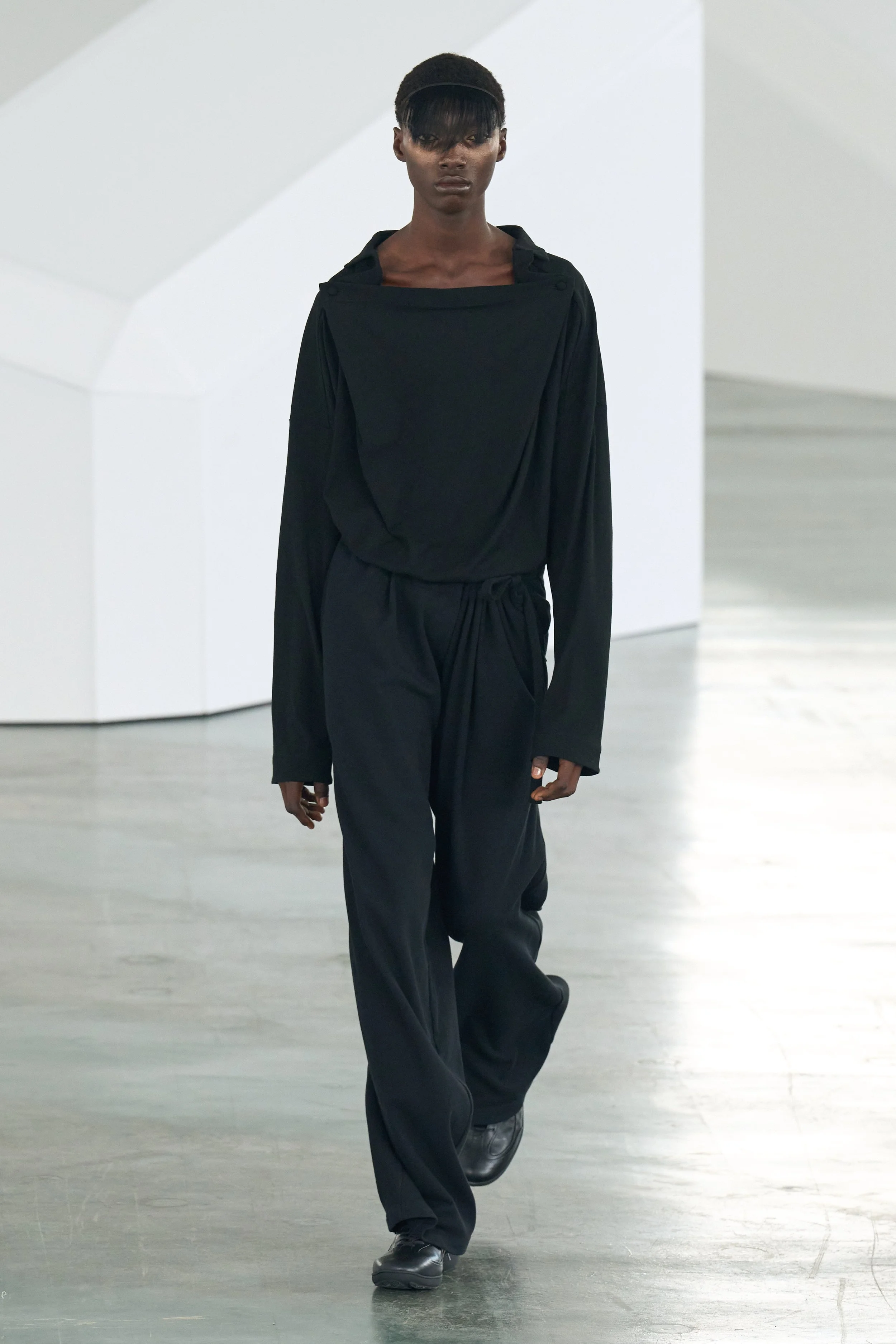
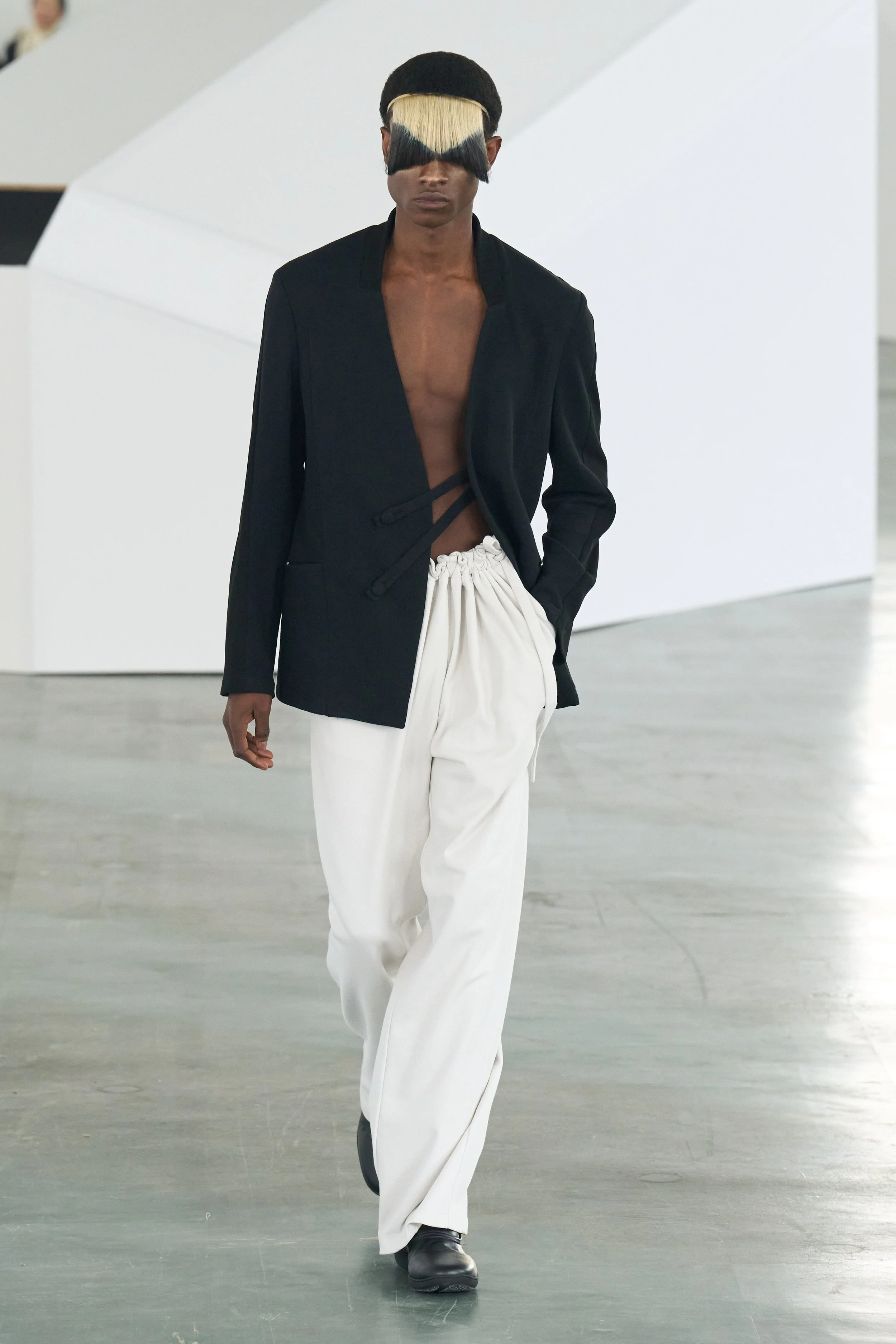
Kostadinov ran a parallel exercise. He looked at garments in their most primordial shape, through their most fundamental purpose. He cleaned the slate of his idiosyncratic patterns and decorative quirks. The circumstantial hints were immediately proved correct when the first looks came out. A black cape-like coat overwhelmed the model’s frame, as if the fabric was placed organically on the body. The second look proposed an evolution; the cascading flow grew structure, becoming angular in the shoulders. This pattern repeated itself multiple times throughout the show. Kostadinov usually moves geometrically, functionally between silhouettes. Here, the process was made organic: shapes growing out of each other, seams evolving from previous movement like a tide, pleats gathering and expanding like breathing.
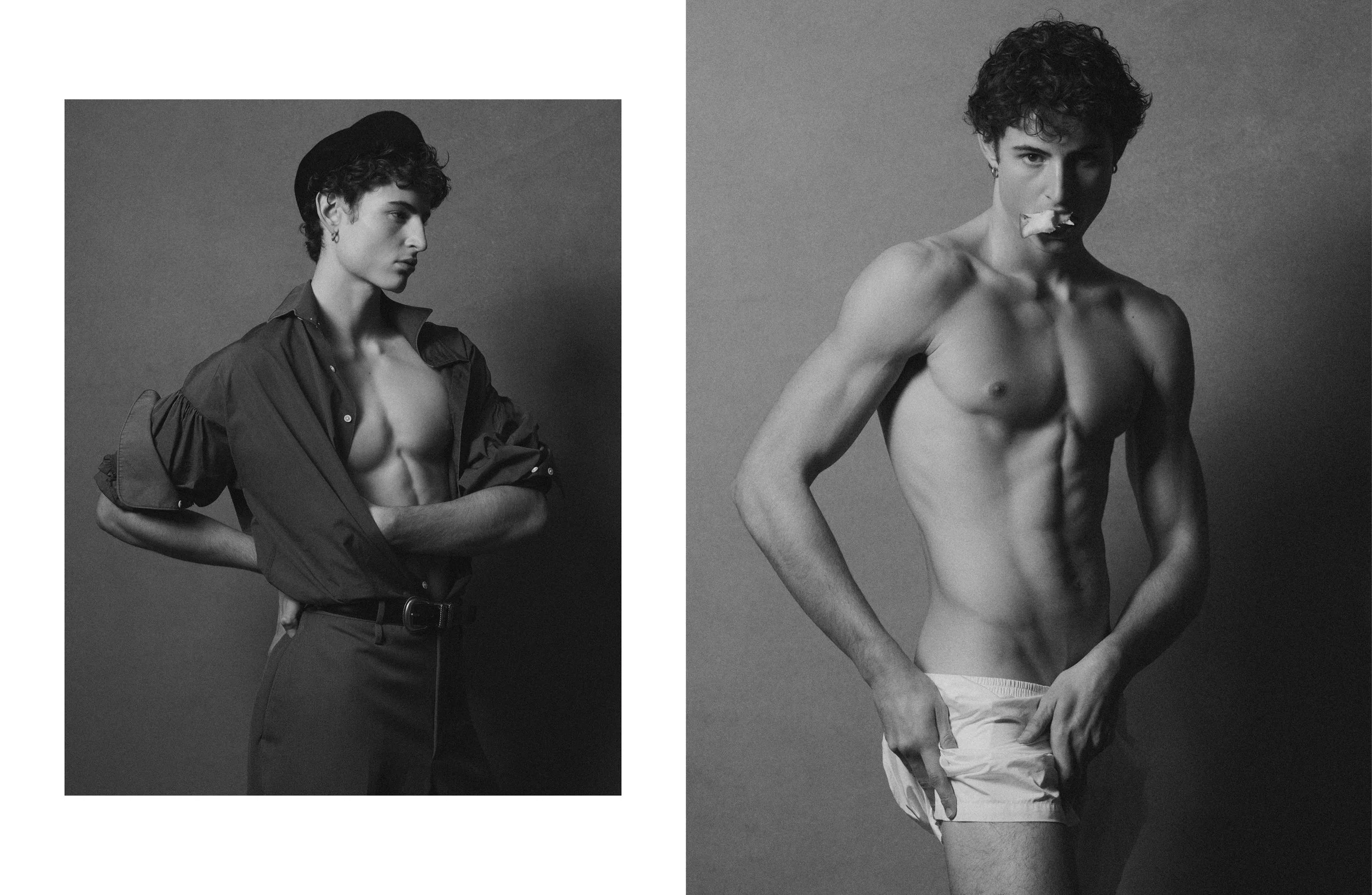
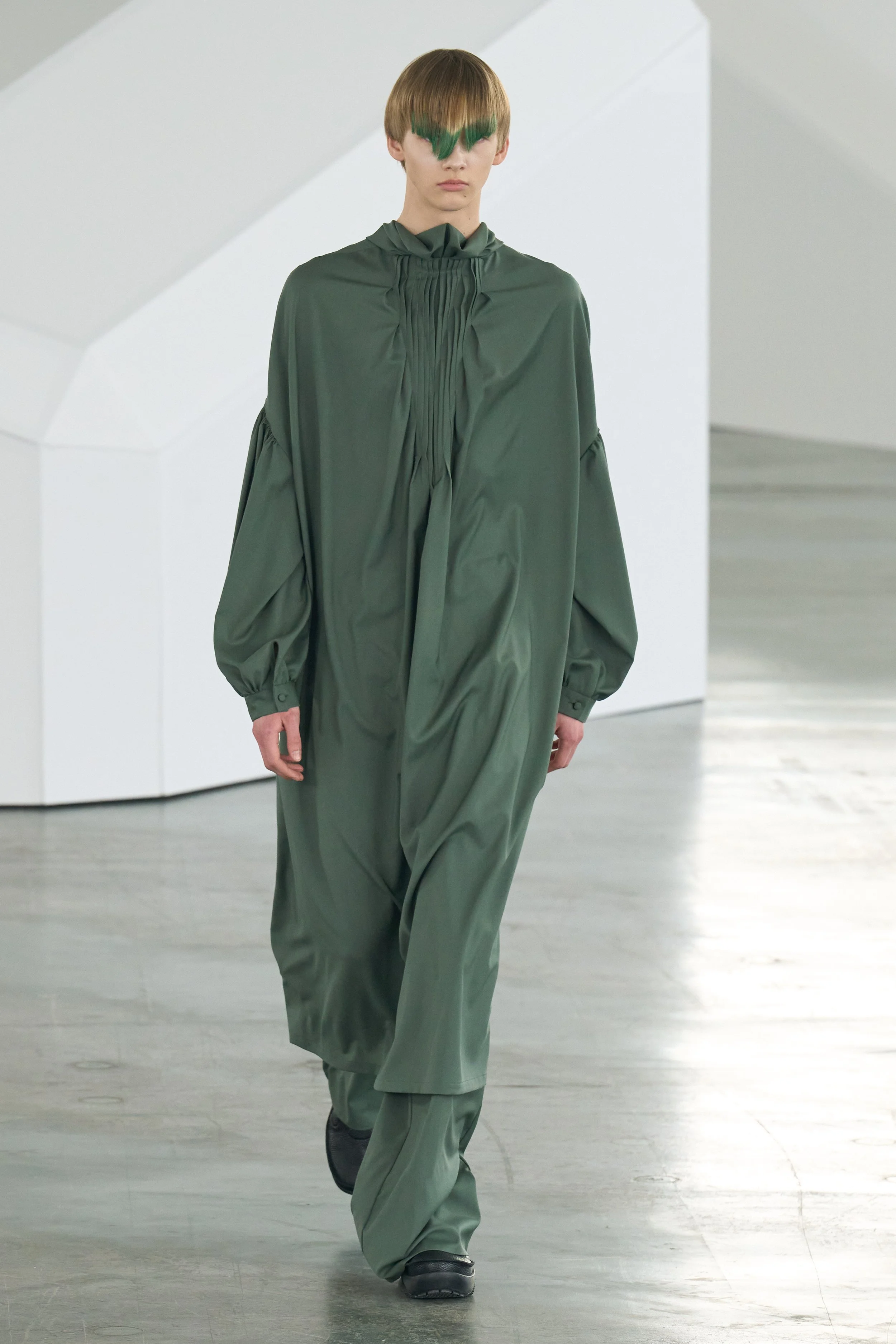
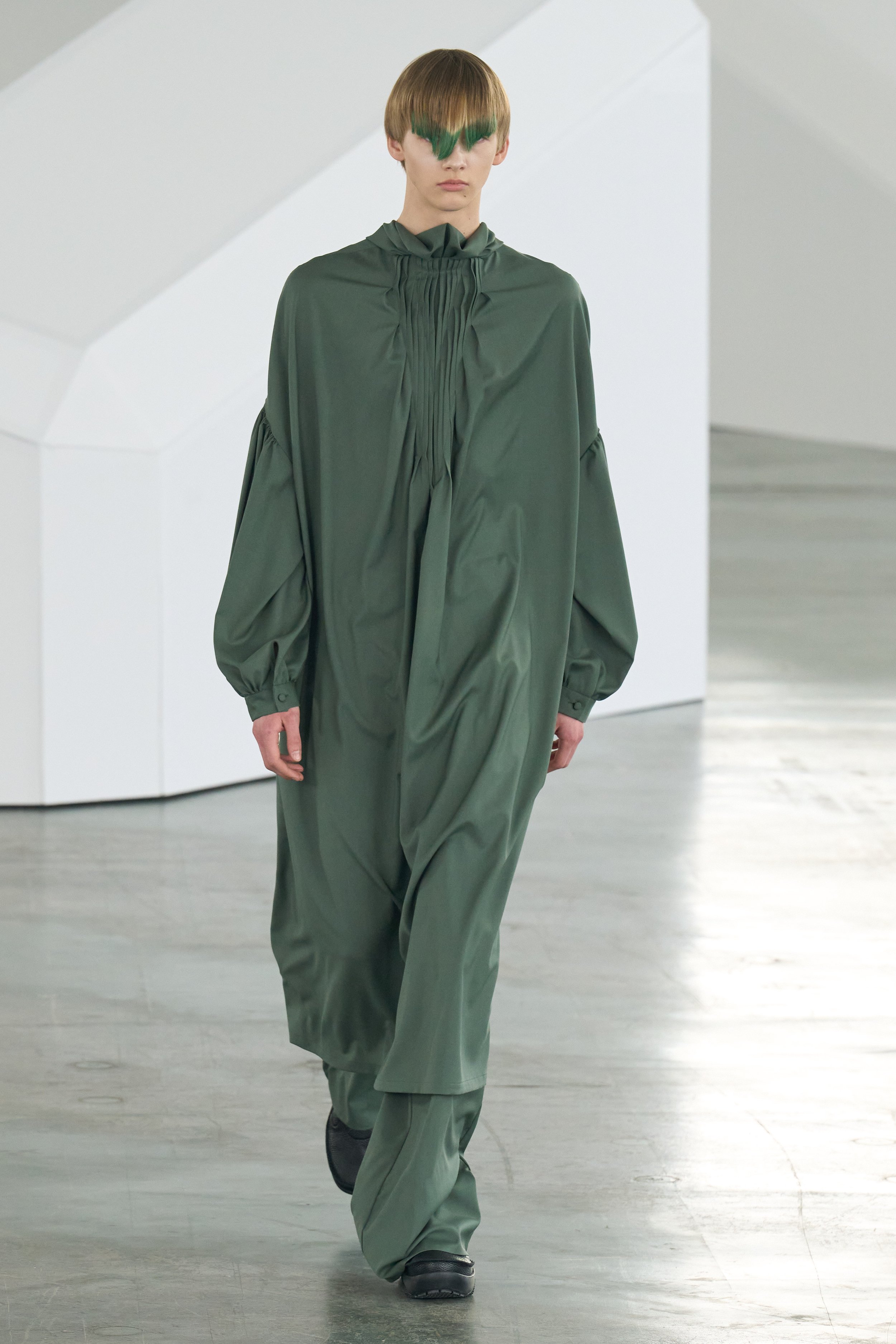
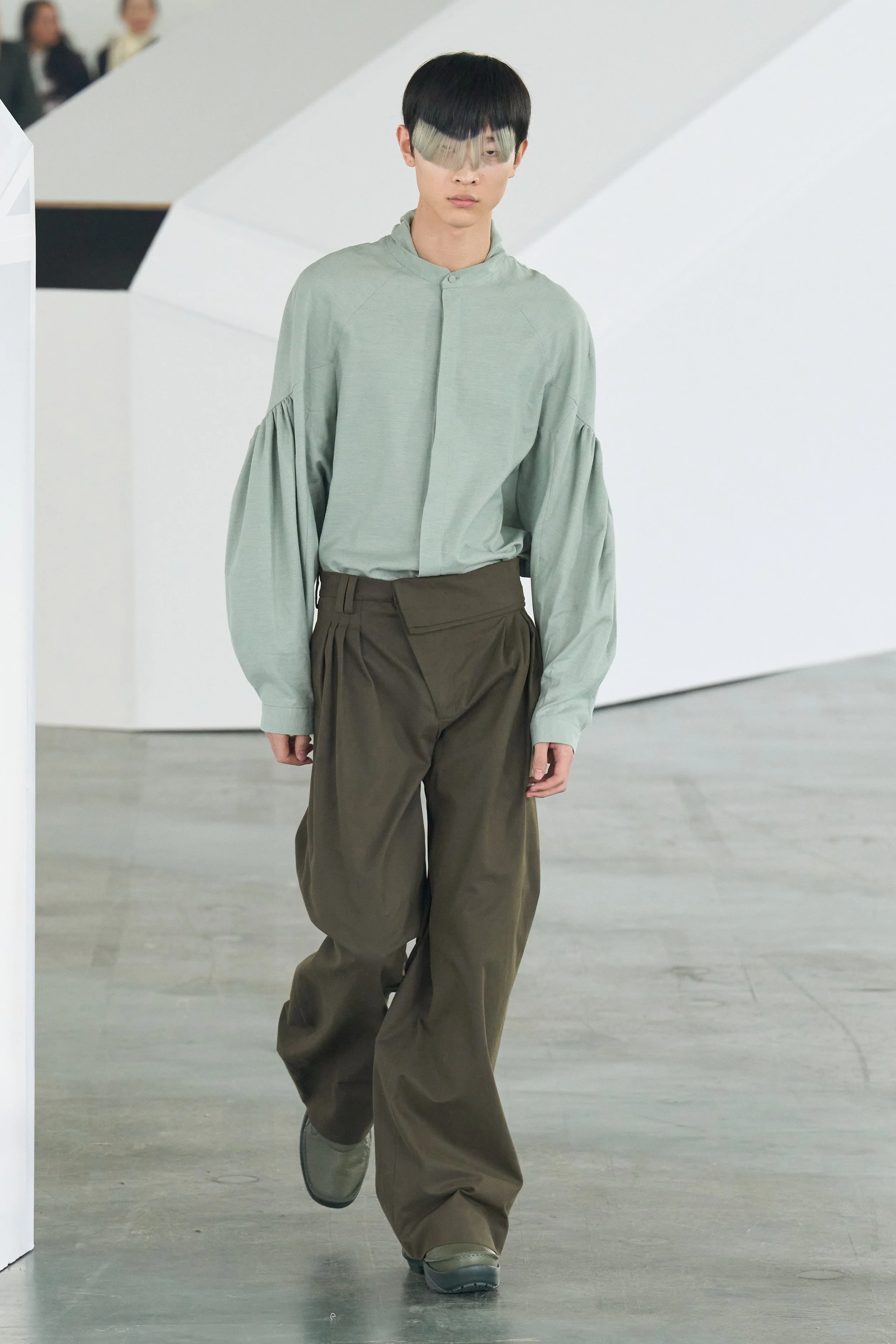
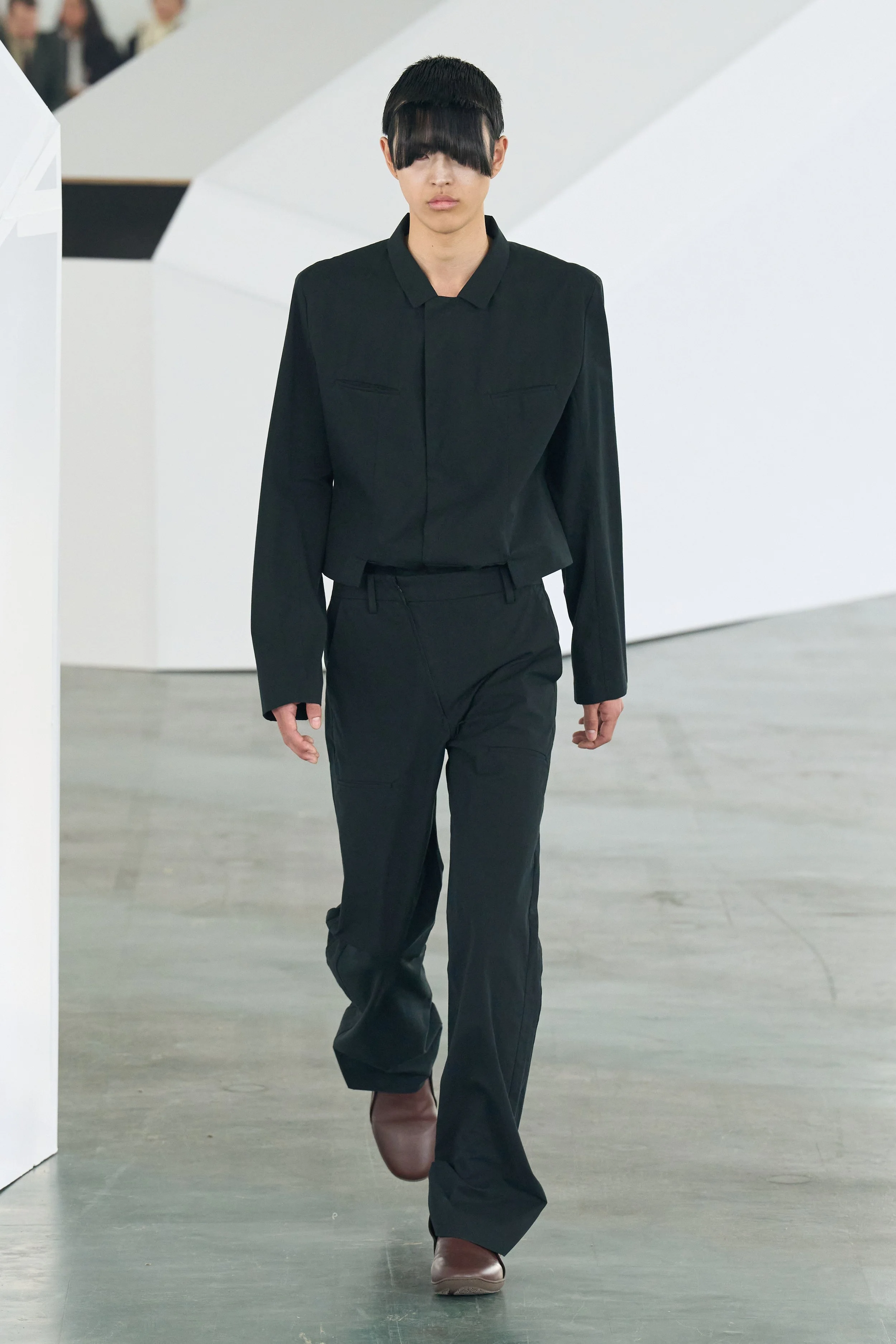
Kostadinov used the opportunity to flex his muscles. He isn’t a designer experimenting with the basics of garment-making; he’s translating it into his own language. On a black shirt, the collar was made perfectly rectangular. On a muted green dress, sleeves ballooned, blooming from the pleat carefully placed at the elbow length. The same technique evolved in a light seafoam shirt, where that same seam was now made triangular. The designer reaffirms his command of form.
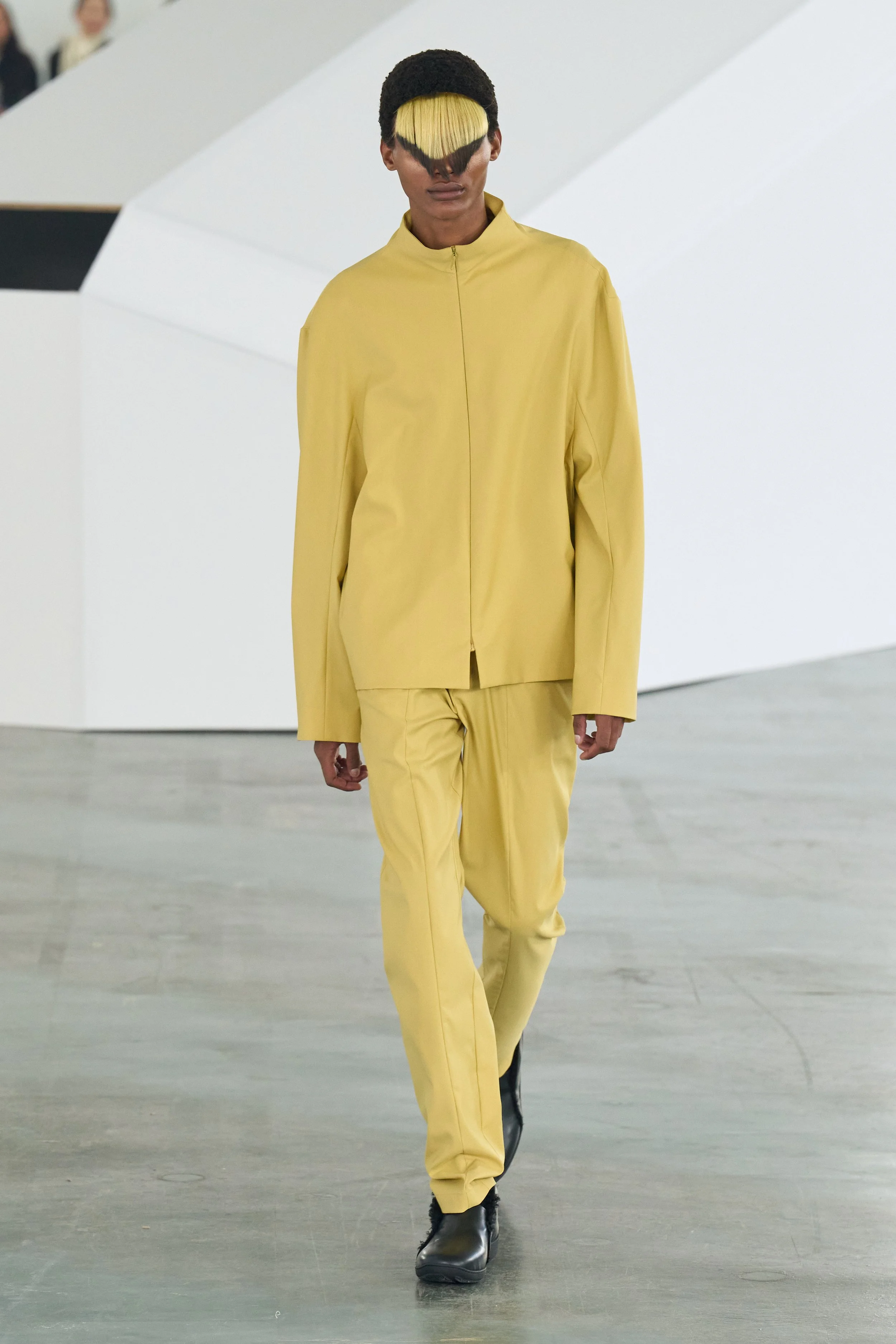
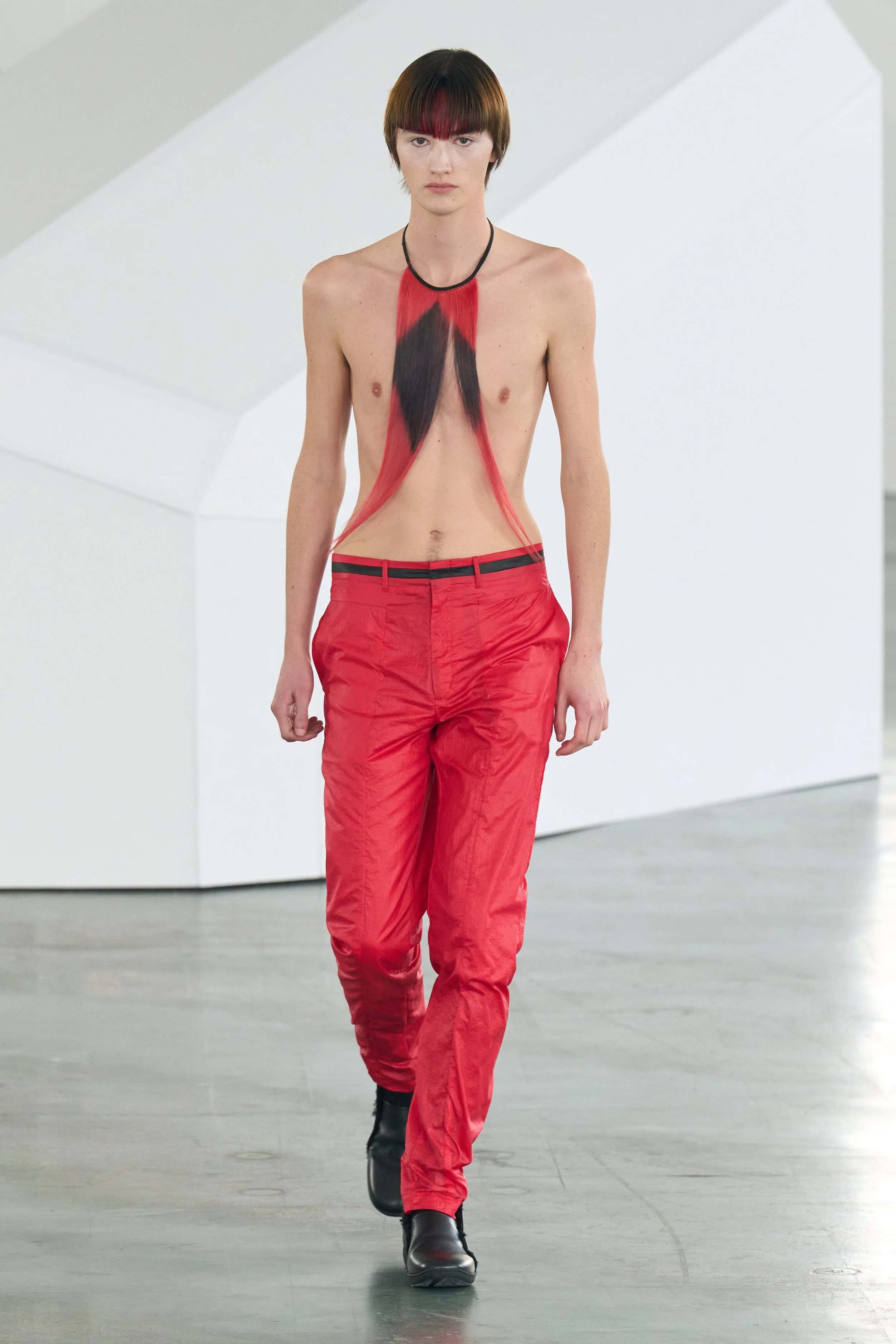
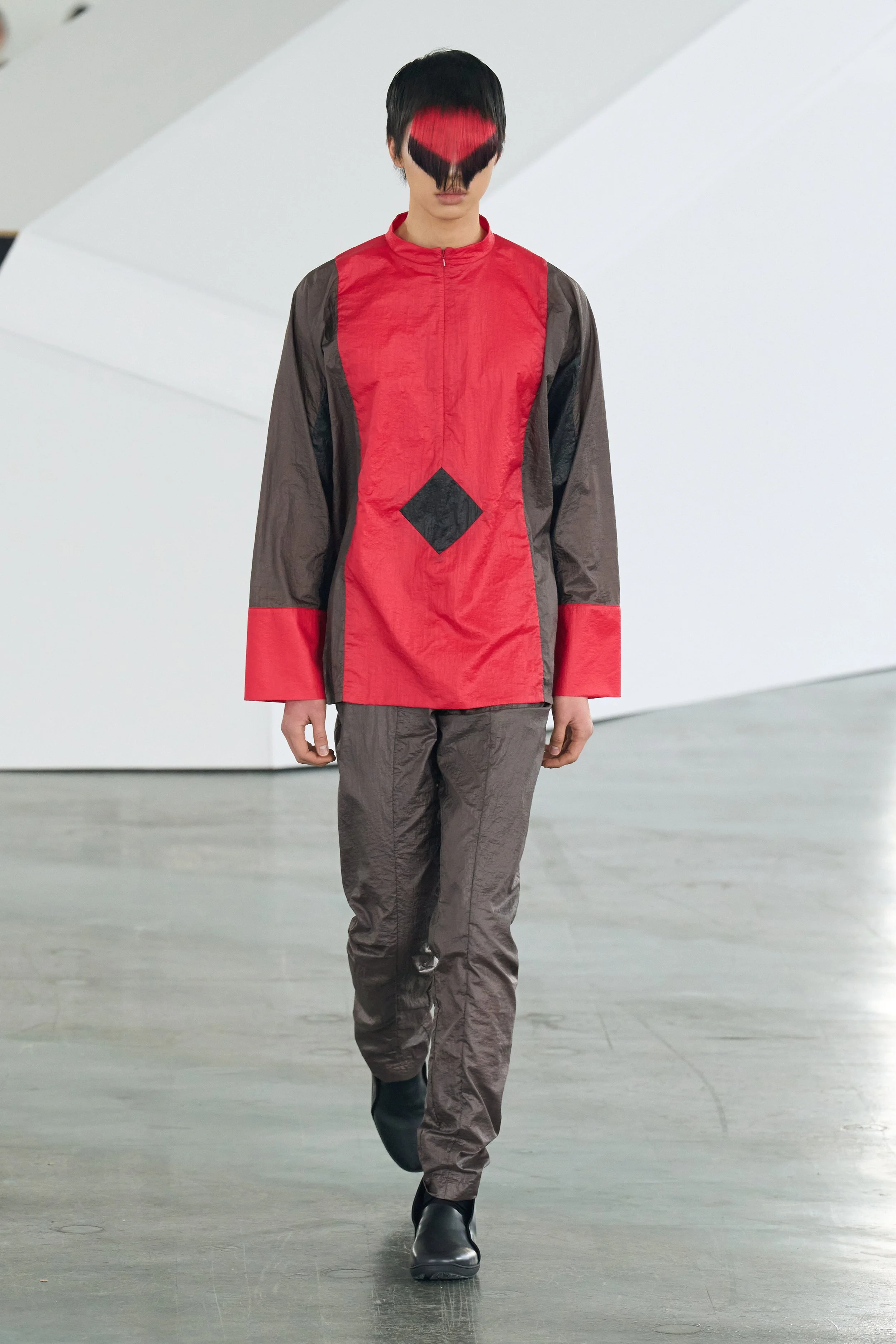
As the show progressed, Kostadinov made sense of his tropes through a reconstructive approach. Flashes of ochre and vermillion totalised garments by the end of the show, even finding their way into geometric patterns. This wasn’t a stereotypically minimalist collection but a study on how structure is born, through repetition and evolution.
Words by Pedro Vasconcelos