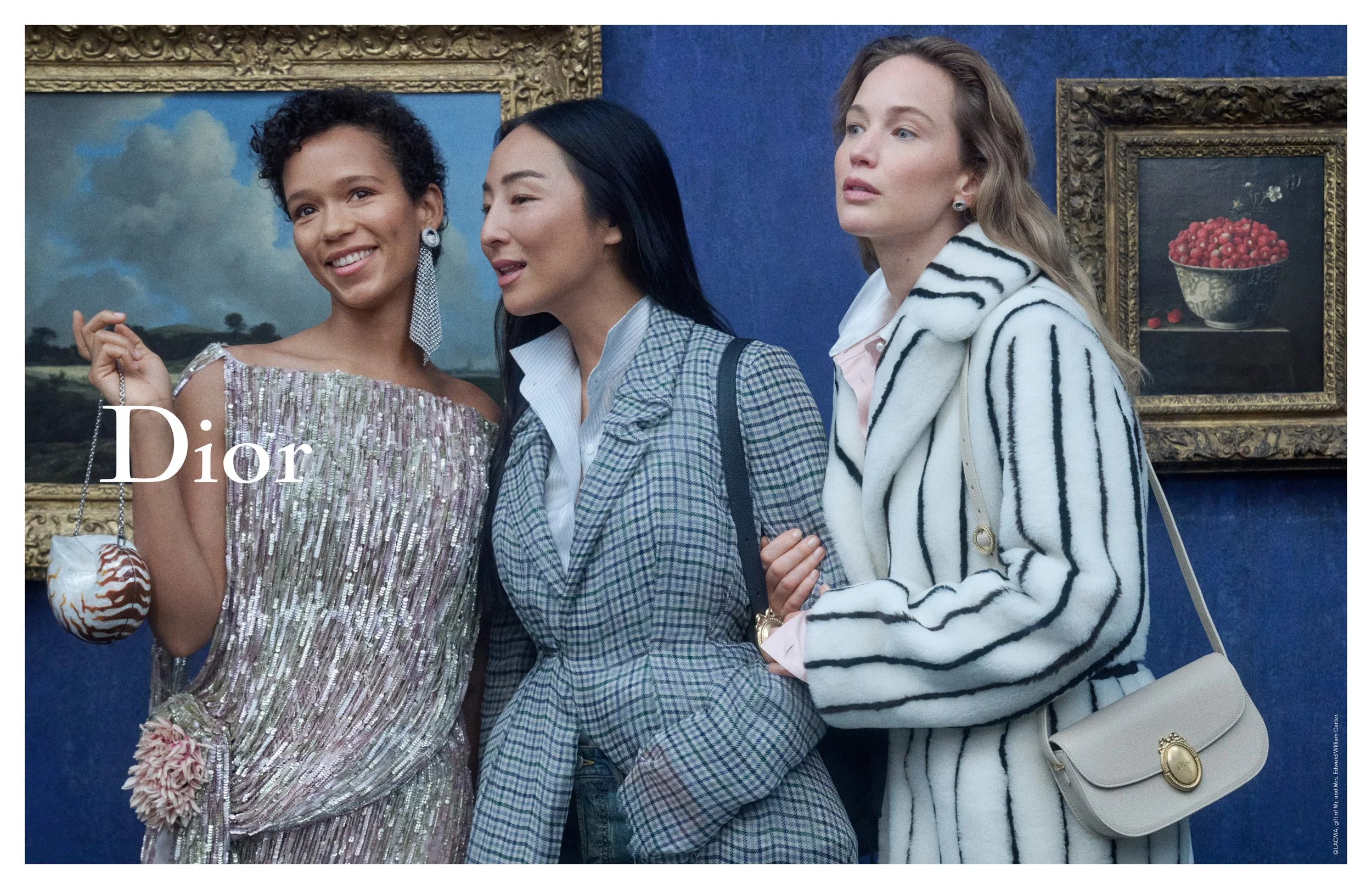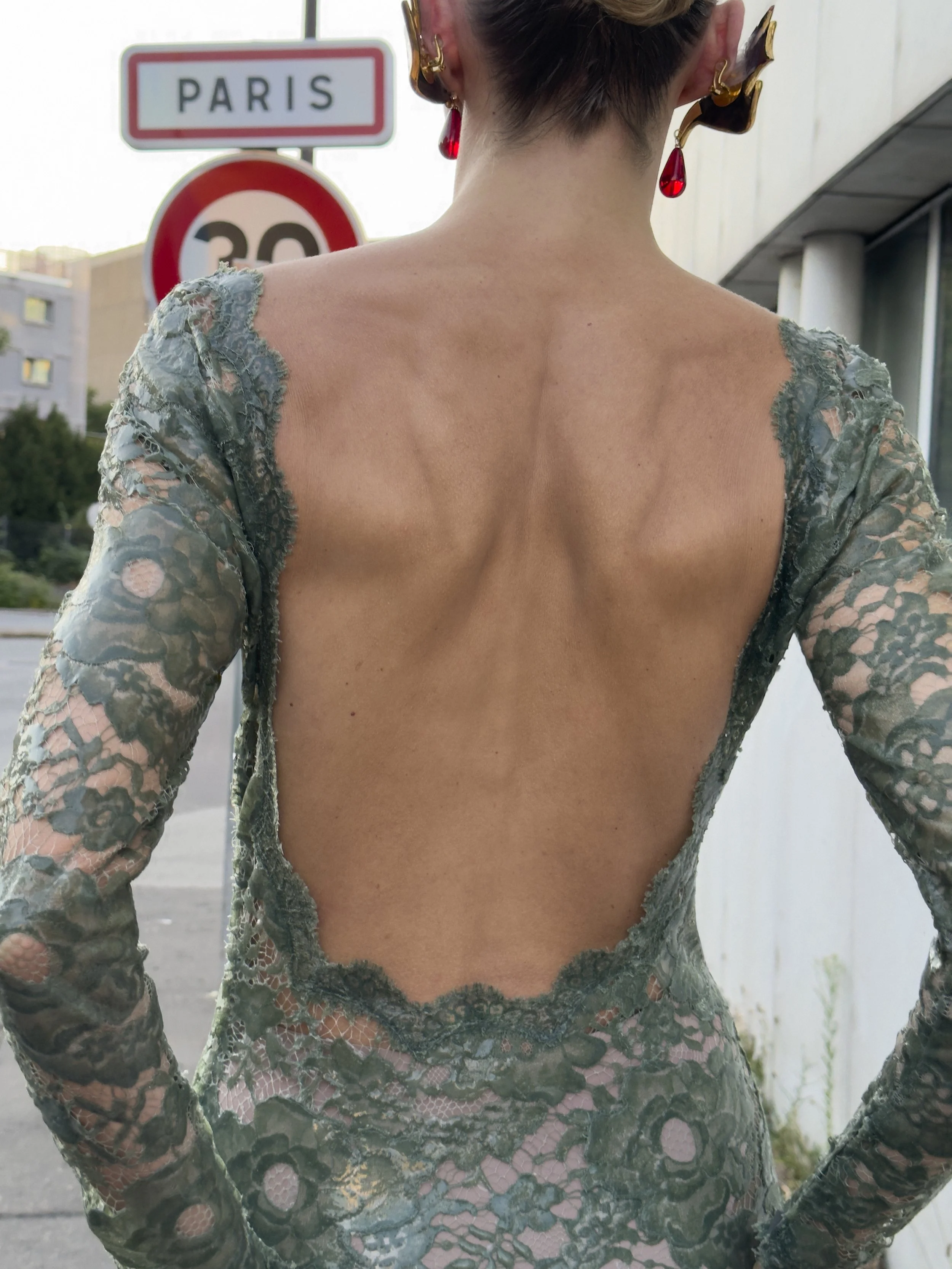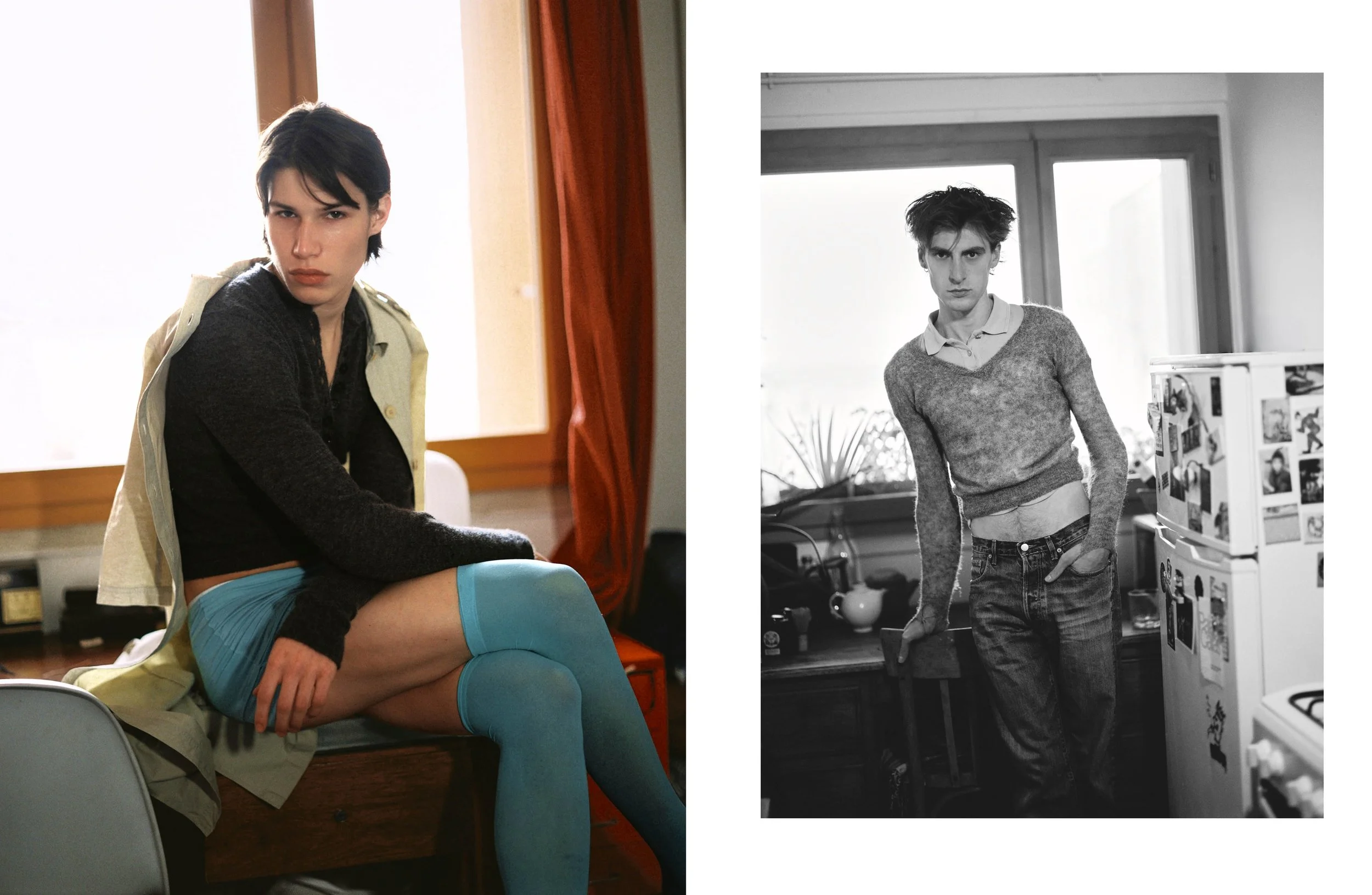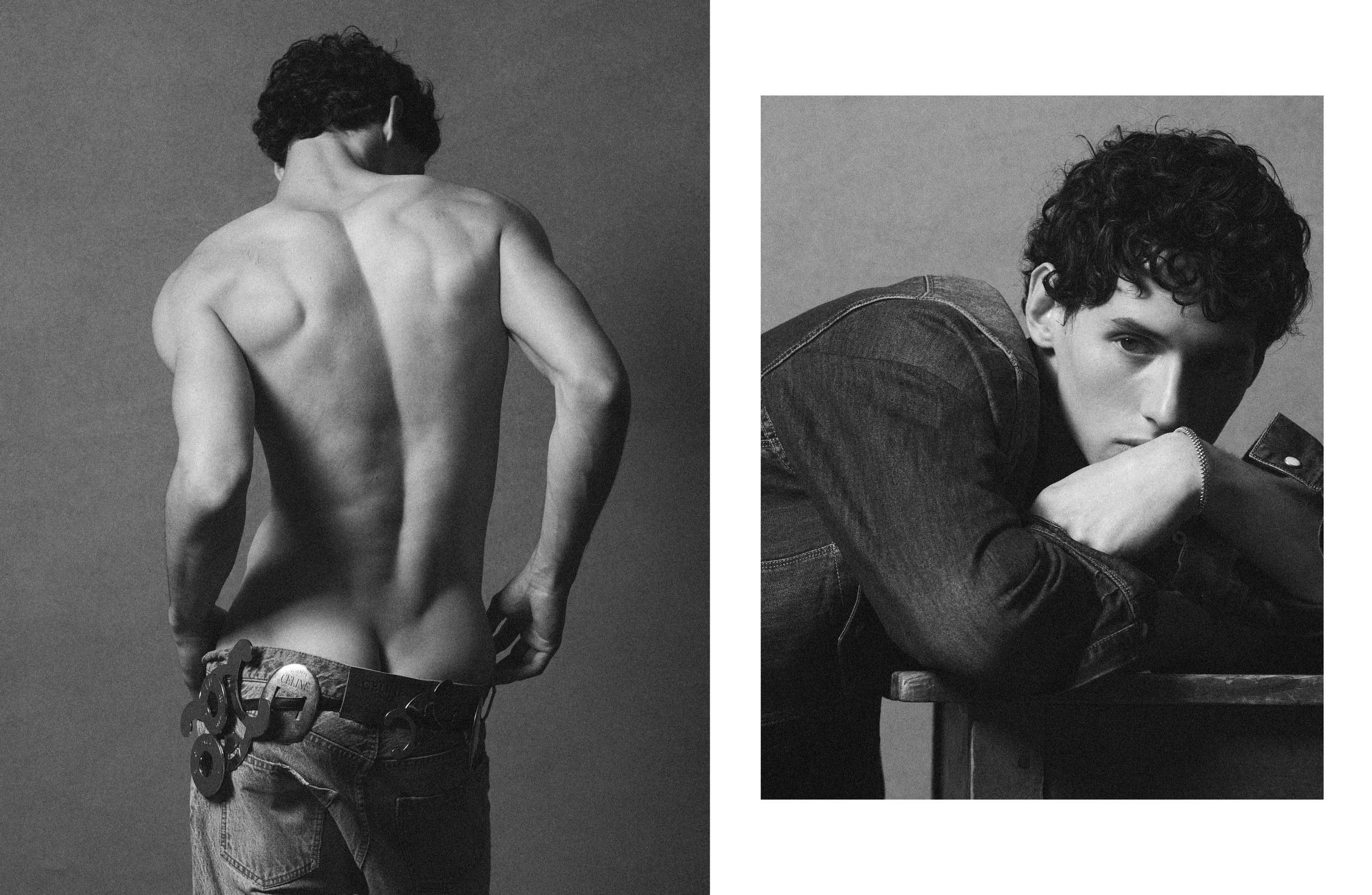
“I’m always begging the question of ‘What is form?’,” says American painter and sculptor Lynda Benglis in a video posted on Maison Dior’s Instagram page ahead of Jonathan Anderson’s sophomore Haute Couture show for the house. In the same clip, Anderson, an experimentalist of form himself, points to Benglis’ practice as one that challenges his viewpoint on how he sees form within his own work. Combined, Benglis’ and Anderson's creative languages laid the foundation of Dior’s Fall/Winter 2026/27 couture collection.
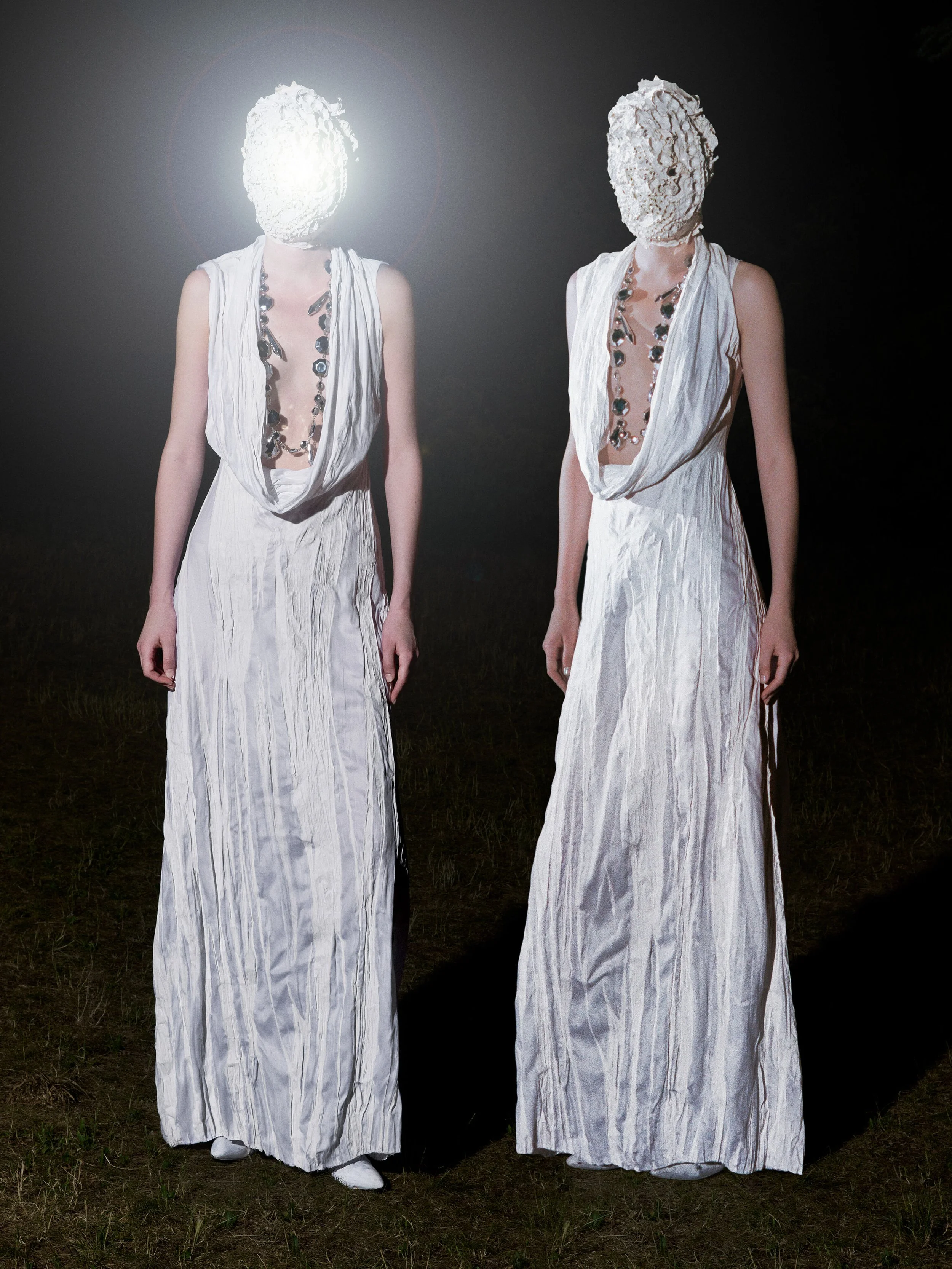
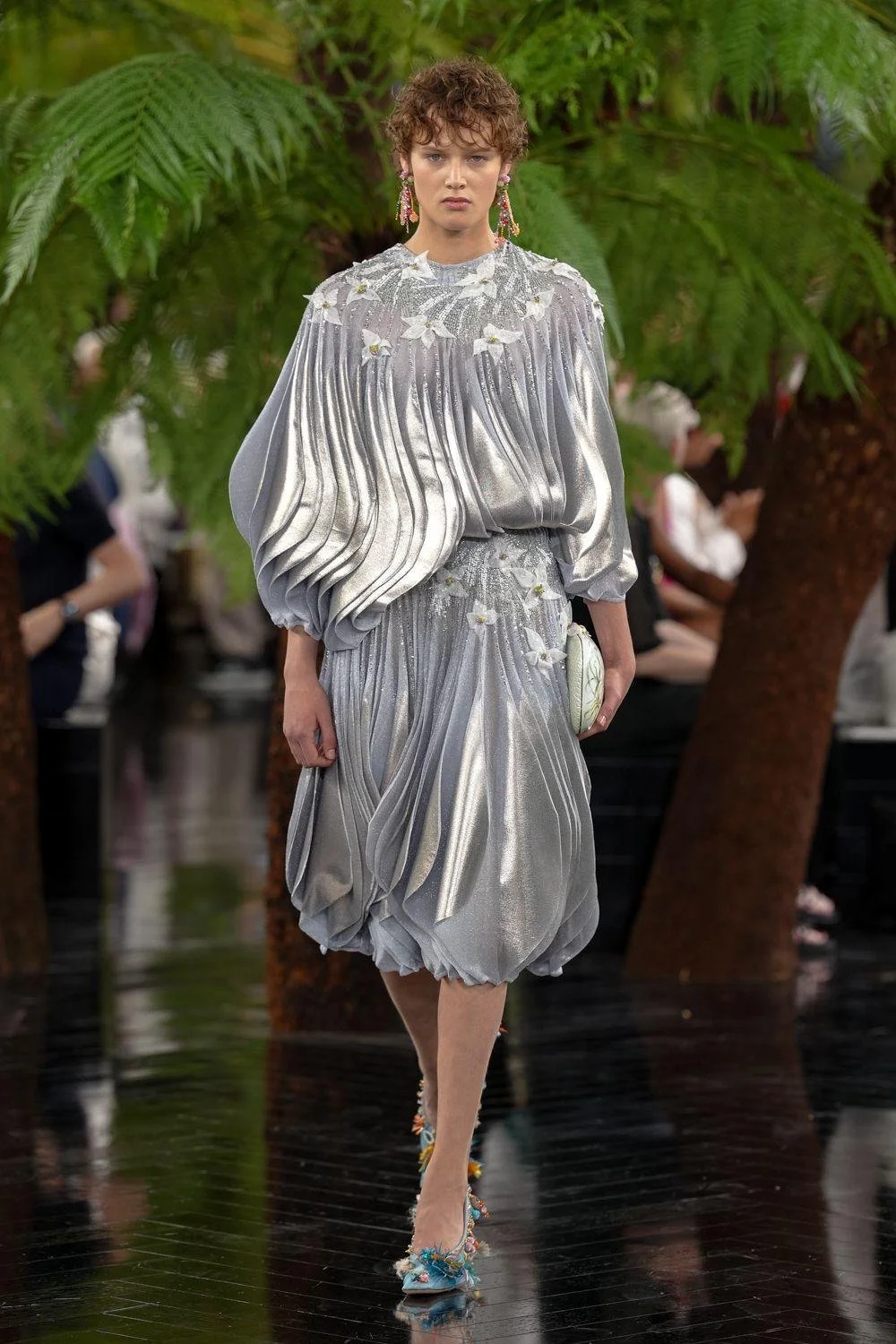
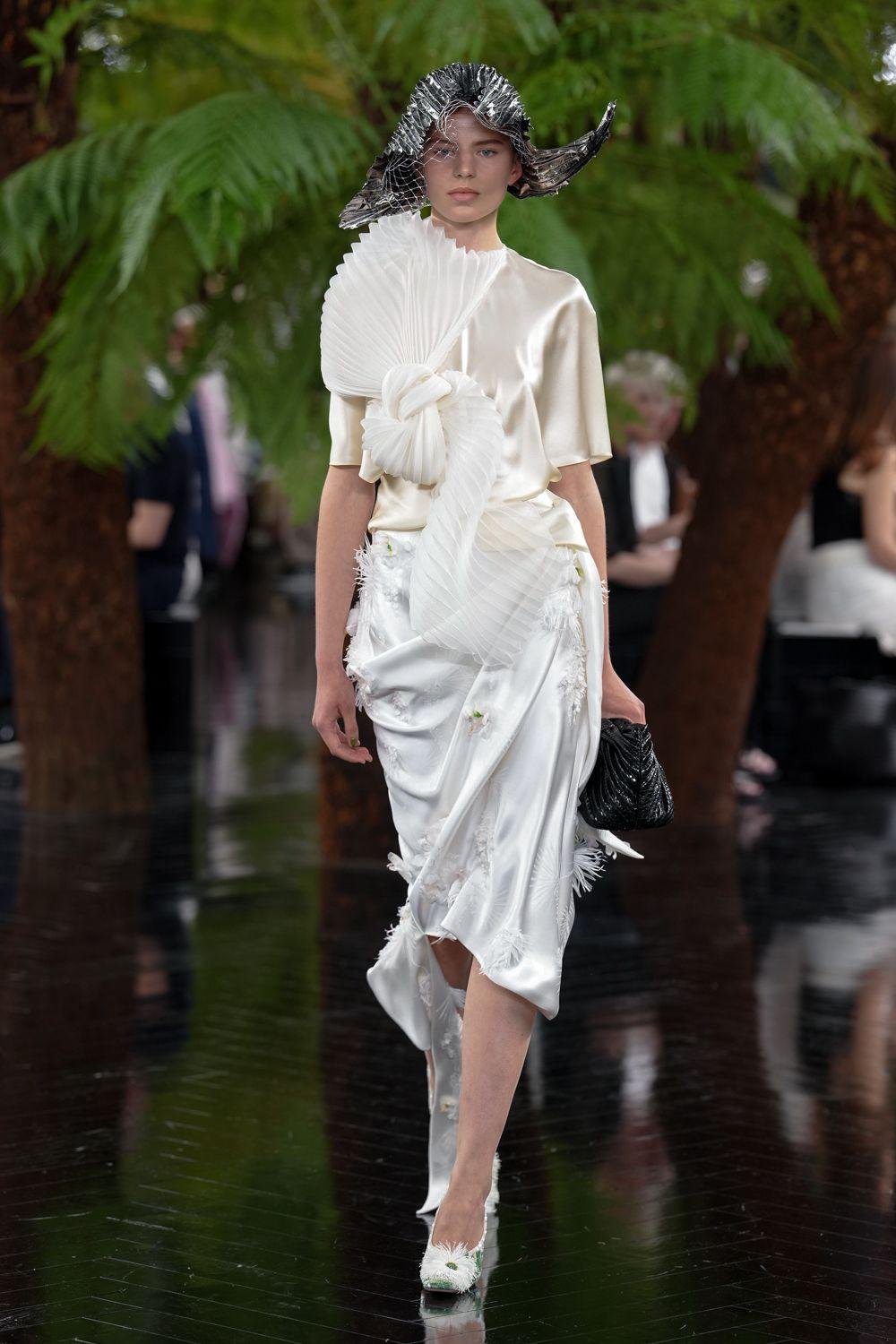
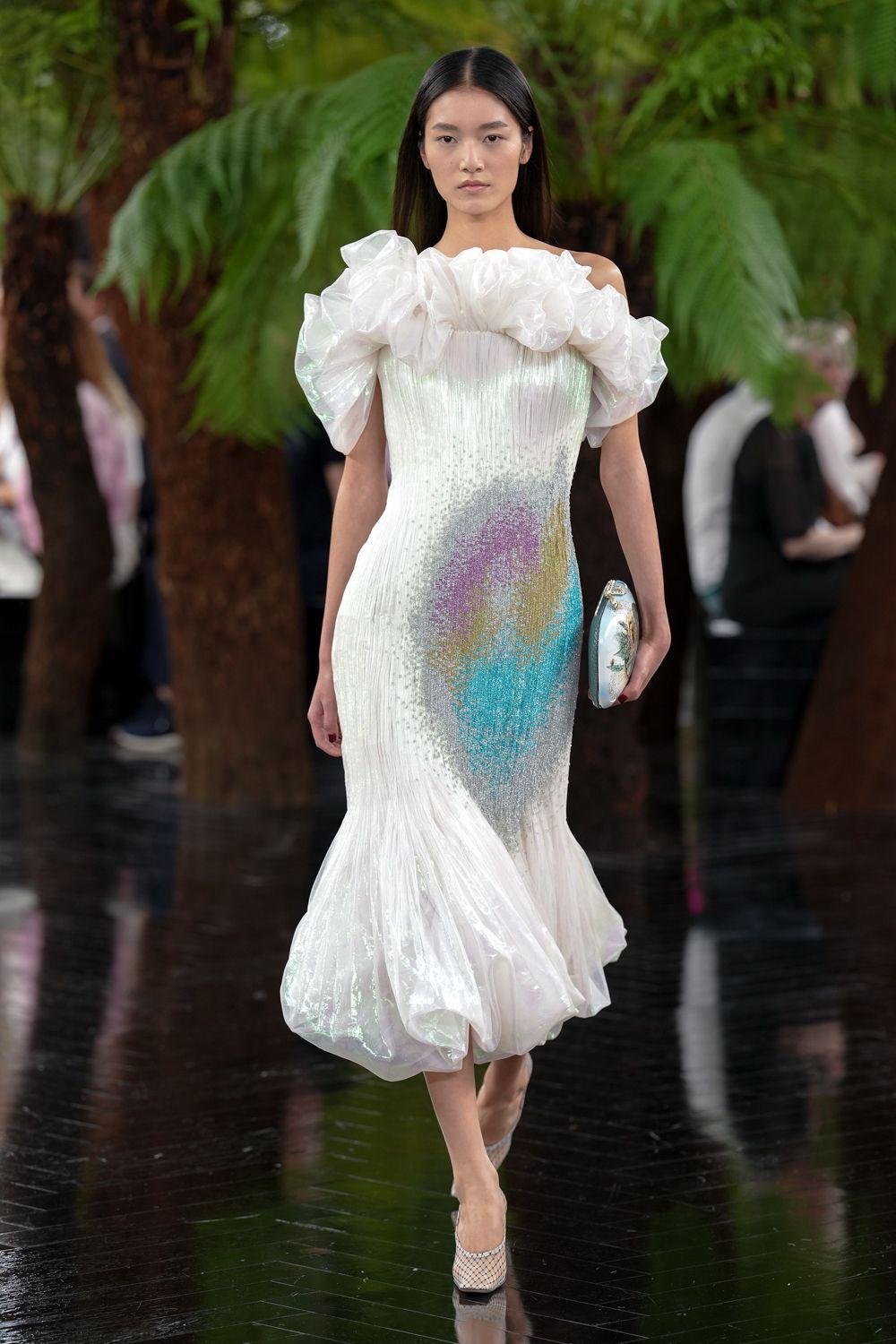
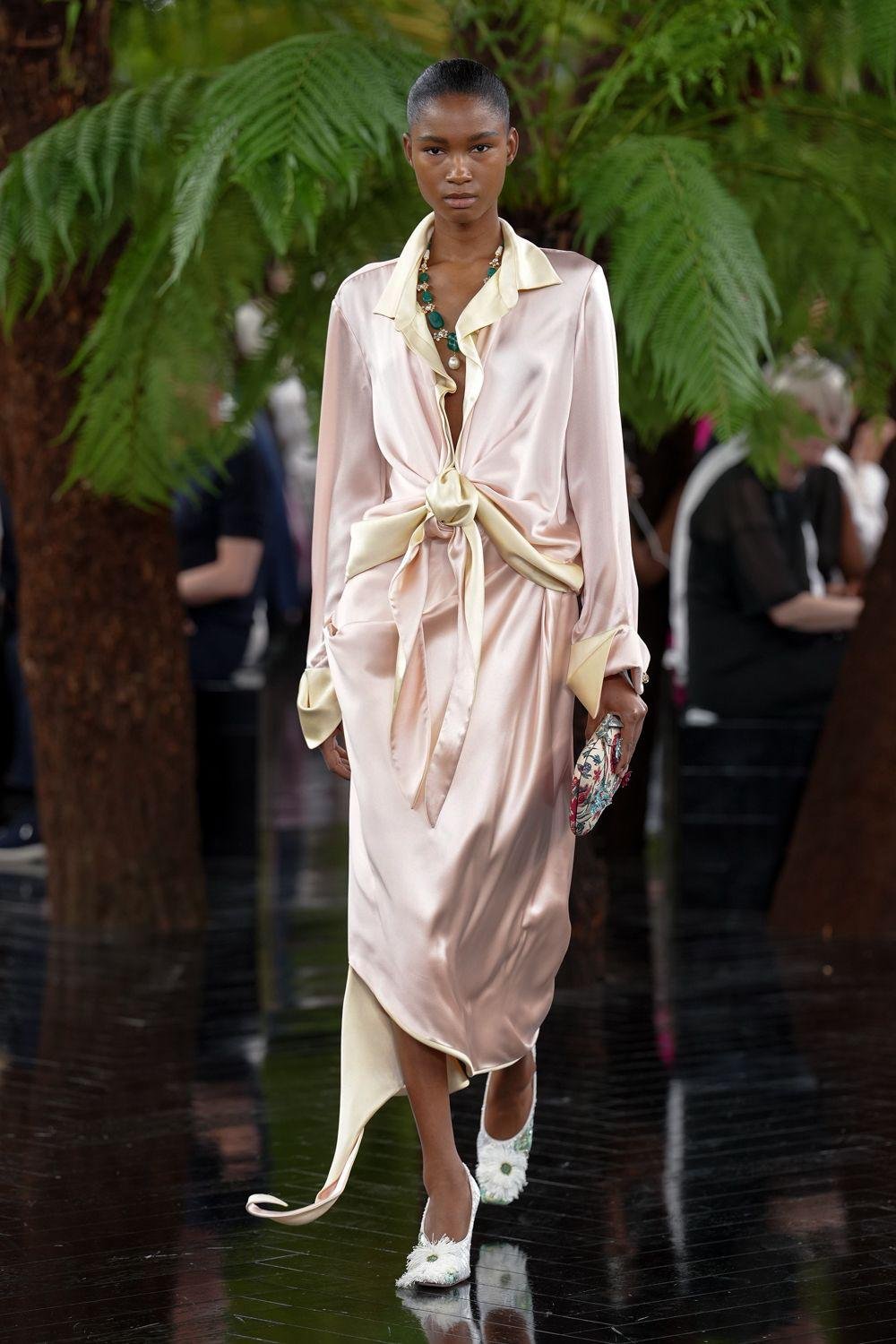
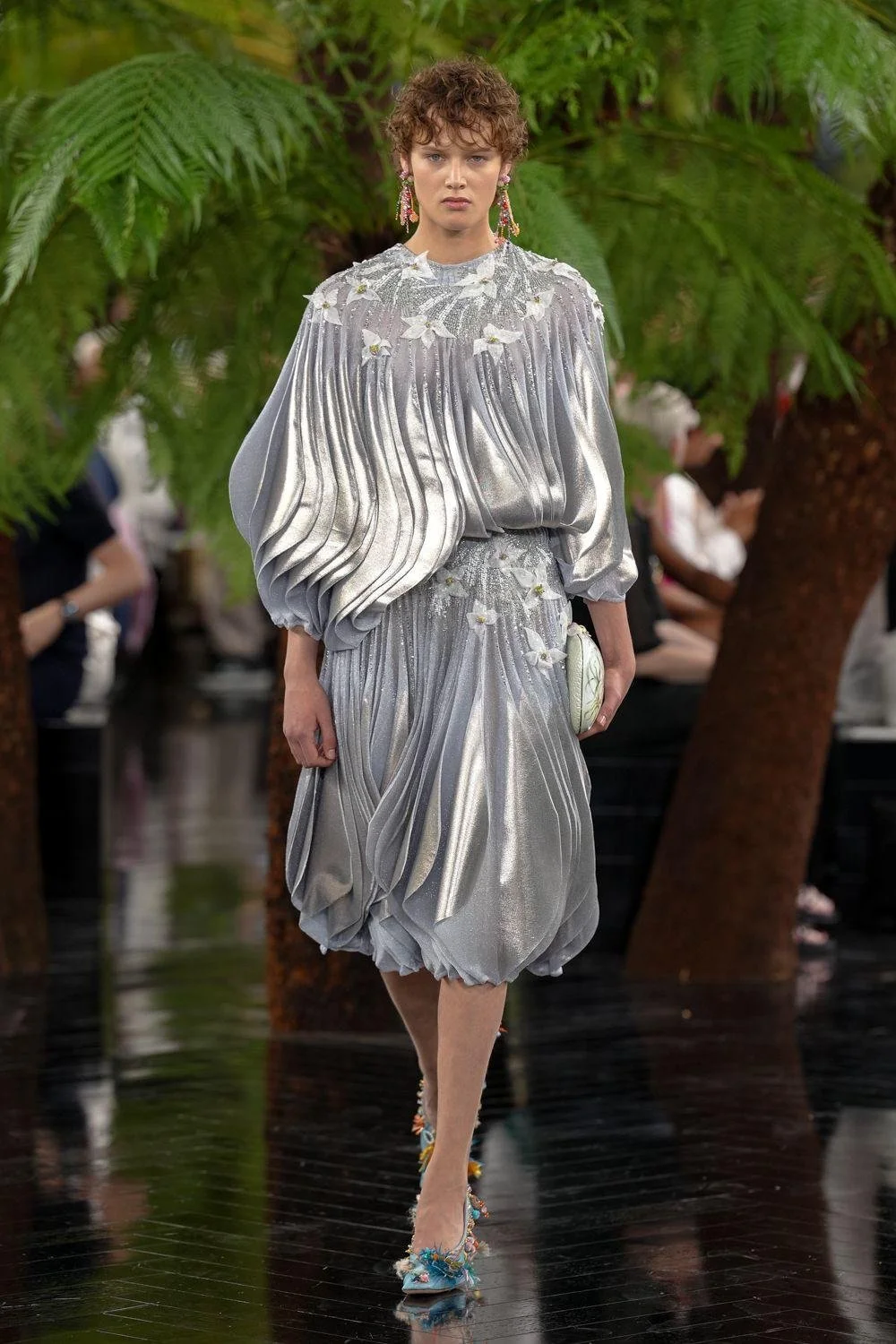
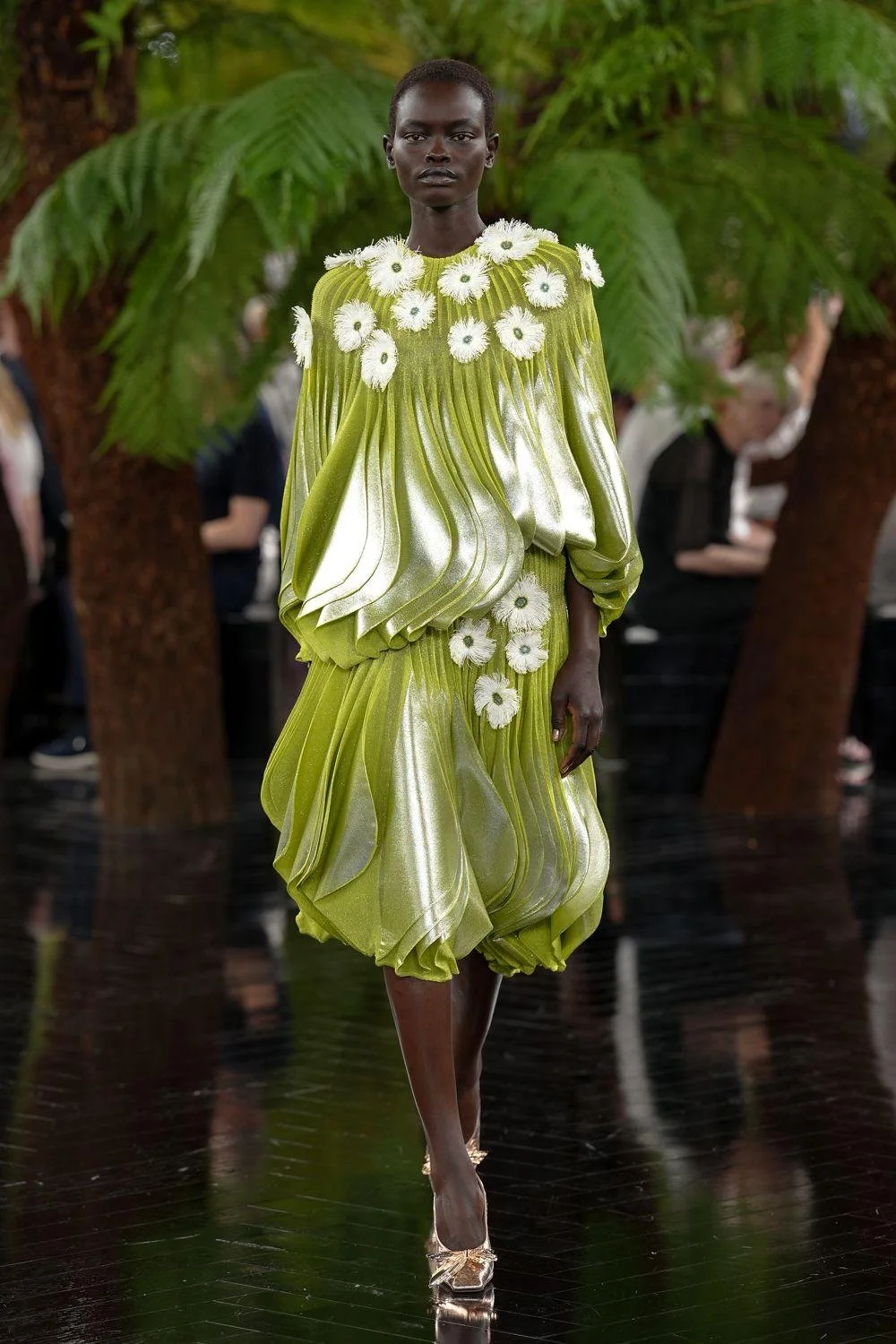
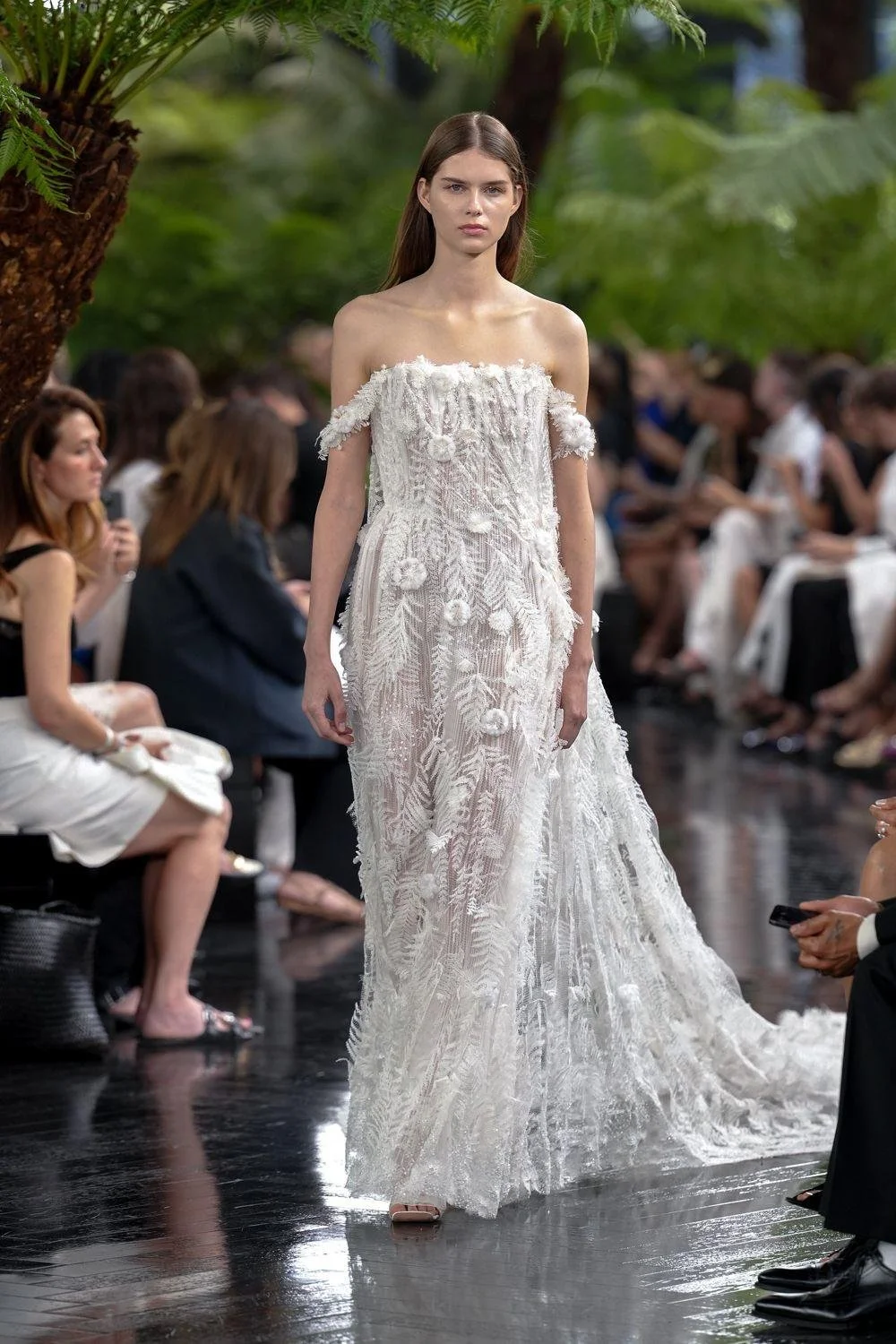
The lineup, as full of intricacies as it normally is whenever Anderson stages a show, directly referenced Benglis’ art, sometimes more literally, other times more subtly. At Dior, the artist’s widely recognised techniques of pouring, knotting, pleating, and moulding were turned into hand-pleated, knotted, draped, and wrapped garments, juxtaposing architectural shapes with liquid, fluid forms.
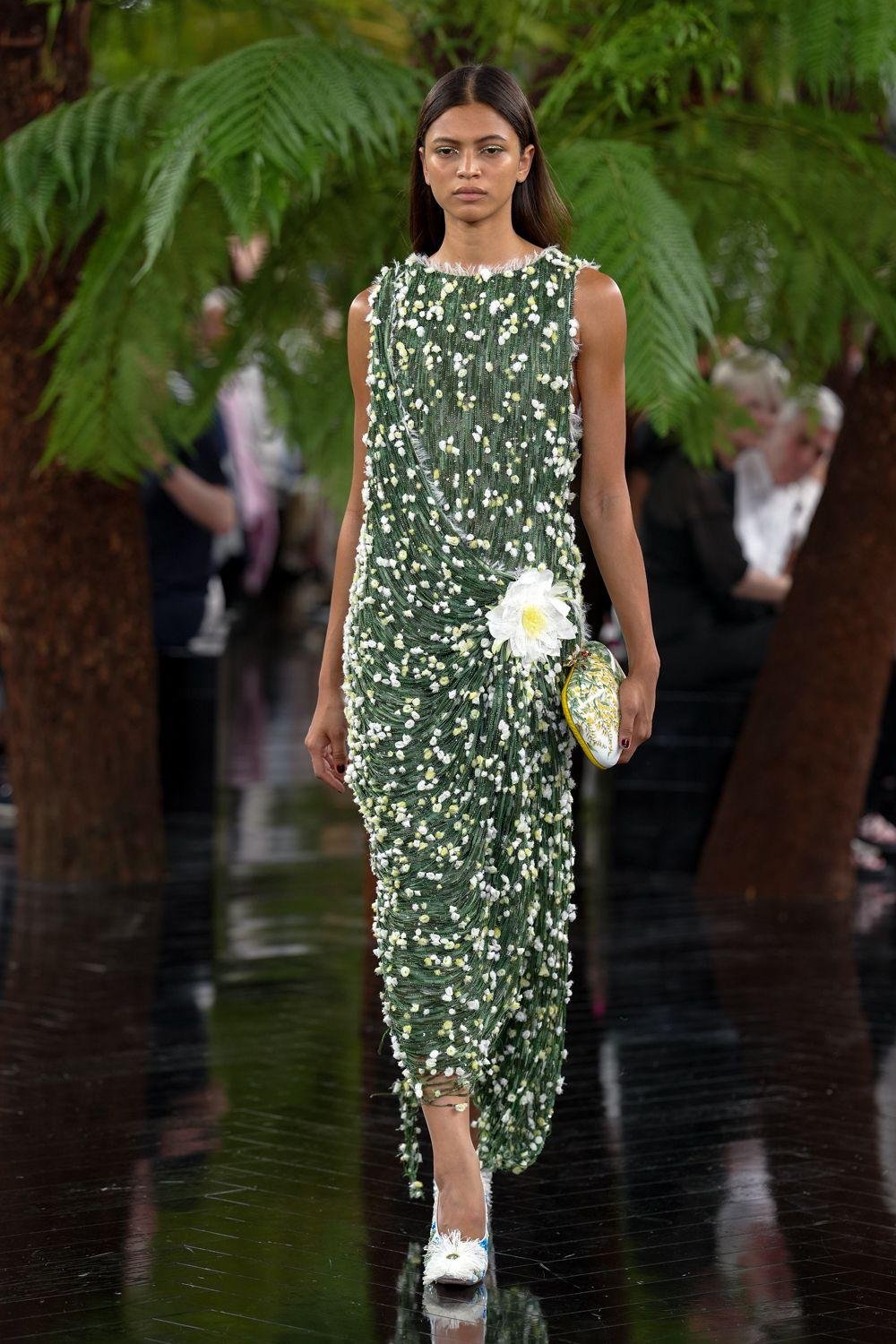
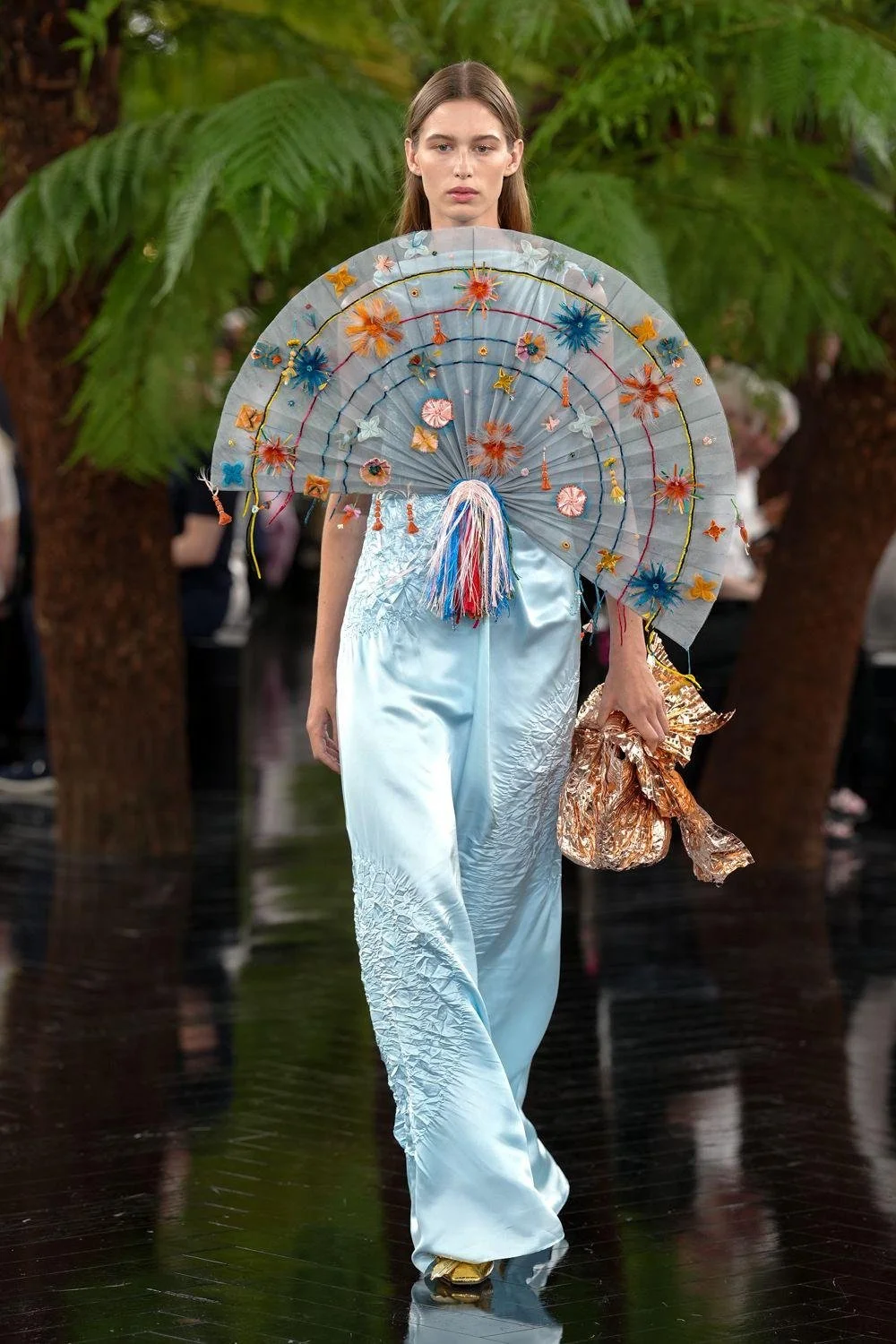
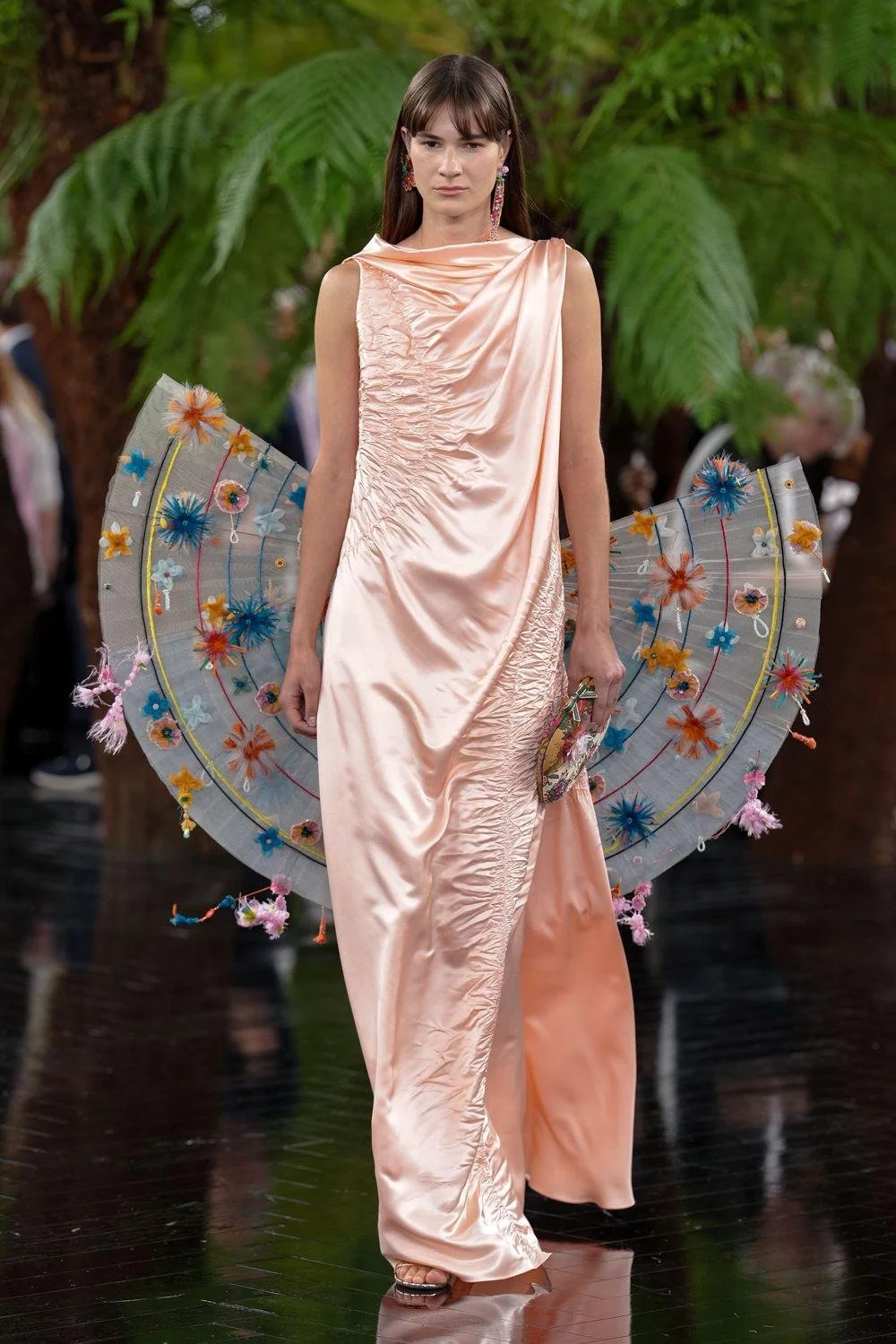
Anderson’s encyclopaedic mood board further explored Benglis’ deep connection with Ahmedabad, in the Indian state of Gujarat, where she created her bird-inspired 1970s ‘Peacock’ series. Those elements became flower-shaped appliqués, as well as beaded and floral embellishments. Nods to one of Benglis’ fan-shaped, pleated creations could be spotted beyond the black fan show invite and were later materialised on two pastel dresses, in blue and pink, featuring a tulle iteration of the fan placed on their front and back, respectively.
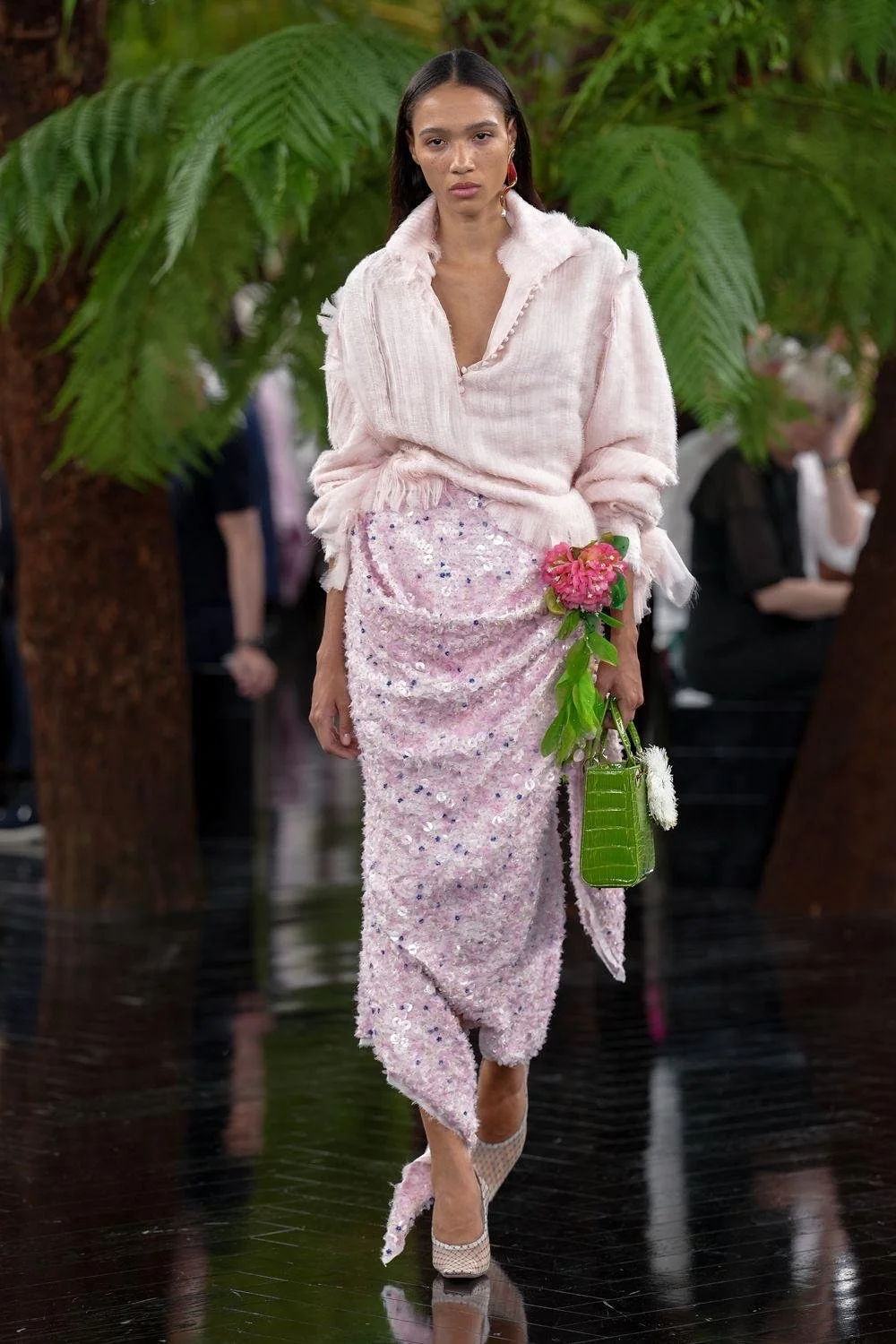
Traditional Indian craft was praised in multiple other ways, starting with the incorporation of chintz, the hand-painted or block-printed textiles, which became popular in European décor. In the collection, chintz-like fabrics decorated mini handbags, four of which were developed along with Benglis.
Gemstone jewellery pieces were made in collaboration with artisans from Jaipur, while the broader collection's colour scheme and use of flower shapes as silhouettes and detailing evoked not only the Ahmedabad scenery but also the landscape of Santa Fe, New Mexico, another of Benglis’ treasured addresses.
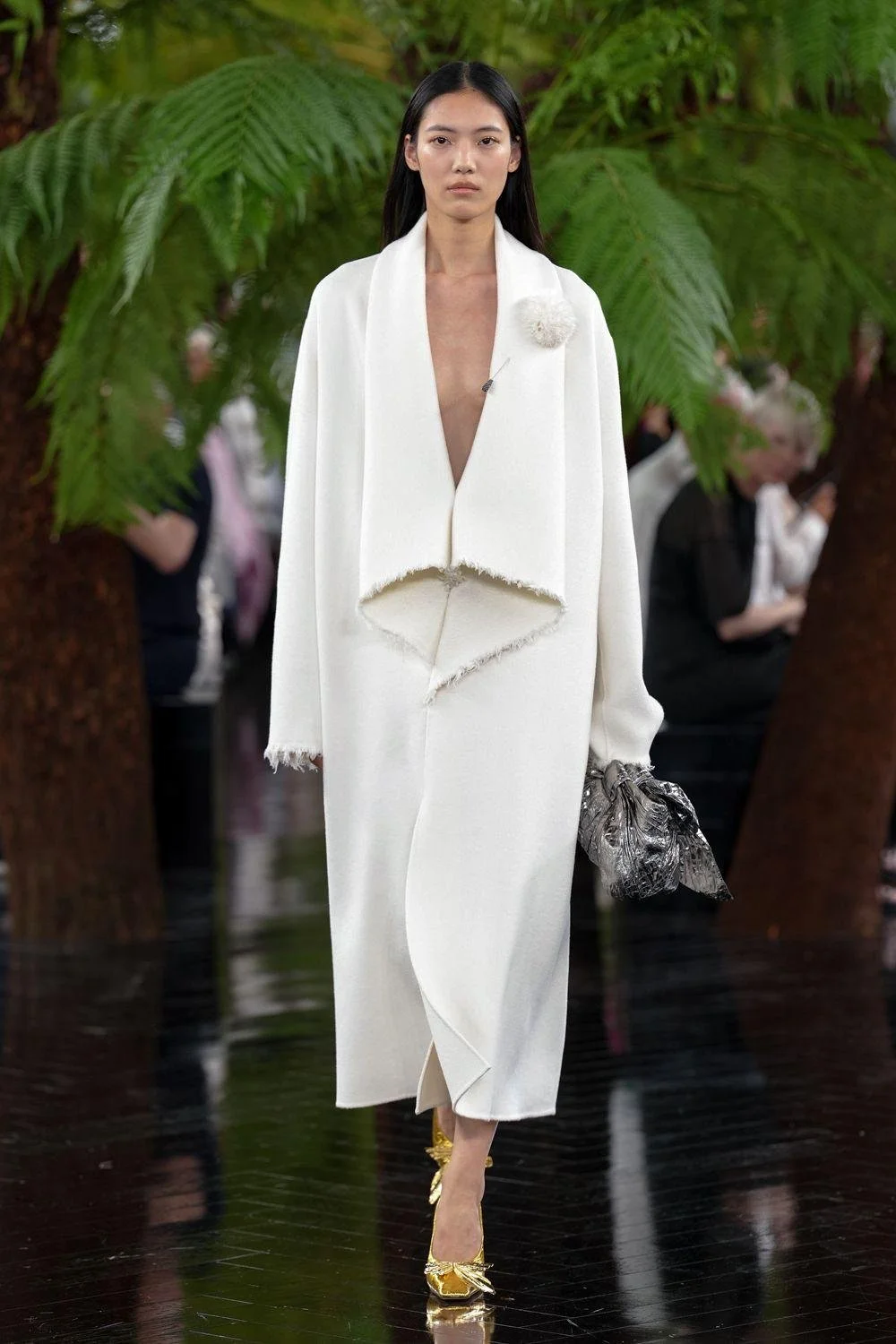
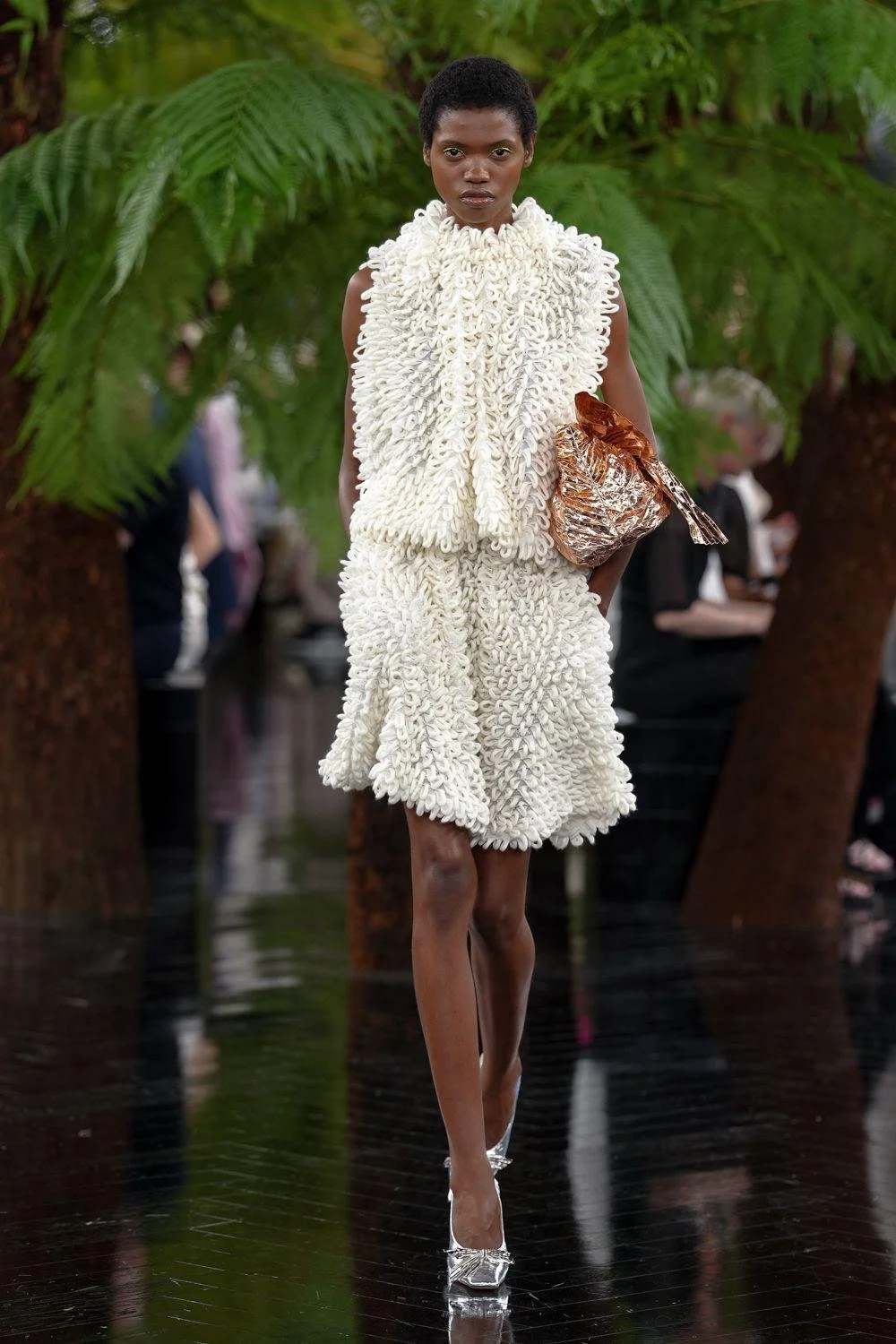
Various pieces came with a seasonal blanket, towel, or poncho feel, perfectly wrapped around the body, as cosy as they were elegant and yet still modern, thanks to a couture-type frayed, deconstructed materiality. Fringes and tassels, swirls and beads added to the richness of it all. Pleated metallics took the spotlight – another of Benglis’ motifs, seen everywhere from headpieces to footwear, handbags and sculptural dresses. The shoe game, by the way, was dreamy and dotted with embroidery.
With Anderson, what the eye can easily see is only a taster, like his natural complexity in detail becomes infinite in every new Dior collection. Despite the above-mentioned smorgasbord of sources, there was still room for a whimsical, Anderson-esque armadillo handbag, iridescent effects on dresses, jackets, or T-shirts, and a glistening, fringed bar jacket crafted in a shade of green that you can only truly find in nature.
Words by Ketlyn Araujo