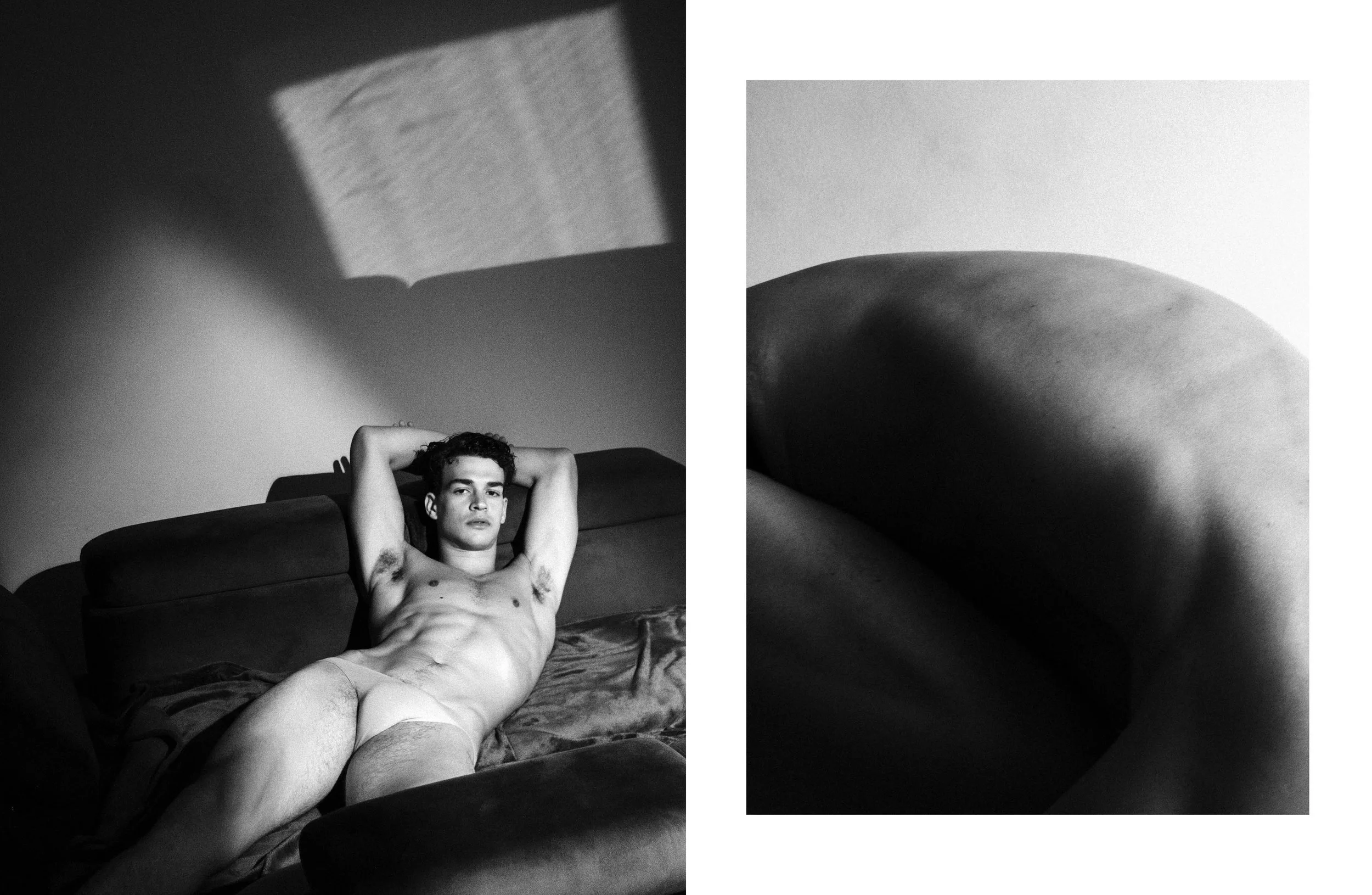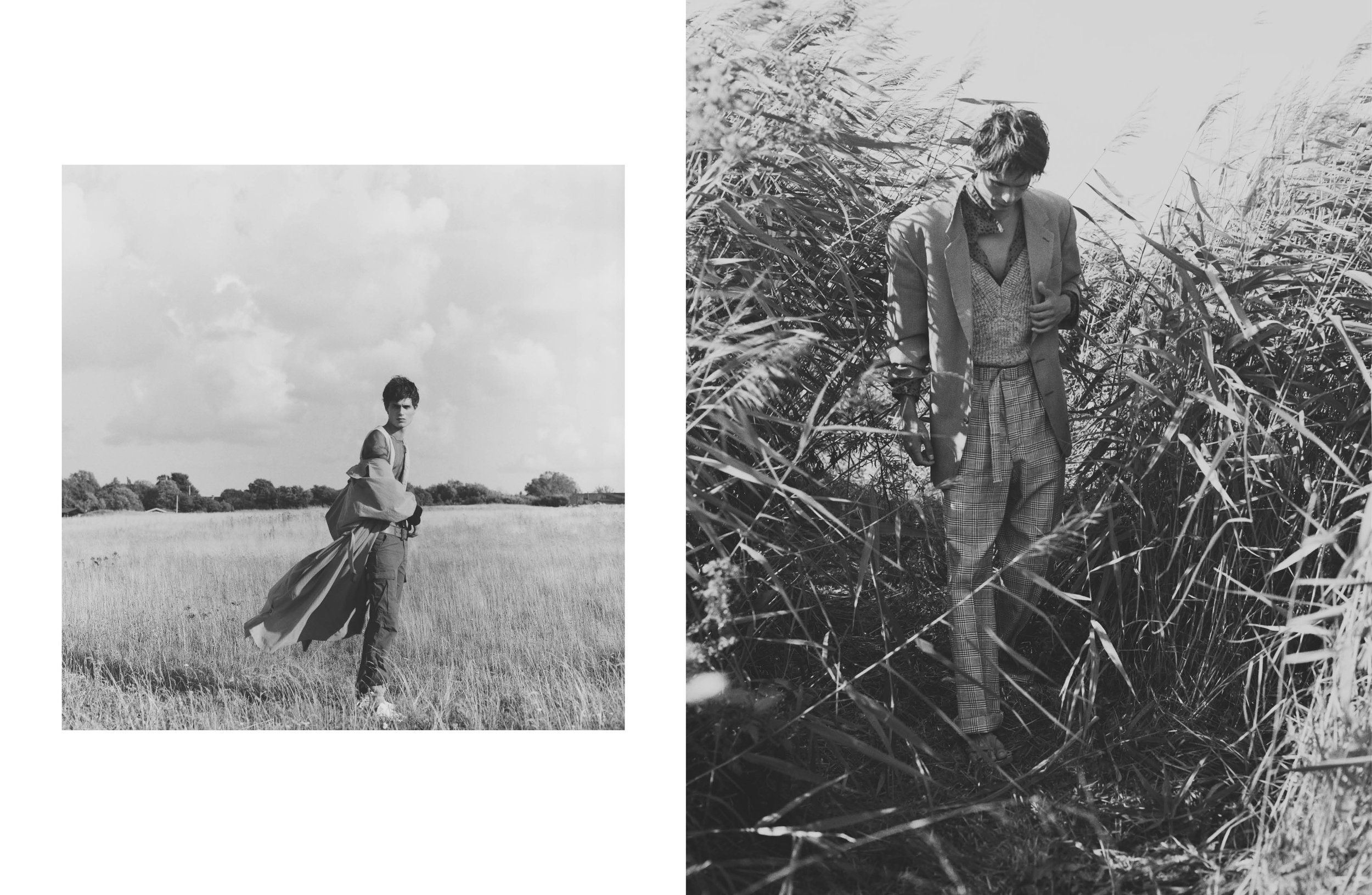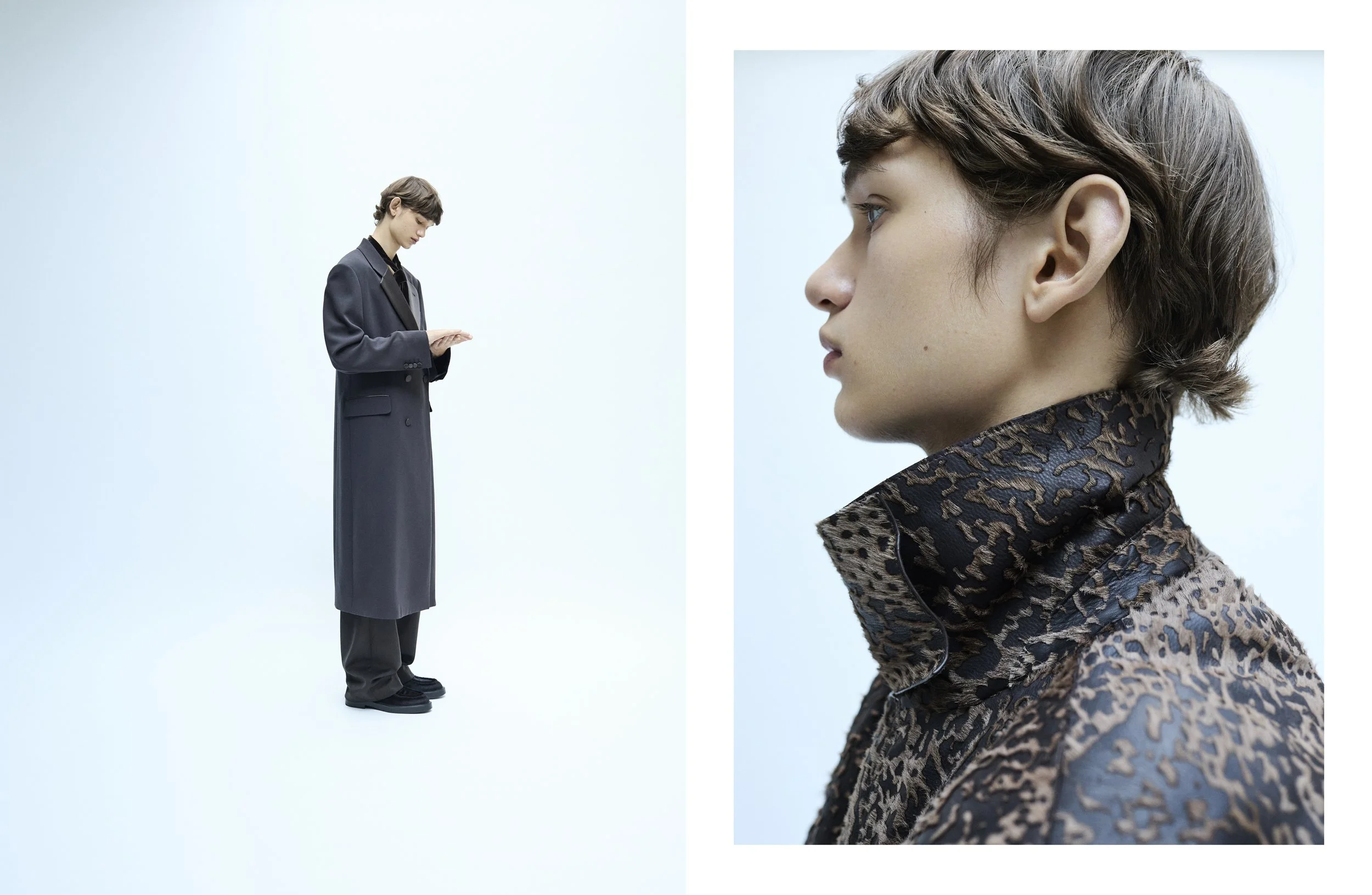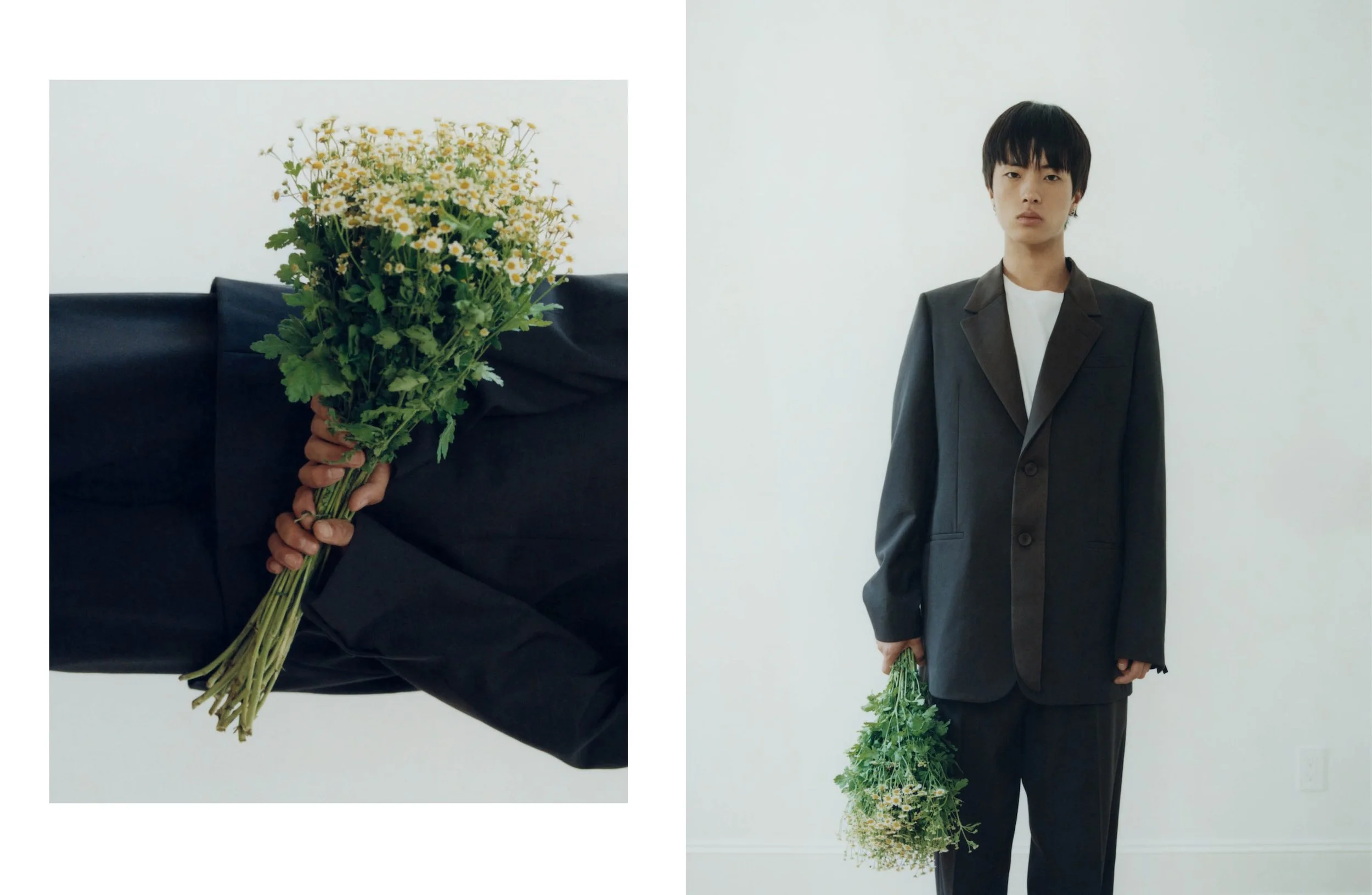
After unveiling her first Fendi collection as creative director of the Italian house back in February, Maria Grazia Chiuri chose Rome, the designer’s beloved hometown, to stage her debut couture show, held at the National Gallery of Modern and Contemporary Art.
Similarities between the two collections can be easily spotted, from a more black-and-white-centred choice of colour to a purposeful fluidity present in all the garments, even when crafted from heavier textiles. In case you skipped a chapter in fashion history, it is worth noting that Chiuri started her designing career at Fendi in the late eighties, before working at Valentino and Dior. Anything done now hints at a full-circle trajectory.
Since her comeback, Chiuri has been aiming to combine shared signature codes crafted by both Karl Lagerfeld and the Fendi sisters, her predecessors, while also paving her own vision for the label.
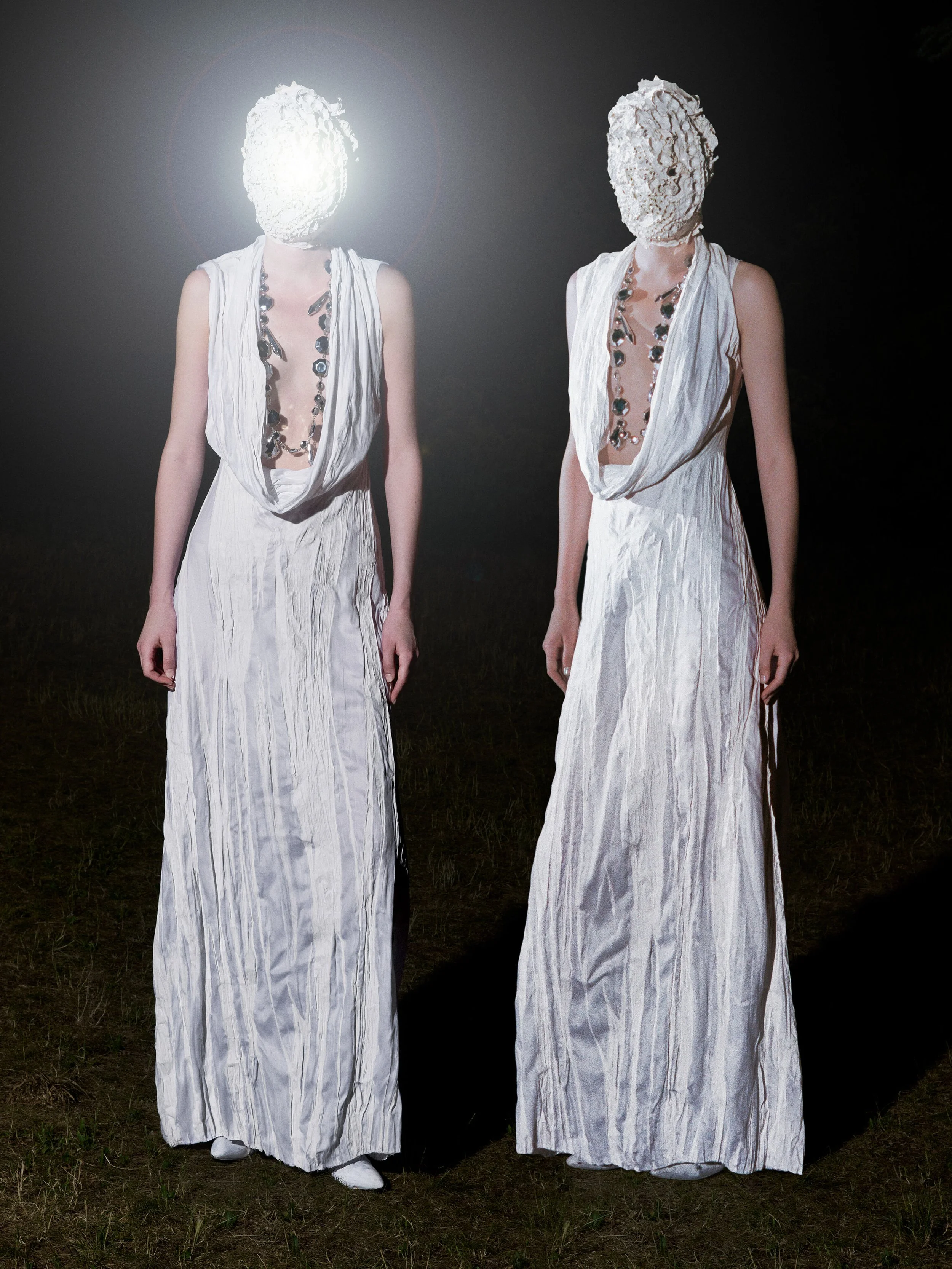
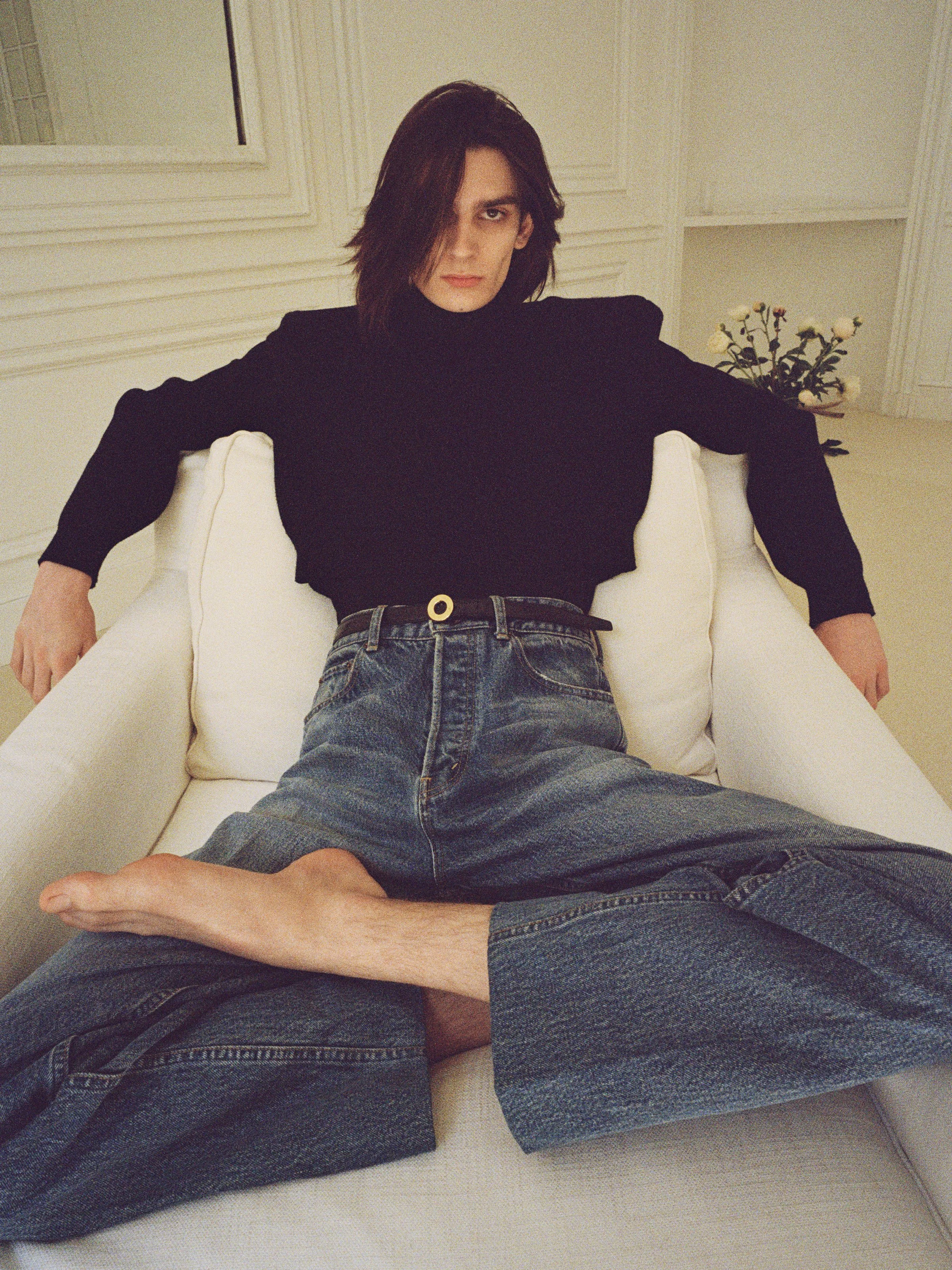
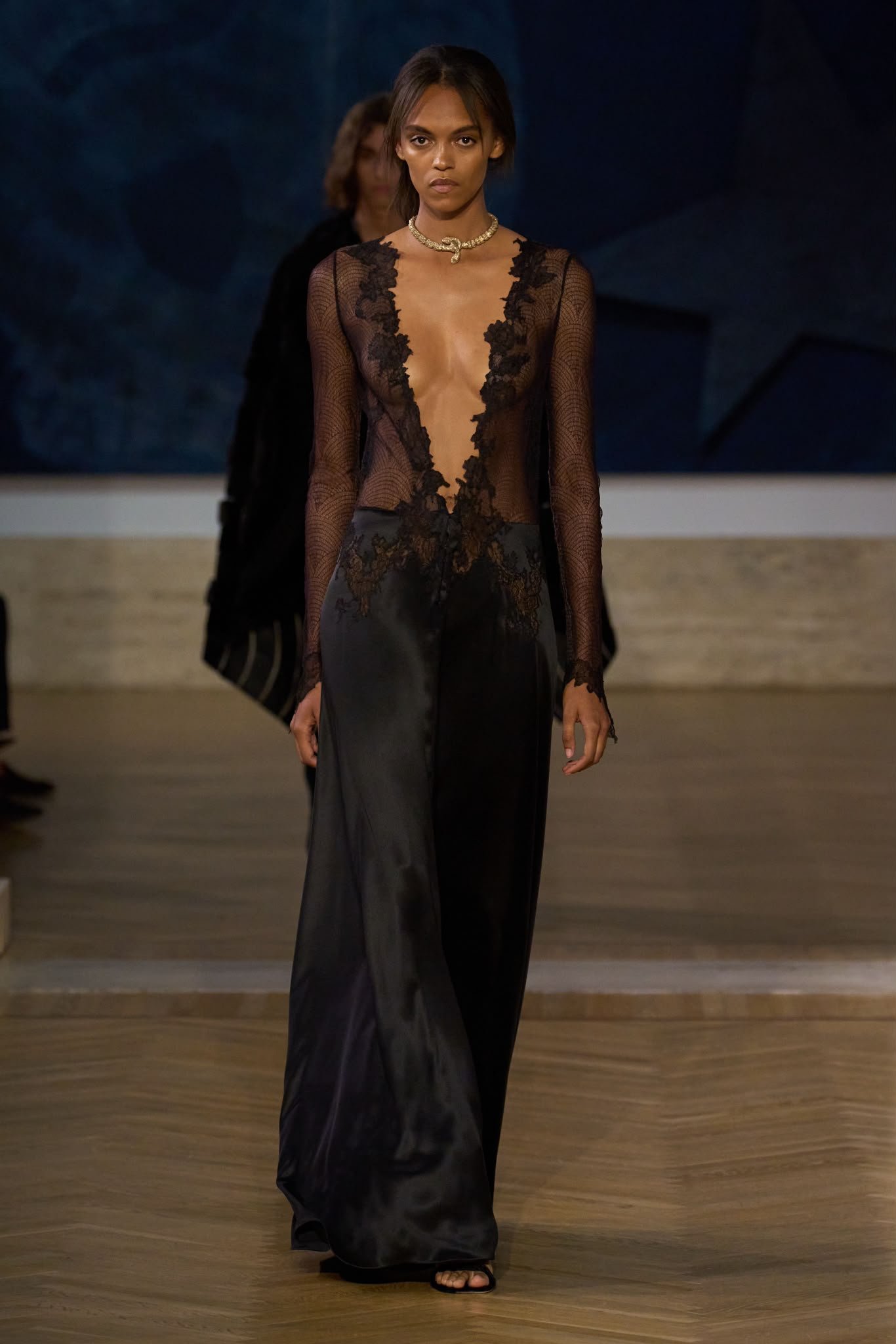
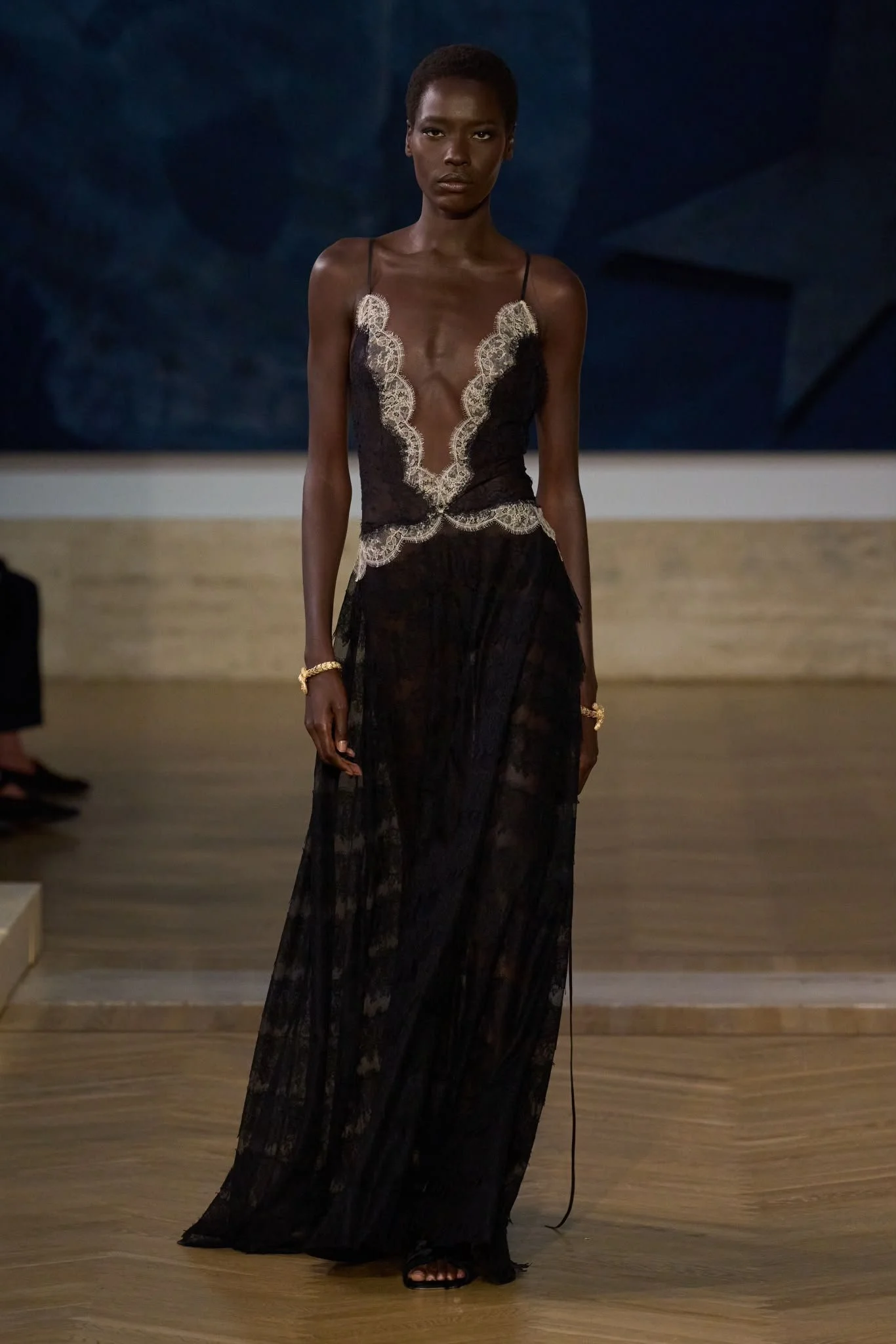
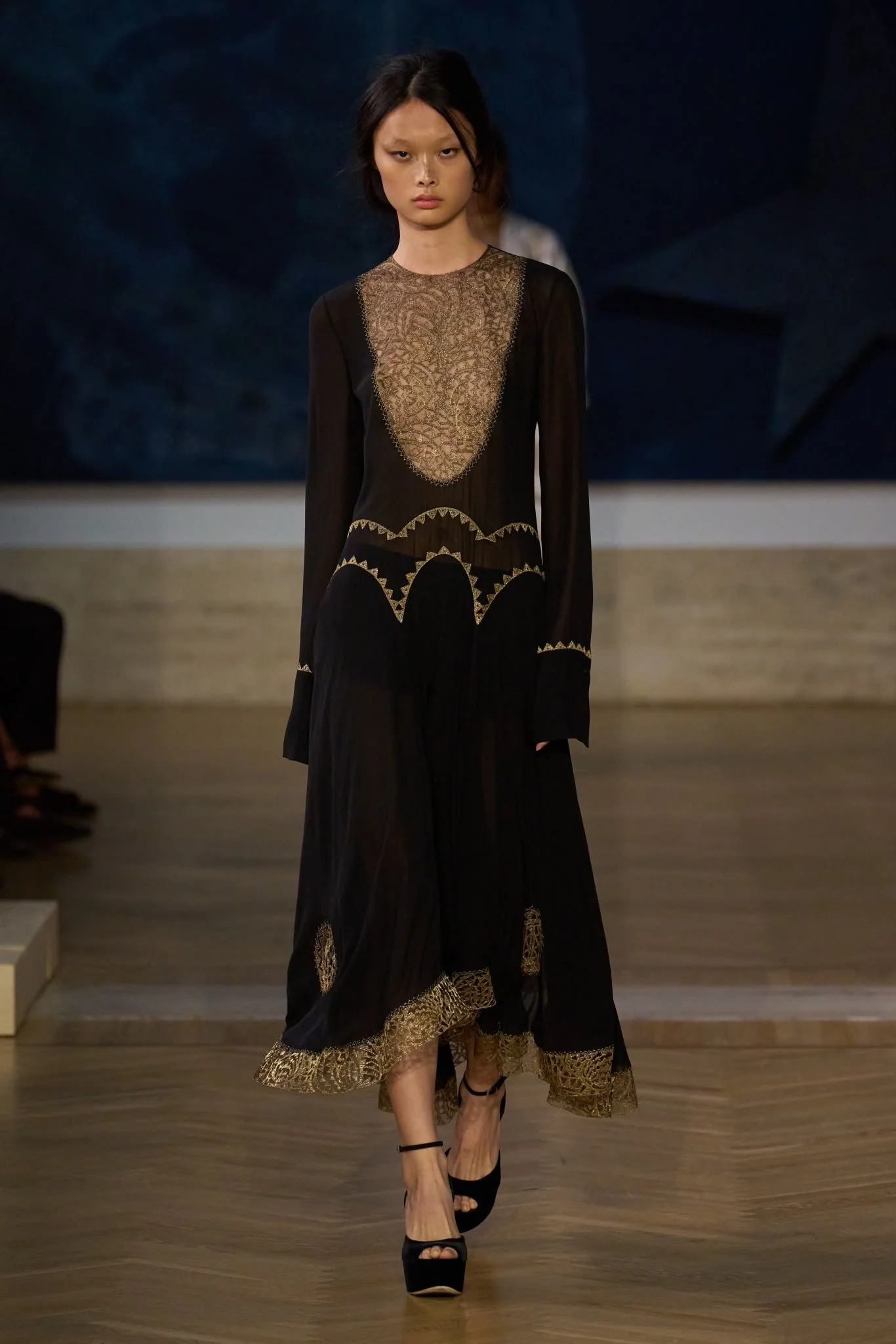
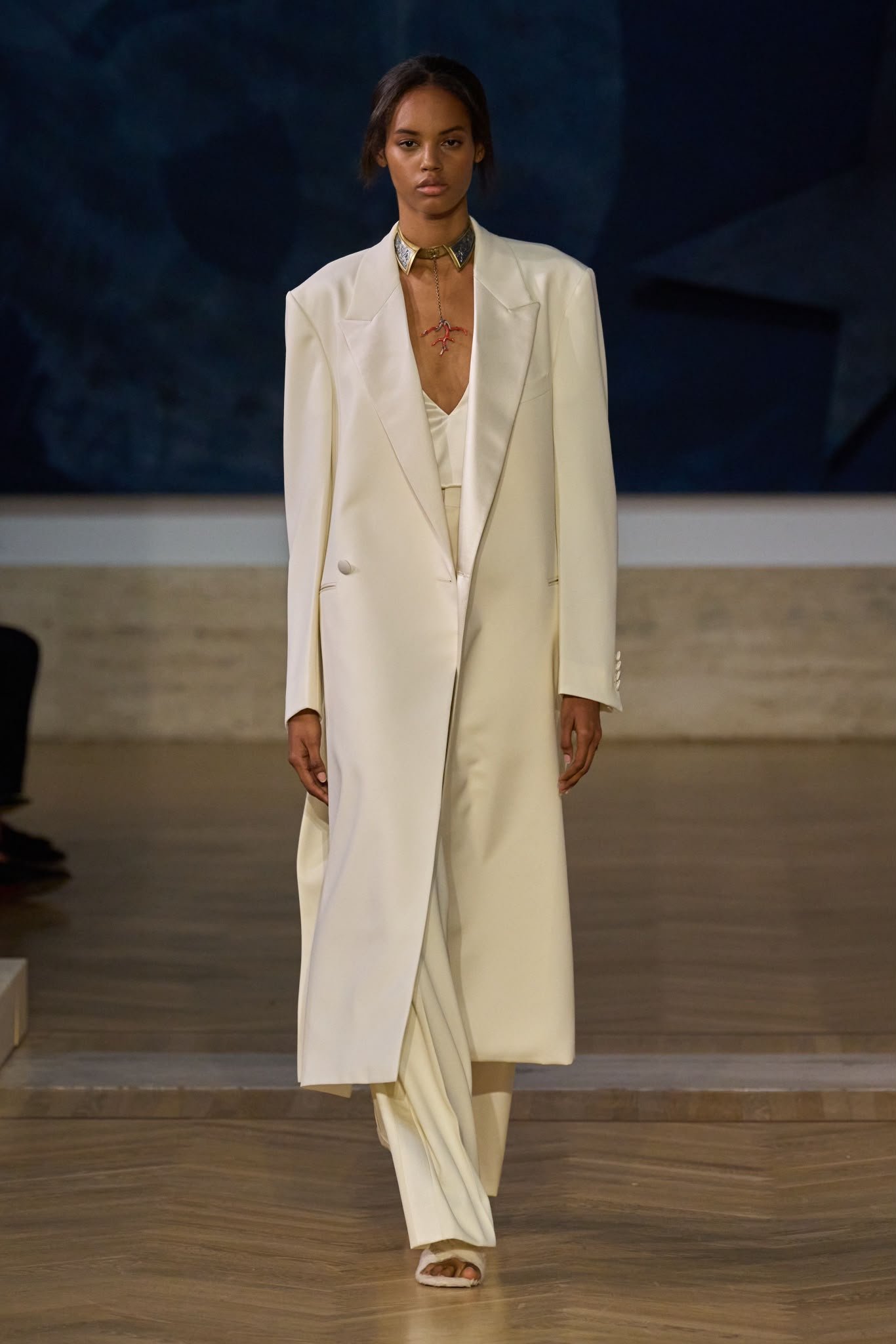
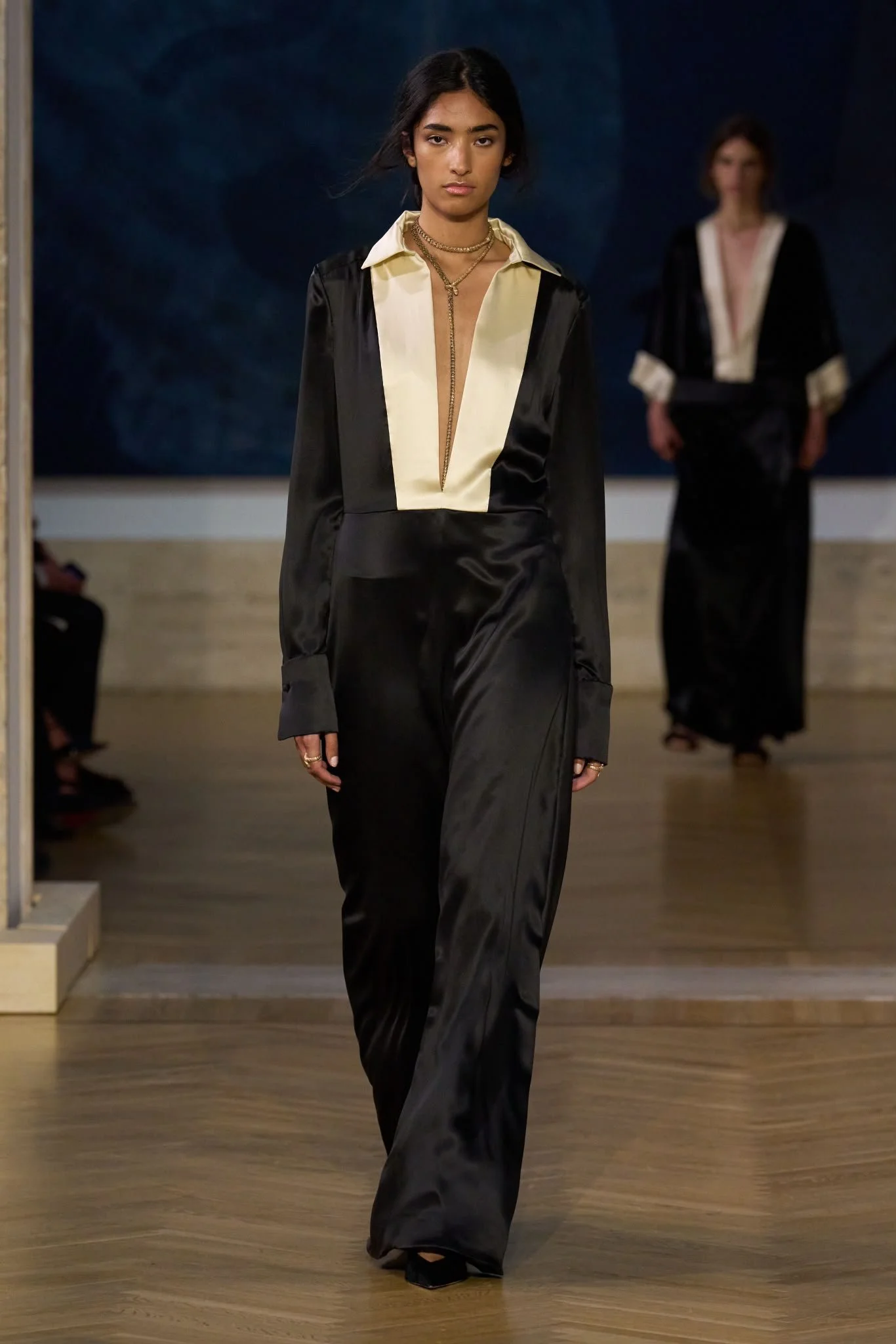
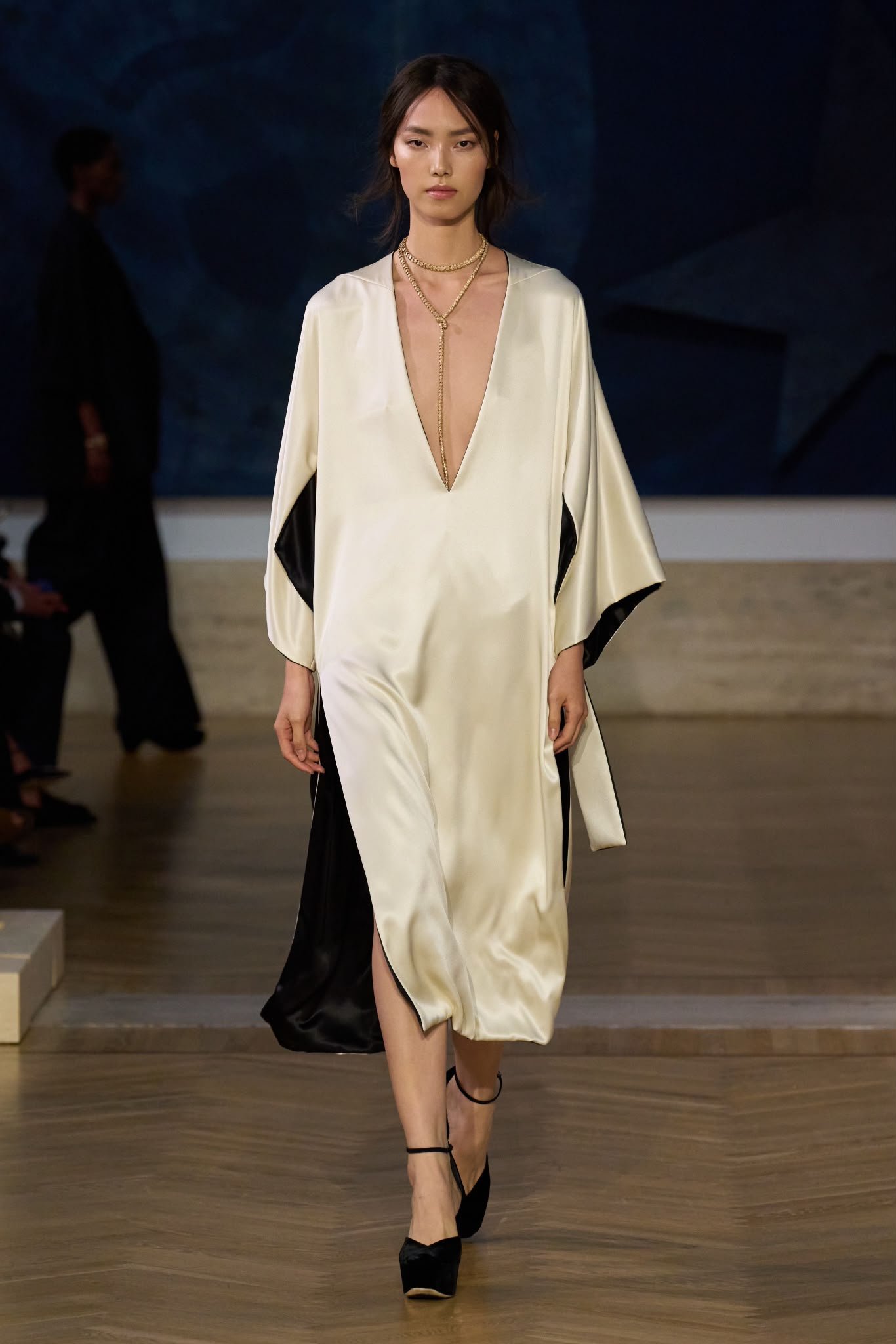
For couture, this approach further proves itself to be a continuation. Throughout the collection, Chiuri shone a light on the meanings of “desire” today, which, for her, signifies creating clothing that moves with the body and embraces its emotions, intentions, and the complexity of being alive. Rather than constraint, freedom; instead of sturdy or architectural, typical couture silhouettes, lighter and flowy forms.
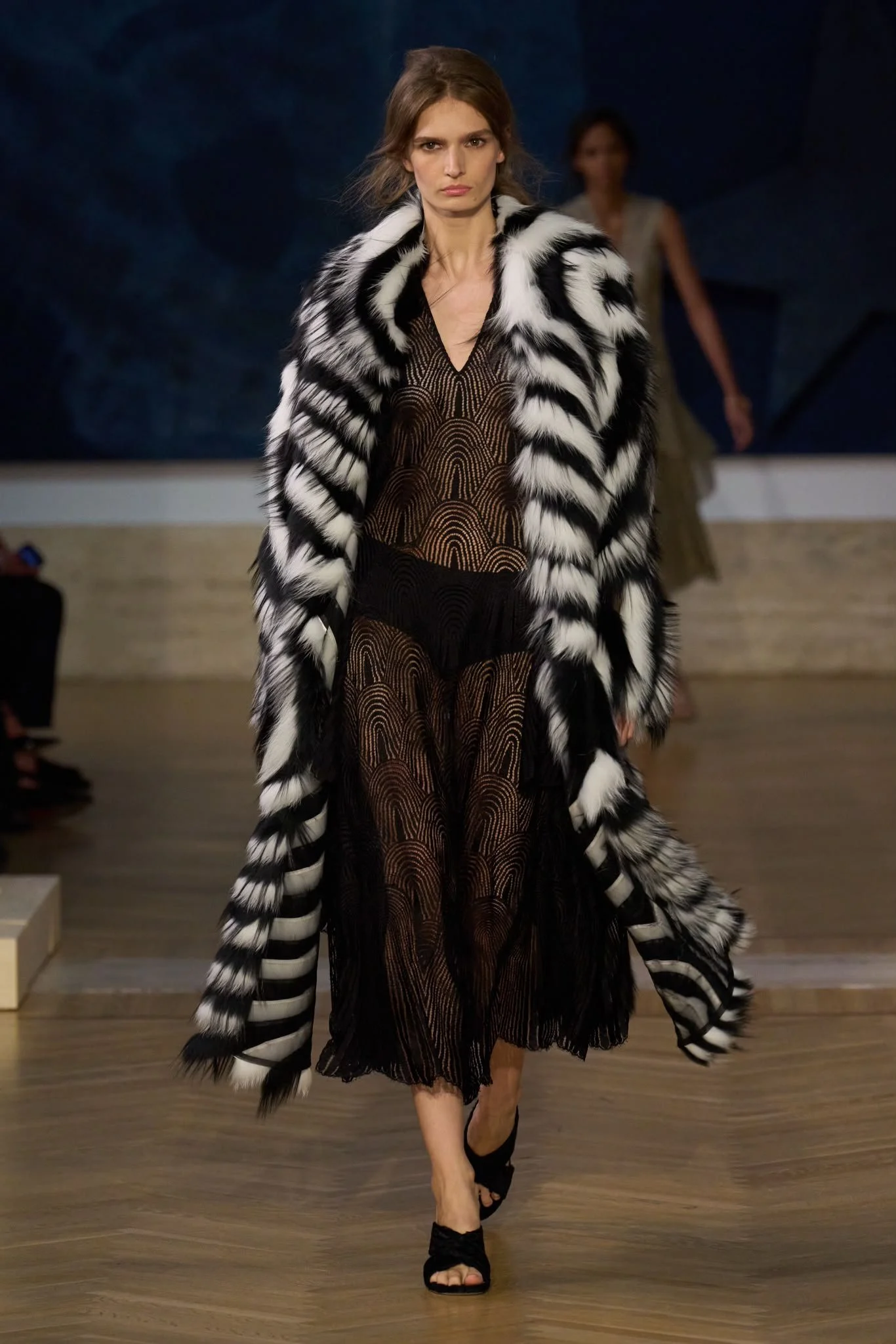
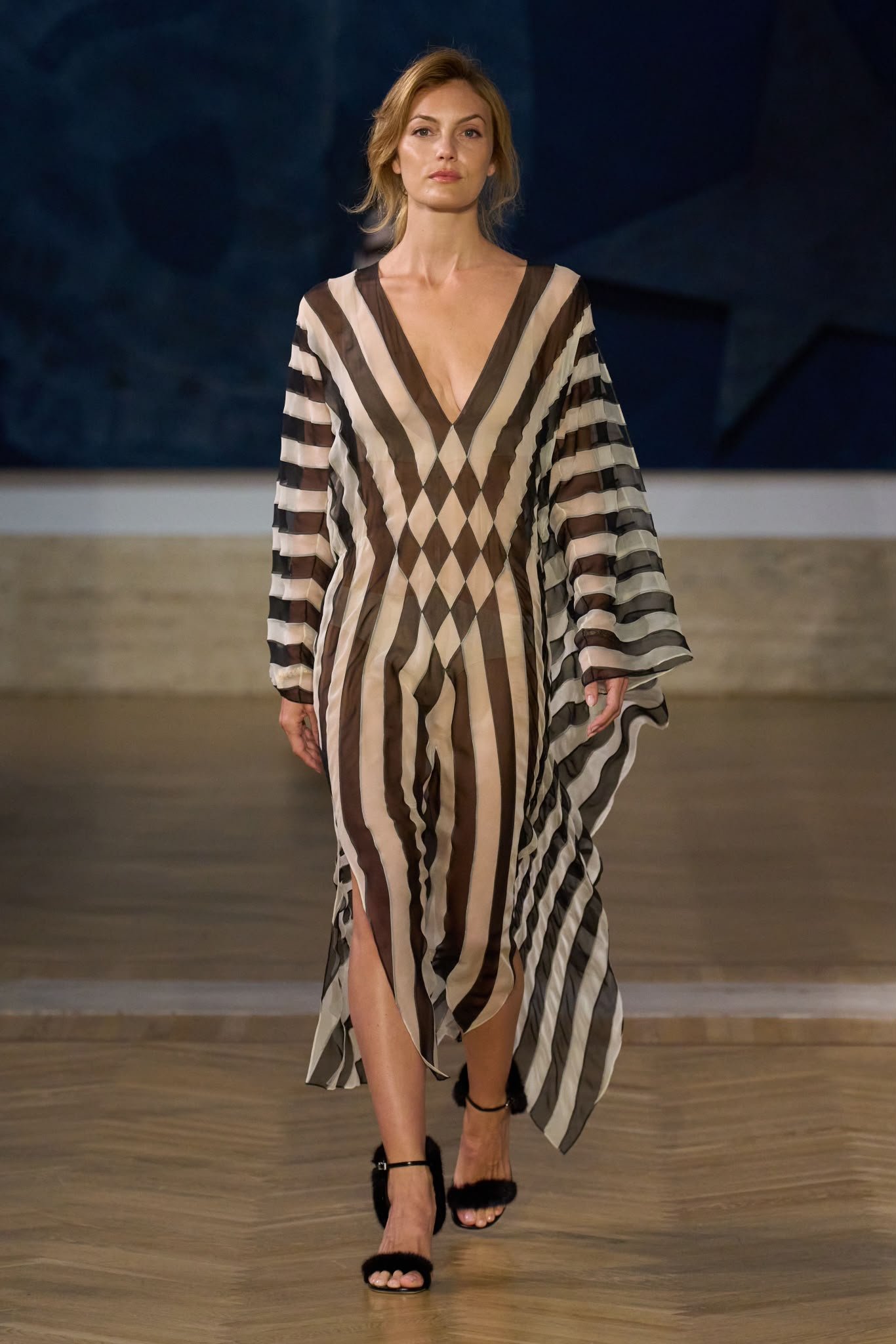
A picture of Austrian fashion designer, businesswoman, and life partner of the painter Gustav Klimt, Emilie Louise Flöge, wearing a striped, black-and-white tunic, inspired a few of the collection’s looks, including the chiffon deep V-neck opening act. Karl Lagerfeld, Chiuri later explained, used to reference The Vienna Secession, a 1987 Austrian art movement of which Klimt was an important part, in his Fendi collections, which puts Flöge’s portrait in a special place on this season’s mood board.
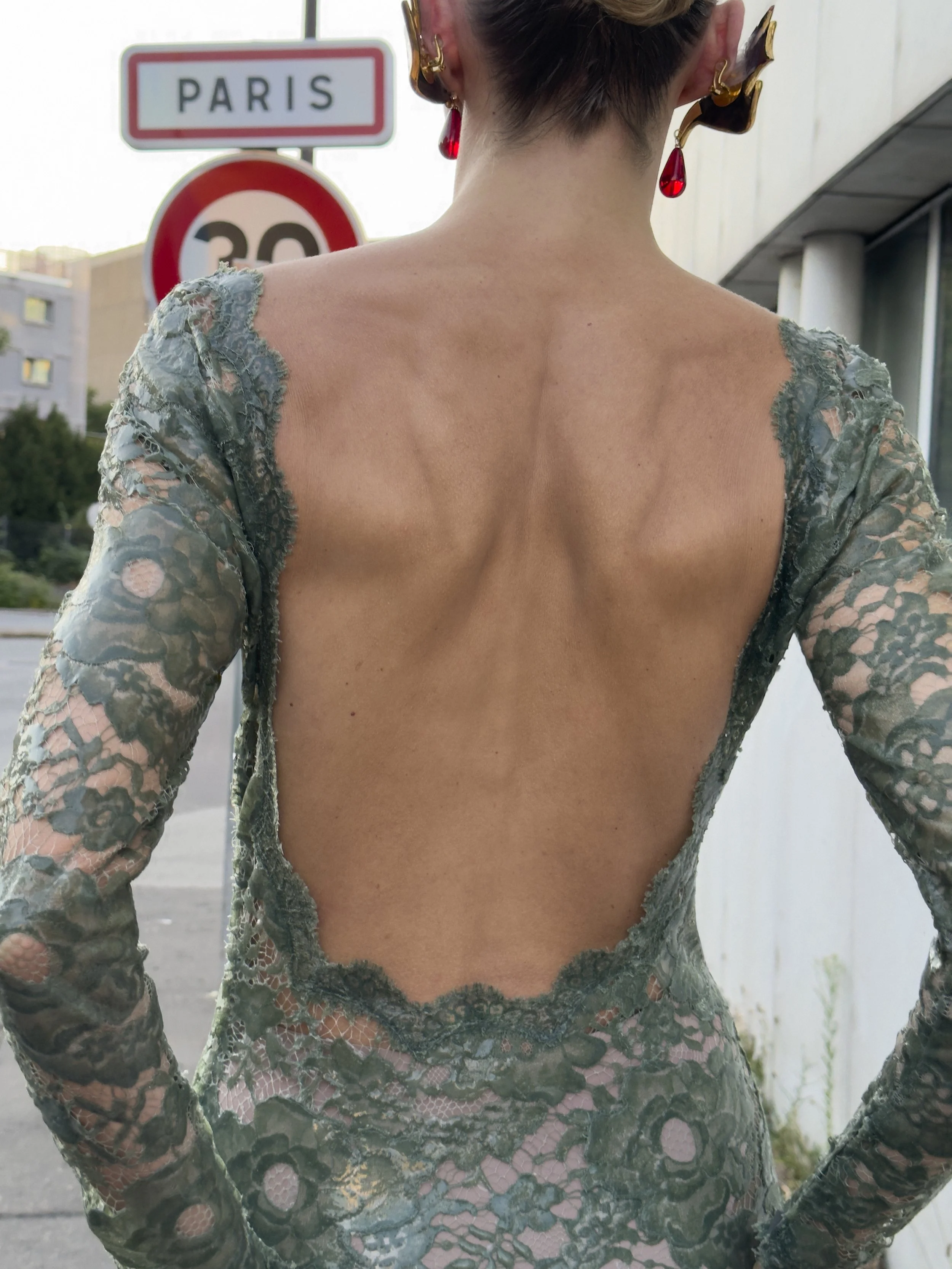
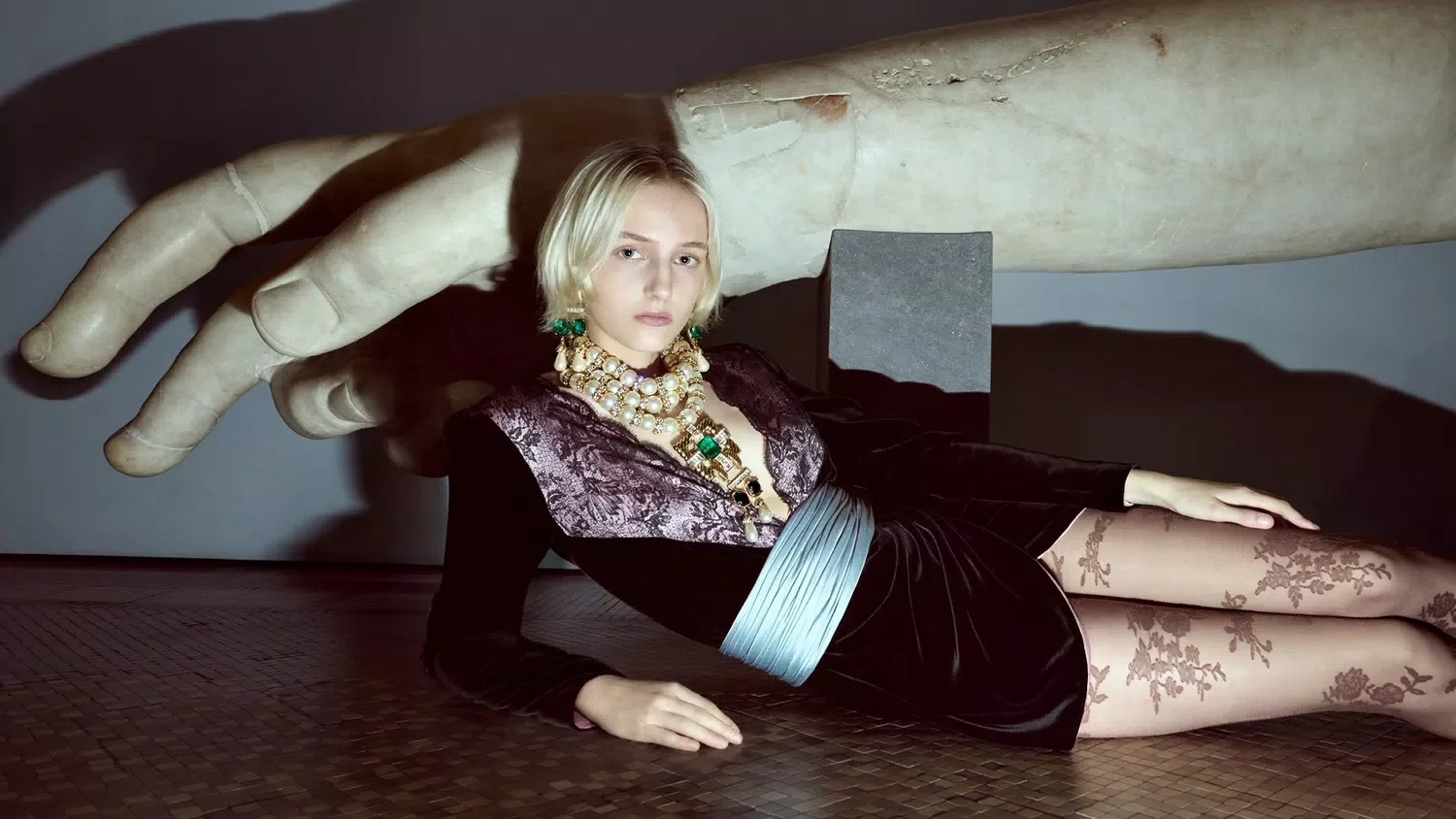
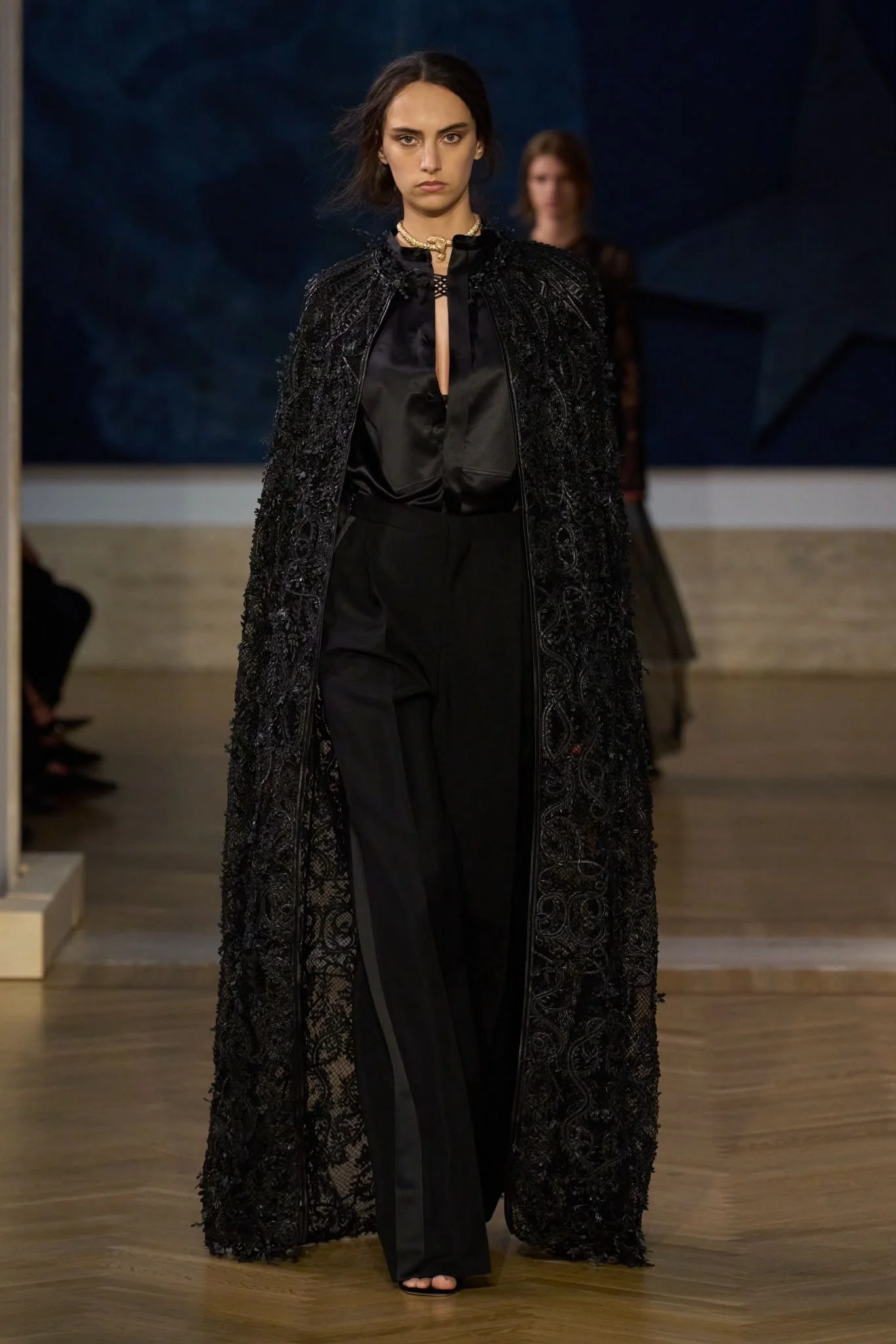
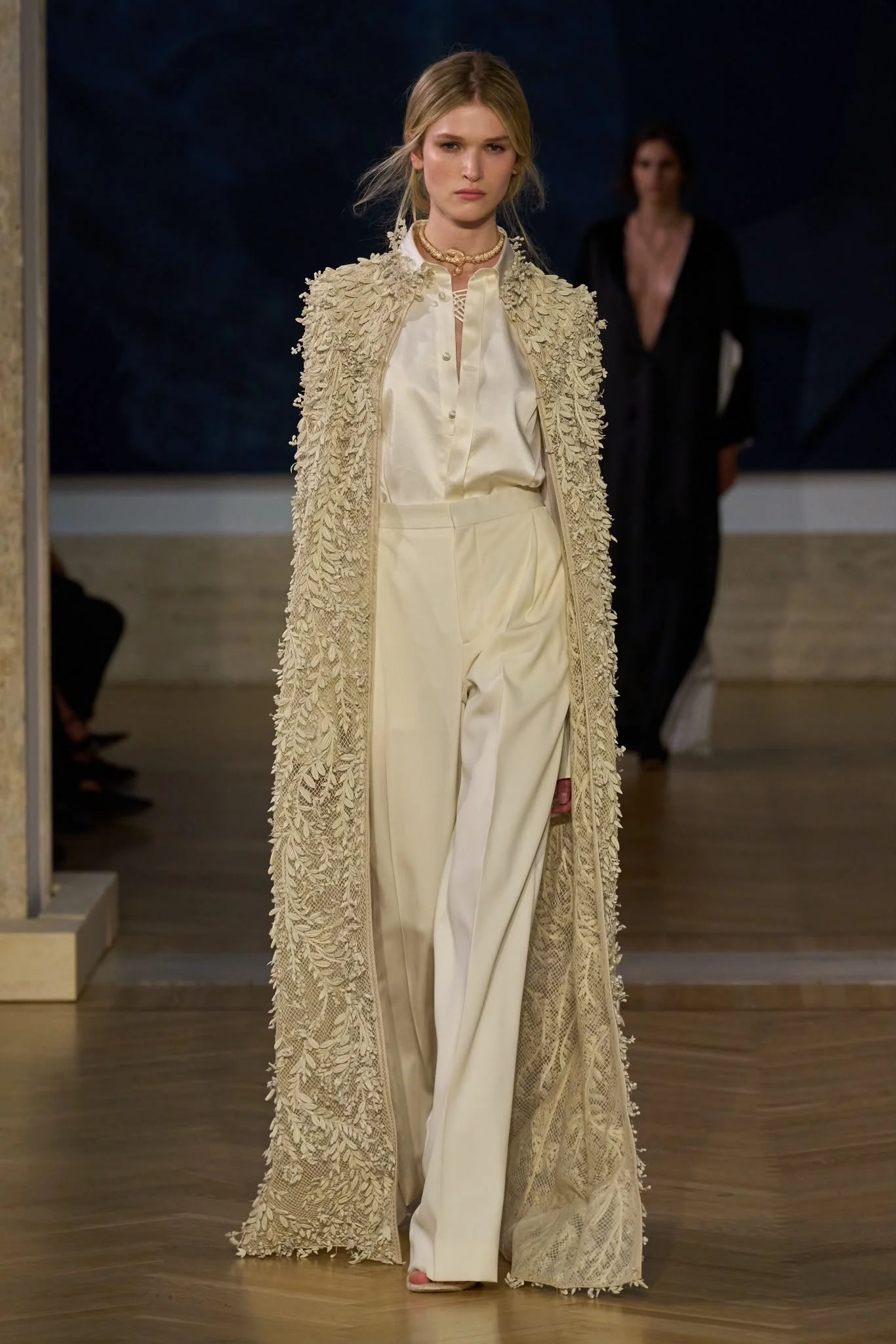
Deep necklines, boudoir-style robes, shorts, and lace dresses, caftans and kimonos were key collection pieces, as were the sheer, clean-lined maxi dresses, intricately embroidered loose tops, mid-length dresses and long cloaks, and the fringed detailing, present in various of the looks.
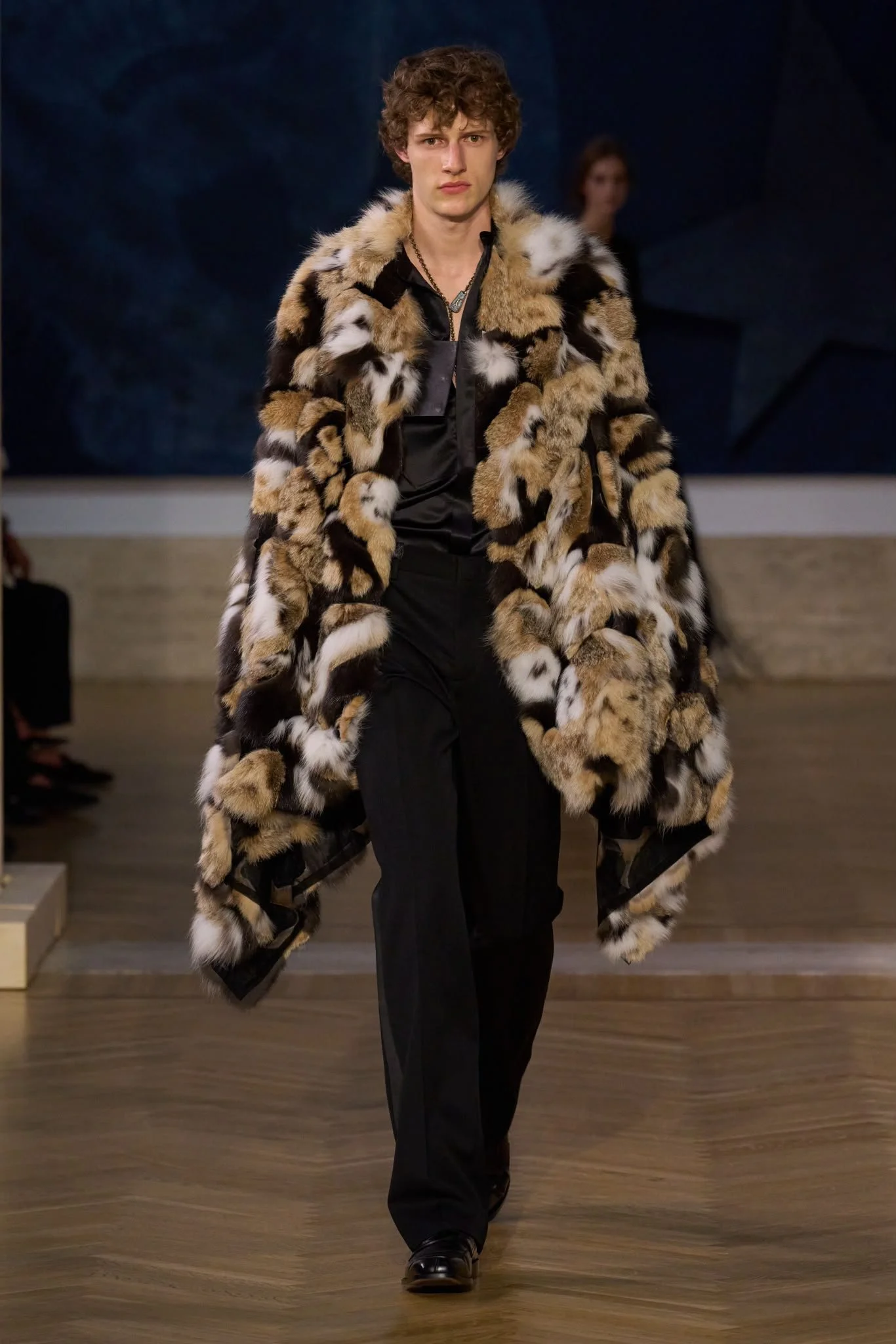
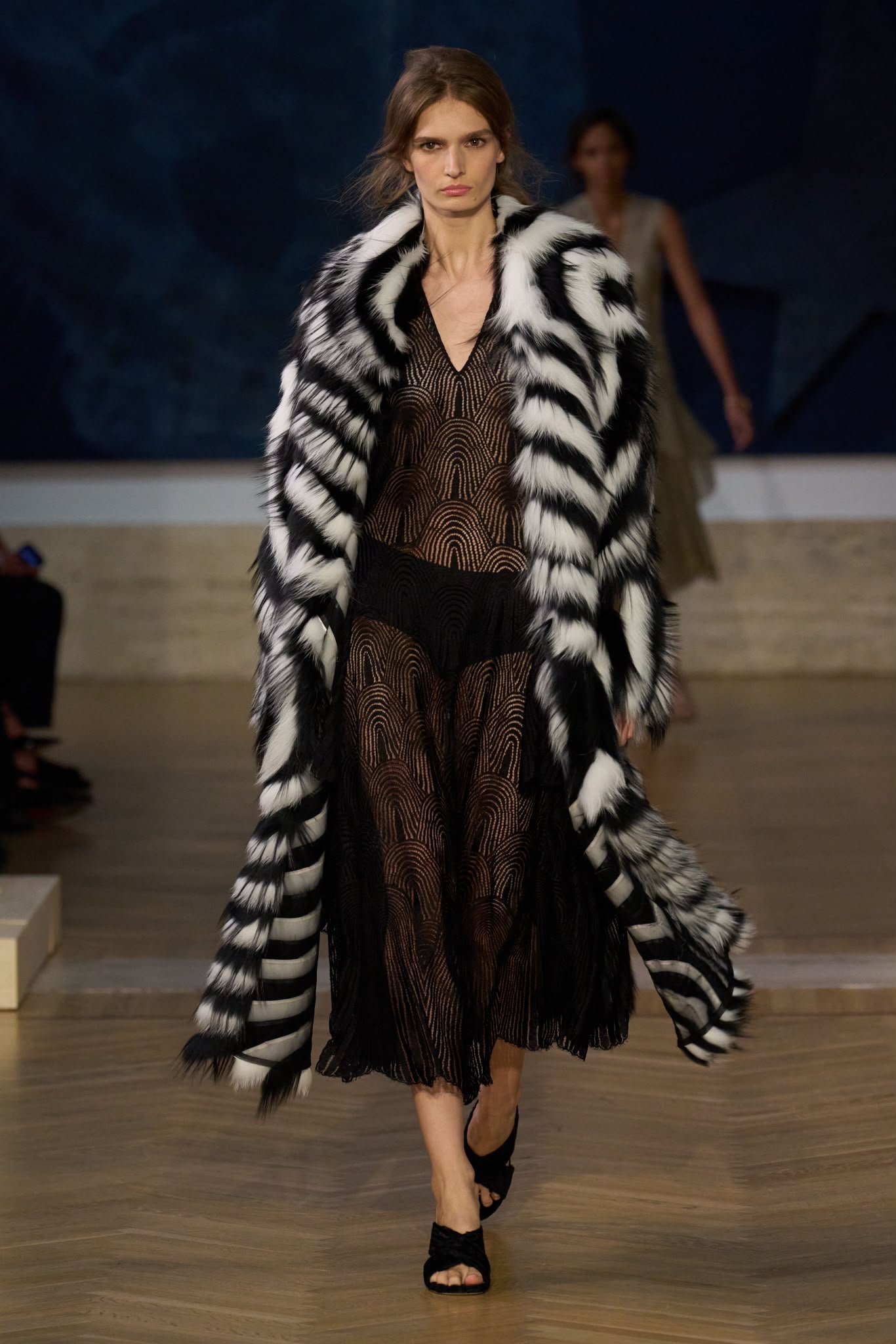
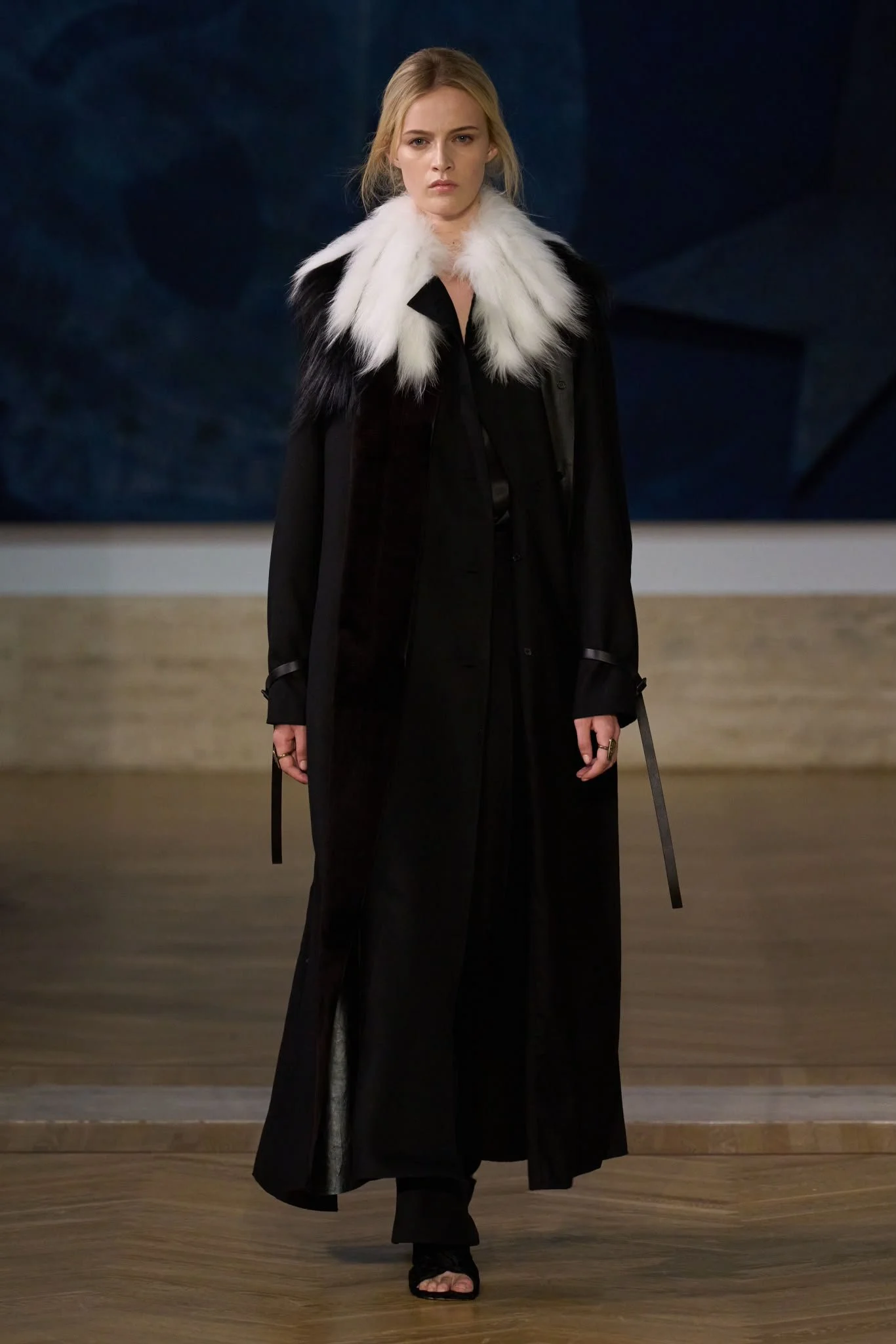
The use of fur – a Fendi speciality – shone through striped and mélange coats, often done via the ‘Echo of Love’ programme, which recycles vintage fur and turns it into fresh items. To keep Fendi’s couture craft thriving, the maison’s different ateliers, from leather goods to fur, lighter and heavier materials, worked collaboratively in creative synergy to put the collection together.
Words by Ketlyn Araujo