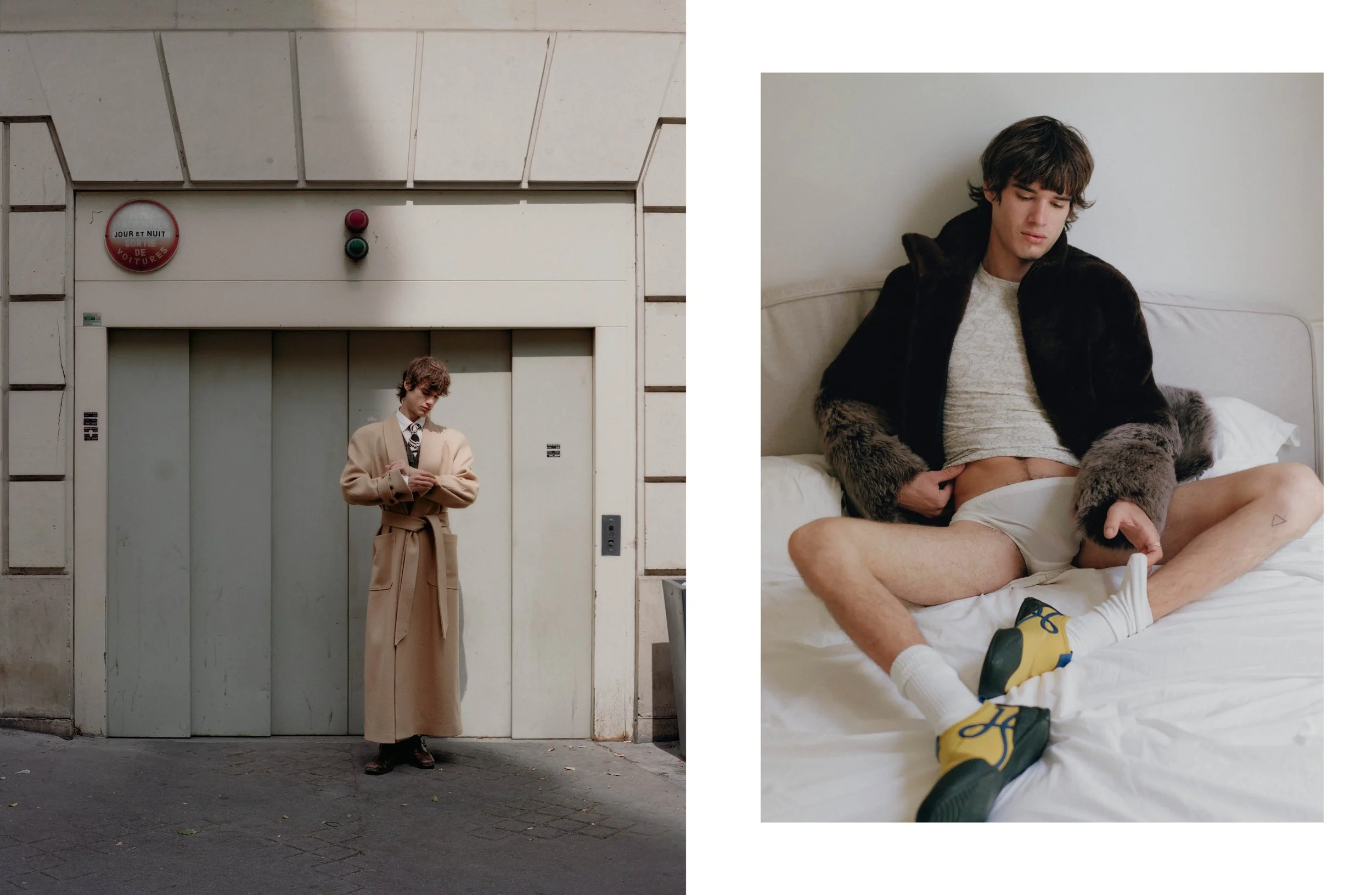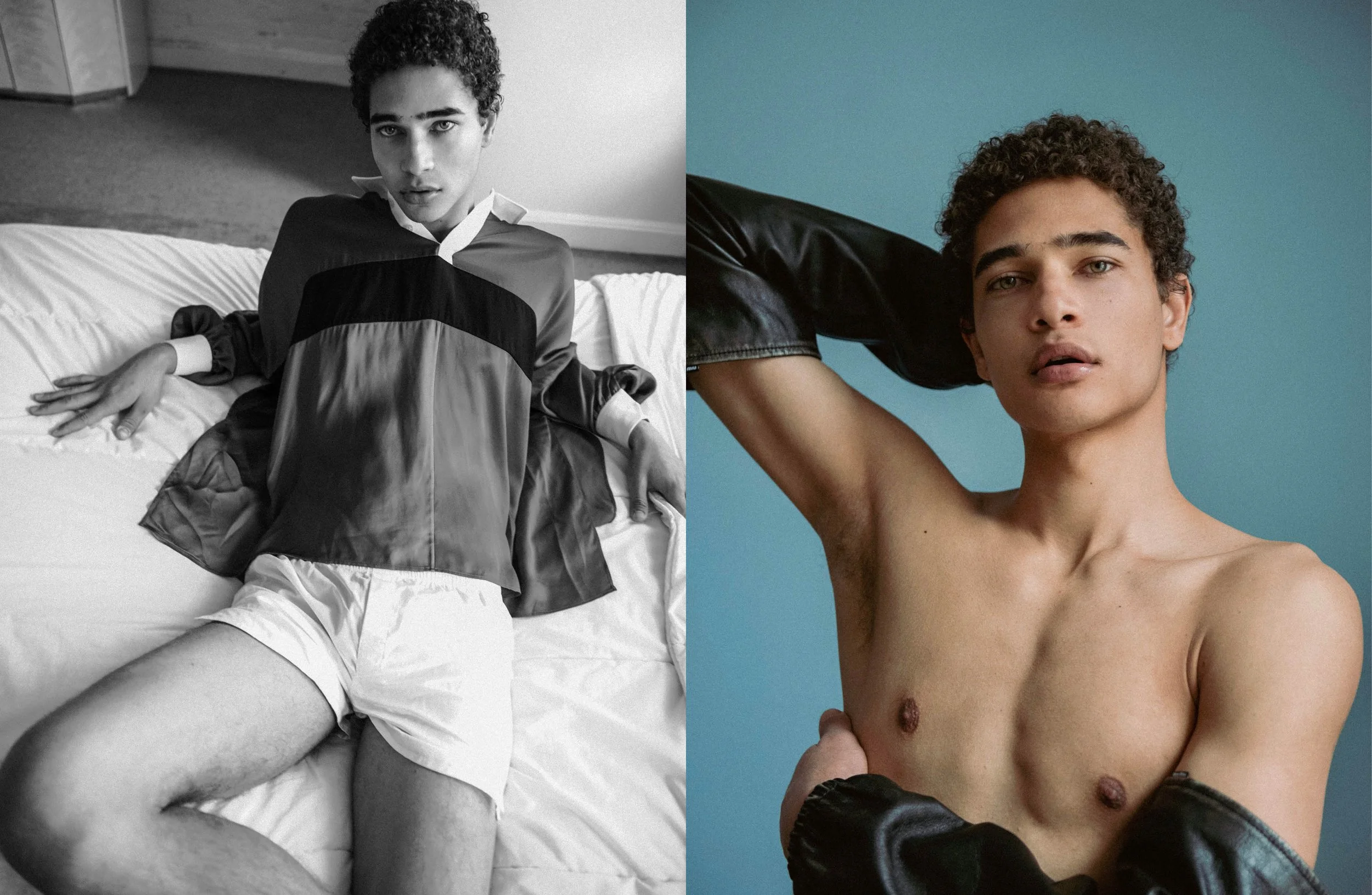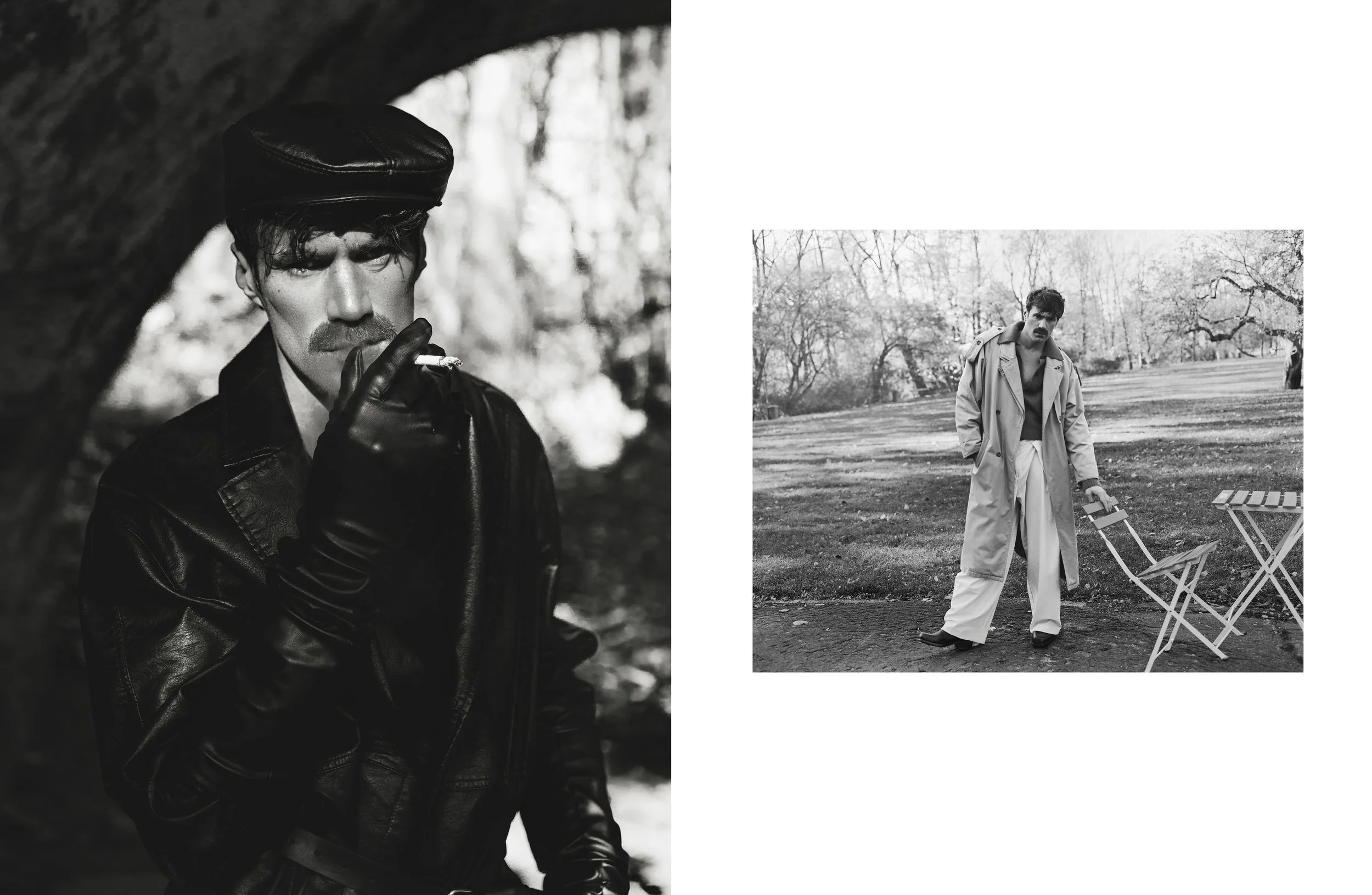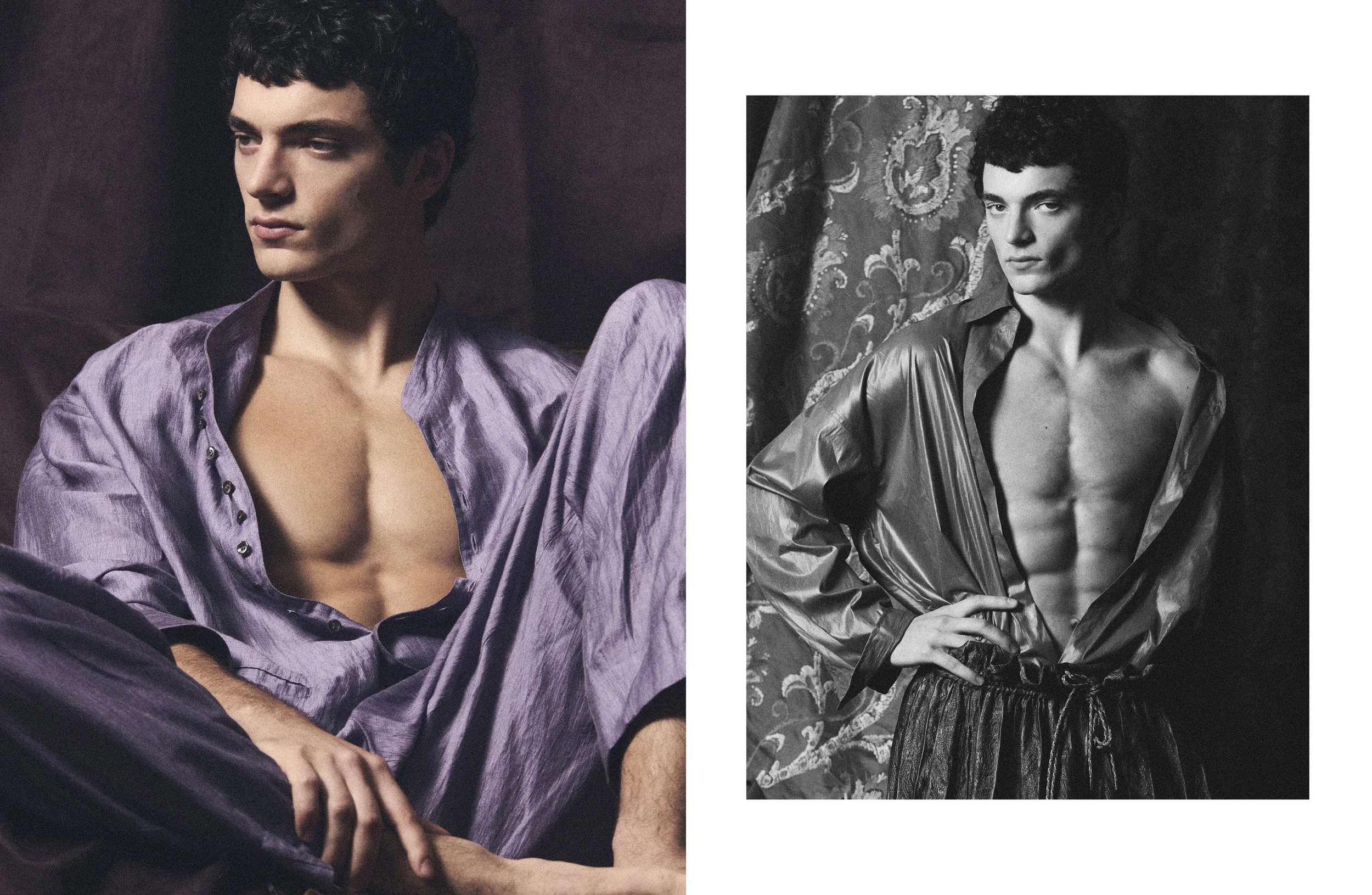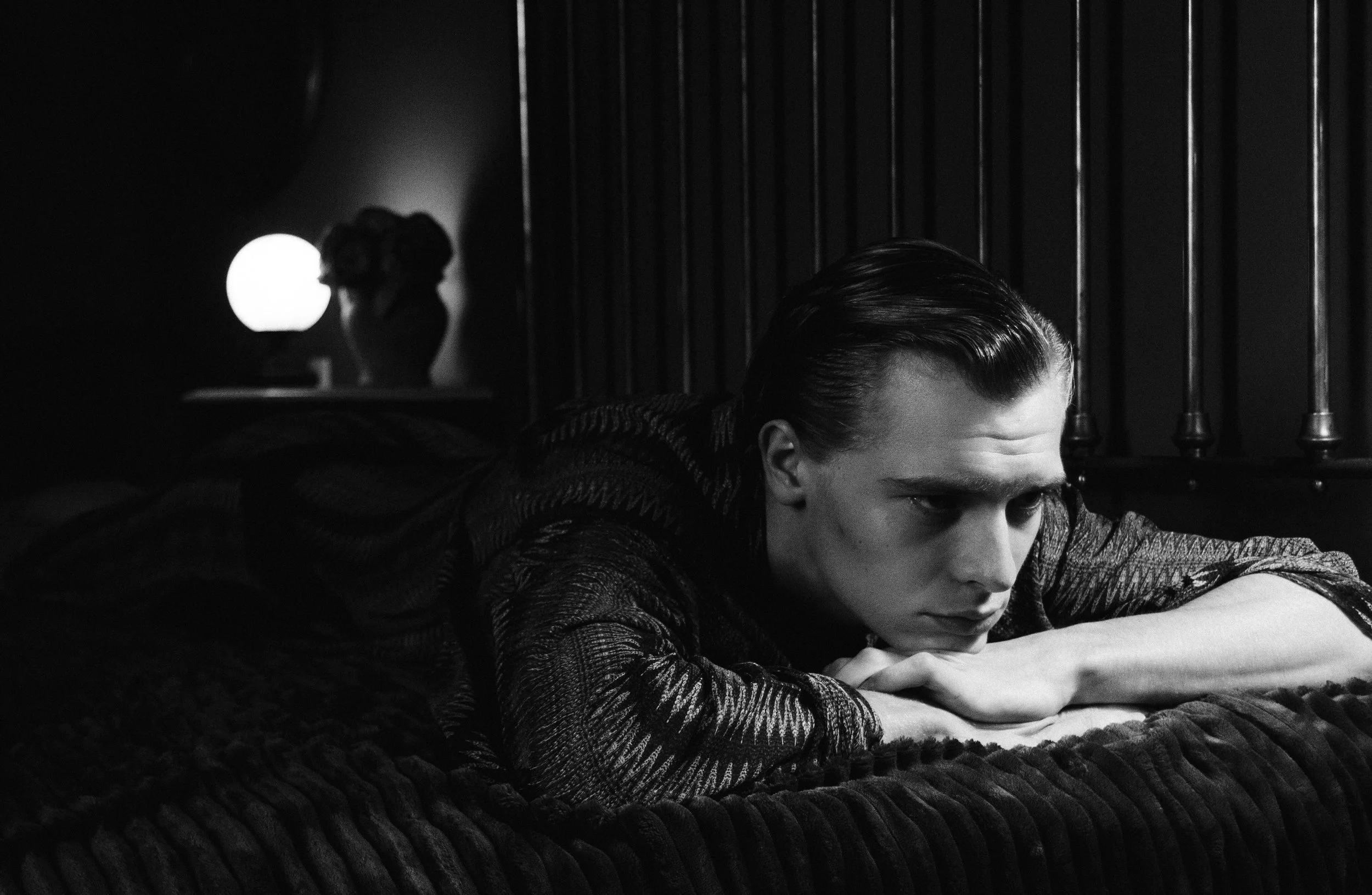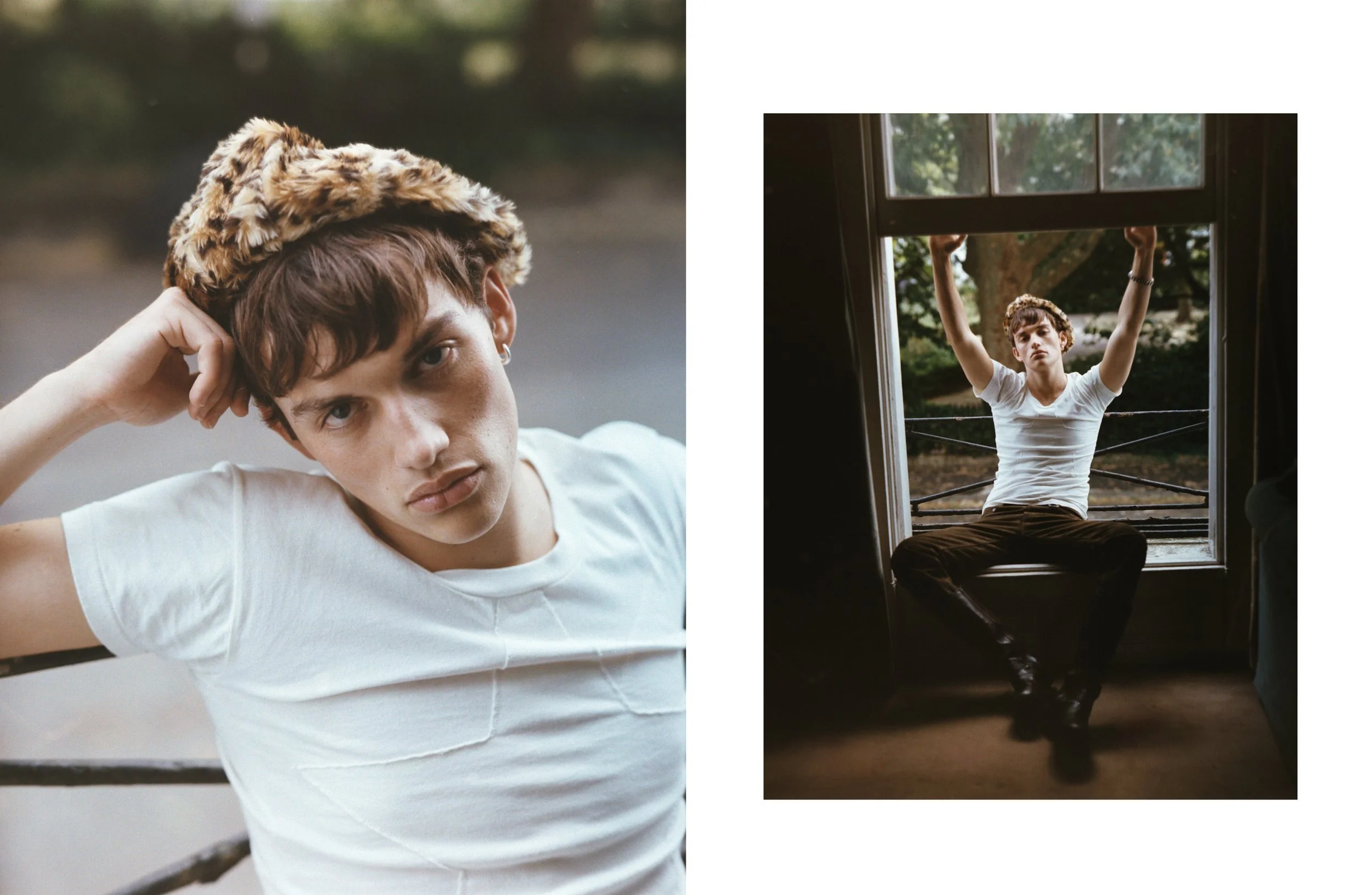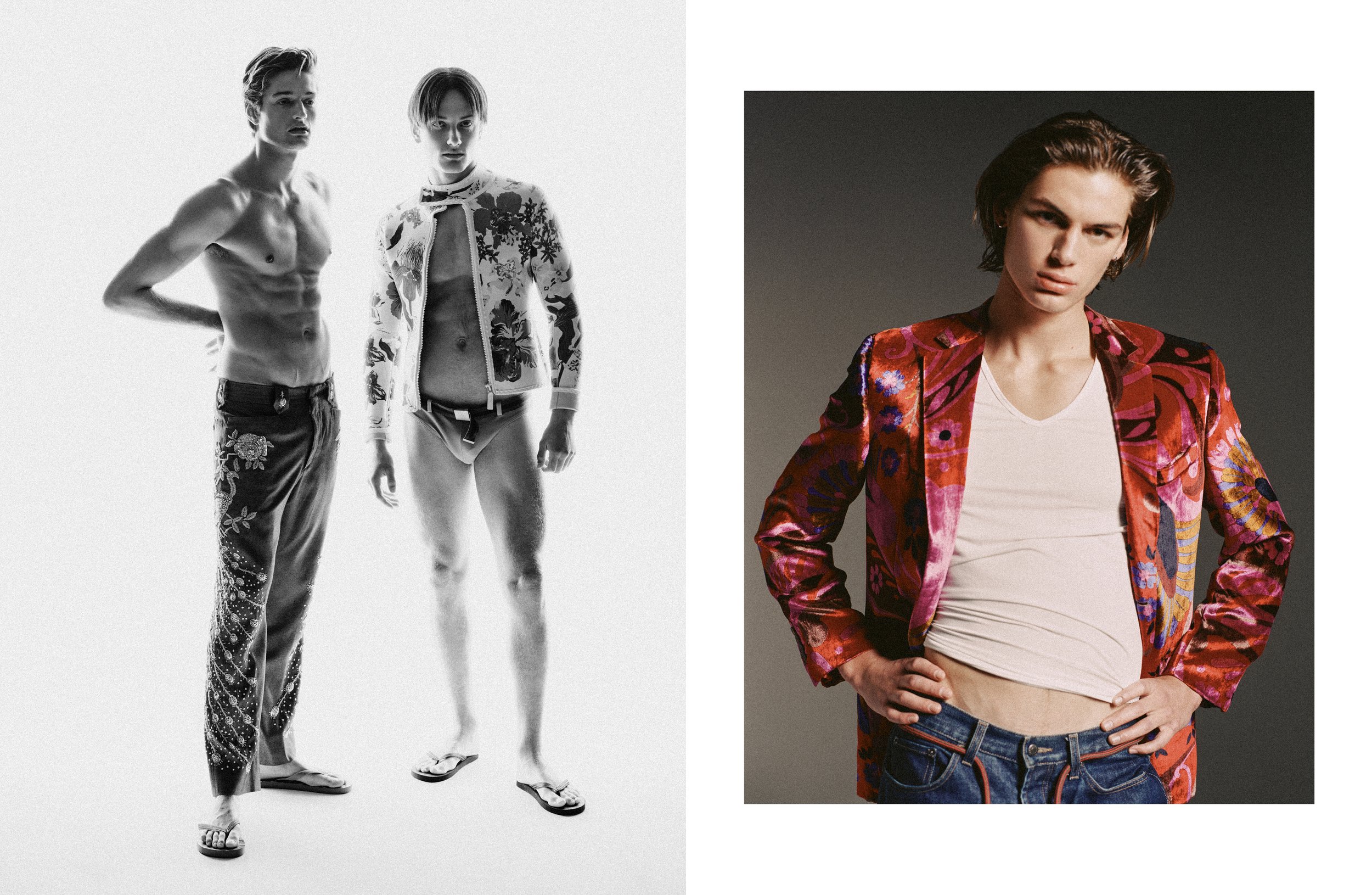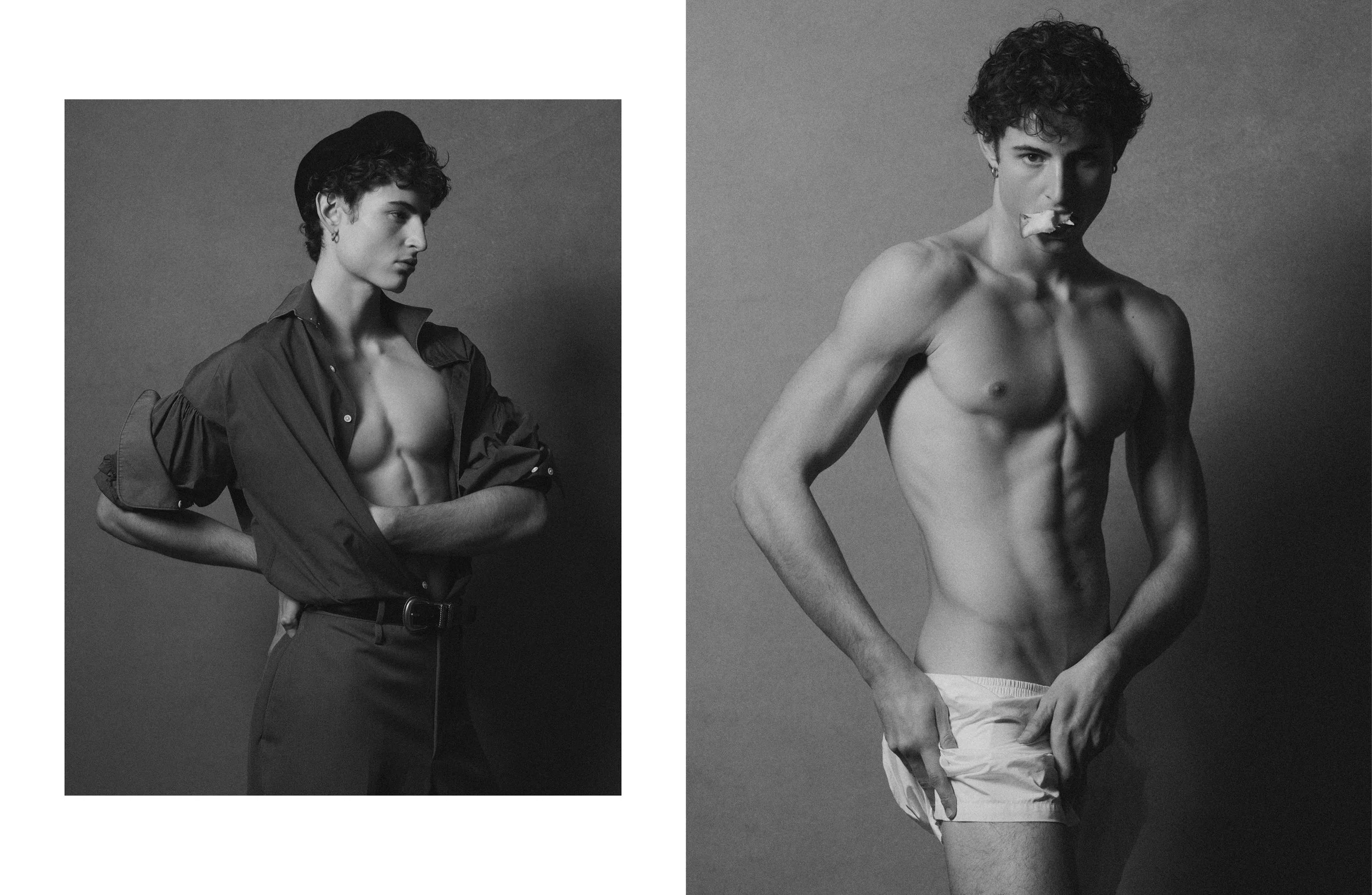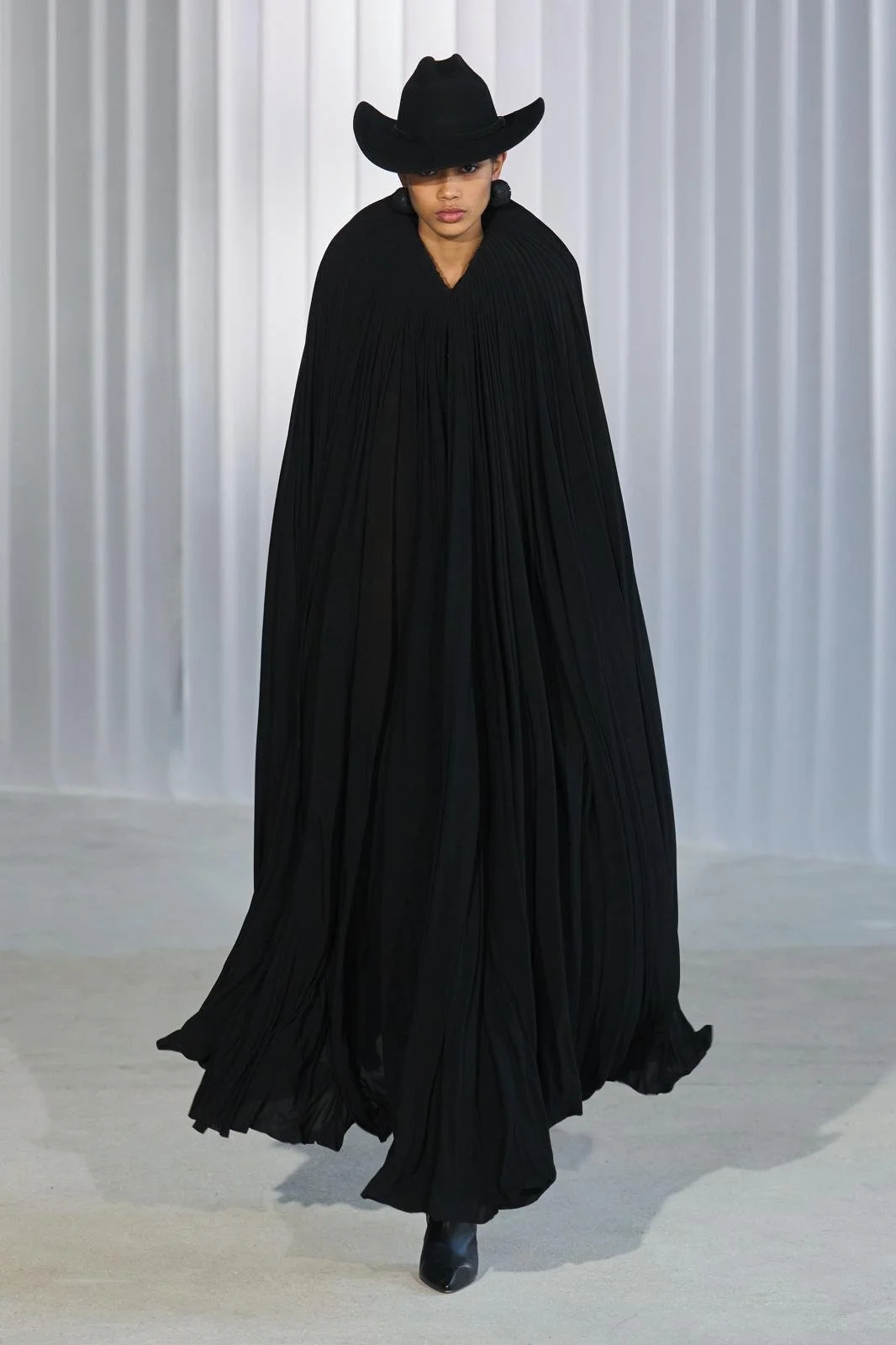
If Duran Lantink's debut collection for Jean Paul Gaultier – showcased during Spring/Summer 2026 – was controversial enough to spark conversation inside and out of the fashion industry, the Dutch designer's sophomore show for the French house came with a slightly different approach. However, his witty manner, publicly approved by Monsieur Gaultier himself (who has been a supporter of Lantink’s work so far), did not vanish.
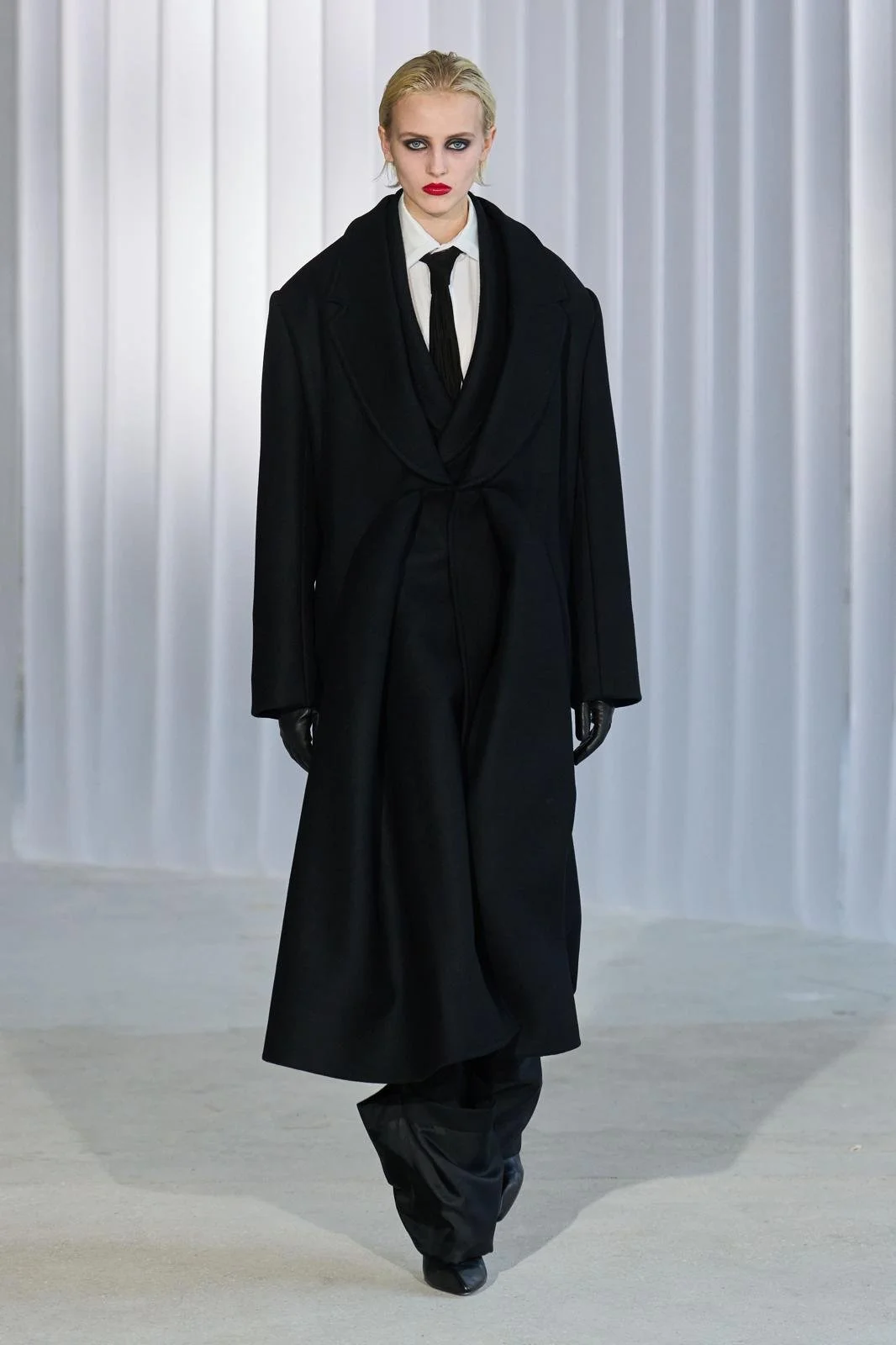
For Fall/Winter 2026, the starting point was an image of German-American actress and singer Marlene Dietrich, sourced from Lantink’s own wardrobe, as seen on one of the designer’s vintage T-shirts. Dietrich’s hybridised mood of dominance and grace was then placed alongside a whip, resulting in a mood board that had the archetype of this "madame masculinity" as its anchor, as Lantink explained in an interview with CNN.
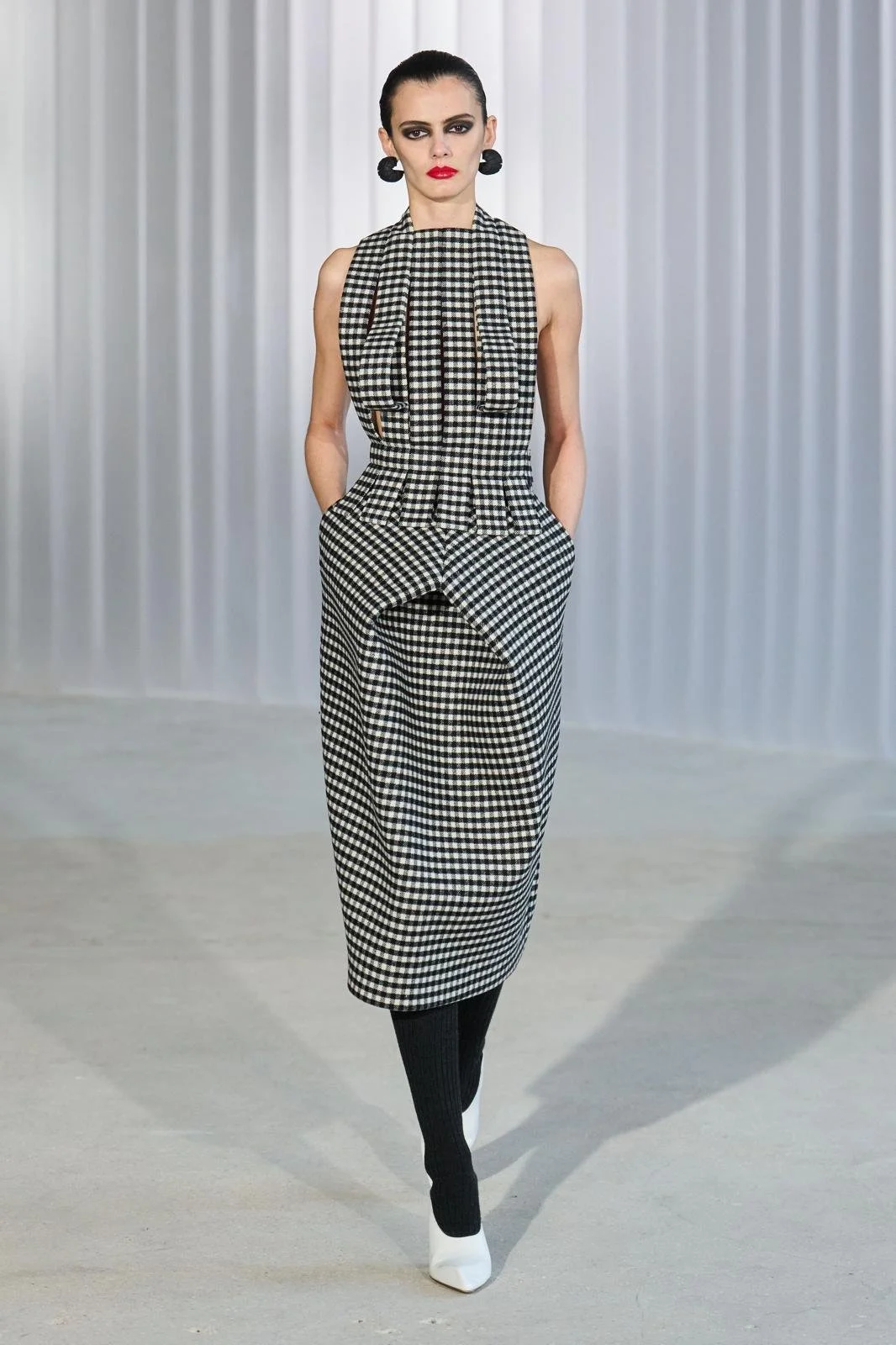
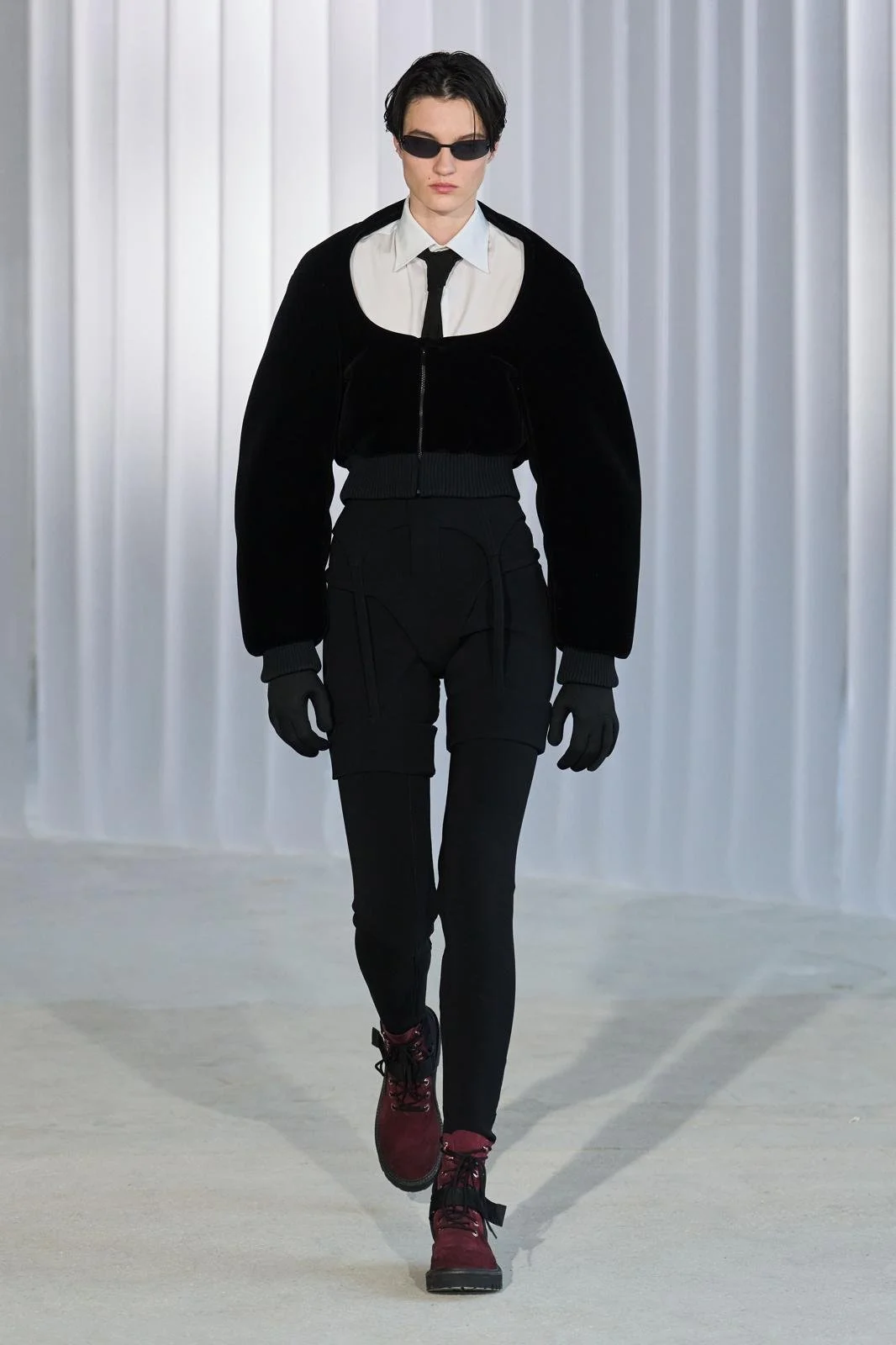
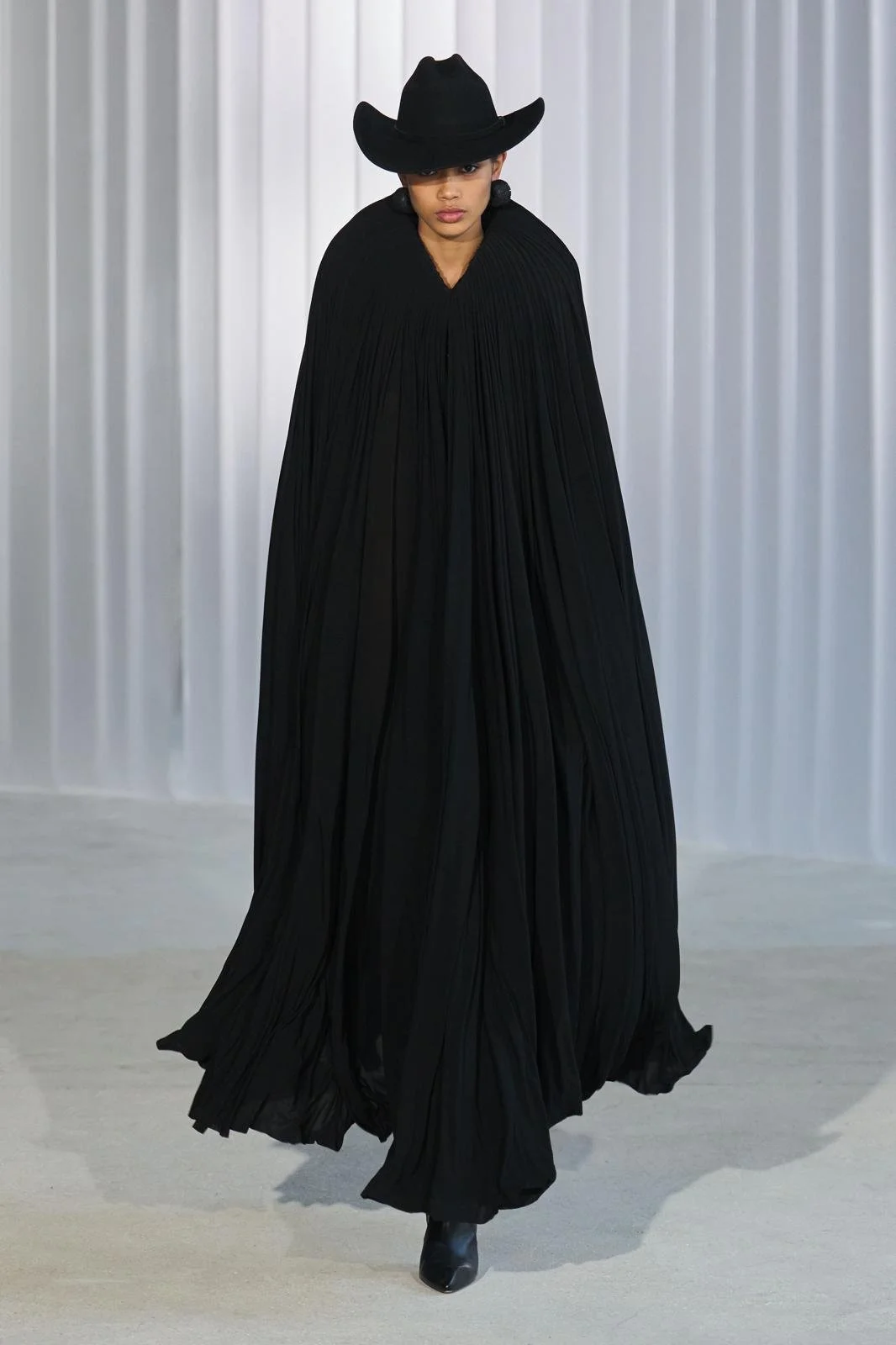
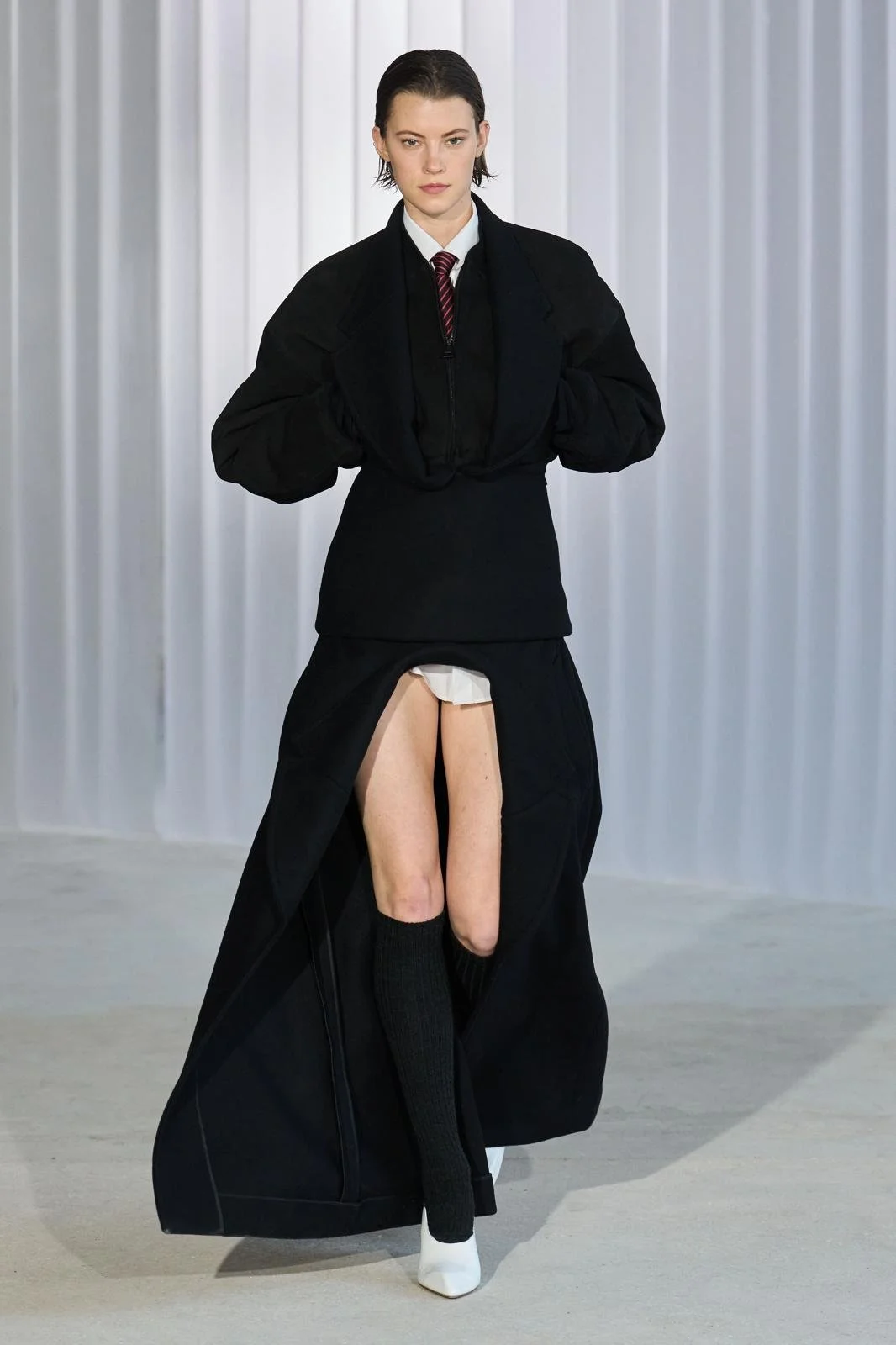
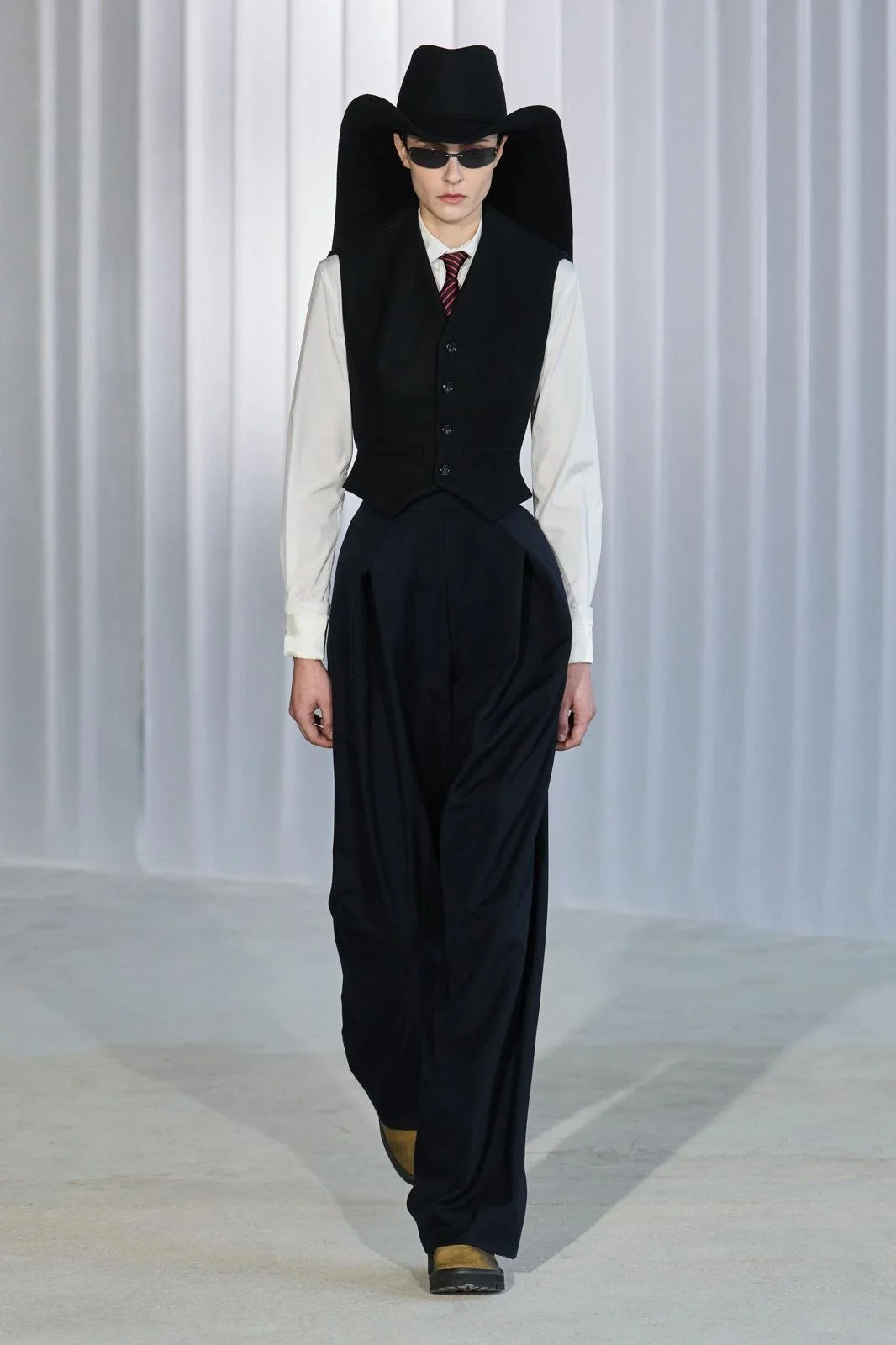
Honouring the essence of Jean Paul Gaultier as a house that thrives in complementary opposites, Lantink developed more characters to play a fundamental role during his offering – all born from the cinematic juxtaposition of past and future, masculine and feminine. Western motifs, sportswear, lingerie and boudoir elements were combined, with a greater focus on sharper and more experimentally tailored pieces, mostly in black and white.
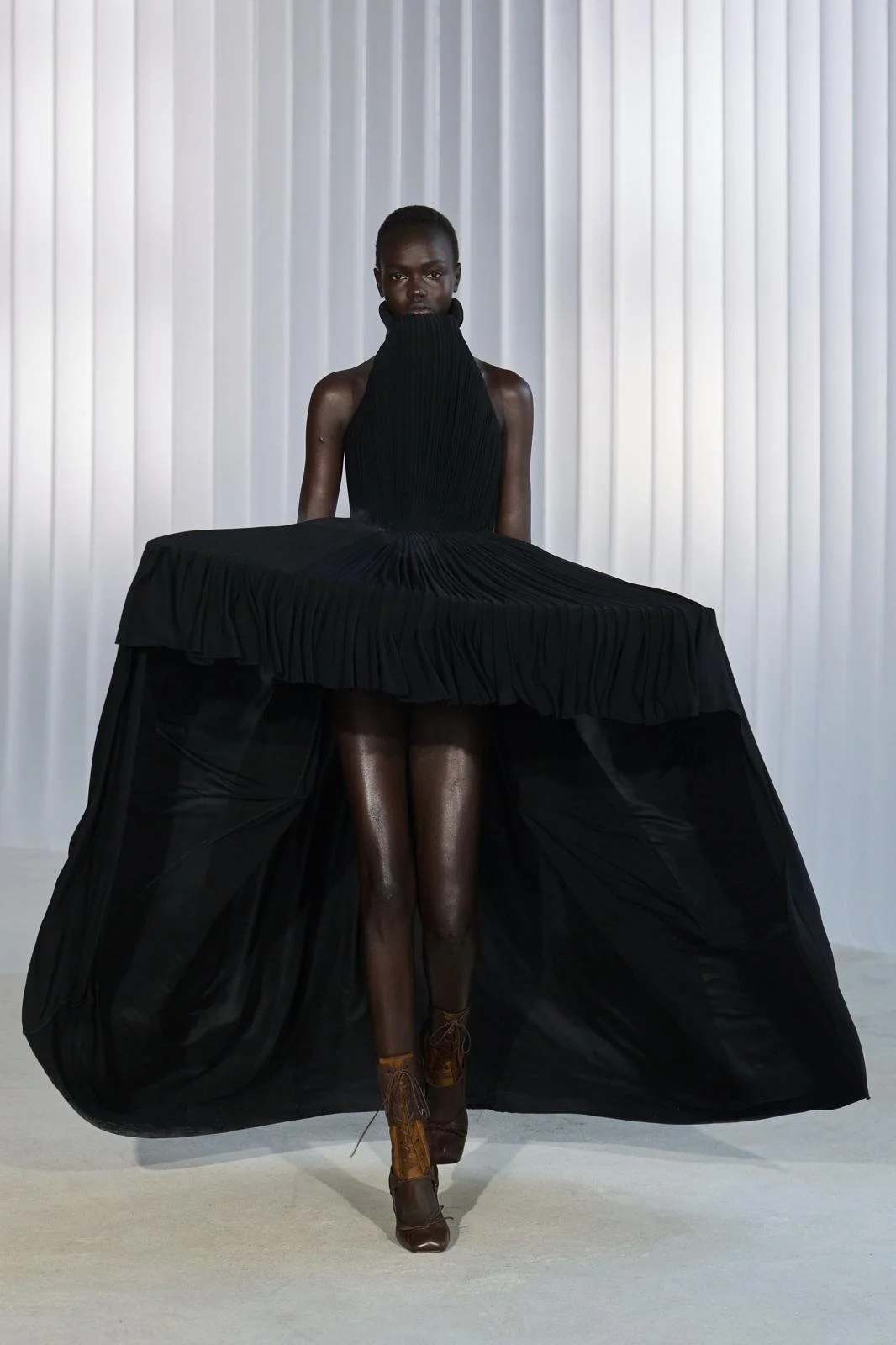
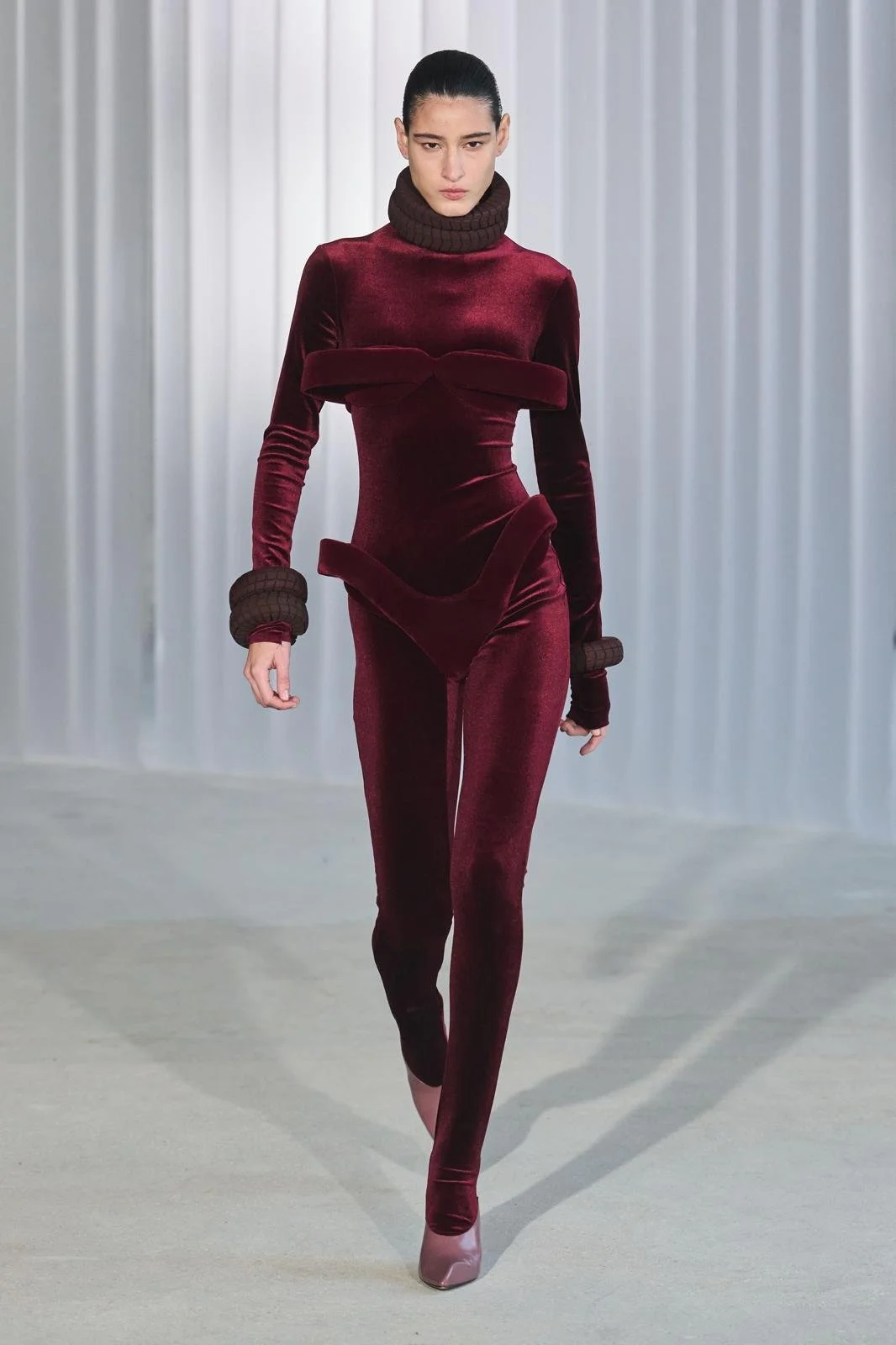
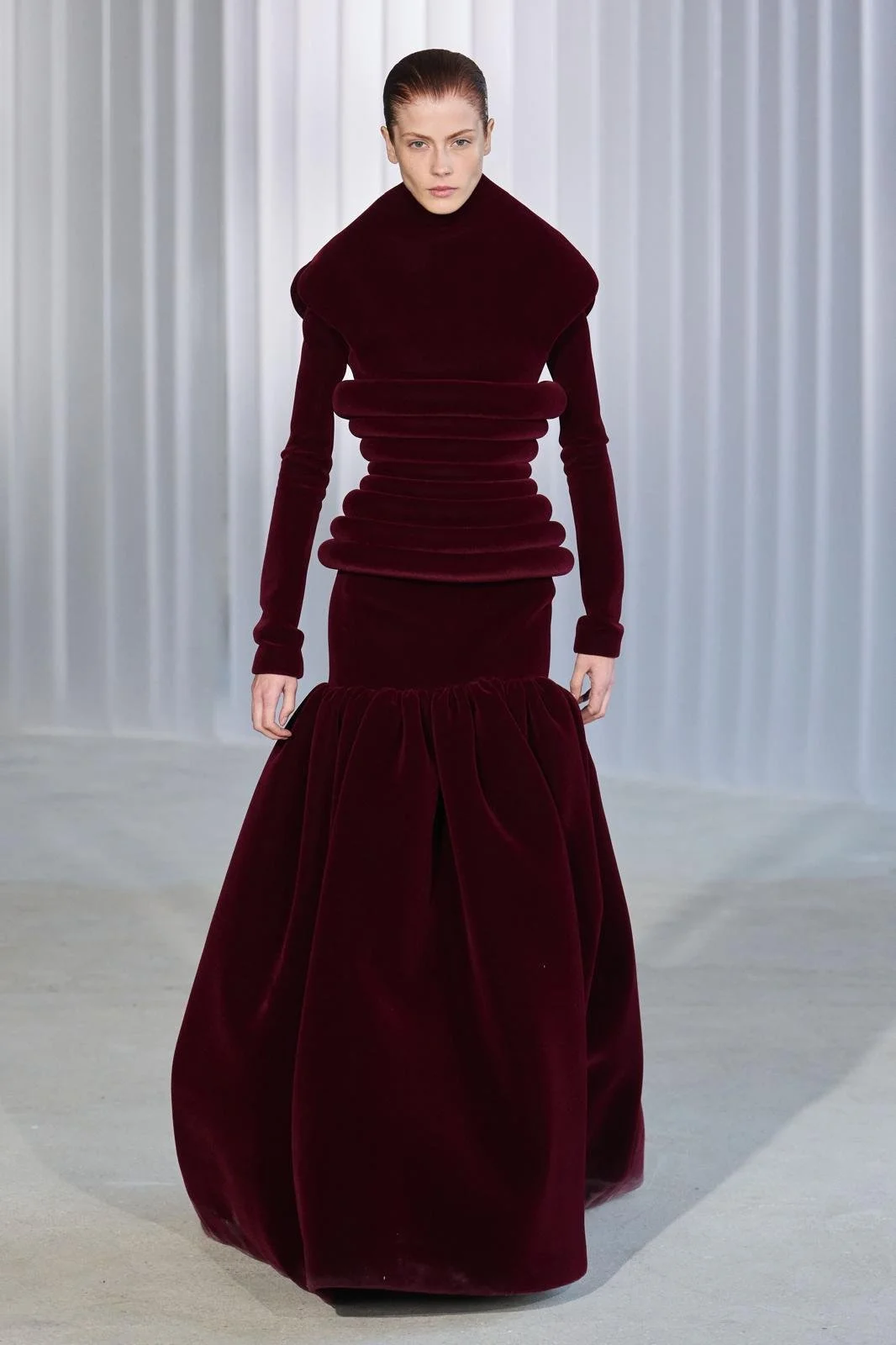
Challenging body proportions, round-shaped details resembling car tyres cinched waists, hugged necks and were placed as bracelets, while eveningwear carried flowy, rounded, and bouncy jersey forms, created with pleating. Futuristic hoods with a helmet look and a waterproof feel were styled with classic neckties, while shirt collars were maximally stretched until covering the head. Later on, Dietrich’s image returned to the catwalk, more literally, with a photograph of the actor smoking printed on a long-sleeved, turtleneck, midi-length dress, and real smoke coming out of its back – steamy!
A trip to the brand’s archives, personally discussed between Lantink and Monsieur Gaultier, resulted in contemporary iterations of previously seen garments, from haute couture to ready-to-wear. The waist of a pinstripe suit from a couture collection named Le Palace from 2016, for example, inspired the silhouettes of various F/W 26 pieces, the season’s press release described. Gaultier’s early-career shows, where tailored garments were, by design, displayed with visible, exposed lining, were also used as a key reference.
From a 1990s F/W collection, Scottish Fair Isle knitwear was transformed into skin-hugging bodysuits, while looks 12 and 13, both trompe l'oeil wooden puppet outfits, evoked JPG’s 2004 collection, Les Marionnettes. A cropped bomber jacket, dated from both the 1980s and early 2000s, was once again revisited, a proof point of fashion’s cyclical nature.


Words by Ketlyn Araujo