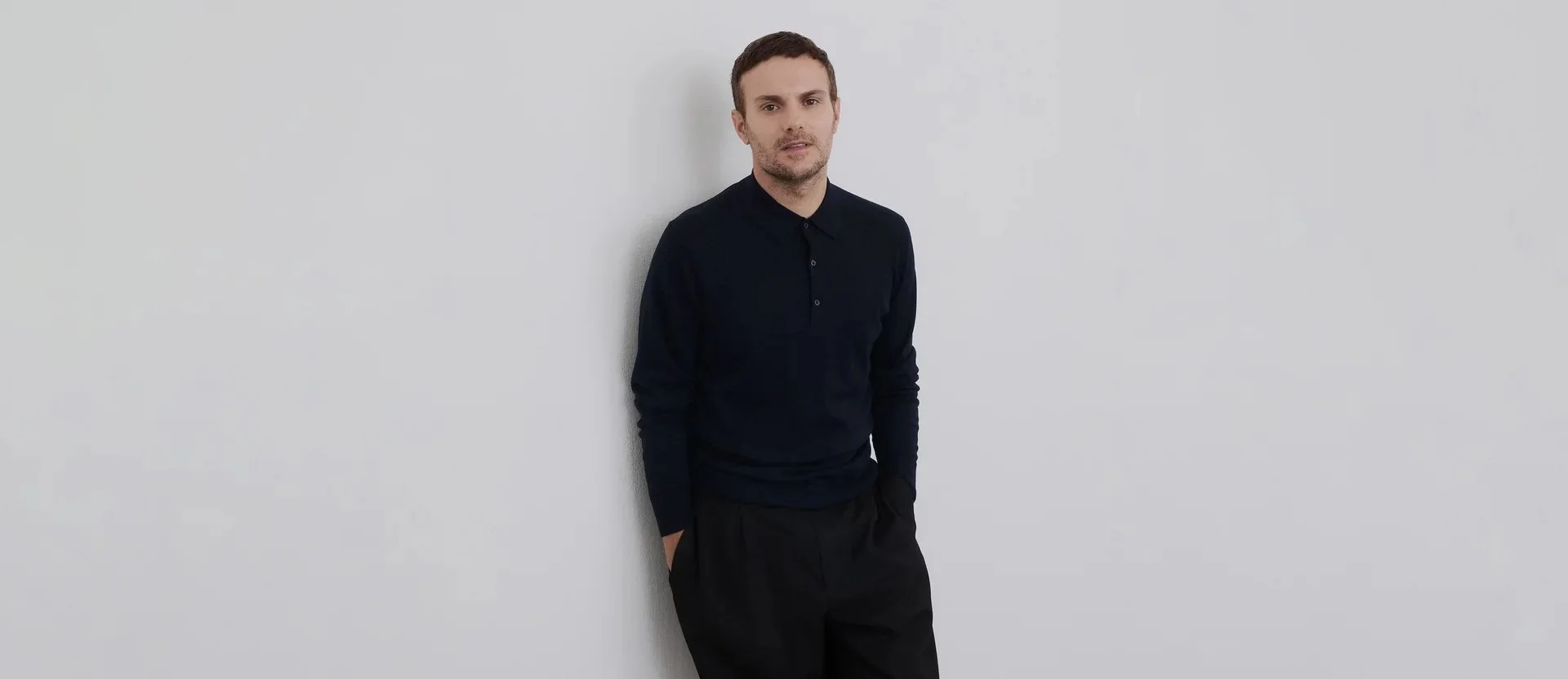
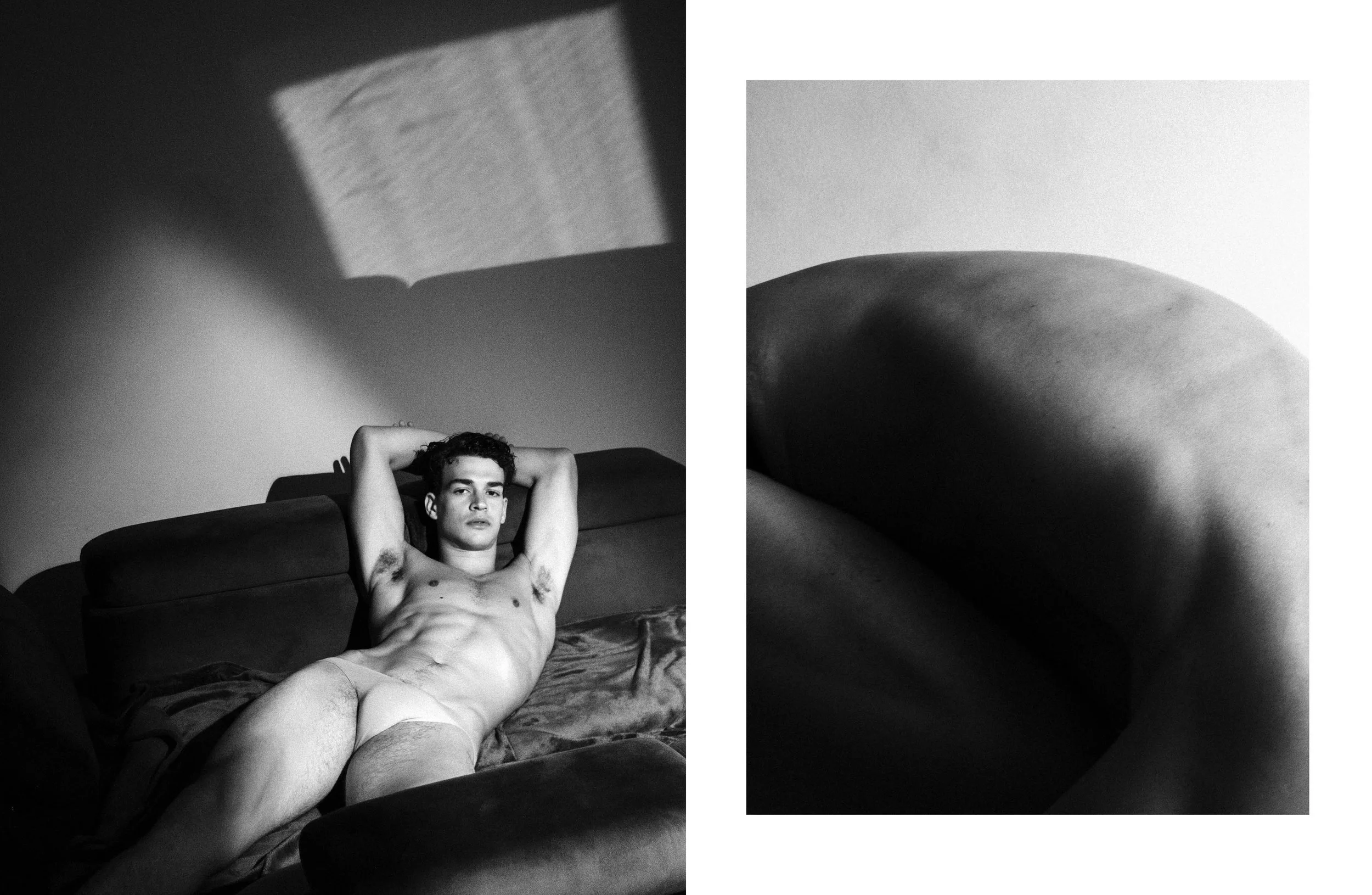
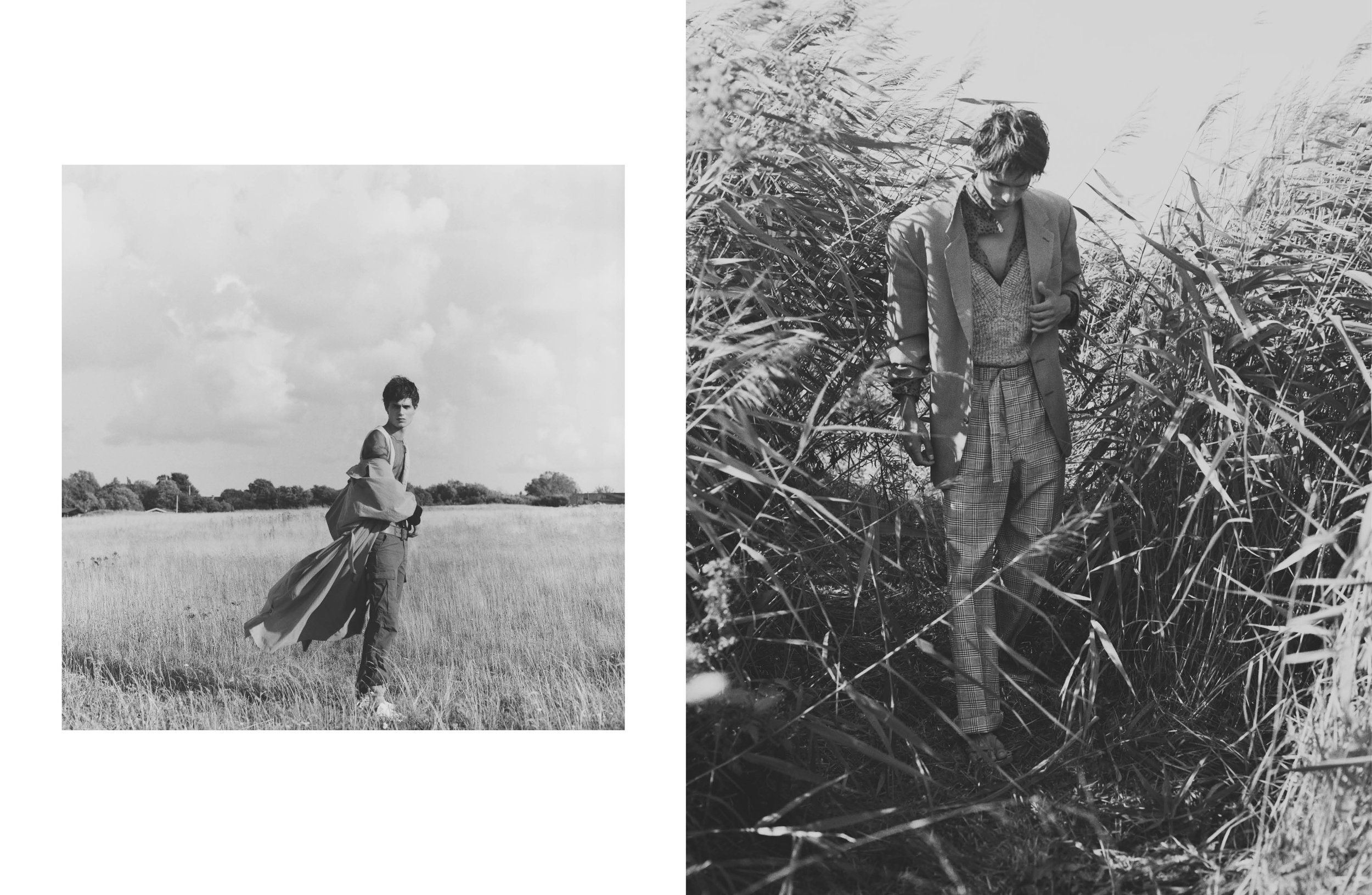
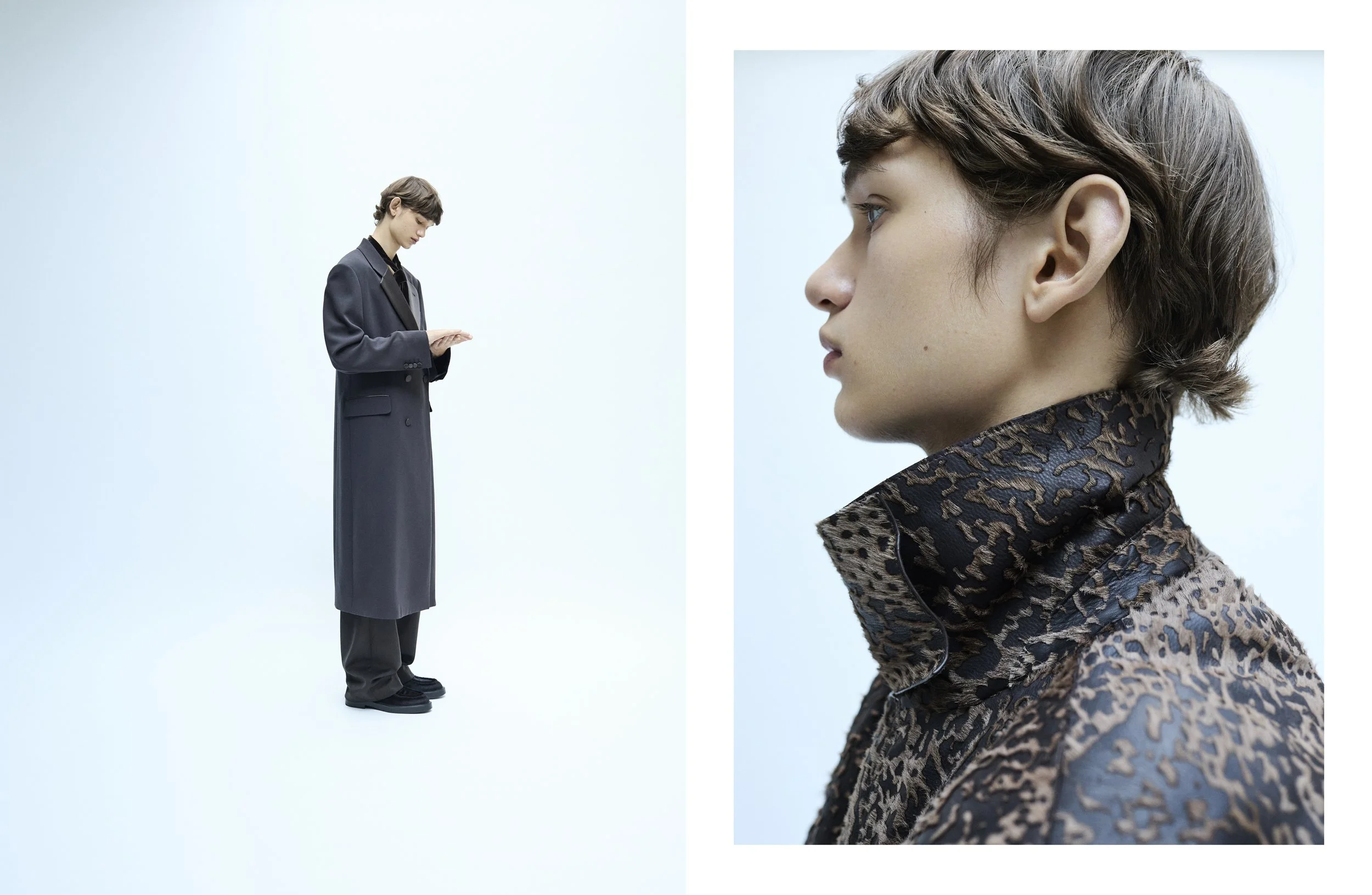
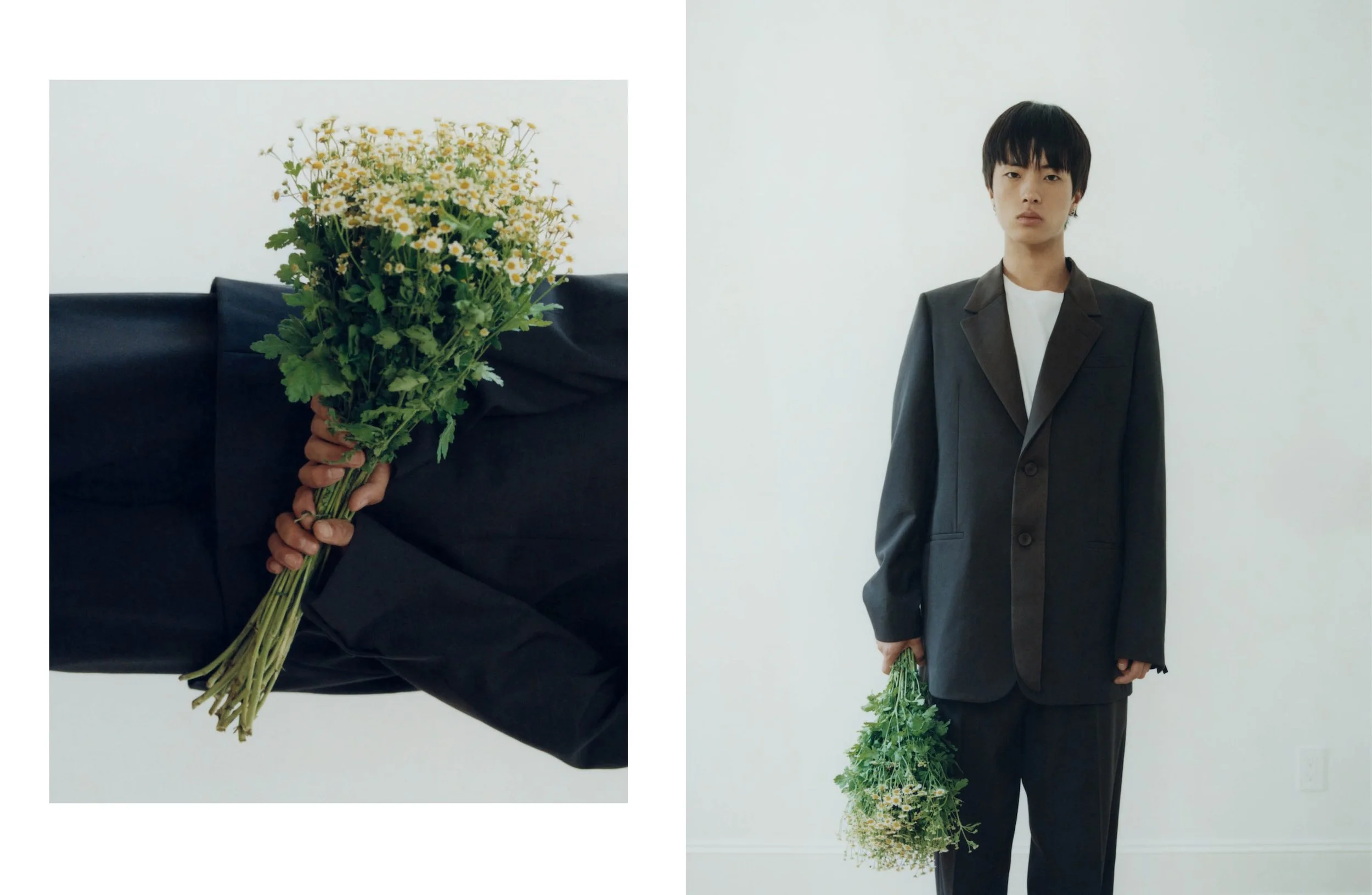
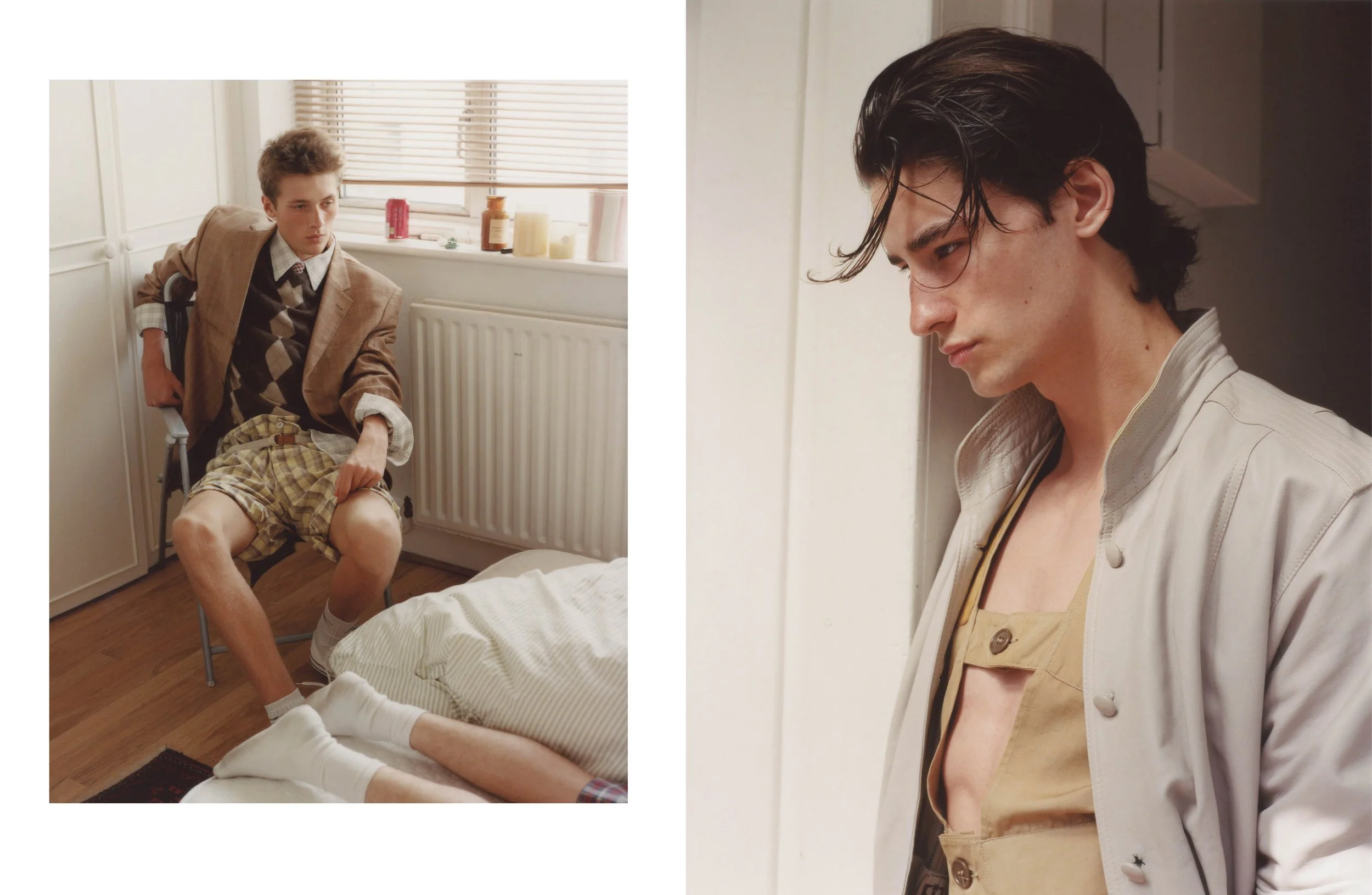
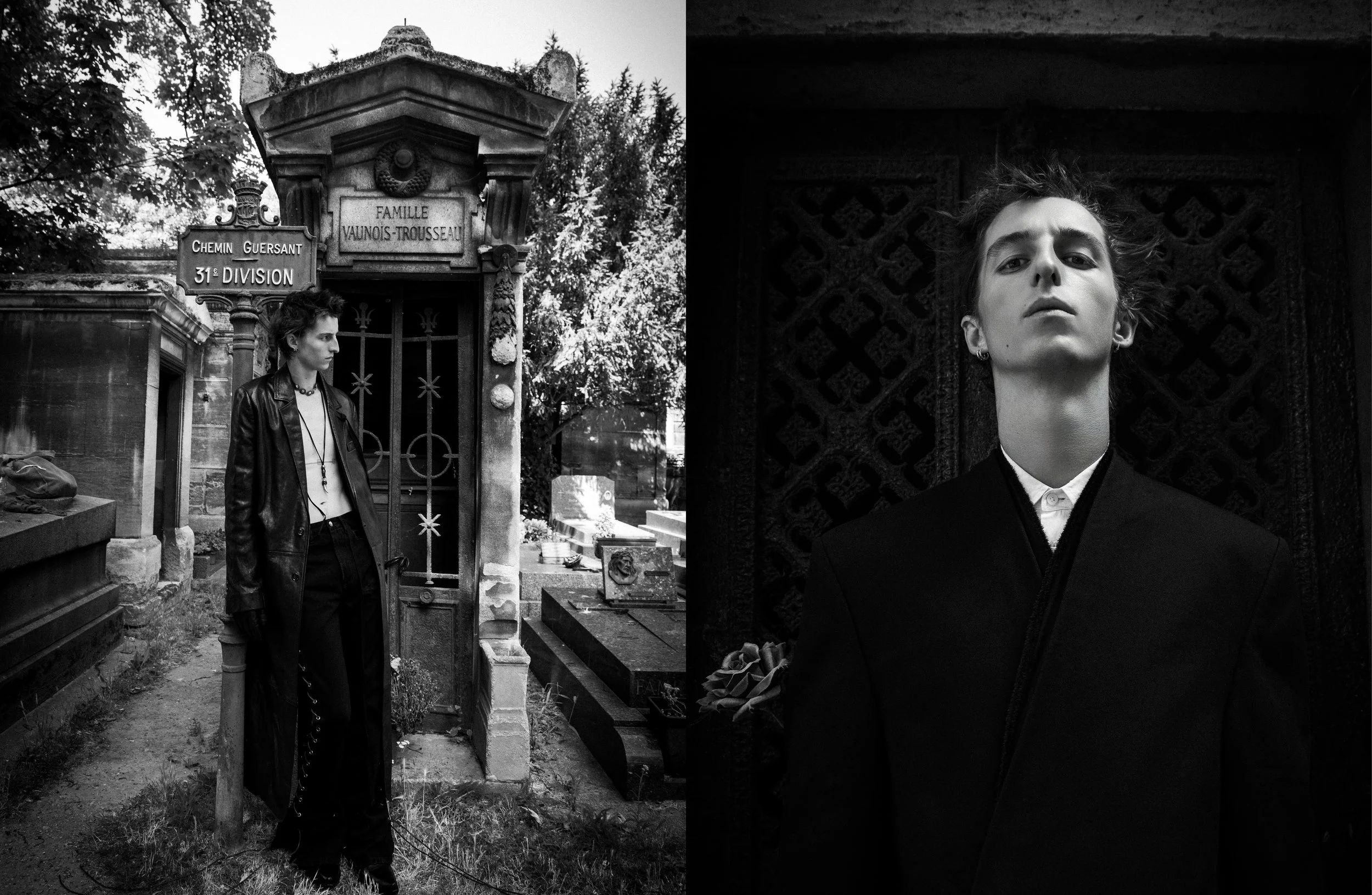
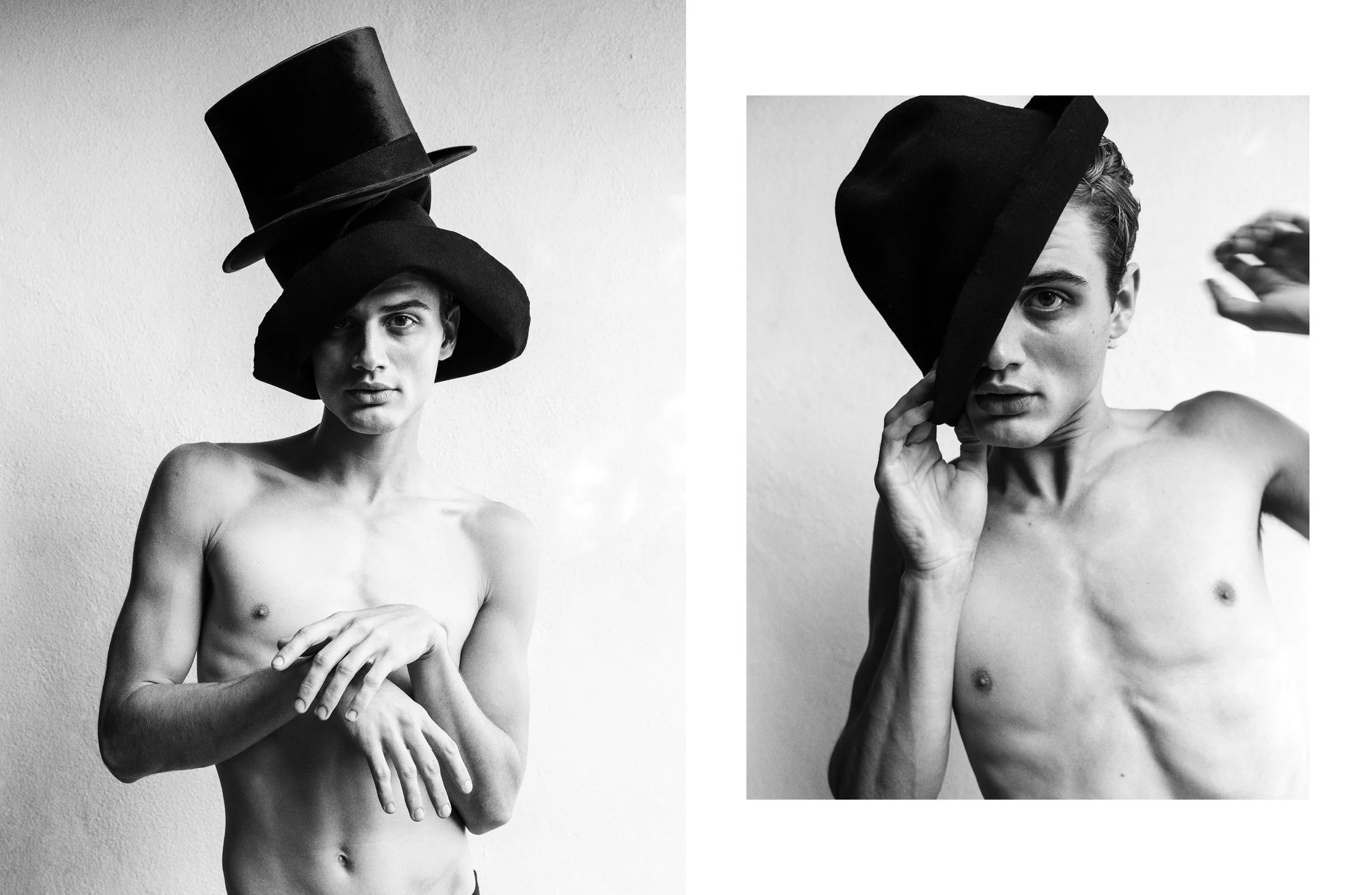
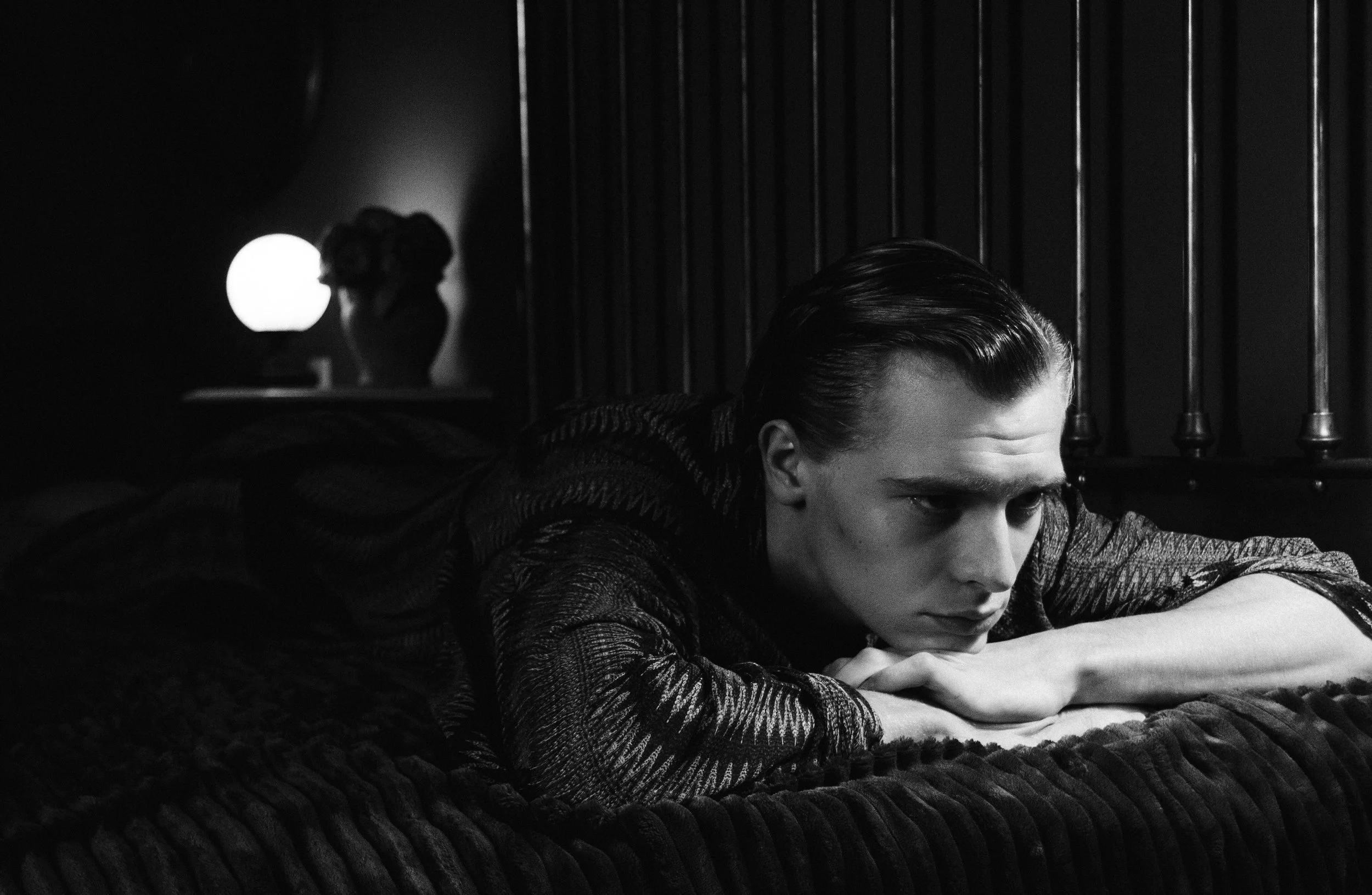
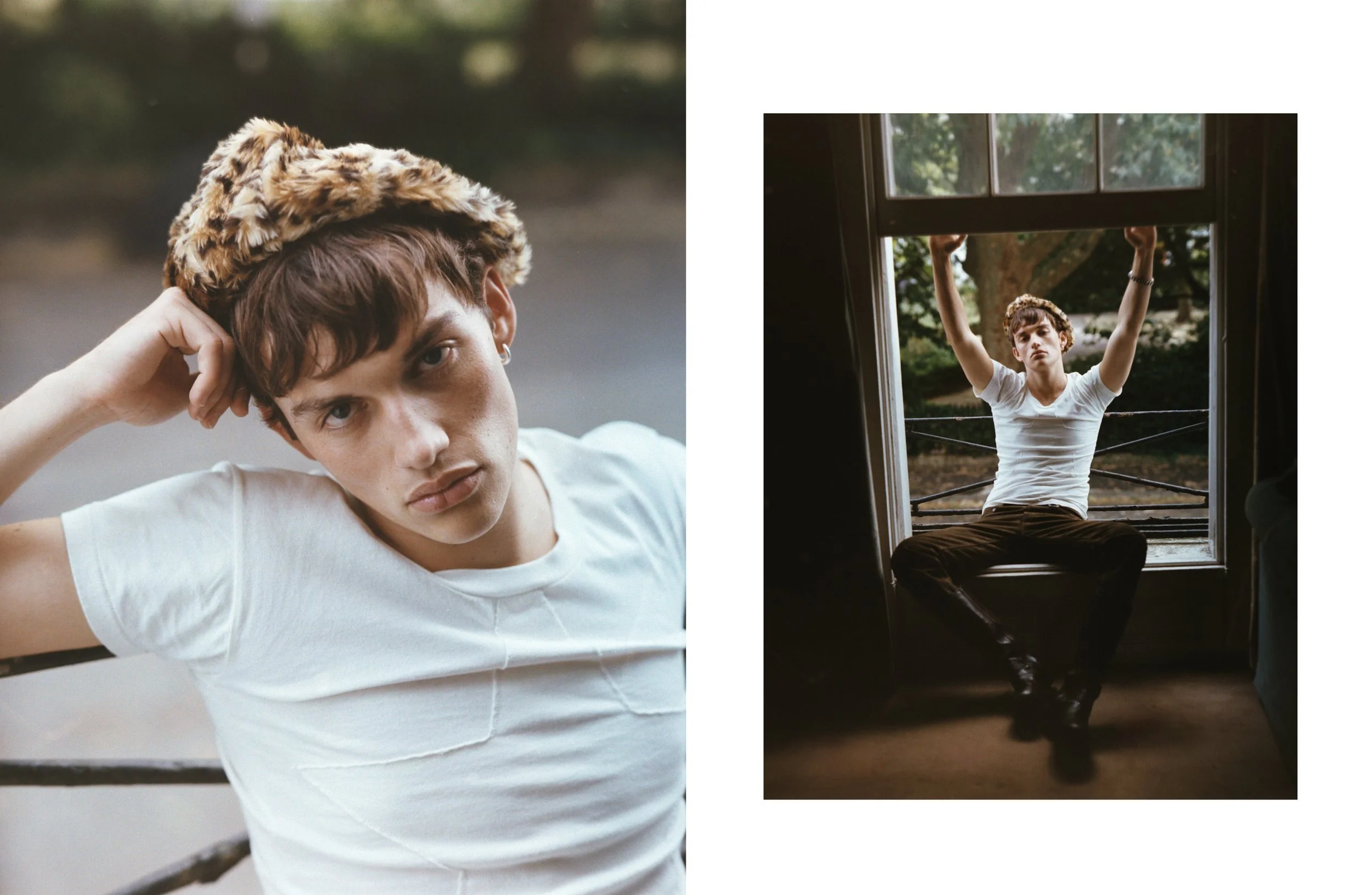
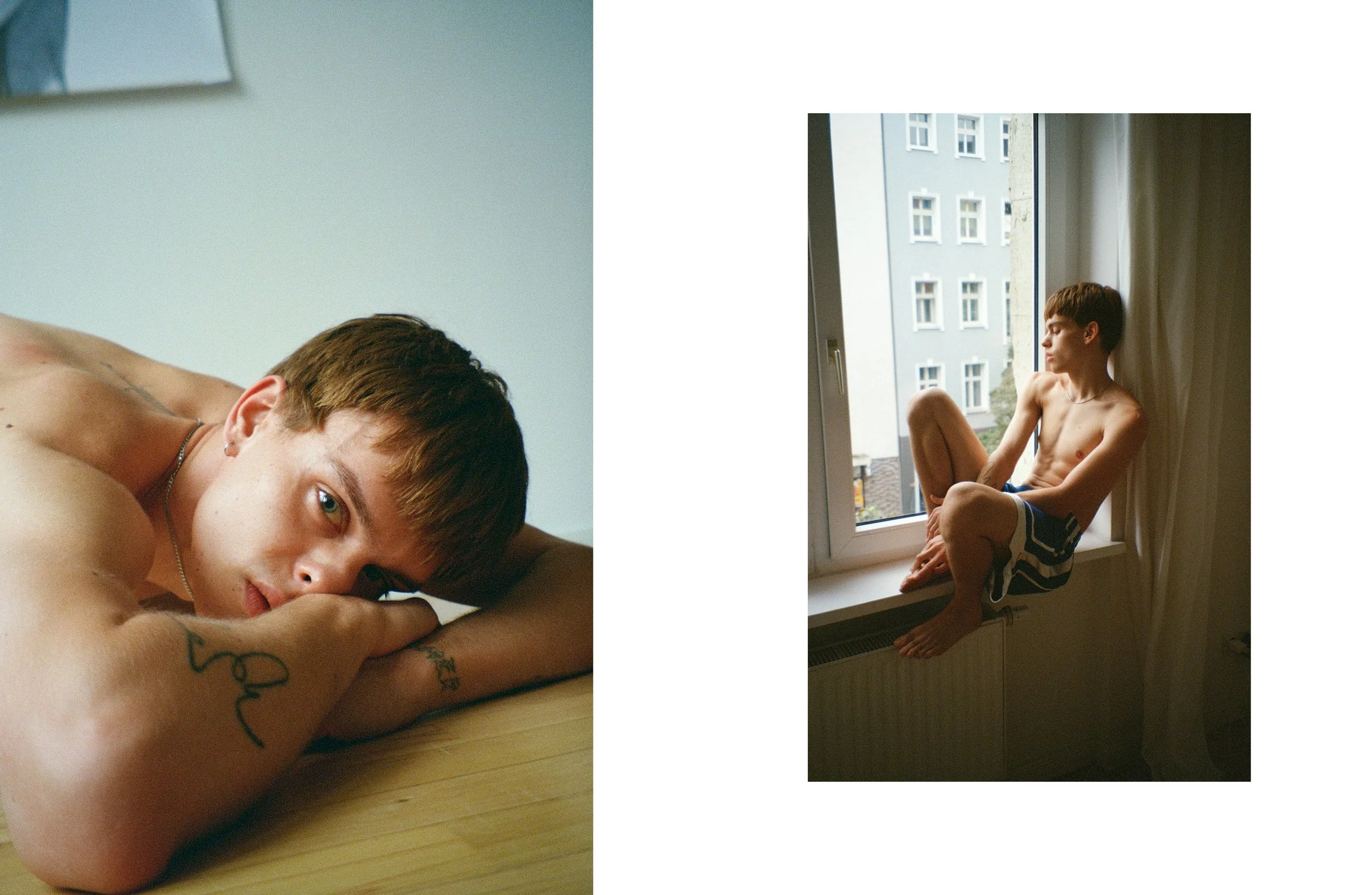
EDMUND DONOVAN CONSIDERS HIMSELF A GAMBLER ON POTENTIAL. HE BET ON POSSIBILITY ELEVATED ON BROADWAY STAGES, BETWEEN POWDERY CURTAINS AND DUST FALLING LIKE SNOW IN MOVING SPOTLIGHTS. FOR GAMBLERS, IT’S A THICK, ILLUSORY PROMISE OF A CREATIVE WONDERLAND. FEW EVER CASH OUT. BUT FOR DONOVAN, PAYDAY CAME AS HIS HEAD BOWED ON BROADWAY AFTER HIS PERFORMANCE IN CLYDE’S. AND NOW, OPPOSITE WILLEM DAFOE IN LATE FAME, AS BOTH CHARACTERS HURL TOWARD THEIR PERCEIVED POTENTIAL, HOLDING HOPE IN SPADES EVEN IF THE HOUSE ALWAYS WINS. BUT IN BRIEF MOMENTS, THEY WALK AWAY WITH SOMETHING TANGIBLE. JUST AS DONOVAN DESCRIBED A FAVOURITE BOOK, LATE FAME IS SAD IN THE WAY LIFE IS SAD. BUT IN A SERIES OF WINS AND LOSSES, HE HAS ALREADY PLACED HIS NEXT BET.
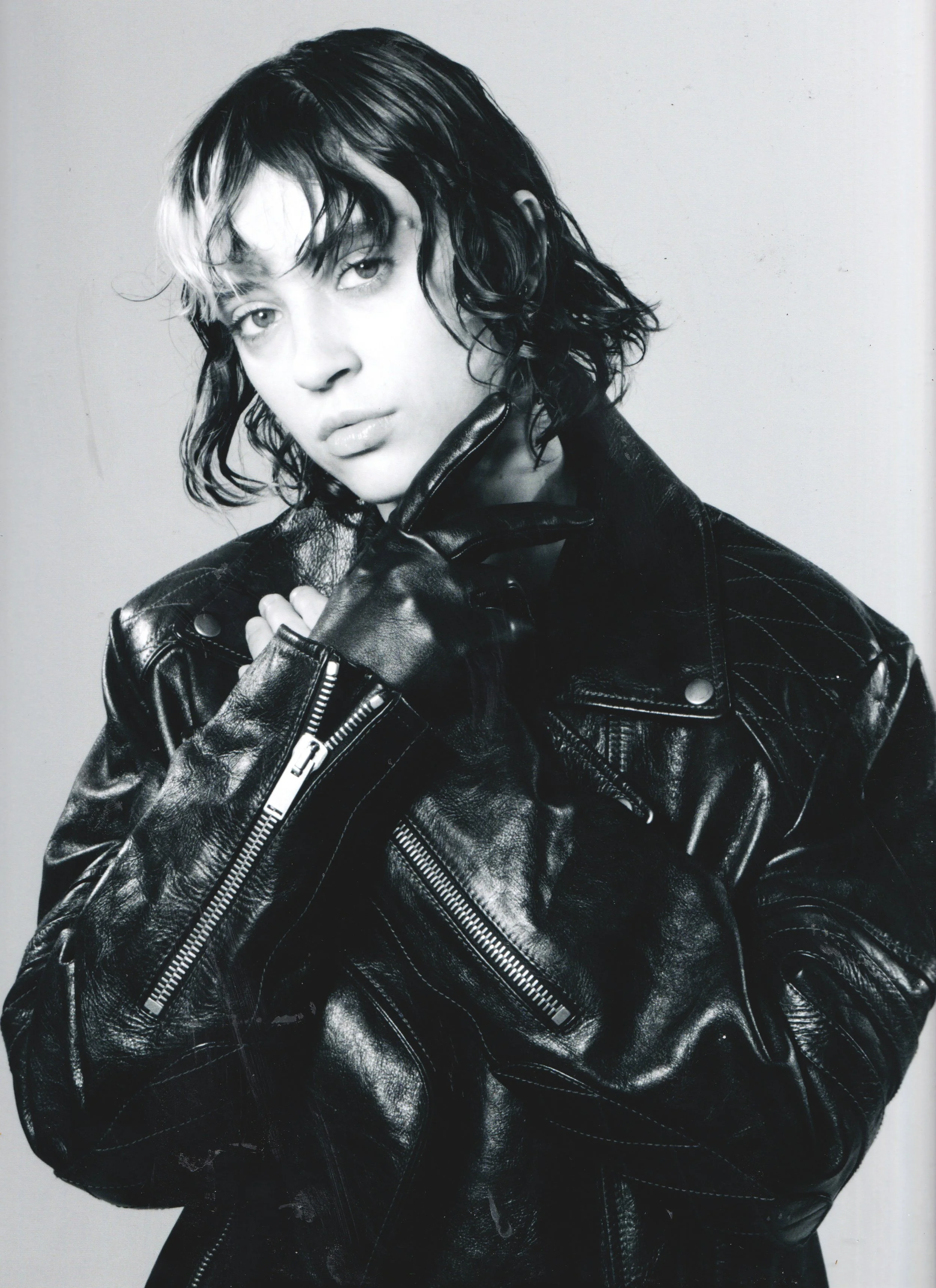
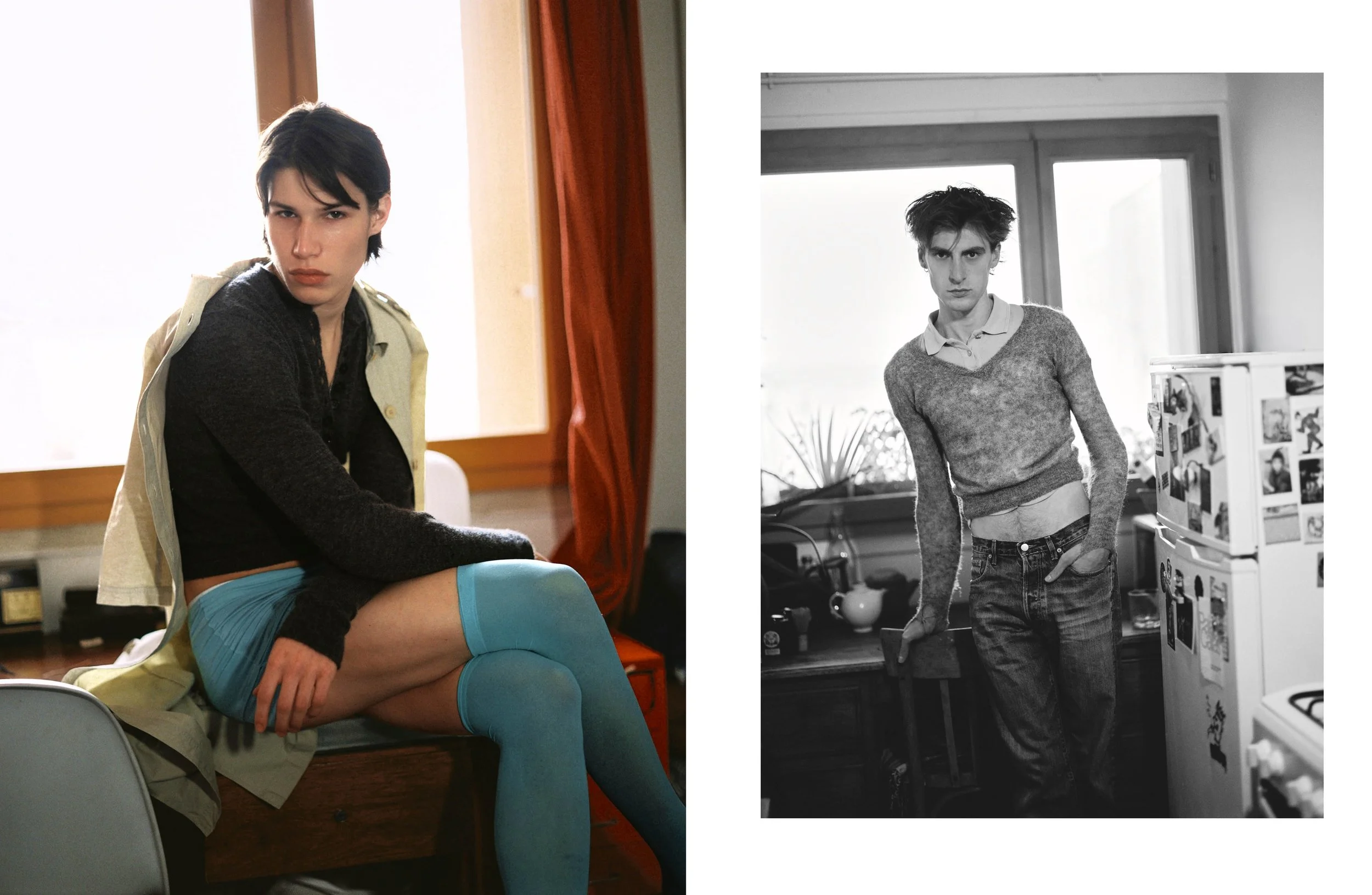
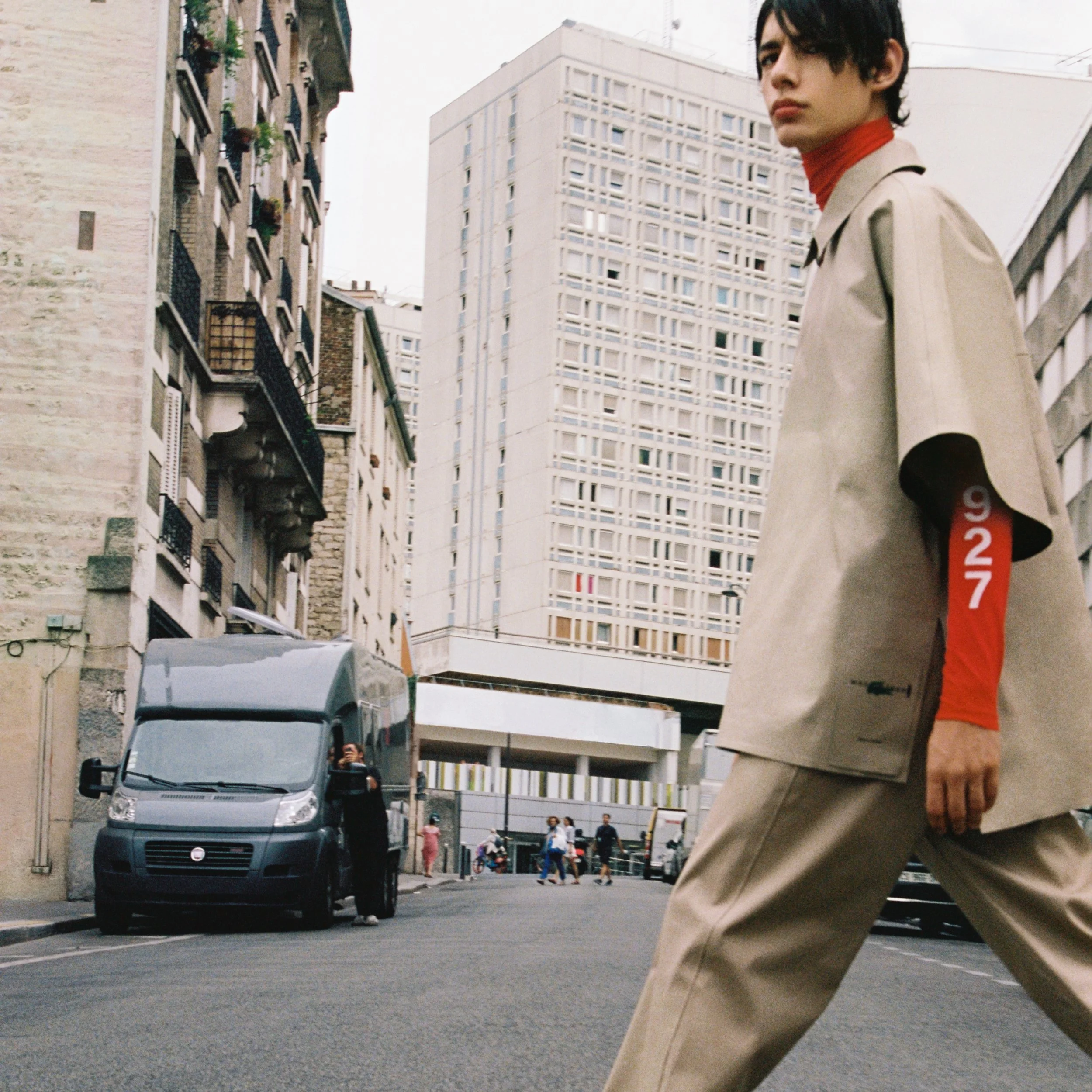
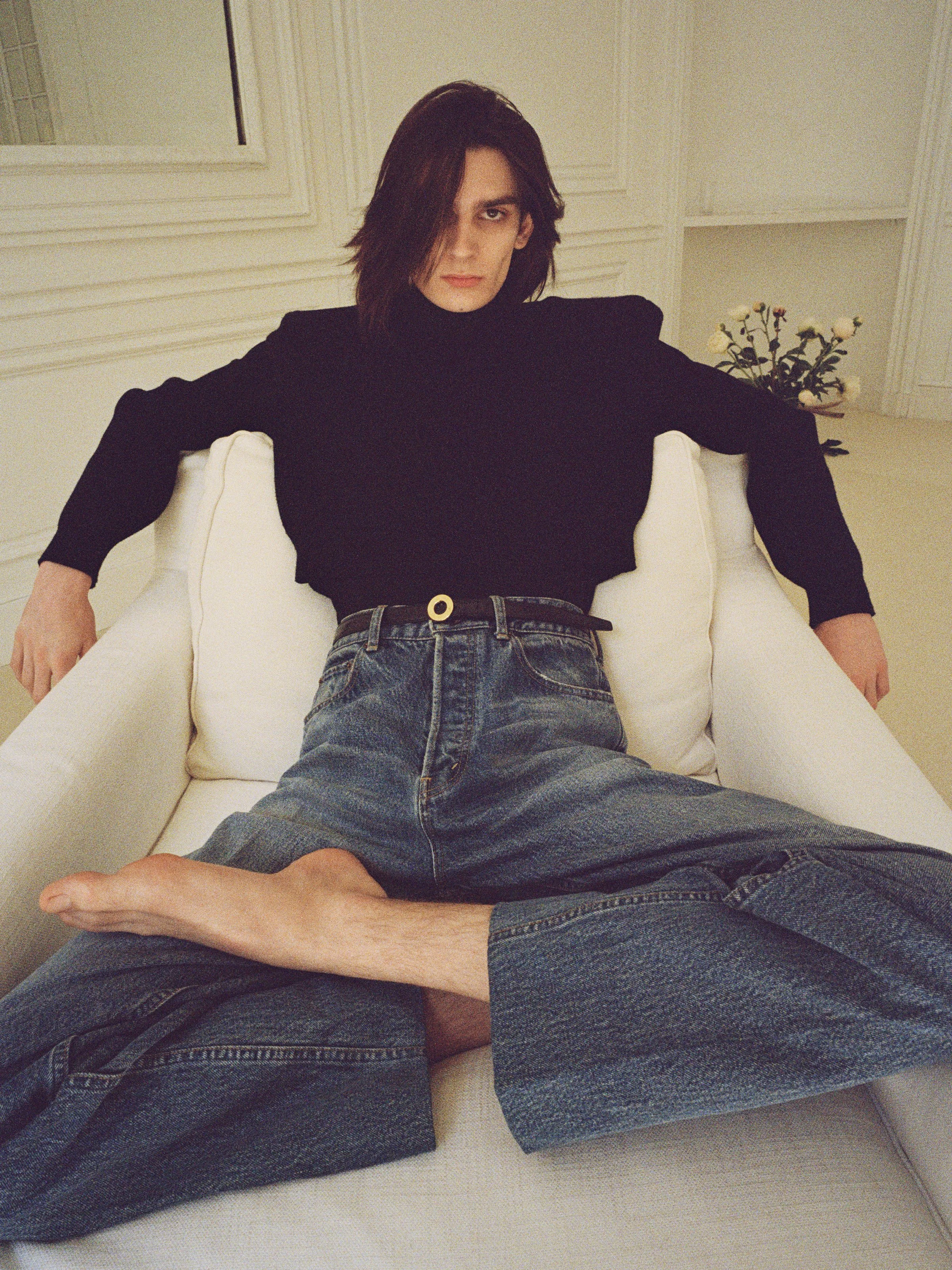
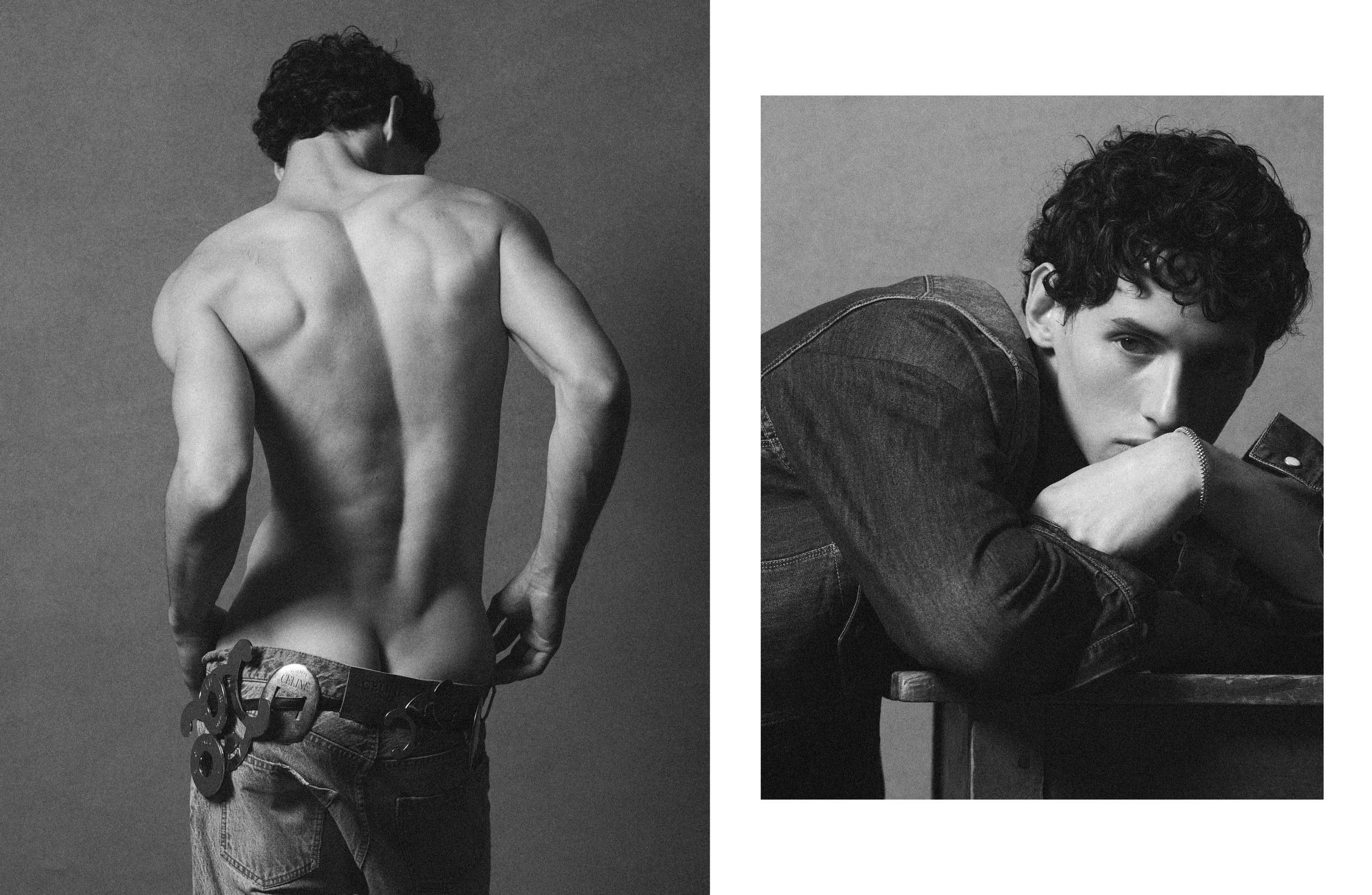
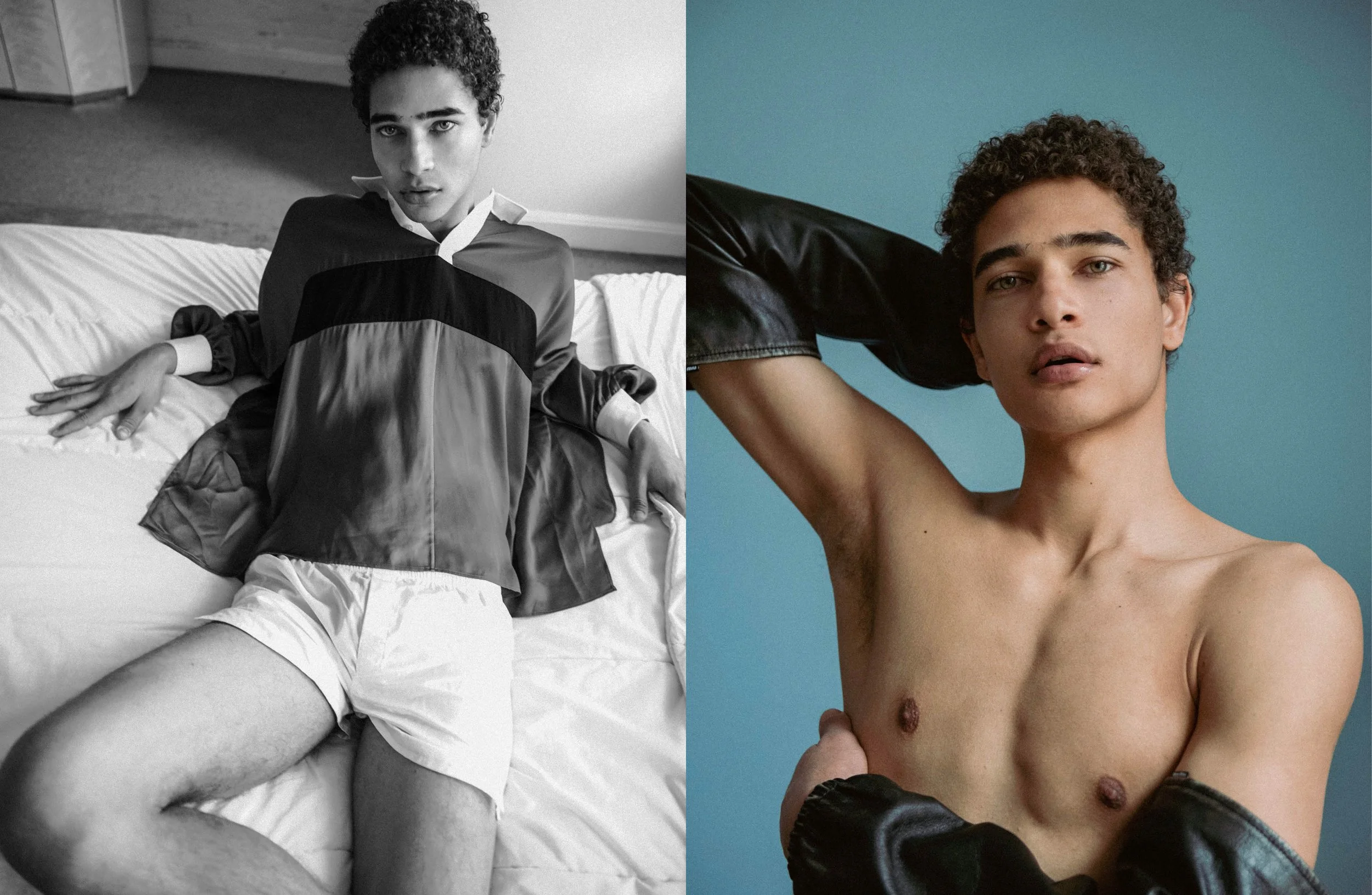
Left Shirt Alain Paul, pants Louis Vuitton
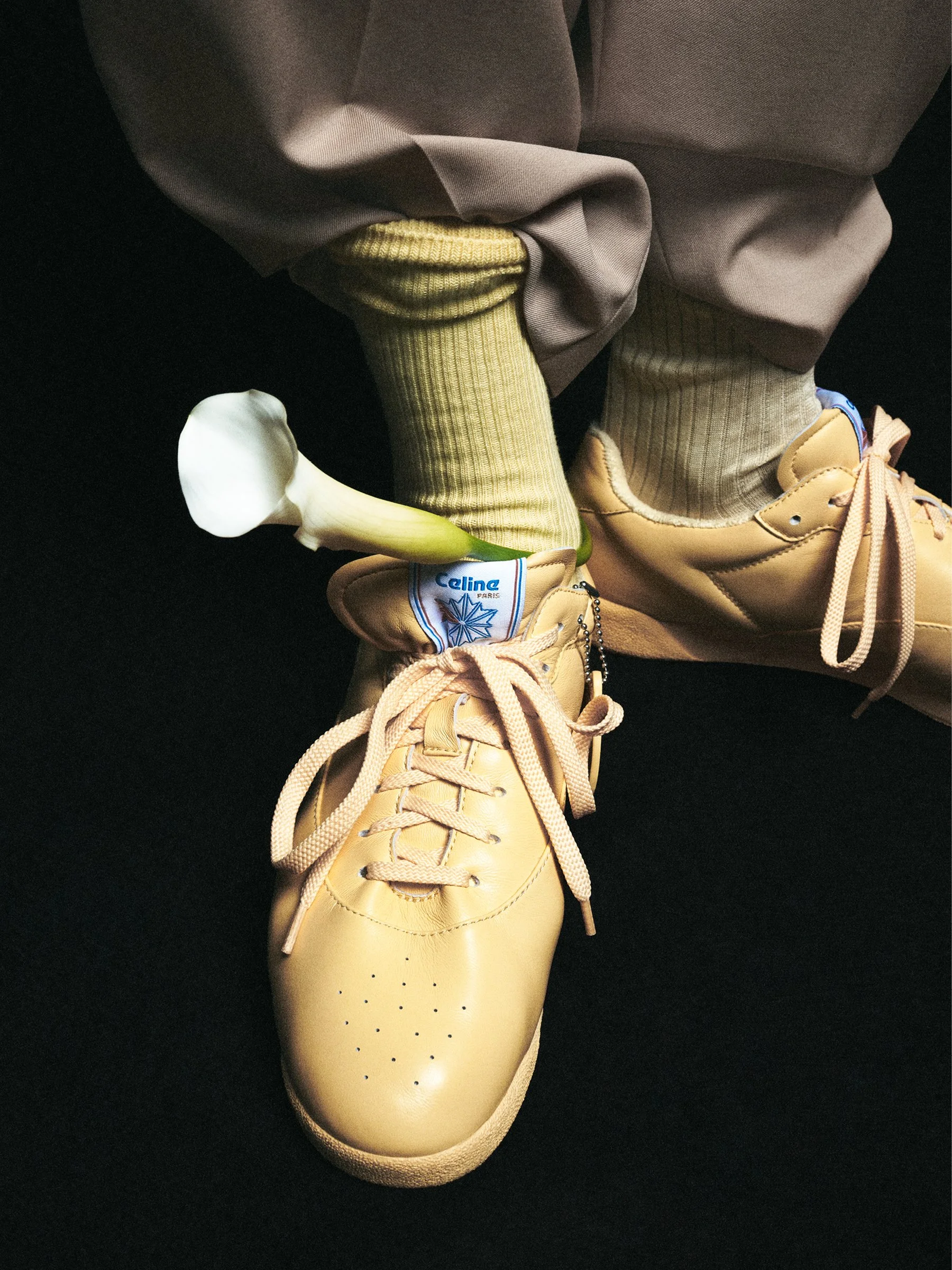
Right Full look Celine Homme
Let’s jump into Late Fame. Your character, Meyers, admires the way Saxberger’s [played by Willem Dafoe] poems “slap you across the face with their style and relevancy.” Is there anything you consumed that had a similar effect?
Stoner by John Williams was recommended to me before filming, and I was blown away by it. It’s the full course of the man’s life. There is something beautifully banal about a lot of what is explored in the book, which speaks to me. There's a sadness that feels really familiar. It's sad, but in the way life is.
The film doesn’t tell an audience how to feel, but I think each viewer’s feelings deeply reflect how they relate to the film’s themes. It made me feel a deep sadness. I almost wanted everyone to stop pursuing such grandiose dreams, maybe reflecting my own aversion to wanting that much.
That resonates with me a lot. Many view the film only through Willem Dafoe and Greta Lee's characters. People rarely include the men of The Enthusiasm Society as characters they were on the journey with. I know what you mean. It's hard to watch, especially in the back half. It’s like watching a car crash. But there’s such hope at the beginning.
My experience has been that people see my character as the villain. To a lesser degree, that’s how I read it when it was just Samy [Burch’s] screenplay. I think you’re telling me to follow and understand the young people’s journey in the film too. They have an incredible entitlement and lack of awareness from severe privilege. But there’s also something really good about what they want, even if it’s idealistic. Viewers might think, “Is it all a ruse?” I don’t think it is. I think they really believe the world would be better if people got off their phones and encouraged others to create.
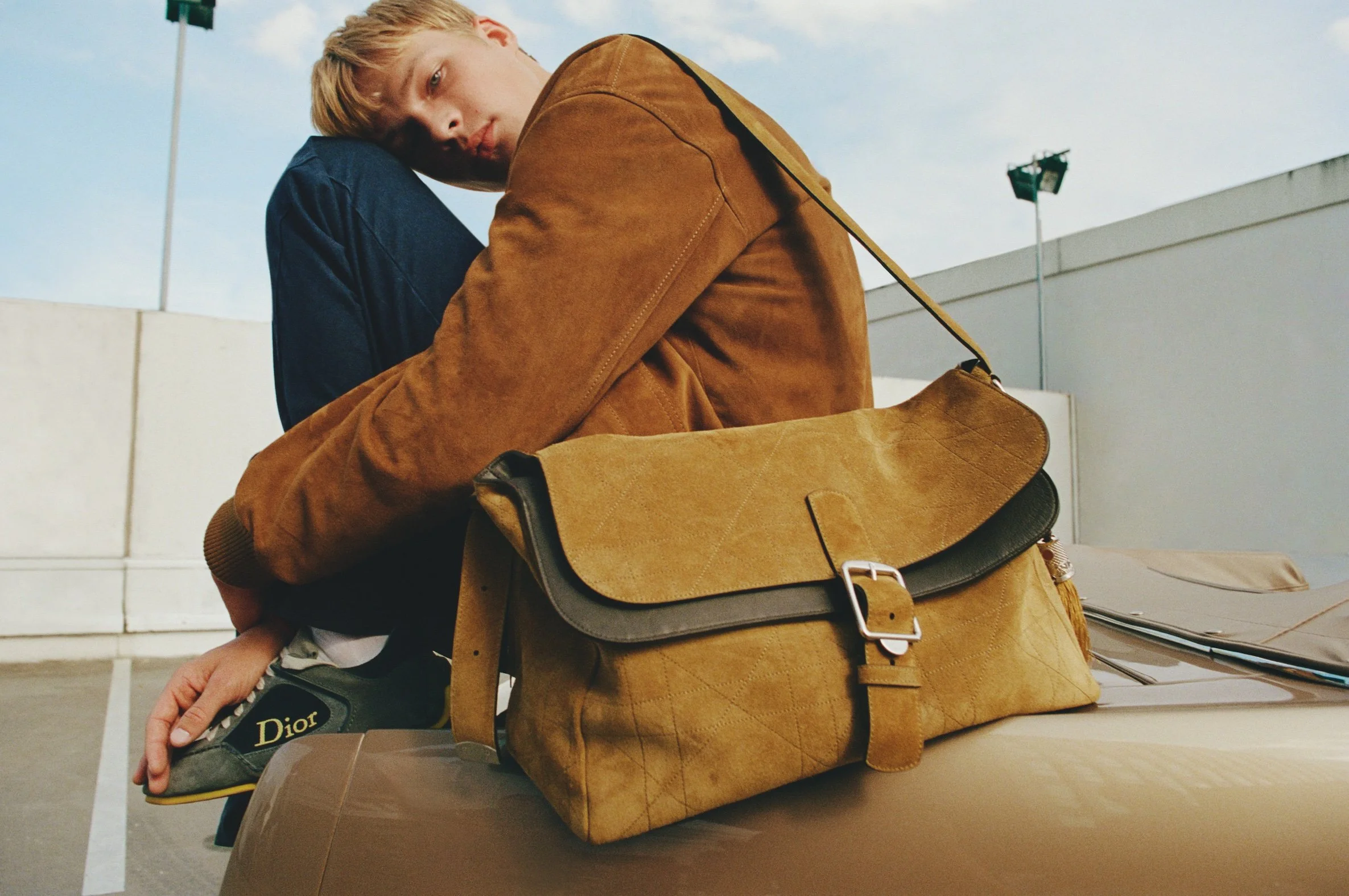
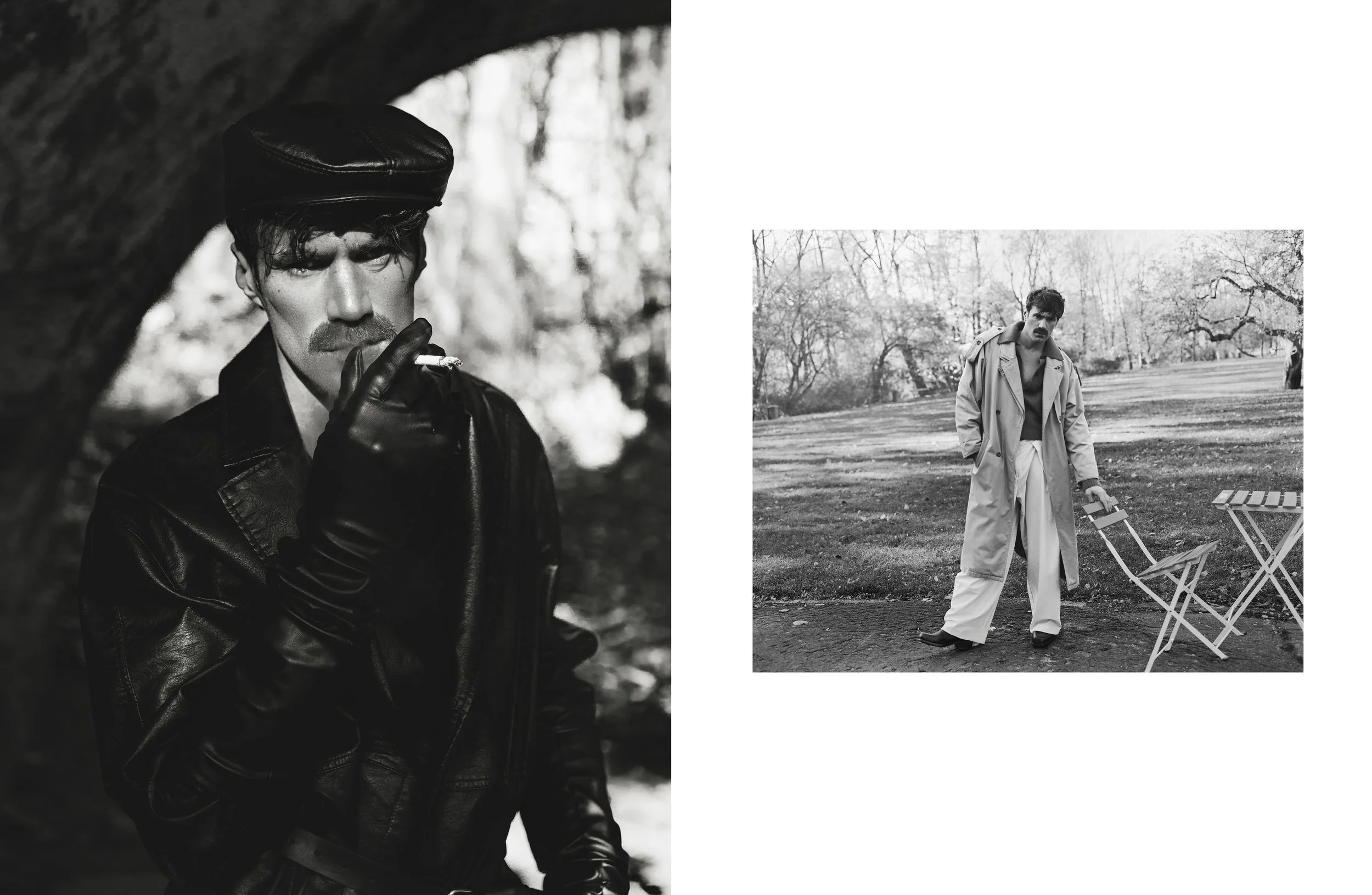
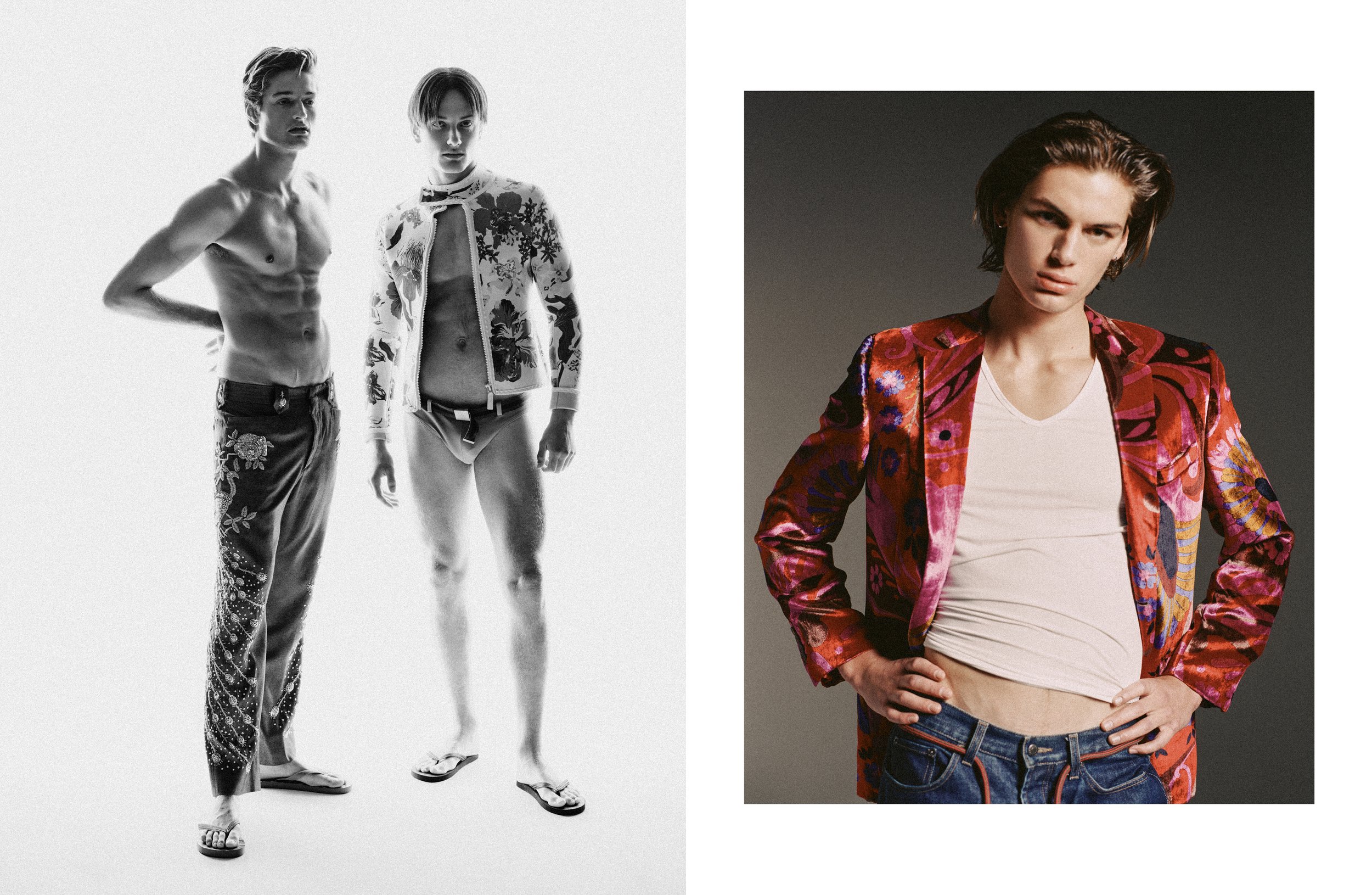
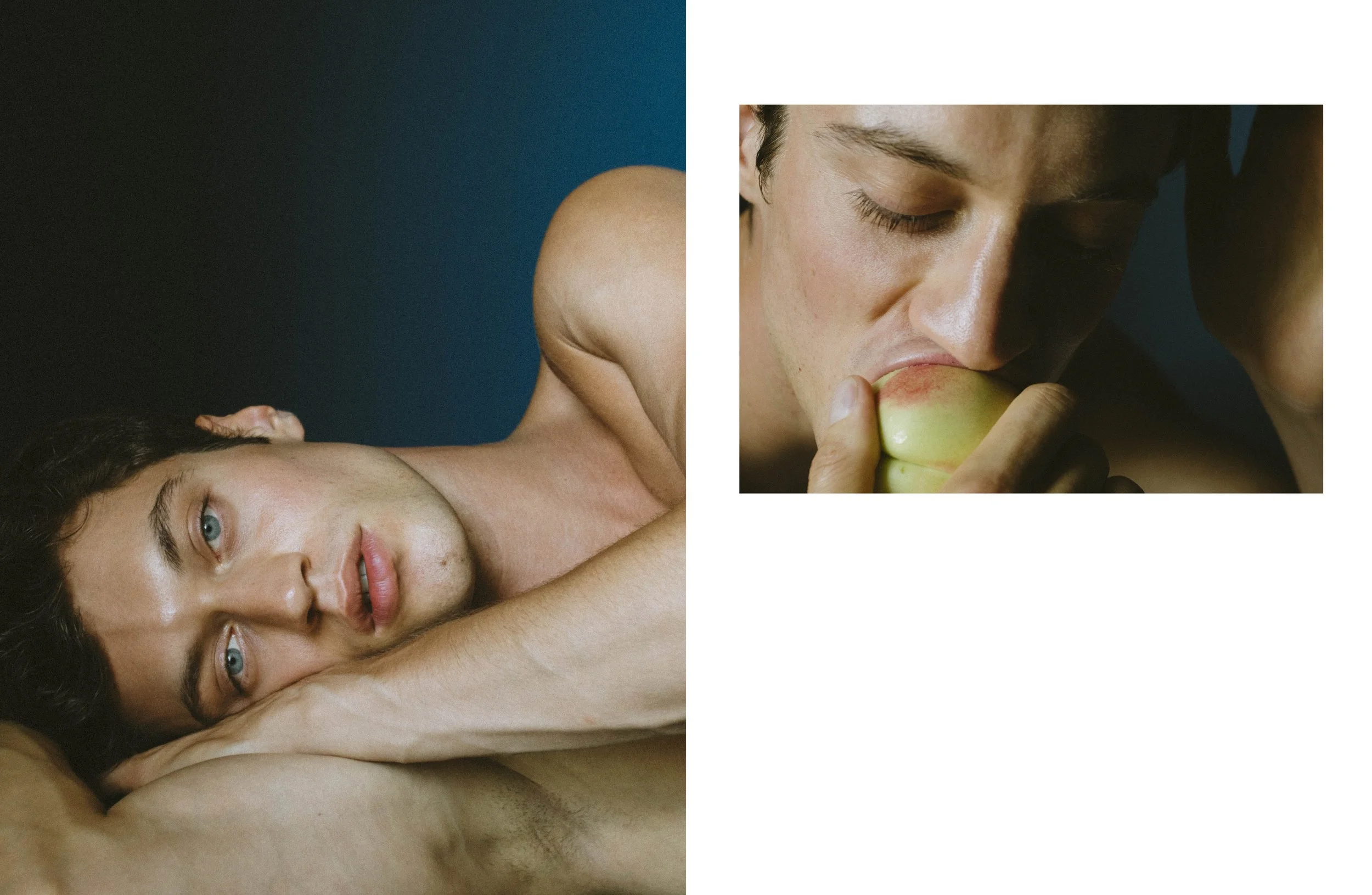
Left Full look Gucci
Right Top and pants Prada, watch Omega
I'm surprised a lot of people view Meyers as the villain because I felt really sympathetic towards him. “Do we seem impressive?” is such a heartbreaking line. The film raises the question about whether performance only matters if it's perceived. I know you started in theatre, where there's an immediate response. How does your relationship with perception change when you go into film?
In film, I engage as both a viewer and maker. I never watched the plays. One of the beautiful things about being a theatre actor is that you are blindly walking through the woods. With movies and television, there is an expectation to watch and speak about the project, having made it and understood the product. To engage with a filmmaker’s work and to respect the work others put into the film, you have to watch the movie. I may not watch everything I do because it can be challenging. It’s like the uncanny valley; something feels unnatural. You have two movies — one you created and one you watch. Theatre is just one play. You rehearse, perform, close it, knock the set down, and it’s like dust.
It raises the idea of process versus outcome. Does watching your work retroactively affect your view of the process?
With some exceptions, movies are made without rigorous rehearsal. So every acting process is somewhat independent. Theatre actors have to work it out in the room together. There's so much more repetition. I think one of the bizarre things about seeing a movie is that you remember the day, but you often remember it slightly differently than how you are reminded of it.
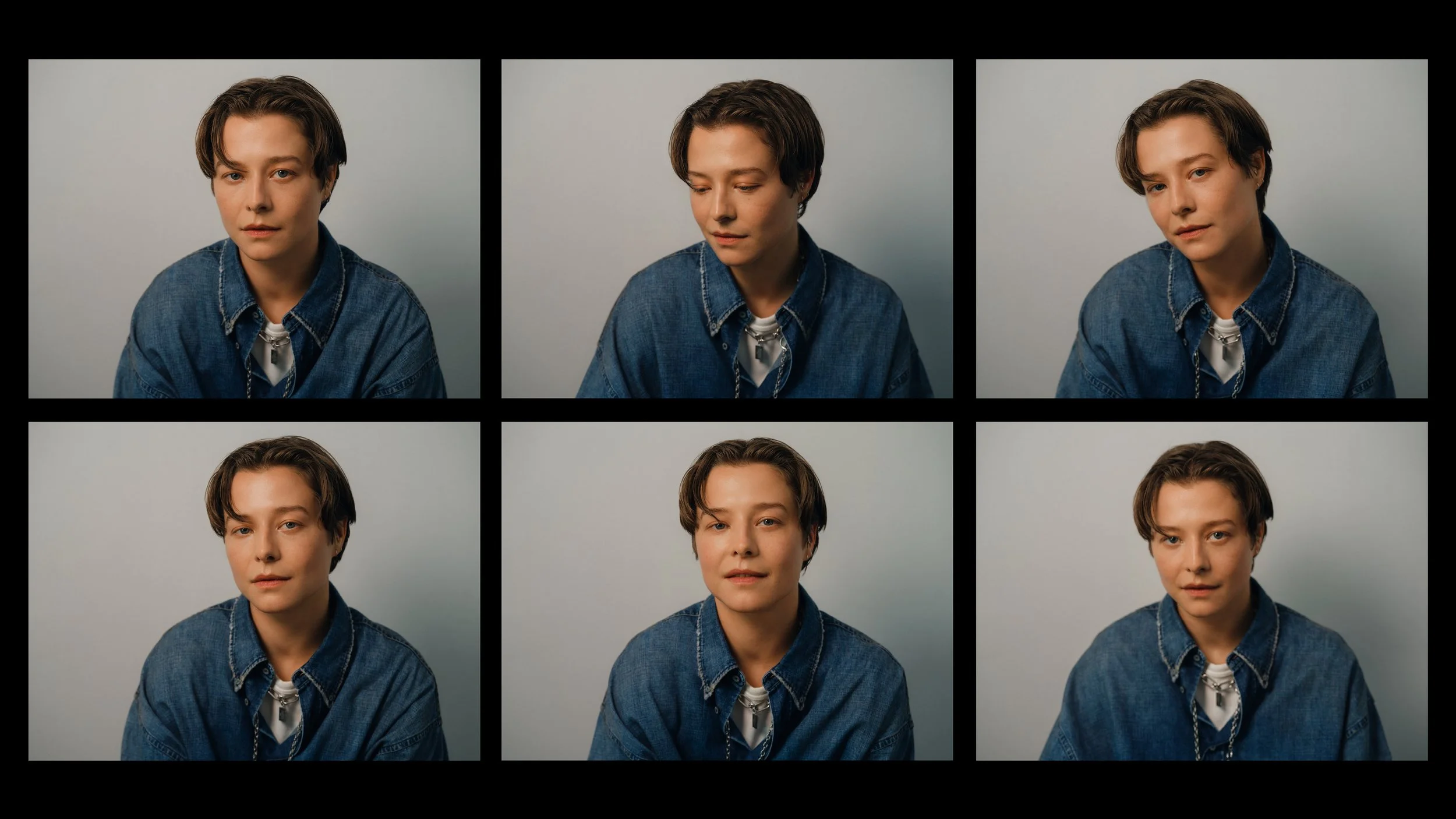
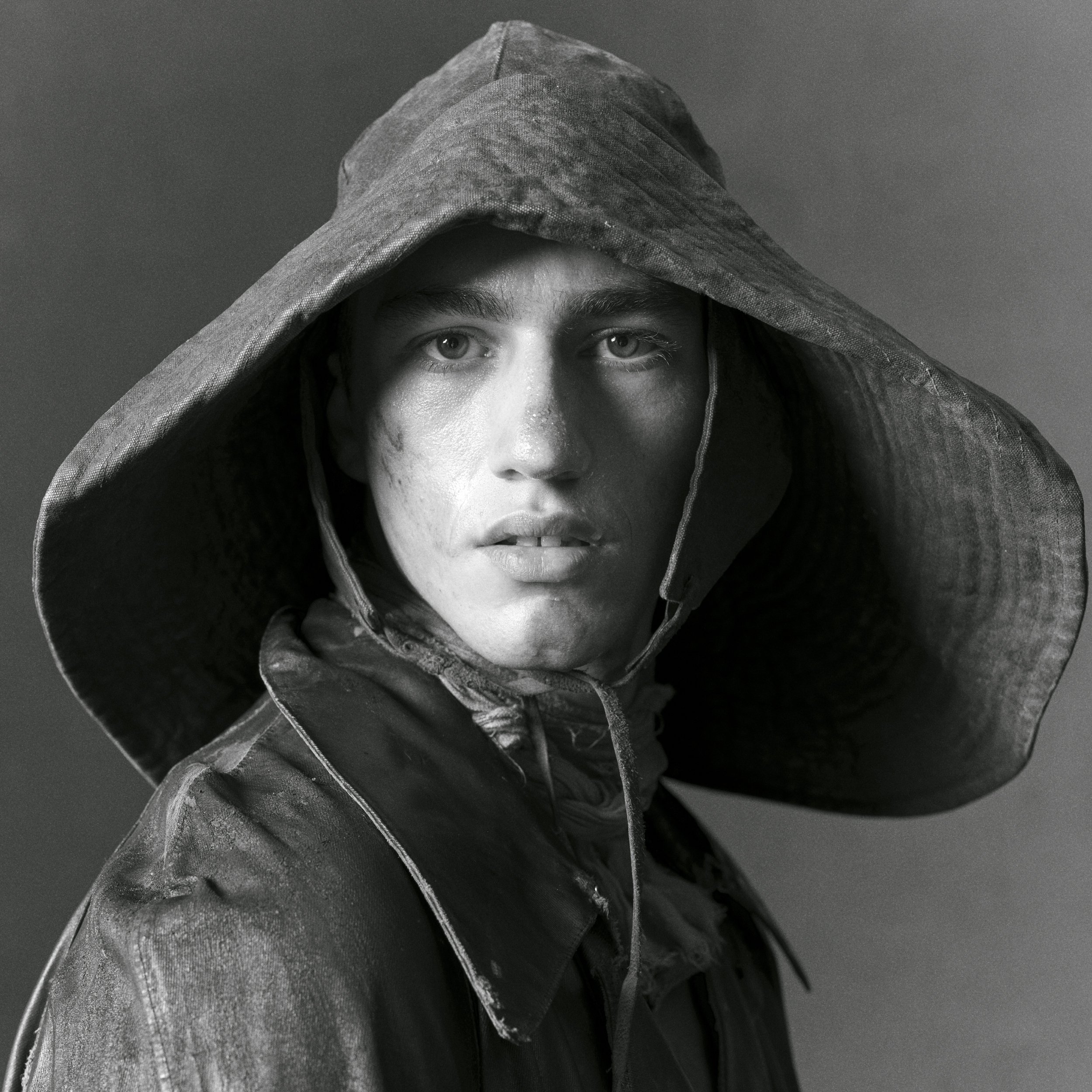
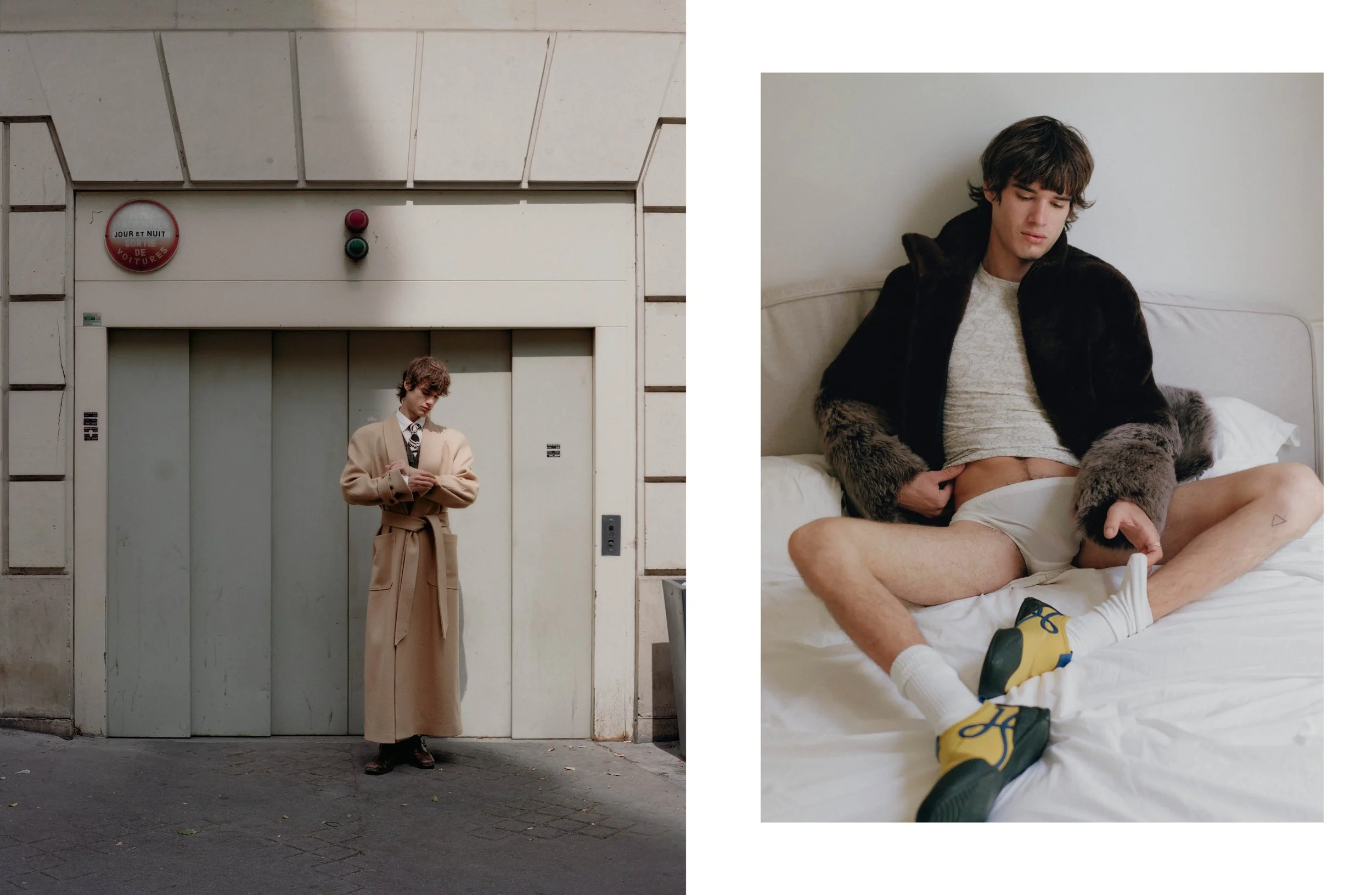
Coat Vivienne Westwood, pants Yohji Yamamoto, top Dior Men
You wrote an essay once about how you used to have a narrow view of your own dreams. You thought a “serious actor” specifically did Shakespeare. One of your teachers told you not to limit yourself and to be open to surprise. What are some things in your career thus far that have totally surprised you?
It's so cool you brought this up. That was years ago, but it’s a theme in my life now. I've been the beneficiary of a series of roles that have been very distinct from one another. It's such a privilege and not how I thought it would go for me. A goal of mine is to continue not to narrow myself in who I think I am. I've had all different interests since I was young. I was really into Shakespeare, and that made me feel a bit precocious for a 21-year-old. I'm 35 now; I still really like skateboarding, and I probably dress more like my 15-year-old self than many of my peers. I sometimes feel like a 70-year-old inside of a 15-year-old inside of a 35-year-old. Sometimes I hesitate and think, “I need to be this legible thing.” But actually, I allow all of that to be me. I think most people try to create a legible performance of themselves. But that is the great gift of being an actor — you are thrown in all different directions, and if you are lucky and doing the job right, you discover something about yourself.
My Late Fame character is so different from me in many ways. But the way he engages with Willem's character is really familiar to a younger version of me, who had such reverence for my teachers in drama school, almost to a fault. I thought they had every answer. That is, in some ways, the movie’s story.
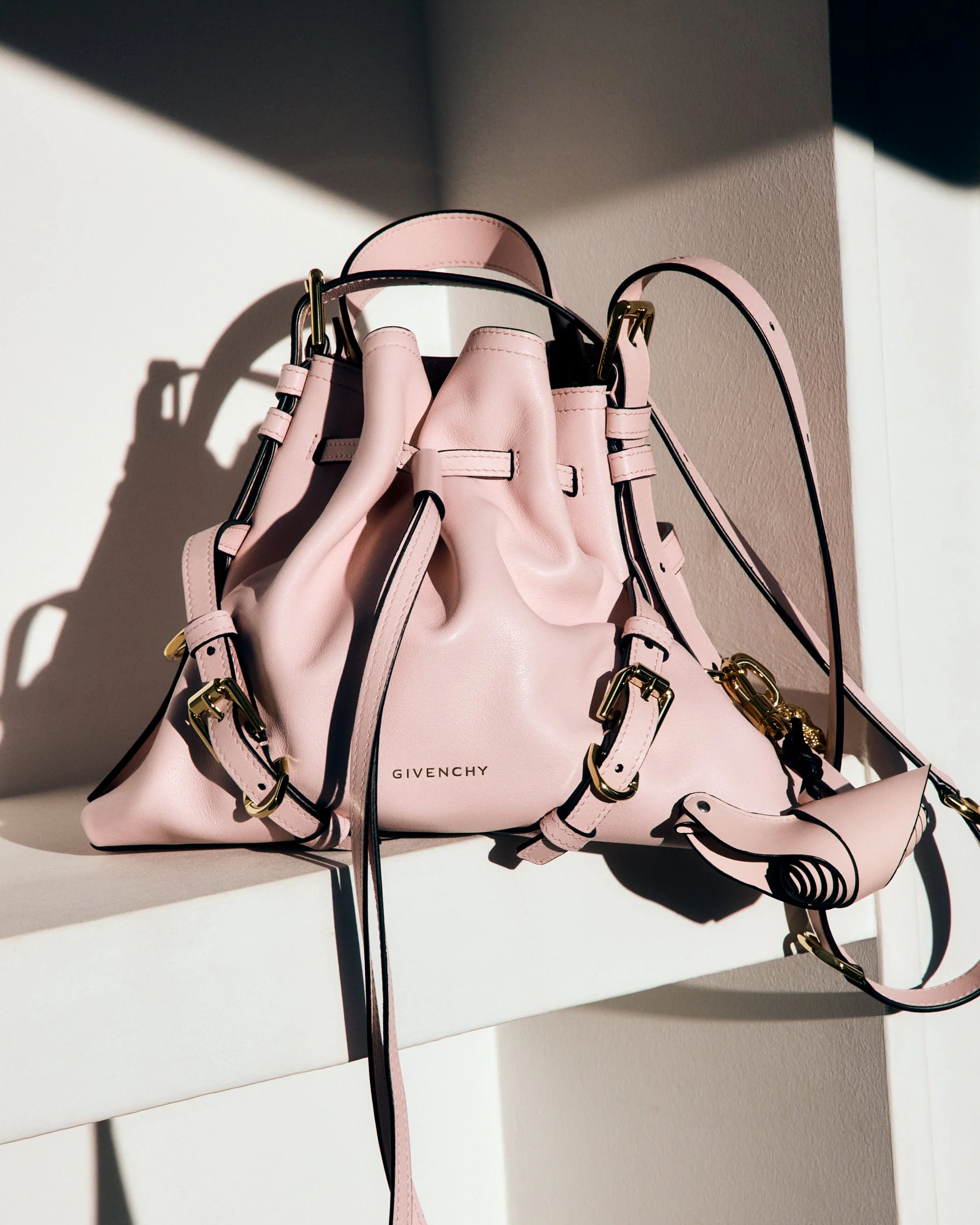
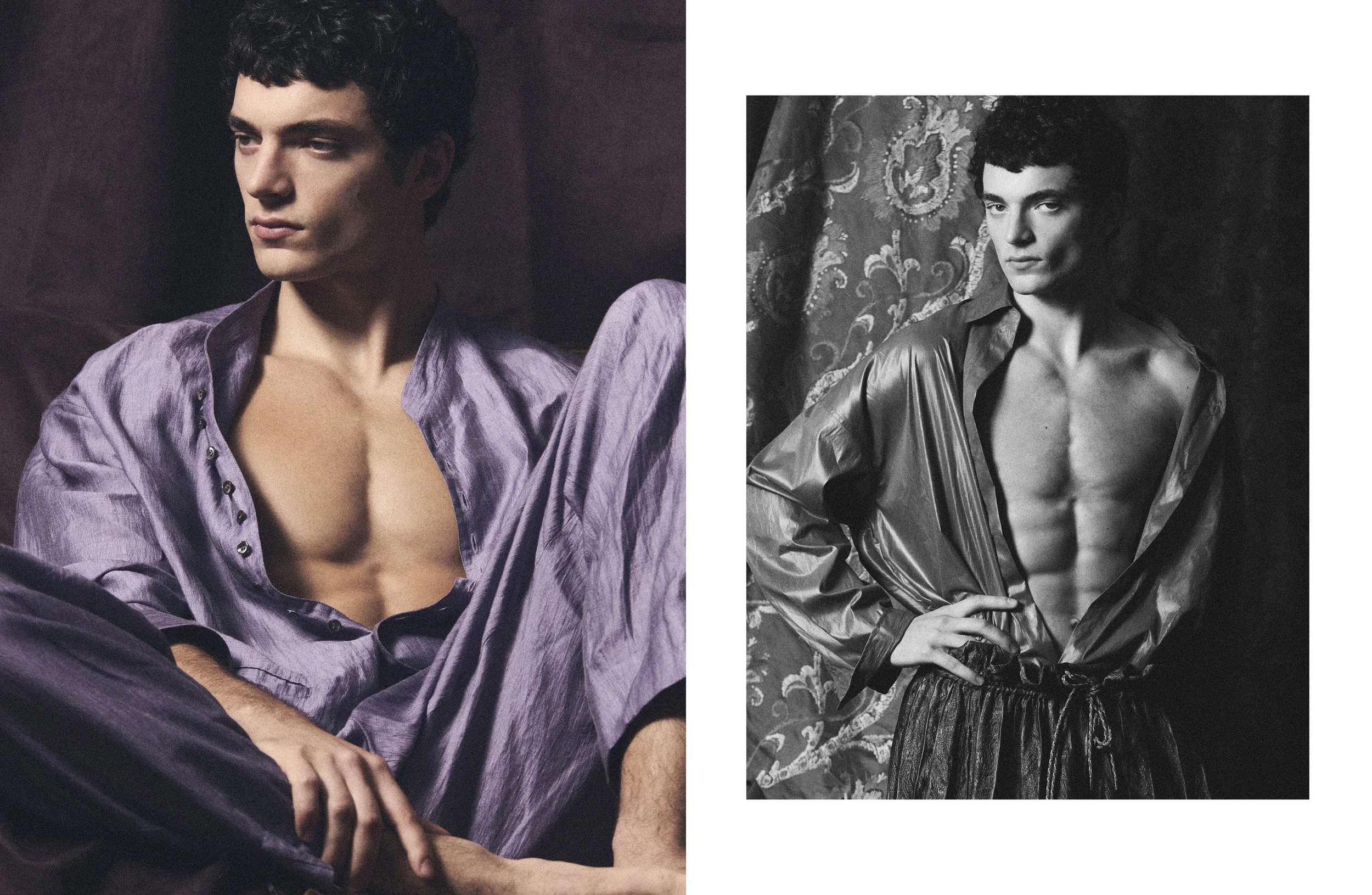
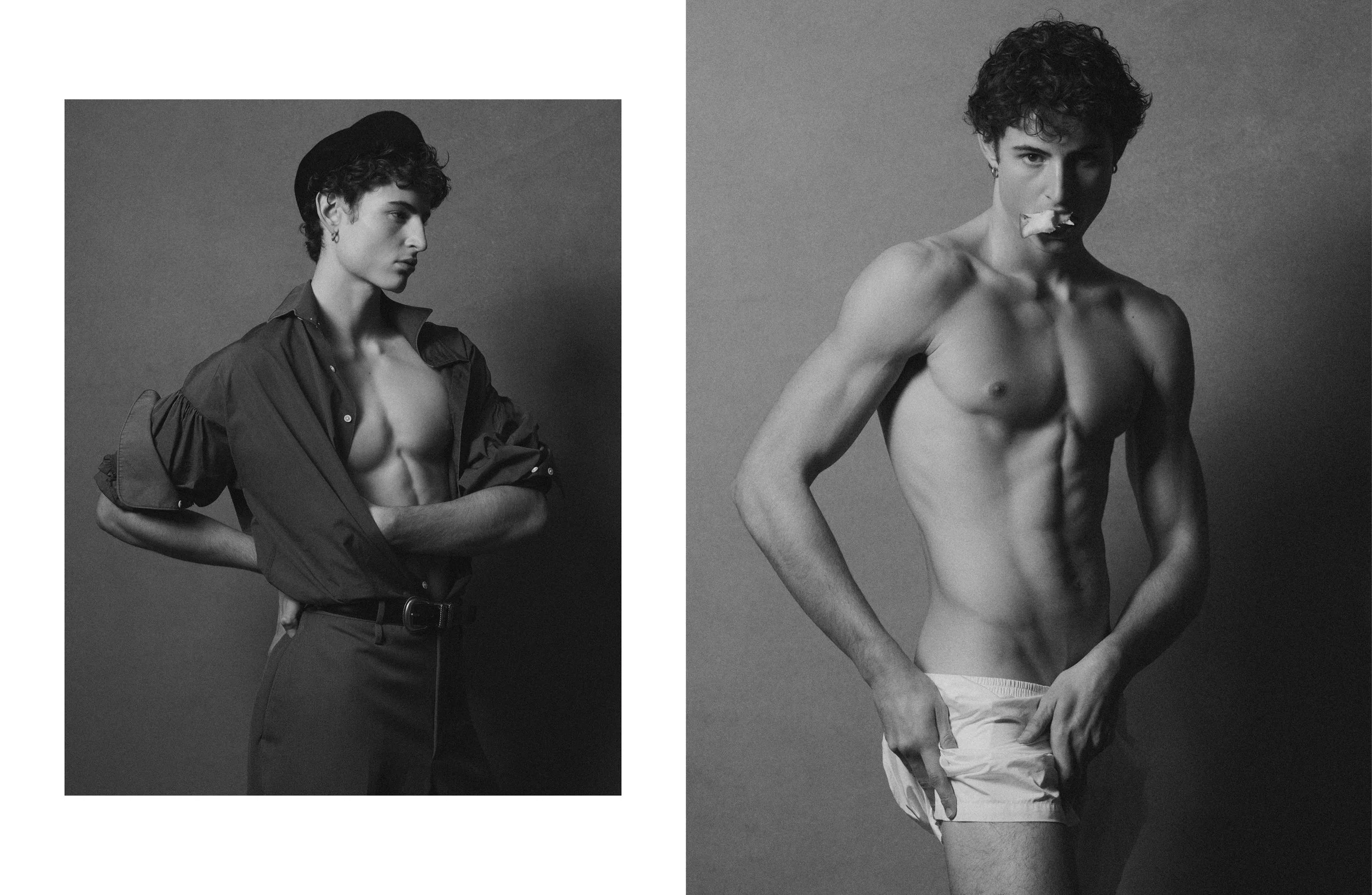
Left Shirt and coat Auralee, pants Givenchy by Sarah Burton
Right Top Prada, watch Omega
As Willem’s character says at the end, it is handing your self-worth on a platter to someone else. And everyone does it. There is also this idea that some level of delusion is required to be a creative. Do you feel that is true?
Nine times out of ten, I feel like a gambler. I really think that's a fair, one-to-one comparison. Whether you are trying to get a job in a movie or have made one, you are always in a position of seeing it as what it could be. It’s so rarely what you thought it could be. Sometimes it's better. I was totally deluded through my youth. And thank God, because that is what allowed me to say, “I have had a chance to be in some movies and plays, which is all I have ever wanted.”
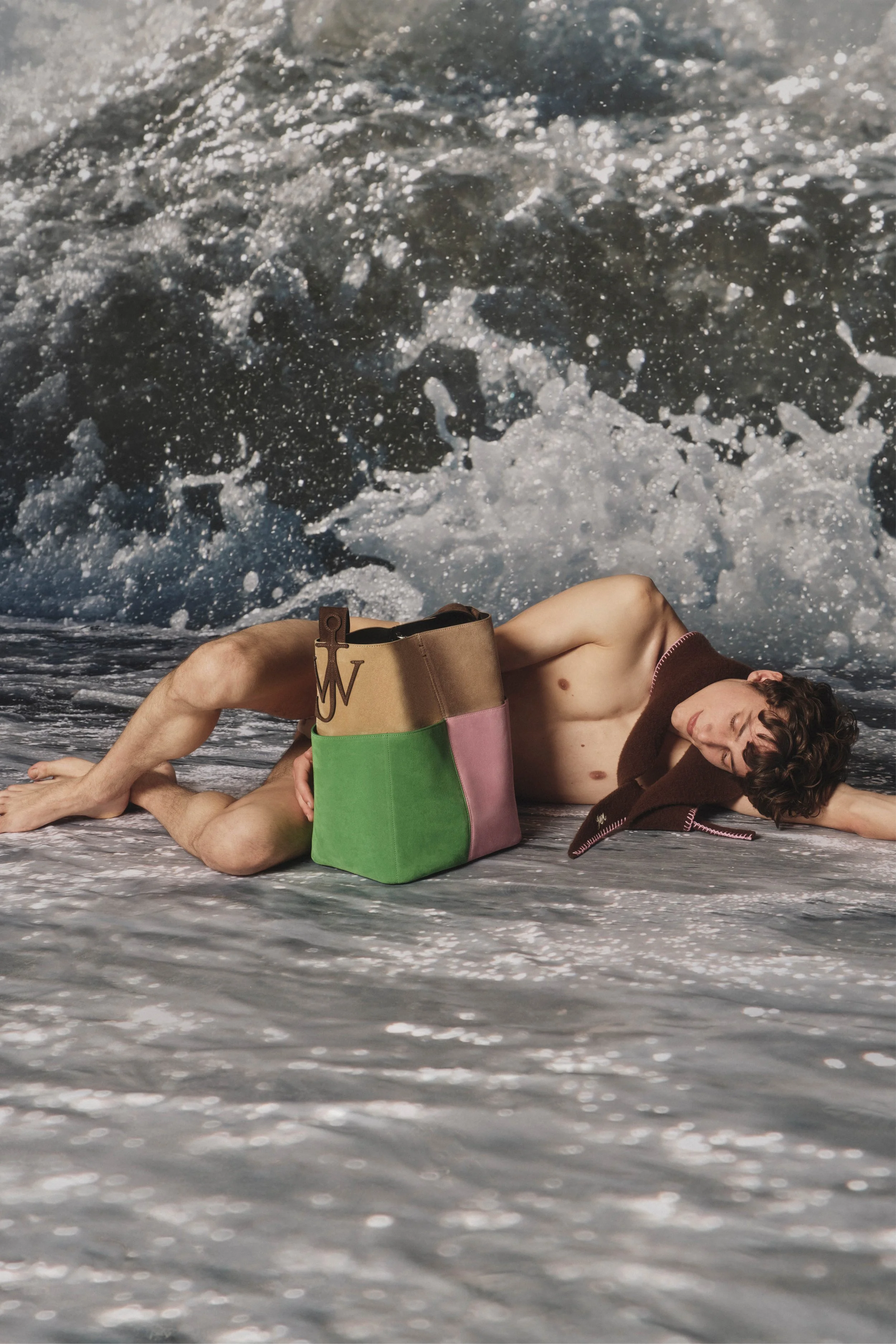
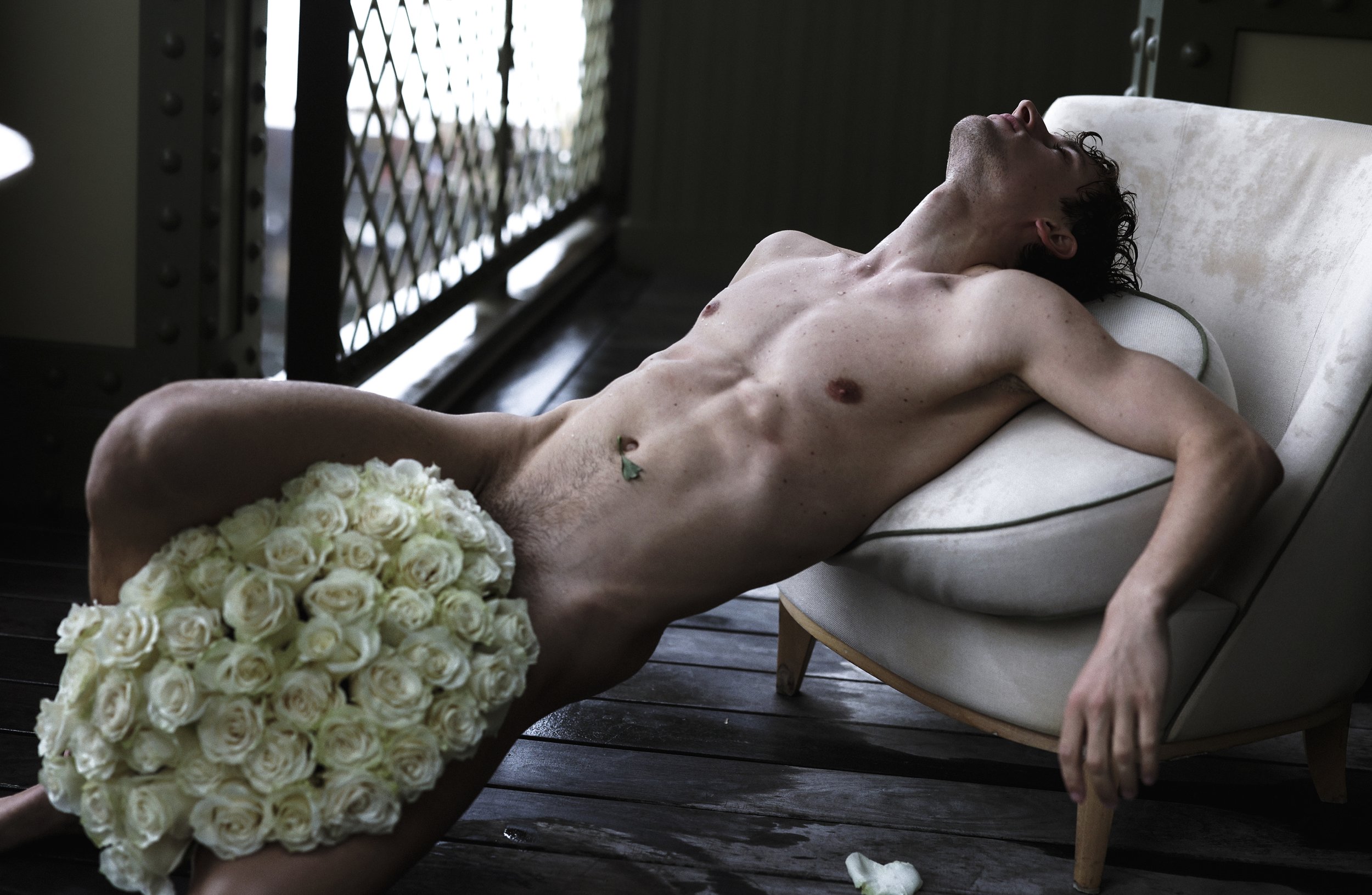
Top Loewe, shorts Alain Paul
In your career, when have you felt closest to what you once imagined?
That’s a beautiful question. There are many examples, like acting in plays in New York. I haven’t done a play in a few years, so at that time, it was all newer. The thought, “What would my younger self think?” was so acute in me. When I was bowing after my Broadway debut, it was crazy to me. [I feel the same when] I get to see a movie I am in at a theatre. I think less about specific roles, and more about being in physical spaces. I remember seeing plays as a kid, and all those spaces are kind of old and have similar seats. There is such a feeling in there.
It's such a practice to hold on to that feeling because the more you experience, the more it becomes the norm.
Not to pat myself on the back, but I think I'm pretty good at that. Working with Willem felt like that. I grew up watching him. It was the same thing when I got to work a bit with Julianne Moore in Echo Valley. I've had that experience several times over. They are in things that totally structure my artistic psyche. It’s like, “You’re in my dreams of what this thing that I do is.”
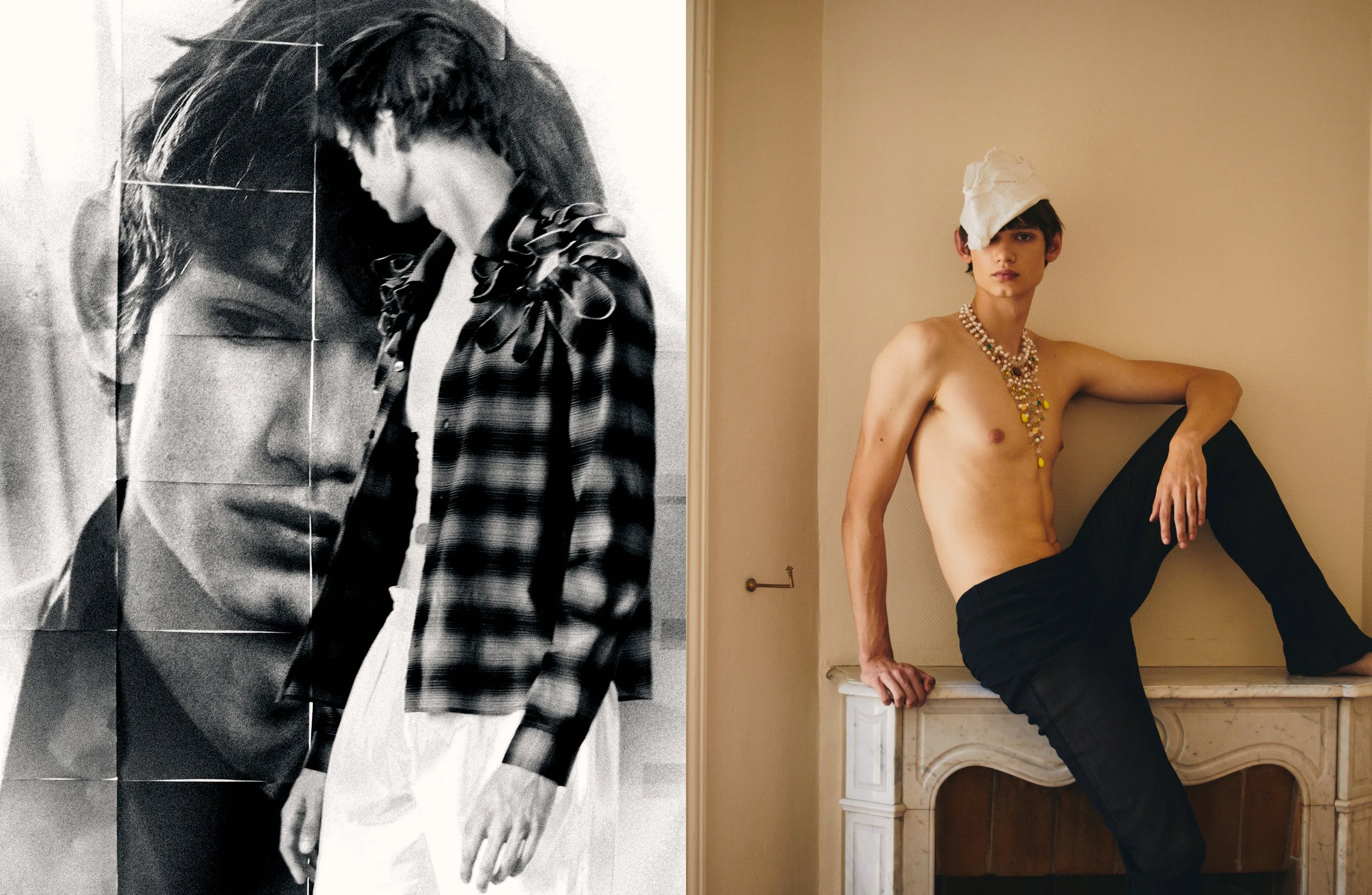
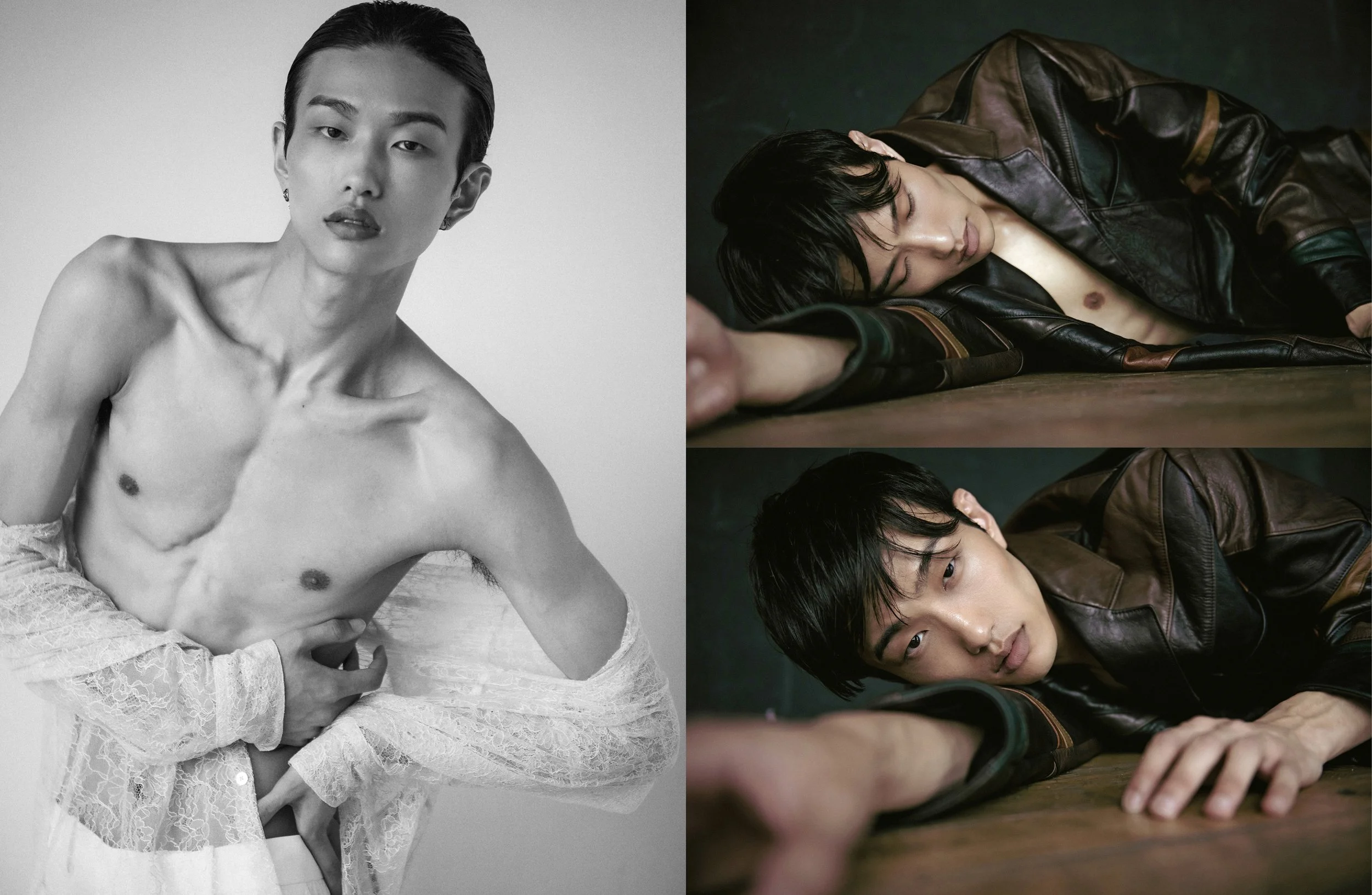
Left Top Zegna
Right Jacket Balenciaga, shirt Recto, shoes and pants Givenchy by Sarah Burton, belt Hermès
Interview by Tessa Swantek
Photography by Emmanuel Giraud
Fashion by Jonathan Hayden
EIC Michael Marson
Casting by Imagemachine cs
Grooming by Miwa Moroni
Set design by Isabelle Plan
Photographer’s assistant Pierre Drouin
Stylist’s assistant Chloé Dumesny and Emma Siaut