showreport

LGN LOUIS GABRIEL NOUCHI SS26

Putting together a show is a matter of love, time, and patience. It’s not only a continuous process, but it’s an expensive one. Louis Gabriel Nouchi dared to dream what he could do with all that commitment. And so, his Spring/Summer 2026 presentation was born. On an extremely sweaty day in Paris, Nouchi directed us to the legendary (and air-conditioned) Club Silencio, the nightlife Parisian institution founded by David Lynch. Inside, popcorn and champagne in hand, we were shown a two-and-a-half-minute animated movie that brought Nouchi’s sensual masculinity into a literal different realm.

Speaking of the project, Nouchi shared a fact not many knew: before entering fashion school, he had been accepted into an animation program and was set on attending before radically changing his path. A self-proclaimed nerd, Nouchi’s decision to turn his show into a movie speaks to multiple layers of intention. Firstly, the French animation industry is booming—this was produced by the popular Milli Studio. In close collaboration with the team, Nouchi produced a movie that is entirely hand-drawn. Backstage, the designer emphasised the importance of the art form in the age of AI.

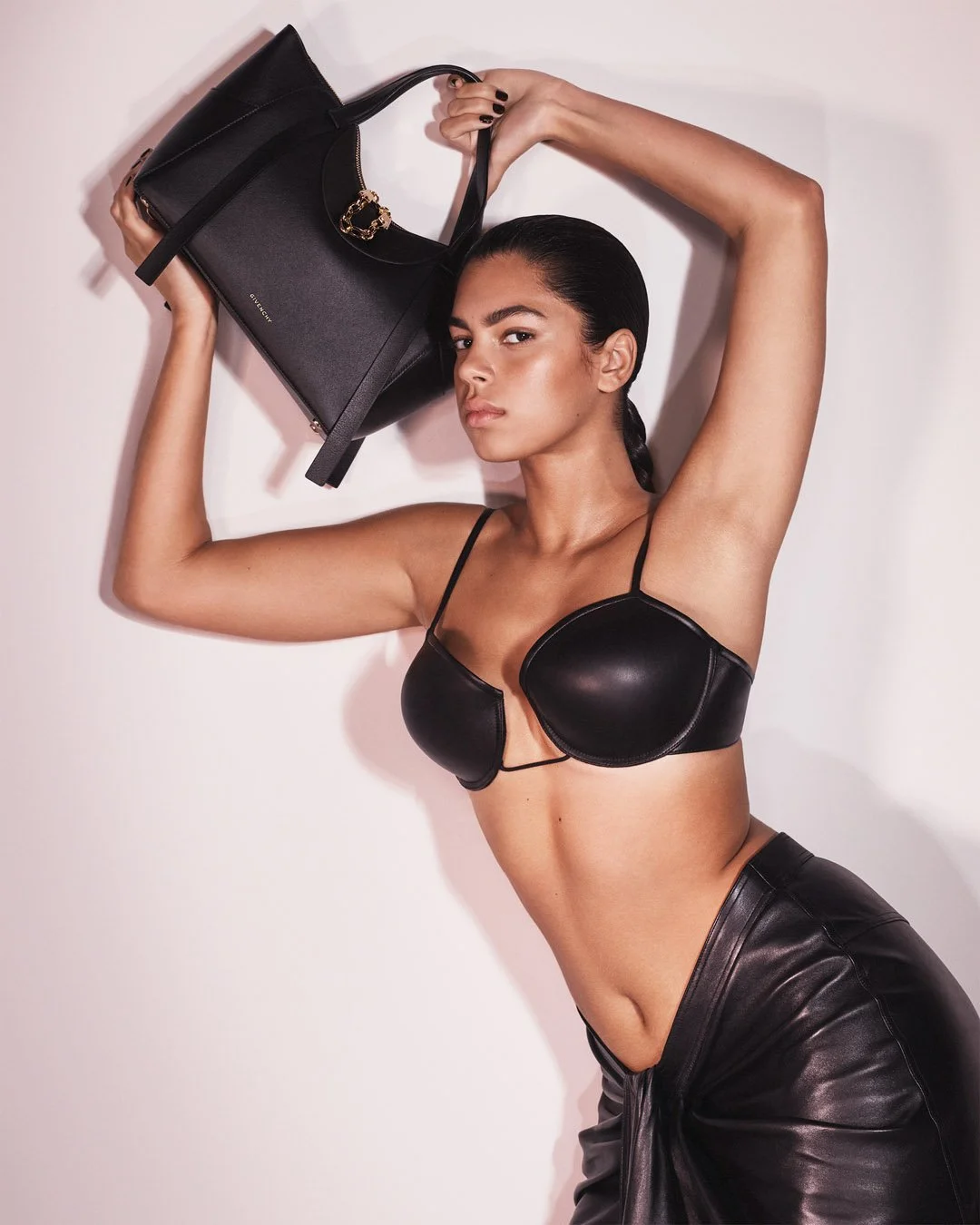
It’s great to see him turn the corner. As the general public’s perception of artificial intelligence shifts rapidly, it’s surprising to see so many designers still treat it as a novelty. That seems to be Nouchi’s greatest strength: he’s deeply in tune with what his audience believes in. One of the first (and now, seemingly last) to consistently cast his collections on different body types, Nouchi remains uncompromising in his values. Not to worry, the movie included differently shaped and sized androids. In The Replicant, Nouchi shows a collection that is, like always, inspired by a novel. This time it’s Philip K. Dick’s Do Androids Dream of Electric Sheep? The collection adopts a cheekier name: Do Androids Dream of Wet Desires? Considering the title, it’s only appropriate that the film opens with Nouchi’s iconic cut-out underwear. Inside: a glowing robot ass.

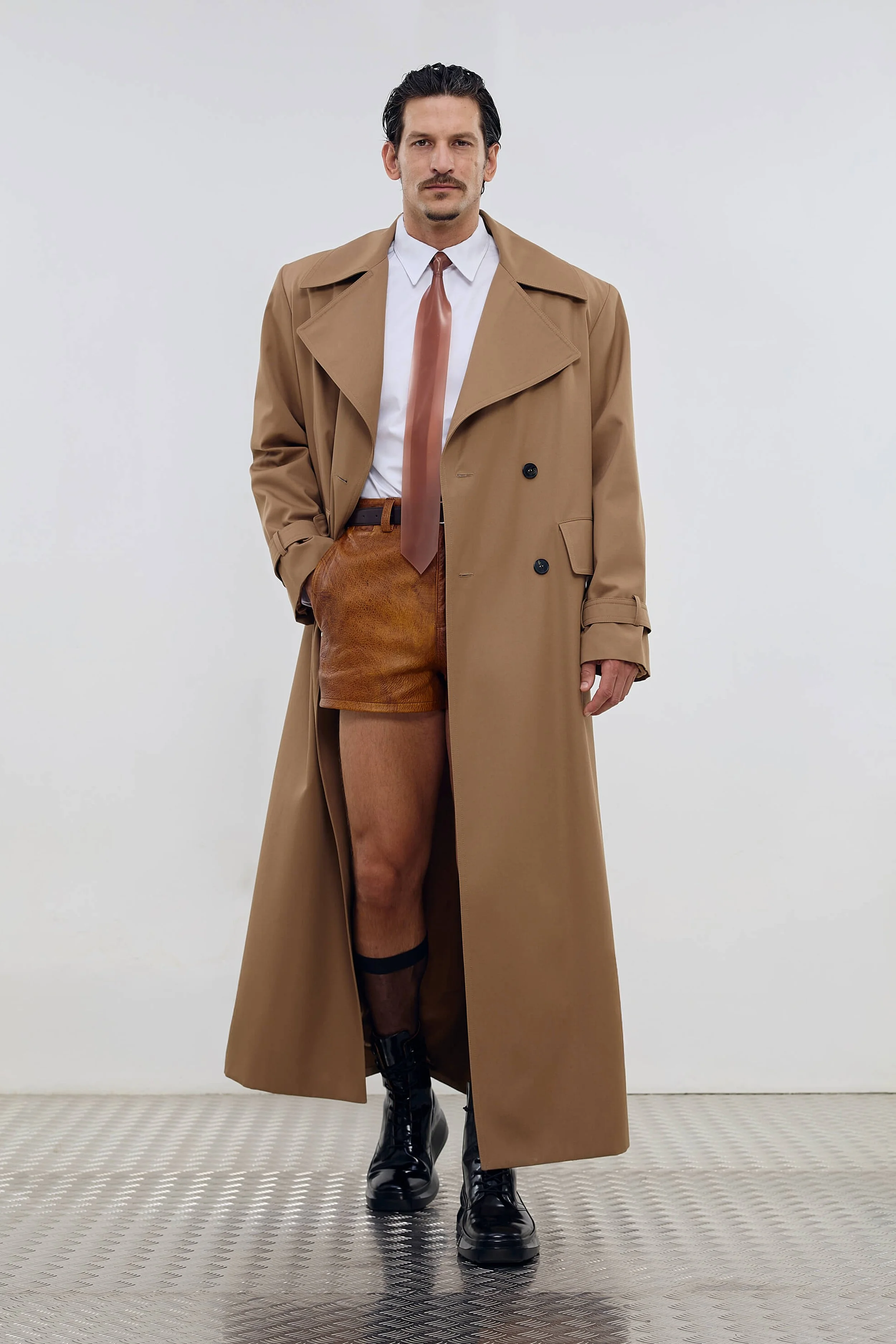
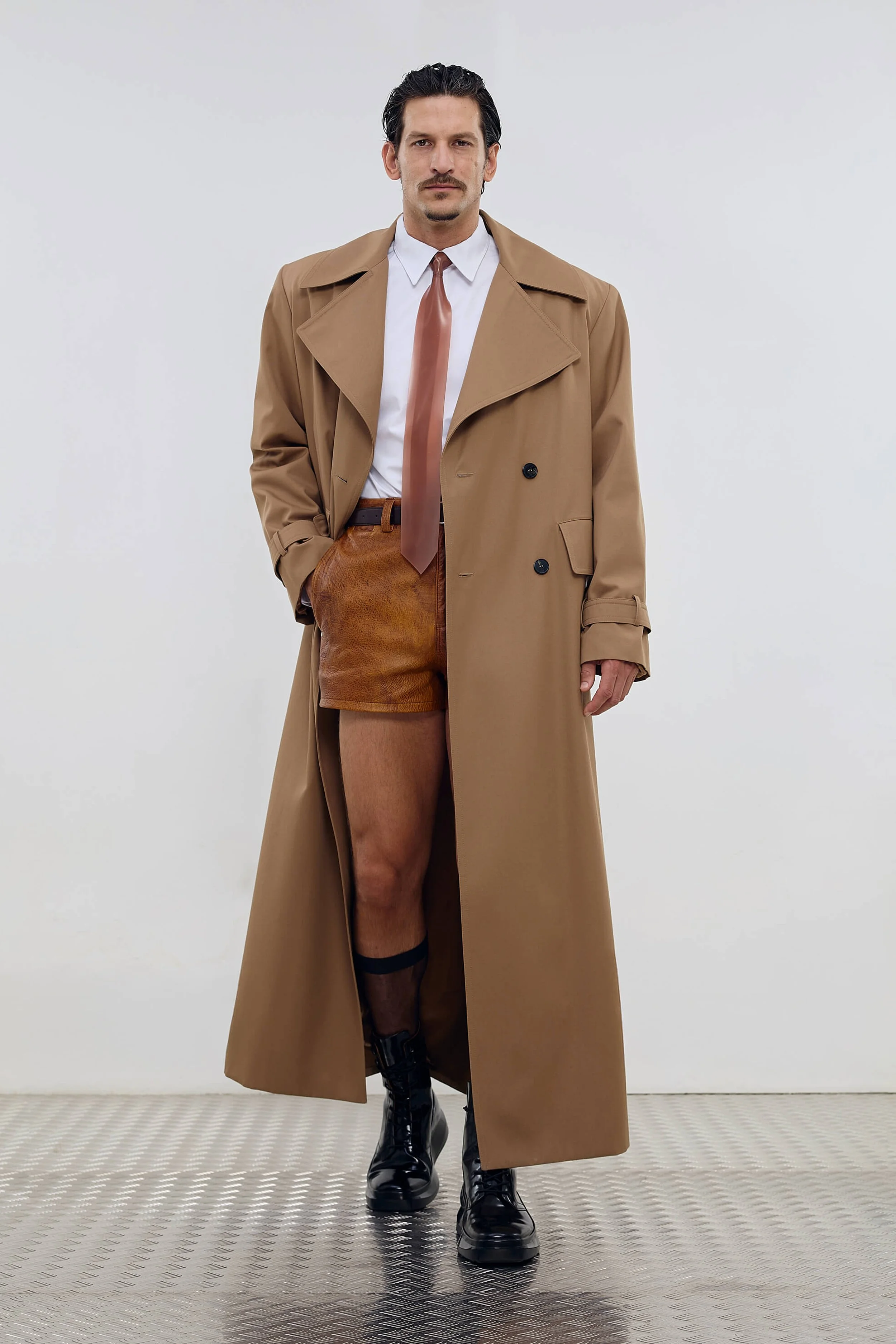
The movie features all the brand’s usual suspects. Long coats with structured shoulders punctuate the entire runtime. Micro leather shorts, power shoulders, latex ties — once again, Nouchi blends the formal with the kinky. Deep neckline polos walk the line. So do the tightly tailored shorts. In merging fantasy with form, and eroticism with emotion, Nouchi reminds us that fashion doesn’t always need a runway. Sometimes, all it takes is a dark room.


Words by Pedro Vasconcelos

COMME DES GARÇONS HOMME PLUS SS26

Last season, Rei Kawakubo imagined the horrors of being on the frontline of a war for soldiers who are unwilling yet forced to fight. A direct reaction to the global context, Spring/Summer 2026 spawns from the same narrative. Now, instead of finding inspiration in the despair of its sufferers, Kawakubo projects the hope for a leader who will enact change.

 Authority here is made a synonym of tailoring. Appropriately named Not Suits, But Suits, the collection is riddled with, well, suits that aren’t suits at all. Deconstructed and reconstructed to the edge of abstraction, the silhouettes evoke uniform without submission, structure without rigidity. The first section brought five patterned non-suits. The loud prints in bright colours distracted the eye, tricking us into believing what we saw were suits. A closer inspection revealed zippered legs, panniered hips, and draped backs.

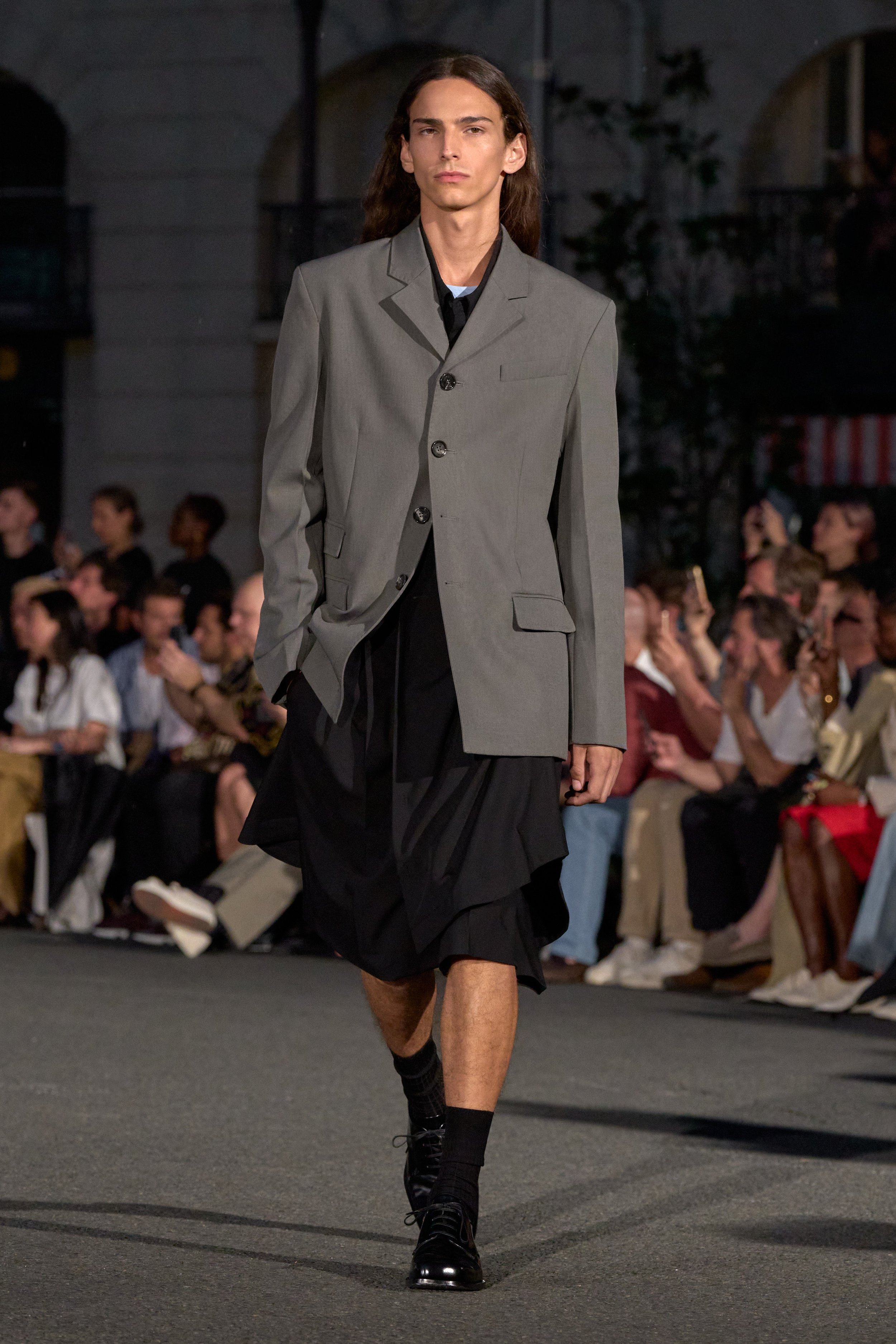
 The approach was carried on in black suits with white shirts. Here, jackets extended beyond the knees, as if weighted by gravity. Zippers in trousers revealed amalgamations of ruffles blooming through the side seams. Bombers and knit capes broke up the non-suits, only for them to return in jackets with protruding lapels in contrasting coloured jersey.

 All looks were styled with oversized baseball caps, their brims extending far beyond the models’ heads. Their hair, long, thick braided wigs that, on most, reached at least the waist, rendered the models faceless, anonymous. Kawakubo’s vision of power is not rooted in hierarchy, but in individuality. 


Words by Pedro Vasconcelos

WILLY CHAVARRIA SS26

Willy Chavarria’s creative nucleus has always spun around the idea of America. Not as it’s been so tediously explored in the past—reliant on a hero fantasy that grows more and more distant from reality by the day—but as a country that breathes cultural diversity. As the political climate in the United States grows darker, Chavarria’s mission grows more urgent.

The show blurred the lines between performance, activism, and fashion. The invitations were presented as deportation papers, the same kind thousands of Americans and legal residents receive every day under Trump’s authoritarian-like command.

The show opened with a stirring performance. Thirty-five men dressed in white T-shirts entered the venue one by one, leaning along the runway. As they got to their place, they kneeled, hands behind their backs. In partnership with the ACLU, the opening was a call to action on the current human rights violations ongoing in Salvadoran prisons, where the justice system has ceased to exist in the way we know it, prosecuting and convicting people with no judicial process.

The peculiarity of what Chavarria does is that his brand’s political existence isn’t a side mission; it’s its core. Beyond the performance that opened the show (and that left many in the audience teary-eyed), his message is woven through his design language beautifully. The colour palette itself, which without context reads as joyful, was inspired by the uniforms of factory workers around the world. Light pinks, bright reds, and cold greens are all contextualised in a social and cultural reality, appearing throughout the collection in Chavarria’s signature tailoring, with oversized proportions and sharp, pointy edges.

Womenswear was particularly strong this season, a fact Chavarria confessed backstage was due to the growth of his team. With Rebecca Mendoza as head of design, Chavarria begins speaking a different womenswear language. Oversized trench coats don’t swallow the body, they amplify it. Short-sleeved shirts and pencil skirts define the silhouette, tucking the waist ever so slightly in. His omnipresent Adidas collaboration lightened the collection midway through, giving us a taste of the ever-desirable Willy boys.

Chavarria continues to redefine not only American fashion. In his hands, the runway becomes about more than clothes. It’s an altar for appreciation and retaliation. 


Words by Pedro Vasconcelos

CAMPERLAB SS26

Achilles Ion Gabriel is a creative force. In recent years, the designer has revived Camperlab, taking it from an experimental offshoot of the renowned Camper shoe brand into a full-fledged fashion label. In the process, he managed to debut an eponymous label too, expanding his vision further into the luxury market. He keeps pushing onwards. Now, under his leadership, Camperlab has just debuted at Paris Fashion Week. Spring/Summer 2026 marks a series of new beginnings: not only has the brand presented a complete clothing collection for the first time, but it’s also changed its logo and monogram.

The show was held in a car park on a blistering Paris day. Heat aside, inside, the venue resembled an impossible-to-get-in nightclub: smoke machines, flashing green lights, and even a black-box bar. This wasn’t the quirky Camperlab we’ve gotten used to; this was an intentional and planned shift for the brand.

That shift continued upstairs, where the actual show took place. The opening look, a denim suit with a twisted houndstooth pattern, was quickly followed by a shrunken shirt, folding in all the deliberately “wrong” places. This concept recurred throughout the show, appearing in deconstructed and tightly cropped cardigans.

The footwear was, predictably, incredible. As the previous primary focus of the brand, it still anchored the collection. Spiky sneakers were inventive, while square-toe, knee-length cowboy boots were nothing short of breathtaking. But it’s no longer just about the shoes. With clothing now in full force, Gabriel moves Camperlab forward. We’re ready to follow.


Words by Pedro Vasconcelos

KENZO SS26

For its SS26 menswear collection, Kenzo went to the heart and soul of Parisian dining culture. The show took place at Maxim’s, one of the most iconic and historic restaurants in the capital. The collection was inspired by the art of going out, the style of clubbing, and the spirit of summer love.

Through a bold and eclectic fusion of streetwear, the collection gives off a punk-aristocrat vibe with playful silhouettes, unexpected fabric choices, and vivid colour contrasts. From flowy silk and sheer pieces to padded bomber jackets and kimono-style robes, the offering emphasises shape and movement. Slouchy, oversized silhouettes, layered styling, and fun graphic elements showcase the brand’s artistic prowess. Accessories like chains and bows add flair and a visually exciting element to each look.

One of the pieces that stood out was the jacket with gold braiding referencing 18th/19th-century military uniforms. Sharply tailored, it was given a modern twist through youthful styling. The animal prints and cartoon prints created visual disruption within Maxim’s luxurious Belle Époque interior, characterised by ornate mirrors, stained glass, and velvet, building a juxtaposition between the bourgeois feeling of the space and the contemporary, artistic, and progressive approach to clothing by creative director Nigo.

The collection is expressive and serves as a reminder that fashion is personal, performative, and artistic. With this show, Kenzo showcases its creative edge, attention to detail, strong constructions, and a not-so-serious approach to fashion.


Words by Carolina Benjumea

MARINE SERRE SS26

The typical eclecticism of Marine Serre took another turn this season. The collection, titled The Source, is a return to the essential—a highlight of the humans behind every garment and the care put into each production. “This season, we are not showing. We are building,” said the designer.

Known for blending aesthetics, textures, and styles, this time the brand created yet another bold showcase where unexpected fabrications, playful pieces, and contrasting elements formed a collection that, somehow, made sense. Merging elements of early-2000s nostalgia, clubwear, and high-fashion avant-garde, the label maintained its signature aesthetics mixed with classical items for the everyday.

Bold colours like scarlet red, turquoise, pink, and black dominate the palette, balanced by earth tones and denim blues. Clean lines and sharp edges create depth and dynamism across looks, while classic pieces provide a timeless balance. Some elements are extra feminine, such as the bodycon dresses, the elegant see-through fabrics, and the asymmetrical draping, while menswear includes sharp but playful shirting and Western-style pieces.

For this season, the brand highlighted its attention to craftsmanship with ornate beadwork and embellishments, while still keeping the edge characteristic of Marine Serre. That subversive allure and confident camp has given the label a youthful and trash-glam aesthetic, subverting the values of traditional high fashion in Paris.

The overall collection celebrated a daring silhouette—bold, clean, and classically provocative in both menswear and womenswear. The looks were wearable with an artistic edge, appealing to those who still like to experiment with clothing and challenge the new, debunking the dream of the ‘clean girl look’ and blurring the lines between clubwear, artwear, and streetwear.


Words by Carolina Benjumea

DIOR MEN SS26

We are so back! After much anticipation, Jonathan Anderson presented his debut menswear collection at the helm of Dior for Spring/Summer 2026. Spoiler alert: it was a triumph.

As the eclectic audience patiently waited for the show to begin – among them Dior superstar ambassador Rihanna and ASAP Rocky, Sabrina Carpenter, indie queen Ethel Cain, as well as a line-up of some of Anderson’s favourite boys like Josh O’Connor, Drew Starkey, or Sam Nivola (dressed in the new Dior fineries before they even hit the runway) – the first look appeared, showcasing the designer’s take on one of the brand’s most iconic pieces, the Bar jacket. Constructed out of speckled wool in dark green and featuring a black lapel, the ultra-chic piece was juxtaposed with one of the collection’s defining garments – a pair of cream hyper-sized cargo shorts with folds of fabric on each side. Throughout the show, the shorts reemerged in khaki green and pink – worn with a blue V-neck or a classic green checked shirt.

Another statement piece was the morning jacket in velvet, worn with a pair of rolled-up washed jeans. The most beguiling outerwear proposition came in the form of a knitted cape, tied with an extra-long and thin black ribbon, sitting on top of an intricately embroidered vest. Anderson’s Dior evokes the attitude of aristocratic nonchalance, combining precious garments with everyday staples like distressed denim or chinos. The vibrant colour palette made us think of French preppy characters from the mid-to-late 2000s – think Louis Garrel in Christophe Honoré’s Love Songs from 2007.

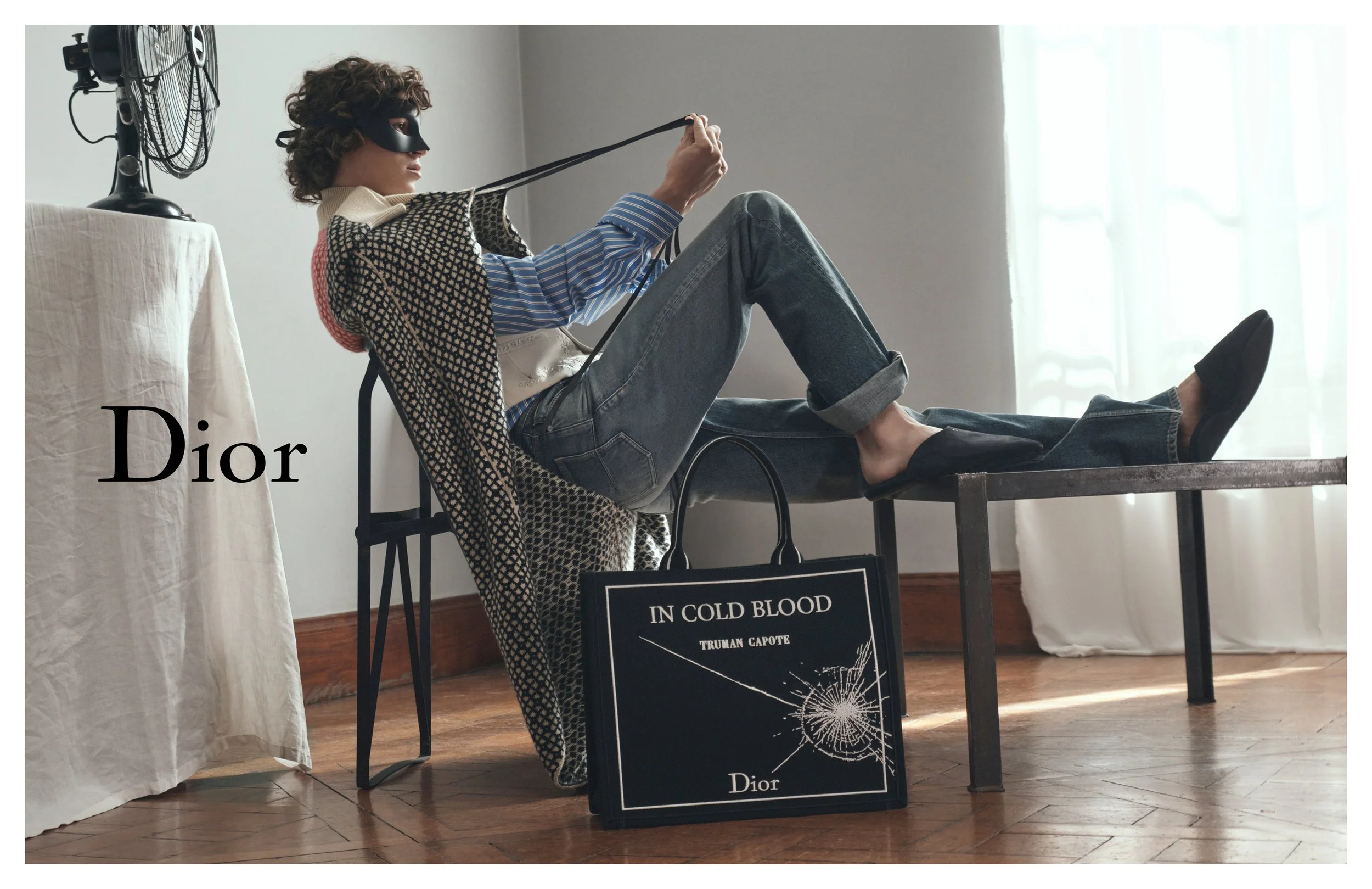
As he has shown us time and time again during his Loewe tenure, Anderson is a master of creating instantly recognisable and striking accessories. For his first round at Dior, the designer generously served us with a ton of options already – from reconsidering Maria Grazia Chiuri’s bestseller Book Tote by decorating it with vintage covers of classic novels like Dracula or Bonjour Tristesse, to establishing a sure contender for the accessory of the season: a high neck collar sitting on top of a bare chest.


Words by Martin Onufrowicz

IM MEN SS26

Inspired by the 20th-century ceramic artist Shoji Kamoda, Issey Miyake Men presented a playful collection. Kamoda, famous for pushing the boundaries of tradition in his medium, often introducing unexpected forms and finishes, is the perfect ally to a brand that so often does the same within the fashion industry. Spring/Summer 2026 was as clear a testament to that ethos as any other Issey Miyake show. Before the models even emerged, dancers wearing Kamoda-inspired patterns waved around bolts of similarly adorned fabric, the stage already alive with movement and transformation.

As the dancers settled in front of a backdrop of aligned patterned sheets, the first look stepped onto the runway. A hint of what was to come, it embraced the amorphous, layering a poncho-like head covering over a matching top and bottoms. It was silhouette as gesture, textile as sculpture. Textured looks soon disrupted the sea of motifs, creating quiet ripples in the form of waved, neutral sleeveless tops.

The collection was light but not in the escapist way most of this season’s offerings have leaned. If the prevailing theme of Spring/Summer 2026 is a kind of fashionable avoidance—a wardrobe designed for summer vacations from reality—IM Men offers something different. This wasn’t about escape. It was about response. Here, lightness isn’t an absence of weight, but a recalibration of it.


Words by Pedro Vasconcelos

DRIES VAN NOTEN SS26

There’s nothing quite like a Dries Van Noten boy. The attitude he projects, eclectic but intellectual, is unmistakable. It’s no surprise, really. Van Noten’s very first runway was a menswear show. He’s always taken the category seriously, always a top contender come January and June. Now, his chosen successor, Julian Klausner, is picking up the mantle. In his debut menswear show, he delivered what we’re preemptively, but emphatically, calling one of the best collections of the season.

 As soon as the first look stepped out, a popped-collar trench coat styled with red socks and matching shoes, the barren venue was transformed. Lou Reed’s voice reverberating between the concrete pillars accompanied a journey into Klausner’s vision for the brand. Like the womenswear shown the season prior, the new creative director’s strength lies in both preserving and advancing the legacy Van Noten defined over more than three decades. The beginning of the show quickly dived into athleisure with the airs of an off-duty ballet dancer: colourful biker shorts combined with tailored sleeveless tops and printed cropped trench coats.

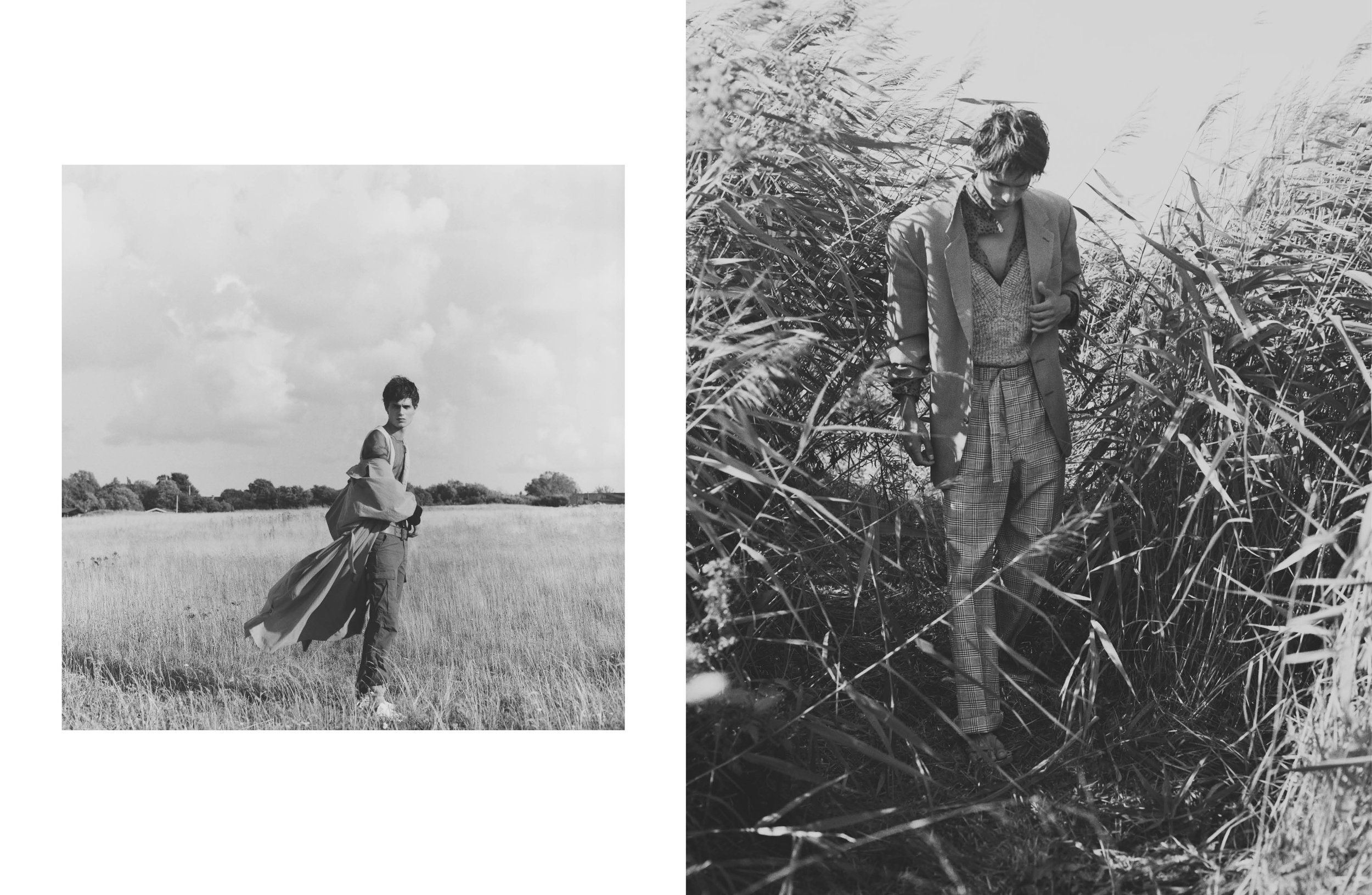
Naturally, patterns punctuated the collection, as they always do. Brightly hued stripes gave way to wallpaper-like florals. These bloomed on everything from carefully sequined vests to sarongs that at times complemented pants, and at others, completely replaced them. There’s a joyful, sexy playfulness in Klausner’s design language. Structured yet light blazers were capped off with the aforementioned sarongs, as if haphazardly tied around the waist. At other times, the same formal jackets were tucked into grey sweatpants. Micro shorts (a Spring/Summer 2026 staple) appeared in idiosyncratic patterns. Accessories were plentiful and outstanding: piped suede oversized bags, bright pink satin sneakers, seashell necklaces.

In what’s only Klausner’s second season, the future doesn’t just seem bright. It feels right. And if this collection is any indication, he’s not just continuing Van Noten’s legacy; he’s confidently expanding it. There’s a new kind of Dries boy on the runway. He’s not just smart or cultured – he’s hot.


Words by Pedro Vasconcelos

RICK OWENS SS26

The mandatory stop at Palais de Tokyo during Paris Fashion Week served as a reminder of fashion’s power and the intensity of its message. Debuting his exhibition Temple of Love at Palais Galliera in Paris, Rick Owens delivered yet another spectacle filled with reflections on beauty, aesthetics, and theatricality.

Each season, Owens explores fashion through a concept, turning his shows into a kind of ritual. Central to his events is smoke, which typically creates a dramatic, almost solemn atmosphere. But this time, it was water that served as the catalyst for the showcase. Models descended the stairs to find themselves in the middle of a fountain—water became the runway, a living prompt to display the clothing. Some immersed themselves in the water in what felt like a rebirth ceremony.

Titled Temple, the collection was an exploration of chaos, life, and desire. It spoke of evolution, yet captured the very essence of the human experience. Owens’ vision—fearless as ever—speaks to the rebellion of being humanly flawed.

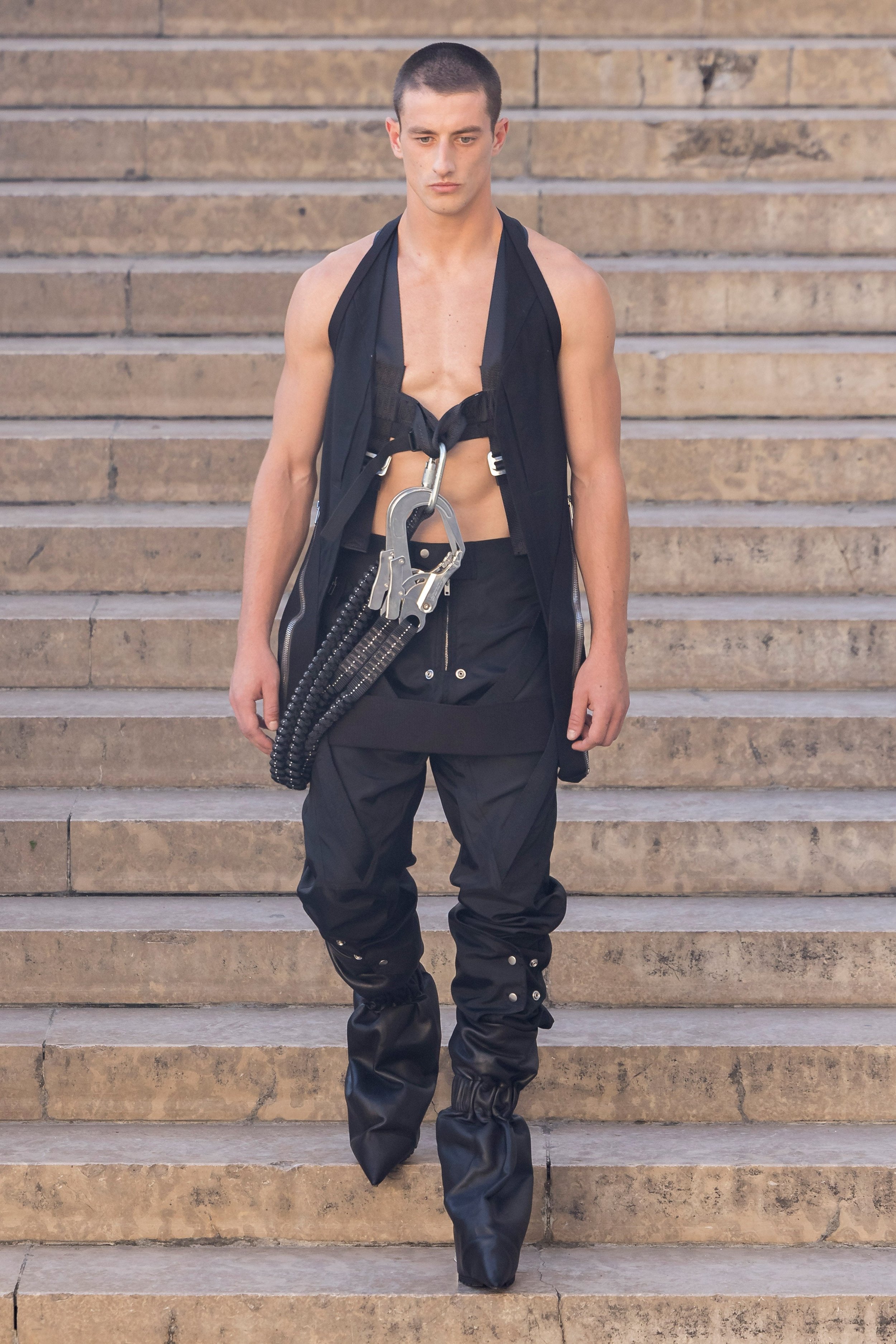
In typical Rick Owens fashion, the pieces were raw, black, body-hugging, and erotic—imbued with a post-apocalyptic edge, with leather dominating the collection. Topless models walked down the runway, while structured capes added a sense of grandeur. Cut-outs, towering platforms, and deconstructed silhouettes formed part of the repertoire, all unmistakably rooted in the brand’s DNA.

More than clothing, fabrics, or construction, Rick Owens invites us to reflect on the world around us, the world that surrounds fashion and our relationship to it. His shows are events that make you think, and this one was about rebirth and apocalypse—a liturgical showcase infused with fantasy and emotional depth.


Words by Carolina Benjumea

AMI SS26

The AMI Spring/Summer ‘26 show was a neighbourhood affair. Showcased around the bronze statue of Louis  XIV at La Place des Victoires to Ravel’s Boléro, the collection celebrated the heart of the brand – after all, the house’s HQ was just a couple of steps away. Design-wise, AMI’s creator Alexandre Mattiussi focused on exploring the forms of his garments, keeping the palette to nine colours: light yellow, sand, grey, green, white, black and blue among them. The clothes and design details were blown up to oversized proportions. The blazer/coat hybrids were constructed with extended sleeves and worn on top of shirts with XXL cuffs peeking out, while supersized buckles in suede and satin adorned skirts and trousers, creating a striking and recognisable accent for the season. Roomy shirt jackets reached the same length as boxer shorts contrasted with them – a look which we’re sure to replicate come next spring!


Words by Martin Onufrowicz

LEMAIRE SS26

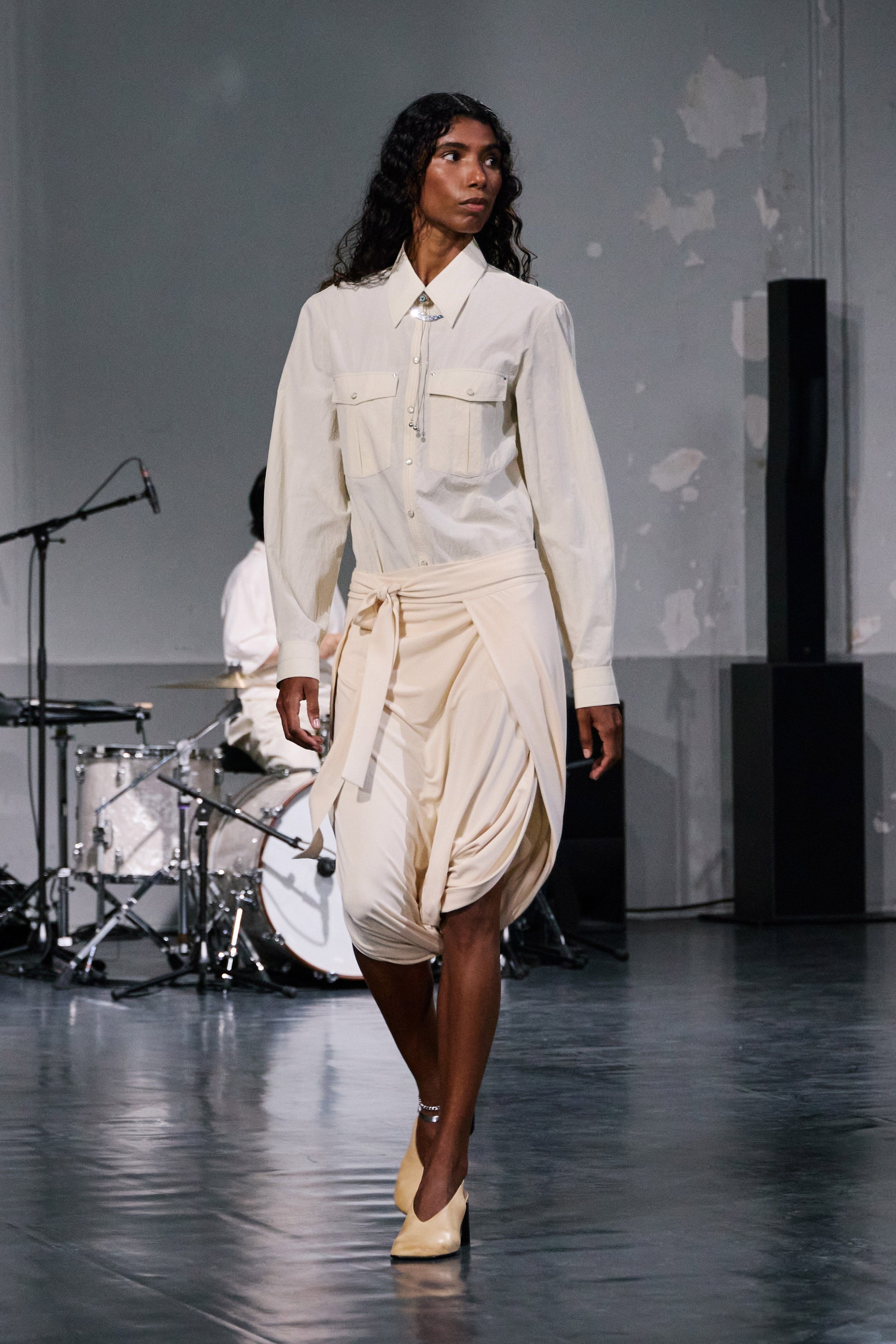
Lemaire woke us right up. Soundtracked by the energetic beat of live drums and guitar, the brand presented a collection for Spring/Summer 2026 that playfully referenced the ideas of New Age and hippie dressing, juxtaposing it with the house’s signature lived-in elegance.

Some of the looks explored the idea of “spiritual” wardrobe in a more explicit manner. Small beaded pouches peeked from underneath roomy jackets. A printed T-shirt in cream was worn with a white long-sleeved top and a dangling beaded necklace reaching the waist, while a chocolate brown tunic accompanied white culottes. A statement necklace (one of the brand’s signatures in their compelling vocabulary) with a pendant in the shape of a gua sha fork brightened up an all-black silhouette.

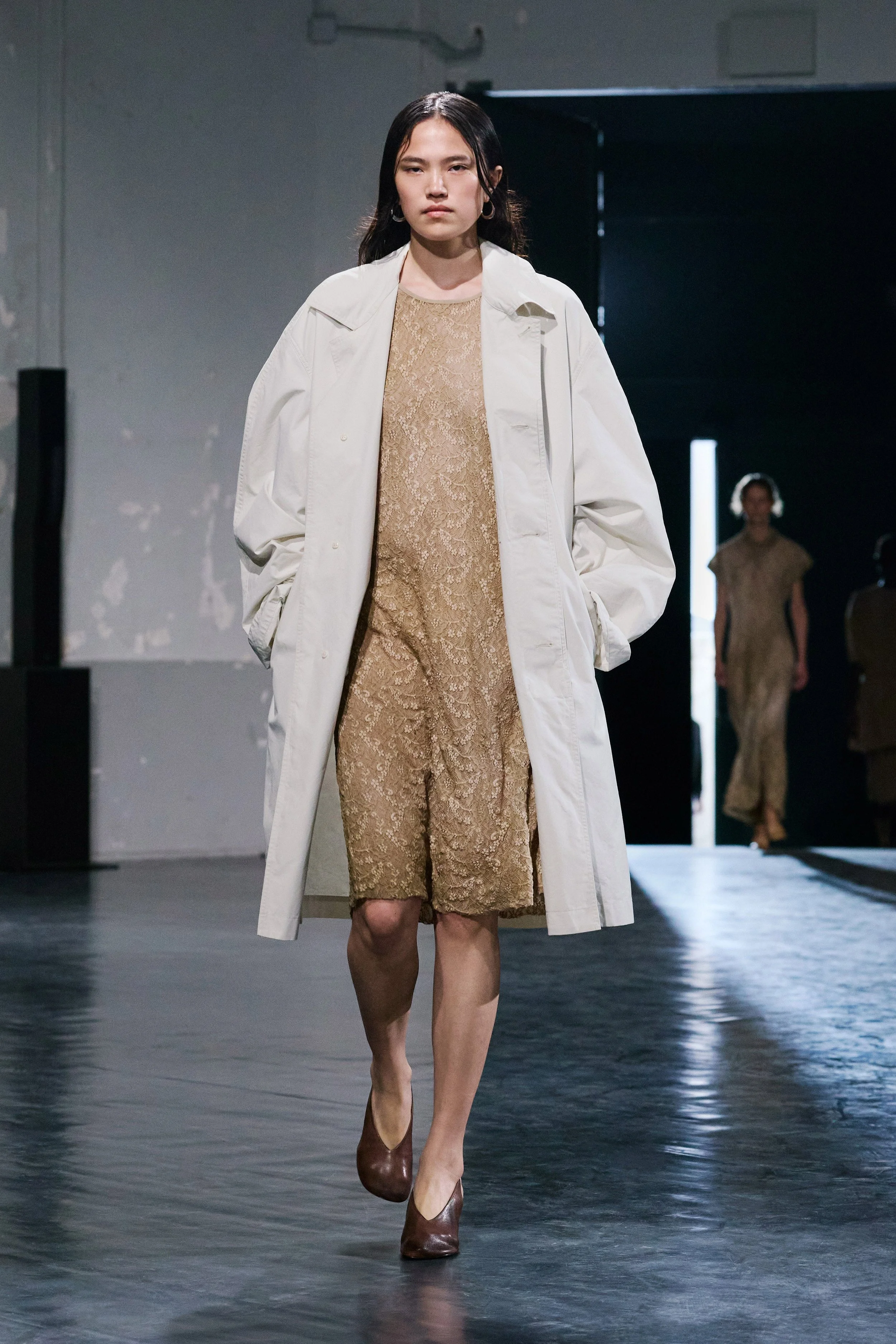
The garments felt even more delicate and sensual than usual. Lace was used to create flowy dresses, one of them worn under a light off-white trench. Tied cream shorts were draped to perfection, showcasing openings on the side of the legs. In a show that felt almost meditative, Lemaire once again delivered what they do best: clothes that feel like trusted companions –  soothing to the mind and comforting in the idea that sophistication will always prevail.


Words by Martin Onufrowicz

EGONLAB SS26

At EgonLab, the SS26 menswear collection presented a bold vision that fused avant-garde tailoring with elements of deconstruction and theatricality. Exaggerated silhouettes, sculptural accessories, and a mix of monochromatic and muted palettes created an artistic yet raw aesthetic. Extreme shoulders and dramatic, sculptural necklines delivered futuristic, statuesque looks.

The garments frequently play with asymmetry, loose panels, and fluidity—balancing precision and chaos—while oversized silhouettes dominate, particularly in coats and outerwear. The collection offers a poetic encounter between structure, precision, and dramatism, serving as a unique representation of the modern man.

The pieces flirt between conceptual and surrealist approaches, with touches of tailoring that showcase the brand’s technical prowess and deep understanding of proportion and construction. The collection evokes an edgy man with timeless appeal and artistic allure.

The overall offering is dominated by black, white, beige, and khaki, with pops of mustard and gingham red. Volumes and textures take centre stage. Sharp lines elevate traditional menswear into a refined design language where the garments themselves become focal points. Ultimately, EgonLab’s SS26 collection redefined contemporary menswear through a minimalist yet maximalist lens—where precision meets provocation, and where garments become sculptural extensions of the wearer’s inner world.


Words by Carolina Benjumea

ACNE STUDIOS SS26

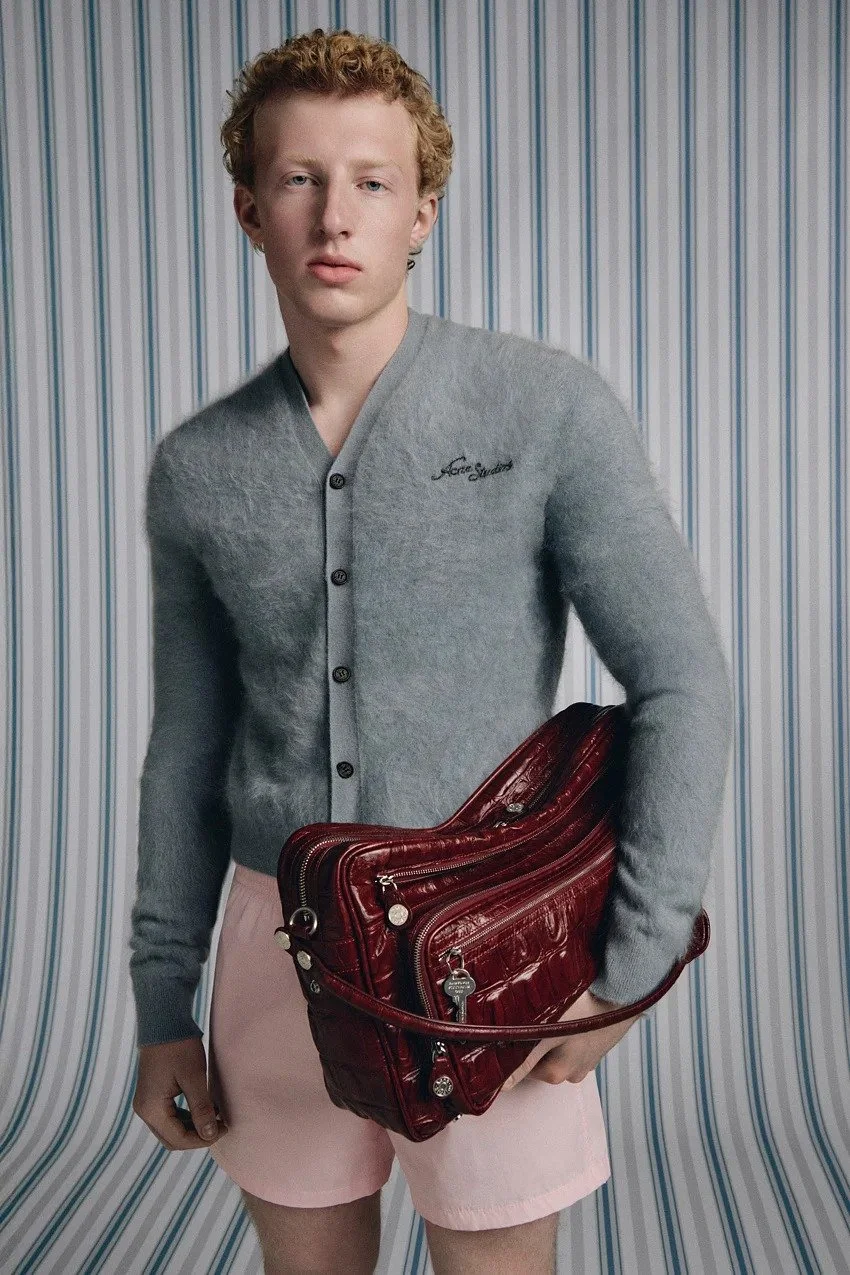
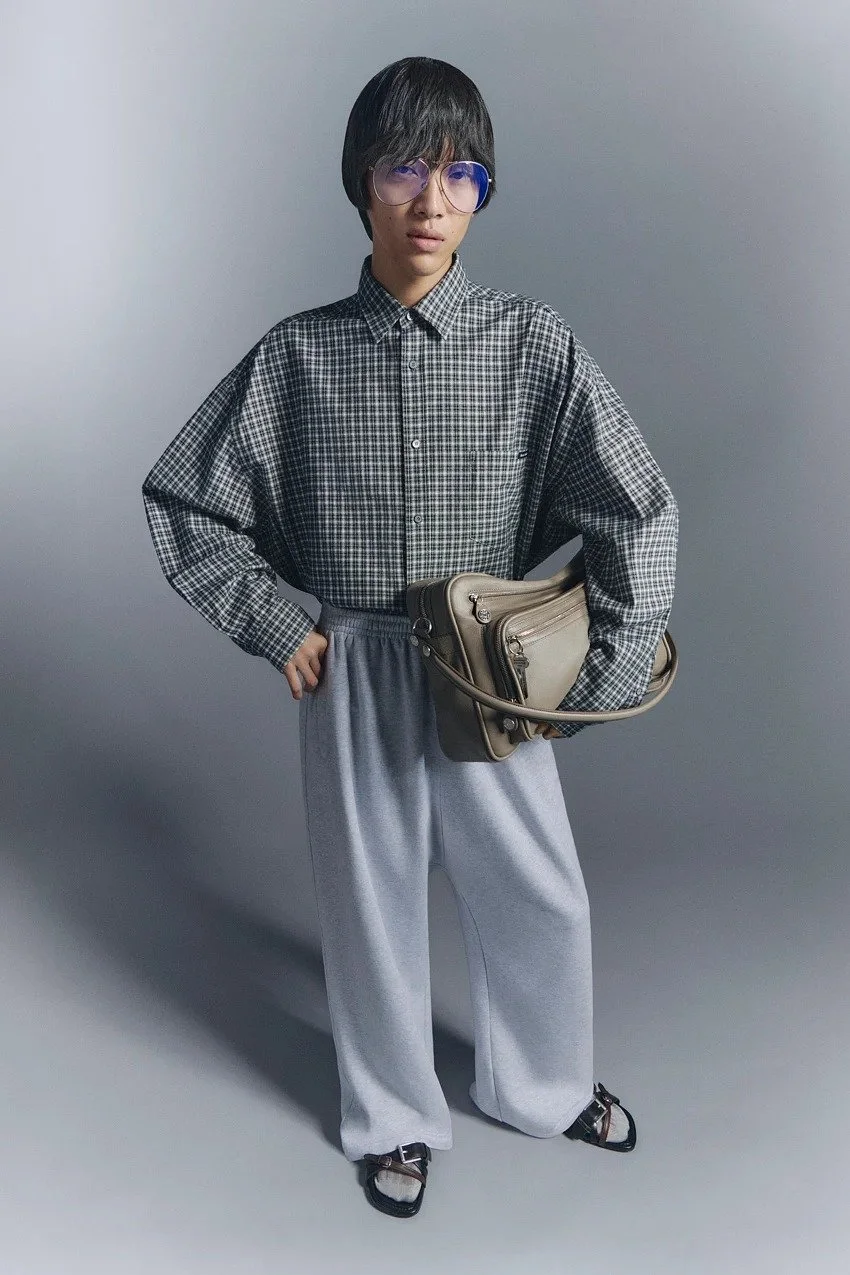
For Spring/Summer 2026, Acne Studios is going nerdy. With a hint of awkwardness that appears poised, the collection merges geeky, classic, and modern styles. A sophisticated yet playful retro aesthetic, drawing from 1970s and early 2000s influences, modern tailoring, and a utilitarian sensibility, was presented through pieces that feel timeless yet reimagined with a contemporary approach.

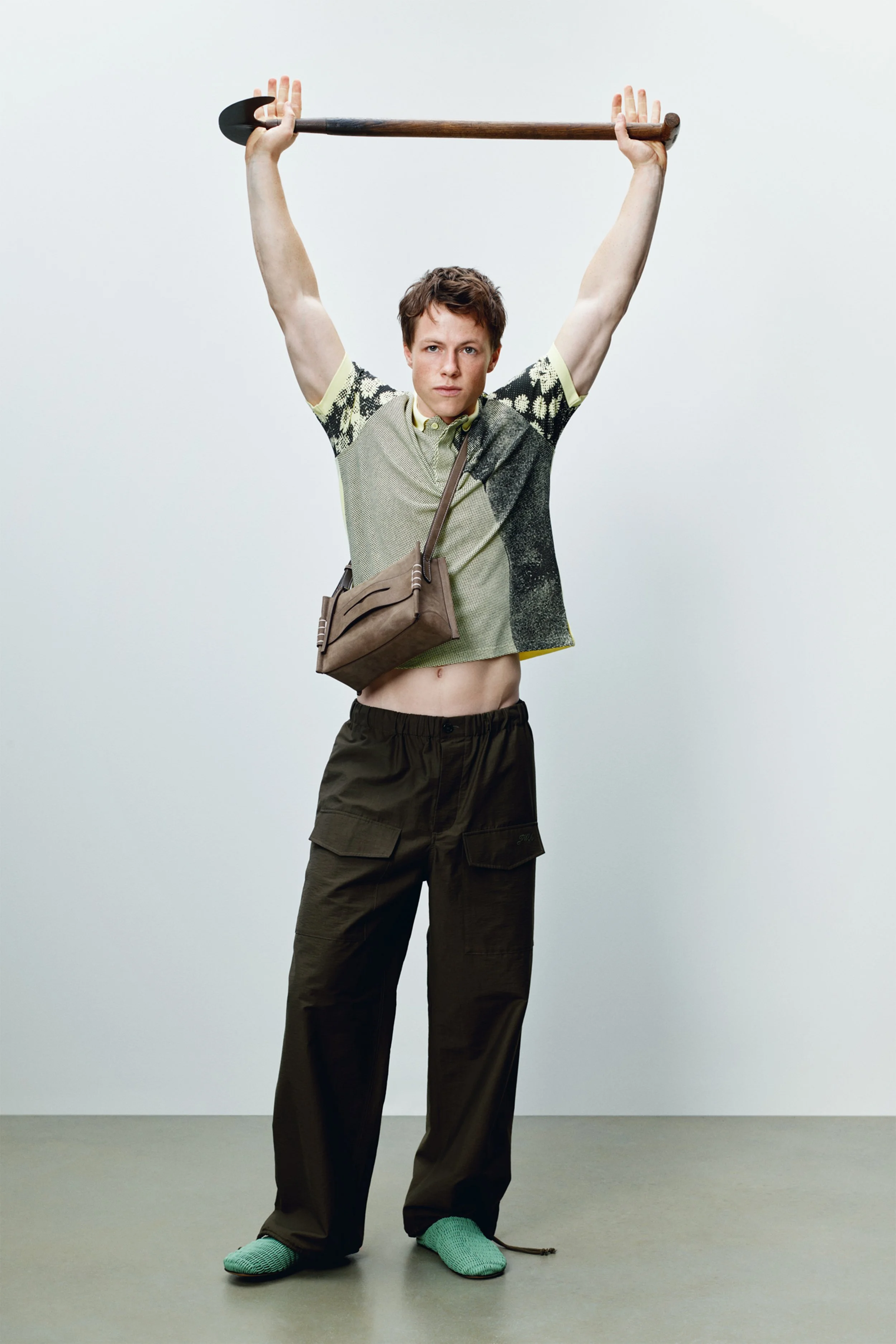
Wide lapels, flared pants, knit polos, leather textures, and colour palettes ranging from muted pastels to warm earth tones delivered an offering deeply rooted in the DNA of Acne, infused with the signature 'cool' twist the brand is known for. A deliberate softness and sense of youth, evident in accessories like satchels, silk scarves, and sandals, disrupts traditional norms of masculine tailoring.

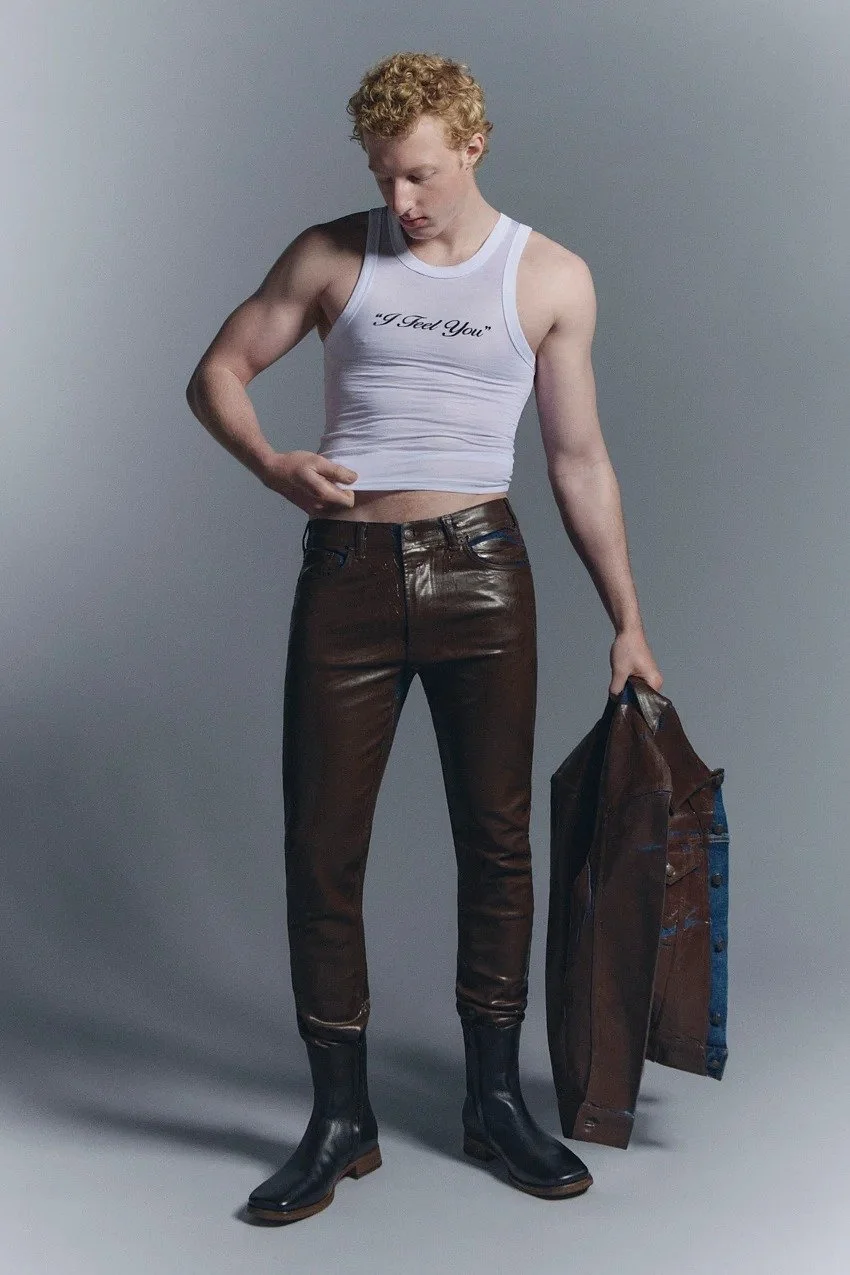
The pieces successfully blend diverse inspirations to create an eclectic collection. From turquoise cowboy boots to structured outerwear and tight leather ensembles, each look served as proof of the infinite ways masculinity can be expressed, and the power in breaking away from traditional perceptions of it. Bold and youthful with a confident edge, yet casual and polished, the looks disrupted conventional menswear to introduce a new silhouette.


Words by Carolina Benjumea

GIORGIO ARMANI SS26

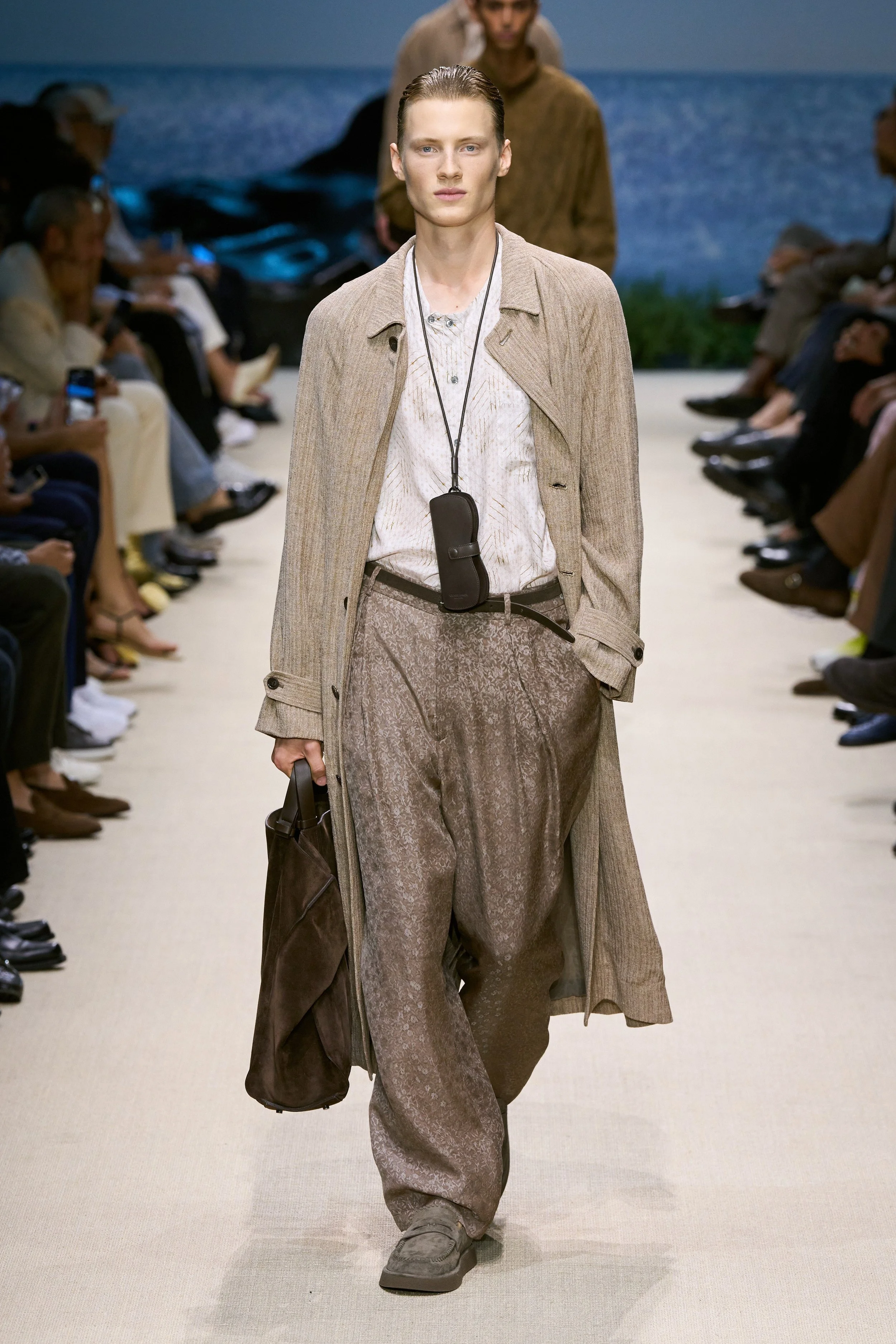
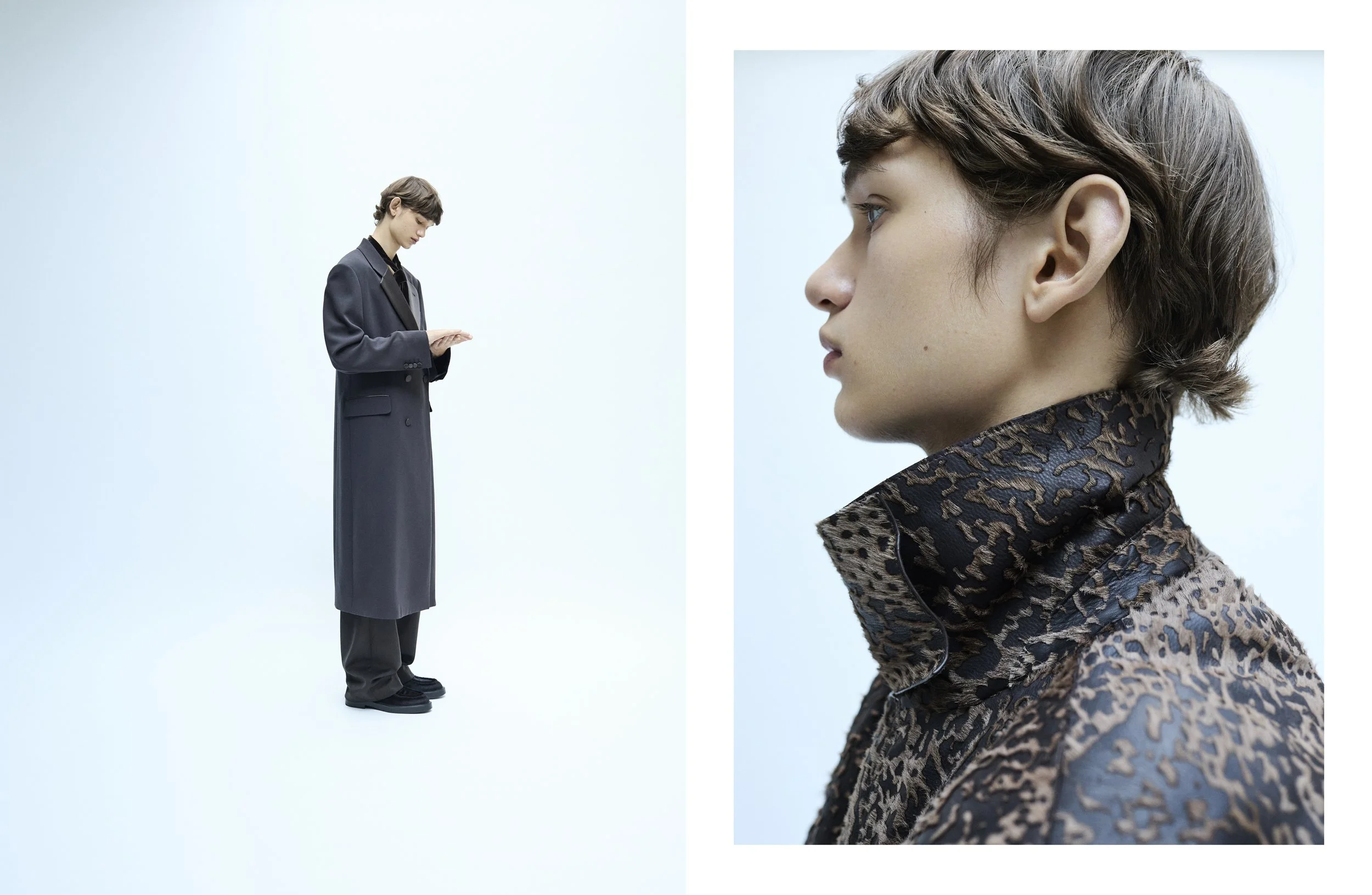
Giorgio Armani is a rare being. In an industry where fashion legacies are switched between designers like trading cards, Armani’s legacy sits on his own shoulders. And what a legacy it is. The designer didn’t just create a look, he defined a generation’s sense of style. It’s no wonder, then, that his shows occupy a special place in the industry’s heart. His Spring/Summer 2026 show was, in a way, no different from his previous ones, and in others, competently different. His idiosyncratic elegance, the same one that first set him apart, was omnipresent throughout the collection. Beige suits were cut beautifully, draped across the body with ease.

The classic Armani rhythm walked us from a neutral section straight into a lavender/cerulean/orchid garden. A stand-collared set flowed beautifully in a textured silk. A suede periwinkle shirt was lush, somehow not subdued by a pair of grey linen trousers, instead, highlighted by the bottom half’s neutrality. Printed loose shirts closed off the section, giving way to six monochromatic black looks. Their common colour only emphasised the difference in silhouette: some deep-plunged embroidered shirts, while others revealed the model’s body through sensual yet conservative transparencies.

For the first time in the history of his namesake brand, Mr. Armani didn’t come out to take his bow. A press release issued days before the show stated that the legendary designer was recovering from a brief stay in the hospital. His absence was felt, but his legacy—the fashion language he’s spent the last 50 years writing—was as present as always. Here’s to many more seasons of Mr. Armani waving his hands at us.


Words by Pedro Vasconcelos

EMPORIO ARMANI SS26

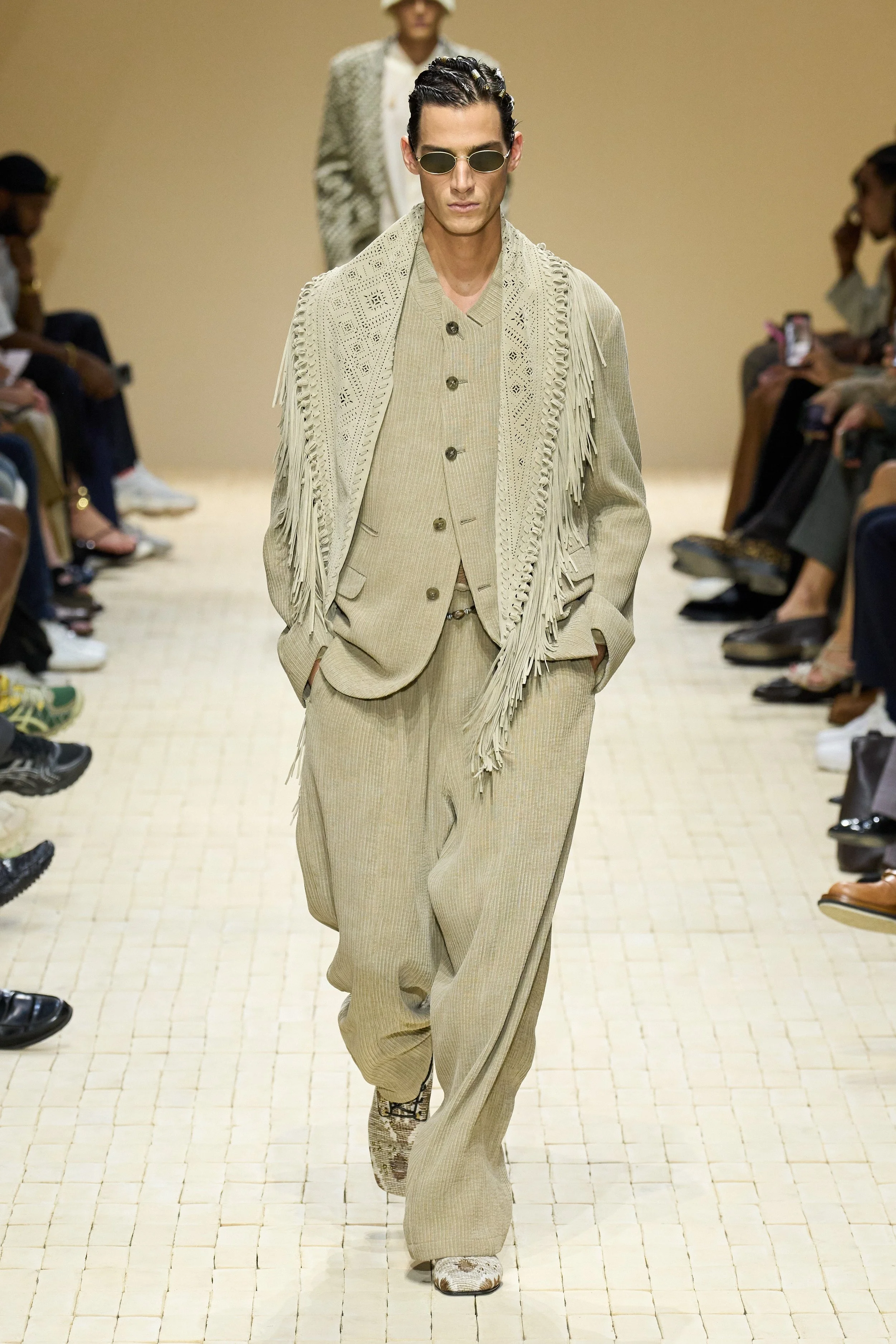
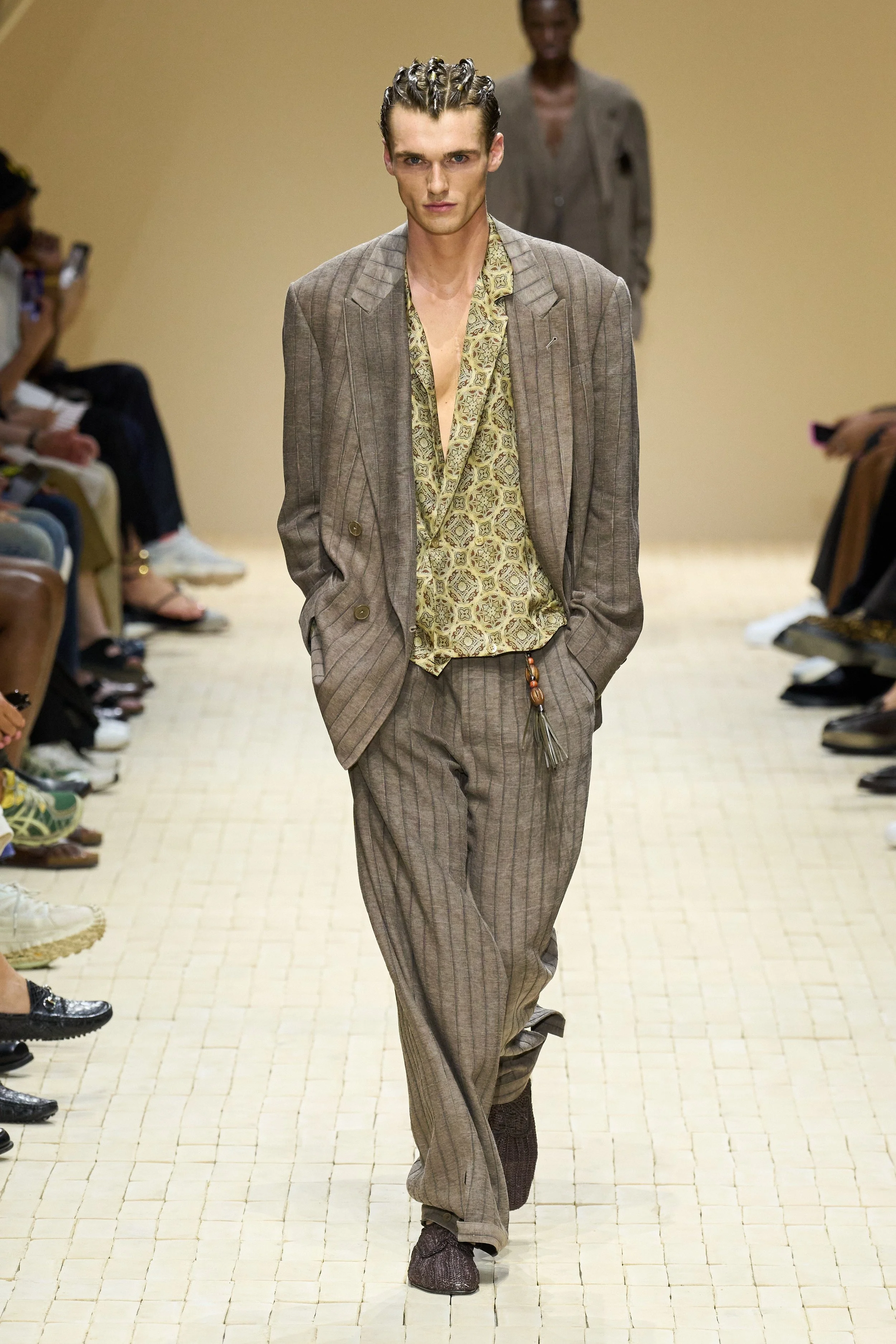
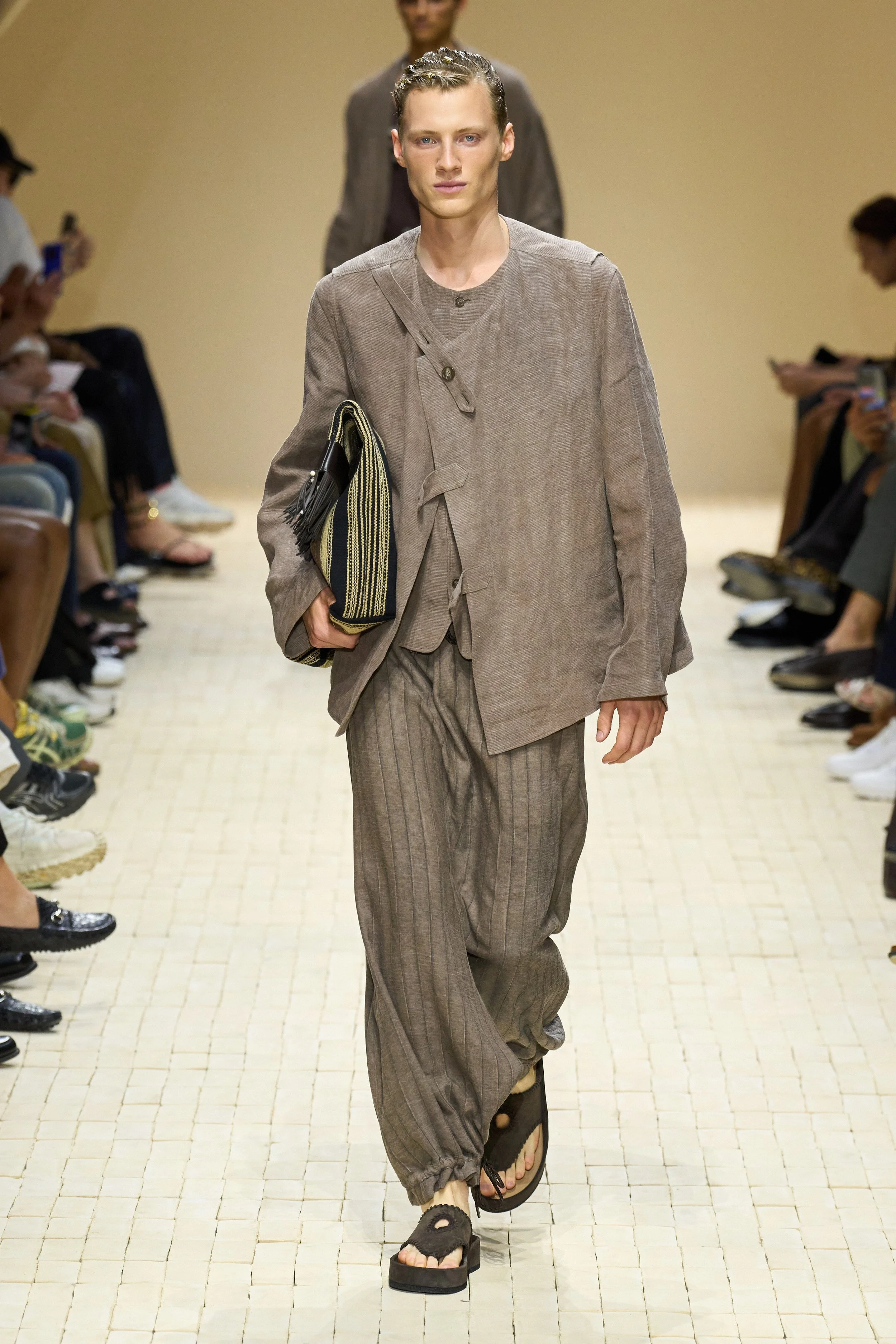
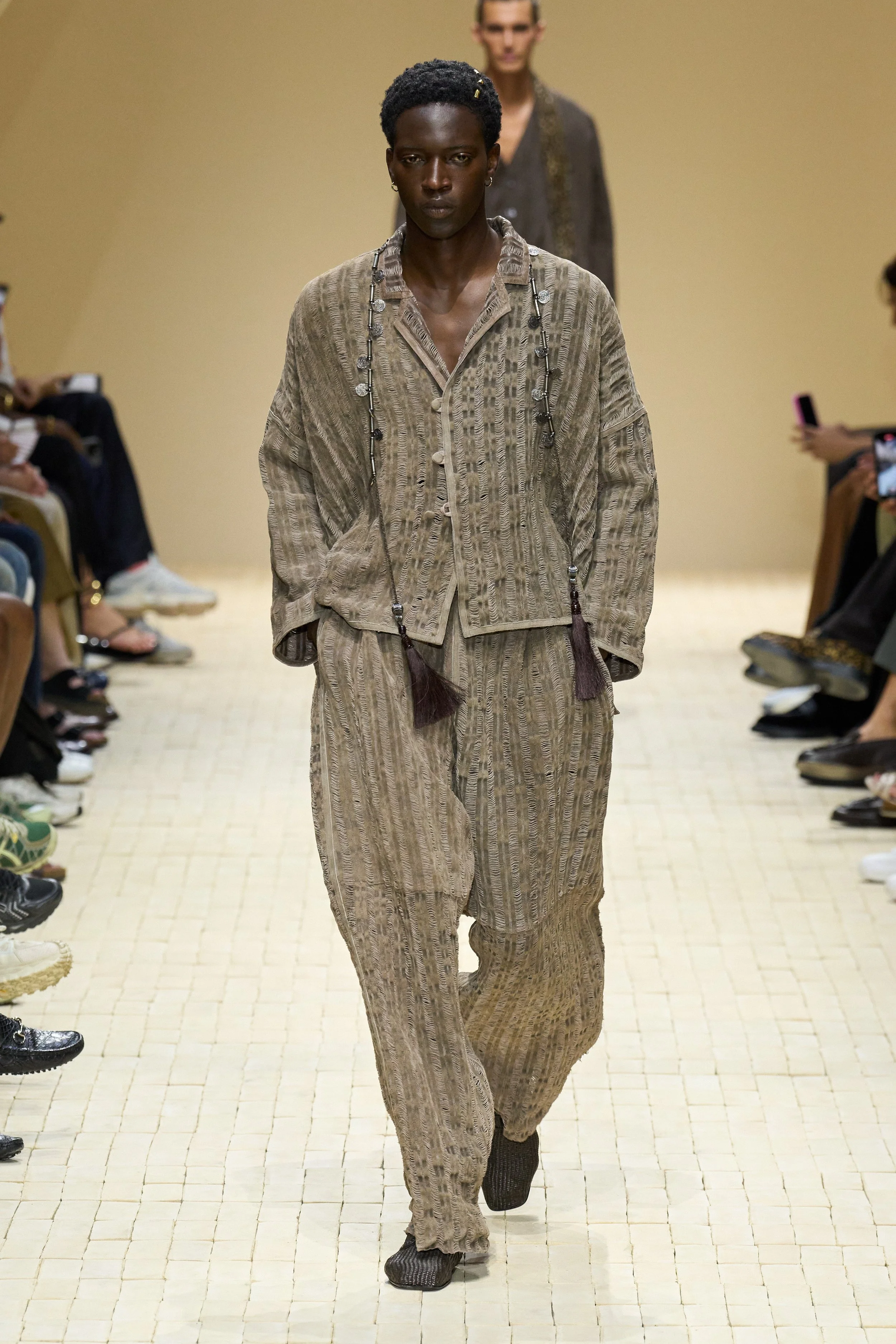
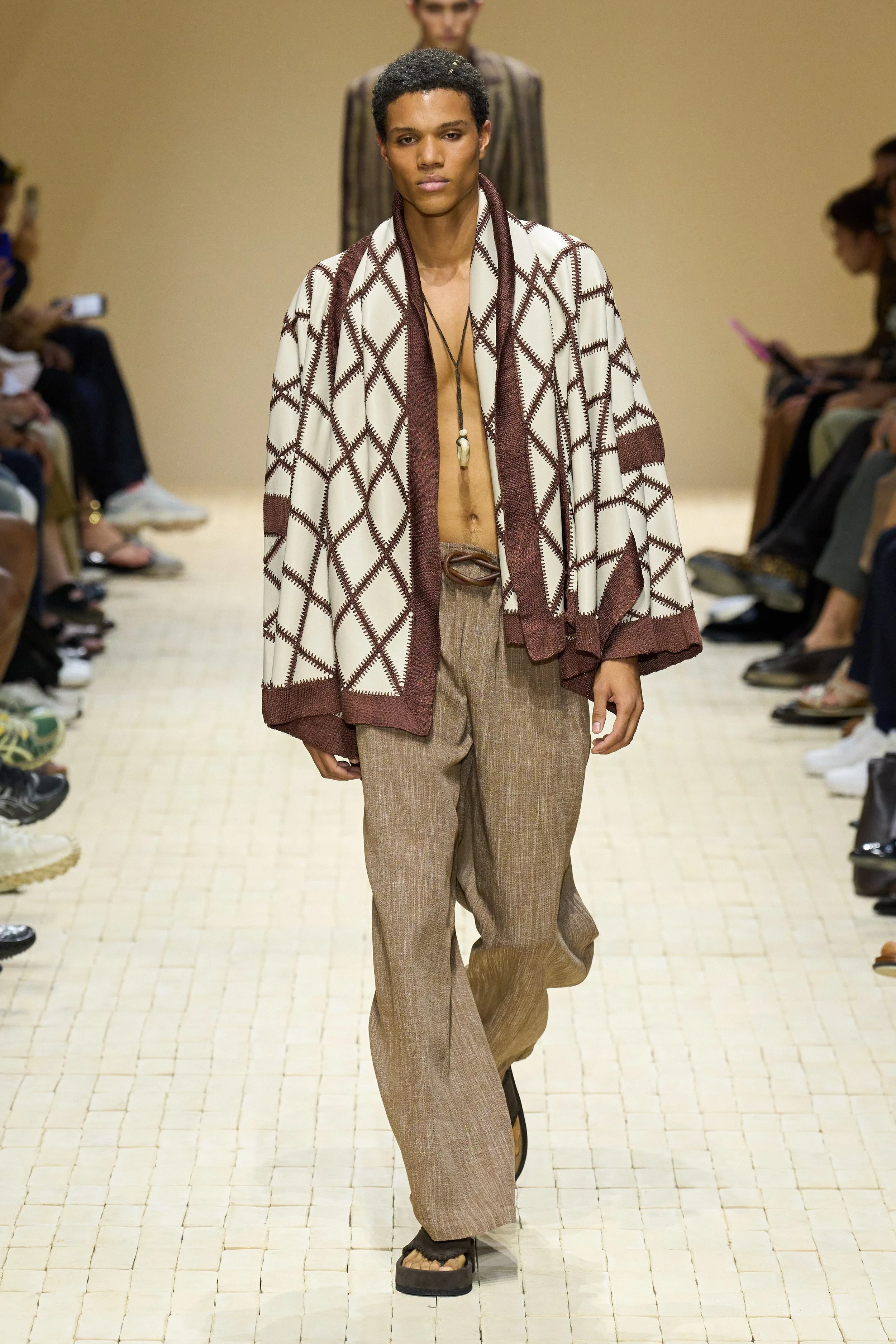
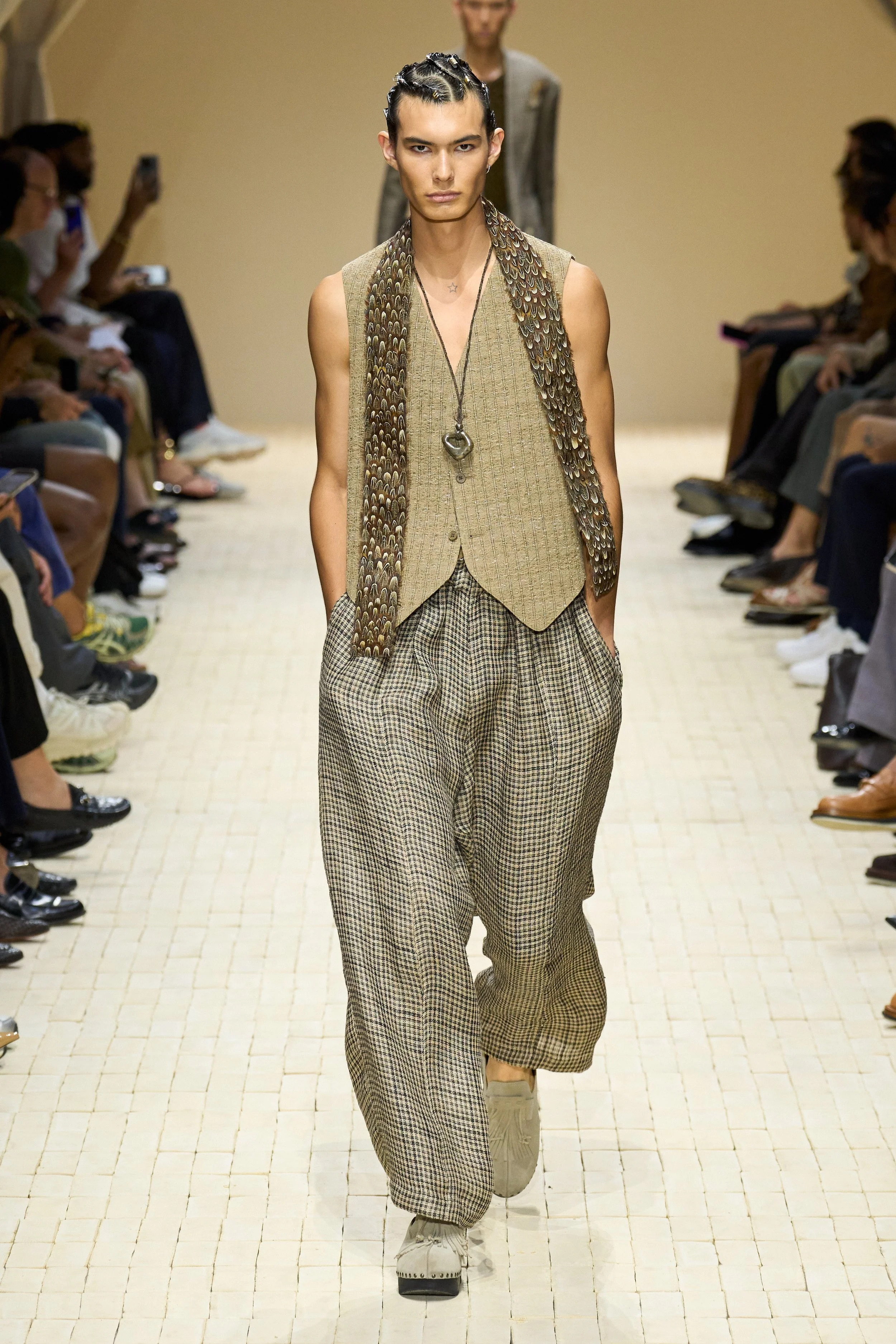
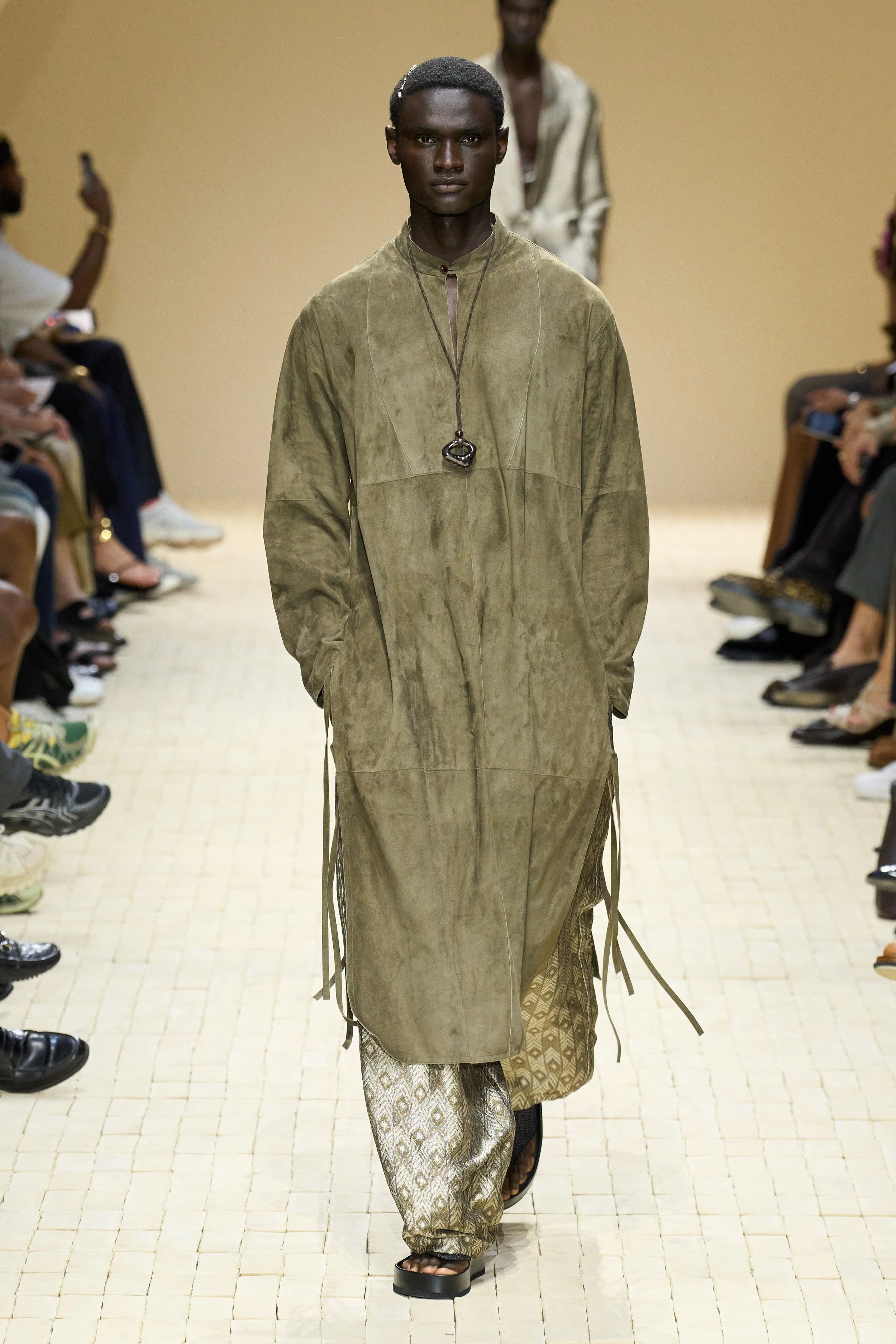
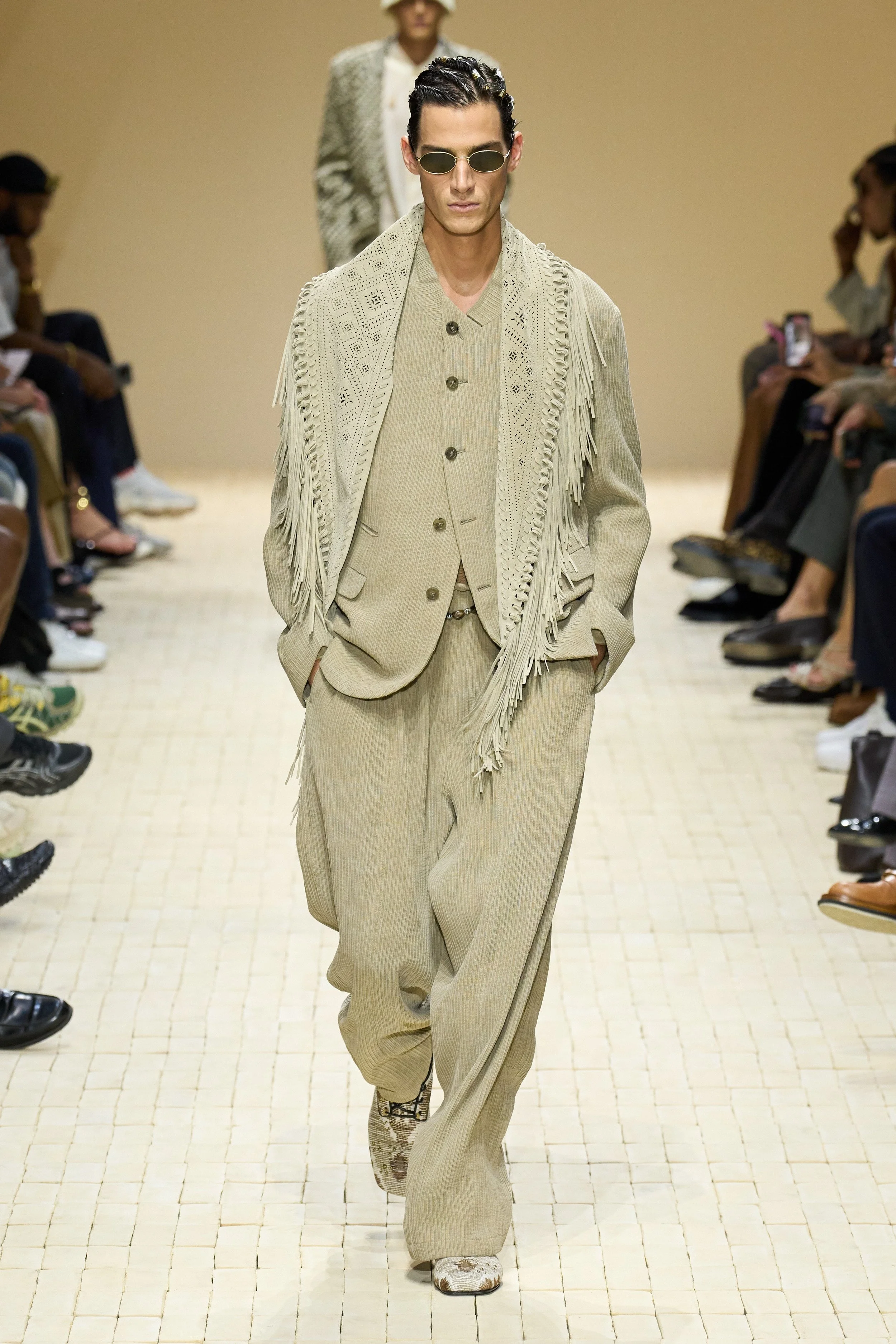
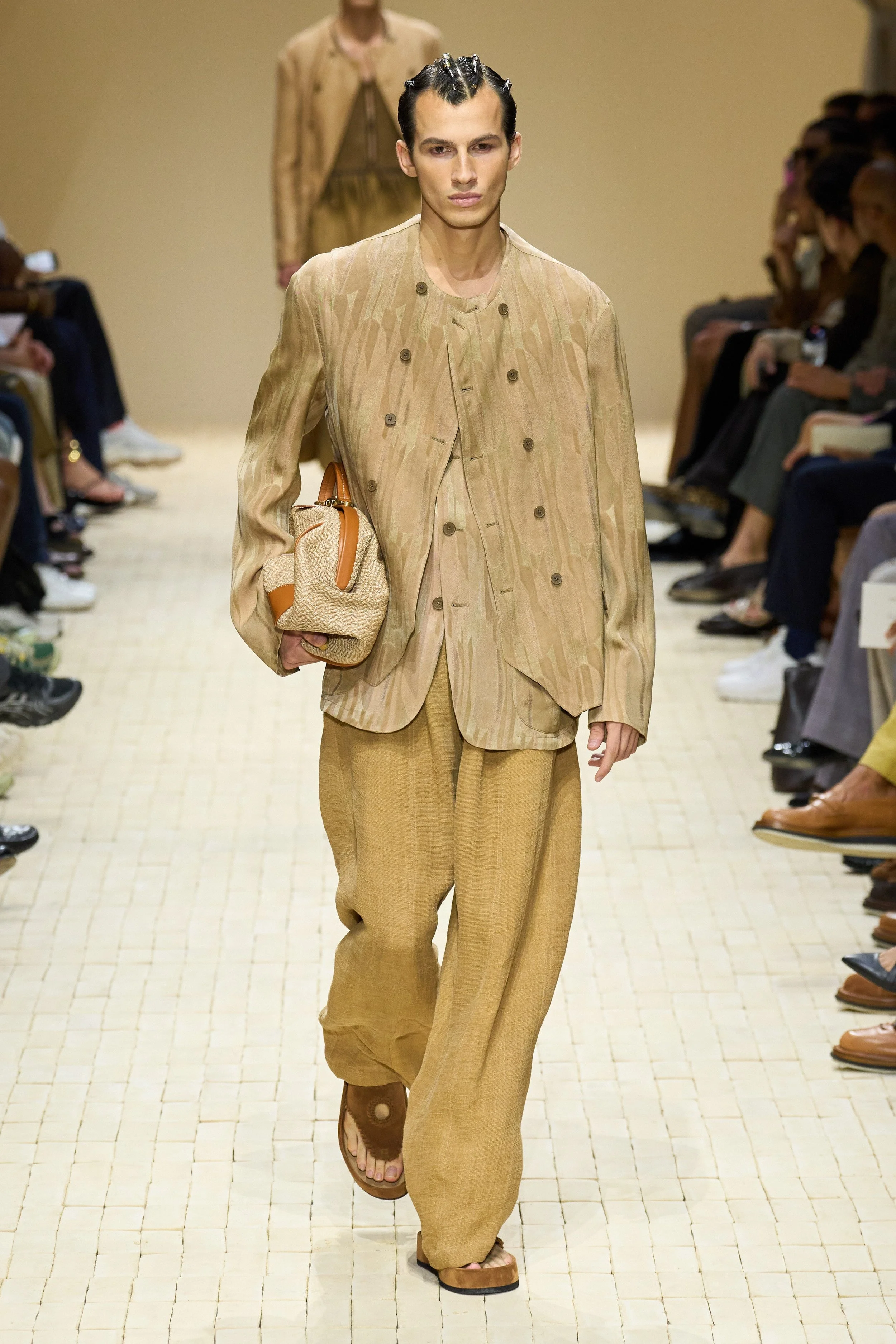
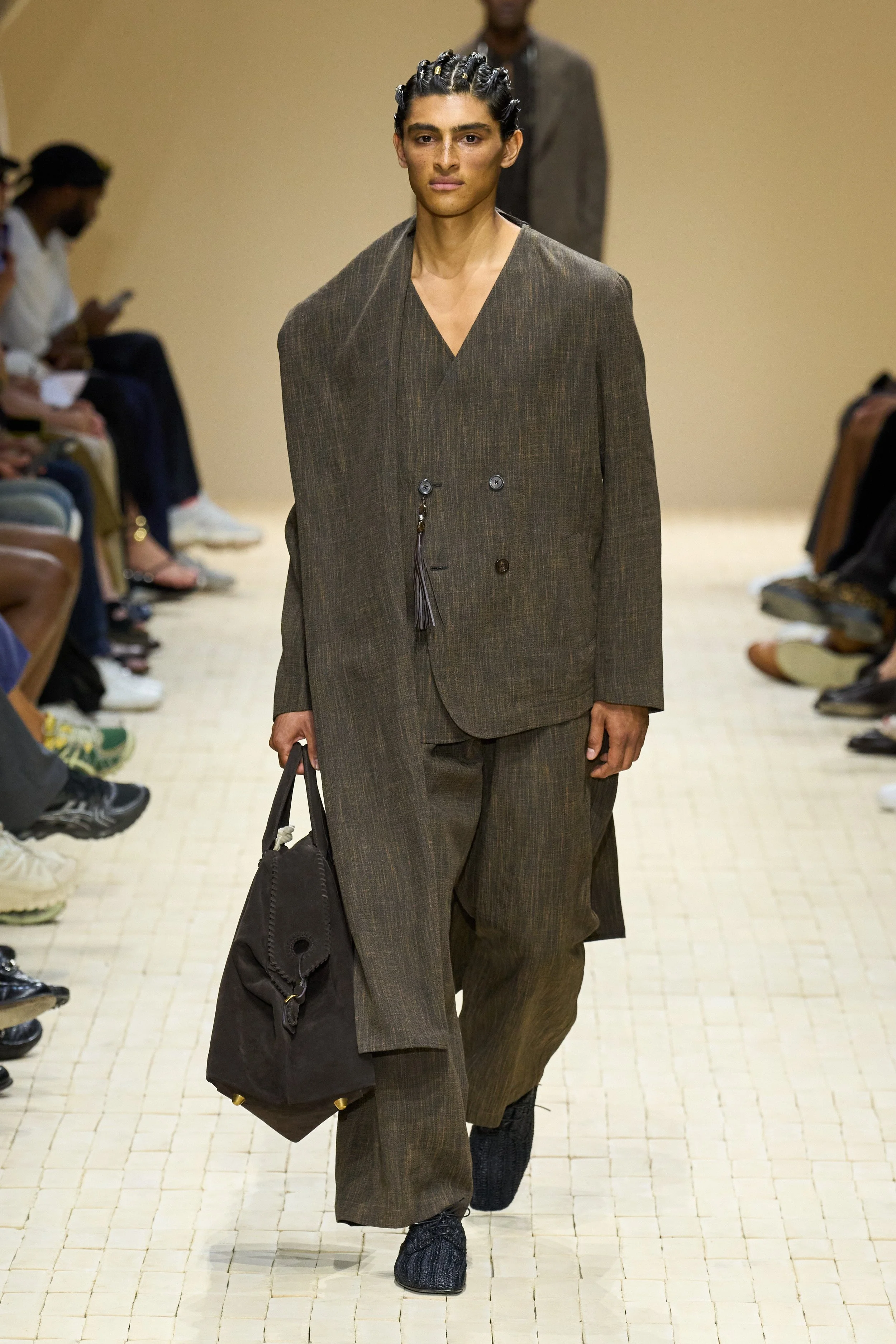
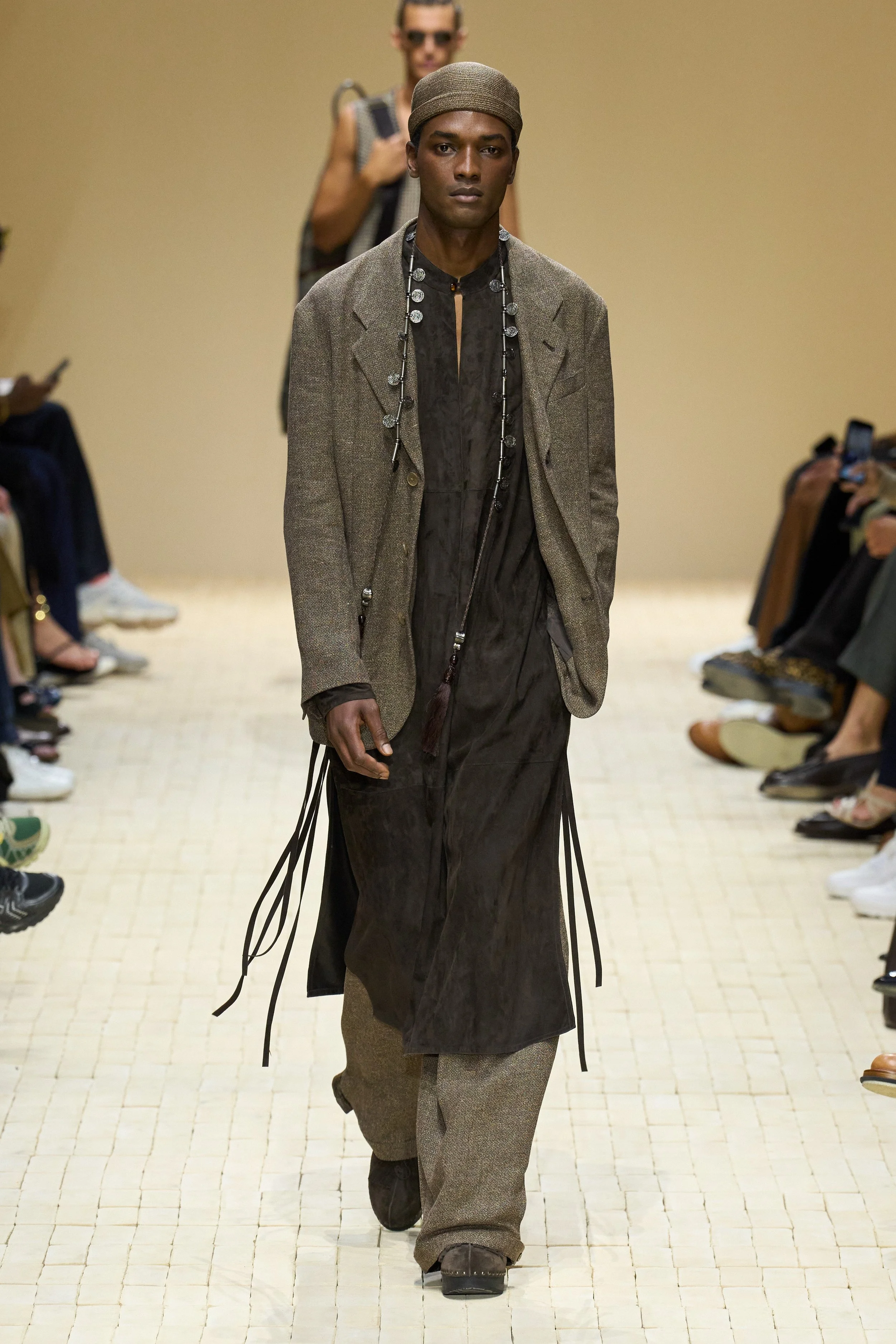
For his Emporio Armani SS26 show in Milan, Giorgio Armani seemed to be feeling spiritual. Dressed in shades of earthy tones, the hunky models appeared in variations on mystic wear – long necklaces with coins and tassels were worn on top of vests with matching billowy trousers, tunics with openings on the sides were paired with printed bottoms in sheen fabric and delicate kimono-like coats were juxtaposed with muscled bare chests (no twinks here!) and chunky flip-flops in many variants.

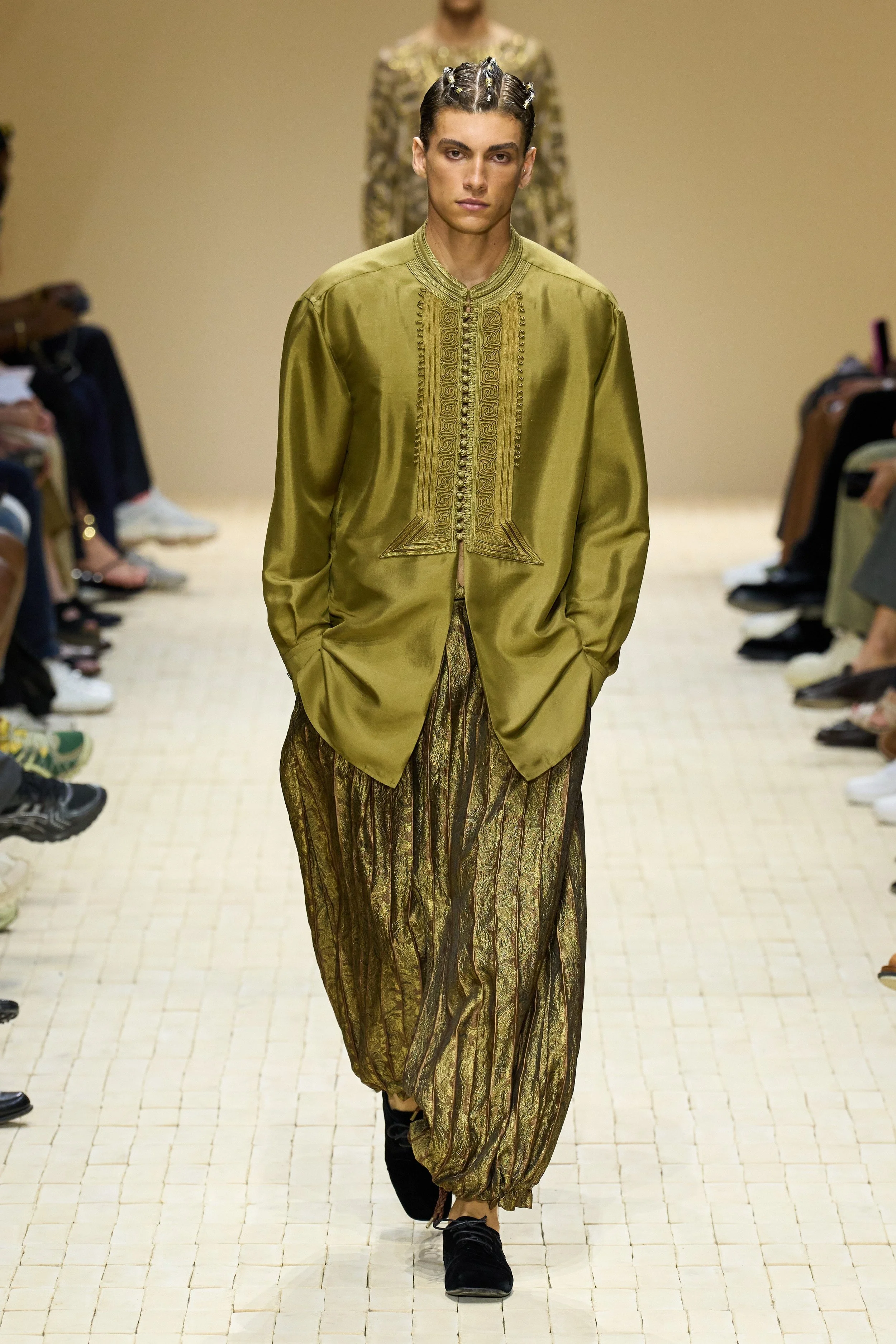
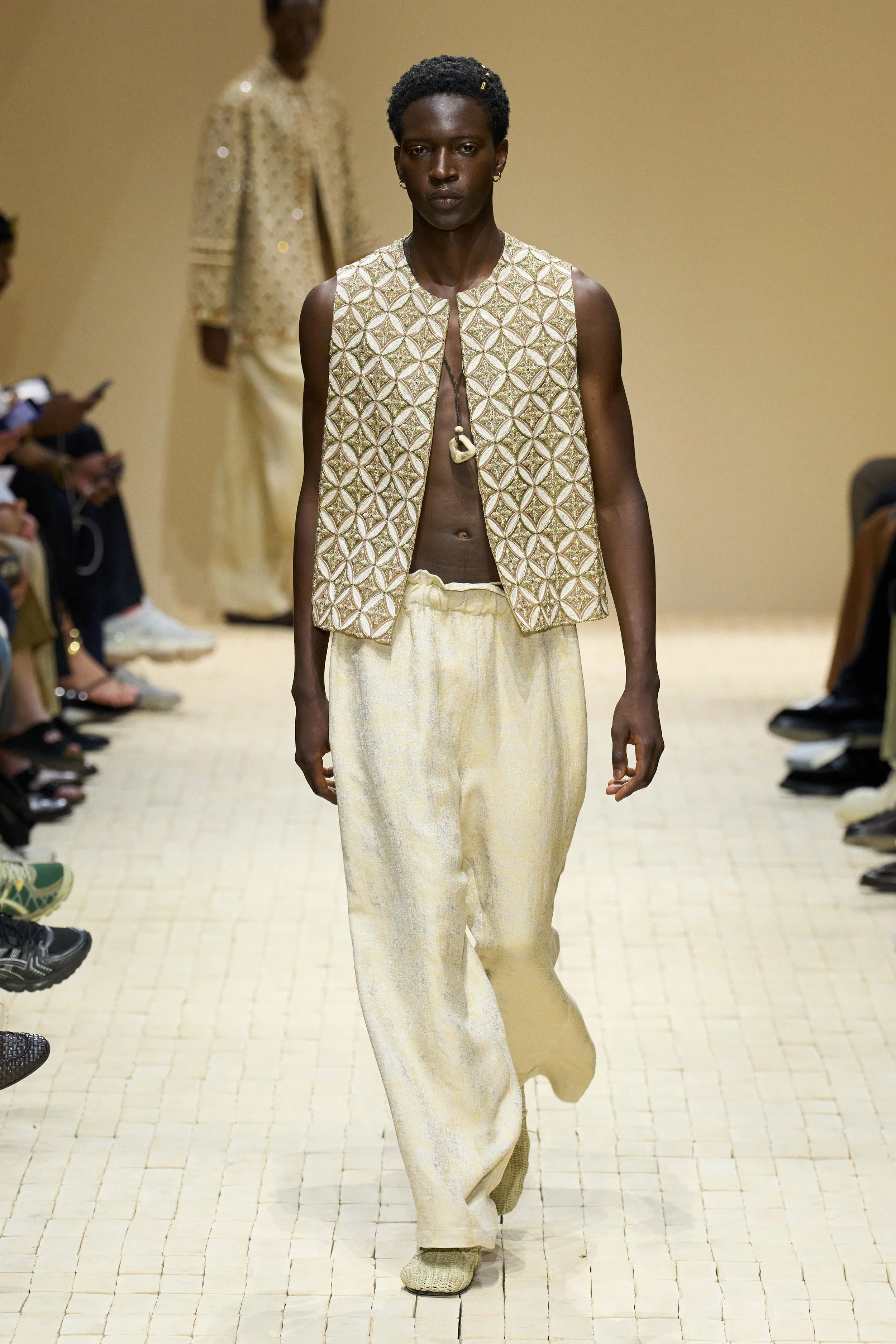
The brand’s show notes for the season revealed that the collection was based upon one of Armani’s central notions: a deep appreciation for cultures from all around the world, and the way it affects modern everyday dressing. As the show progressed towards more evening-focused propositions, the garments became even more intricate, with printed gold vests decorated with rows of tassels, or silk shirts with grandad collars and sophisticated embroidery. When fashion is concerned, Armani is an almost religious figure — and we could not feel more devoted to his latest vision!


Words by Martin Onufrowicz

PRADA SS26

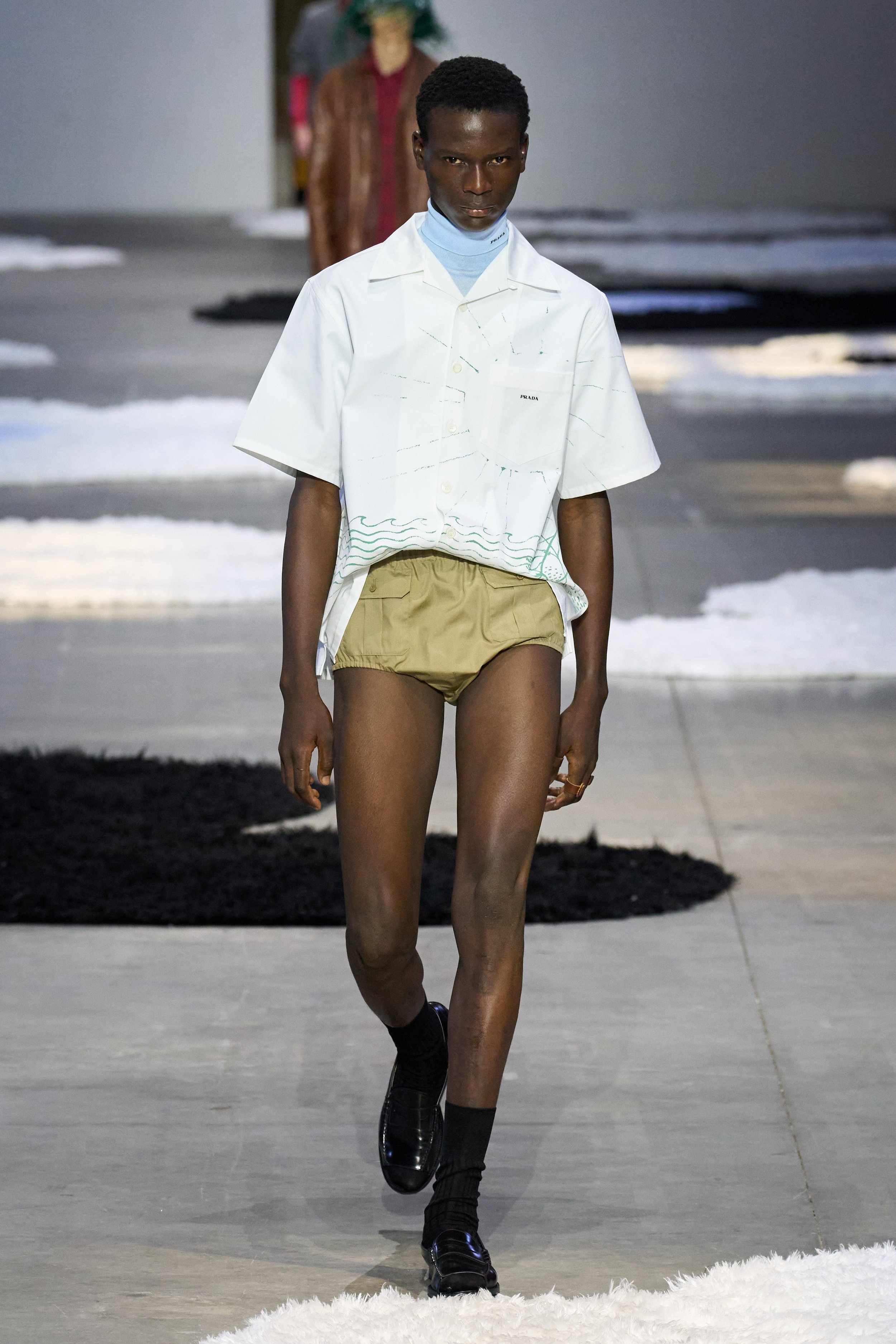
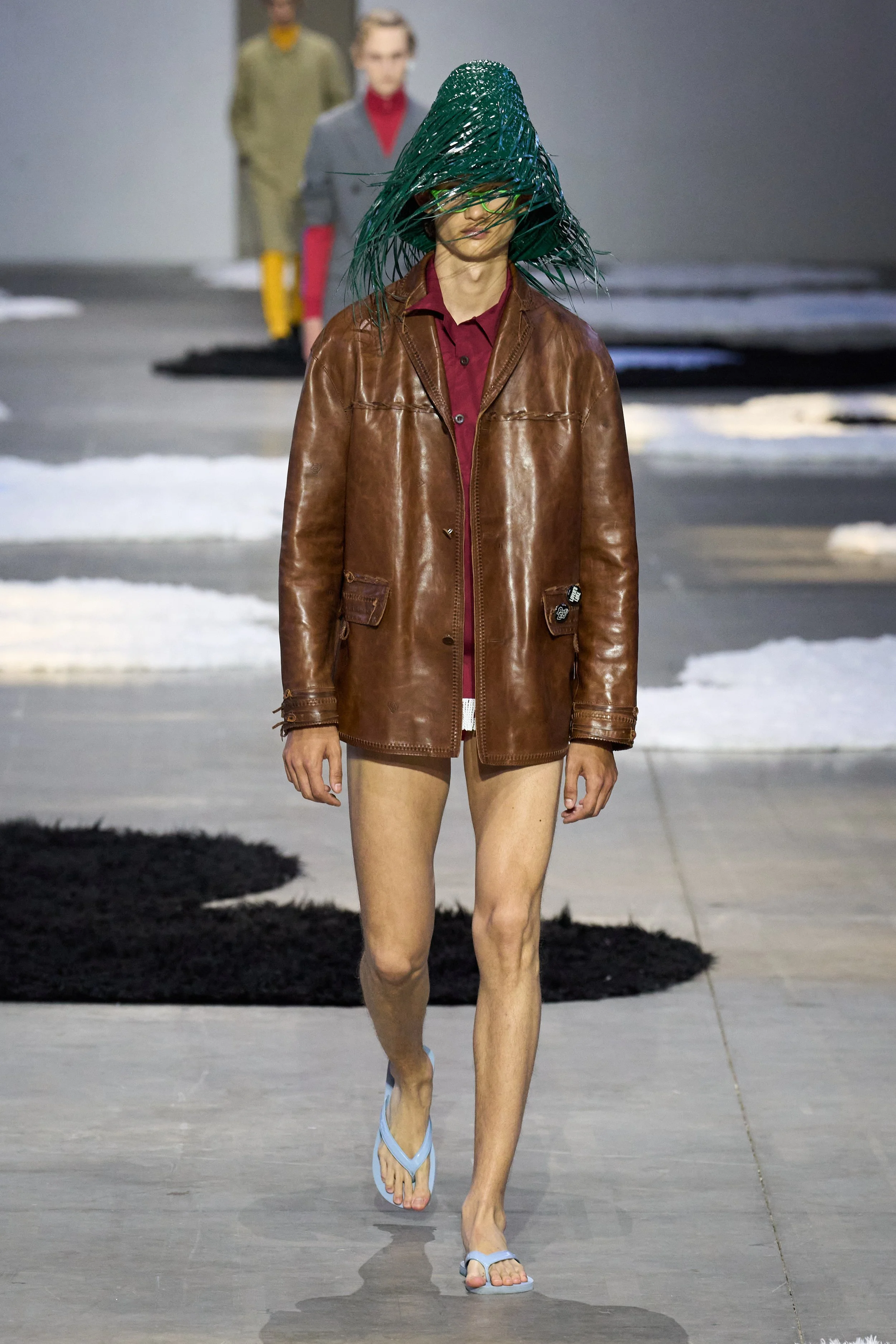
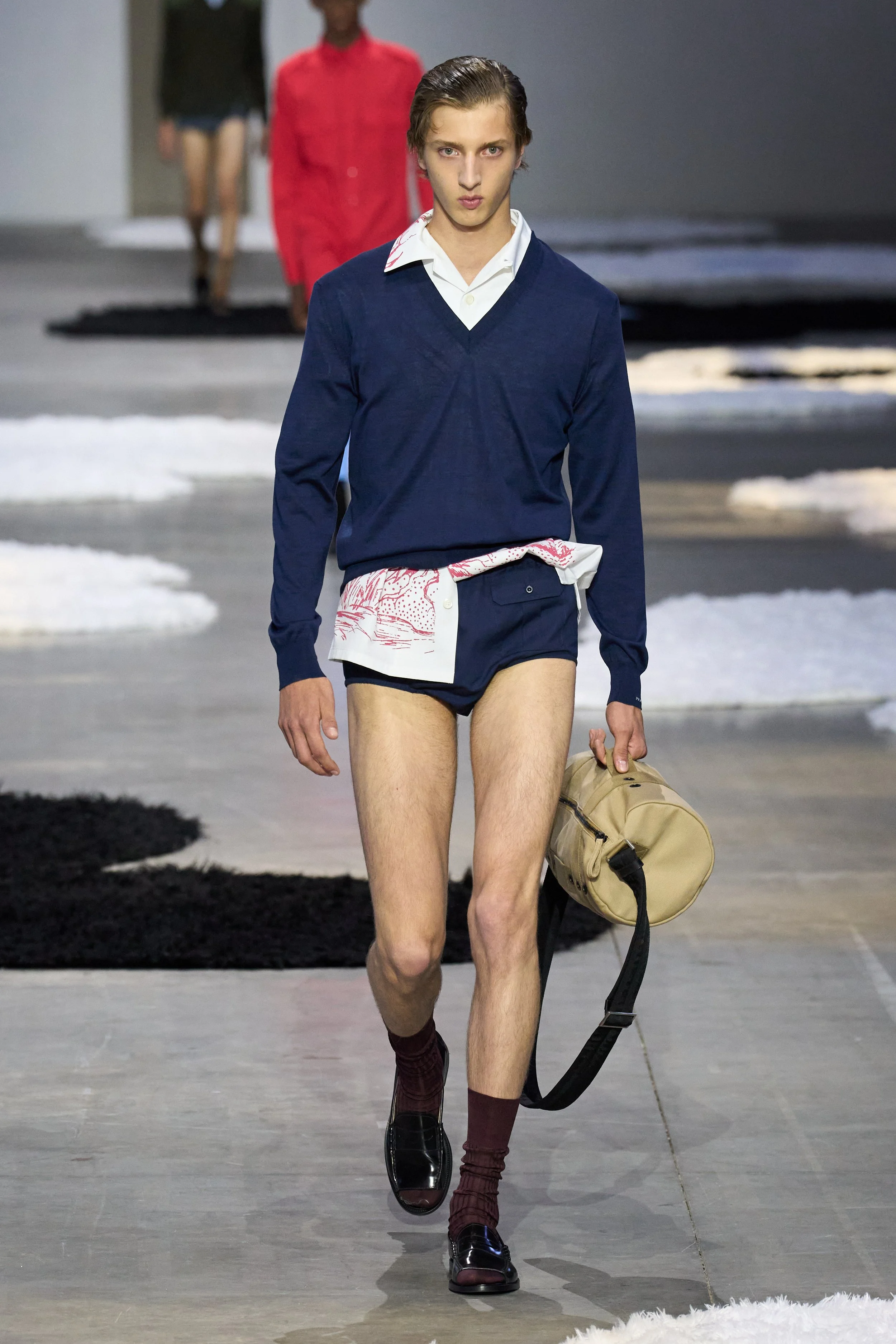
This season, Miuccia Prada and Raf Simons gave us the only consent we’d ever need to be as promiscuous as possible. Prada’s Spring/Summer 2026 opened with its most distinctive piece: a pair of shorter-than-short bloomers with two front pockets. The billowy piece stopped at the top of the thigh, leaving the rest of the leg free to feel the gaping air of the Fondazione it walked in. Later accompanied by matching shirts, fringed shirts, and light knit polos, the first look saw an oversized camp shirt tucked into the shorts, as if for us to absorb it in all its glory. The appearance of the piece on the runway is hardly surprising. Considering Miuccia’s previous endeavour in pantless activities—the irrevocably beloved Miu Miu hotpants—it only makes sense that the phenomenon would be replicated in menswear.

 And yet, the short(est) shorts weren’t meant to be sensual at all. Instead, they related the naked legs to something entirely more freeing: youth. Backstage, Prada and Simons talked of simplifying, of making lighter fashion in a heavier world. And even if the petite shorts could make us take their words literally, the lightness the duo speaks of backstage is palpable. It’s the exaggerated woven hats. It’s the tasselled striped oversized knits. It’s the gigantic daisies on boatneck shirts. It’s the backpacks carried in hand.

Considering the omnipresent intellectualism of a Prada collection, the duo’s desire to unload that weight was interesting. It wasn’t a haphazard affair (even if, backstage, both Prada and Simons related that it was the easiest collection they’ve made), but a humbler one. There was no overthinking. A pair of trousers was just that: perfectly cut and pleated trousers.

Of course, there had to be some lingering complexity—after all, Prada lives in the push and pull. Brightly colored tracksuits were still shoved inside perfectly tailored suits. Leather jackets were still made to fit ever so slightly “off”. The stars of the show themselves weren’t just short shorts; they ballooned at the waist. I won’t overcomplicate the meaning of their silhouette. I doubt Miuccia would approve, considering the show’s intent. The important takeaway here is: next summer will be a pantless one. Prada said so.


Words by Pedro Vasconcelos

PAUL SMITH SS26

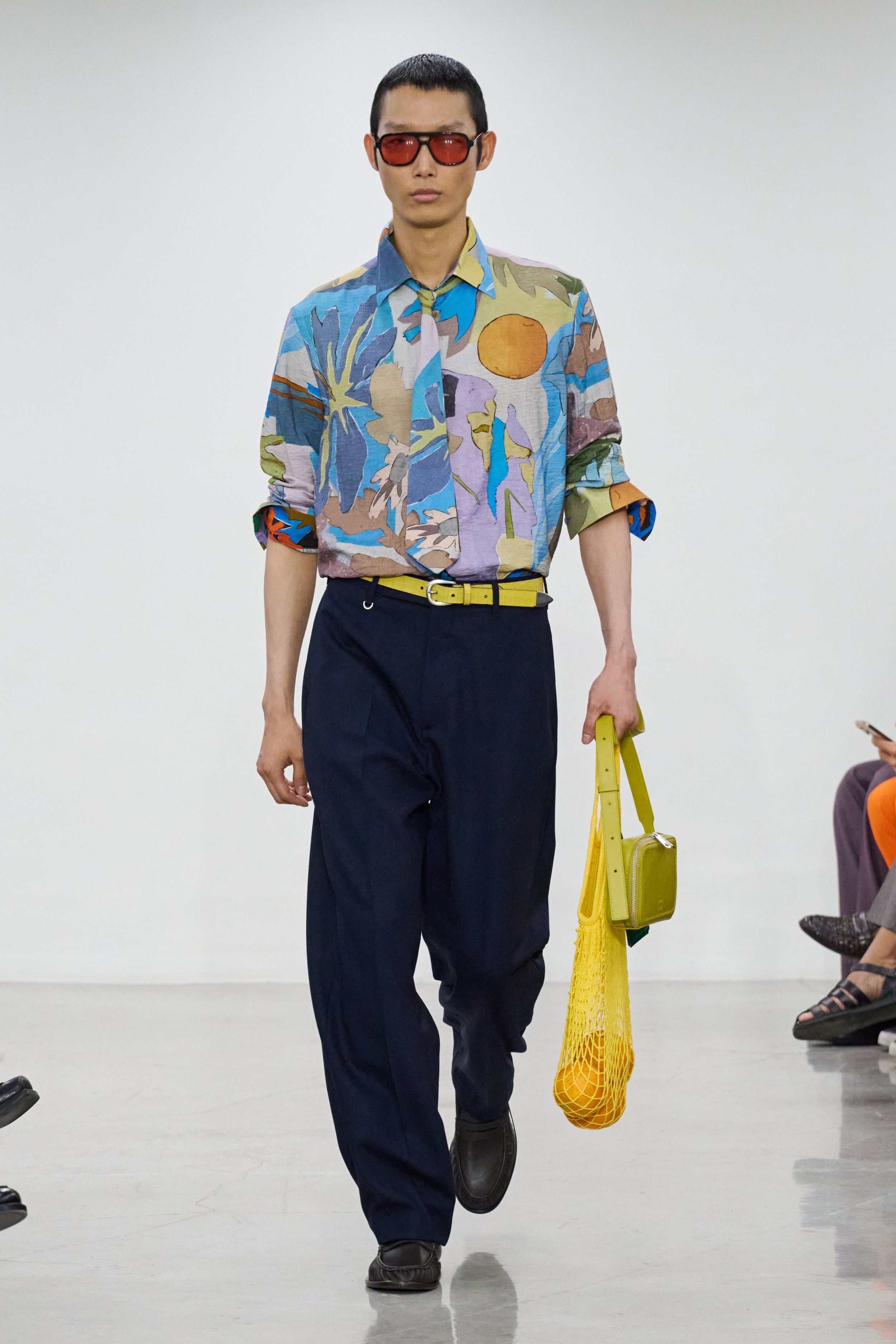
Paul Smith knows his way around colour-blocking. For his latest SS26 collection presented in Milan, the English design icon showcased an offering filled with garments in hues that are used in menswear way too rarely (if you ask us). The collection opened with a lineup of looks where psychedelic printed shirts matched the ties worn on top and were worn with loose trousers. A pale chartreuse suede jacket was paired with roomy black shorts, while a fuchsia knit was tucked into cargo-green bottoms. The rich palette also made its way to the accessories portion of the show, with the models holding netted grocery carriers that matched their small bags. Sneakers ranged from orange and baby blue, while leather belts in bright yellow and green cinched the silhouettes. Towards the end of the show, the propositions became more subdued. Suits in dark grey and navy were pinstriped and paired with neckties in a darker fuchsia and olive green, adding a sense of eccentricity to classic tailoring.


Words by Martin Onufrowicz

DOLCE & GABBANA SS26

There’s something really captivating about the Dolce & Gabbana duo. On one hand, they always manage to have one of the most attractive lineups of fashion week; on the other, the brand has created a man of its own—one where edgy contemporary and sensual meet Italian classic—and that is the greatest power of the label. The Dolce & Gabbana man exudes sophistication with a lavish vibe.

For this season, the pyjama was at the centre of the inspiration, declined in different colours, styles, prints, and fabrics. The collection was an ode to tailoring, effortless elegance, and intimate sophistication. Stripes were present throughout the show, while animal print, polka dots, embroideries, and florals added a fun twist. Elegant and relaxed tailoring took the spotlight, with a strong emphasis on soft summer suiting, breezy aesthetics, and retro touches.

Lightweight fabrics mixed with knits, slouchy tops, fur, and loose jackets were all part of the repertoire that created a loungewear-meets-runway aesthetic. There’s a sense of soft masculinity, relaxed sensuality, and a romanticism around the collection. Earthy creams, sandy beiges, soft yellows, faded reds, powder blues, and subtle pinks were central to this resort wear approach.

More than a clothing style, the looks represented the lifestyle of a stylish vacationer lounging in a coastal European town. The collection channelled a laid-back Riviera vacation, a summer at the pool and cocktails on a yacht; refined, stylish, and contemporary. With this show, Dolce & Gabbana delivered its vision of masculine elegance and summer style through softness, drape, and detail.


Words by Carolina Benjumea

MSGM SS26

For its men’s Spring/Summer 2026 collection, MSGM created the ultimate outdoor wardrobe. Inspired by cycling, Massimo Giorgetti explored a new terrain of movement and creativity—one where the raw energy of the wheel sport merges with the vitality of motion, resulting in a collection that is both eclectic and functional, fusing the vibrancy of streetwear with the sophistication of tailoring.

I Feel the Rush is an intriguing approach to men’s fashion and outdoor culture. The collection explores both the creative side of cycling and the functional side of artistry, all while delving into poetic landscapes and encounters with the inner self experienced through this practice. The bicycle is more than a muse here; it becomes a metaphor for identity, emotion, and a sense of youth and irreverence.

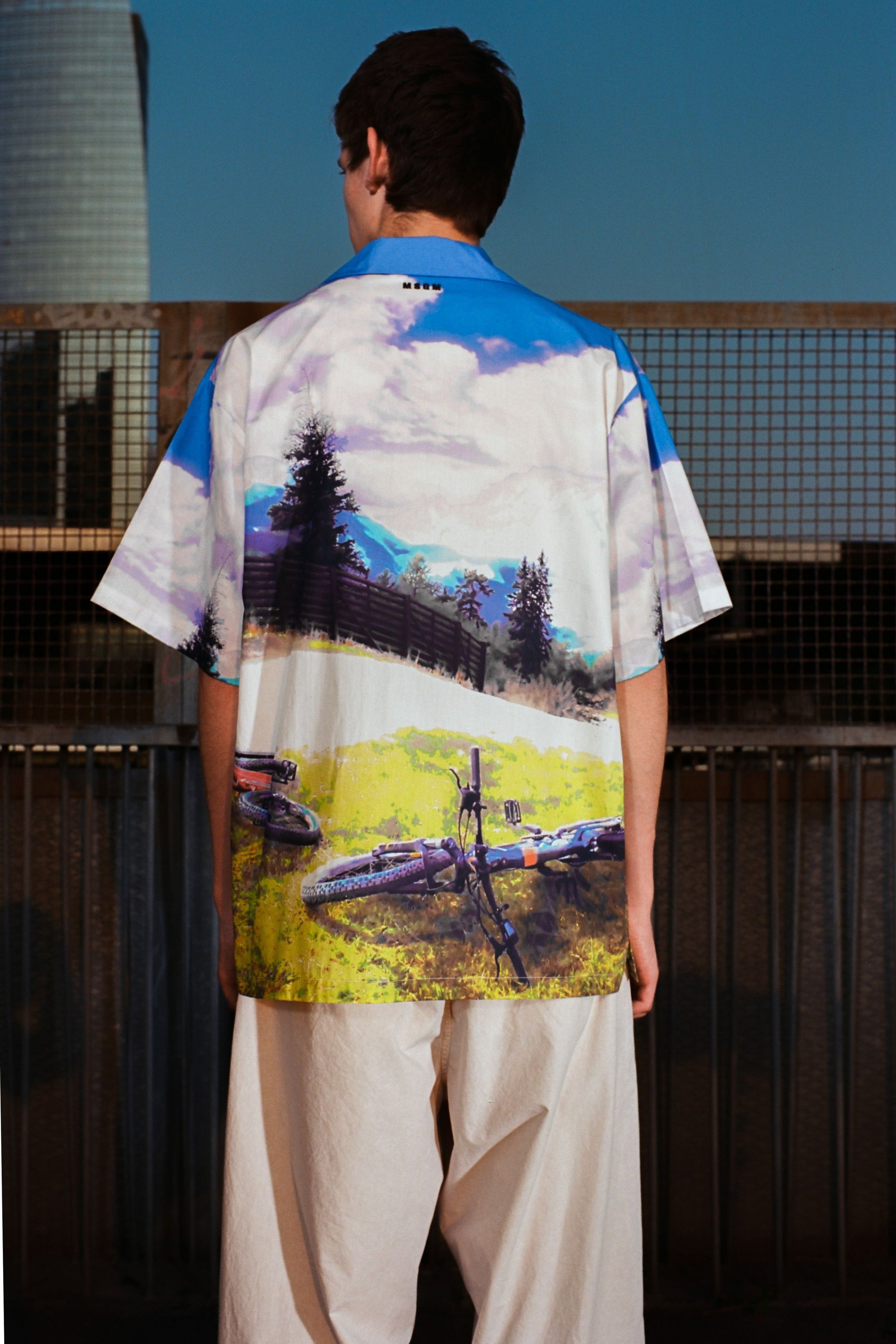
The pieces are designed to meet the essential demands of movement, while colours and prints convey the expressiveness and vision of the modern man. Faithful to its DNA, the collection is a dynamic kaleidoscope, with high-energy pieces at its core. Deconstructed tailoring merges with playful floral prints, pink stripes, ‘Ride Hard’ slogans and neon touches. Two of Italy’s most iconic jerseys—the Maglia Rosa and Maglia Gialla—make an appearance as a nod to the Giro d'Italia and the cycling lifestyle. Giorgetti used his own iPhone snapshots, taken during real rides, as prints, offering an intimate glimpse of nature, mountains, and travel, transforming garments into memories.

Fabrics such as nylon, Cordura, and mesh—chosen for their suitability for movement and breathability—are used to showcase innovation and technical prowess. Nature-inspired hues highlight the collection’s connection to the earth.

For the campaign’s visuals, the brand collaborated with Collective 24.7 Fastlife, a Milan-based bike-core brand. The presentation took place at MSGM’s flagship store, featuring an installation by the architectural collective Fosbury.


Words by Carolina Benjumea