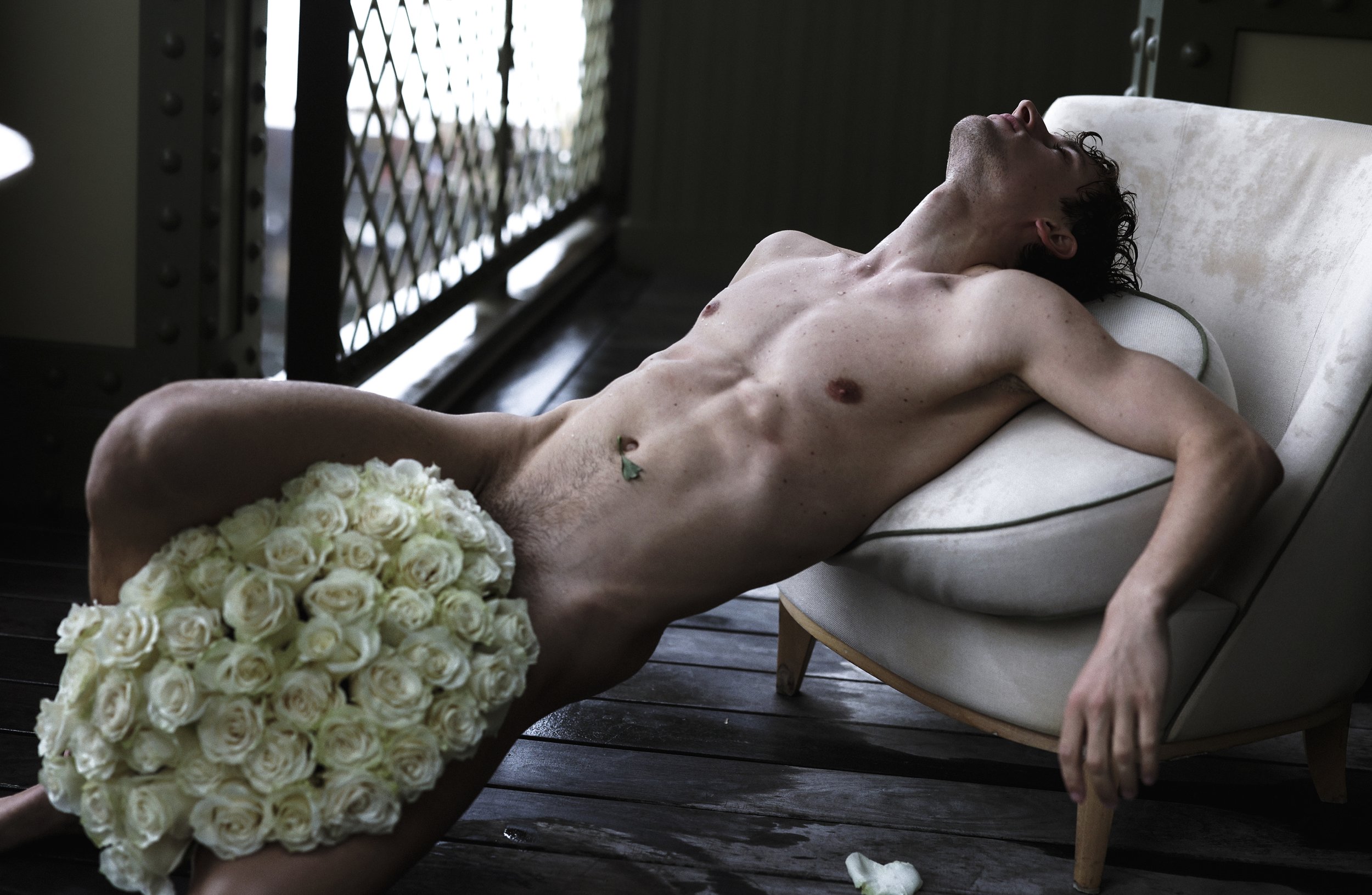
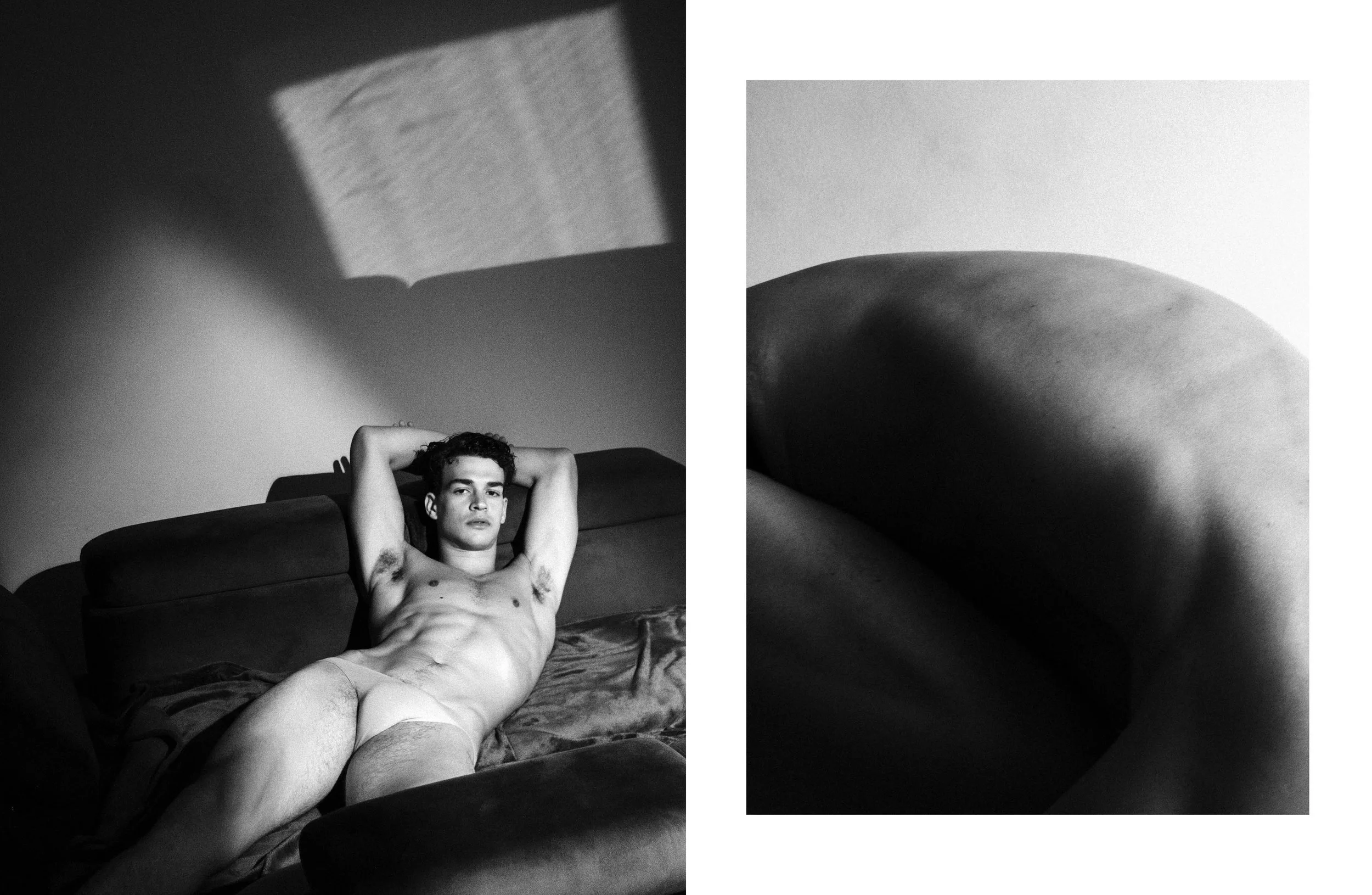
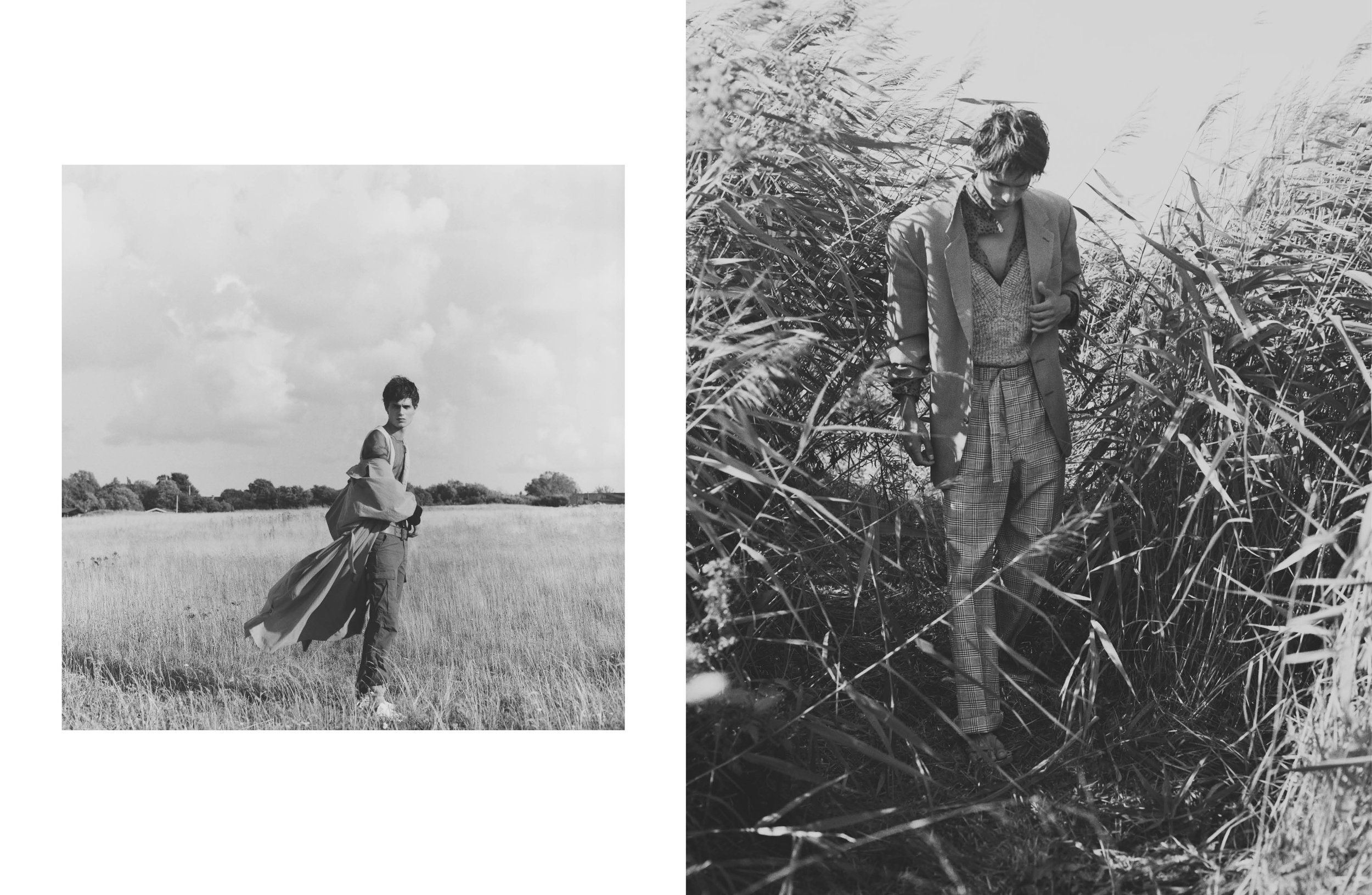
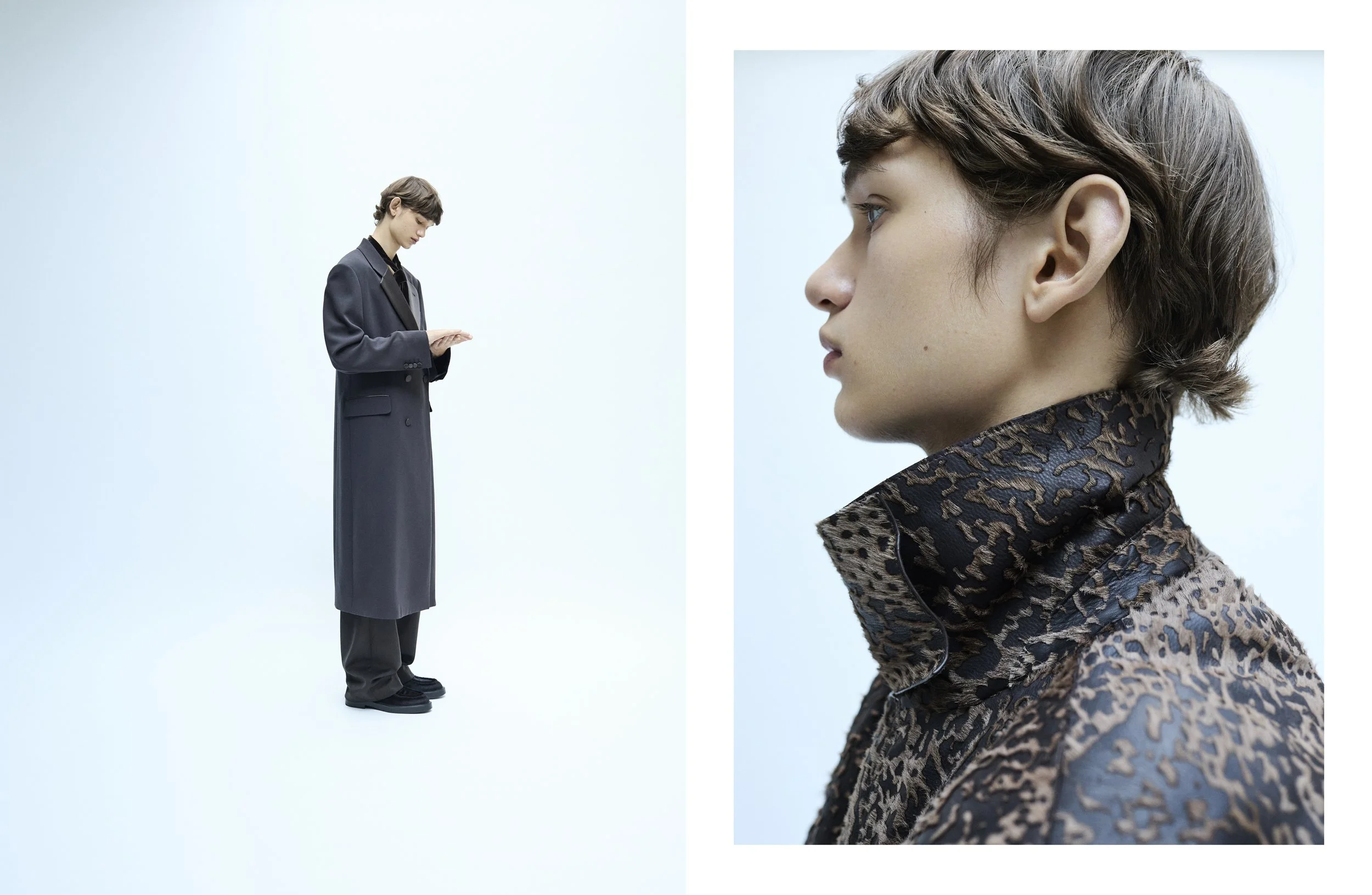
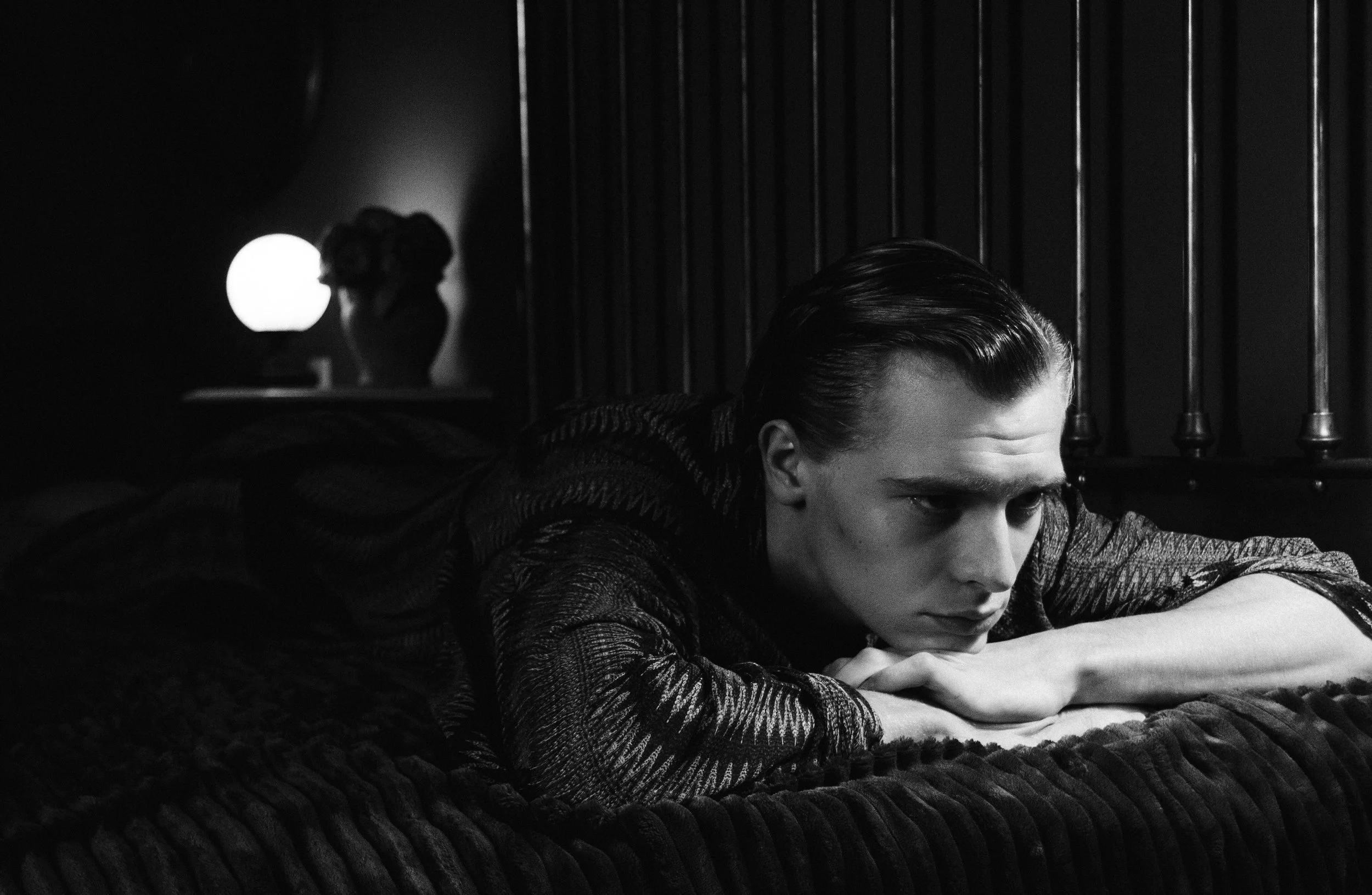
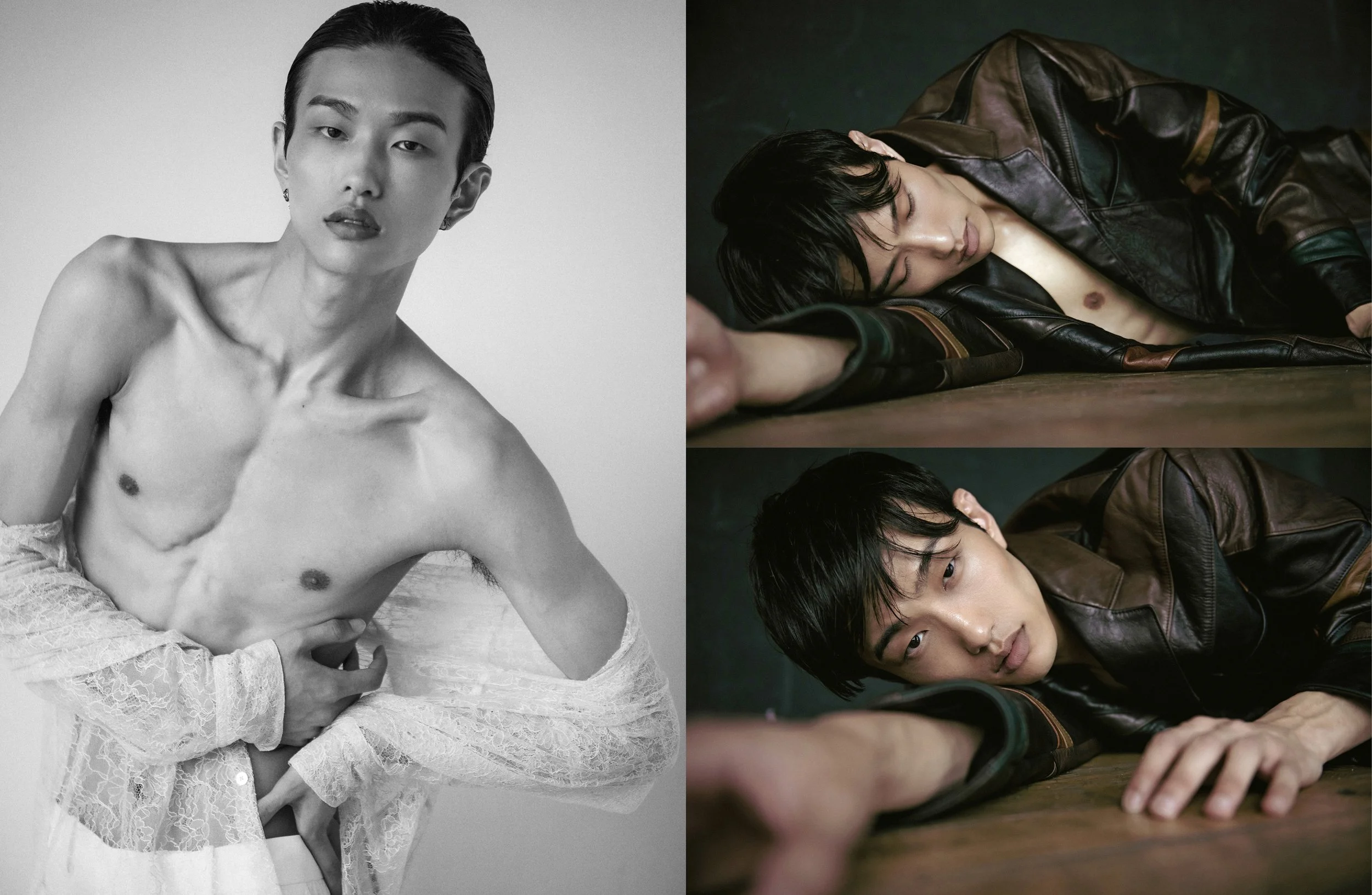
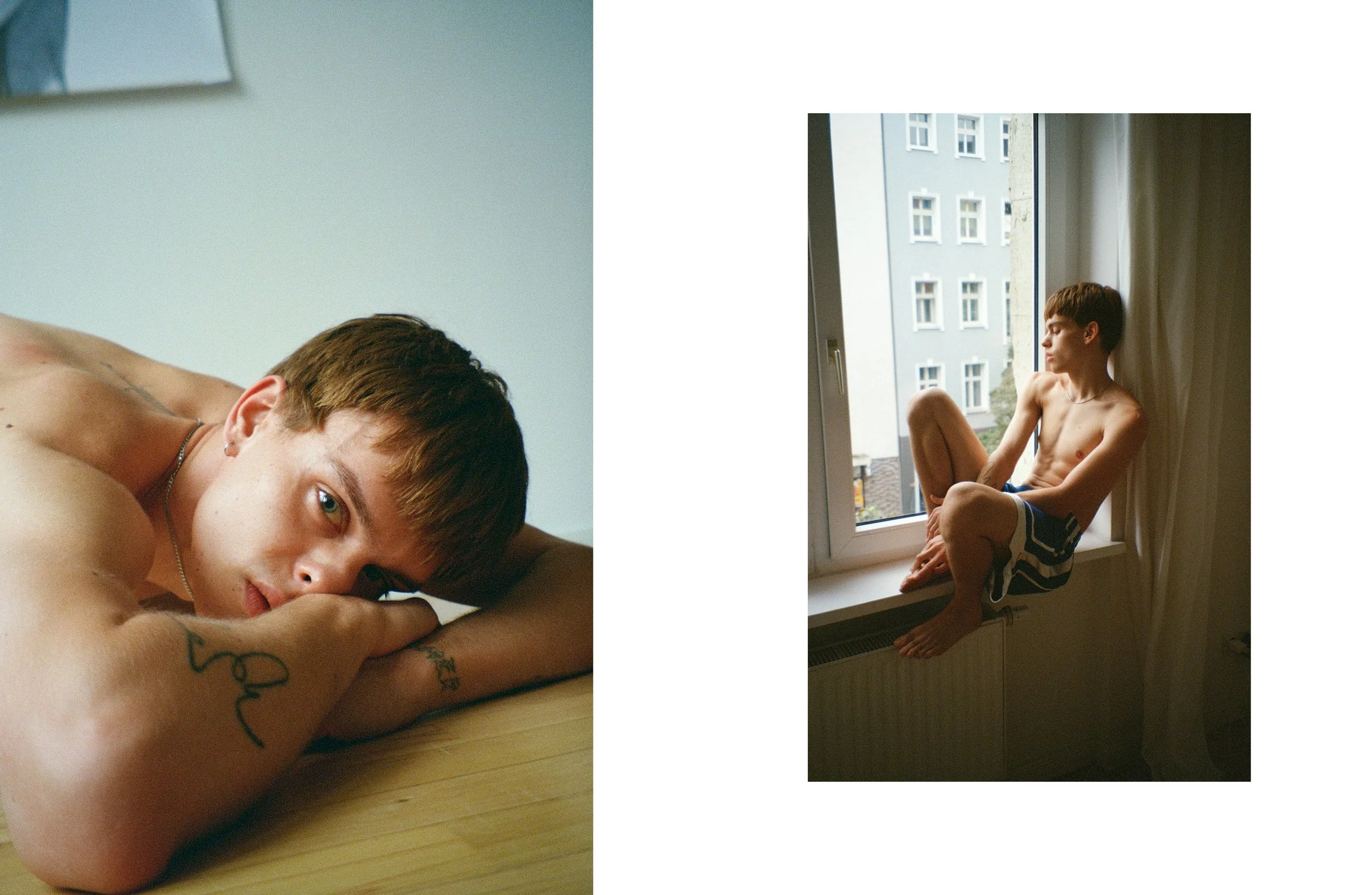
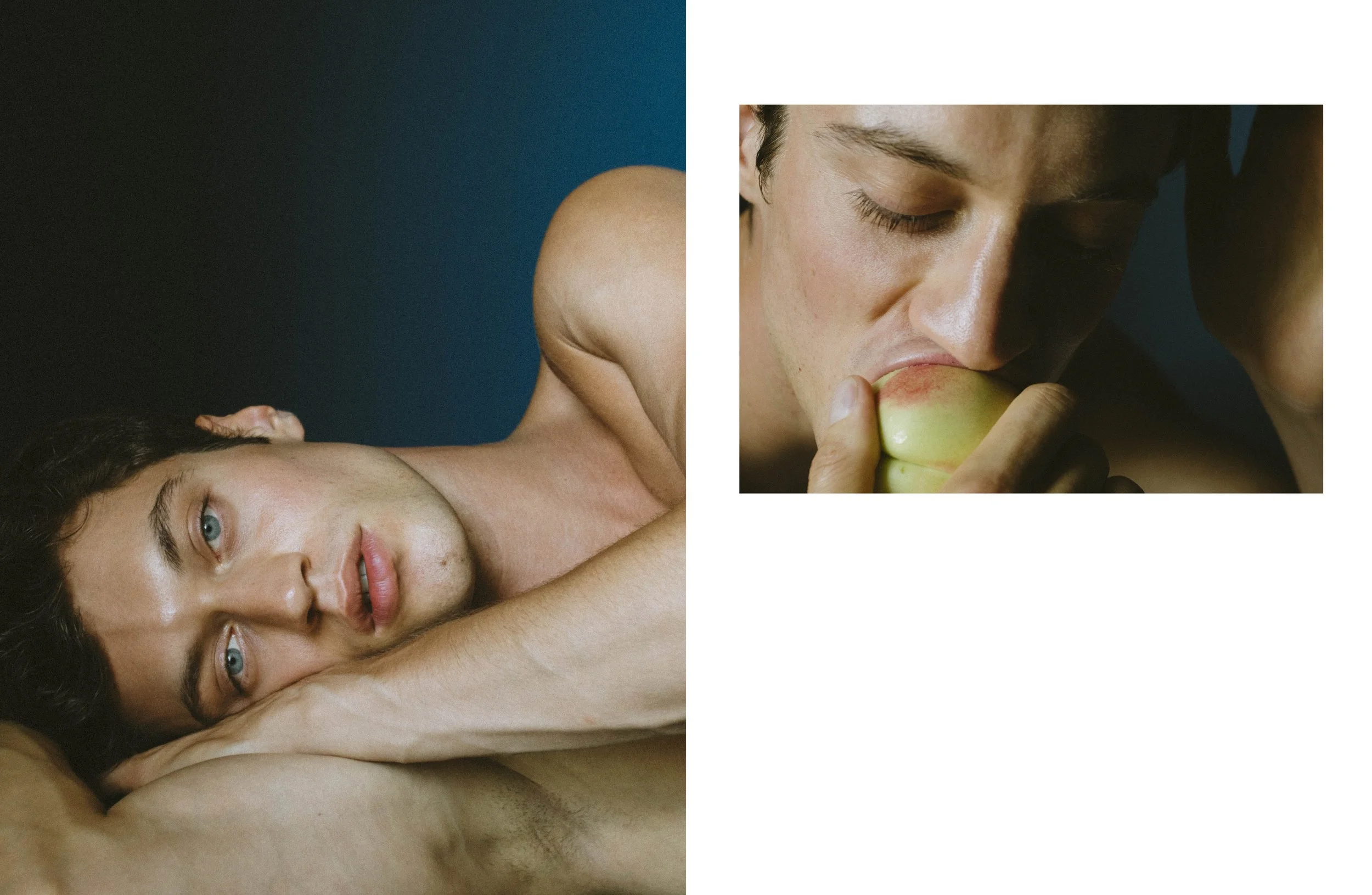
FOR AN ACTOR, THE HOURS BEFORE A SHOW CAN BE A SACRED ORDEAL. THERE’S VOCAL REST, THE CONSEQUENT WARM-UP, AN ENTIRE RITUAL OF PREPARING BOTH BODY AND VOICE FOR THE DEMANDS OF THE PERFORMANCE. FOR BEN PLATT, THAT PREPARATION ALSO INCLUDES A WALK TO THE MENIER CHOCOLATE FACTORY THEATRE, IN SOUTHEAST LONDON, WHERE HE IS STARRING IN MIDNIGHT AT THE NEVER GET.
THE SHOW, AN IMMERSIVE, INTIMATE PRODUCTION THAT DRAWS ON THE TRADITIONS OF CABARET, ASKS ITS PERFORMERS TO WORK WITHIN A WORLD THAT IS BOTH THEATRICAL AND DEEPLY PERSONAL. FOR PLATT, IT’S ANOTHER OPPORTUNITY TO STRETCH BEYOND THE BOUNDARIES OF THE MUSICAL THEATRE ROLES THAT FIRST MADE HIM A HOUSEHOLD NAME. THE STORY CLOSELY FOLLOWS TWO QUEER MUSICIANS AS BOTH THEIR RELATIONSHIP AND THEIR CAREERS DEEPEN. PLATT SEES ITS SUCCESS IN THE EXPANSION OF THE MEDIUM THE ACTOR AND SINGER IS SO FAMILIAR WITH. WITH A CAREER SPANNING THE BETTER PART OF THE LAST TWENTY YEARS, HE ORIGINATED THE TITLE ROLE IN DEAR EVAN HANSEN, EARNING A TONY AWARD FOR HIS PERFORMANCE, BEFORE EXPANDING INTO FILM, TELEVISION AND MUSIC.
HERE, EVEN AS HE’S SUPPOSED TO BE ON VOCAL REST, PLATT CHATS WITH US ABOUT THE DEMANDS OF PERFORMING, WHY HE CONTINUES TO EXPERIMENT ACROSS MEDIUMS, AND WHERE HE THINKS MUSICAL THEATRE IS HEADED.
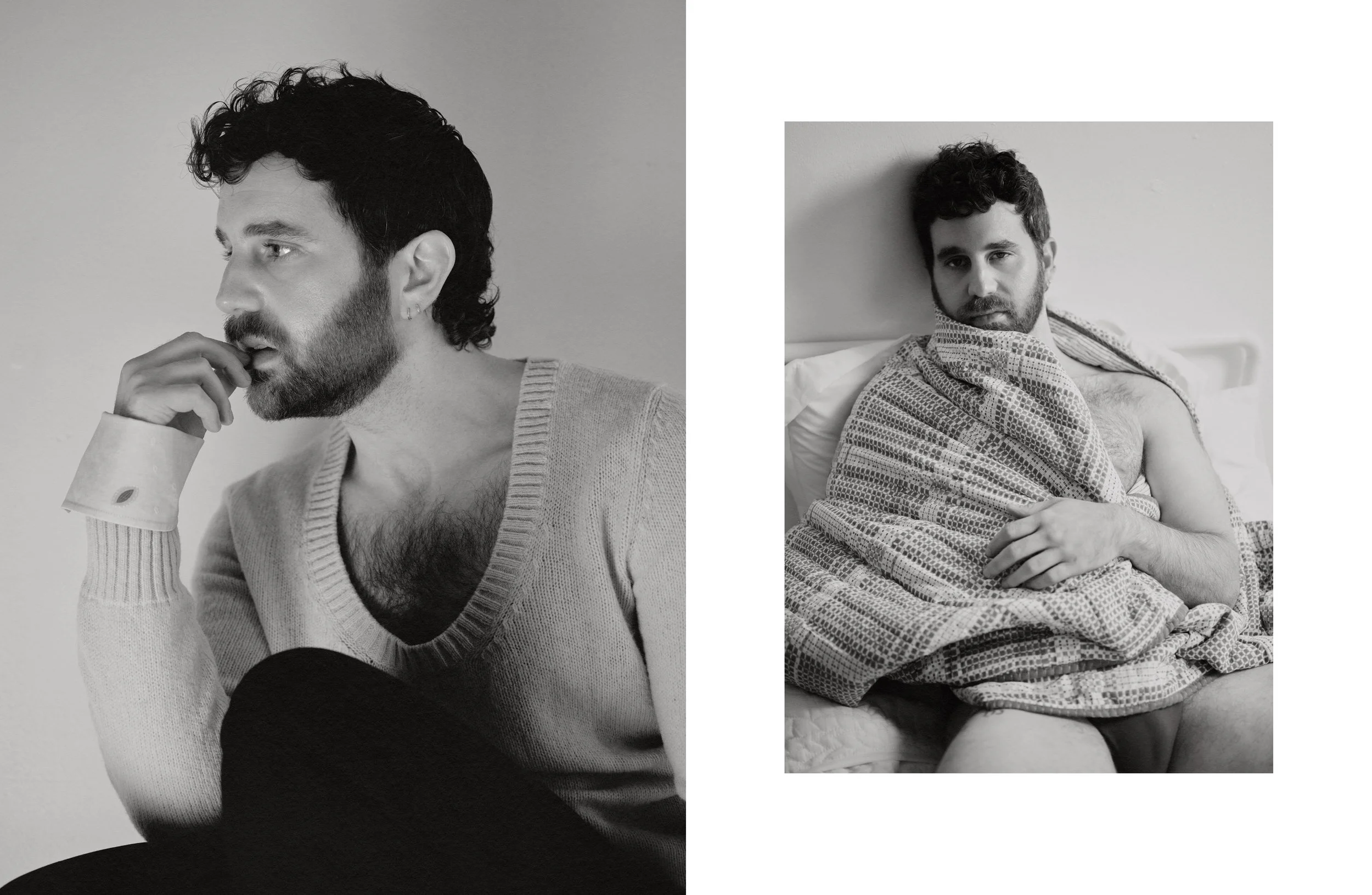
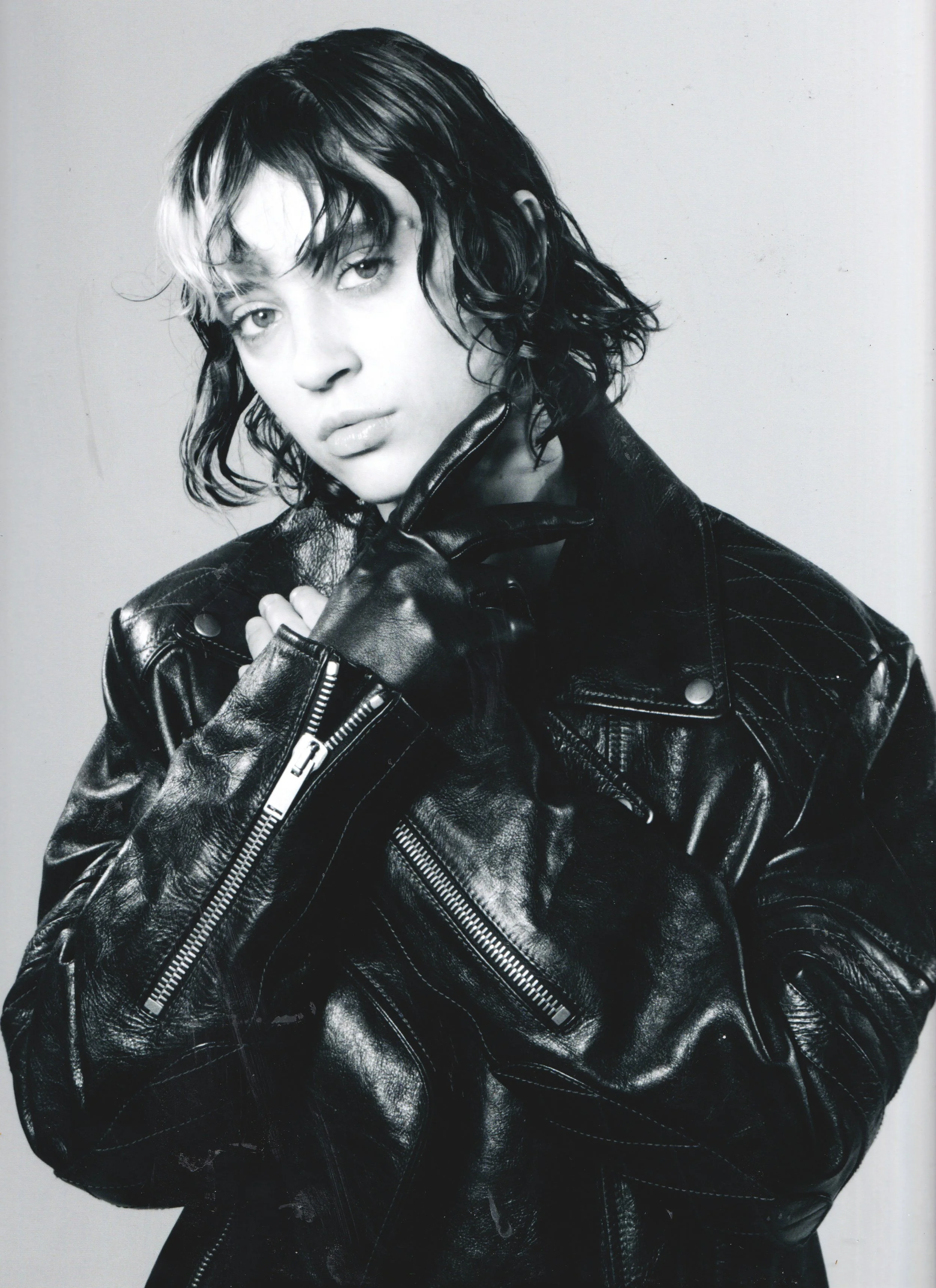
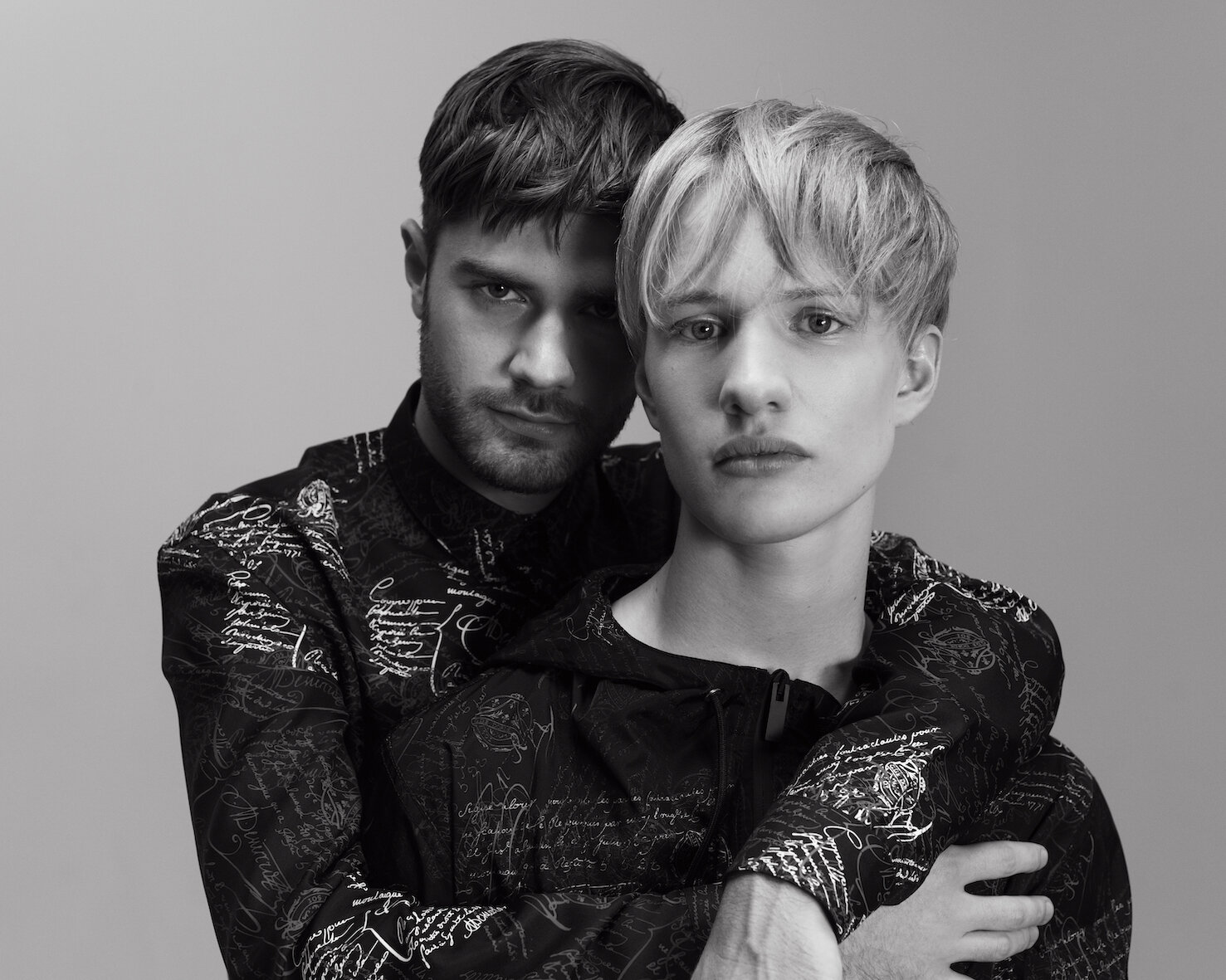
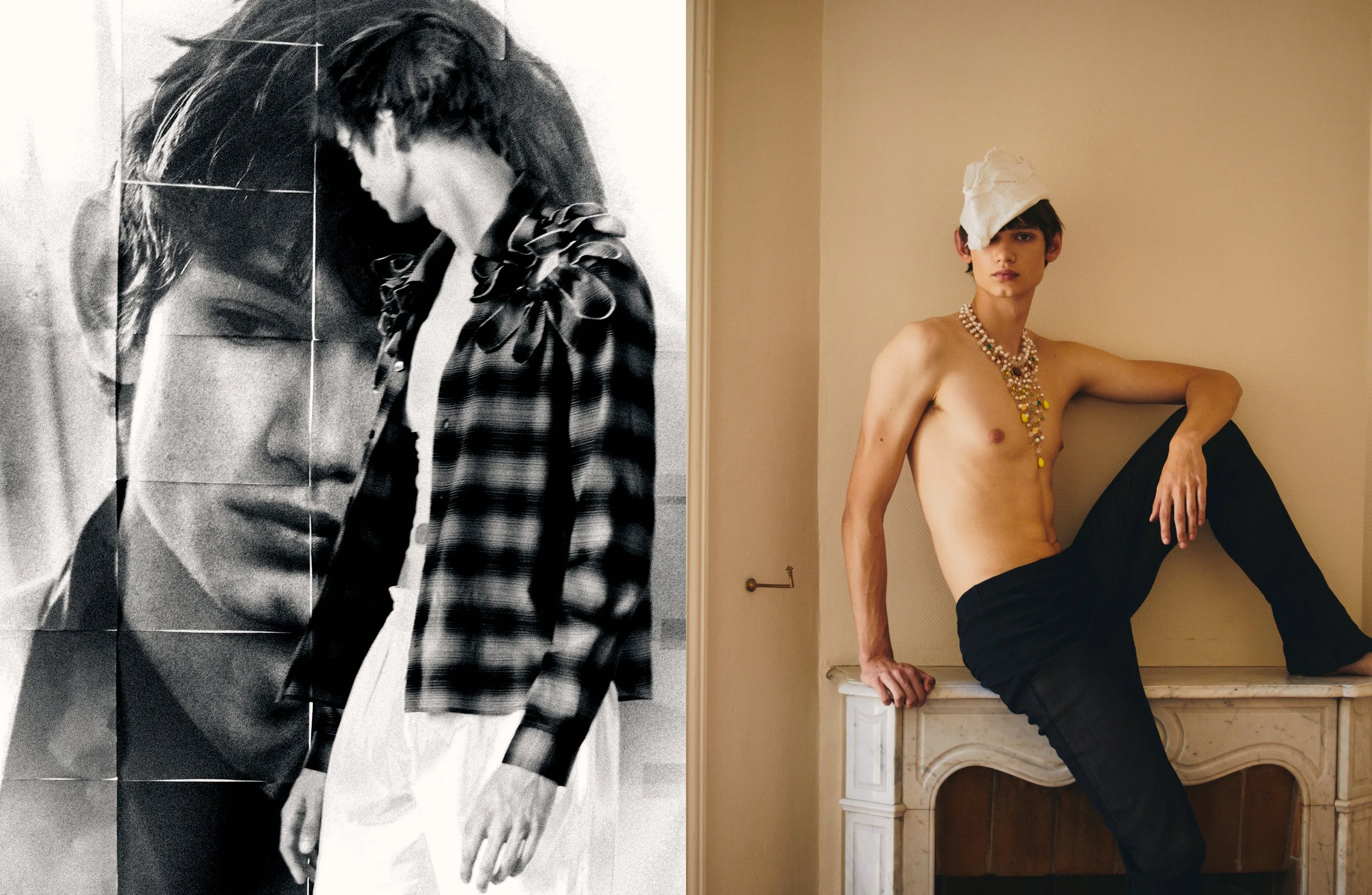
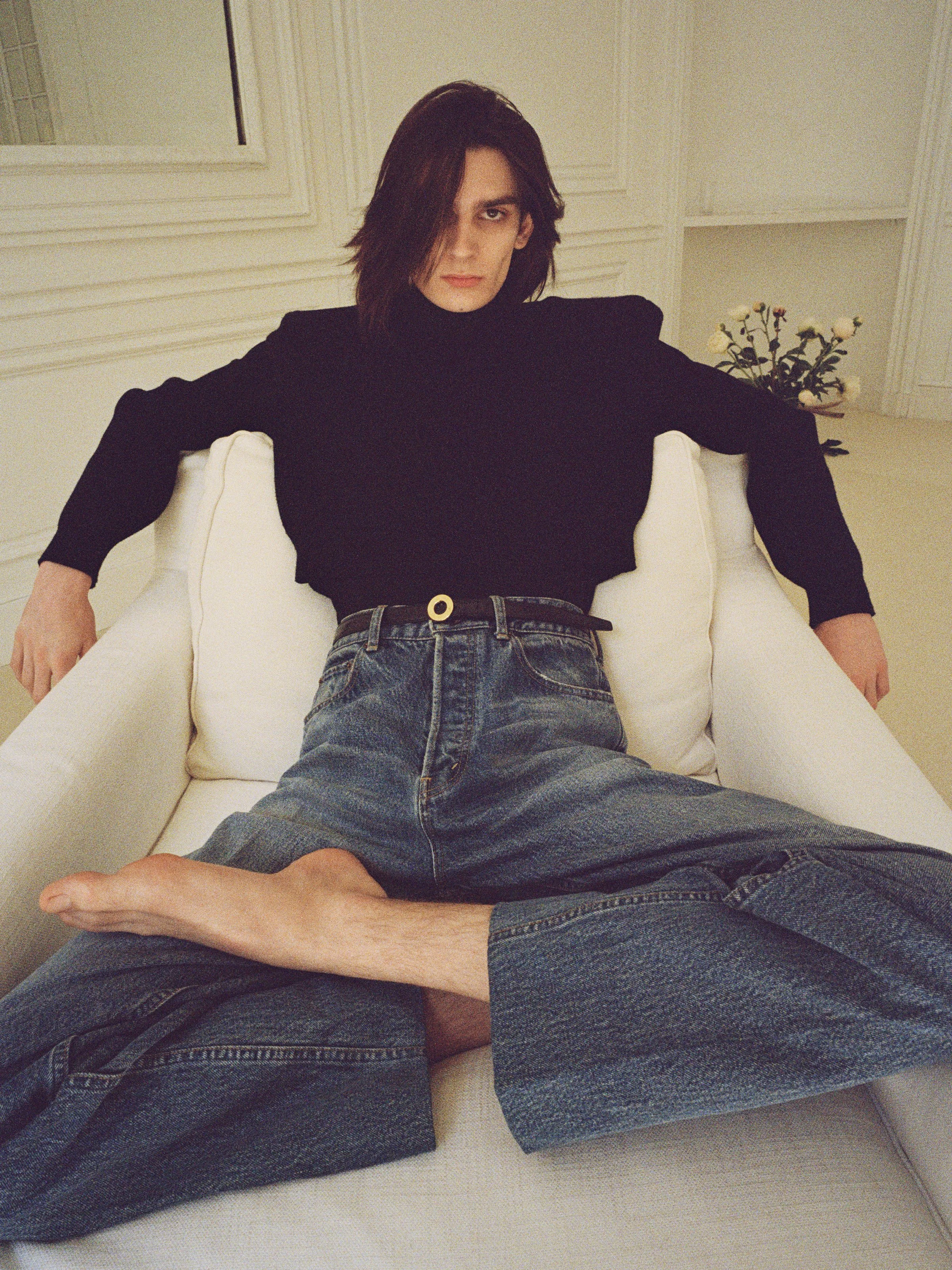
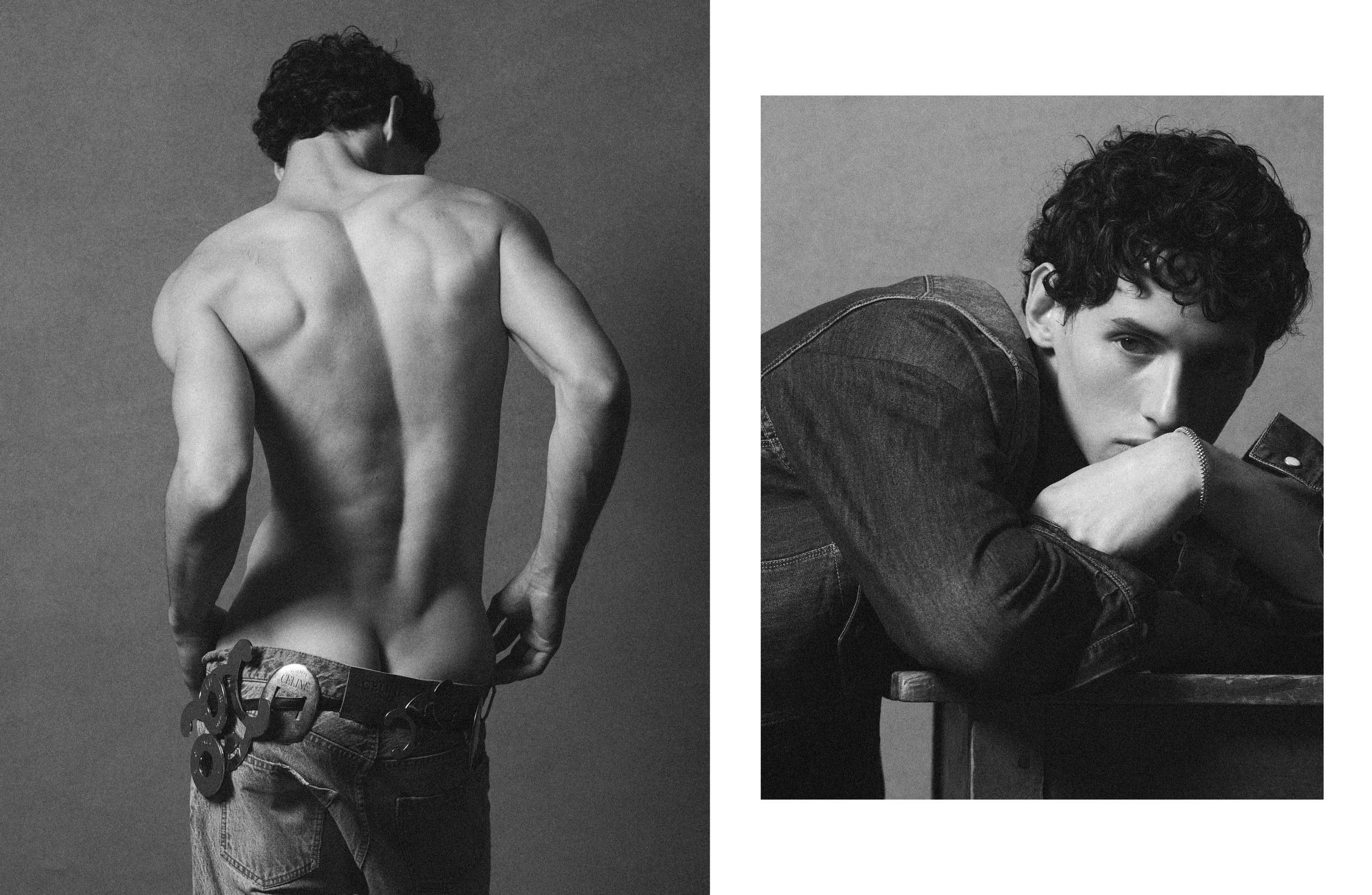
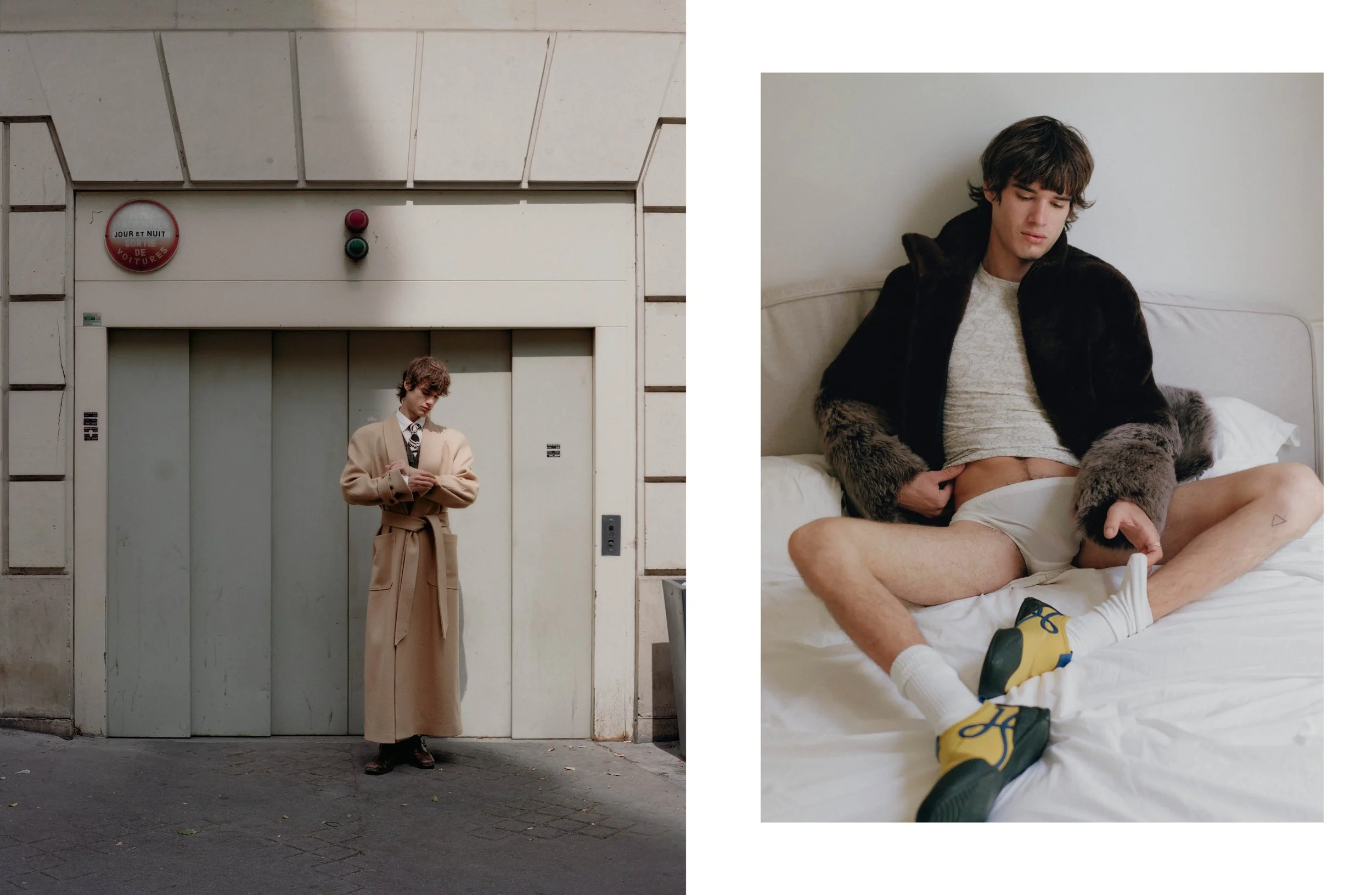
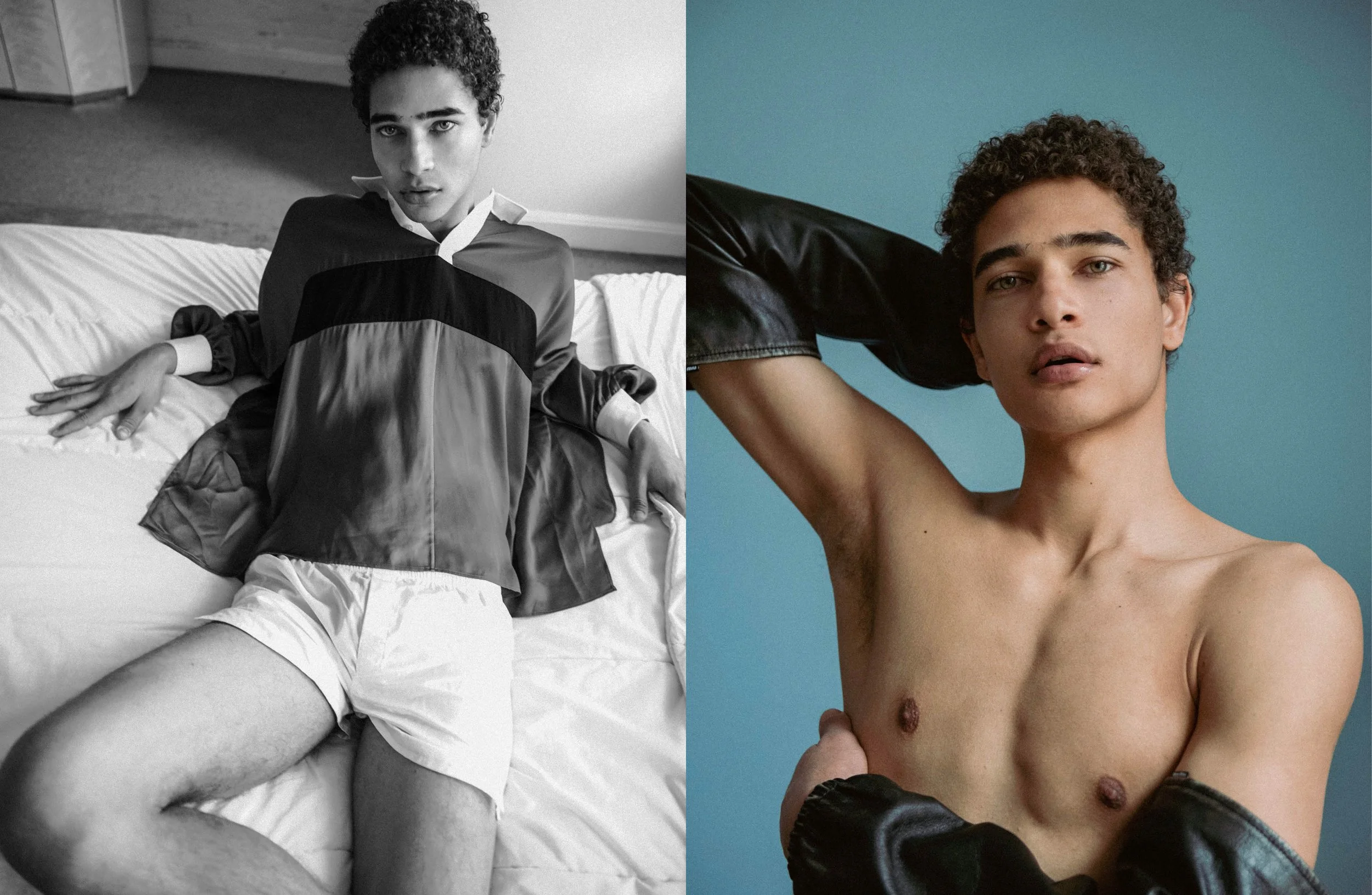
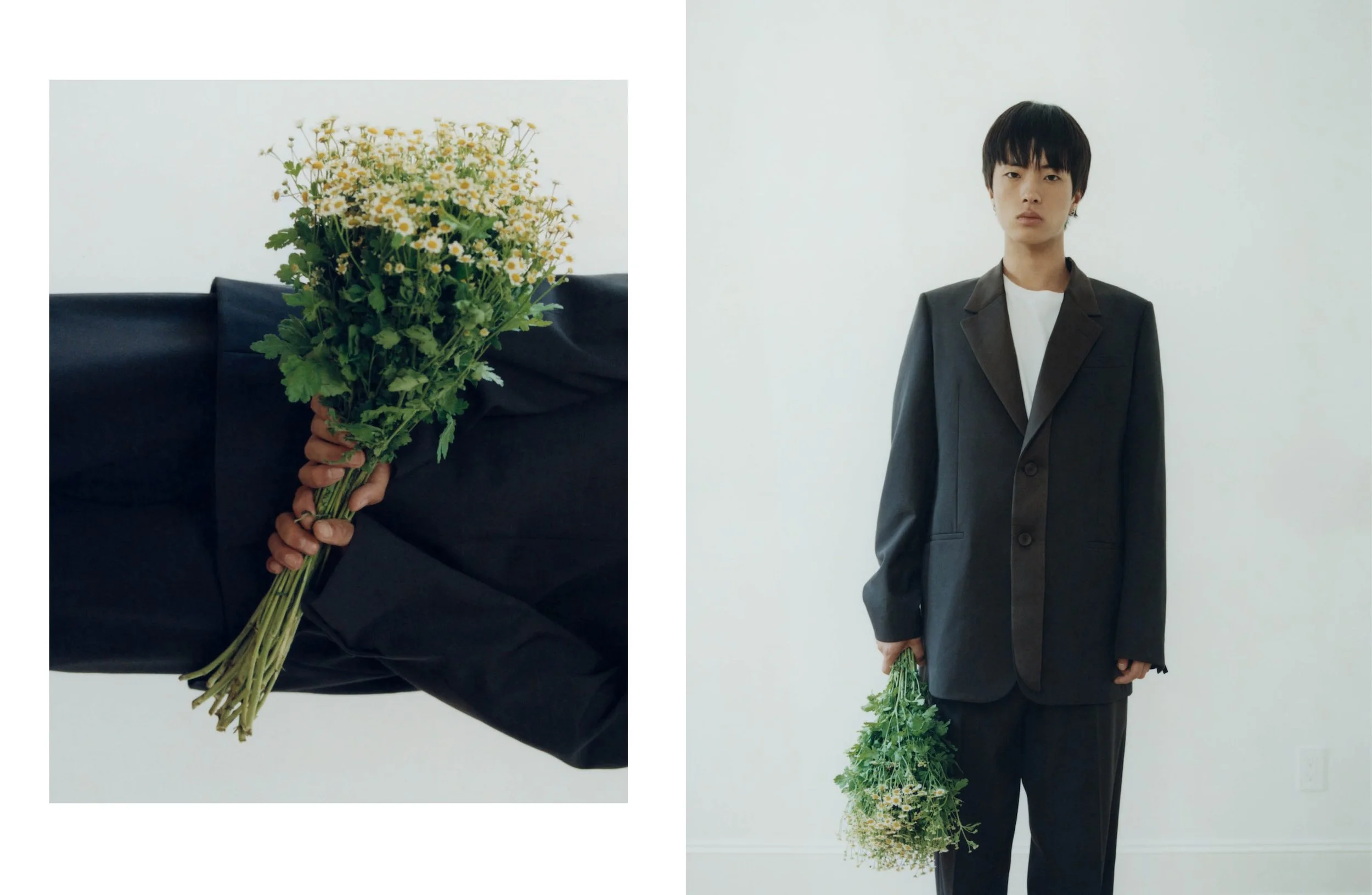
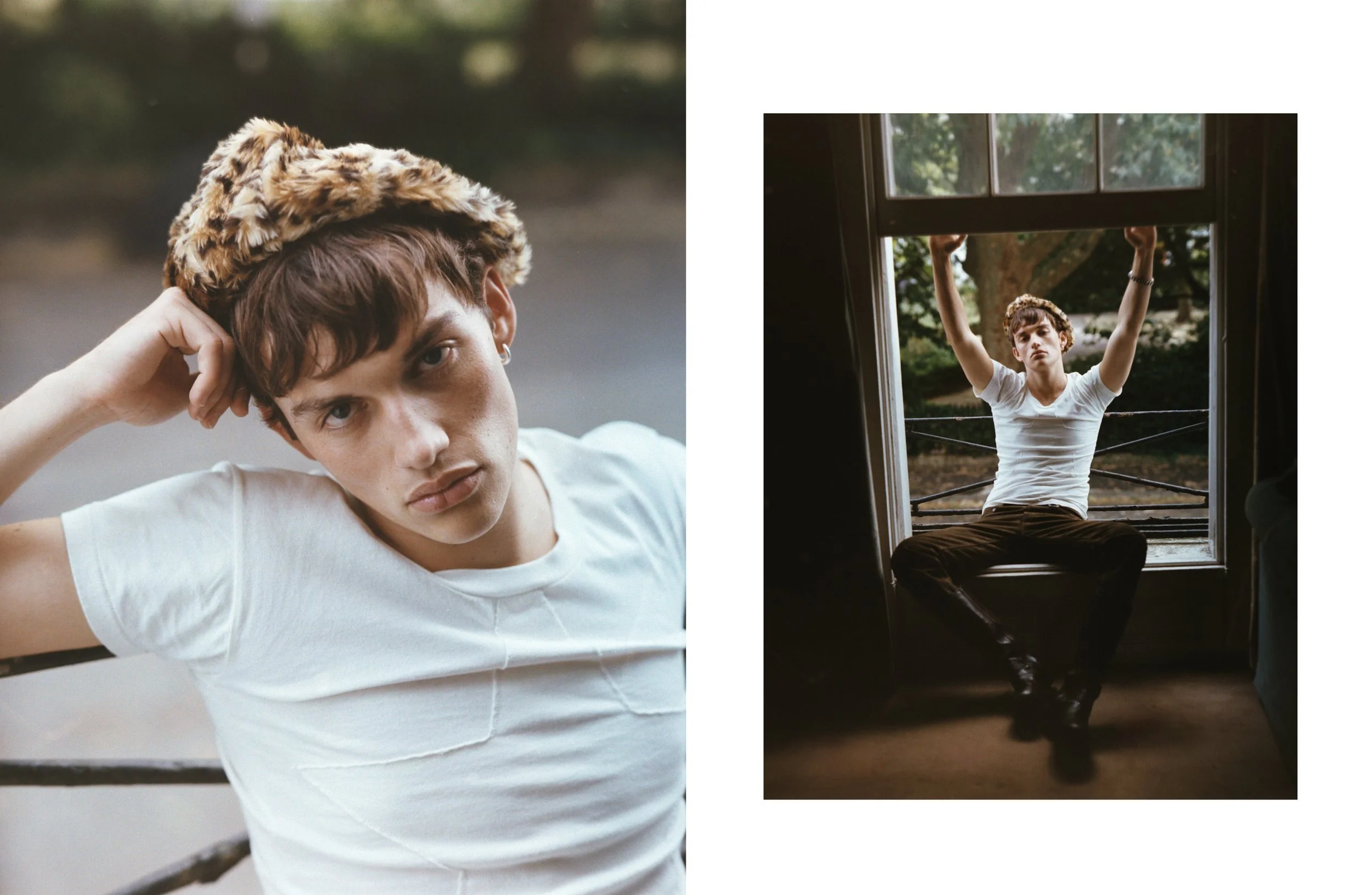
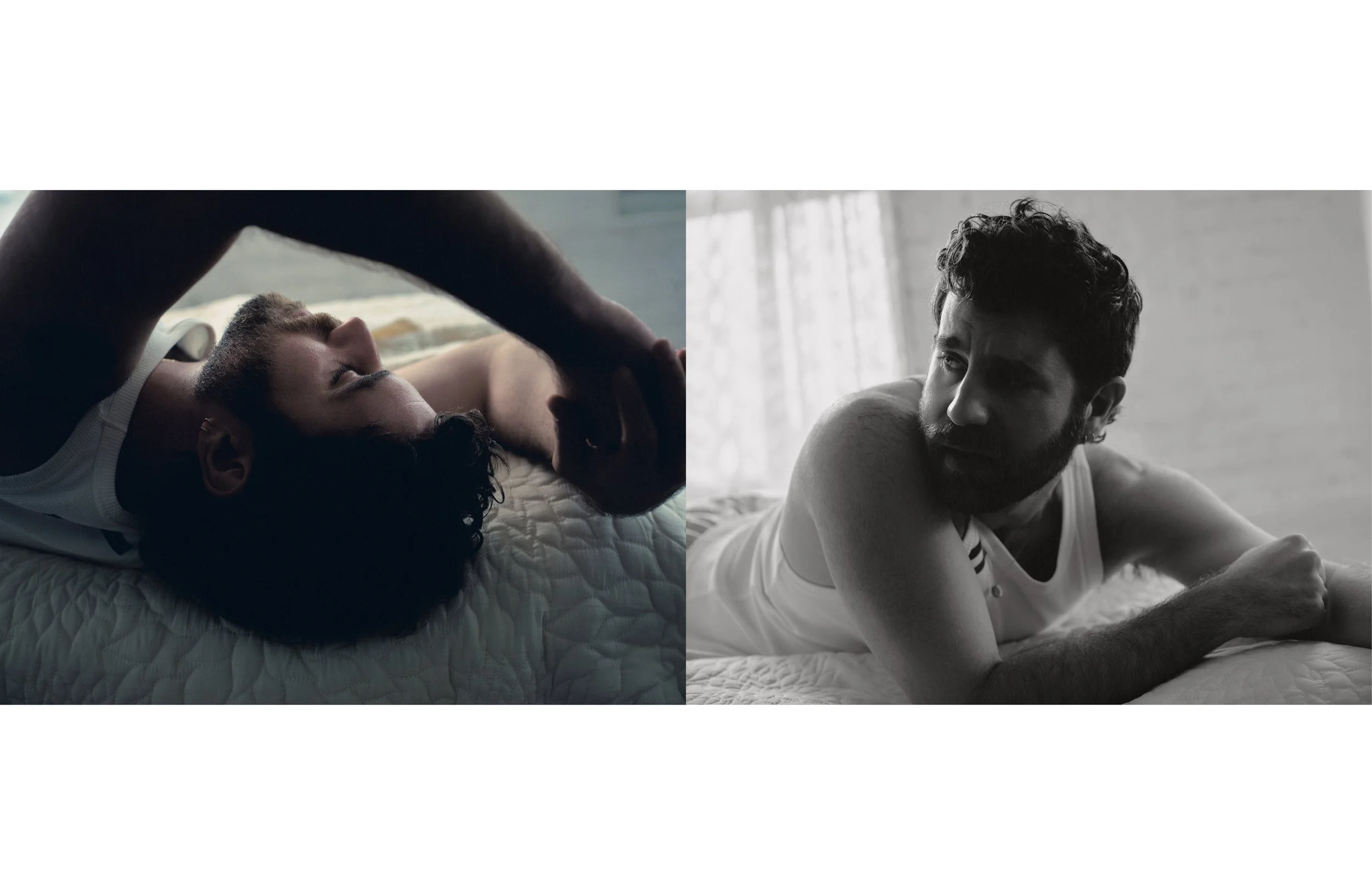
Left Full look Prada
Right Quilt Studio Ford, underwear stylist’s own
Hi! How's London?
Hiya! I'm walking, in Southwark, headed to the theatre. It's beautiful weather; it's been non-stop beautiful, which is very lucky.
As you’re on your way to the Menier Chocolate Factory, I’ll enjoy the opportunity to ask you about your path to musical theatre. What’s your first memory of it?
It's hard to pinpoint the first, because I grew up in a family that really loved theatre, and my parents would play classic musicals for my siblings and I. We listened to show tunes in the car. I started a kid’s theatre program when I was quite young. I was sort of like an empty vessel, and then I was just filled up with show tunes from the beginning. Most people in my family have an affinity for it. For me, it became an identity; I saw myself immersed in it all the time. I loved the combination of singing and storytelling; I still do. In terms of performances, I think Judy Garland in The Wizard of Oz is the first one I remember being obsessed with. I watched it over and over again. I wanted to be her.
Do you remember what your first time on stage felt like?
The first show I was in was Cinderella. I played the prince. I don’t have many memories of being on stage, but I do have a visceral one of being backstage. The excitement was like tension in the air; I felt like I was part of something that had big stakes. It was an addictive feeling.
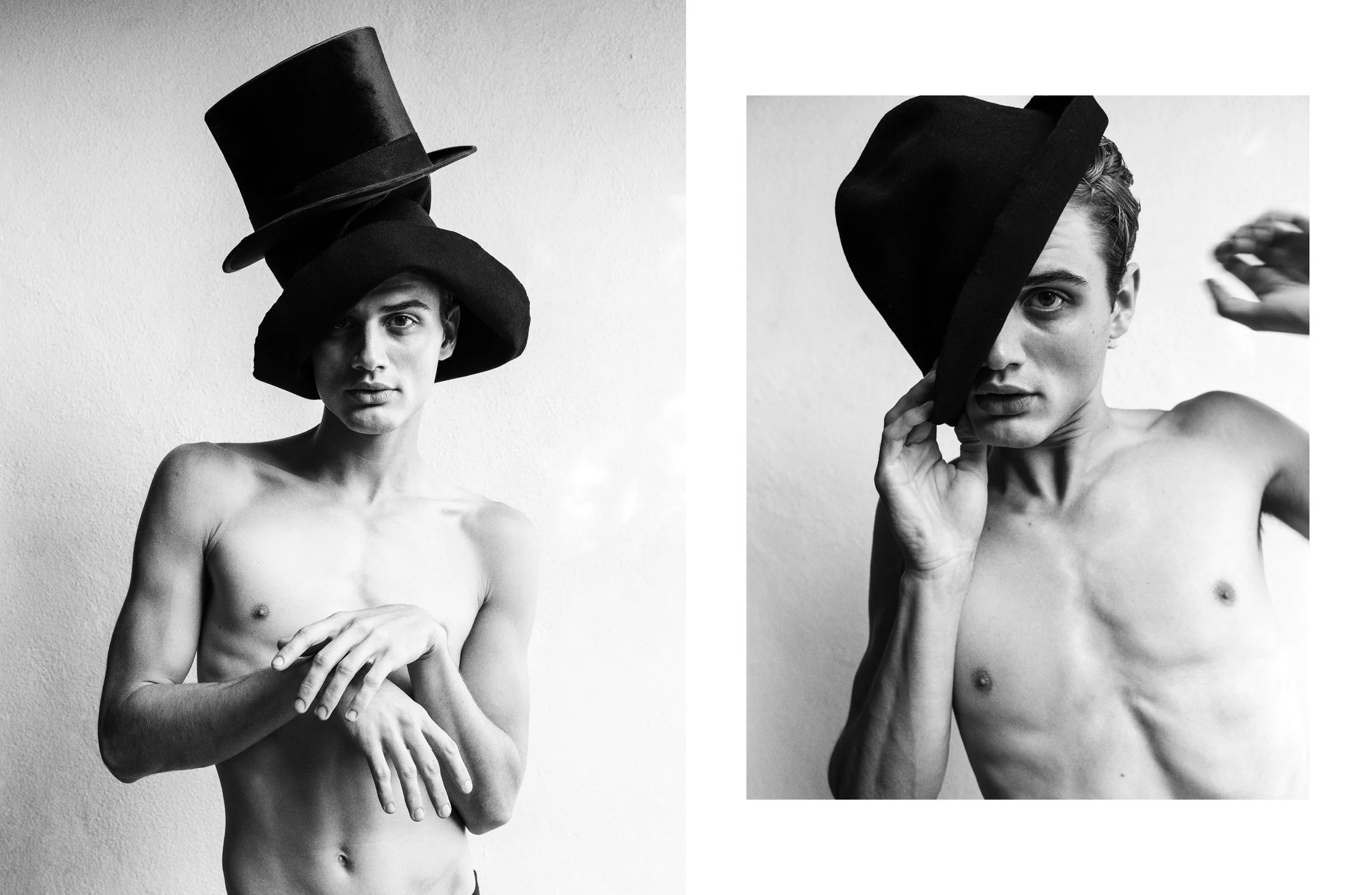
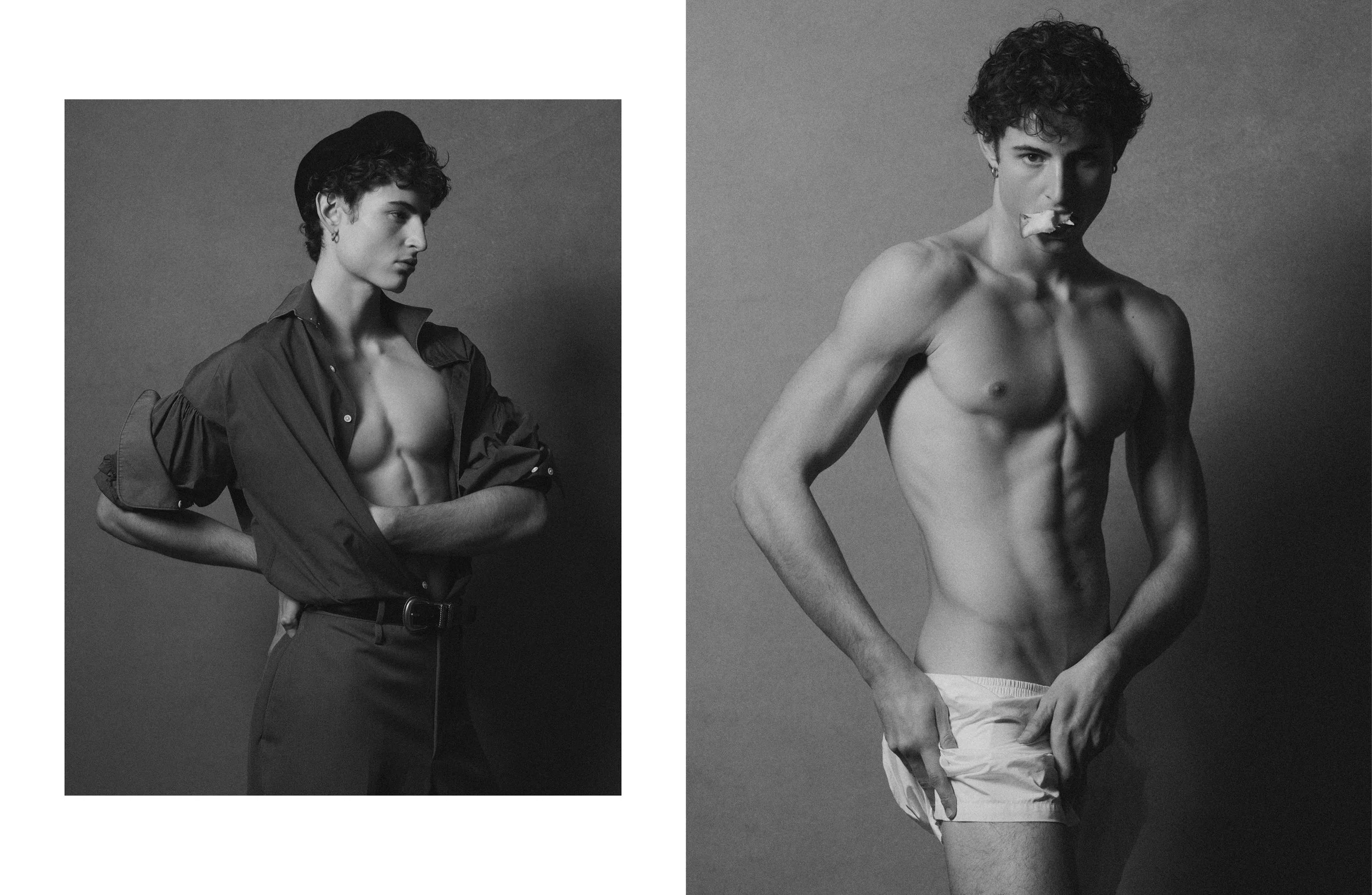
Tank top stylist’s own
Did your relationship with musical theatre change when it became your career?
I've tried to maintain a kind of purity of love for theatre. I think now that I've worked in it so closely, not just as a performer, but as a writer and producer, I have a pretty deep understanding of the medium, so it would be very easy to get lost in the technicalities when I’m an audience member. The challenge as I get older is to still find pieces that are transcendent as a spectator. Those experiences are just fewer and farther between, but when I do find them, they make me feel like a kid. When I saw Cats: The Jellicle Ball, I felt like I was watching my first Broadway show. I wasn’t thinking of the dramaturgy, or the arrangements, or the performance choices, and just got to experience it as a human being.
Does your role as a writer and producer affect the way you perform on stage?
Something like Dear Evan Hansen or the show I’m doing now, Midnight at the Never Get, changes the way I approach my role because I’m in the weeds of it. When you’re part of the architecture of a show, it inherently informs what you do. When I’m on stage for two hours, I don’t think it makes a difference because my job then is to get lost in the story, to be immersed in it. If I’m thinking of writing, I’ve lost it.
Speaking of the Midnight at the Never Get, what first drew you to the project?
Definitely the score. Also, Mark [Sonnenblick], I really had a wonderful time working with him. There are fewer and fewer truly great new songwriters, specifically in the musical theatre space, and he's one of them. I was immediately excited when he said that there was something he wanted to show me. But then, of course, you try not to get your hopes up, because since Dear Evan Hansen, I’ve listened to a lot of musical theatre scores, and it's not always something that I'm anxious to dive into. But when he sent me the demos, I was immediately blown away by the writing, the lyricism, the intelligence… As I investigated further, I fell in love with the format and the character, but the first hook was just hearing the songs.
The show’s story feels particularly relevant right now. What are you hoping that people take away from seeing it?
It's tough with this particular show, because I think so much of it is about just coming in without as much information as possible and just going on the ride and seeing what happens. I’ll try to keep it as vague as possible. There's something universal about spending your whole life hoping for something or hoping for someone. There’s purity in loving someone, but there’s also something quite scary and vulnerable in it. There's a lot that's expressly queer about it, and I obviously hope that queer people feel seen and enjoy seeing a romantic story told from that time period.
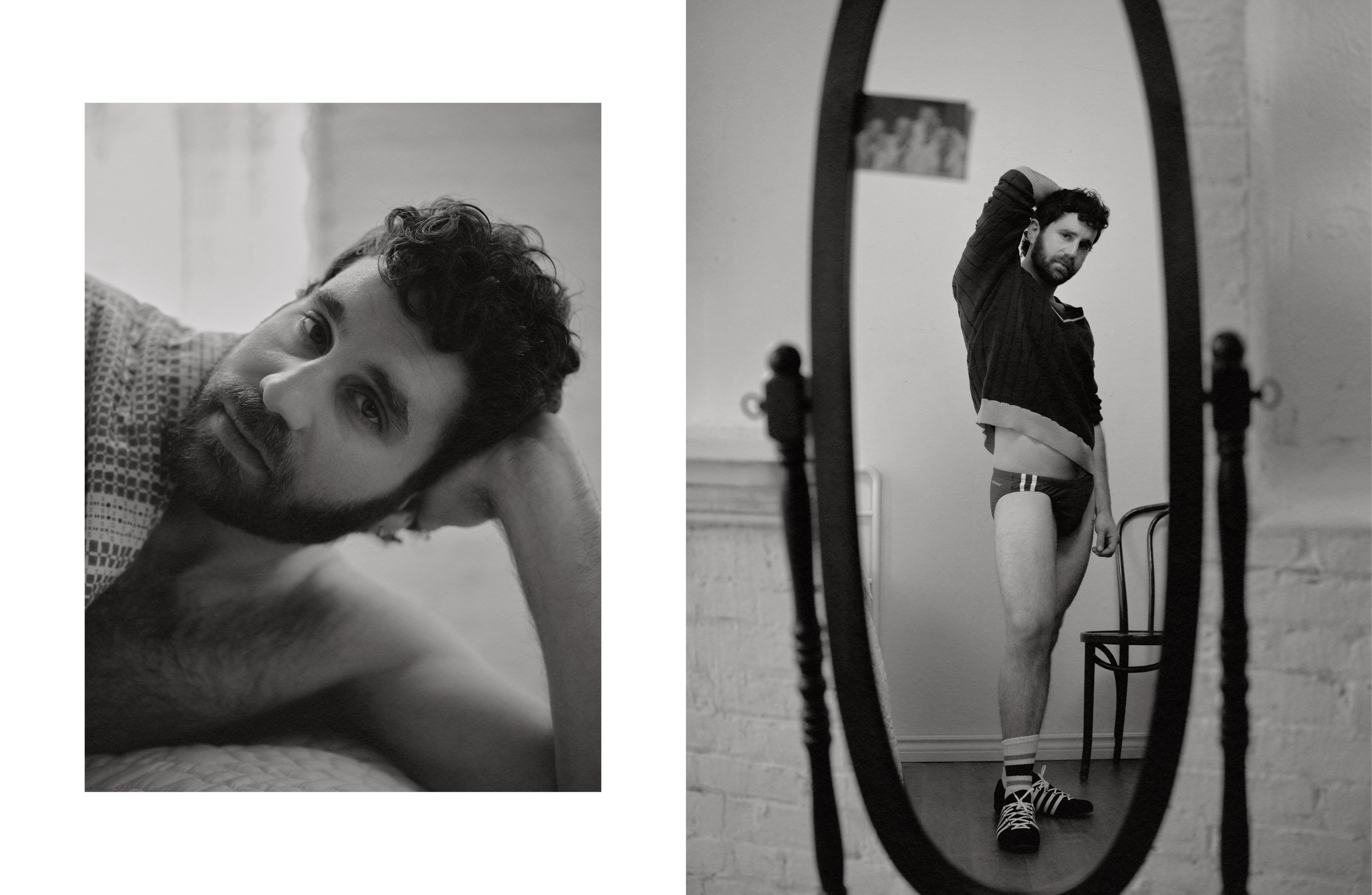
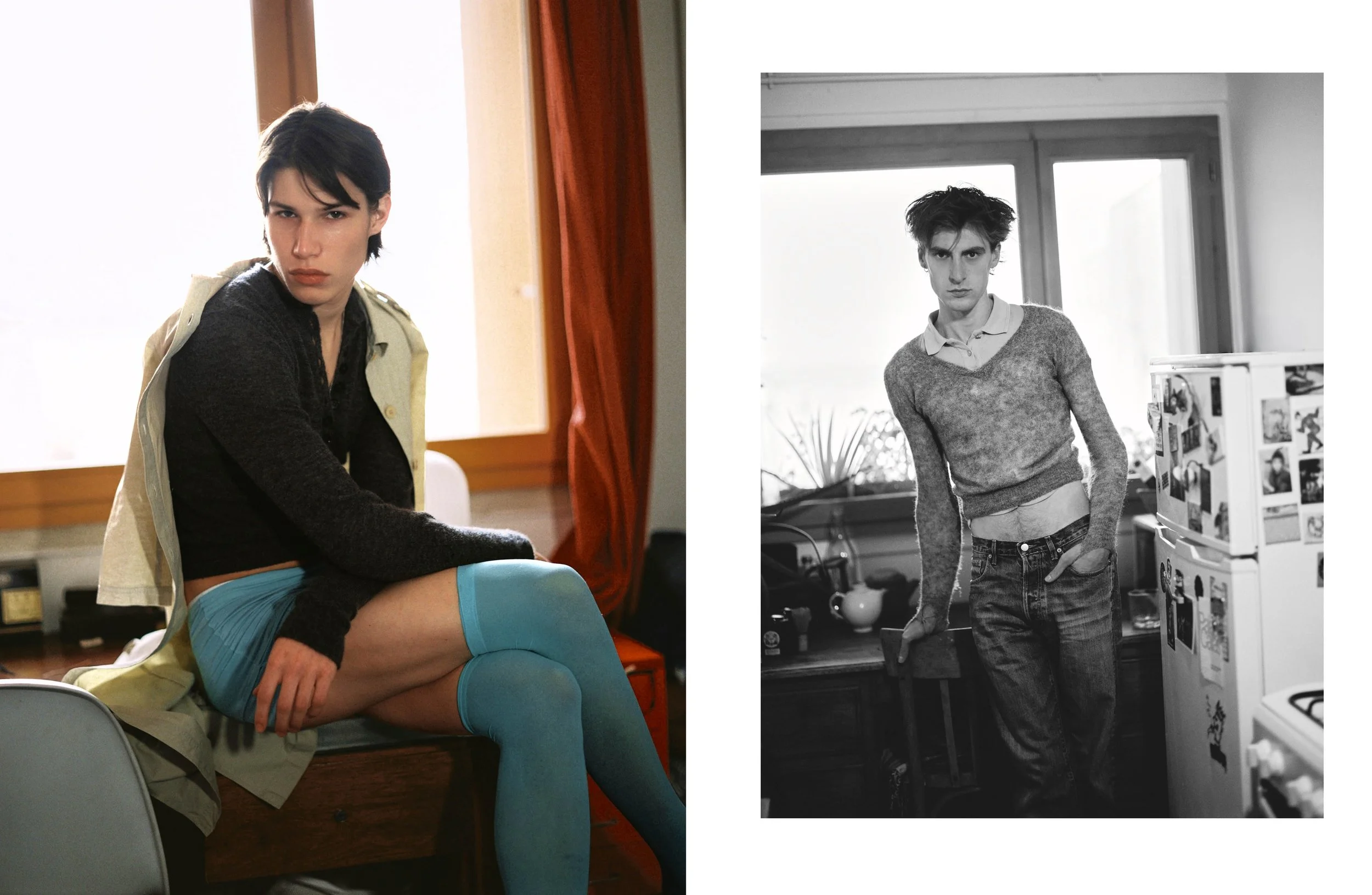
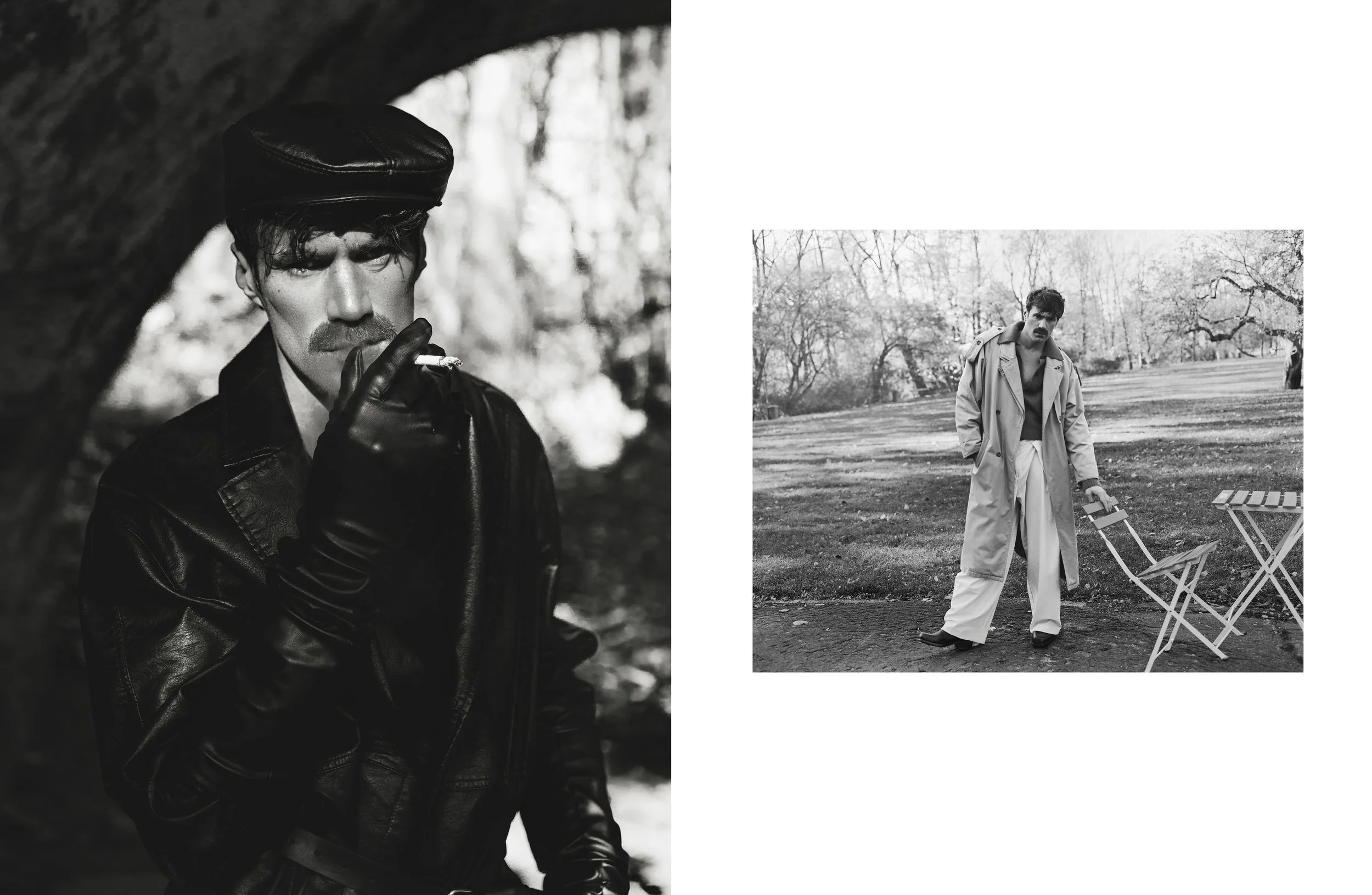
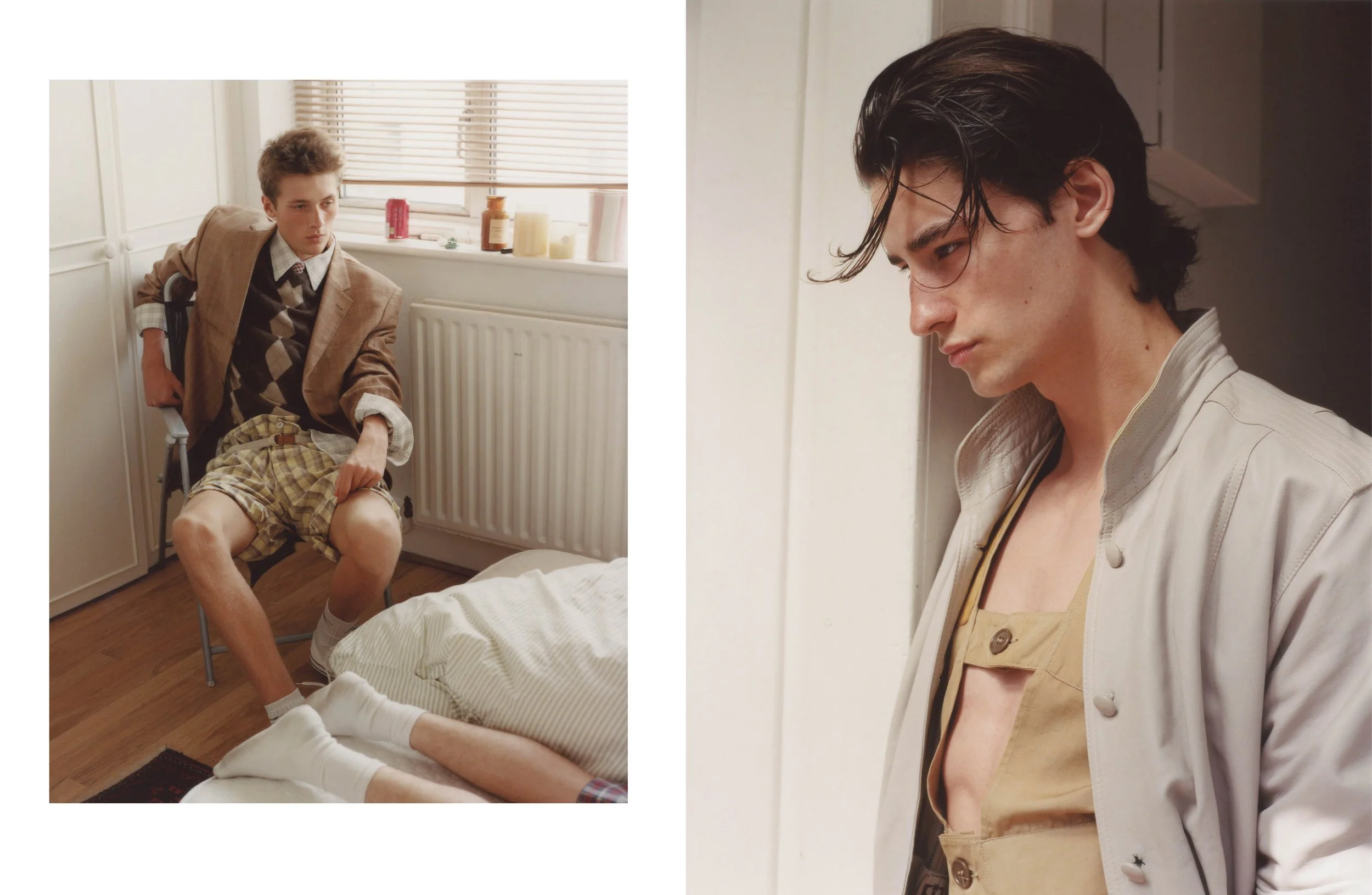
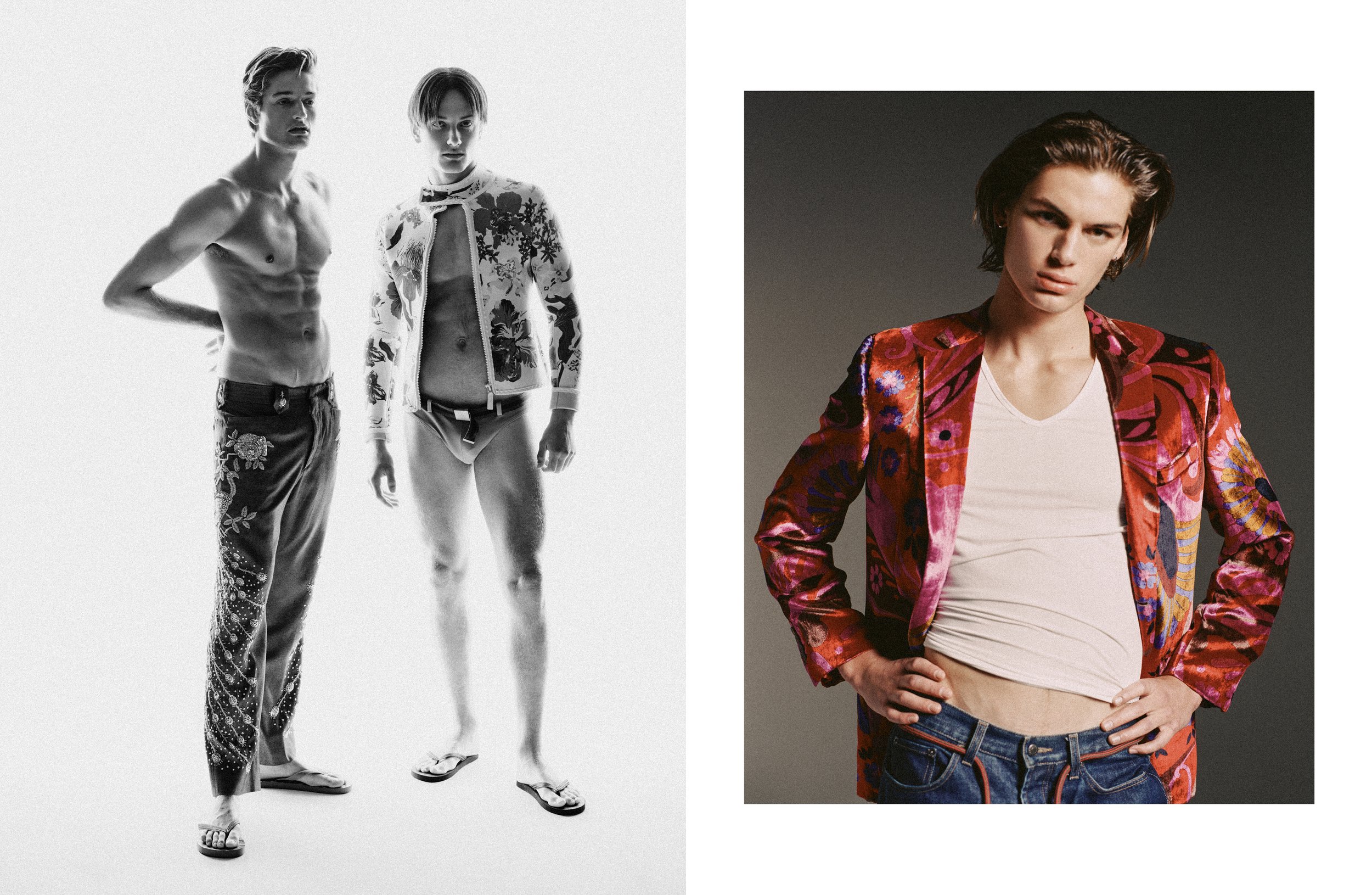
Left Quilt Studio Ford
Right Sweater Pastiche, underwear and socks stylist’s own, shoes K-swiss, jewellery Ben’s own
What is the biggest difference between US and UK theatre culture?
I love New York, and I hope to be allowed to perform there for my whole life, but there is a bit more politeness here. I think it’s cultural, but it does expand into theatre. It’s just a bit more attentiveness. I don’t want to jinx it, but I’m almost a month into performances, and I haven’t seen or heard a single phone in the show. No one is unwrapping food or eating, really. I think you can find that kind of respect in New York, but there are also a lot more definitions of what’s permissible.
Not to say that's better or worse; it's just a different thing. I think sometimes in New York, when you're making theatre, there's an understanding that there are certain hours that we're working, but all the artists working on something are devoting every hour to what they're doing. That can lead to unhealthy amounts of stress and blurred lines, but there's a great New York level of grit and commitment that comes along with that. In London, the hours that you’re working are the only hours you’re working, and for the ones that we are not, everyone is in their own lives. There's a real focus on maintaining those boundaries. Having that said, what I like about musical theatre is that it’s a universal language.
Beyond the stage, you have also released records and been on television. What pushes you to experiment beyond the limits of the theatre?
I'm an artist, so I want to use my toolbox in as many ways as possible, because I love to make things. It’s rare to find things that express your whole potential. So, I like to experiment with different mediums. Stretching myself so that I'm able to tell stories and make art in as many ways as possible, so that I'm not beholden to just one type of project coming along, is what allows me to stay creatively satisfied.
Also, you can’t live much of a life while you're doing musical theatre, at least I can't, in terms of the vocal demands and the physical demands. It's just the kind of thing where you have to love a project enough to give up your life to it entirely for however long you're doing it. I know some people can find a better balance and are able to do it more consistently, but for me, it's not necessarily the kind of work that I can do all year or every year. Again, as an artist, I love to try to find things that allow me to sort of have a different texture of lifestyle.
You mentioned Cats: The Jellicle Ball, and that show is being applauded as a new approach to doing Broadway. What excites you about where musical theatre is headed?
It's a good question. There's a lot that is scary at the moment, particularly in terms of the financial model
and what's possible and not possible. I think what's exciting to me is playing with form. Again, Cats: The Jellicle Ball references such a specific art form and time period that I think is so rife for the form of musical theatre, and that was so exciting to see that clash happen. In Midnight that Never Get, you get an immersive version of the cabaret format. I'm excited by the inventiveness and the ability to find meaningful stories. It’s not about expensive productions; it’s so much more about community.
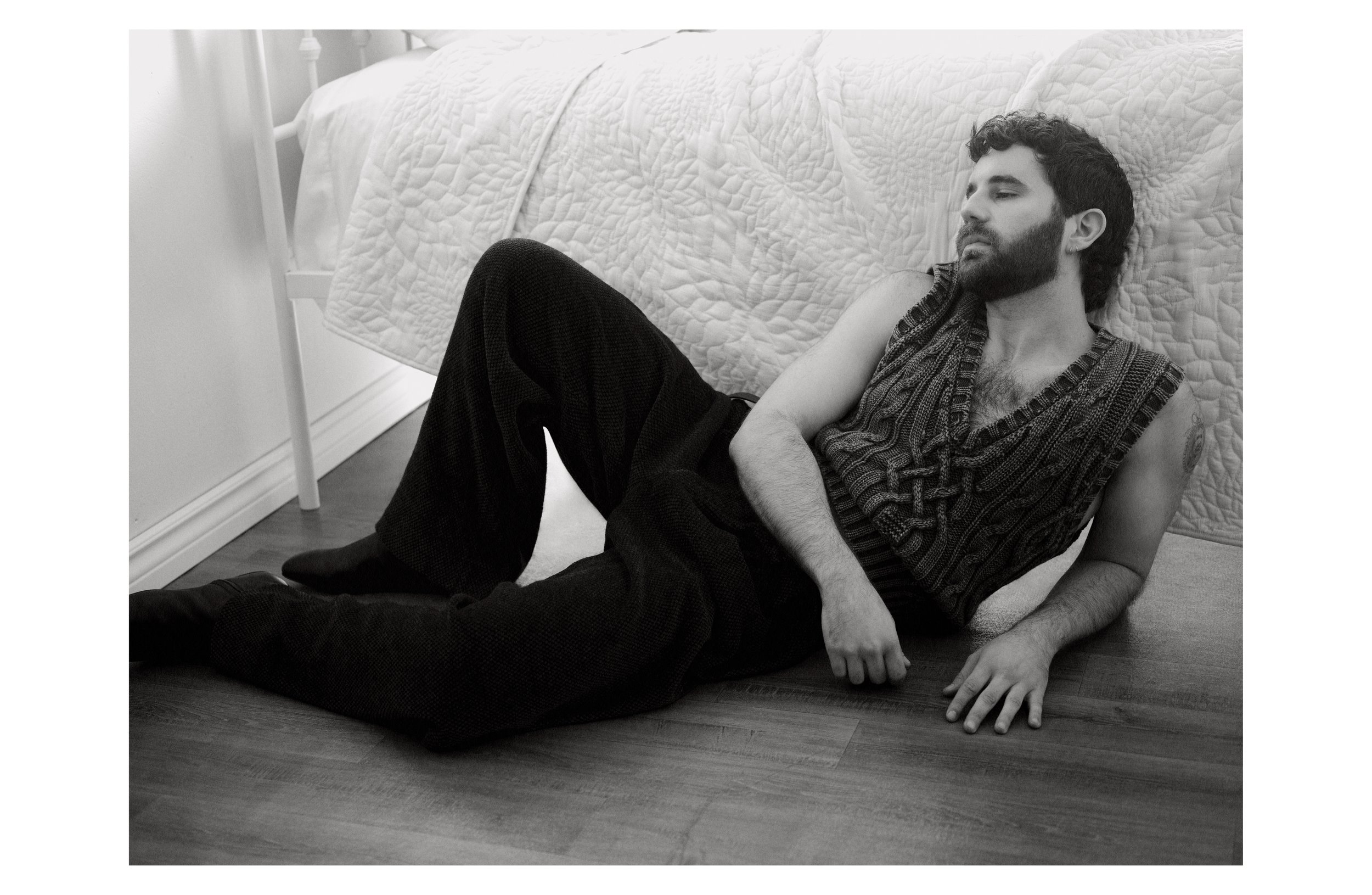
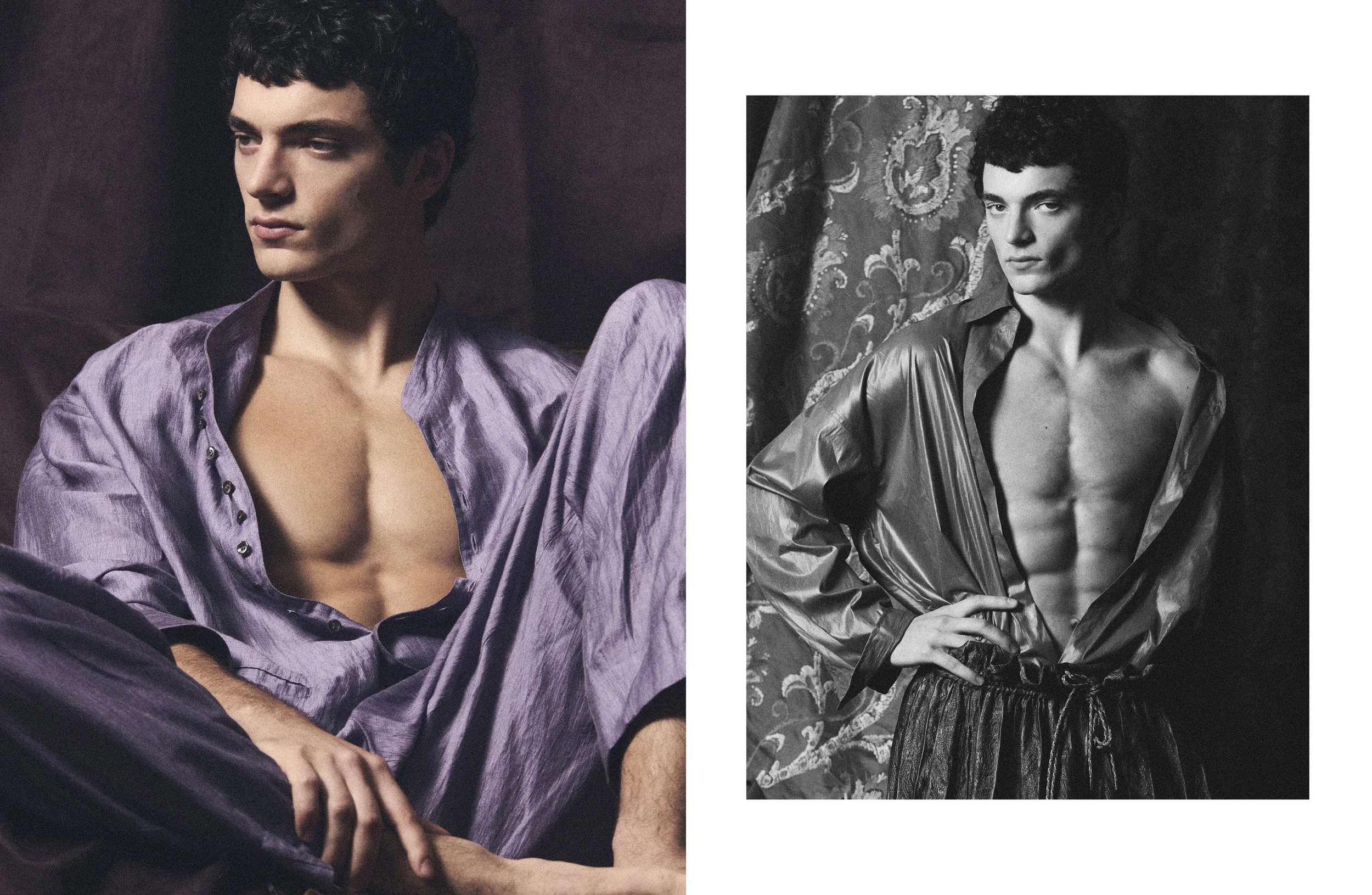
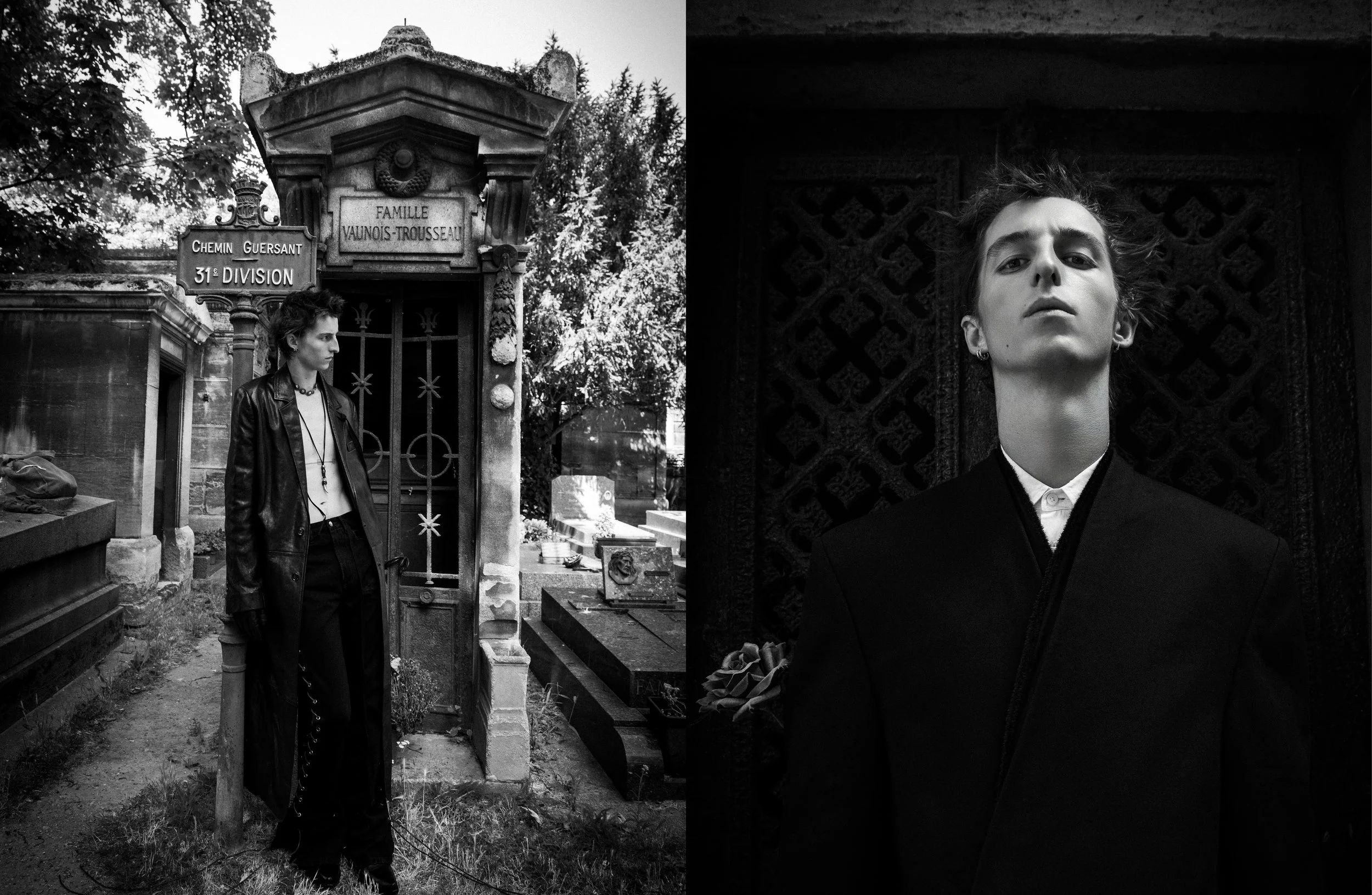
Full look Emporio Armani
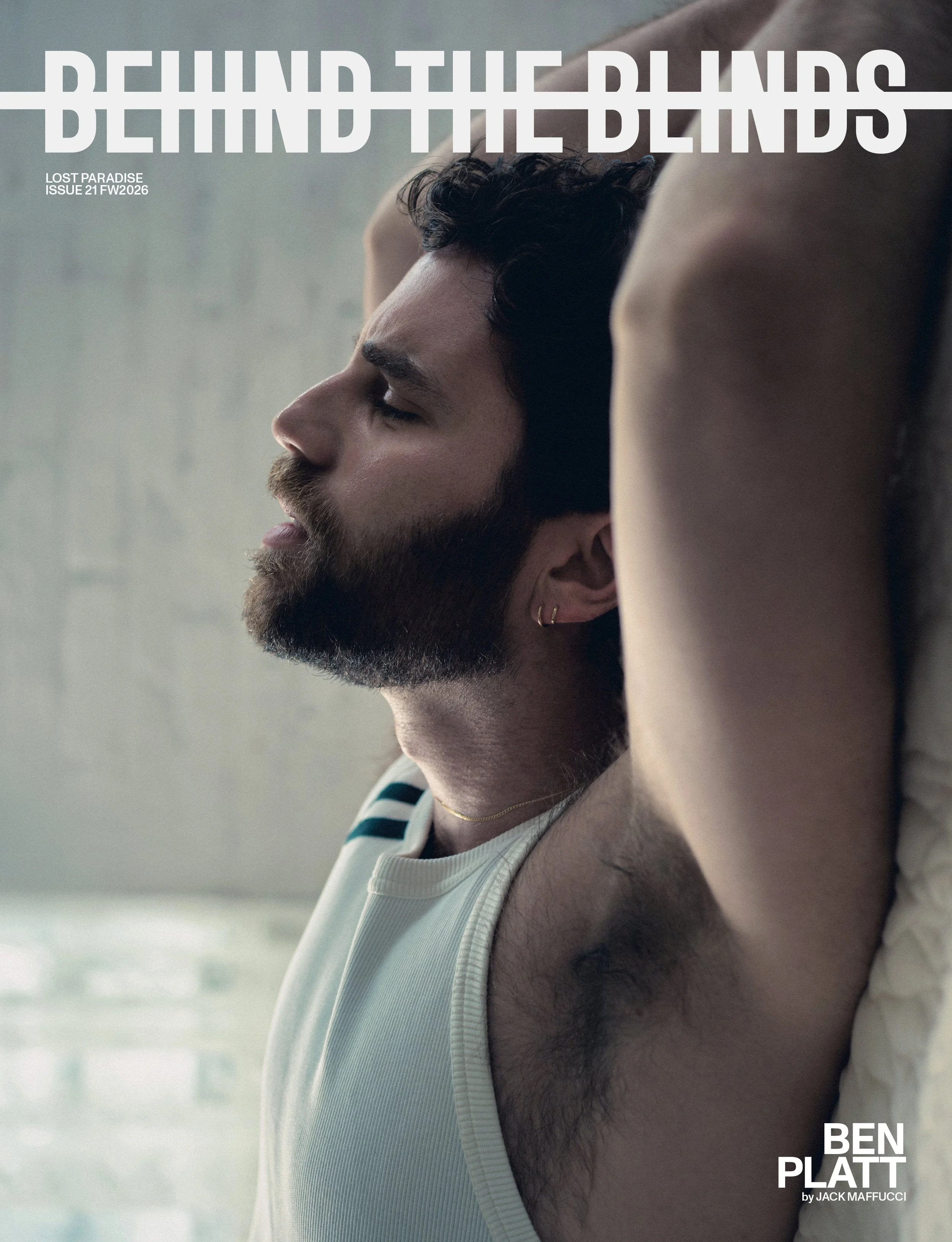
BTB21 LOST PARADISE
BEN PLATT
by Jack Maffucci
Issue SS26
+++
Delivery Early November 26
650 pages / English edition / 23X30cm
Interview by Pedro Vasconcelos
Photography by Jack Maffucci
Fashion by Michael Andrew Rosenberg
EIC Michael Marson
Casting by Imagemachine cs
Grooming by Ben Jones at The Only Agency using Dior Beauty
Set design by Dena Winter
Photographer Assistant’s Layton Davis
Stylist Assistant’s Clove Pulido