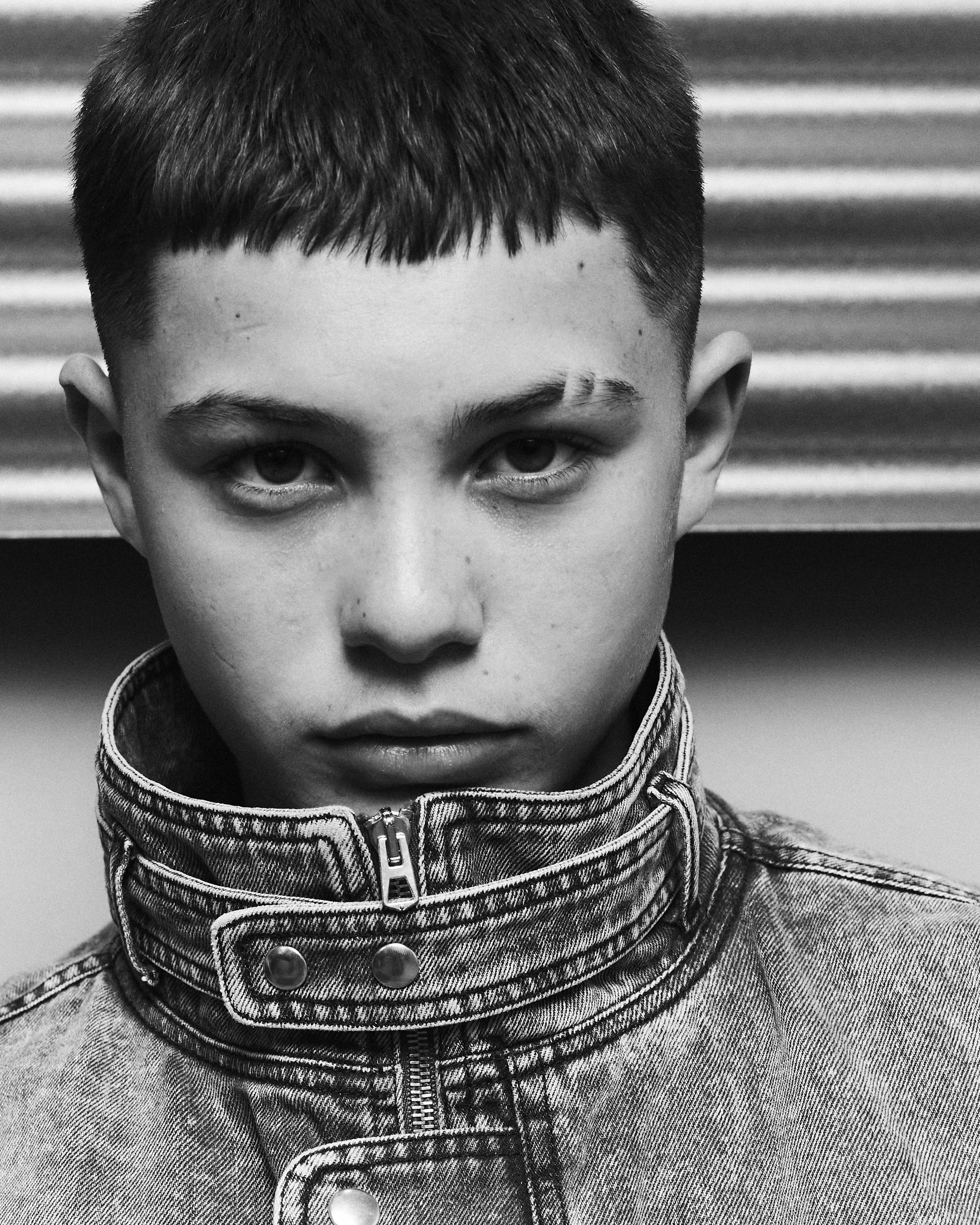
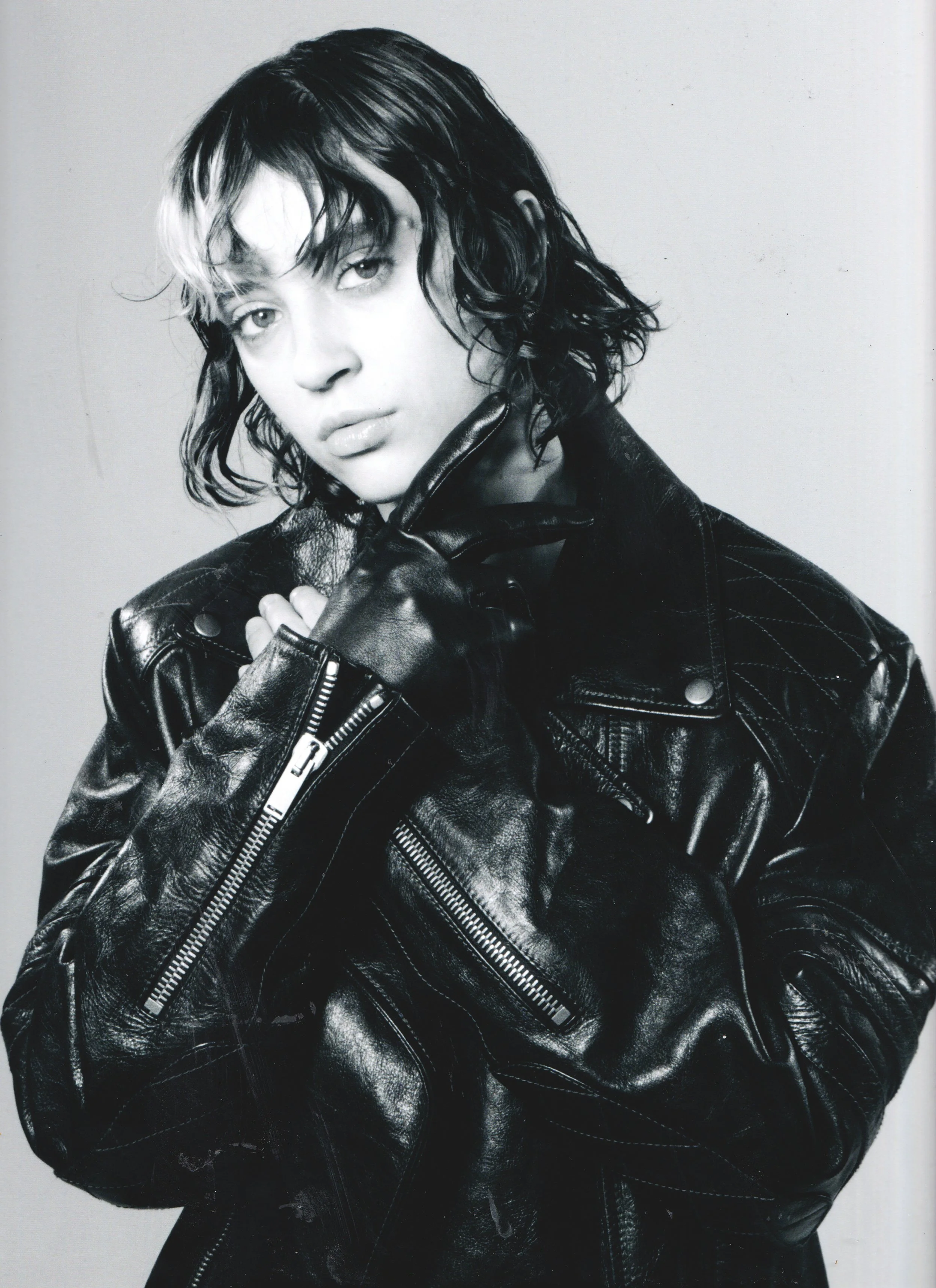
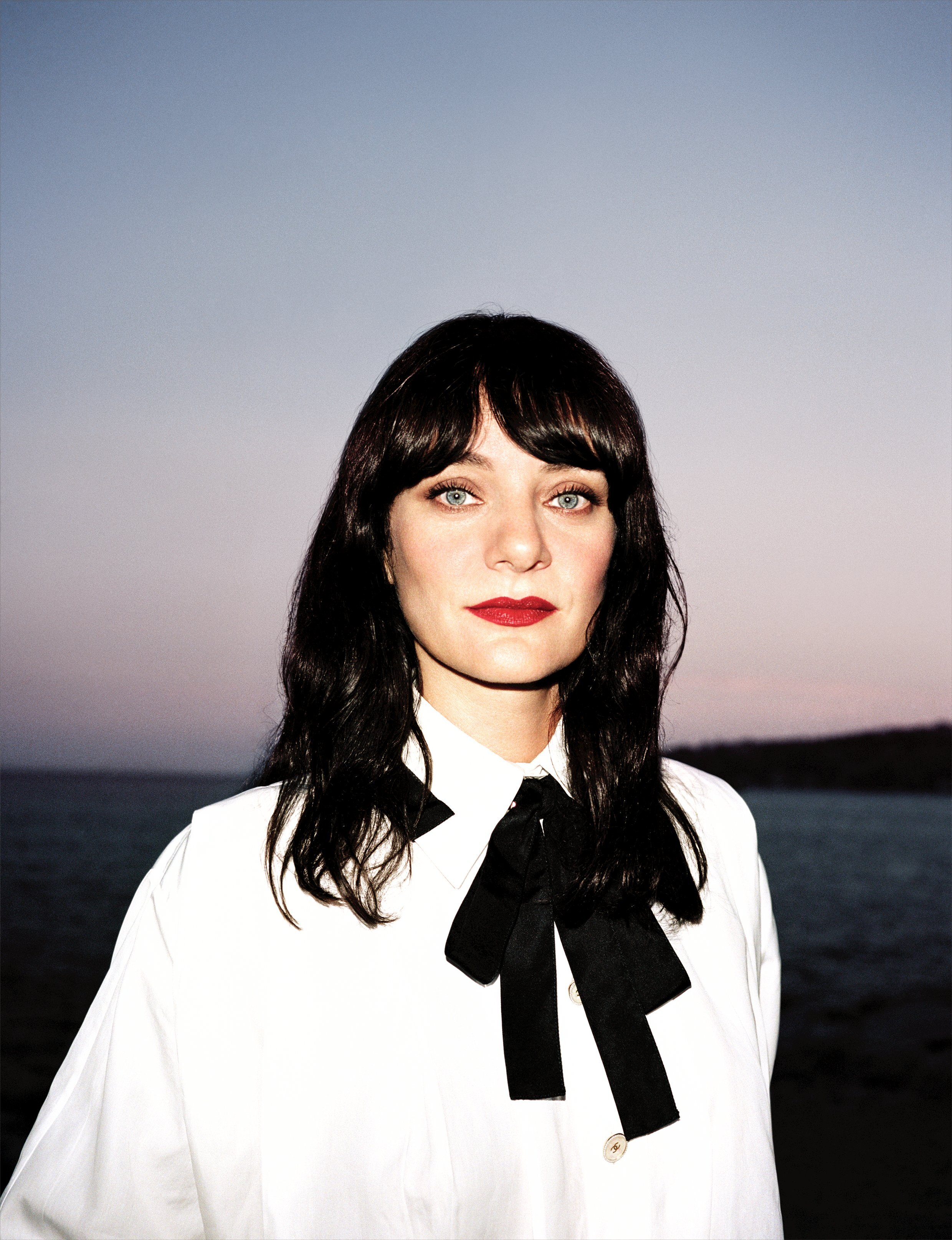
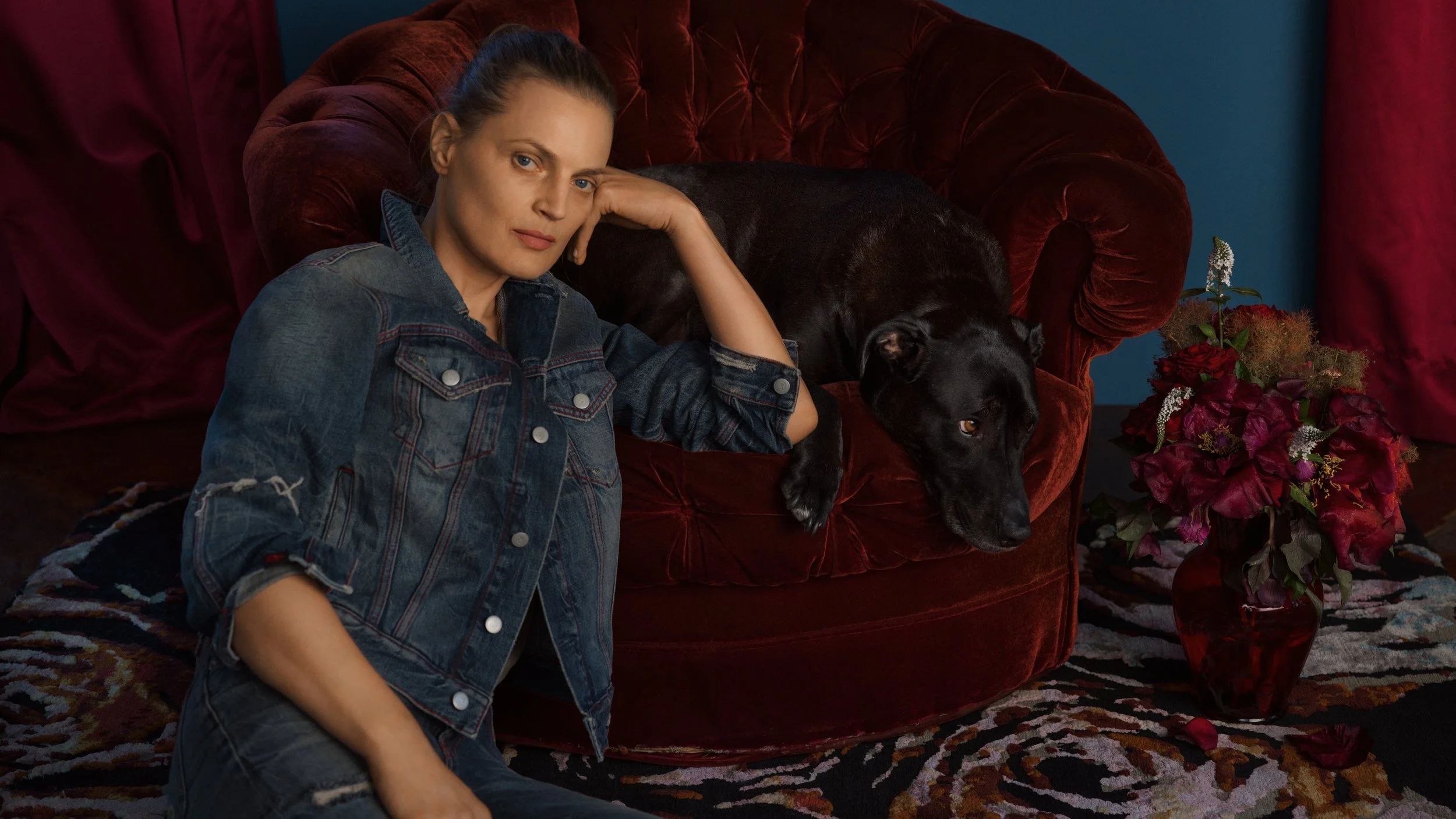
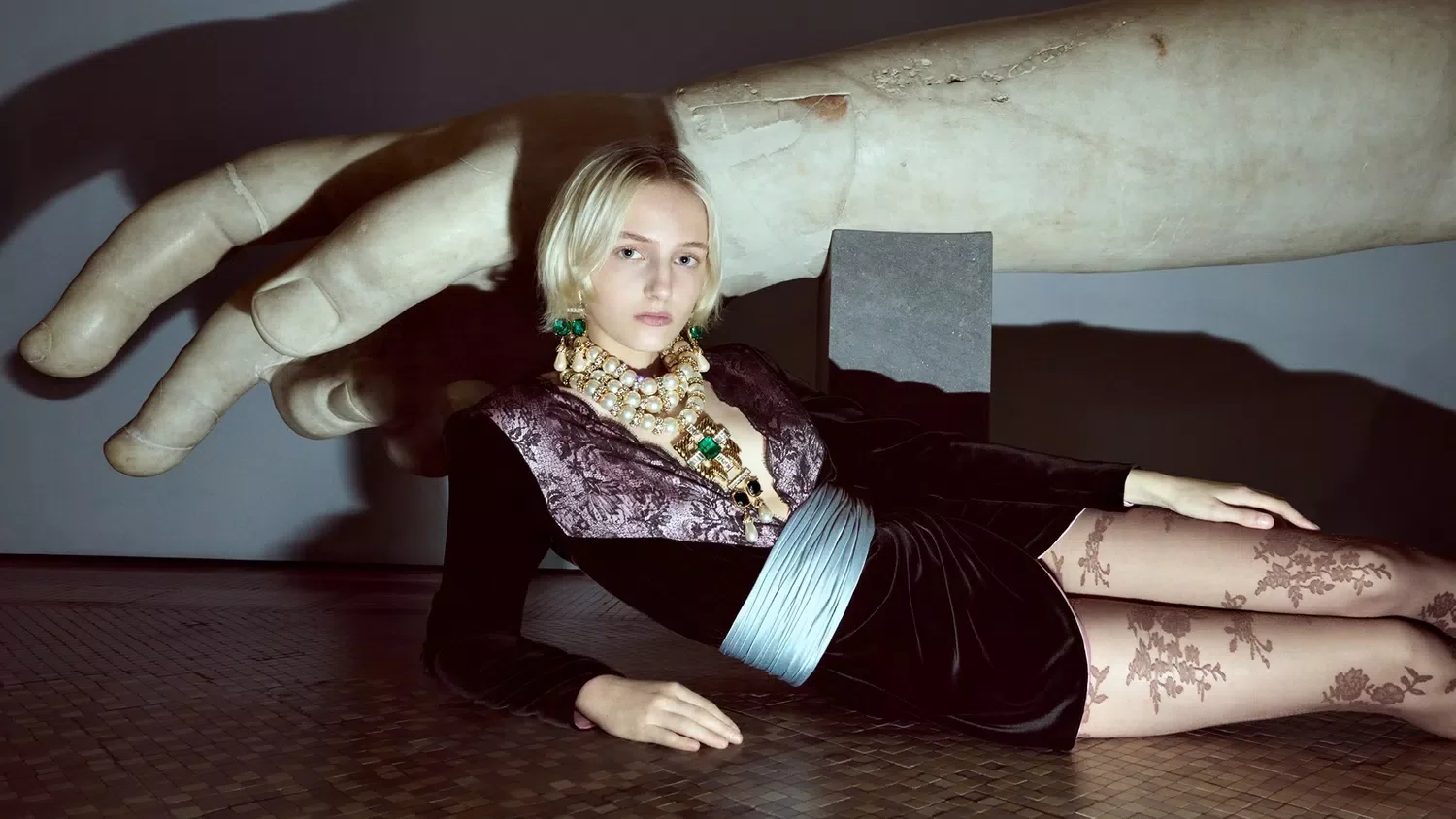
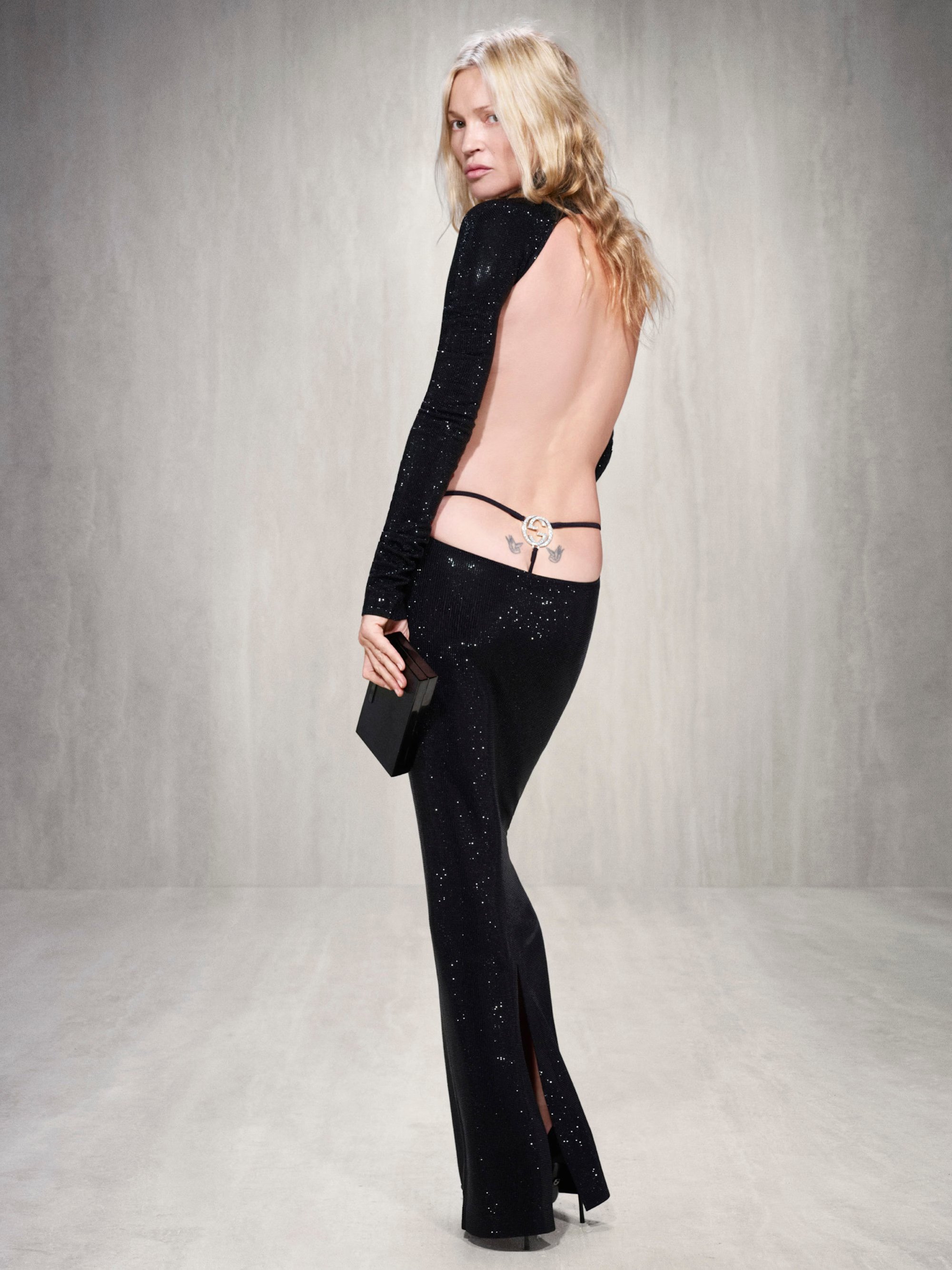
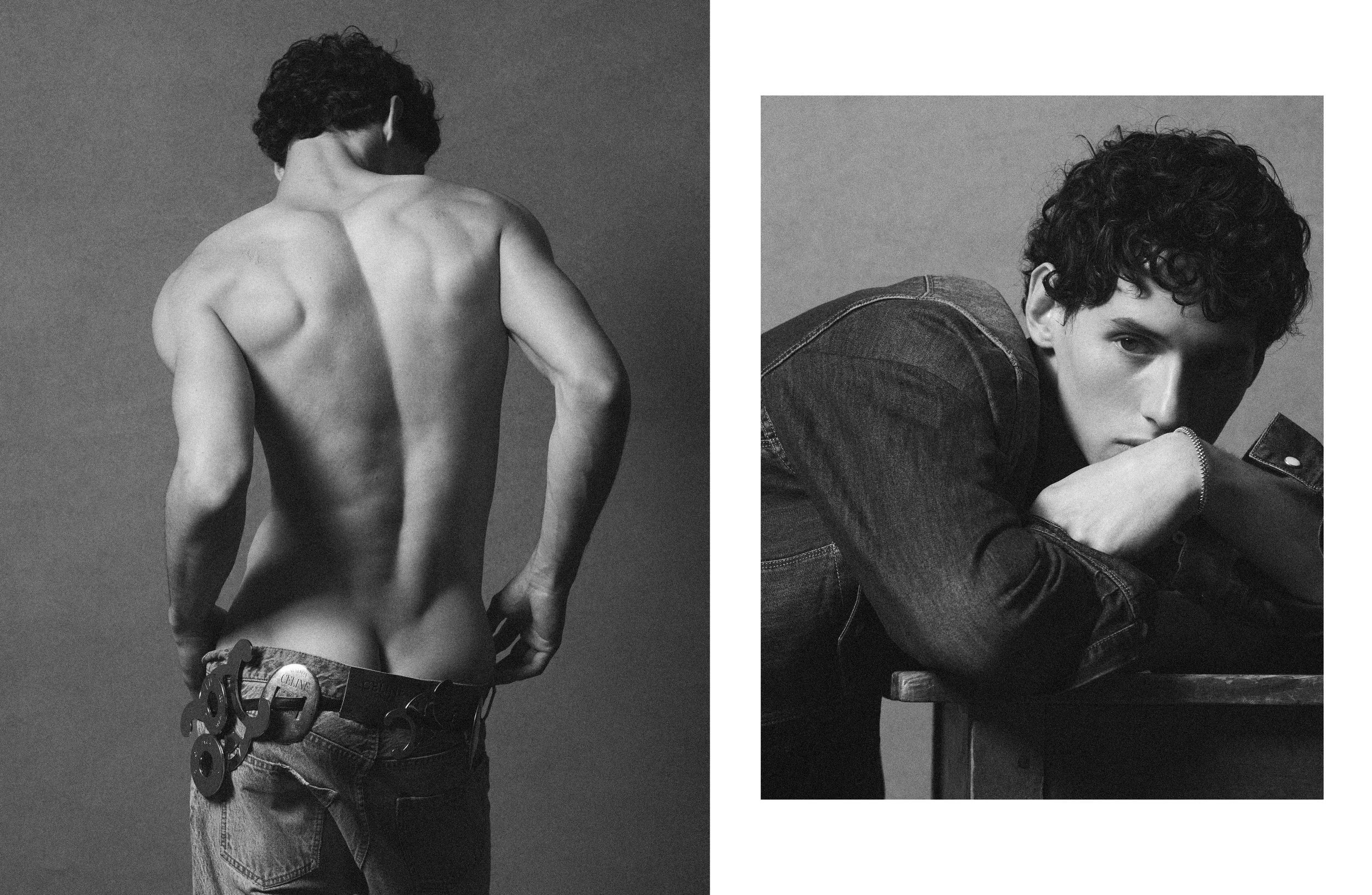
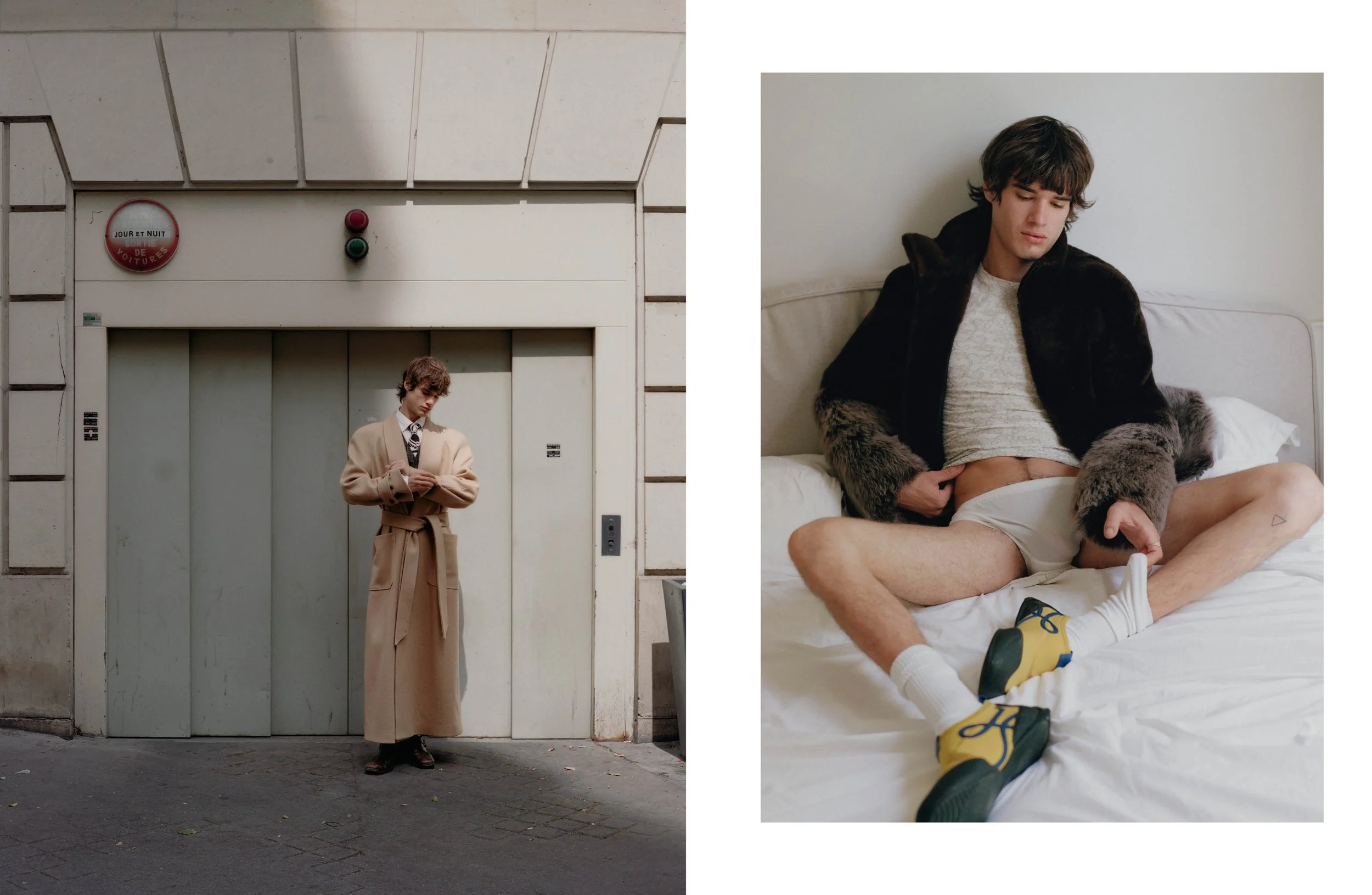
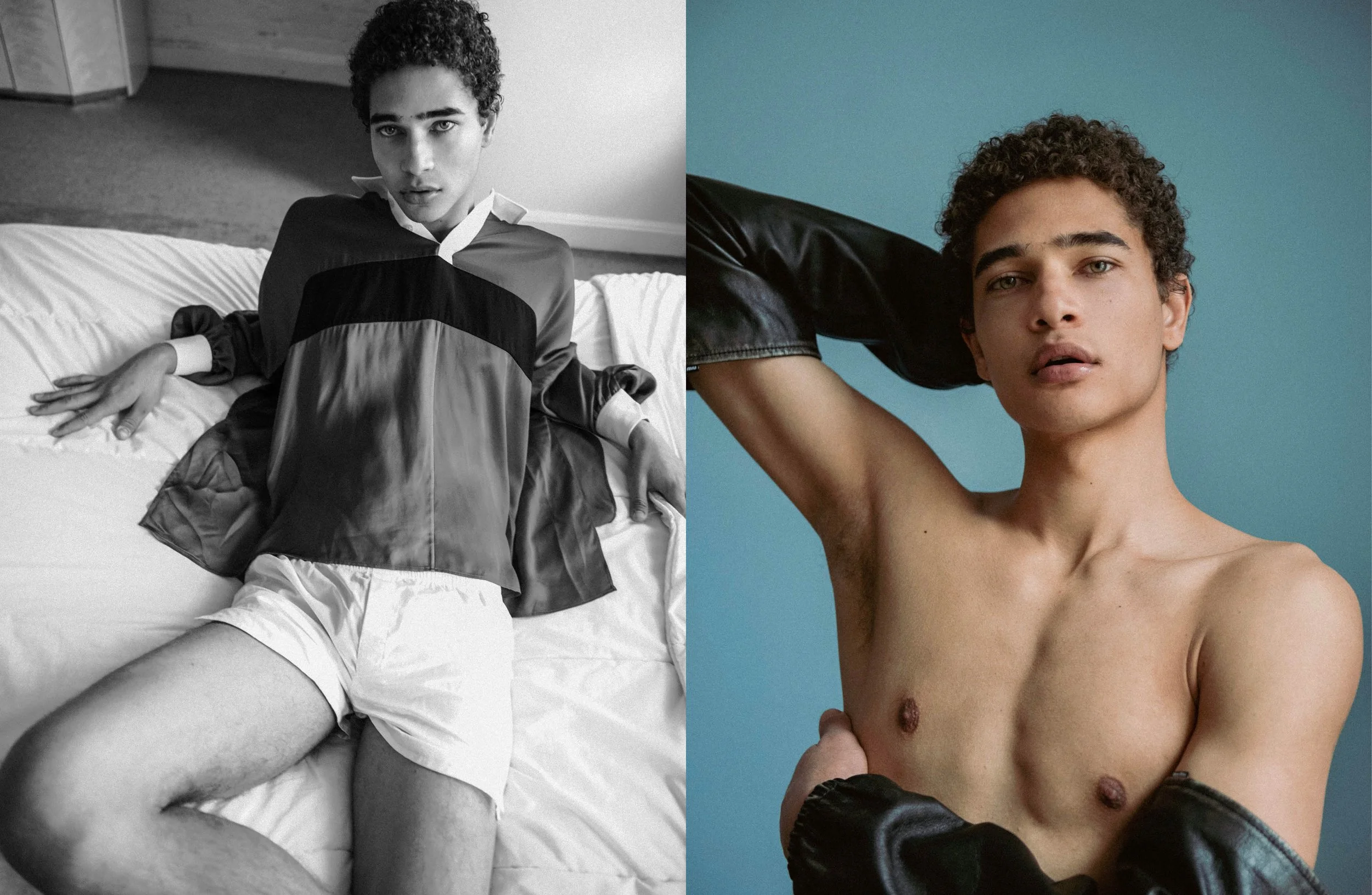
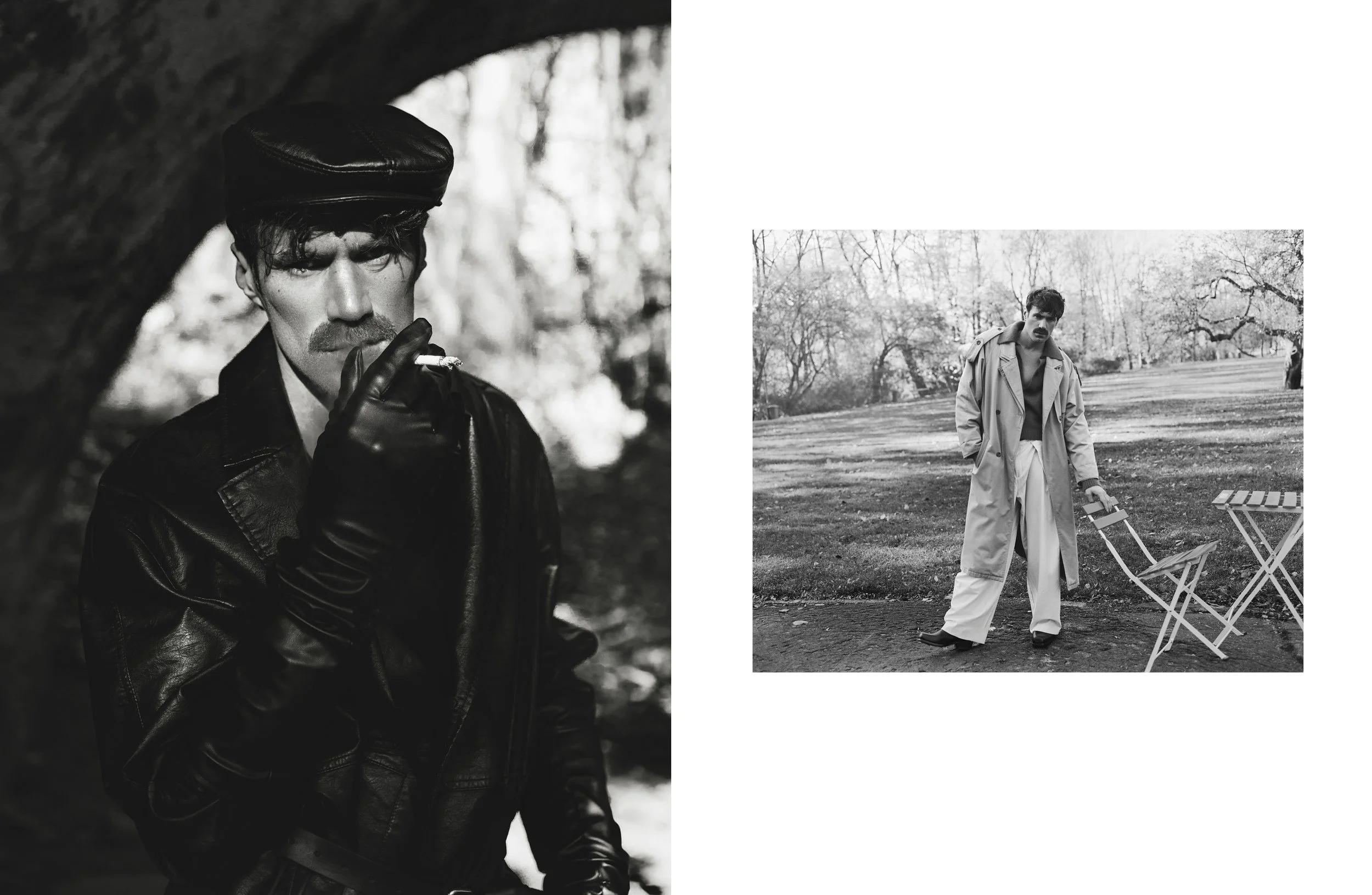
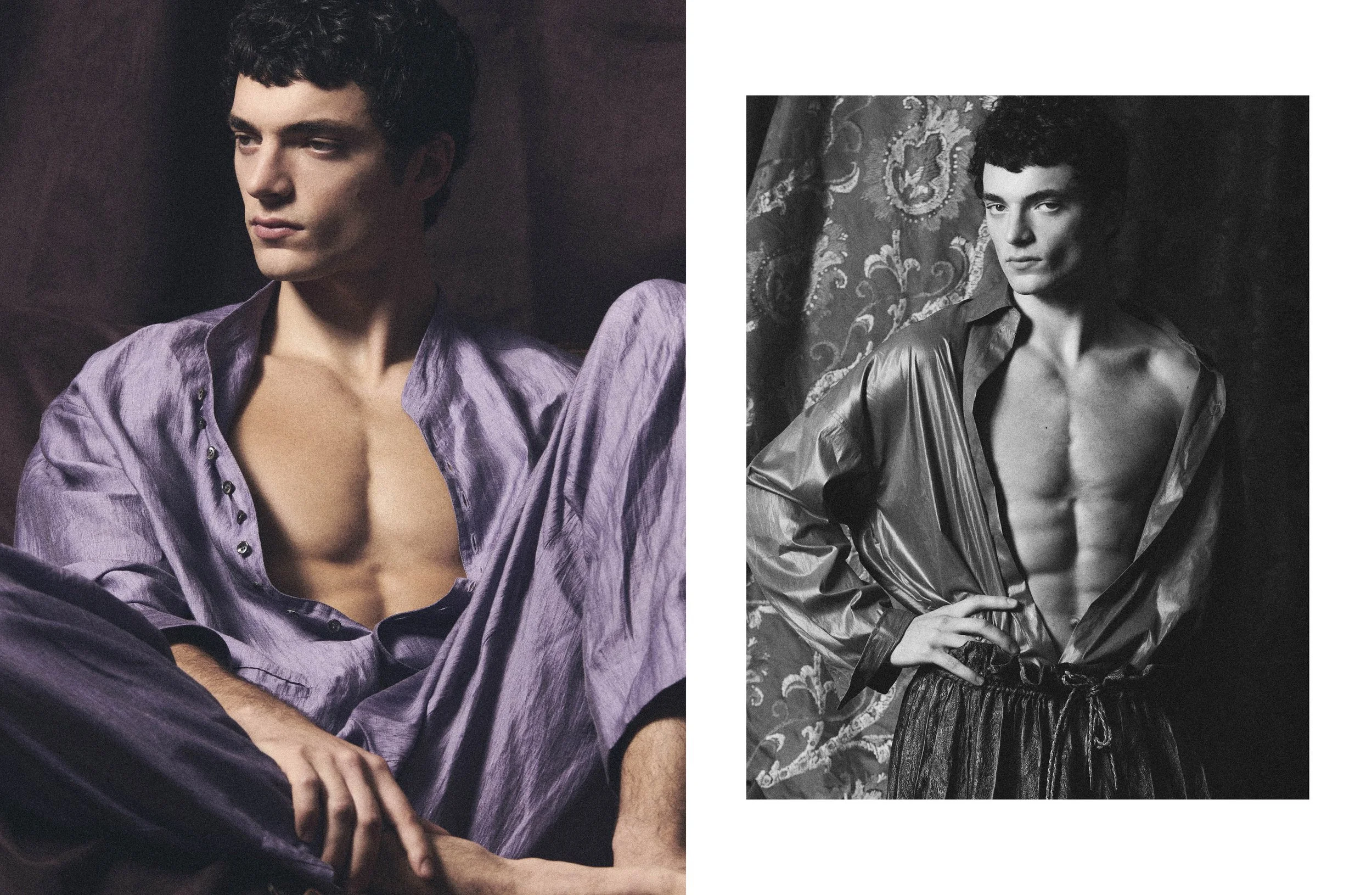
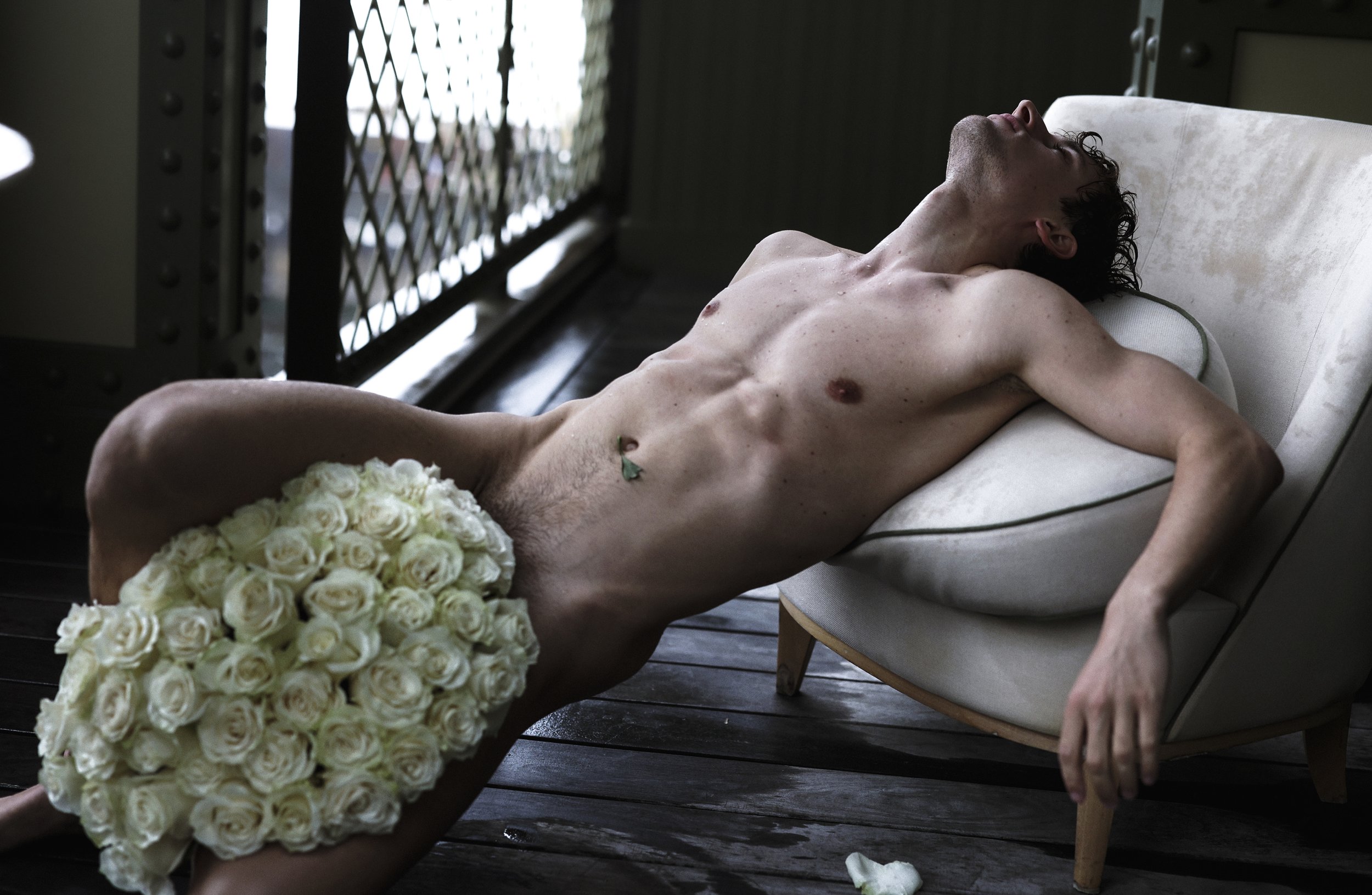
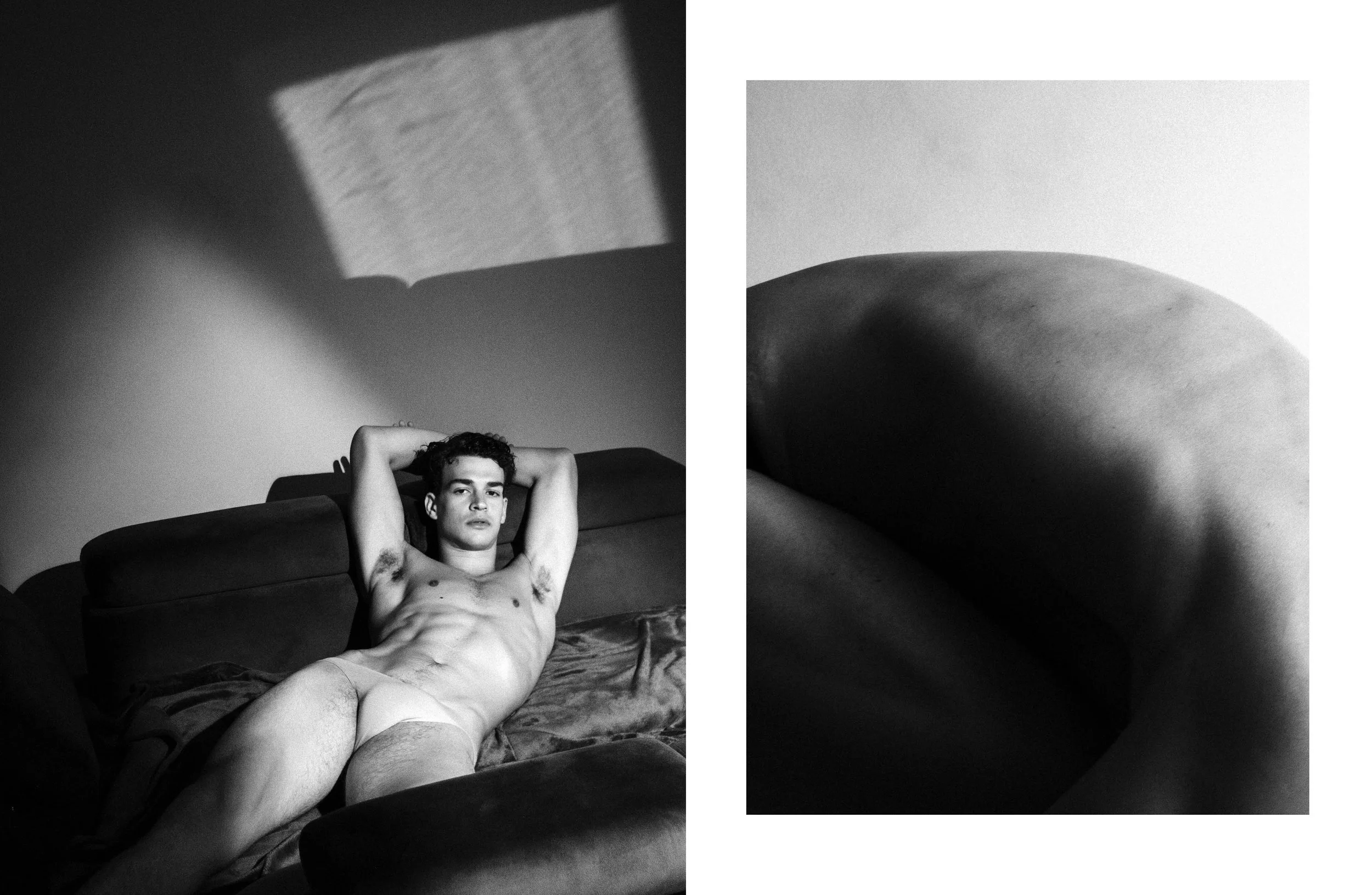
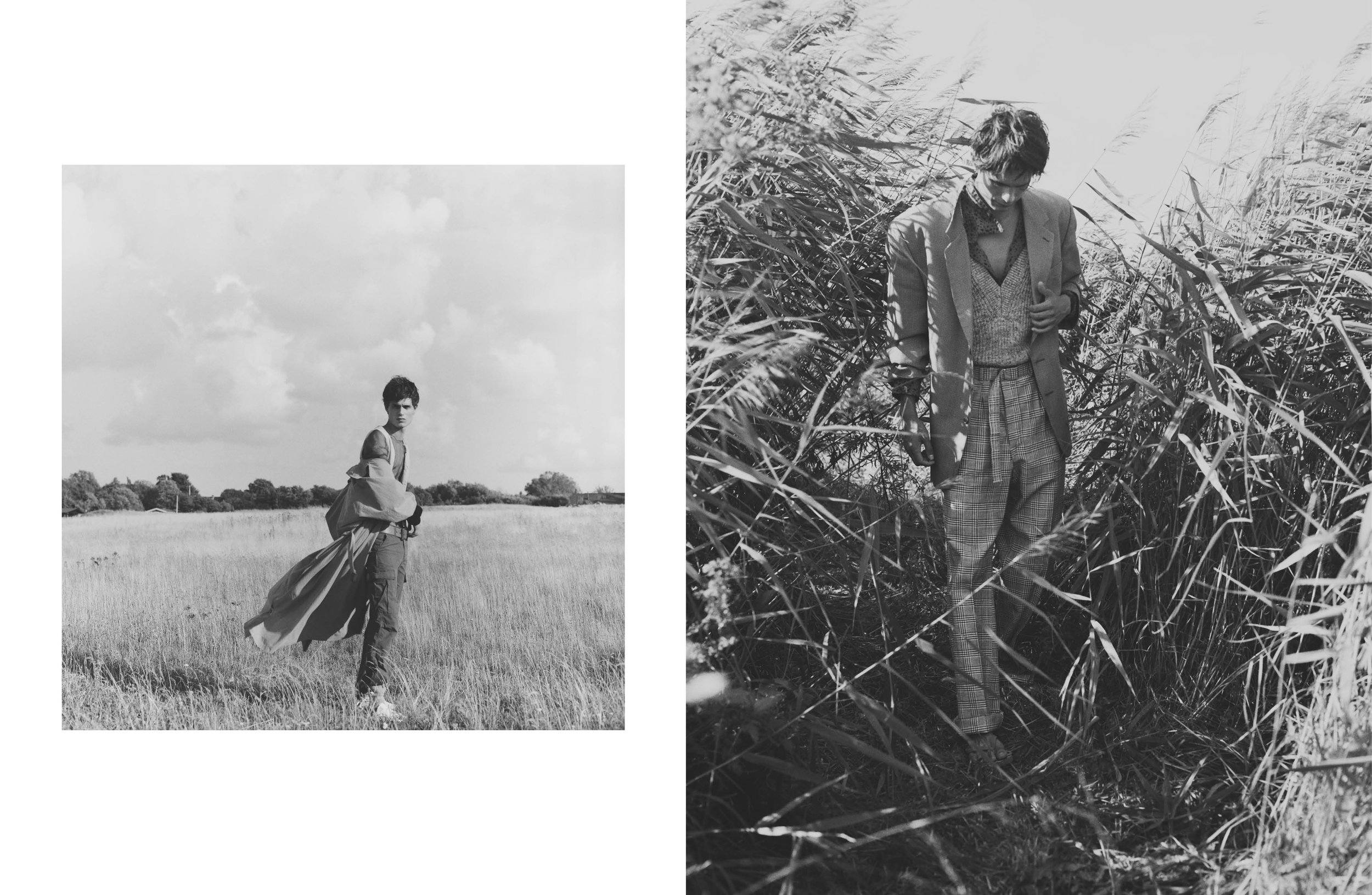
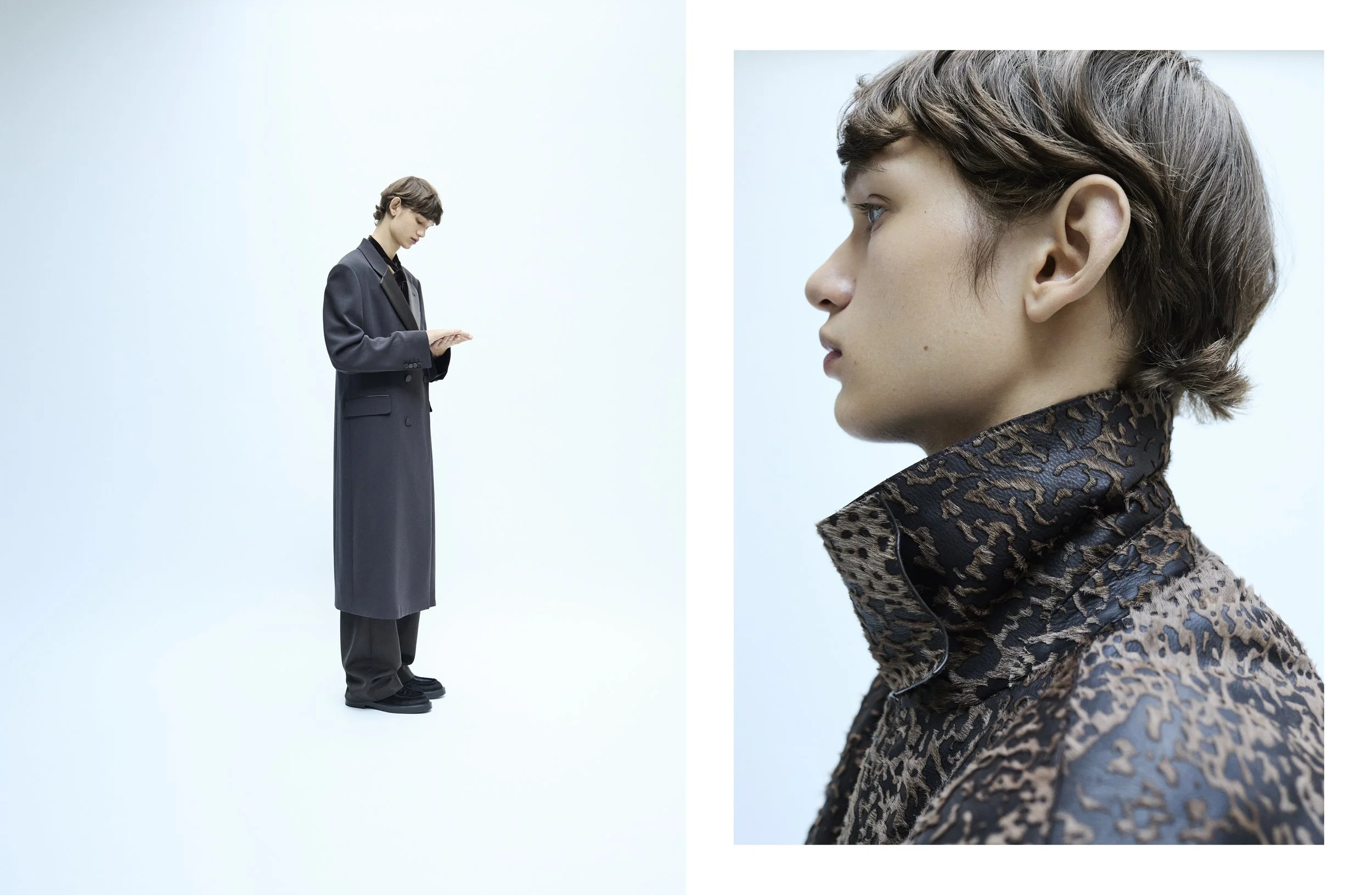
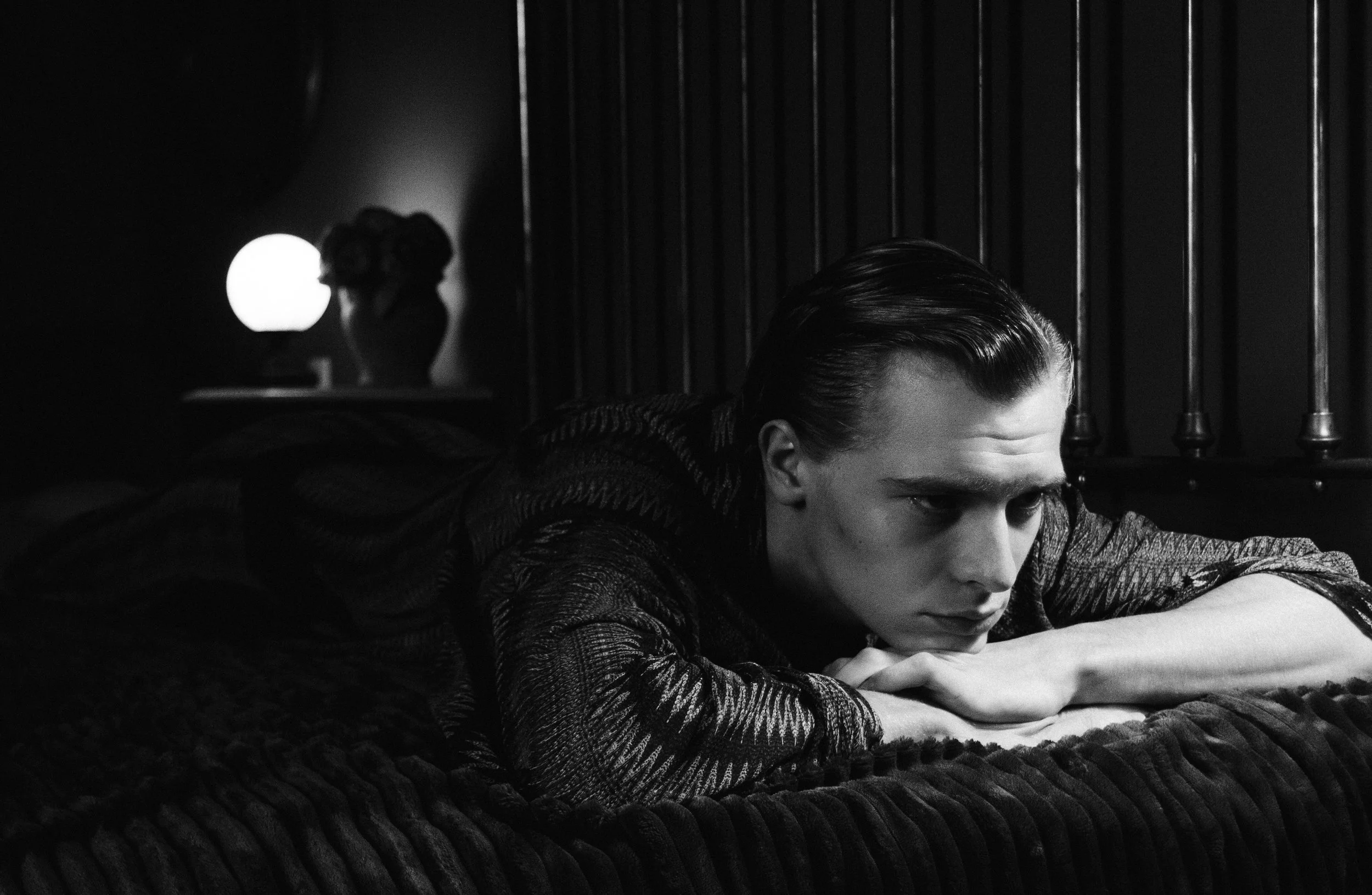
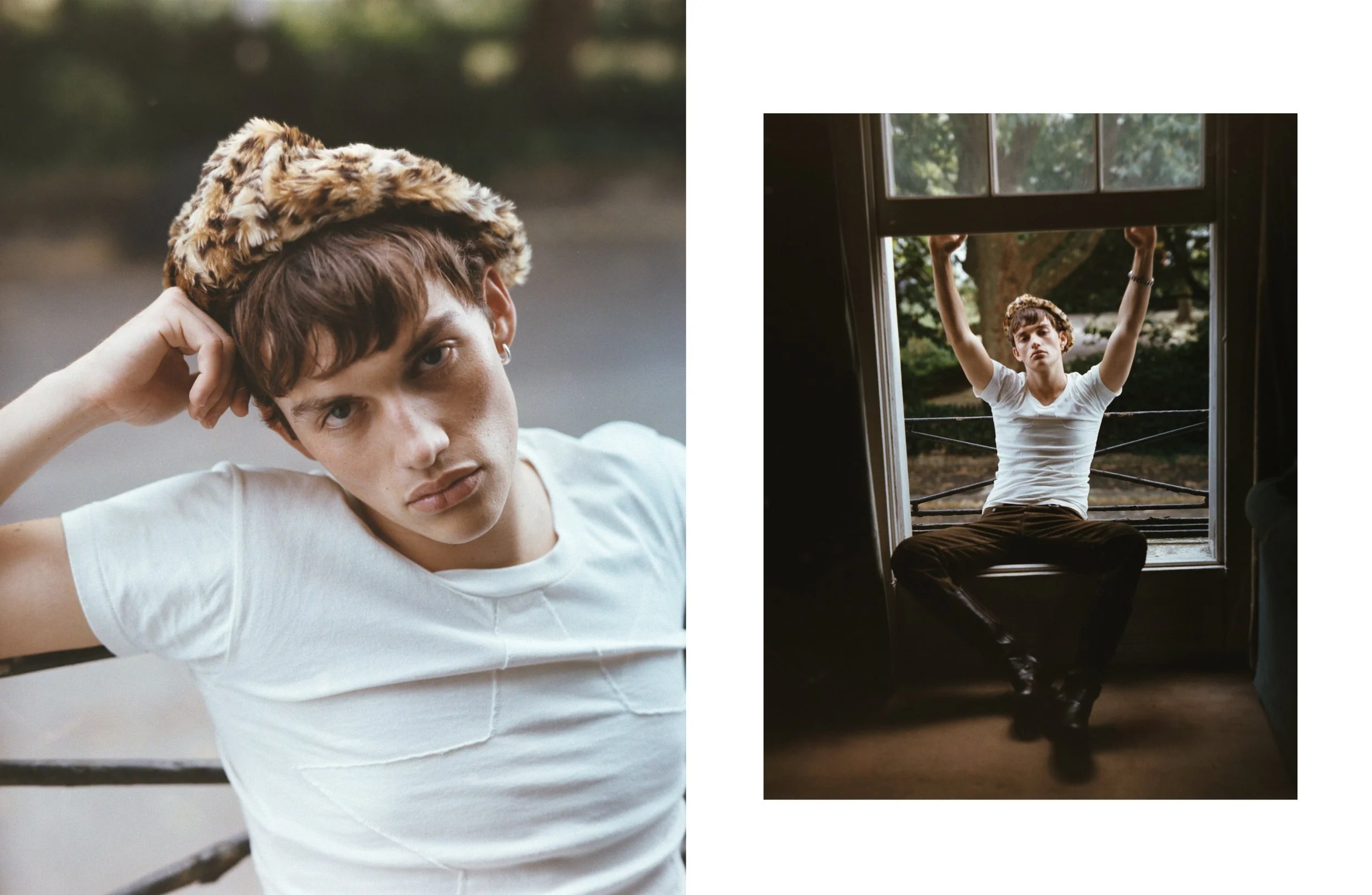
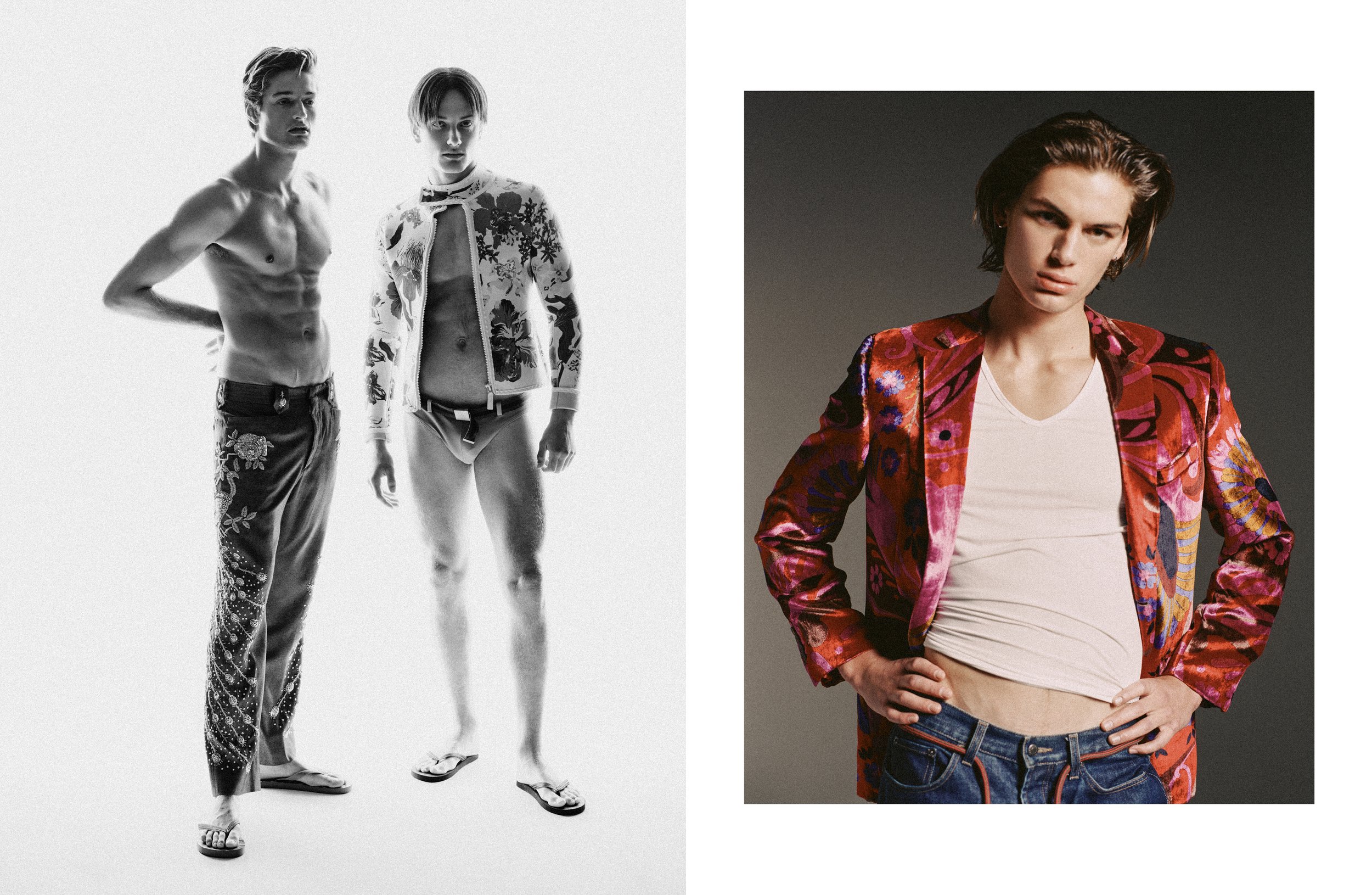
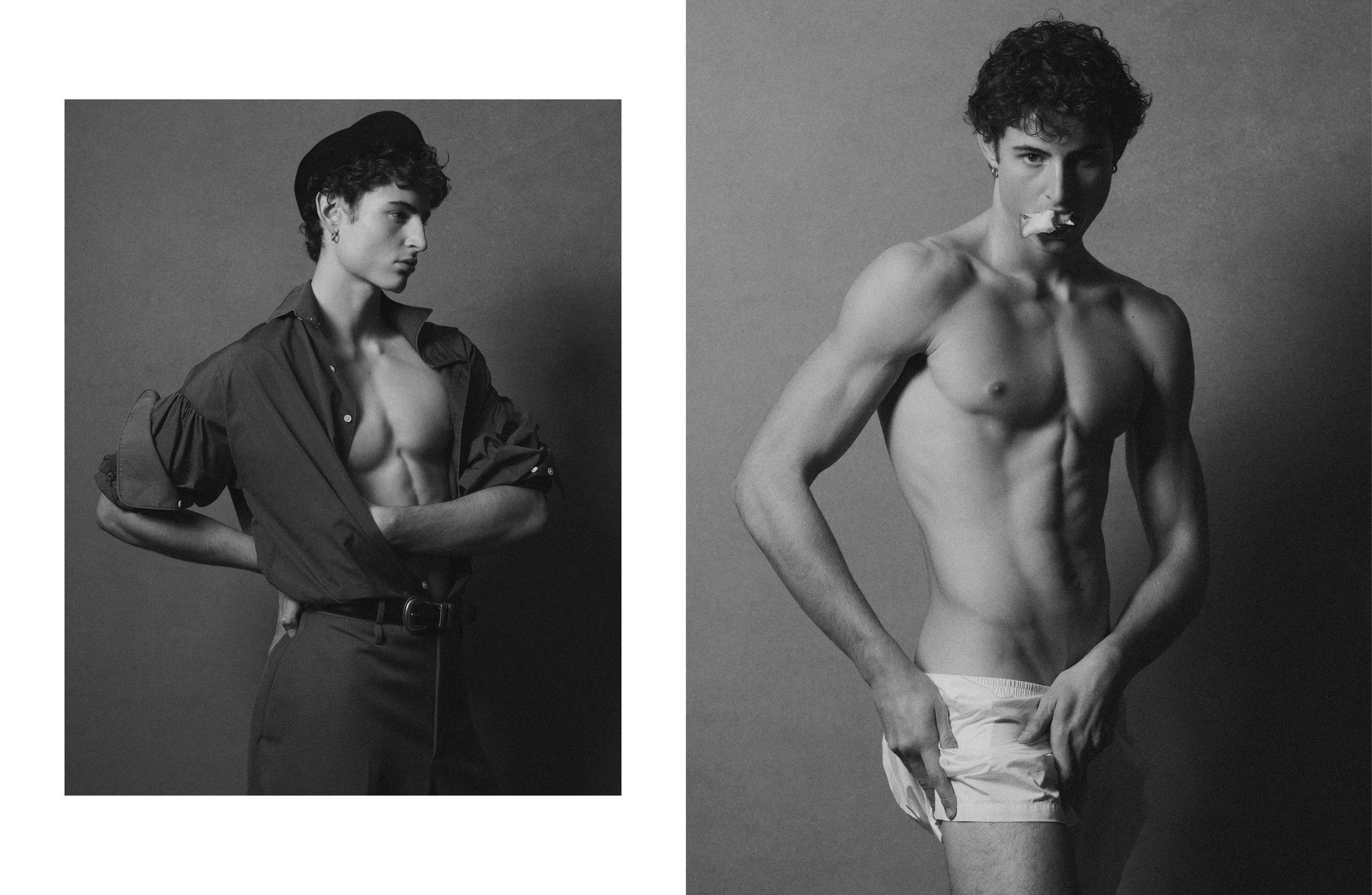
CINEMA HAS AN ENCHANTING POWER OF MAKING ANY REALM FEEL REACHABLE. FOR ACTORS, HOWEVER, IT CAN SOMETIMES RESEMBLE AN EXTREME SPORT. AT LEAST, THIS IS HOW IT CAN FEEL TO MEGAN NORTHAM, THE FRENCH ACTRESS, AS SHE SPRINTS FROM ONE AUDITION TO THE NEXT AND FROM ONE FILM SET TO ANOTHER. GROWING UP, SHE FELL IN LOVE WITH MUSICALS LIKE OLIVER! AND ANNIE, WHERE CHILDREN FOUGHT THEIR WAY THROUGH ADULT WORLDS WHILE SINGING, DANCING AND CLAIMING A VOICE OF THEIR OWN. TODAY – BEYOND THE ROLES SHE HAS PLAYED IN FILMS SUCH AS LES PASSAGERS DE LA NUIT, FIFI, RABIA AND LES MISÉRABLES, AND SERIES INCLUDING SALADE GRECQUE AND THE UPCOMING AMOR AMOR – NORTHAM IS TRYING TO RETURN TO THE WORLD THAT MADE HER WANT TO PERFORM, AND, IN DOING SO, HONOUR THE LITTLE GIRL SHE ONCE WAS.
Hollywood and French cinema are two very different industries. Growing up, which one was your starting point when you first began thinking about becoming an actress?
I’m going to disappoint you. But naturally, it was more Hollywood and British cinema. My father was English, so I had all those VHS tapes of musicals at home, lots of them. He worked in theatre and opera. That said, I didn’t want to become an actress from such a young age. It’s something that came to me later.
The films that really made me want to do musicals were Oliver! and Annie. And basically, all those musicals where a little boy or girl is fighting for their life, and who are often orphans. I would imagine myself in their place, and I really wanted to have the same struggles as them, which is funny, because their lives are really not funny at all.
I wanted to sing, dance, and act. When I watched a film without any music, that wasn’t what made me want to become an actress at all. I found it fascinating to see ten-year-old children in the middle of adult worlds, and the amount of space they occupied. They’re often terribly mistreated in the story, but they always have a voice. They take up a lot of space because they’re the main characters. I found it incredible that, at ten years old, they could have that kind of voice in an adult world.
You studied the cello growing up and were also very involved in sports. How have these practices shaped you as an actress? Do you find that they have nourished the way you approach your characters or your work?
I think about it very often. I think that, whether it was the cello or my musical training, you were basically working all the time. And it was the same with athletics: I had competitions, and it taught me what it meant to put in the work. It taught me discipline, determination, perseverance, and also patience, in a way, because you learn that you don’t achieve a positive result straight away. It’s through repetition that you might eventually reach that next level, after a year or even two years. I’m quite fast-paced and always on the go, but I think that’s also something I learned very, very young: to be patient when it comes to achieving a result.
When I have moments of doubt about cinema, during those months when you don’t have any work, or when you fail to get cast, I think back to that. To me, this profession is also a lot like being an athlete. It’s as if you were doing long-distance running. Everything is intense, whether it’s over a short period or a long one. And because your pace is constantly changing, you have to find a way to keep up and adapt all the time. And I think that came from competing, from sports, and from music, especially.
Yes, that’s true. Sport, especially, is very much a mental game. You really have to adapt your mindset because it’s not for everyone. And I think all these artistic professions require a lot of mental strength because they’re not easy.
Absolutely. And then, when you go back to filming, for example, with completely disrupted schedules, you’re constantly having to readjust your routine. You really have to pay attention to how you eat and how you sleep, because otherwise, you just can’t keep going.
Looking back at the roles you have played so far, is there one that felt particularly natural to you? Or another that was particularly challenging to play?
I don’t think any of the roles I’ve played have really felt natural, because it’s work, and you also have to respect the narrative and what the director wants from the character. But as for the one that felt the most natural to me, I don’t know if it was actually very much like me, but it was the role I found the most natural to play; it was a part I had in Les Étoilesby Lucie Prost, a film I made with Finnegan Oldfield. I think that, as people, Lucie and I are also quite similar. So maybe there was something in the character’s personality that felt quite natural for me to embody.
The one that was the most psychologically and physically difficult was Rabia. It came during a year when I really didn’t stop working for an entire year. I did three projects, and it completely broke me. That role, in particular, really left its mark on me.
You play Cosette in Fred Cavayé’s Les Misérables. Cosette is a character who has been portrayed many times and has become deeply rooted in our collective imagination. How did you make her your own? And how did you approach making her feel contemporary and relatable to a new generation? What was it like to step into the shoes of such an iconic literary character?
She’s such a prominent character and quite central to the story of Les Misérables. Even if she’s not the most important character, she’s still at the heart of many of its central issues. But the versions of Les Misérables I had seen featuring Cosette always portrayed her as being very much trapped. Her fate was decided by men, particularly Valjean and Marius. In a way, that’s always what happens in the Les Misérables adaptations we’ve seen.
I mean, we’re not going to change Victor Hugo’s Les Misérables. But what I tried to do, internally, was tell myself: I’m going to try to make Cosette more emancipated. Because I’m living in 2026. I don’t know if I’m wrong, but I imagine that each Cosette portrayed in different eras and at different points in time was perhaps contemporary and reflective of what was happening in society at that particular moment. I think emancipation is what I tried to bring out the most in this Cosette.
You are still at an early stage in your career, but you already have a remarkably diverse trajectory, moving between films such as Les Passagers de la nuit, Fifi, Rabia and Harris Dickinson’s Urchin, as well as series like Salade grecque. At this point, how would you define yourself as an actress?
I have to admit, I wouldn’t know how to define myself. But what I do try to do as much as possible is diversify the roles I choose and say yes to, and the projects I take on as well, rather than being confined to certain boxes.
I know I’m demanding when it comes to my work. I mean, I’m a demanding actress. I don’t think I mean that in a pretentious way. I just think that it’s important to have high standards in this profession, because it also involves a lot of sacrifices and a lot of compromises. It’s a particular kind of life, where you’re constantly out of sync with the people around you and all of that. So if I weren’t taking it seriously, I’d be doing something else.
What has acting taught you about yourself that you never expected to discover?
It’s something I probably had since I was little: my shyness. I always thought that being shy meant being someone who didn’t speak, who stayed in the corner. But actually, shyness can manifest itself in many different ways. And I discovered that about myself through cinema. I mean, it didn’t create it, but it really amplified it, because I think I do this job partly to hide it, I suppose. Putting yourself out there like that, constantly being in front of a camera and in front of people, is like a personal challenge. For a long time, I think I tried to fight it and pushed myself to the point of exhaustion. And maybe I’m still doing that today, probably in many areas of my life. But I’m aware now that this is a part of me, and that it’s okay. I’m slowly learning to accept it.
Was there a particular moment, or specific moments, when you felt this more shy side of yourself come through?
I think it was really there from the very beginning. You completely expose yourself when you go to auditions. I wouldn’t say it was one particular project. I think that, from the start, I could feel my shyness coming through. I would walk out of auditions drenched in sweat. I could barely string two words together without stammering. I’m still like that today, but I think I hide it better. Or maybe I’ve just become a little more used to the whole casting process. But it’s never a particularly pleasant experience.
But I think that’s what challenged me. It’s connected to sports. I think it’s all about having challenges and goals to work towards. But for me, it’s a personal goal of telling myself that it will be better next time. Not in the sense that I’m going to get rid of my shyness, but in the sense that it’s going to be okay. I’ll gradually accept it more and more, learn to use it as something positive, and it’ll be okay.
At this point in your career, what are you looking for in a role that feels personally fulfilling, but also feels like it is taking you in the right direction towards the actress you want to become?
I’m not trying to become a particular kind of actress. I mean, I’m not looking for that. I don’t have this idea in my head of the kind of actress I want to be. But, as I was saying earlier, I do want to diversify the projects I take on.
And I think two things come to mind right now. One is something that isn’t done very much in France: a character transformation role. Really working on creating a character with someone. I don’t know exactly how it works, but for a long period of time. You know, really giving myself enough time to step into someone else’s skin. I would love that. And the second thing is a musical, to fulfil the dreams of the child I was.
I once heard that when you become an adult and really want to be yourself, you have to go back to the things you loved as a child. That’s where you can really find happiness as an adult.
I try to do that in different areas of my life, both personally and professionally. I’m already acting, so I’m happy in that sense. Acting is a bit like the role-playing games you used to play with your friends or your sisters when you were little, with my sister, in my case. But a musical, yes, that was a childhood dream. So many times I’ve thought, “Oh no, I’m too old to do that now.” But then I tell myself, “Actually, I’d love to do it,” and really get back into dancing, music, and acting all at the same time.
But the most important thing would be to meet someone—a female or male director—with whom I really share a common language and a shared way of communicating, whether artistically or politically. Finding someone you trust enough and with whom you have enough freedom to really pull on all the emotional threads and go to places I’ve never been before.
…
SEE MORE IN THE FW26 LOST PARADISE Issue
(Early November release)
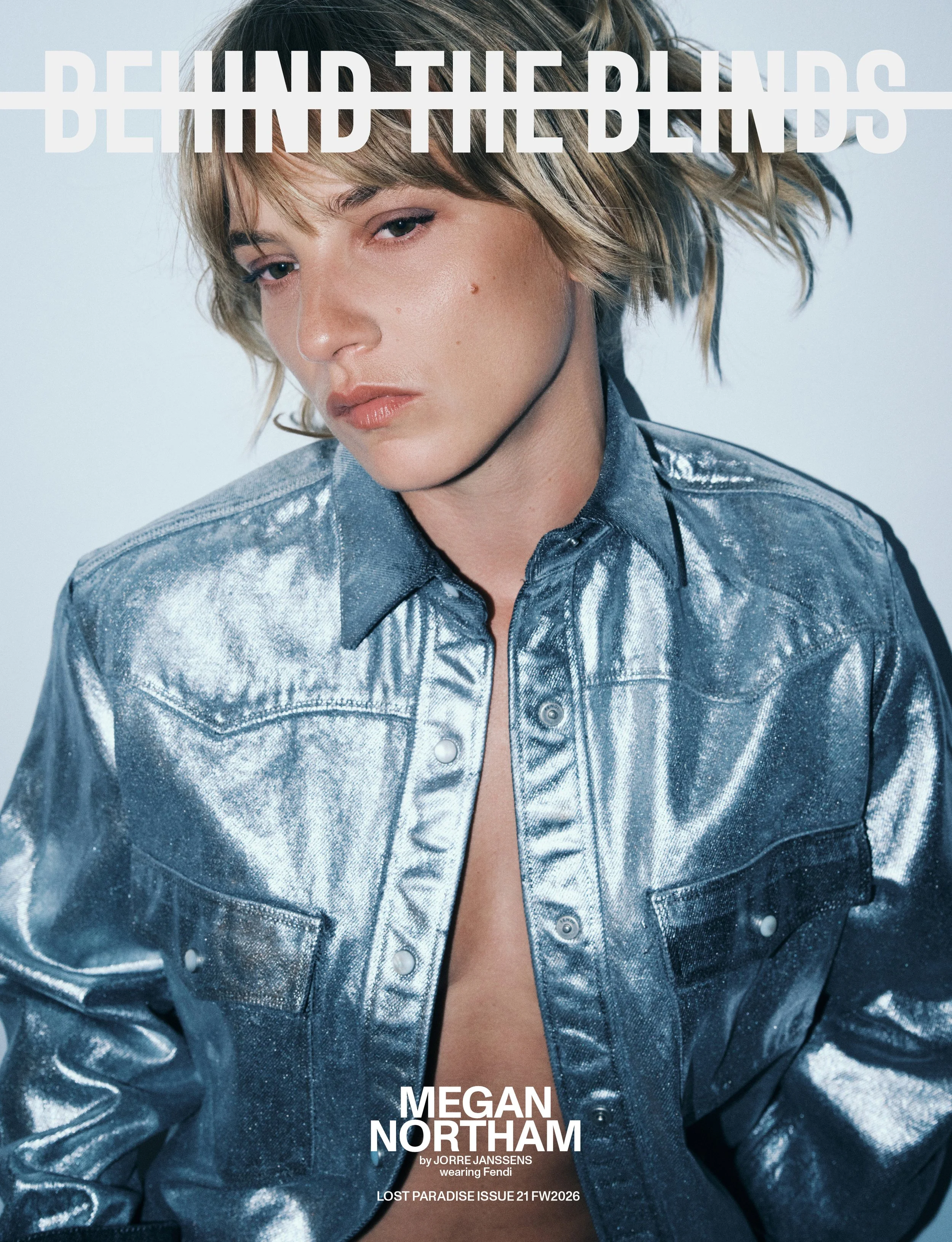
BTB21 LOST PARADISE
MEGAN NORTHAM
by Jorre Janssens
Issue SS26
+++
Delivery Early November 26
650 pages / English edition / 23X30cm
Interview by Carolina Benjumea
Photography by Jorre Janssens
Fashion by Pierre Demones
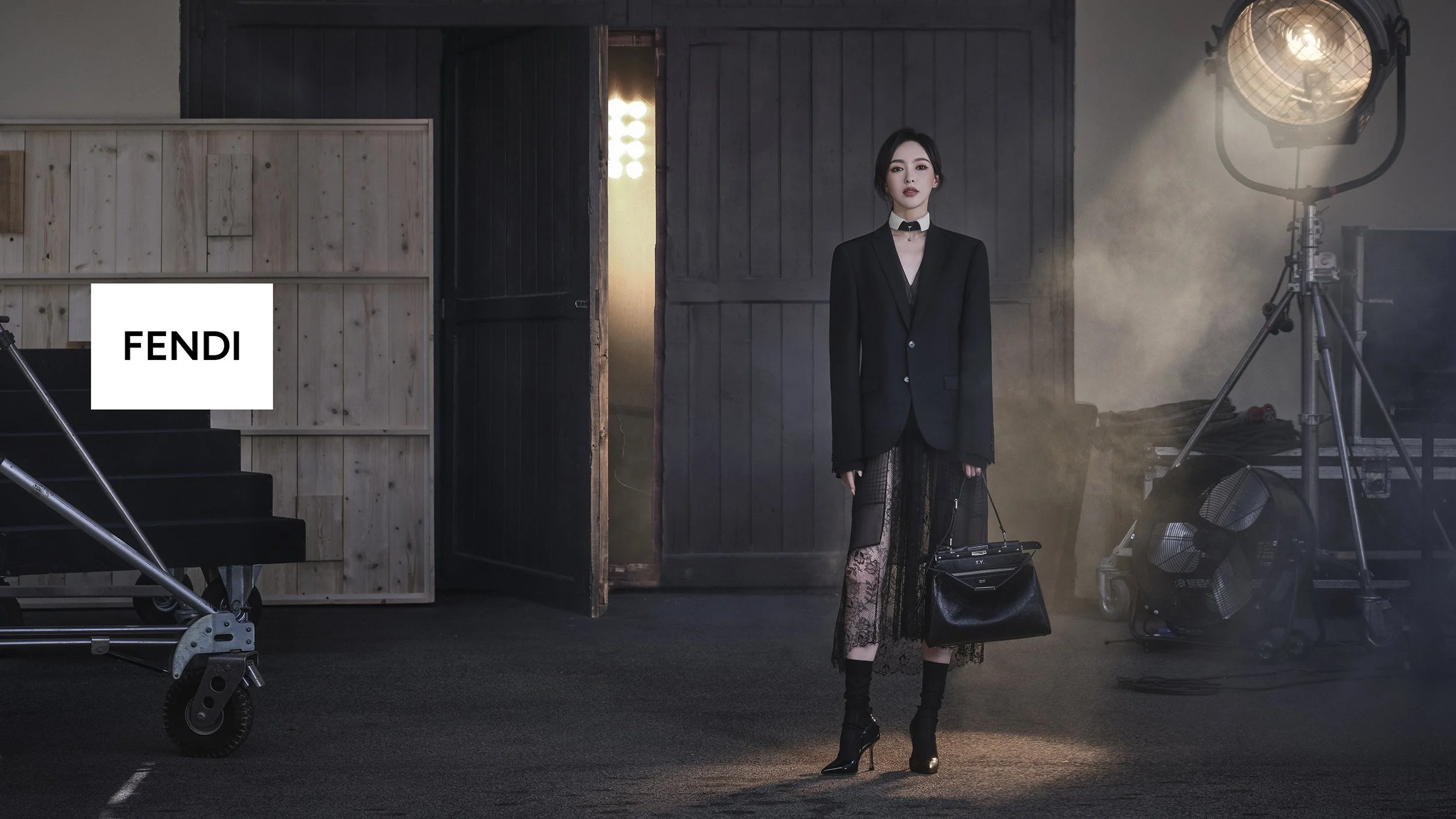
All clothes and accessories by Fendi
Casting by Imagemachine cs
Hair by Hiromi Nishinaka
Make-UP by Hicham Ababsa
Photographer’s assistant Anthony Payper