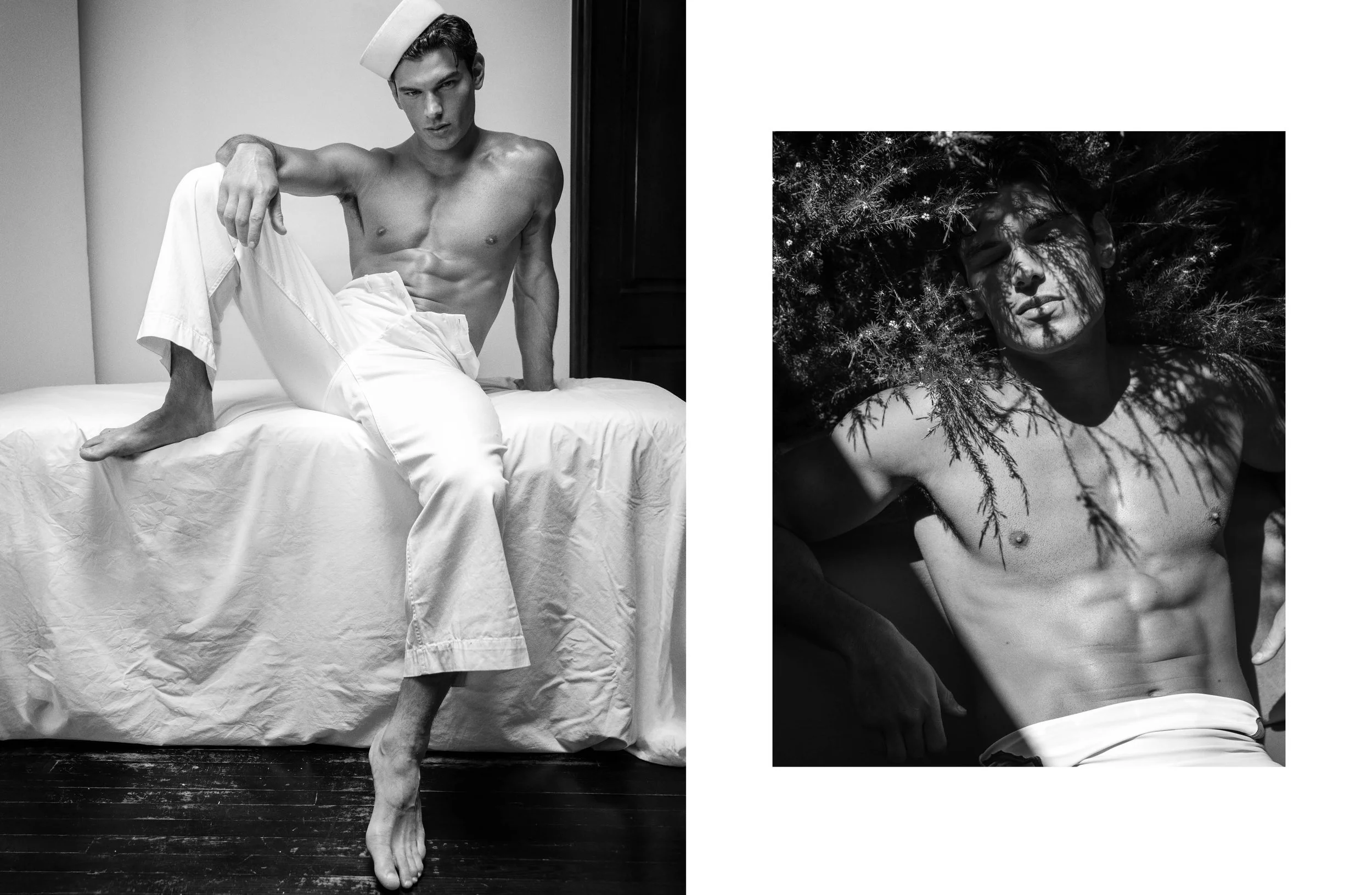
For Spring/Summer 2027, Swedish designer Ellen Hodakova Larsson handed guests a show note folded tightly into a paper sailor hat. Unfolding it revealed a stream of consciousness, a manifesto touching on shame, desire, animals, husbands, climate anxiety, and the quiet violence of being alive. “I didn’t do anything,” one line read as an apology or perhaps a confession of collective paralysis.
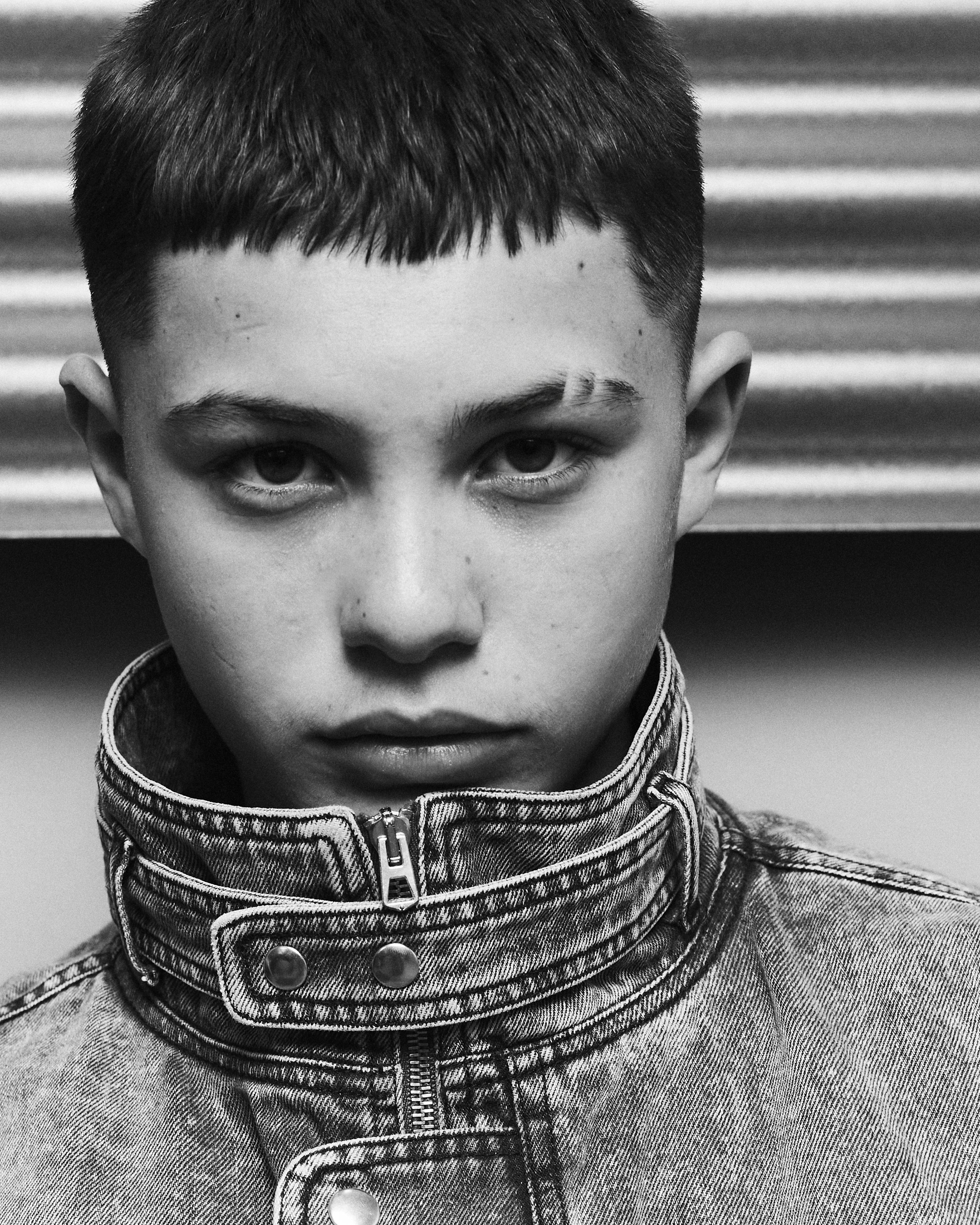
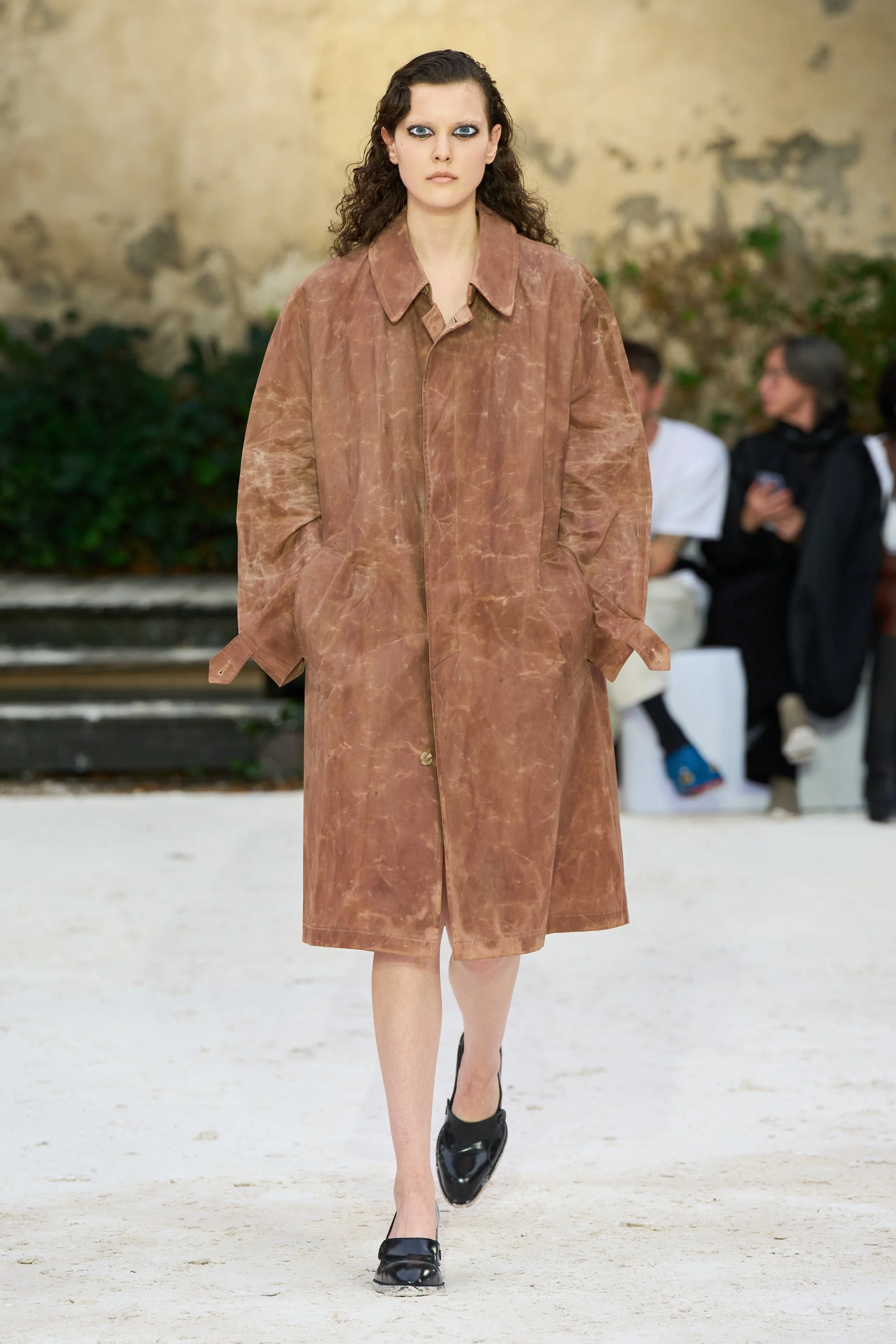
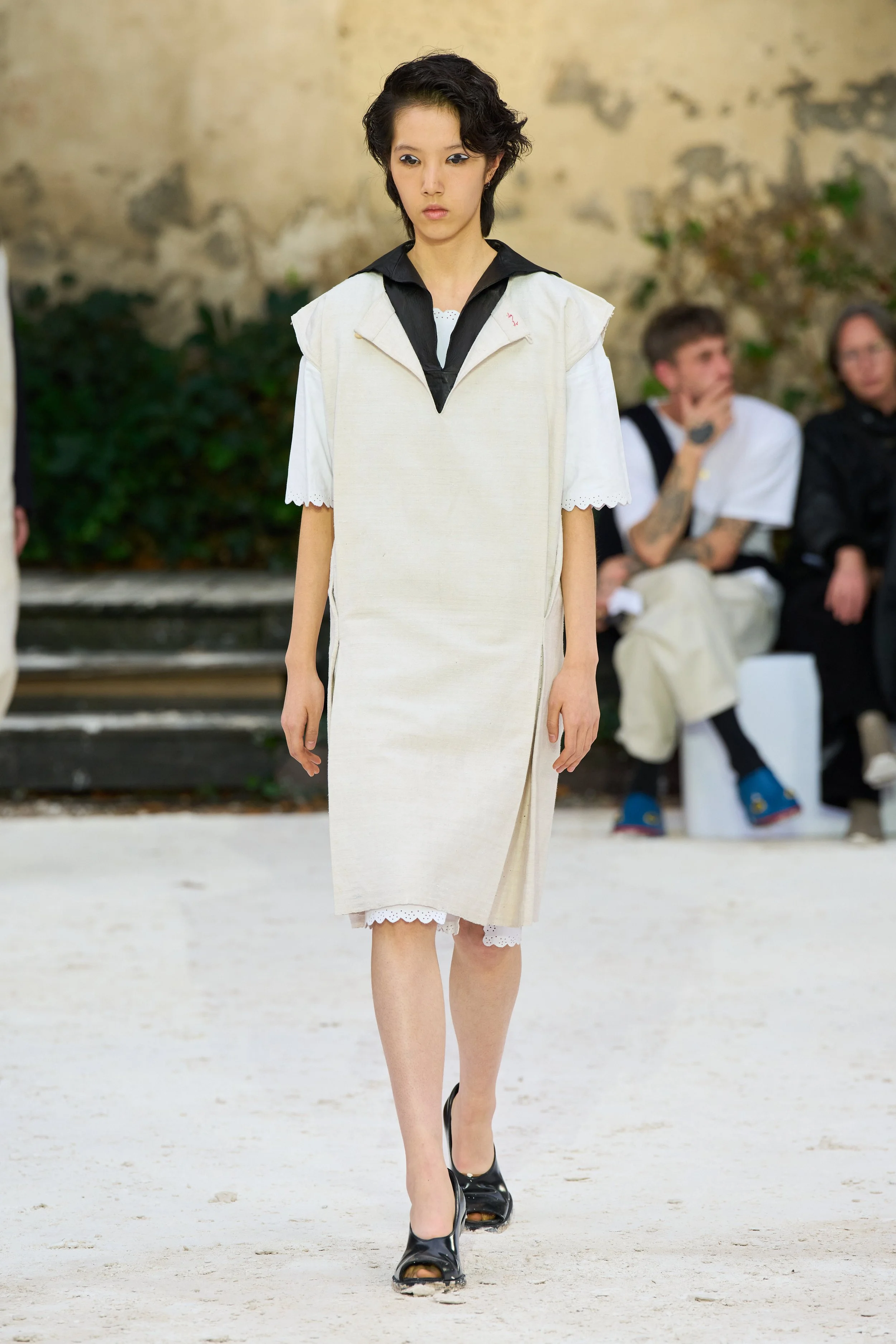
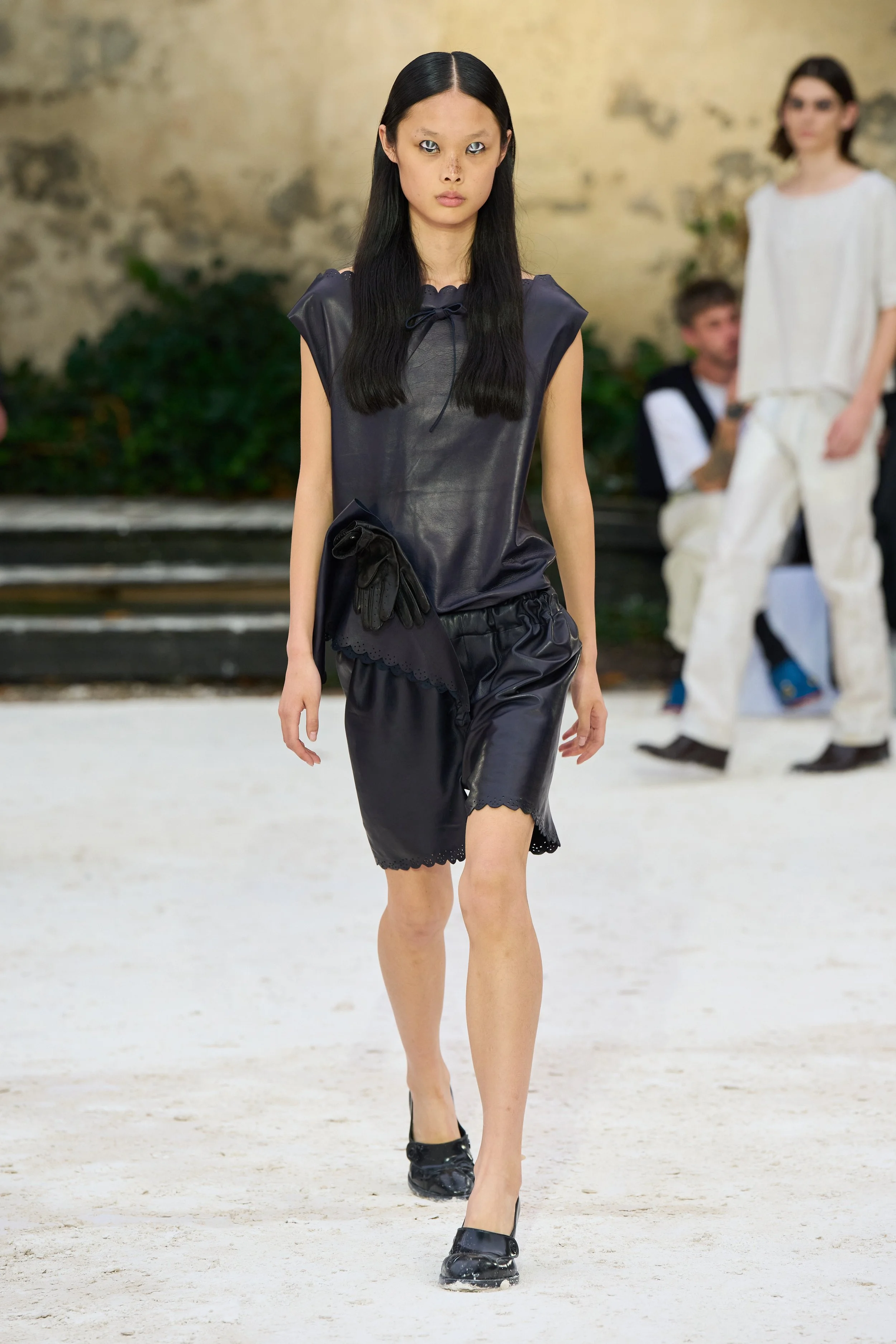
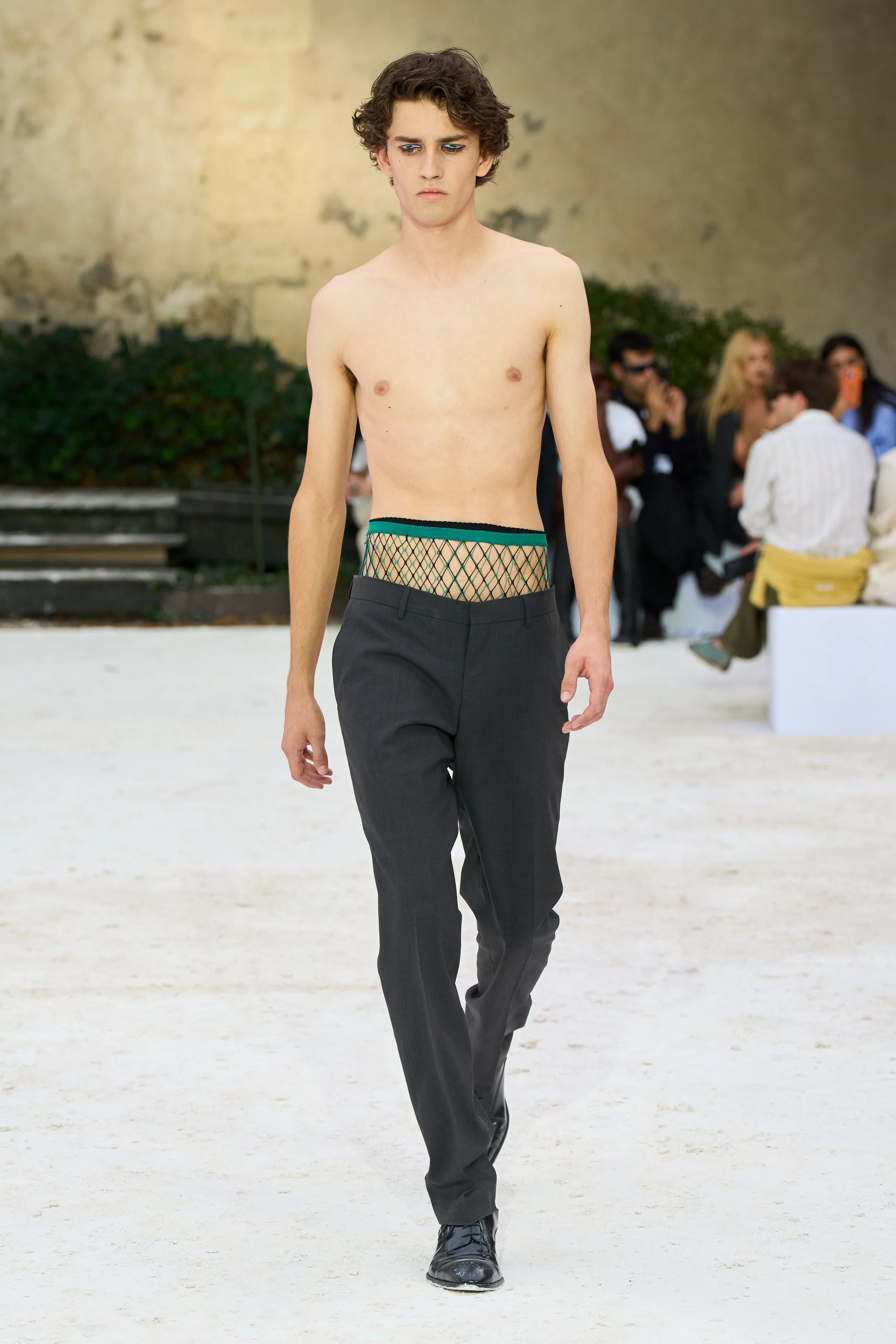
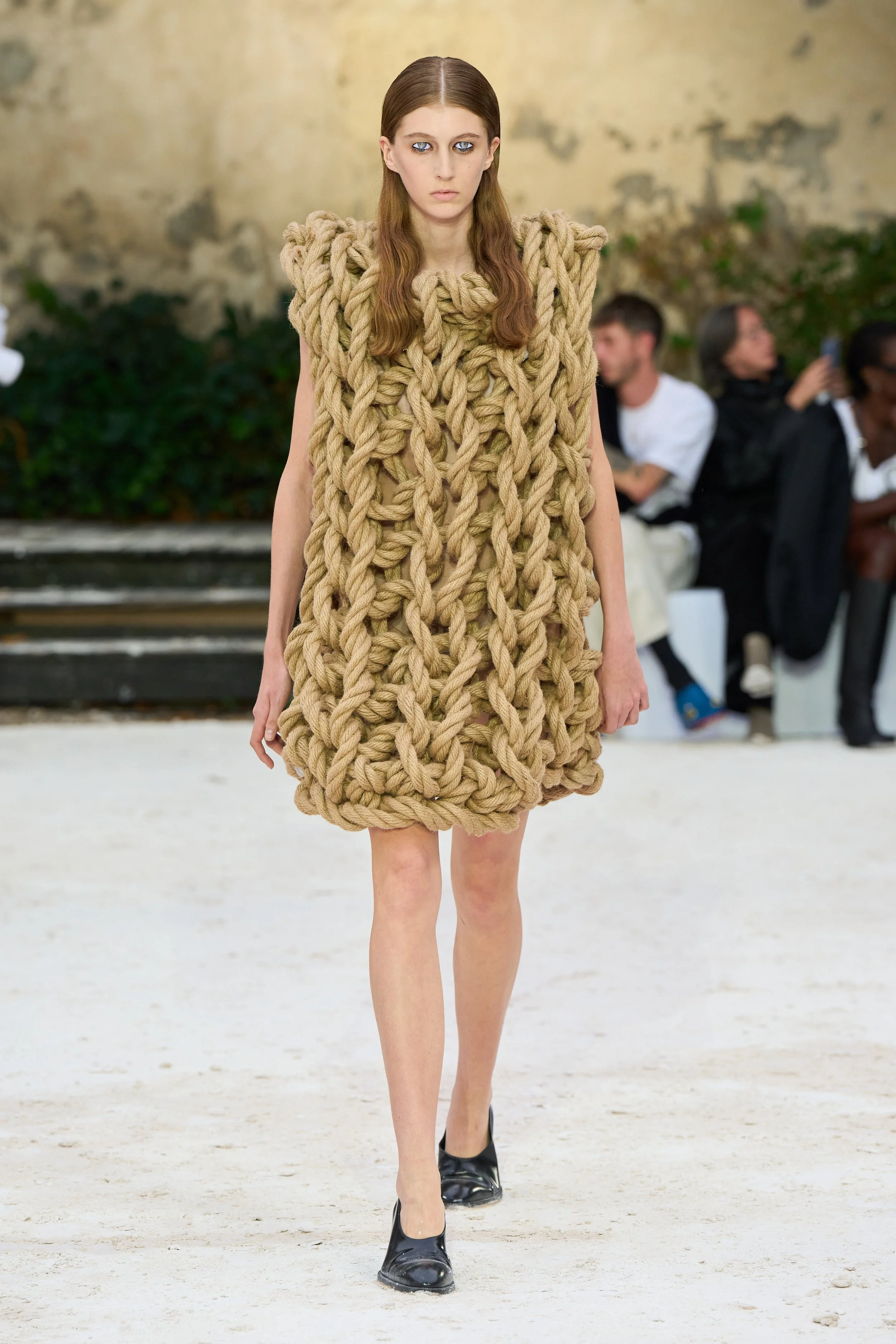
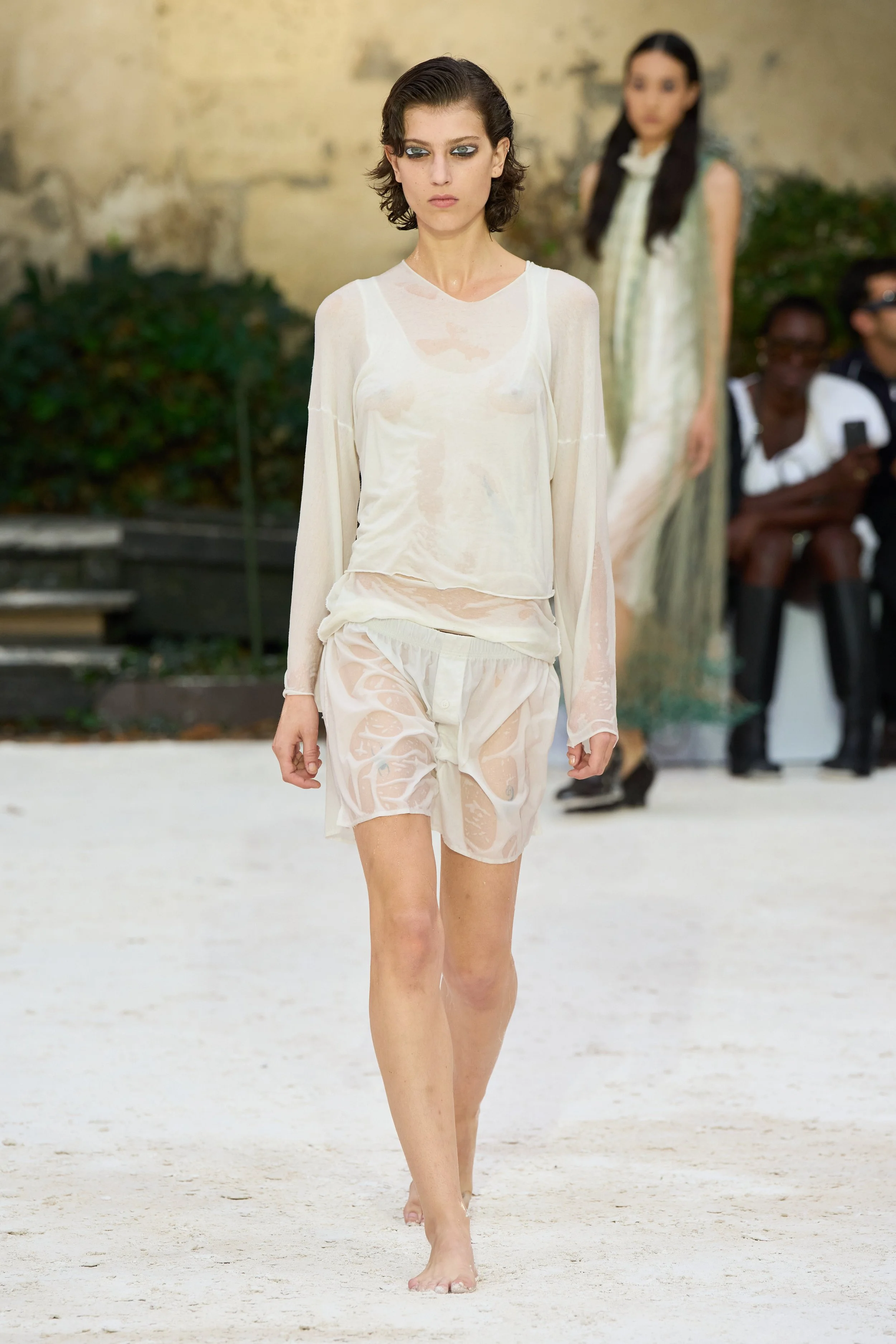
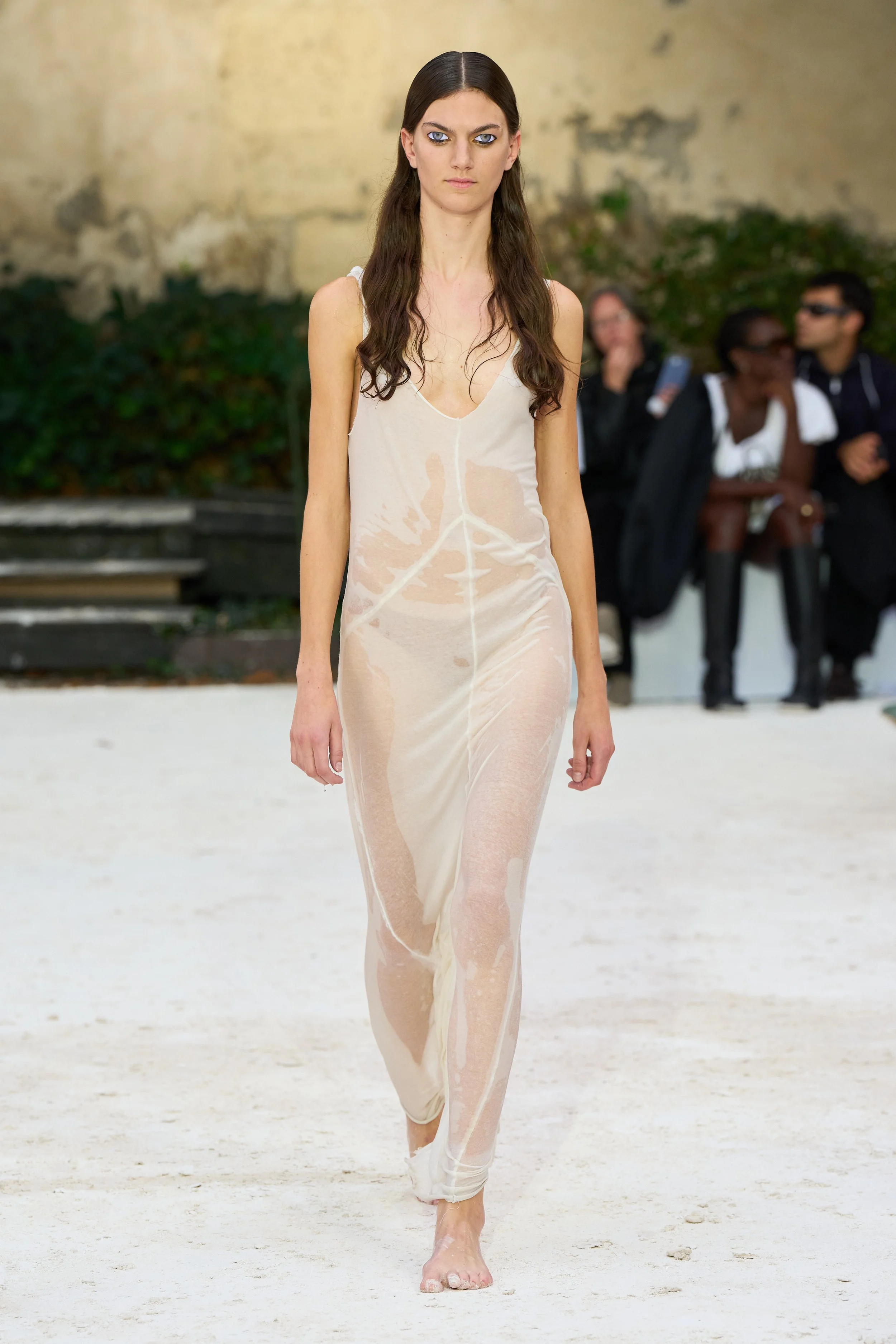
Larsson has become somewhat of the poster child for conscious design, elevating discarded materials into sharp luxury. This season, the designer focused her lens onto our collective numbness. Painted wide-open eyes on models’ closed eyelids created an immediate uncanny valley eeriness. We are moving together in a hypnotic, slow-motion crawl, and the models looked unnervingly present and yet completely unseeing.
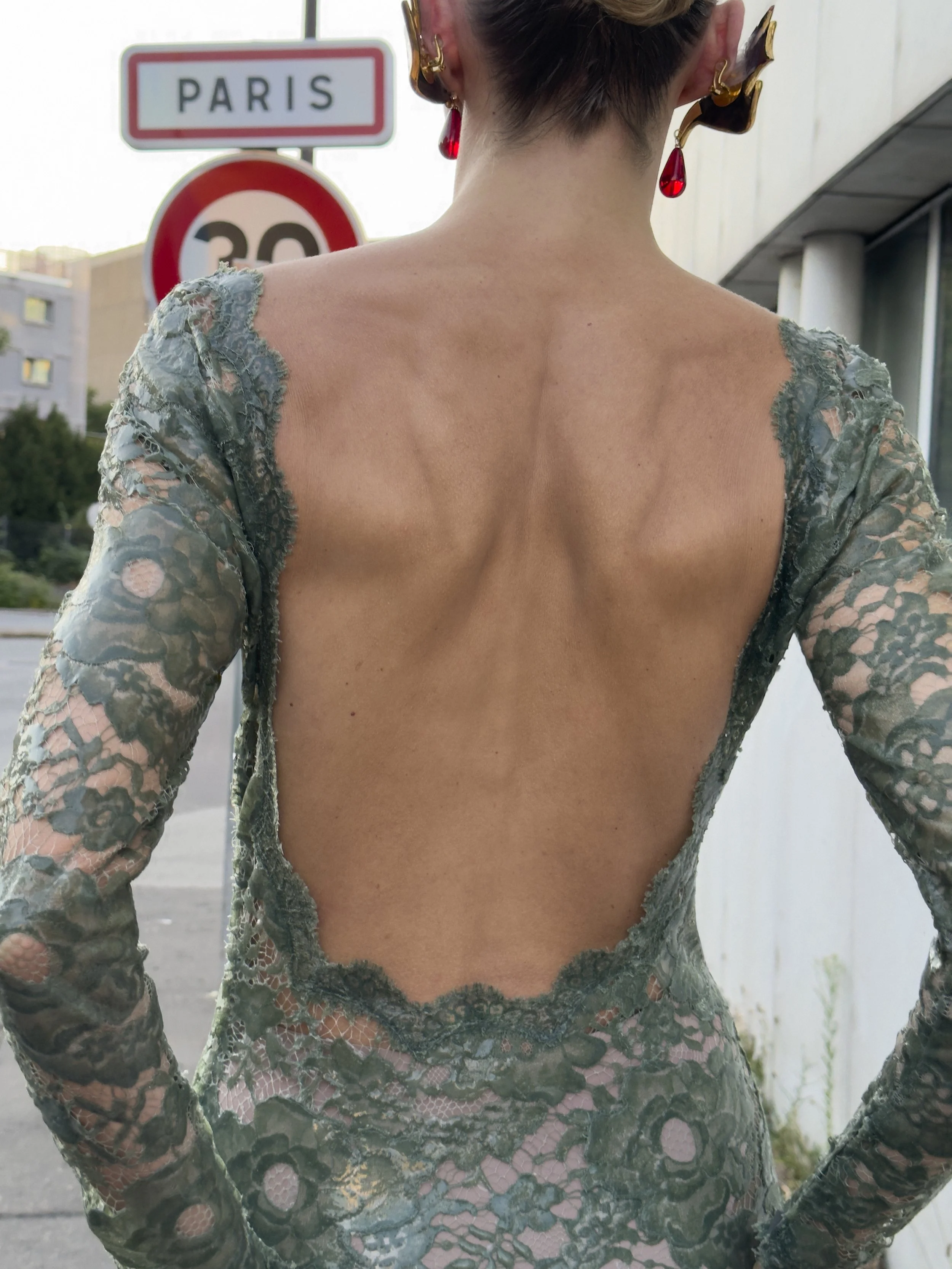
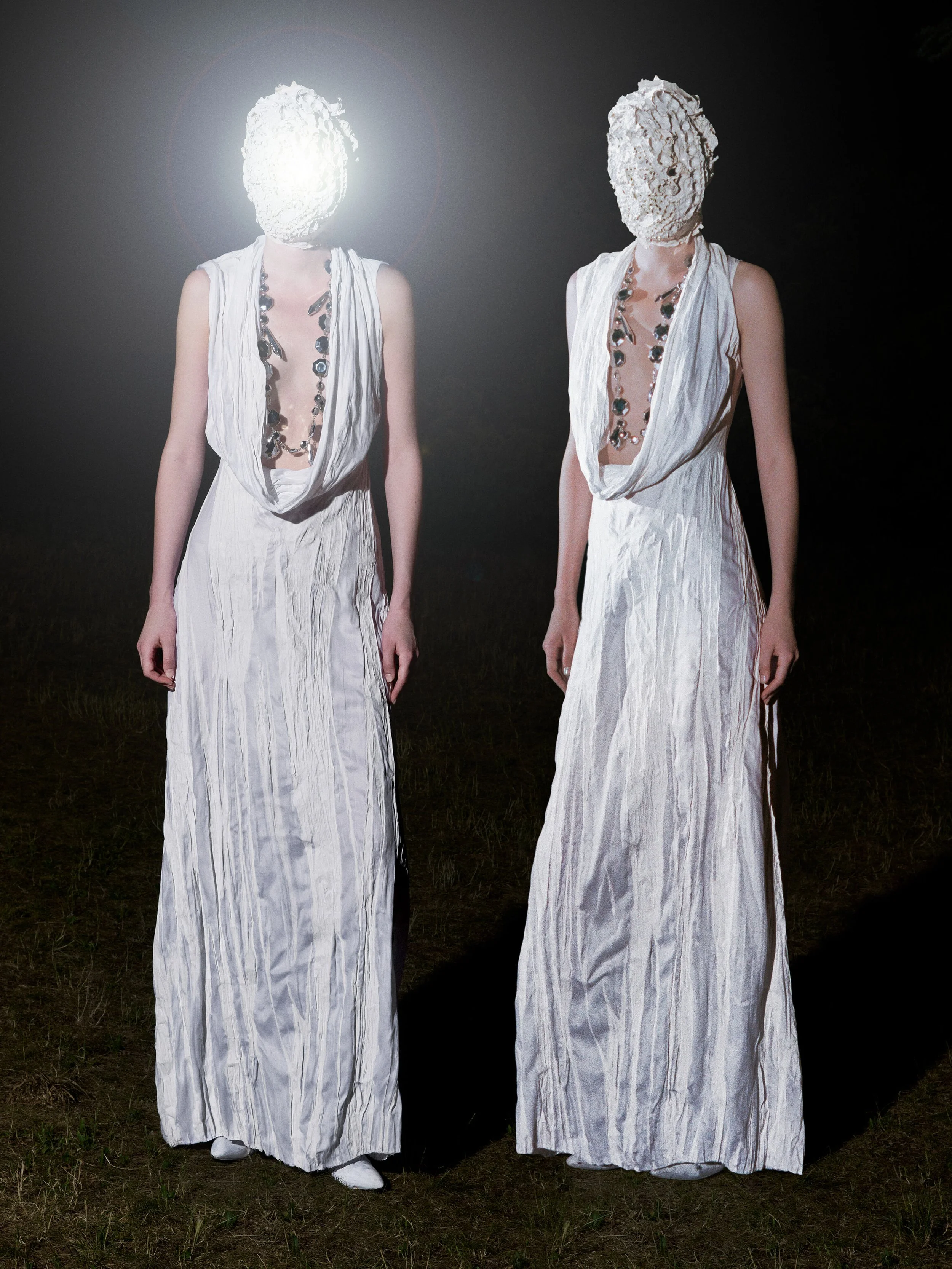
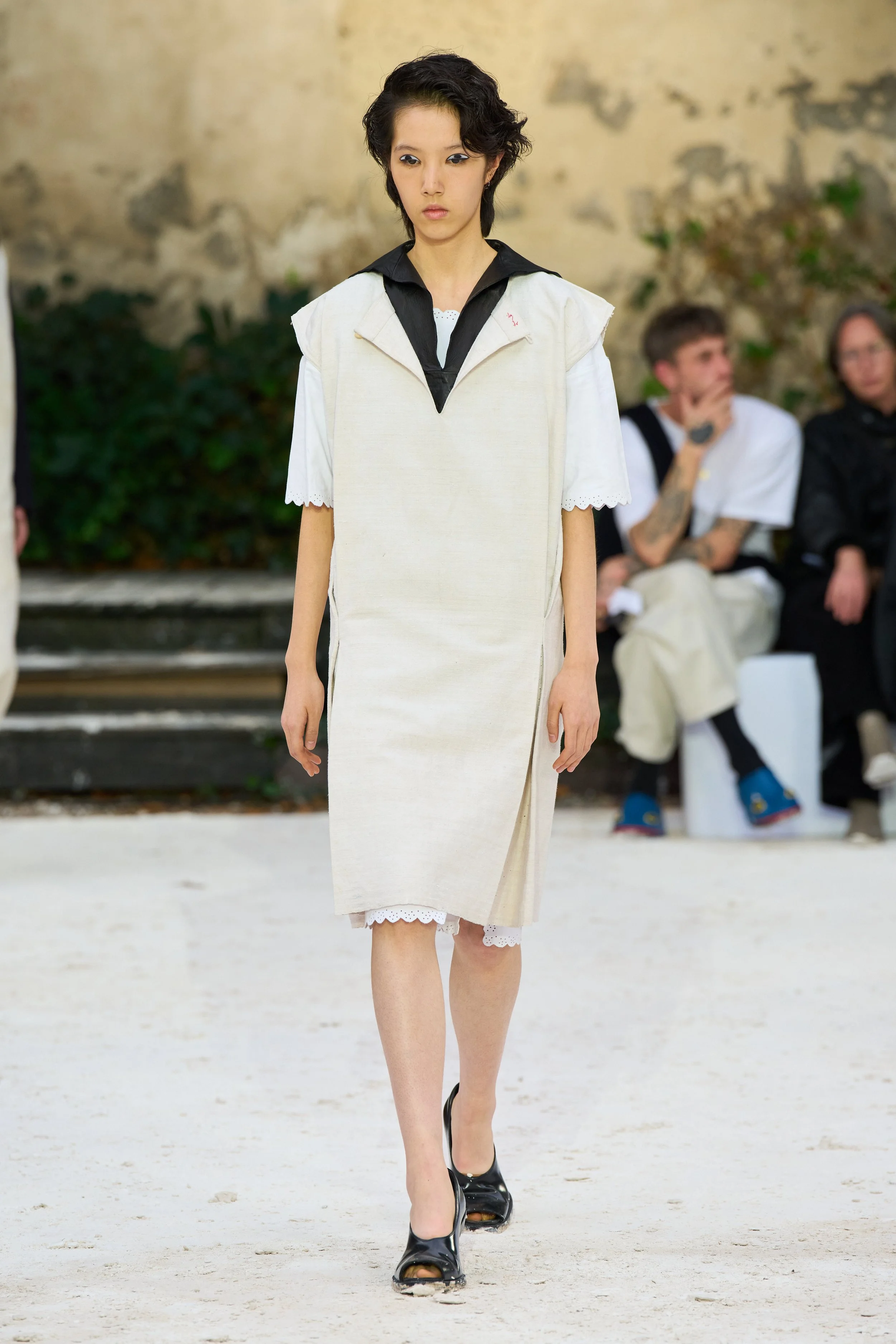
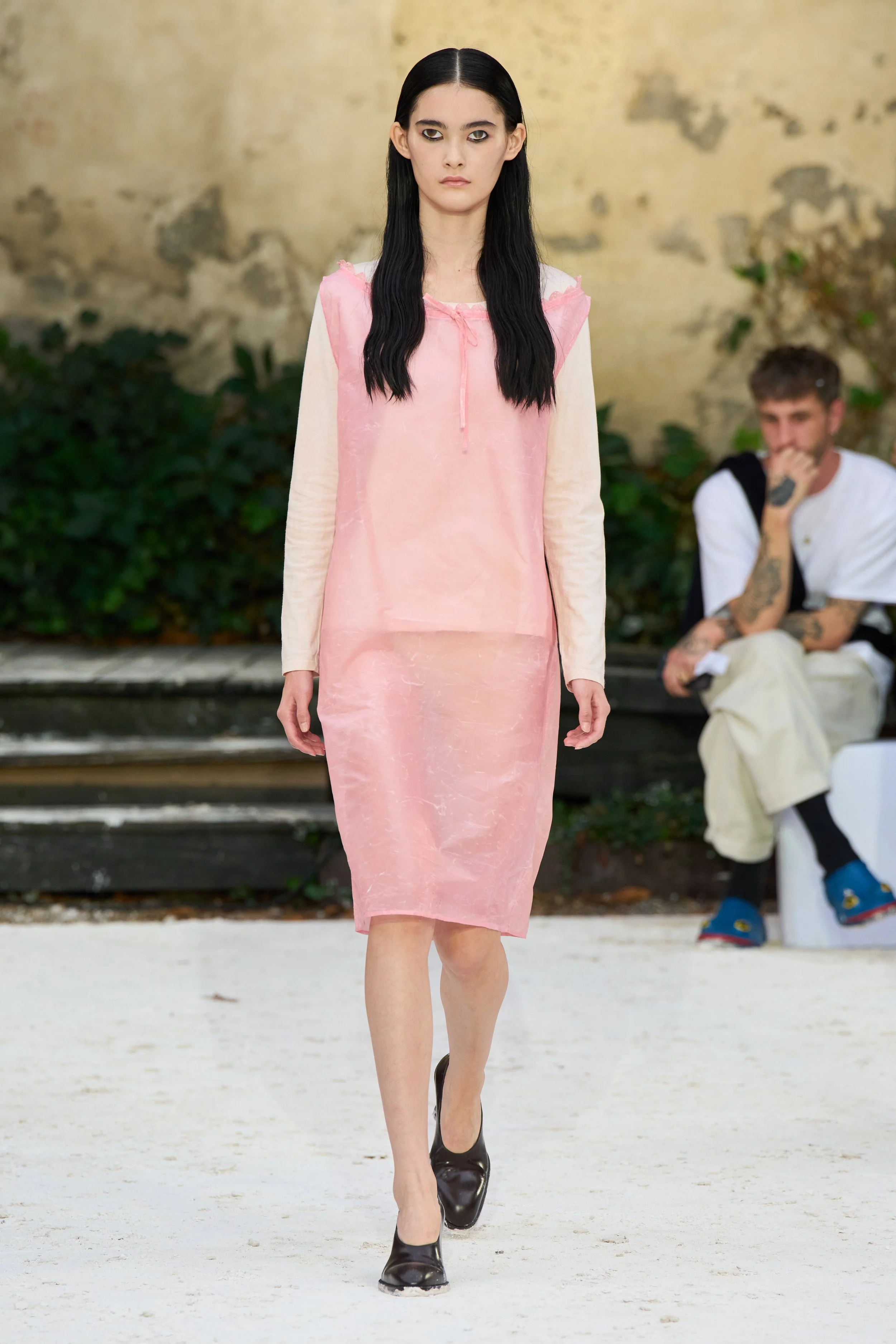
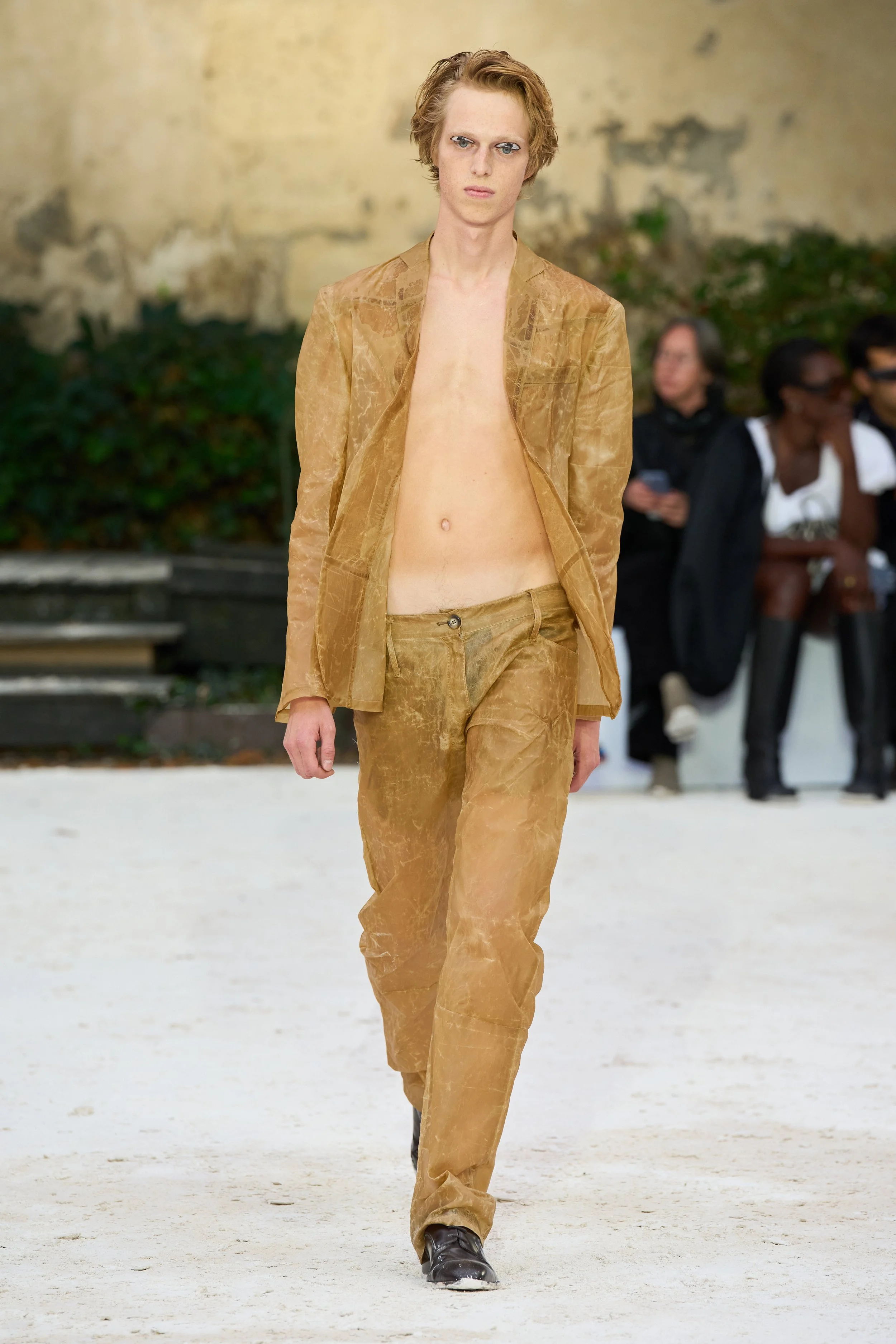
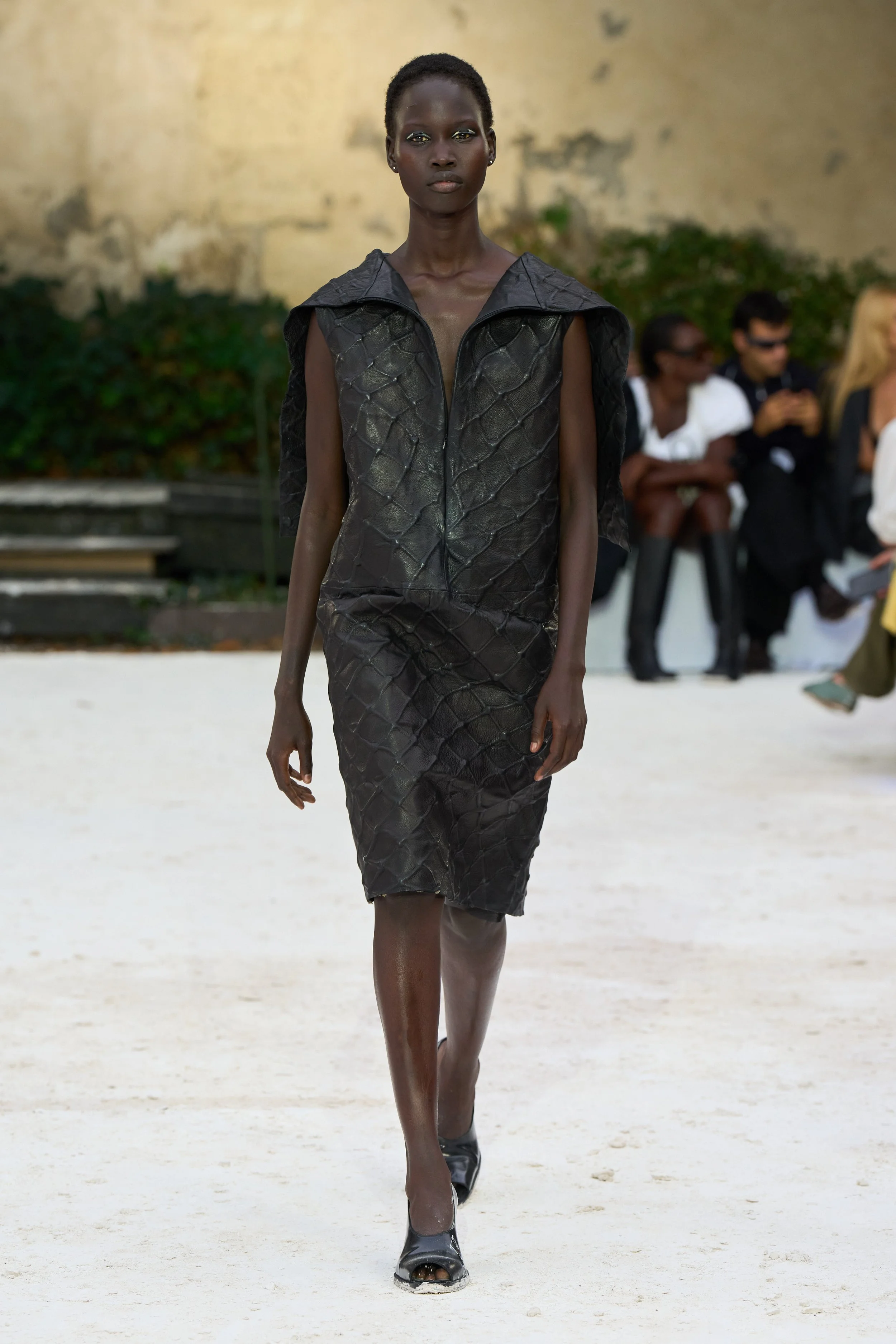
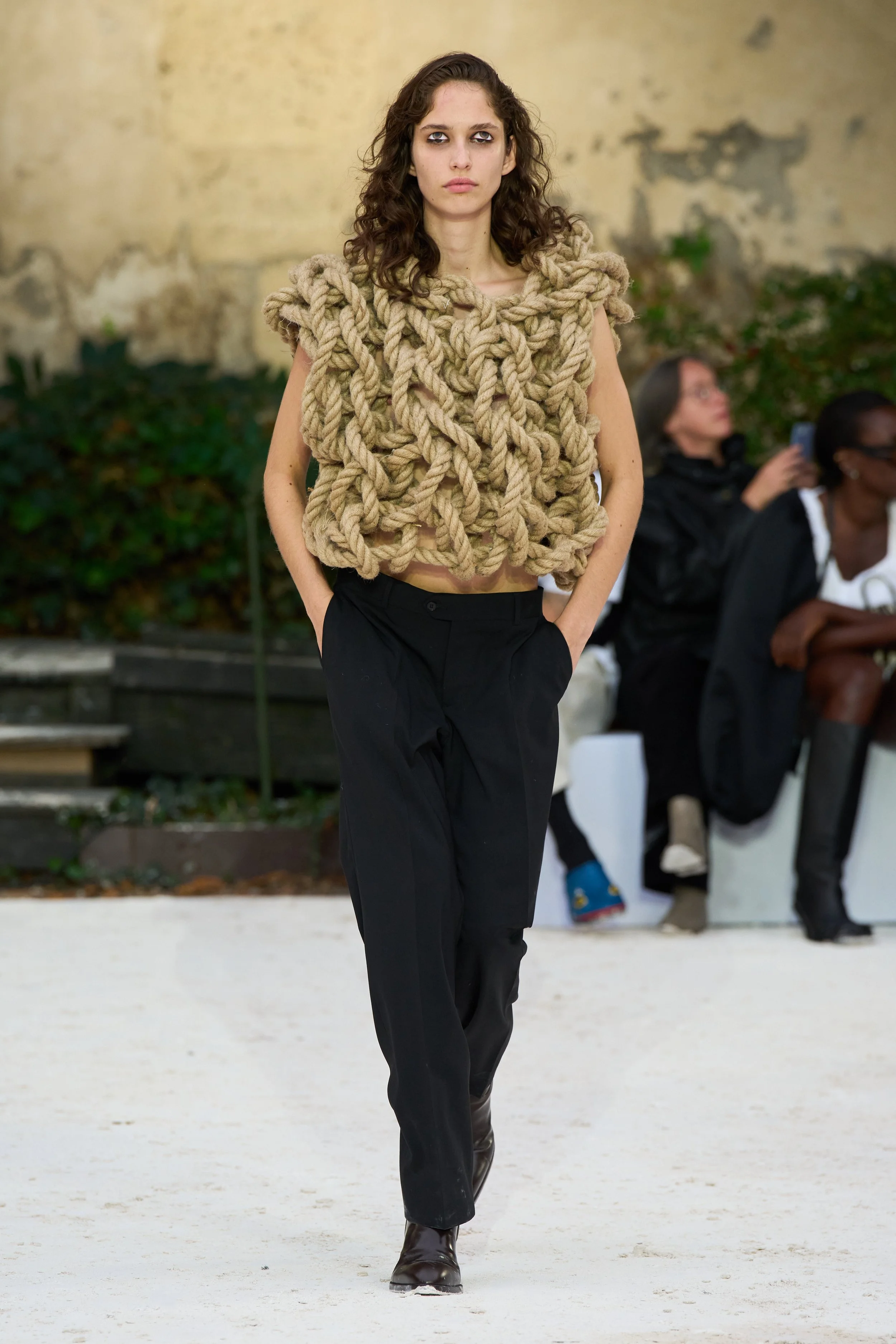
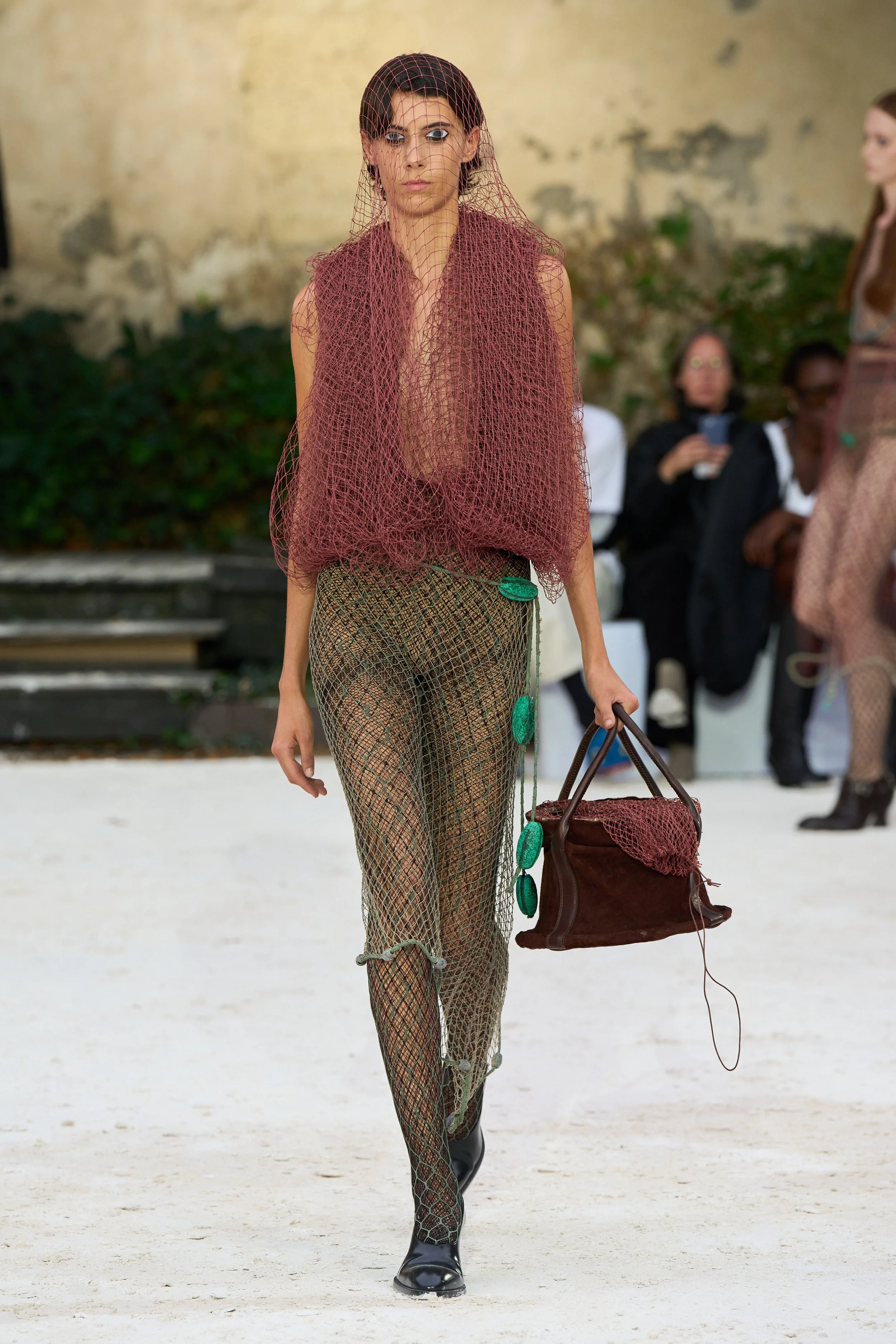
The garment progression mirrored that psychological weight. Opening looks teased a deceptive softness with deliberate pops of blush pink before swiftly yielding to rough blacks, pristine whites, and weather-beaten earth tones. As the show progressed, its message grew more visible. Translucent, wet-looking drapery clung to bodies as if the models had just emerged from the depths of the sea. Heavy rigging rope was hand-knitted into grand sculptural silhouettes, and industrial fishnetting transformed into sheer, body-skimming dresses. Dark armour bodices featured intricate scale textures made from upcycled material. Far from standard nautical attire, garments looked as though they were brought in by the tide, leaving a sea-swept trail behind.
As the models drifted by, a tension began to build. With fake eyes painted over their real ones, the audience was left caught in a bizarre stare-down. It captured our collective state of perpetual oversight, the unsettling realisation that keeping your eyes wide open is often just a mask for total internal detachment. We are looking, sure, but are we actually seeing?
Larsson’s material philosophy centres on memory and time, giving old garments a second life. For SS27, she takes a sharp existential turn, asking what we choose to do with what we inherit. The planet, the clothing, and the lingering aftermath. This evolution represents a crucial development for Hodakova, one that should become standard in an industry built on overconsumption. Here, a direct reaction to world events isn’t shallow marketing. Instead, it’s an urgent plea to reshape the understanding we have of modern luxury.
Words by Nomi Edman