As someone who considers themselves to be a practising witch, I prefer to observe the first of the month with rituals revolving around resetting and cleansing: clearing the energy of bad hookups away with incense, washing my hands with cinnamon, and for this 1st in particular, watching Rick Owens’ Spring/Summer 2027 Womenswear show. It’s a coincidence only the Prince of Darkness can conjure up.
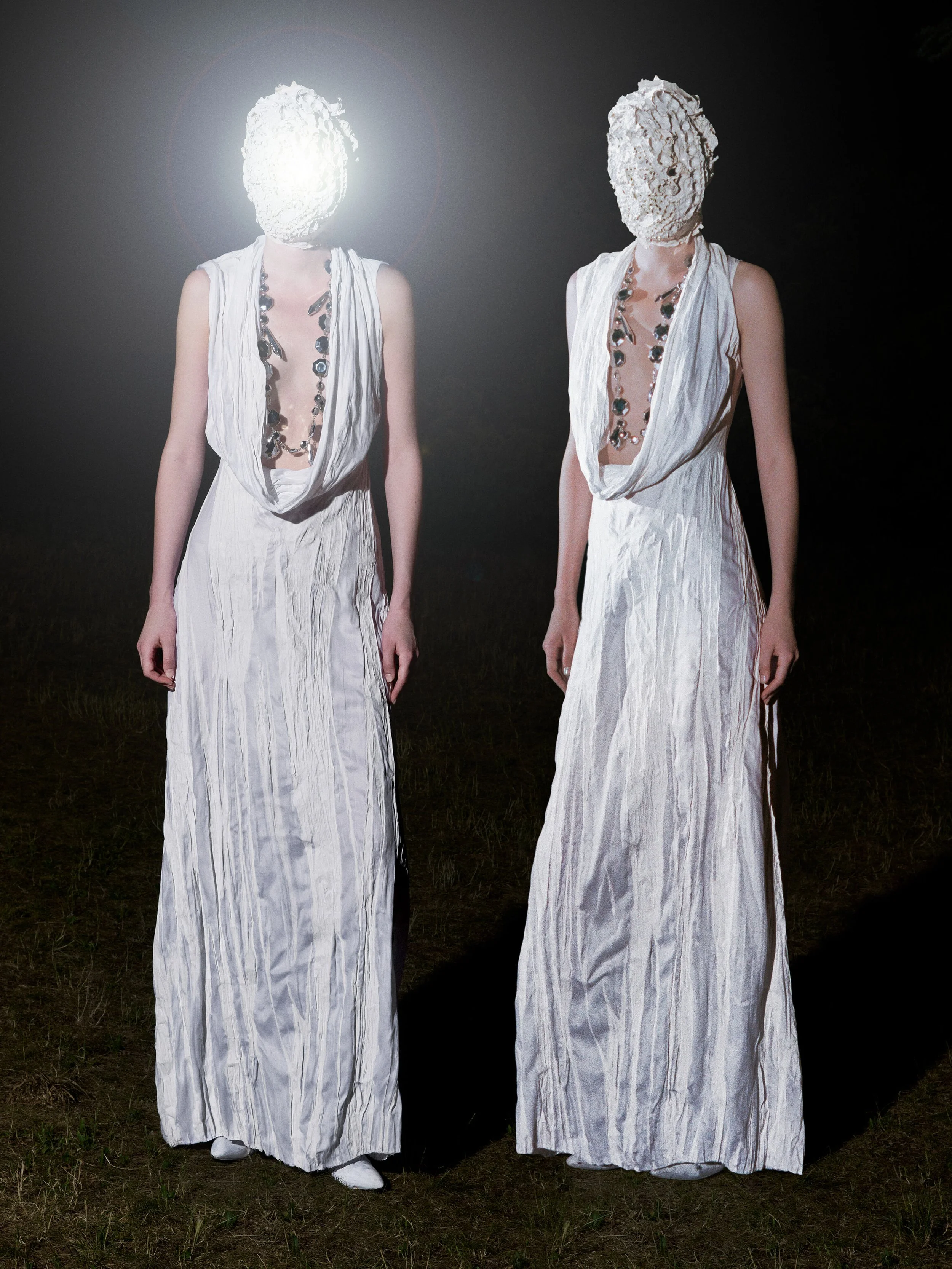
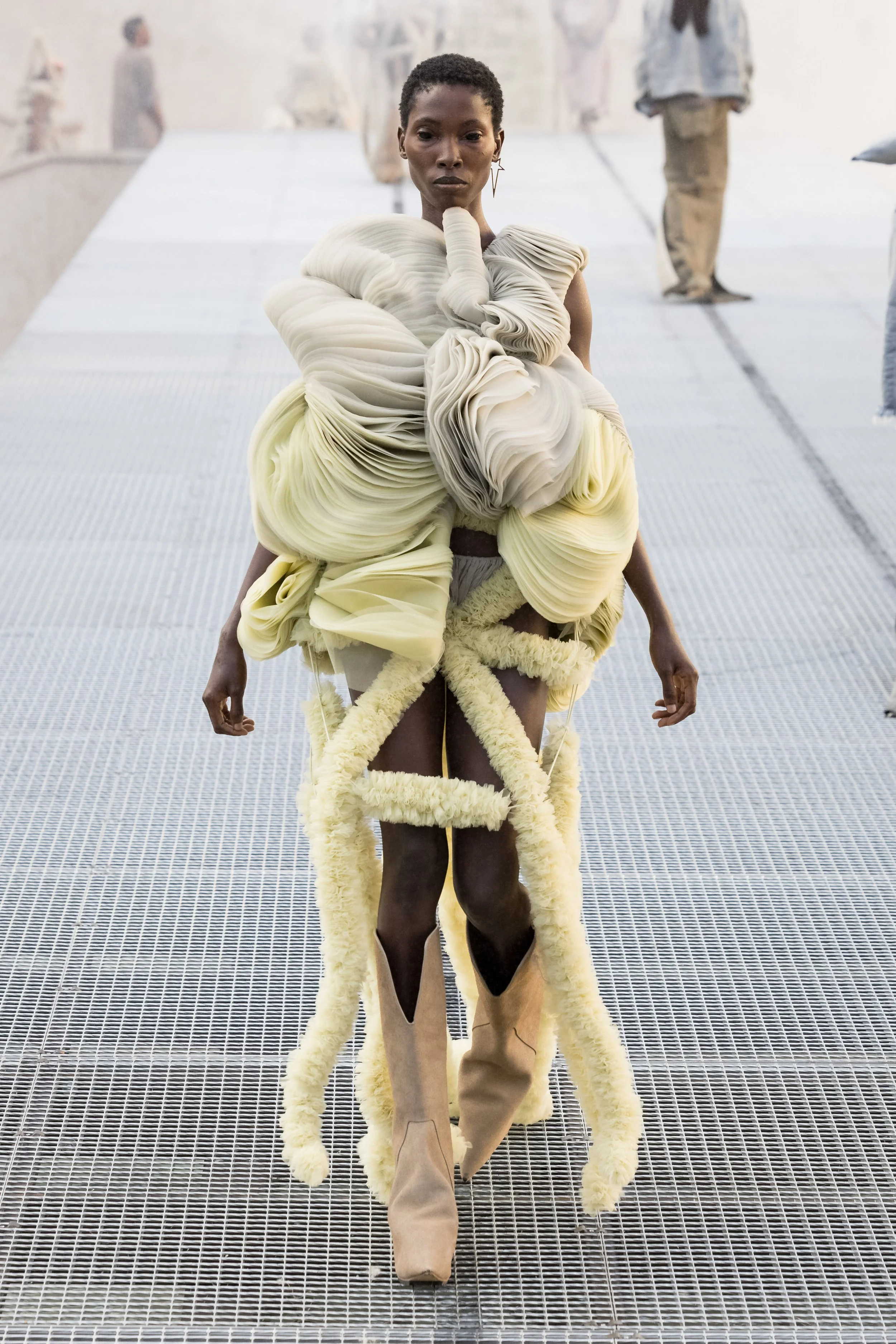
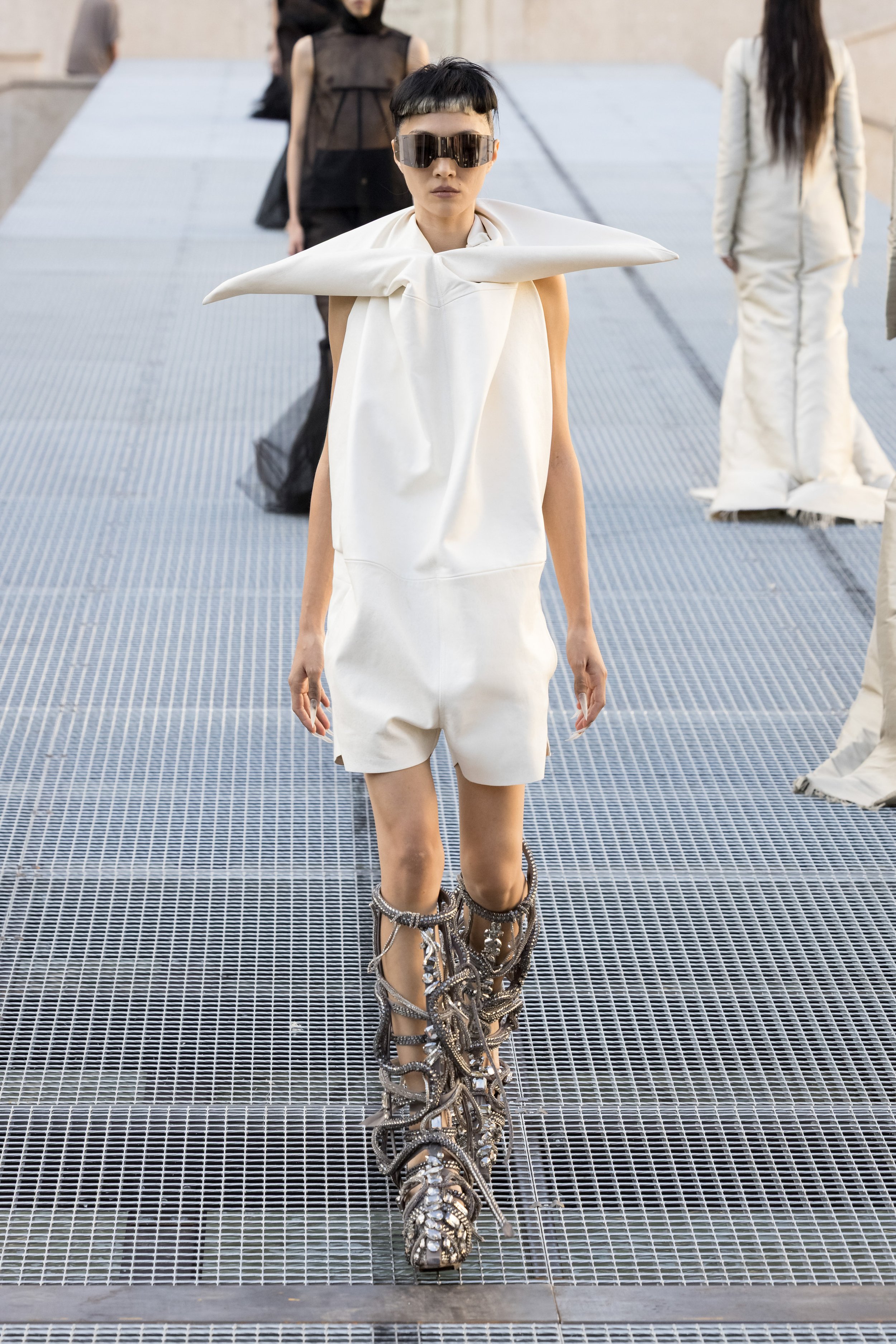
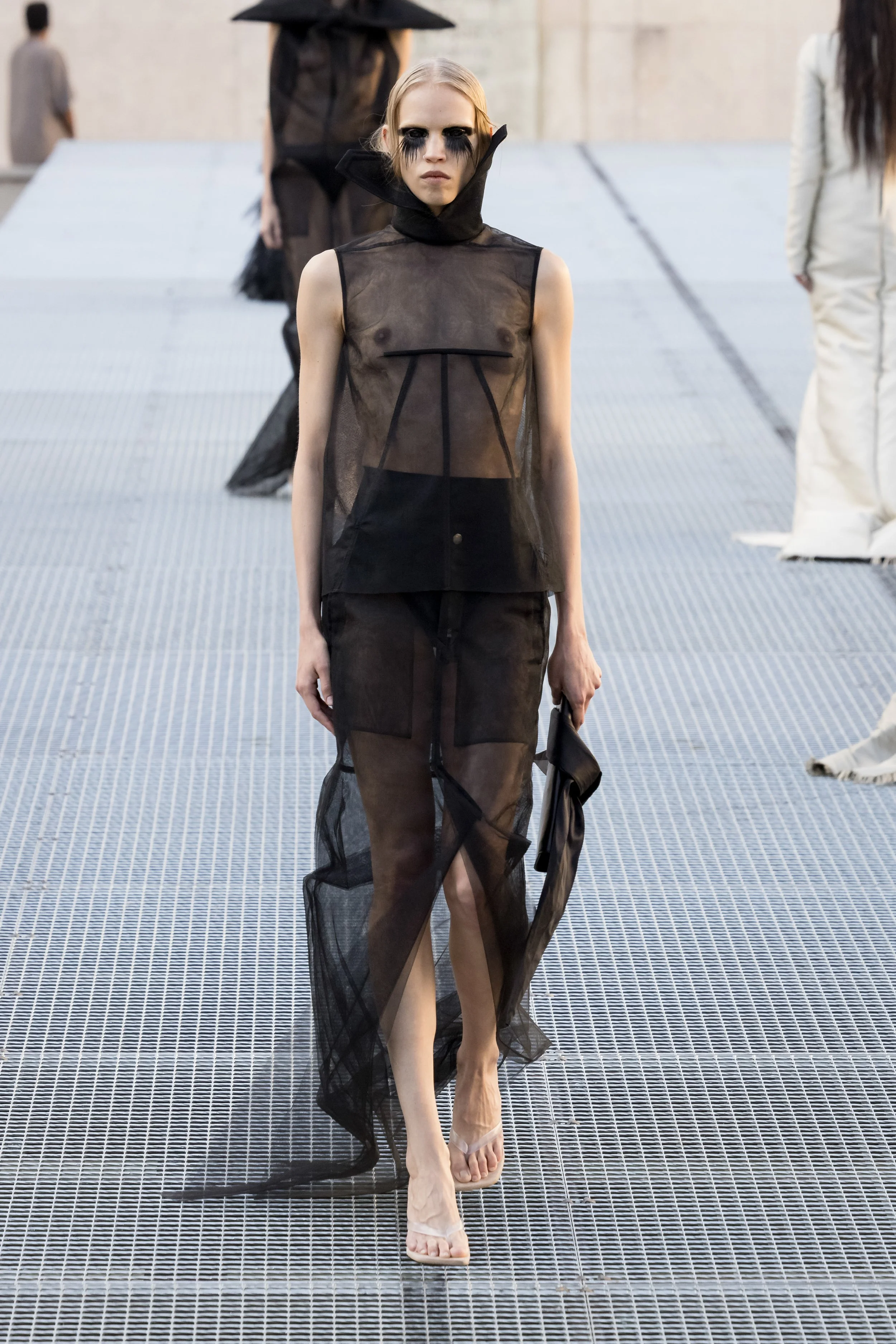
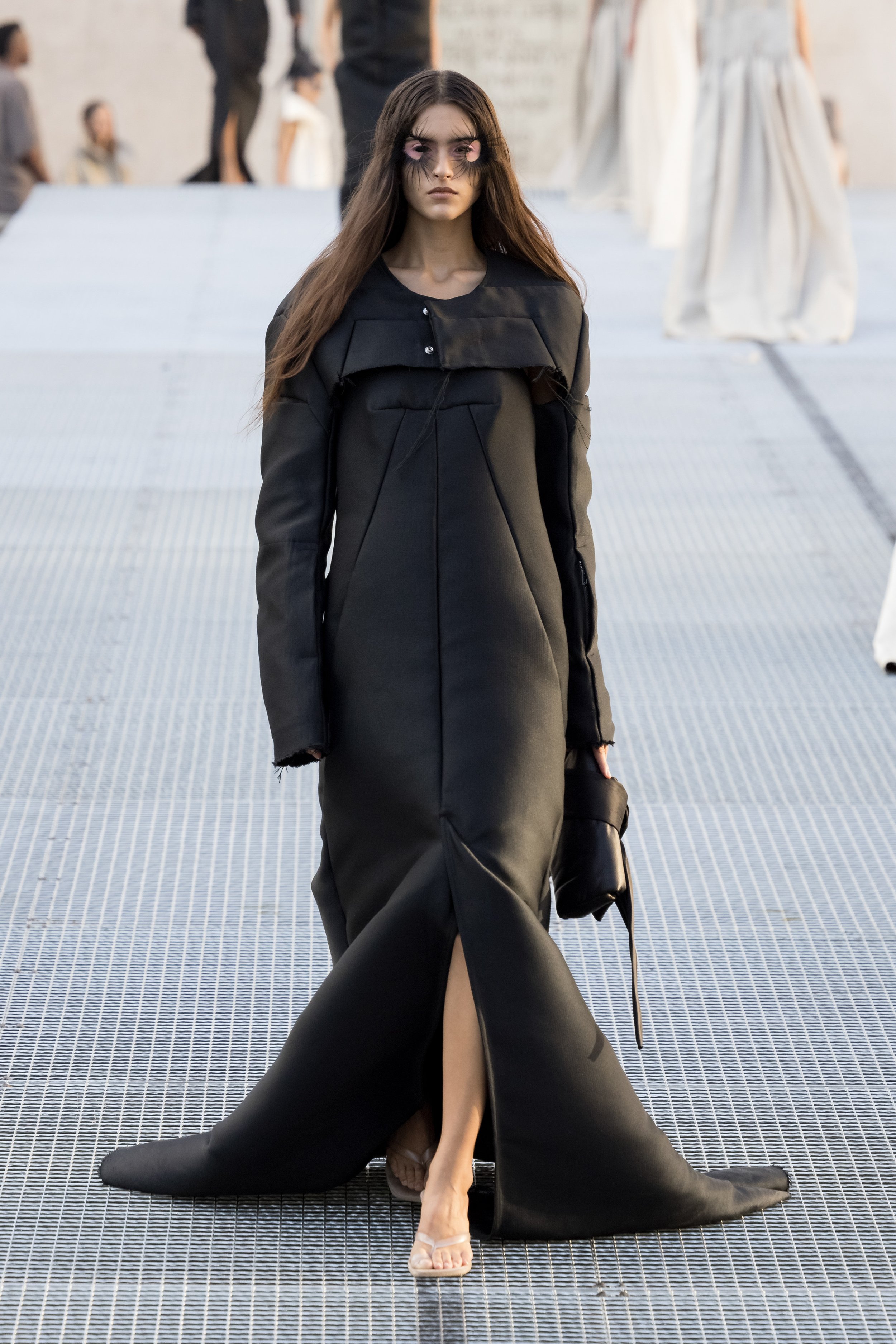
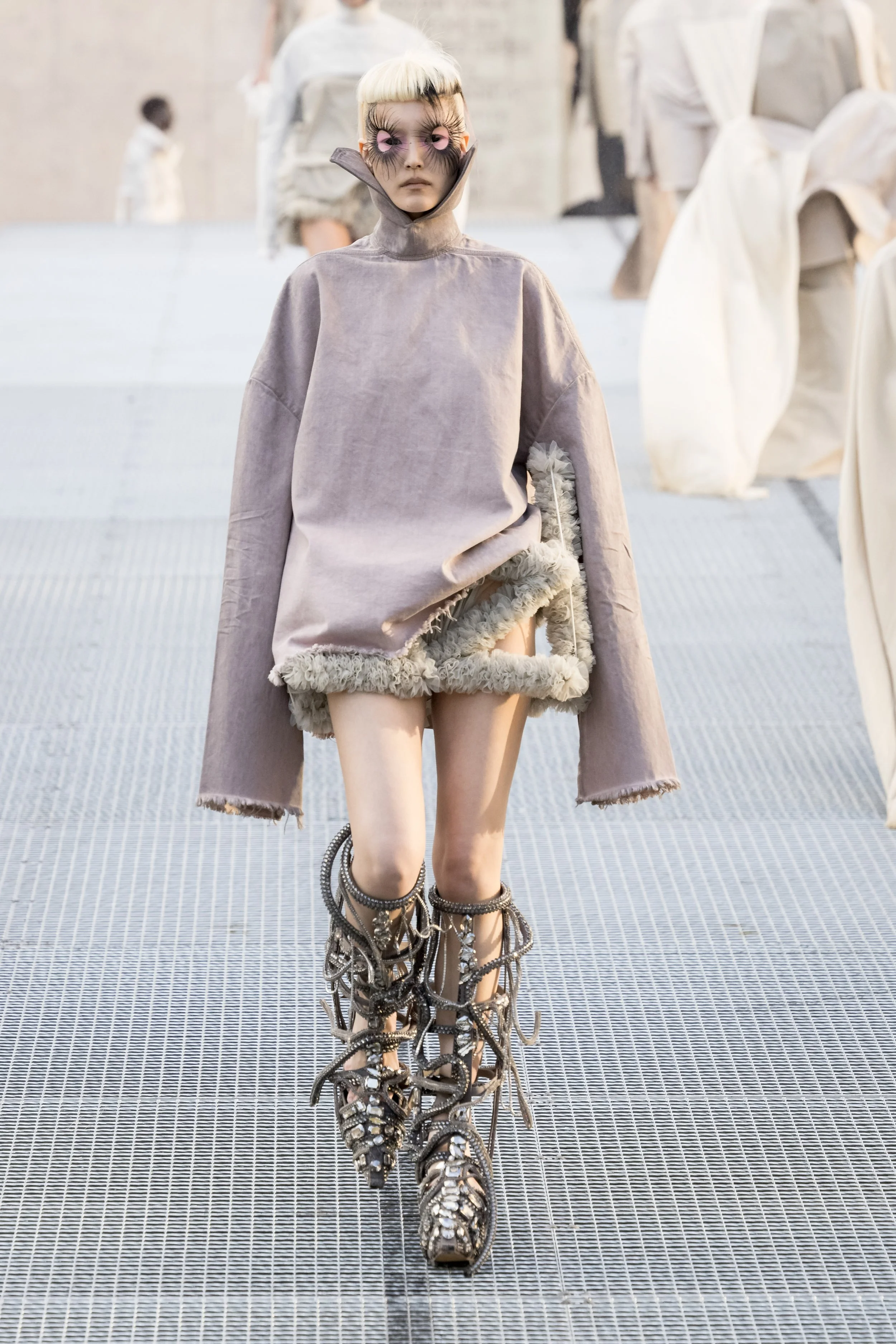
Owens’ own witches, as expected, are of more unearthly fare. Emerging from the designer’s beloved Palais de Tokyo, the models graced a runway ramped above the water, flanked by jetting streams and enshrined amidst white fog. Transformed into beings of extraterrestrial delight, they donned magnified, doubled-up lashes; blown-out eyeshadow; Owens’ favoured Scleral black lenses, and sharply capped mullets – all stuff of Biblical terror.
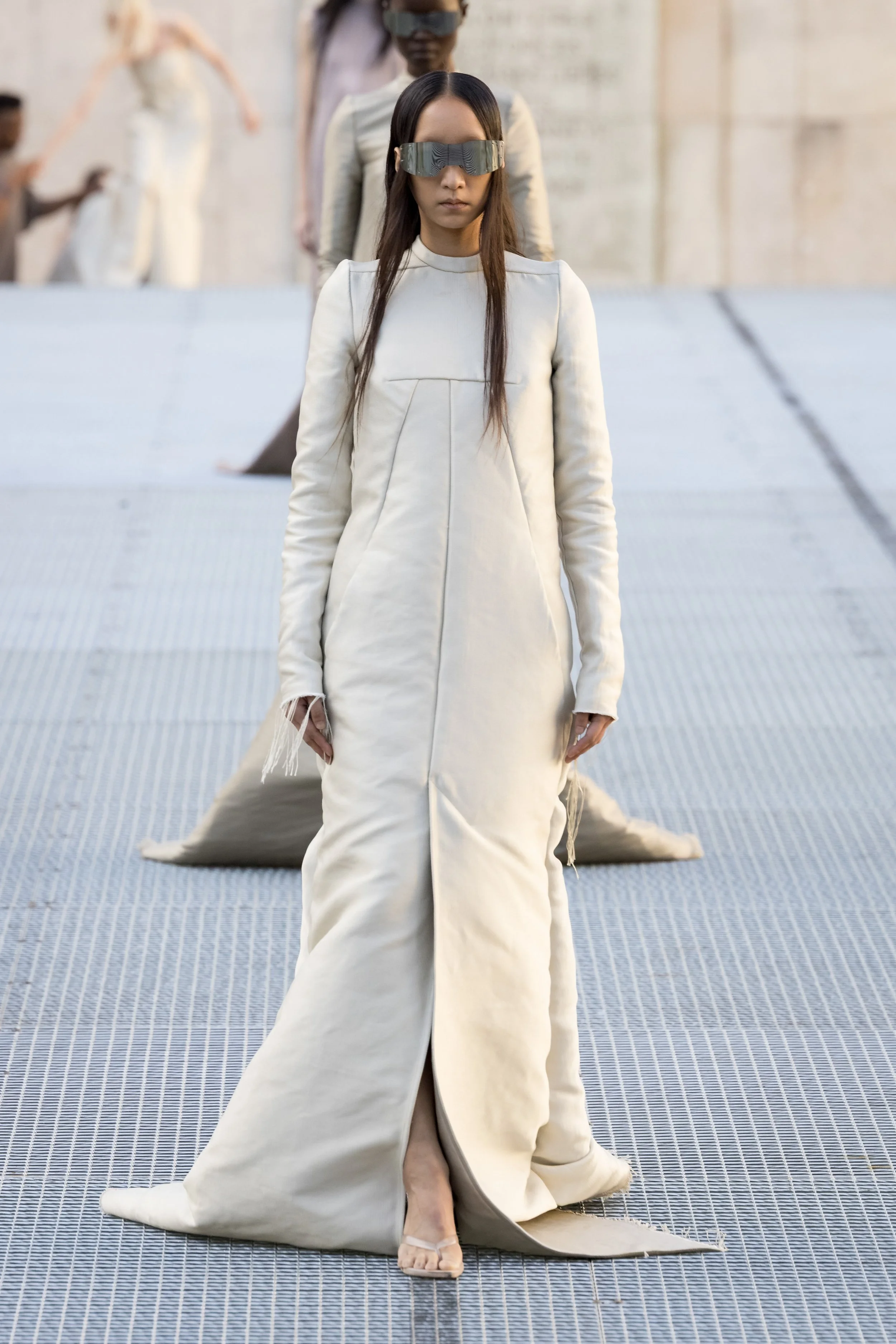
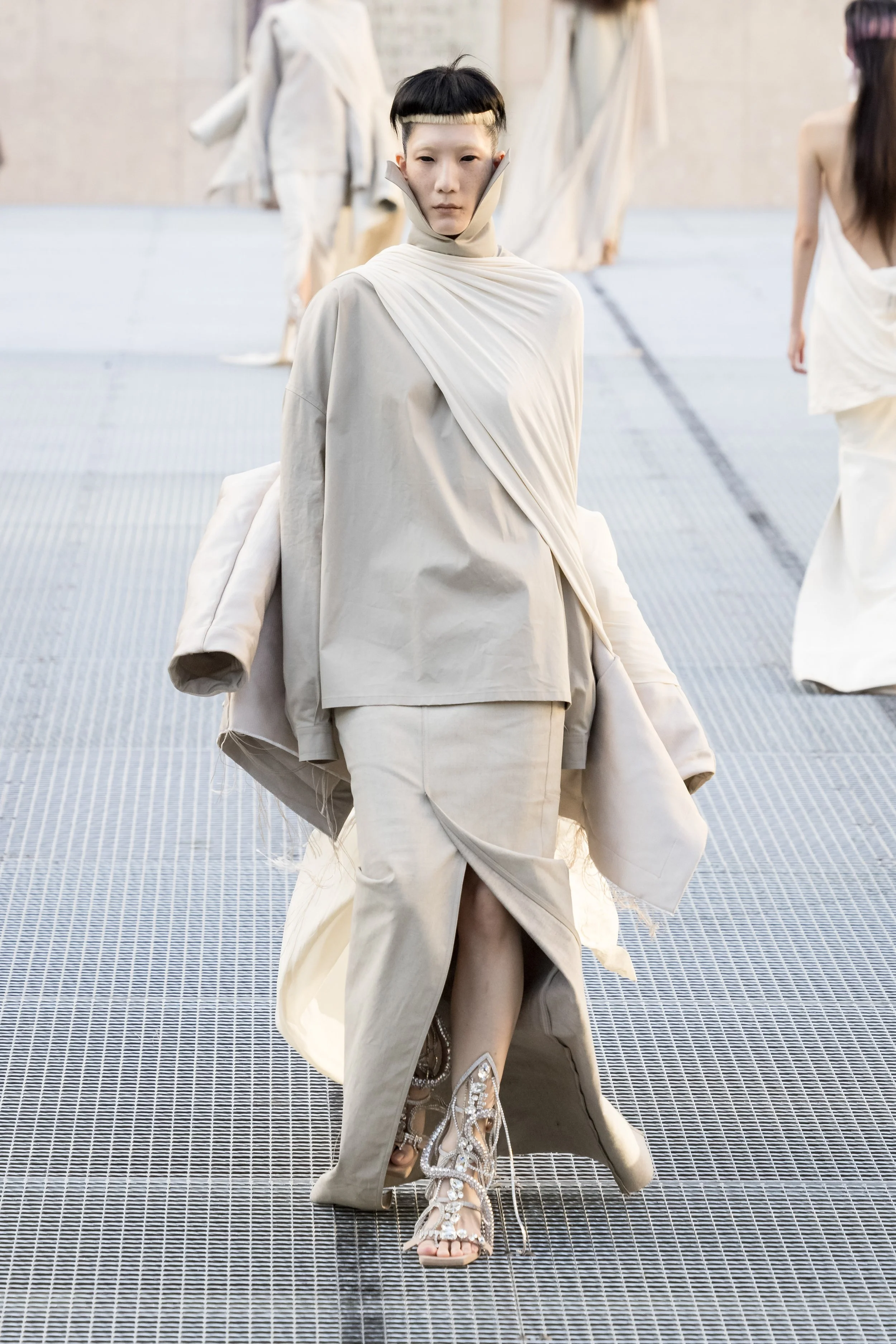
Titled “STONE”, this season’s show gives its name a three-fold meaning. The first is stoicism, an ideology which arrived in the stately gowns ushering in the collection. Cast in a palette of pale neutrals, these channelled resilience and self-discipline through structured shoulders and dignified darting, both elements that materialised later again in black. The deliciously bejewelled, cage-like heels which appeared throughout the show probably go against what the Stoics preached about passion, which they considered an unnatural state that should be avoided. They also believed, however, that happiness came from inner peace, a state I know I could achieve if I possessed such footwear.
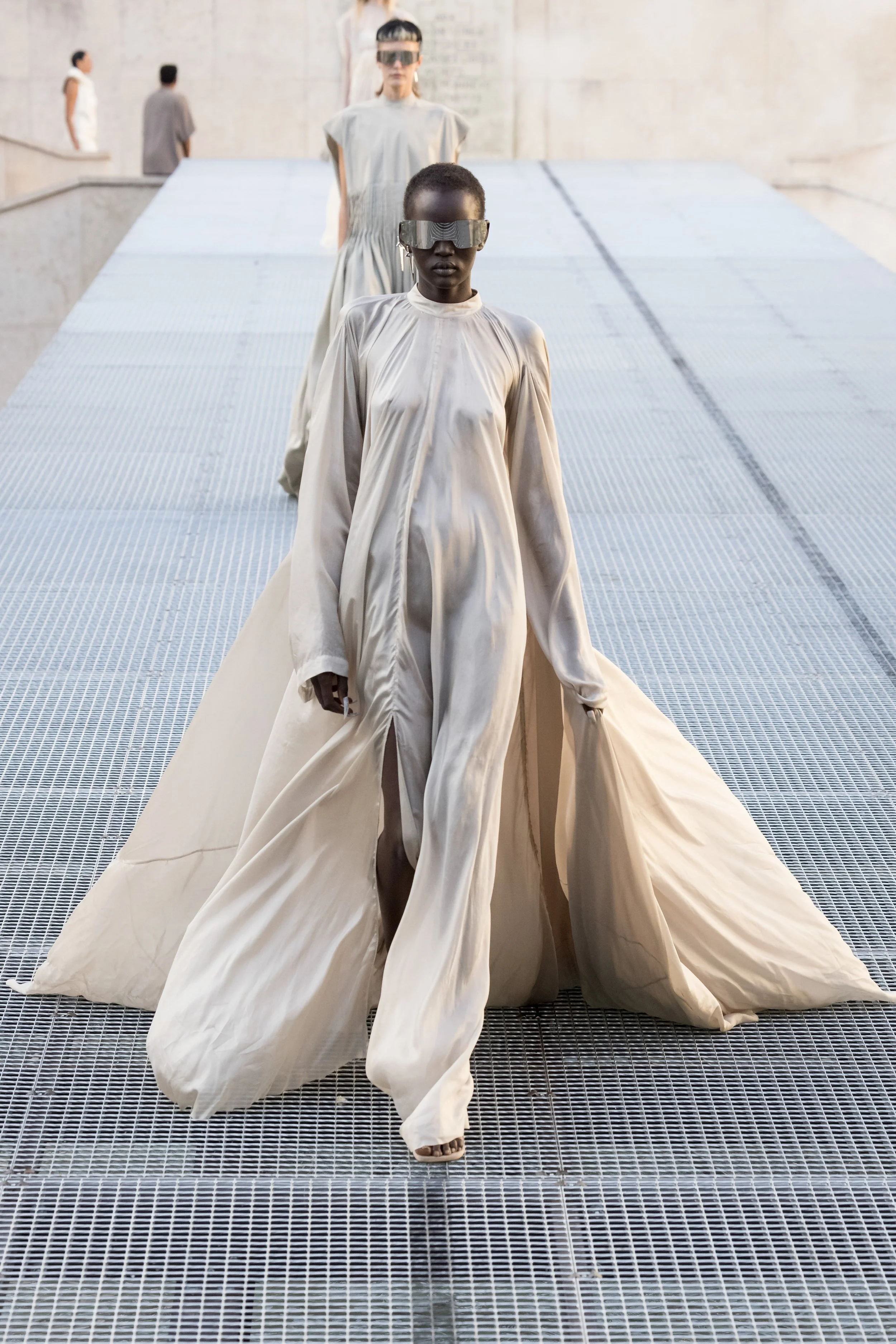
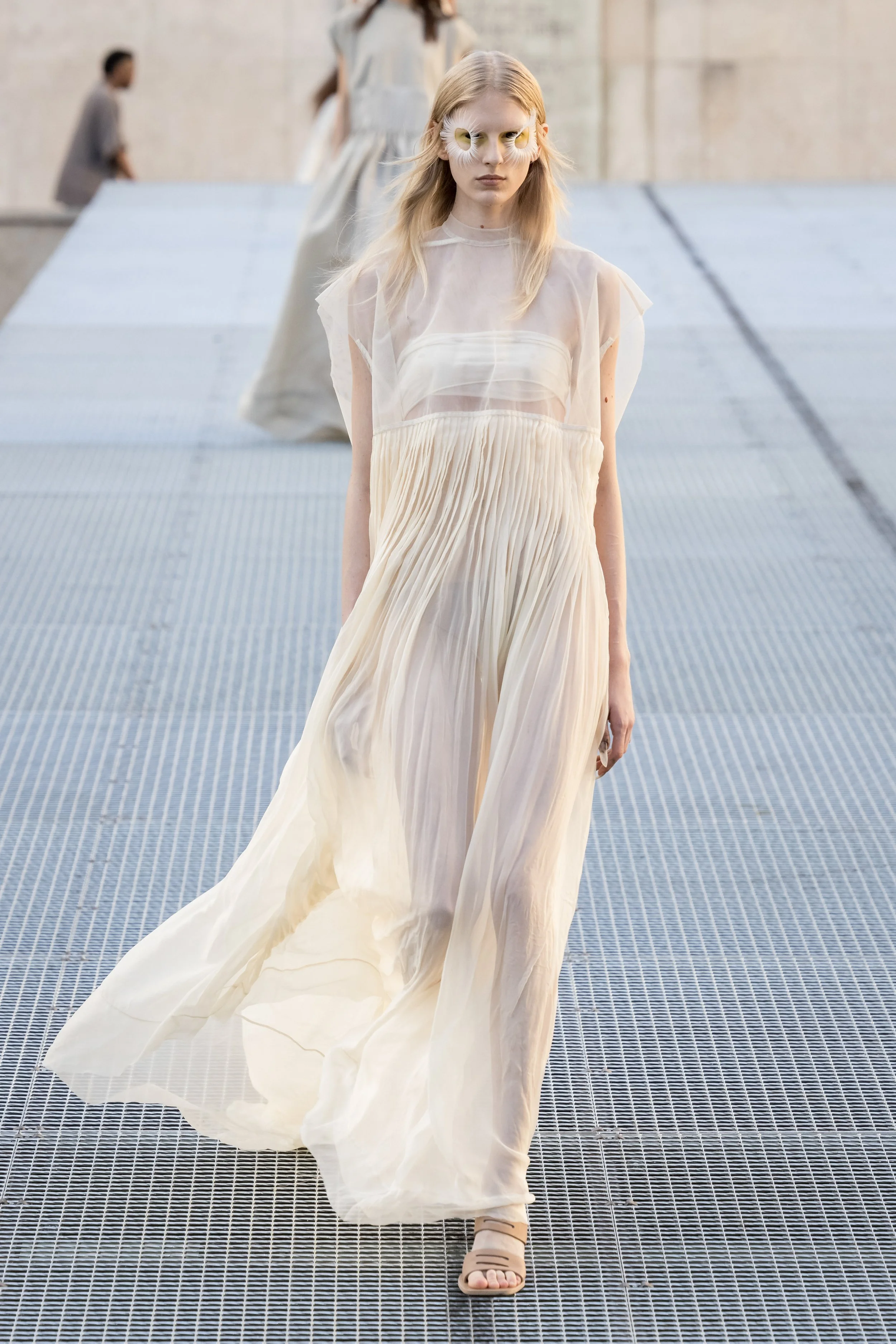
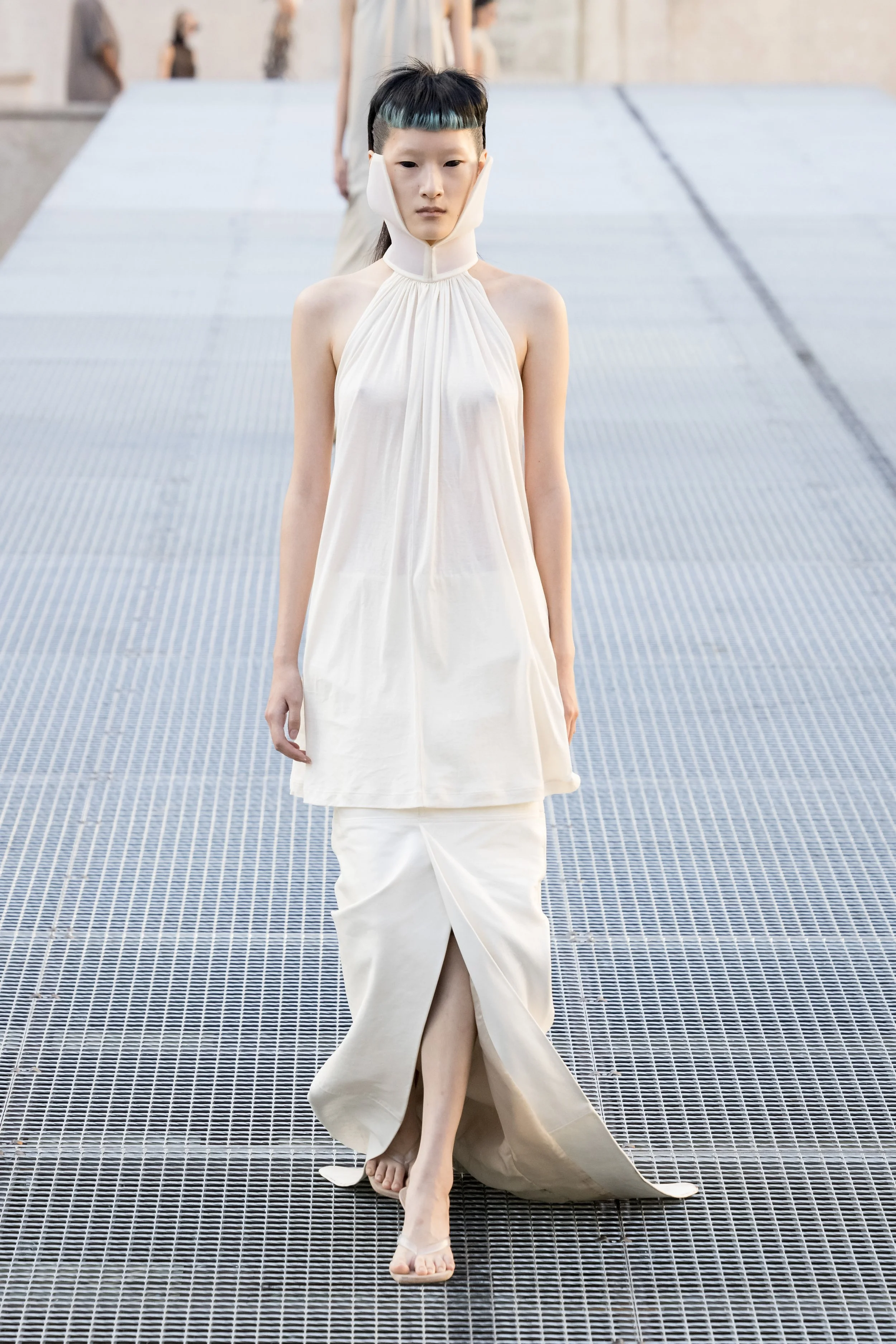
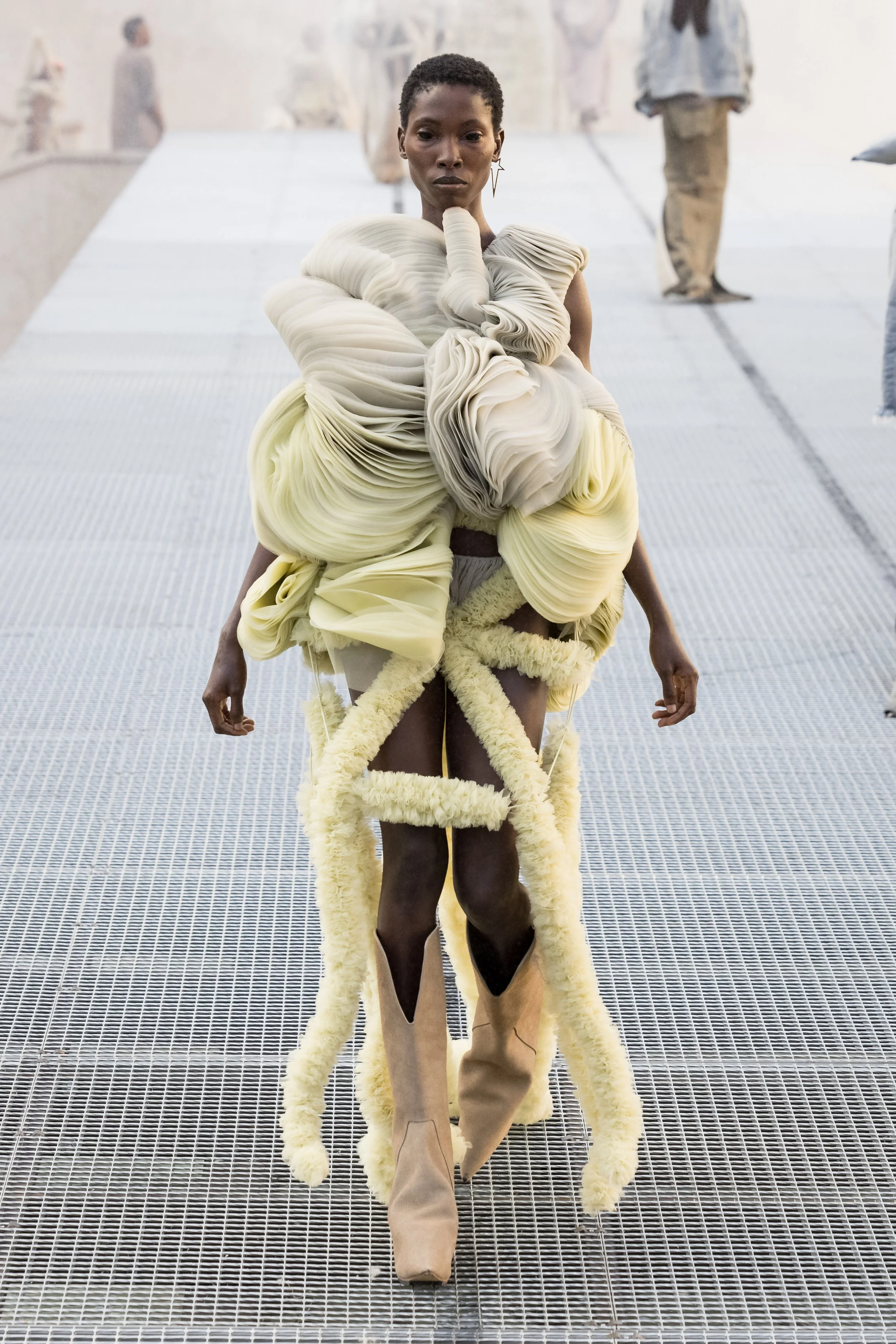
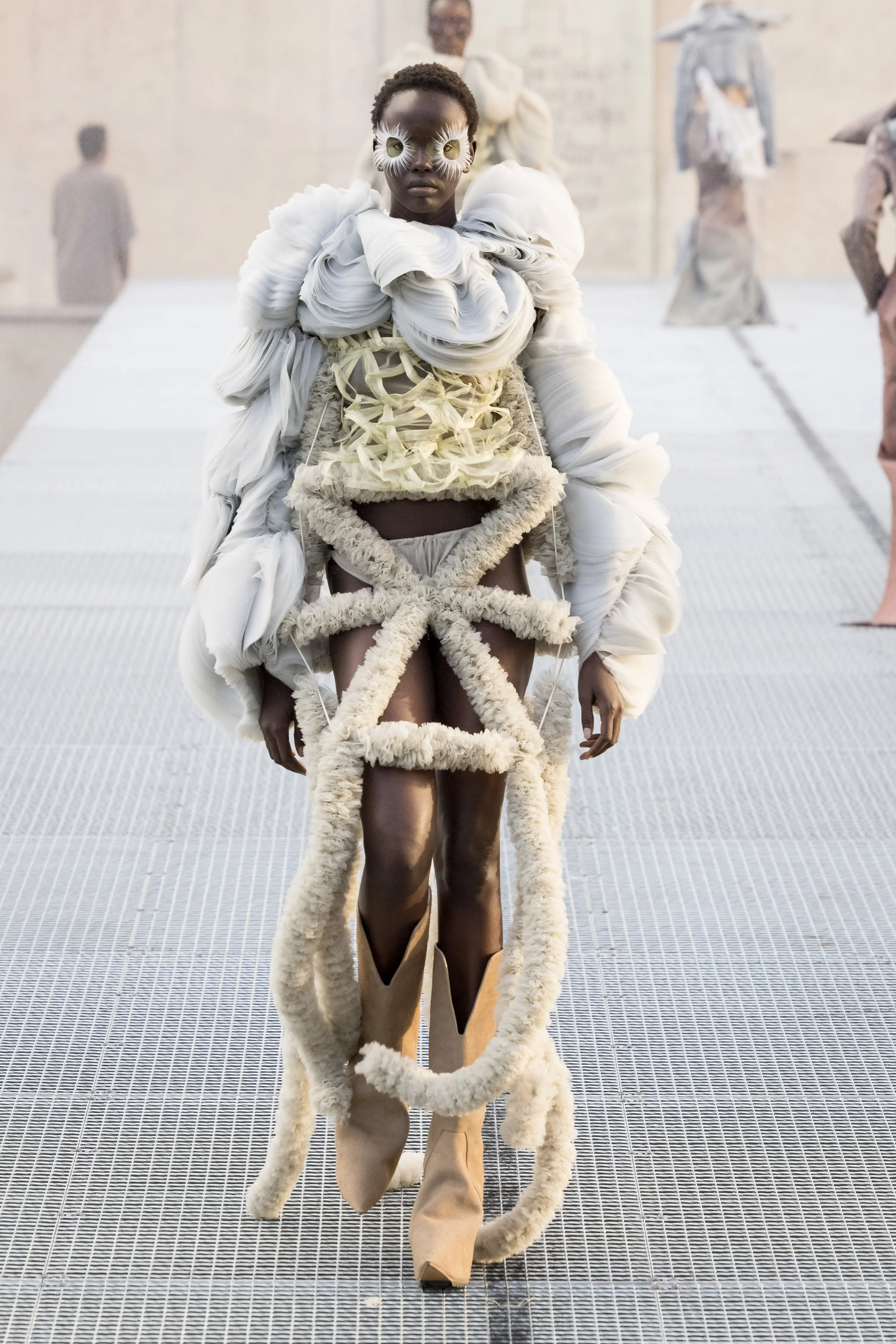
The second meaning refers to the stone rolled away from Jesus’ tomb, a sign of resurrection through release. Owens’ interpretation began with a sweeping, billowy dress – a departure from the more rigid pieces that came before. Other diaphanous, sheer creations populated the runway, punctuated by either precise pleating or chin-hugging collars. Structure still remained, yet the silhouettes were more loosely cut. Pointed, angular collars – a regular feature throughout this collection – became wider and more airborne, emulating wings. Undulating swathes of fabric melded into bodices. Snake-like boas trailed behind, unfettered by the heaviness of the past.
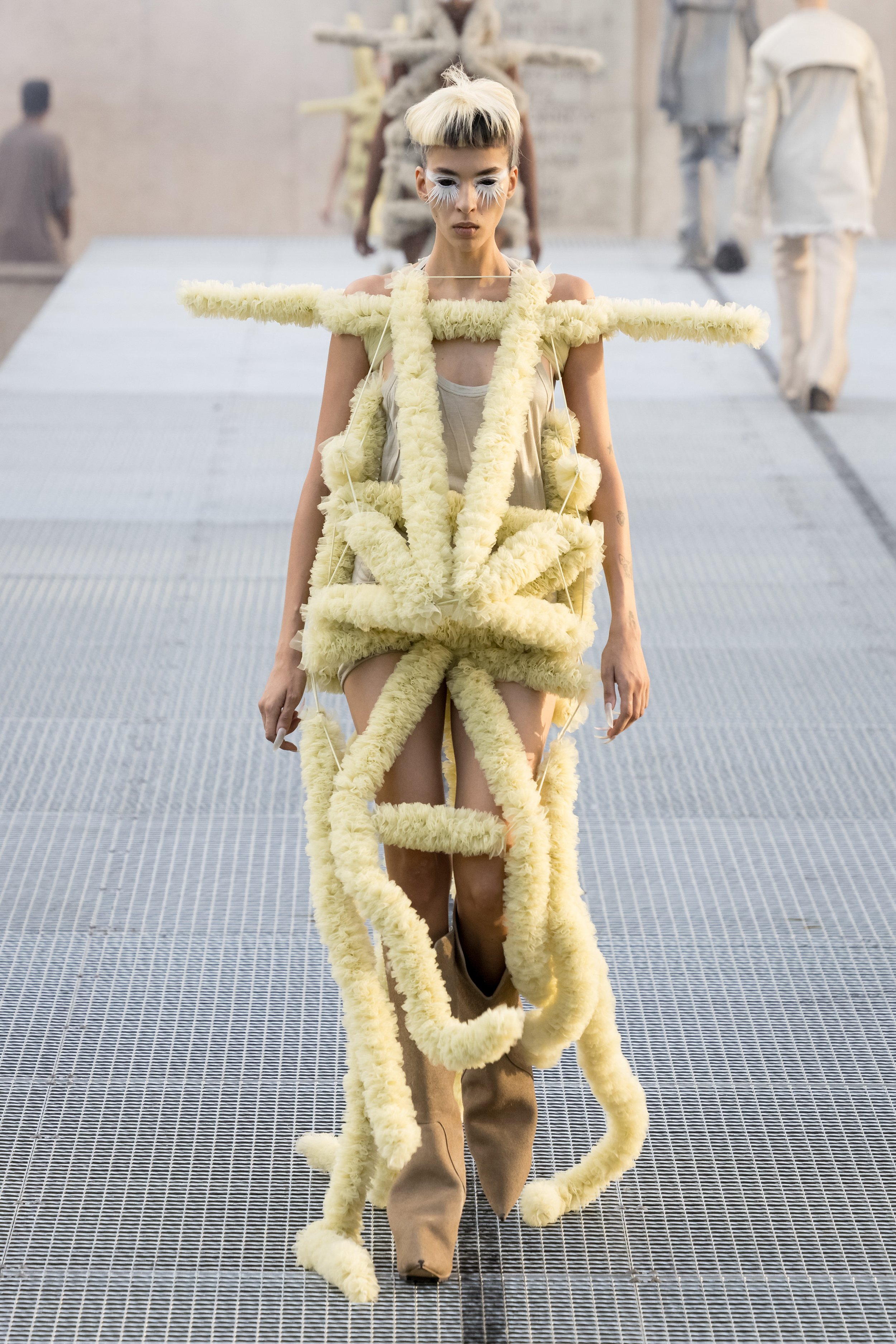
And then there’s the pentagram, which manifested in the tulle-bound exoskeletons towards the end of the show. It’s a symbol Owens has long used in his work, and only one of the countless reasons he regularly attracts accusations of being a Satanist. It’s also the most potent way of conveying the third meaning behind the show, which surrounds the act of casting stones. To Owens, pentagrams serve as a protest against intolerance and condemnation. For those who refuse to see beyond their own beliefs, they act as a litmus test, a visual reminder of their own judgement. For those who have been condemned, pentagrams represent a marker of protection, as summoned in the armour-like construction of those final ensembles.
In his show notes, Owens proclaimed that “Stars are magic symbols and I use mine to encourage an open heart.” It’s true that being involved in magic – or any spiritual practice for that matter – can have its consequences. One could be taken as a worshipper of the devil. Or become so embittered that the soul hardens beyond release.
As an acolyte of Rick Owens, though, I’d like to take my chances.
Words by Vicki Liang