showreport

MAISON MARGIELA SS26

 The most important sentiment a designer should exhibit when debuting for a maison is respect. Time will grant them the opportunity to showcase their vision and even further the legacy, but the first step is to acknowledge the history of those who came before them. For his official debut at Maison Margiela, Glenn Martens showcased an Artisanal line collection that did just that: involving his predecessor's theatrical antics with Martin Margiela’s iconoclastic knack. For his ready-to-wear debut, the Belgian artist takes a more decisive stand. Spring/Summer 2026 is an interesting collection, a tame reinterpretation of house codes that let clothes speak for themselves.

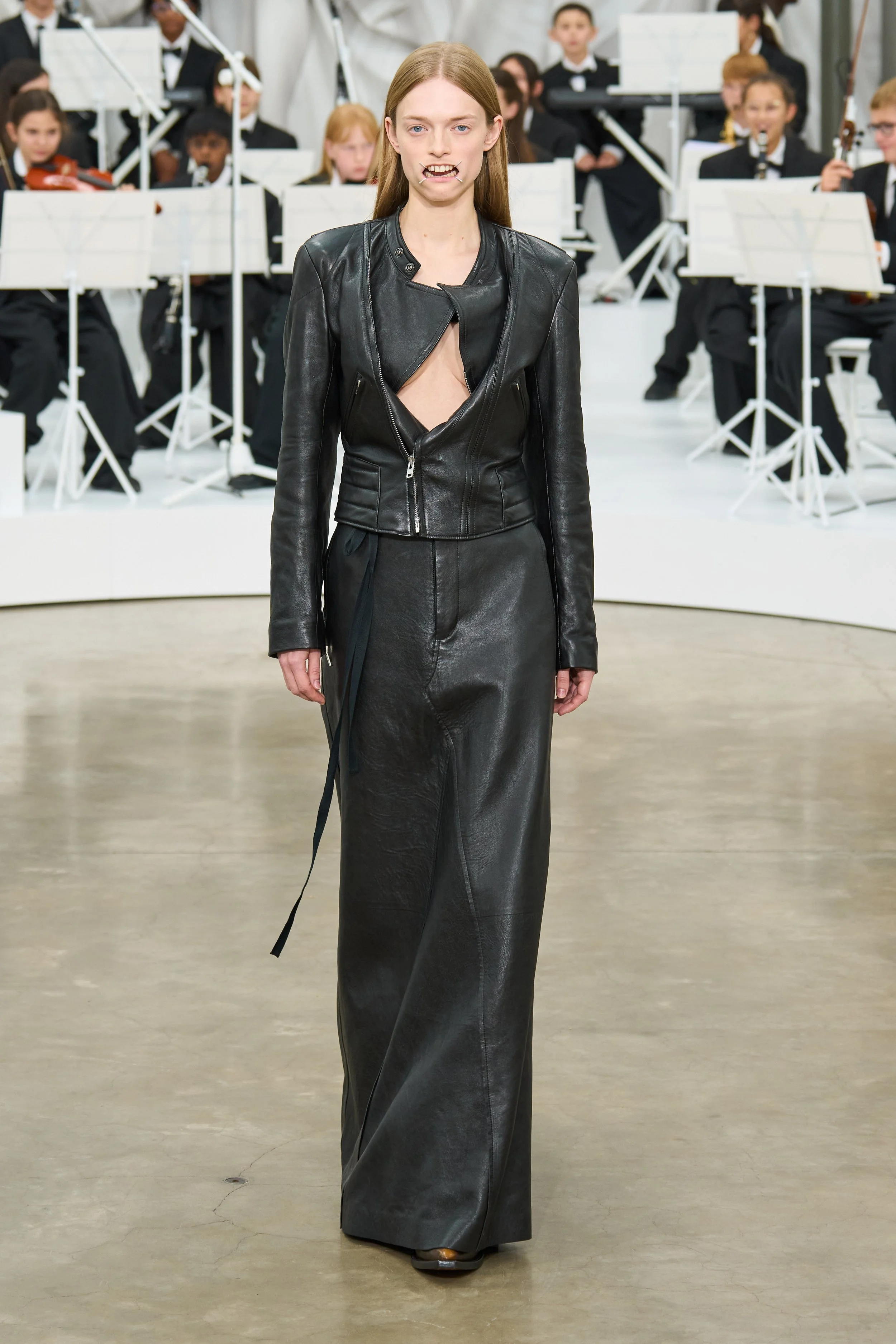
If John Galliano weaved his dramatic flair into everything he did at the maison, Martens threads a familiar sense of humour. The show opened with an orchestra made entirely of children wearing oversized suits. Even though not explicit, it seemed to be a reference to Margiela’s Spring/Summer 1990, when the brand’s founder staged a show in a playground amongst children. Inspiration from the brand’s mastermind was present in the collection itself, not just its surroundings. Duct tape, a staple of the legendary designer, was used to hold up necklines and as belts.

Models walked out with pieces modelled after the brand’s four-stitch signature, leaving their mouths permanently open. Just like the masks used for his Artisanal debut, Martens used them to uniformise models – once again, a Martin Margiela code. But it wasn’t all done in the name of deference. There was a sense of materiality and play that is characteristic of the Belgian designer: chunky translucent jumpers resembled bubble wrap. The collection wrapped up with tight duct tape bodices, the latter of which had overflowing streams of fabric pouring out from its extremities. 

Words by Pedro Vasconcelos
LACOSTE SS26

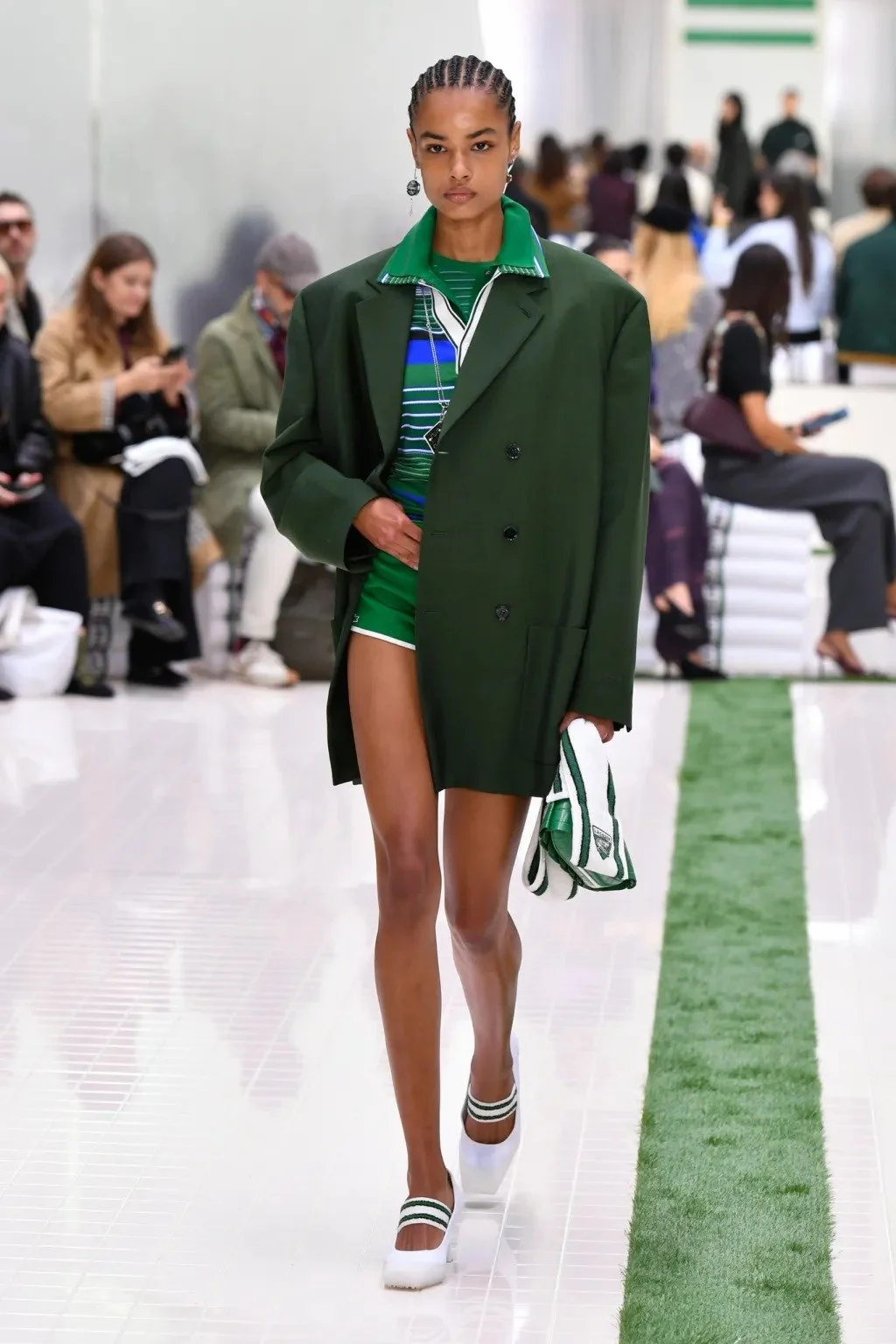
For this season, Pelagia Kolotouros showcased an interesting collection where athletic codes merged with street style. This has been one of her most dynamic offerings to date, where movement and ease were central. Titled The Locker Room, the proposition showed an energetic colour palette with accents of red and orange, brown, green, blue, beige, and white.

The pieces felt decidedly comfortable — oversized blazers, polos and shirts, long loose coats and chic tunic dresses created a sense of laidback elegance and nonchalant attitude. Towel-like skirts and peignoirs were matched with oversized polos, shorts, and shirts, giving a playful touch. One of the highlights was the boxy tracksuits, in luxurious fabrics and styled with heels. They felt equally appropriate as loungewear or eveningwear and gave the models an elongated, sleek figure. Transparencies added lightness as the collection transitioned from structured, voluminous pieces to more fluid, flowing garments.

Kolotouros’ latest collection feels contemporary and adapted for a generation that is not looking for the traditional codes of luxury, but rather is searching for comfort, ease, wearability, and individuality. It is intended for the real modern individual who walks the streets, takes the metro, and needs to be constantly on the move.


Words by Carolina Benjumea

BALENCIAGA SS26

There are very few Haute Couture maisons that have undergone as many seismic changes as Balenciaga. Founded by Cristóbal Balenciaga in 1919, his vision of fashion was traditional, feminine, sculptural, tailored, and technical. He enjoyed creating clean lines through minimalist designs, transforming the way women dressed.

Demna was appointed creative director in 2015, and since then, his era has been characterised by an ironic, maximalist, and futuristic view of design. His collections created drama, excitement, scandal, and strong reactions among the public. Exaggeration, distortion, deconstruction, and provocation were the premises of Demna’s tenure. It became hard to imagine Balenciaga without him — without the chunky shoes, the puffer jackets, and his ironic bags.

Last night, a new era of Balenciaga began. Pierpaolo Piccioli took the helm of the fashion house with his distinctive romanticism, emotional design, and poetic theatricality. Without a doubt, one of the most awaited shows of the season, the event felt like a rebirth and a reset, without losing the essence and core values of the label.

The show opened with a series of black-and-white looks that felt minimalistic, well-constructed, and tailored to perfection. Column and cape dresses were refined, clean, and romantic. A masterclass in modern ease and movement, the collection celebrated volume and flow. Oversized shirts, long blazers, and wide trousers created sculptural silhouettes that never seemed heavy — the body was enveloped in breathable clothing that invited freedom. Fringed pieces amplified motion, swaying with each step, while bubble-hem mini dresses added a playful contrast. Colour became part of the brand’s new visual vocabulary, with bold shades of yellow, purple, red, and pink injecting vibrancy into the fluid forms.

Several looks explored volume and asymmetry: oversized shirting, cropped tops with flowing skirts, and exaggerated shoulders, creating a contemporary translation of Cristóbal’s constructions. Draping and layering were executed in a smart and refined fashion. Demna’s aura was felt through small accents like glasses, contrasting long gloves, and leather jackets that added a hint of edge.

The show lacked the wit and ironic commentary of Demna, but indulged us in beautiful constructions and rich designs. Pierpaolo’s approach felt closer to the founder’s vision, while imprinting Piccioli’s signature poetic sensibility, taking us back to the elegance of the very beginnings of modern fashion.


Words by Carolina Benjumea

VIVIENNE WESTWOOD SS26

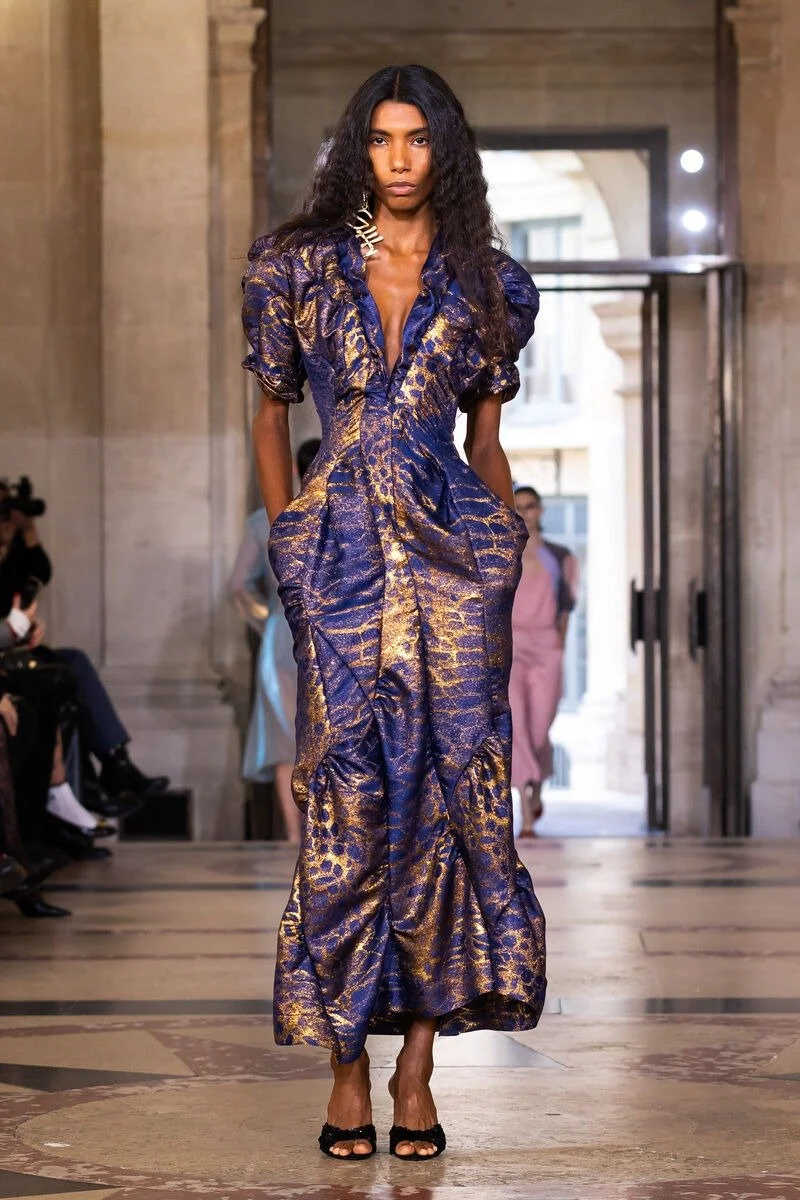
Andreas Kronthaler presented his vision for Vivienne Westwood’s Spring/Summer 2026 collection at l'Institut de France. For this season, the designer fused baroque opulence, punk deconstruction, and modern romanticism. The collection was a bridge between modern and historical, with silhouettes that merged 18th-century dramatism with 21st-century irreverence.

Anarchic layering and gender-fluid tailoring were at the centre of the collection, creating that distinctive Westwood silhouette. Characterised by a blend of statement pieces, the looks were eclectic and exaggerated, offering a defiant perspective on fashion. The looks played with different design languages, resulting in a visually exciting collection. Proportions, textures, colours, and prints were mixed and matched, breaking all the rules of every style guide ever created.

Traditional gender boundaries in clothing were completely blurred — a nod to Westwood’s history of challenging conventions. For men, suits were given a feminine touch through pastel hues and light fabrics; for women, suits appeared in larger sizes with strong shoulders.

Kronthaler has been able to transmit Westwood’s passion for historical dress through his own vision and a modern touch. Crinolines, corsetry, and voluminous skirts evoking 18th- and 19th-century aristocratic dress were given a sensual twist. Sometimes deconstructed, sometimes styled with modern pieces, and at other times infused with a feminine flair, these pieces are central to the distinctive design vocabulary of the brand — now feeling fresh and renewed.

Asymmetric hems, distressed fabrics, exposed seams, socks with shorts, clashing prints, and mixed textures gave the collection an unpolished, unfinished aesthetic reminiscent of punk and the rebellious soul of the brand and its founder. The show was closed by supermodel Heidi Klum, wearing the bridal dress — this time reimagined as a babydoll adorned with sequin feathers, giving a more intimate and delicate twist to the traditional gown.


Words by Carolina Benjumea

GIVENCHY SS26

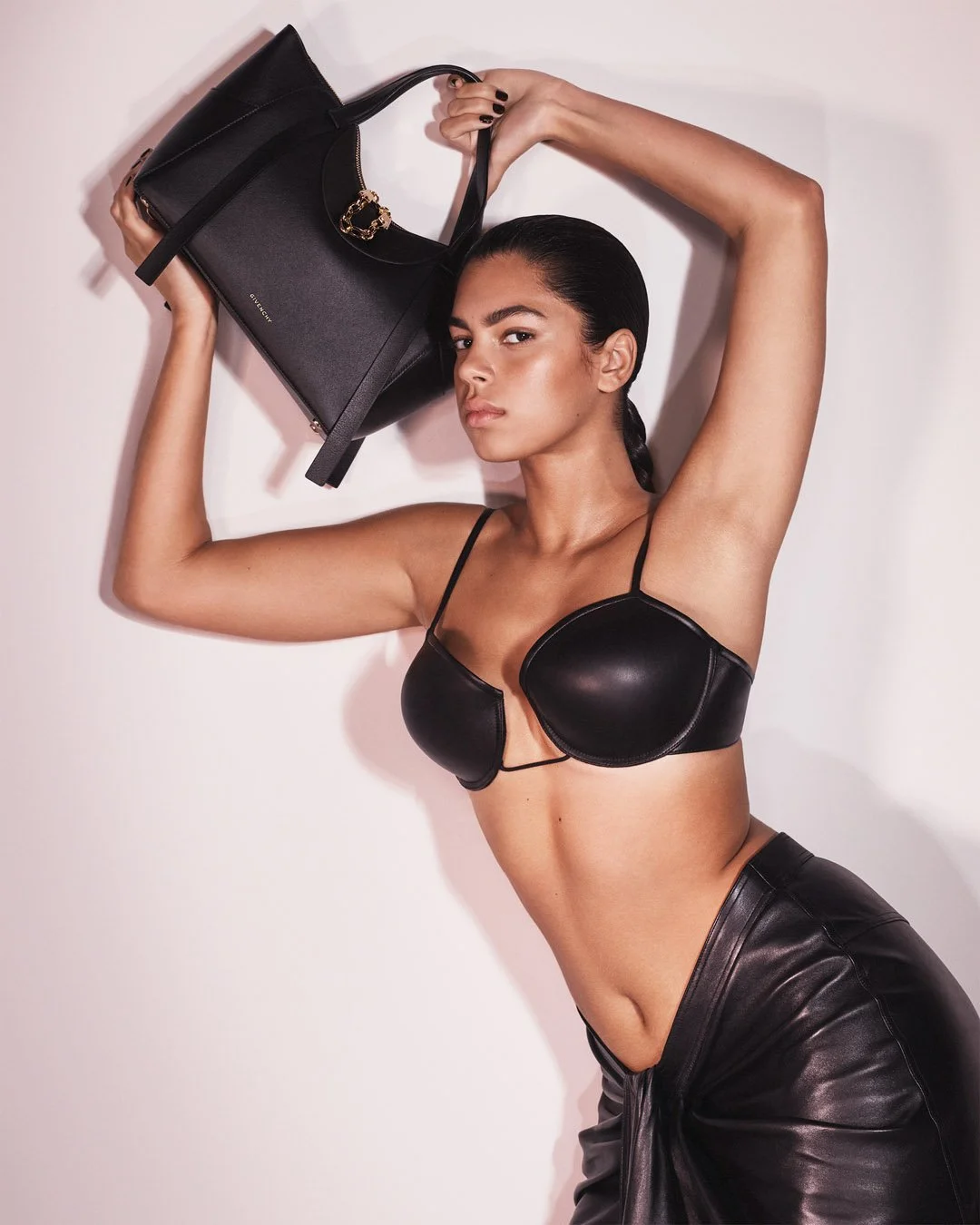
Backstage at her Spring/Summer 2026 show for Givenchy, Sarah Burton spoke of the importance of establishing clarity from the outset of her tenure at the house. That focus was reflected throughout the collection: a pared-back palette of black and white punctuated by flashes of red, pink and beige, and silhouettes that were sharp yet fluid in their execution.

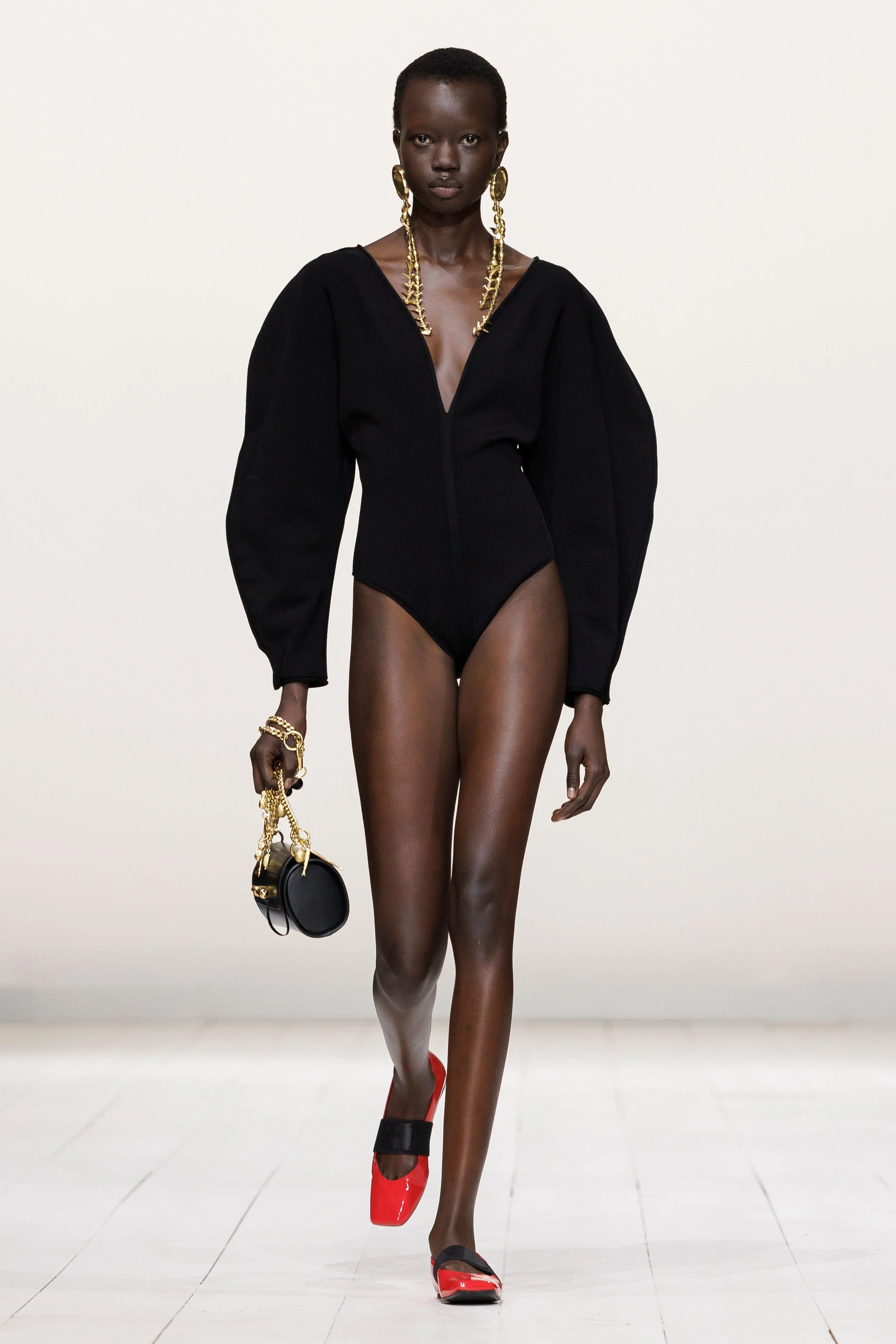
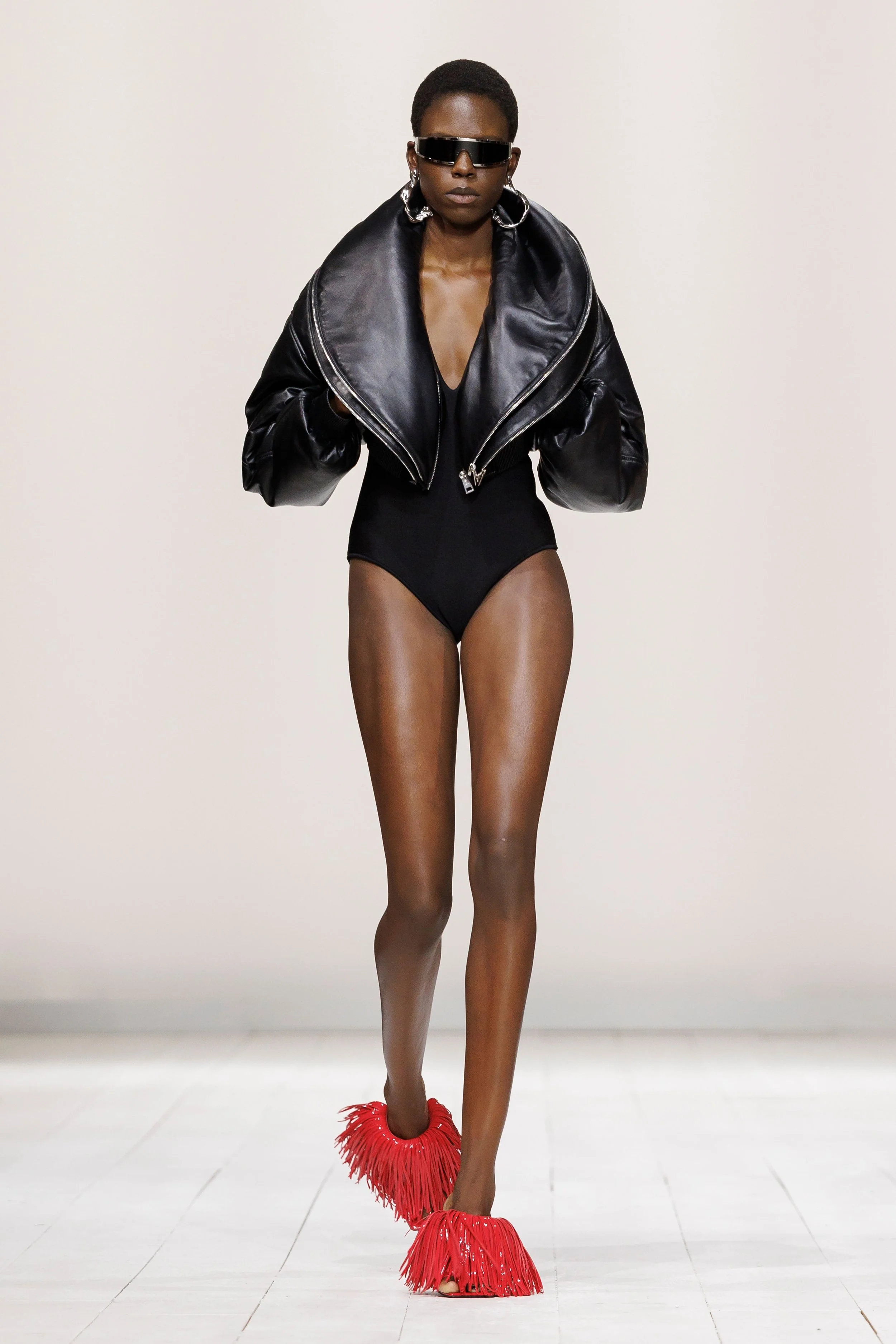
At the centre of the collection was the bodice, reimagined as a versatile anchor. Bodysuits with plunging V-necklines and voluminous sleeves appeared styled with squared-toe ballet flats, or layered beneath a cropped leather bomber whose collar featured a striking double-zip detail. Lingerie codes translated seamlessly into eveningwear: bra tops slipped under tailored jackets or paired with silk and leather skirts, draped with a deliberate fragility, as if they might tumble away at any moment.

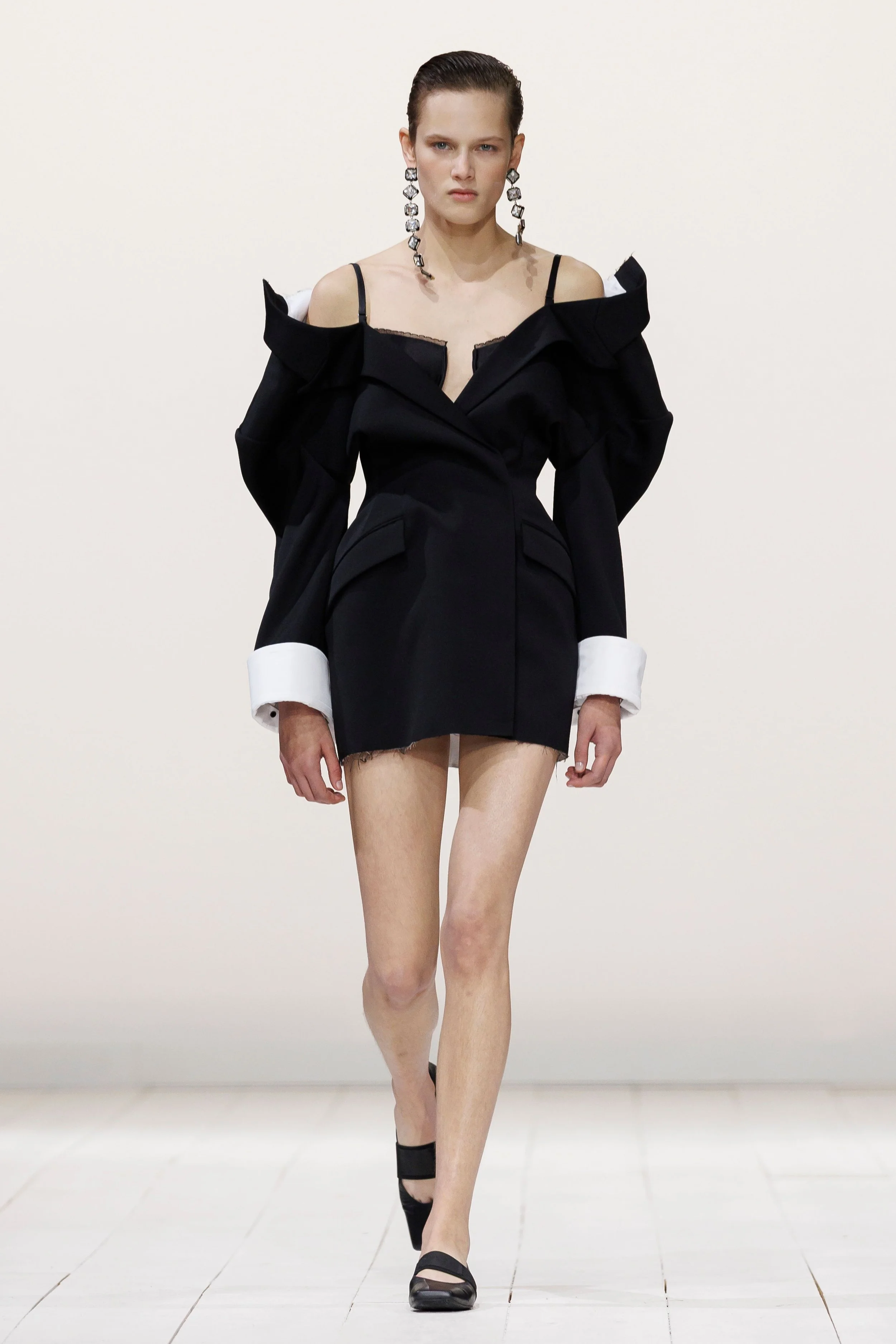
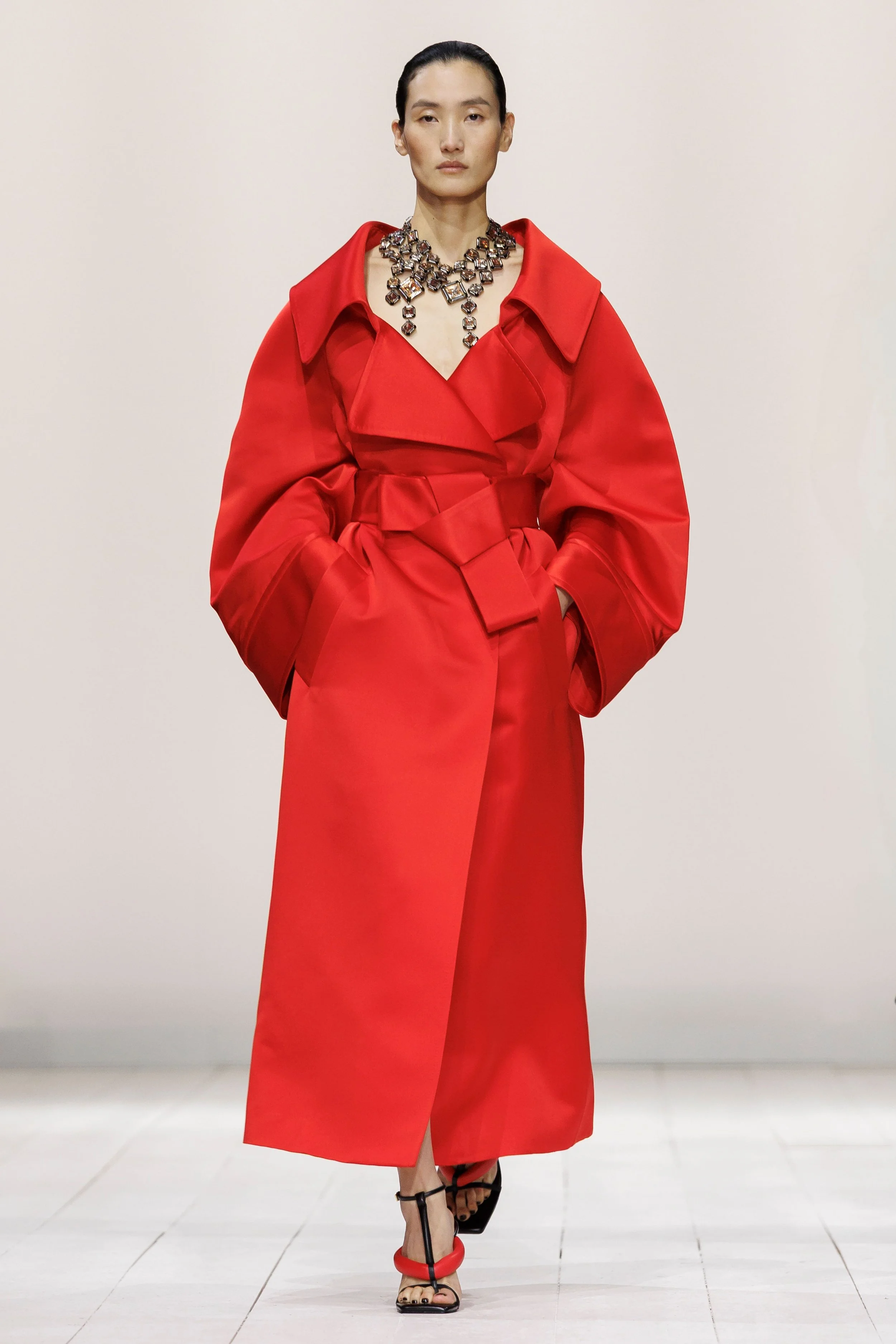
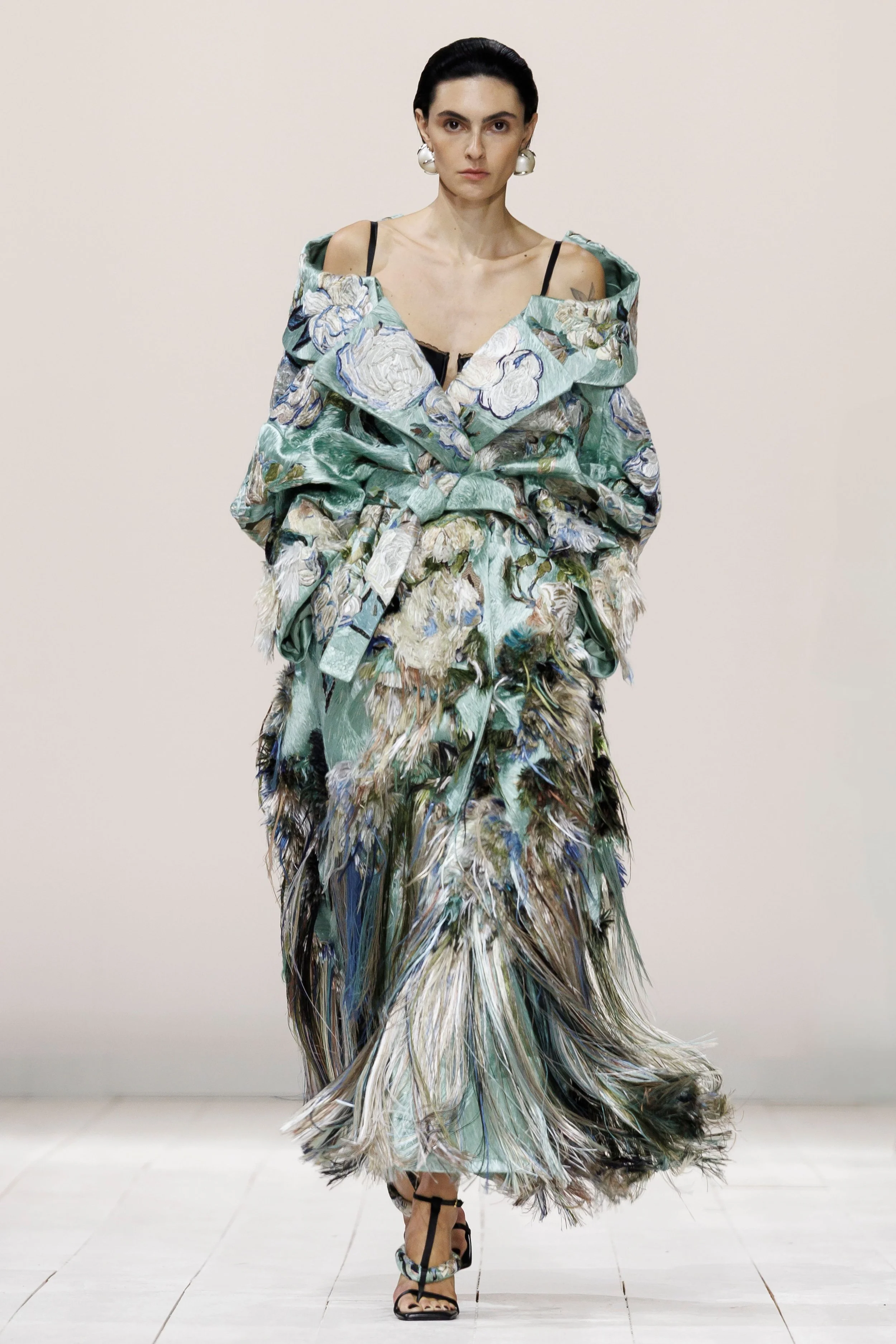
Tailoring, a signature within Burton’s vocabulary, was pushed further into new territory. Tuxedo dresses opened dramatically at the chest, framing bra straps and bold jewellery, while a sculptural trench featured oversized lapels and a waist cinched tight with a belt. The standout look came in the form of a hybrid piece – part off-the-shoulder coat, part dress – adorned with an impressionistic floral that dissolved into a fluid cascade of fringe.


Words by Martin Onufrowicz

LOEWE SS26

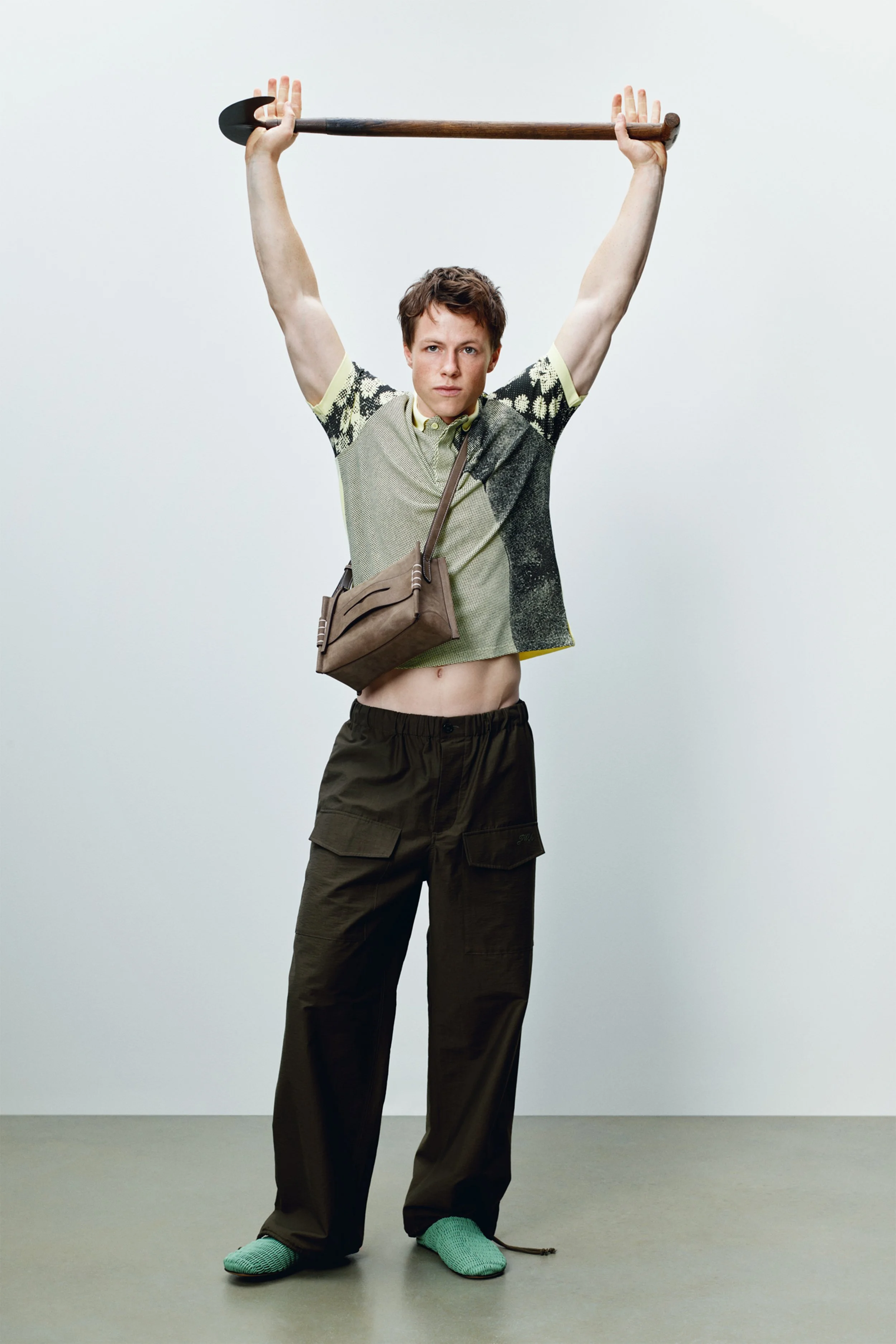
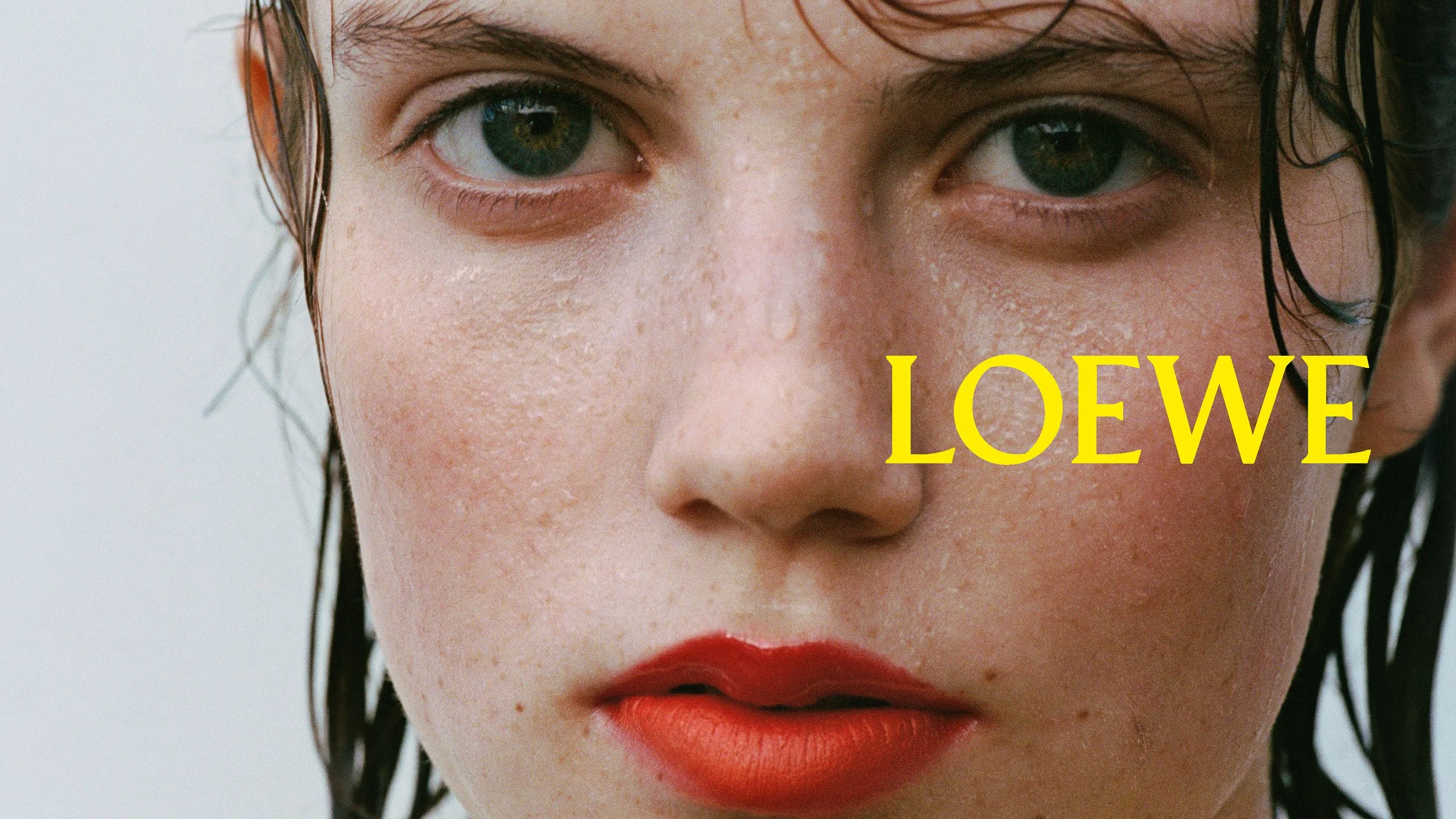
On the long list of debuts this season, Loewe’s was perhaps the most fascinating. Unlike many of the new wave of creative directors, who had been jumping around from maison to maison, Jack McCollough and Lazaro Hernandez were fresh. Well, perhaps that isn’t the best adjective. For the past 25 years, the two have been titans of the New York scene through Proenza Schouler. Now, for their first time at Loewe, the duo had the most to prove. How would they translate their language into the Spanish brand? As their debut proved, the answer is: easily. The collection was fresh, even youthful at times, with a distinctive and ingenious use of house codes.

Spring/Summer 2026 was inspired by the latter season. Dresses and shirts offered natural gradients, as if burnt by the sun, moving from bright yellows to faded beiges. Fluffy towel dresses spoke to the same feeling, as if they had just been wrapped haphazardly after a dip in the sea. These were representative of the fun they had interpreting Loewe’s codes. Known for its craft, the brand has grown to become synonymous with it in the industry. Here, towel dresses were 3D printed. More traditional considerations of craft came in shredded leather jeans and scrunched tees.

Layering was the word of the day. Stacked shirts created the illusion of multiplicity, while angular black dresses jolted with colour at the seams, as if exploding with bright magentas and happy oranges. With a sunny disposition and sunnier palette, McCollough and Hernandez passed their first collection with flying colours.


Words by Pedro Vasconcelos

ISSEY MIYAKE SS26

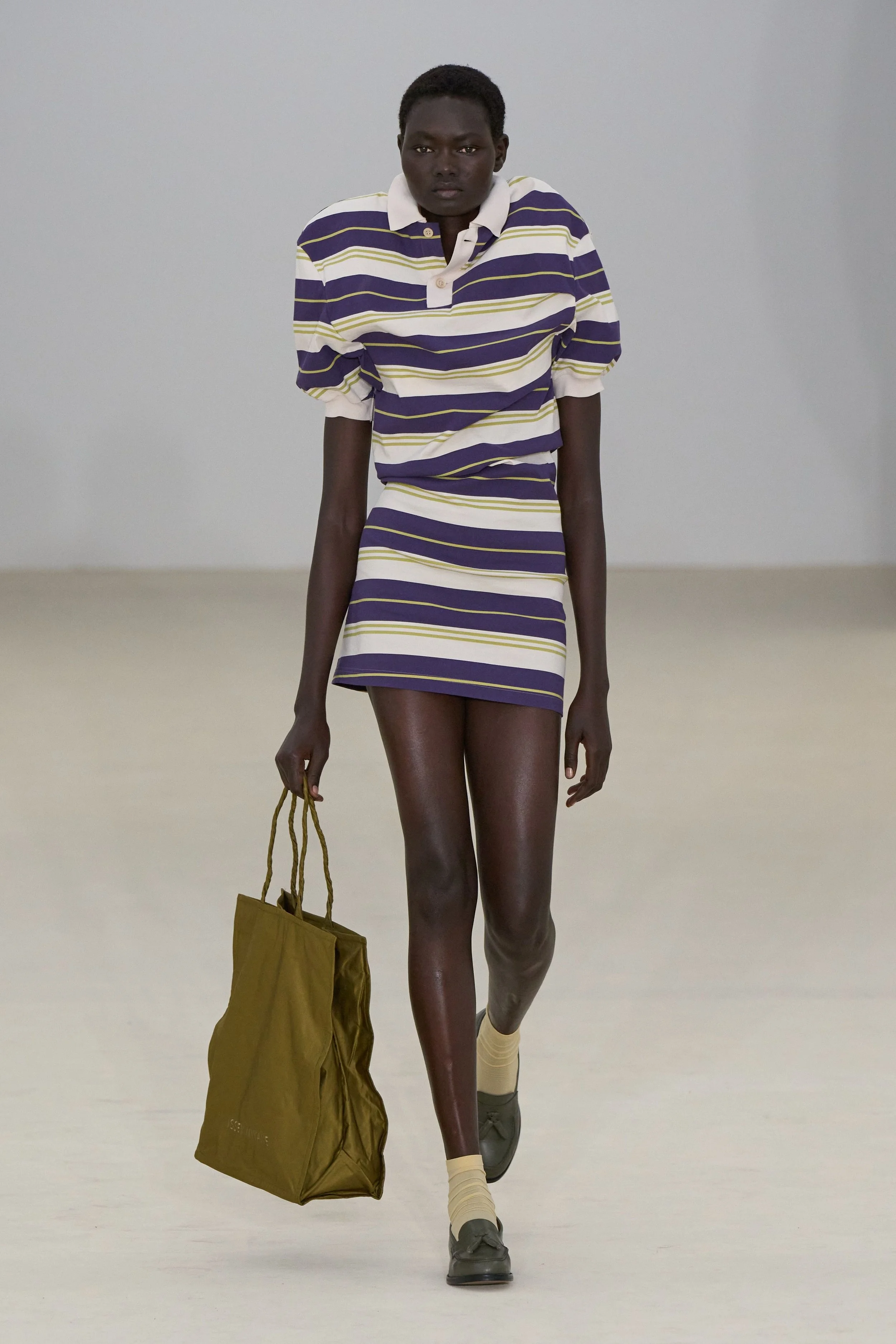
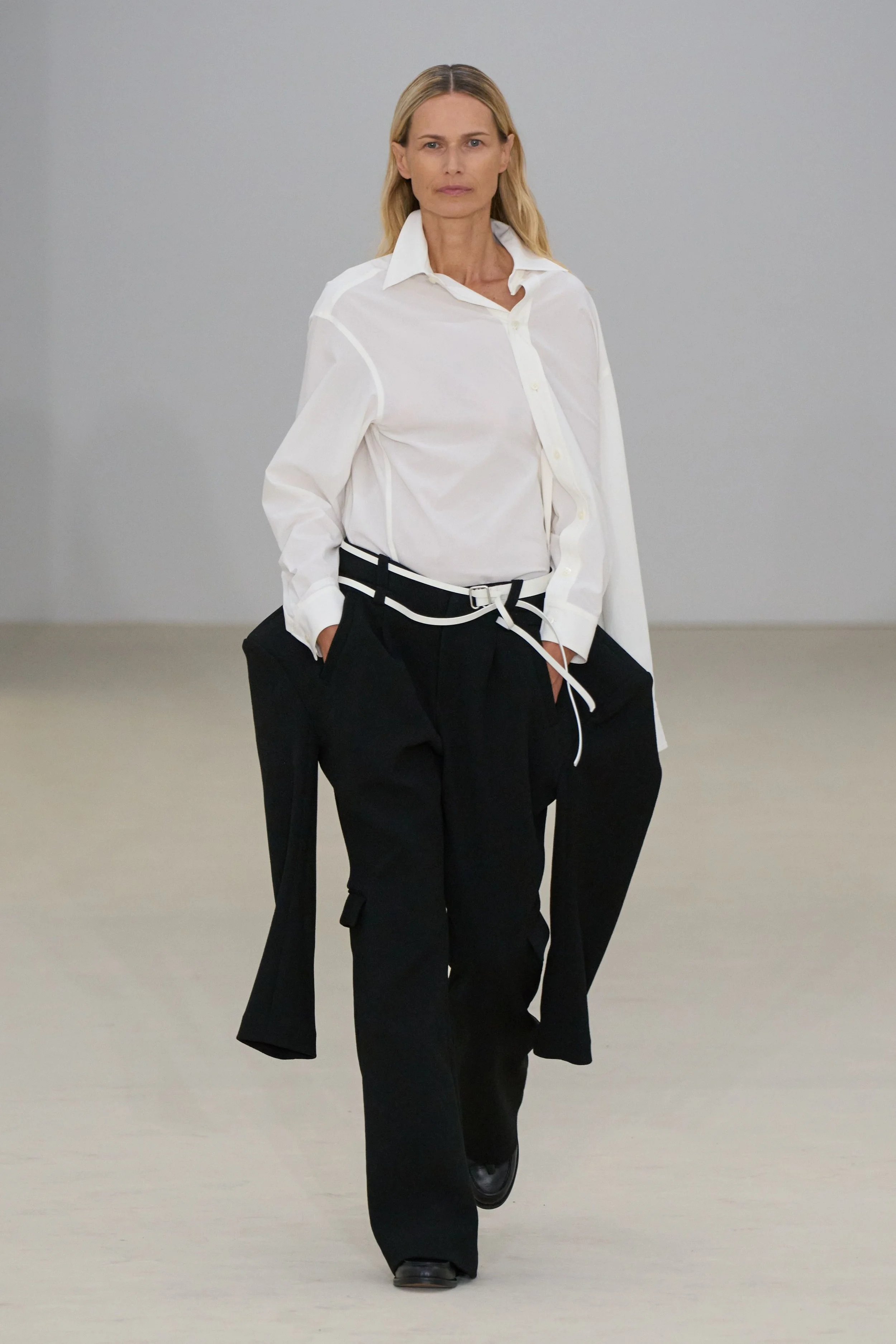
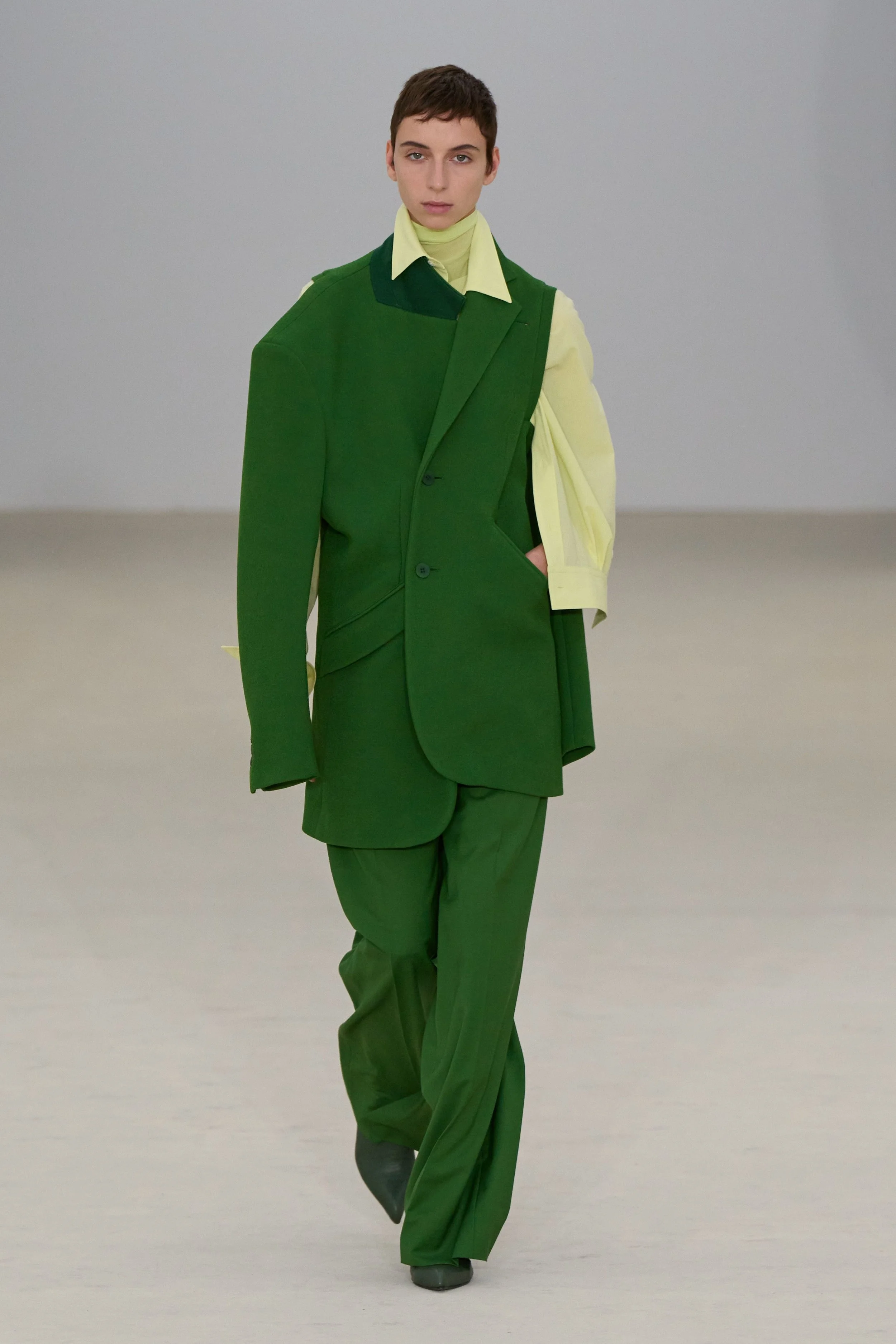
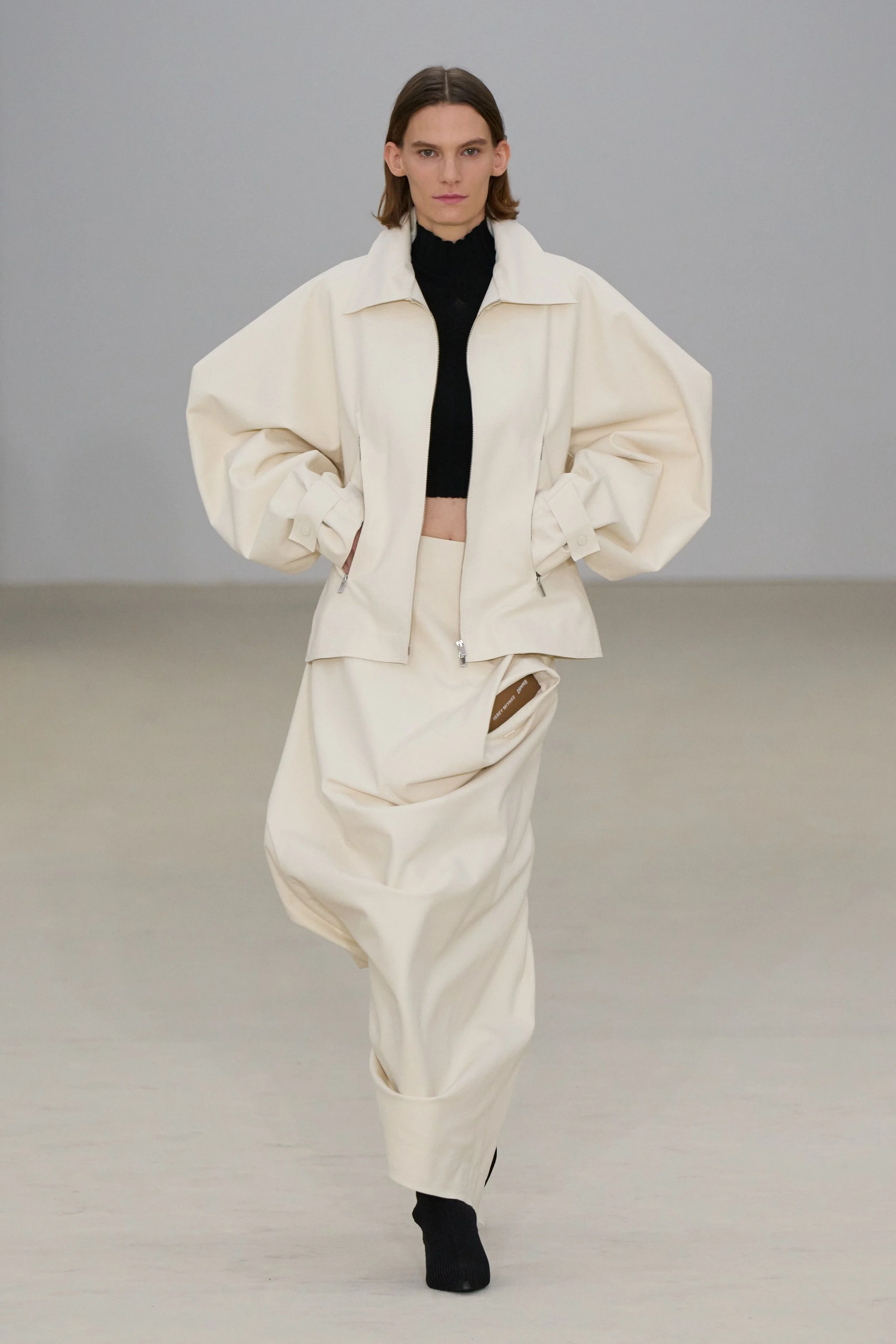
Satoshi Kondo’s collection for Issey Miyake was all about shoulders and deconstruction. His take on the spring/summer wardrobe was both artistic and innovative, staying true to the brand’s imaginative and experimental DNA. Presented at the Pompidou Centre, the offering showcased sharp tailoring, casual sportswear influences, and sculptural silhouettes.

Titled Being Garments, Being Sentient, the collection was an exploration of the body, of movement, and of garments as living objects: clothing as a world of its own. The brand’s visual language was conveyed through its inventive vocabulary, where polo dresses and hoodies appeared in surrealist proportions, while draped dresses took on architectural and deconstructed forms.

The eclectic proposition unfolded in a myriad of styles, where casual and formal wear engaged in a poetic dialogue through colour, form, and concept. Pops of bright green, lime, red, yellow, and purple disrupted the otherwise monochrome palette, infusing the lineup with dynamism and visual excitement. Exaggerated volumes emerged in oversized coats and cocoon shapes, while fringed dresses, shredded hems, and layered draping added a playful, tactile dimension.

Rounded, high, and dramatic shoulders were central to the collection, creating a raw silhouette that contrasted with the sculptural draping of certain pieces. The shoulders introduced a sense of multidimensional form – deeply ingrained in the brand’s signature – and stood as a clear example of its ongoing experimentation with techniques and shapes, an approach that has set it apart since its beginnings.

Minimal accessories, such as hats and oversized sunglasses, helped to complete this distinctive universe. The collection balanced wearability, technical exploration, and theatricality, weaving these elements together to reveal both practical everyday pieces and bold, statement-making runway art.


Words by Carolina Benjumea

TOM FORD SS26

Oh, to be seduced! For Tom Ford Spring/Summer 2026, Haider Ackermann sets a dark, mysterious scene. The show opened with three models, all in different versions of patent leather ensembles. The move to have the trio open the show was a wonderful omen. There’s glamour in that. Immediately, it conjures images of an industry gone by. The allusions continued in the way models moved – slowly, exchanging glances with one another and the audience.

But back to the clothes, they were still the highlight of the beautifully staged show. The three looks that opened the collection were sumptuous. Variations of a similar silhouette were explored subtly. First, a warm green trench coat with a popped collar, secondly, a deep mauve jacket and skirt set, and lastly, a black hooded set. But, besides the play with silhouette, their most interesting feature was by far their materiality. Laser-cut glossy leather splits open precisely at every millimetre, revealing the skin underneath when stretched. Later, the same technique arrives in printed trench coats.

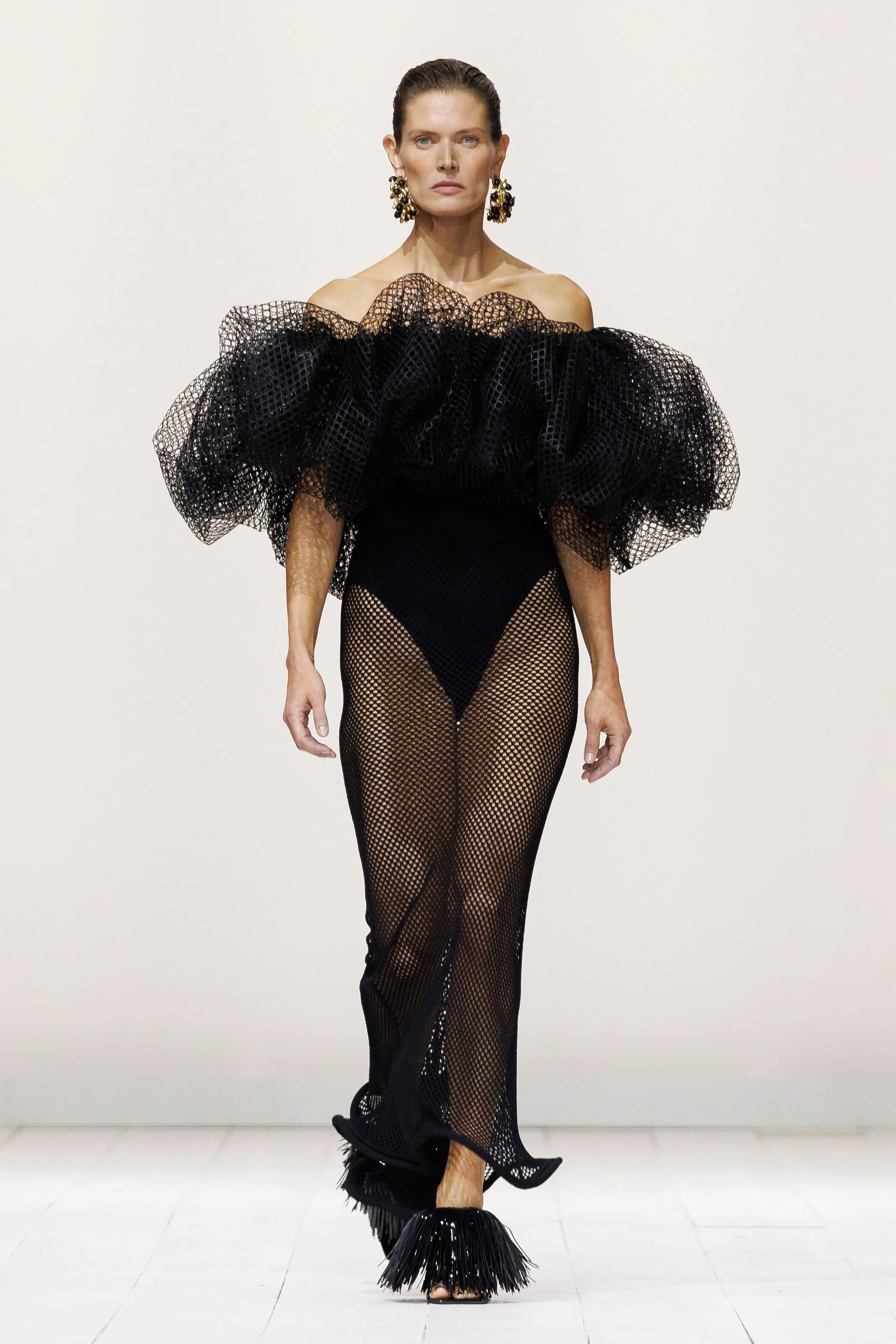
Sheer trousers betrayed the outline of hands resting inside pockets—as well as leather thongs. For how tenderly Ackermann seduced us throughout the collection, at moments, he lost his patience. Sexuality became raw in barely-there lingerie dresses for women and translucent micro shorts for men.

The set, completely dark and with a midnight blue floor, was meant to emulate a midnight swim – we’d guess a skinny dip. But the mood was much more dangerous than a summer memory. It was a mysterious club in an unknown city, it was a moonless night. The David Bowie soundtrack was interjected by a deafening beat that smelled like poppers.

If last season’s palette starkly interjected Ackermann’s atypical colour palette in suiting, here it was blended seamlessly. Deep blue satin sets prowled the runway as a couple, while green trousers in a sickly-sweet hue walked alone.


Words by Pedro Vasconcelos

RICK OWENS SS26

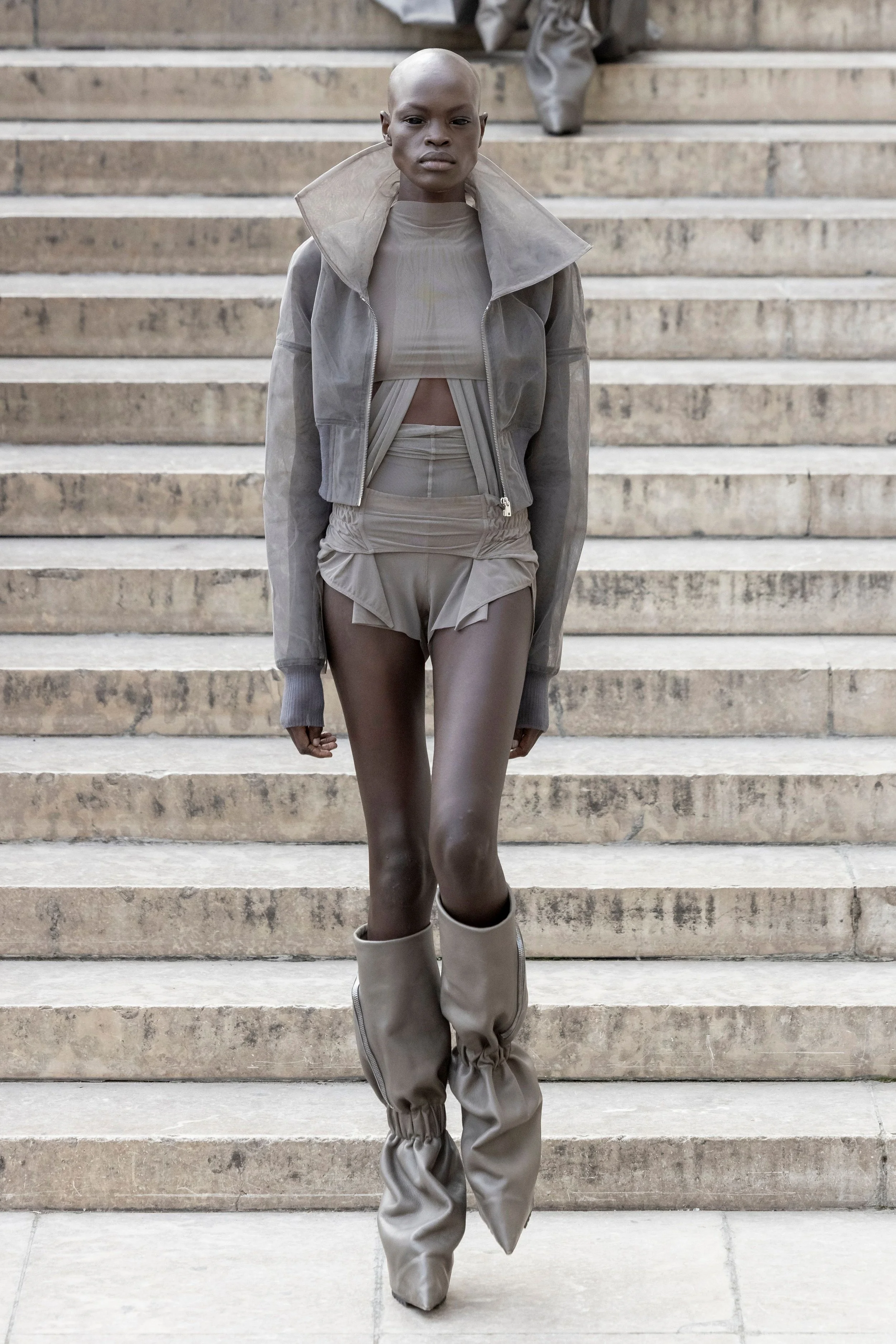
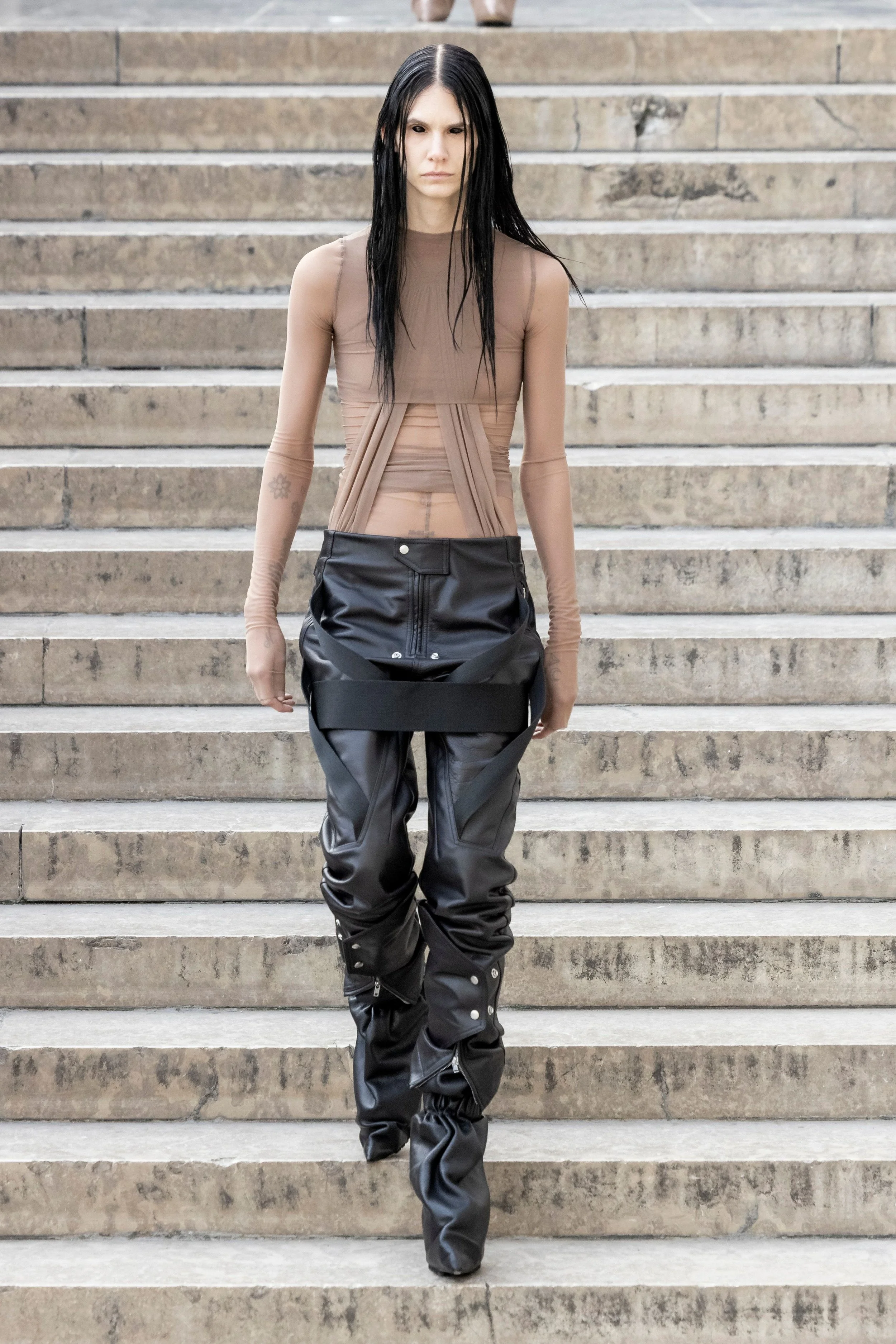
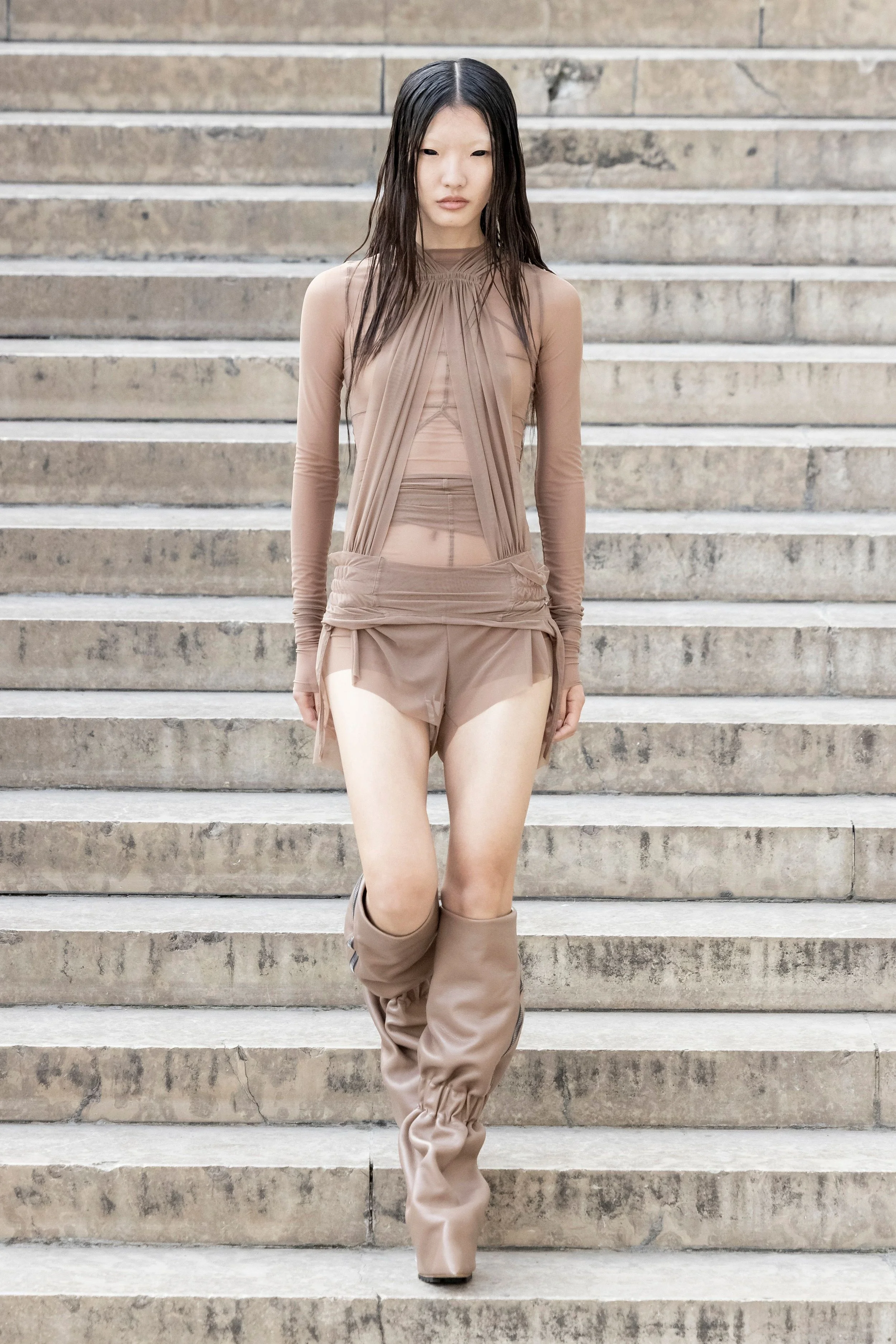
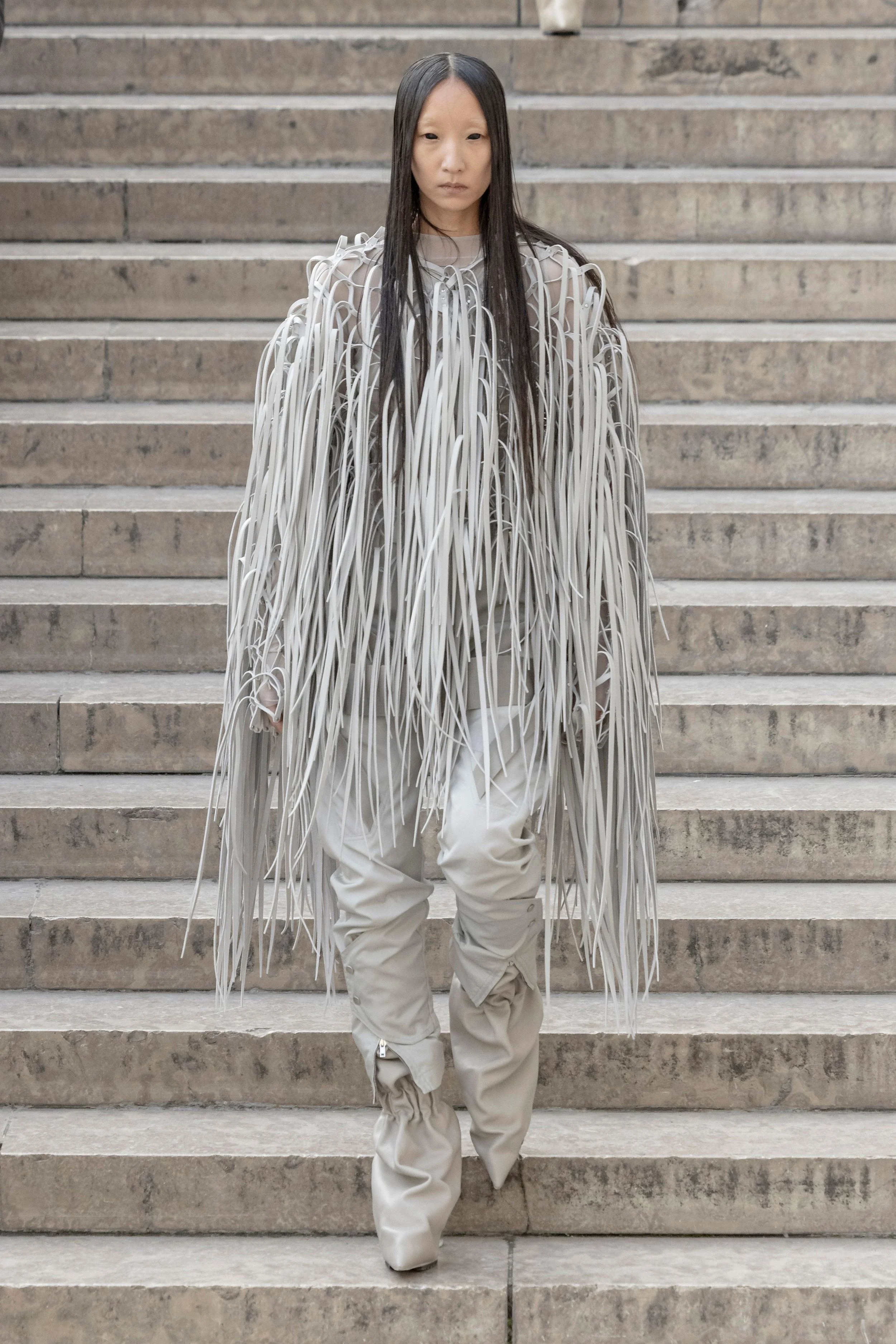
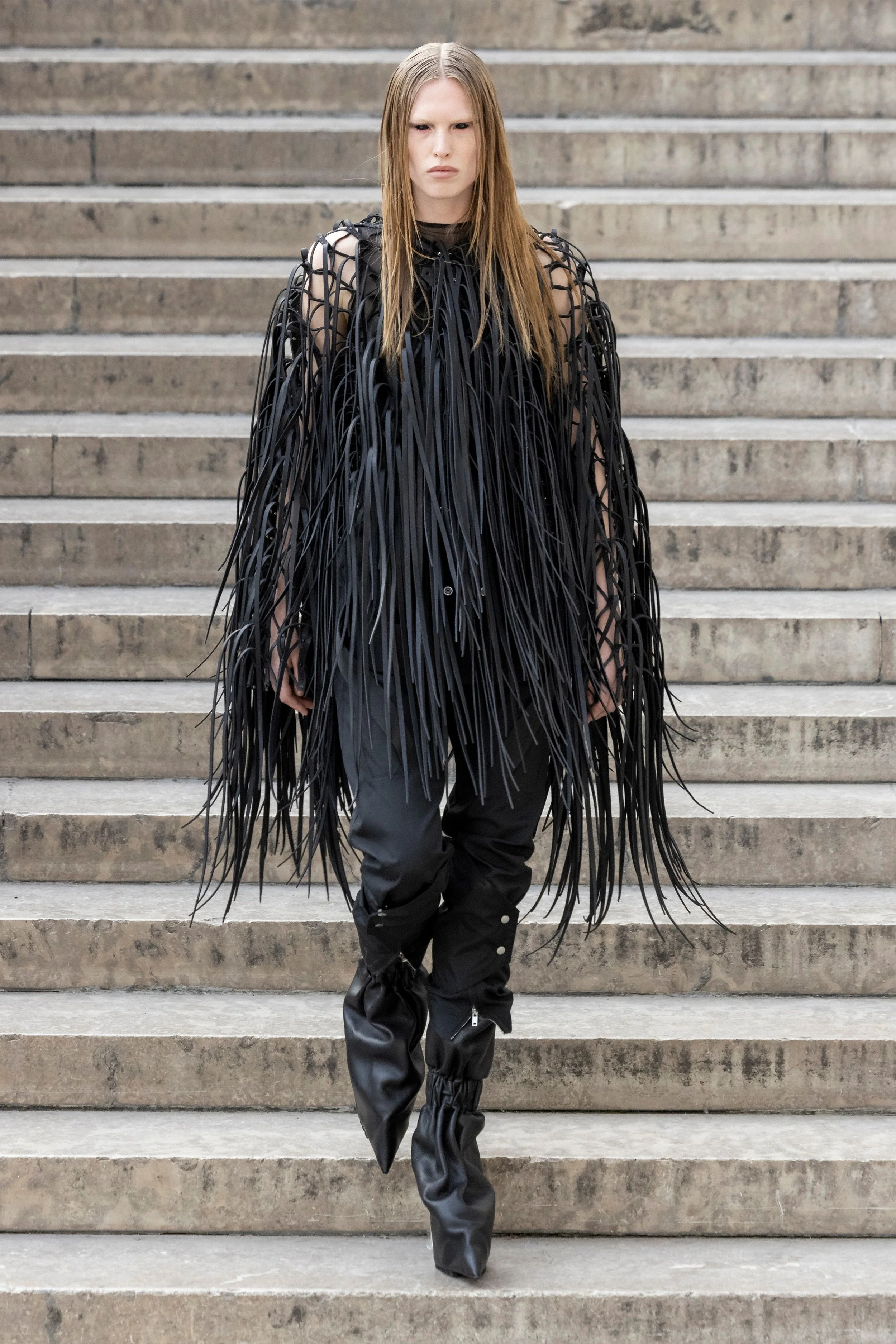
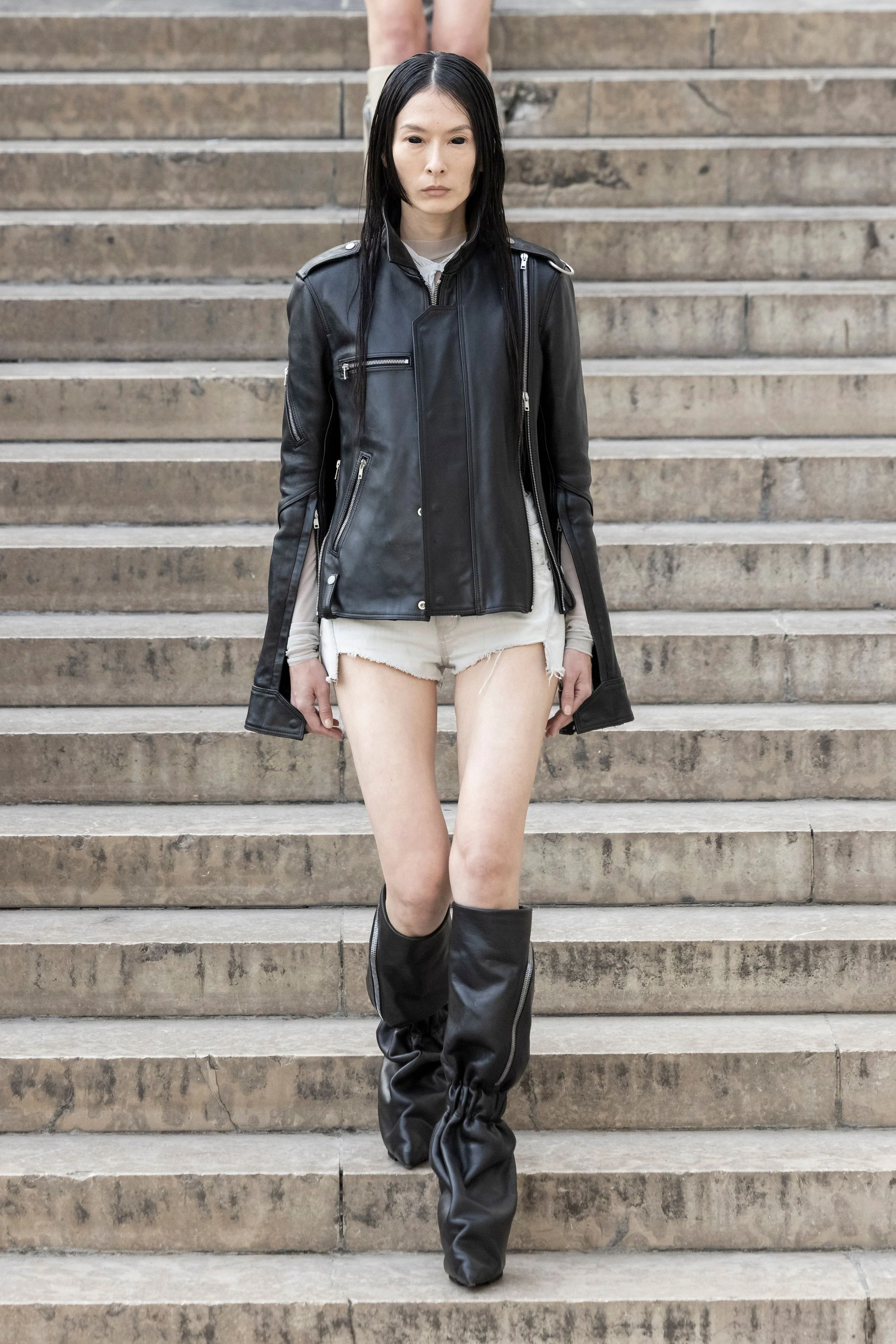
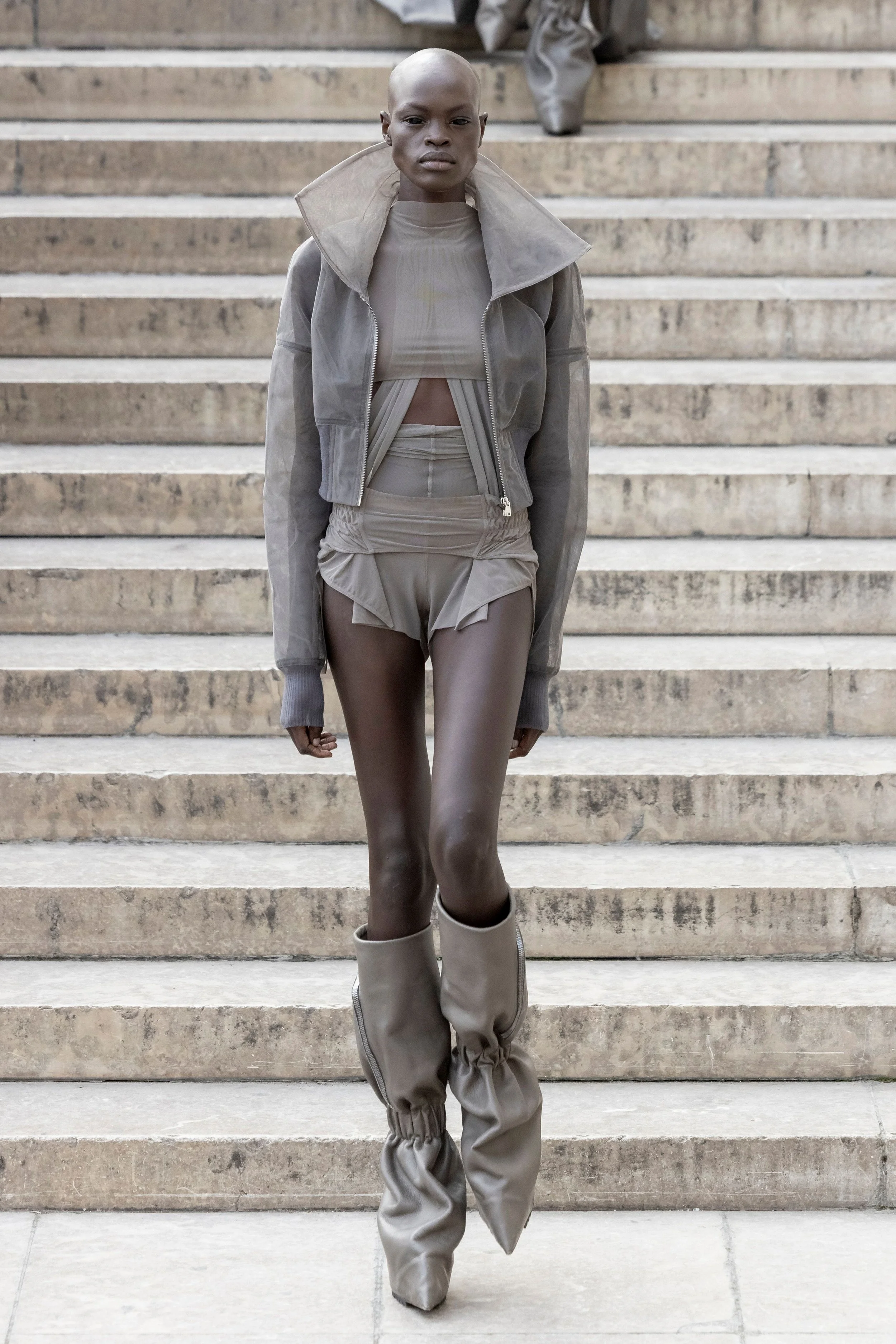
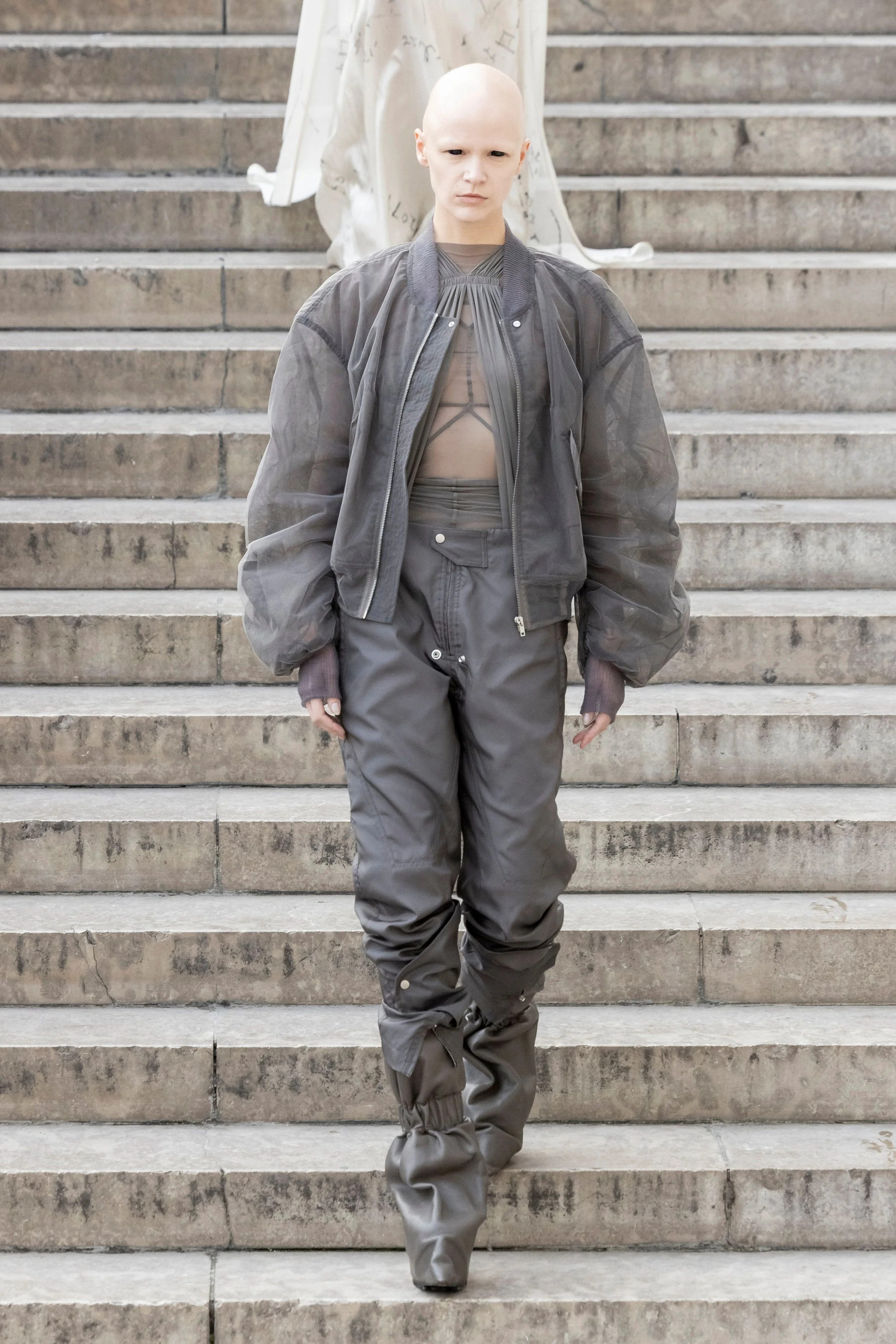
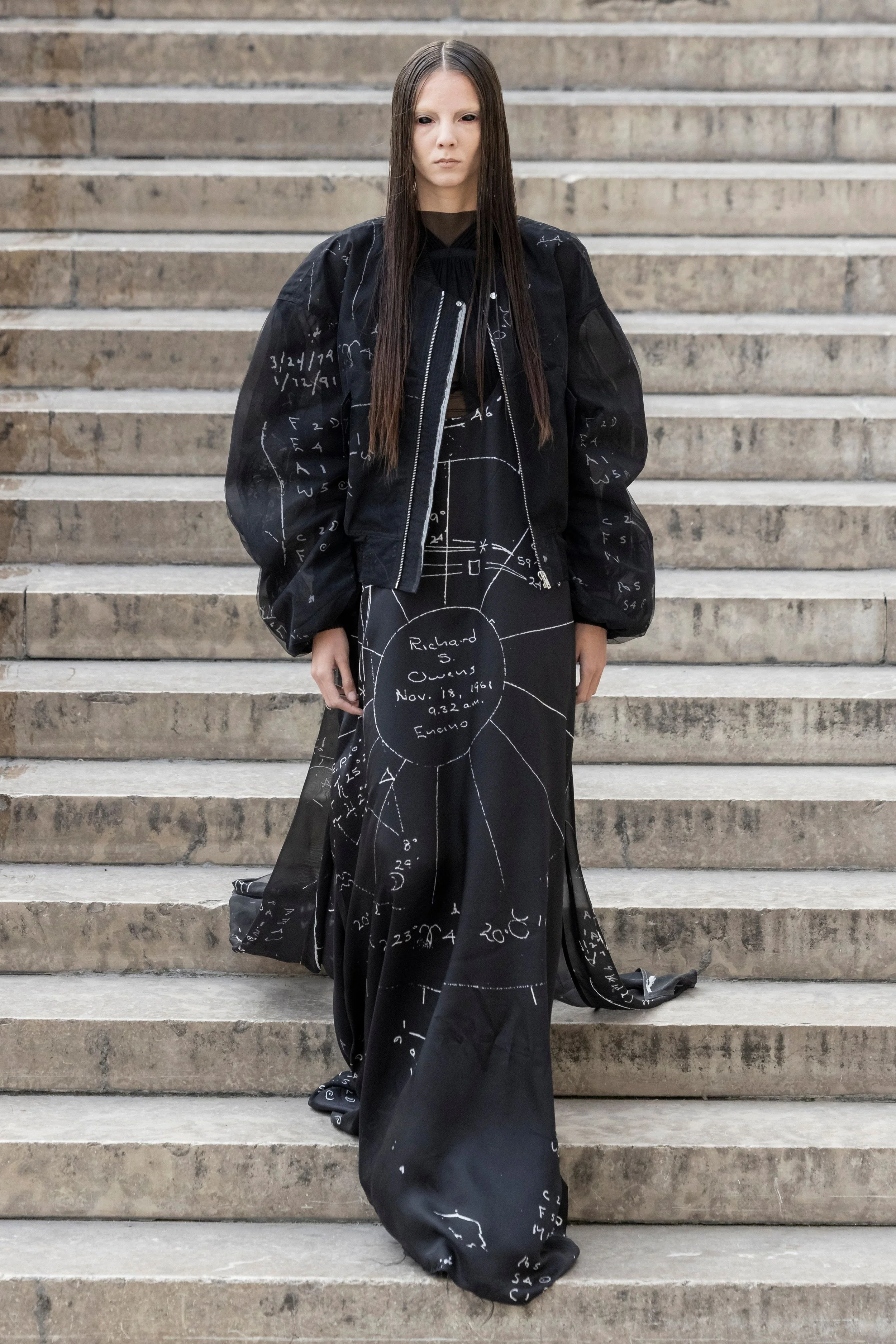
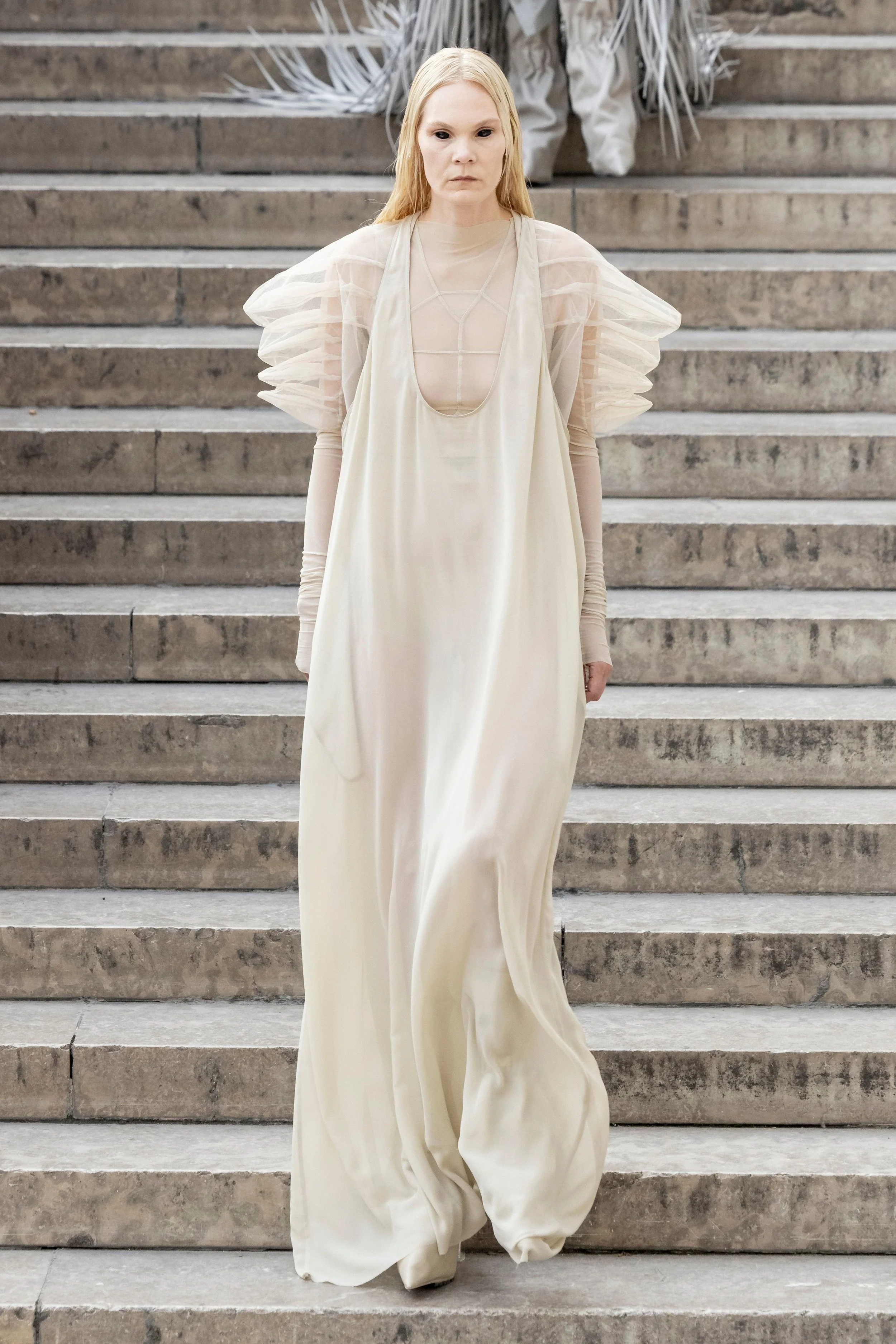
Rick Owens, faithful to his dystopian world, showcased a collection where futuristic, minimalist aesthetics blend seamlessly with artistic vision. The offering feels far sexier and, surprisingly, more wearable and commercial than previous ones, with looks such as leather jackets paired with shorts and boots.

Titled Temple, the collection was meant to showcase “tough clothes for tough times.” True to his brand, the apocalyptic aesthetic invited us into a realm where artistic creation is messy, dramatic, and catastrophic. Hair and makeup appeared stark and stripped down, perfectly aligning with the otherworldly looks.

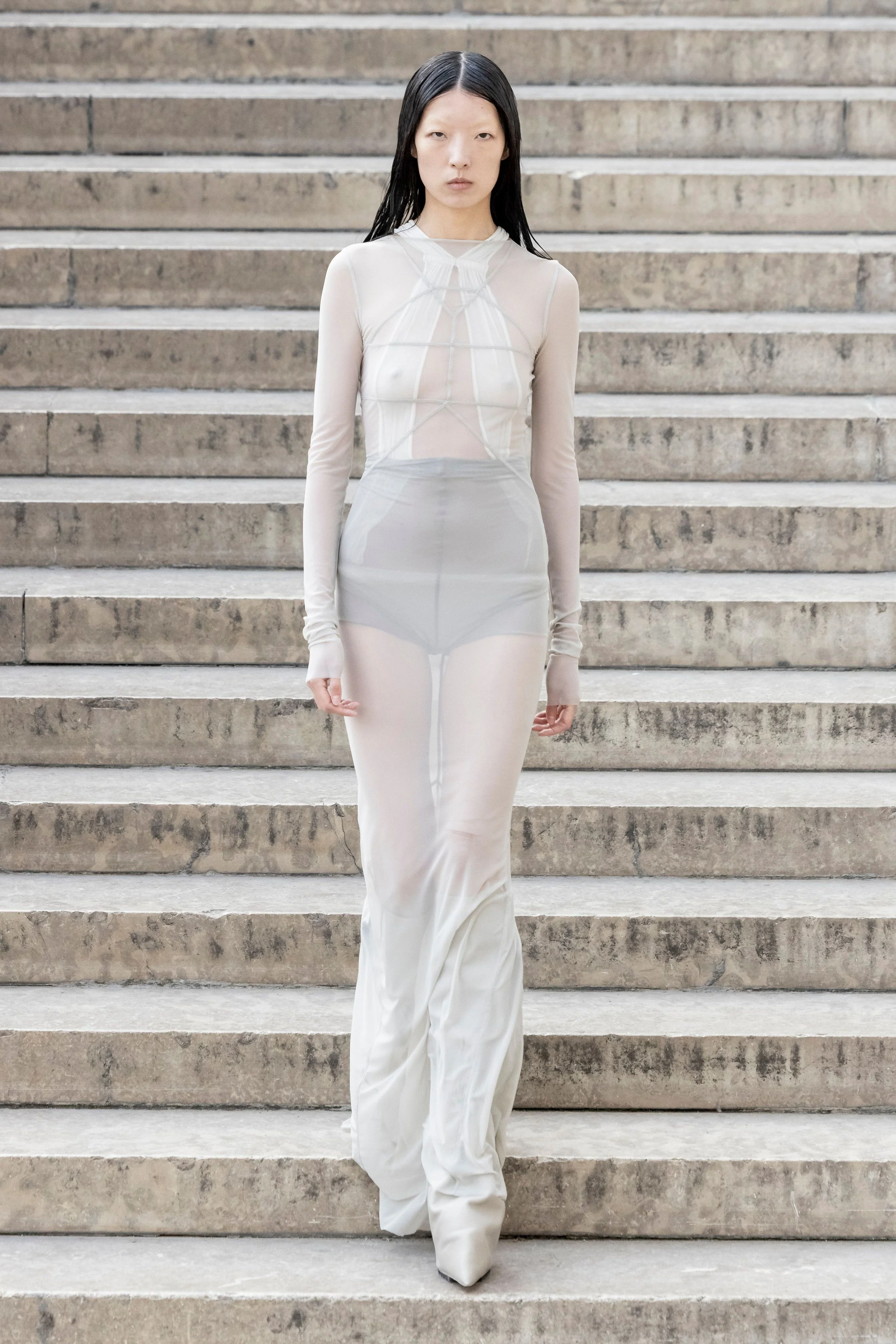
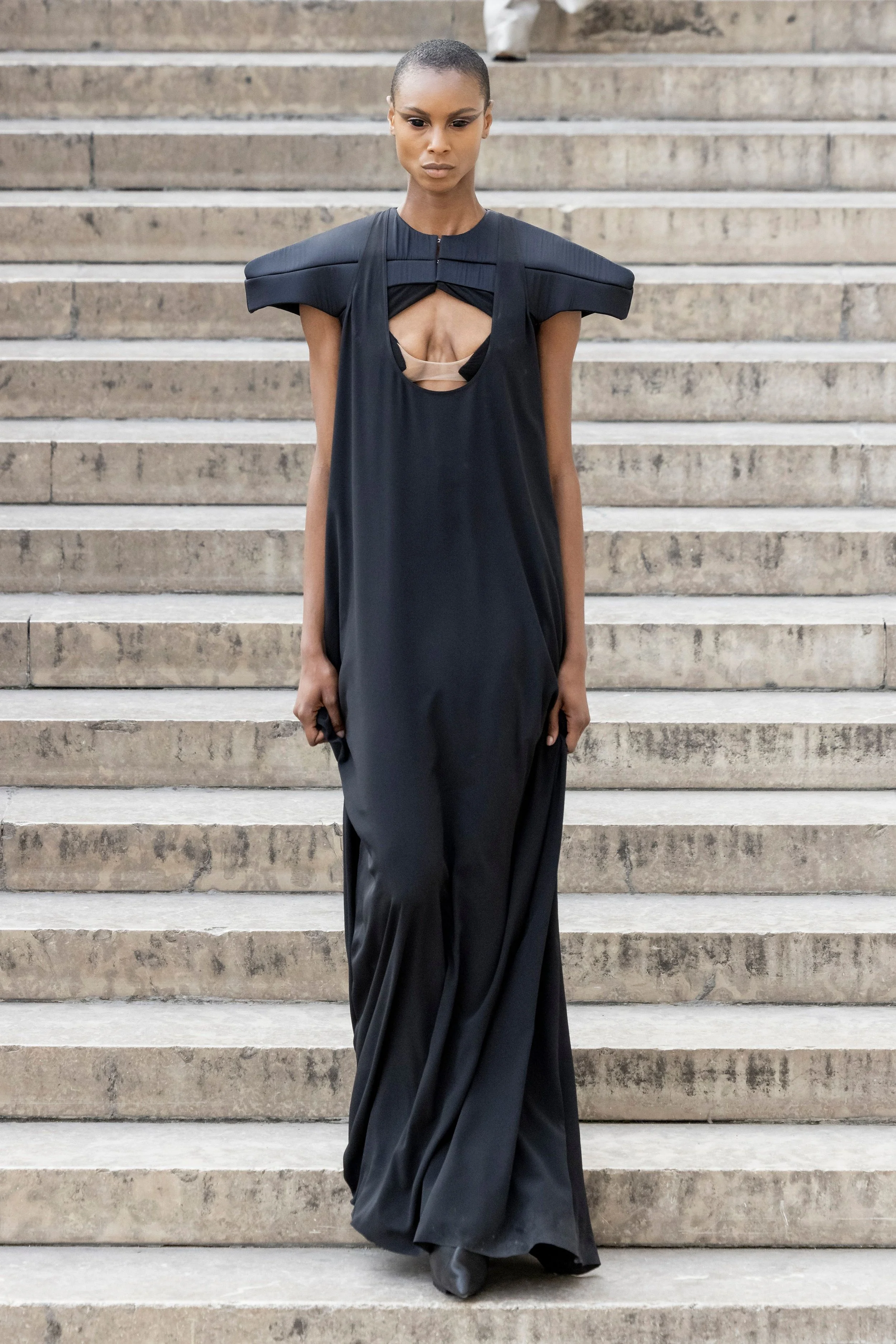
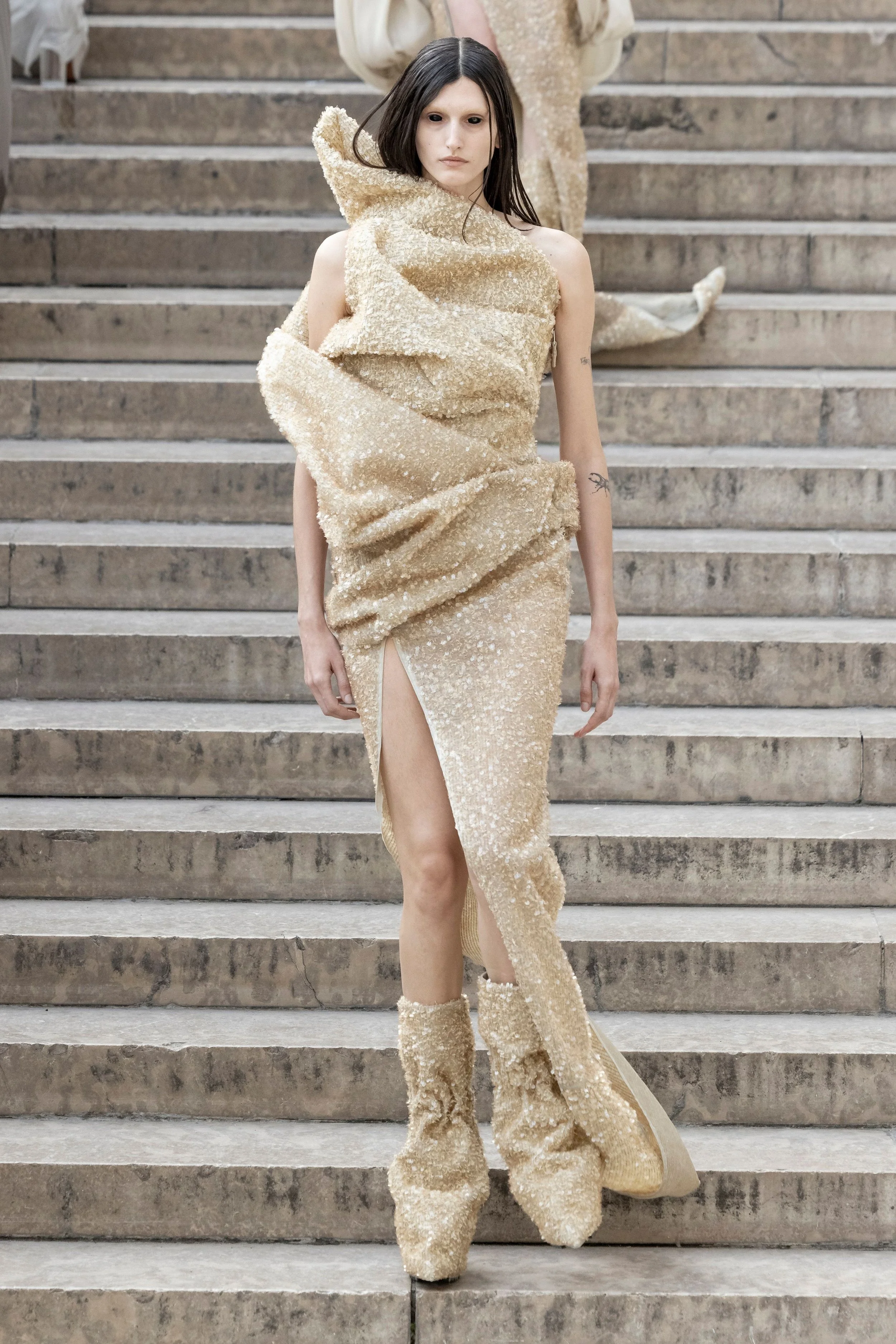
There is a strong focus on the female body, whether by wrapping it in bodycon, see-through dresses or by covering it with sculptural long tunics and fluid drapery. The designs emphasise elongated silhouettes, layering, and textures that merge sheer fabrics, draping, and structural elements.

Movement appears in slim, elongated lines with floor-length gowns, contrasting with rigid, sculptural details such as sharp shoulders. As always, Rick Owens’ constructions are eclectic, sculptural, and architectural, creating a sense of monumentalism in each look. Fringe and cutwork details on jackets add both fantasy and raw deconstruction.

The colour palette remained restrained, limited to black, white, and pastels. The collection stayed true to the codes and unique DNA of Owens’ shows, but with wearability in mind — a key element that set this presentation apart. And, as always, leather took centre stage, underscoring the brand’s unmistakable edge.


Words by Carolina Benjumea

CARVEN SS26

Marking his first collection for the French house, Mark Thomas showcased his vision for Carven. This season, the premise was simple: a Parisian summer.

Looking at the collection, one can easily imagine the woman who wears it: yoga or Pilates in the morning, matcha afterwards, a meticulous skincare routine, working from home, and a preference for organic food. The collection transports us into a lifestyle that feels slow, natural, and peaceful, embodying a woman who is refined yet seeks ease, comfort, and practicality.

The colour palette is refreshing and clean, with no strong hues or bold prints. The lines are simple, while the fabrics feel delicate and luxurious, creating a refined balance between minimalism and fluidity. Rooted in clean tailoring, soft femininity, and quiet luxury, the overall aesthetic is elegant yet modern, emphasising ease of movement, versatile layering, and sculptural silhouettes.

Oversized blazers, elongated trousers, and fluid coats convey a sense of nonchalant sophistication. Clean slip-style gowns, column dresses, and airy maxi silhouettes evoke understated elegance, allowing the body to breathe and move naturally.

Statement pieces such as billowy tops and dresses are paired with slim or wide trousers, creating a playful balance of proportions. A muted, neutral base of ivory, cream, black, and navy is elevated by soft pastels and subdued tones, shaping a versatile everyday wardrobe. Whites recall the orchid so dear to Madame Carven. Fabrics like lace, lingerie-inspired details, cotton voile, jacquards, and silk introduce a natural sense of fluidity.


Words by Carolina Benjumea

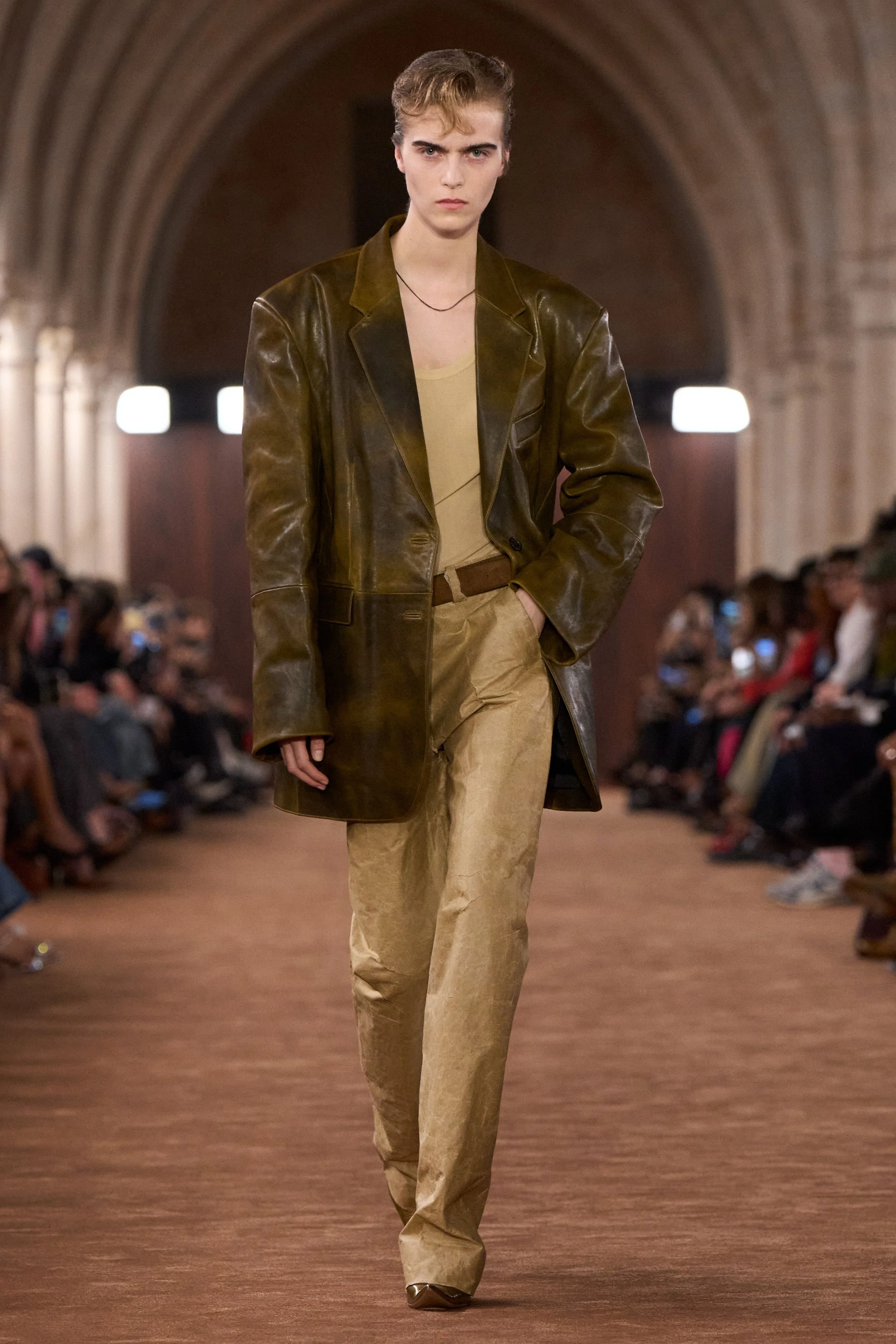
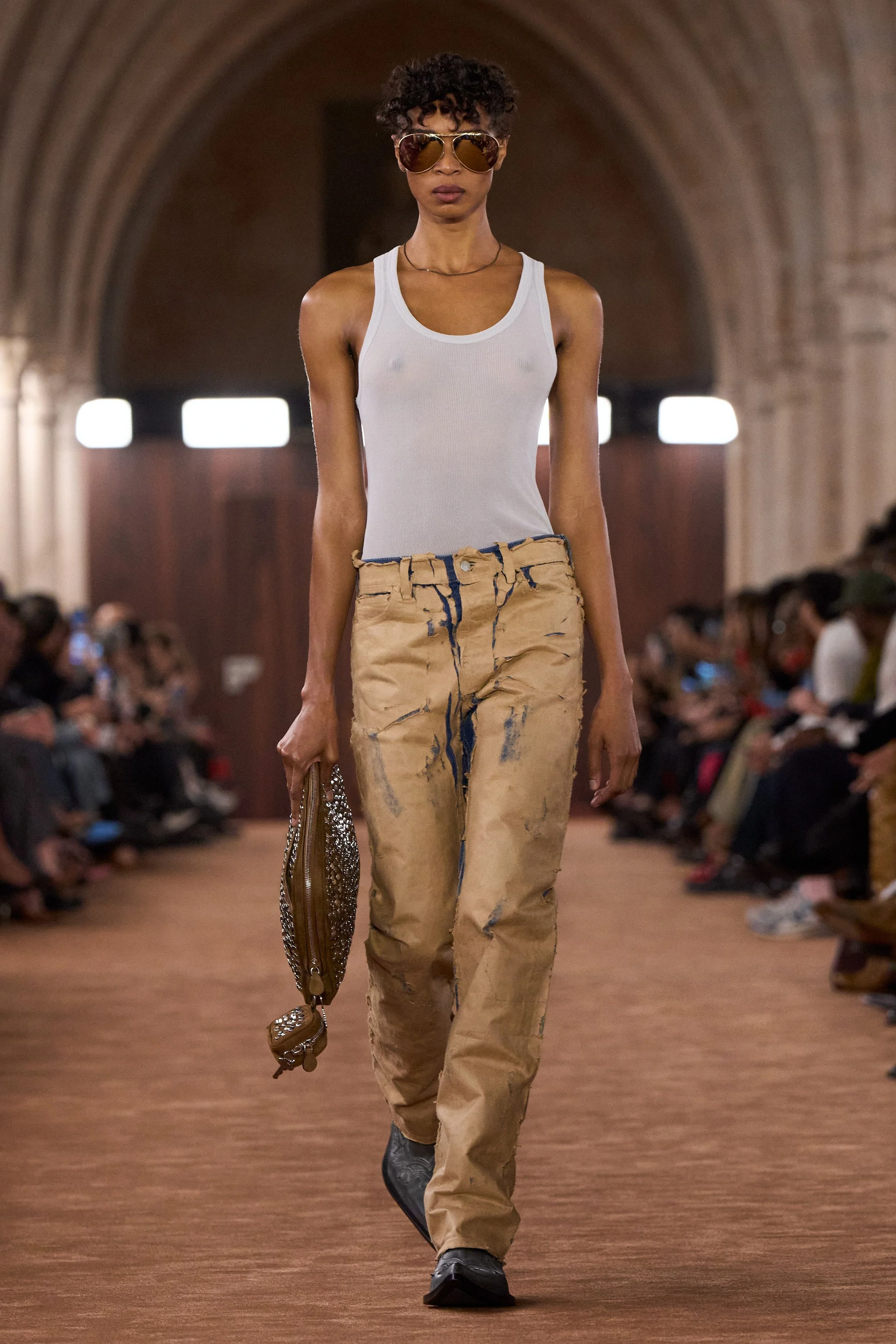
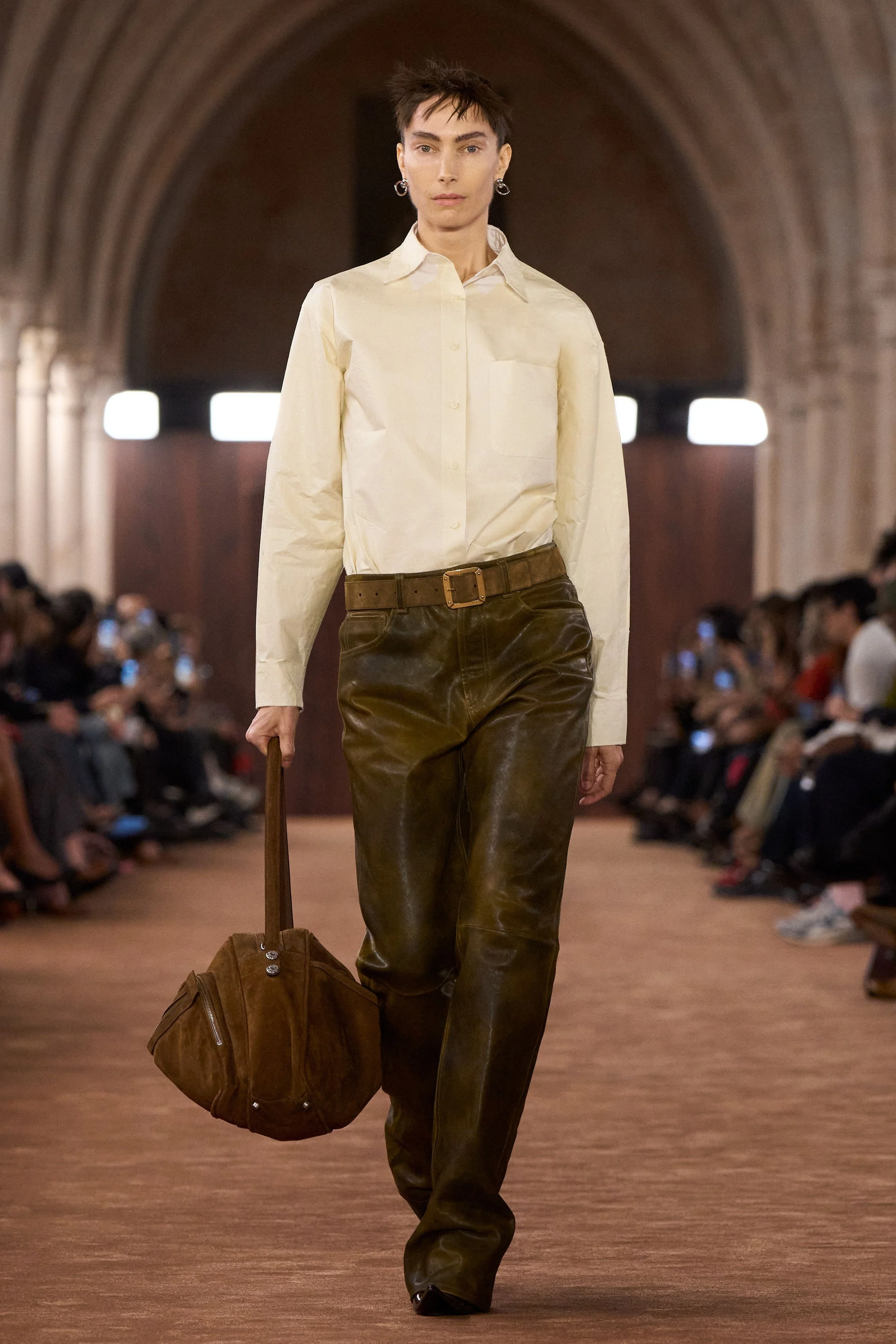
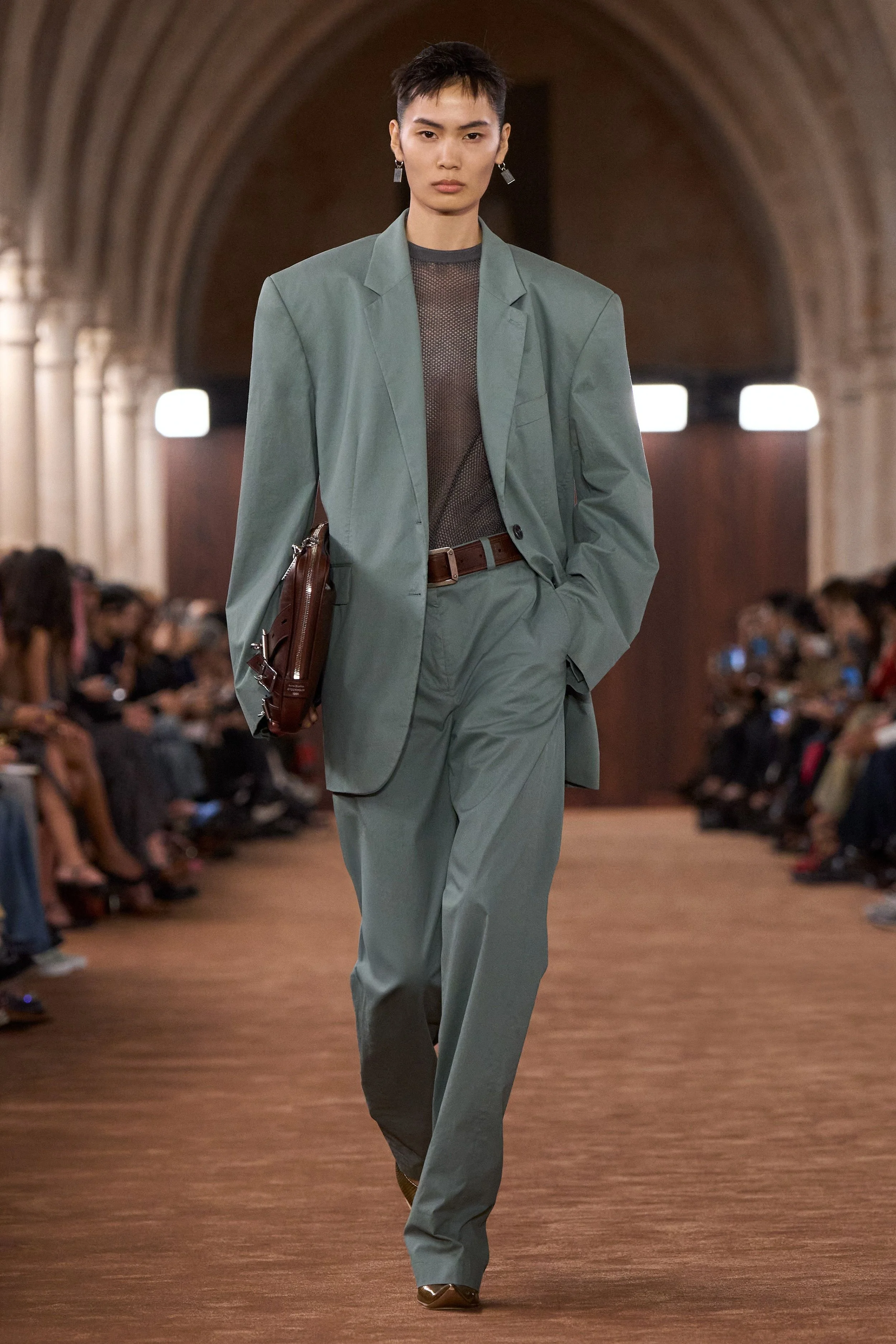
ACNE STUDIOS SS26

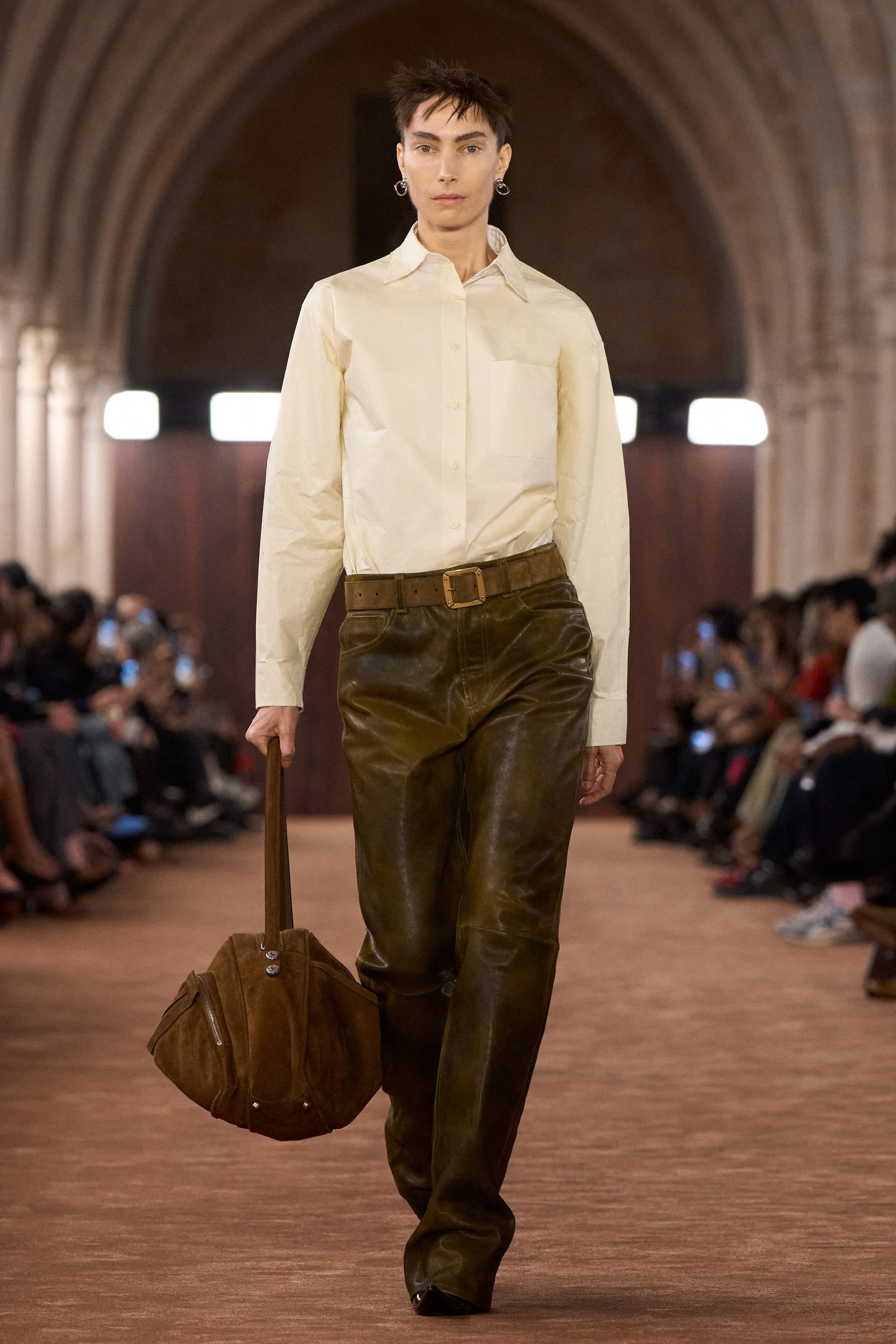
Stockholm-based label Acne Studios showcased its Spring/Summer 2026 collection at the 13th-century Gothic church Collège des Bernardins, transformed into a moody cigar salon featuring artworks by Pacifico Silano. The show centred on themes of queer culture and gay erotica. Creative director Jonny Johansson’s multidisciplinary approach once again delivered a collection where contemporary culture and art merge to convey a deeper meaning.

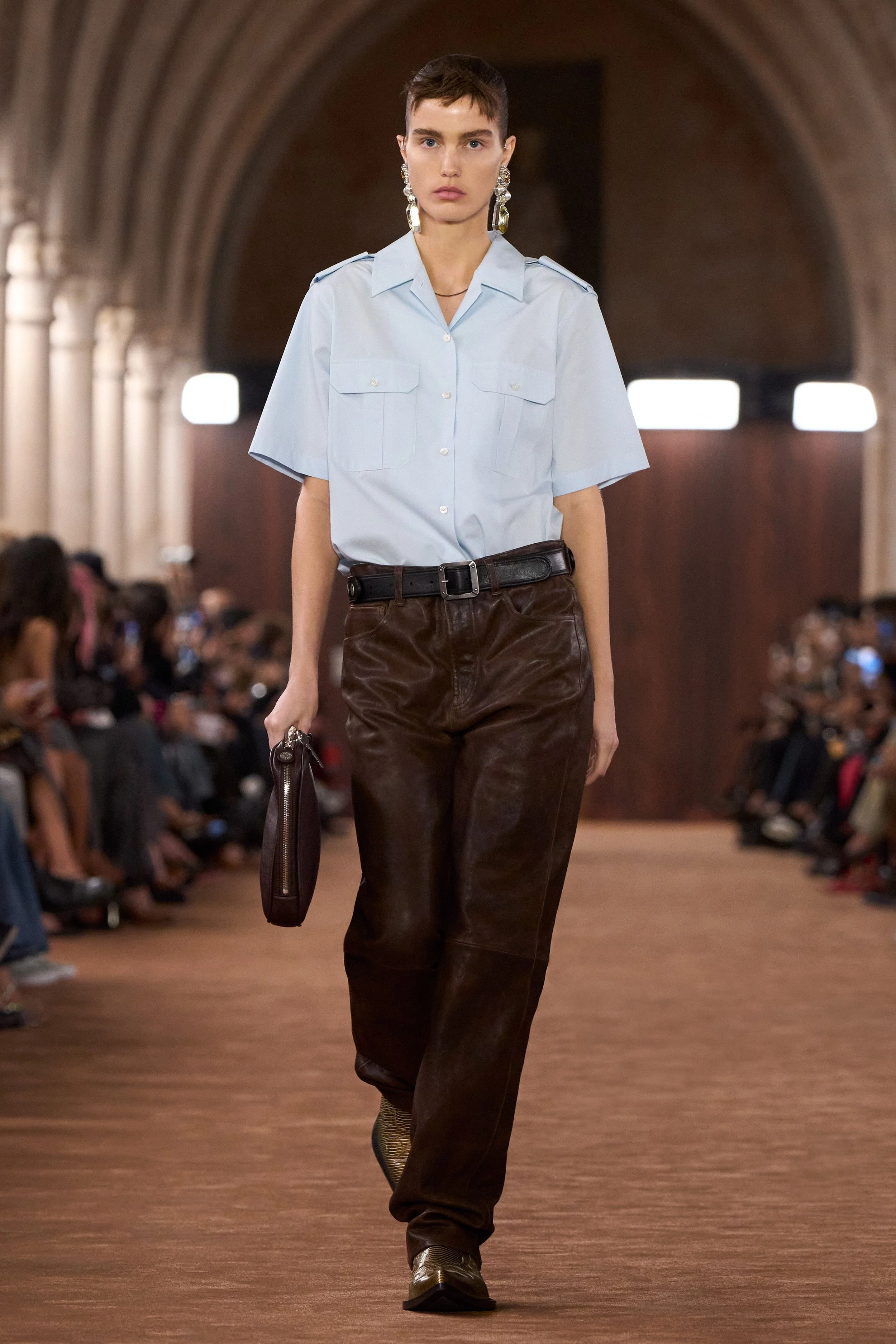
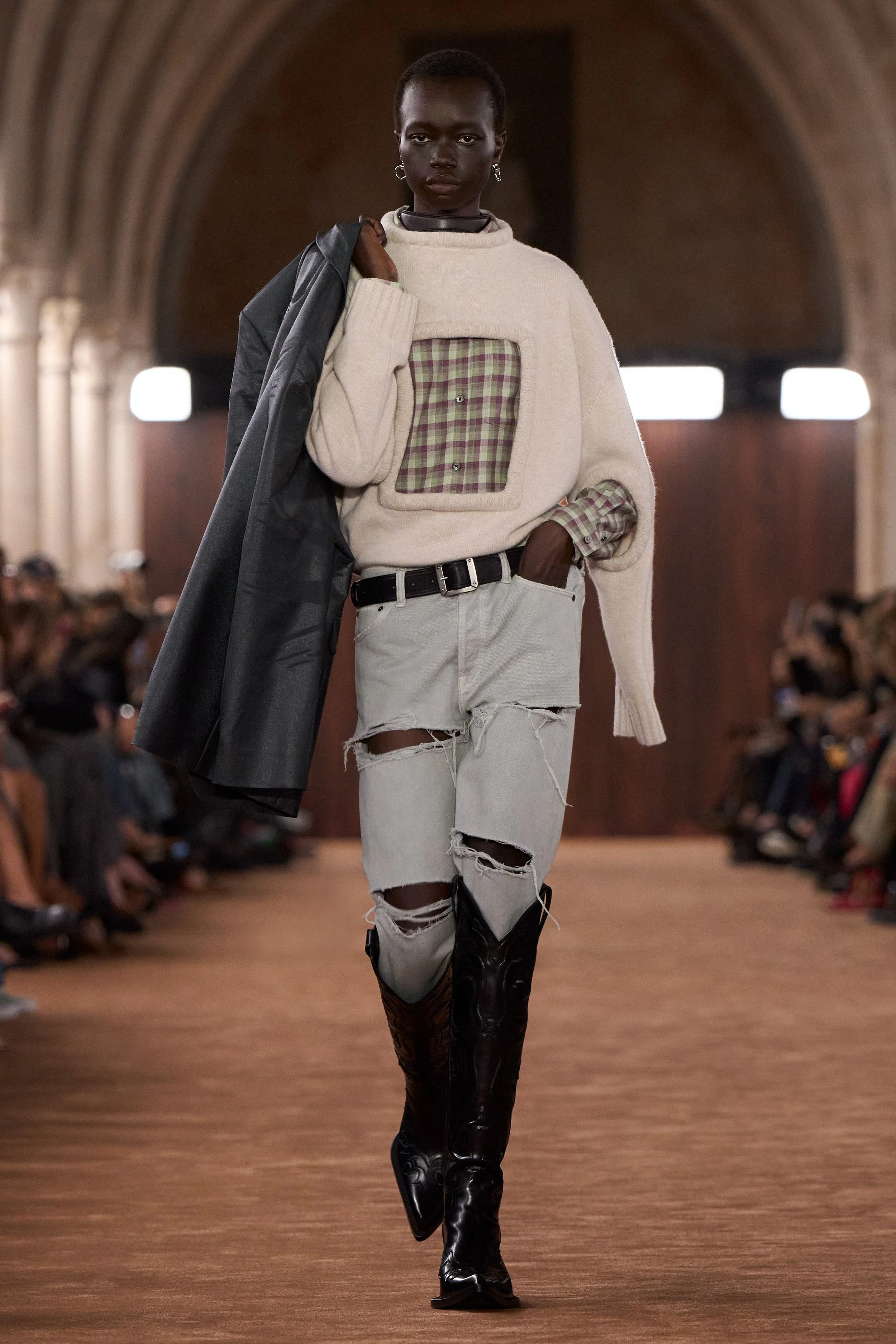
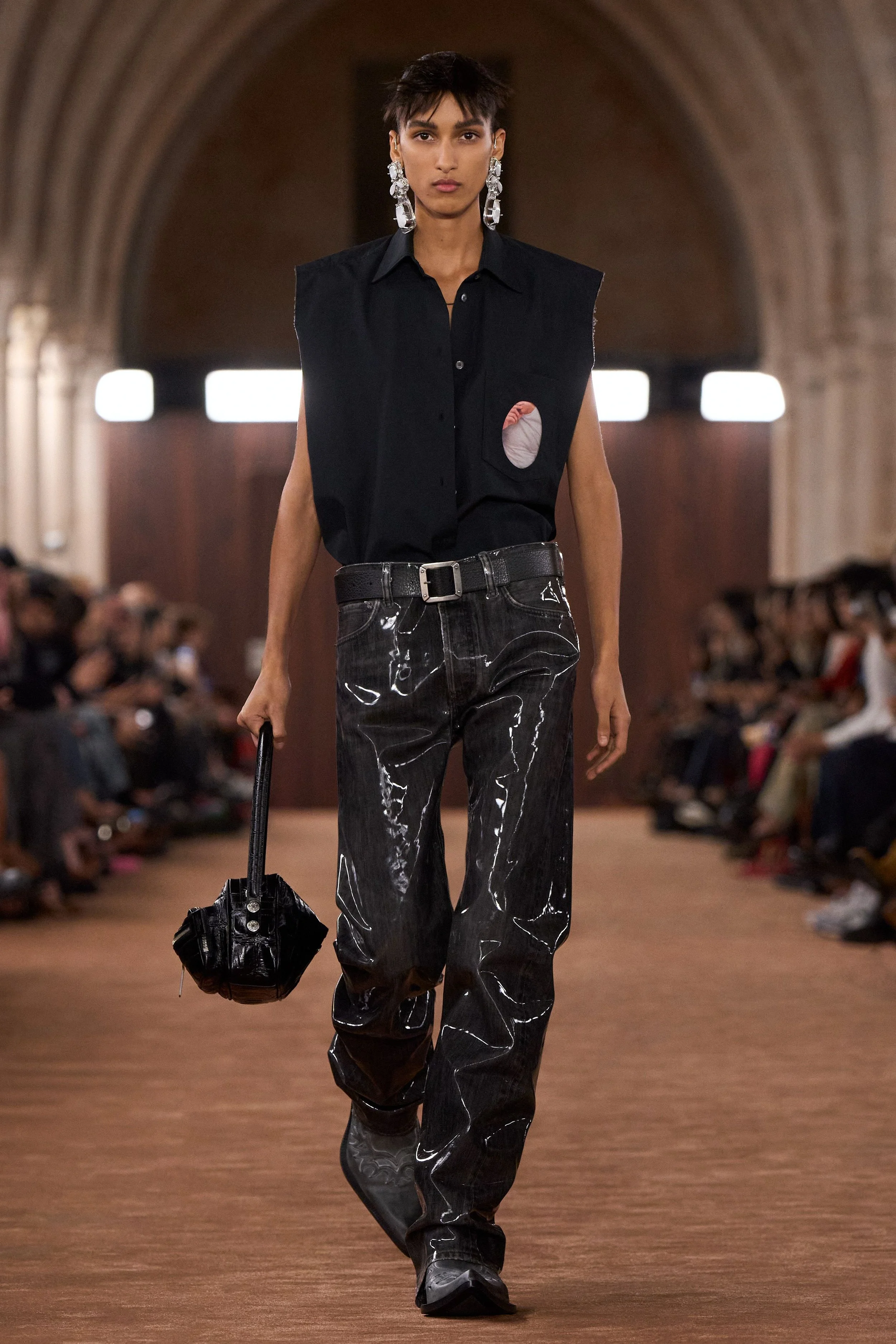
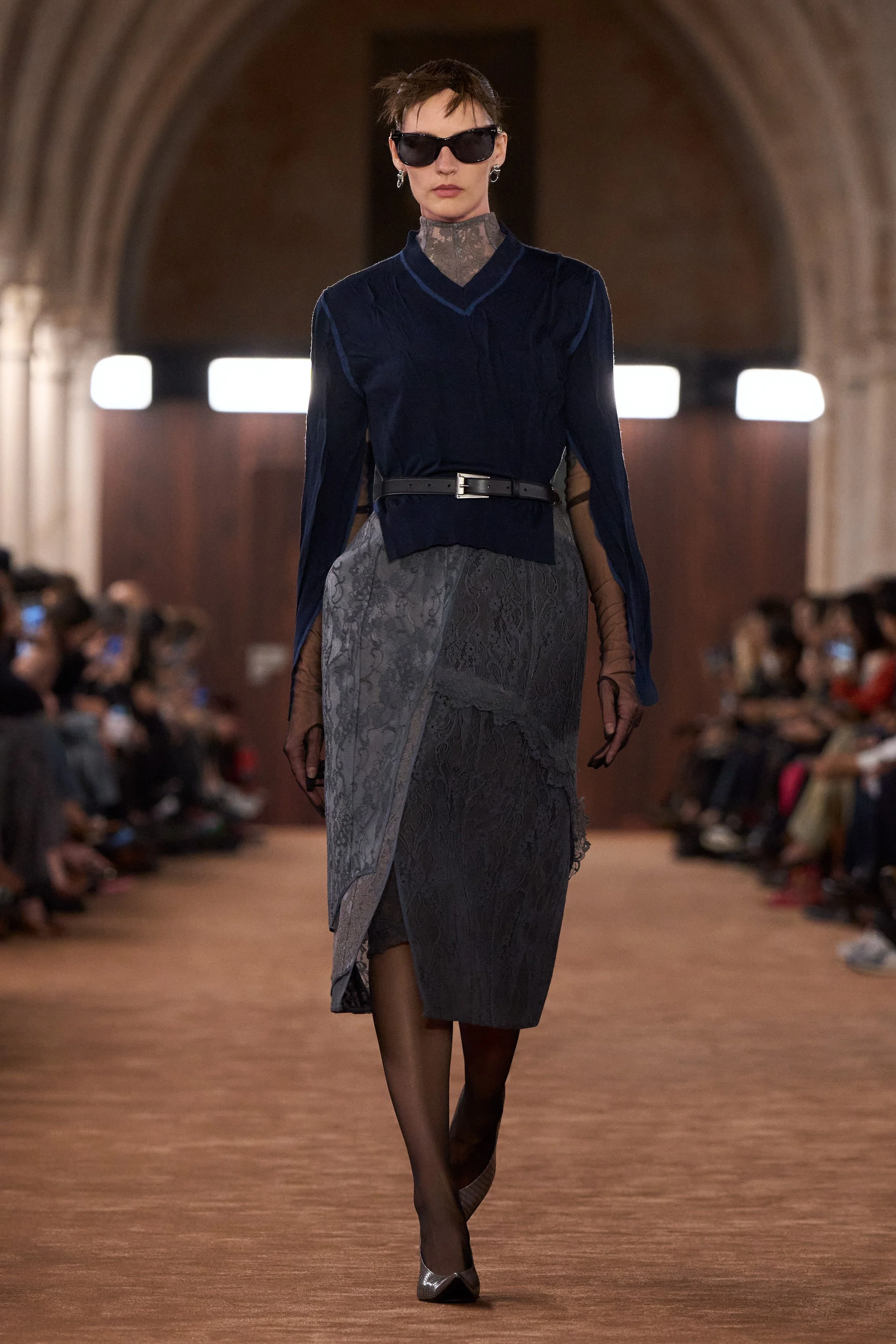
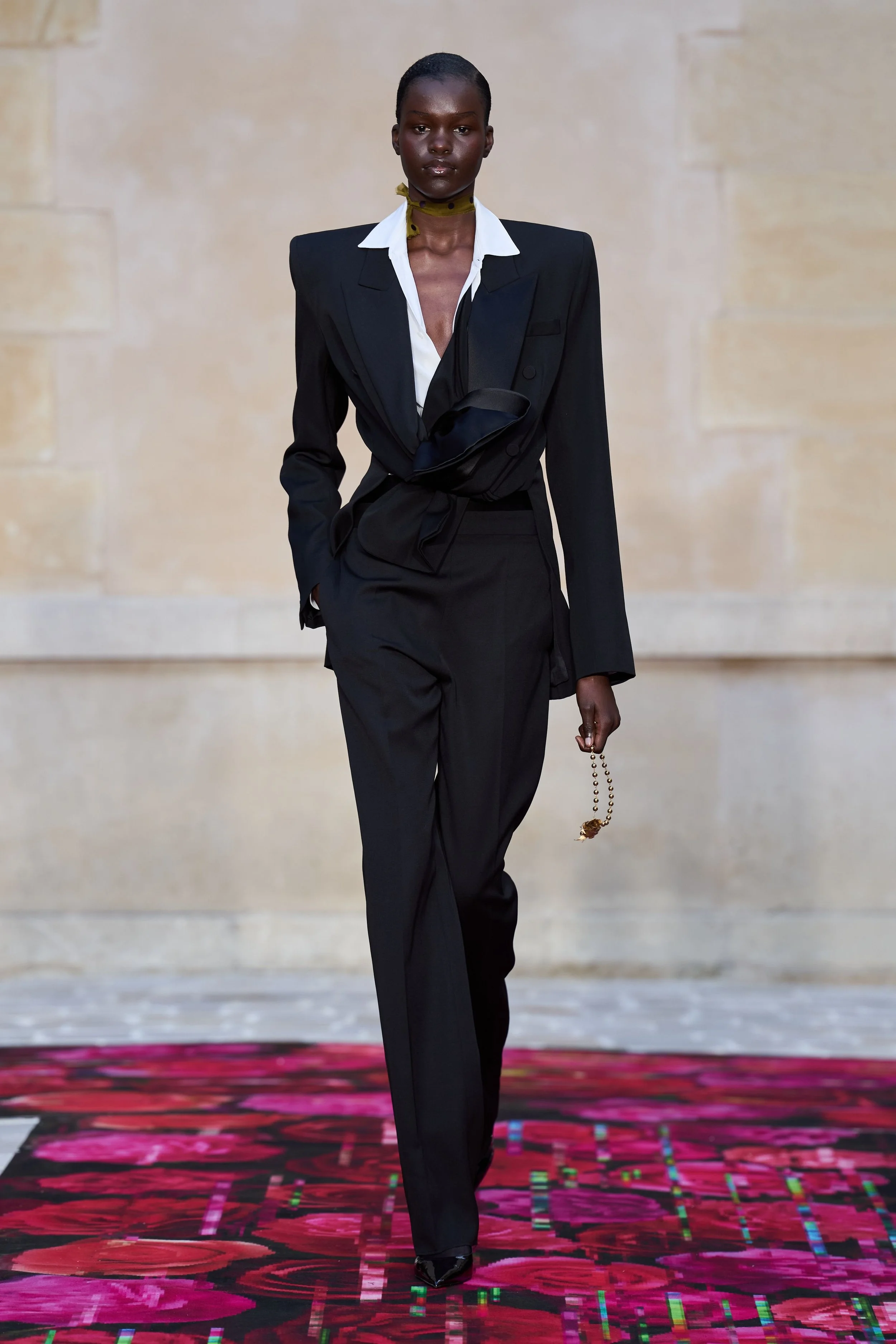
Borrowing from masculine codes and accented with touches of lace, transparencies, and corsetry, the collection felt both deeply political and undeniably wearable. It presented a vision of femininity that is androgynous and deconstructed – an exploration of styles and identities. Tailored suits, reimagined for women with strong, commanding shoulders, were paired with pointed heels, creating a striking juxtaposition between self-expression and artistic exploration. Gender here was defined not as a strict norm, but as an ambiguous, fluid sensation.

Leather was spotlighted in oversized statement jackets, while wide trousers and tailored coats were softened by flowing fabrics in neutral shades of beige, cream, and grey. Transparency brought an erotic yet delicate edge – sheer skirts, lace overlays, and translucent trousers contrasted with the weight of masculine tailoring. Eclectic styling – mixing checks with sheer skirts or distressed denim, and blending casual pieces with formal wear – reinforced the sense of deconstruction, freedom, and controlled chaos. Altogether, the collection evoked a desire to dismantle traditional gender norms. Each look reinterprets feminine and masculine codes, transforming them into pieces designed for everyday life and the everyday person. Far from complicated constructions, the designs are straightforward in form, yet styled to reflect the house’s distinctive artistic DNA.


Words by Carolina Benjumea

DIOR SS26

Jonathan Anderson understands allure as a slow burn. For the past couple of months, the Northern Irish designer has been dropping carefully calibrated hints about his first womenswear collection for Dior — teasing us with cameos at the Venice Film Festival, then charming us with a pastel-hued Lady Dior campaign starring Greta Lee, Mia Goth, and Mikey Madison. The day before the show, Dior stoked the fire further, unveiling images of new, delicate heels and statement jewellery that only heightened anticipation.

Even the prelude felt like a performance in itself: a playful short film charting the house’s history and creative lineage, set to the hypnotic drama of Lana Del Rey’s Born to Die. By the time models began their stride across a futuristic runway, it was clear Anderson wasn’t just entering Dior’s orbit — he was building an entirely new universe within it.

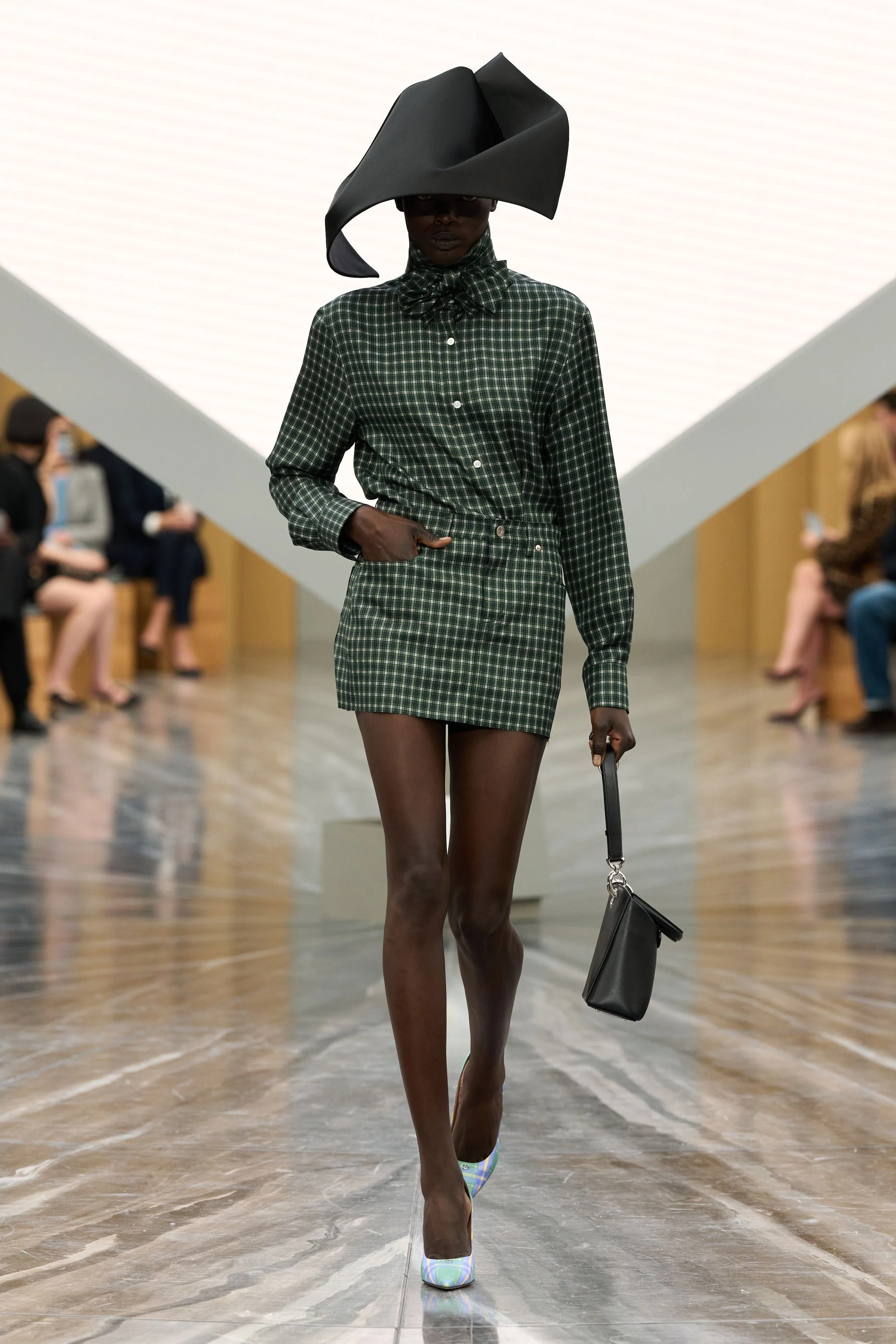
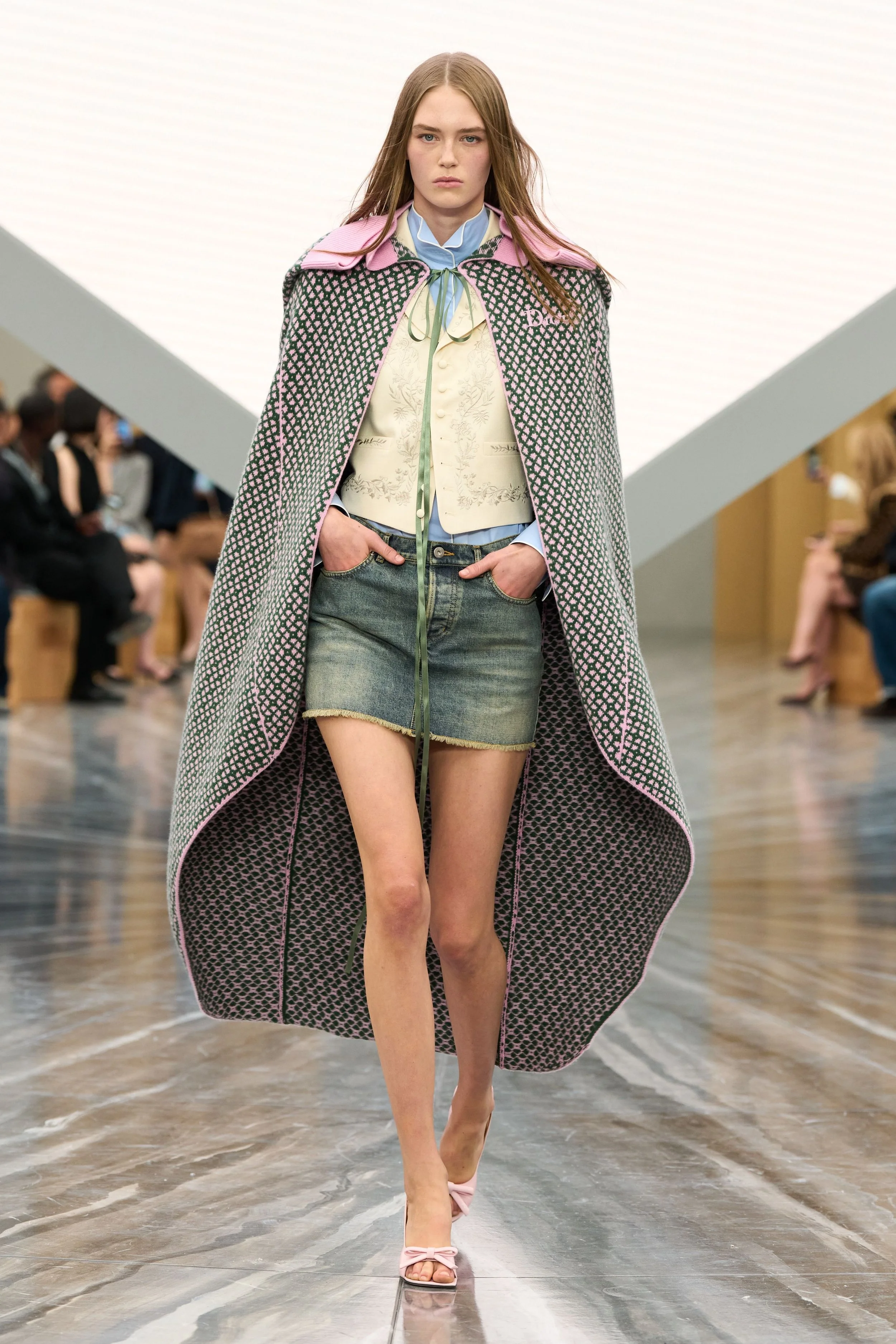
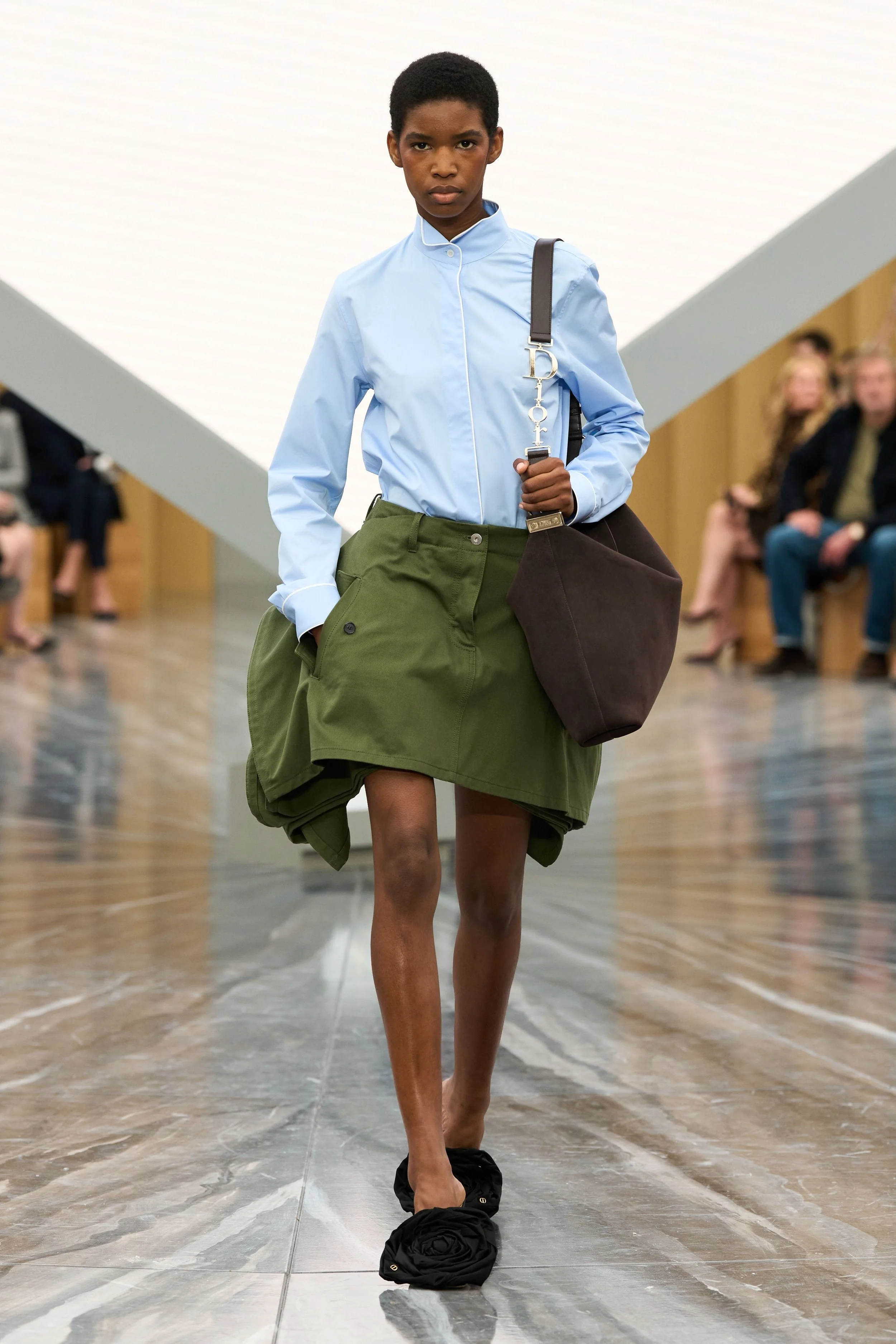
Anderson is not one to abandon his own vocabulary. Echoes of his debut Dior menswear collection resurfaced with a fresh charge: knitted capes reimagined in jersey, high-neck bows, miniskirts twisted into couture-like cargo forms. The silhouettes conjured a Left Bank nostalgia from the mid-2000s — Oxford shirts tucked into micro-denim skirts, snug polos, bootcut jeans grazing slingback heels, chain-draped handbags swinging with purpose. It was a French preppy mood refracted through Anderson’s instinct for charm and provocation.

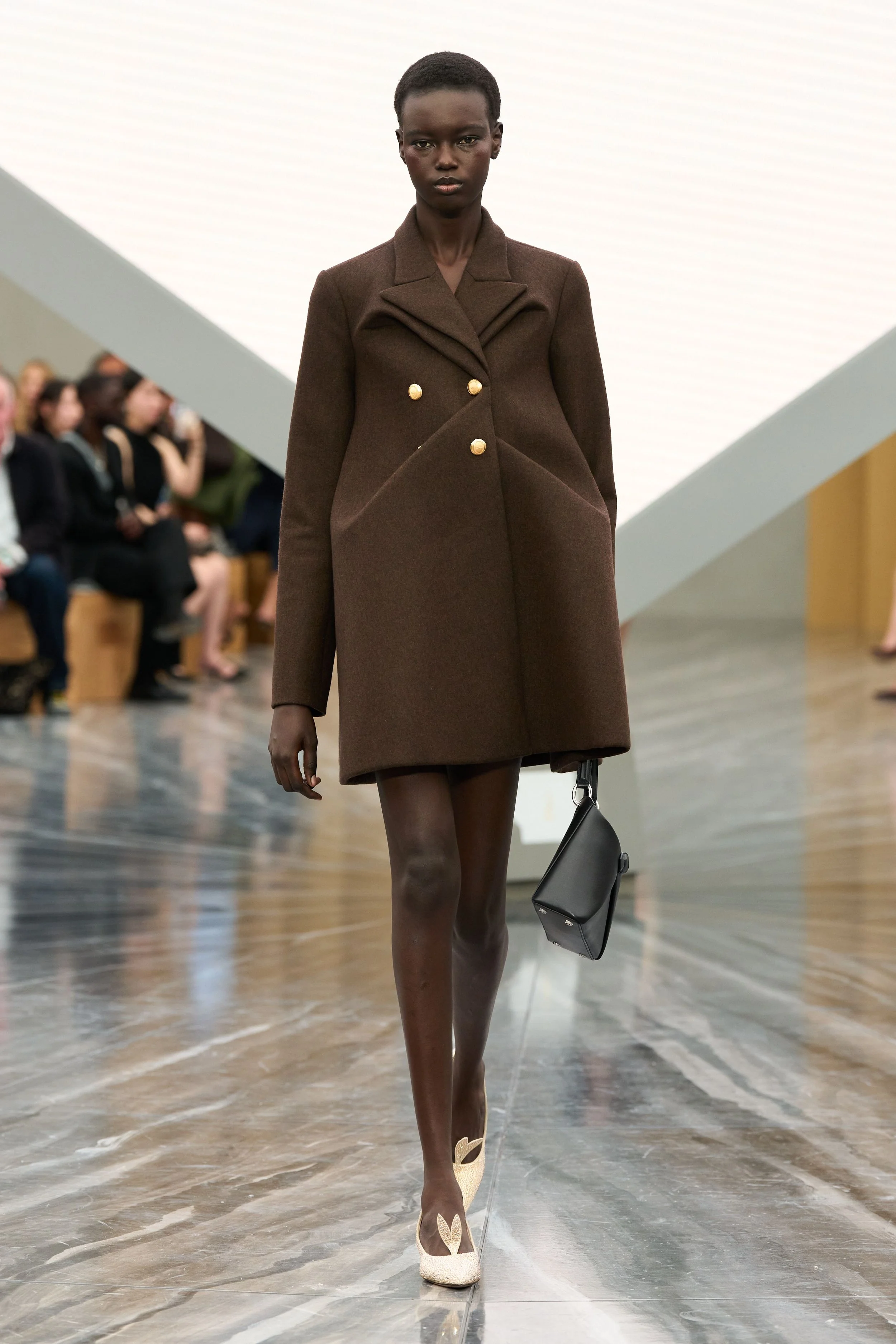
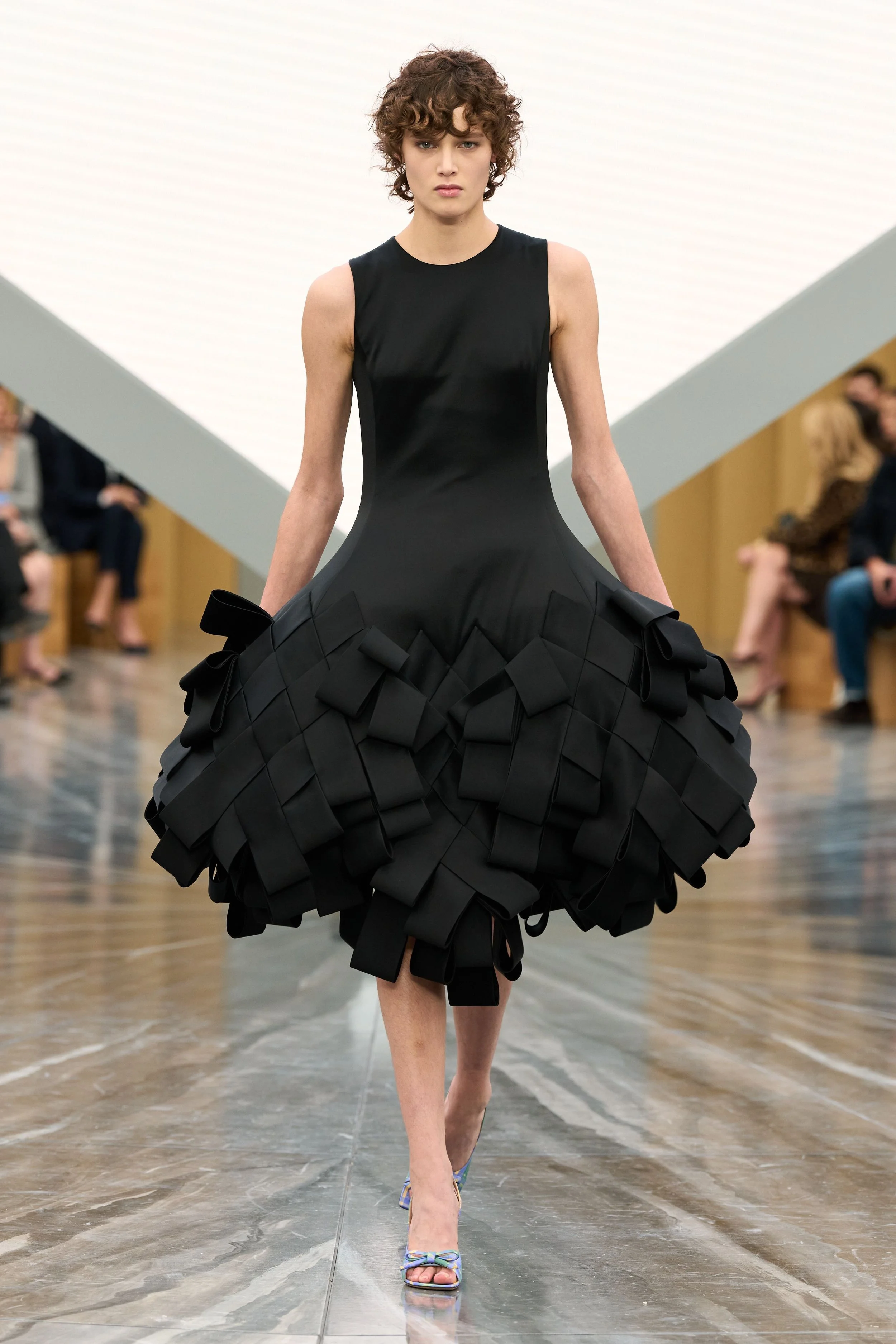
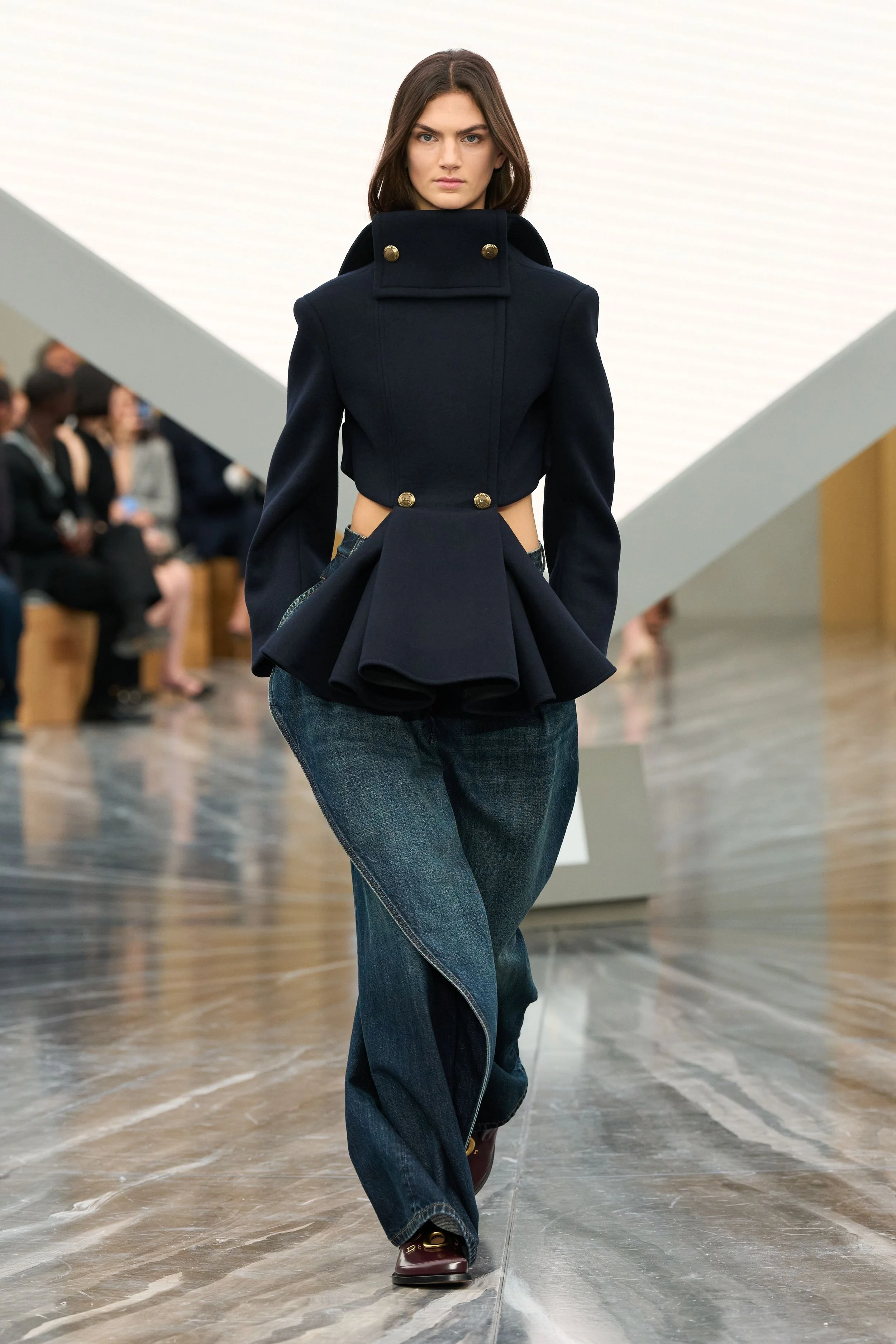
But just as the collection flirted with familiarity, it pivoted into something more structural, more architectural. Wool peacoats were stripped down and reconfigured. Off-the-shoulder dresses rippled with panniers hidden beneath ruching. Origami-like folds disrupted the purity of grey and black shifts. And then, Dior’s ultimate relic: the Bar jacket. Anderson cropped it, slashed it open at the back, and paired it with a pleated skirt in speckled tweed — a reverent rebellion that felt distinctly his own.

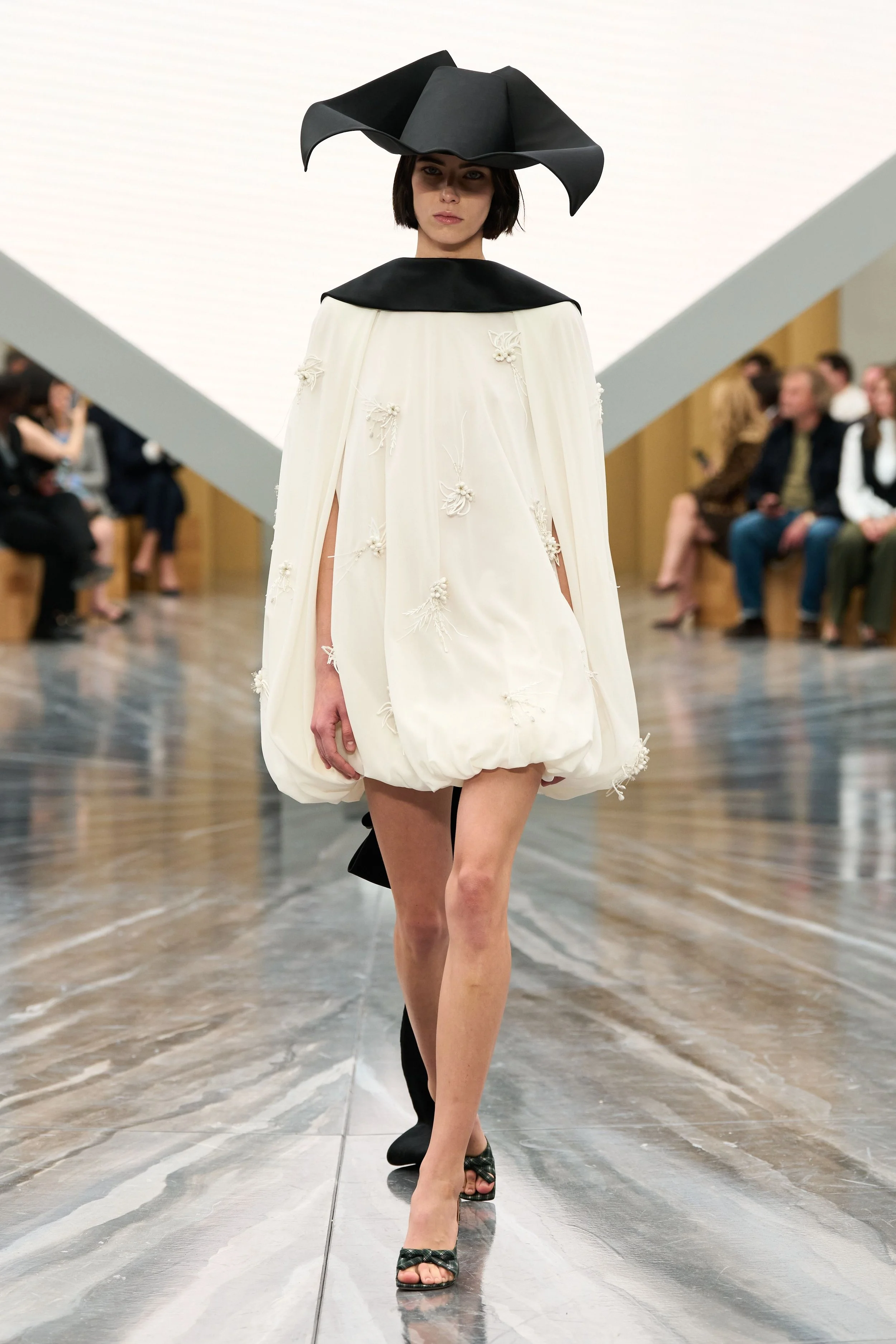
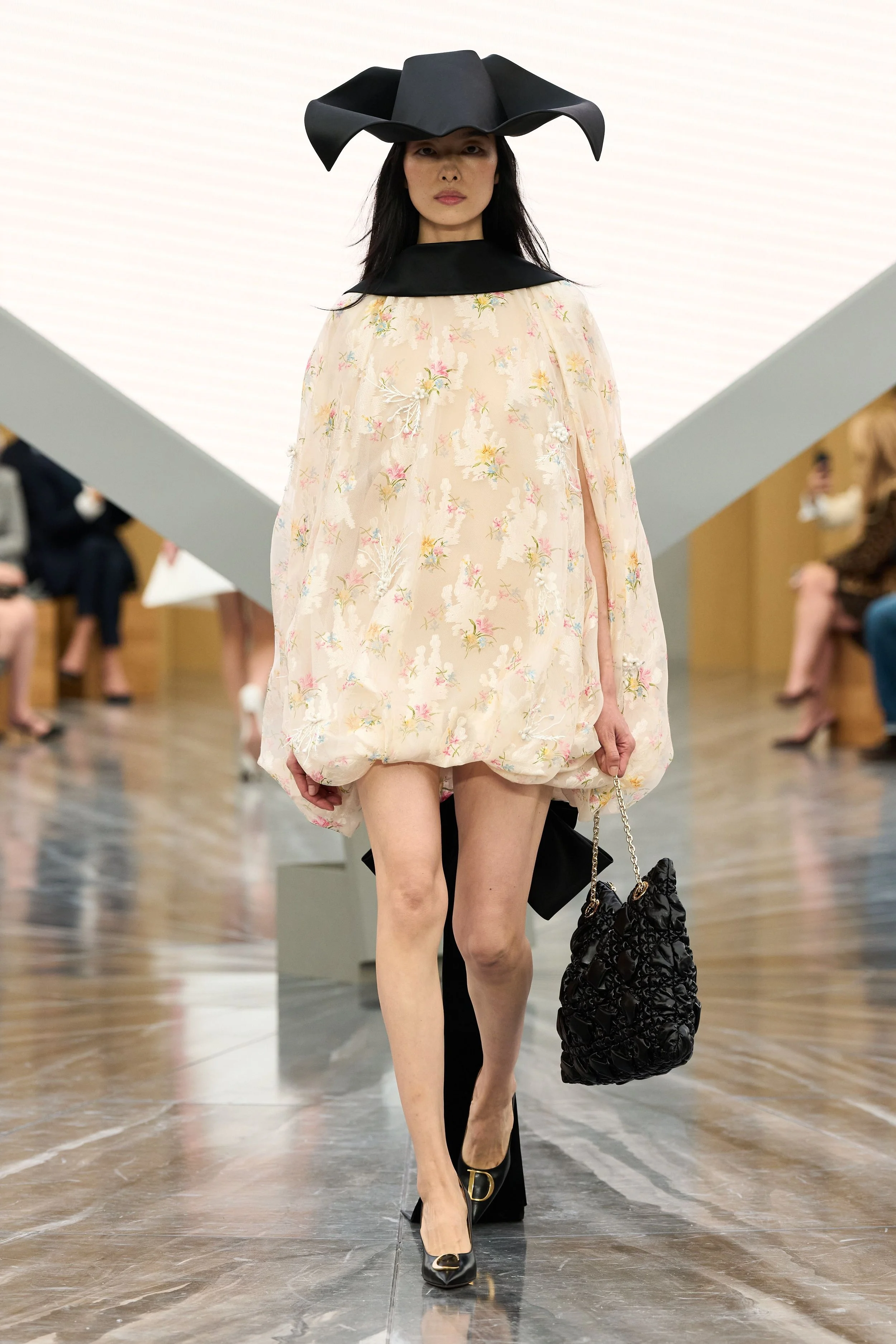
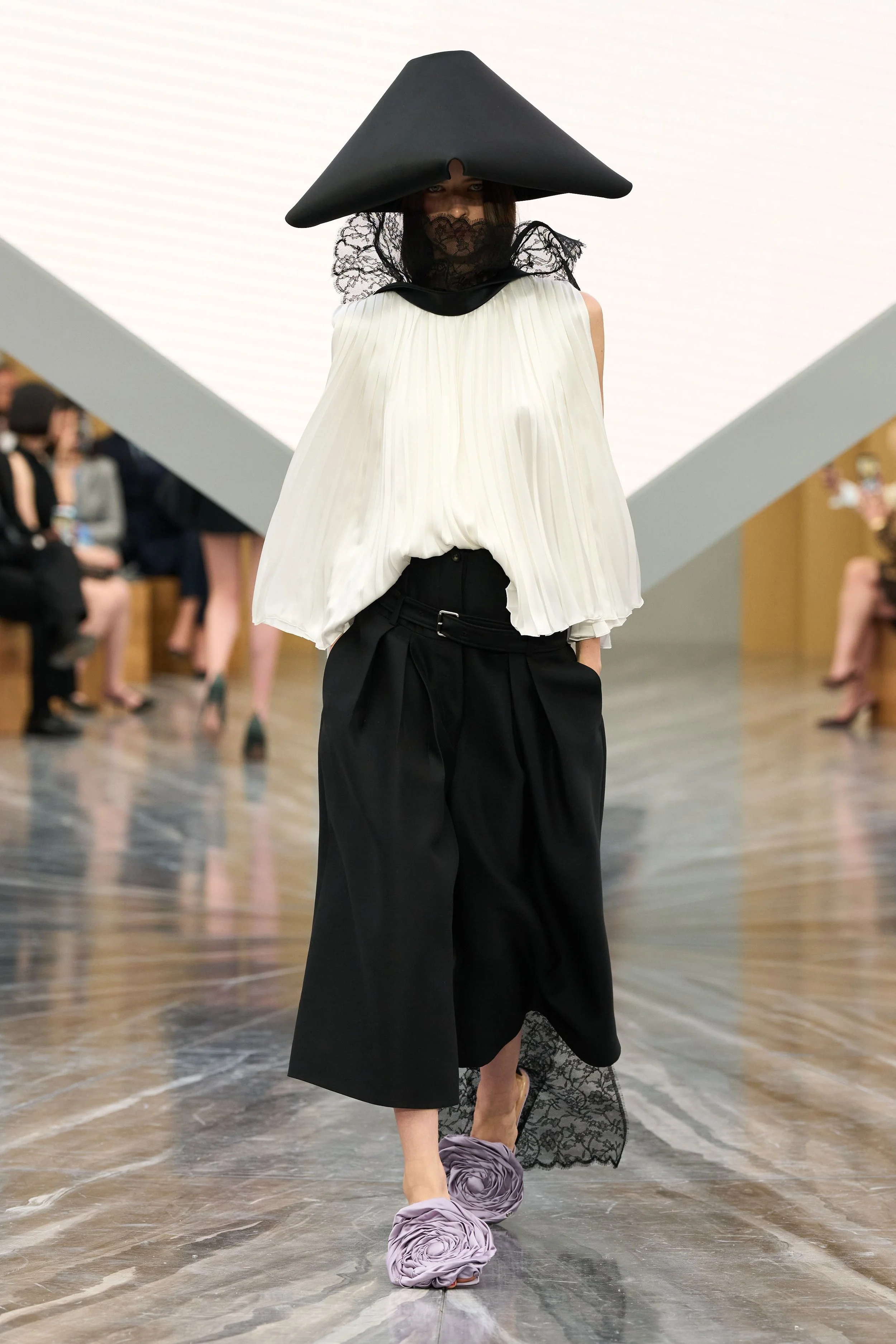
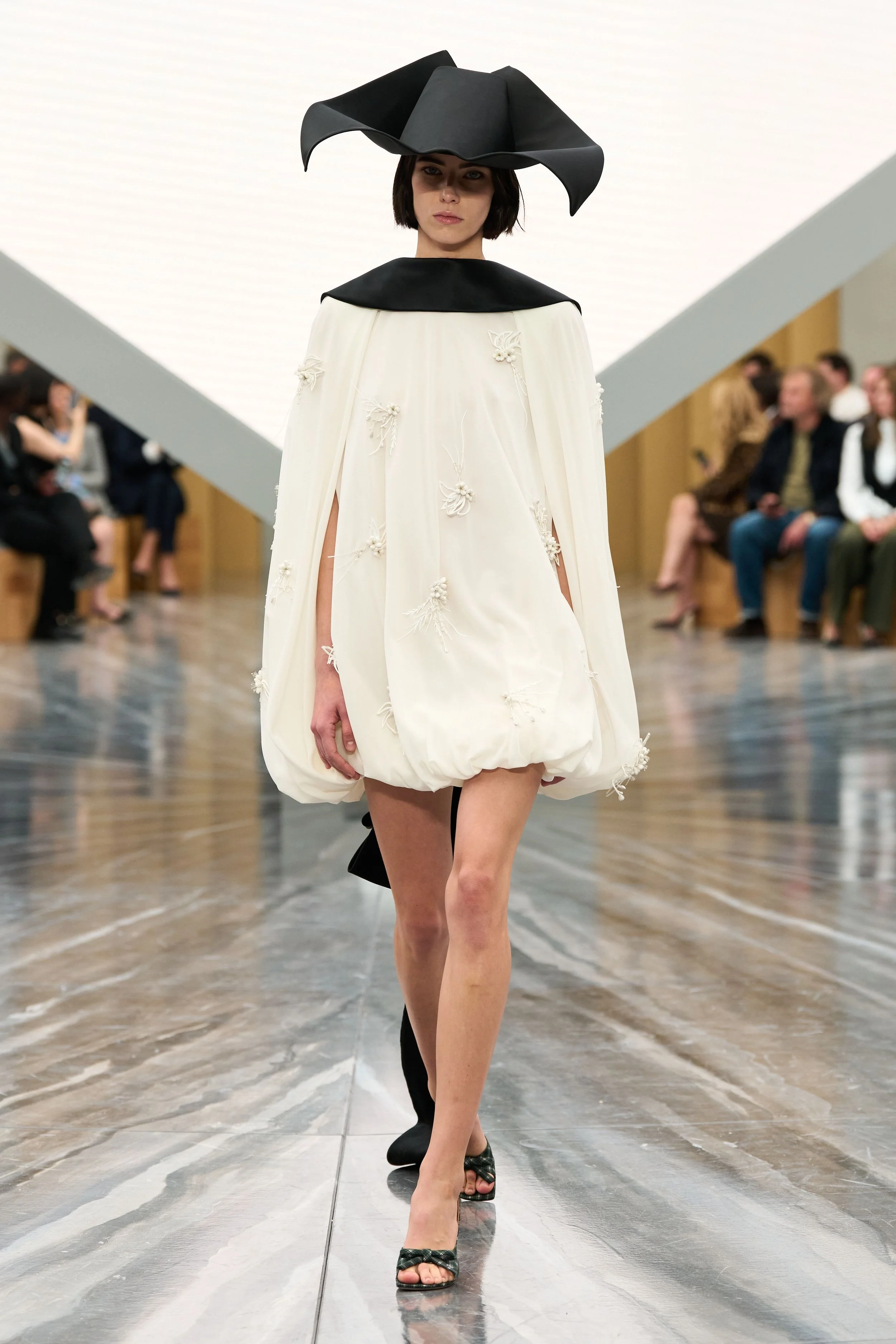
Accessories, of course, were the exclamation marks. Stephen Jones’ Tricorne hats lent a surrealist edge, balancing whimsy with drama. Shoes ranged from slingbacks and stilettos sprouting bunny ears, to mules crowned with oversized roses, to chunky D-shaped loafers stamped in gold. Bags, meanwhile, became vessels of fantasy: the Lady Dior covered in daisies or clover leaves, tiny ladybugs crawling across the surface. For daytime pragmatists, Anderson offered a softer note — the classic reimagined in supple brown suede, already a contender for bestseller status.

Anderson’s Dior debut was less an arrival than an incantation — a weaving together of codes old and new, playful and severe, Parisian and universal. It teased, seduced, and ultimately delivered what Dior at its best has always promised: a vision of elegance forever on the verge of transformation.


Words by Martin Onufrowicz

COURRÈGES SS26

Courrèges' show invite was a pair of sunglasses. The choice, besides being much appreciated (the first few days of Paris fashion week have luckily been sunny), was a clue to the collection’s theme. For Spring/Summer 2026, Nicolas di Felice ponders the sun, not as a divine inspiration as it is routinely treated in an estival collection, but as an enemy to find cover from. And that’s just what the Belgian designer did. The opening looks hid models’ faces behind a covering that connected from their pointed caps to their miniskirts. These were not just stylistic statements; they were environmental too: in shades of blue, these veils were all functional UV blockers.

Appropriately named Blinded by the Sun, the collection was paired with an installation in the show’s habitual venue, Le Carreau Du Temple. Instead of breathing floors or flying confetti, this time around, the ploy was less fun and more worrisome. As the show went on, the lights got brighter, the temperature hotter. Luckily, di Felice proposed the ideal summer wardrobe. Denim shorts with long rectangular tails. Asymmetric draped tops that expose half the torso.

As always, the Belgian designer’s creations are as engineered as they are sensual. Ingenious dresses connect fabric draped at the lap with the neck of the dress. Tight minidresses, made entirely of what seemed like hundreds of belts, were rubberised; as the increasingly bright lights shone on them, they appeared almost wet. By the end of the show, we sure wish we had been. When the last triad of looks came out – structured minidresses that elevated the neckline past the nose – the heat was practically suffocating. But still, we all watched, sat. Di Felice made a point, and we proved it.


Words by Pedro Vasconcelos

DRIES VAN NOTEN SS26

 Ah, what a joy it is to wake up on the day of a Dries Van Noten show. Coincidentally, it was precisely joy that inspired the Spring/Summer 2026 offering of the house. For his second womenswear collection, Julian Klausner finds solace in the concept of surfing. Emphasis on the concept – backstage, the designer admits to not practising the sport himself, but to being fascinated by the tranquillity it must bring. Perhaps it’s this distance that allows him to design based on an elusive feeling, a calm happiness that is hard to achieve in today’s climate. Like so many designers this season, Klausner is designing in response to the world.

The collection is permeated with Dries Van Noten staples – loud prints, heavy embroideries, interesting textures, vivid colours. It makes sense that the Belgian designer finds solace in the brand’s signatures. Before taking over the creative reins, Klausner worked for over a decade under his predecessor. Still, Klausner isn’t merely replicating Van Noten’s work; he’s expanding it.

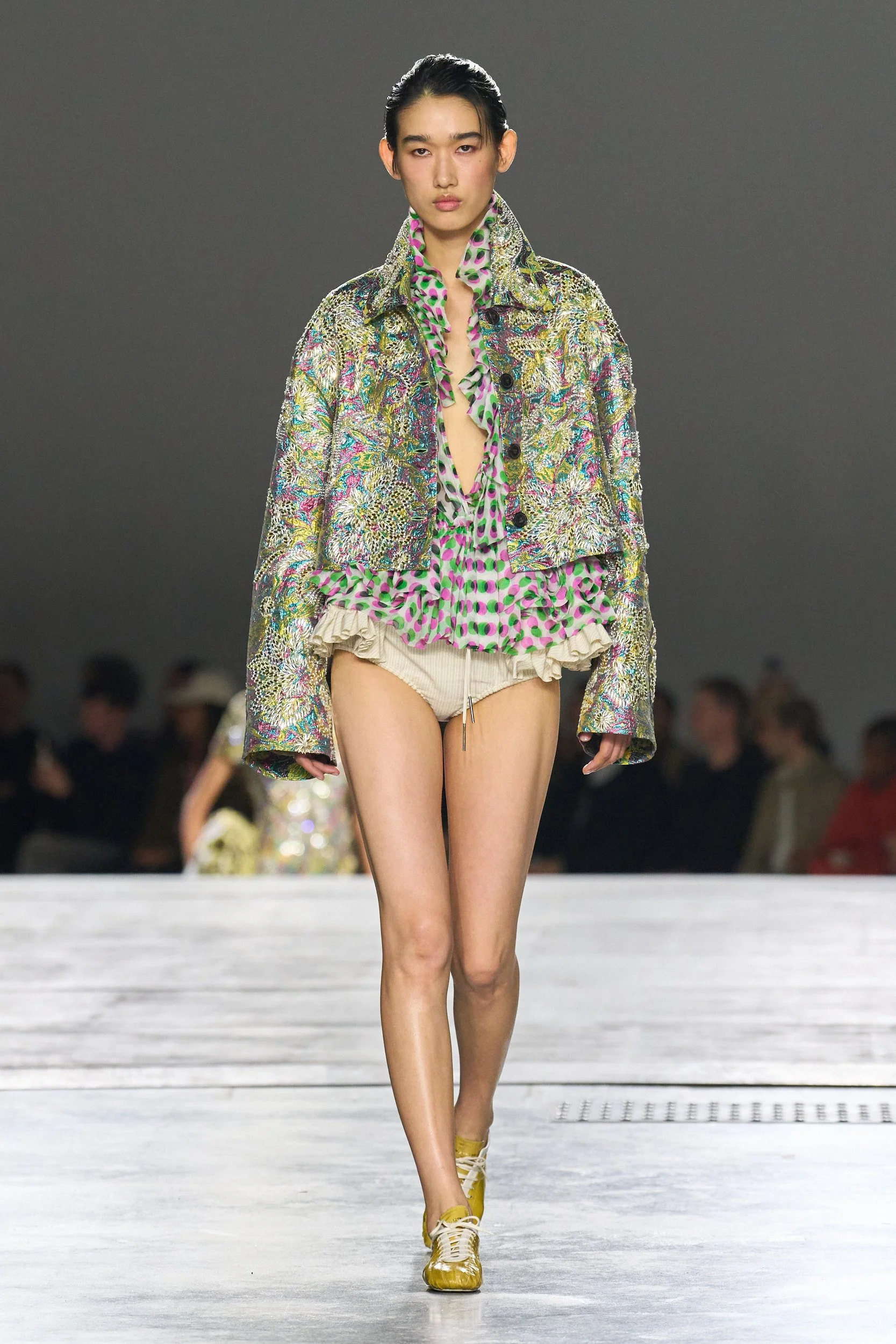
To the sound of crashing waves, the collection opened with a romanticism that is Julian’s own. Ruffles on grey jersey sweats flounce casually. Ruched turtlenecks project tulle streams away from the body. Heavily crystalised – but light – casual jackets are wonderful oxymorons. Eventually, the Dries language becomes indistinguishable from Klausner’s.  Long printed coats are delightful, with their lapel folded inwards, revealing a tinge of white. As you’d expect, they manifest in a variety of prints. At first, relatively controlled in baroque yellow flowers, but eventually they grow in double prints – a moiré texture is overlaid on a dead-nature colored angular pattern.

Print has always been a Dries’ language, but with Klausner, it’s reinvigorated. Translucent dresses and capes are optical illusions, placing opposite-colored polka dots in proximity, tricking the eye.

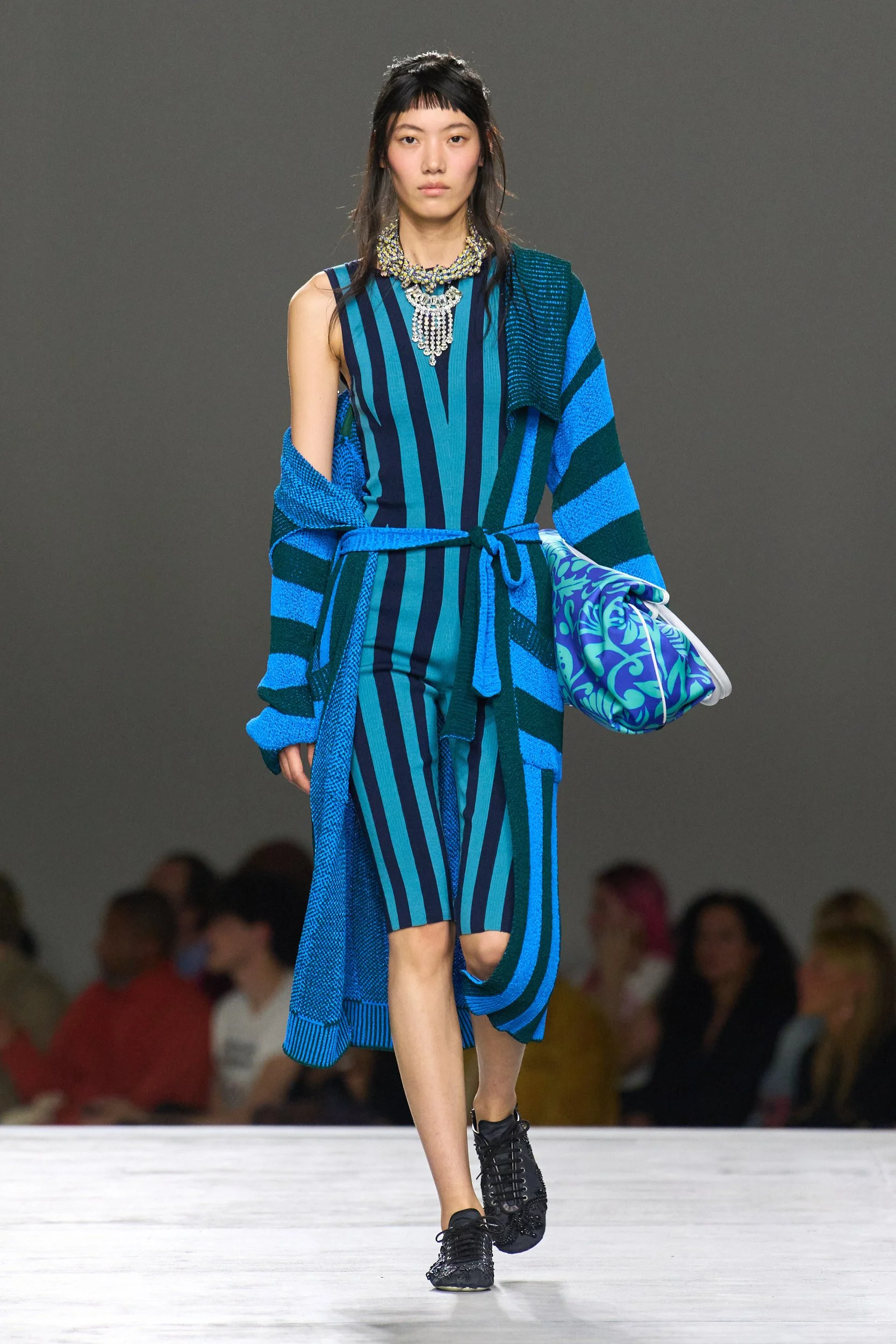
The show’s inspiration rears its head in the colour palette. Bright yellow and vivid blues totalize the collection midway through in striped bodysuits and embroidered robes. Later, classic Dries prints were maximised, engorged till they took another shape entirely. A nipped-in waist blouse and pencil skirt combo is to die for. Klausner makes more than good collections; he creates appetising clothes. The offering wraps with sheer caftan dresses, both quietly sheer and incredibly loud.


Words by Pedro Vasconcelos

HODAKOVA SS26

Paris has a legacy of designers that push the function of fashion to the limit, weaponising its form as language. The generation of Japanese designers that invaded the city in the 80s has left its mark. Of course, throughout the decades, the legacy has mutated, congealed, expanded, sharpened, deflated and reinflated. Hodakova is a brand that speaks to that tradition. Her presence in the city is refreshing. Unlike those that came before it, its medium isn’t limited to clothing alone. In Spring/Summer 2026, Ellen Hodakova Larsson manipulates books, pillows, leather bags, metal, raffia, and so many other materials for the sake of her expression.

Given the designer's reputation for experimentation, the collection opens with looks that are surprisingly wearable, almost simple at first glance. Further inspection reveals double waistlines – one fictitious, another real – capes made from suiting, wool jumpsuits with pockets that lead straight to the body. Eventually, the idiosyncratic sound of Larsson’s pieces is heard, even through the music that fills the venue. Clanky rings grow louder as metal structures are utilised as hats, skirts, and ponchos. This season felt particularly architectural.

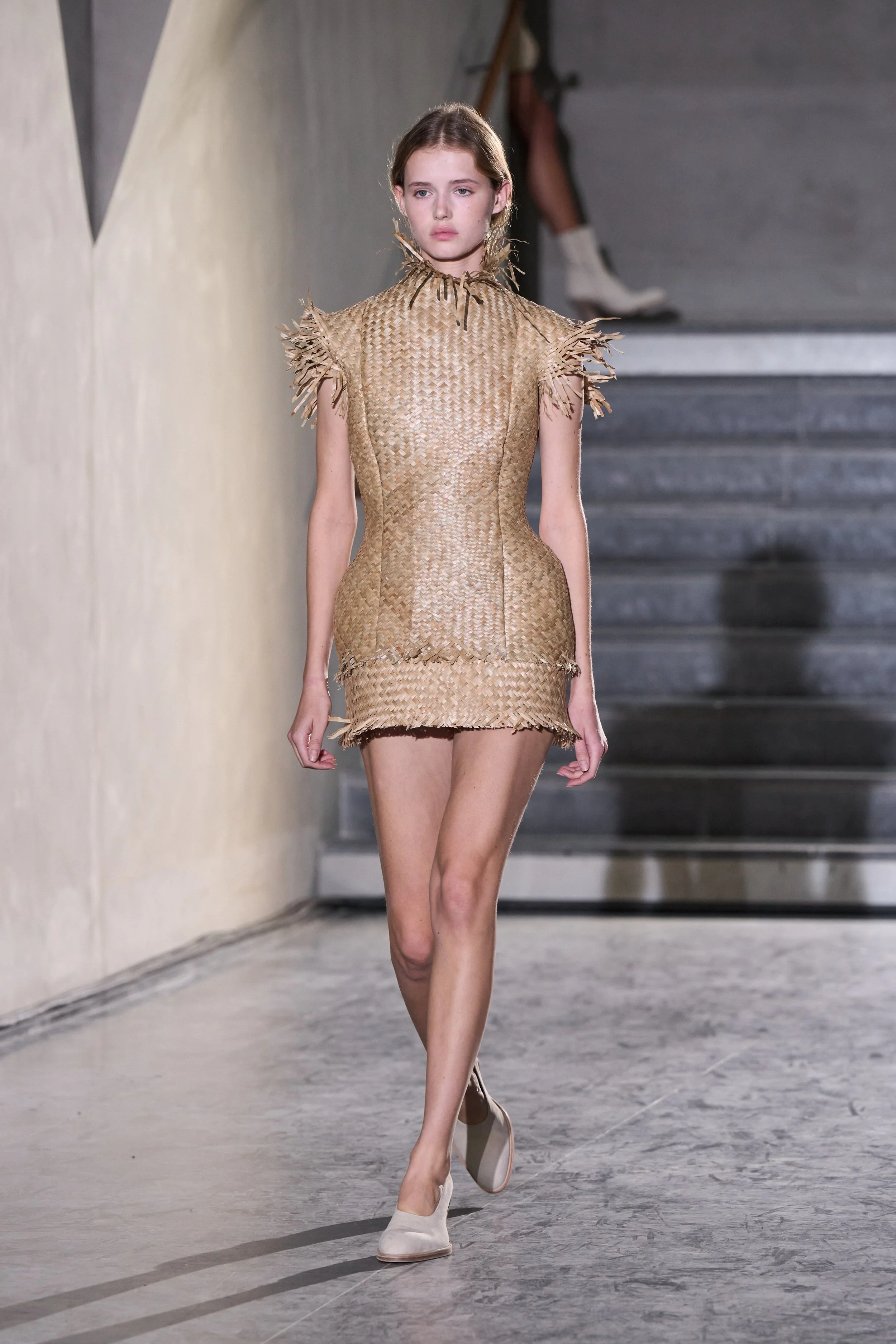
It wasn’t just a personal hunch. Backstage, the designer explains some of her inspirations. “I was trying to relate to this method of making roofs through straw; it’s such an old traditional way of doing it, but I was trying to bring it to modernity.” The final section of the collection spoke to this intent. Straw was first fitted to the body, woven to become a mini dress, but it eventually took over the bodies of those who wore it. By the final look, it had grown completely outside of it, forming a large triangular shape that engulfed the catwalk.

Her materiality is inspiring. It doesn’t just inform the textures the designer creates, it dictates their silhouettes. Shift dresses are restrictive in raffia, bending begrudgingly to the model's movement. Books sway open and shut in the hem of an otherwise simple dress. It wasn’t the first time she’s worked with books, but it’s certainly the most significant. “They’re all old books about Swedish history,” she relates. When asked how it was to work with books, she’s comedically sincere: “Heavy.”

Domesticity seemed to be a focal point of the collection. Dresses were made, and often were entirely made, of pillows. Elsewhere, a short dress was made with colourful socks that resembled animal plushies. This time it’s pure speculation. Larsson leaves it up to the imagination. “There’s a lot of undertones that can be read by themselves, and it's interesting to see how people see them.” Hodakova refuses definition as much as it invites interpretation.


Words by Pedro Vasconcelos

LOUIS VUITTON SS26

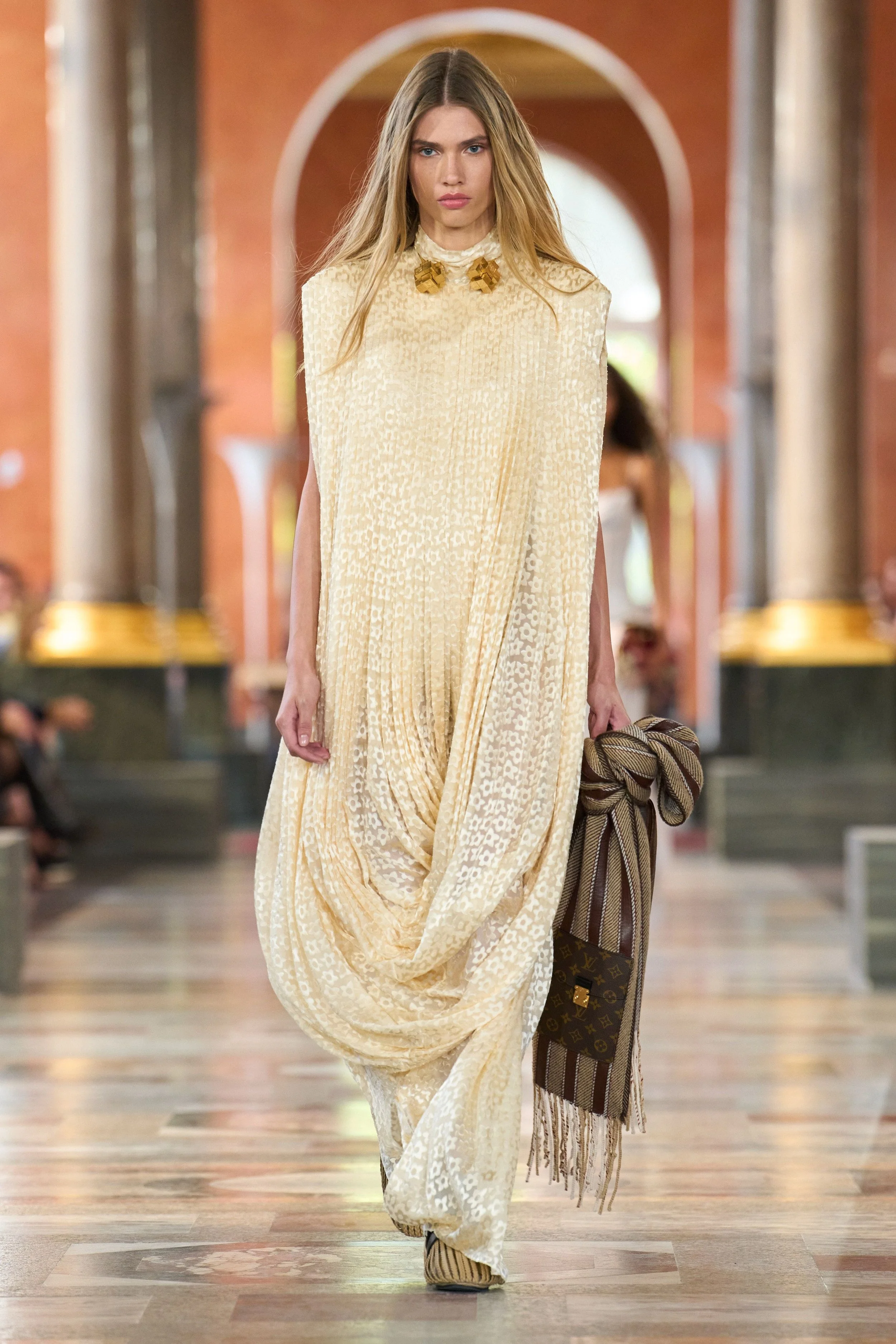
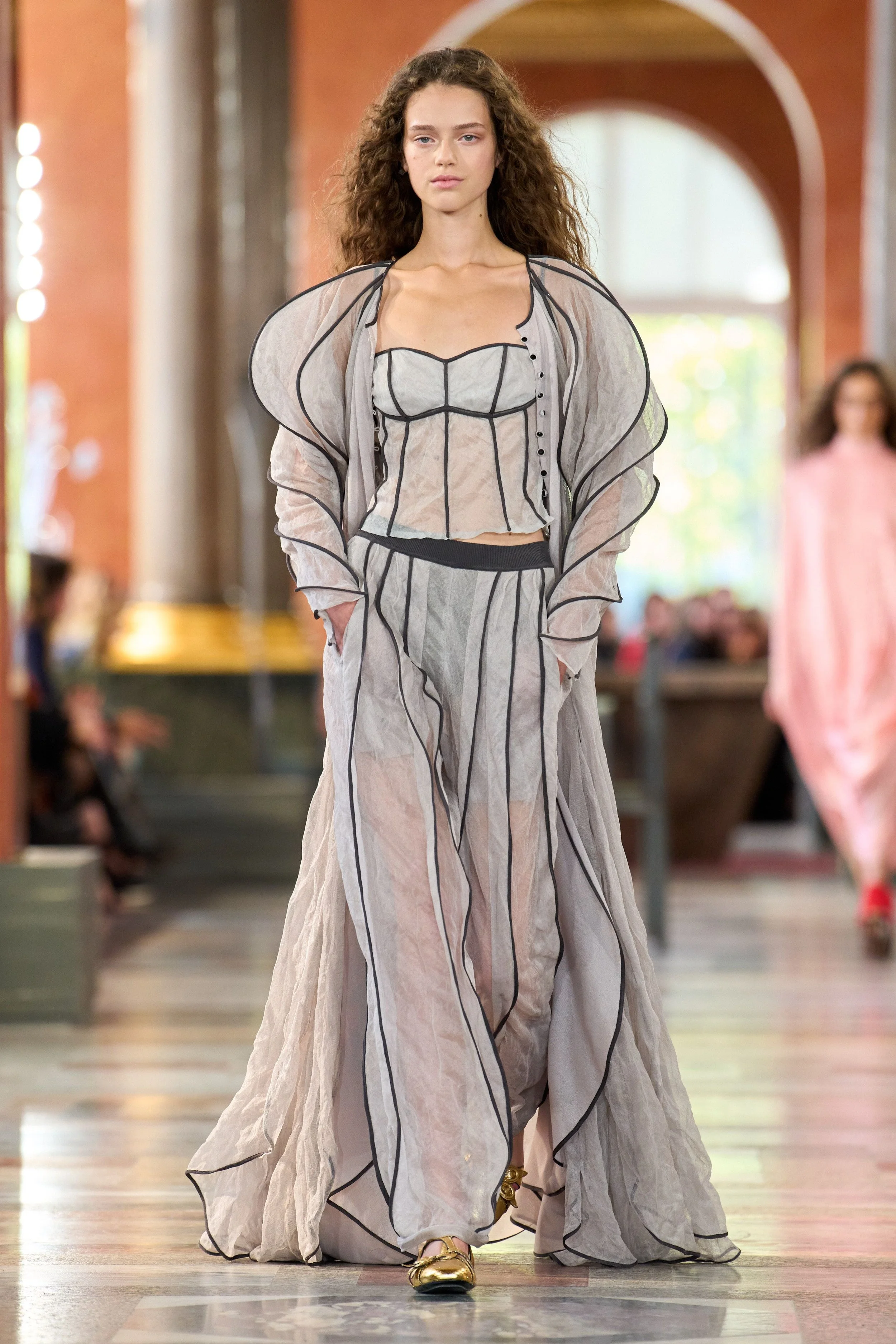
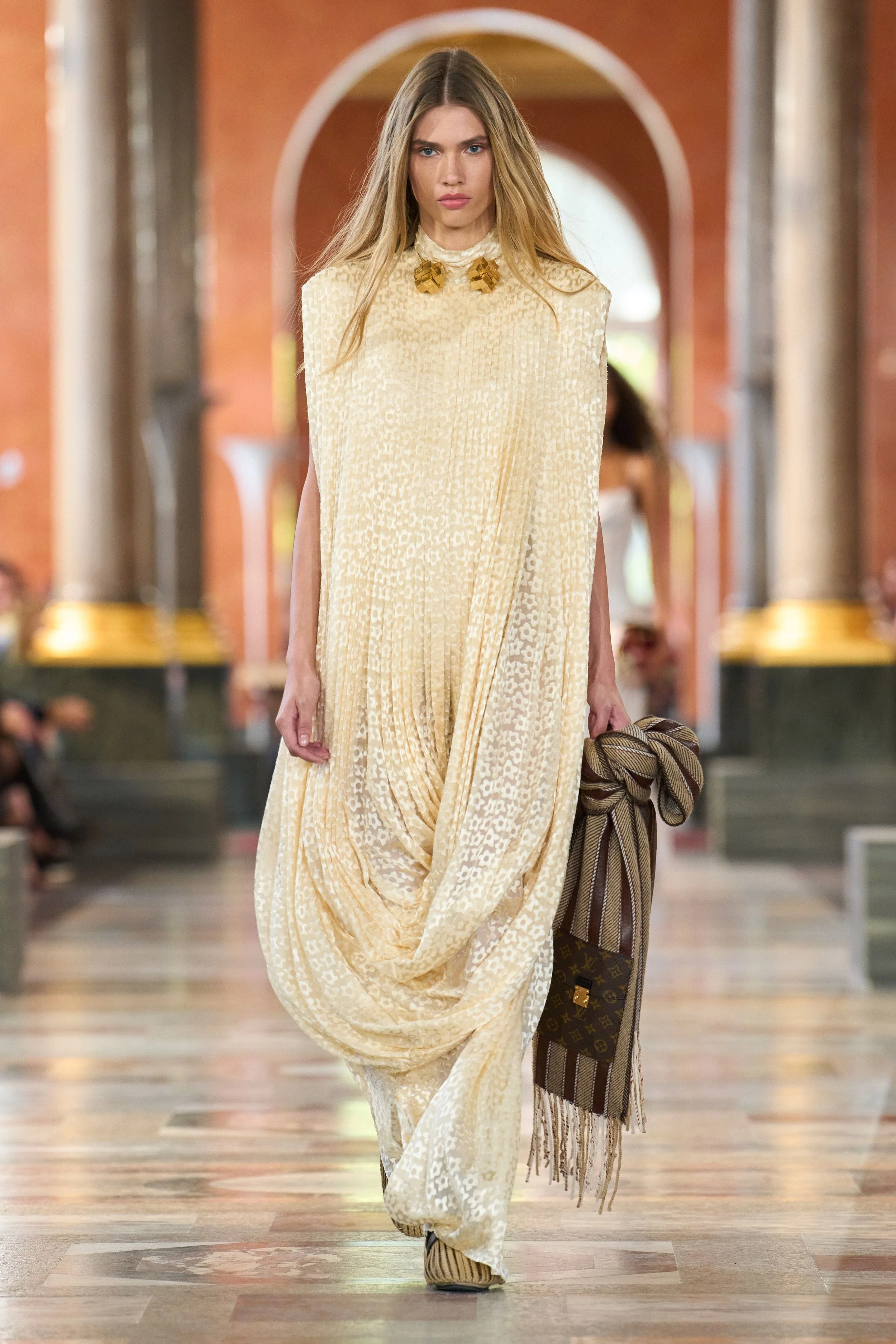
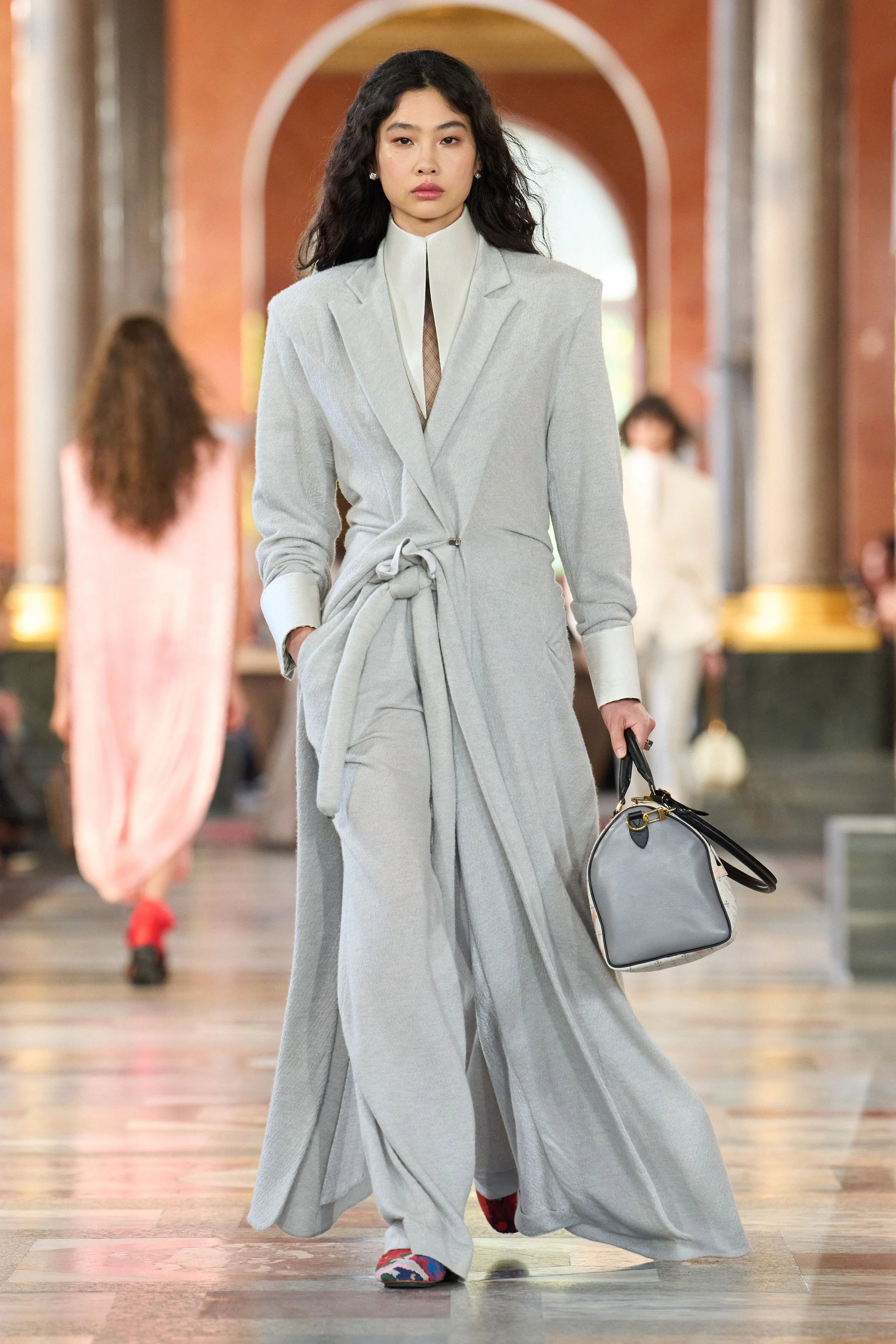
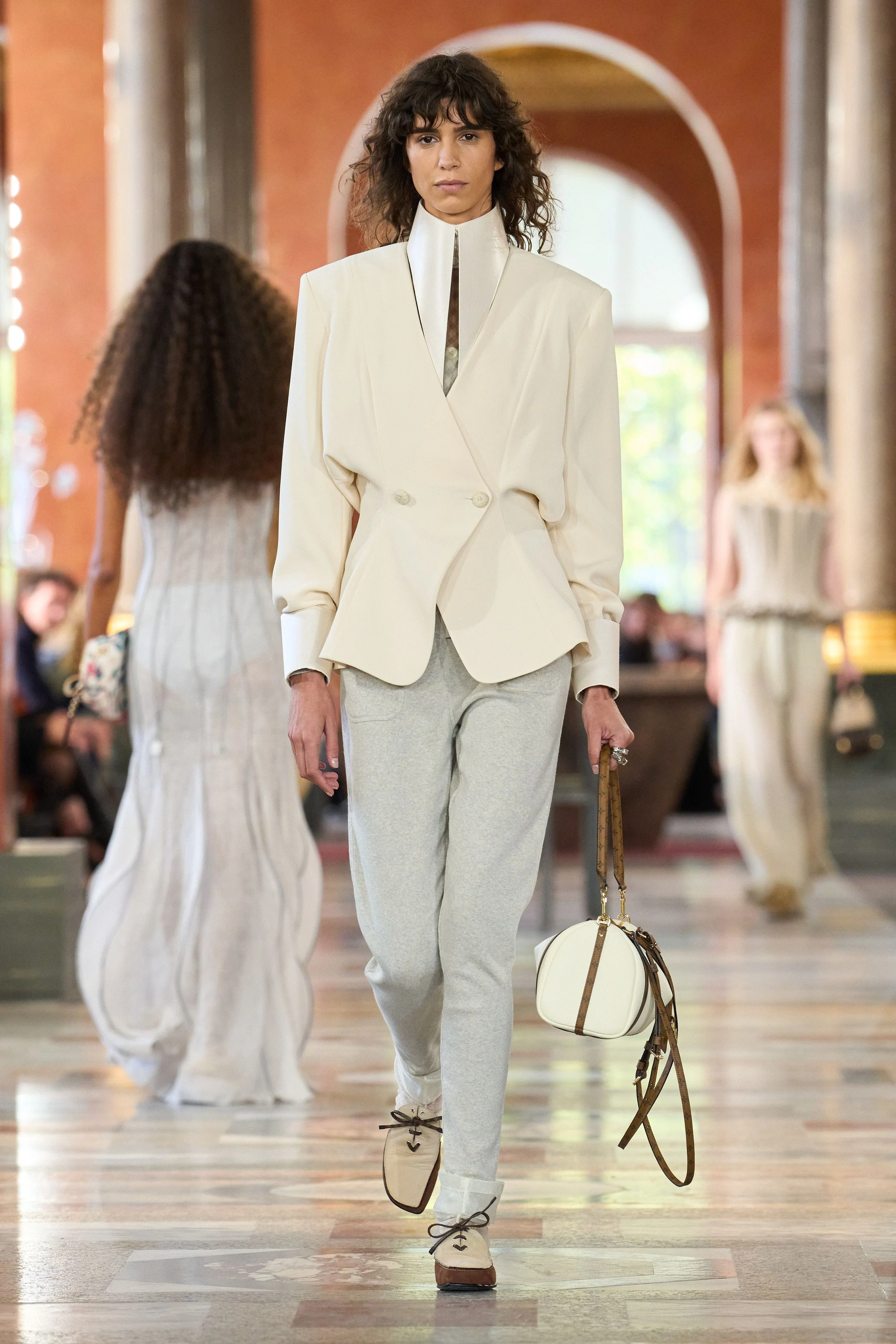
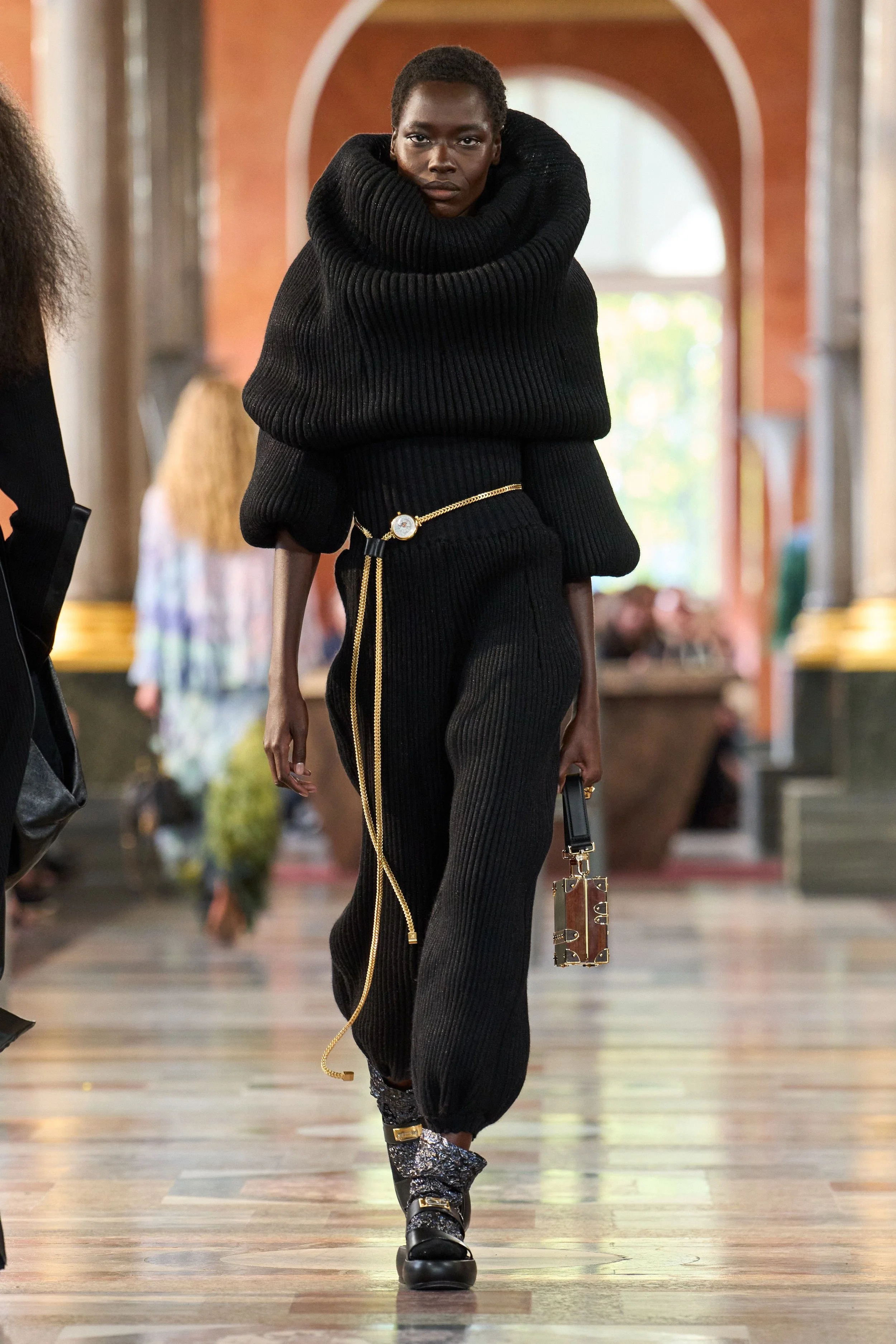
There was an almost meditative quality to Nicolas Ghesquière’s Spring/Summer 2026 collection for Louis Vuitton. Cate Blanchett’s velvet voice, reciting the words, “Home is where I want to be,” lingered in the air like incense, setting the mood for a show that unfolded less like a spectacle and more like a serene passage. Nearly twelve years into his tenure at the brand, Ghesquière feels very much at home. This season, he invited us to join him in his calm, personal sanctuary.

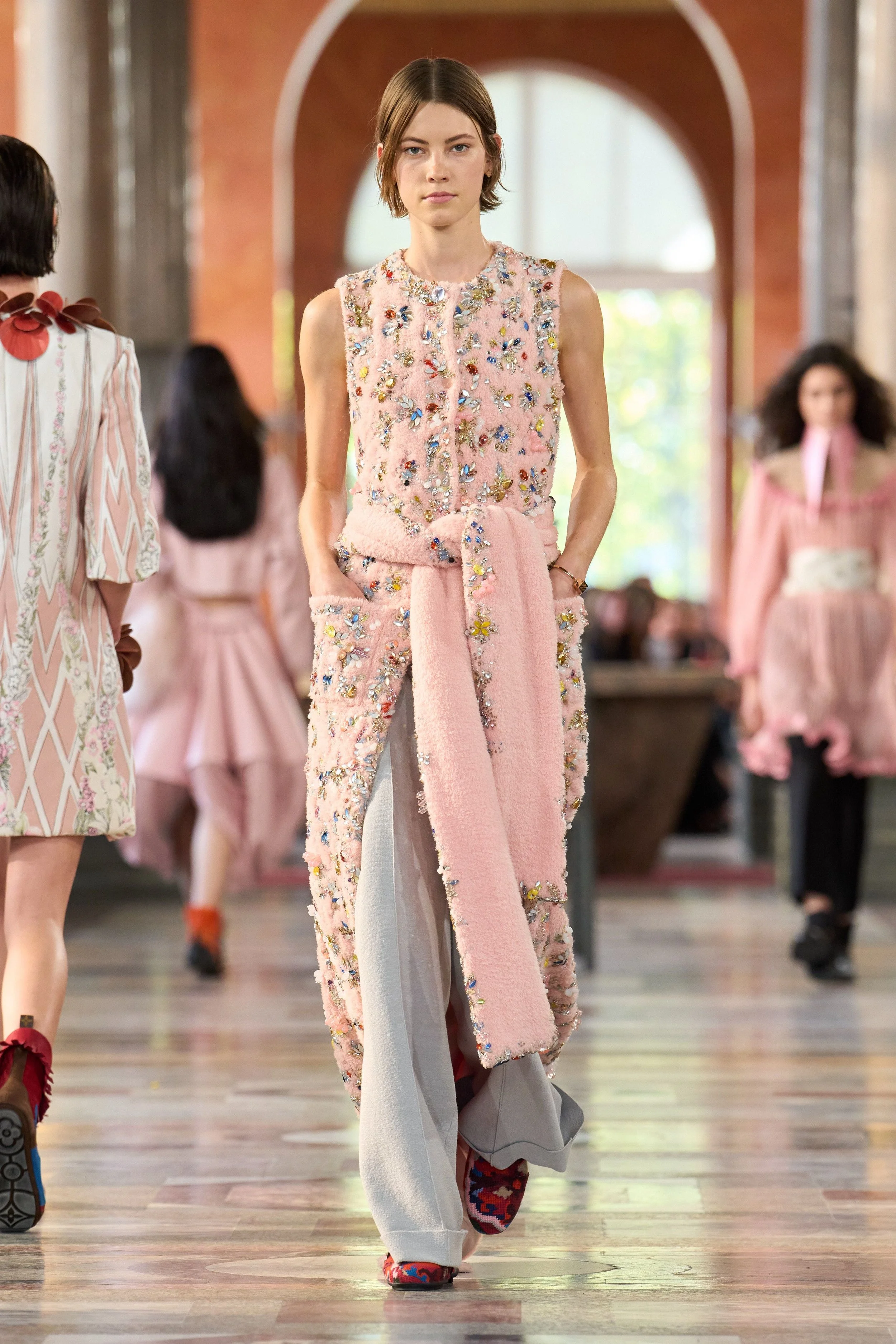
The opening look felt like a whispered proposal: a fluid chiffon ensemble in soft grey, traced with stark black piping, gliding through the summer apartments of Anne of Austria in the Louvre. A designer’s ode to loungewear, perhaps, but elevated to the sublime. From there, silhouettes softened into languid jersey coats, terrycloth-like vests in pale blush, and glimmers of crystal constellations scattered across the body like dream fragments.

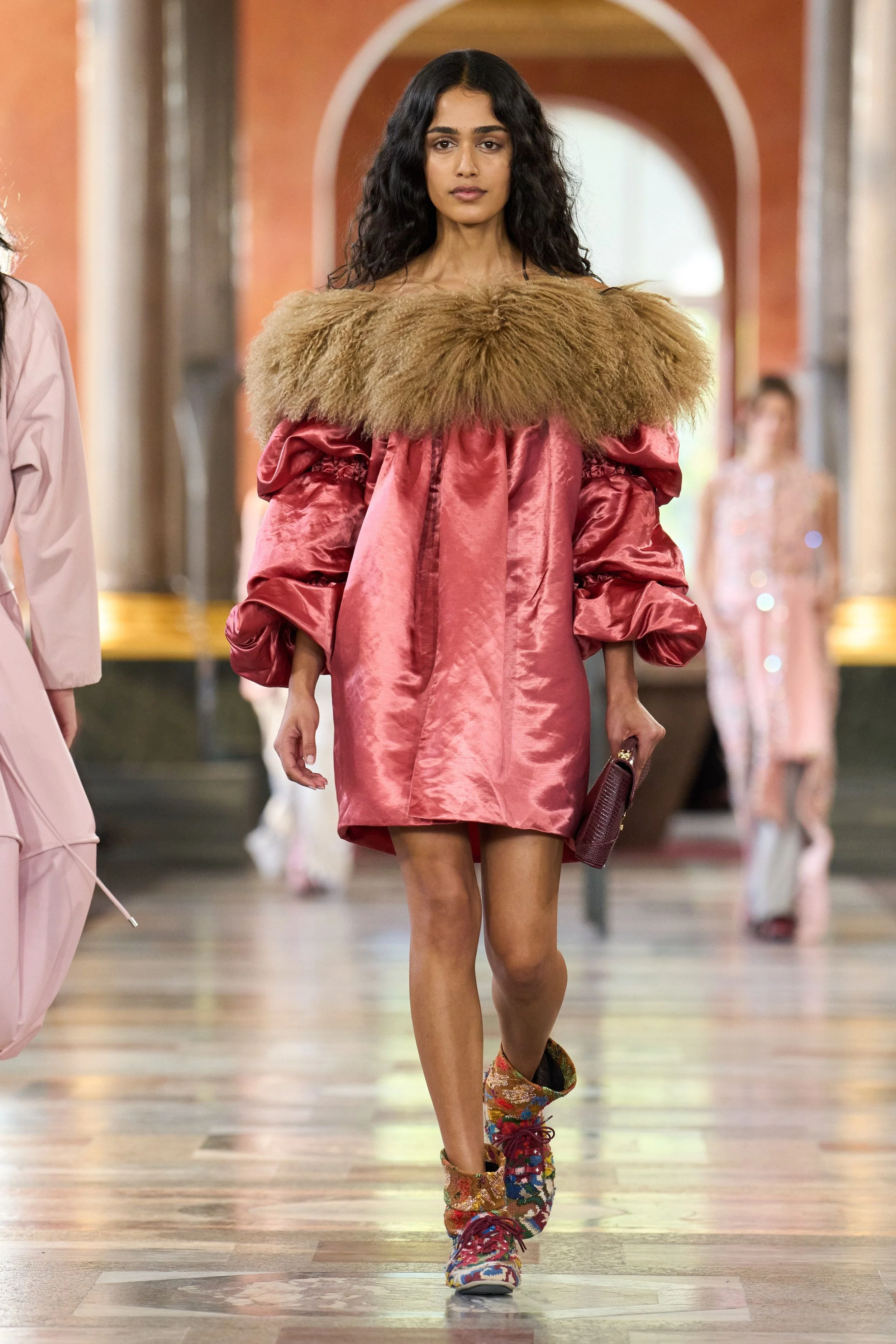
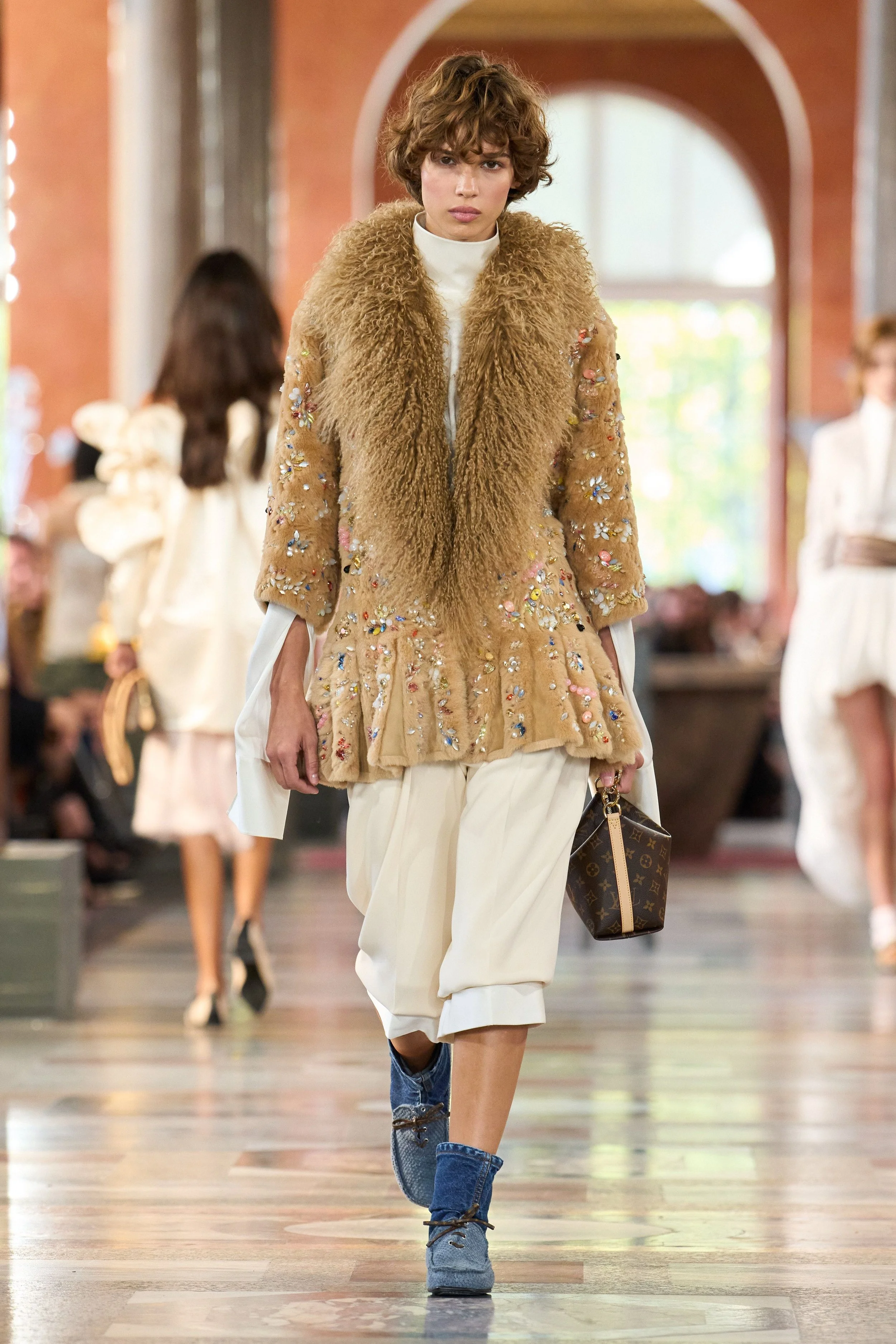
Ghesquière’s instinct for historical resonance surfaced, as always, in details refracted through his futuristic lens. A blush-pink mini trimmed with shearling echoed Sofia Coppola’s Marie Antoinette – a wink to decadence repurposed for the now. Exaggerated collars, at once silken and stiff, crowned relaxed blazers and shirtdresses, merging the past’s ornament with today’s ease.

Even the accessories carried this notion of cocooning luxury. Moccasin boots and fur-lined slippers padded softly alongside loose lace socks. Twisted headpieces — part hat, part pillow — added an off-kilter wit. Knitted shoulder bags, oversized and tactile, seemed designed not just to carry but to comfort.

What emerged was a wardrobe not for retreat, but for inhabiting space differently – calm, tender, yet resolutely modern. In Ghesquière’s hands, home is not just where we live, but a state of being.


Words by Martin Onufrowicz

SAINT LAURENT SS26

The best thing about any given Saint Laurent show is the appreciation Anthony Vaccarello has for Monsieur Saint Laurent’s legacy. He understands nuance in the work of the founder of the maison he leads. At every chance he gets, he reminds us of the legendary designer’s impact – not just in fashion, but in culture at large. For Spring/Summer 2026, he articulates this legacy to deliver a particularly topical message.

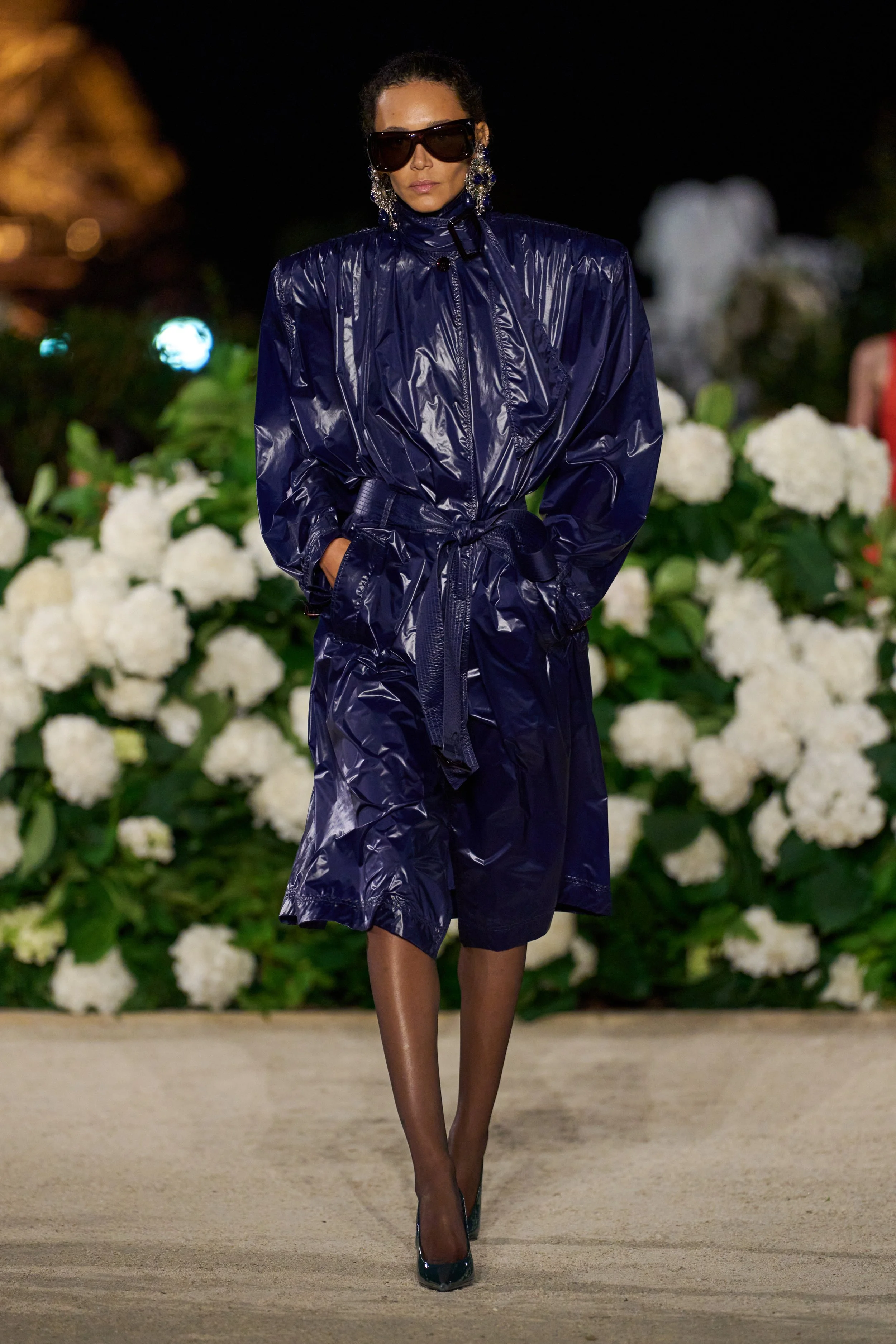
The collection opens with a scenario as unlikely as it is appetising. Statuesque women with engorged, angular shoulders cruising along delicate bushes of hydrangeas. Just as in the Fall/Winter 2025 menswear collection, Robert Mapplethorpe is made a muse. Vaccarello looks to the photographer for erotic appeal. Shiny leather reflects the light as it passes by, hats tilted forward to imply interest. Of course, here, instead of the sweaty bodies hidden underneath the jackets, elegant blouses illuminate the shiny darkness with their white starchiness.

The structured shoulders and nipped-in waists are decisively ‘80s. It’s not the first time Vaccarello favours the silhouette – we would go as far as to say it’s one of the staples of his tenure at the maison. And still, despite being immediately identifiable in a time and place, it doesn’t feel dated. Not because of the silhouette’s recent popularity, or even its appeal that swerves around the trend cycle, but because Saint Laurent’s legacy is indistinguishable from 20th-century fashion. Here, the inspiration isn’t chronological; it’s self-referential.

The maison’s legacy is further explored in mousseline trenches and translucent dresses in acidic shades of chartreuse and vermillion. These harken back to some of Rive Gauche’s iconic silhouettes. The line, founded by Mr Saint Laurent, sparked the ready-to-wear revolution. Vaccarello doesn’t ask for vehemency – though we certainly do – he frames it as an important statement. The rise of conservative movements and its trad wives has made the women’s liberation movement have to reclaim its ideological grounds. Vaccarello reminds us of what YSL has always been: clothing made for independent, strong women.

The collection ends dramatically. Inspired by the Duchess of Guermantes and Madame X, the Belgian designer creates billowing gowns. A parade of jewel-toned dresses floats in the wind, as if inflated by it. Cleverly made of nylon, these are light; models move freely. Even in their regal structure, the designer finds freedom. Vaccarello doesn’t just honour the Saint Laurent legacy, he pushes it forward. He recontextualises it and reminds us of its importance. 


Words by Pedro Vasconcelos

BURC AKYOL SS26

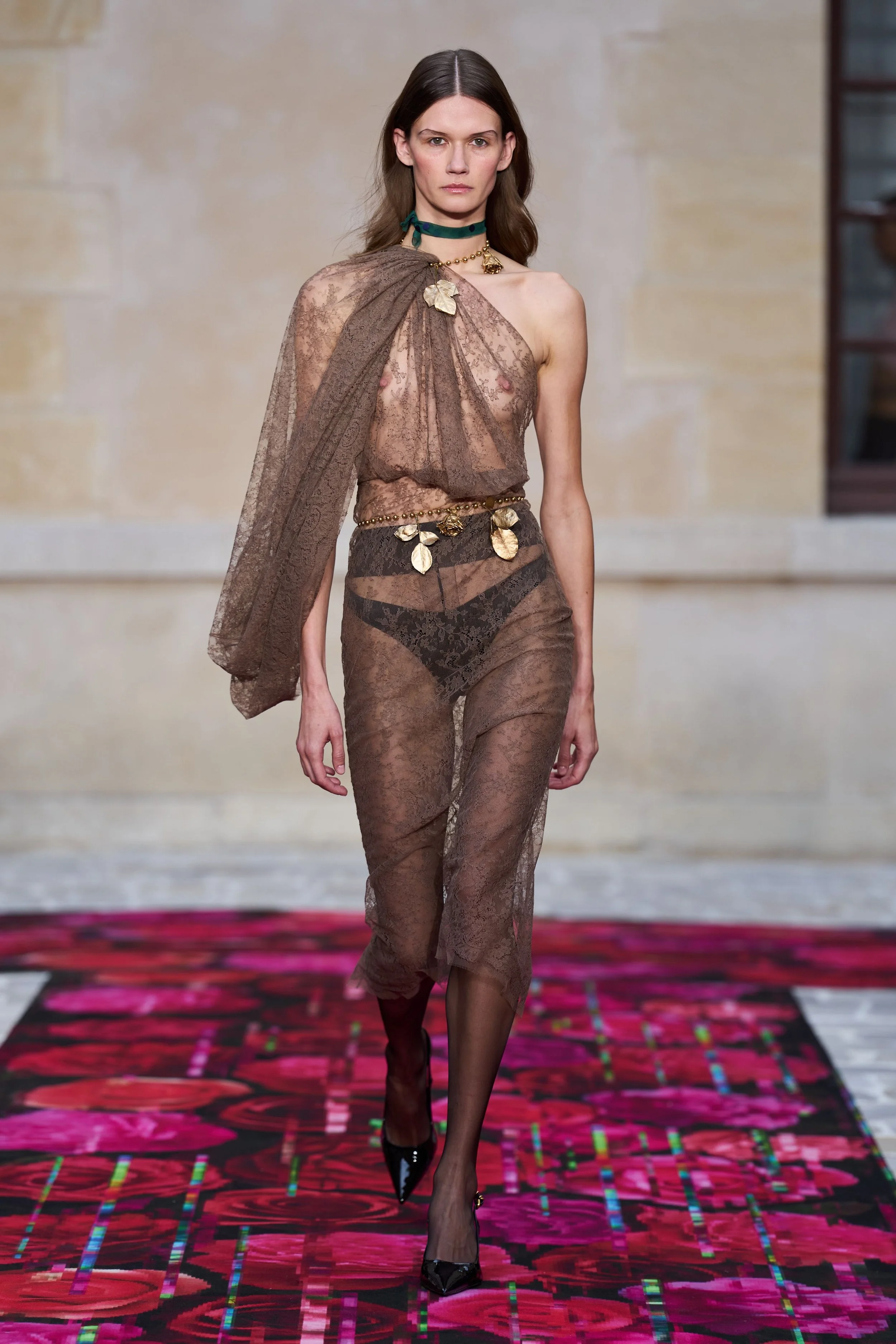
Burç Akyol’s Spring/Summer 2026 collection, Gülistan, borrows its name from the rose: a symbol of rebellion, dignity, and hope that runs deep through Eastern traditions. More than a floral reference, it becomes the prism through which Akyol refracts poetry, politics, and memory – fashion as an act of resistance.

Rooted in his personal encounters with the Roma community, charged by the theatricality of Galliano’s 2000s spectacles, and softened by the sensual generosity of his mentor and one-time boss, Esteban Cortázar, Akyol’s garments feel both intimate and declarative. They seduce, but they also speak, dissolving the binaries of gender, time, and seasonality.

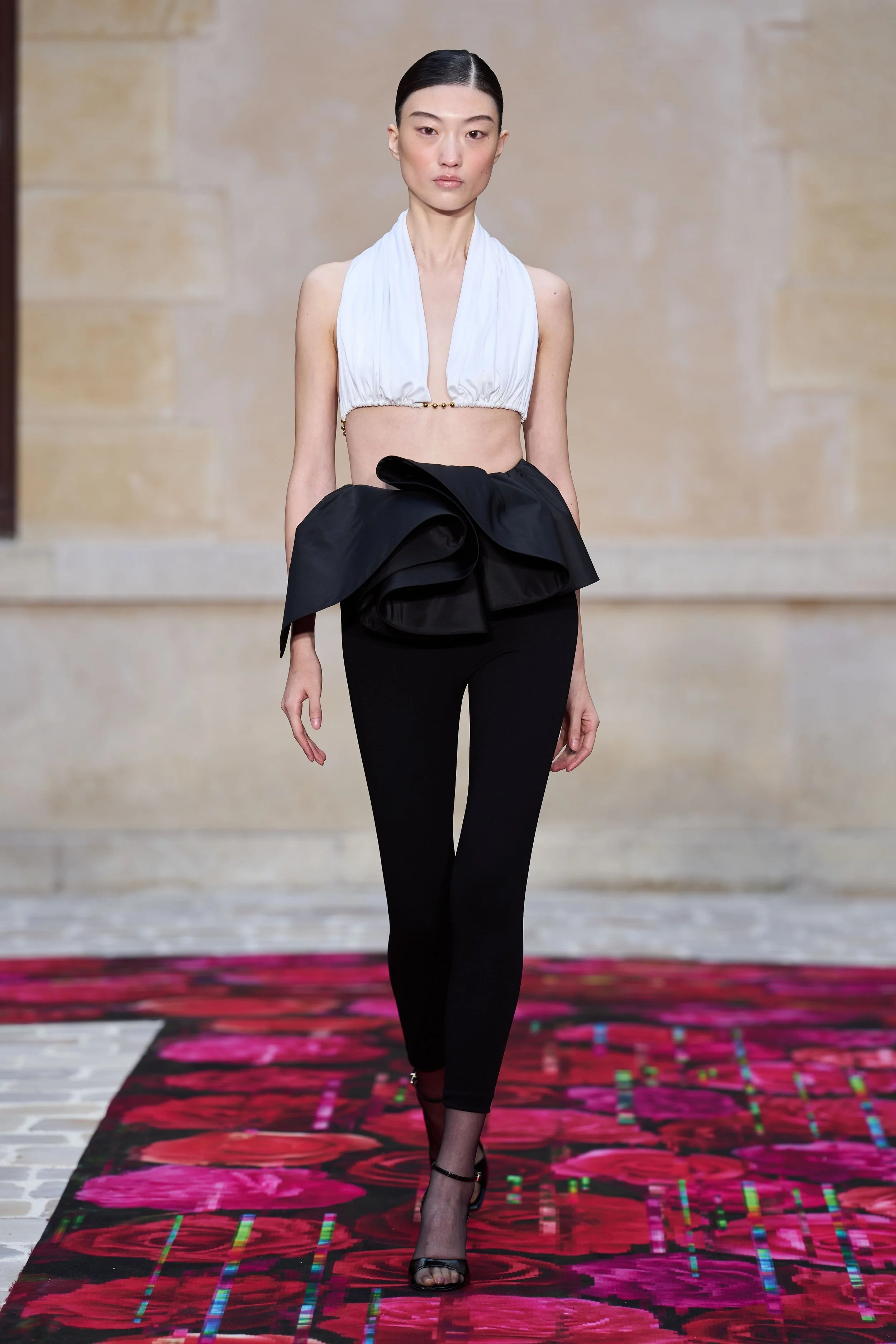
On the runway, structure met sway. Tailoring – sharp, lapelled, with exaggerated ‘80s shoulders – was undone and retied around the body, offering a more bohemian cadence. This motif of twisting and reconfiguring reappeared throughout: knits tucked into flounced skirts, mini and maxi dresses bound at the bust or hips with taffeta or jersey, each piece reconsidering how garments might hold and release the body.

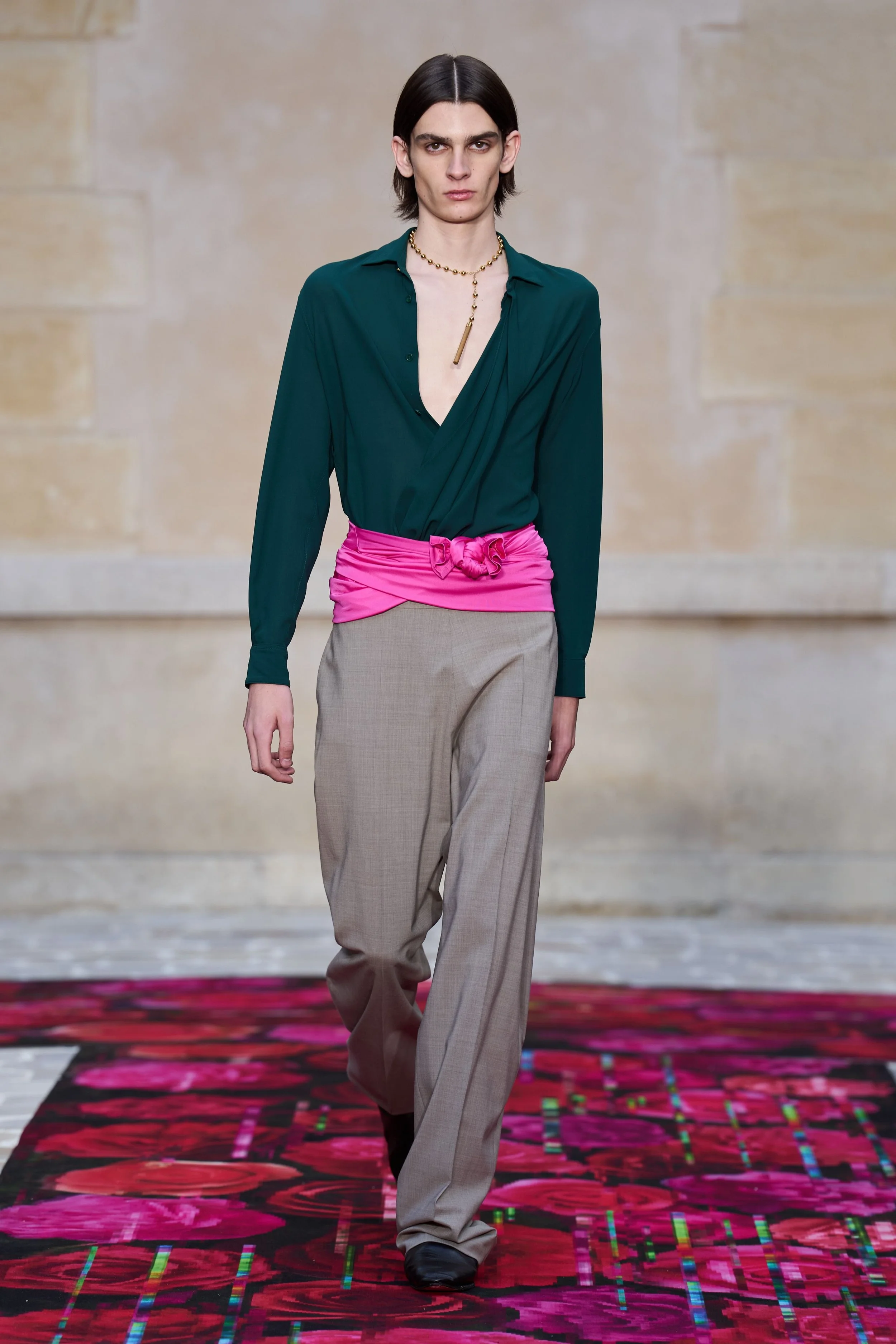
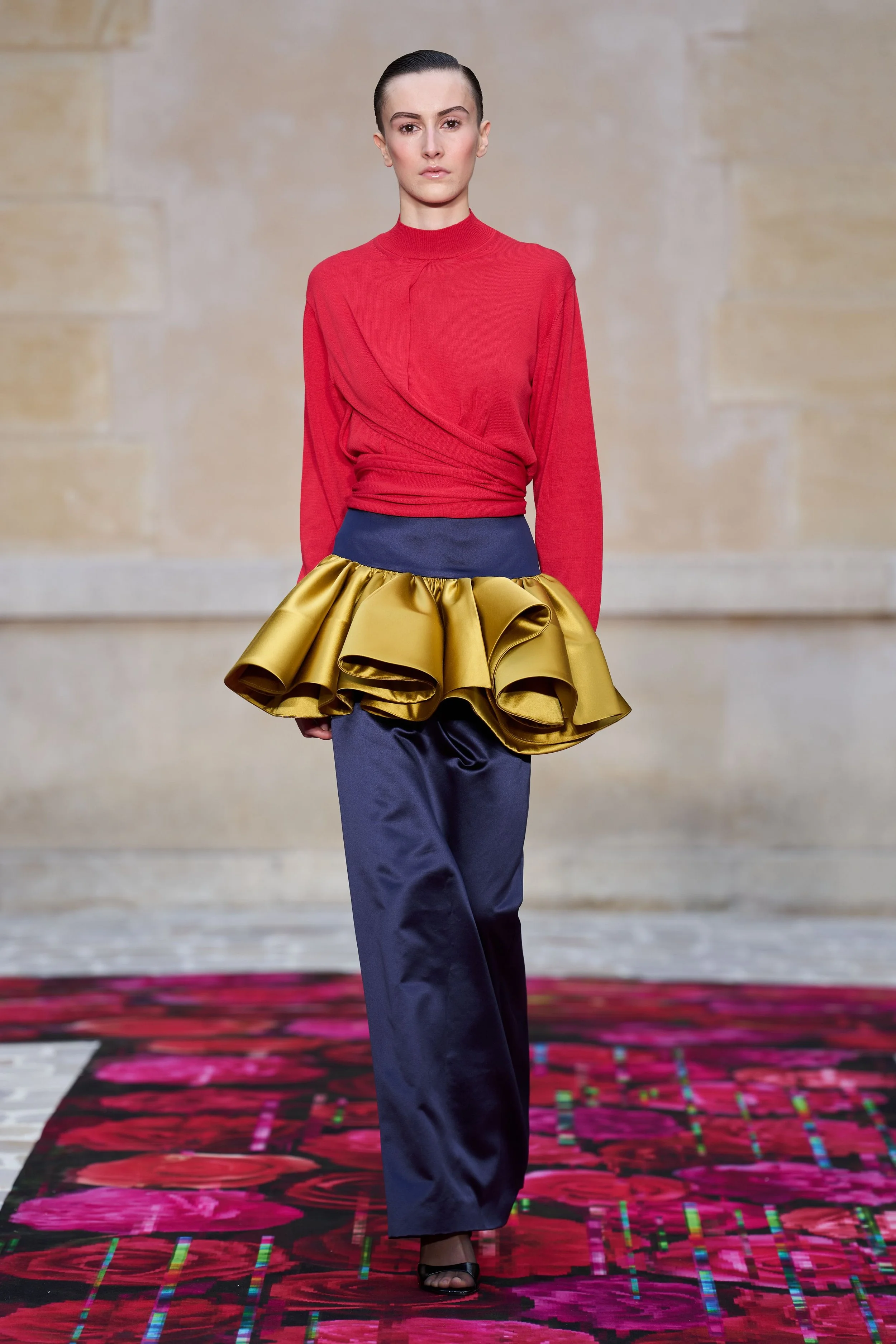
The rhythm accelerated in bold chromatic clashes: emerald silk blouses melted into beige wool trousers, secured with belts in electric pink; navy satin skirts swayed against crimson tops, their tension punctuated by a flash of gold ruffle. It was flamenco reimagined—not as costume, but as attitude, a choreography of fabric and colour.

Threaded through, Akyol’s signatures – black sheerness, nocturnal elegance – remained present, anchoring the new propositions to a familiar lexicon. Yet here, they were less about ephemerality than about endurance. Gülistan insists on beauty as a form of permanence, generosity as a design principle, and layering as a refusal of cultural erasure. It is a collection that blooms, thorns and all.


Words by Martin Onufrowicz

GIORGIO ARMANI SS26

In a season of new beginnings, Giorgio Armani’s latest collection was a definitive goodbye. Coinciding with the 50th anniversary of the brand, the show was the last we’ll ever see of Mr Armani’s groundbreaking vision. And what a vision it was. His take on clothing didn’t just revolutionise the way we dress; it reimagined the way we interact with fashion. And yet, despite his impact, he refused to follow the mythology of the fashion designer. He wasn’t an artistic prodigy or a master of reinvention. Mr Armani believed in his fashion philosophy.

Just above the venue of the show, an exhibit displayed his theories quite plainly. Clothes that were designed for real life, that prioritised both form and function. Spring/Summer 2026 feels true to his legacy. This was, in a way, like so many Giorgio Armani collections in the past. It followed a comfortably familiar rhythm. First, the greige looks, presented mainly in pairs. Softly tailored jackets and lightly pleated pants moved softly with the body, offering no resistance. Eventually, the palette grew darker, introducing silk asymmetrically draped sets and reflective jackets before dipping into a sea of navy blue. The palette and silhouettes matured into something exotic: a cerulean dress softly jotted out at the hips, a mandarin-collared, cropped shirt was encrusted with crystals over its petroleum silk.

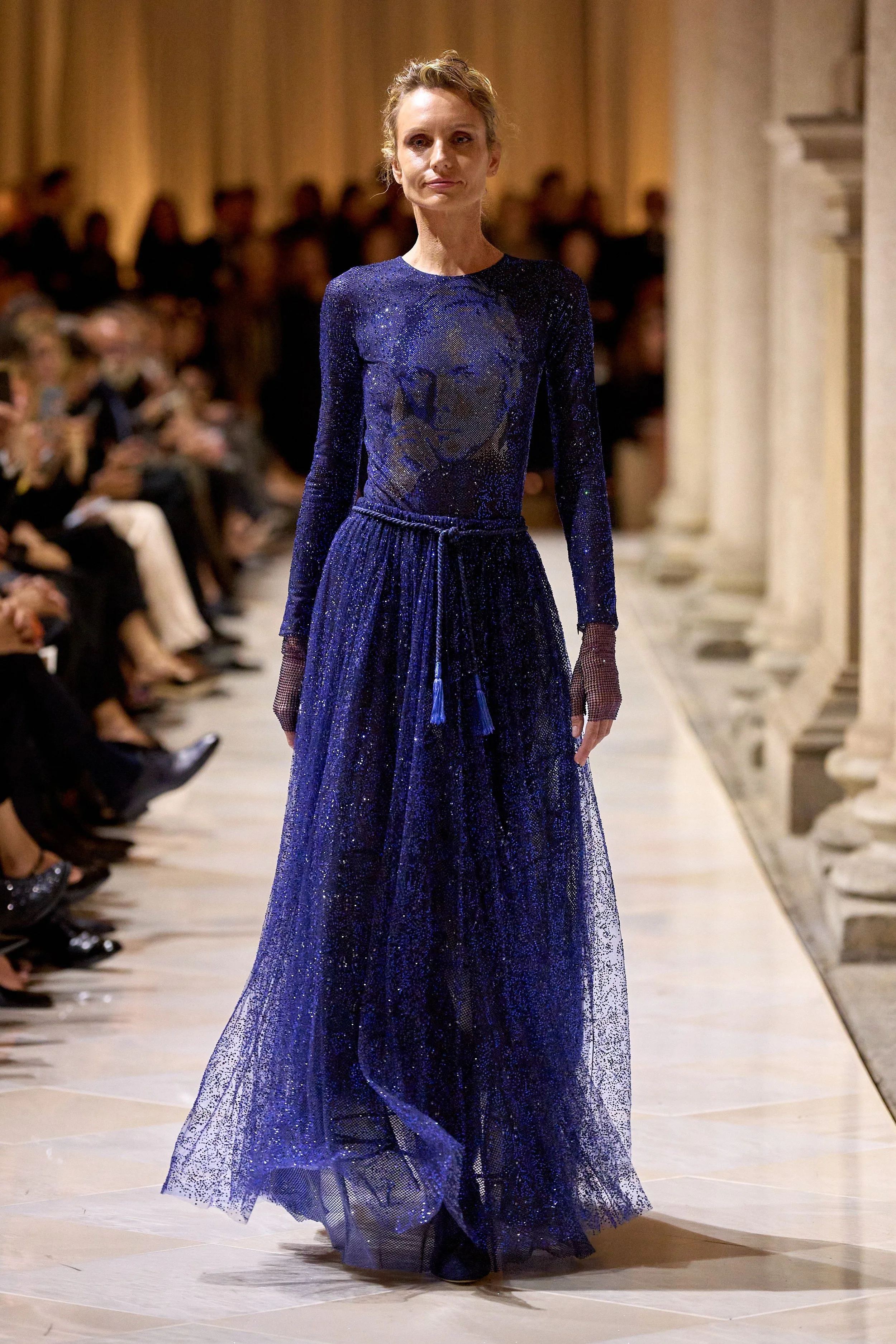
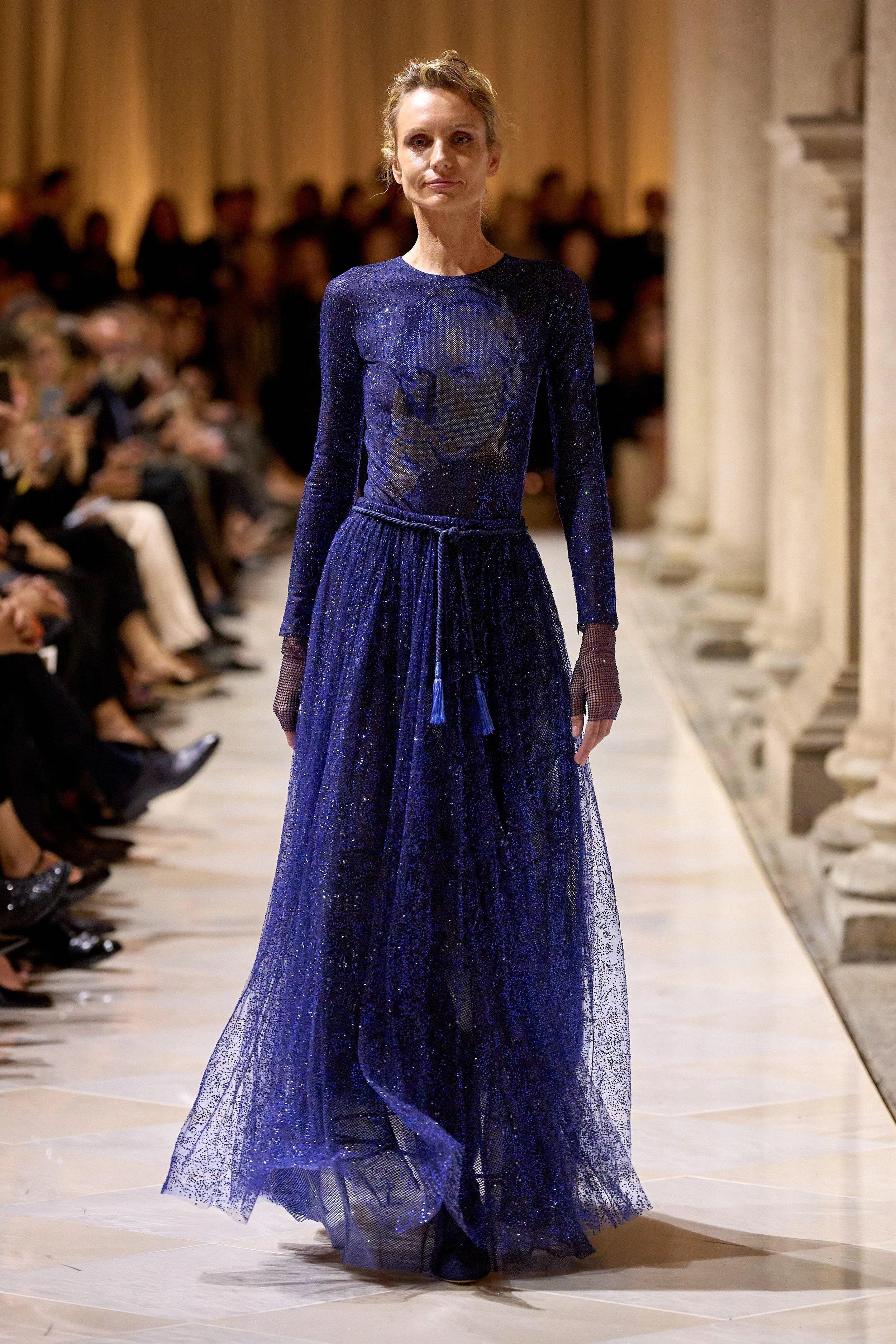
It was everything a collection that both celebrated and grieved Mr Armani should be. The show ended with a collection of intricately crystalised dresses, the last of which – a deep blue set – was breathtaking. As the picture of the designer shone in silver crystals on the model’s chest, his portrait and gaze immortalised, it became impossible to keep our eyes dry. What a life! What a legacy!


Words by Pedro Vasconcelos

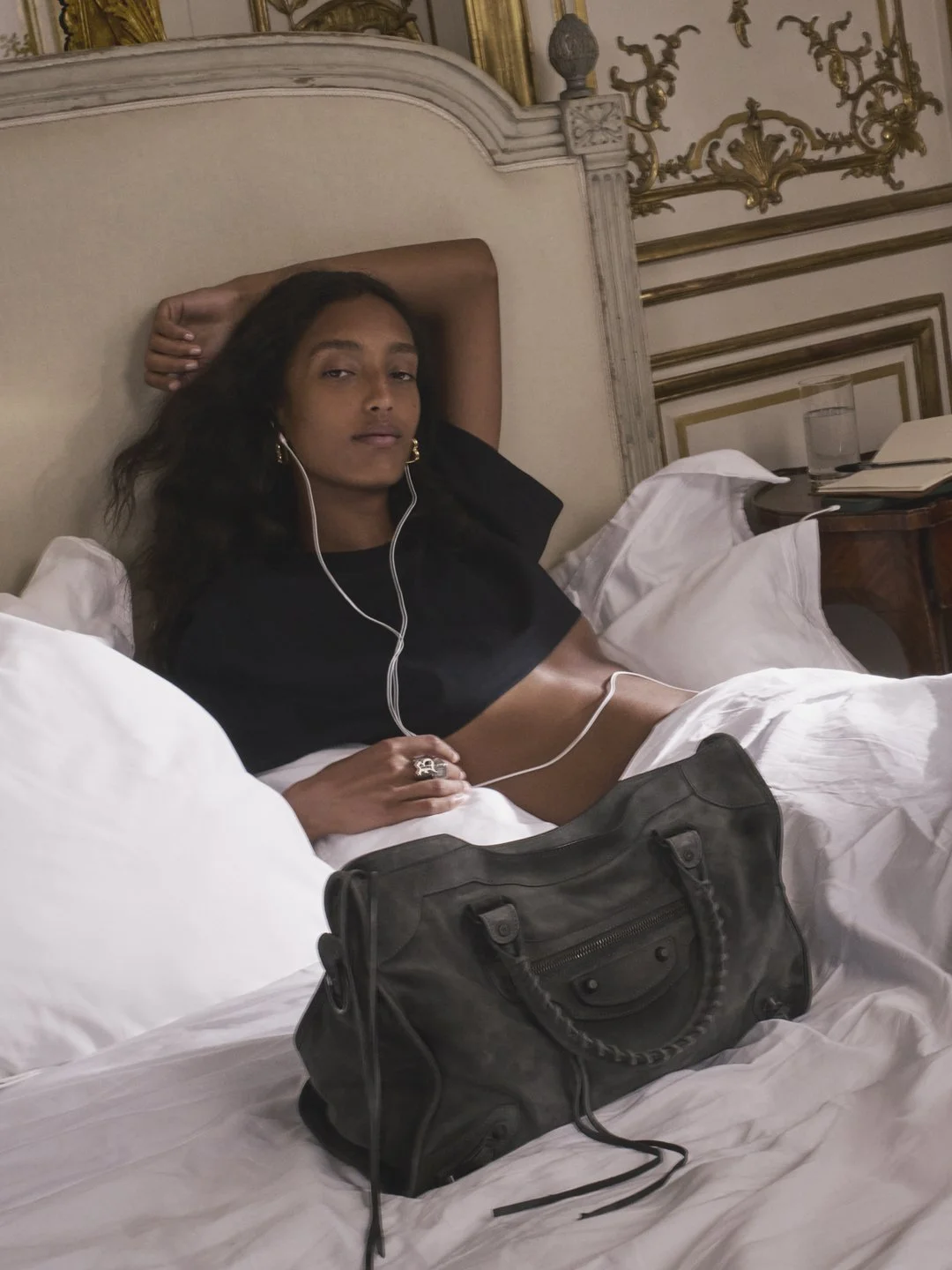
BOTTEGA VENETA SS26

Beginnings aren’t always about fresh starts. In fashion, we’ve come to crave newness – a clean slate, a bold departure from the past that we can sink our teeth into. Louise Trotter, however, offered a different take with her Bottega Veneta debut. Her appointment wasn’t designed to usher in a new era, but to carry forward a legacy.
Bottega Veneta has always occupied a singular place in fashion. In recent years, through the visions of Daniel Lee and Matthieu Blazy, it has entered the mainstream lexicon of luxury. And yet, since its inception, the house has distinguished itself by what it refuses to do. It has never relied on logos. It has never chased hype. Trotter’s appointment is masterful. For years, the British designer has been developing an intellectual, mature language in brands like Lacoste and Carven. Here we see the apex of her work.

Blazy’s Bottega was whimsical. Stuffed animal chairs and Intrecciato children’s books: there was a real sense of play. Trotter crystallised it into something more mature. The sense of whimsy was still there, but sharpened, deliberate, as if Trotter were testing the boundaries of what a house so devoted to craftsmanship can achieve. Not just through Intrecciato (though that ankle-length leather coat was mouthwatering), but through other, less expected techniques.

Material experimentation was pushed further: technical fabric dresses were both stiff and light, and feather sleeveless tops jutted out of the body effortlessly. But no other technical feat stood out quite as much as sweaters and skirts made of recycled fibreglass. The first reaction was astonishment, followed by confusion and ultimately awe. In the age of artificial intelligence, we’ve become weary of what we can’t understand. The first of these pieces, a sweater made of blue strands that seemed to shine from within, was hard to think real. As others came out, first in gold and then in a fiery red, the initial disbelief vanished. Similarly, fuzzy skirts in abstract patterns were perhaps even greater, the movement of the legs highlighting their prowess.

It wasn’t all just a parade of showpieces. Trotter punctuated the collection with her characteristic oversized tailoring. Shoulders on sculptural jackets bulged out elegantly. The menswear offers were equally as bright. A fuzzy pair of shorts elongated just past the knees. A structured long coat nipped in the waist almost architecturally, pushing the arms out of rounded shoulders. 

Trotter’s appointment at Bottega wasn’t a gap to fill. She wasn’t tasked with revival, nor with cleaning up after a predecessor’s mistakes. And while it may not be as immediately satisfying to point out stark differences, to dissect what is before and after, perhaps that is precisely what makes it more interesting.


Words by Pedro Vasconcelos