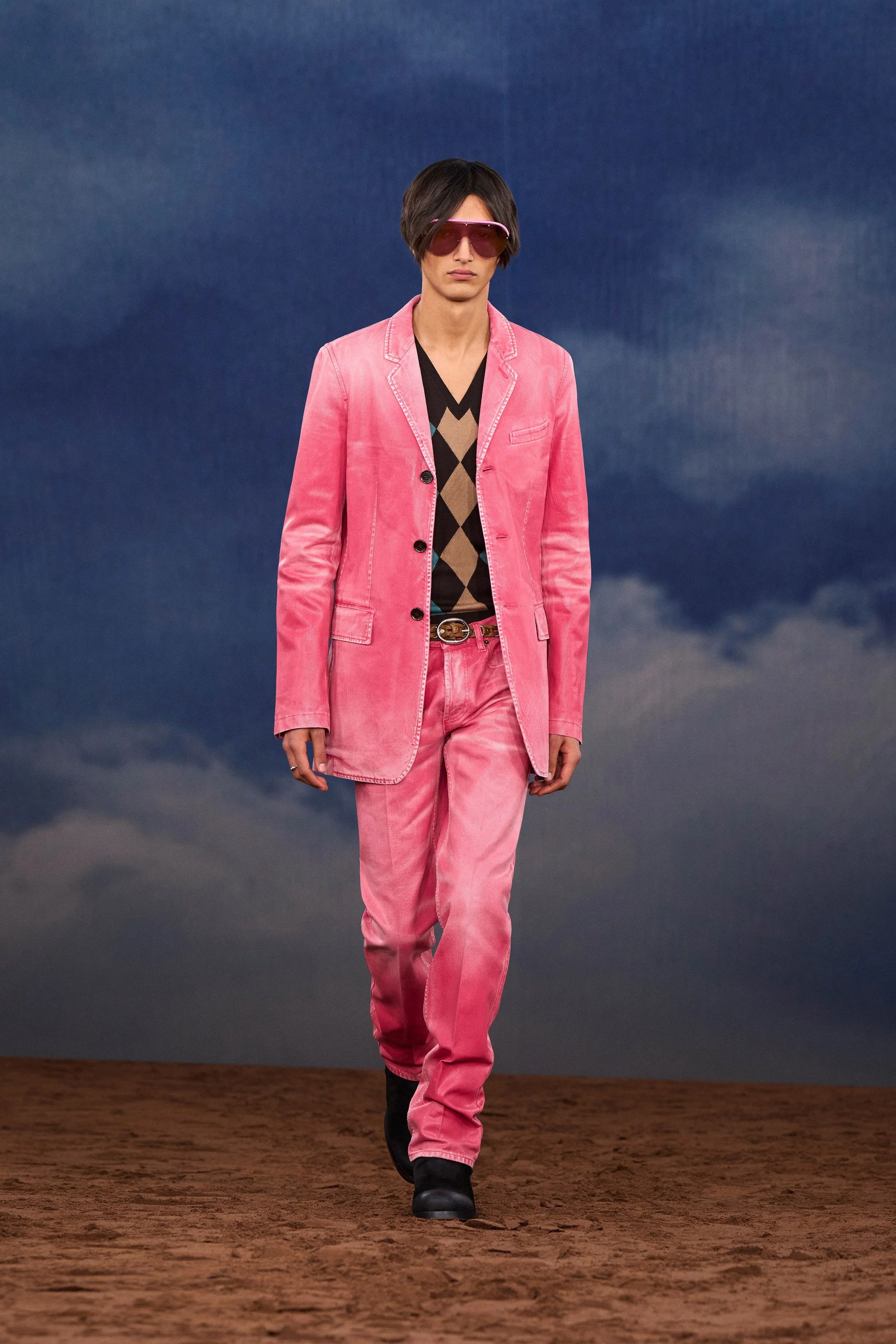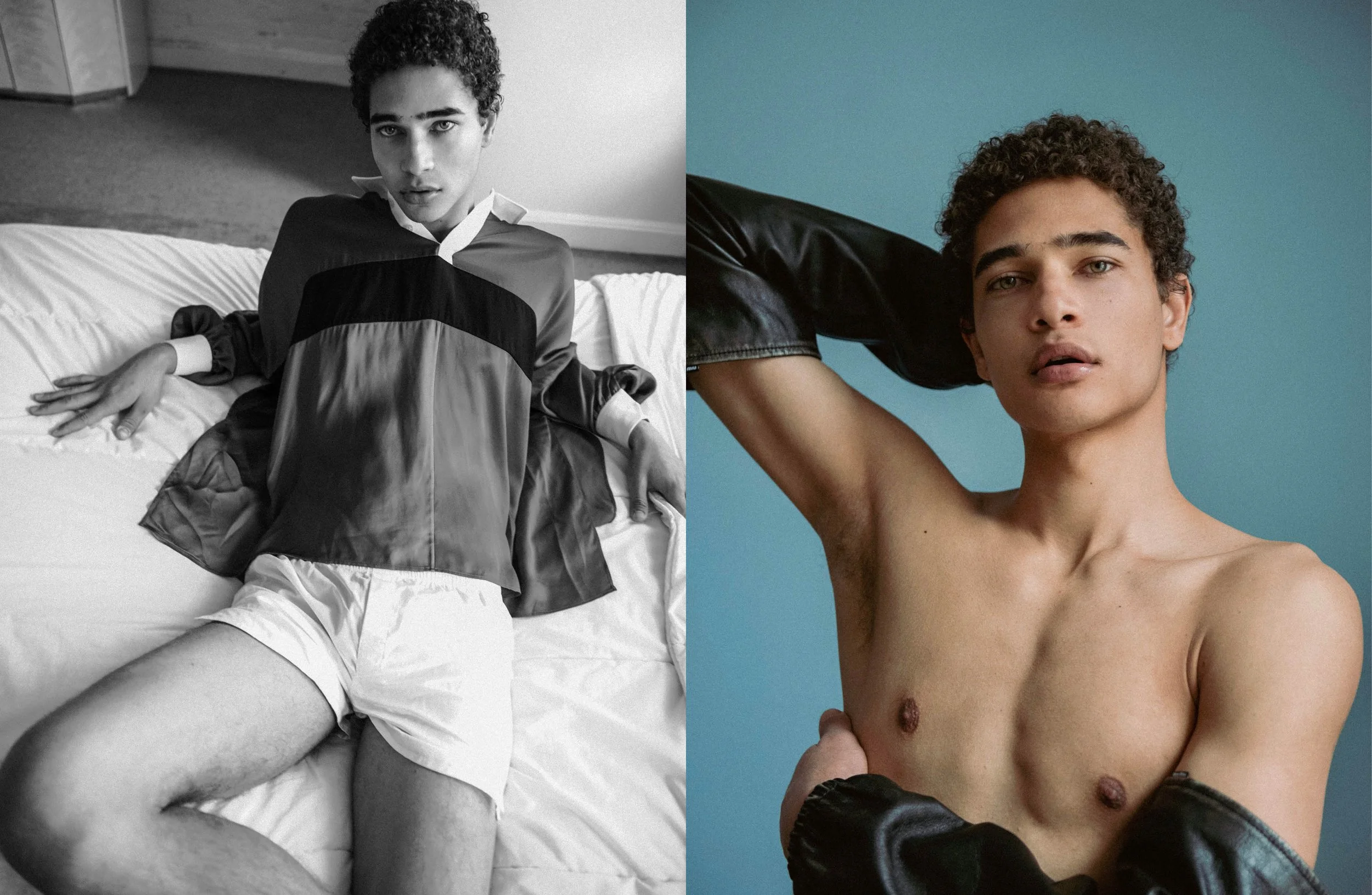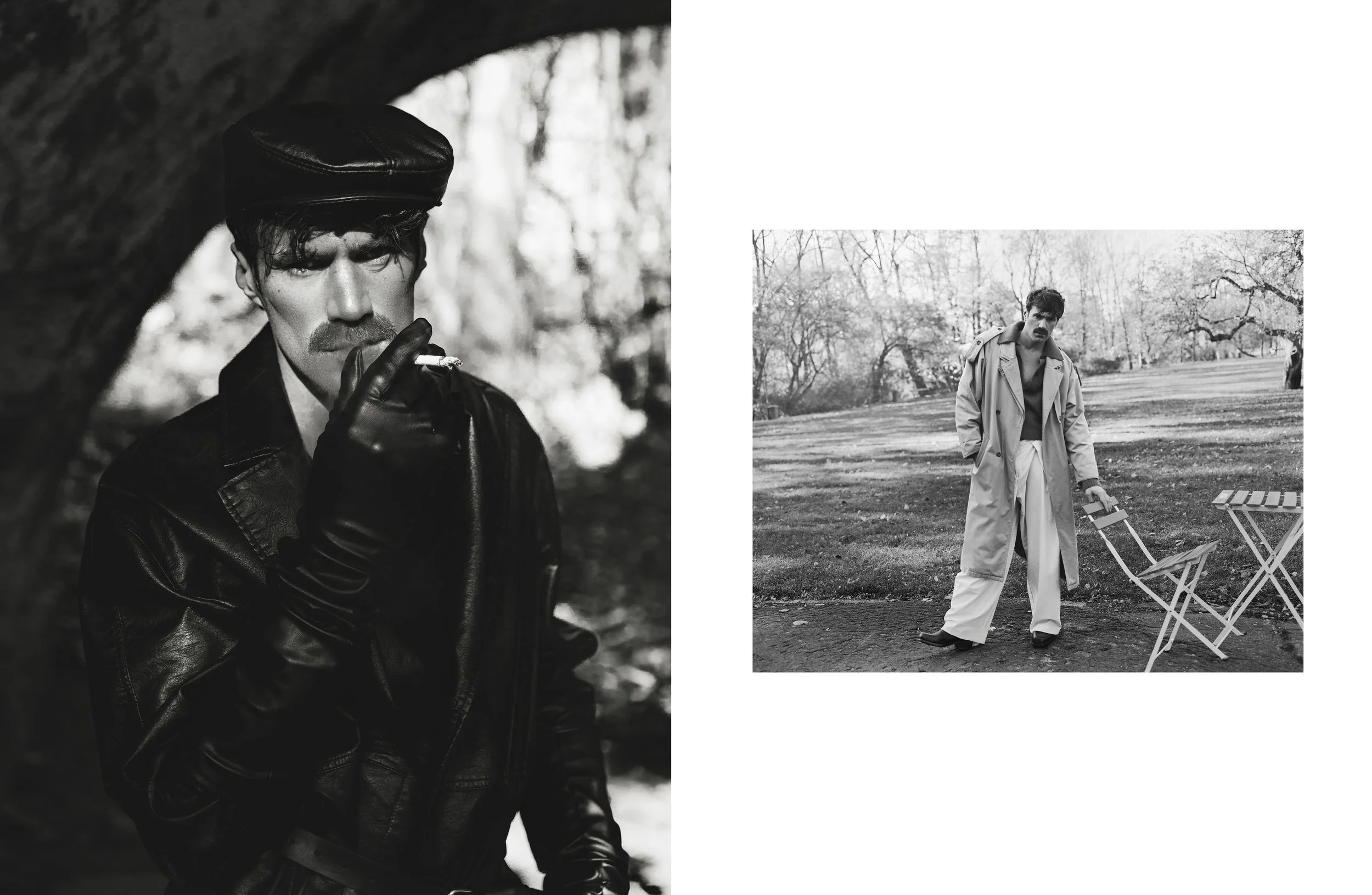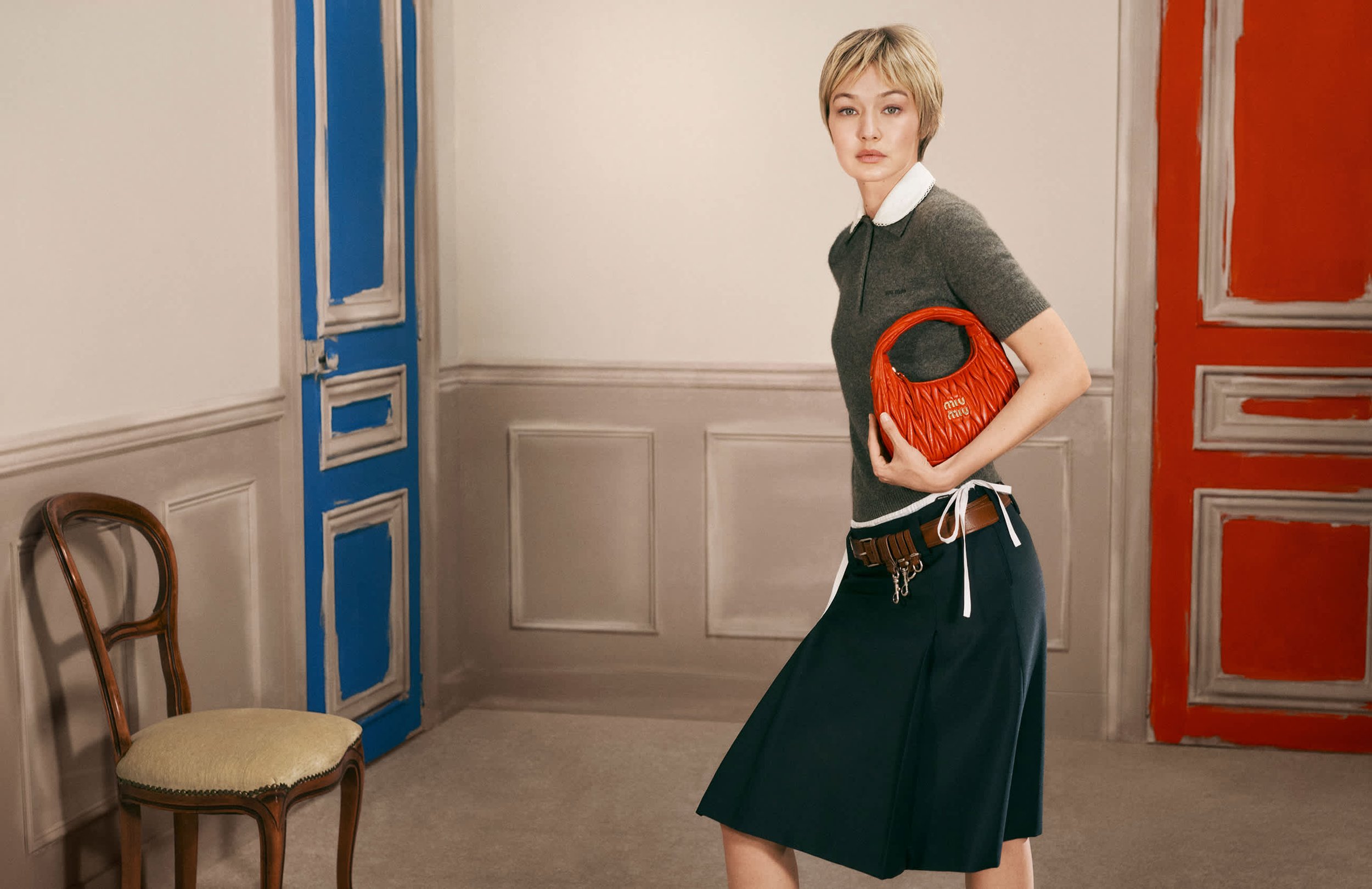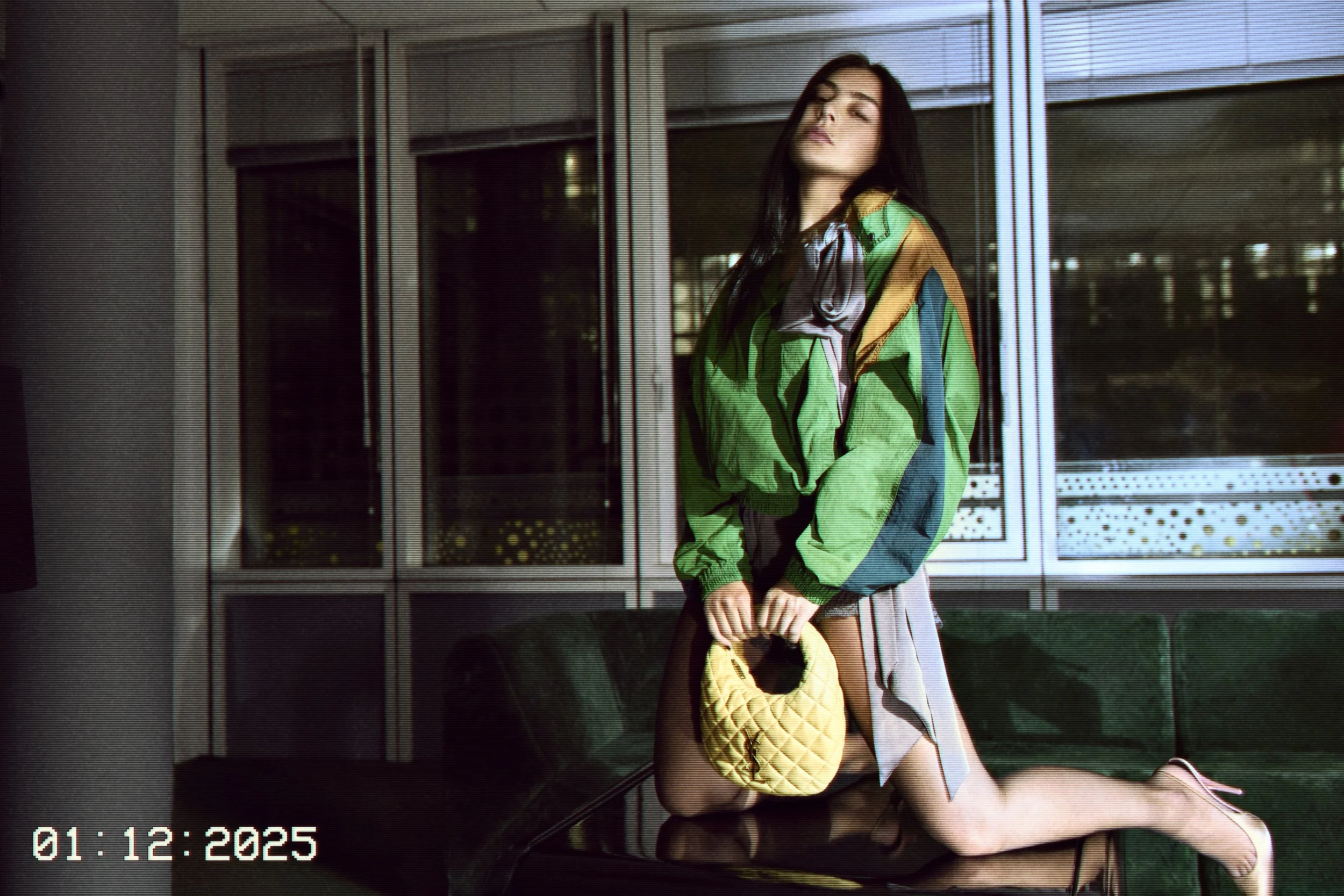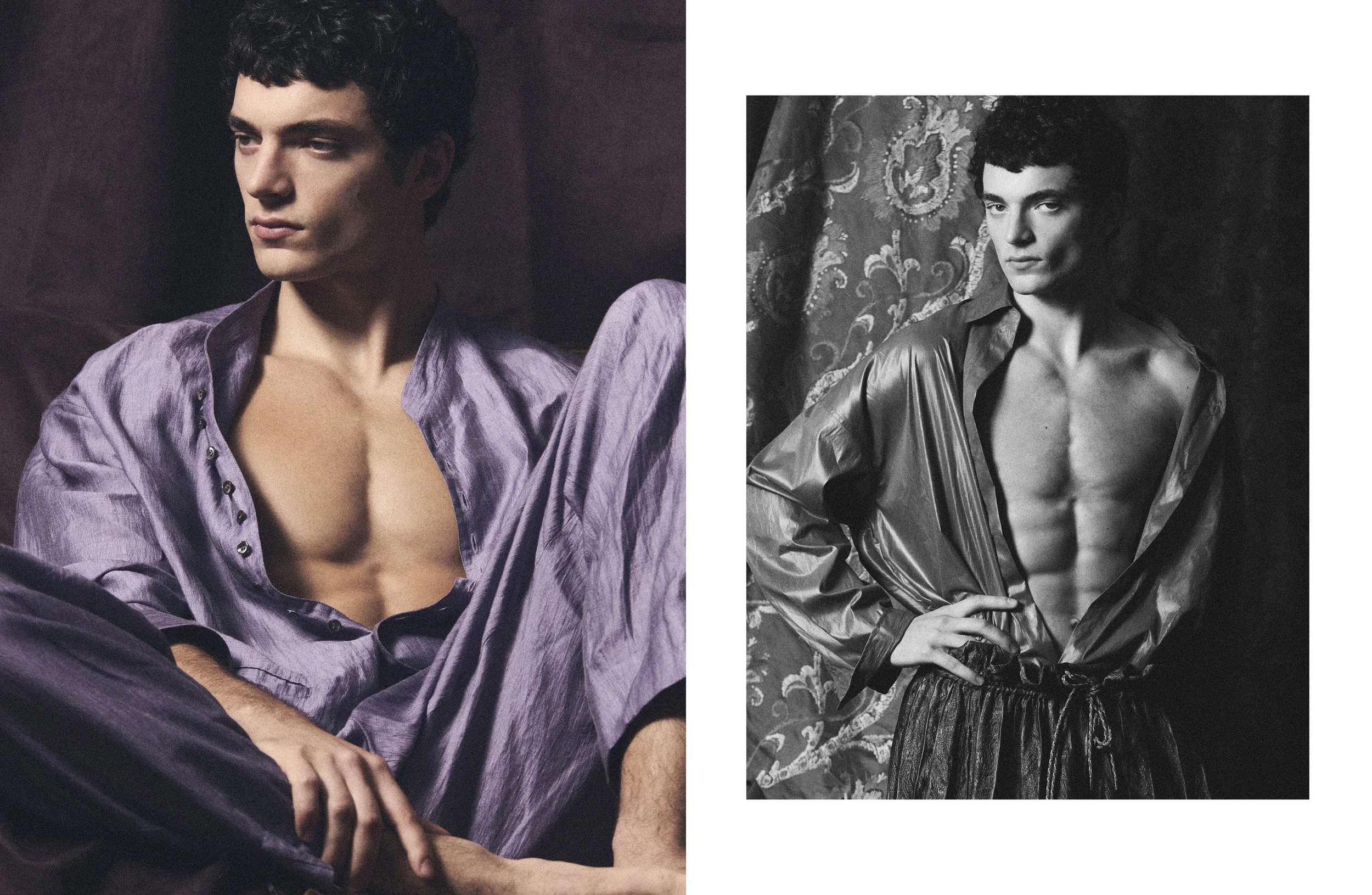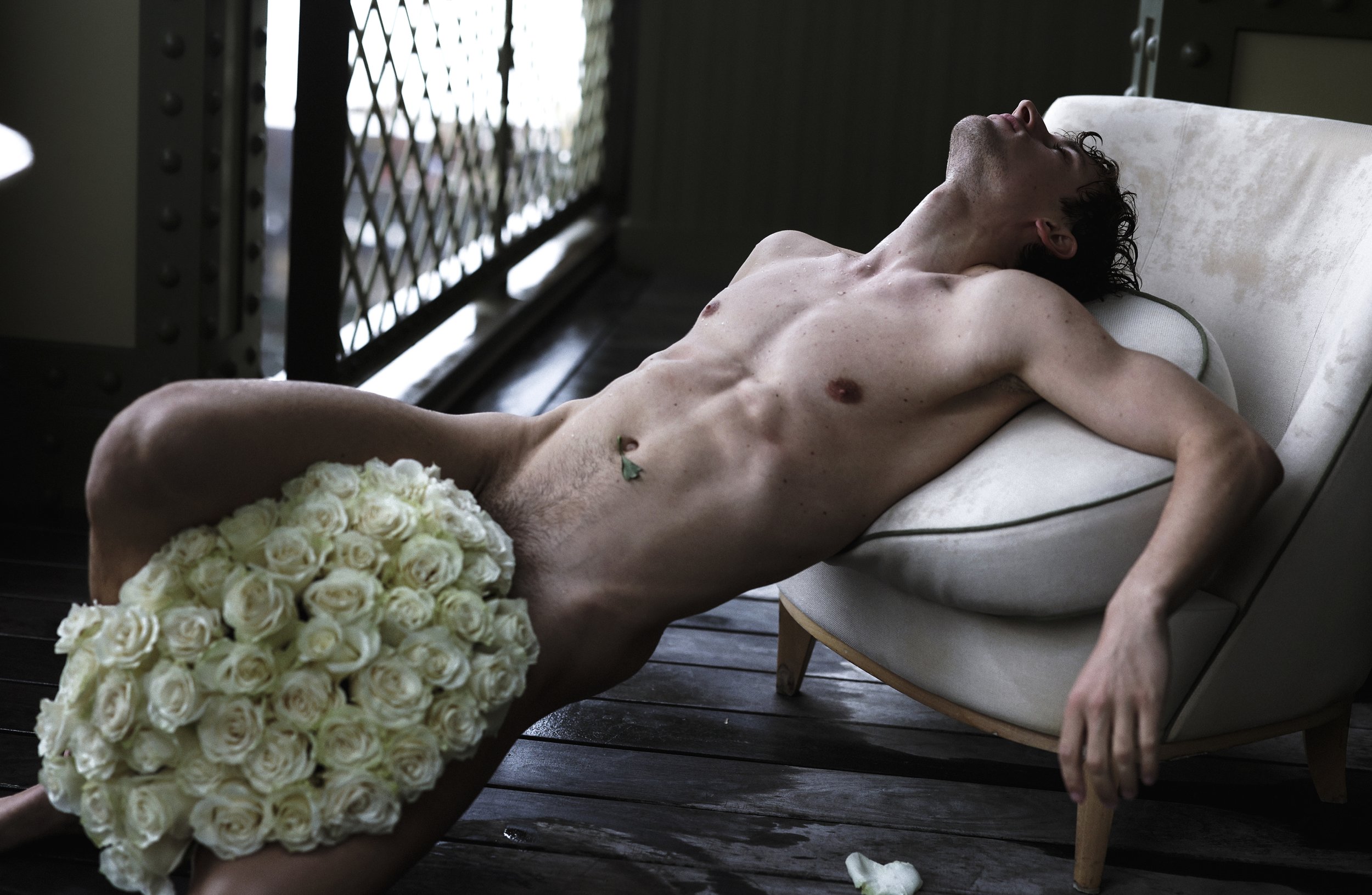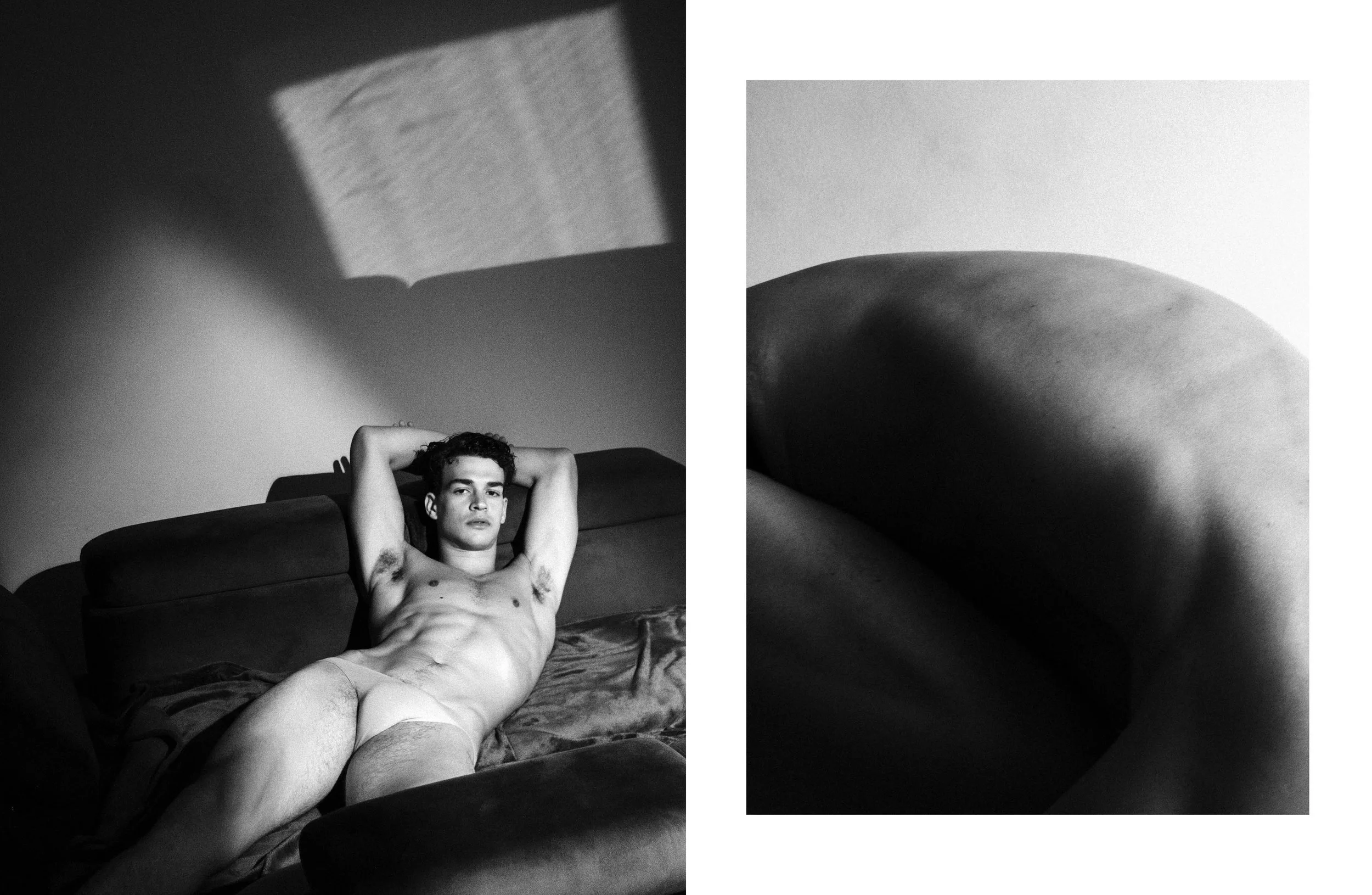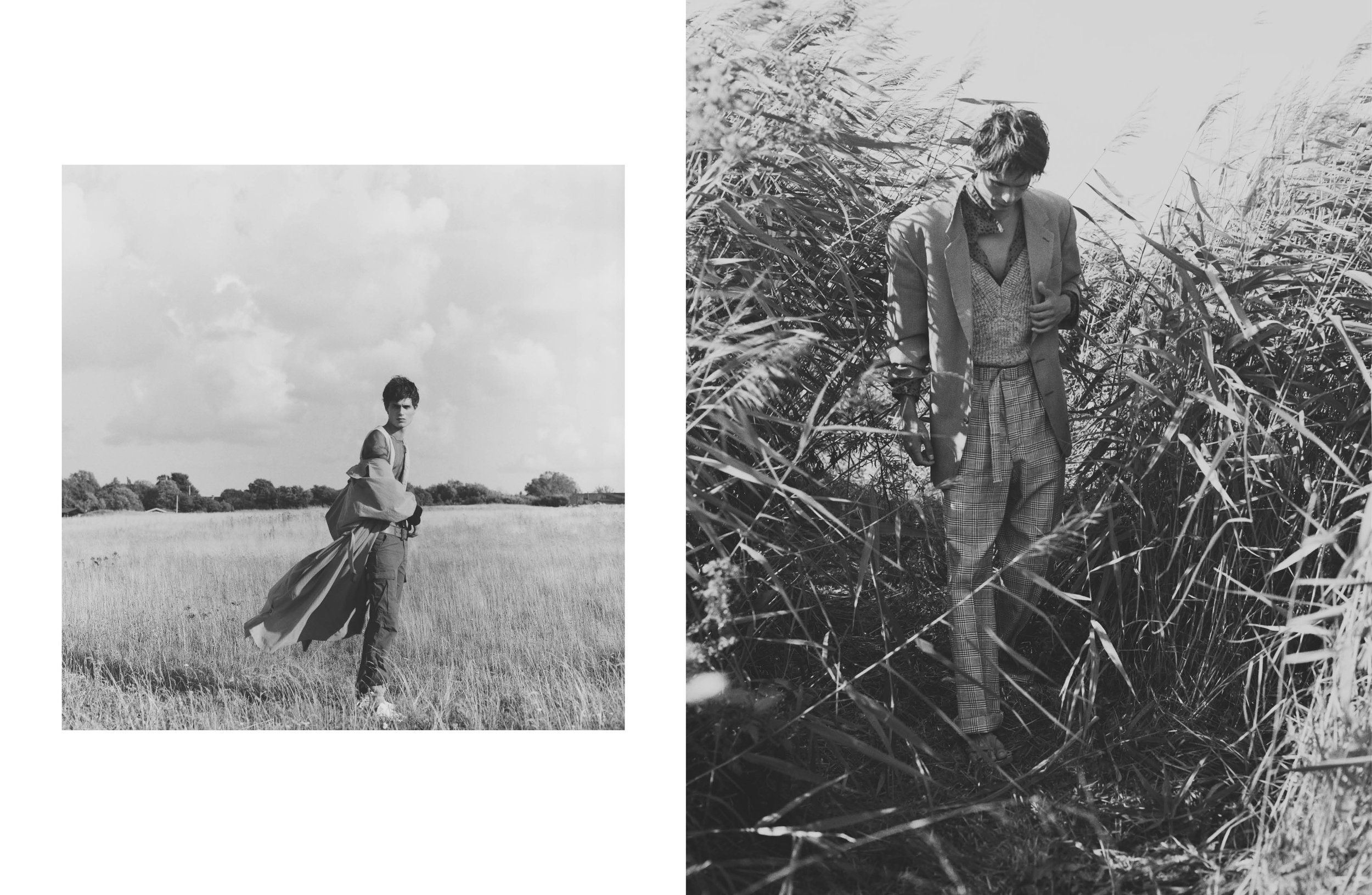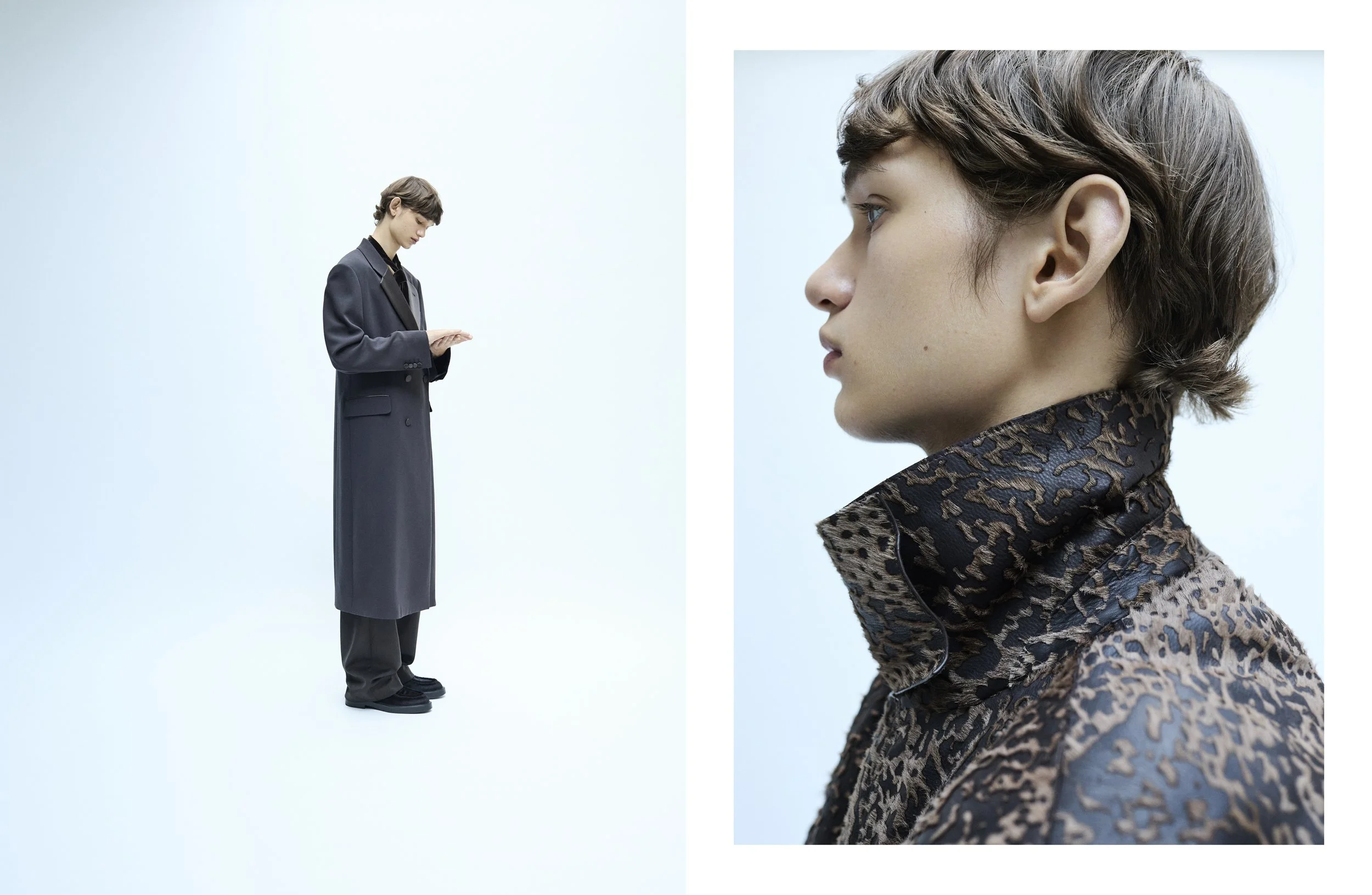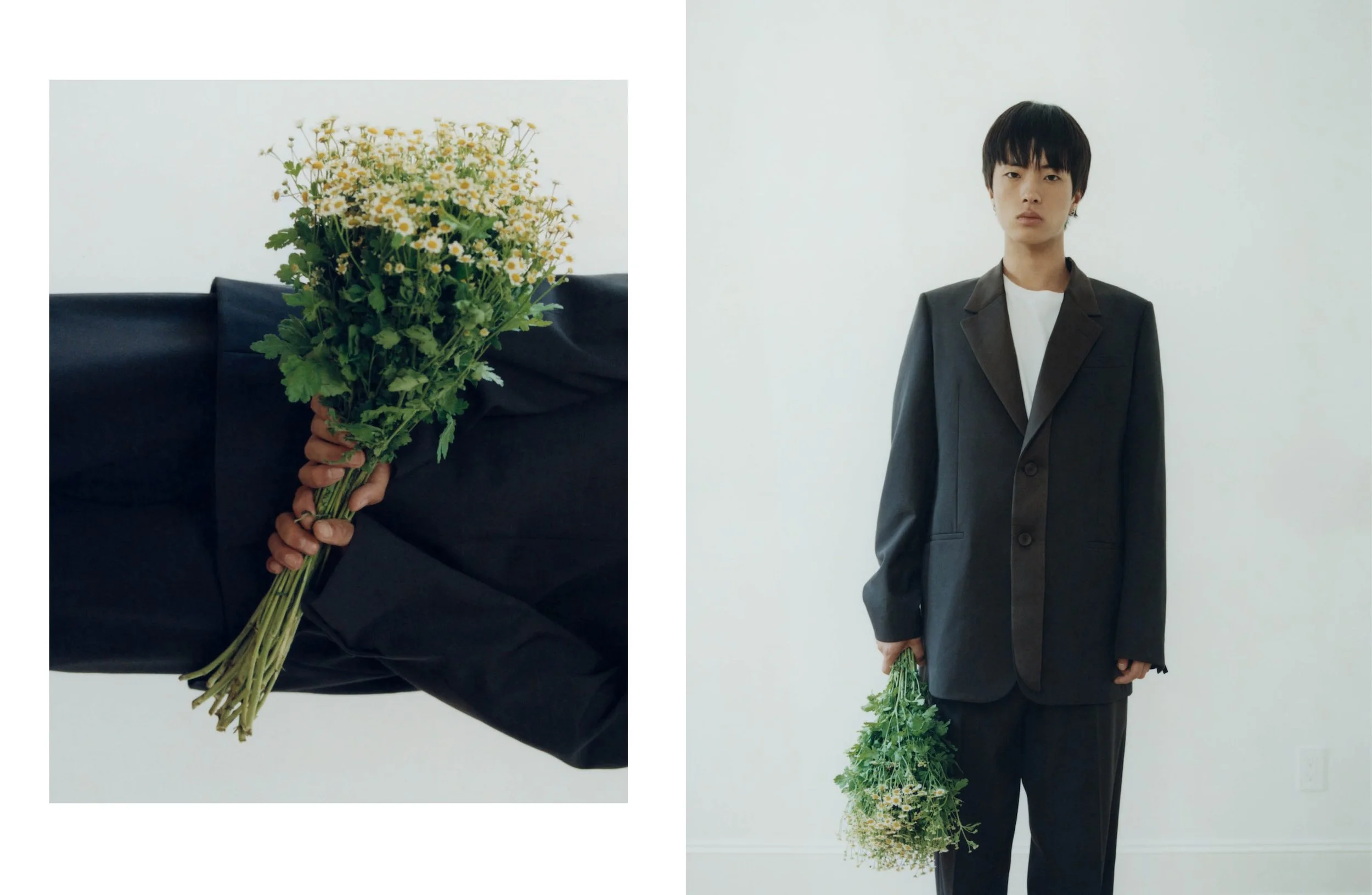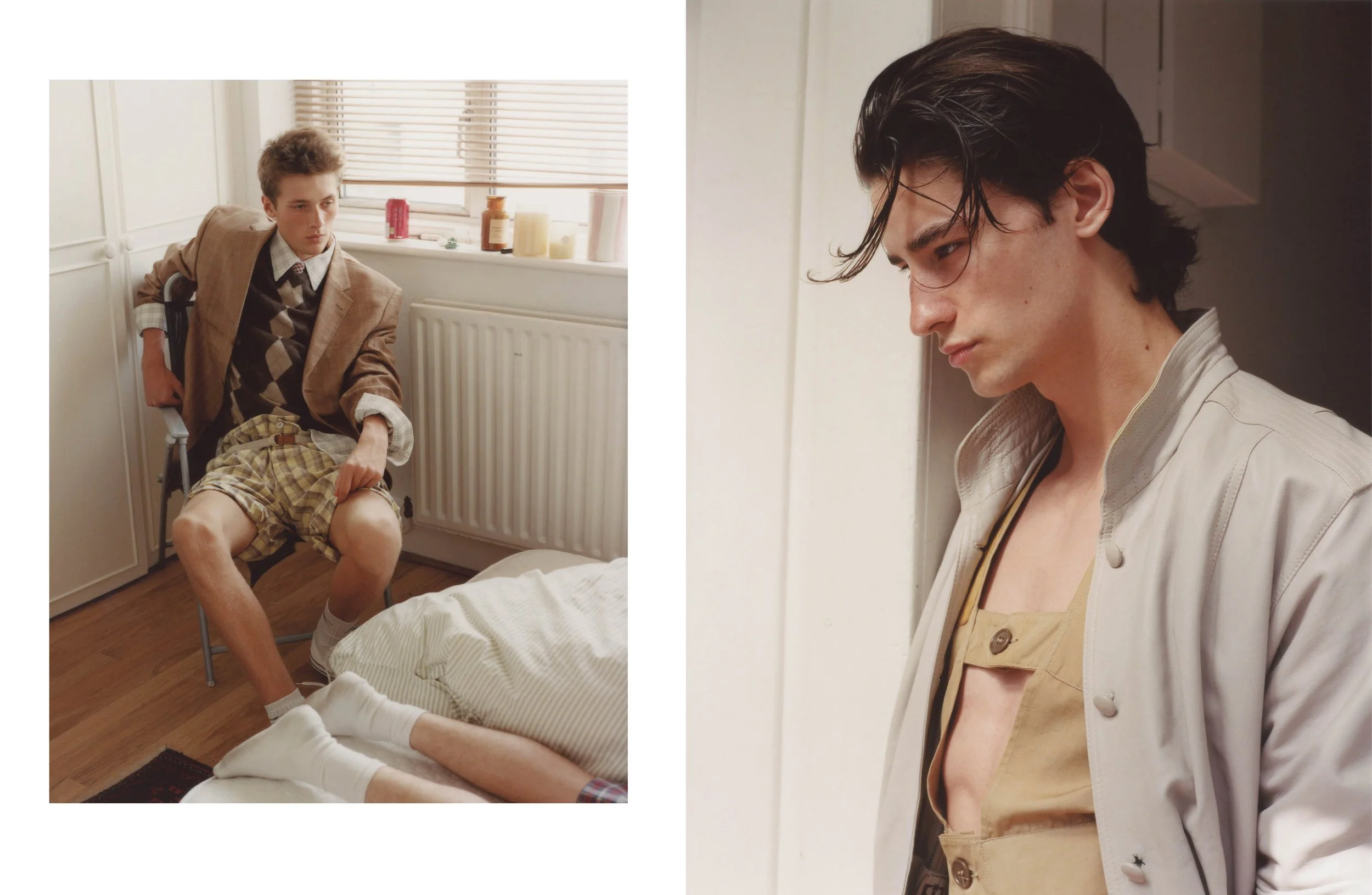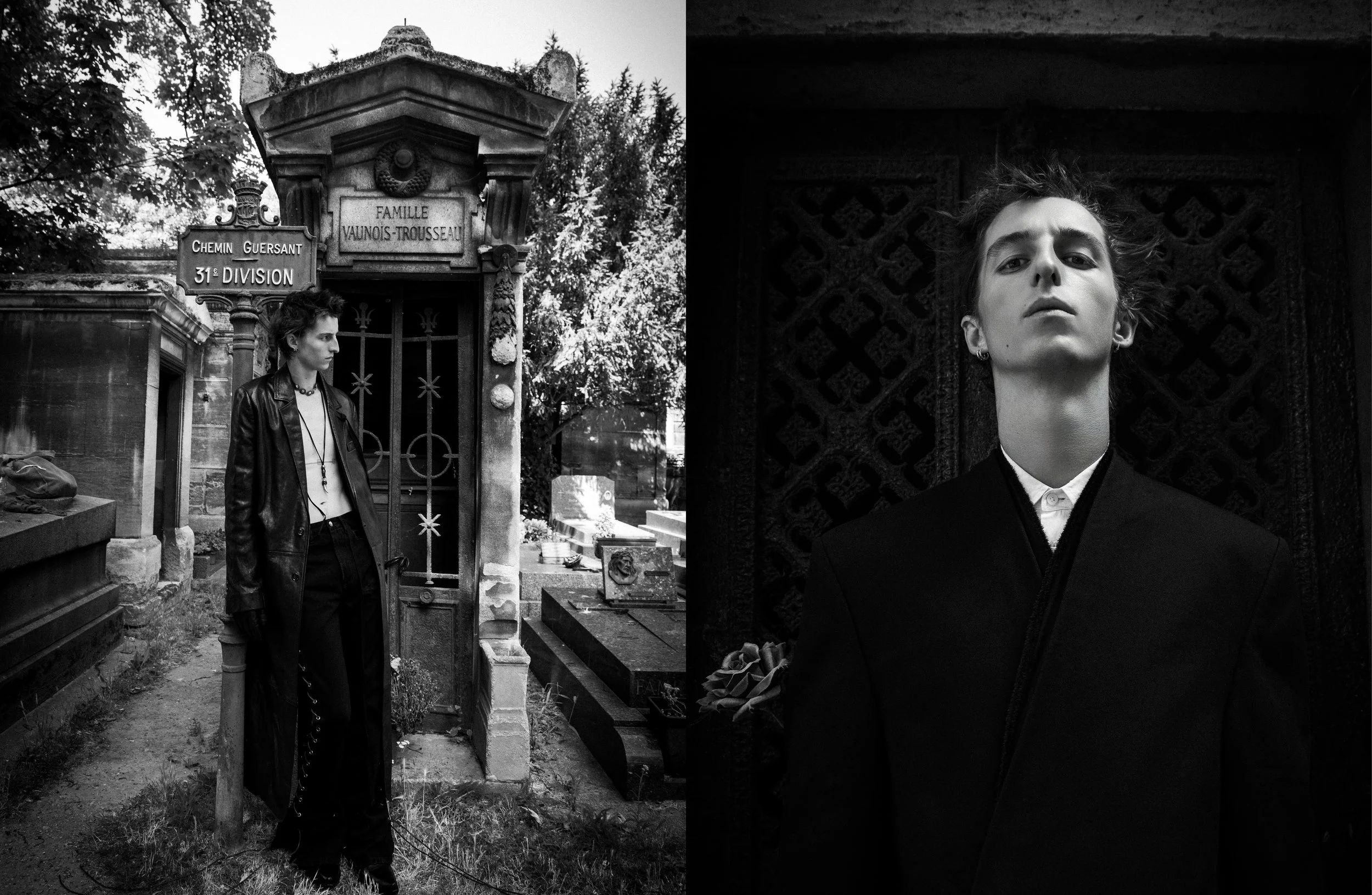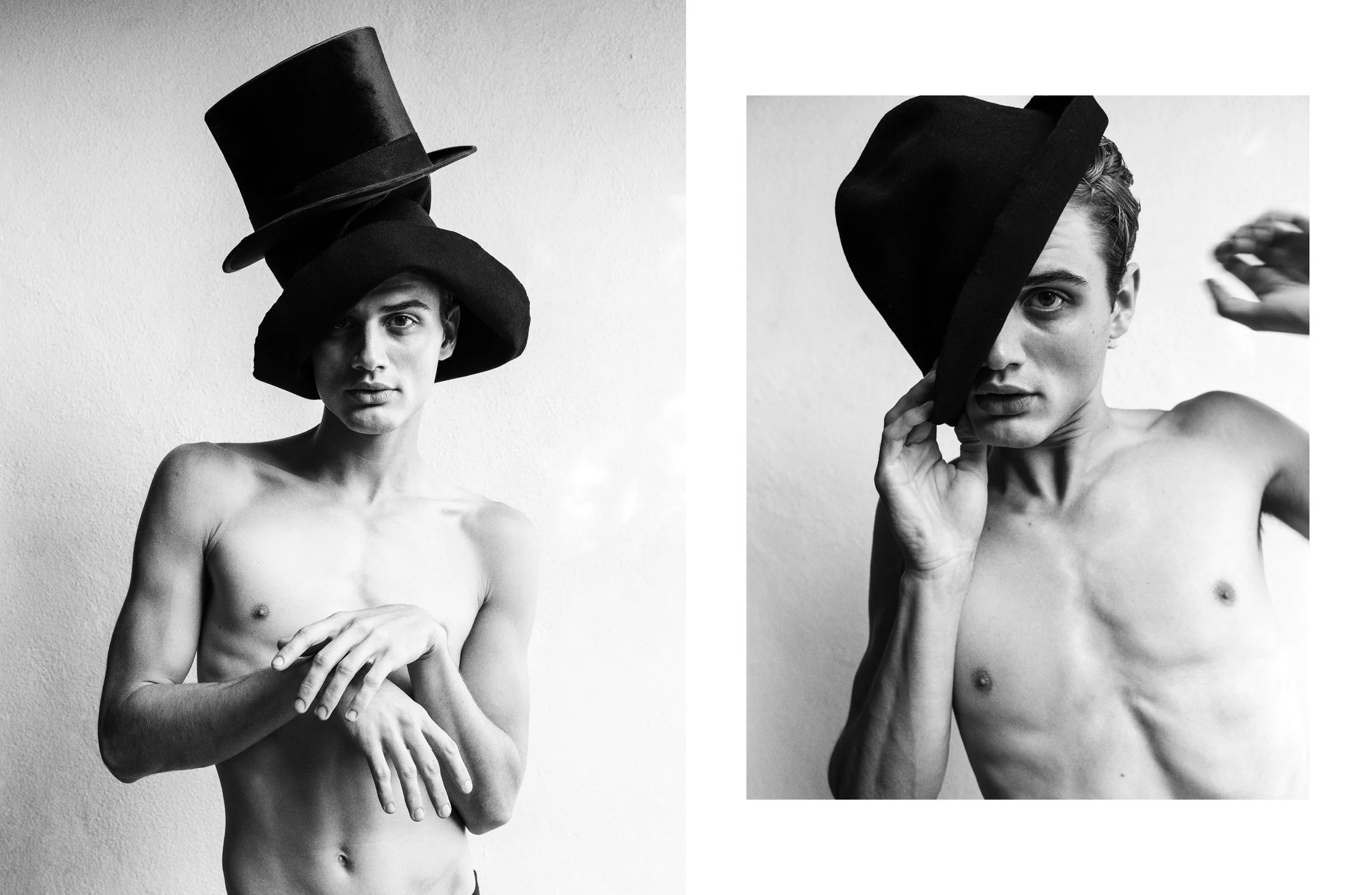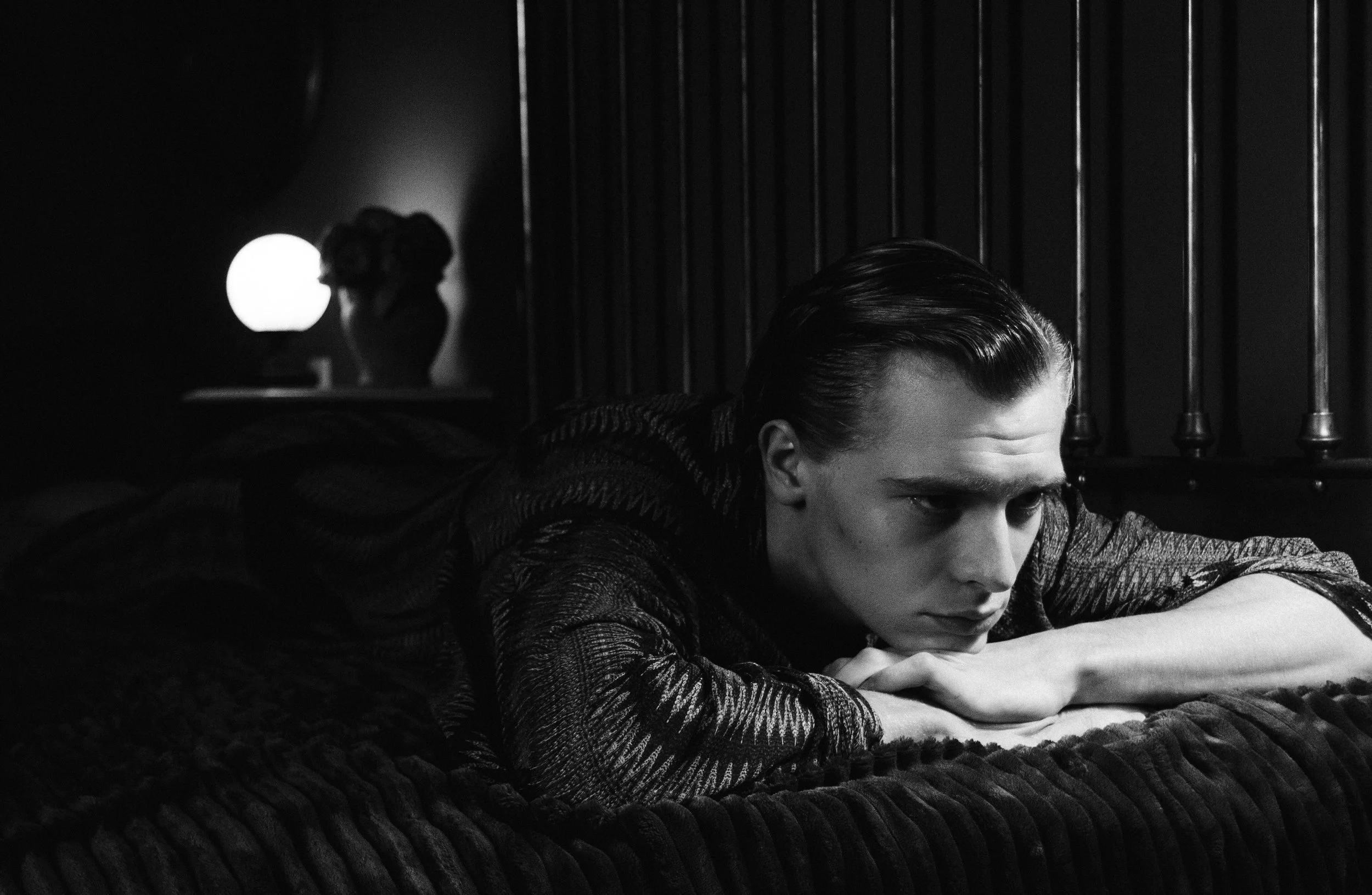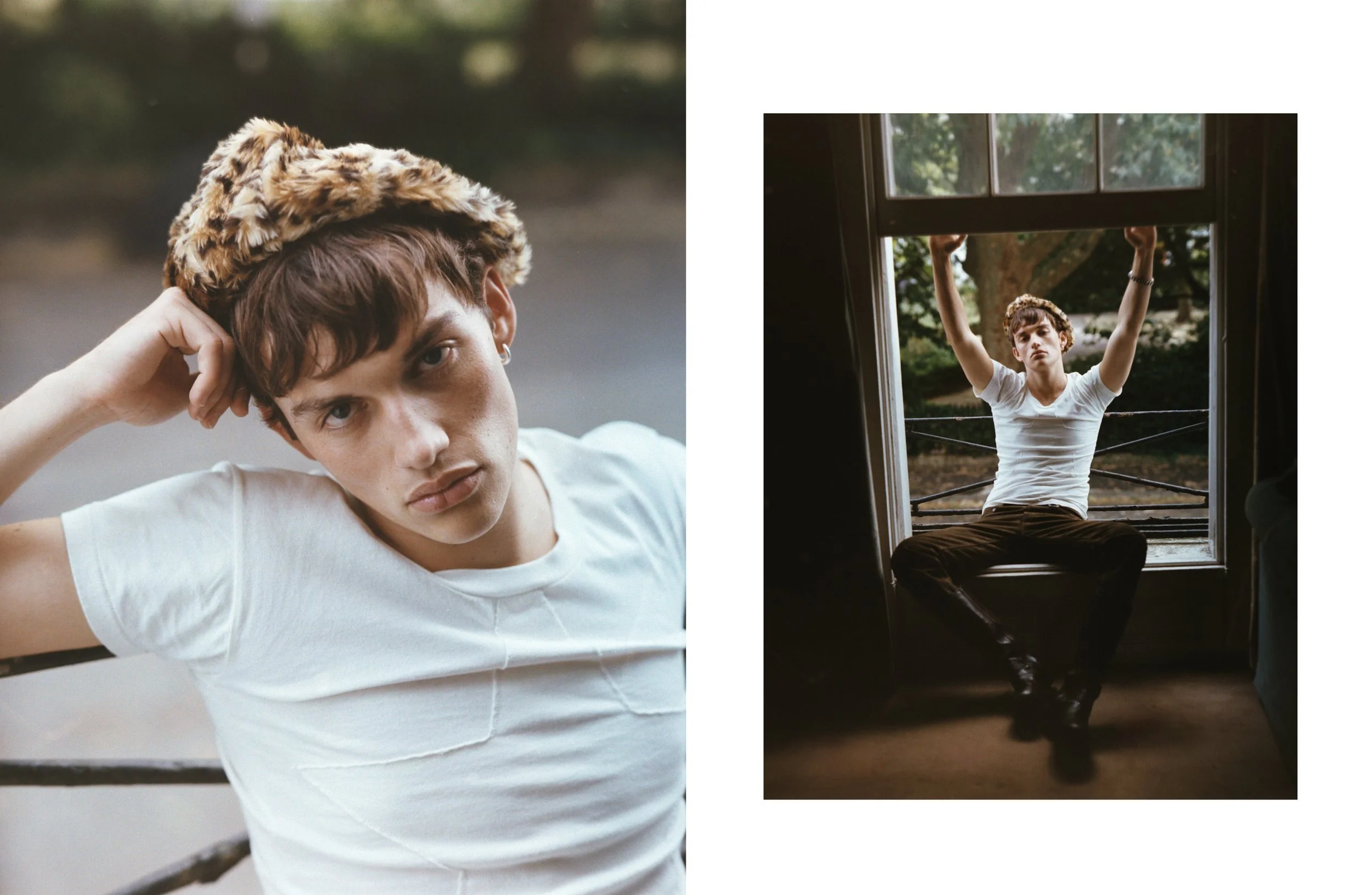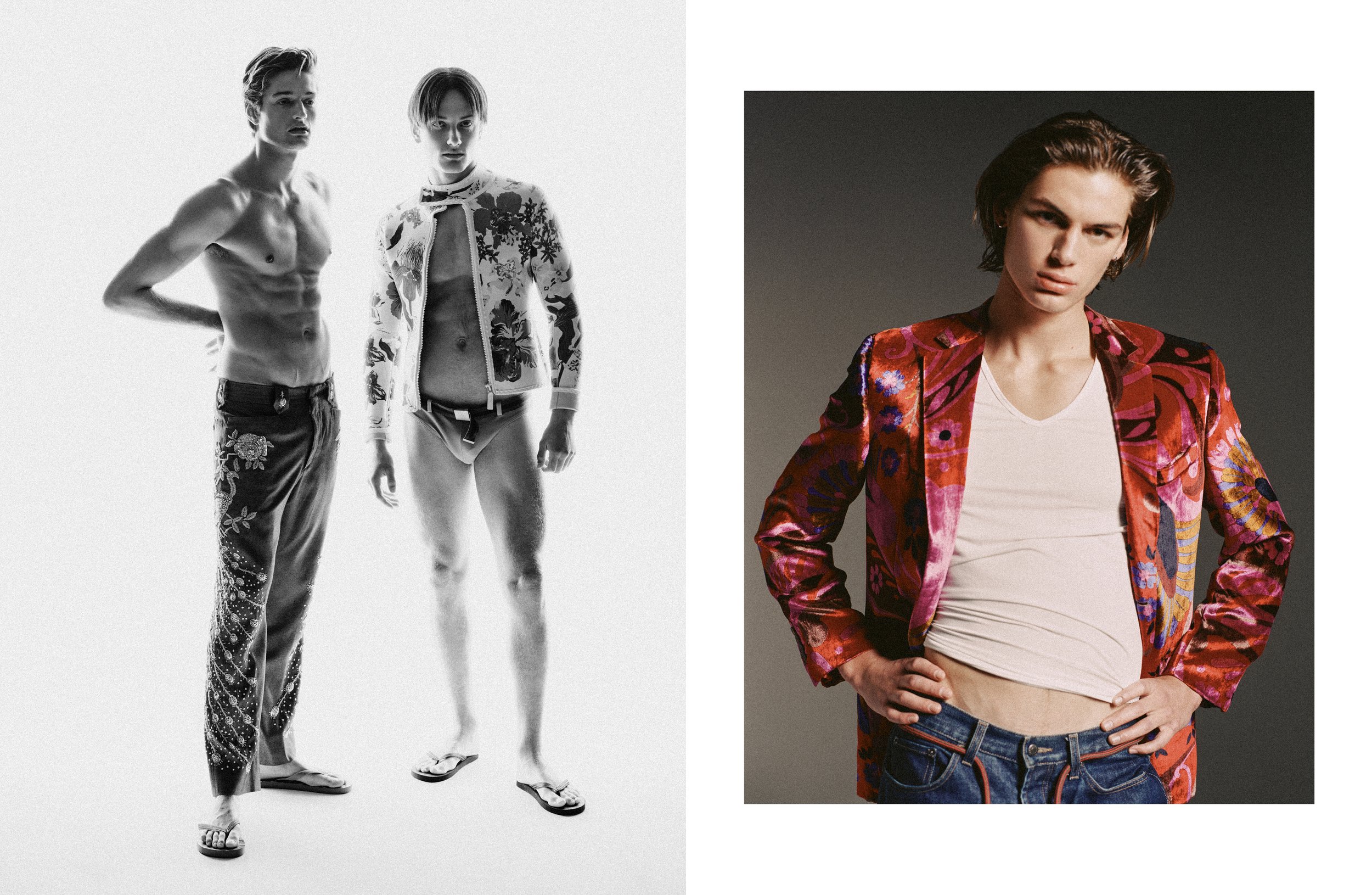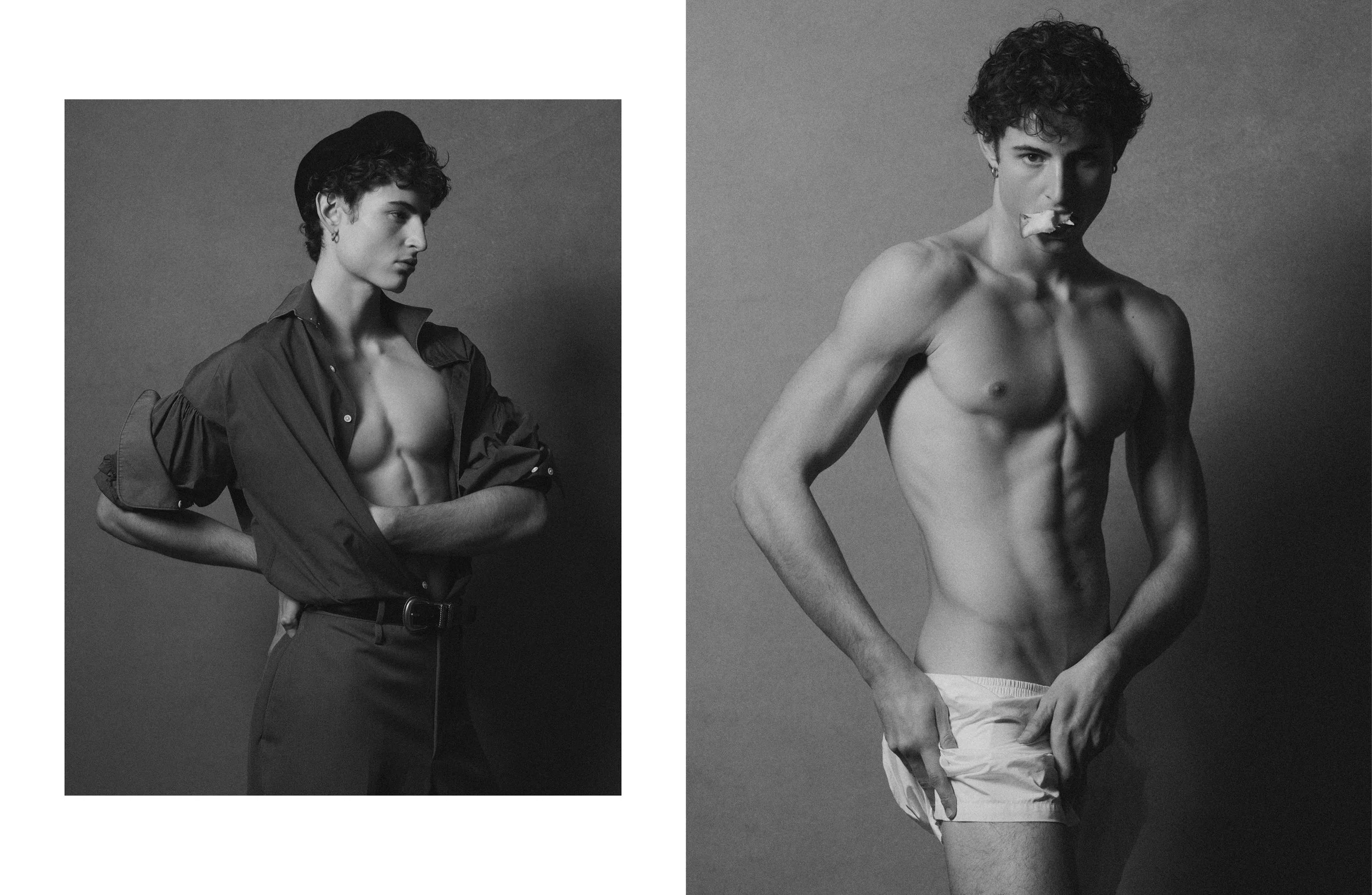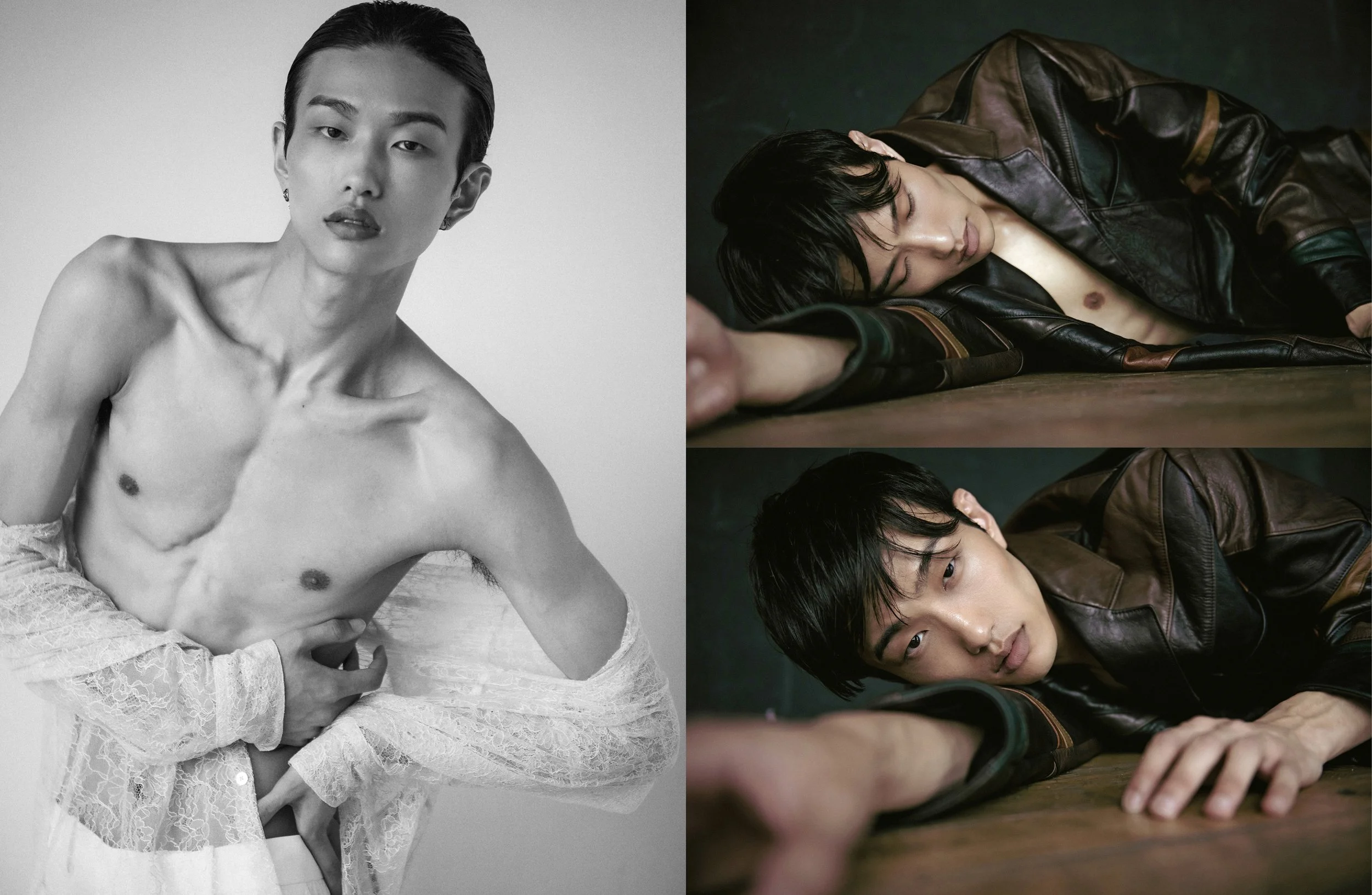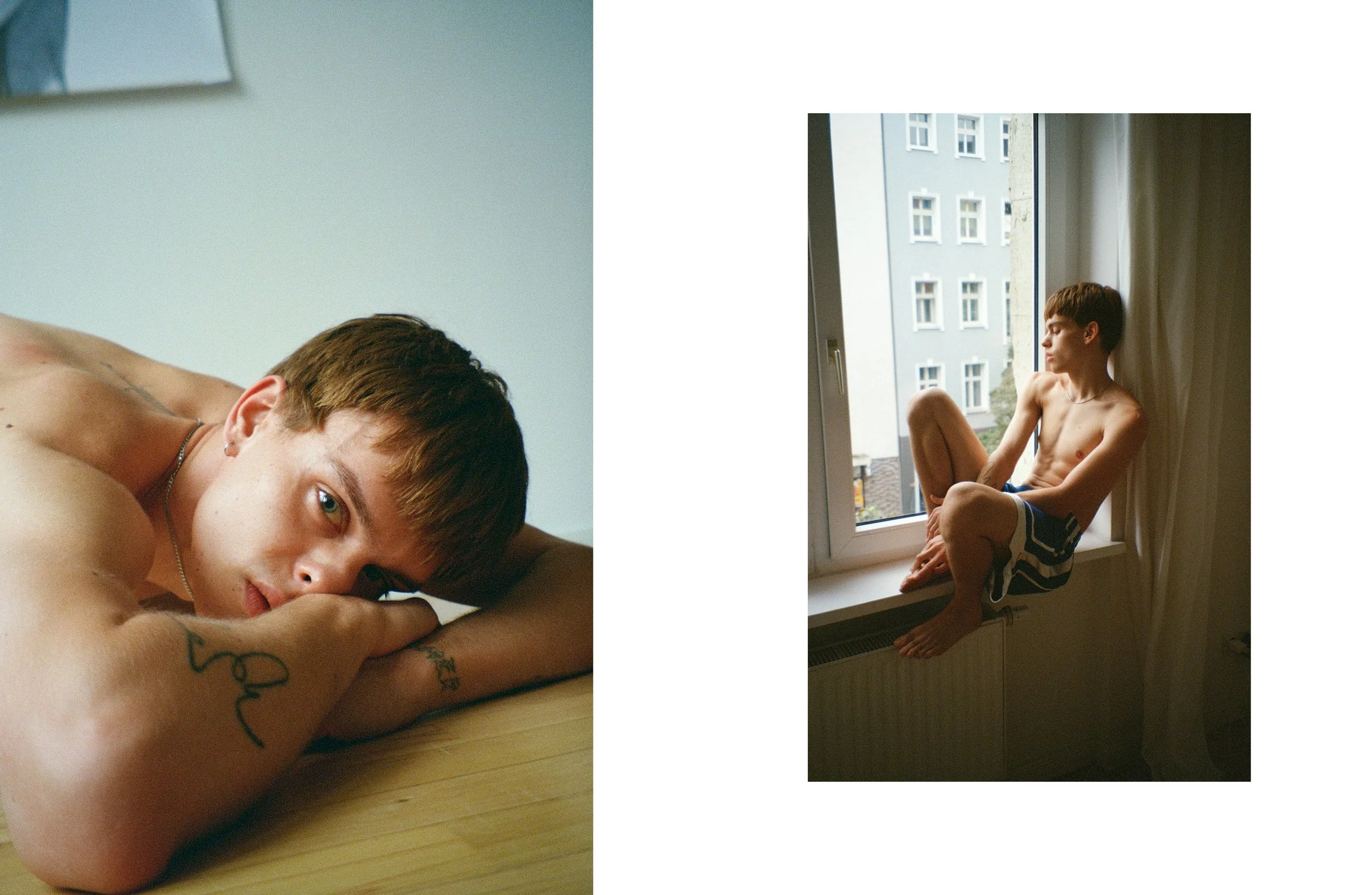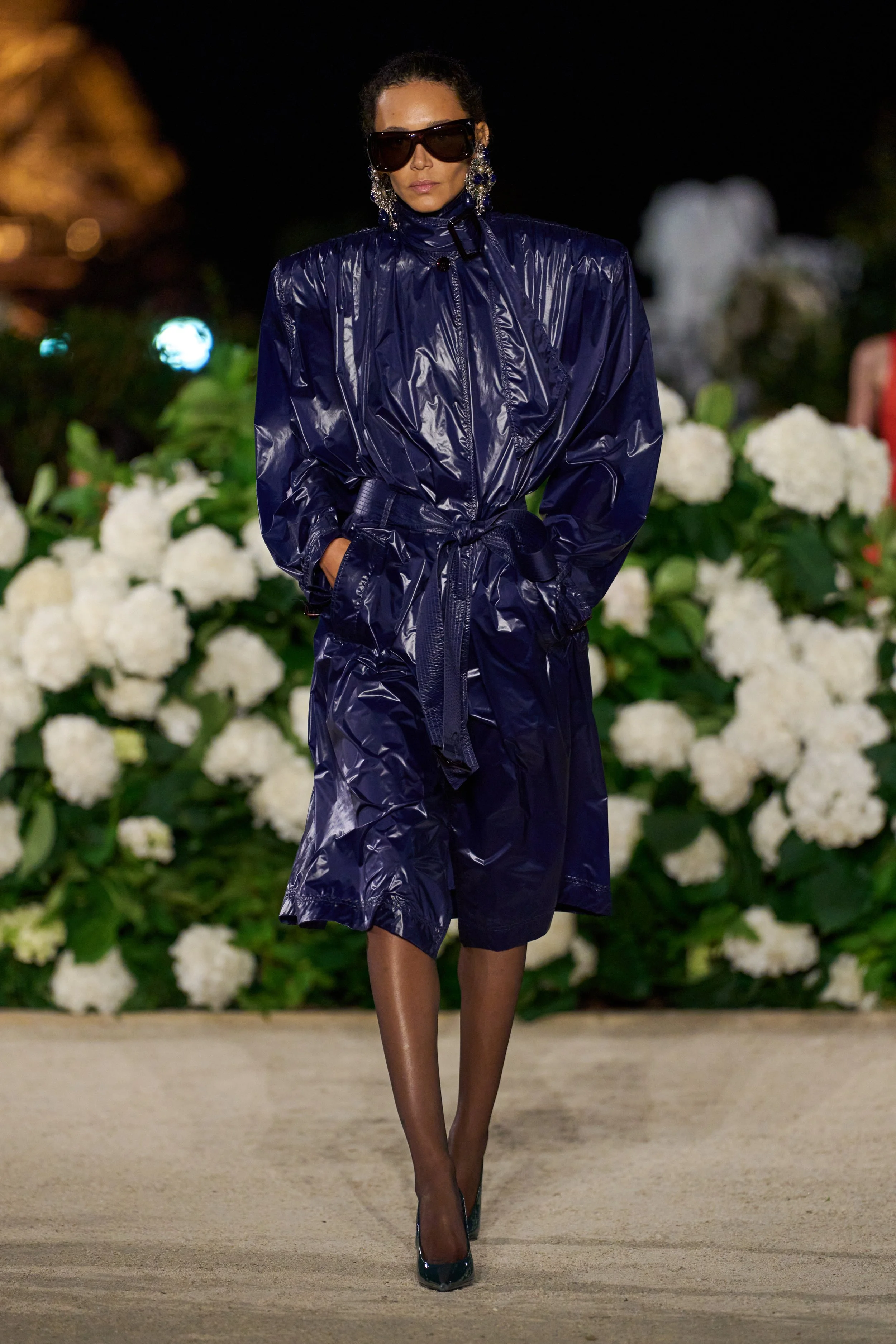
SAINT LAURENT SS26

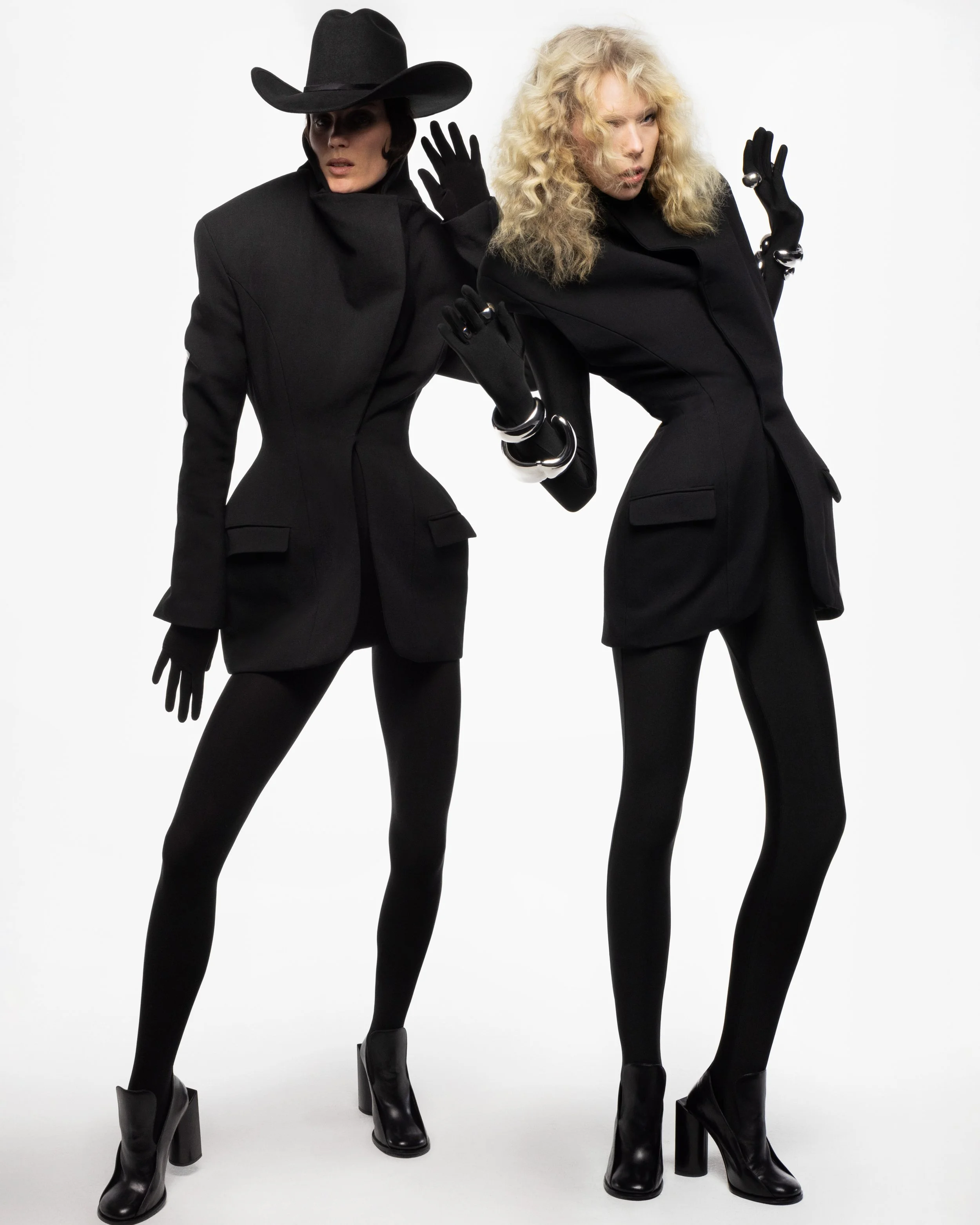
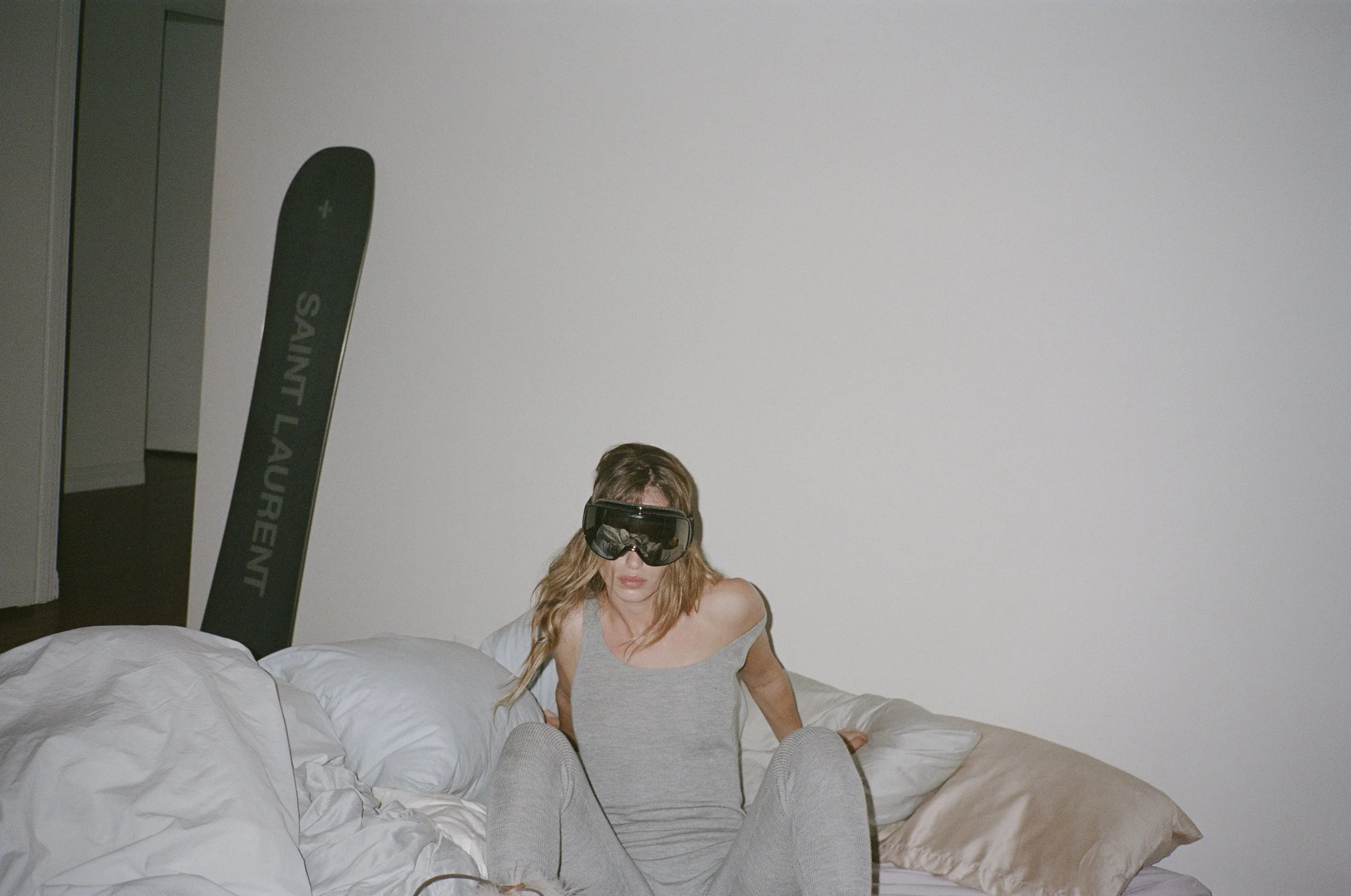
The best thing about any given Saint Laurent show is the appreciation Anthony Vaccarello has for Monsieur Saint Laurent’s legacy. He understands nuance in the work of the founder of the maison he leads. At every chance he gets, he reminds us of the legendary designer’s impact – not just in fashion, but in culture at large. For Spring/Summer 2026, he articulates this legacy to deliver a particularly topical message.

The collection opens with a scenario as unlikely as it is appetising. Statuesque women with engorged, angular shoulders cruising along delicate bushes of hydrangeas. Just as in the Fall/Winter 2025 menswear collection, Robert Mapplethorpe is made a muse. Vaccarello looks to the photographer for erotic appeal. Shiny leather reflects the light as it passes by, hats tilted forward to imply interest. Of course, here, instead of the sweaty bodies hidden underneath the jackets, elegant blouses illuminate the shiny darkness with their white starchiness.

The structured shoulders and nipped-in waists are decisively ‘80s. It’s not the first time Vaccarello favours the silhouette – we would go as far as to say it’s one of the staples of his tenure at the maison. And still, despite being immediately identifiable in a time and place, it doesn’t feel dated. Not because of the silhouette’s recent popularity, or even its appeal that swerves around the trend cycle, but because Saint Laurent’s legacy is indistinguishable from 20th-century fashion. Here, the inspiration isn’t chronological; it’s self-referential.

The maison’s legacy is further explored in mousseline trenches and translucent dresses in acidic shades of chartreuse and vermillion. These harken back to some of Rive Gauche’s iconic silhouettes. The line, founded by Mr Saint Laurent, sparked the ready-to-wear revolution. Vaccarello doesn’t ask for vehemency – though we certainly do – he frames it as an important statement. The rise of conservative movements and its trad wives has made the women’s liberation movement have to reclaim its ideological grounds. Vaccarello reminds us of what YSL has always been: clothing made for independent, strong women.

The collection ends dramatically. Inspired by the Duchess of Guermantes and Madame X, the Belgian designer creates billowing gowns. A parade of jewel-toned dresses floats in the wind, as if inflated by it. Cleverly made of nylon, these are light; models move freely. Even in their regal structure, the designer finds freedom. Vaccarello doesn’t just honour the Saint Laurent legacy, he pushes it forward. He recontextualises it and reminds us of its importance. 


Words by Pedro Vasconcelos
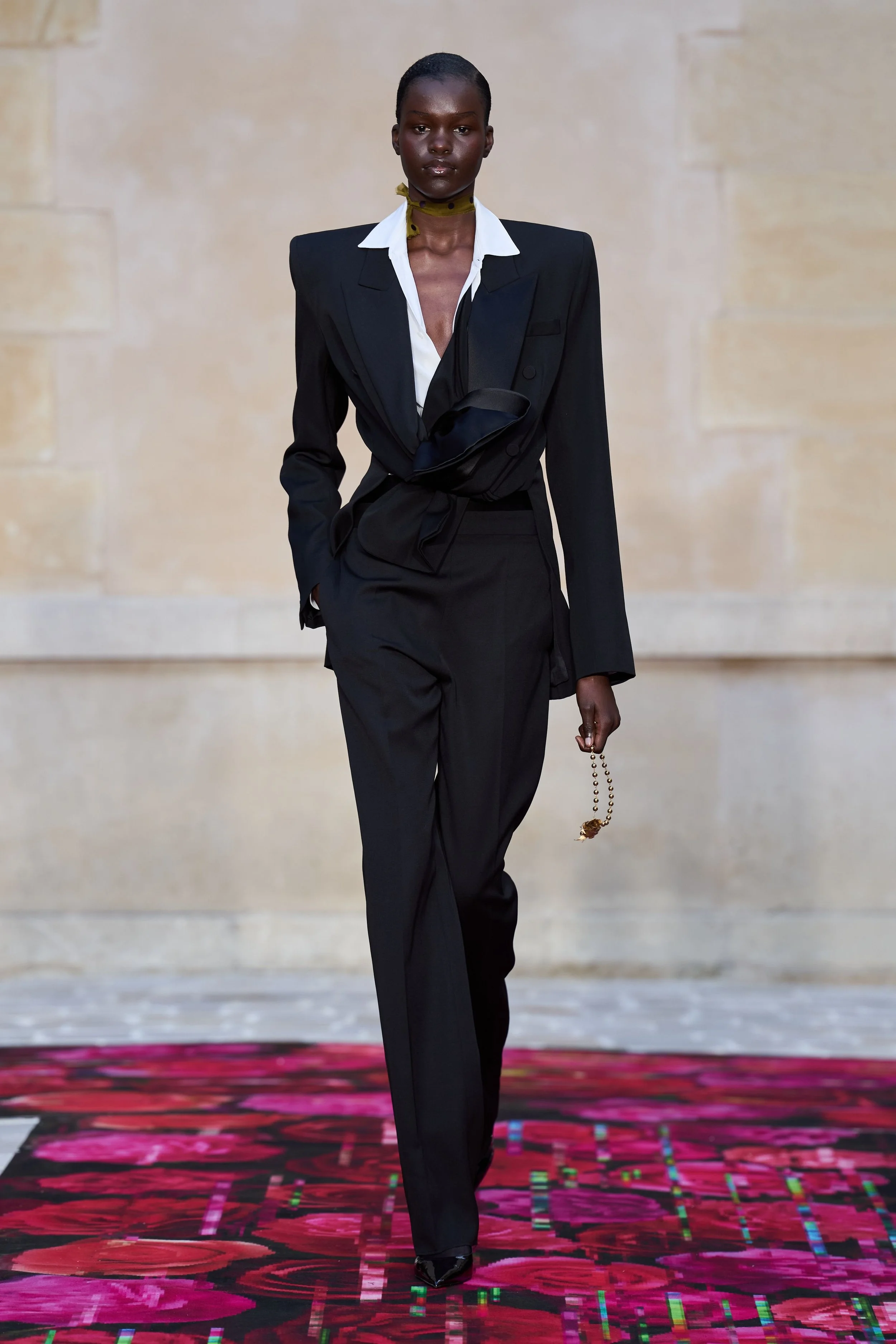
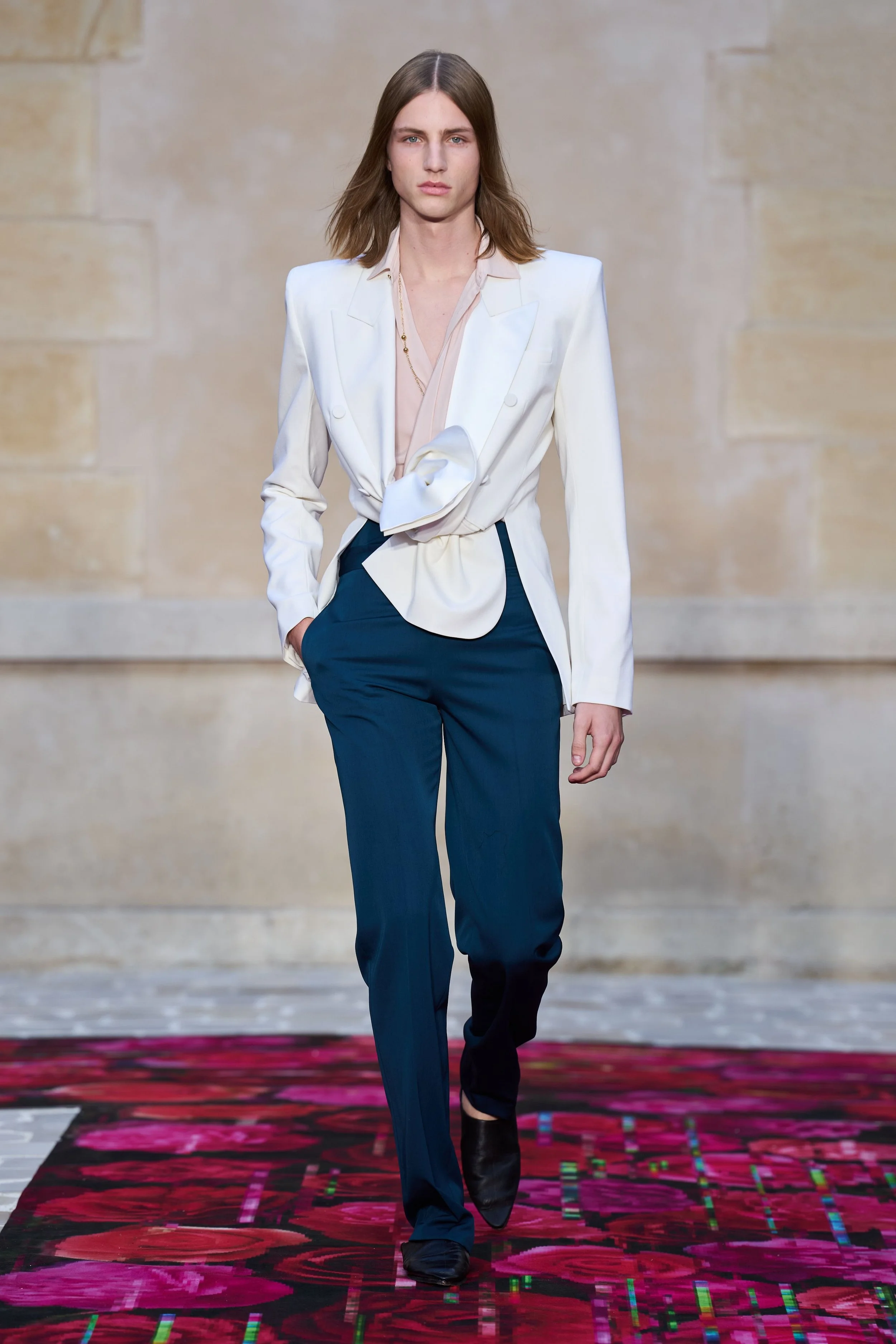
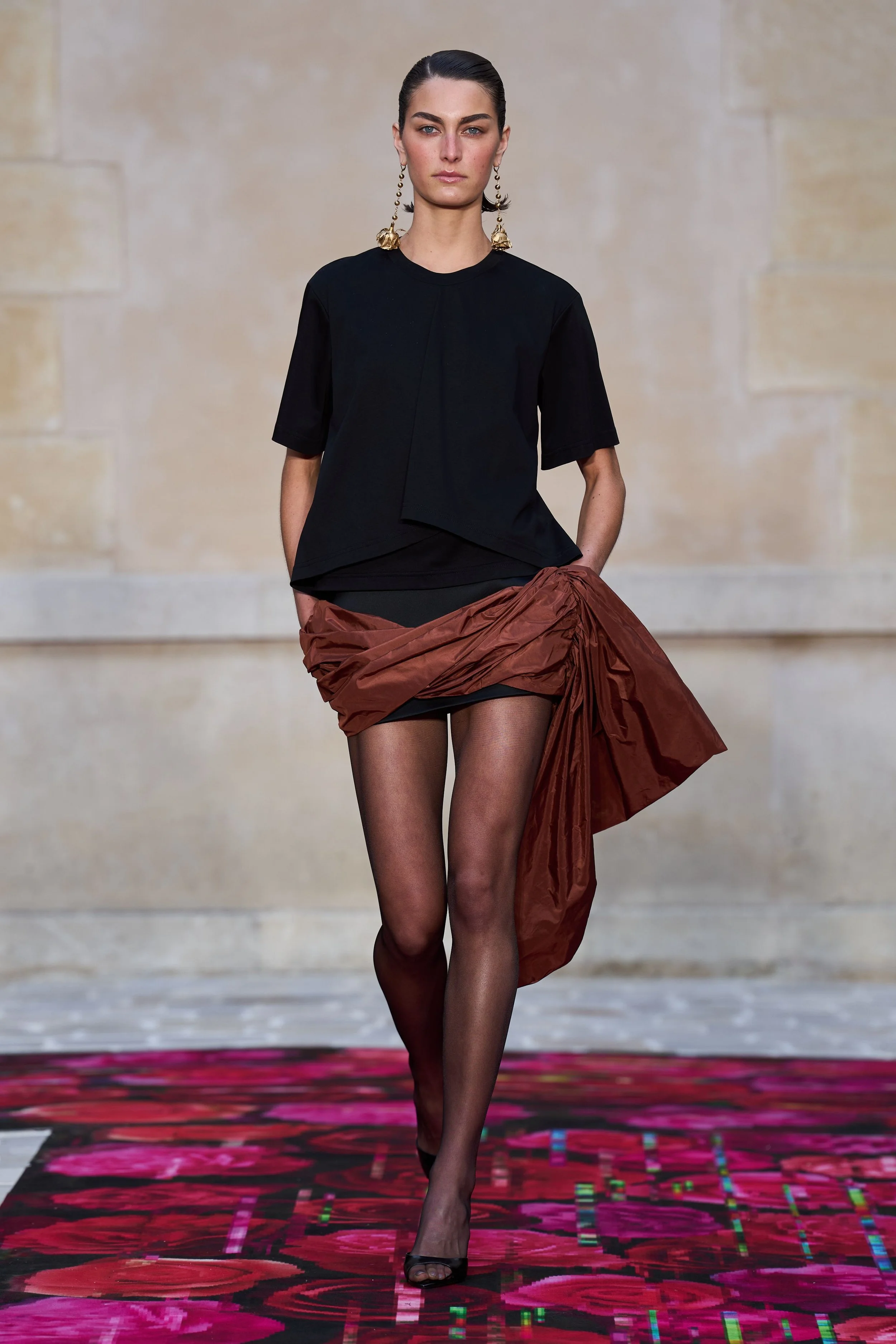
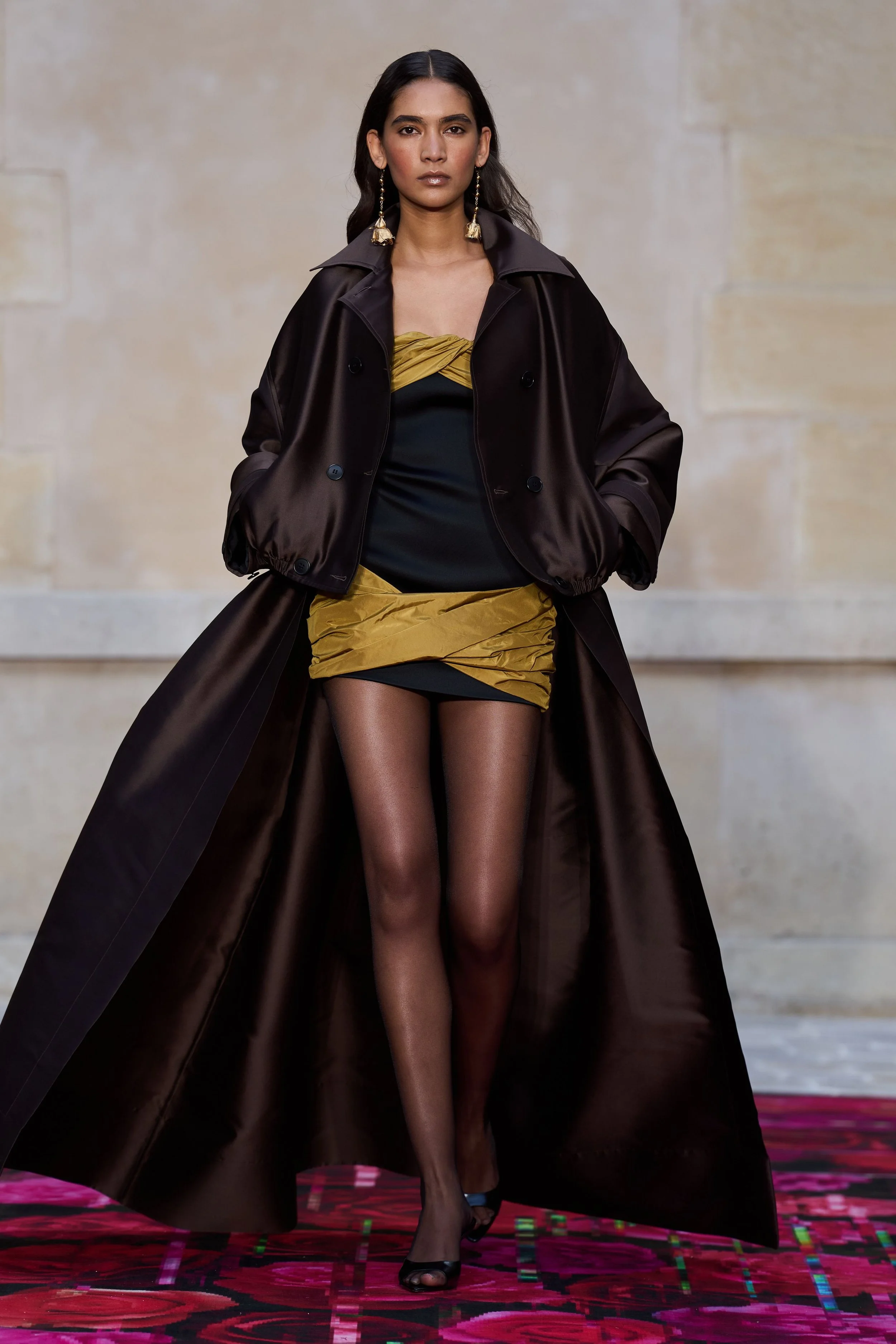
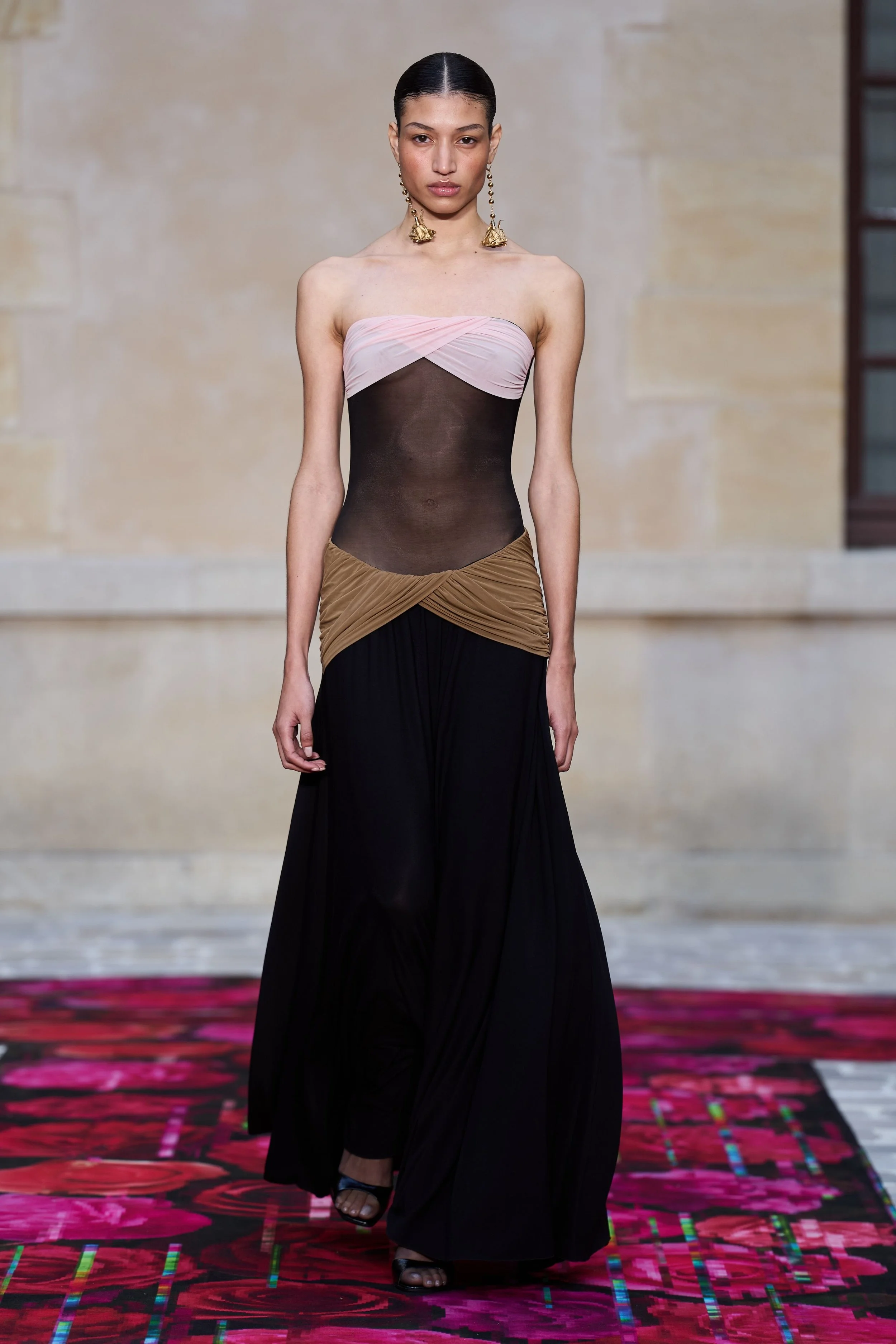
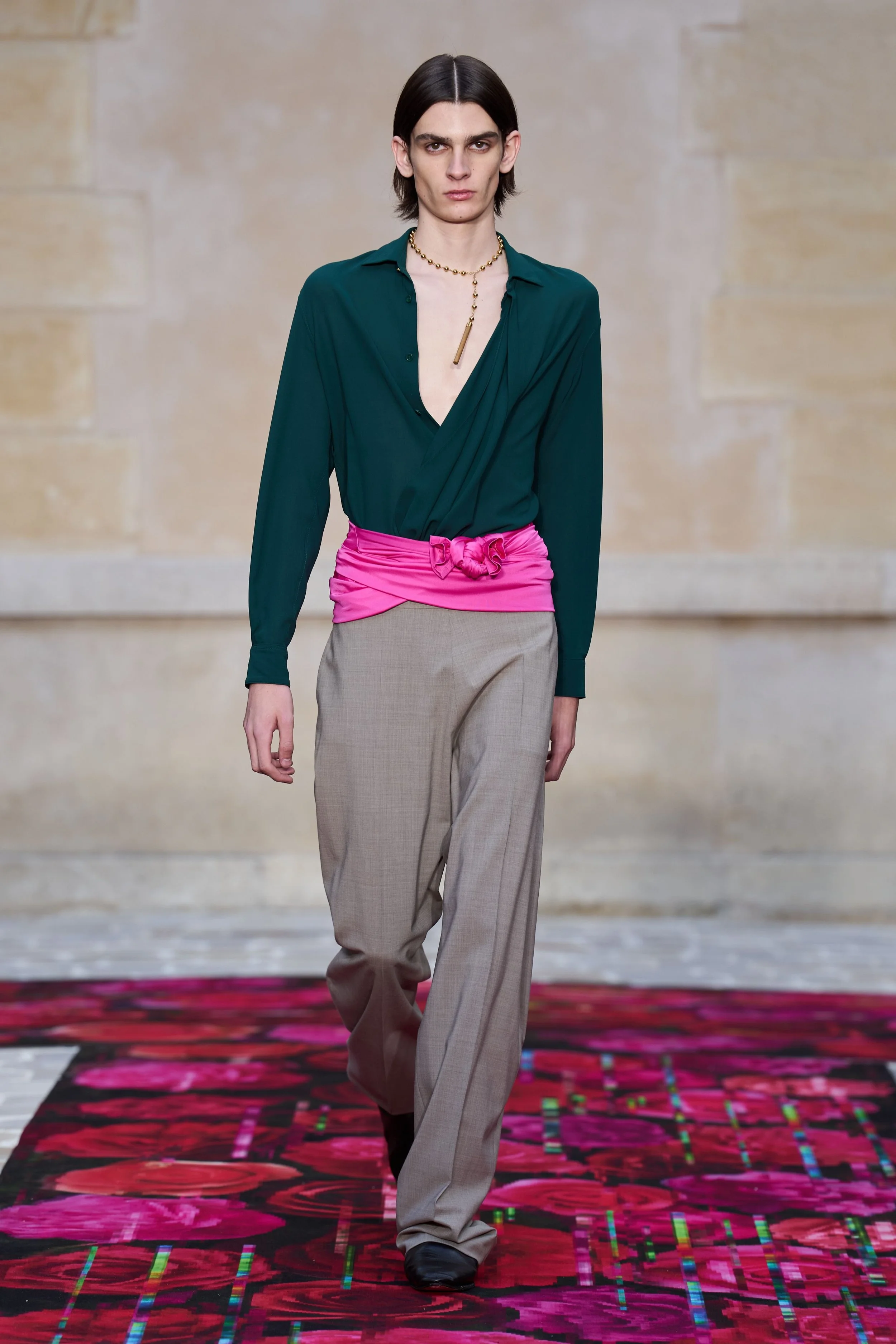
BURC AKYOL SS26

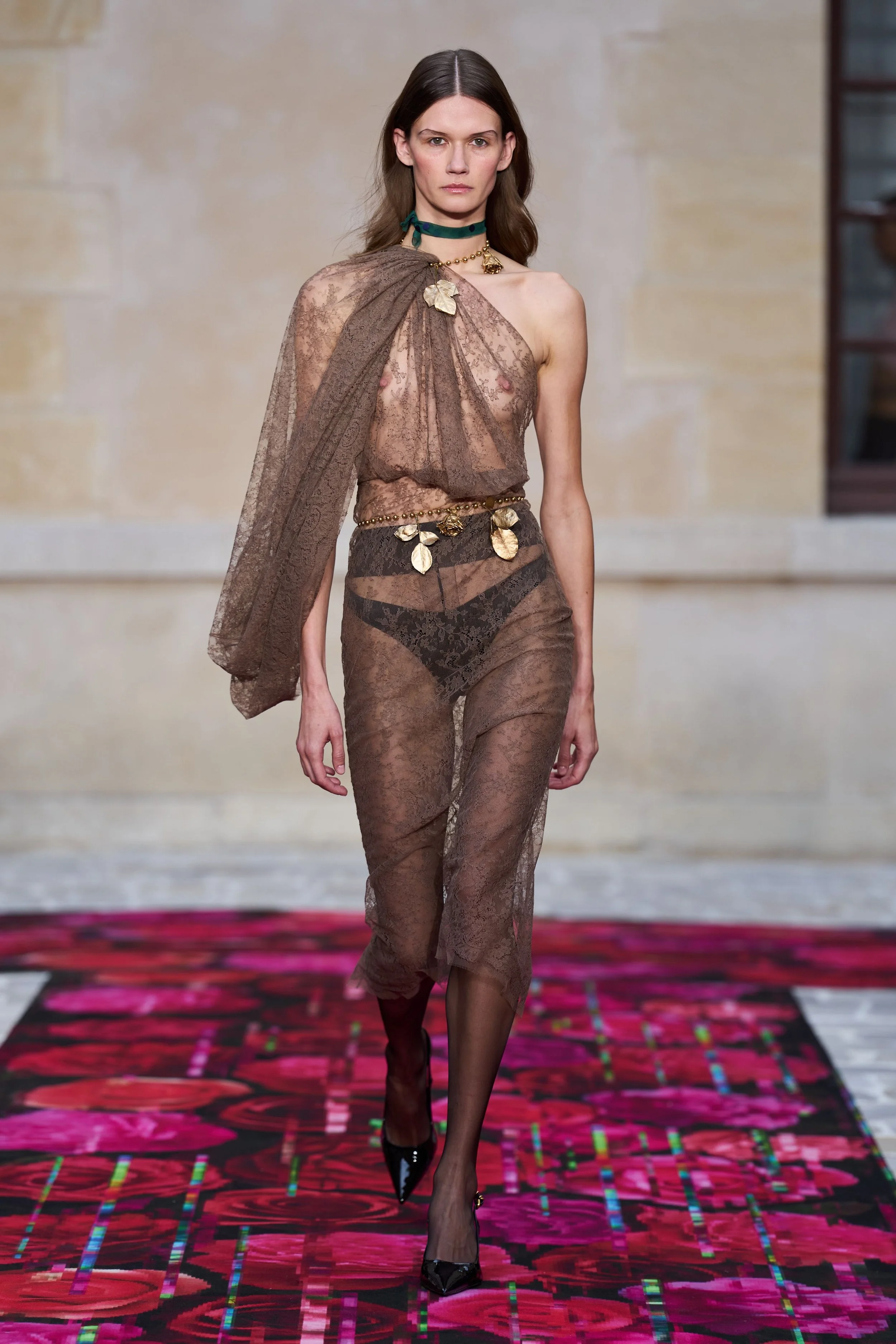
Burç Akyol’s Spring/Summer 2026 collection, Gülistan, borrows its name from the rose: a symbol of rebellion, dignity, and hope that runs deep through Eastern traditions. More than a floral reference, it becomes the prism through which Akyol refracts poetry, politics, and memory – fashion as an act of resistance.

Rooted in his personal encounters with the Roma community, charged by the theatricality of Galliano’s 2000s spectacles, and softened by the sensual generosity of his mentor and one-time boss, Esteban Cortázar, Akyol’s garments feel both intimate and declarative. They seduce, but they also speak, dissolving the binaries of gender, time, and seasonality.

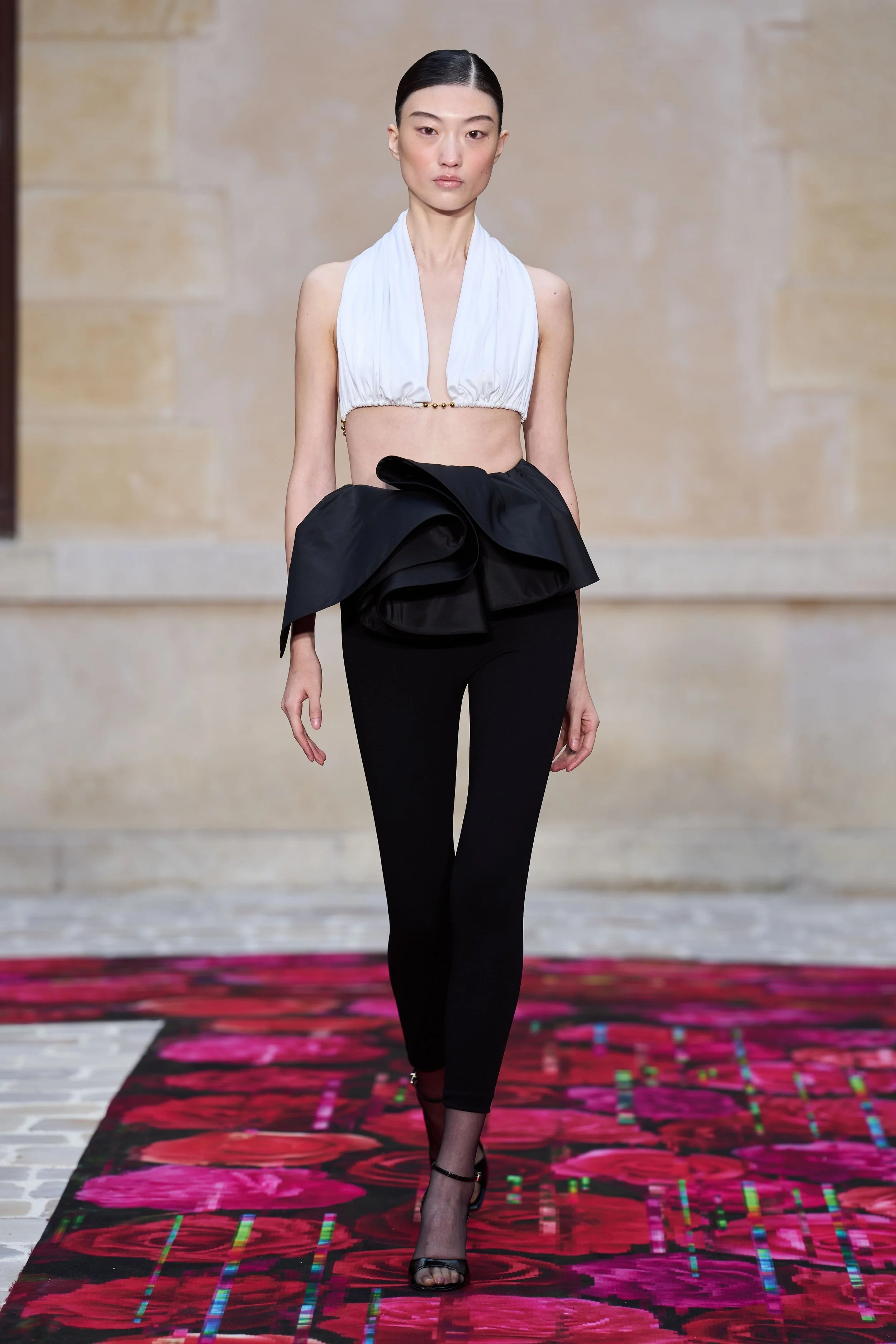
On the runway, structure met sway. Tailoring – sharp, lapelled, with exaggerated ‘80s shoulders – was undone and retied around the body, offering a more bohemian cadence. This motif of twisting and reconfiguring reappeared throughout: knits tucked into flounced skirts, mini and maxi dresses bound at the bust or hips with taffeta or jersey, each piece reconsidering how garments might hold and release the body.

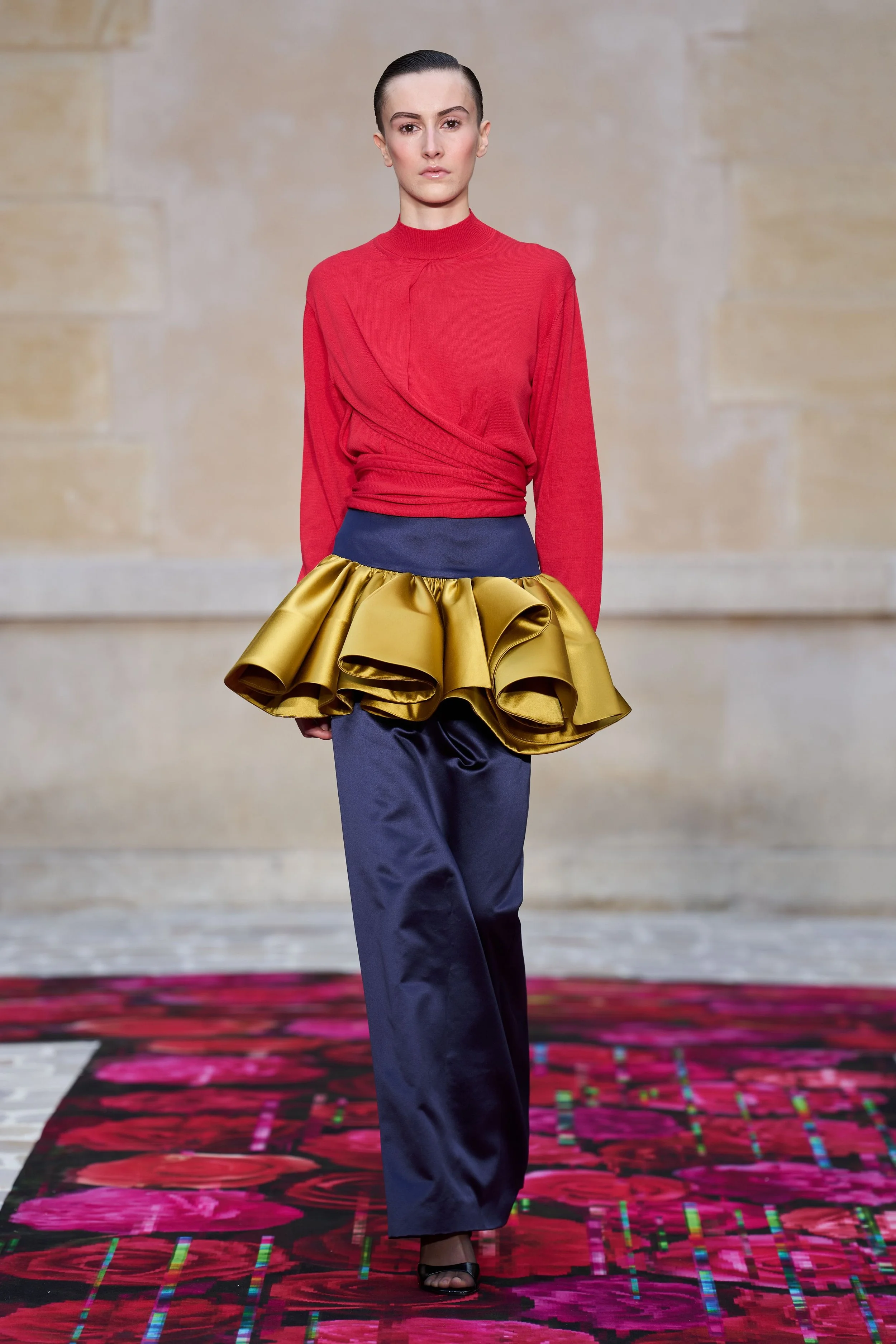
The rhythm accelerated in bold chromatic clashes: emerald silk blouses melted into beige wool trousers, secured with belts in electric pink; navy satin skirts swayed against crimson tops, their tension punctuated by a flash of gold ruffle. It was flamenco reimagined—not as costume, but as attitude, a choreography of fabric and colour.

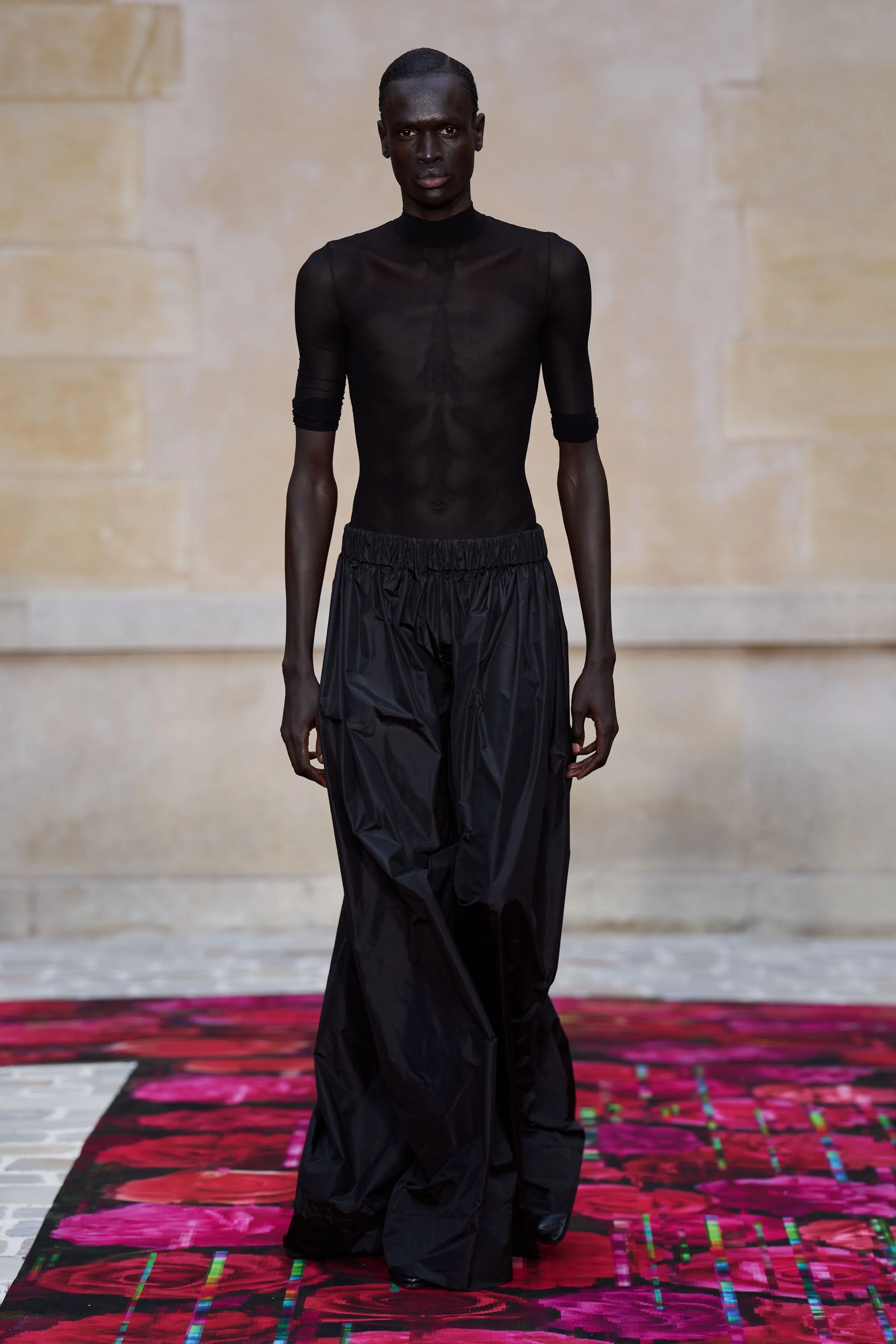
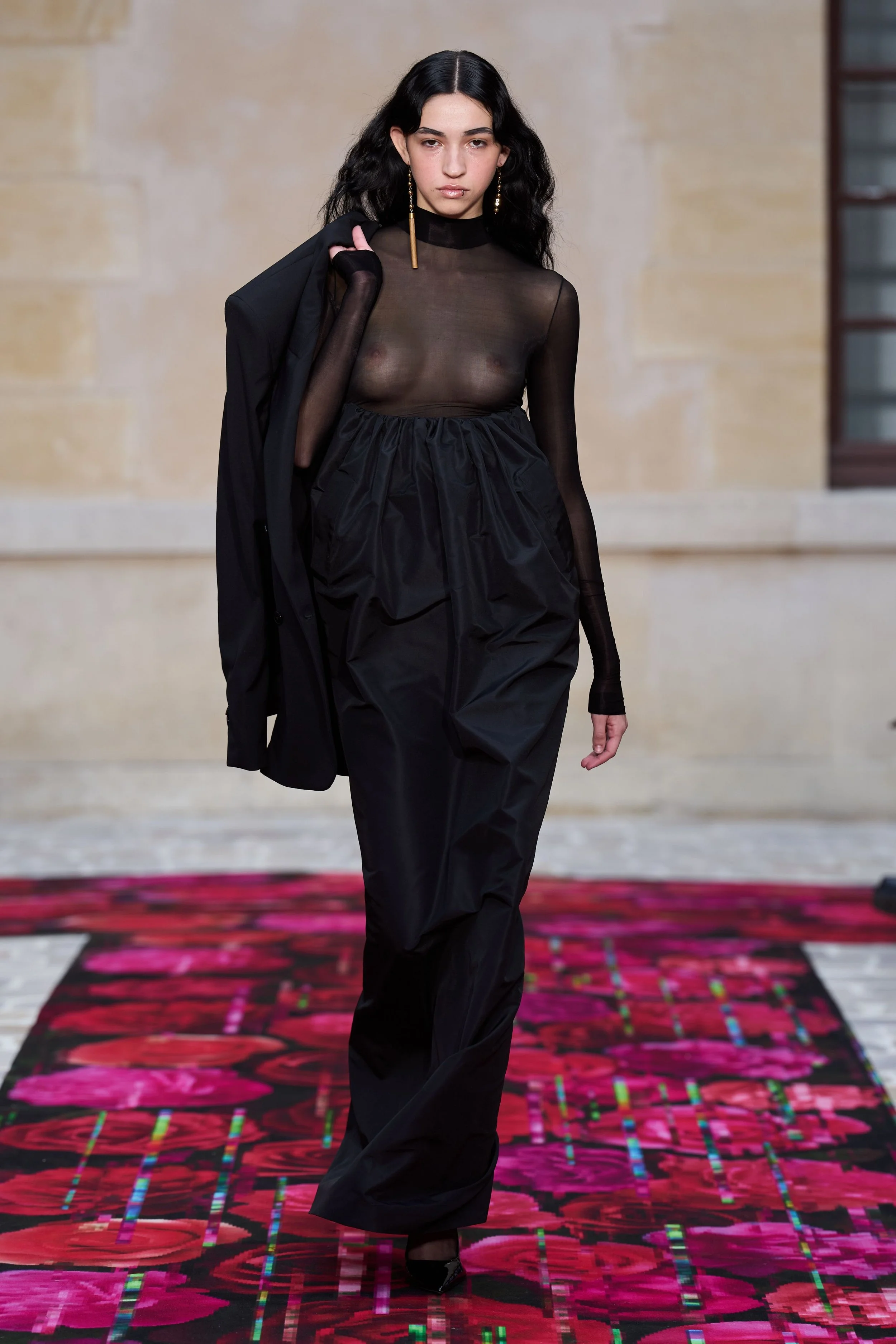
Threaded through, Akyol’s signatures – black sheerness, nocturnal elegance – remained present, anchoring the new propositions to a familiar lexicon. Yet here, they were less about ephemerality than about endurance. Gülistan insists on beauty as a form of permanence, generosity as a design principle, and layering as a refusal of cultural erasure. It is a collection that blooms, thorns and all.


Words by Martin Onufrowicz

GIORGIO ARMANI SS26

In a season of new beginnings, Giorgio Armani’s latest collection was a definitive goodbye. Coinciding with the 50th anniversary of the brand, the show was the last we’ll ever see of Mr Armani’s groundbreaking vision. And what a vision it was. His take on clothing didn’t just revolutionise the way we dress; it reimagined the way we interact with fashion. And yet, despite his impact, he refused to follow the mythology of the fashion designer. He wasn’t an artistic prodigy or a master of reinvention. Mr Armani believed in his fashion philosophy.

Just above the venue of the show, an exhibit displayed his theories quite plainly. Clothes that were designed for real life, that prioritised both form and function. Spring/Summer 2026 feels true to his legacy. This was, in a way, like so many Giorgio Armani collections in the past. It followed a comfortably familiar rhythm. First, the greige looks, presented mainly in pairs. Softly tailored jackets and lightly pleated pants moved softly with the body, offering no resistance. Eventually, the palette grew darker, introducing silk asymmetrically draped sets and reflective jackets before dipping into a sea of navy blue. The palette and silhouettes matured into something exotic: a cerulean dress softly jotted out at the hips, a mandarin-collared, cropped shirt was encrusted with crystals over its petroleum silk.

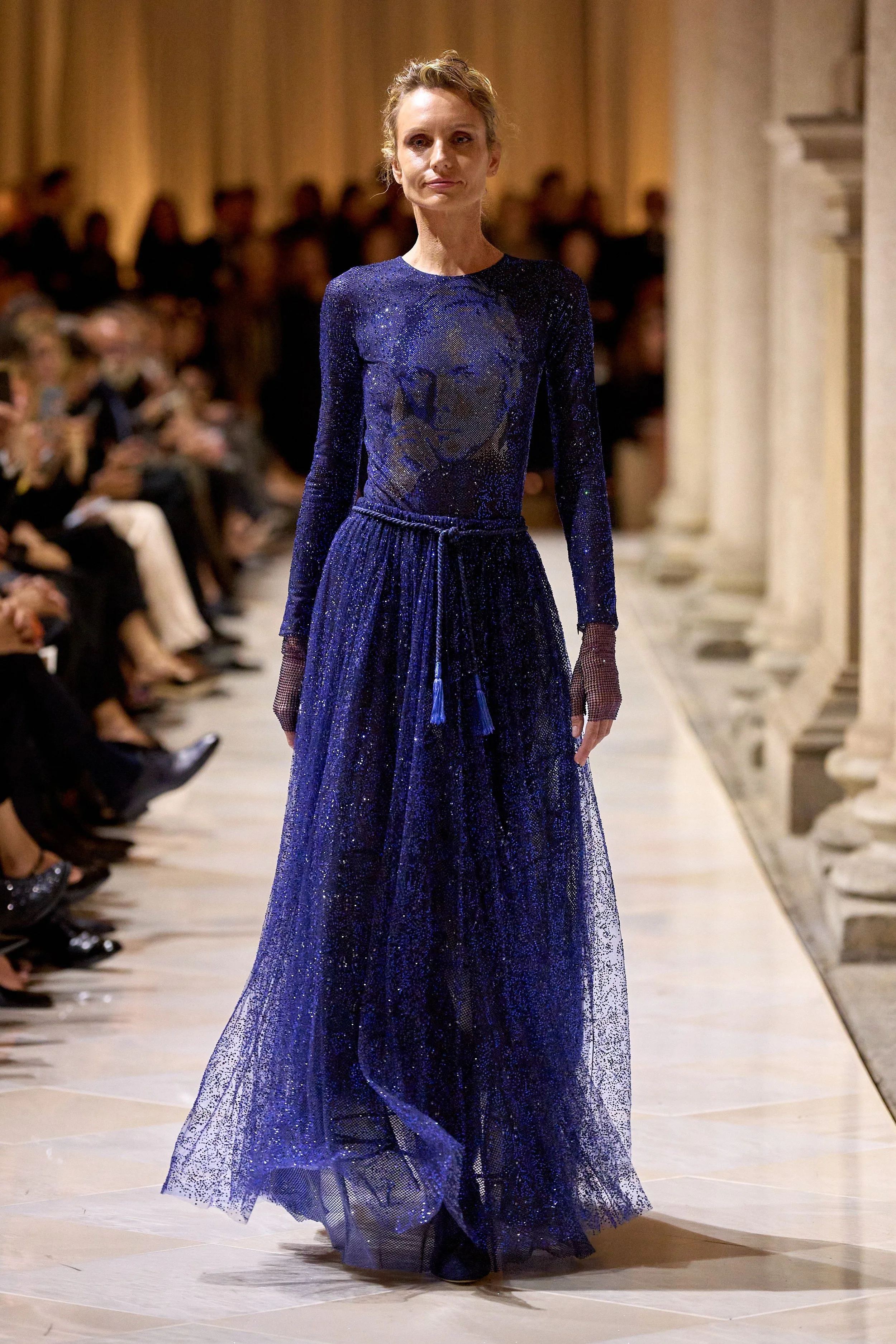
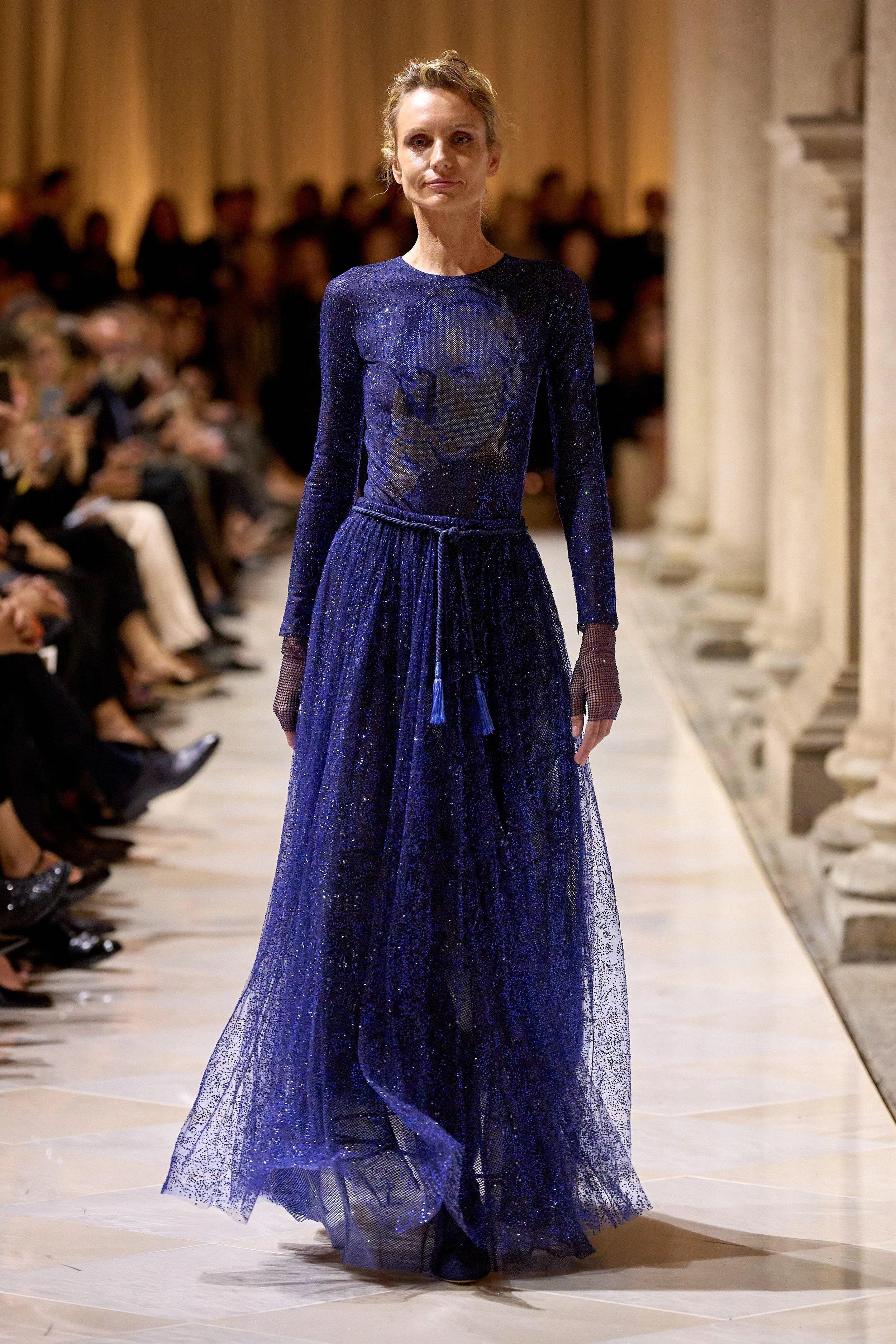
It was everything a collection that both celebrated and grieved Mr Armani should be. The show ended with a collection of intricately crystalised dresses, the last of which – a deep blue set – was breathtaking. As the picture of the designer shone in silver crystals on the model’s chest, his portrait and gaze immortalised, it became impossible to keep our eyes dry. What a life! What a legacy!


Words by Pedro Vasconcelos
BOTTEGA VENETA SS26

Beginnings aren’t always about fresh starts. In fashion, we’ve come to crave newness – a clean slate, a bold departure from the past that we can sink our teeth into. Louise Trotter, however, offered a different take with her Bottega Veneta debut. Her appointment wasn’t designed to usher in a new era, but to carry forward a legacy.

Bottega Veneta has always occupied a singular place in fashion. In recent years, through the visions of Daniel Lee and Matthieu Blazy, it has entered the mainstream lexicon of luxury. And yet, since its inception, the house has distinguished itself by what it refuses to do. It has never relied on logos. It has never chased hype. Trotter’s appointment is masterful. For years, the British designer has been developing an intellectual, mature language in brands like Lacoste and Carven. Here we see the apex of her work.

Blazy’s Bottega was whimsical. Stuffed animal chairs and Intrecciato children’s books: there was a real sense of play. Trotter crystallised it into something more mature. The sense of whimsy was still there, but sharpened, deliberate, as if Trotter were testing the boundaries of what a house so devoted to craftsmanship can achieve. Not just through Intrecciato (though that ankle-length leather coat was mouthwatering), but through other, less expected techniques.

Material experimentation was pushed further: technical fabric dresses were both stiff and light, and feather sleeveless tops jutted out of the body effortlessly. But no other technical feat stood out quite as much as sweaters and skirts made of recycled fibreglass. The first reaction was astonishment, followed by confusion and ultimately awe. In the age of artificial intelligence, we’ve become weary of what we can’t understand. The first of these pieces, a sweater made of blue strands that seemed to shine from within, was hard to think real. As others came out, first in gold and then in a fiery red, the initial disbelief vanished. Similarly, fuzzy skirts in abstract patterns were perhaps even greater, the movement of the legs highlighting their prowess.

It wasn’t all just a parade of showpieces. Trotter punctuated the collection with her characteristic oversized tailoring. Shoulders on sculptural jackets bulged out elegantly. The menswear offers were equally as bright. A fuzzy pair of shorts elongated just past the knees. A structured long coat nipped in the waist almost architecturally, pushing the arms out of rounded shoulders. 

Trotter’s appointment at Bottega wasn’t a gap to fill. She wasn’t tasked with revival, nor with cleaning up after a predecessor’s mistakes. And while it may not be as immediately satisfying to point out stark differences, to dissect what is before and after, perhaps that is precisely what makes it more interesting.


Words by Pedro Vasconcelos
SPORTMAX SS26

For Sportmax, the Spring/Summer 2026 wardrobe is minimalist, tailored, and fluid. Their rendition of summer dressing creates a tension between softness and structure, giving corporate ease meets laid-back holidays.

In the juxtaposition between tailoring and experimentation lies the signature of Sportmax. Clean cuts, feminine silhouettes, and volumes are all part of a visual language that is recognisable but creative enough to deliver innovation in each show. Femininity was interpreted in a myriad of ways, from structured to flowing, bold, and subtle.

For this collection, pieces are versatile with strong details, but always keep wearability in mind. Fluid, elongated shapes dominated the runway, from wide trousers to floor-skimming skirts and draped dresses. Presenting a tension between bold and refined, with a variety of layered tailoring seen in oversized jackets, belted trench-style coats, structured vests, and pieces with relaxed volumes.

Effortless trousers, seen throughout the show, break with the structure of jackets or coats and the clean lines of skirts and deconstructed blazers. The juxtaposition between fluidity, oversized pieces, and structured garments creates an elevated wardrobe meant for experimentation and freedom.

Keeping an interest in minimalist style, neutrals and soft pastels were at the centre of the collection, while deep black and burgundy gave a sense of sensuality. Femininity was transmitted through the use of sheer and silky fabrics, while leather and denim created a casual ease that disrupted the classic taste of the rest of the collection, giving a sense of edge.


Words by Carolina Benjumea

LORO PIANA SS26

In the Loro Piana world, elegance takes shape through craftsmanship, precious discretion, and natural tones. For this season, the brand renewed its conception of luxury with a wardrobe that feels fresh and youthful, yet just as lavish as before.

Presented in the 18th-century Palazzo Citterio, Loro Piana showcased its Spring/Summer 2026 collection in an artistic environment where colour, graphics, and accessories were central in creating their universe.

The offering follows Loro Piana’s identity of rich fabrics and sleek design, while adding a playful palette, exaggerated silhouettes, and sculptural accessories. The garments play with proportion: from cropped jackets and high-waisted trousers to boxy suits with softened shoulders. In an effort to showcase a modern and contemporary image, far from its classic roots, this year, there is a clear emphasis on volume and comfort, in contrast to past collections where fabrics and minimalistic constructions were at the centre of the looks.

Accents in rich tones like red, brown, olive green, lilac, yellow and taupe showcase a youthful vibe, far from the ‘quiet luxury’ we are used to seeing from the brand. However, it is the accessories that showcase a complete rejuvenation. From oversized, surreal headpieces, such as textured, plant-like hats, knit caps, and hood-like drapings, to structured and architectural bags that bring a slight avant-garde feeling, the collection redefines the codes of a luxury game they once ruled, where elegance was understated and silent. This proposition feels like an effort to give a second life to the brand, with an identity that is fresher, easier, and more artistic, while preserving its functionality, elegance, and timelessness.


Words by Carolina Benjumea

VERSACE SS26

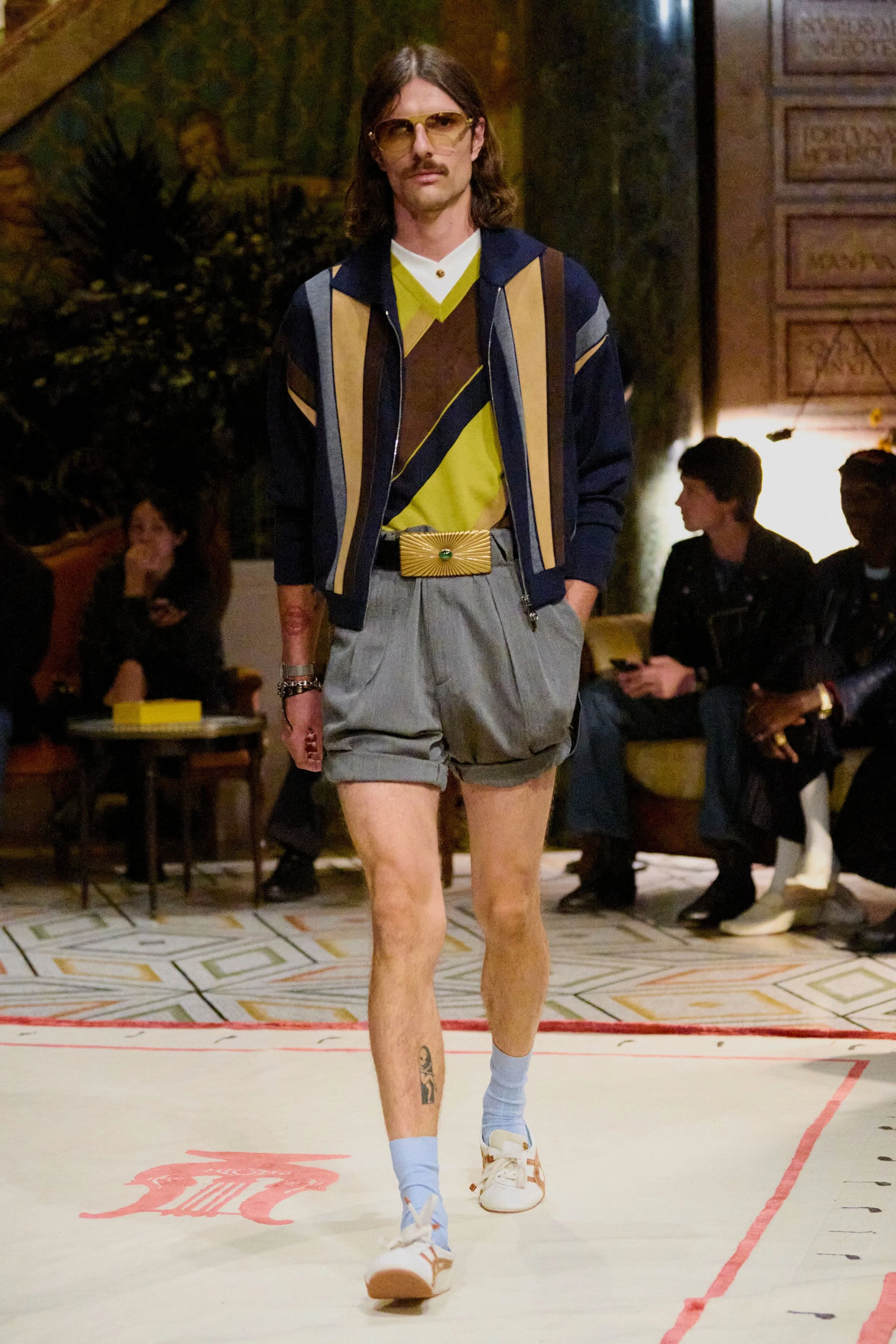
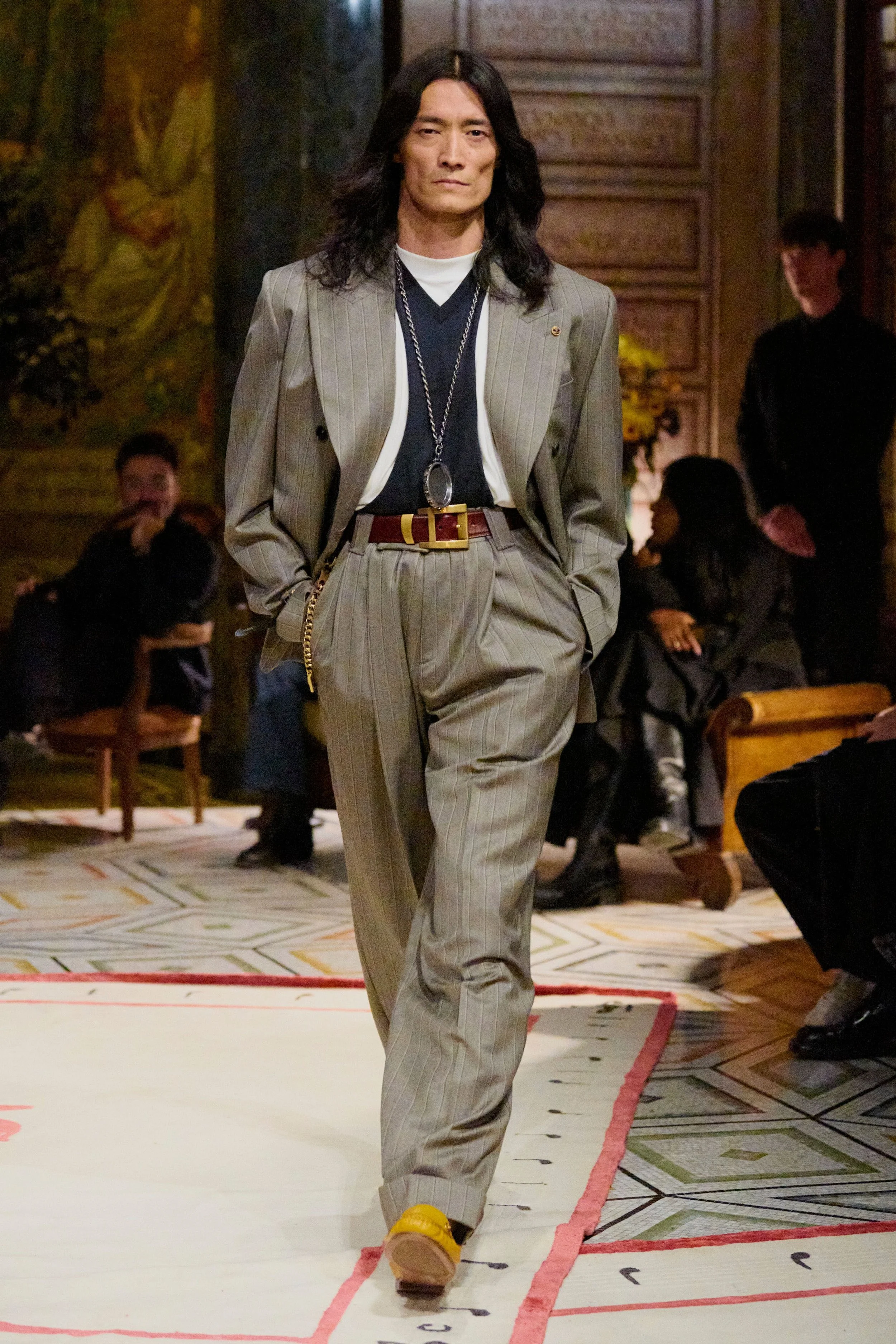
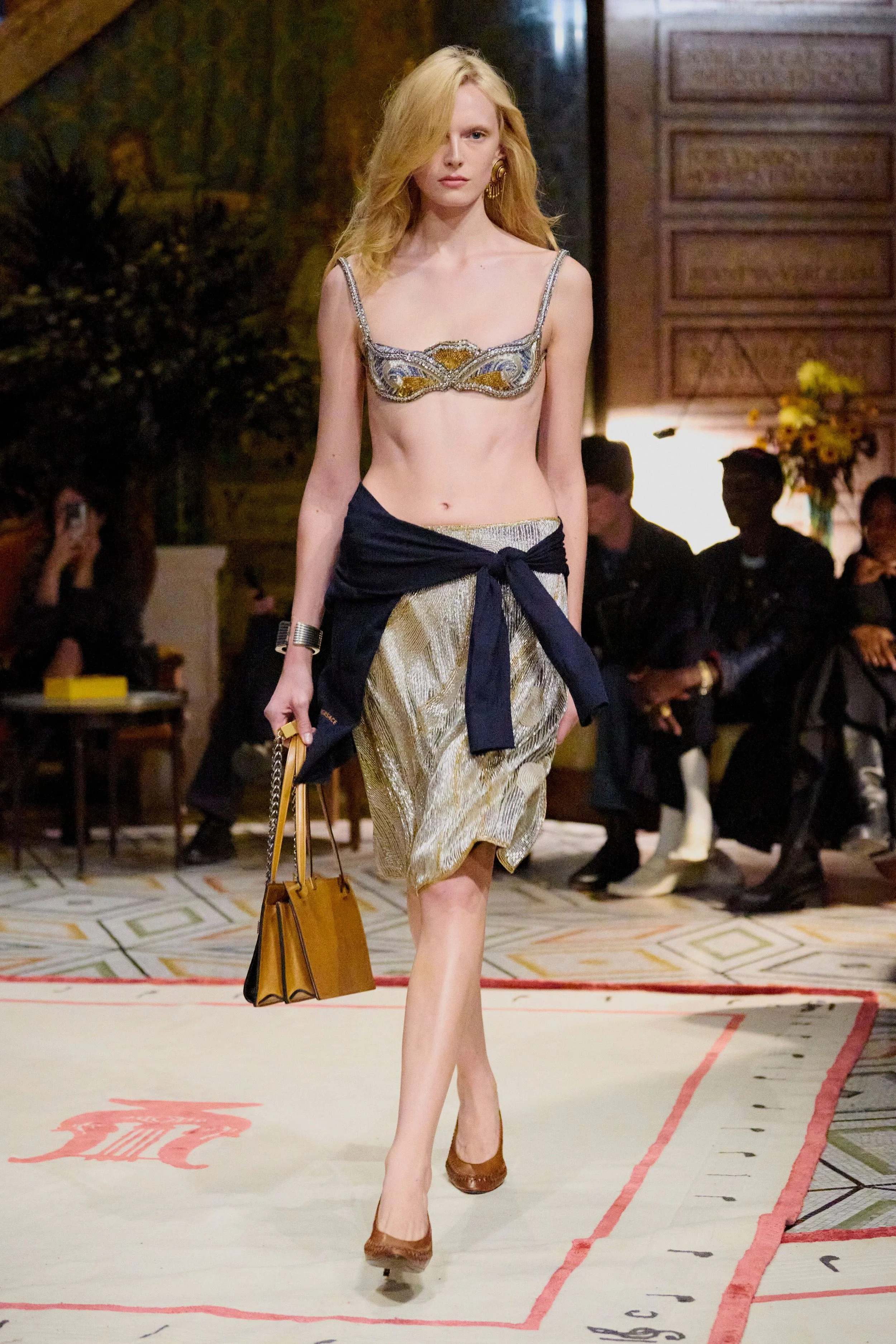
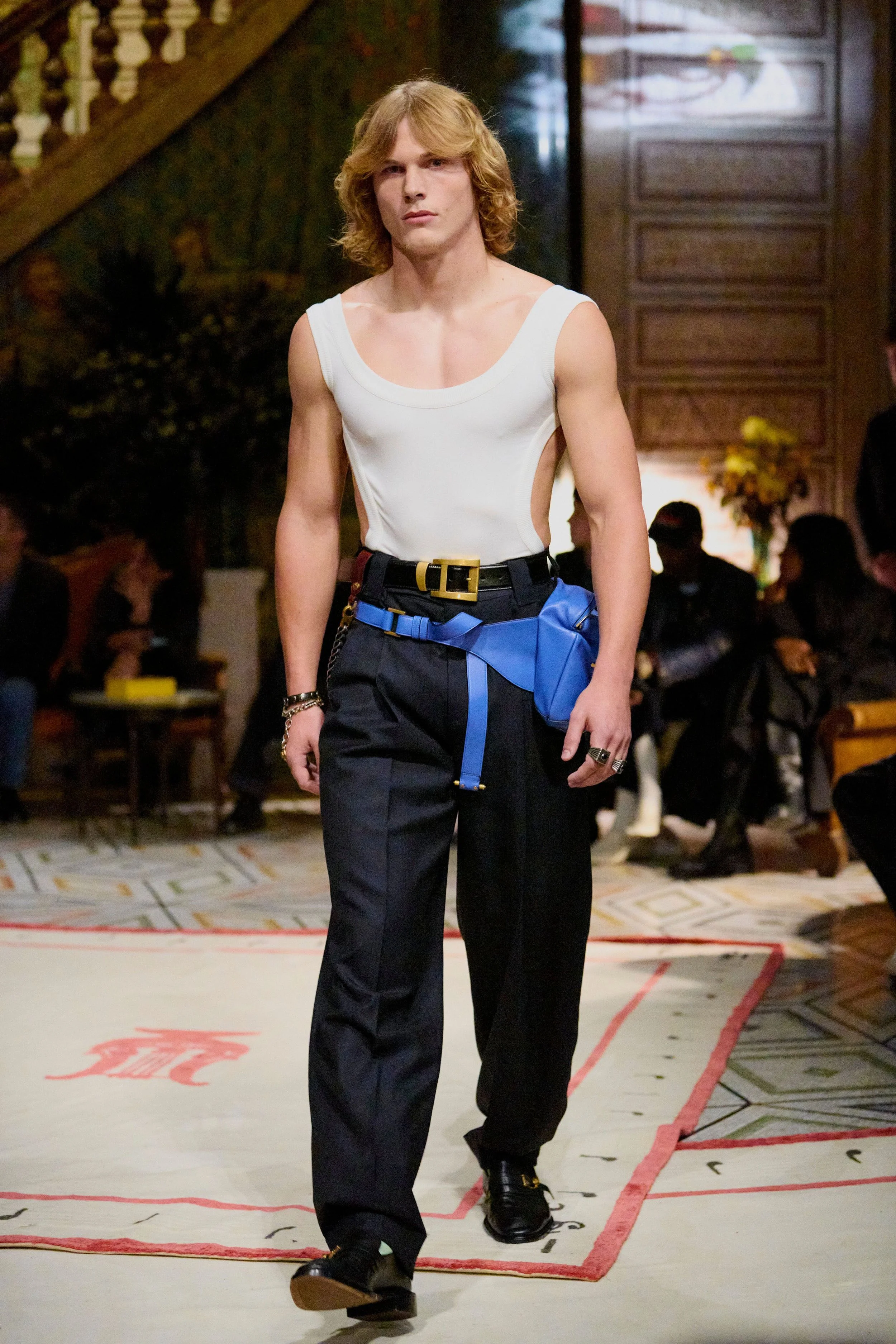
Just hours before Dario Vitale’s debut for Versace, the brand teased the collection on Instagram with a striking triptych shot by Tyrone Lebon. The campaign featured an Adonis-like hunk with the brand name strategically emblazoned across his body, an androgynous (and ripped) model lounging in nothing but a jewel-encrusted vest, and a close-up of black heels adorned with a Medusa-ring detail. Together, the images conjured an updated '80s-inspired fantasy — decadent, sensual, and unmistakably Versace.

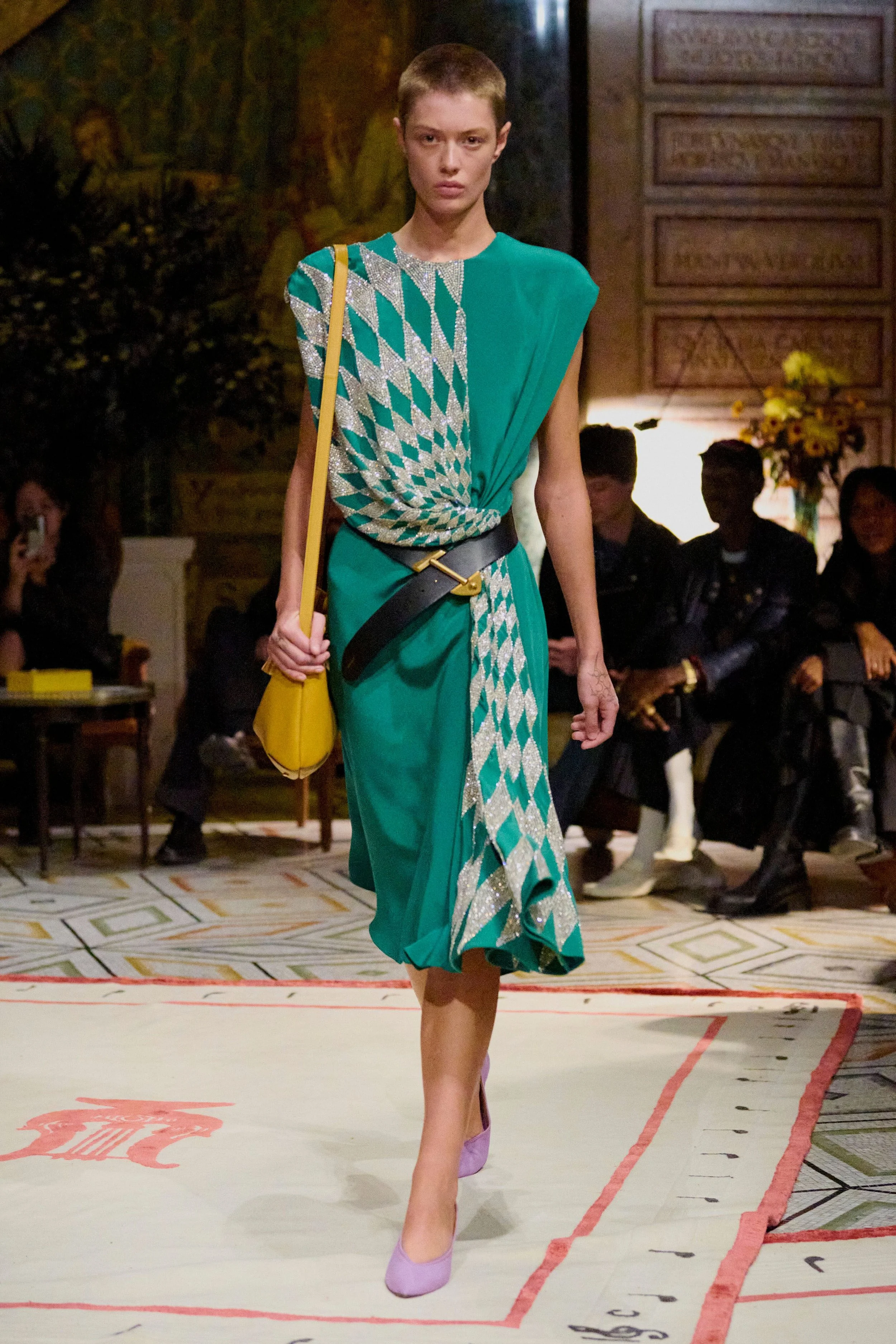
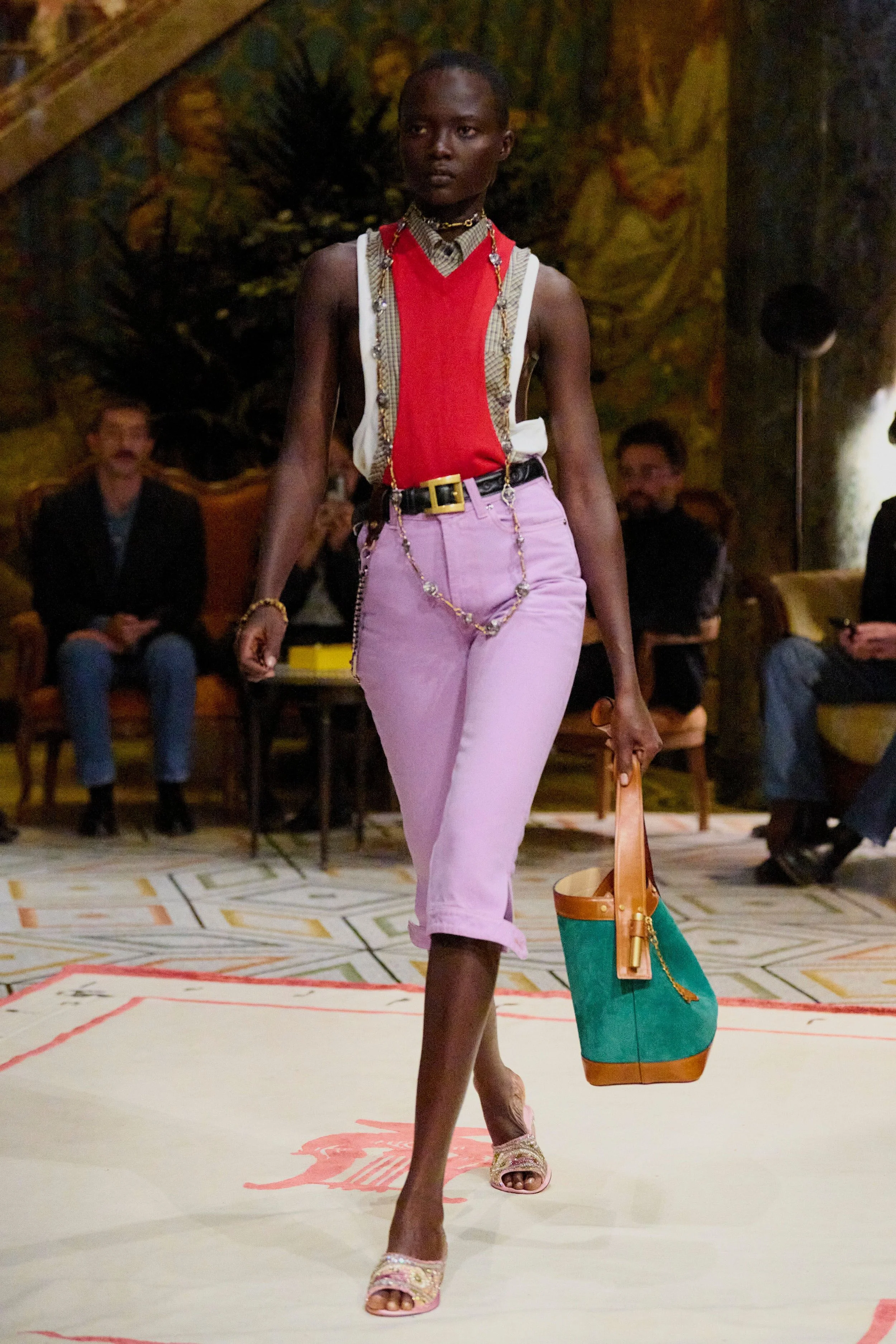
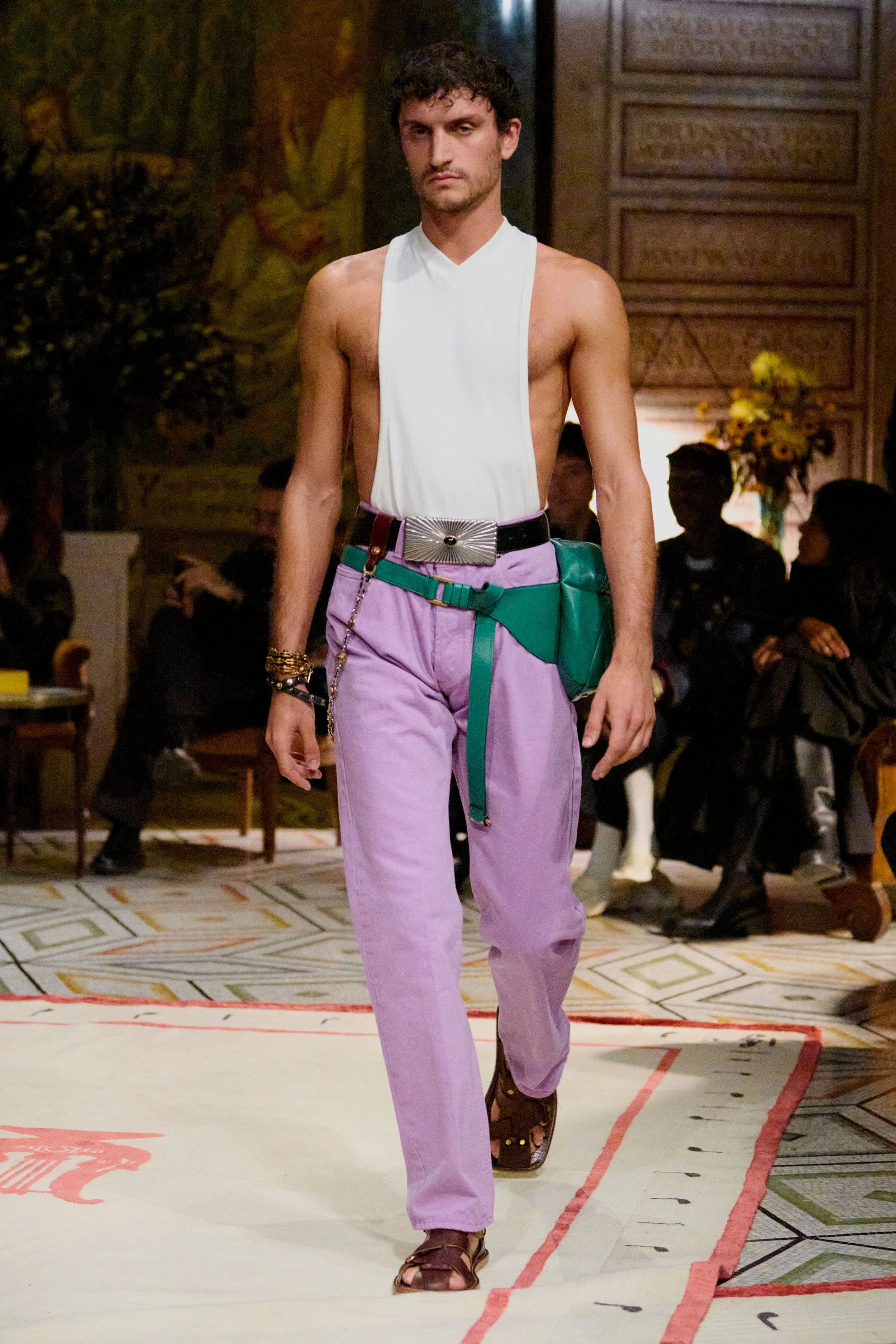
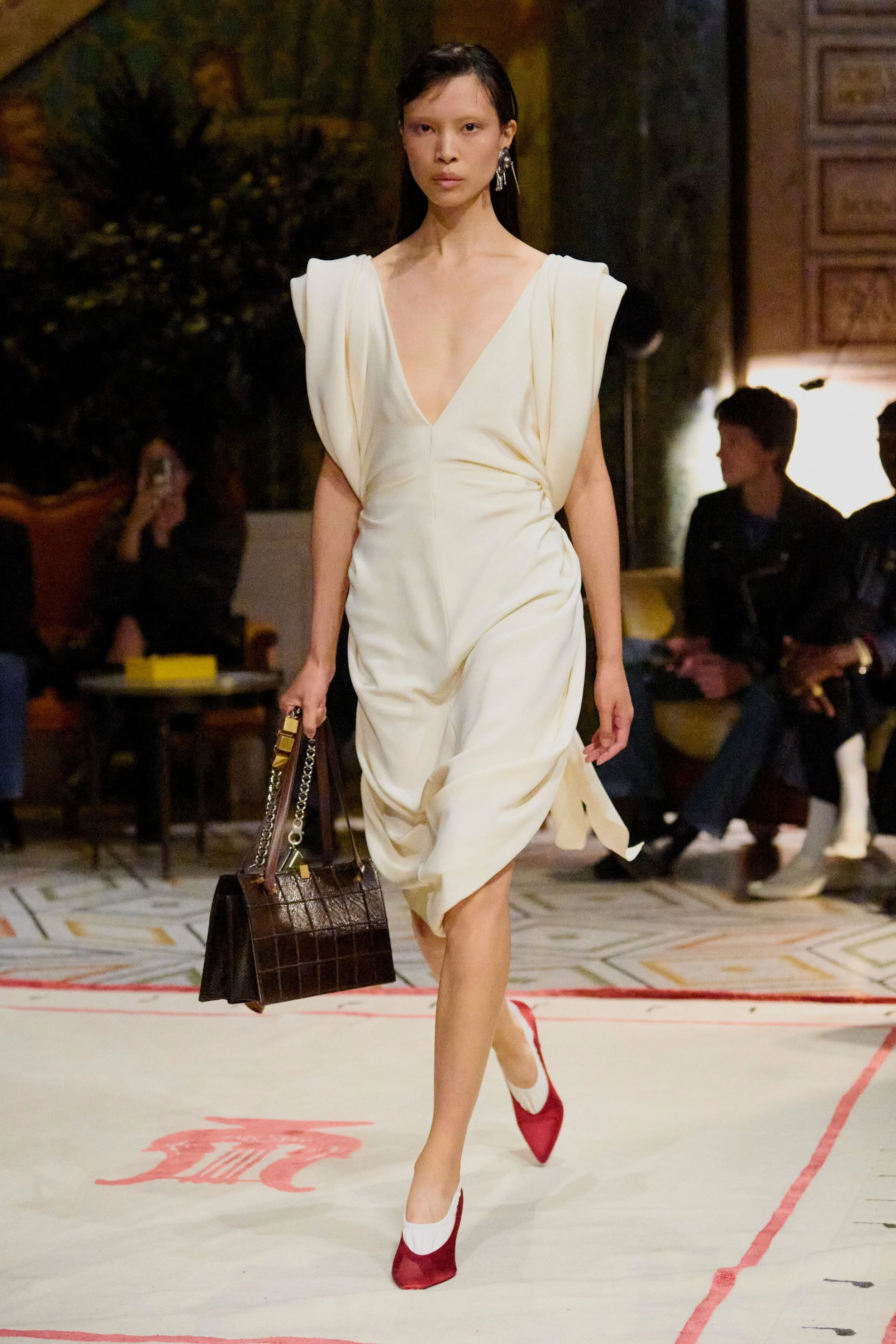
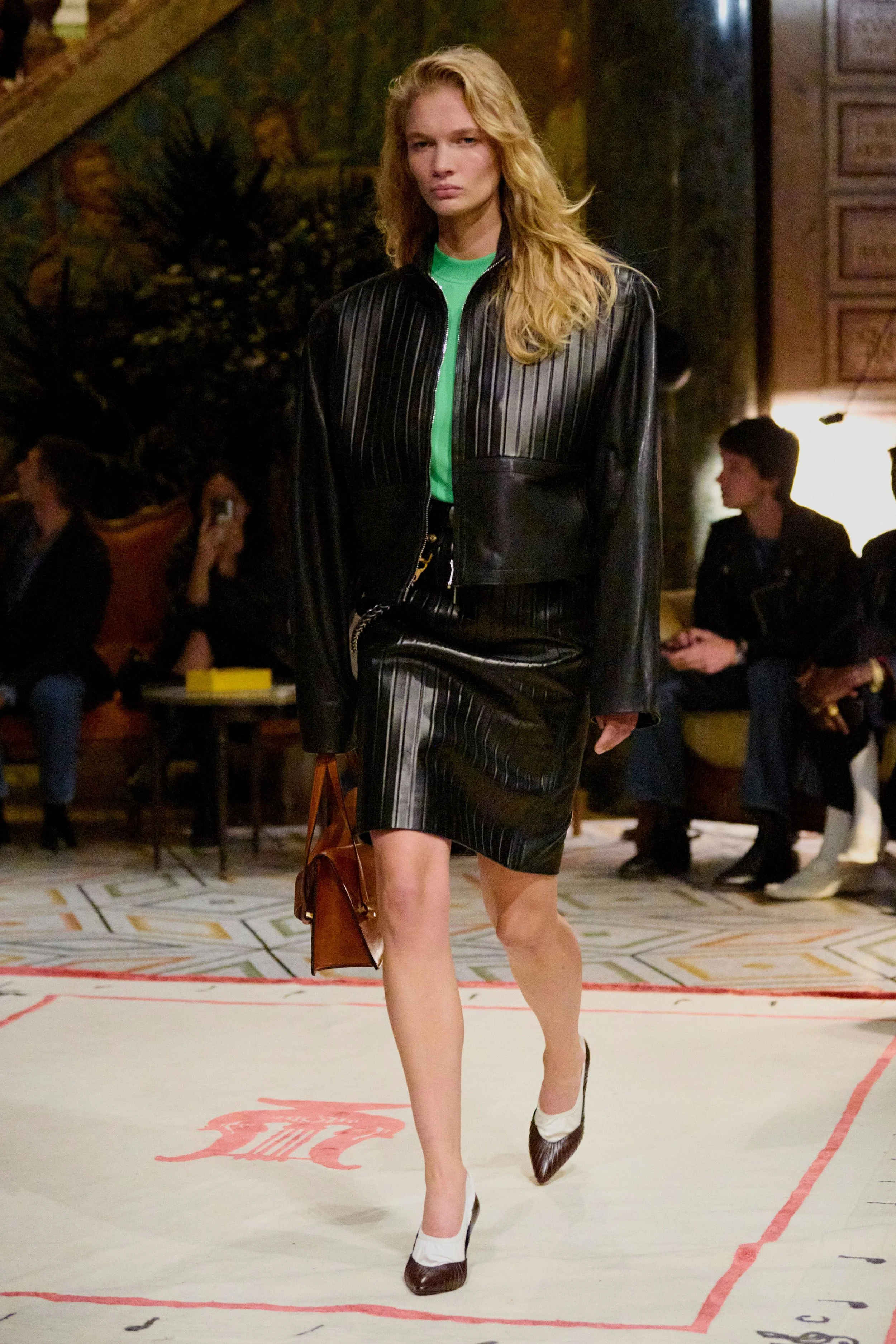
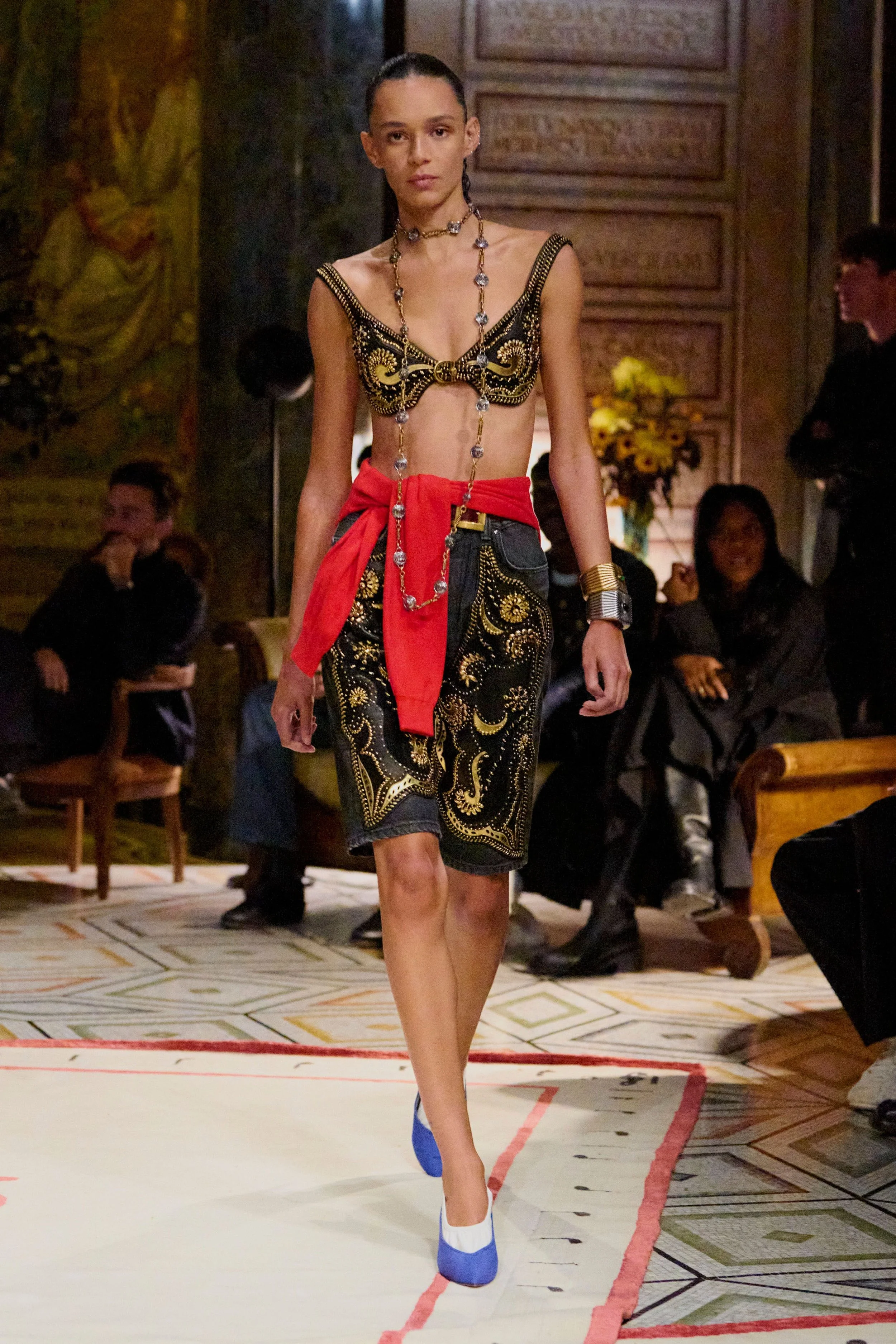
The show itself unfolded at Pinacoteca Ambrosiana, Milan’s oldest museum, where Vitale staged a baroque spectacle to match the grandeur of its surroundings. His vision drew directly from the house’s late-’70s and early-’80s beginnings, revelling in excess and deliberate provocation. Jewellery was oversized, colour combinations were intentionally clashing, and styling leaned into opulence. A pair of lavender capris, cinched with a black belt adorned with an oversized gold buckle, was layered beneath three ultra-sleeveless shirts. A plunging, knee-length dress with power shoulders was paired with sharp red stilettos worn over white socks, while a classic skirt suit was reimagined in gleaming black leather.

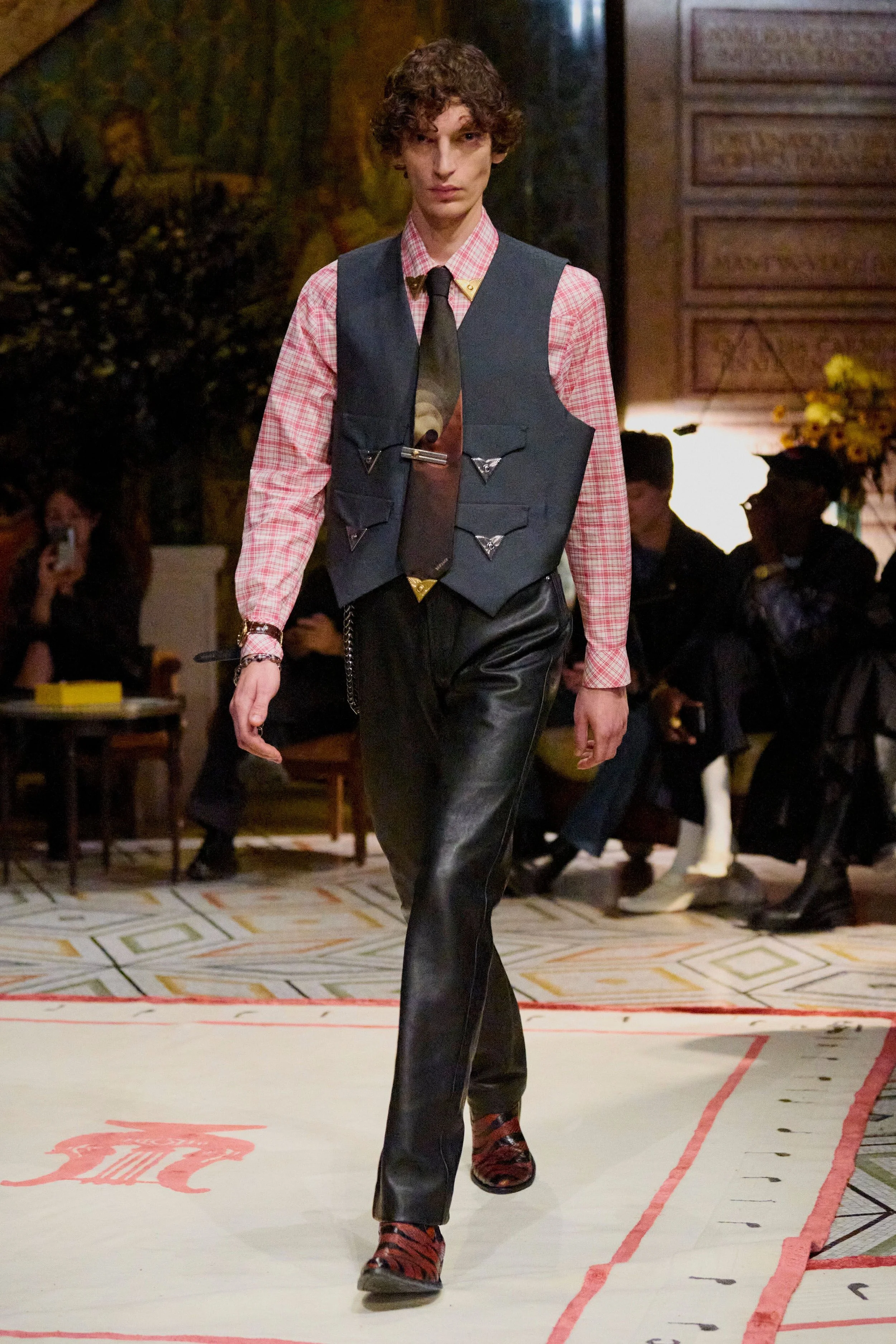
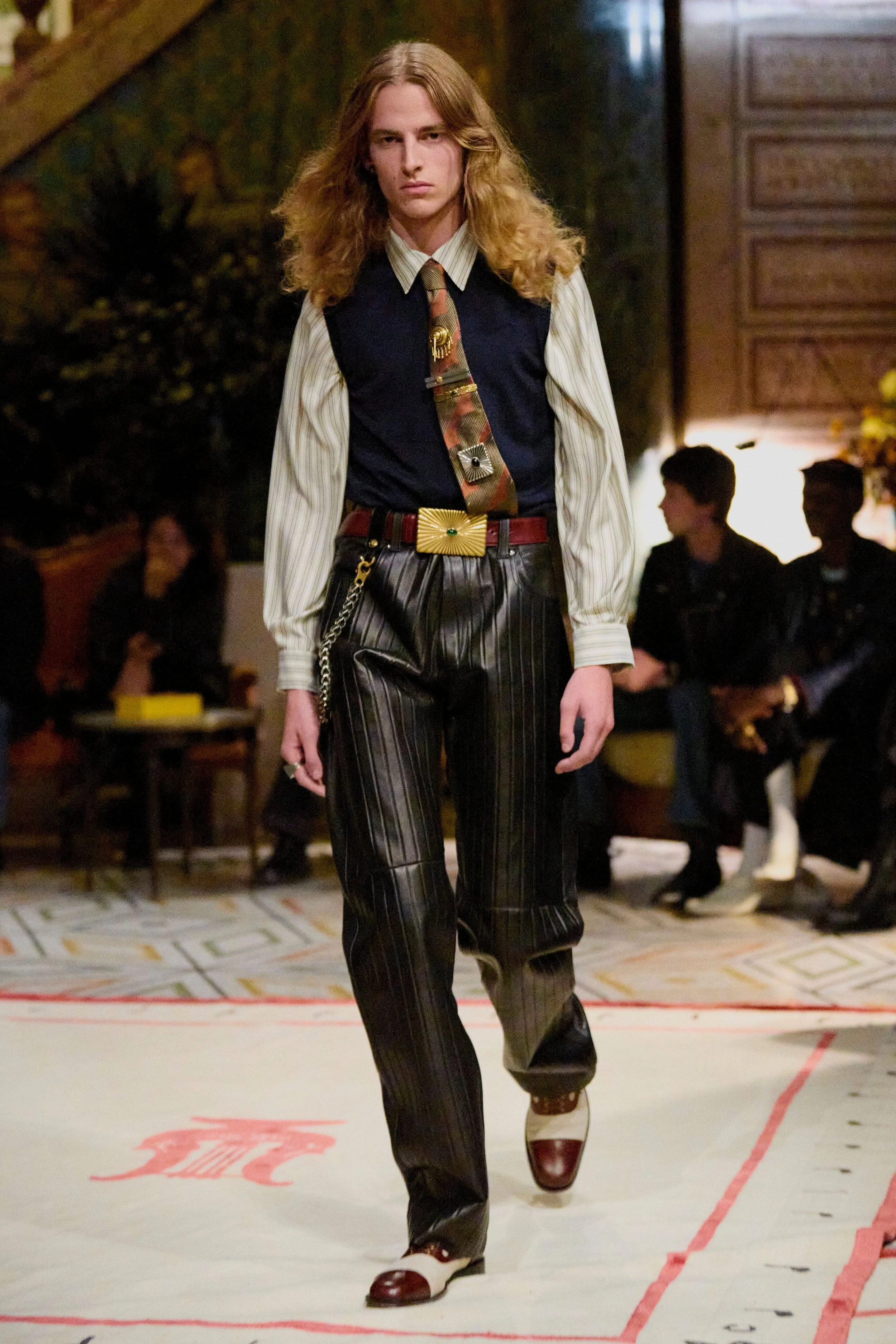
In menswear, tailoring was a highlight. Cropped and oversized vests came embellished with Western-inspired silver details, while tailored suits were matched with rolled-up shorts and wide ties pinned with an assortment of brooches. The brand’s signature naughty streak remained front and centre: tight, high-waisted jeans cut to emphasise the bulge, undone trousers held together with leather cock rings, and classic white tank tops reimagined with a daring backless cut.


Words by Martin Onufrowicz

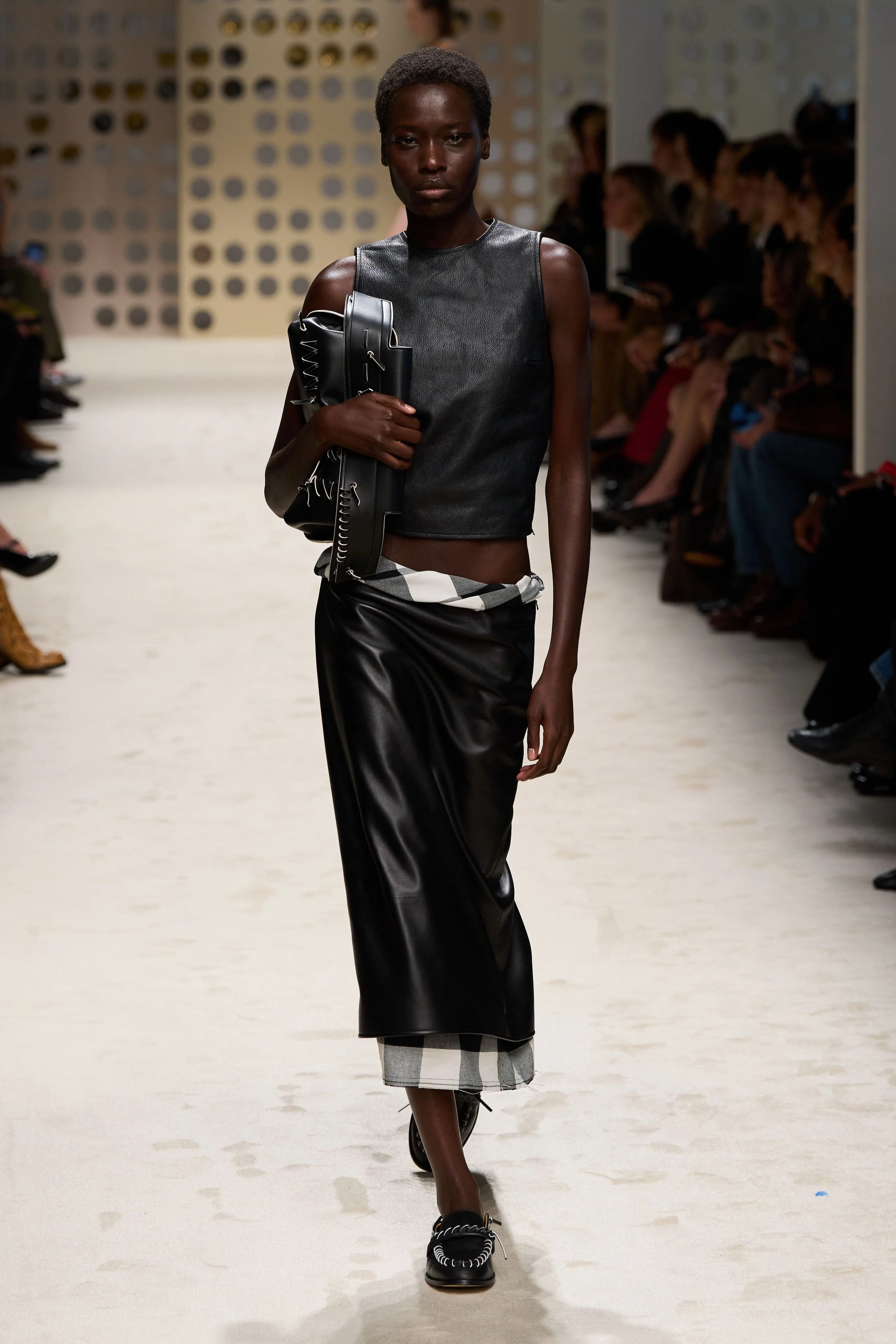
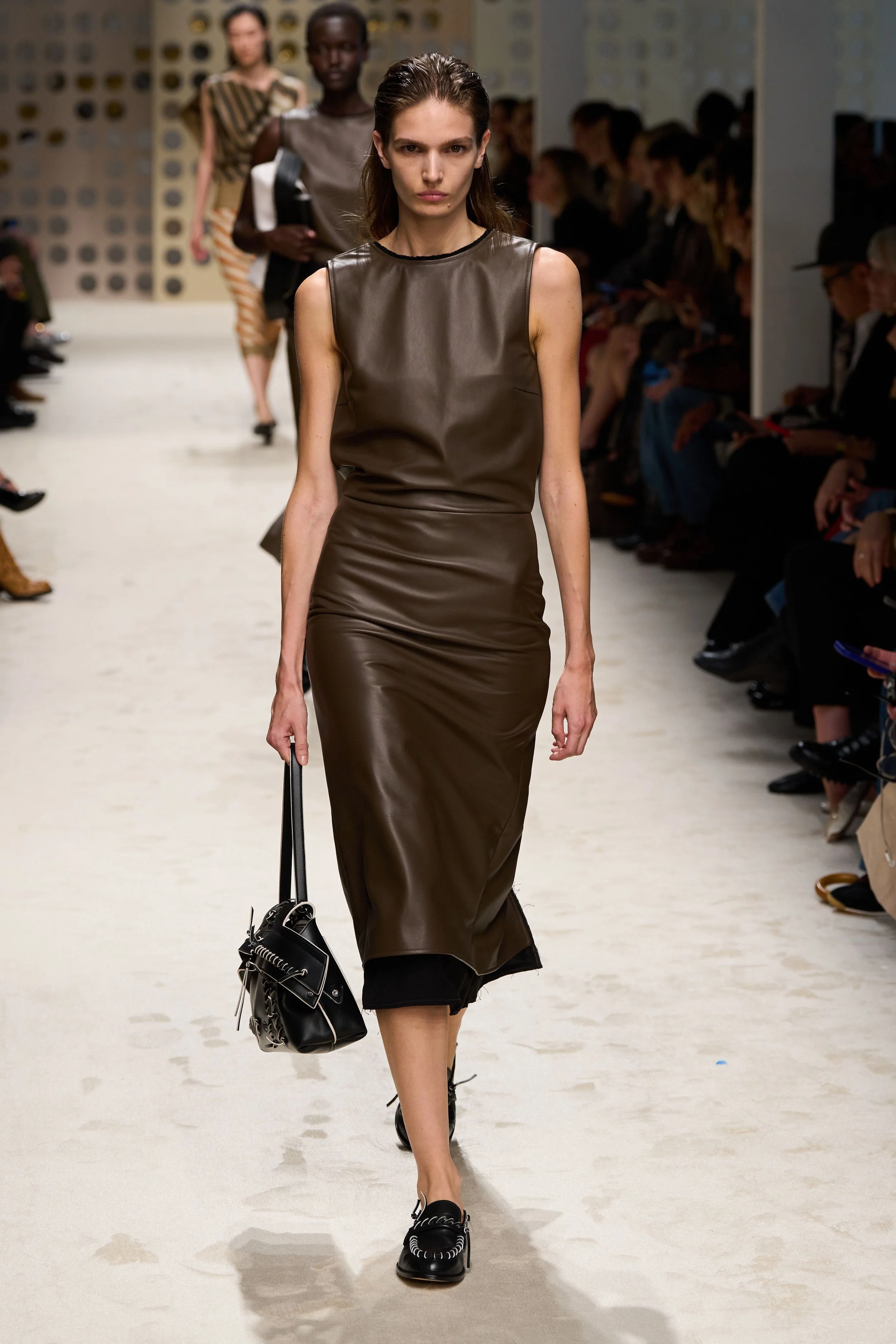
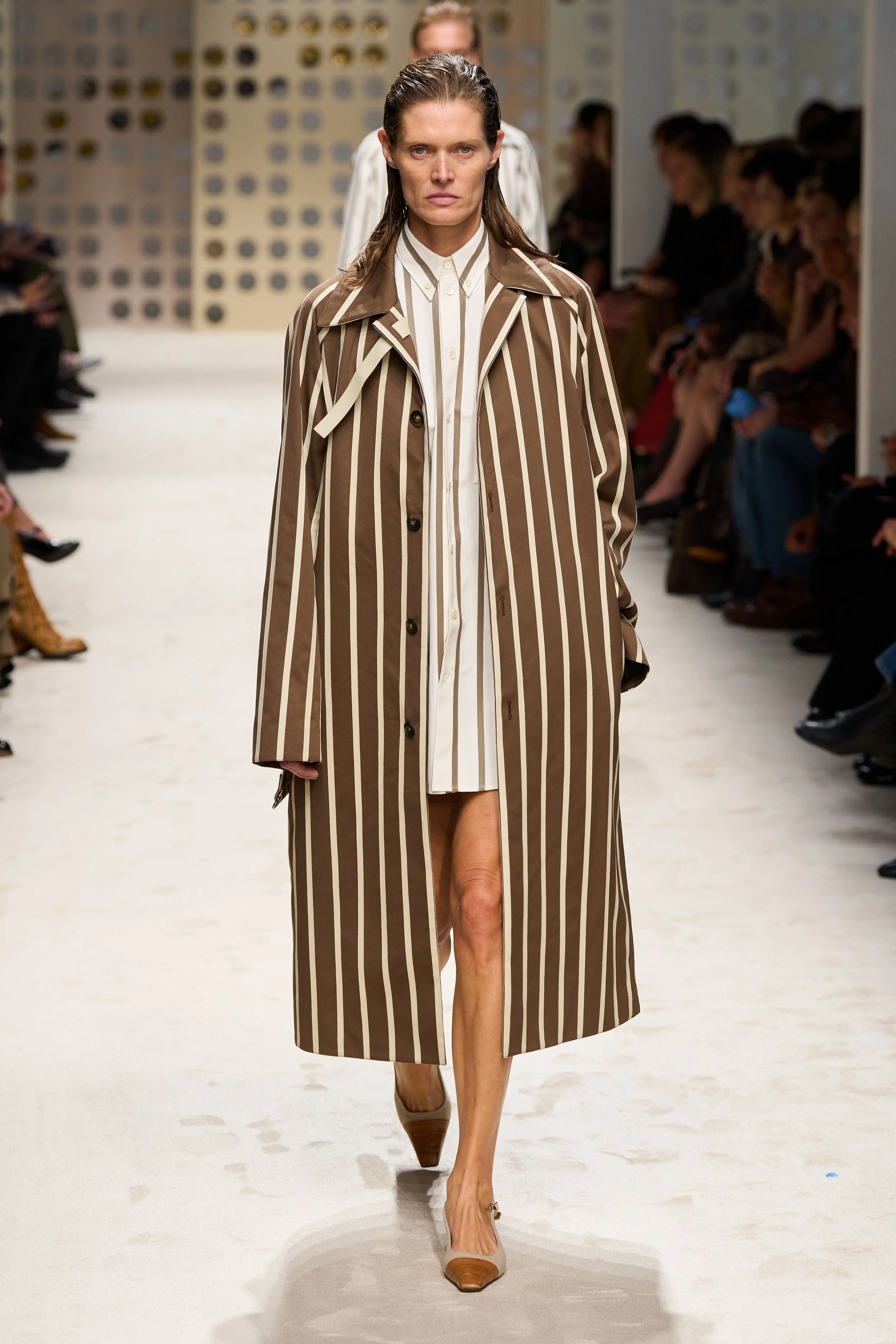
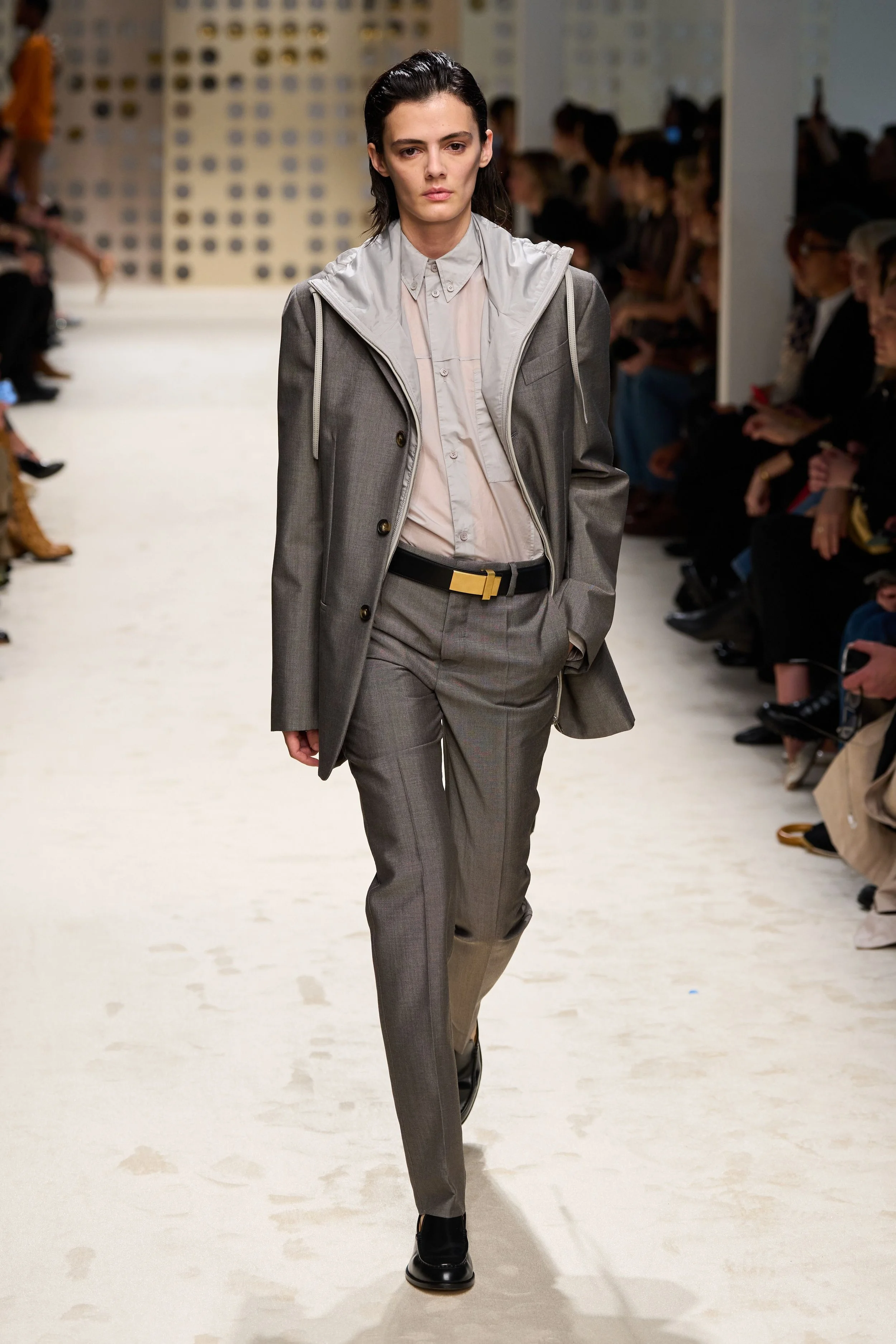
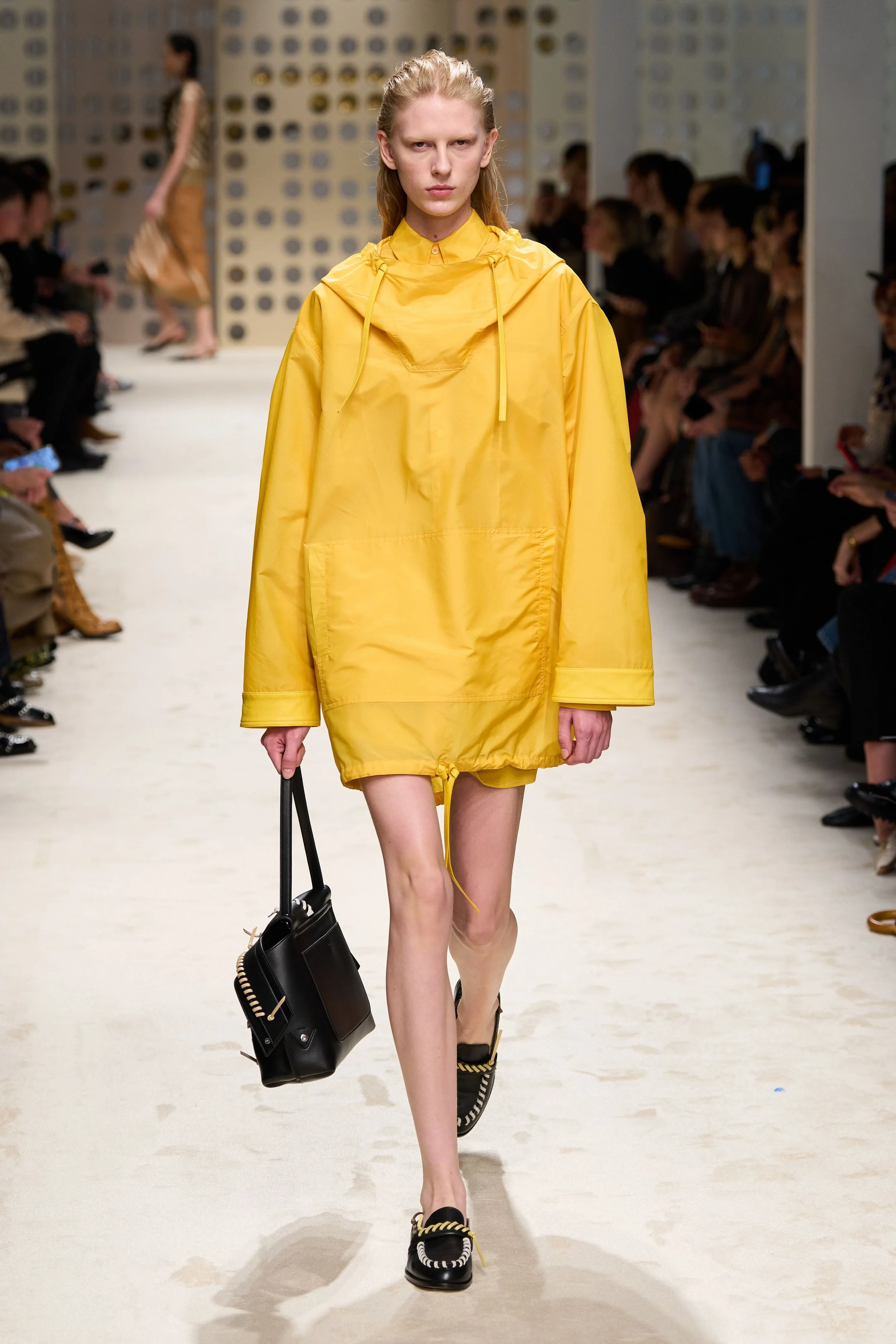
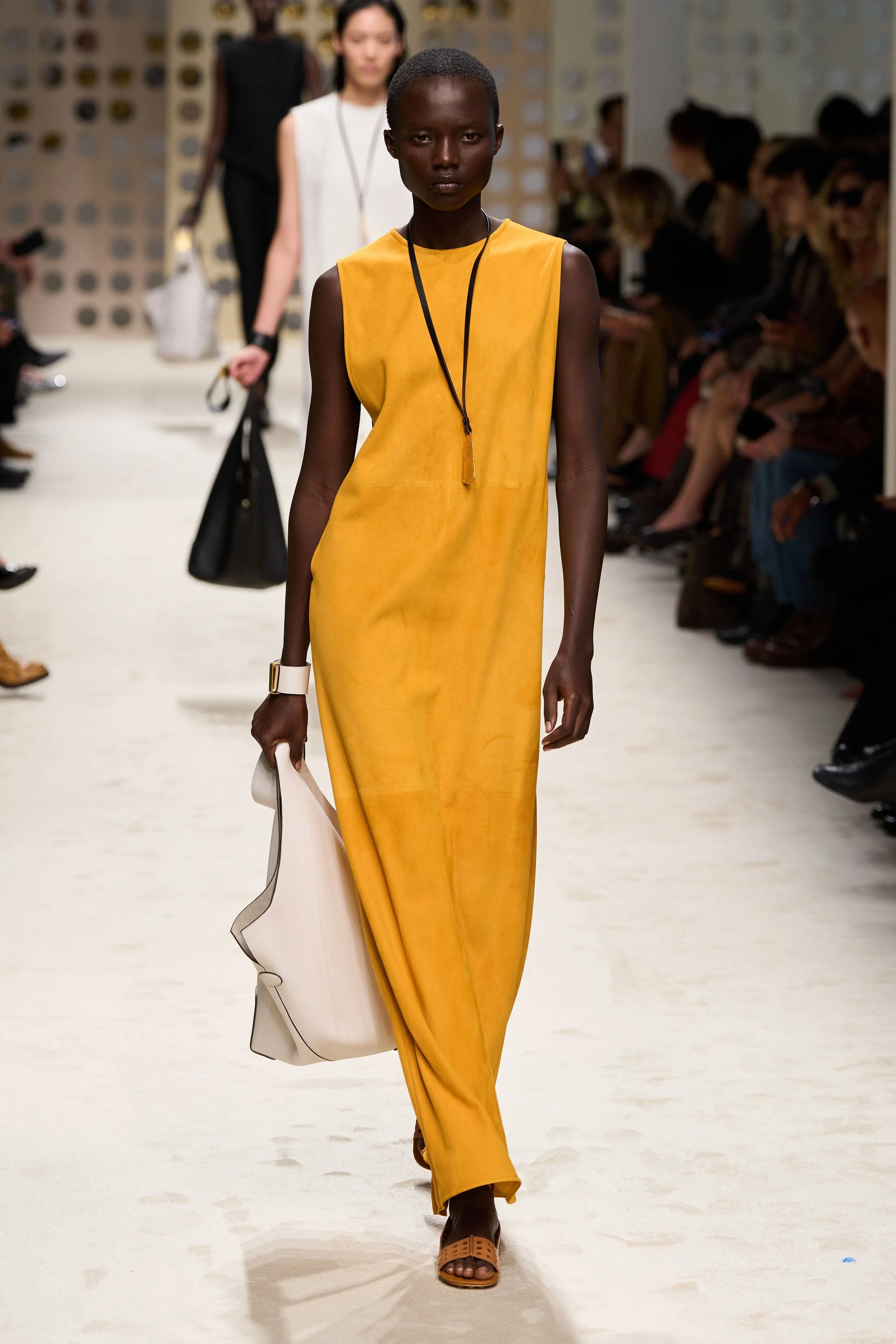
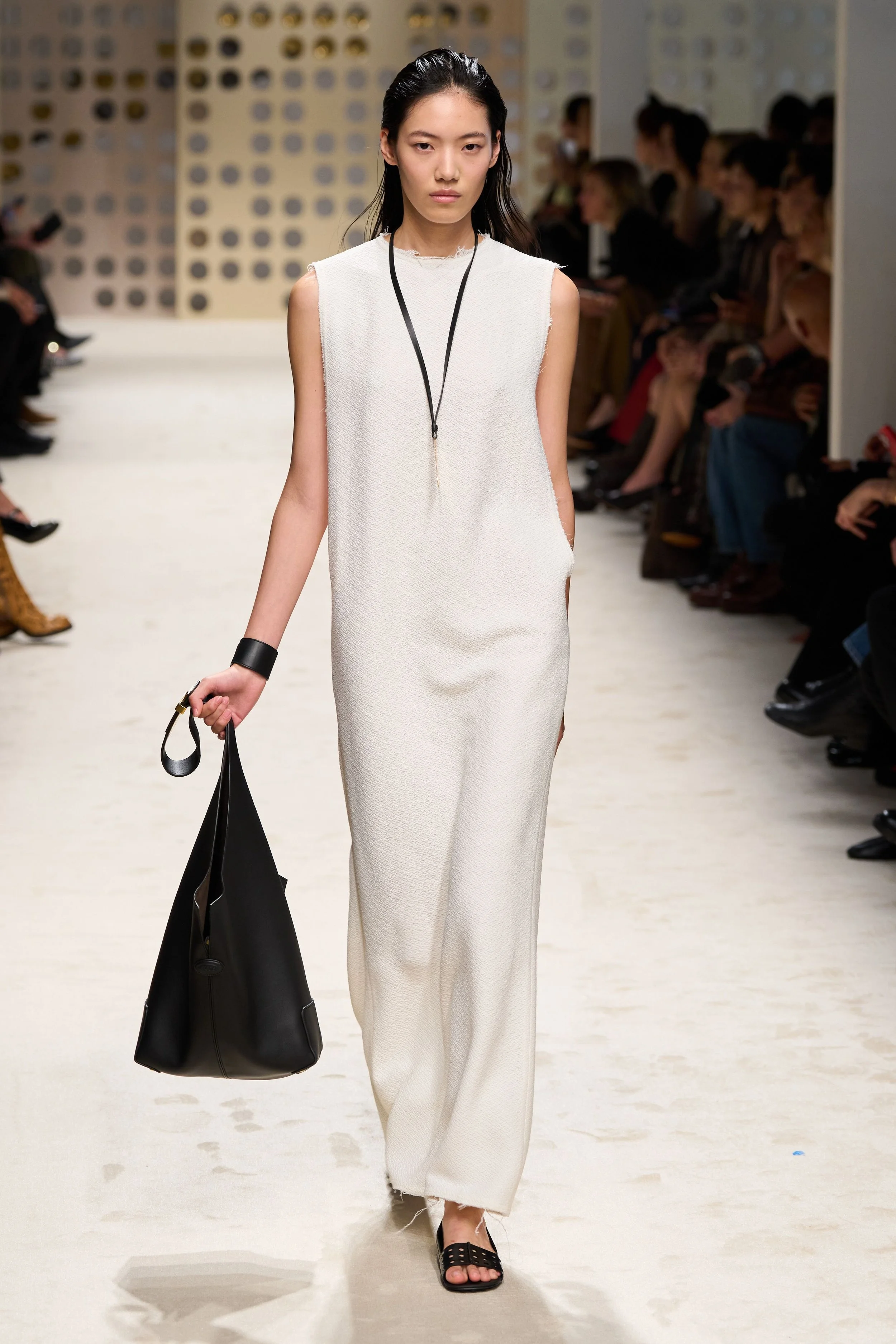
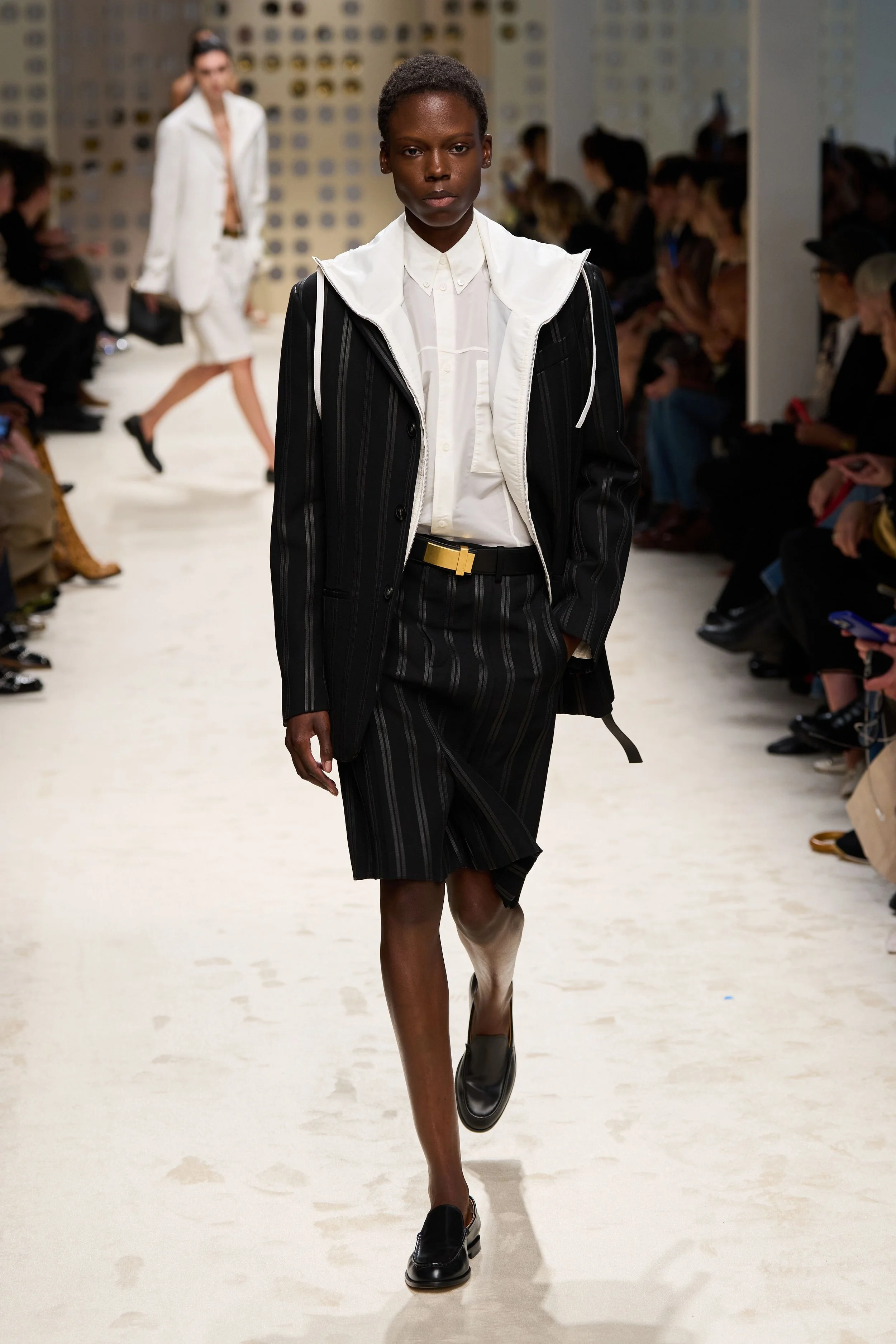
TOD'S SS26

With the Tod’s Spring/Summer 2026 show, designer Matteo Tamburini set out to capture the languid ease of late summer. His vision was expressed through a sun-warmed palette of deep apricot, buttery yellow, tangerine, oyster white, and sand – shades that perfectly conveyed an understated sense of nonchalance.

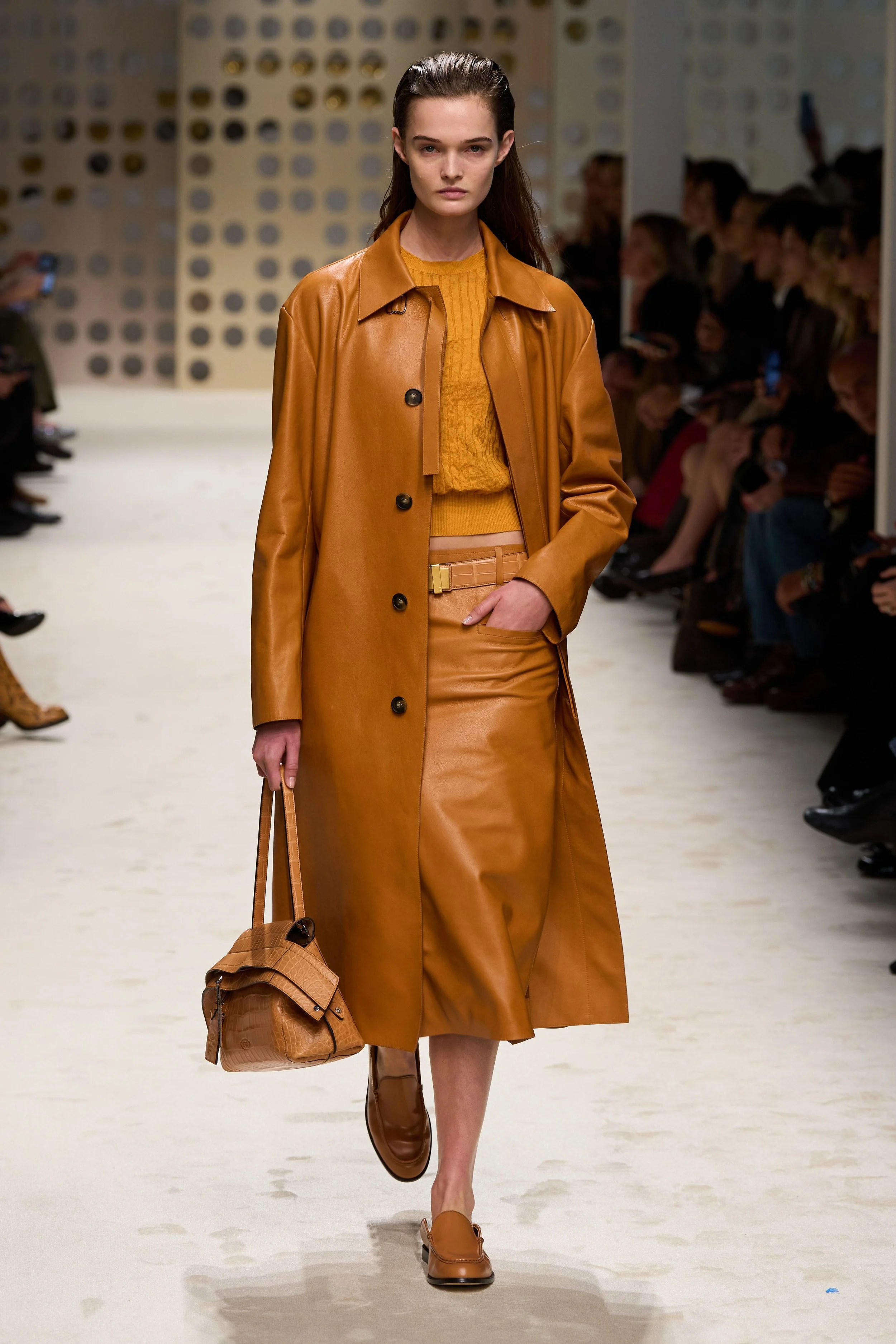
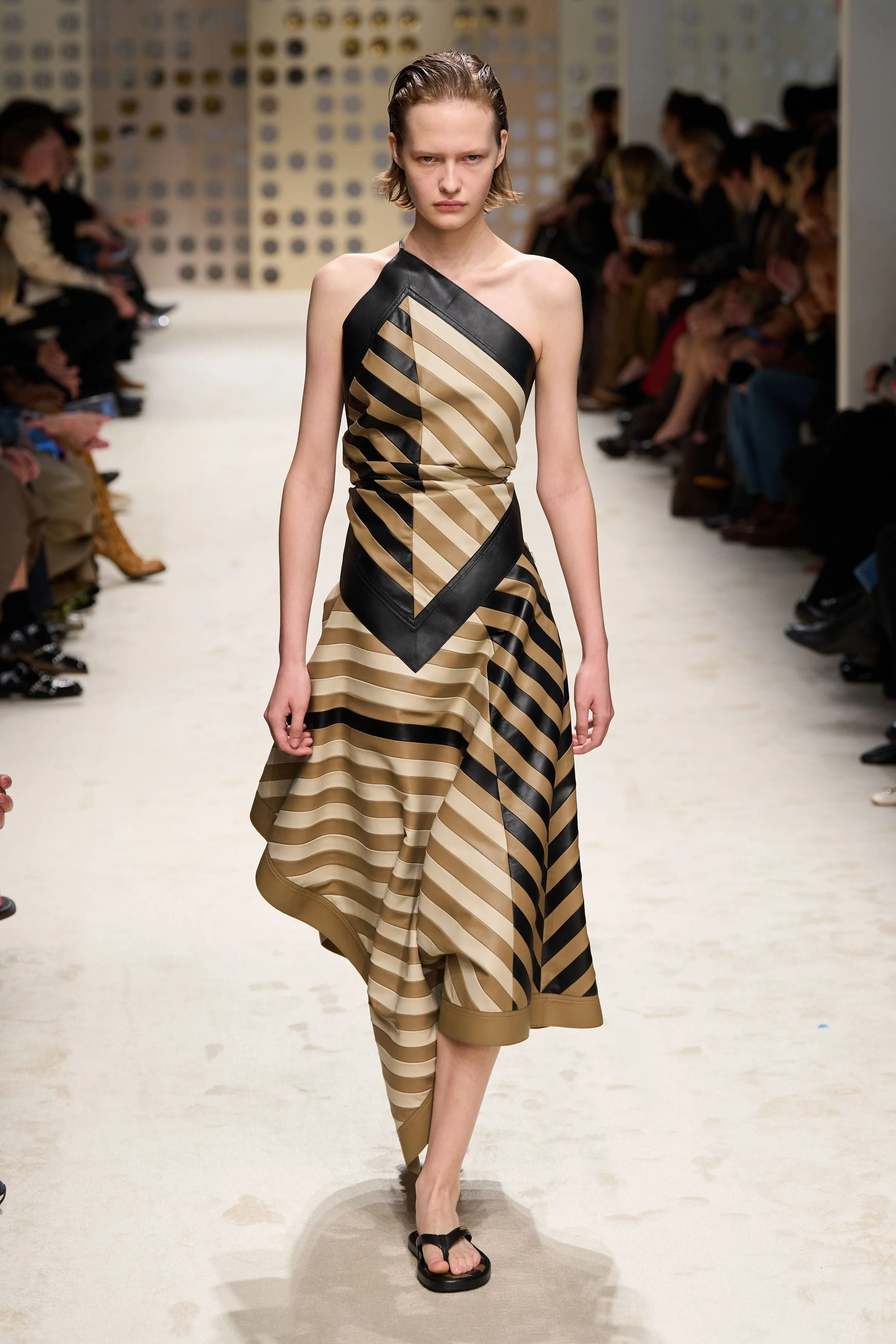
Renowned for its supple leather, Tod’s provides Tamburini with a rich canvas for experimentation. Nappa leather shirts were styled with mini dresses, while their suede counterparts peeked out beneath softly crinkled coats. In one of the collection’s most striking gestures, leather was cut into fluid dresses that echoed silk scarves, striped and effortless, radiating desirability.

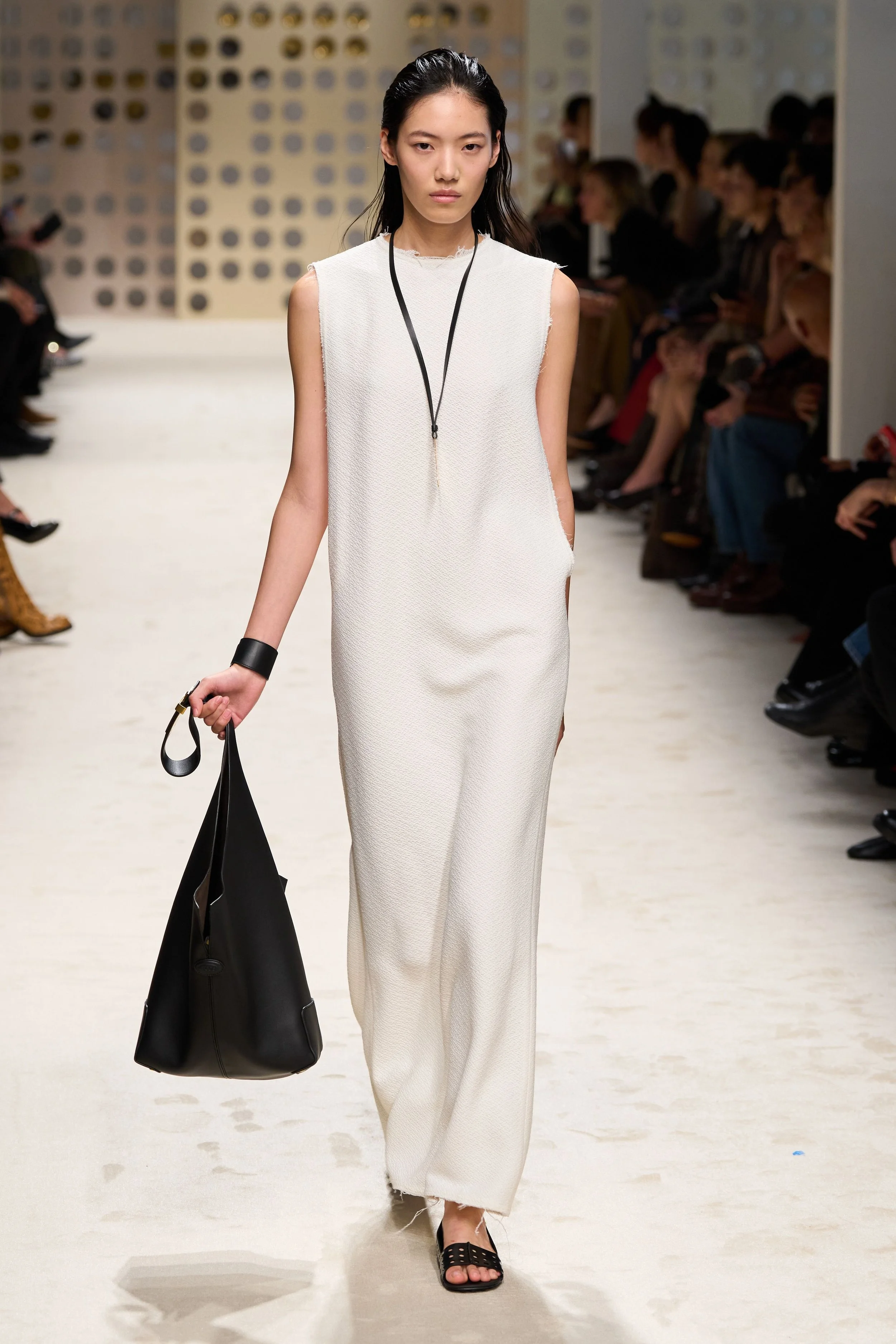
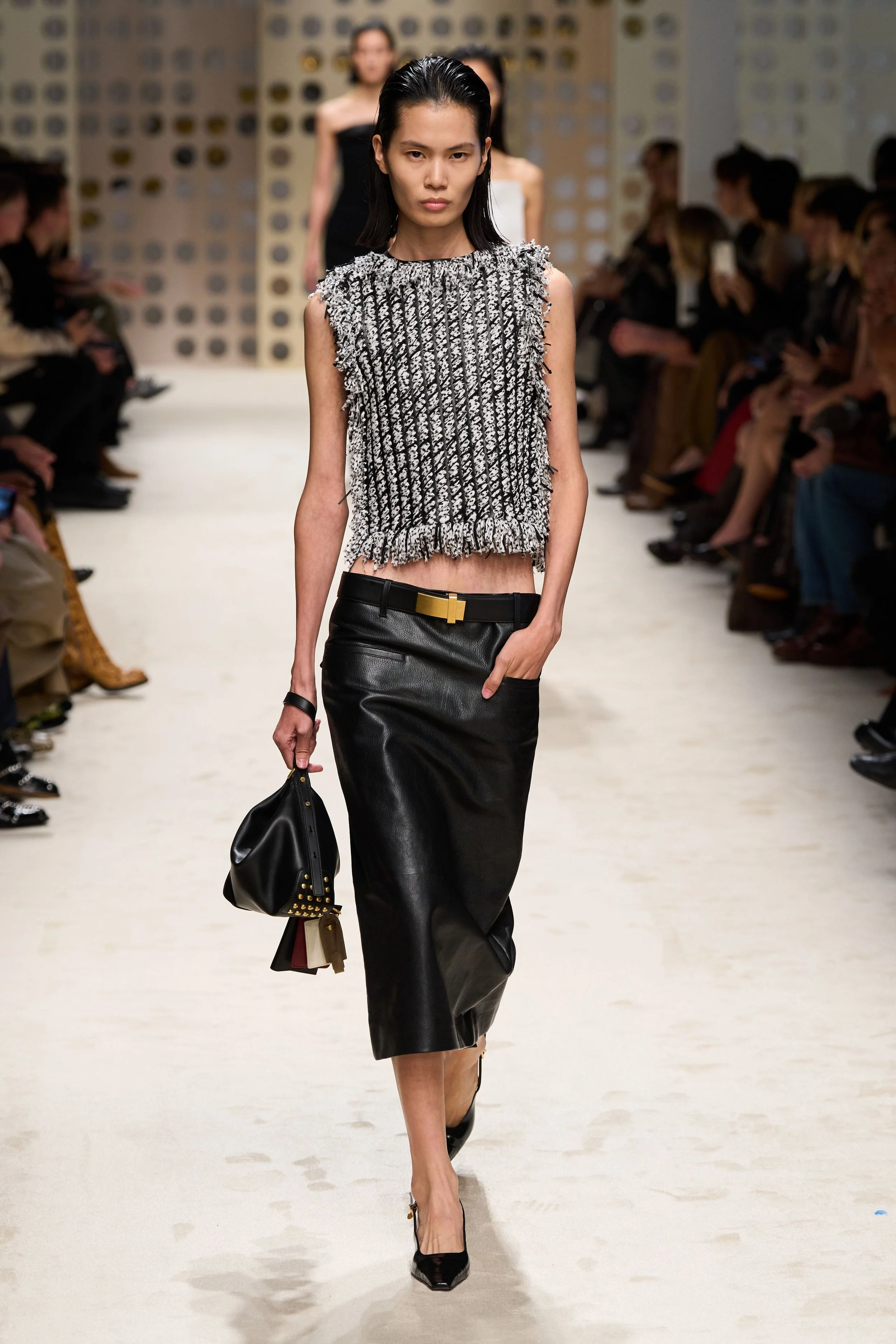
The theme of ever-so-slightly dishevelled elegance carried through the lineup. Sleeveless black and white ankle-grazing dresses, finished with raw-edged hems, emerged as standouts for their restrained yet tactile charm. A bouclé top interwoven with fine black leather strips was paired with a low-slung black leather pencil skirt, balancing polish with ease. Even tailoring was reimagined with a casual spirit: lightweight wool suits softened by airy sports jackets that suggested everyday wearability.


Words by Martin Onufrowicz

EMPORIO ARMANI SS26

For the Spring/Summer 2026 collection, the brand showcased the quintessential summer holiday wardrobe. Loose, flowing fabrics such as sheer chiffons and silks allowed for a poetic movement of the garments, creating a laid-back feeling, almost bohemian. The show began with a rendition of fifty shades of grey in a variety of ethereal silhouettes. It then evolved into muted metallics – silvers, soft golds, turquoise, and pastels – with occasional pops of deeper tones.

Inspired by the clean-girl aesthetic and the quiet luxury trend, the collection felt fresh and contemporary. The wardrobe showcased more than clothing – it revealed a state of mind where fluidity, relaxation, ease, and disconnection are expressed through flattering pieces and a nonchalant style. Free and easy silhouettes unveiled a lifestyle where effortless and casual translate into chic.

Starring headscarves for an artistic look and flats for a comfortable, feminine, and minimalistic touch, the show felt romantic, blurring the line between daywear and eveningwear. Toward the end, more elaborate silhouettes walked down the runway: defined waistlines, draped chains and necklaces, billowing skirts or harem-style trousers, and wide belts that sculpted the volume into shape while preserving its natural movement.

The show felt intimate and thoughtful, honouring the memory of Mr. Armani, who passed away just a couple of weeks prior. During the finale, models joined the crowd in clapping, and there was a palpable emotion caused by not seeing the legendary designer take his classic bow on the runway.


Words by Carolina Benjumea

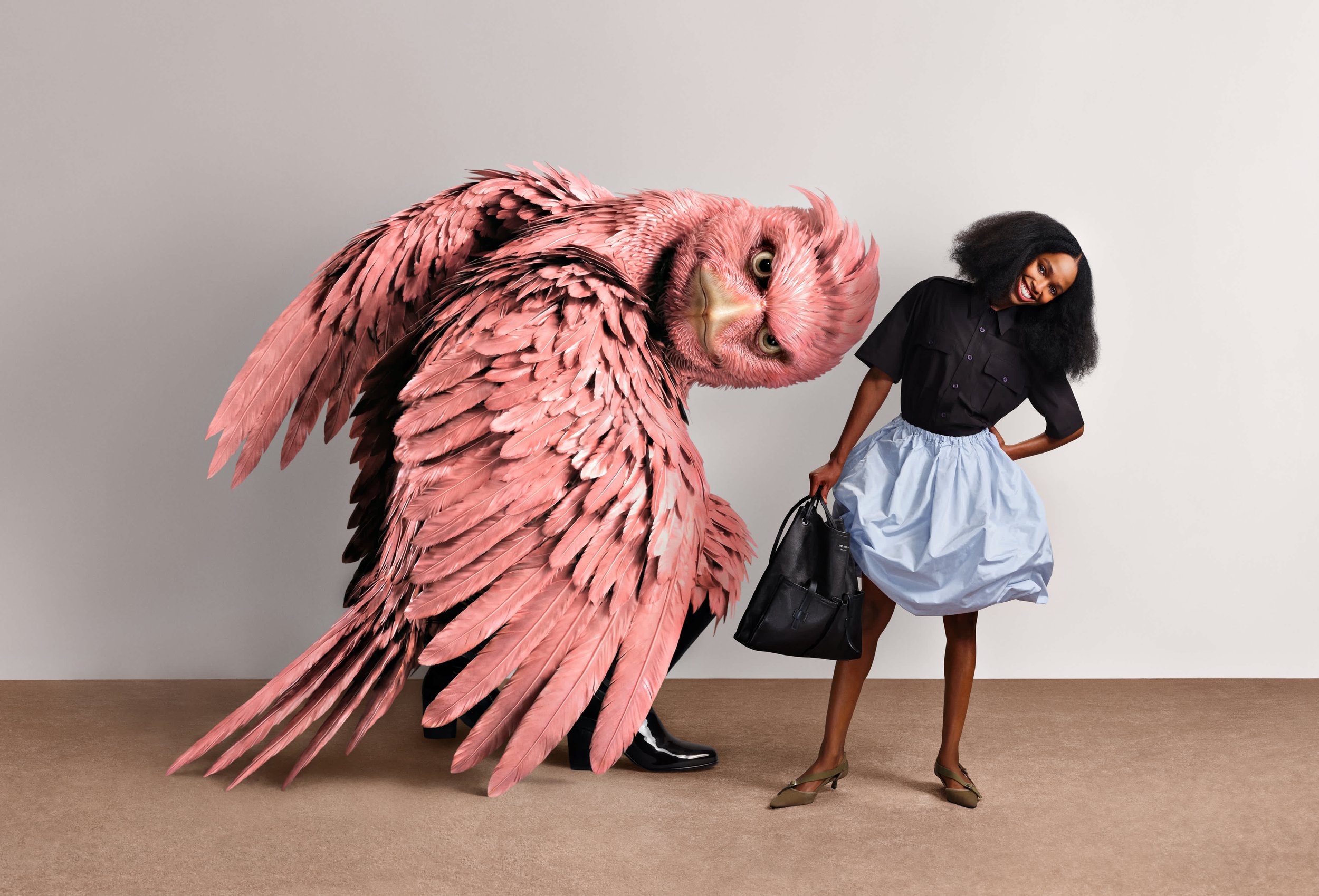
PRADA SS26

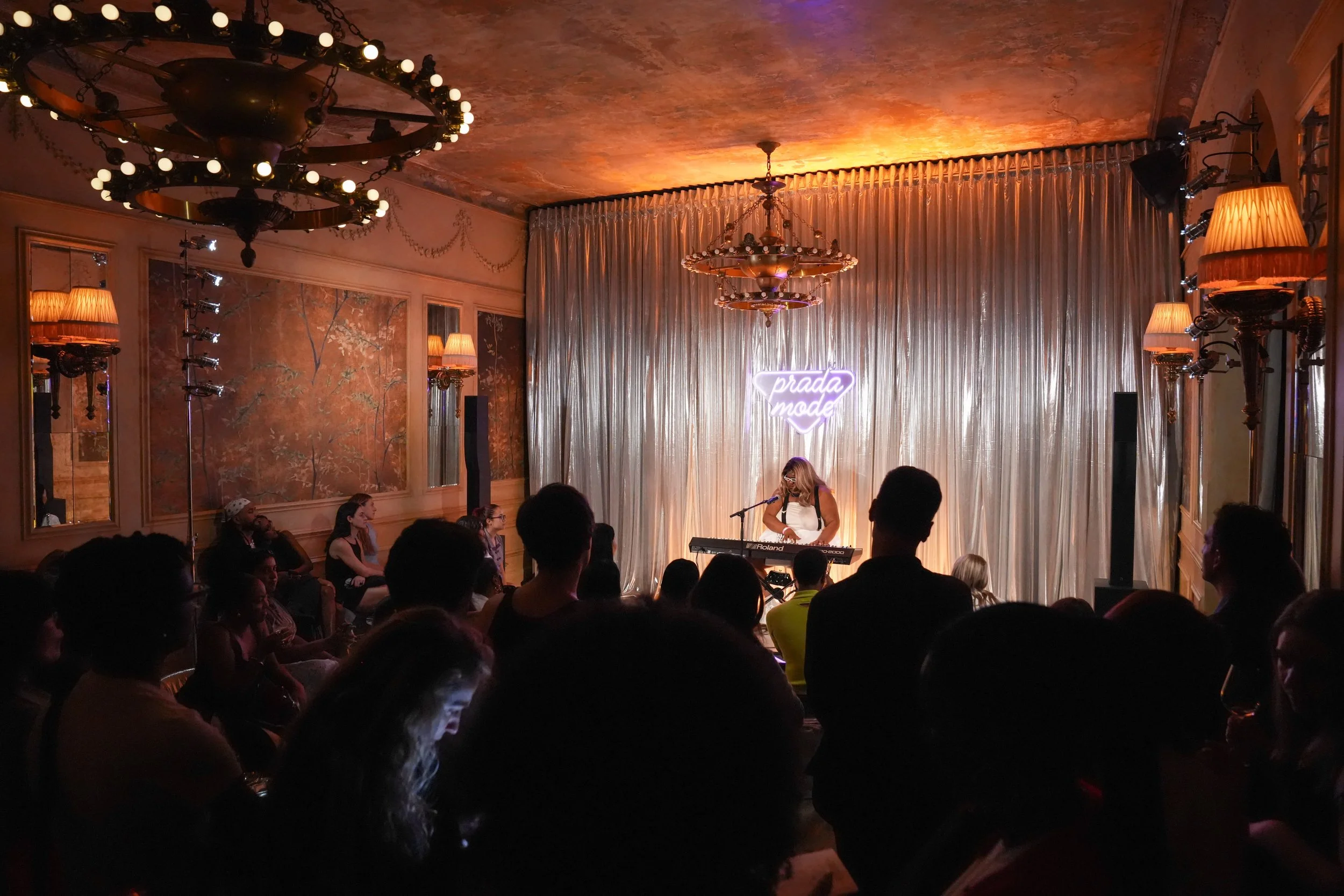
In June, Prada presented its most recent menswear collection. Deep inside its titular Fondazione, the Italian house proposed an escape from the current world. The approach was surprising: the industry’s most intellectual brand suggested intellectual avoidance. Confronted with an overwhelming world, Miuccia Prada and Raf Simons advised a summer vacation. Now, with the rentrée in full effect, the strategy is different. Retreating was only the first step. For women’s Spring/Summer 2026, we got the next chapter of Prada’s guide on how to deal with chaos. Step two: filtering information.

Considering the medium of clothes, the response was quite literal at first. The show opened with a monochromatic set, where a navy shirt and trousers blended into a strict uniform. But this season wasn’t an exercise in minimalism. The point wasn’t removal, but filtration. Soon, similar sets were accompanied by opera-length gloves in shiny satin and pliable leather.

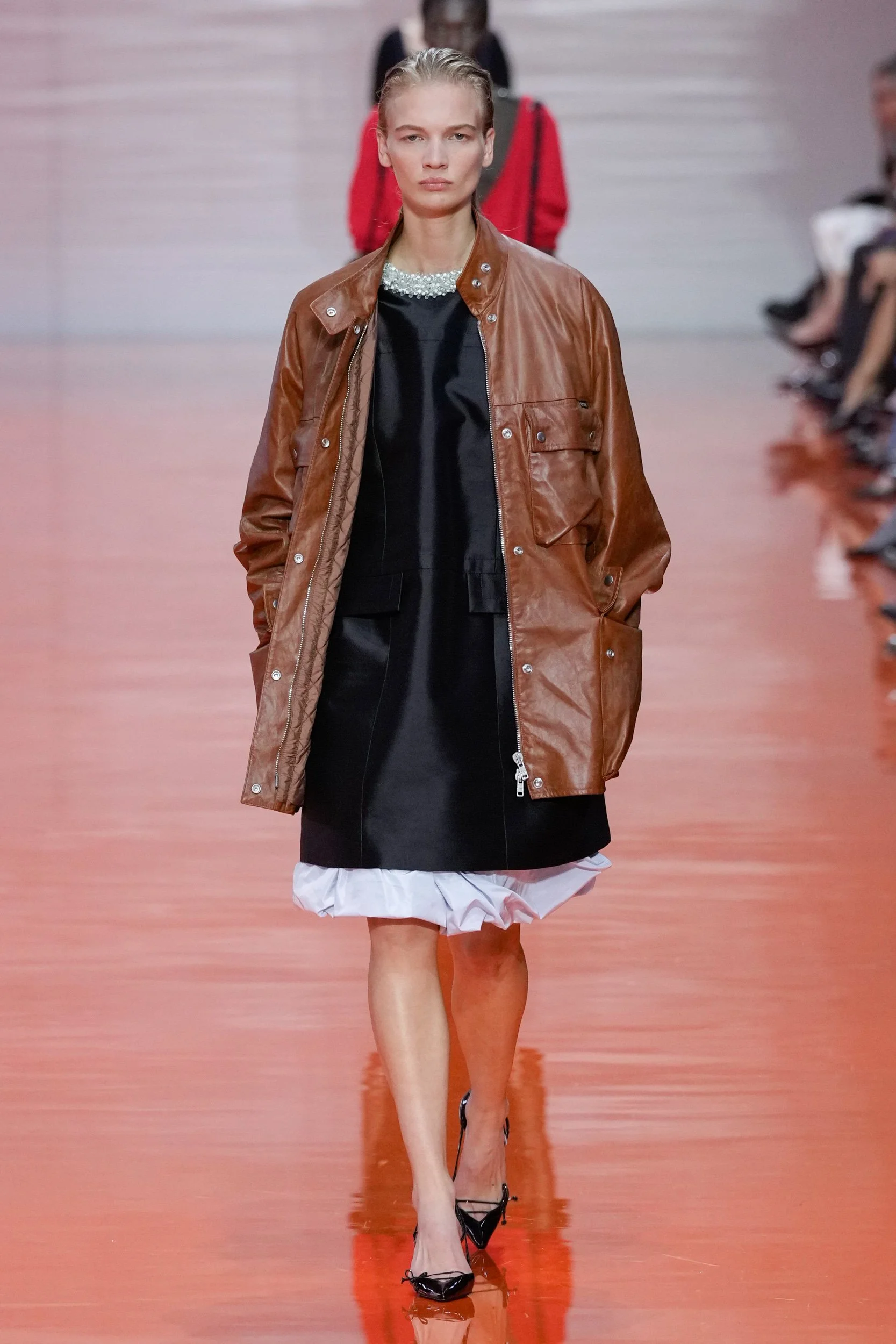
Distillation doesn’t mean austerity. Patchwork skirts hit just below the knee, revealing more of their multiplicity as models walked by. It was a great season for Prada skirt lovers (ourselves included). Paper-bag-waist iterations came in bright blues and whites, while wrinkled nylon ones were rendered neutral. Colourful dresses were hiked at the hem, revealing contrasting crumpled crinolines. At the top of these funky creations, crystallised collars were reminiscent of Prada’s early explorations. Just like in the men’s show before it, here, bubble-hemmed micro shorts made an impactful appearance.

The standout of the show was undoubtedly the intentionally ill-fitting skirts attached by suspenders. These seemed like a continuation of Prada’s Fall/Winter 2025, where imperfection was proposed as a response to culture’s tight standards. These skirts conveyed a similar sentiment in shades of sheer black, pale yellow and navy. Or perhaps, they could inspire a different interpretation altogether. Maybe these off-kilter creations weren’t made as a response, but as a reconsideration. Why should a skirt hang off the waist and not the shoulders? Why should a bra offer support and not freedom? In a time of chaos, Prada invites us to think critically and make our own decisions.


Words by Pedro Vasconcelos

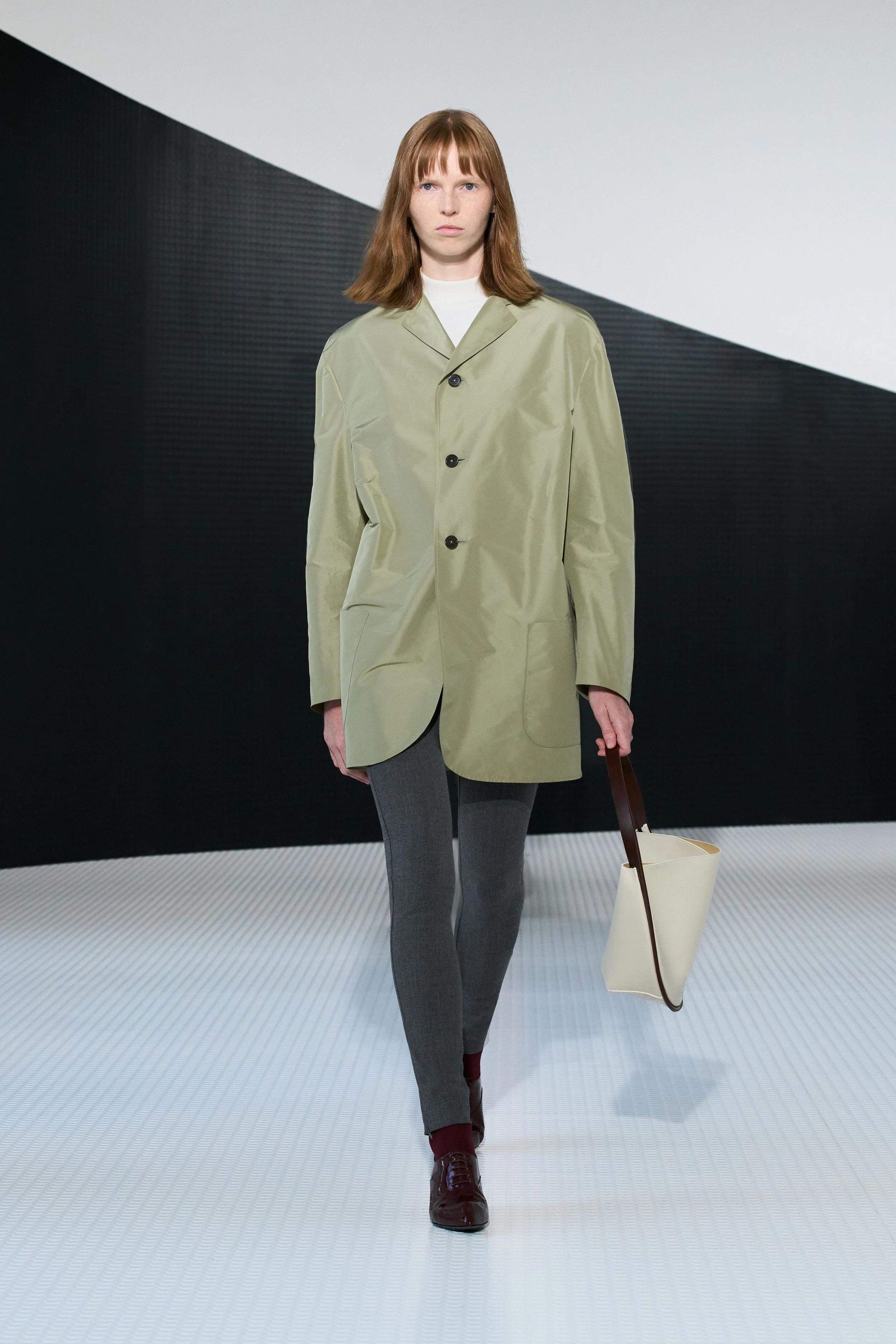
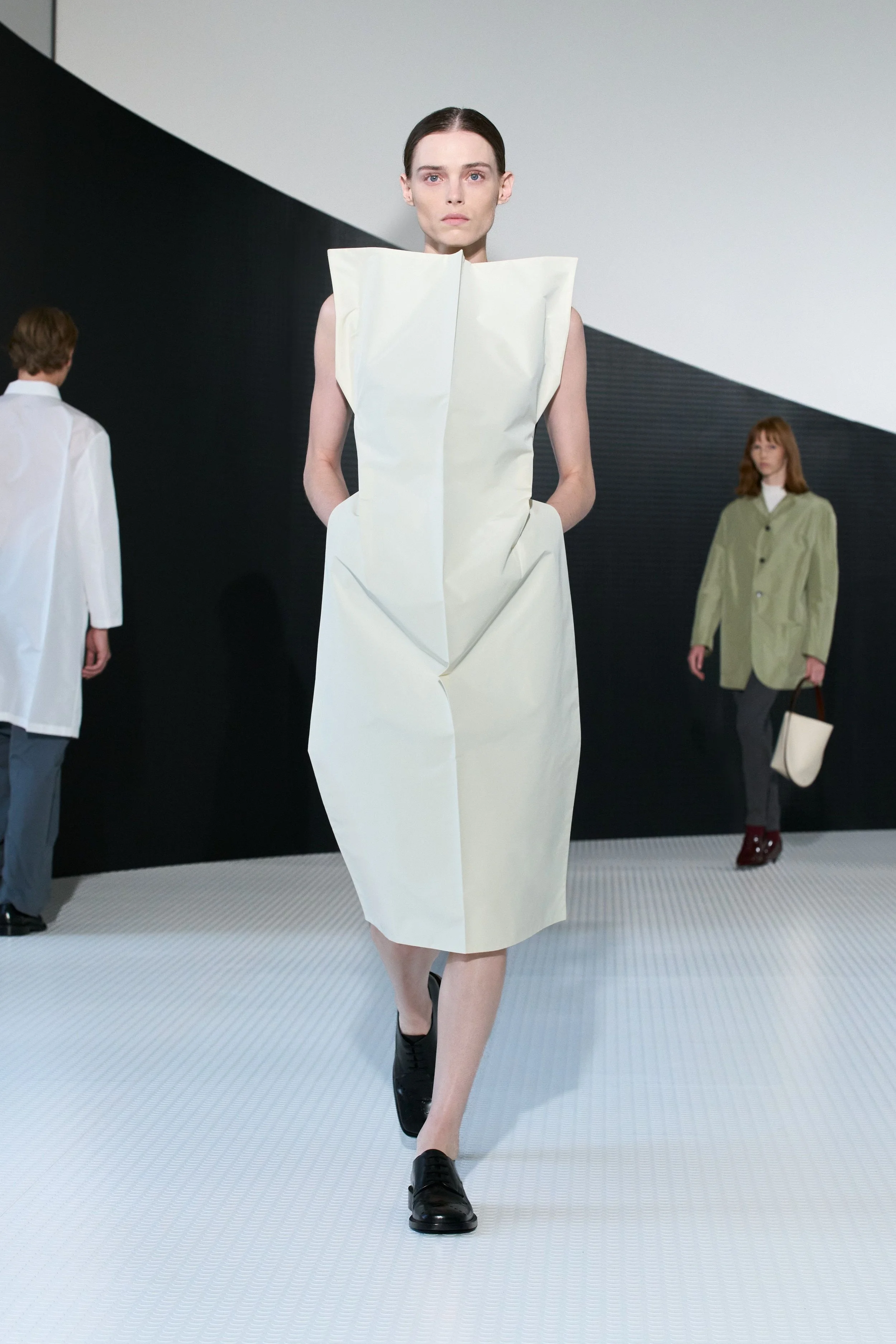
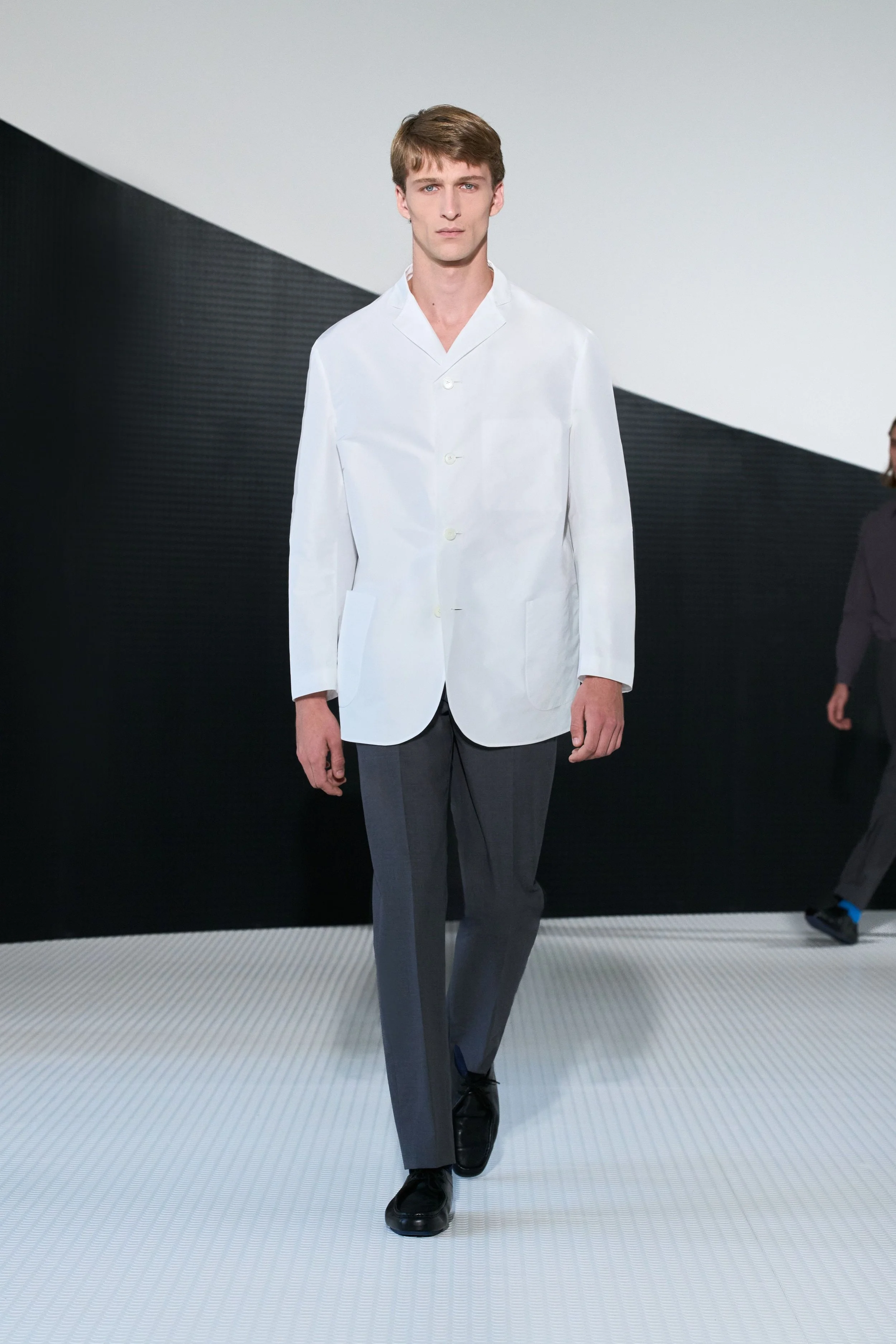
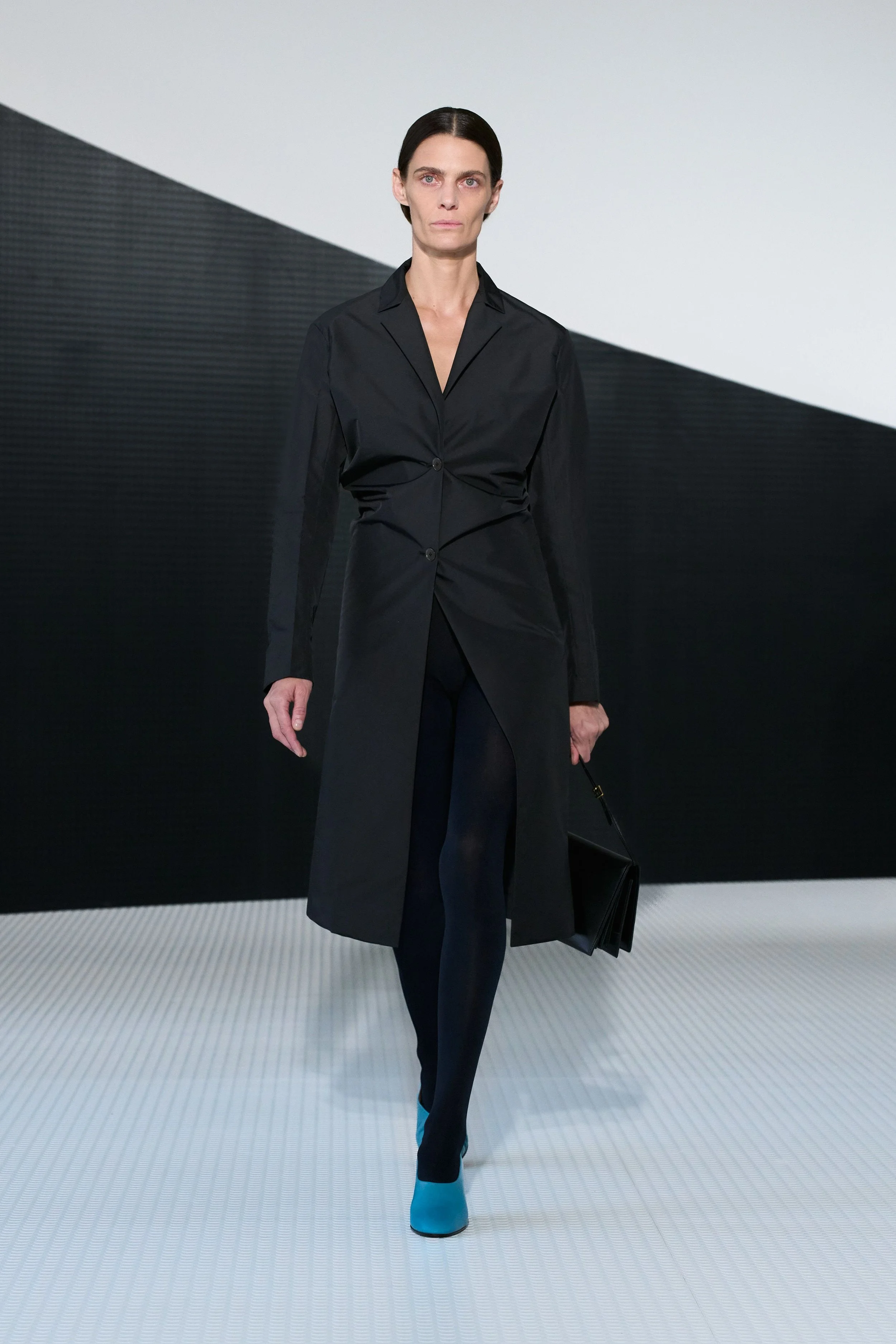
JIL SANDER SS26

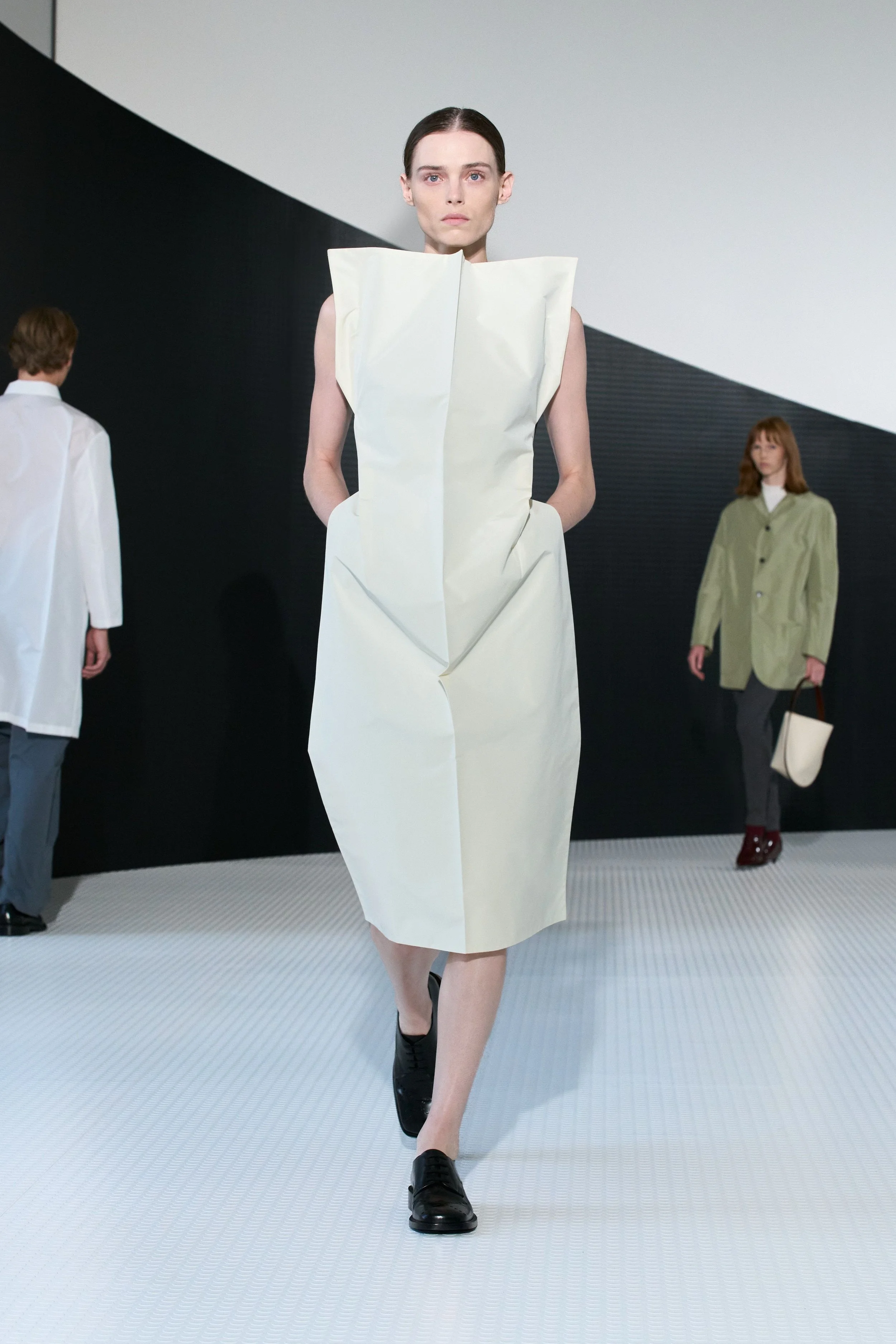
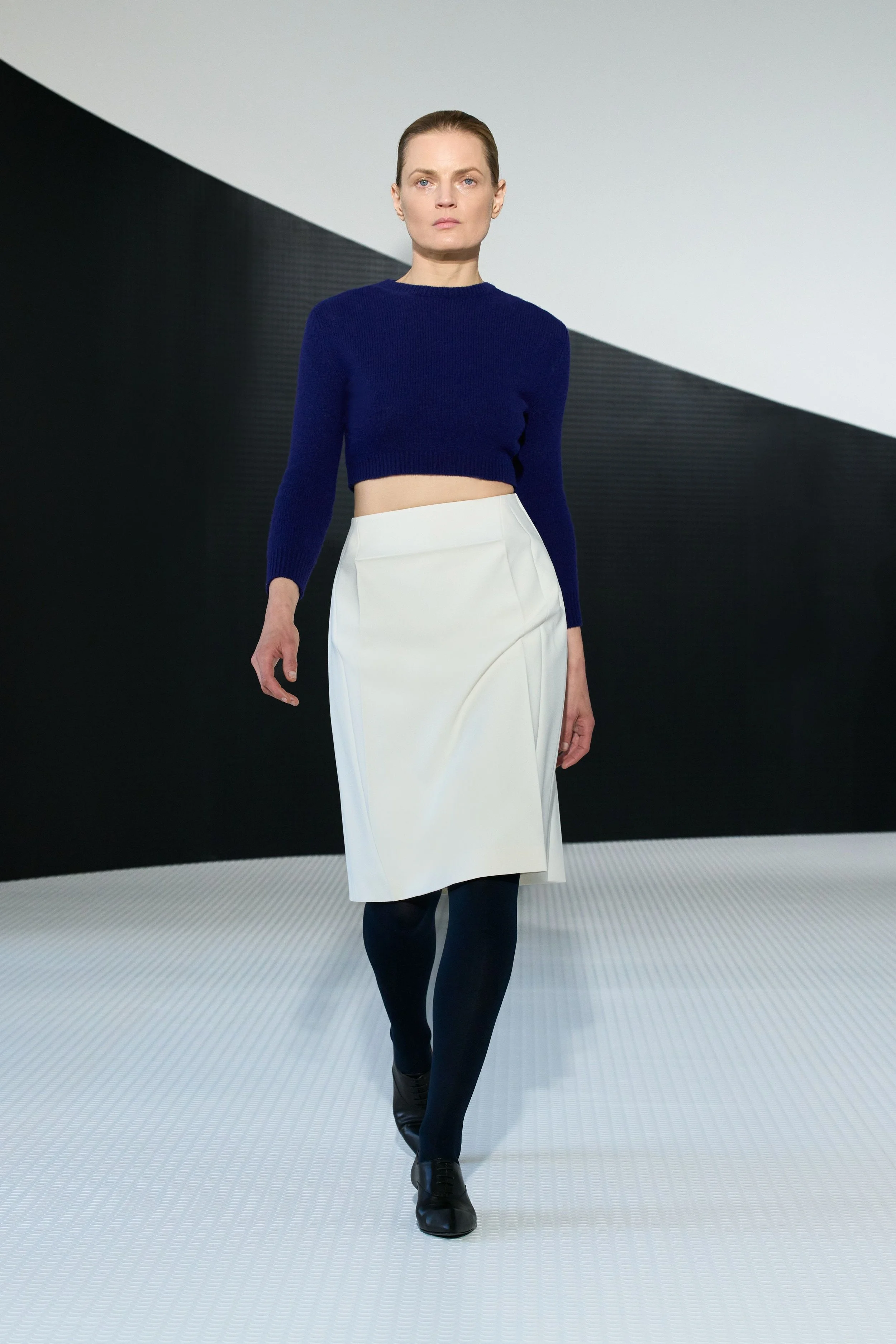
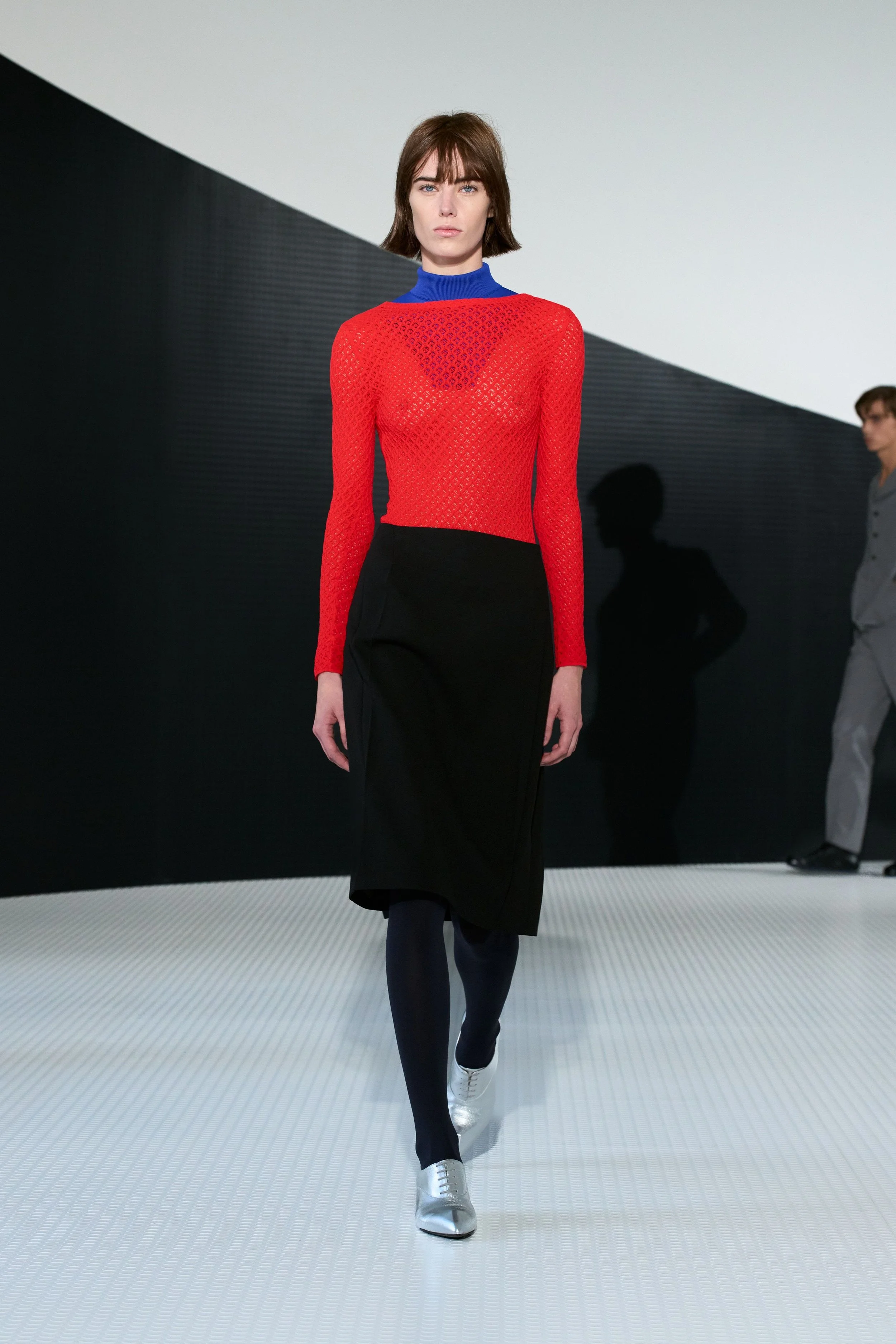
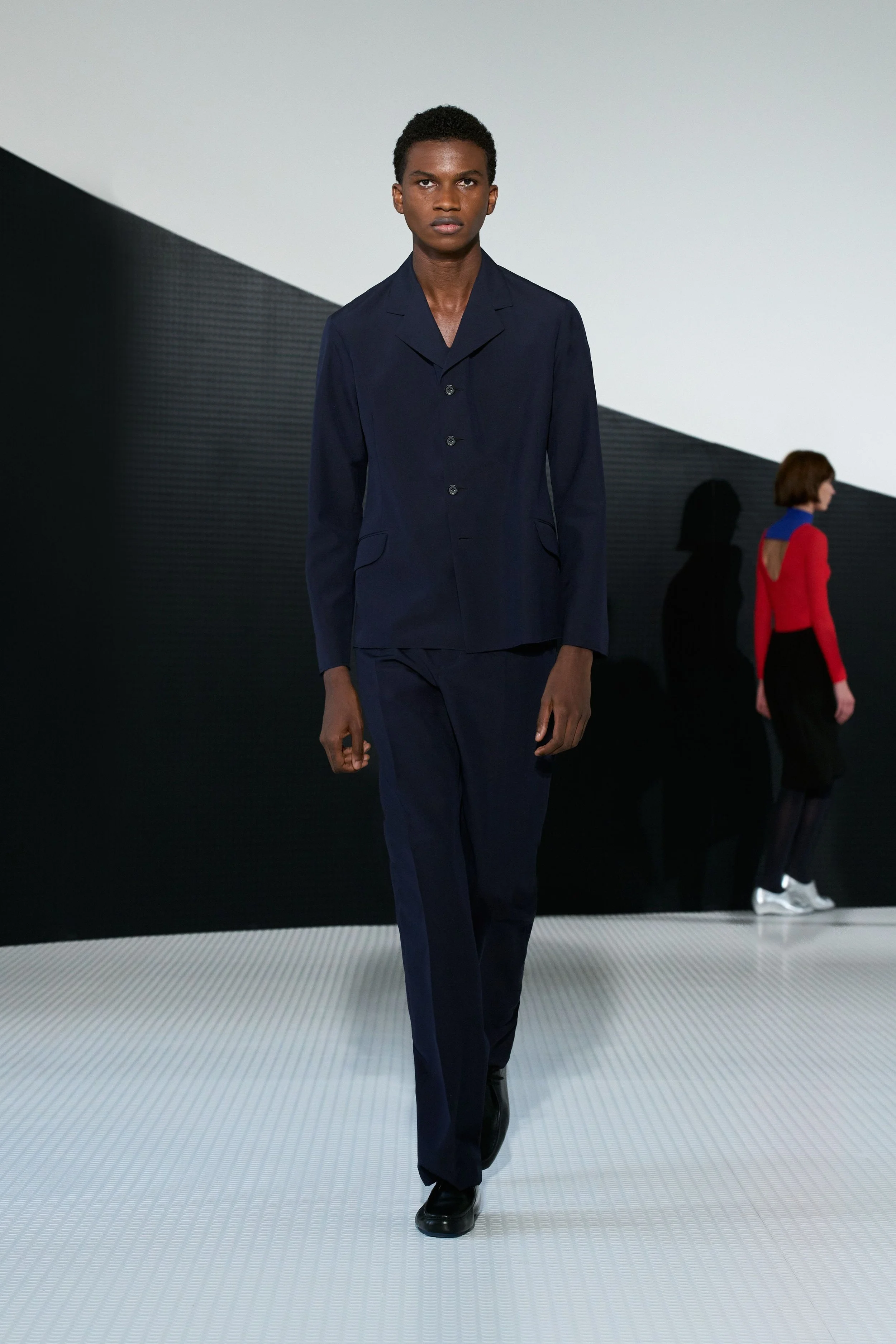
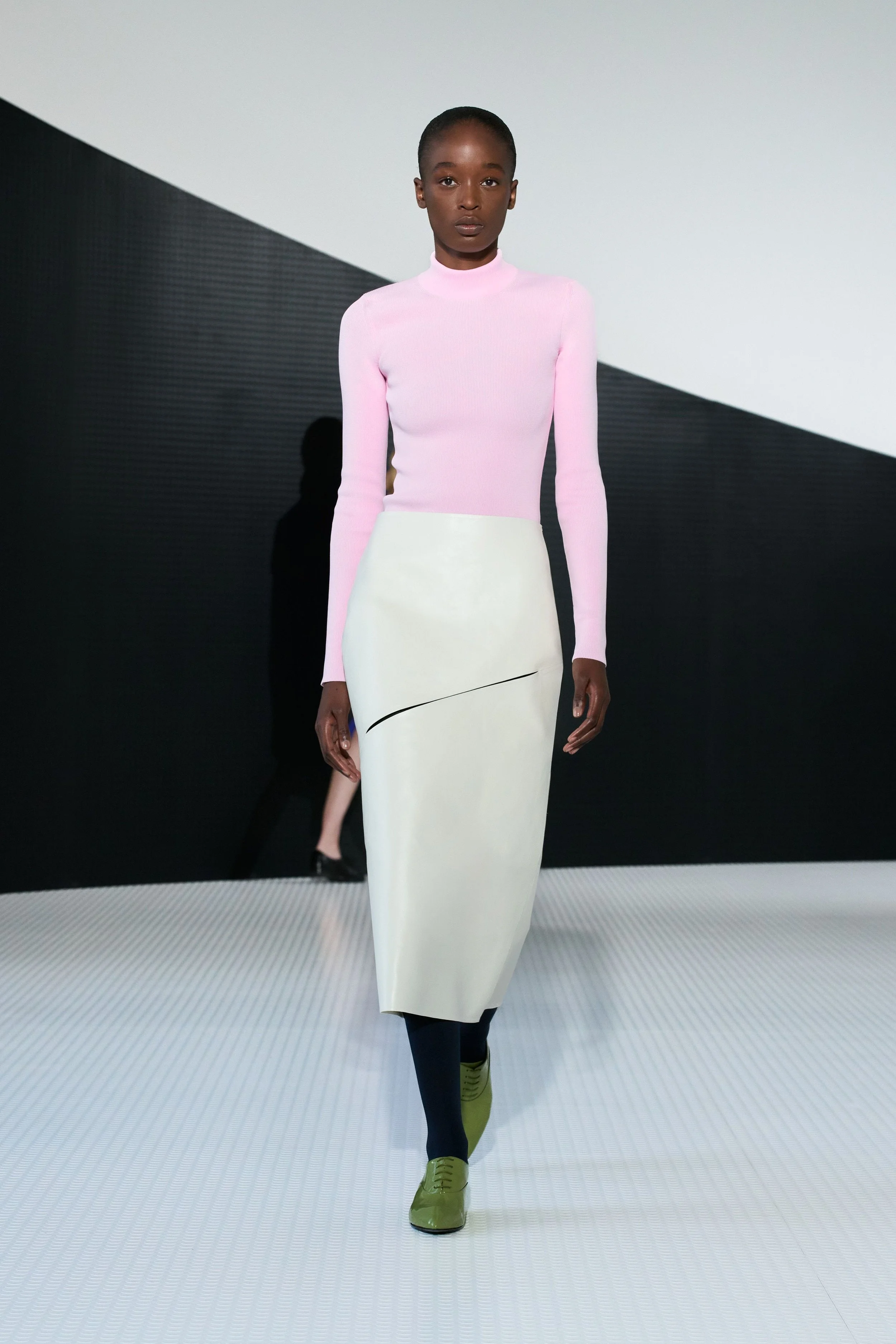
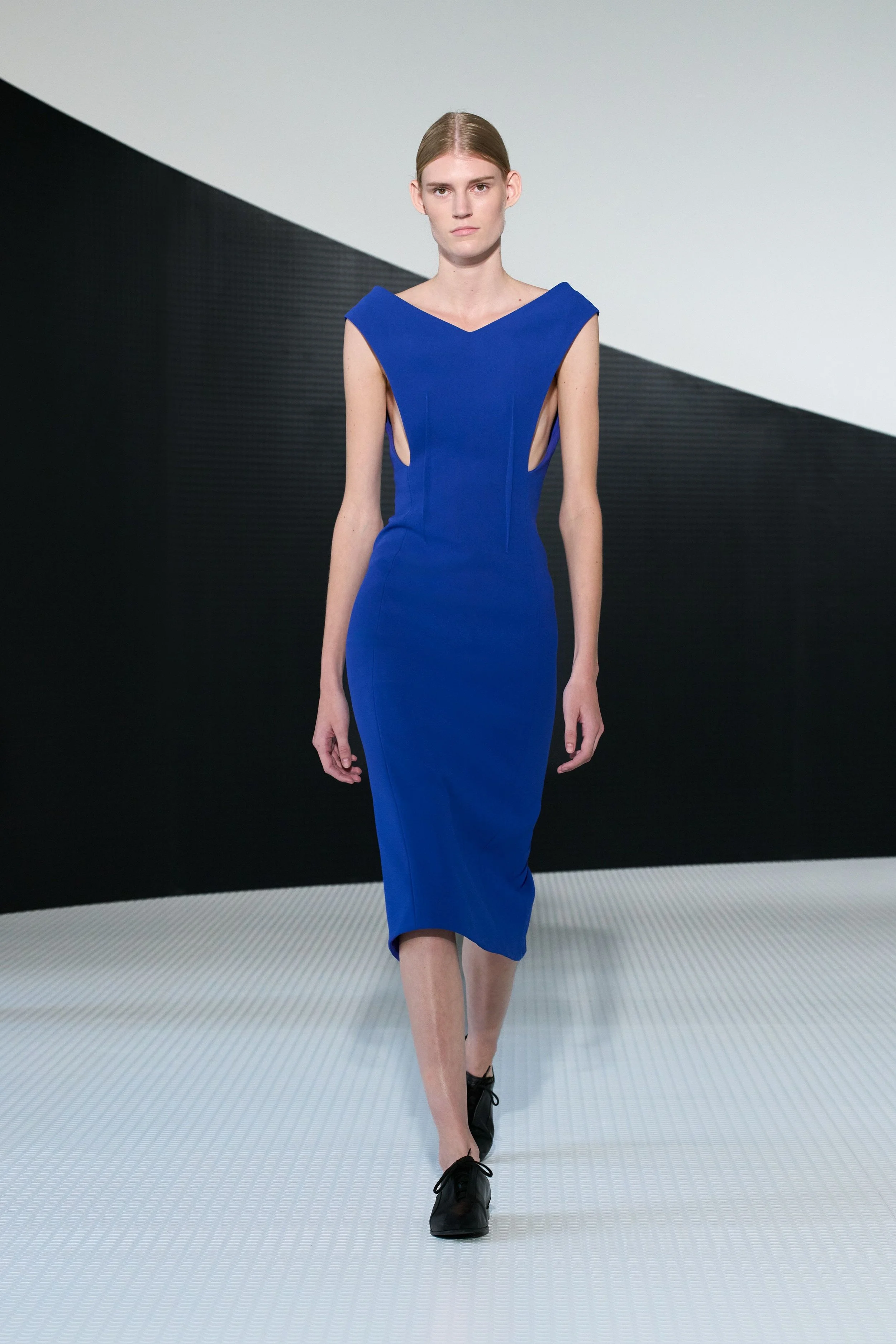
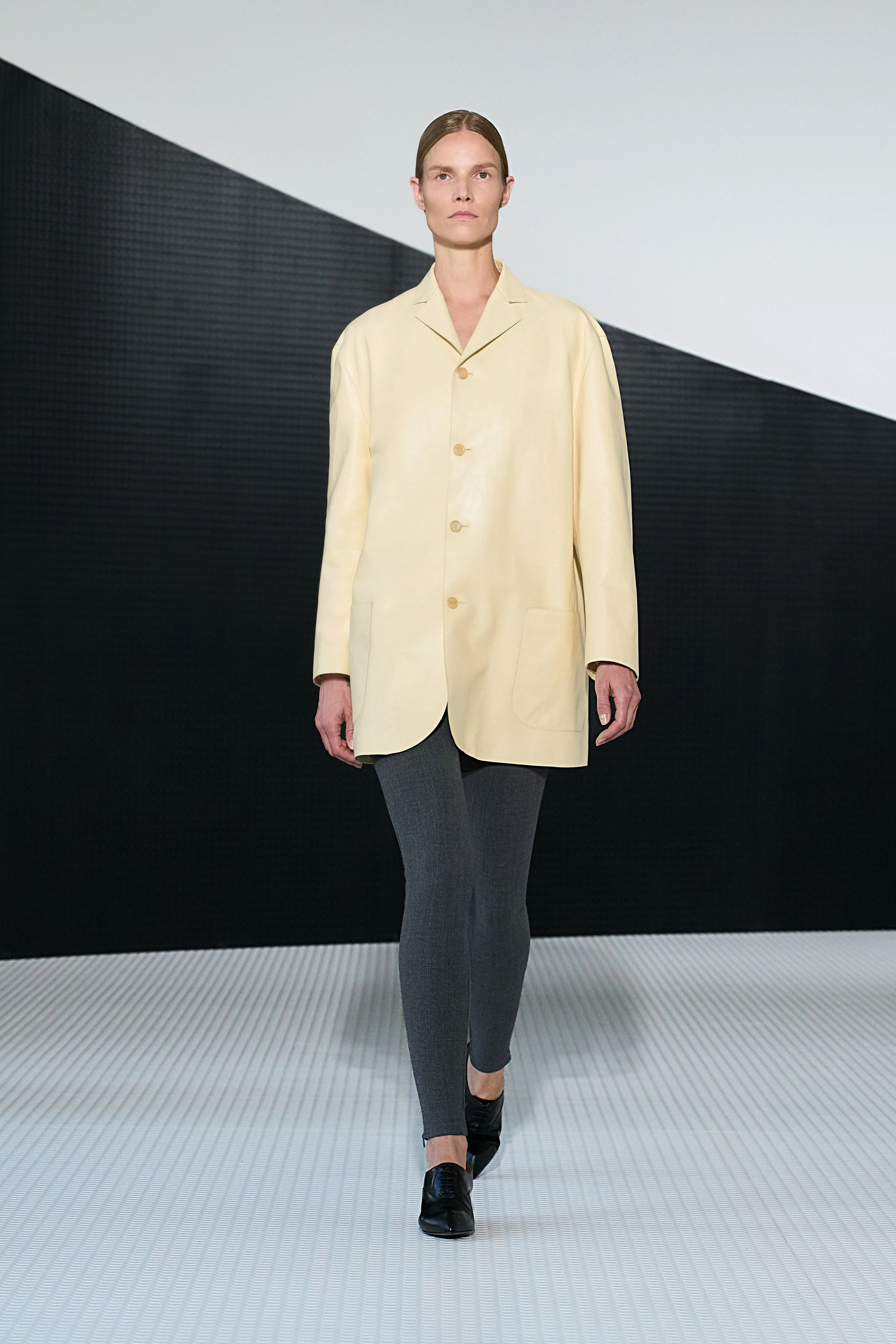
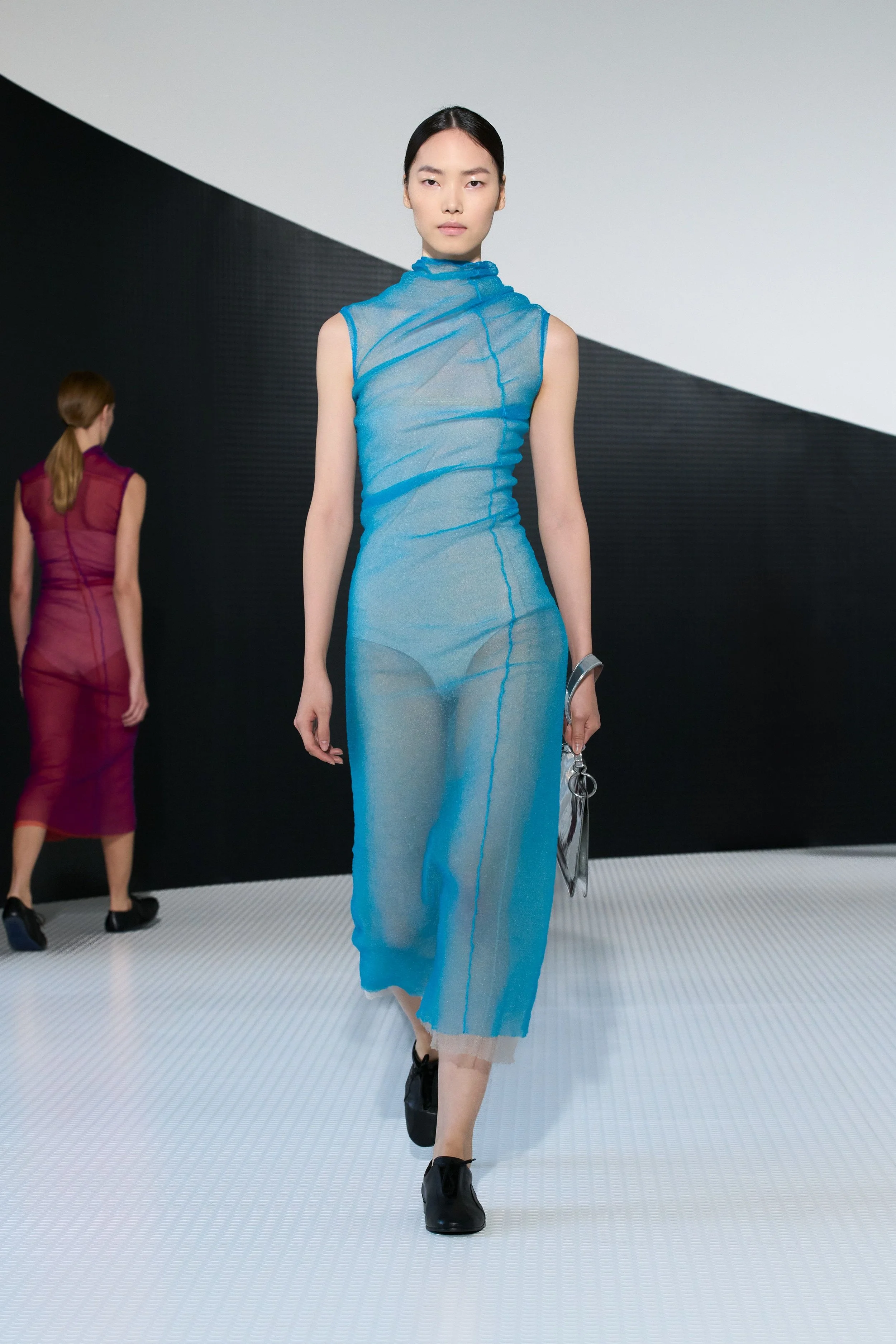
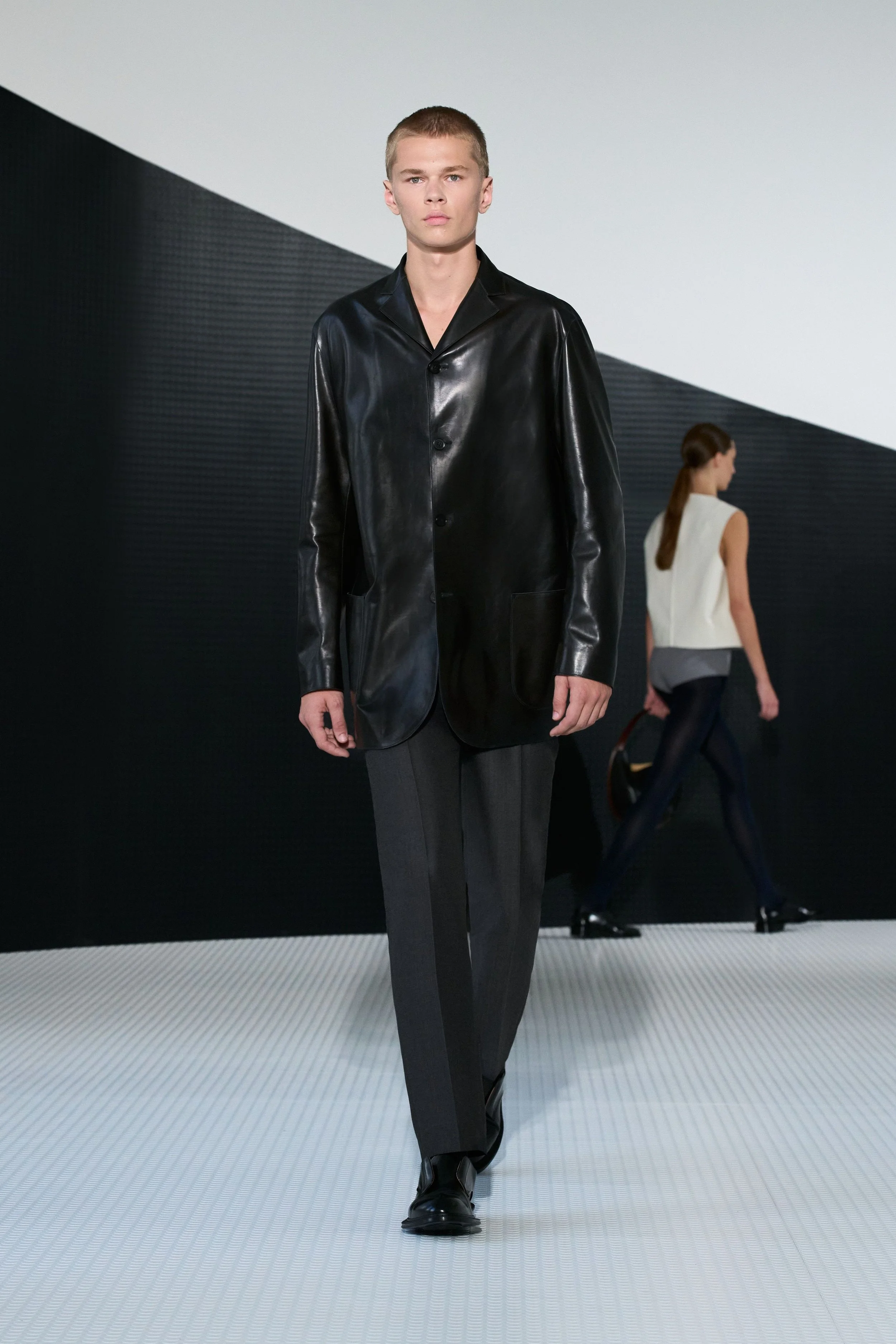
With his debut at Jil Sander, Simone Bellotti brought the house back to its core: an obsession with precision. The Spring/Summer 2026 collection appeared deceptively simple at first glance – slim sweaters with pencil skirts, boxy coats over tapered trousers, dresses anchored by kitten-heeled oxfords. Yet, the refinement lay in the details and construction. Skirts and trousers featured Lucio Fontana–inspired slashes and purposeful creases, transforming minimalist staples into subversive statements. Sweaters revealed subtle openings at the back, lending a sense of sensuality and ease. Even the coats, cut with an intentional “messy” cinch, created a striking tension between structure and lightness.

The palette was equally considered: cobalt-blue dresses, hot-red sheer knits, and raw-edged baby-pink silk dresses with an almost ethereal quality to them. Vibrant accents peeked through the house’s signature black, grey, white and navy — whether as fitted jumpers layered beneath or socks slipping out under cropped trousers. Bellotti also showcased his mastery of leather, honed during his tenure at Bally, with sharply tailored blazers and coats in black, ocean blue, and butter yellow. Accessories followed suit: a range of sculptural, covetable bags, with our particular favourites being those distinguished by bold, contrasting straps.


Words by Martin Onufrowicz

FENDI SS26

God bless Silvia Venturini Fendi! In her third collection after Kim Jones’ exit, the heir of the Fendi legacy gave a masterful lesson in pushing a legacy forward. The house, long associated with fur and a sense of whimsy, leaned into its play element. Inspired by her large family (and her pregnant daughter), the designer brought about a collection that was light – even youthful at times – but never infantile.

The use of colour was one of the highlights: bright blues in chic shirt dresses and red suits weren’t garish. Bright rectangular straps united the buttons on smart jackets, almost resembling Legos. Knitted sets grounded the collection, the homely connotation of the textile neutralised by tighter silhouettes.

Athleisure elements interjected moments of definite femininity. A drawstring punctuated the waist in a pleated, tiered dress. A hooded nylon parka broke up a pencil skirt and grey jacket set. A particularly brilliant tracksuit combined the same grey fabric with the idiosyncratic Fendi fur. Brown furry stripes placed at the collar, ankles and hip made an otherwise sane outfit into a textured dream.

Classic femininity was more than a muse for Venturini Fendi; it was a medium. Floral patterns were subverted and then reintroduced with precision, appearing sparingly in full lace sets. Cut-outs in the shape of simplistic flowers revealed the skin underneath cropped leather jackets and heavy overshirts.

Just like in these, a transparent combo of a shirt and jacket showed the model’s body through the two layers. And, while the idea of translucency is inherently sensual, here that tone was overruled by something more clever. The last section explored this idea thoroughly, with sheer dresses with misaligned panels giving the impression that they were put on the wrong way around, like a child might. Spring/Summer 2026 felt like a balancing act. Venturini Fendi is aware of the weight on her shoulder – the same that has been in the family for two generations before her – but she’s handling it with deft lightness. 


Words by Pedro Vasconcelos
DIESEL SS26

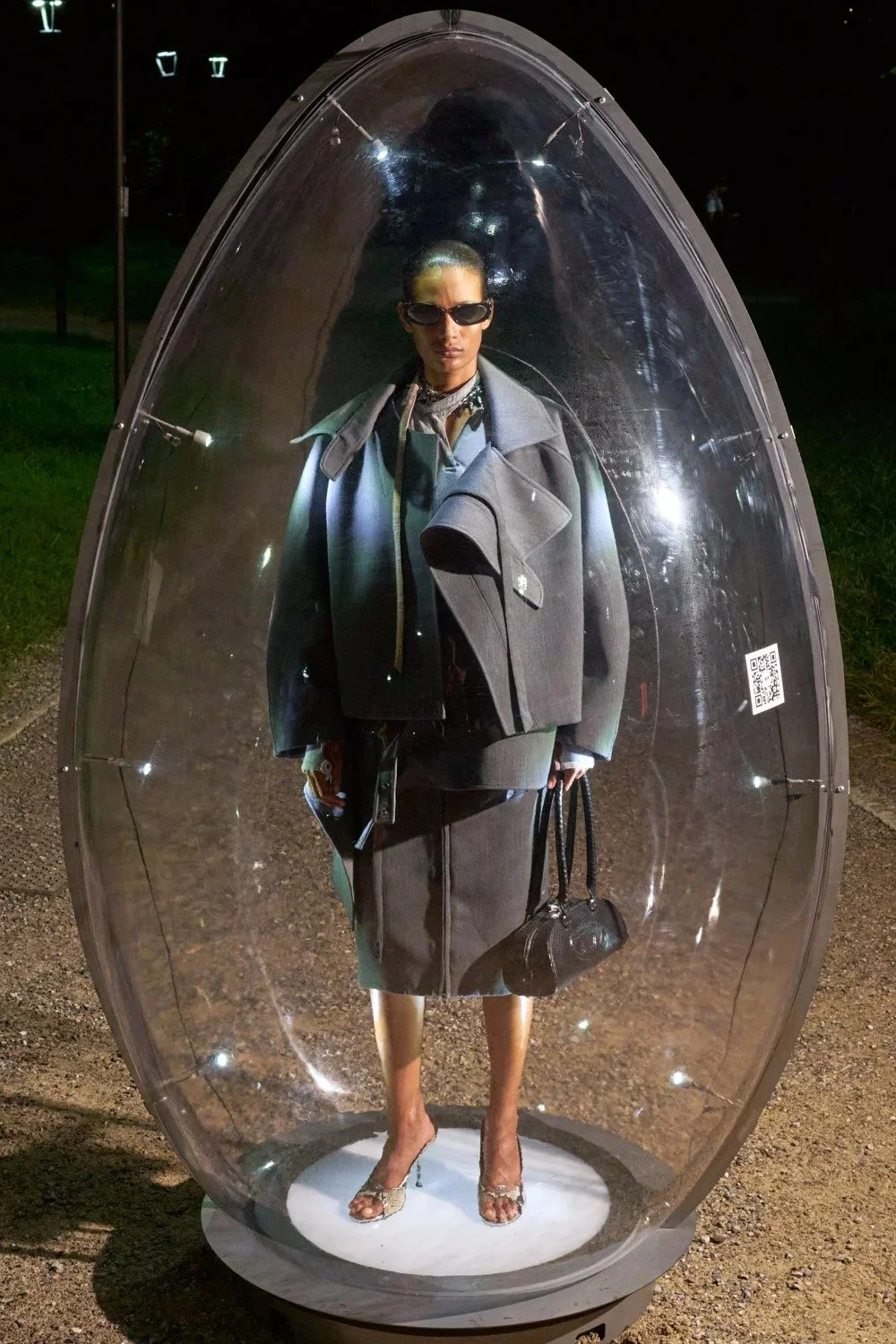
In typical Diesel fashion, the runway became a place for experimentation and subverting the codes of luxury. This year, the brand decided to skip the runway and stage an unprecedented egg hunt in Milan instead. The premise? The democratisation of fashion showcasing that, in their world, everyone is welcome.

XXL eggs with models inside were placed all over Milan, unveiling the Spring/Summer ’26 collection. Around 5,000 people signed up to walk around the city, find the 34 eggs, and win prizes – disrupting the traditional spirit of Milan during fashion week. Glenn Martens later said about the idea that the objective was to “bring a little bit of fashion back to the city.”

The showcase reaffirmed the strong character of the brand: irreverent, rebellious, and playful, but always with wearability in mind. With its urban, characteristic flair, the collection portrayed a futuristic approach, expressed through exaggerated shoulders, sunglasses, and metallic footwear.

Martens used his satin denim fabric across different garments, creating the classic Diesel vibe, but it was the distressed effect that truly brought the brand’s identity to the forefront. Denim dominated, with bleached, stone-washed, and painterly finishes.

Oversized accessories such as coats and belts, paired with short hemlines, fitted cuts, and draping, created an interesting balance. Earthy tones added a raw, industrial feel, while iridescent, metallic, and glossy hues introduced a striking juxtaposition of aesthetics. The looks mix eveningwear codes with street style, something intrinsic to the DNA of the brand.

The collection served as a reminder of the brand’s experimental language, where fabrics, colours, textures, and concepts come together to form a recognisable identity. In Diesel’s countercultural approach, authenticity and self-expression remain at the core of its creations.


Words by Carolina Benjumea

BURBERRY SPRING 2026

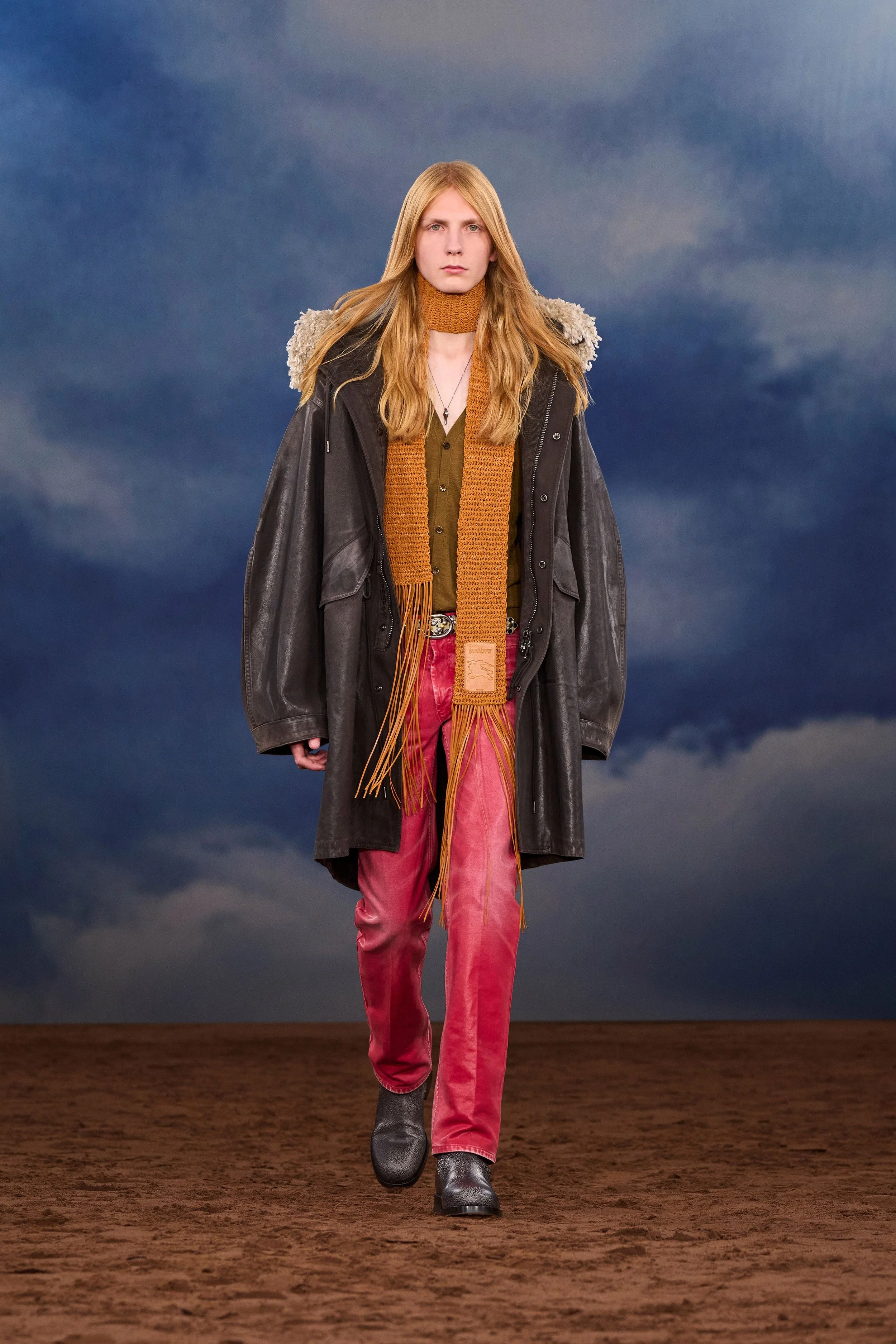
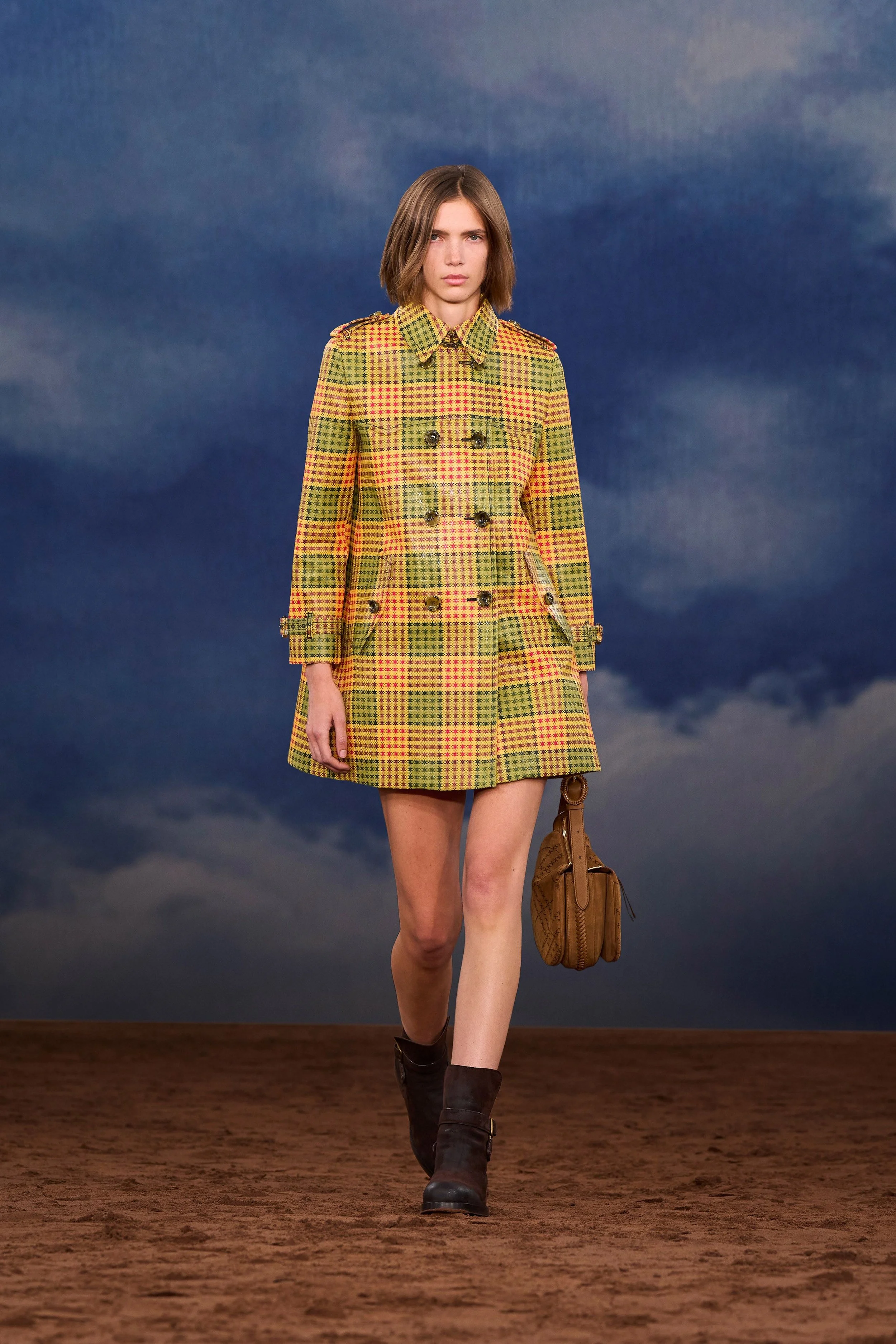
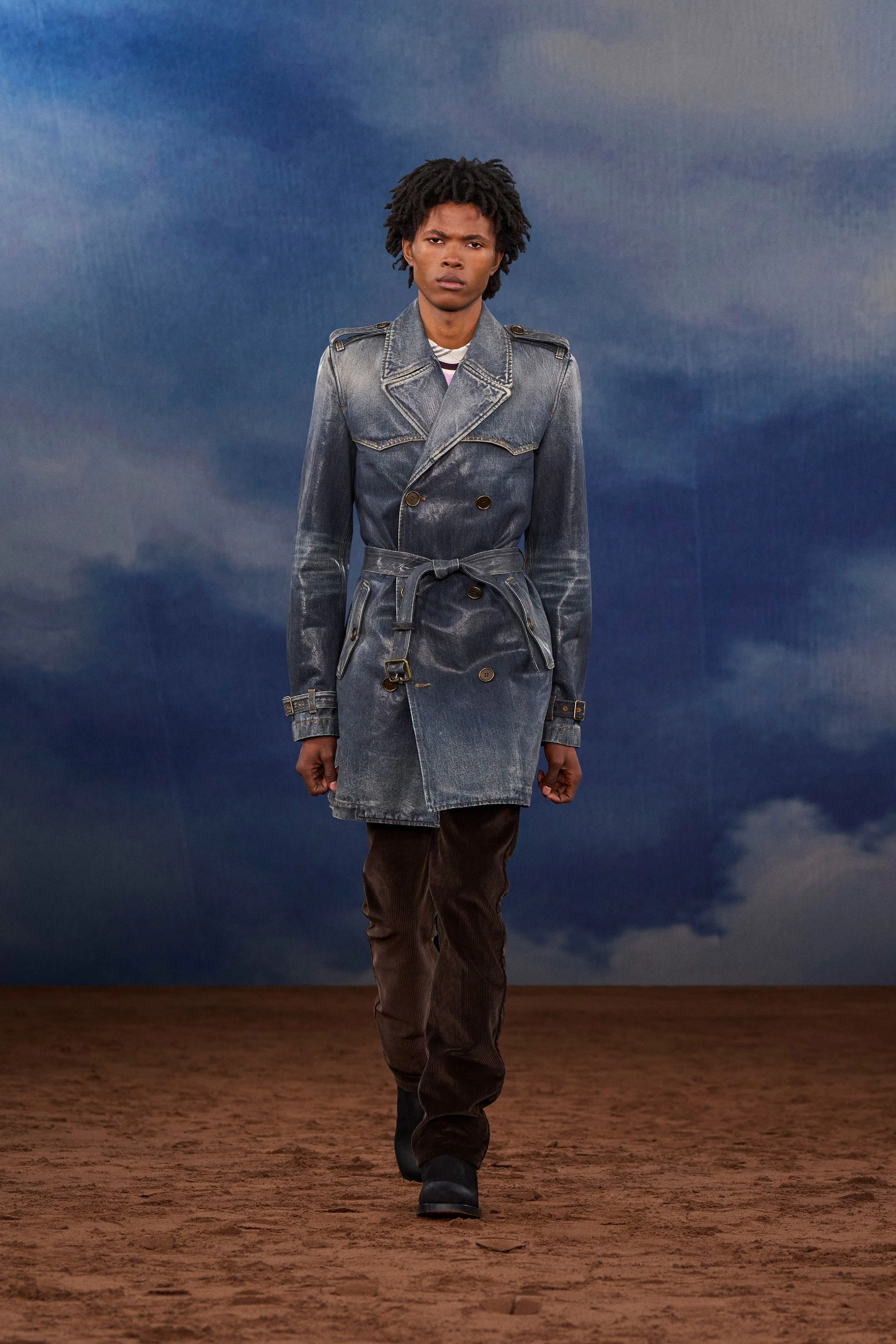
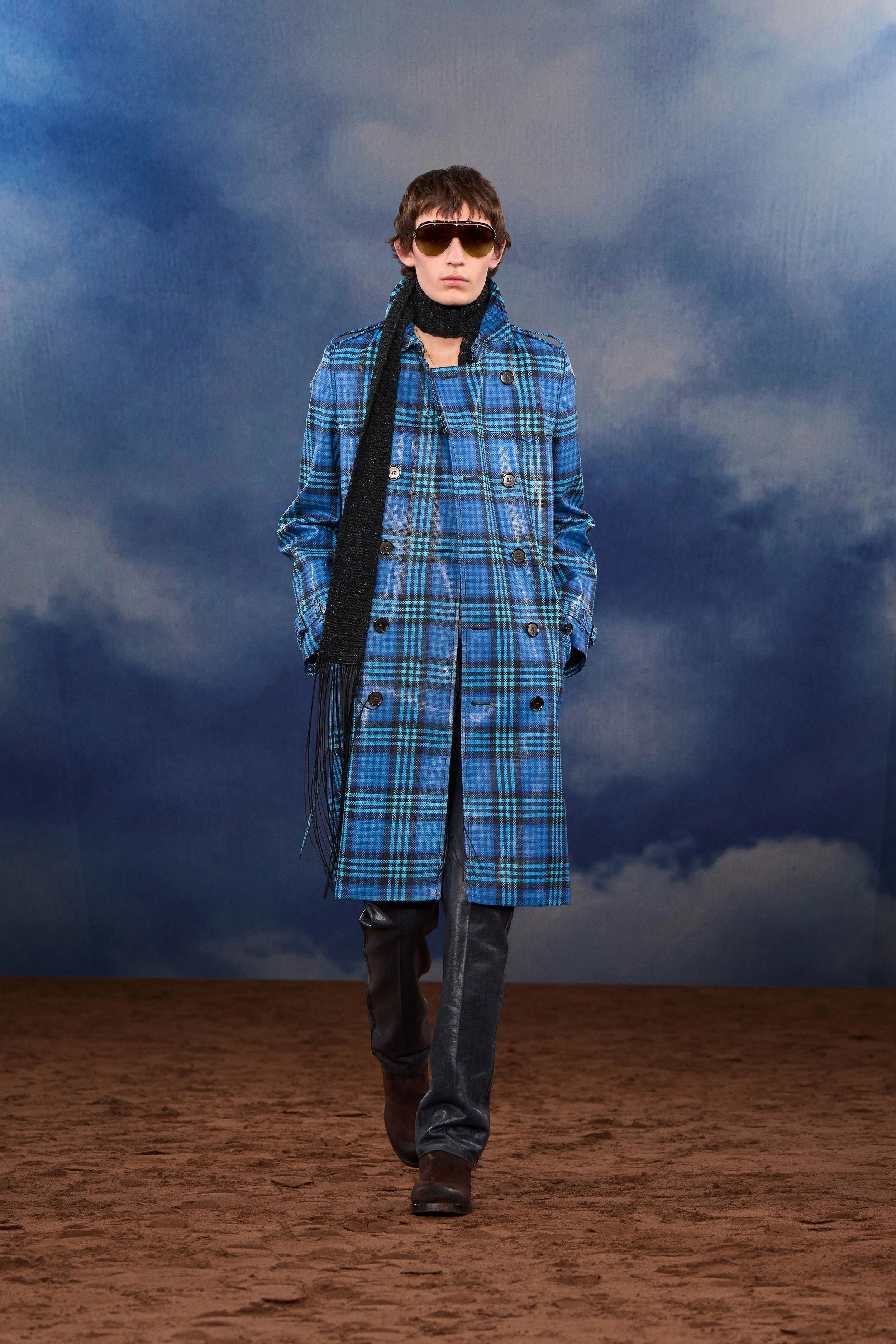
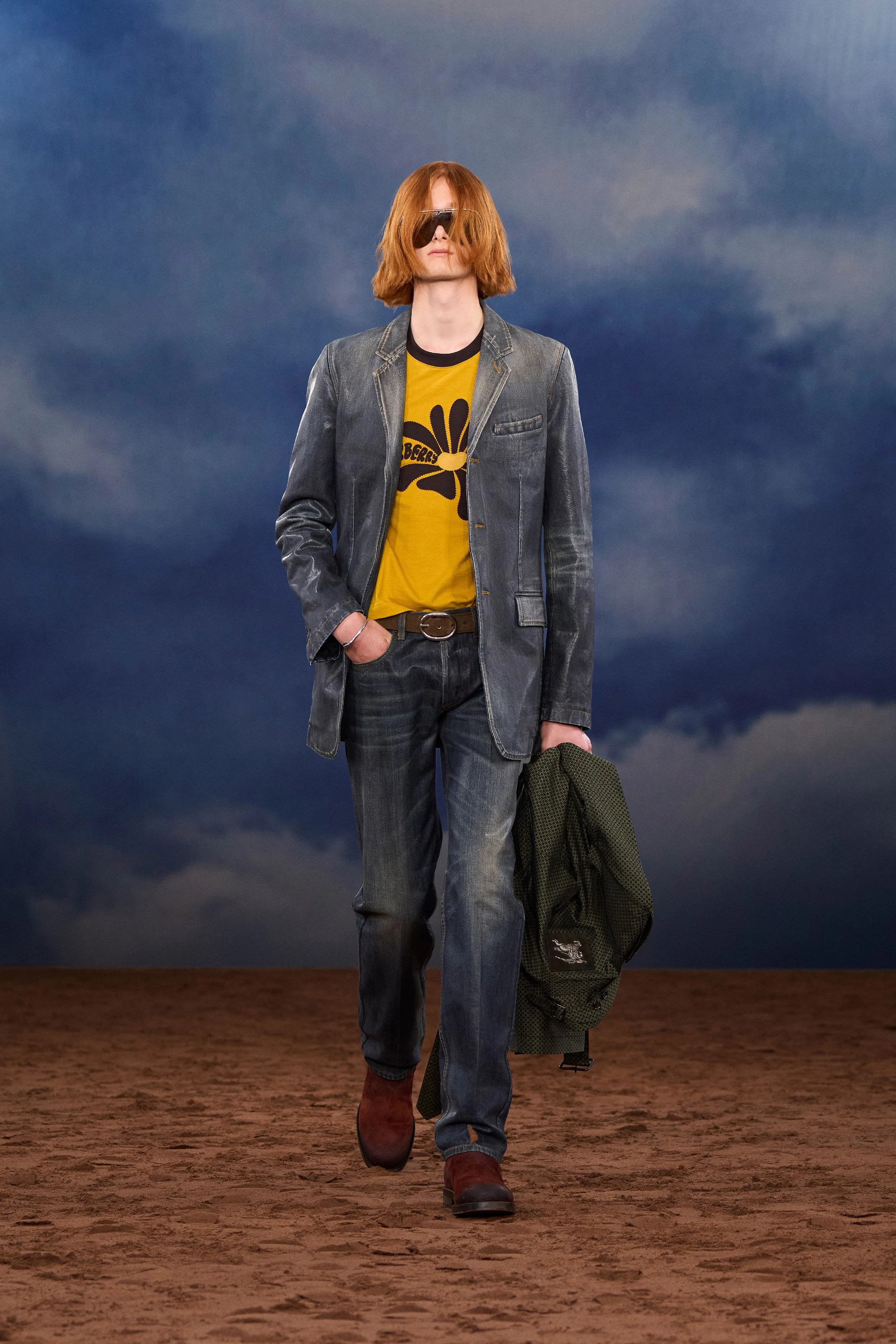
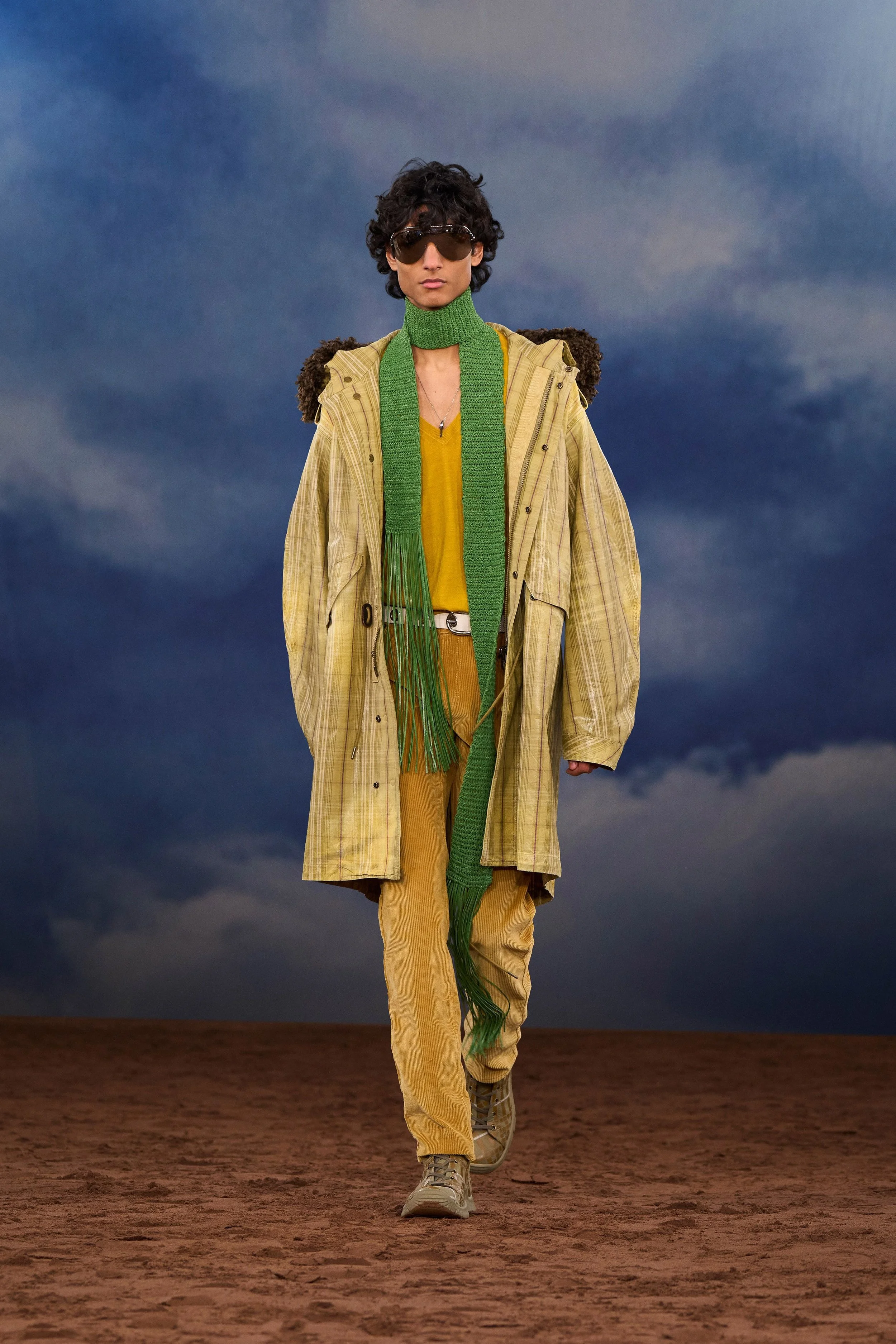
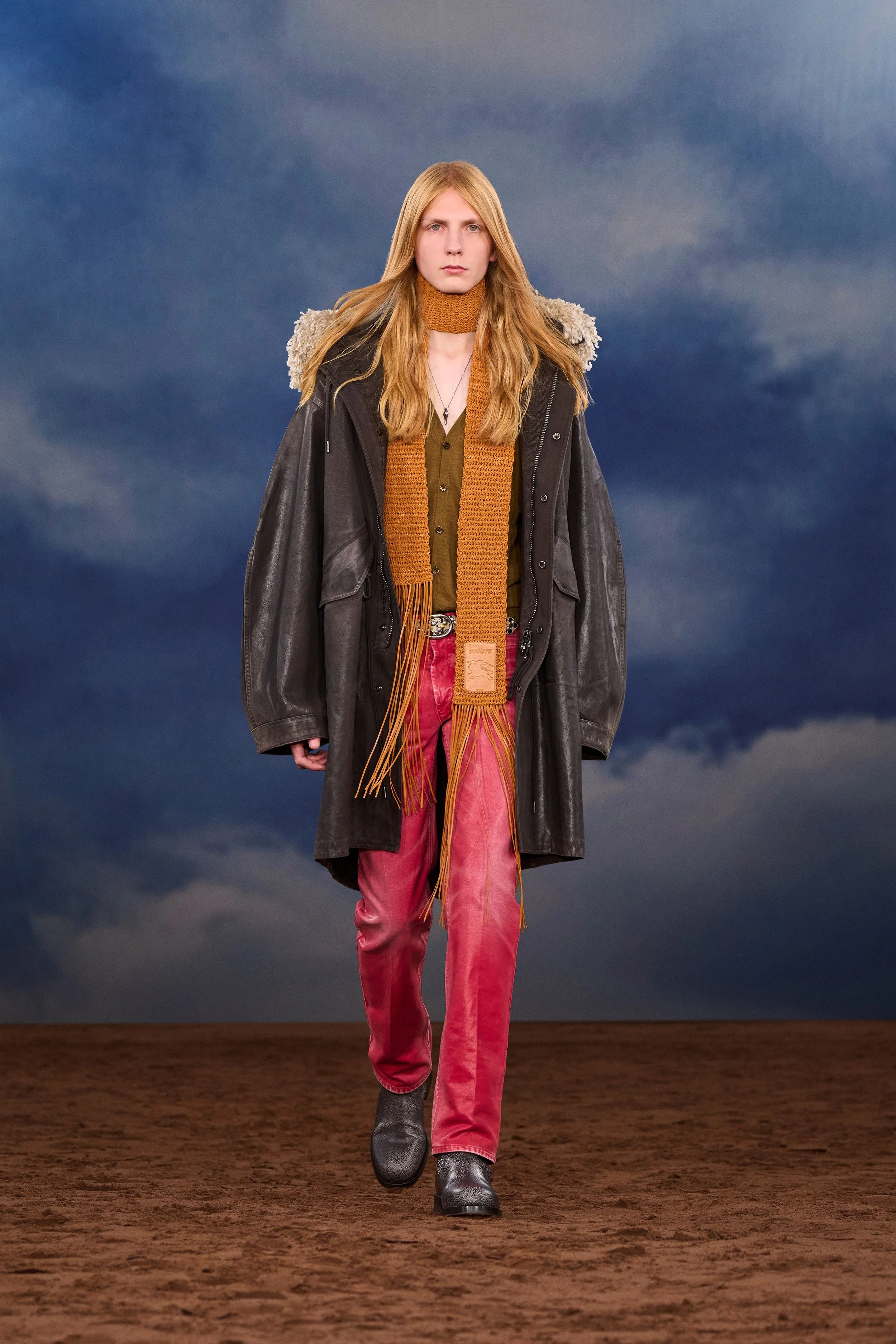
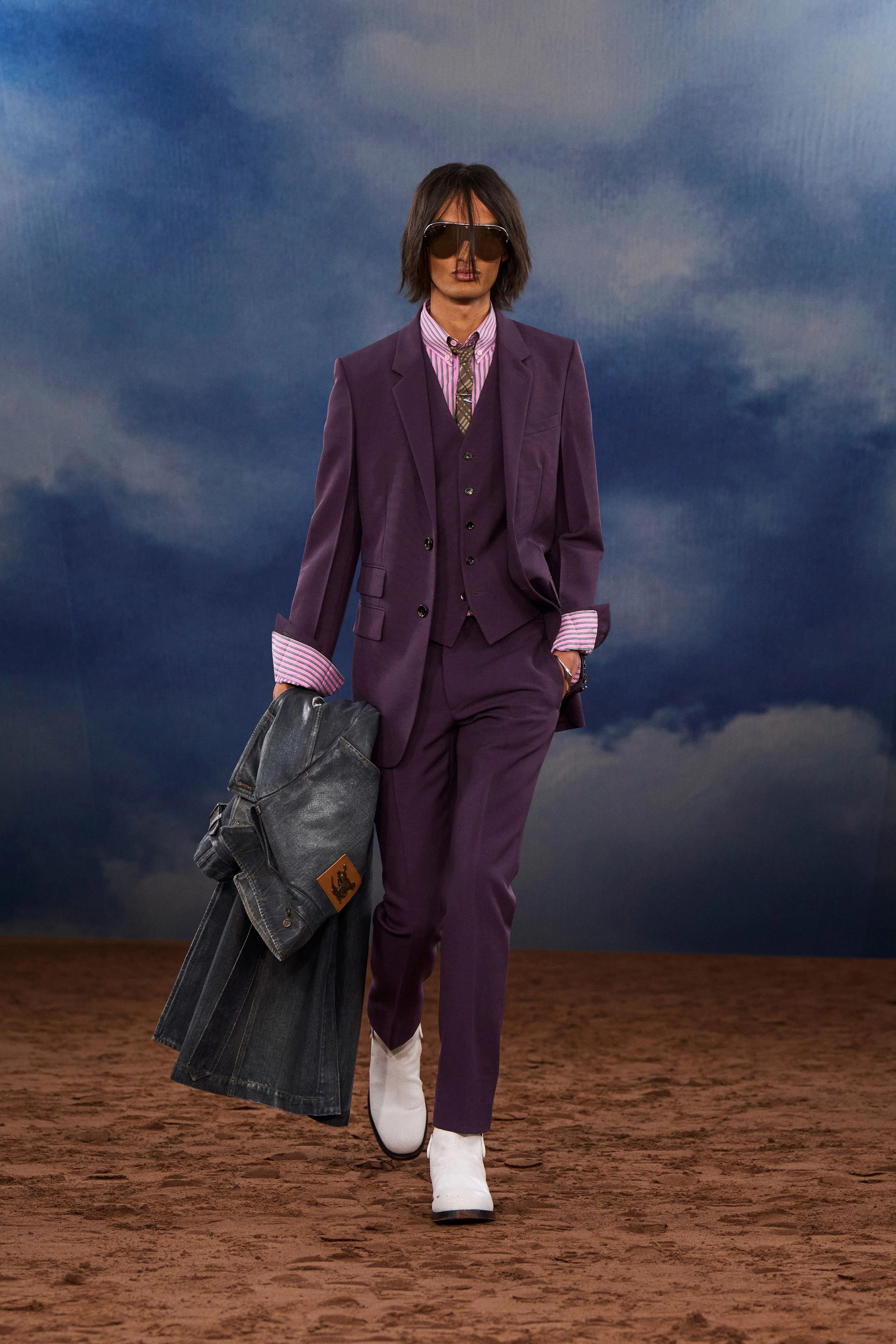
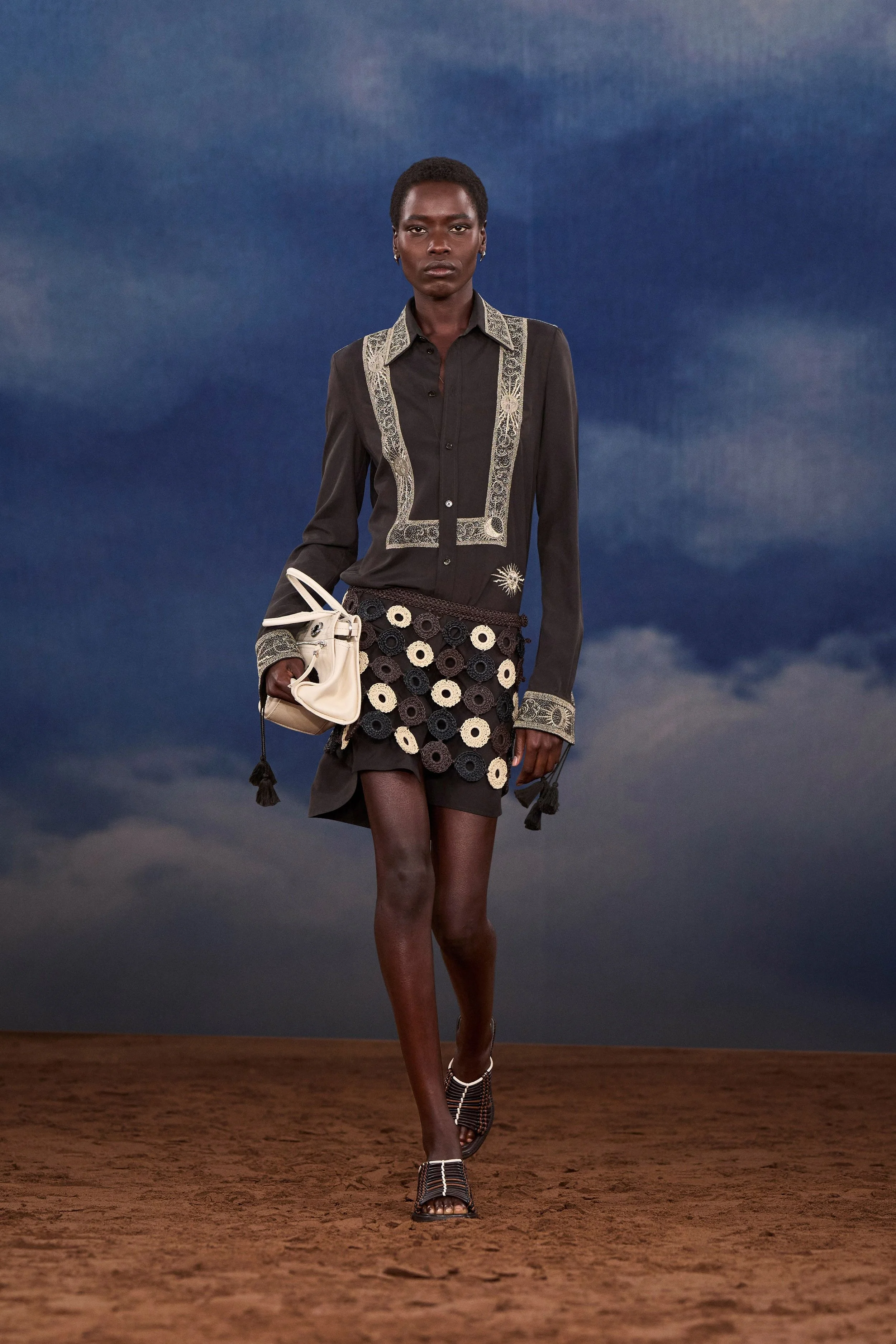
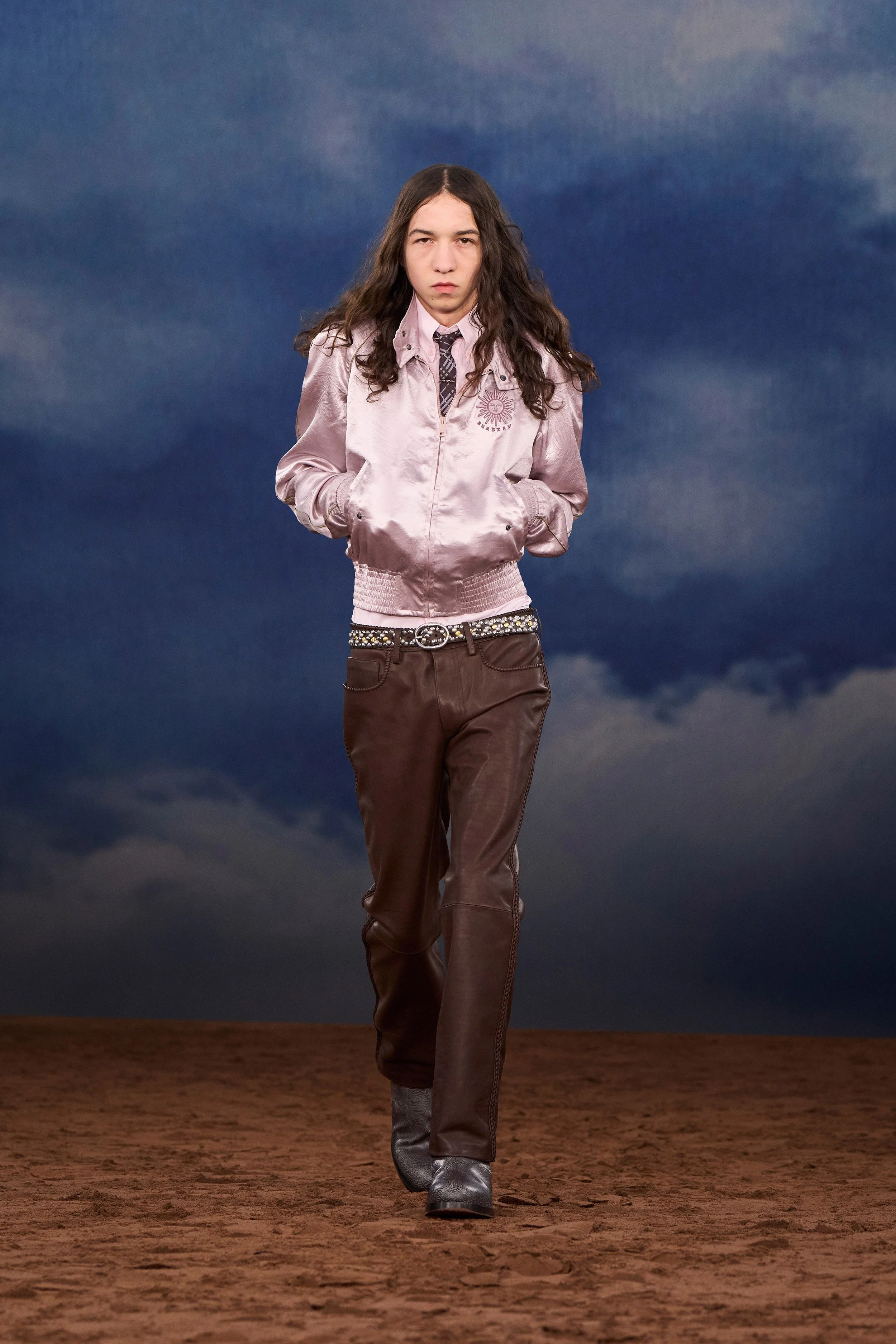
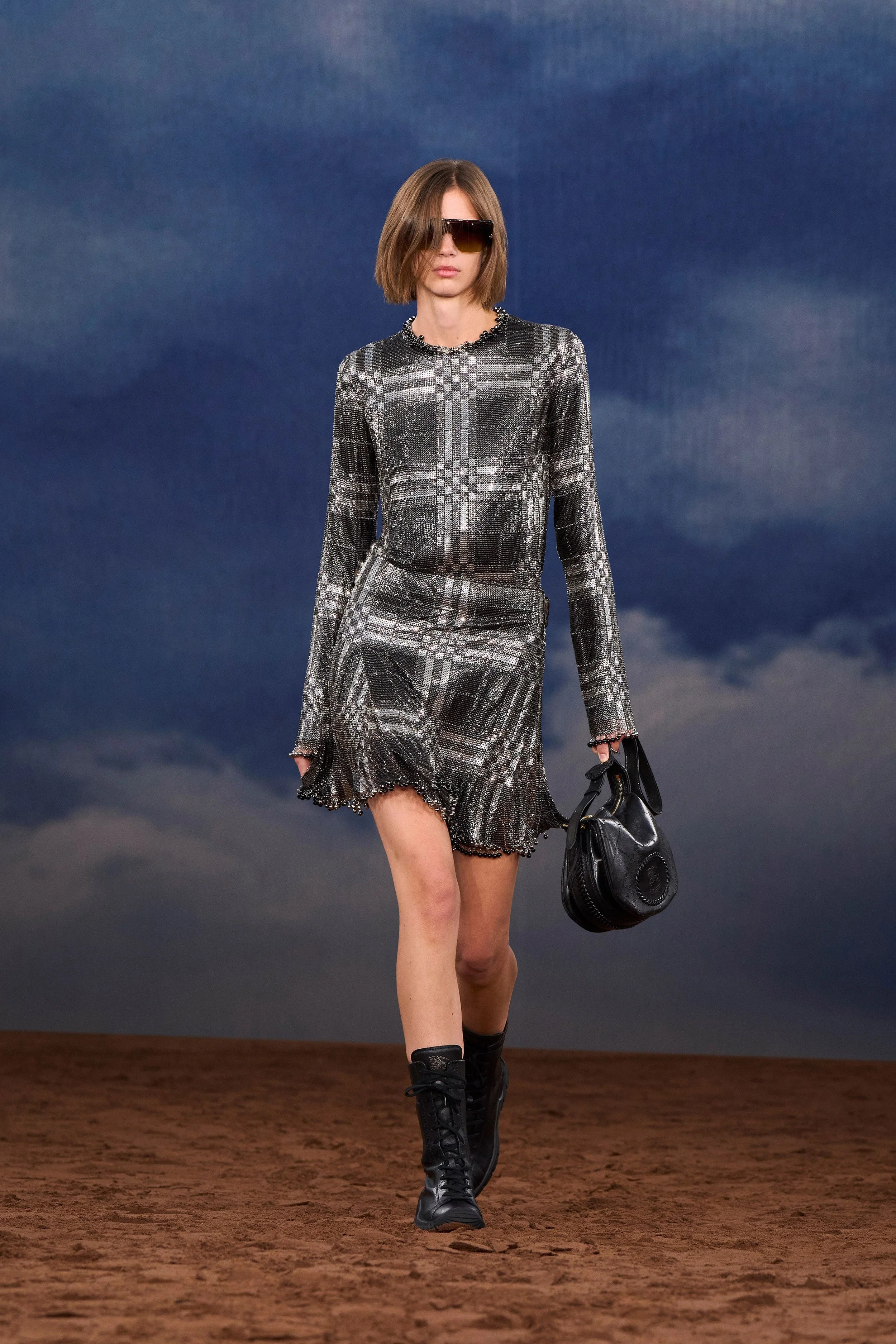
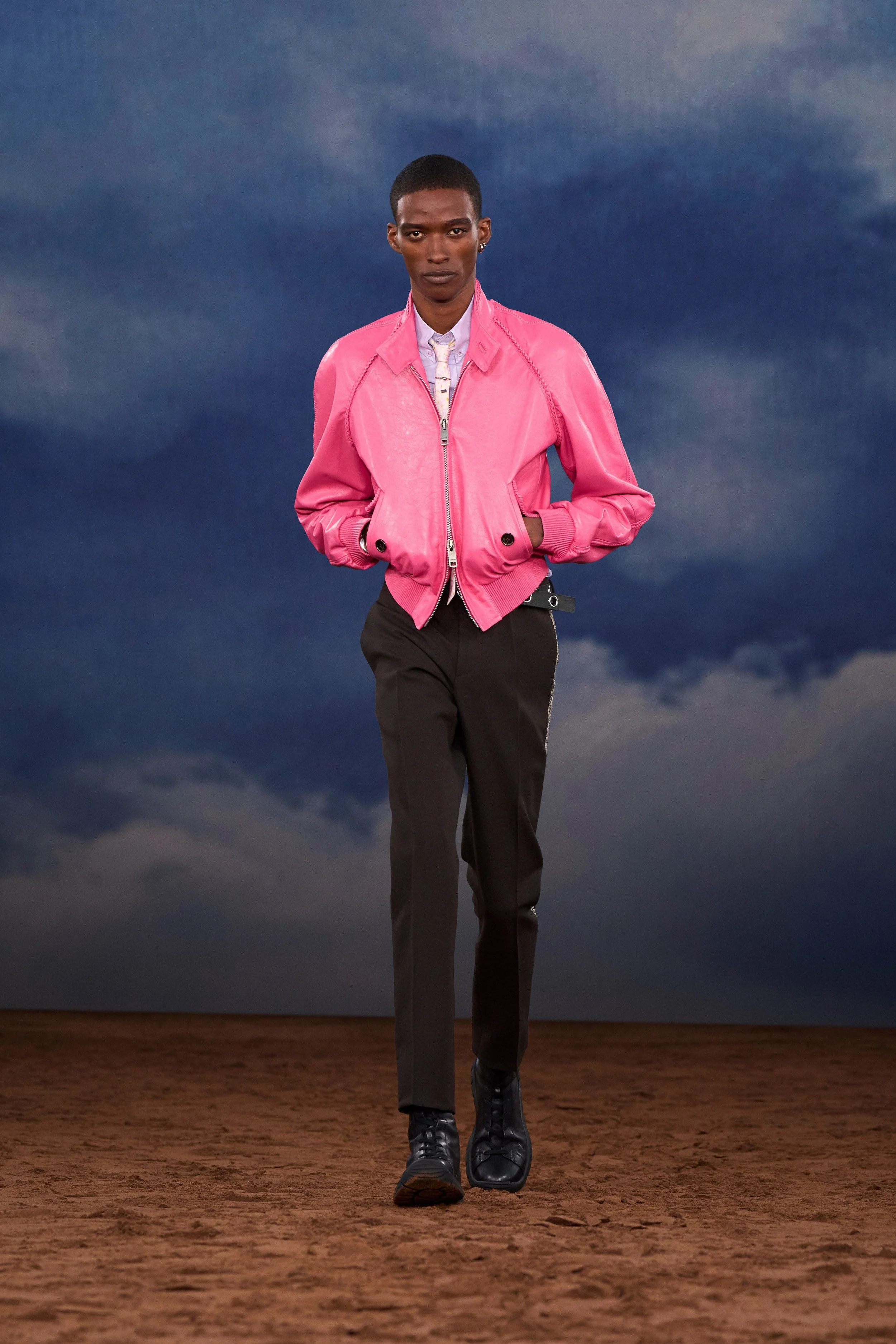
Following his dramatic showcase at Tate Britain, Daniel Lee took Burberry in a lighter, more playful direction for Spring 2026 — straight to the festival grounds. The runway was staged beneath a cloudy blue sky (this being London, it was simulated on the roof of a vast tent) and soundtracked by Black Sabbath, setting the mood for a collection that reimagined rock staples and Glasto-ready attire.

As expected, outerwear remained Burberry’s crown jewel. The show opened with a peacoat in the house’s iconic check, reworked this season in a green-and-yellow palette. That same pattern appeared on oversized parkas, styled with long, slender scarves that swayed with each step. A classic trench received a Western twist, rendered in waxed denim or leather and trimmed with cascading fringe.

Lee also shifted the silhouette, favouring a slimmer, sharper line. Many coats hugged the figure and were paired with cigarette trousers. Accessories leaned into a bohemian spirit: motorcycle boots with the energy of early-2000s Kate Moss or Sienna Miller, and roomy bags emblazoned with swirling paisley prints.


Words by Martin Onufrowicz

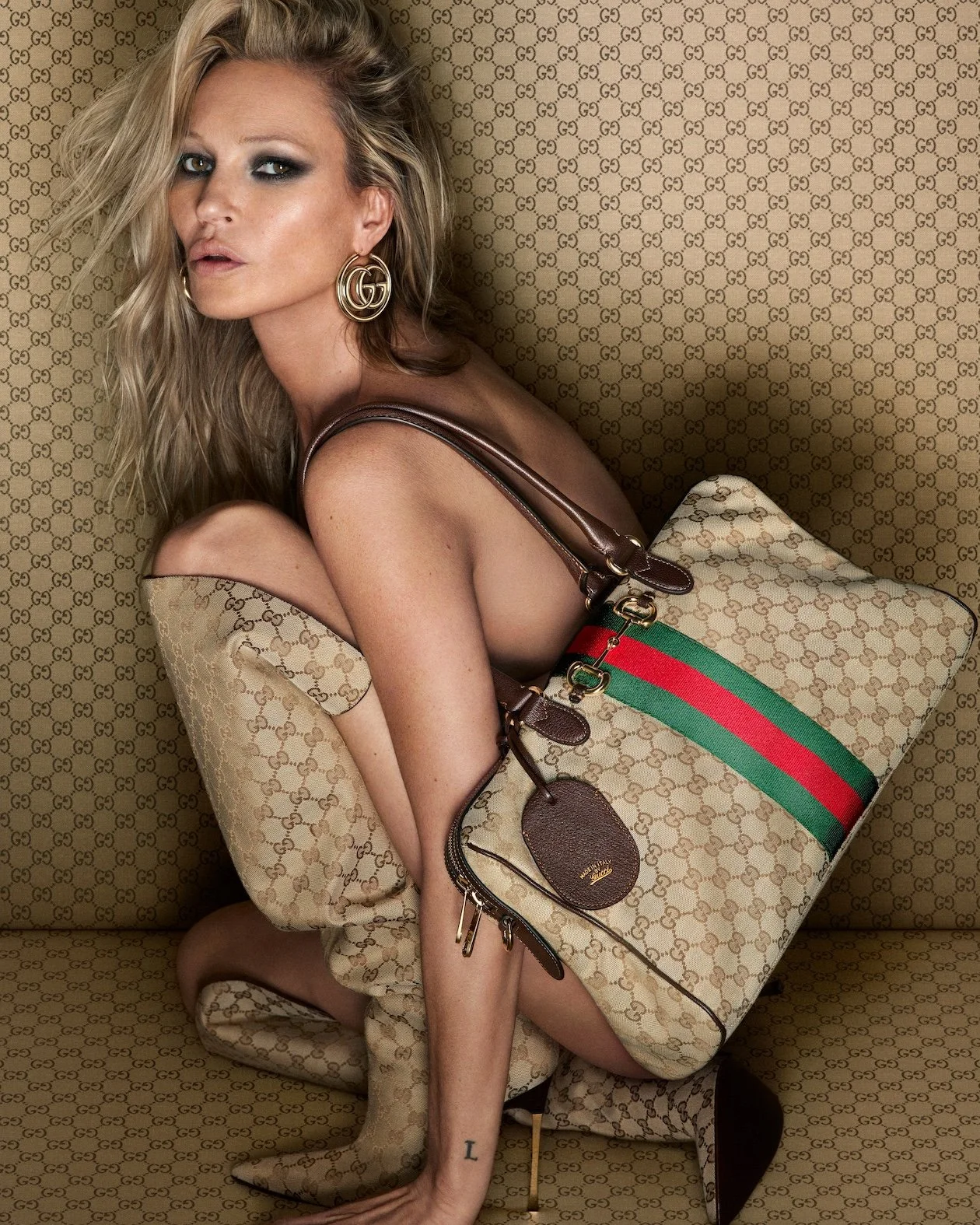
GUCCI SS26

Surprise, surprise! Fashion woke up bright and early in the midst of London Fashion Week with some unexpected Italian news. Demna dropped his Gucci debut with no tease, no preparation, no warning. After the announcement that the equally loved and controversial designer would step into the legendary Italian brand, the industry was aflutter. How could a designer with such a distinctive style honour a legacy as extensive as Gucci’s?

The answer Demna came up with is brilliant. Gucci’s visual story is complex. Its creative directors haven’t been concerned with legacy in the same way Demna is. Alessandro Michele’s dramatic maximalism is in direct opposition to Tom Ford’s minimalistic sensuality. And so, tasked with synthesising its past and future, the Georgia-born designer decided to split it into 37 equal facets.

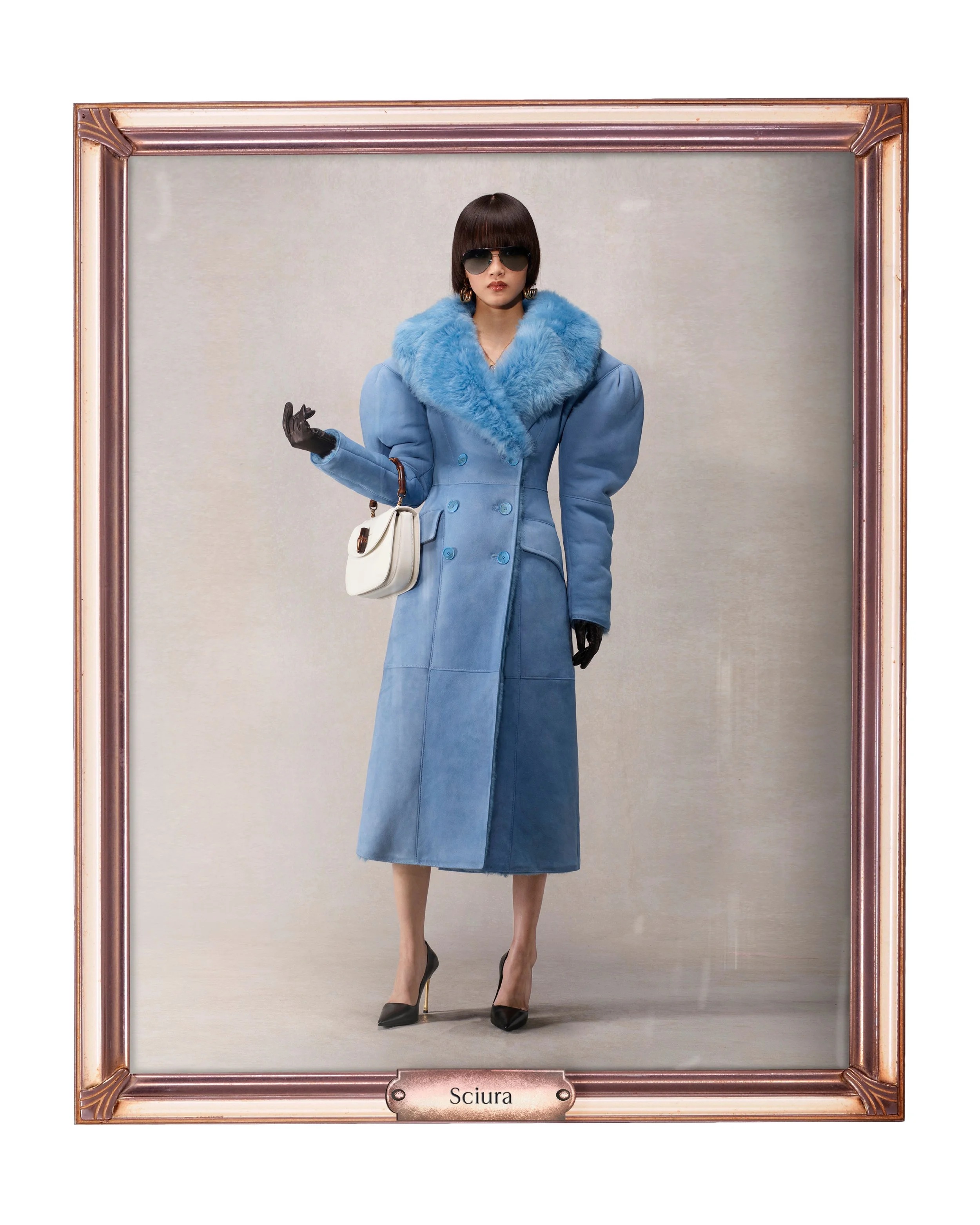
Basing himself on Italian caricatures, Demna created a lexicon of Gucci’s genealogy. The first of it being a classic Gucci trunk, harkening back to the brand’s beginnings as a leather goods company. Titled La Famiglia, the lookbook shows characters like Incazzata, an annoyed, bratty woman wearing a tailored red coat with oversized GGs for buttons. Speaking of, the iconic belt is back with Narcisista, a self-centred man with an excessively open shirt and aviator glasses. Sciura, the name given to chic older women, finds its embodiment in a sculptural powder-blue coat topped with a massive fur collar.

It’s not necessarily a new strategy for Demna. It’s a way of designing he’s naturally inclined to – we’ve seen it both at Vetements and Balenciaga. Still, somehow, here it feels fresh. Perhaps because, for the first time, it serves a purpose greater than a collection’s narrative. It refracts the possibility that the new Gucci has. It’s sexy, fun, quirky, glamorous all at once: no compromises. If in the past few years, we’ve seen the designer’s darker side – using his language to comment on global warming or to parody consumer culture – here he seems unconcerned. A voluminous tiger-patterned fur coat is used as a minidress on Alex Consani. A horsebit pair of flare jeans is so low-waisted, a model’s pubis is within reach.

Lightness was the correct choice. After a creatively indecisive period, the critical and commercial pressure was at an all-time high, leaving close to no breathing room. Spring/Summer 2026 is a definitive step in the right direction. The collection is set to come into stores in the coming weeks, marking the first time a debut has been this immediate. The early bird gets the worm, and thankfully, we’re all getting it.


Words by Pedro Vasconcelos
DILARA FINDIKOGLU SS26

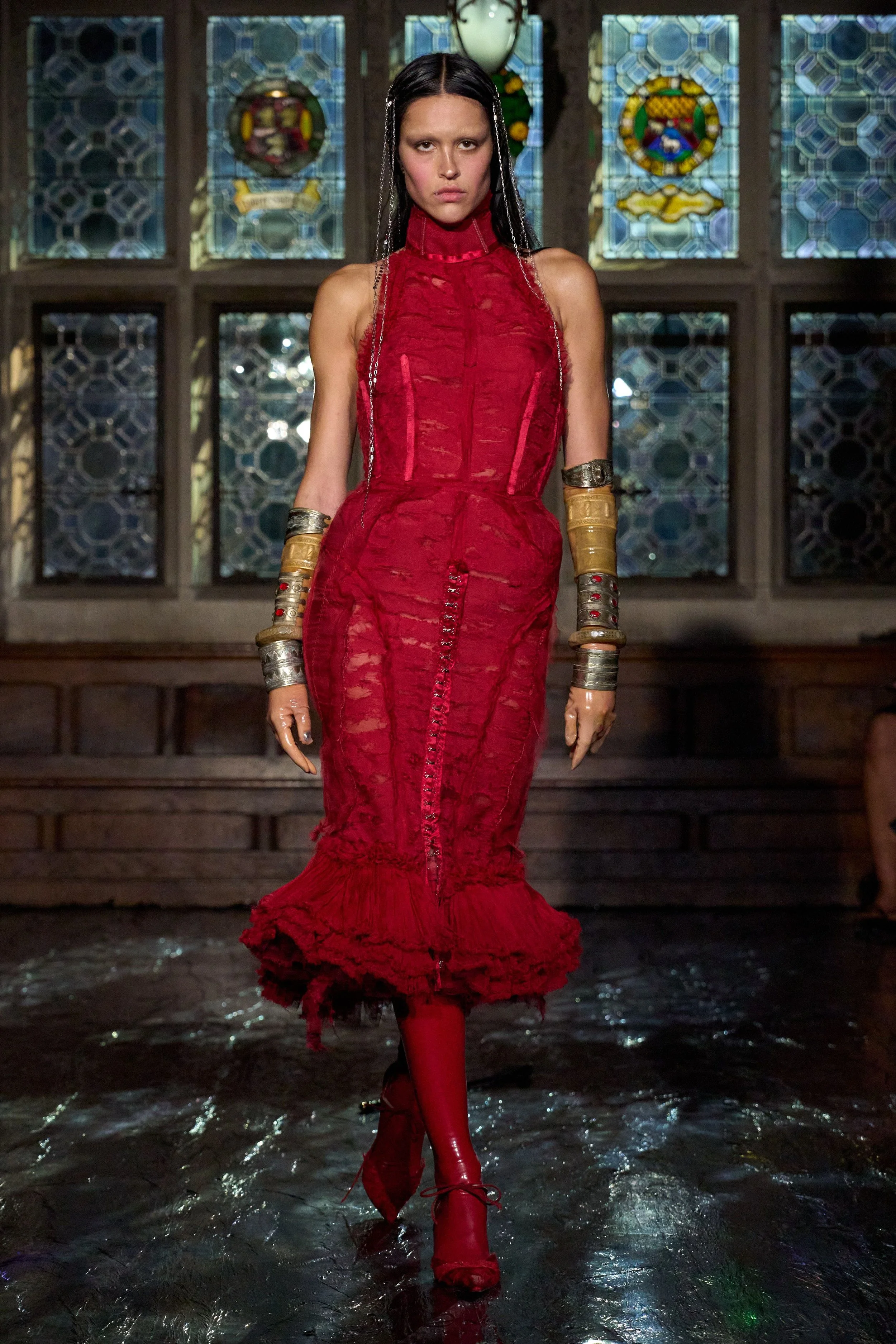
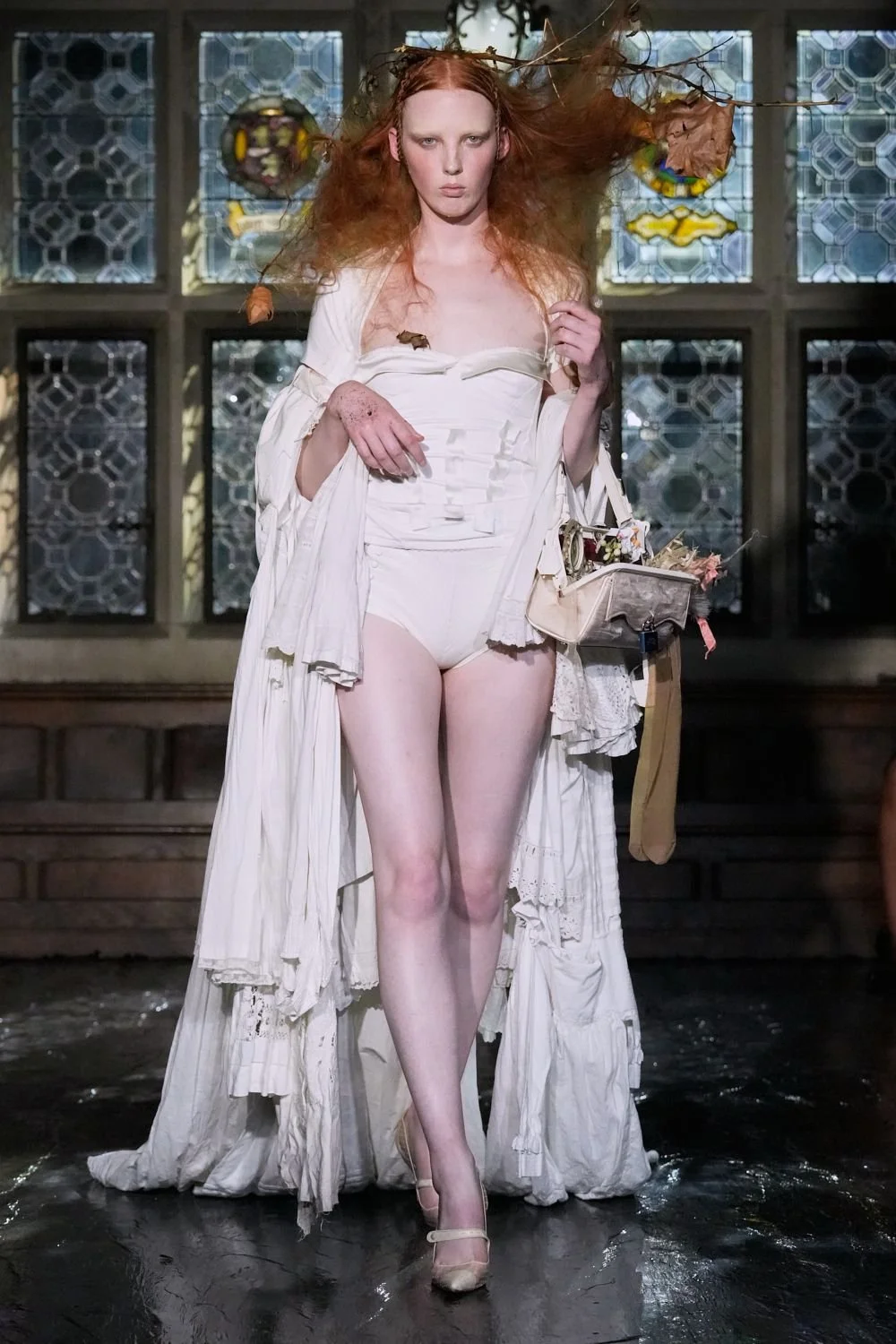
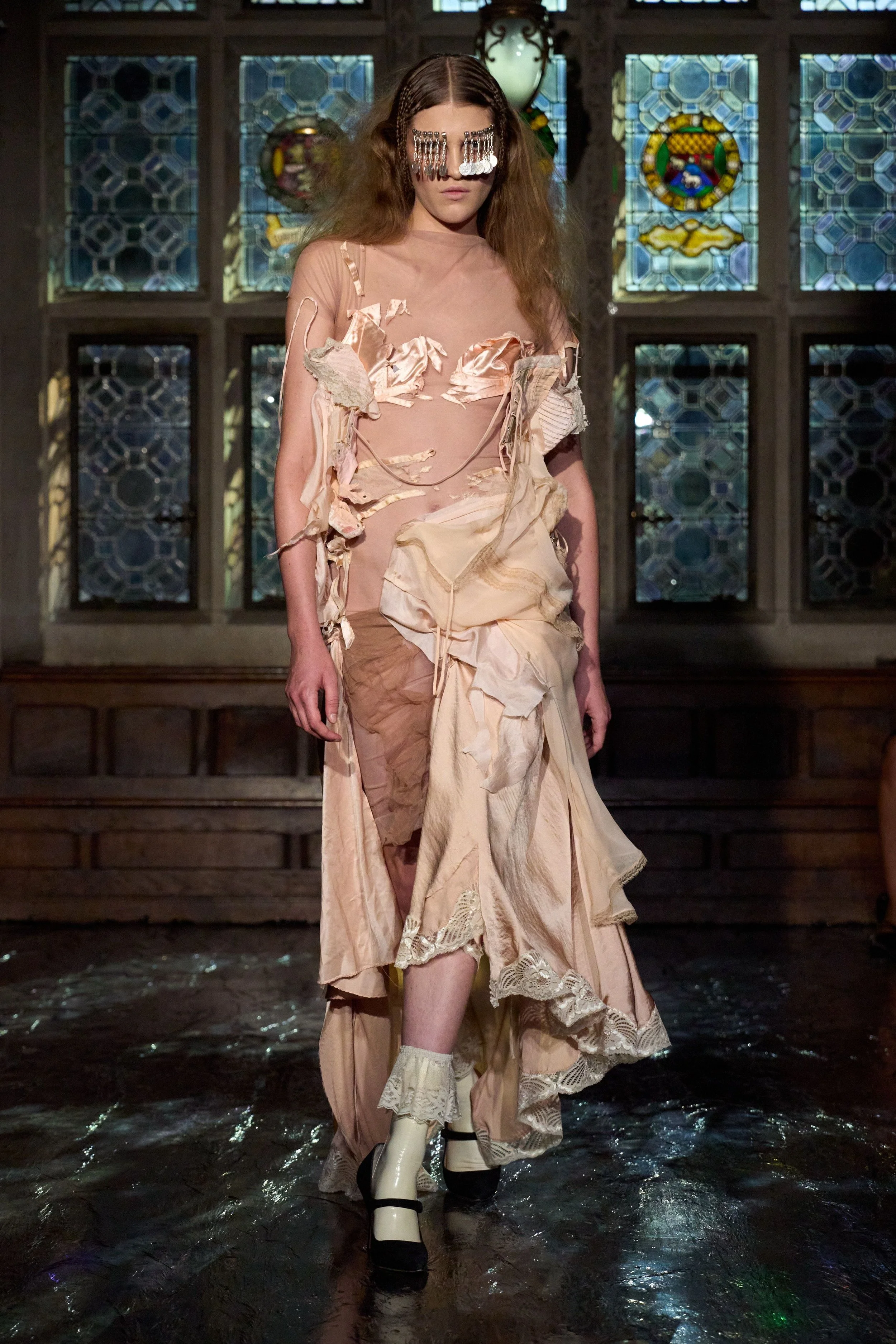
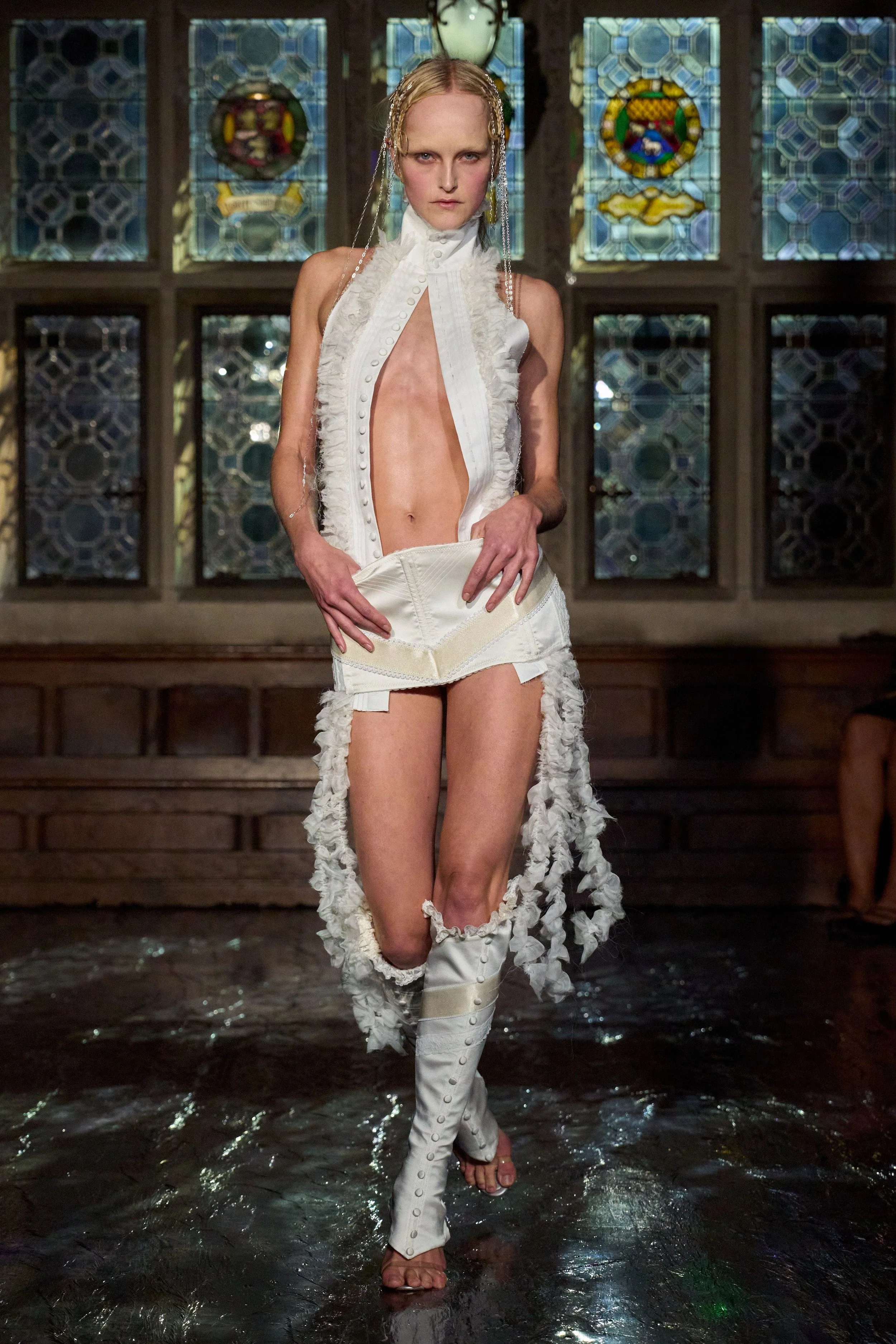
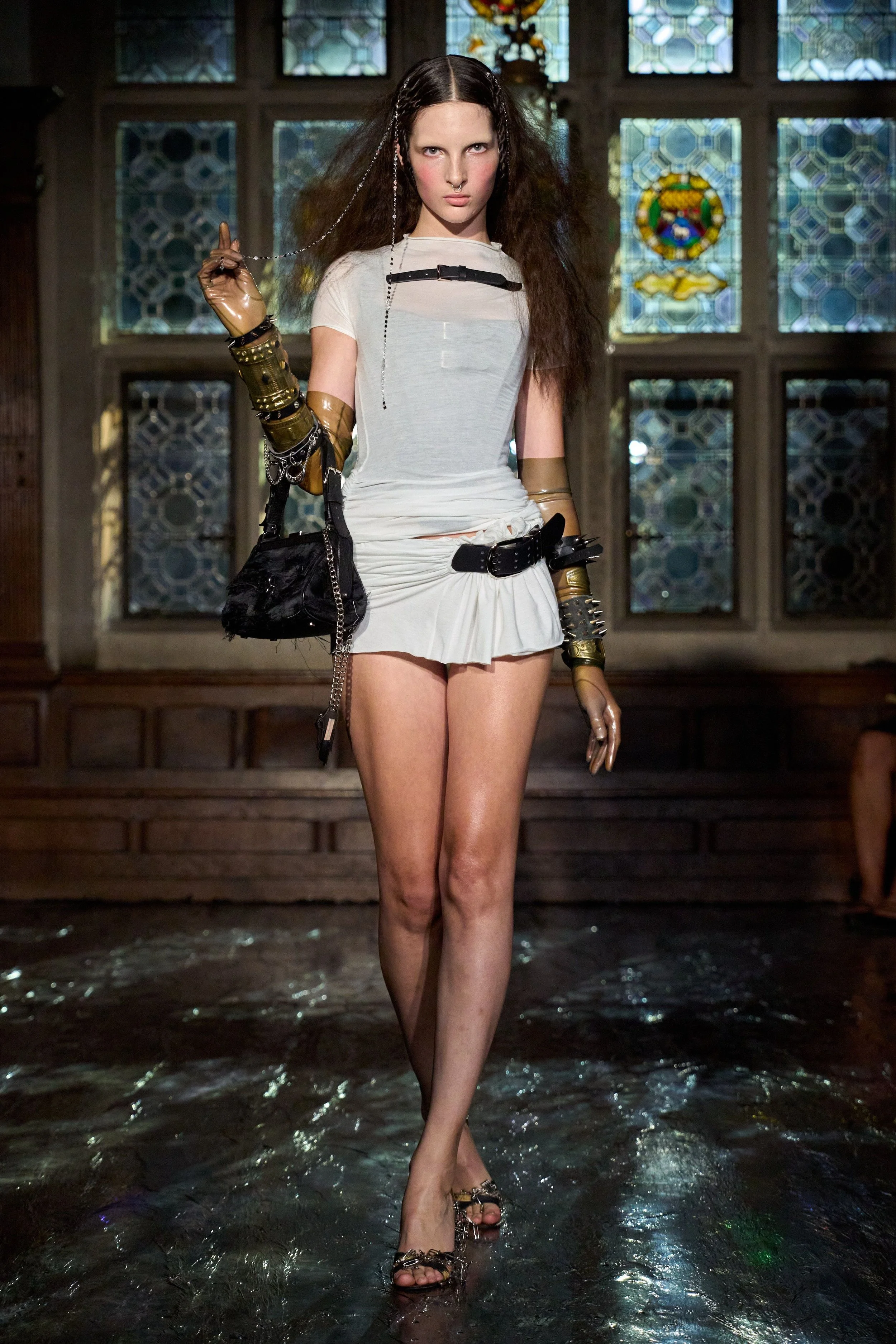
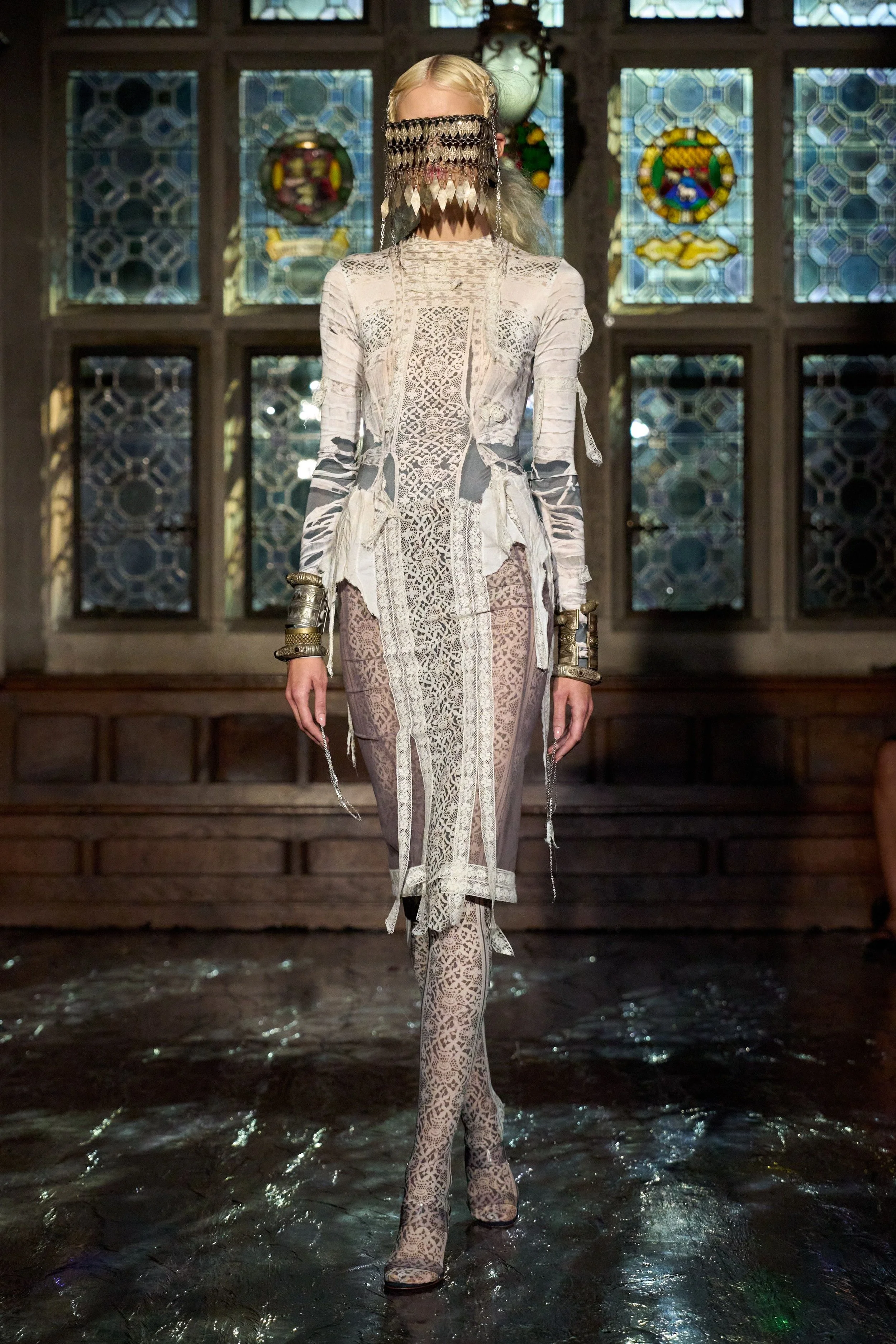
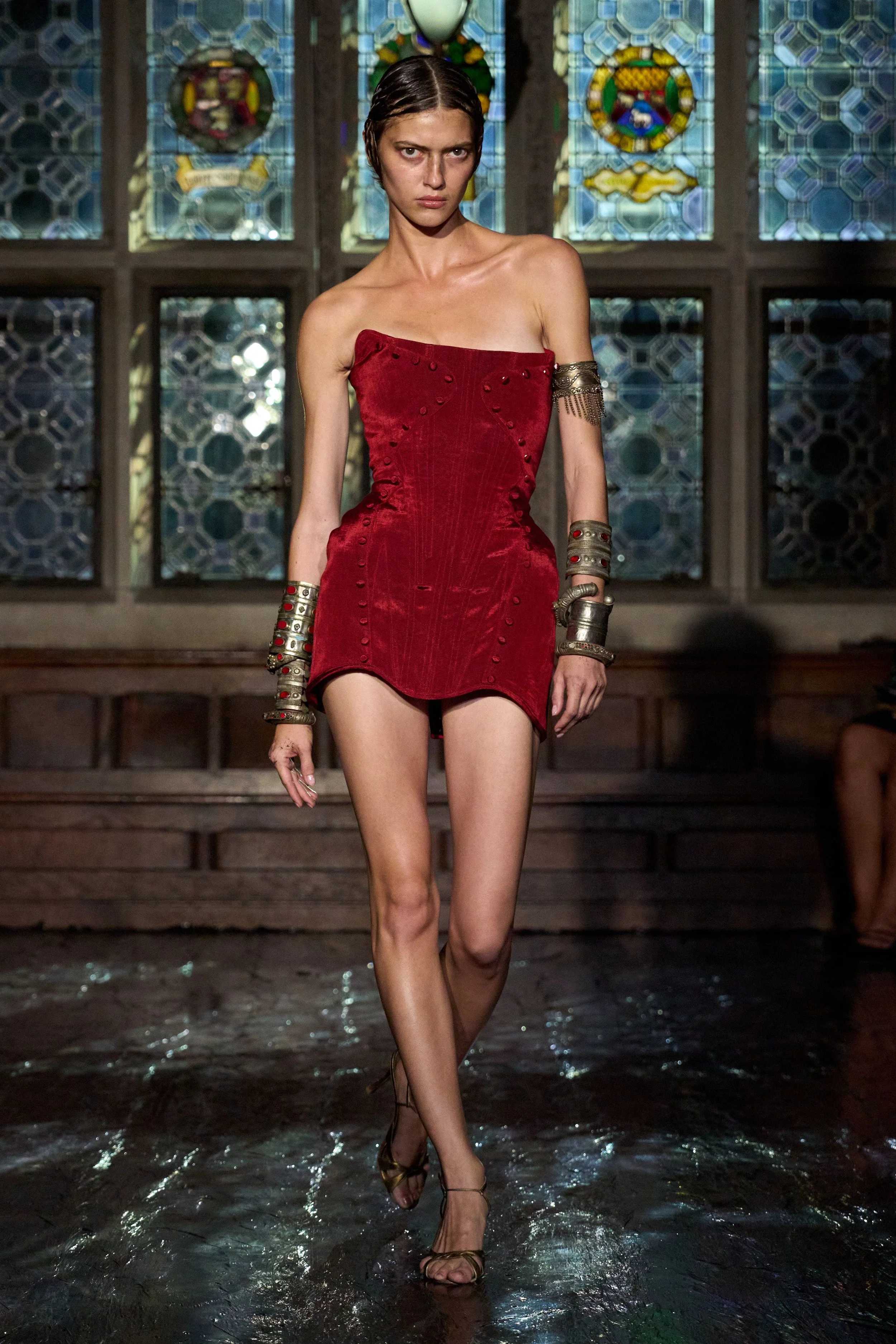
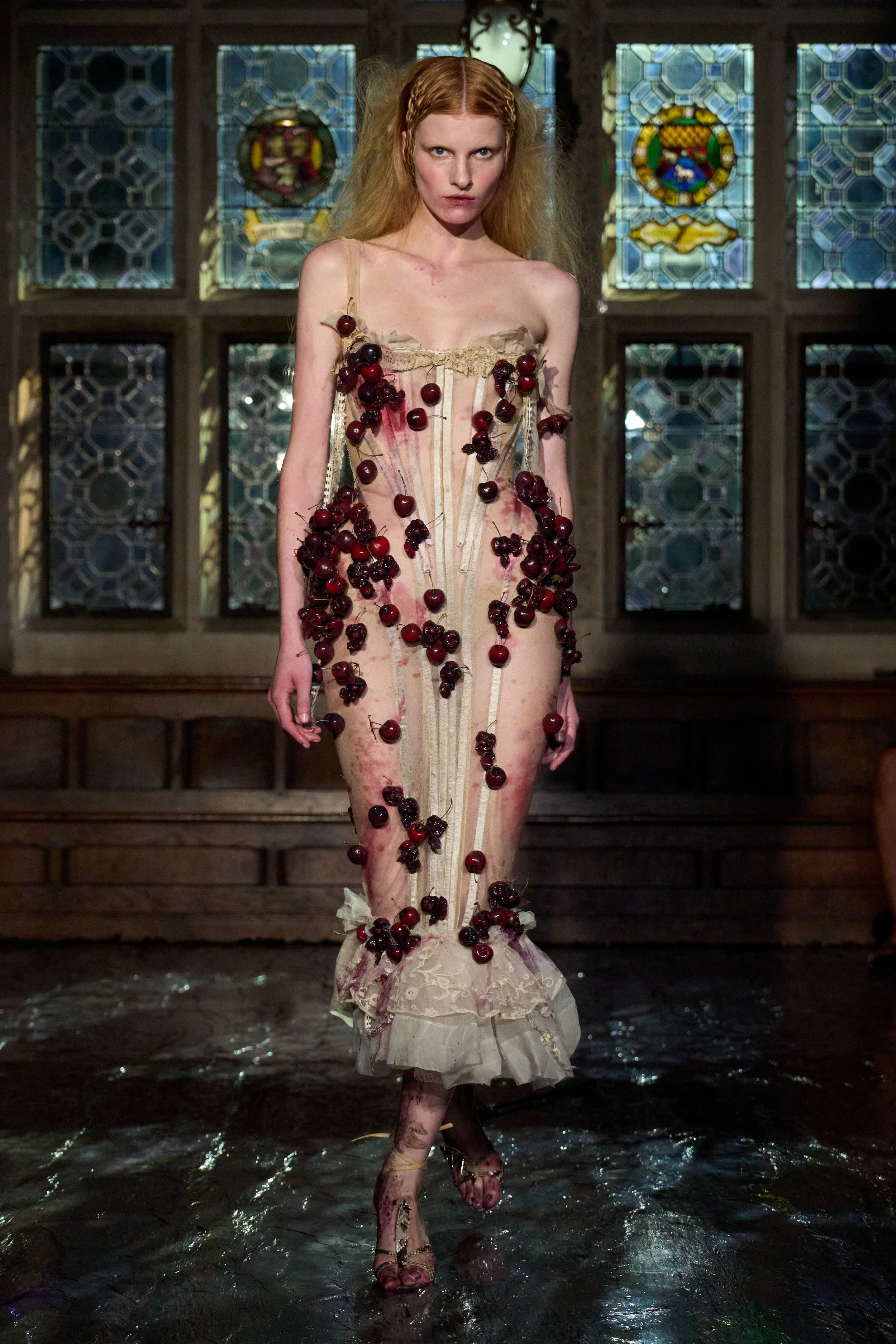
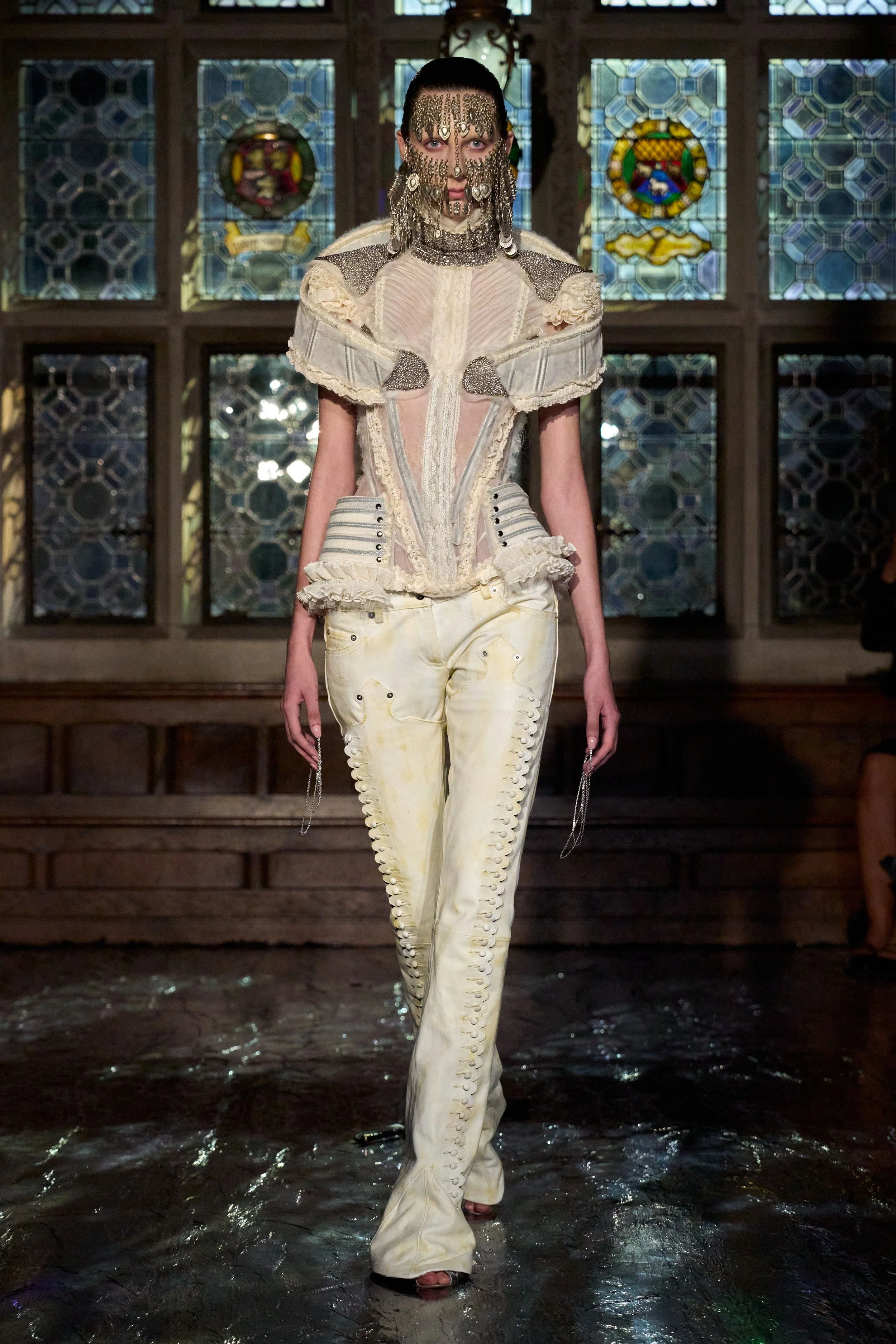
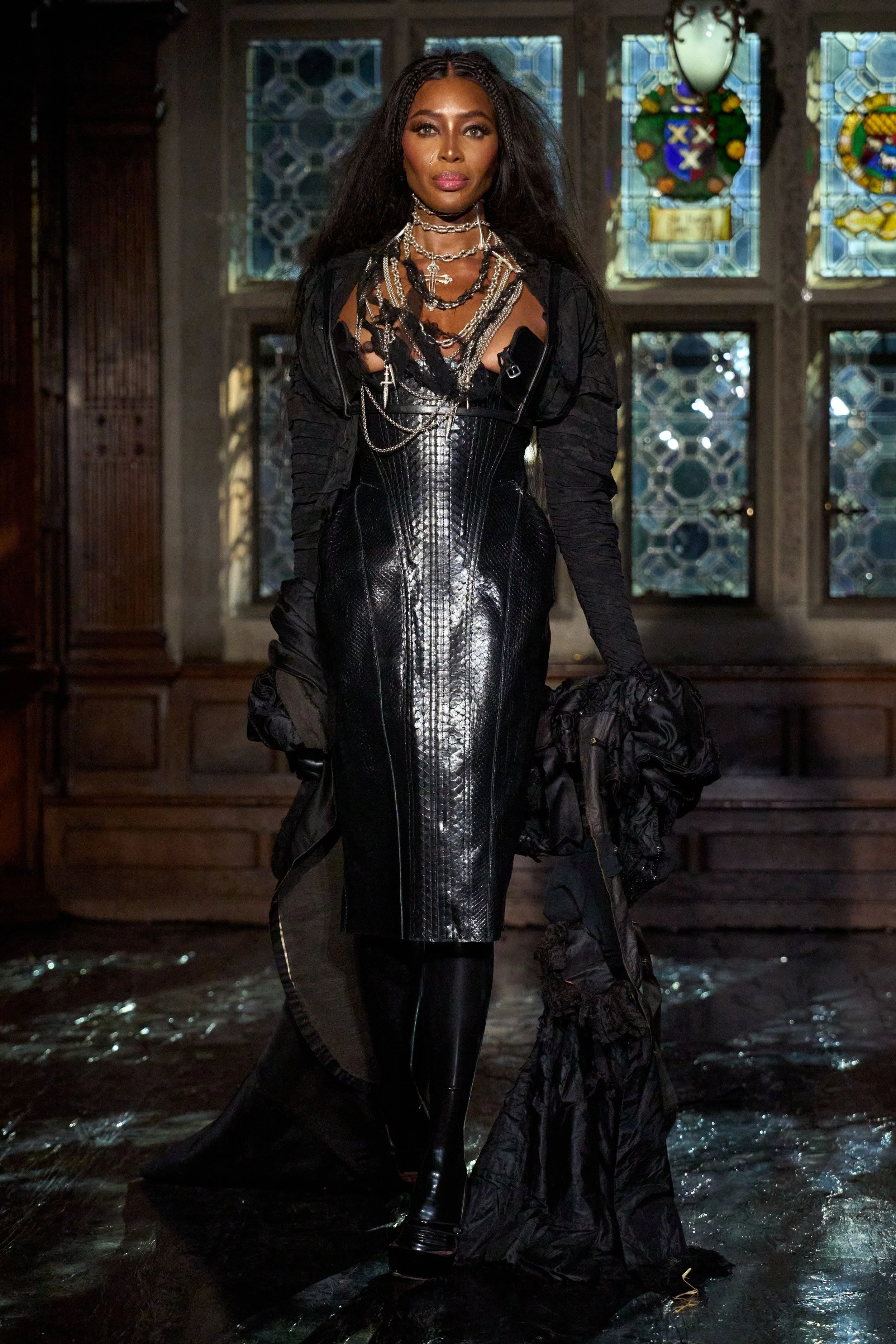
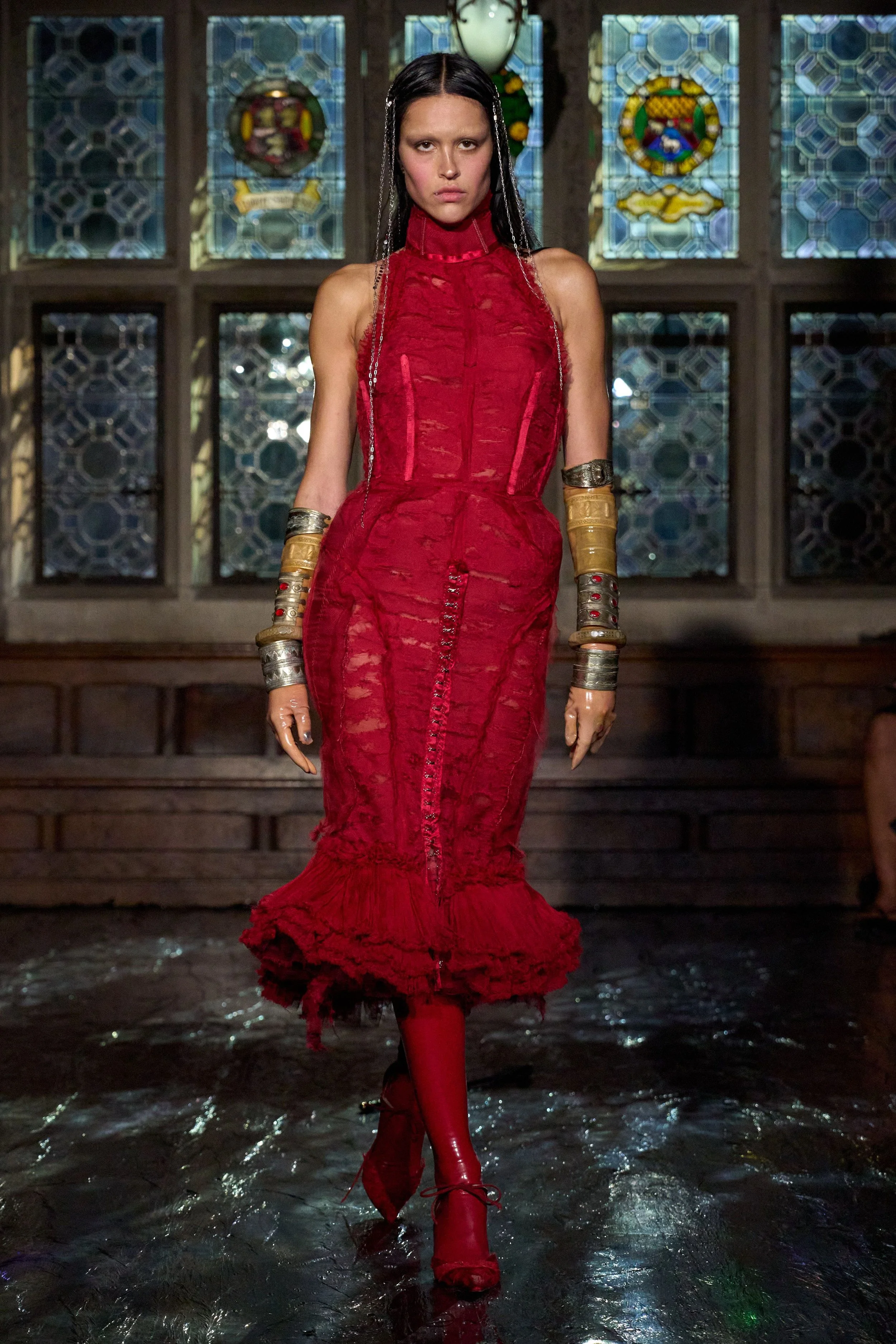
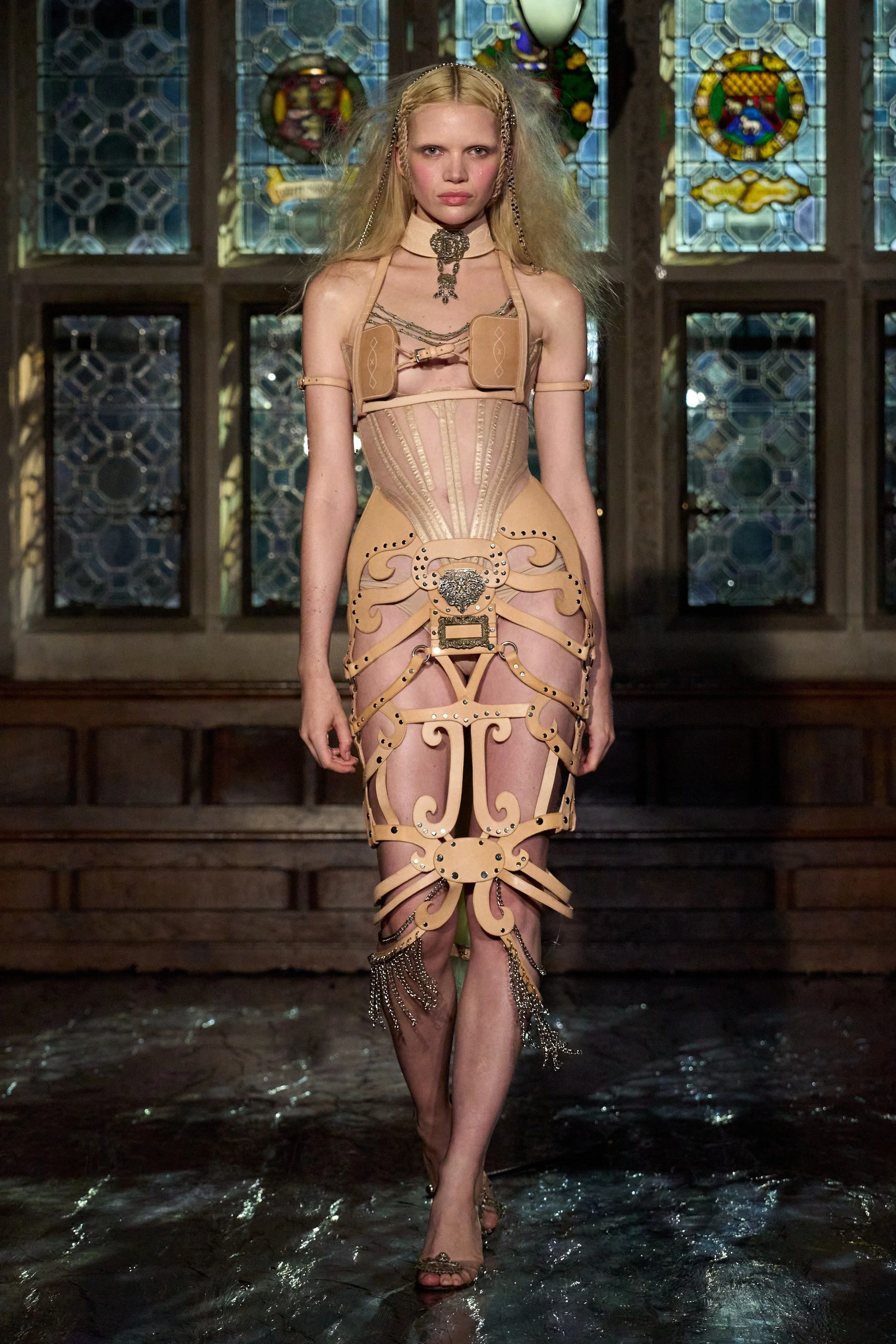
Blinders as lingerie. Latex frilled socks. Squashed cherries dripping down corseted dresses like decadent ornaments. In her Spring/Summer 2026 collection, Cage of Innocence, Dilara Findikoglu once again transported us into her enthralling gothic universe — one infused with a daring touch of S&M.

The show opened with a procession of looks in shades of white and cream: a deconstructed mini pieced together from lingerie and lace scraps; a sheer negligee styled with a bag overflowing with dried flowers and a dangling pair of stockings. Jewellery delivered impactful statements throughout — chunky bracelets were stacked beneath transparent latex gloves, and elaborate silver masks cast an air of intrigue.

Corsetry, a Dilara signature, was reimagined in ultra-short dresses trimmed with buttons and in skirt suits crafted from distressed chiffon, their textures evoking relics from another age. The finale, however, took a striking turn: a look almost entirely constructed from tanned leather, a play on reins that set our pulses racing.


Words by Martin Onufrowicz

MAISON MARGIELA ARTISANAL FW25/26

Fashion lives off its moments. And no moment could be greater—or more daunting—than following in the footsteps of Martin Margiela and John Galliano, two of the most adored and influential designers in history. For his first Artisanal collection at Maison Margiela, Glenn Martens did the impossible: he honoured a daunting legacy without being devoured by it.

Presented inside a crumbling venue lined with torn paper—the same building Margiela showed his final collection in back in 2008—Martens’ debut was haunted, in the best possible way. The setting was not just symbolic; it was a direct conversation with the ghosts of the house’s past. But this wasn’t mimicry or costume. It was a reinvention.

Following Galliano and Margiela is historically impossible. One rewrote the rules of fashion through deconstruction and anonymity, the other turned fashion shows into operatic, emotional spectacles. Martens doesn’t have the same performative flair Galliano had, nor does he seem interested in Margiela’s absolute erasure of identity (even if the masks that all models wore might indicate otherwise). Instead, he lets his creativity free. This Artisanal collection was visceral, raw.

As Smashing Pumpkins’ 1994 song Disarm echoed off the paper walls, the first look came down the runway: a domed, clear plastic dress worn over a corset that, backstage, Martens related to blown glass. The same idea was explored in multiple ways in the first section of the collection, manipulated to suggest different shapes.

There were references to his predecessors. He had to pay his respects. The adorned masks that accompanied every look were a Martin Margiela staple, and the twisted corsets that structured most dresses felt like an homage to Galliano. Inspiration wasn’t just drawn from his predecessors but from himself. After all, this isn’t his first outing in the world of couture. For Spring 2022, Jean Paul Gaultier gave Martens the opportunity to make his debut in the category. And, while that particular collection had the purpose of relating to Gaultier’s archive, there were quite a few similarities here. Look number 10, an aged gold, metal-threaded dress that tightens around the torso and blooms in its skirt, seems to be a reinterpretation of a similarly blooming metallic dress.

Prints from 16th-century Flemish and Dutch painters—a reference to the shared nationality of him and the founder of the house he now leads—were peppered throughout the collection. Most spectacularly in look 13, where a satin bodysuit is used as a base for a leather tablier. Embossed with gold leaf, it carefully mimicked historical Flemish wallpapers.

The ostentation of the experience was tempered by radical intervals of casualness. Hoodies and denim (even if hand-painted) were refreshing to see in the lineup, grounding the collection in something recognizably human amid the theatricality. Martens doesn’t just showcase his technical and creative prowess; he reveals a refusal to be constrained by the traditional codes of couture.

The final looks, textural blooms that resembled flowers, offered a sublime crescendo. They spoke directly to the Dutch masters’ obsession with nature morte, but here, the inspiration transcended stillness. The dresses expanded beyond the dimensional limitations of the human form, exploding into sculptural tulle flowers that seemed to consume the body whole.

The designer’s debut was a moment, a special occasion where a creative gets to stretch his wings and show us his world. We’re just glad to be living in it. 


Words by Pedro Vasconcelos
BALENCIAGA HAUTE COUTURE FW25/26

After 10 years of ruffling feathers at Balenciaga, Demna went out just like he came in: with a fair share of controversy. For the first time in his decade at the Maison, the Georgian designer came out to thank the crowd. Backstage, he said he owed it to the people. This gratitude punctuated the show—literally, in a soundtrack listing the names of his team, and figuratively, in what he sent down the runway.

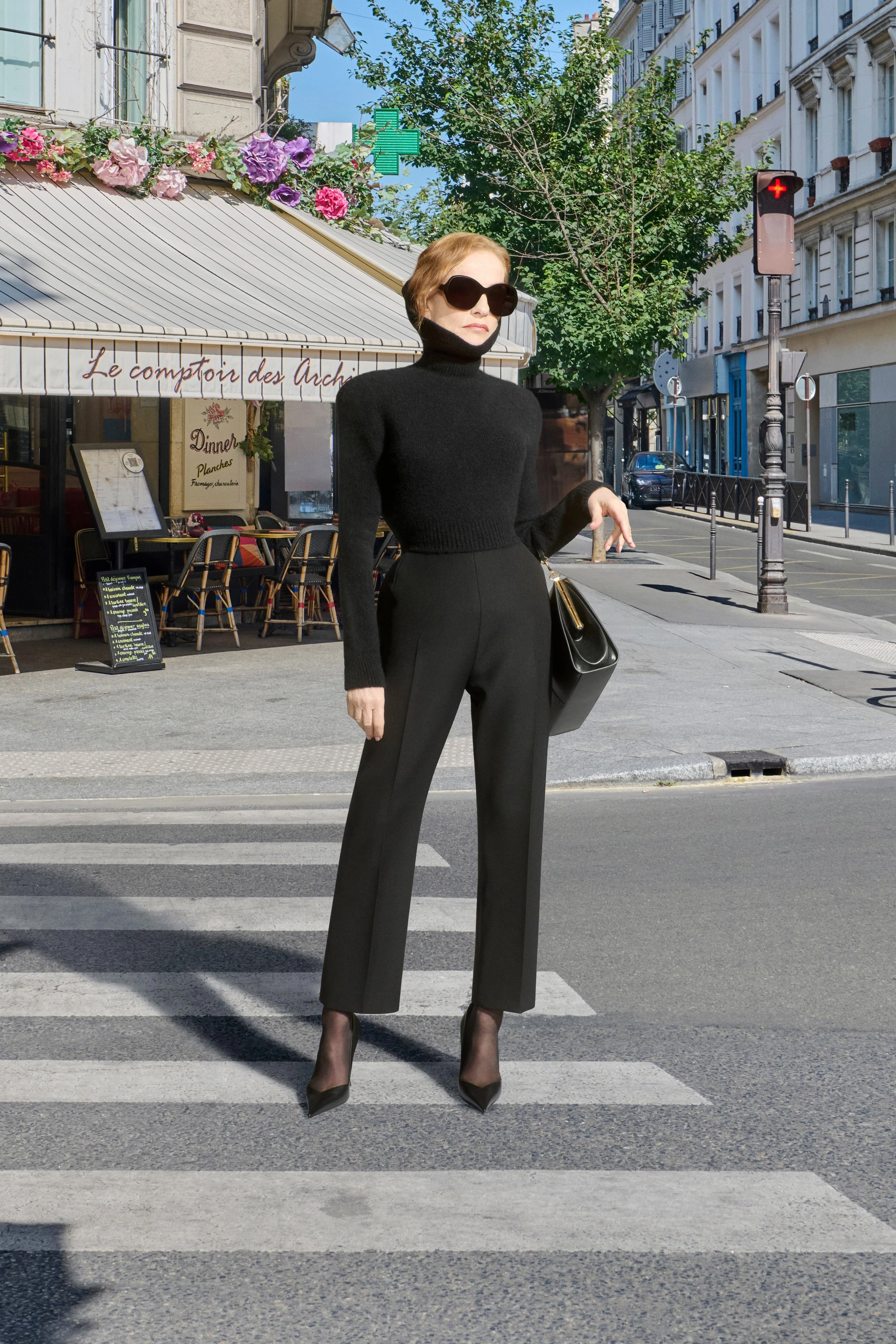
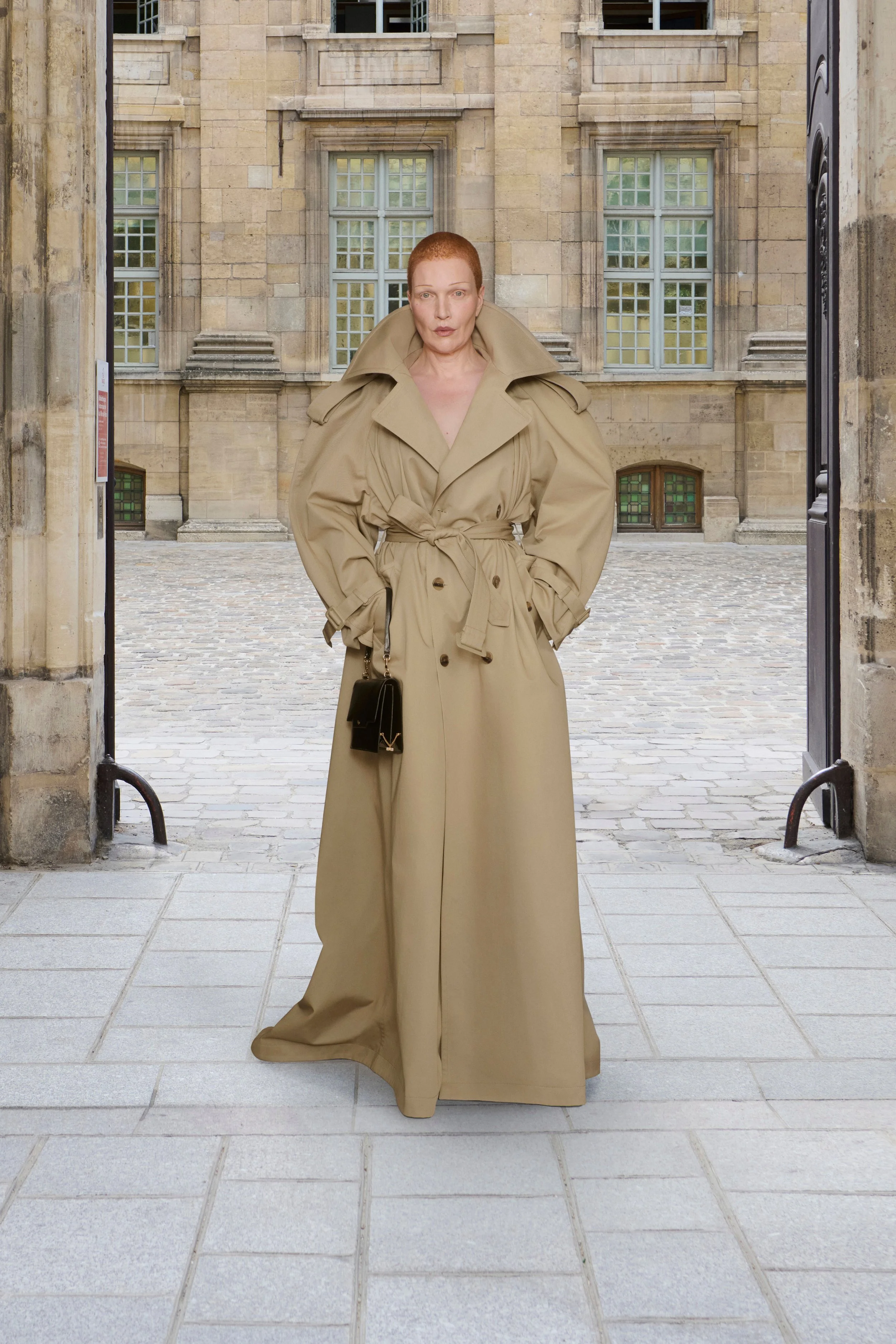
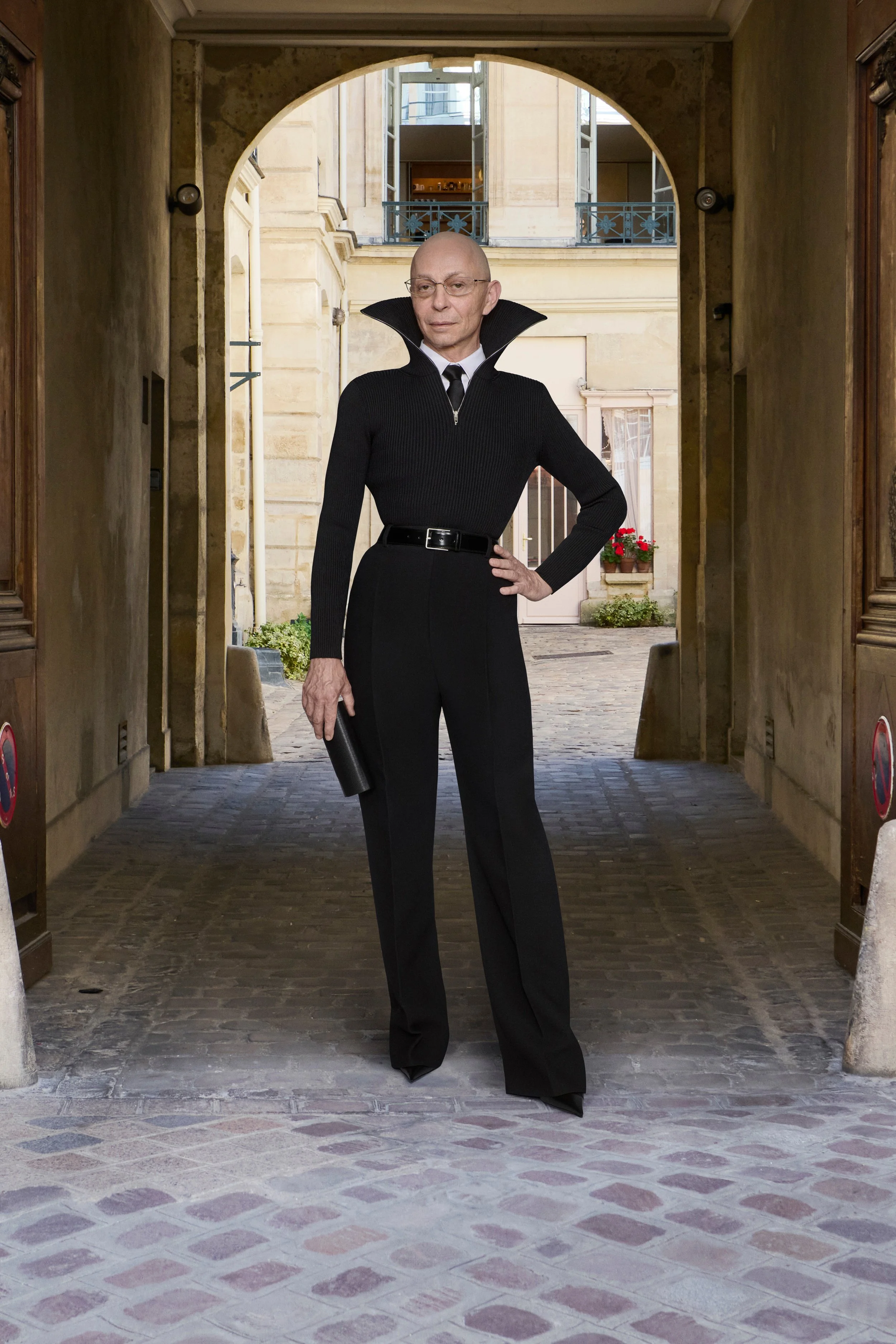
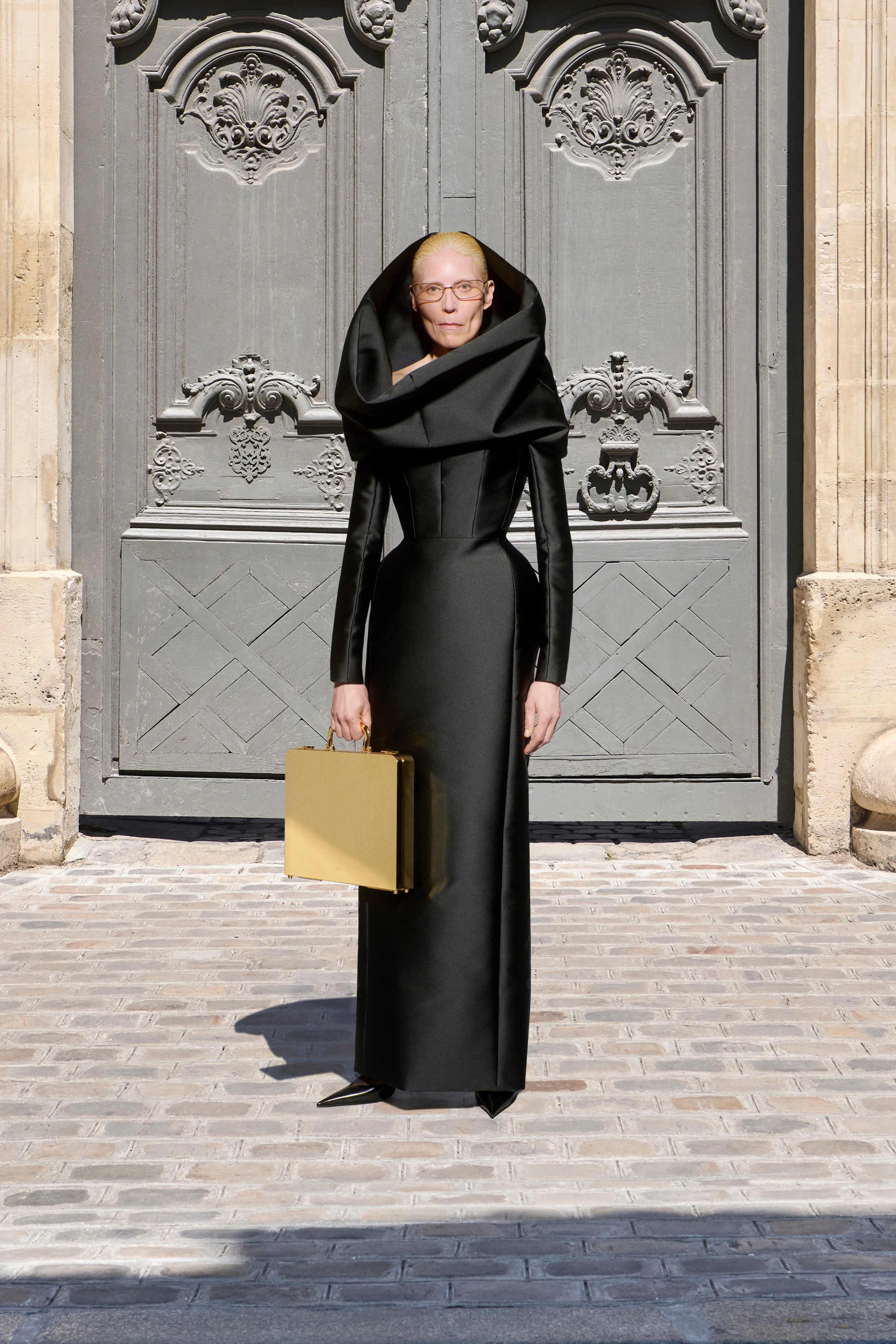
A series of structured sets walked out first, starting in a simple iteration, then evolving into jackets and coats with lapels flipped outward. The silhouette—seen in black, red, and polka-dot—is a favourite of the designer, repeated throughout his decade at Balenciaga. Isabelle Huppert followed in an impossibly elegant fitted sweater and pants. The high neck, the bag swinging from Huppert’s arm, the pointy heels: as always, Demna’s parodies are as accurate as they are chic.

His fascination with old-school Hollywood glamour was on full display. Kim Kardashian wore a replica of Elizabeth Taylor’s dress from Cat on a Hot Tin Roof, adorned with the actual diamonds Taylor wore. A tribute to the founder of the Maison came in the form of a houndstooth coat. Many online still like to fantasise about what Cristóbal Balenciaga would have thought of Demna’s tenure. To them, we say: he’s dead. The industry has evolved, the world has changed. It’s possible to appreciate technical artistry and cultural commentary simultaneously.

Of course, Demna needs no defence; the designer made a career pushing the boundaries, upsetting both critics and the public. The similarly triggering casual wear that came after is proof of it. For a couture collection, showing windbreakers and bomber jackets might be considered sinful, but for Demna, it’s imperative. He made it his mission to bring couture into the real world, beyond the salons in which the collection was shown.

For his final Balenciaga offering, Demna synthesised his entire approach to the French Maison. It wasn’t a Rolodex of his greatest hits, but a summary of his greatest achievement: changing the parameters by which we think of fashion. And even though we admit our love for Demna outright, the fact remains: he has been one of the most influential designers of the last decade. We grieve the end of an era, but are just as excited for the beginning of the next. What will the upcoming decade look like for Demna? For Gucci? For the industry?


Words by Pedro Vasconcelos
CHANEL HAUTE COUTURE FW25/26

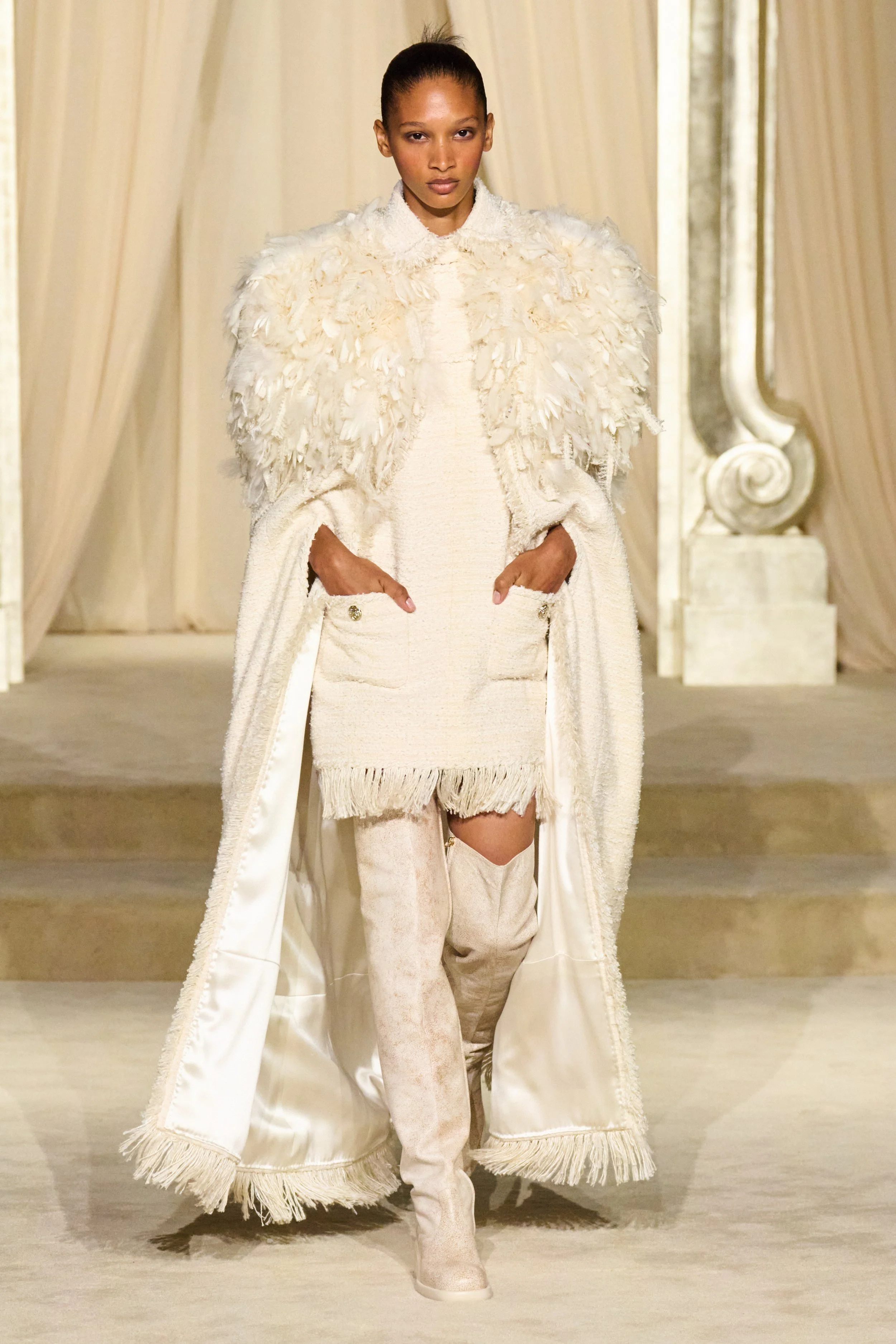
It’s easy for fashion to feel thematic. In an industry commanded by the search for novelty, collections can feel like limited-edition capsules rather than narrative expansions. Chanel doesn’t commit such sins. With a savoir-faire that extends well beyond a century, the maison isn’t bound by themes; instead, it pursues a continuous search to interpret its own industry-revolutionising legacy. Haute Couture Fall/Winter 2025/26 is the perfect example. In what was the last collection presented before Matthieu Blazy’s debut in September, the design team presented a look back into the house’s earliest history. Harkening back to its founder’s fascination with the Scottish Moors, rustic elements tamed the extravagance a Couture collection usually implies.

 Gabrielle Chanel, the omnipresent muse to the maison she founded, is considered through her earliest mission: to coarsen an otherwise delicate female wardrobe. Male silhouettes were the most explicit executions of the creative mission. Structured jackets and coats were rigid but loose, built to allow for freedom of movement. Tweed hooded jacket-and-short sets had a distinctively military inspiration, brought forward further by leather boots that extended past the shorts’ length.

 Compared to the collections the team has presented since Virginie Viard’s departure, this season felt more considered, less whimsical. Dark greens, muted ochres, and dirty whites reigned over the colour palette. The natural inspiration continued in white tweed manipulated to resemble sheepskin, and feathers twisted to imitate wheat ears. The set, too, informed the direction. Made to resemble the Haute Couture salons at 31, rue Cambon, the Grand Palais merged the iconic location with an outdoor feel, combining its decorative elements with a wide, open space.

 The collection’s biggest success was in the delicate balance it managed to keep for all 46 looks. Yes, it was masculine and comfortable, but it was elegant and decadent, nonetheless. An embellished, fur-collared cropped jacket was sweet when complemented by a draped silk skirt. A high-collared white coat, even if structured, was gilded by feathered sleeves.

 While the excitement is palpable for Blazy’s debut, the stint the design team had in creatively leading all Chanel collections is reaffirming. Beyond the mythology of genius designers, Chanel’s legacy is enough to guarantee its narrative upkeep.


Words by Pedro Vasconcelos
CELINE SPRING26

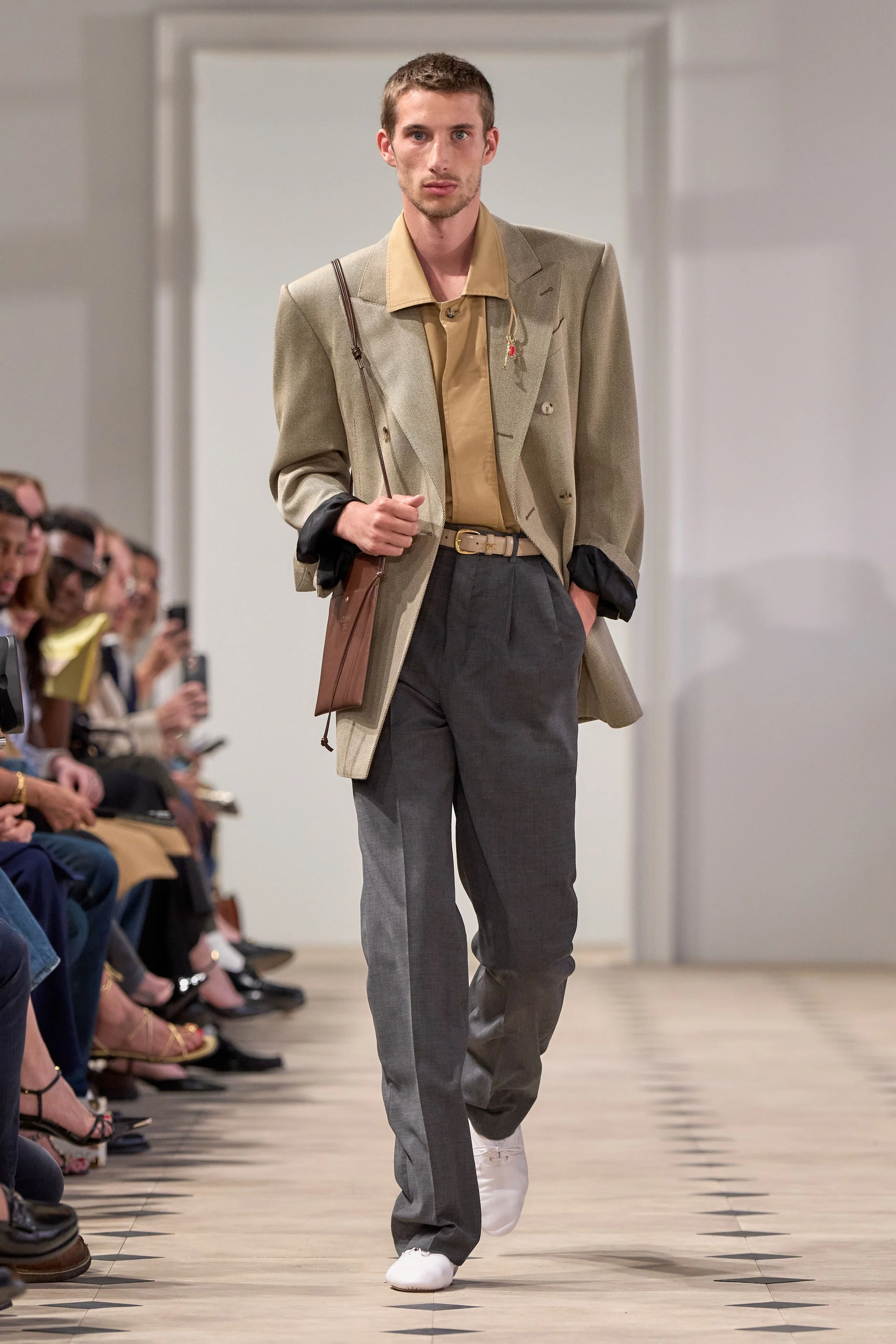
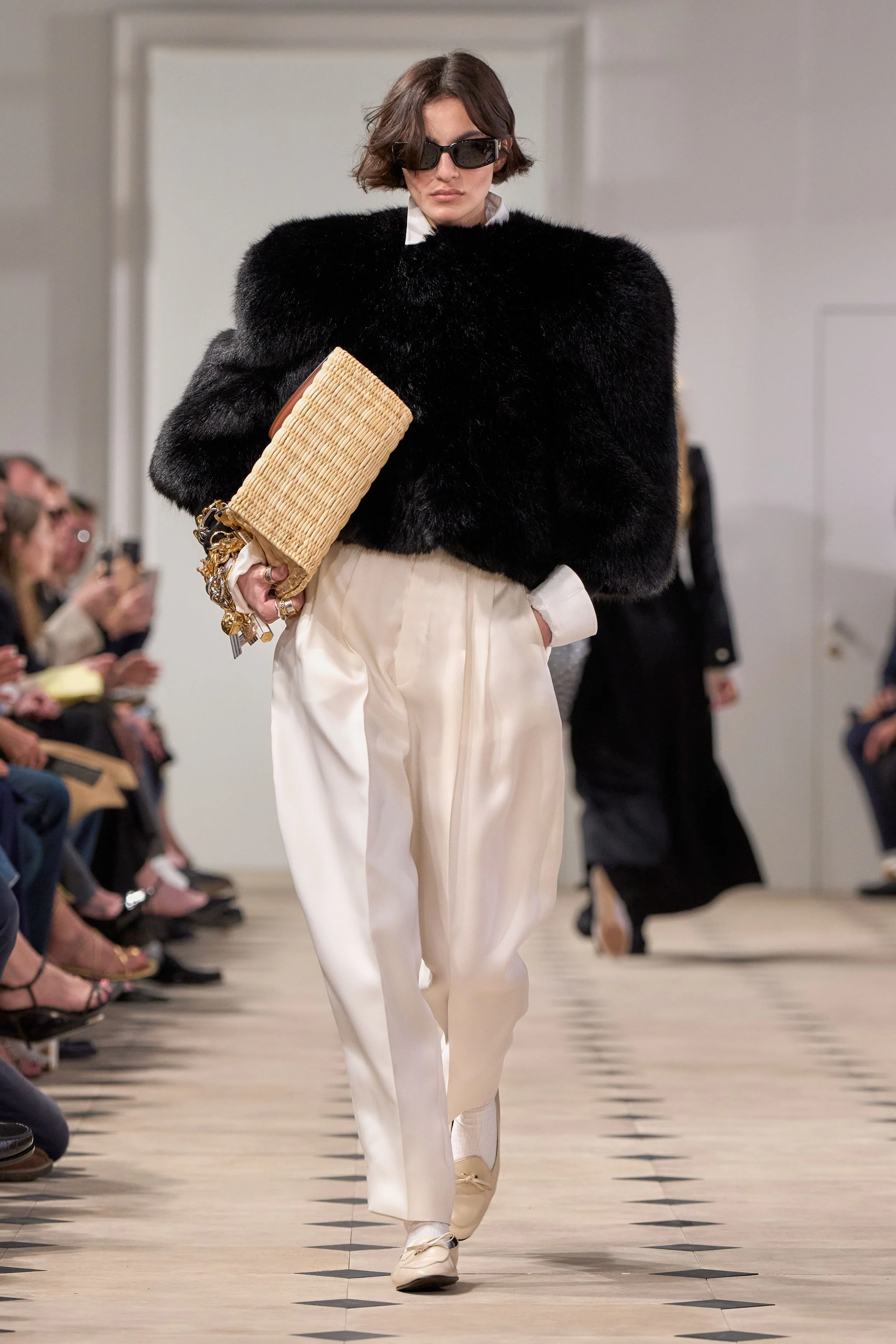
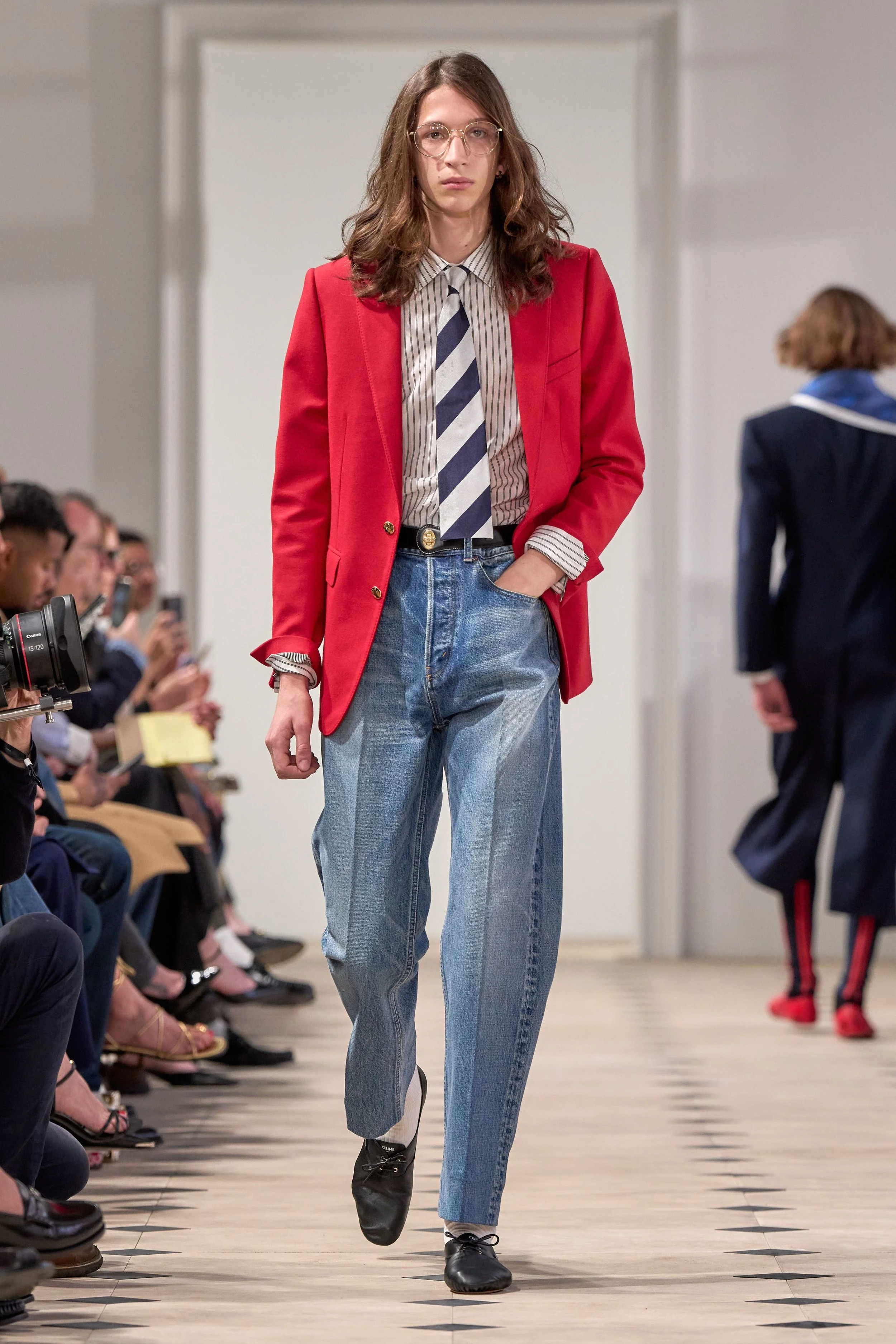
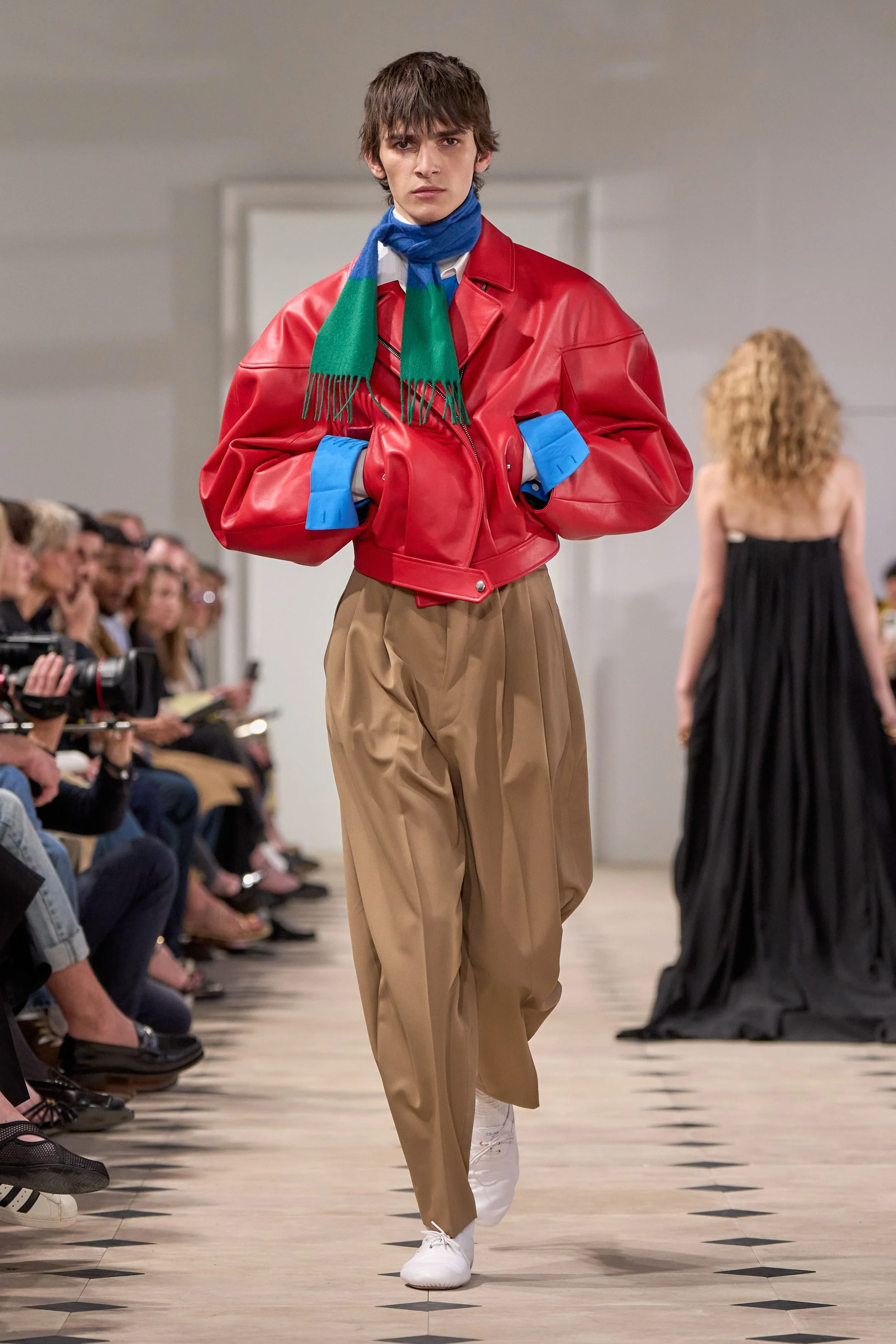
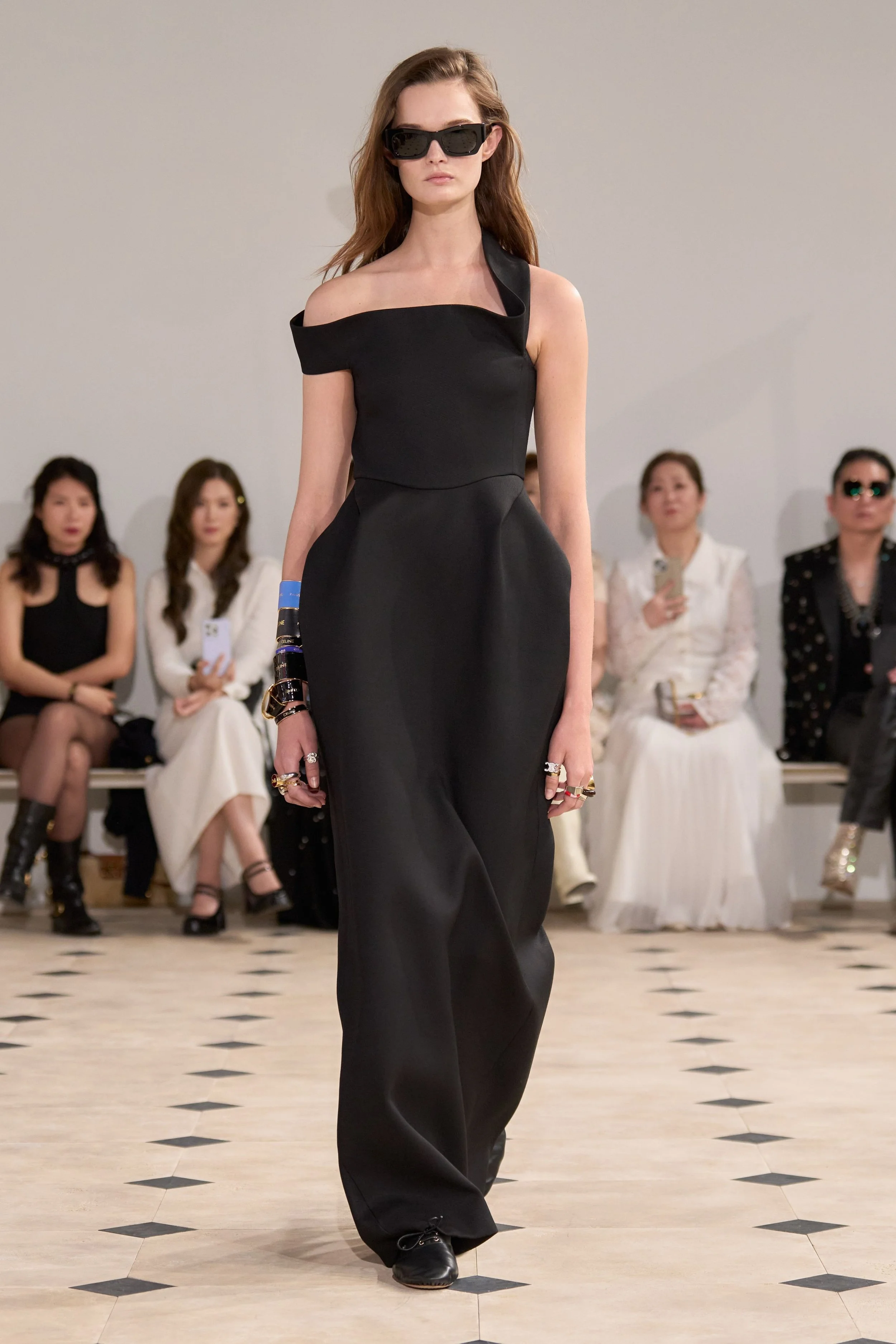
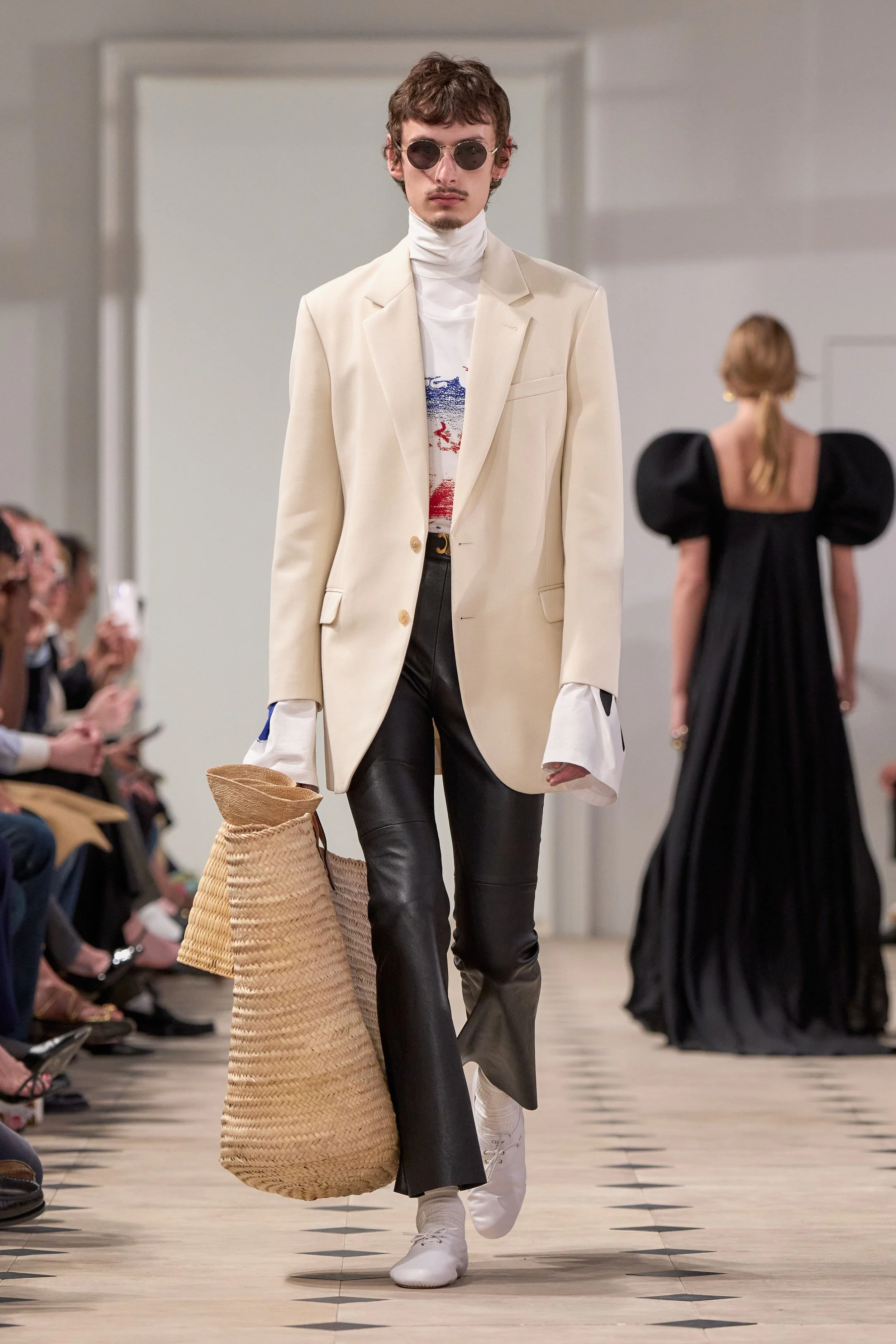
Debuts are never easy. And Celine, as a maison, feels particularly hard. The past two creative directors—Phoebe Philo and Hedi Slimane—were not only commercially successful, but they also brought the brand into a new creative realm. Michael Rider has extremely large shoes to fill. But it’s not like he’s new to the brand. After a four-year stint at Nicolas Ghesquière’s Balenciaga, the American designer worked as design director for Philo’s Celine before joining Polo Ralph Lauren as creative director. In that sense, this wasn’t a debut at all, but a homecoming.

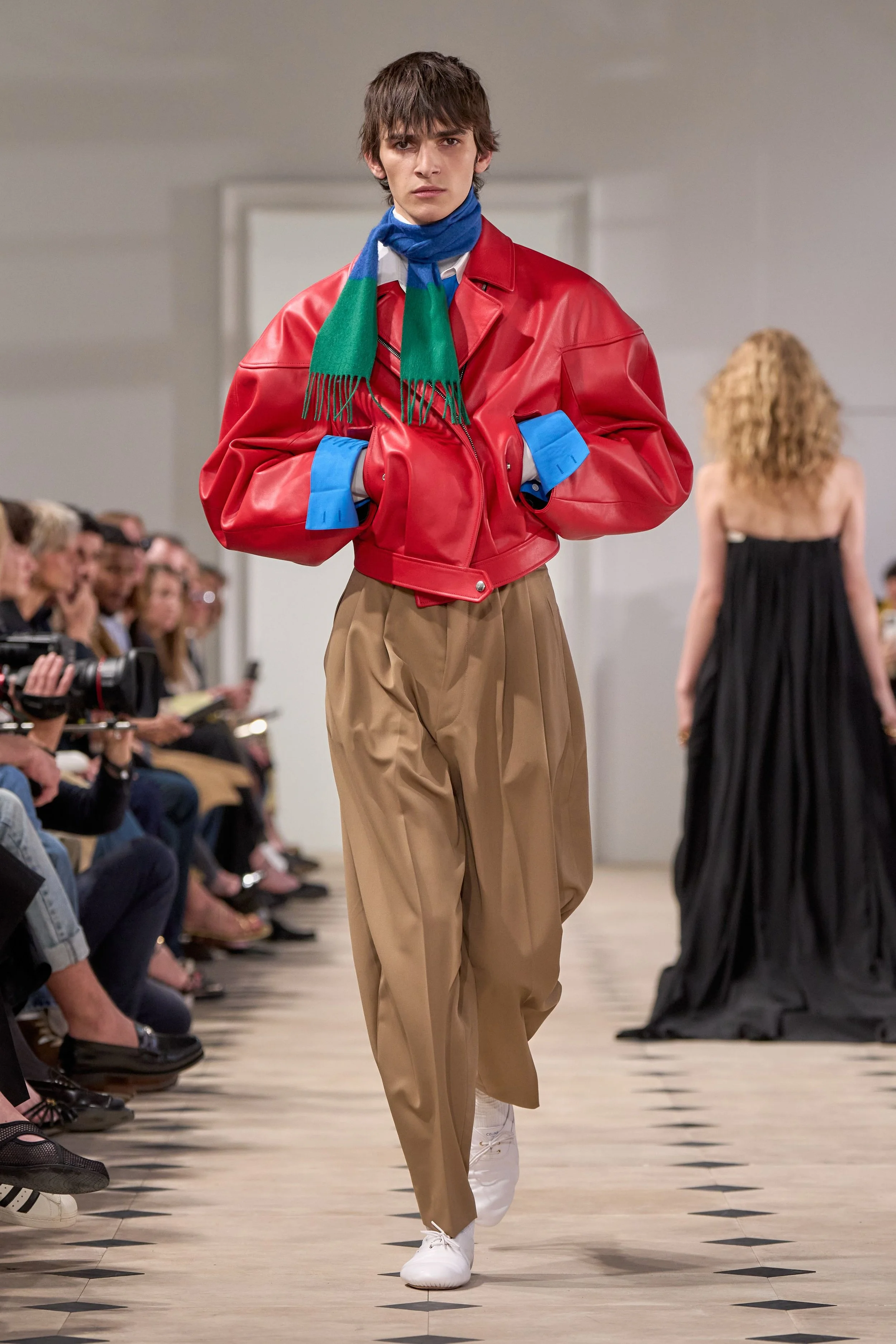
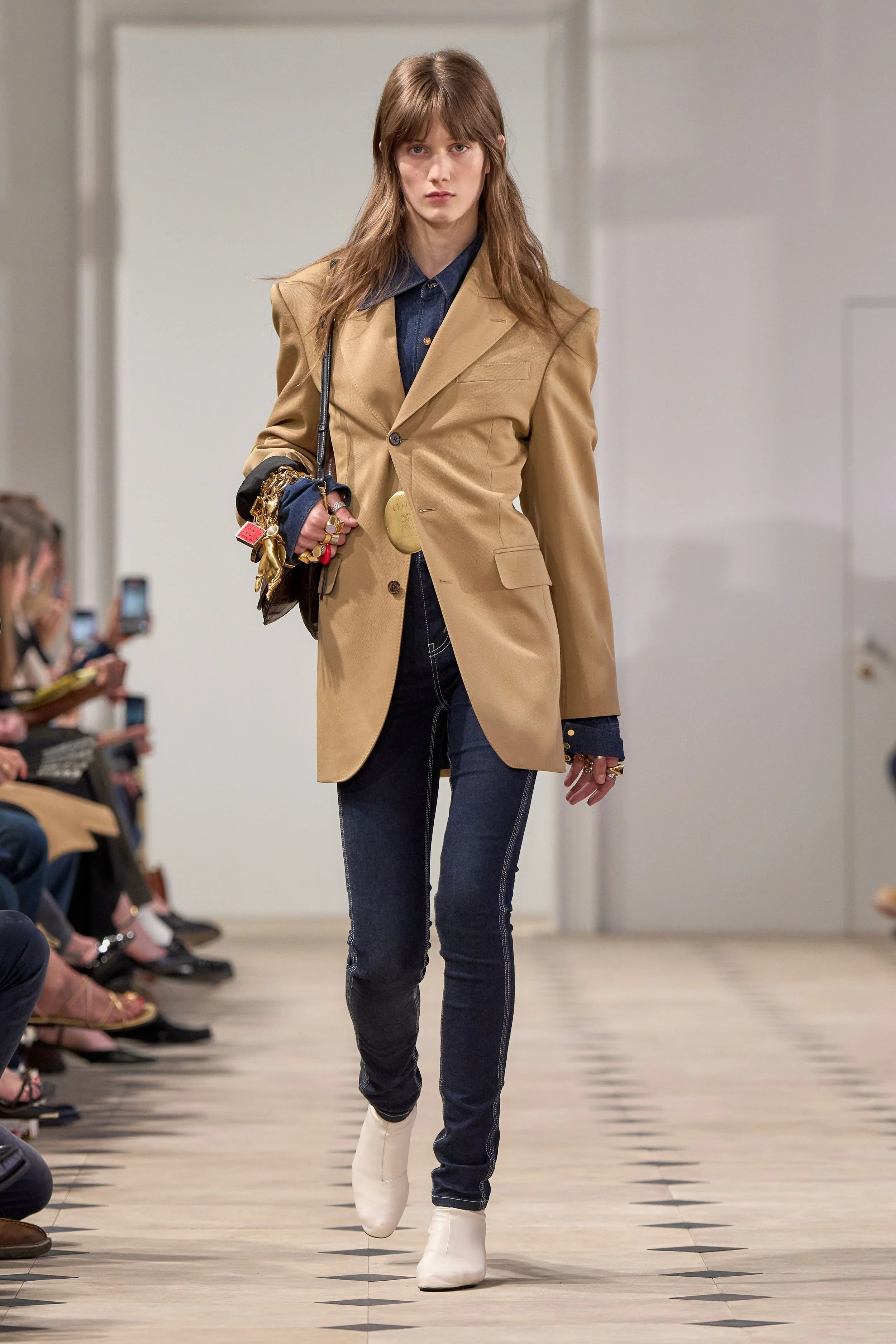
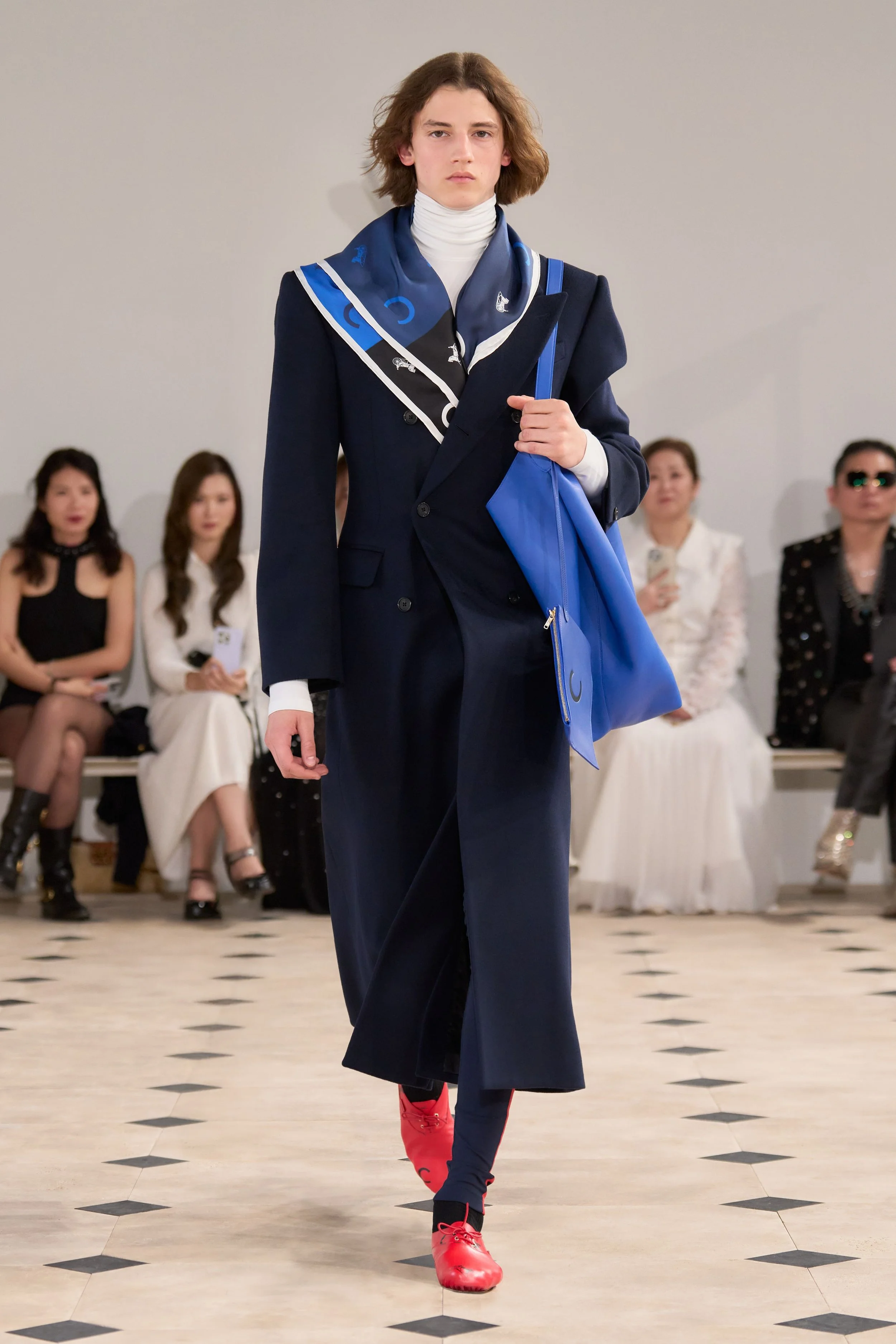
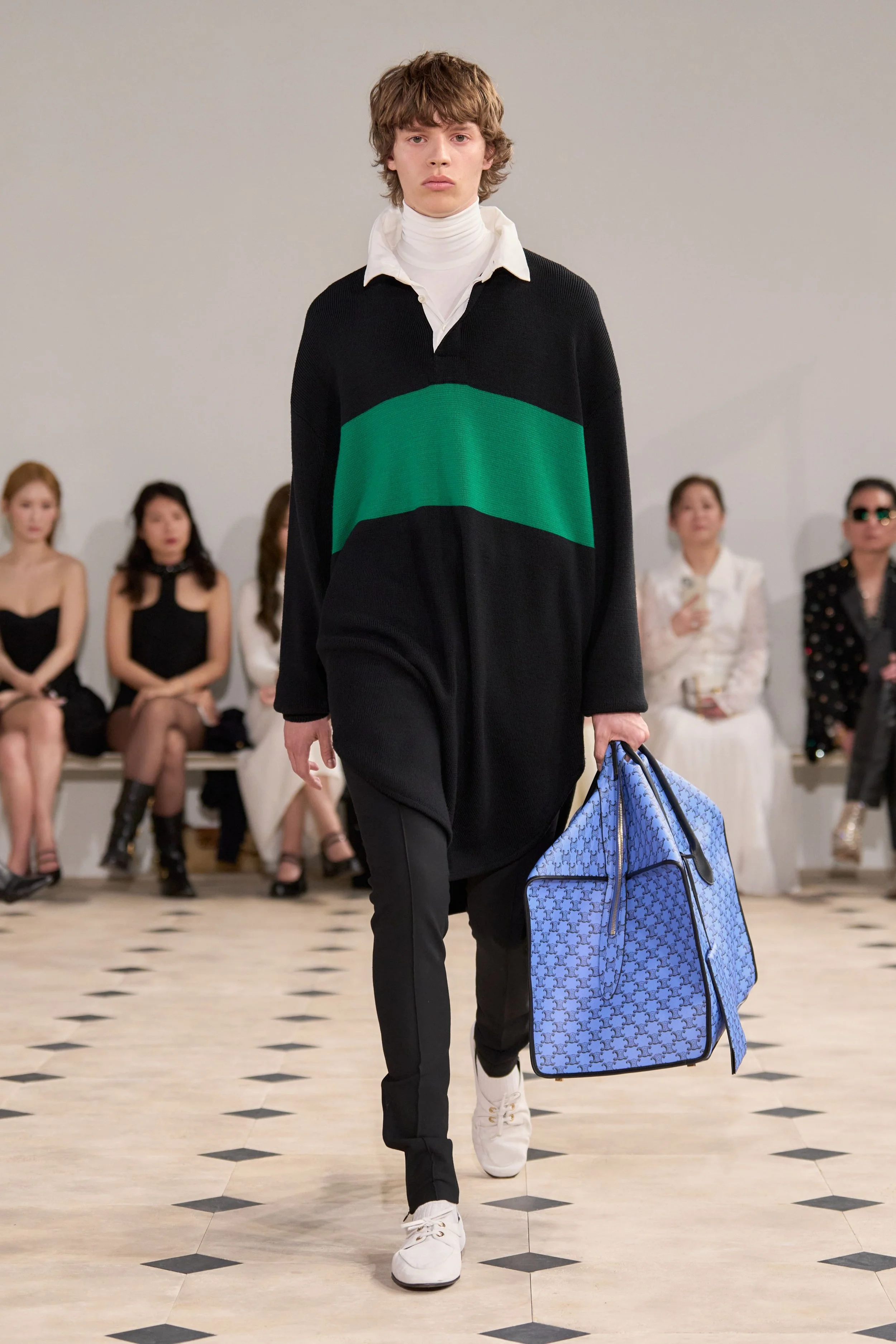
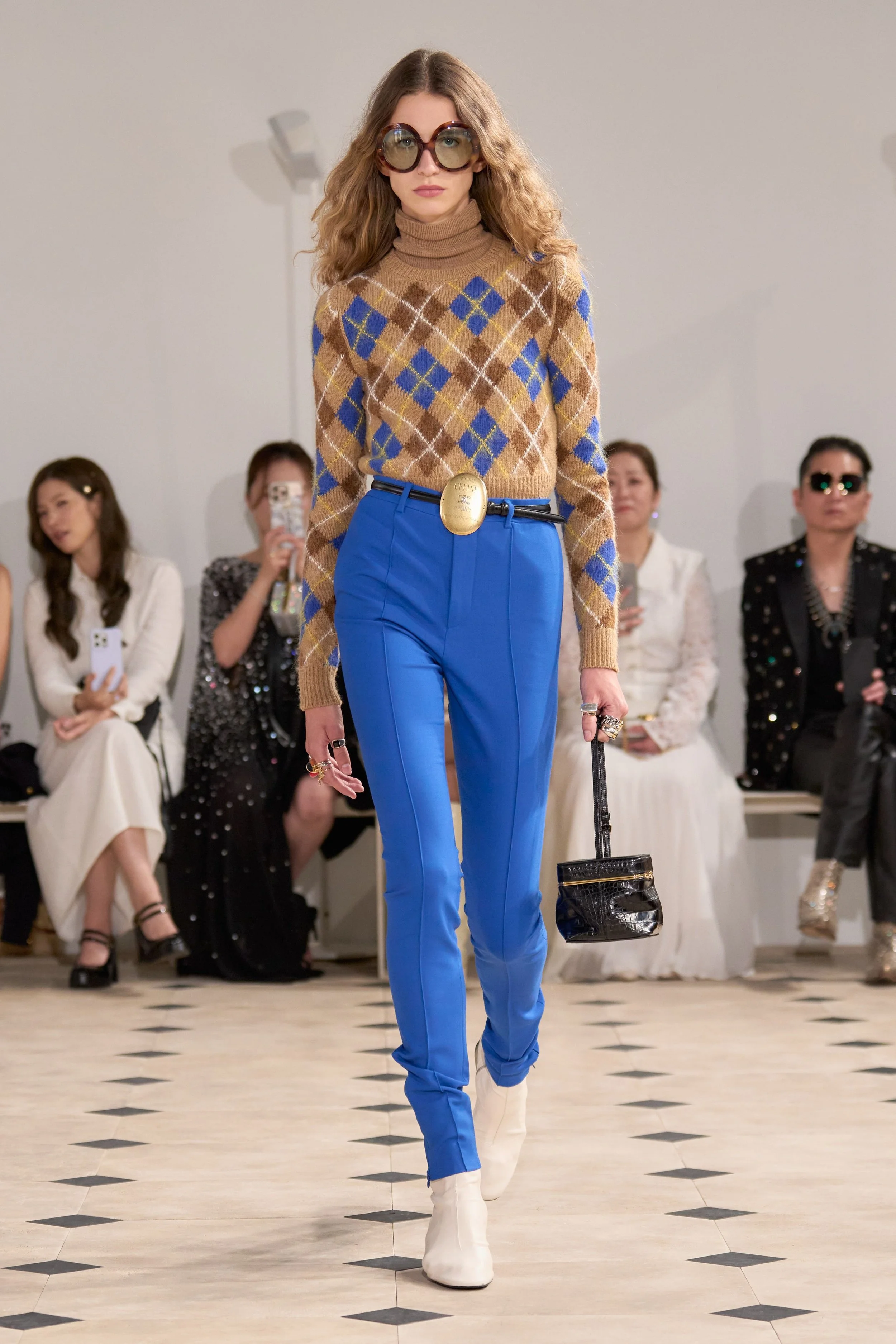
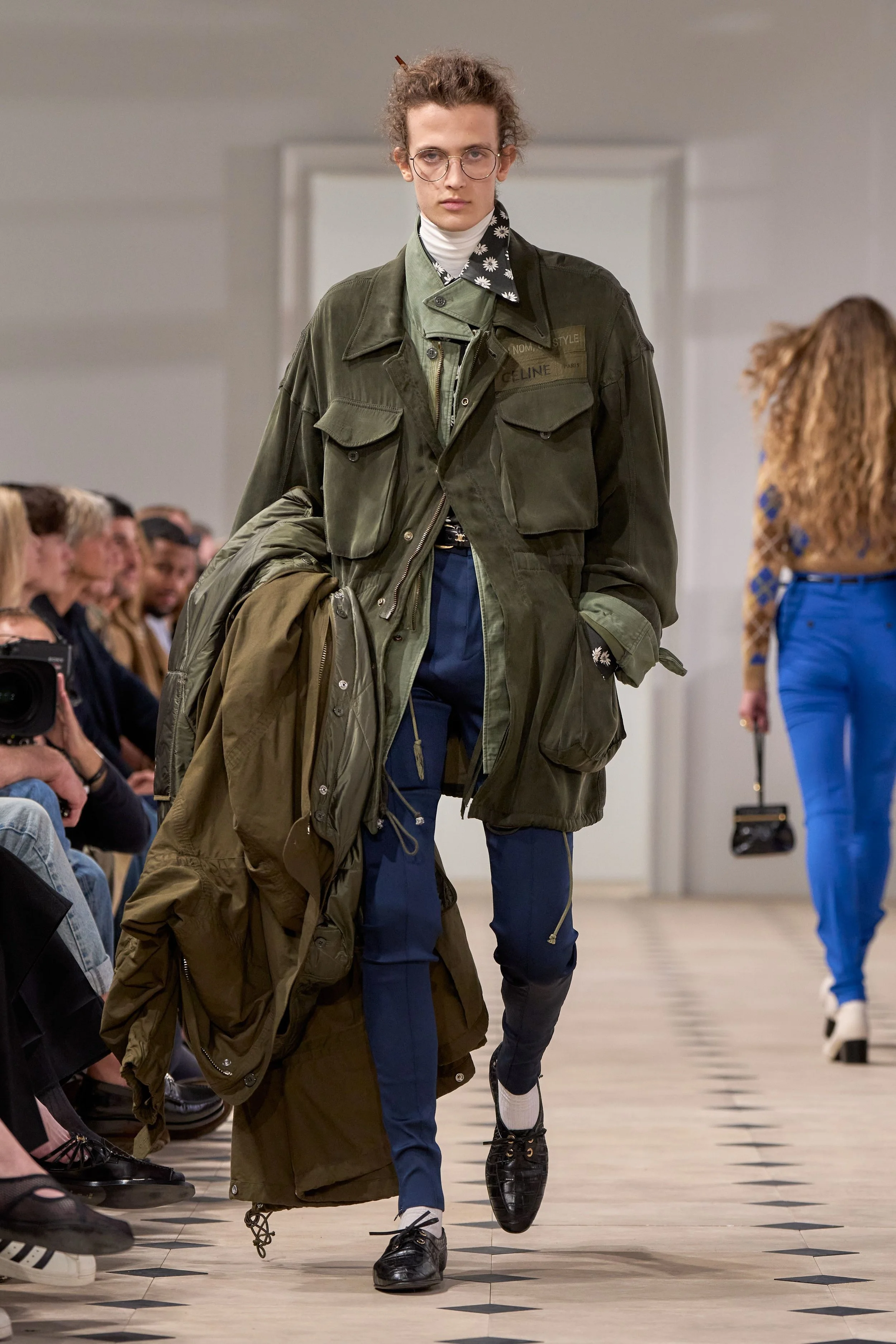
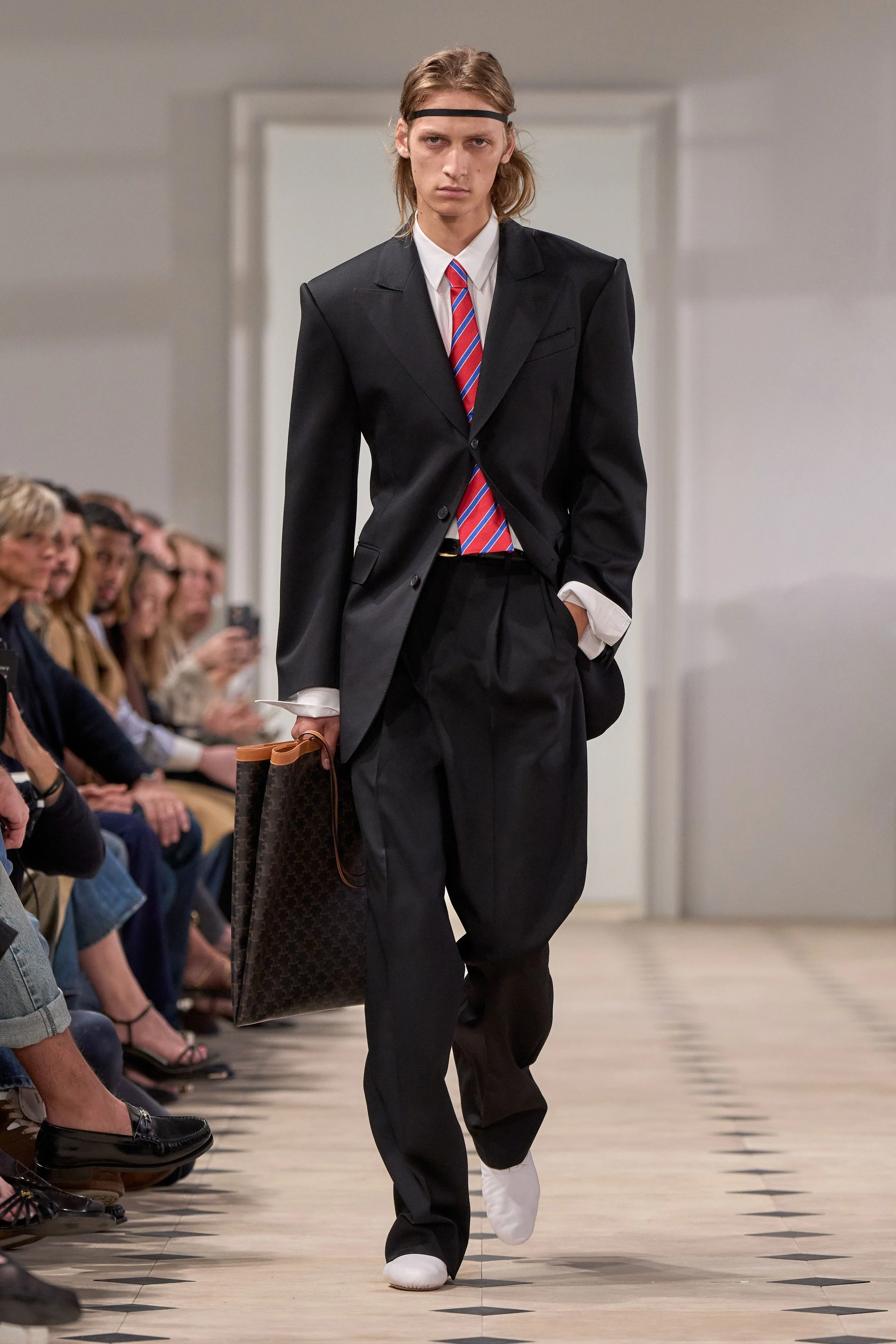
And while the biography might seem unnecessary, the fact of the matter is, Spring 2026 speaks to all the roads Rider has walked. There’s a deep respect for Philo’s Celine (one he was so intimately intertwined with) in nipped-in tailoring and a thematic proclivity toward scarves. Ghesquière’s influences came through in exaggerated shoulders and vibrant colours on cropped jackets. His own time at Ralph Lauren sowed in an almost comical preppiness. Striped rugby polos swallowed models, extending far beyond their expected limitations. Tight argyle sweaters were painted on the body.

Despite all the references Rider designed with—and the undeniable pressure a designer feels knowing that every single keyboard critic will be typing faster than they can think—what was most remarkable was the collection’s sense of whimsy. Maximalist necklaces turned a tangled jewellery nightmare into the chicest accessory. In a belted leather jacket, a simple charm bracelet took over the whole arm, jiggling down the runway in a metallic cacophony. Elsewhere, a thick fringed dress is remarkable in its structure and becomes increasingly more interesting upon closer inspection, revealing it’s entirely made up of Celine tags.

Accessories were an undeniable high point. Flat monogrammed totes felt fresh, while a reimagined Luggage Tote had our teenage hearts fluttering. Slouchy bags in soft yellow, structured minis in snakeskin, structured vanity cases carried on the wrist: Rider speaks a language we can understand.

Scarves—long a Philo signature and a maison code, not unlike the ever-popular Triomphe symbol—punctuated the collection. Whether draped under the lapel of structured coats, bunched at the collar, or gathered around the neck, Rider shows he understands that, beyond clothes and accessories, he must sell a way of dressing. Here, it’s uncomplicated, it’s fun, it’s chic, and, most important of all, it’s aspirational. Spring 2026 was a success not only because Rider knows what he’s doing, but because he knows where he’s going.


Words by Pedro Vasconcelos