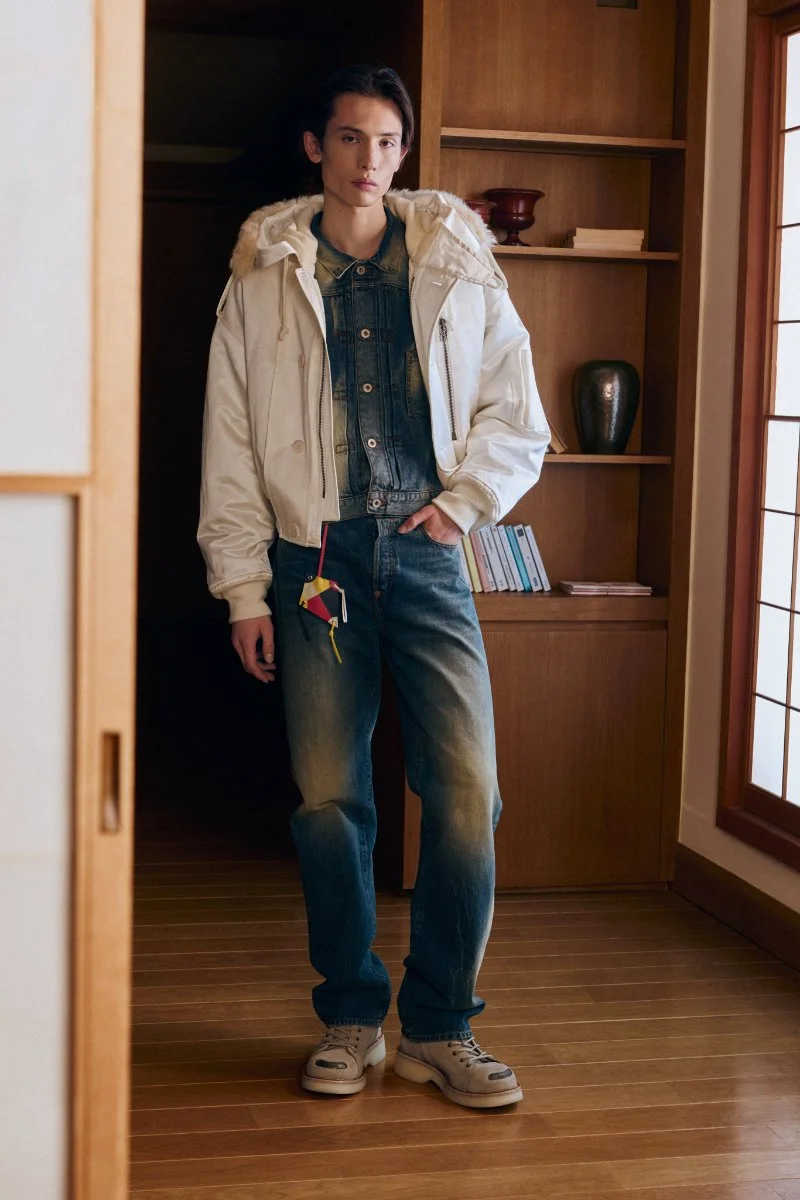
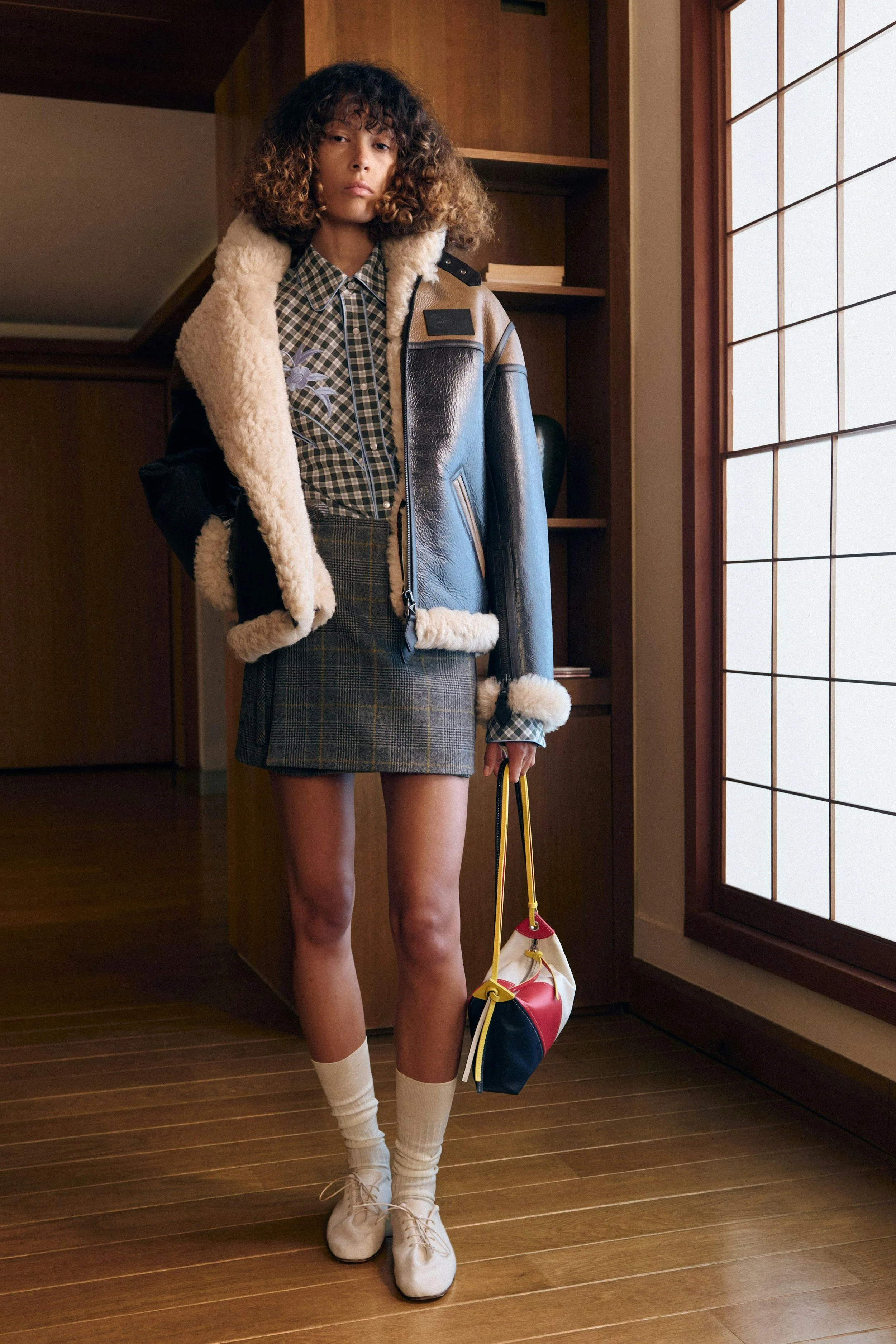
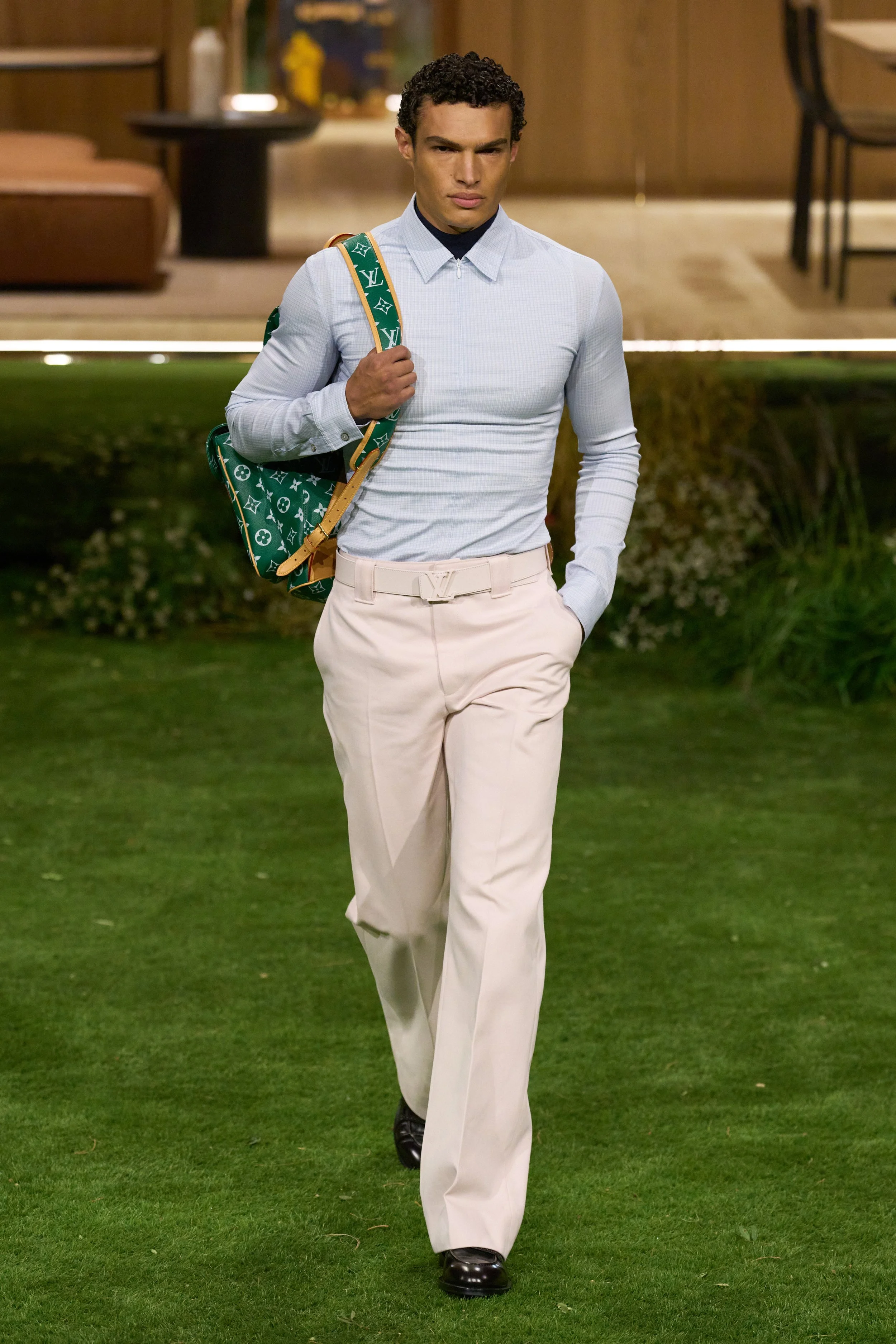
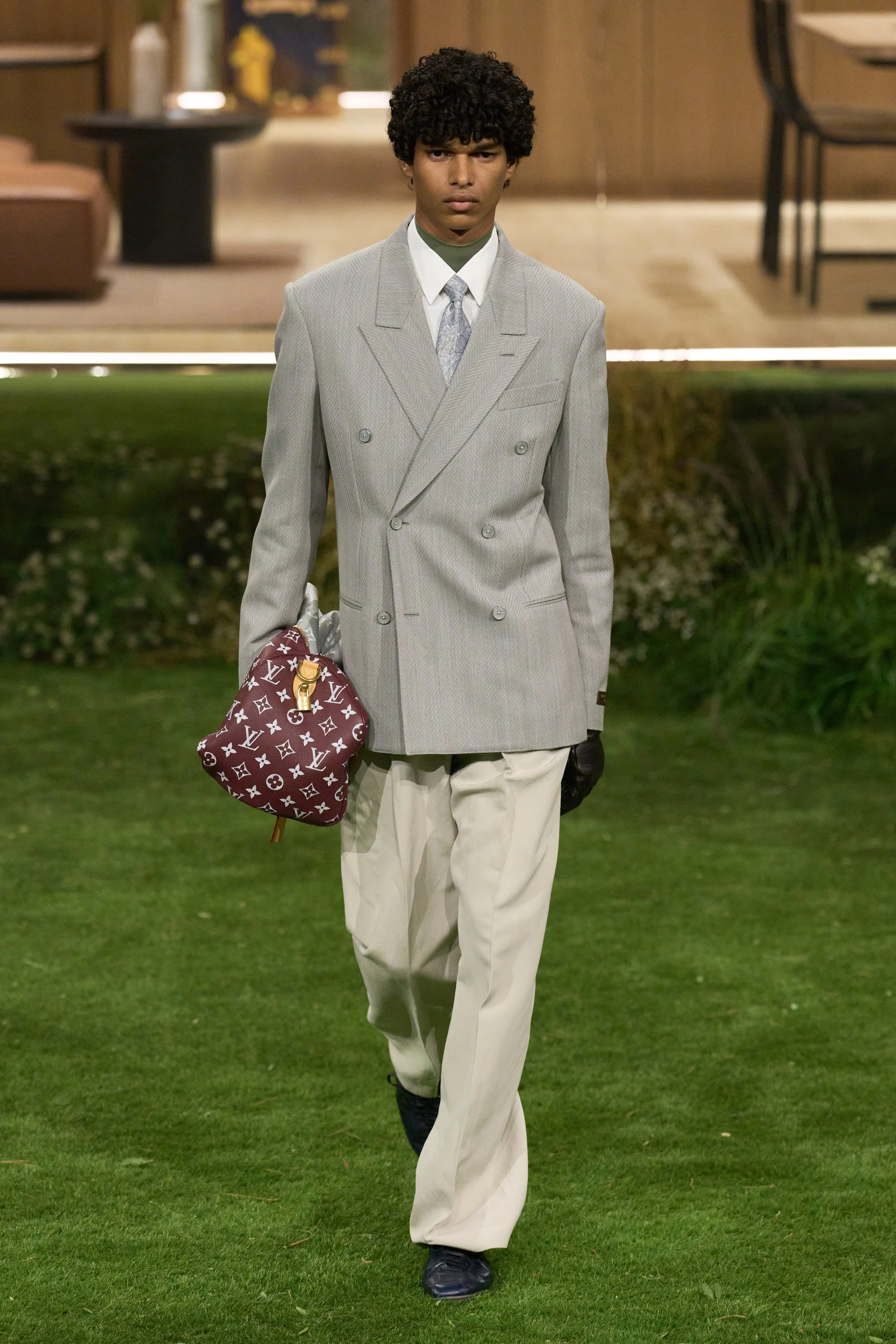
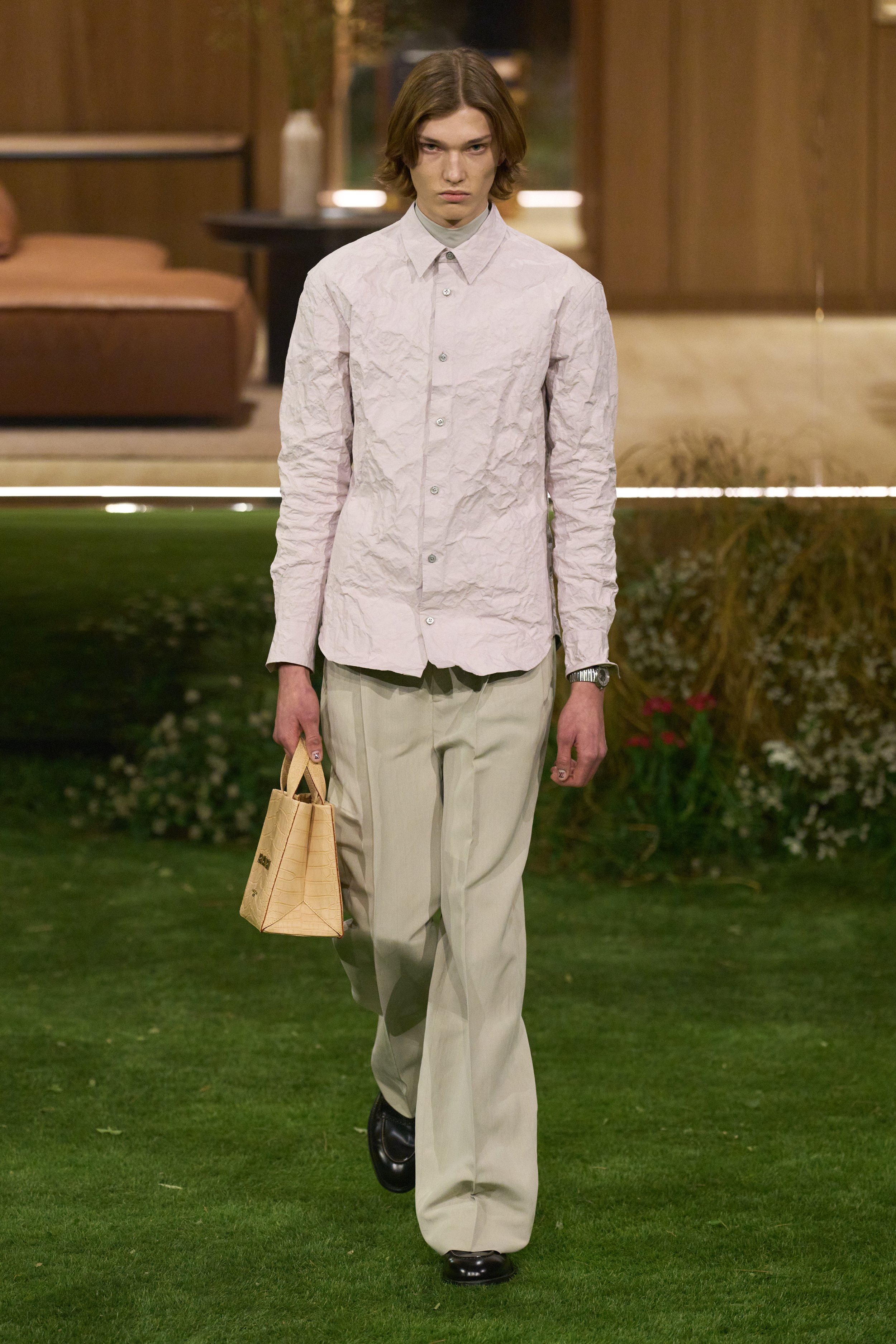
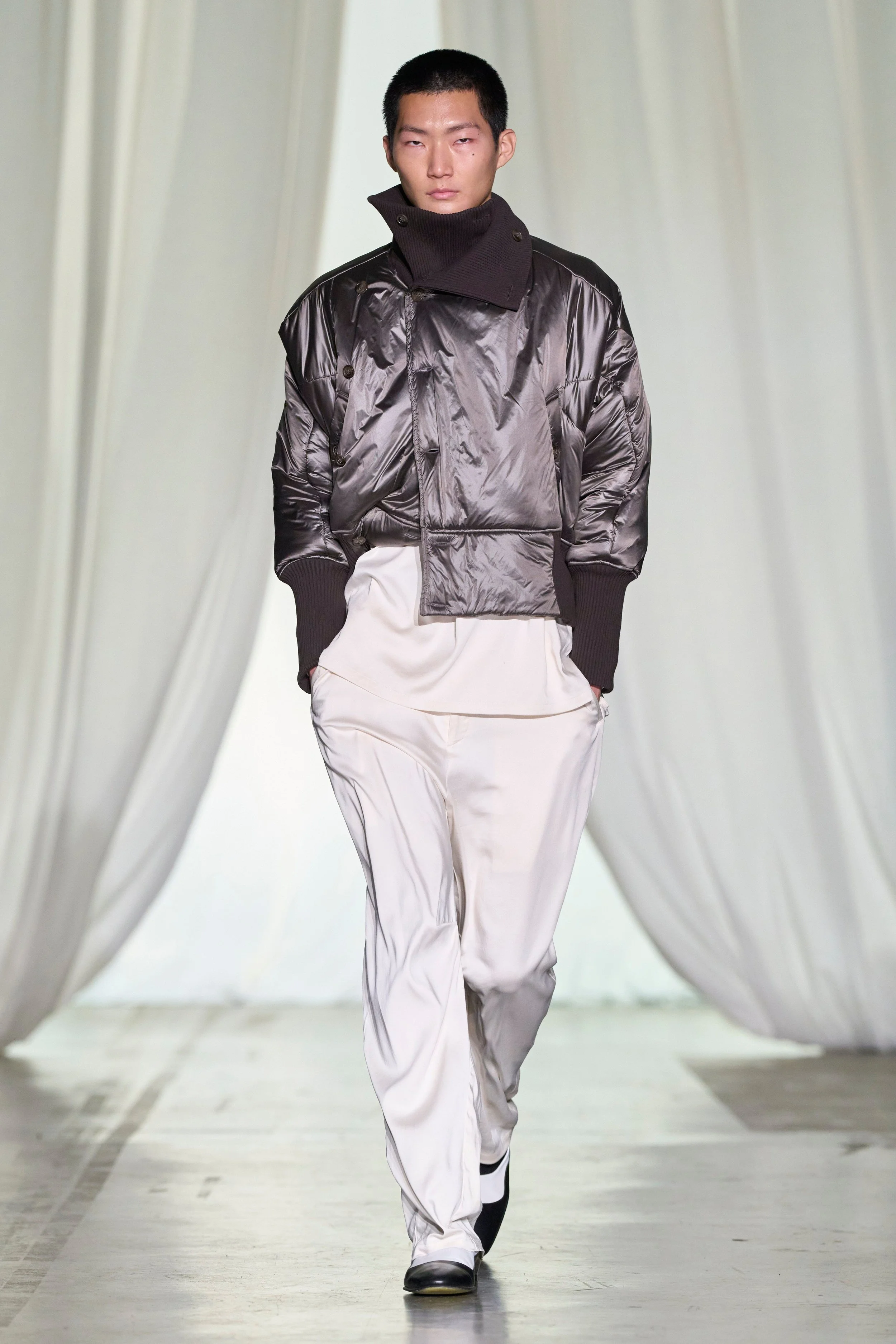
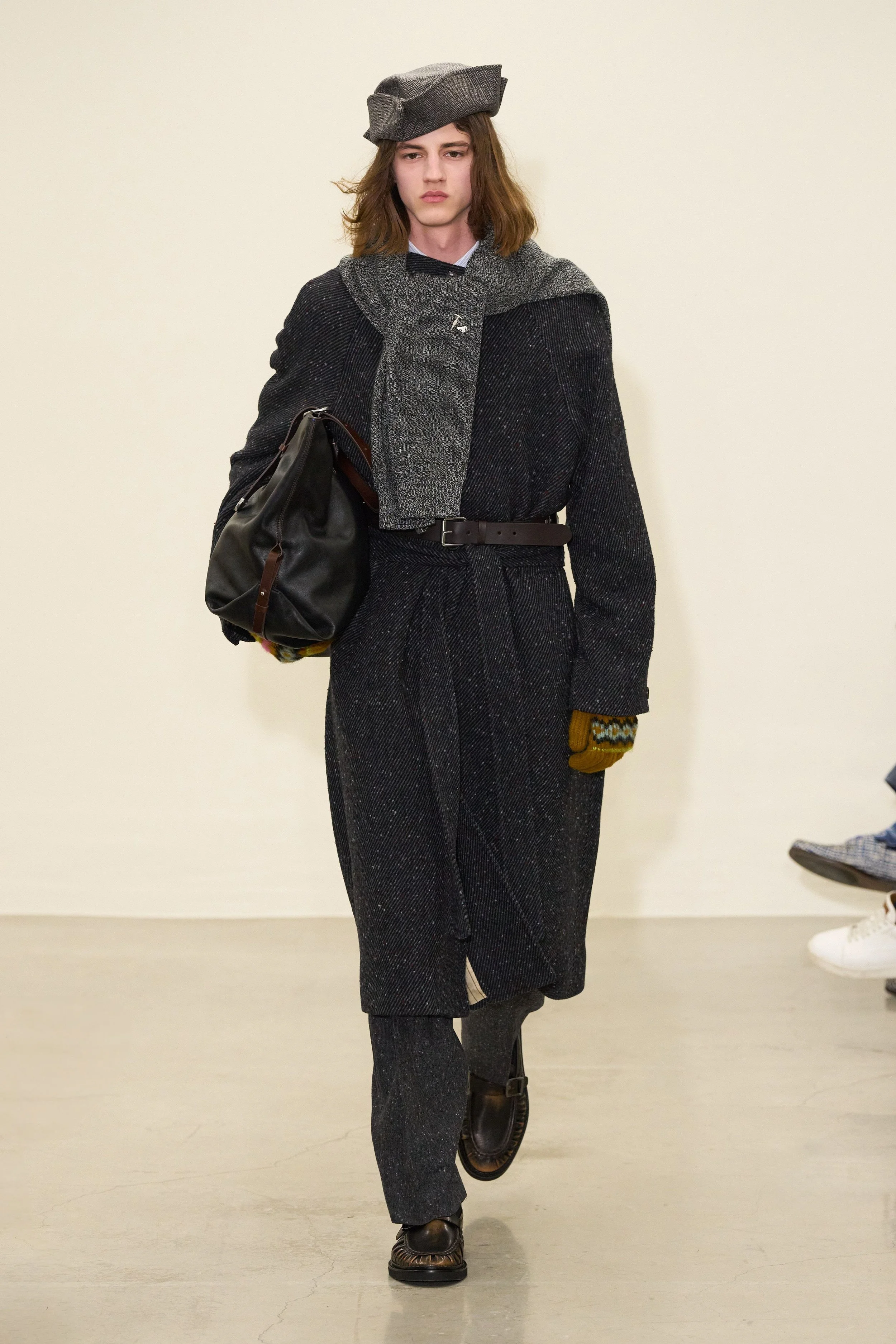
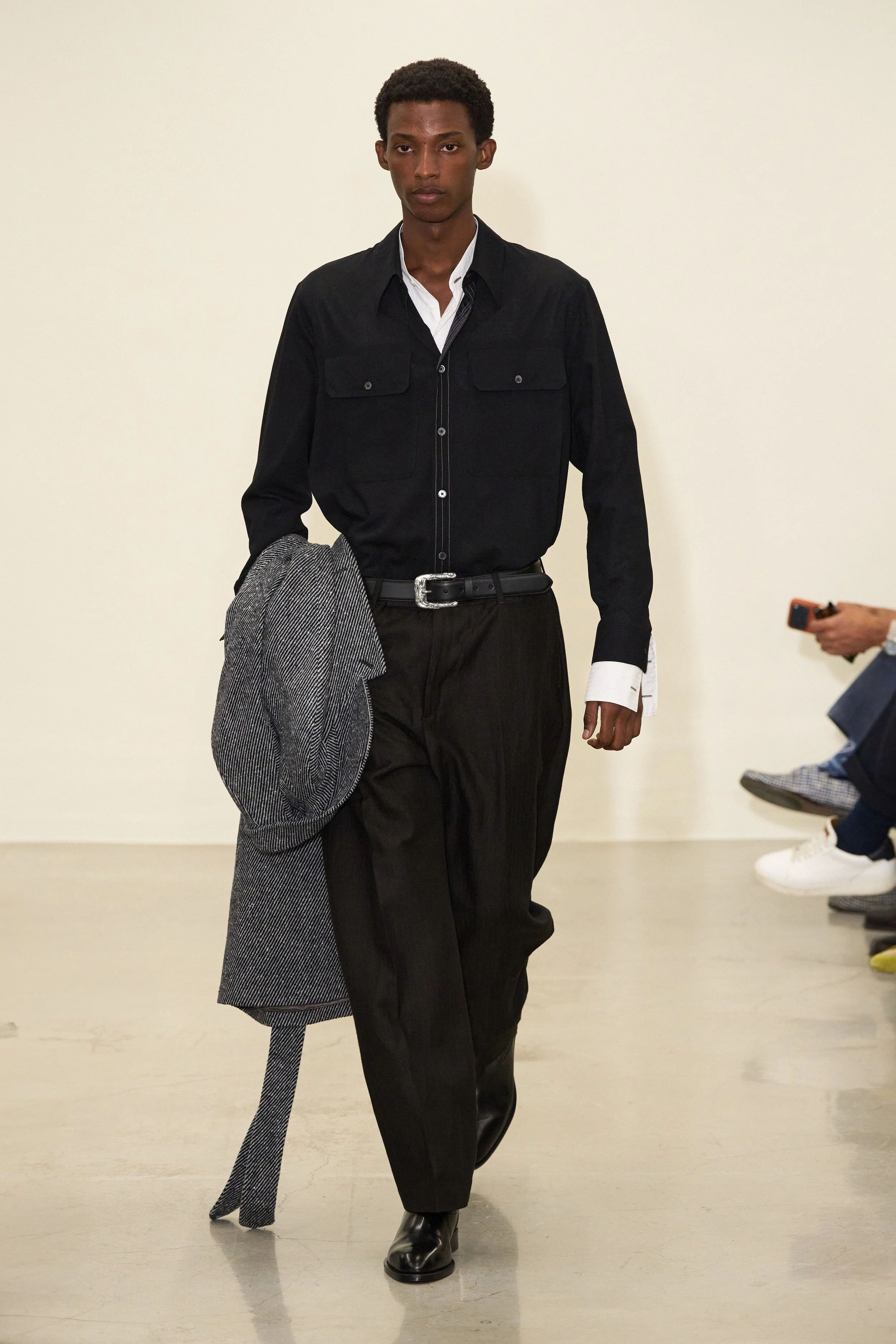
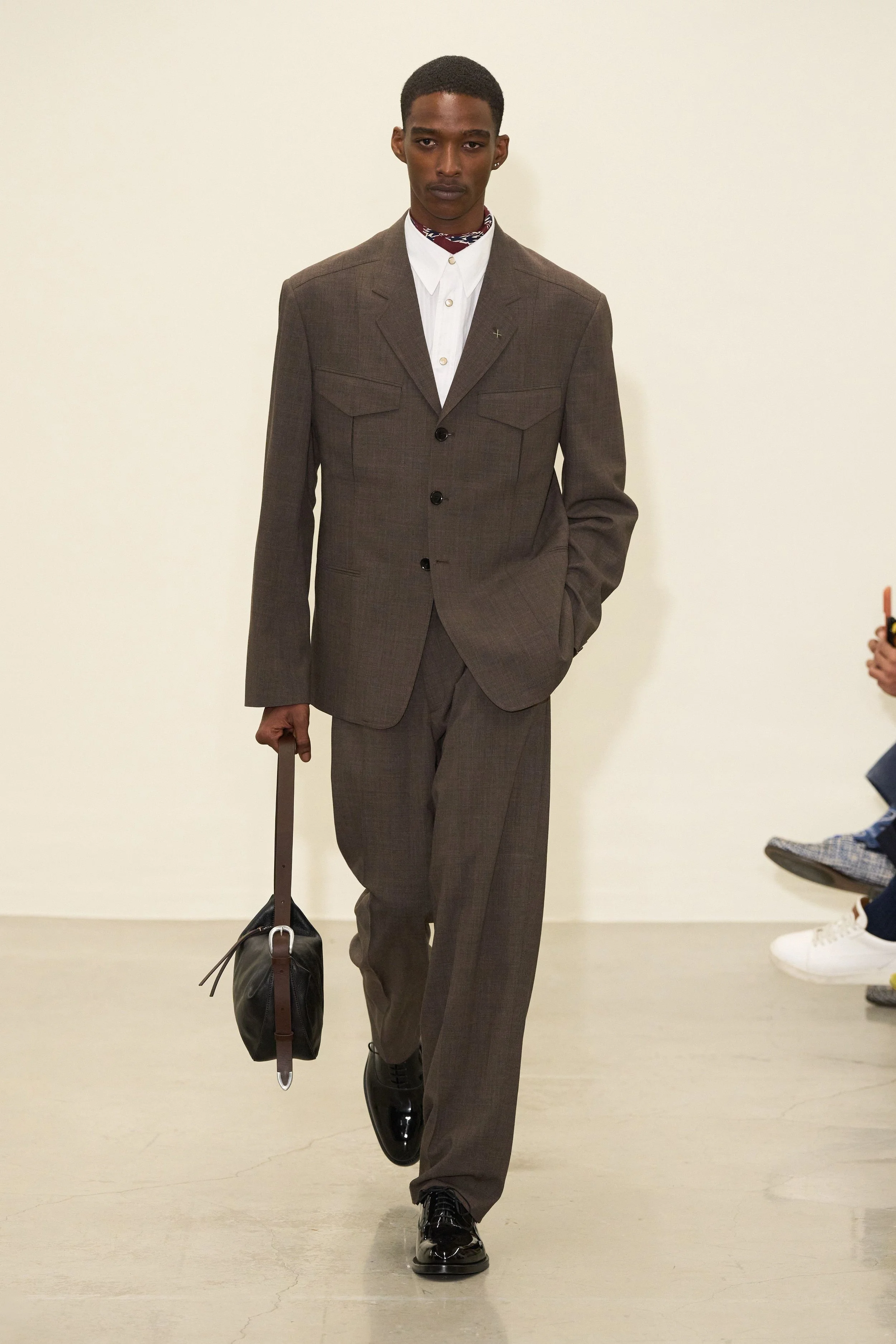
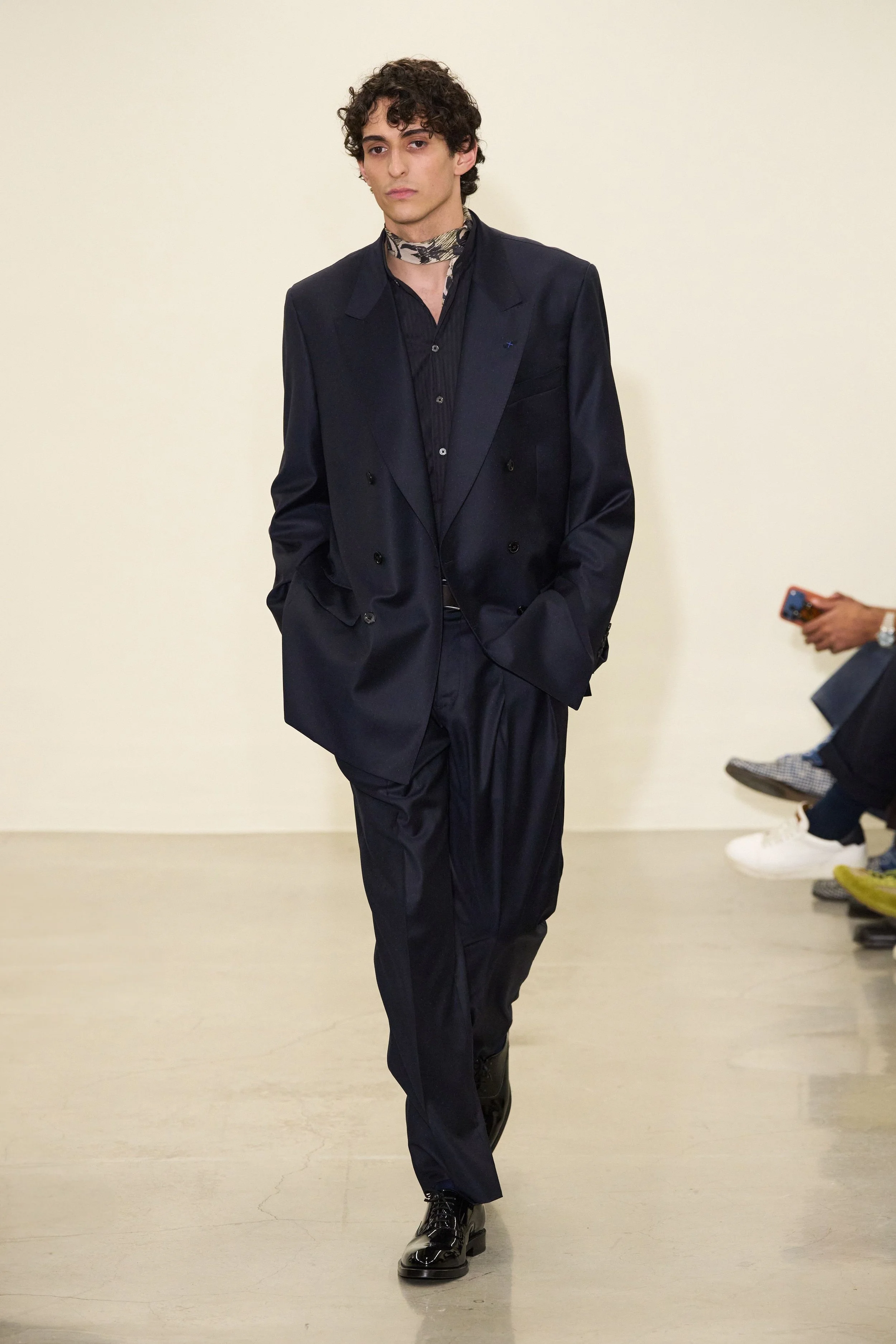
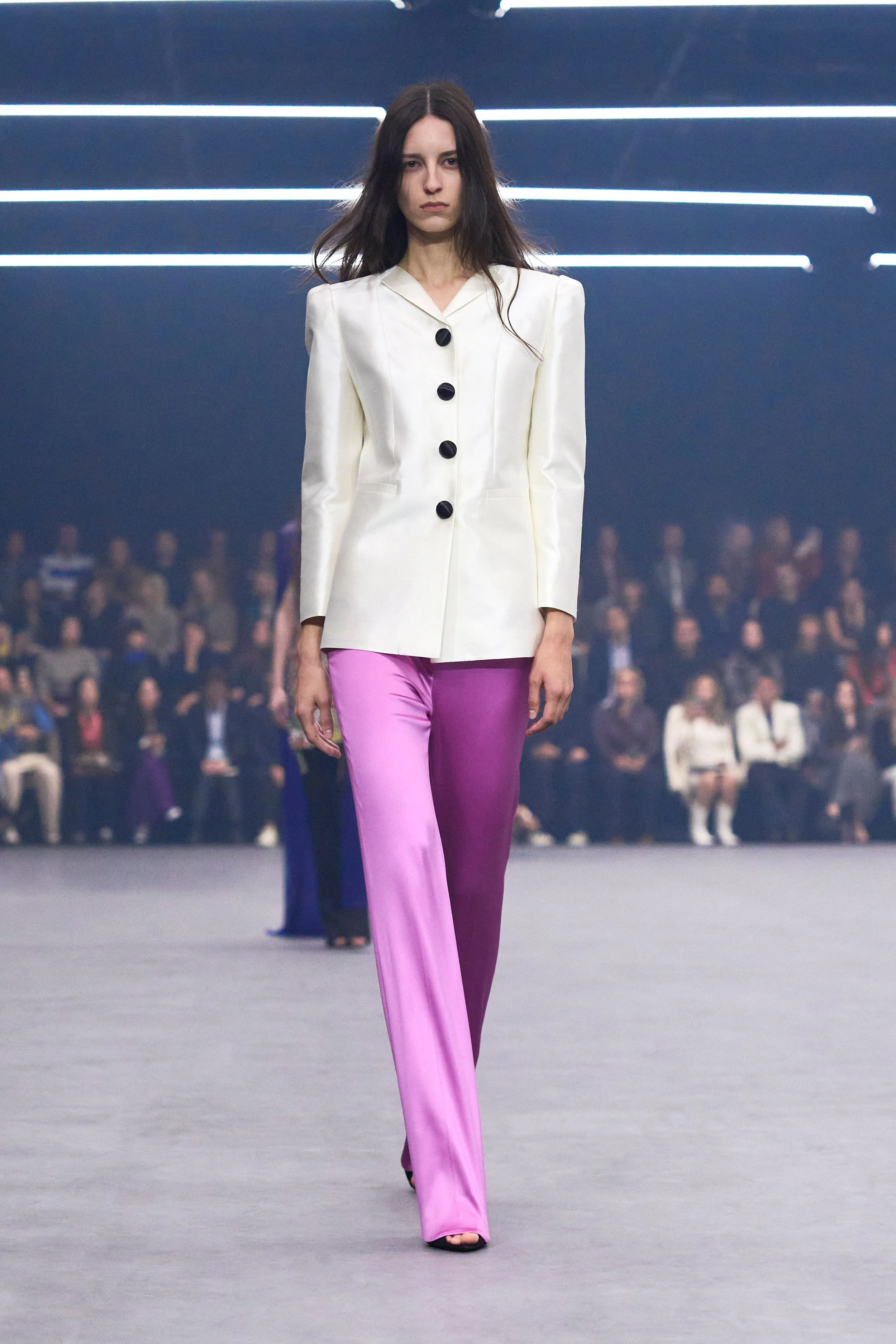
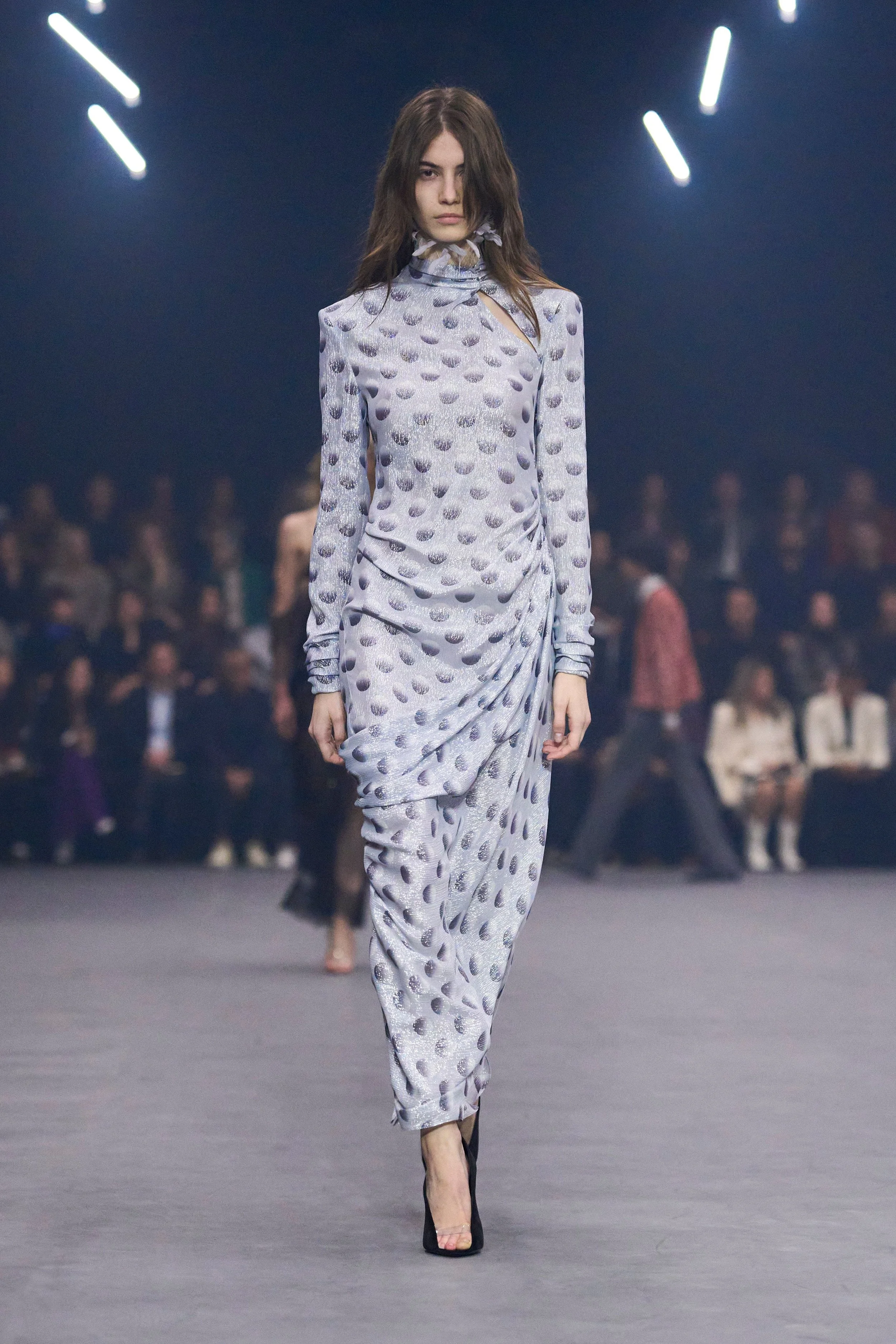
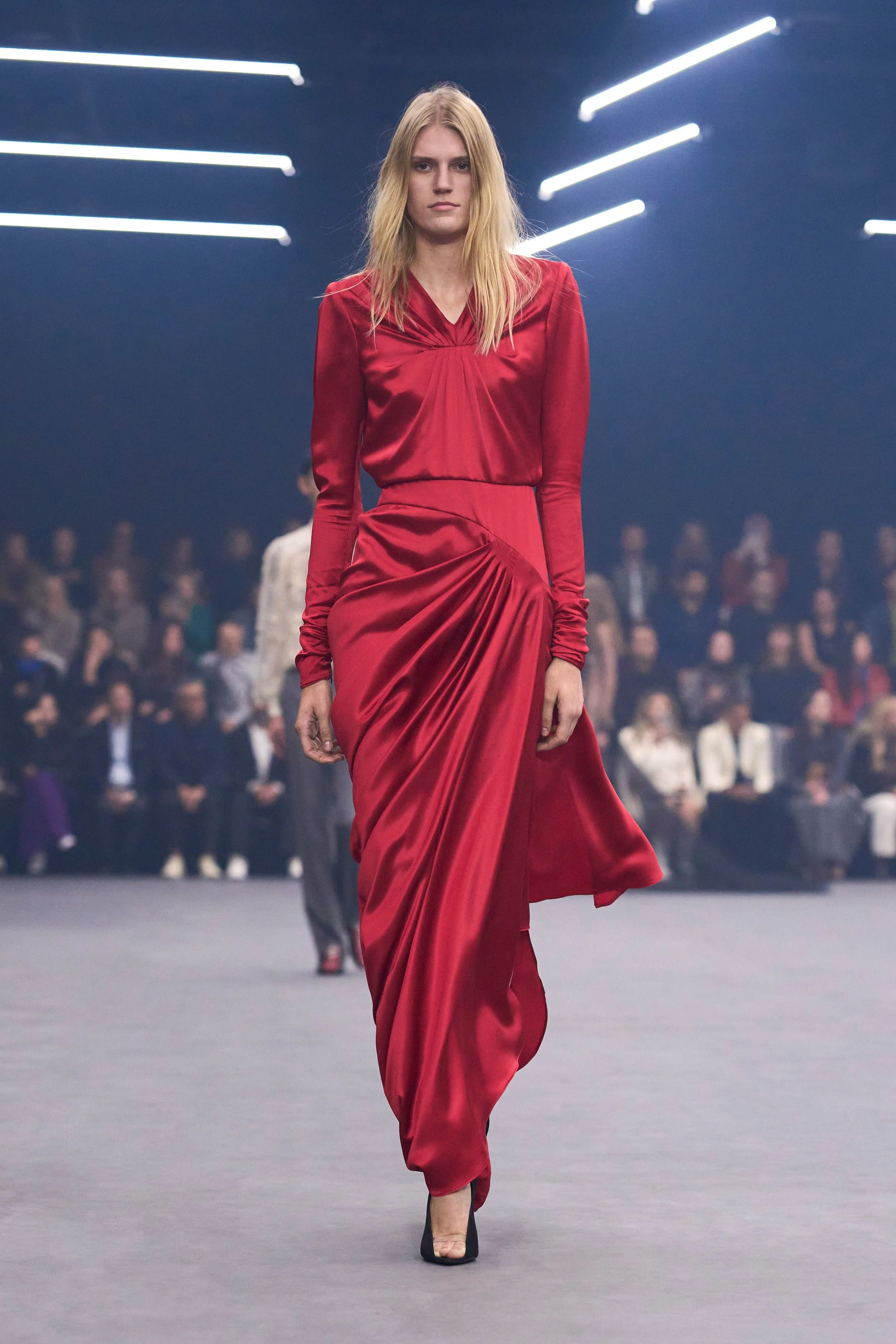
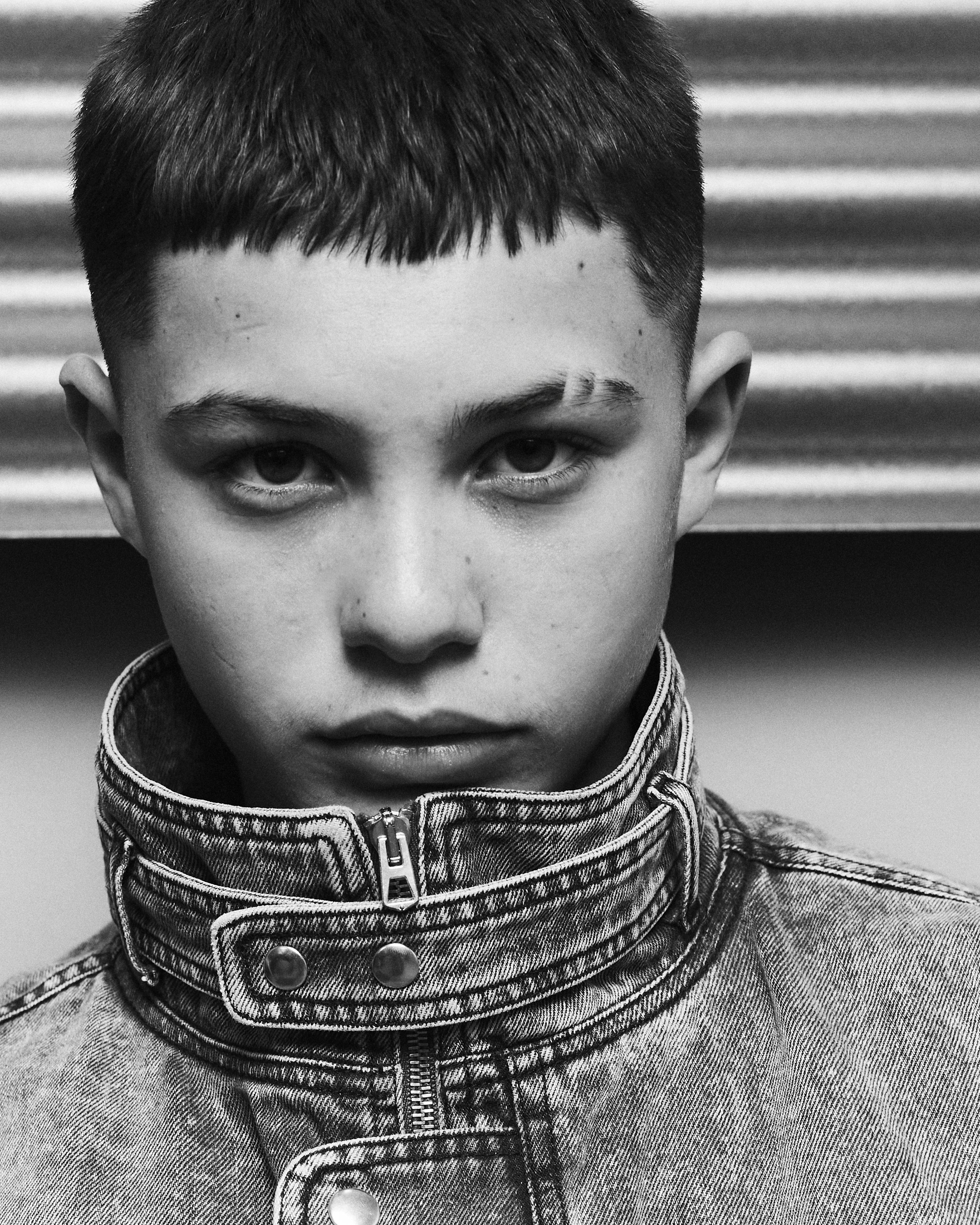
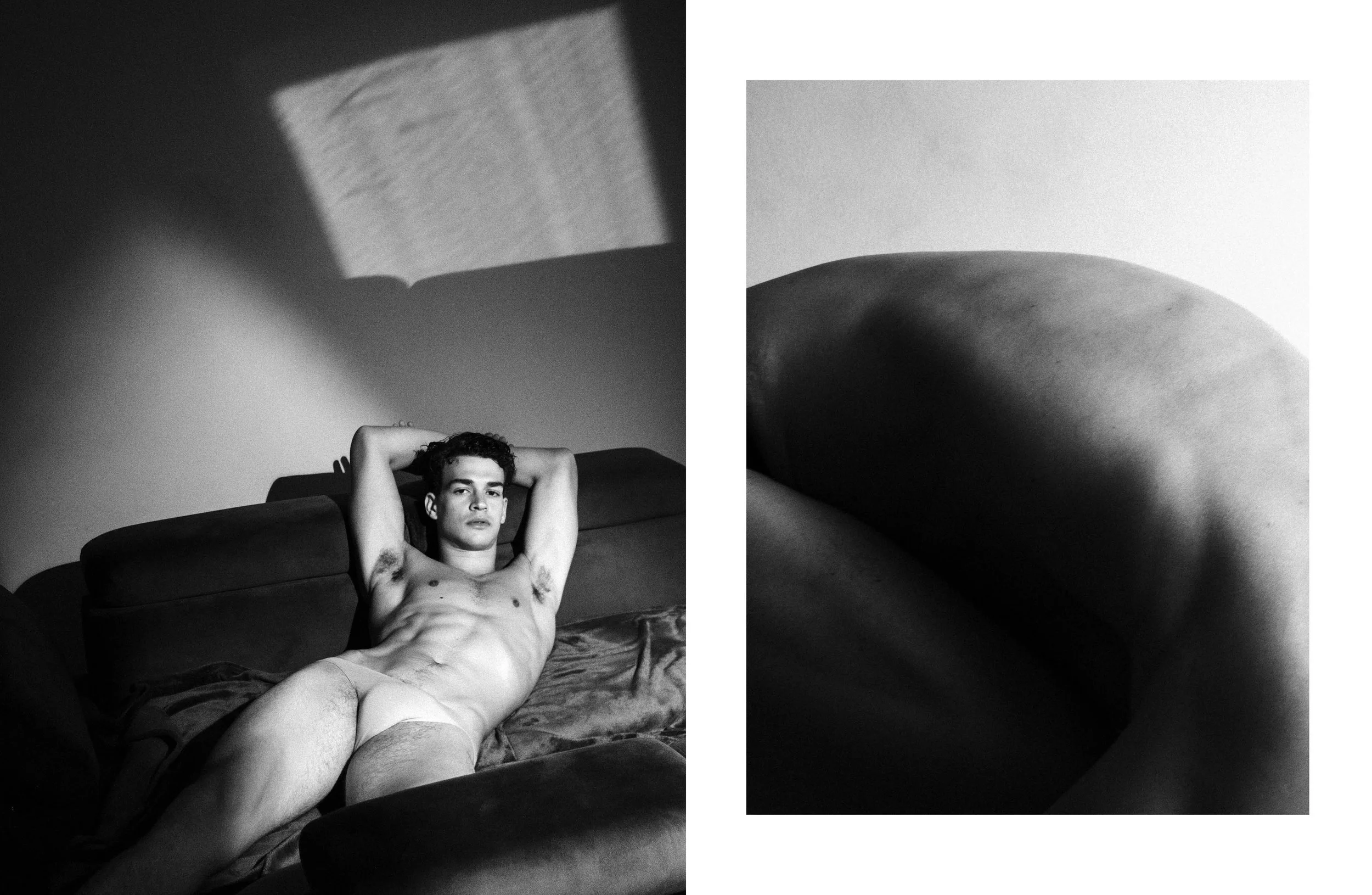
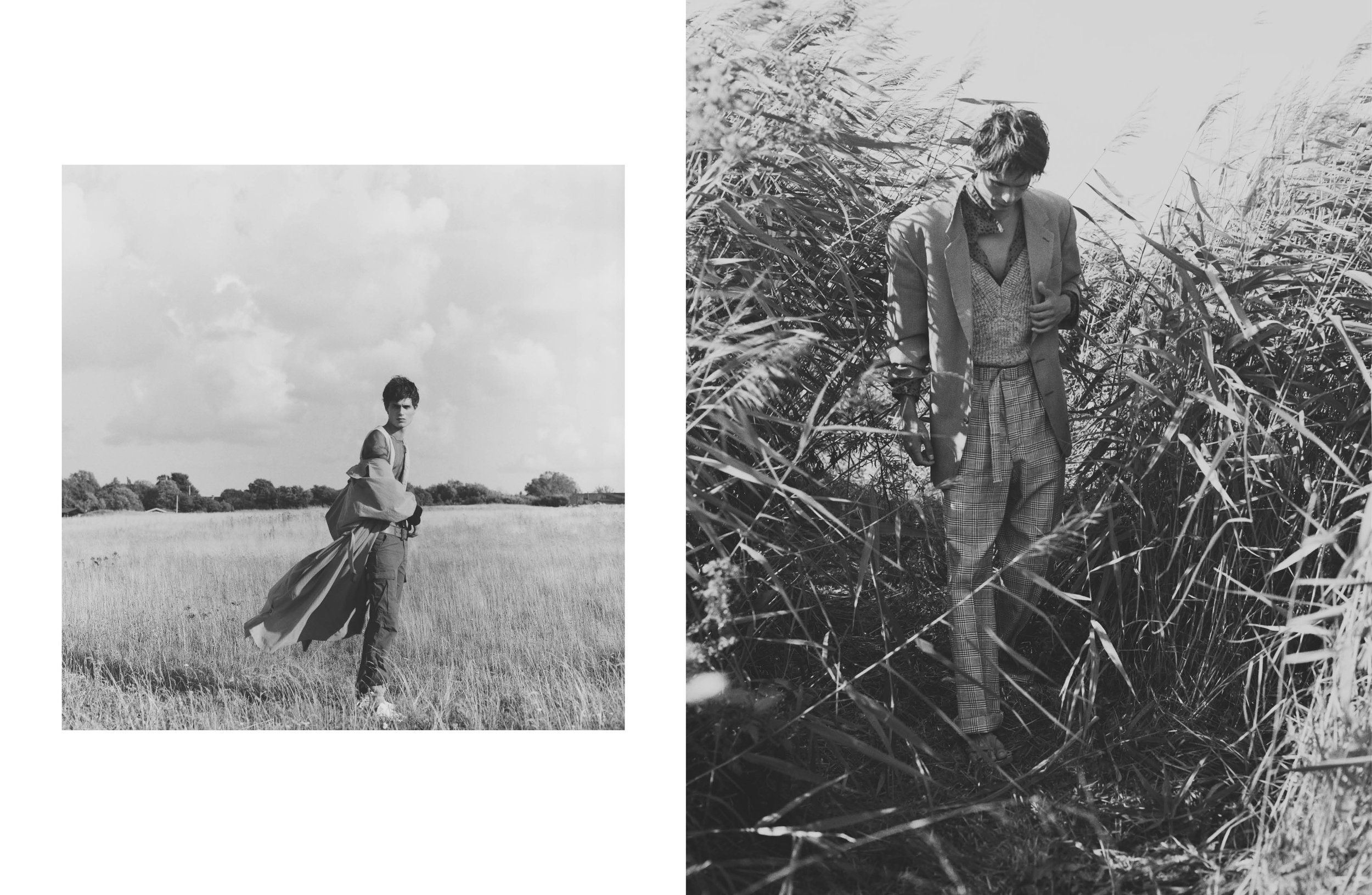
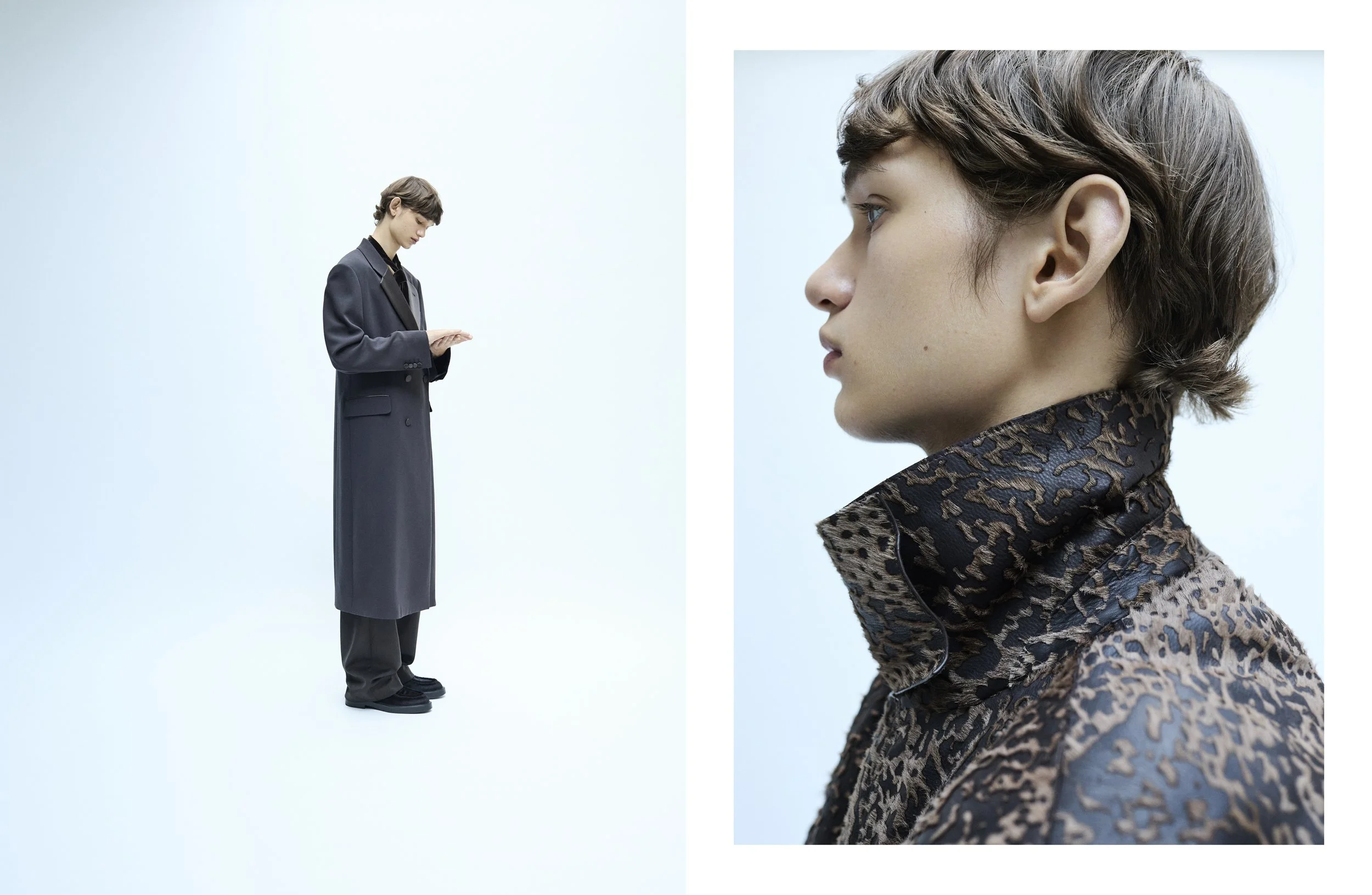
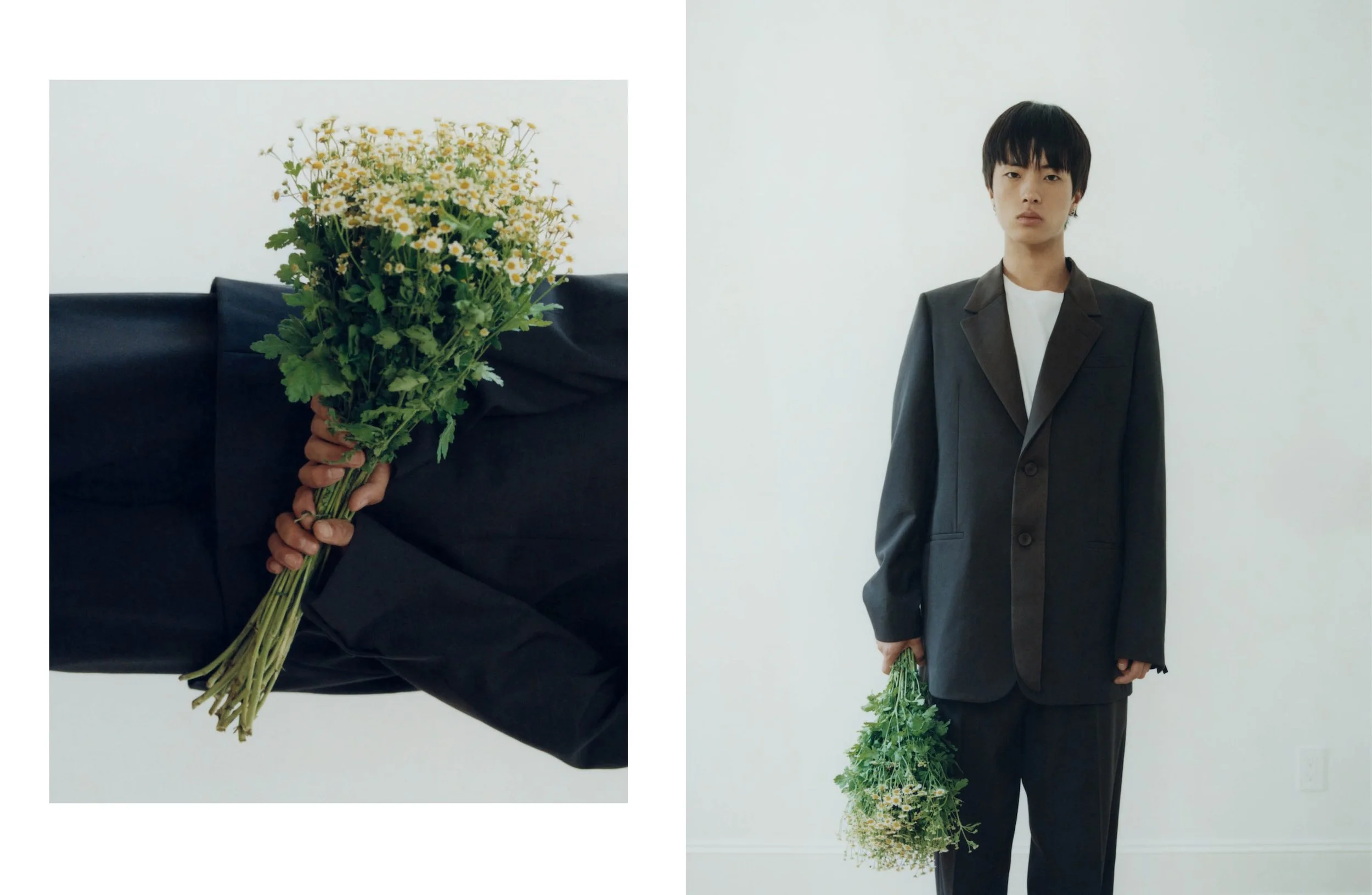
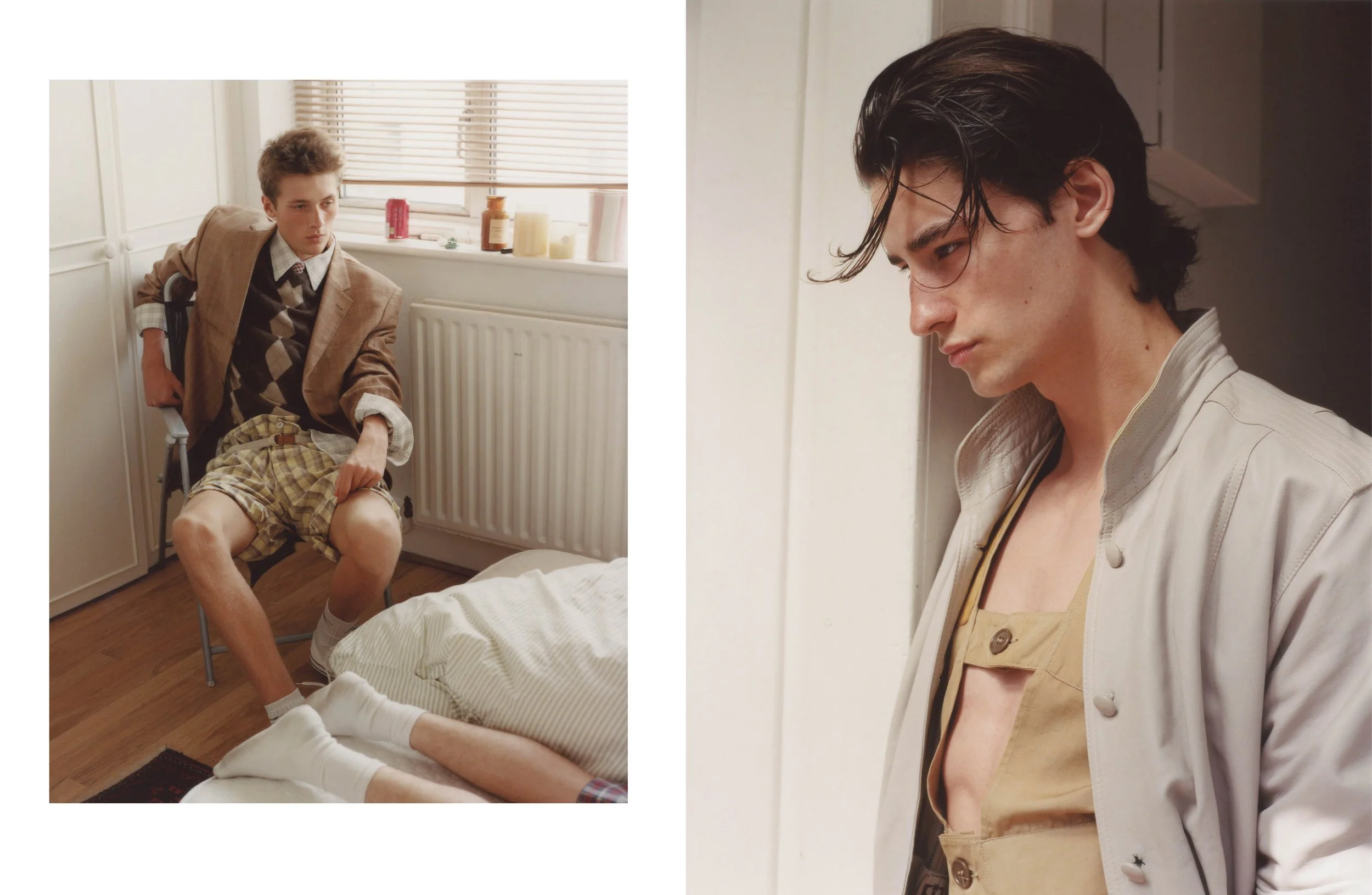
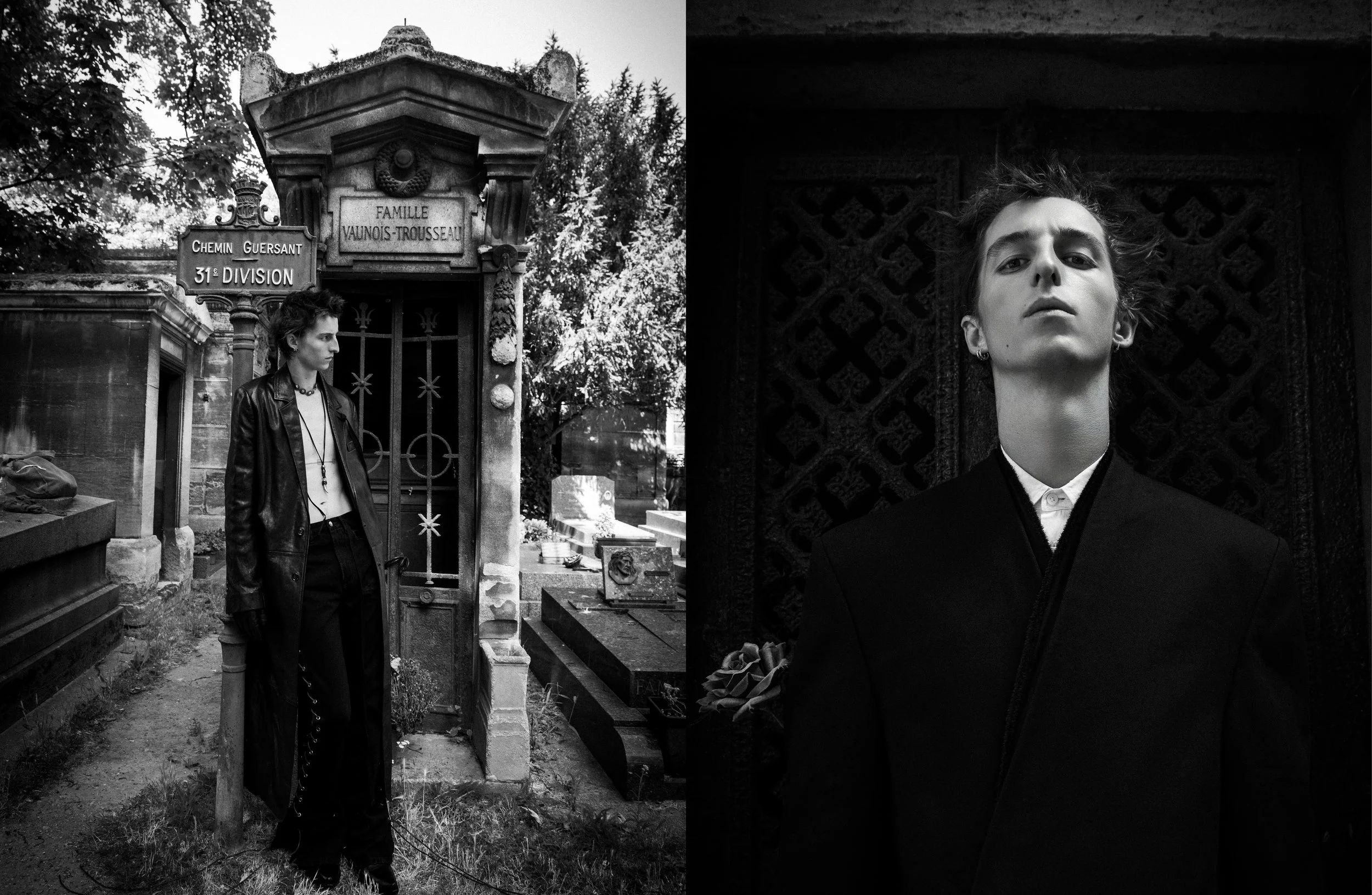
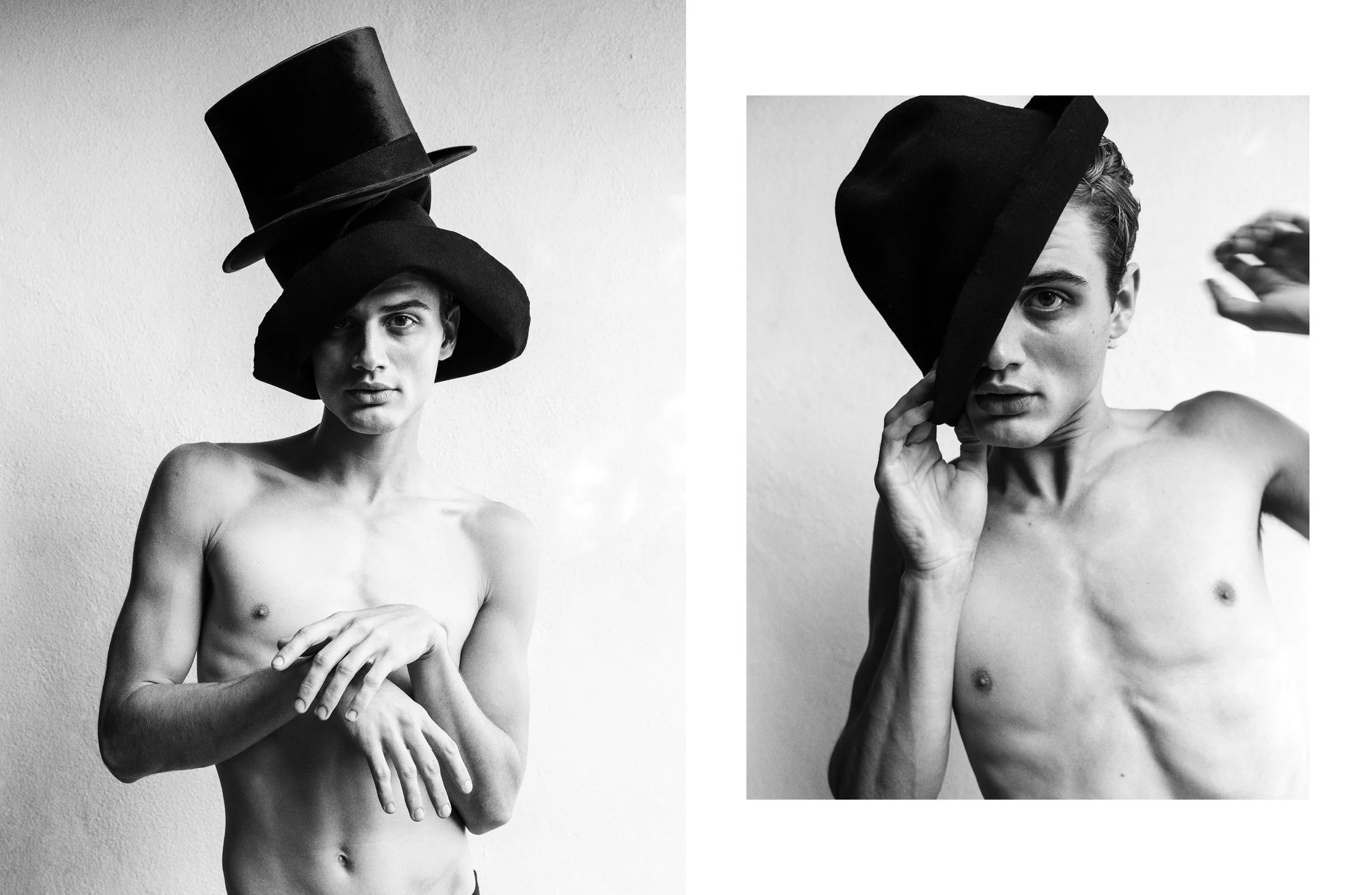
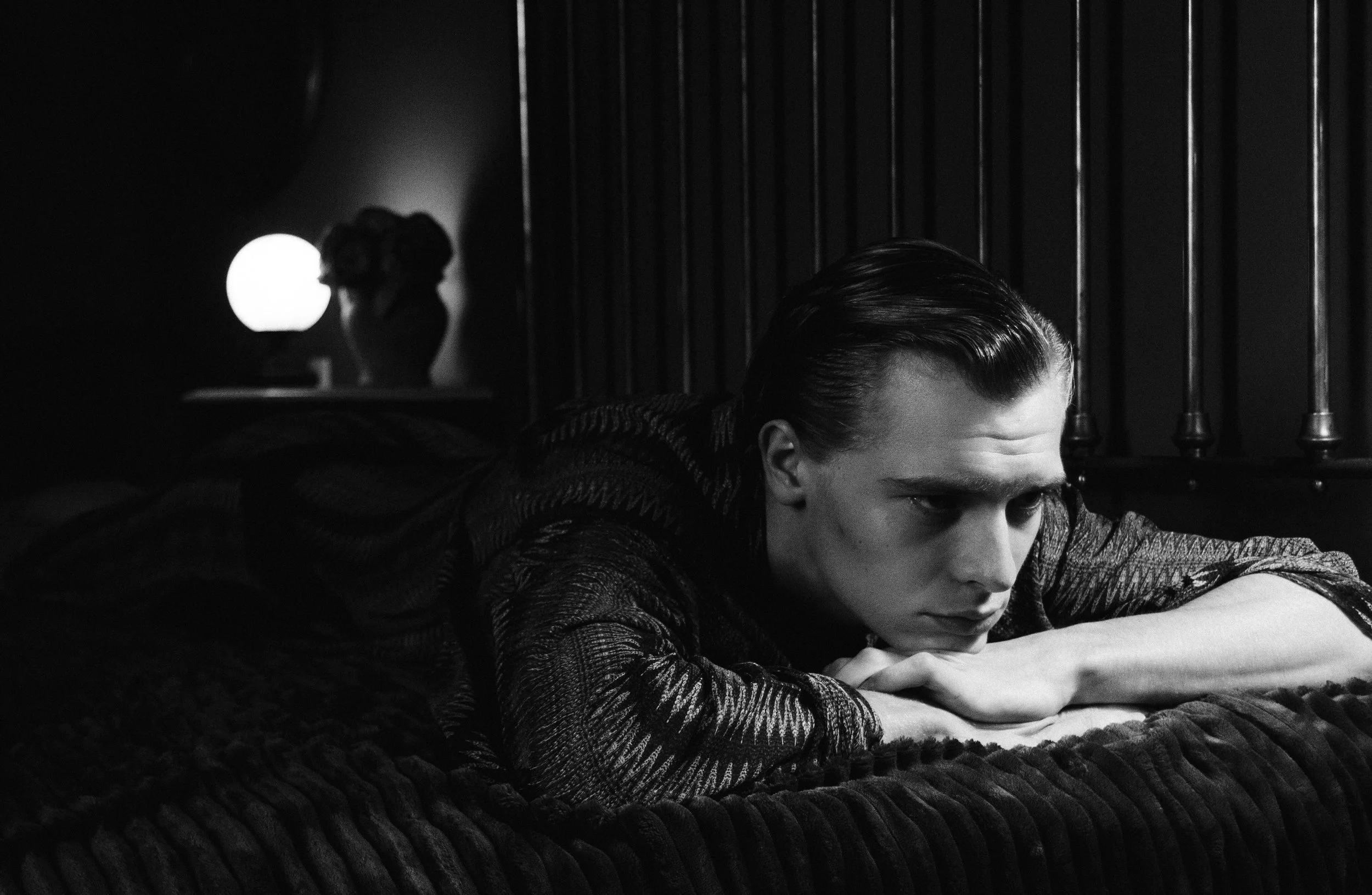
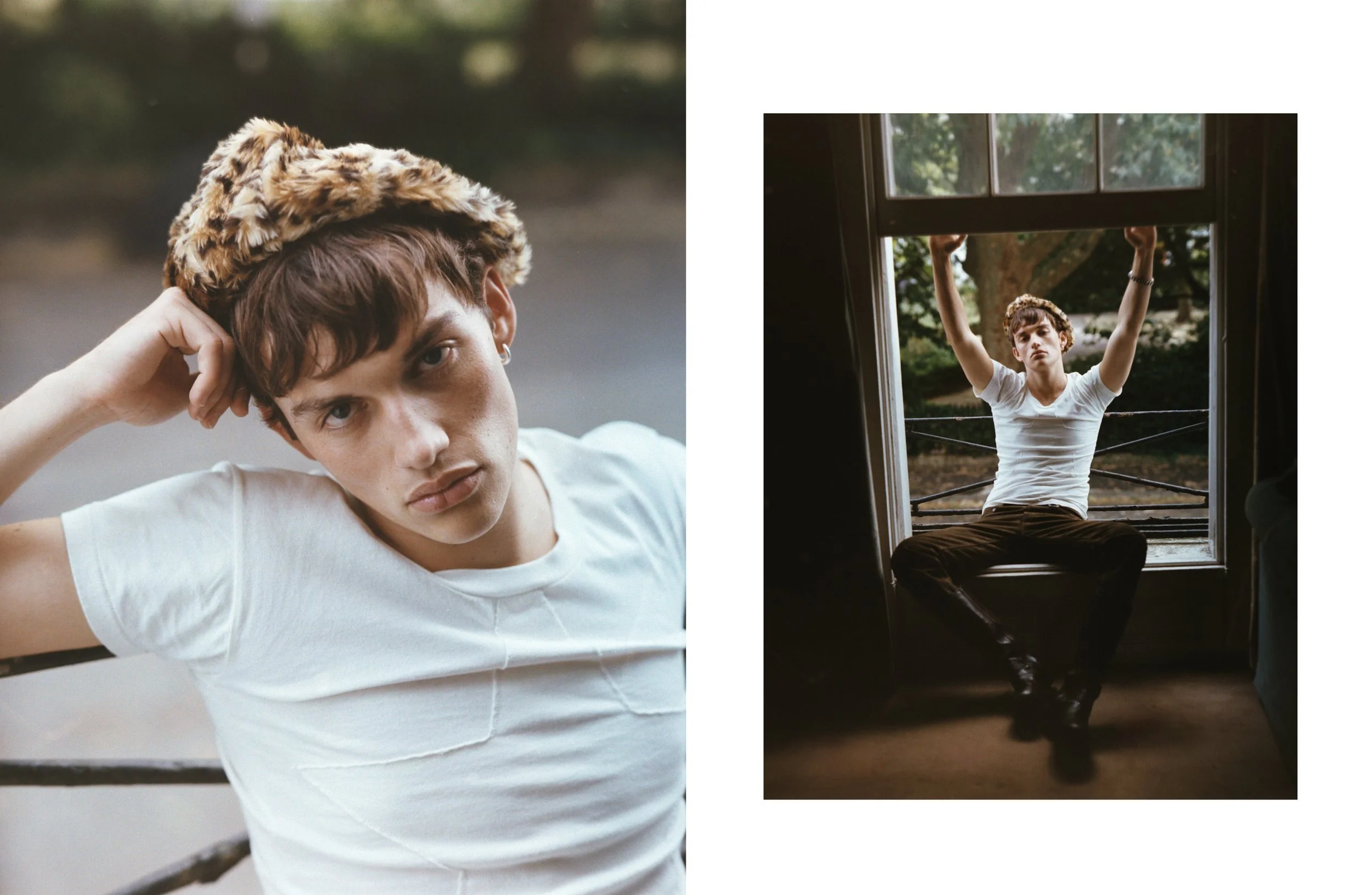
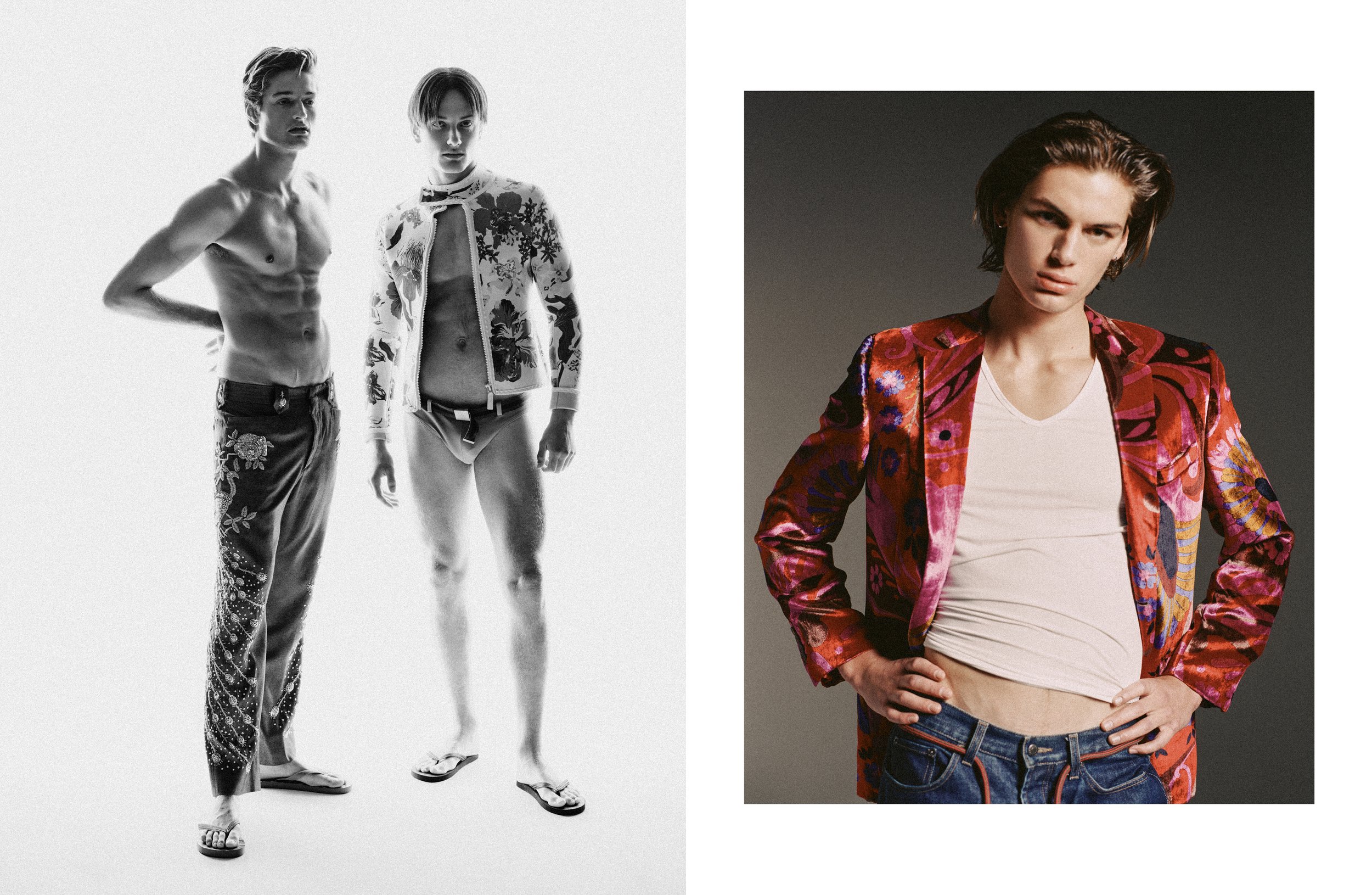
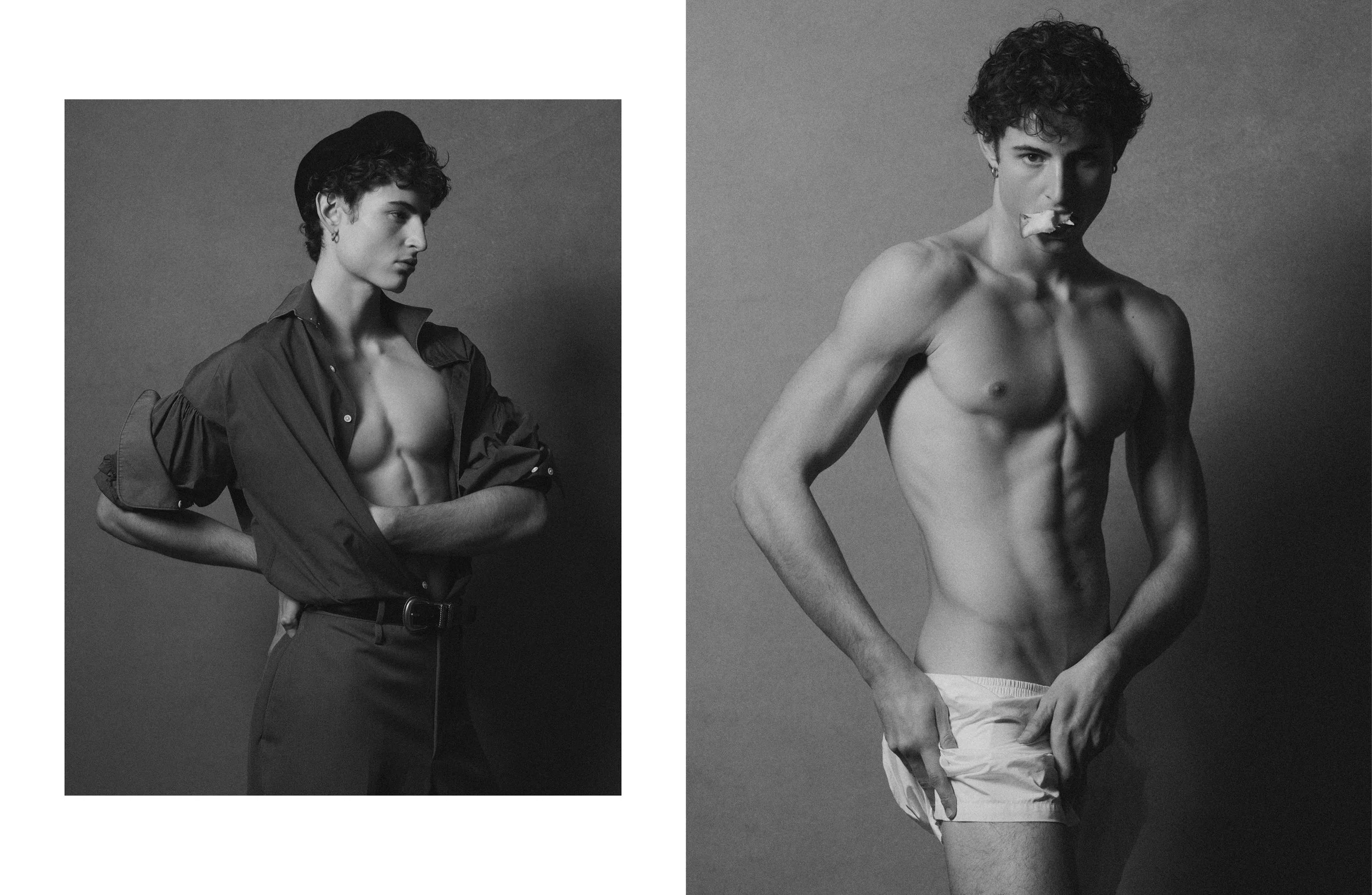
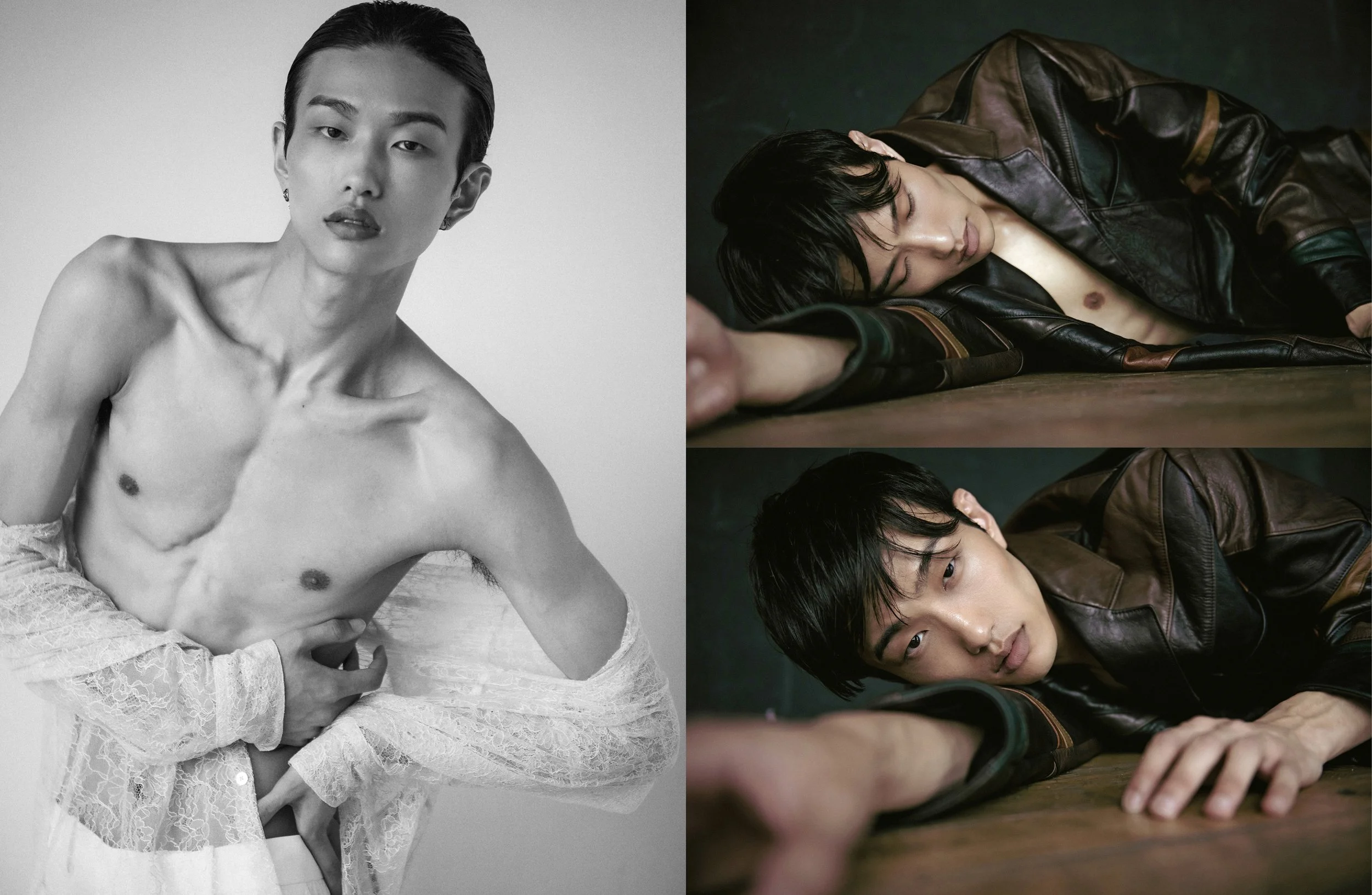
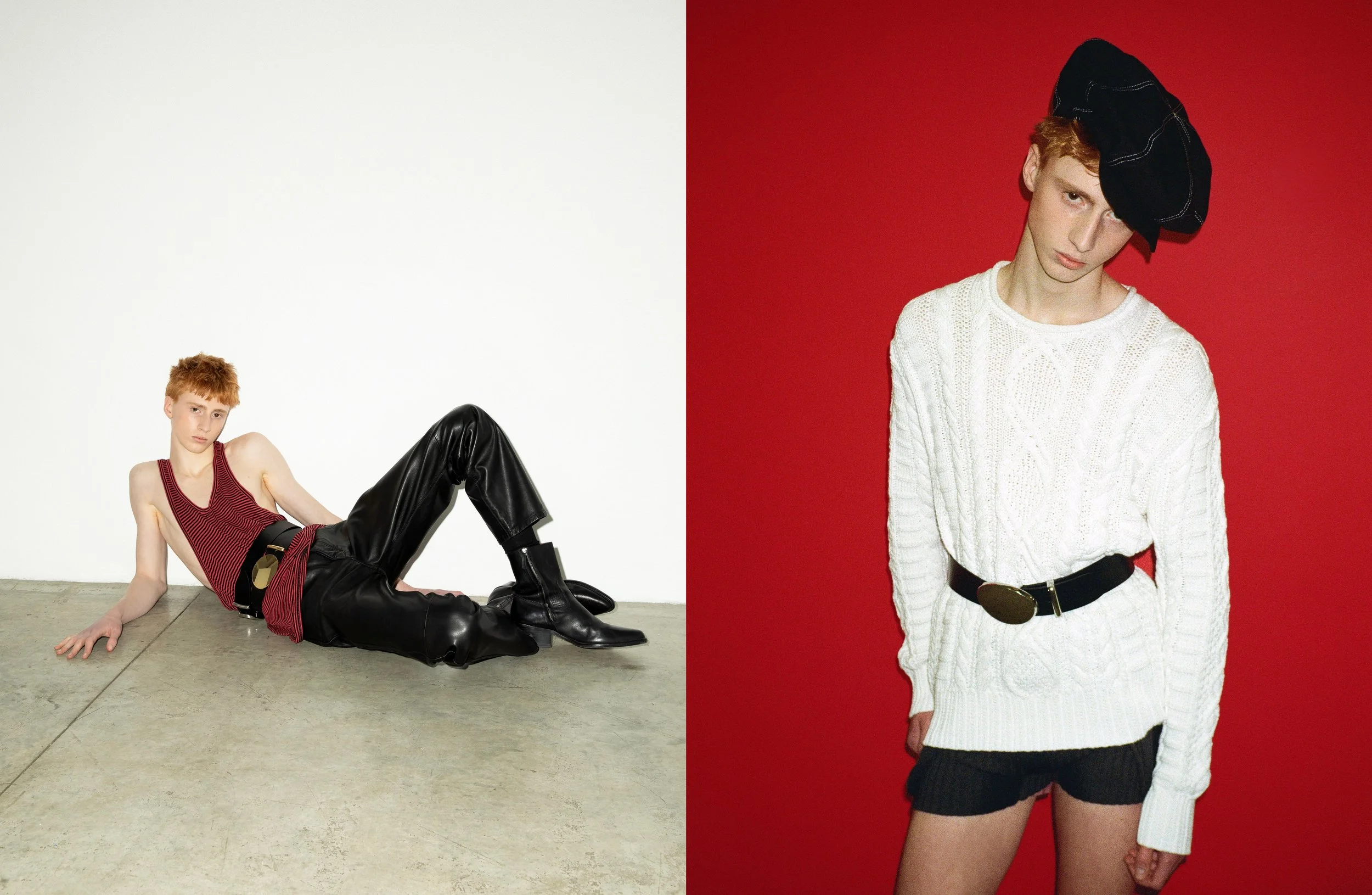
DIOR MEN FW26

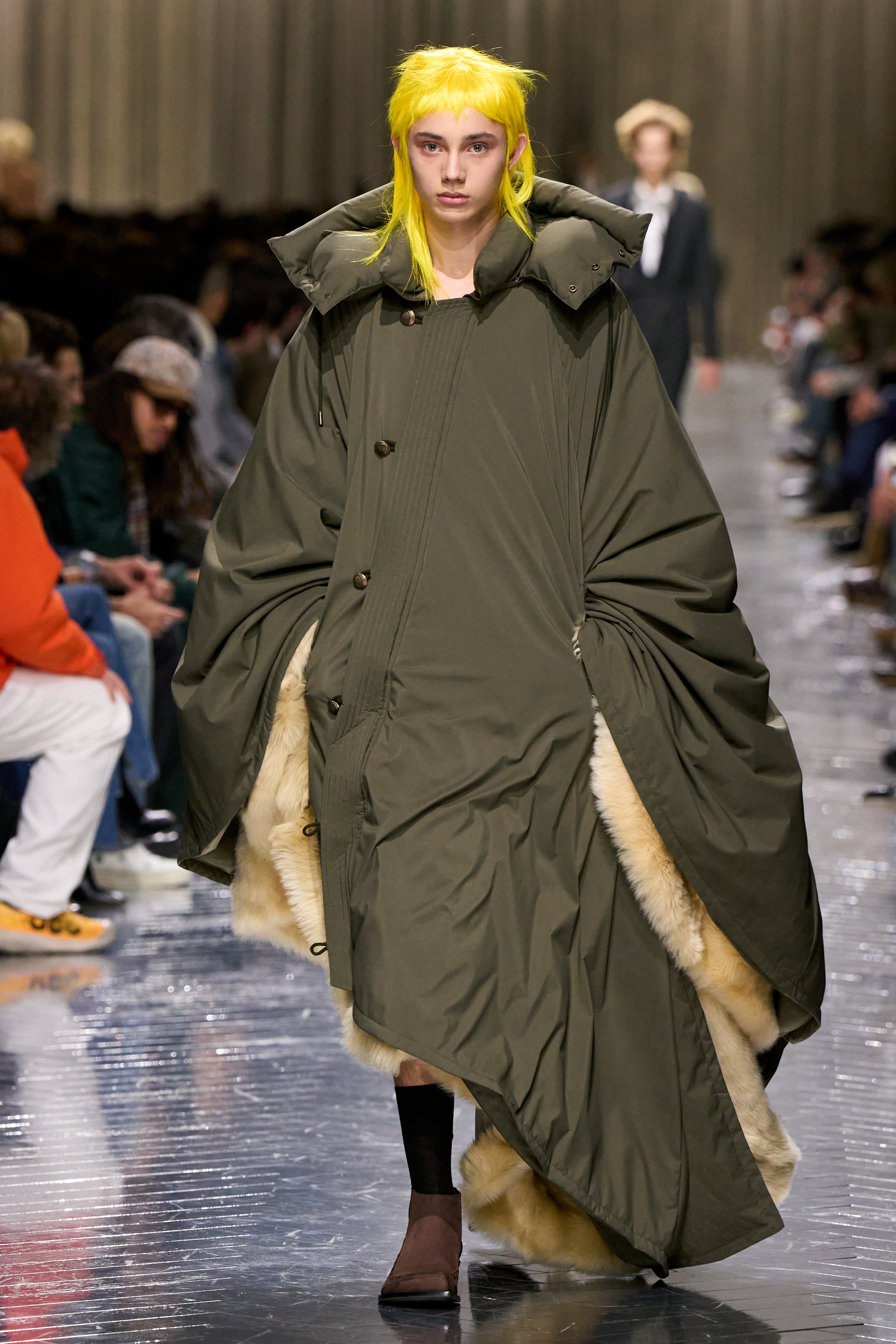
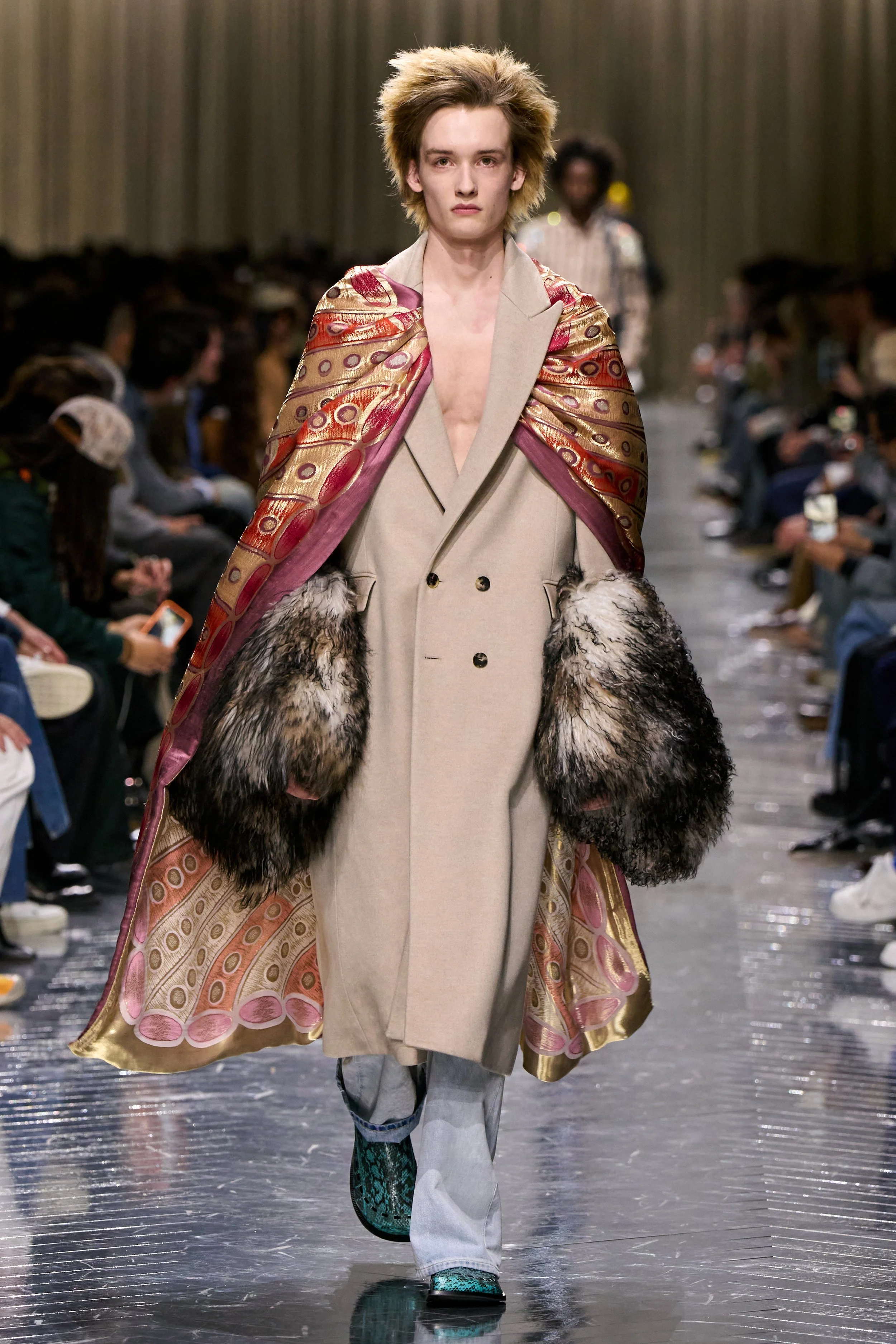
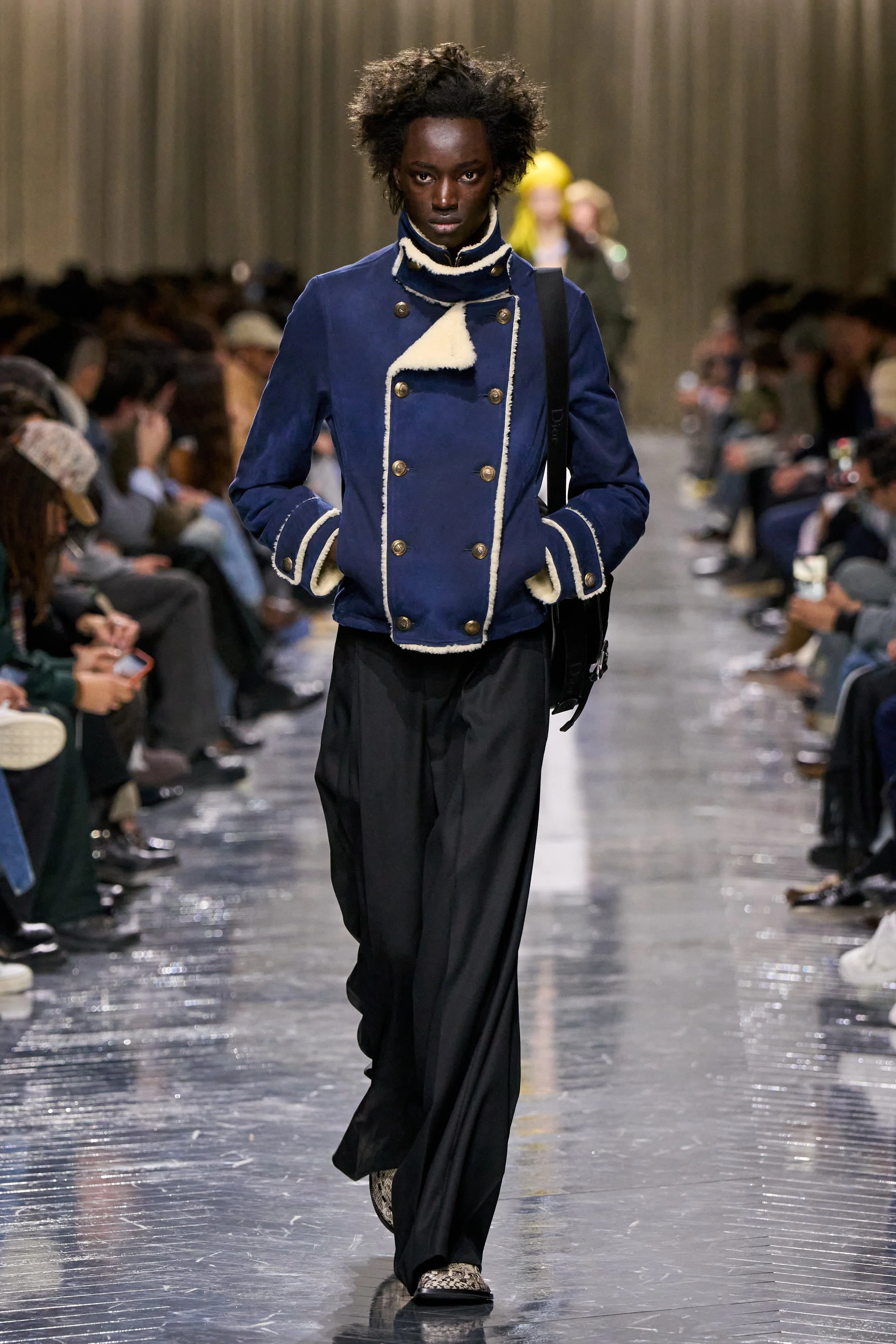
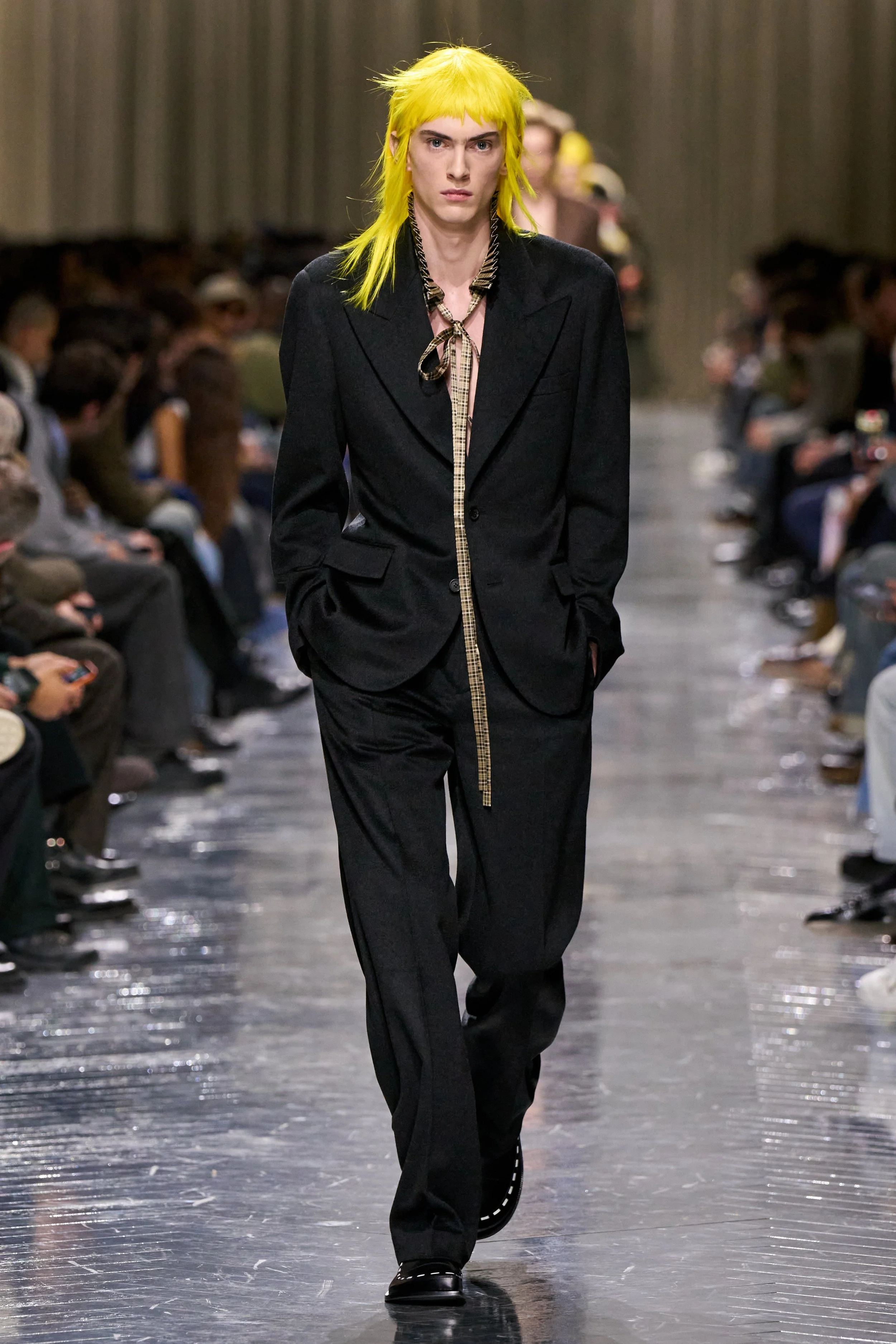
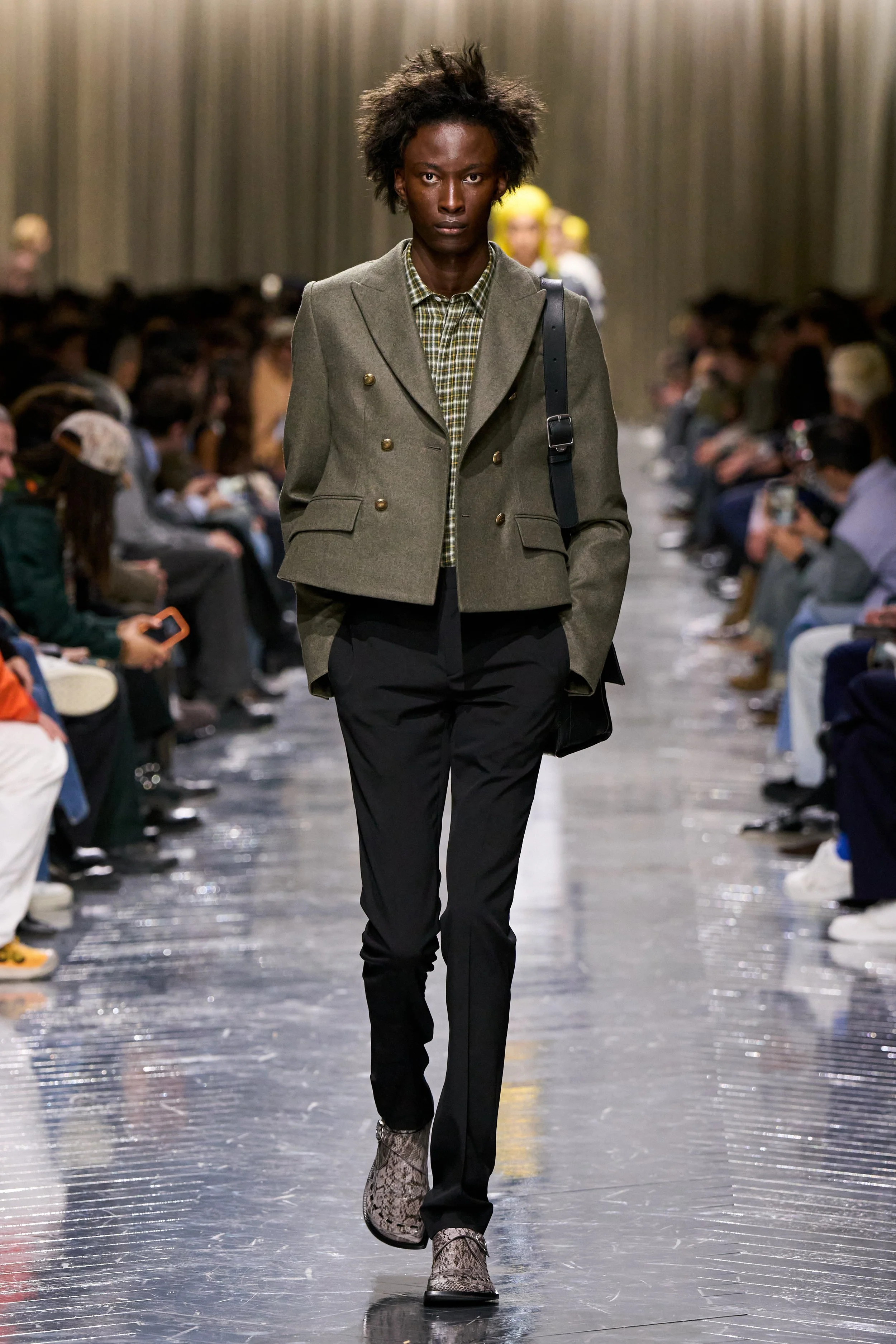
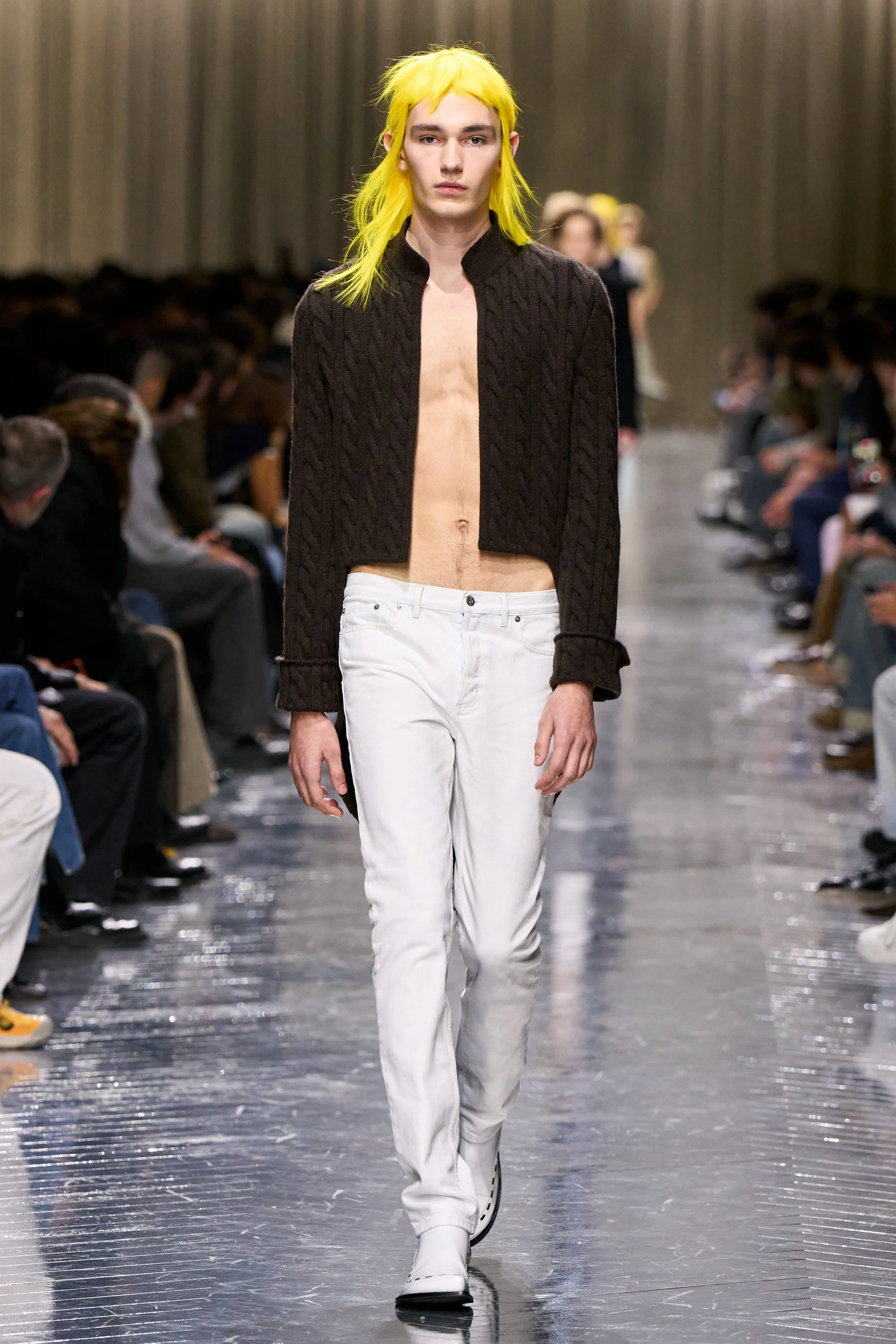
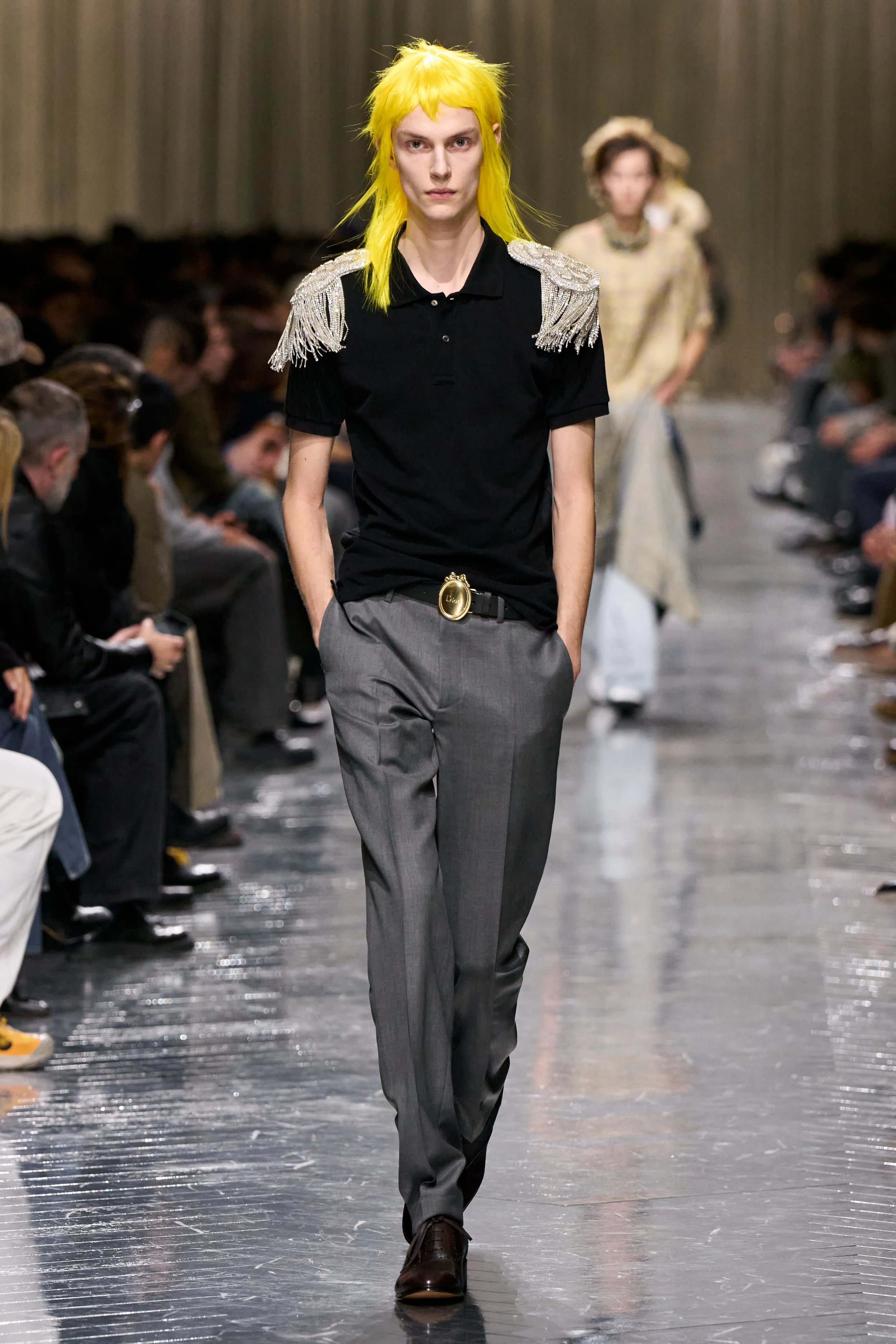
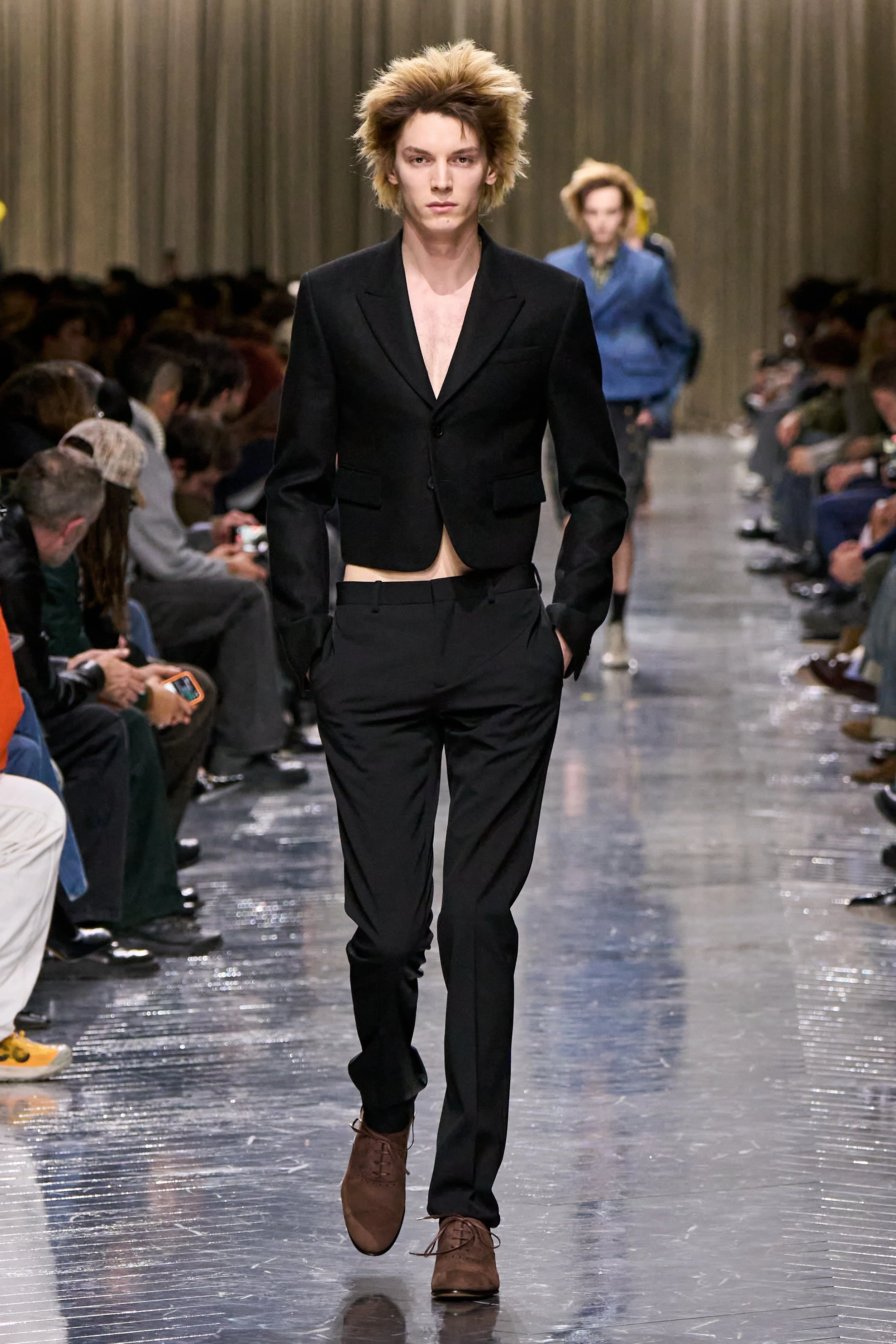
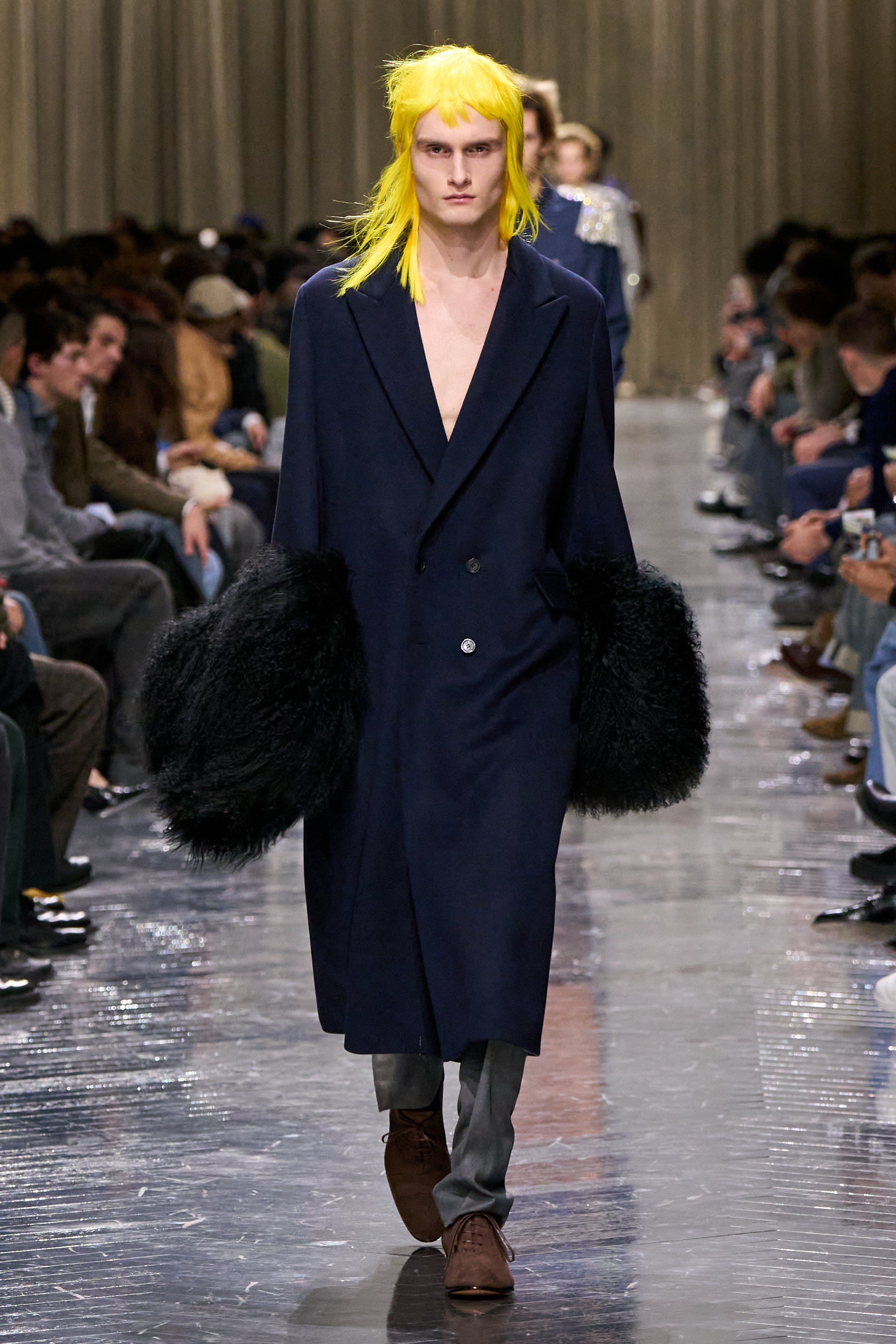
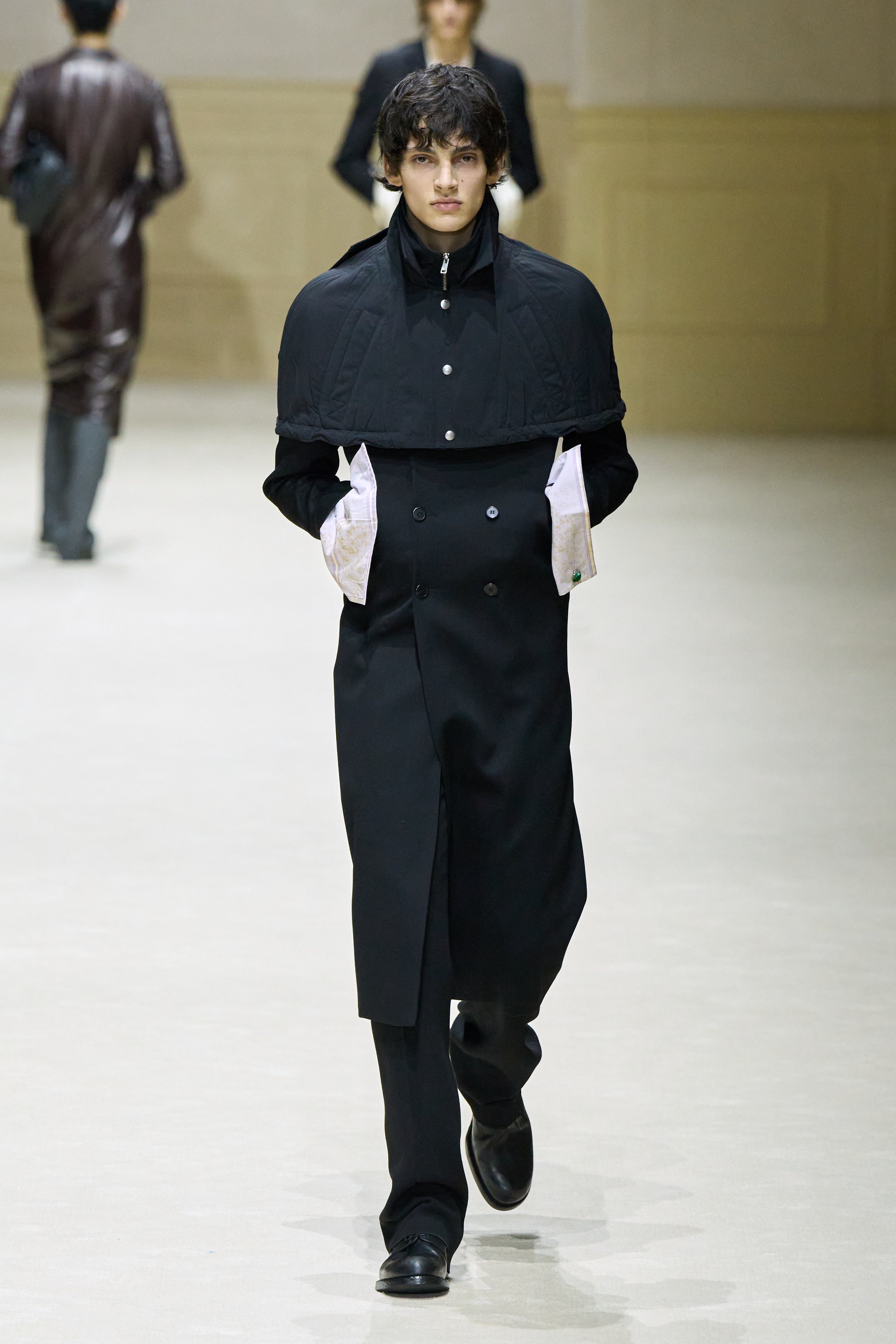
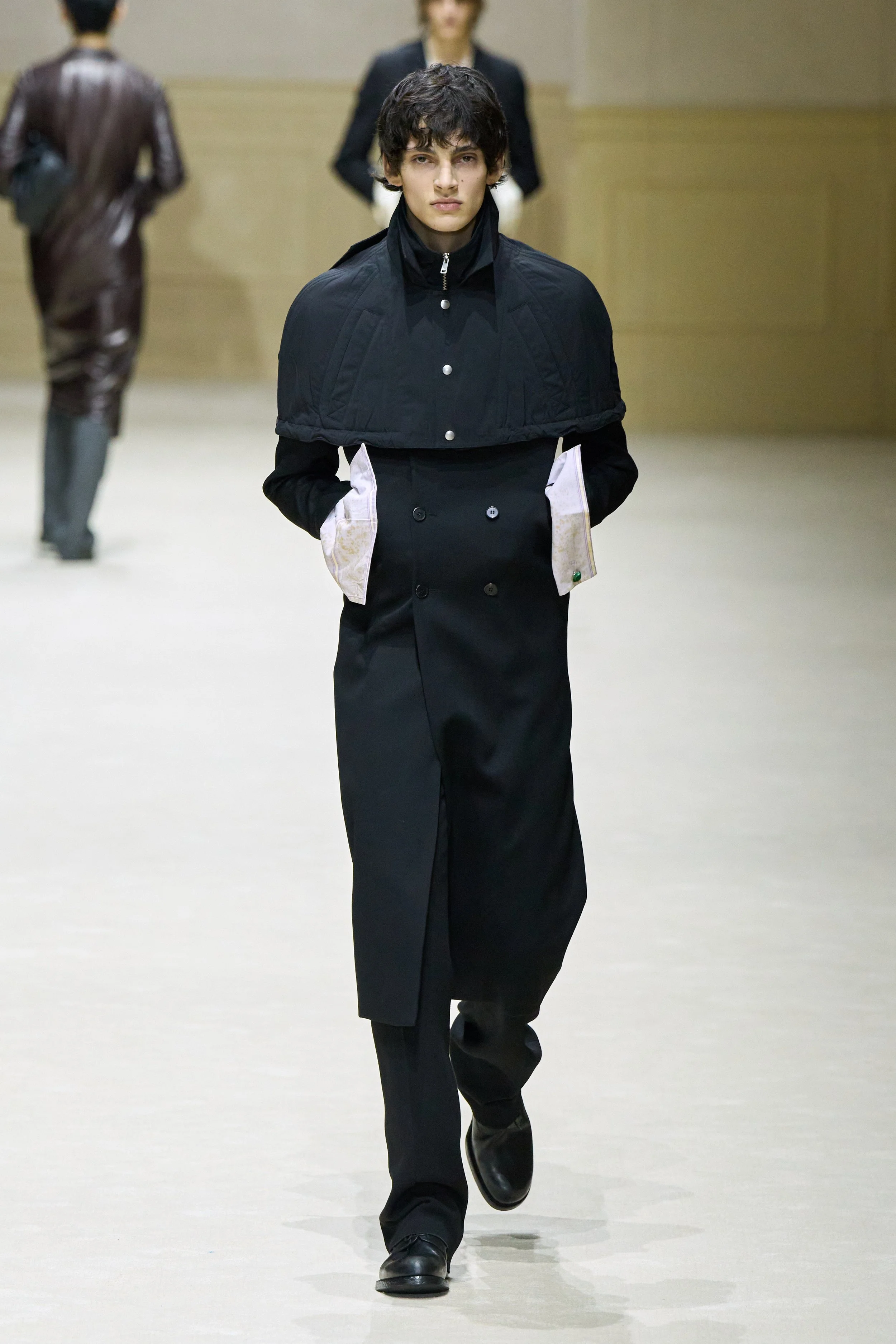
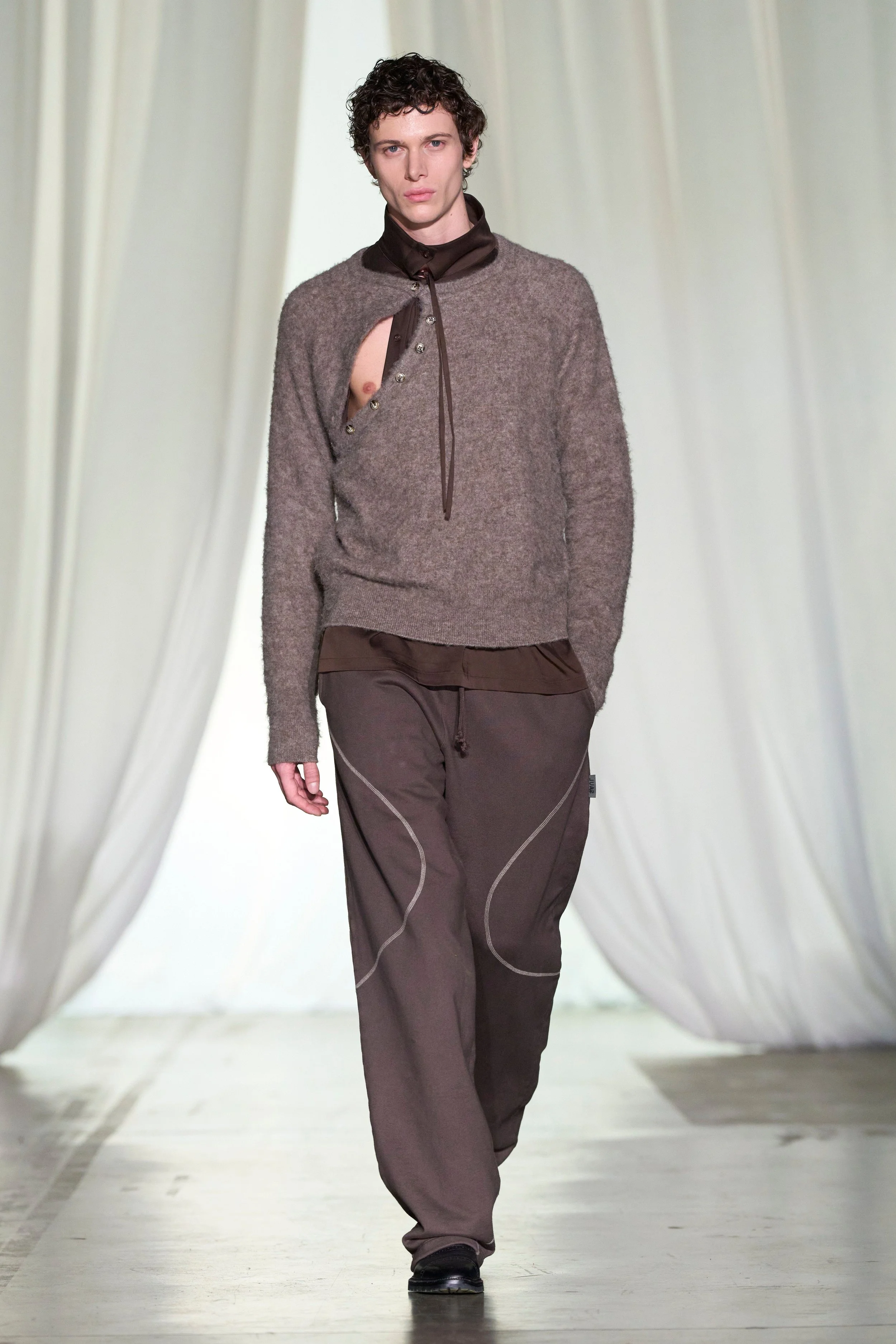
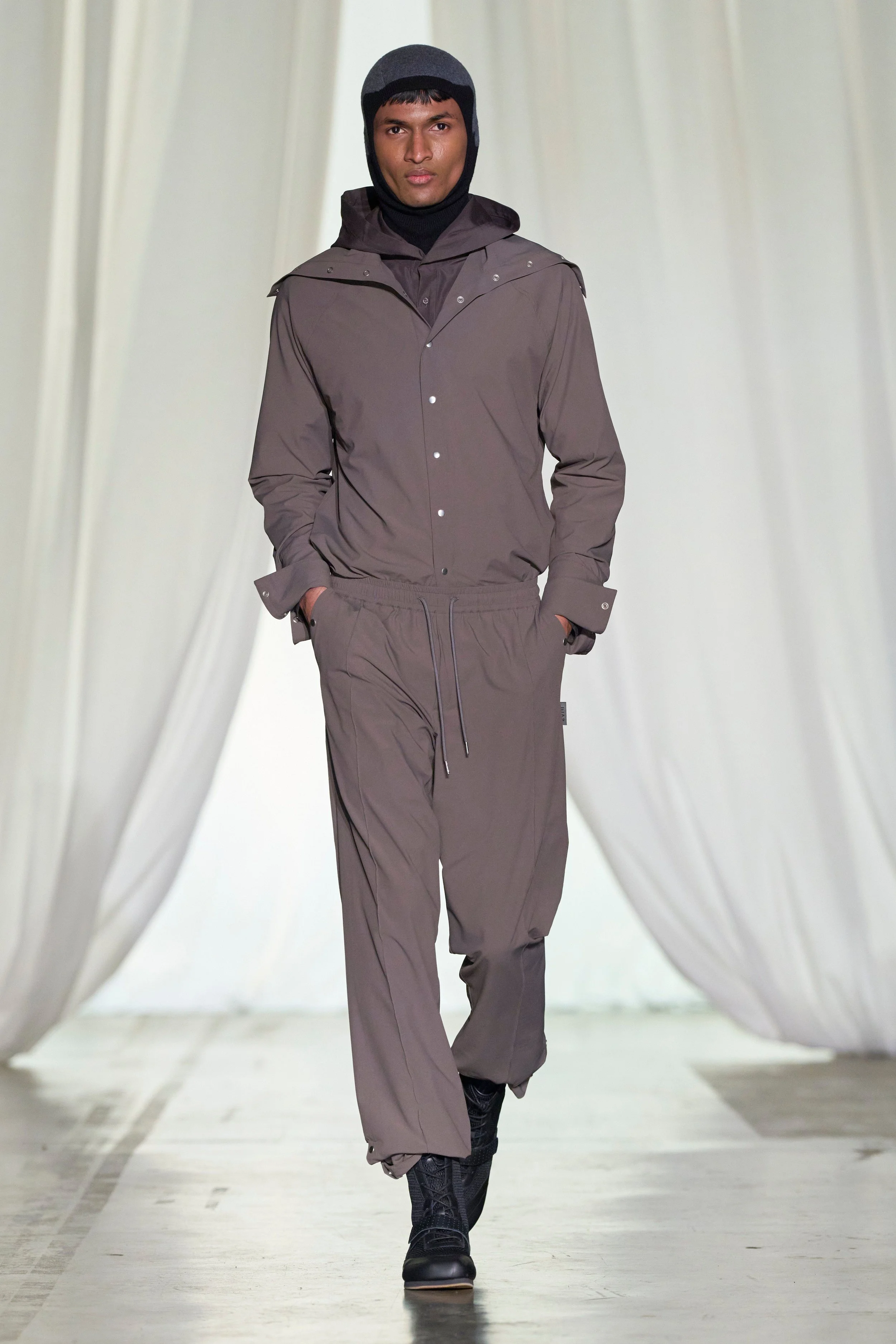
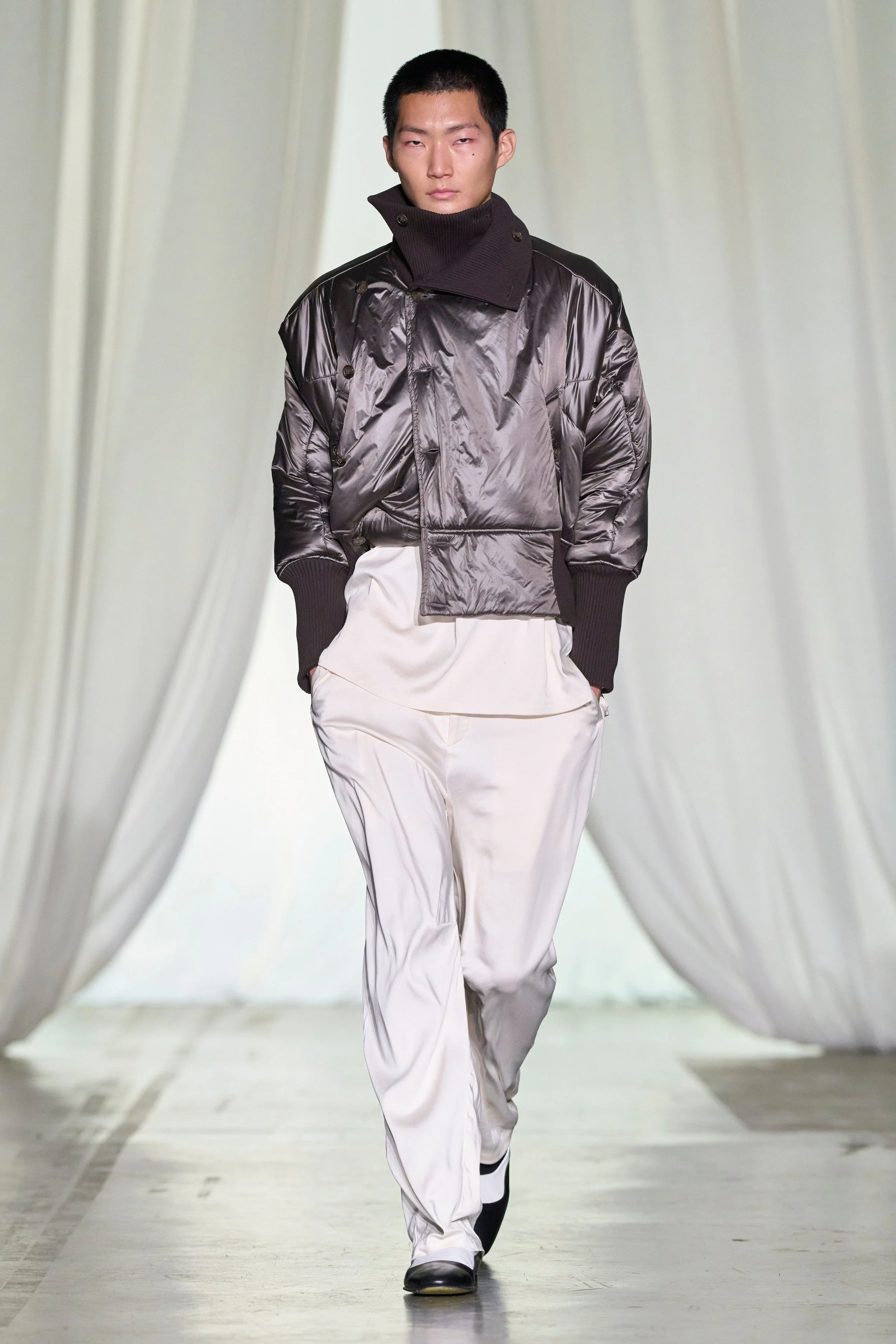
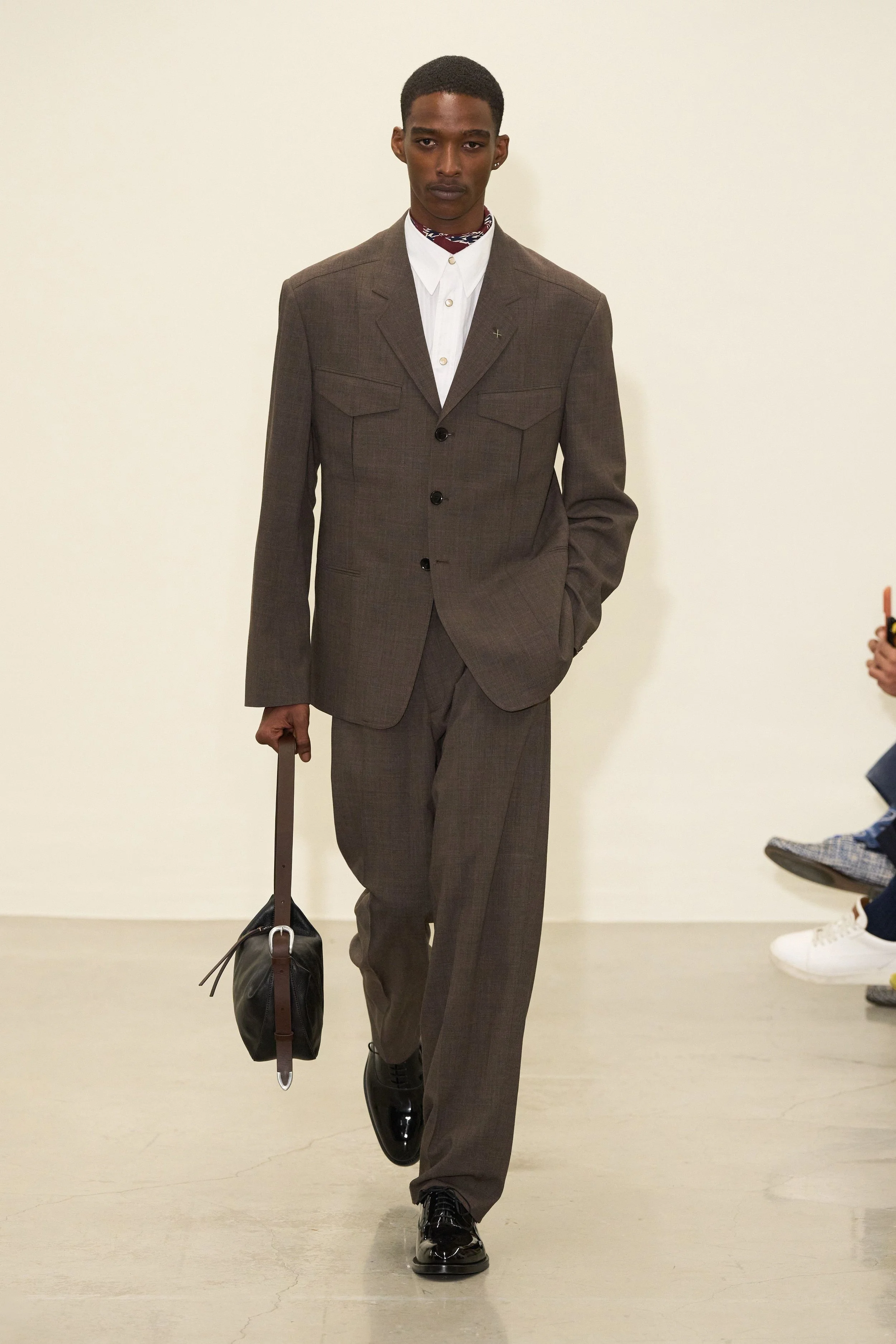
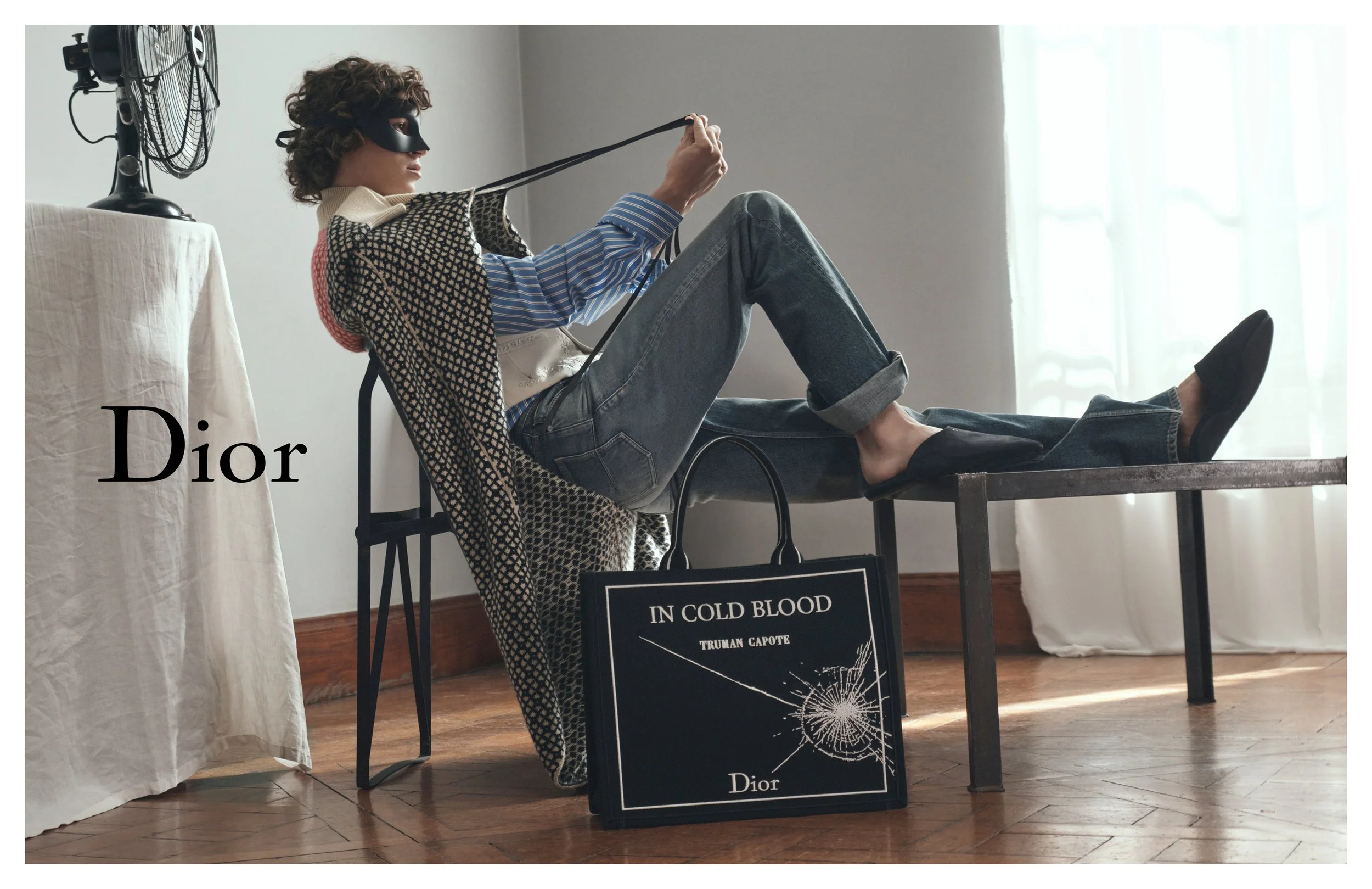
For his second season at Dior, Jonathan Anderson approaches the maison’s legacy differently. Where his debut felt almost pedagogical in its demonstration of respect, Fall/Winter 2026 saw him speaking the brand’s language with greater ease.

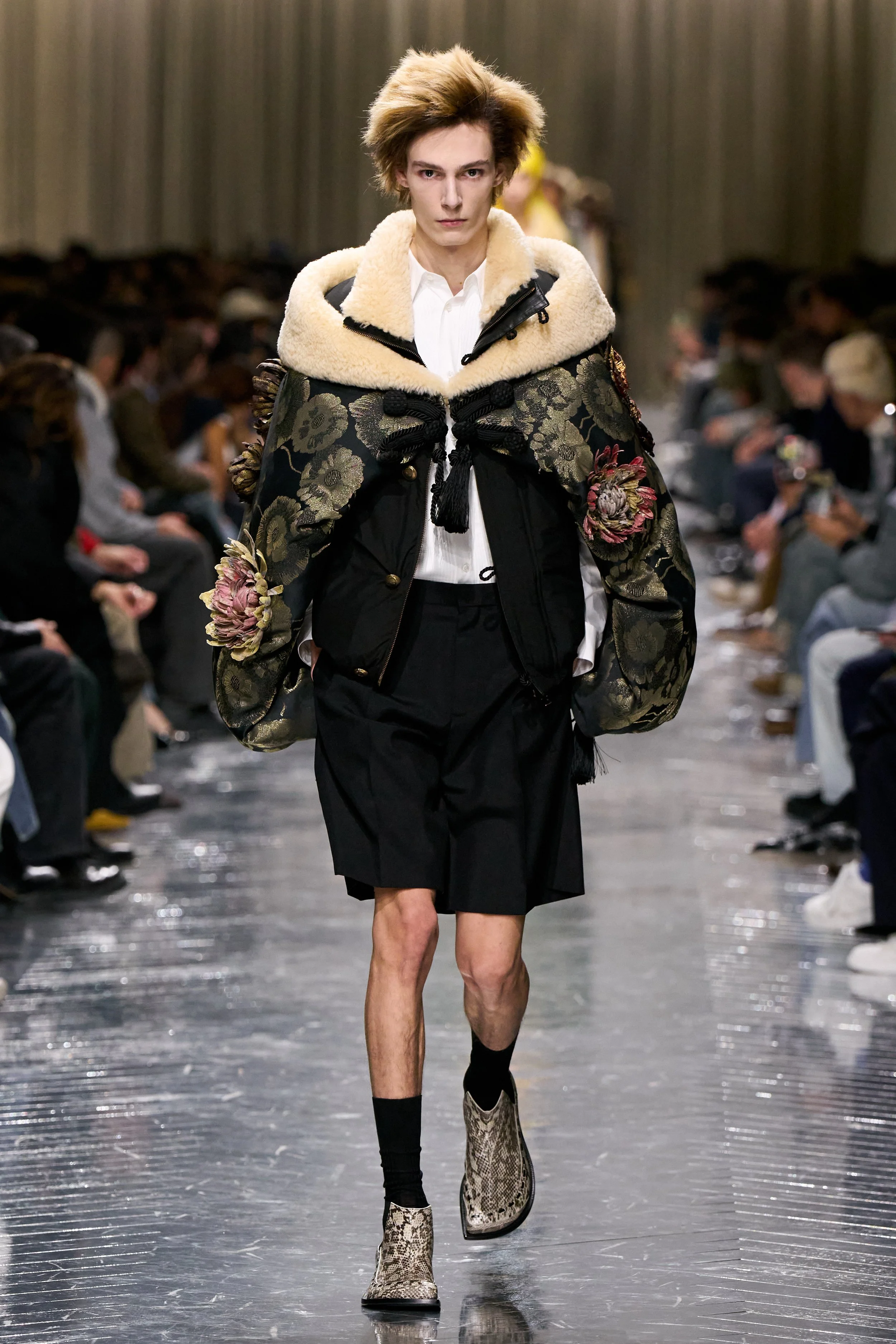
Silhouette remains Anderson’s sharpest tool. The bar jacket, long a symbol of Dior’s authority over the body, returns once more, though noticeably altered. Rendered in weightier fabrics than last season, the shape itself is made heavier.

Running parallel to Dior’s history is the presence of Paul Poiret, whose influence hovered heavily on the runway. It is a pointed reference. Poiret’s philosophy of dress stands in ideological opposition to Dior’s postwar reshaping of the female form. Anderson leans into this contradiction rather than smoothing it over. Billowing coats have expansive volumes. Slinky, shiny tank tops are almost literally paraphrased from Poiret’s ornate eveningwear.

We offer an interpretation: by interpolating silhouettes and stripping references of their original hierarchies, Anderson comments on luxury. Where craftsmanship and material excess were once its primary markers, now it's an act of creative assertion. Ornately embellished tops are worn with distressed skinny jeans (Hedi Slimane’s spirit lives on, thank god).

Instead of proving vehemence to Christian Dior alone, he’s creating a shared vocabulary, freely recombining references across eras. Slimane’s razor-thin silhouettes brush up against the theatricality of John Galliano’s Dior, both existing within the gravitational pull of the founder of the maison they all led at some point. The result is a collection that uses tradition not to stabilise the brand’s identity, but to push against the expectations that now surround it.


Words by Pedro Vasconcelos

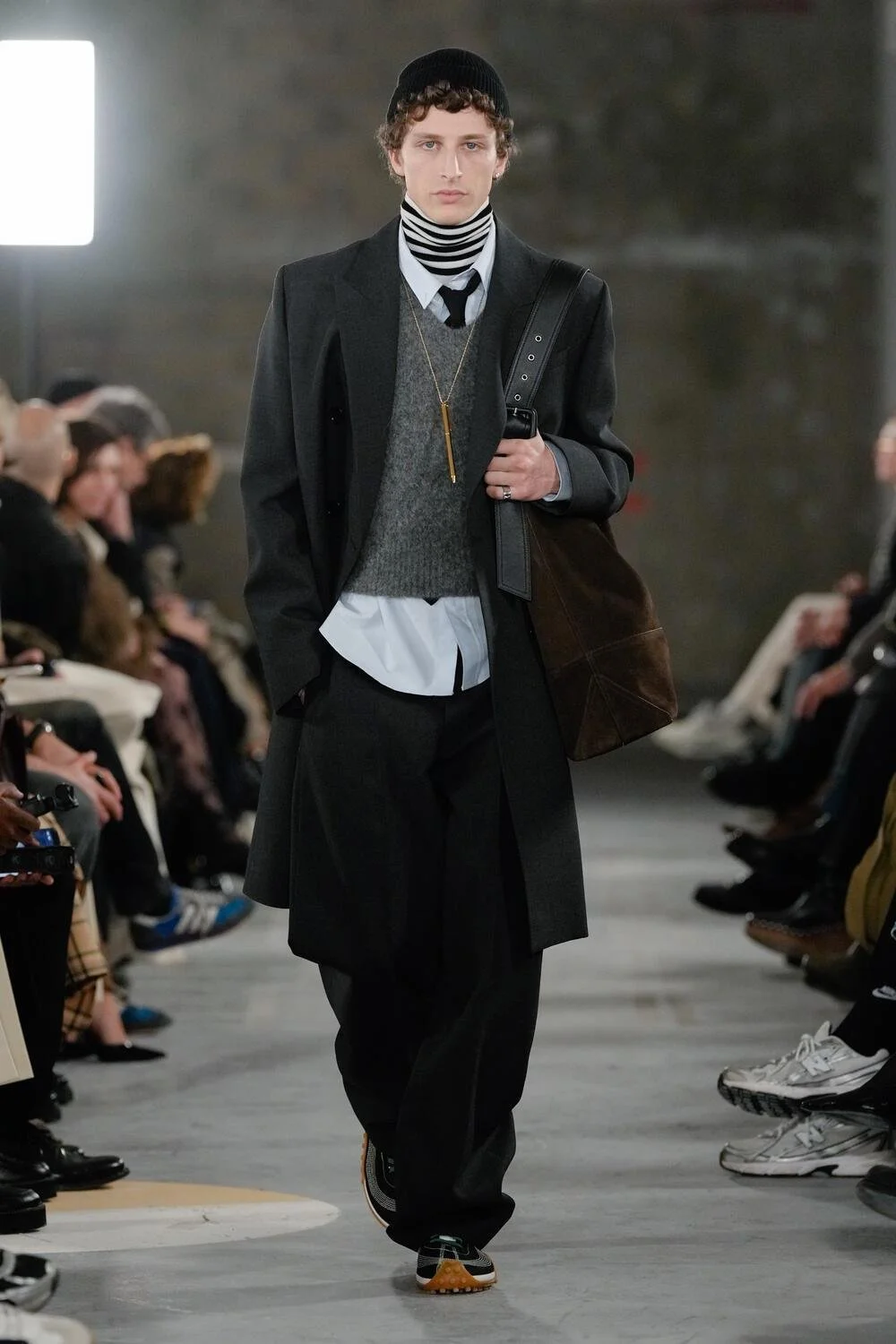
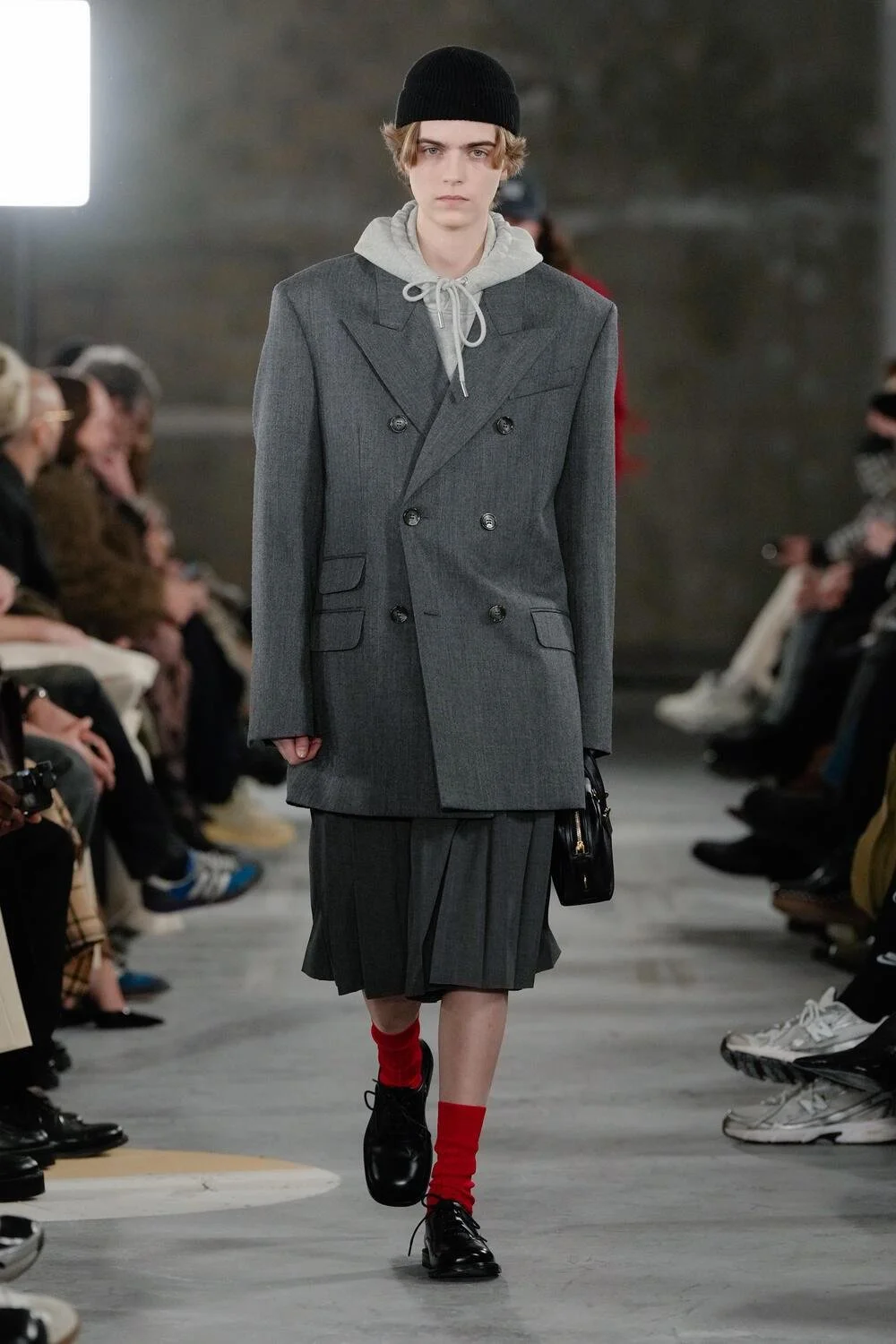
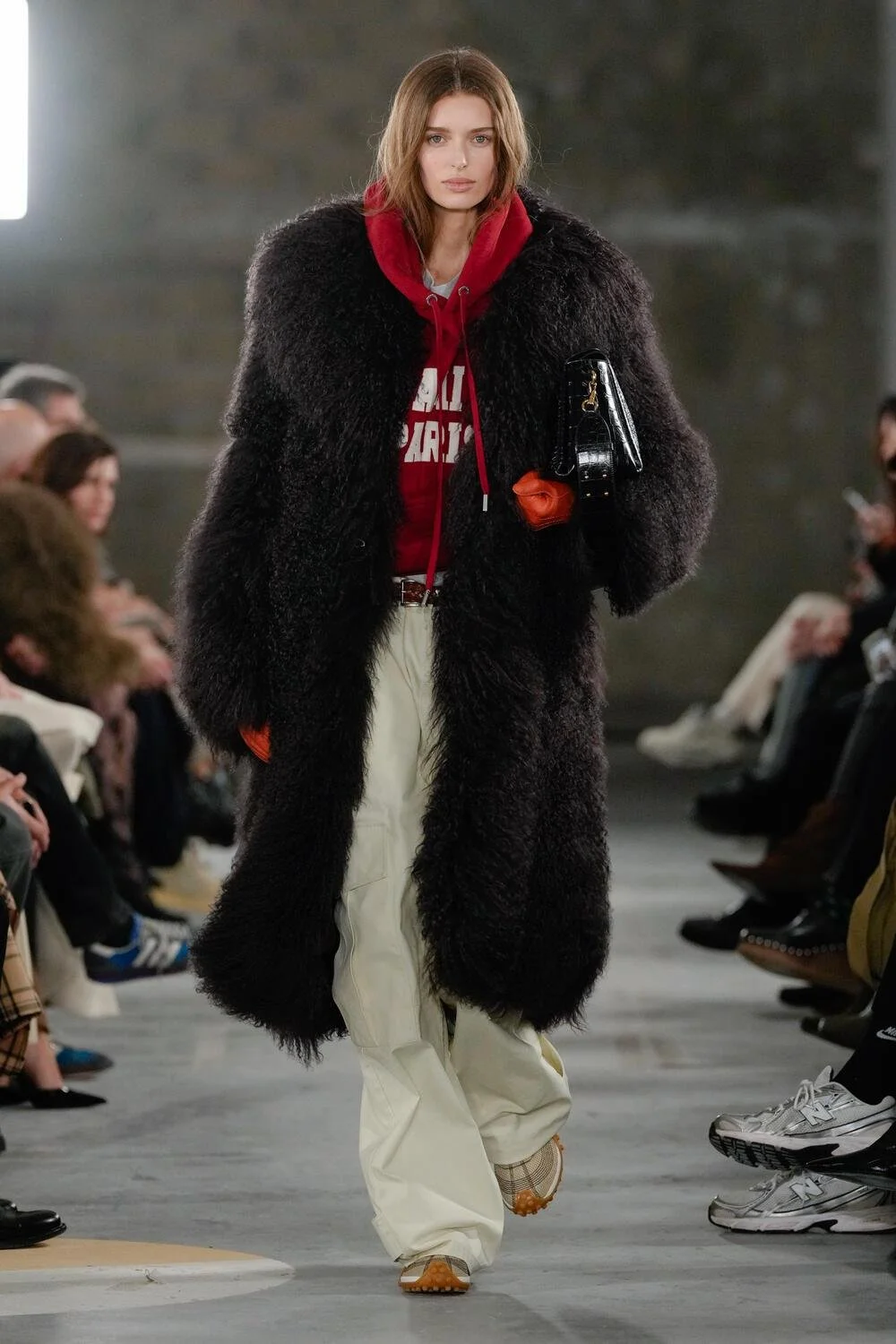
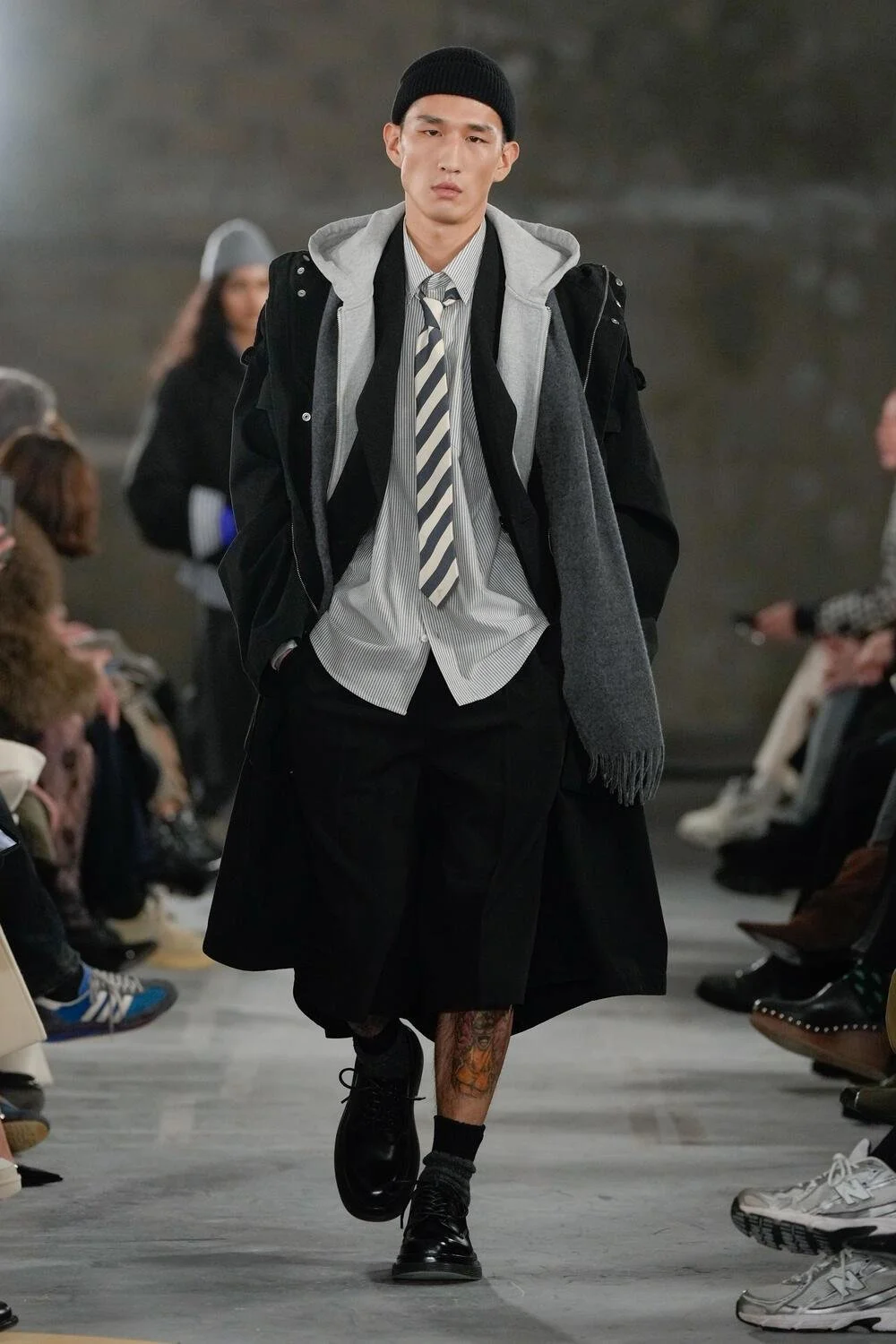
AMI FW26

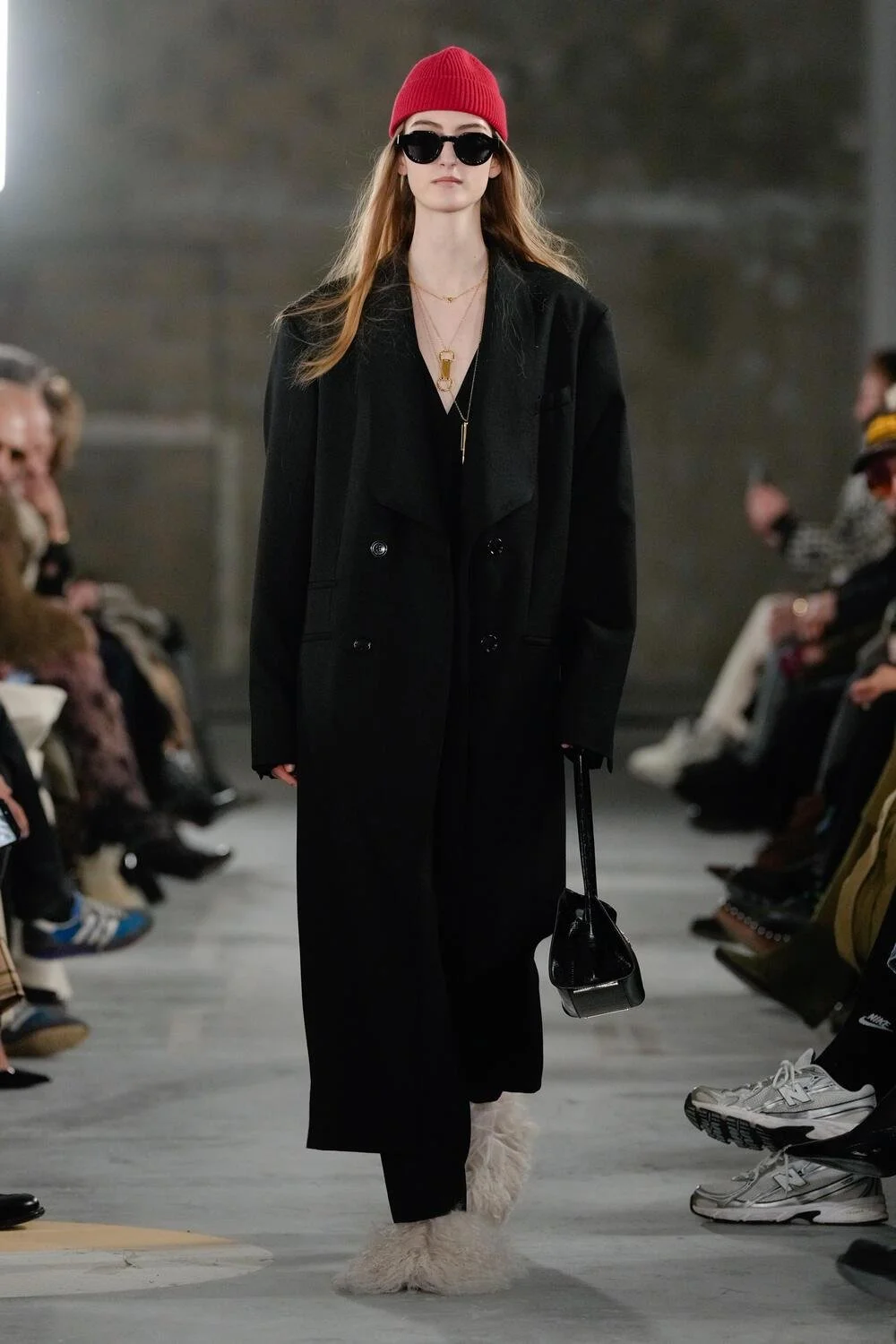
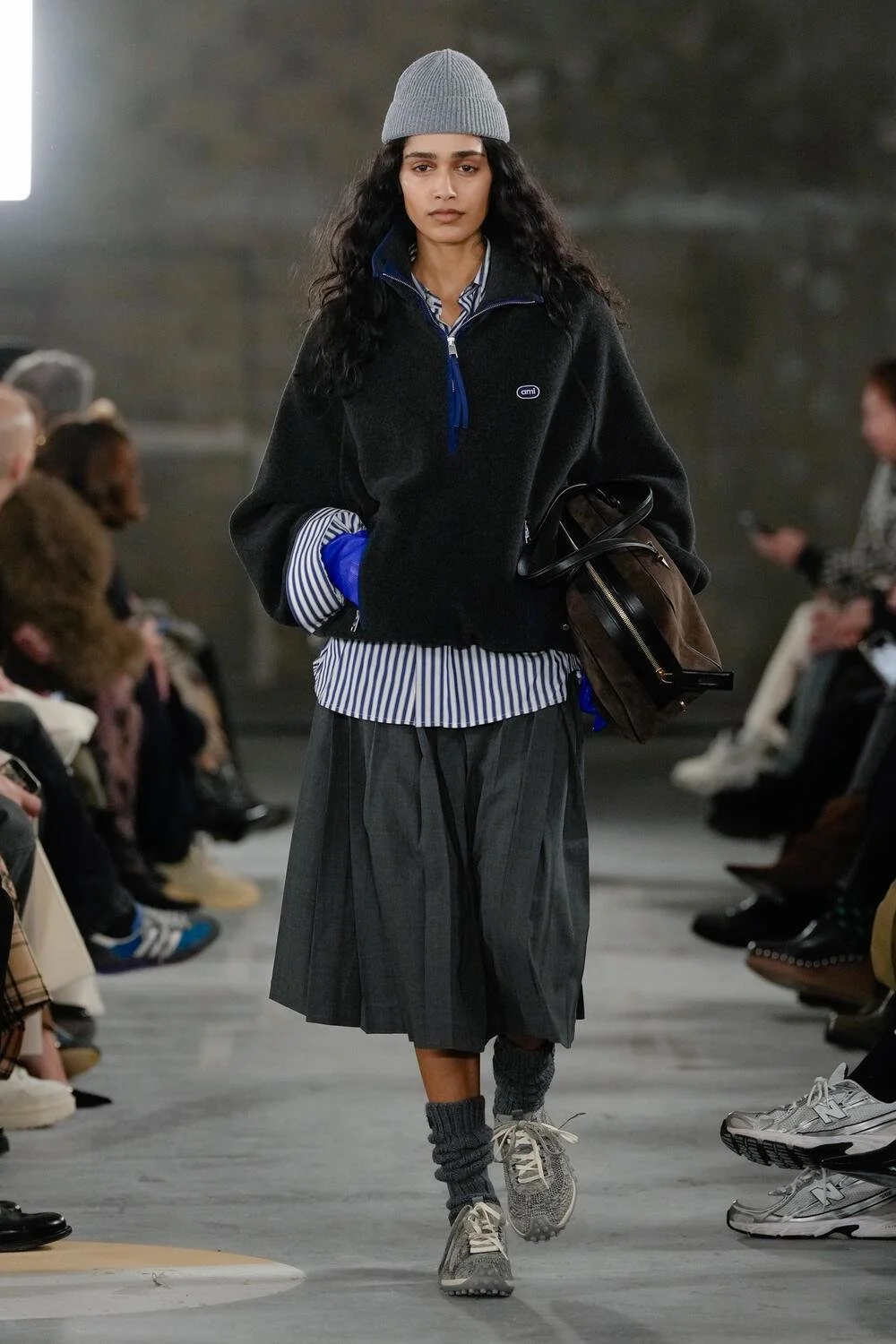
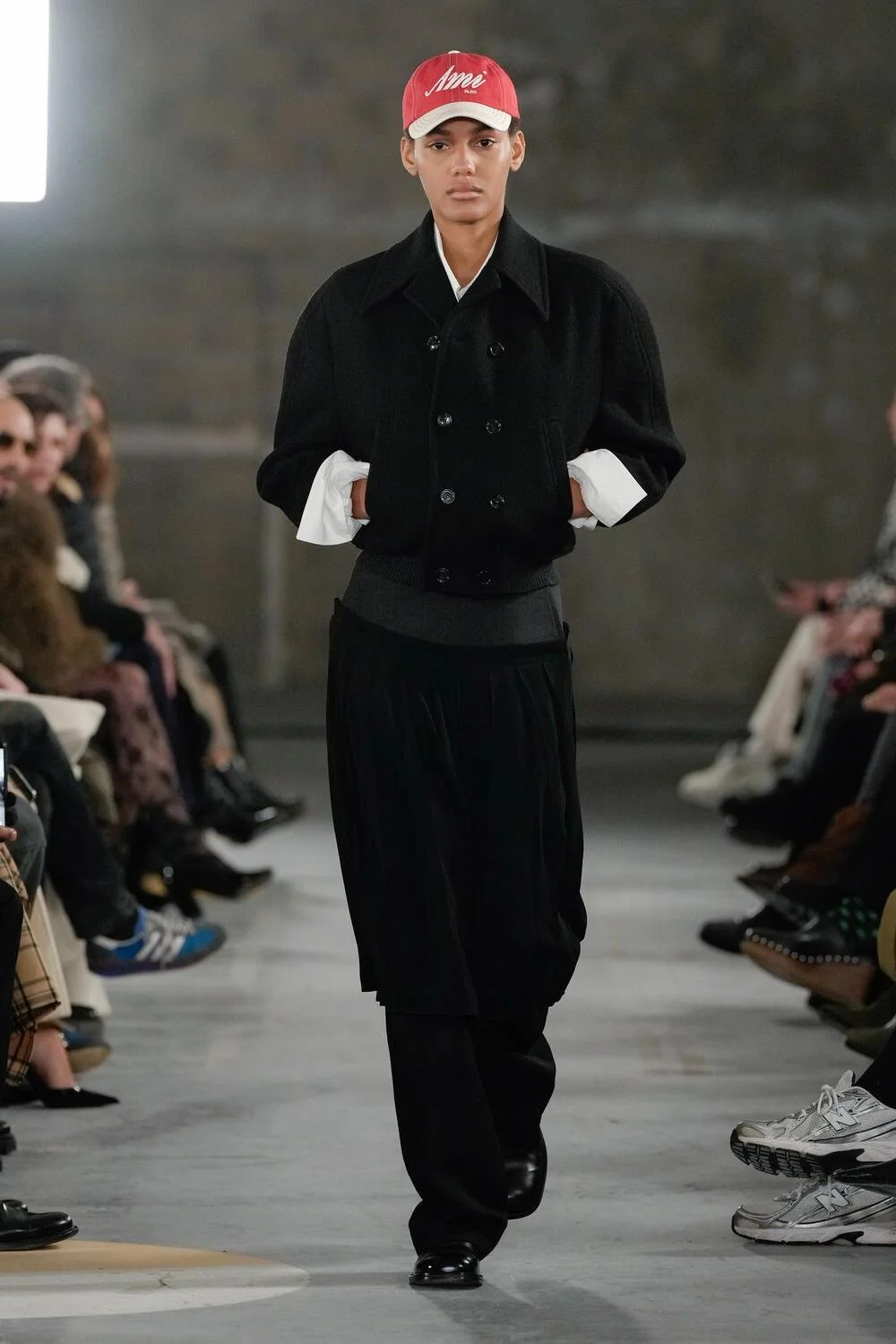
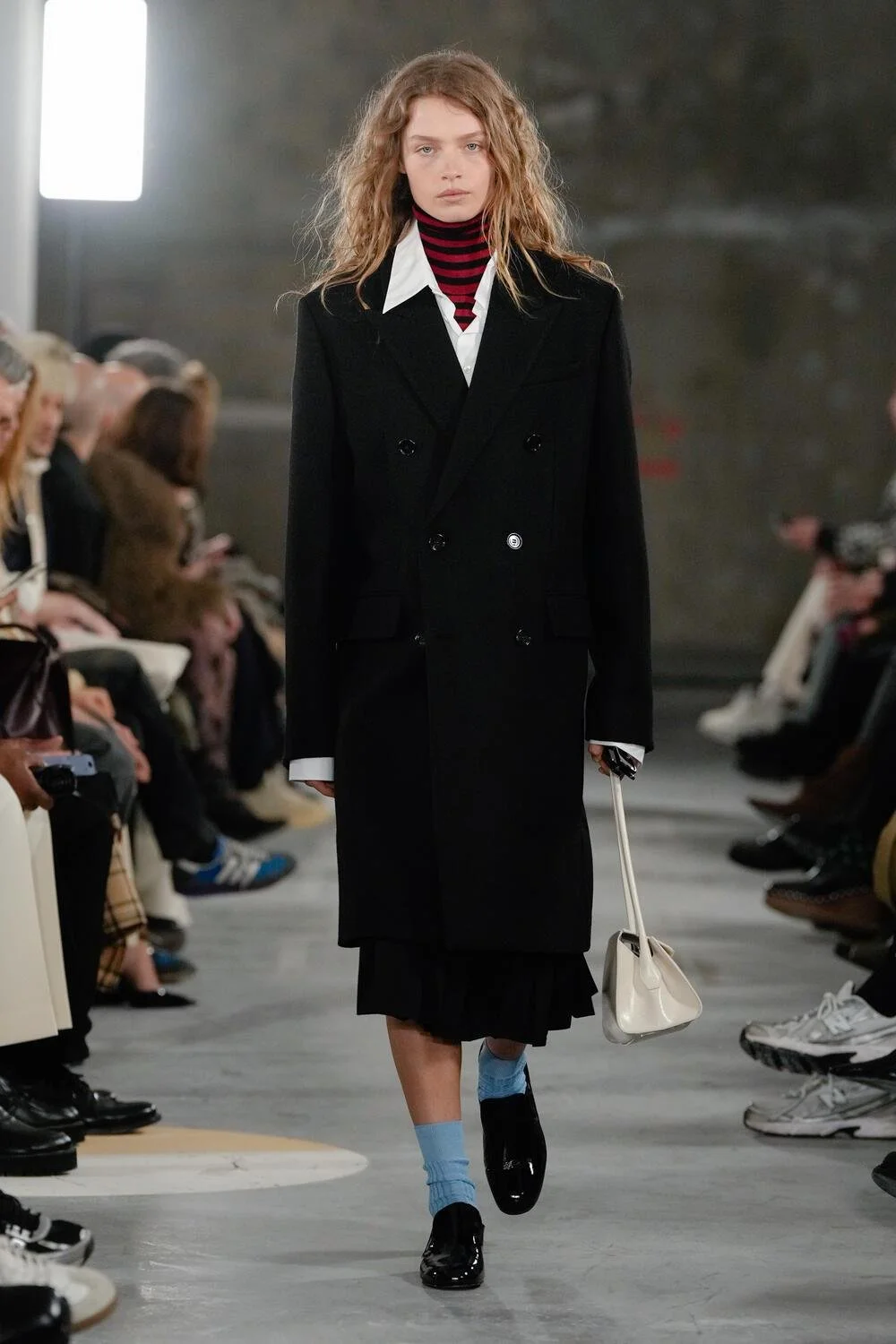
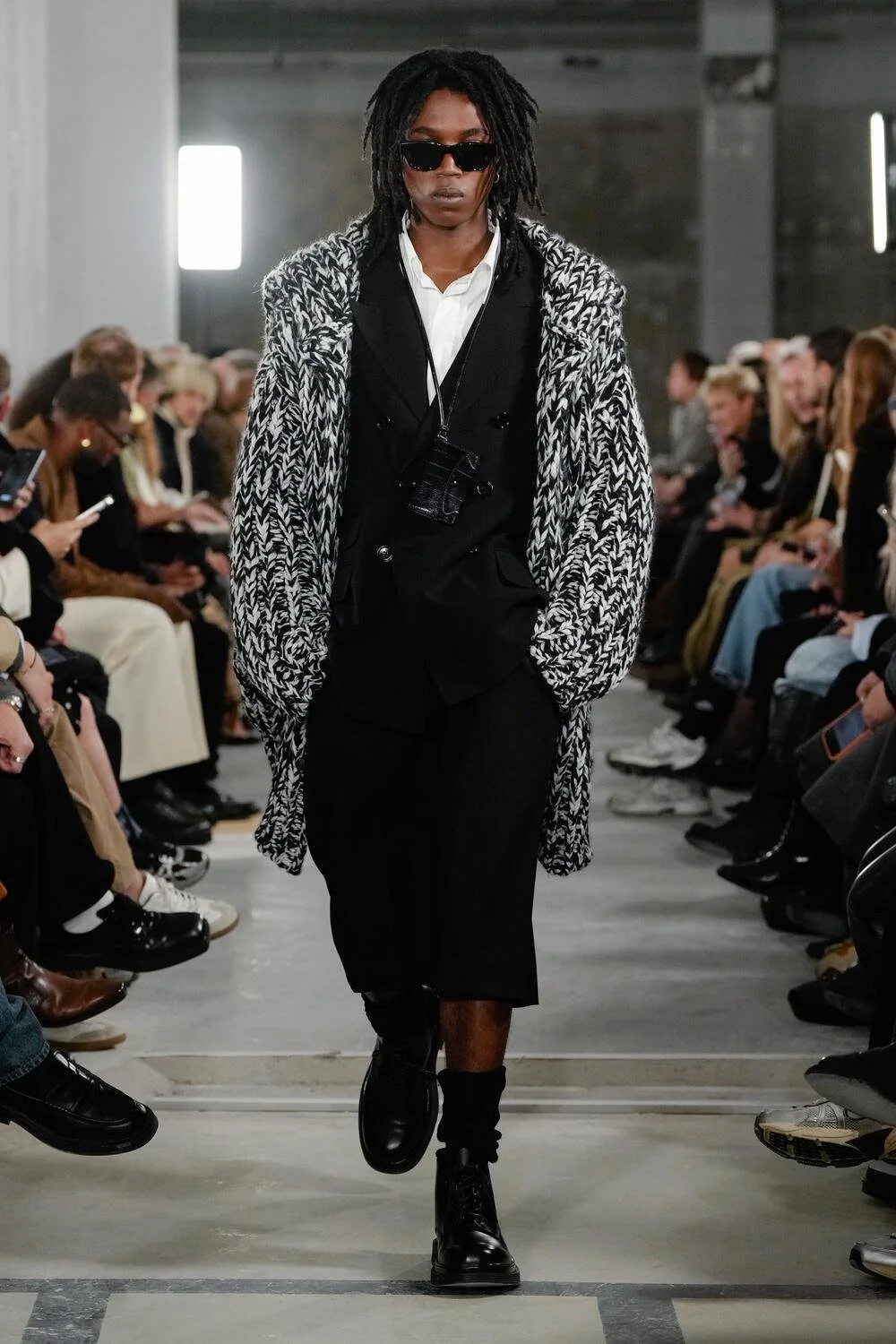
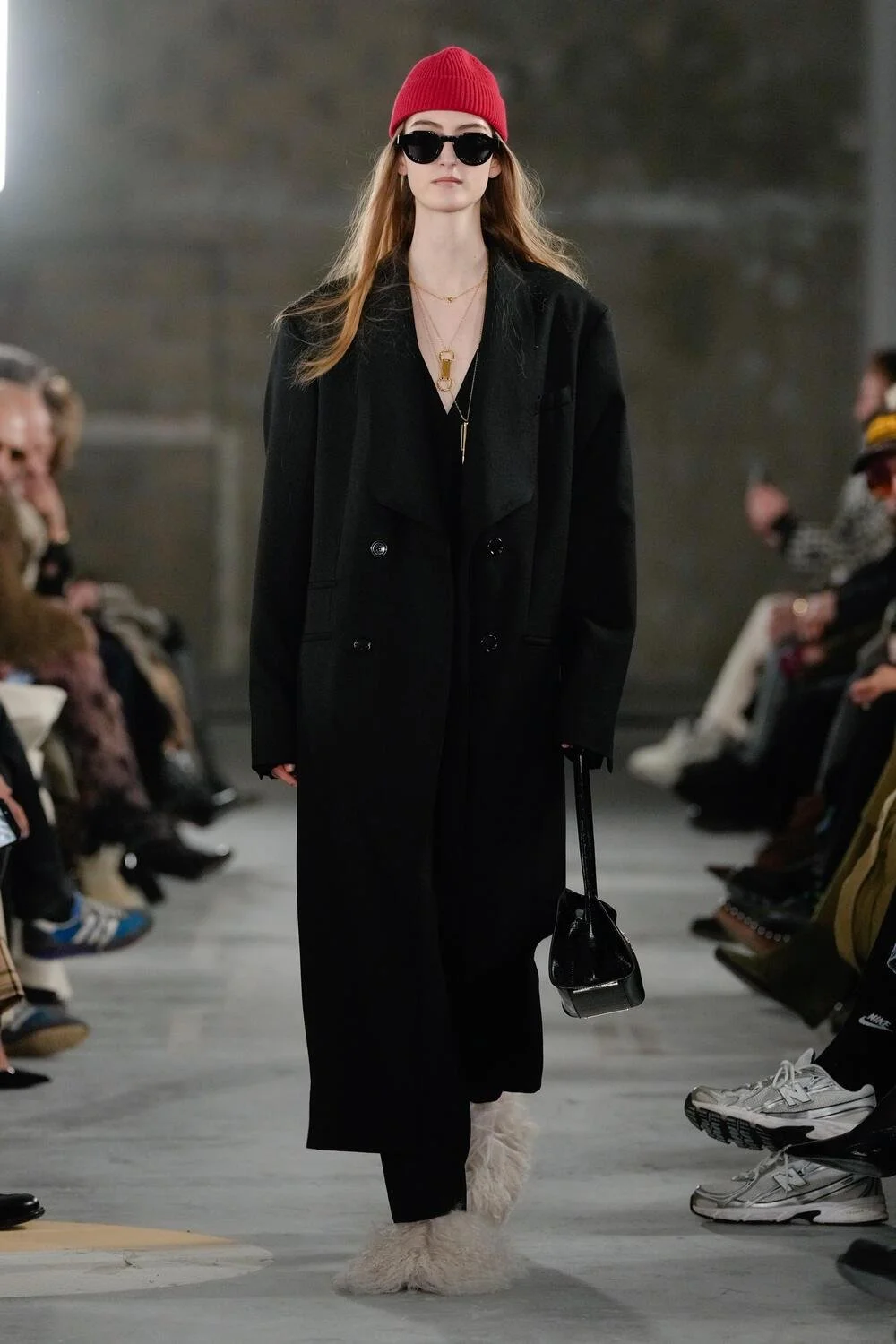
Among all brands inspired by “La Parisienne”, AMI is the one that best showcases Parisian chic through its collections. Each presentation feels like a walk through the streets of the city, interpreted in a modern way that appeals to an international audience.

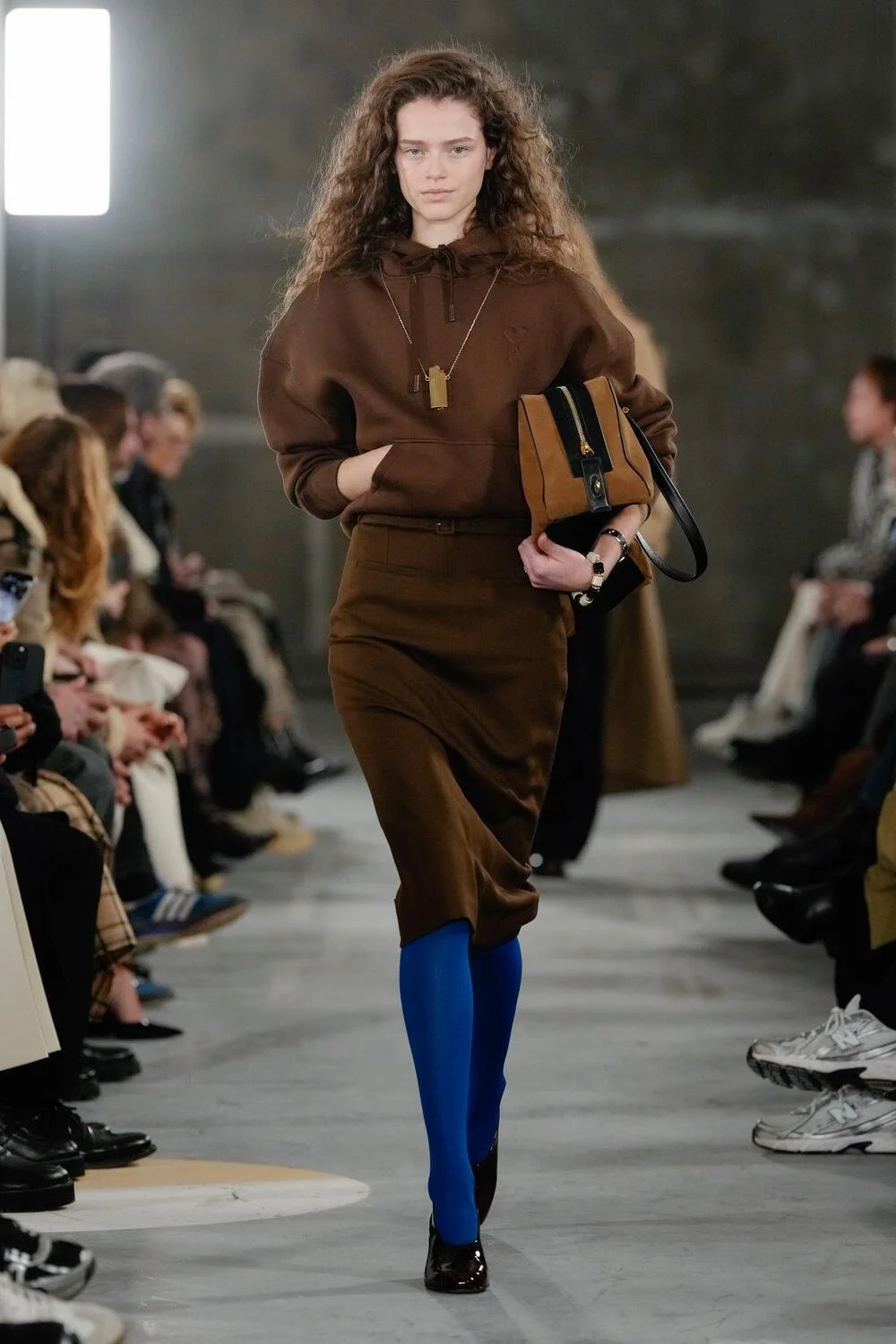
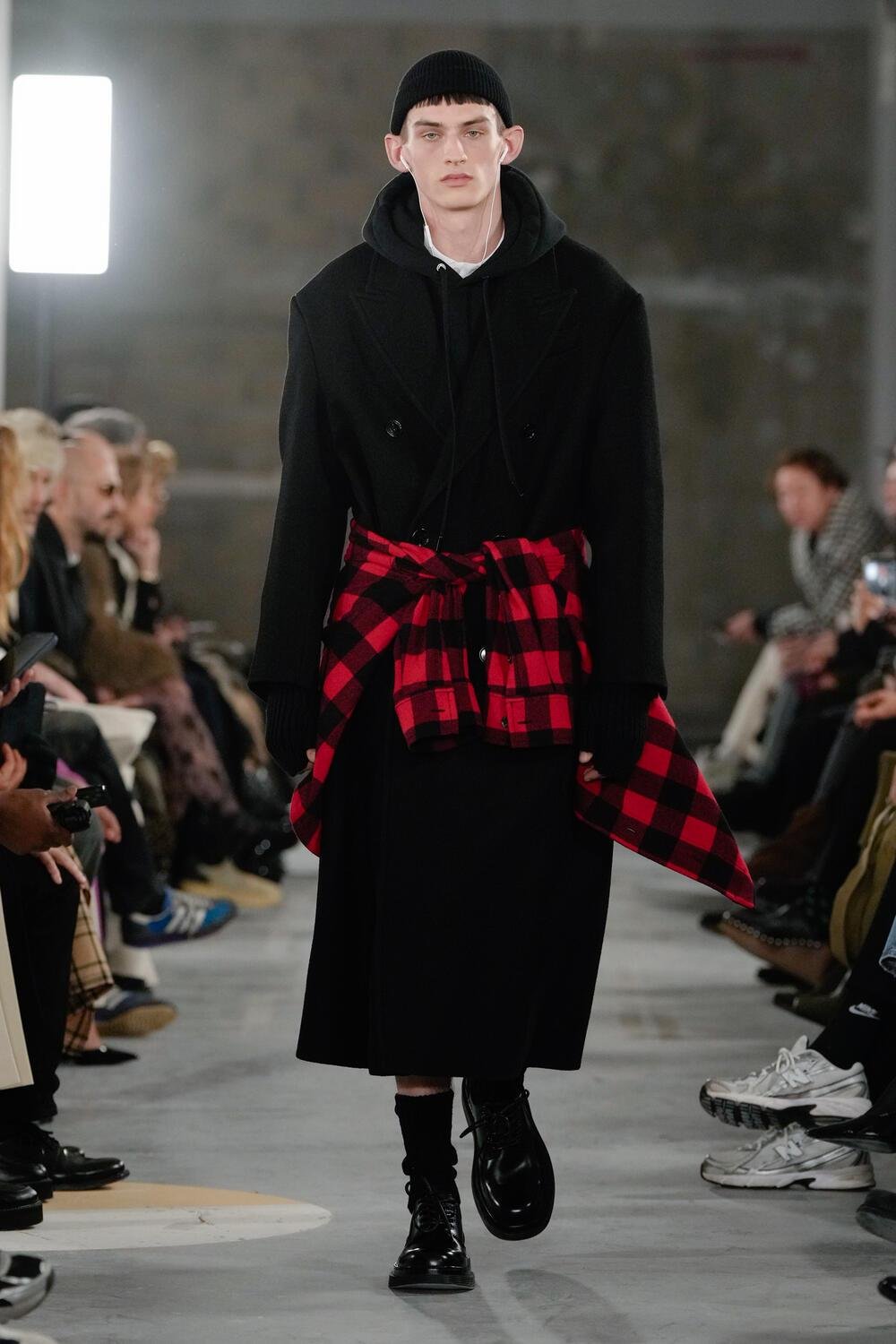
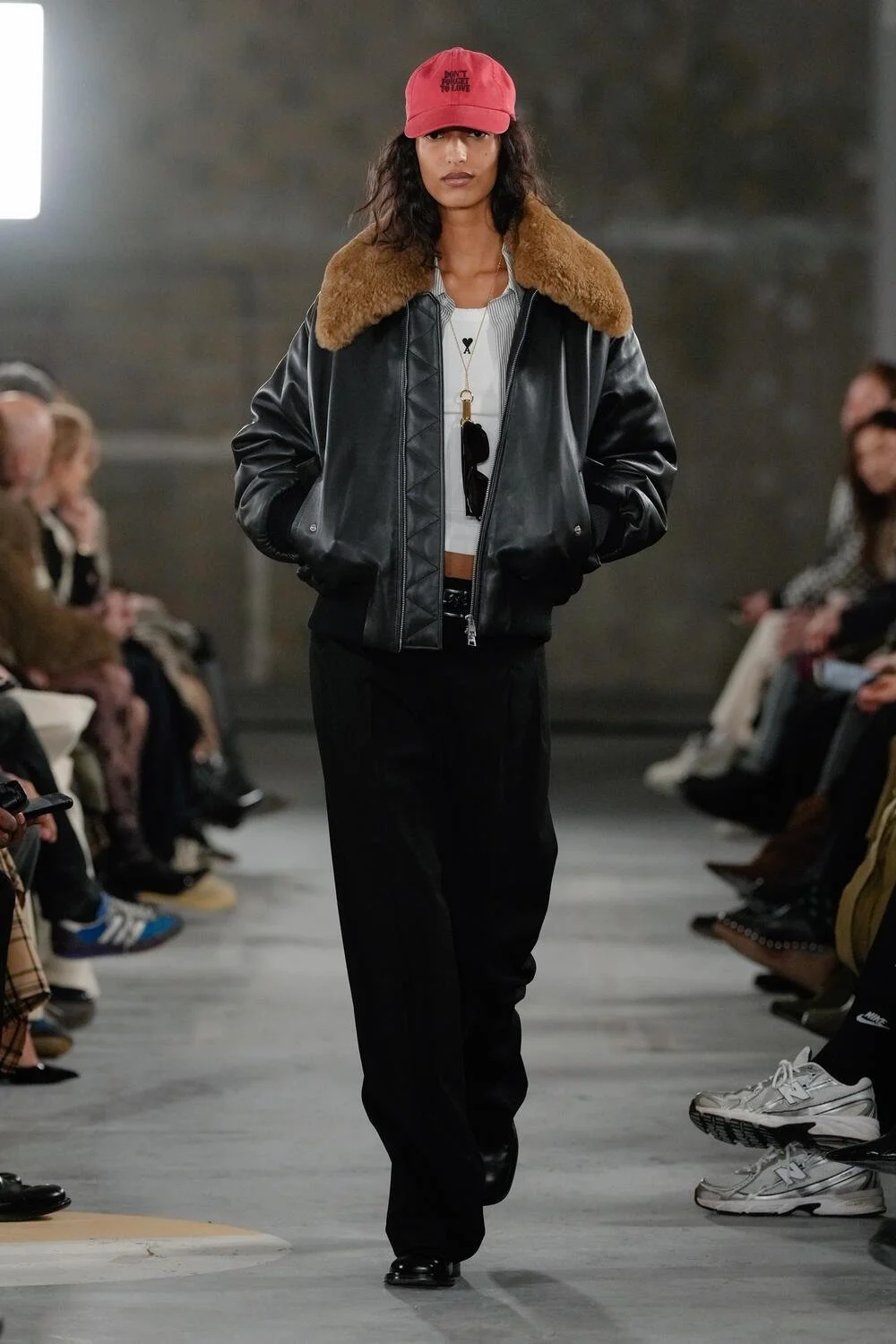
For the Fall/Winter 2026 collection, the industrial setting merged seamlessly with the minimalism of the pieces. Structured looks played with proportions, while the colour palette remained neutral. Lean lines define the silhouettes, from oversized coats and elongated skirts to relaxed trousers. Well-constructed pieces in luxurious fabrics are paired with voluminous shapes such as full skirts, ballooned trousers, and dramatic coats, creating contrast and breaking the otherwise minimalist aesthetic.

Throughout the years, AMI has mastered the art of layering, and this season was no exception. Shirts under knits and scarves tucked into coats felt purposefully styled rather than messy. The tie was worn in an easygoing, casual way, appearing youthful and creative.

While some pieces felt corporate-appropriate and intellectual, such as the shirts, loafers, and coats, others were better suited for a night of drinks and dancing, or even the Sunday-morning casual: featuring sneakers, sweats, and hoodies, paired with oversized, chic coats. Caps were added for a relaxed touch.

Strongly androgynous, the collection played with gender without attempting to “soften” masculinity or exaggerate femininity, something key to understanding the visual language of the brand; gender is expressed through attitude rather than clothing.


Words by Carolina Benjumea

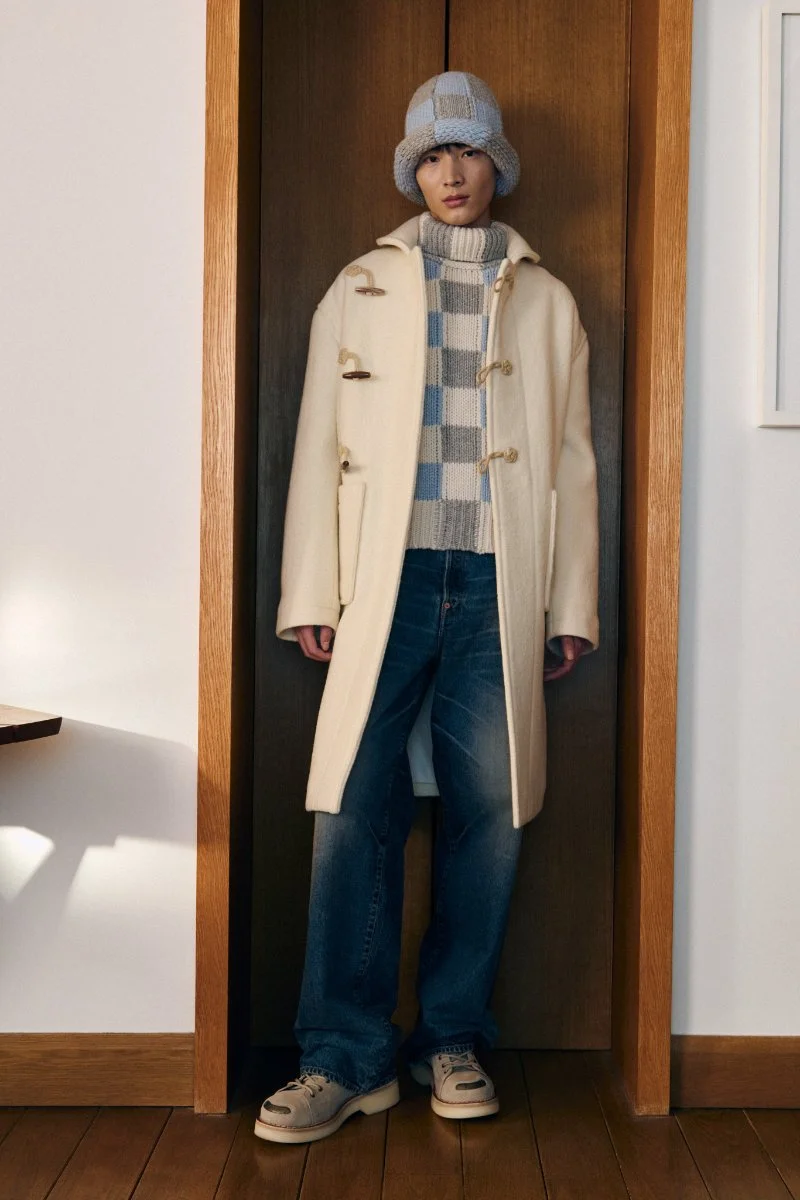
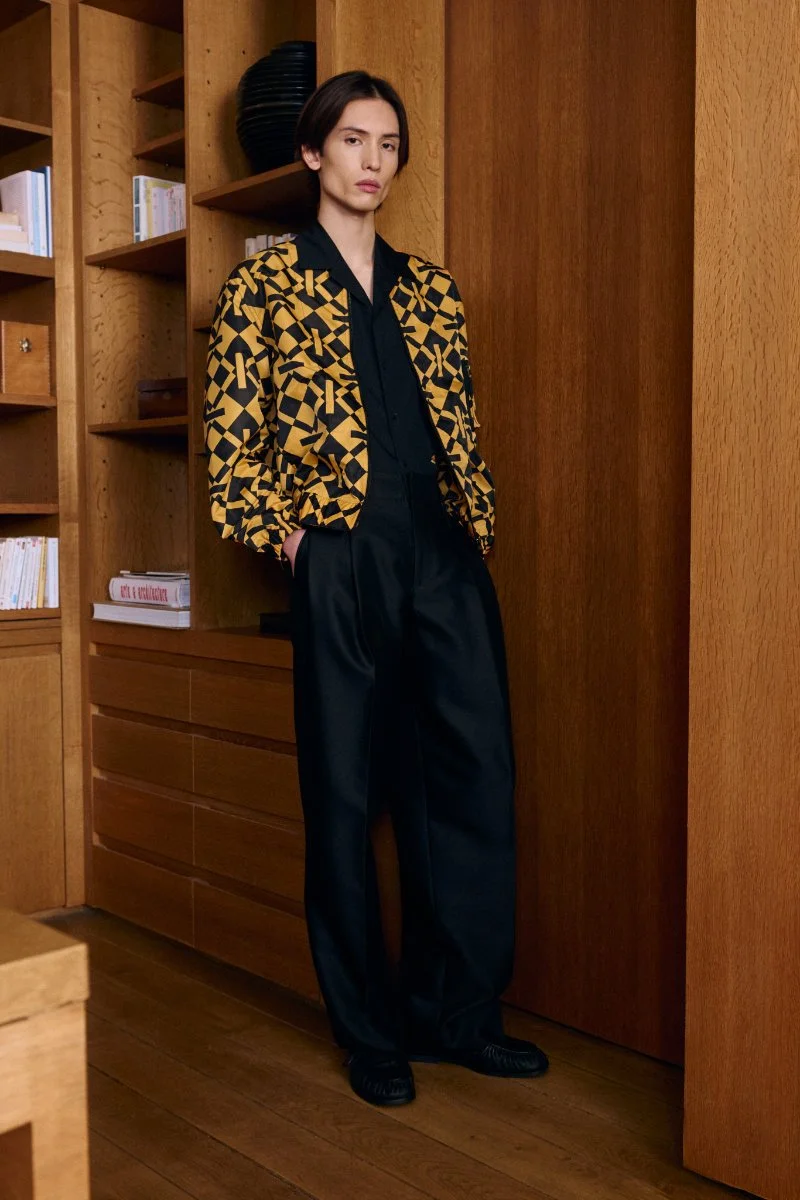
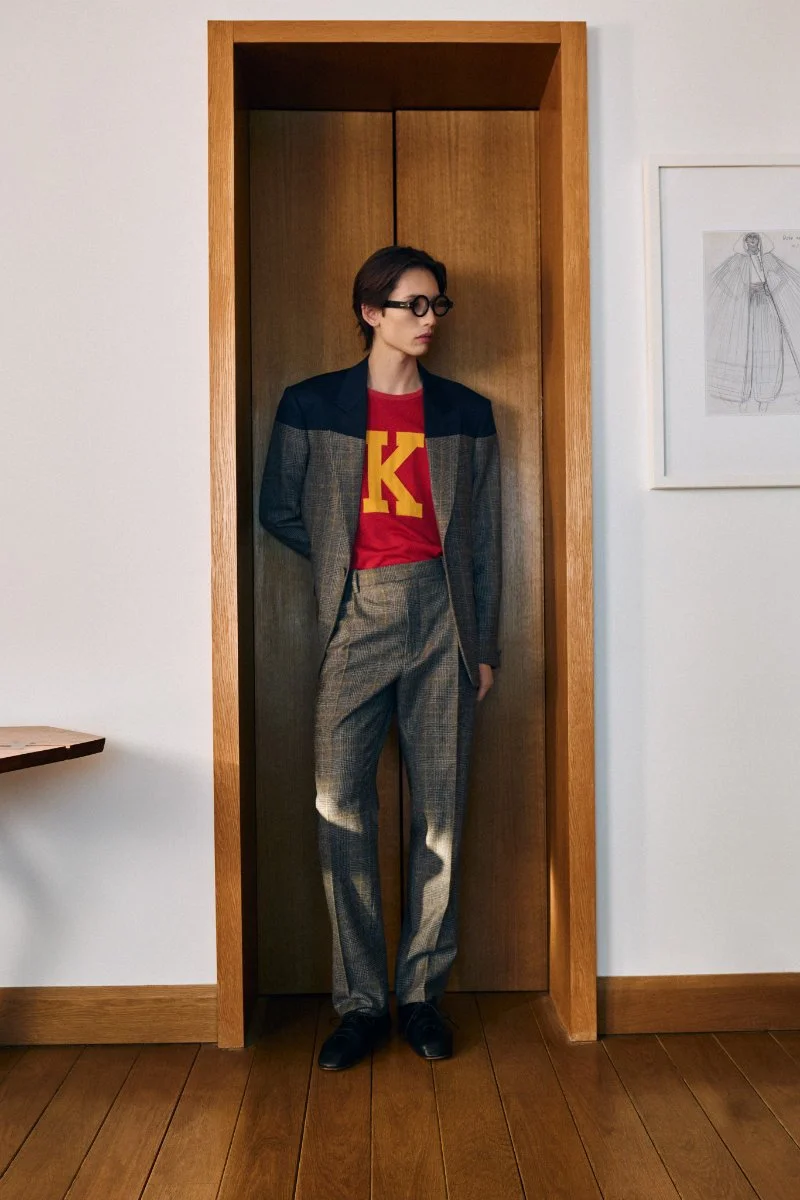
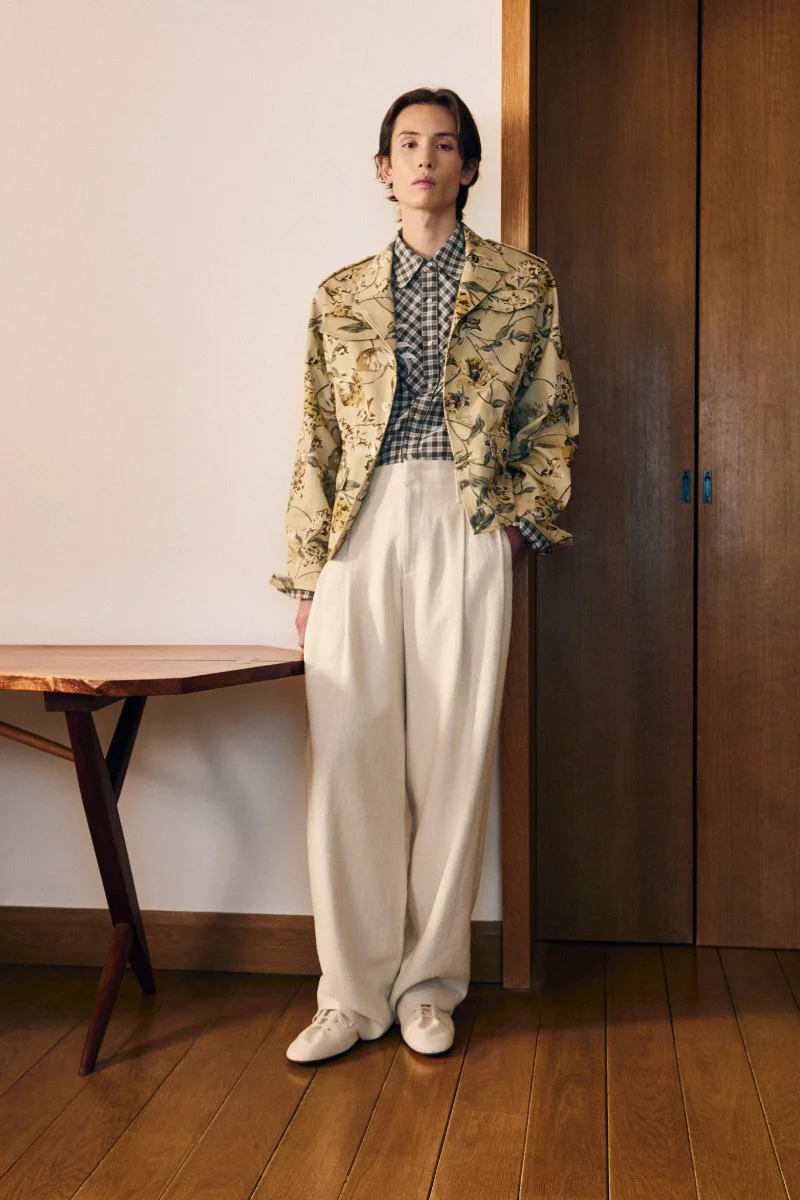
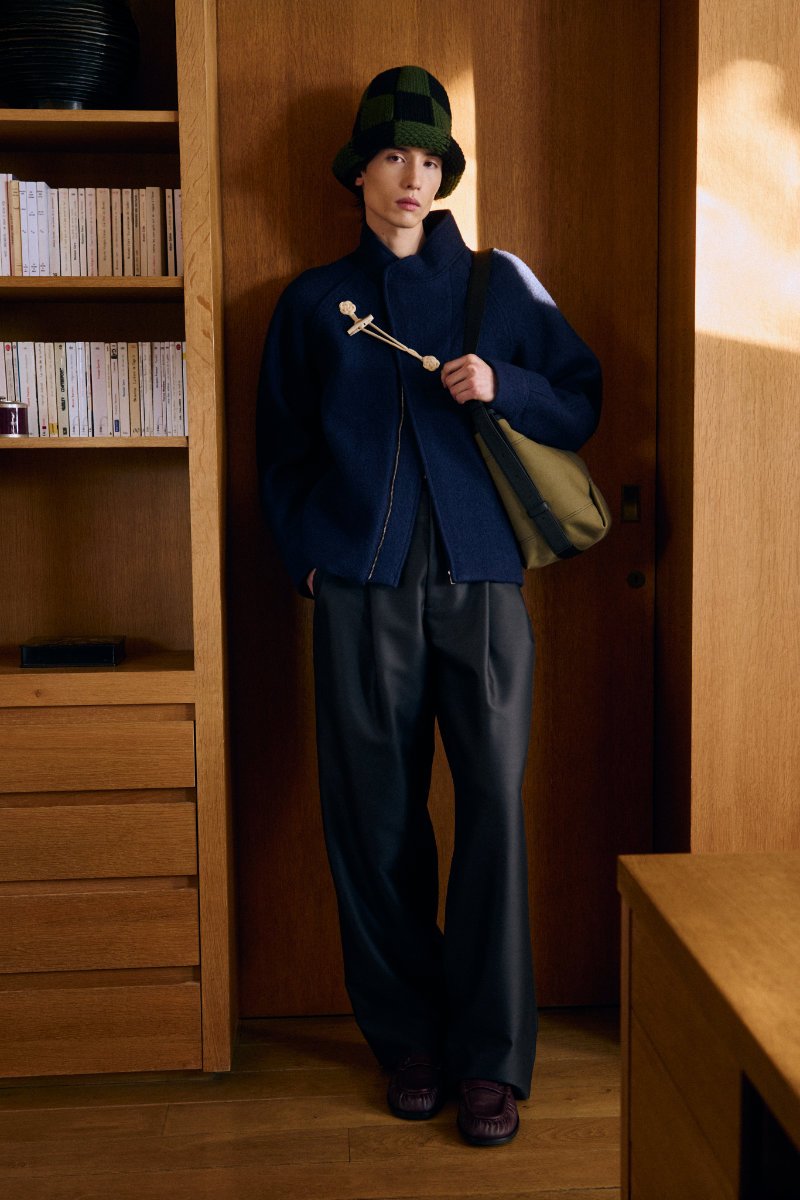
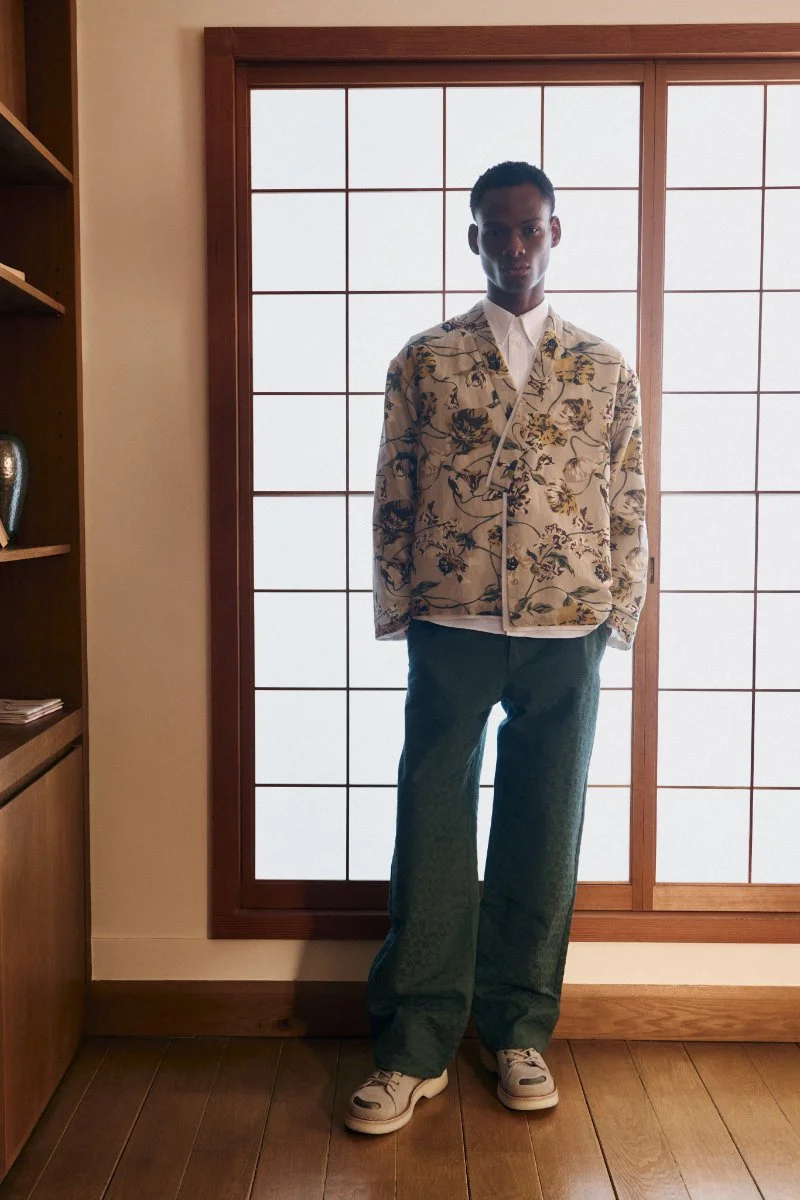
KENZO FW26

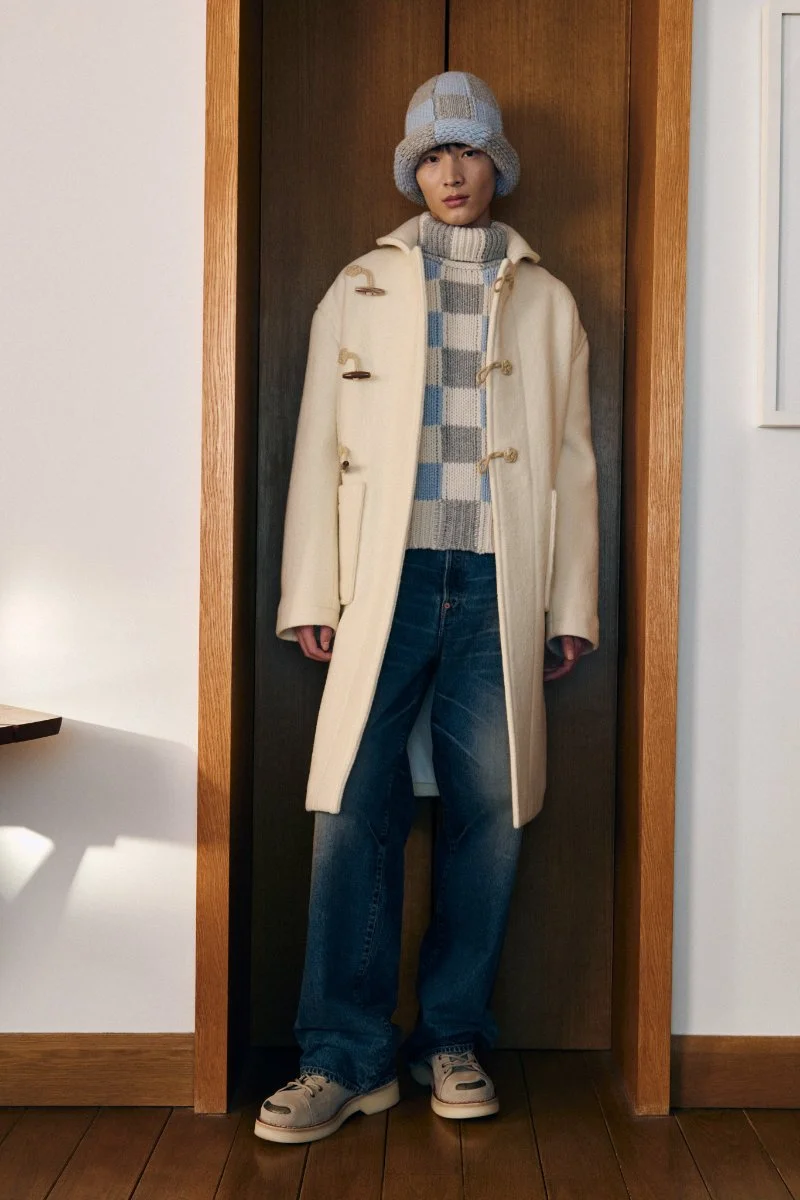
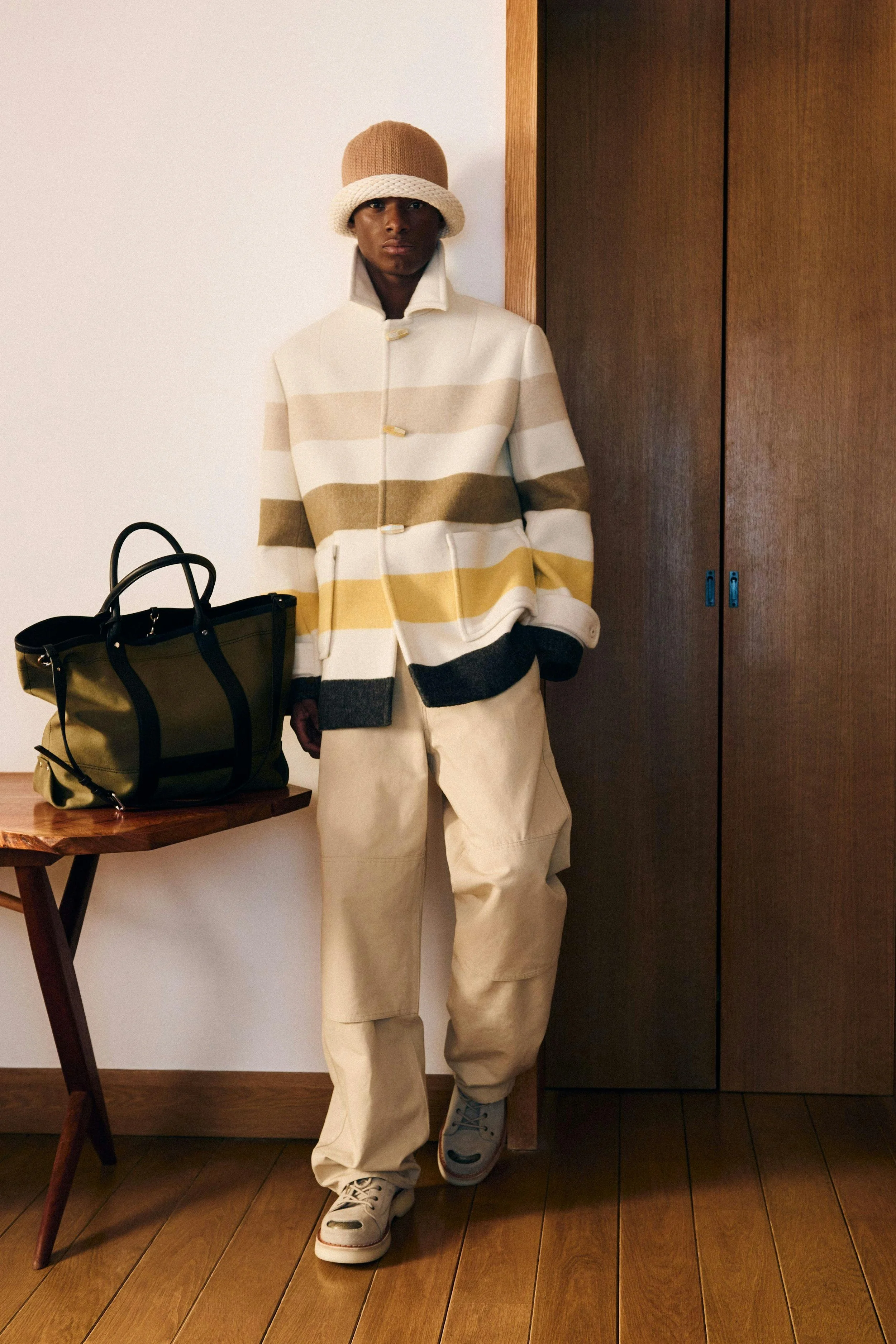
For Fall/Winter 2026, Nigo didn’t look far for inspiration; instead, he returned home – to the basics and to the inner strength of Kenzo: the joyful, colourful essence of the house, and the richness of its constructions.

The designer presented Kenzo’s most intimate and toned-down collection to date. As a nod to the house’s origins, he sought to return to the founder’s home – Kenzo Takada’s house near the Bastille in Paris, built between 1988 and 1993 — creating a collection rooted in harmony, precision, and intimacy, with pieces adapted to every moment of a person’s life.

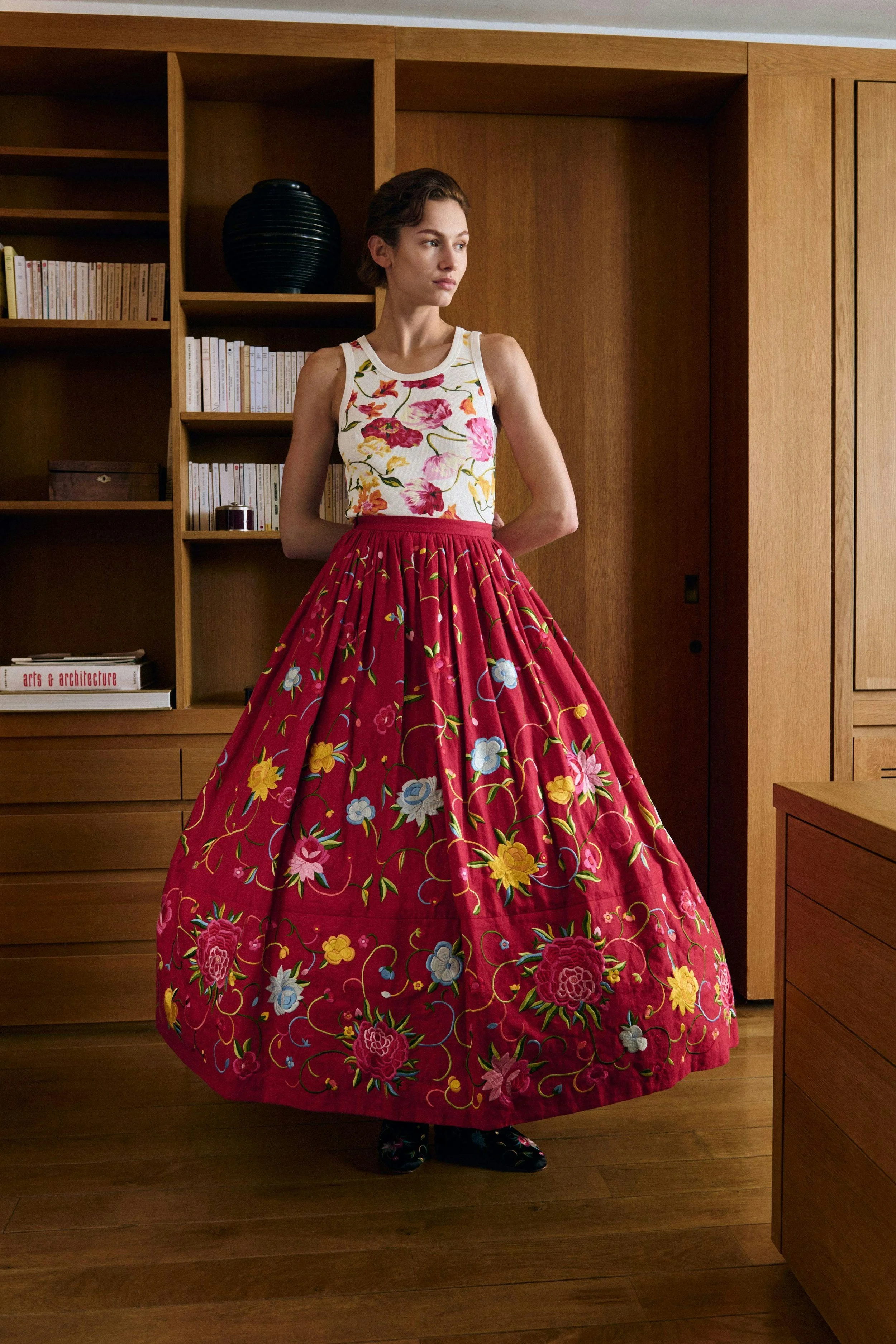
As a nod to both French and Japanese influences, the wardrobe feels equally practical and elegant. Think Japanese minimalism, with kimono-inspired pieces, merging with the French conception of understated refinement. Capes felt modern, and prints recalled the creative spirit of the brand –  from plaids, checks, and stripes to subtle geometrics. Florals were present throughout in a myriad of ways, lending a romantic aesthetic to the looks.

The body feels at ease in the clothing, with long lines, dropped shoulders, and comfortable fits suggesting movement and wearability. Textures are tactile and cosy, reinforcing the collection’s warmth and intimacy. Earthy, muted tones dominate, from camel, cream, chocolate brown, olive, charcoal, and navy, creating combinations that feel natural. Accents of mustard, forest green, and soft yellow add depth without disrupting the calm palette.


Words by Carolina Benjumea

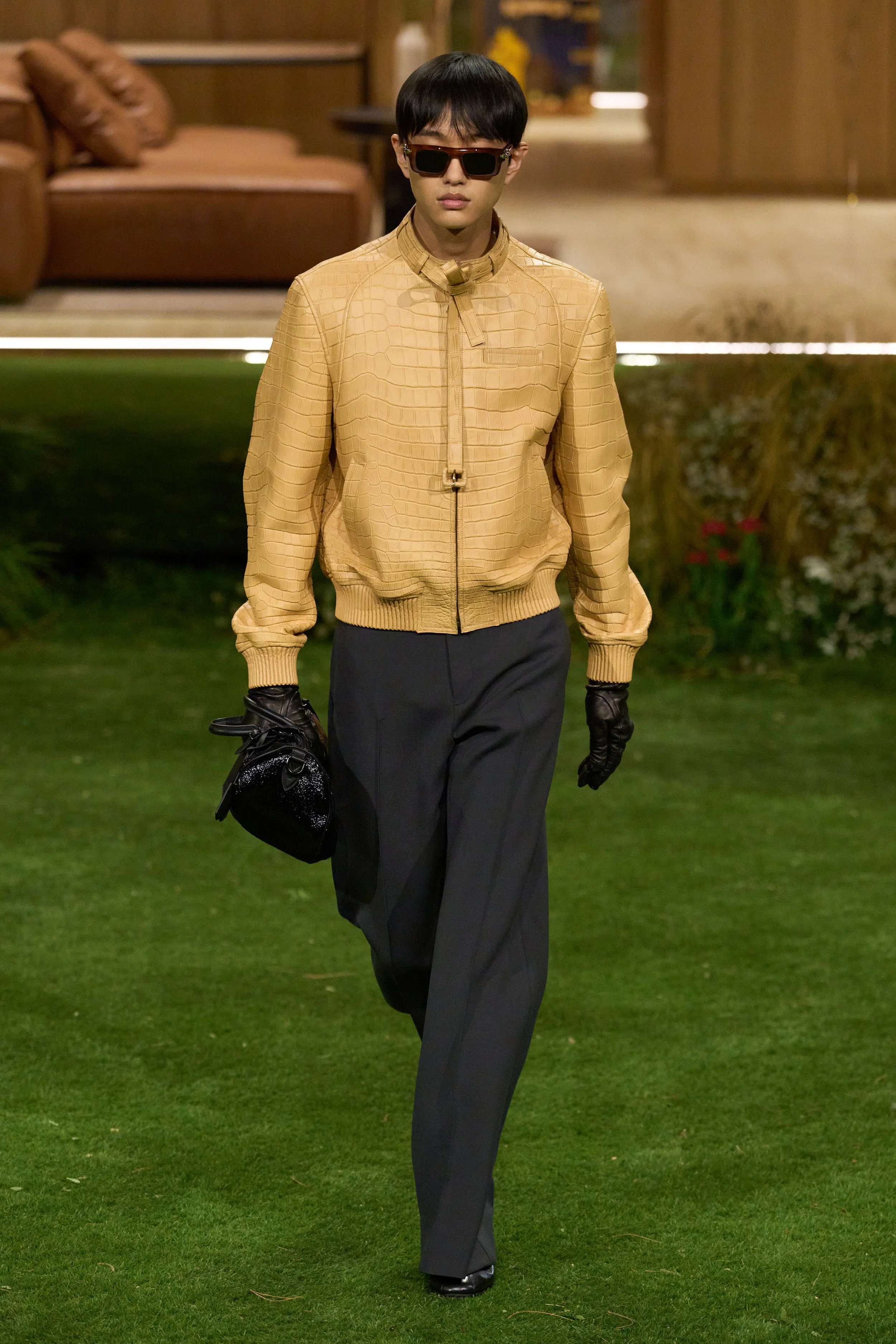
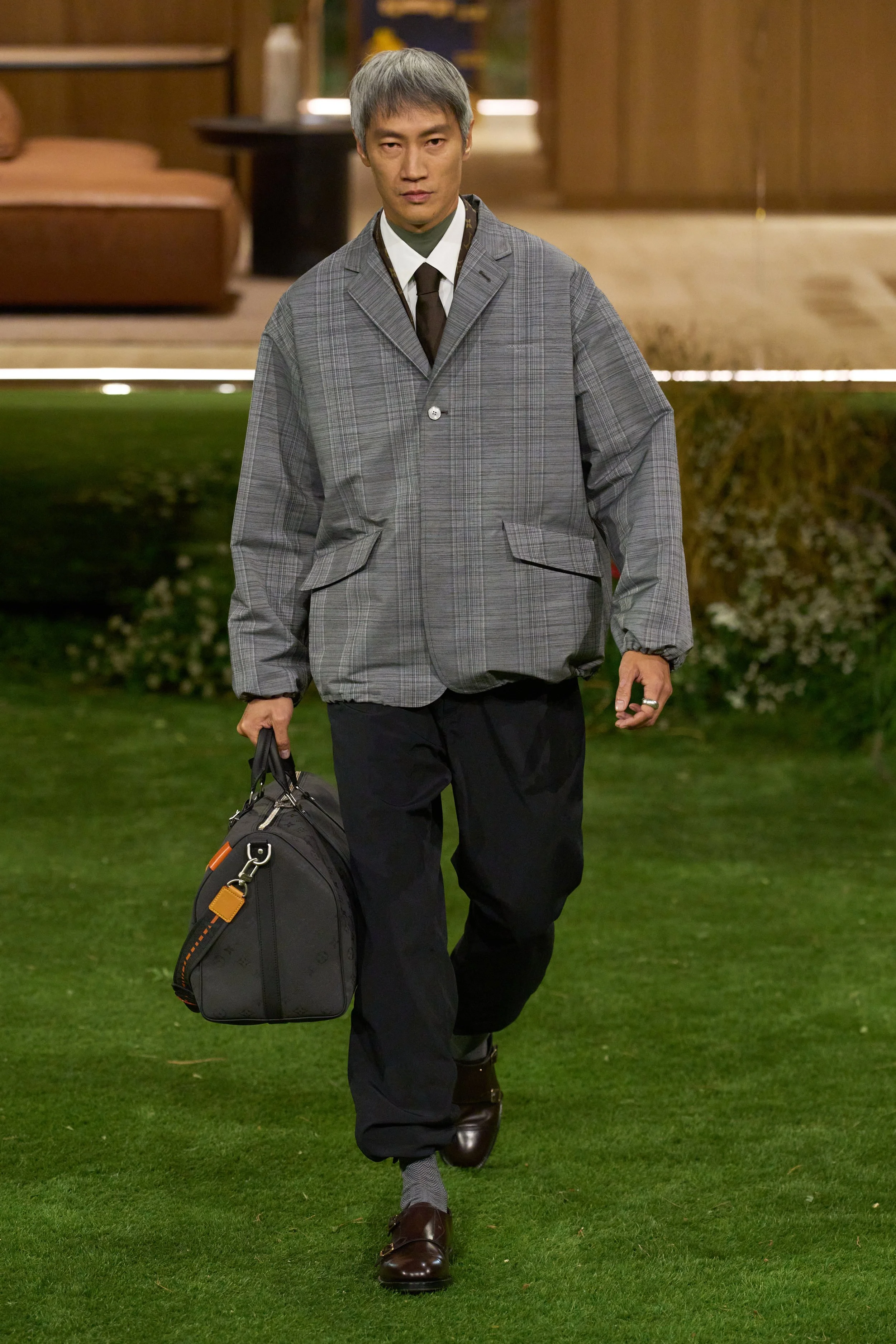
LOUIS VUITTON FW26

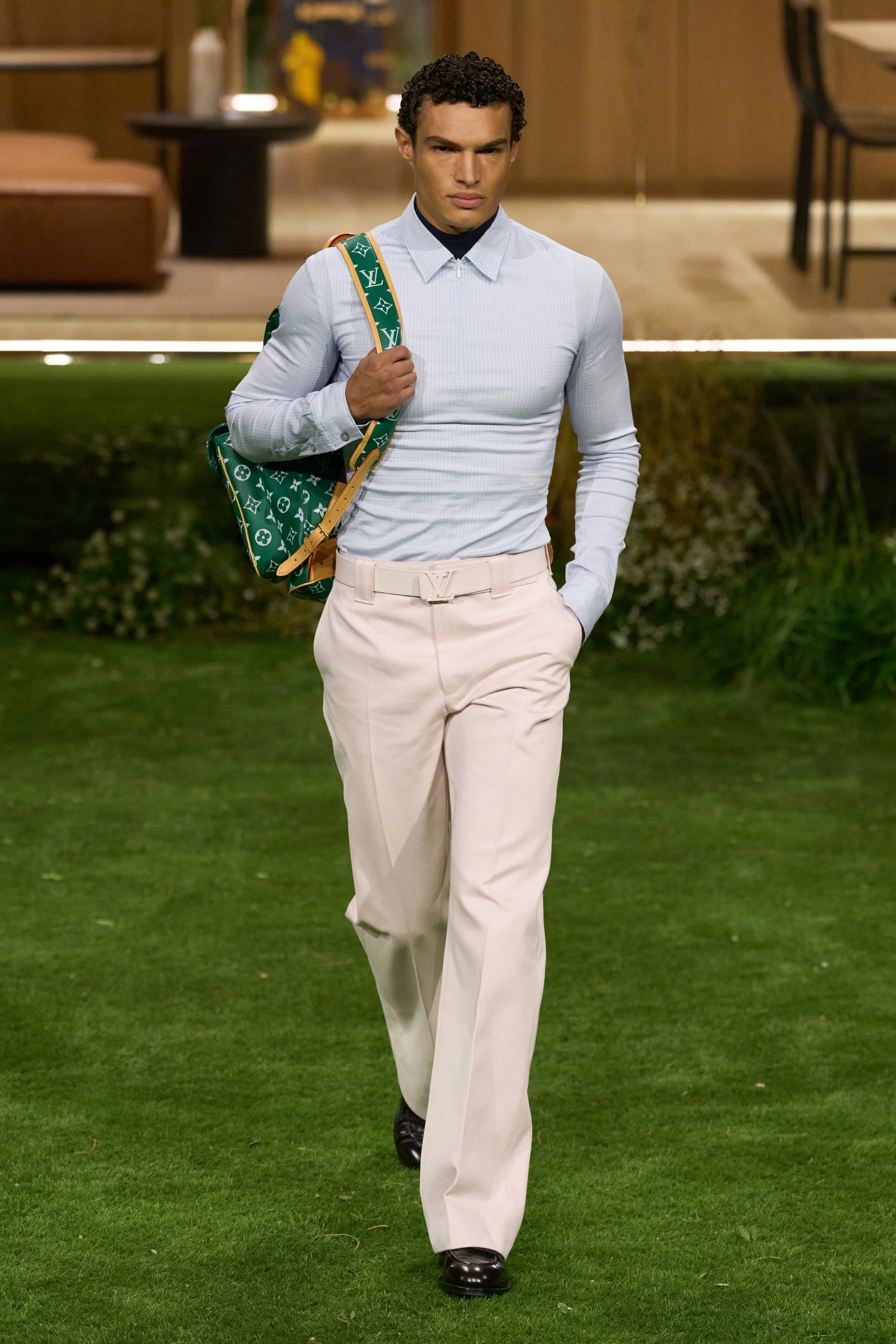
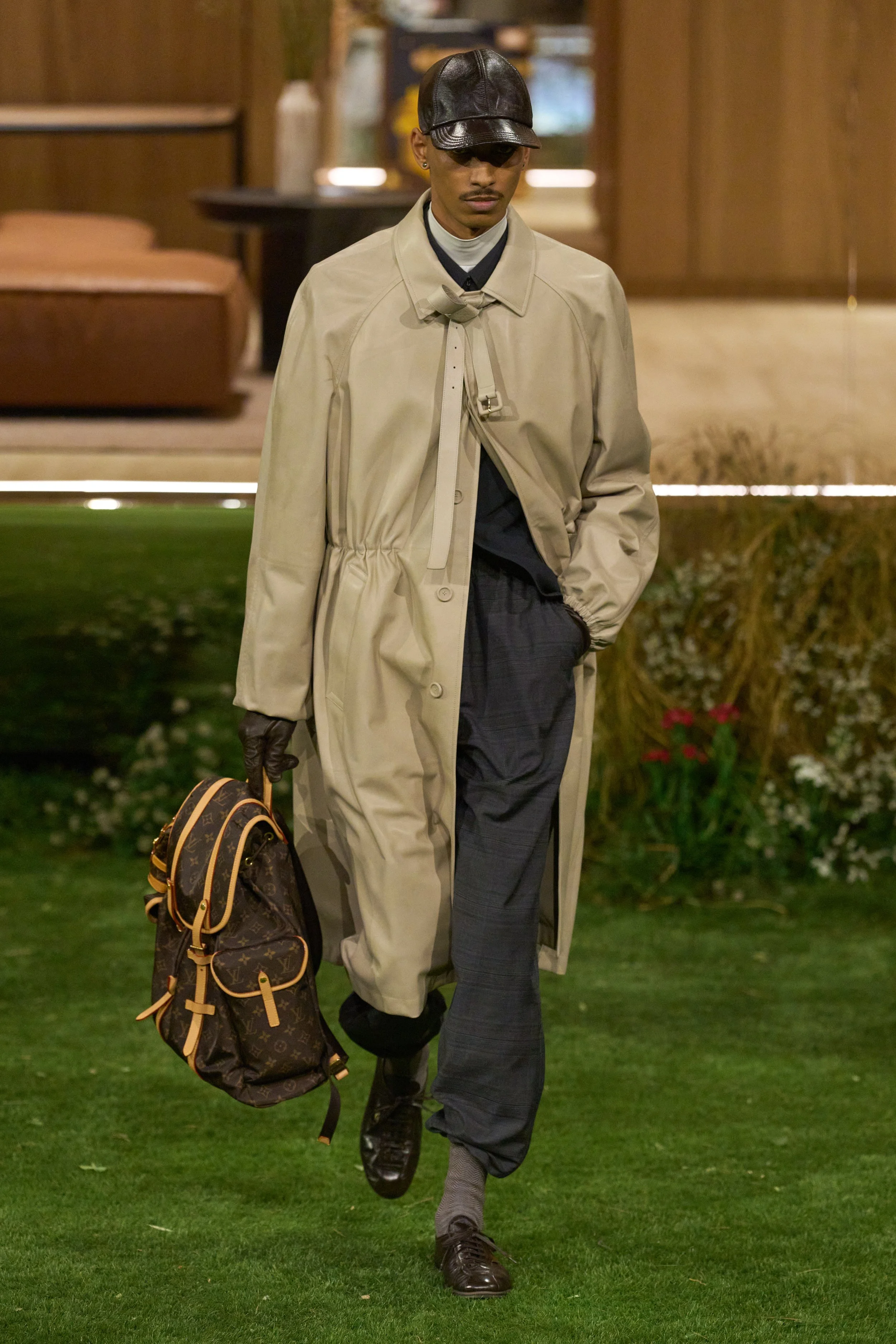
Writing about Pharrell Williams’ work at Louis Vuitton calls for a recognition of the perspective he brings to the house. Williams embraces the position of creative director in a way that reflects his understanding of fashion as part of a broader creative ecosystem, not just the production of garments. With that in mind, the Louis Vuitton Fall/Winter 2026 collection felt especially compelling in its focus on confident, well-executed clothes.

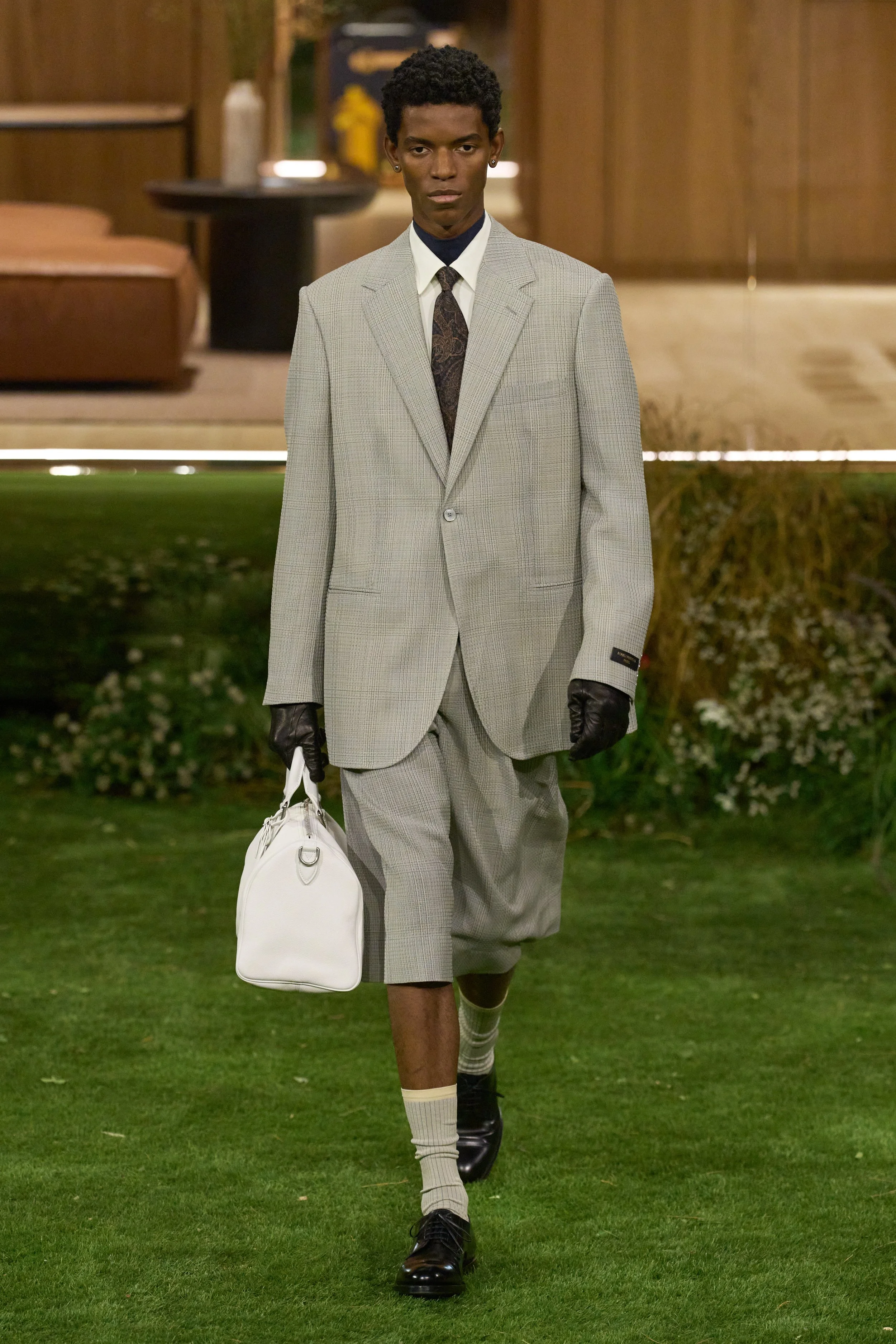
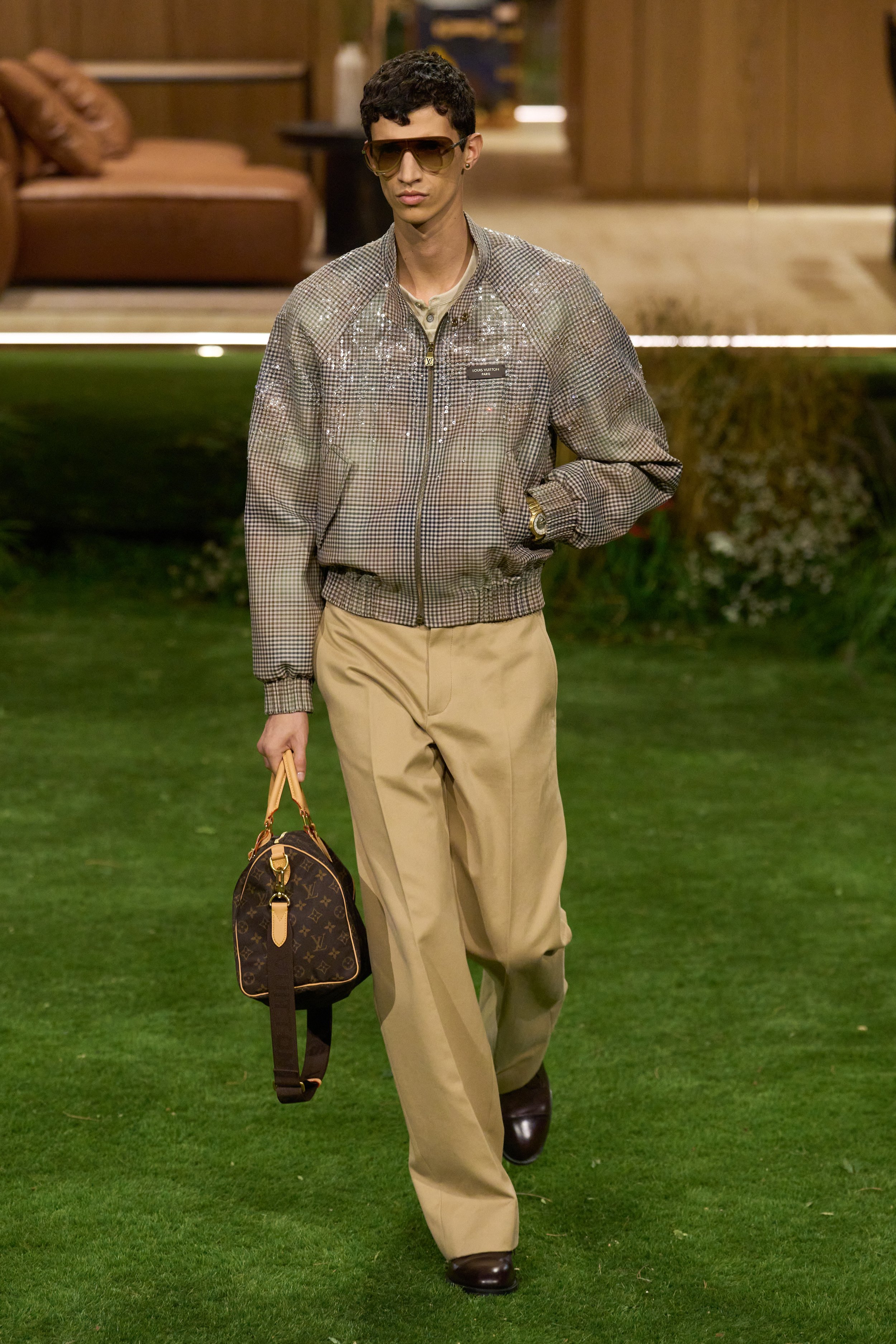
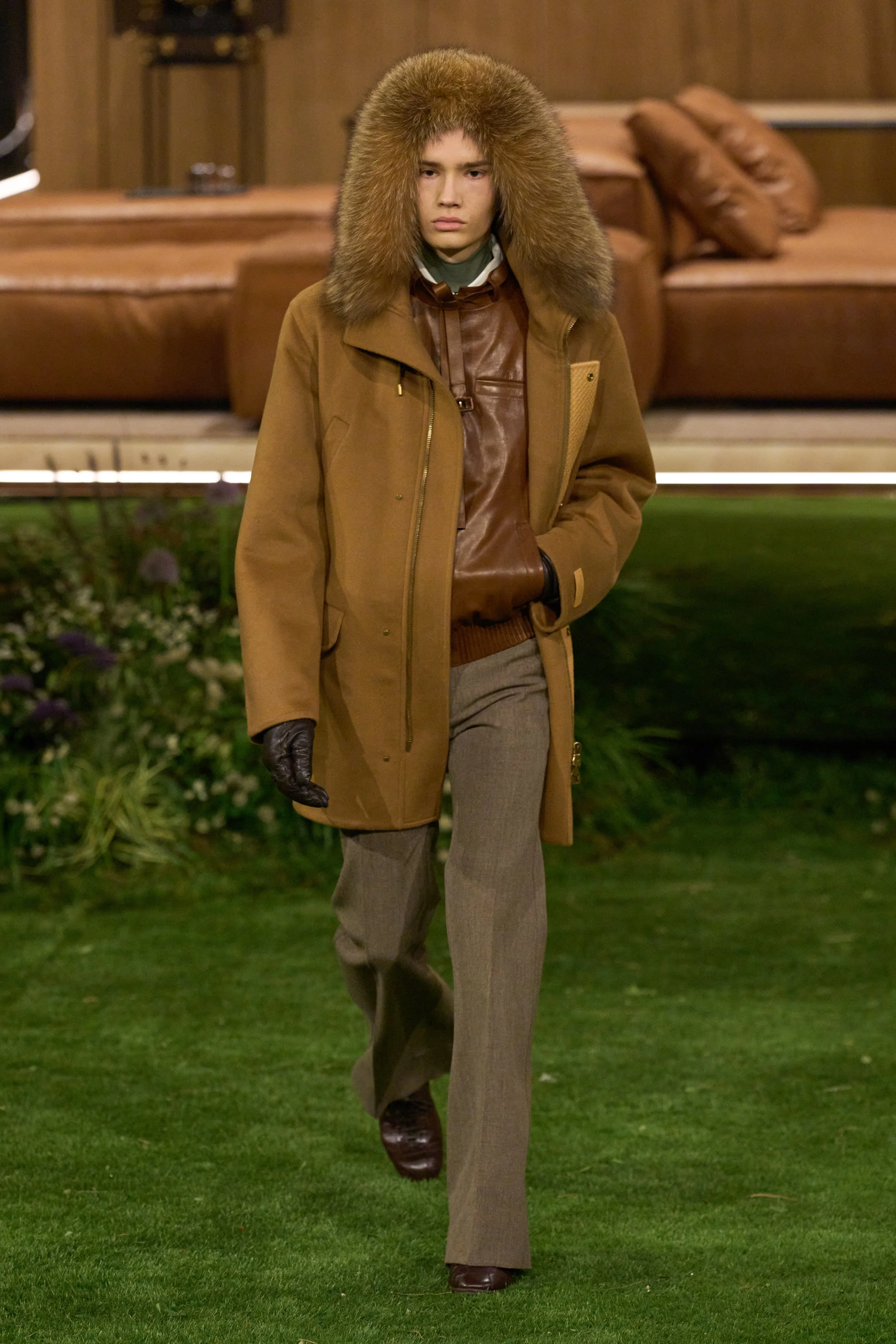
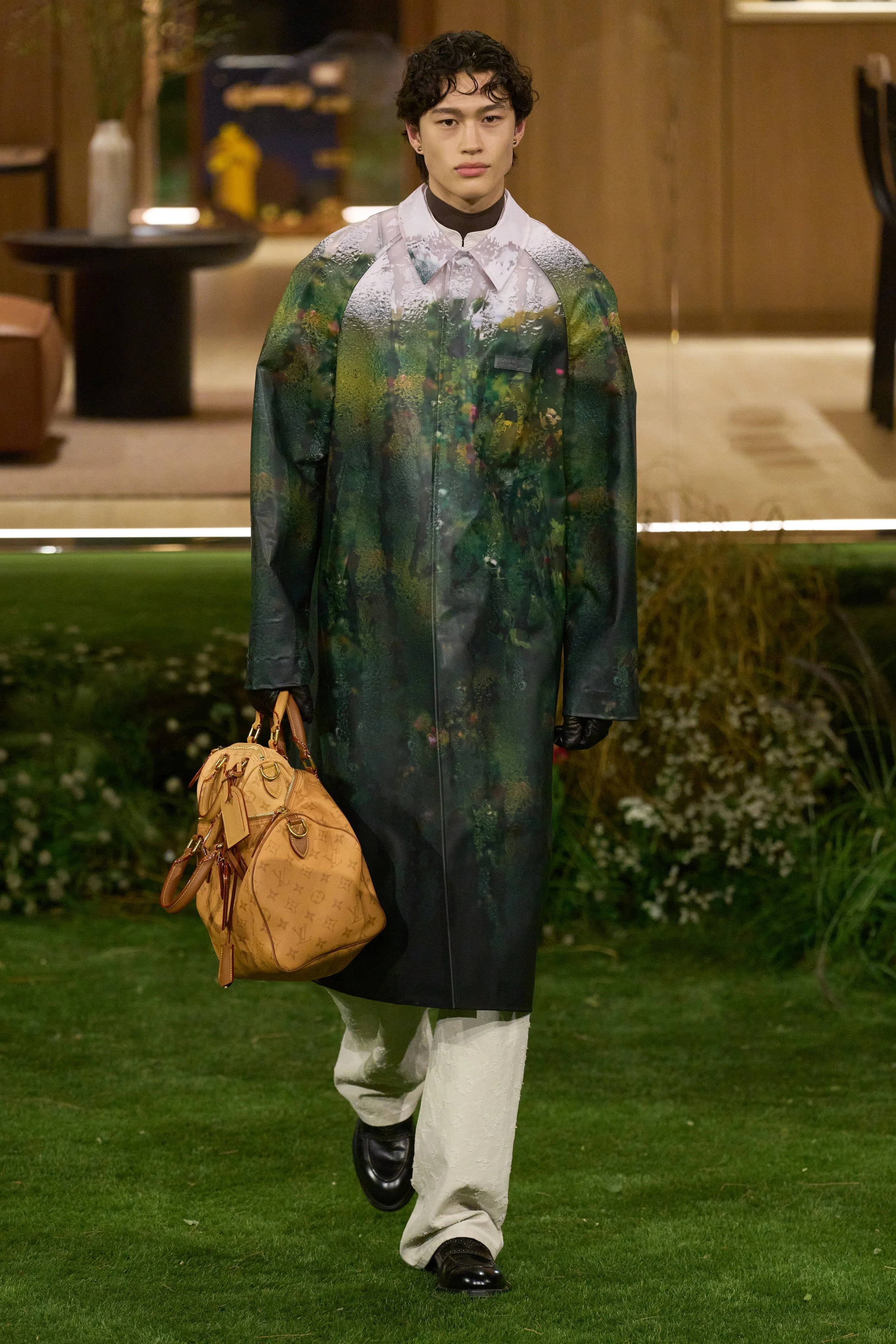
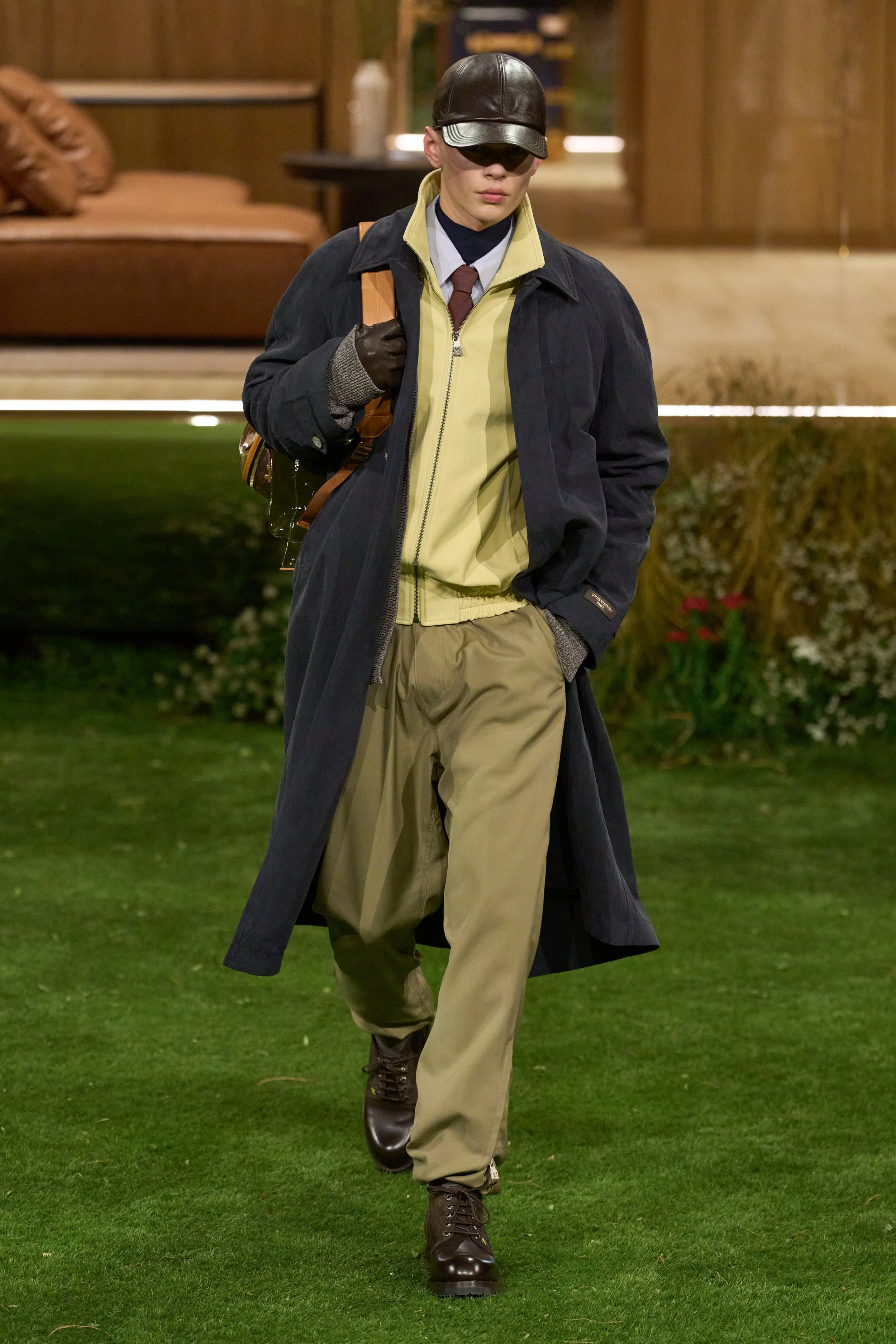
At the Louis Vuitton Foundation, an indoor villa served as the setting for a collection filled with wardrobe staples. The show opened with powerful tailoring. Strong shoulders, long hems, nipped in waists. Almost immediately, the formal is tempered by technical functionalism. Hooded parkas replace blazers on top of ties. Shirts are embellished or crumpled, a feat ingeniously achieved through aluminium in the fabric.

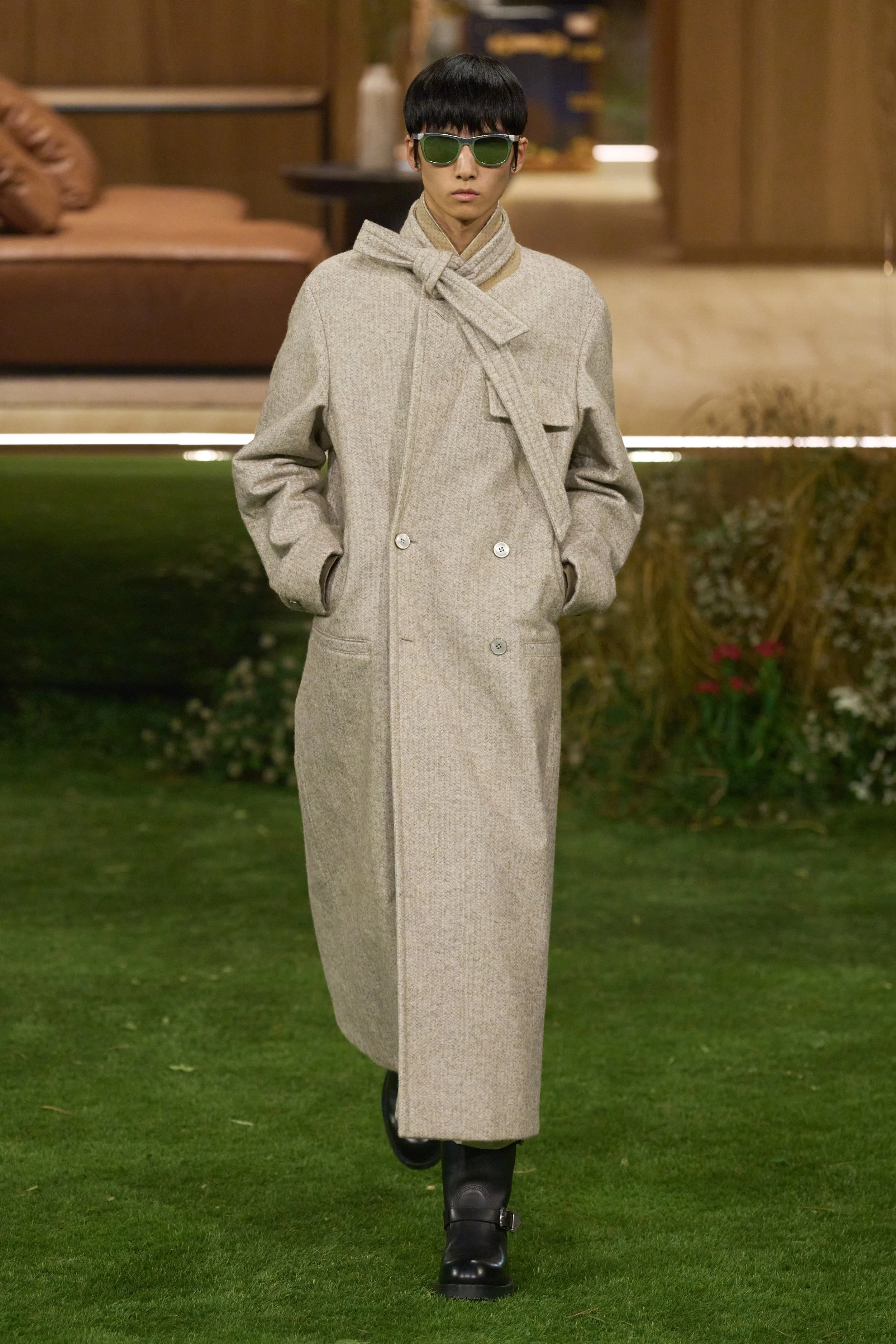
There were elements of fun, of course – it’s still Vuitton, it’s still Williams. Shiny vinyl hid the classic LV monogram. Long coats were tied at the neck in wool pussy bows, the same that, in cropped leather jackets, were made from long belts. But, even in these moments of whimsy, pragmatism seeped through. Maybe it’s a sign of confidence. After more than two years, Williams is surer of himself, more comfortable letting clothes carry the performance.


Words by Pedro Vasconcelos

LEMAIRE FW26

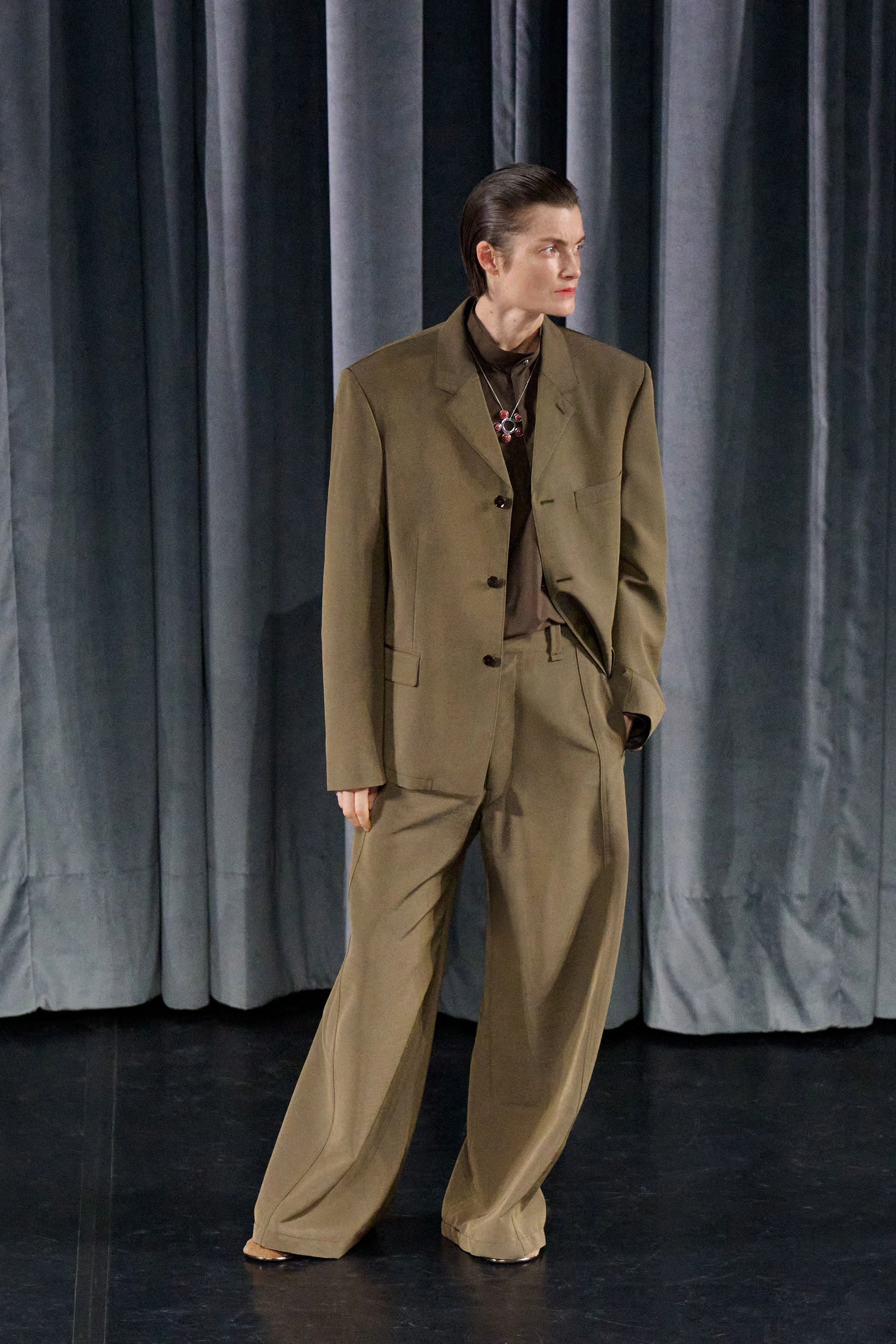
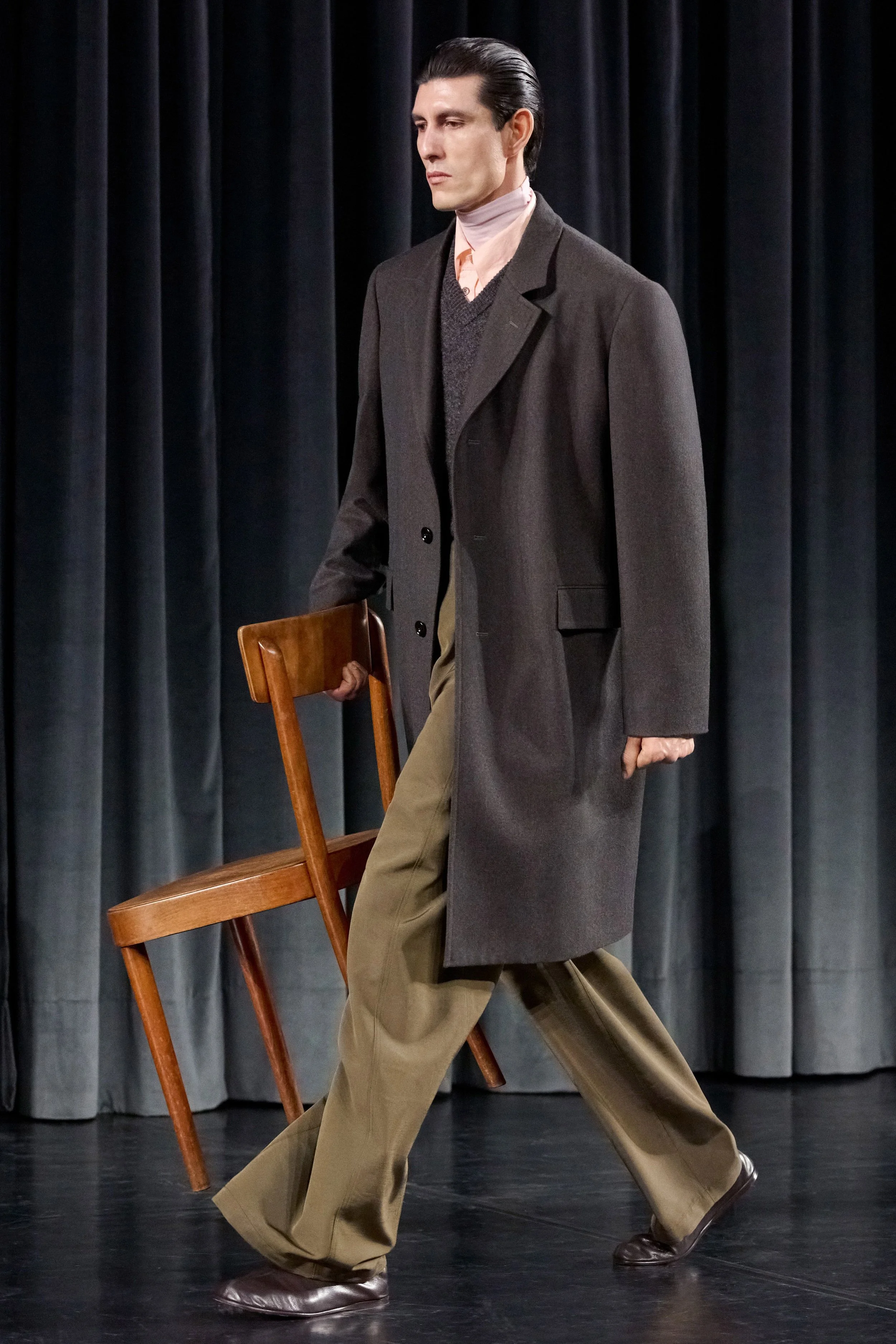
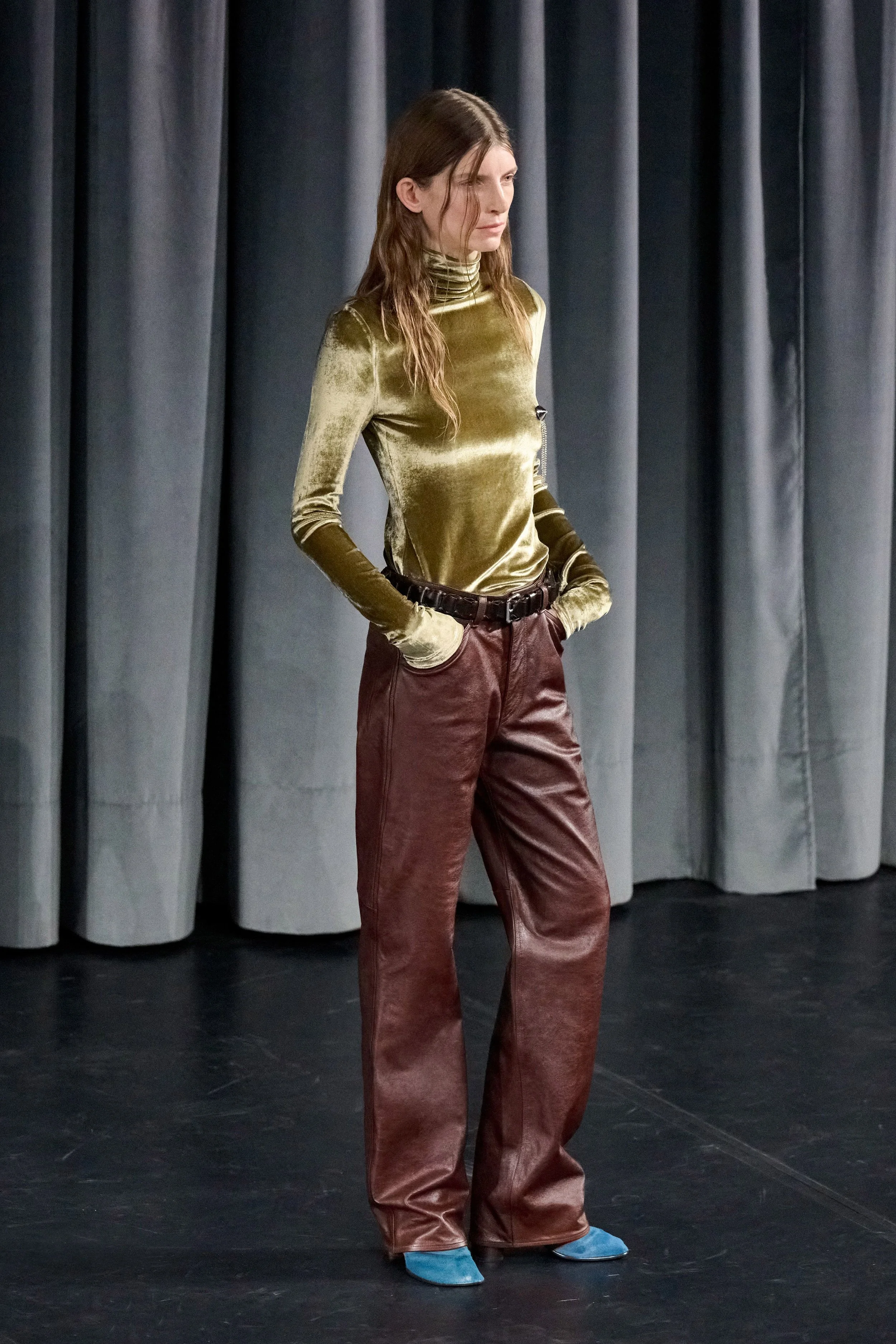
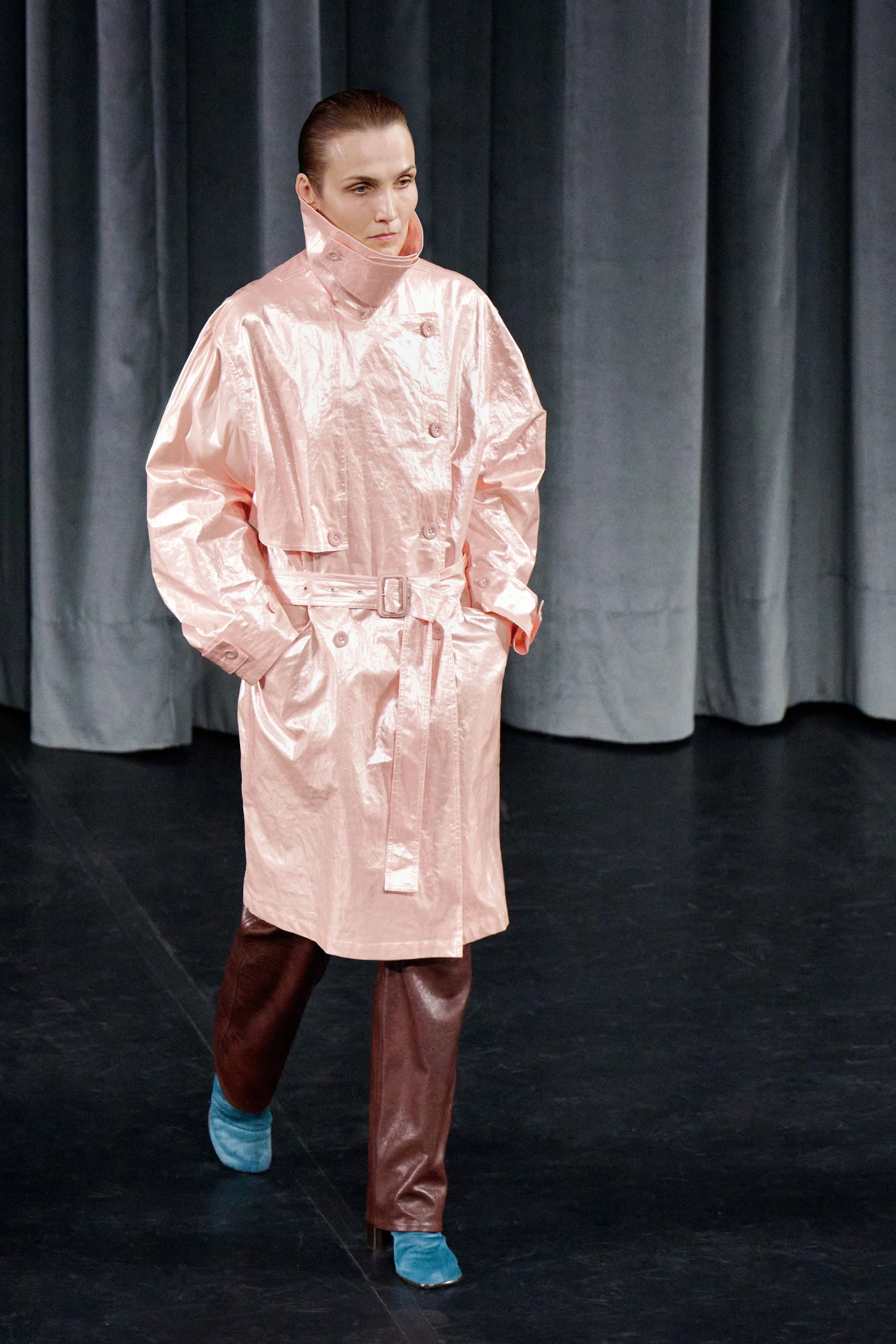
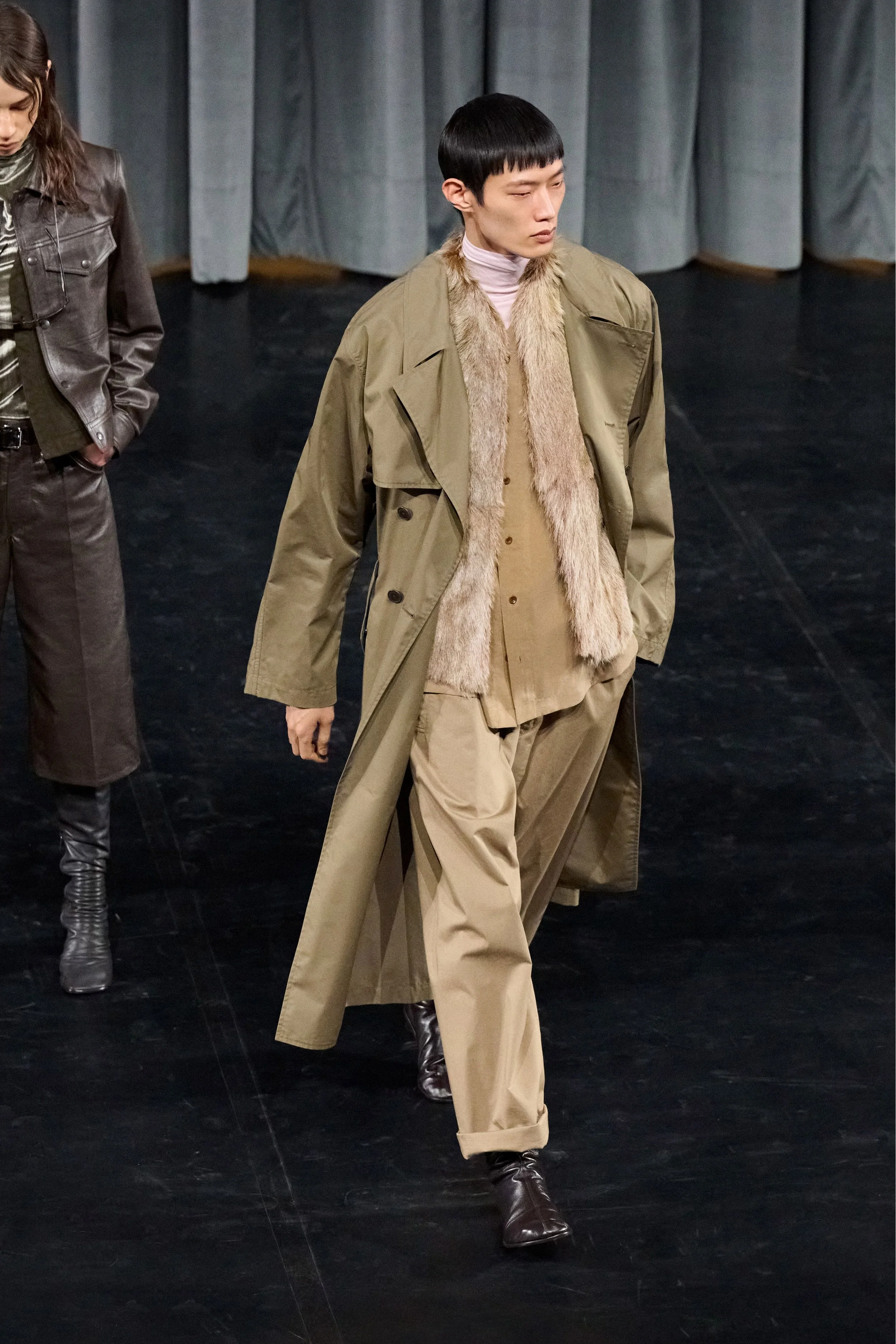
LEMAIRE’s Fall/Winter 2026 presentation, mine eyes, unfolded like a lucid dream. In collaboration with theatre director Nathalie Béasse, the house blurred fashion and performance into a series of living scenes. Inspired by Béasse’s work titled velvet, the setting became a world of seduction and unease, where silhouettes emerged, dissolved, and reappeared. The experience felt contemplative and cinematic.

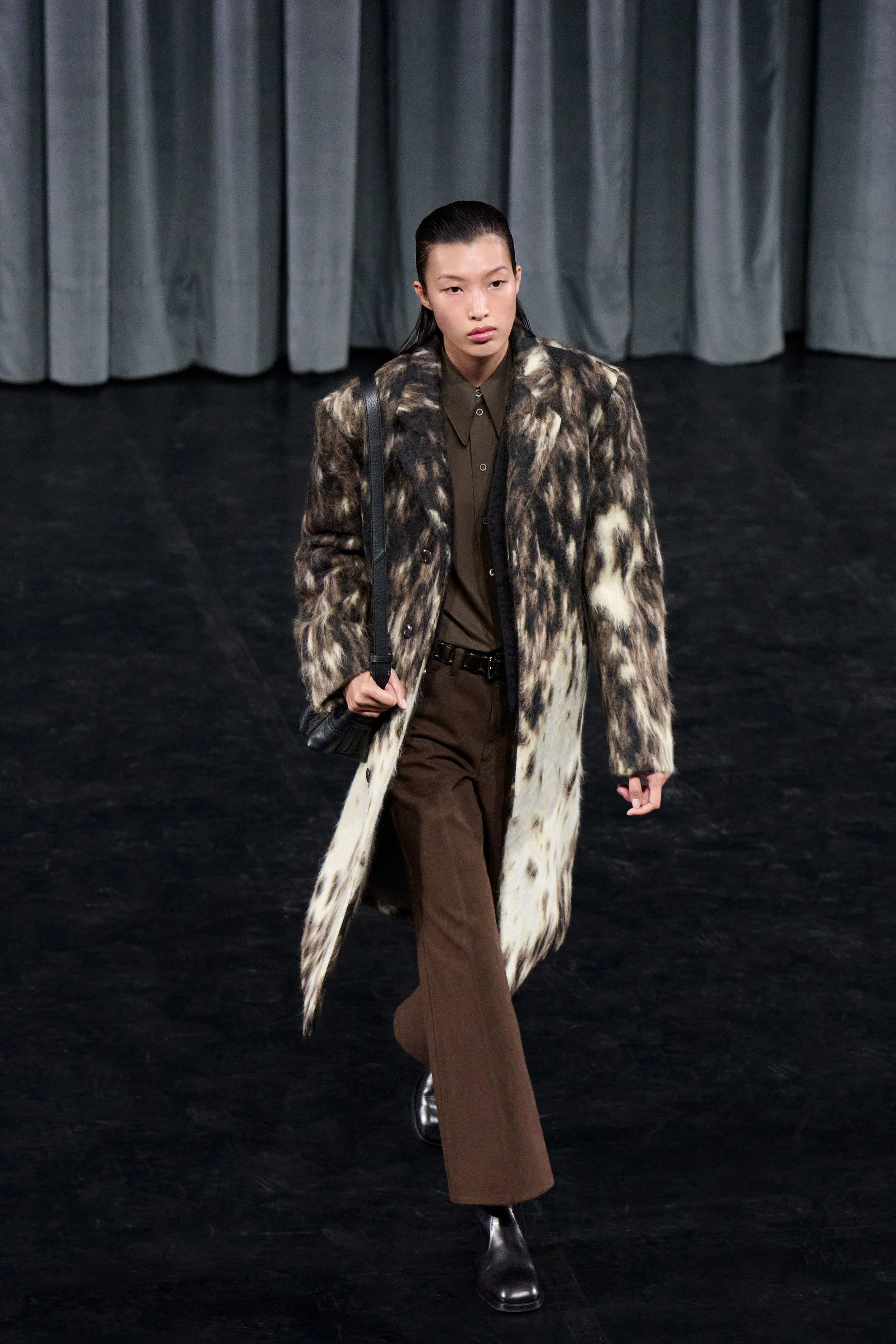
The women’s collection leaned into illusion as a through line. Crushed velvet turtlenecks shimmered like liquid metal, lacquered denim masqueraded as leather, and coated cottons and dry silks shifted under light with each step. The colour palette was rich in LEMAIRE staples – charcoal, chocolate, khaki, butter yellow – and juxtaposed with gleaming shades of pink, celadon, and turquoise.

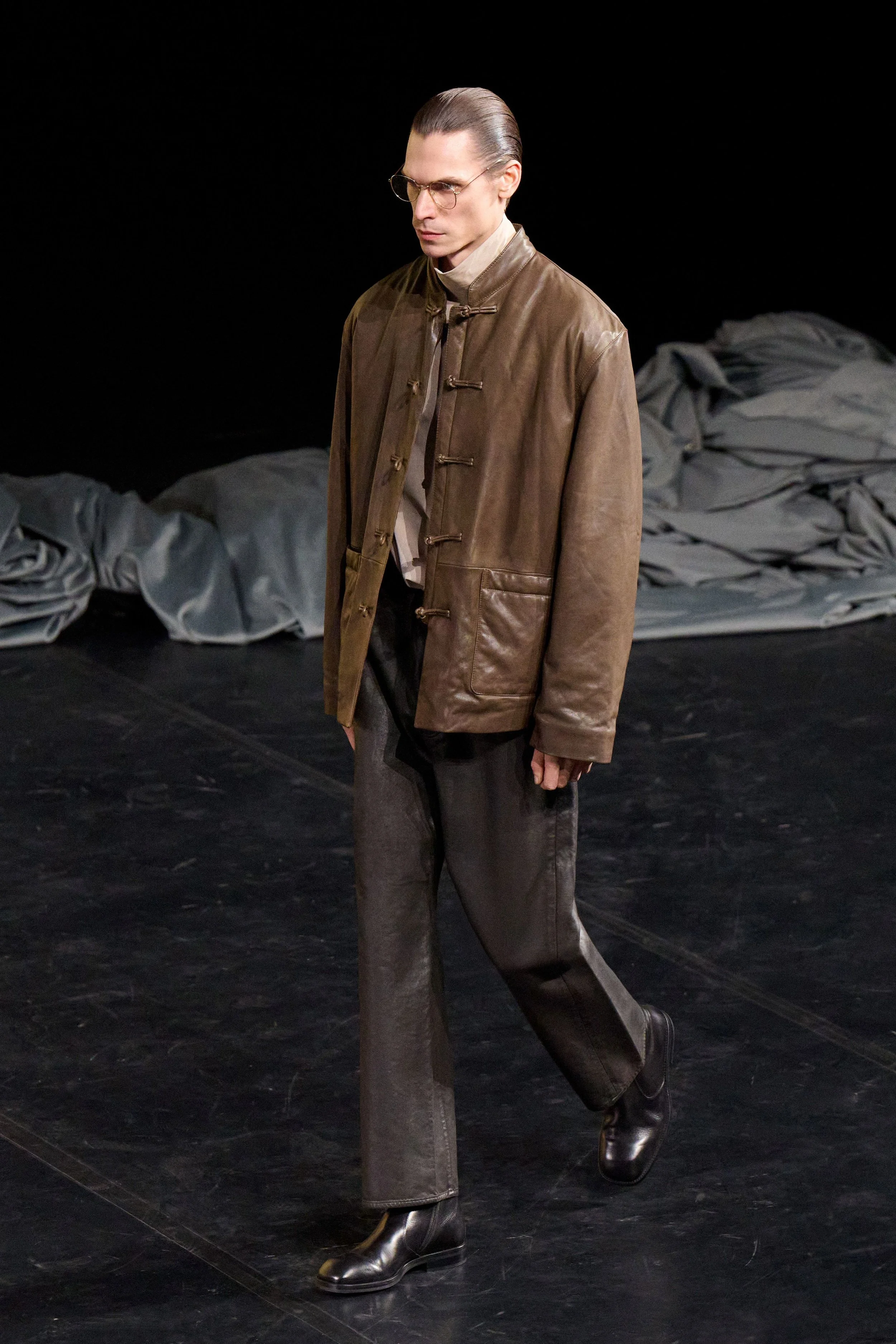
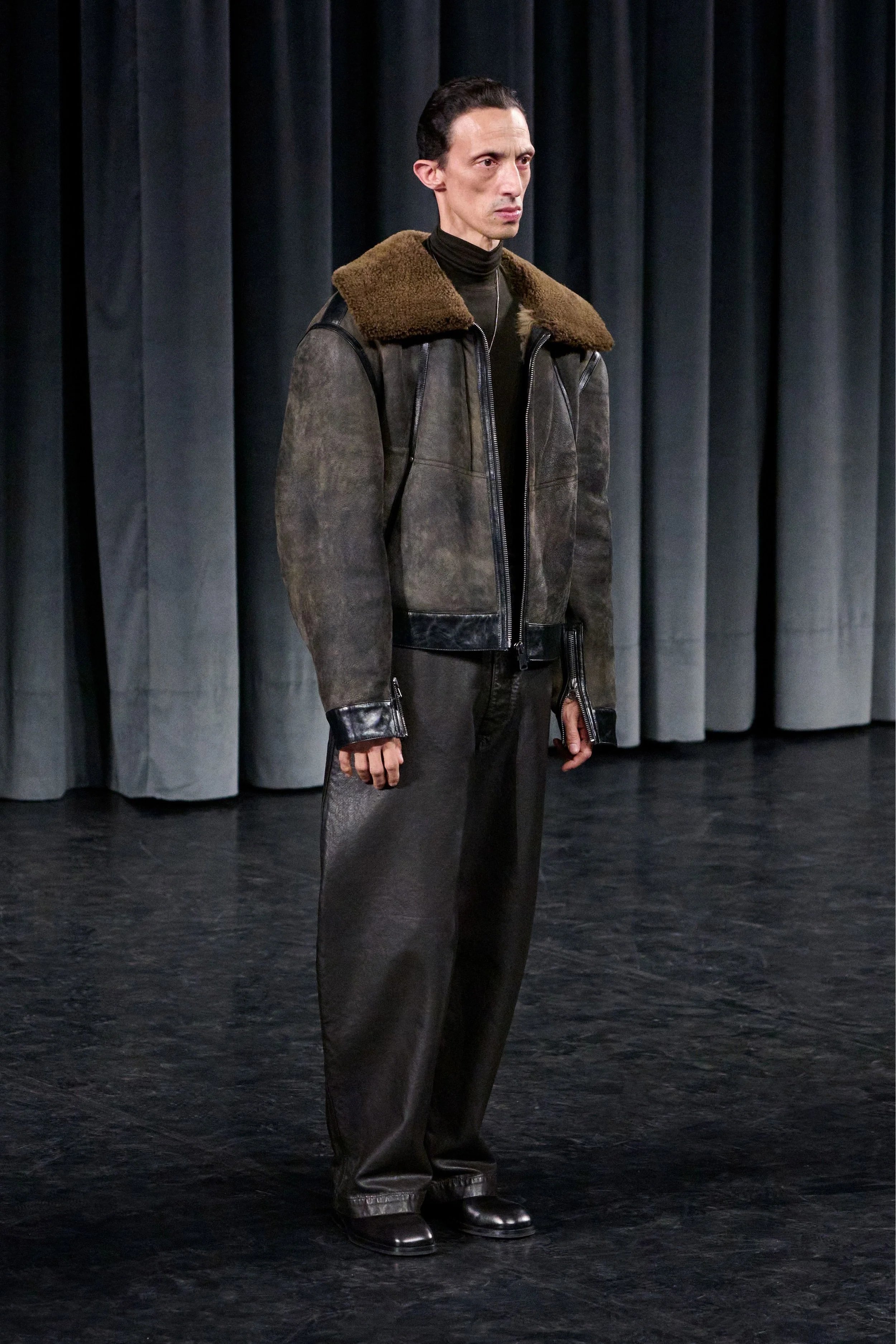
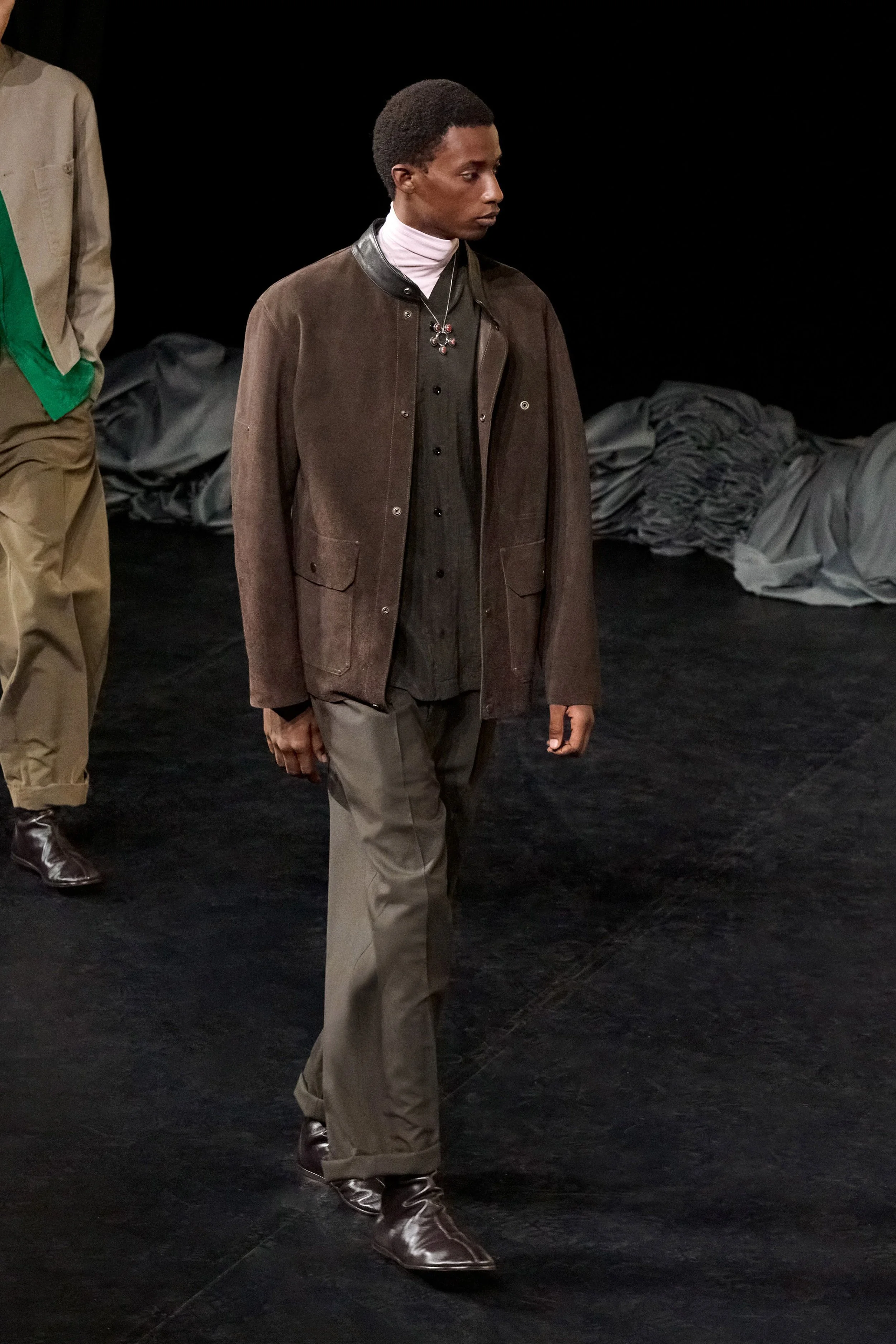
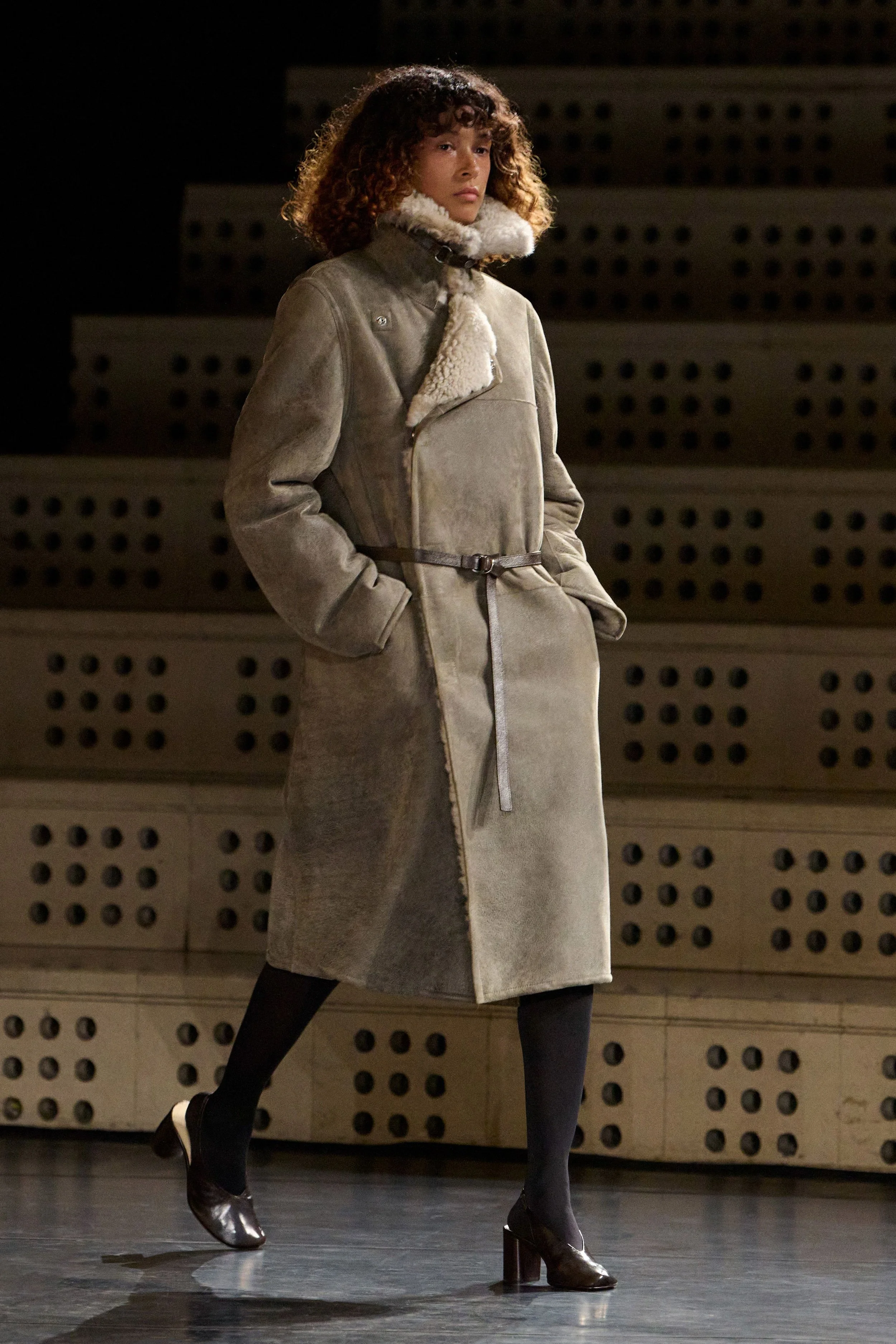
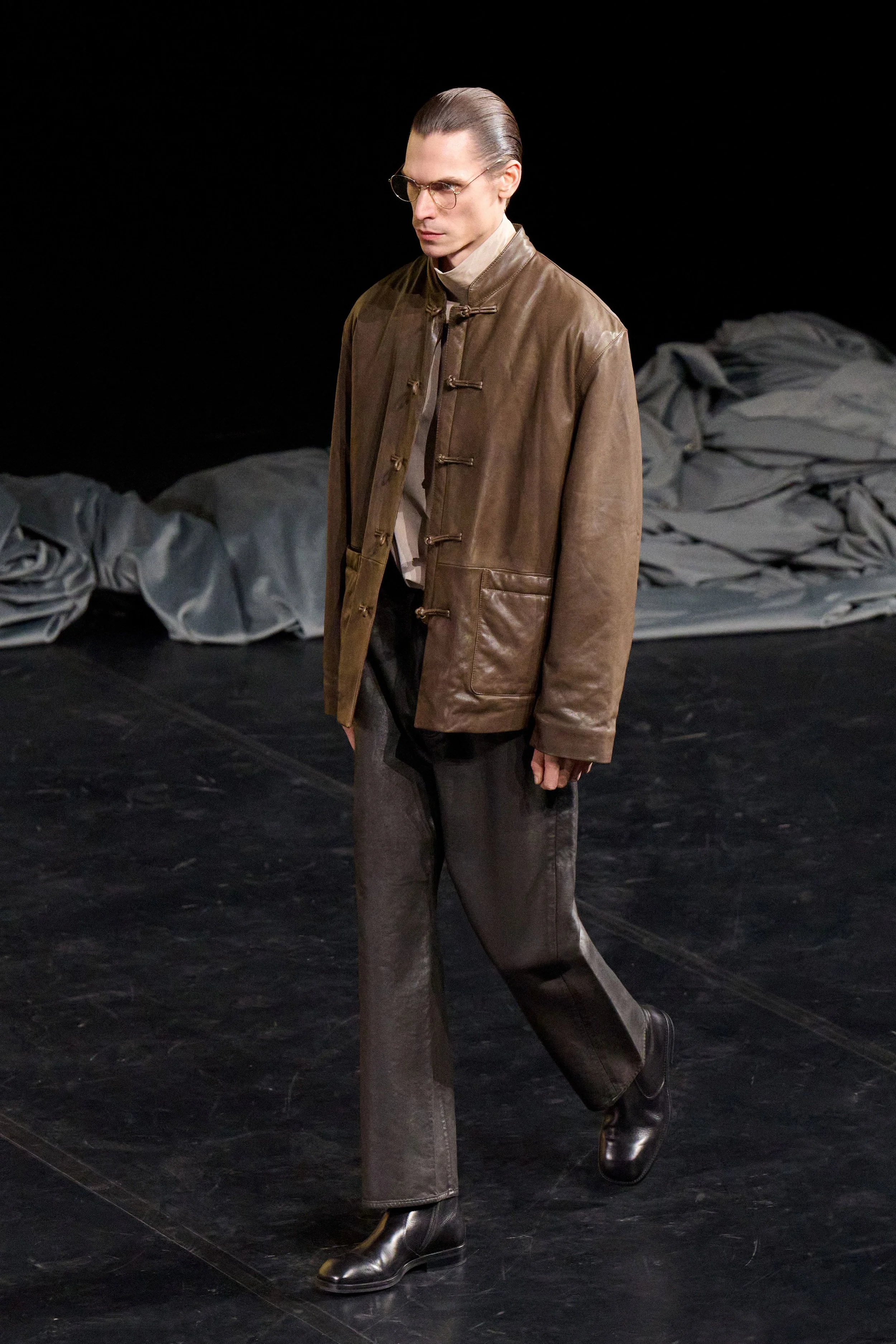
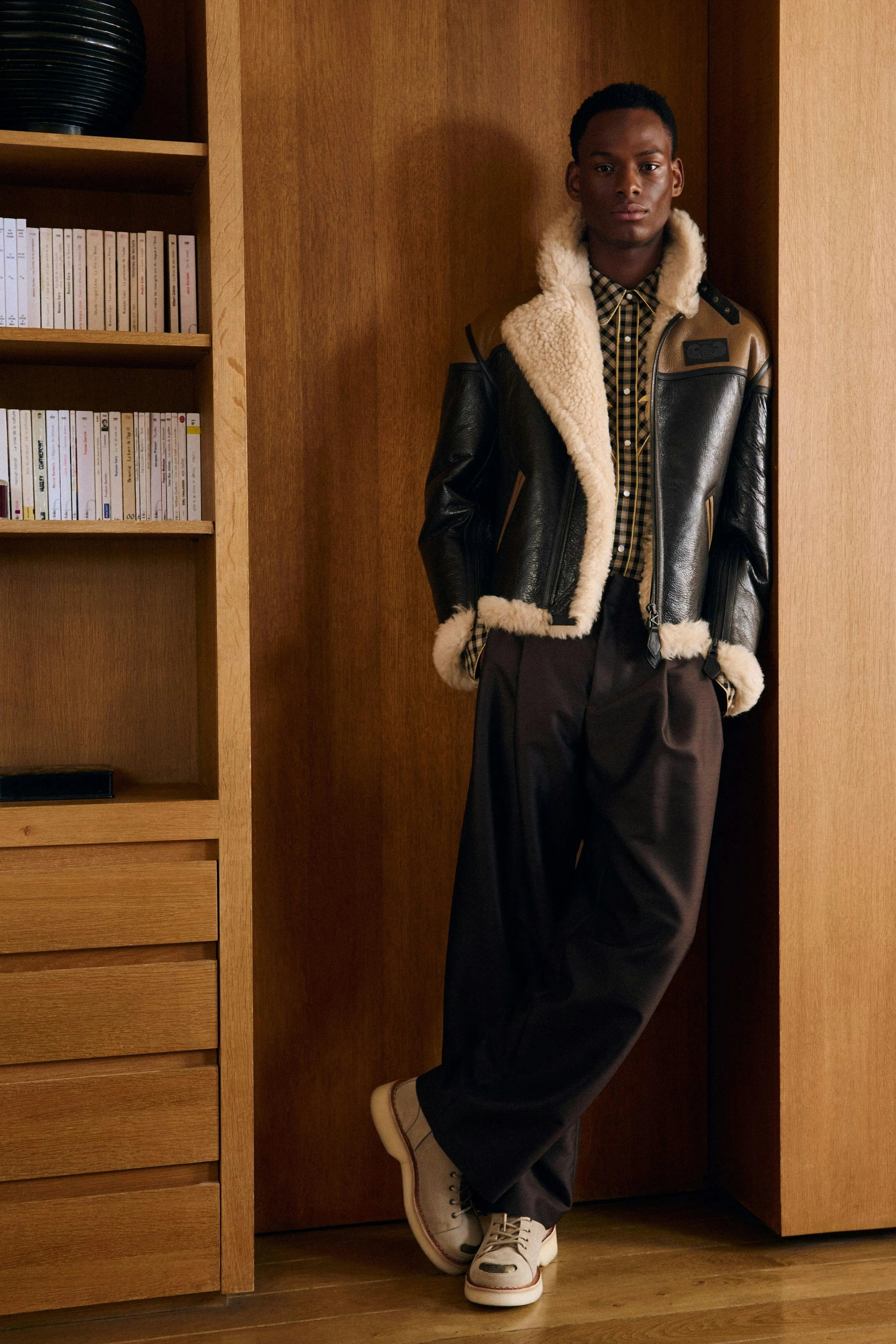
As for the menswear proposition, the archetypes of Western dress, like leather and sheepskin jackets, were translated through a more fluid take. Mandarin and welding jackets appeared in supple calfskin and suede, and were paired with rolled-up trousers and sock-like leather boots, while a shaggy vest sat underneath a floating trench coat.

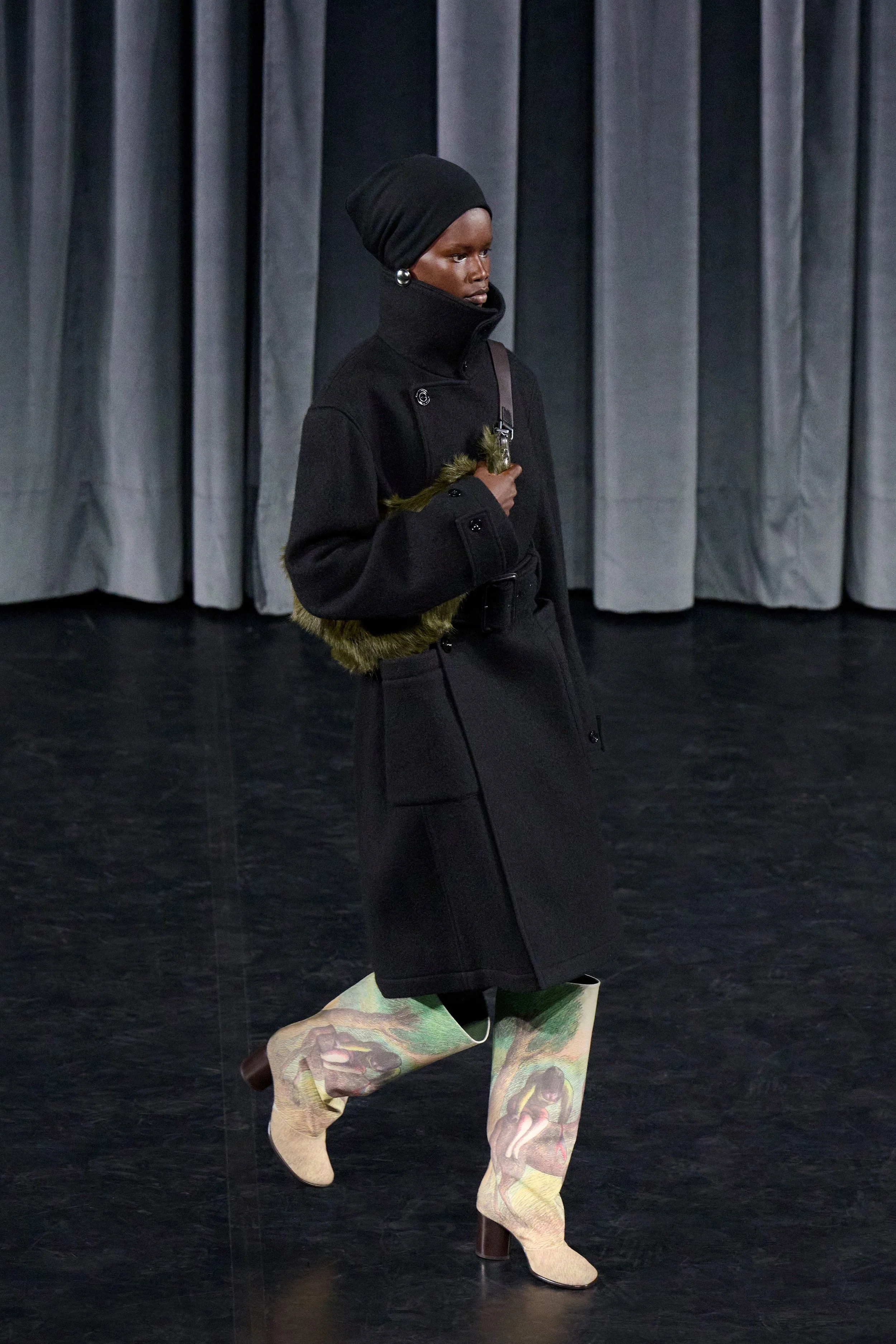
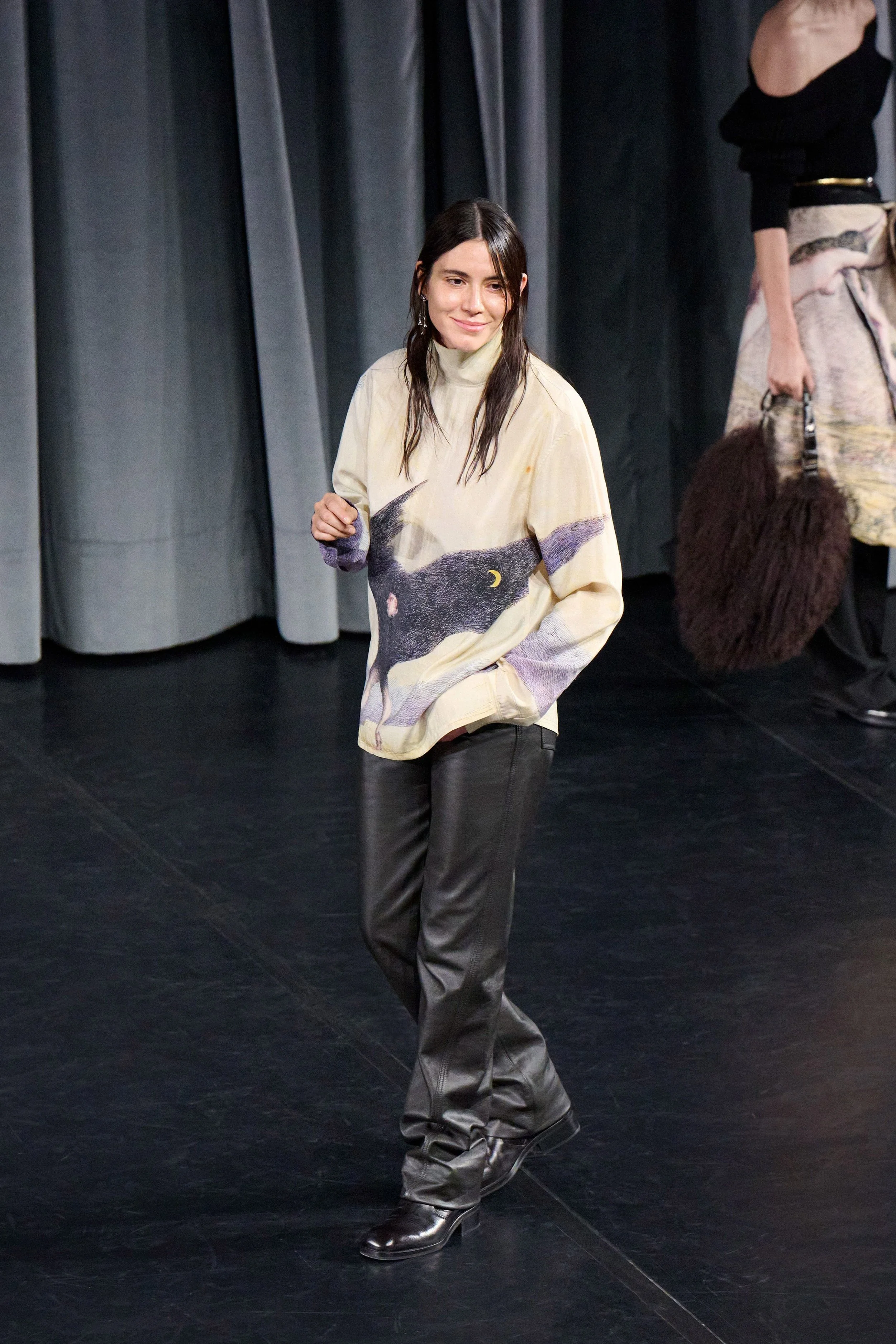
Hybrid pieces, like quilted skirts that double as capes or blankets, nodded to domestic surrealism, joined by accessories that felt equally oneiric, from big furry bags to shell-like charms and starburst brooches. The atmosphere further persisted with the garments featuring prints of surrealist works by illustrator Roland Topor, decorating knee-high boots with a block heel or delicate silk shirts with a funnel neck.


Words by Martin Onufrowicz

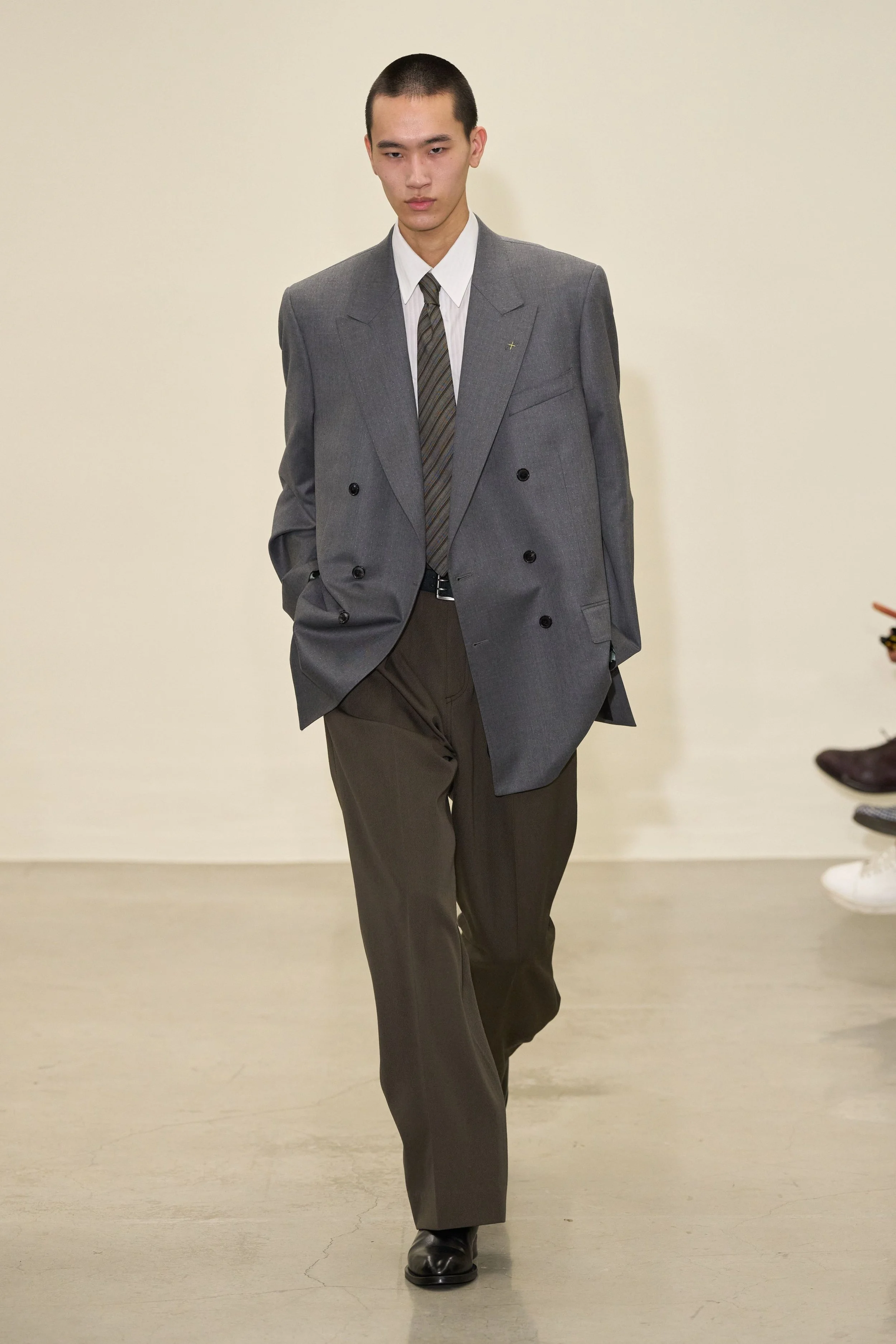
GIORGIO ARMANI FW26

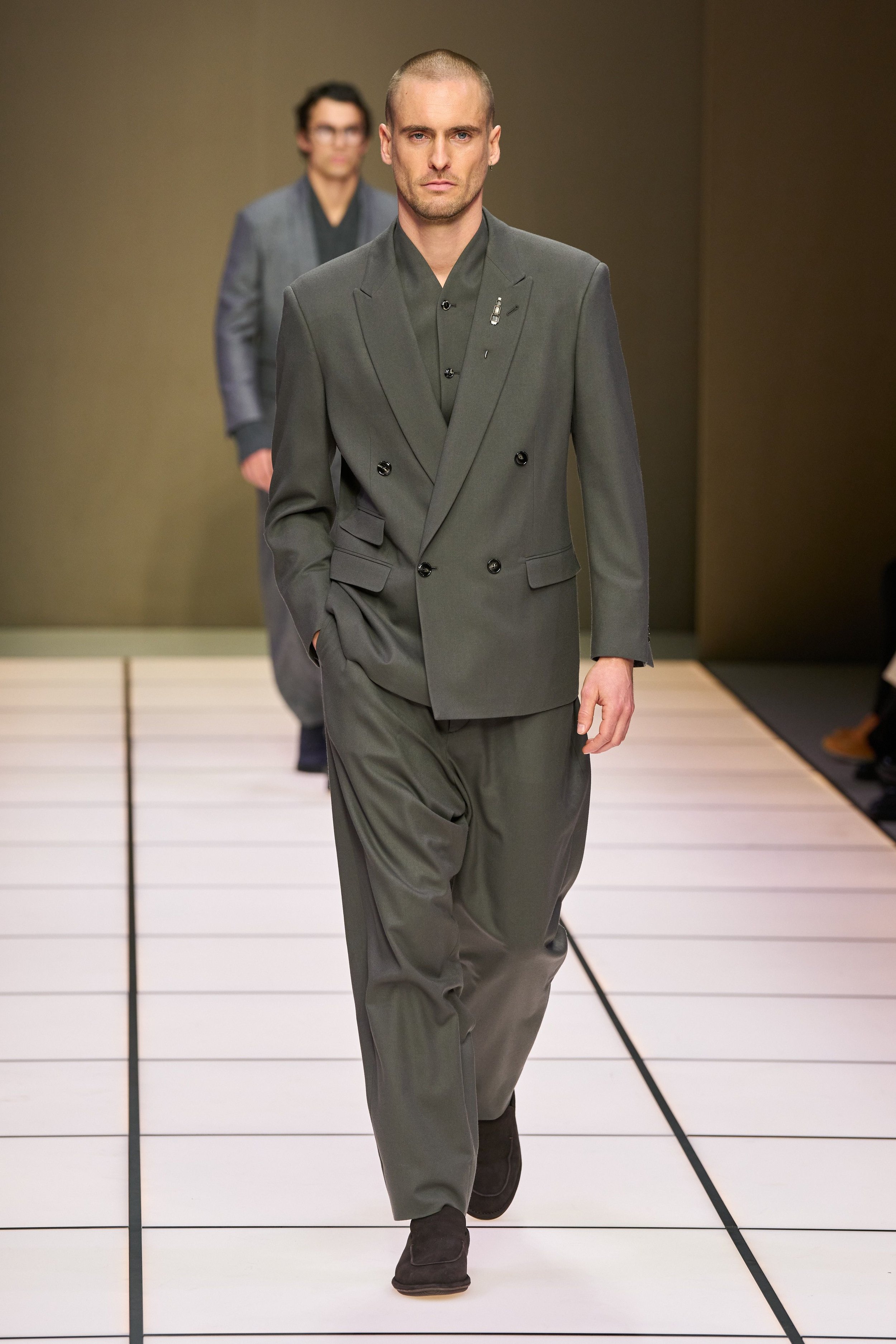
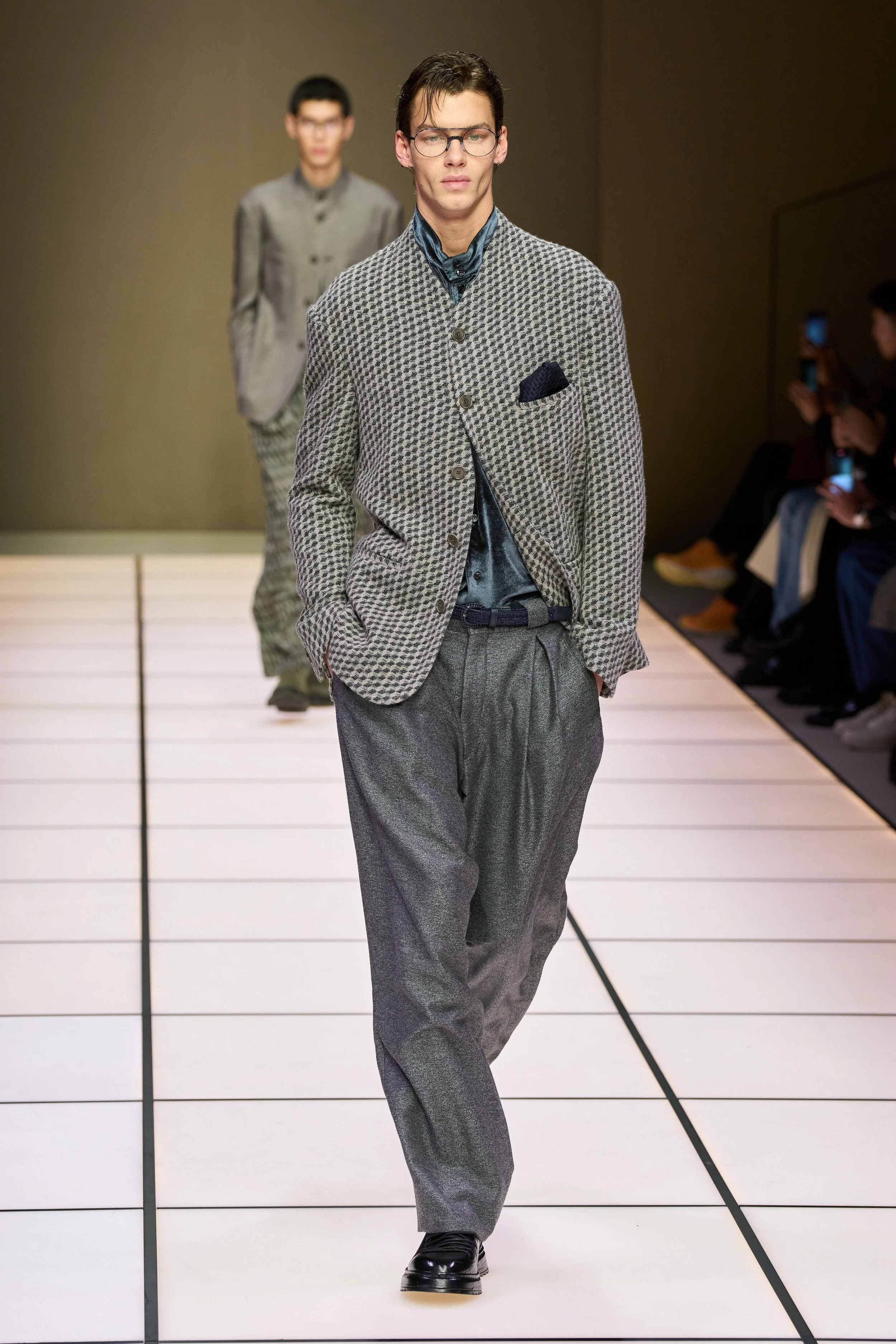
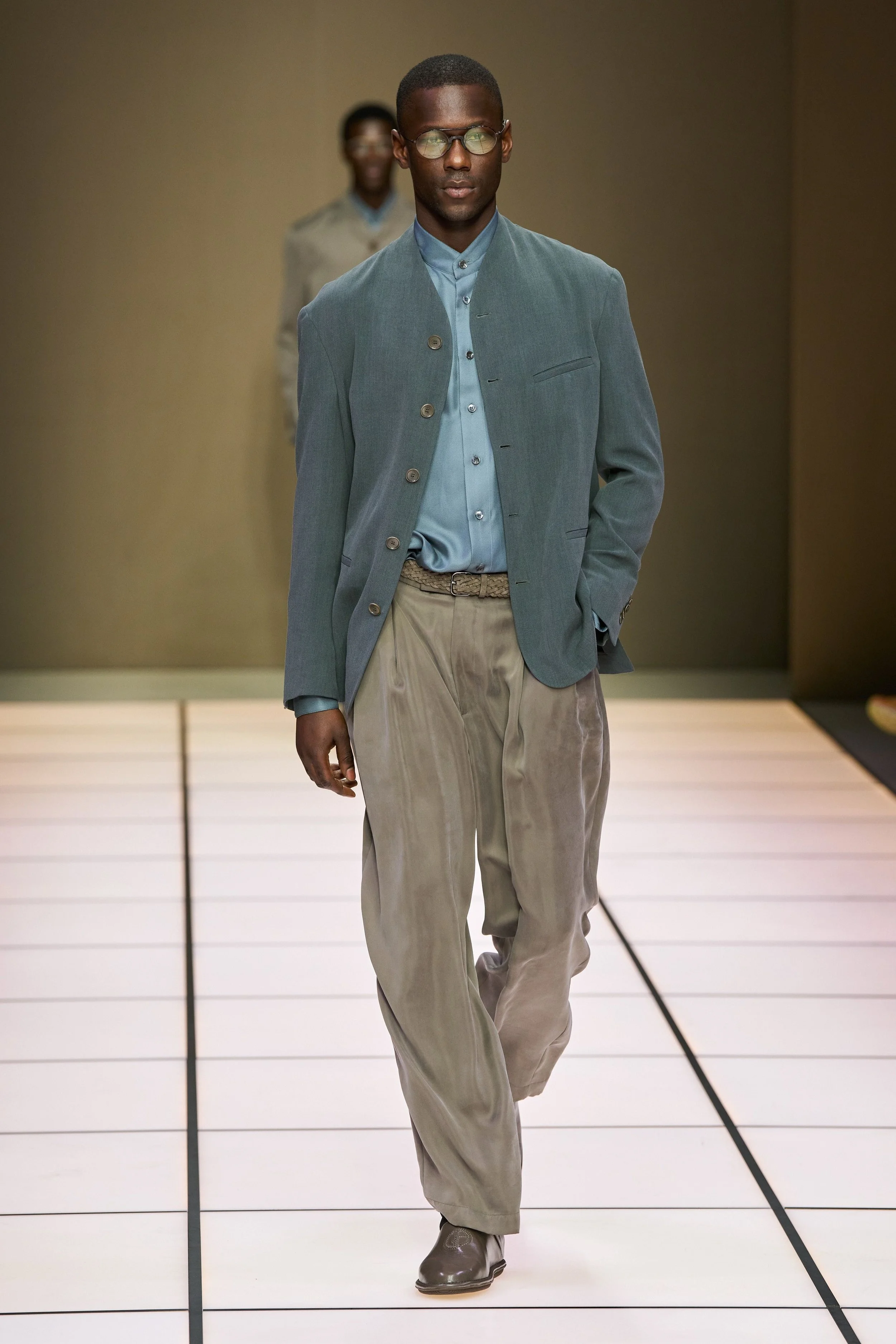
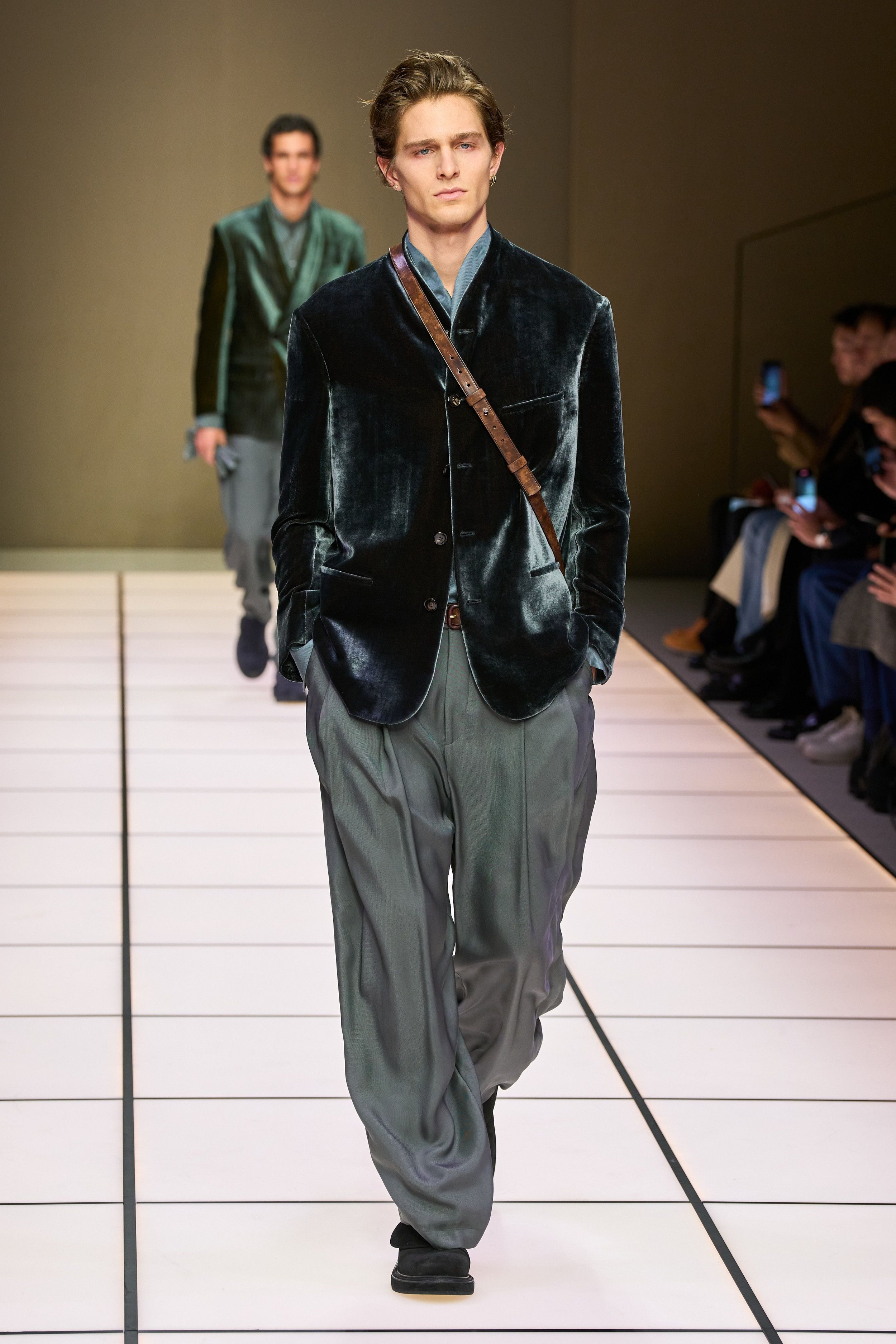
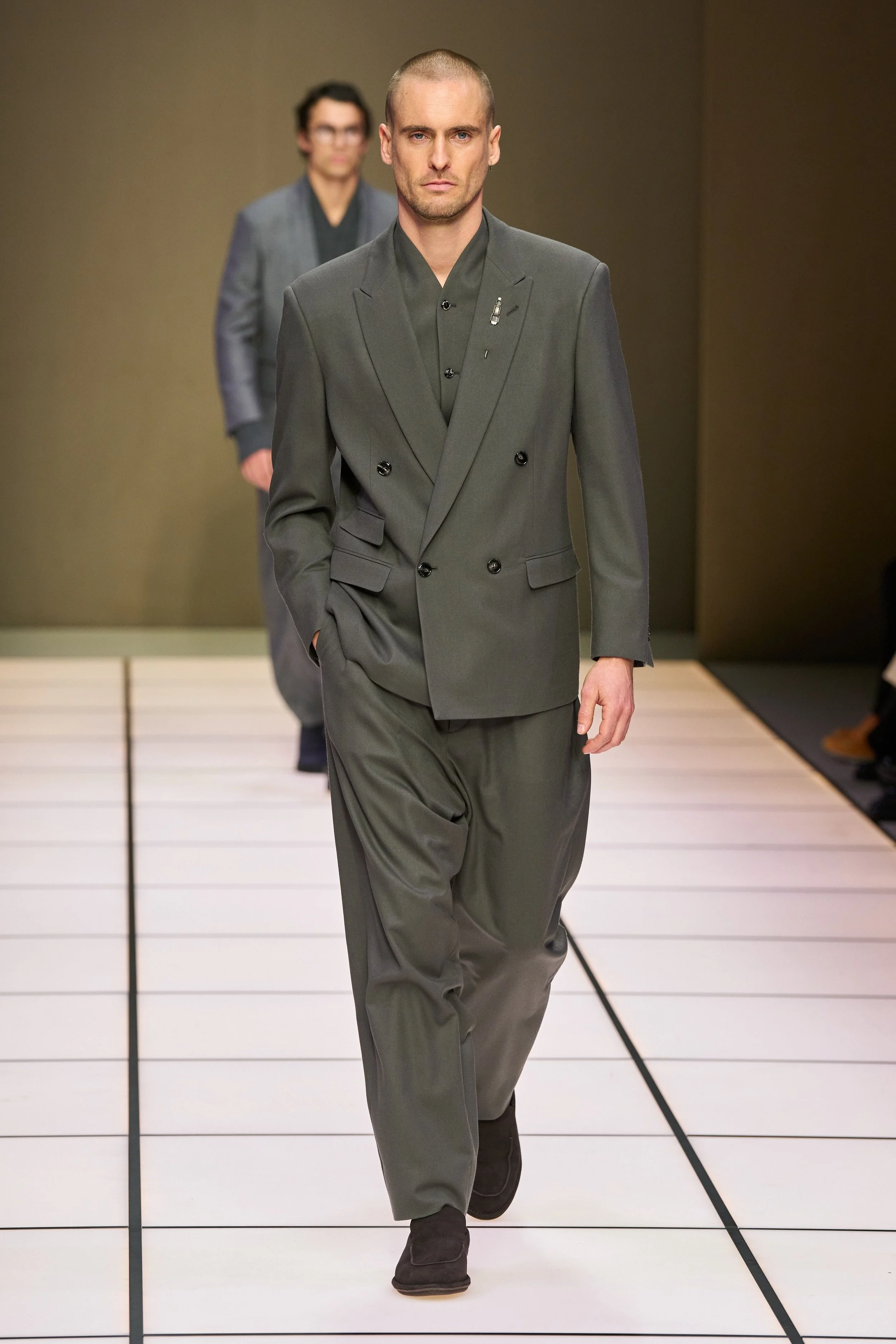
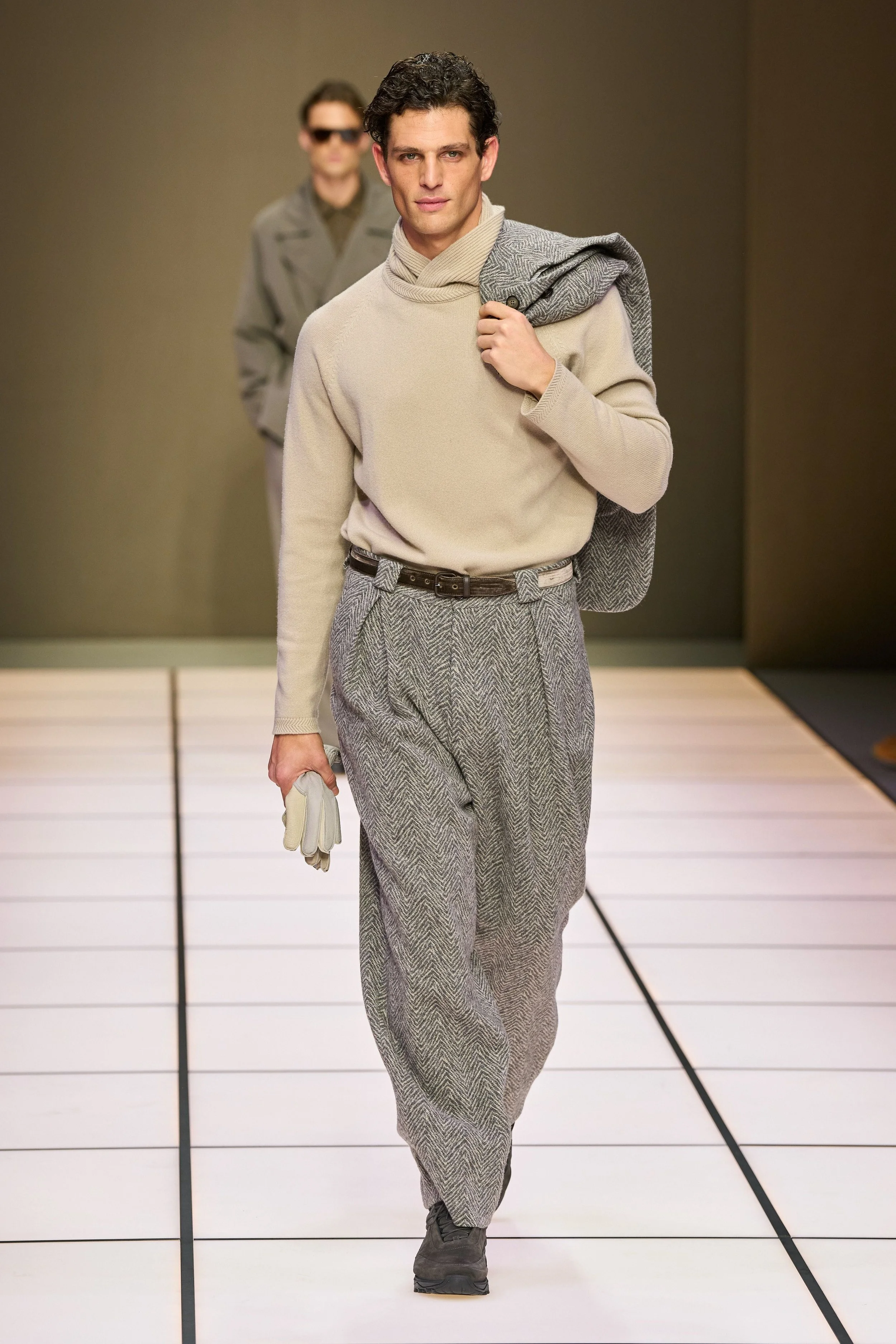
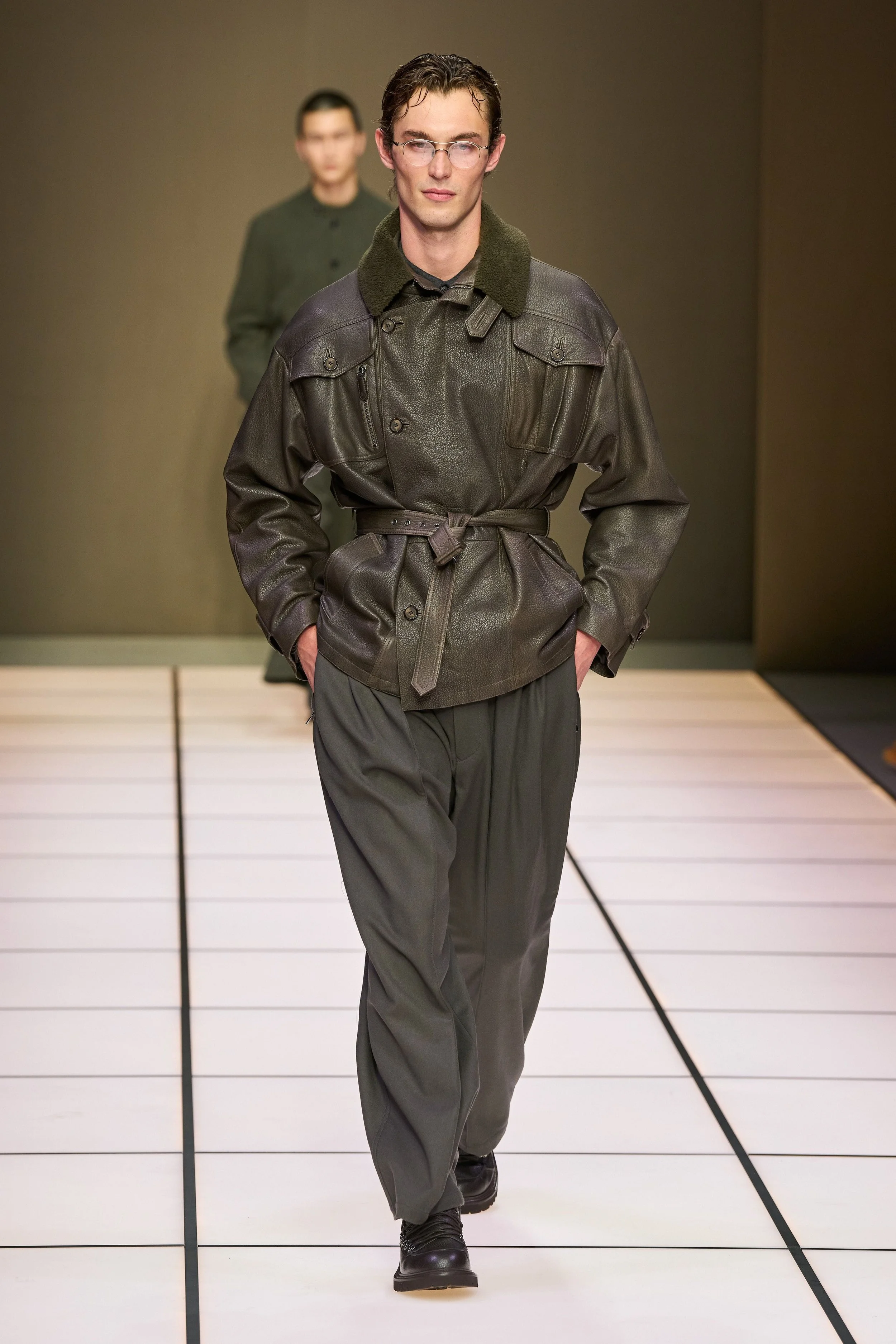
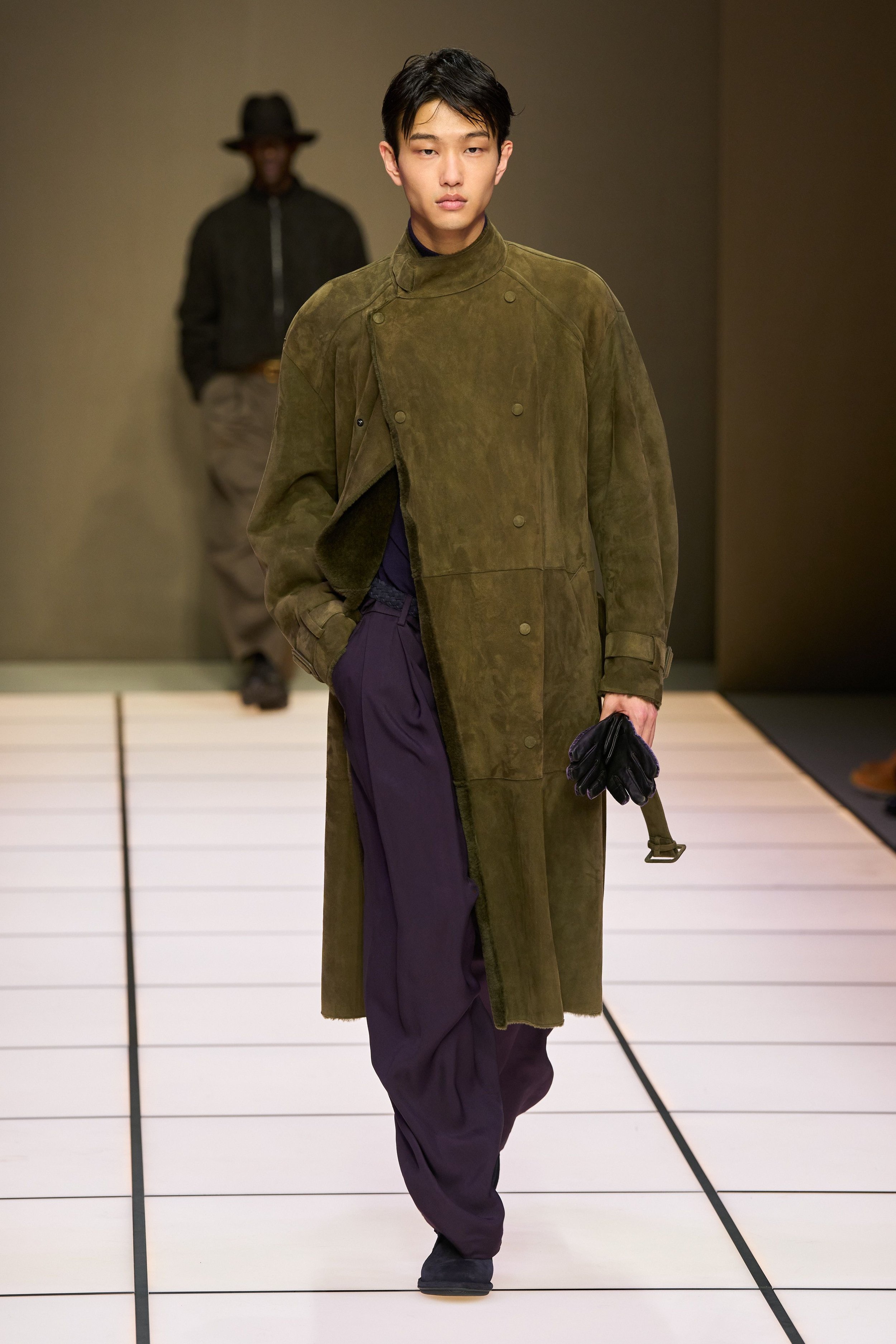
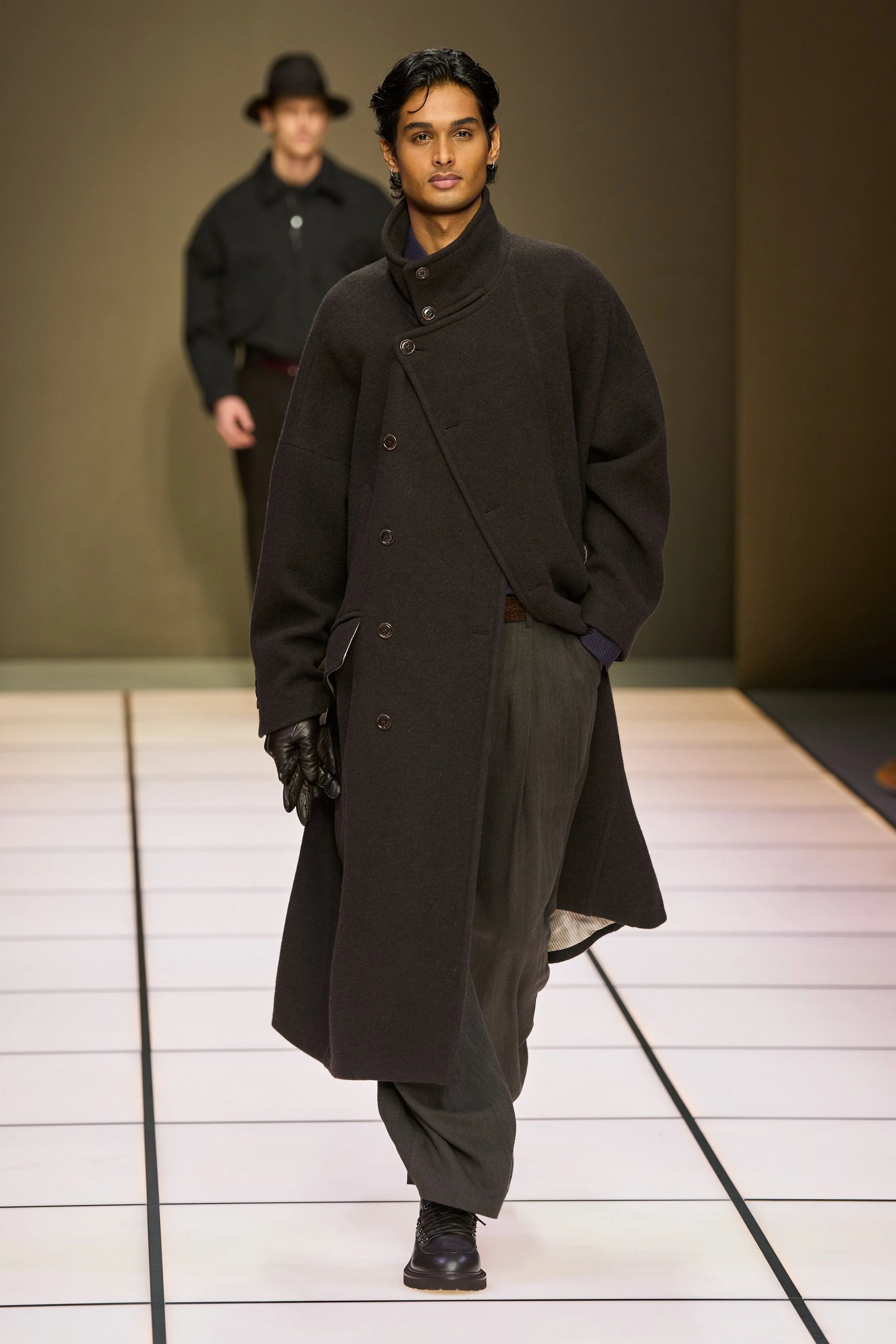
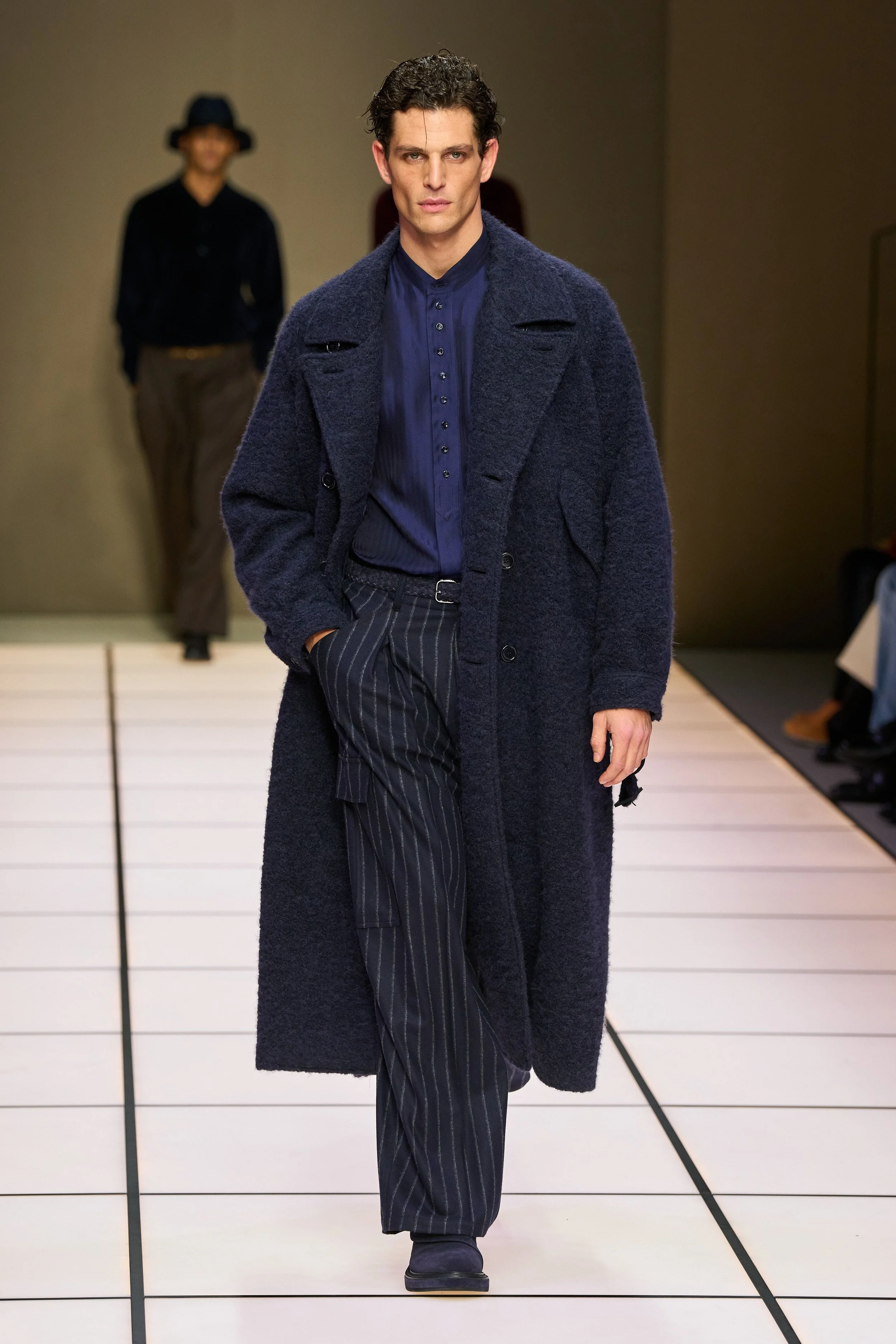
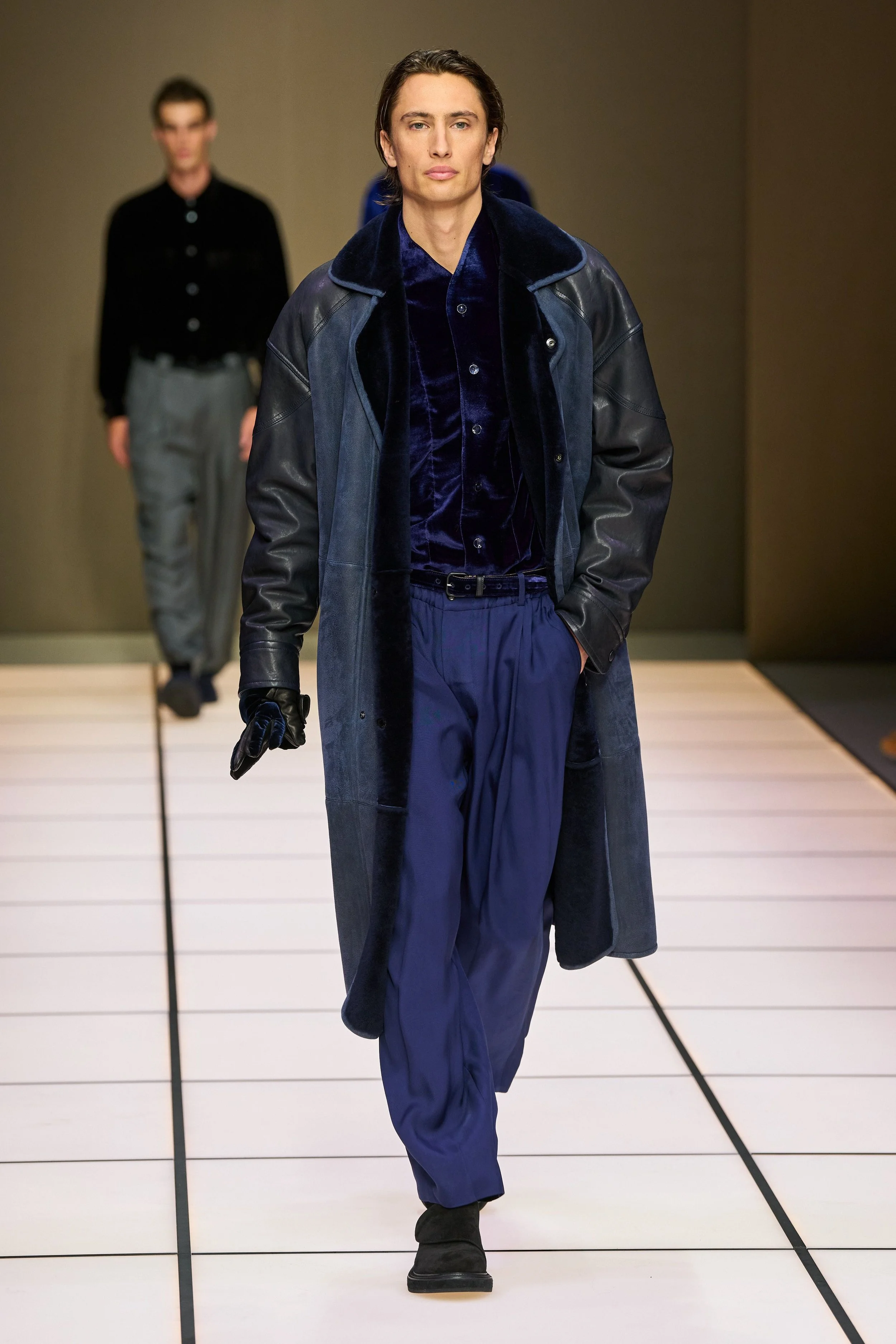
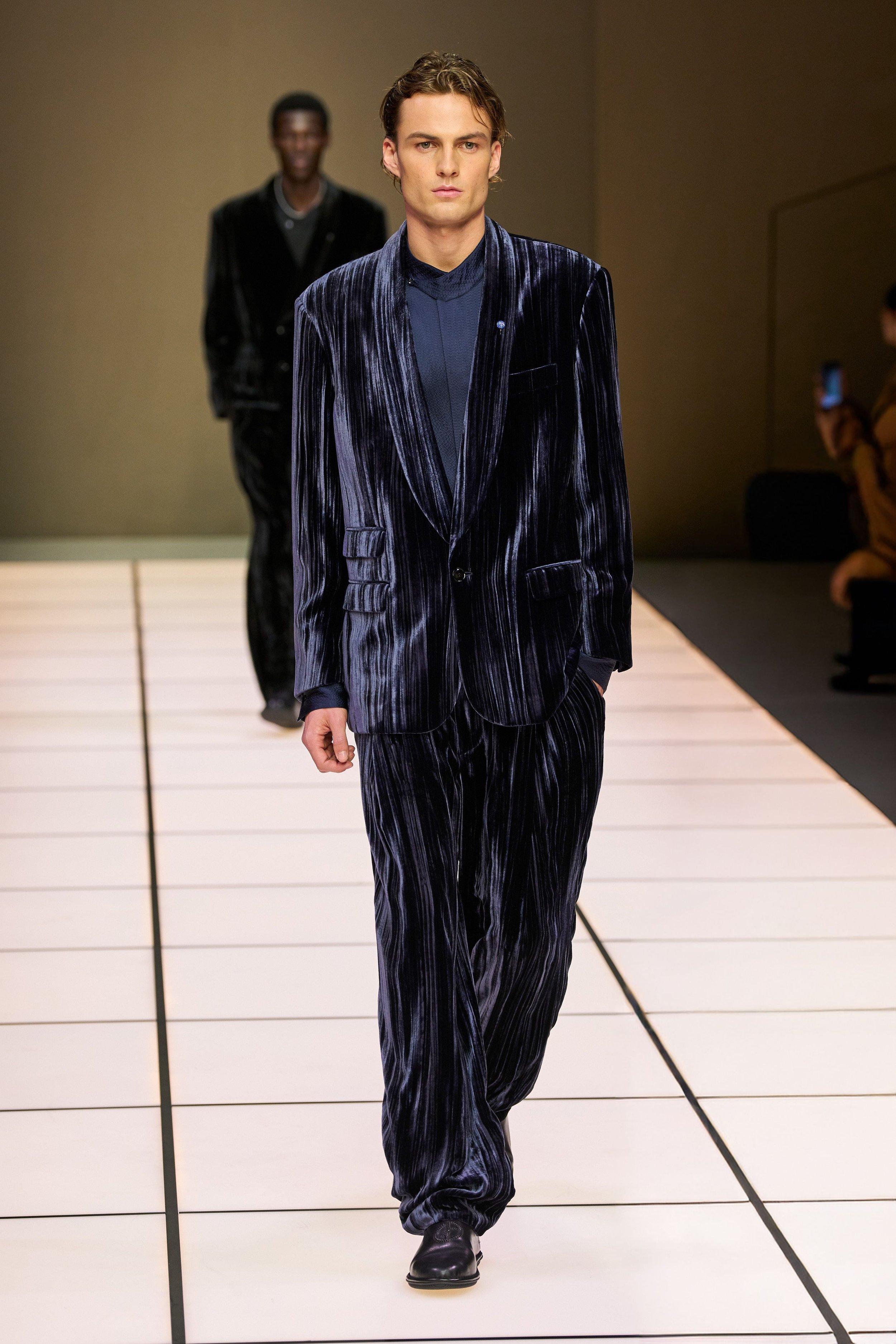
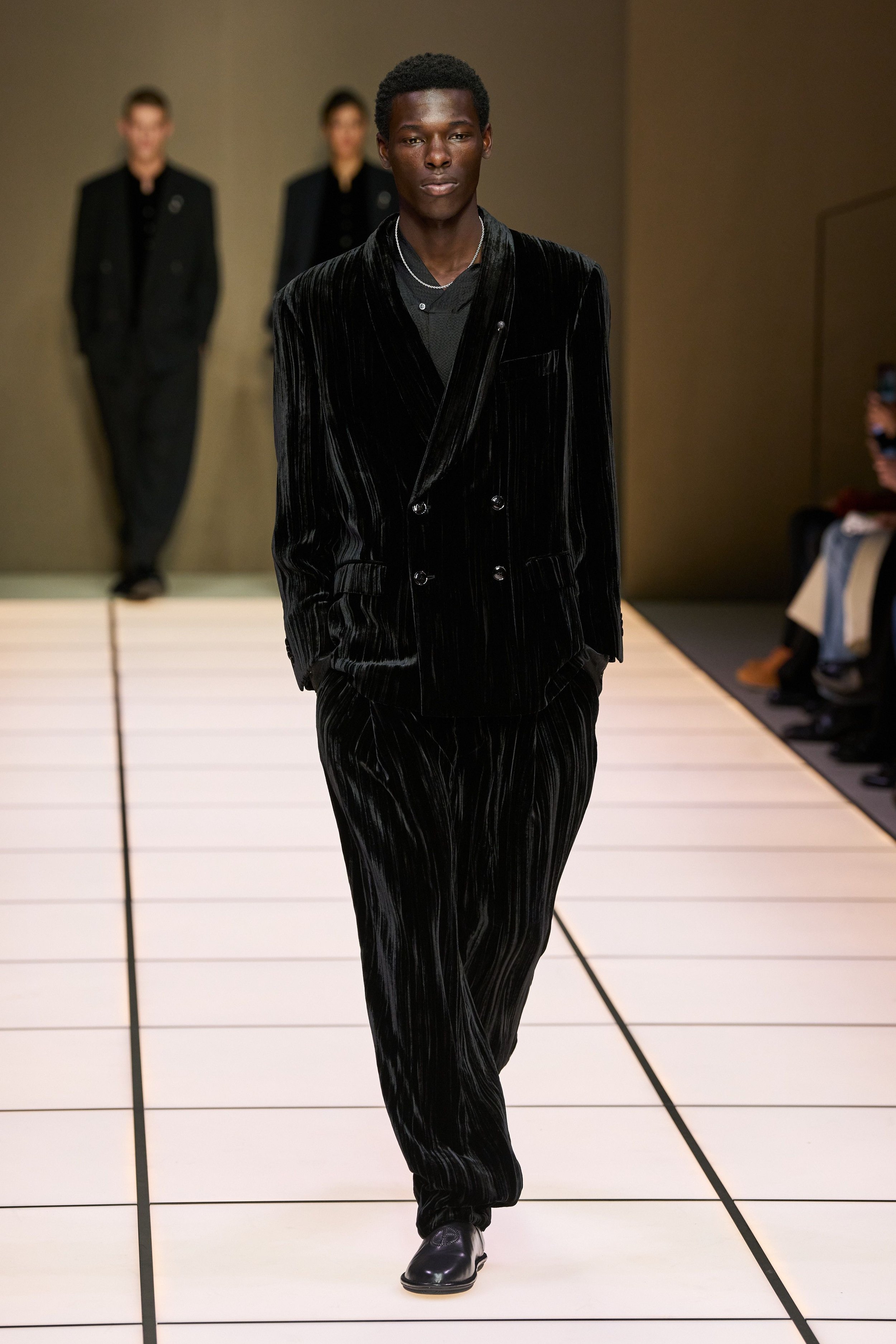
Hands in the pockets, preppy glasses, and loose, structured silhouettes were the centre of the Giorgio Armani Fall/Winter 2026 menswear show. For this season, suits were less tailored than in past collections, giving way to a wardrobe reminiscent of the corporate chic of the ’80s and early ’90s; wide shoulders, loose garments, and distinctly manly silhouettes.

The offering was the first-ever collection to be created without Mr. Armani himself. Leo Dell'Orco's rendition of the Armani man didn’t come out of nowhere; it is the product of more than 40 years working alongside the late designer and shaping what the brand is today. The transition feels natural. The designer knows what the public seeks in the brand, and he delivered.

The silhouettes were an homage to the brand’s past, but the thread that united the collection was business-like, intellectual dressing. Dominated by a myriad of grey shades, the wardrobe seemed as though it had been taken from an ’80s Hollywood film, a period in which the Armani suit reigned supreme.

The allure of the men on the runway also felt cinematographic; their strong presence was amplified by their strong shoulders. The pieces ranged from roomy, straight silhouettes in light fabrics to loose pants with movement, double-breasted jackets worn casually, and long coats that elongated the body.

Velvet was a big part of the show, breaking the monotony of the looks and giving a luxurious feel. In forest green, navy, graphite, and black, the pieces reflected the light of the runway, creating a sumptuous and lavish mirage. Colours were not contrasting each other; they accompanied each other in a harmonious way, showcasing Armani’s ability to make simplicity and elegance their biggest asset.


Words by Carolina Benjumea

PRADA FW26

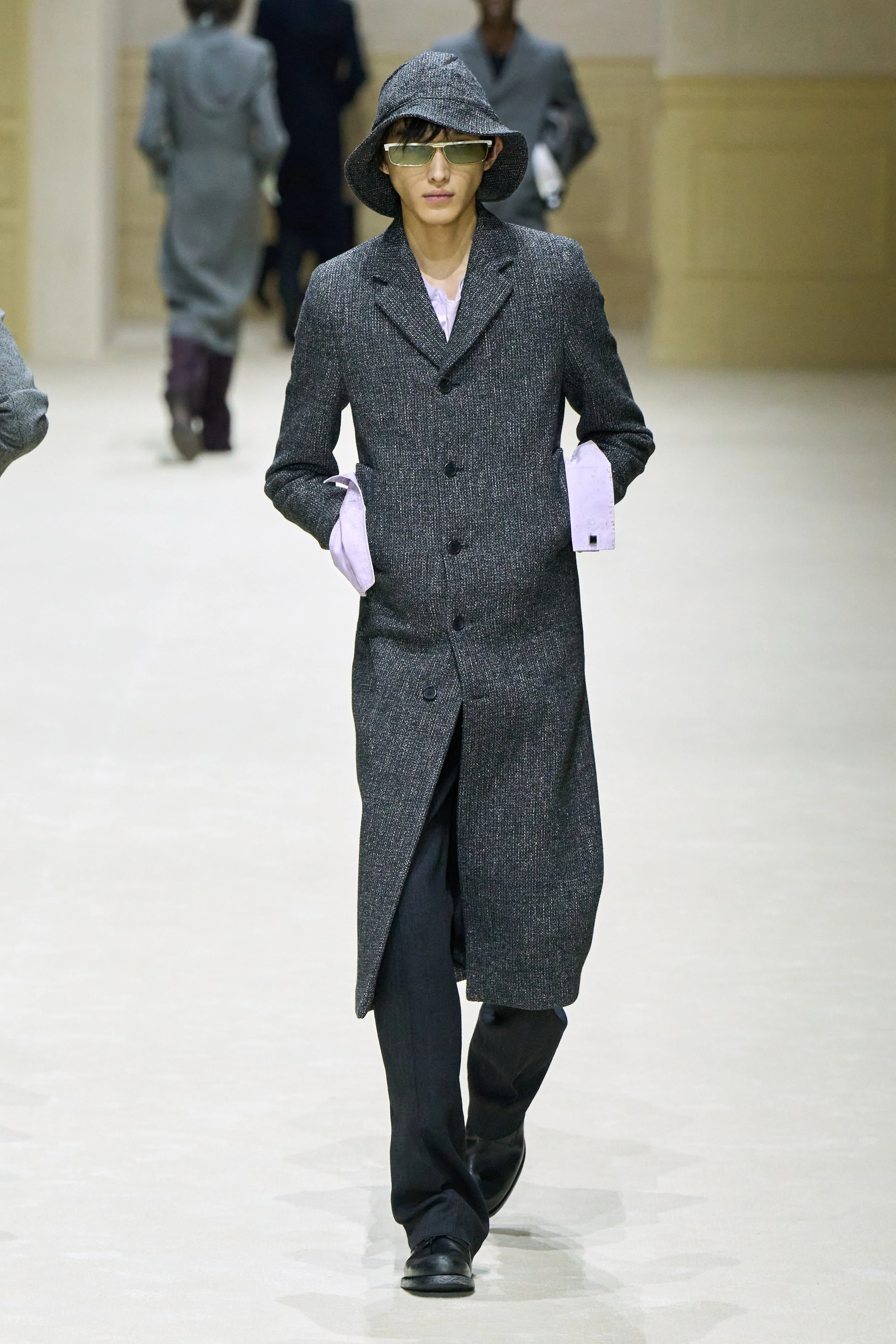
In conversation with a fashion critic, I discussed the importance of trends. He highlighted an often neglected point: the ephemeral nature of fashion is a historic record, allowing us to trace a society’s taste, and by extension, its tensions and anxieties. Prada stands three steps ahead to the industry it inhabits. The brand’s legacy lies in articulating the aesthetic values of culture through contradiction. Miuccia Prada, now alongside Raf Simons, has translated clothing into a counterpoint.

Ugliness is one of Mrs. Prada’s most used tools for this goal. However, for the past three seasons, the duo has been on an imperfection kick. In the age of accessible perfection, it’s become the only way to differentiate luxury from its dreaded counterpart.

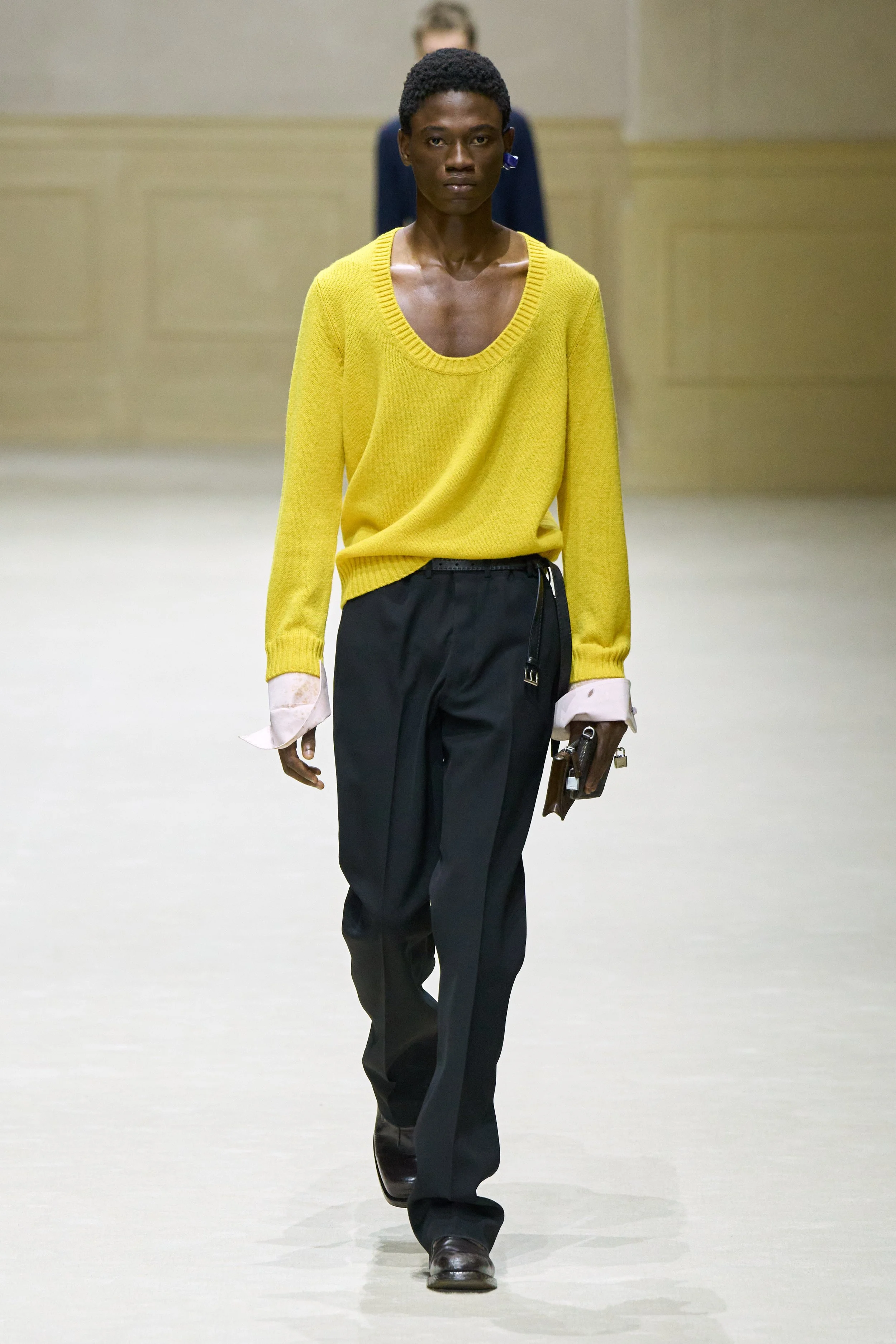
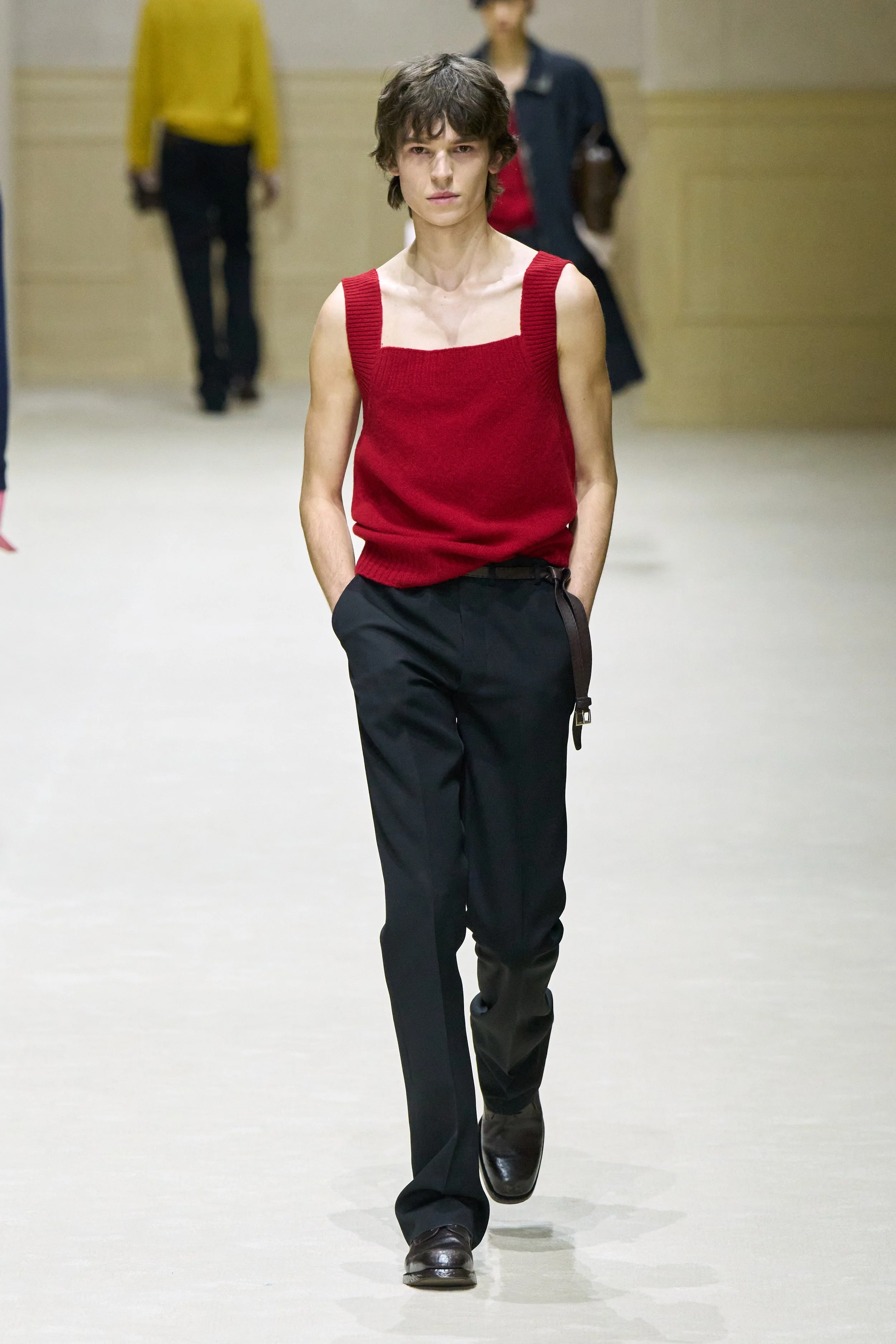
Here, knit vests were made boxy, almost awkwardly homemade. On a yellow knit jumper, the collar was loose, as if extended by use or being improperly hung. Signs of wear were elevated to the highest regard. In the age of mass consumption, patina is privilege.

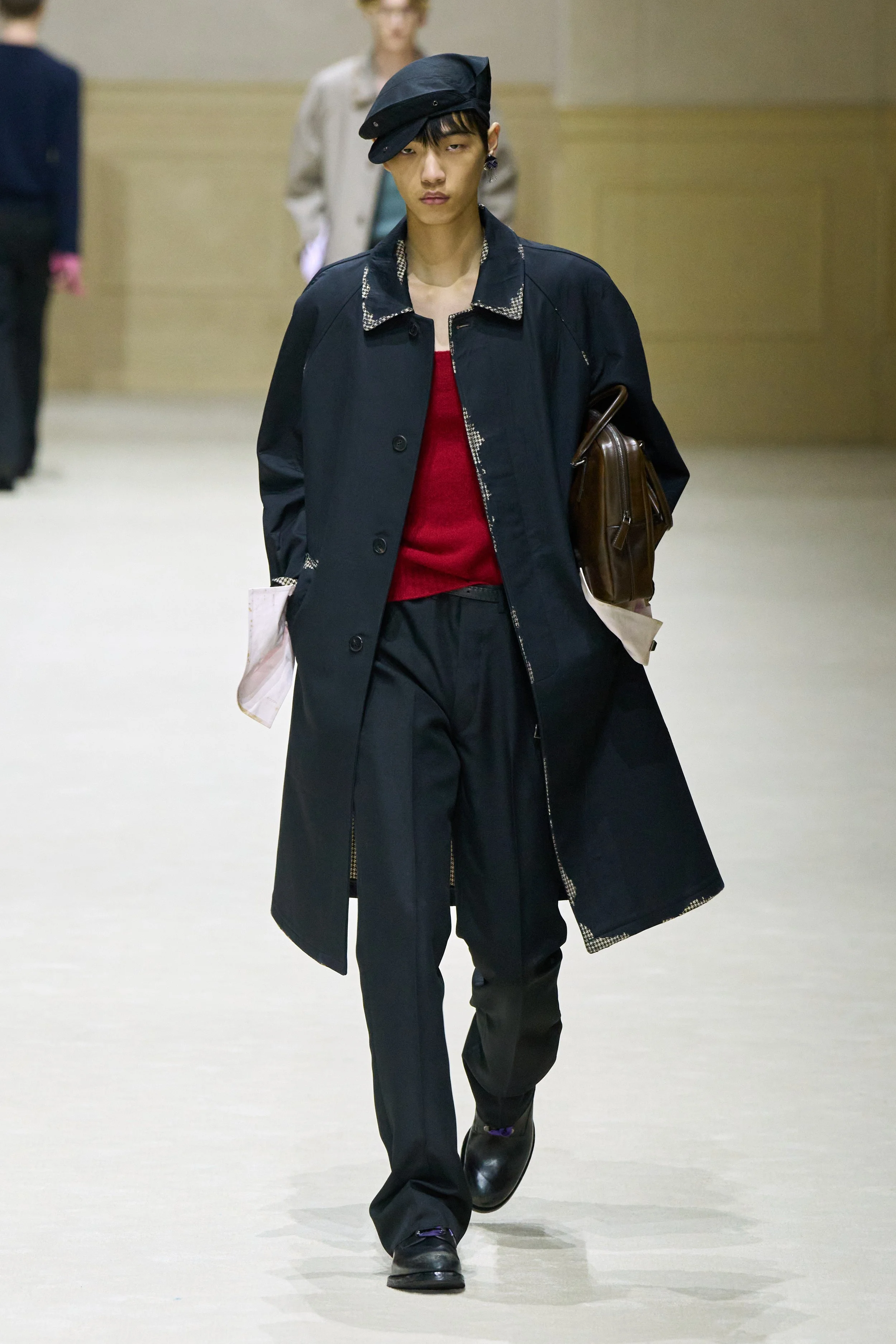
The most effective – and shareable – of the garments this idea was communicated in single-breasted coats, the back of which revealed a previous shell, in houndstooth, slowly chipping away to uncover the back seam and the triangular logo in the nape of the model's neck. Trench coats were creased, as if just taken out of the closet where they had been folded. Parkas had the imprint of matching hats.

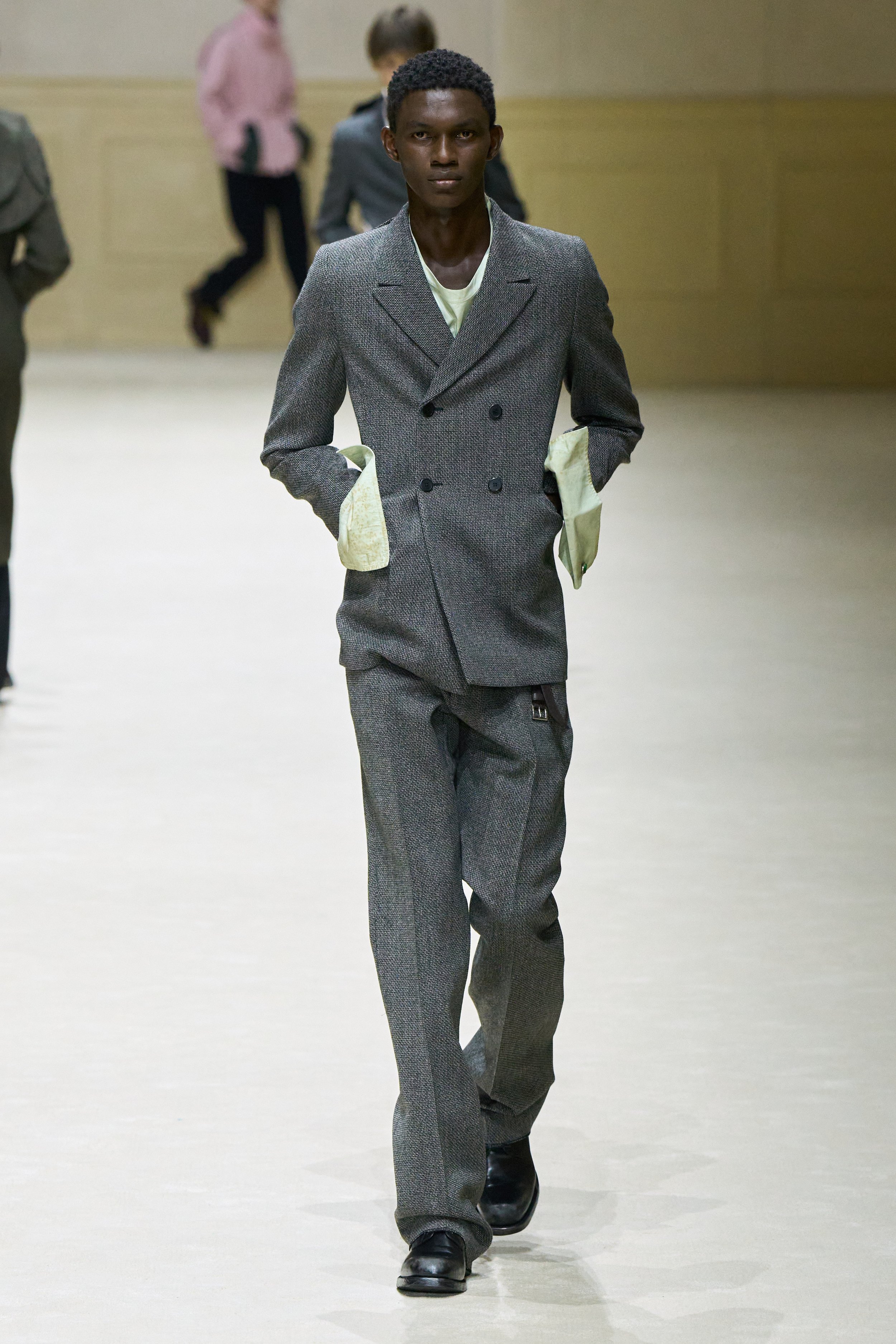
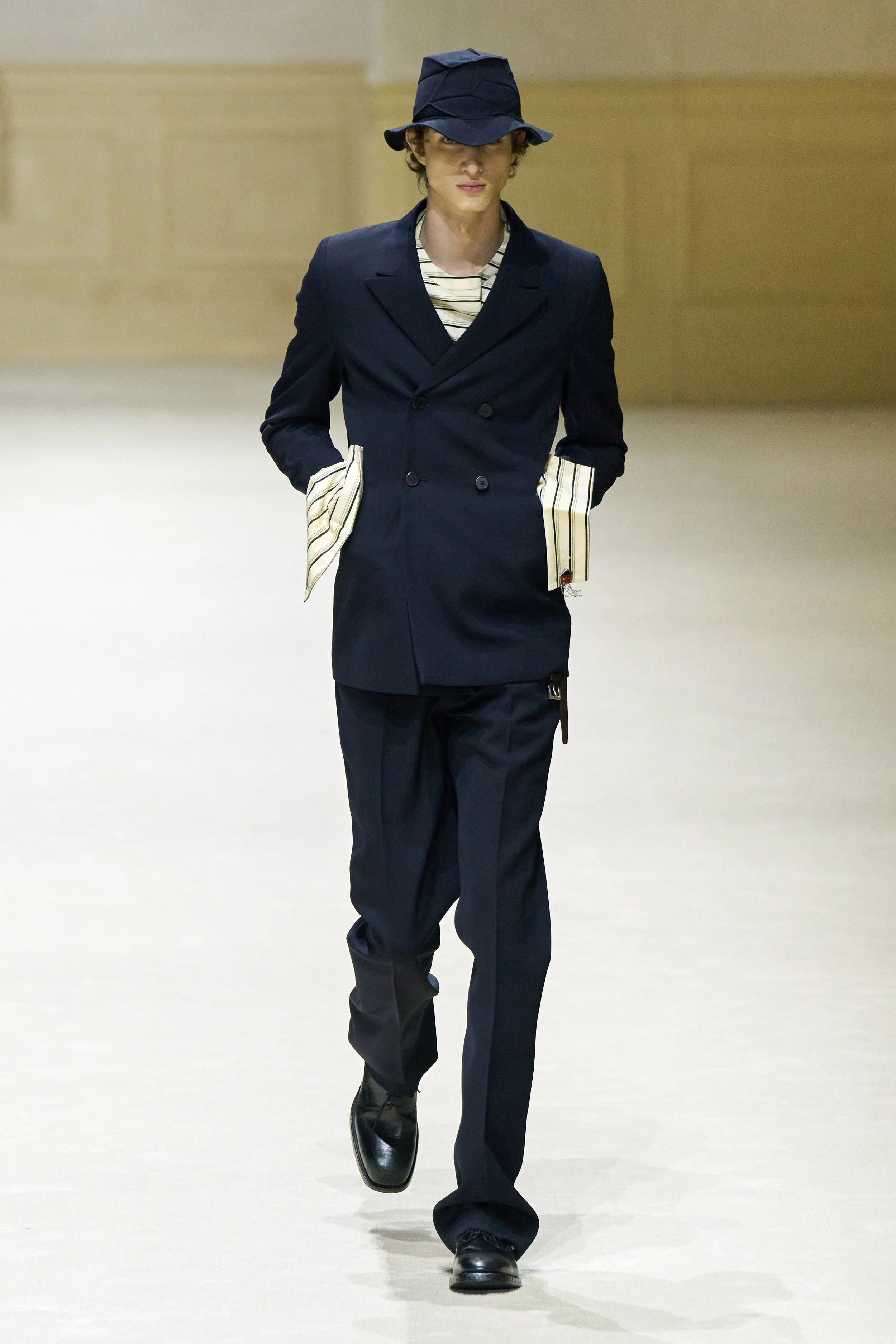
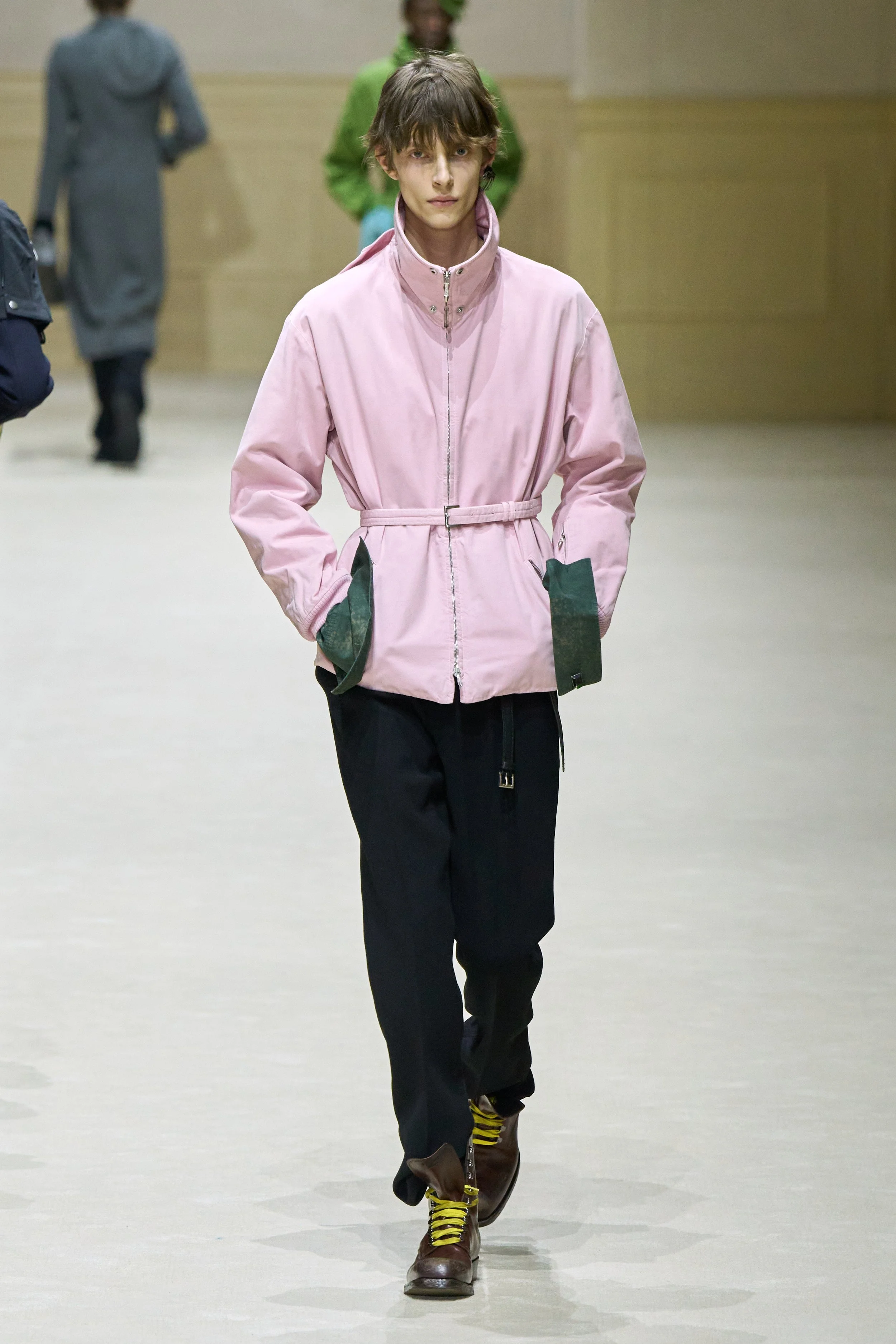
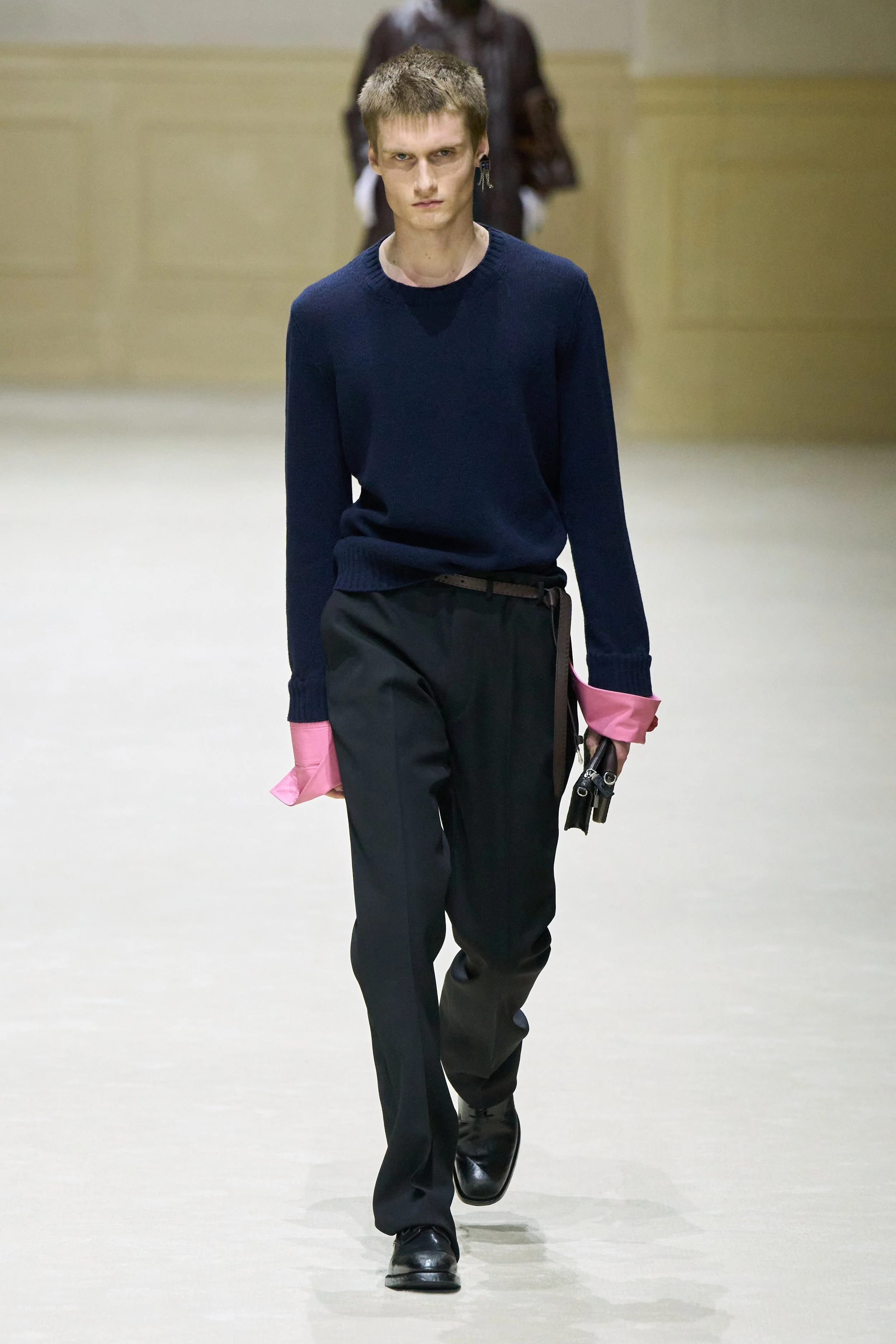
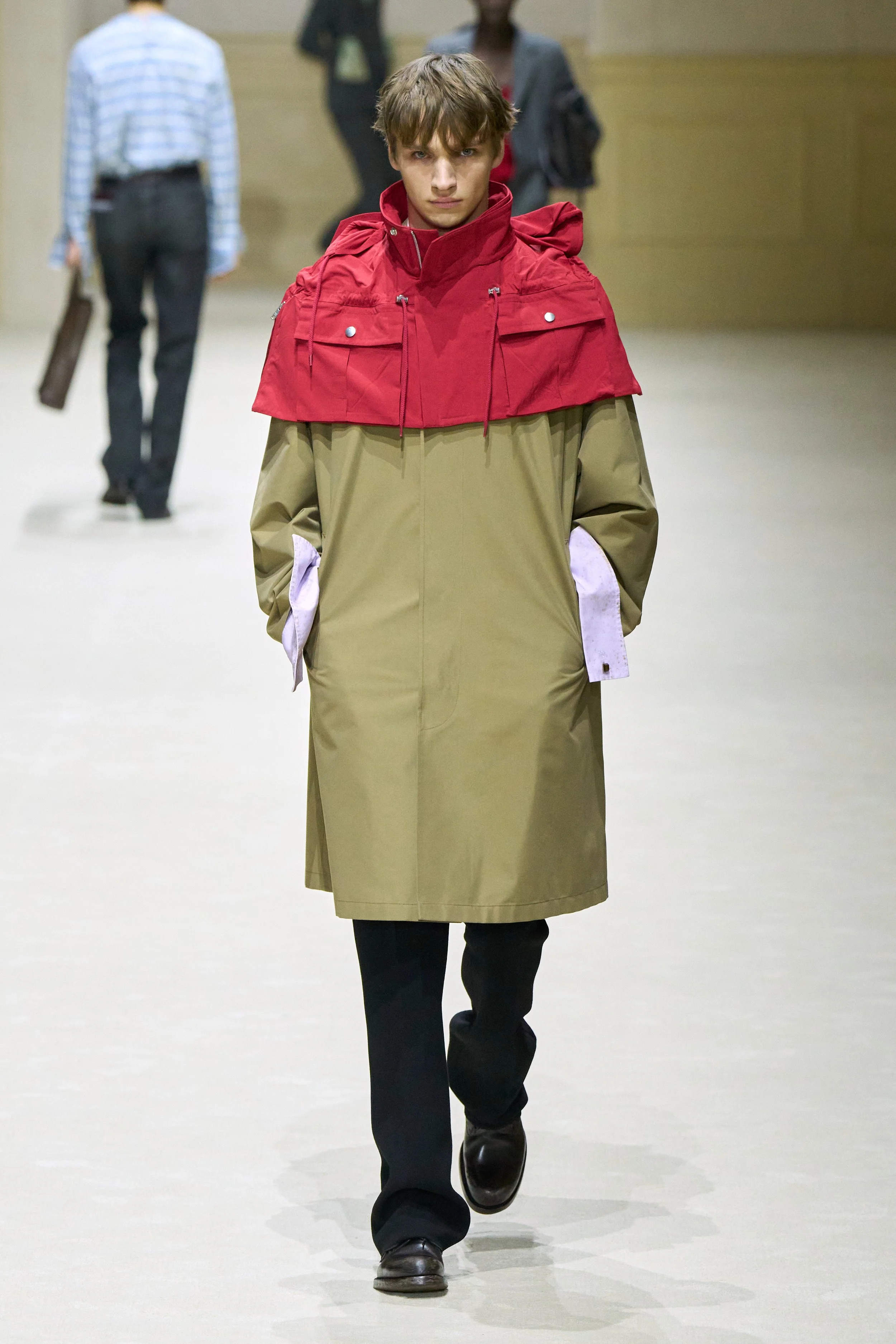
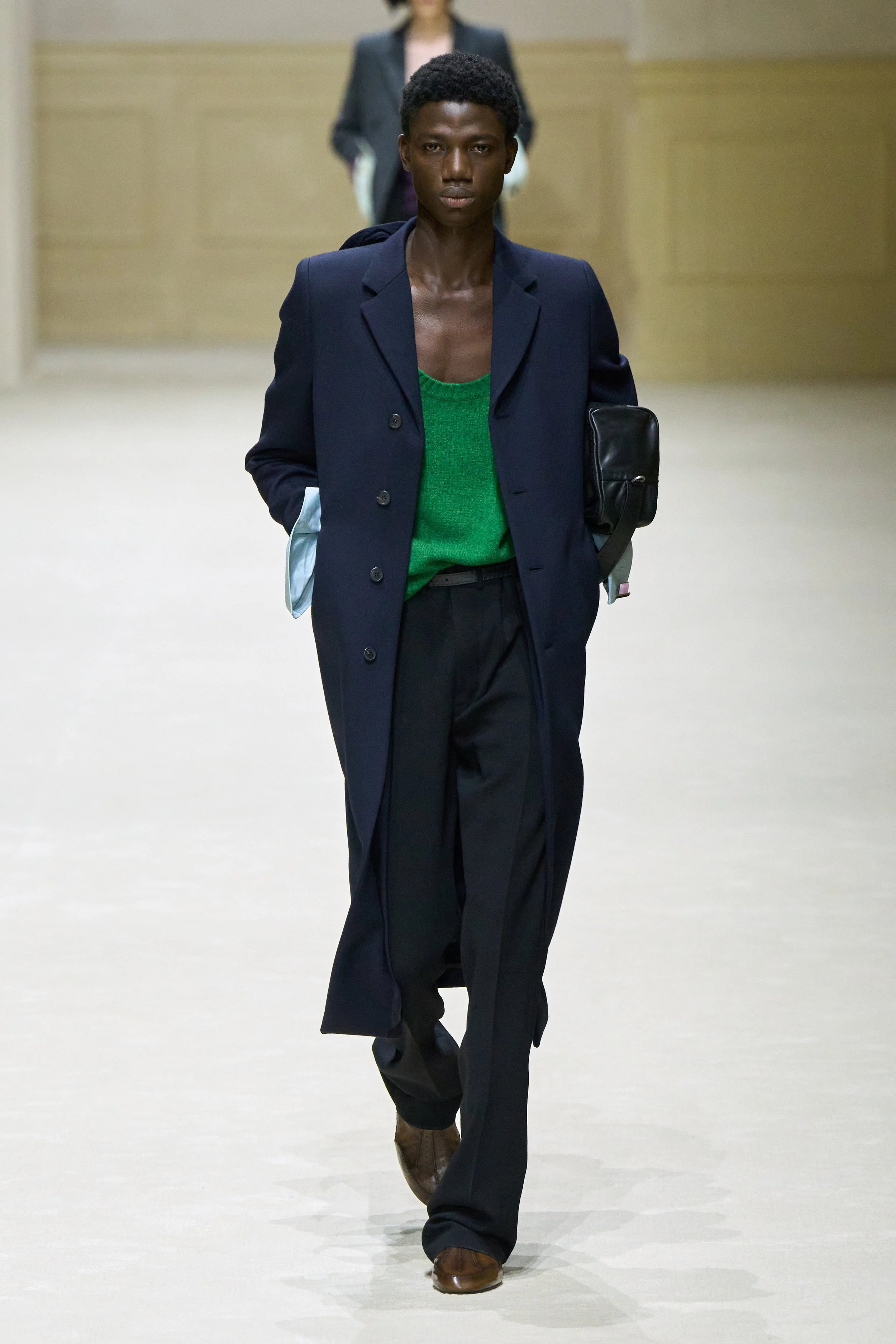
For all their intellectualisation and conceptual work, neither of the pair is clueless to the fact that what they do isn’t just communicating, it’s also selling. Selling to the top of the social hierarchy, no less. Shirt cuffs jolted out of wool blazers and slim, tailored coats. These were spotted with specks of mould, stained by coffee spills. Beneath the historical uniform of the upper class, something is rotting.

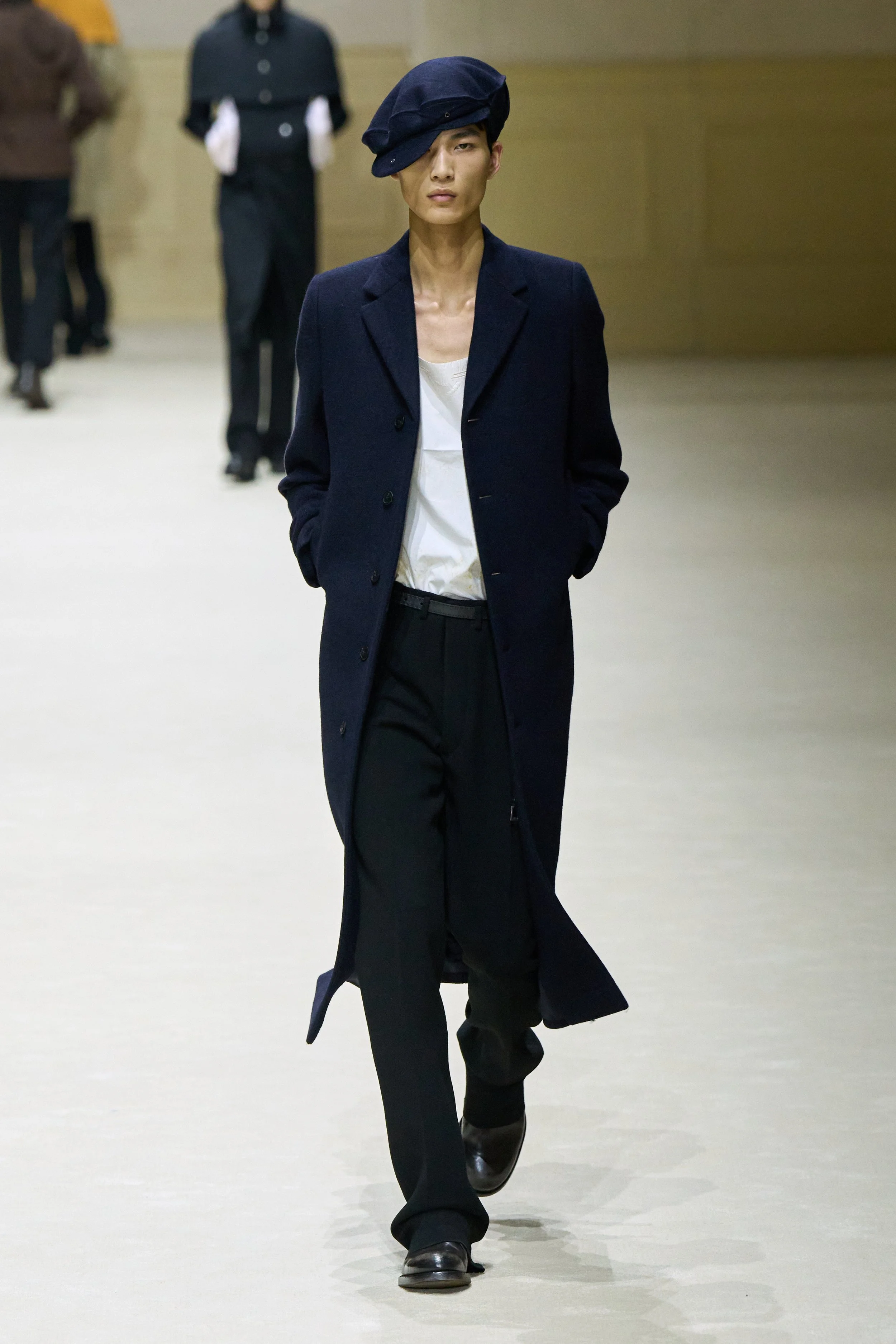
This season, silhouettes were particularly slim. Simons’ curiosity over silhouette rears its head once again. Long coats were awkward on the body, their shoulders shrinking models’ frames as they walked. Backstage, the silhouette was discussed; the design duo claimed it felt comforting in opposition to a movement that widens them. Prada stands in opposition to the industry, and, therefore, ahead of it. Fall/Winter 2026 was, in a way, no different than all other Prada collections: a helpful historic document to juxtapose against wider trends.


Words by Pedro Vasconcelos

SAUL NASH FW26

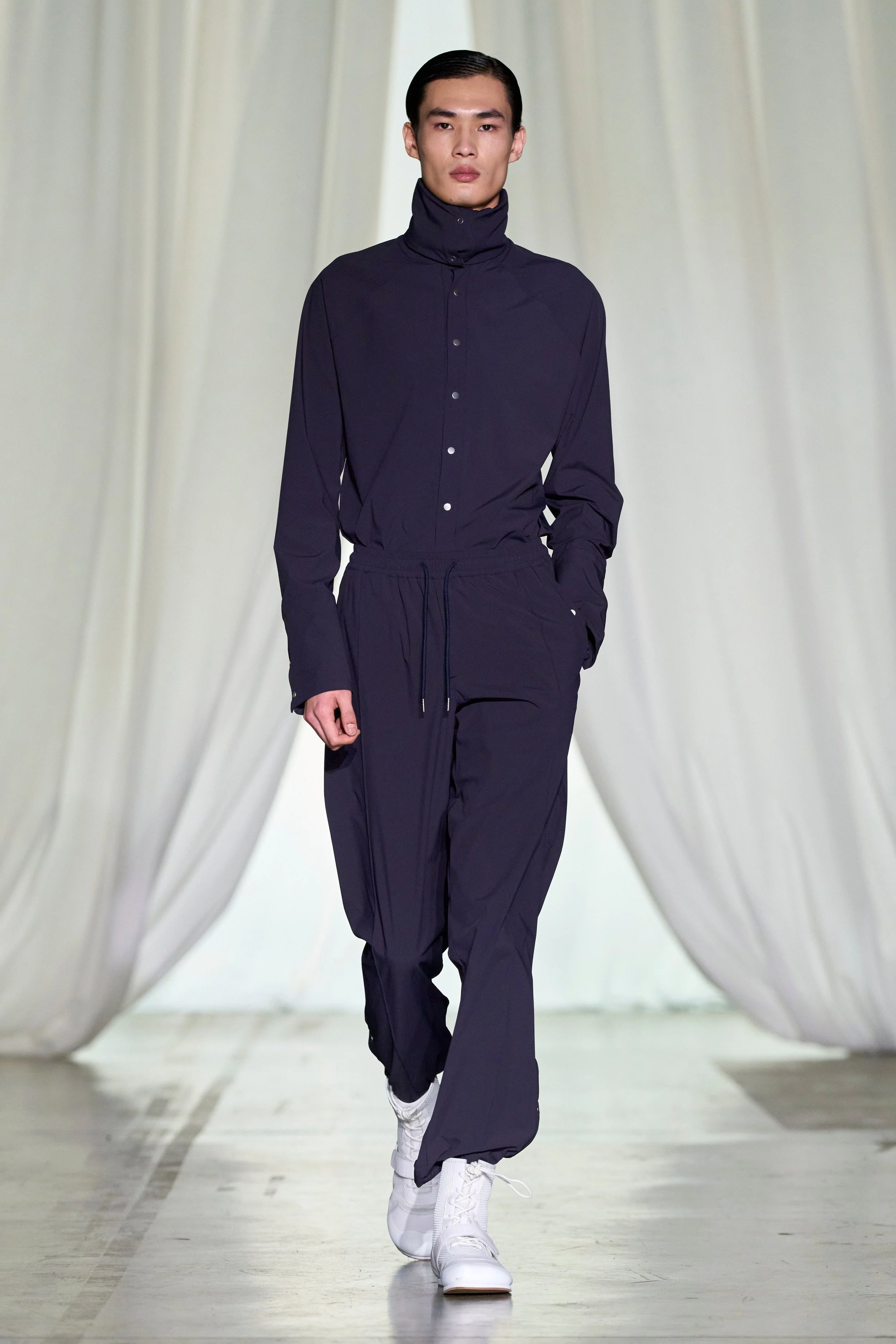
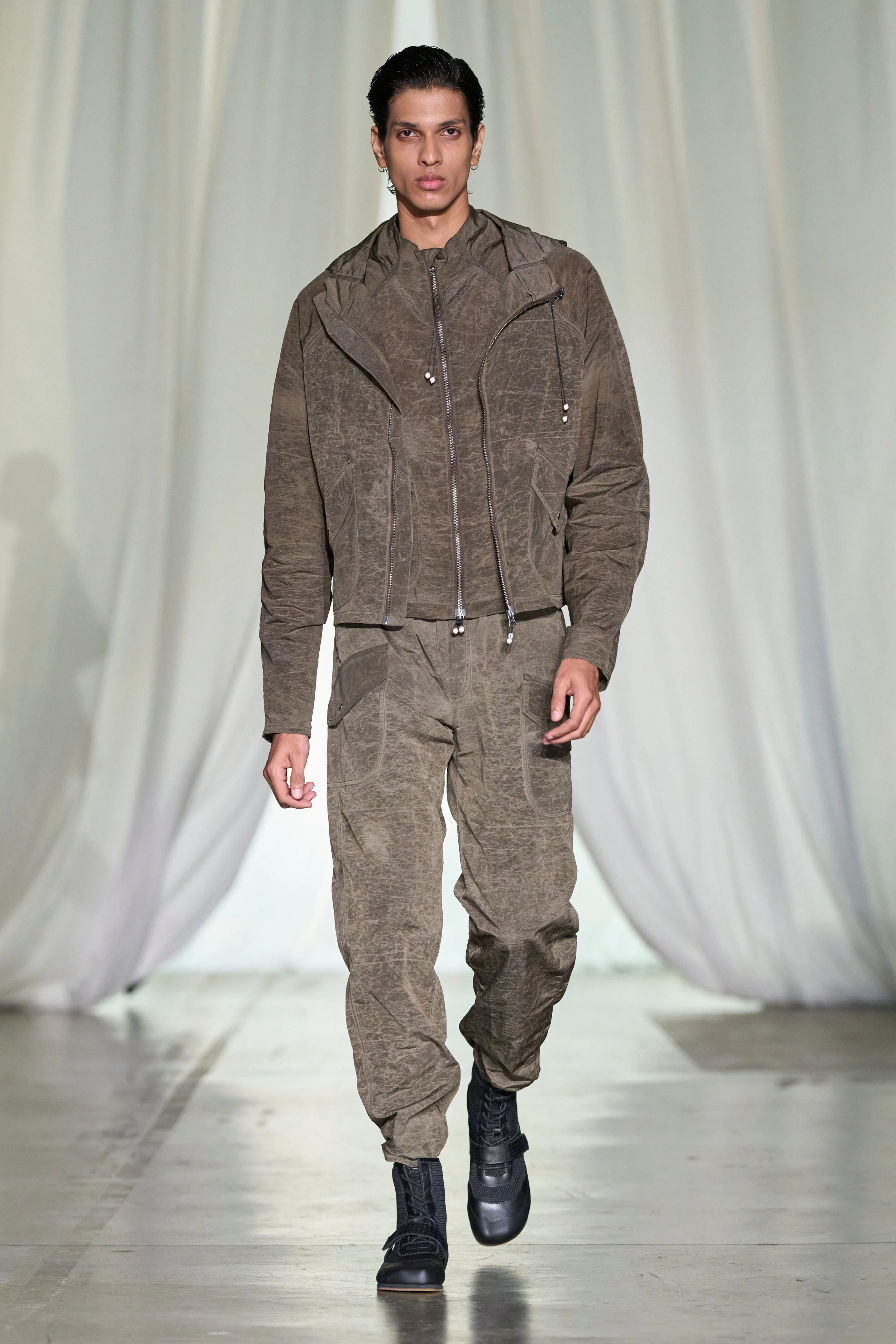
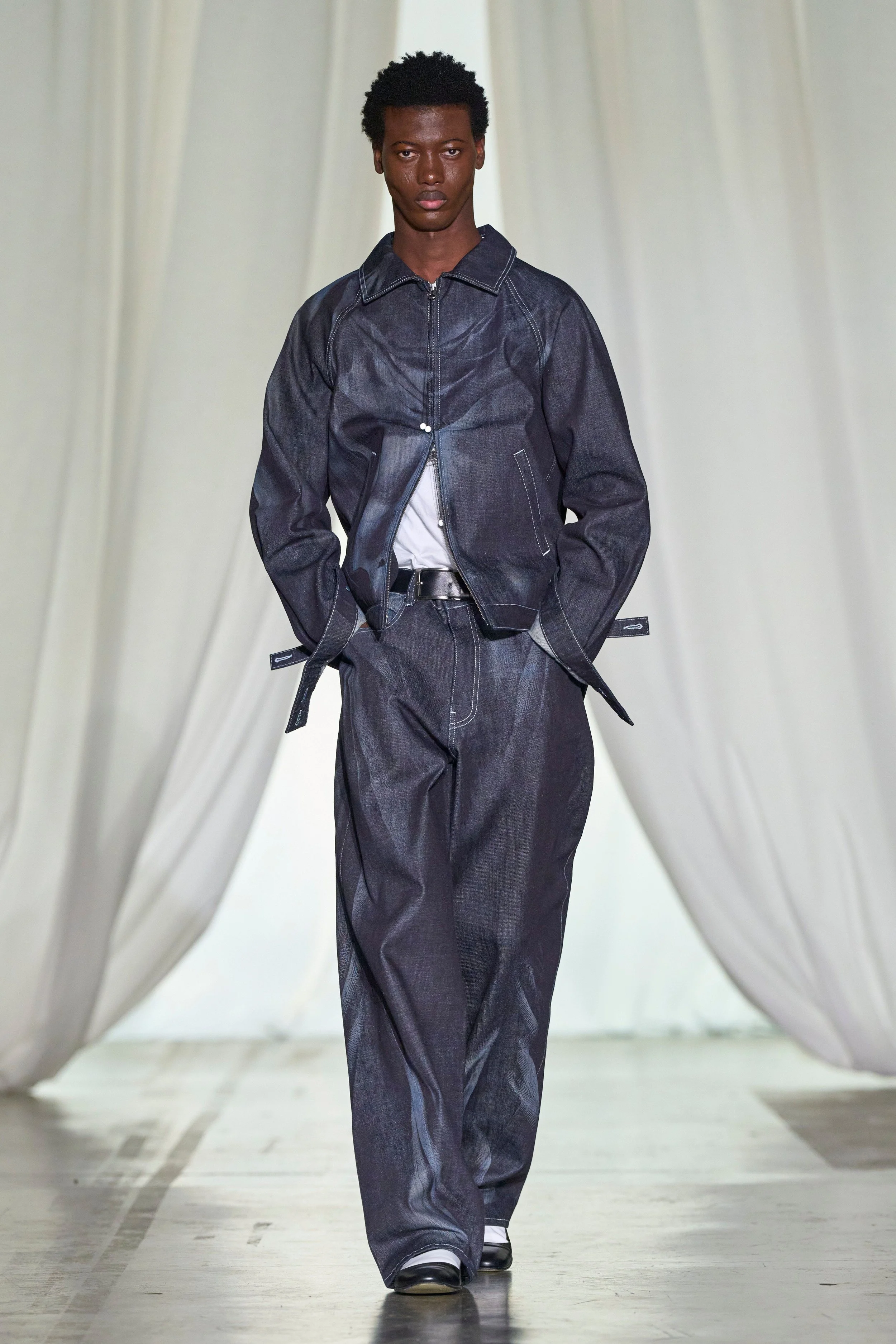
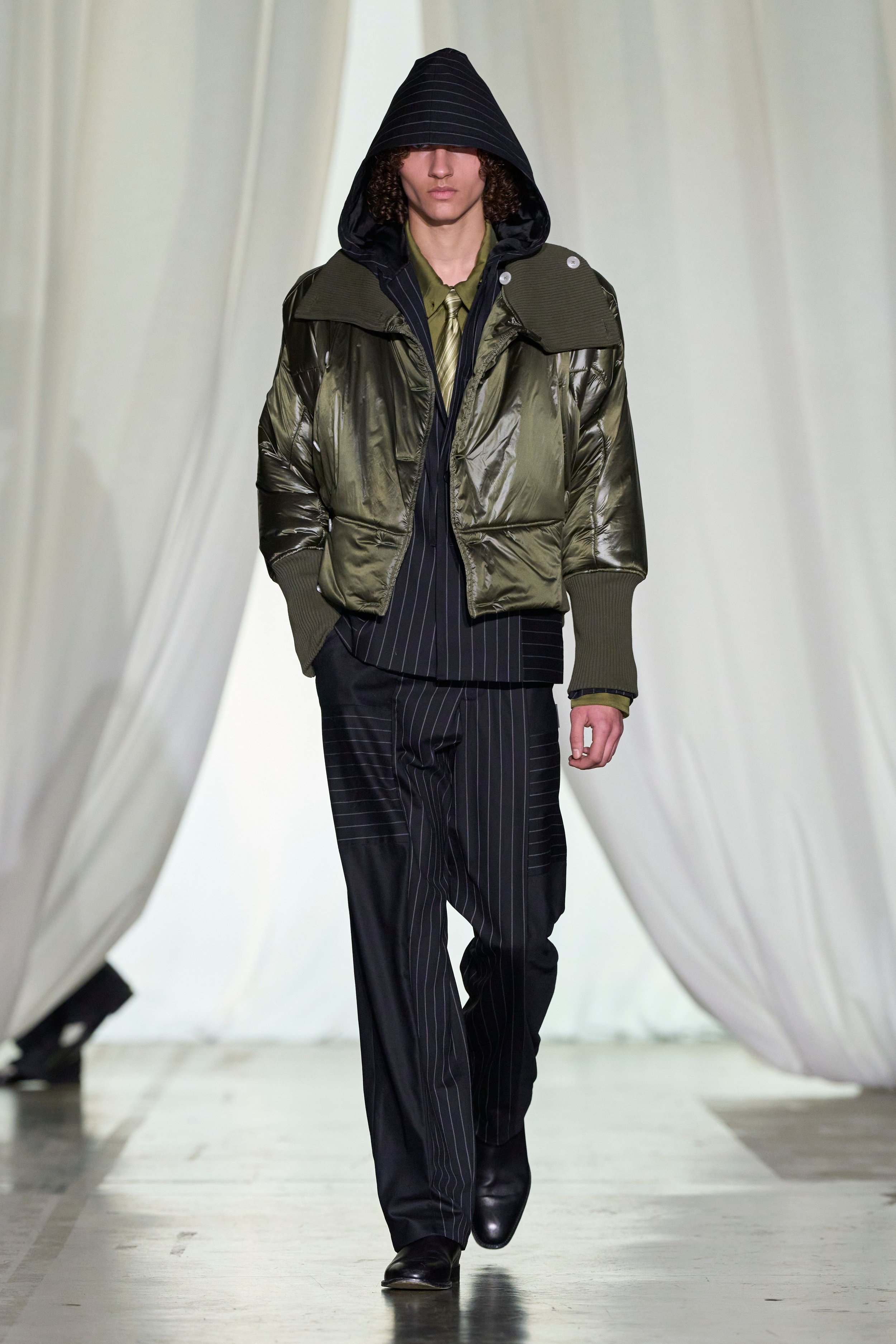
With his Fall/Winter 2026 collection, Saul Nash is going mask for mask. Making his debut at Milan Fashion Week, the London-based designer presented an offering titled Masquerade — an exploration of how identities can be shaped, concealed, or amplified through what we wear. Inspired by the ritualistic pageantry of Notting Hill Carnival and the subversive anonymity of Venetian masks, Nash reframes masquerade through a distinctly London lens, where dressing is often an act of navigation: between formality and comfort, visibility and self-protection, expectation and authenticity.

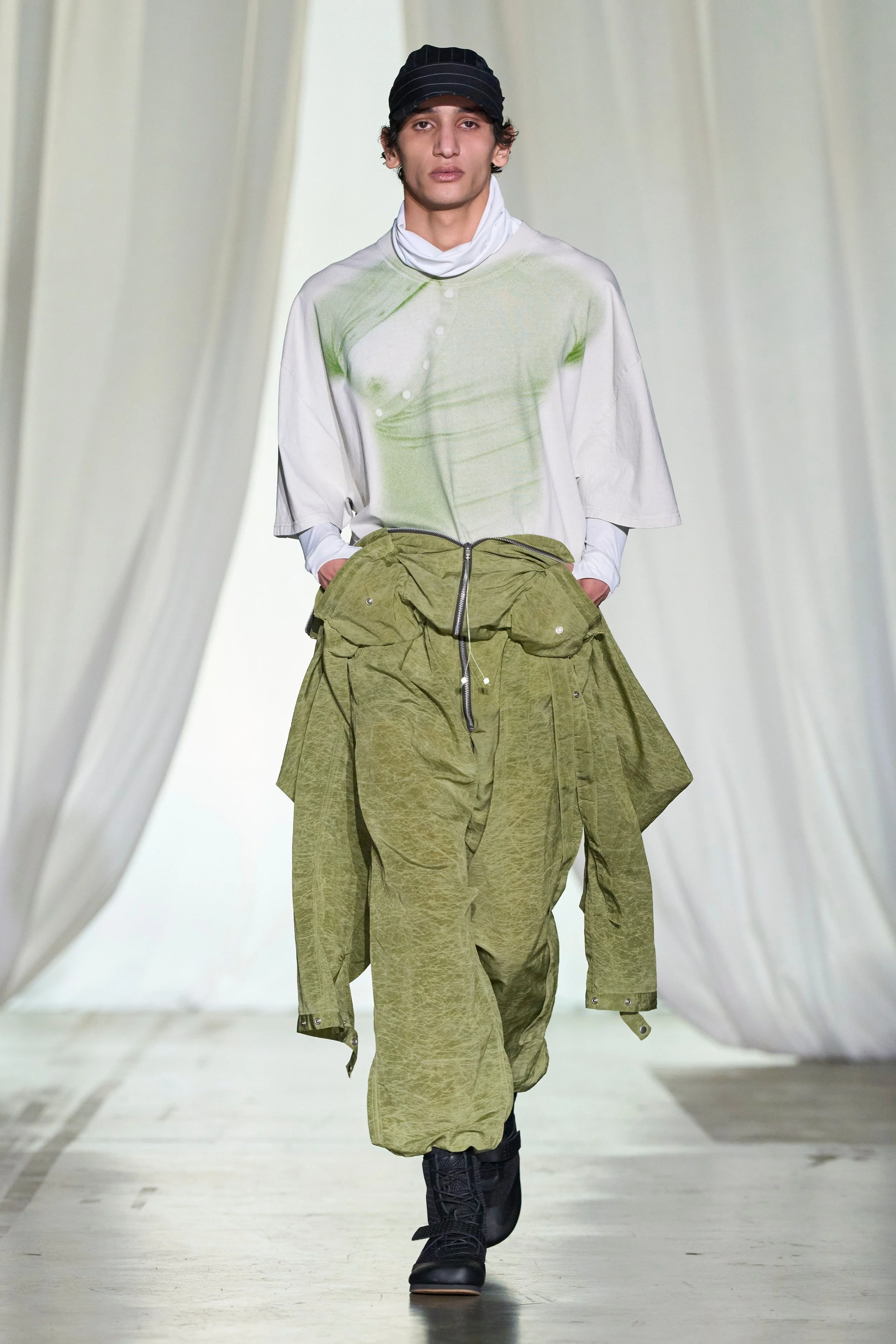
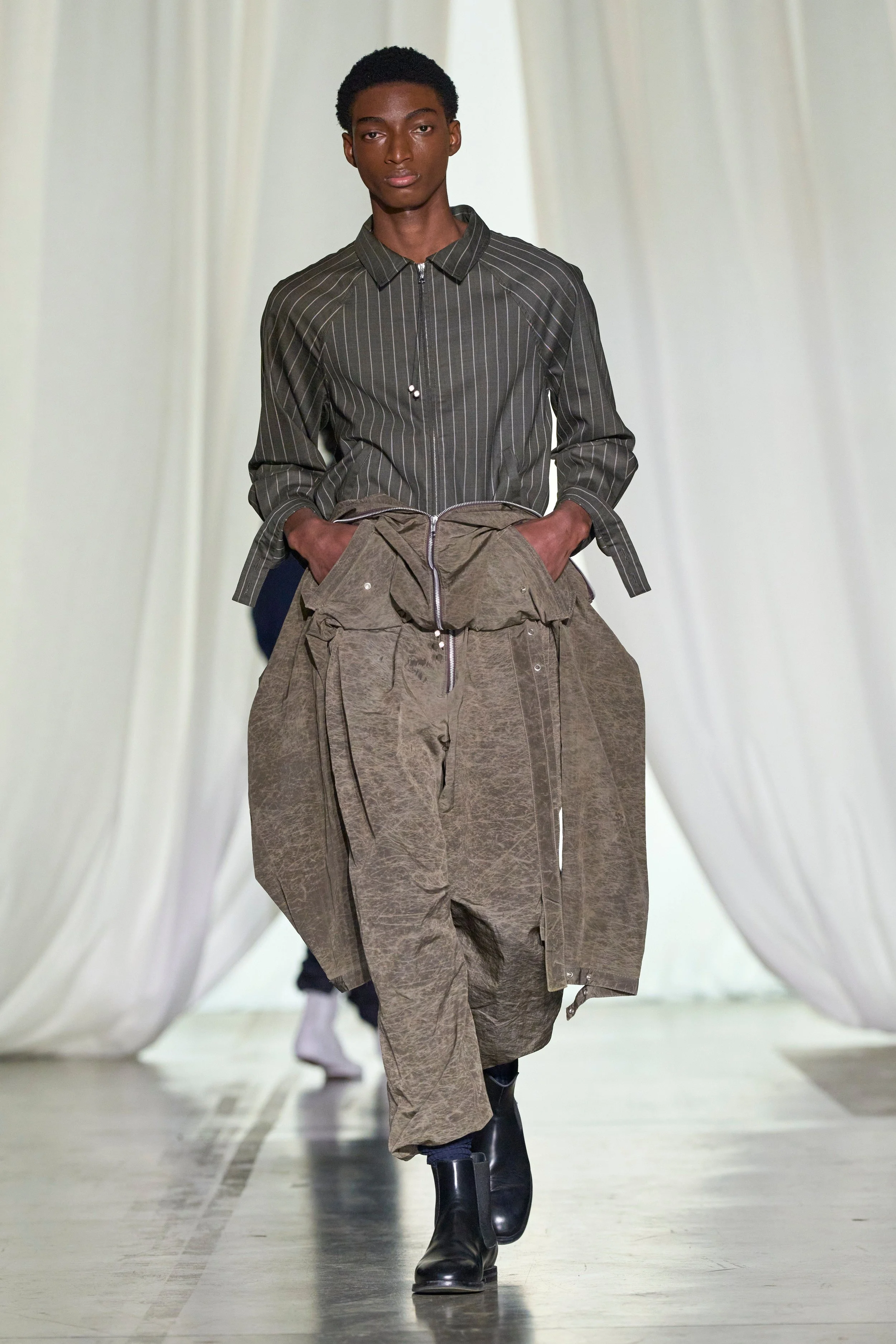
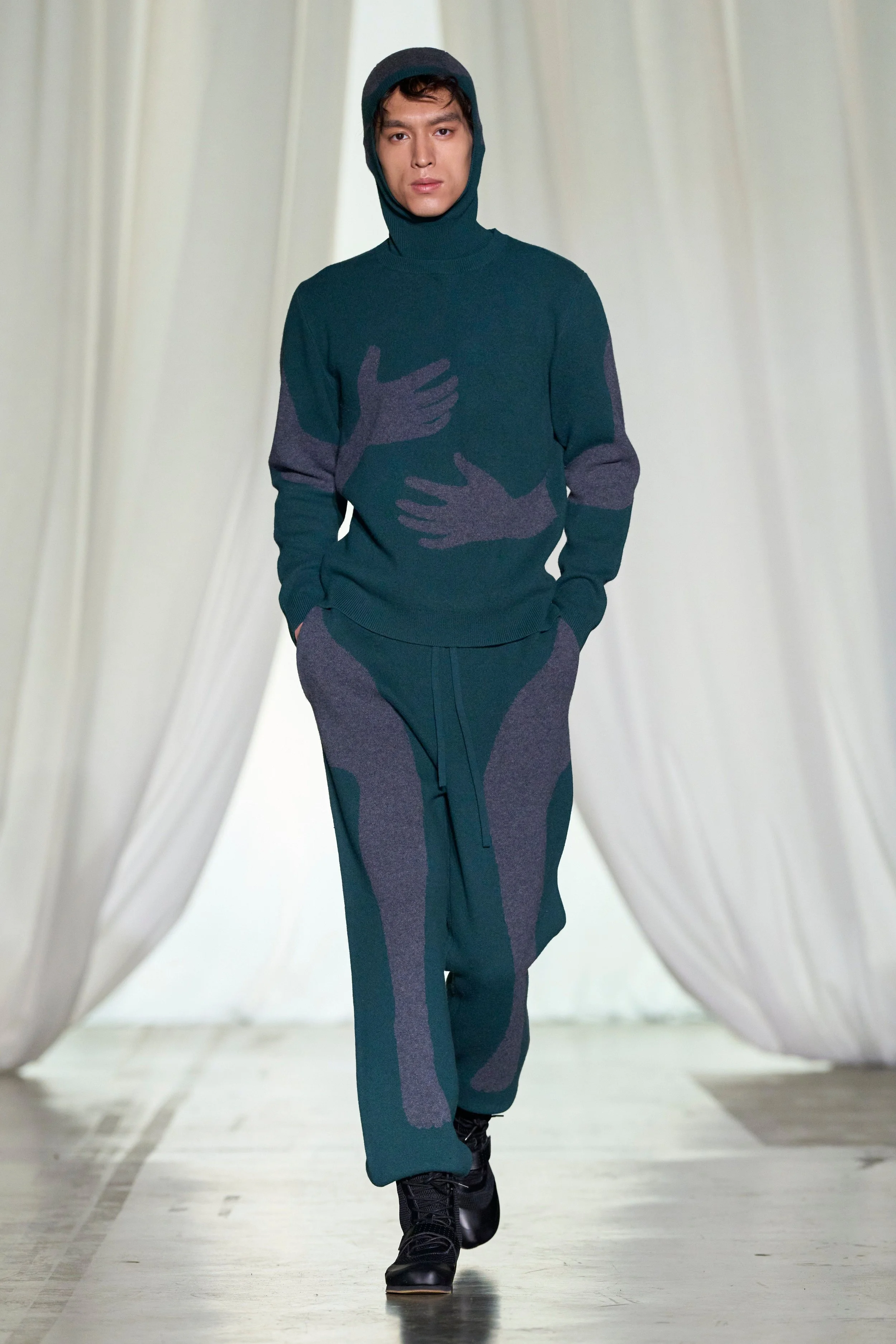
Here, power dressing is dismantled and rebuilt. Tracksuits masquerade as suits through a trompe l’oeil pin-striped print, while tailoring borrows the ease of sportswear and gets paired with a high-top sneaker. Garments morph through kinetic cuts, detachable elements, and warped proportions. Nash’s signature top design, which cheekily reveals one of the pecks, returns here in the form of a printed T-shirt paired with an olive green boiler suit and a crewneck knit with a string of undone buttons on the side. A set in deep teal features a print of hands, giving a hug to its wearer.

Drawing on 1980s British and Italian suiting codes, Nash proposes a wardrobe that accommodates multiplicity — clothes that let us slip between selves without compromise. It’s a confident continuation of the designer’s goal to blur performance and reality, reminding us that in a world of constant self-presentation, the ultimate luxury may be the freedom to decide who you are, and when.


Words by Martin Onufrowicz

PAUL SMITH FW26

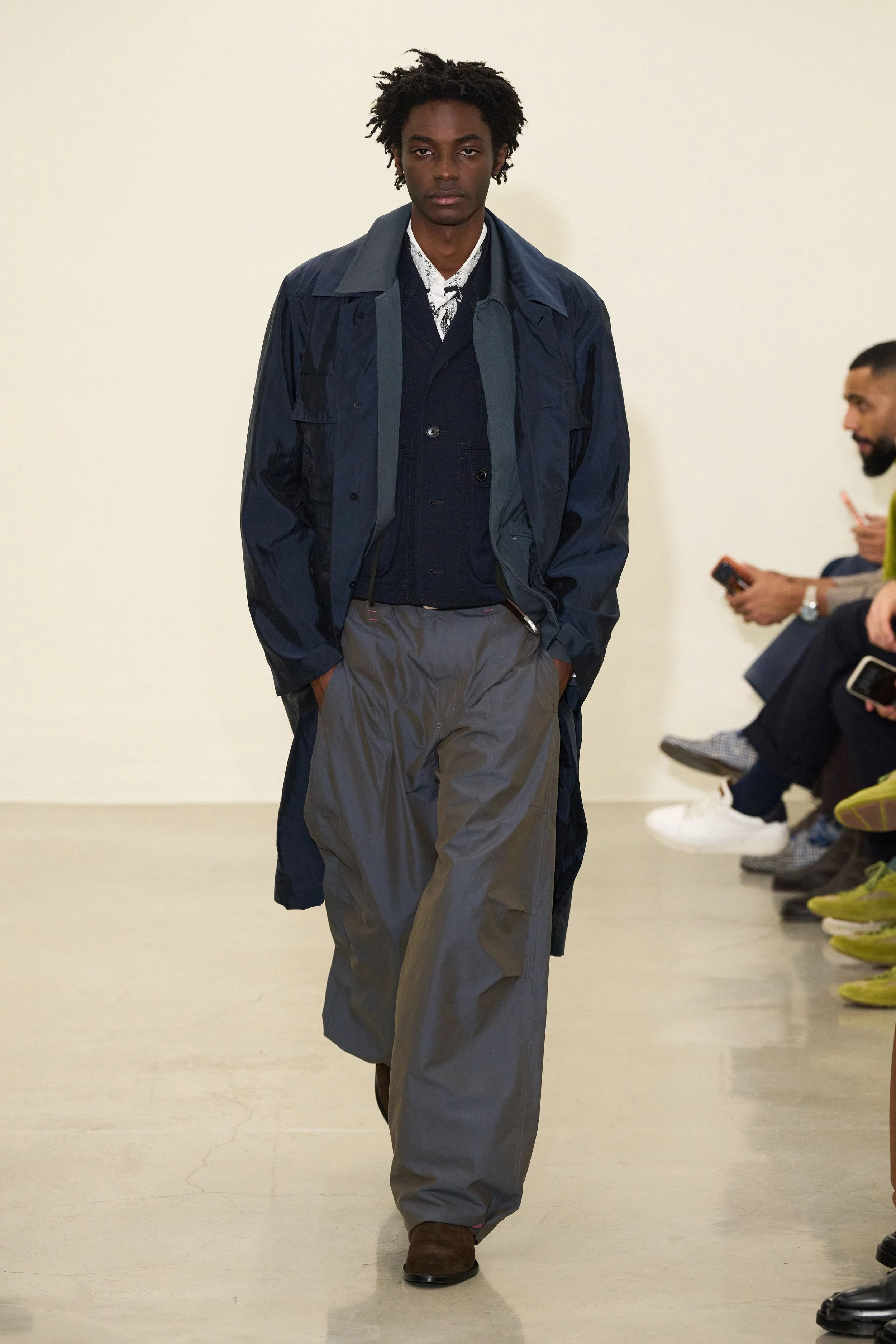
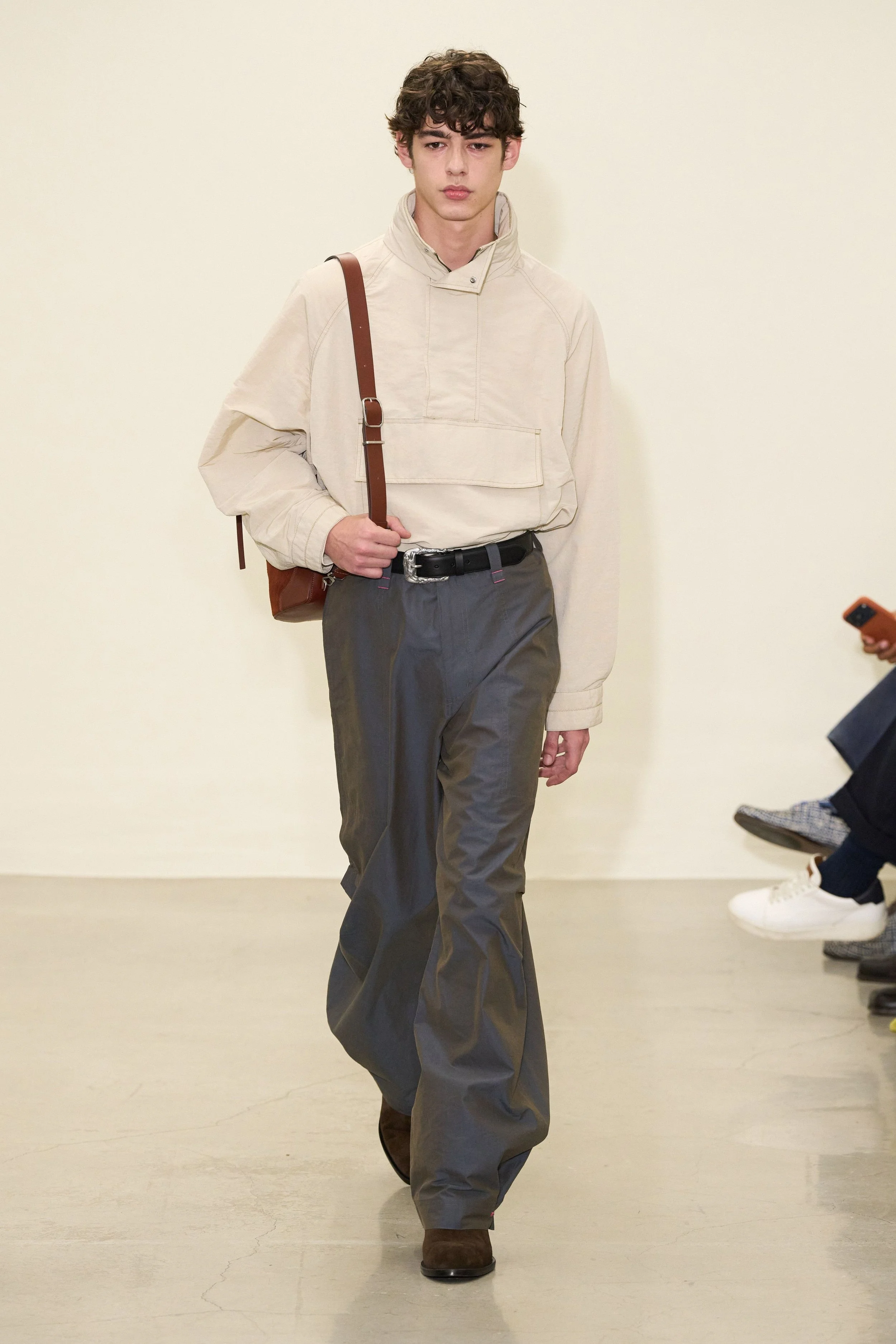
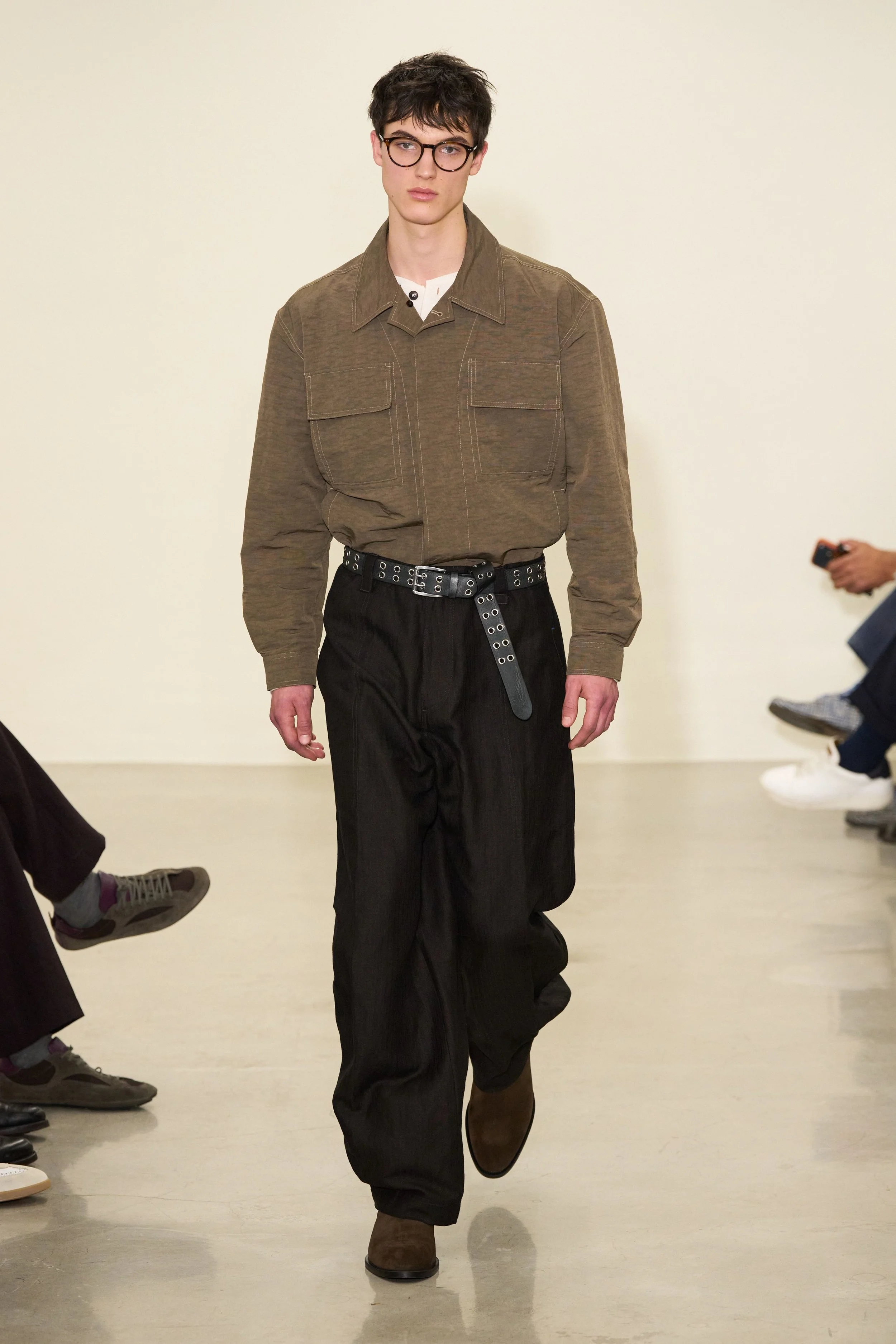
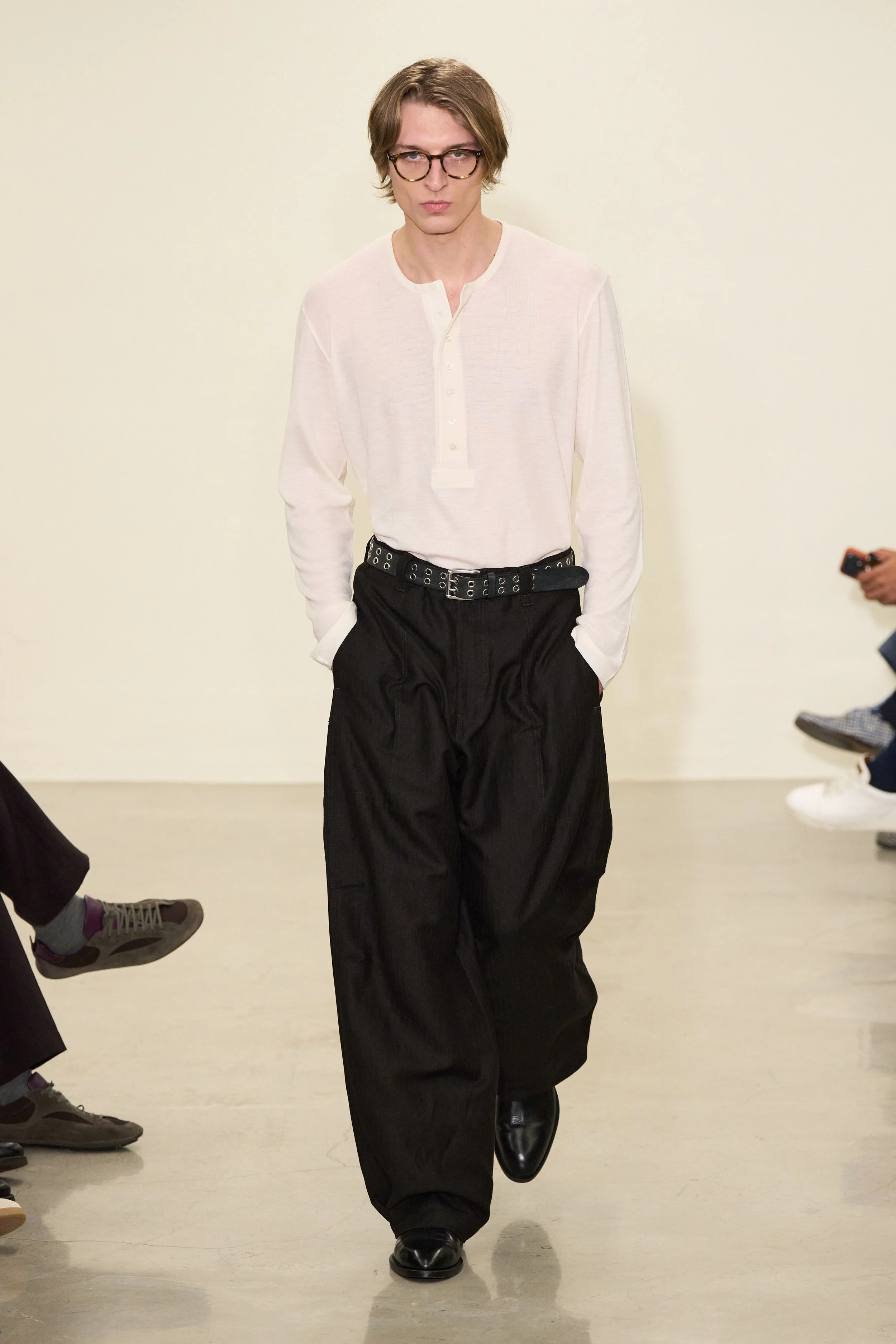
Paul Smith remains one of menswear’s enduring cool characters. More than fifty years after launching his eponymous label, the English designer continues to inject classic tailoring with a sense of surprise — and his Fall/Winter 2026 collection, presented in Milan, proved that his formula still hits with precision.

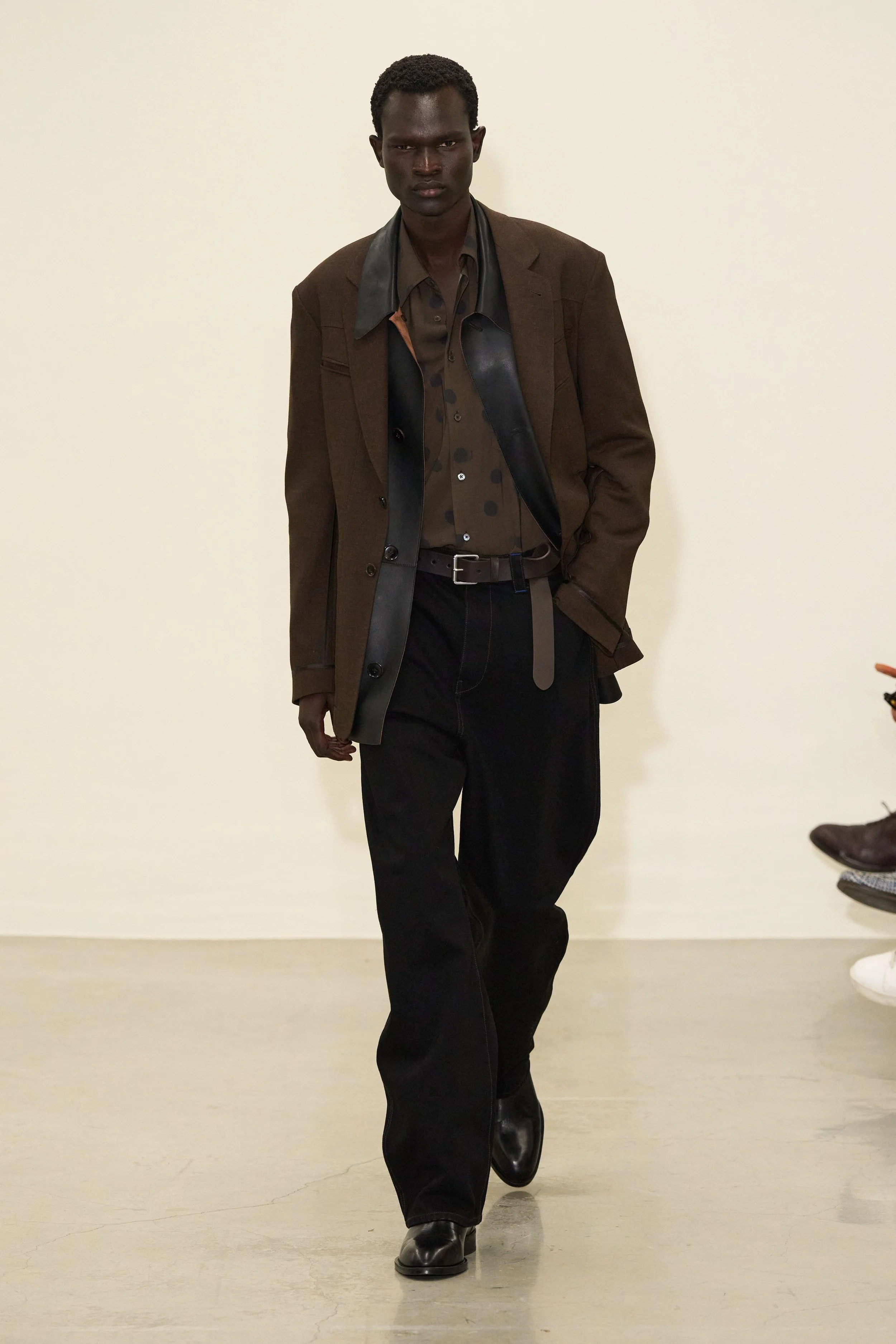
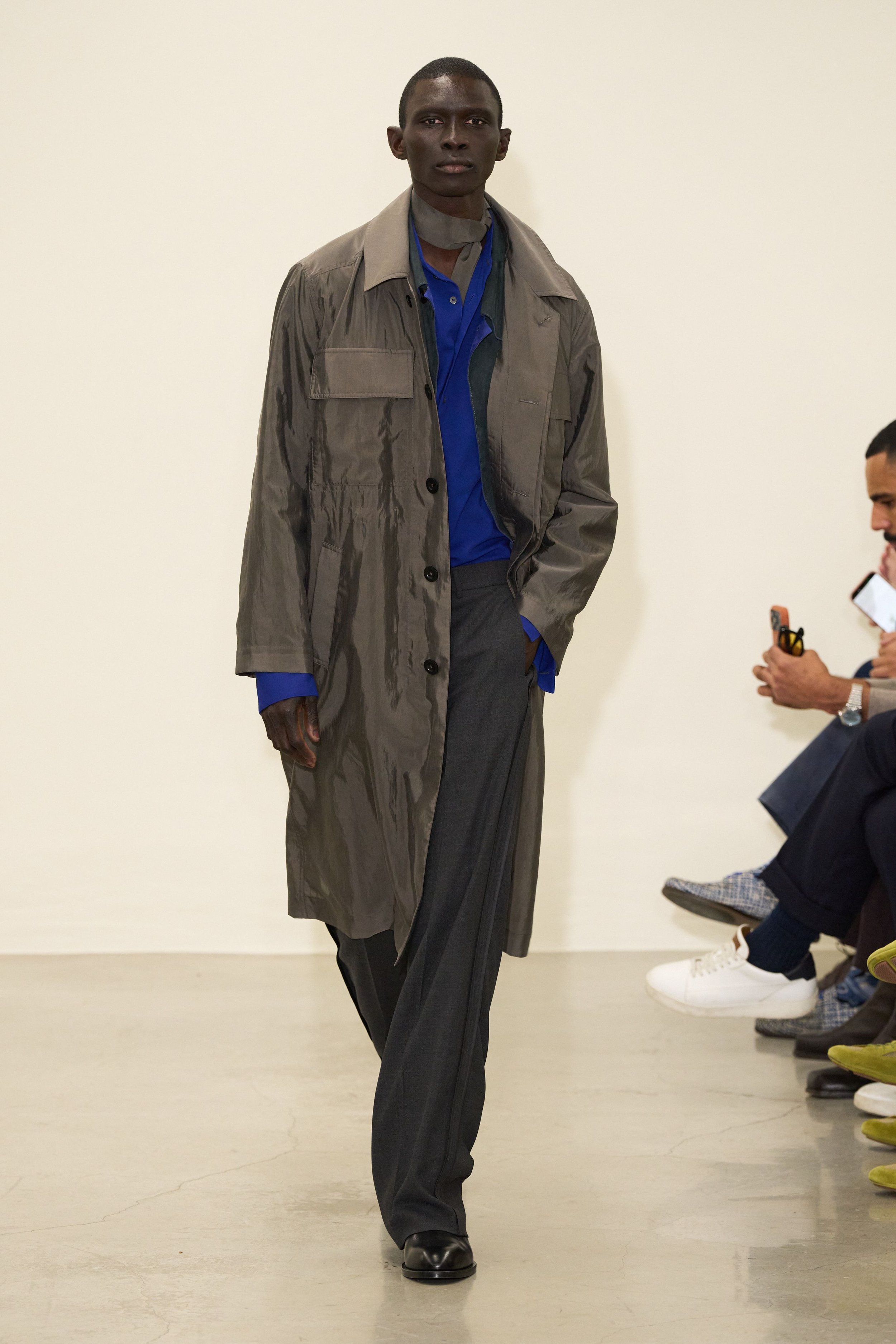
This season, Smith introduced a compelling tension between tradition and edge, layering technical fabrics and leather accents onto familiar wardrobe staples. A light grey nylon coat was styled over a cobalt blue knitted polo, while a black leather overshirt emerged subtly beneath a chocolate-brown blazer. The interplay of texture and colour kept the silhouettes grounded yet charged.

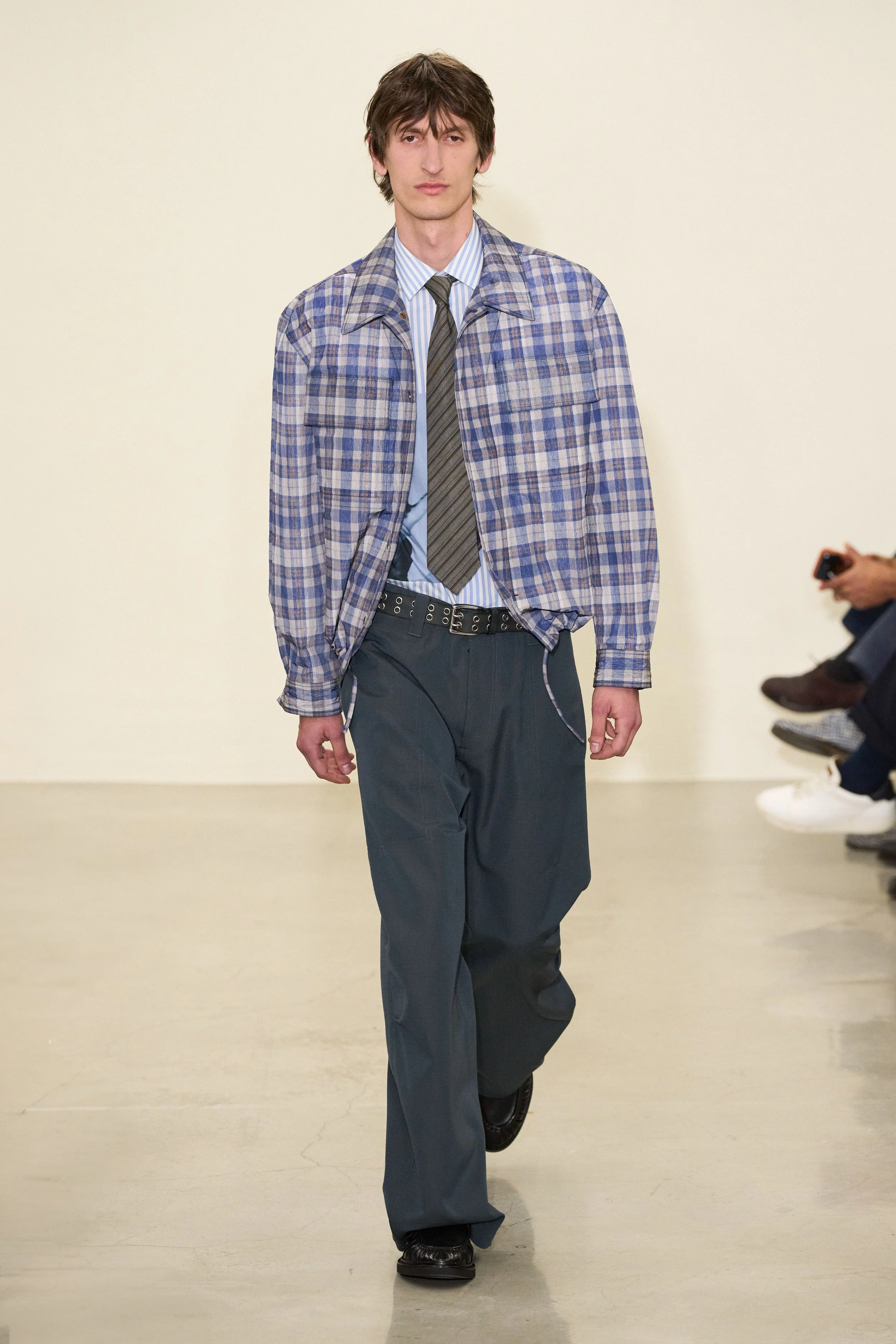
Accessories played a defining role. Nylon trousers were secured with bold belts featuring Western-inspired buckles, while voluminous wool slacks leaned into rock ’n’ roll territory with eyelet-studded designs. The details felt deliberate — never loud, but impossible to ignore.

The collection’s rebellious streak carried confidently into eveningwear. A classic three-button suit jacket was reimagined with utilitarian chest pockets, blurring the line between tailoring and function. Elsewhere, a relaxed double-breasted suit in a rich navy hue was softened by a printed necktie, lending ease to an otherwise commanding look.


Words by Martin Onufrowicz

RALPH LAUREN FW26

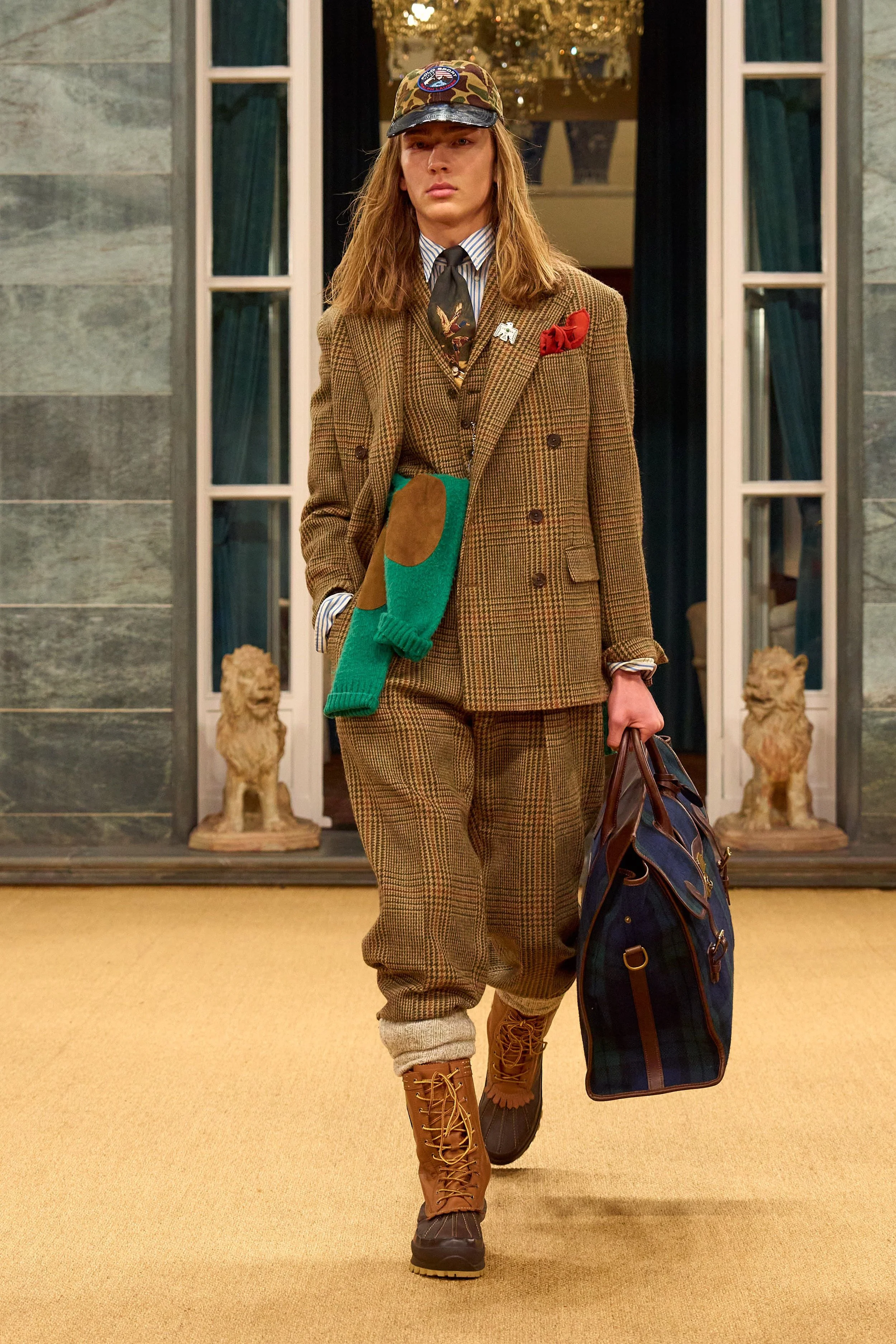
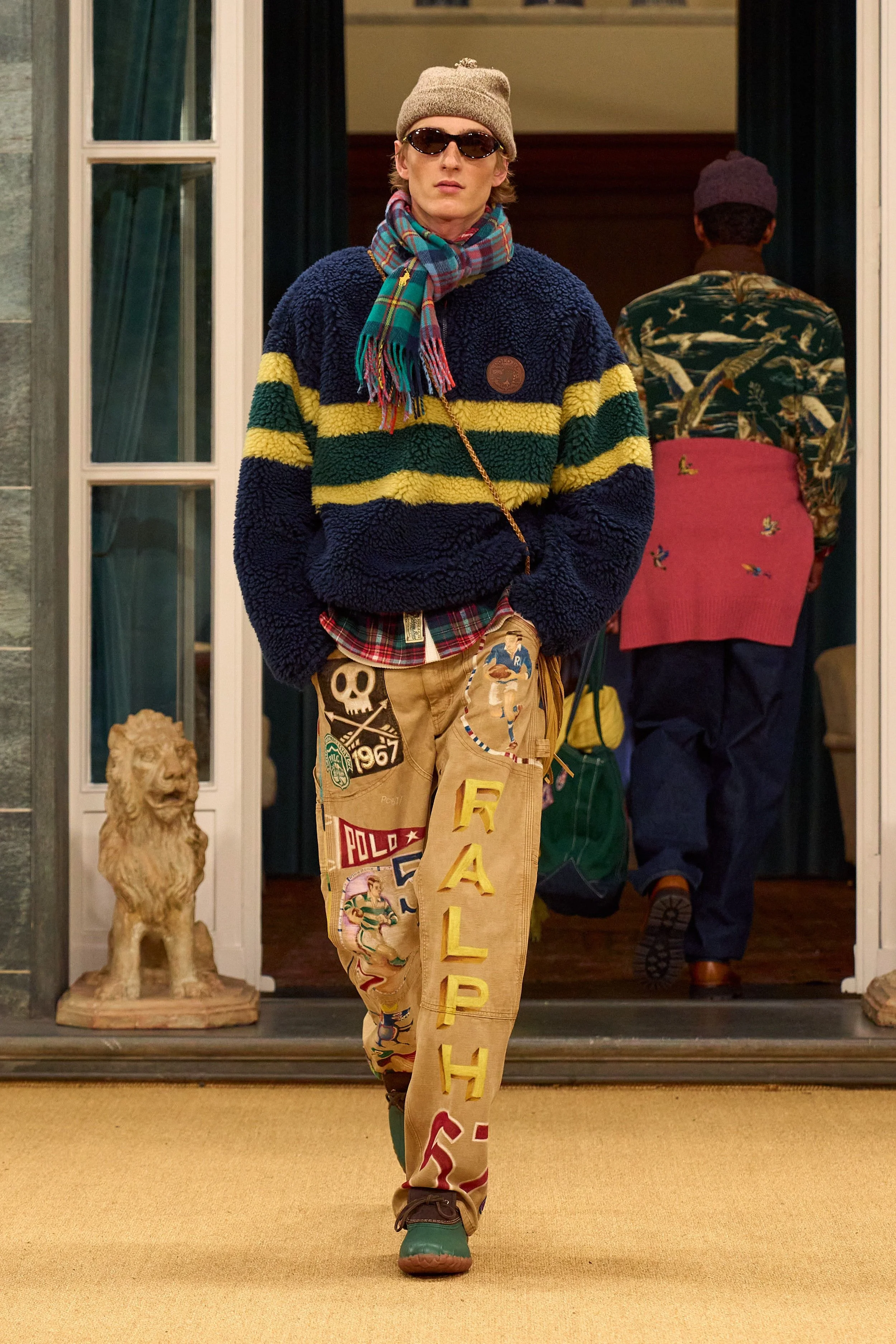
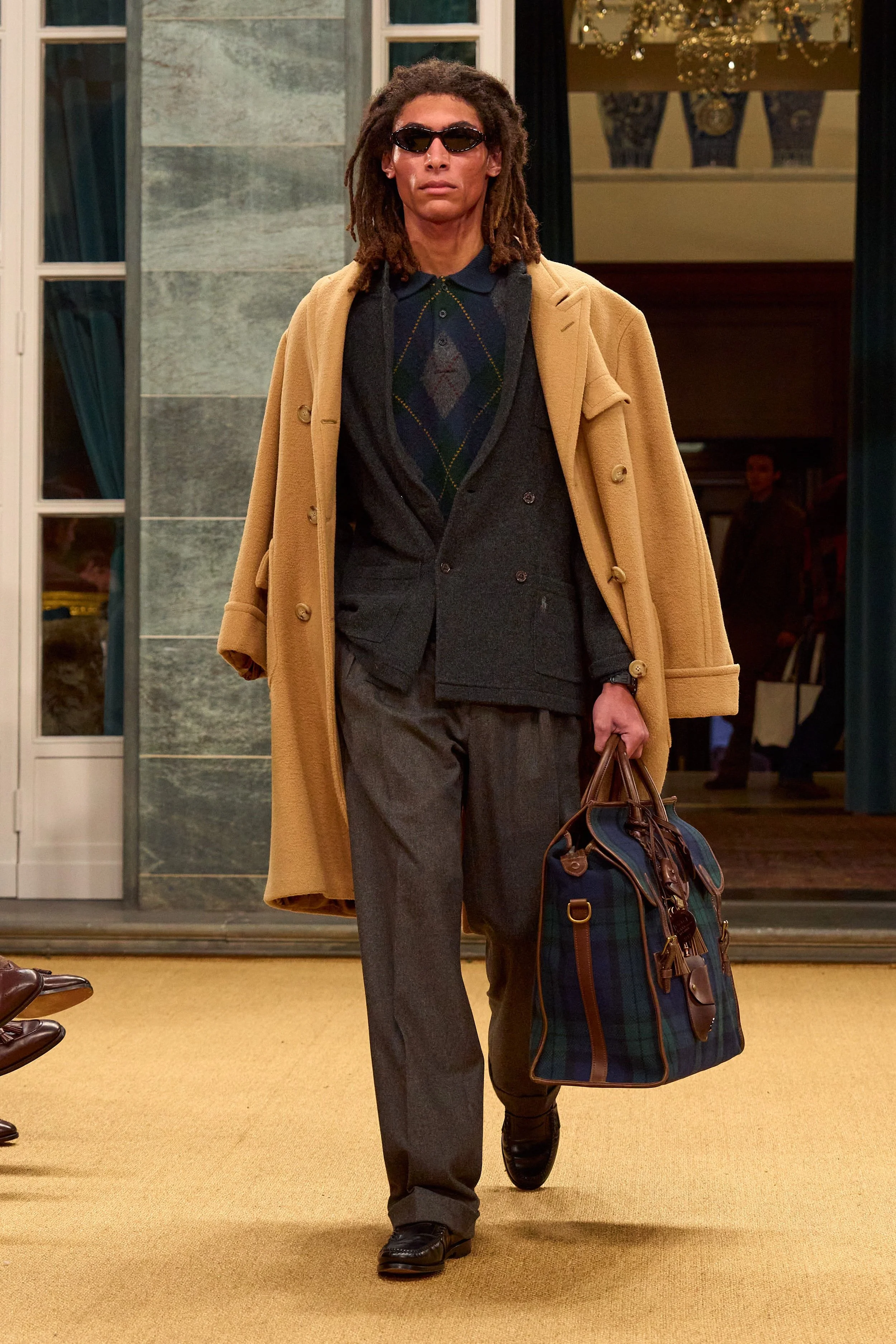
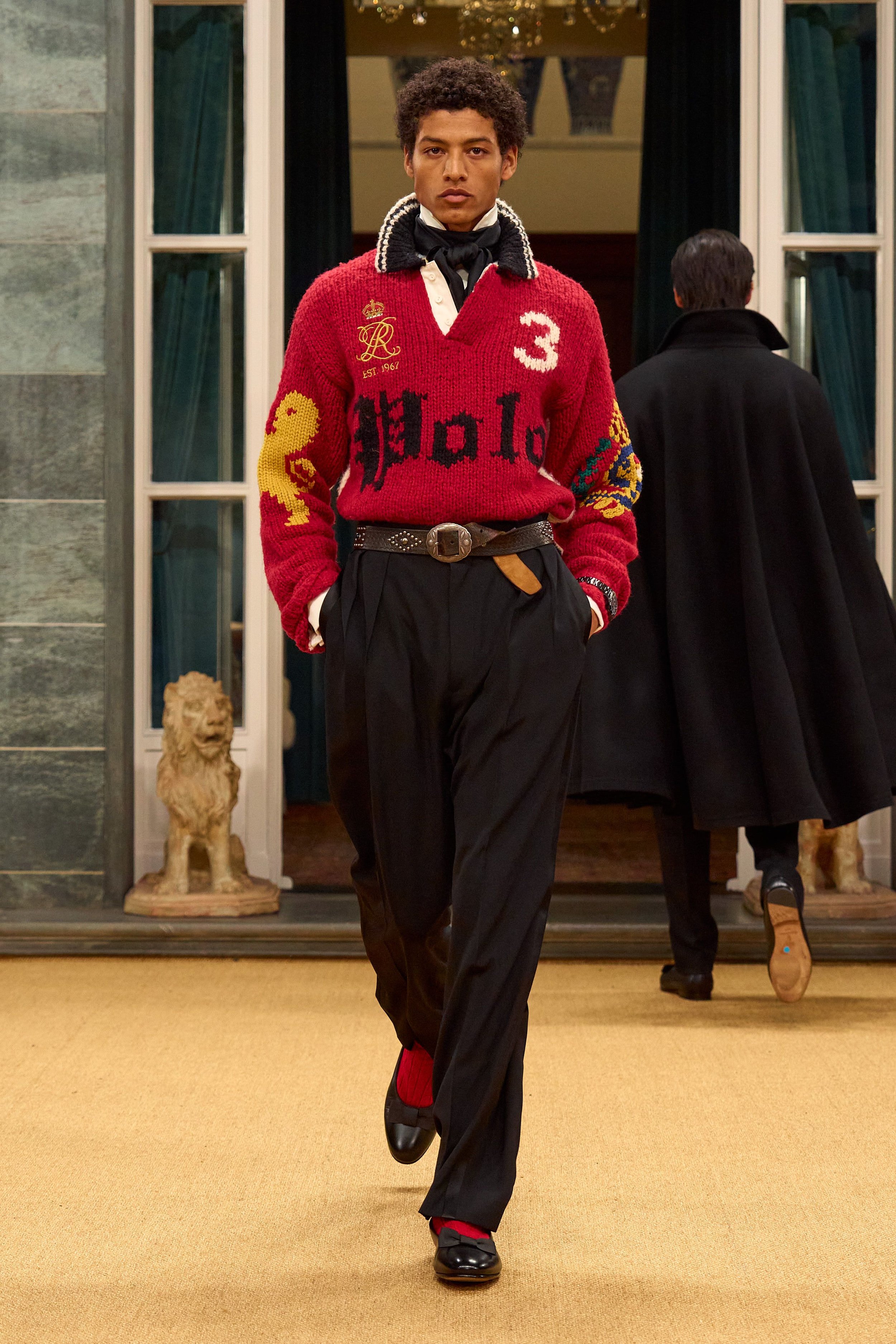
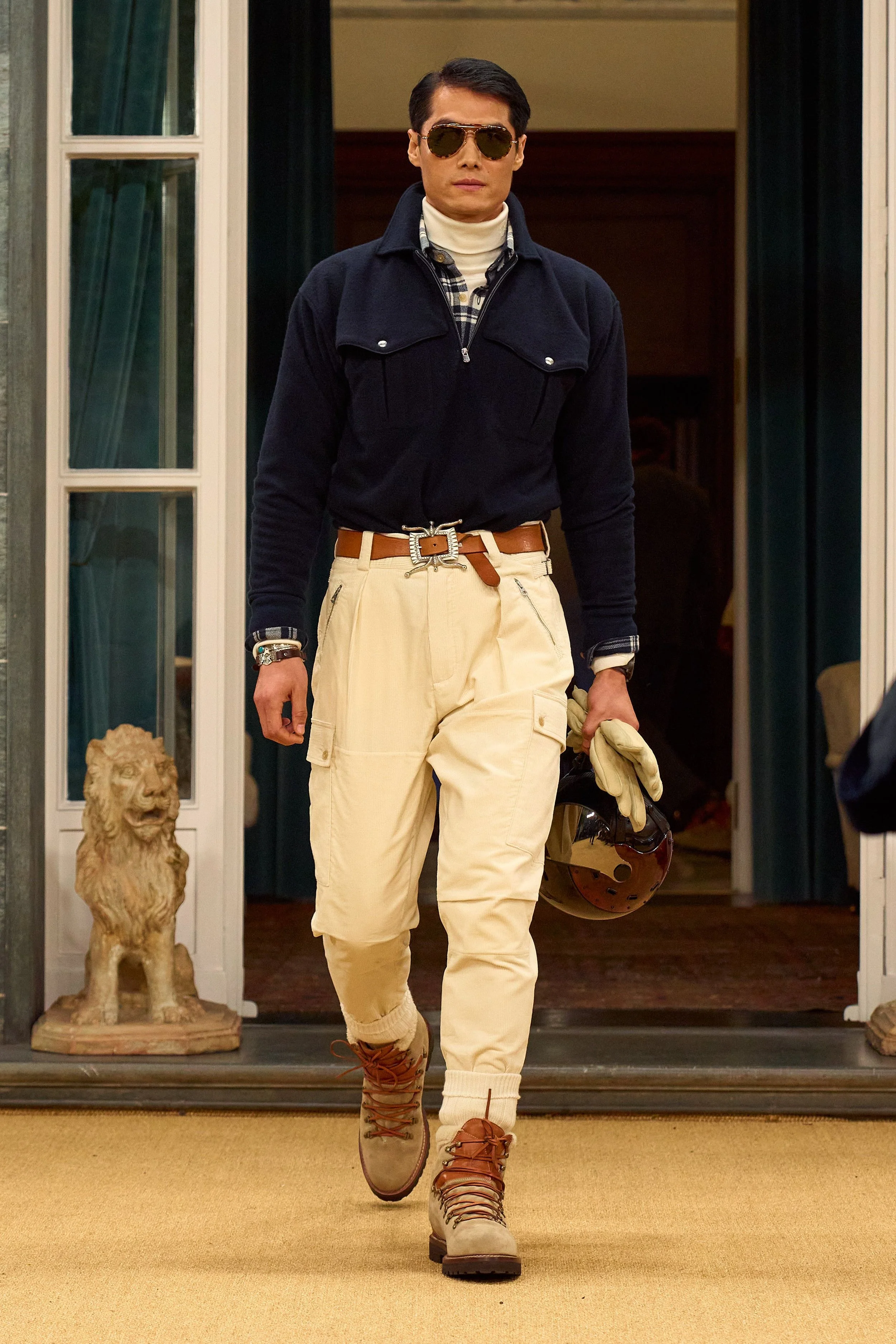
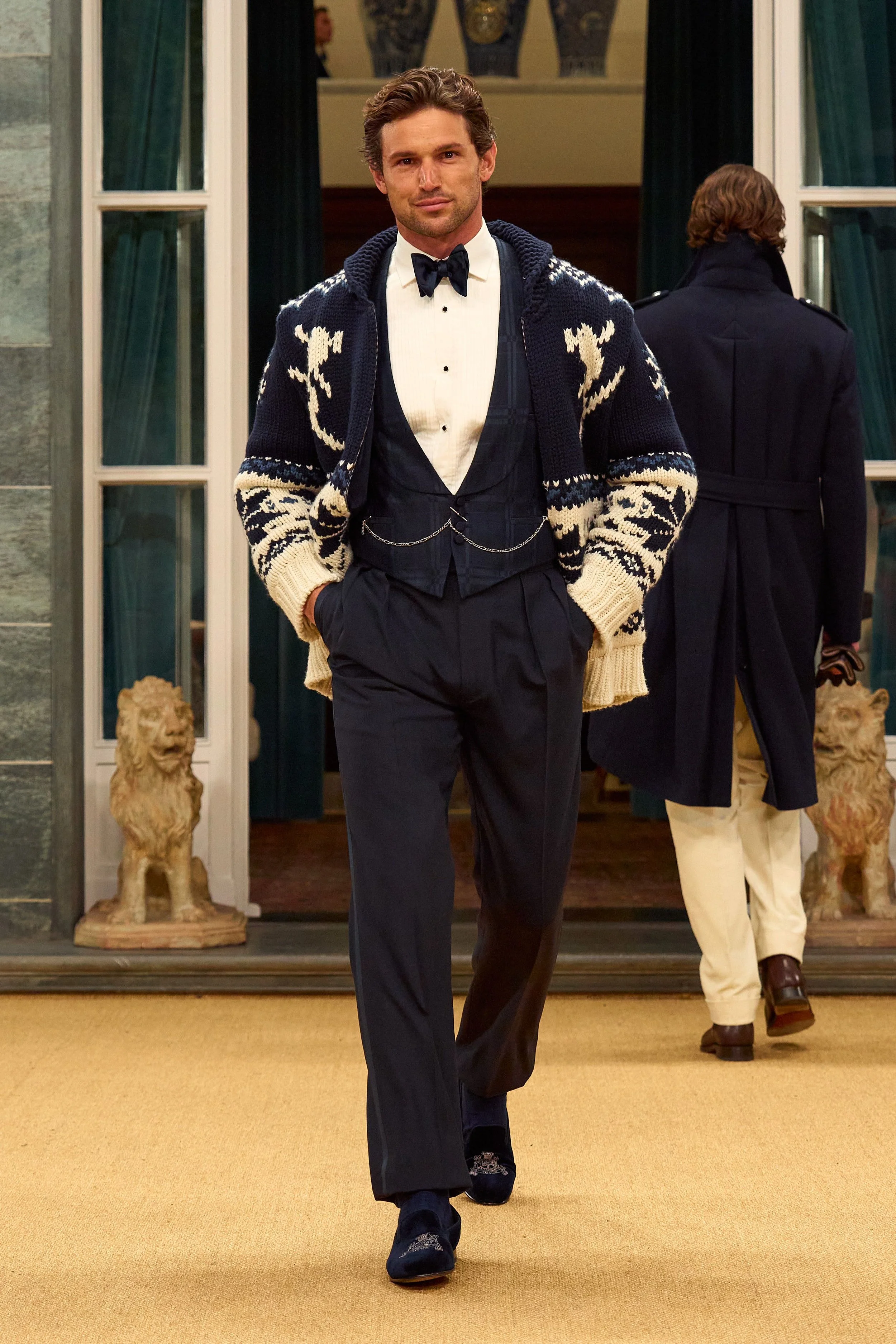
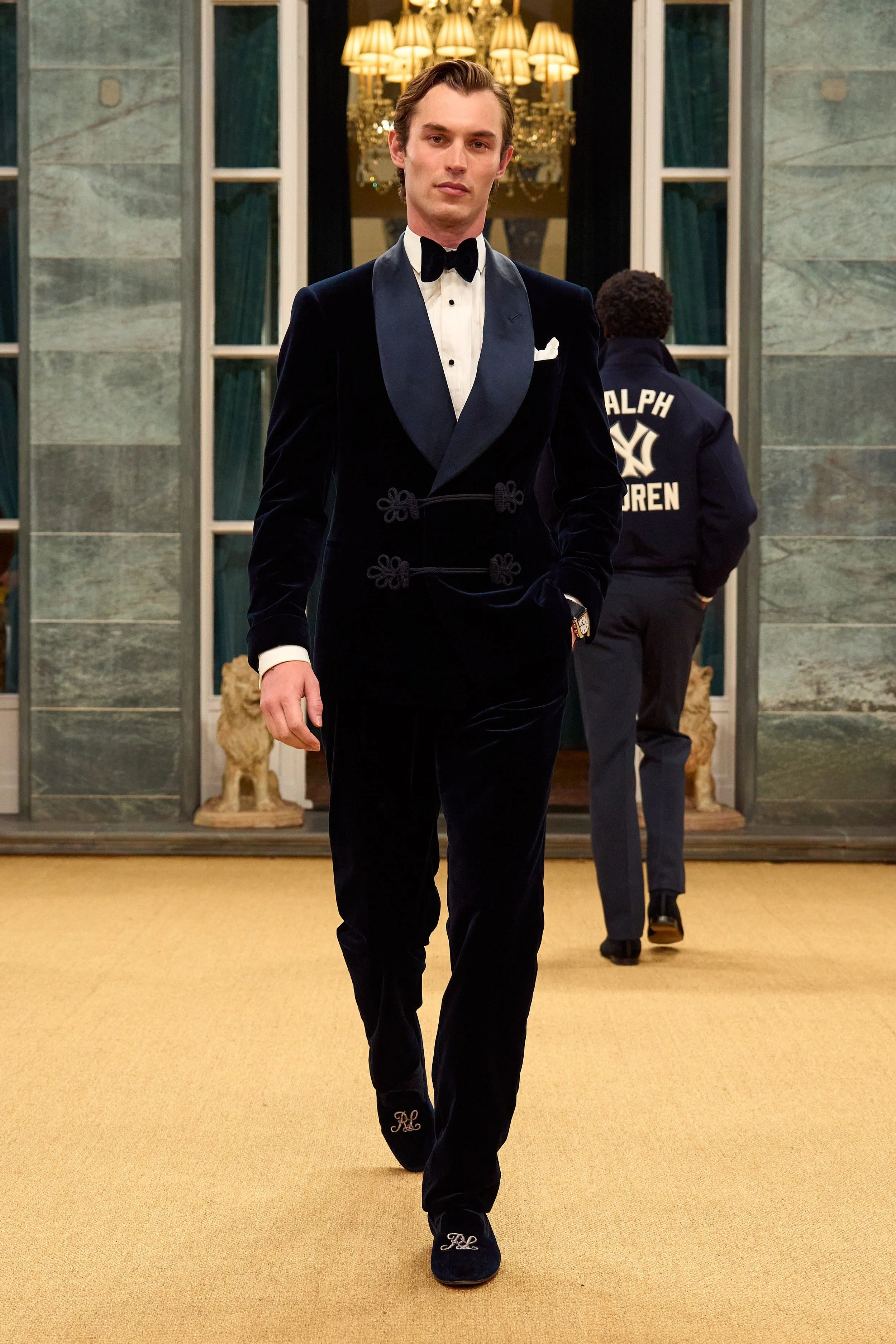
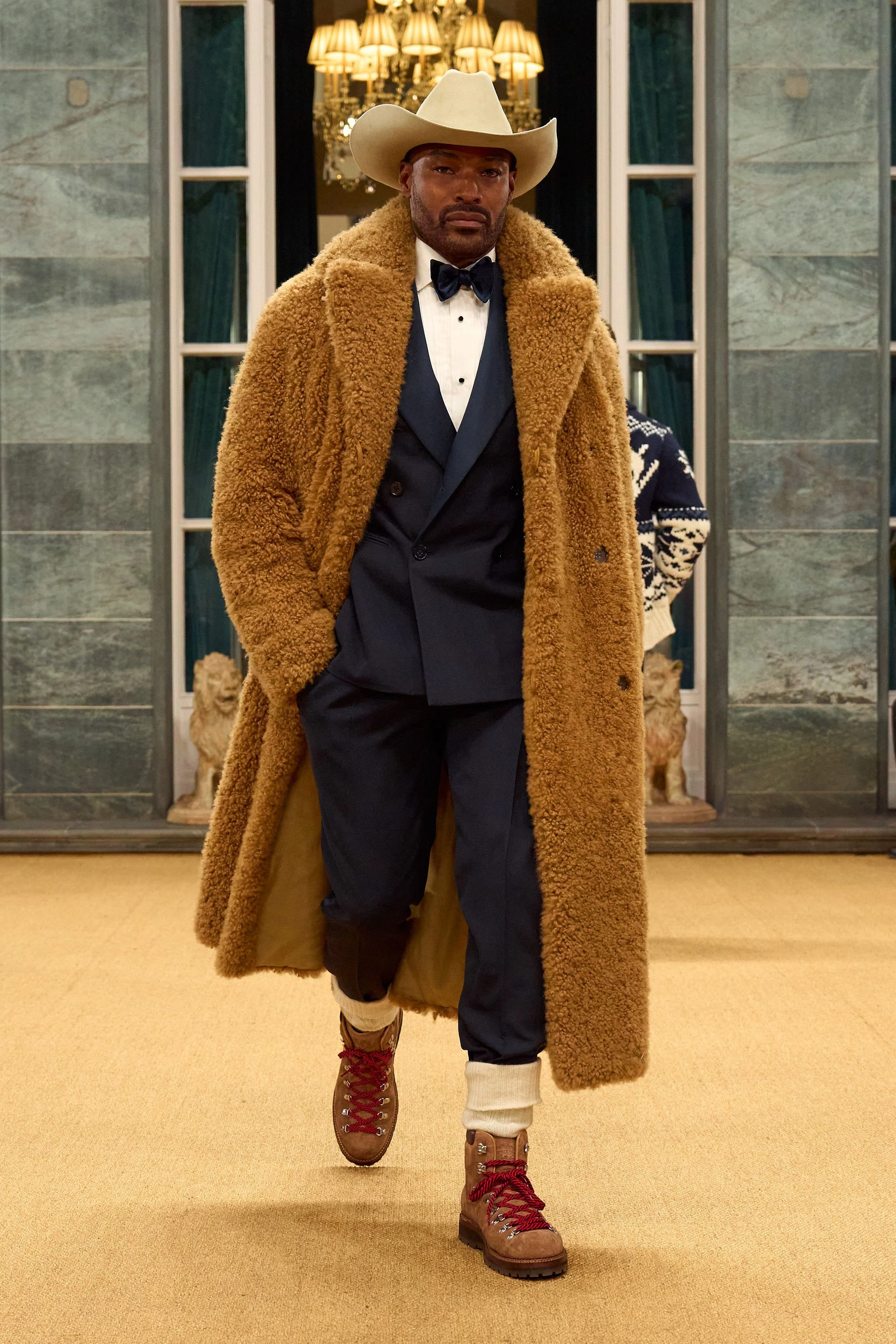
Some things never go out of style. Making a guest appearance at Milan Fashion Week, Ralph Lauren unveiled his Polo and Purple Label Fall/Winter 2026 collections, transporting his unmistakable brand of Americana to the Italian fashion capital.

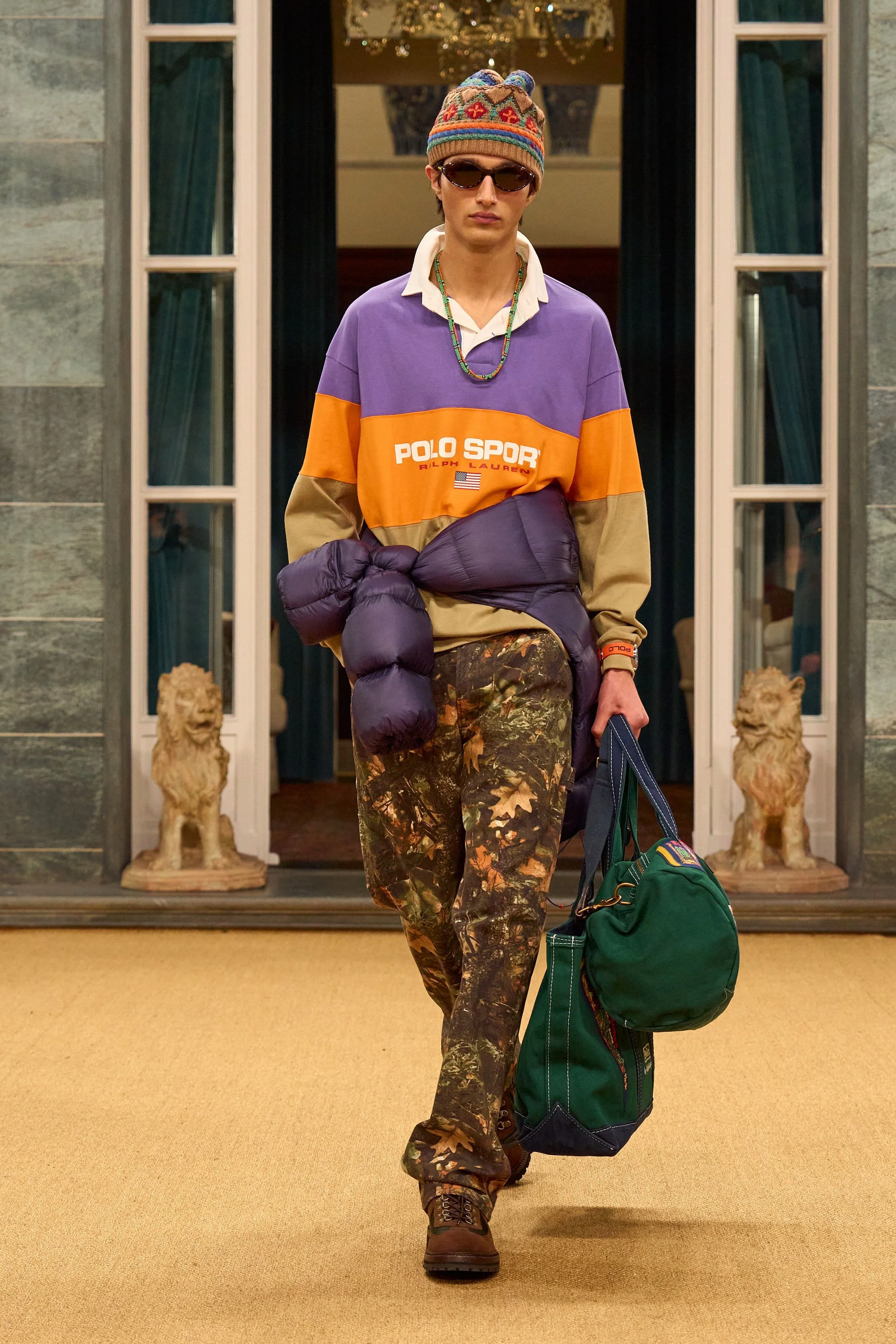
The show opened on a playful note with Polo’s youthful sensibility taking centre stage. Roomy rugby shirts with sharply popped collars were layered with beaded necklaces, while puffers and vividly hued knits were cinched neatly at the waist. Colourful checked scarves were wrapped snugly around the neck, their cable-knit counterparts tied effortlessly to canvas bags — styling gestures that felt both considered and carefree.

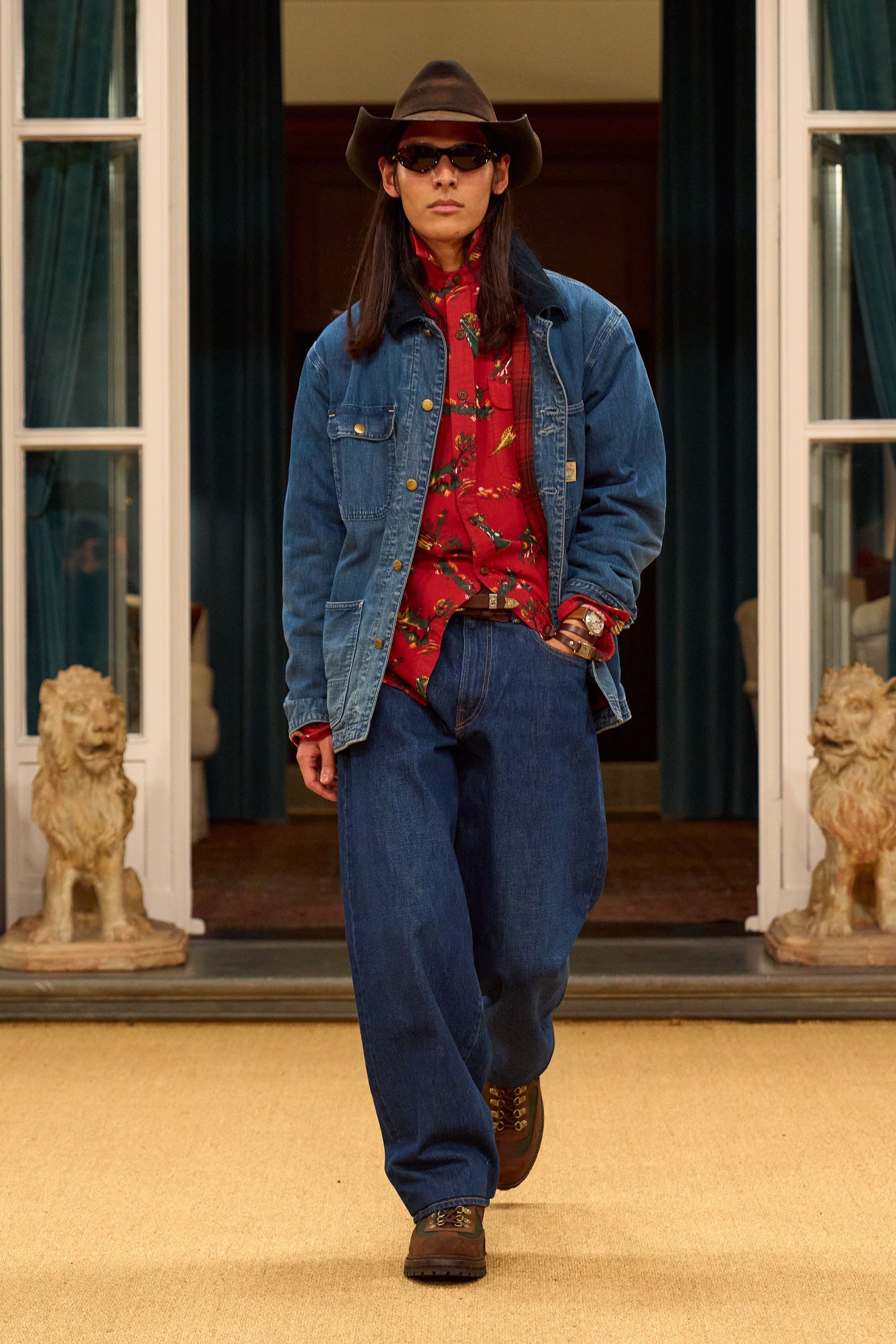
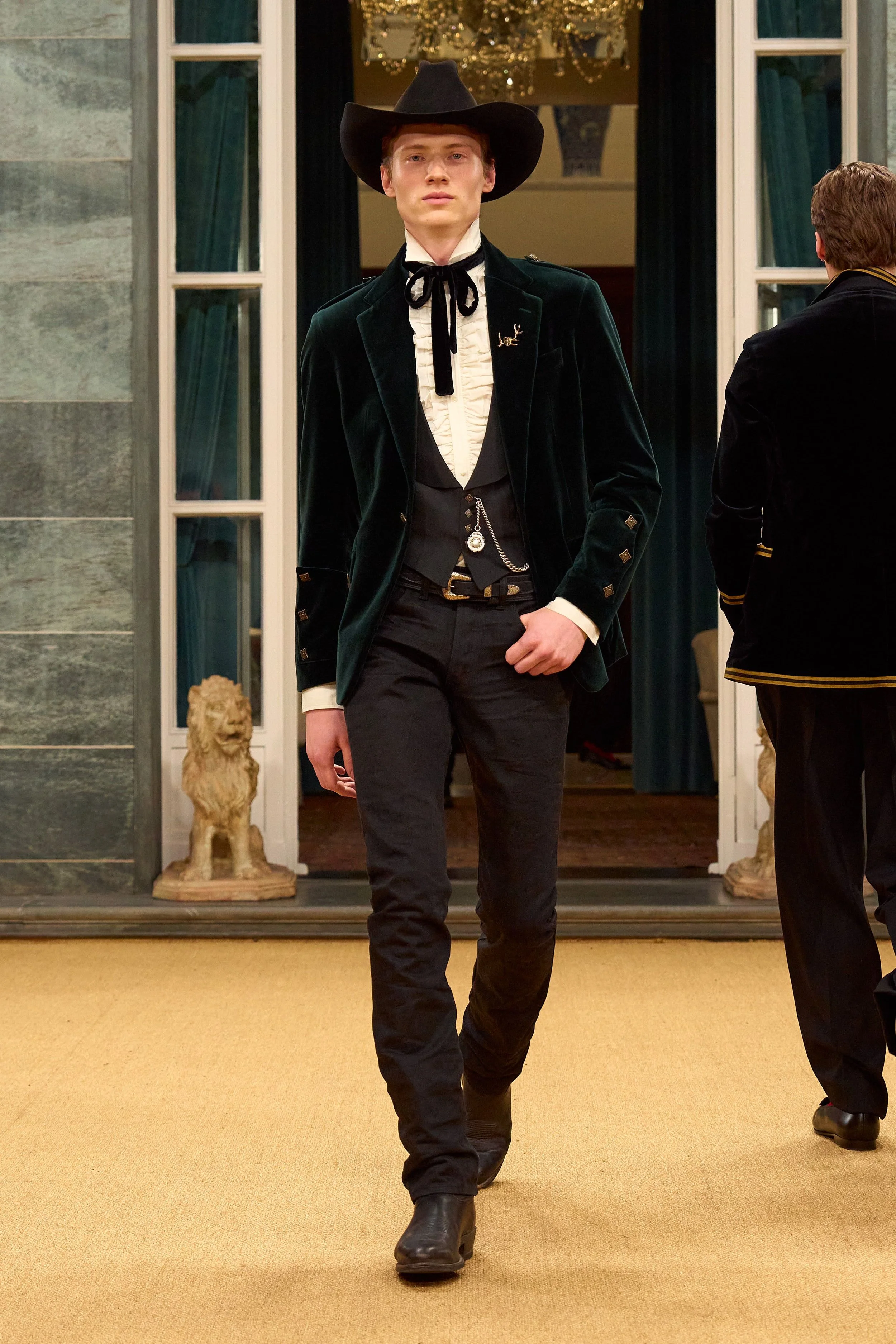
As the presentation transitioned into Purple Label, the mood shifted toward after-dark elegance without abandoning Lauren’s signature grit. Tailoring took on a richer texture and deeper palette. A velvet blazer in an inky forest green was layered over a ruffled white shirt and finished with a black necktie, cowboy hat, and boots — a look that balanced refinement with rugged confidence.

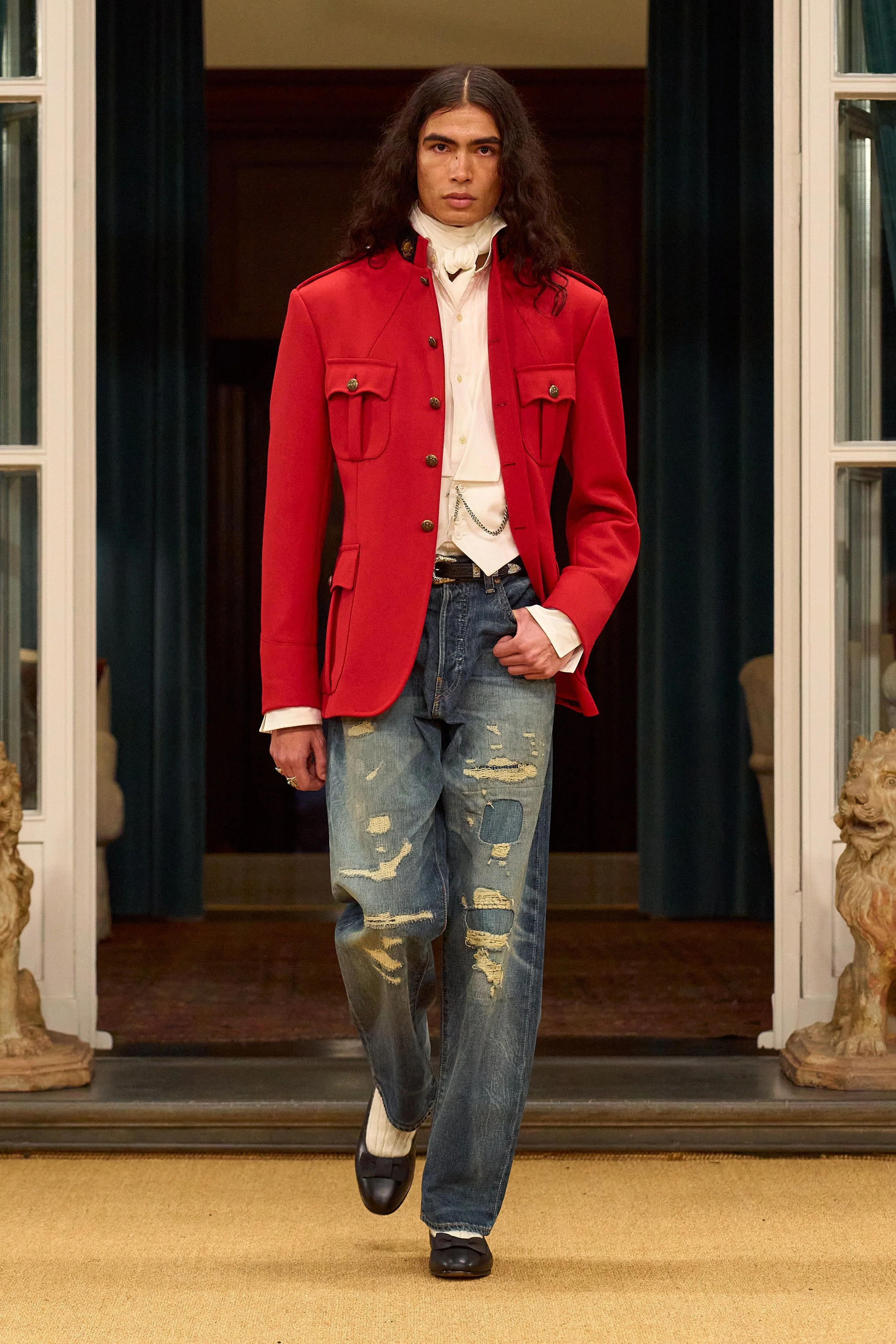
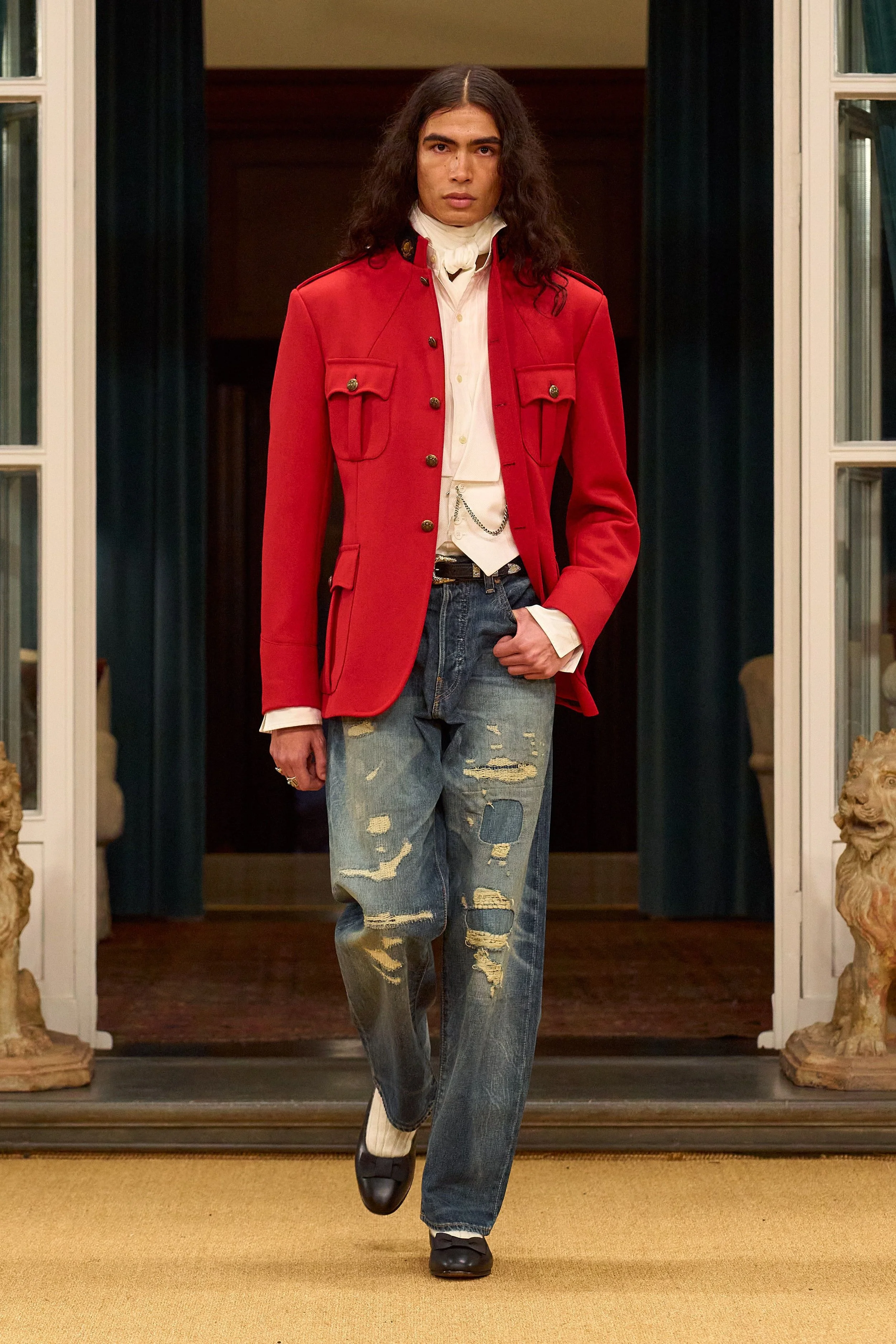
The standout ensemble came in the form of a red officer’s jacket, sharply contrasted against perfectly distressed straight-leg denim and polished black opera loafers. It was a reminder that Ralph Lauren’s enduring appeal lies in his ability to blend heritage, romance, and rebellion — no matter the city, no matter the season.


Words by Martin Onufrowicz

DSQUARED2 FW26

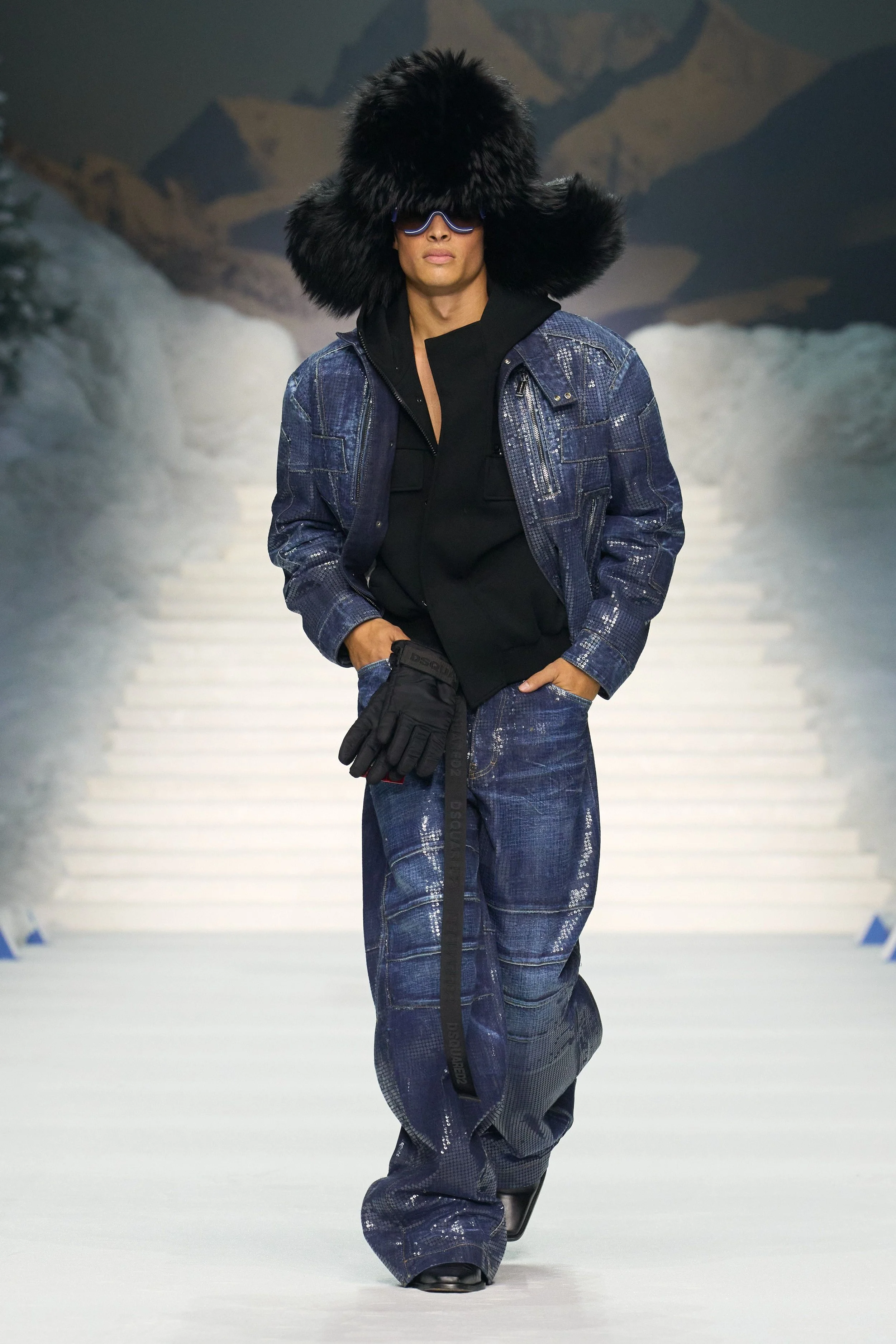
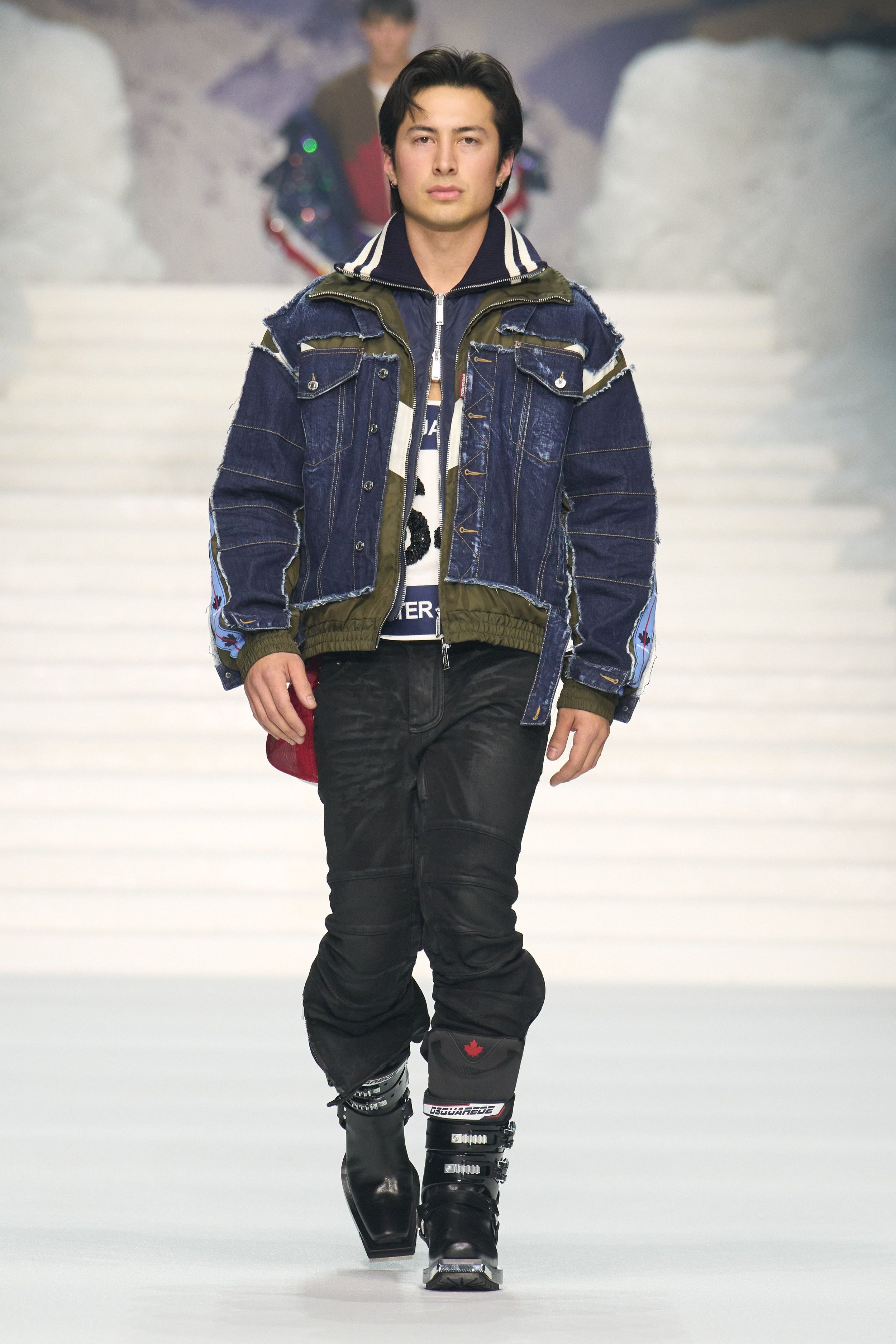
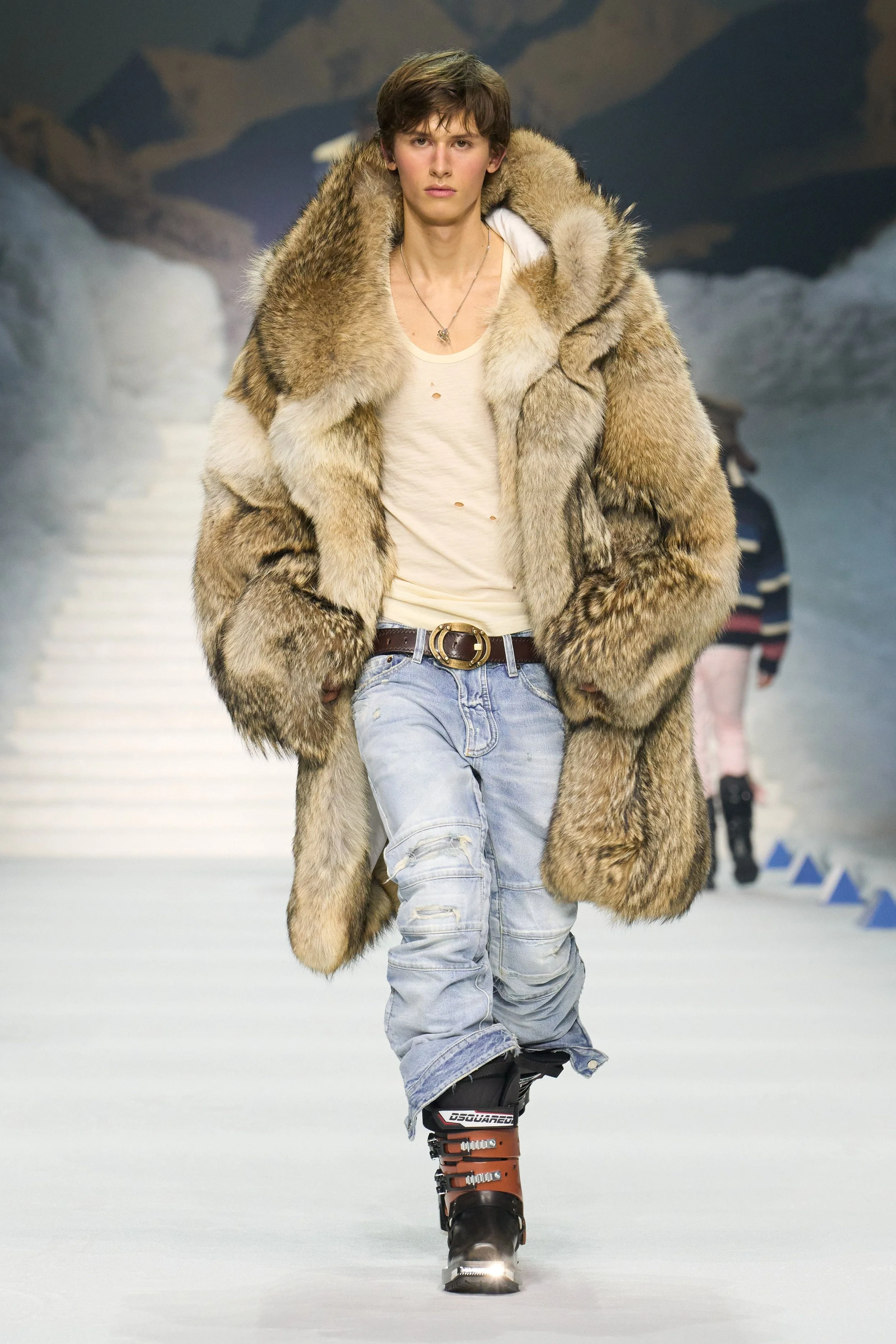
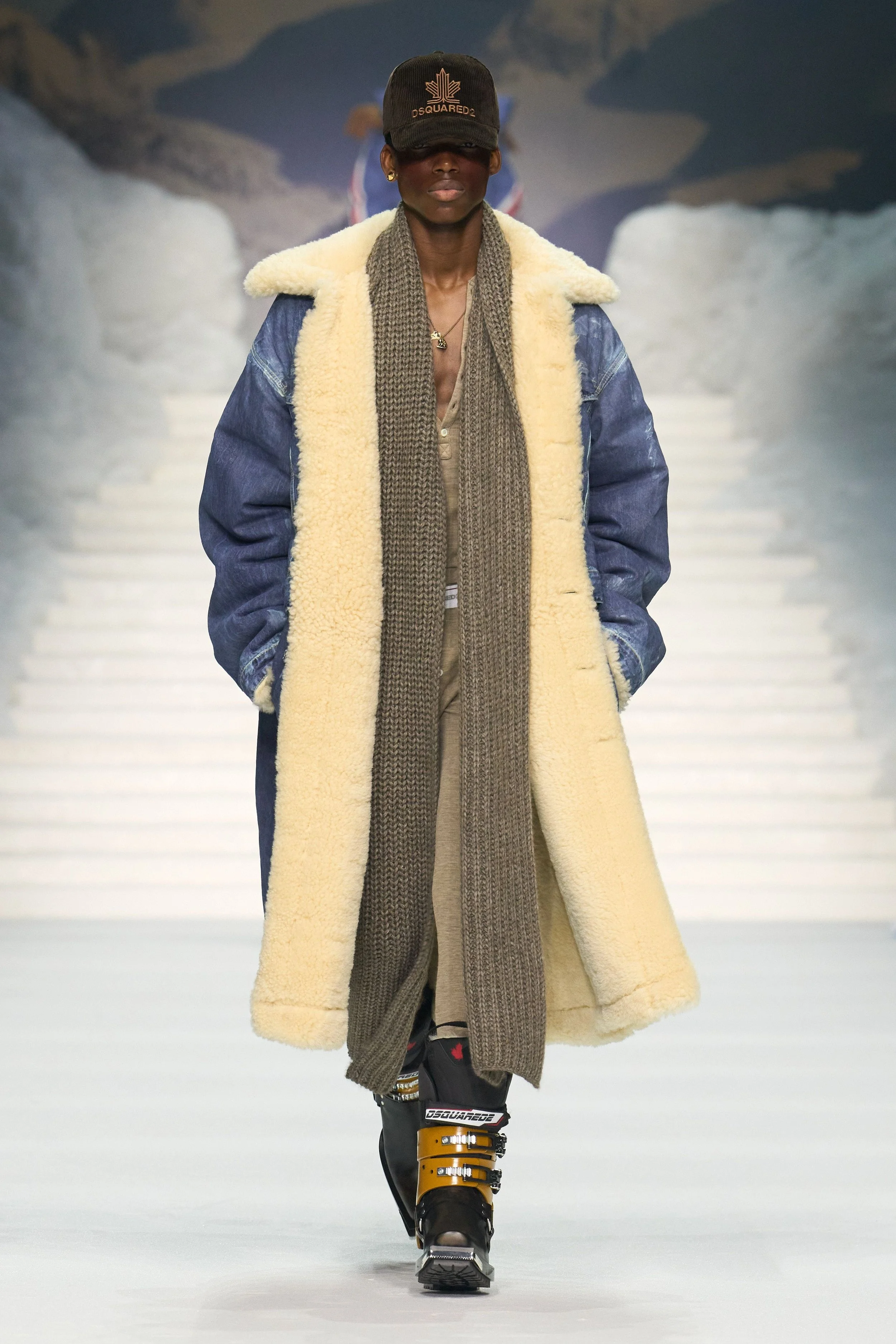
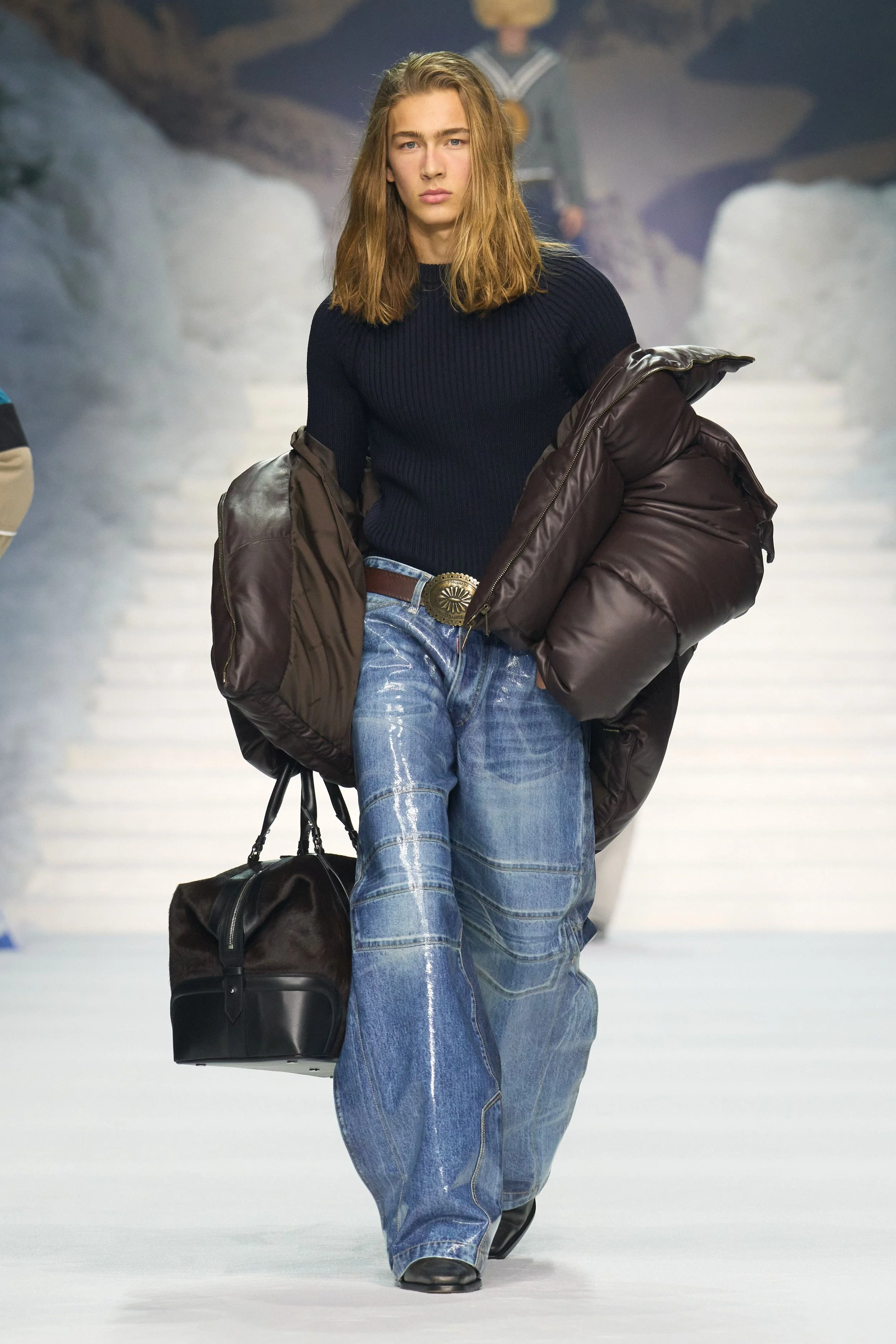
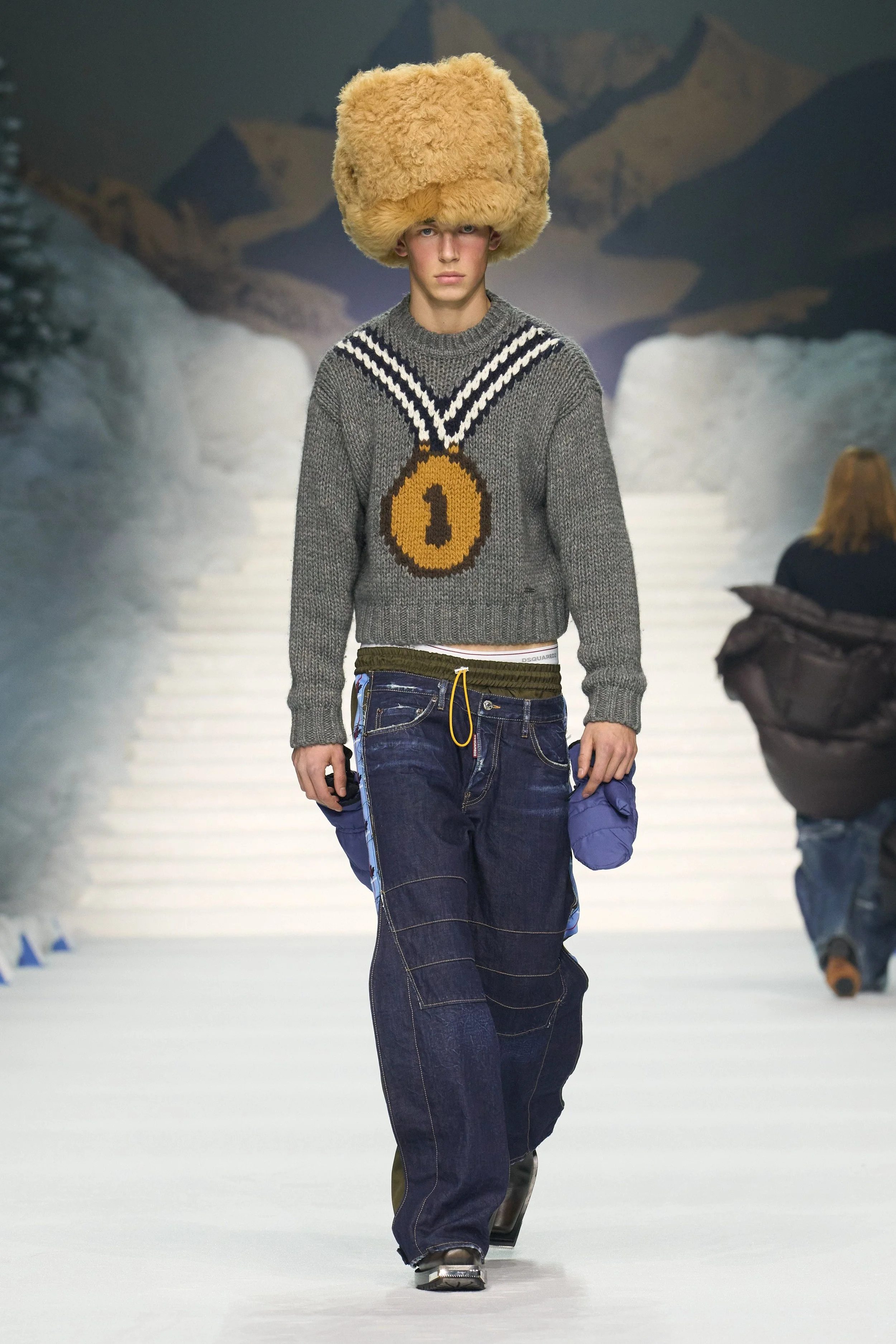
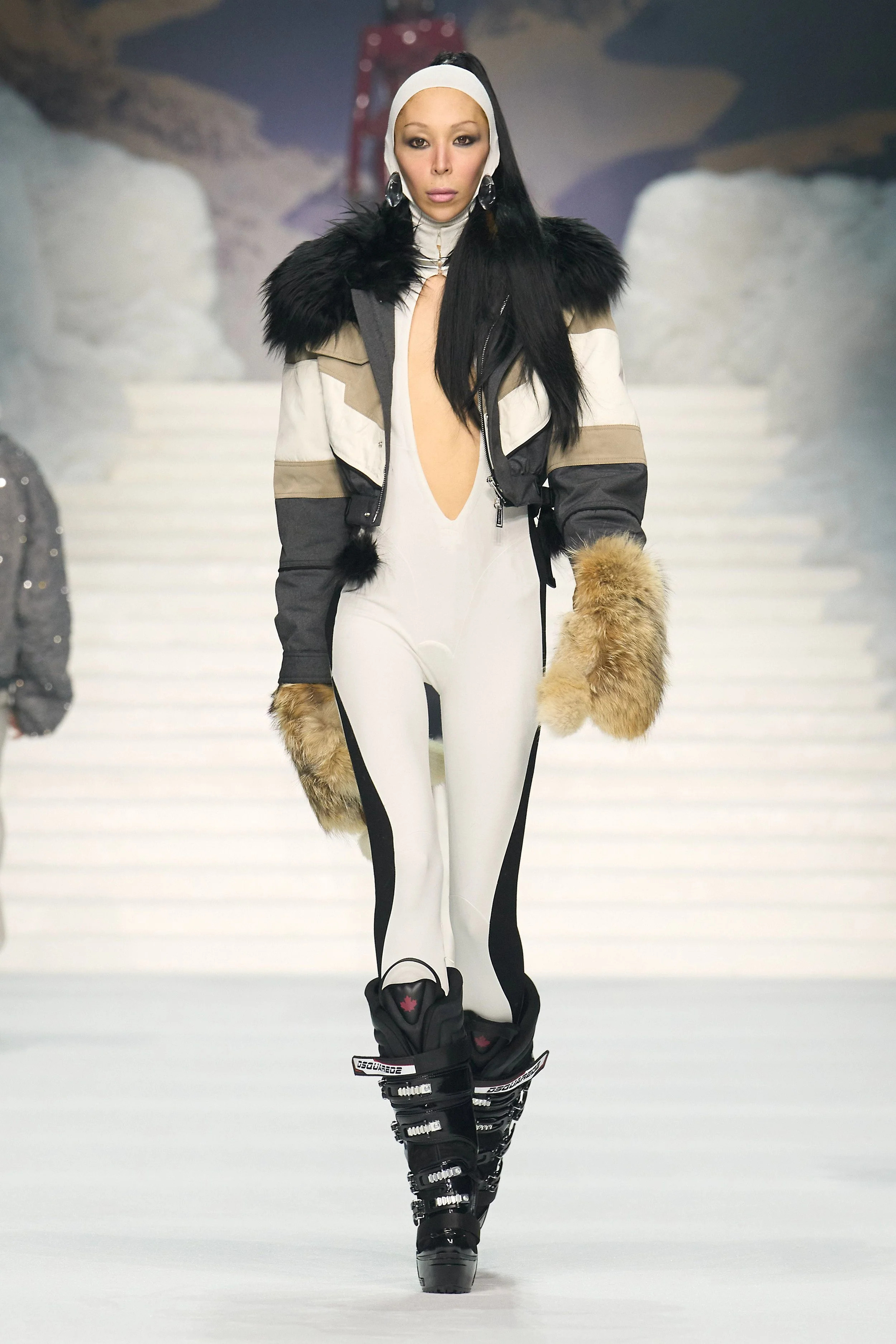
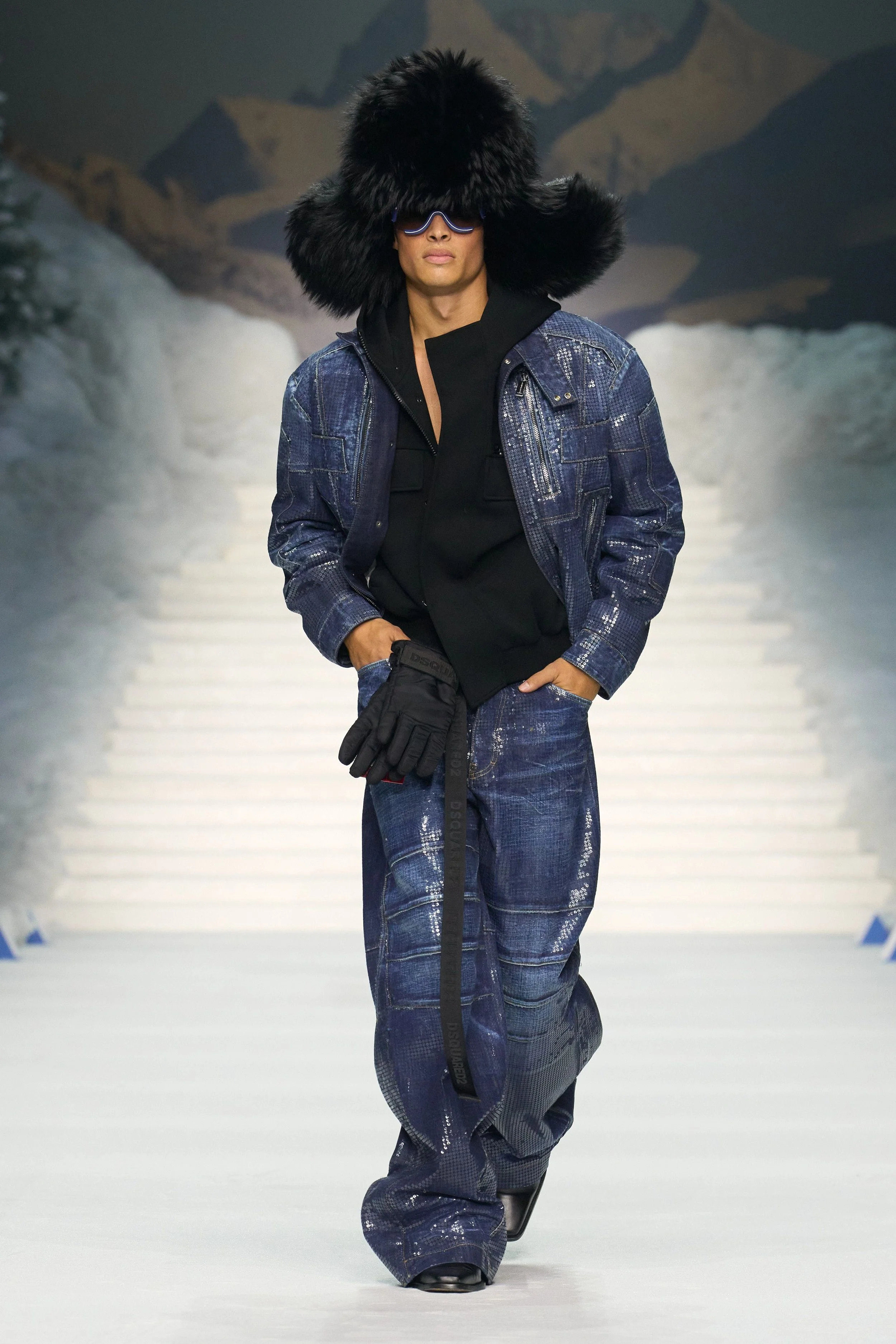
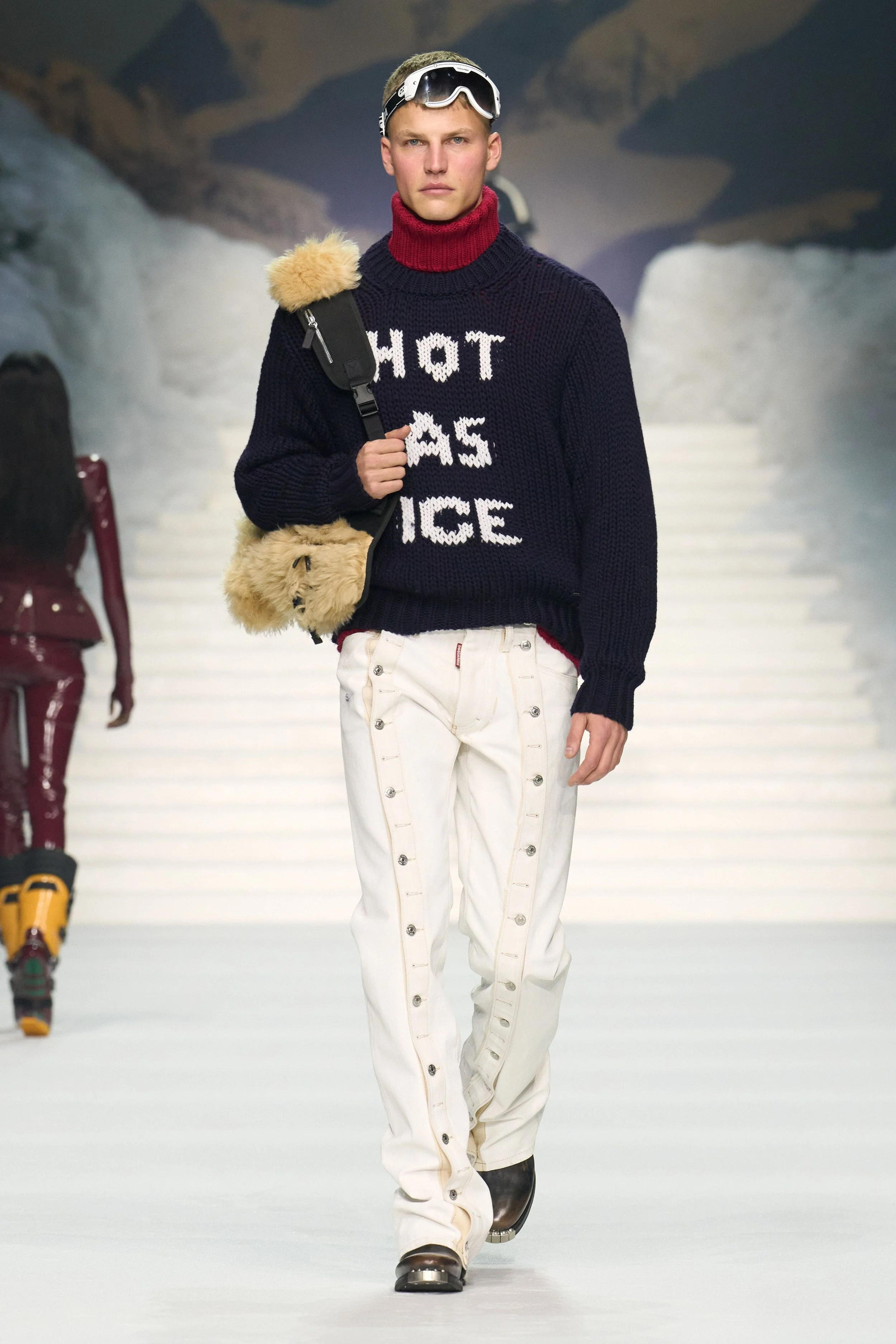
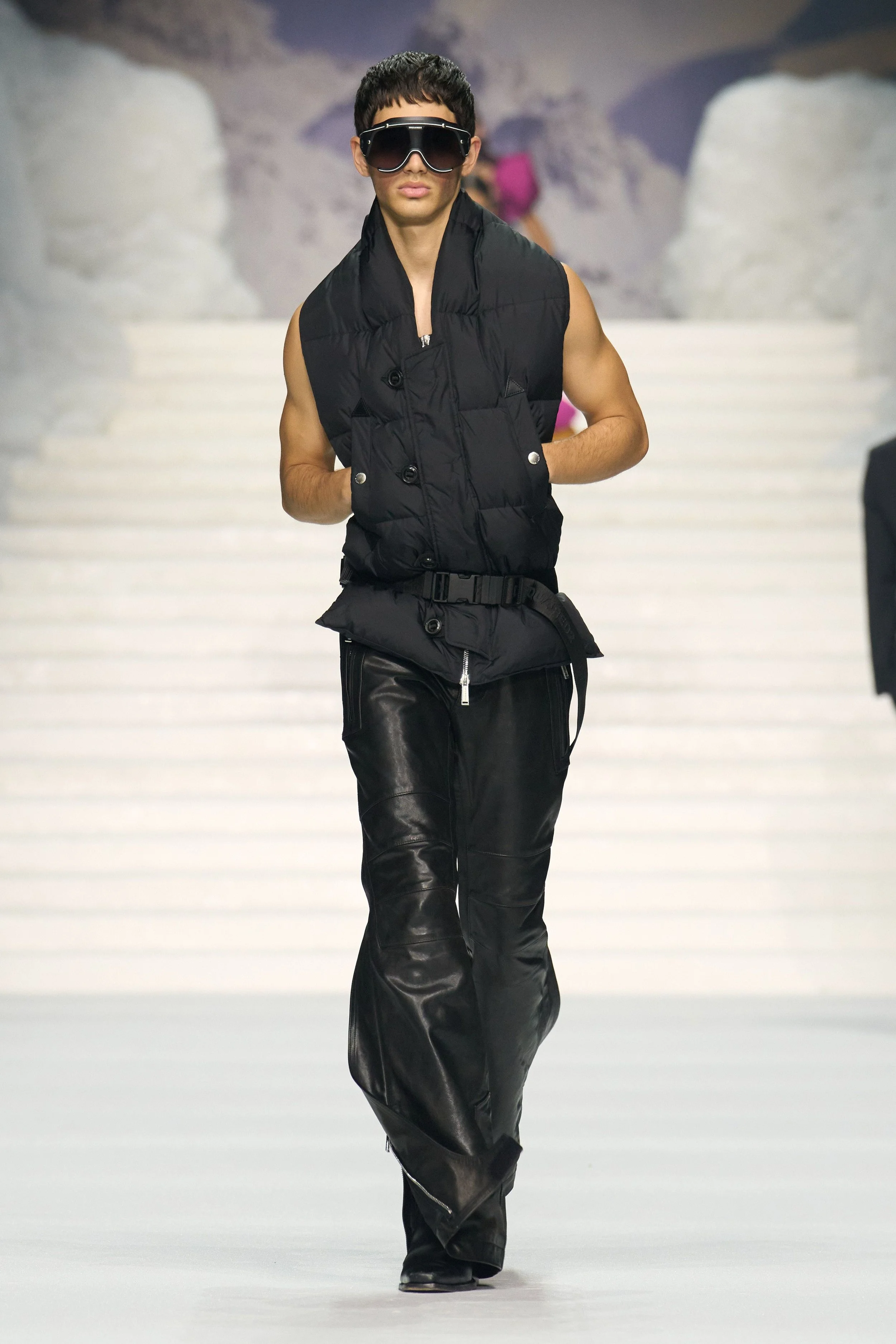
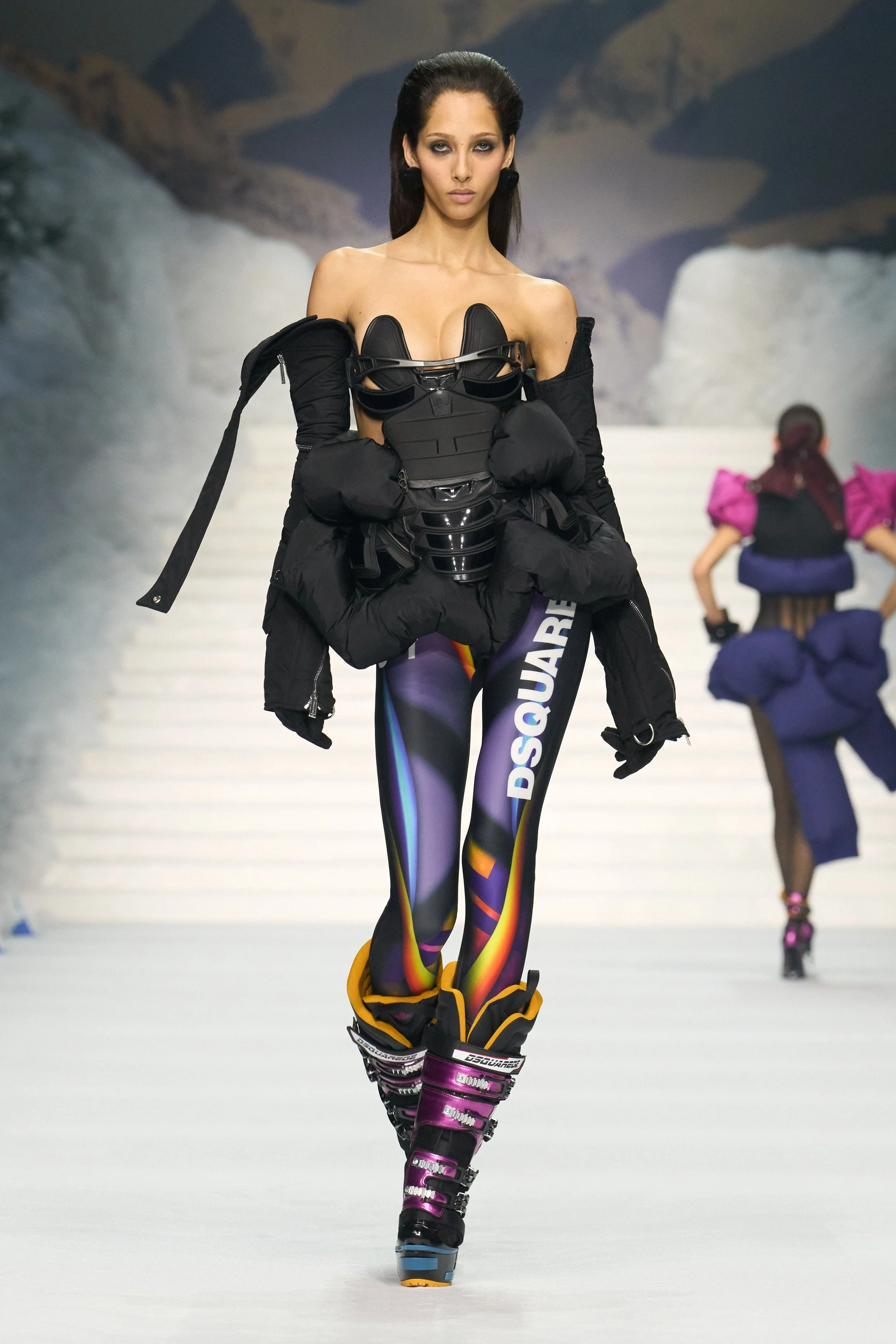
Dean and Dan Caten have long worn their Canadian heritage as a badge of honour, threading its iconography through nearly every Dsquared2 collection. It came as little surprise, then, that for Fall/Winter 2026 the twin designers doubled down on those roots, opening the show with Hudson Williams — the breakout star of our favourite gay hockey saga Heated Rivalry and arguably Canada’s hottest export right now. Williams took to the runway clad in the brand’s signature denim, finished with Dsquared2’s irreverent take on ski boots.

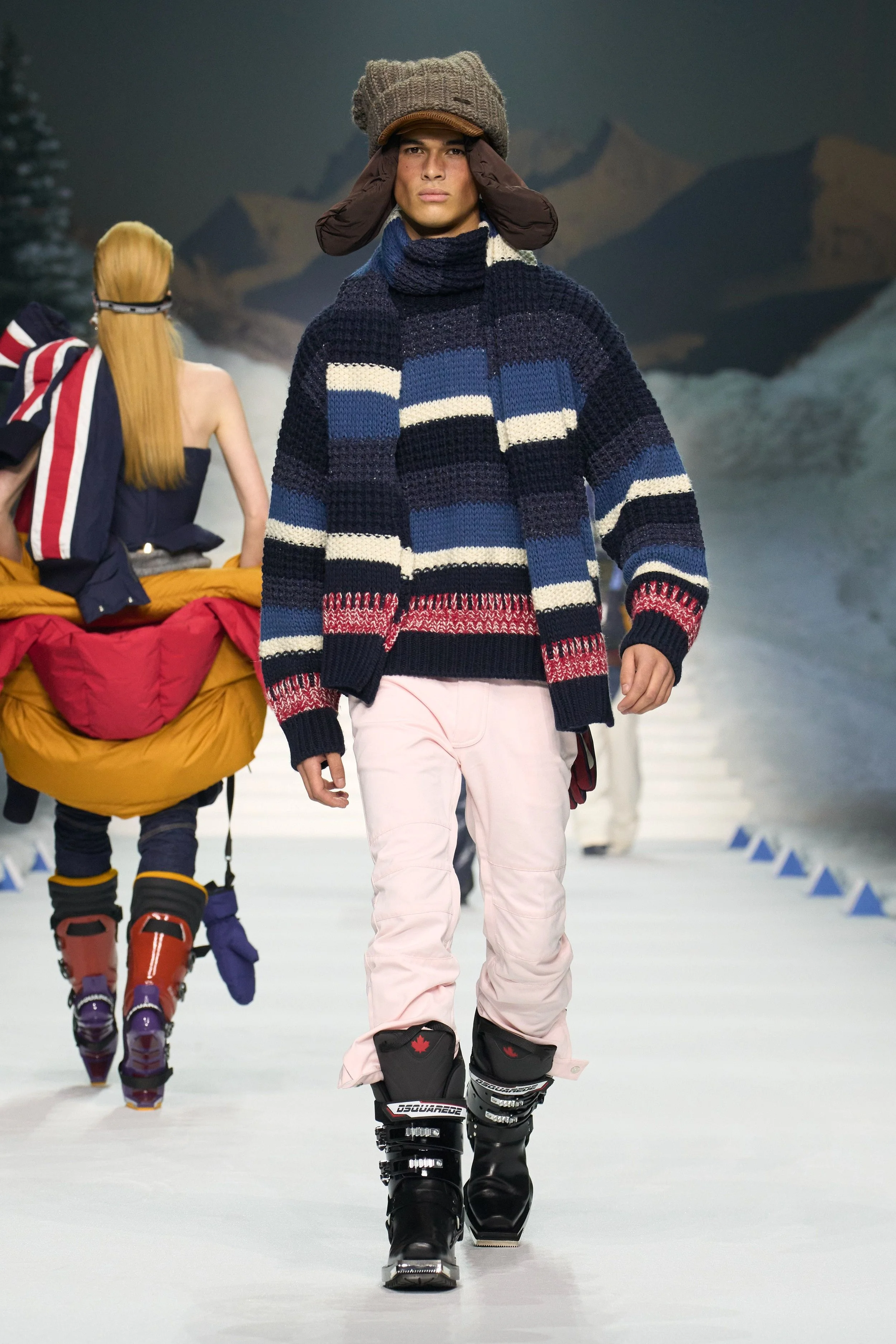
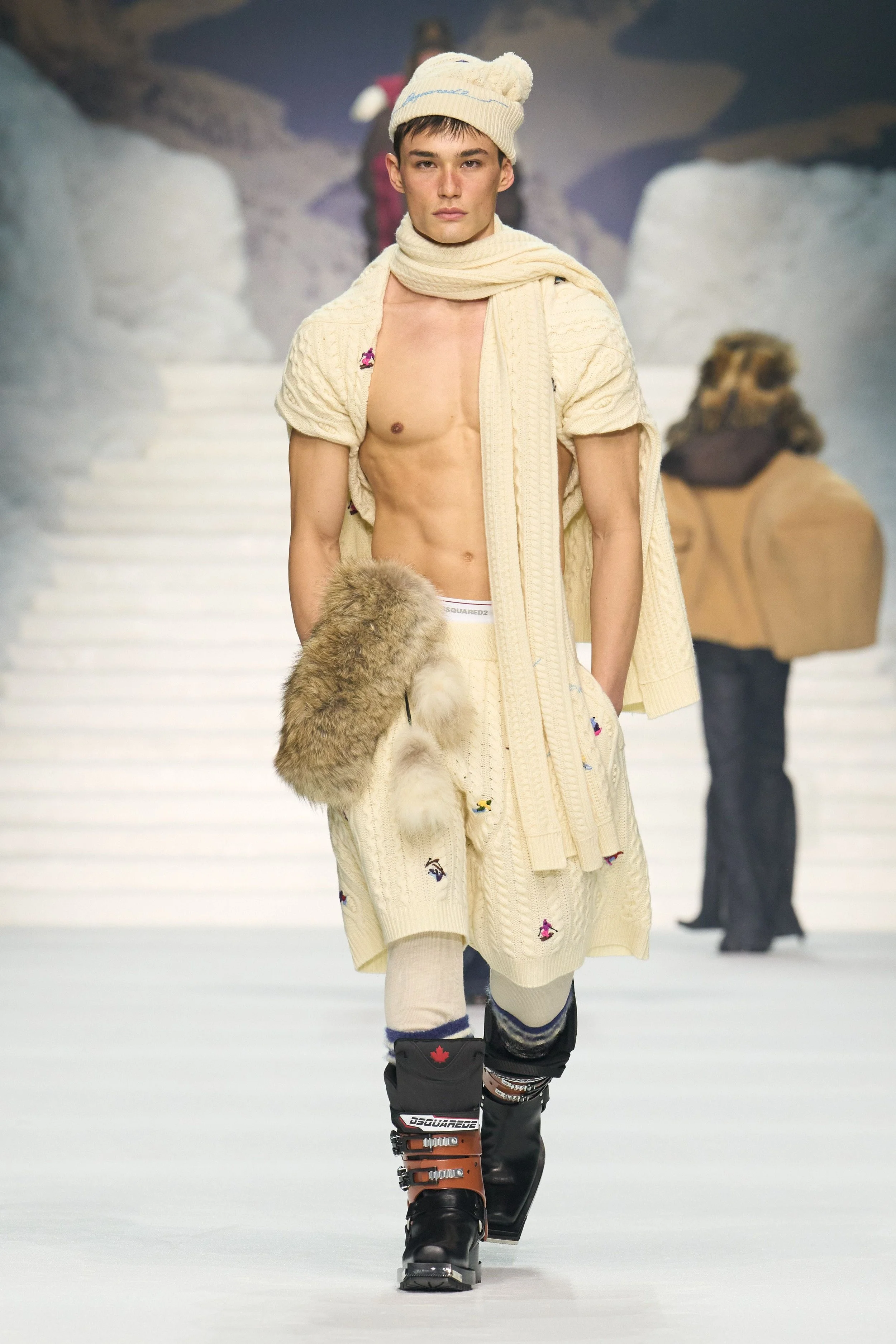
Drawing inspiration from winter sports in all their guises, the collection riffed on hockey uniforms, technical performance wear, and unapologetic après-ski glamour. Puffer fabrics were exaggerated into roomy shorts and oversized hats, while XXL fur and shearling coats were layered over skin-tight jeans and long johns. The mood was unmistakably charged: a navy jumper emblazoned with the slogan HOT AS ICE made the message explicit.

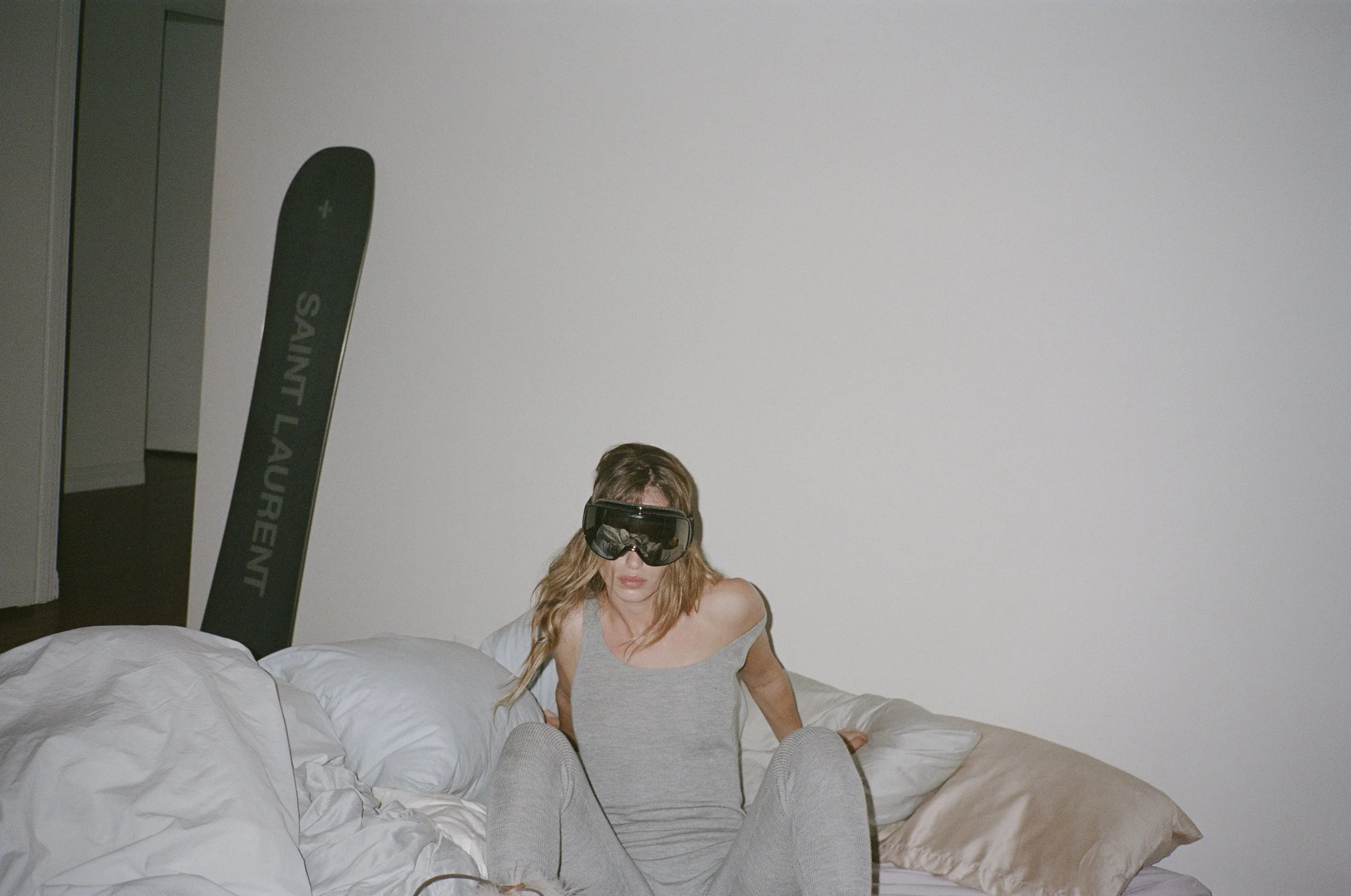
Elsewhere, cable-knit sets were slashed to reveal sculpted six-packs, while a black gilet was reimagined as a backless party top, styled with leather bootcut trousers and ski goggles from Dsquared2’s collaboration with eyewear brand Carrera. Equal parts tongue-in-cheek and horny, the collection captured the Catens at their best — playful, provocative, and proudly Canadian.


Words by Martin Onufrowicz

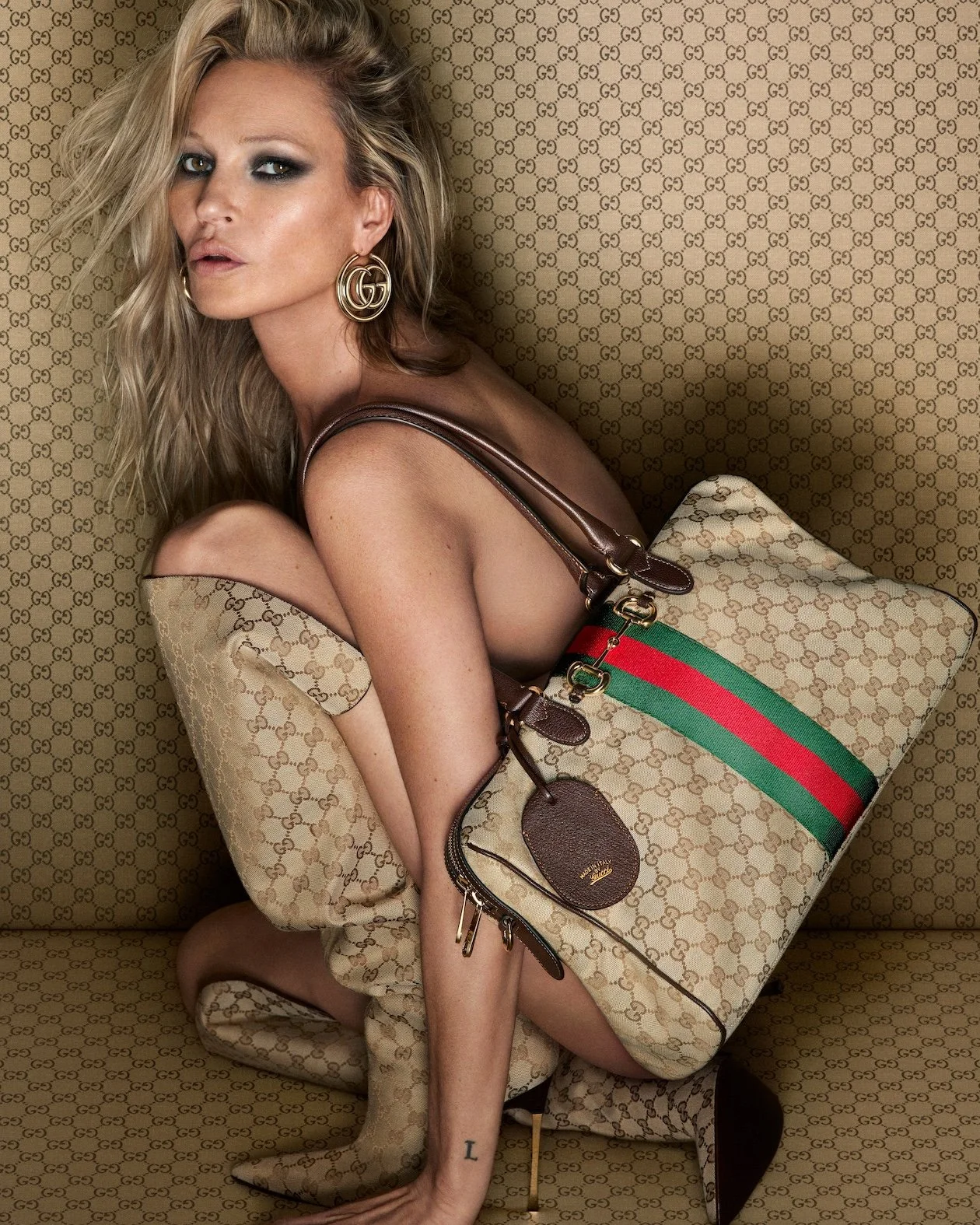
GENERATION GUCCI 2026

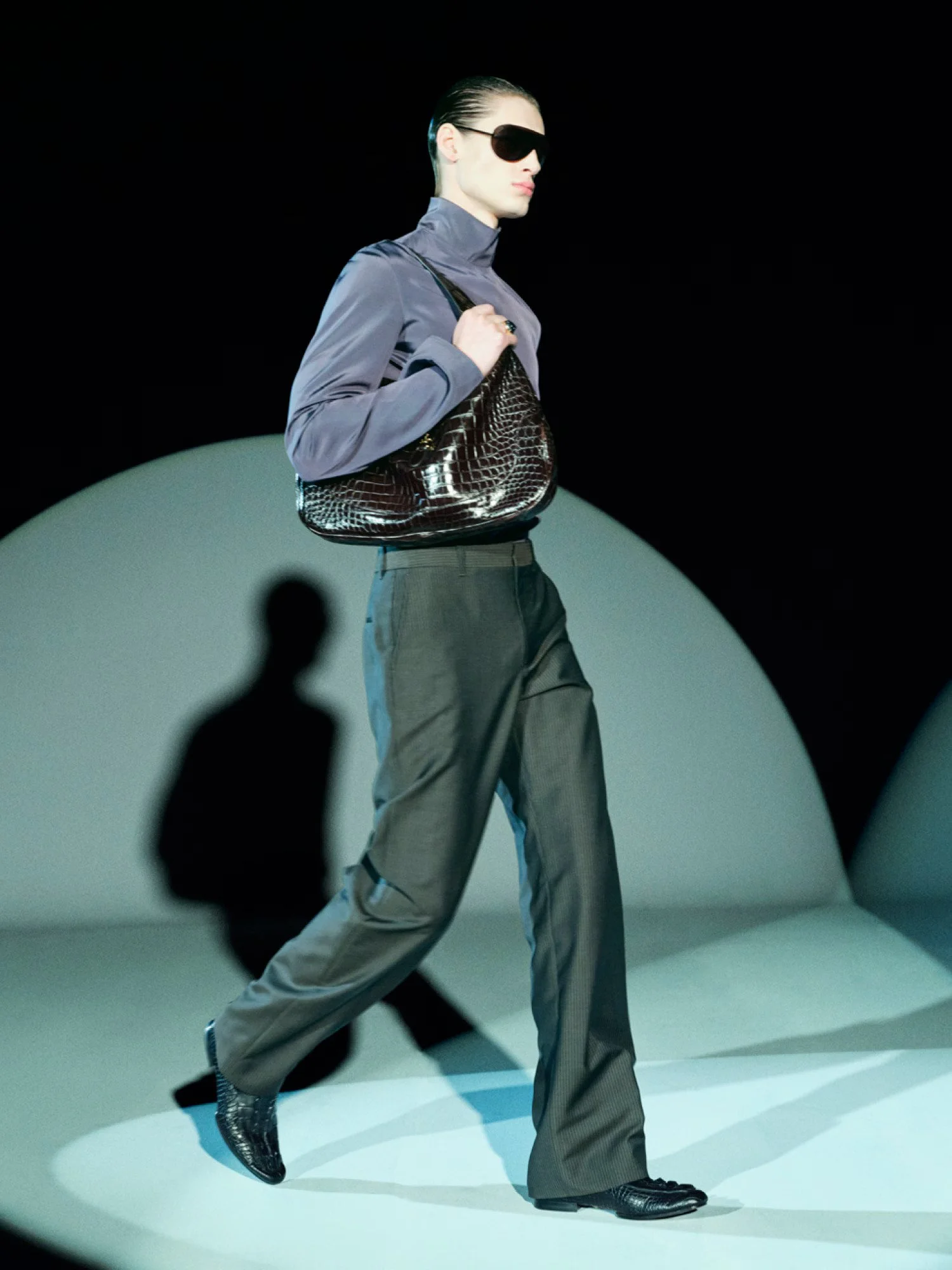
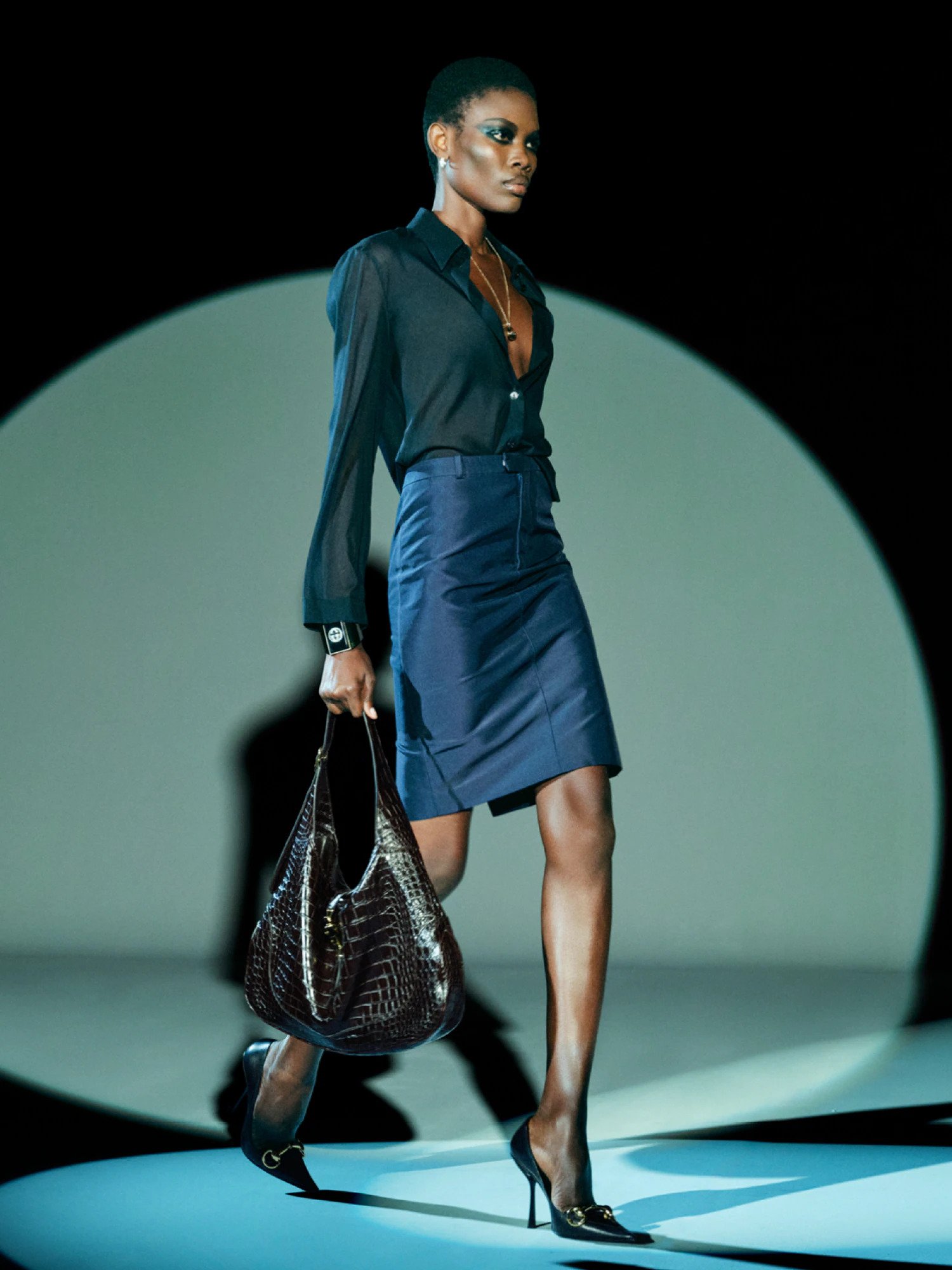
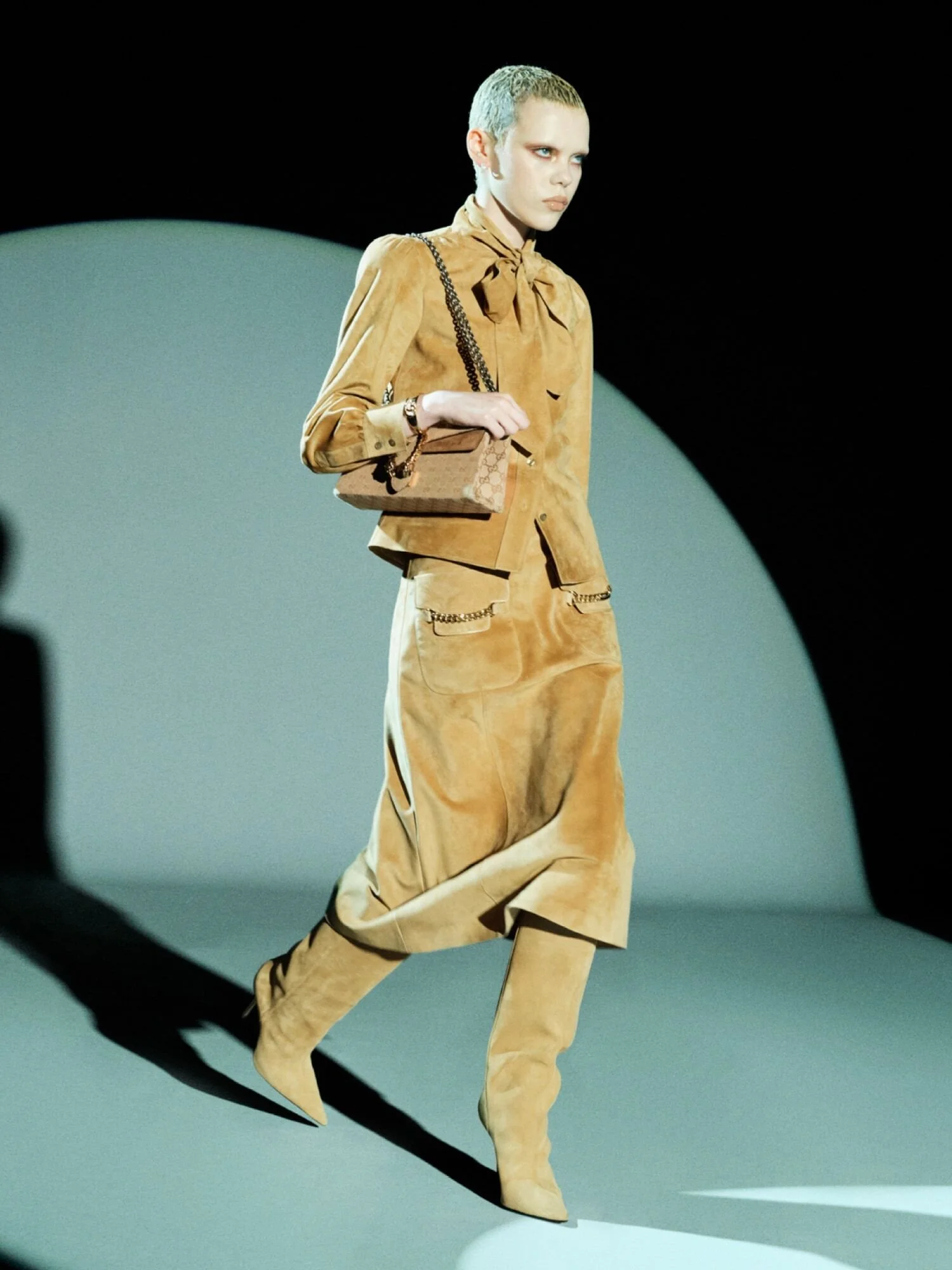
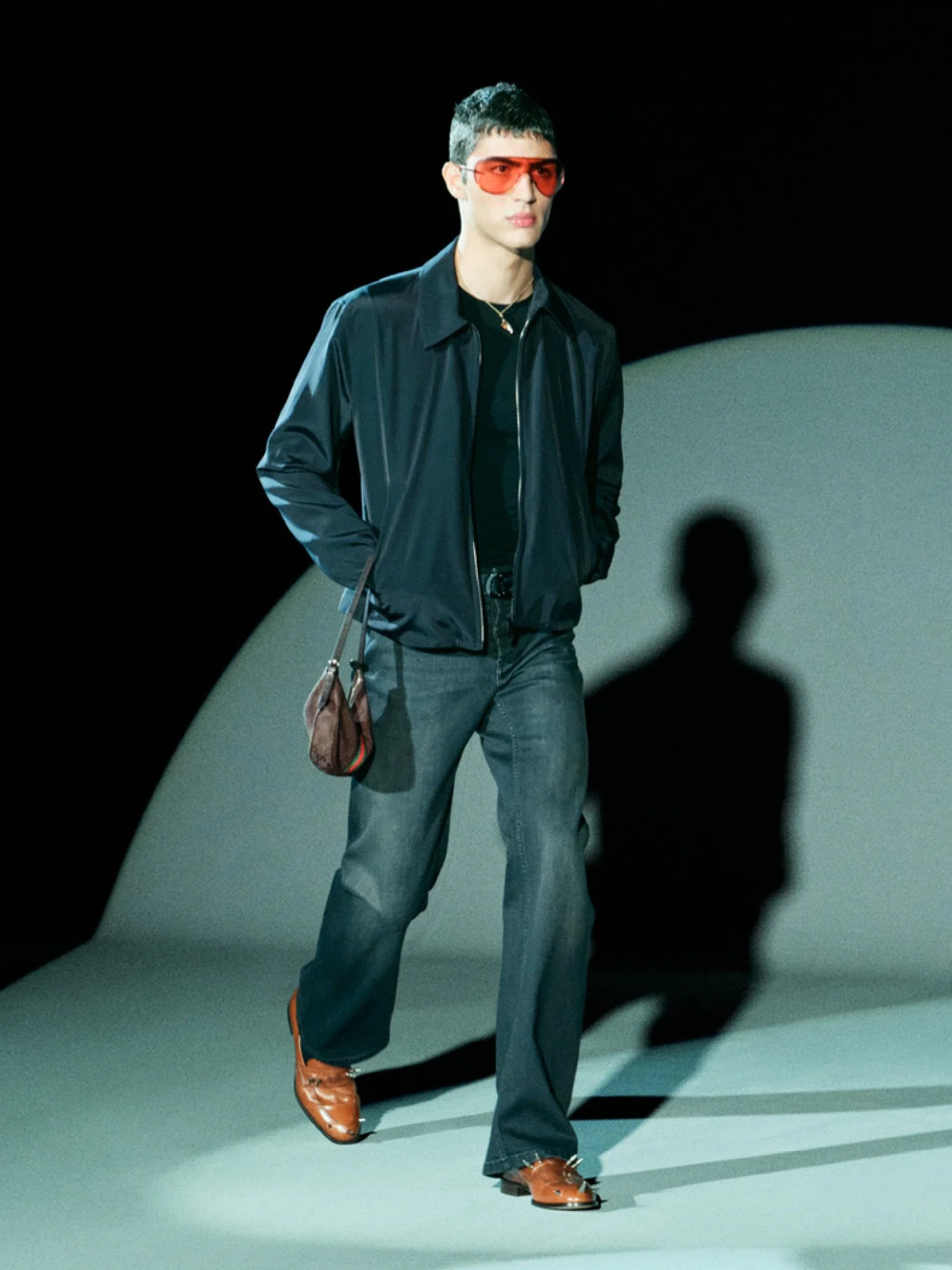
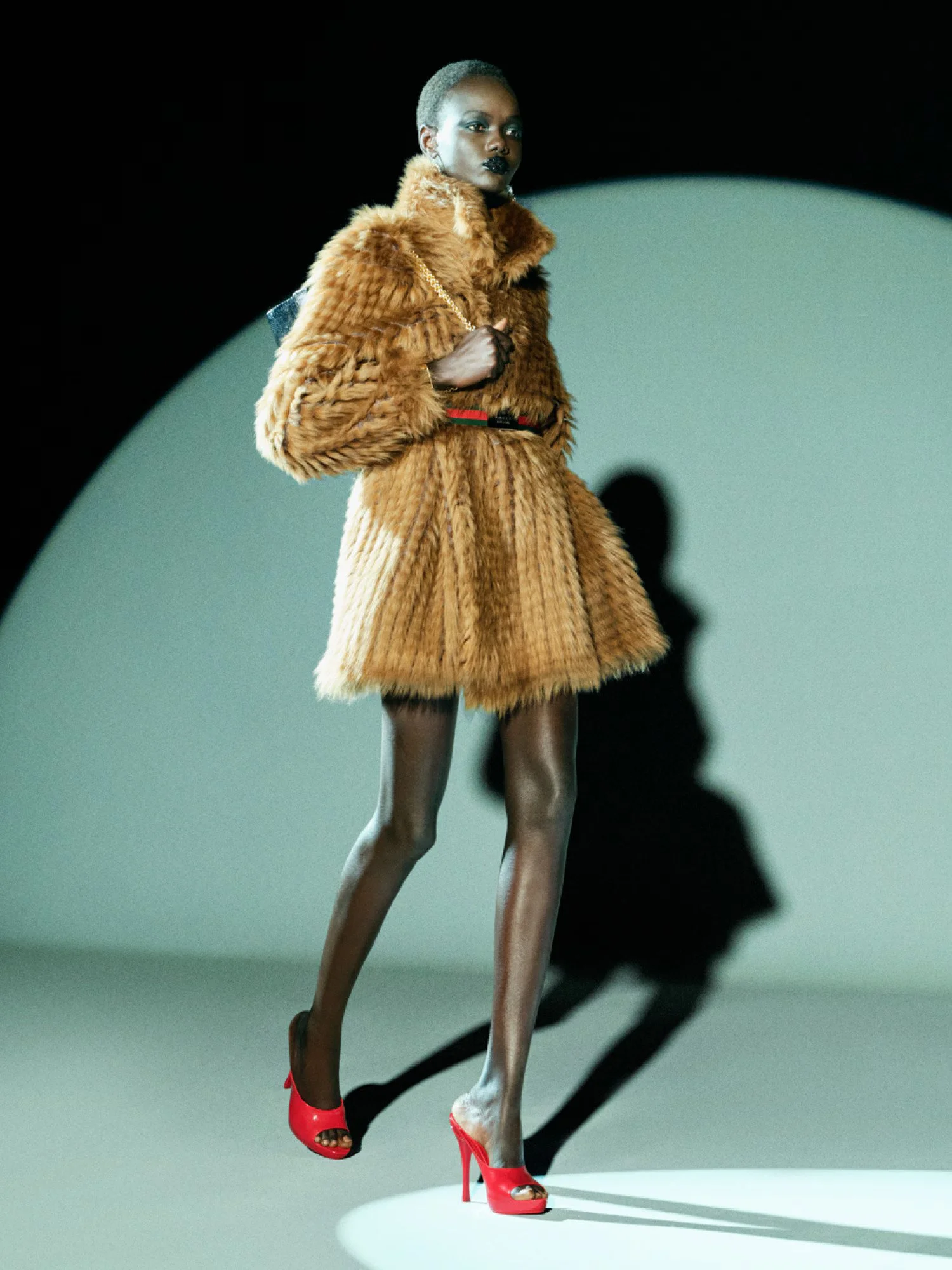
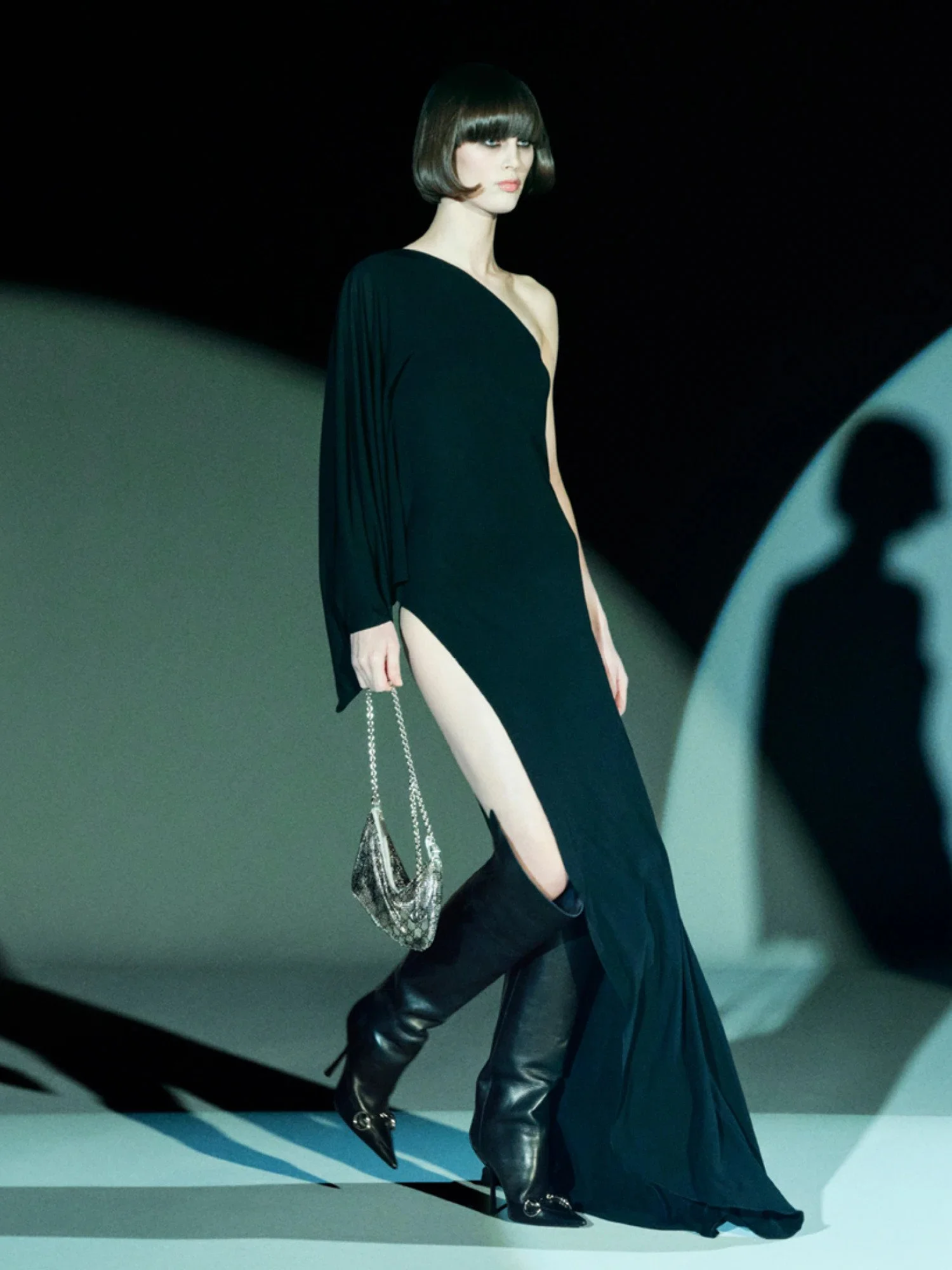
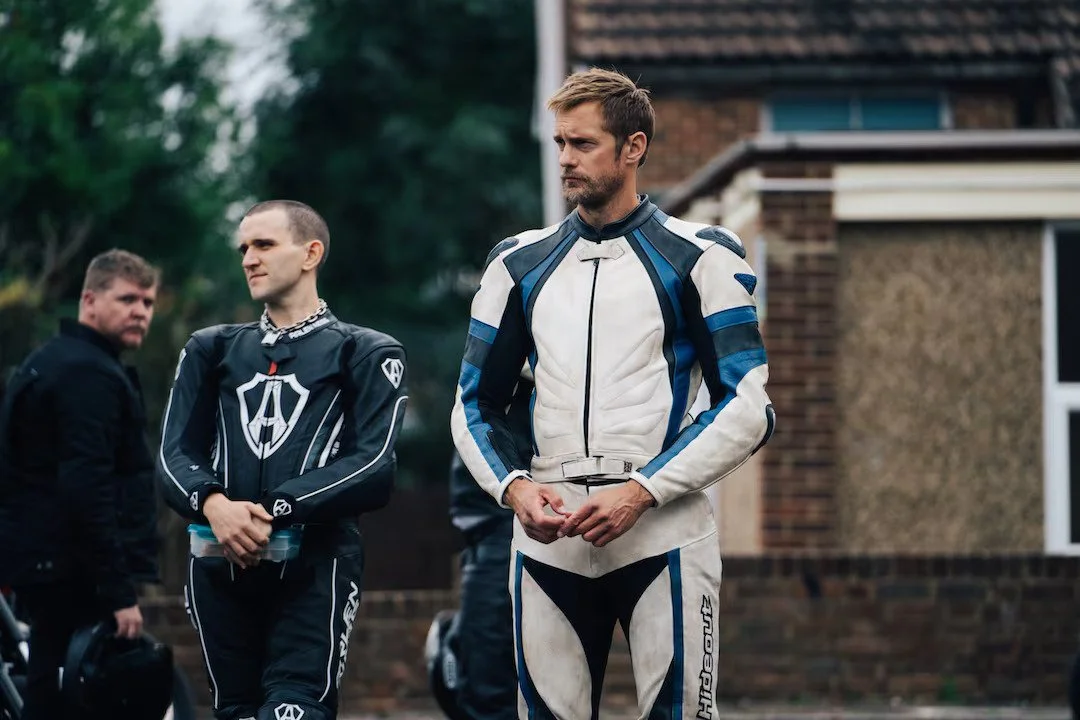
Have you felt it? That simmering thrum running through culture right now — sexy is unapologetically back. From the collective thirst for Pillion, Alexander Skarsgård’s biker dom-com, to the queer-hockey delirium of Heated Rivalry, a delicious sense of naughtiness has been colouring every corner of the zeitgeist. It’s little wonder, then, that this charge also courses through Demna’s latest vision for Gucci.

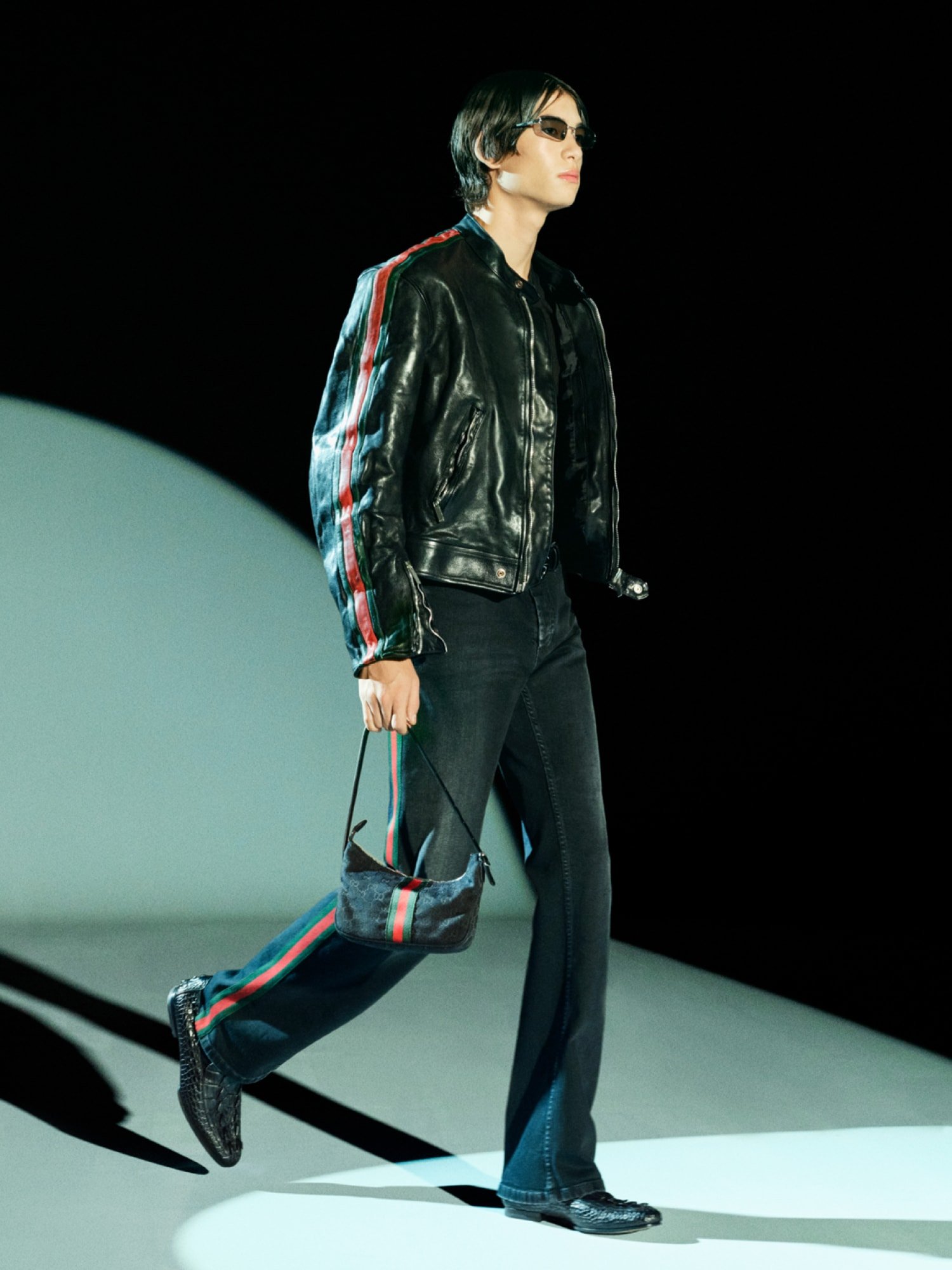
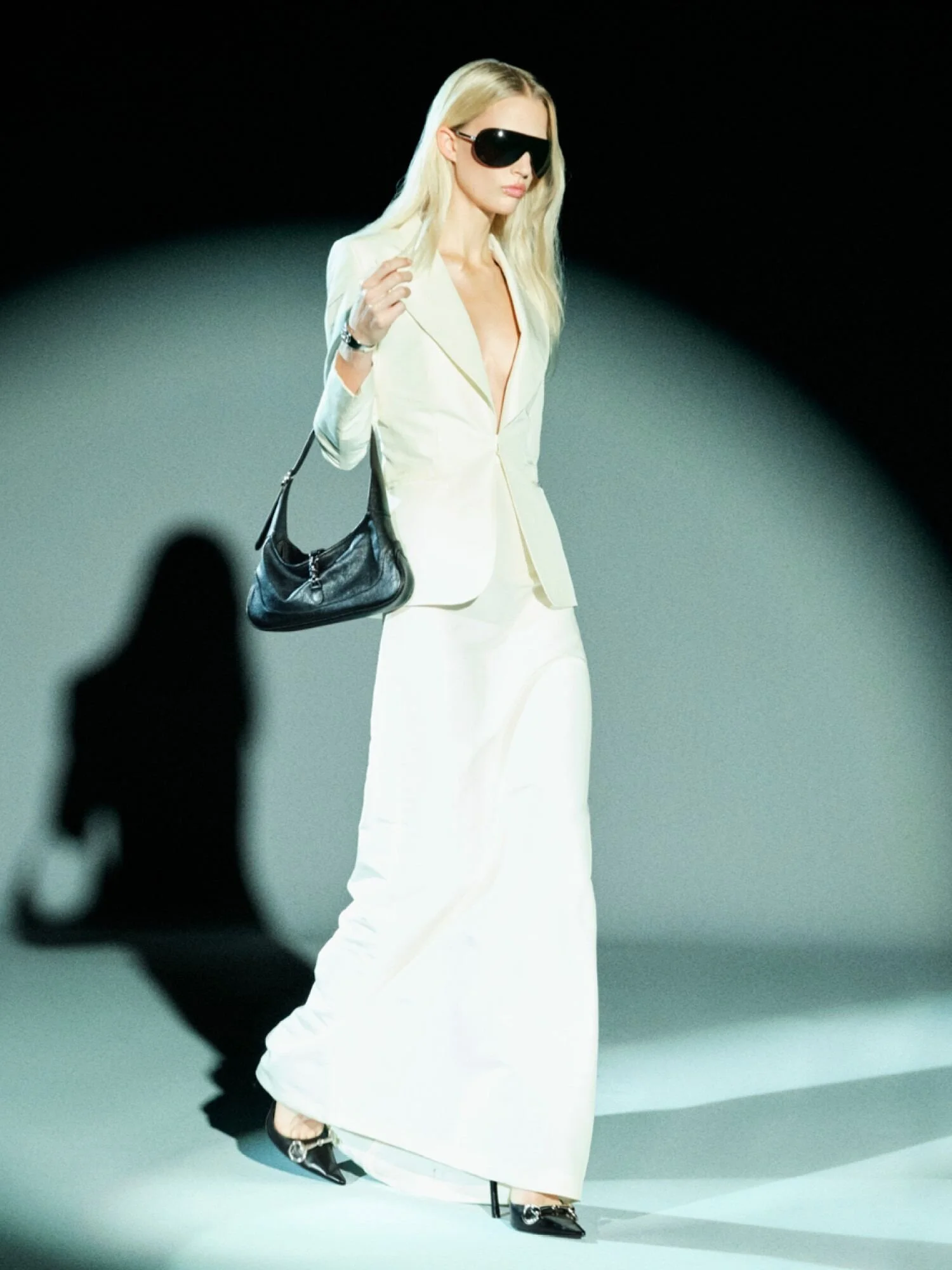
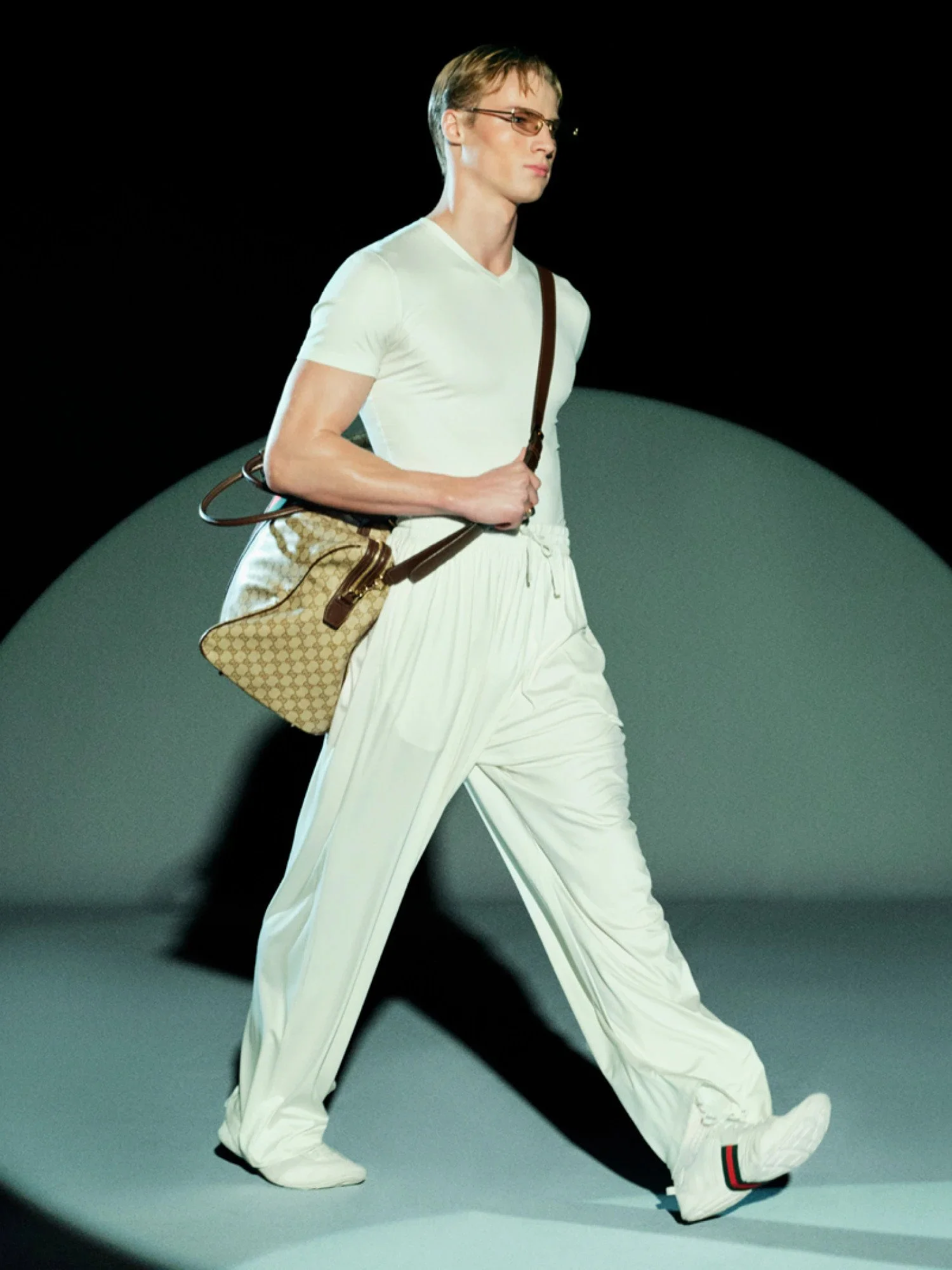
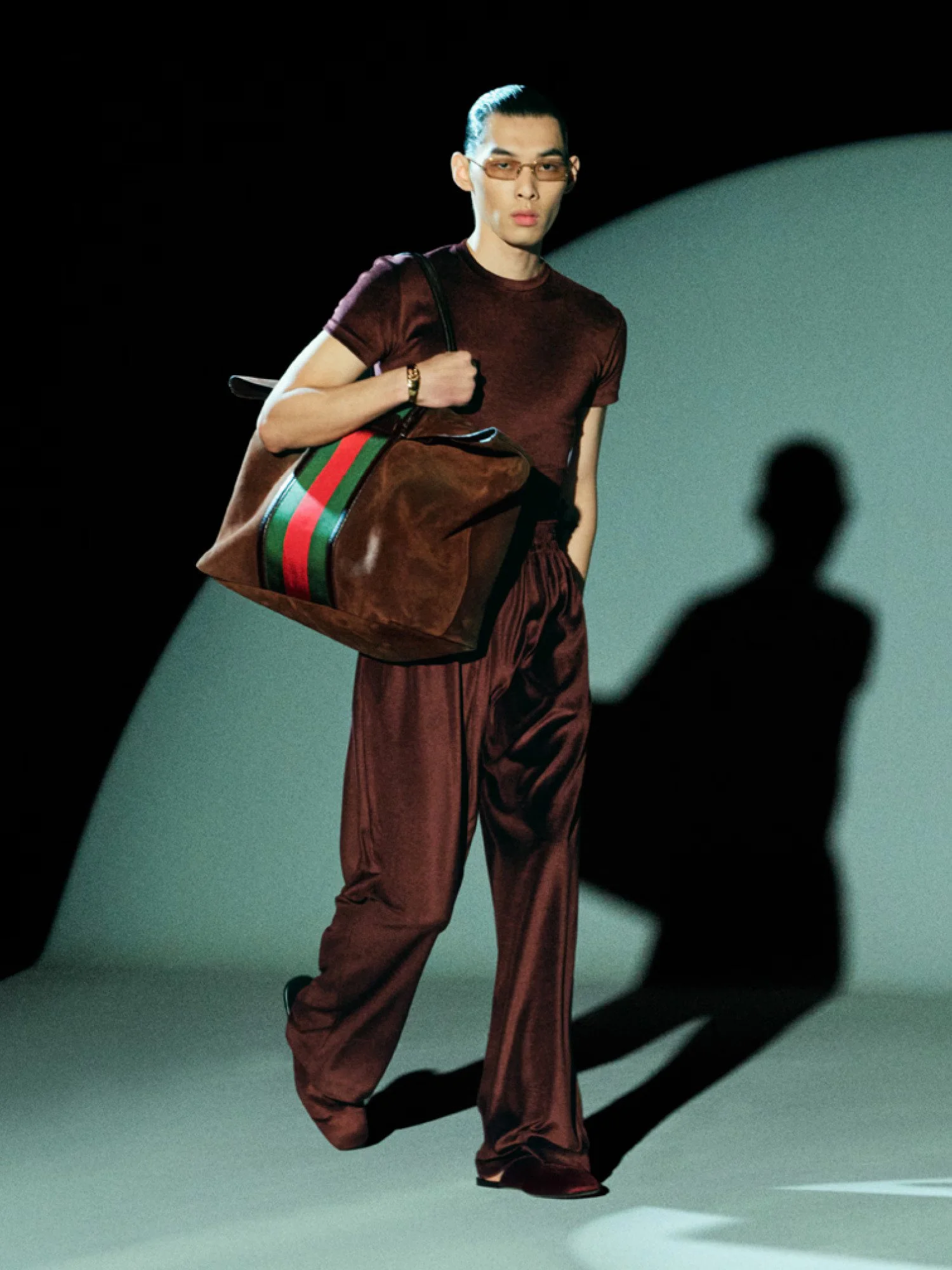
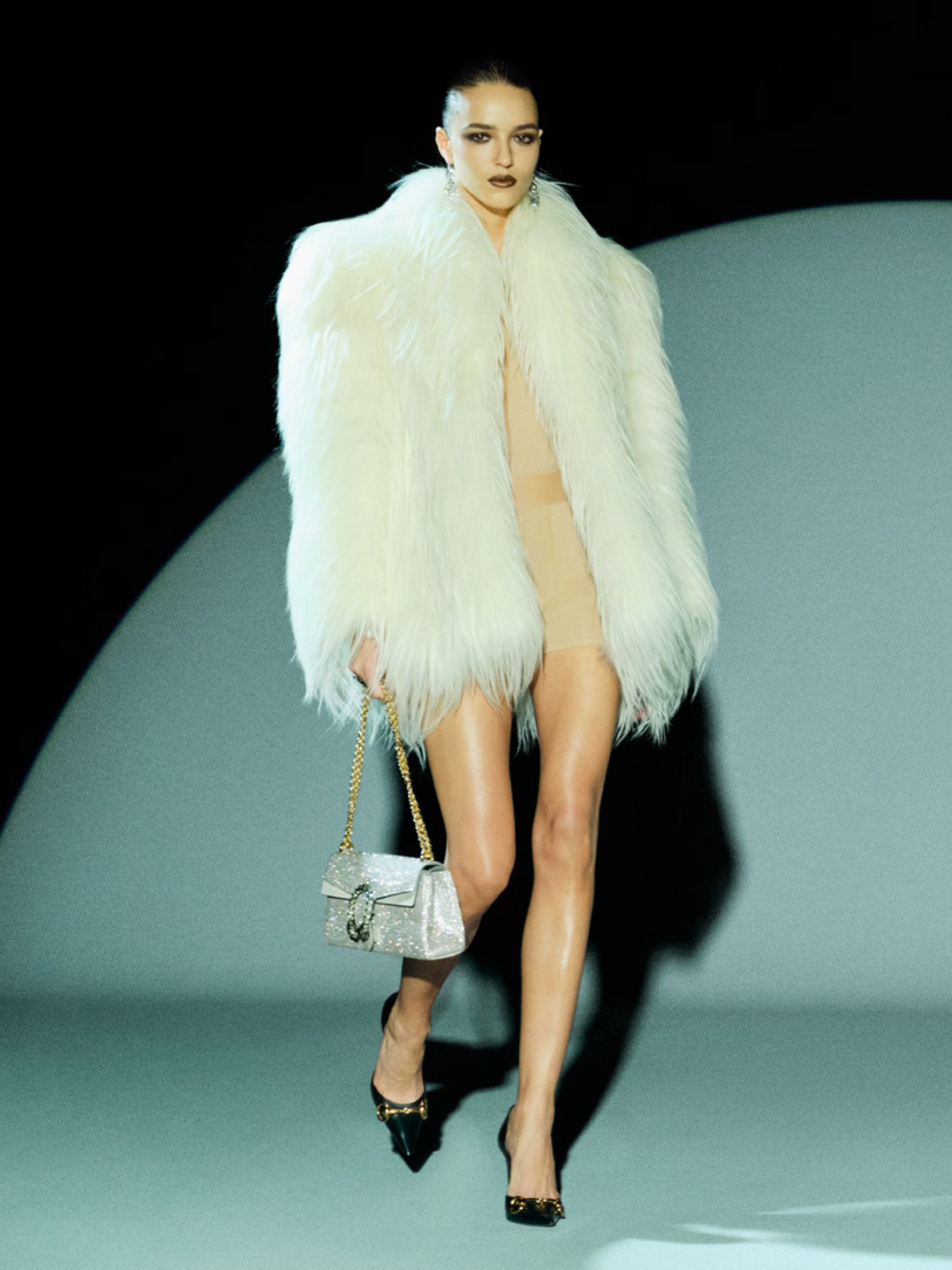
Generation Gucci emerges as a decadent paradox: a collection conjured from a show that never happened, yet rendered so vividly through Demna’s lens that it lands like a core memory — or, better yet, a fashion-soaked wet dream. The lookbook collapses eras into a single, sultry timeline: archival silk-faille tailoring, biker leathers toughened to perfection, pencil skirts sharpened to a dangerous point, and an after-dark wardrobe engineered for effortless seduction.

The accessories flirt outright. Cross-body bags striped in Gucci’s signature colours, slung over all-white or chocolate silhouettes, conjure the decadent sheen of a 2000s football icon — think David Beckham in full superstardom. Matching belts cinch the waists of plush fur coats, revealing legs tipped in lacquer-red pumps. The Jackie, rendered in inky black, dangles nonchalantly alongside oversized aviators and the highest of stilettos elevated with a gleaming Horsebit detail. Even the loafers get an S&M twist, sprouting metal spikes.

With this iteration of the house, Demna doesn’t just participate in the fashion conversation — he seizes it entirely. And honestly? We’re more than willing to completely submit.


Words by Martin Onufrowicz

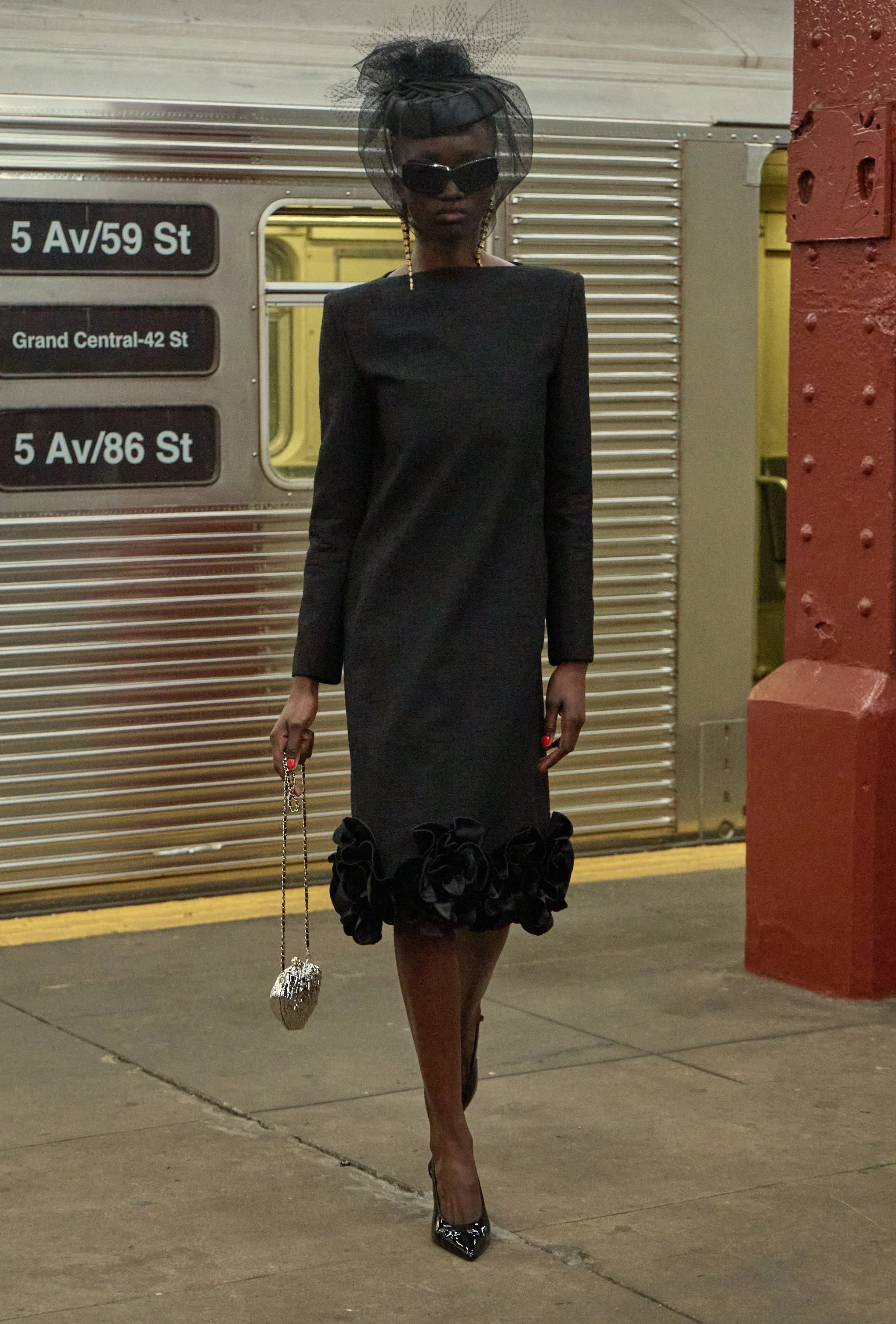
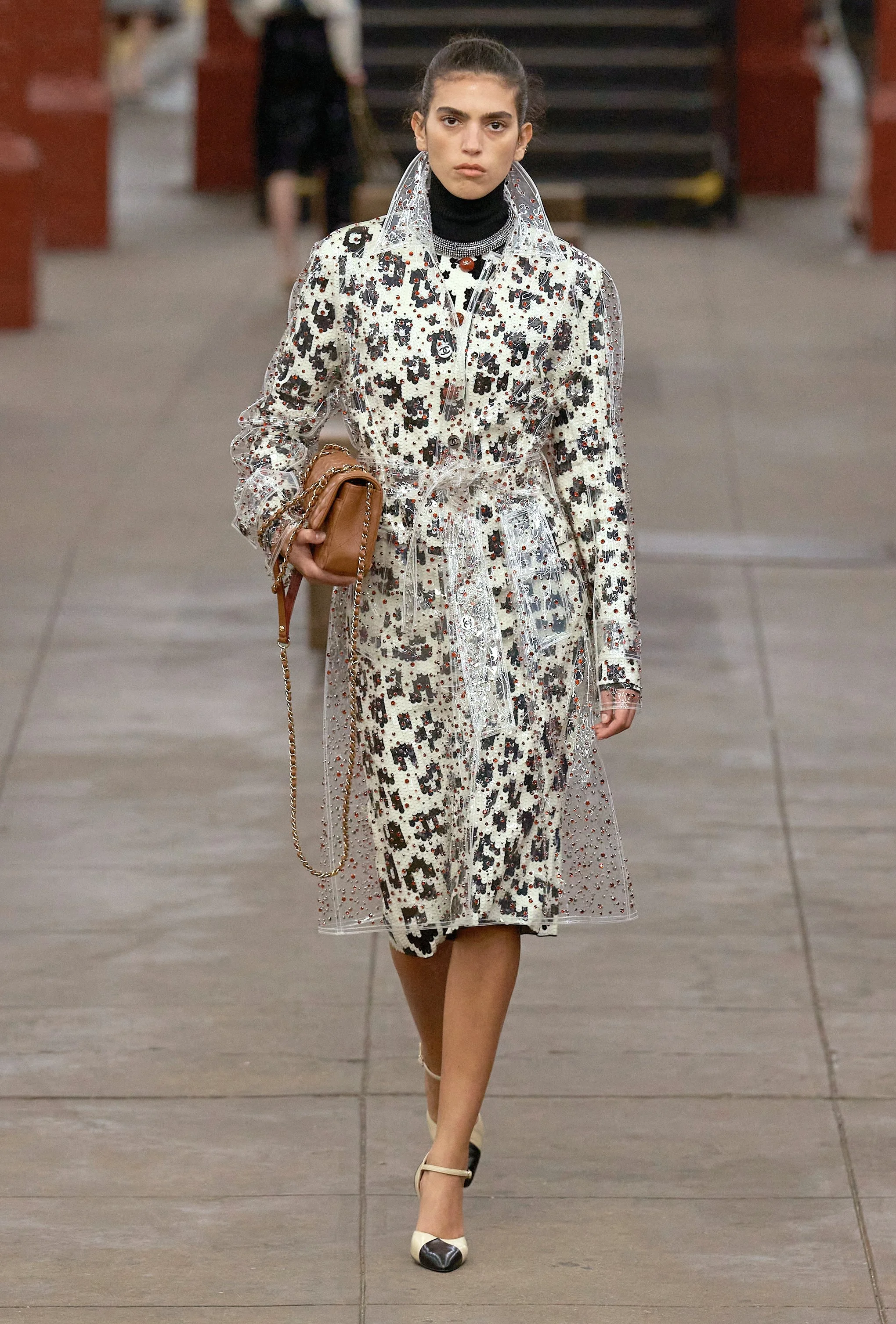
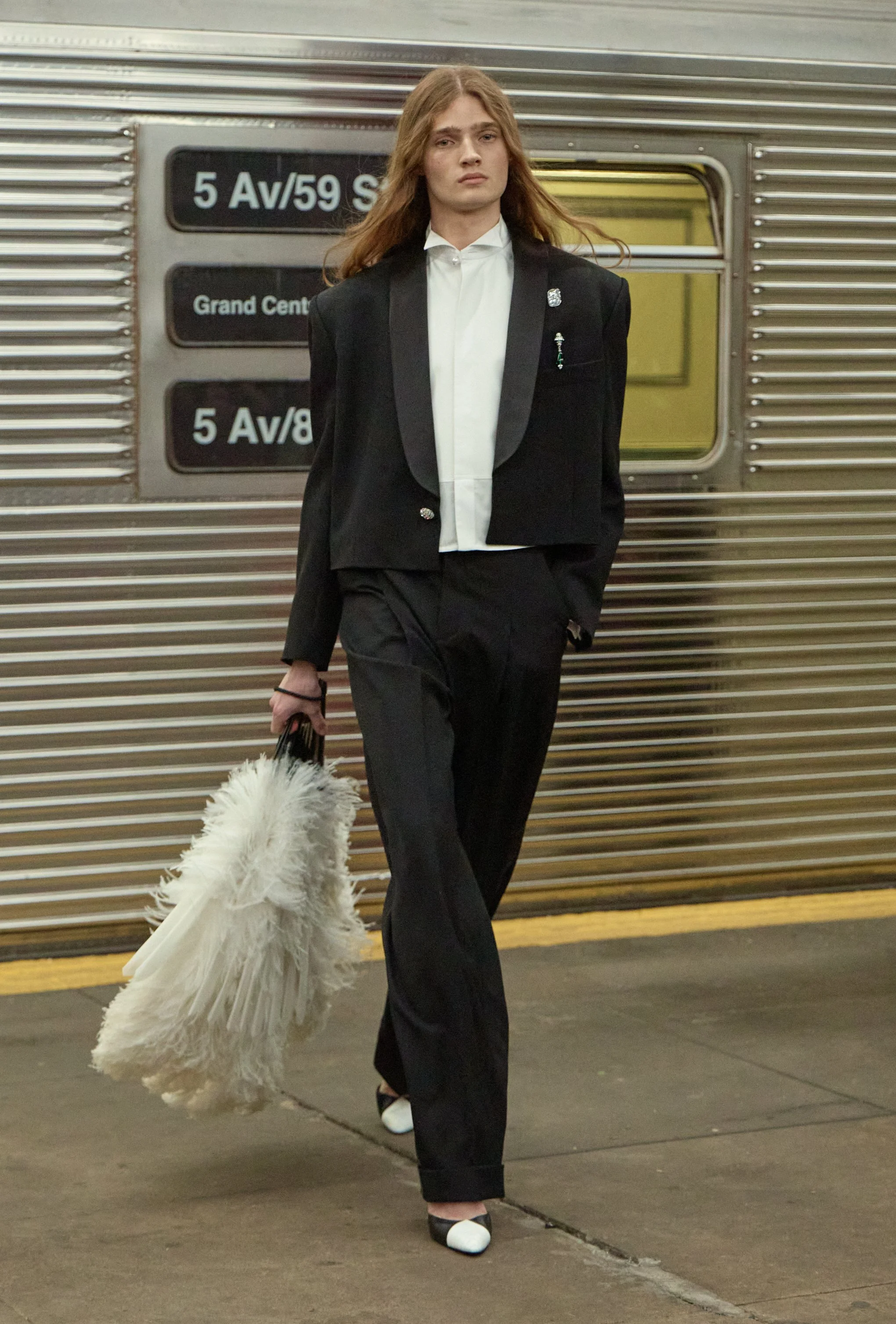
CHANEL MÉTIERS D'ART 2026

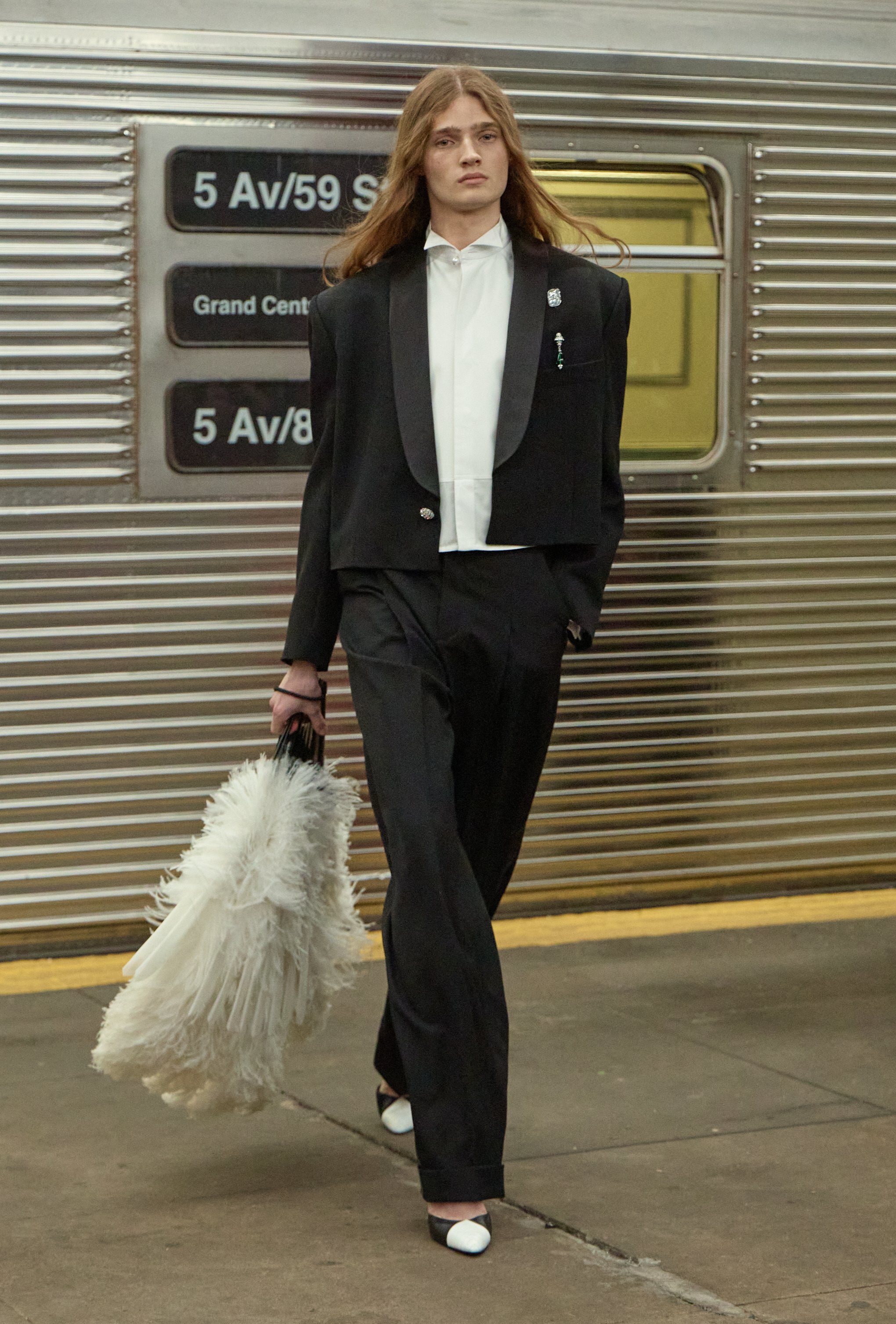
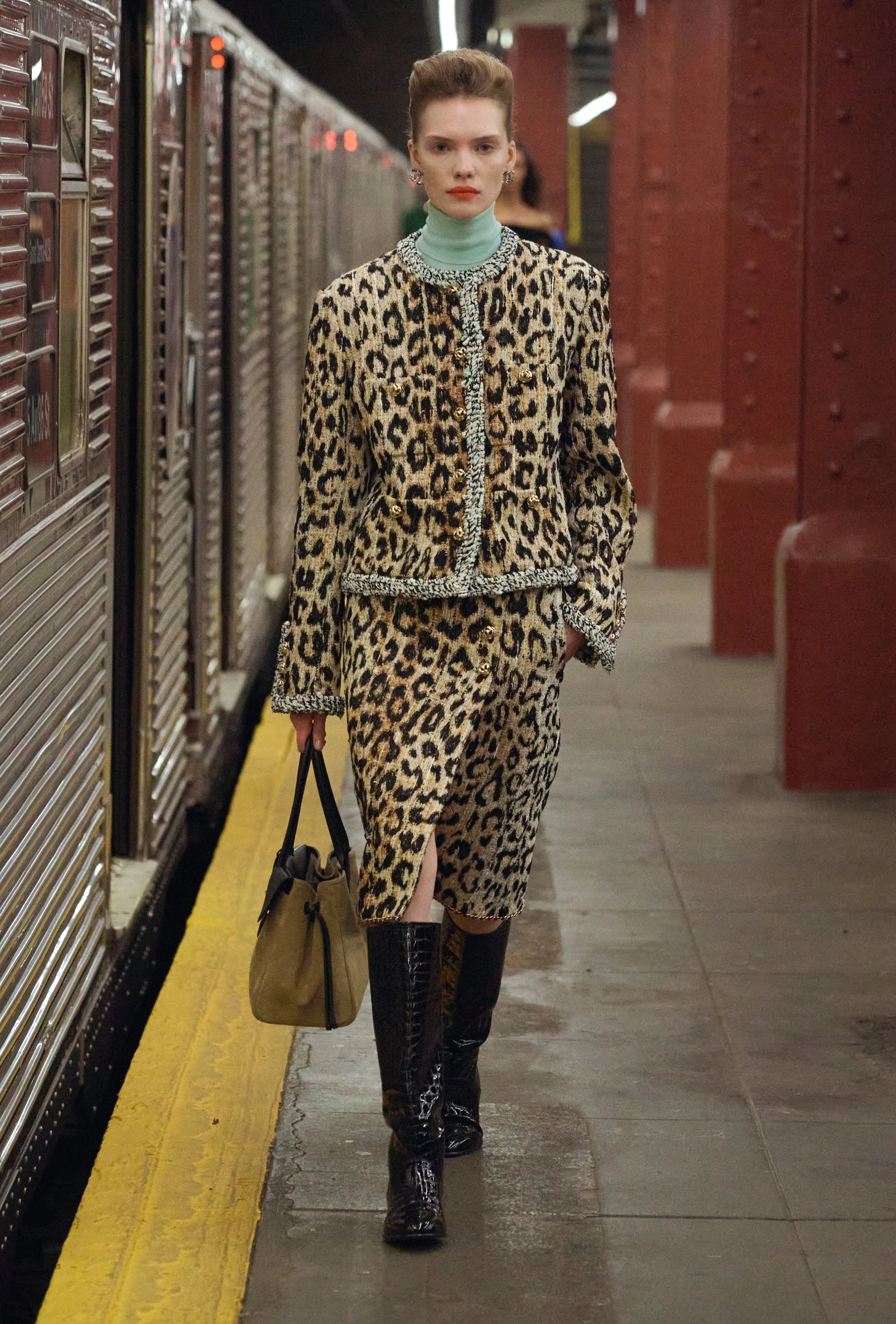
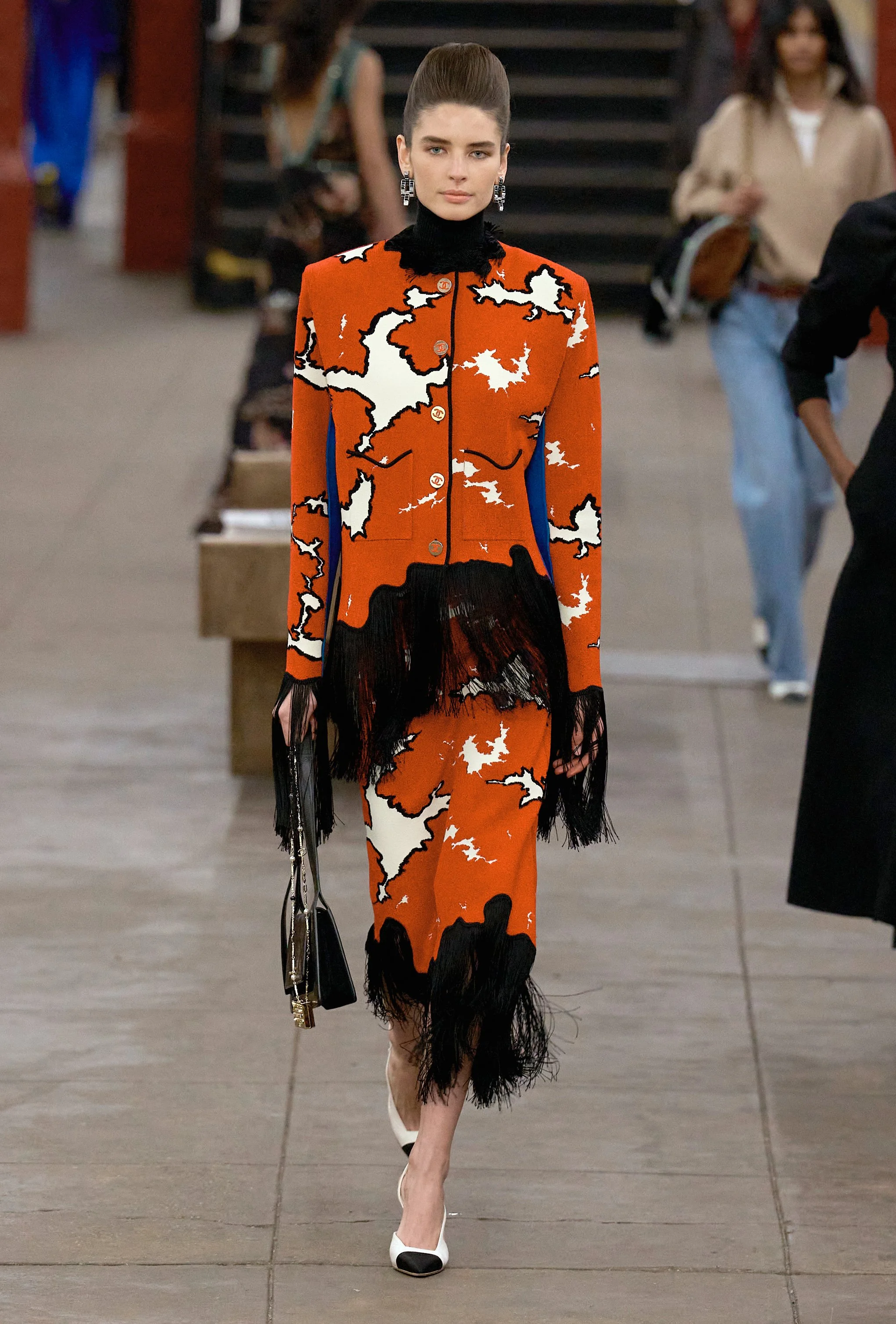
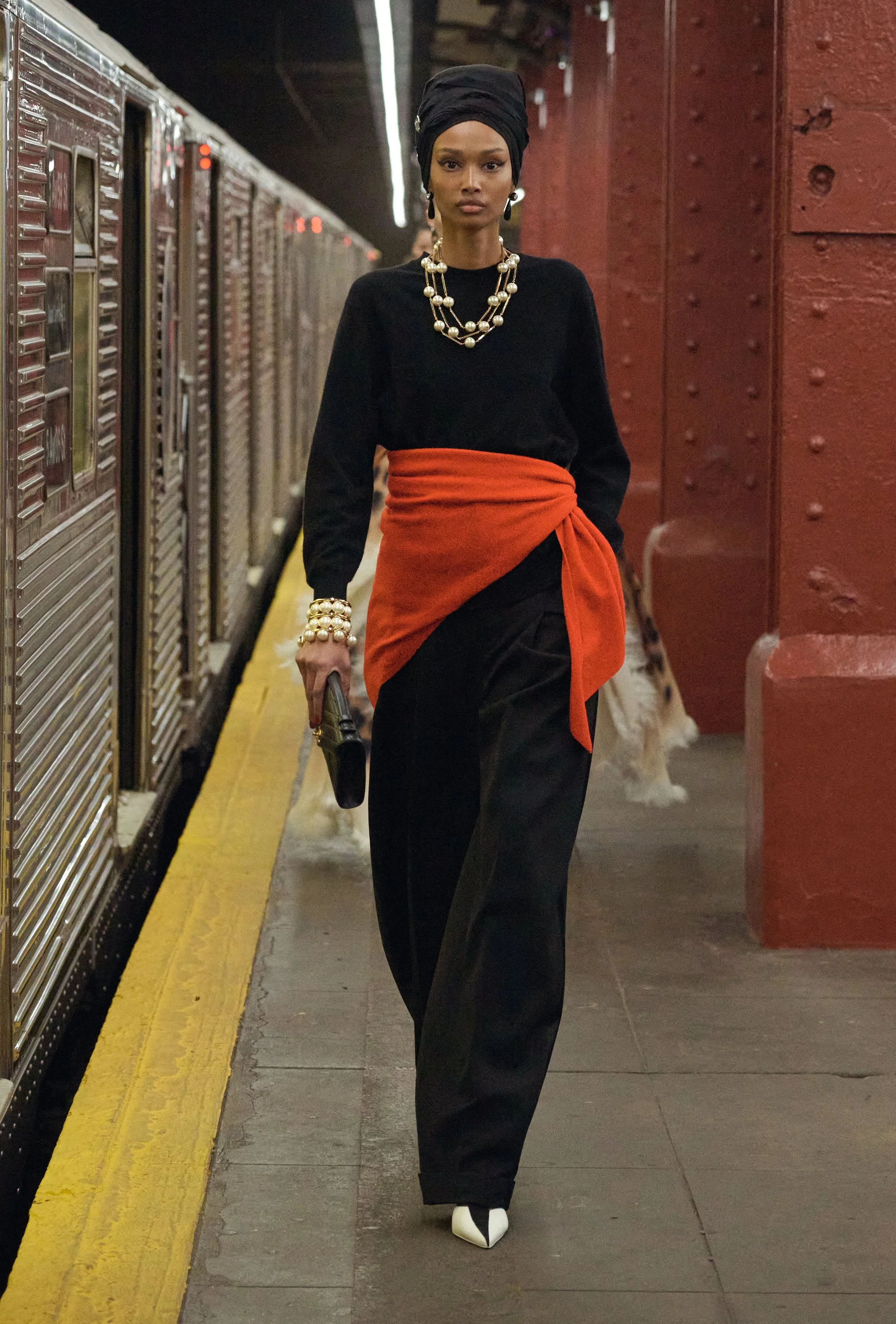
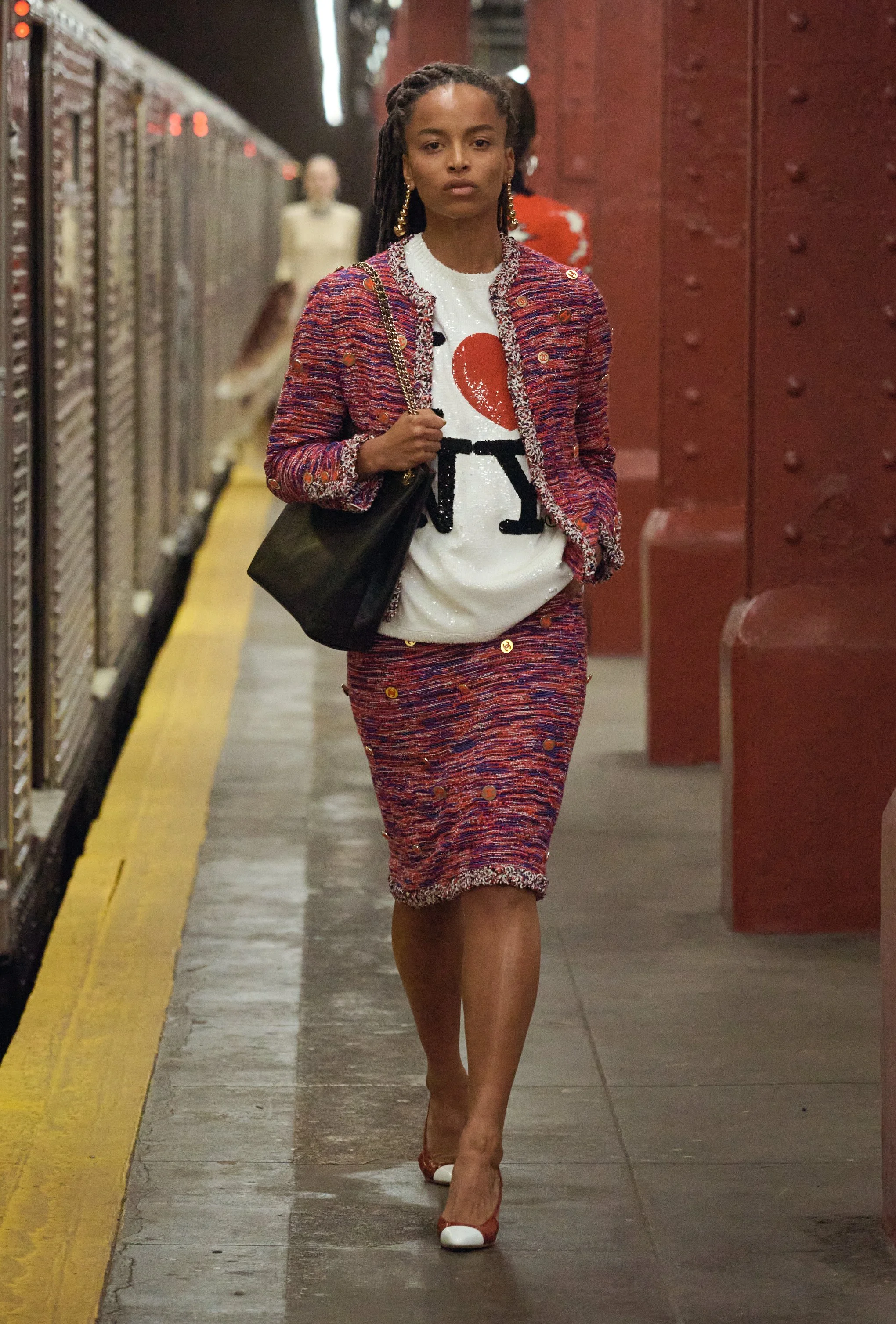
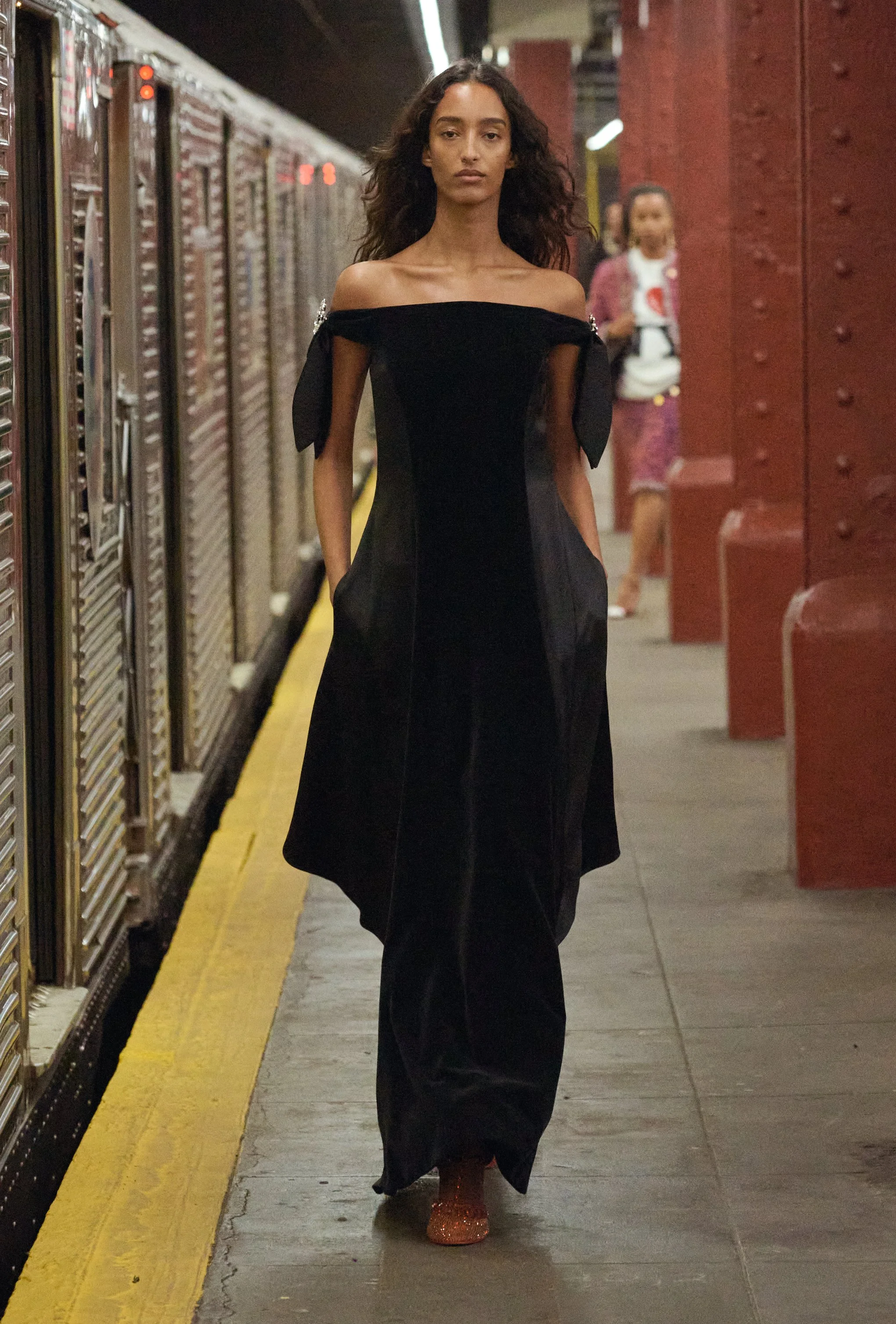
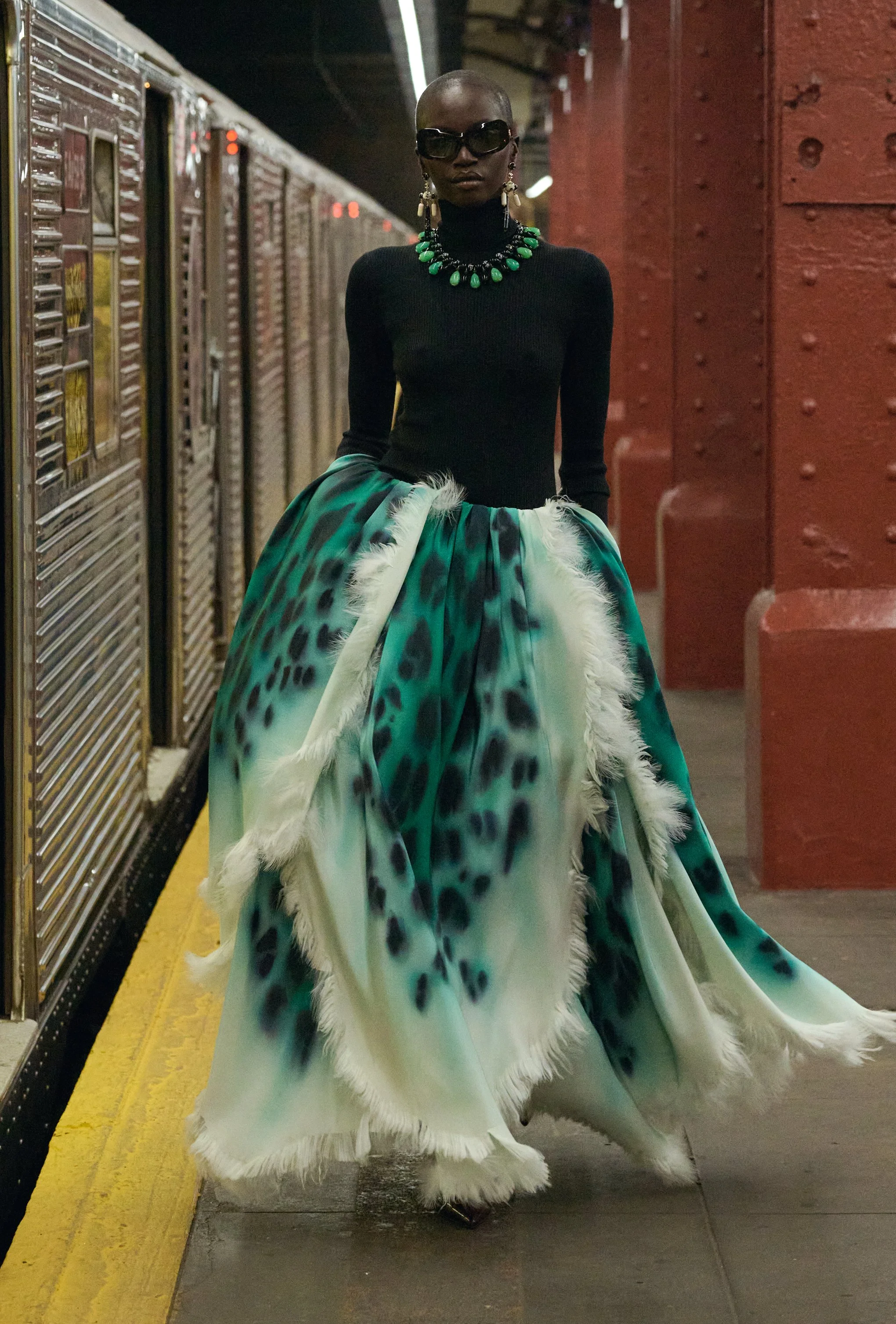
The subway has always been New York’s truest catwalk, a live-wire stream of characters, contrasts, and accidental style icons. So it felt thrilling that Matthieu Blazy chose an abandoned Bowery Station as the stage for his Chanel Métiers d’Art collection in the city. It was a love letter to the metropolis’ eclectic street grammar, filtered through Blazy’s razor-sharp eye for subversion and luxury.

The show opened with a nod to his now-mythic “simple” silhouettes at Bottega Veneta, which played around with a white tee and jeans. Here, a washed-denim pair of trousers, a generous half-zip knit, a brown suede flap bag, and crisp black-and-white heels became a manifesto on how to do New York understated, Blazy-style.

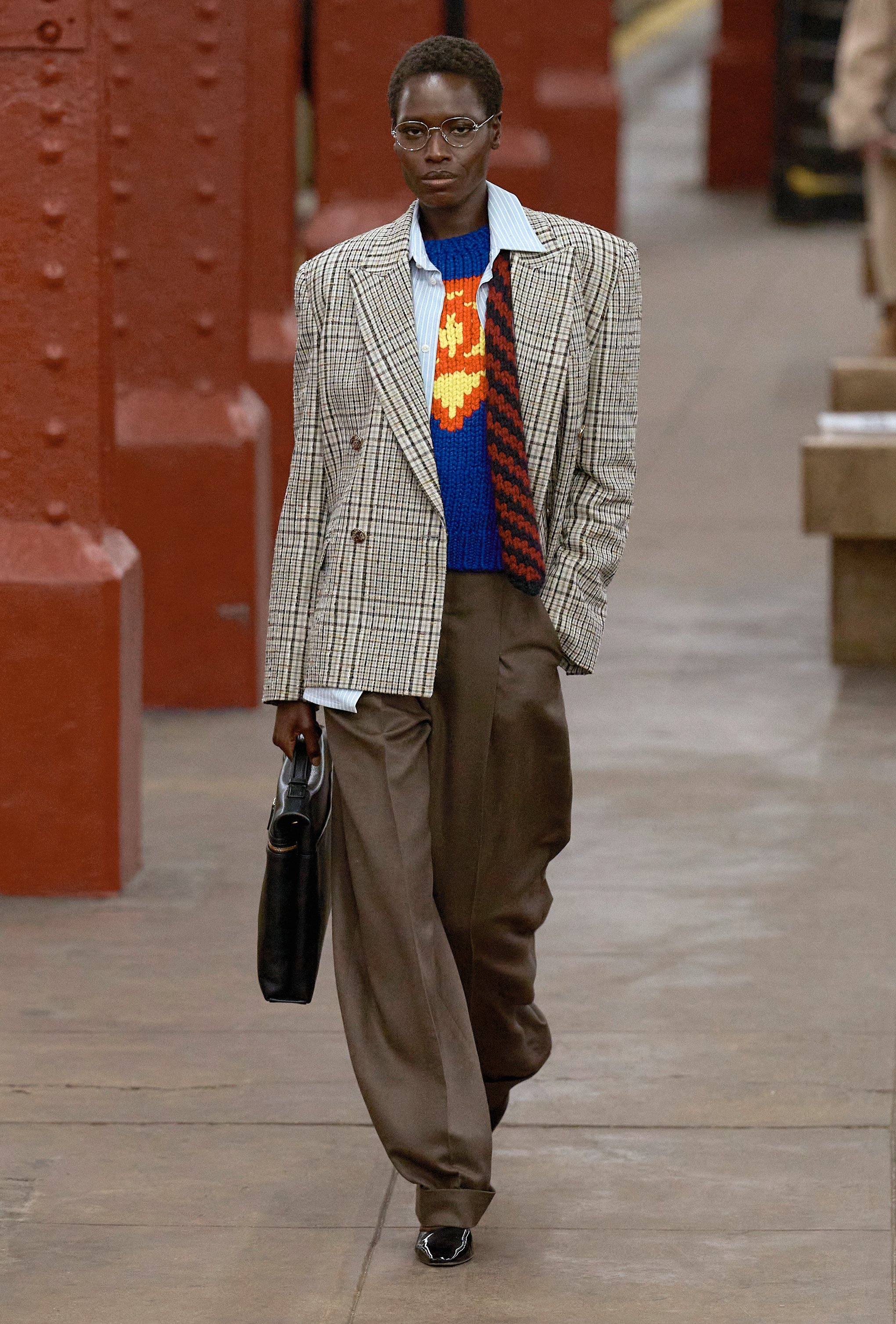
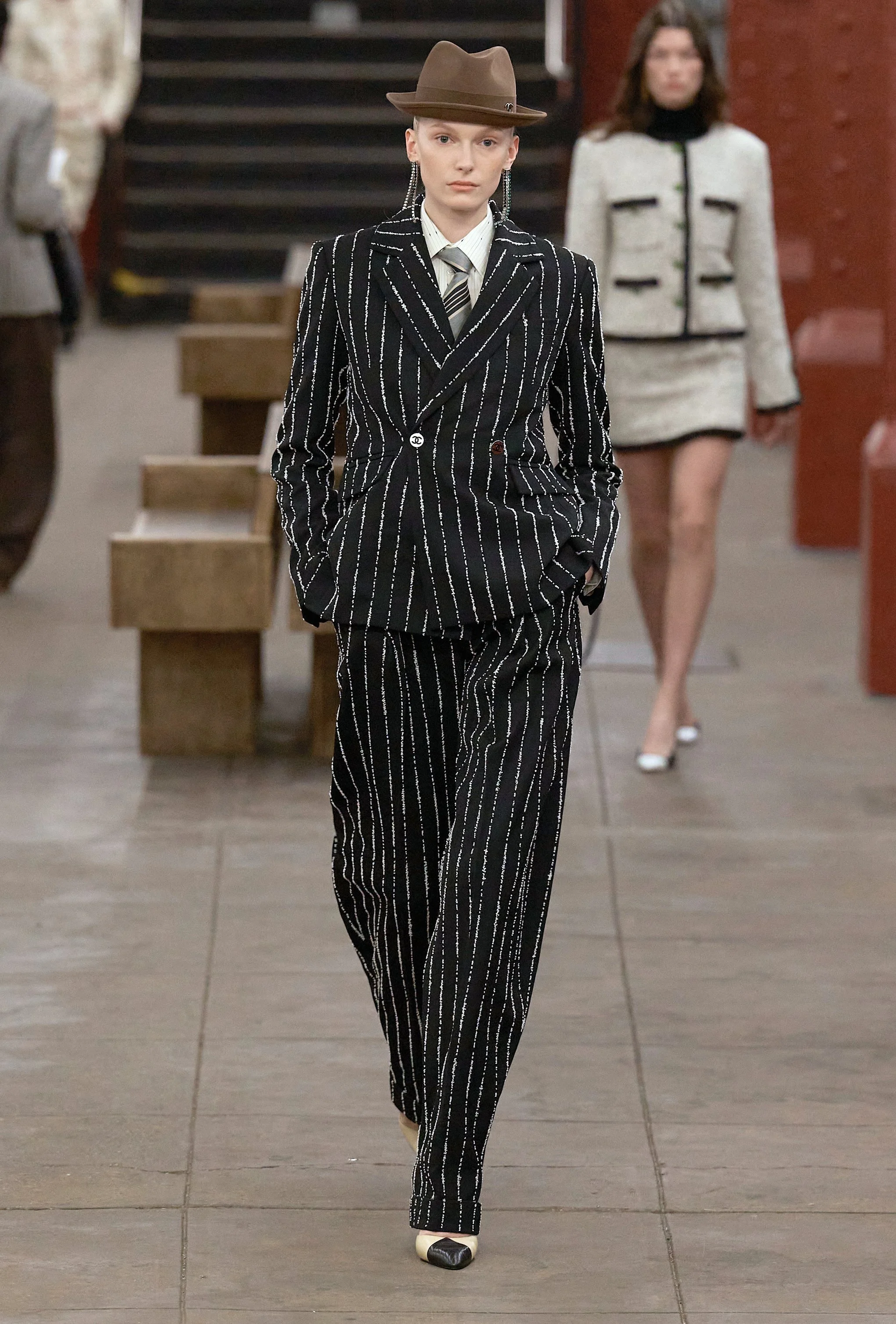
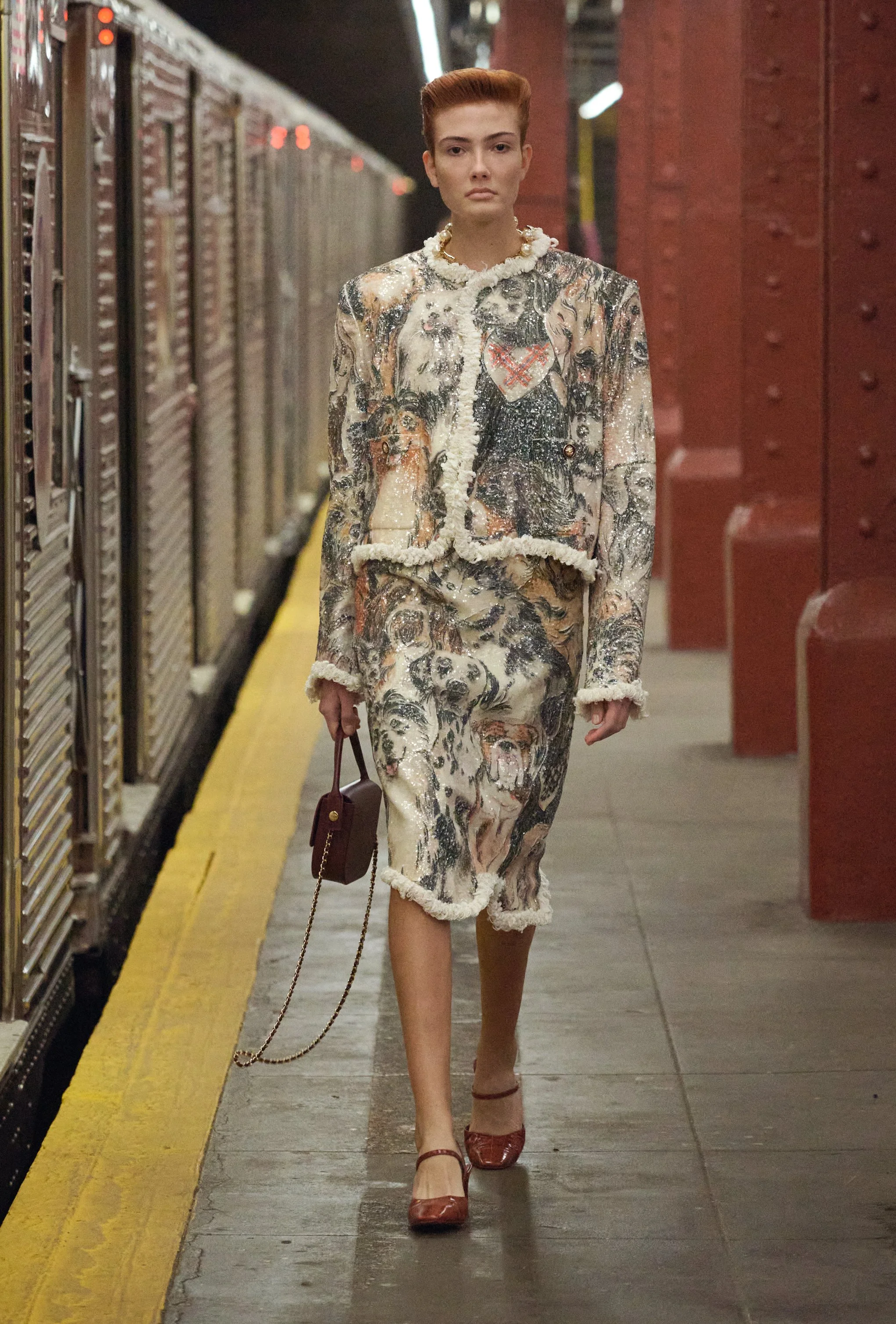
Humour flickered throughout the station. A pink bouclé skirt suit peeled back to expose a sequined “I LOVE NY” tee — part souvenir stand, part diva. A Clark Kent–coded ensemble revealed a Superman-tinted knit beneath a blue shirt and checked blazer, an undone tie and a black briefcase completing the transformation fantasy. Wall Street glam hit its height on Alex Consani, who strolled down the platform in pinstripes and a brown fedora. For those seeking pure spectacle, a shimmering dog-patterned set gleamed like a disco-ball daydream.

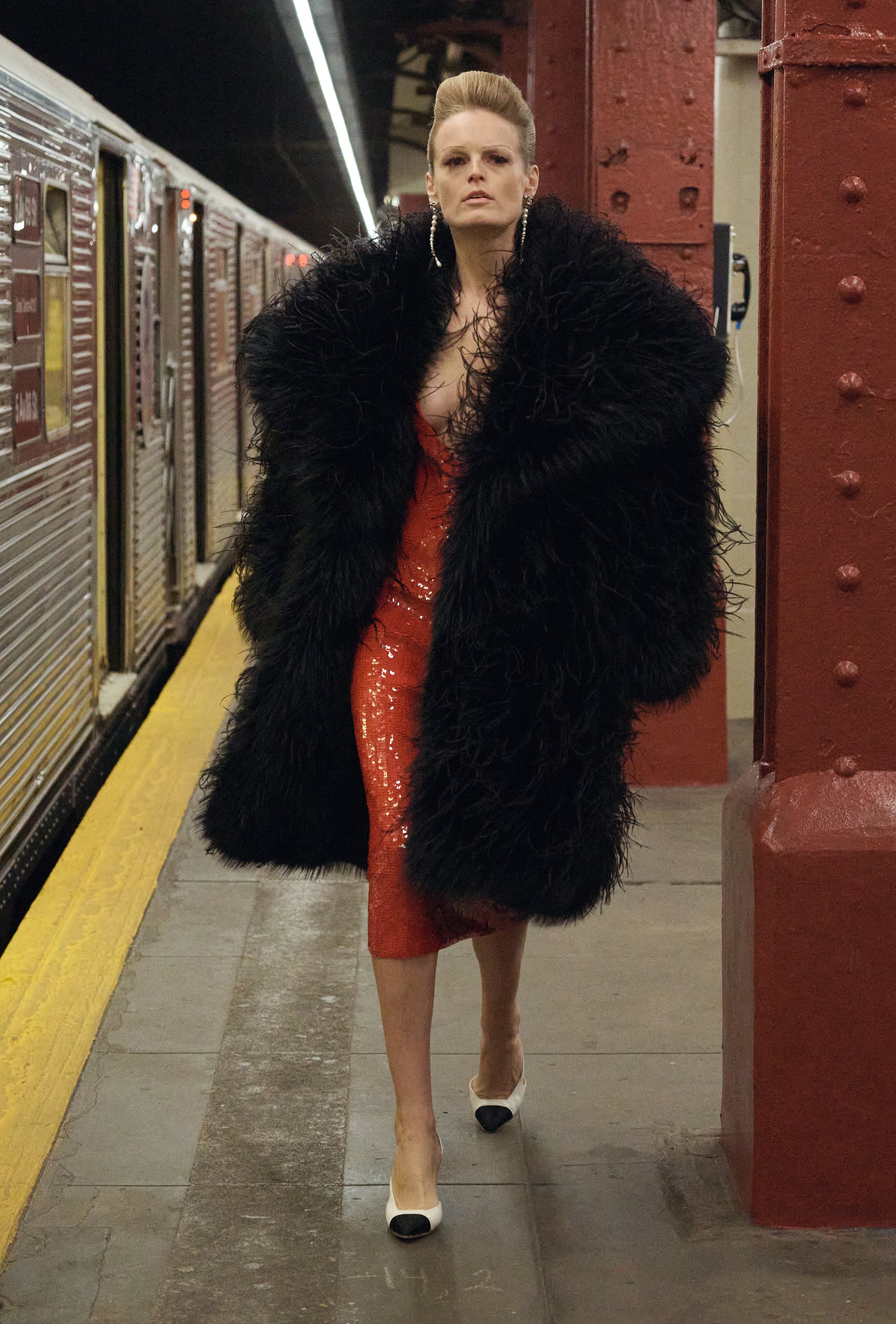
Still, beneath the cheeky grin, Chanel’s signature polish was unmistakable. Billowing printed skirts edged with feathers swayed with each movement, while chunky, sculptural necklaces crowned fitted turtlenecks with unapologetic opulence. An off-the-shoulder black dress glittered with twin brooches on each arm. A ruby cocktail dress almost disappeared beneath a gargantuan black feather coat, delivering cinematic drama.

Blazy didn’t just reference New York style; he choreographed an entire journey through its contradictions — its humour, its grit, its glamour. And like the best rides, you never want it to end.


Words by Martin Onufrowicz

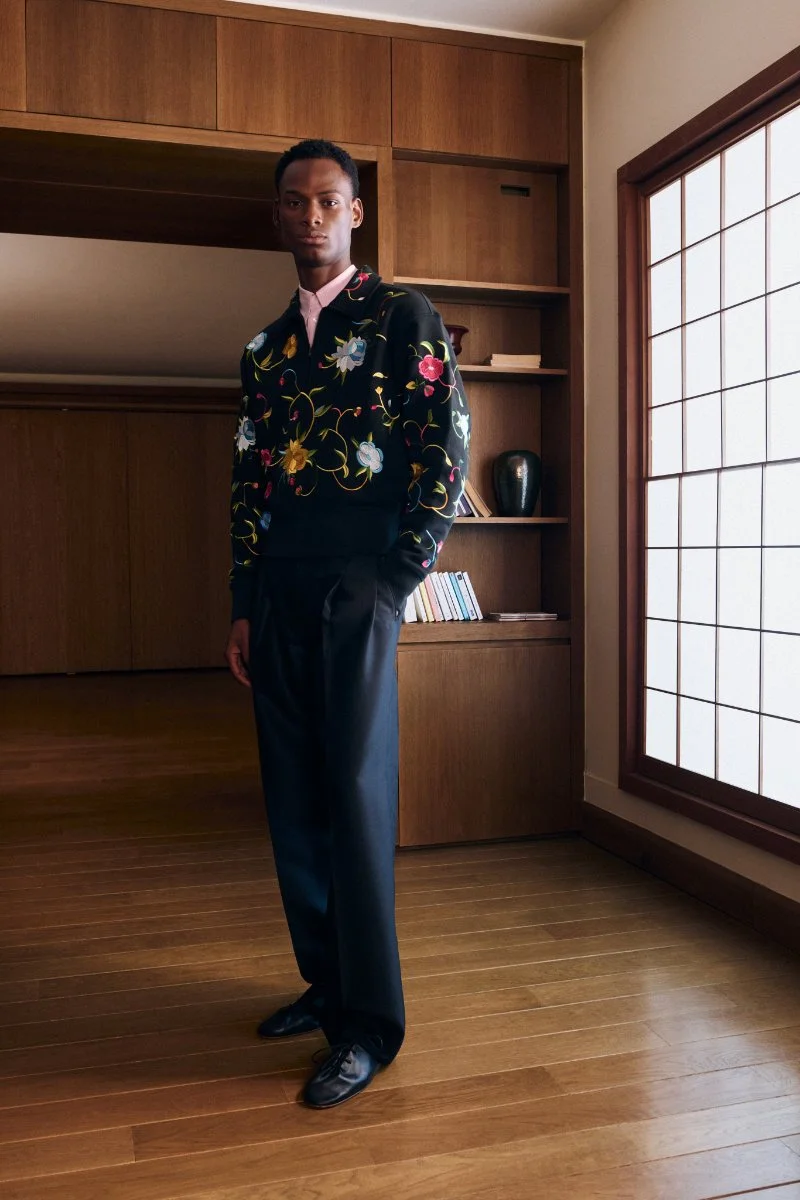
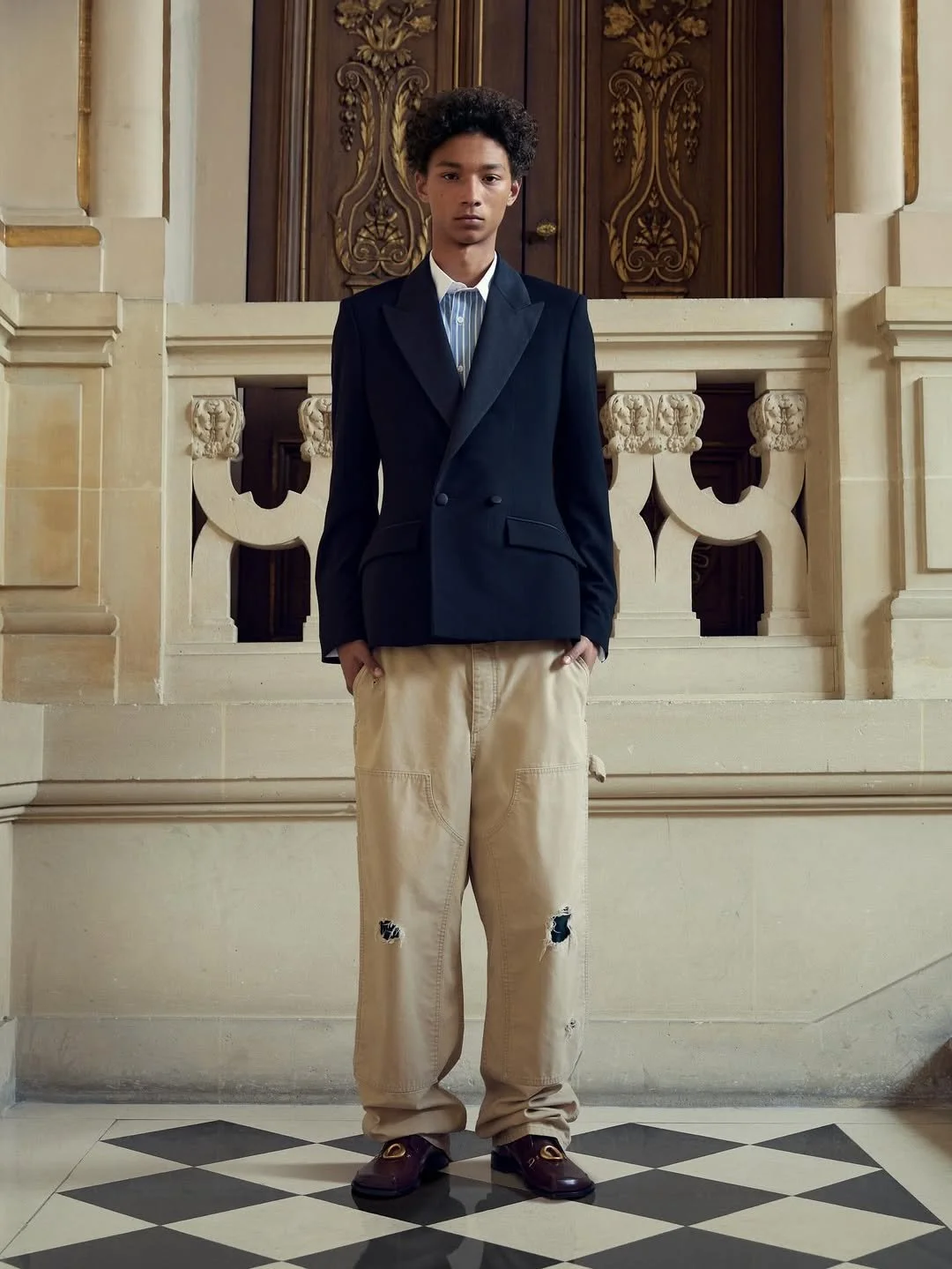
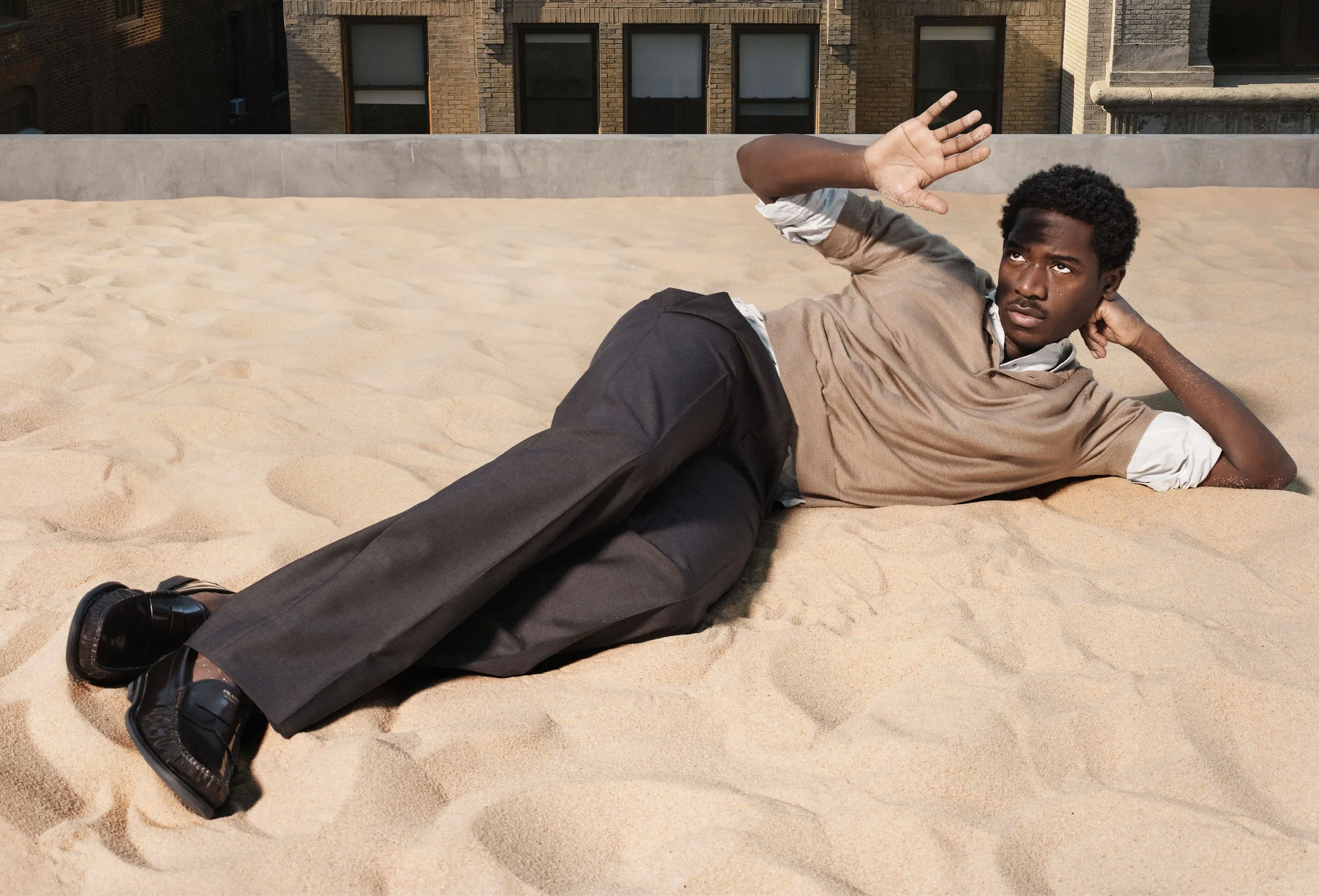
DIOR MEN PRE-FALL 2026

Jonathan Anderson has a particular gift. He anthropomorphises simple visual cues into full narratives. A photograph becomes a silhouette. A book cover, a pattern. It’s an instinct that serves him well at Dior, a house he has been tasked not only with steering into its next narrative era but also unifying under a singular vision. In a post-reference industry – one where designers can no longer simply borrow from the archive but must craft new stories in familiar languages – that gift becomes essential. Dior’s Menswear Pre-Fall 2026 collection is a perfect example

Interim collections are often considered commercial breaks from a designer’s true vision. Here, Anderson chooses to follow a different path. Instead of projecting a watered-down, commercially intended version of his debut, he continues to experiment. Pre-Fall 2026 isn’t just a sequel, it’s more of an anthological continuation.

There are, of course, recurring characters. The unforgettable, voluminous shorts of Spring/Summer – inspired by the pleating on the 1948 Delft dress – return, somehow even more charismatic. Their loud silhouette is now amplified with printed iterations. A dainty rosebud pattern, being one of them, and an engorged crest, being another.

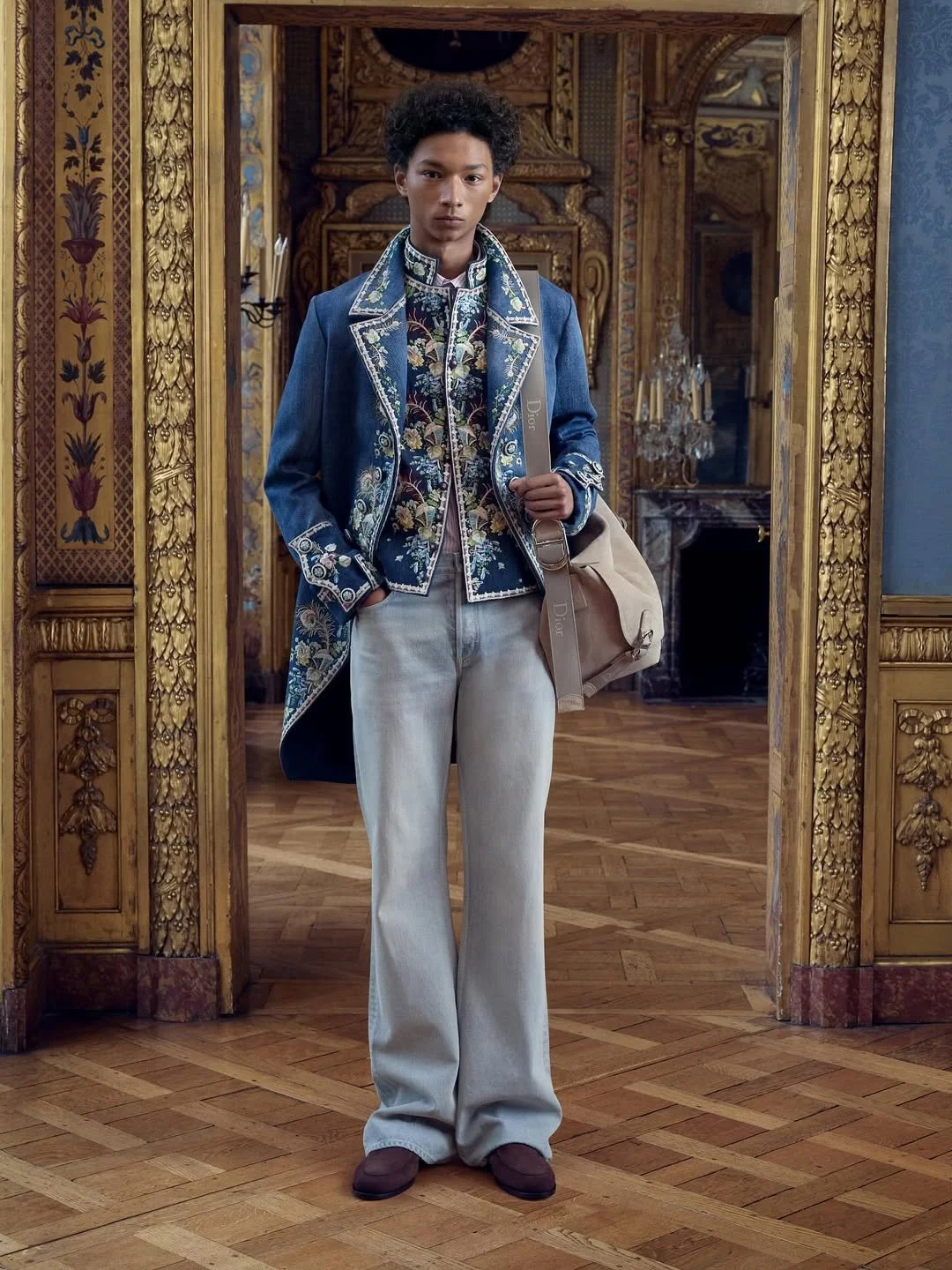
If in his previous proposals, an academic sensibility was made American through a minimal approach, here it transcends to a European myth. Embroidered vest and jacket sets feel right at home in a palace in Ile Saint-Louis, where the collection was shot. Referring to romance at Dior isn’t new; one could even say it’s a staple of the Maison, but Anderson’s touch brings a lightness. Crests are comedically amplified, and polos have their collars popped. Period silhouettes are made of denim, and gold buckles glimmer atop colourful shorts.

However, the Irish designer shines the brightest when he uses silhouette as a medium, distorting the body’s proportions through clothing. A leather blazer juts out at the hip, no doubt inspired by the bar jacket that defines the Maison’s earliest days. But this isn’t a mere reference. Anderson finds common ground with the founder of the brand he now leads.


Words by Pedro Vasconcelos

CHANEL SS26

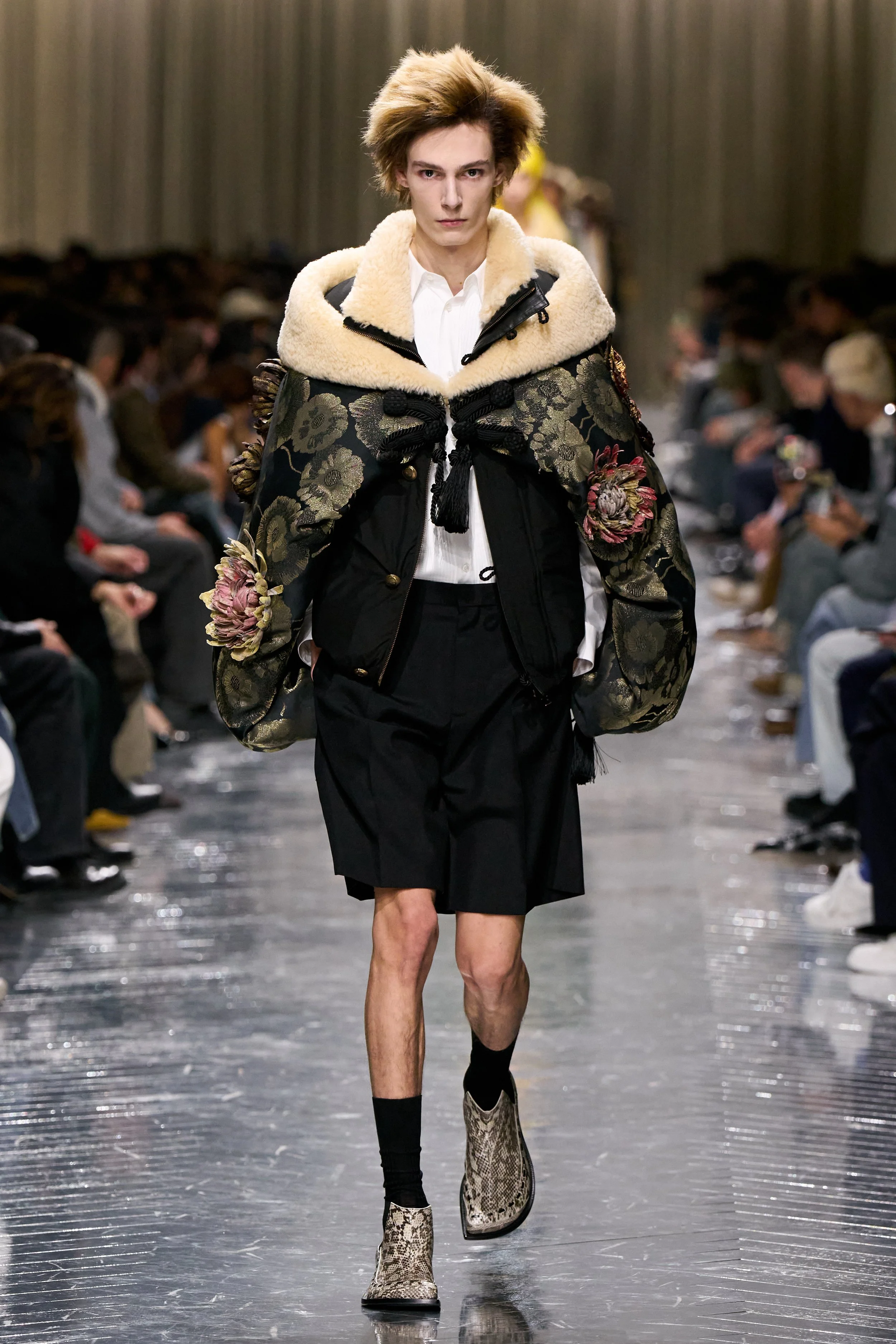
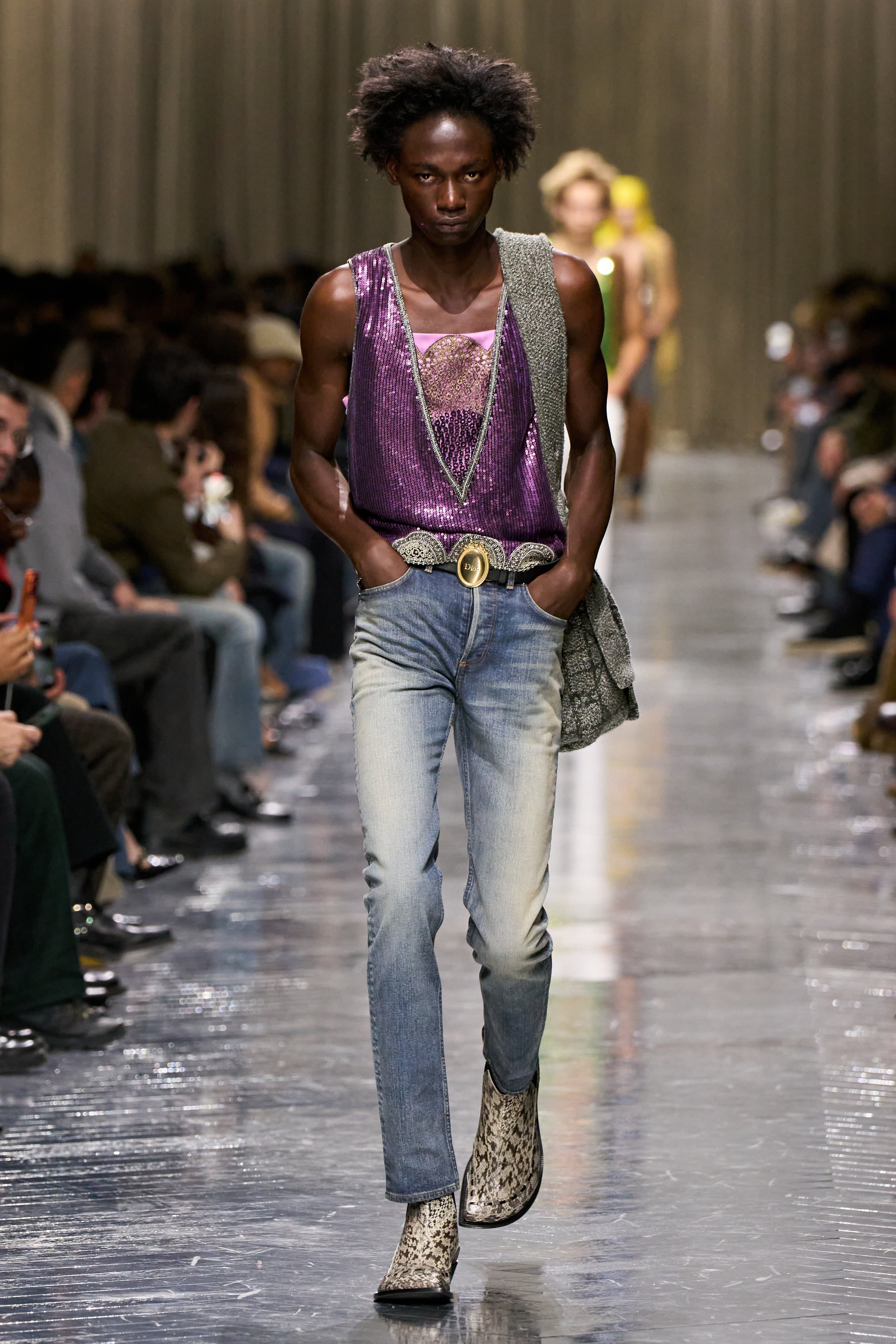
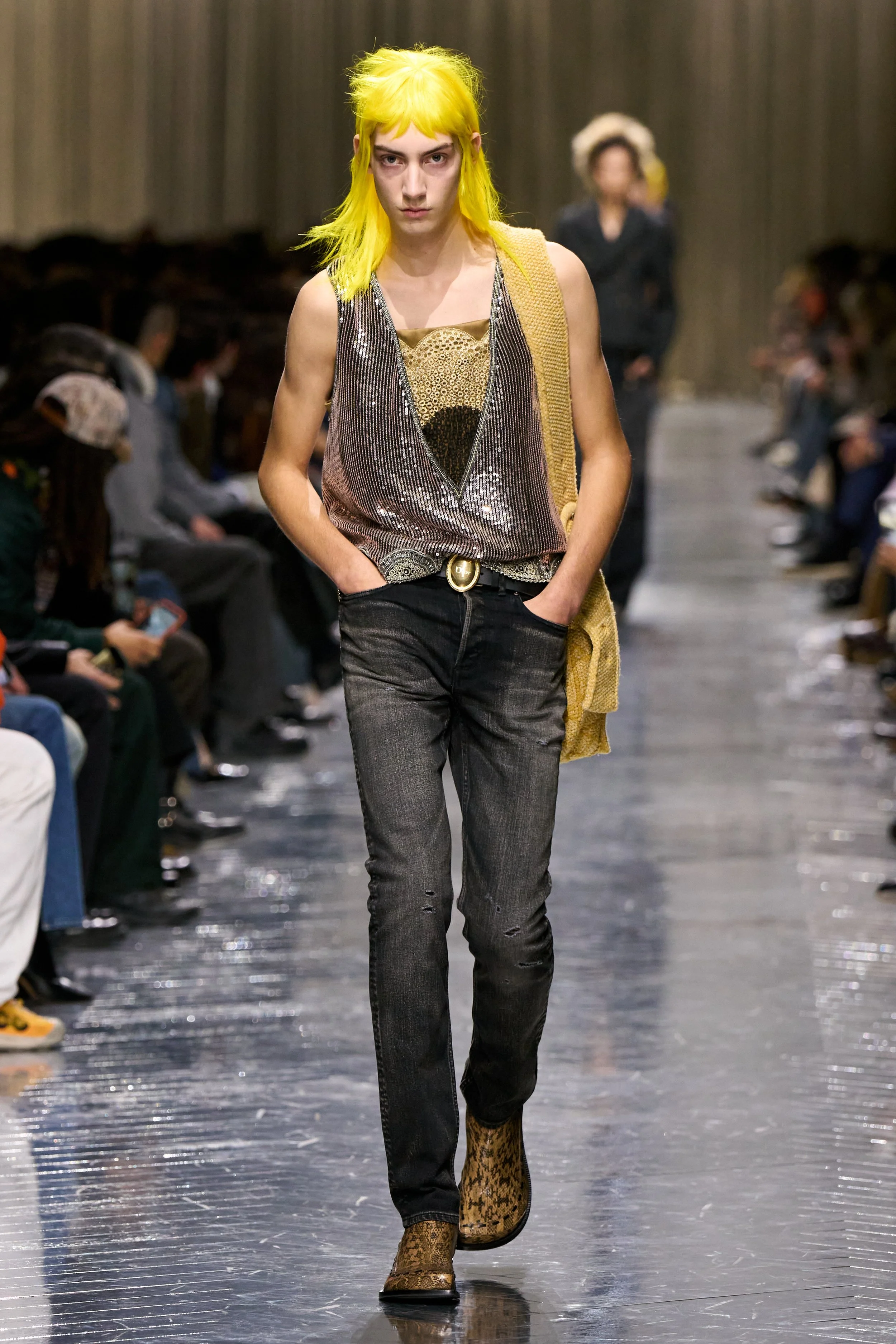
In the season that promised radical change, Chanel reached its climax. Scheduled for the penultimate day of Paris Fashion Week, Spring/Summer 2026 marked Matthieu Blazy’s much-anticipated debut.  It isn’t an easy maison to lead. Its codes, its look, are ingrained in more than fashion history; it’s connected to the reason many love the industry. Through tweed jackets and padded bags, Chanel is synonymous with fashion itself. Even for a designer with Blazy’s track record – from the rumours of ghost designing Maison Margiela’s Artisanal collection to a genial tenure at Bottega Veneta – it’s a tough job. How does one approach a house that has had only a couple of creative directors in its 115 years? According to the French-Belgian designer, it's by looking into its history.

It’s clear Blazy studied the maison. Its codes are not just referenced, they’re played with, twisted, and turned in whimsical ways. The classic tweed jackets have their traditional pattern augmented. Inspired by the digital age habit of zooming in on one’s phone, the designer did just that, amplifying the organically angular print of Chanel’s tweed. The maison’s founder was considered in more than one way. First, Gabrielle Chanel’s most recognisable silhouette. On a cotton dress, a tweed skirt is attached right at the hip, with a matching jacket; the look emulates an unmistakable 1930s silhouette. The technique was replicated in a set that replaced the classic jacket with a checkered tweed shirt — a Matthieu signature — that melted at its extremities into caviar beading carefully placed to resemble the fabric’s texture.

Gabrielle Chanel wasn’t just a source of technical inspiration. Her personal life, and its connection to the maison, served as a thematic guideline. The classic Chanel strap was sewn on the inside hem of an oversized shirt (made with Charvet’s technique, the same one the couturier was known for wearing). Her proclivity towards natural themes, in wheat ears and neutral hues, was a constant in the collection.

Of course, Chanel isn’t just Gabrielle’s. The house’s most recognisable codes are in fact not part of her organic lexicon, but of Karl Lagerfeld's artifice-driven imagination. Here, his ability to make the comical chic was slightly reworked. The legendary designer was known for his over-the-top sets and campy themes. Blazy doesn’t ignore the impact his vision had on the maison, but doesn’t reach for the same effect. If Lagerfeld made a point to wink at his audience, the new creative director is more earnest. Crystal earrings host enamel chicks inside; one of the bags is a literal globe, harking back to the show’s planetary set.

And still, despite all his respect for the legacy, Blazy wasn’t afraid to meddle in it. It takes gall to reword Chanel’s most idiosyncratic bag, the 2.55. The icon is twisted and turned, made to look as if it’s been used and abused. Its look, even if aggravating for those that keep the stickers on their bags, speaks to a different client — the kind that makes Chanel pieces partners in their daily life. The same sentiment can be found at the hem of most of the skirts and dresses Blazy sent down the runway, their edges irregularly raw, as if worn to exhaustion.

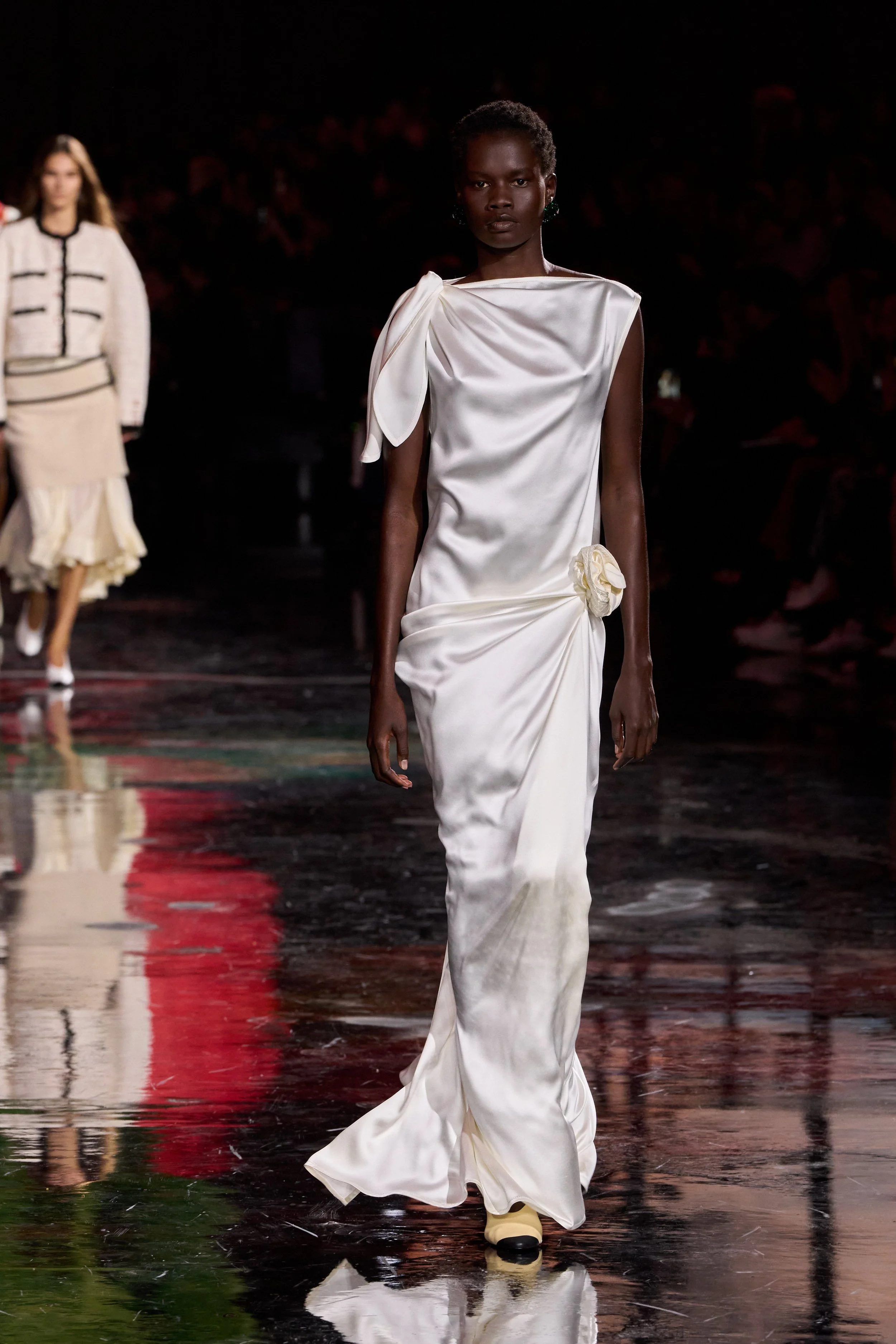
There’s a lot of the French-Belgian designer’s style to be seen here. His materiality. His textural storytelling. His proclivity for organic themes. His ability to weave luxury techniques into casual pieces. Feathers were a highlight of the collection. Either paired with the aforementioned shirts or in low-waisted skirts, their movement represented something exciting: a new start at one of the most beloved maisons in the industry. What he did takes courage. Chanel’s future has been somewhat apparent up until this point. Blazy modifies its flight trajectory. And, in the most anticipated show of the season, he sticks the landing.
Words by Pedro Vasconcelos

LUDOVIC DE SAINT SERNIN SS26

For Spring/Summer 2026, Ludovic de Saint Sernin looks inward to find the narrative engine for his collection. Inspired by his aristocratic roots, the designer grounds the aesthetic of French nobility in his sensual codes. Frilled and lacy dresses are tight on the body, revealing the skin underneath. Shirt dresses get baroque makeovers in creations that are both structured around the waist and flowy at the hem.

De Saint Sernin’s idiosyncratic sensuality is tamed by aristocratic elements, but it’s erased. Textured bodycon dresses are split at the waist by a stringy belt. A metallic translucent gown has a floral crystal pattern overlaid. Some pieces speak directly to a period inspiration: linen shorts tighten at the knee.

The conceptual framework escapes the clothes. In the lookbook that revealed the collection, de Saint Sernin cast what he describes as a “new kind of nobility.” Emma Chamberlain, Alexa Chung and former Behind the Blinds cover star Corey Fogelmanis speak to an aristocratic class that escapes birthright. Some are born, others become – and a Ludovic de Saint Sernin piece is enough to enact the transformation.


Words by Pedro Vasconcelos

CELINE SUMMER 2026

Out in the Parc de Saint-Cloud, guests started arriving. It’s not often you can get fashion week attendees an hour outside of Paris to a show. But then again, Celine is not just any show. Summer 2026 marks Michael Rider’s second foray into the maison. In many ways, it was just like his first round: an illustration of his understanding of the brand’s legacy.
Legacy is a funny thing at Celine. In other brands, it's thought of as an ancestral myth, a visual language to pull from that resembles hieroglyphics – remnants of a distant past. At the French house, it’s a different story. Despite being founded in 1945, its aesthetic imprint is more recognisable in the last 15 years than it was in the 50 years prior. Creative directors like Phoebe Philo and Hedi Slimane brought the maison to the modern fashion lexicon. Rider is acutely aware of it. His take on Celine reflects it.

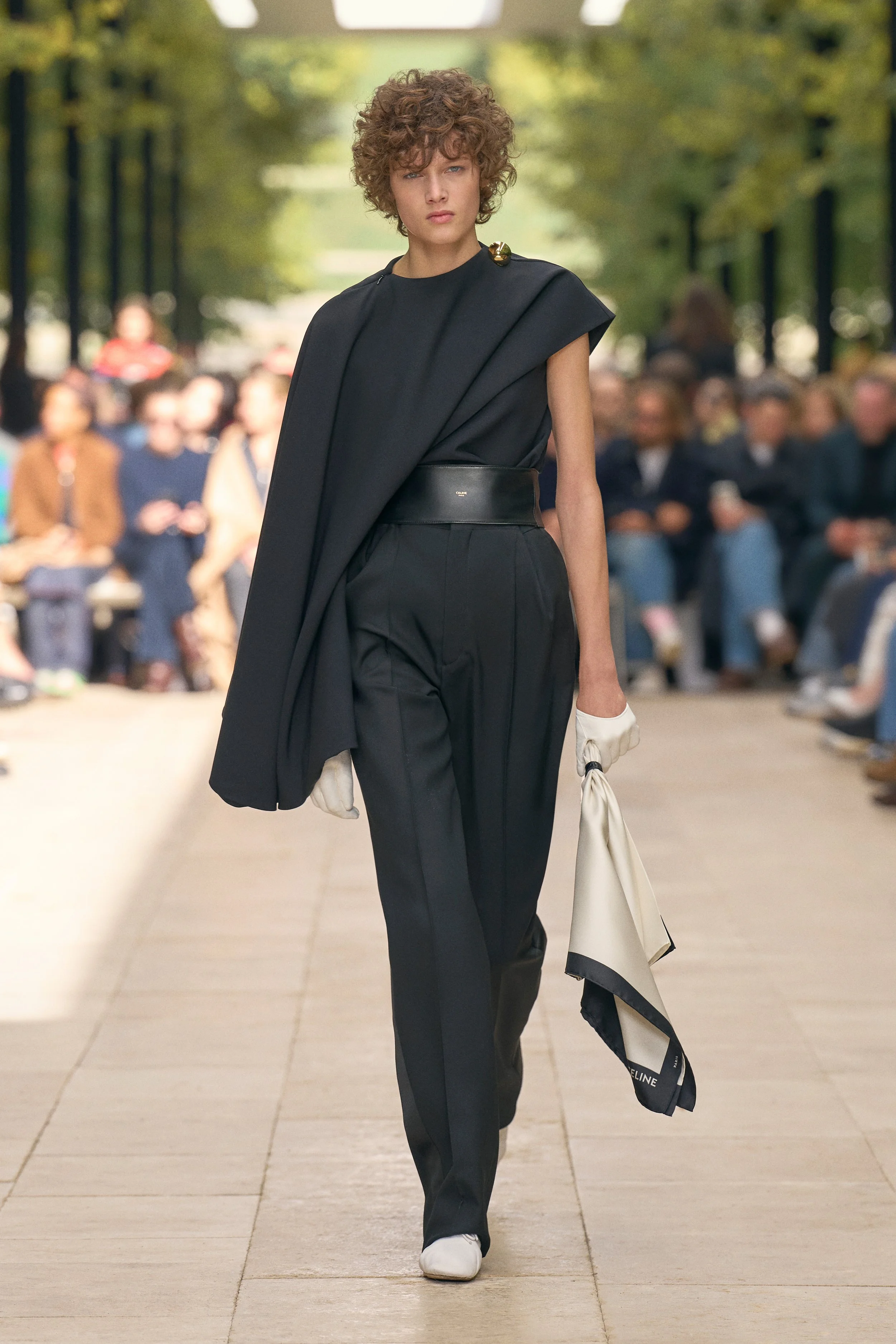
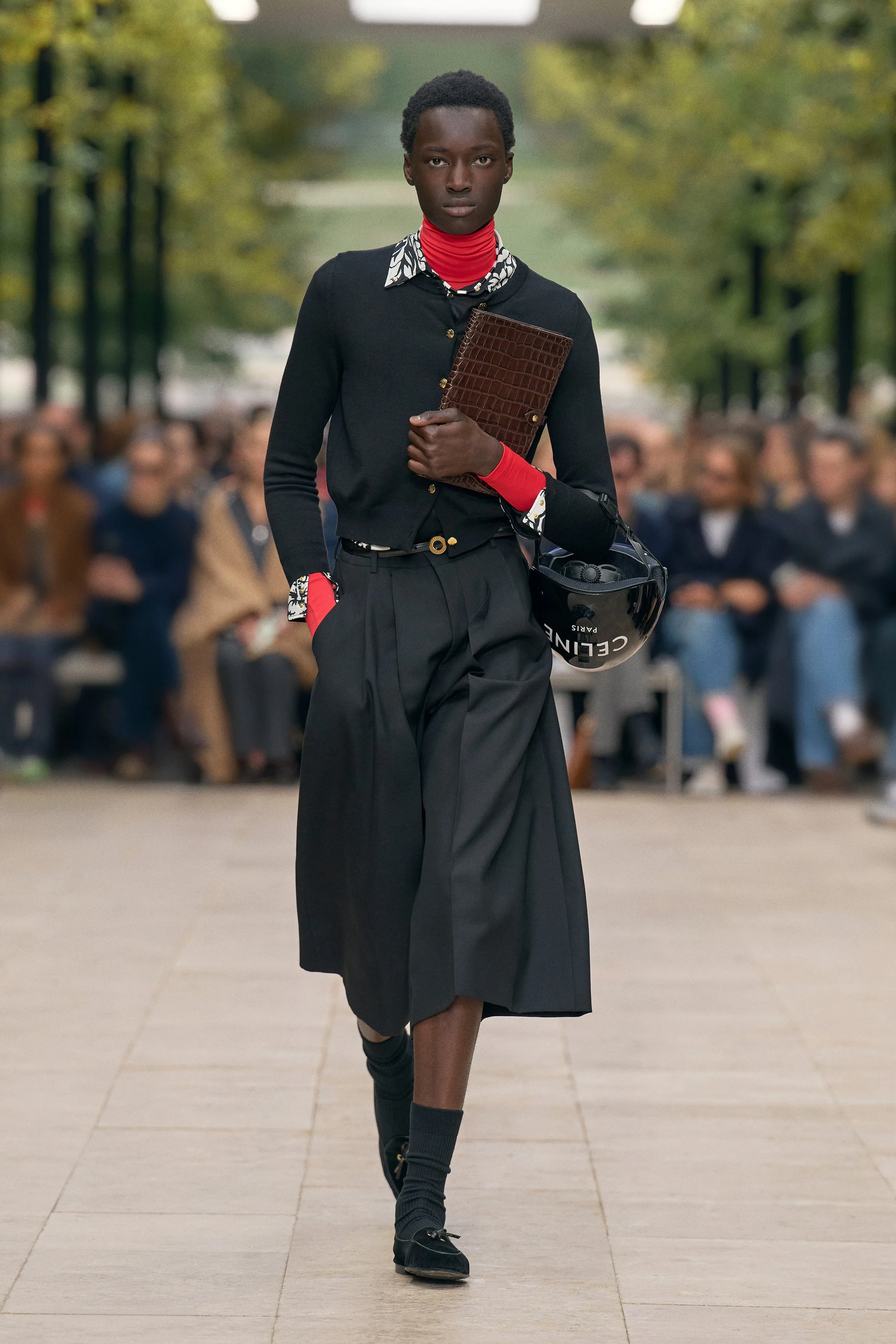
Philo’s staples – her slouchy tailoring, her chicness, her scarves – are all here. Interesting draped shoulders are combined with pleated trousers, oversized shoulders on tailored jackets nipped in the waist by comparison. It’s not just Philo’s women; Slimane’s boys are peppered throughout the collection in the same measure. Tight pants and fitted leather jackets are reminiscent of the French designer. 

Still, it’s not to say that Rider doesn’t consider the legacy of the maison’s founder. Celine’s DNA is decisively French. Flowy knotted white dresses paired with oversized glasses speak to it. He takes on national archetypes and twists them, adding a sense of whimsy. Still, for all its lightness, Summer 2026 felt more focused than his previous collection. If before accessories and jewellery were used to break the seriousness of an otherwise elegant offering, here, prints take on the same role. Mod daisies bloom on minis. Irregularly spaced stripes fill the sleeves on tight-knit dresses.

Rider’s American sensibilities come through in varsity polos and the airs of the Ivy League they bring in. The colour palette is equally his. Pops of red and royal blue burst in between black and camel. The designer isn’t just referencing, he’s creating the new Celine language in real time. 


Words by Pedro Vasconcelos

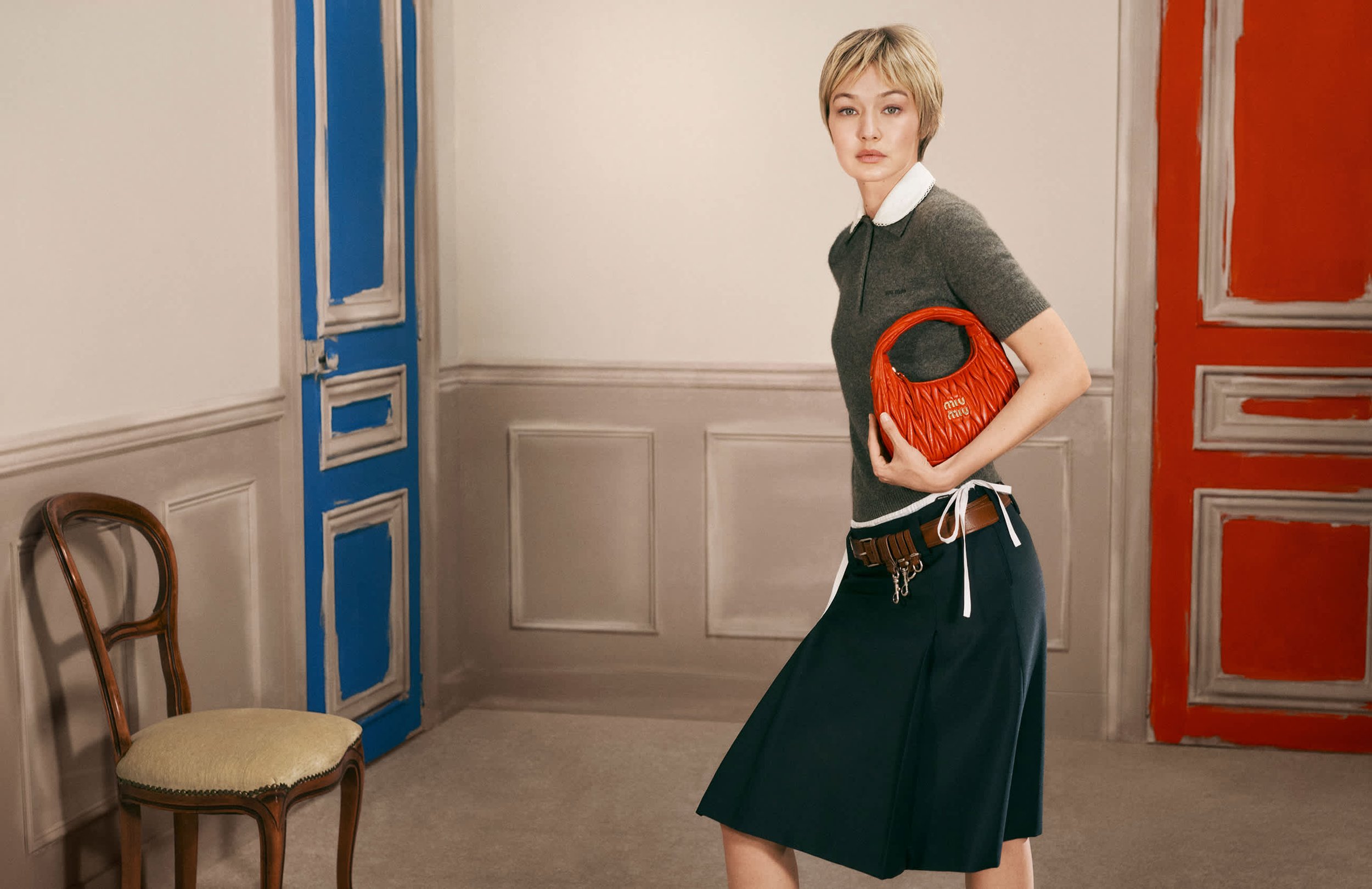
MIU MIU SS26

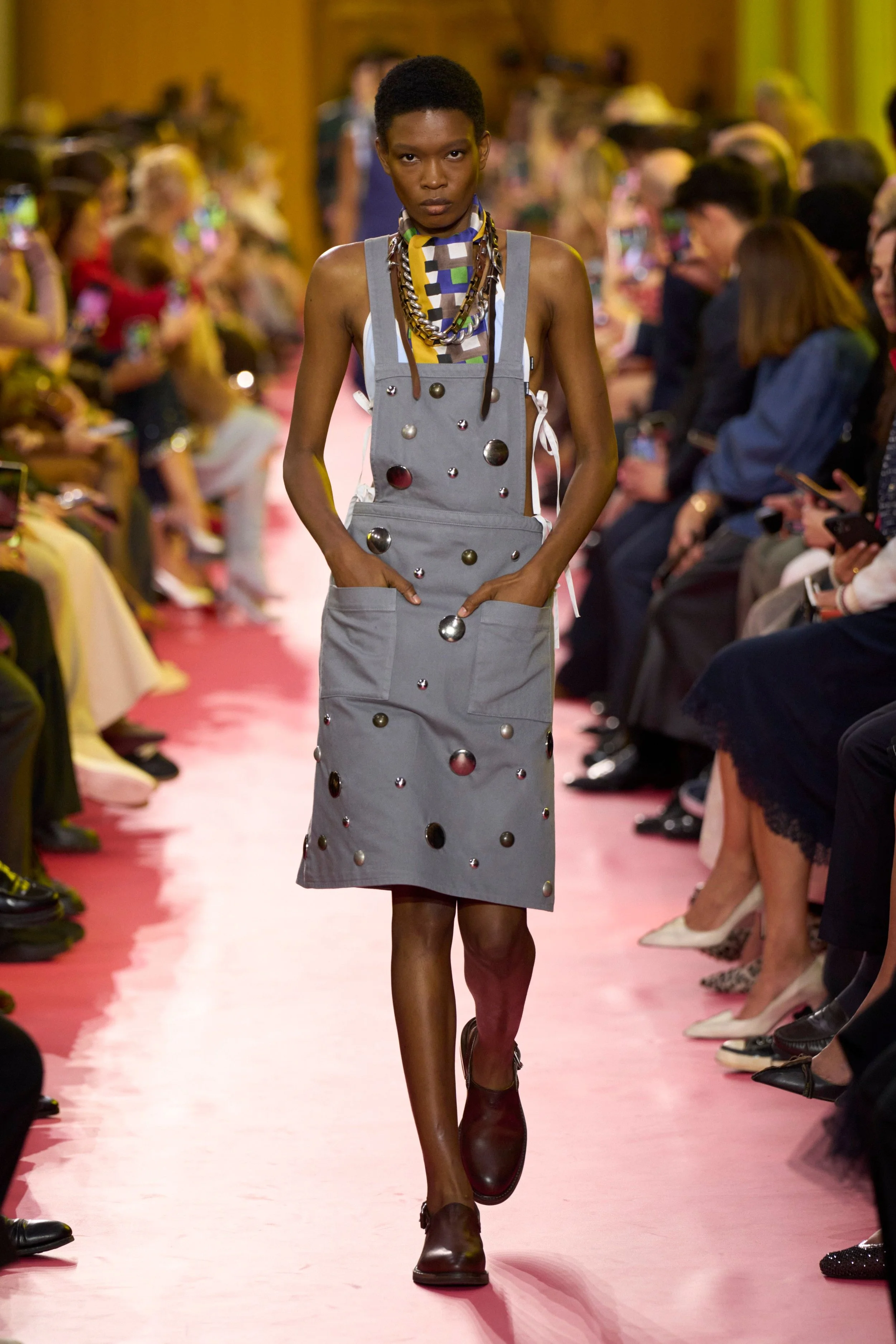
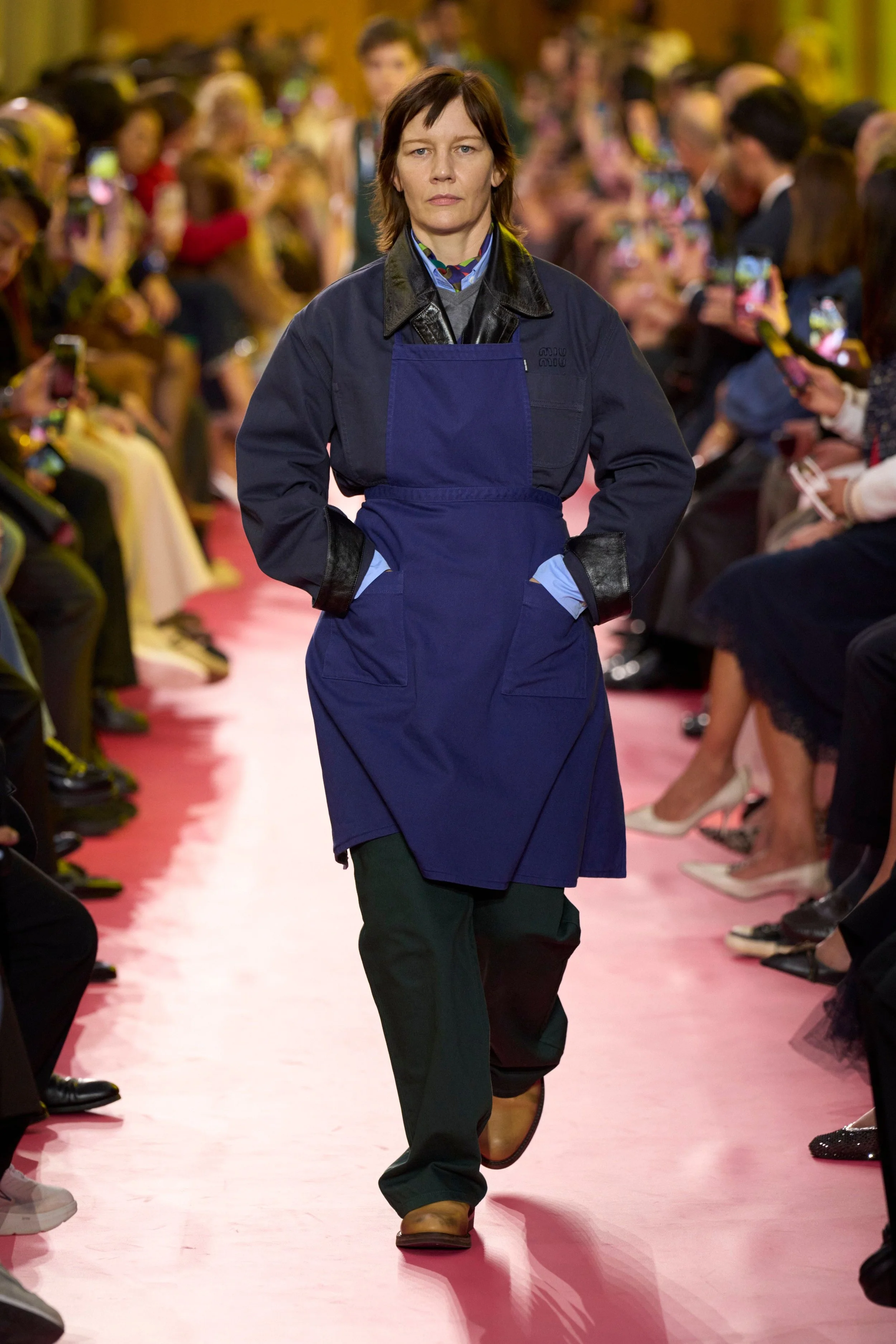
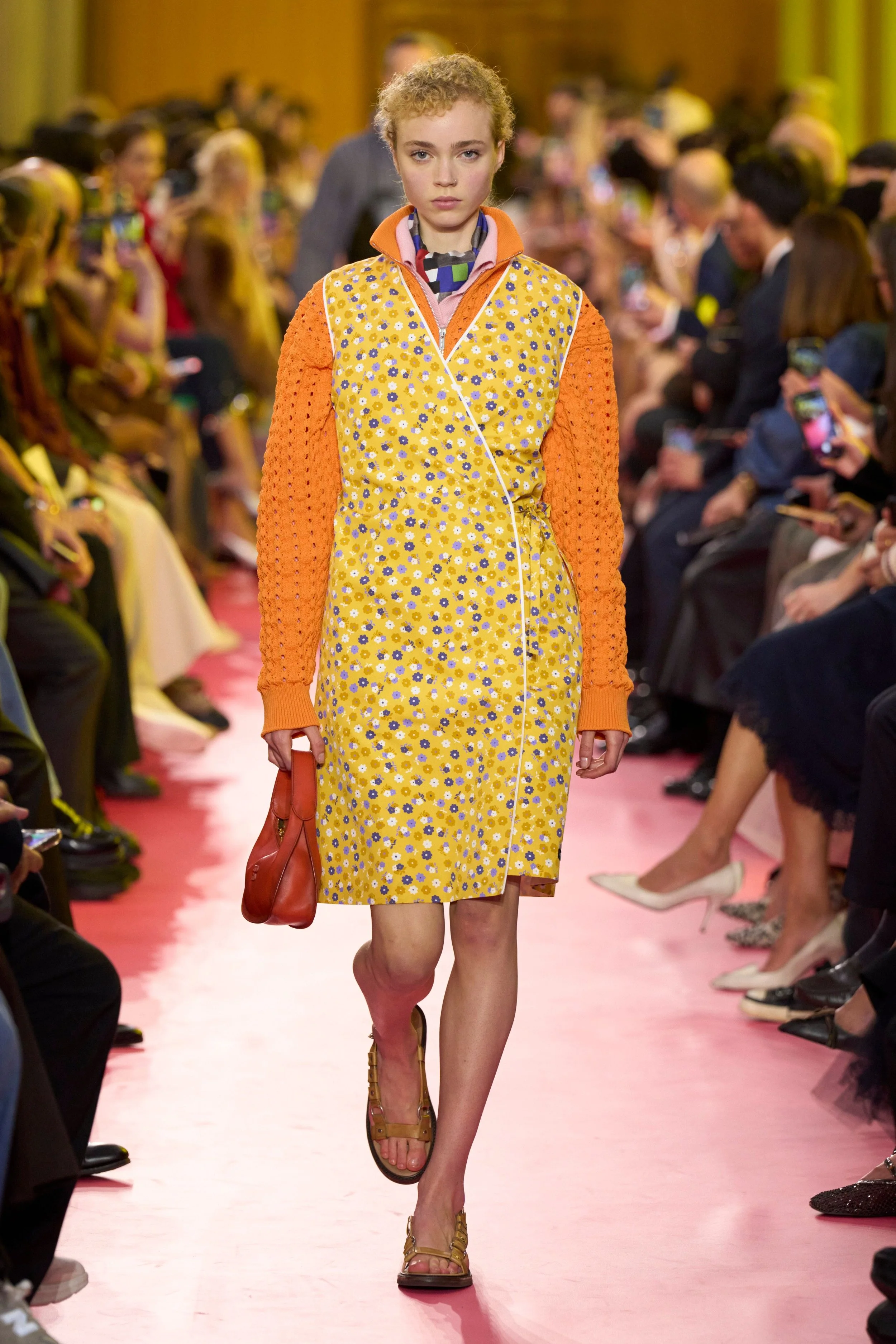
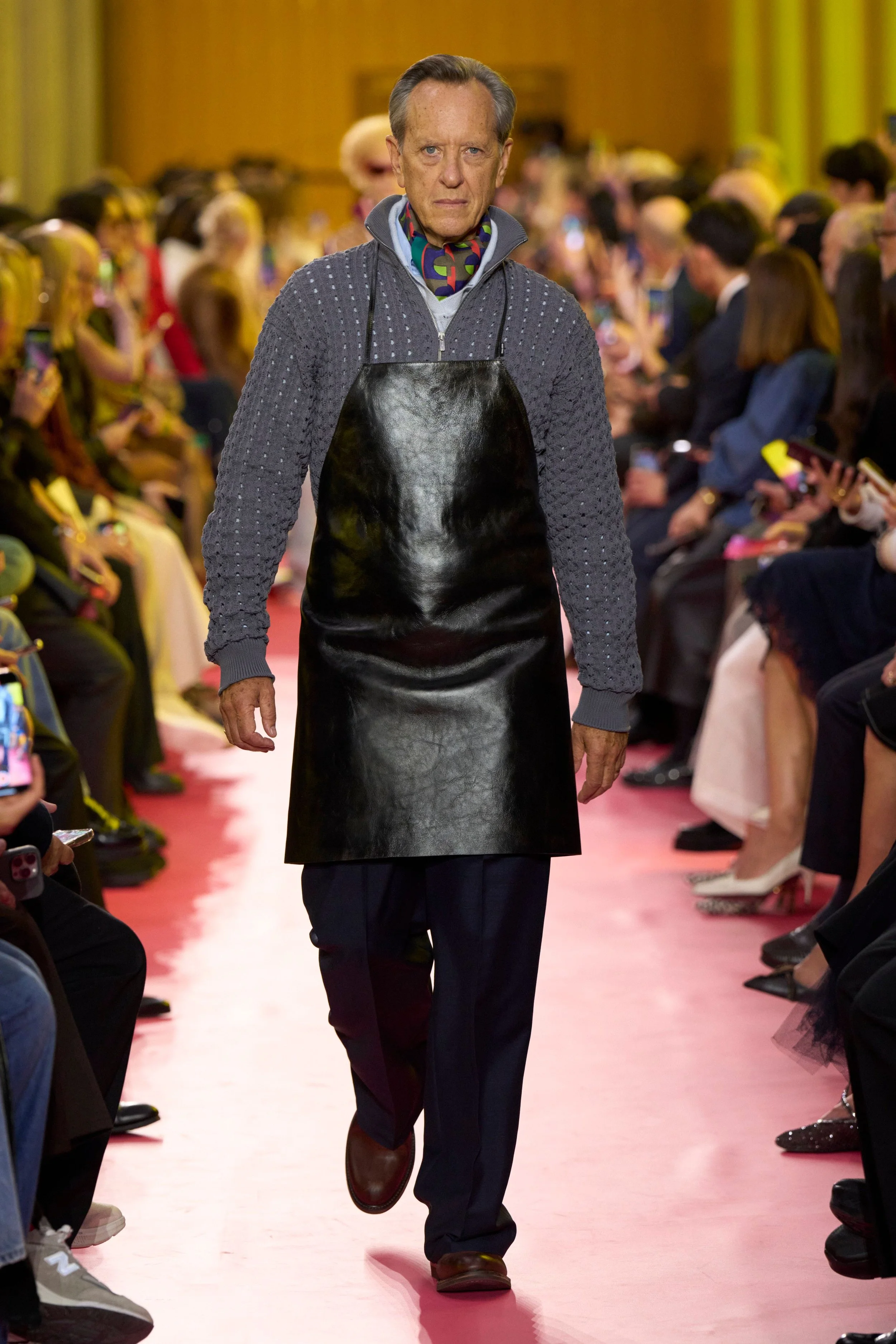
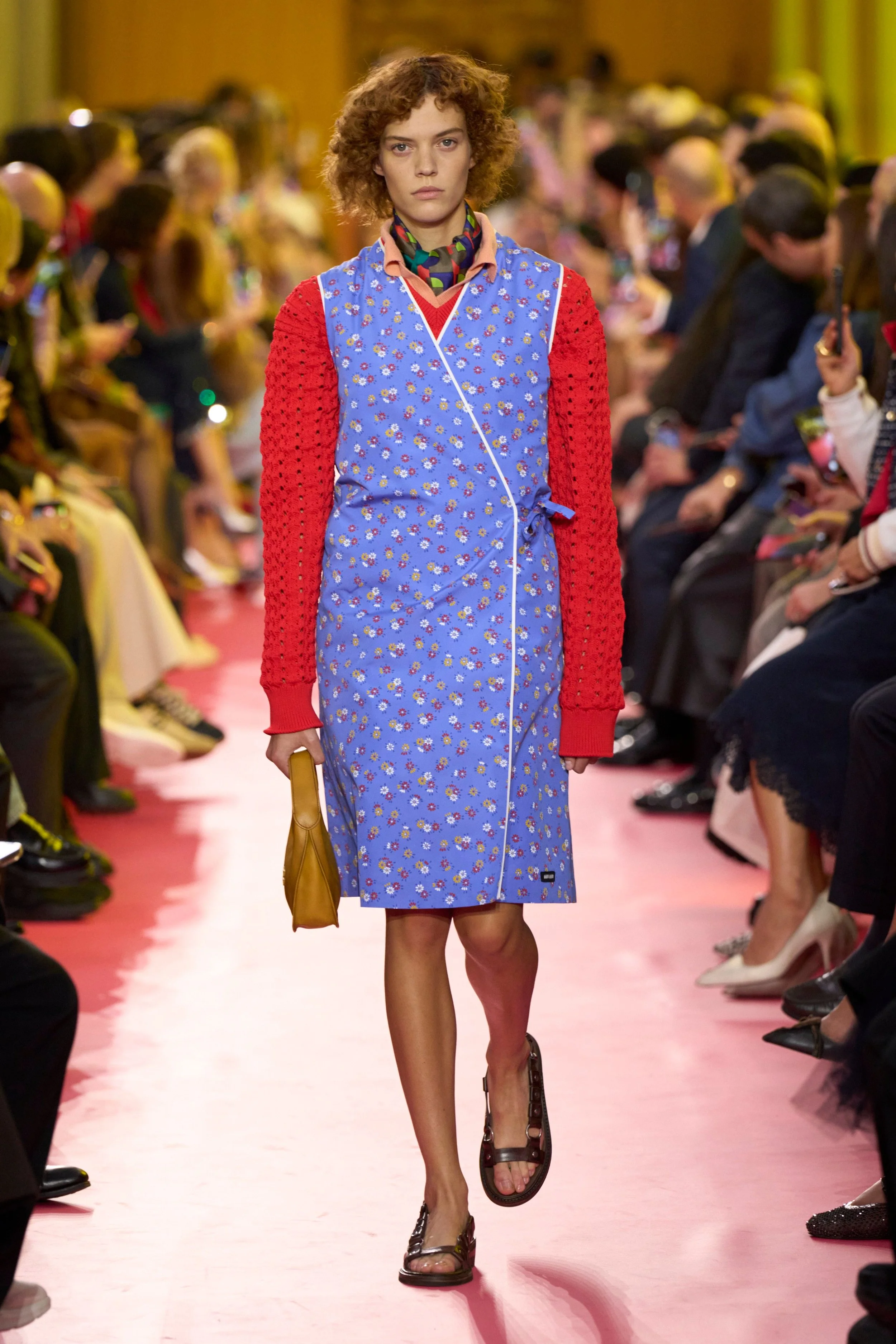
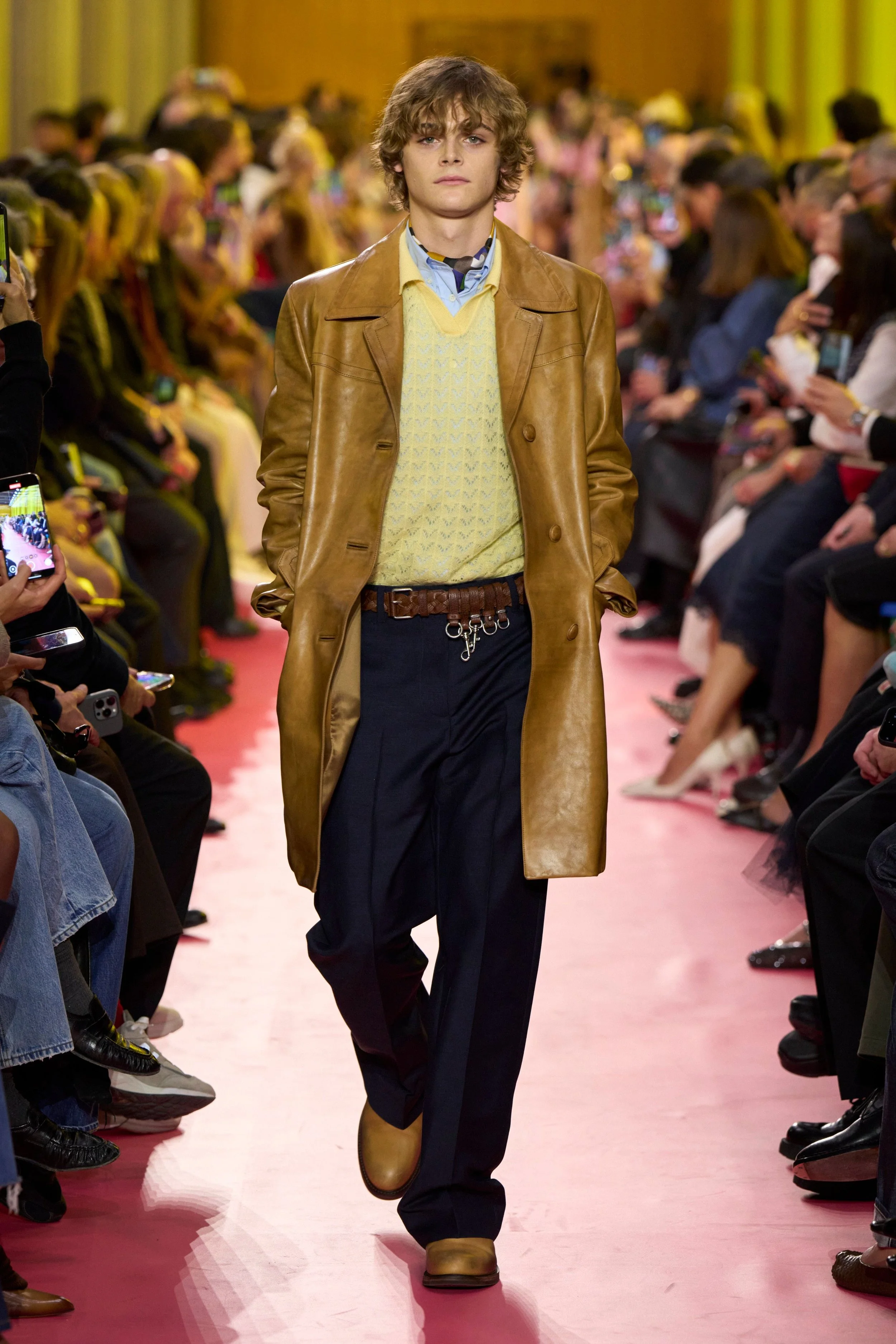
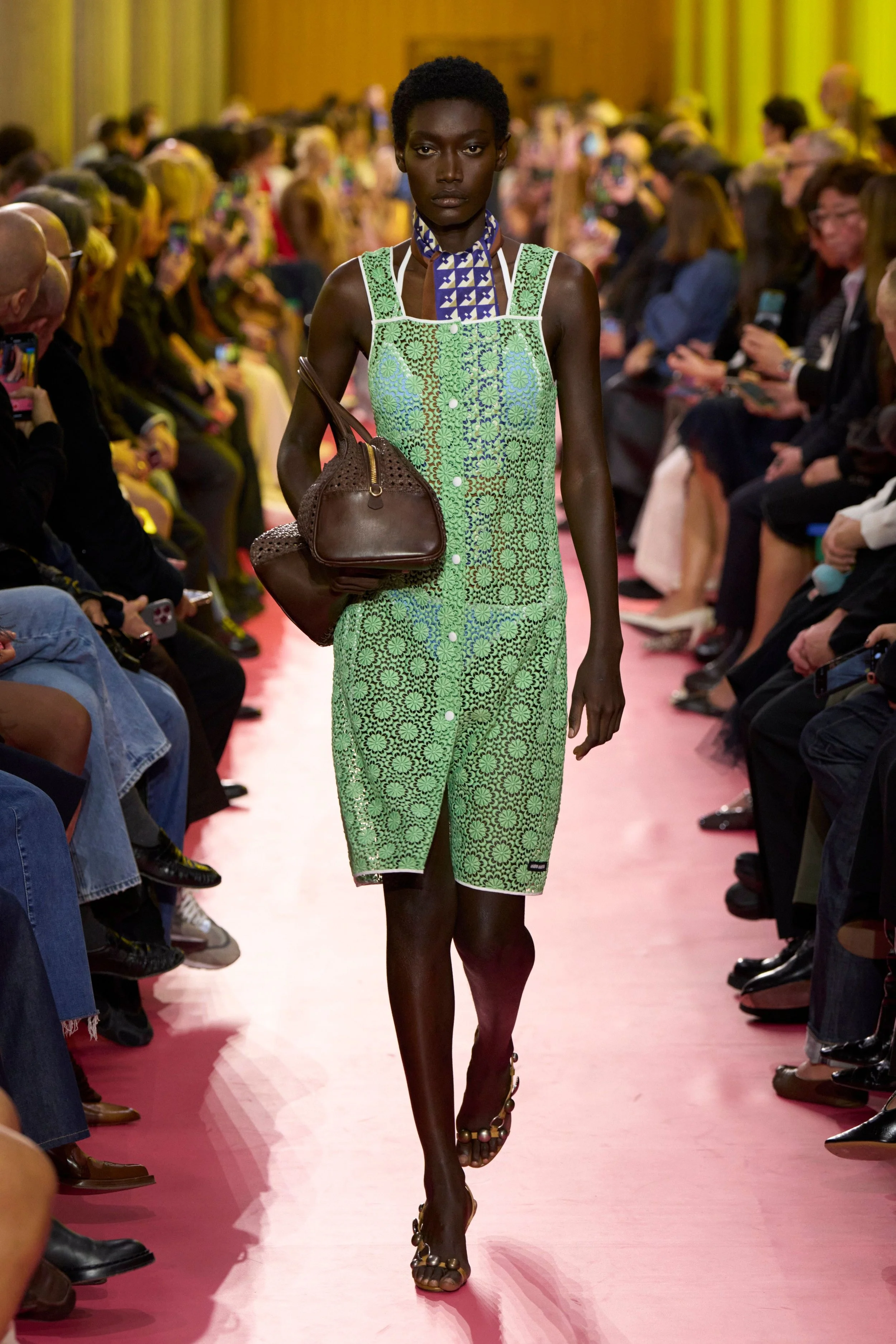
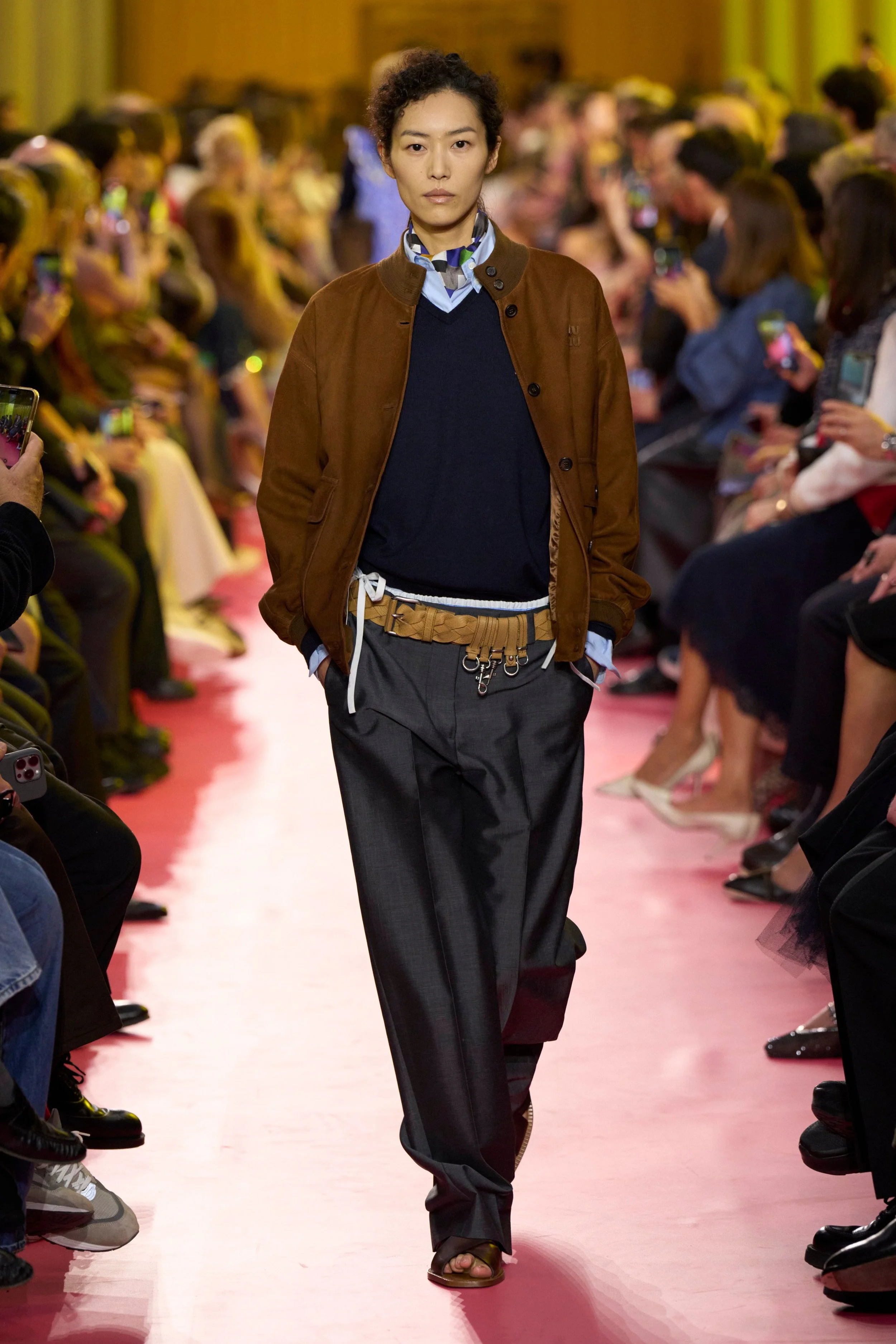
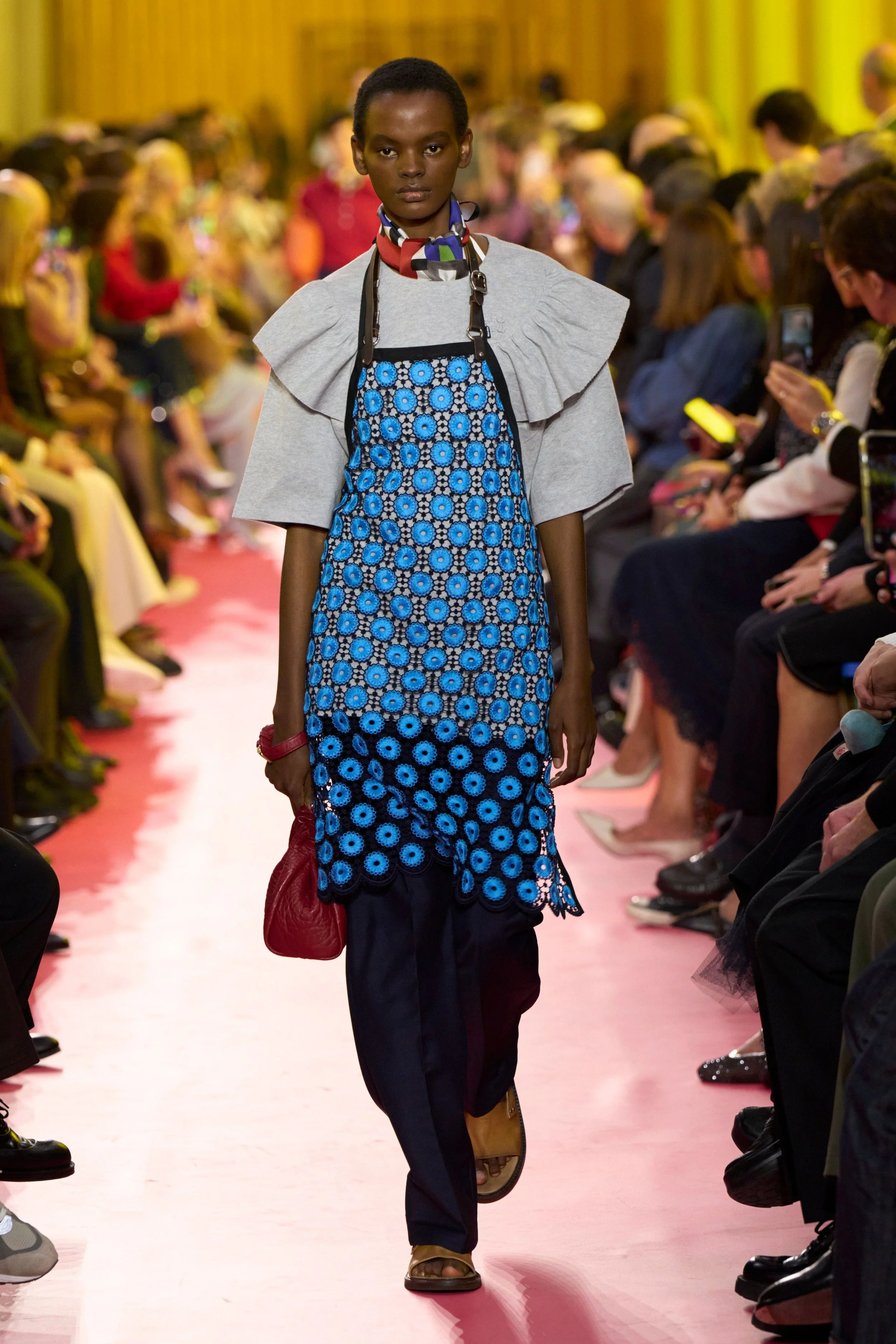
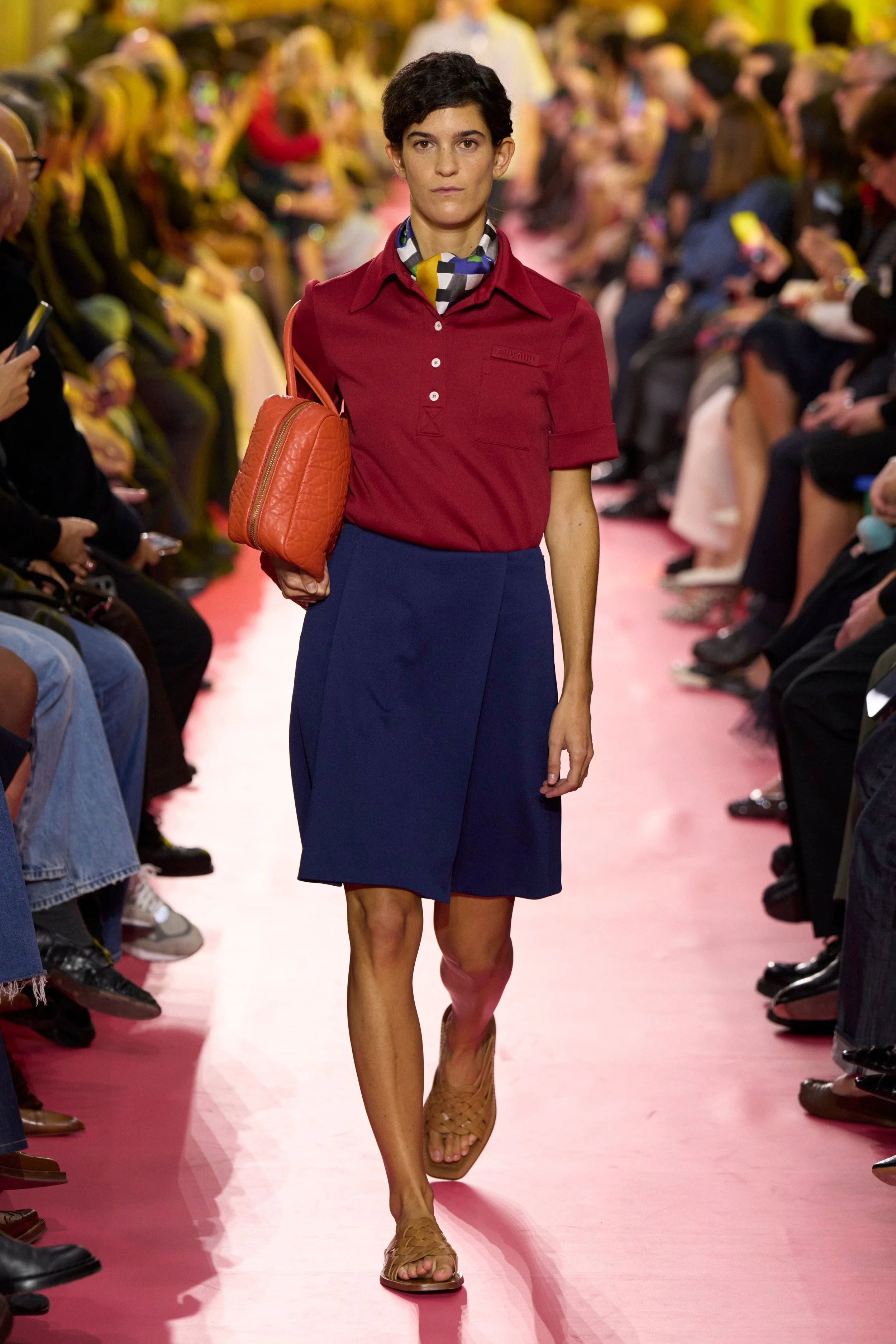
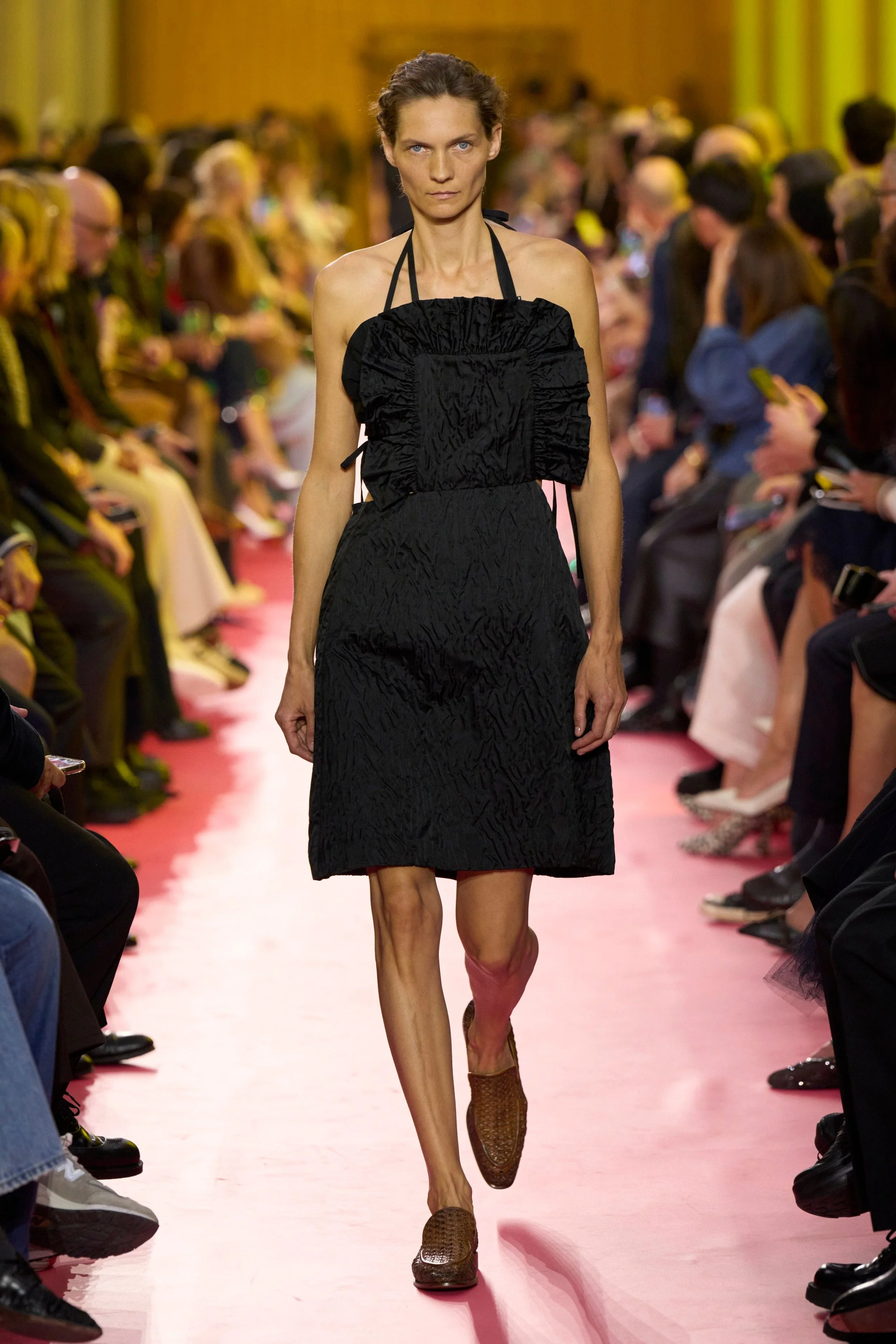
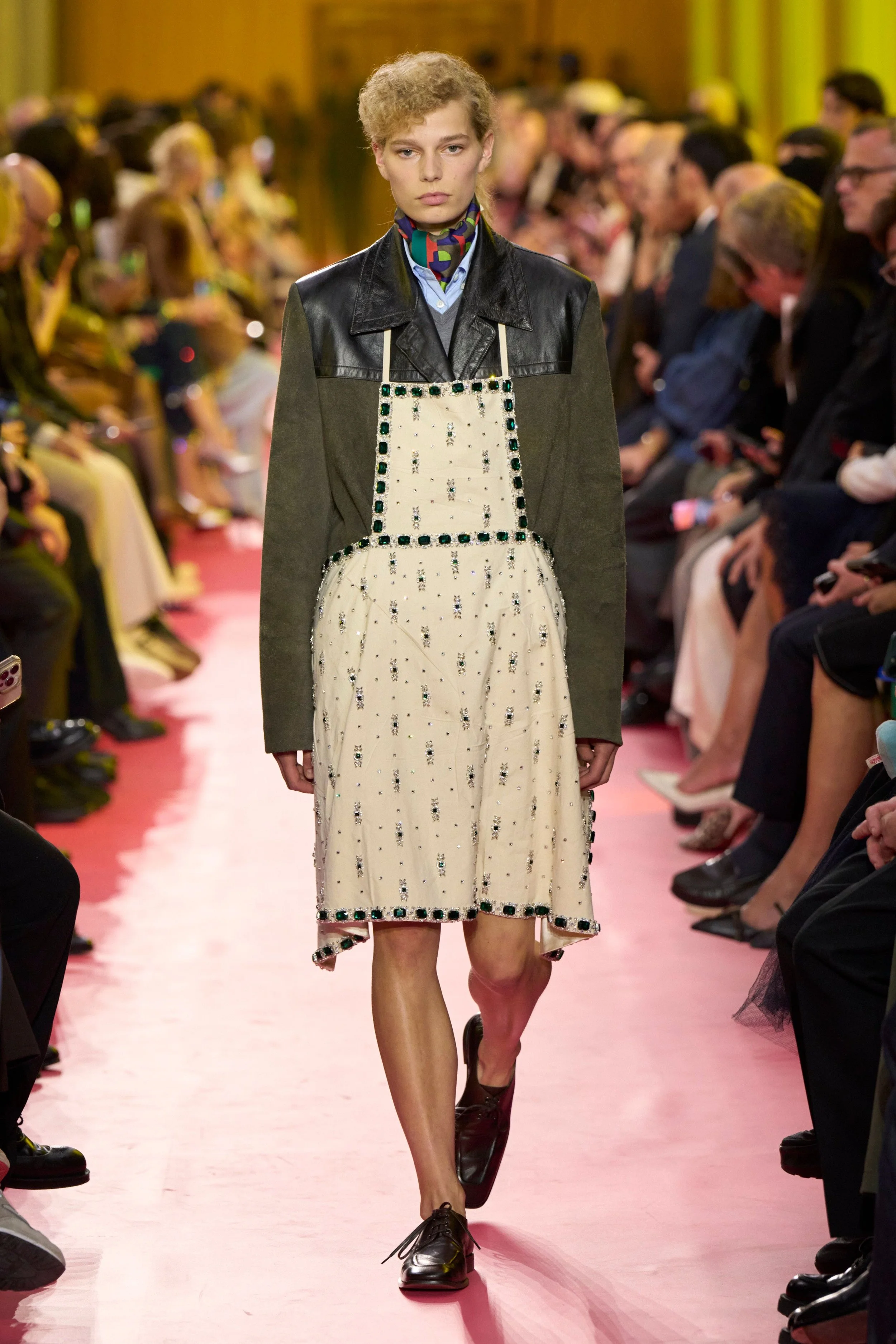
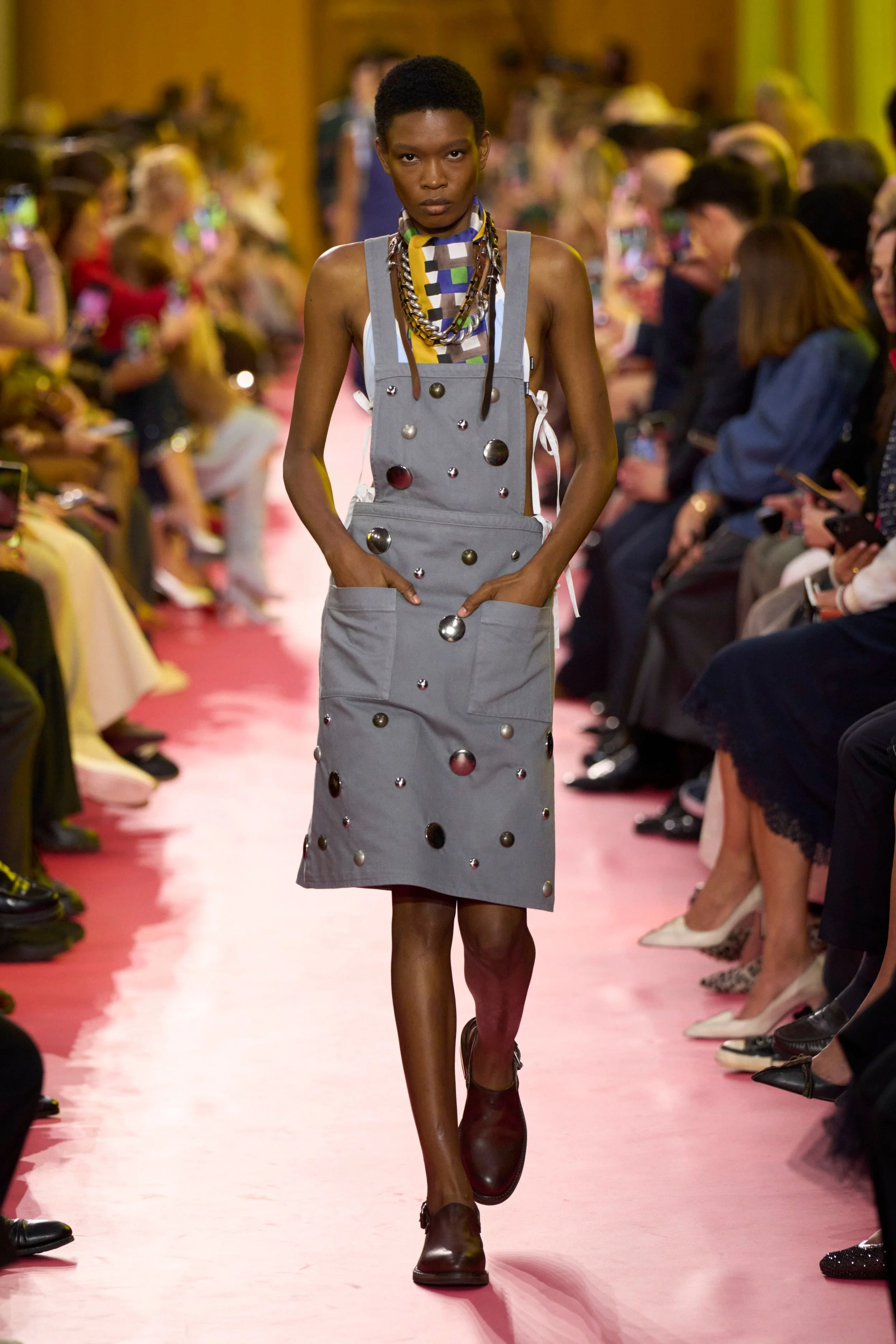
For Miu Miu’s Spring/Summer 2026 collection, Mrs. Prada returns to one of her enduring fascinations — workwear — reframed through the lens of female labour and resilience. Set within a space reminiscent of a canteen, the collection unfolds as a subtle tribute to women’s unacknowledged strength, from the physicality of their professions to the invisible labour that sustains the home.

The show opened with German actress Sandra Hüller, embodying strength in a utilitarian jacket with a leather collar, layered under a simple blue apron. From there, Prada transformed the humble staple into a fashion archetype: leather aprons worn over perforated zip-up knits, crochet versions paired with boxy grey blouses, and black dresses trimmed with ruffles framing the bust. Domesticity was reimagined as a badge of dignity in wrap-around shifts printed with tiny florals — their blue and yellow hues echoing the familiarity of a housekeeping uniform.

Accessories, too, bore the marks of labour and intention. Sturdy braided belts came equipped with key rings, mirrored also on suede bags — a detail both decorative and practical. Footwear carried an assertive weight, from tanned mules to work boots with solid, sculptural soles. A whisper of retro charm softened the look: printed silk neck scarves, neatly tucked under crisp shirts, thick sweaters, and short-sleeved polos.

This is Prada’s vision of work — not drudgery, but discipline transformed into style. A uniform for the women who make the world turn, rendered with tenderness, irony, and the unmistakable intelligence of Miu Miu. 


Words by Martin Onufrowicz

THE ROW PRE-FALL 26

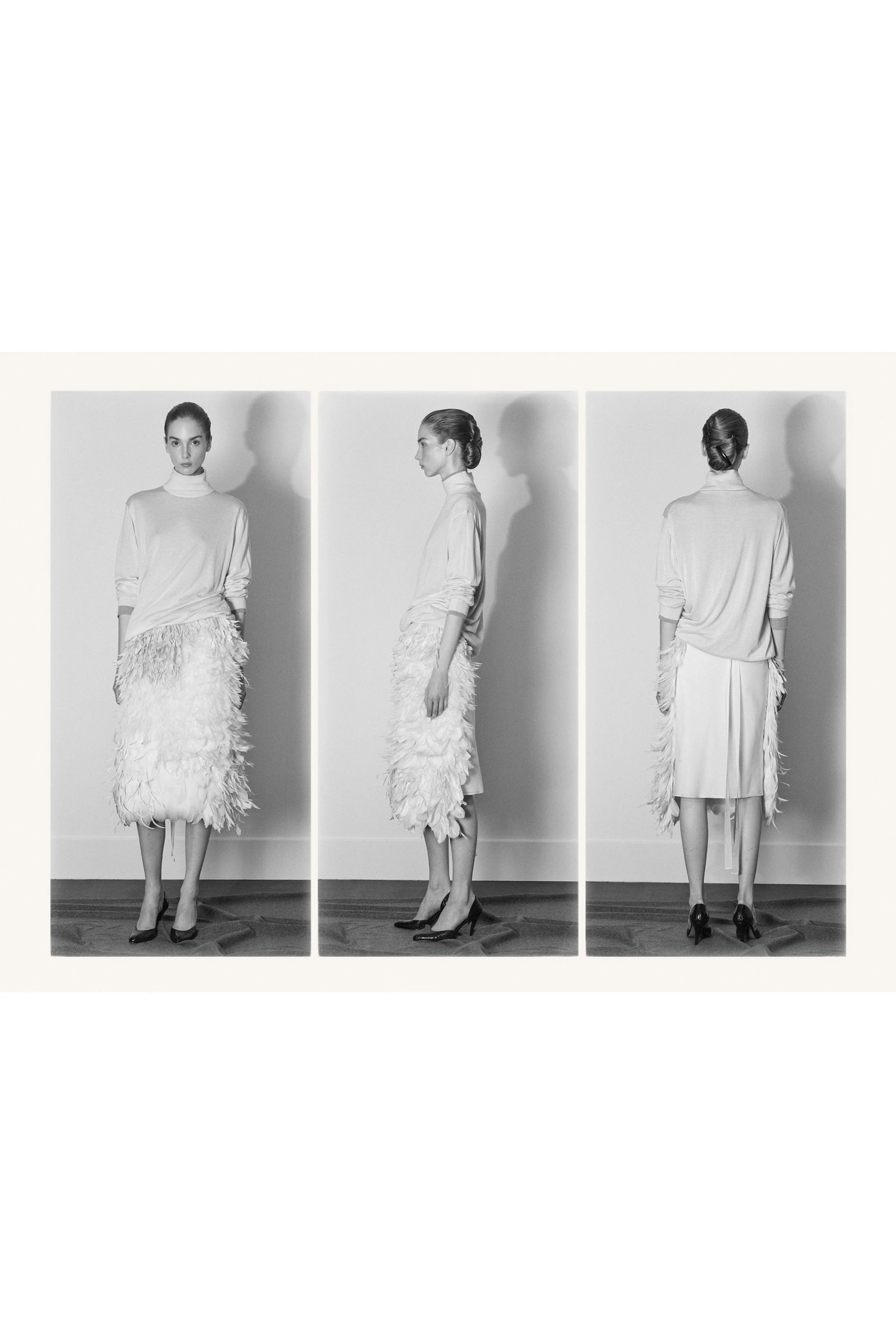
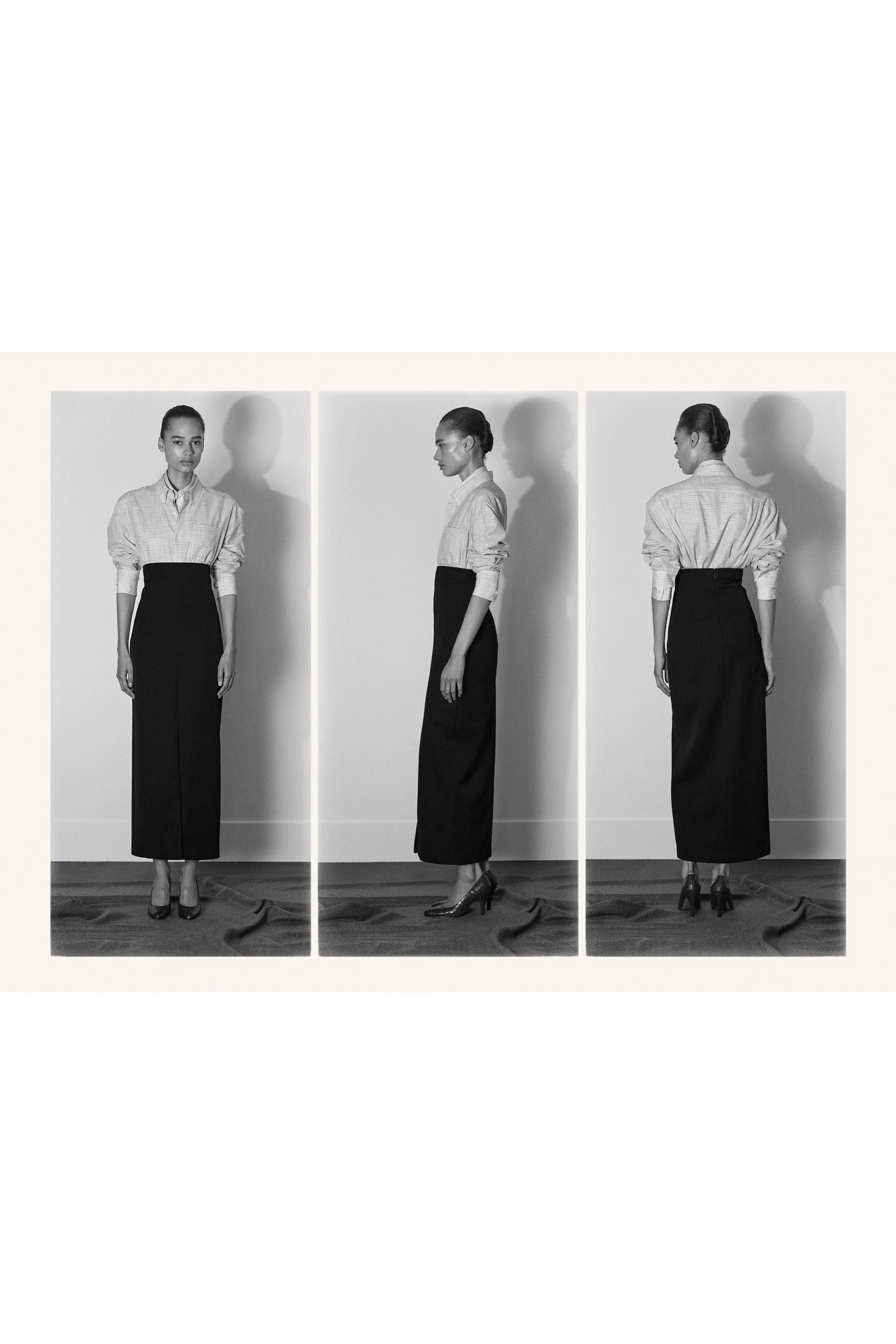
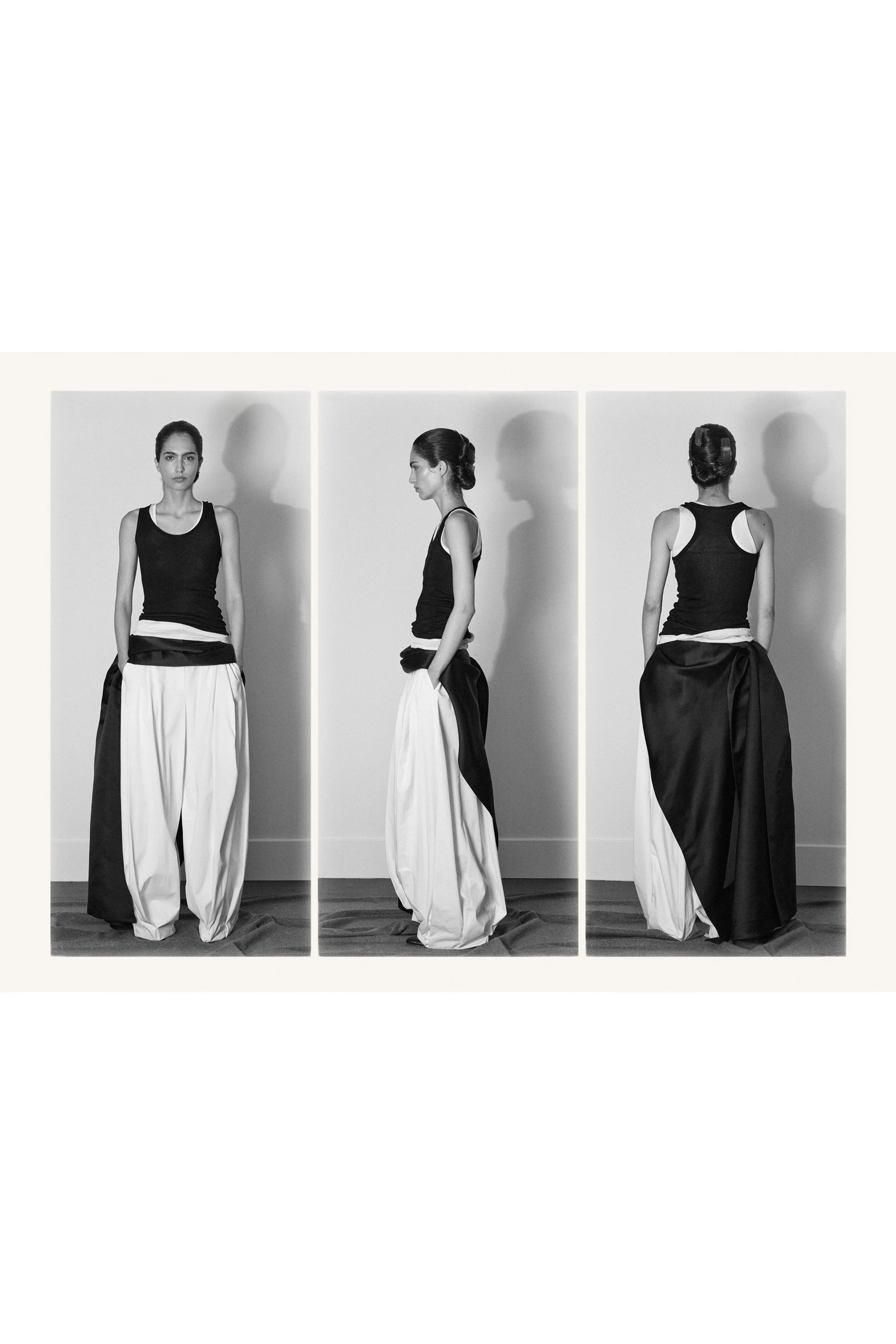
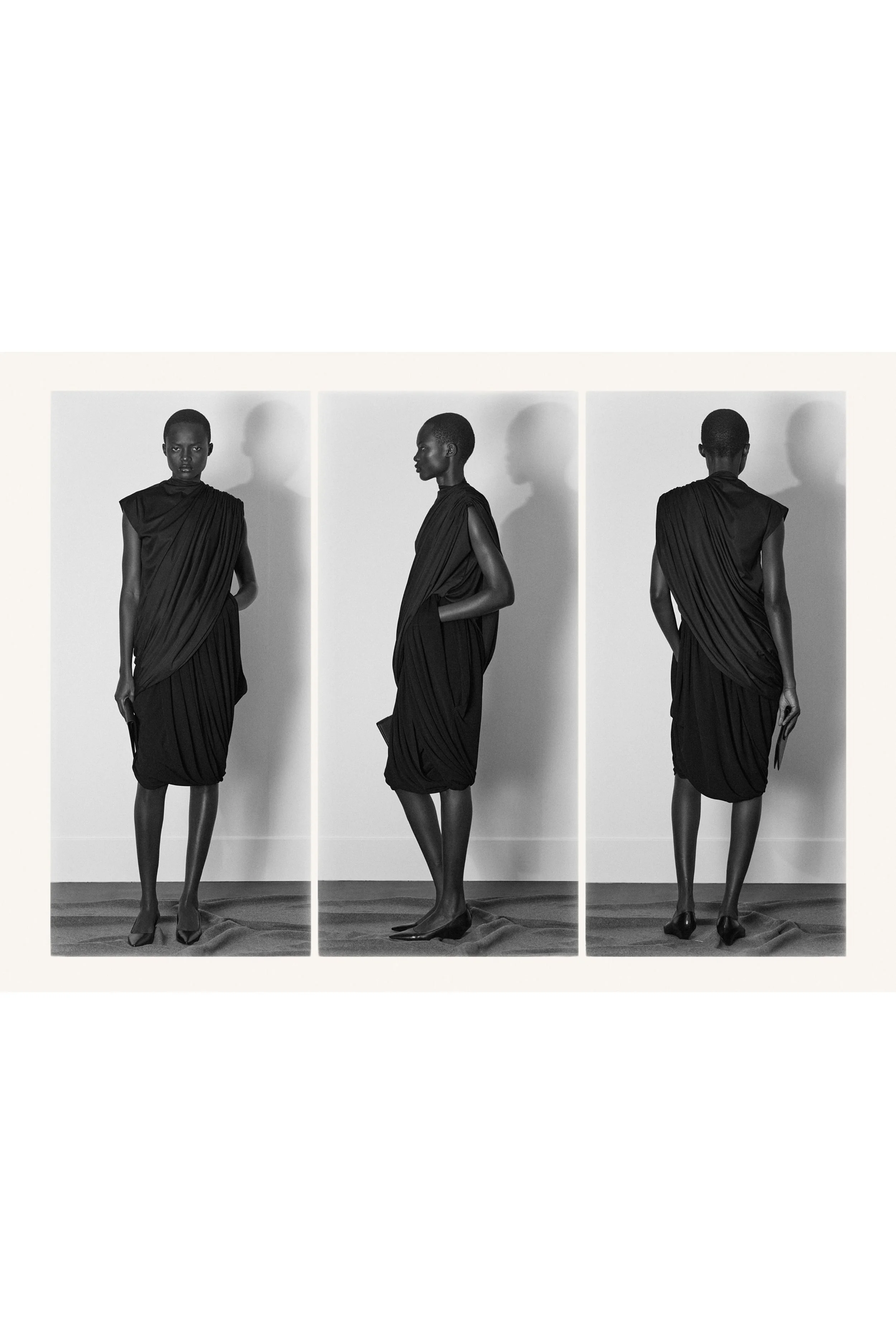
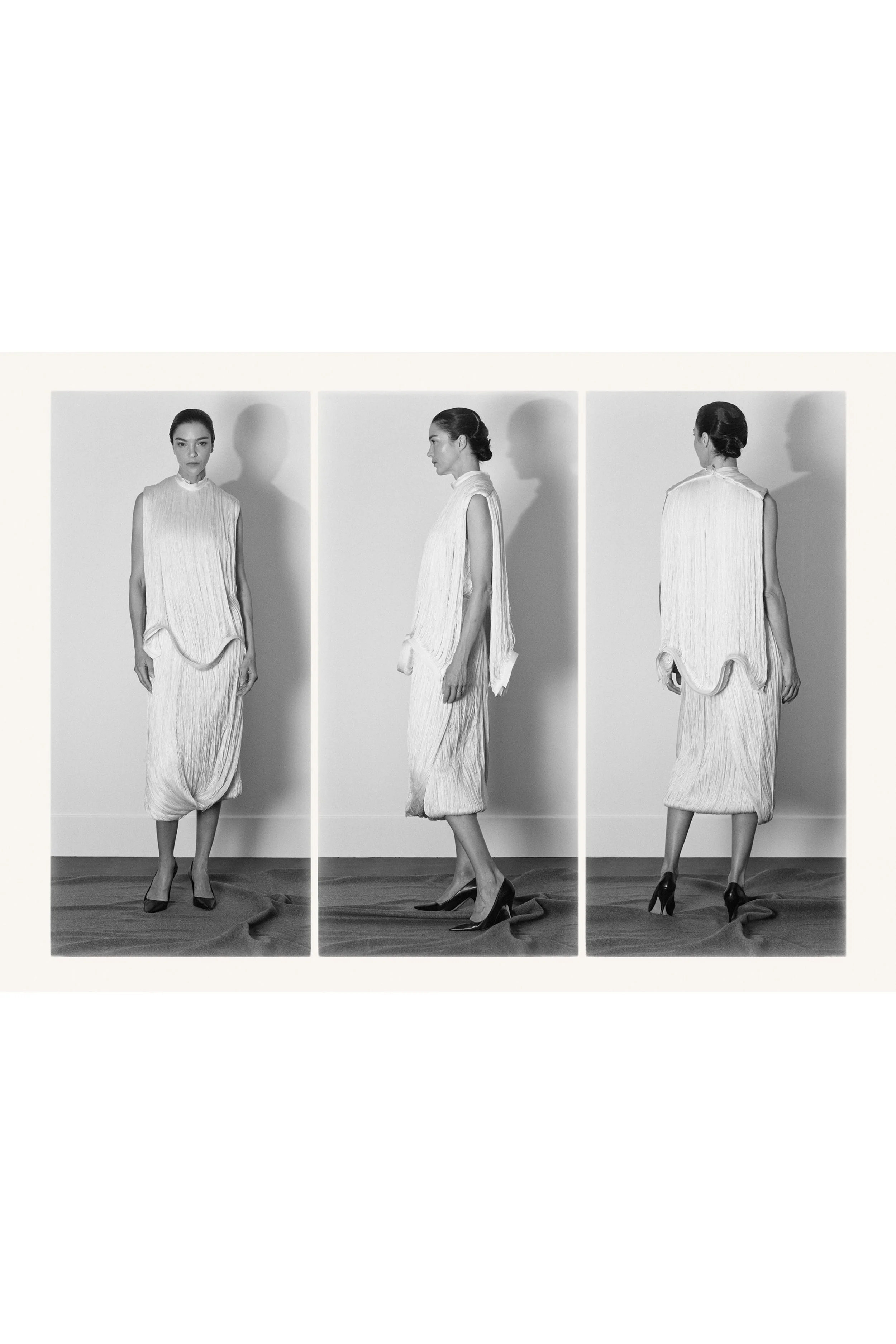
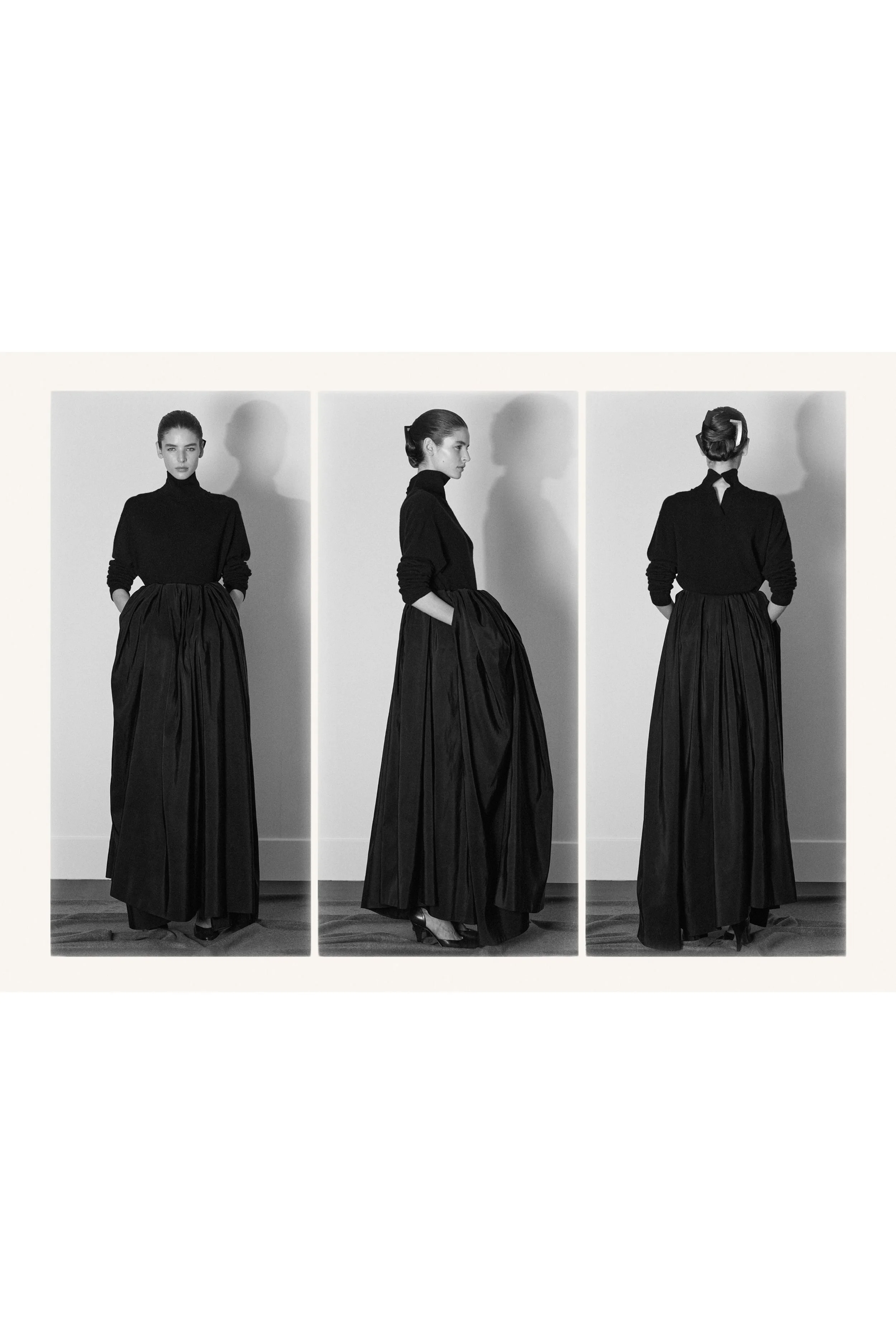
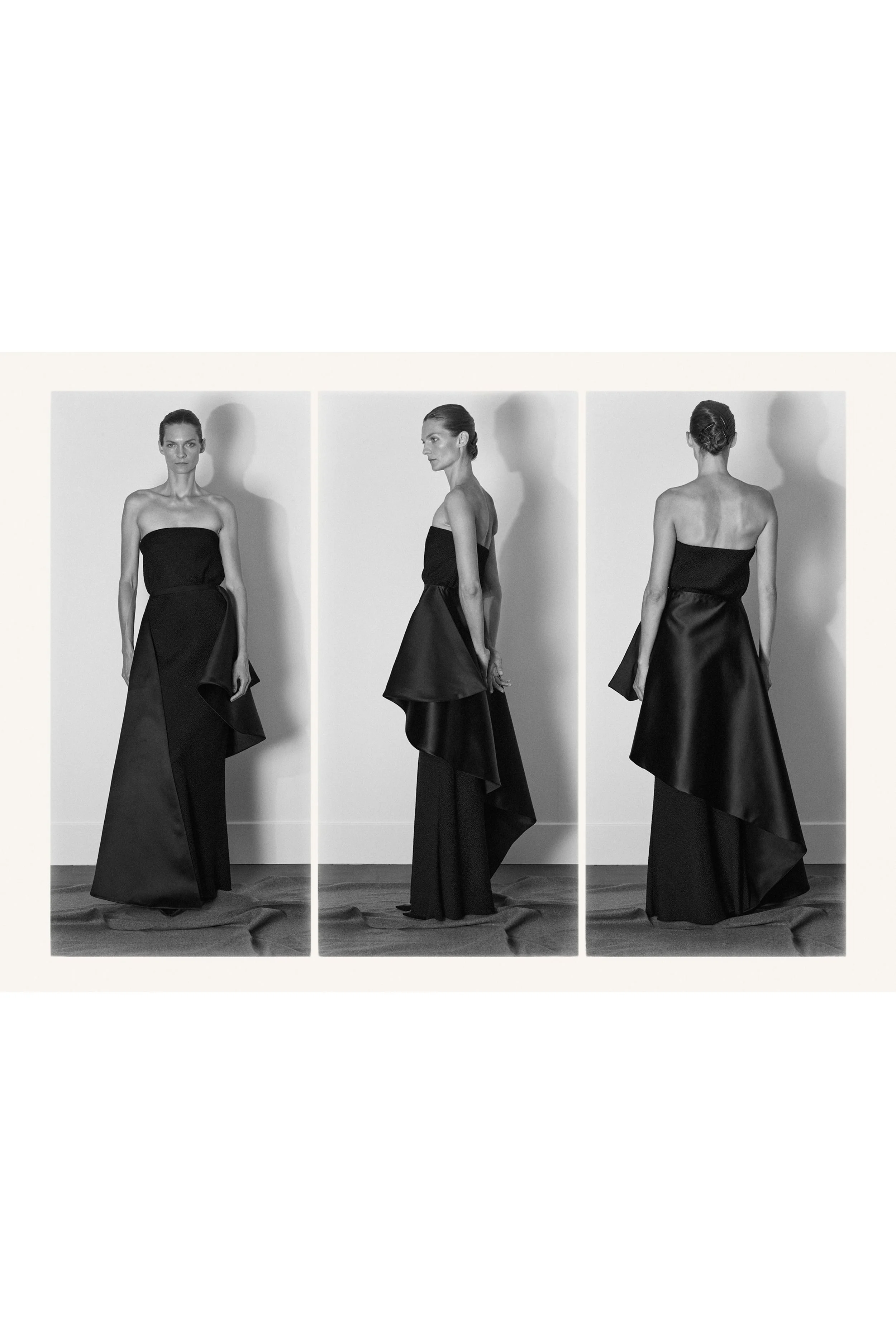
Ashley and Mary-Kate Olsen may be synonymous with minimalist luxury, but their latest collection for The Row proves that restraint can be a form of rebellion. In their world, silence speaks volumes — and at their private Paris Fashion Week presentation, it said everything. No photos were allowed, as per usual. For four days, we waited. Then, finally, the imagery arrived — and with it, a shock.
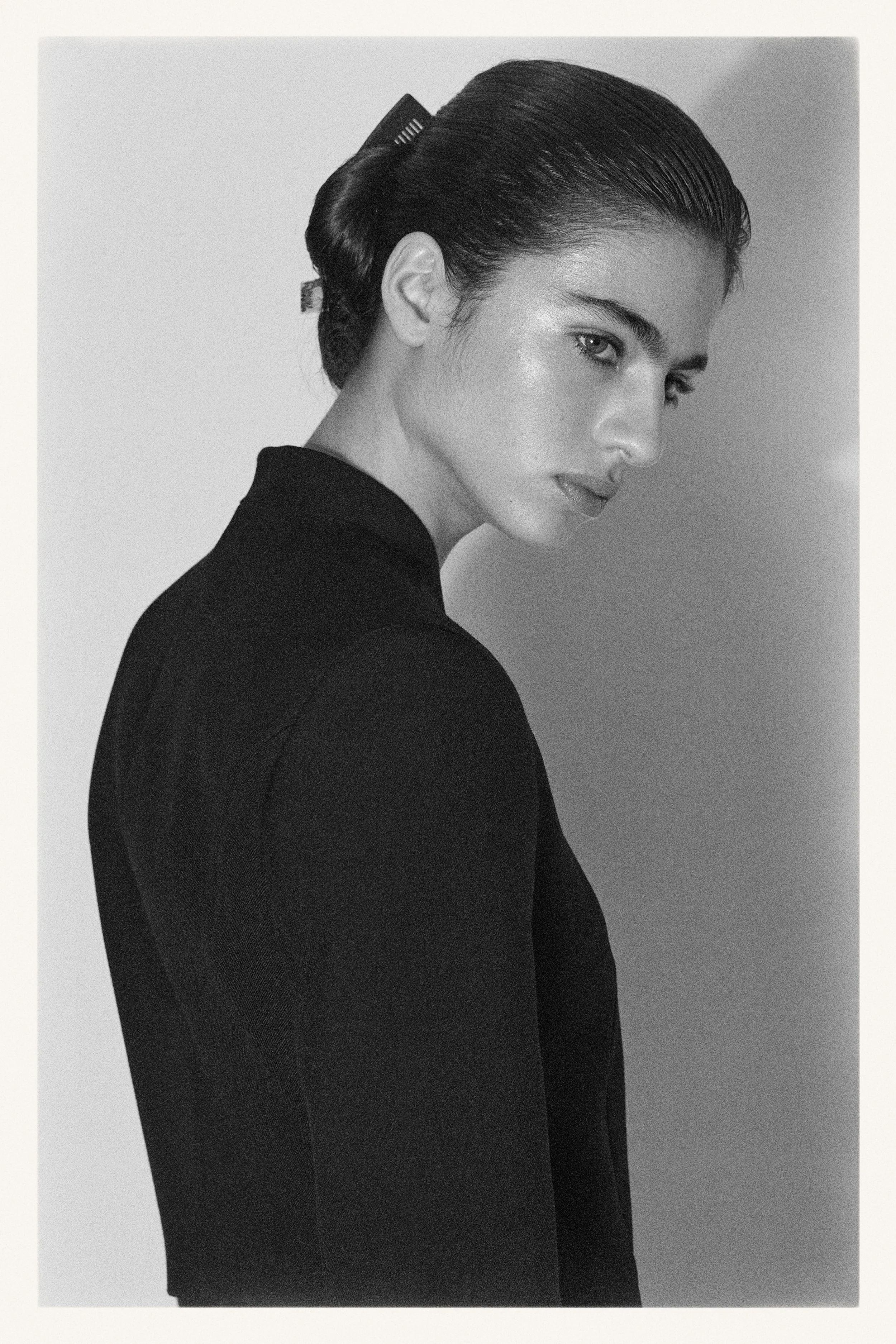
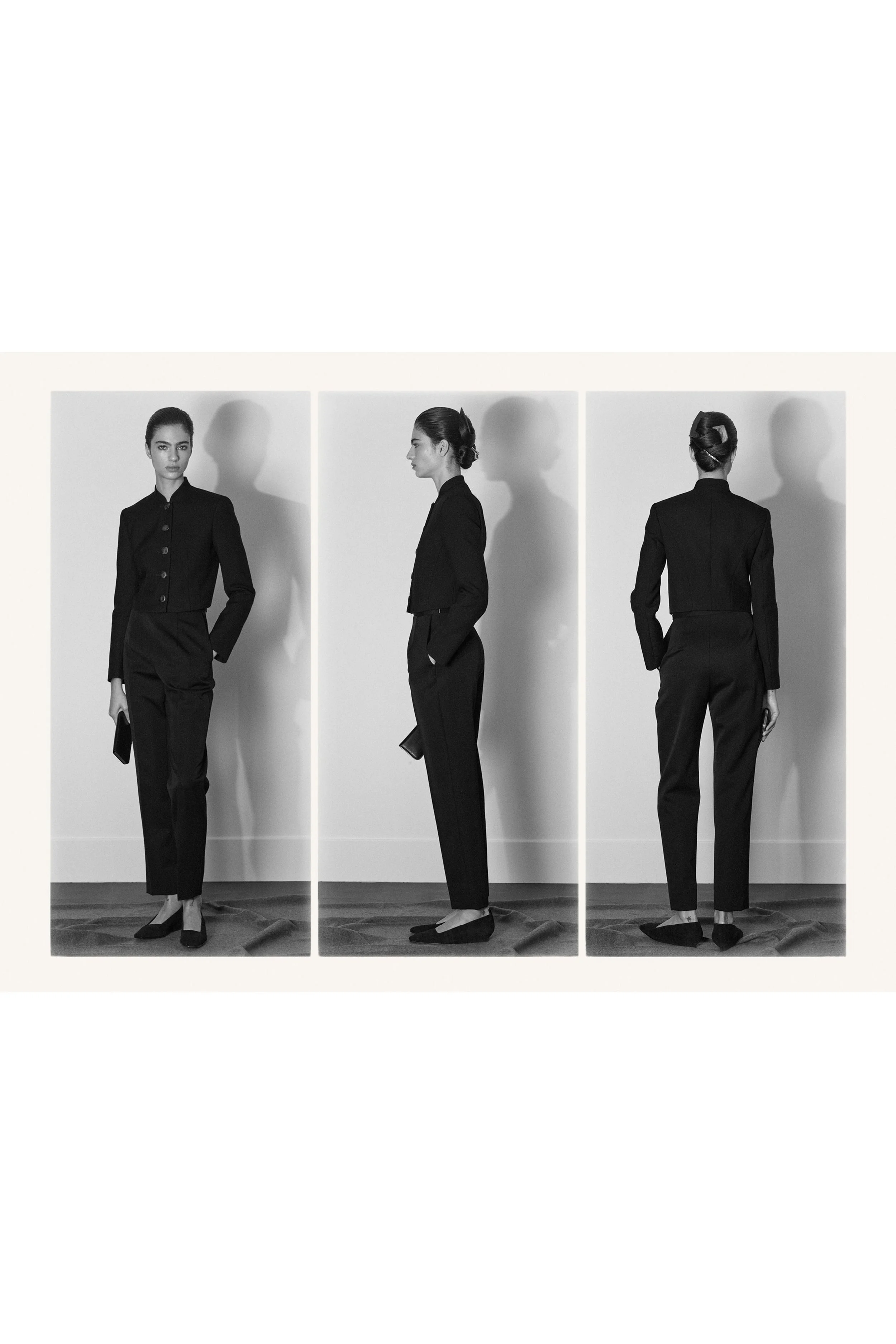
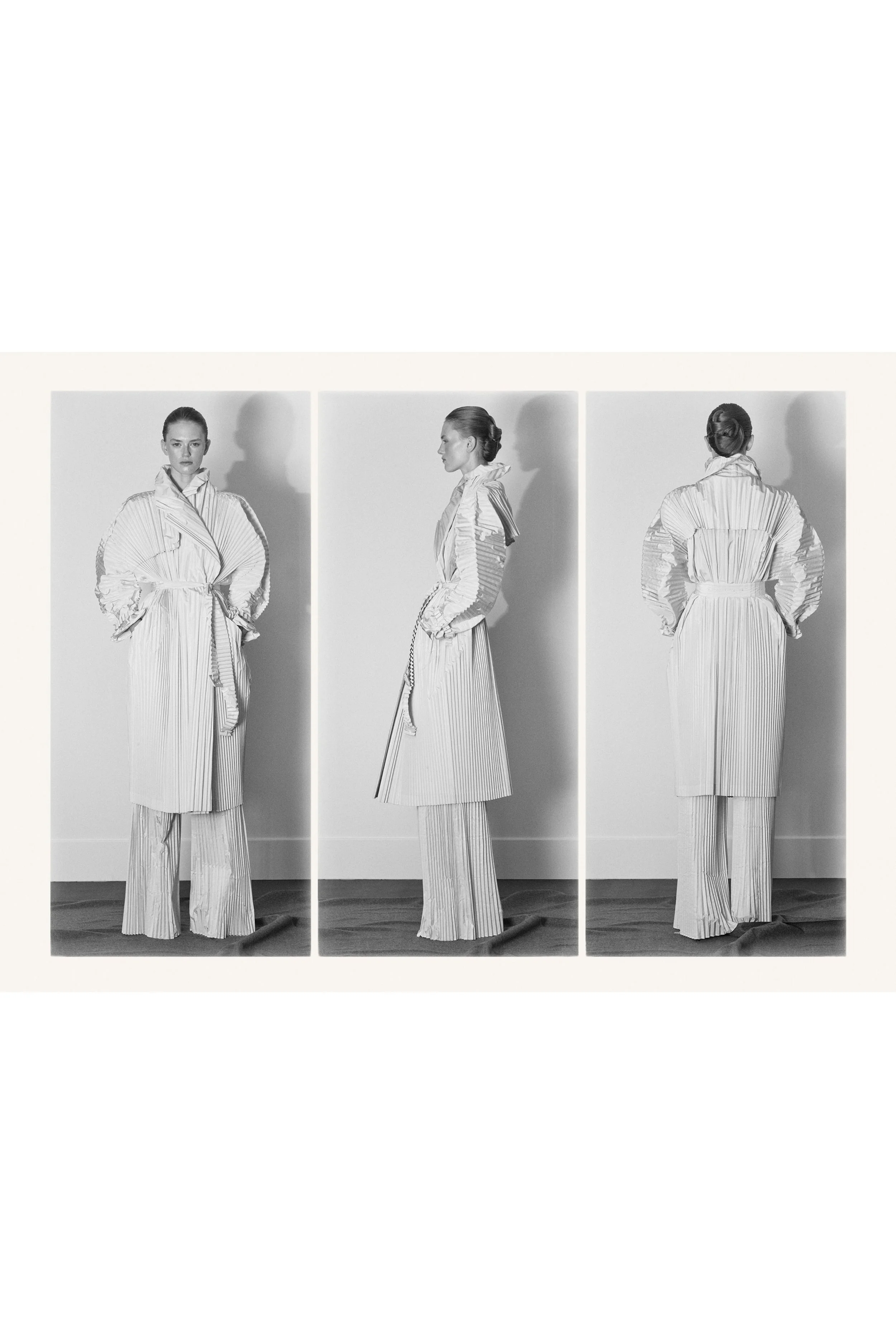
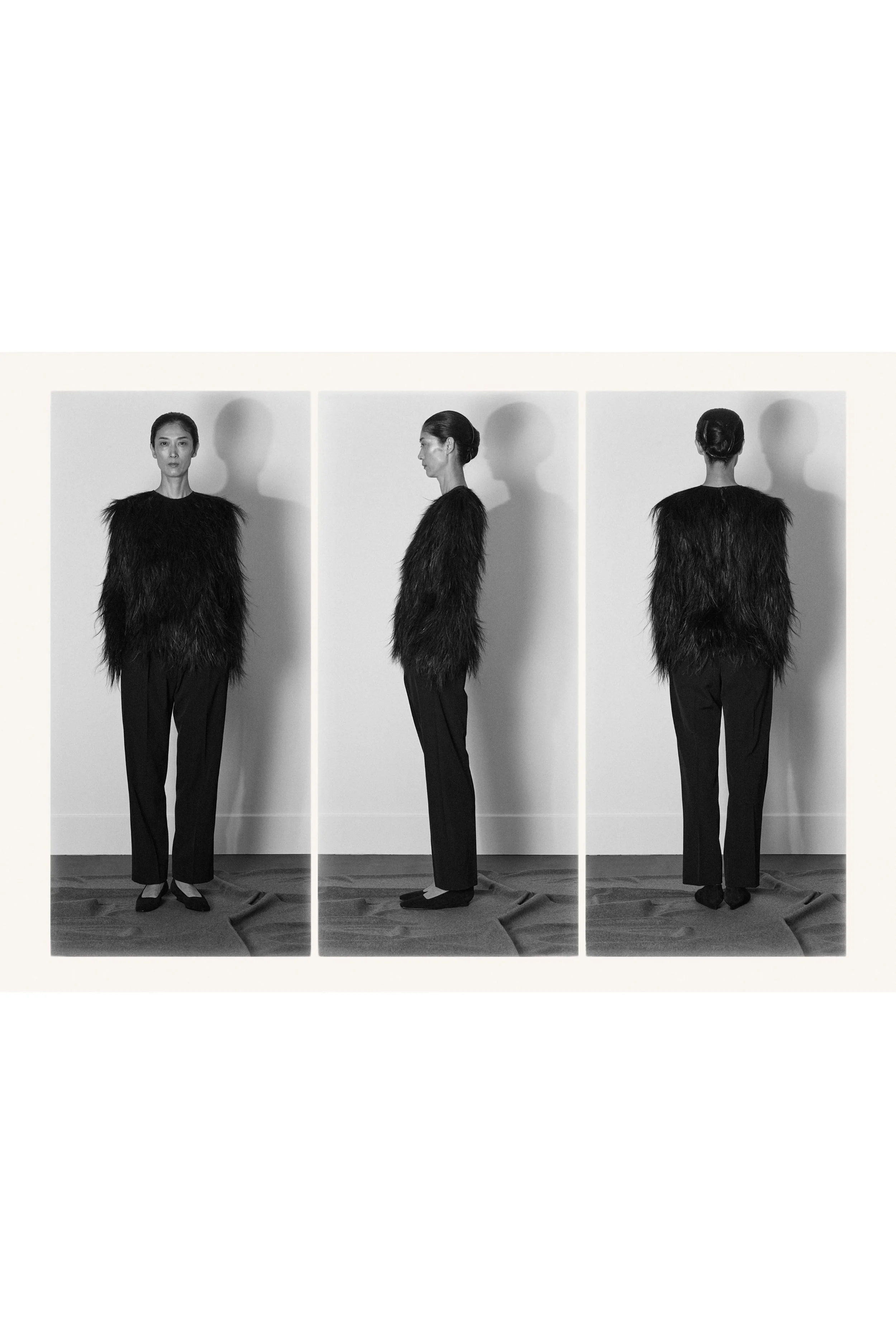
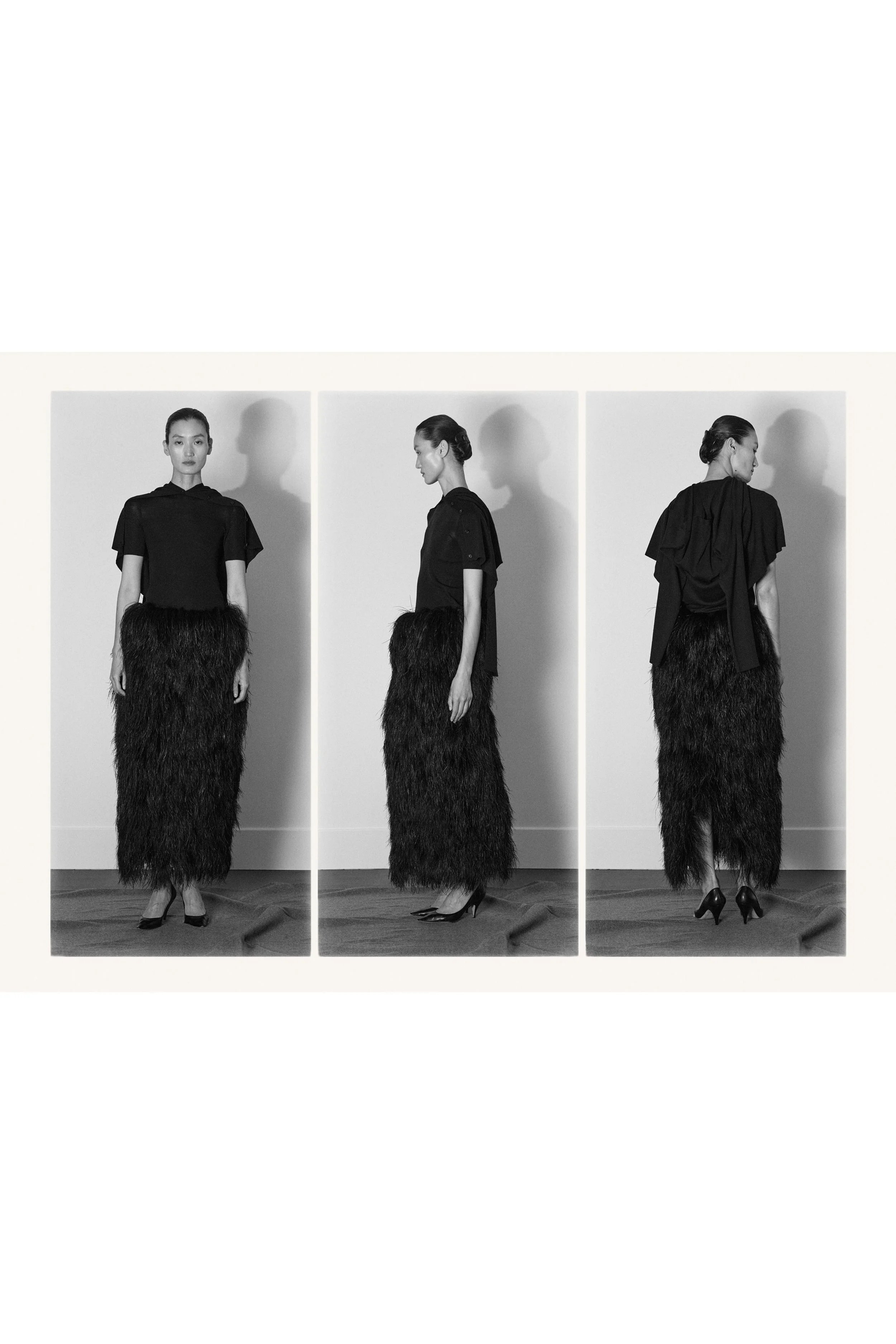
Gone were the intimate, golden-hued settings and soft Parisian interiors we’ve come to expect. Instead, The Row unveiled a starkly elegant album of black-and-white portraits — each look captured from three precise angles. The absence of colour felt deliberate, a stripping away of excess to reveal something purer, almost monastic in its clarity.

Despite its monochrome presentation, this is arguably one of The Row’s most experimental collections to date. The draping alone borders on architectural: crinkled taffeta skirts paired with matching blouson jackets worn backwards; a sleeveless gown that transforms with an attachable silk train.

Texture and silhouette took centre stage. A trench and wide-leg trouser set mimicked the delicate folds of crimped paper. A long-sleeve blouse, covered entirely in black feathers, met the sharp tailoring of immaculate suit trousers. The same feathered texture reappeared in an ankle-grazing skirt, styled with a cashmere twinset — the cardigan casually fastened only at the top, slipping into cape territory.

Every detail bore the Olsens’ signature precision: a trio of combs nonchalantly tucking back hair; a row of mismatched buttons adorning a cropped wool jacket. Nothing shouted. Everything whispered.

In The Row’s world, rebellion doesn’t come in colour or volume. It comes in stillness — in the refusal to conform to fashion’s noise.


Words by Martin Onufrowicz

VALENTINO SS26

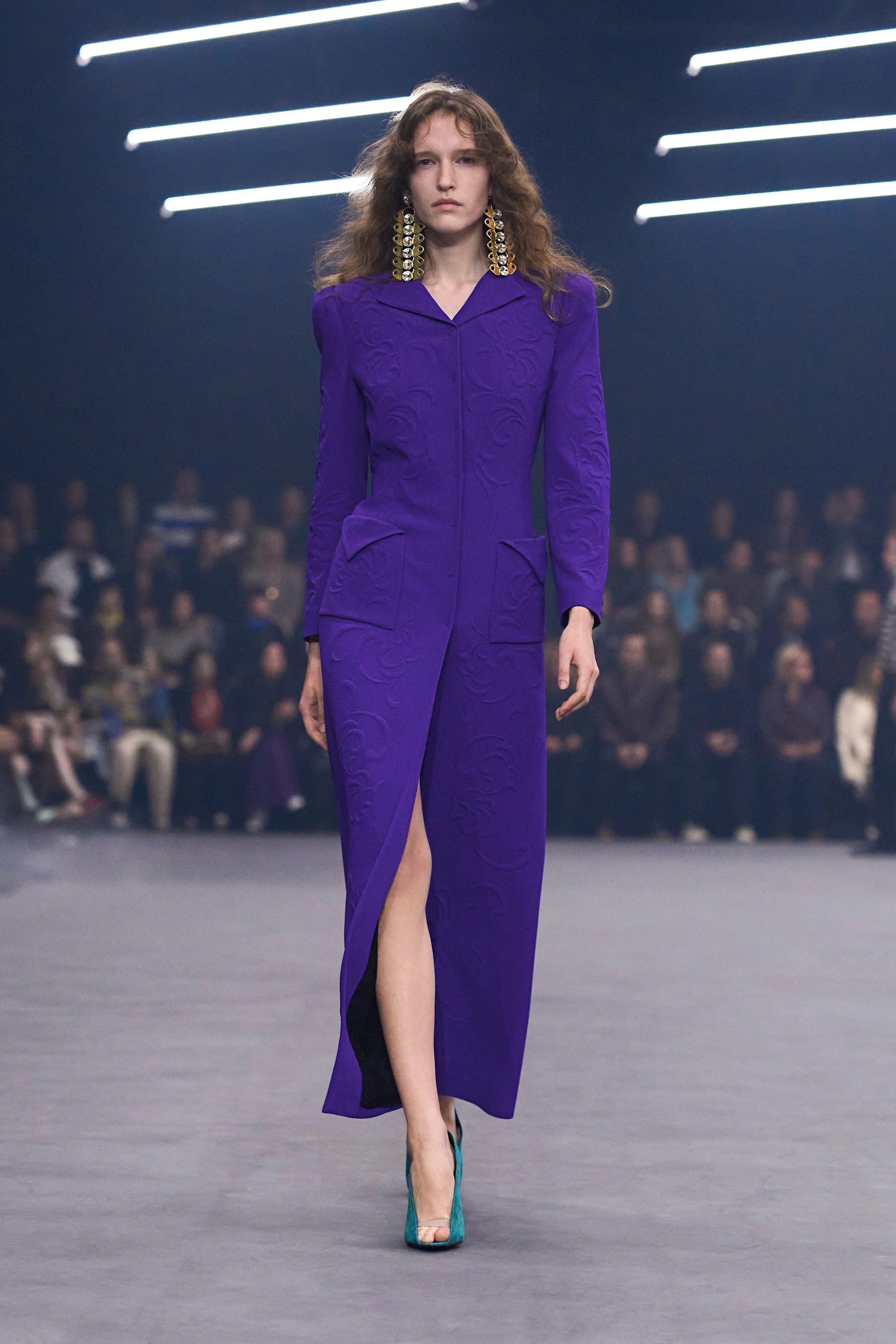
At Valentino, Alessandro Michele staged a thoughtful spectacle that was as cerebral as it was luminous. Titled Fireflies, the SS26 show drew its conceptual pulse from the words of filmmaker Pier Paolo Pasolini. In 1941, amid the shadow of war, Pasolini wrote of fireflies – tiny, flickering bursts of desire and life that endure even in the blackest nights. Decades later, reflecting on post-war Italy’s drive toward cultural conformity, he mourned the “disappearance of the fireflies,” a warning against surrendering to darkness.

Yet, as art historian Georges Didi-Huberman reminds us, these sparks never fully vanish – they demand an attuned gaze. Like those ephemeral lights, creativity and hope endure: fragile, fleeting, but potent. They offer glimpses of beauty, resistance, and possibility that refuse to be homogenised.

Michele’s runway became precisely this kind of observatory. Fashion, in his hands, is revelation: a medium capable of conjuring transient magic, political resonance, and human connection. Fireflies was ephemeral yet insistent, transforming the catwalk into a constellation of light, charting new imaginaries while celebrating the resilient radiance of life itself.

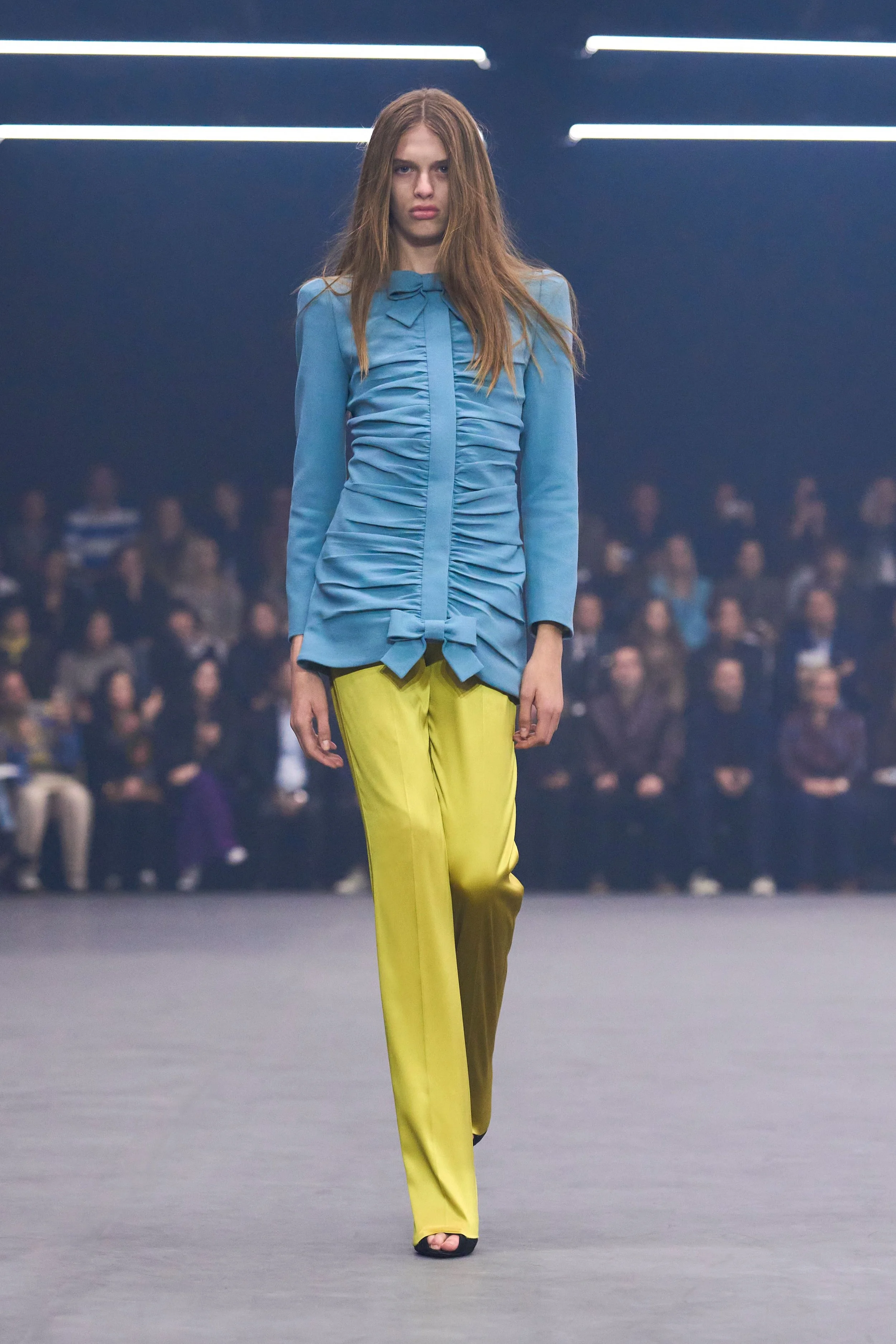
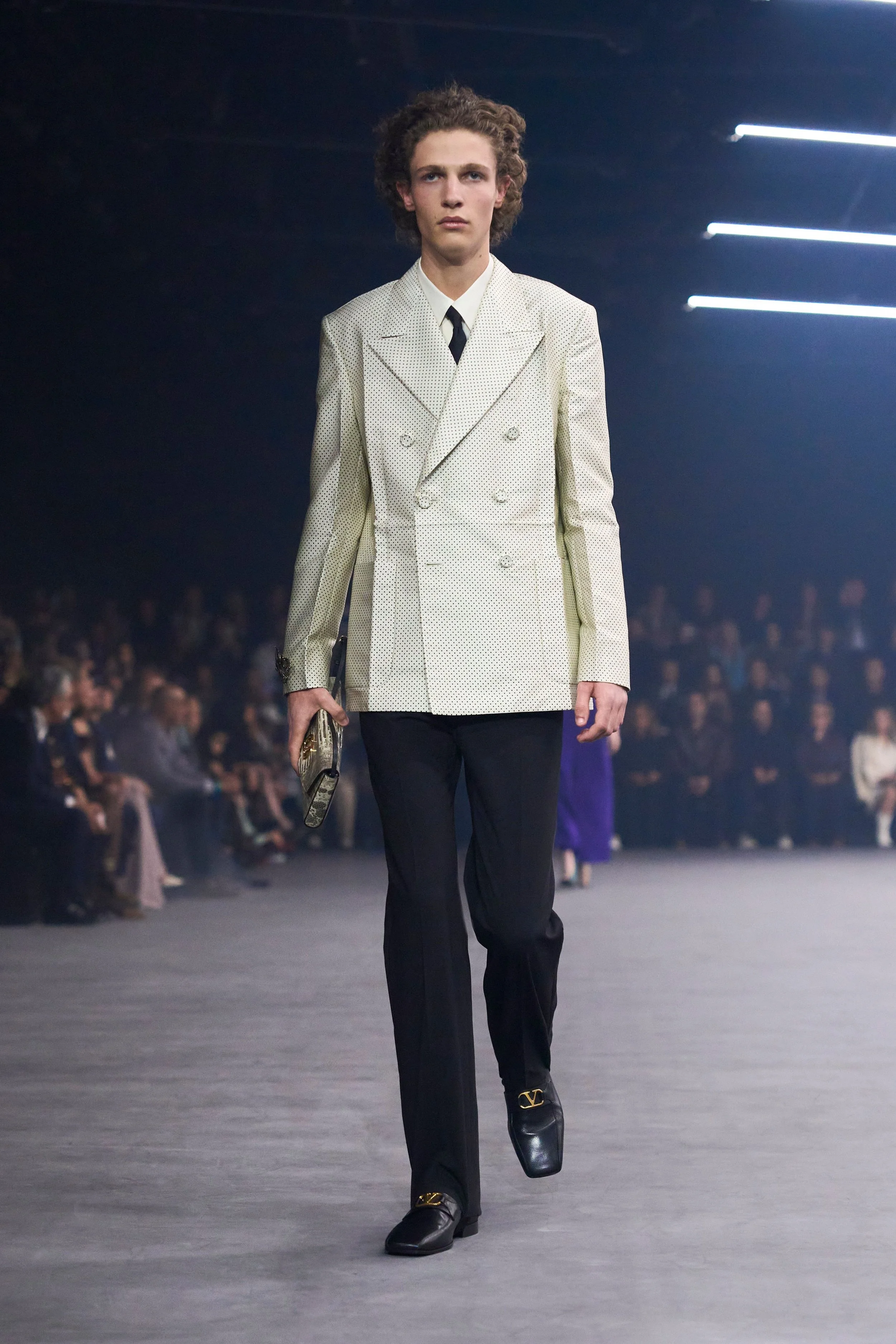
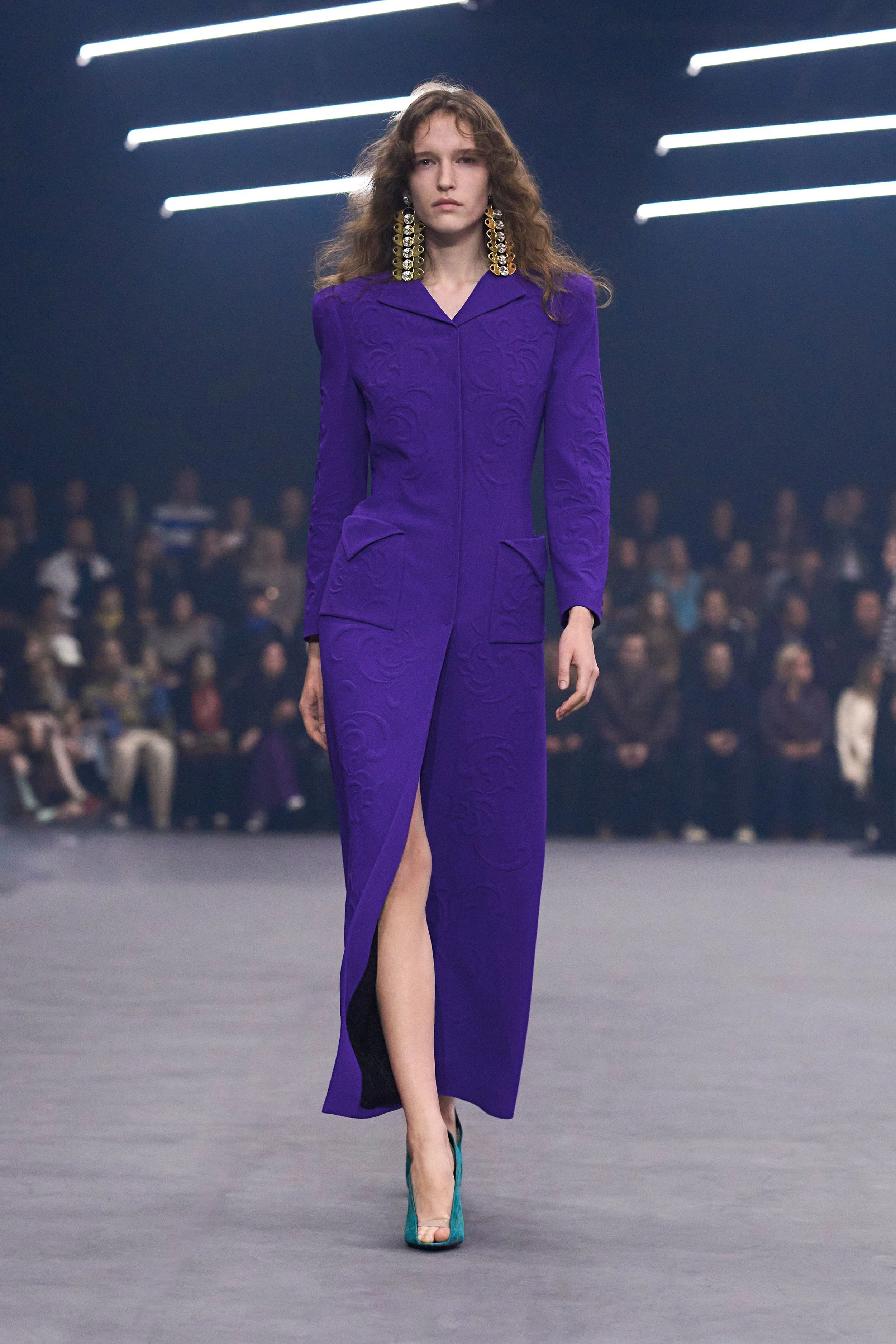
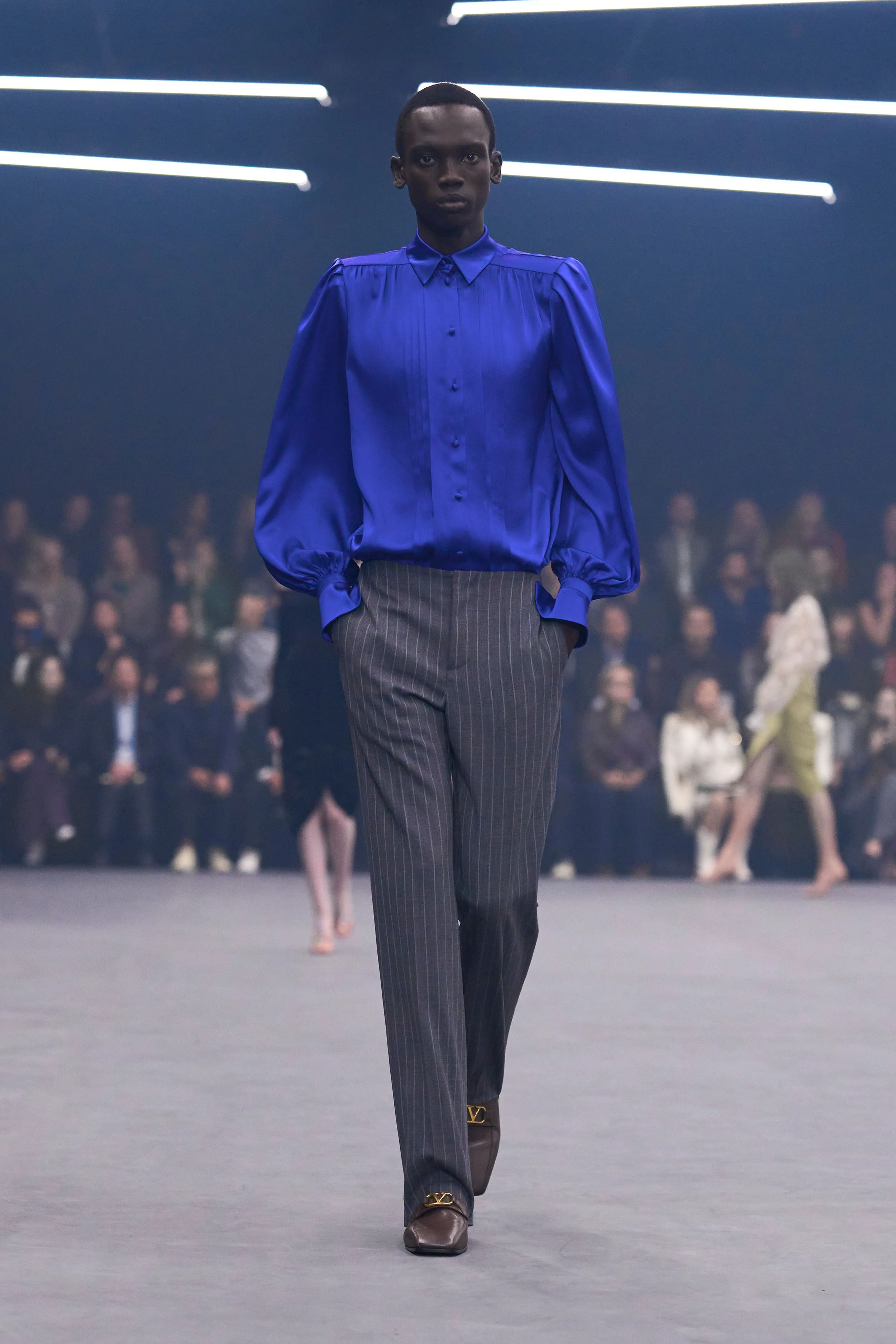
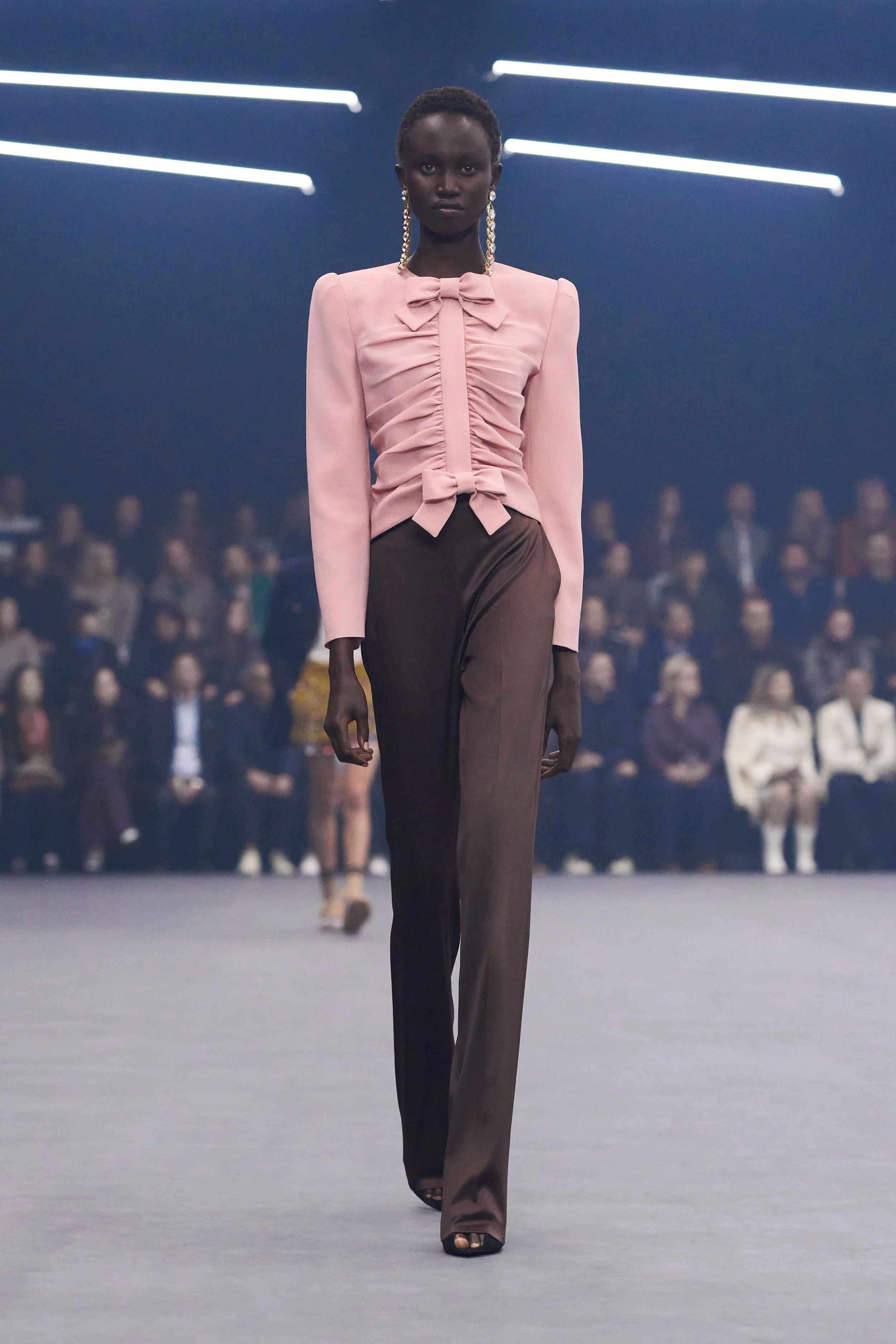
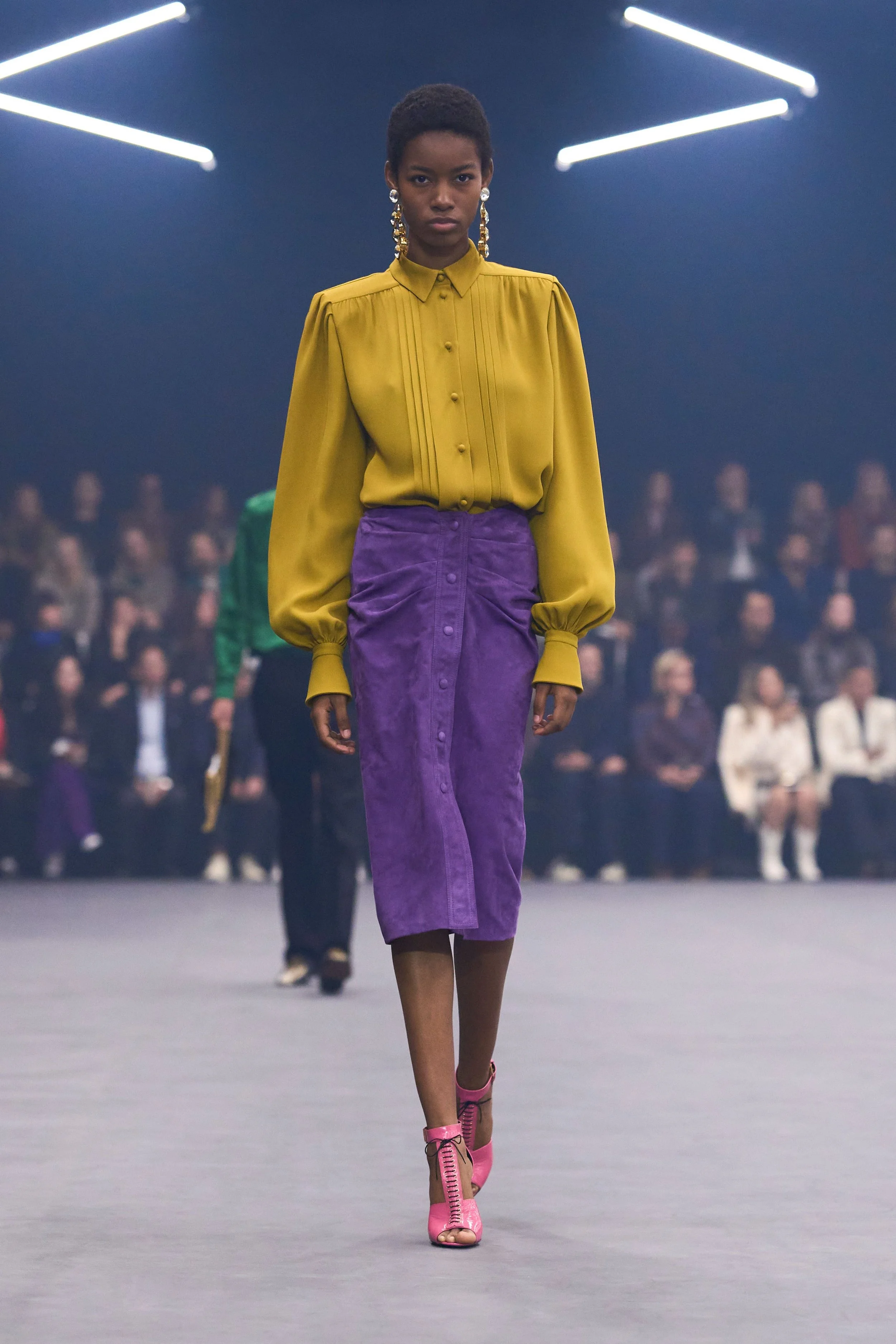
The show opened with a baby-blue ruffled mini dress layered over tailored citron-yellow trousers – a juxtaposition of innocence and audacity. Michele’s mastery of colour reached new heights: cobalt-blue silk blouses with billowing sleeves and power shoulders or their mustard variations paired with buttoned pencil skirts in purple, punctuated with hot-pink open-toed pumps.

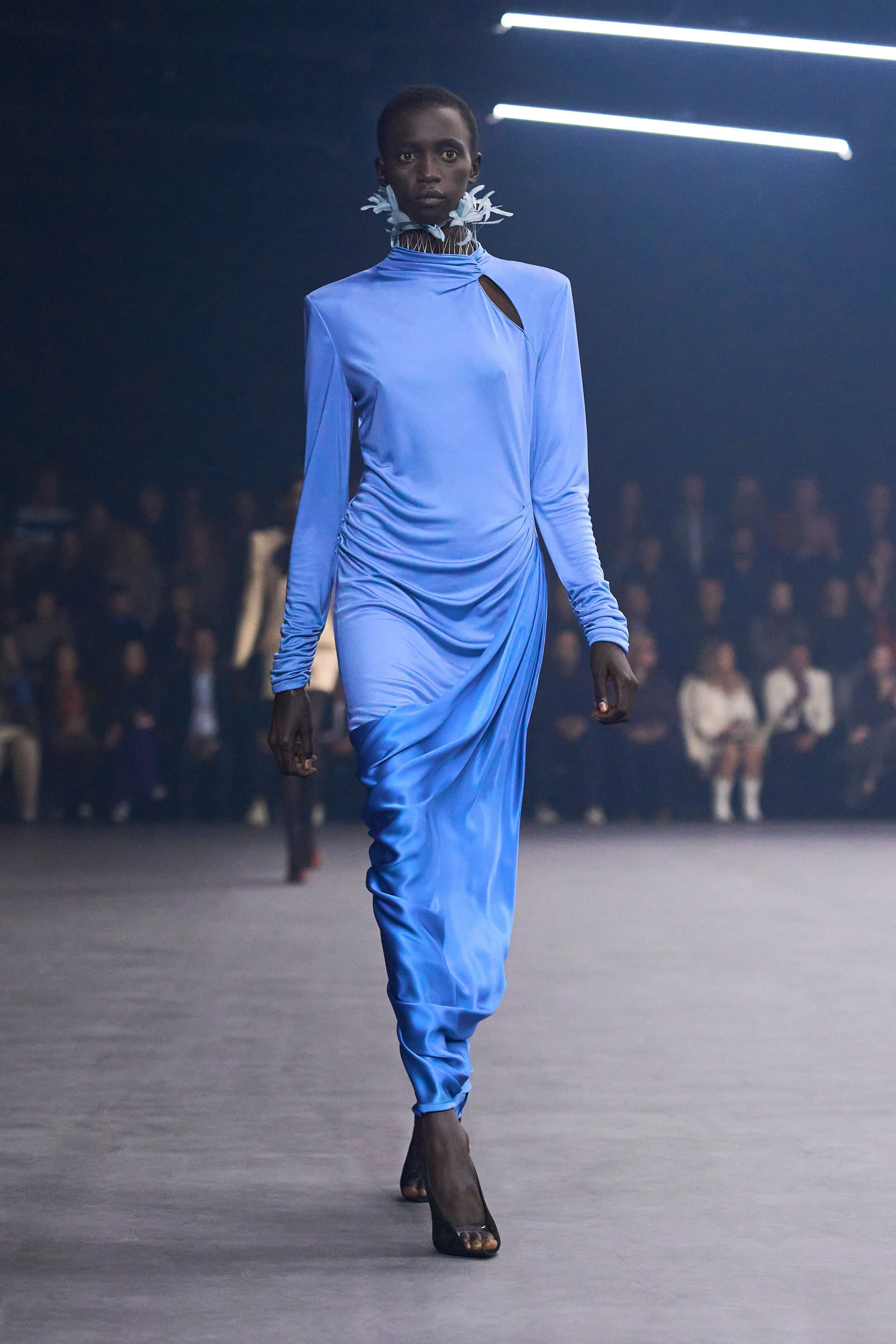
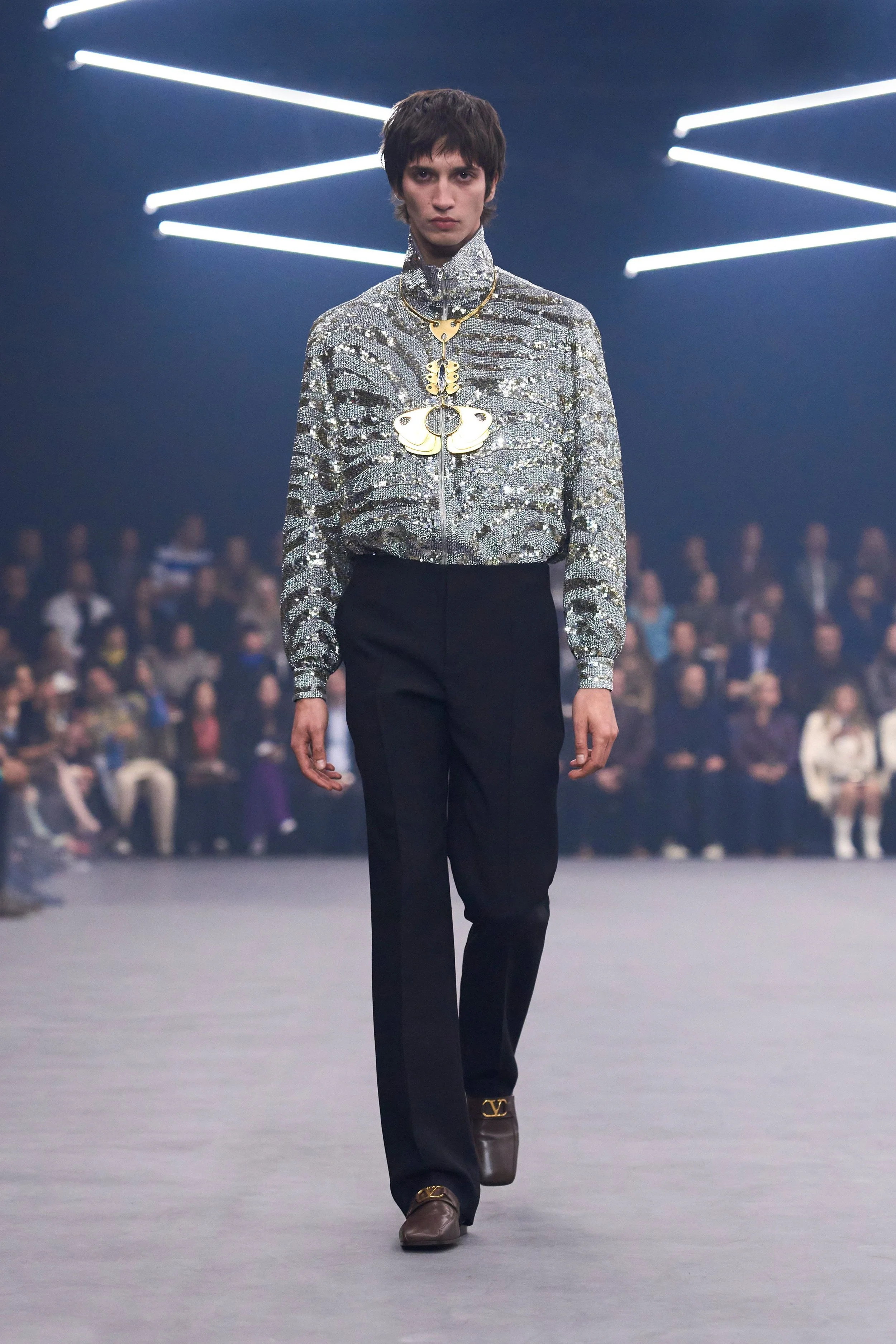
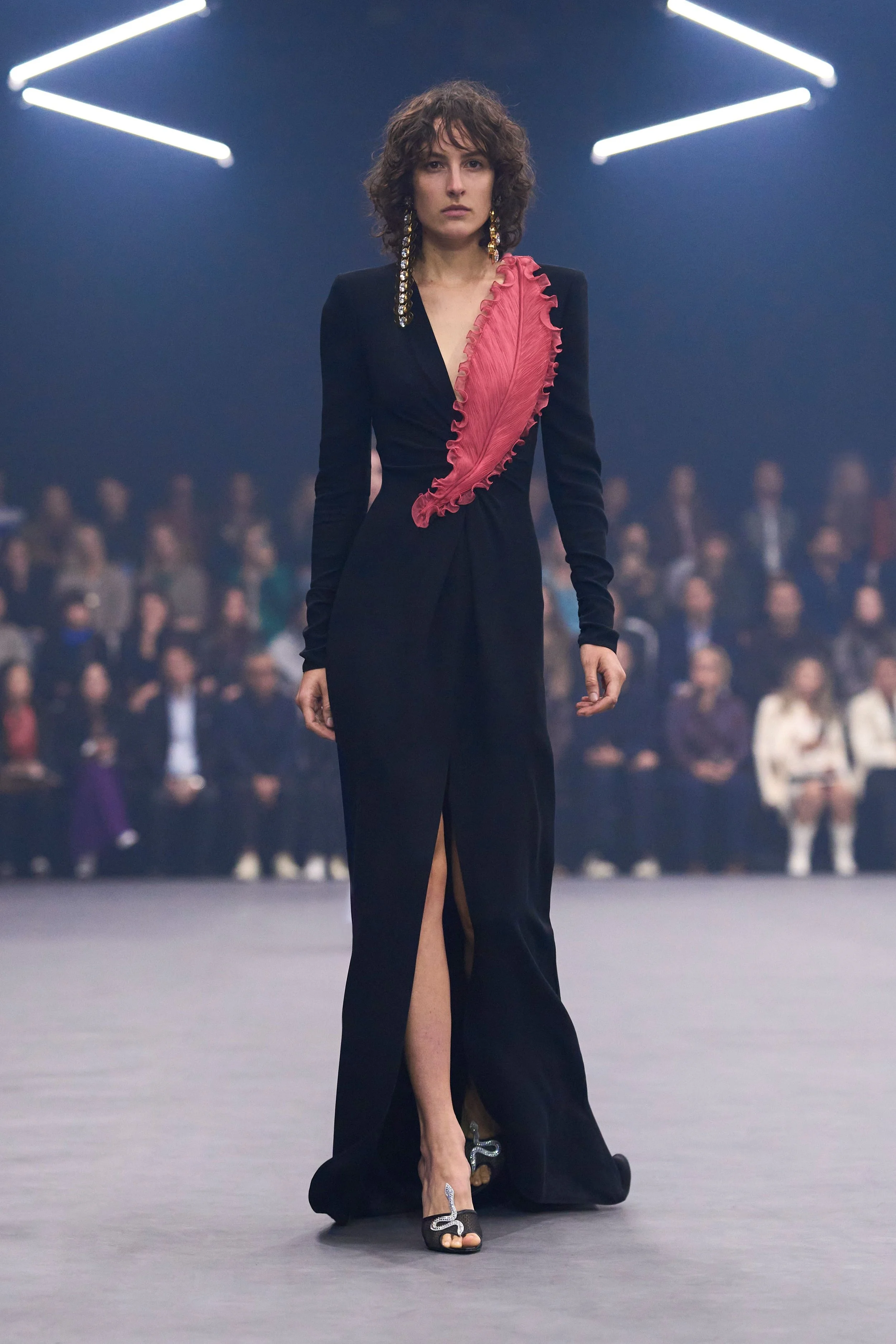
Eveningwear shimmered with equal rigour. Lightweight double-breasted blazers, adorned in micro polka dots, featured audacious fold details; sequined jackets caught the light alongside statement gold necklaces. Silk dresses draped gracefully, accented with dyed feathers around the neckline, while a long-sleeved black V-neck gown sparkled with a dusty-pink leaf appliqué – a testament to Michele’s poetic eye.

In Fireflies, Michele reminded us that fashion is not mere ornamentation but a language of attention: a call to notice what persists in shadow, and to celebrate what refuses to be dimmed.


Words by Martin Onufrowicz