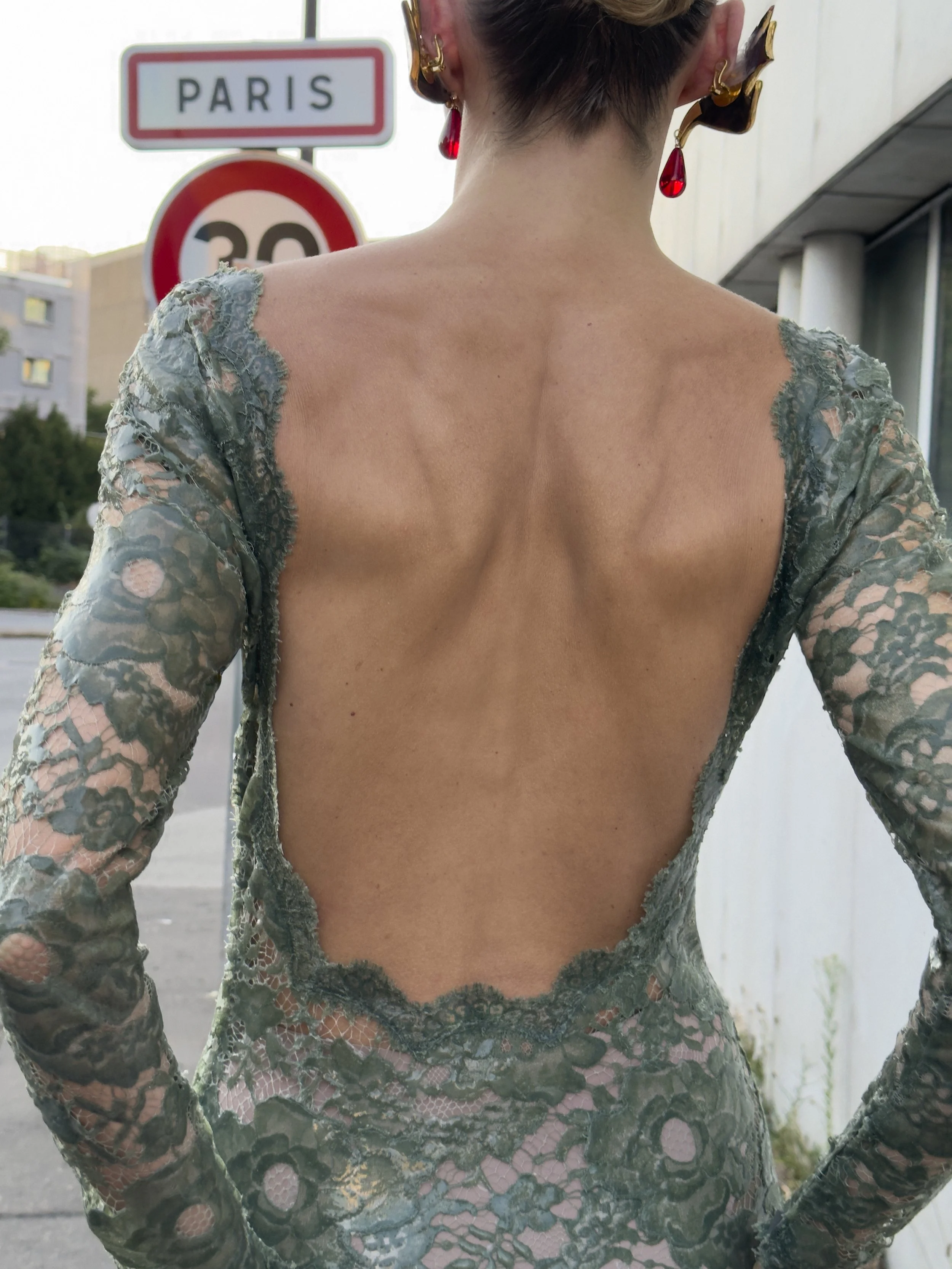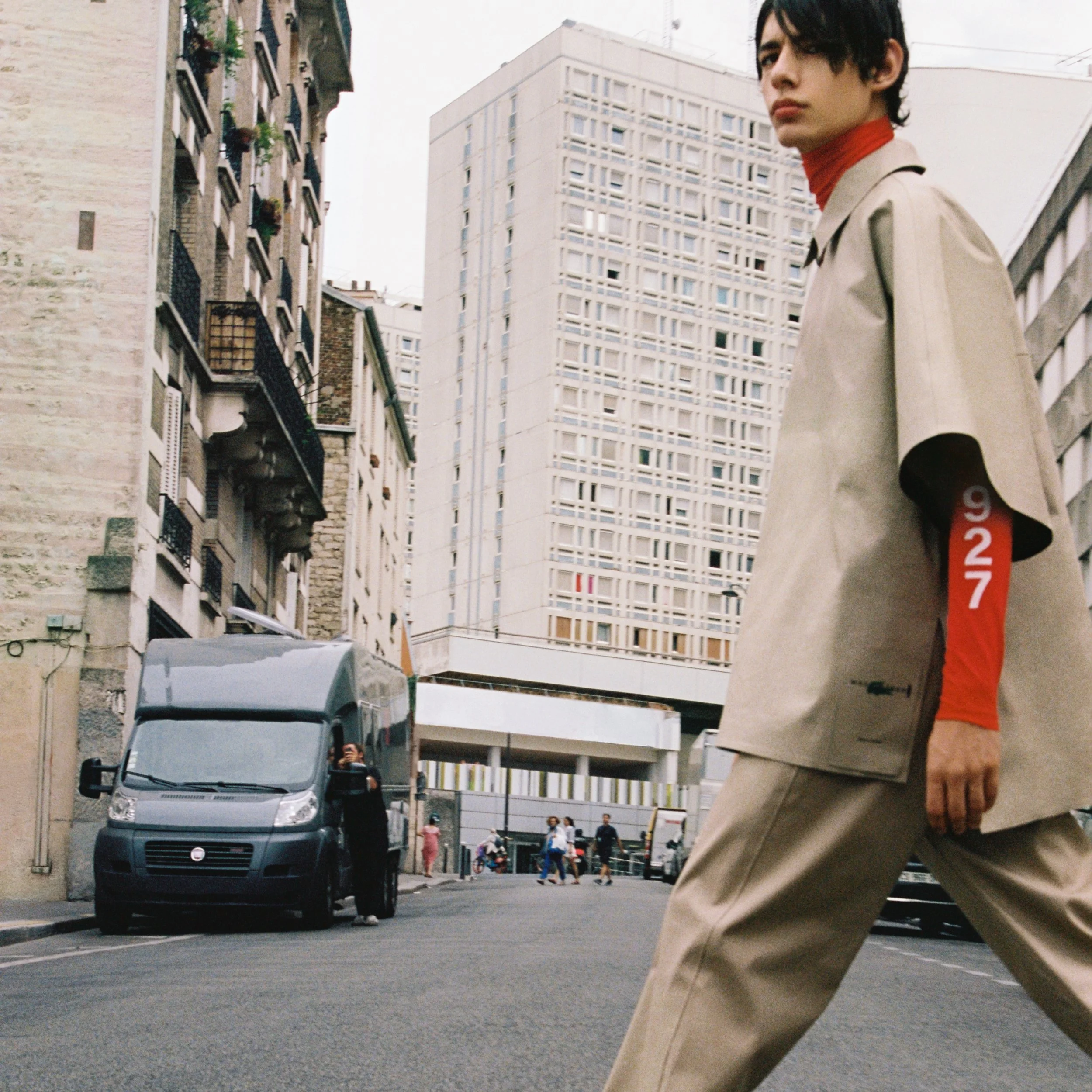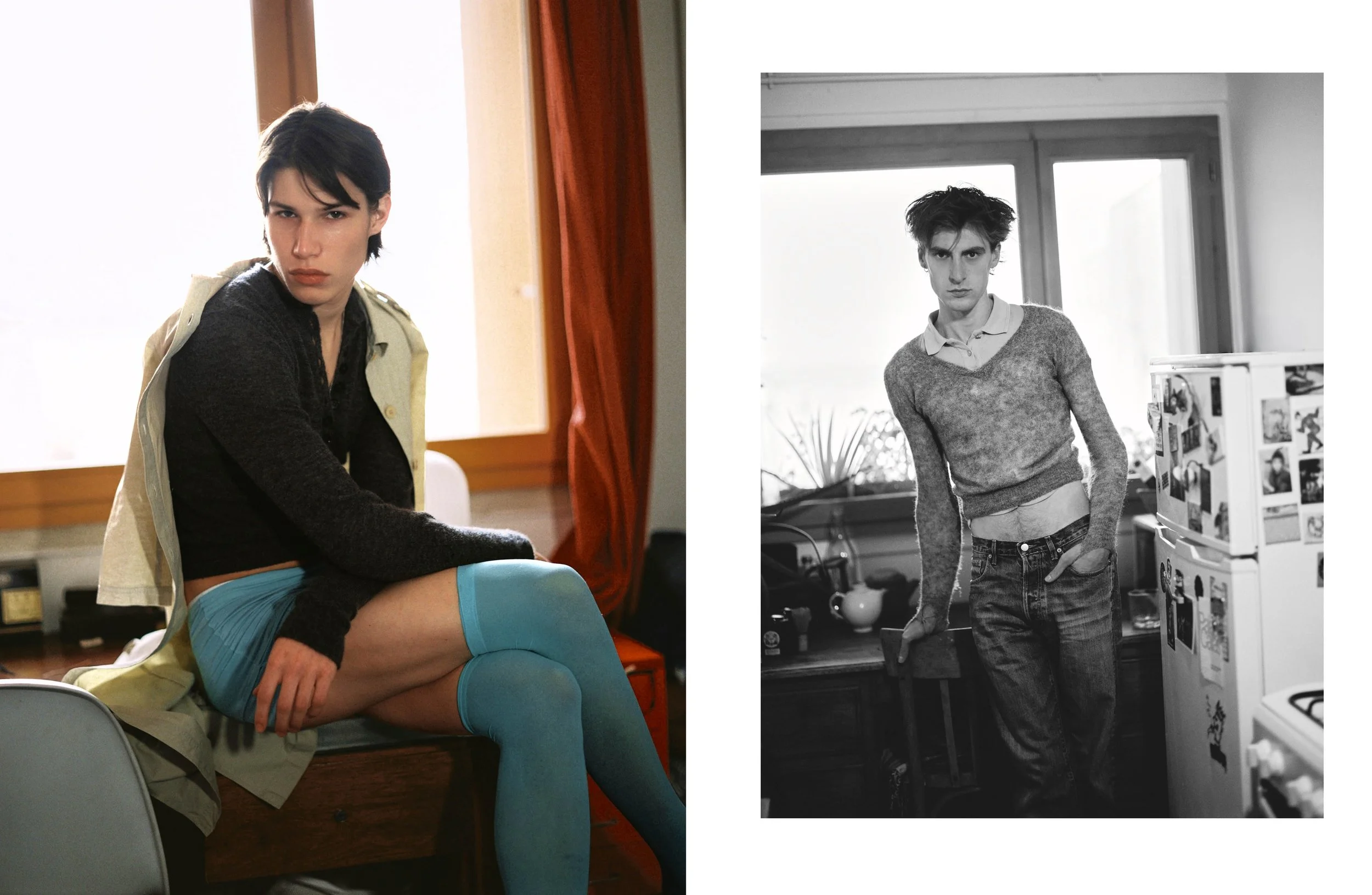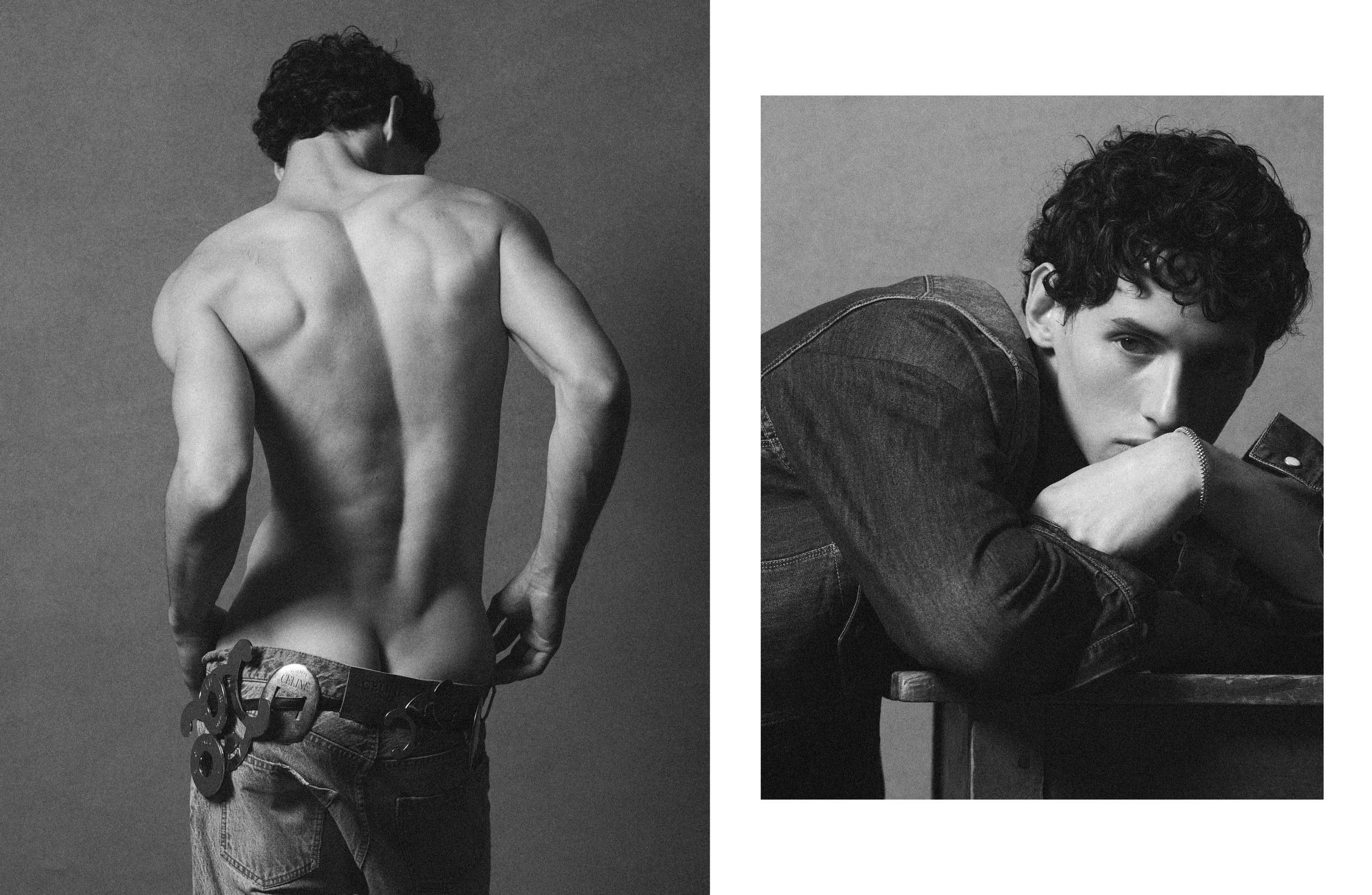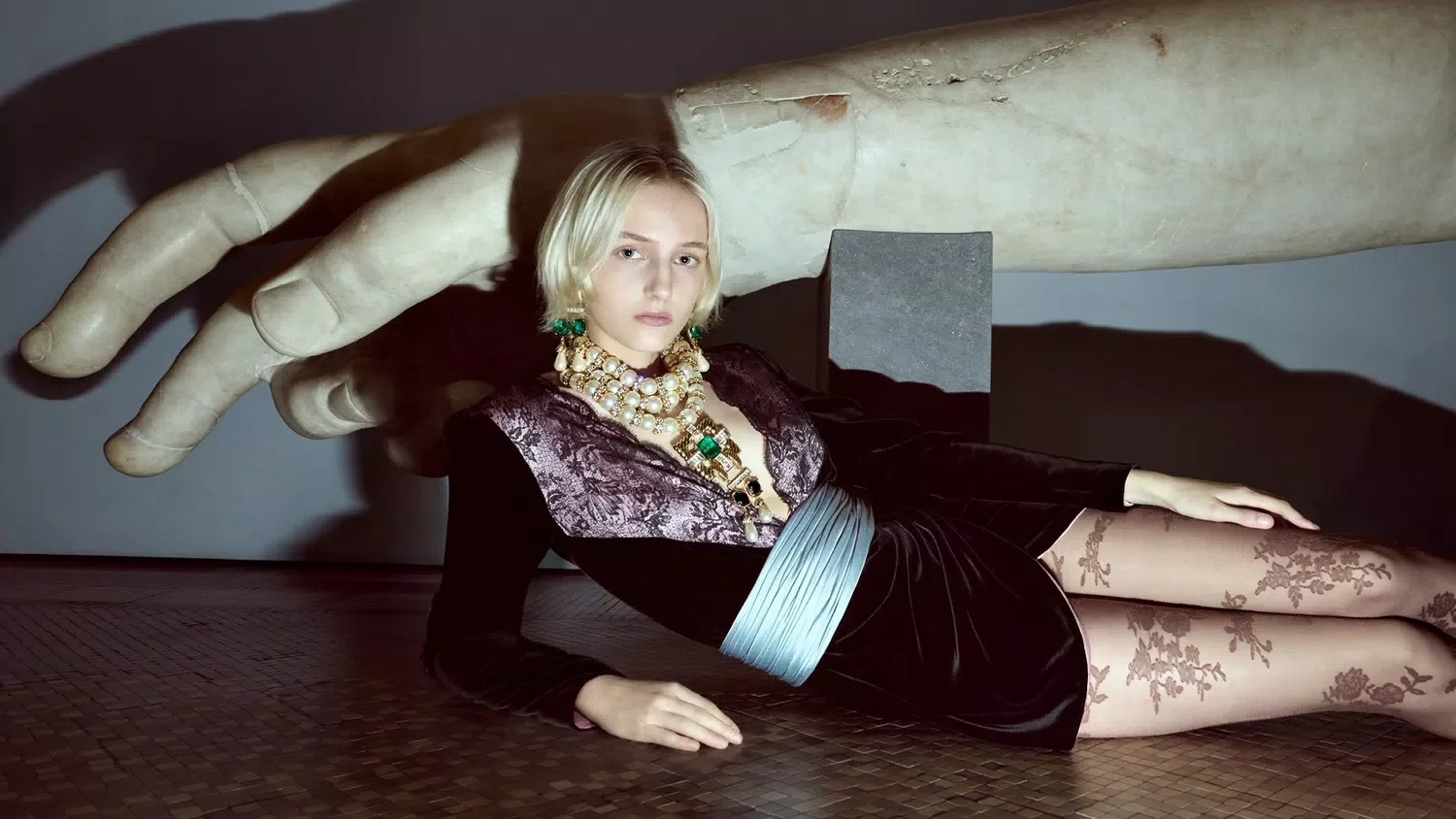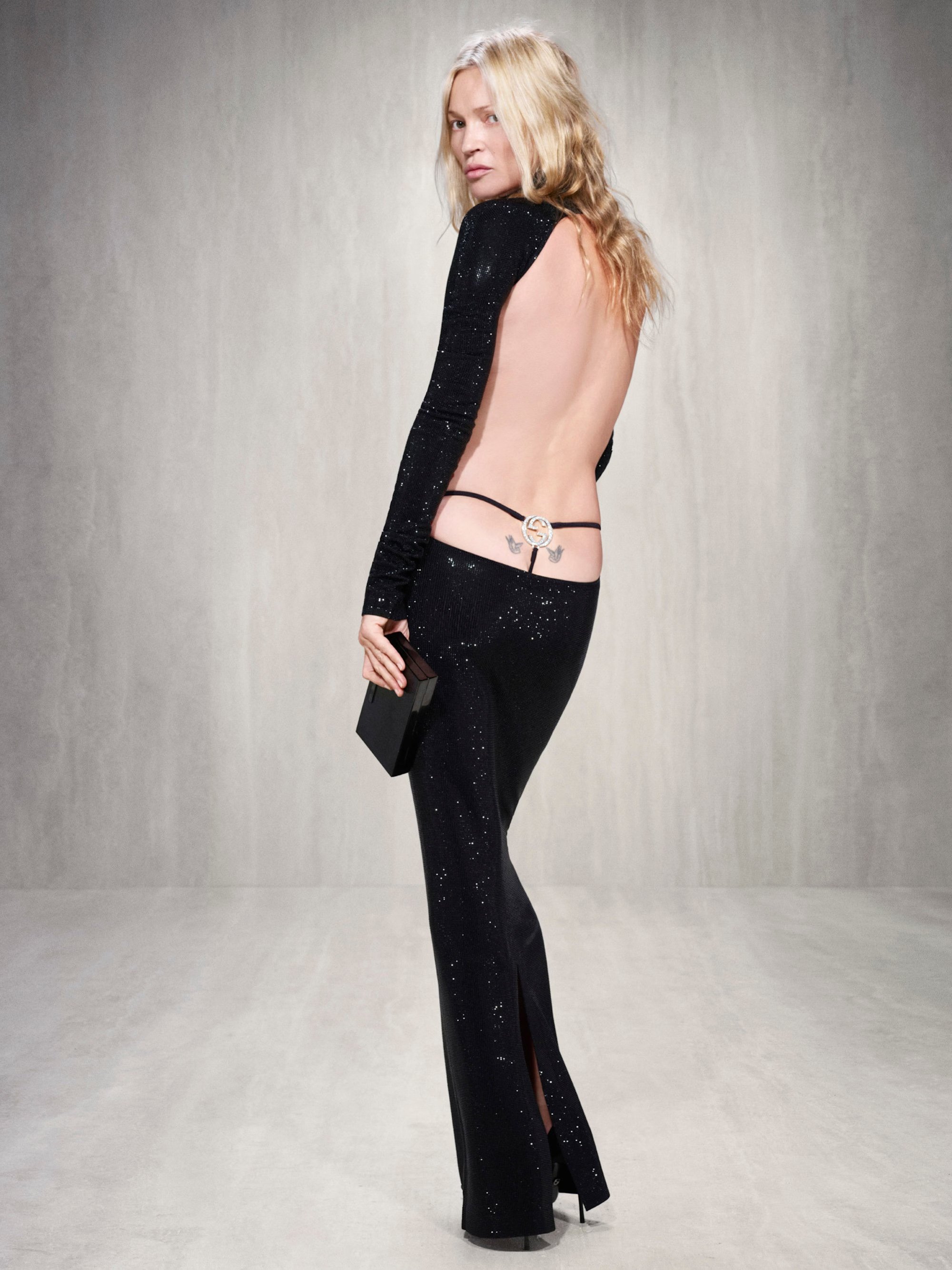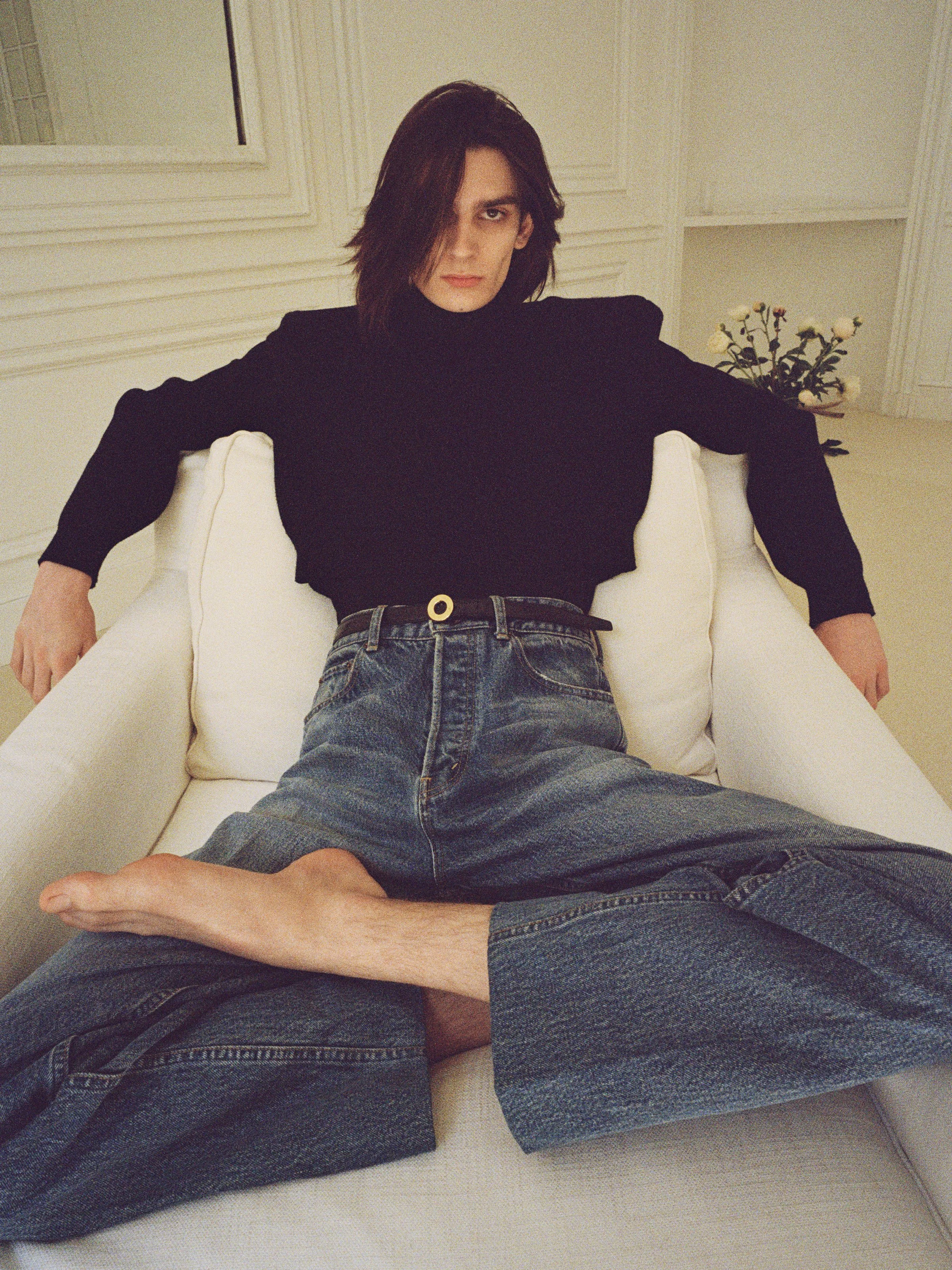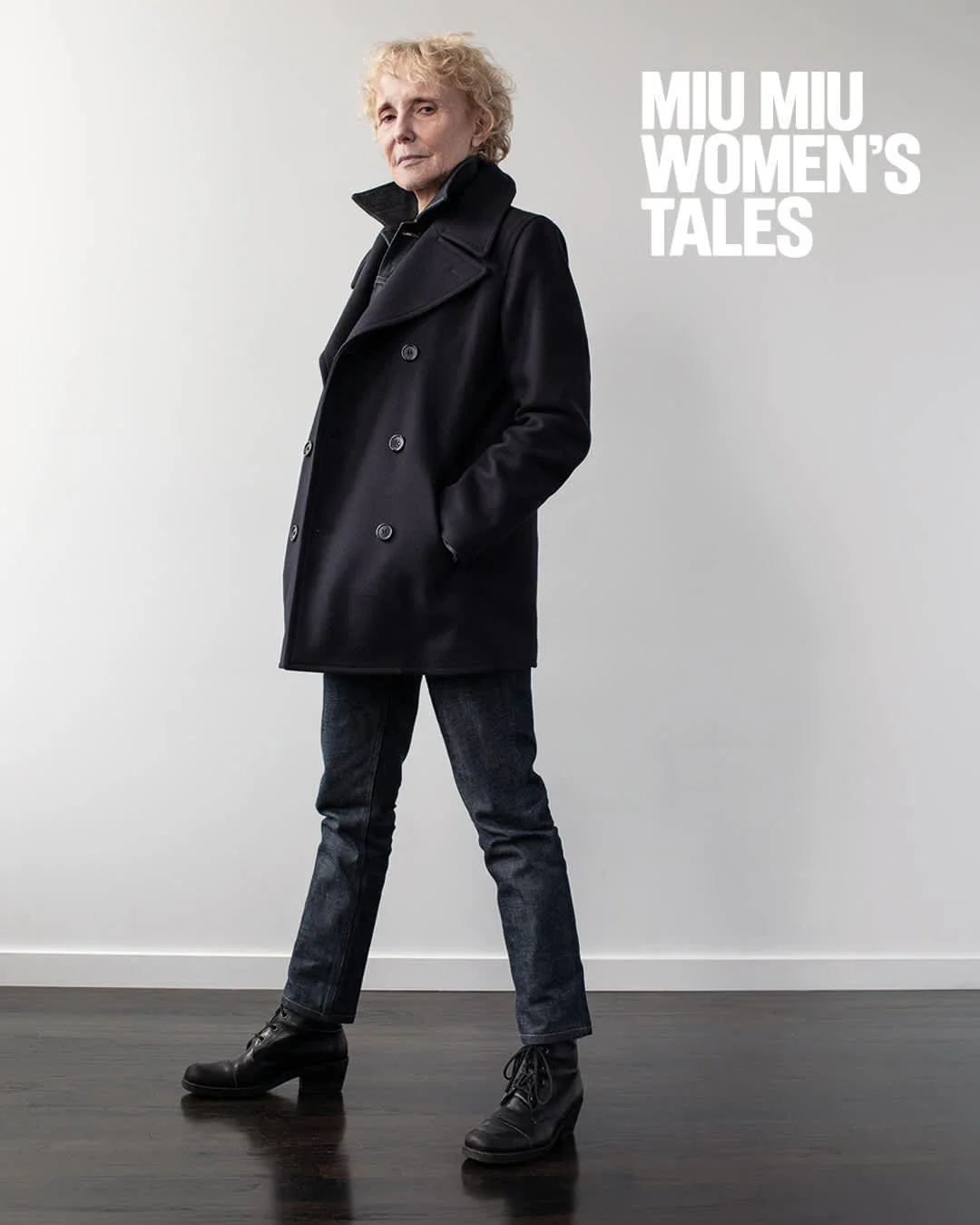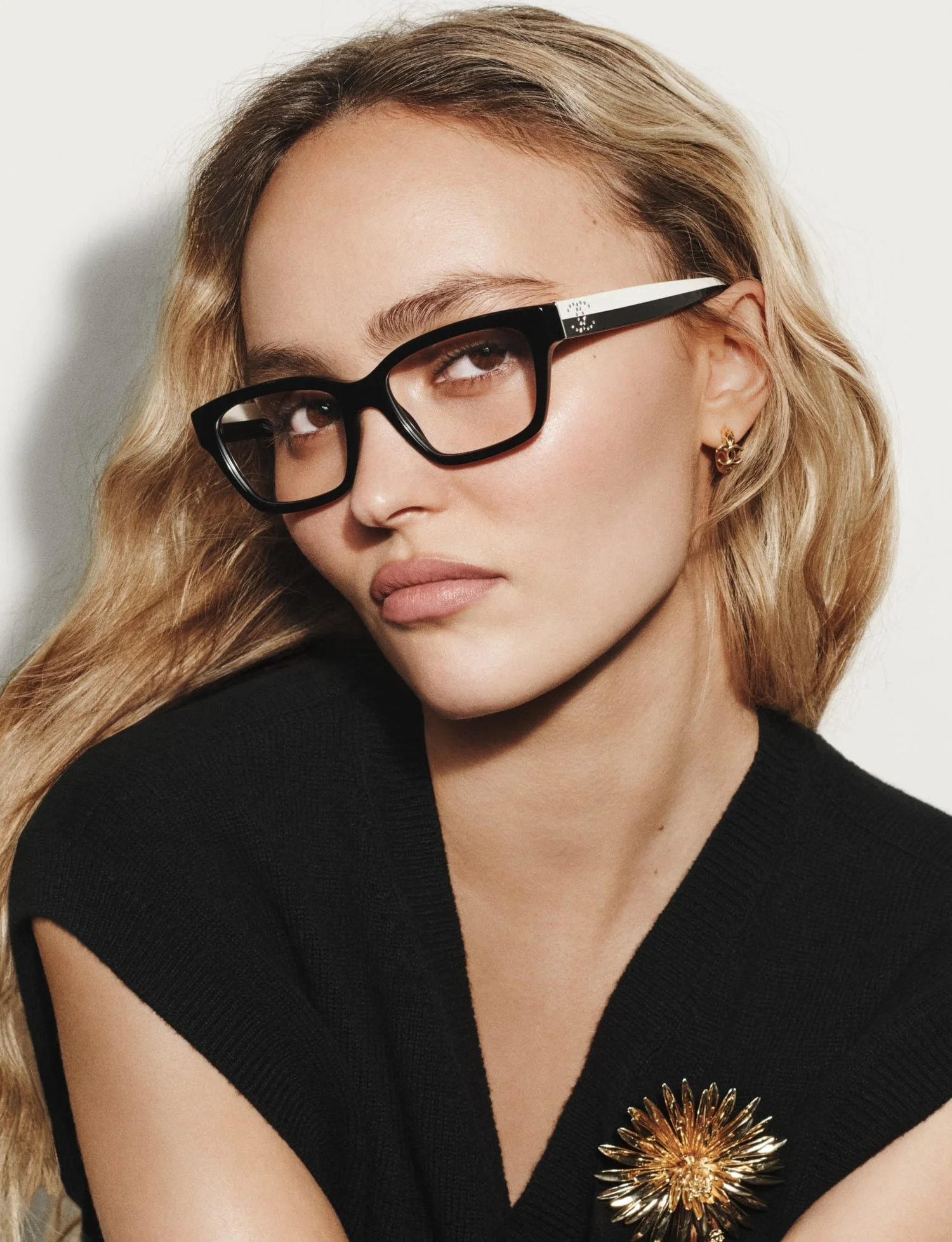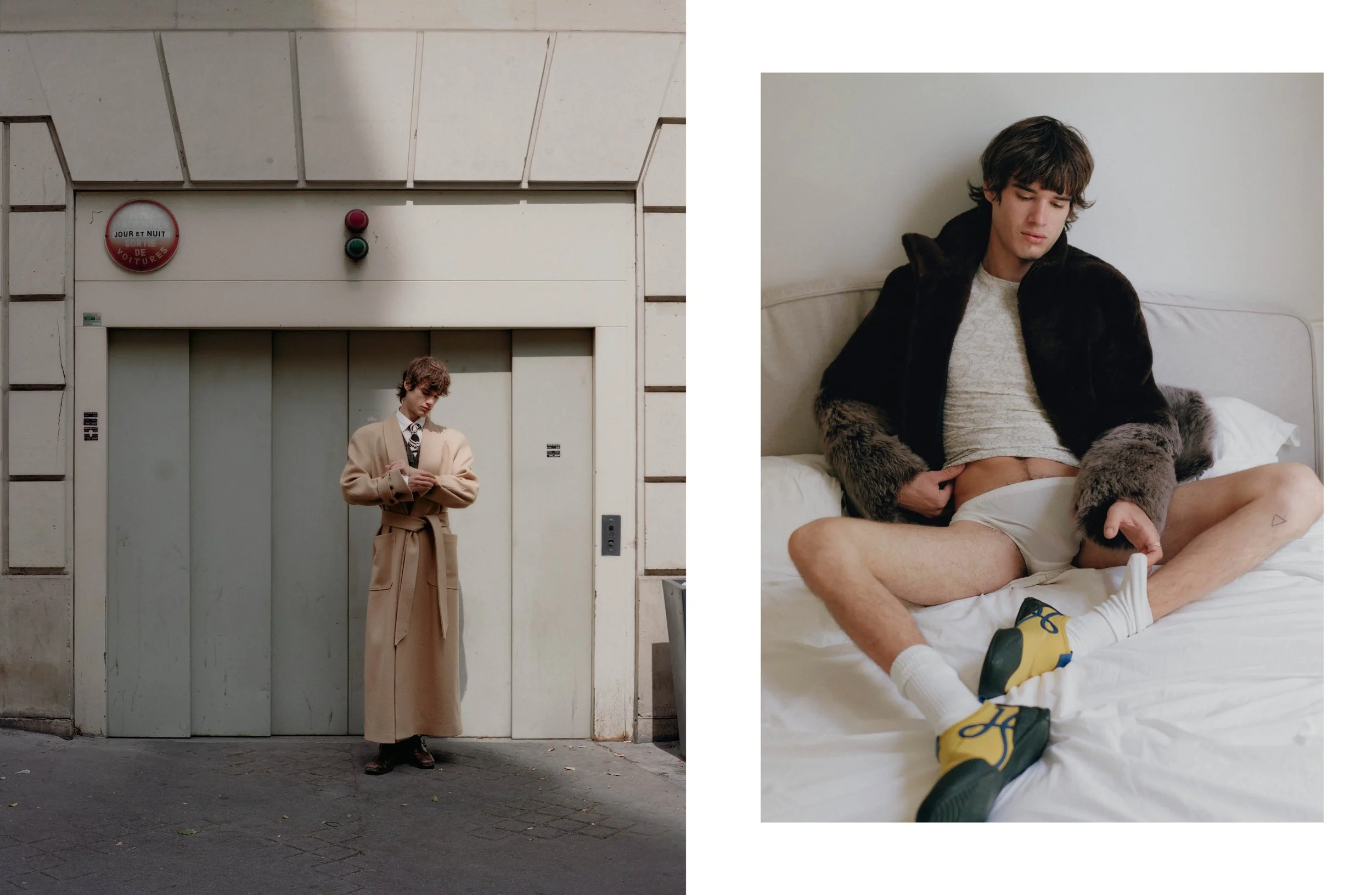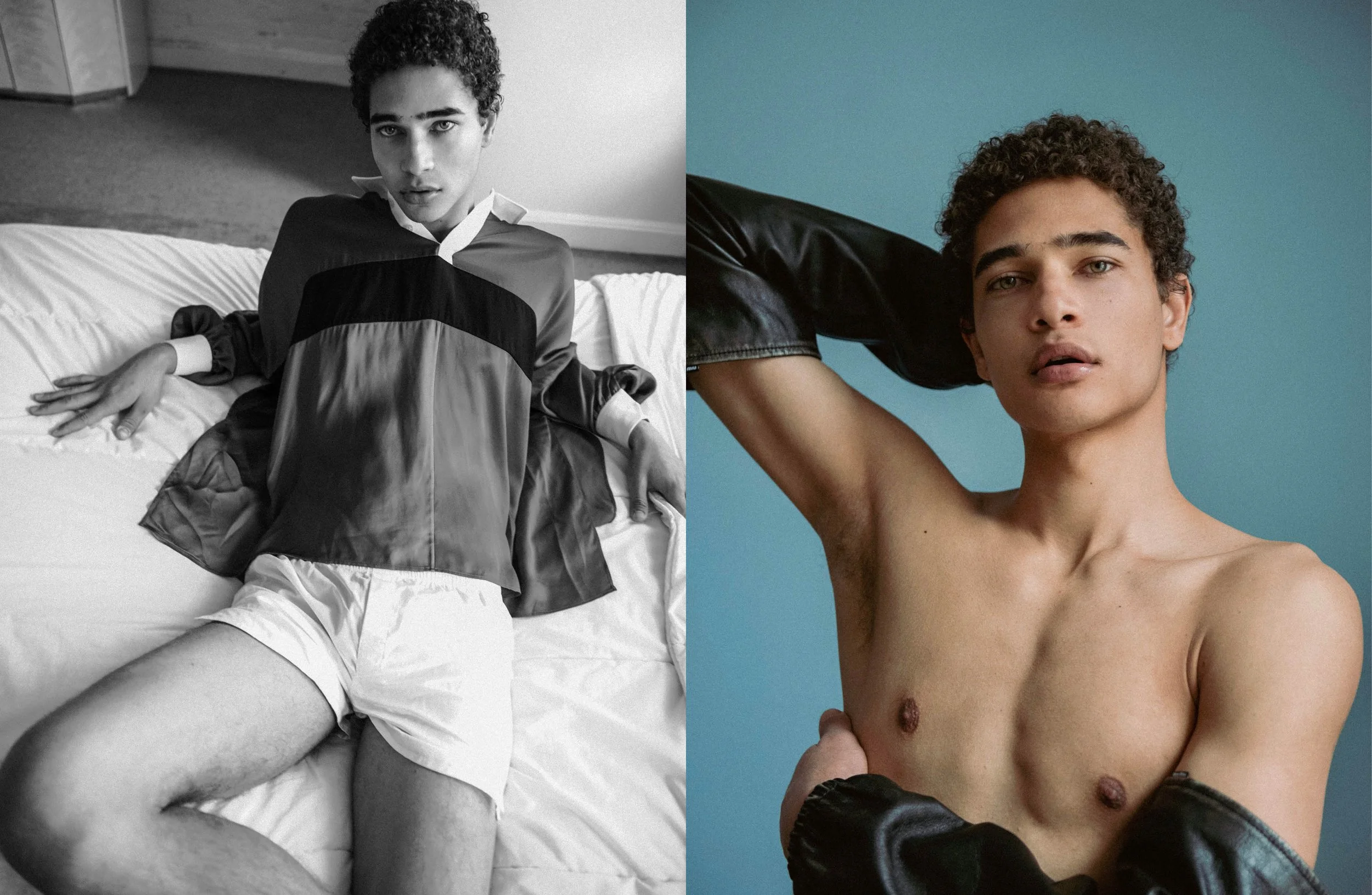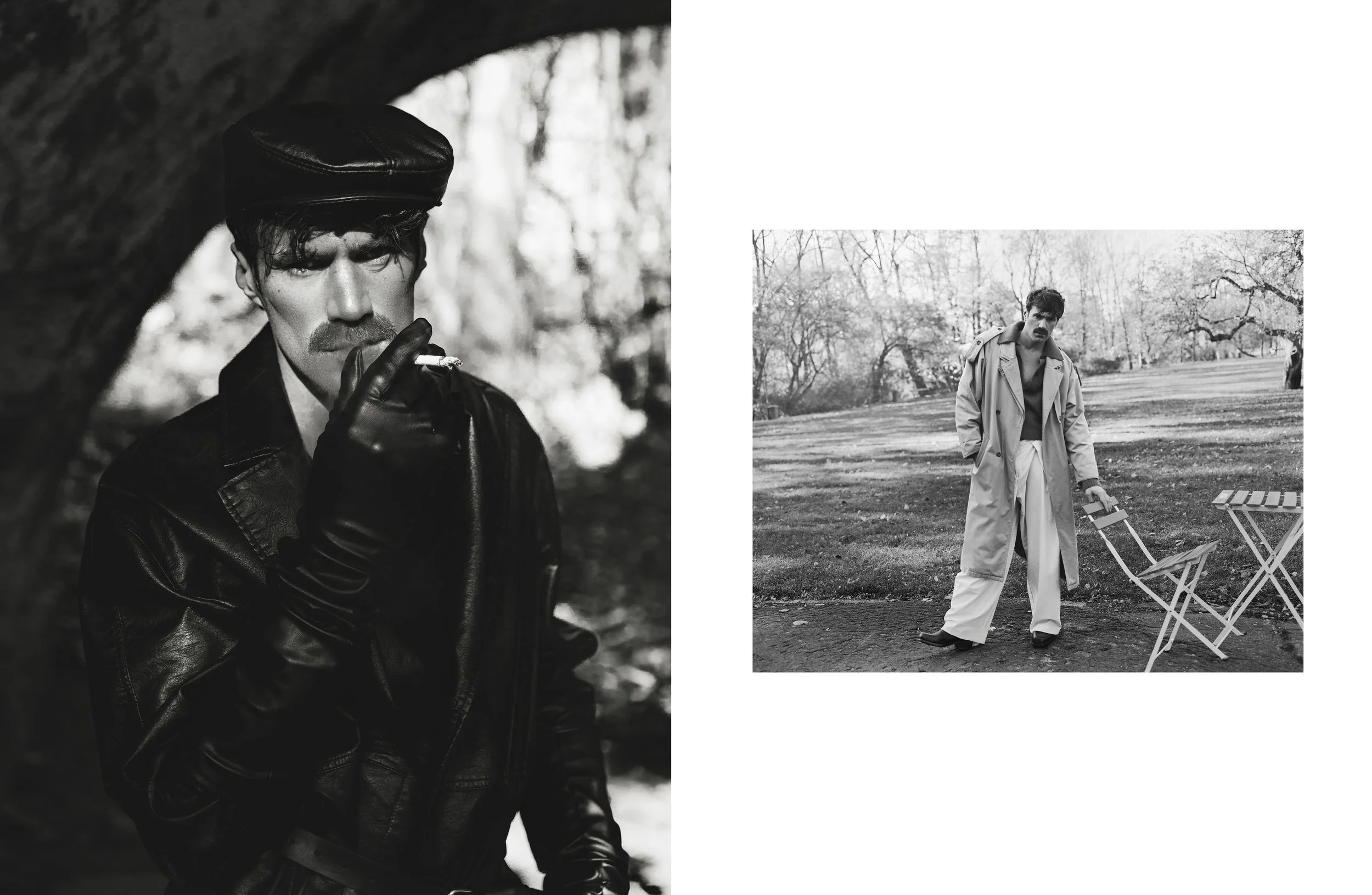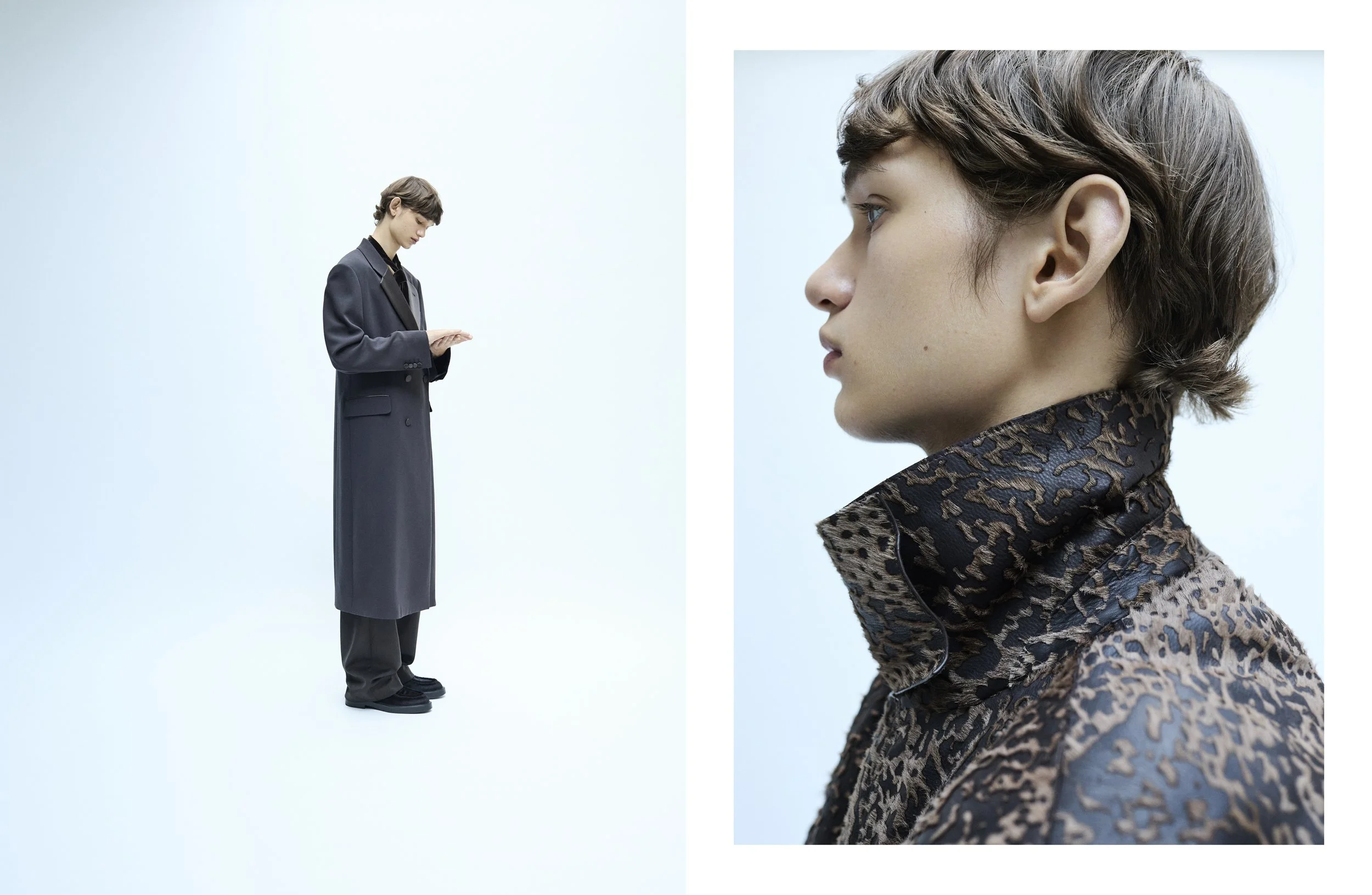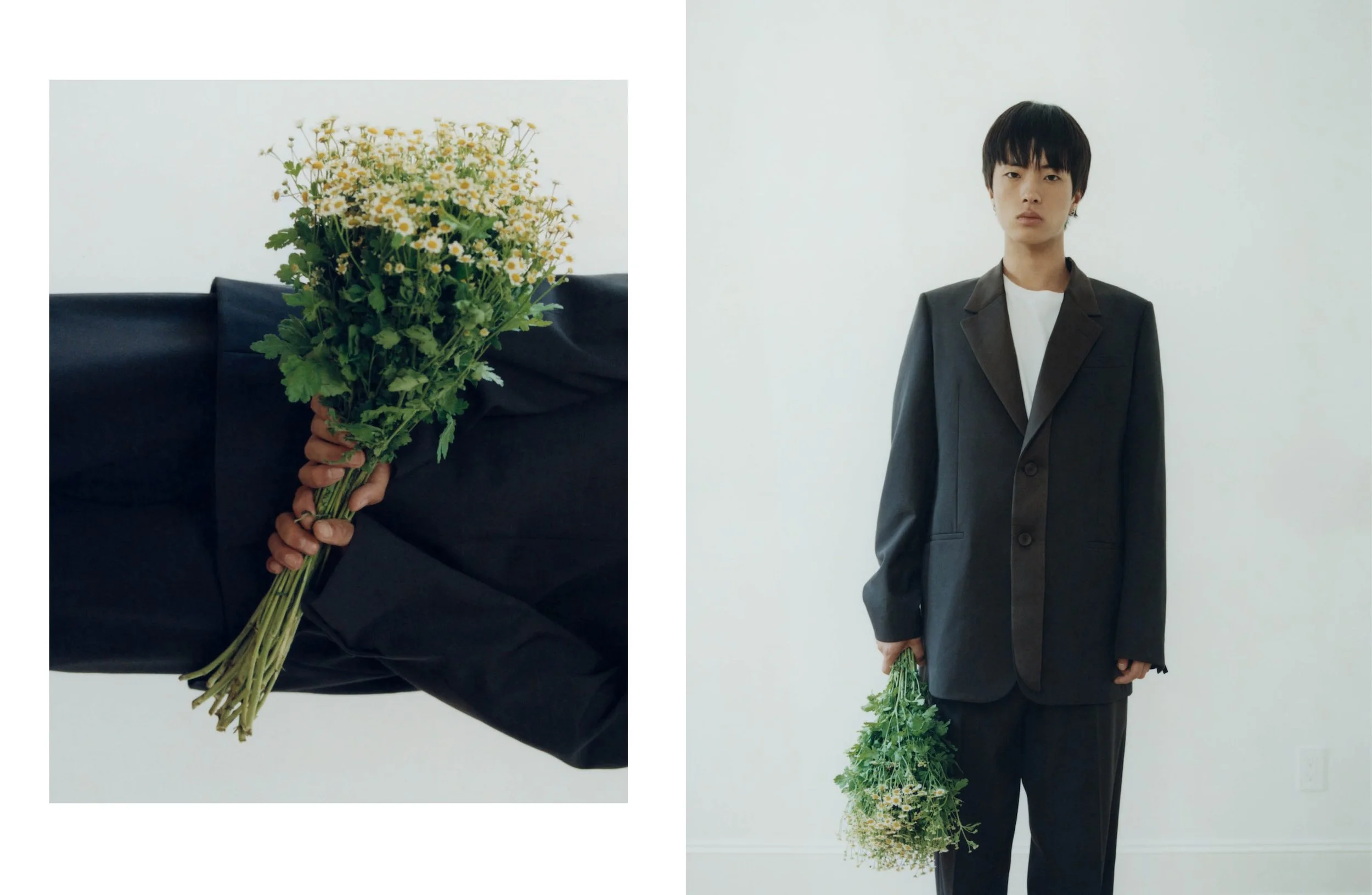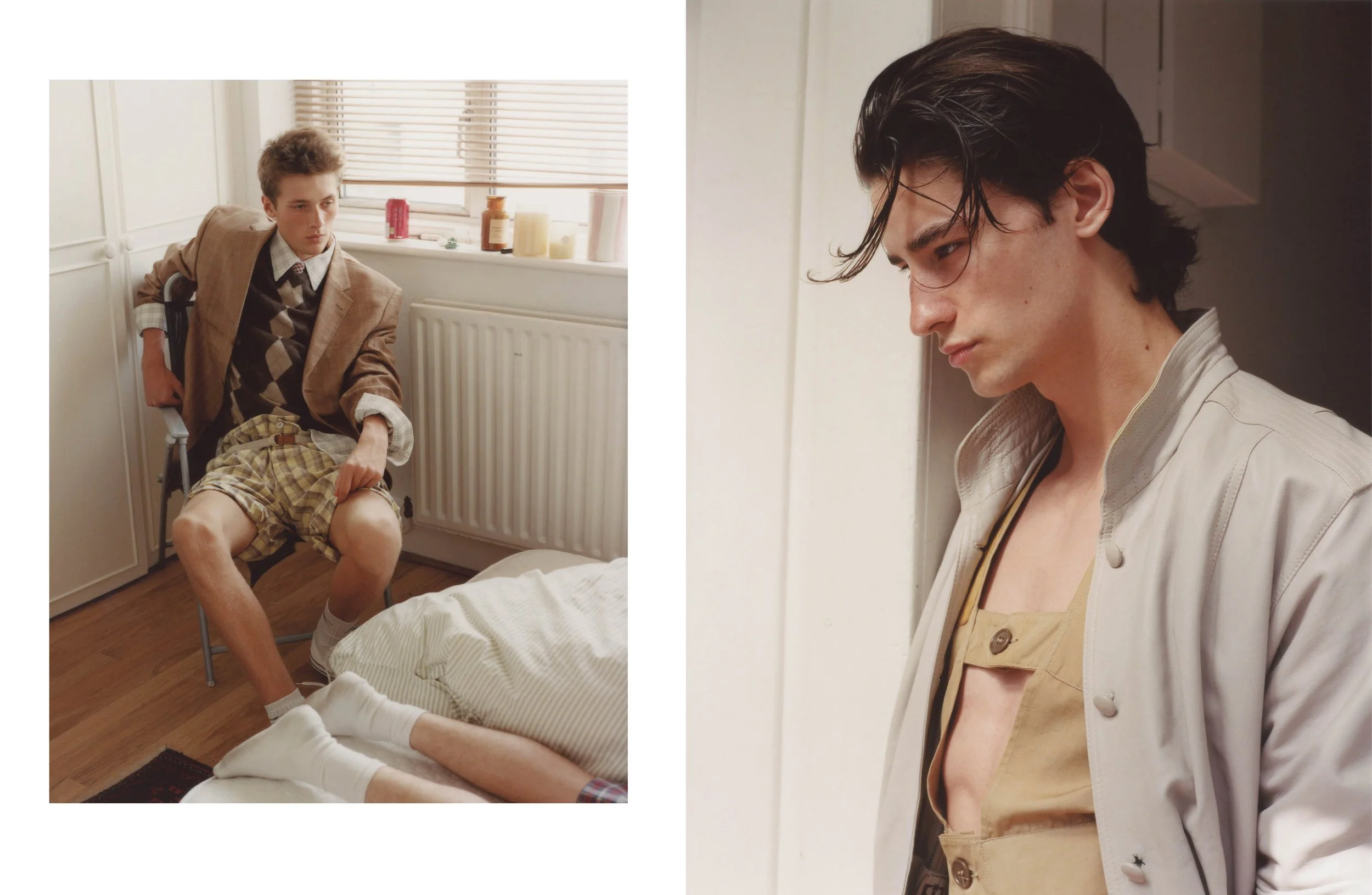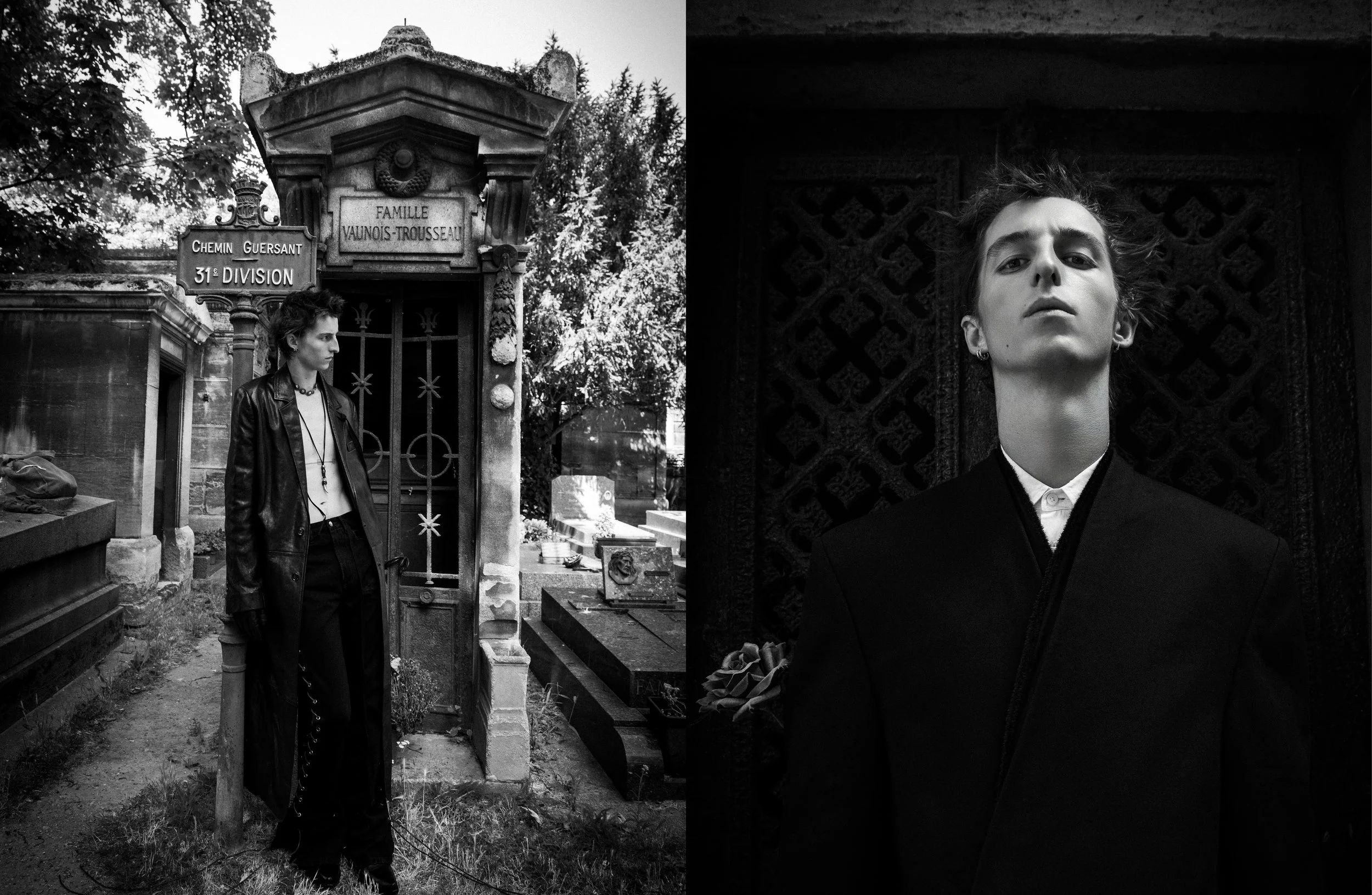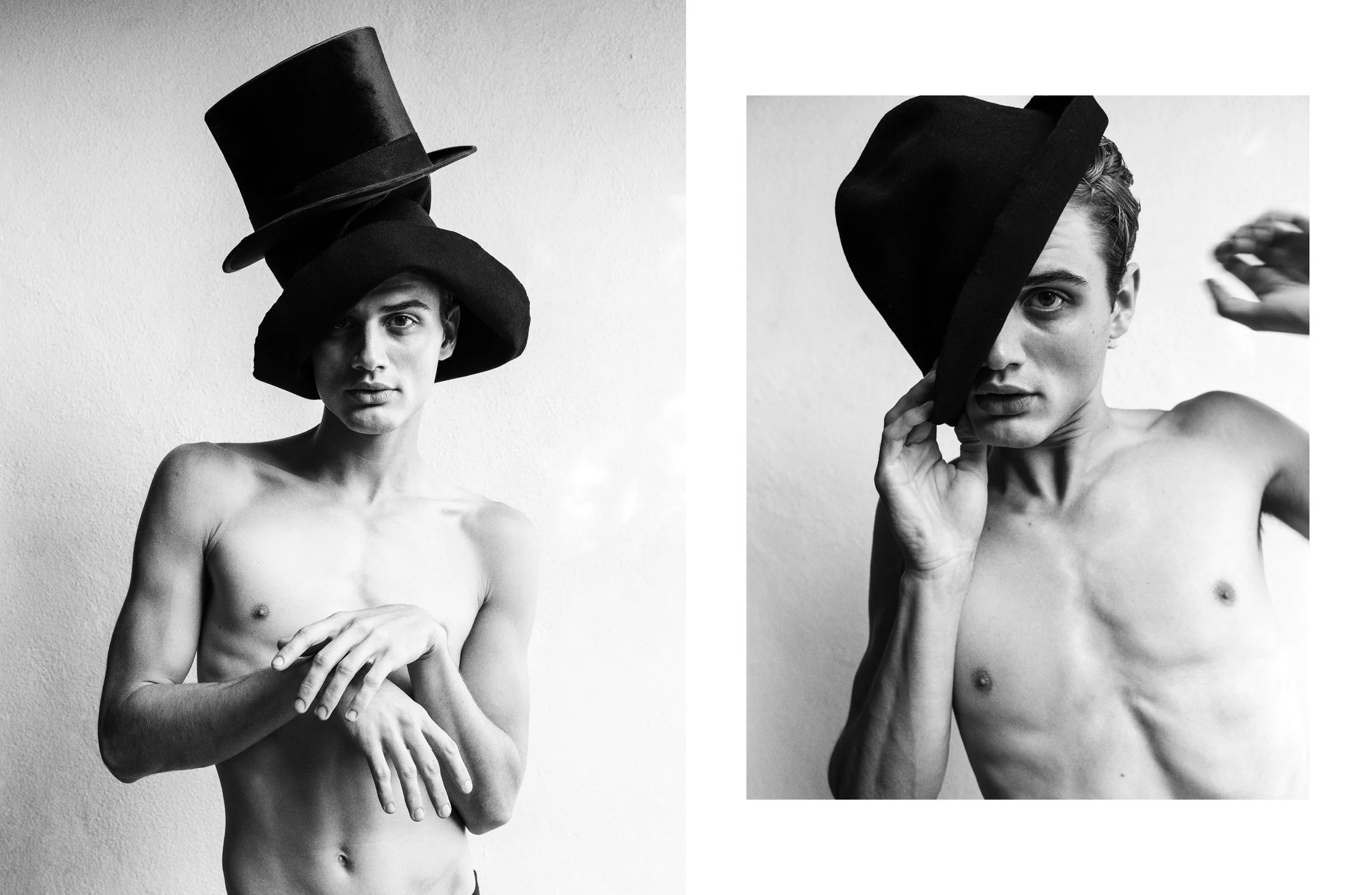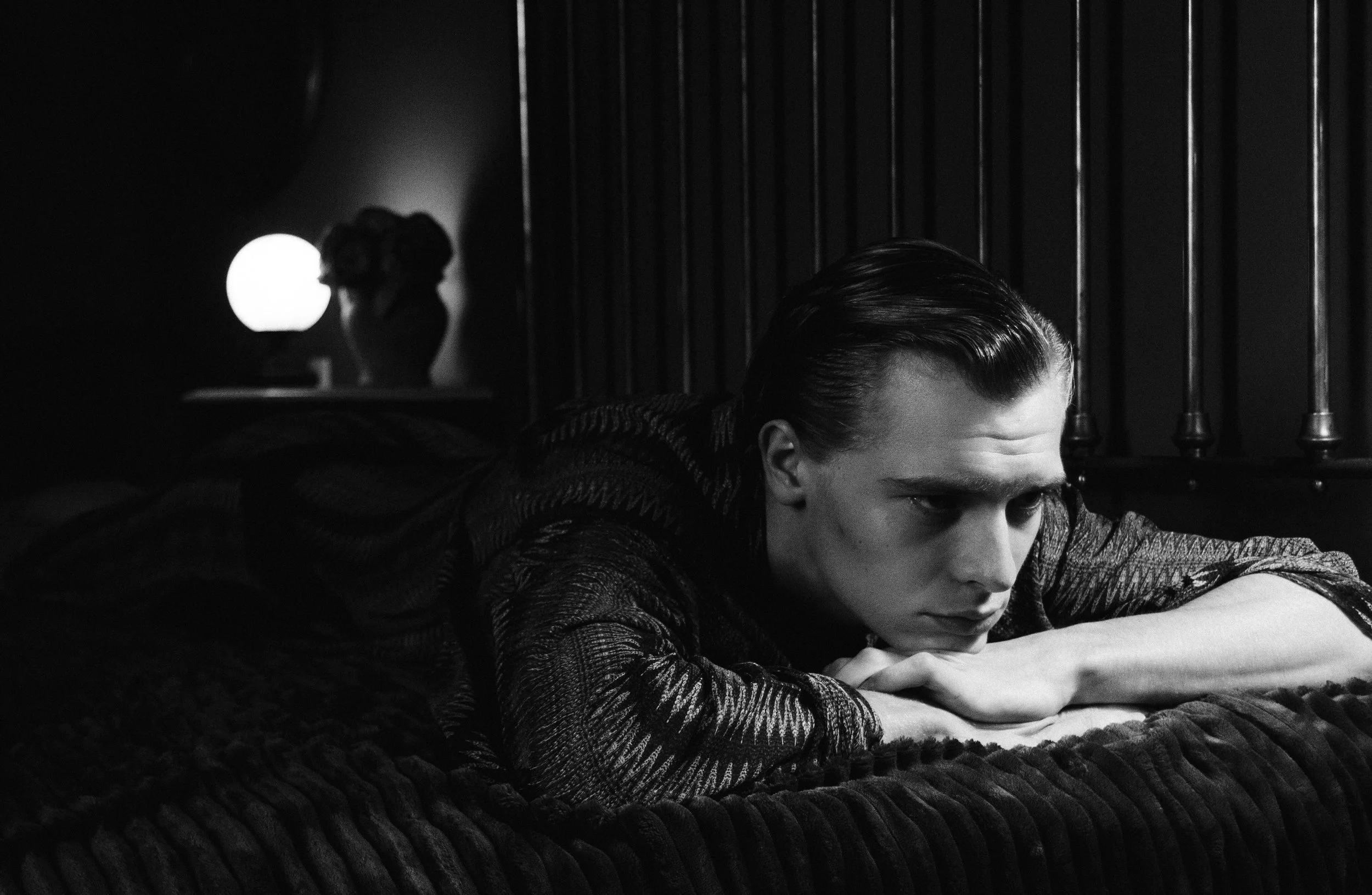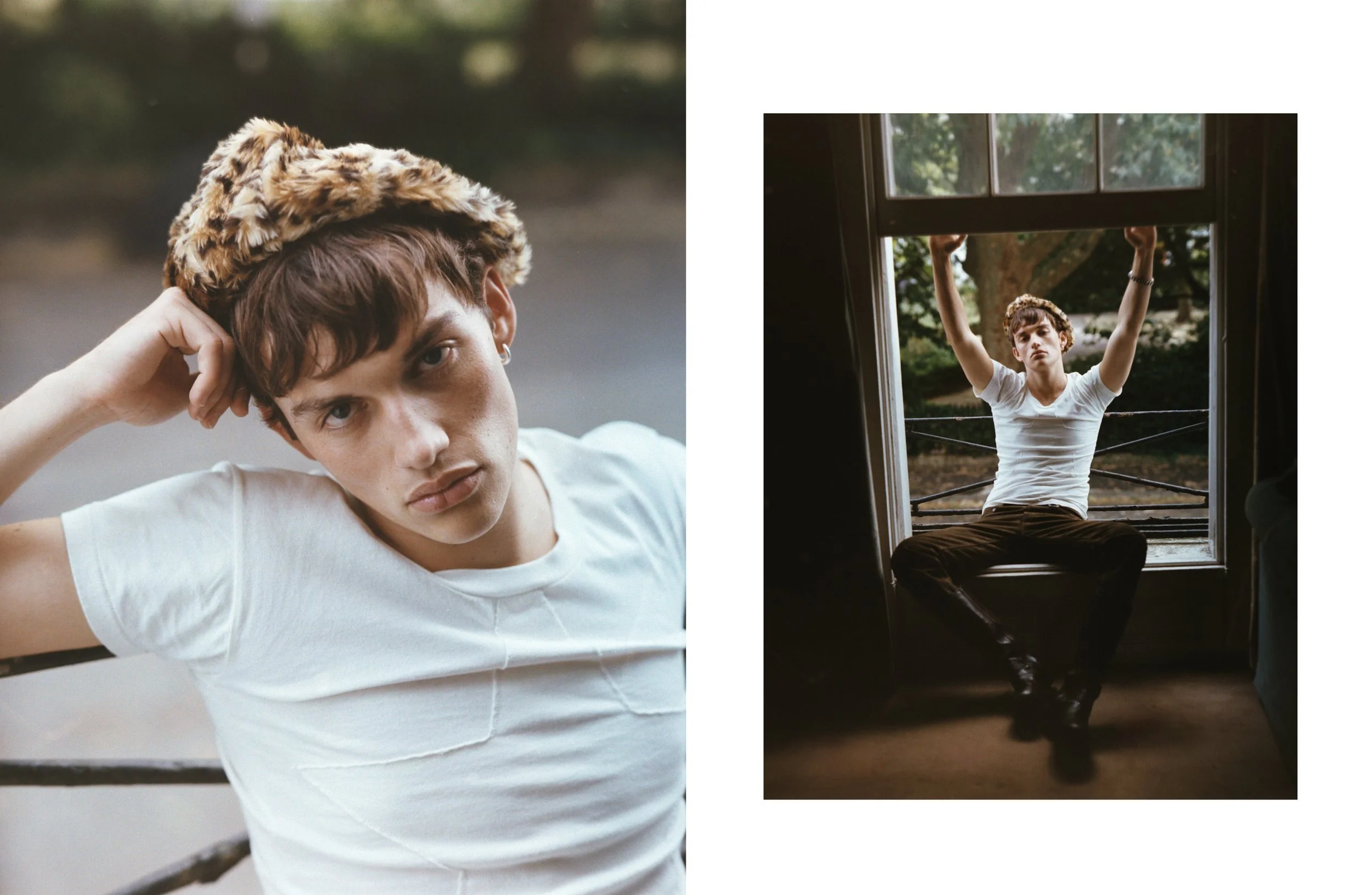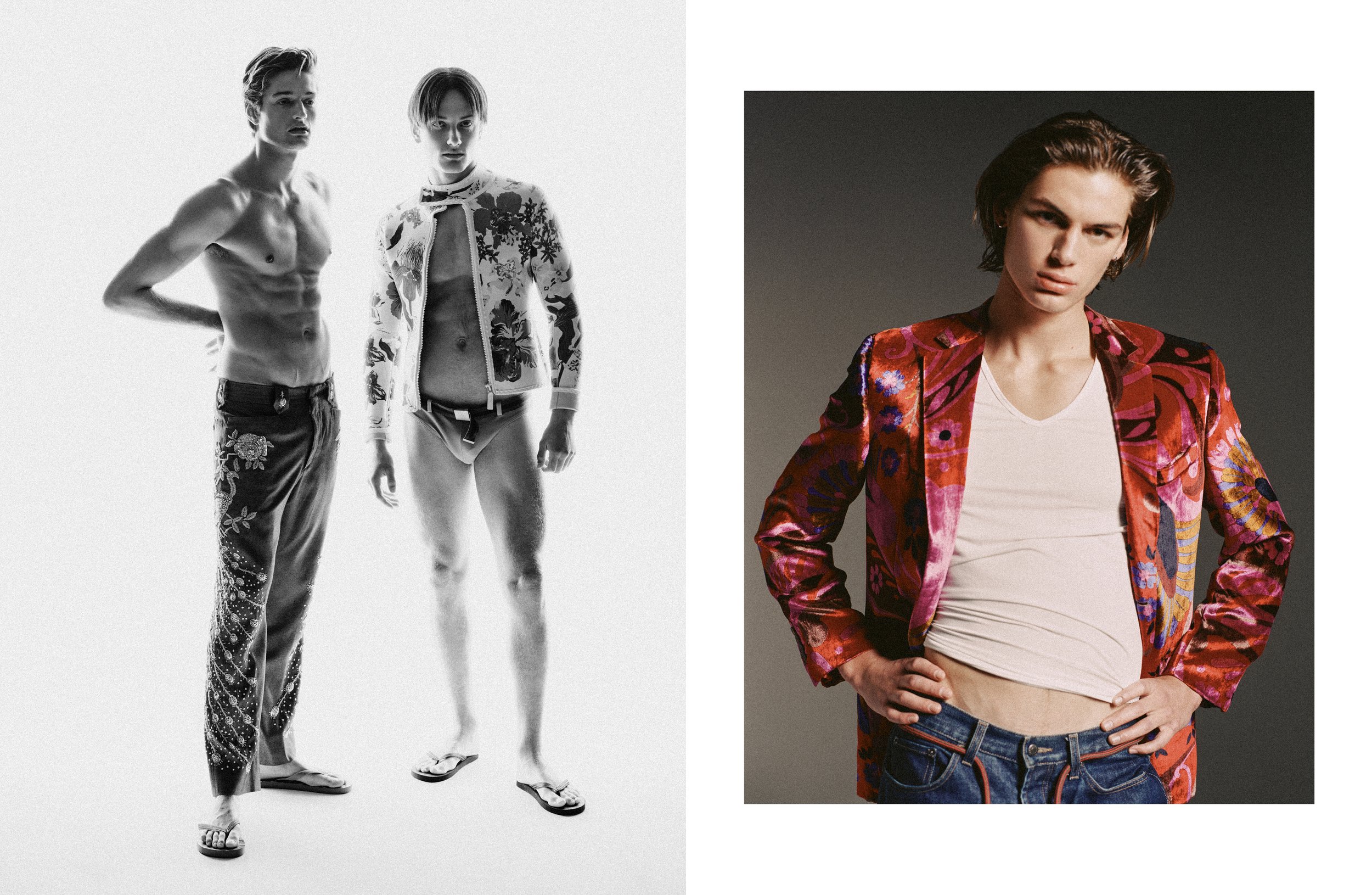
An hour before the Gucci show began in Milan, the brand’s official Instagram posted a letter written by its creative director, Demna. “The Store Show will be the first collection in which I present my complete personal vision for the brand (...).” With the announcement, Spring/Summer 2027 marks the third first collection the creative director has done for the brand. First, the glimpse of his vision came in Pre-Fall 2026 in “La Famiglia”, a collection of characters that cinematically epitomised the different iterations of the house. Then, in Fall/Winter 2026/27, his official first show, where, surrounded by imposing statues, his self-deprecating, decadent idea for Gucci fully emerged.
Immediately after the post went live, three of my group chats blew up. “What could this mean?” “I’m excited; I wonder what the new Gucci will look like?” “Does this mean up until now he’s been trolling us?” It’s hard to know what a designer like Demna is. The Georgian creative director has made a career off subverting the fashion industry’s tropes. His year at Gucci has been a continuation of it, analysing the brand’s relationship to the perception of luxury as a whole. For it, the Gucci client has been his most defined muse. Whereas most designers communicate an idea, a look almost independently of their customer’s, Demna works backwards, allowing his audience to fuel his wearable world. It makes sense then to host Spring/Summer 2027 inside a set made to resemble a Gucci store.
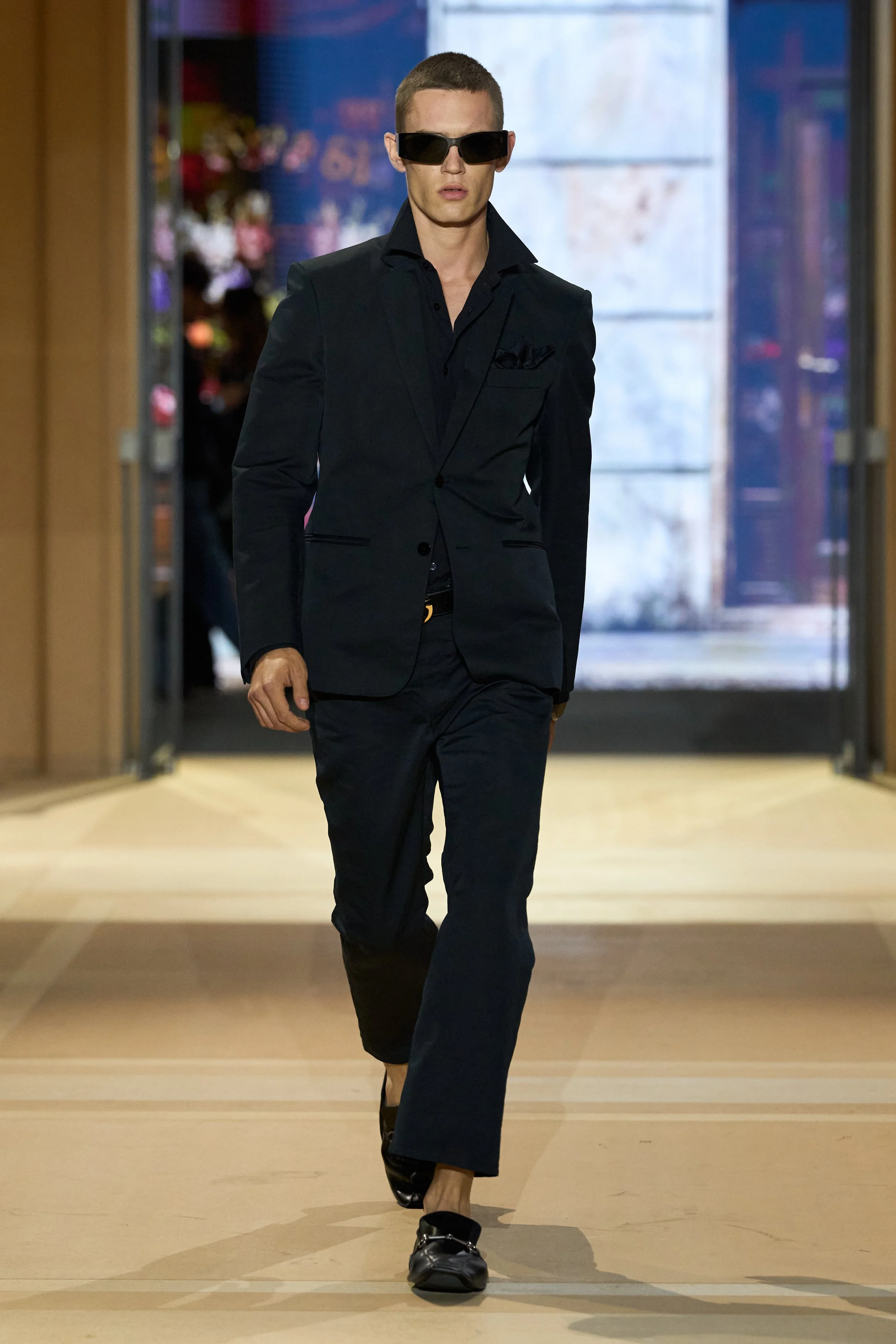
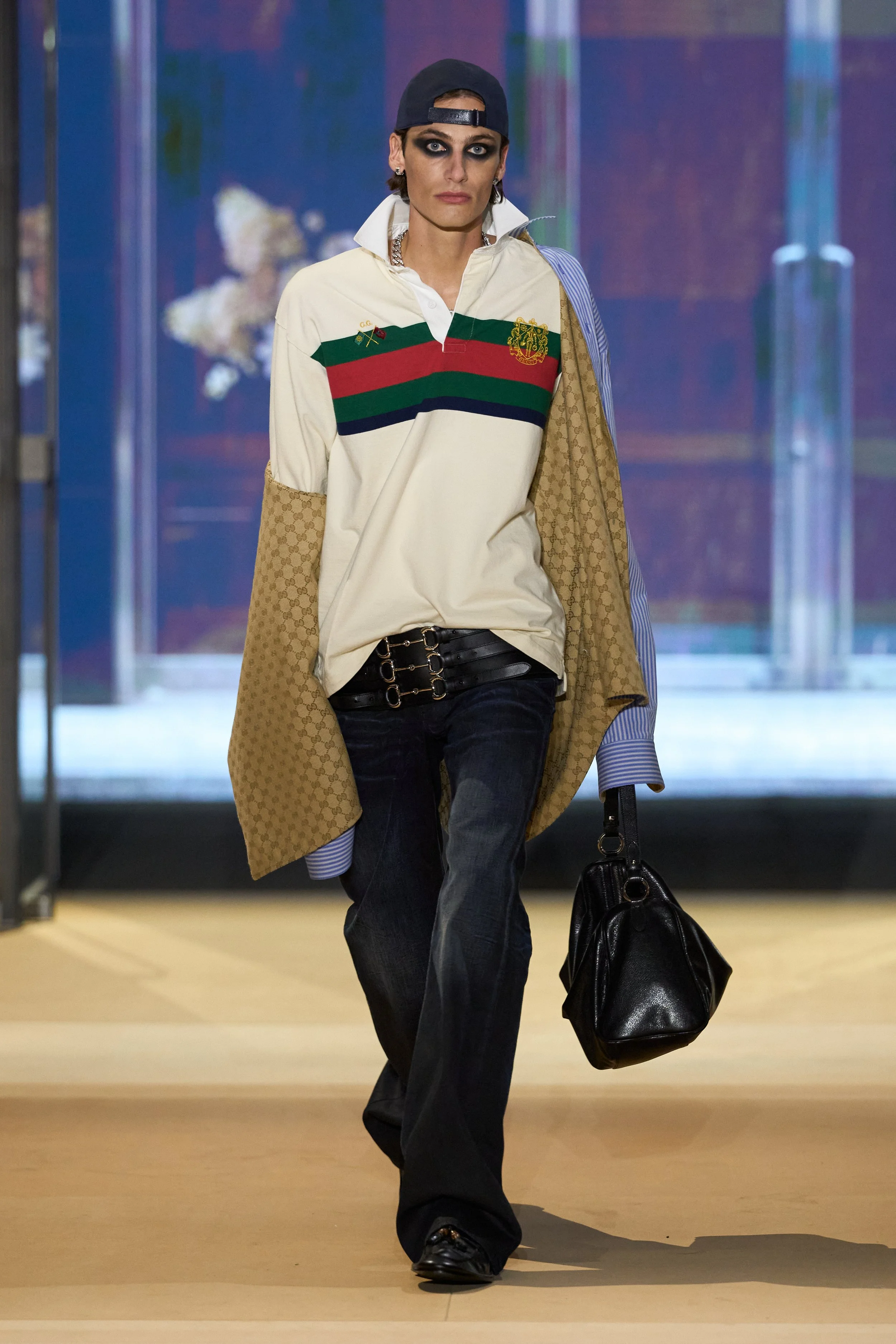
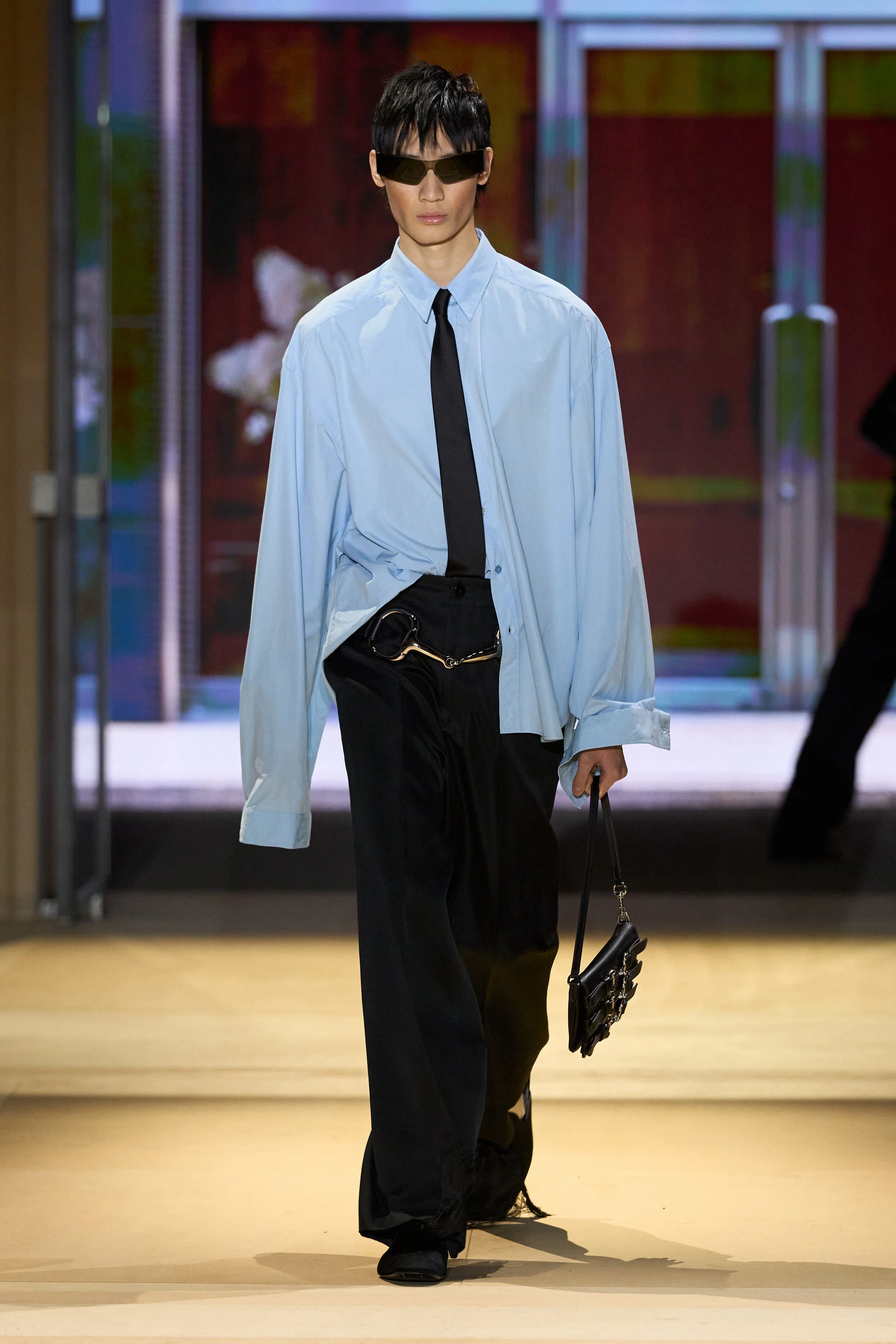
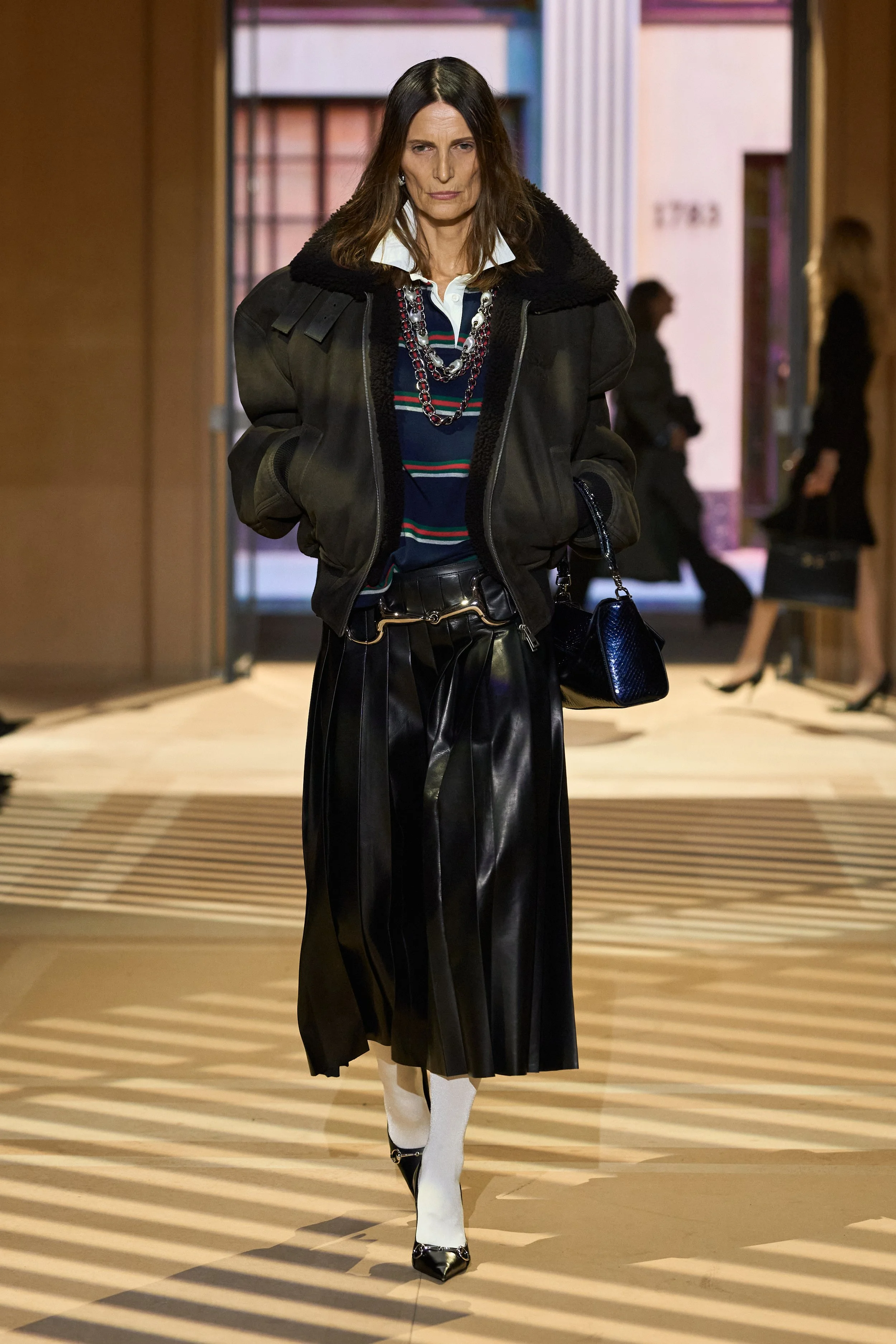
In that nearly perfect simulacrum, the line between store and museum was hard to place. Vases stacked atop impossibly small tables, glass cases filled with purchasable artefacts. To complete the fantasy, the soundtrack sounded like standard music, the type that would play in a store in a movie – agreeable, non-descript. As the smooth bass and drums started playing, the first look came out. A sharply tailored jacket, nipped in at the waist, lays over a shirt with a popped collar. Iterations with the same look follow, gradually filled with Gucci symbols. In shirts, horse bits appeared on collars, while belts grew, eventually taking on the entire waistline.
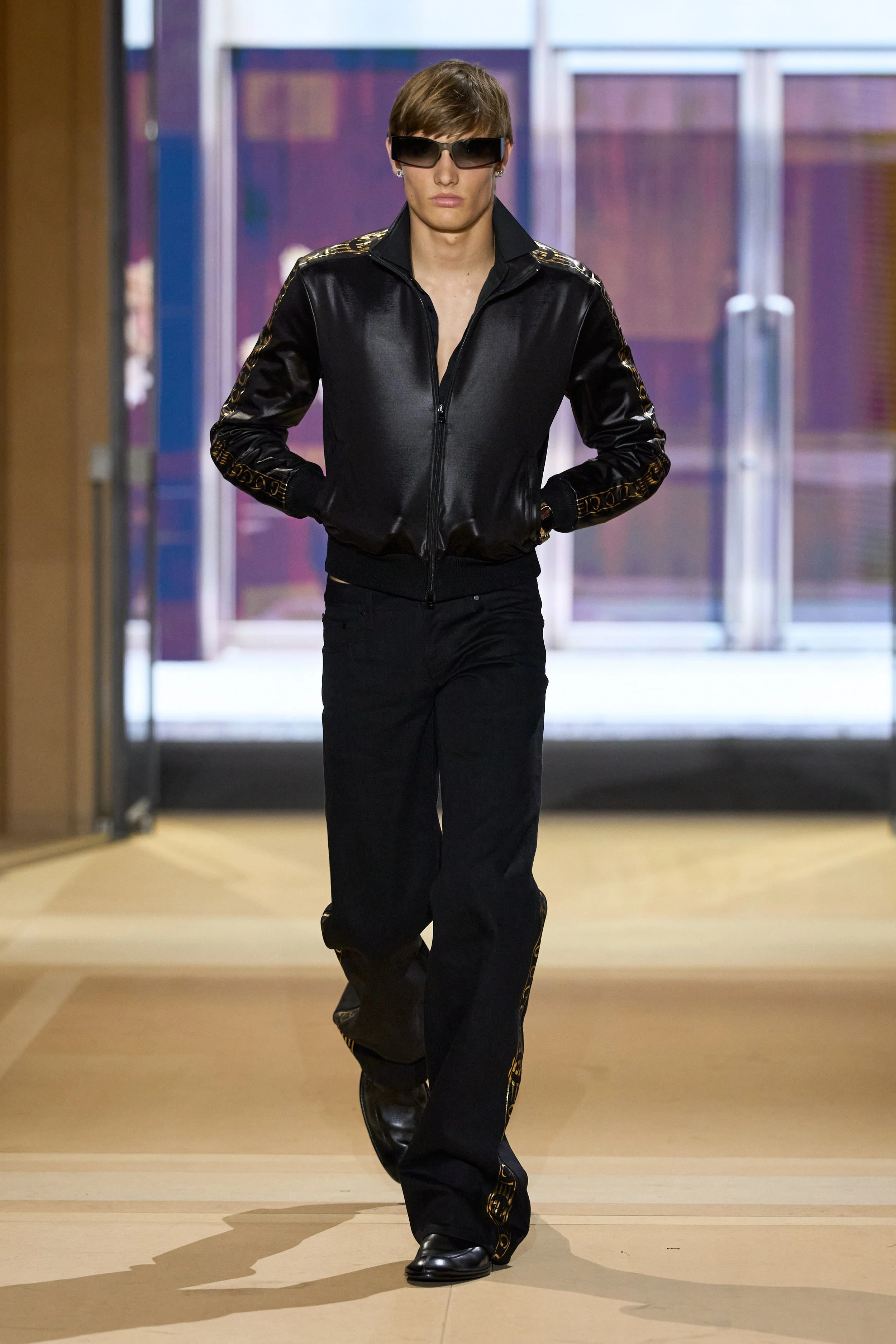
Demna’s idiosyncratic streetwear creeps in slowly. Alongside tailored coats, sweatsuits become more prominent. One particular iteration, in black leather, runs gold Gucci logos down its arms. A triple horse bit belt is worn low, avoiding the risk of being covered by cropped jackets. Silhouette remains the designer’s strong suit. In oversized shirts, shoulders stand separate from the model’s body. In a velvet coat, shoulders curve slightly inward.
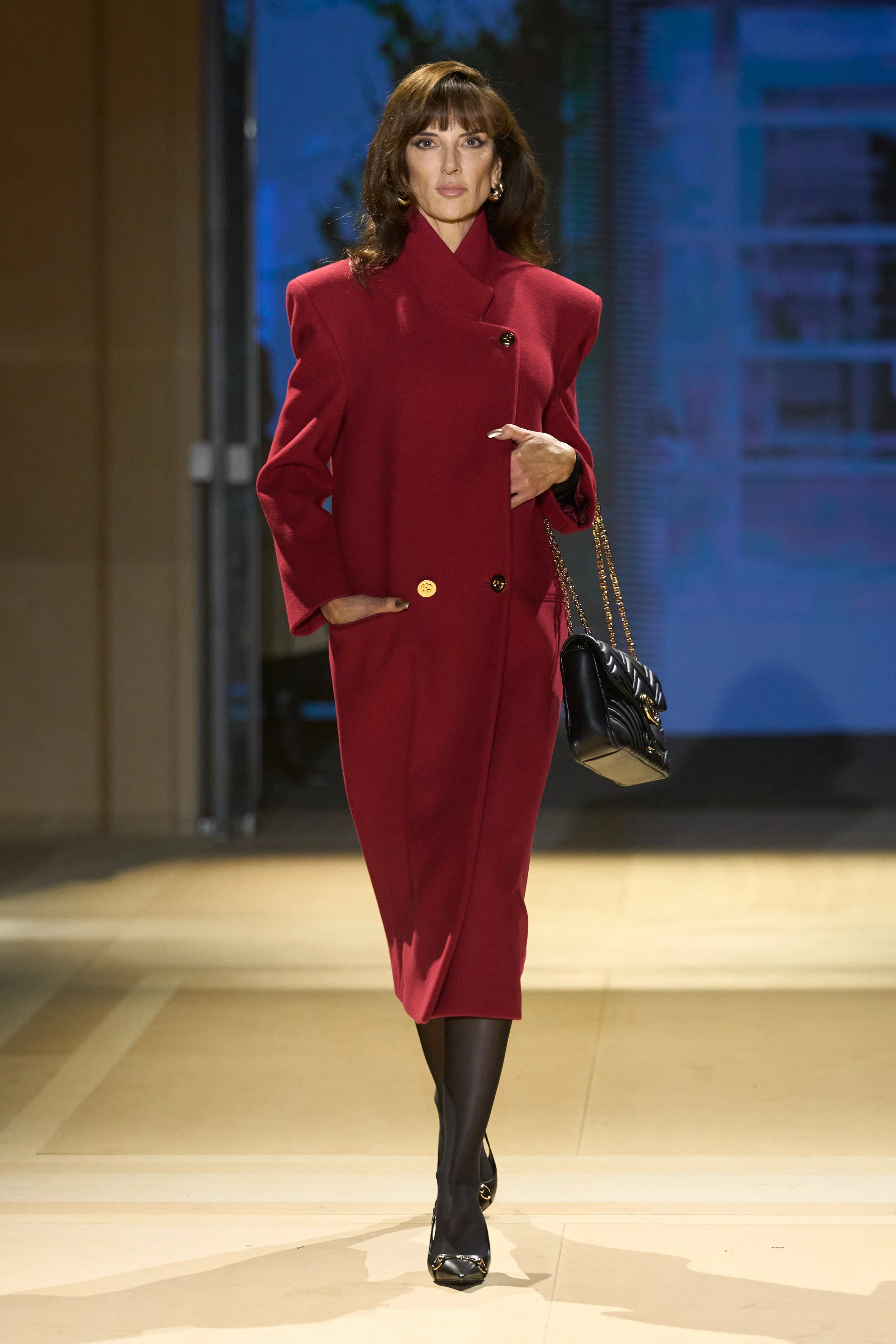
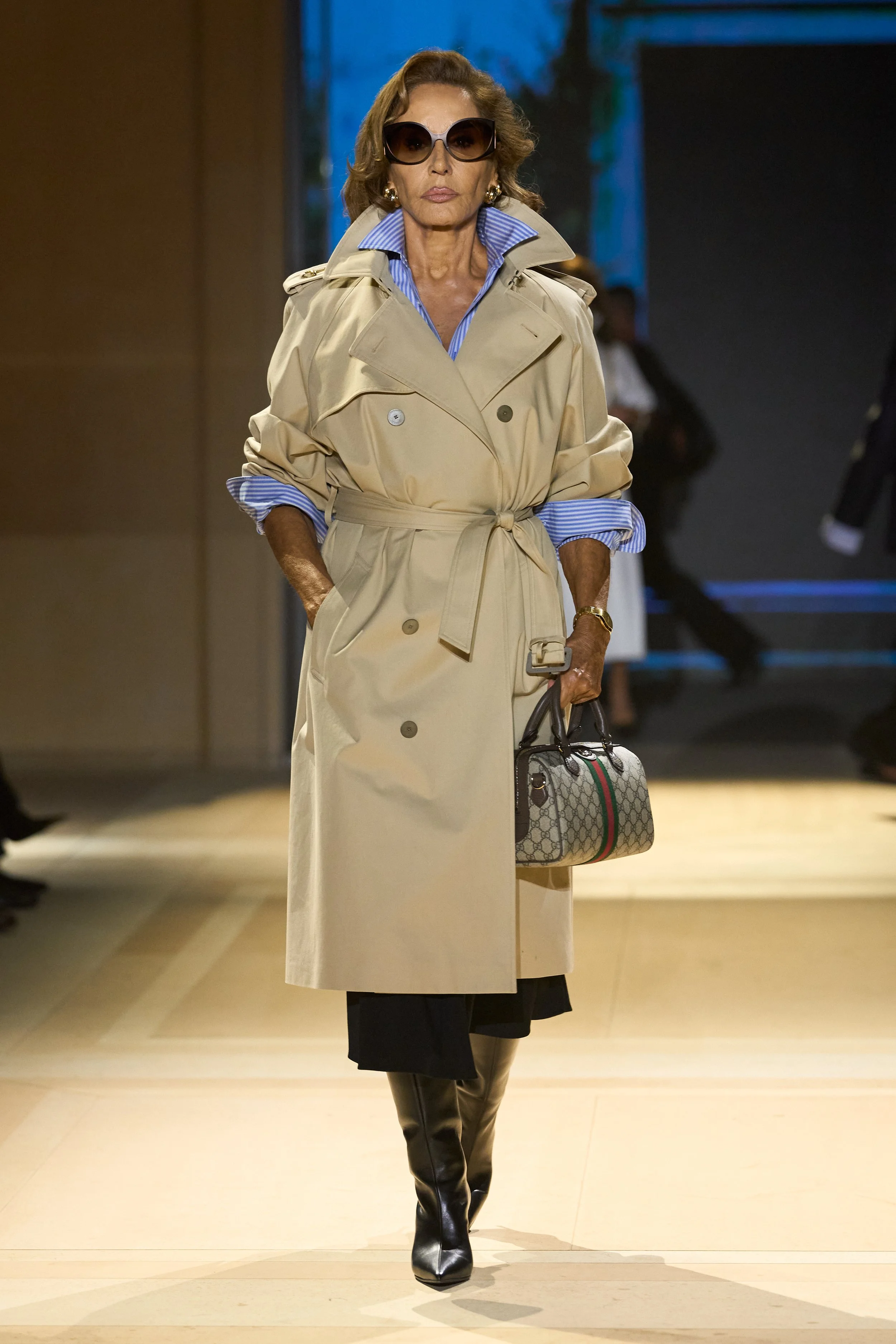
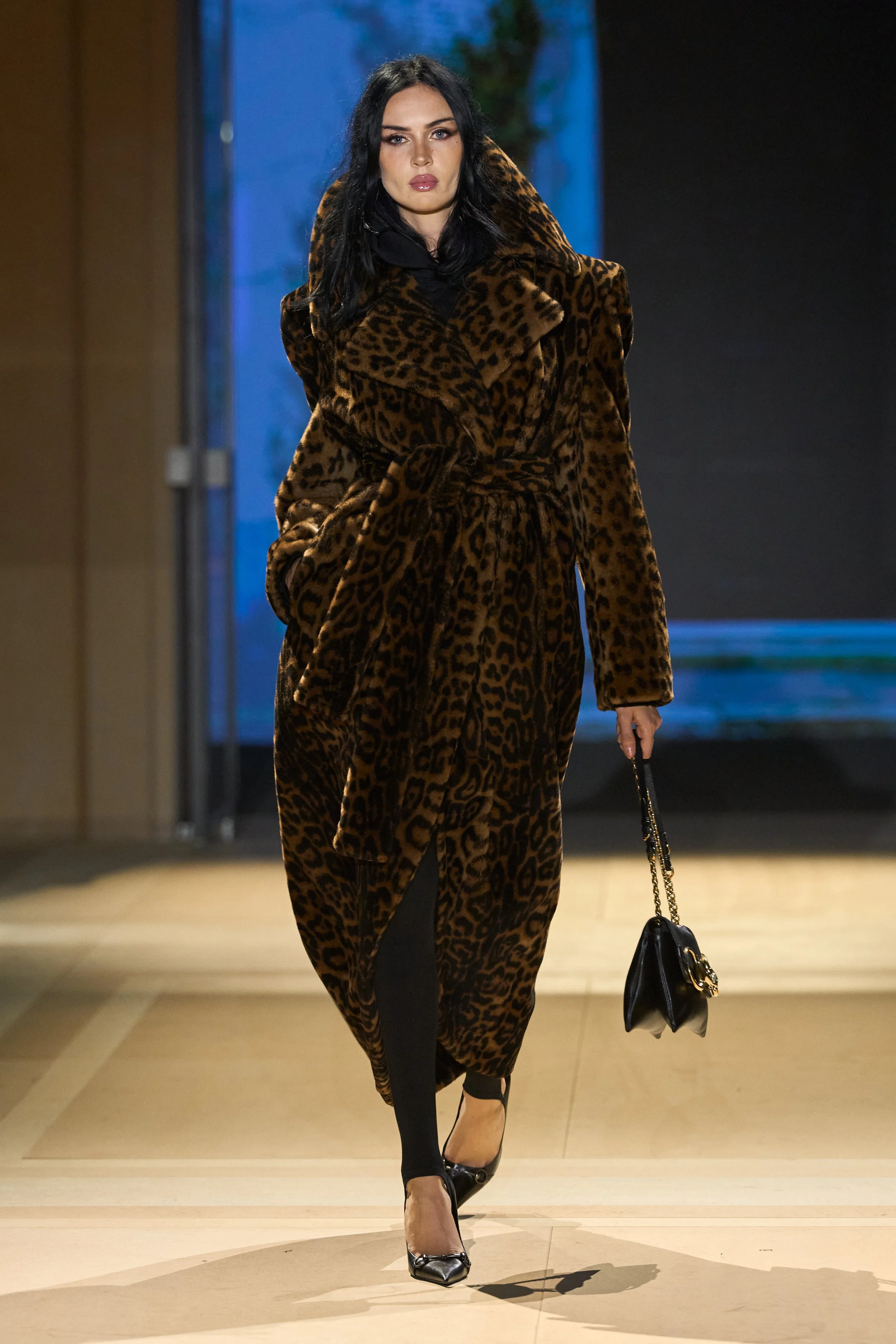
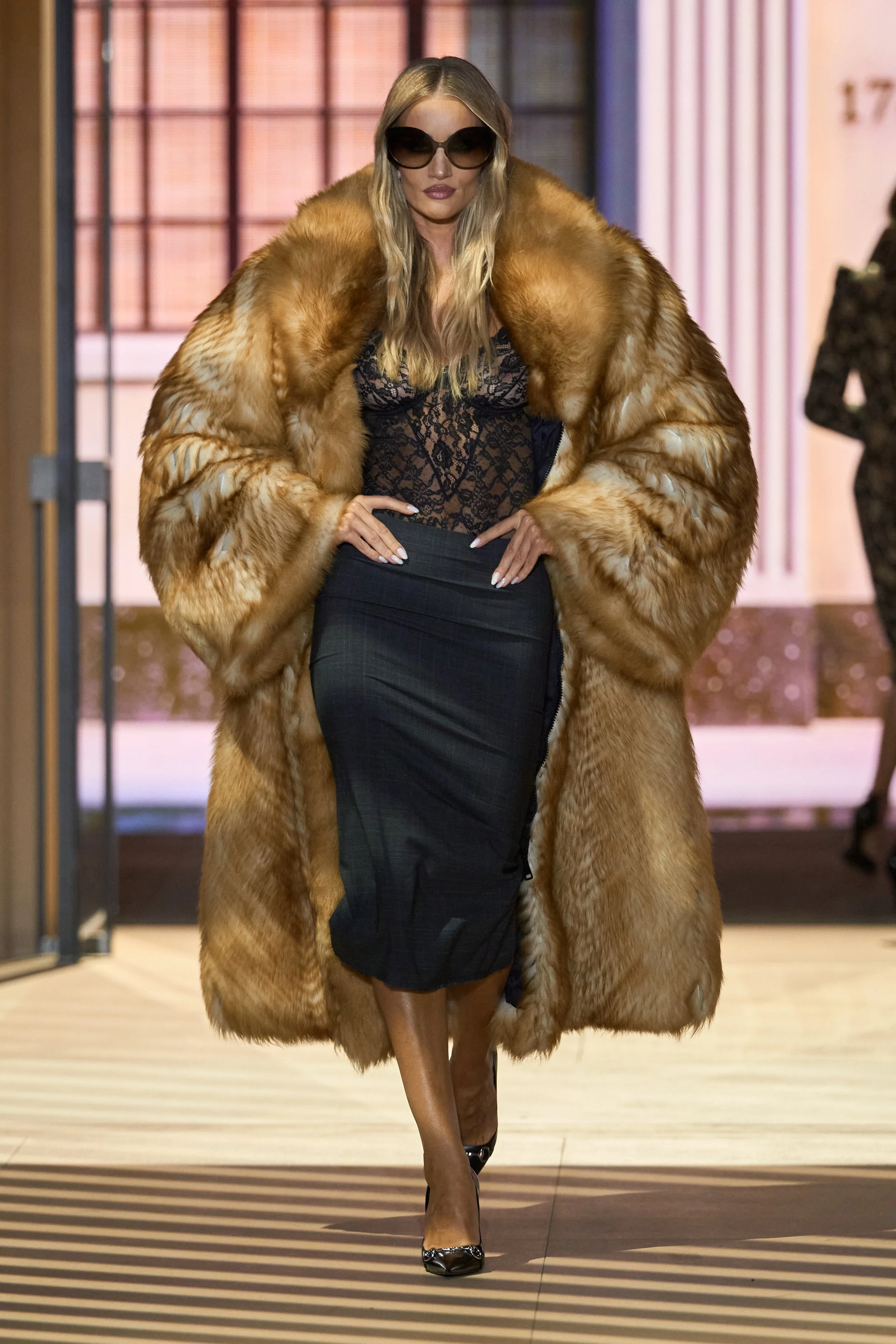
Suddenly, the music's repetitiveness is interrupted. As the beat changed, so did the gender of the models. For the womenswear portion of the show, casting is outstanding. Older models invoke images of a familiar glamour, their lavish heavy coats adorned with perfectly shiny gold buttons. Younger models in tweed suits wear their hair down, while ones in tight dresses have it up. Some with titanic crocodile bags, others with sunglasses somehow even bigger. Animal patterns and textures punctuated the collection. Long leopard print coats walked alongside voluminous fur ones – a particularly striking one was worn by Rosie Huntington-Whiteley.
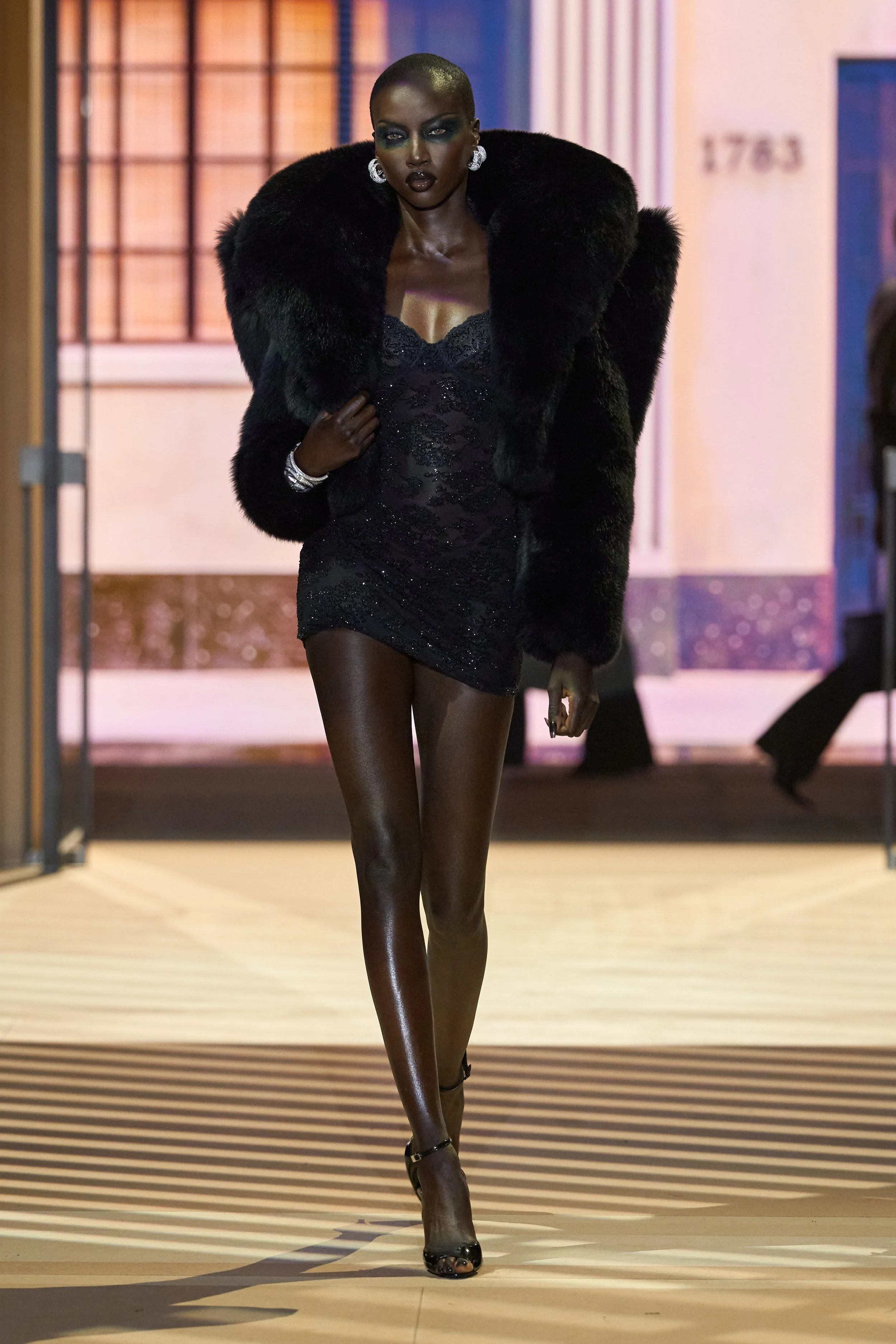
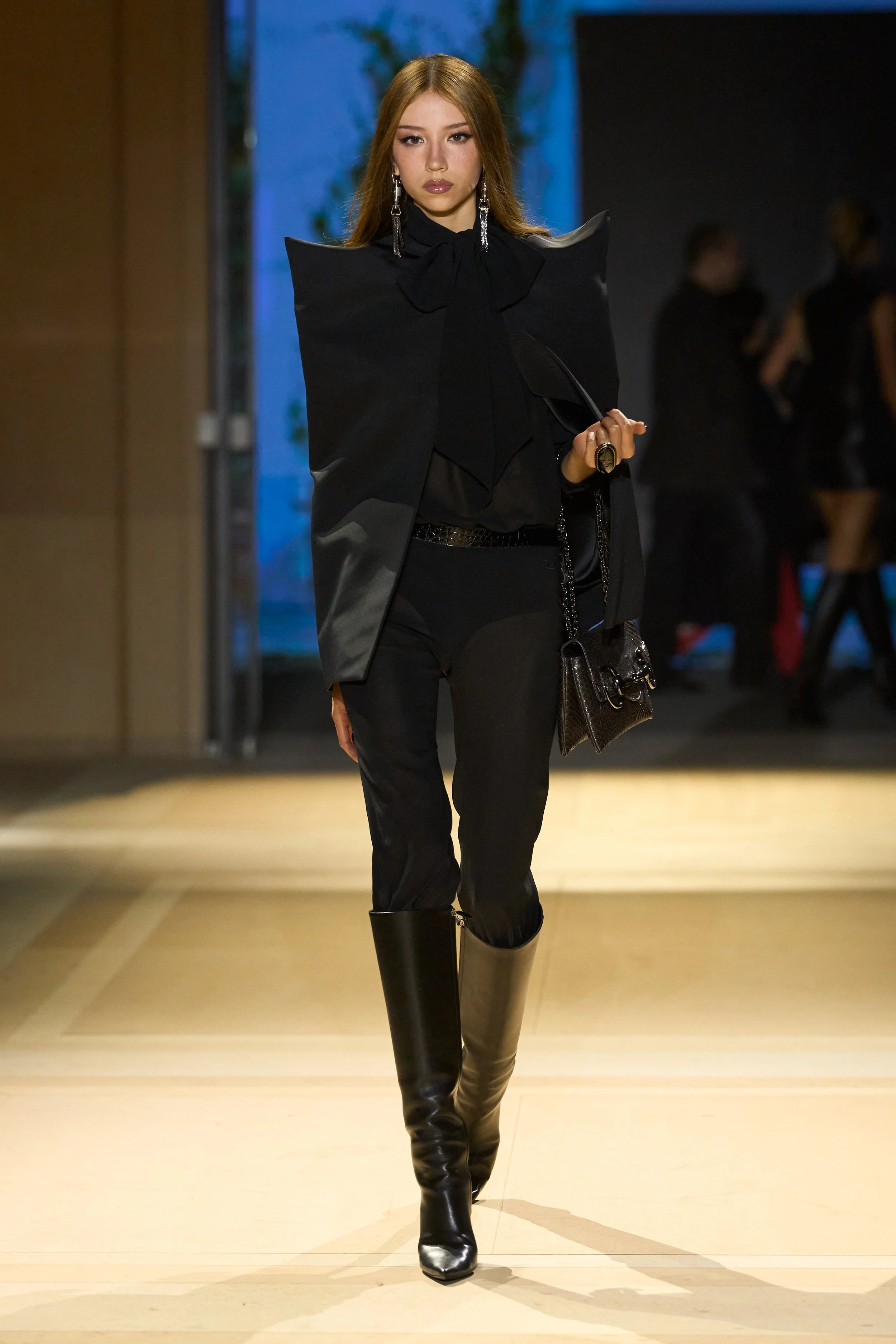
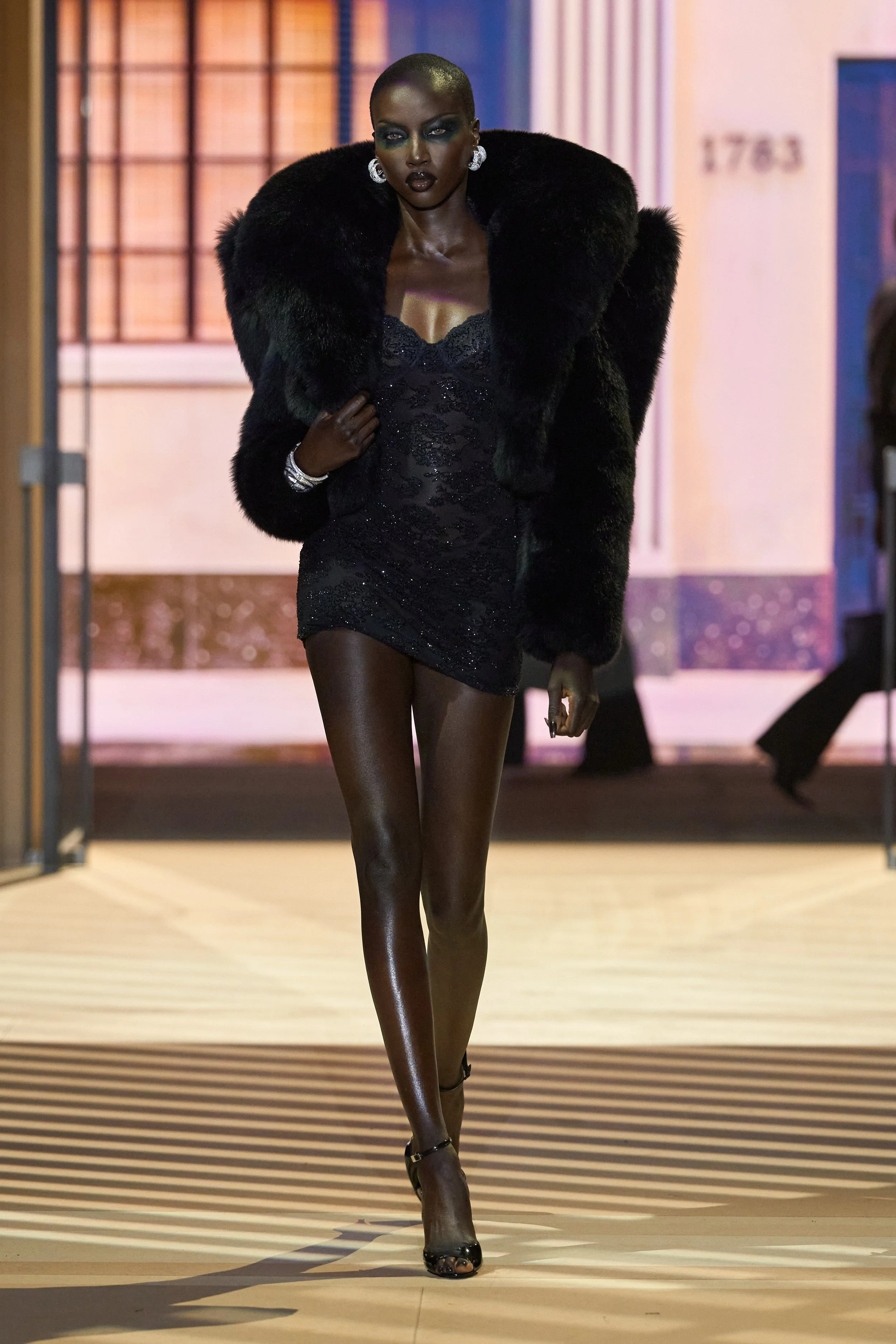
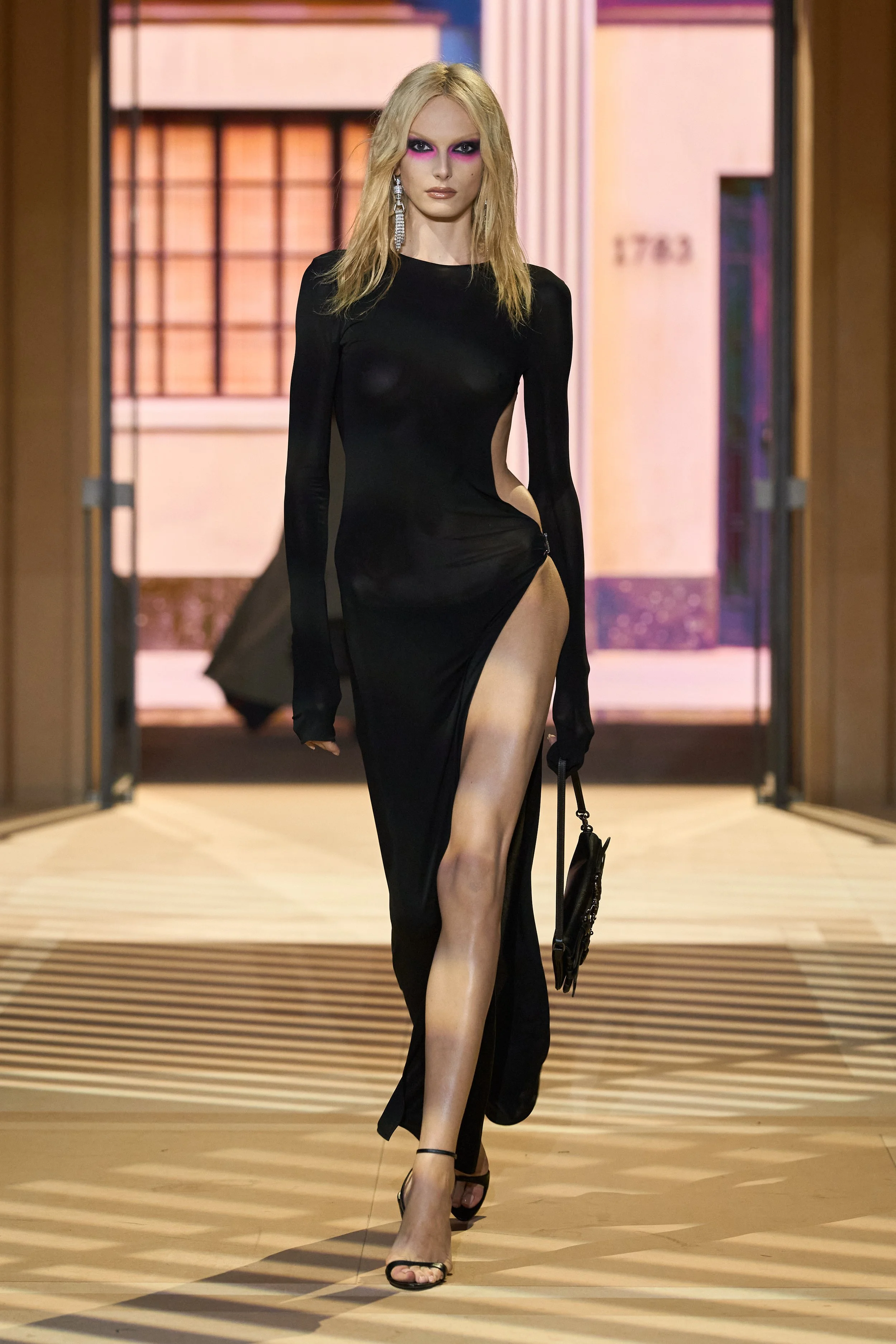
Slowly, the beat started morphing, the lights lowered. Models began appearing with heavier make-up, their eyes covered in black. In tailored capes, shoulders are razor-sharp. Anok Yai walked in a glittering lace minidress topped with a sculptural fur bolero. At Gucci, sensuality is as much of a house code as the horse bit. Just like the latter, the first is a medium for Demna – his ability to manoeuvre the brand’s legacy is undeniable.
Words by Pedro Vasconcelos