showreport

ISSEY MIYAKE FW26

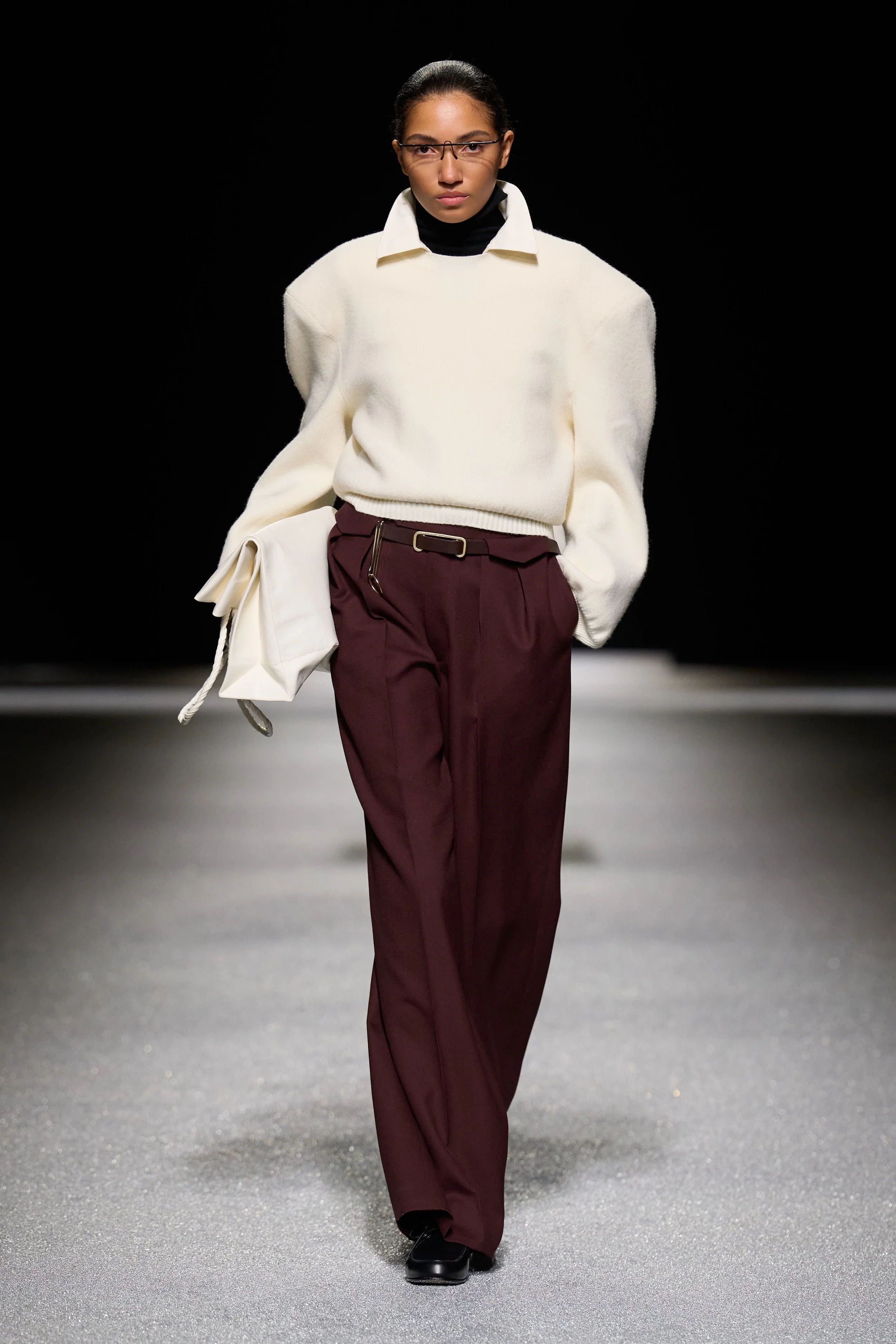
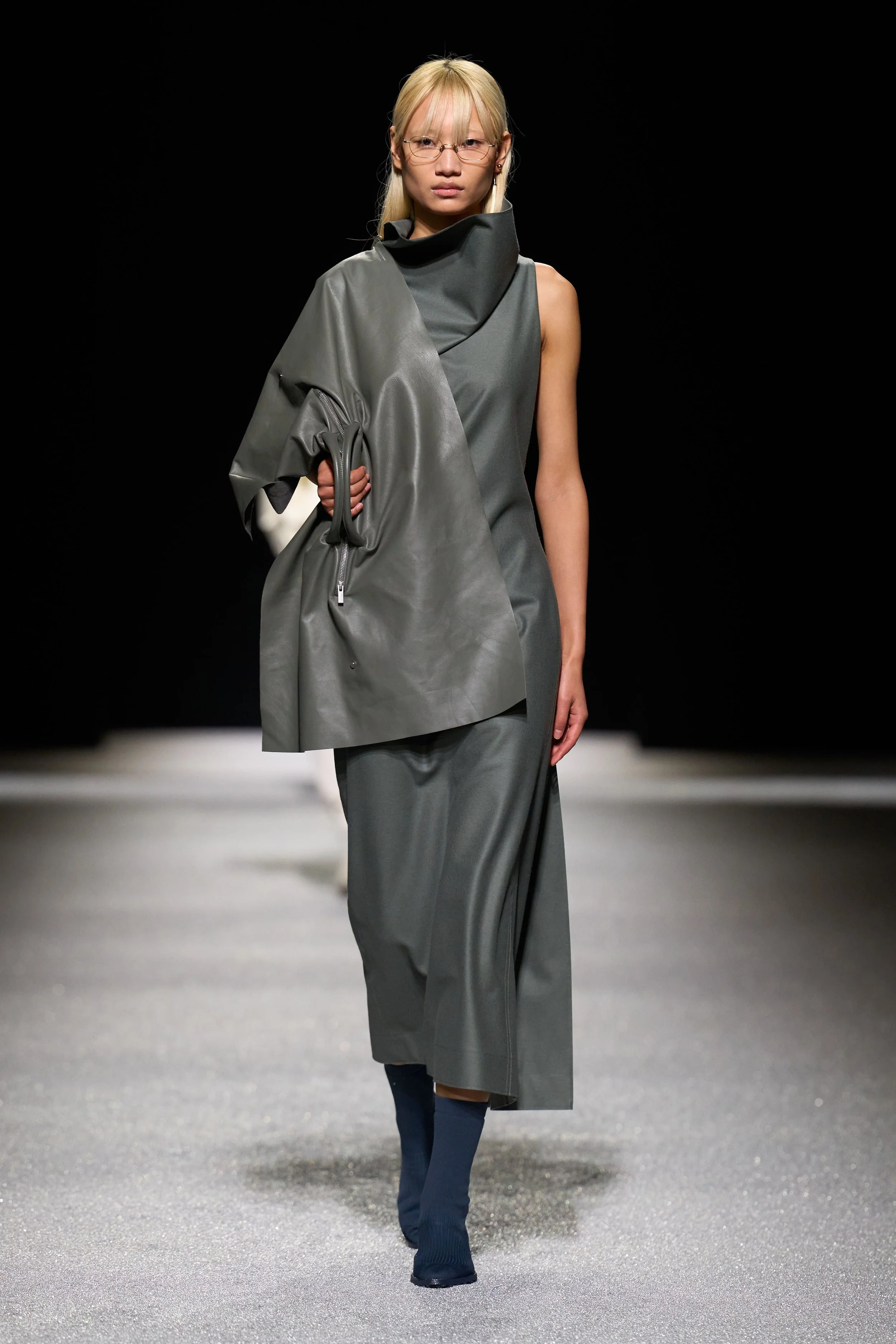
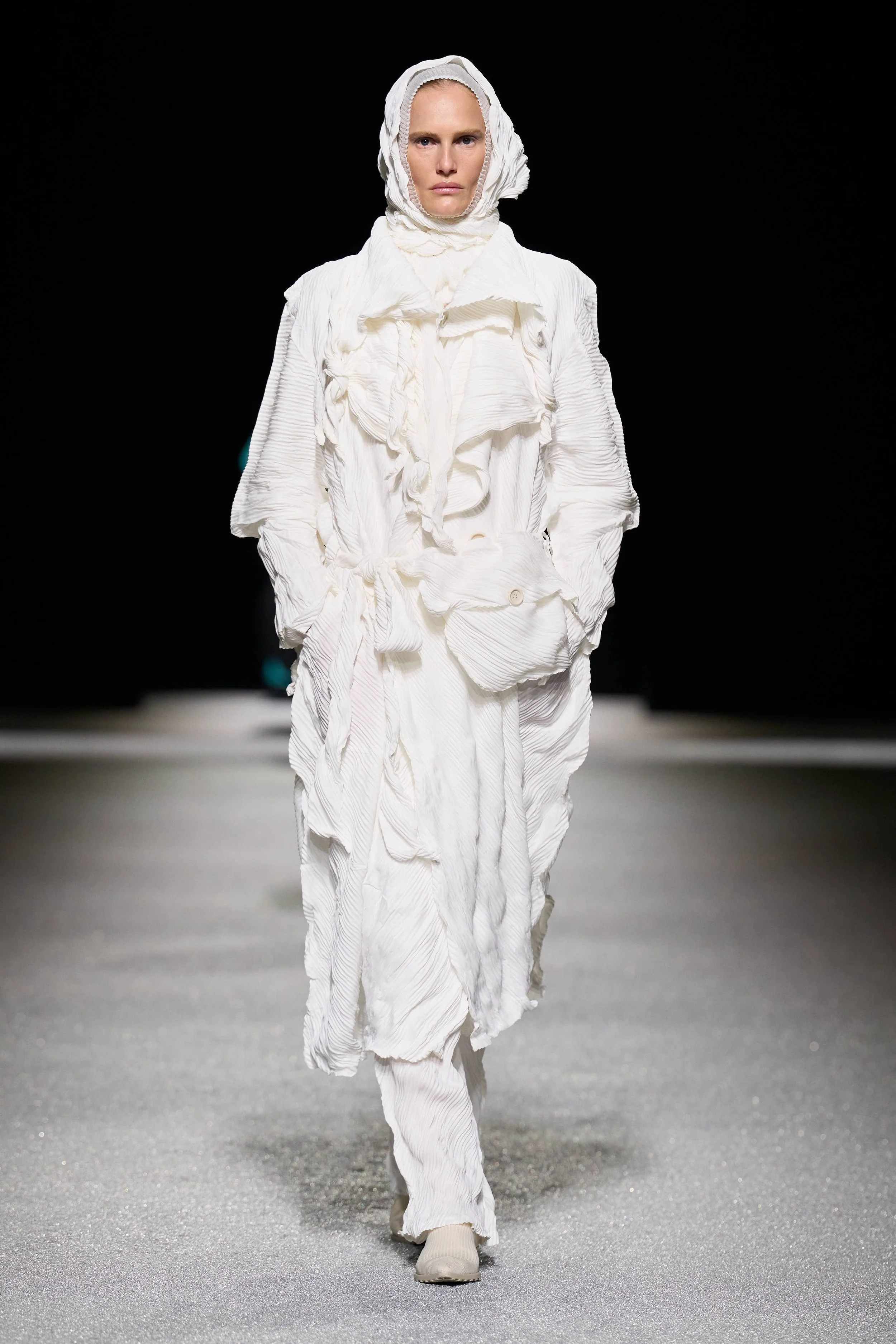
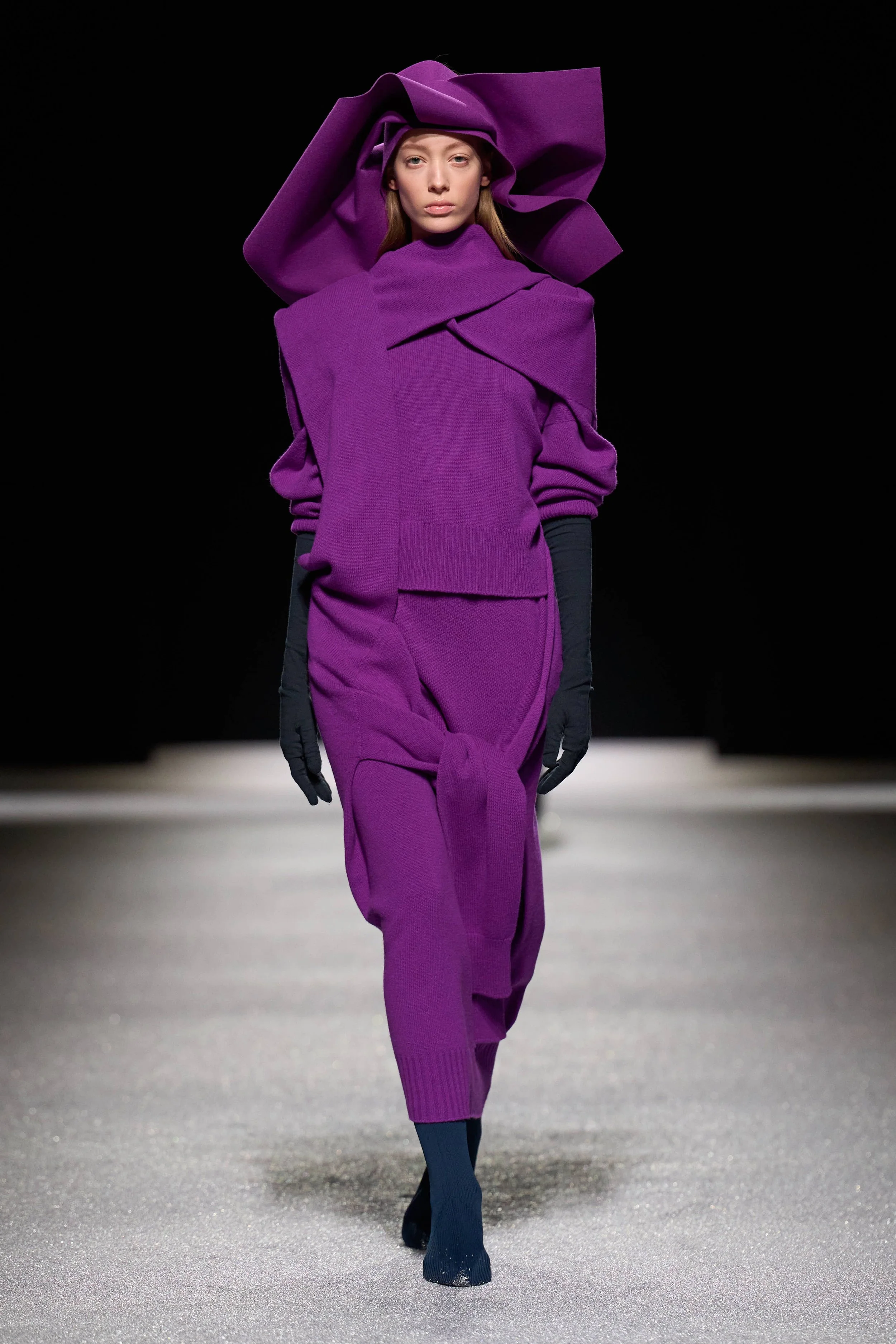
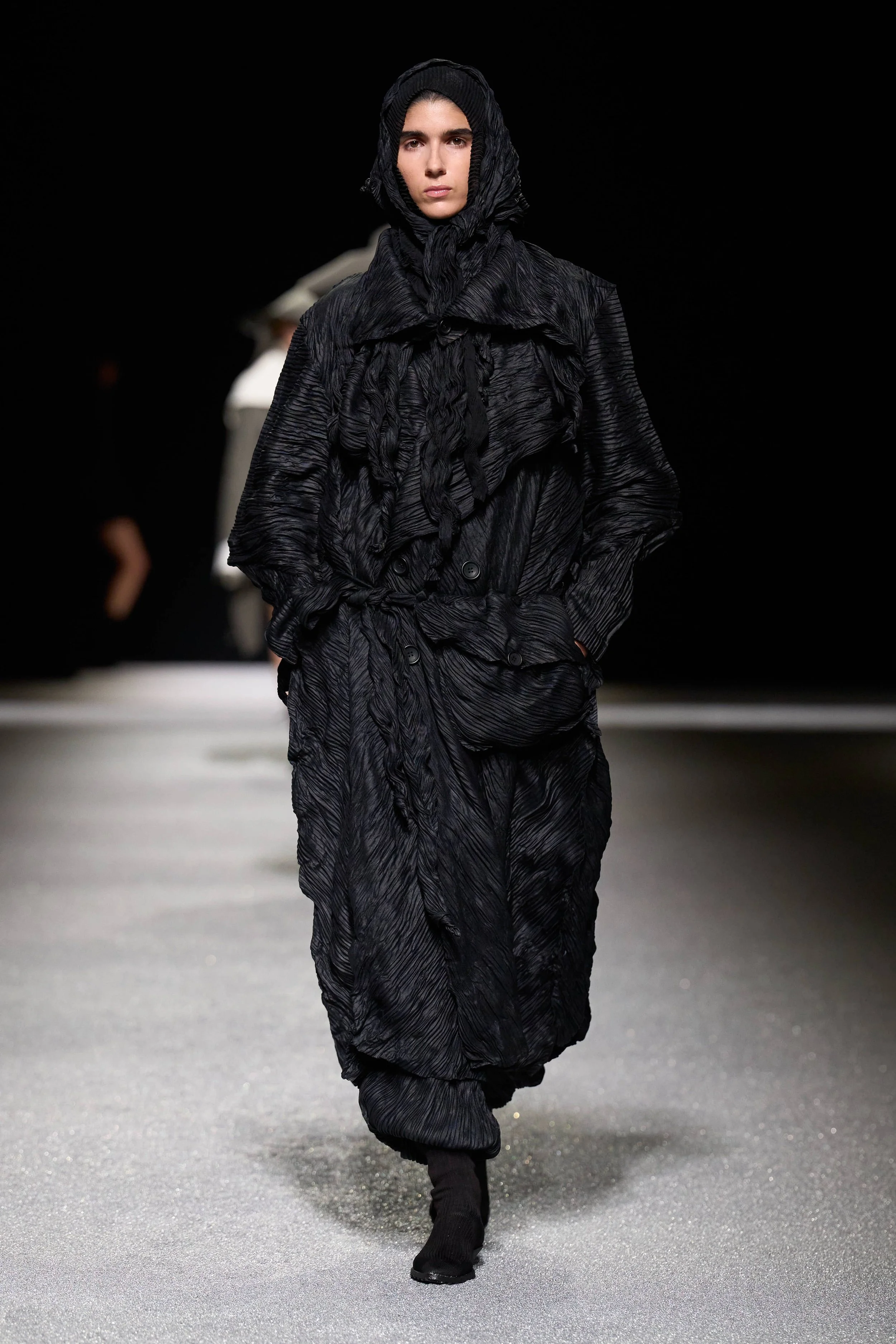
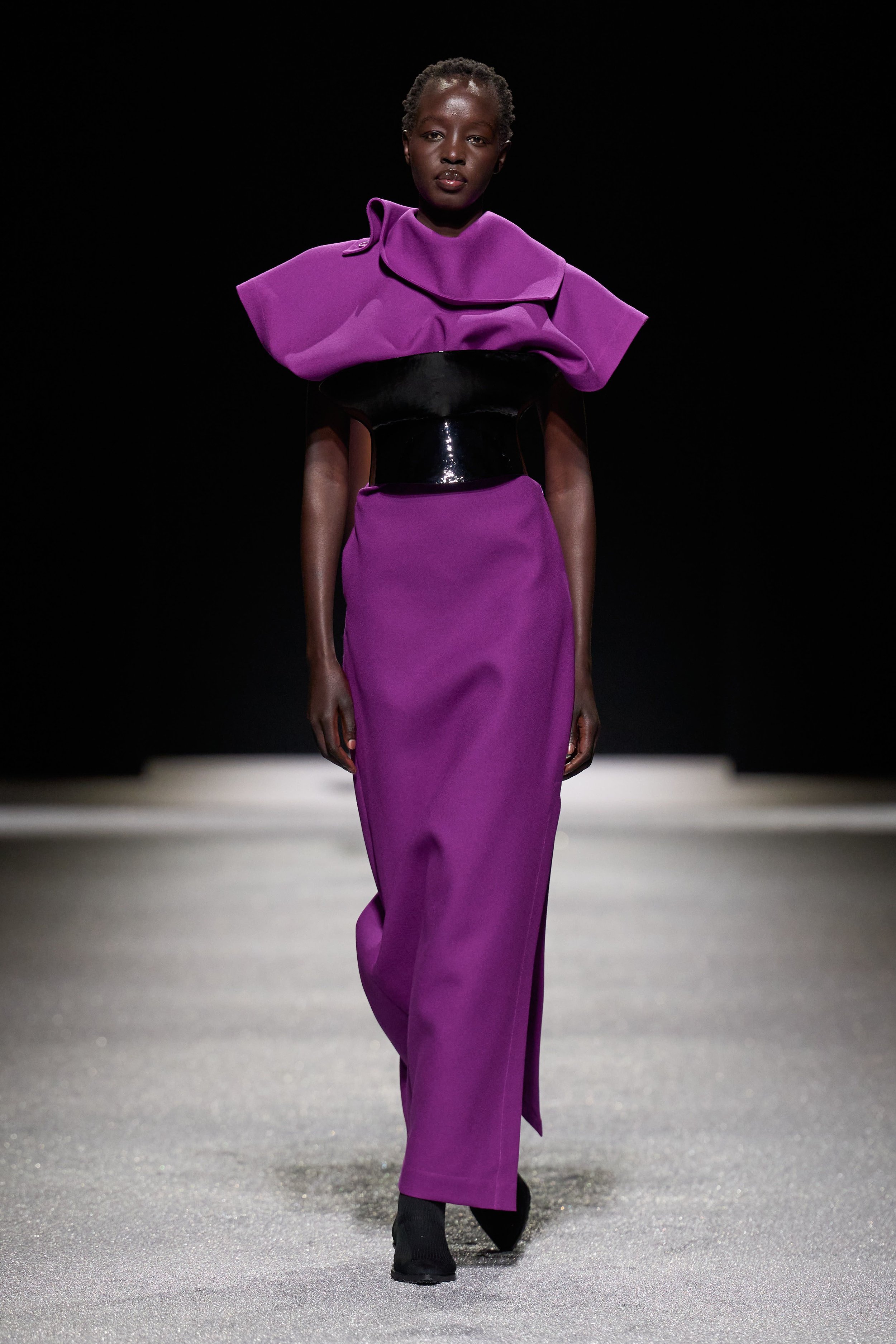
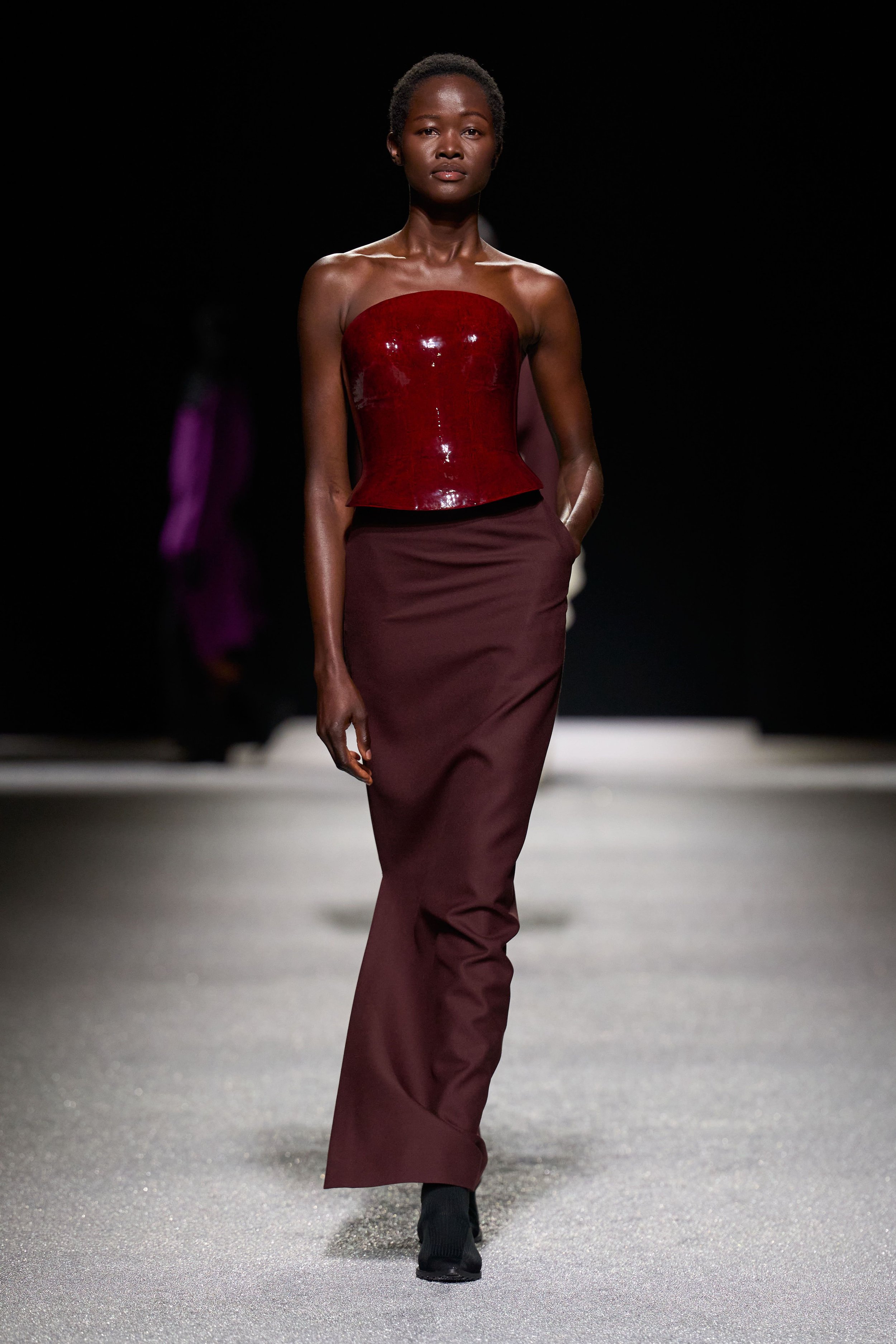
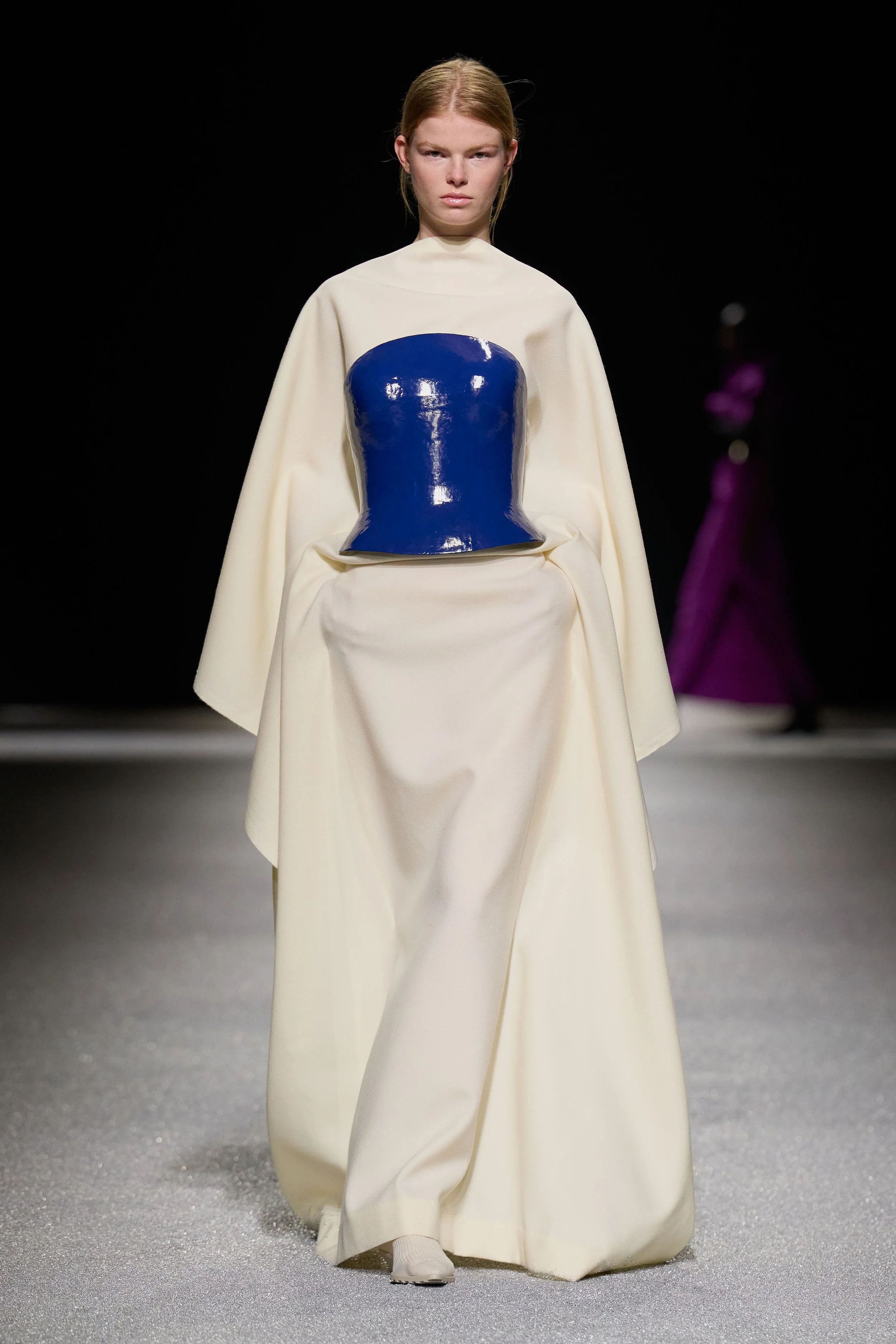
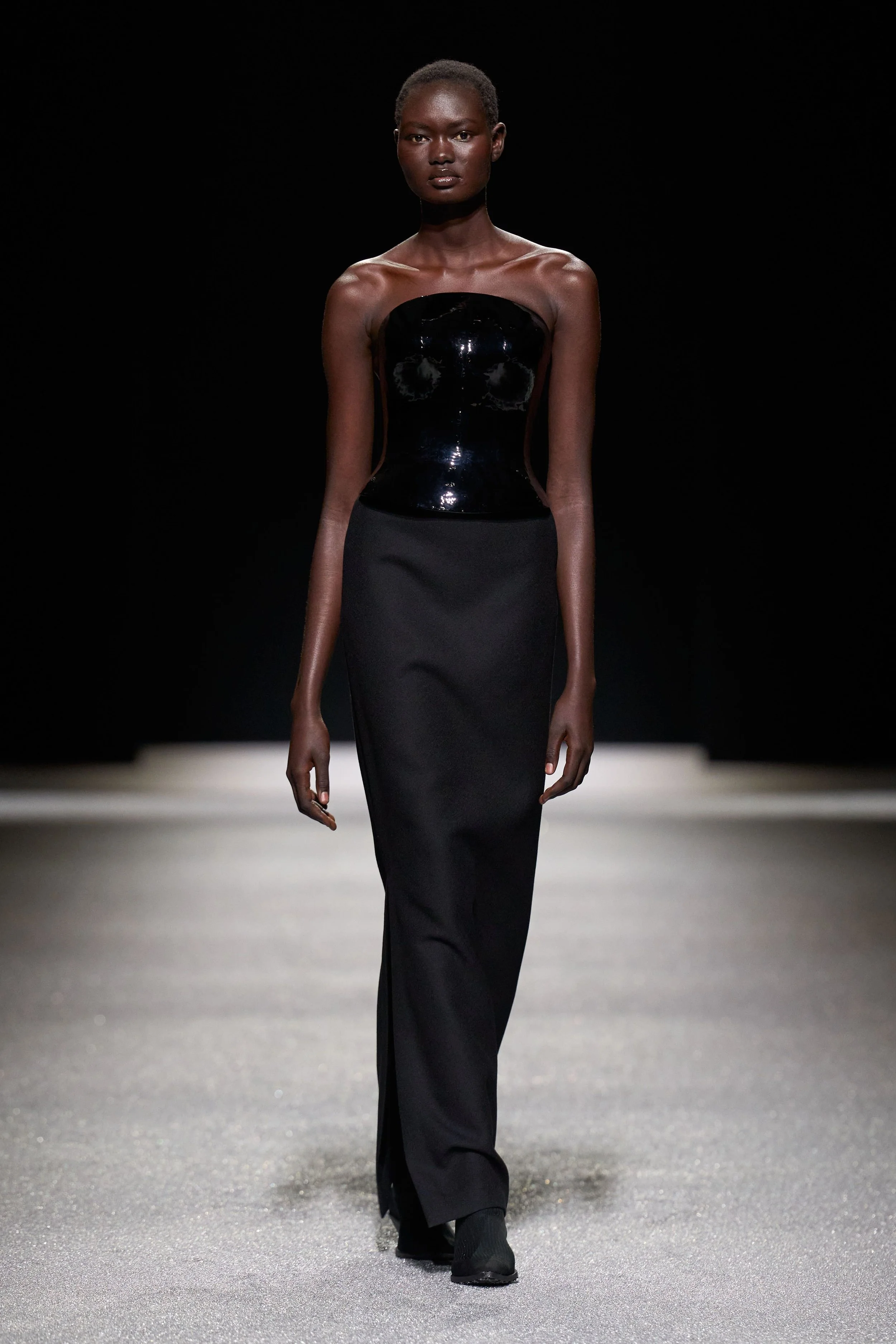
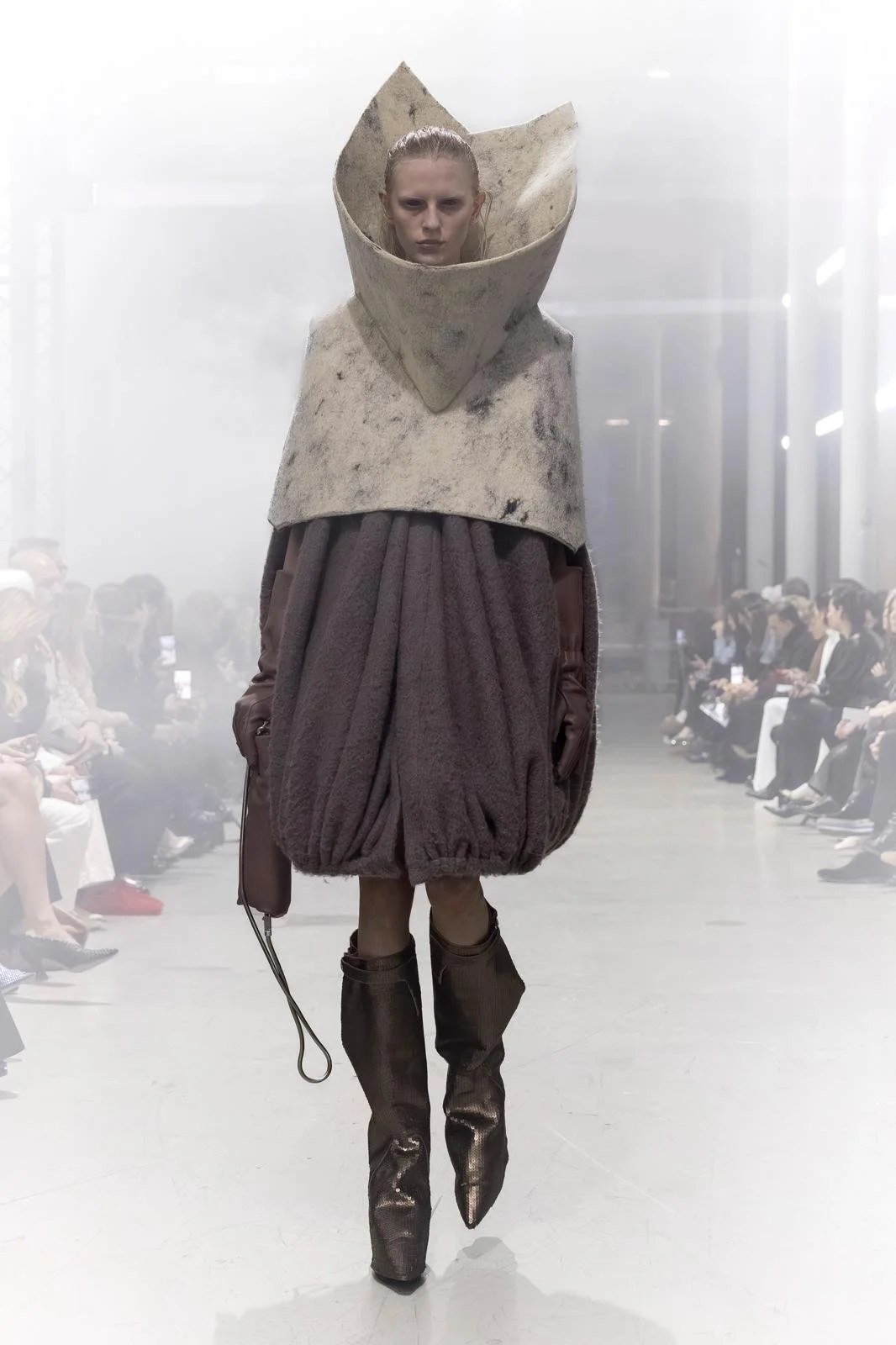
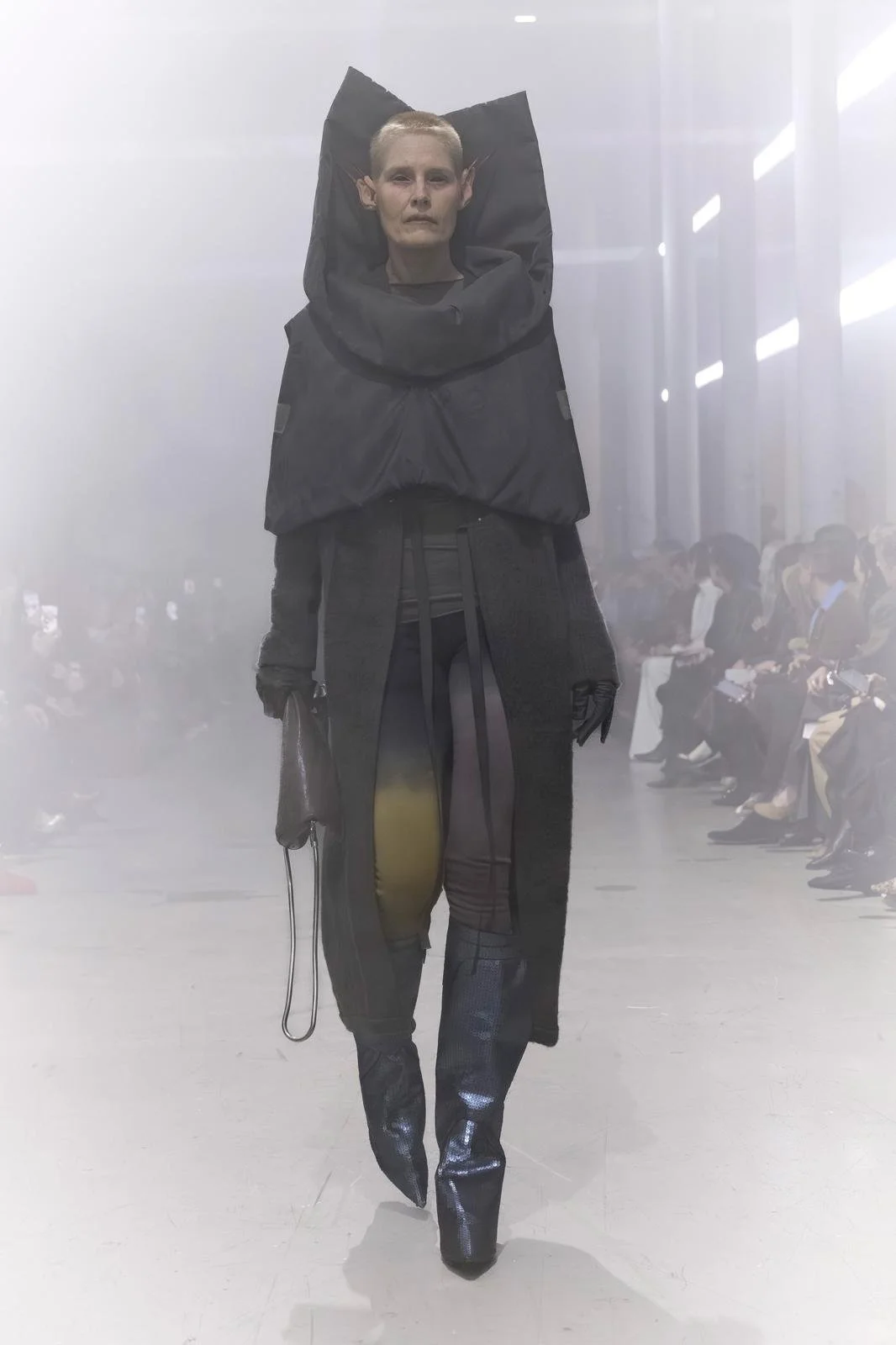
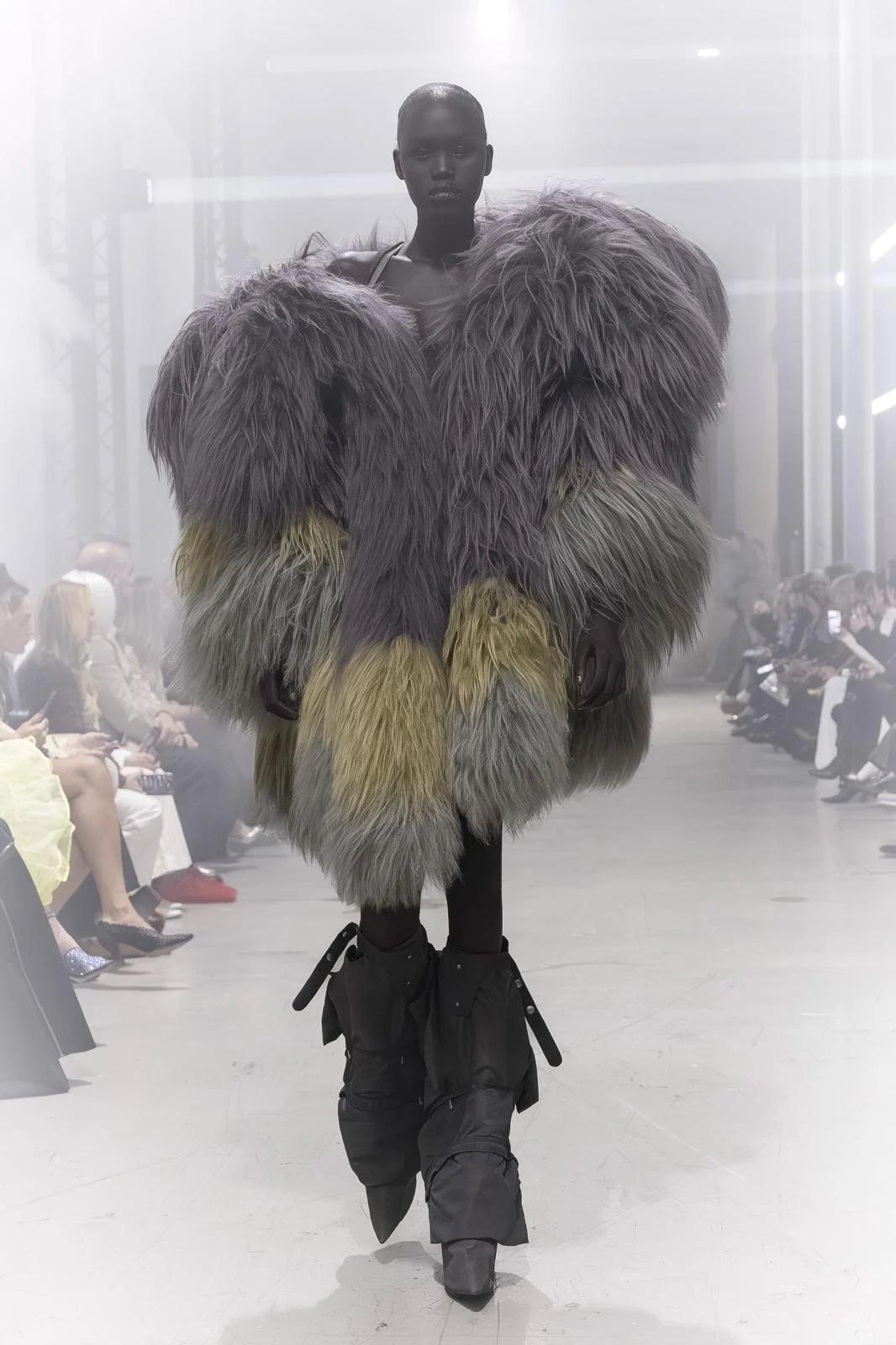
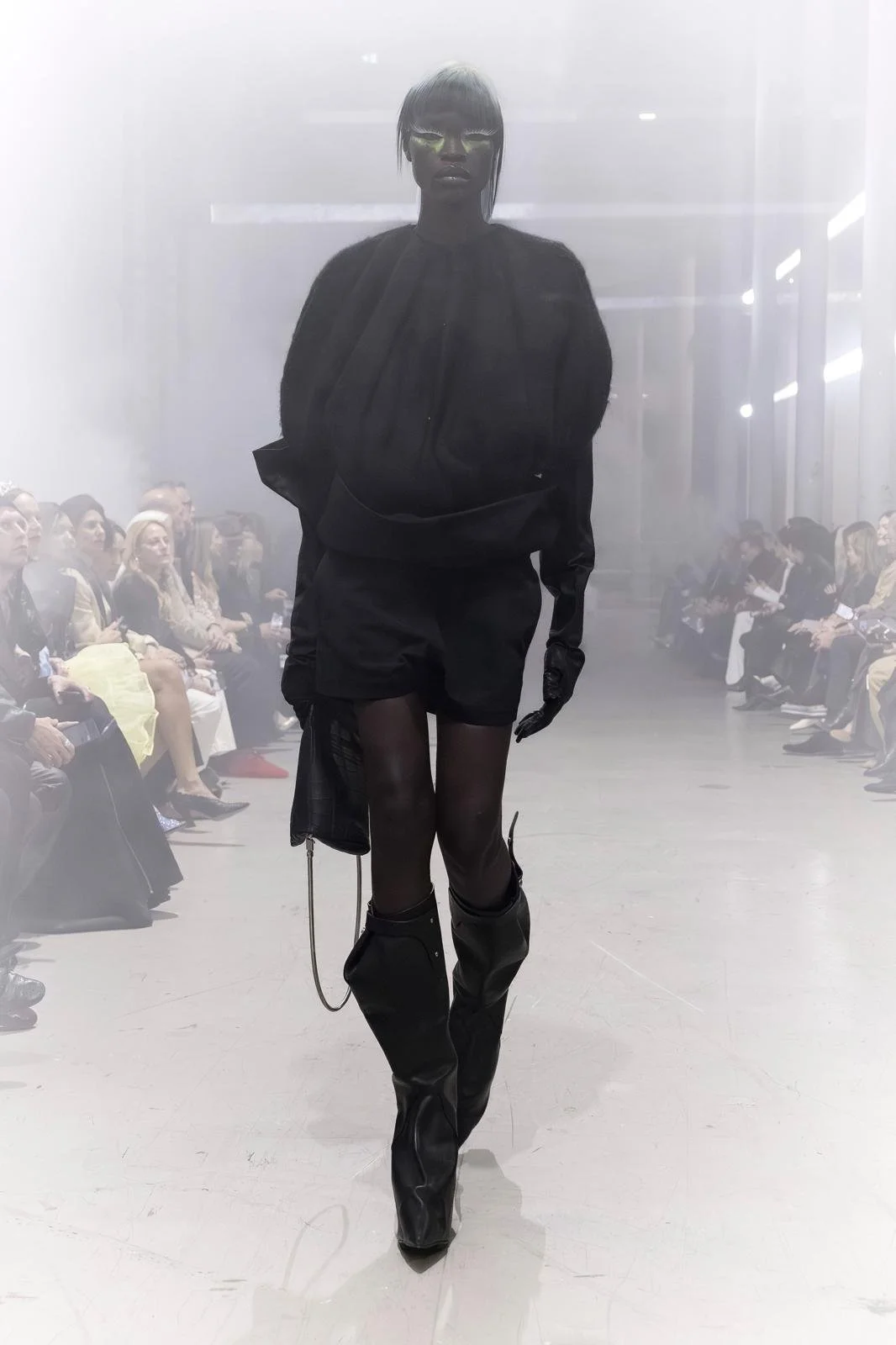
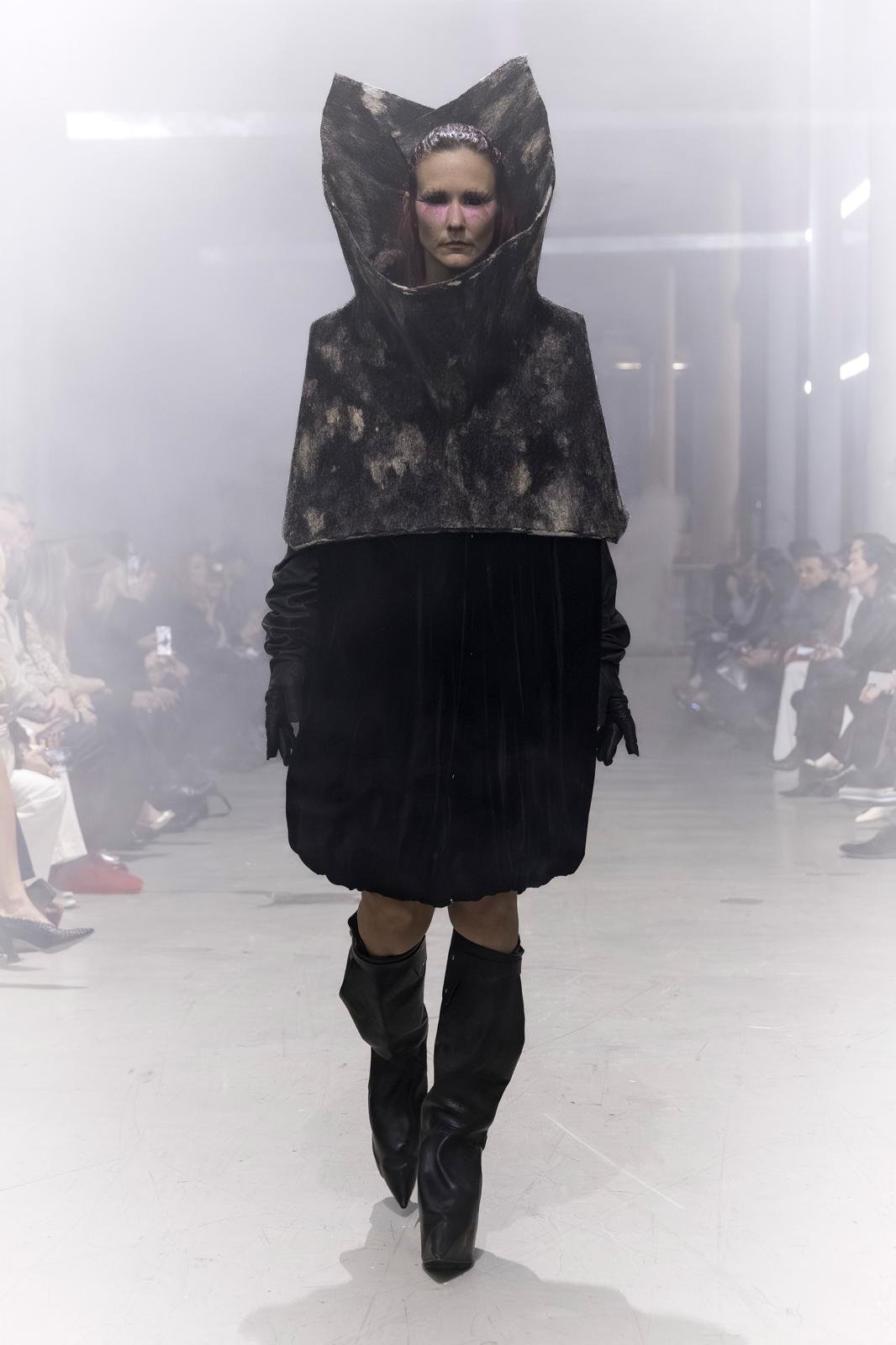
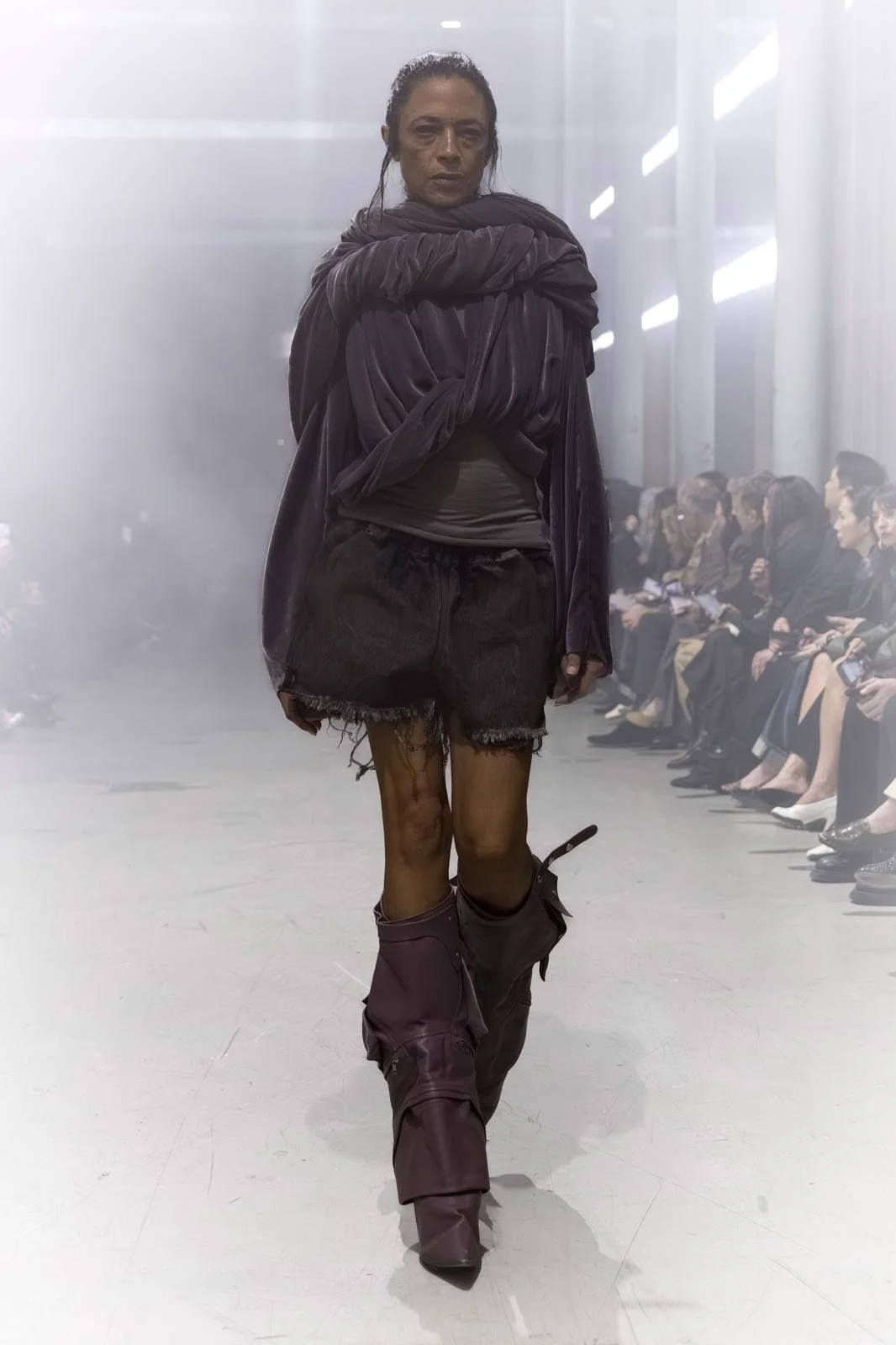
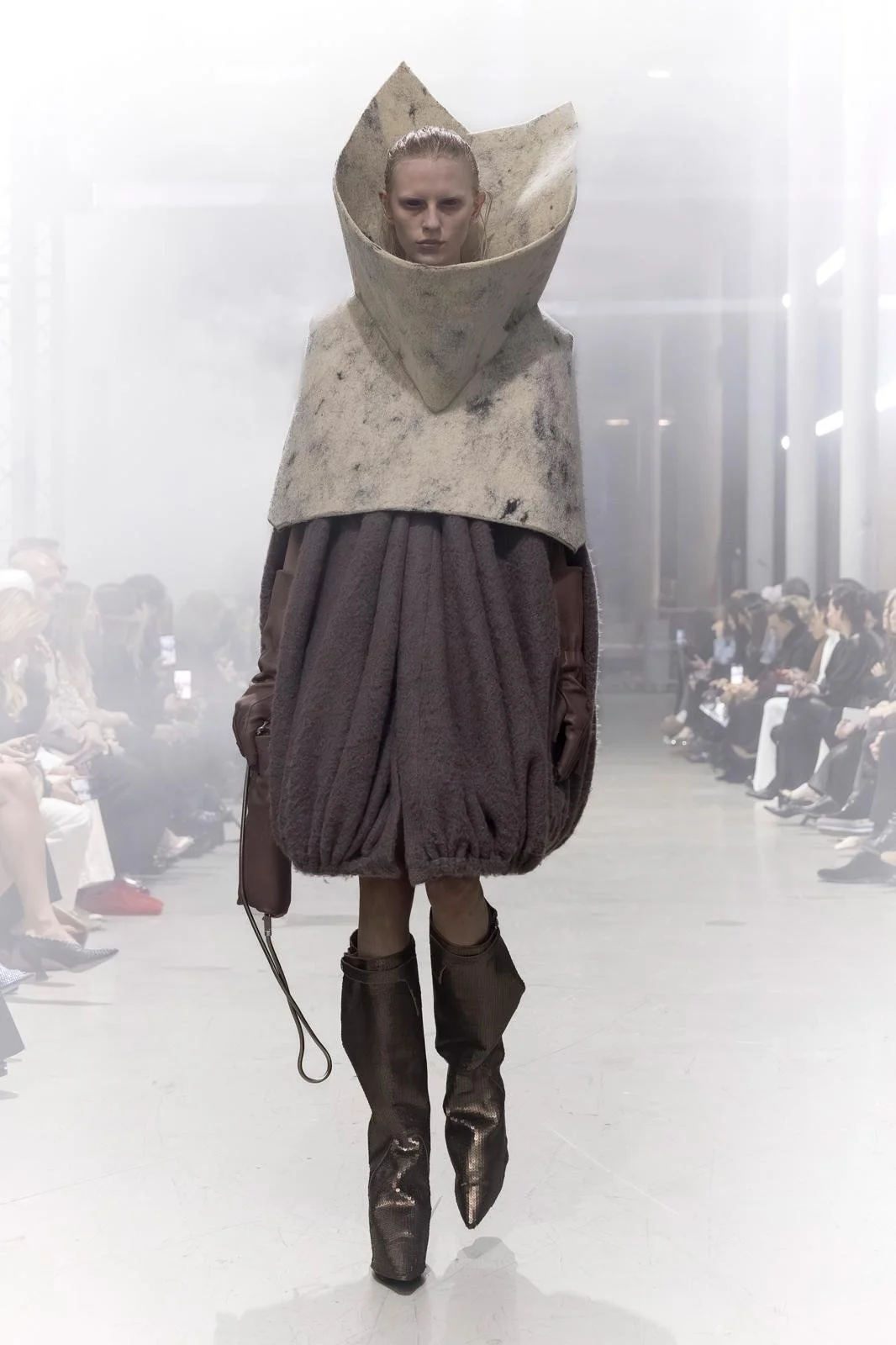
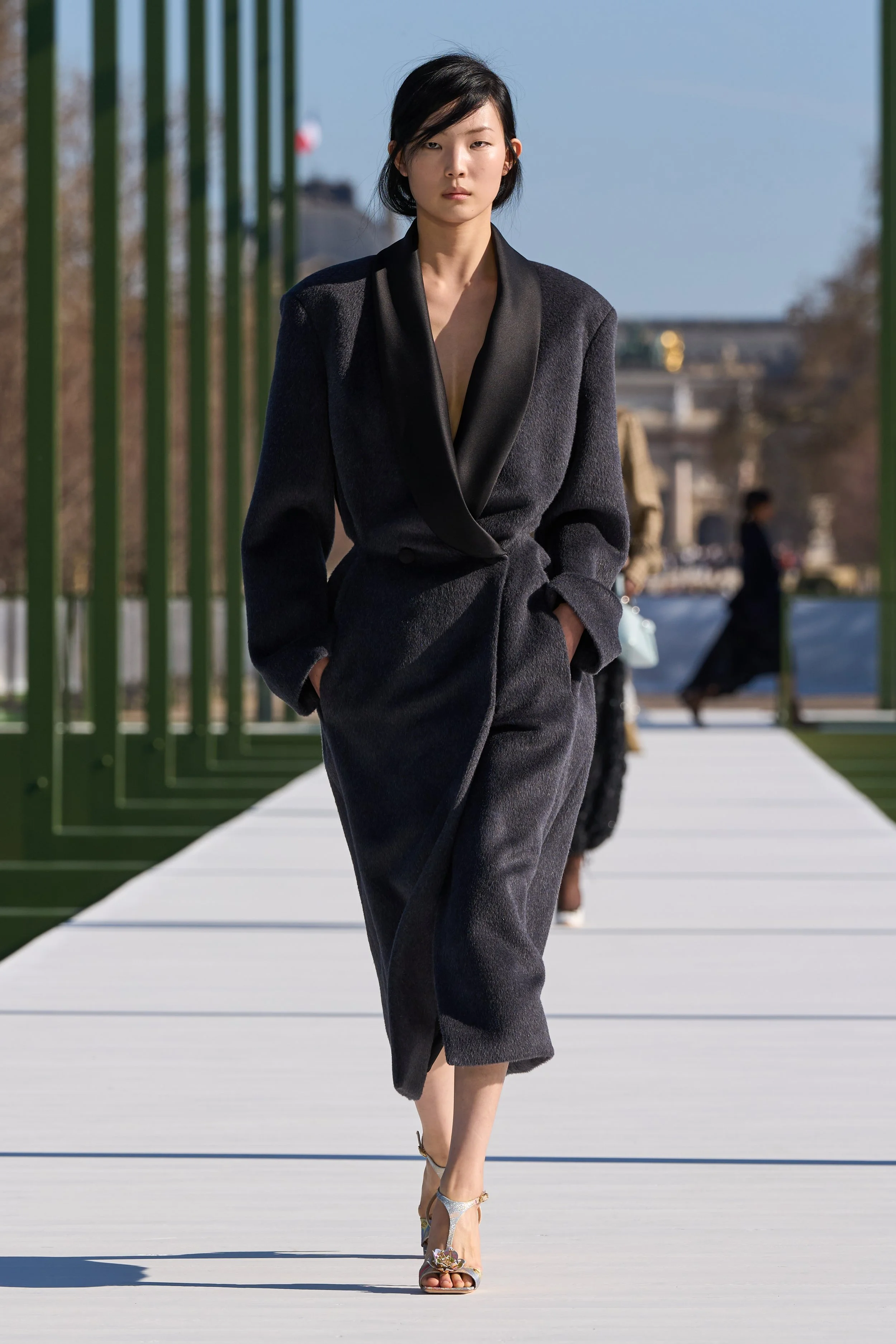
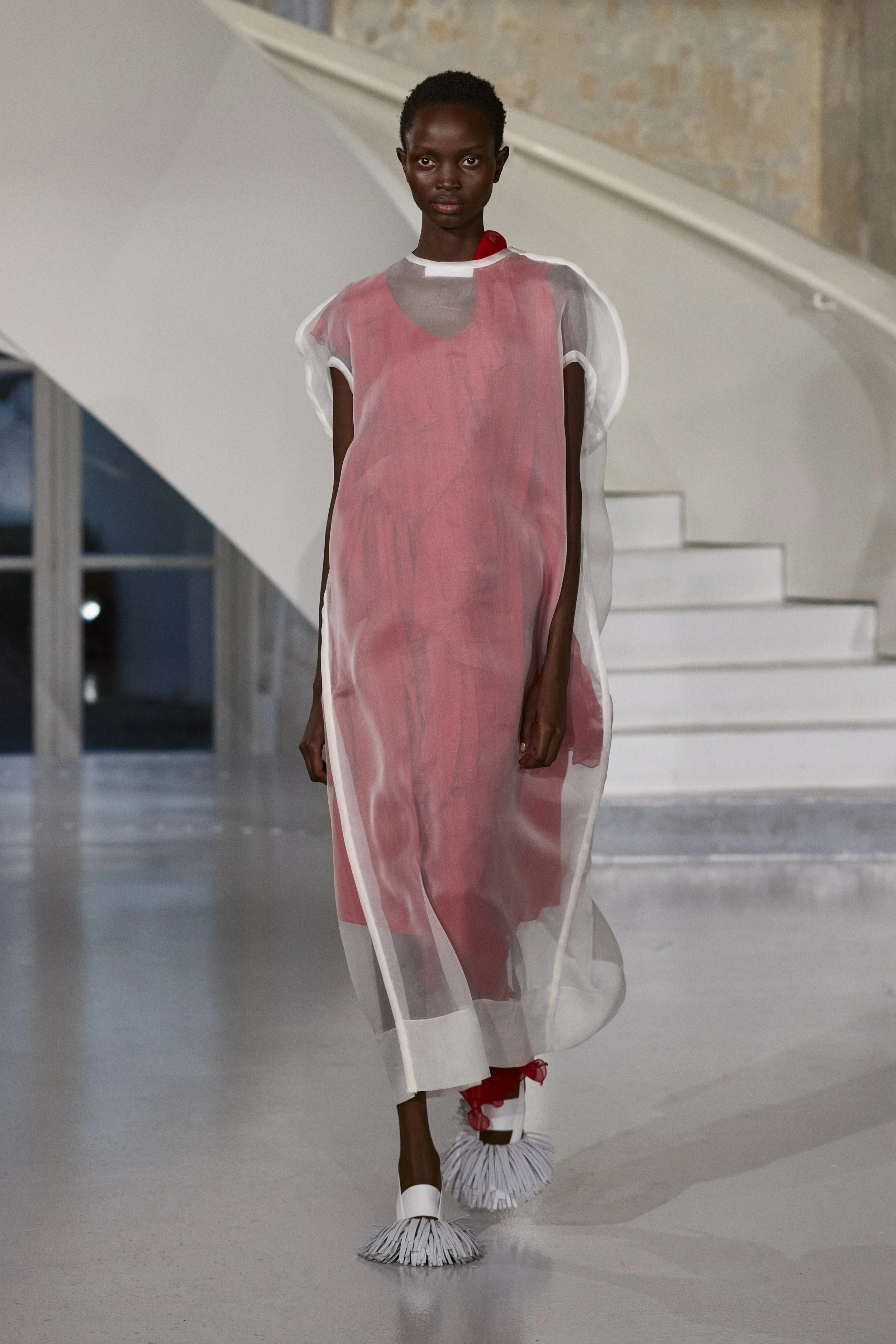
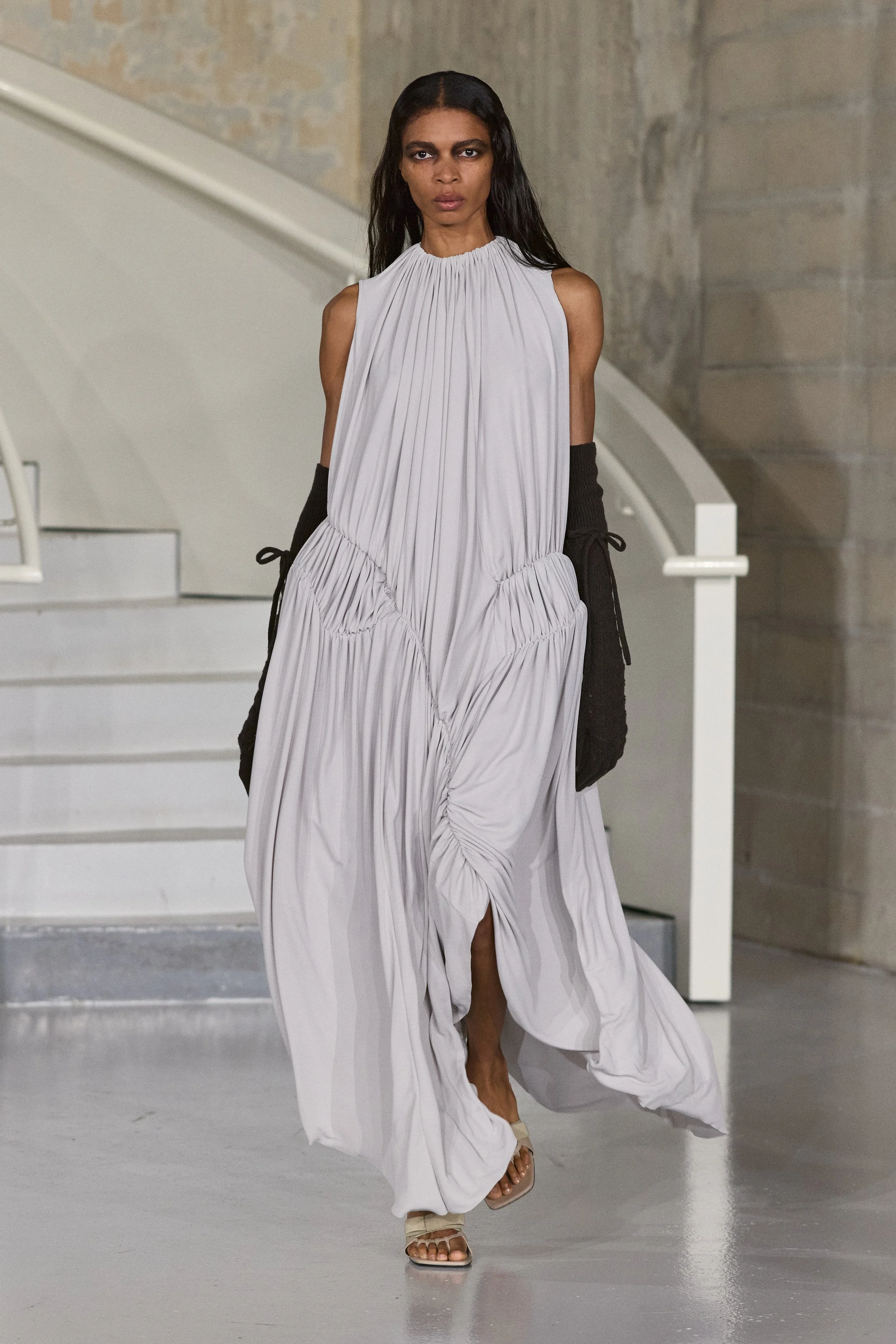
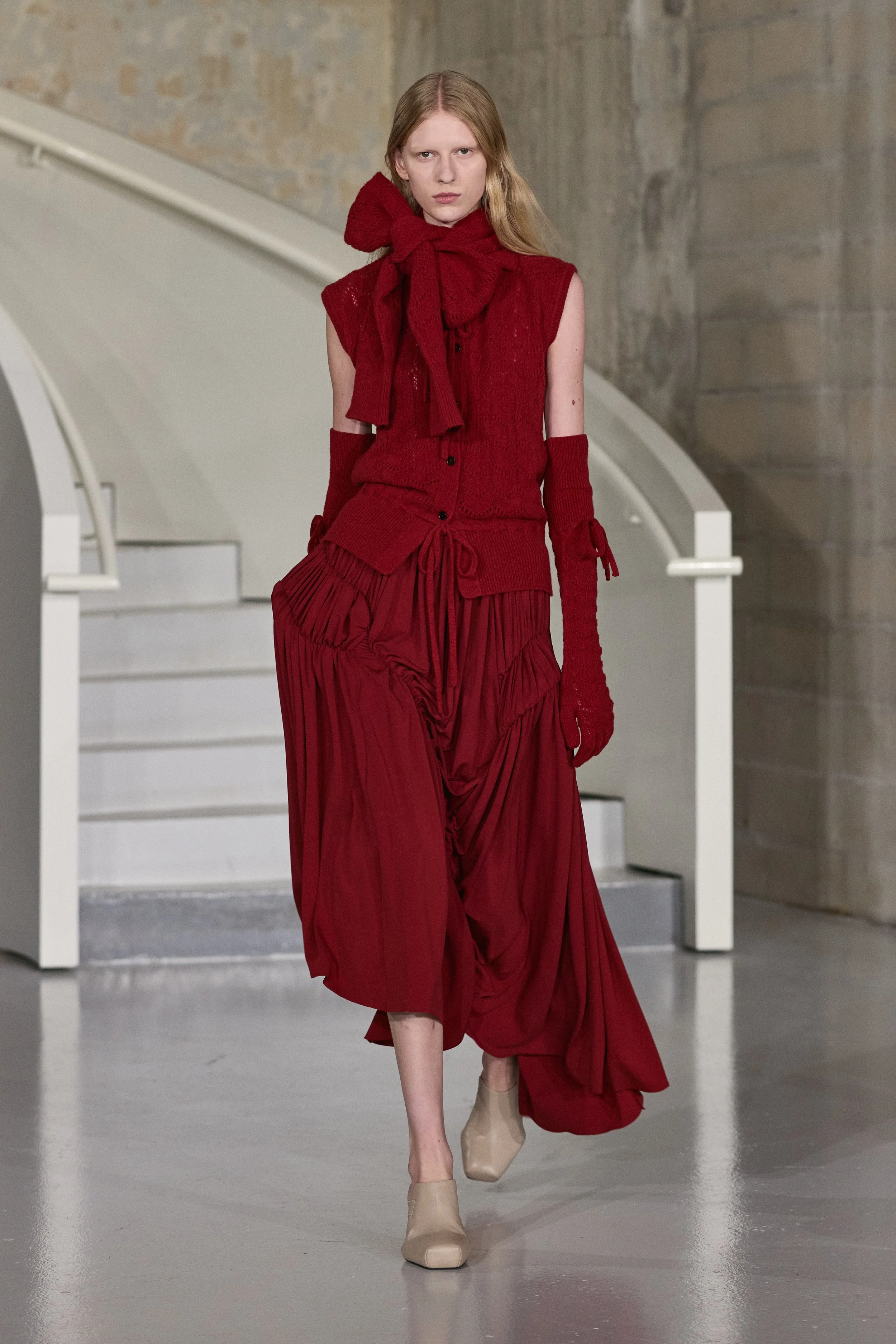
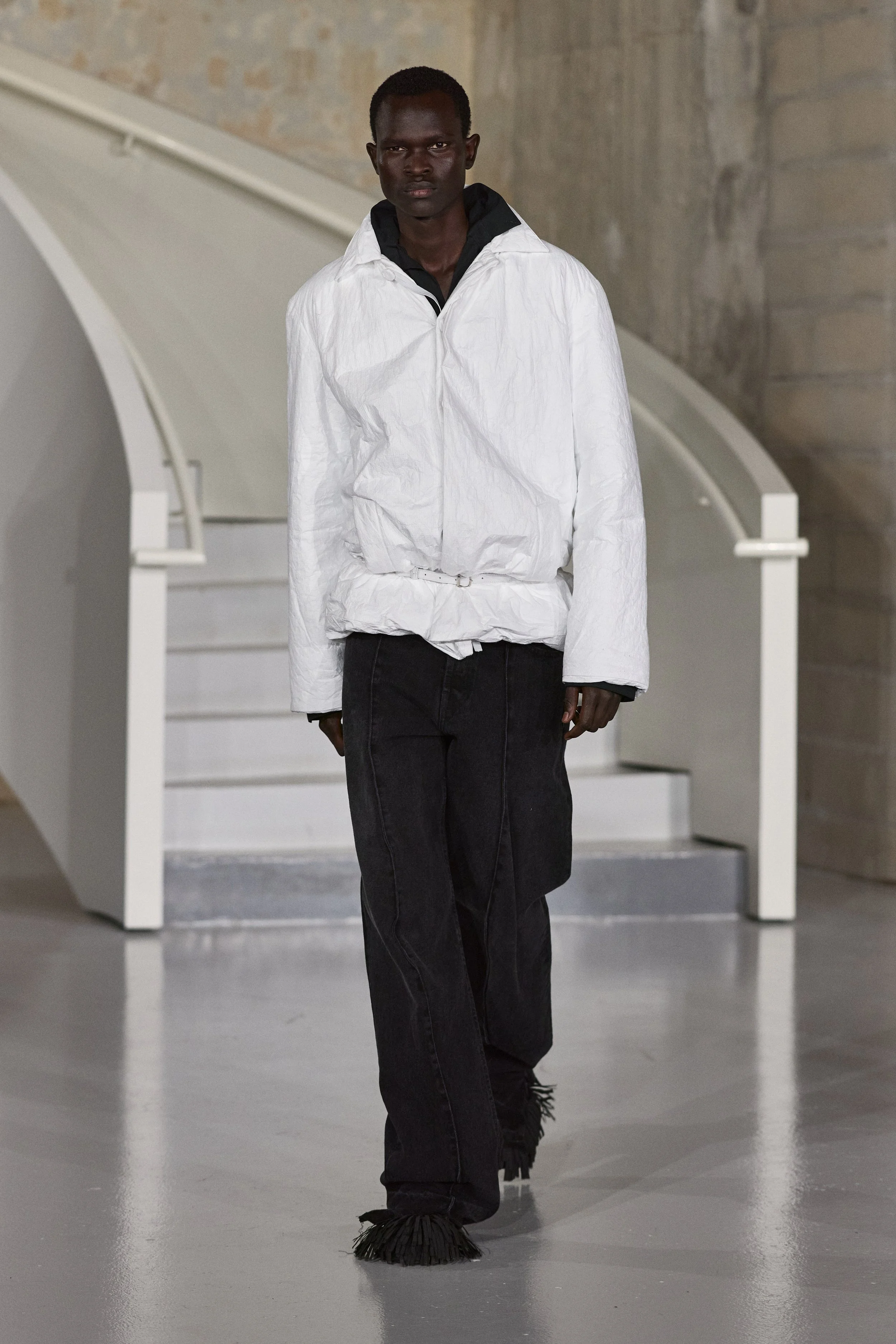
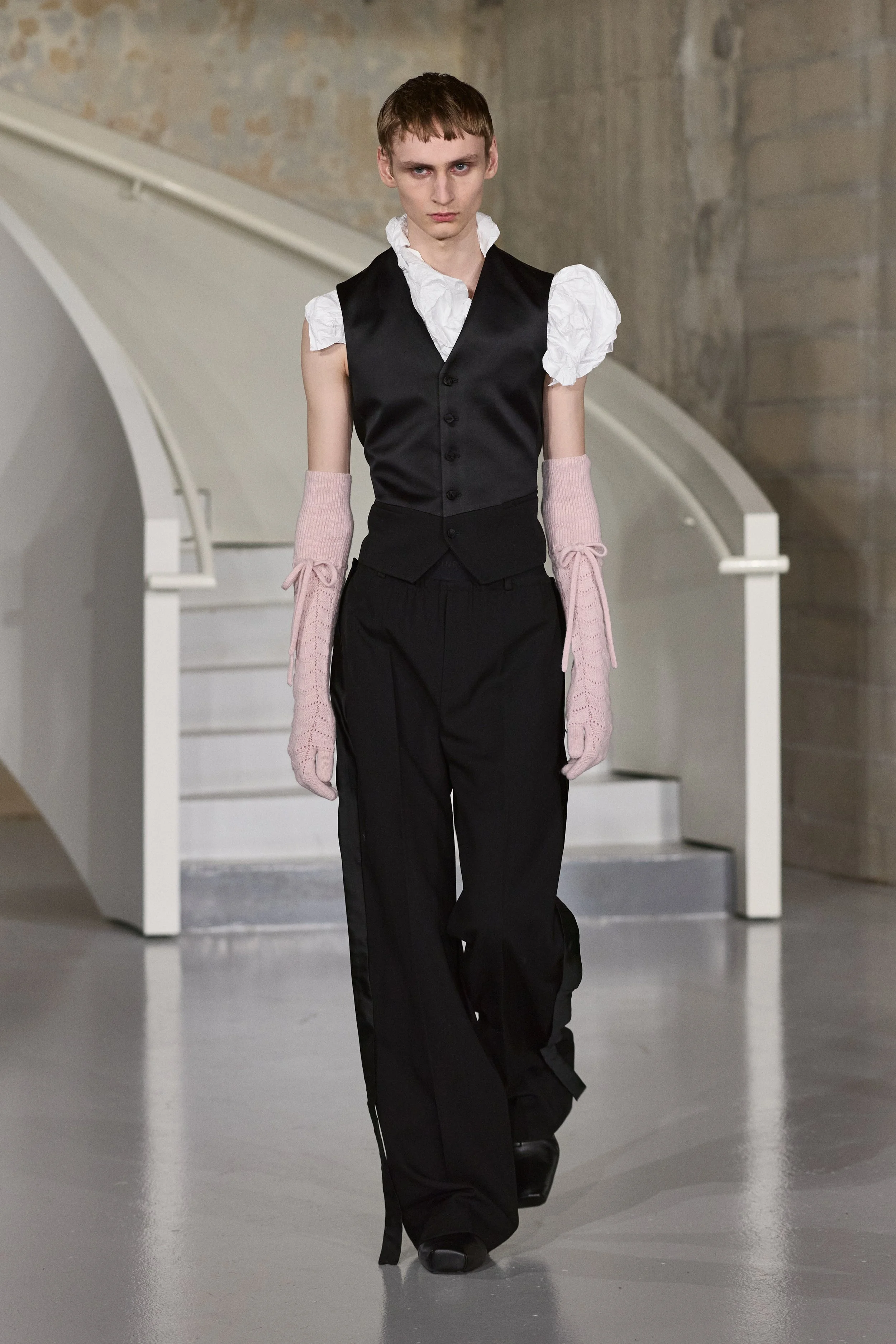
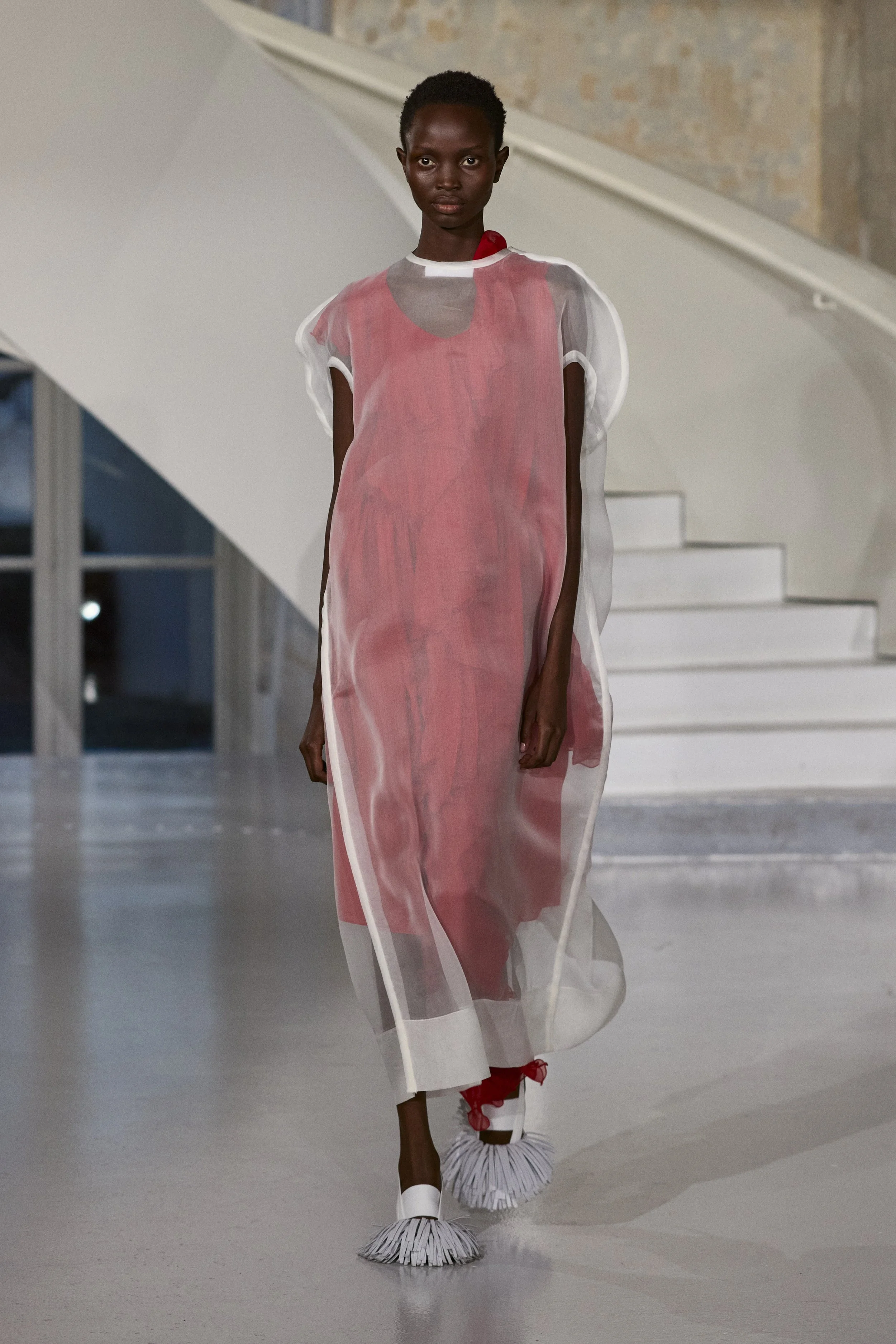
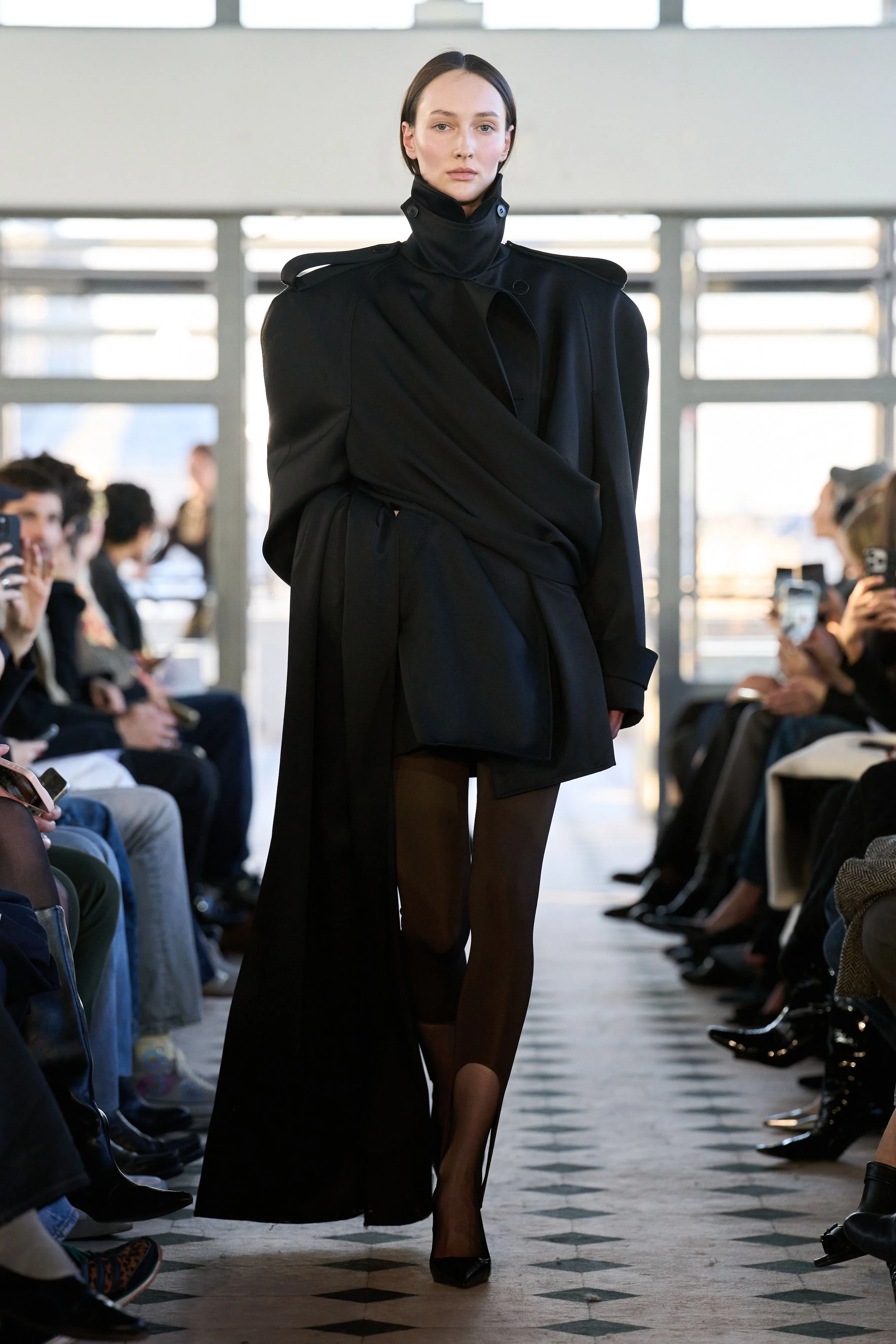
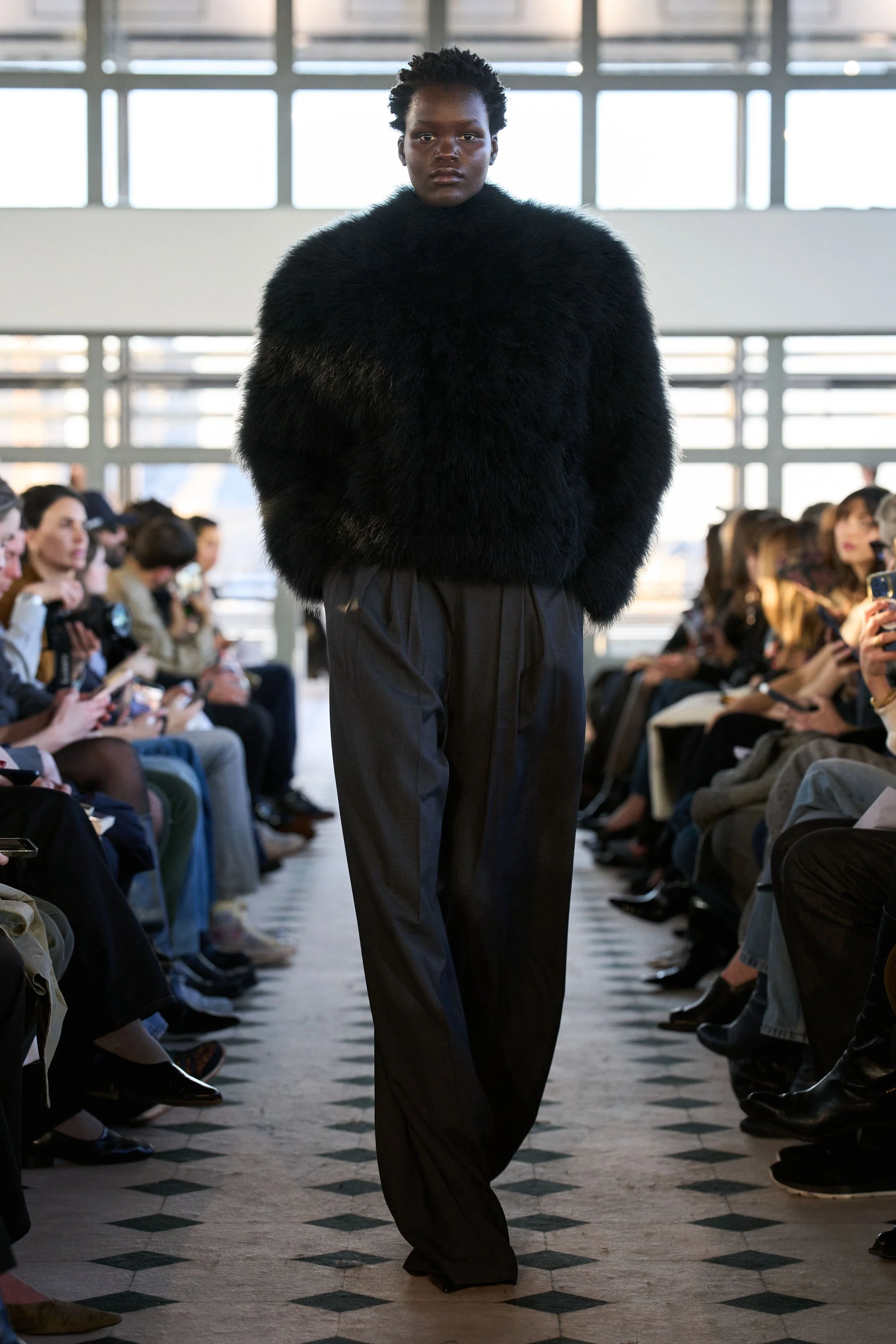
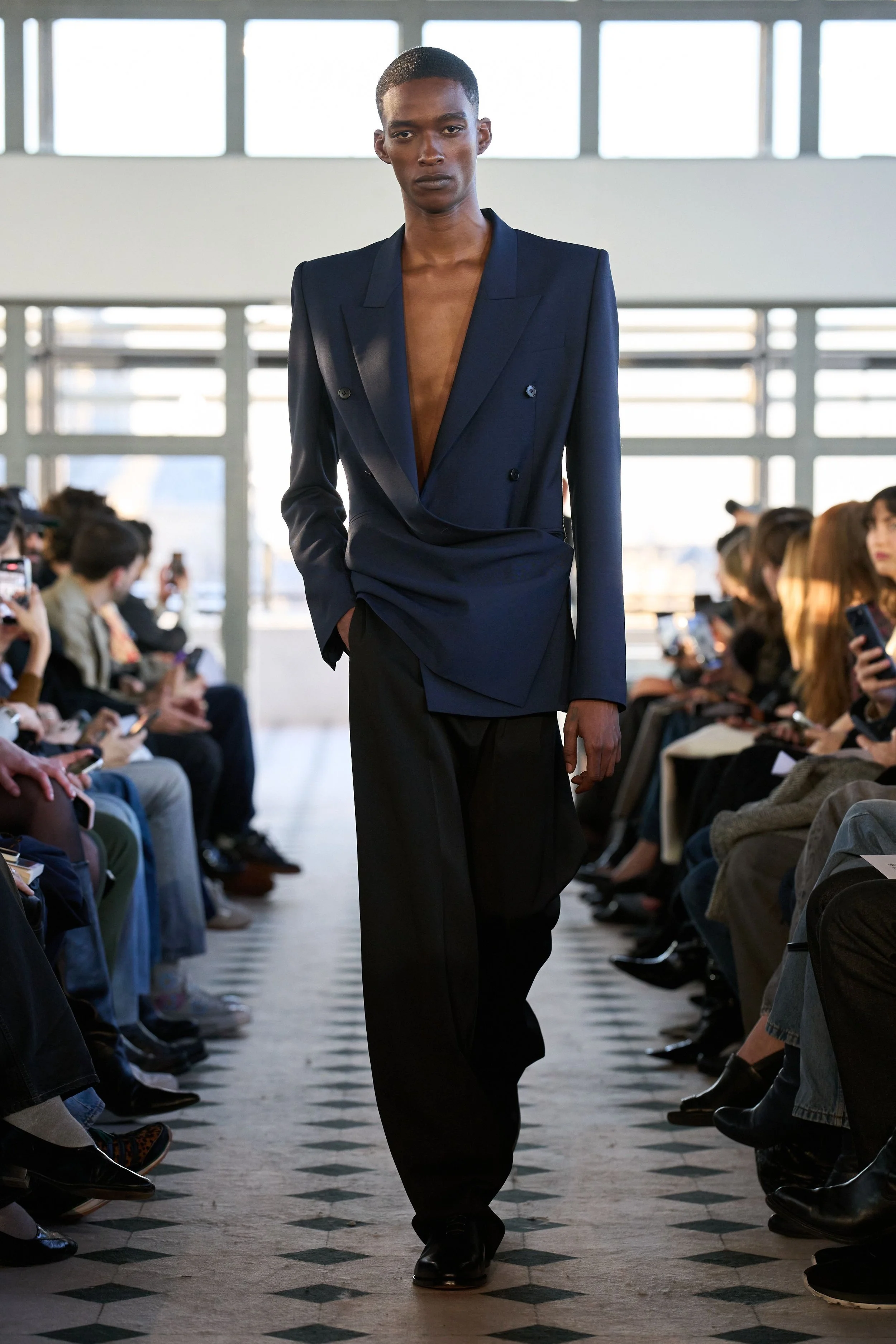
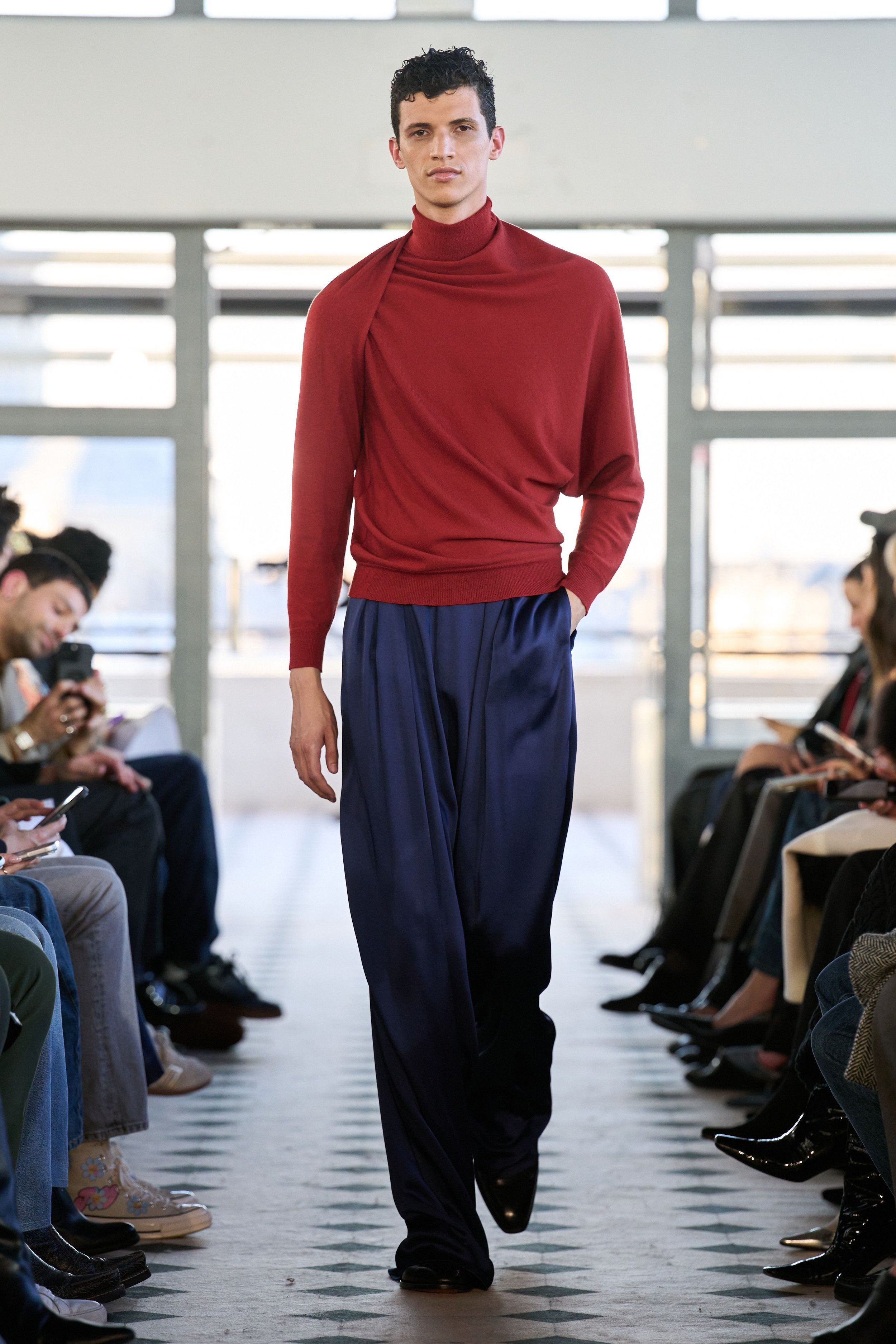
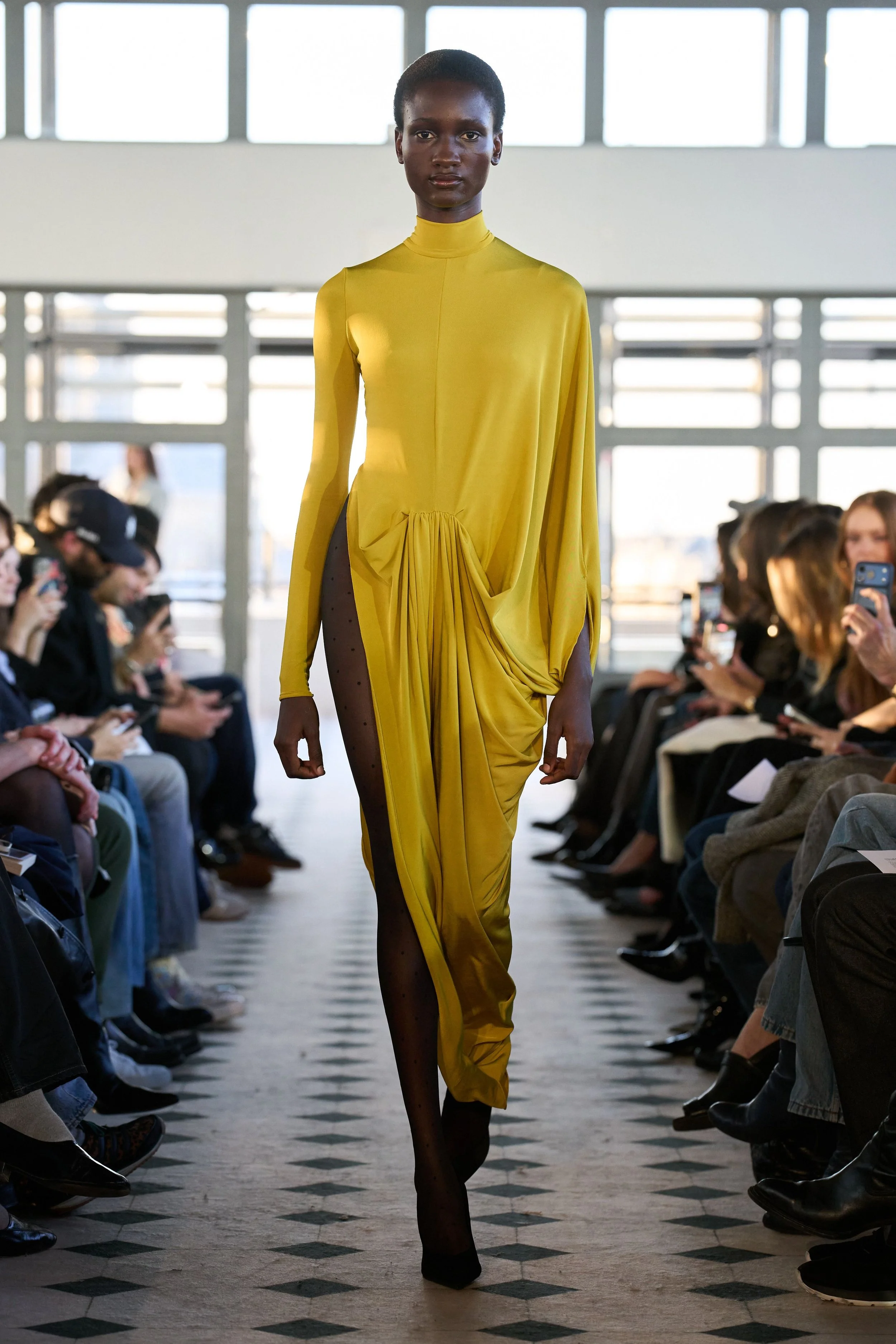
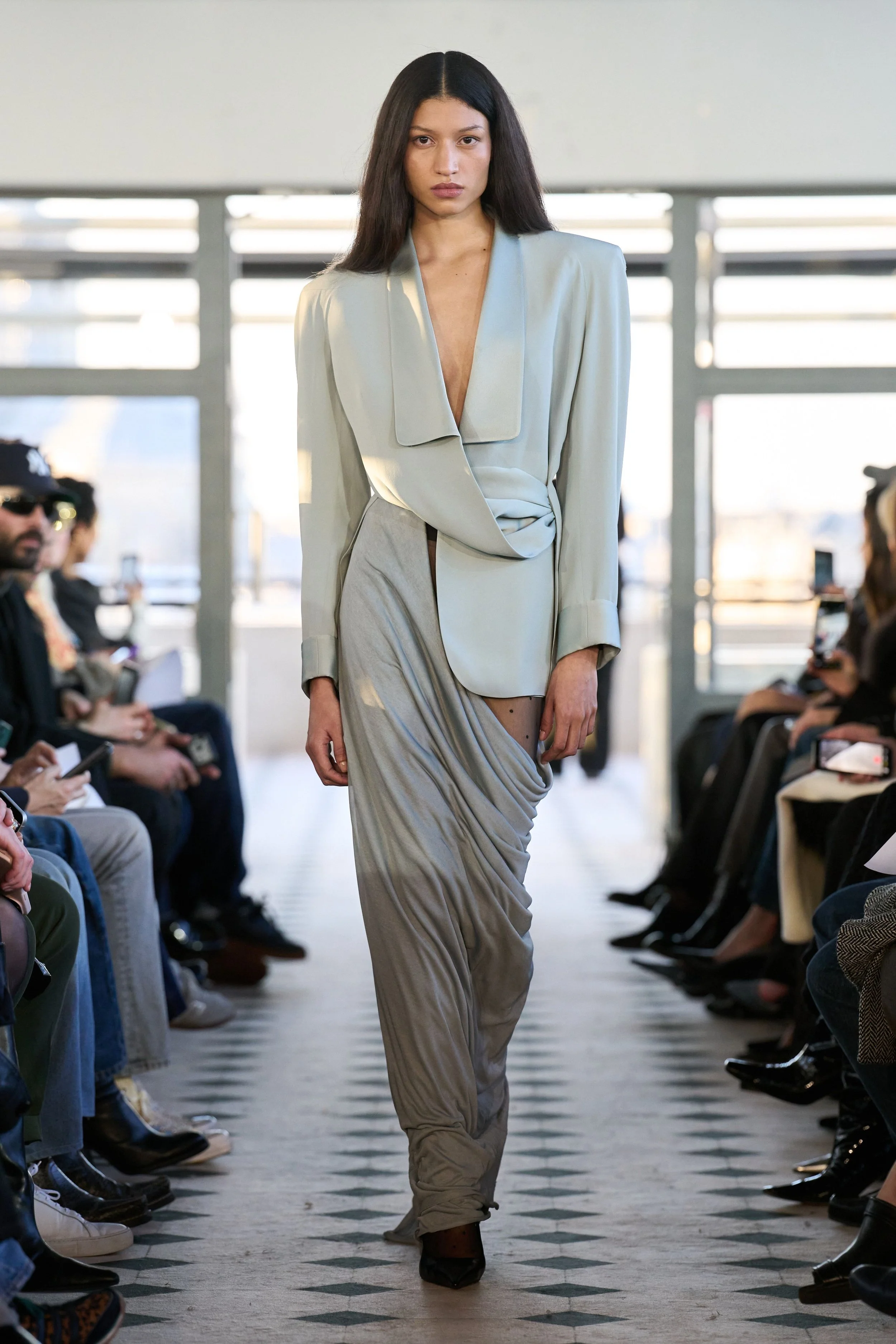
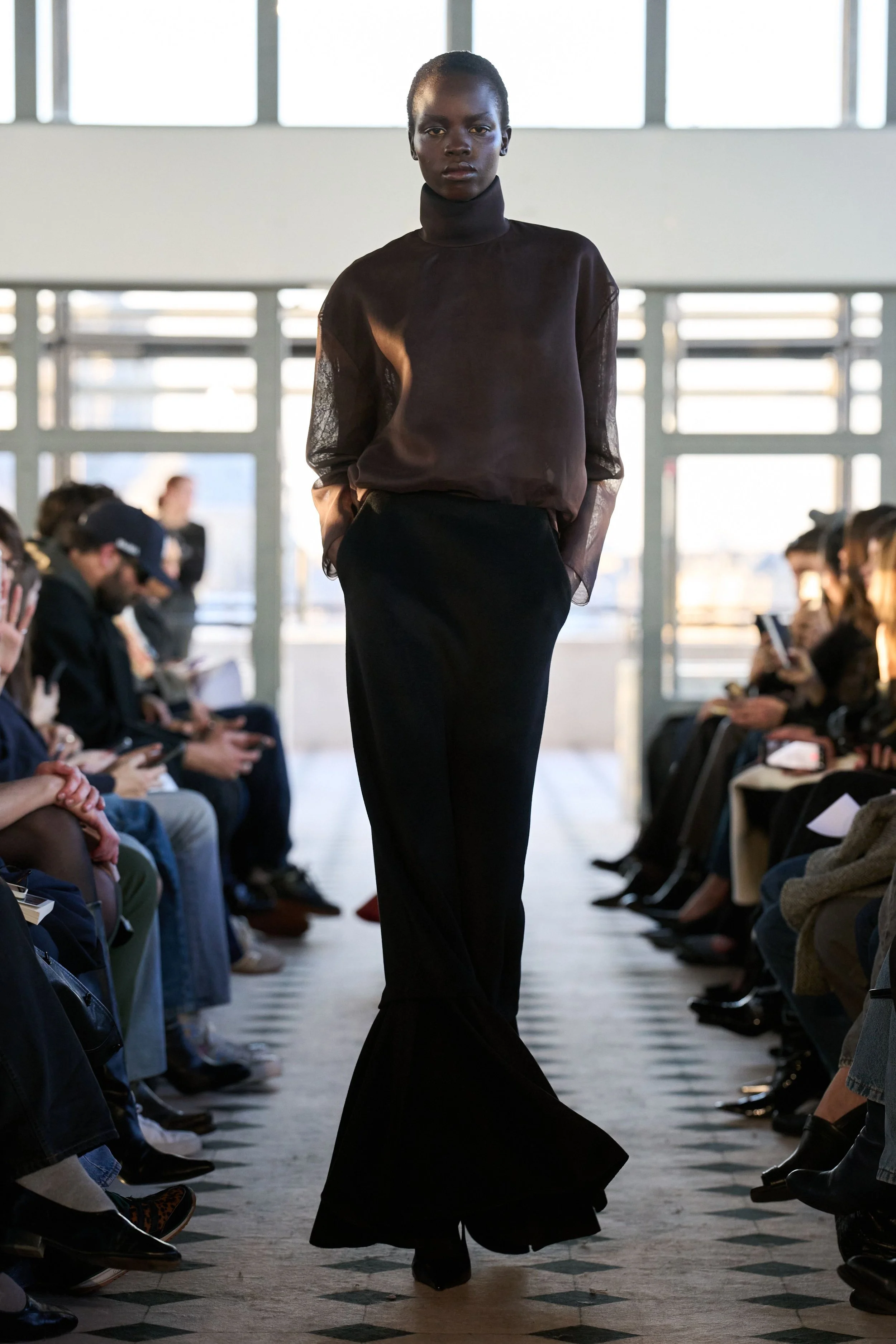
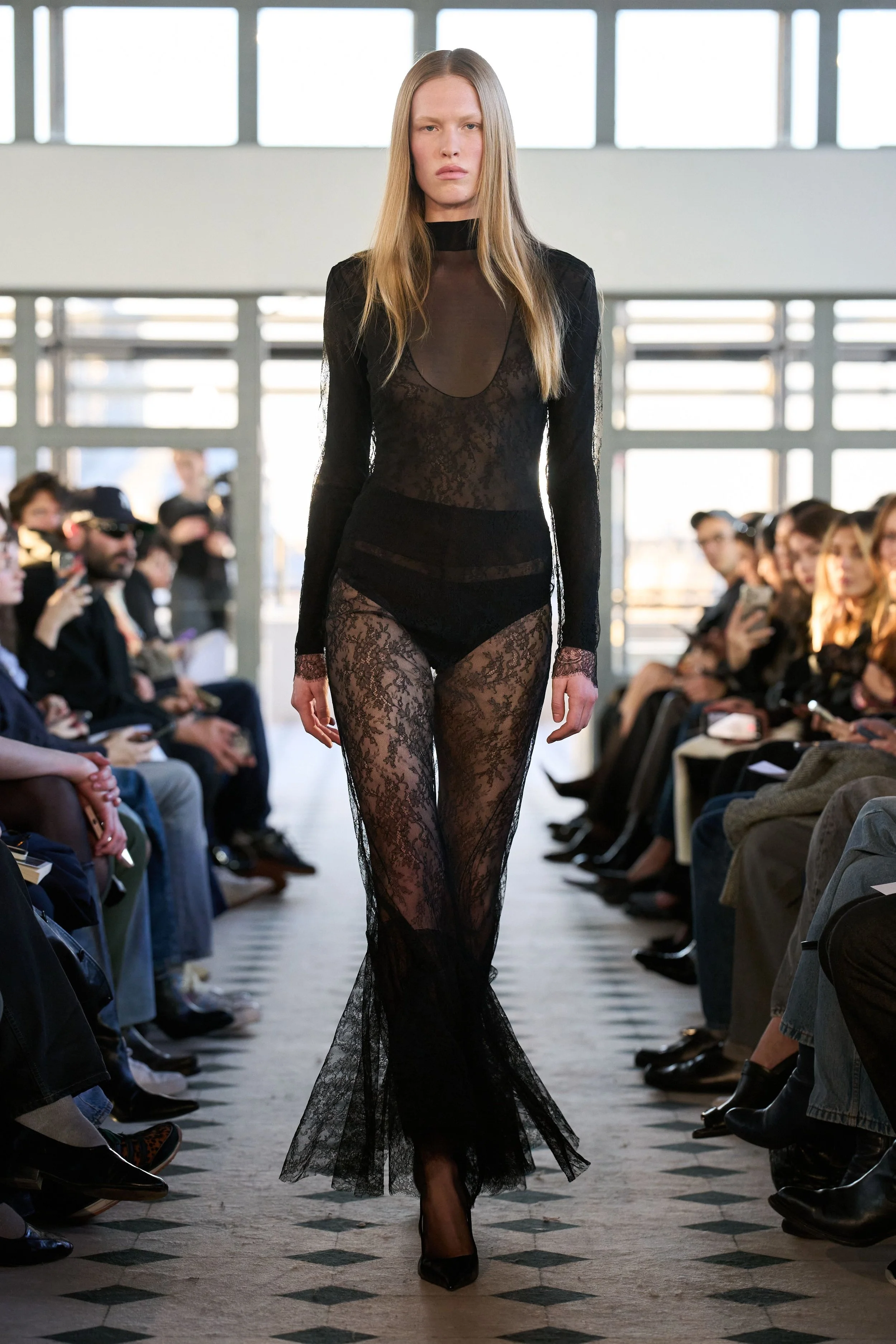
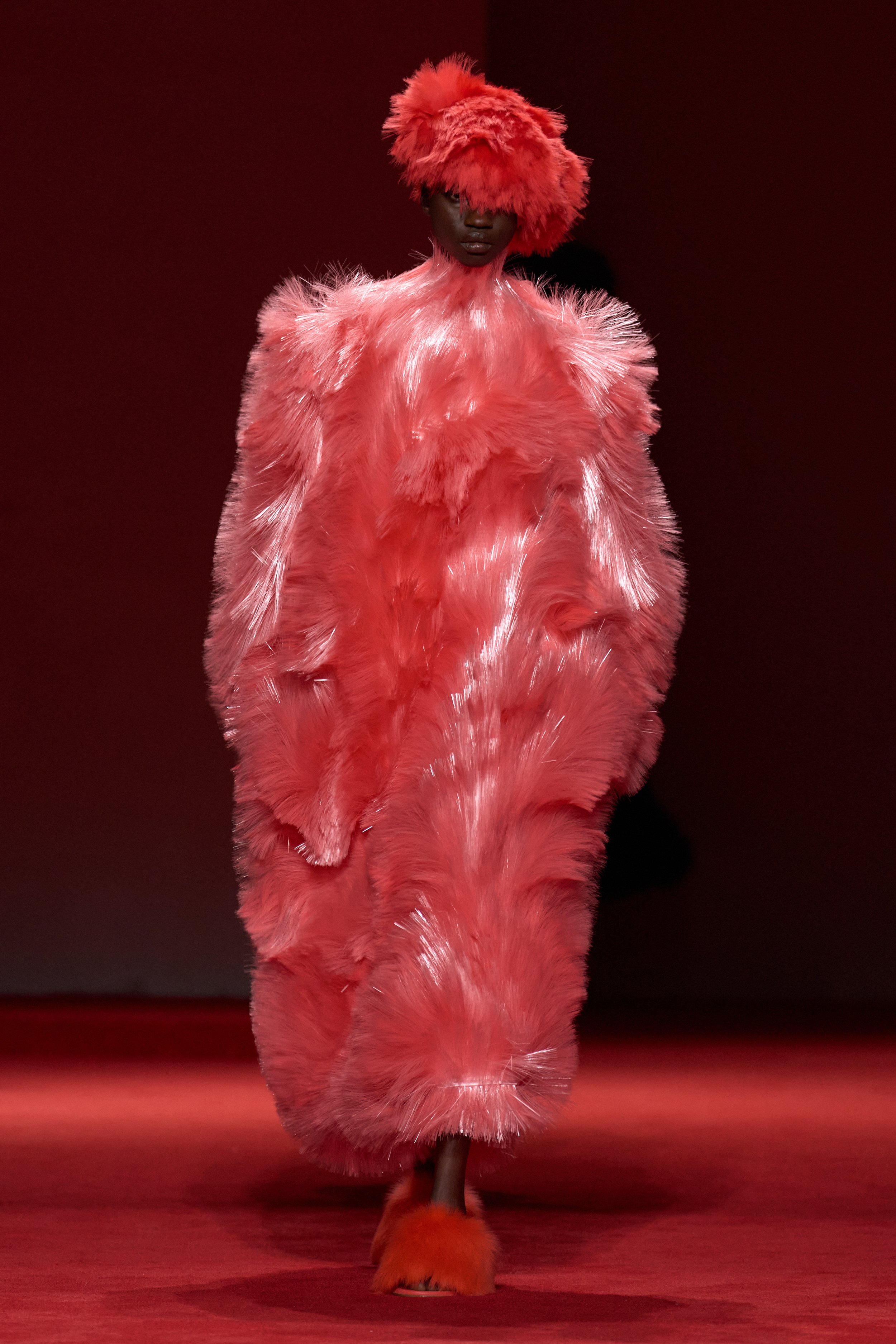
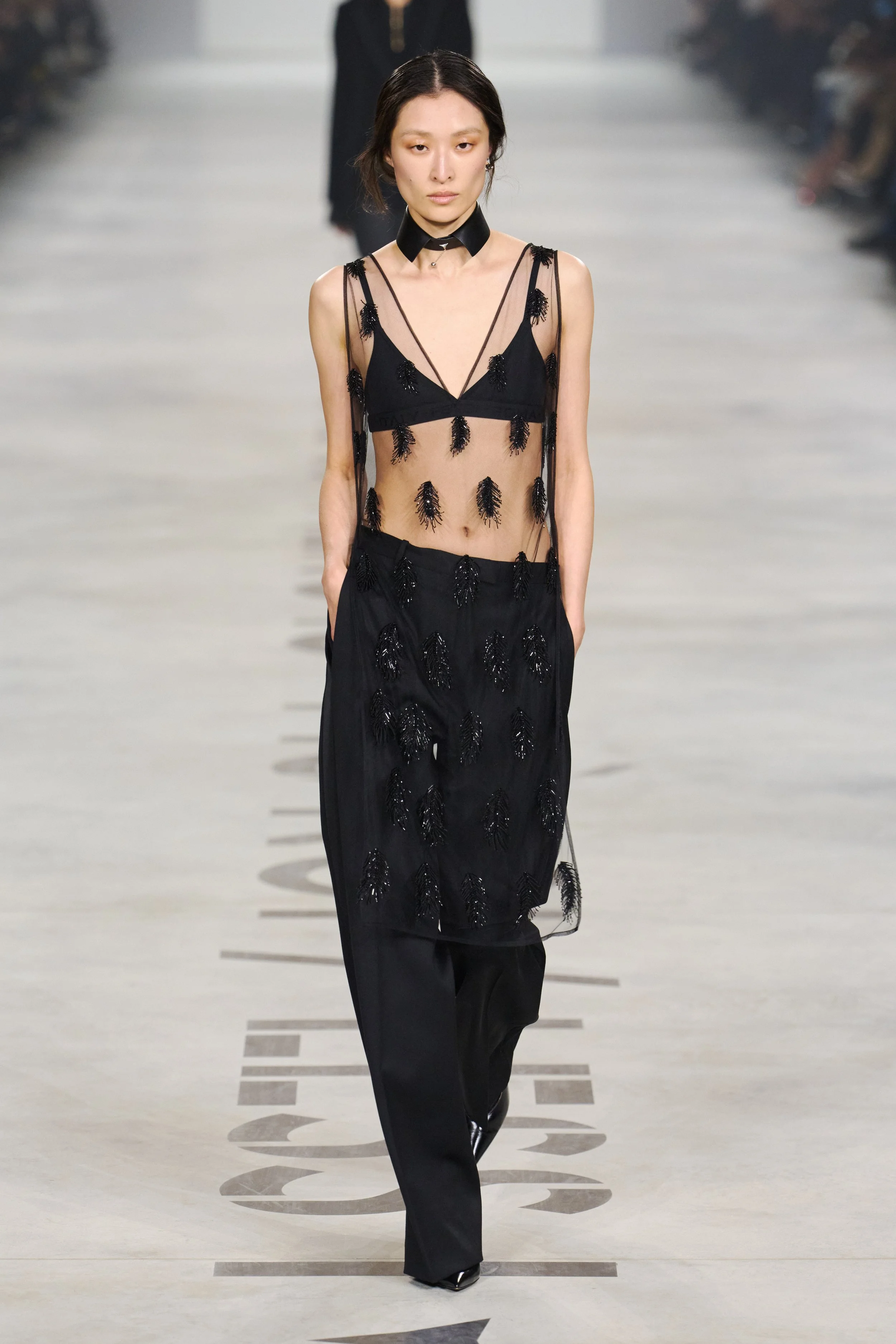
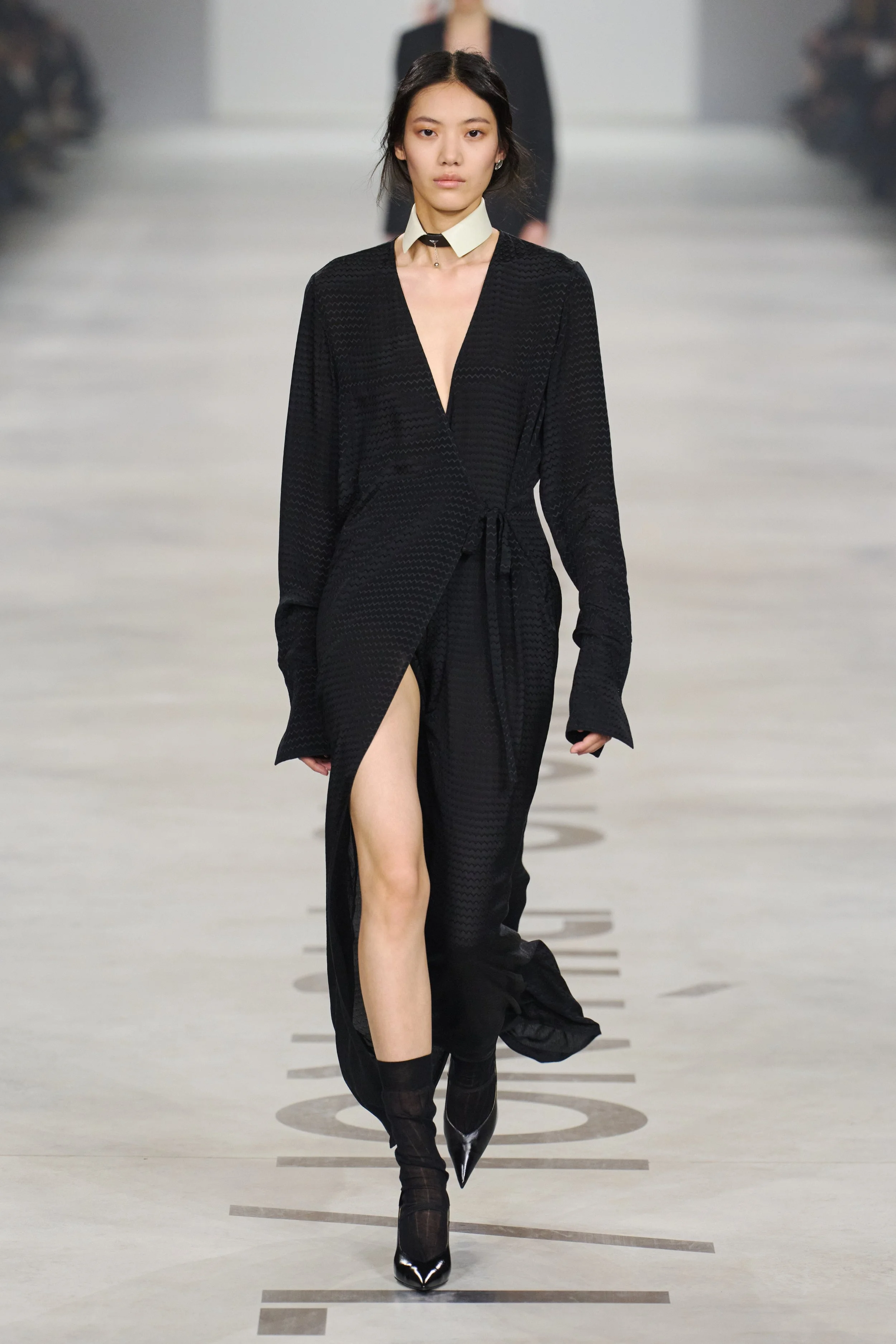
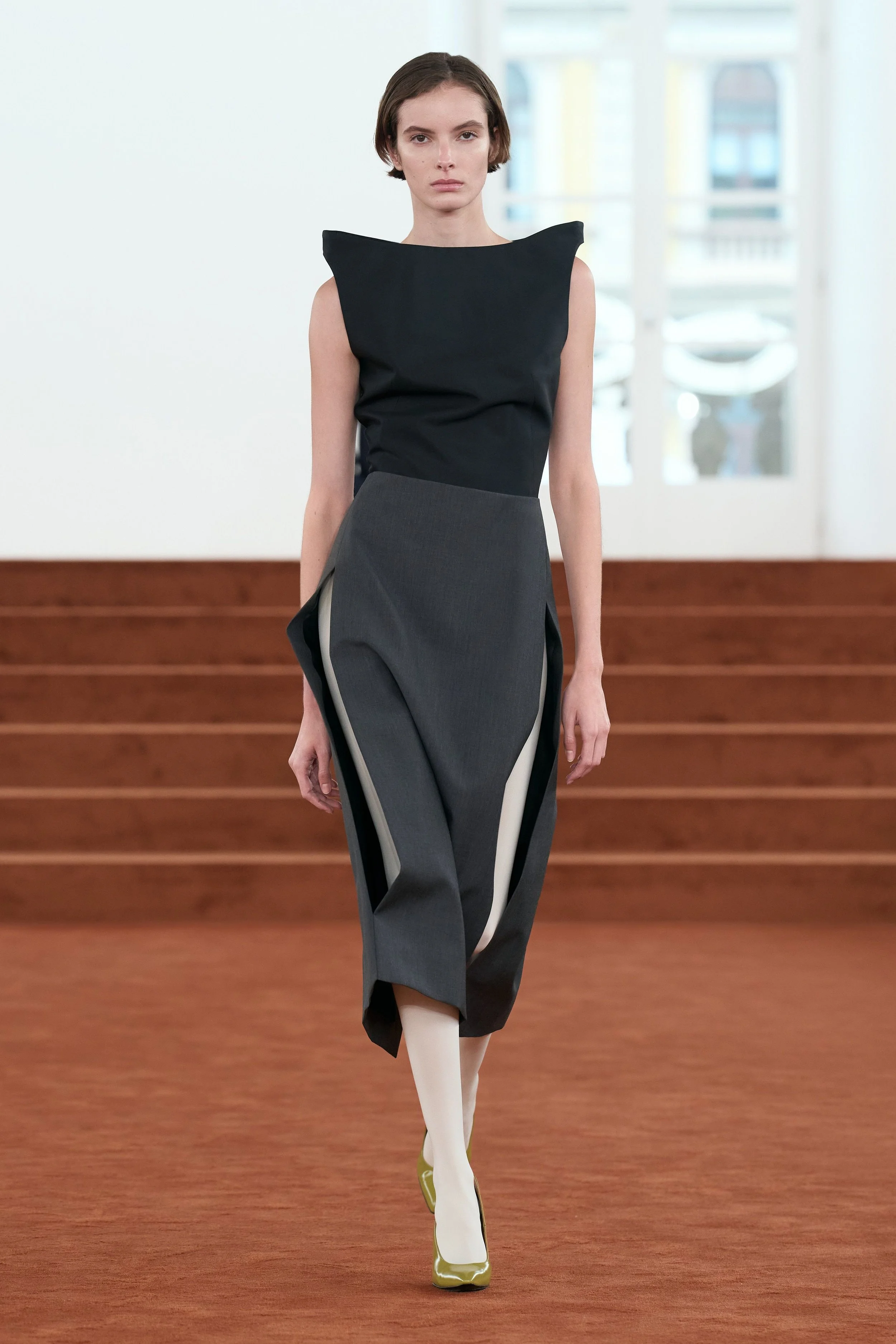
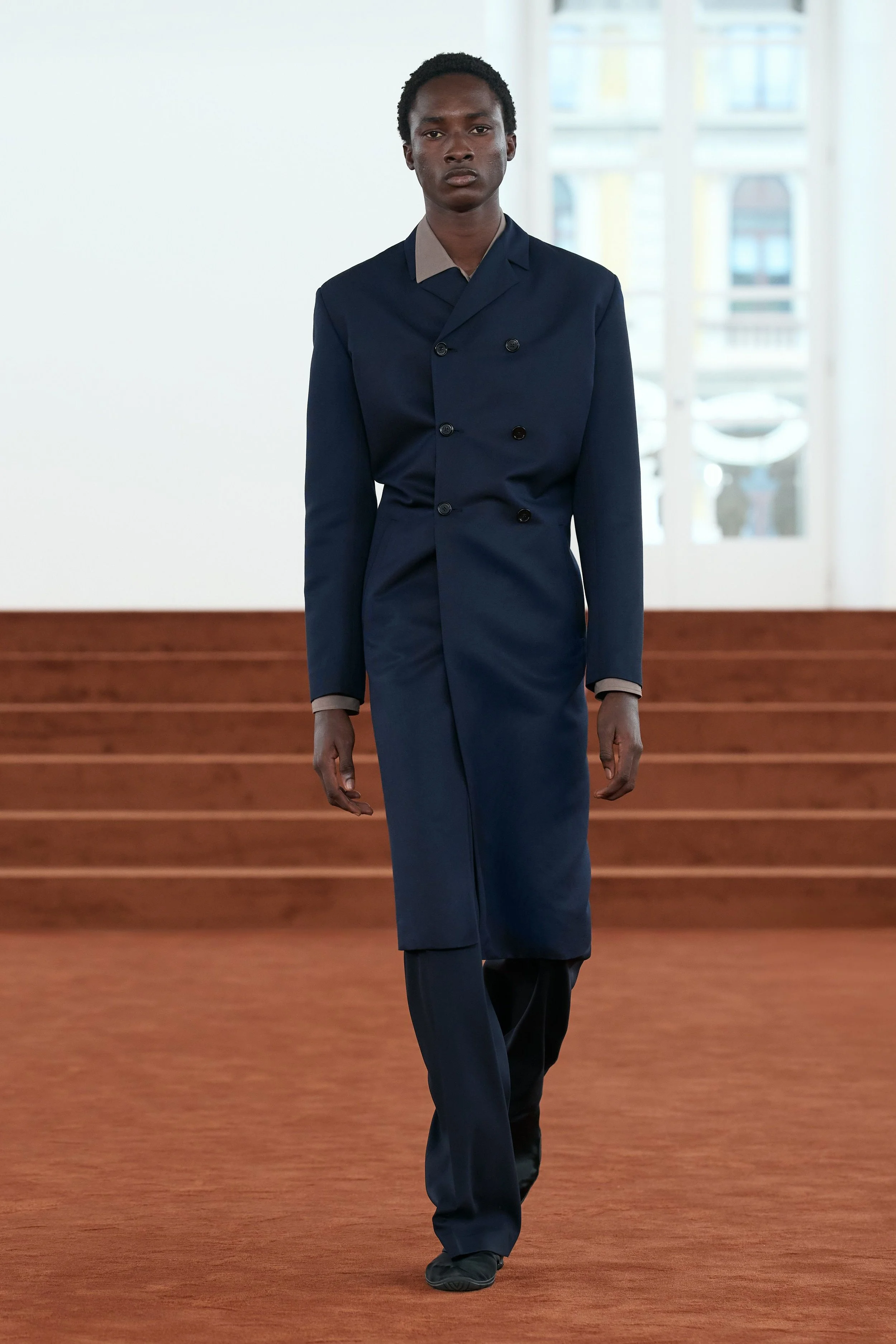
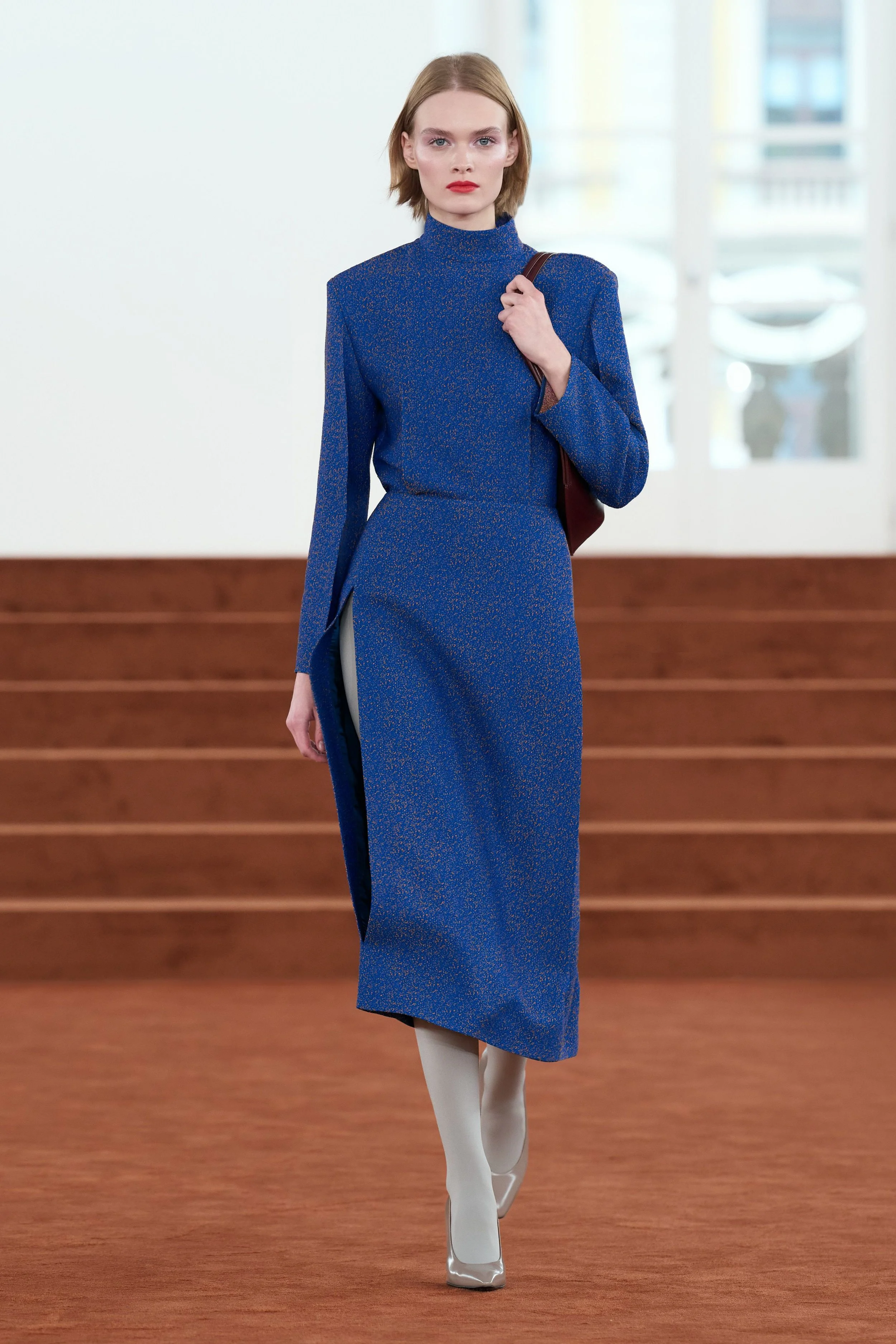
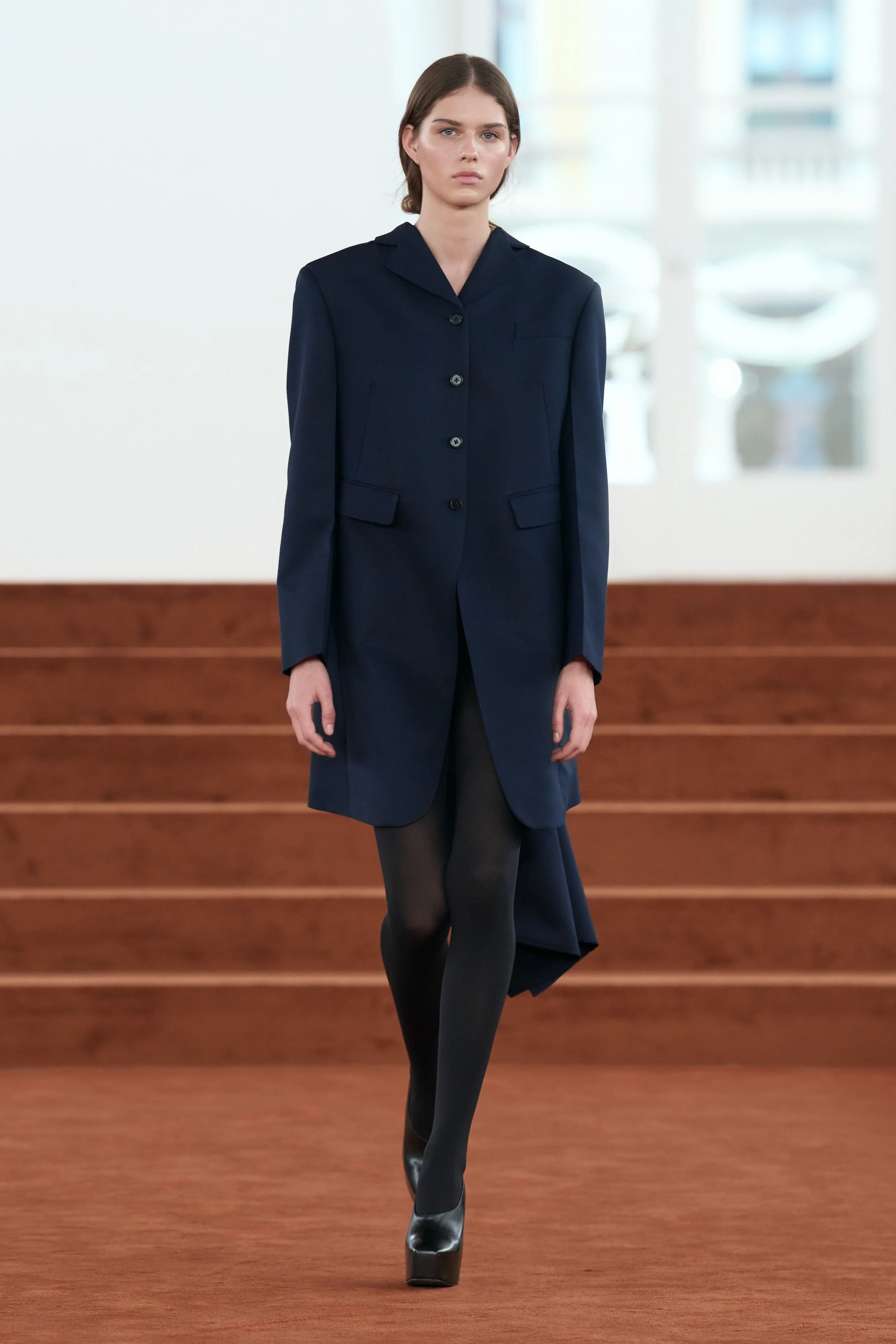
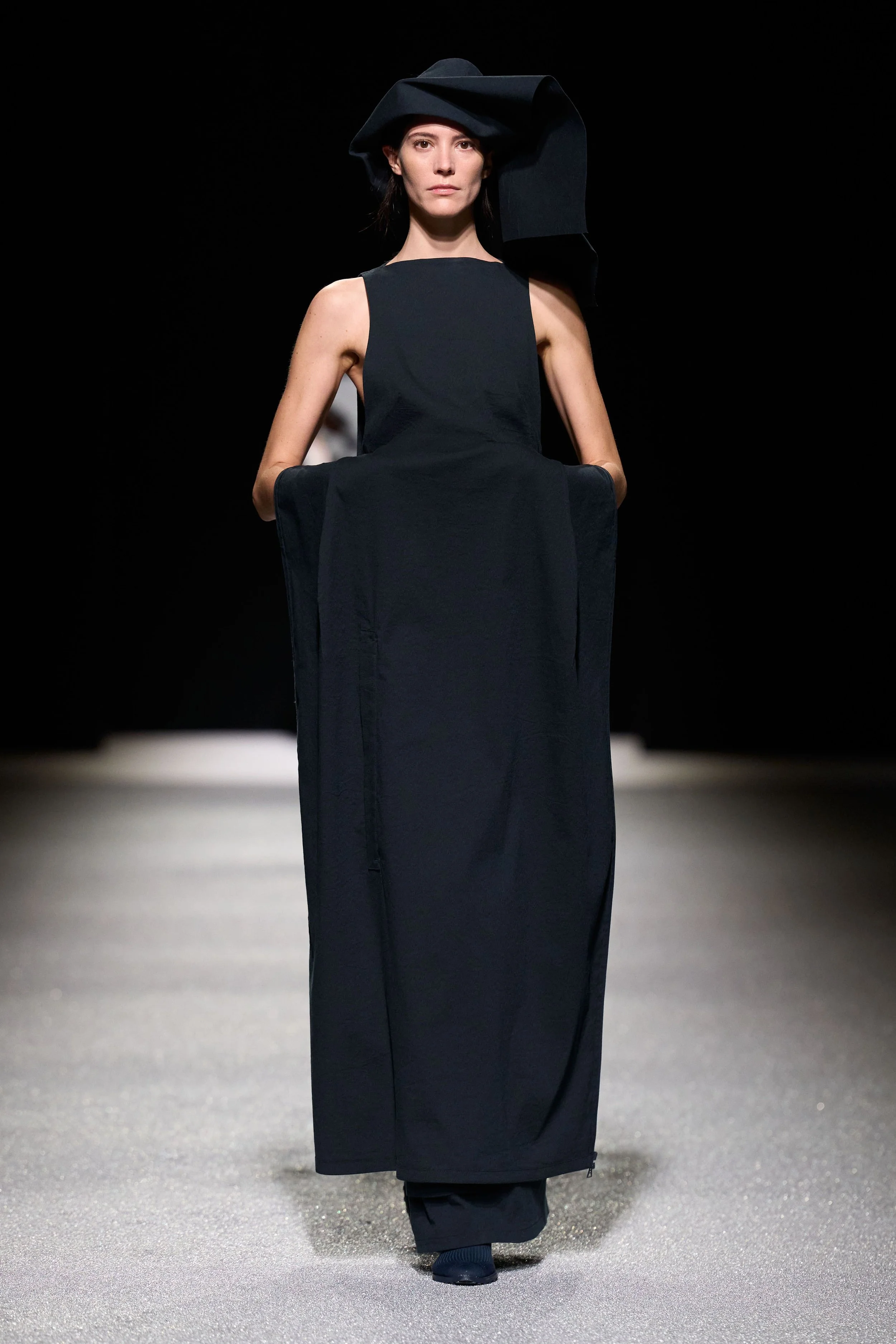
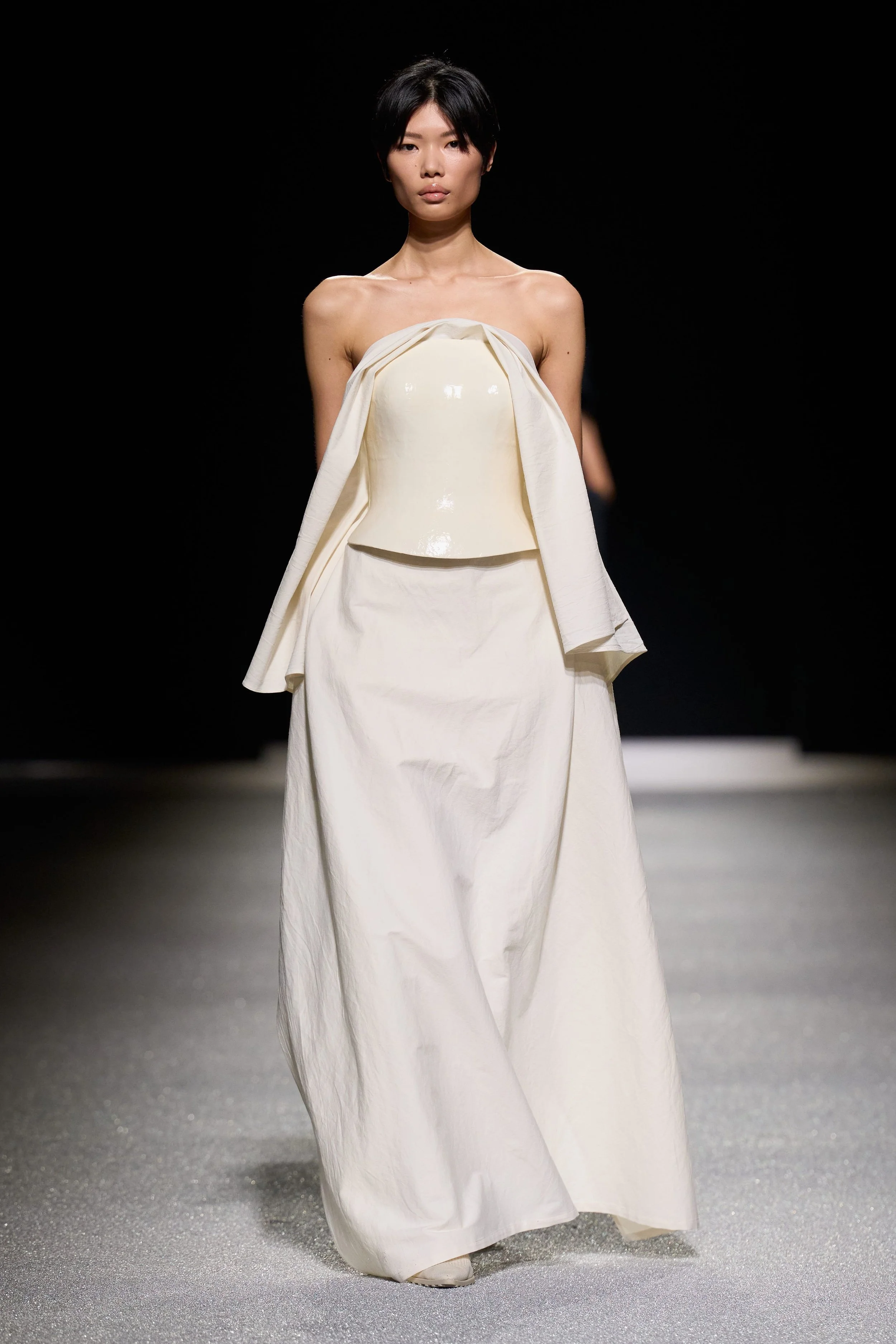
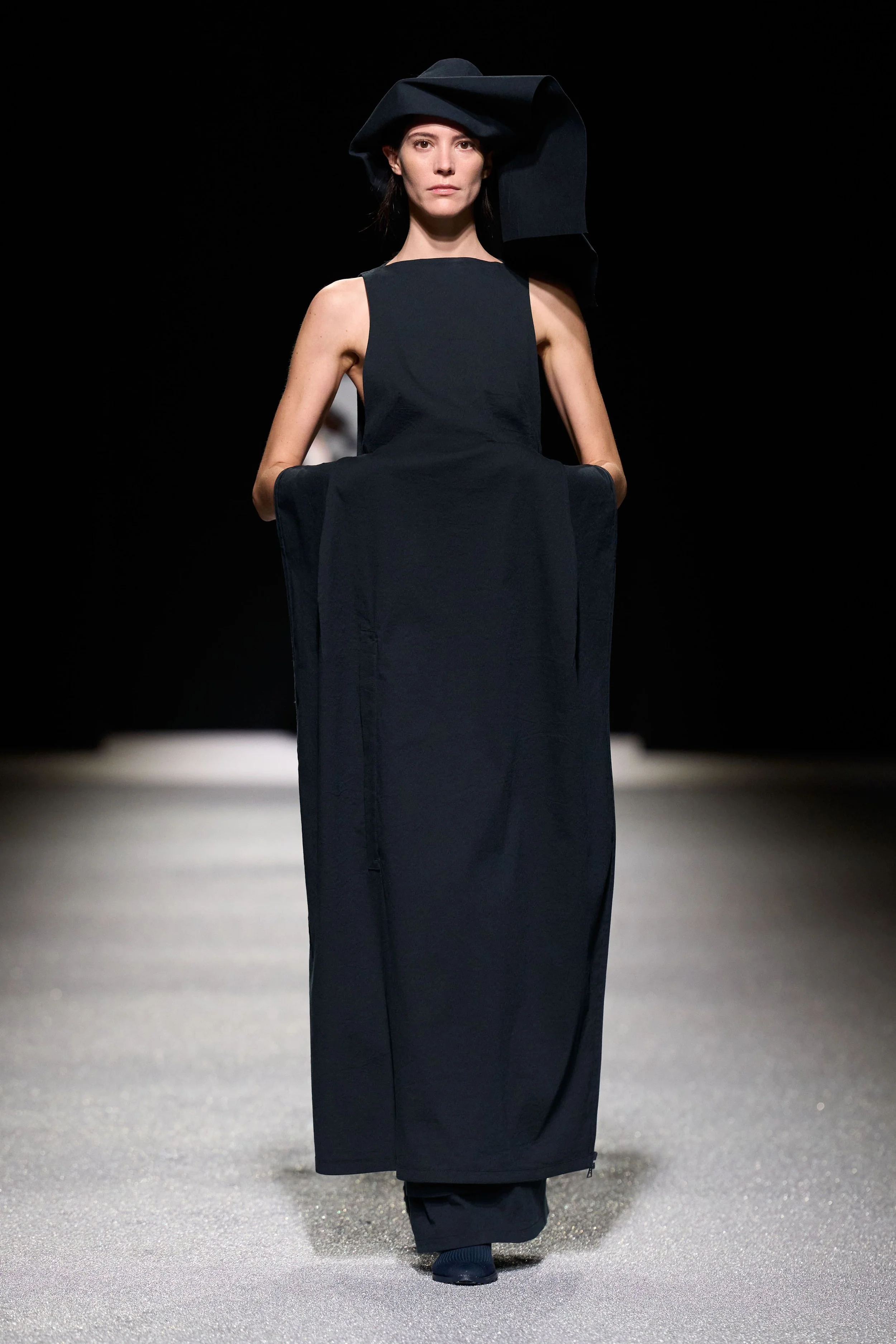
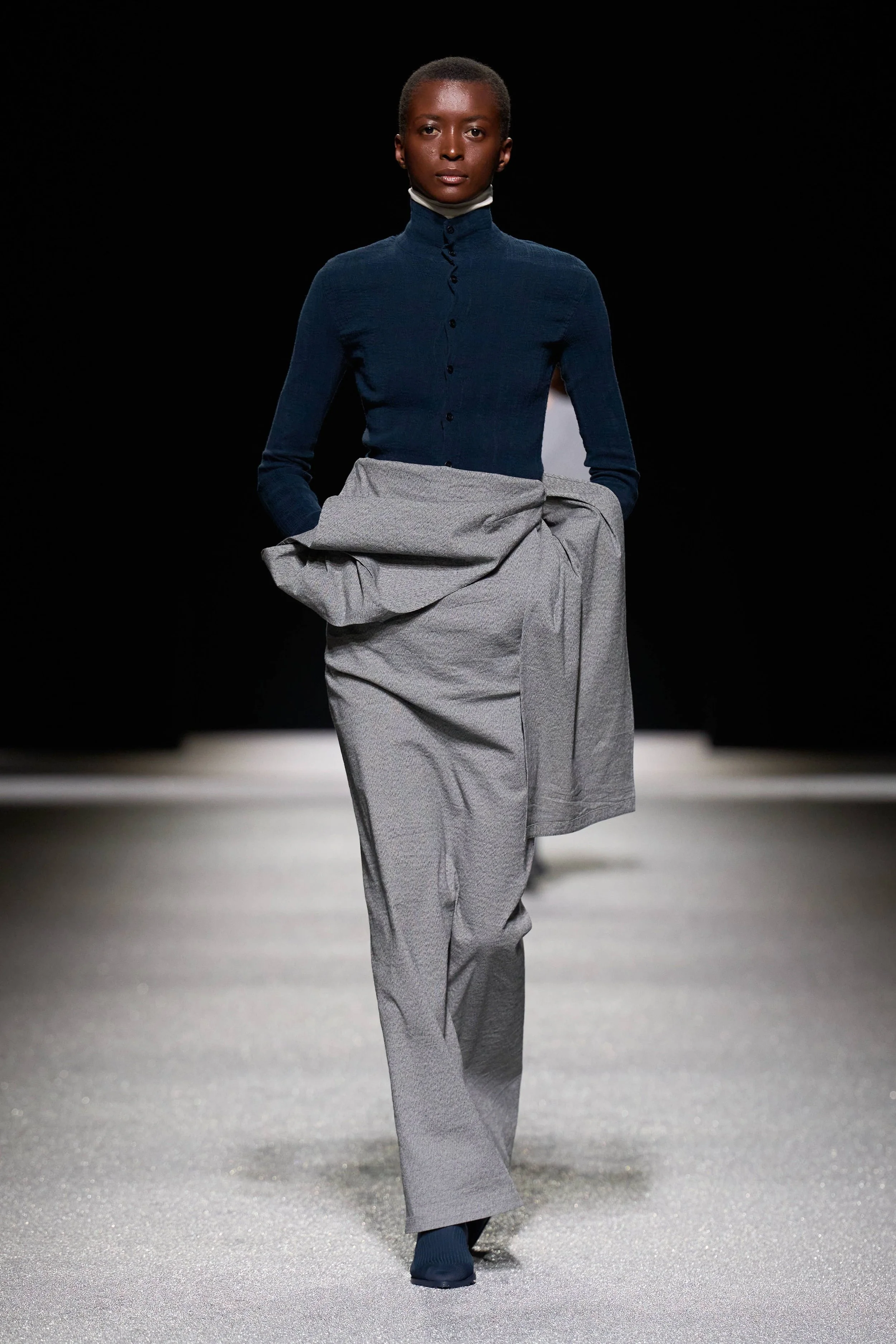
For the Issey Miyake Fall/Winter 2026 show, Satoshi Kondo explores movement through sculptural pieces. Through the brand’s experimental eye, the collection becomes an exploration of wearability, expressed through the unique sculptural designs that have long defined the approach of the house of Issey Miyake.

The constructions feel architectural yet never restrict the body; instead, they follow its natural movement. Vertical silhouettes with straight cuts dominate the collection, while geometric shapes emphasise the shoulders and the hips, creating voluminous forms and almost three-dimensional constructions. The collection centres on garments wrapped, folded, and twisted around the body through origami-like techniques.

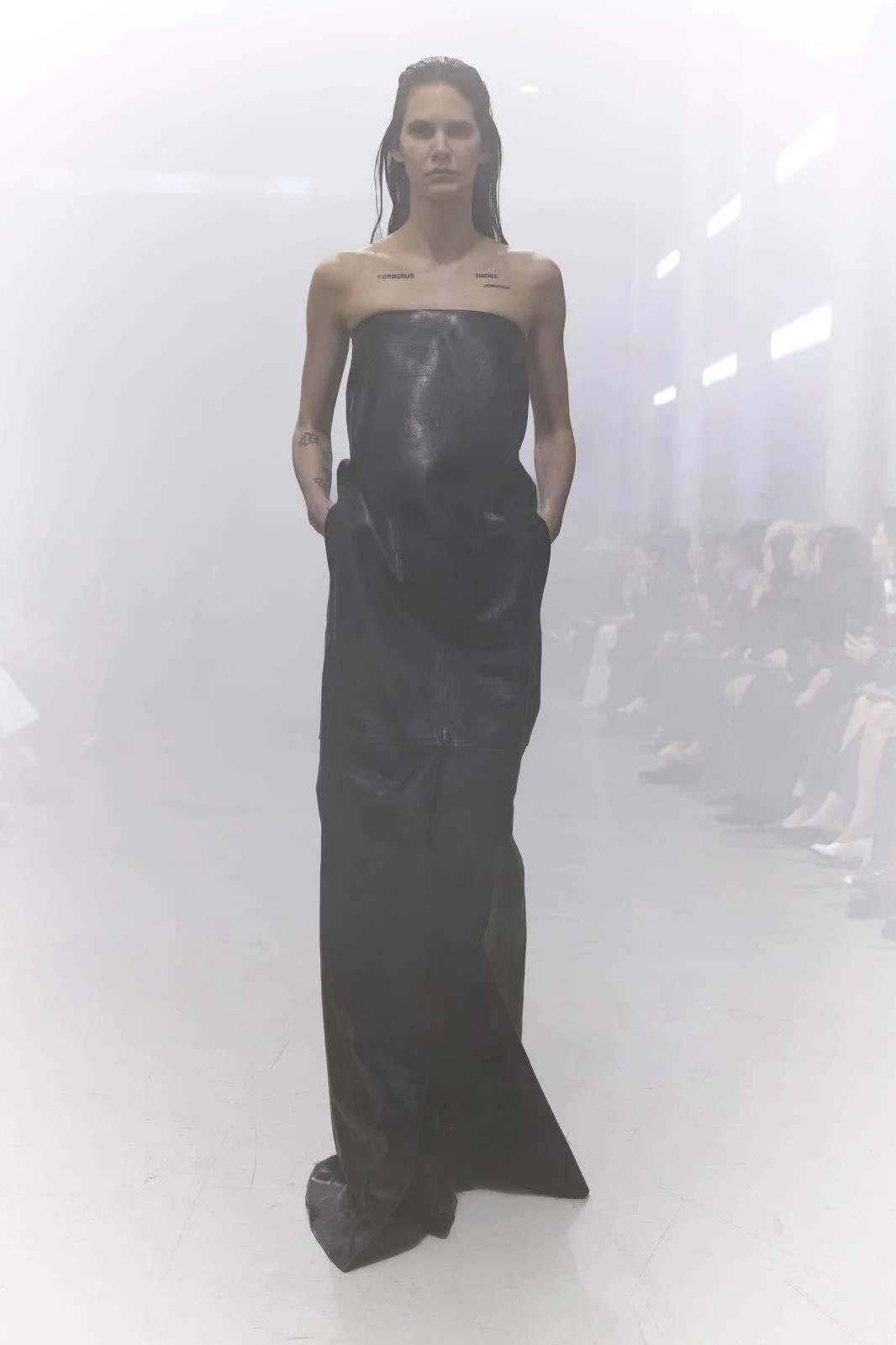
Column dresses juxtapose fluid skirts and draped fabrics, creating an interplay between structure and movement that has defined the philosophy of the house since its beginnings. The mix of proportions and layers gives each look its edgy form, natural fall, and sense of movement. Asymmetry plays with the garments, breaking with traditional notions of balance and tailoring.

Dramatic headpieces echo the garments' geometric language, extending the silhouettes' sculptural dimension. Corset-like patent leather tops add a striking finish, creating an intriguing visual synergy between the structured pieces and the flowing draped fabrics.

The absence of prints and the restrained colour palette allow the viewer to focus solely on the architectural construction, shape, and texture of each piece. Ultimately, each silhouette fully comes to life through the body that animates it. The collection is about more than construction; it’s about the relationship between fabric and the body, about the interaction between garments and the figures that inhabit them, sparking conversations about the way clothing comes to life only when worn.
Words by Carolina Benjumea
DRIES VAN NOTEN FW26

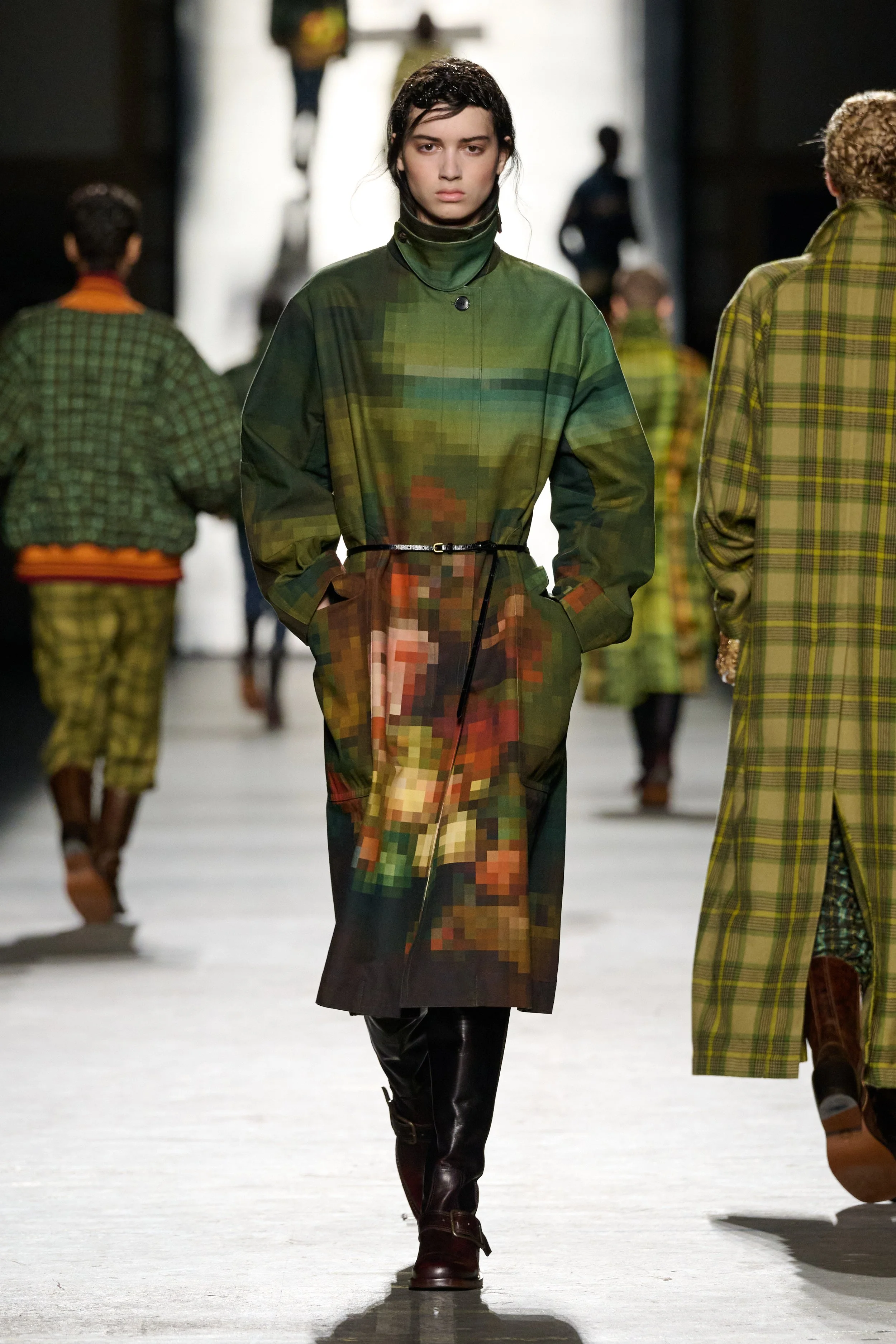
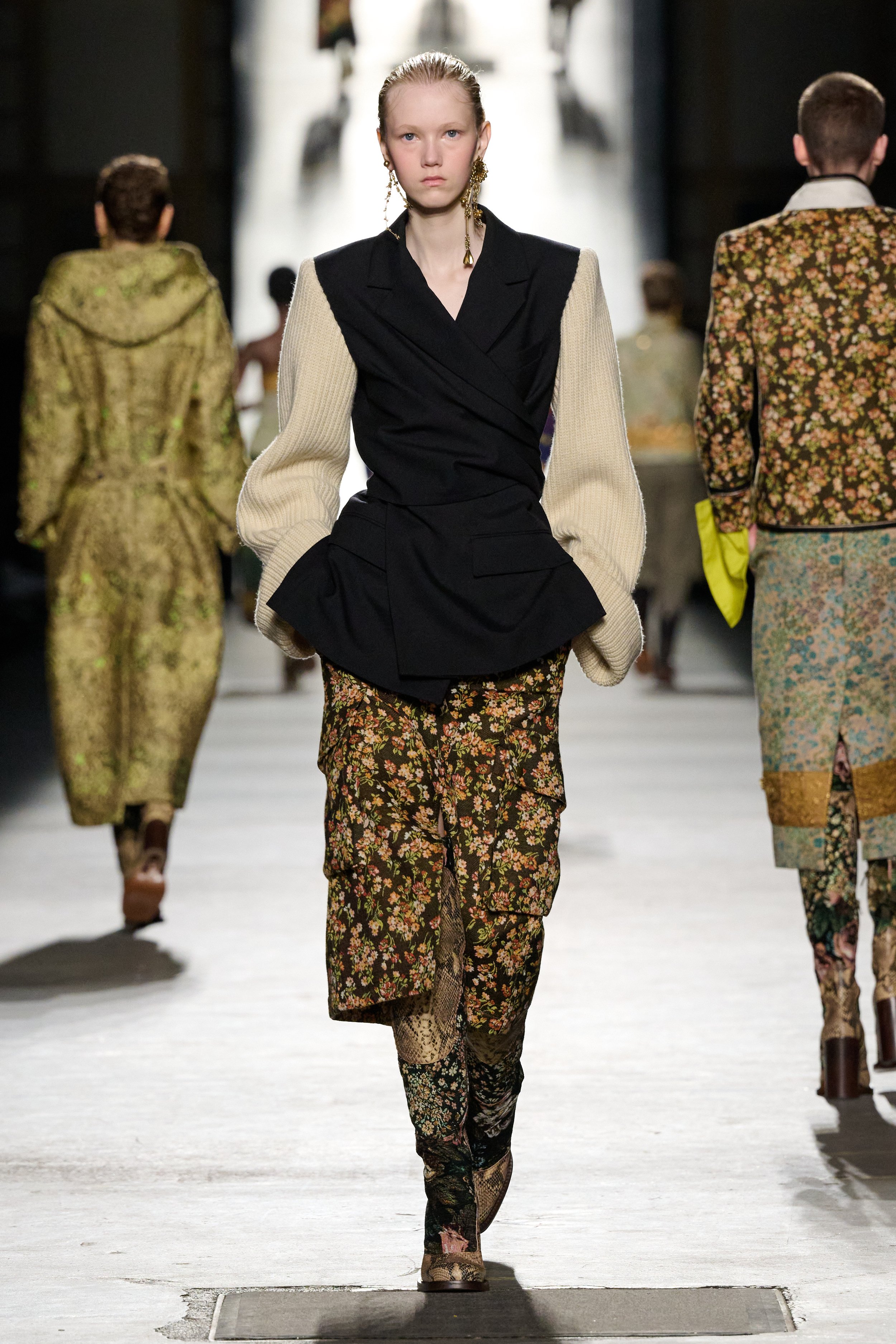
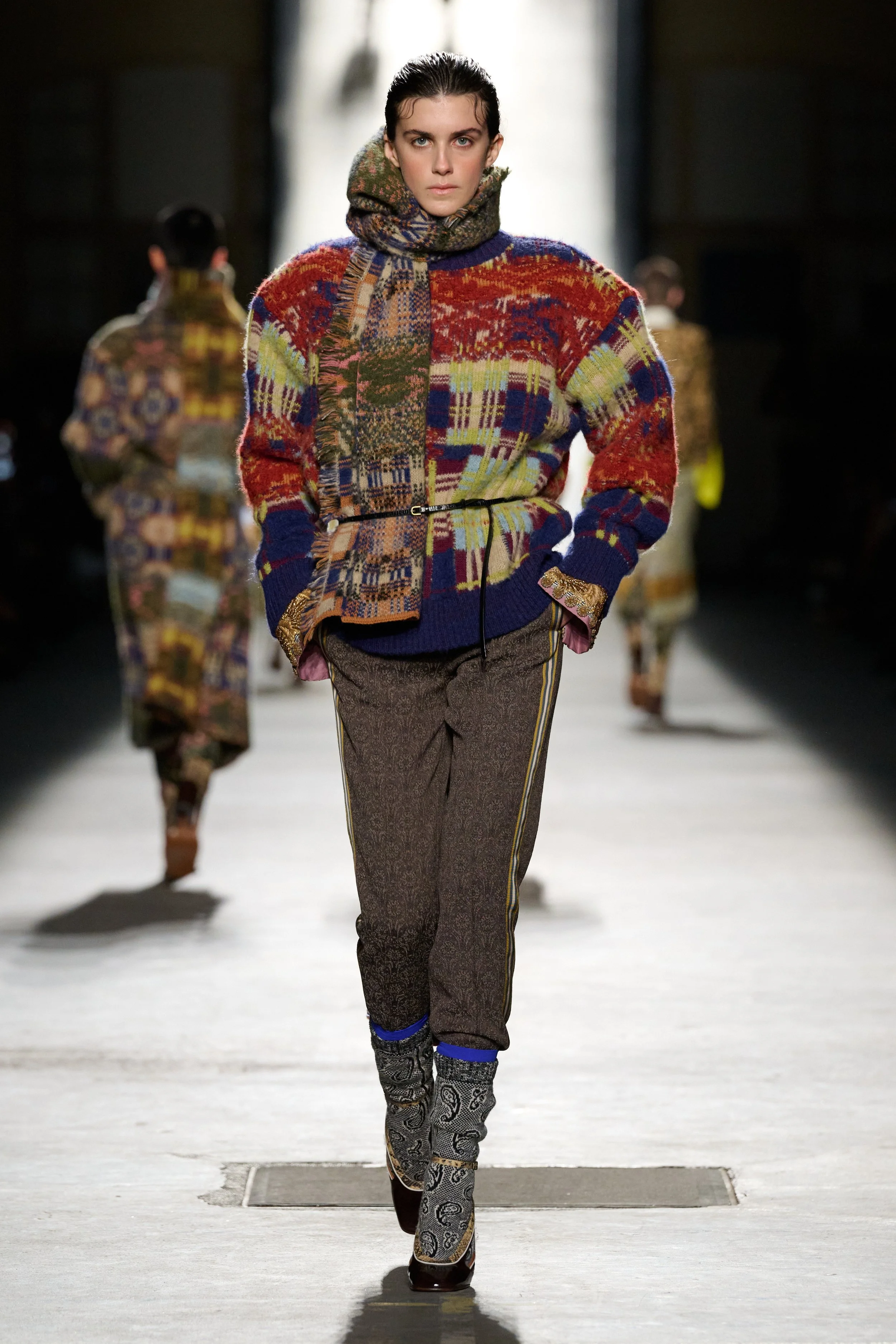
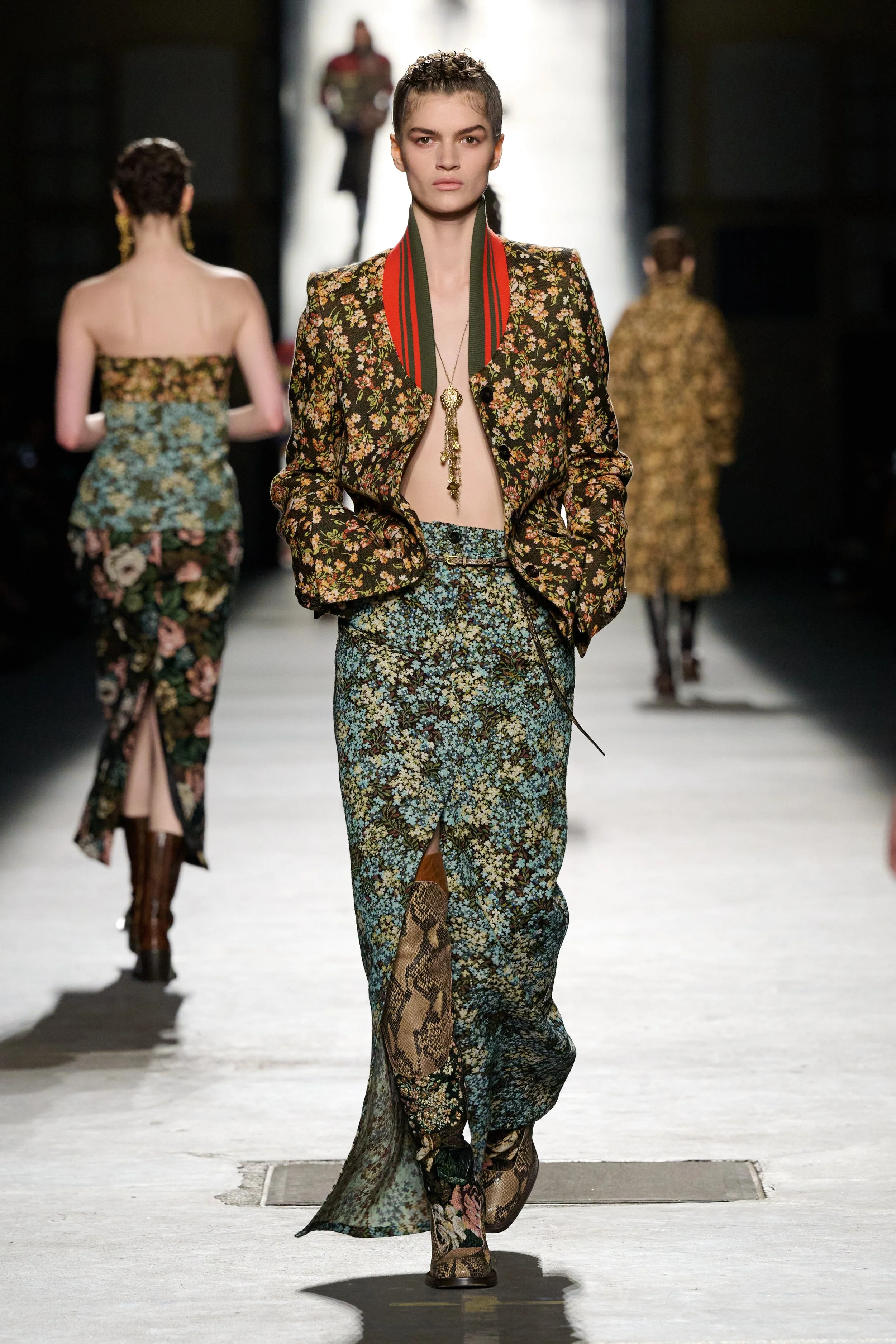
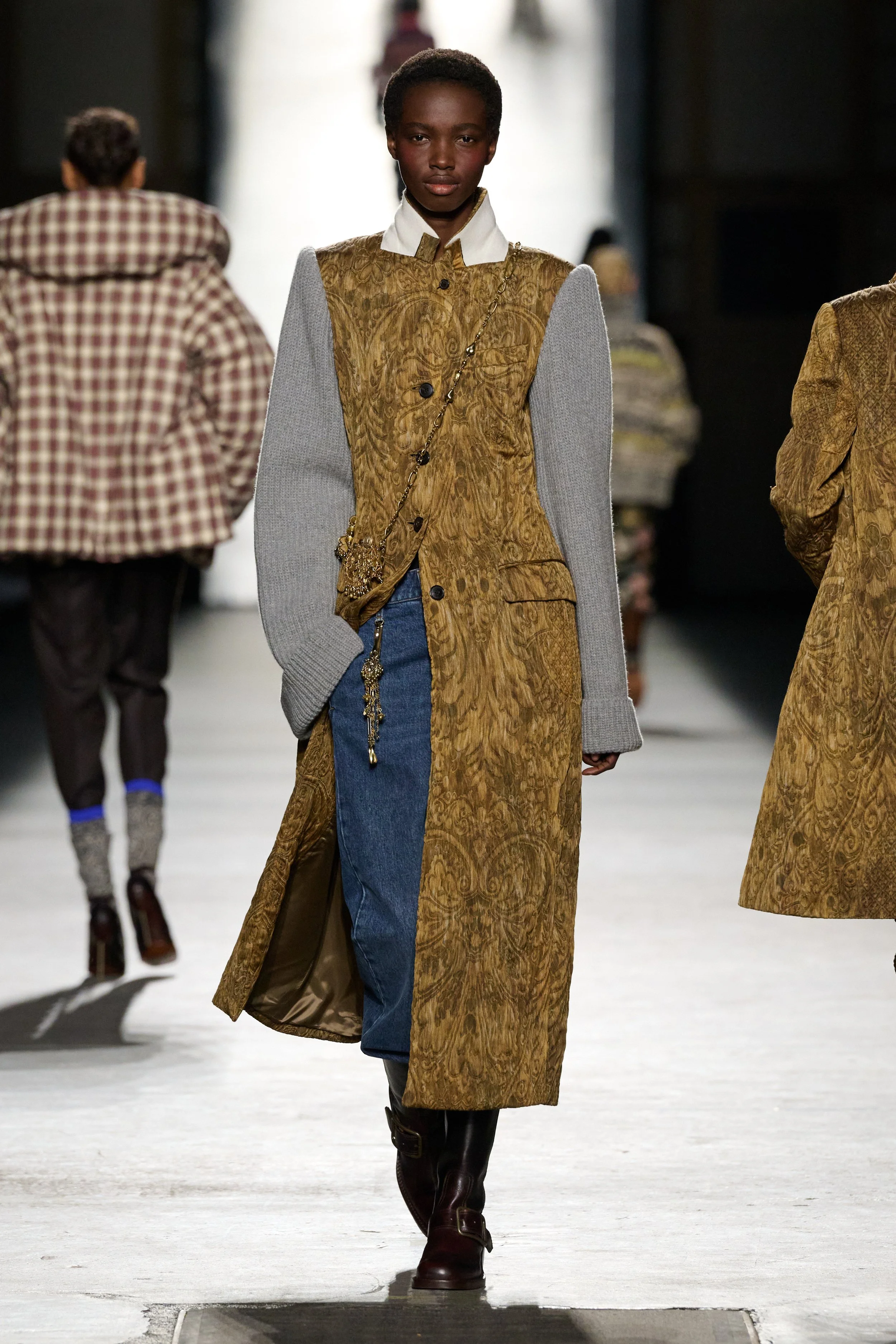
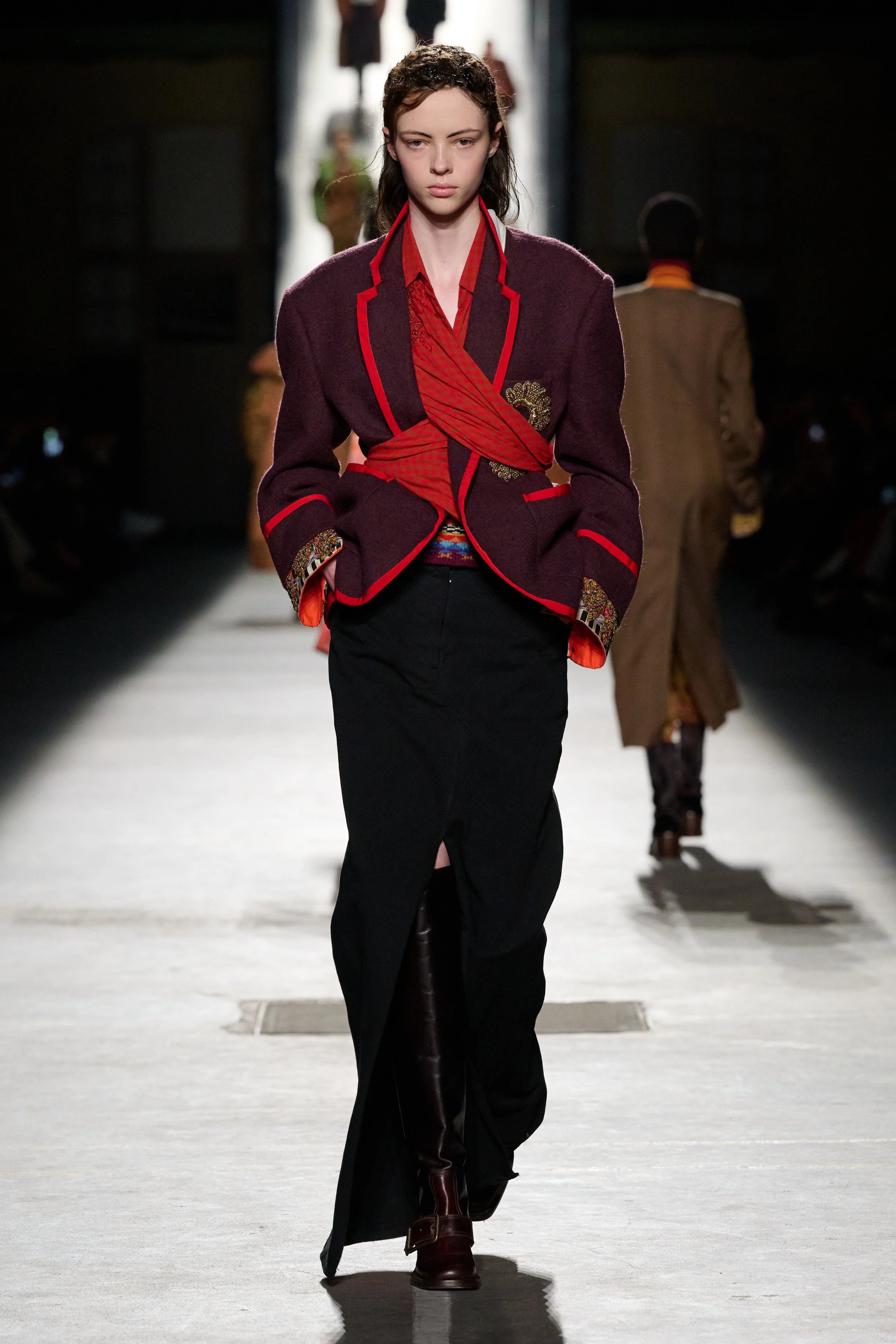
Fall/Winter 2026 marks the one-year anniversary of Julian Klausner’s official debut at Dries Van Noten. In a nothing short of a prodigious run, the designer has proved he is the right (maybe the only) choice to keep the brand’s legacy pushing forward. Unlike many, there doesn’t seem to be any ego involved in the way Klausner designs, resisting the urge to mark his territory. Instead, he utilises the house’s codes to tell meaningful and relatable narratives.

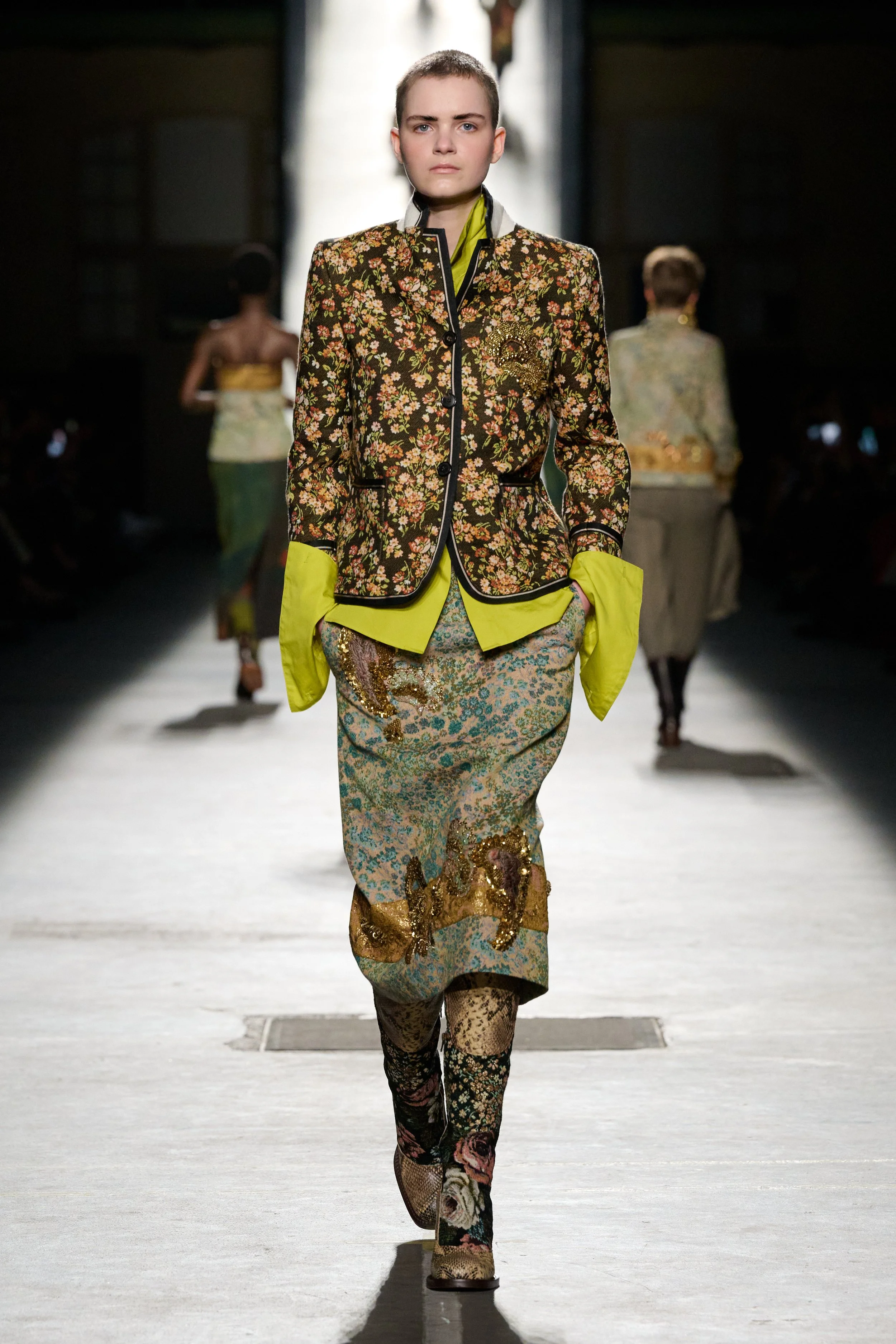
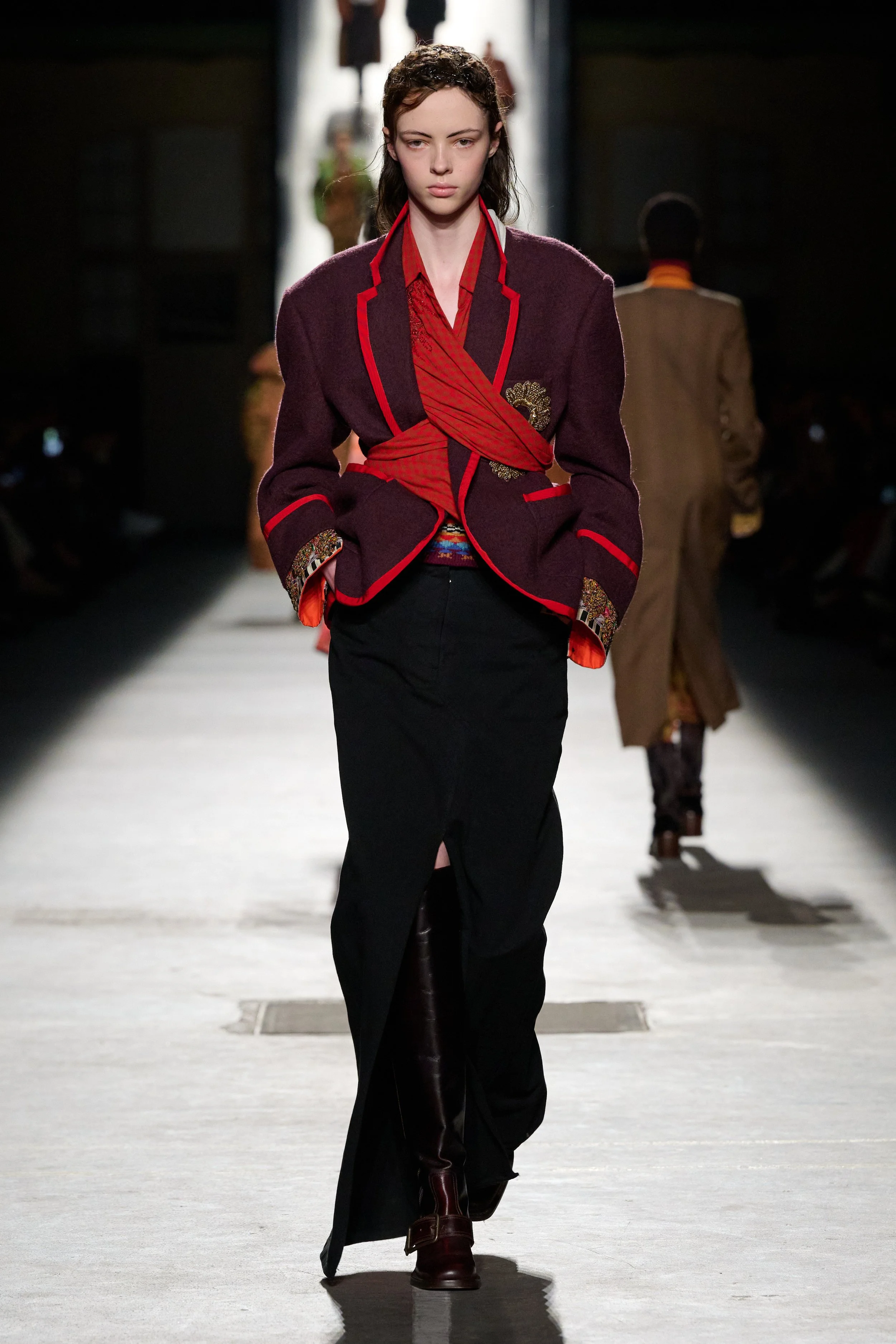
Just like the menswear show a month prior, the Belgian designer hones in on the complexities of youth. But if then he was speaking to the feeling of wagering domestic comfort for growth, here he talks of the search for ourselves in the spring of our lives. The show opened with reinterpreted school uniforms. A navy, heavy peacoat. A tailored, preppy blazer. A shirt and tie, with embroidered cuffs that contrasted gold with a crisp white. For research purposes, Klausner actually visited the same high school where the show takes place, the Lycée Carnot. Much like what he saw when the bell rang, and teenagers left the building with that frenetic, nostalgic excitement, signs of individuality started to poke through the uniform.

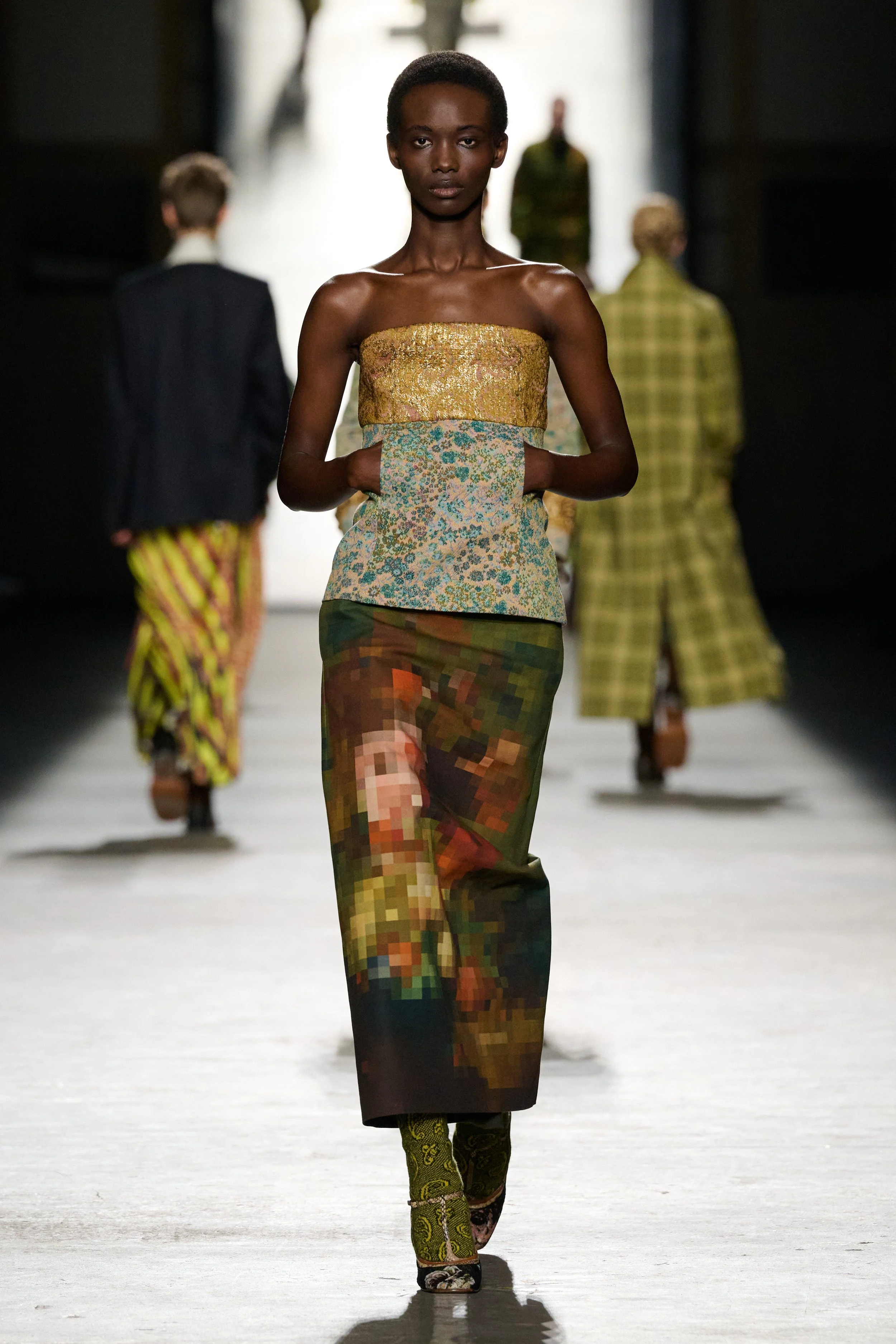
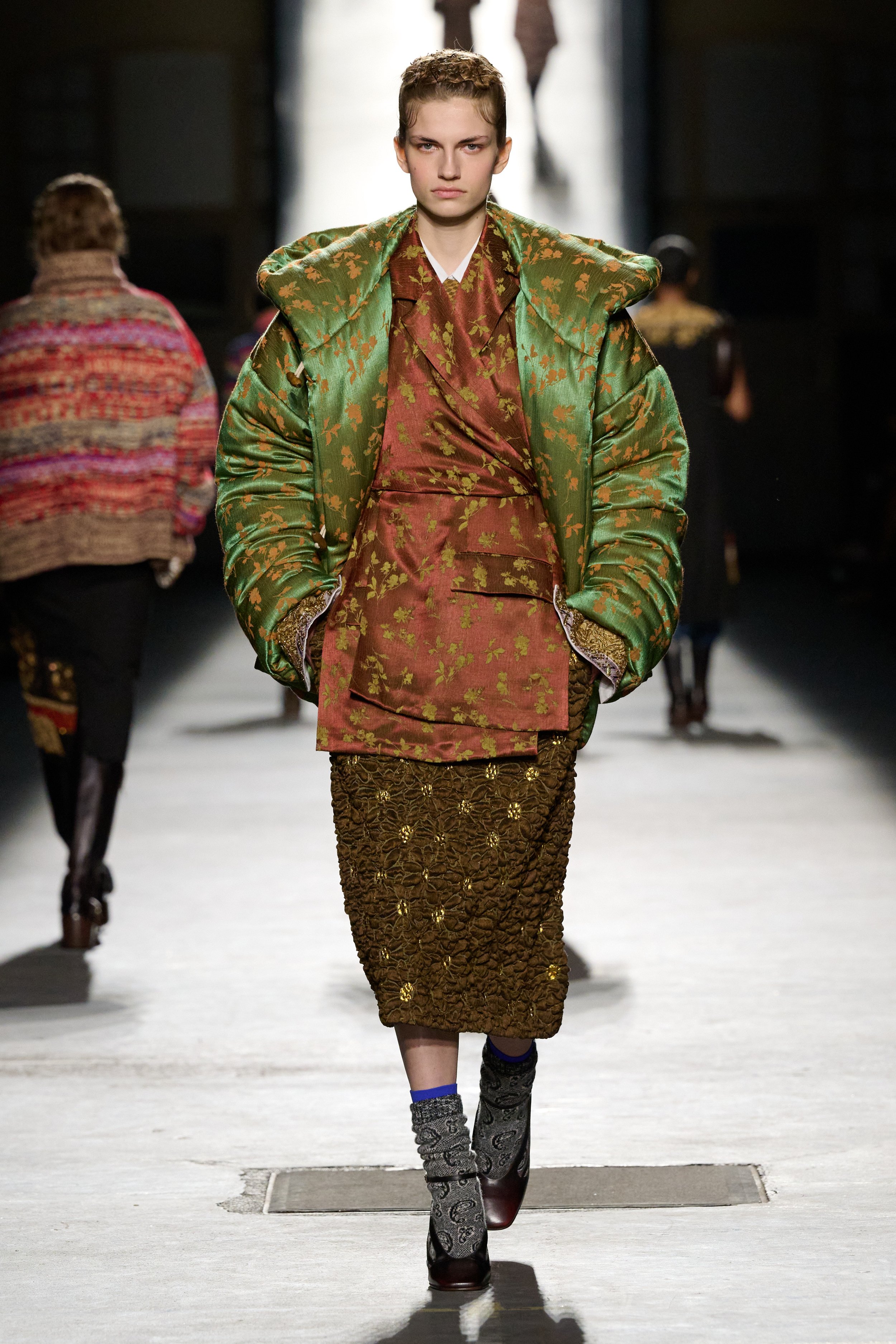
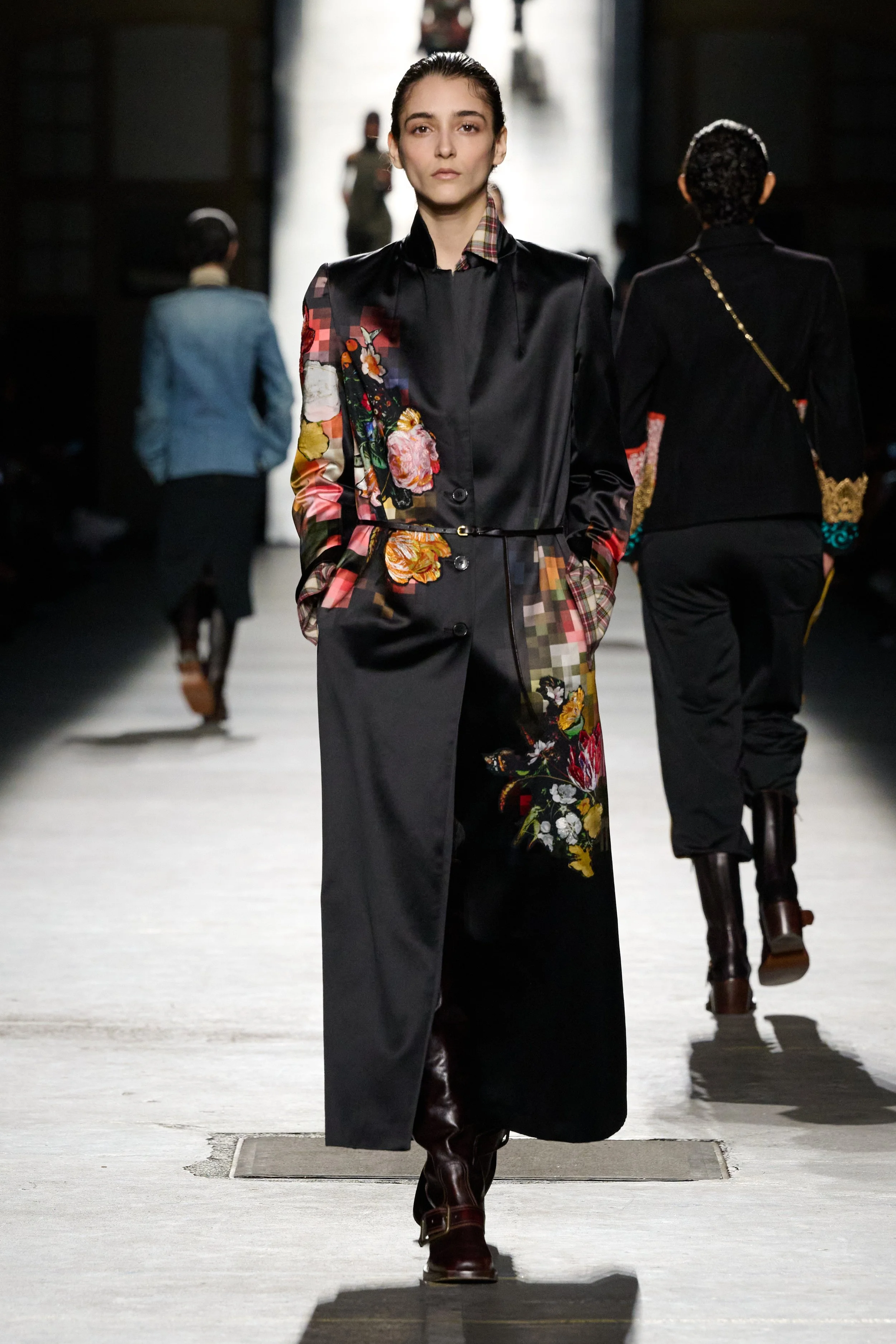
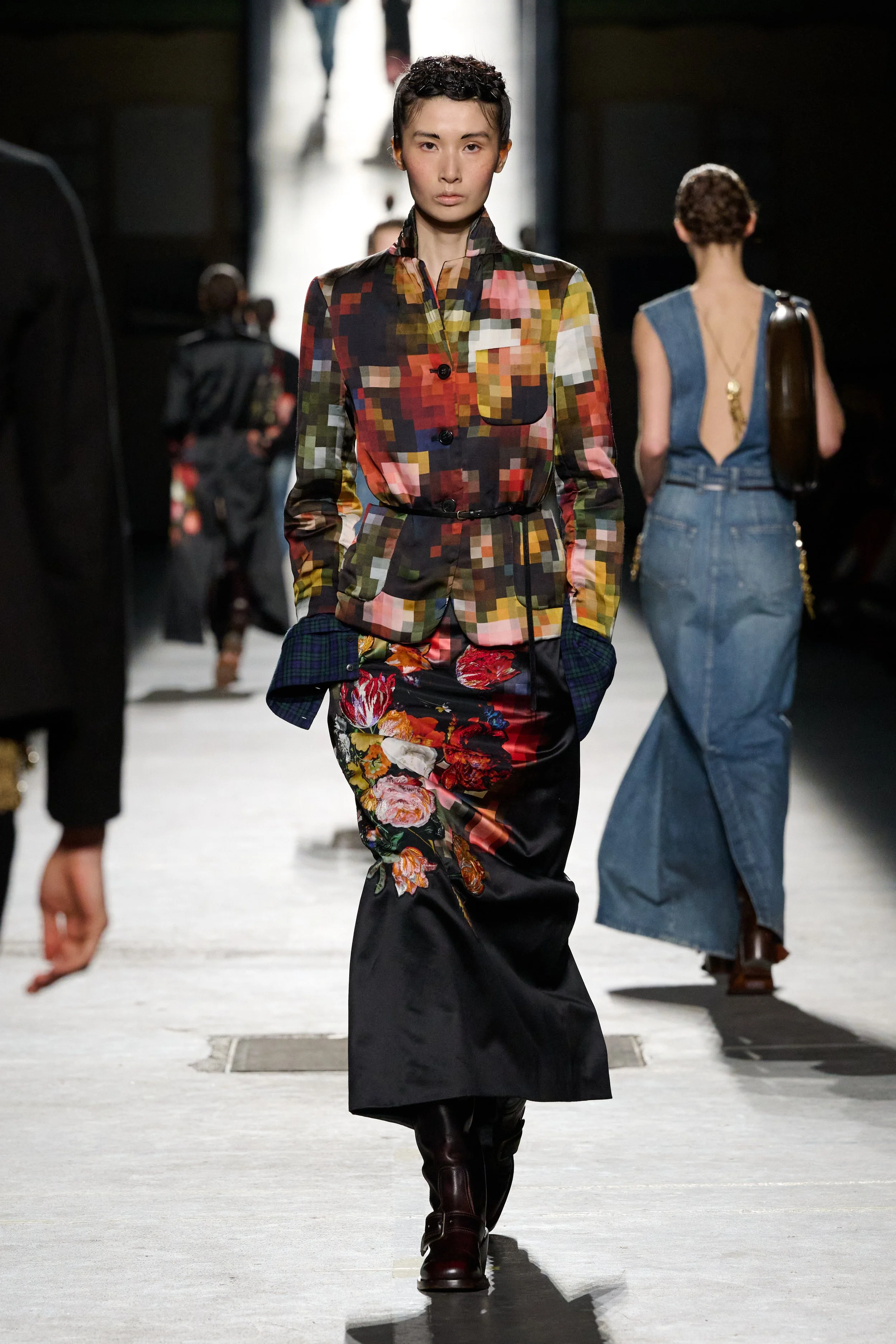
17th-century still life of a peach appeared first in a long skirt, then in a belted parka, followed by green plaids and prints of floral arrangements. These same ones gradually became pixelated on embellished skirts and new bags. The pixelation of print, only for it to become clear again, to then have both mixed in incredible embroidered dresses, illustrates the volatile nature of growing. Today we see ourselves clearly, tomorrow we don’t recognise ourselves. The mix of material and texture on single garments spoke to a similar feeling. A beautifully patterned, ochre coat has knit grey sleeves.

Knitwear was particularly strong in colourful jumpers with contrasting long scarves, the combination and volume of which reminds us of early school mornings – combinations born out of necessity. Other standouts included satin puffer jackets with floral patterns.

The story Klausner weaves is clear, and so is his motivation. He has made it a habit to draw from feelings that, in their uniqueness, are pretty much universal. Plus, one has to wonder if, in what is his fifth collection for the house, he’s finding new ways to relate to his youth. In the spring of our lives, every moment is an opportunity to prove ourselves. Klausner excels at every chance he gets. 


Words by Pedro Vasconcelos

RICK OWENS FW26

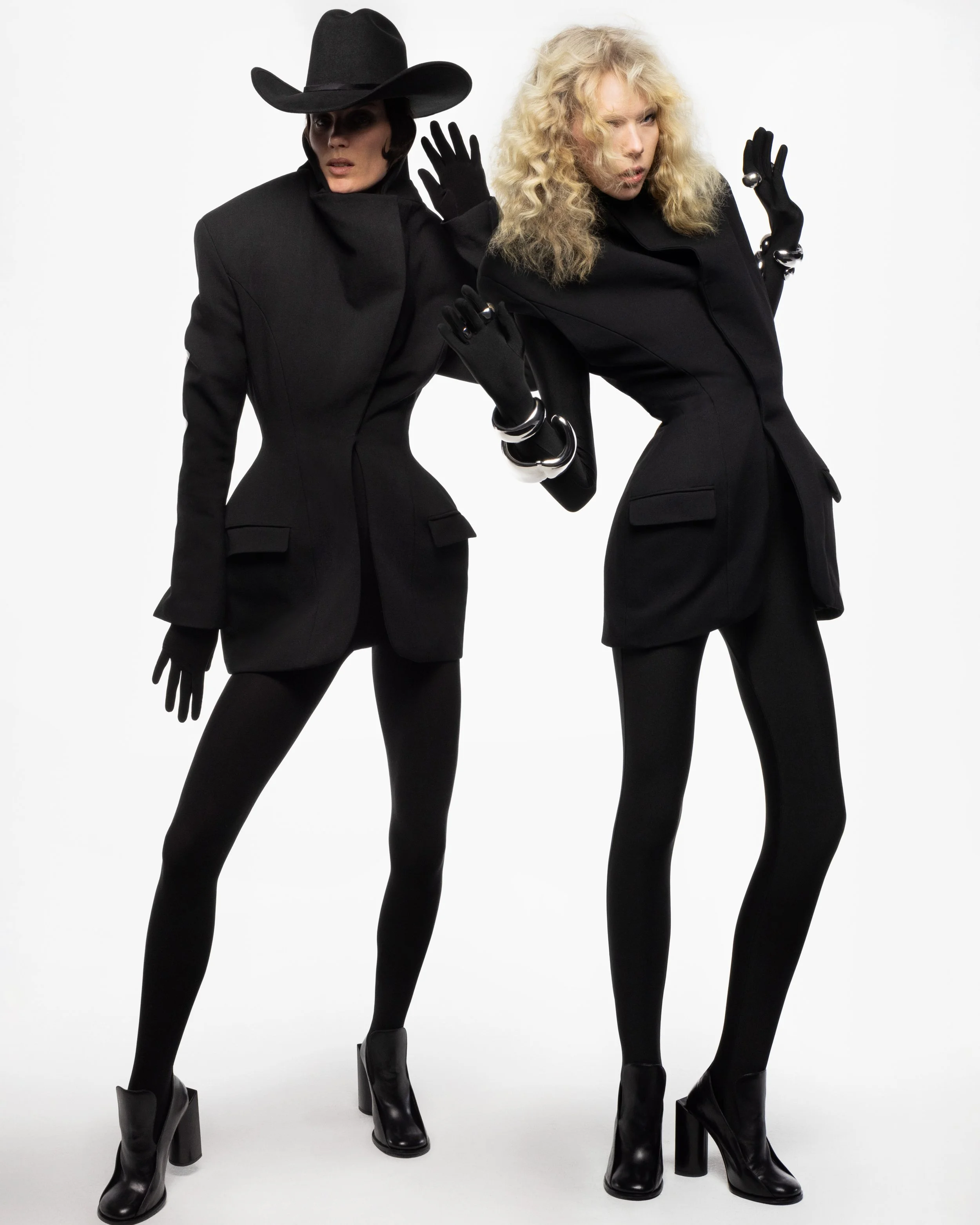
While some designers treat fashion as a microcosm isolated and disconnected from the state of the world, Rick Owens sees it as a means of change and reflection. Quite frequently, the Californian designer places a mirror on society to craft looks that are as current as they are forward-thinking. Tower, Owens' Fall/Winter 2026 womenswear collection, followed the title and motto of the menswear show, presented in January this year. However, this time, the collection gained an additional layer of strength.

If Spring/Summer 26 was called Temple, as in “temple of love,” then Fall/Winter was named Tower, as in “tower of light" – a much-needed “prayer for love and hope,” Owens stated. With a nod to Marlene Dietrich, a muse he had previously claimed to be fascinated by, Owens’ clothes served as armour, with the models ready to fiercely face a modern-day apocalypse.

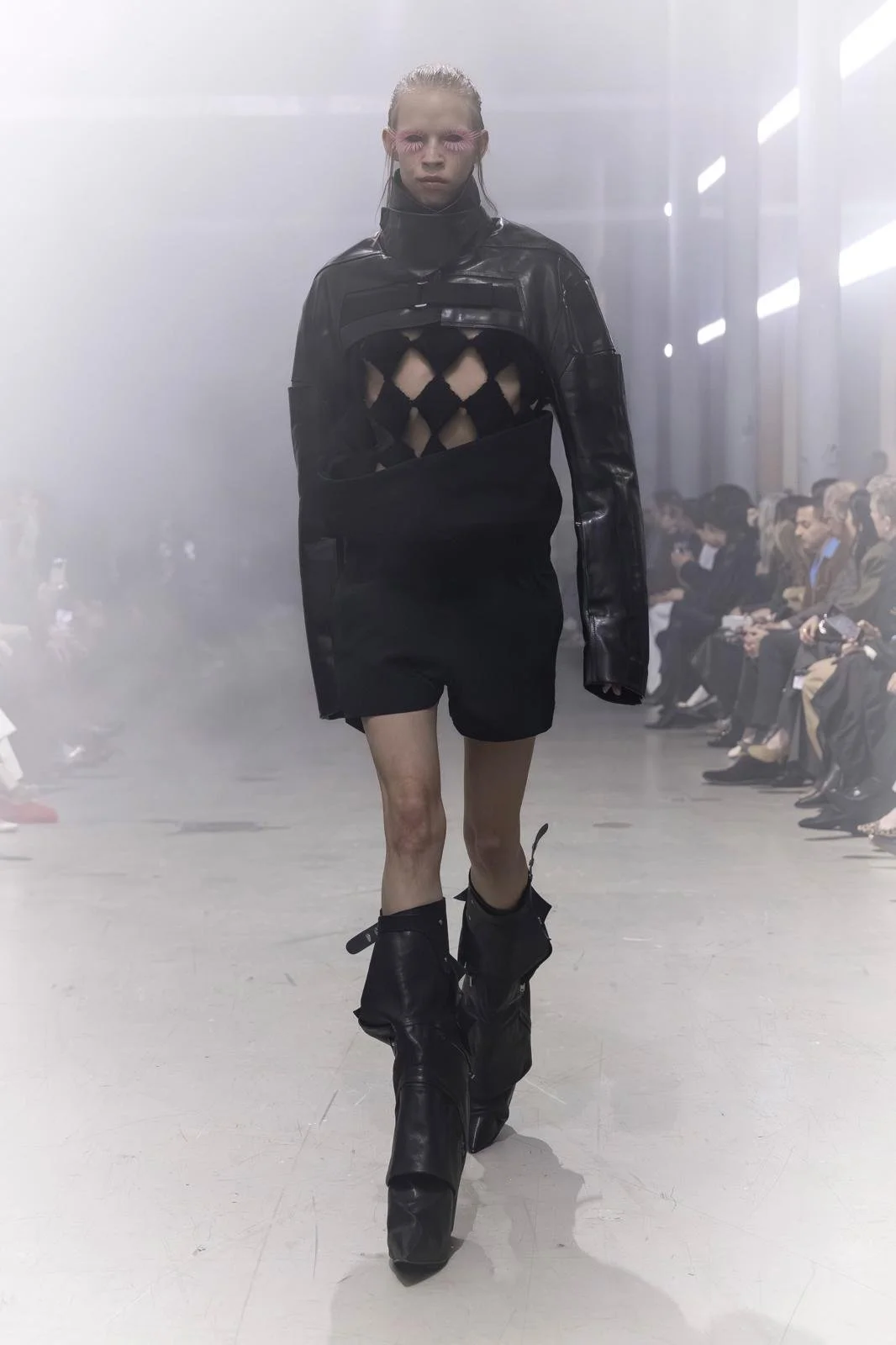
Consistent in his aesthetic, one that famously rejects the status quo, Owens did not shy away from his signature elements. Slouchy, towering platform boots, broad square-shouldered silhouettes, and beautifully manipulated leather pieces were present in the show, all carried at the Palais de Tokyo by a troop of otherworldly-looking women, their alien beauty once again created in collaboration with Brazilian artist Bernardo Martins, known as @figa.link.

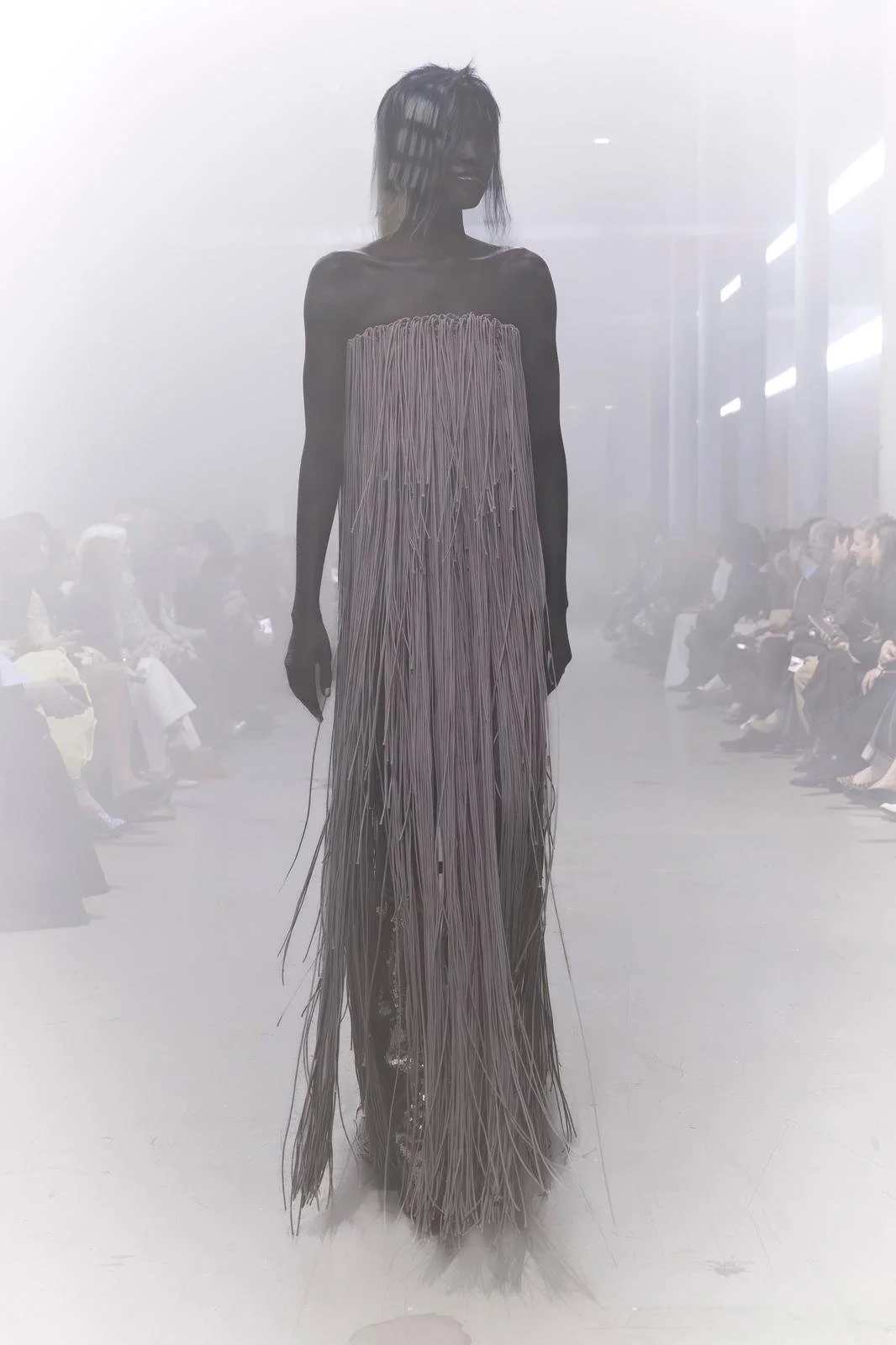
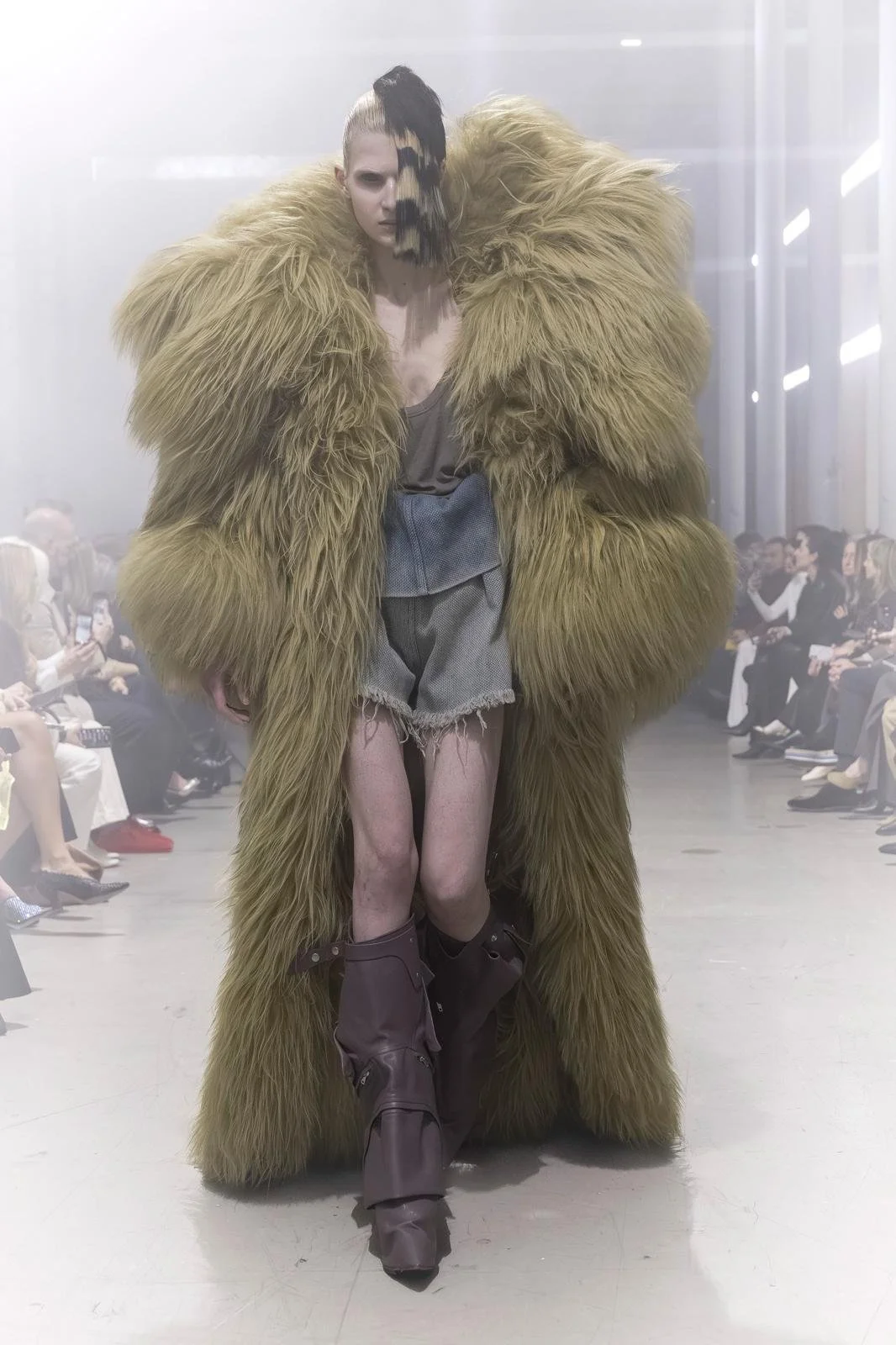
Fur, a common thread in almost every collection this season, was taken to the max here, with colossal goat hair coats appearing as both protective outerwear and statement pieces. Juxtaposed to the maxi shapes were strapless column leather dresses with pockets, as well as floor-sweeping fringed garments, a version of the latter previously seen in the men's show.

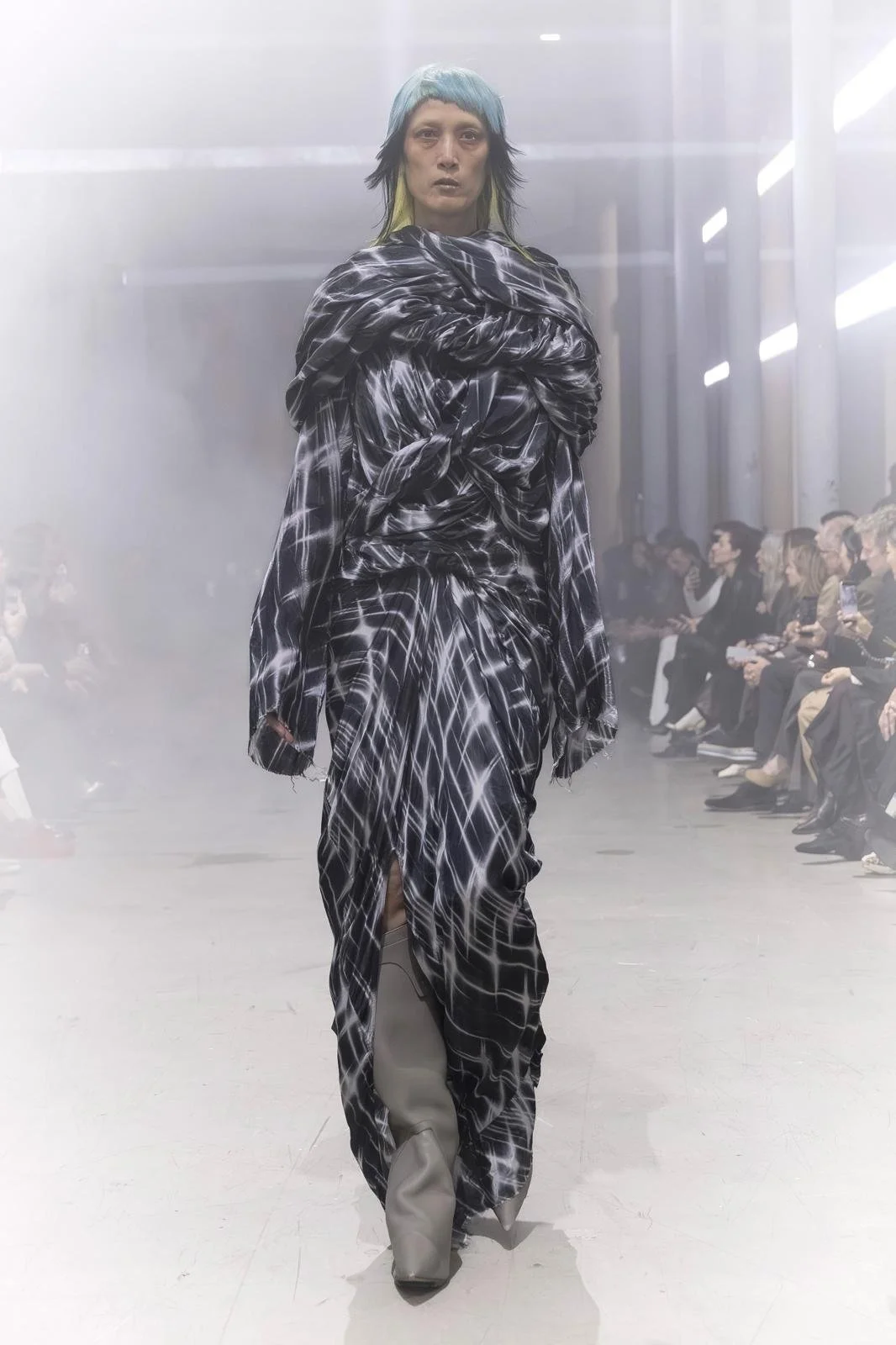
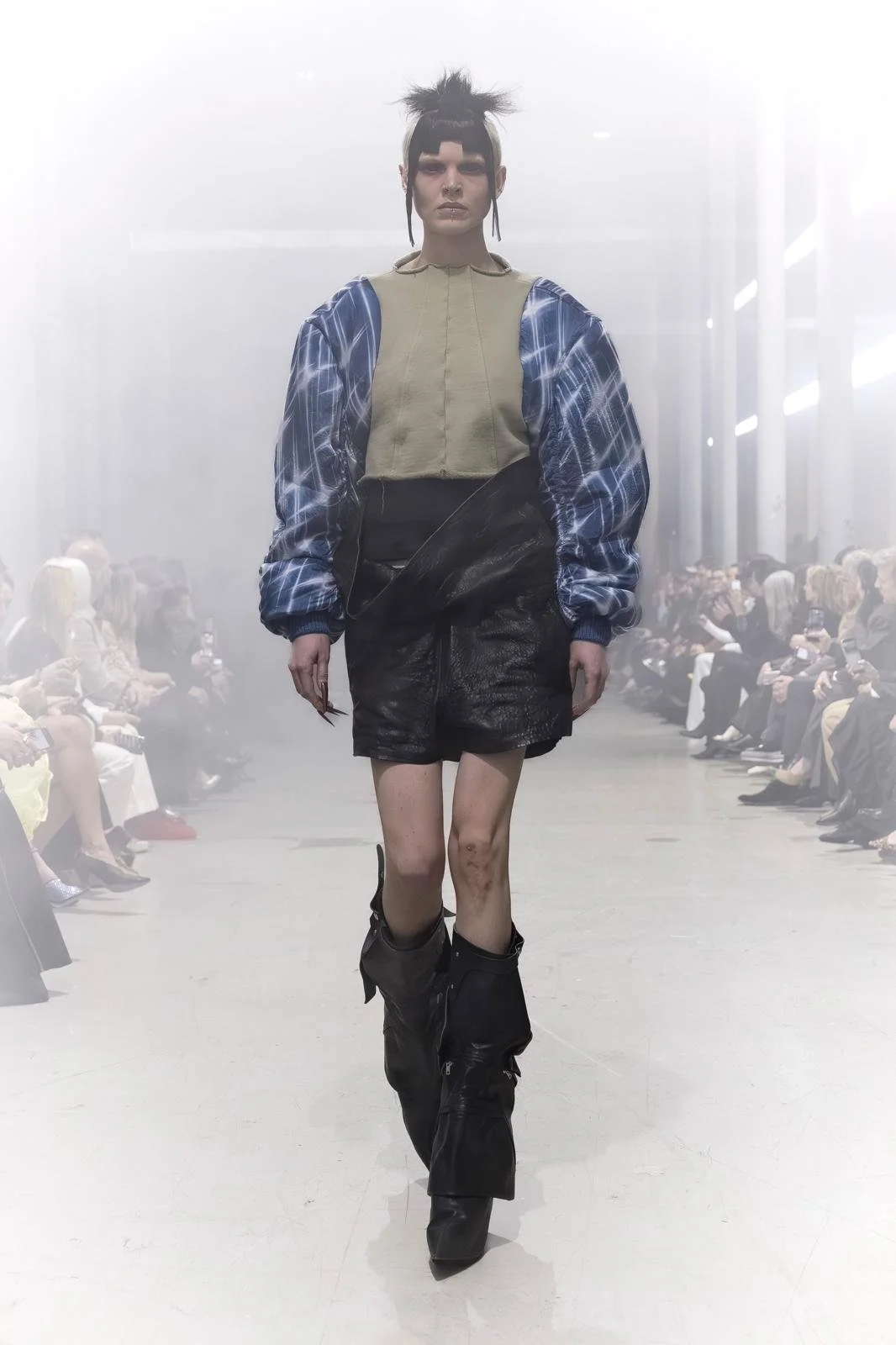
With a colour palette that resembled a Mad Max scenario, earthy tones dominated the lineup. Hints of bright blue, acid yellow, lilac, blush, and even patterned pieces in black-and-white and white-and-blue stood out. Ultra-high collars, shielding capes and coats, cocooning pieces, and full leather looks in matching jackets and shorts, the material manipulated to create a structure capable of floating out of the body, contributed to Owens’ typical dystopian drama.

With elven ears, long feathered lashes, claw-looking stiletto nails and the coolest hair and makeup in tow, there’s a reason why everyone wants to be part of the Rick Owens crowd. The main one being contradiction – his characters only seem intimidating at first; they are actually very welcoming.


Words by Ketlyn Araujo

COURRÈGES FW26

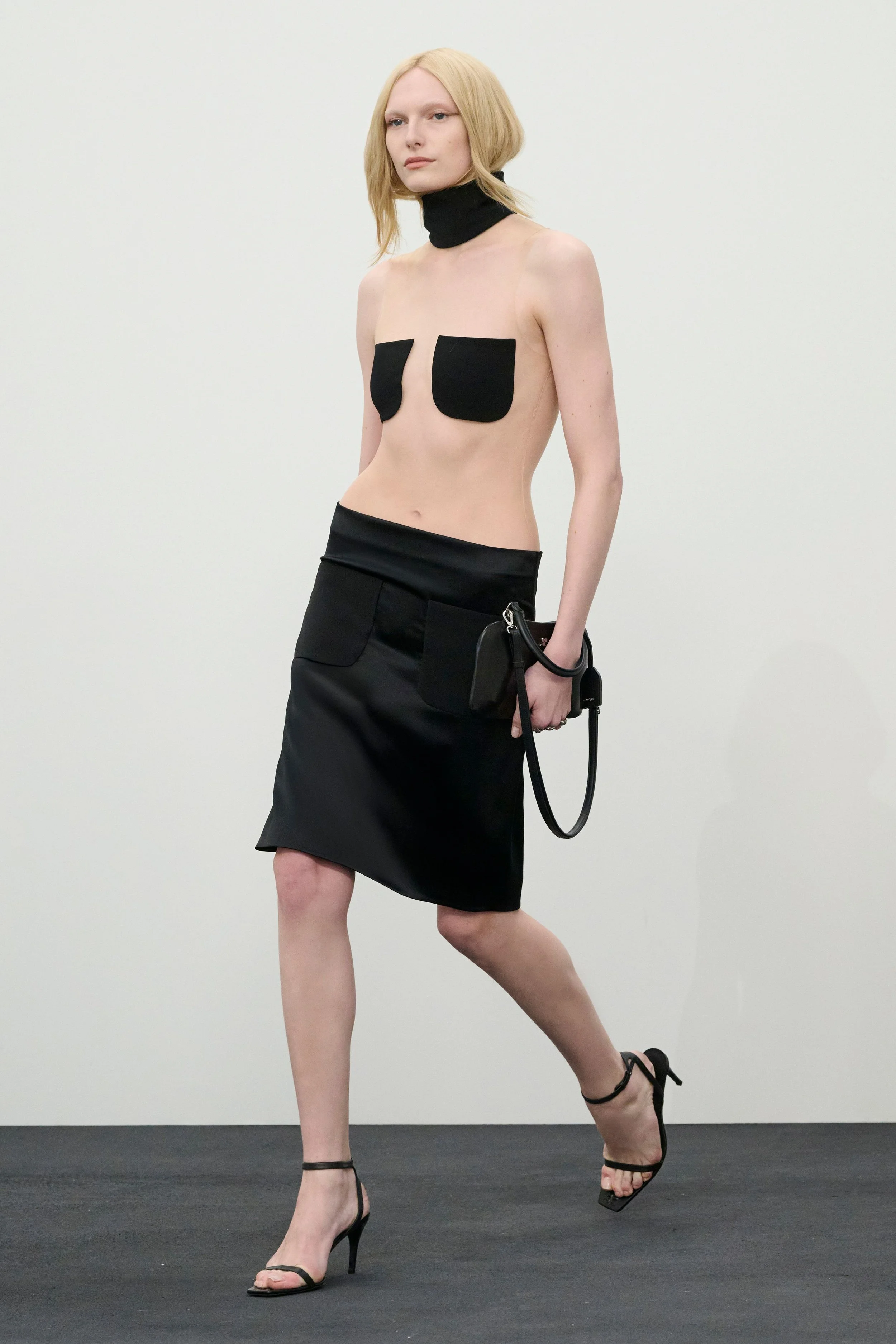
The Courrèges woman is typically imagined after dark. Picture the best party you’ve ever attended — she’s there, effortlessly commanding the room. For Fall/Winter 2026, however, creative director Nicolas Di Felice reframed that familiar narrative, presenting a collection that followed her through the rhythm of an entire day.

Time, quite literally, was the collection’s central motif. The show marked Di Felice’s fifth anniversary at the helm of the house, and the theme unfolded from the very first moment. Guests received a clock as their invitation, and as the show began, the soundtrack traced the cadence of daily life: the steady tick of passing seconds, snippets of radio news, the sound of coffee brewing, and the shrill interruption of a ringing phone.

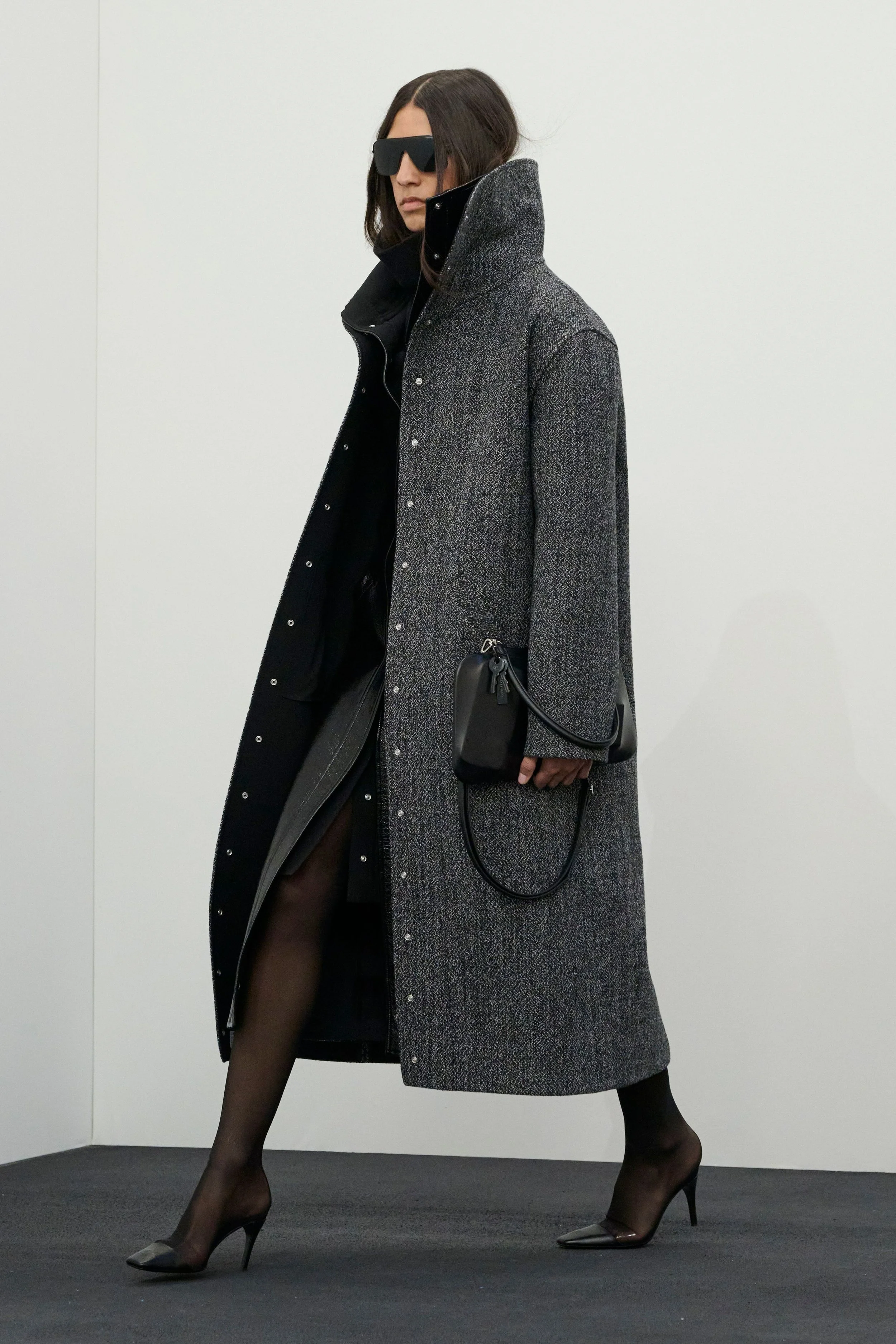
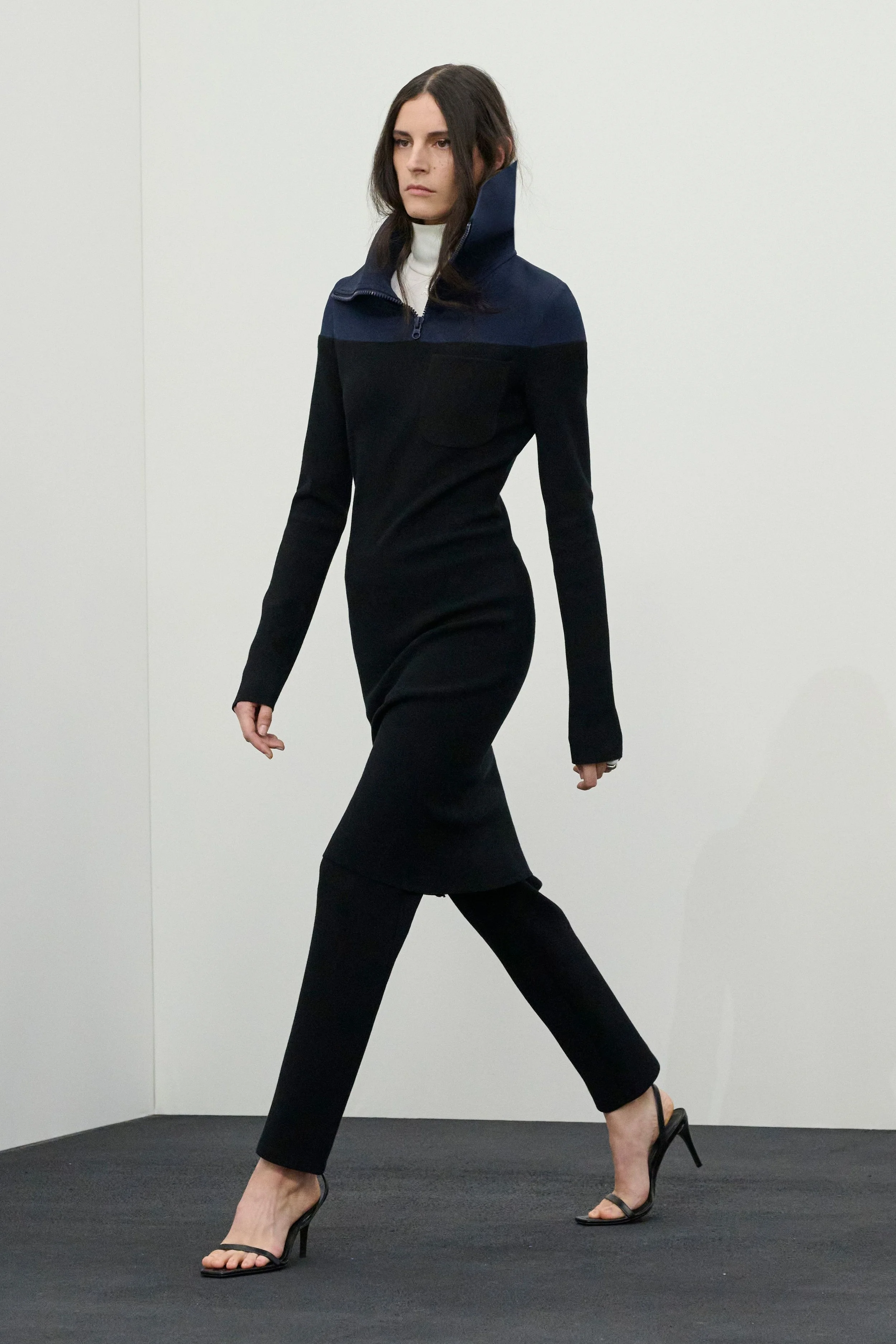
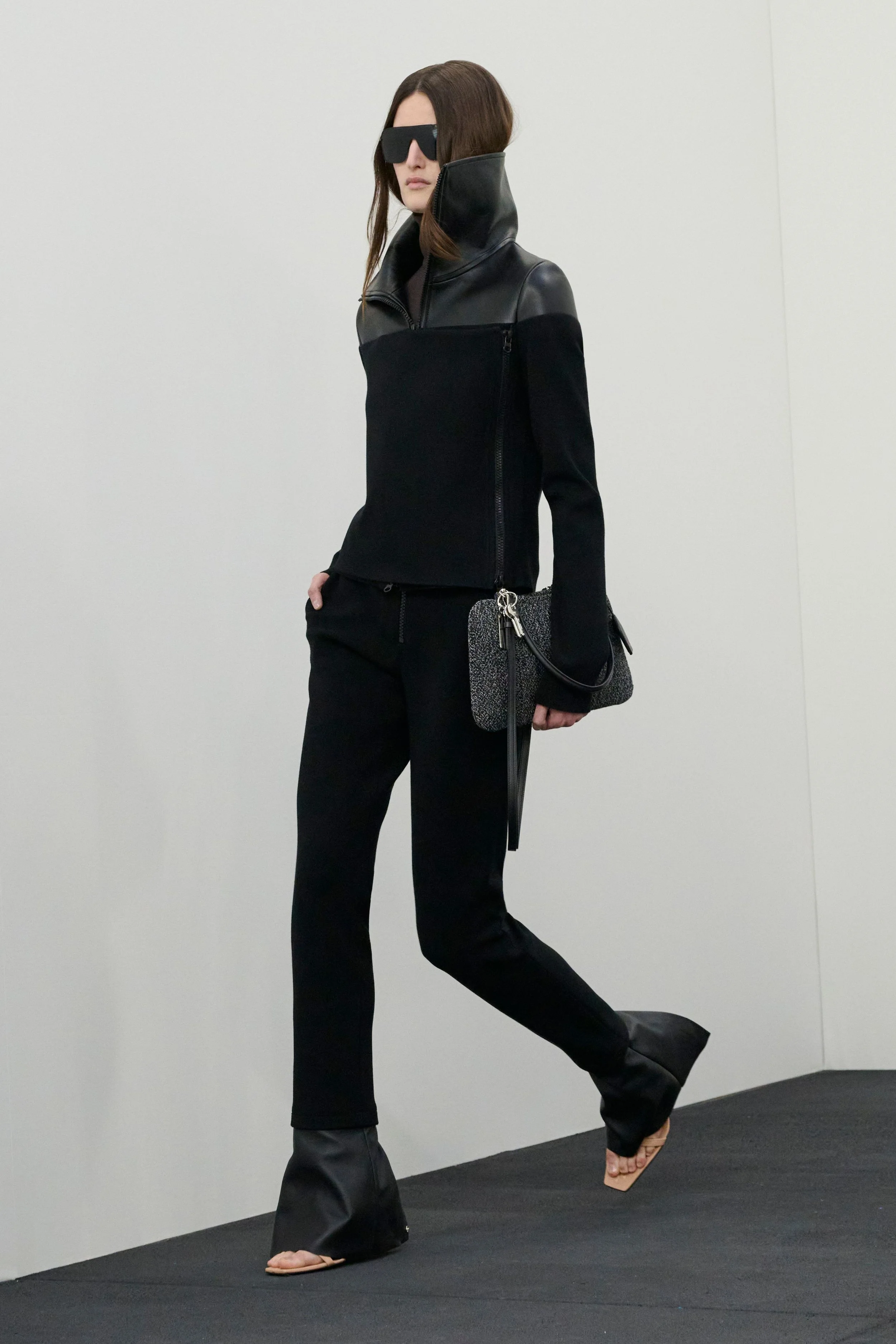
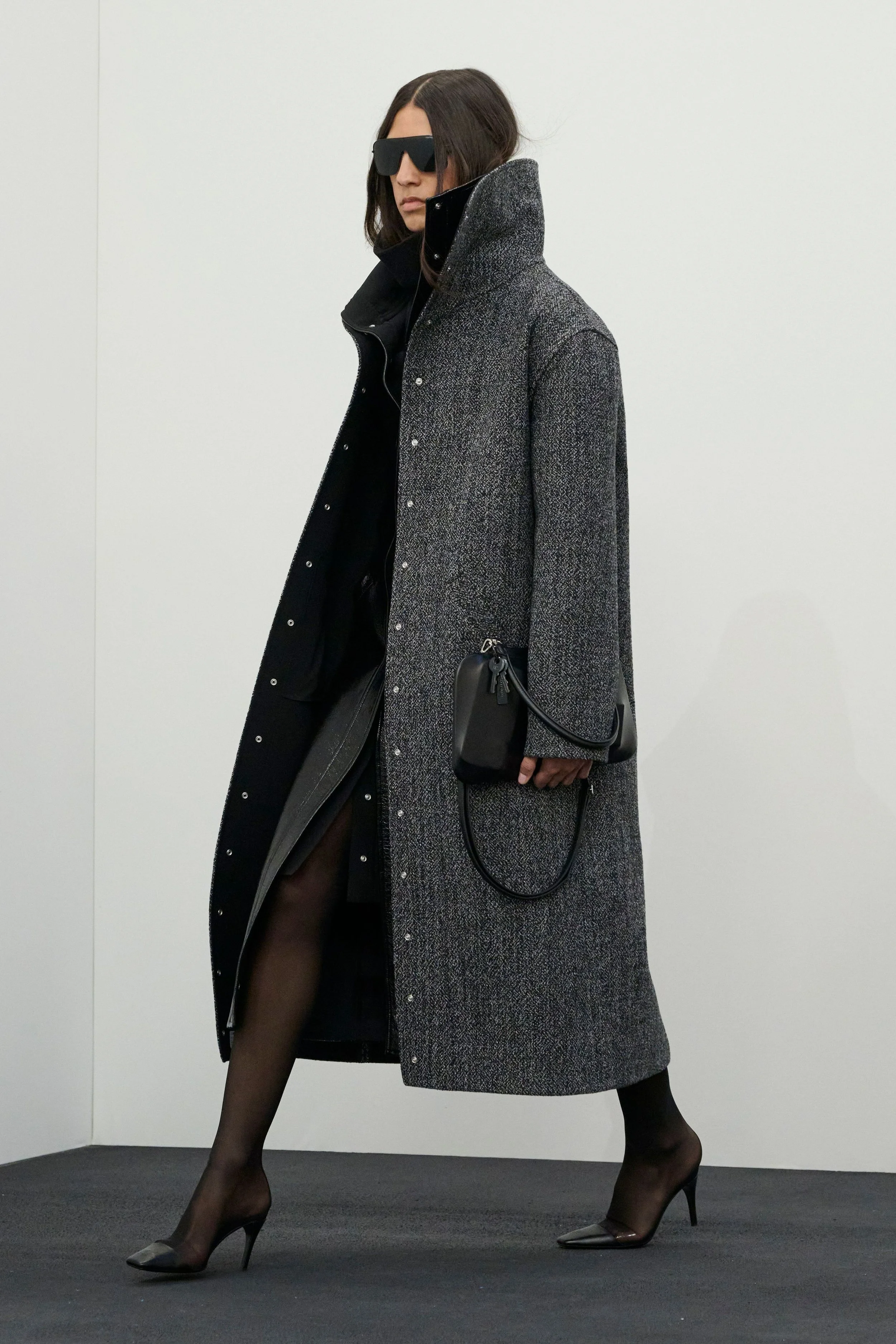
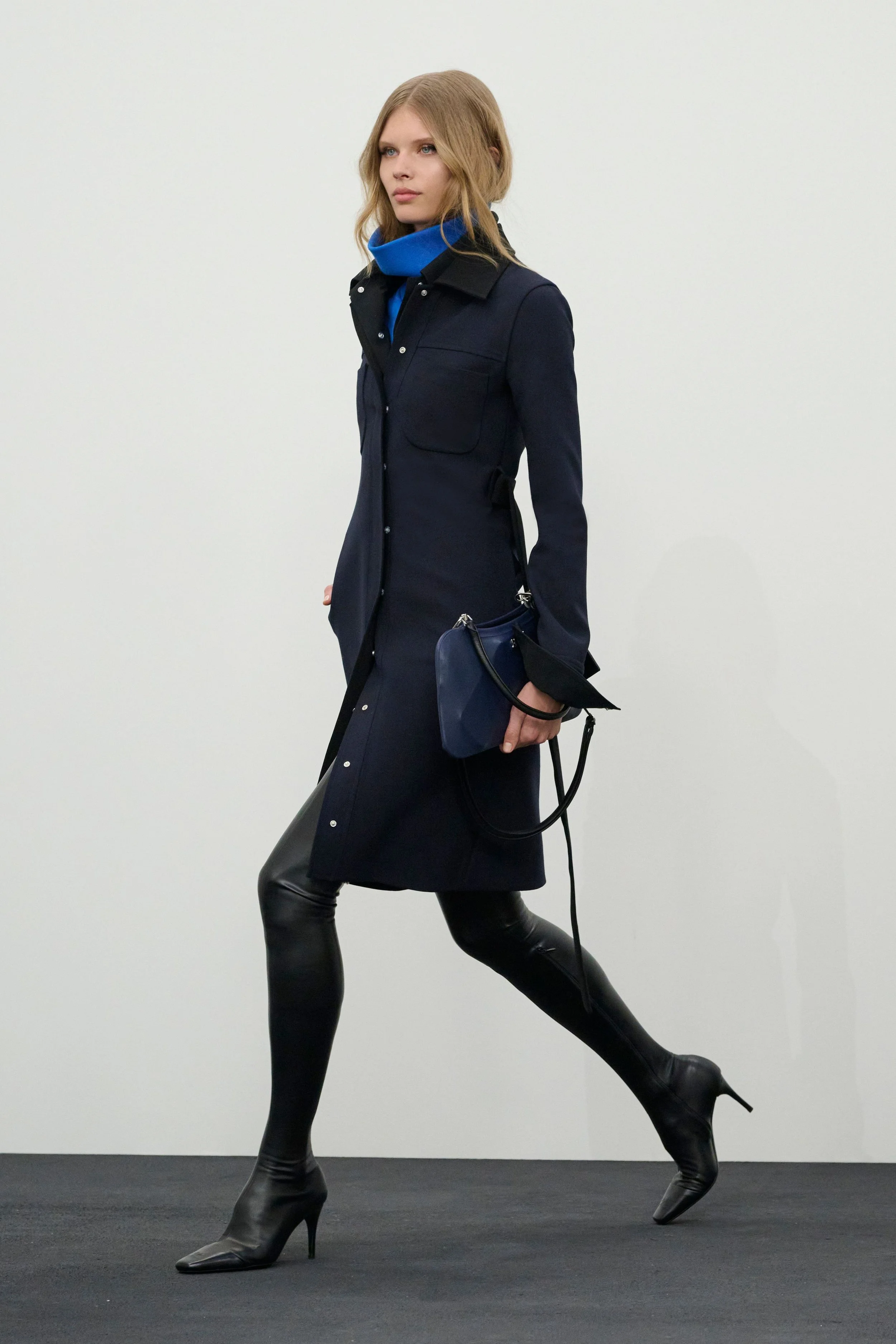
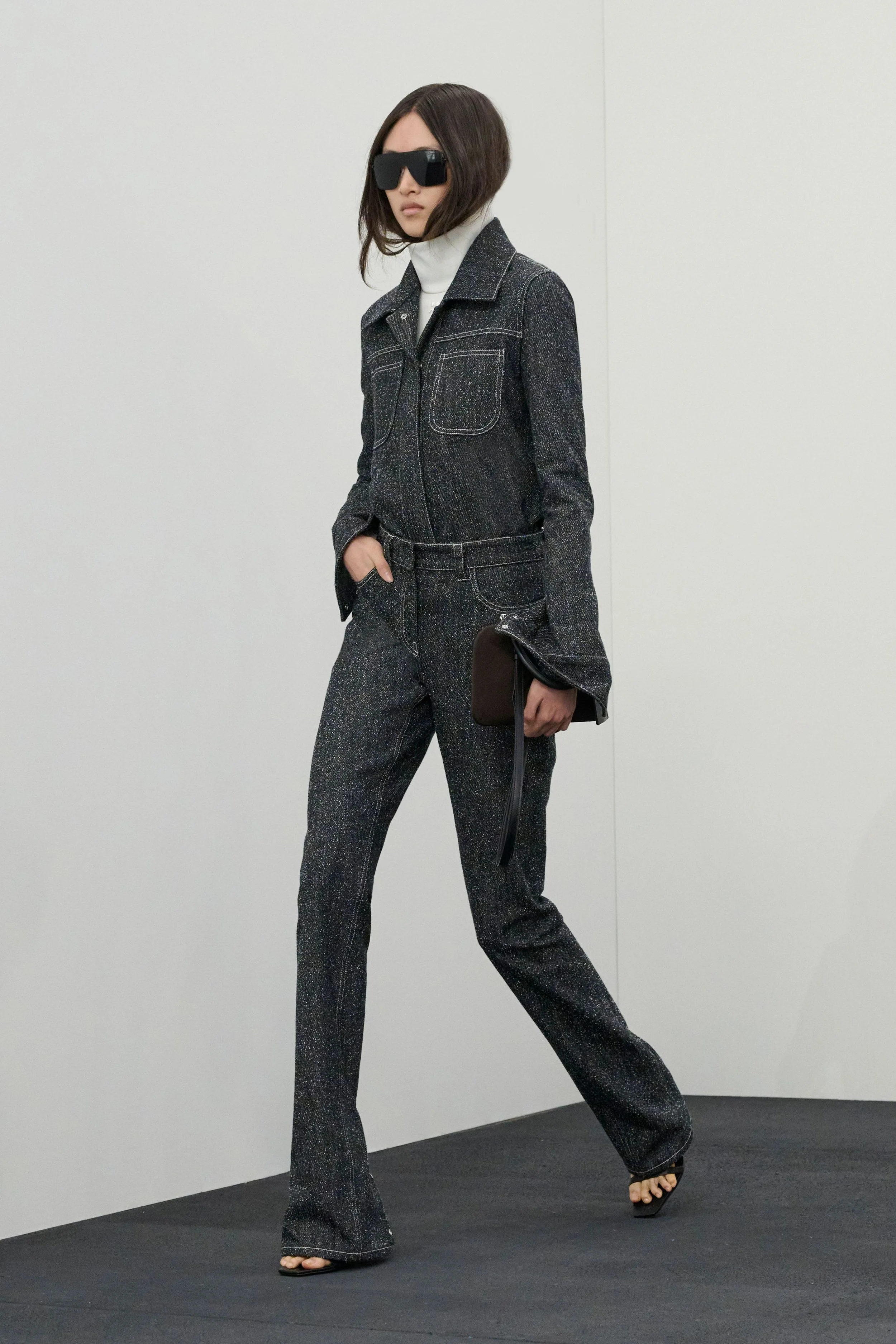
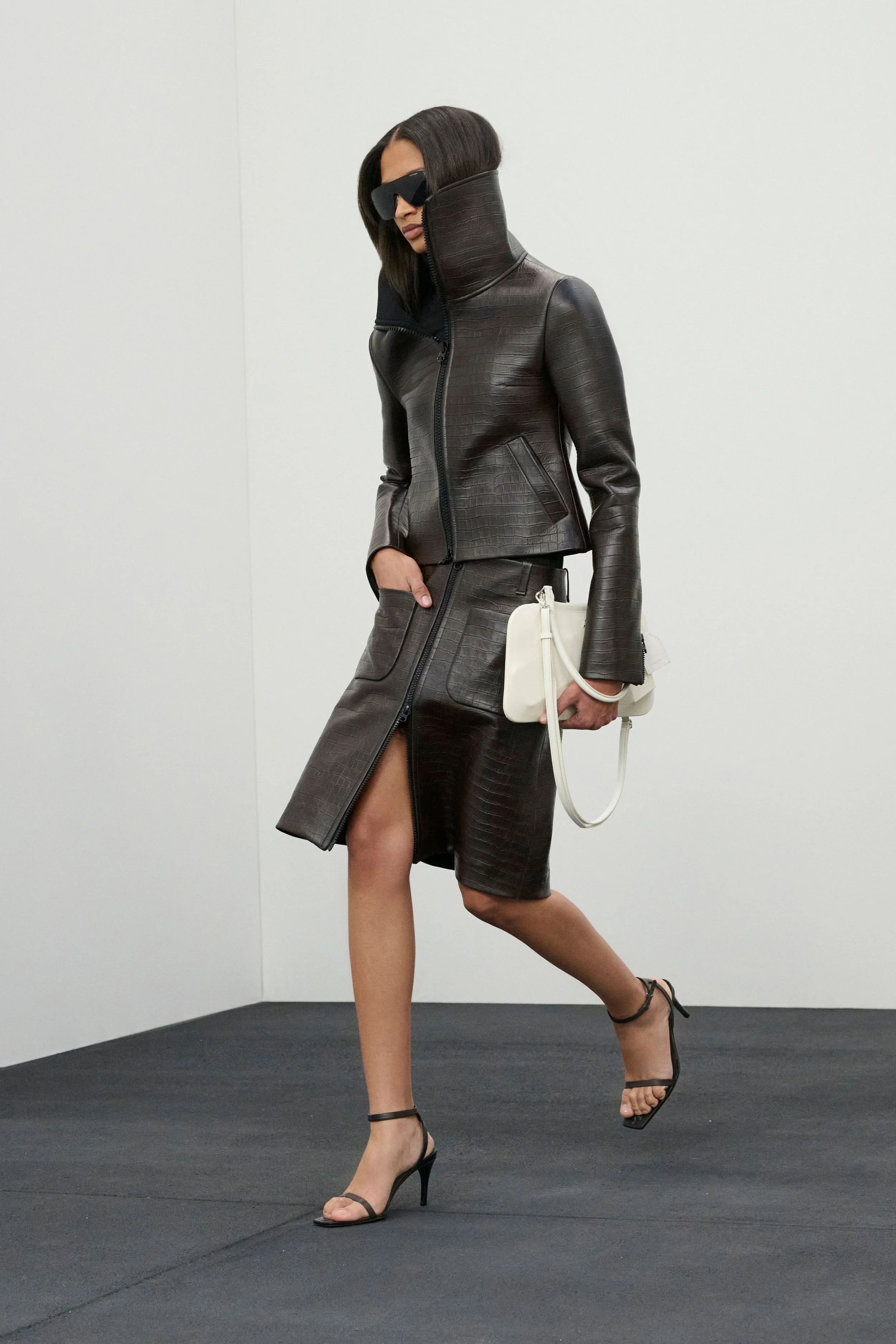
The wardrobe mirrored this sense of constant motion. Technical quarter-zip tops accented with leather, robust wool coats with dramatically popped XL collars, and navy shirt dresses layered over cobalt blue turtlenecks evoked the practicality of daytime dressing. Sets in speckled denim further reinforced the utilitarian mood. Accessories followed suit: bags appeared larger and decidedly more day-appropriate, featuring a clever design detail — the visible outline of the everyday essentials tucked inside.

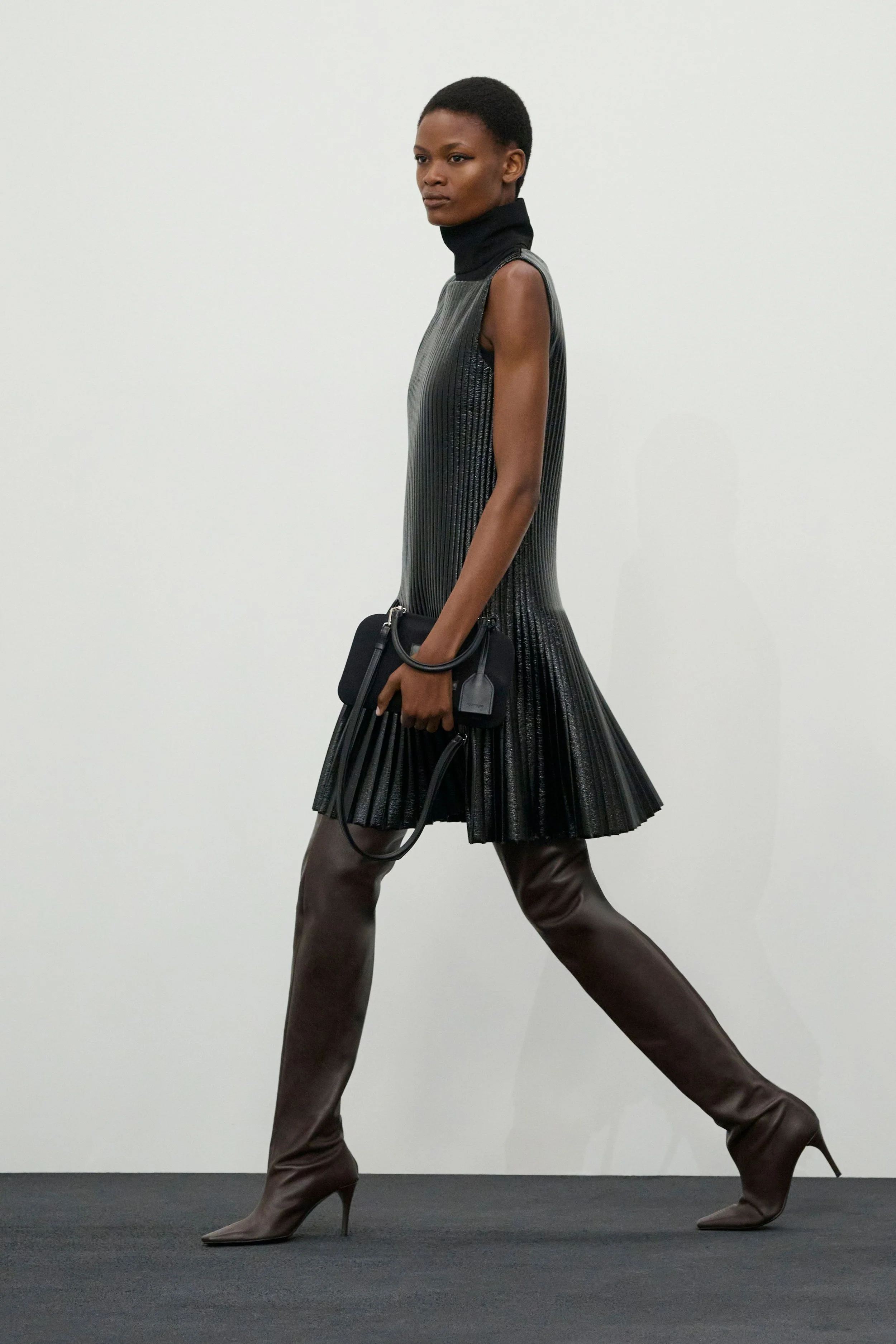
As evening fell, Di Felice returned to the codes that have defined his tenure at Courrèges, but with a renewed twist. On Alex Consani, a sleeveless “turtleneck” top was rendered in the designer’s barely-there translucent fabric, lending a sharp, provocative edge. Sculptural dresses shimmered under the lights, many punctuated by daring slits that hinted at the brand’s signature sensuality.

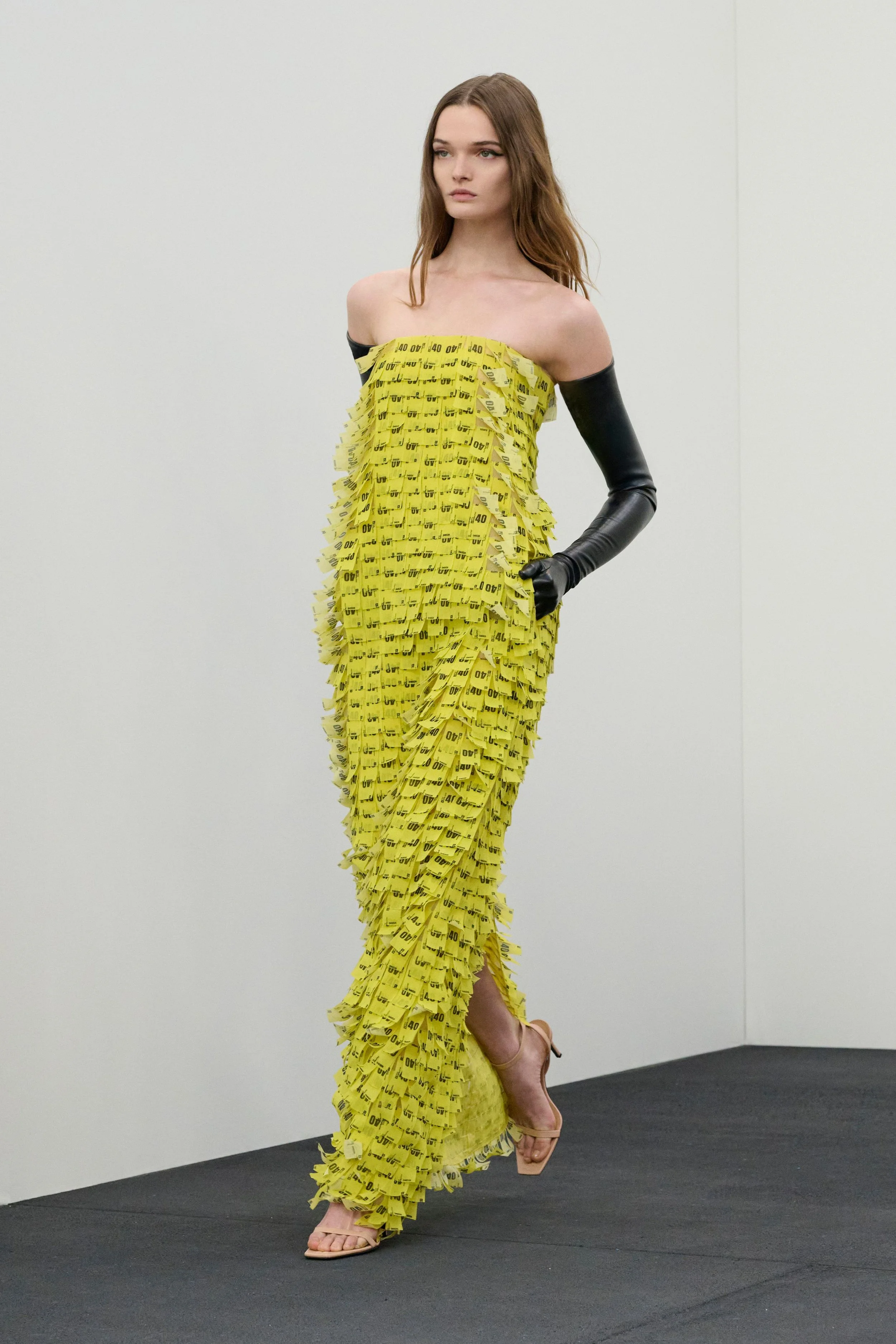
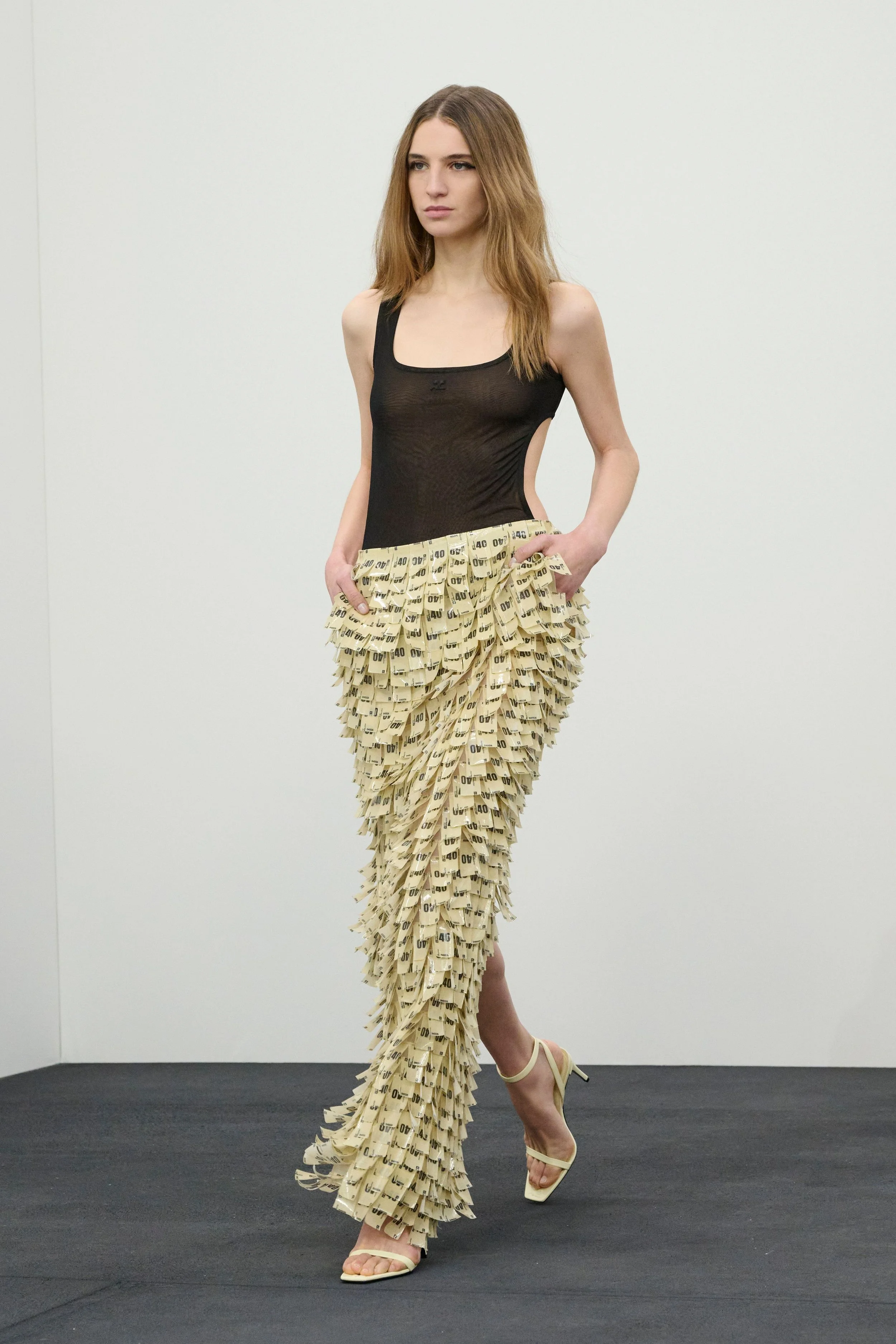
Di Felice’s most experimental gestures arrived in the form of dresses and skirts constructed from coat-check and metro tickets — fragments of the city’s daily choreography transformed into unexpected couture material.

For the finale, the models reappeared in white iterations of the collection’s key looks. The gesture felt symbolic: a blank slate, perhaps, marking both Di Felice’s first five years at Courrèges and the promise of the next chapter.


Words by Martin Onufrowicz

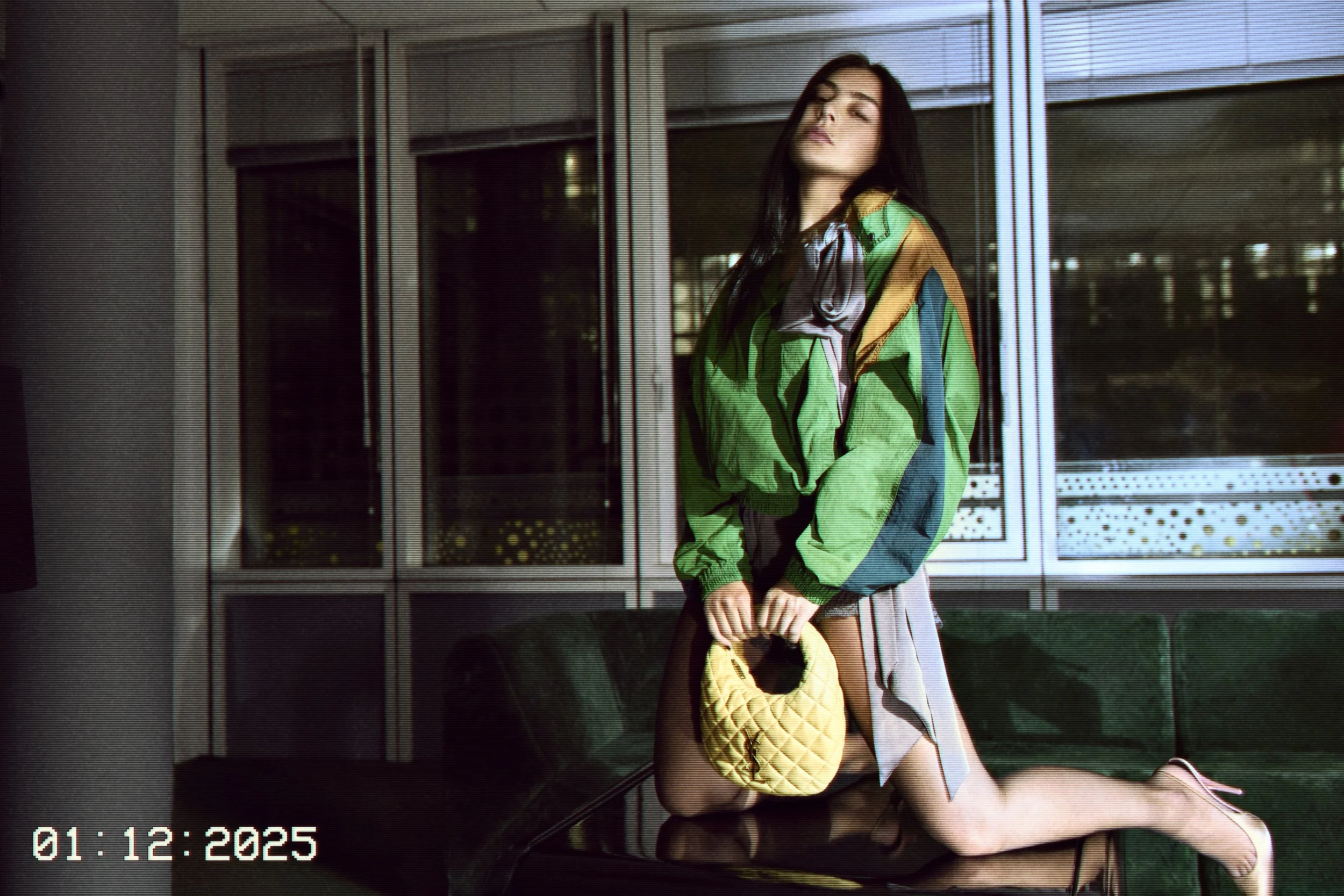
SAINT LAURENT FW26

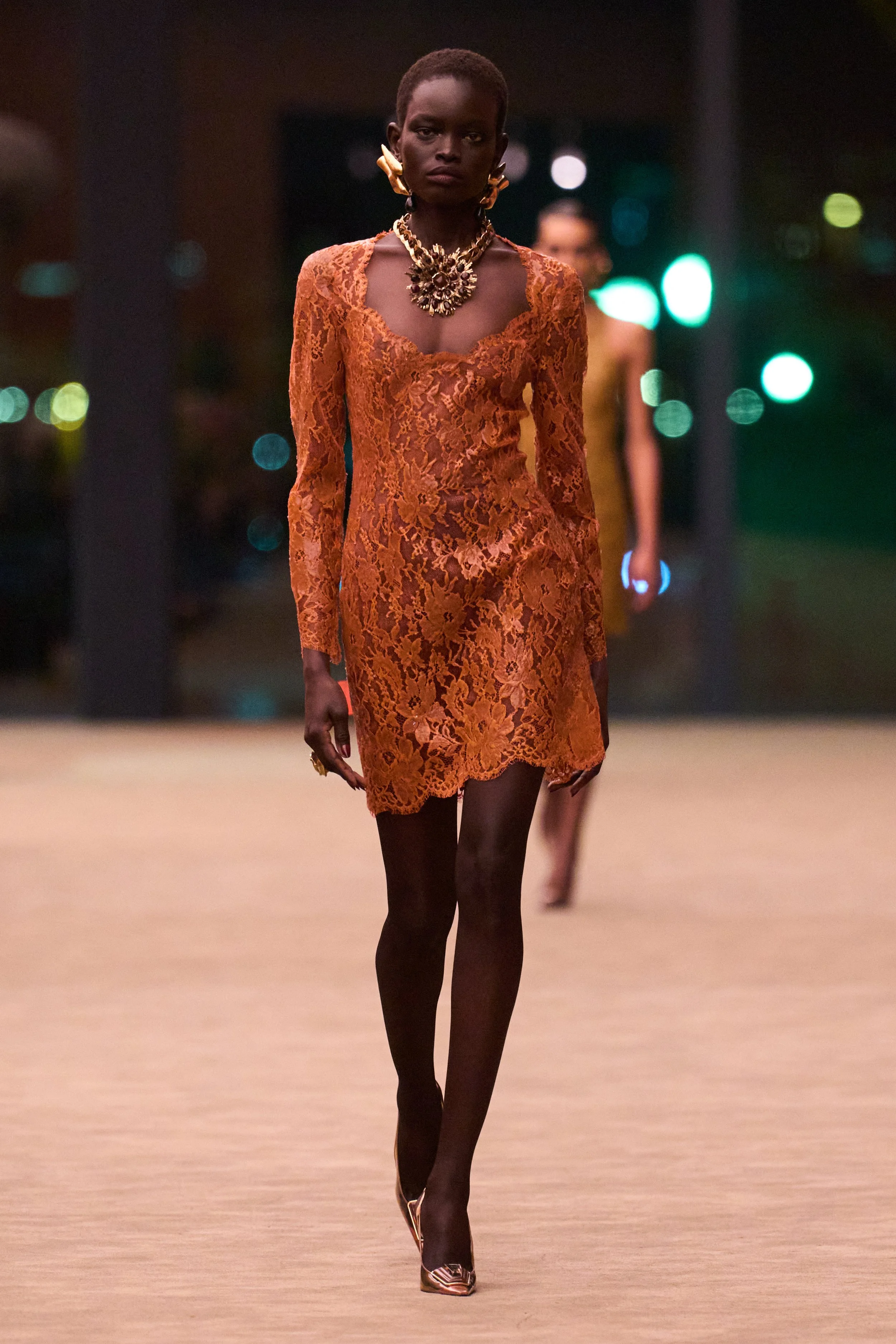
What Anthony Vaccarello does, as he’s always done, is take the founder of the house he creatively leads as his muse. In menswear, we often see the philosophy made literal. We recognise his glasses on the runway, we see his tailoring on the body. For womenswear, the strategy is different. Yves Saint Laurent’s approach to design is channelled. Of course, even in reverence, Vaccarello’s Saint Laurent isn’t that of its founder. He has his own methodology. Collections are built around two to three silhouettes and concepts that are then explored thoroughly. For Fall/Winter 2026, the procession starts with suits.

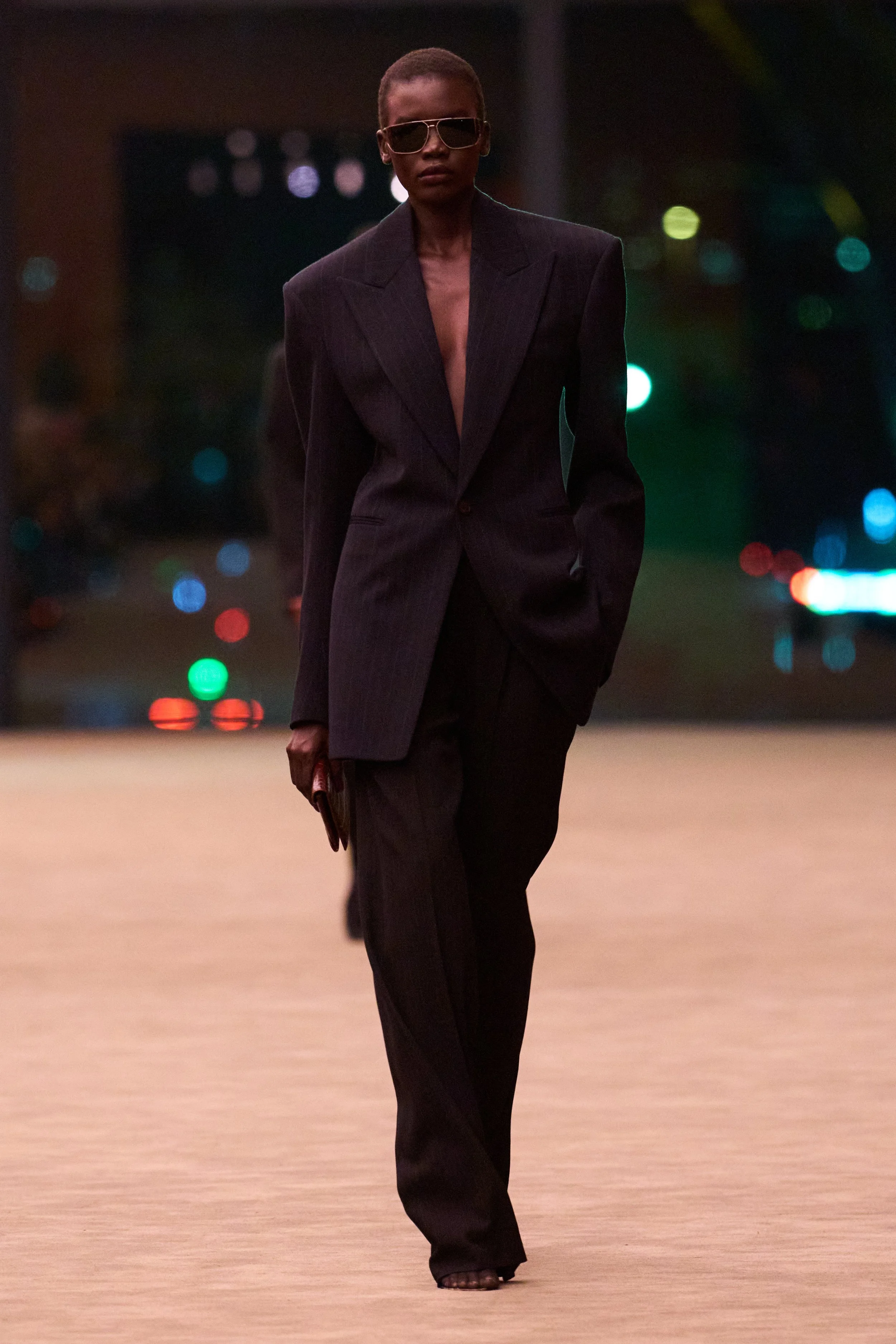
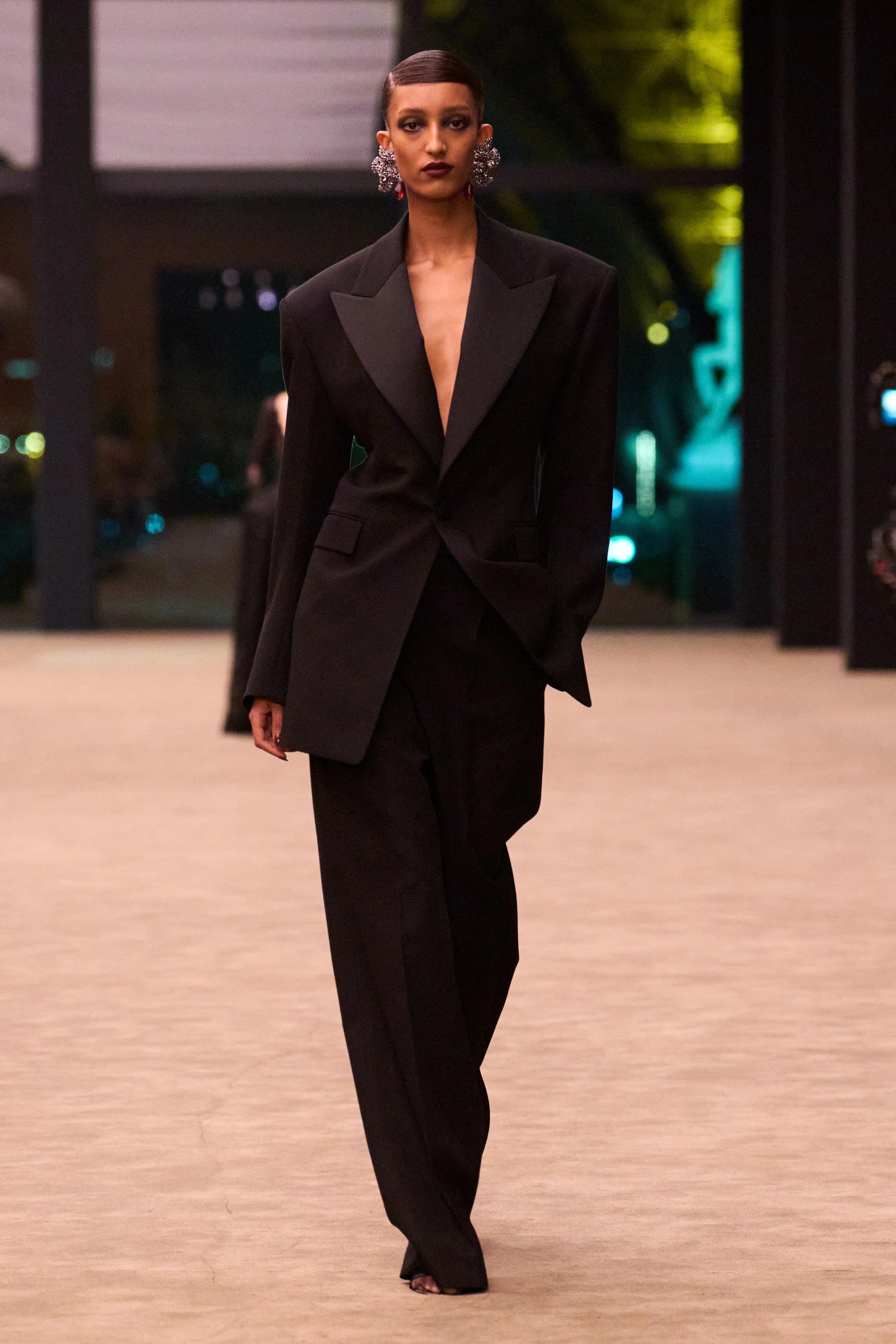
The maison’s affiliation with the female suit is well-known. Le Smoking, Helmut Newton, nighttime in Paris: the image is so clear it’s almost pointless to conjure it. Of course, as such, it’s not the first time Vaccarello has tapped into this aspect of the legacy as inspiration, but this feels particularly relevant. Just three seasons ago, we saw bold-shouldered suits coming down the runway in a multitude of neutral shades. But, if then the point was to evoke formal masculinity – all those suits were paired with shirts and ties – here, he speaks to the streetlamp-lit sensuality of the original Le Smoking. The faithful recreation, no doubt, to celebrate the 60th anniversary of the revolutionary piece.

Worn with nothing underneath, suits in barely variable deep shades made sensuality unrecognisable from power. The untrained eye might see no difference between the 14 iterations sent down the runway. But, through a tweak in the lapel or a differently situated button, the story changes. Vaccarello is patient. He knows not to rush to a superficial interpretation of the legacy, choosing instead to expand it slowly.

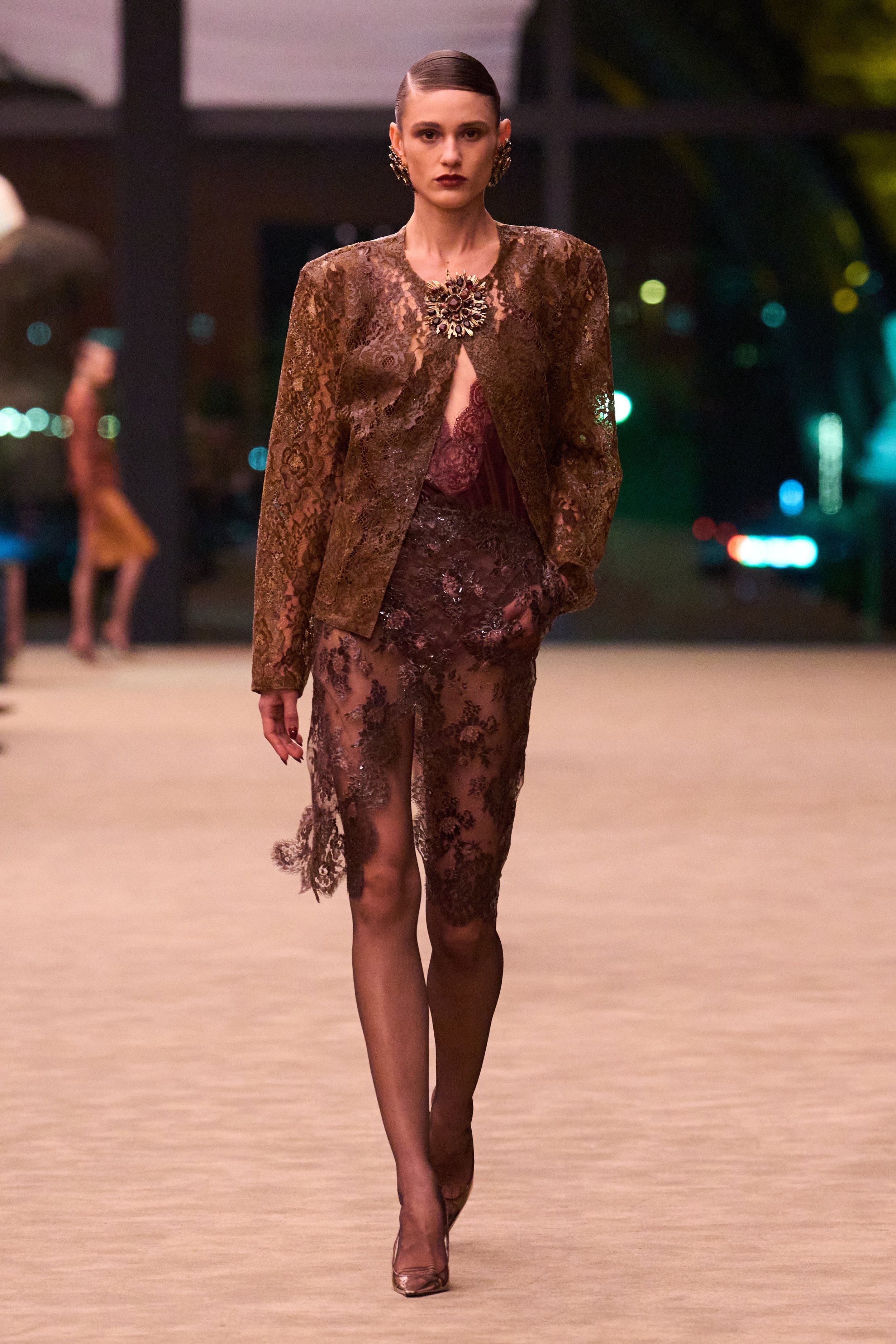
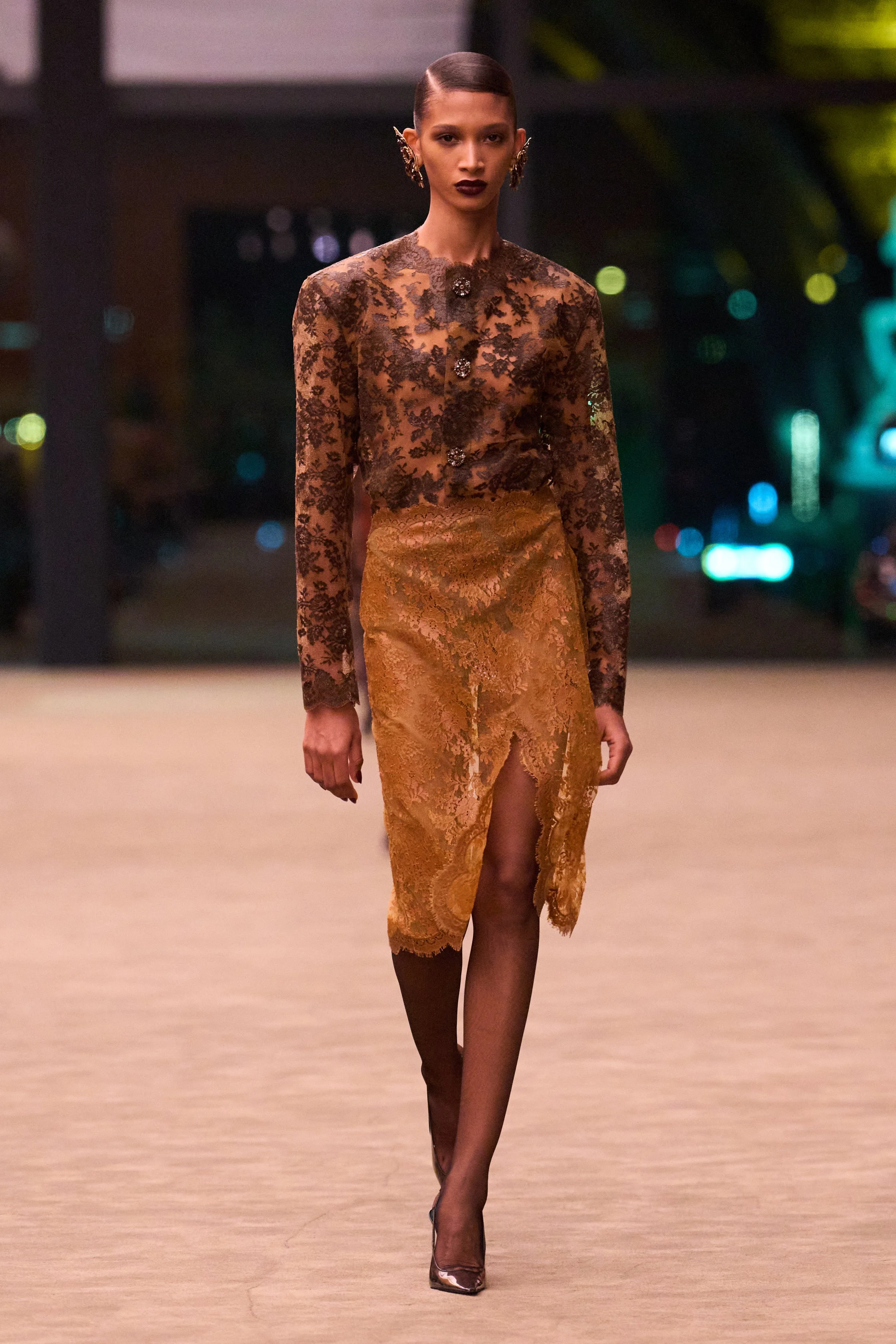
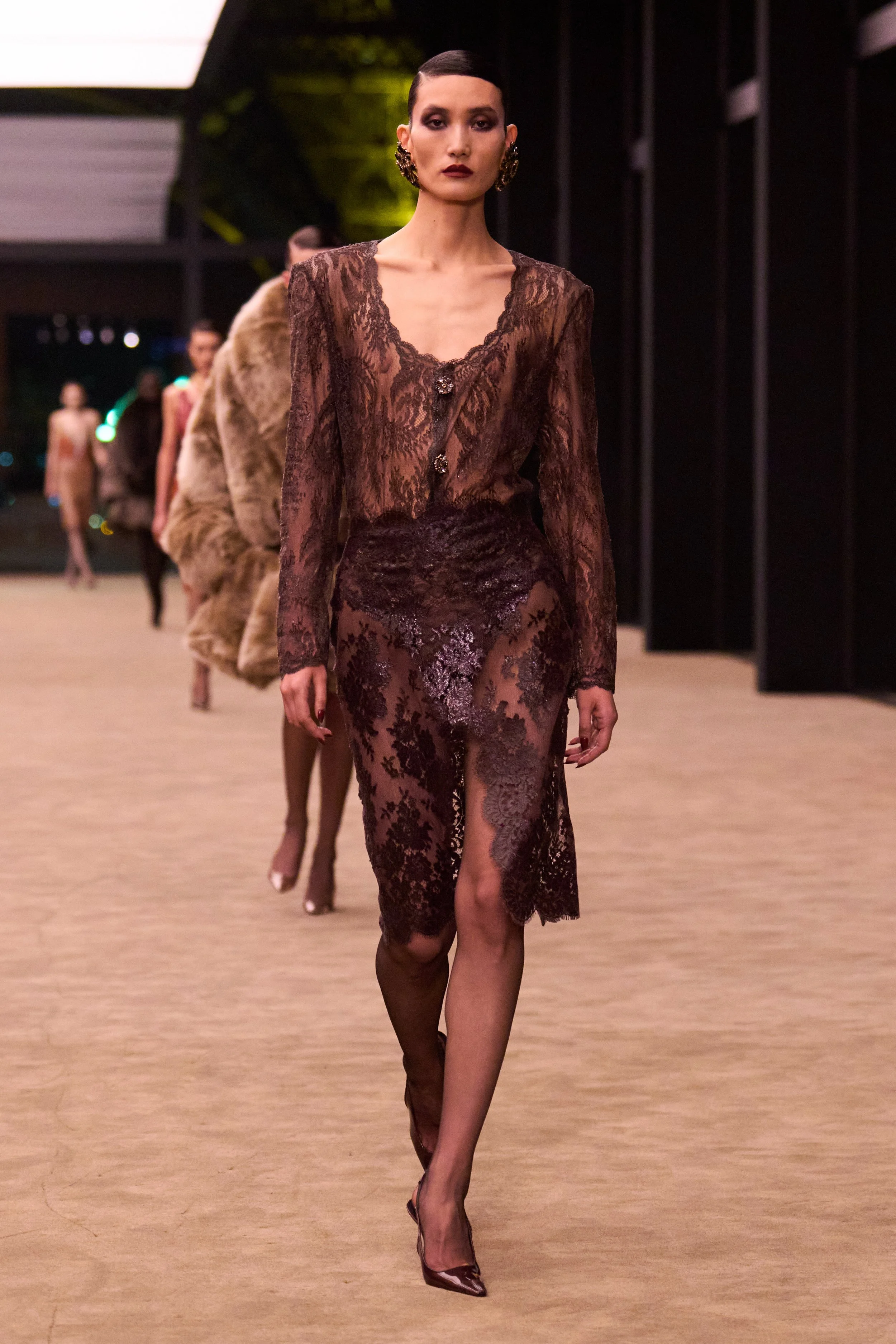
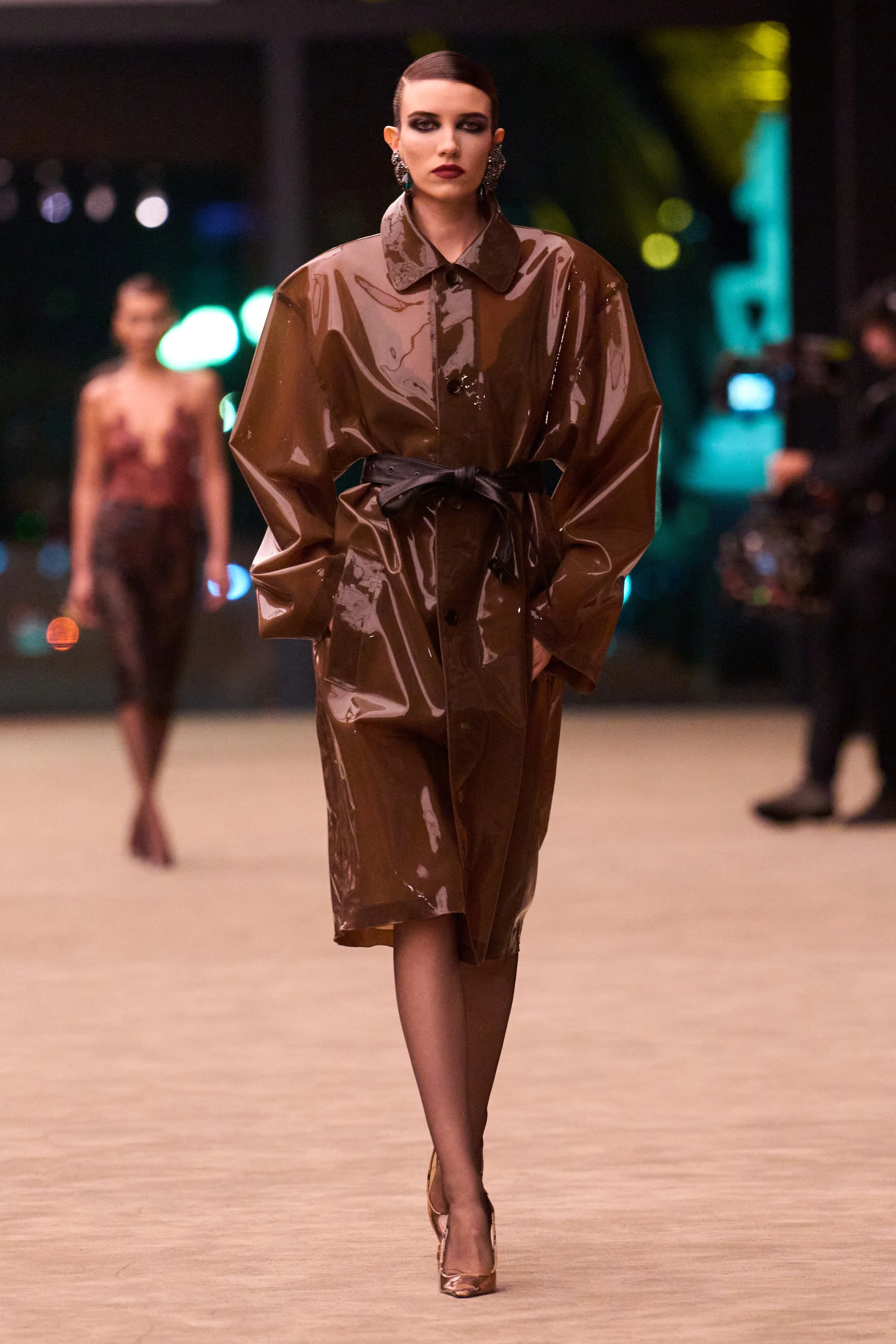
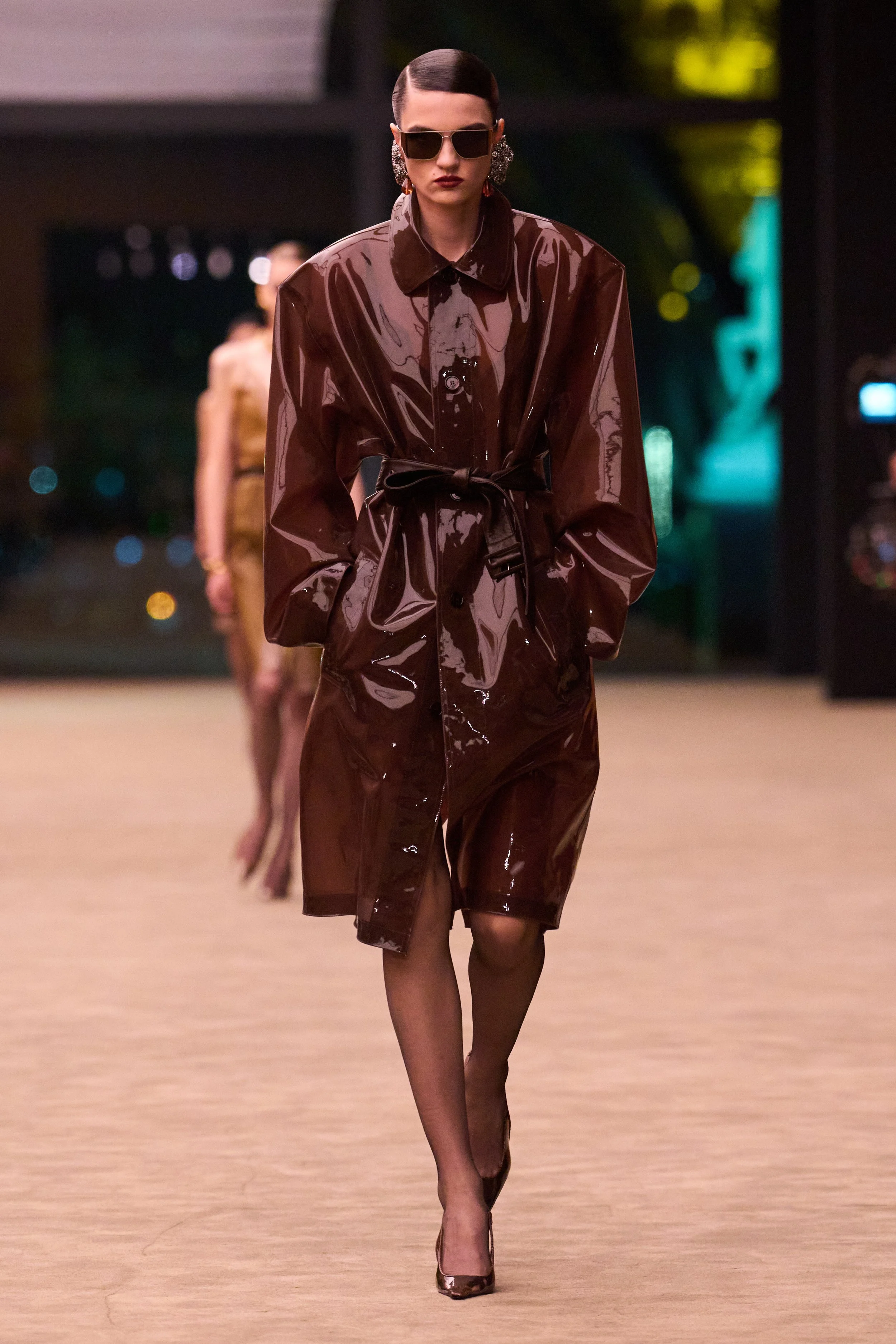
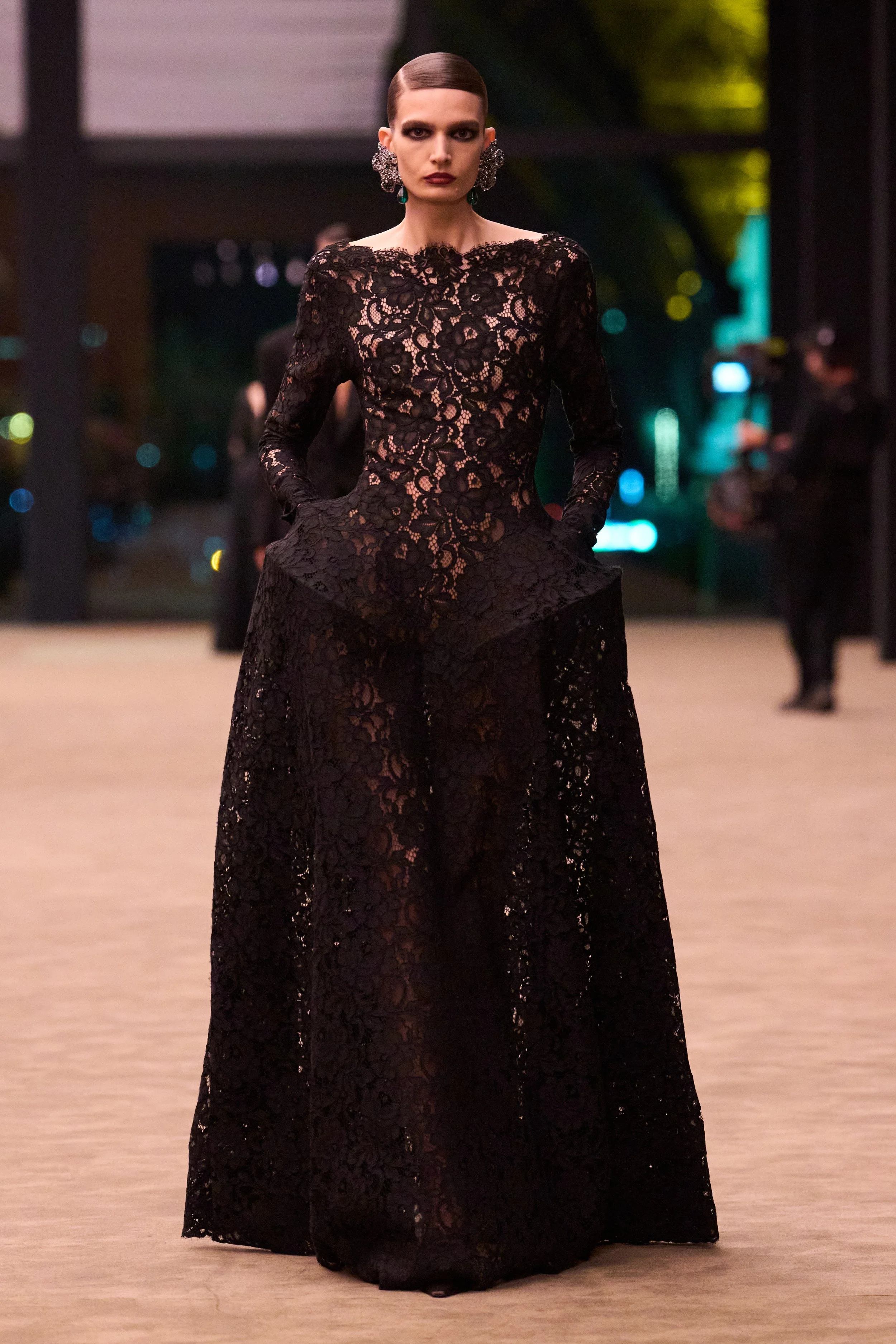
If the suits relayed eroticism in a historically subversive way, Vaccarello wasn’t shy to spell it out. Cue in the slinky lace sets and dresses that came next. Silicone-laced lingerie in deep jewel tones was pure sex. Naturally worn with nothing underneath, its only counterparts were the heavy earrings and necklaces that have become a symbol of Vaccarello’s time at the maison. The erotic flair continued in translucent rubber coats.

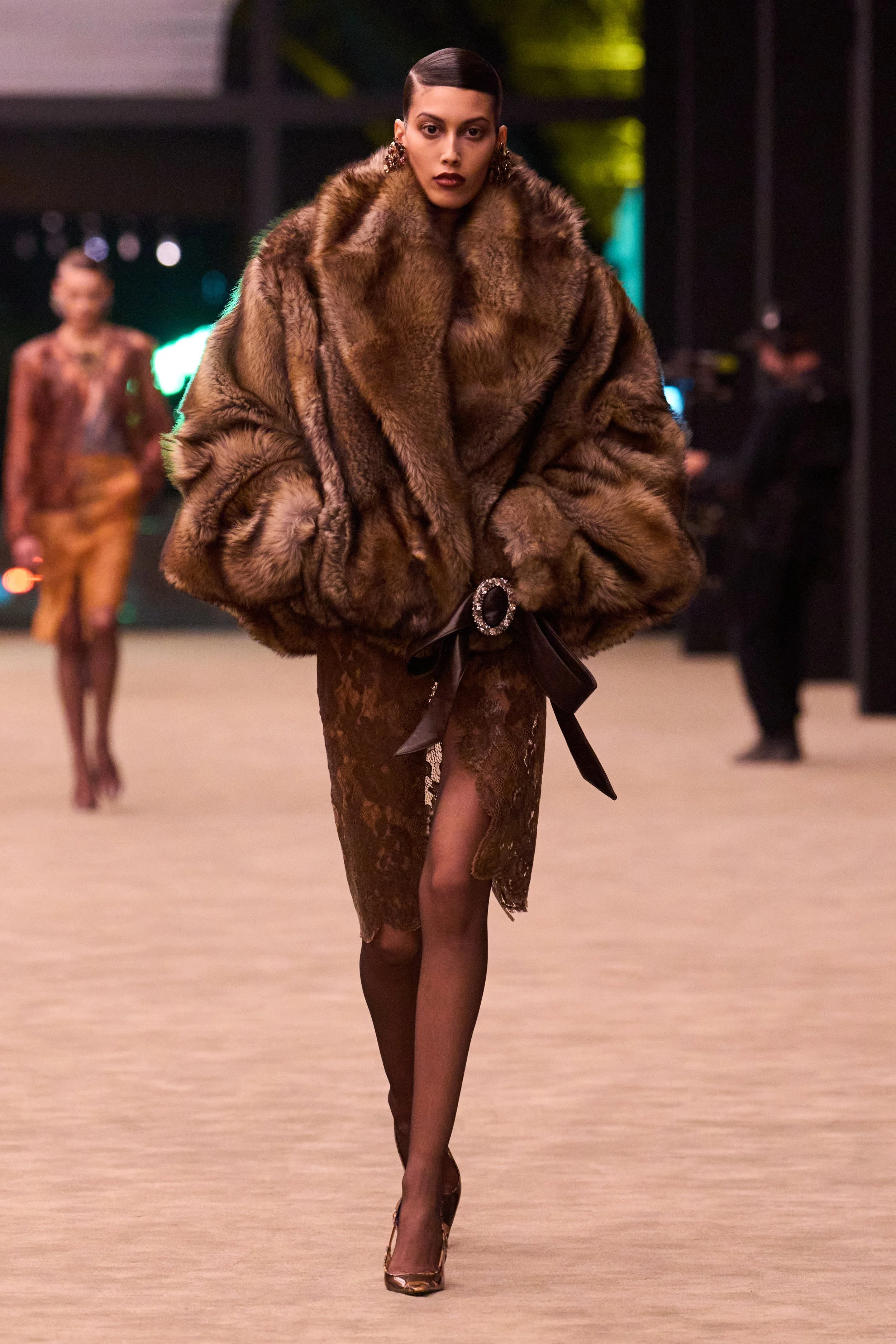
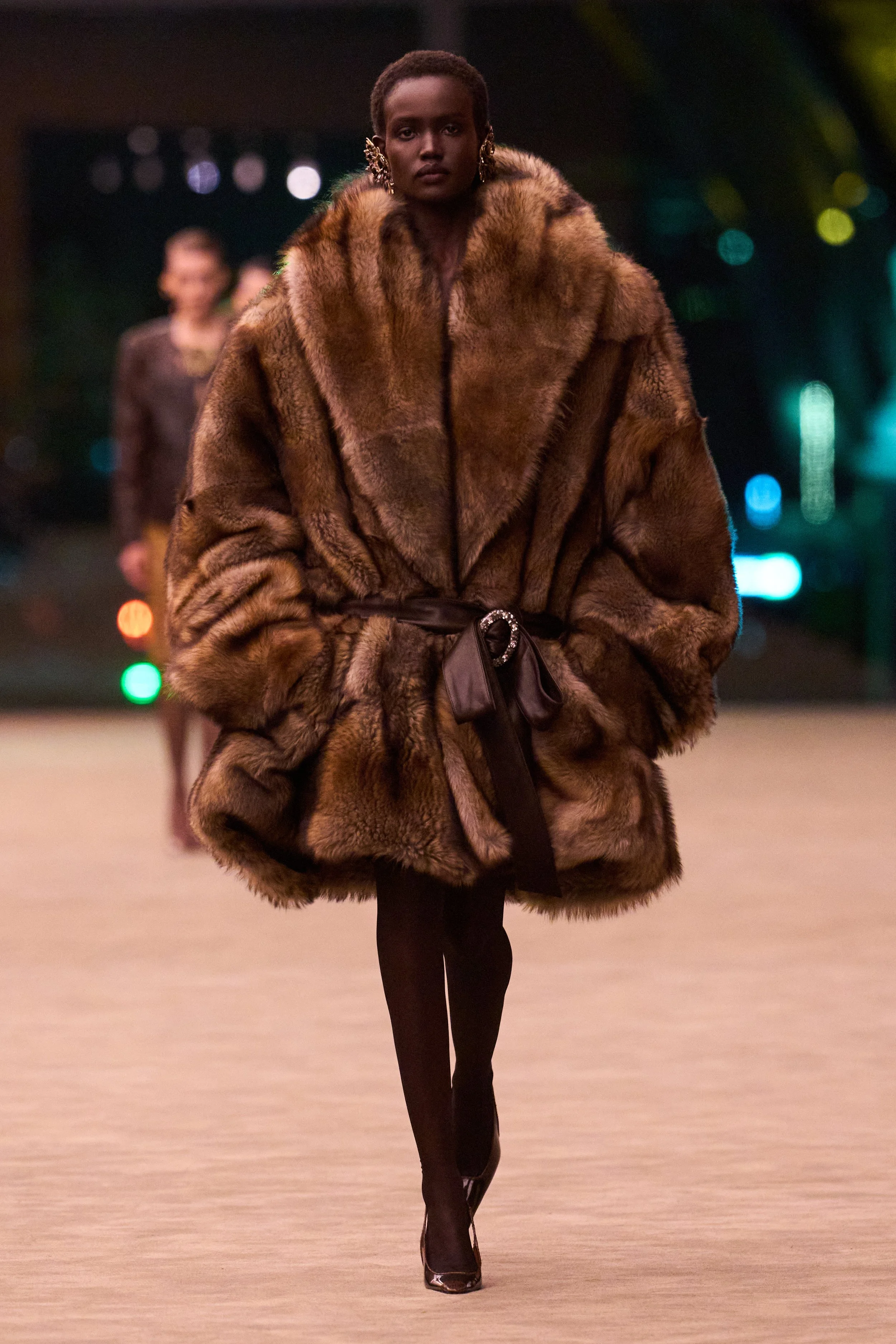
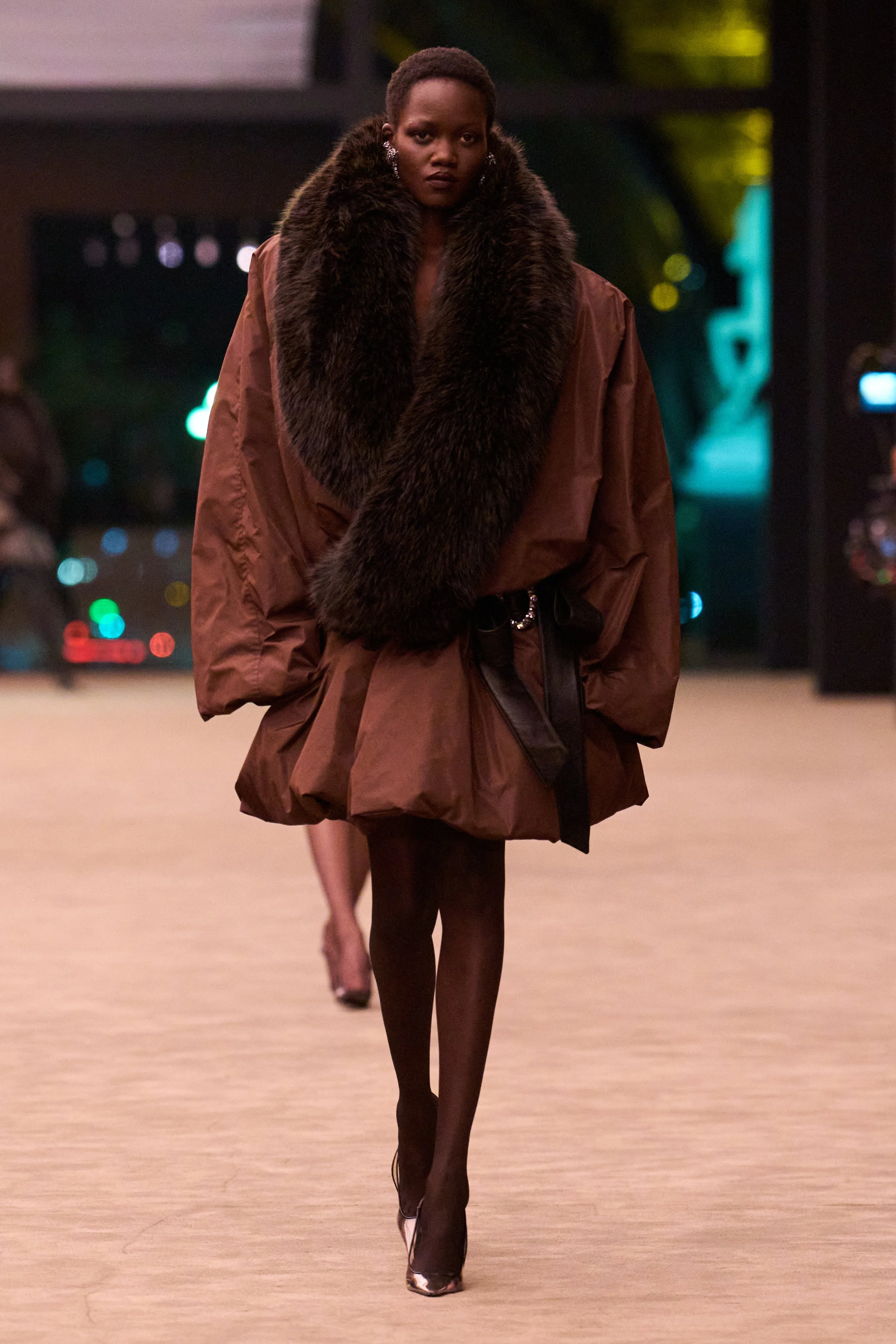
Even against such intense competition, no piece was as memorable as the fur coats, again references to Yves Saint Laurent in the voluminous womanhood they projected. In deep contrast with the skin-tight and textured dresses, these projected out of the body beautifully, with an emphasised skirt and bulbous shoulders. 

There is something delightfully stubborn in the way the Belgian designer approaches the maison. Rather than rupture its rich past, he tightens his grip on it. Silhouettes and ideas resurface each season, each collection acting as another route to get closer to the core of Saint Laurent’s allure.


Words by Pedro Vasconcelos

DIOR FW26

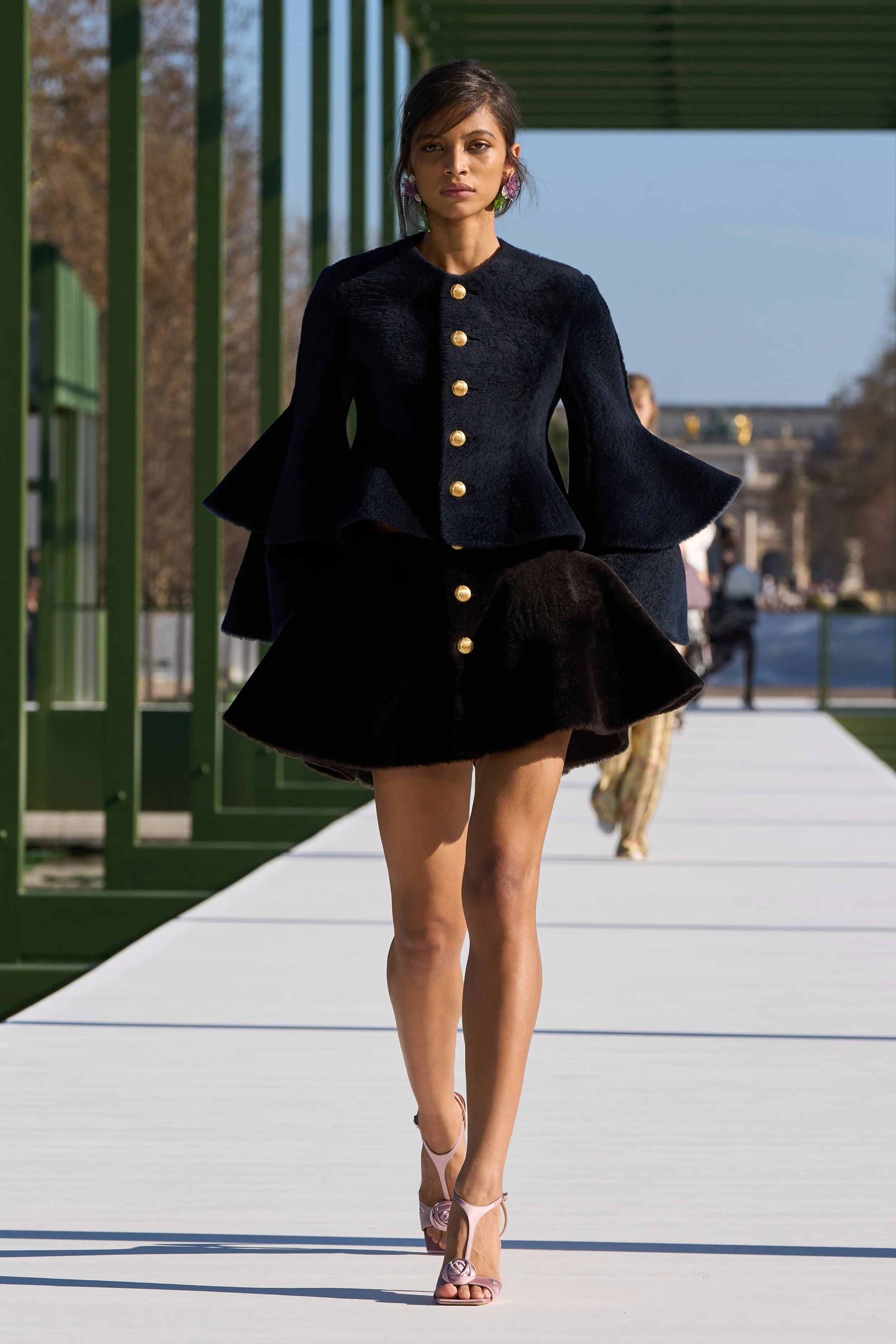
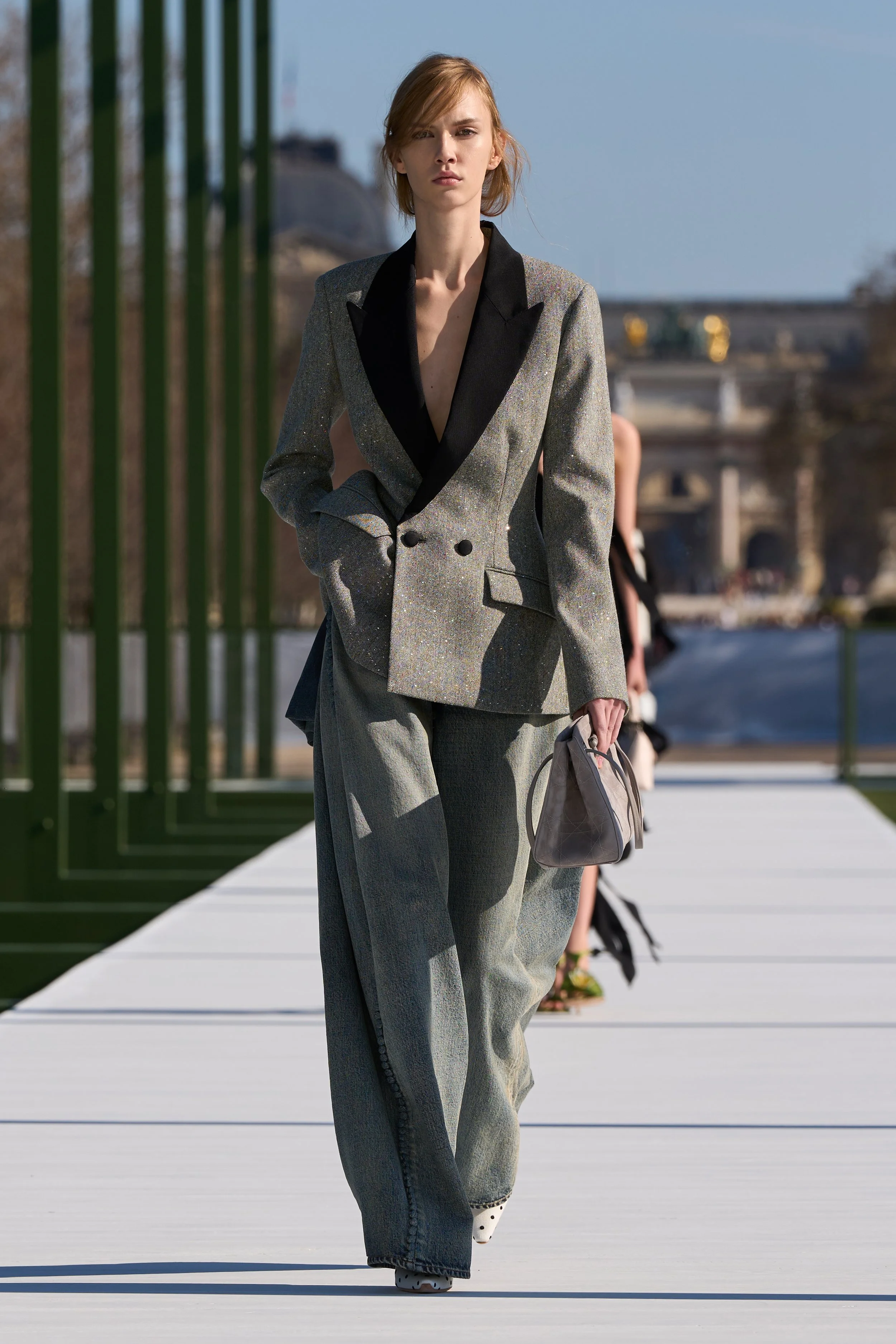
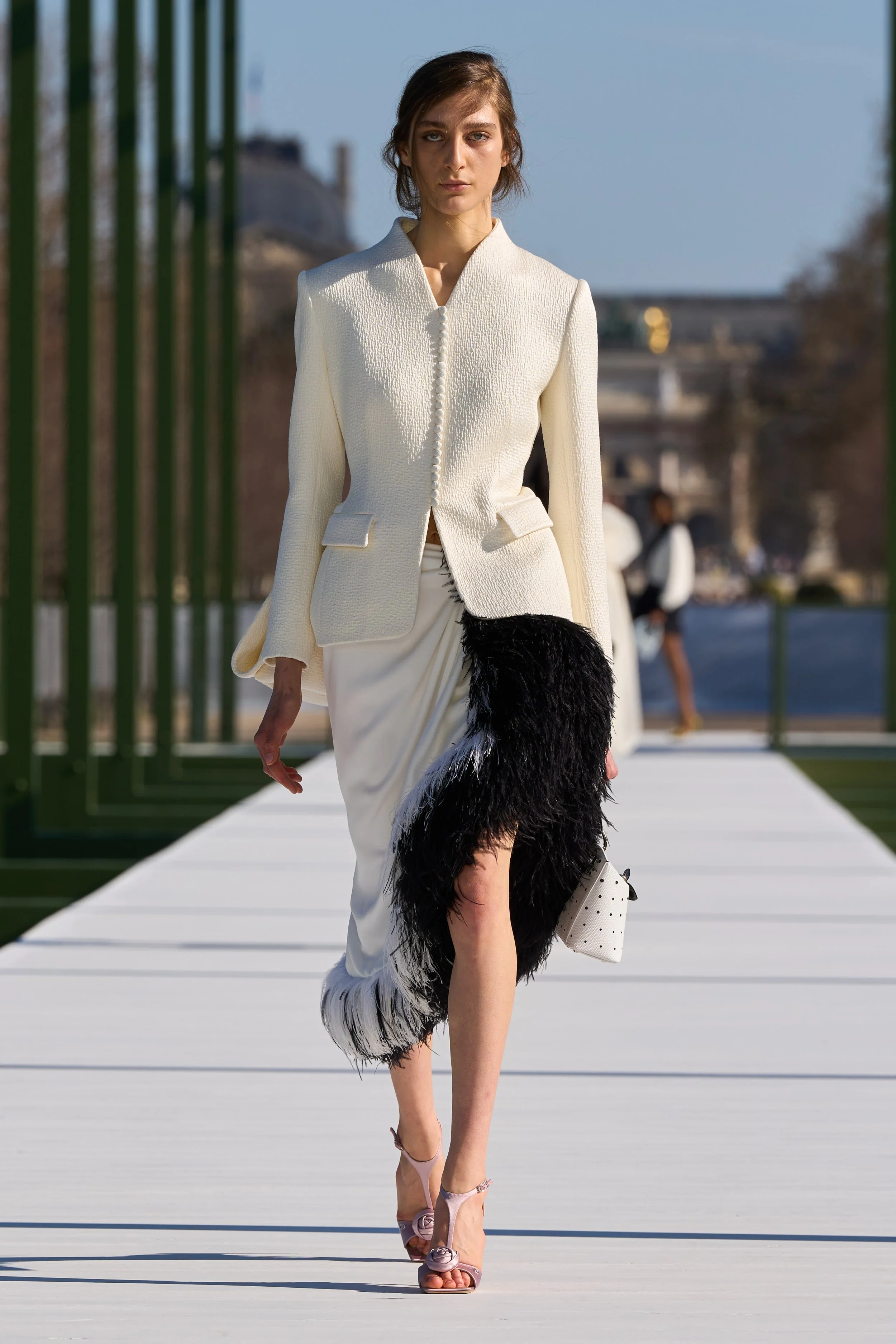
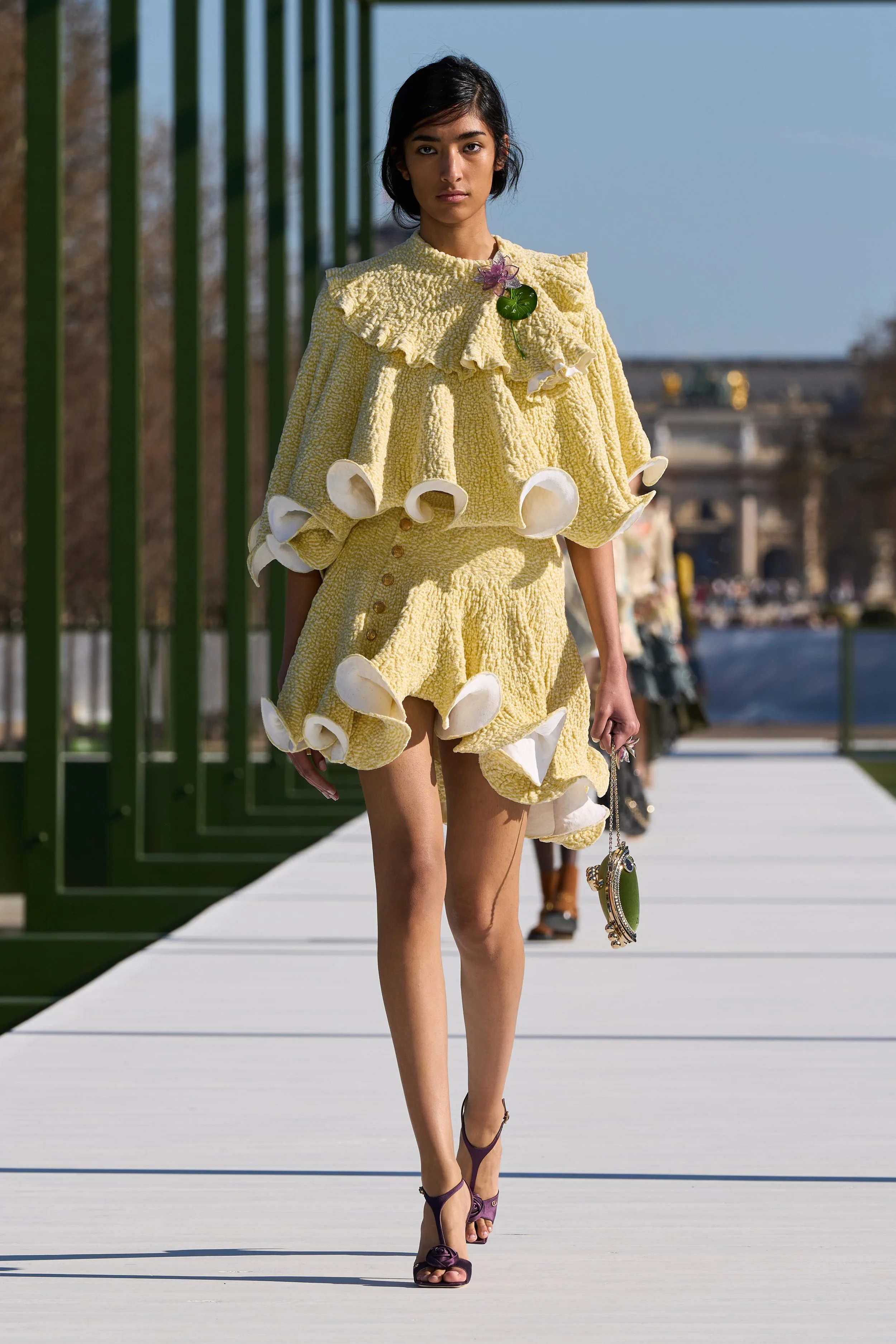
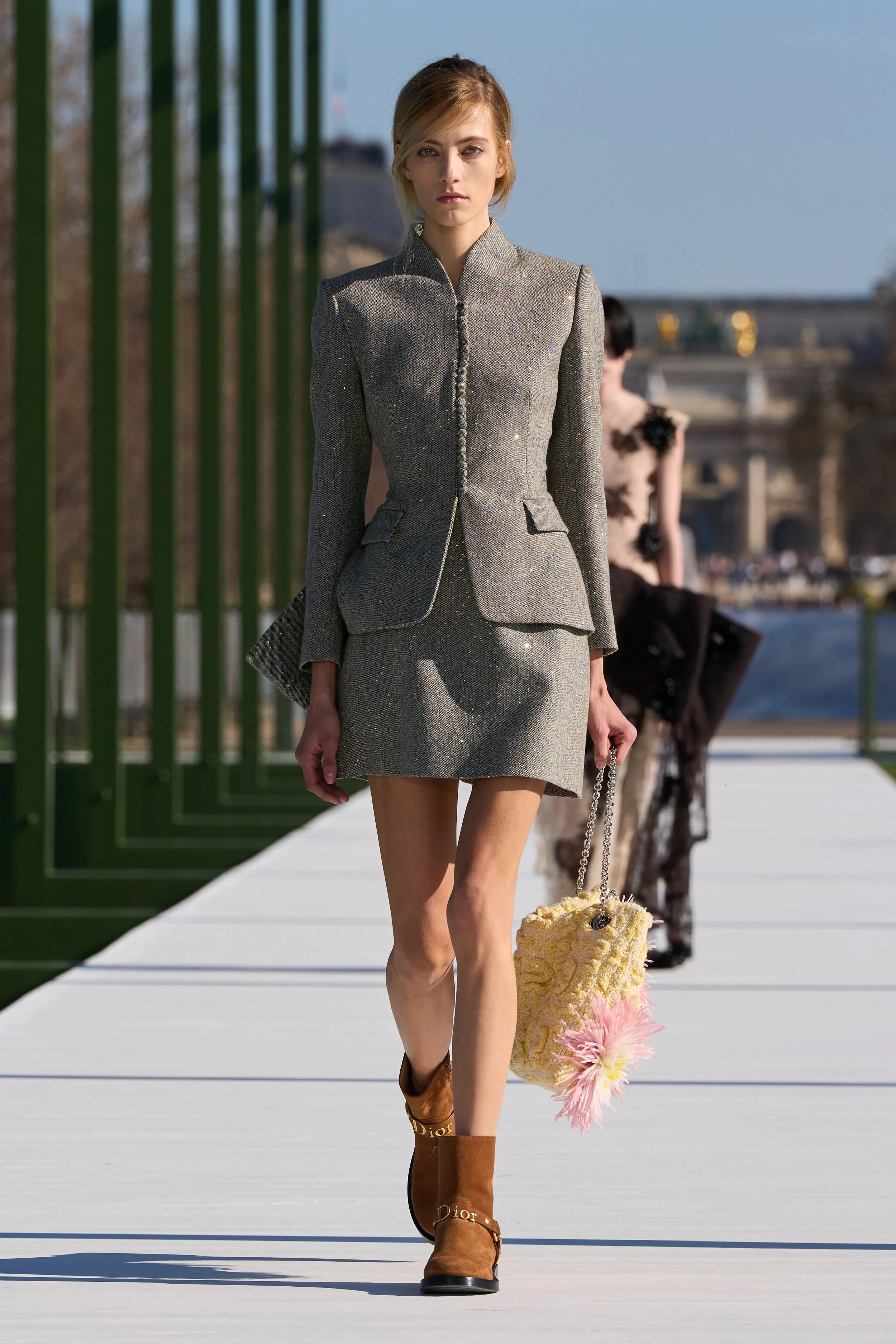
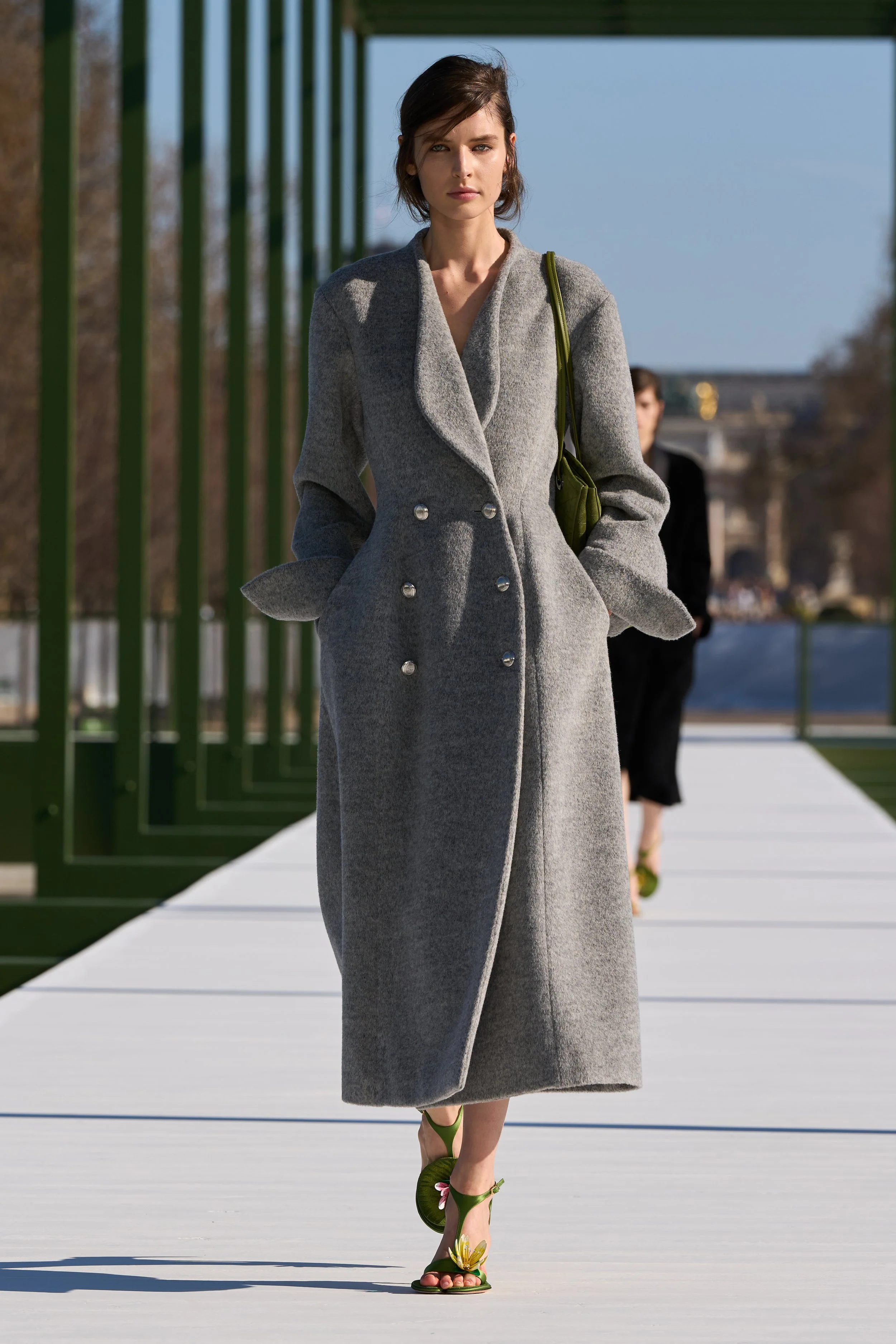
As a foreigner in Paris, Jonathan Anderson has let himself be seduced by the city of love. Fall/Winter 2026 makes it clear. The invite to the show featured micro replicas of the instantly recognisable green metal chairs spread around the Jardin des Tuileries. The venue, placed right atop where these same chairs usually sit, consisted of a promenade with a water-lily pond in the middle.

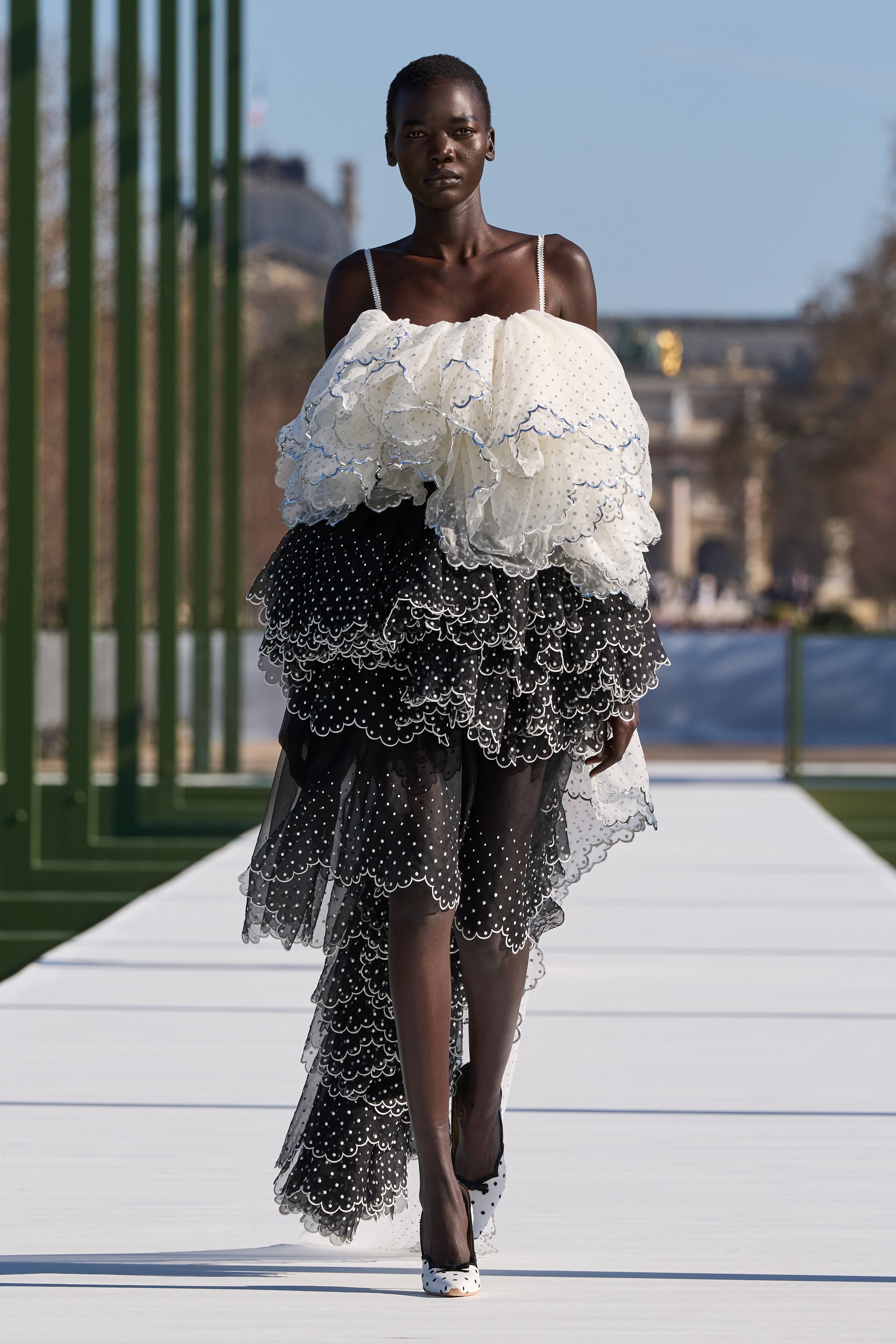
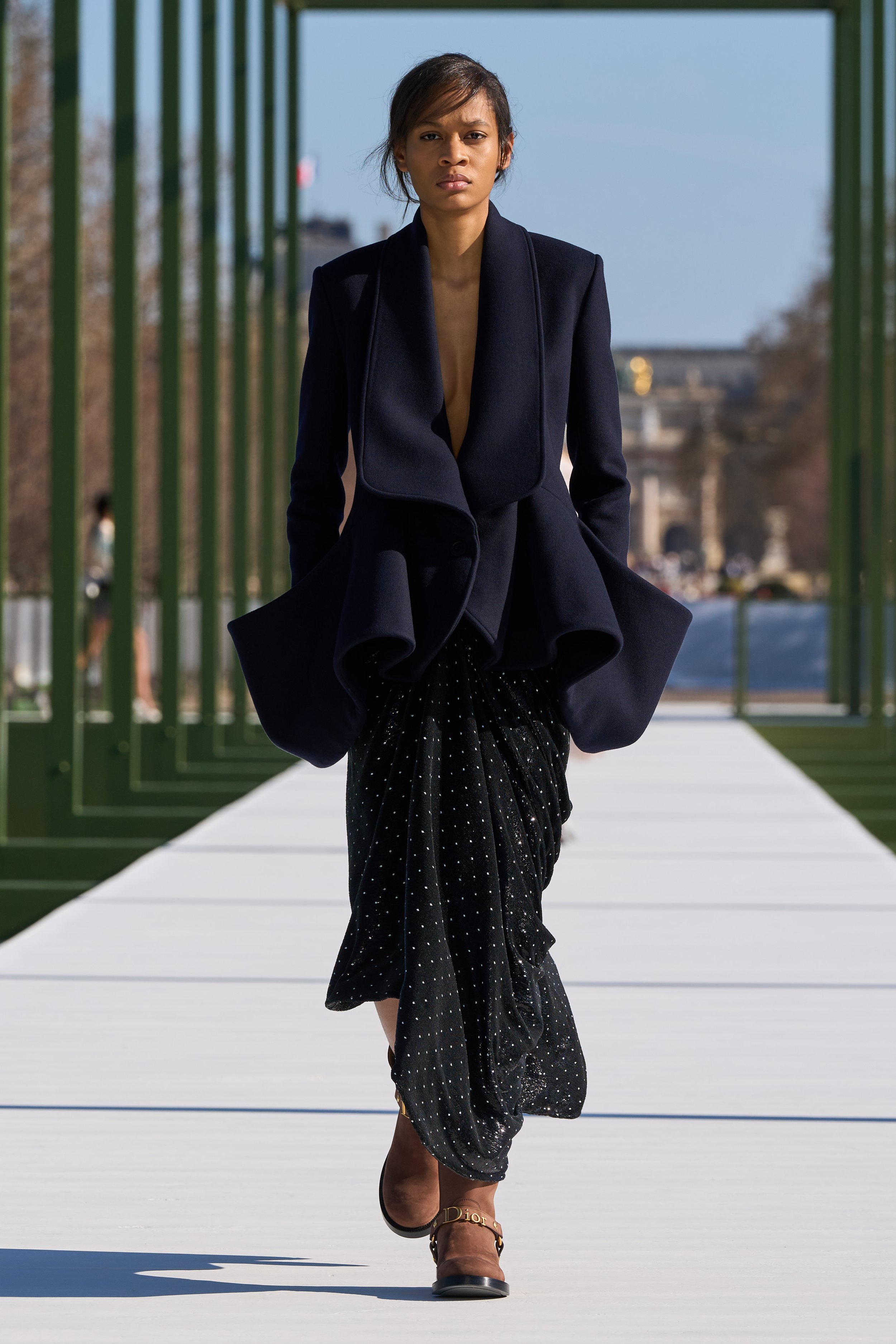
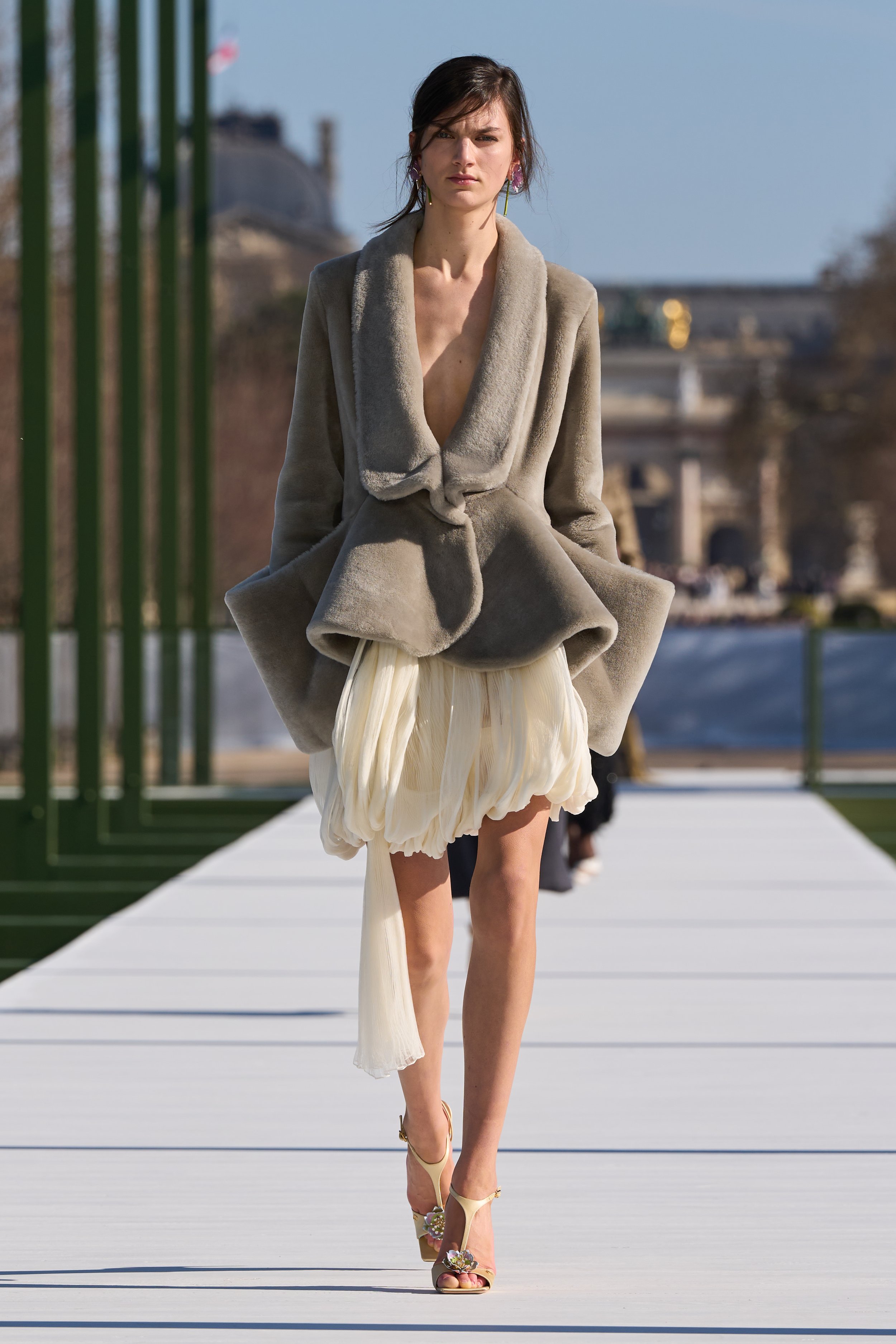
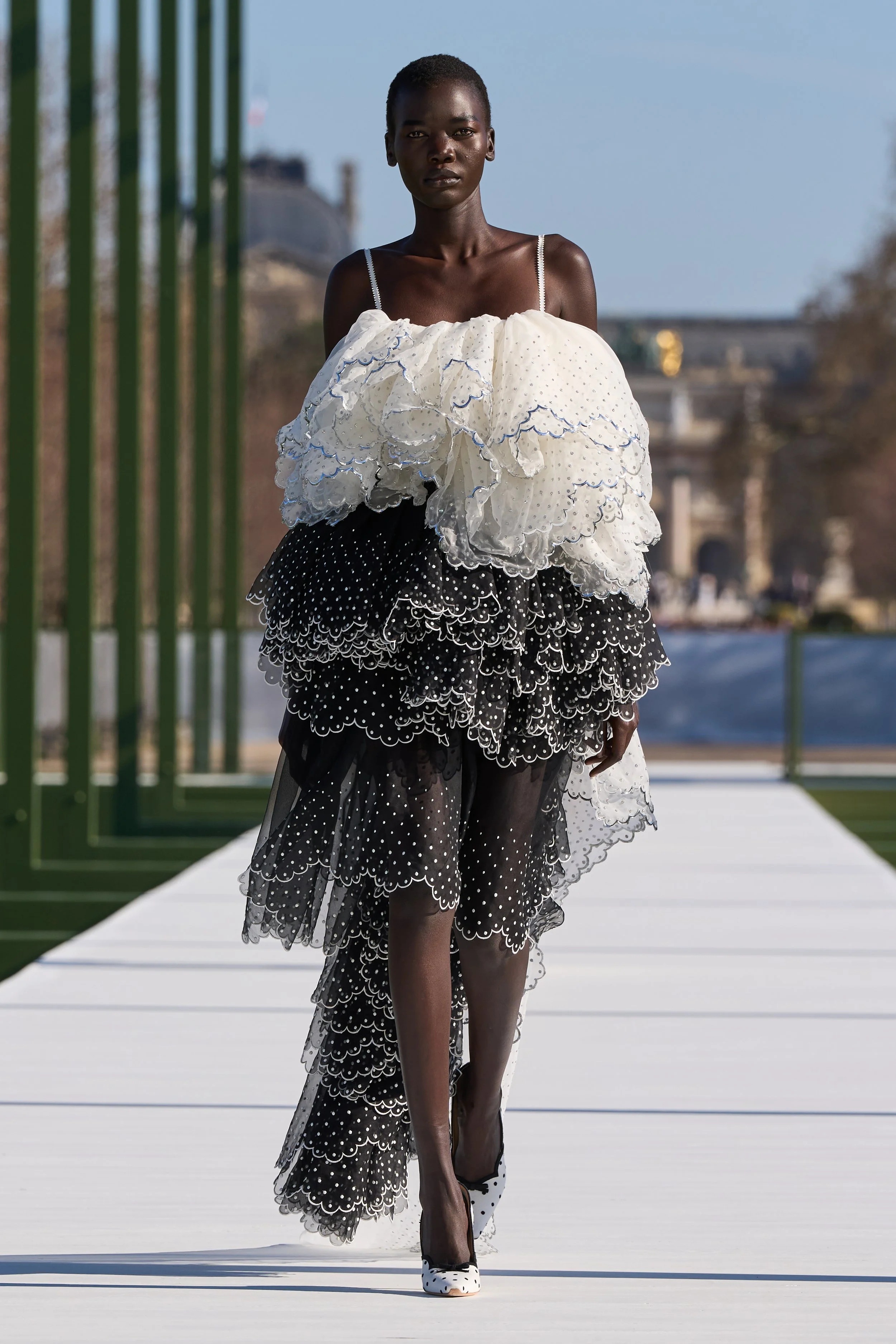
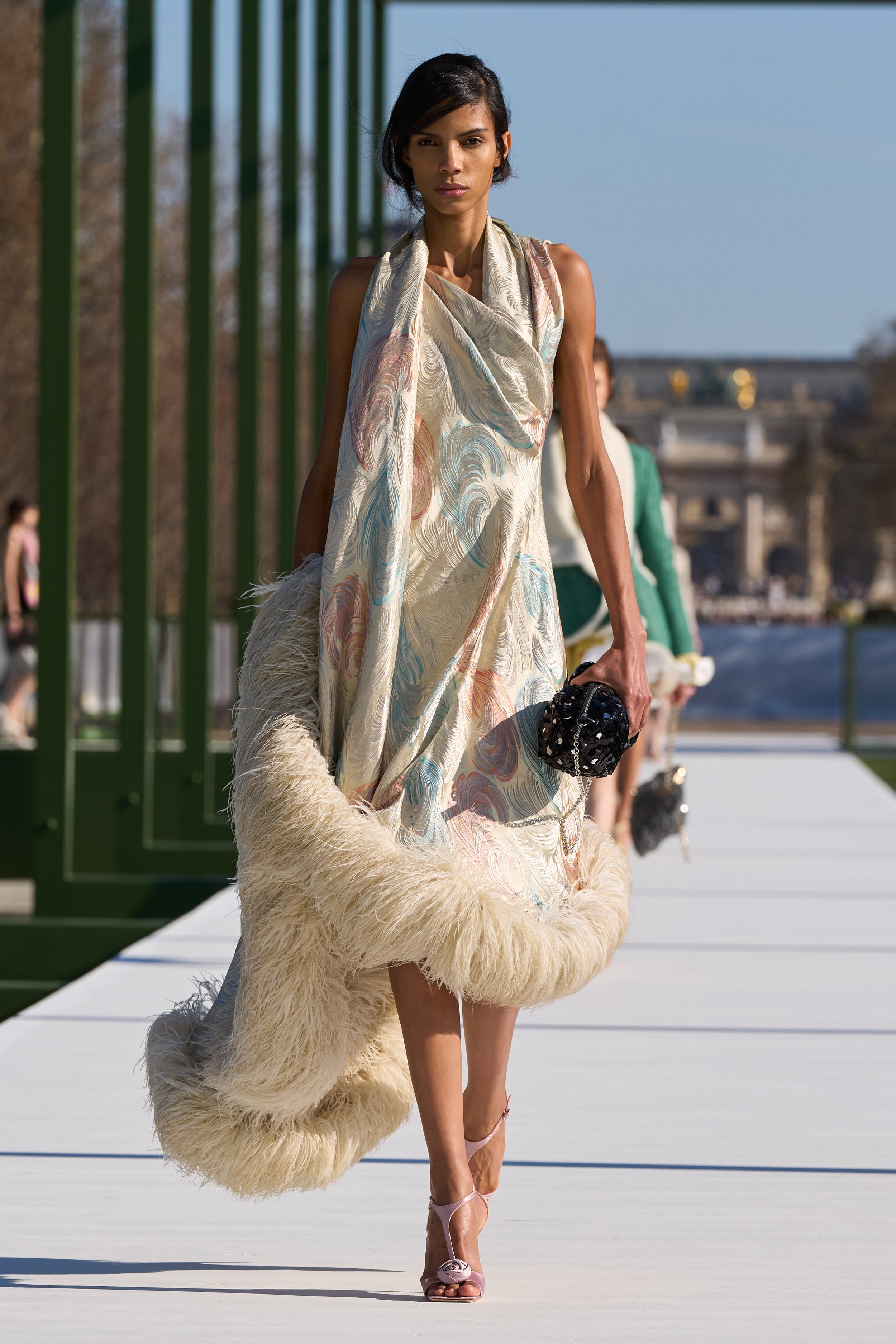
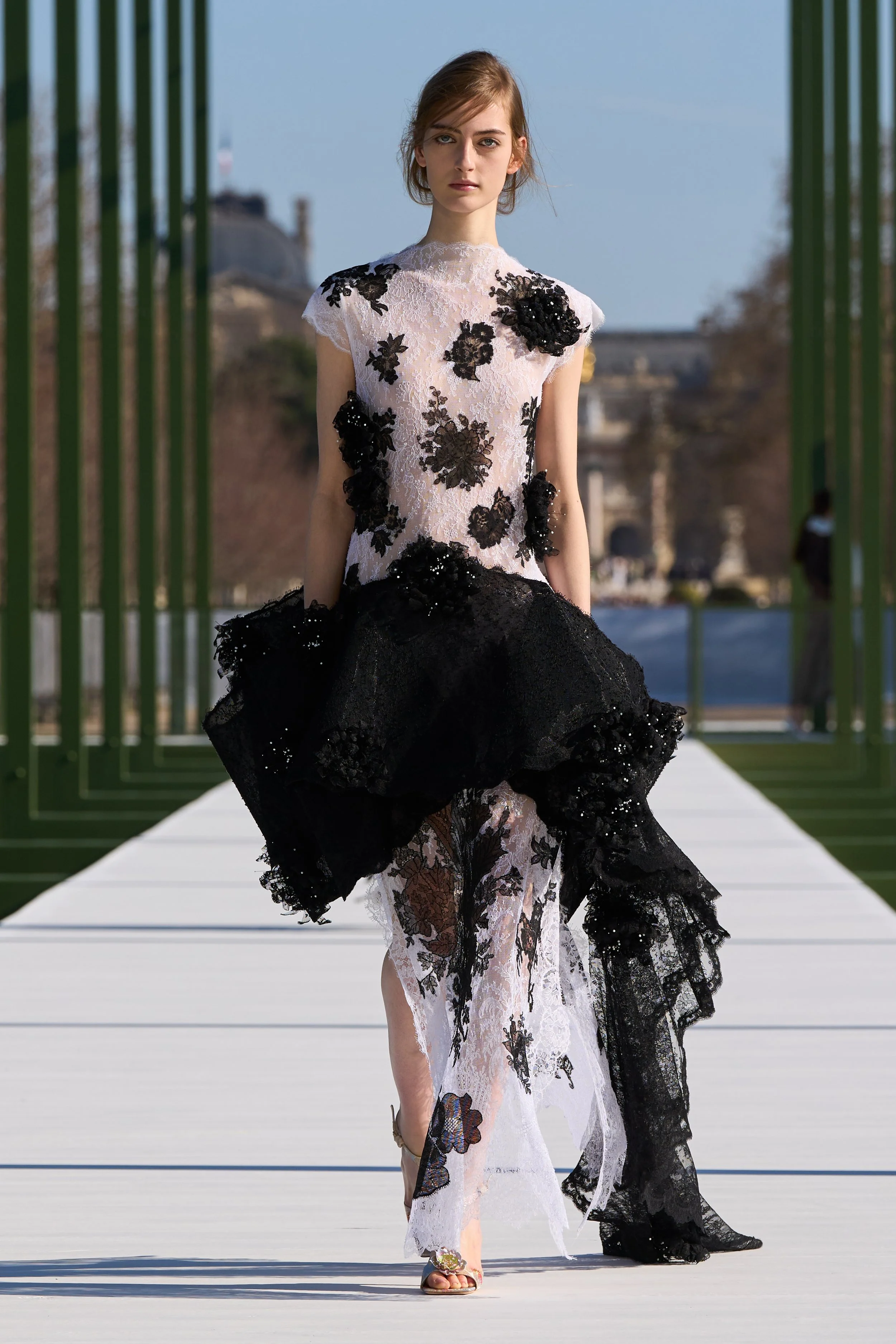
For his sophomore womenswear collection, Anderson feels more confident in his approach. The challenge in taking on a maison with a legacy as rich as that of Dior is to find where you’ll fit in it. For his debut, we saw him interpolate his modern quirkiness with the house’s elegant femininity, but here the two are enmeshed. Romantic ruffles are both feminine and bulky. Distorted hems on colourful, asymmetrical jackets resemble bouquets of calla lilies. Flowers have taken on a privileged spot in Anderson’s Dior. While symbolically romantic, the Irish designer takes their organic shape at face value, allowing it to inspire beyond its metaphor. Tulle dresses have rounded busts that sit far from the body, gather at the waist and then explode into knee-length asymmetrical skirts.

Besides his floral muses, he has his eyes set on some recurring Dior trophies, the Bar jacket for one. It’s not surprising. Some of Anderson’s best work speaks to the way he distorts silhouettes to create something new. The iconic jacket, arguably the most notable modern example of such an exercise, was created with that same purpose in mind. Here, we see him interject the rigidity of the original through a knitted version. Underneath, a sea of ruffles seems to sustain its shape, reminiscent of another Dior classic, its scalloped and embellished edges evocative of the tiers on the Junon gown.

Maybe no other piece speaks to the philosophy that emerges after nine months (and an astounding seven collections) for the maison: classic elegance is cut through with an almost comedic modernity. At Loewe, Anderson had close to free range and, throughout his decade-long tenure, he was able to illustrate his gift for creating clothes that are not just desirable, but that are interesting, that move the needle forward. Here, he has to work within a set of rules, within much more structured codes. But much like the overused Igor Stravinsky quote suggests, it seems that Anderson has found freedom in that constraint.

If the garments follow a strict philosophy, it’s in the accessories and shoes that Anderson is able to play up his idiosyncratic campiness. Water-lily shoes imitate the flowers floating in the middle of the catwalk, collapsing the set and the clothes into the same Parisian fantasy. Dior is Paris and Paris is Dior. I’ve never had such a glamorous walk amongst the Parisian garden, but then again, I’ve never worn Jonathan Anderson’s Dior. It’s clearly the secret.


Words by Pedro Vasconcelos

ALAINPAUL FW26

Dance and fashion are always intertwined for Alain Paul. So, too, does the concept form the foundation of the designer’s namesake label, ALAINPAUL, which debuted in Paris in 2023 and swiftly became an LVMH Prize finalist a couple of years later. With a professional background in contemporary ballet, Paul uses the catwalk space as his stage. His designs, which often mix choreography references with sharp tailoring, translate into garments that marry freedom of movement and conceptuality.

Named Répertoire, the Fall/Winter 2026 collection, presented at the Parisian Musée des Arts Décoratifs, aimed to create a parallel between an evolving body of work and the human experience of clothing wearability, when items gain new life throughout the years. In dance, a repertoire can describe a collection of pieces that are continuously used in different bodies for different purposes.

Including references from the museum’s archives that ranged from the 18th century until contemporaneity, the season’s show notes set the tone for what was to come: “The proposal explores the tensions of the body through the changing clothing proportions of history in dialogue with the image- and comfort-driven culture of dressing that defines the present day,” read an excerpt of the text.

Tension was achieved through the use of buttoning detailing in experimental tailoring. Cinched waists in coats and jackets were juxtaposed with hip-voluminous dresses and skirts, equally with 18th-century pannier structures. Draping built expansion, while looser, lightweight silk pieces flowed freely.

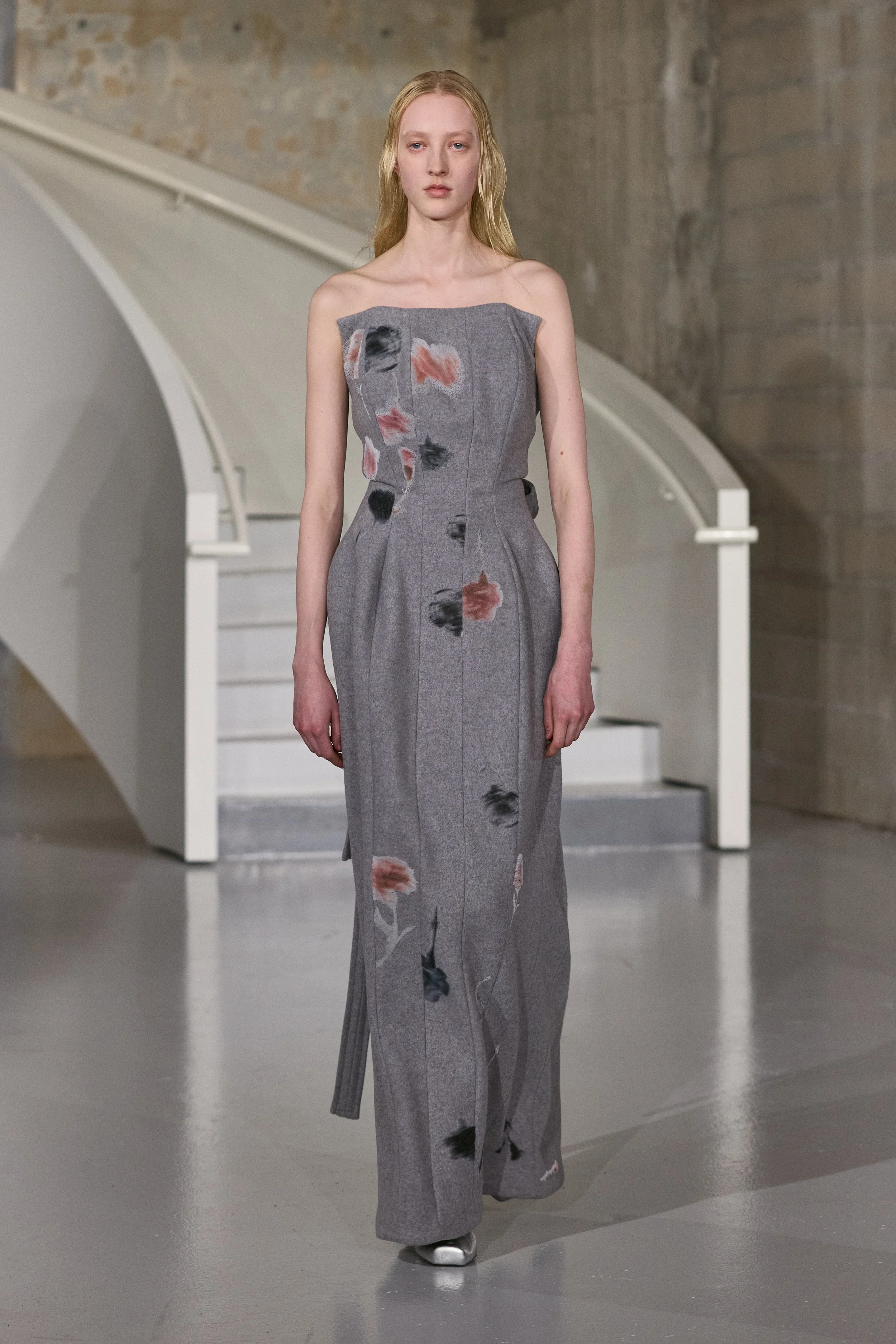
Merging casual elements with formality and sportswear ideas with traditional attire, two collaborations emerged. A partnership with Les Teintures de France, an artisanal dyeing company, resulted in denim jackets and trousers with printed 18th-century tapestry motifs, as well as a dress and a top with floral prints that echoed embroideries from the same period. A patchworked shearling jacket was also part of the collab, highlighting materiality and texture.

Award-winning Swiss textile designer Cécile Feilchenfeldt teamed up with Paul to craft corseted knitwear and 3D metallic jewellery, smoothly blended into knitted pieces and inspired by Opéra Garnier’s trompe-l’oeil stage ornaments.

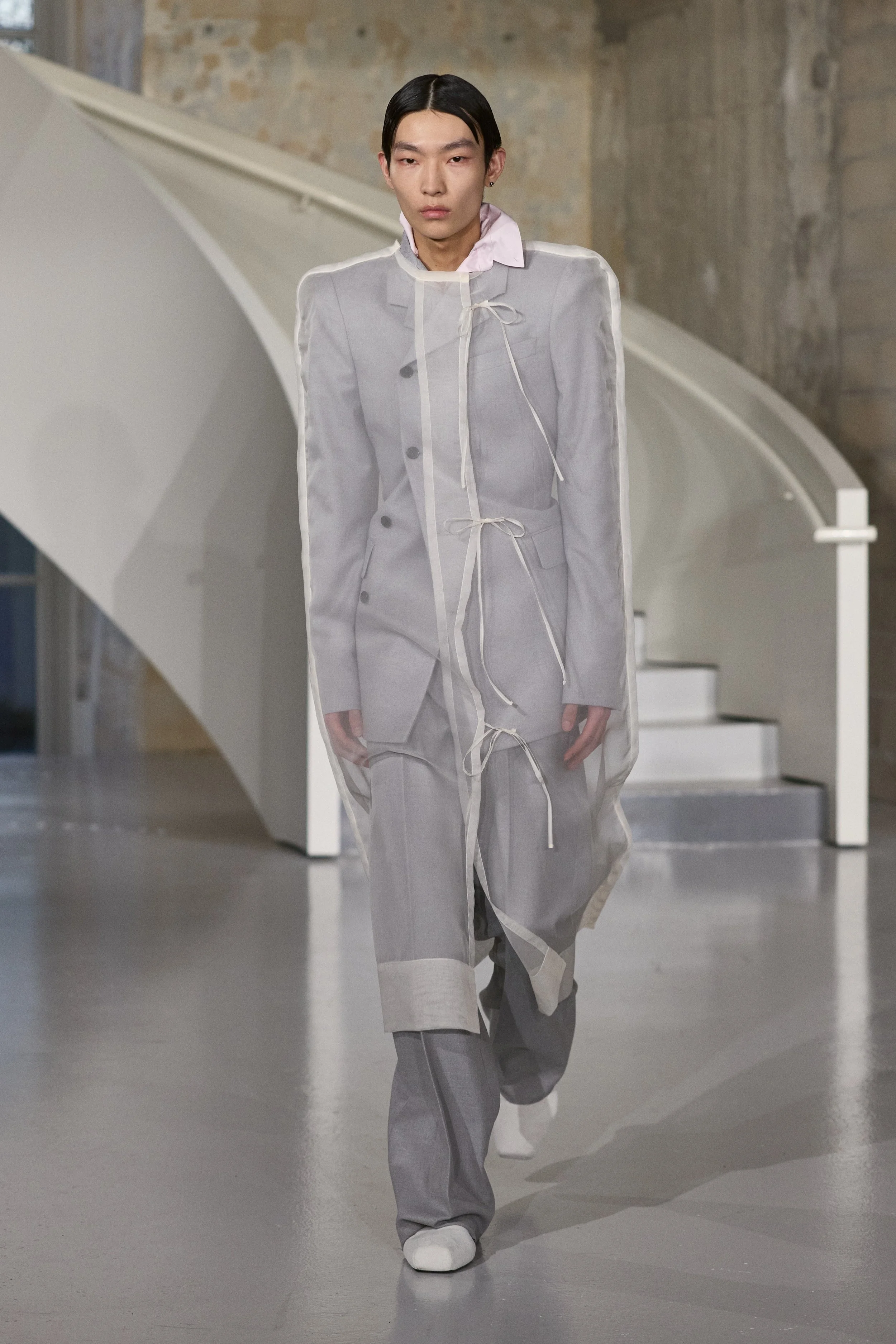
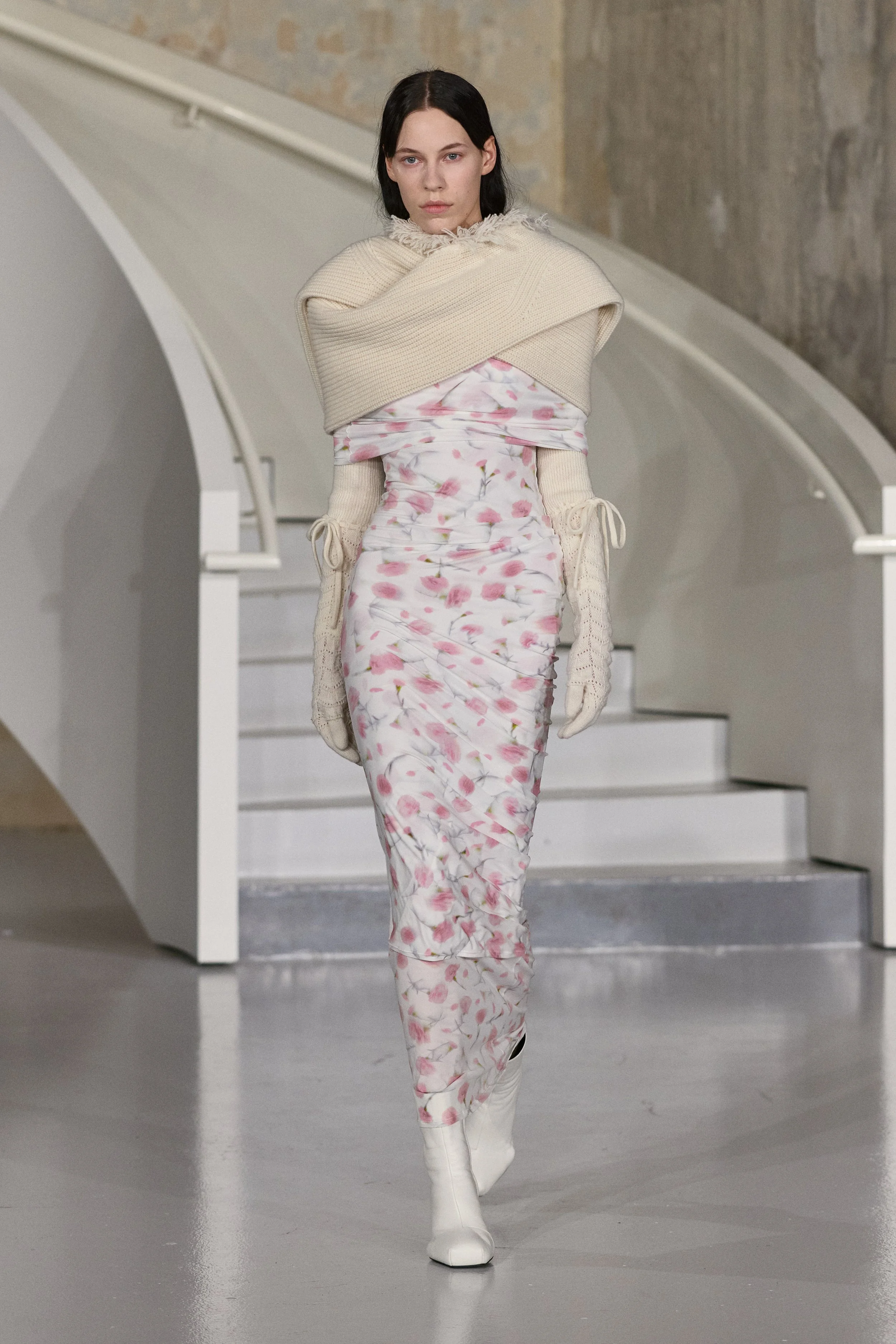
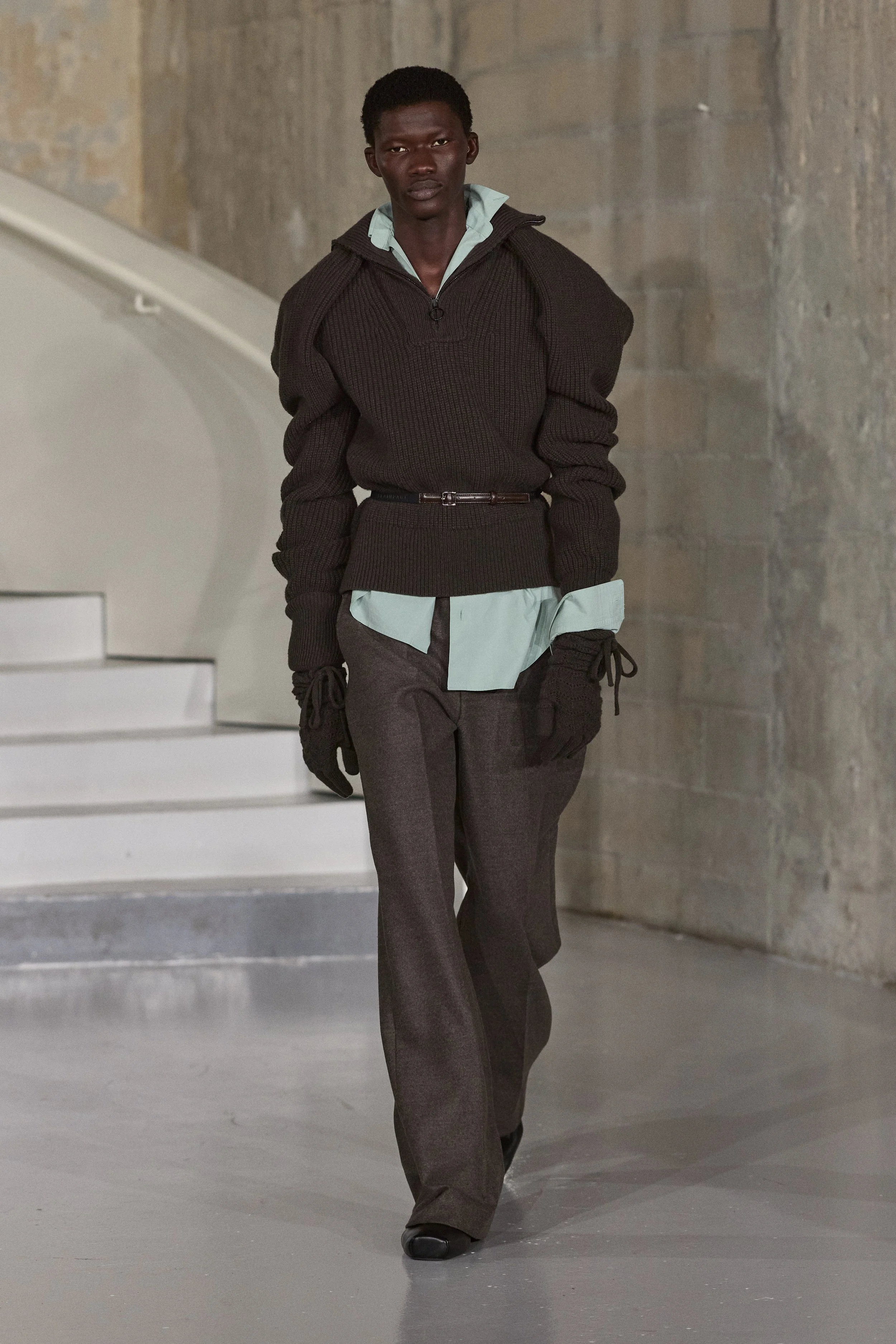
Zooming in, fabrics were manipulated to convey the passage of time. Pleats, folds, and textures were intentionally present, as were transparent organza cover-ups that mimicked plasticky garment bags. Bow-decorated opera gloves, the accessory of the season, were styled either to contribute to the elegance of regal ruffled collars, romantic knitwear and floral-printed dresses, or to bring a delicate element to fluid, tailored combos. Let’s dance.


Words by Ketlyn Araujo

HODAKOVA FW26

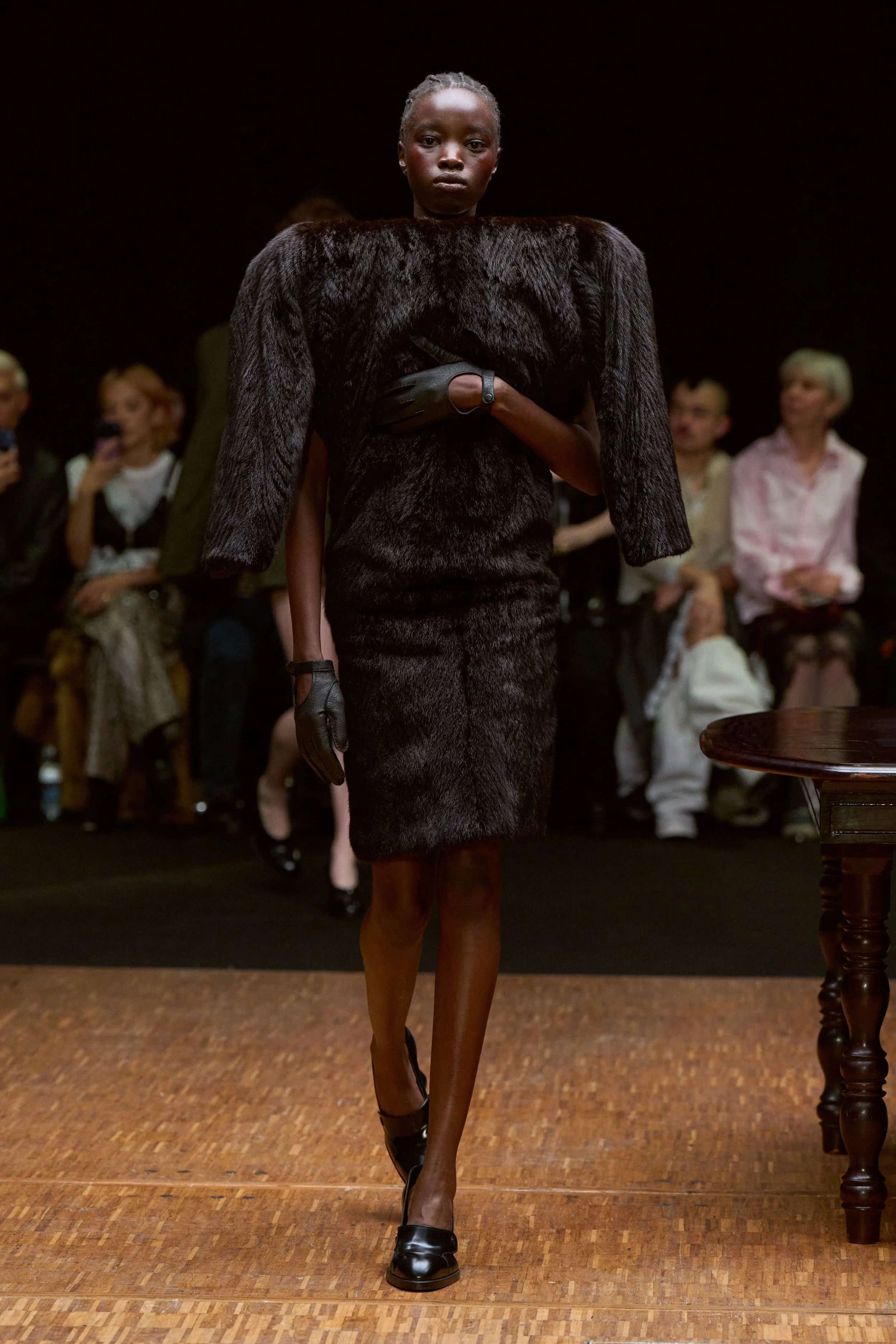
Leave it to Hodakova to have us gagged, mouth wide open, before Paris Fashion Week has even properly warmed up. For Fall/Winter 2026, Swedish designer Ellen Hodakova Larsson descended underground, staging her show inside the Carrousel du Louvre — a retail labyrinth tucked beside one of the world’s most revered museums. In a dimly lit room styled like an intimate, lived-in interior, she delivered her sexiest offering yet, turning domesticity into provocation.

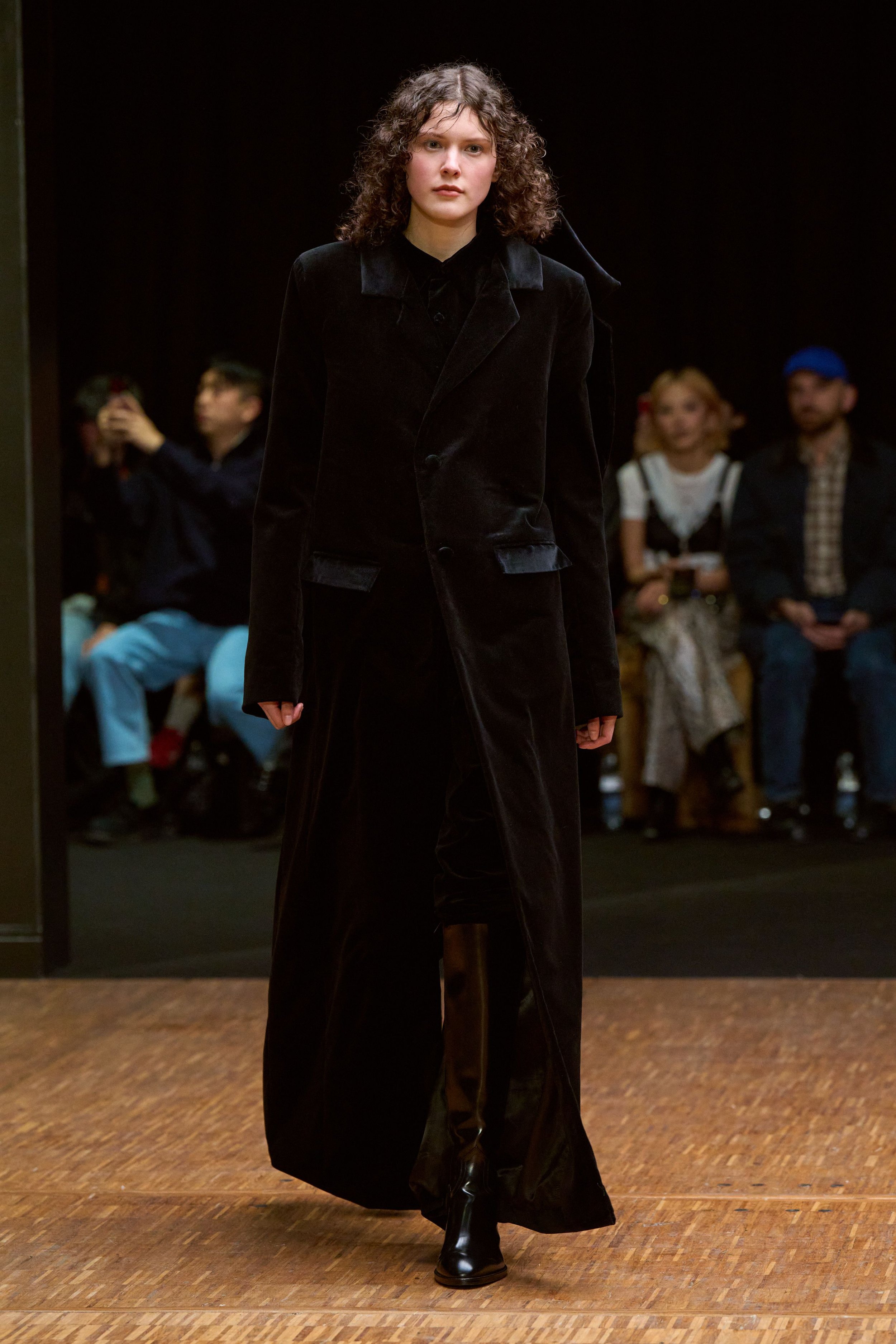
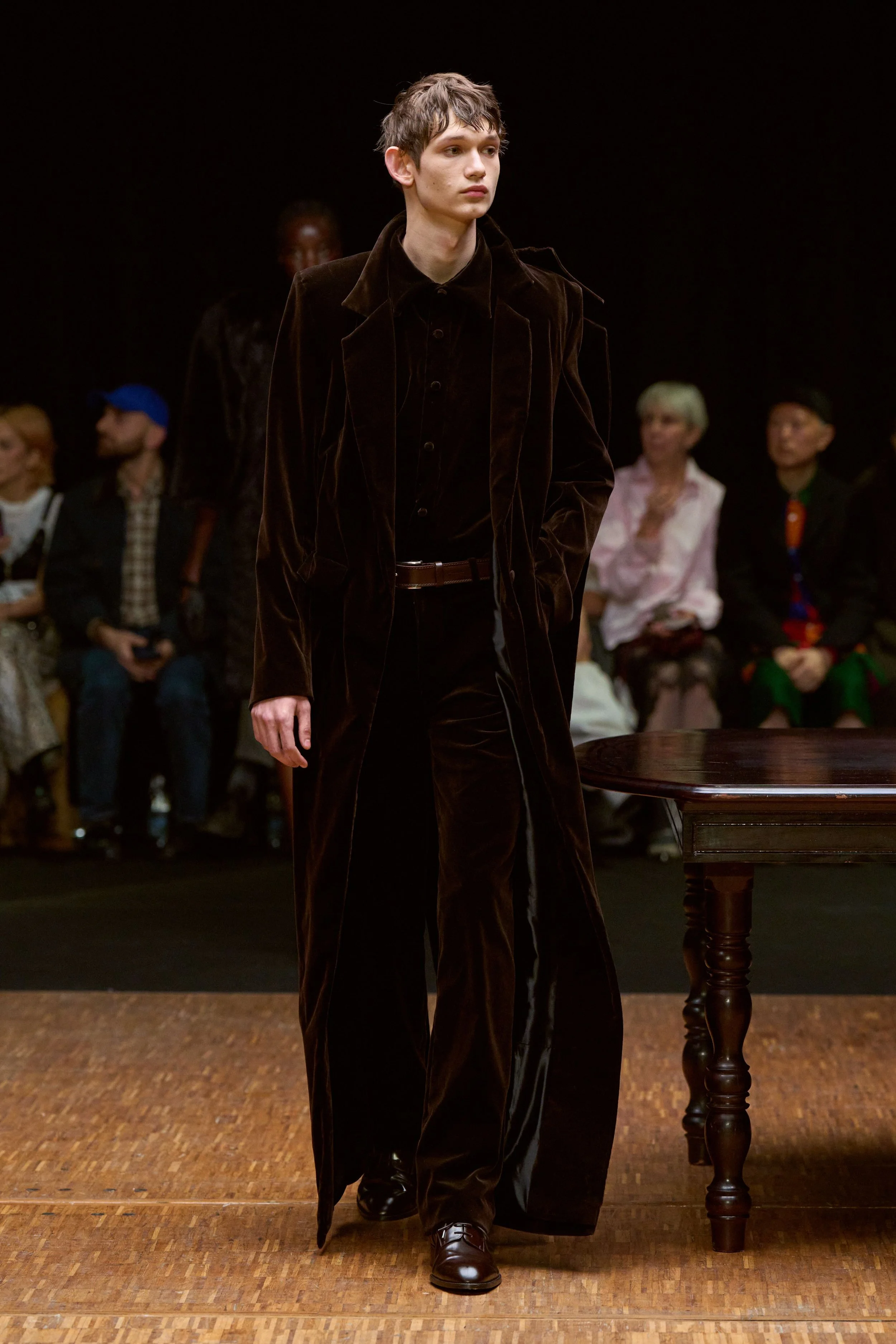
Tailoring took control right away: elongated coats in black and deep brown velour set the tone with disciplined severity, while sharp-shouldered mini skirt suits flirted back with contrast collars and cuffs peeking through. Then came the rupture — garments stripped from behind. Suit trousers and sleeveless leather shirt-dresses exposed bare skin at the back, creating a striking tension between restraint and release.

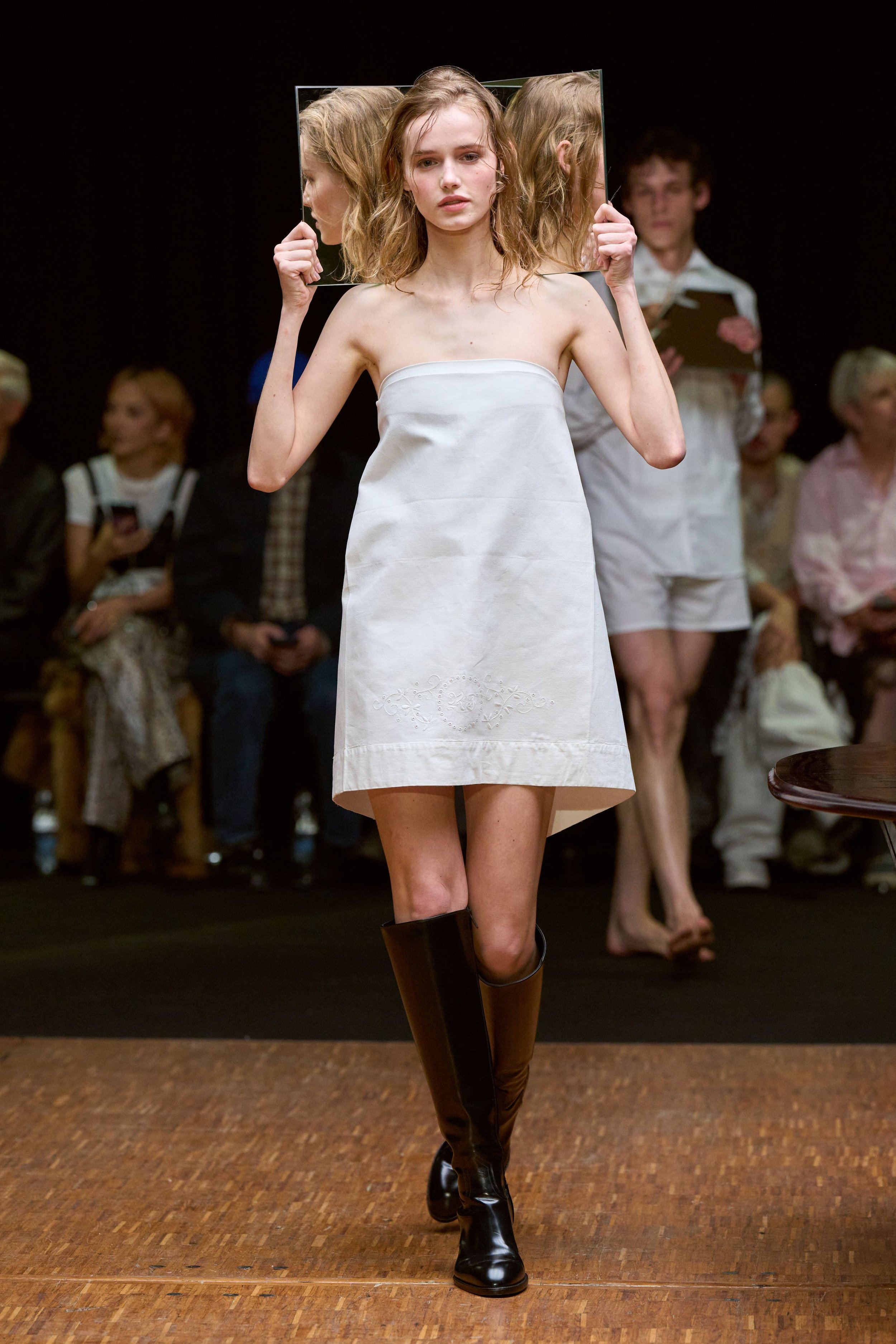
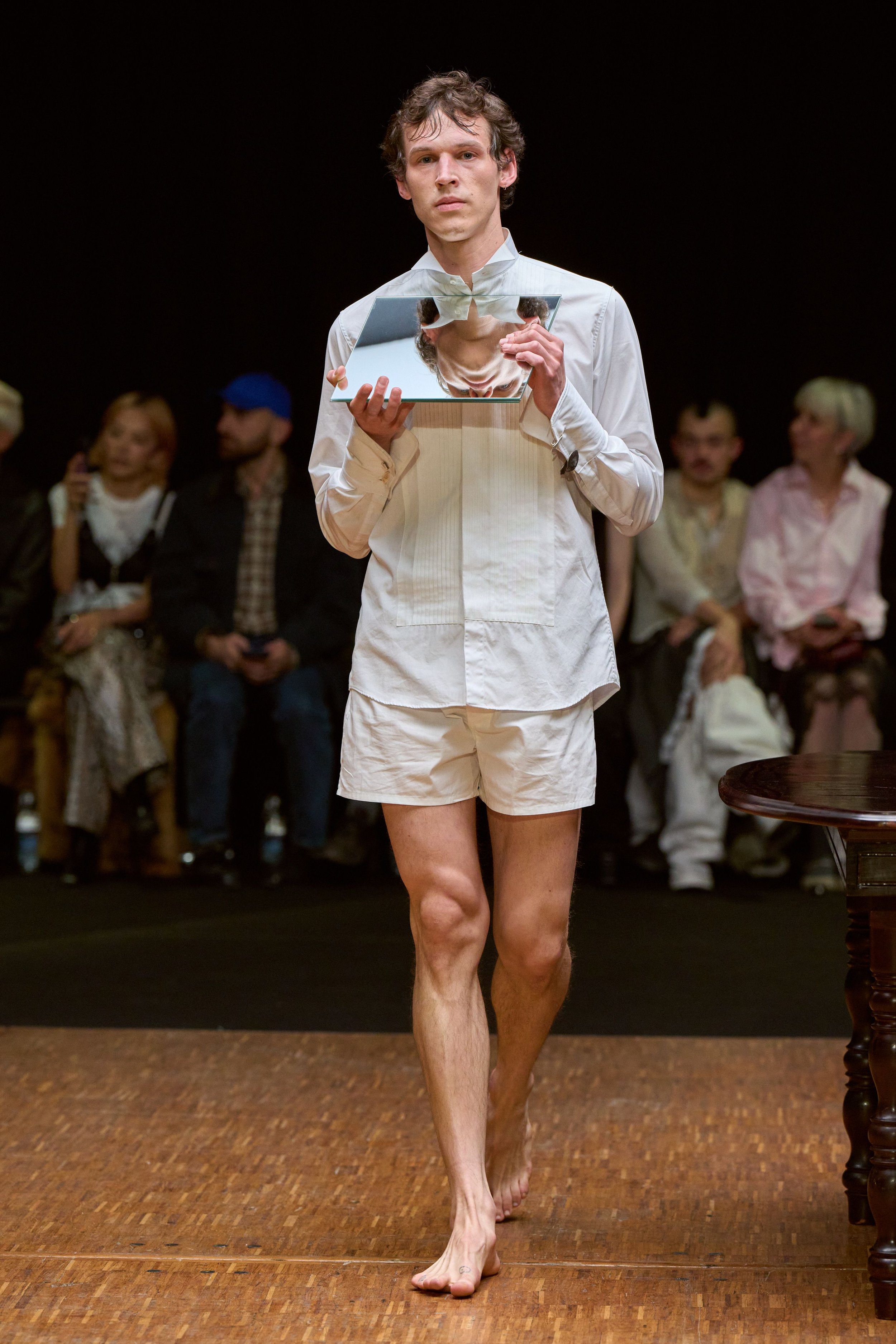
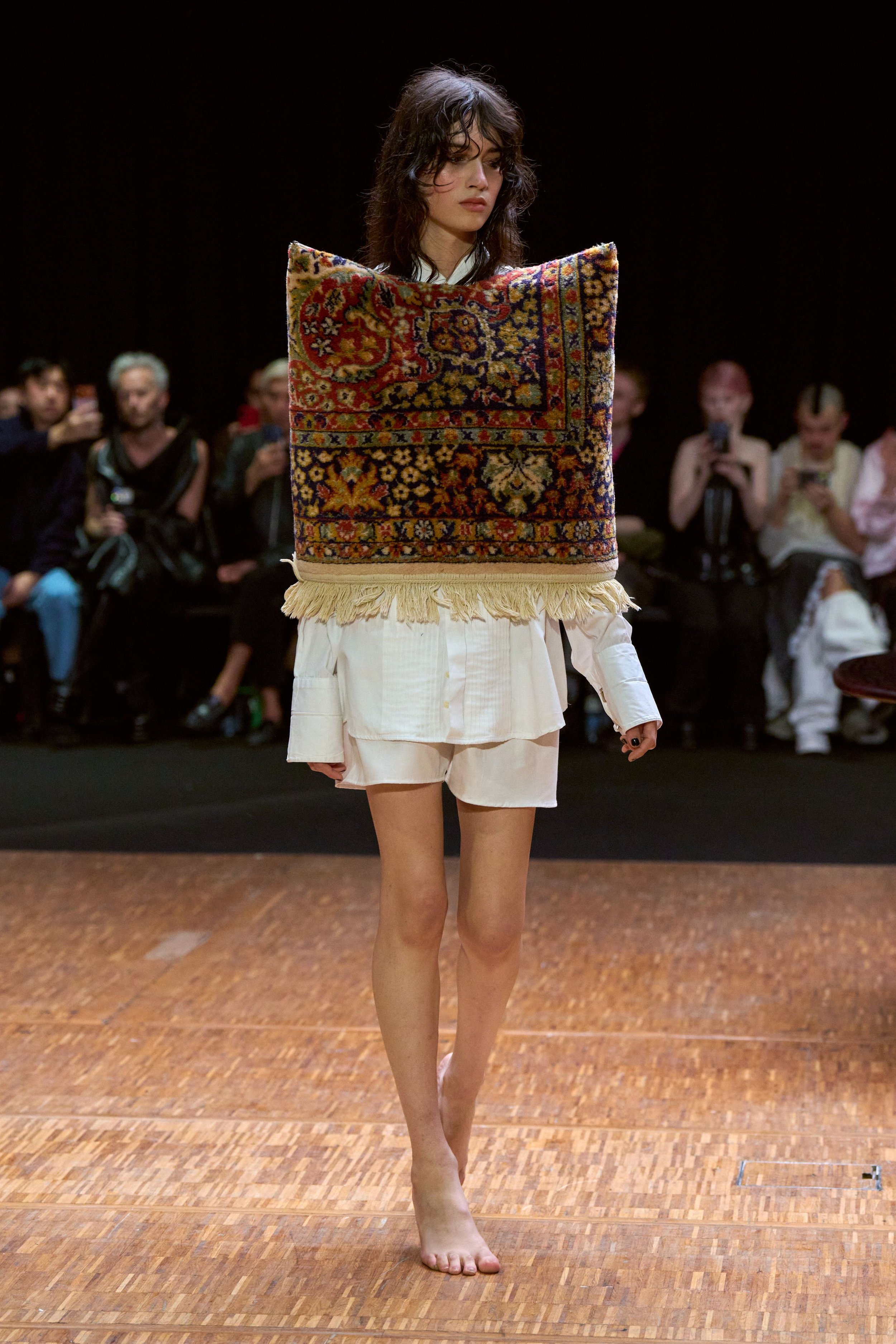
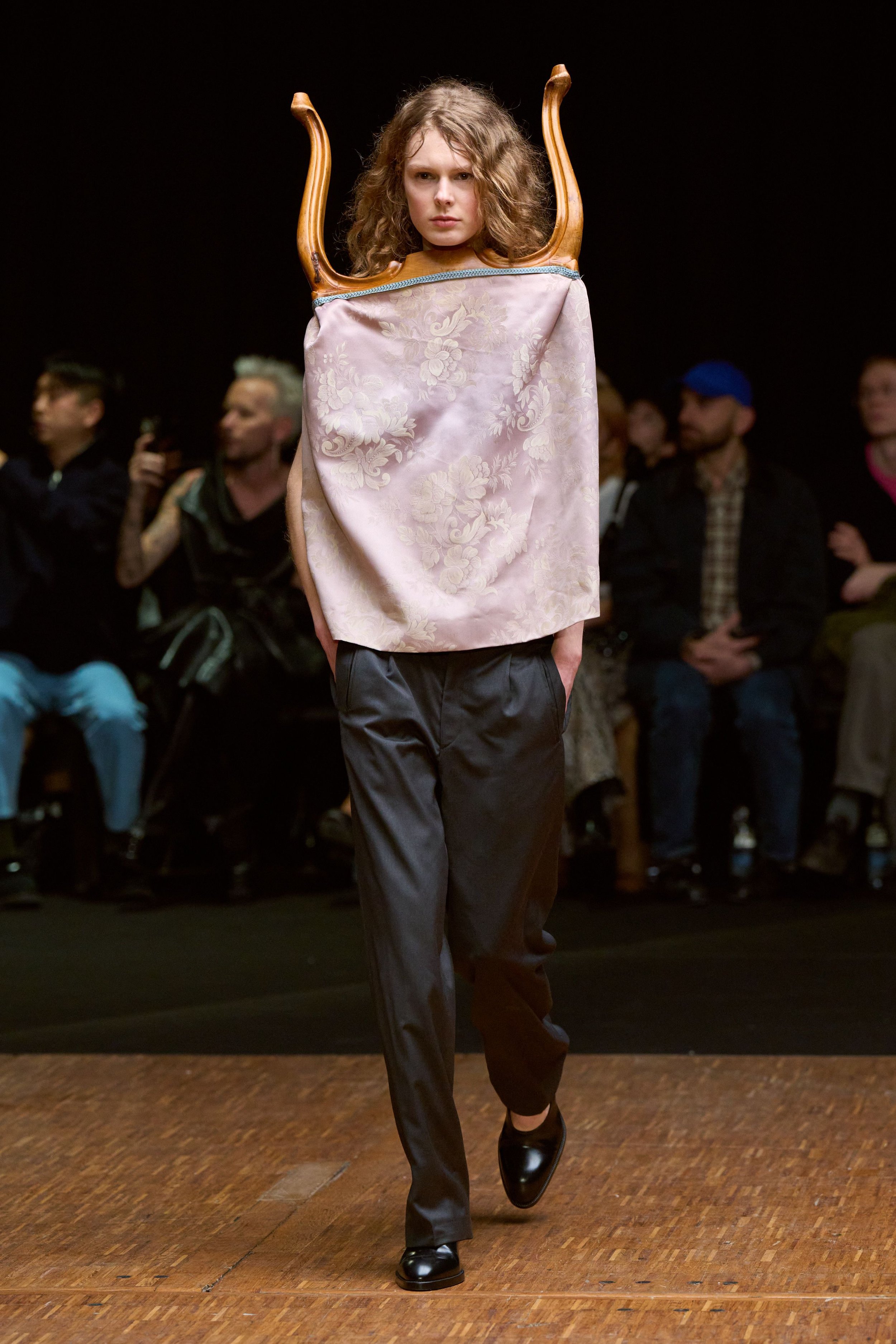
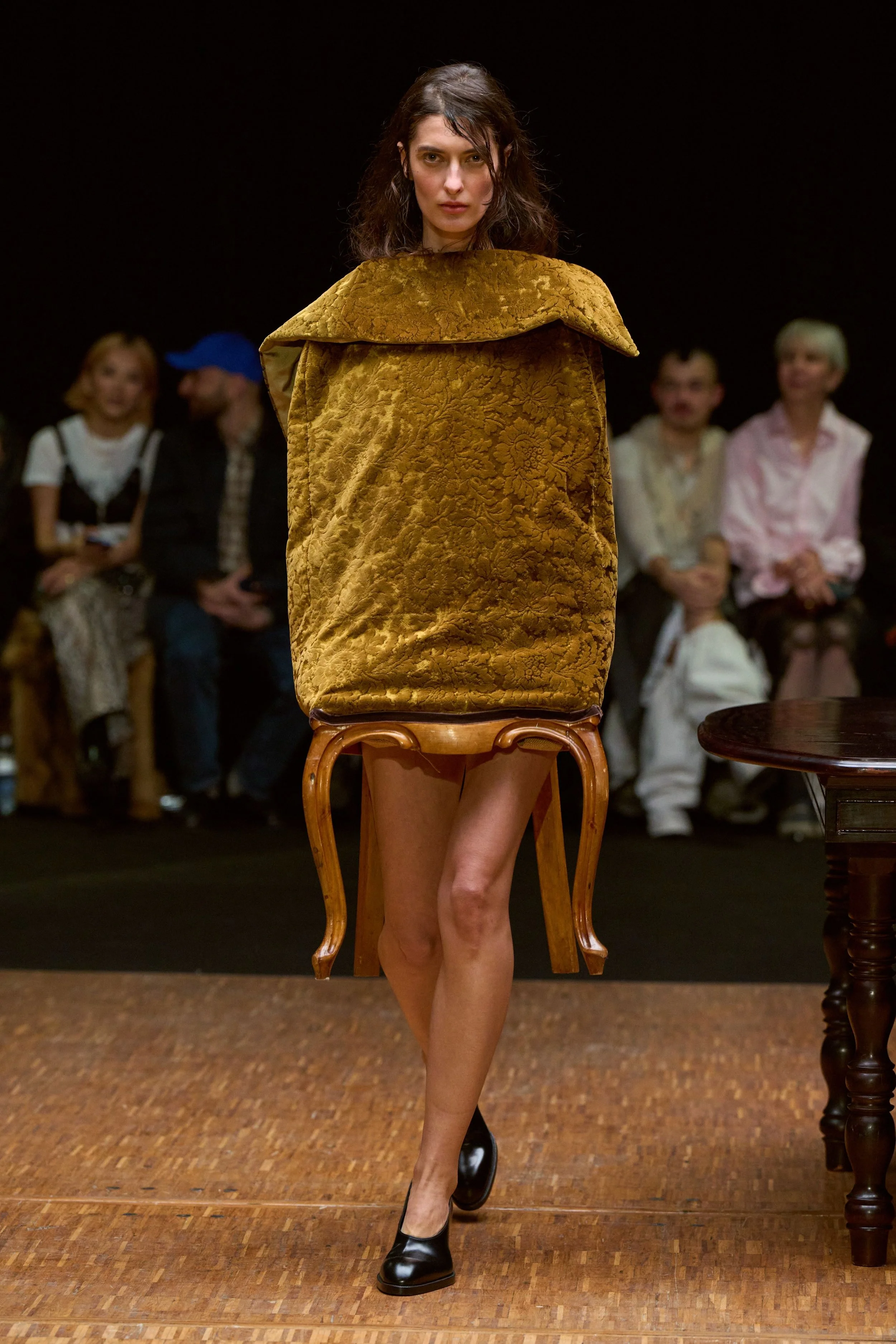
True to form, Hodakova’s wit transformed the everyday into the extraordinary. Carpets morphed into skirts and boleros; silver spoons became jewellery; teacups were reborn as bras; upholstery climbed the body as tops, chair legs still attached like stubborn reminders of their former lives. Then, towards the finale, crisp white cotton silhouettes were paired with mirrors worn as accessories, amplifying the surrealist and theatrical essence of the showcase.


Words by Martin Onufrowicz

BURC AKYOL FW26

Burc Akyol’s Fall/Winter 2026 collection, presented on the top floor of Paris’ Institut du monde arabe,  celebrates the moment when a woman chooses to be seen. Titled La Collectionneuse, the designer’s latest output is built on obsession, repetition, and Parisian mythology. Clothes become codes, and codes become muscle memory – sharp tailoring that carries nostalgia in its seams, or silhouettes that flirt with cliché only to outgrow it. It’s Paris as fantasy and discipline at once: Éric Rohmer mornings, Agnès Varda afternoons, and cigarette-lit walks home at dawn.

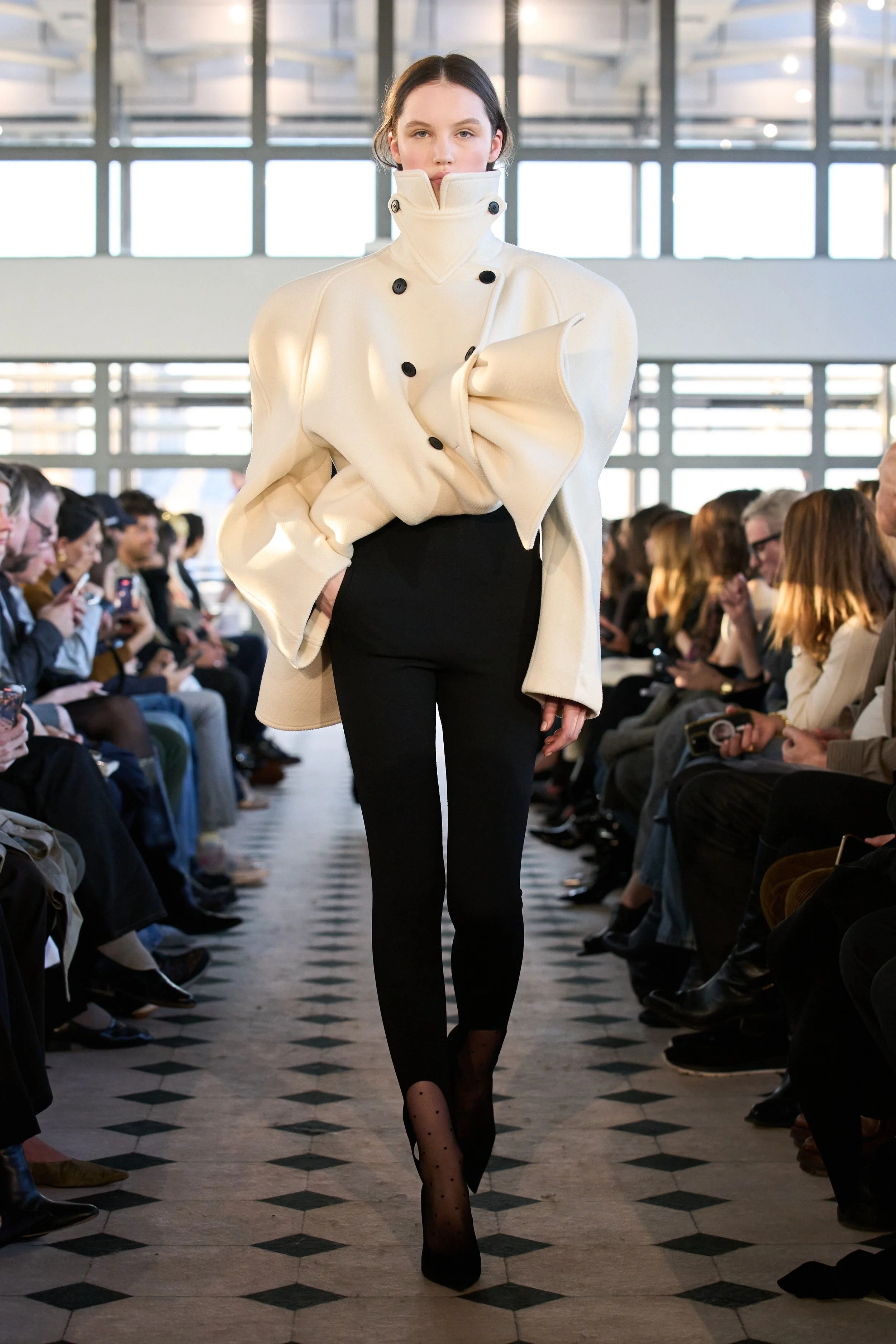
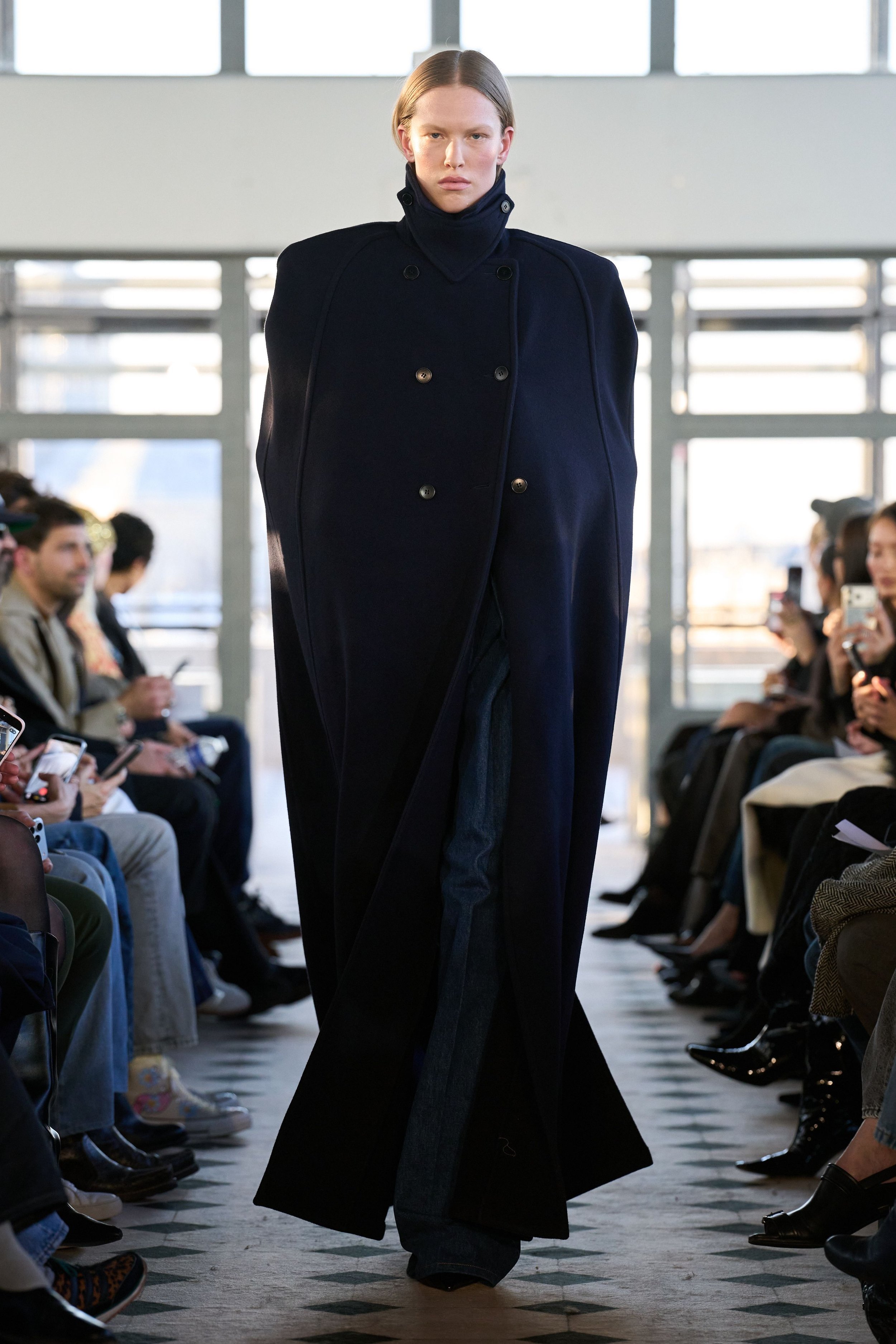
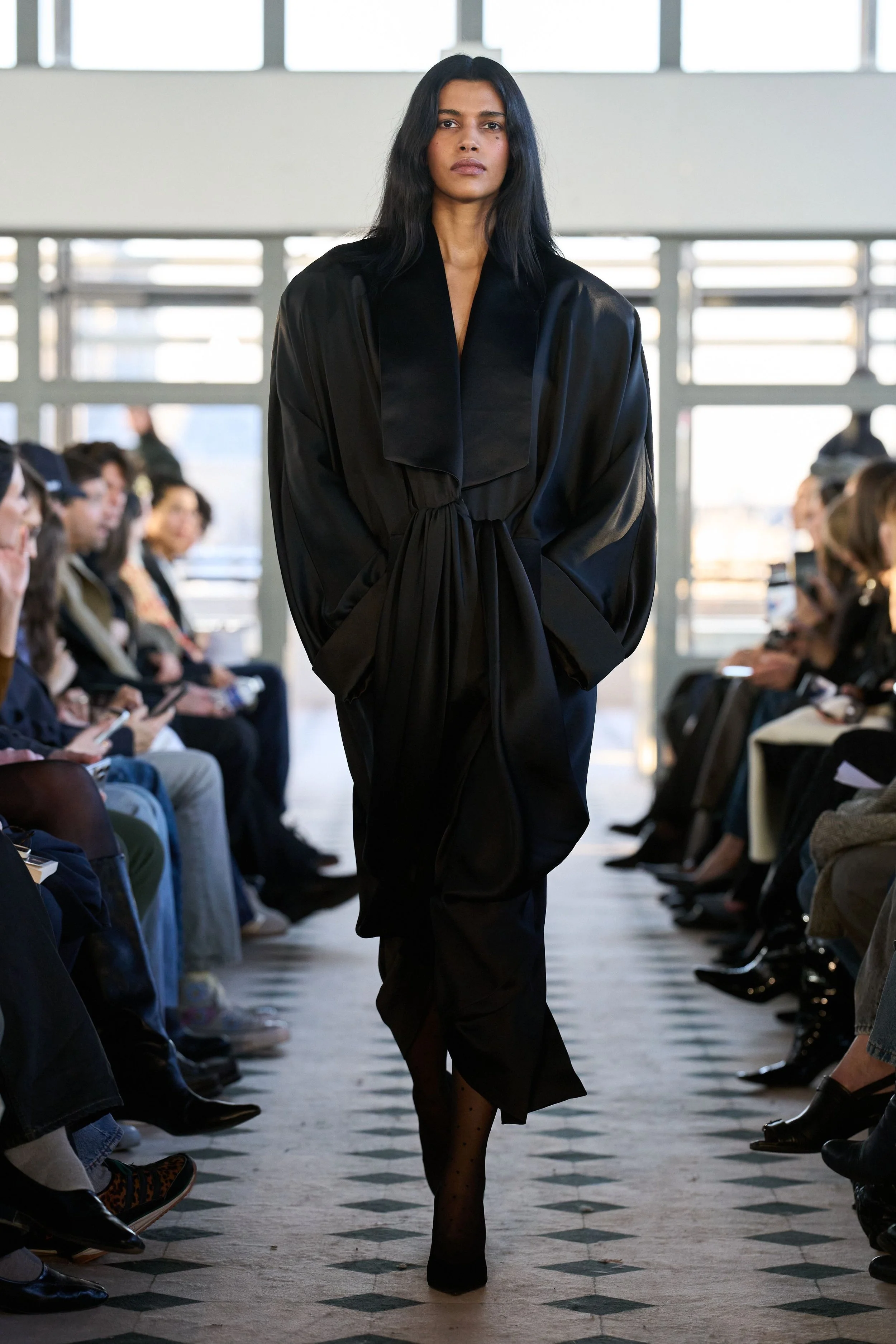
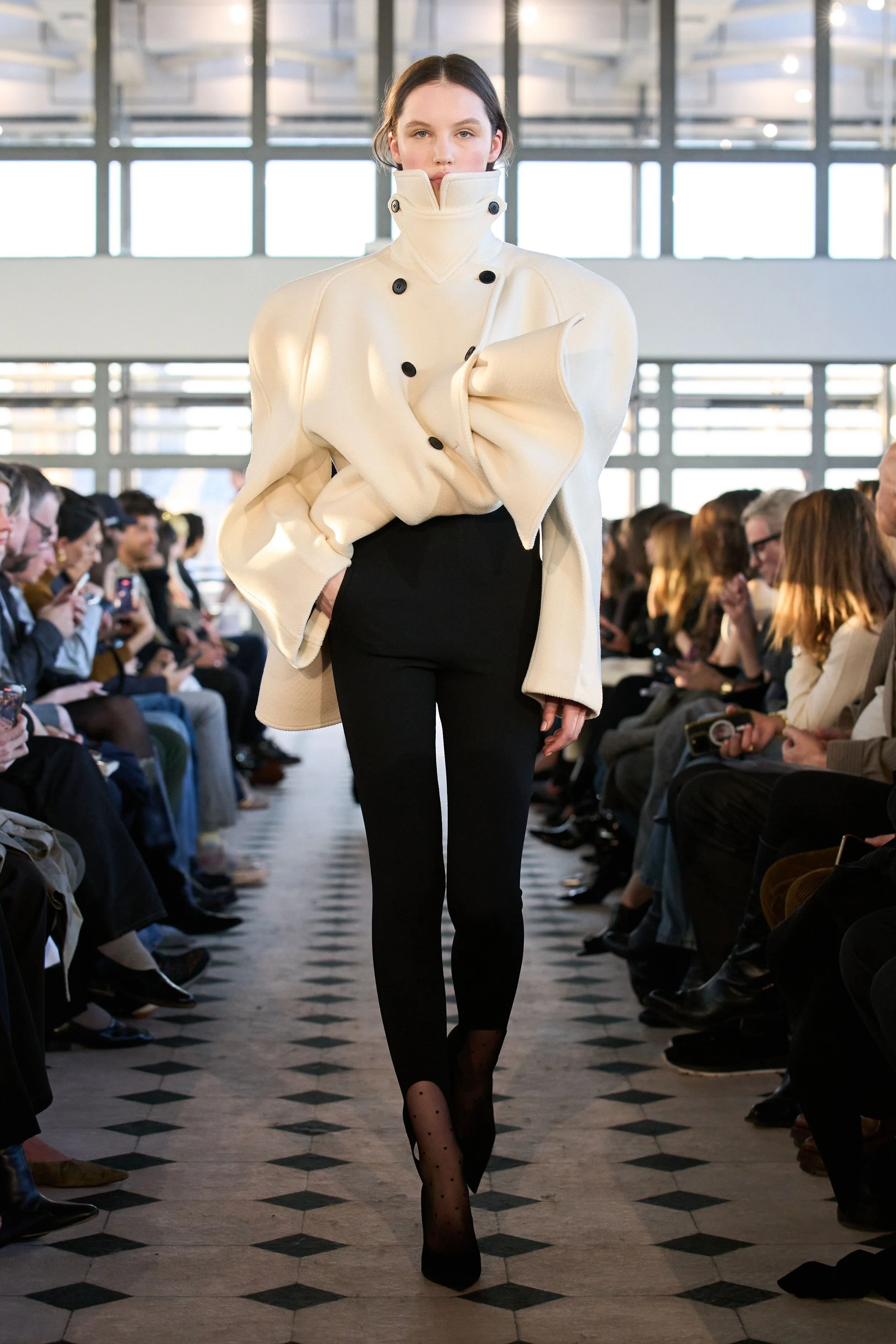
But don’t mistake this romantic sensibility for softness. The offering is a character study in accumulation: of lovers, memories, references, and power. A double-breasted cape in sturdy navy wool demands authority with its wide shoulders and high collar. Later on, its shorter jacket iteration in cream is twisted in the front, showcasing high-waisted jodhpurs paired with ultra-spiky, ultra-high heels. A dress-coat hybrid in black silk creates an equally effective and comfortable uniform for the long night ahead. Each piece feels lived in before it’s worn, as if the fabric already remembers something juicy, scandalous. The eroticism here isn’t obvious – it’s structural, in the tension between restraint and collapse, pocketed hands and barely-held shapes. Cocktail dresses in jersey feature dramatic side openings, showcasing legs clad in sheer tights with black dots – a classic Parisian staple that always creates a moment.


Words by Martin Onufrowicz

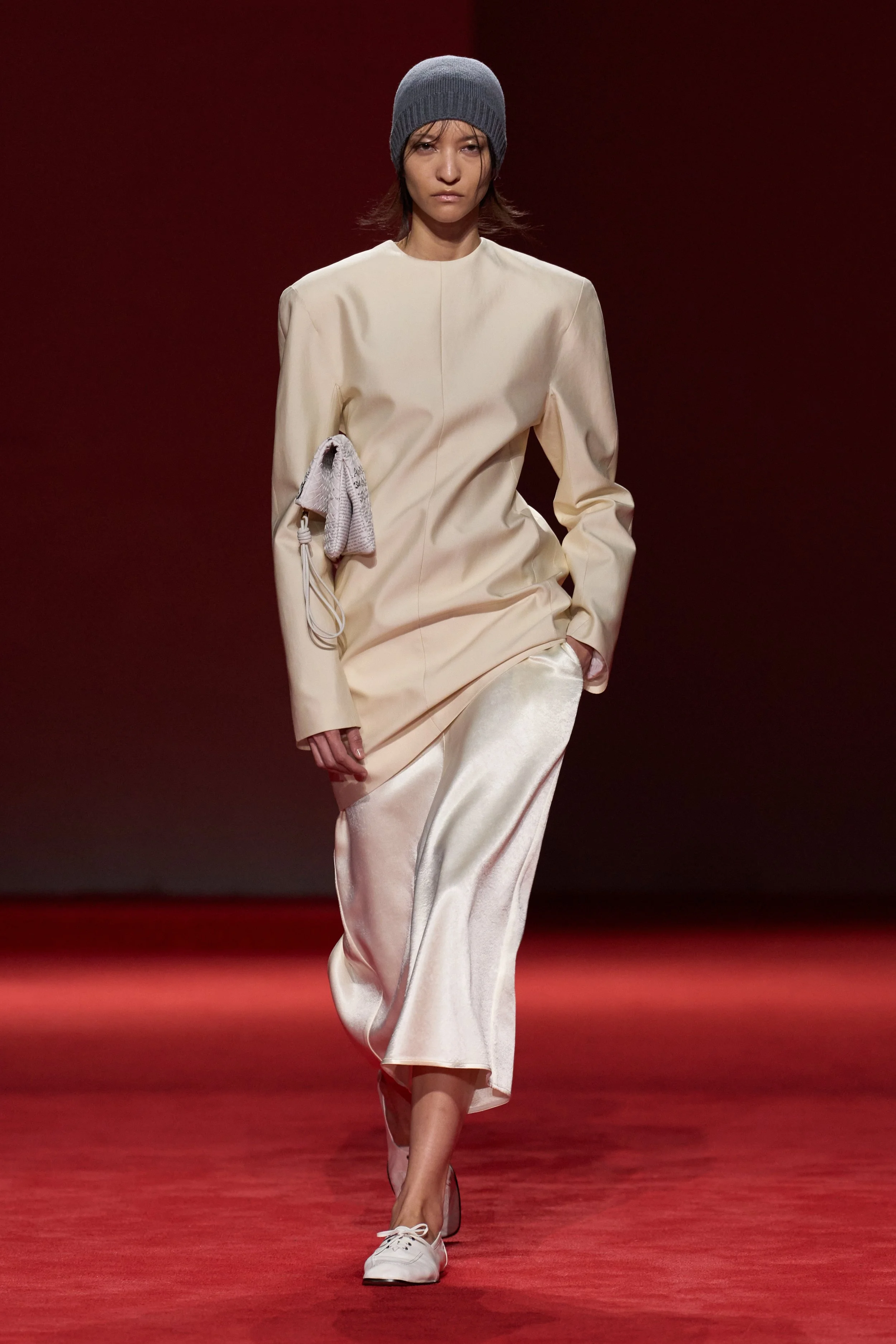
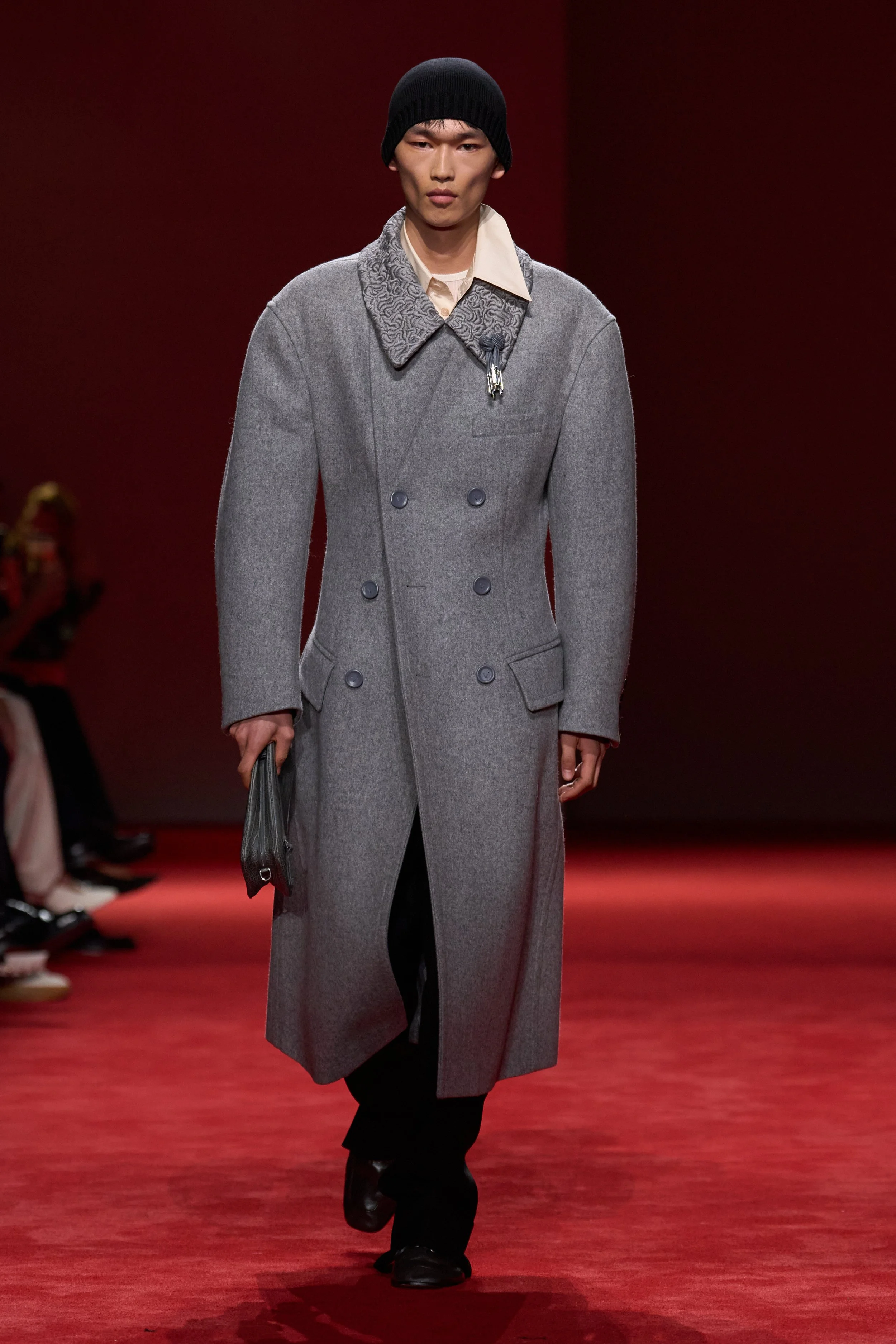
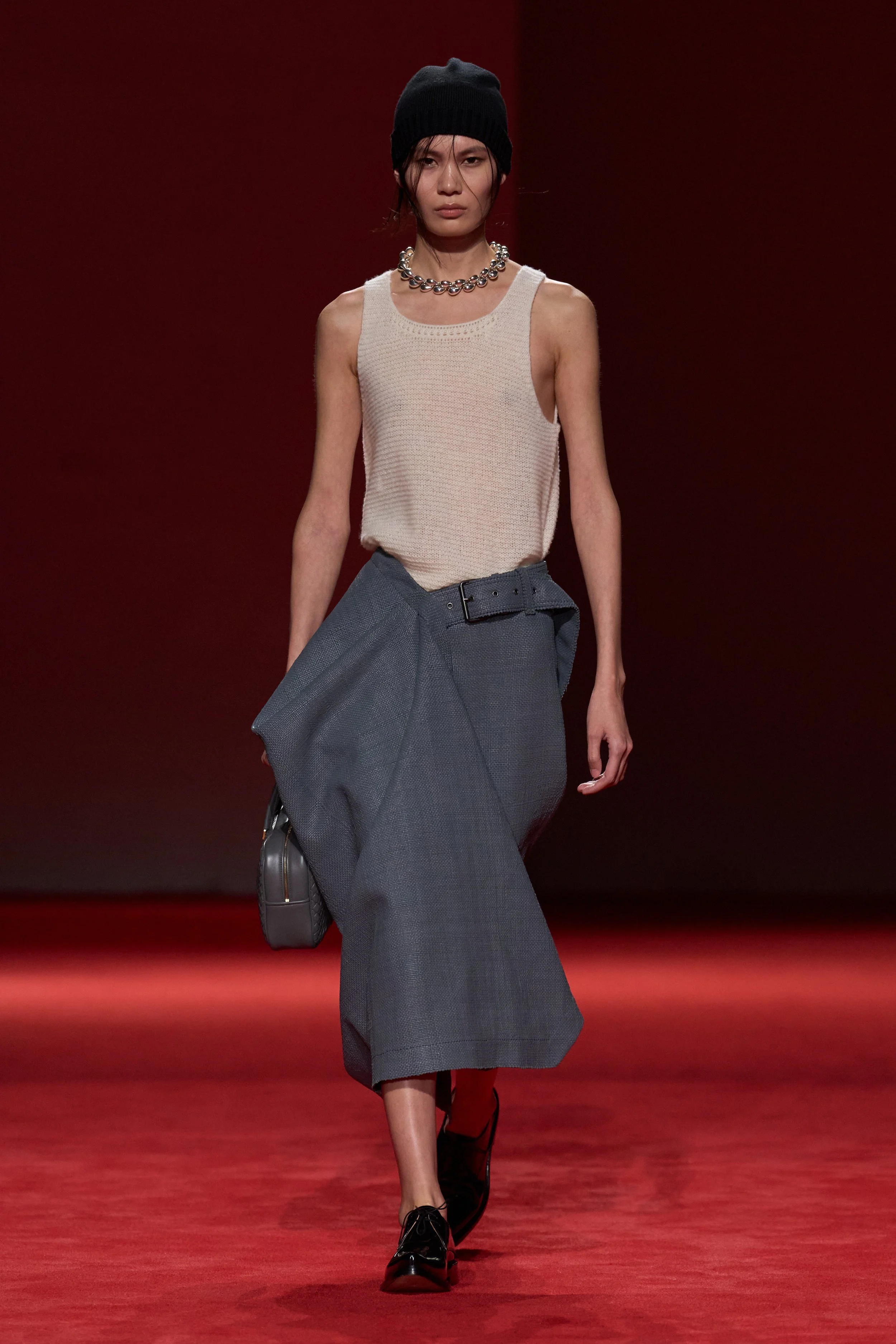
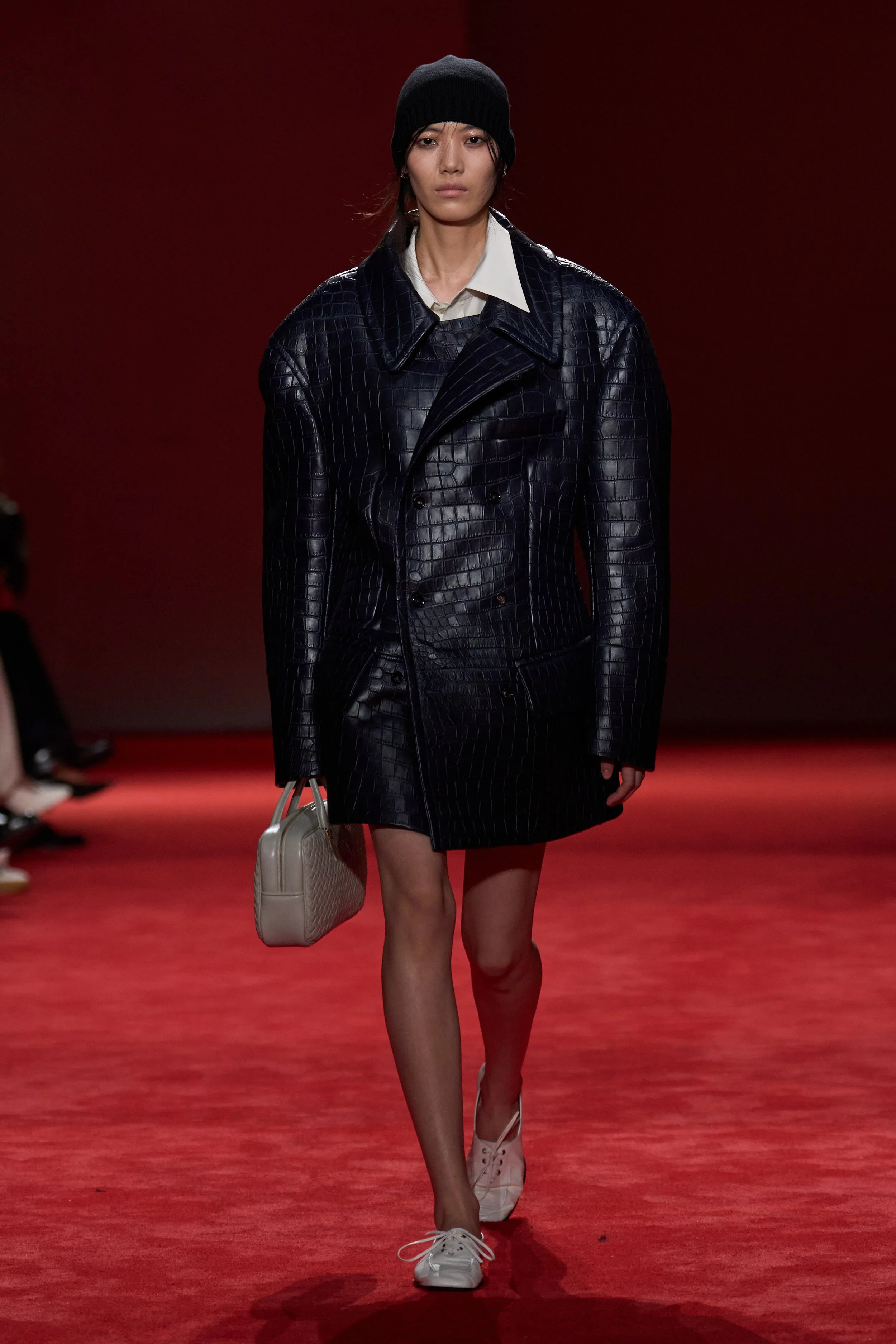
BOTTEGA VENETA FW26

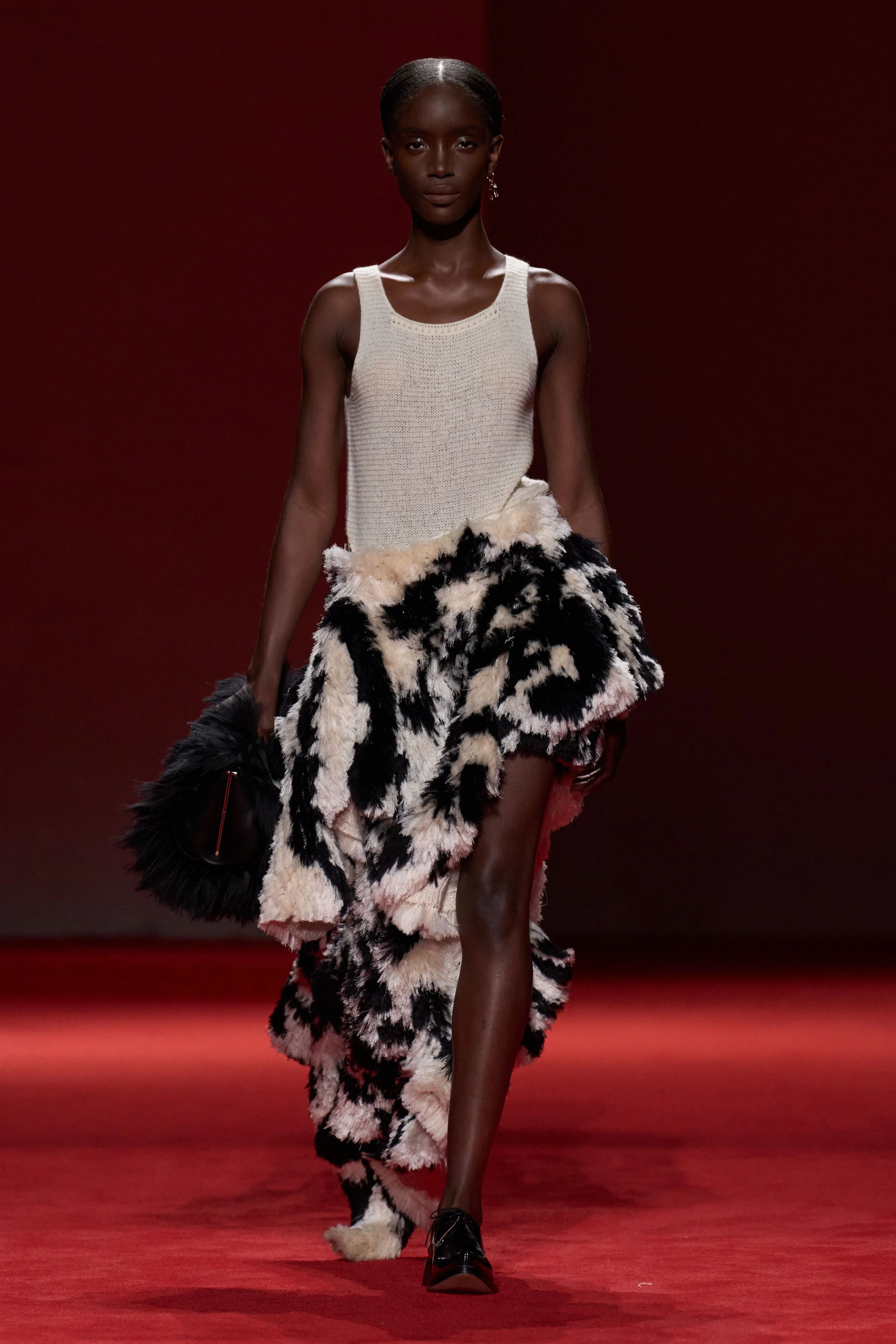
Life takes its time to grow. Left to its own devices, nature is slow: lilacs need three years to become even a small shrub, wisteria may appear within seasons yet can take ten or fifteen years to flower. At Bottega Veneta, it took two. Louise Trotter’s debut last September was a considerate start, an appropriate proposition for a house in limbo between two creative visions. For Fall/Winter 2026, she blossoms.

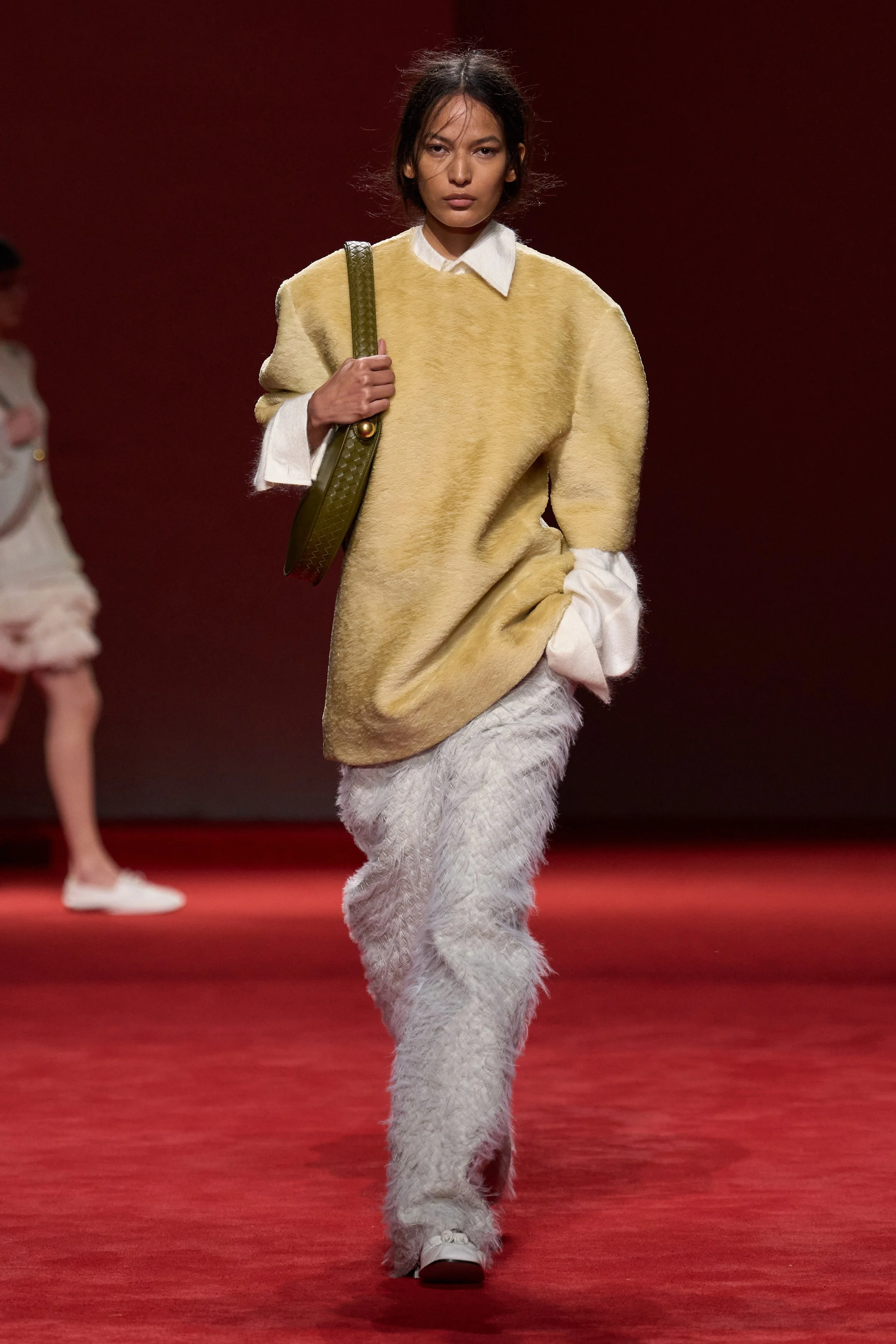
In her sophomore season, the British designer is more assured, offering her idiosyncratic vision confidently. The collection feels organic, like something growing in real time. It did not begin in full bloom. Instead, it evolved from relatively neutral tailoring before expanding. The show opened with smart suits. Not a stuffy, book-smart, but more of a charismatic, gallery-going intelligent. Even at their most sombre – set against the explosion that would follow – the tailoring resisted rigidity. Shoulders were rounded, lines curved, fabric pooling rather than cutting a strict line. Structure softened into movement.

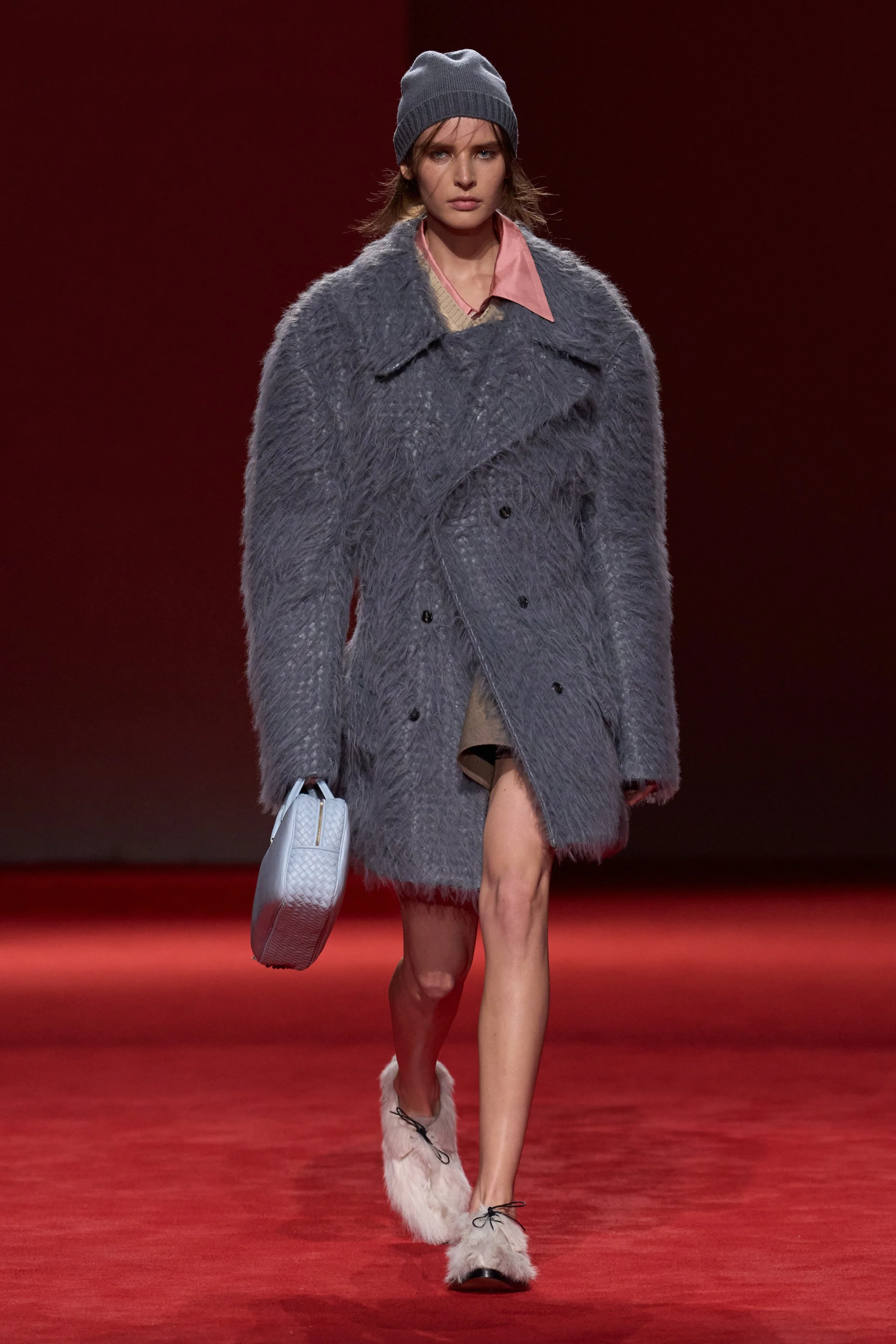
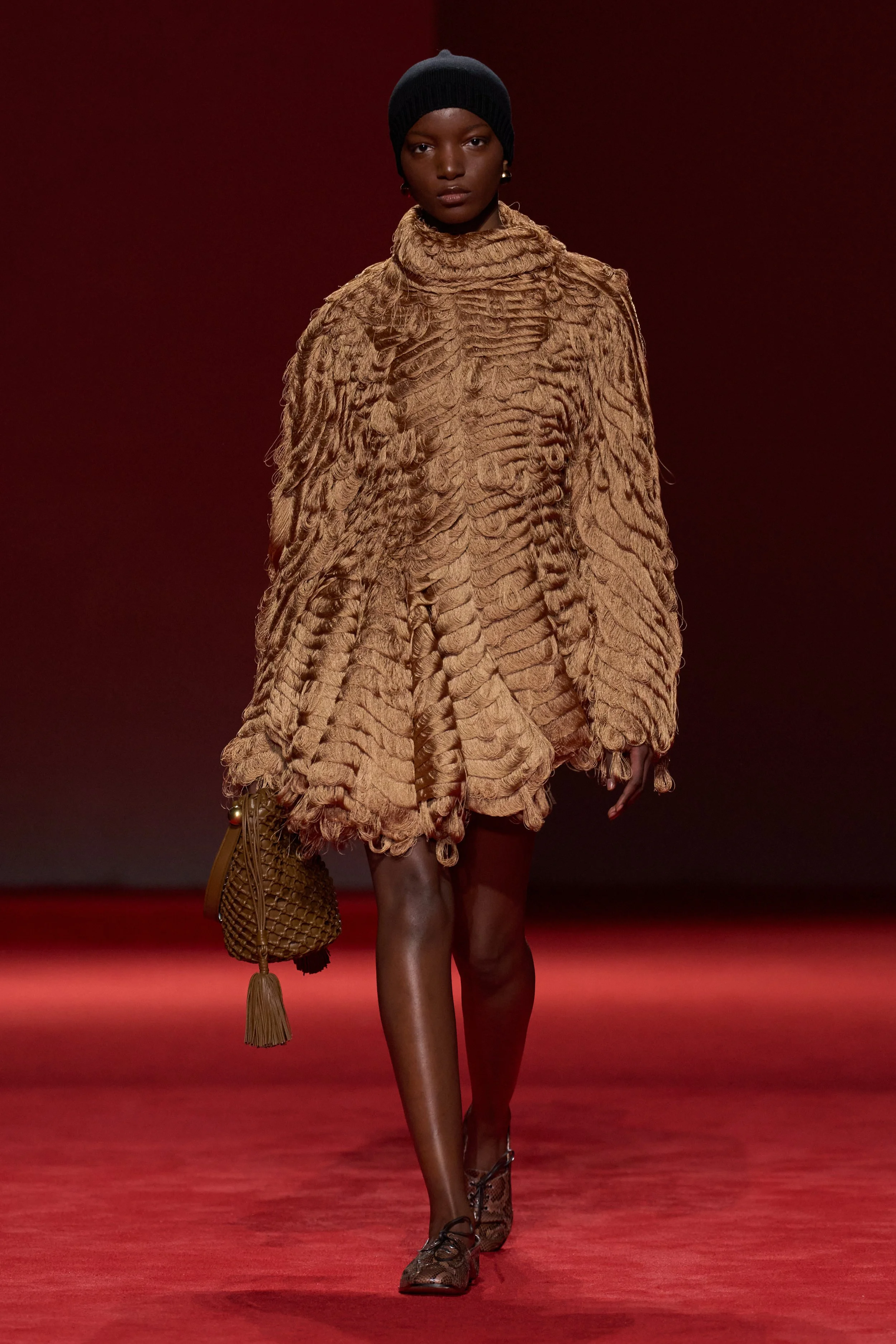
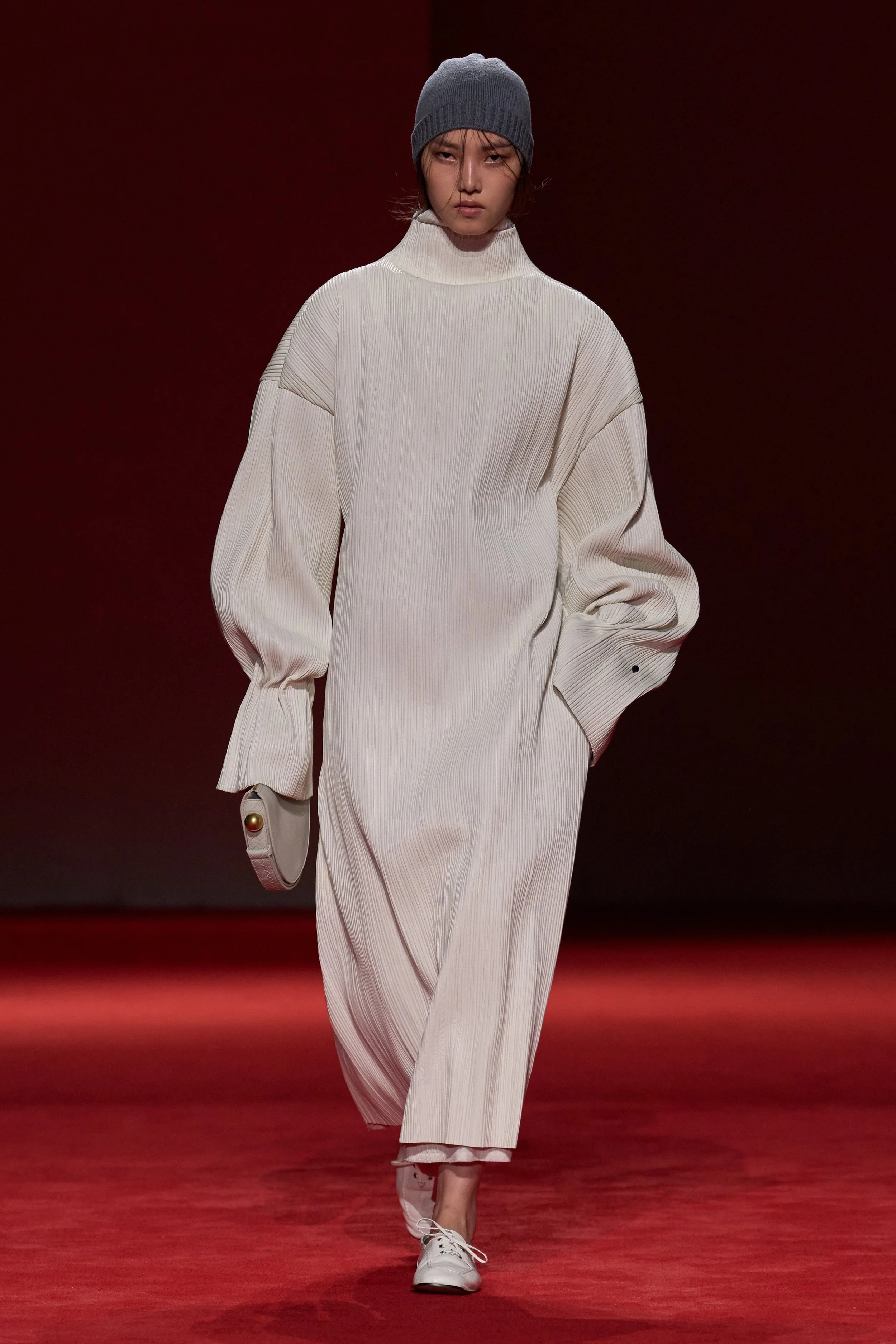
Growth was literal, too. Last season’s show-stopping skirt, made of fibreglass fringe, expanded. What once framed a skirt now envelops the body, spreading upward and outward. That same kind of material experimentation was seen in short coats that rippled short brown fur into an organic texture. With a brand whose image relies on a texture, Trotter expands its philosophy beyond the classic Intrecciato. Pleats were used cleverly in long dresses that totalized the body, moving it in odd ways as models walked.

Trotter asserts power through silhouette. Oversized shapes filled the runway, but never felt clunky. Soft draping and unique volumes added interest to classic looks. A grey skirt folded in itself, a strong-shouldered top in butter yellow has two huge folds in the front, making the garment seem as if it were liquid before it solidified.

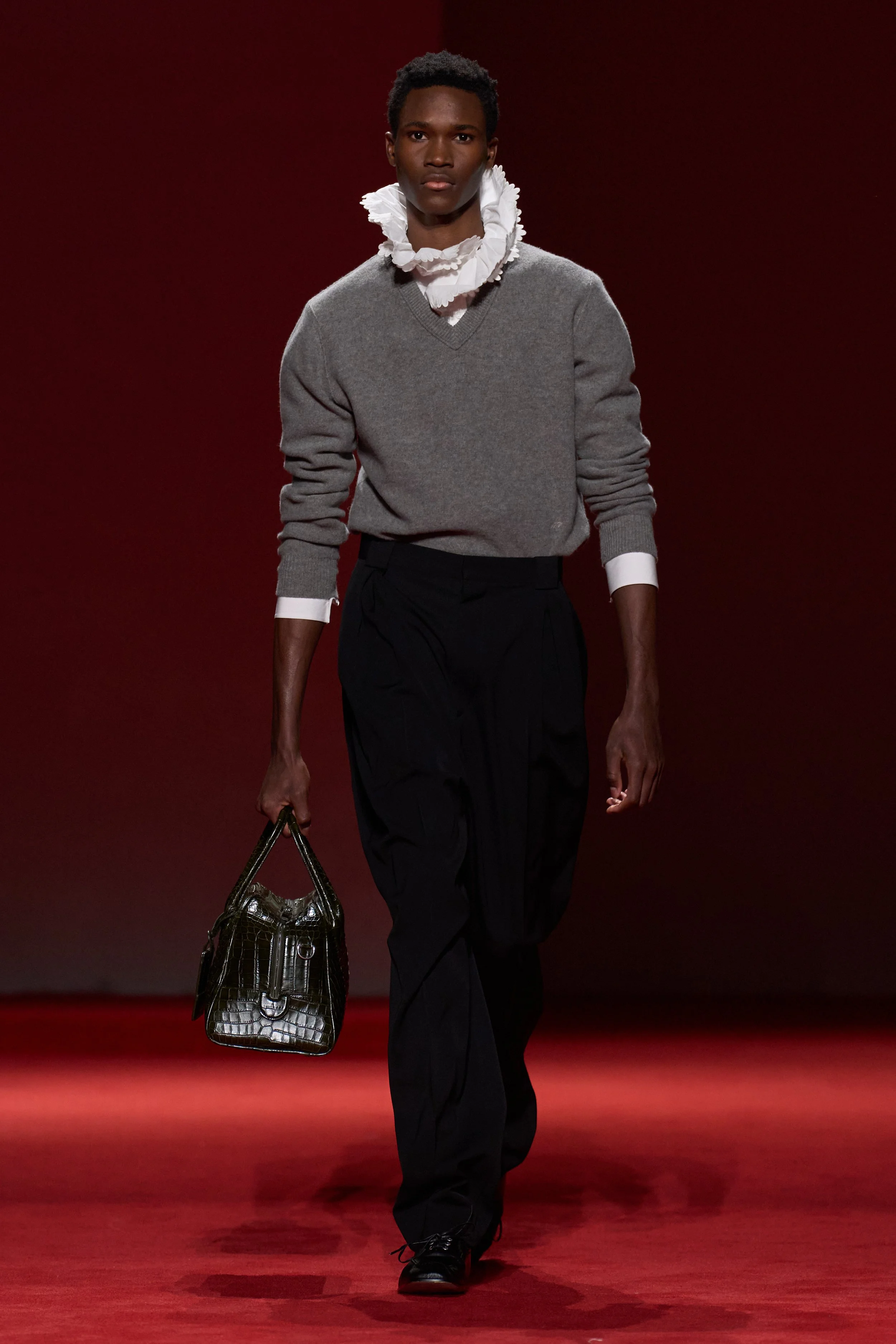
Menswear proved particularly strong. Trotter’s eye for texture can't be overstated, especially within the codes of the house. The Intrecciato is rendered more dimensional through tactile, furry surfaces. In a grey coat, the weaving of the material becomes even more 3D. Overall, a very strong showing for the British designer, proof that, sometimes, growth need not take years to flower.


Words by Pedro Vasconcelos

GIORGIO ARMANI FW26

Filling the shoes of Giorgio Armani is not for the faint of heart, but a slightly less complex task when done by someone who knows his namesake brand from the inside out. That is the case with Silvana Armani, Mr Armani’s niece and the current creative director of womenswear at the Giorgio Armani group, a role she proudly took over after her uncle’s passing in September last year.

Silvana Armani’s first-ever show for the Italian house as solo creative director was Armani Privé Spring Couture 2026, although she has been part of the team for over four decades. Critically praised, the show highlighted lightweight, feminine-centred pieces, adding a touch of ease to often strict couture garments.

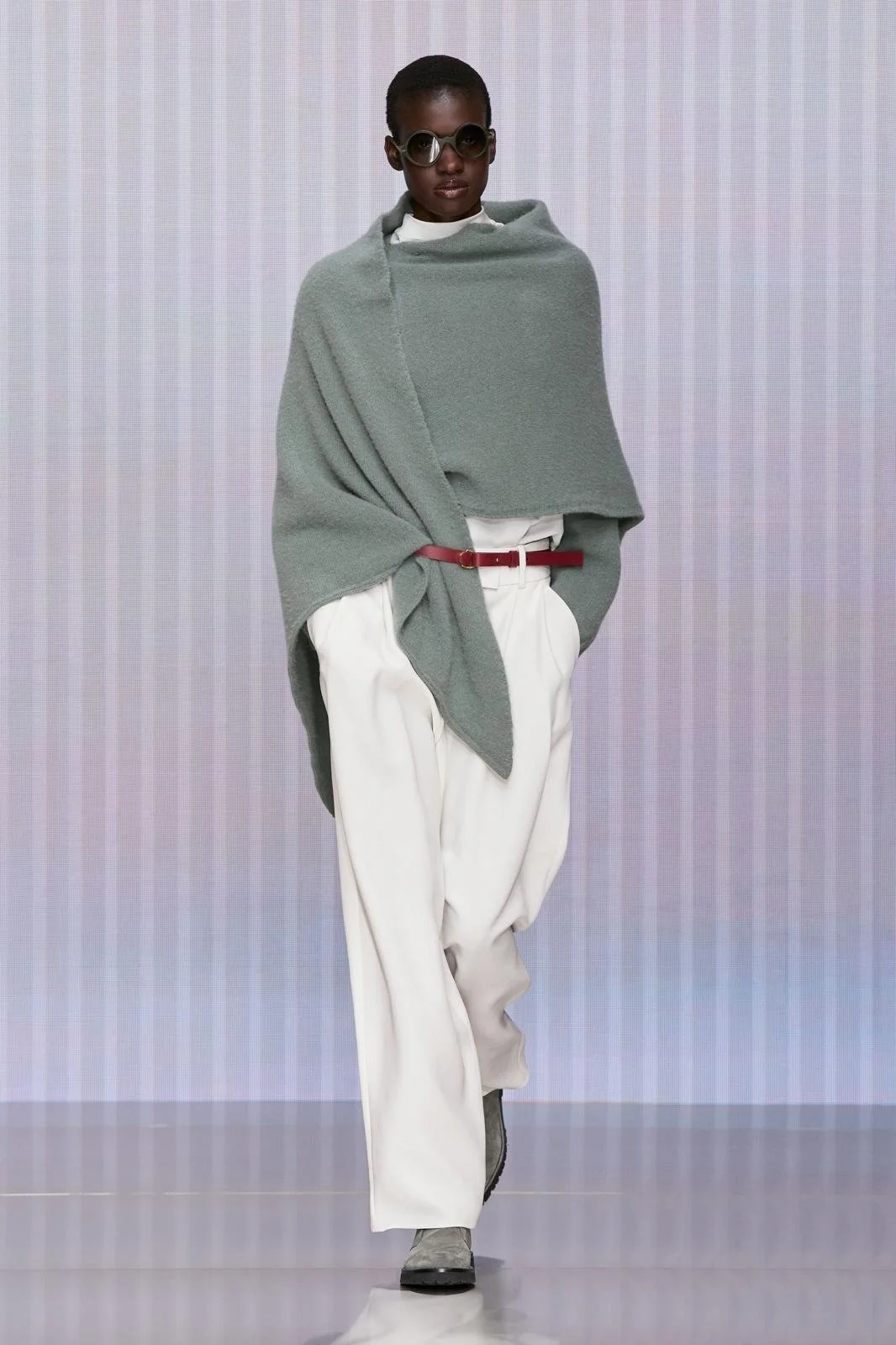
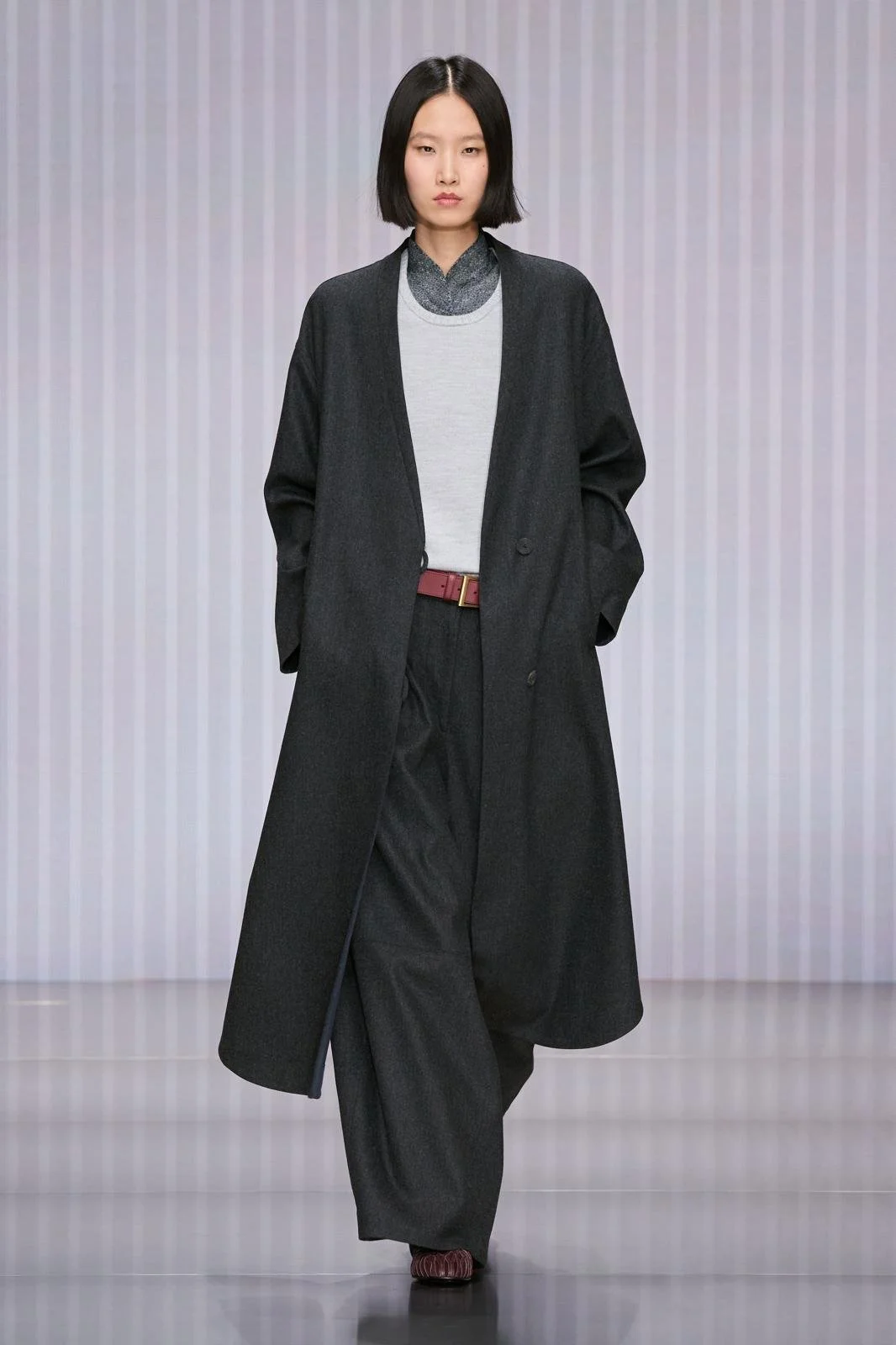
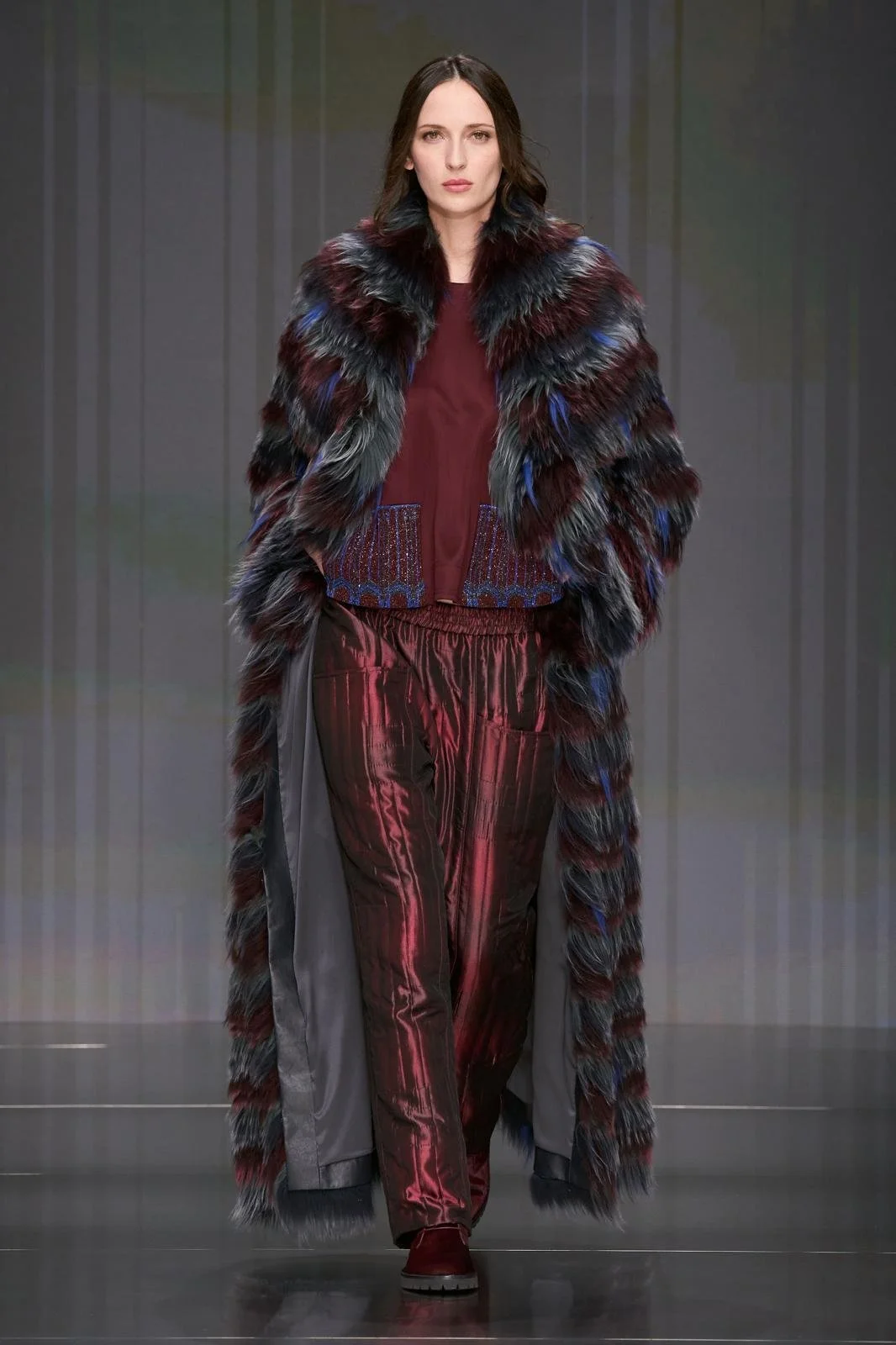
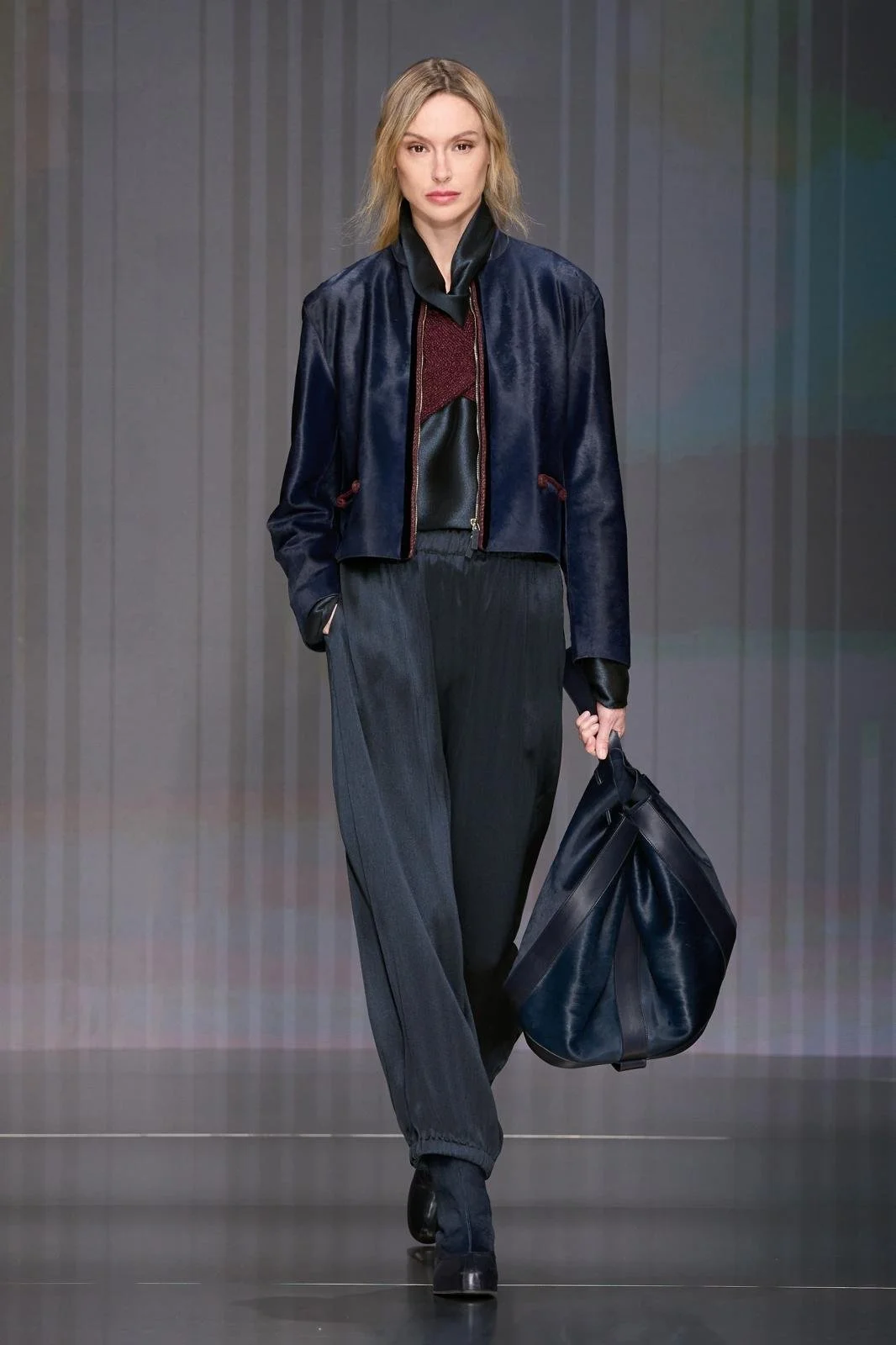
Past the pressure of the debut, Fall/Winter 2026 was the Italian designer’s chance to establish another facet of her own vision for the label. Simple yet elegant, practical yet sophisticated, the collection proved the state of continuity of the brand, without leaving any of Mr Armani’s fundamental work behind.

Giorgio Armani's shows typically follow an order, starting with casual, everyday, and tailored pieces that tend to progress to elaborate garments and eveningwear through both materiality and detailing. This time, a pair of models inaugurated the catwalk, twinning in sharp tailored grey cashmere suits and trousers, which only differed by the animal-themed red brooch each of them carried – beginning with a lion’s head, then a crab, to represent Silvana and Giorgio’s star signs, respectively.

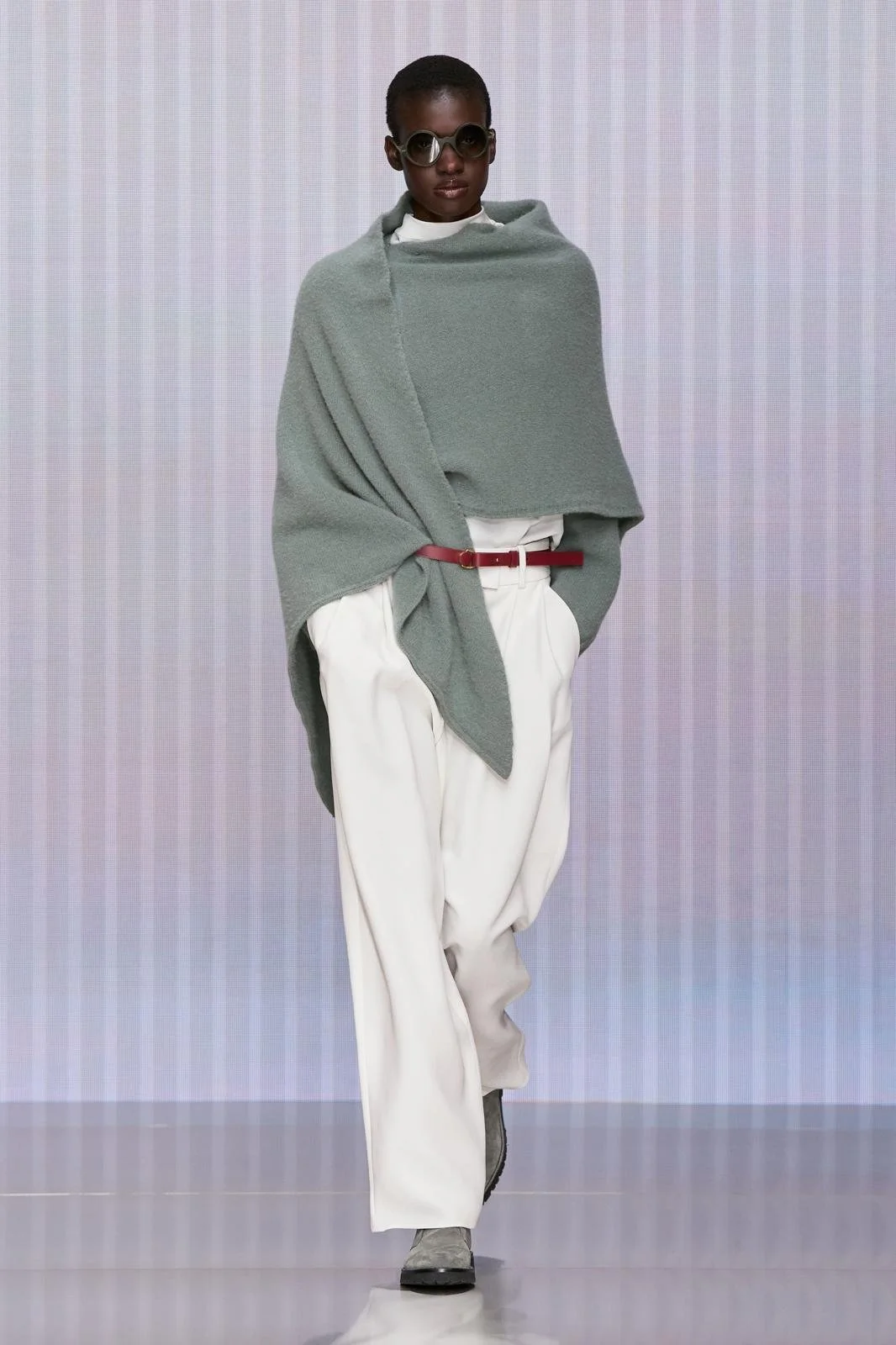
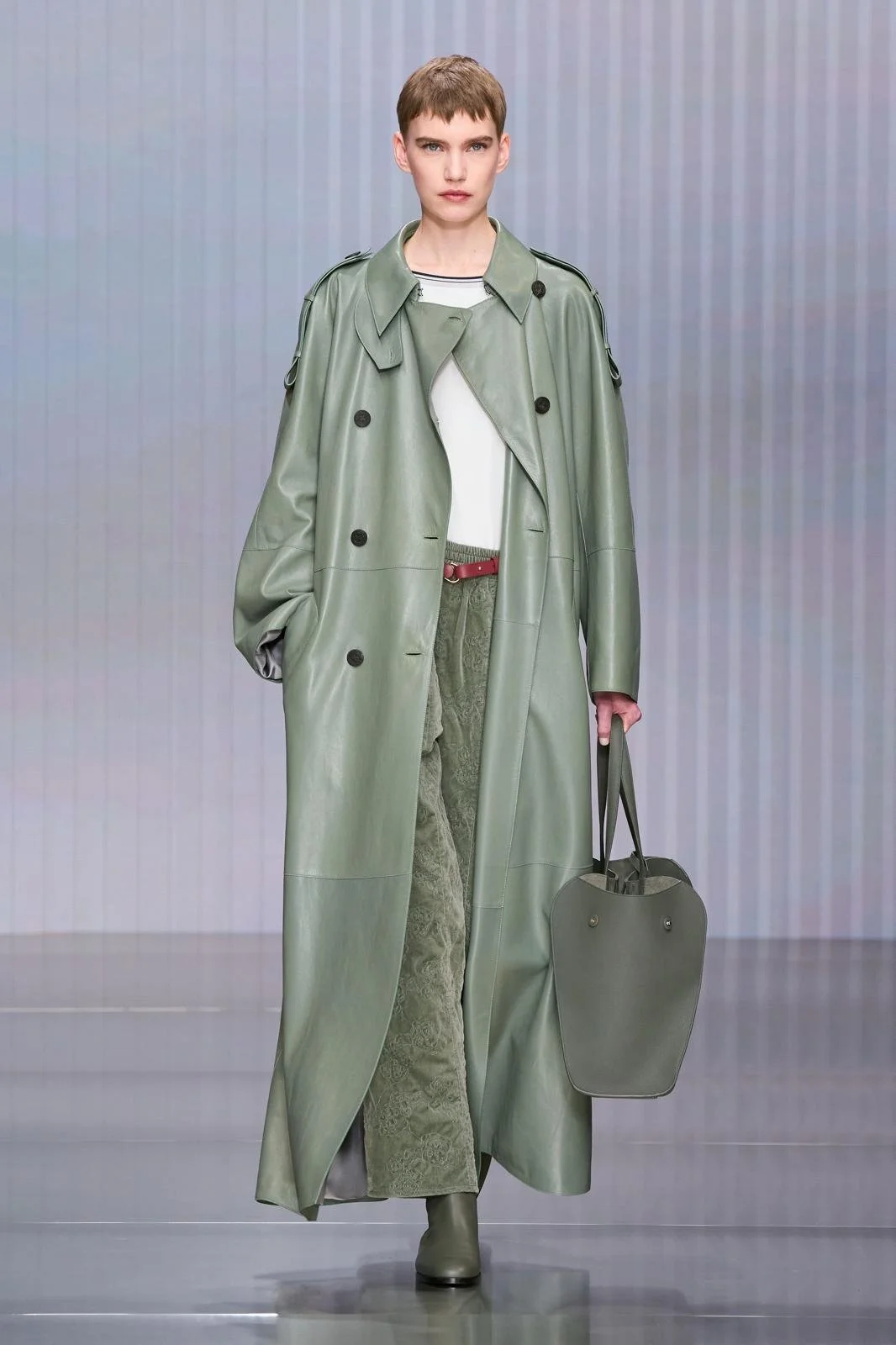
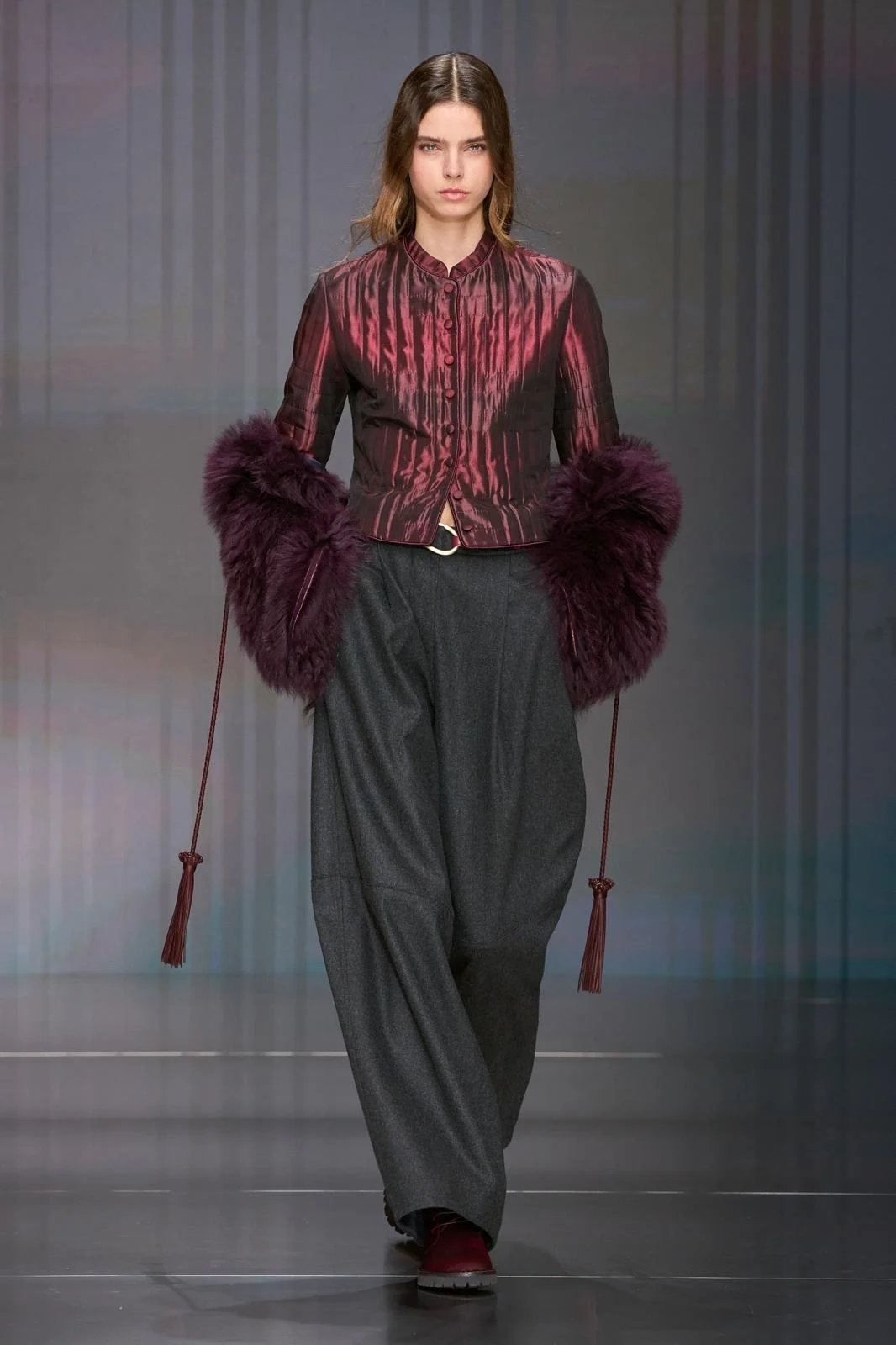
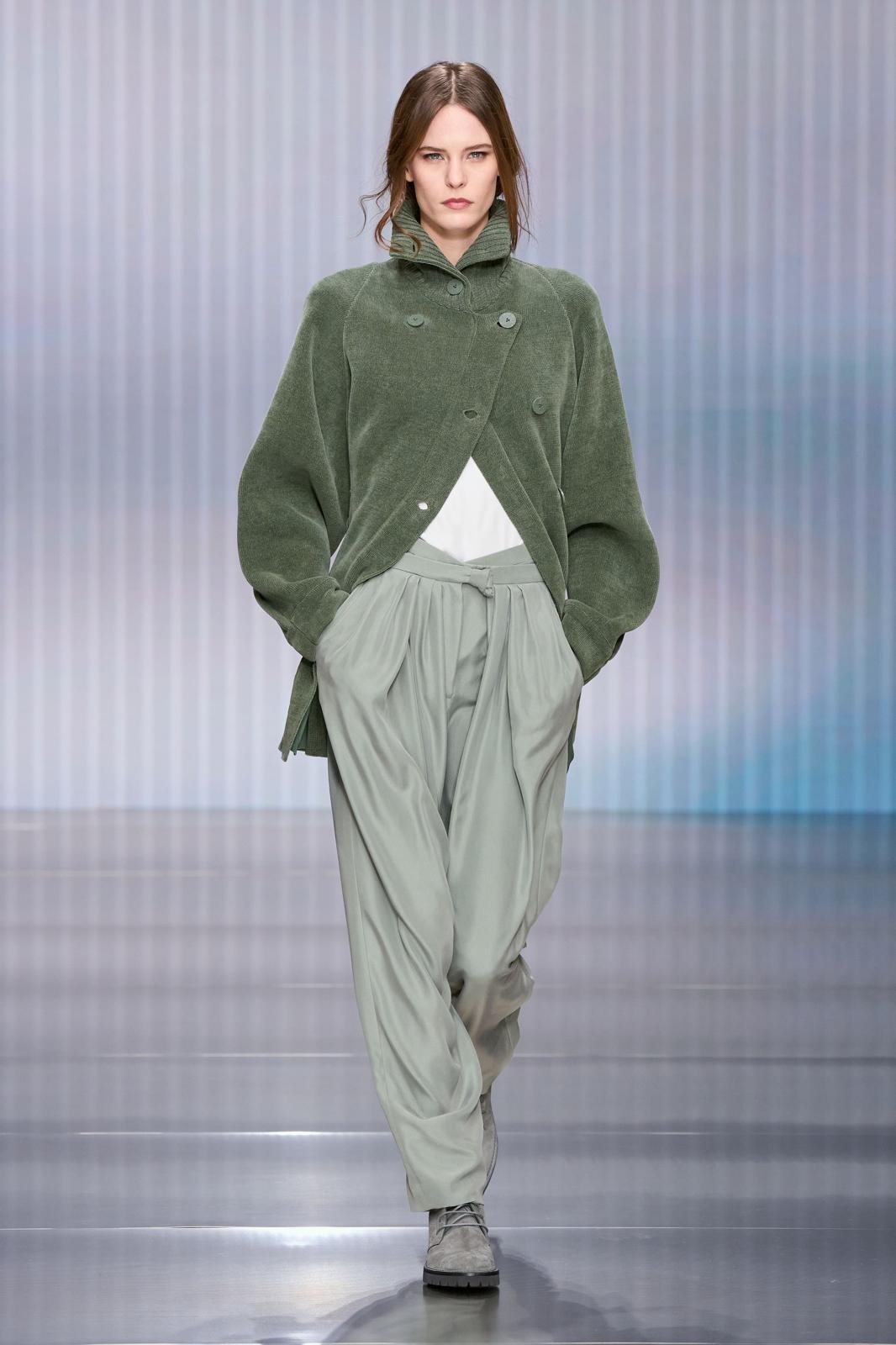
From then on, long coats in wool and silk, classic-cut blazers, and a few knitwear numbers, most of them styled with slouchy, white trousers and a thin burgundy belt, embodied Silvana Armani’s eye for comfort and wearability.

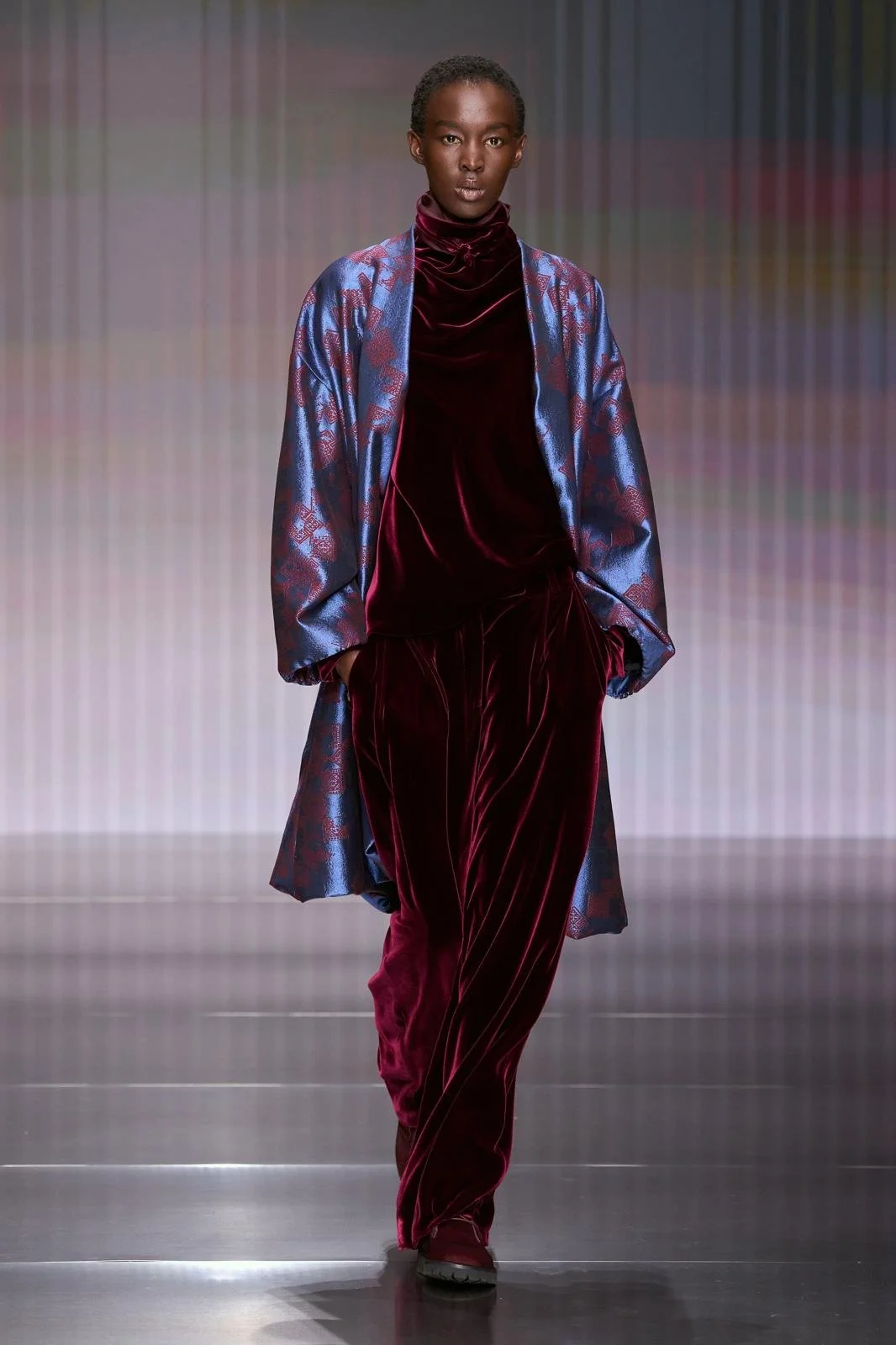
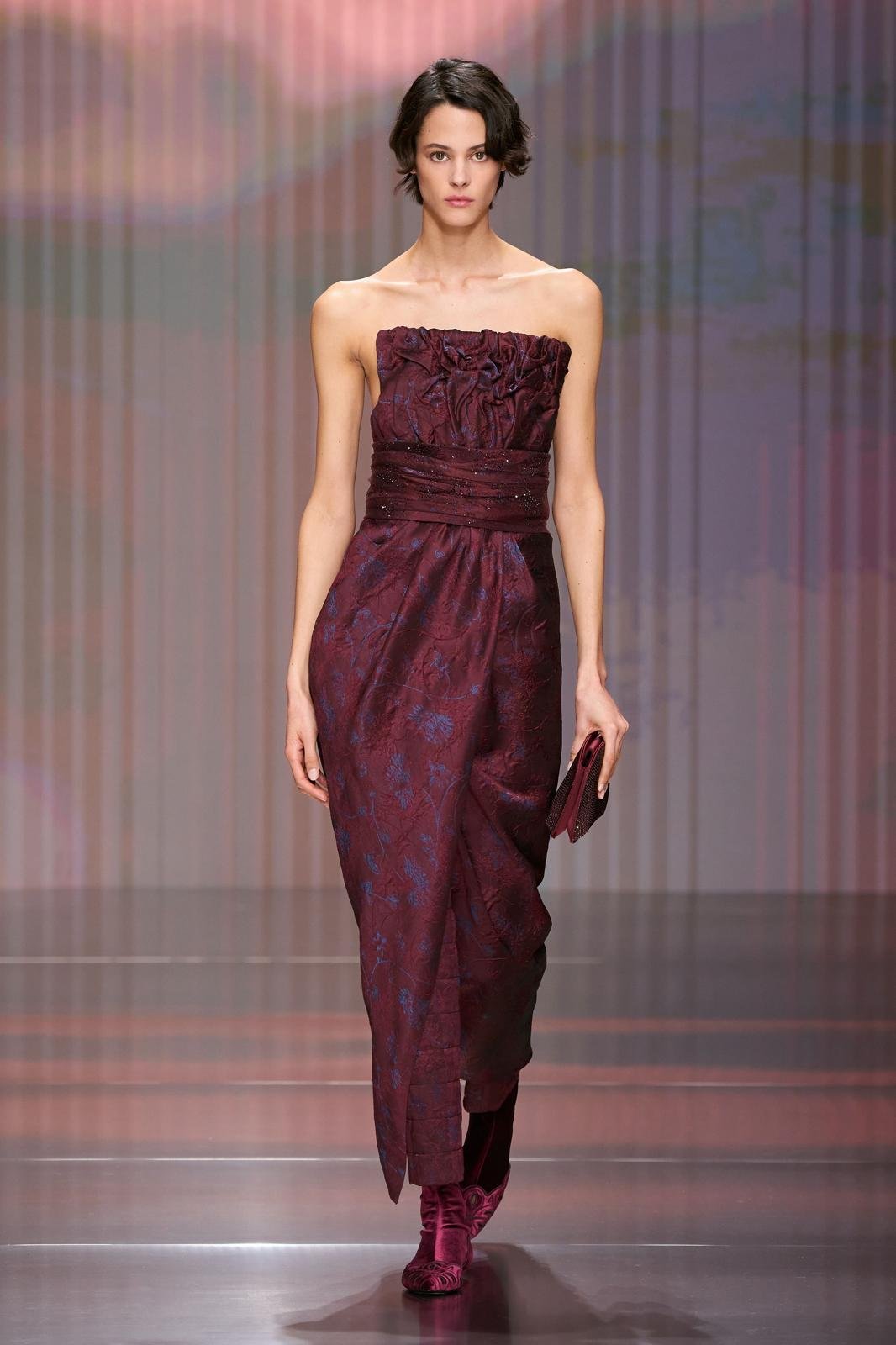
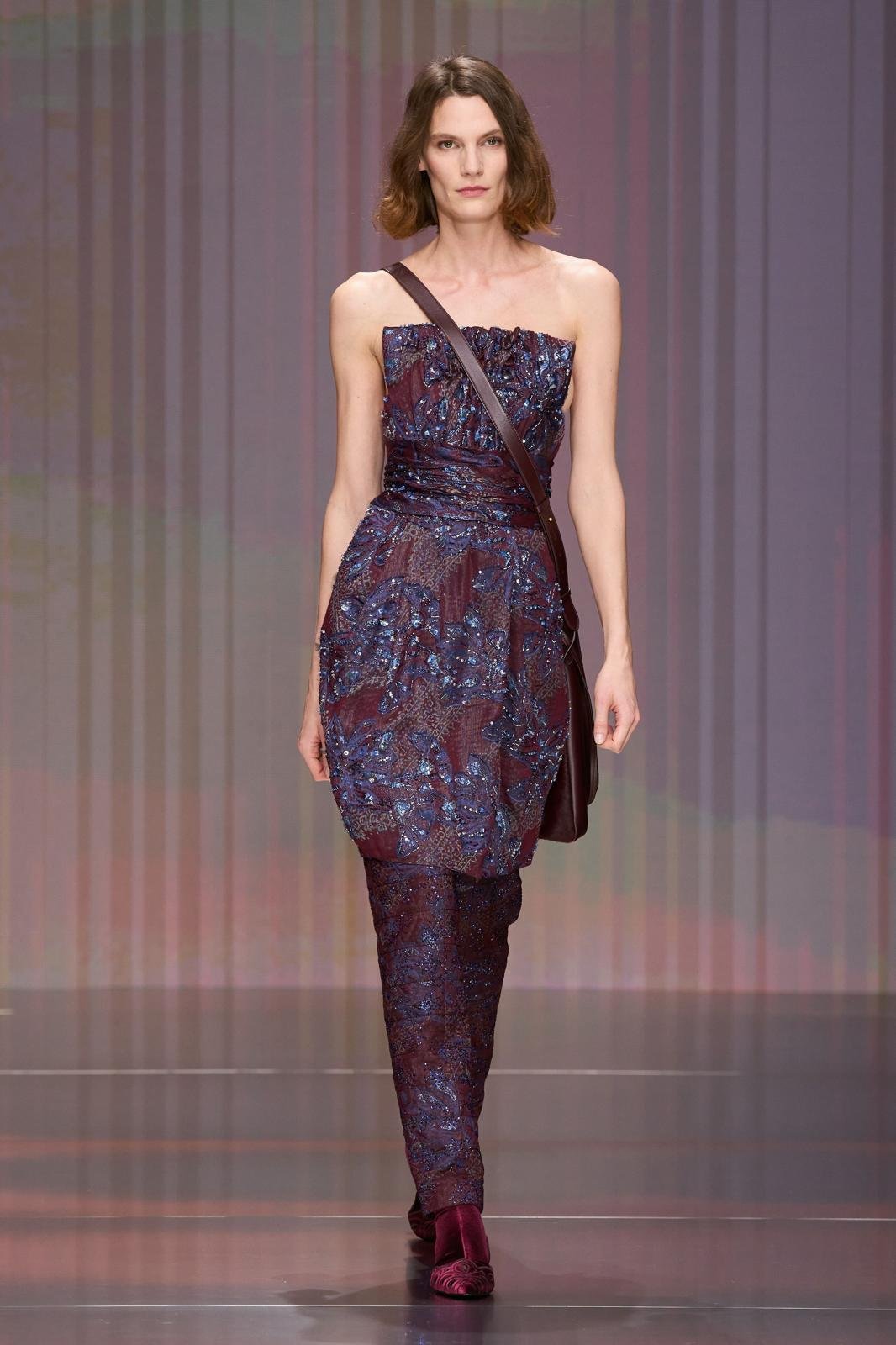
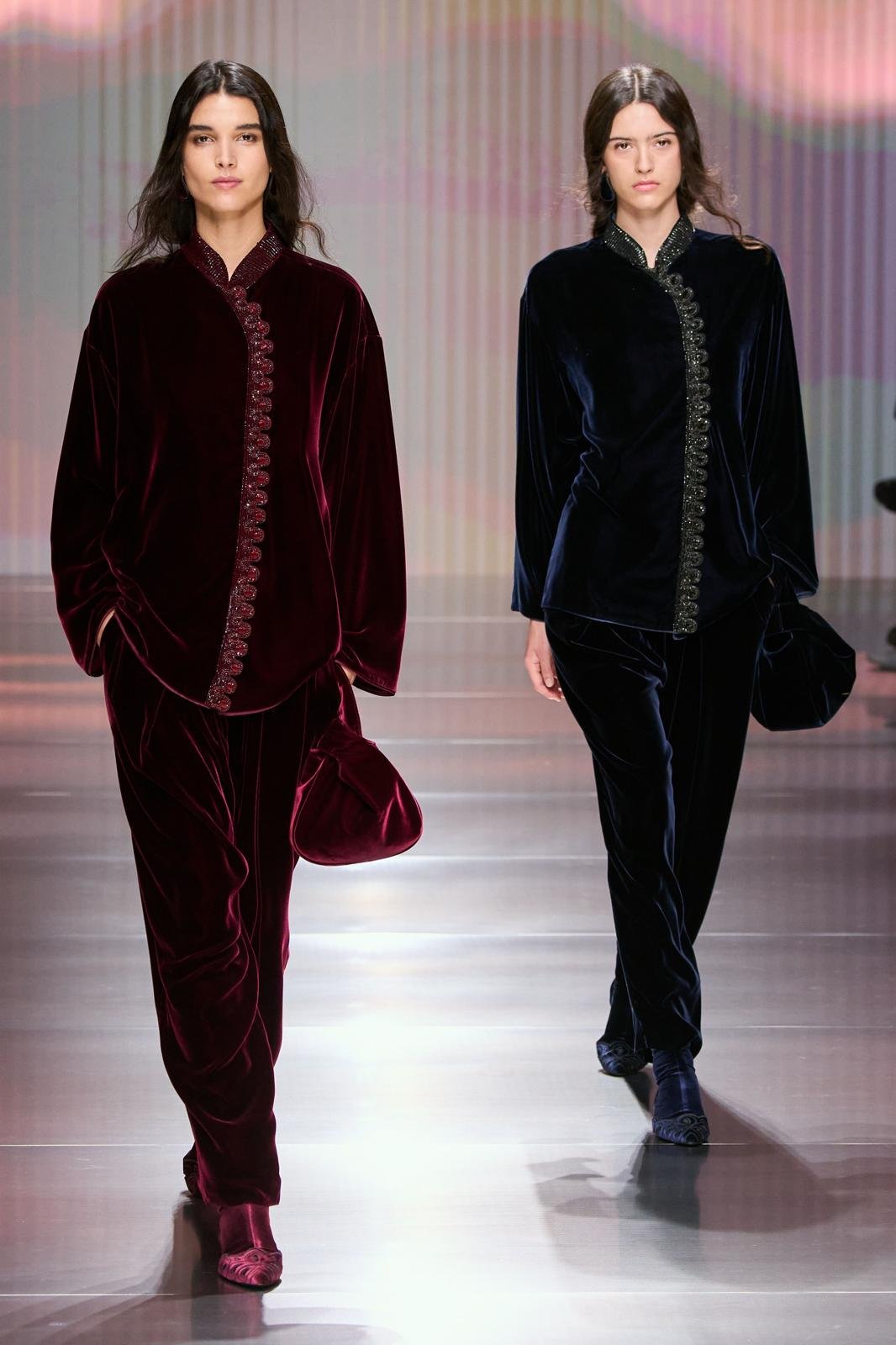
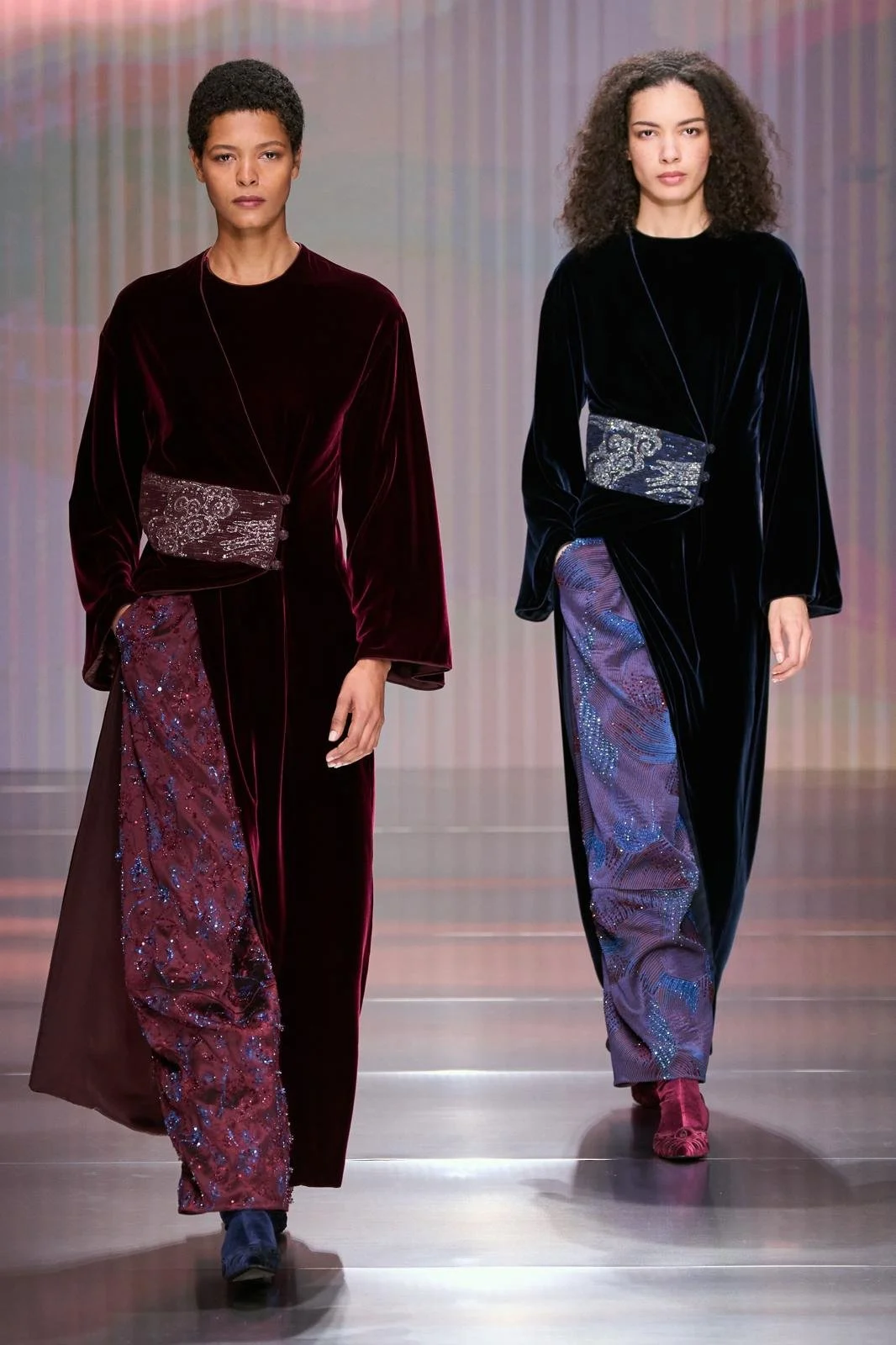
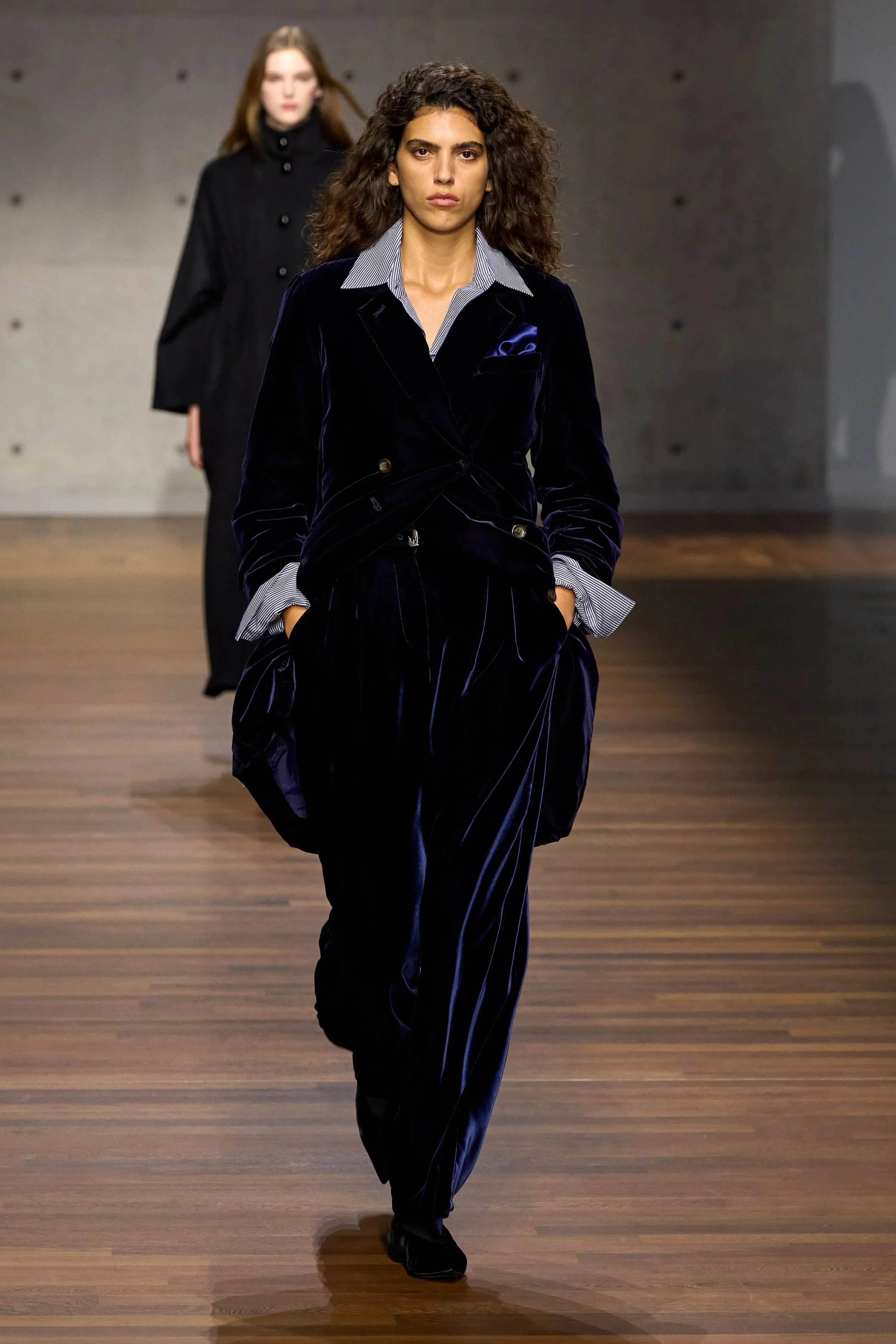
Additional renditions of the same looks, yet in different colours, appeared throughout the show, always presented by a duo of models walking side by side. Mr Armani's signature deep blue shade – the so-called azure tone – materialised in velvet sets, embroidered jumpsuits, kimonos worn over printed trousers, and draped dresses and tops, a reference to the label’s archives and his vigorous use of Eastern Asian motifs.

Inspired by the hues of dawn, the colour palette was delicate. Jade and blush tones, previously seen on couture, made a comeback for ready-to-wear, complemented by burgundy, gradient purples and greys. Silvana Armani’s appointment marks a new chapter at the house, the company's first with a female designer as the creative lead, and desired by those who crave clothes to live in.


Words by Ketlyn Araujo

MARNI FW26

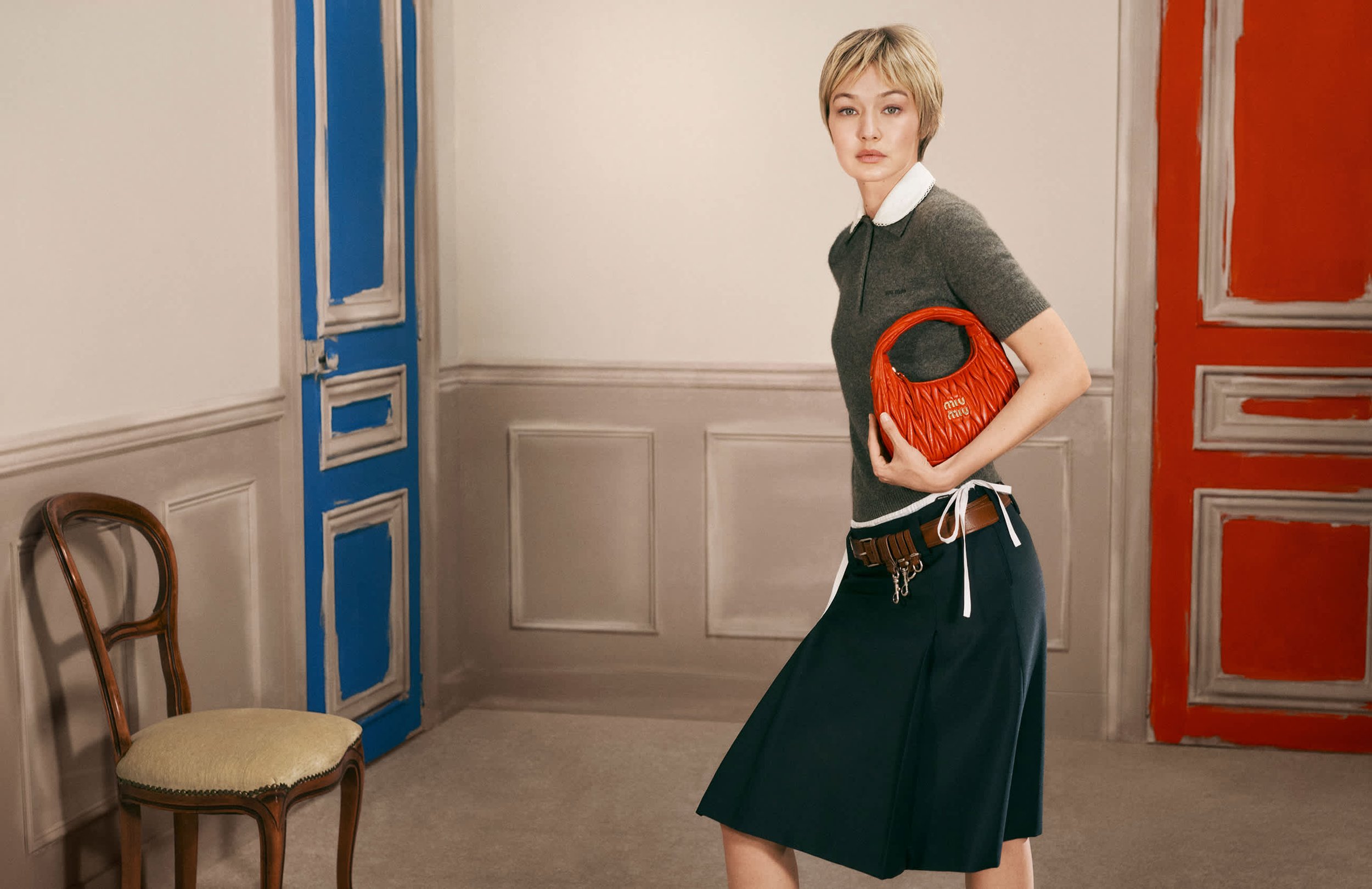
Every fox has its hole. The saying is perhaps nowhere truer than in fashion. The industry game is one of matching: the right brand with the right creative director, the right legacy with the right point of view. It’s not an easy task to achieve, which is all the more reason for it. When there is a perfect match, there’s no greater satisfaction. Cue Meryll Rogge at Marni.

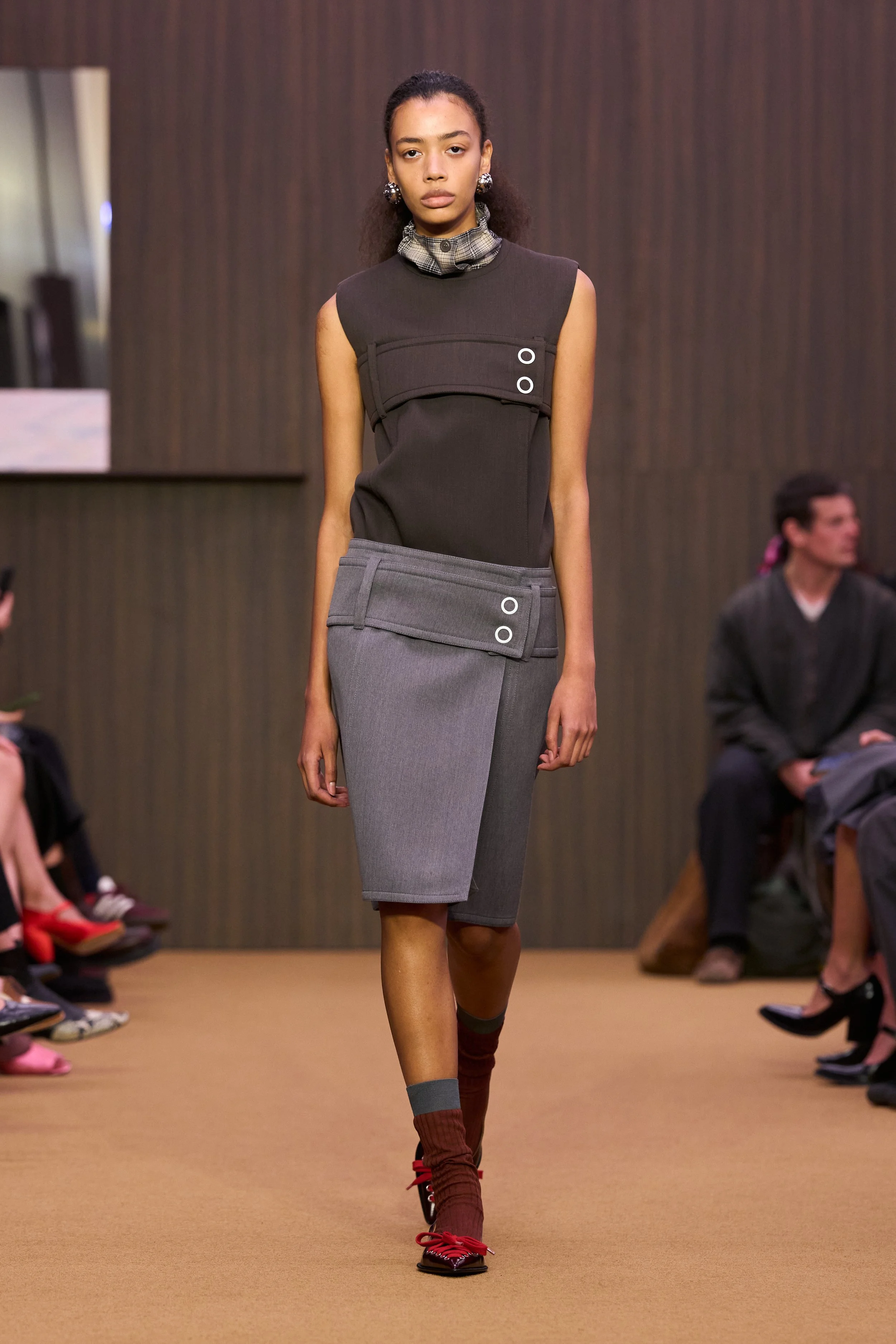
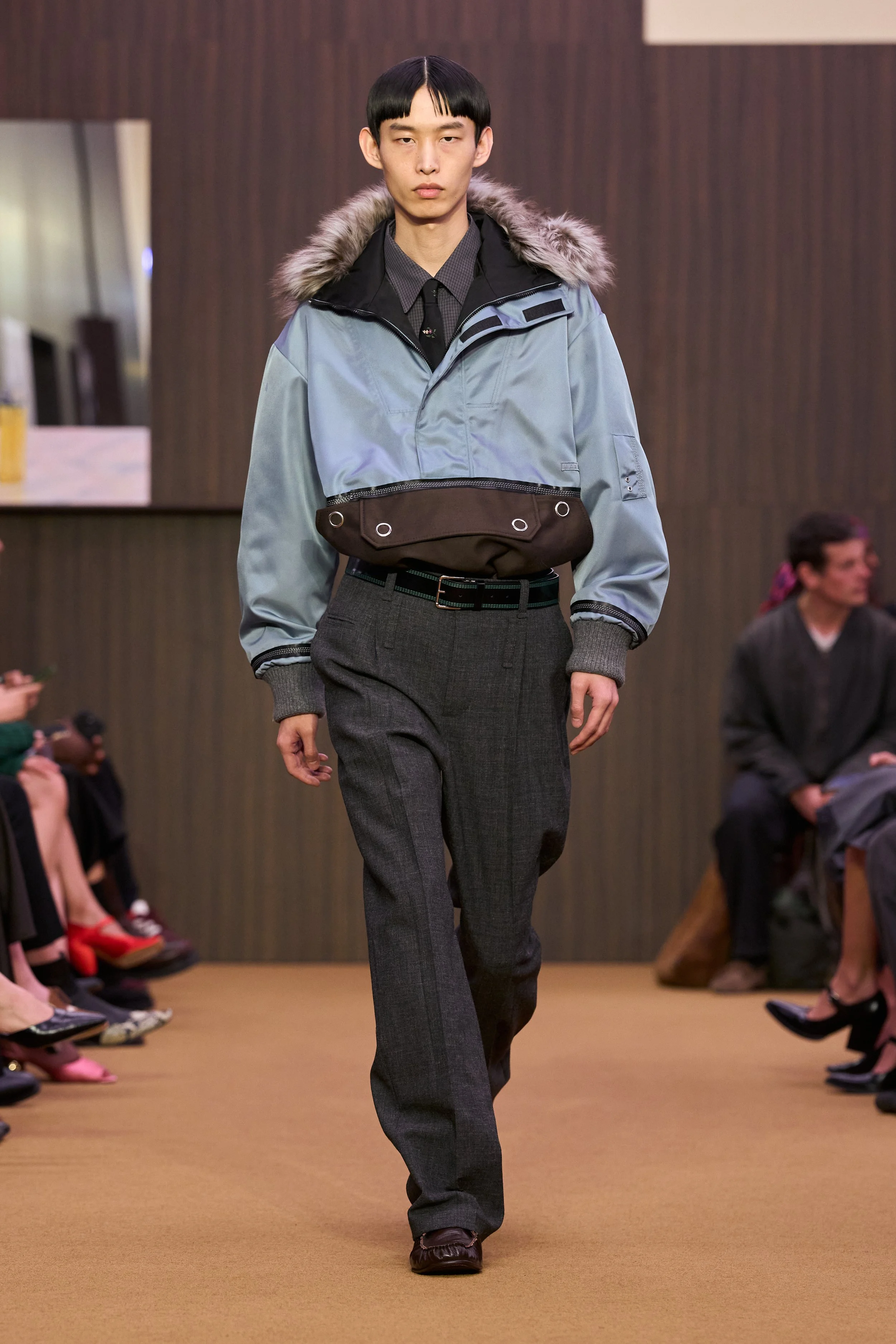
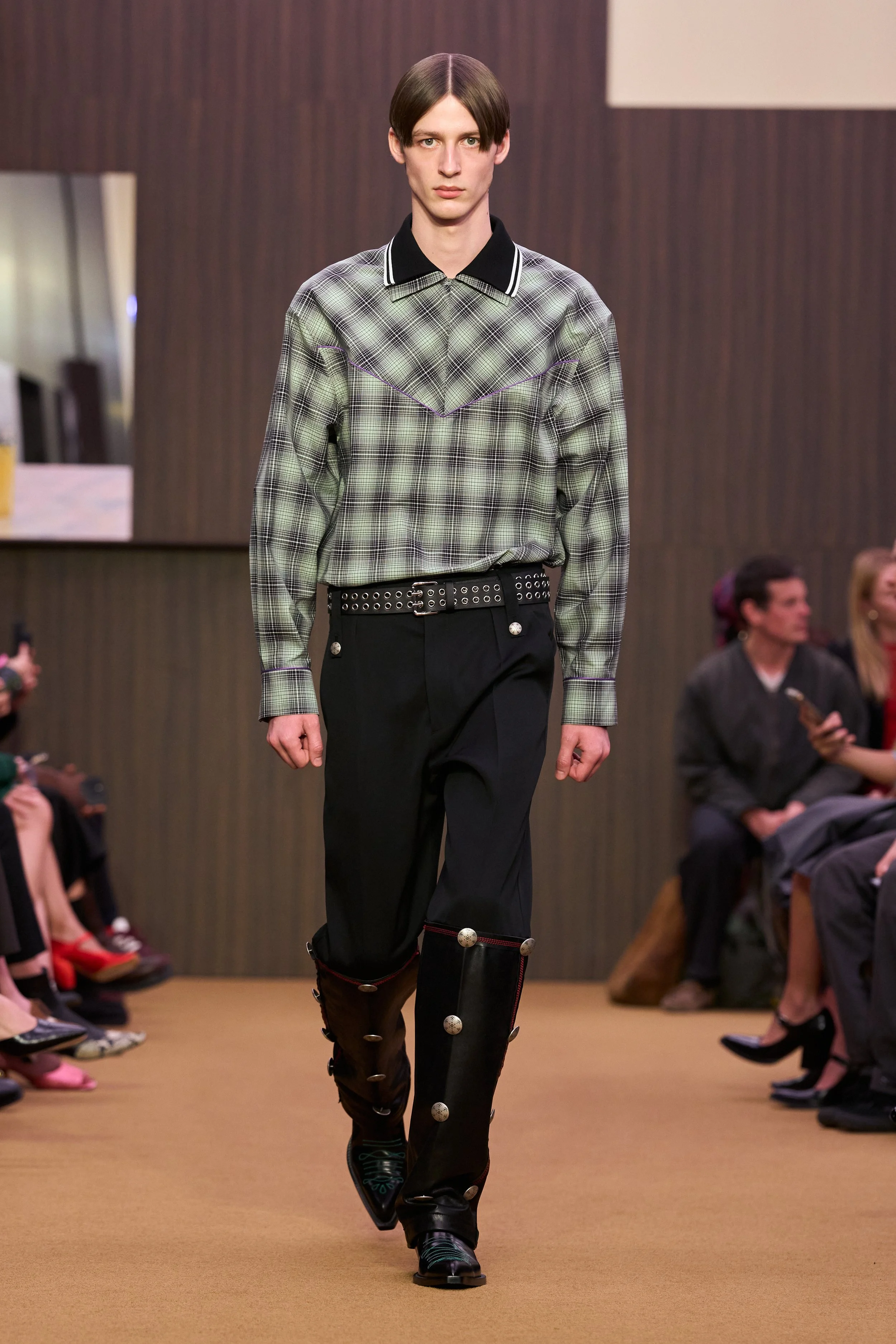
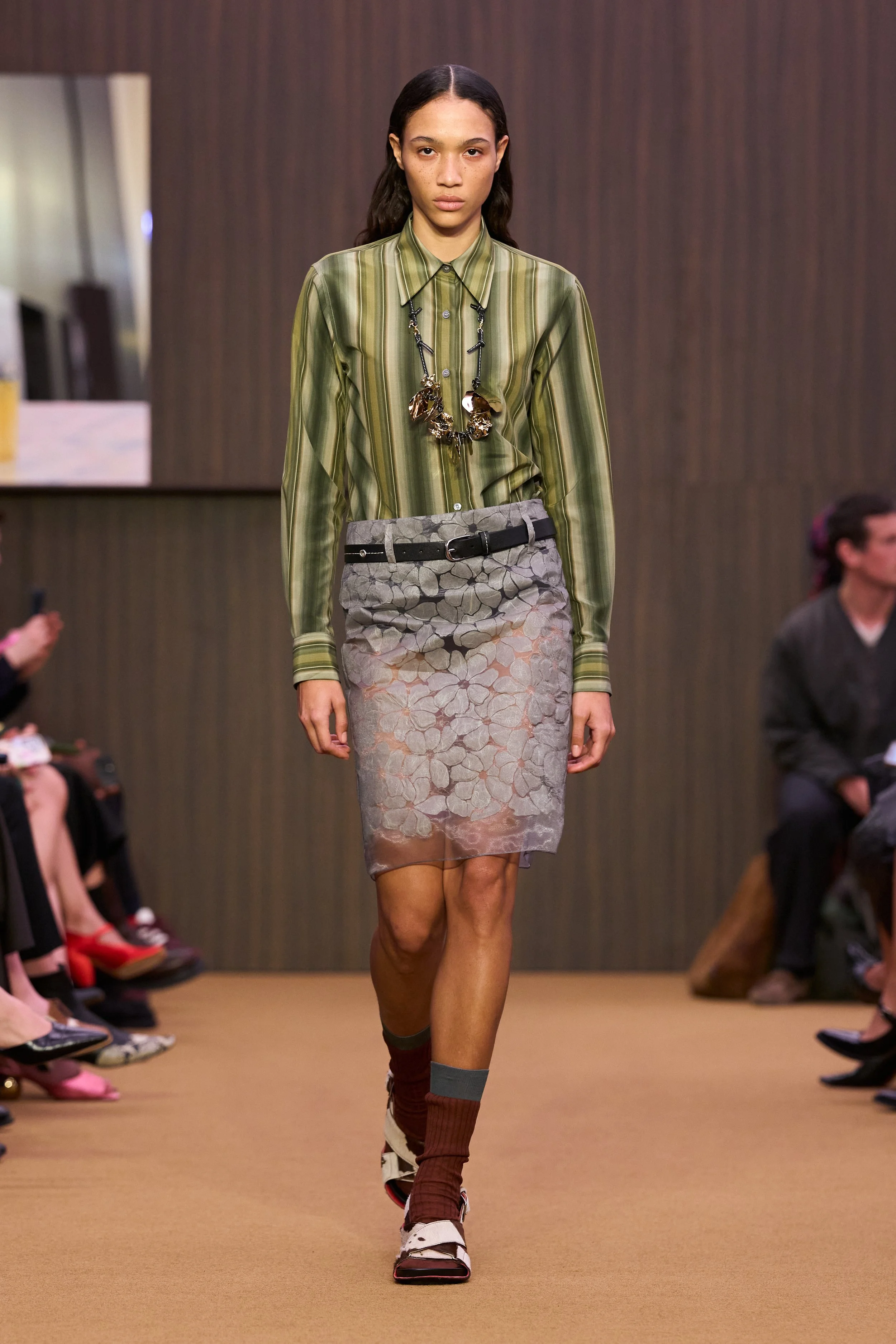
As soon as word got out that Rogge would be taking the mantle (of course, much earlier than the official announcement), there was a generalised sense of joy. Rogge, who previously worked at Marc Jacobs and Dries Van Noten before setting her own label, has long been an industry favourite. The elation we all felt wasn’t a matter of favouritism, but of the satisfaction felt when a perfect equation is achieved. Marni’s legacy is one of quirky, fun design with a functional twist. Rogge’s language captures offbeat femininity through slightly tweaked silhouettes and interesting prints. It’s hard not to see the resemblances.

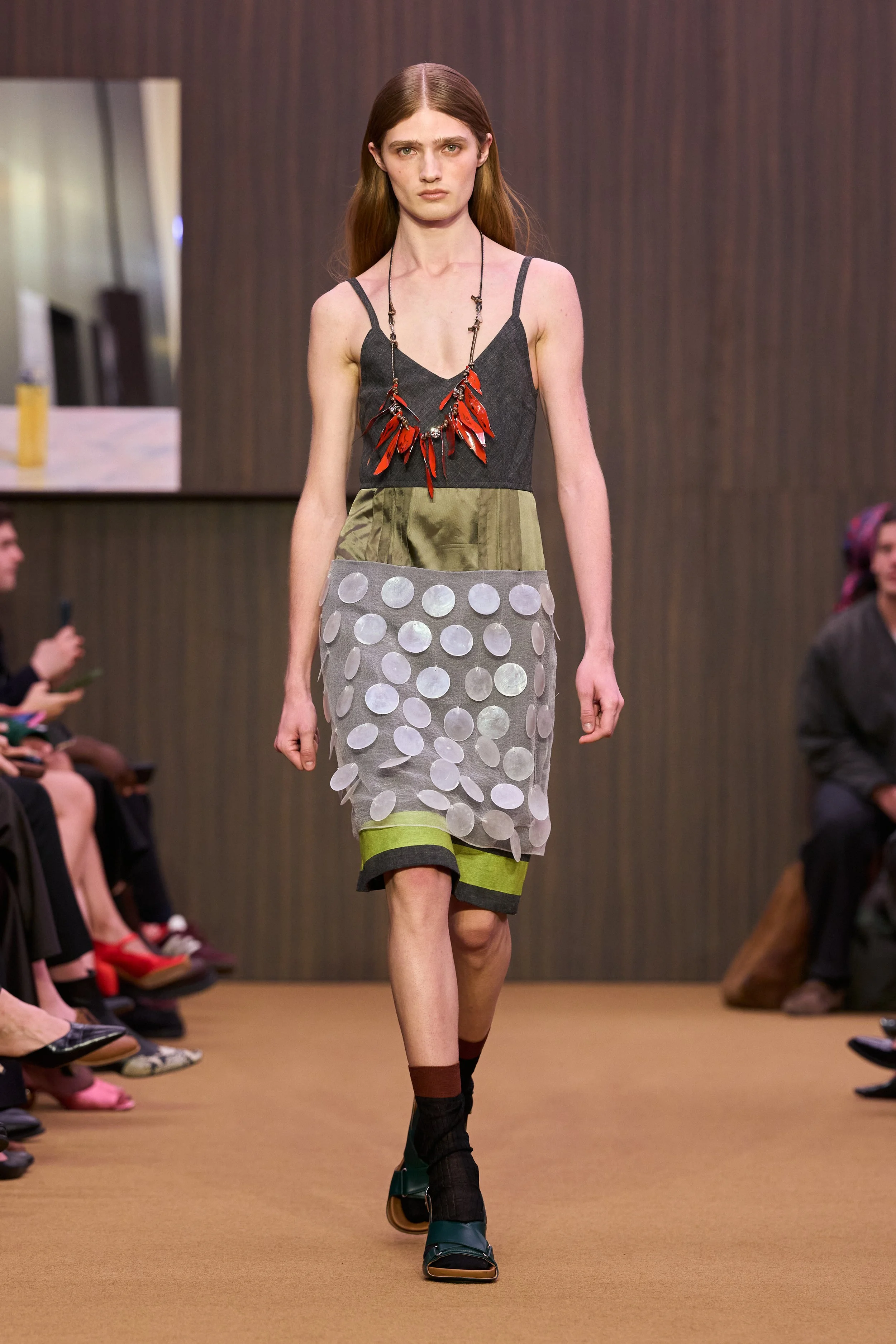
Of course, mere aesthetic similarities don’t guarantee success. What does, however, is Rogge’s self-proclaimed love for the brand. In interviews leading to her debut, the designer recalls a Marni dress as her first designer purchase and a pair of Marni shoes she bought to celebrate her first paycheck. This adoration is palpable in Fall/Winter 2026. The opening look, a white fur coat over a black skirt with oversized paillettes, was neutral except for a red belt: a direct reference to the brand’s first show. The house, which initially opened to bring a more dynamic and youthful feel to fur, had a first collection that most wouldn’t recognise as Marni. Quite neutral and focused on its furry purpose, the first pop of colour was red.

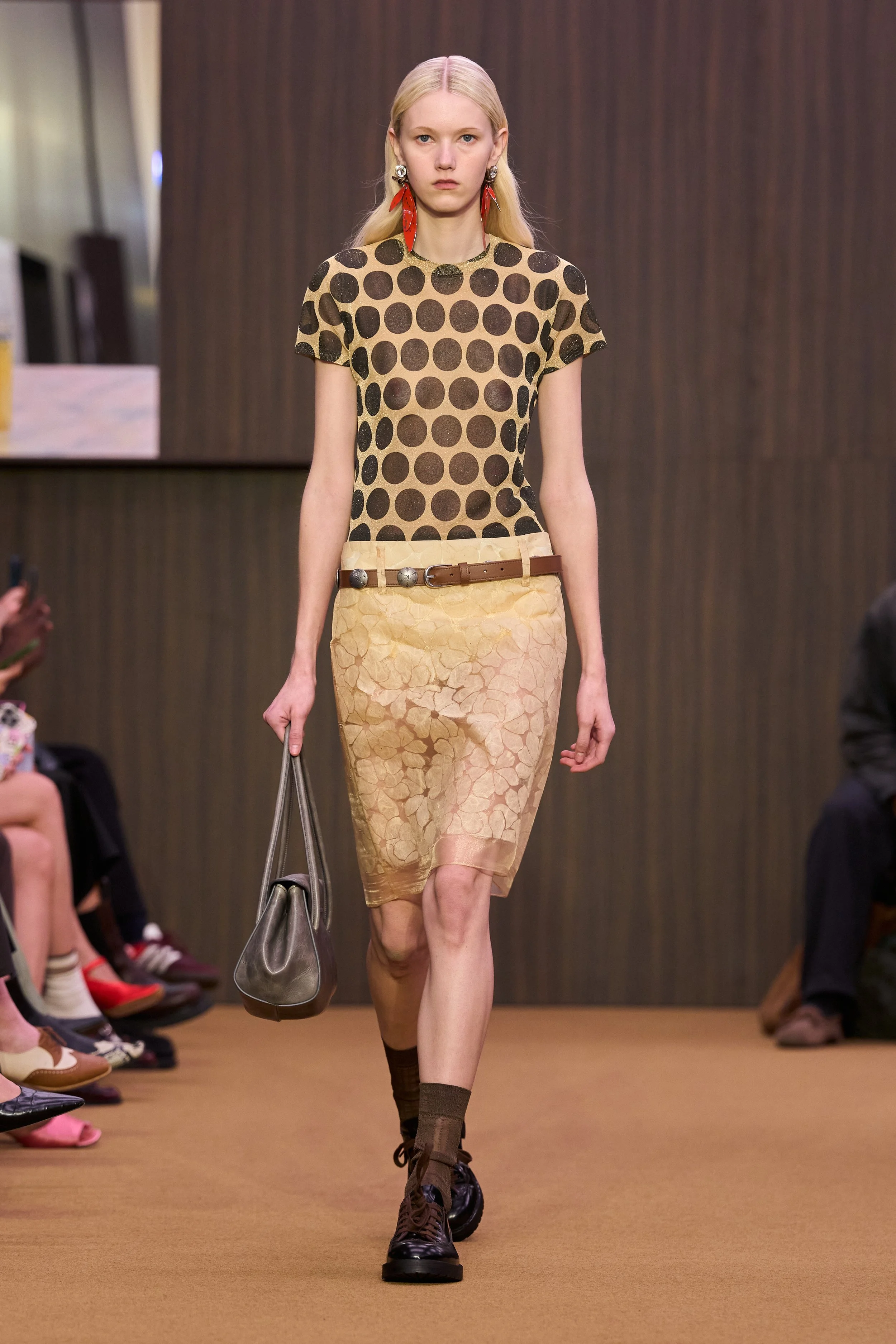
Rogge is careful not to be nostalgic. References to the brand’s first creative director and founder, Consuelo Castiglioni, were plentiful but never felt sacred. Castiglioni’s creative twists were re-twisted. Paillettes fill sleeveless tops. Matching sets have oversized buttons. Prints were as plentiful as they were fun. Layering is perfected as an art form in a floral translucent skirt paired with a tight polka dot T-shirt and a low-waisted belt.

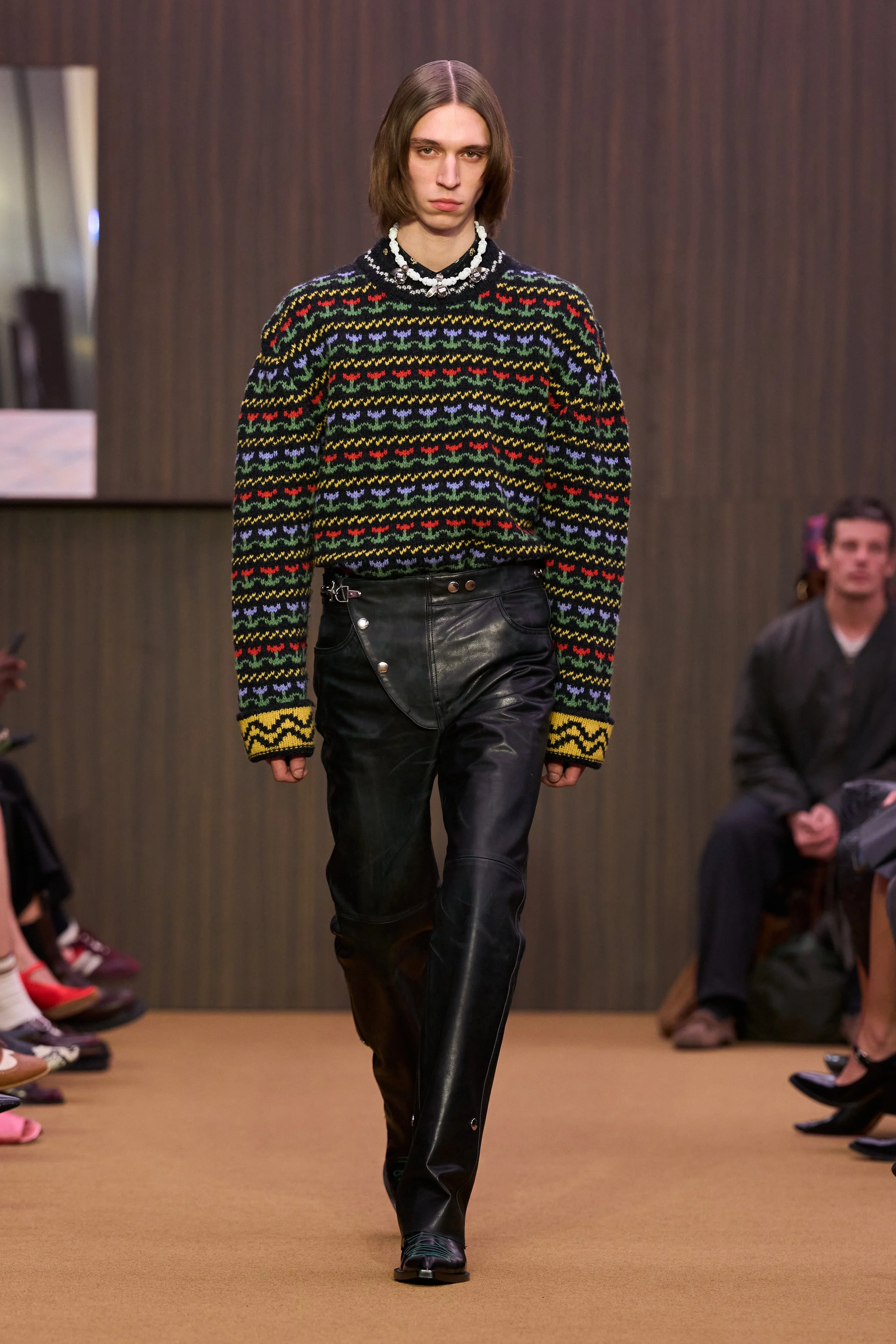
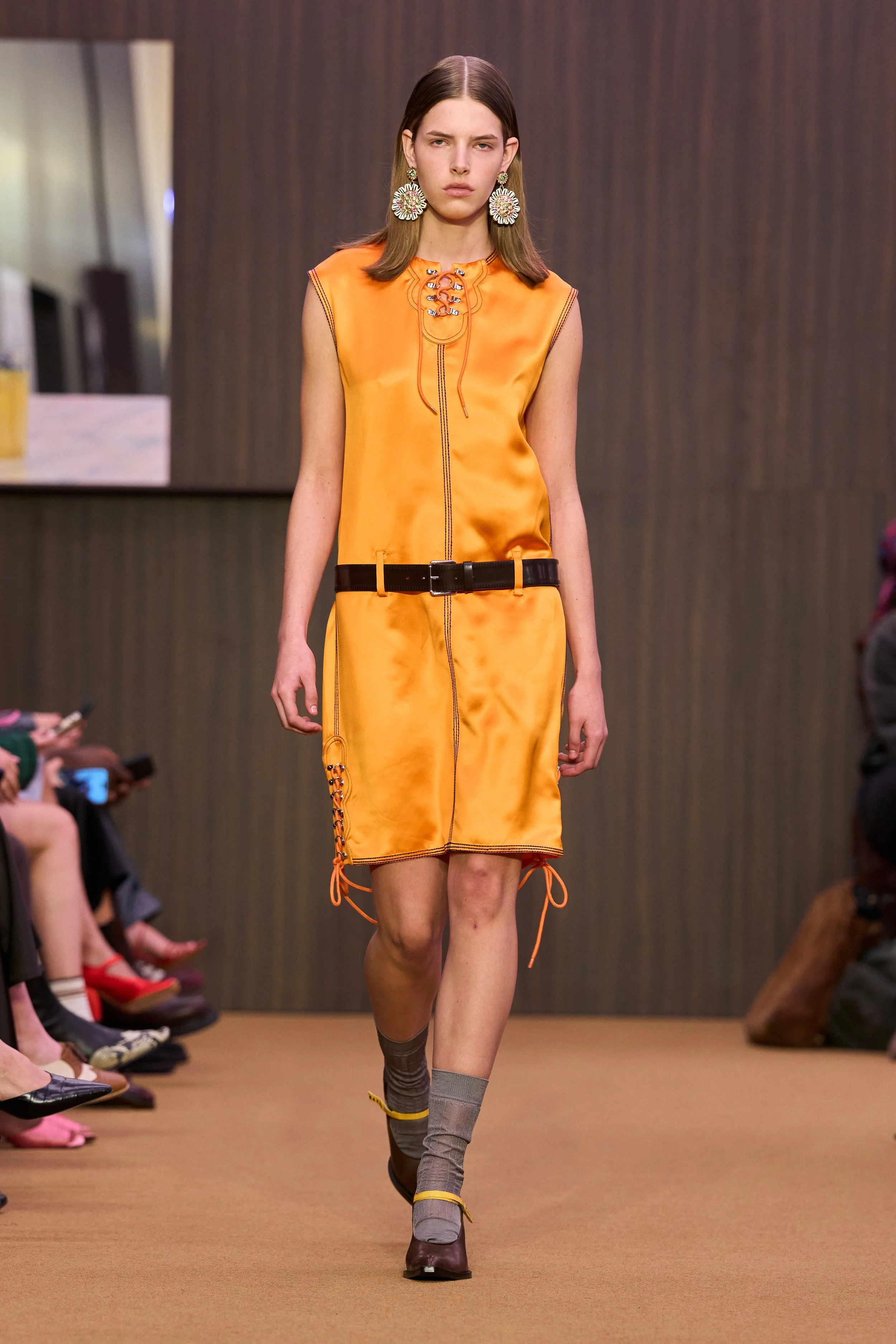
The collection had tinges of the ’70s in big earrings, silky shift dresses, and big, burly coats. A much-welcomed sensuality was introduced in thick patent leather skirts and knitted bloomers. A good fashion match isn’t about obedience but about the ability to respect the legacy while expanding its imagination. Instead of handling Marni’s legacy with gloves, Rogge is leaving her fingerprints.


Words by Pedro Vasconcelos

TOD'S FW26

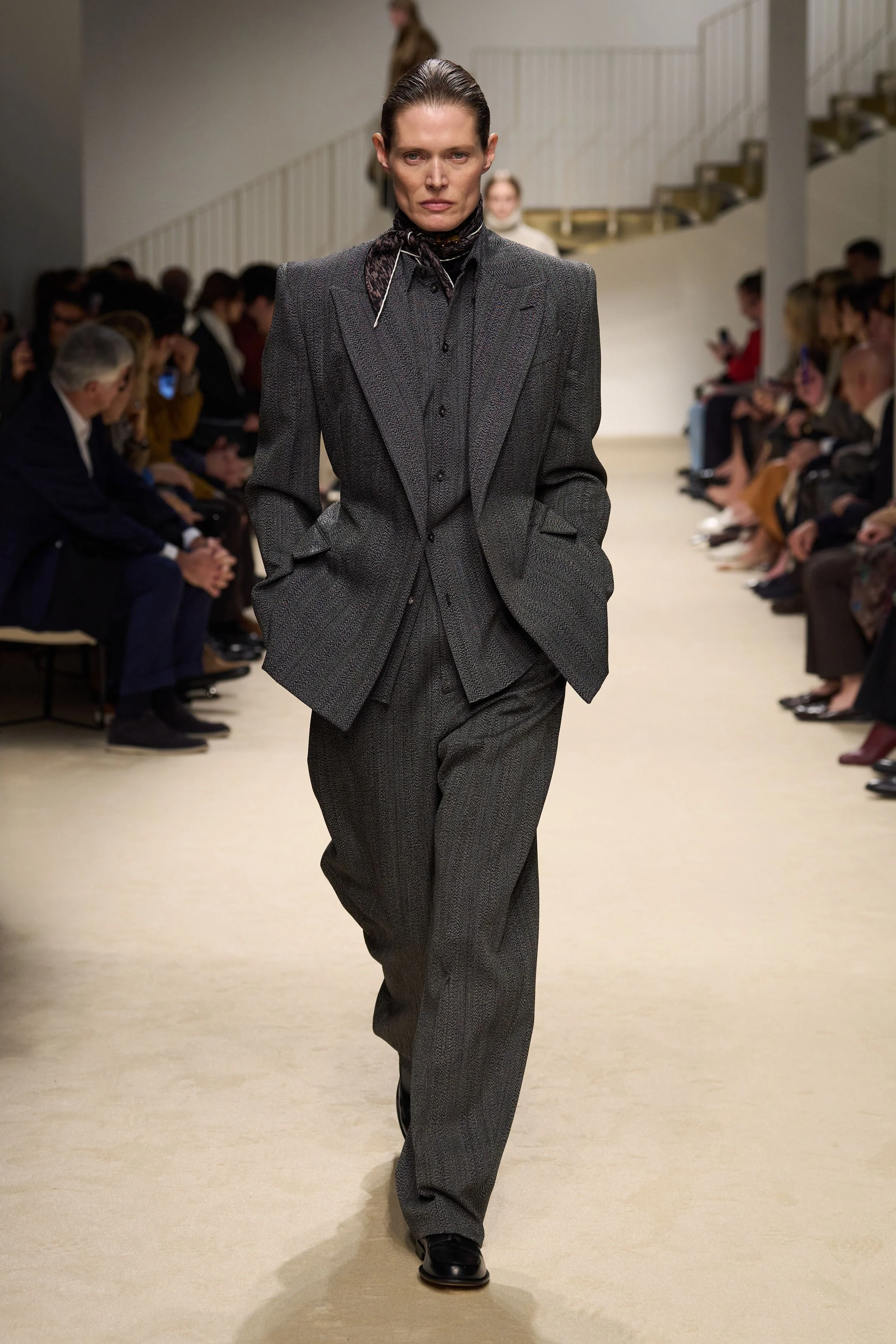
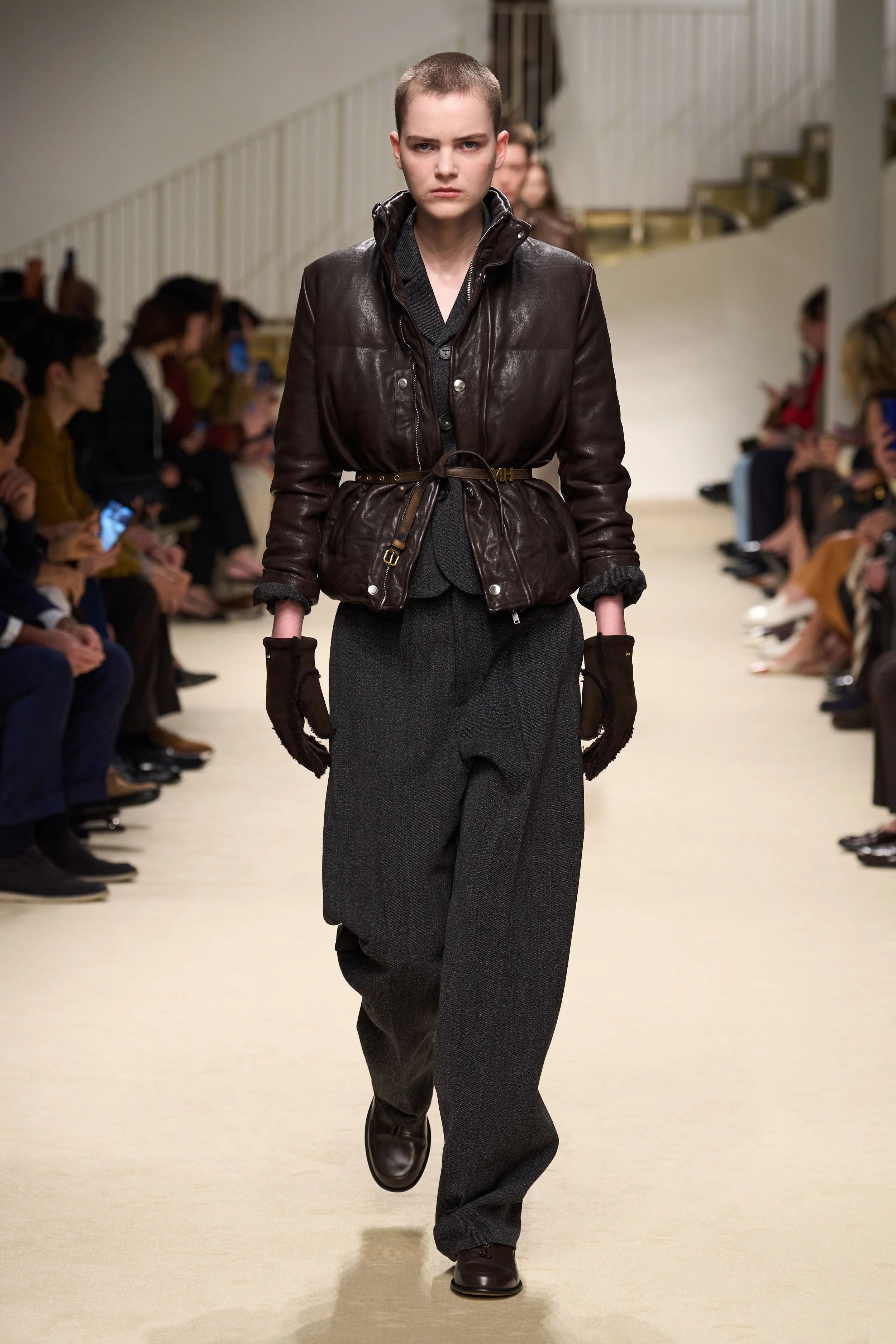
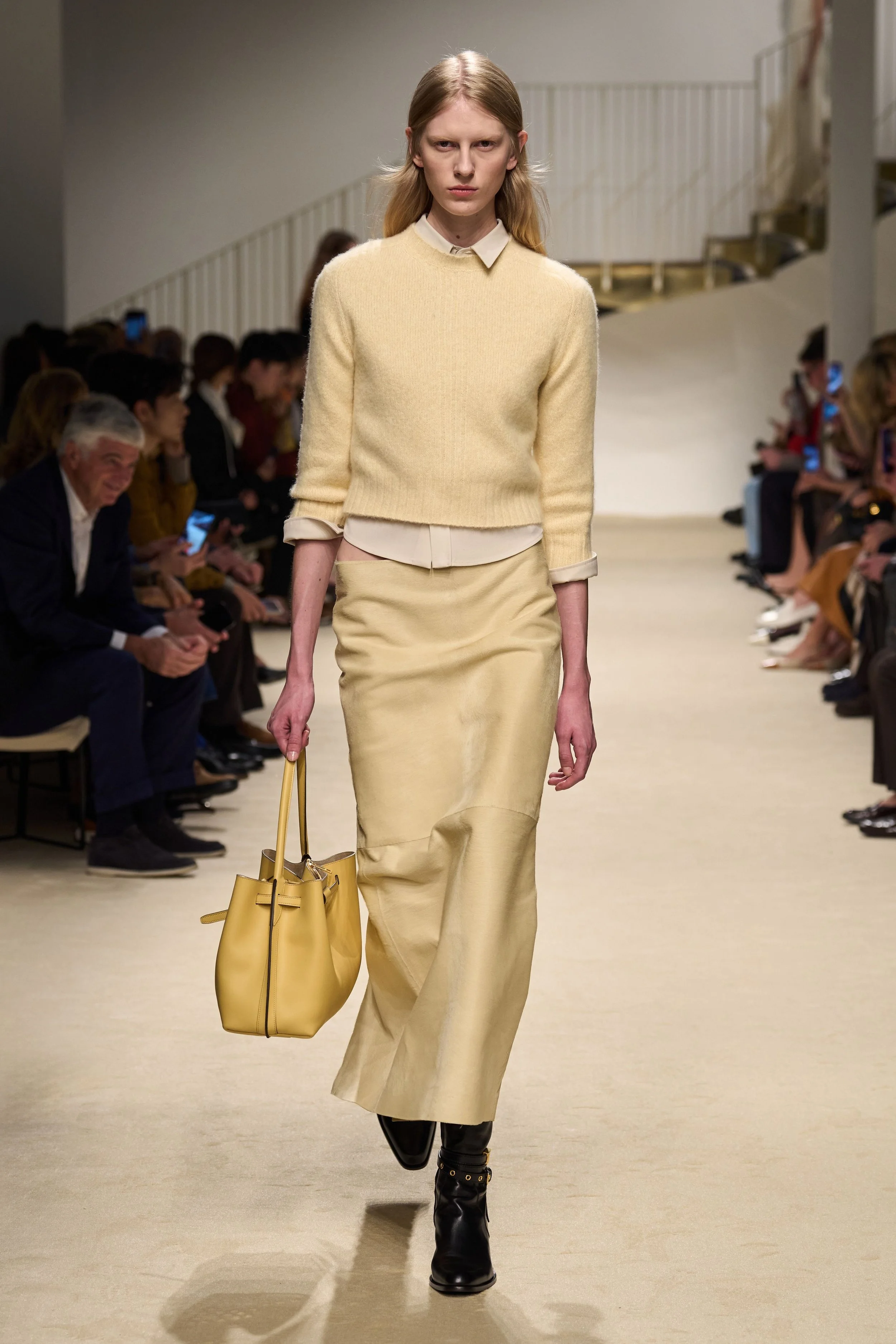
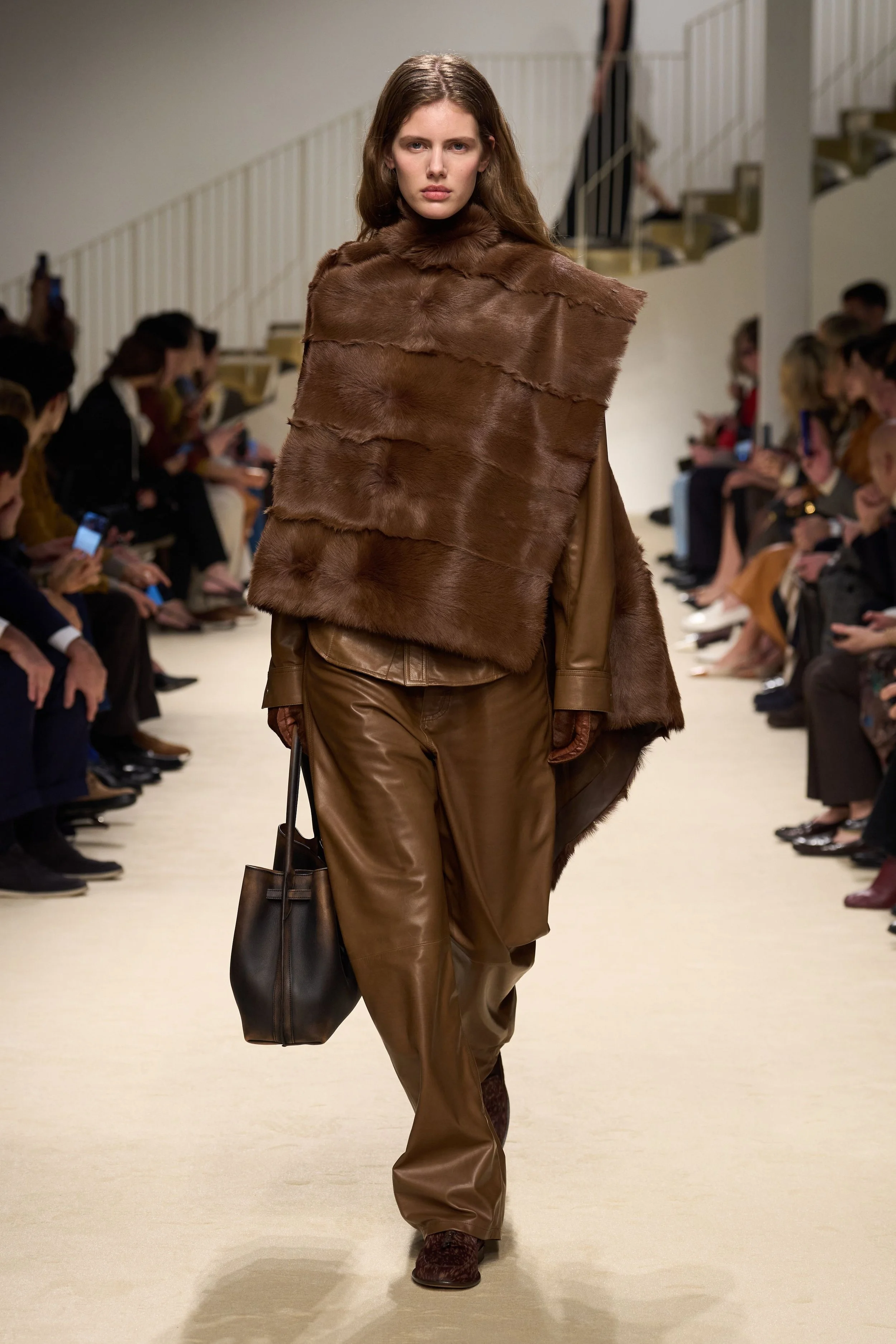
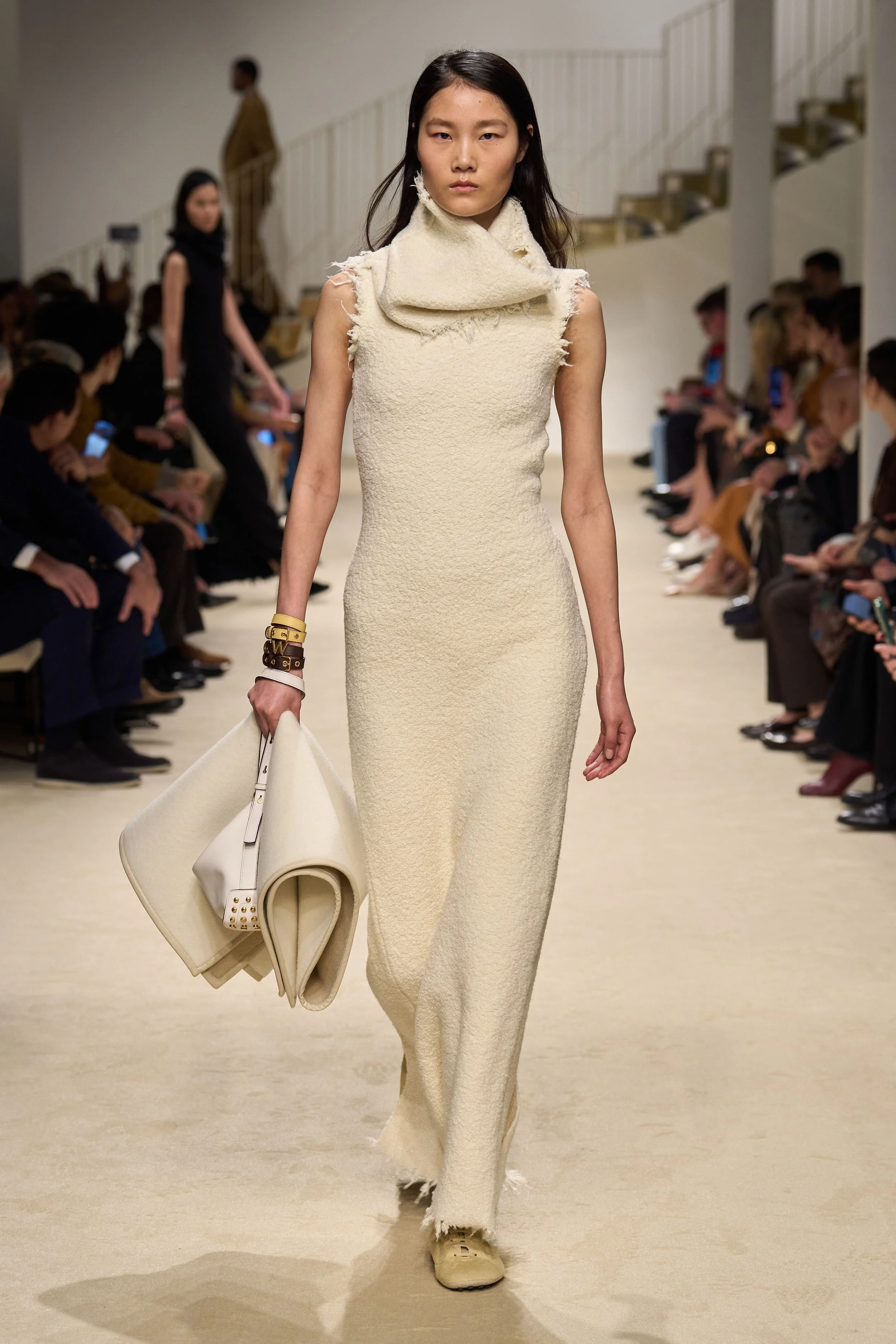
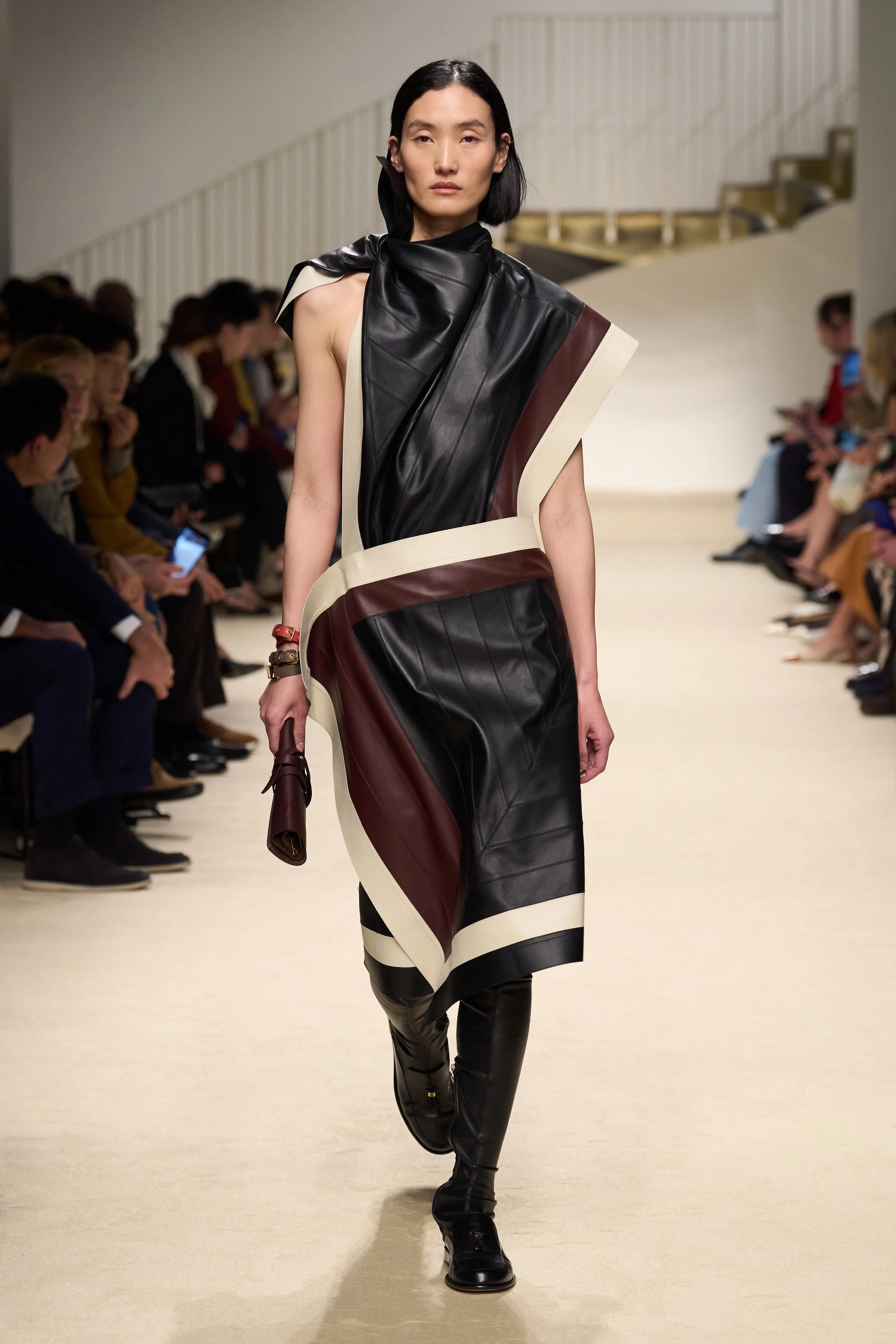
A morning spent with the Tod’s collection is good for the soul. Staged inside an airy Milanese art gallery, Matteo Tamburini’s Fall/Winter 2026 presentation radiated his signature joy for tactile experimentation — an instinct he wields with remarkable finesse.

Titled Italian Signature, the show paid homage to the country’s unparalleled craft heritage. From the moment guests entered, they were immersed in a living atelier: worktables manned by the brand’s artisans demonstrated the precision of their daily rituals, from hand-stitching Tod’s bags to the delicate beading that animates the garments.

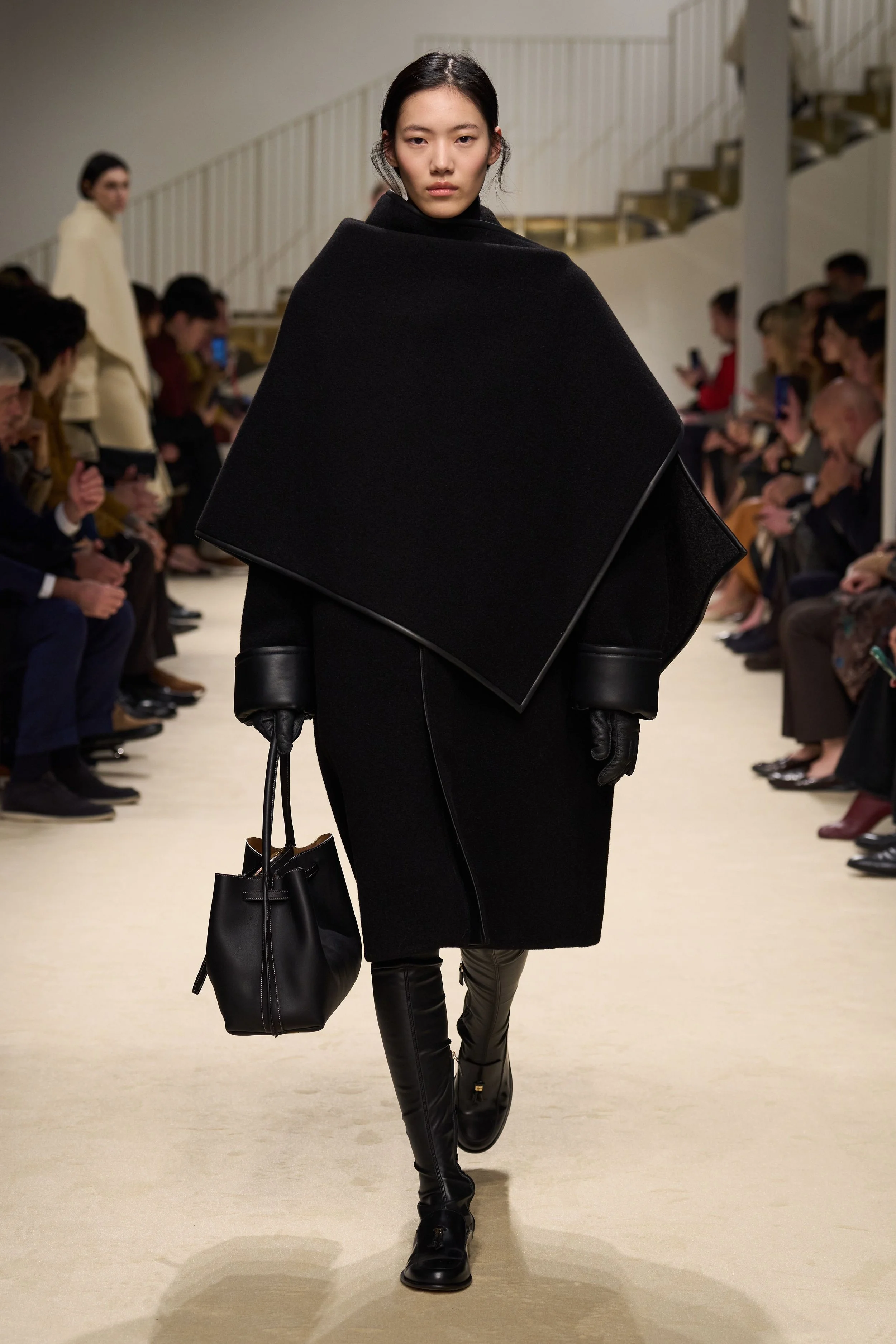
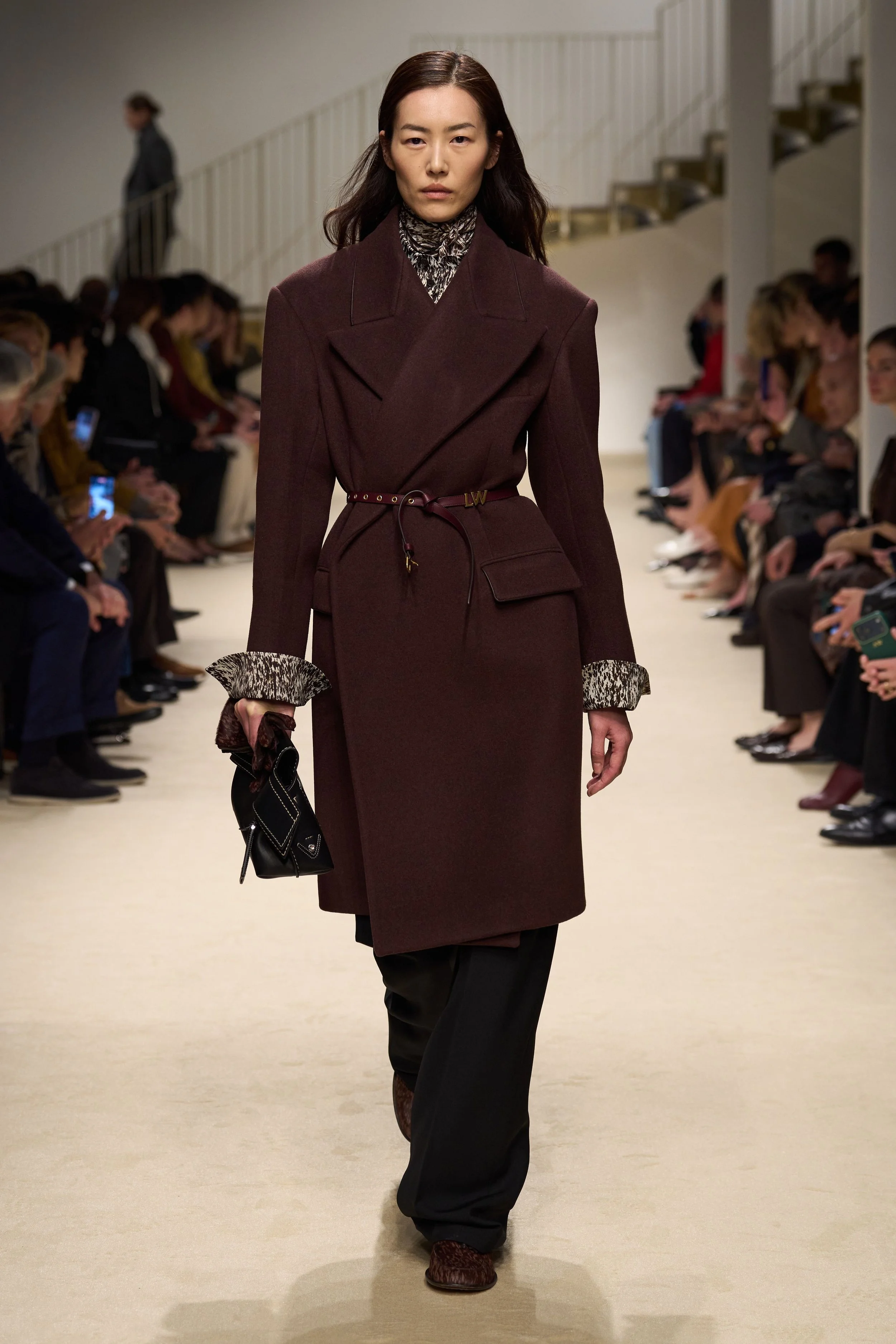
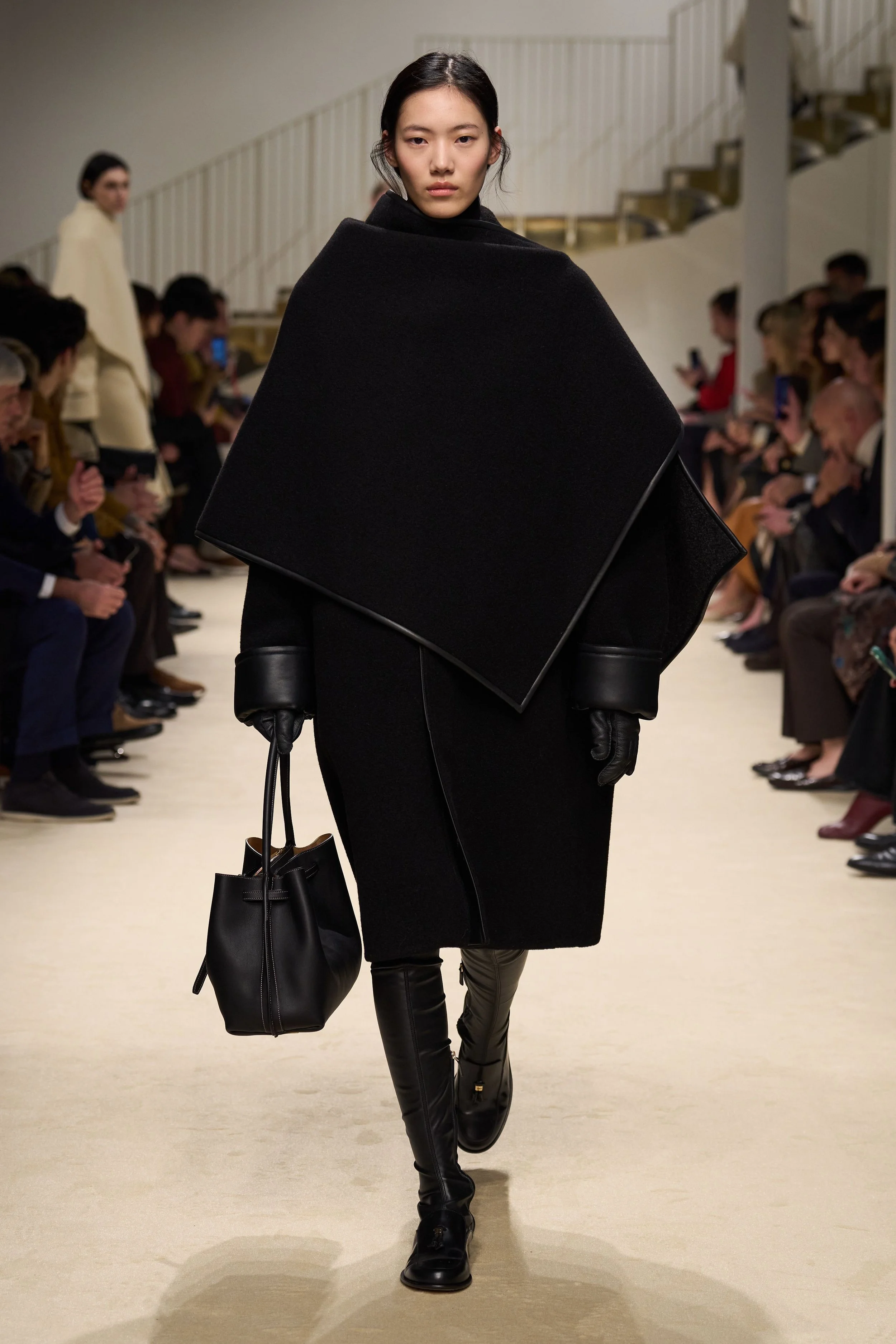
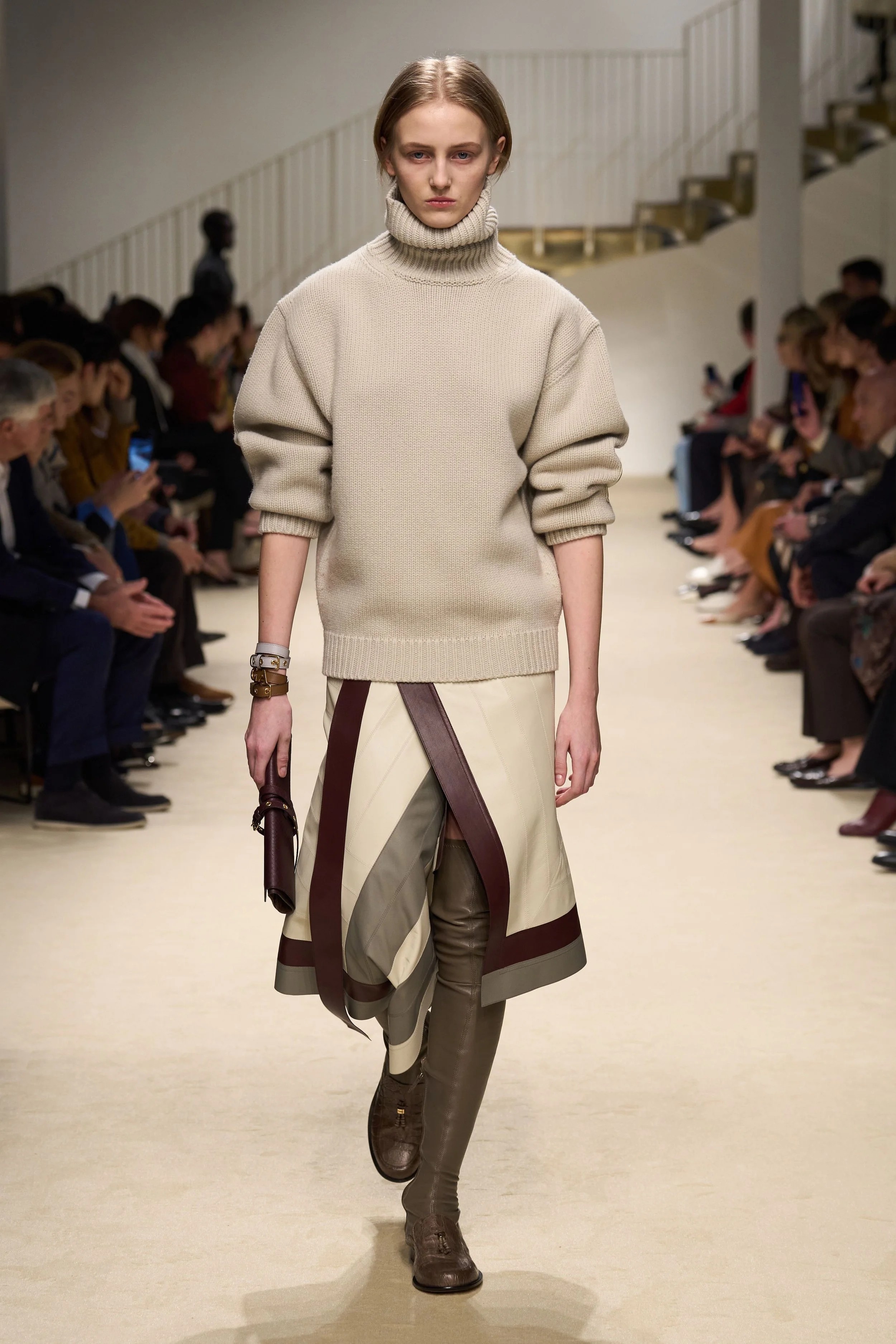
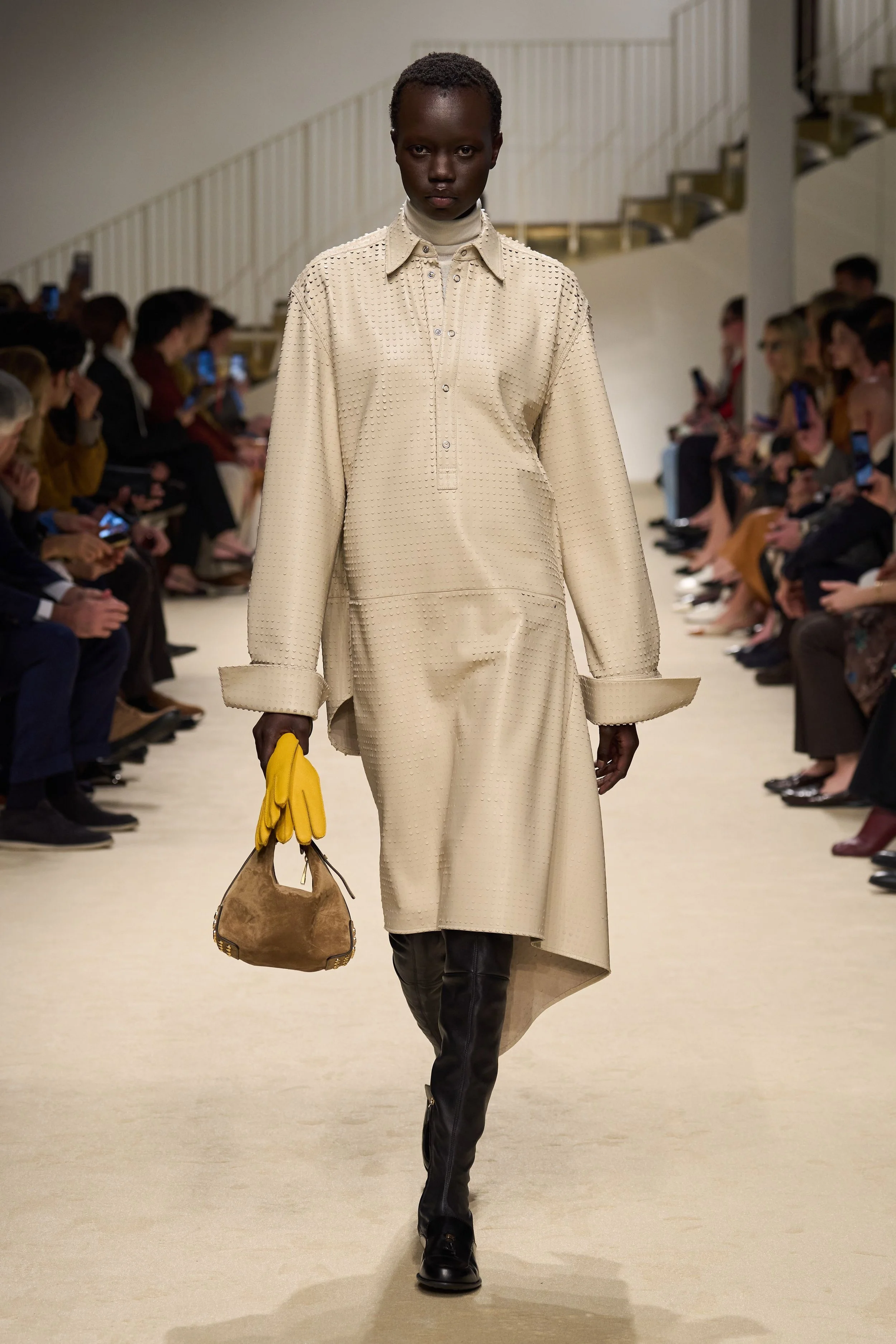
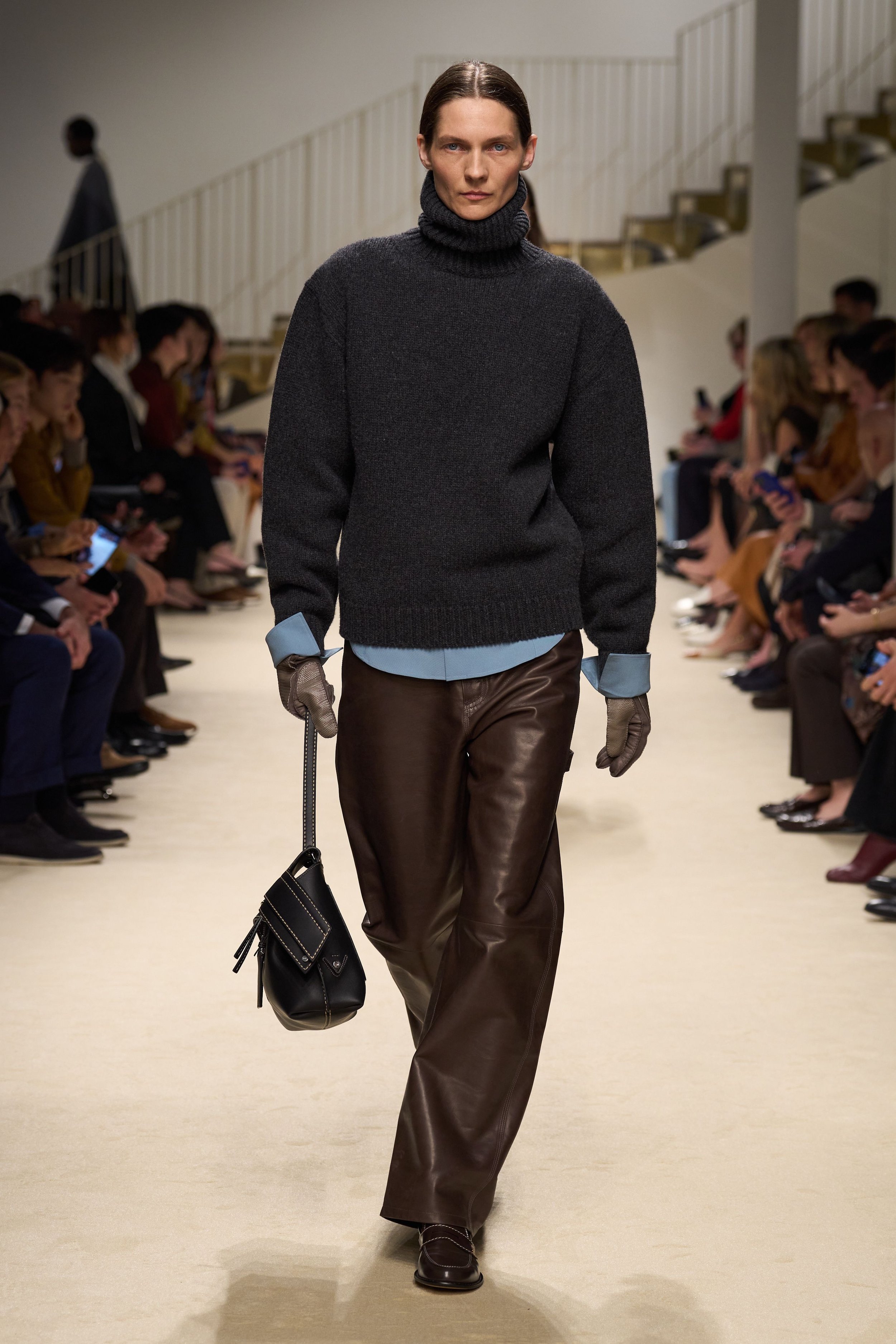
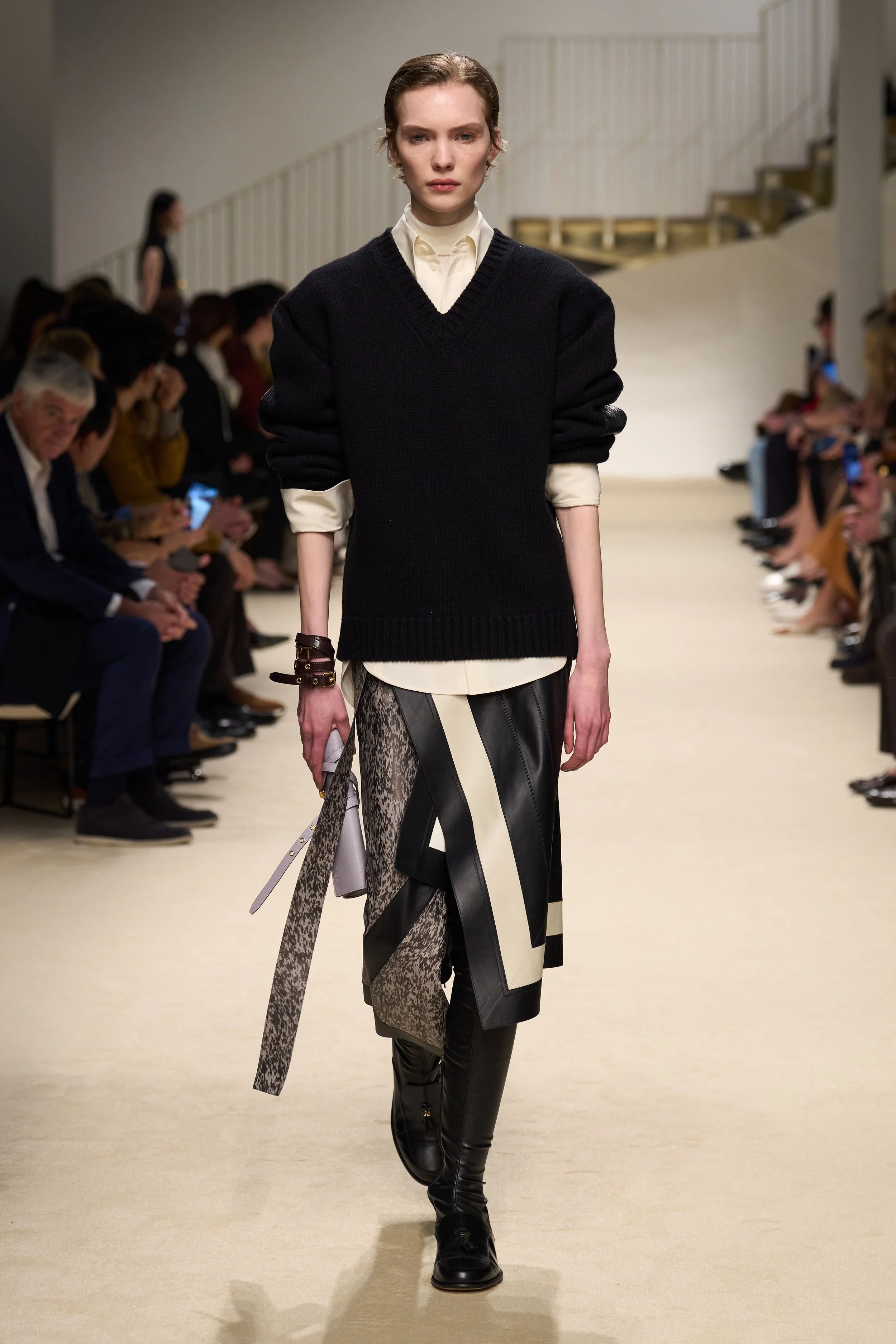
As is customary in Tamburini’s world, the collection unfolded as a study in sophisticated restraint. An oversized coat in dense black wool was finished with a poncho collar and sleek leather trims. Cream and maroon leather wrap skirts were styled with voluminous sand-toned turtlenecks and thigh-high flat boots. A perforated leather shirt dress appeared alongside a suede bag detailed with a nod to the house’s iconic loafer design —an elegant bridge between heritage and modernity.

This refinement was gently tempered by playful accents: belts adorned with charms spelling out the models’ initials, flashes of colour in supple leather gloves, and flat-soled sneakers that lent ankle-length bouclé dresses a distinctly contemporary edge. In Tamburini’s hands, Italian savoir-faire feels not only preserved, but cheerfully reimagined for now — an ode to craft, made light.


Words by Martin Onufrowicz

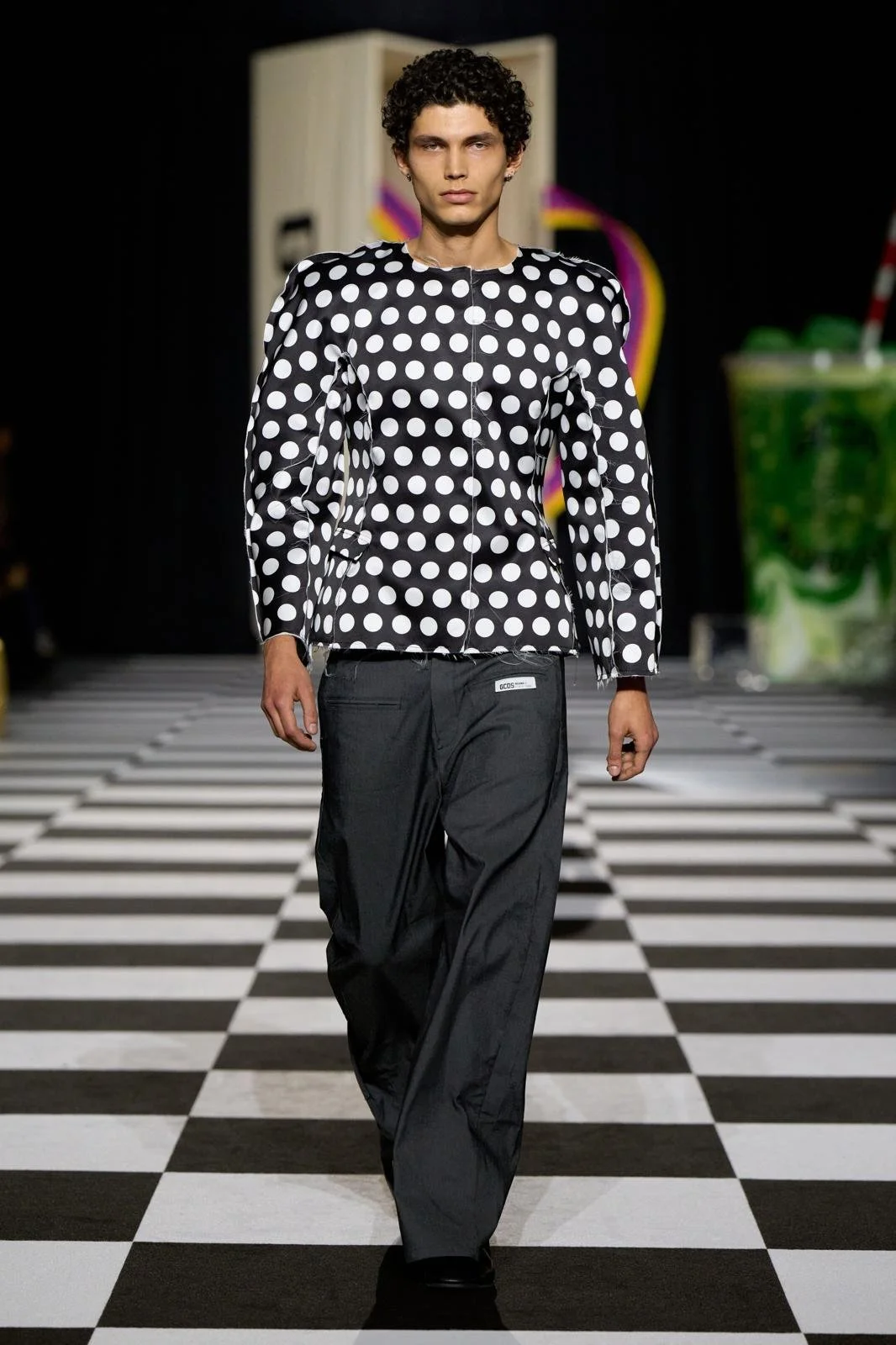
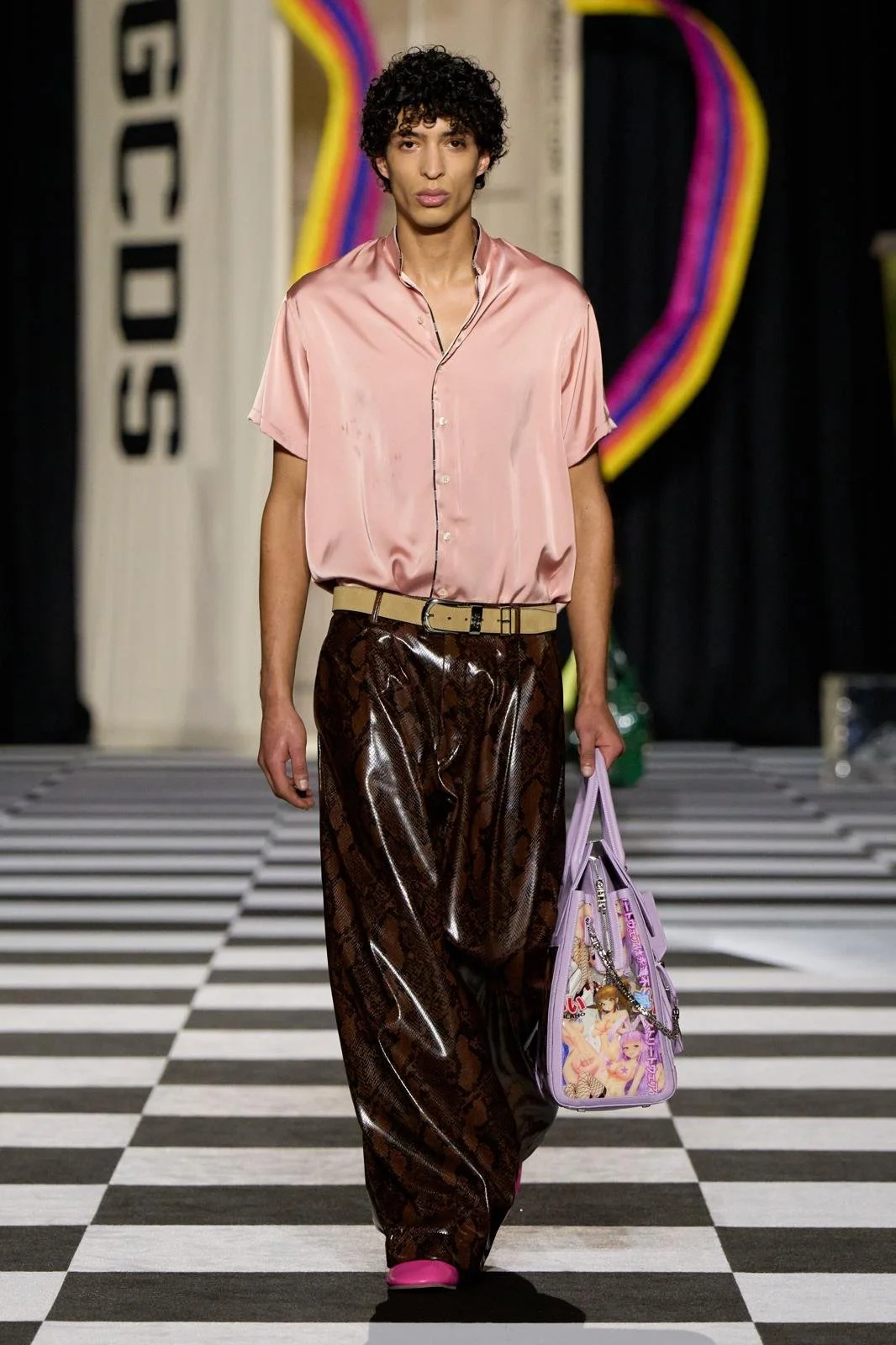
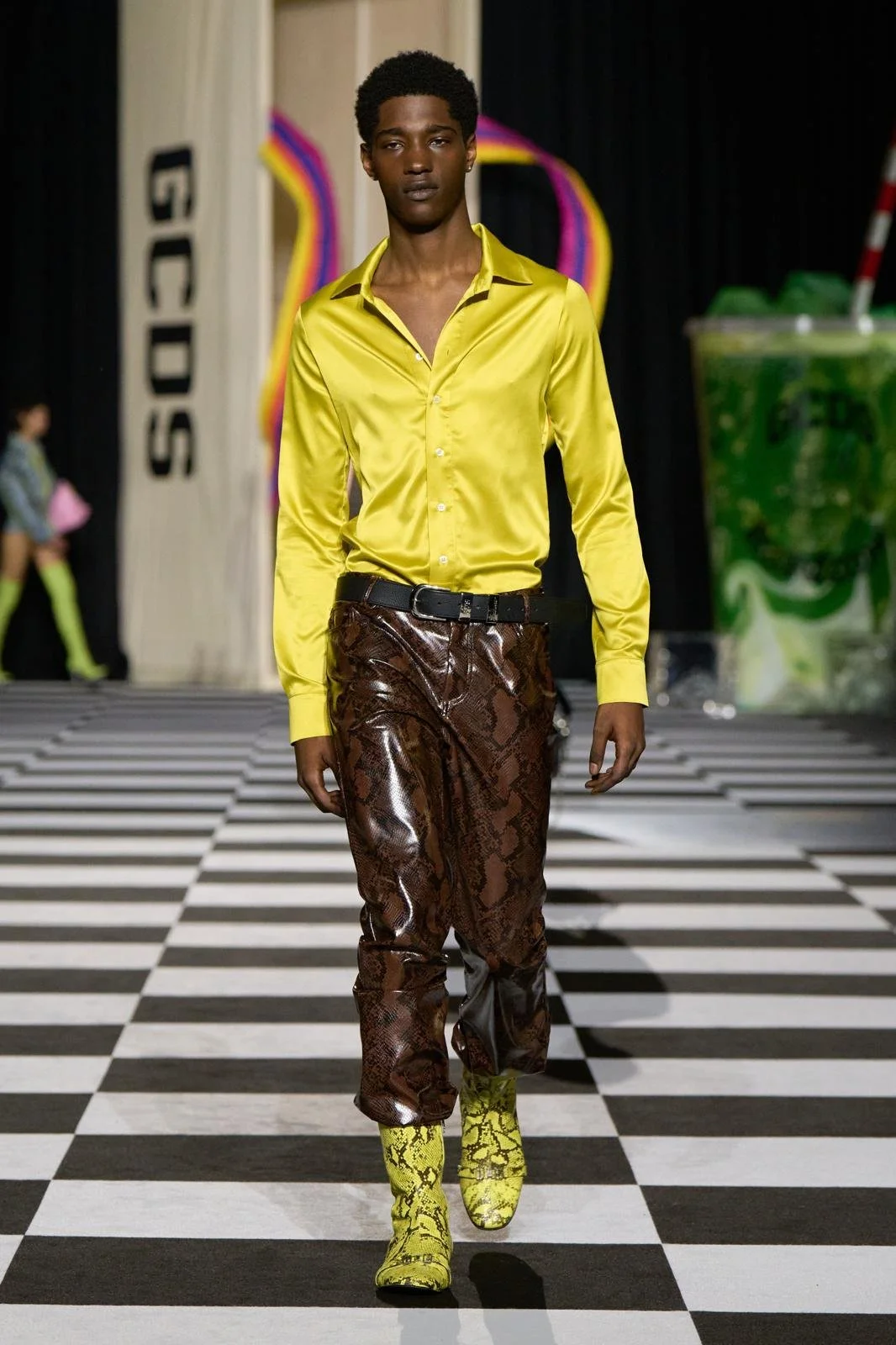
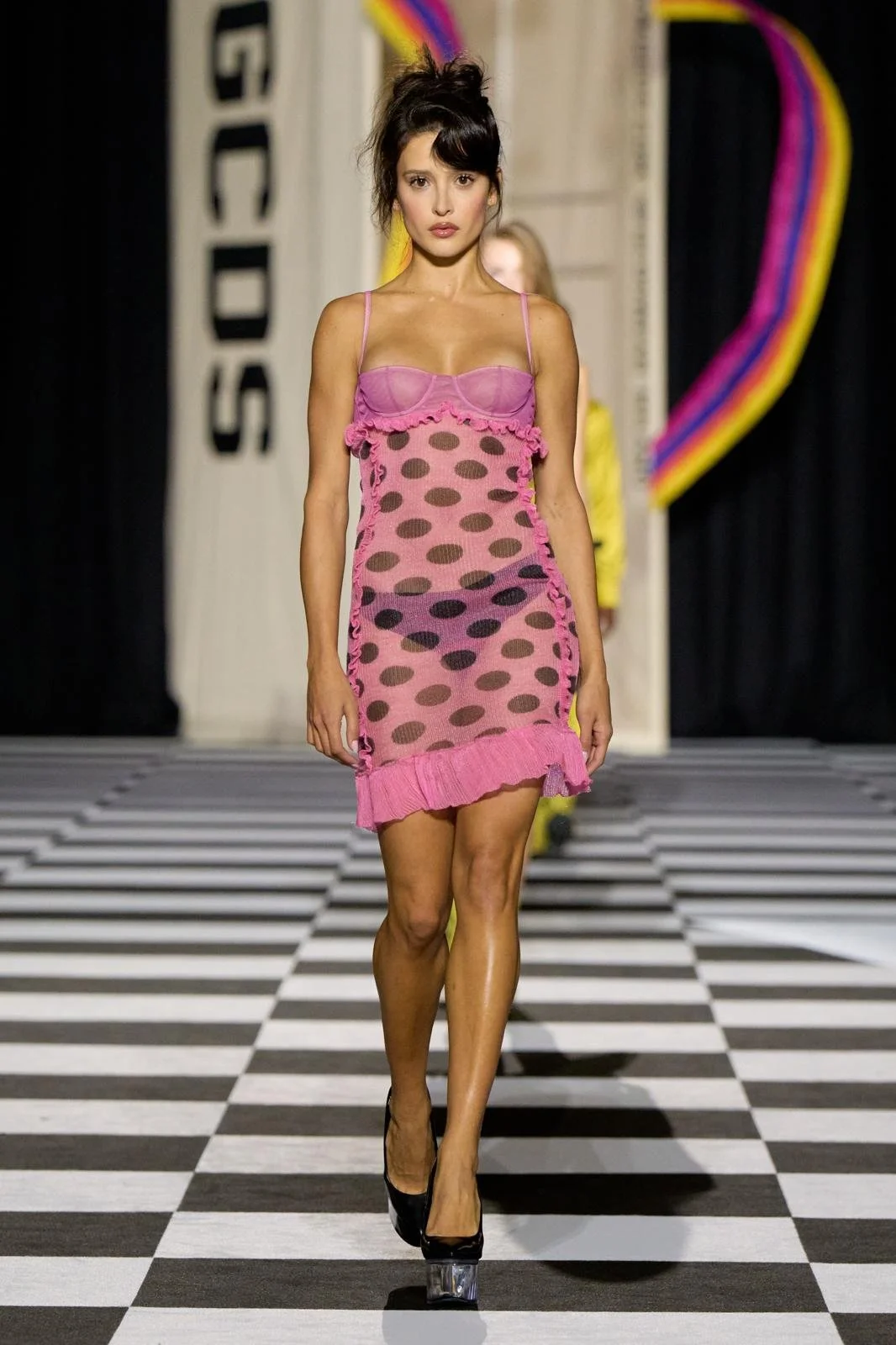
GCDS SS26

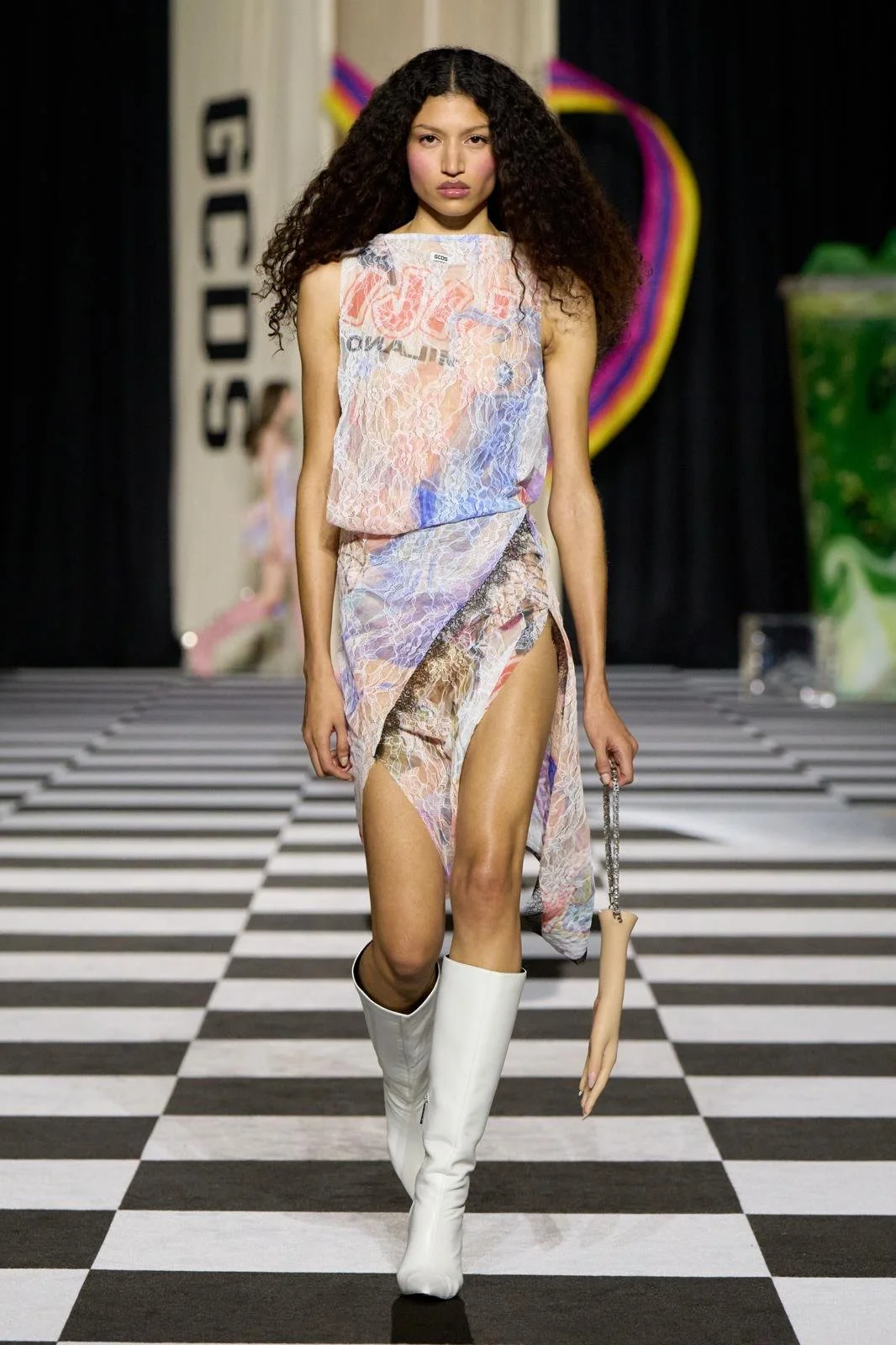
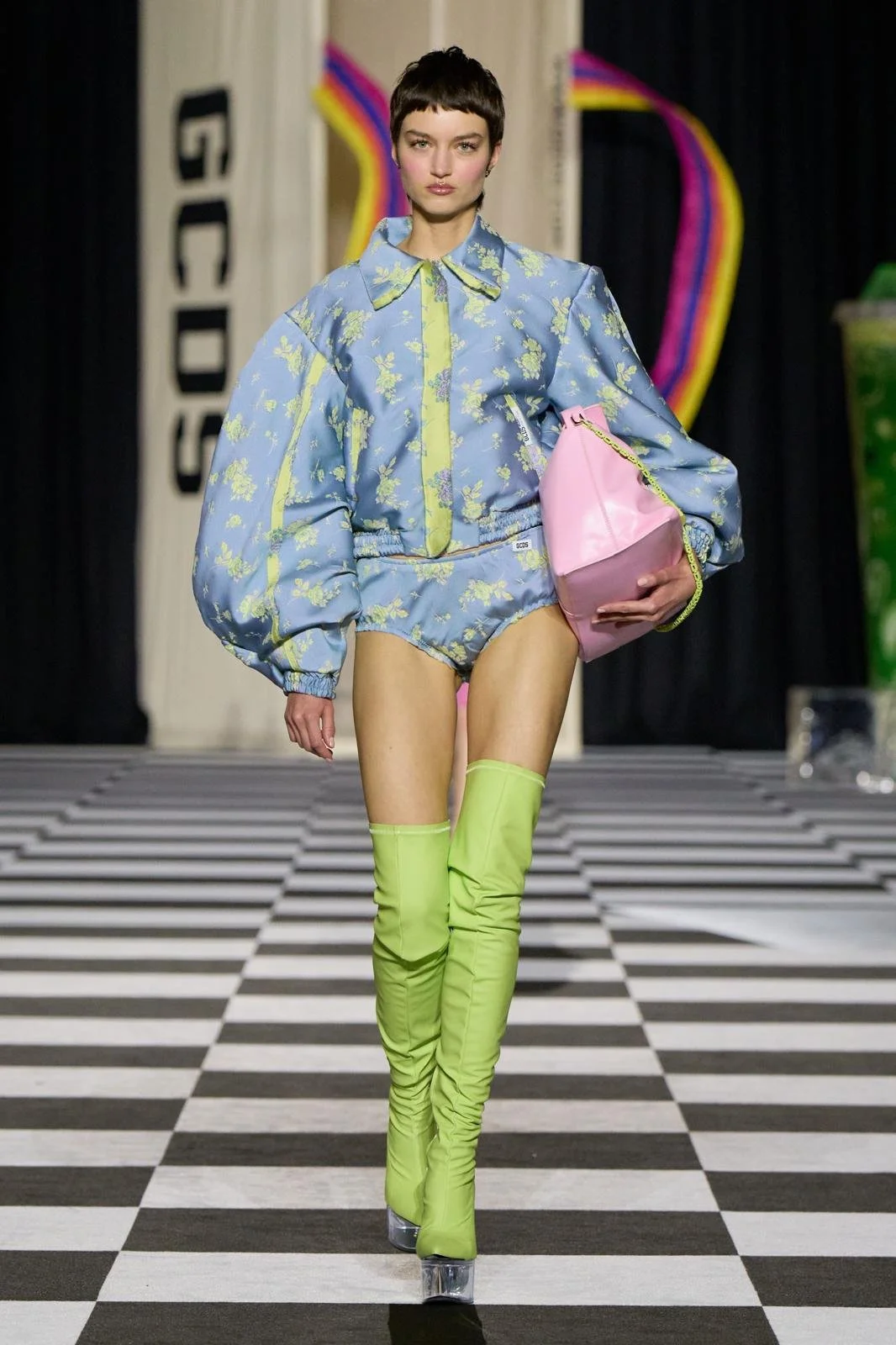
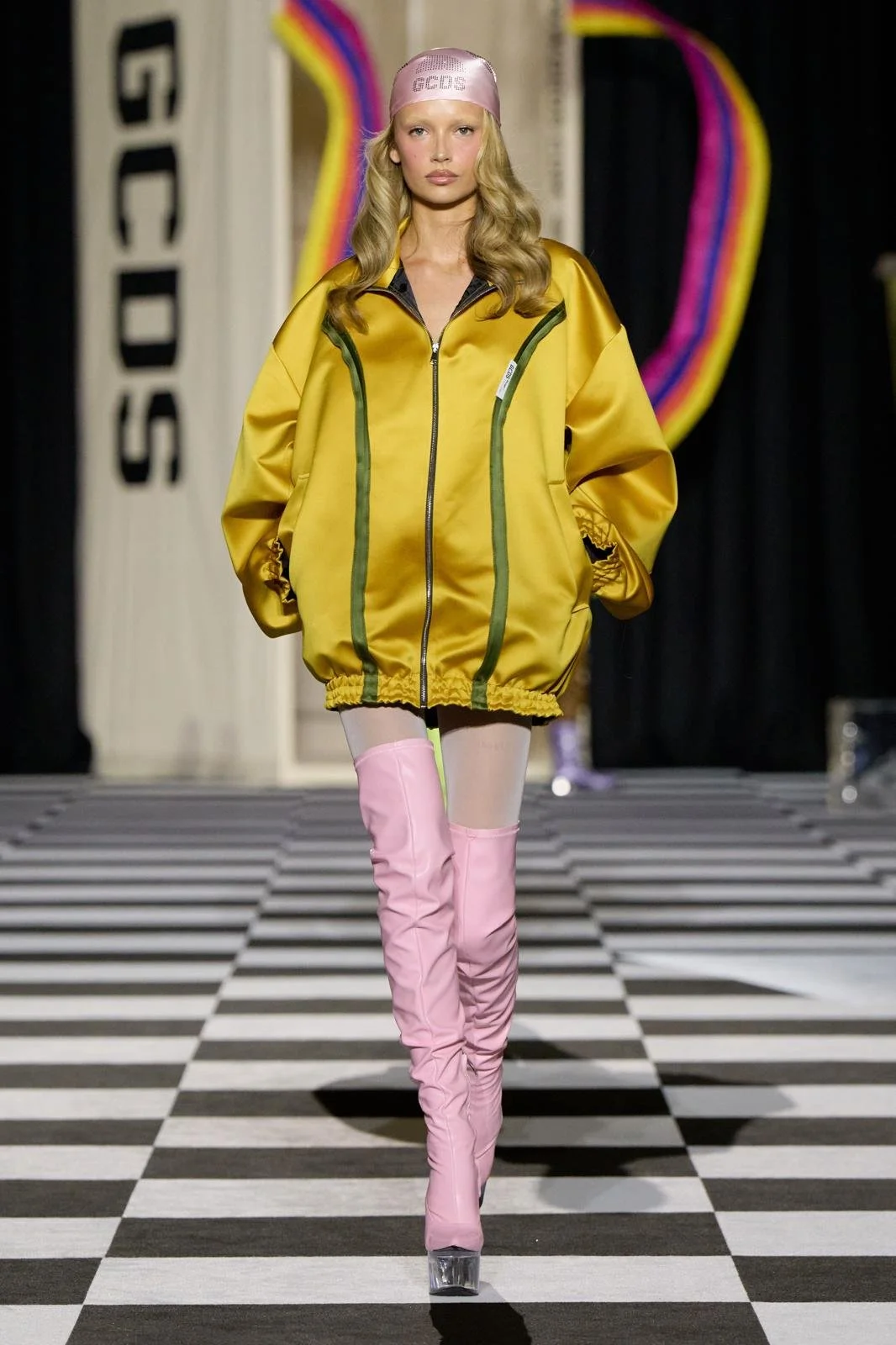
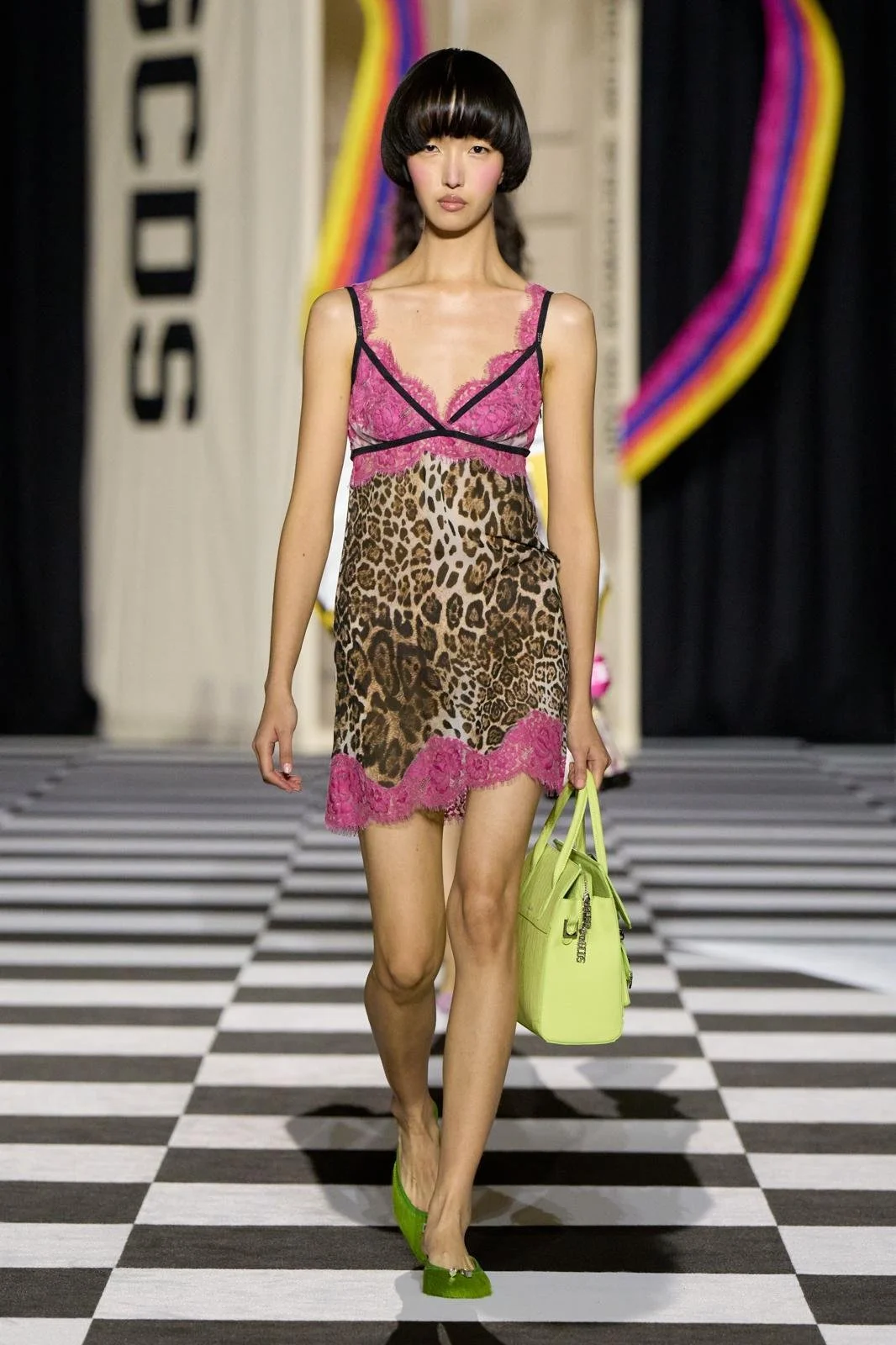
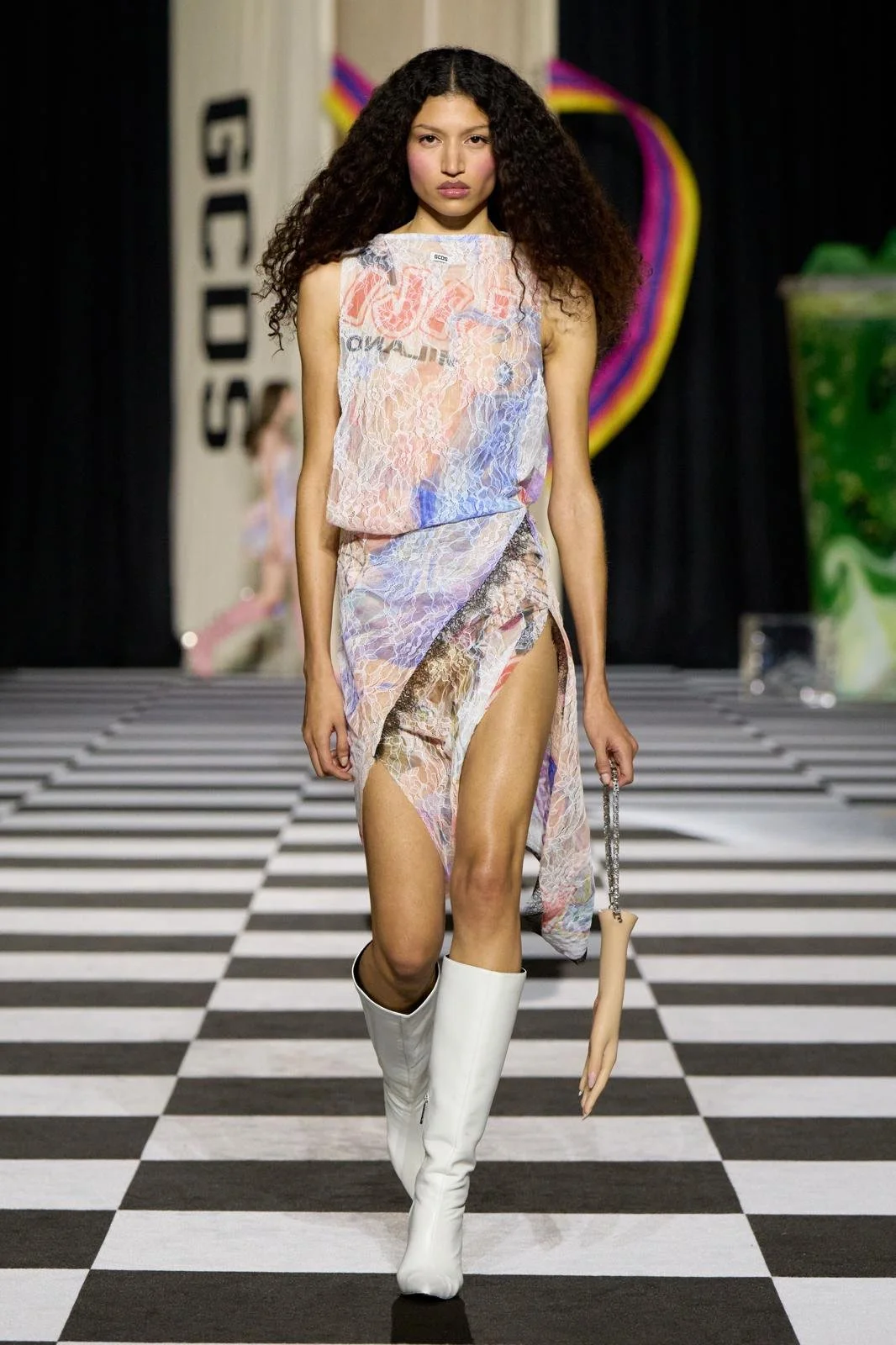
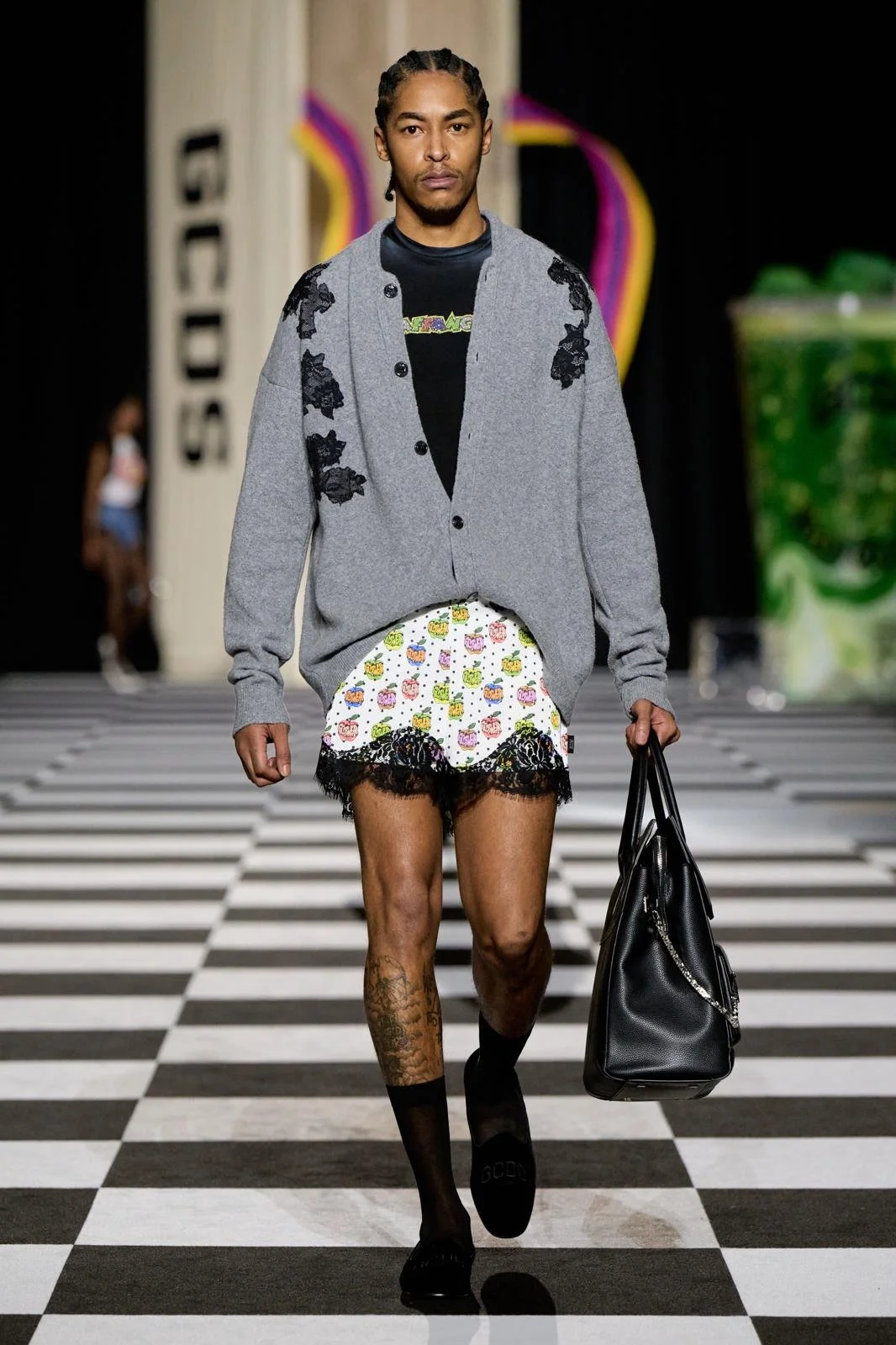
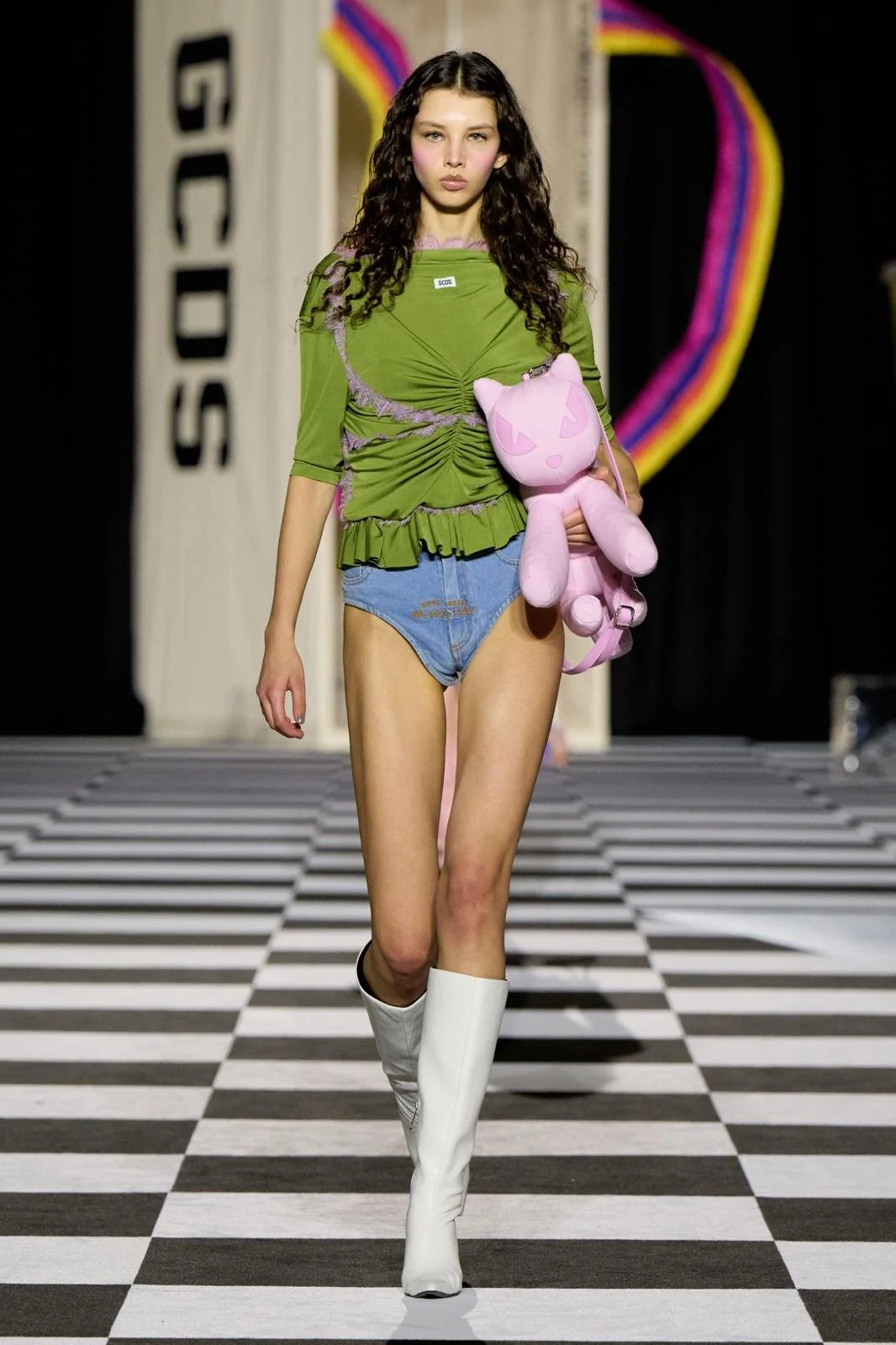
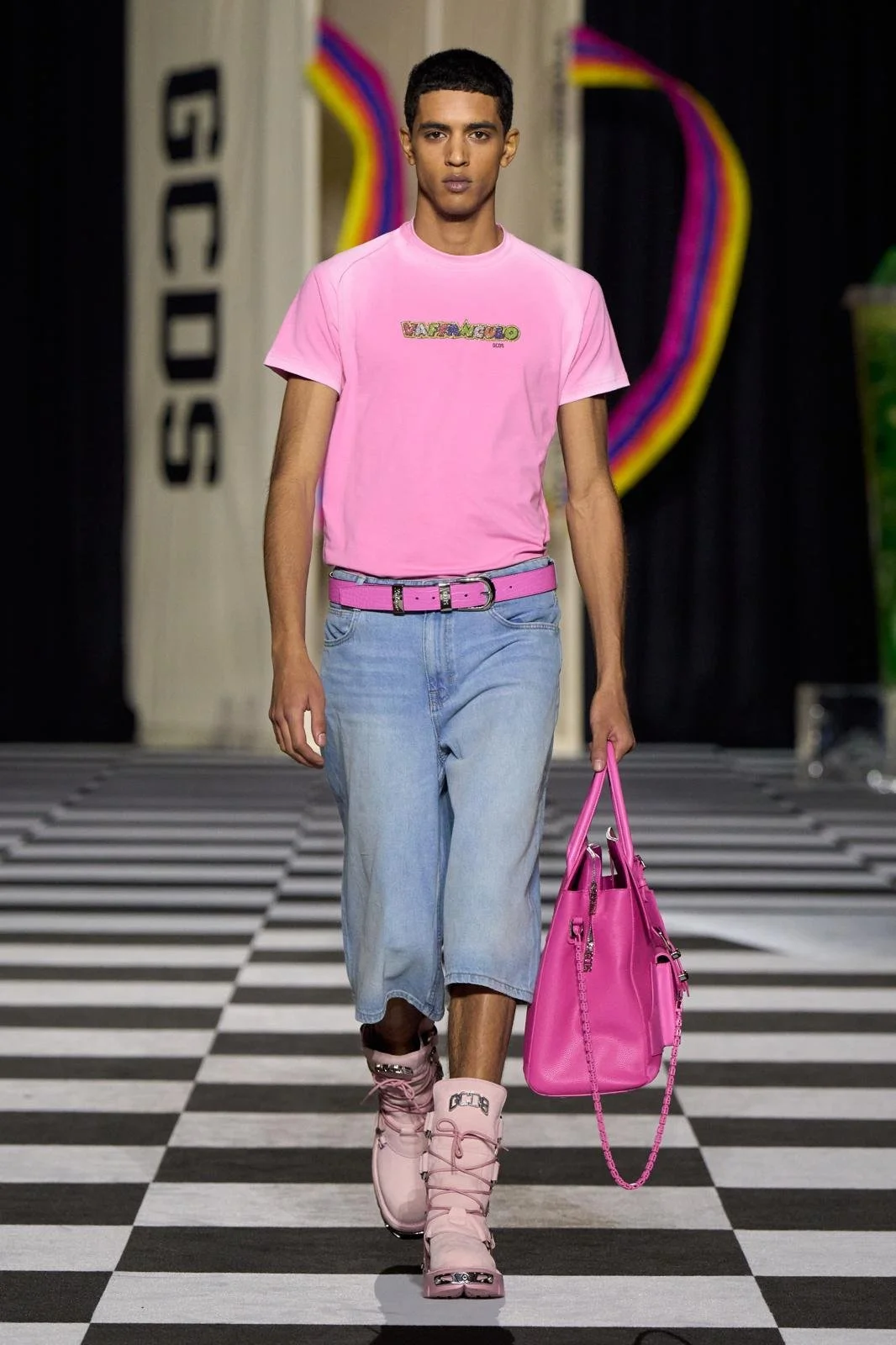
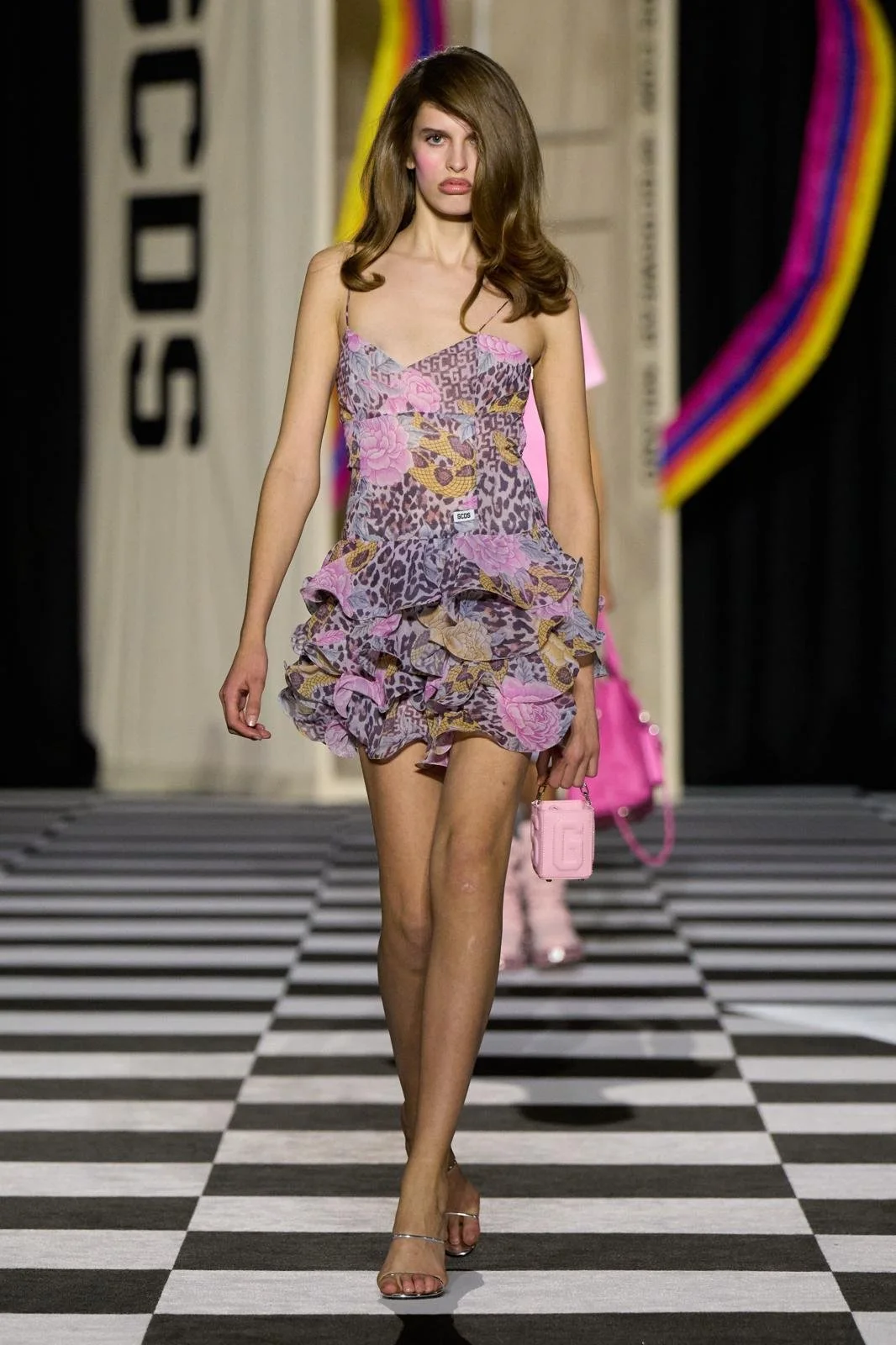
Giuliano Calza took the virality of the ‘what’s in my bag’ trend and turned the concept into a 10th anniversary Spring/Summer 2026 show for GCDS, a brand he has creatively directed since its establishment alongside his brother, Giordano Calza, in 2015. This was Calza’s first show after a one-year hiatus away from the Milan Fashion Week schedule; perhaps that’s why everything feels even more timely. Standing apart from the more classic Milanese landscape, a decade is quite a milestone for a playful and bold label like GCDS, which has steadily garnered a devoted cult following.

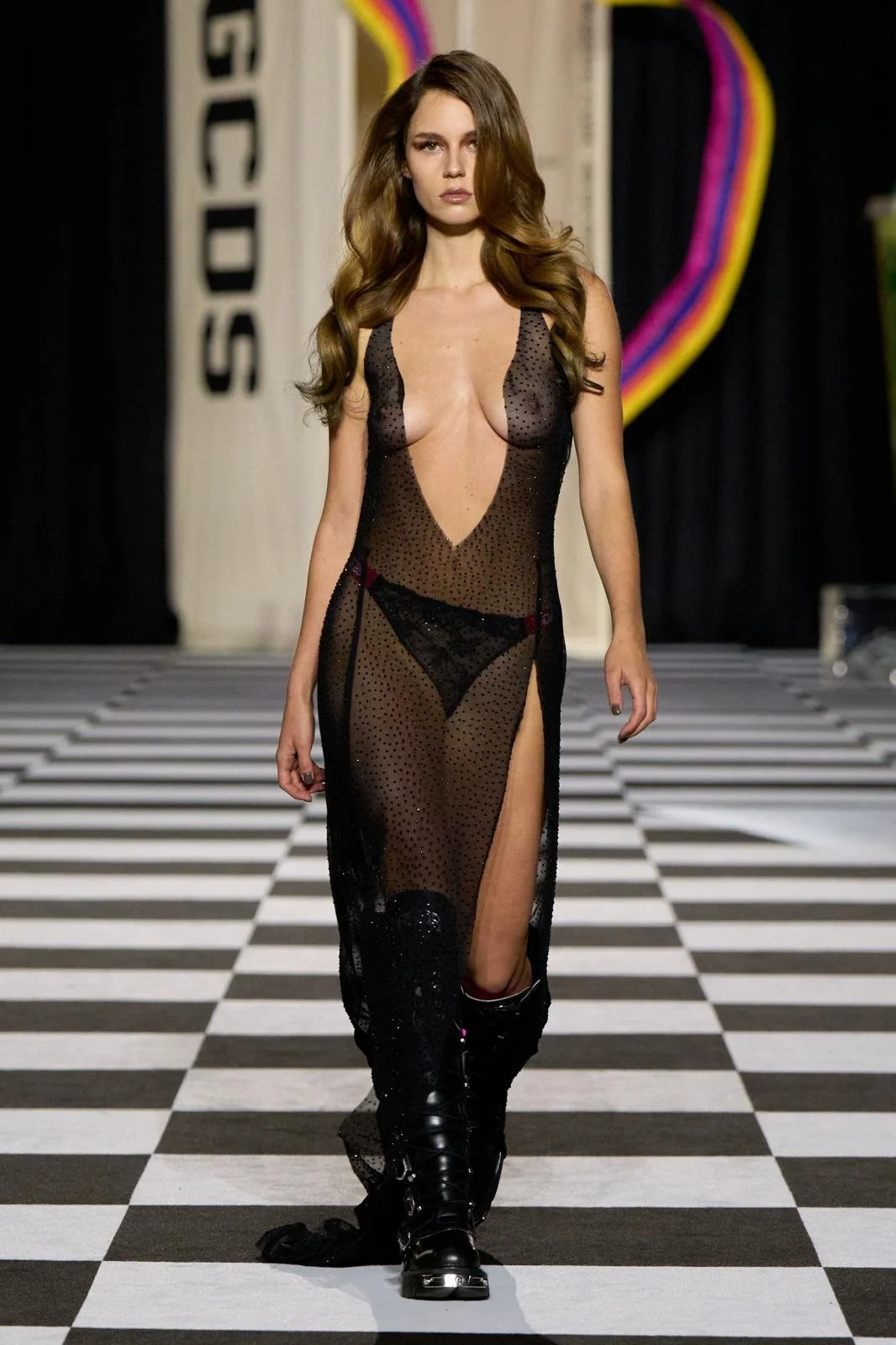
From inside a gigantic GCDS logo shopping bag that slid into a mall-inspired show space crafted by local Italian artisans, models strutted straight onto the catwalk. With a nod to the brand’s early shows without fully leaning into nostalgia, Calza presented a celebratory collection that blended daywear with more elaborate, sexy pieces. Denim-and-T-shirt combos evolved to leather and see-through dresses, often paired with tall boots and sky-high platform heels.

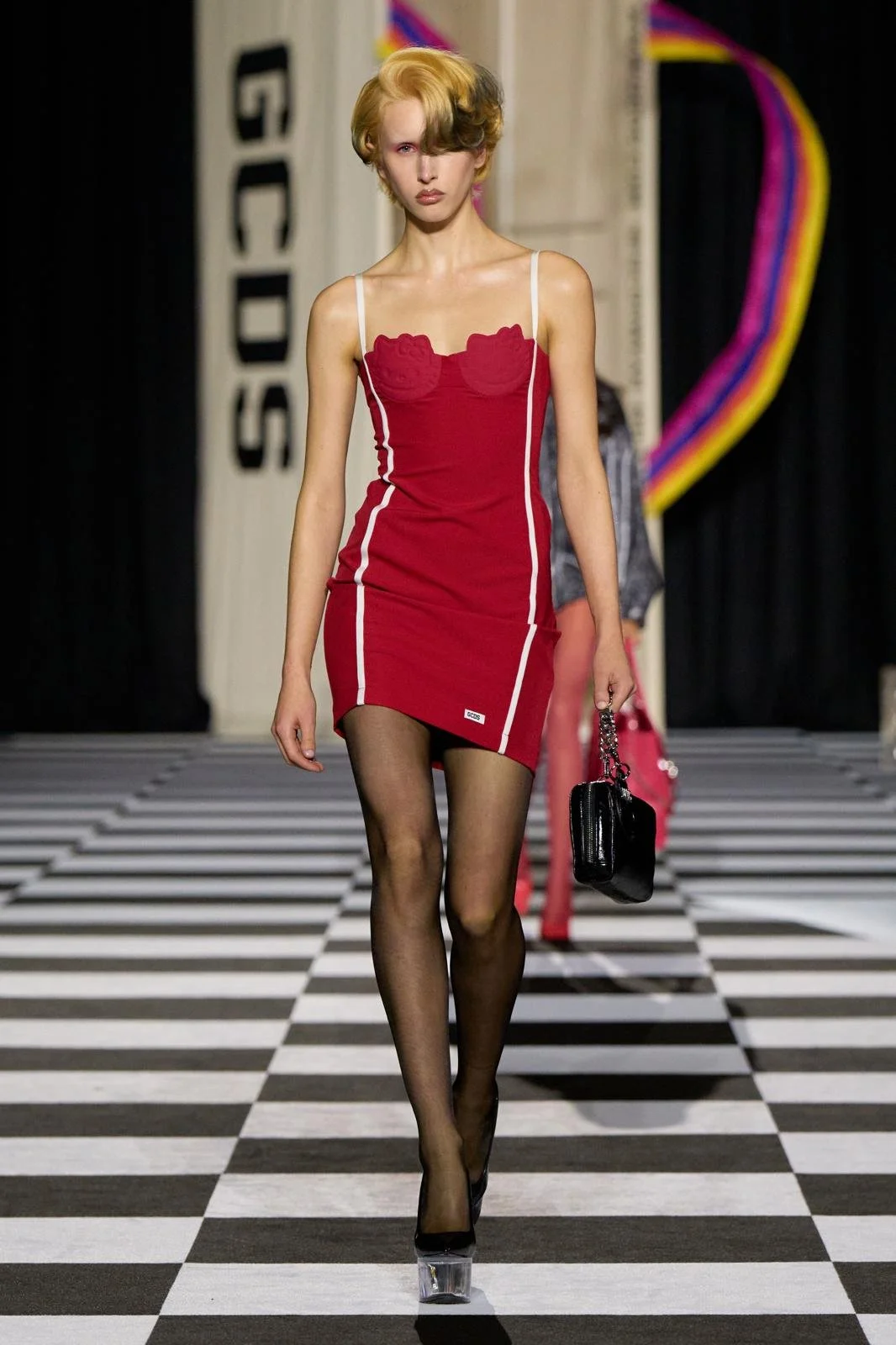
Versatile enough to appeal to OG brand fans and attract a new customer base, there was enough to play into the label’s signature codes inside Calza’s GCDS bag. Cheek and fun, of course, were the show’s driving force. Ruffled mini dresses shared the space with lingerie-inspired pieces, from corseted high-cut bodysuits worn over trousers to slips with lace trims and animal print. Speaking of the latter, python-patterned faux leather was a fundamental collection trait, crafted from a real rainbow of shades and seen on clothing, footwear, and handbags.

Calza never fails to remind us why fashion also means enjoyment, which is reflected in his accessory design and strong choice of vibrant colours. Keeping the brand's spirit afloat, baby tees with Betty Boop prints, Hello Kitty dresses and tops, and cat-shaped bags respected its original, long-life motto of creating fashion items as captivating as toys for adults.

A range of sparkling asymmetrical dresses and pencil skirts made for partygoers and stage queens, already a GCDS celebrity favourite, conveyed the label’s inherent sexiness, while polka-dotted pieces, either structured and voluminous or transparent and cheeky, reinforced the brand’s signature boldness stamp.

With a penchant for doing things differently, Calza made the whole collection available right after the show, bringing back the ‘see now, buy now’ format, popular during the 2010s. If it’s up to GCDS, the next ten years will be flirty, colourful, and a lot of fun.


Words by Ketlyn Araujo

GUCCI FW26

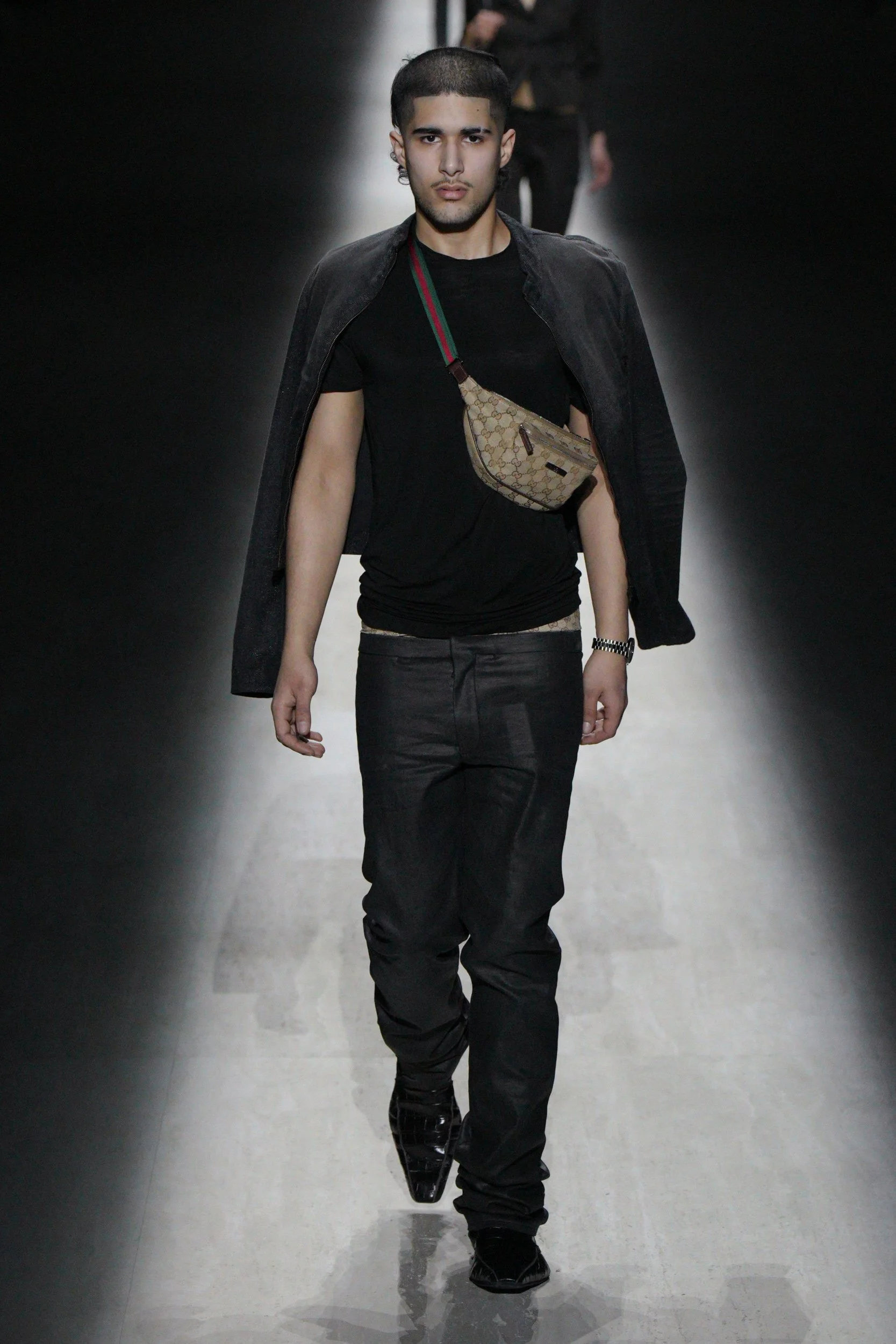
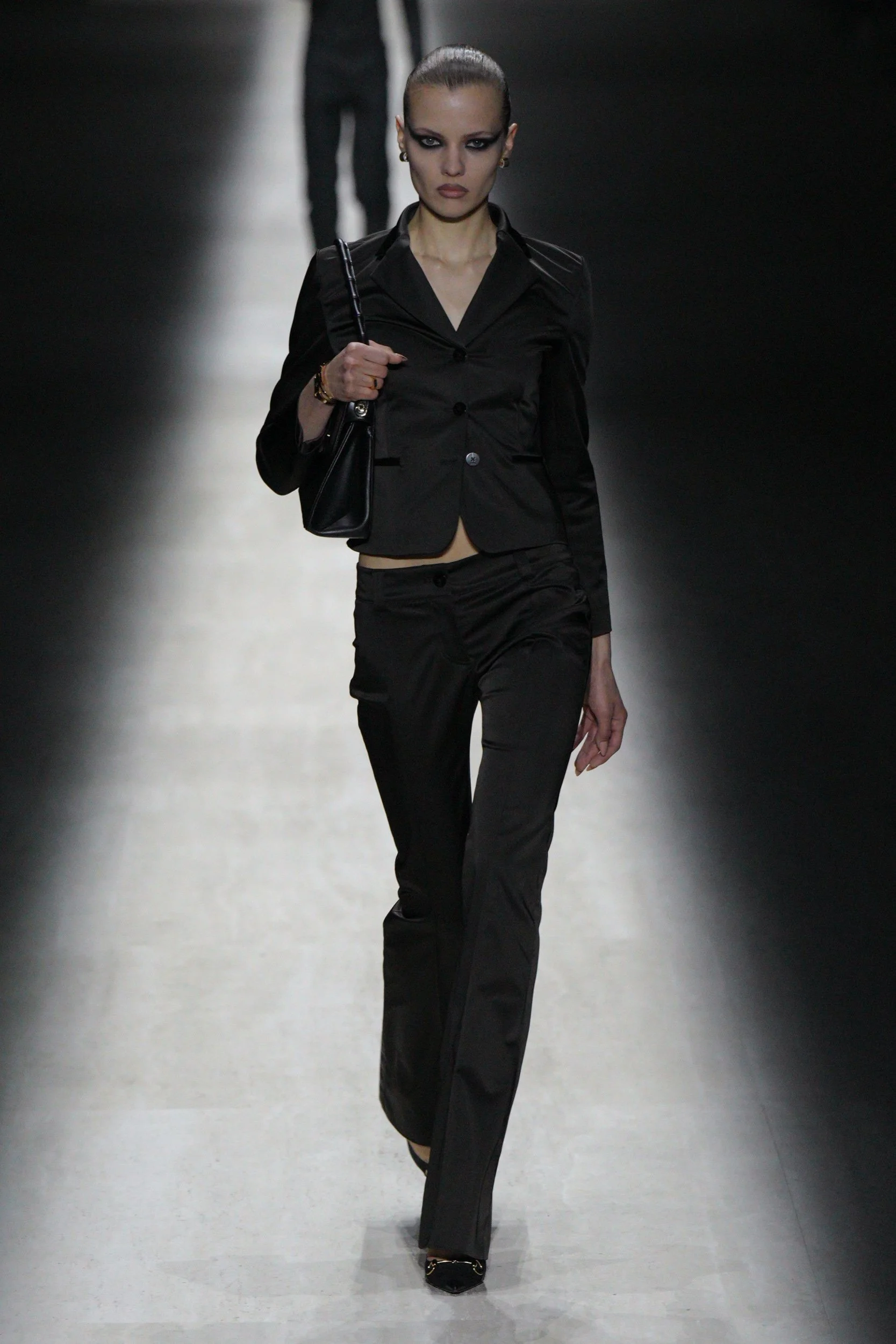
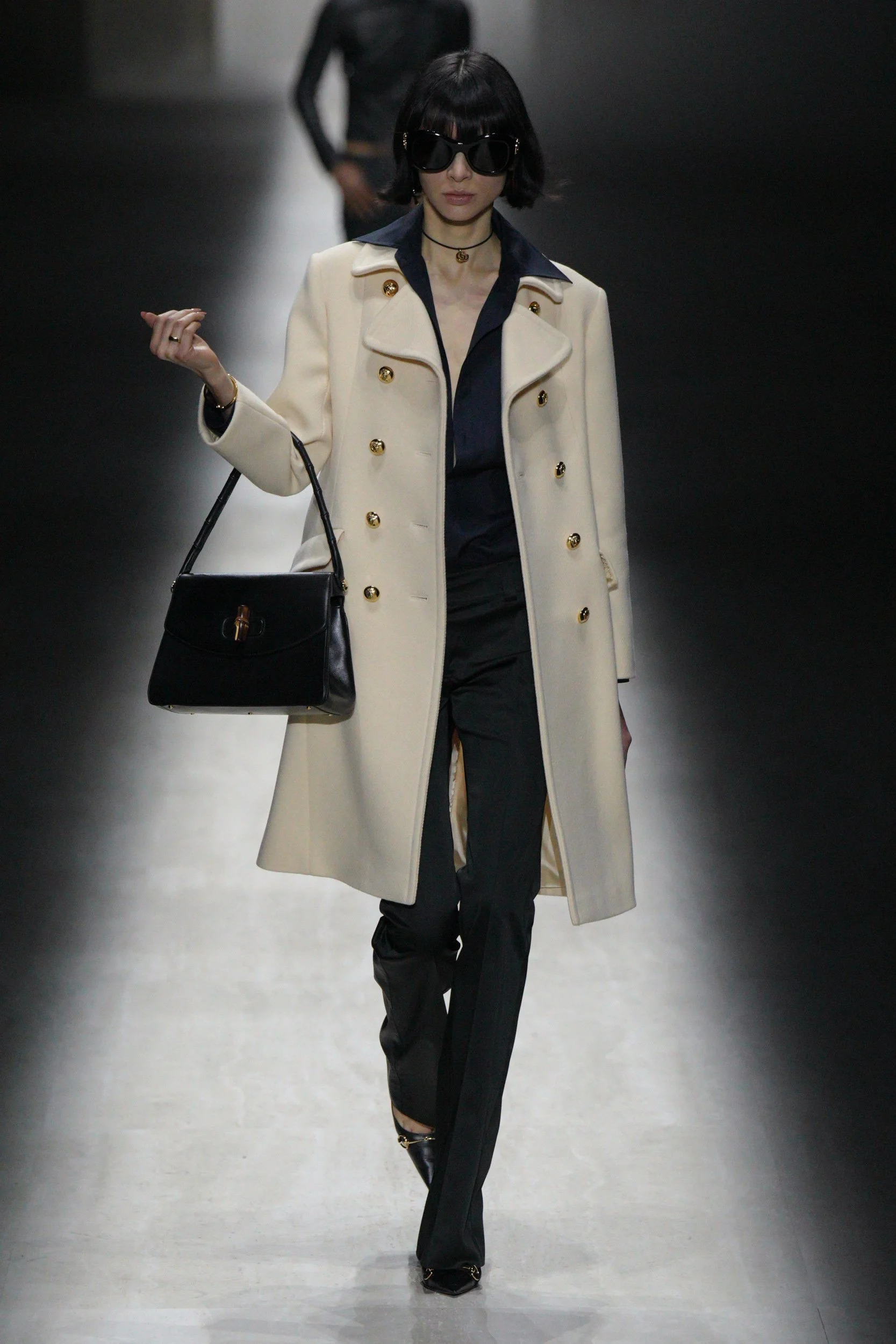
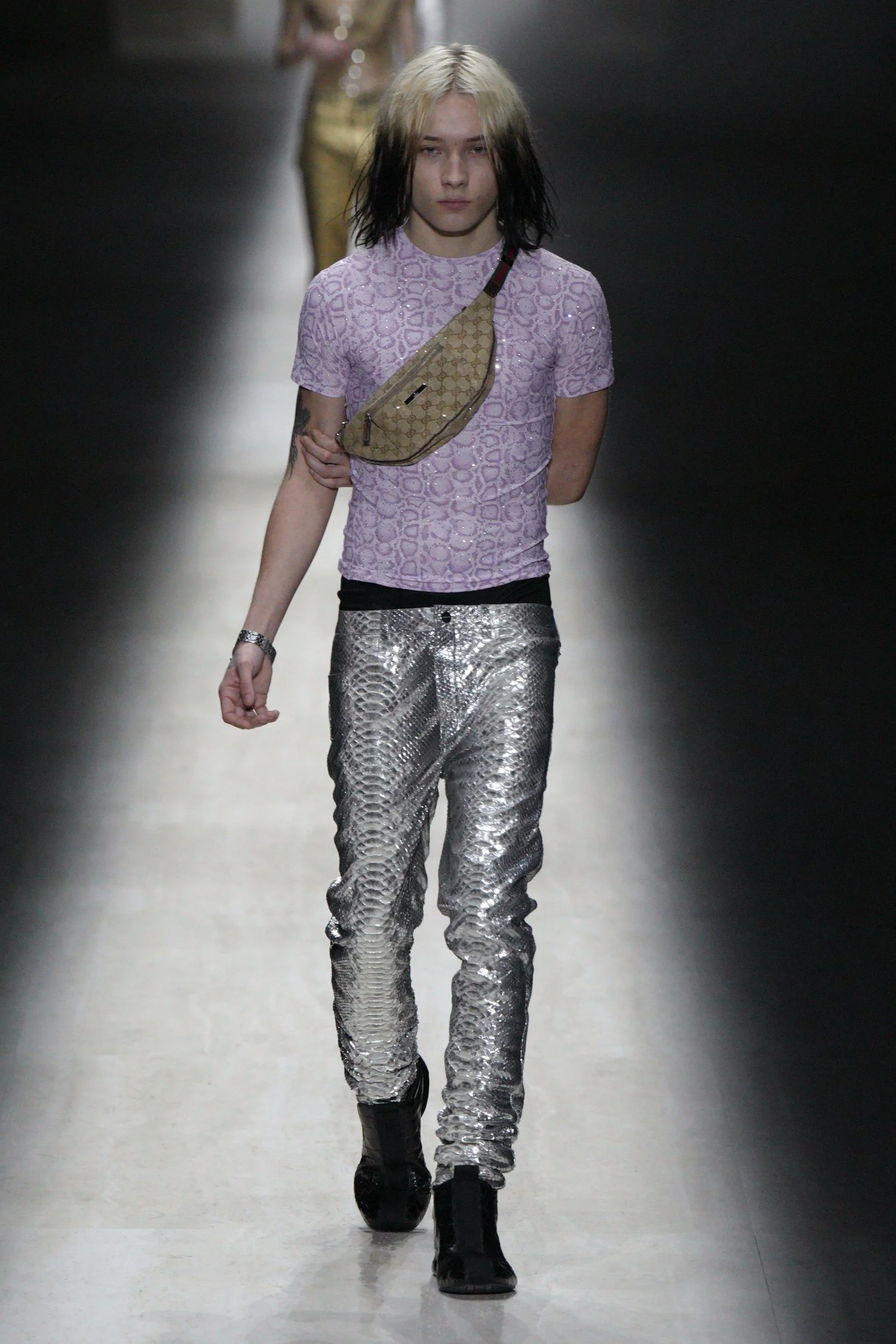
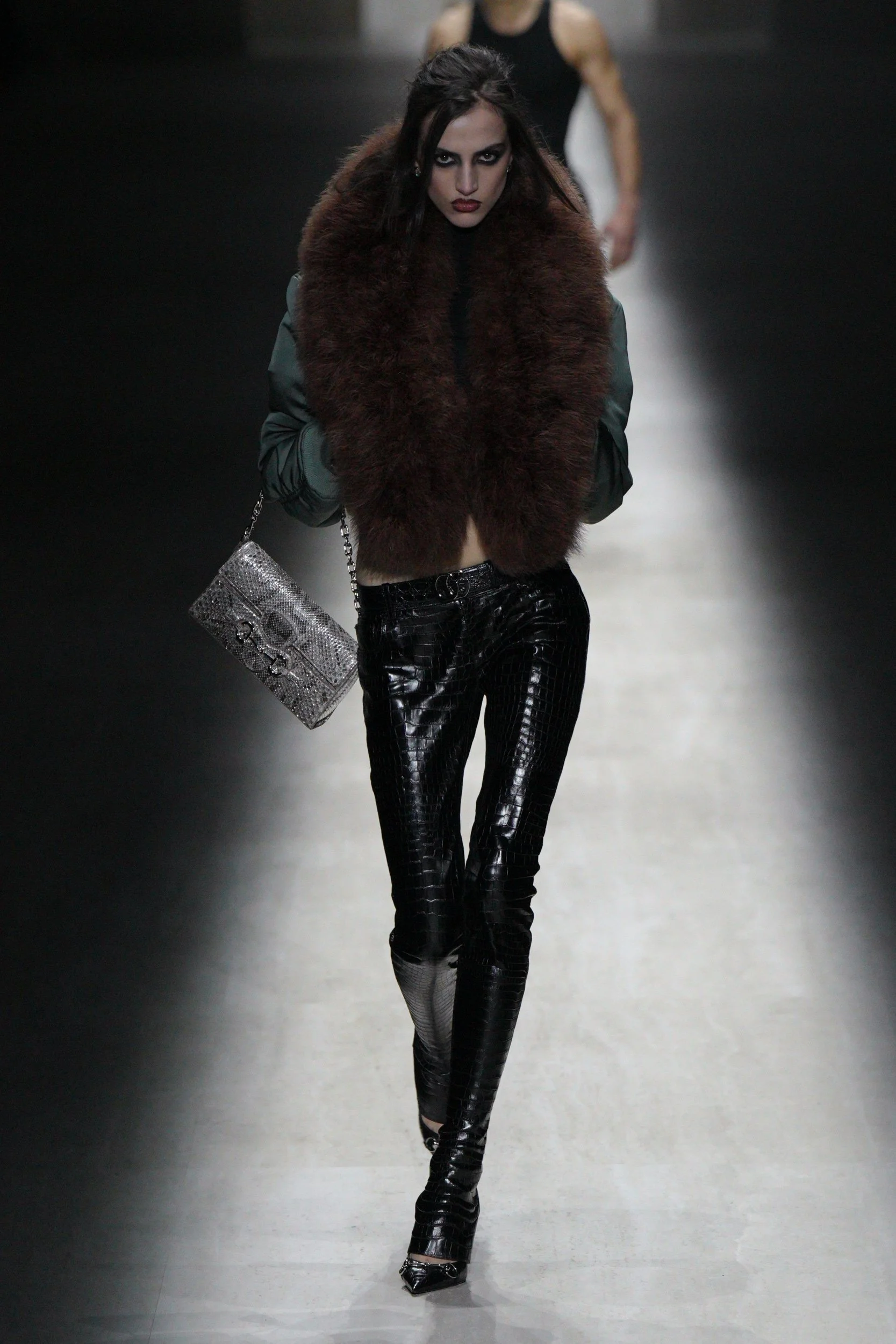
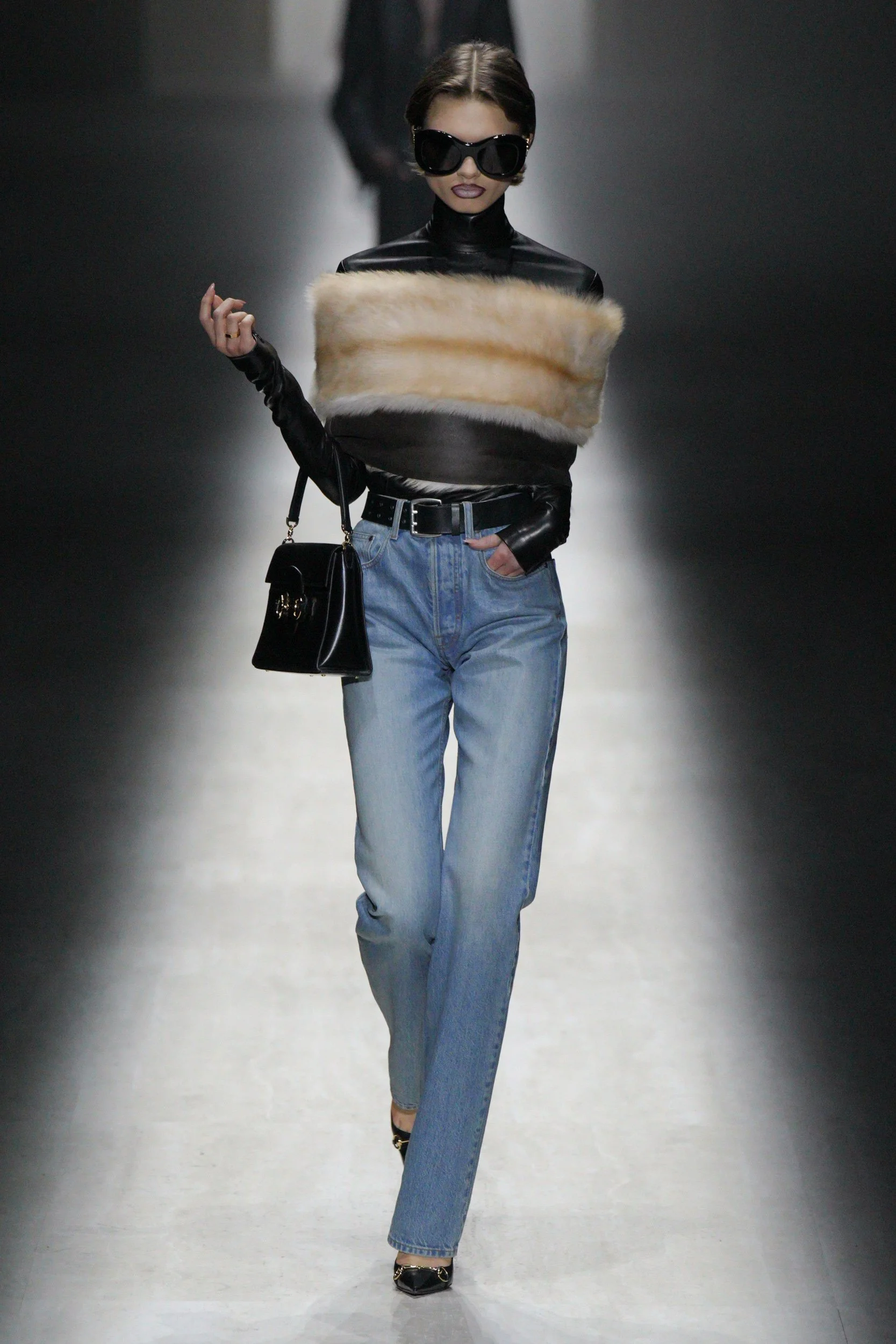
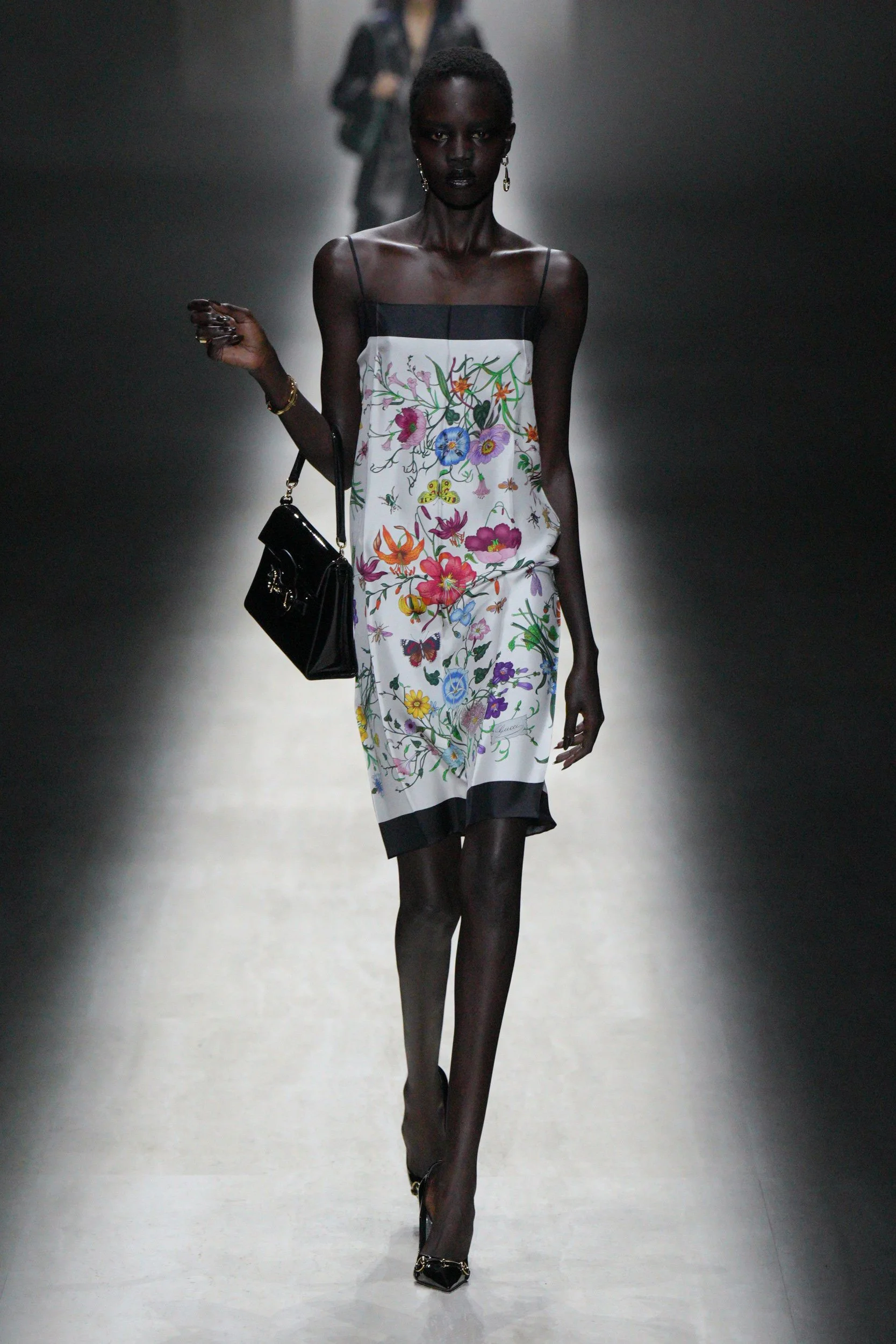
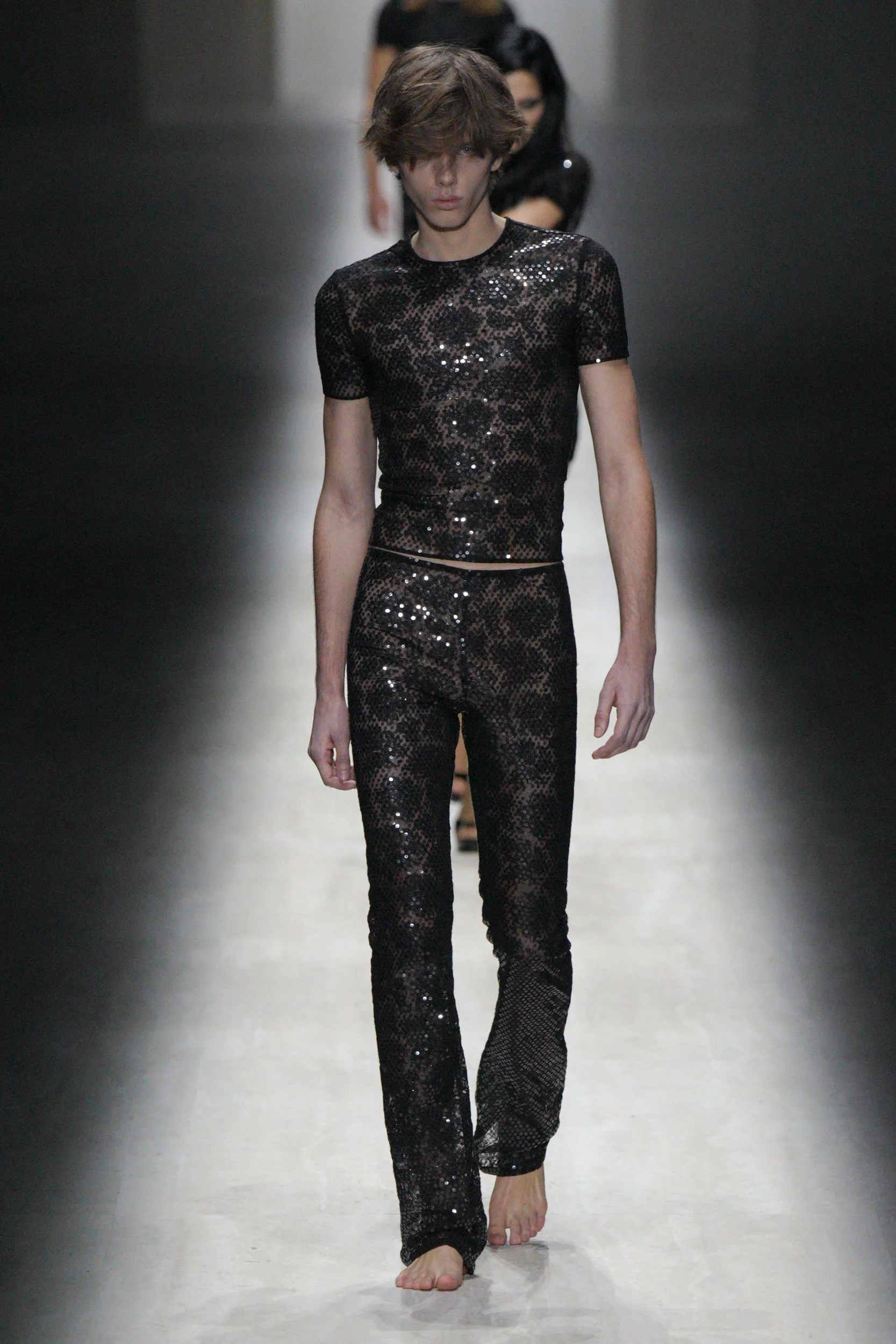
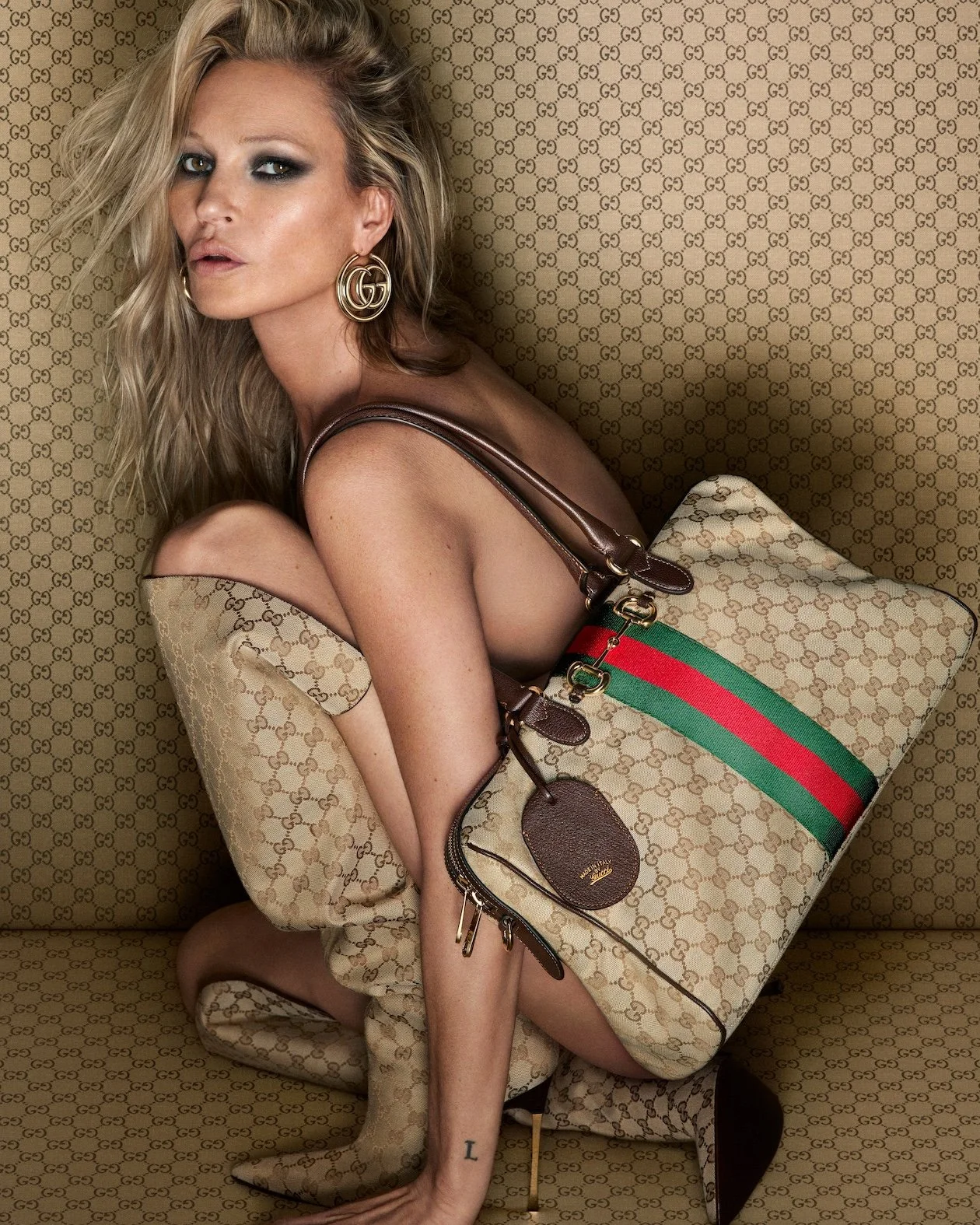
Luxury often positions itself diametrically to the masses. The stance is paradoxical. High fashion relies on desirability while needing exclusivity. It’s a hard line to walk and, even when achieved, it's certainly not sustainable. Overexposure is both an inevitability and the worst sin. It’s a tough game. Luckily, Demna has never played it. He chooses instead to design from the outside, proposing ideas that will question exclusivity itself instead of attempting to conjure it. In what was the Georgian designer’s debut runway show for Gucci, he illustrates his ethos beautifully.

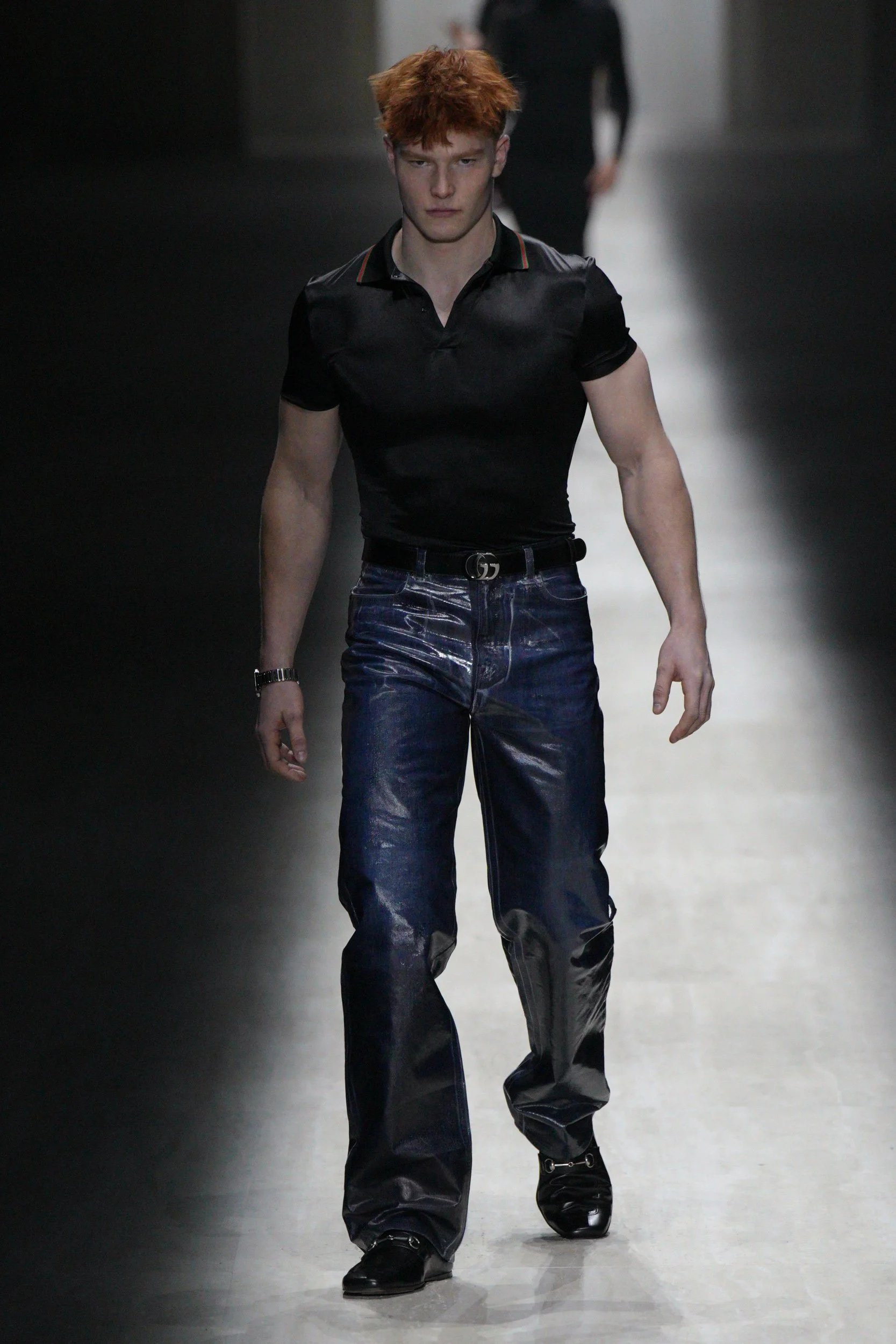
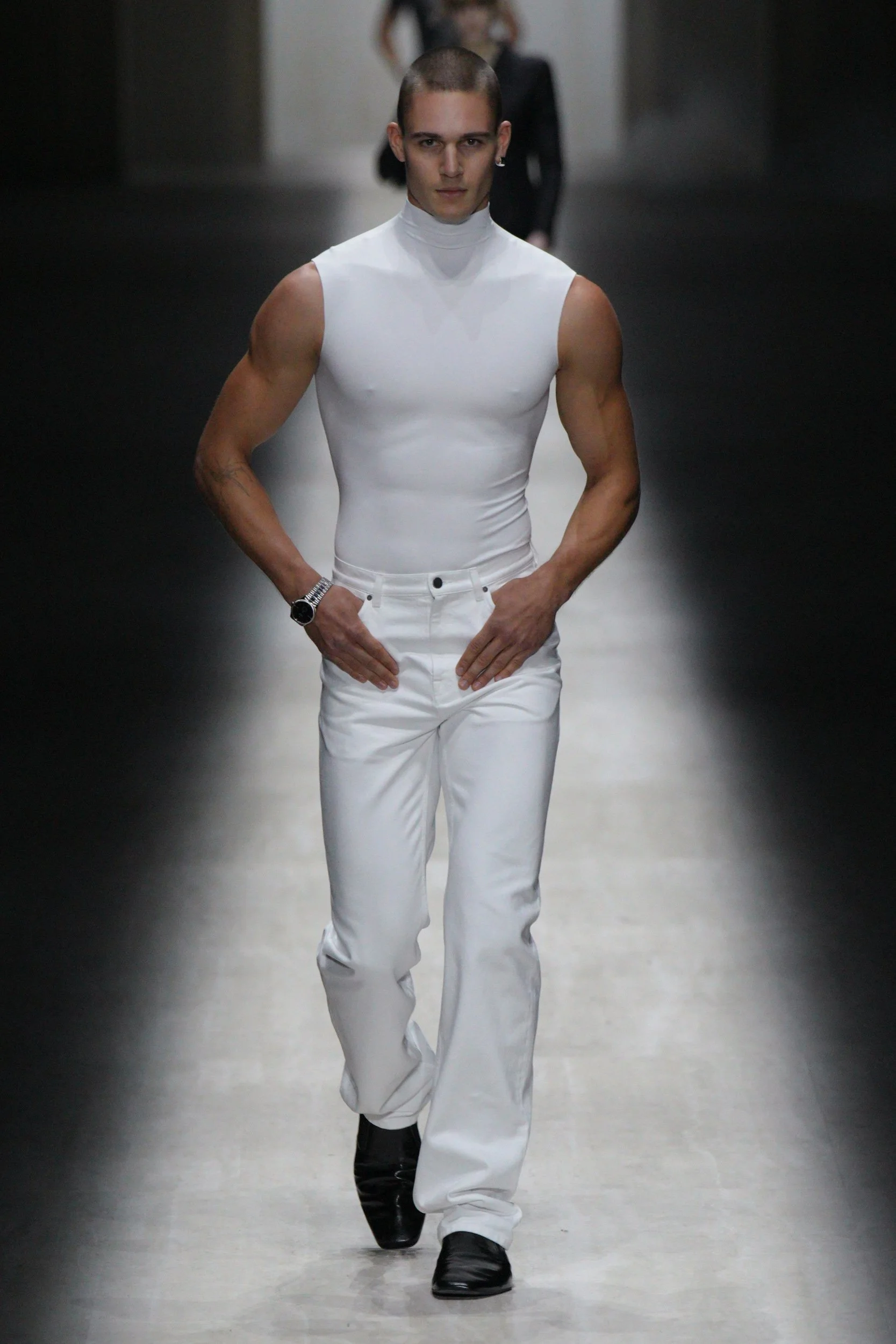
Despite being his first show, Fall/Winter 2026 marks the designer’s third collection for the Italian house. In his first, titled La Famiglia, Demna cast an array of characters, looking to consolidate the different archetypes imagined by his predecessors. It was a rolodex of the ideal client as thought of by the likes of Tom Ford and Alessandro Michele. Here, we see a refreshing evolution of the same concept. The designer conjures classic Gucci prototypes not through the eyes of its creators but through its public perception. Crossbody bags with the house’s characteristic monogram are worn around models with tracksuits. Glittery dresses are (almost) too short. Polos are death-defyingly tight on muscular bodies. The designer is always in on the joke. GG belt buckles and thongs showing peeping in backless dresses: his vision leans into what Gucci is, not what it's imagined to be.

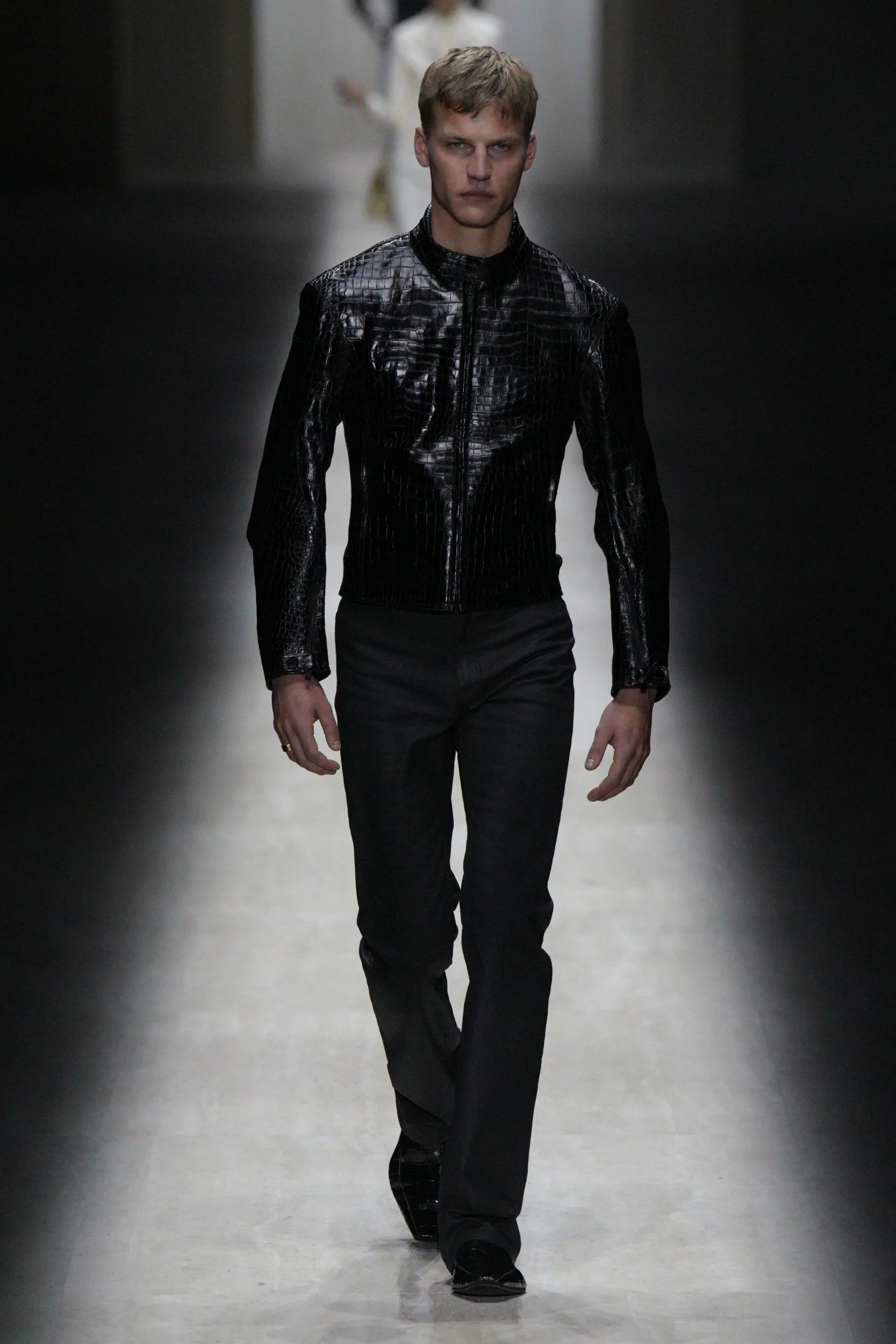
Understandably, Ford’s poltergeist was particularly noticeable as so much of the brand’s public perception still relies on his erotic take on ‘90s minimalism. The American designer’s presence was seen in shrunken blazers or in flared trousers, but perhaps most of all in the collection’s ethos. These aren’t clothes meant to be overintellectualised. They harken to a time where fashion wasn’t expected to comment, to write a dissertation, to defend a thesis – it was meant to be worn, to feel good (or in Ford’s case, sexy).

Despite the already fervent slew of comments ready to undermine what Demna presented – no doubt already typed even before tuning in to the livestream – his technical curiosity is clear as day. Tracksuits drape into dresses, jackets and tops are squished together, leggings are structured into trousers, sneakers and leather shoes become indistinguishable. However, here the goal isn’t simply to expand notions of luxury through experimentation. Unlike at Balenciaga, a maison that’s always been about pushing technical boundaries, Gucci is a brand designed to be desired, craved. In tight leather jackets, fur surrounds the body, trapping the arms. Hot!

The collection’s name, Primavera (Spring in Italian), sums up its feeling perfectly. Slightly paradoxical for a Fall collection, and yet perfectly encapsulating the change it carries. Gucci’s new era is finally consummated, and it's pure sex. What more could we ask for?


Words by Pedro Vasconcelos

EMPORIO ARMANI FW26

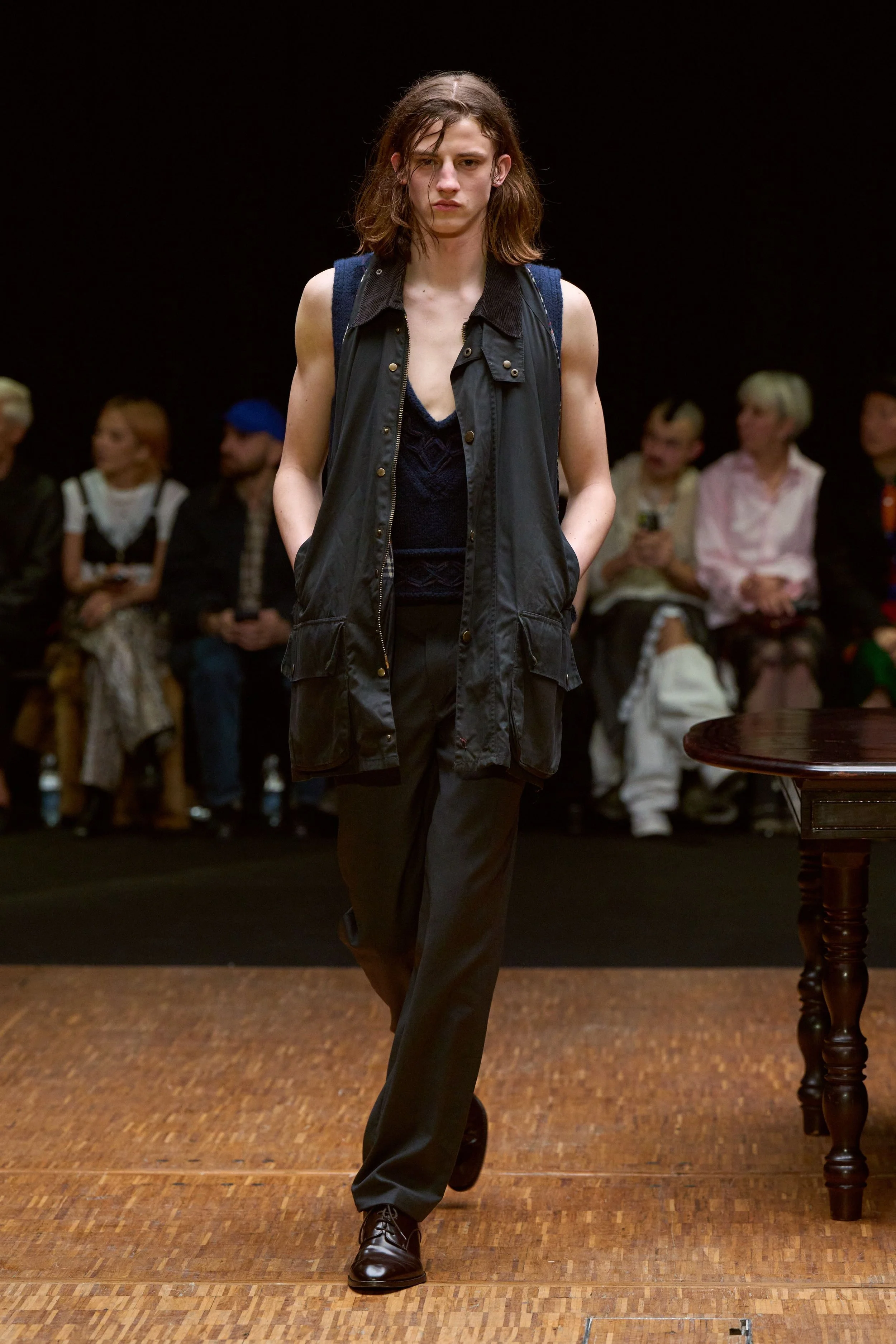
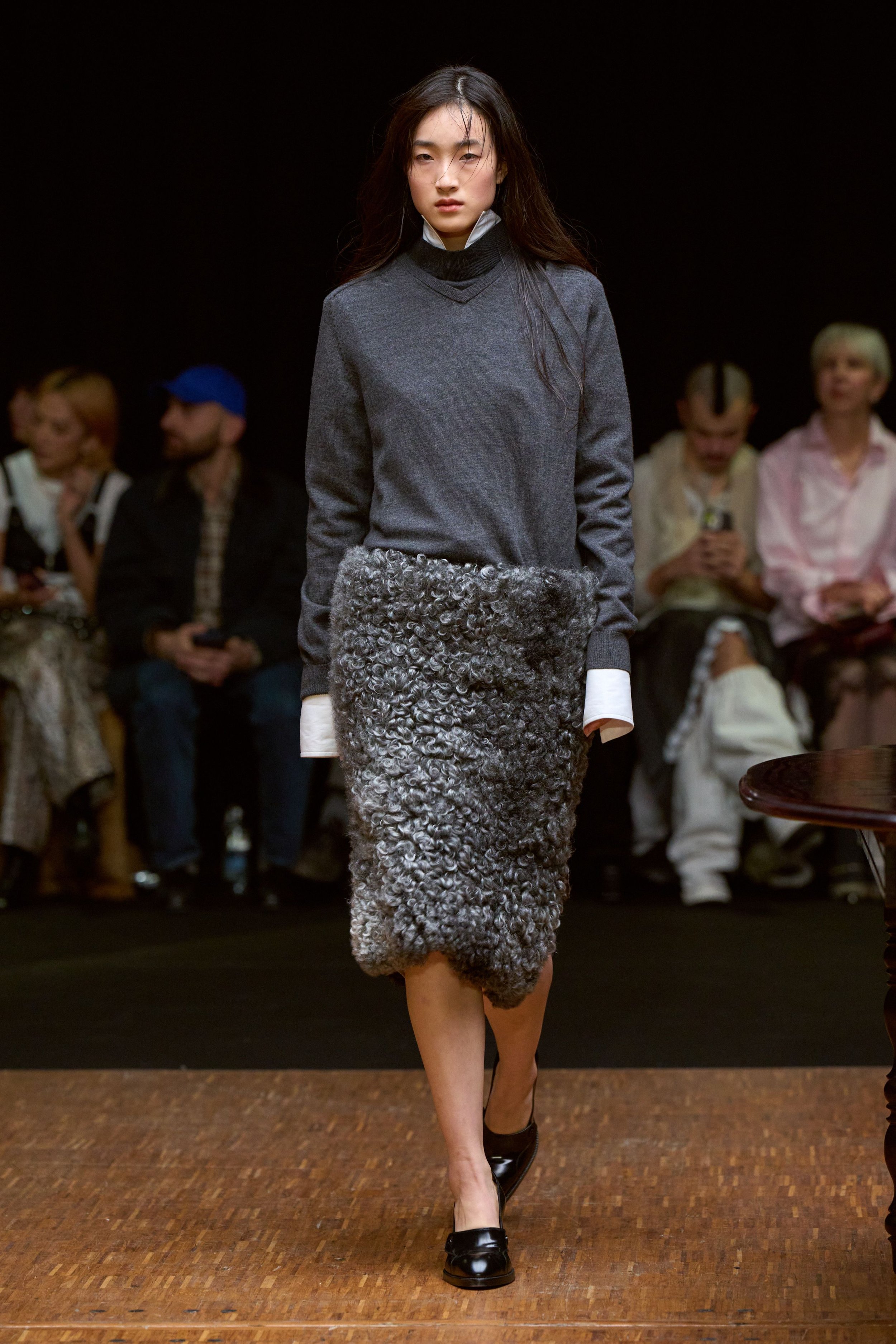
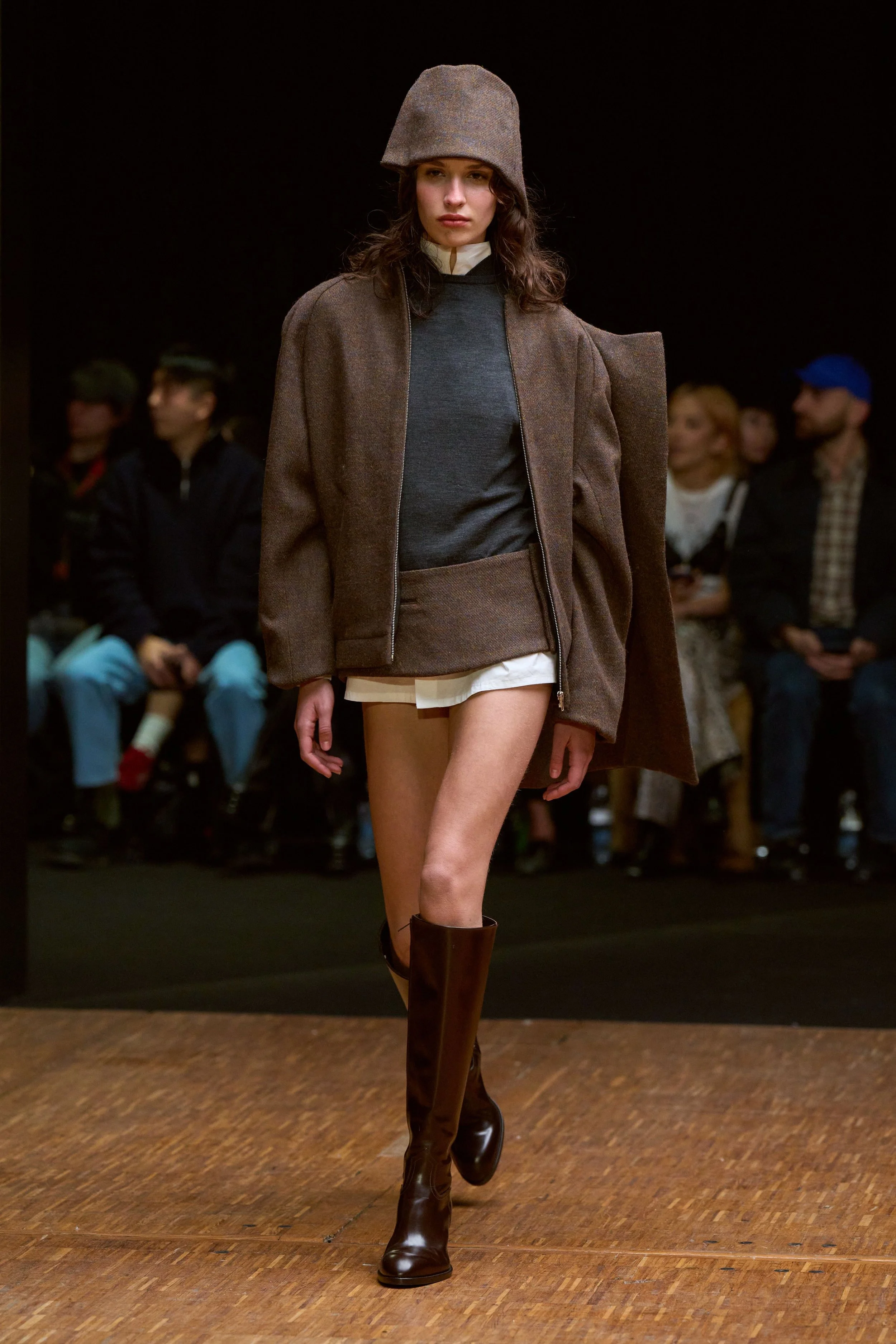
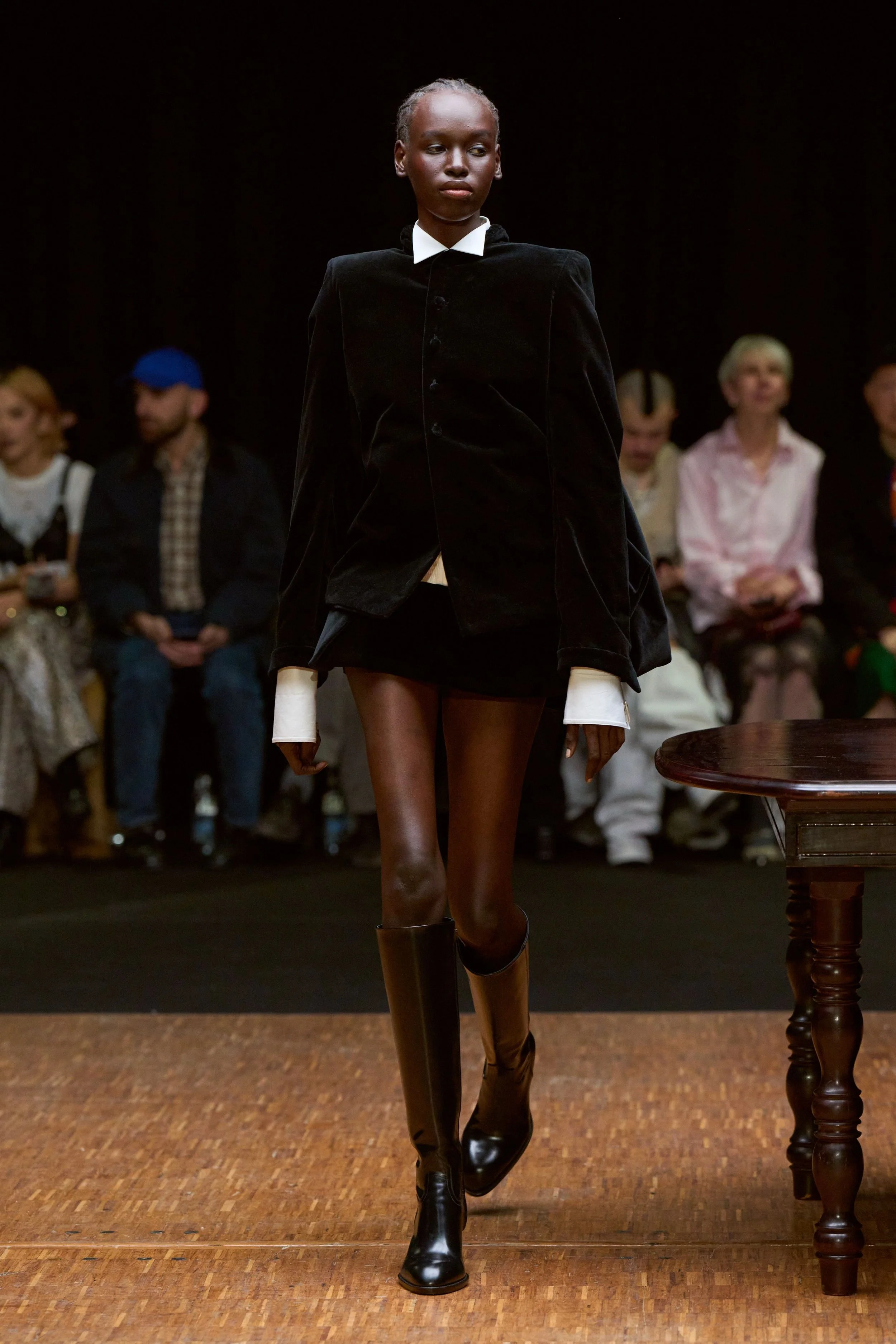
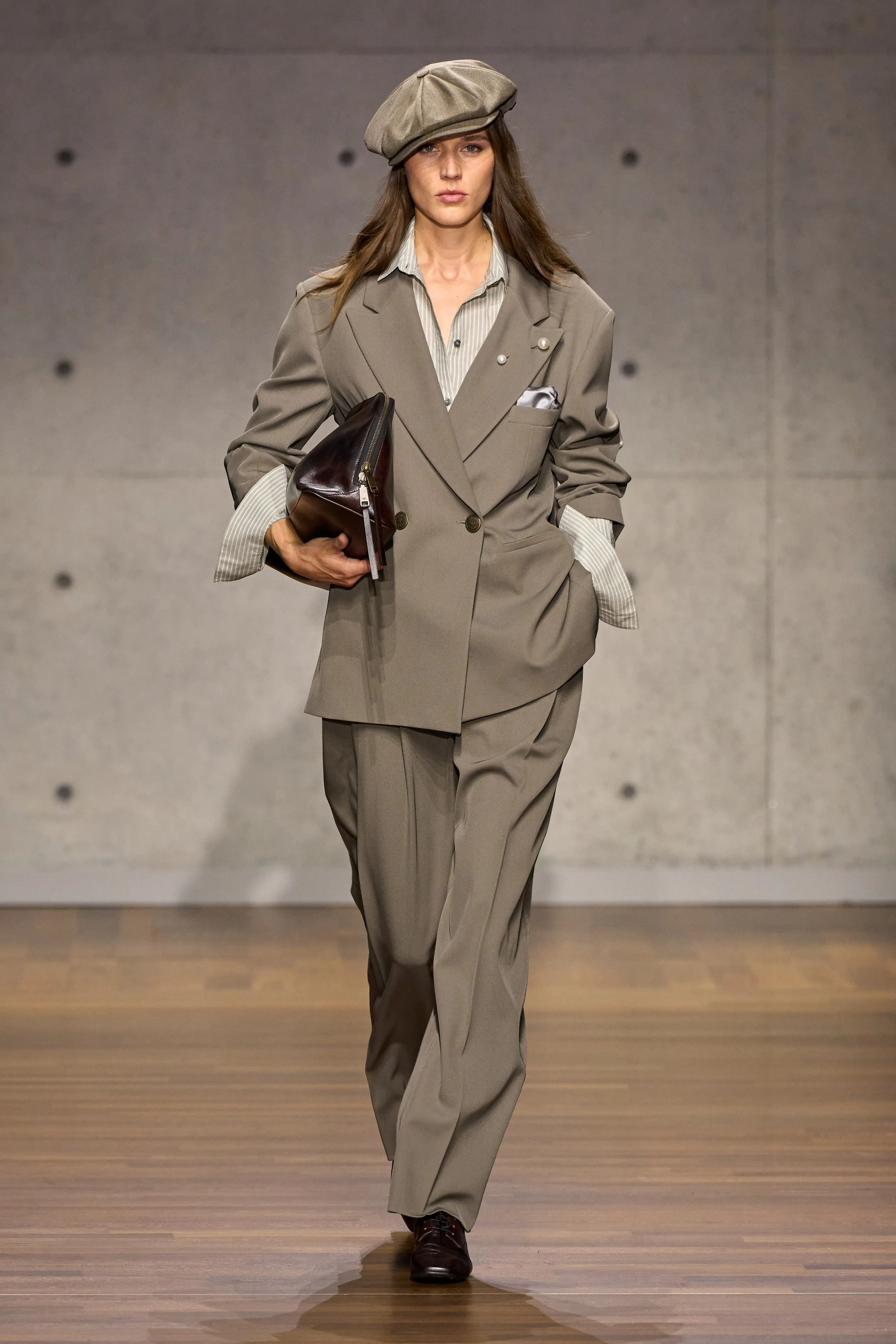
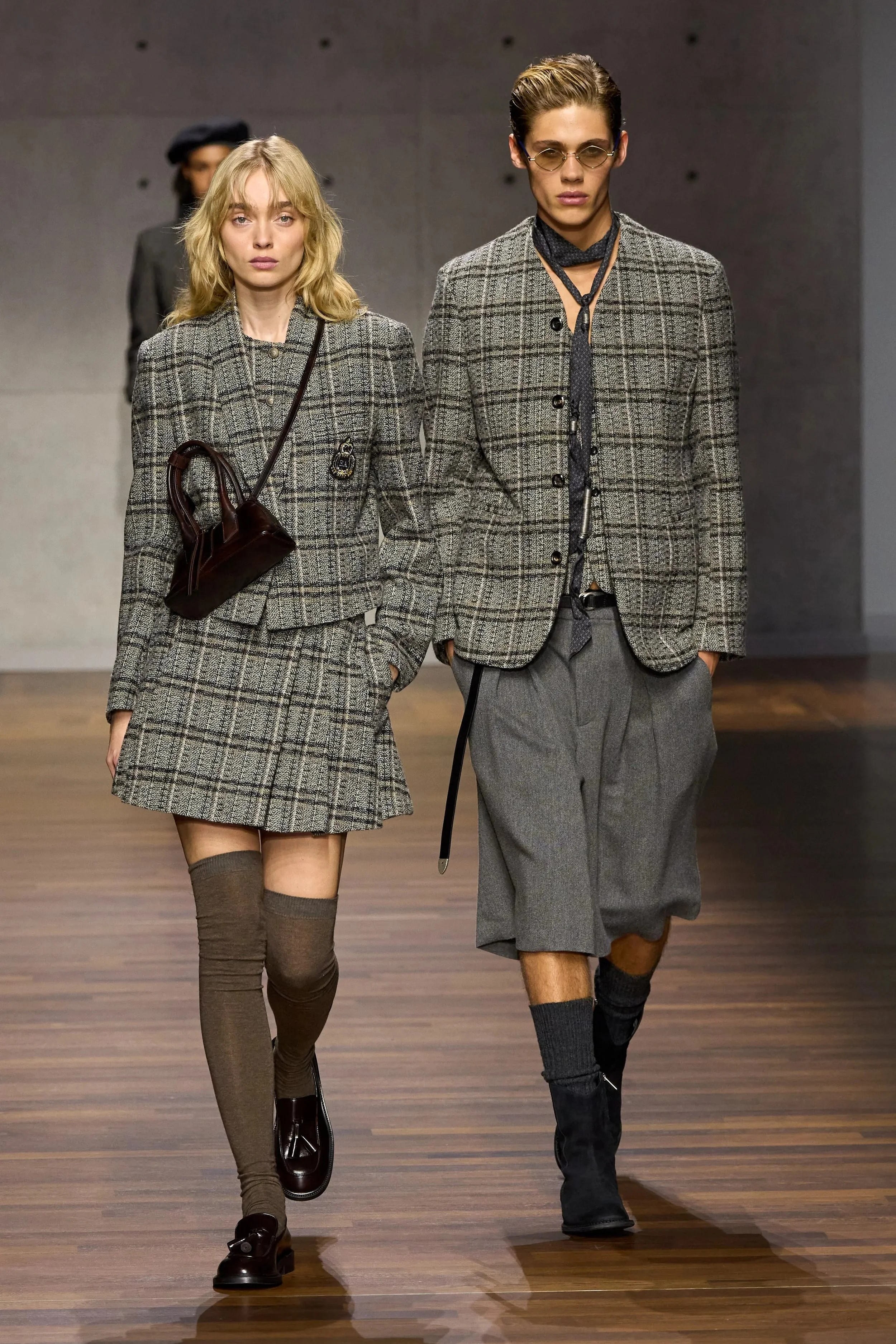
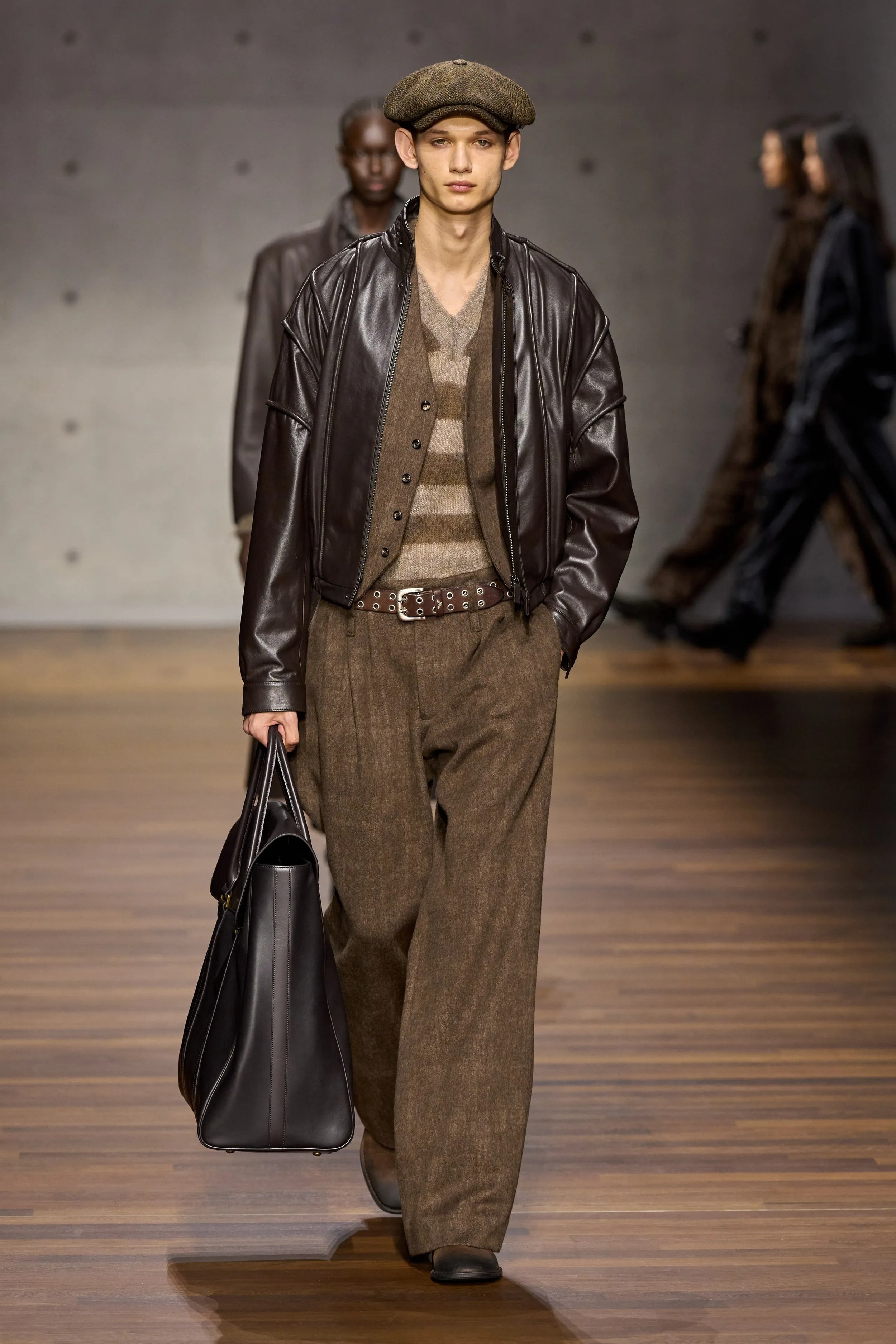
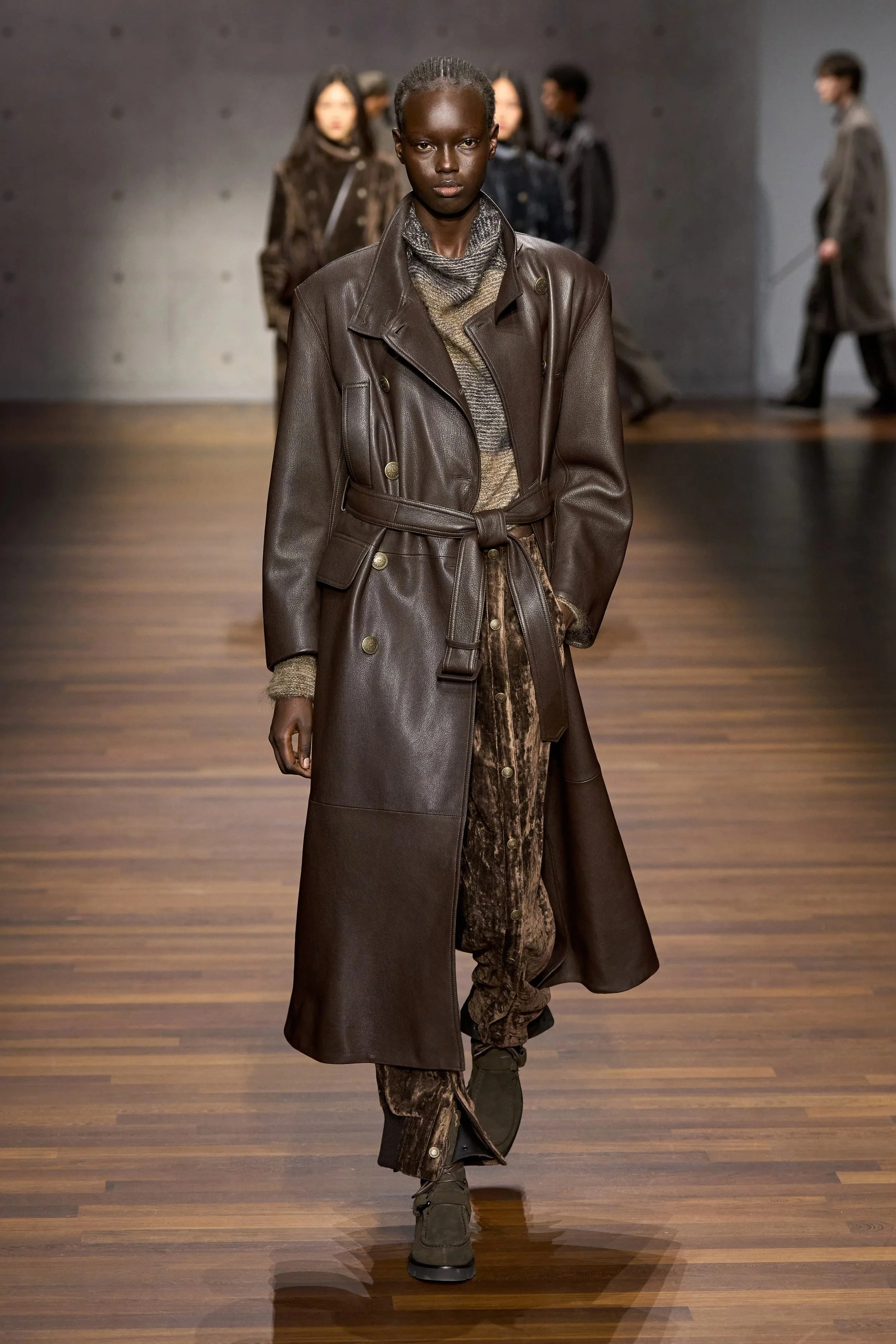
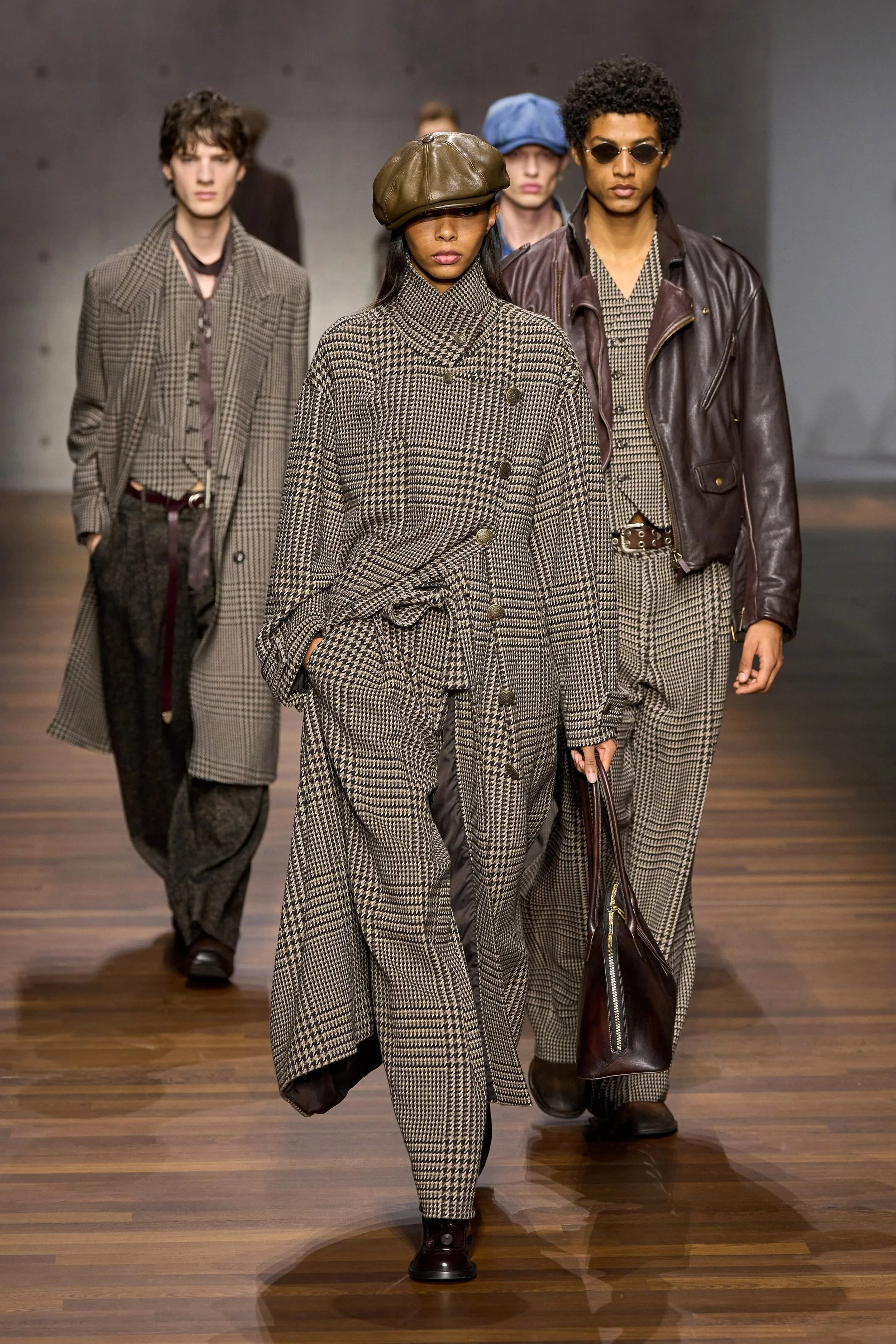
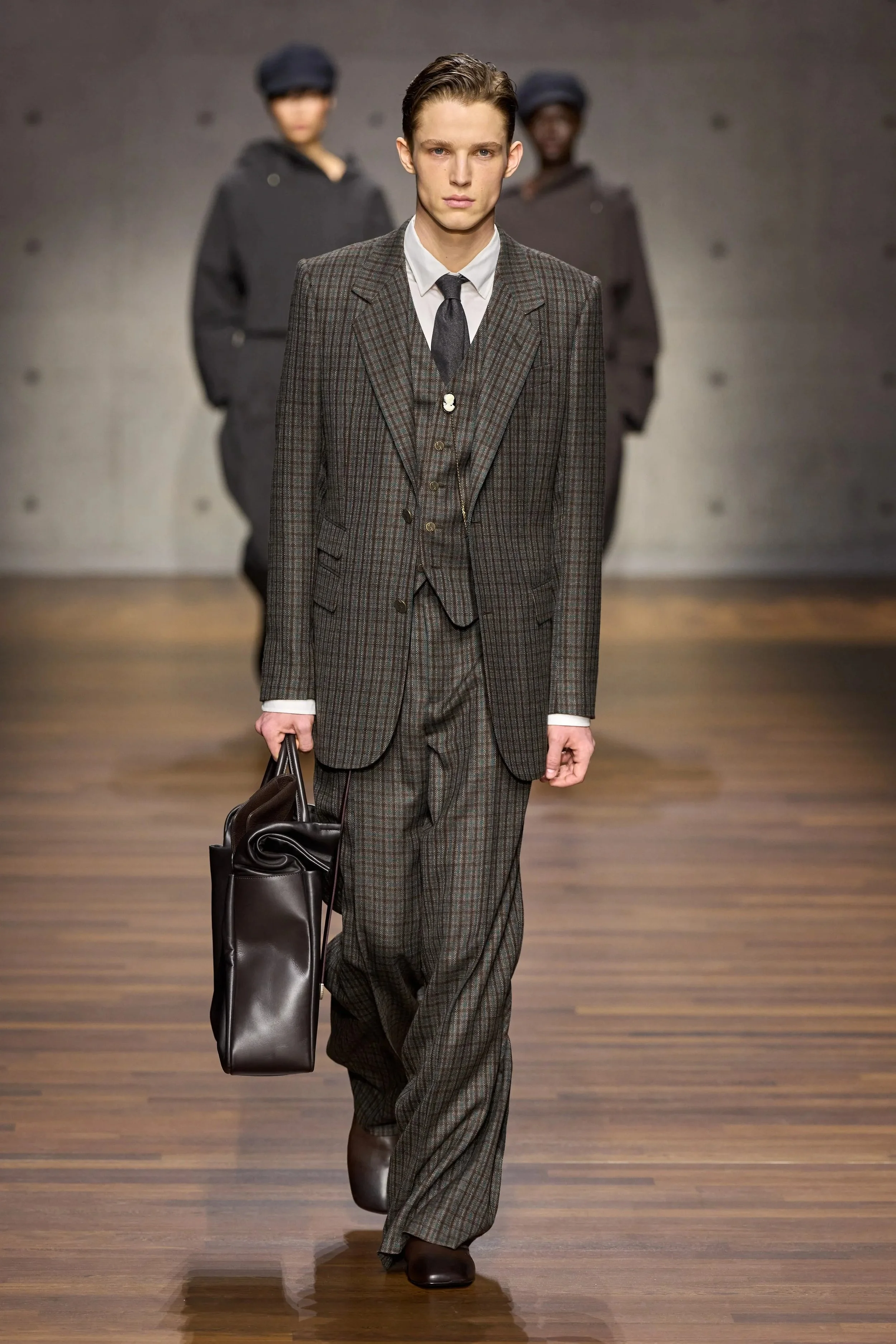
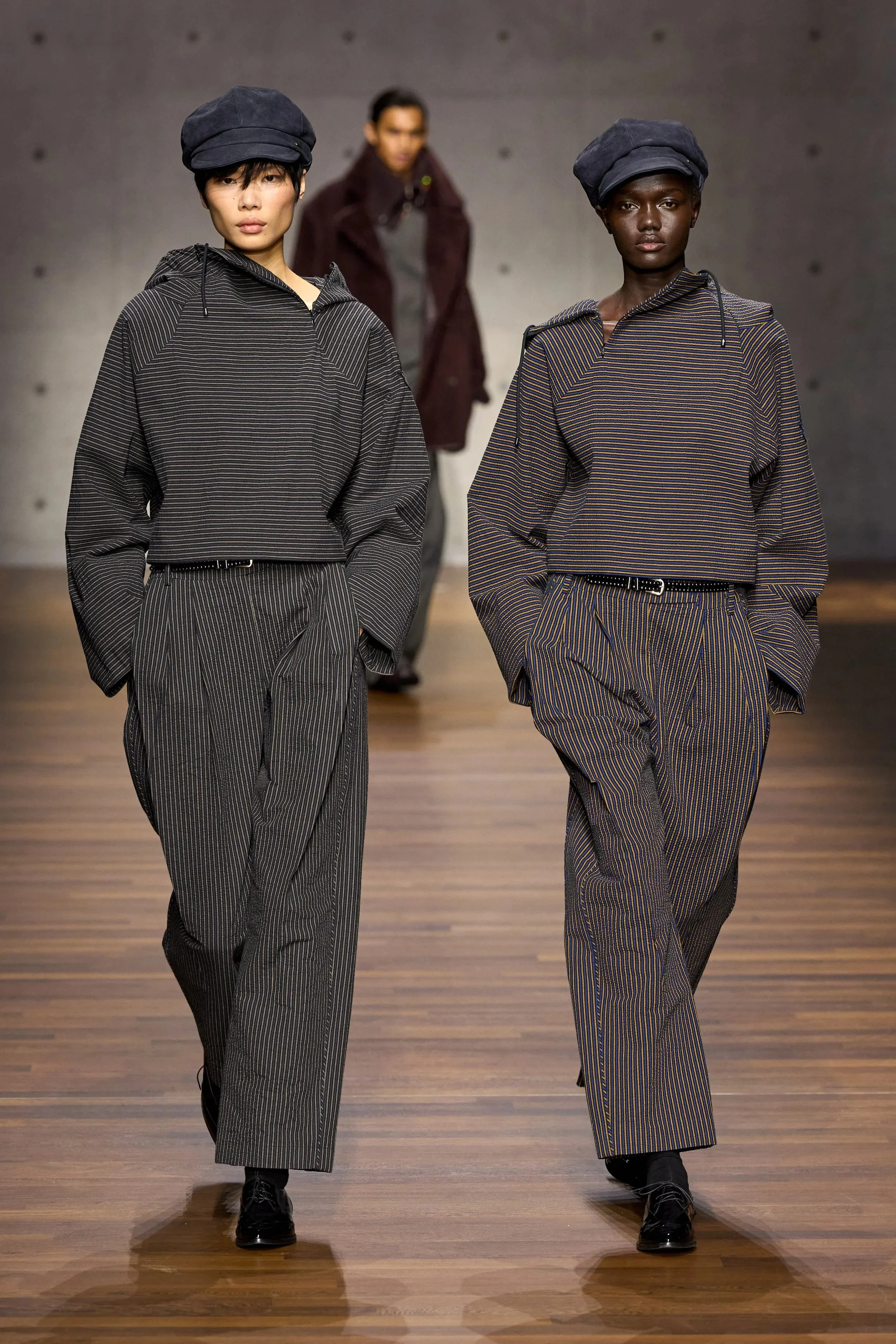
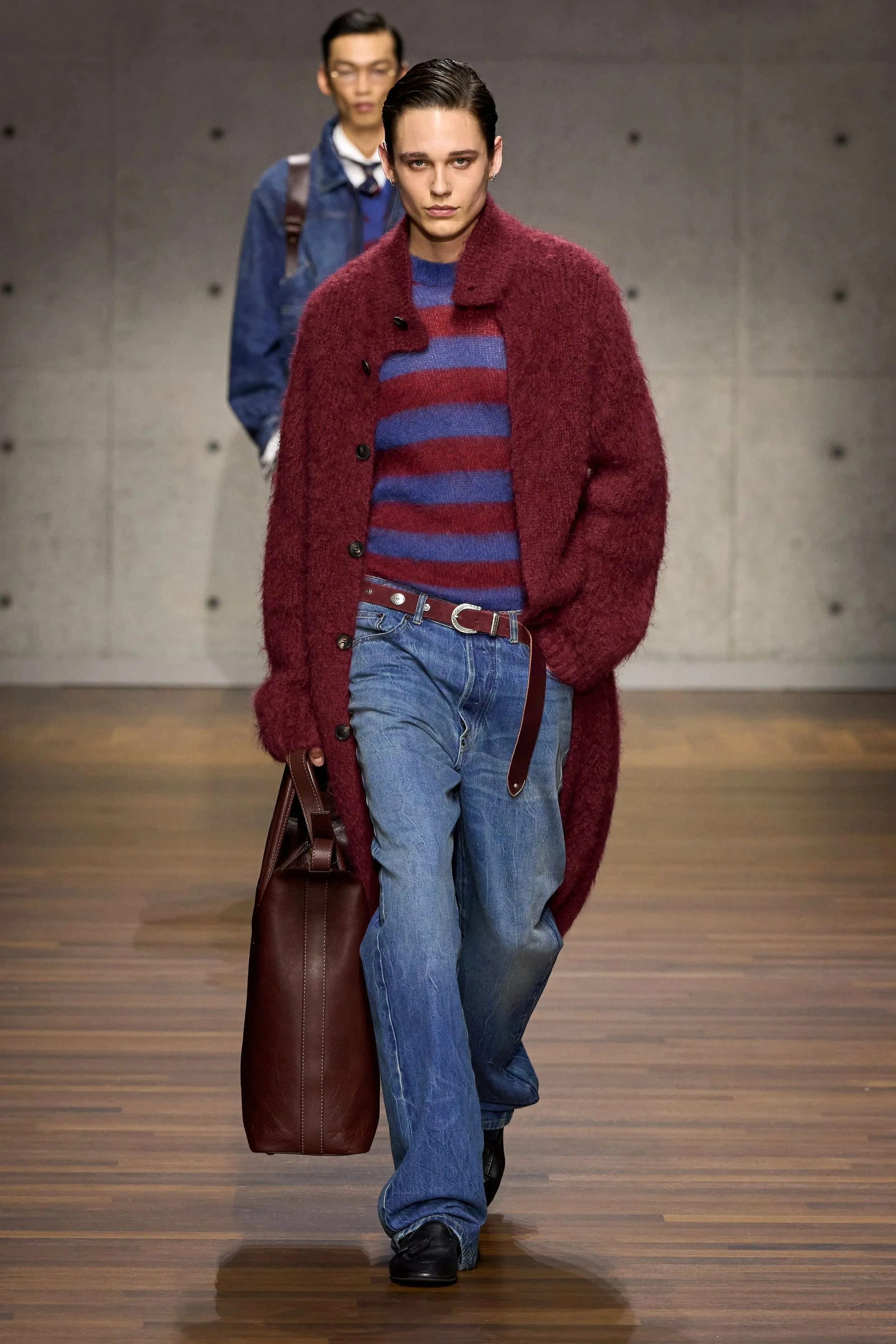
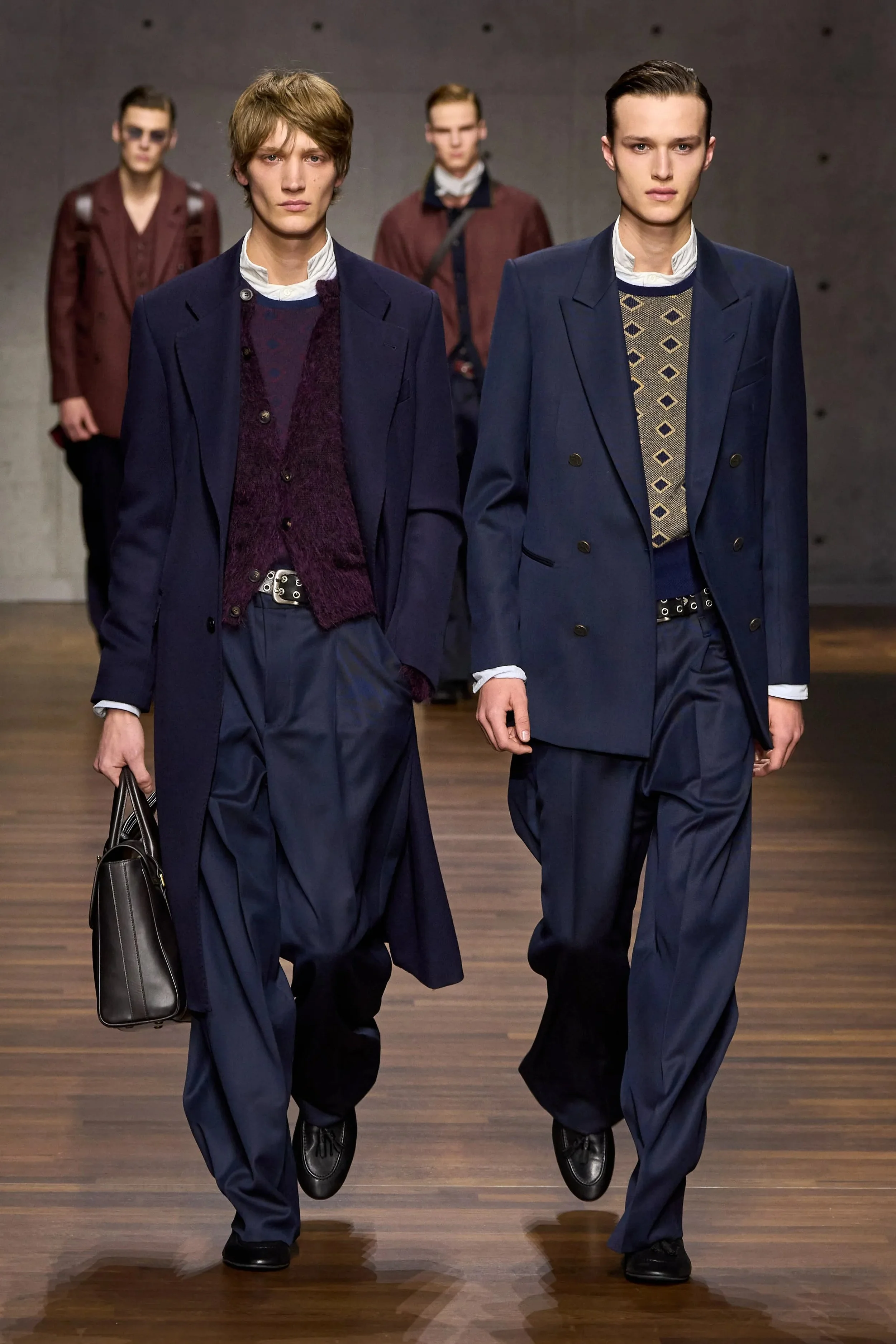
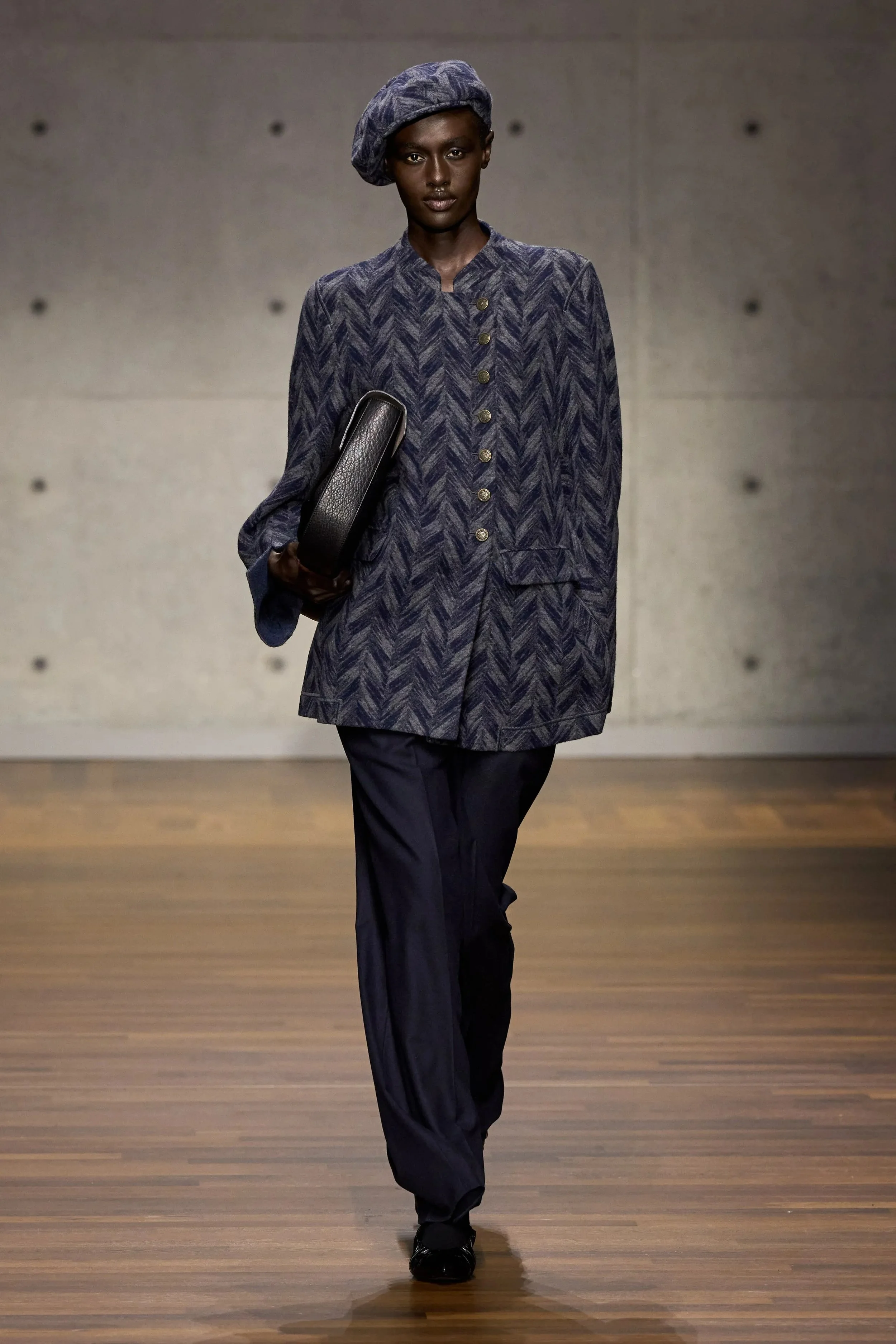
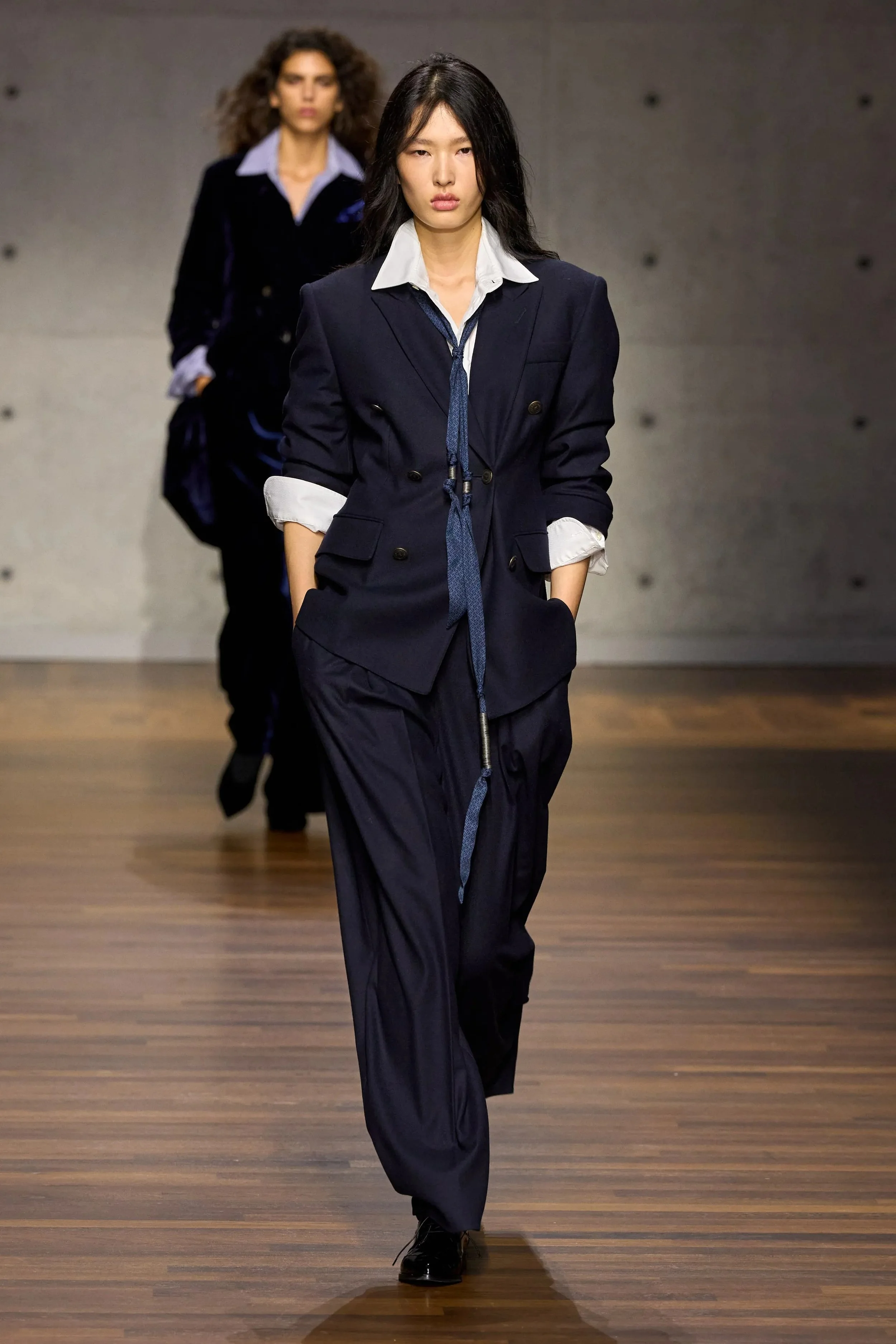
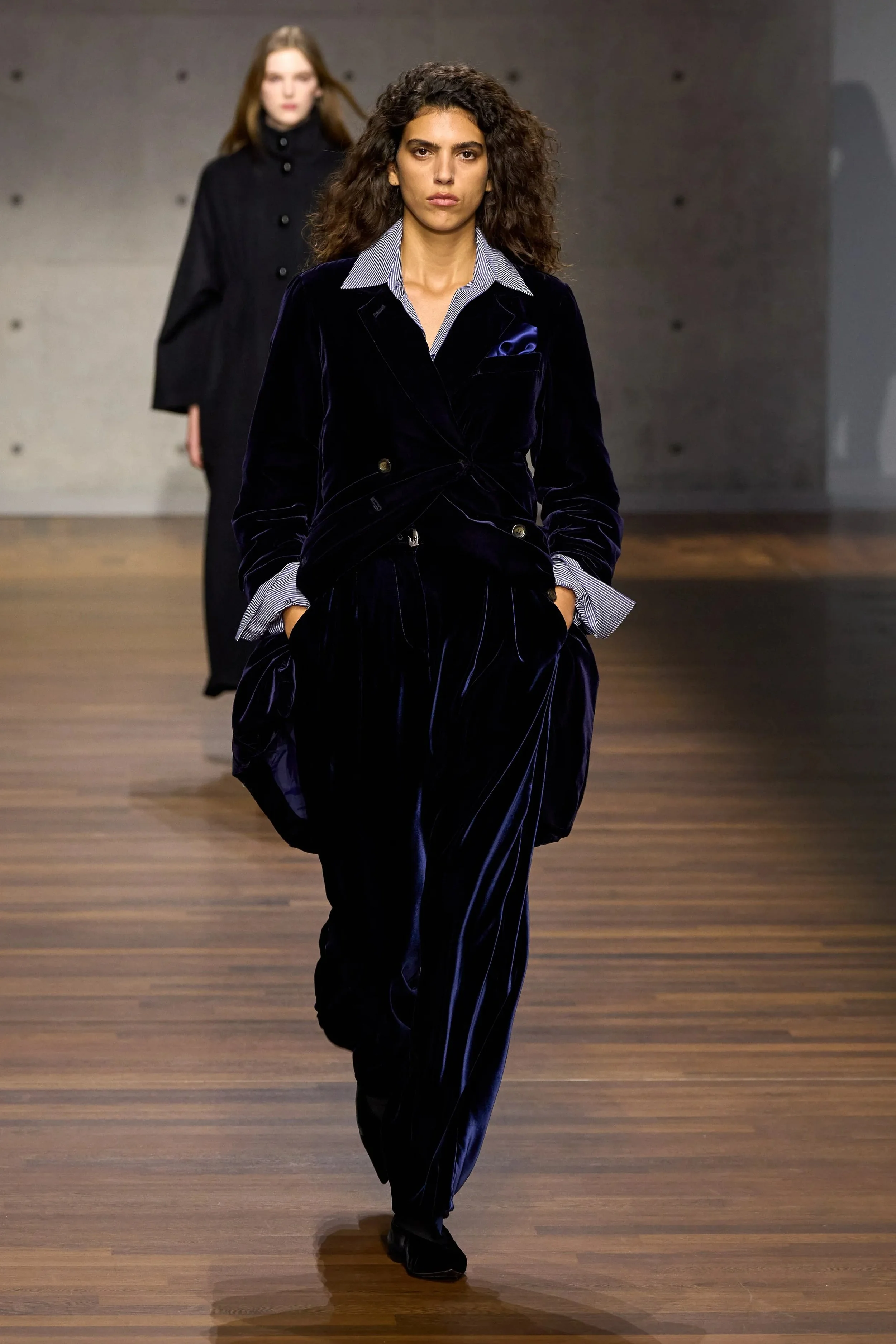
The Emporio Armani Fall/Winter 2026 collection showcased silhouettes rooted in early 20th-century European menswear. The pieces are deeply imprinted with British country codes, with tailoring as the backbone, filtered through a contemporary and gender-fluid lens. Reminiscent of power dressing, the looks feel strong and assertive, yet intellectual and subdued.

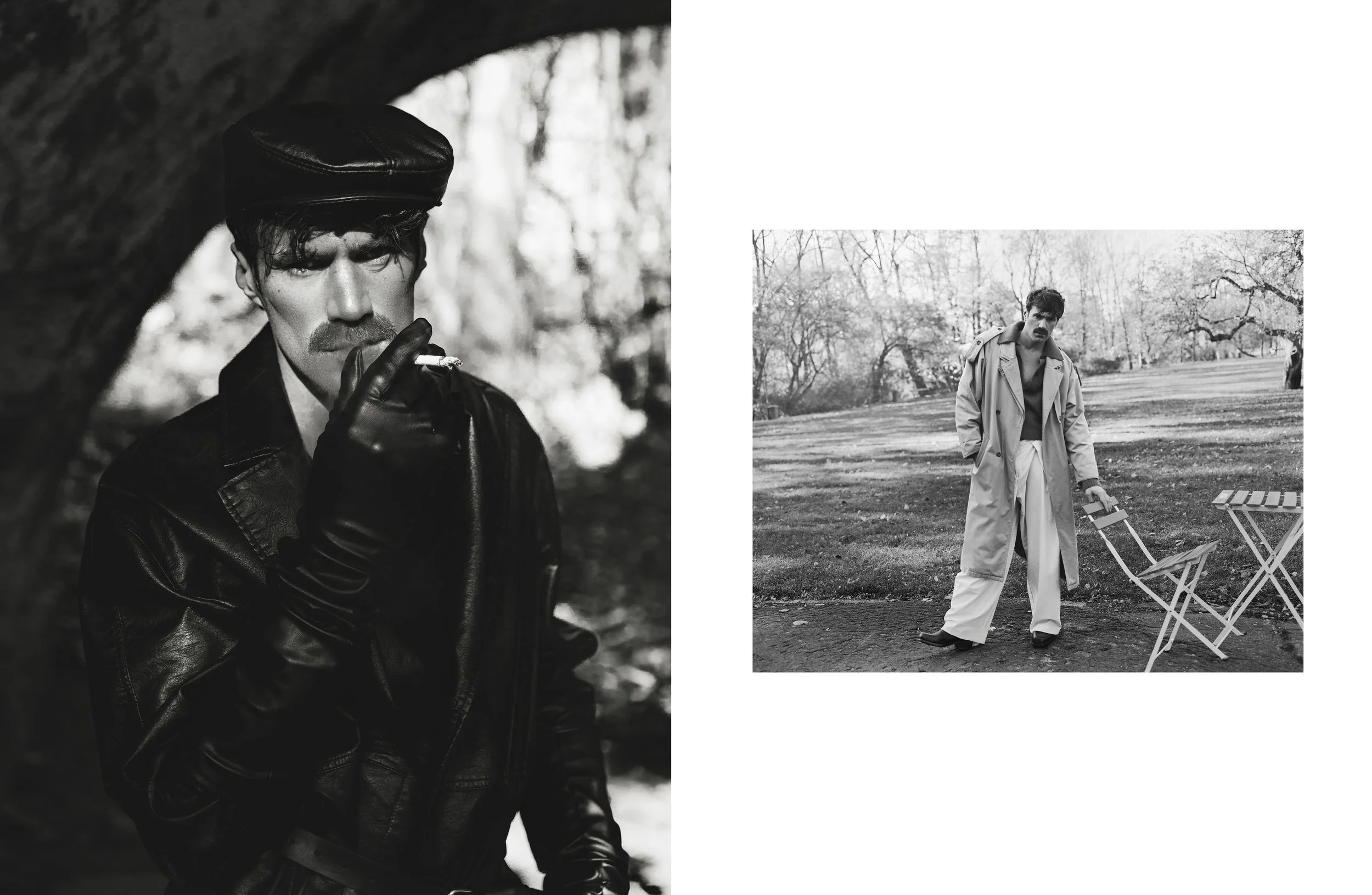
Three-piece suits, structured overcoats, double-breasted jackets, waistcoats, ties, and long coats that elongate the body appear repeatedly throughout. Flat caps are present in myriad ways, creating a sense of mystery while adding a stylish finish to every look.

There is a subtle interplay between masculine and feminine synergies, with masculine structure commanding the styling of the looks. For women, the tailoring borrows heavily from menswear – oversized blazers, pantsuits, structured coats, and buttoned vests – while playing with femininity through pieces such as knee-length skirts, which create a sense of subtle sensuality.

The colour selection revolves around calming tones, ranging from charcoal and slate grey to muted brown and deep navy. An occasional pop of deep Bordeaux stands out, while denim interrupts the severity of the palette. Velvet is also present, adding softness and luminosity, and breaking the collection’s continuous rhythm.


Words by Carolina Benjumea
PRADA FW26

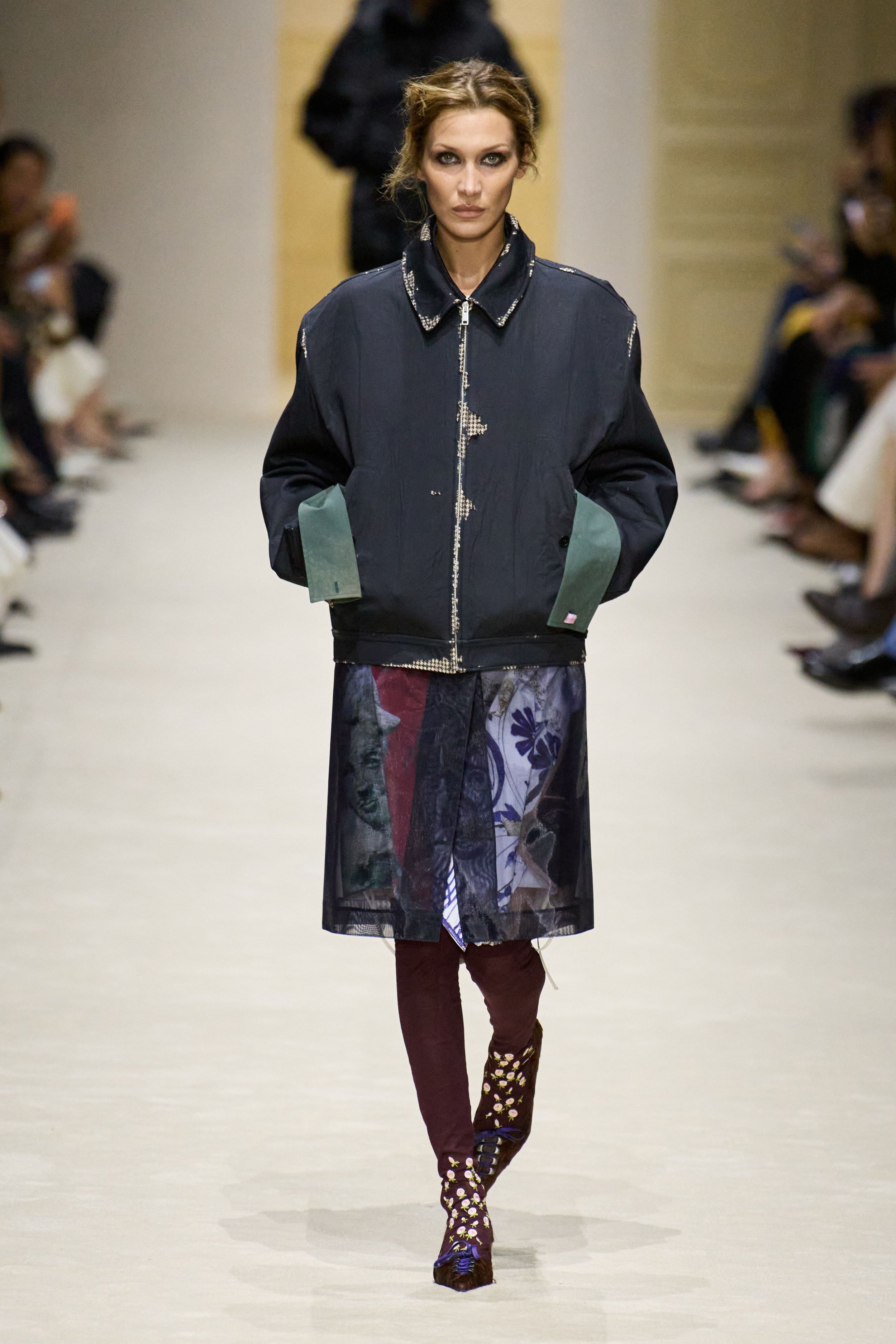
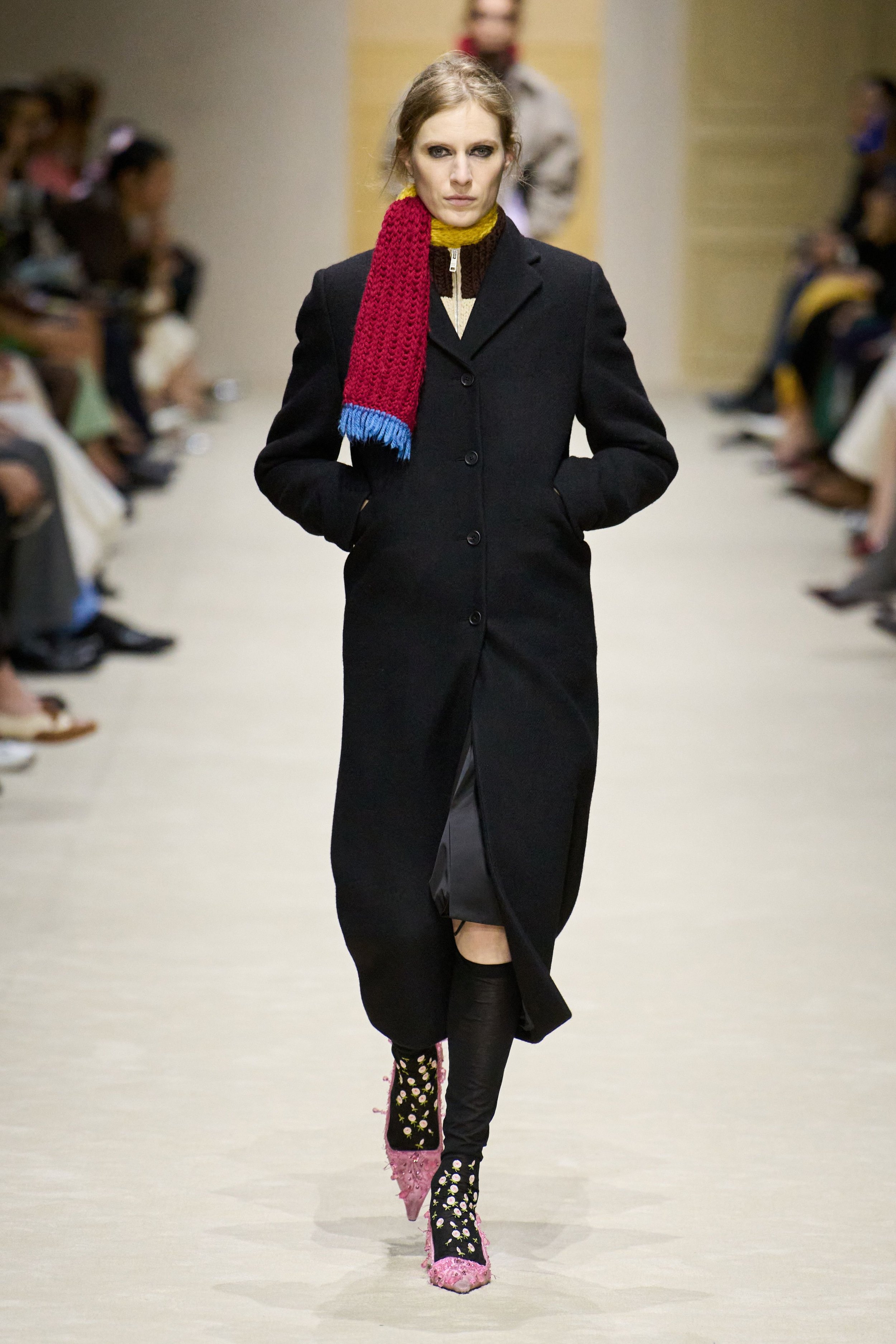
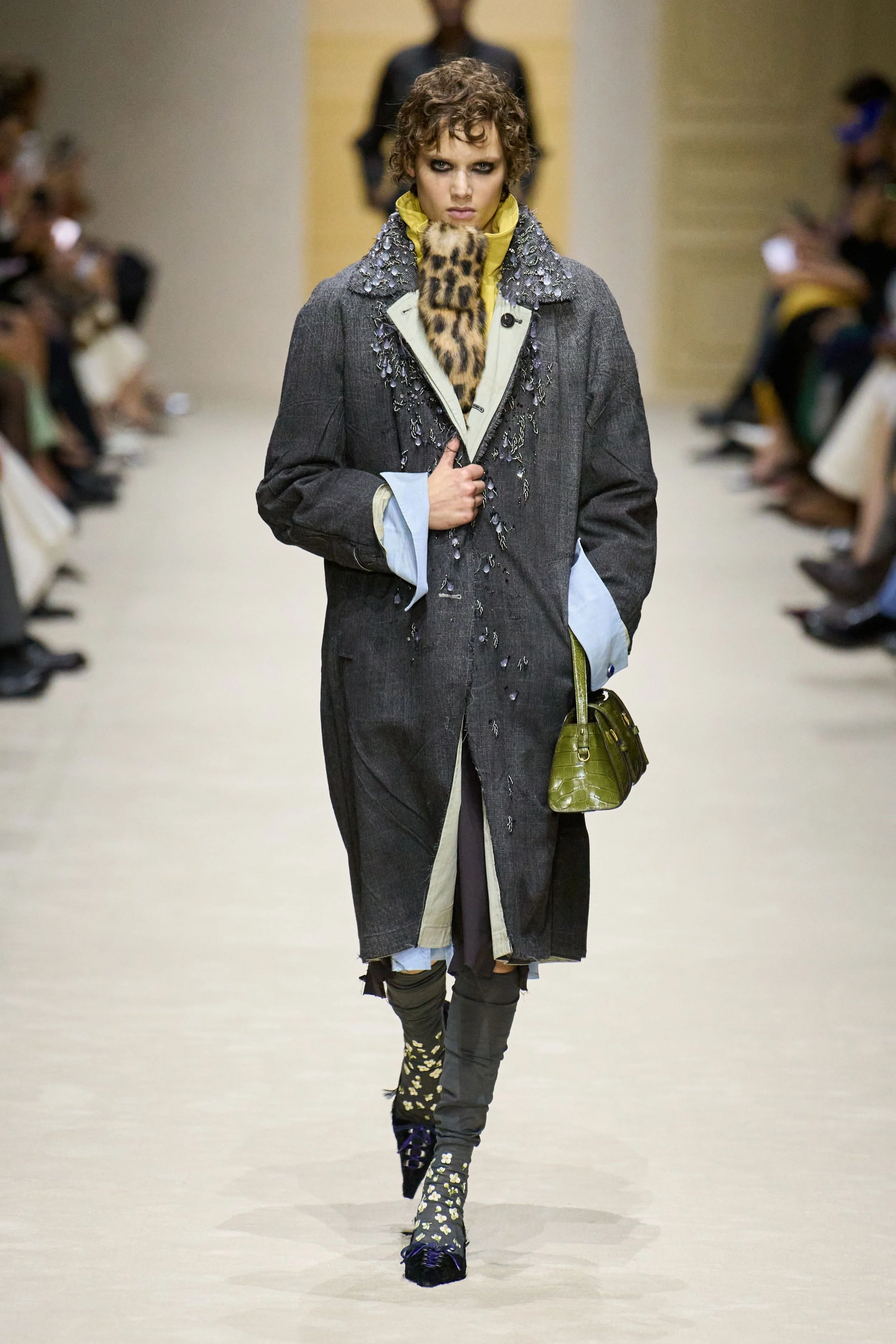
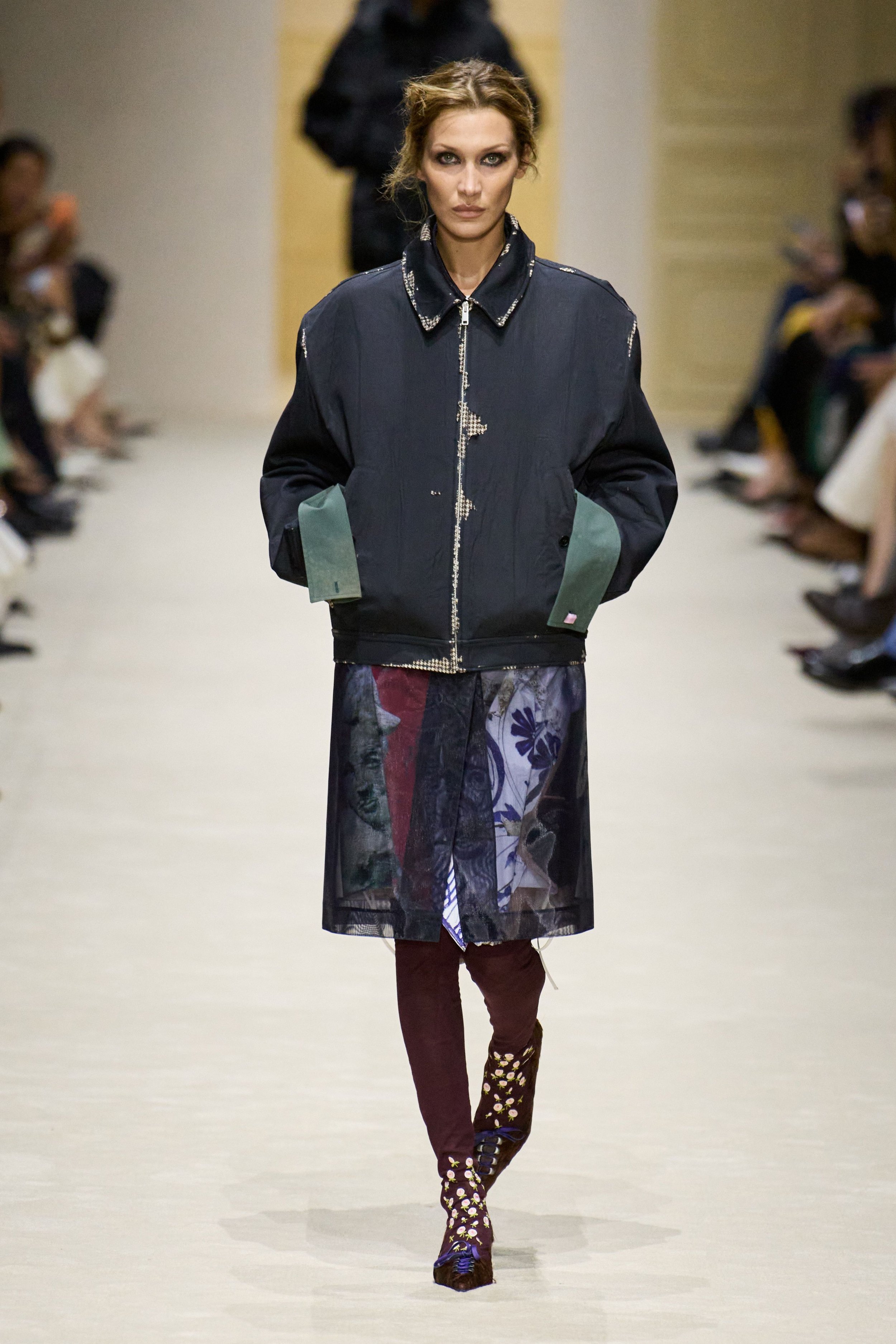
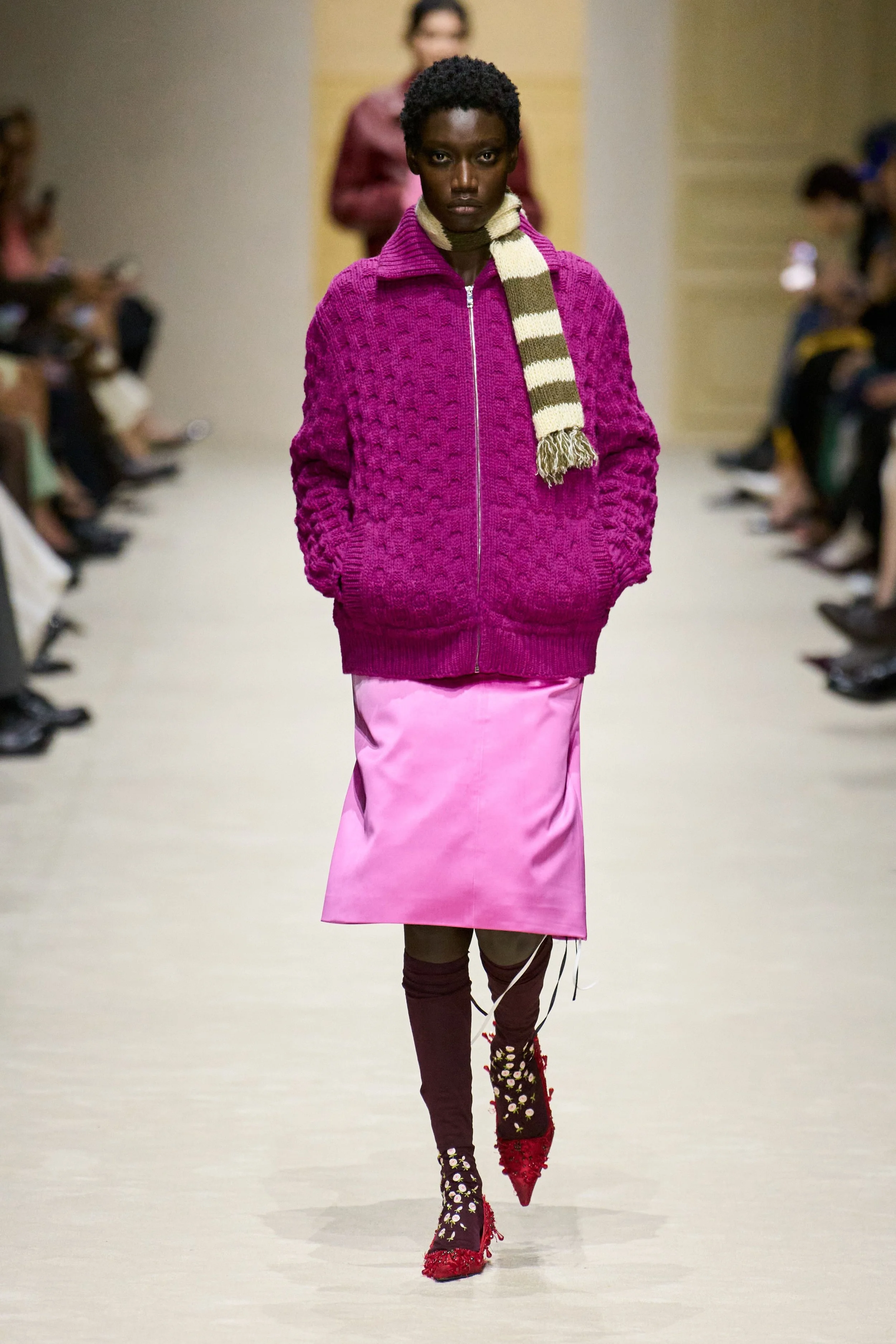
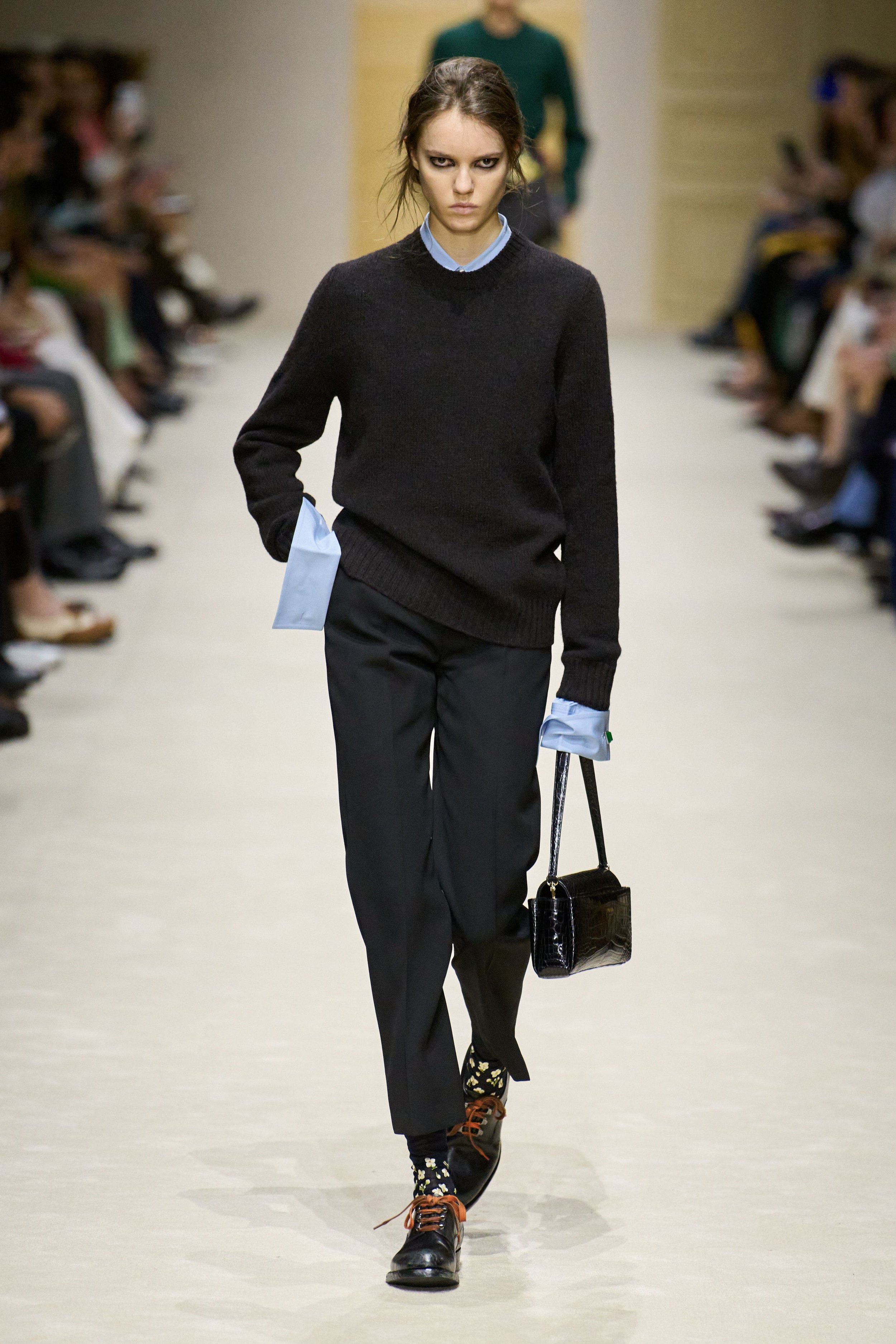
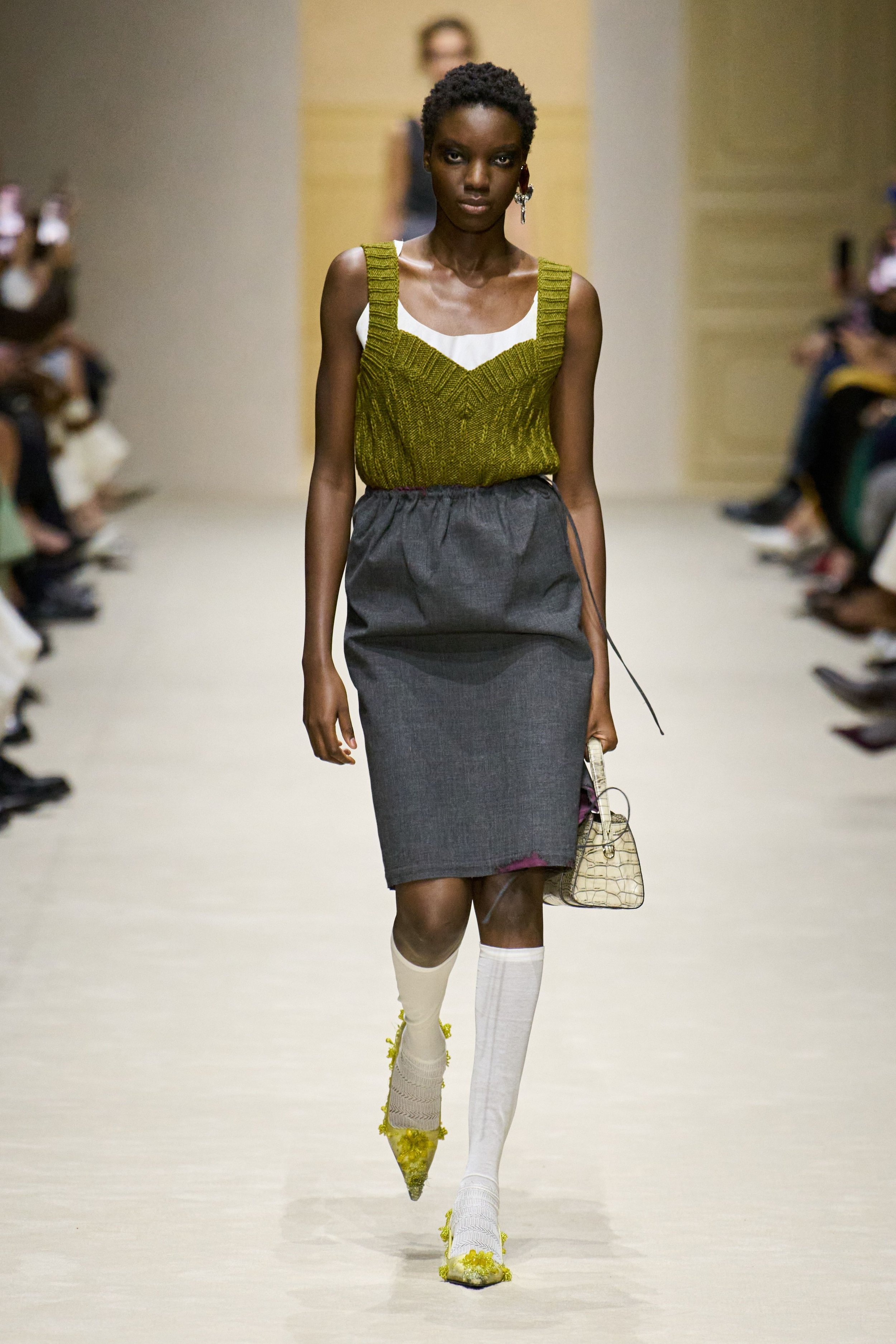
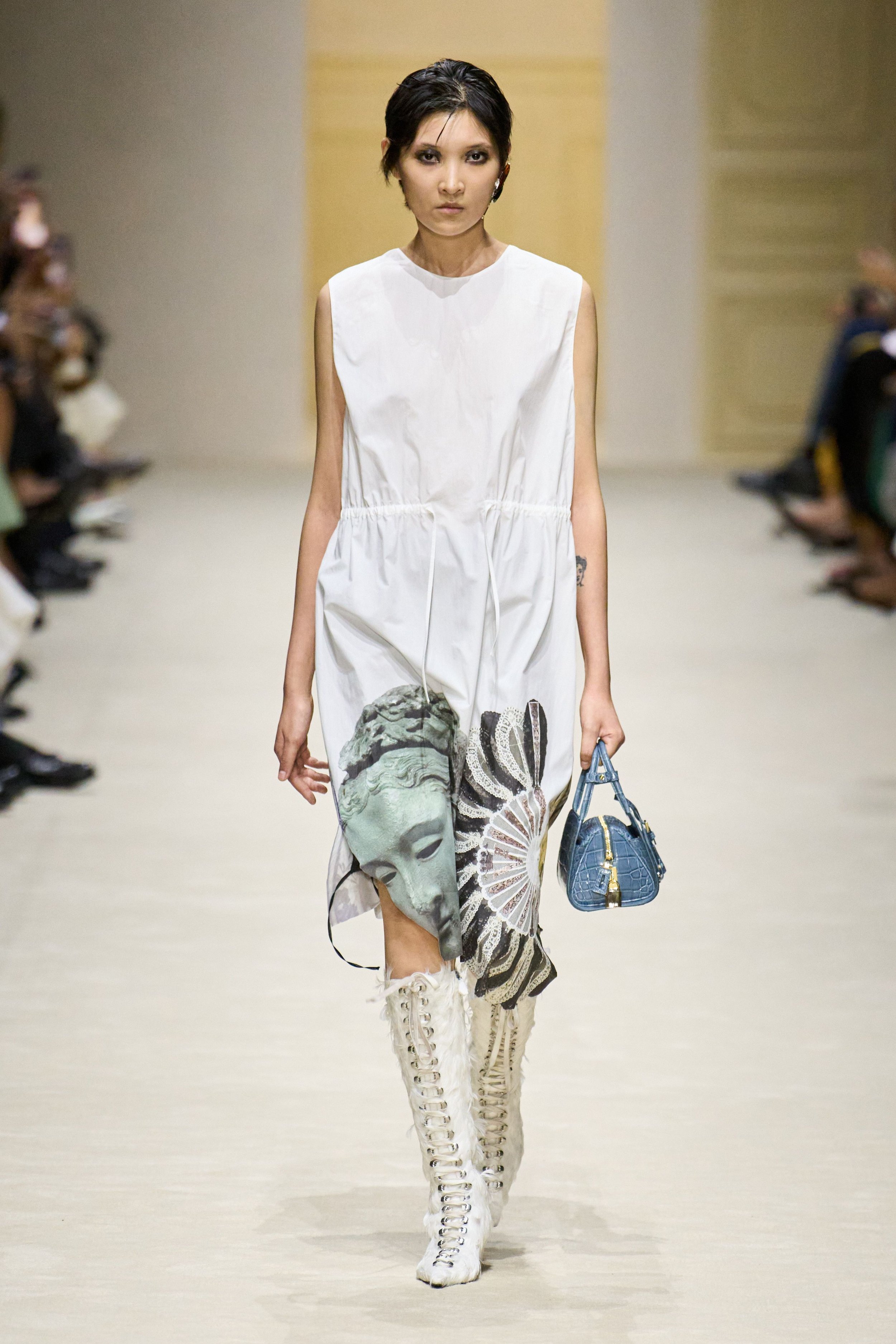
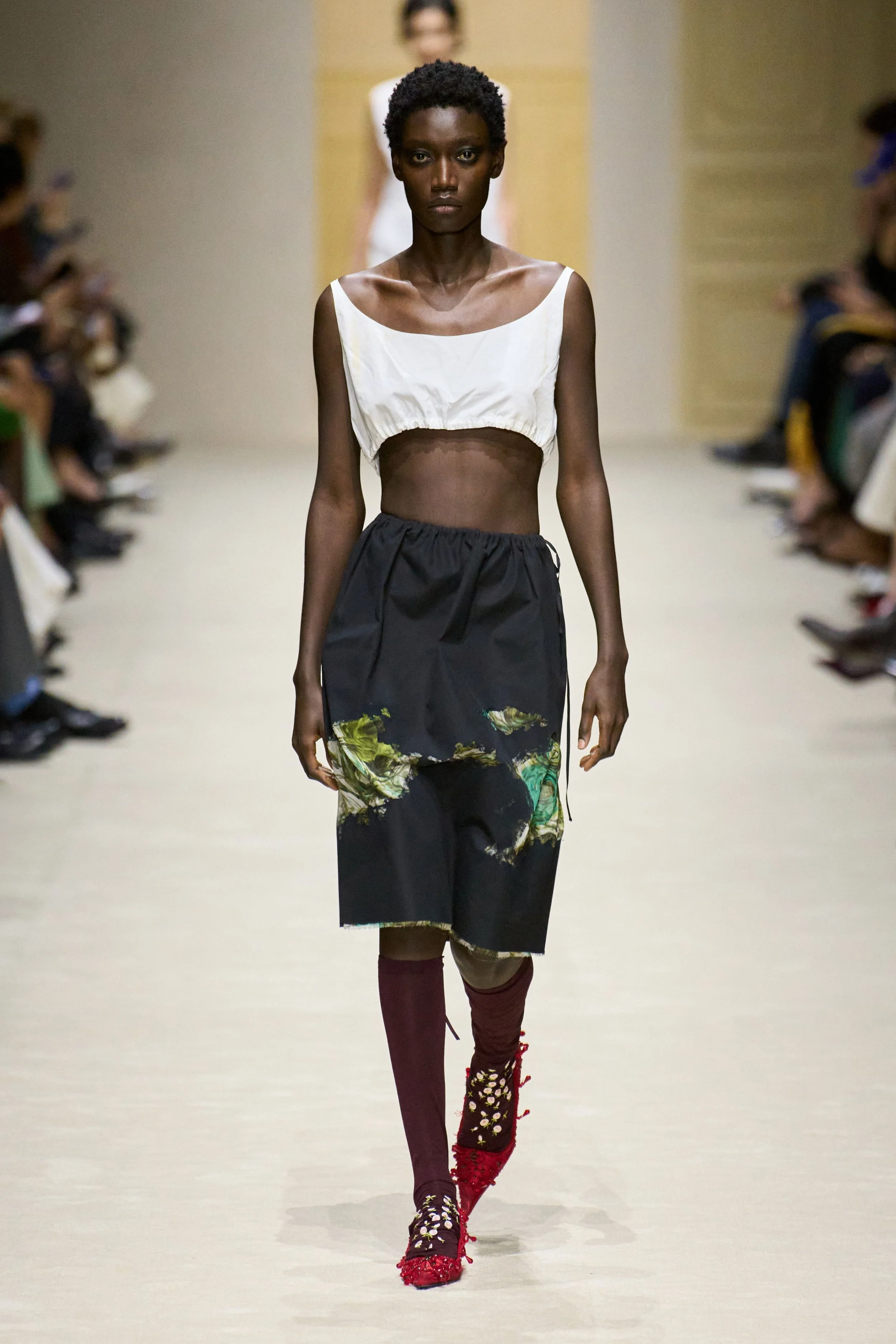
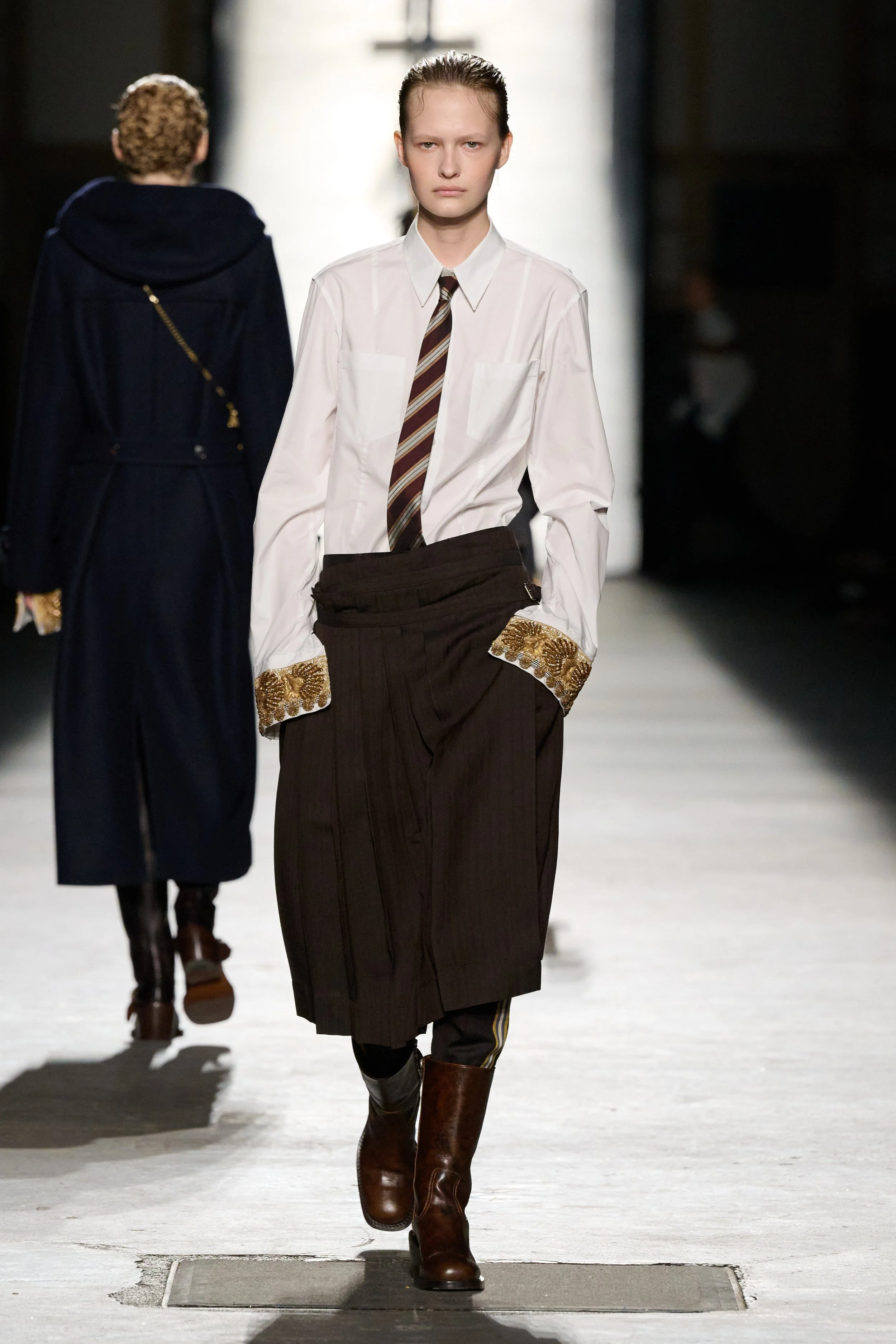
Fifteen models. Sixty looks. For Fall/Winter 2026, Miuccia Prada and Raf Simons delivered a womenswear collection that has taken us on a spectacular adrenaline high – restless, clever, and unmistakably Prada.

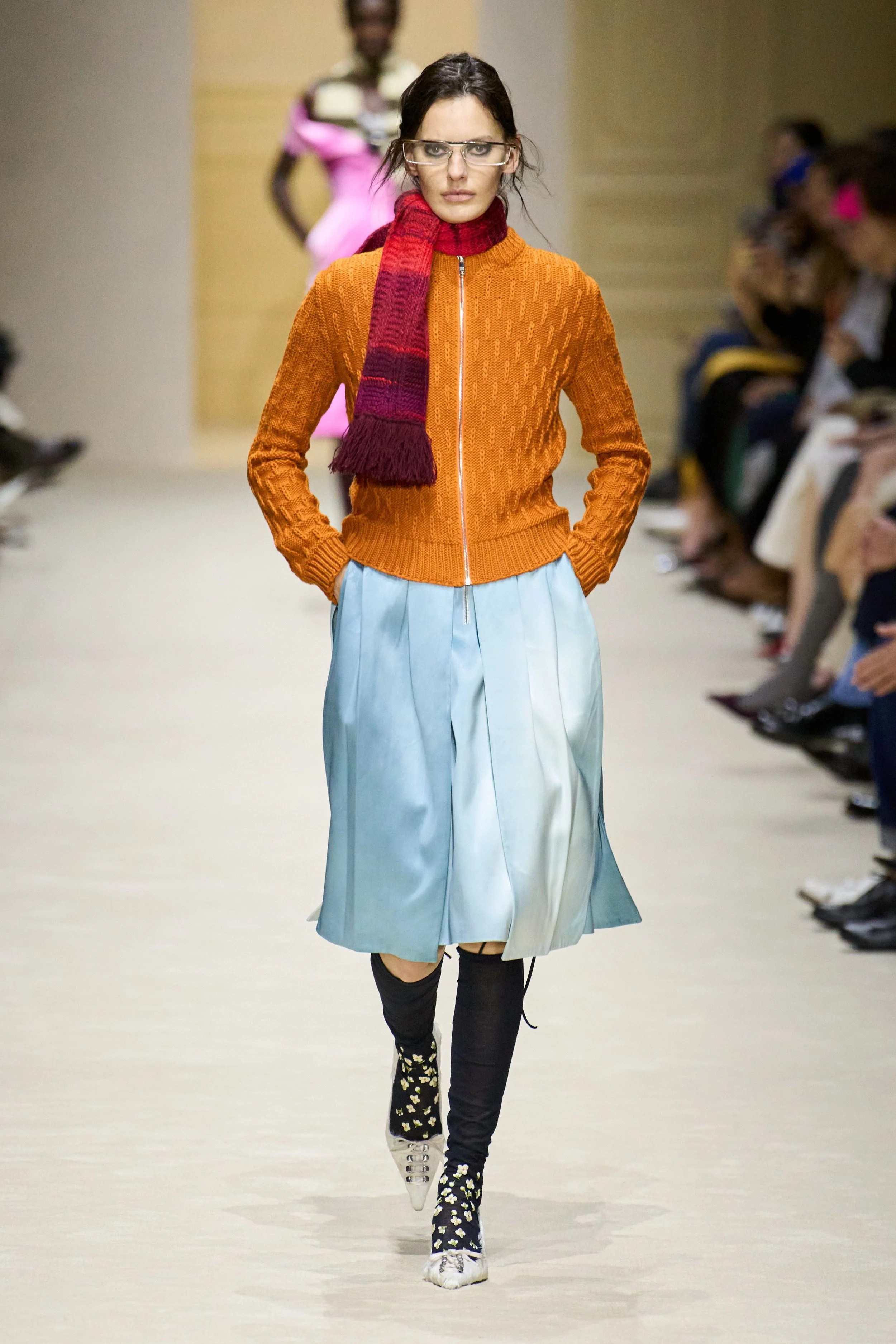
The show opened with Julia Nobis, a long-time house favourite, wrapped in a shrunken, buttoned-up wool coat and a neatly tied scarf splashed with yellow, red, and baby blue. When she reappeared on the runway a short while later, this time without the coat, the concept began to reveal itself. Look by look, to the pulse of hardcore techno, layers were stripped away, spotlighting one of Prada’s most enduring obsessions: the expressive power of layering – and unlayering.

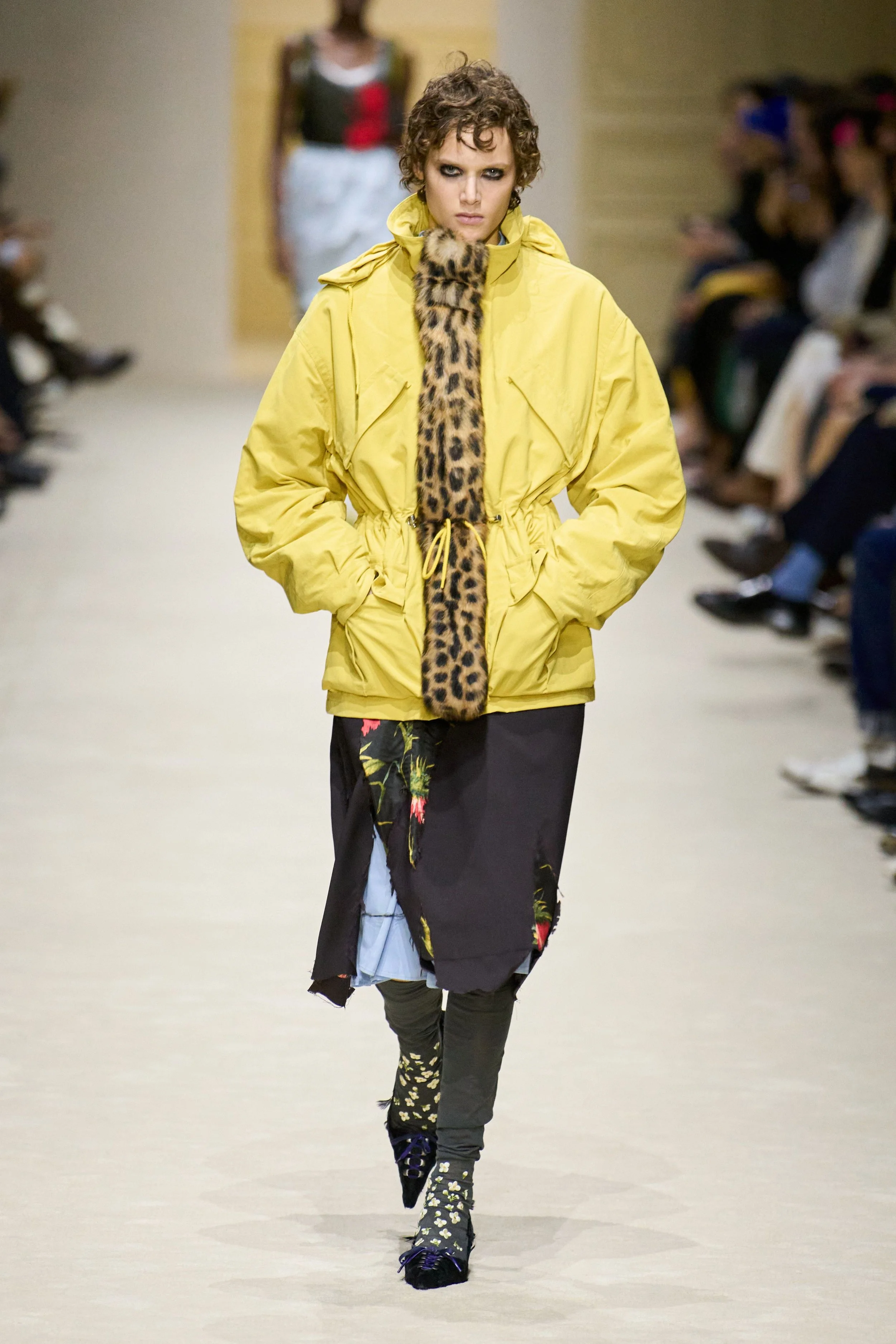
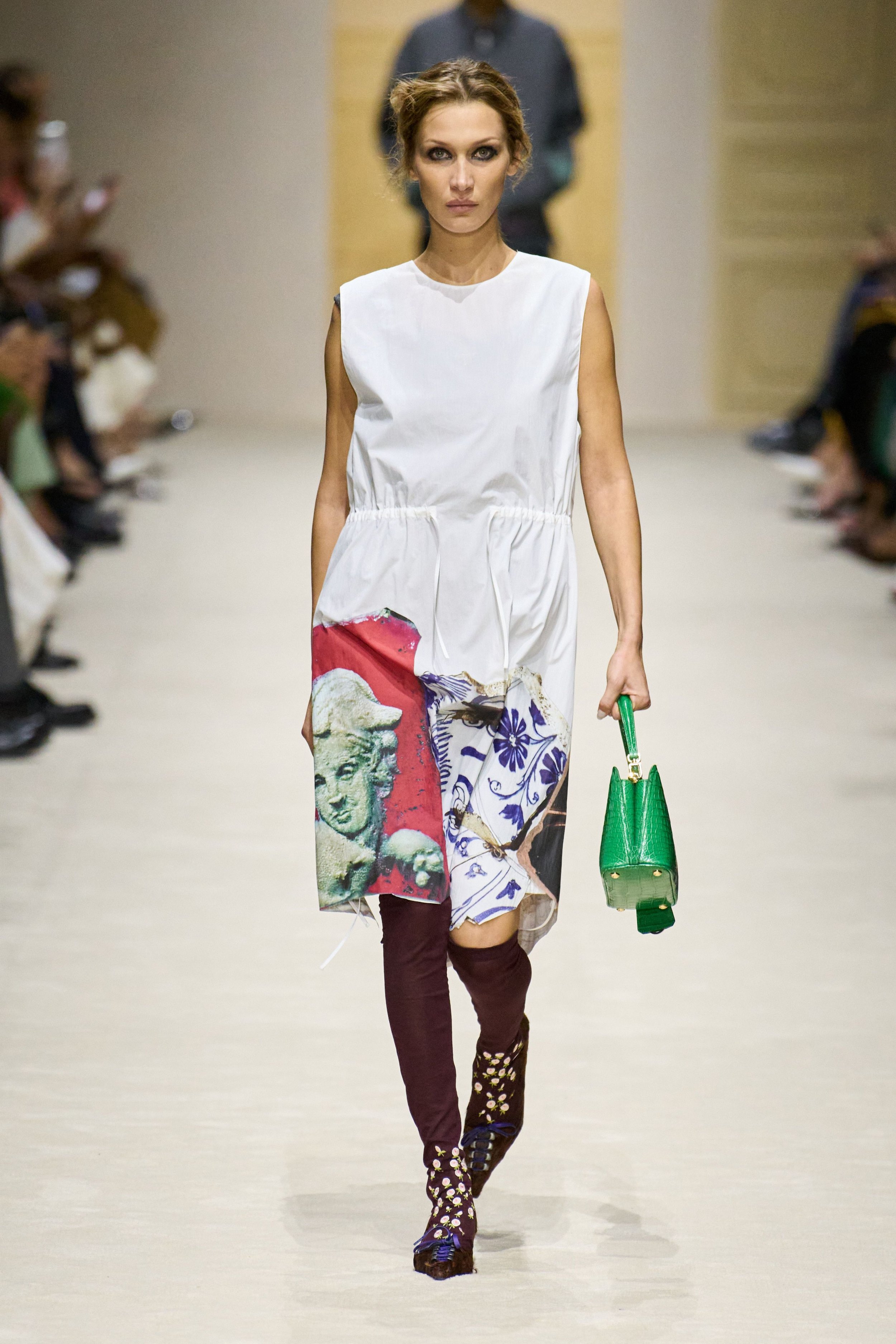
Anoraks echoed silhouettes seen in the brand’s recent menswear show, here decorated with faux-leopard trim. Dishevelled, stained shirt cuffs – a detail that went viral with that collection back in January – were also present throughout. A navy jacket worn by Bella Hadid, who made a striking Prada debut, appeared worn through at the seams, revealing houndstooth fabric beneath as if the garment itself had lived a long life.

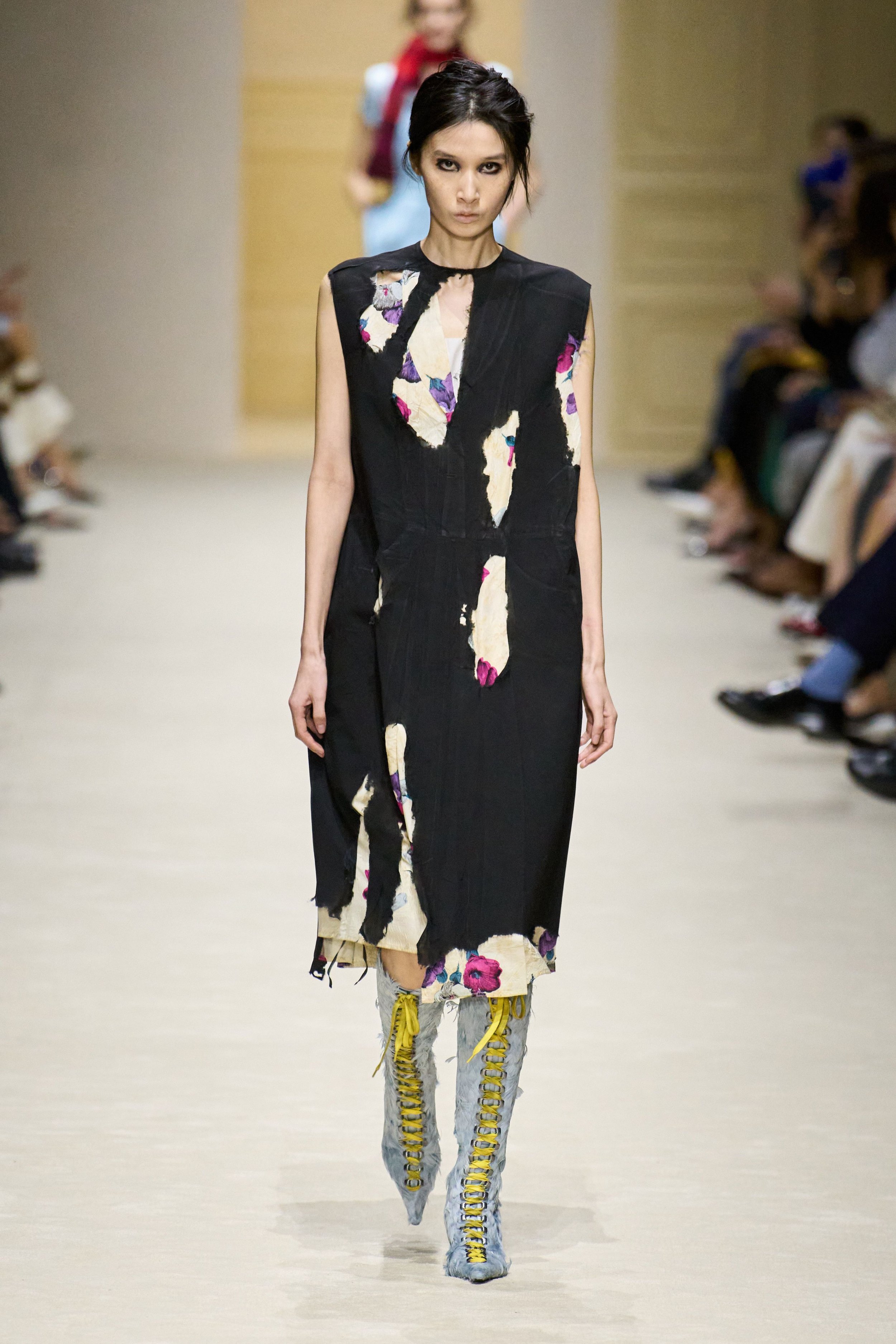
Accessories carried the collection’s most theatrical gestures. Pointed-toe boots were feathered and tightly laced, while kitten heels were finished with dangling jewels at the back. Their intentionally battered surfaces underscored the design duo’s touching message: getting to witness the passage of time is something to embrace, a true luxury.


Words by Martin Onufrowicz

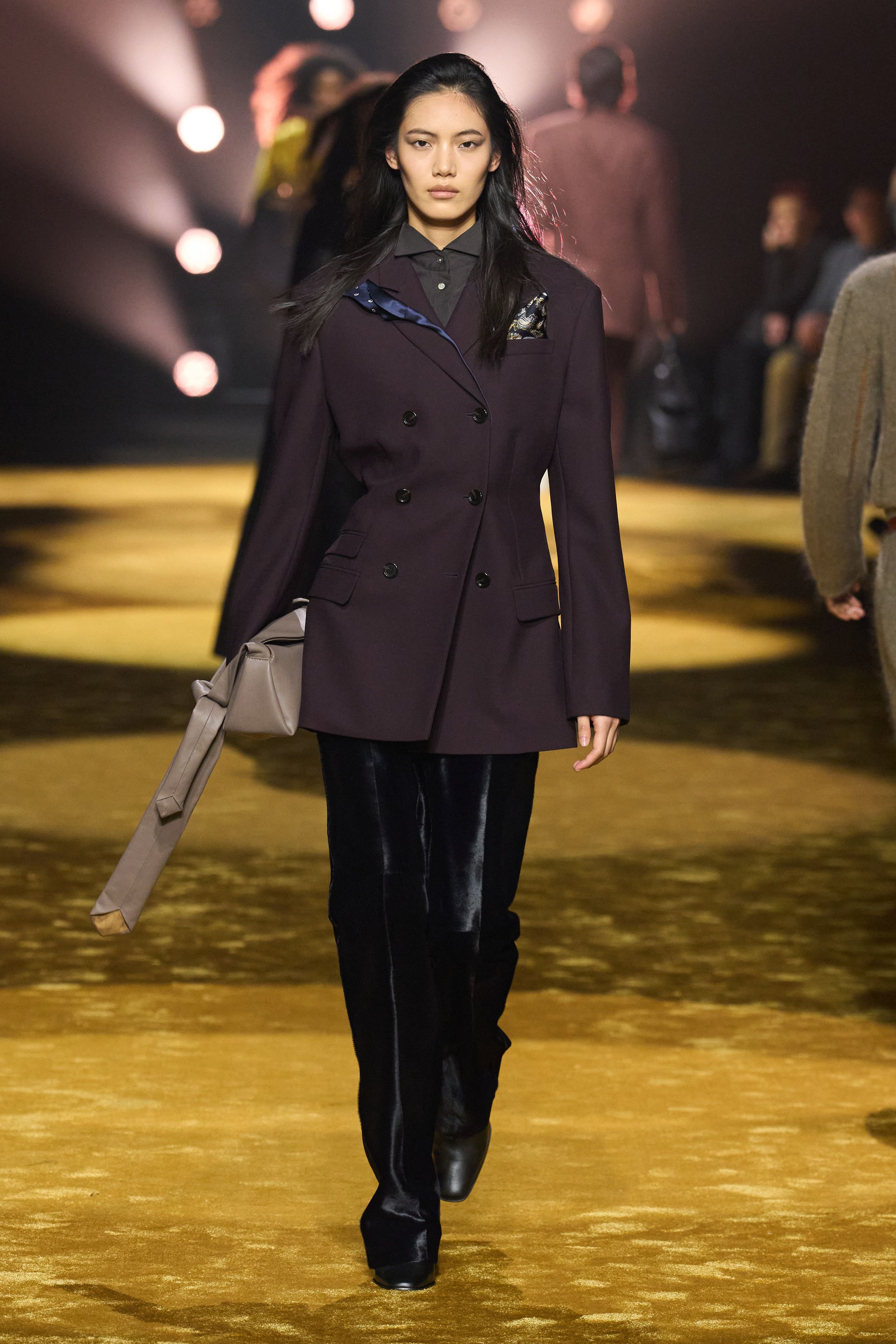
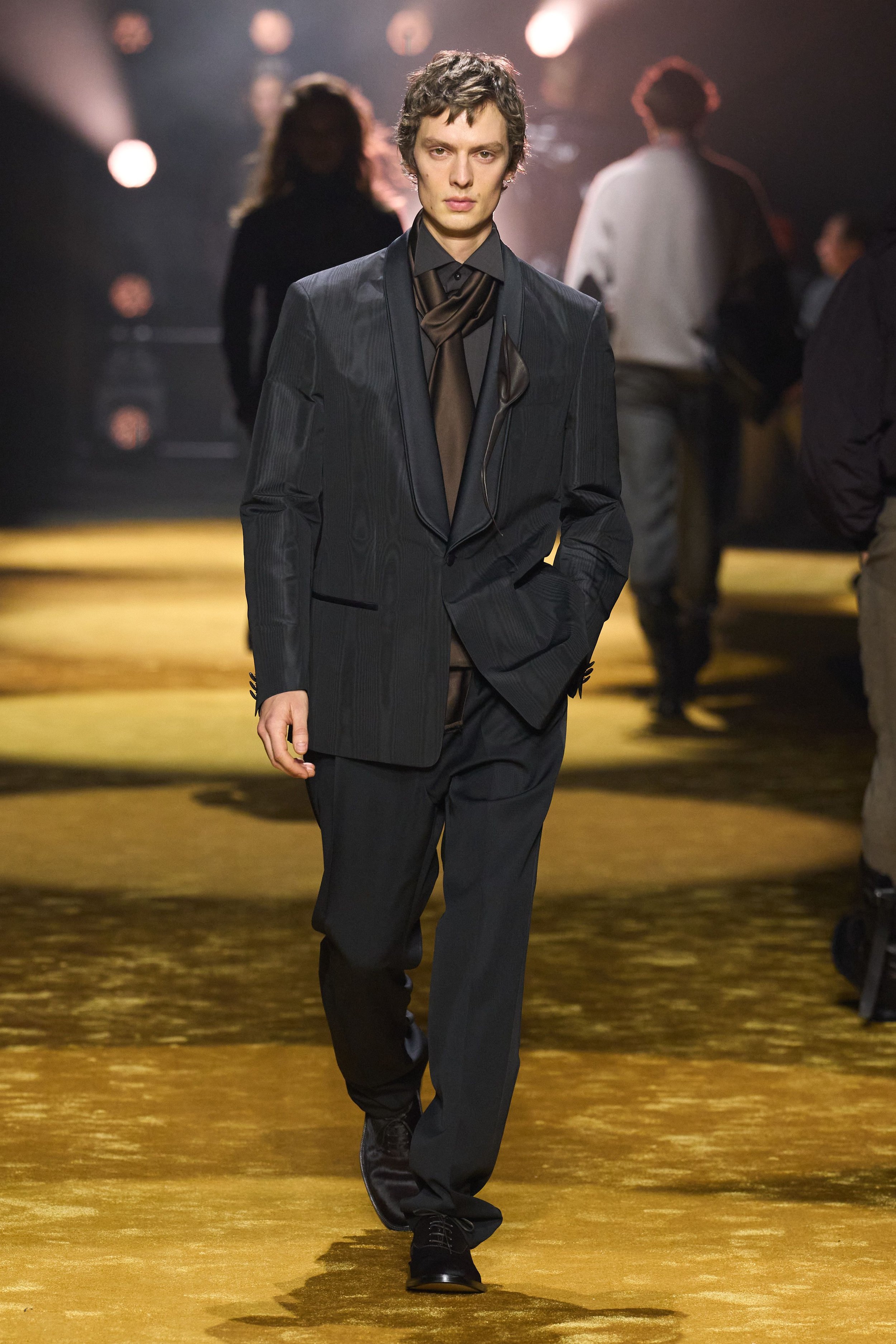
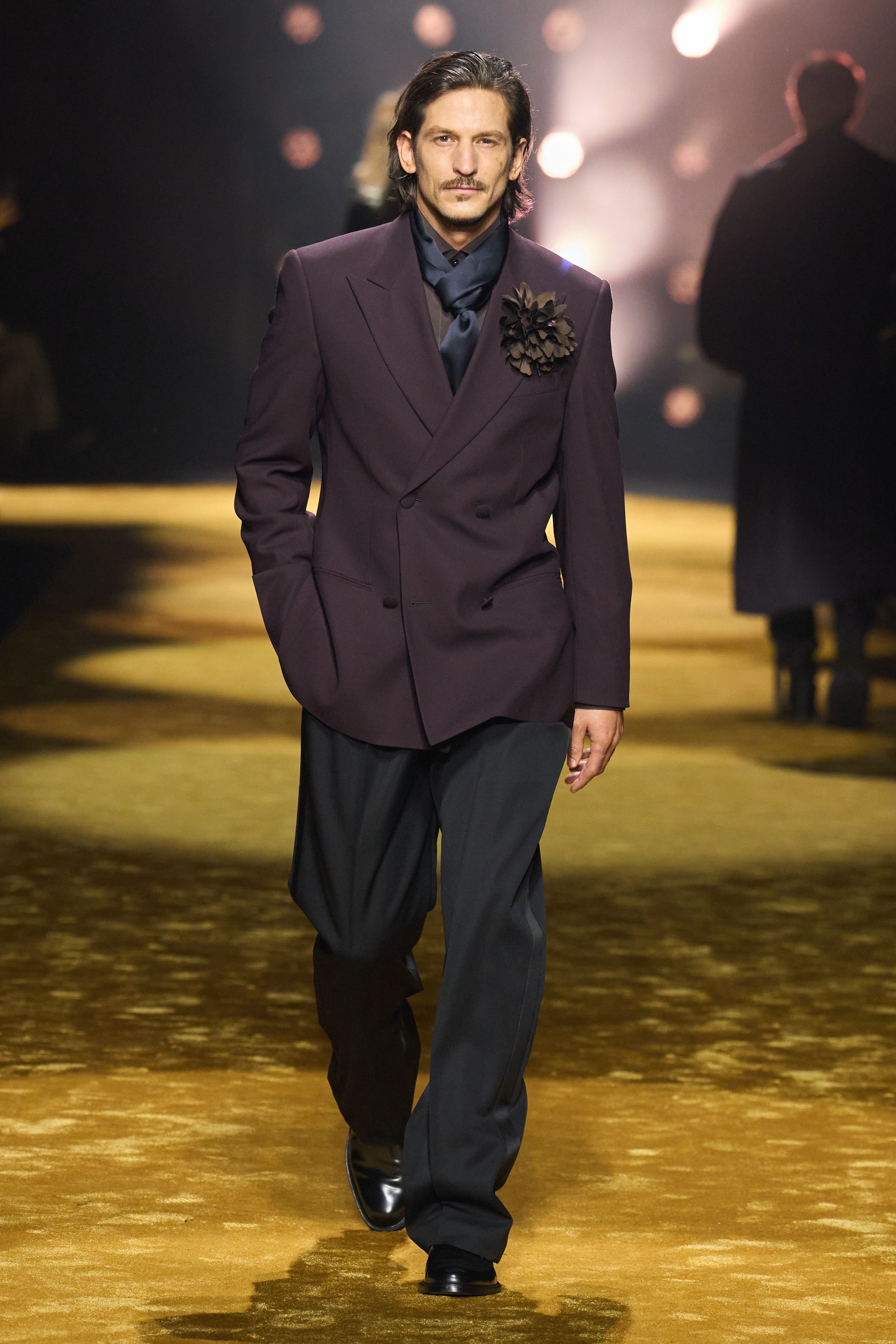
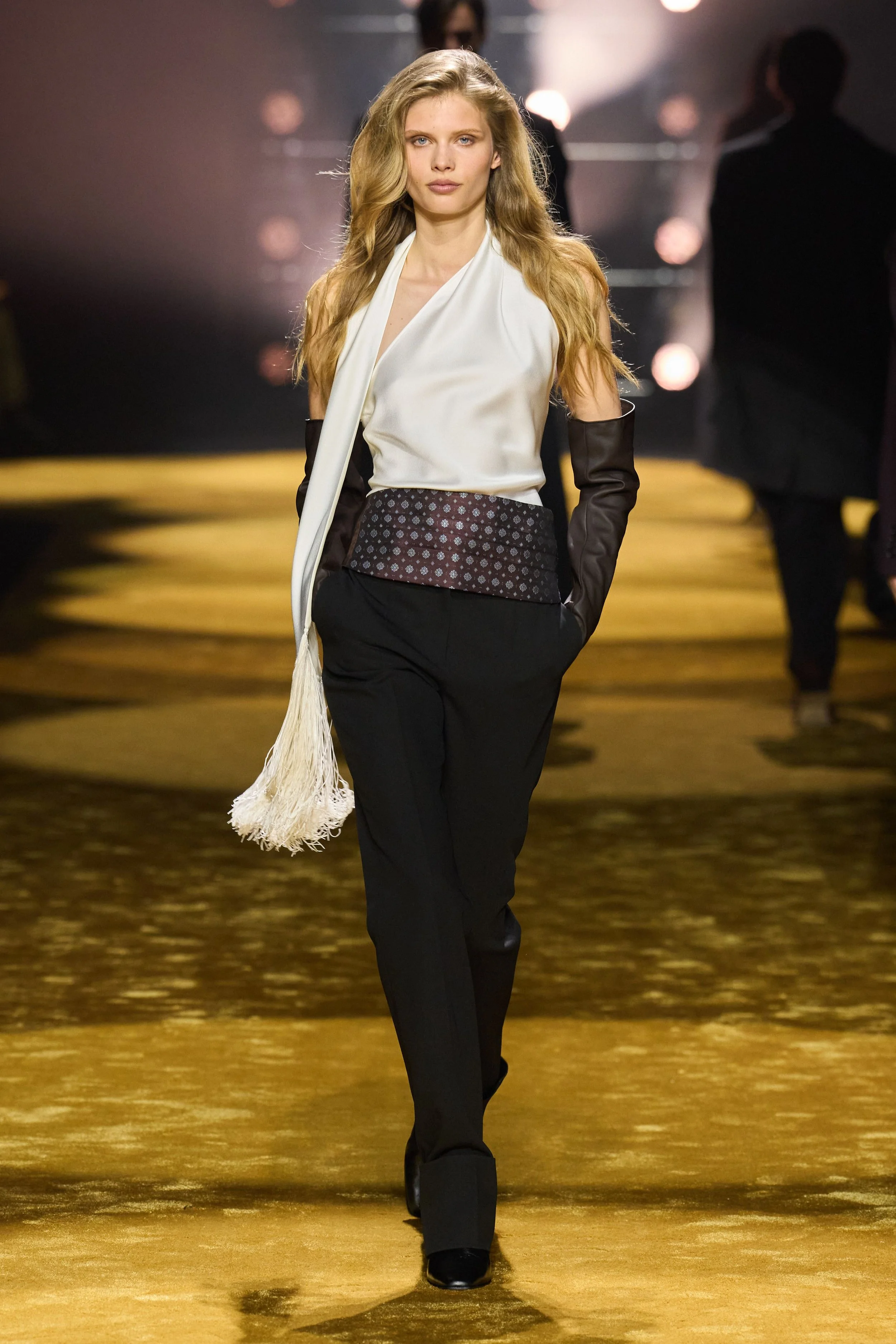
BOSS FW26

BOSS does not believe in half measures. For its Fall/Winter 2026 collection, the global powerhouse staged a runway spectacle in a luminous, plush Milan venue. This atmosphere conjured the mood of an exquisite evening affair, even at midday.

The casting alone set the tone. Opening the show was the bona fide male superstar Parker Van Noord, effortlessly delivering a masterclass in total aura maxxing (we’ll have what he’s having). From there, the lineup remained relentlessly strong. Jarrod Scott! Lulu Tenney! Leon Dame! Awar Odhiang! Each model’s appearance amplified the show’s sense of confidence and star power.

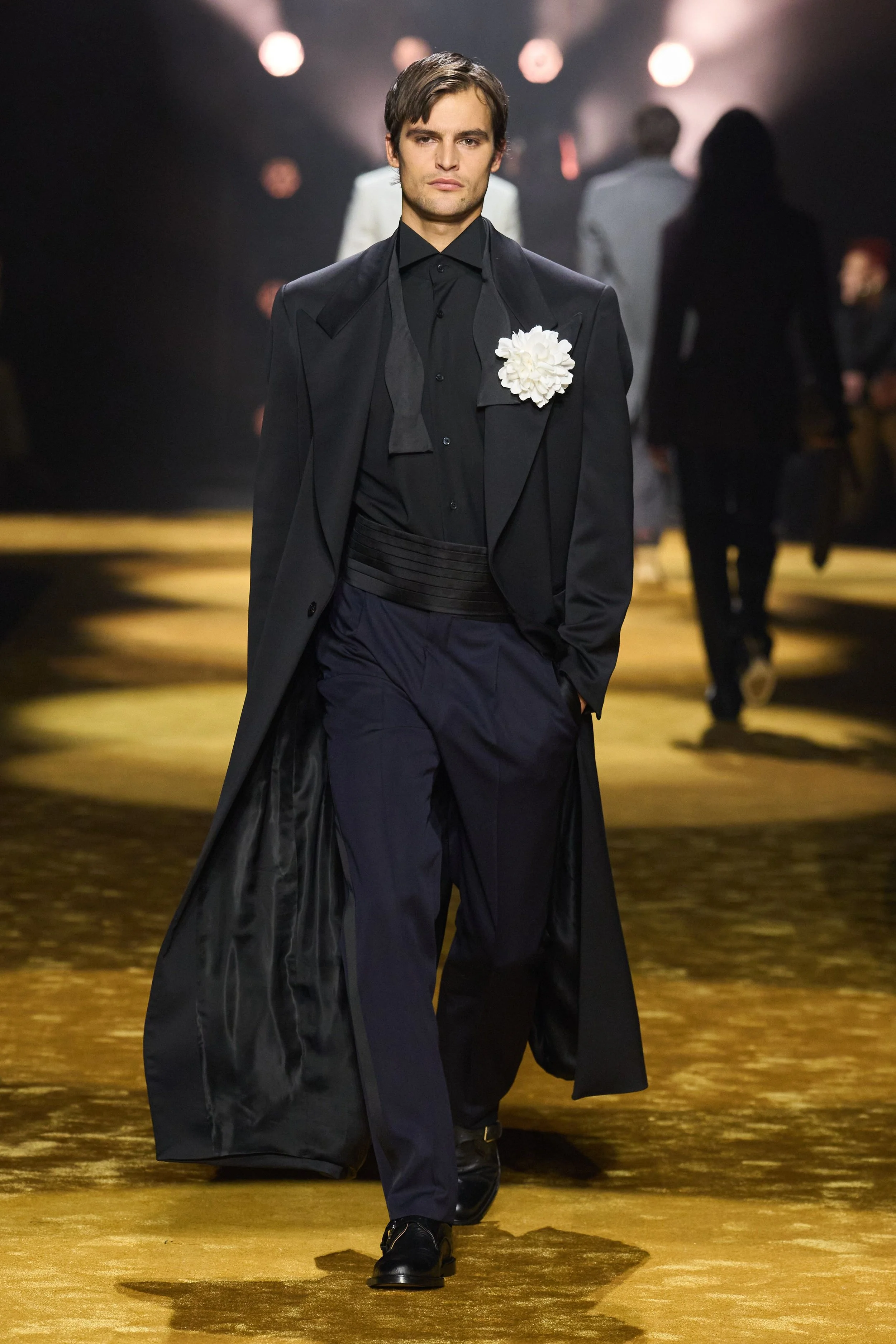
The clothes proved just as delicious. This season, creative director Marco Falcioni presented a seductive reinterpretation of 1980s and 1990s elegance. Power shoulders asserted authority, while wide lapels and cinched waists sculpted commanding silhouettes. Wool trousers were tucked into equestrian-inspired boots, infusing classic tailoring with a bohemian, offbeat edge.

Alongside tailoring, outerwear emerged as a central statement. Leather and nylon anoraks were styled tucked into trousers, sharpening their modernity, while fluid trench coats introduced a dramatic sweep with every step. The colour story was equally rich and deliberate: ink black, midnight navy, smoky grey, russet brown, luscious plum, and golden ochre – each hue communicating ambition and refinement in equal measure.

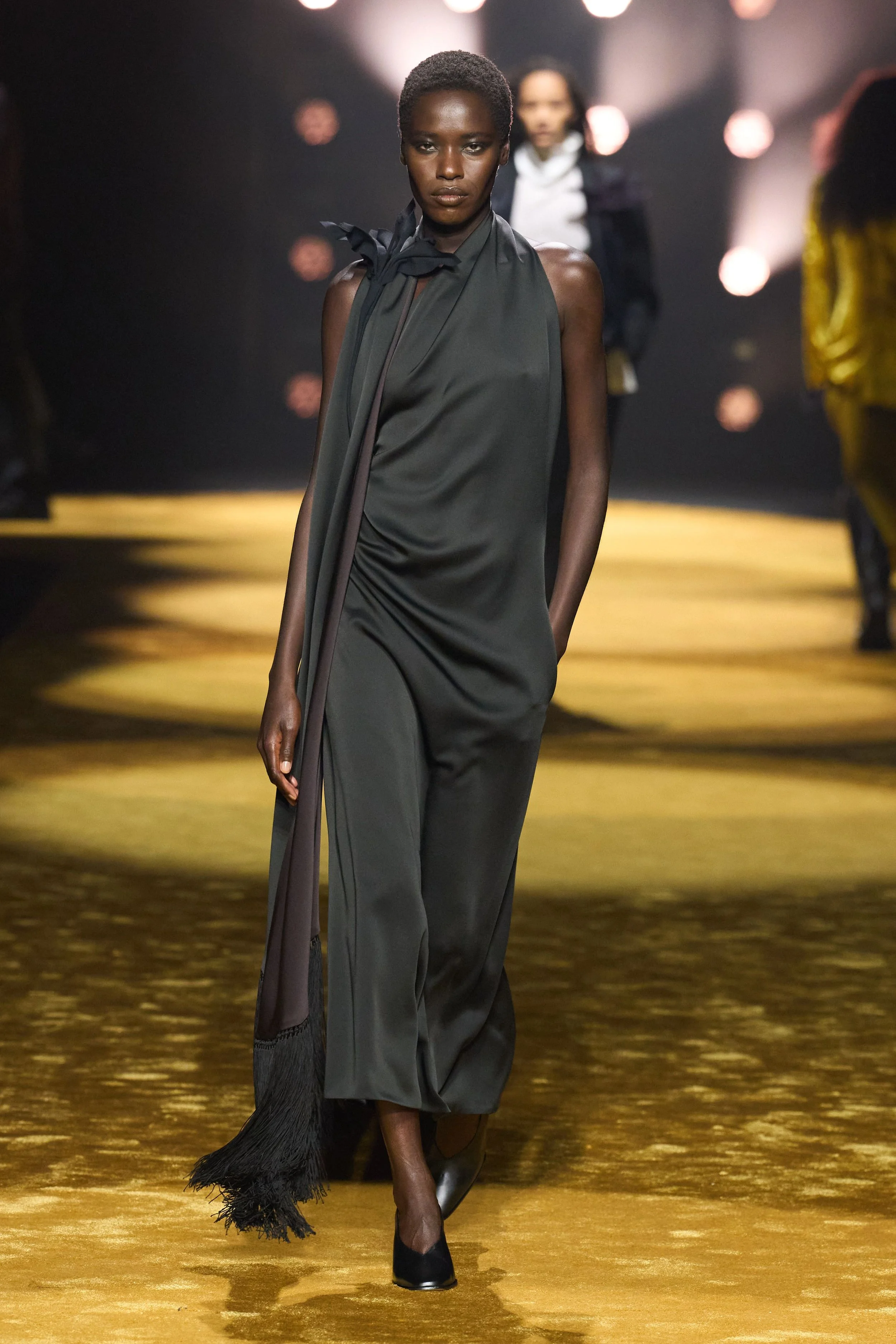
Then came the details. Archive silk prints blossomed into peonies and calla lilies across ties, scarves, and cummerbunds, transitioning effortlessly from daywear to evening formality. Textures became tactile and subtly provocative (hello ostrich-effect leather!). Meanwhile, silk dresses and tops were finished with refined fringe-scarf detailing, bringing softness and movement to the collection’s structured core. The proposition was a study in sophisticated drama – where power dressing met sensual precision.


Words by Martin Onufrowicz

FENDI FW26

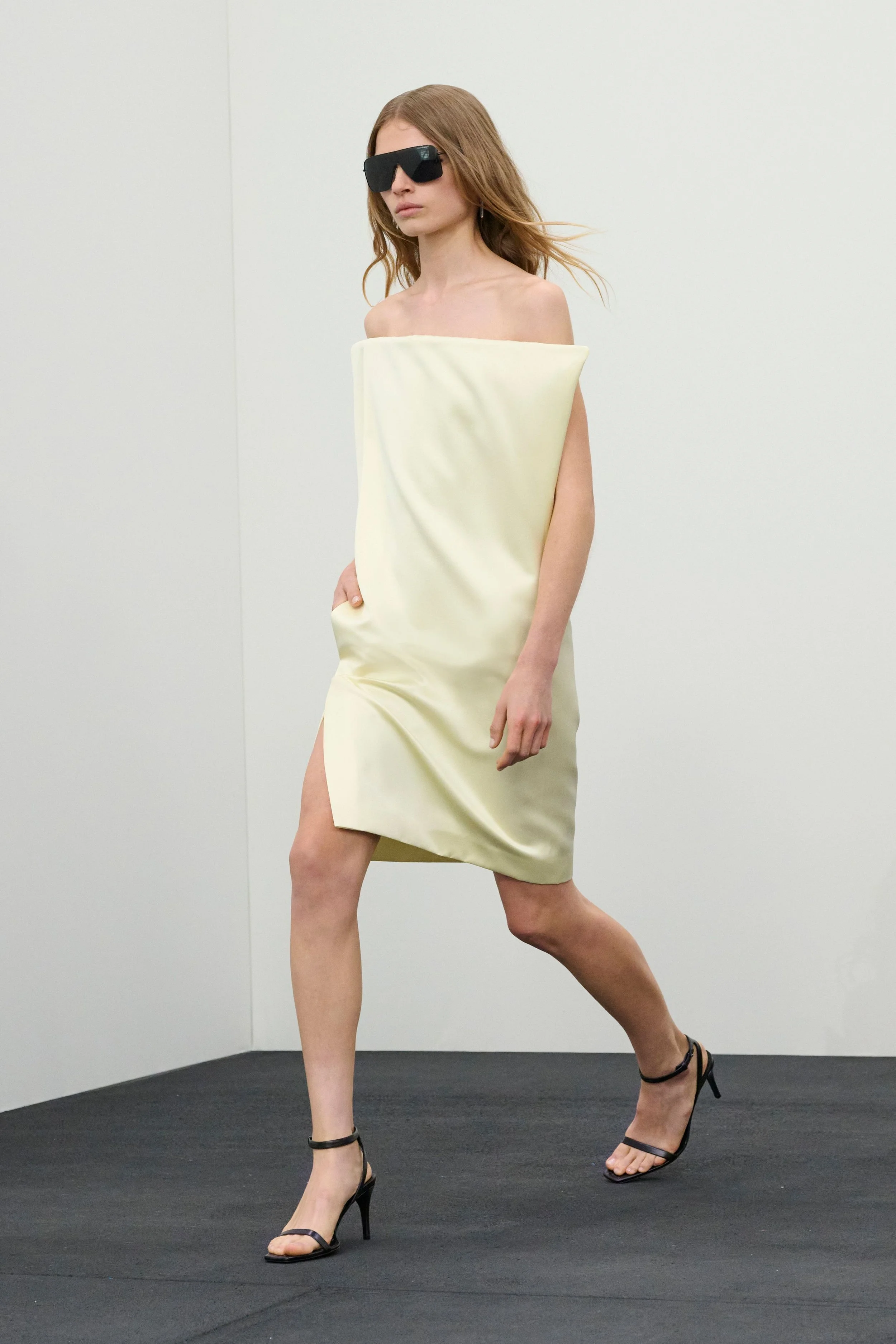
Maria Grazia Chiuri doesn’t leave much for interpretation; she usually spells it out. Perhaps the instinct is a byproduct of a career that’s lasted over 35 years. Maybe it’s a sign of all she still has to say. For her Fendi debut, the Italian designer again doesn’t mince her words.

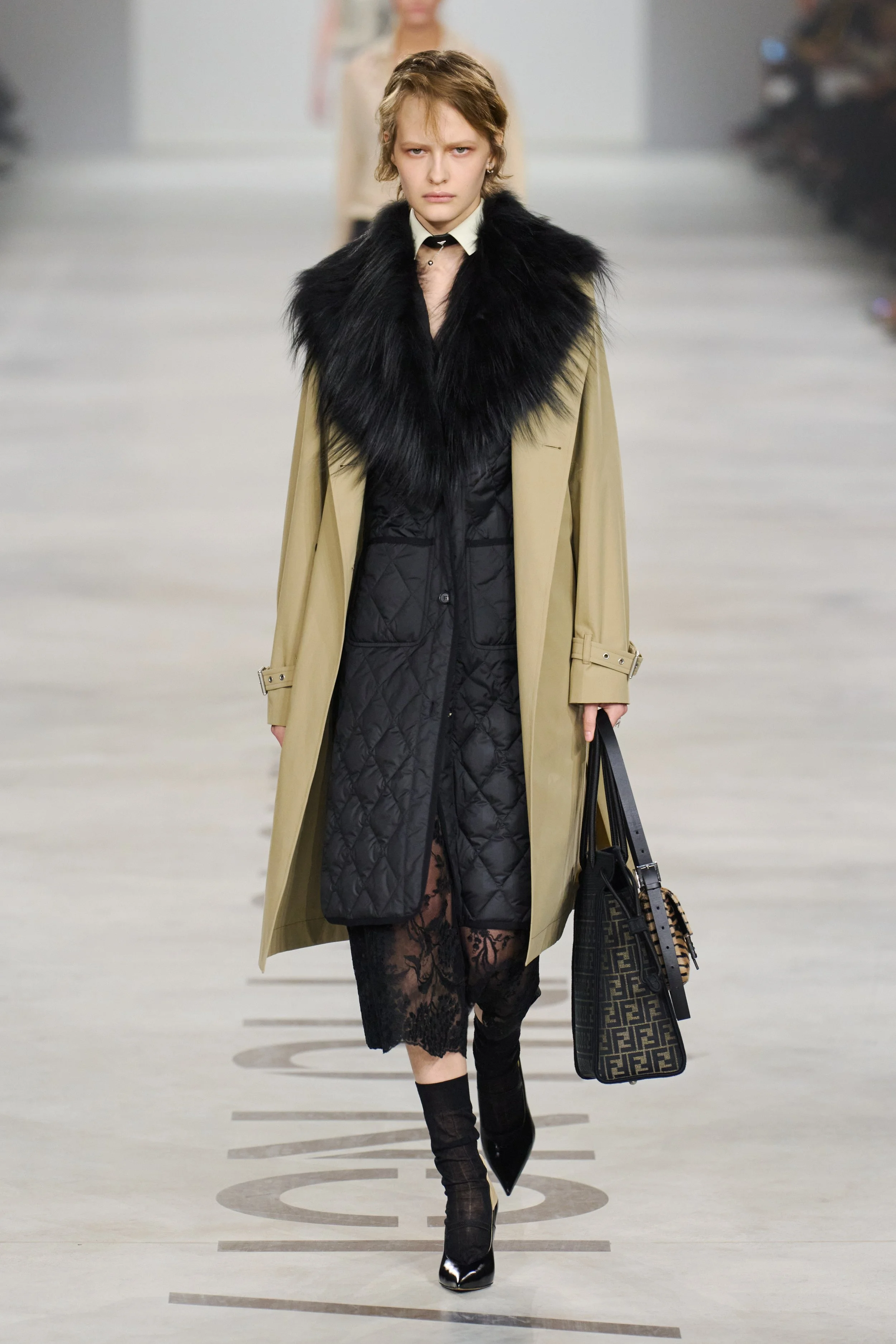
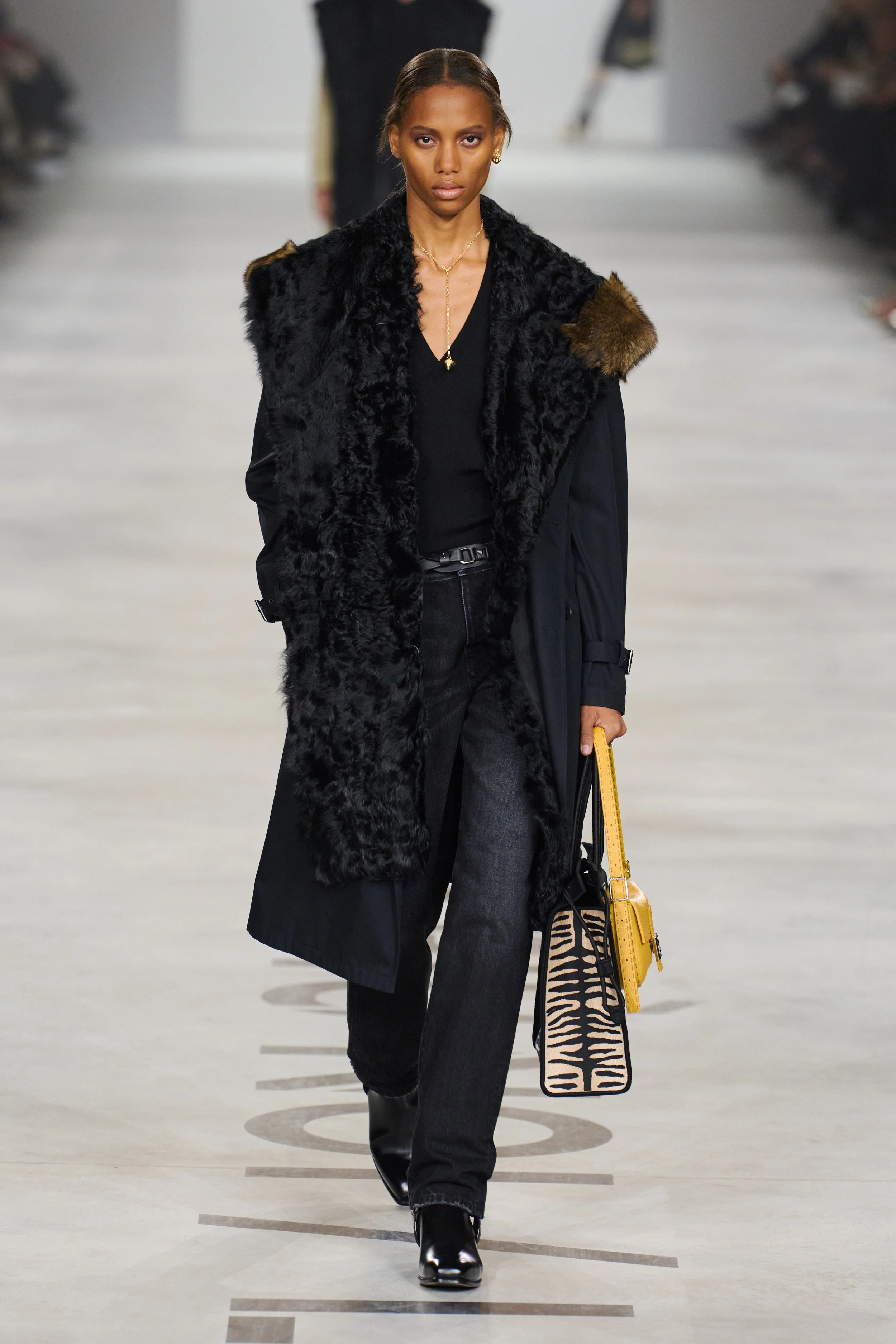
The collection marks a homecoming for the Rome native. Chiuri started her career at Fendi at just 24, going on to assist in creating the omnirelevant Baguette. Unsurprisingly, these were peppered throughout the show. With a longer strap than in its original proportions, Fendi’s most recognisable bag was carried in hand rather than hung on the shoulder. From reinterpretations of colourful classics – like the Bradshawian watermelon Baguette – to iterations that clashed animal patterns with floral embroidery, the bags were the brightest-hued moments in a collection that leaned into a darker and neutral palette.

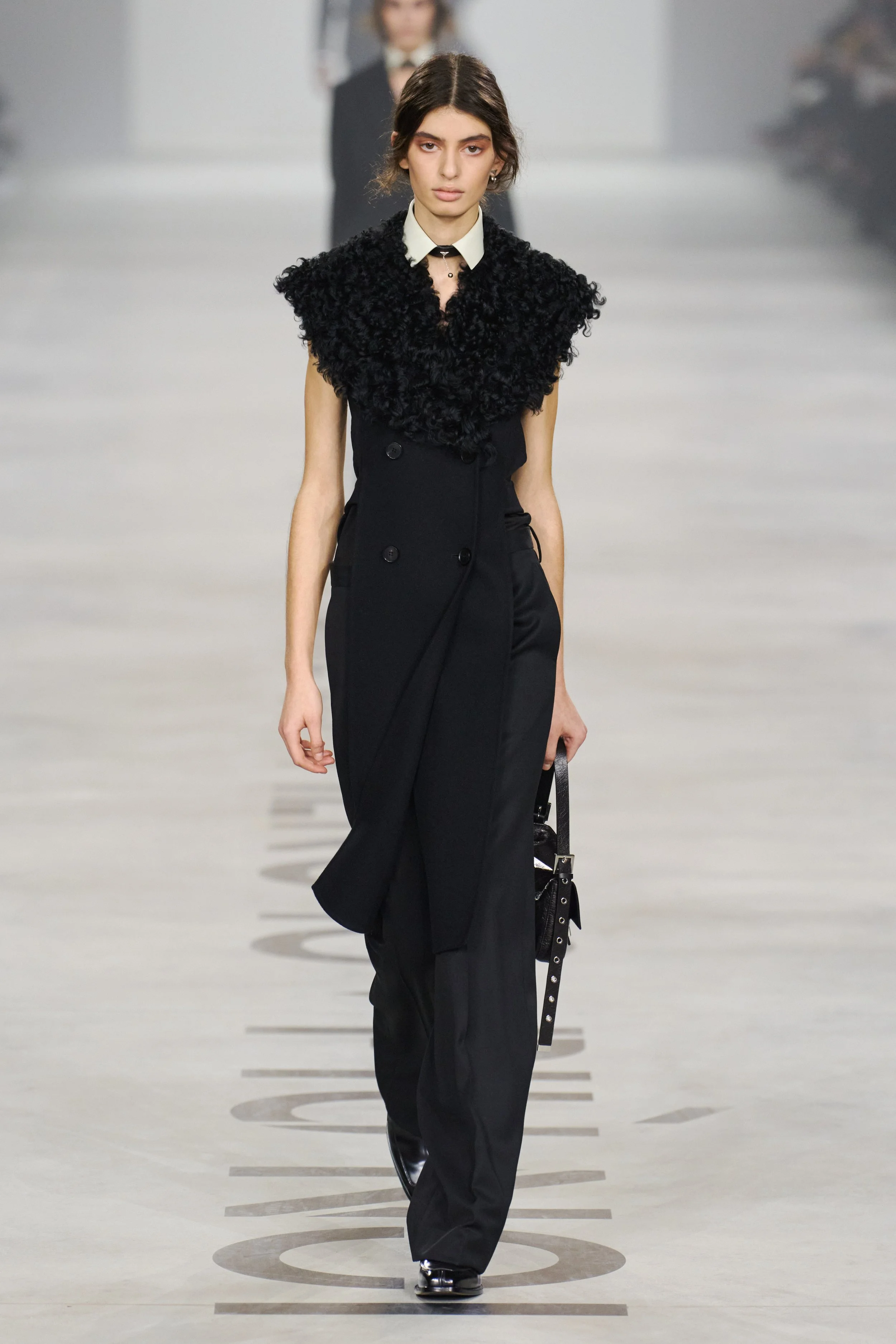
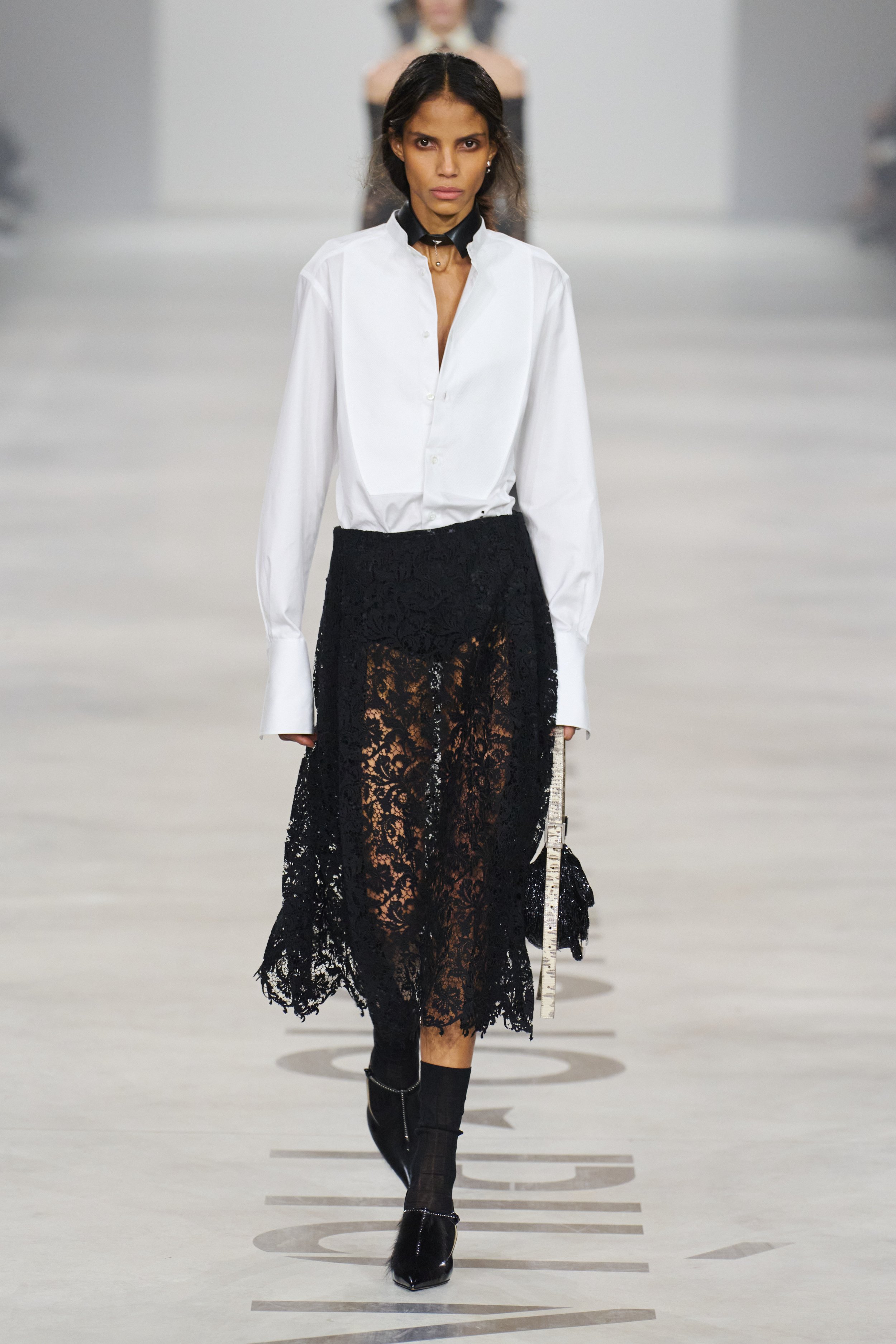
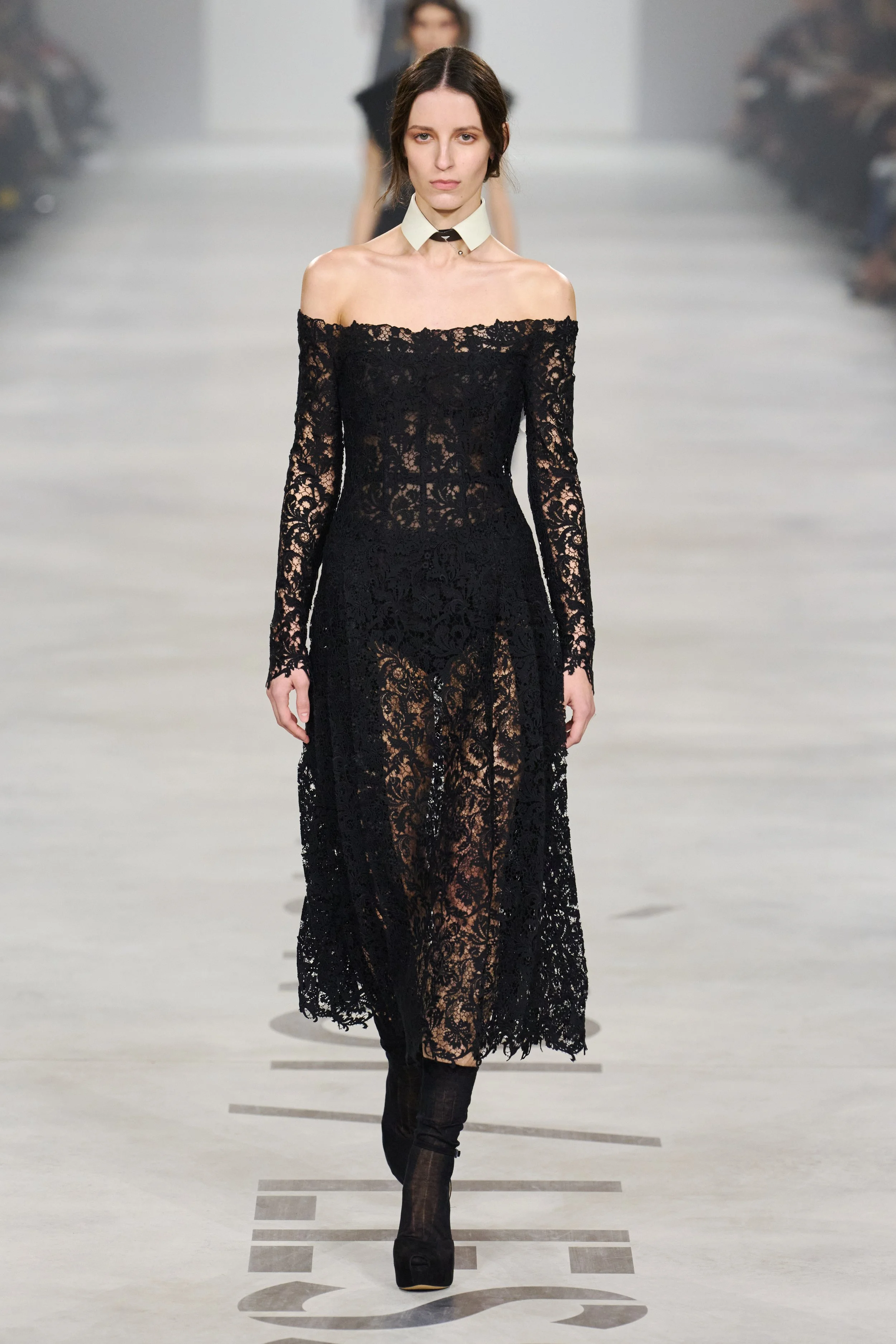
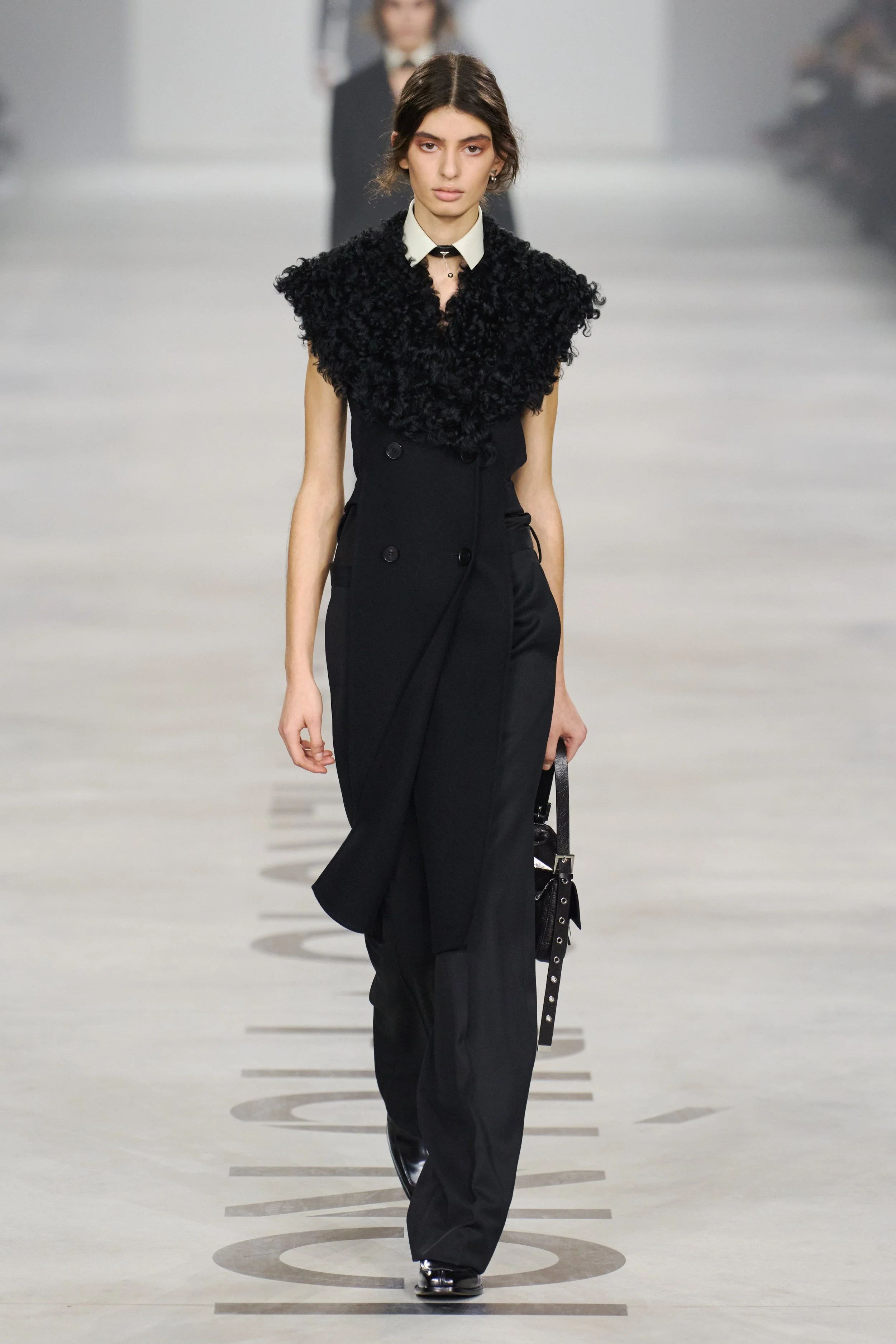
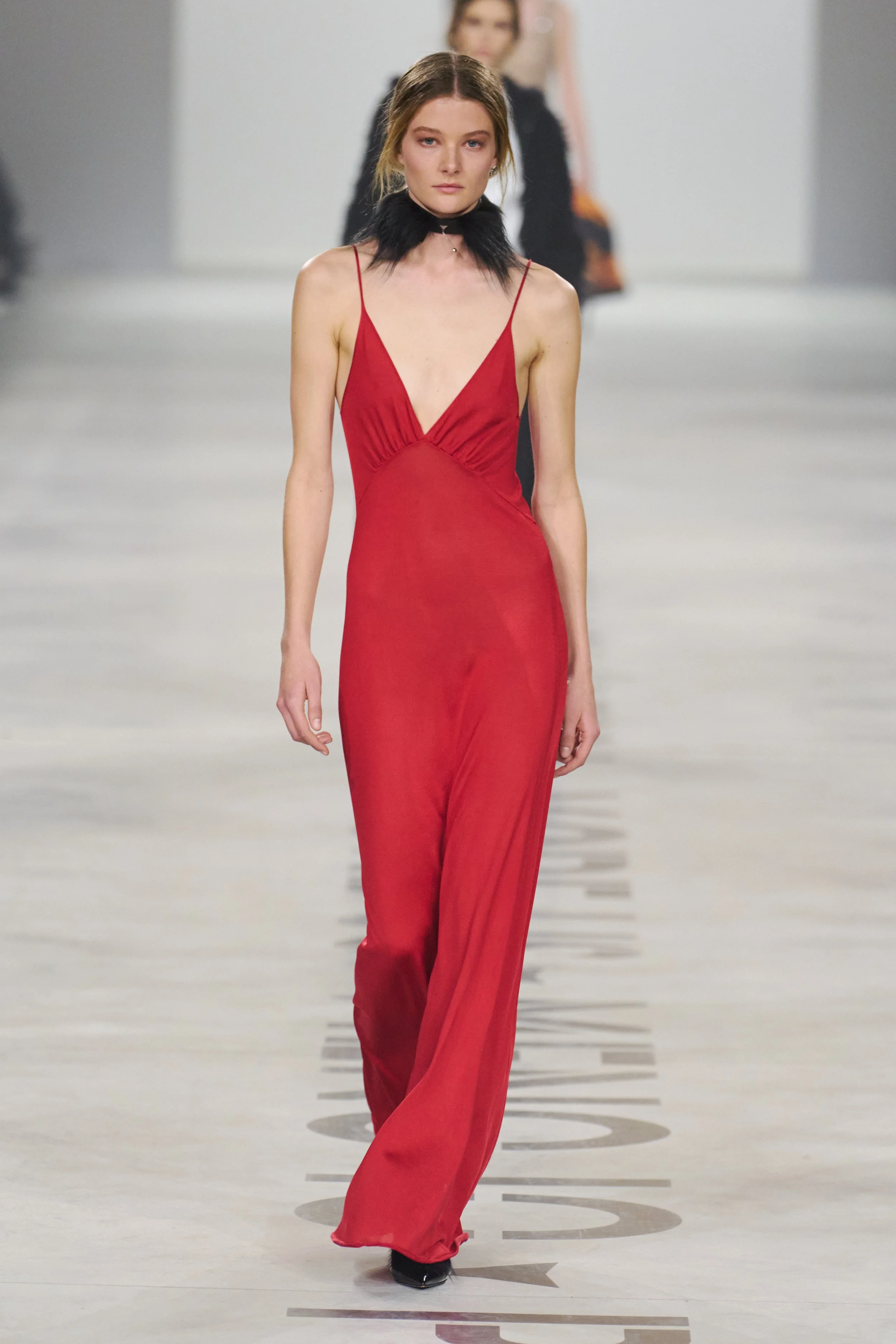
Even if the sombre direction was a bit of a departure for a house whose logo stands for Fun Fur, it wasn’t exactly unexpected. Days before the show, Chiuri teased her vision of the brand through a close-up of a man’s hands holding a model’s ankles. The image, a recreation of a photograph taken by Jo Ann Callis and reinterpreted by the artist herself, revealed a sexier tone. Chiuri didn’t fulfil her erotic promise with a heavy hand, choosing instead to edge us with leather and lace details on long dresses and sheer shirts. Fur chokers that emulated the look of a traditional collar were both ingenious and titillating – shout out to the furries!

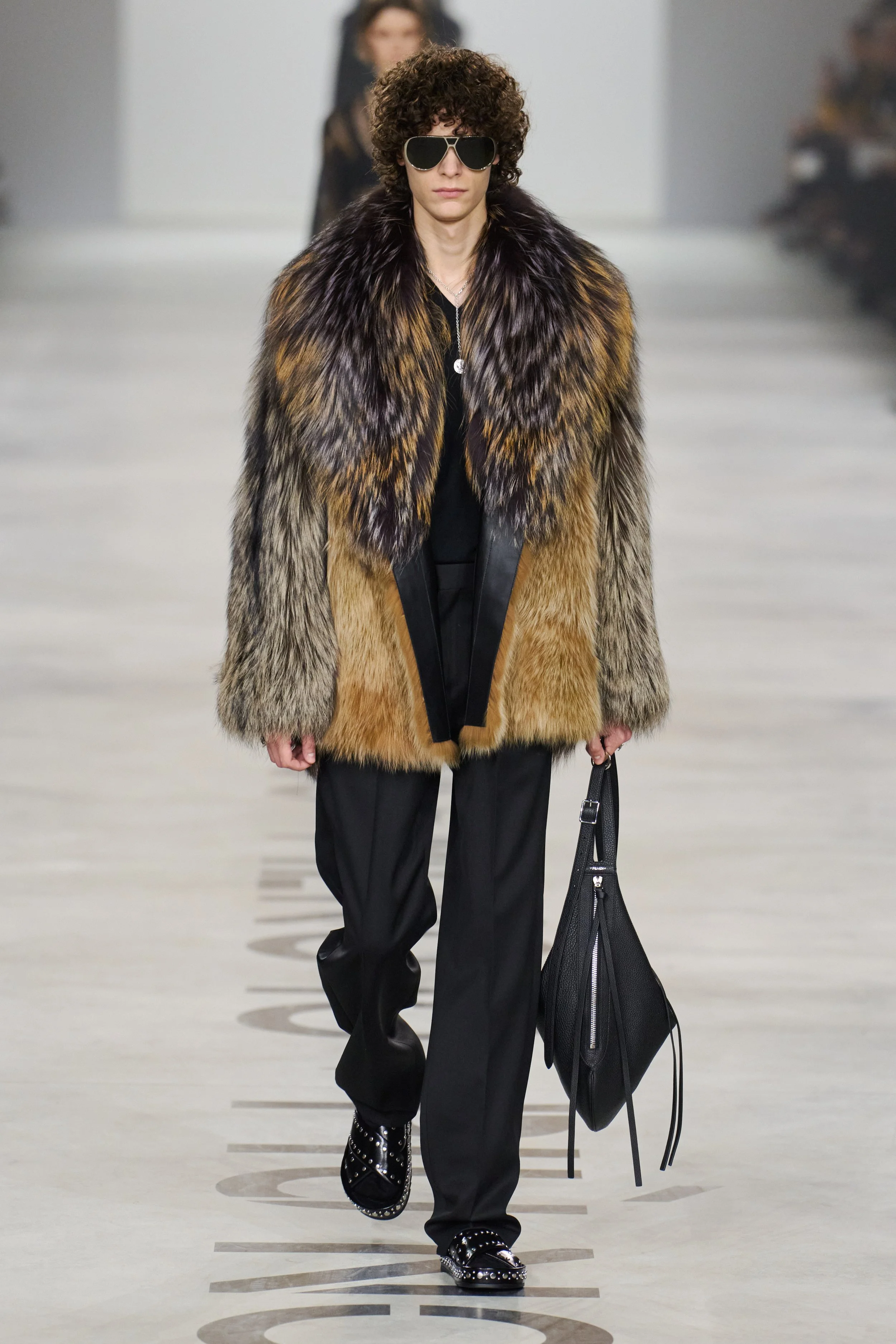
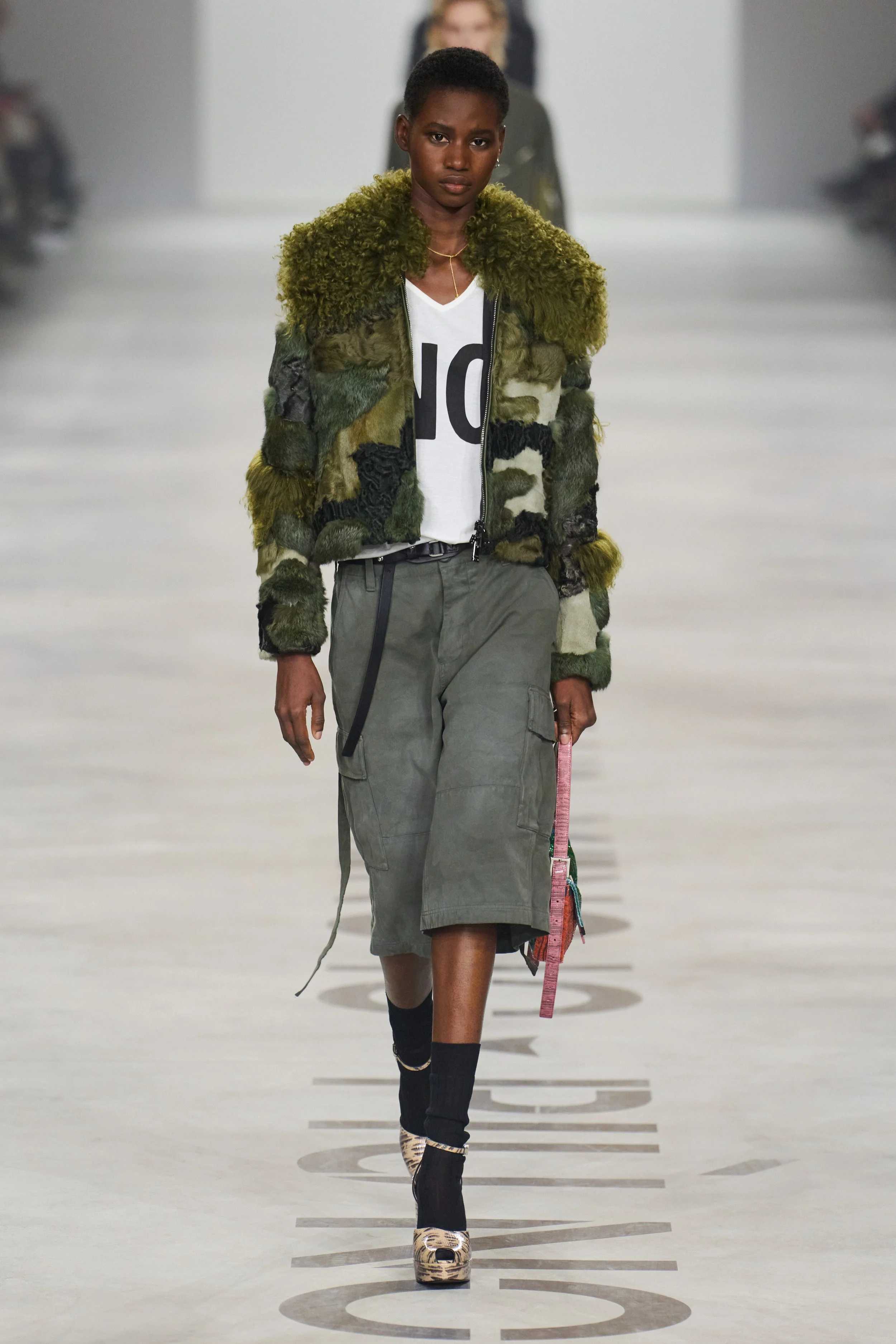
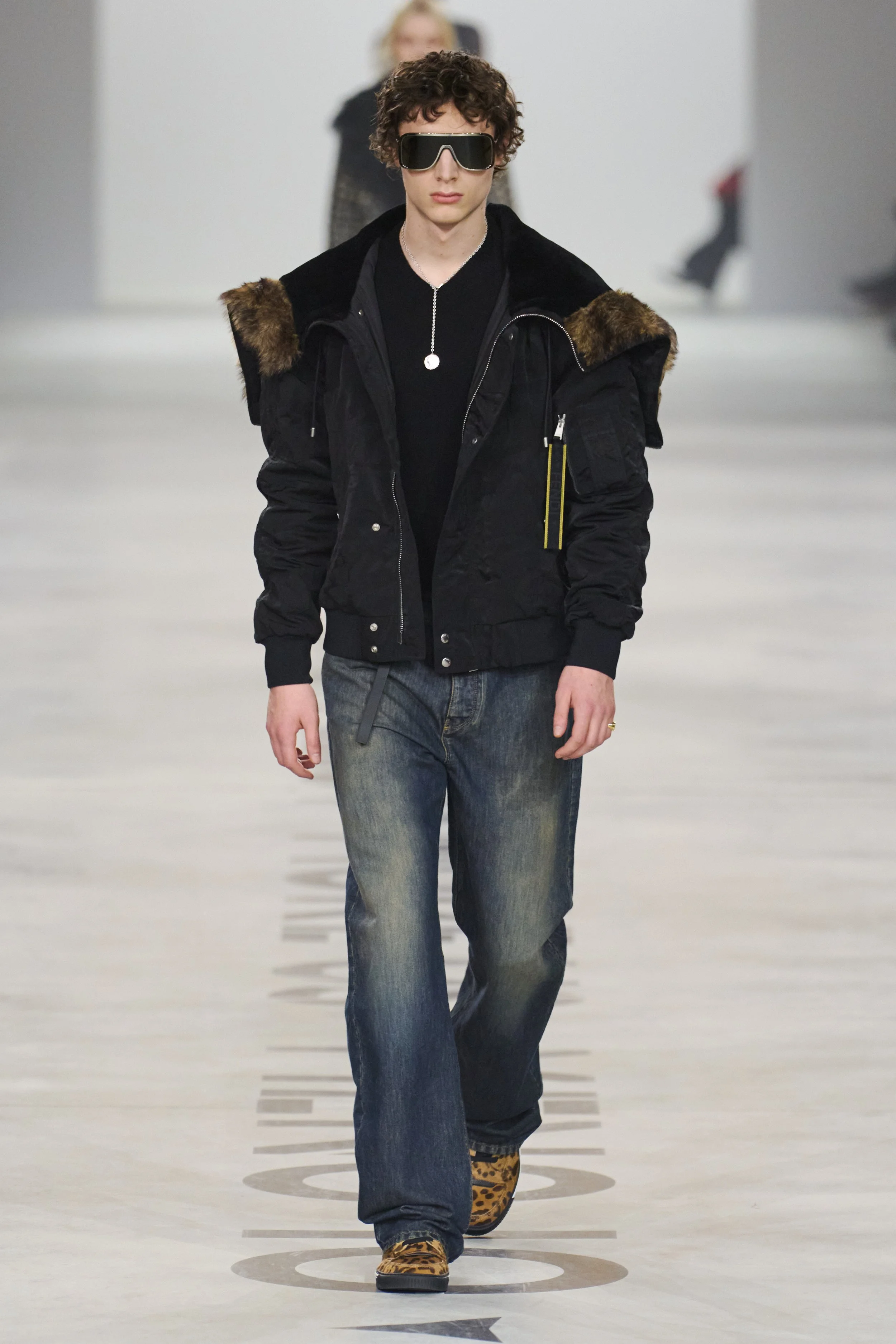
Chiuri knows the job she was hired to do, mixing “fun fur” options with solidly classic pieces. Camo cropped jackets with fur patches of different lengths, ’70s-inspired patchwork coats, and fur-lined trenches were matched with jeans and white shirts. In a way, the collection felt familiar. Chiuri classics came in romantic skirts and impeccably cut shirts. Her decade-long tenure at Dior ended only eight months ago, and, much like the tradition she set at the French maison, the designer collaborated with two female artists. First, for the jewellery, a collaboration with the Italian sculptor Mirella Bentivoglio, and secondly, with the artist SAGG Napoli for T-shirts and football scarves that featured words like “Impact.”

The feminist ethos wasn’t only seen in tees and necklaces, but propelled the collection – and its name, for that matter – around the theme “Less I, More Us.” The idea was executed with consecutive looks that remained identical between male and female models. Thirty-seven years in, Chiuri has as much to say as the day she started.

Words by Pedro Vasconcelos

JIL SANDER FW26

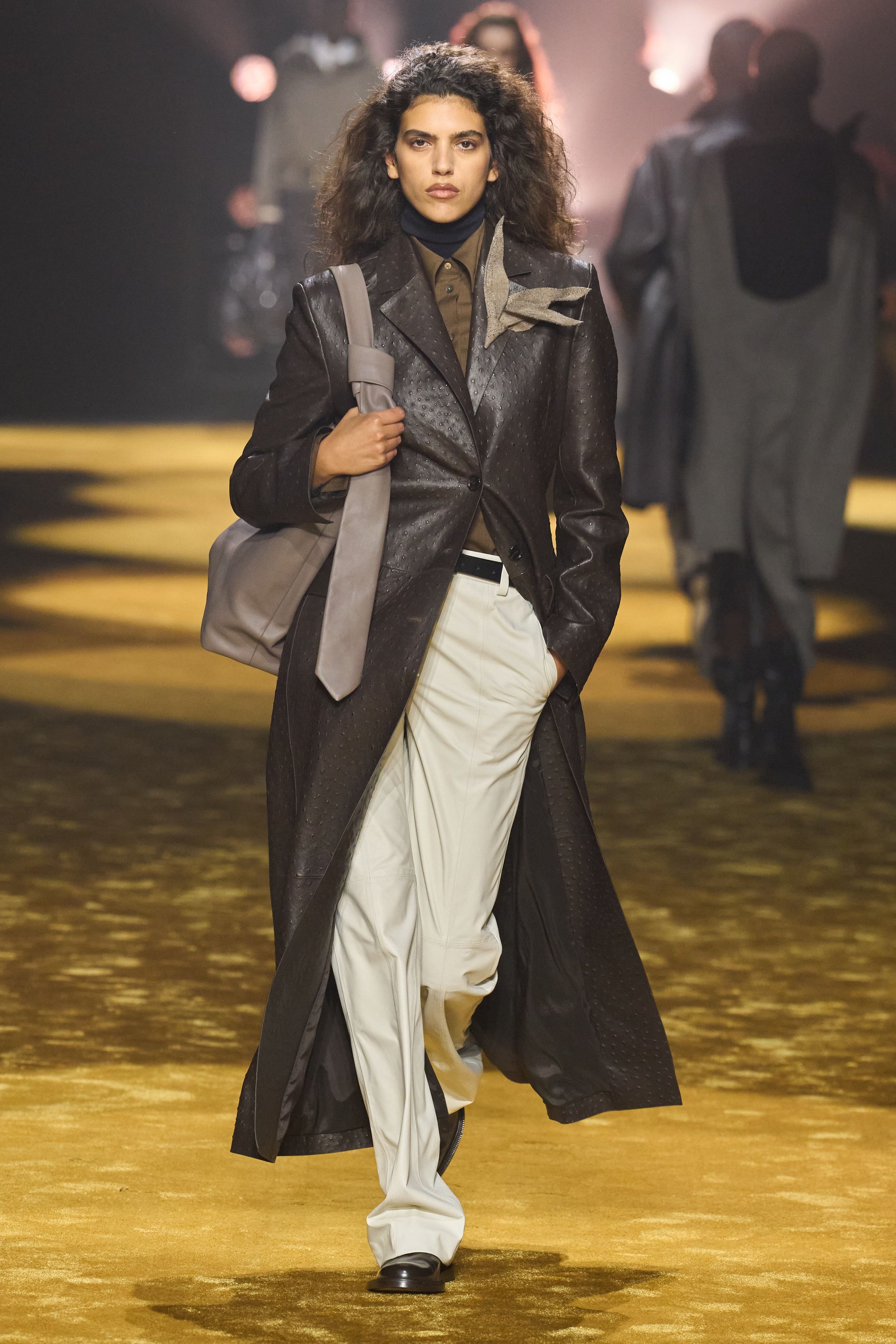
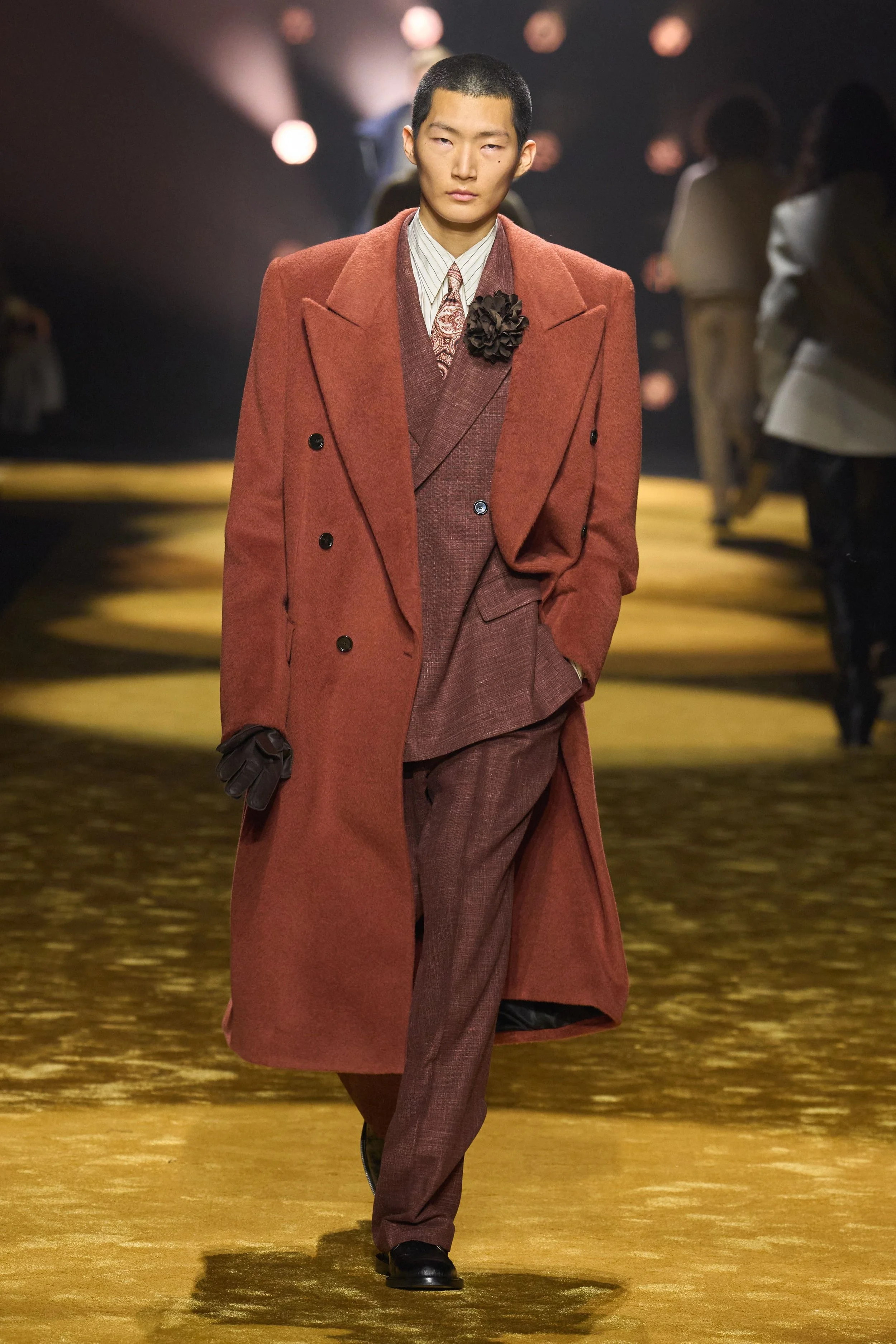
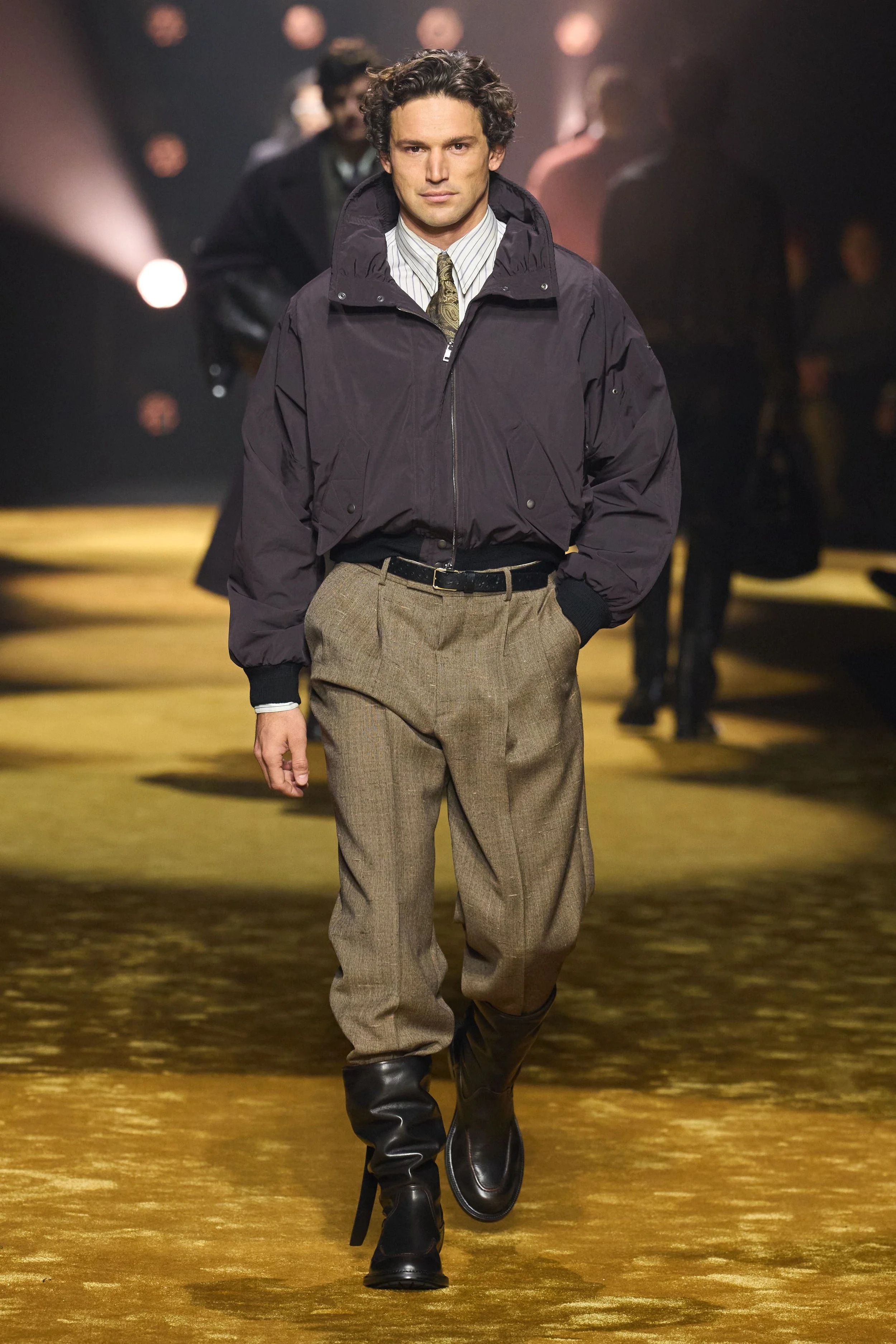
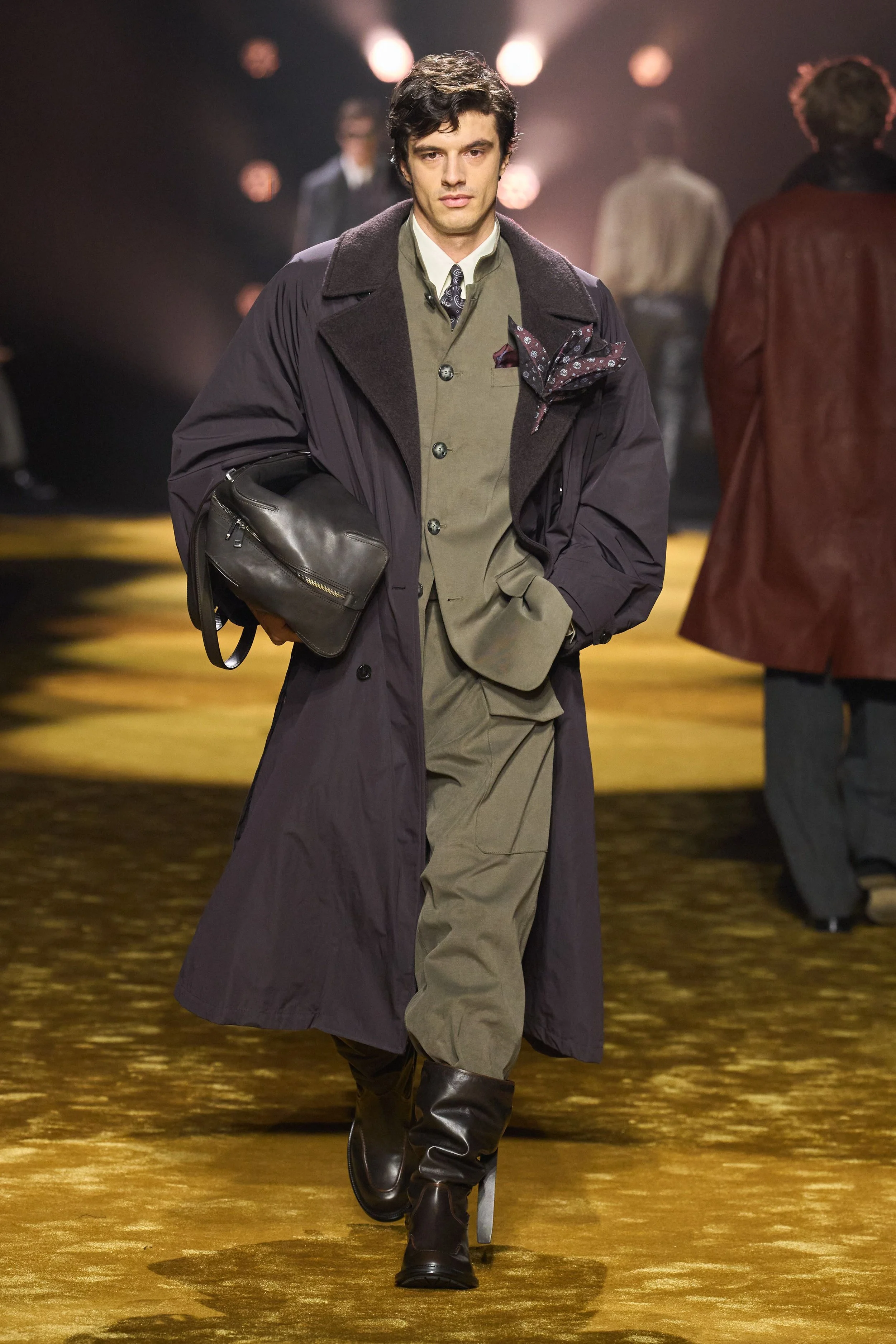
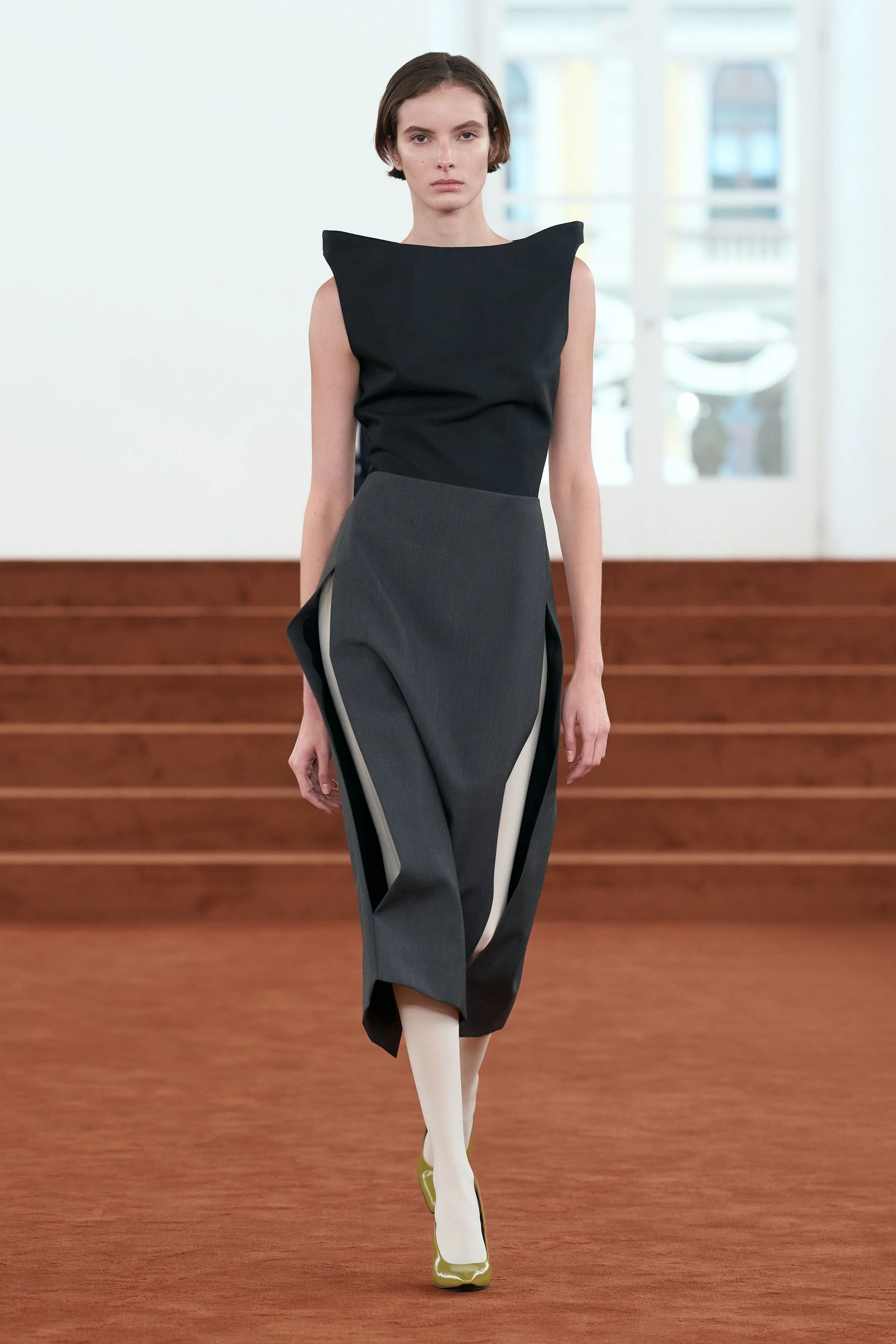
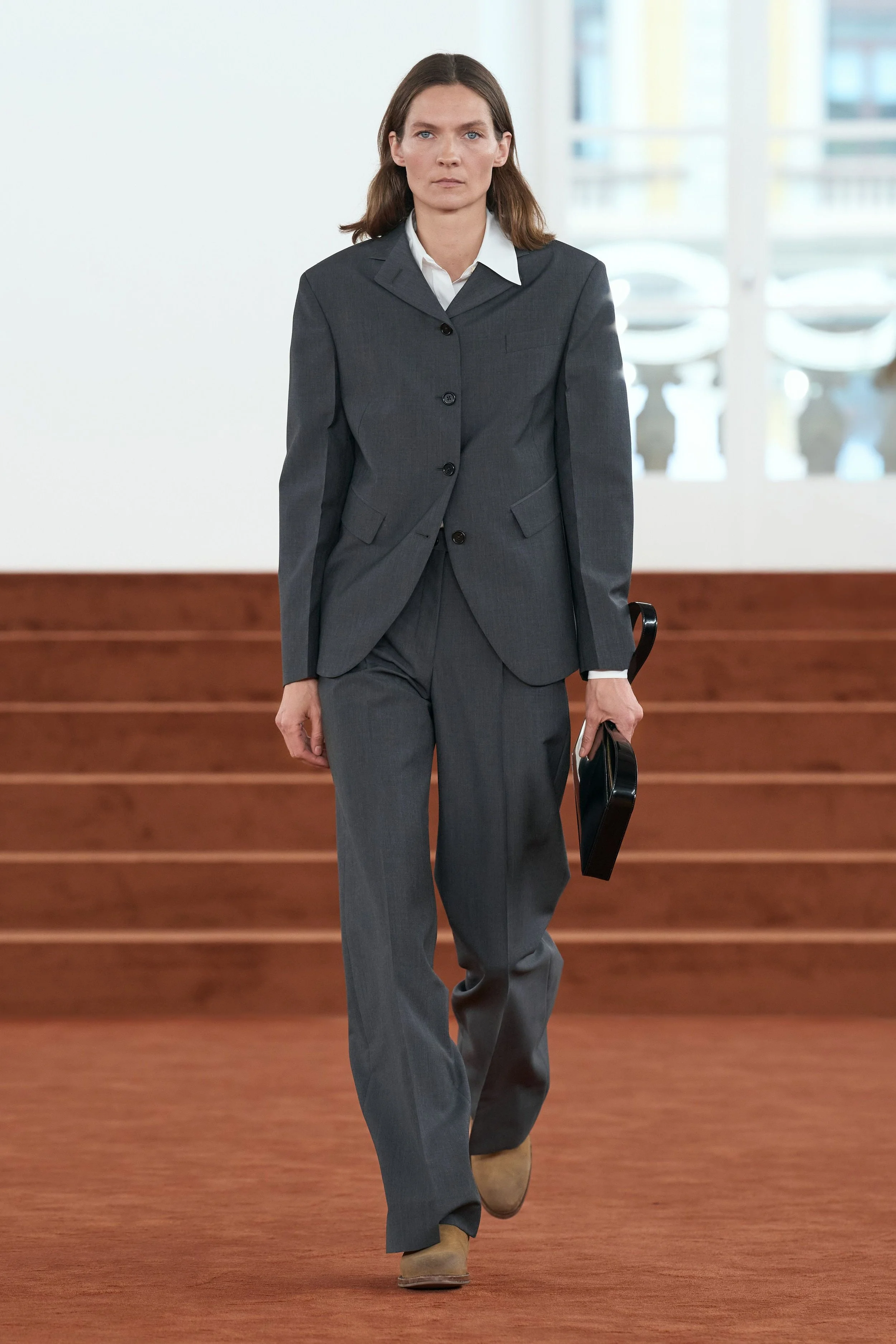
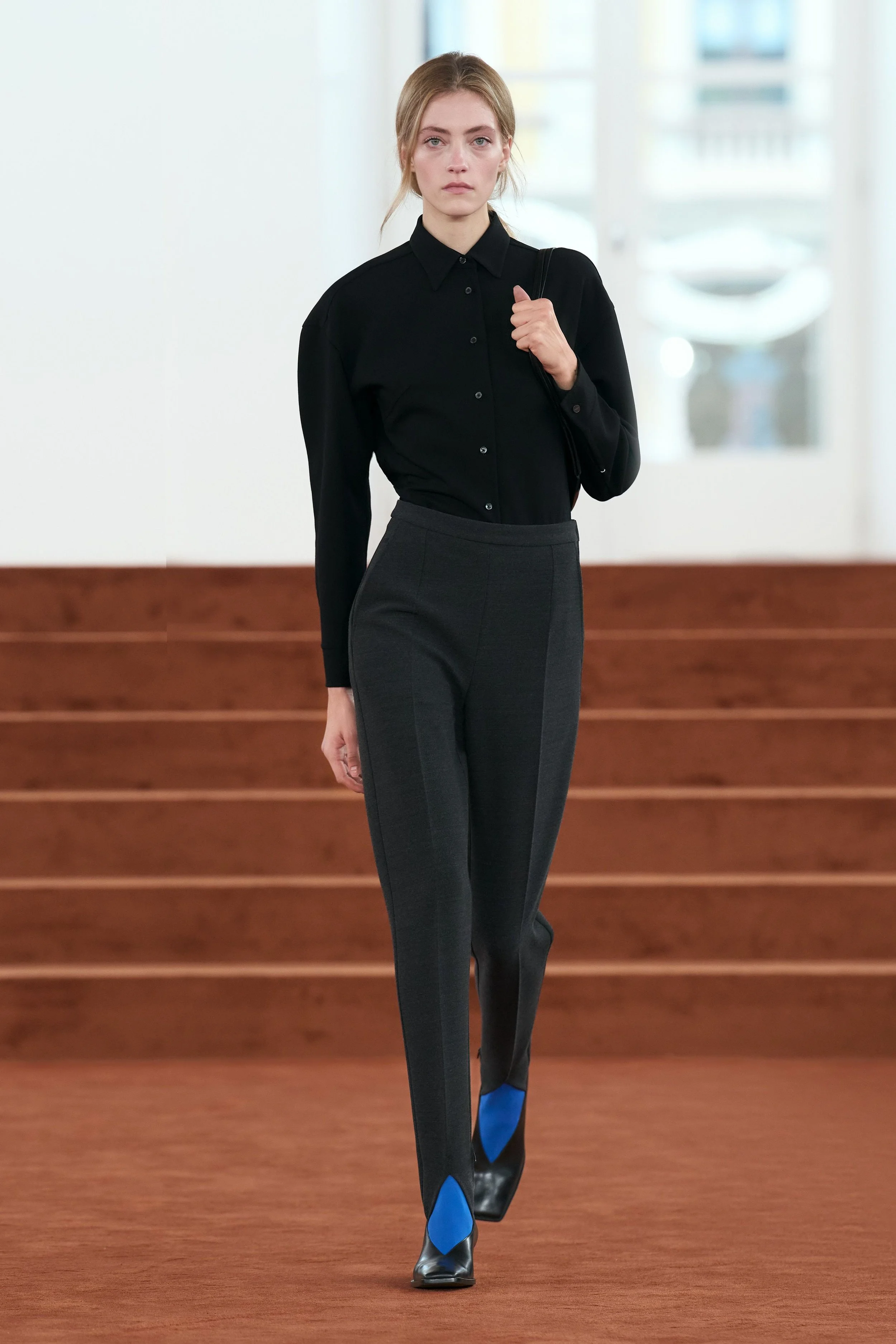
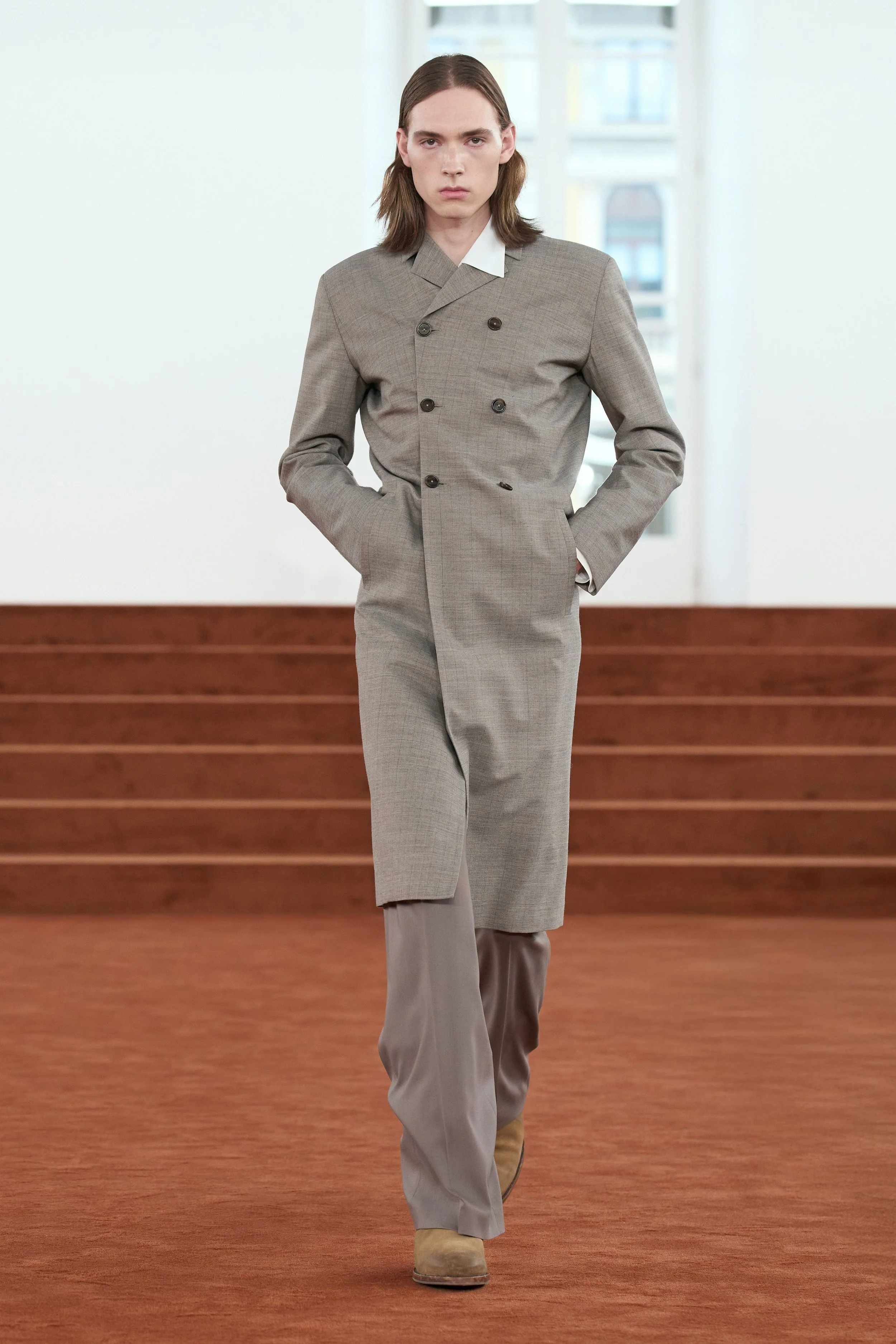
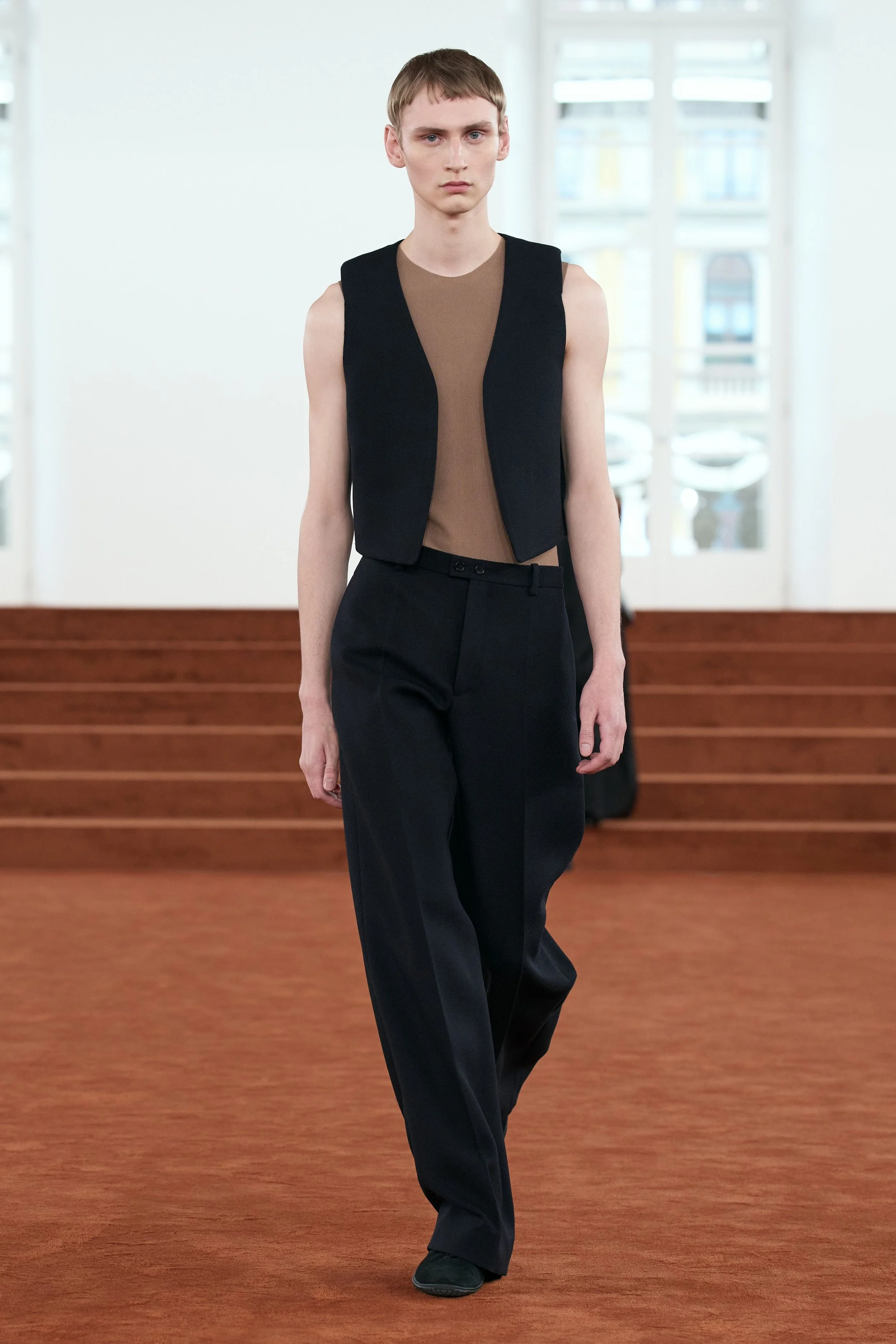
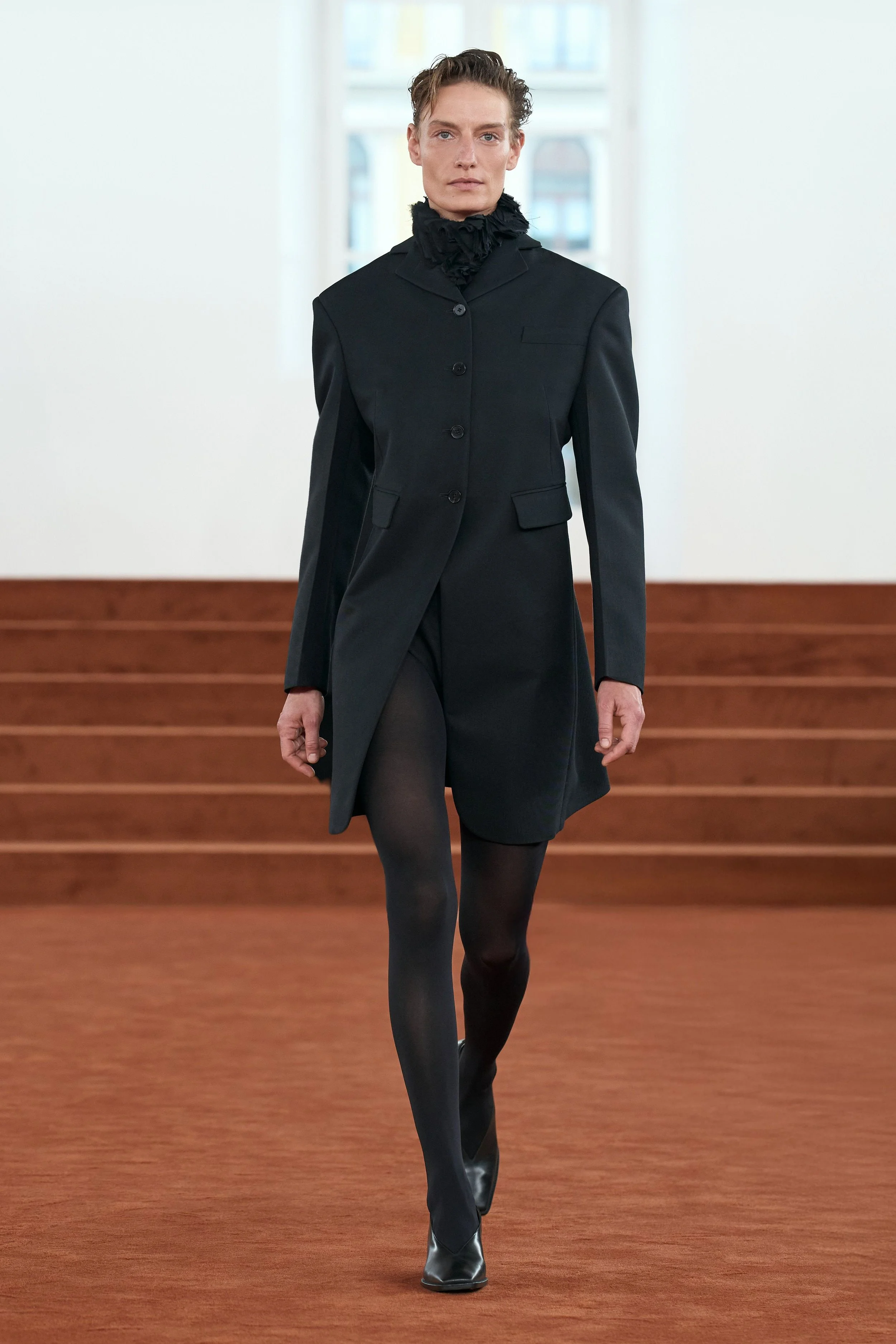
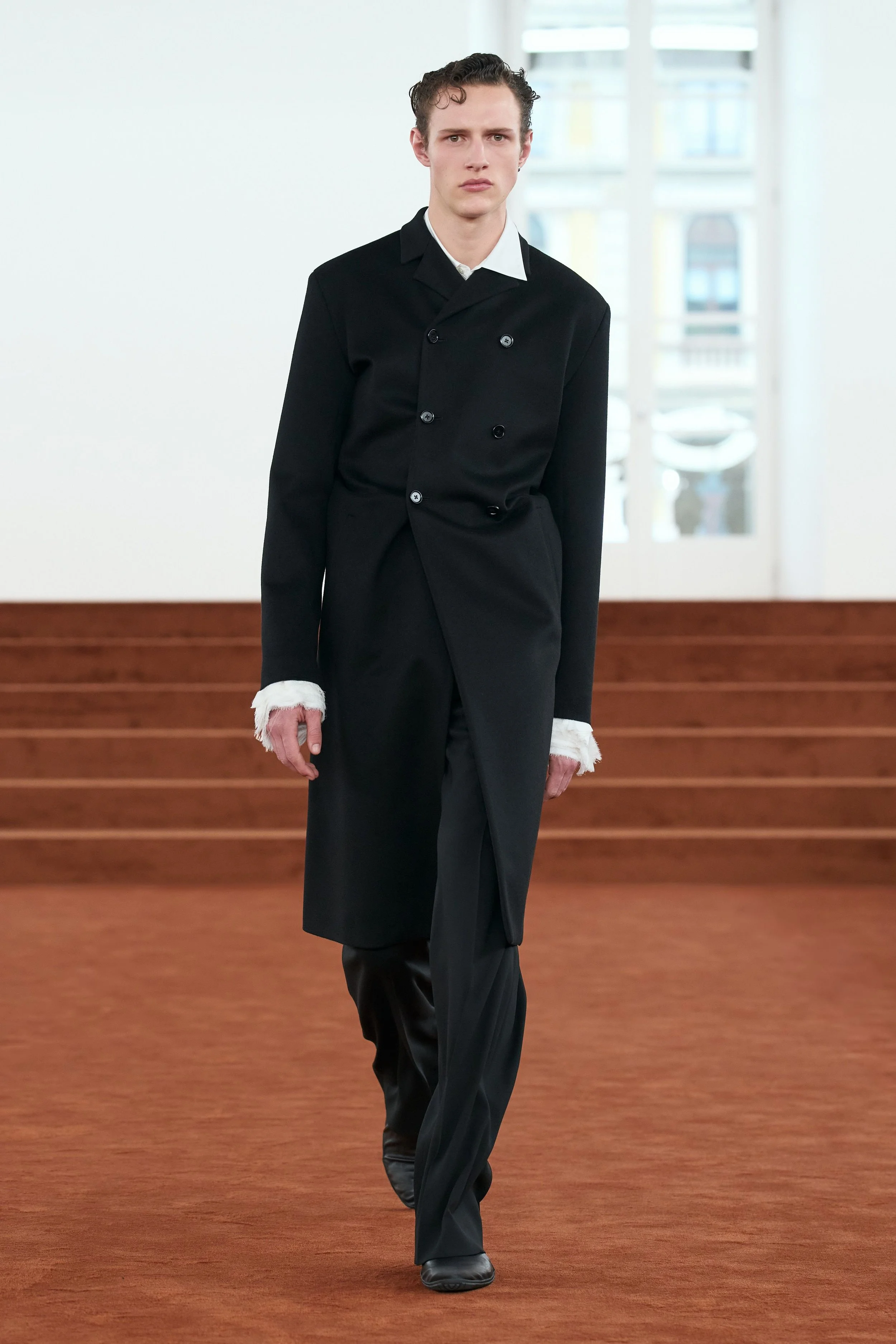
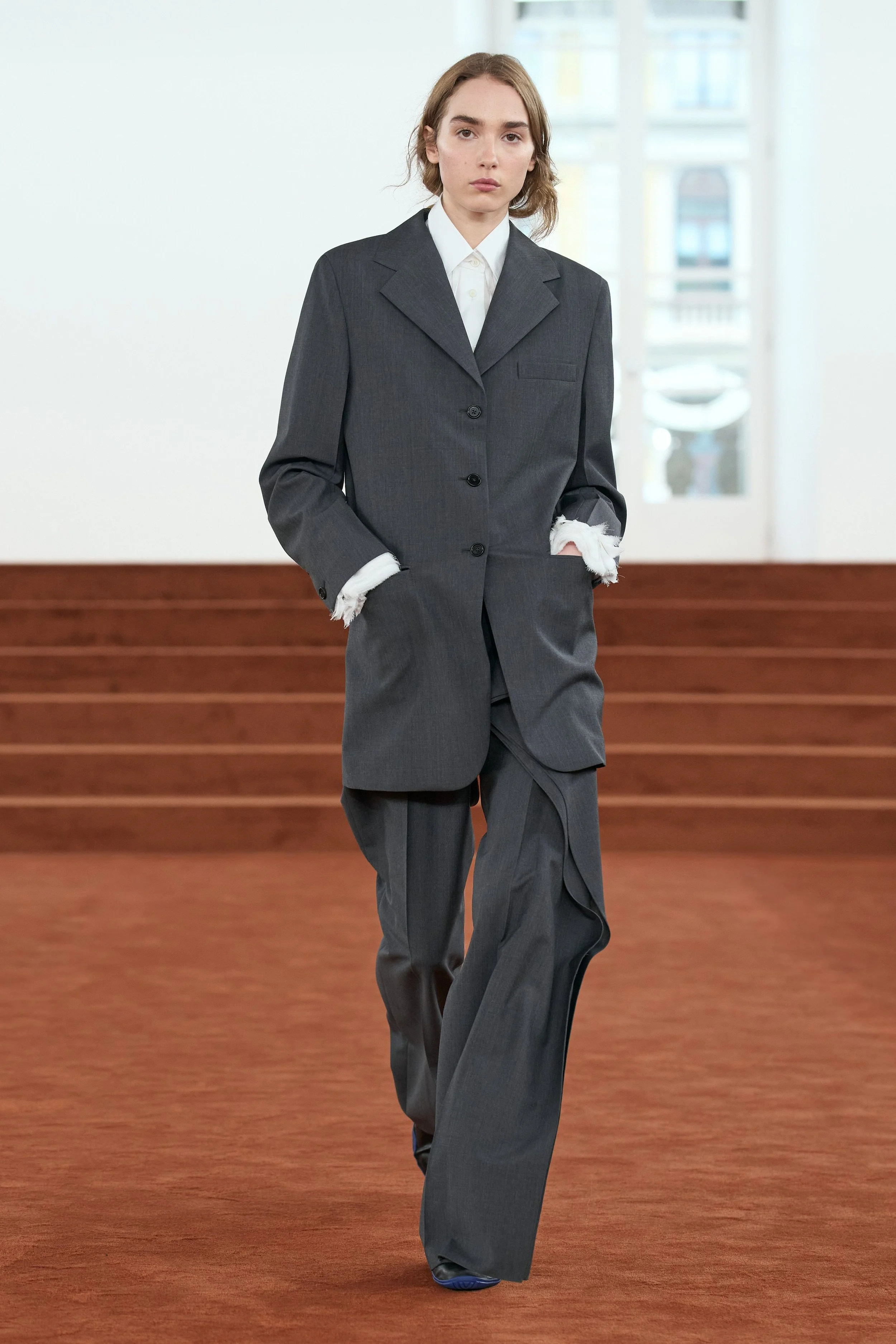
The Jil Sander Fall/Winter 2026 collection merges masculine tailoring codes with sensual elegance, creating an offering rooted in practicality and centred on construction and technique.

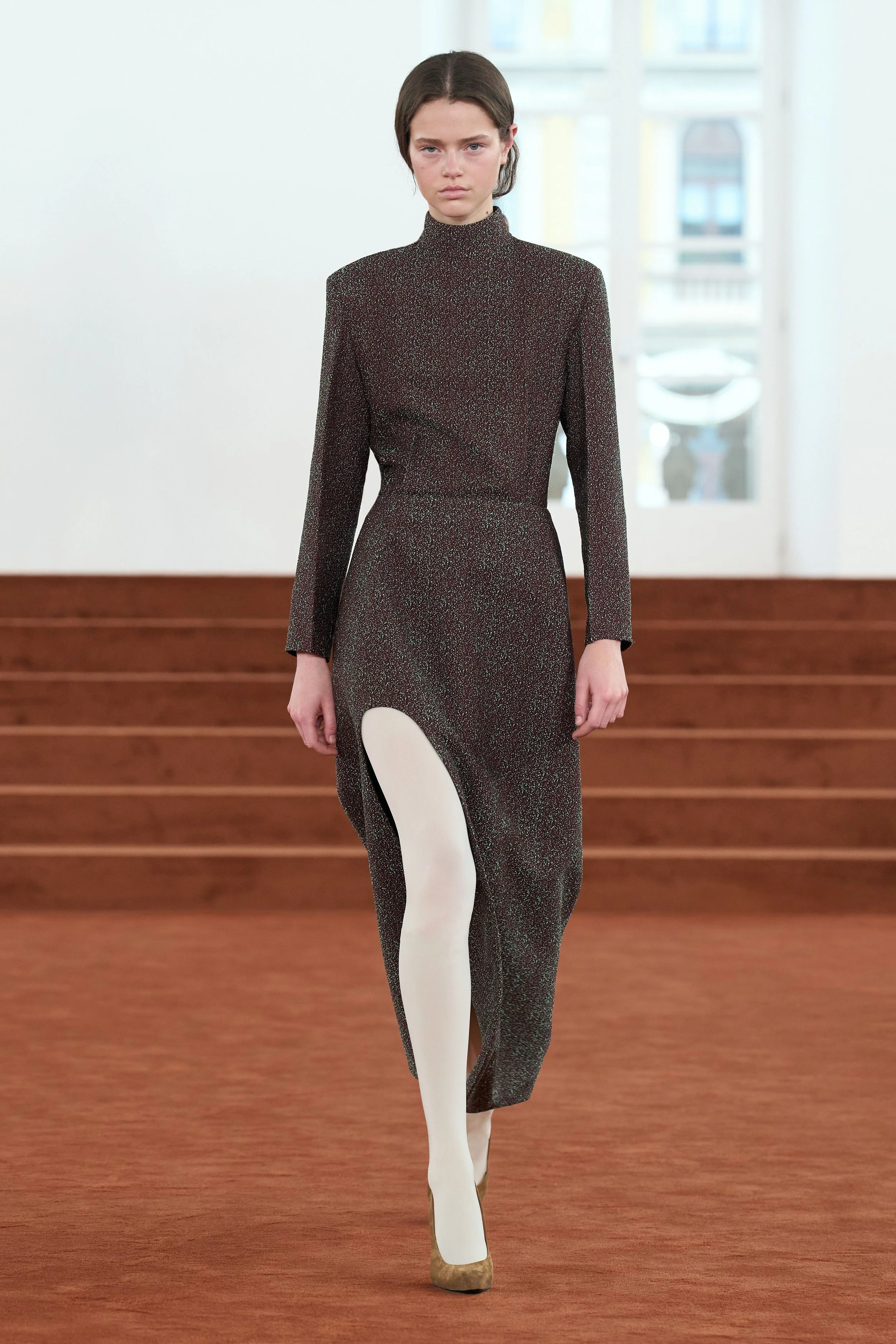
The collection presents a straight, clean aesthetic with a twist, where details are barely perceptible yet subtly disrupt the classic nature of the garments. Stirrup pants set the tone, accompanied by unexpected ruffles on the trousers, while provocative openings punctuate dresses and skirts. Garments feel slightly deconstructed, and proportions shift in ways that challenge expectations, all while keeping refinement at its core.
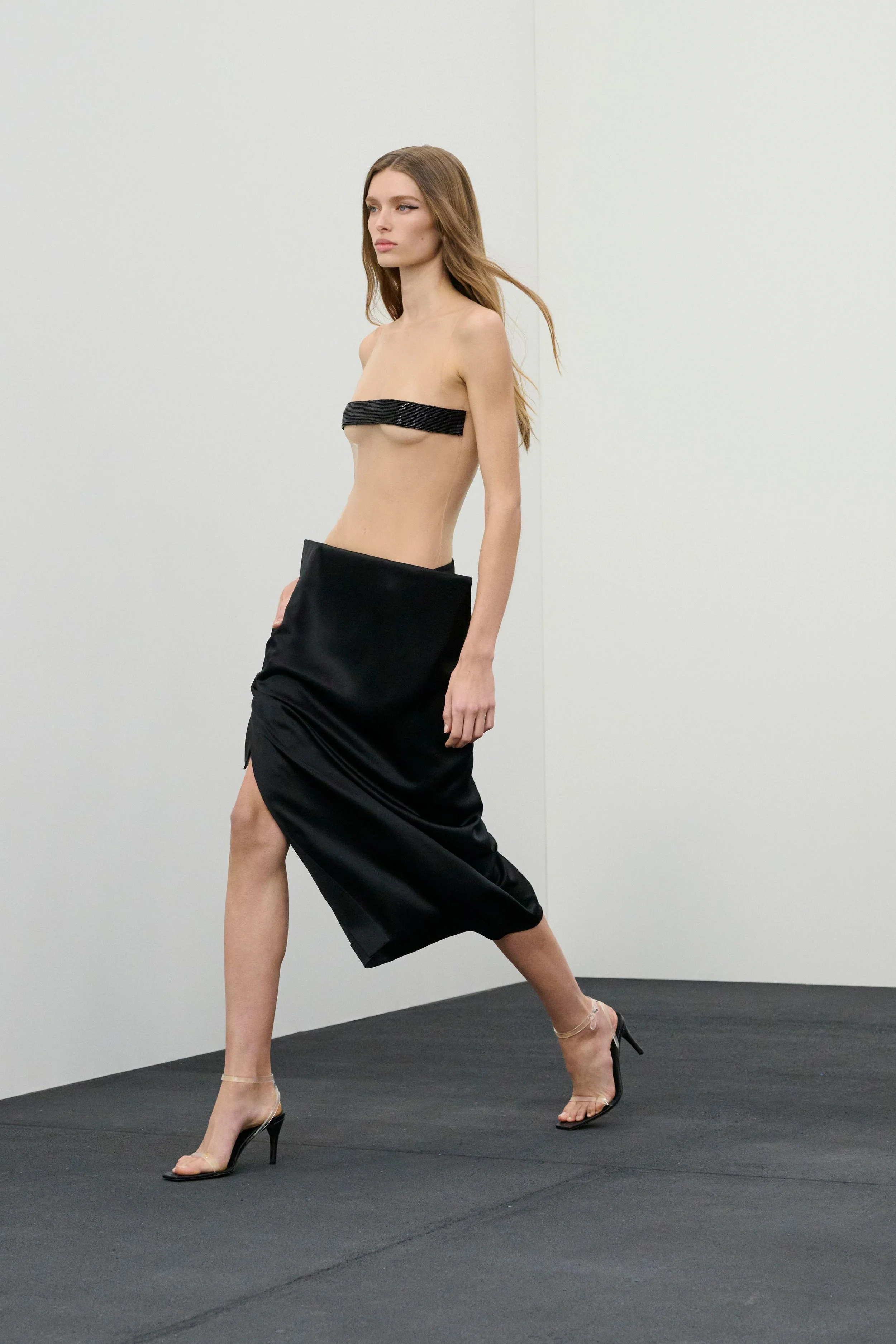
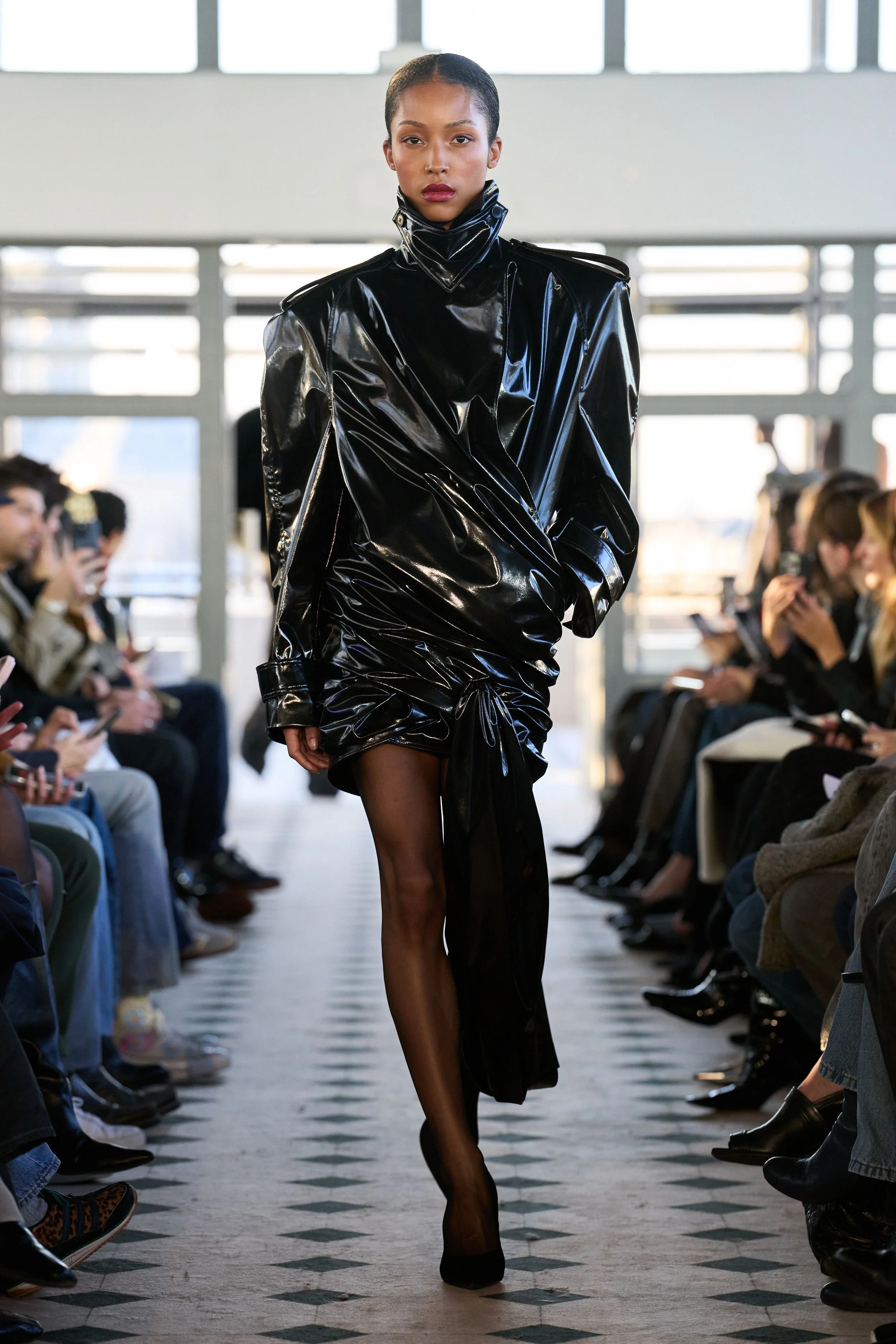
Inspired by the photography of Anders Petersen, the mood feels quiet yet intense, perceived through subtle displays of sensuality. Proportions are fitted flawlessly to the body, emphasising structure while maintaining understated elegance. Tailoring for women feels precise, while pieces such as wrapped skirts, off-shoulder necklines, and diagonal closures introduce movement and a lighter sensibility.

The wardrobe feels intellectual, centred on restraint, precision, subtle sensuality, and architectural constructions. The suit, the coat, the knit dress, and the pencil skirt form the backbone of the collection. Rather than creating entirely new interpretations, it perfects its constructions and offers a fresh perspective through styling and subtle details.

The palette is restrained and sophisticated, ranging from black dominating the collection to deep navy and charcoal, as well as warm taupe, beige, and grey. The fabrics prioritise natural finishes, comfort, and movement, evoking a sense of softness and modesty. Unnecessary details are absent – no excessive buttons, embellishments, or decorations – allowing the viewer to focus solely on the quality of the garments and their construction.


Words by Carolina Benjumea