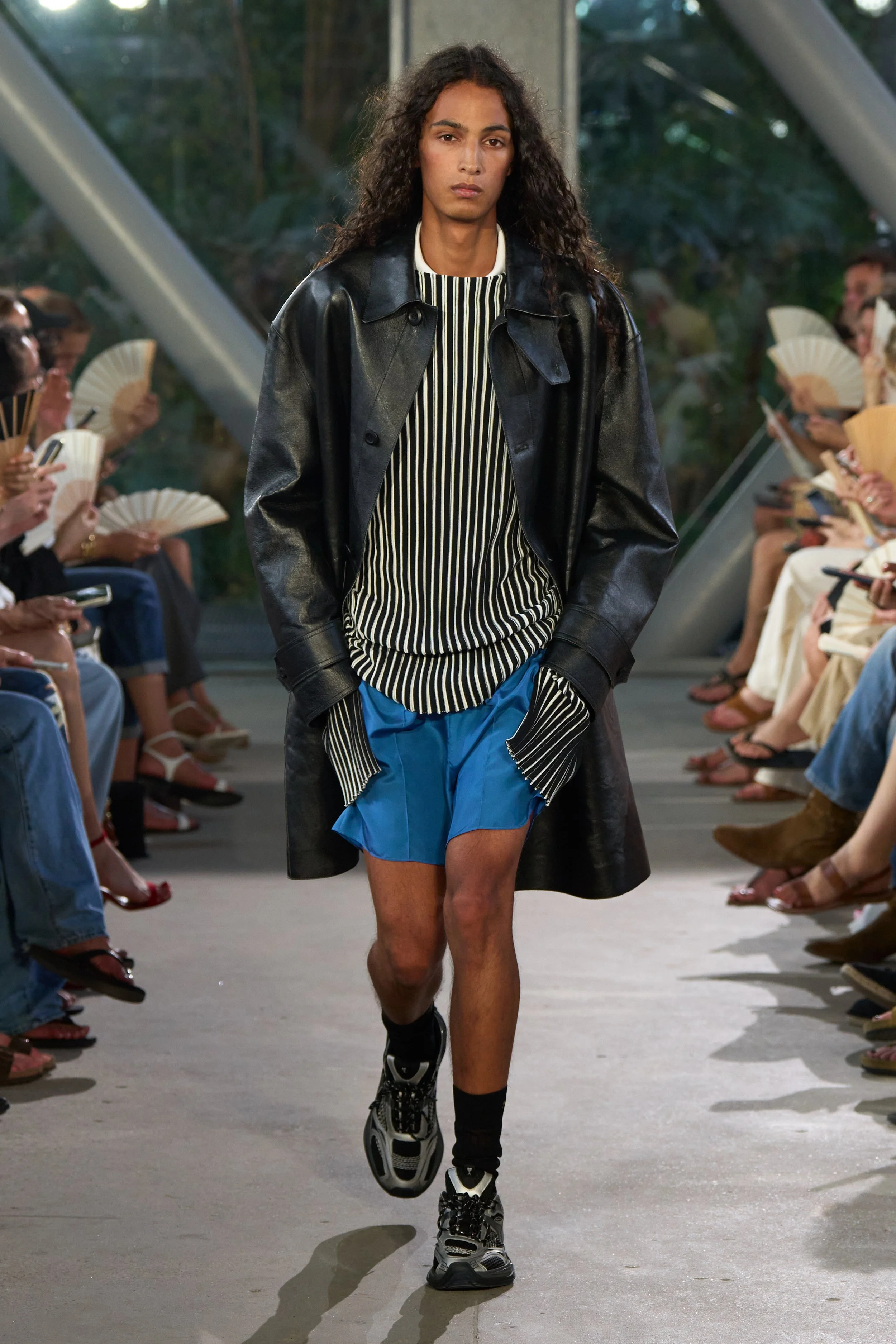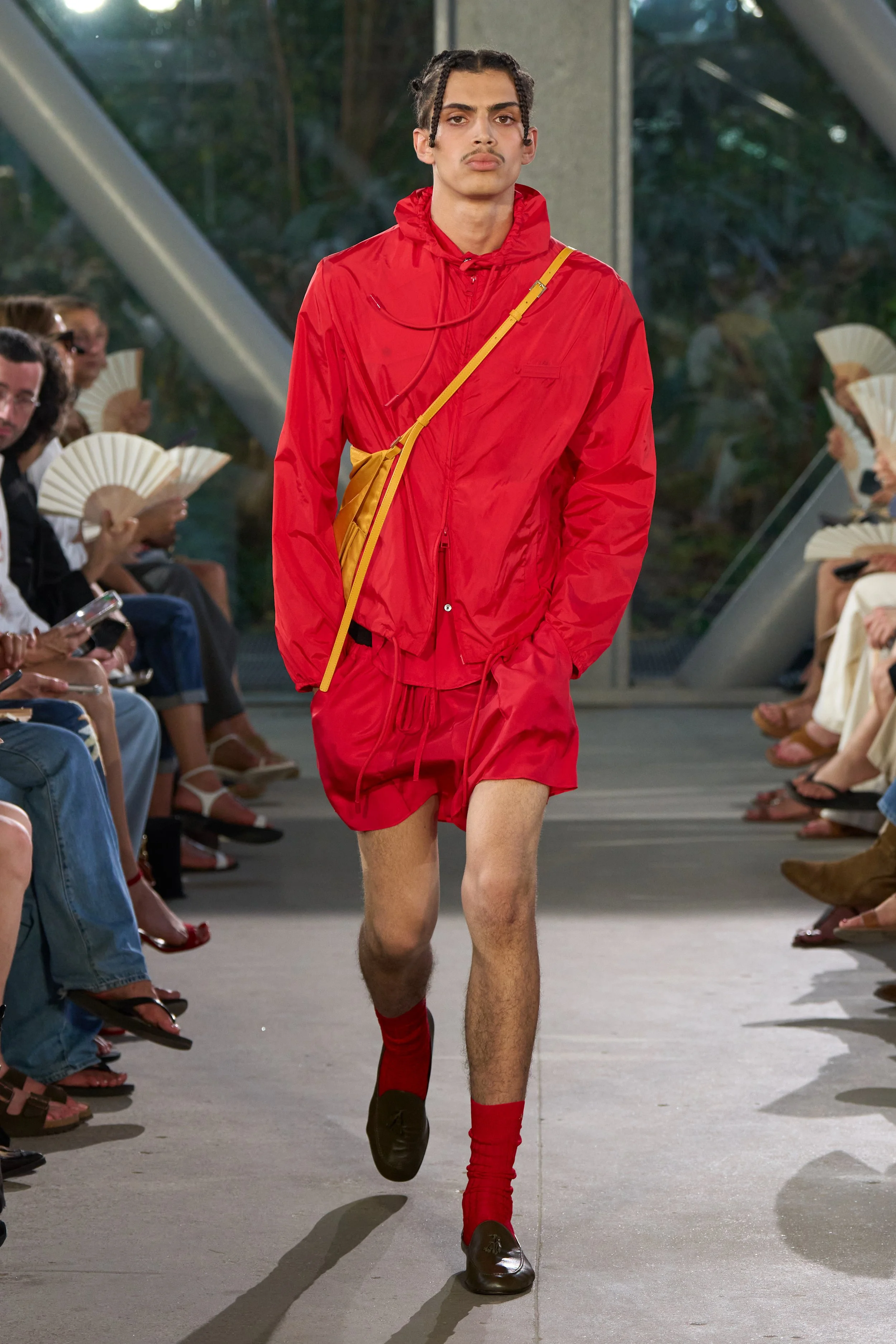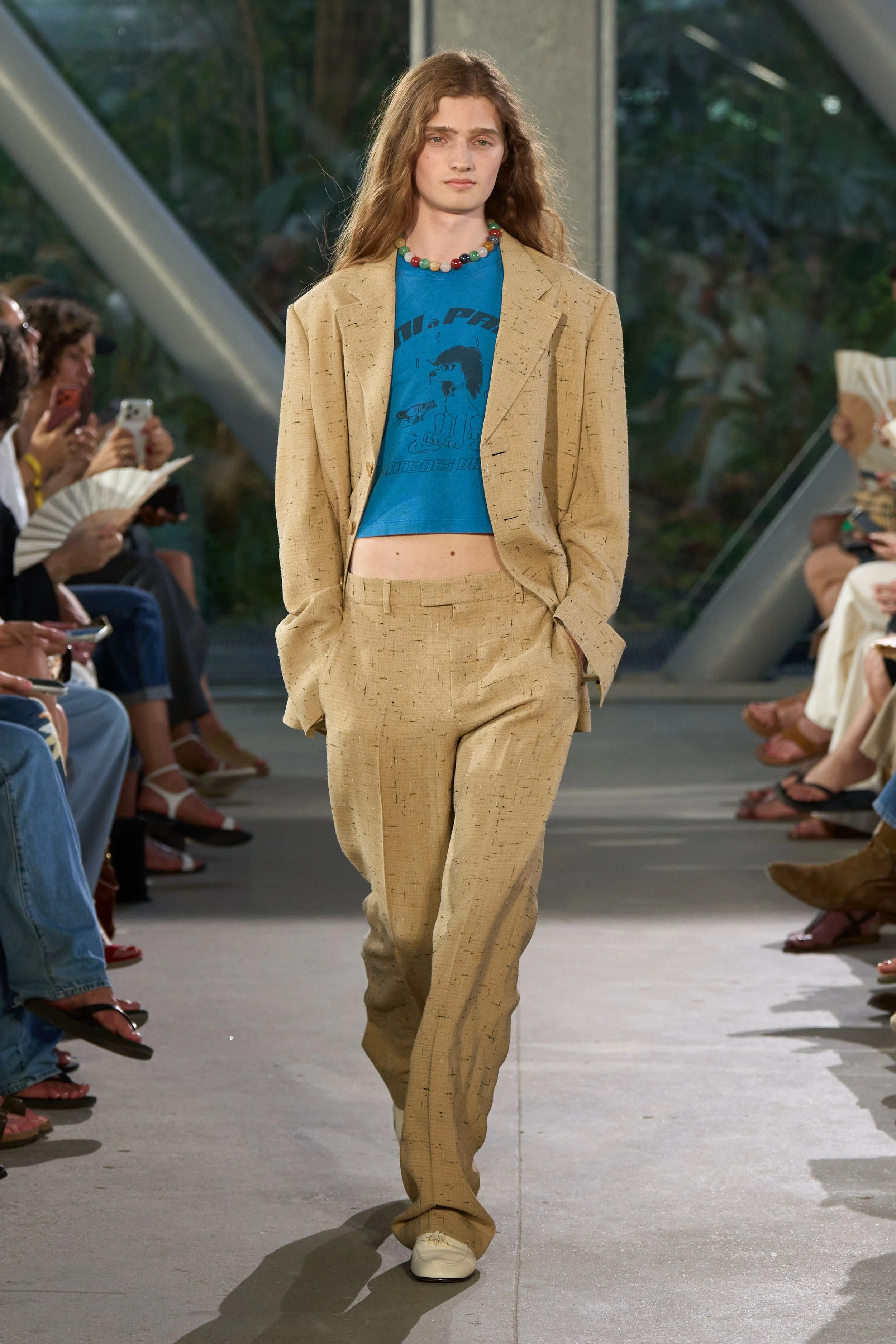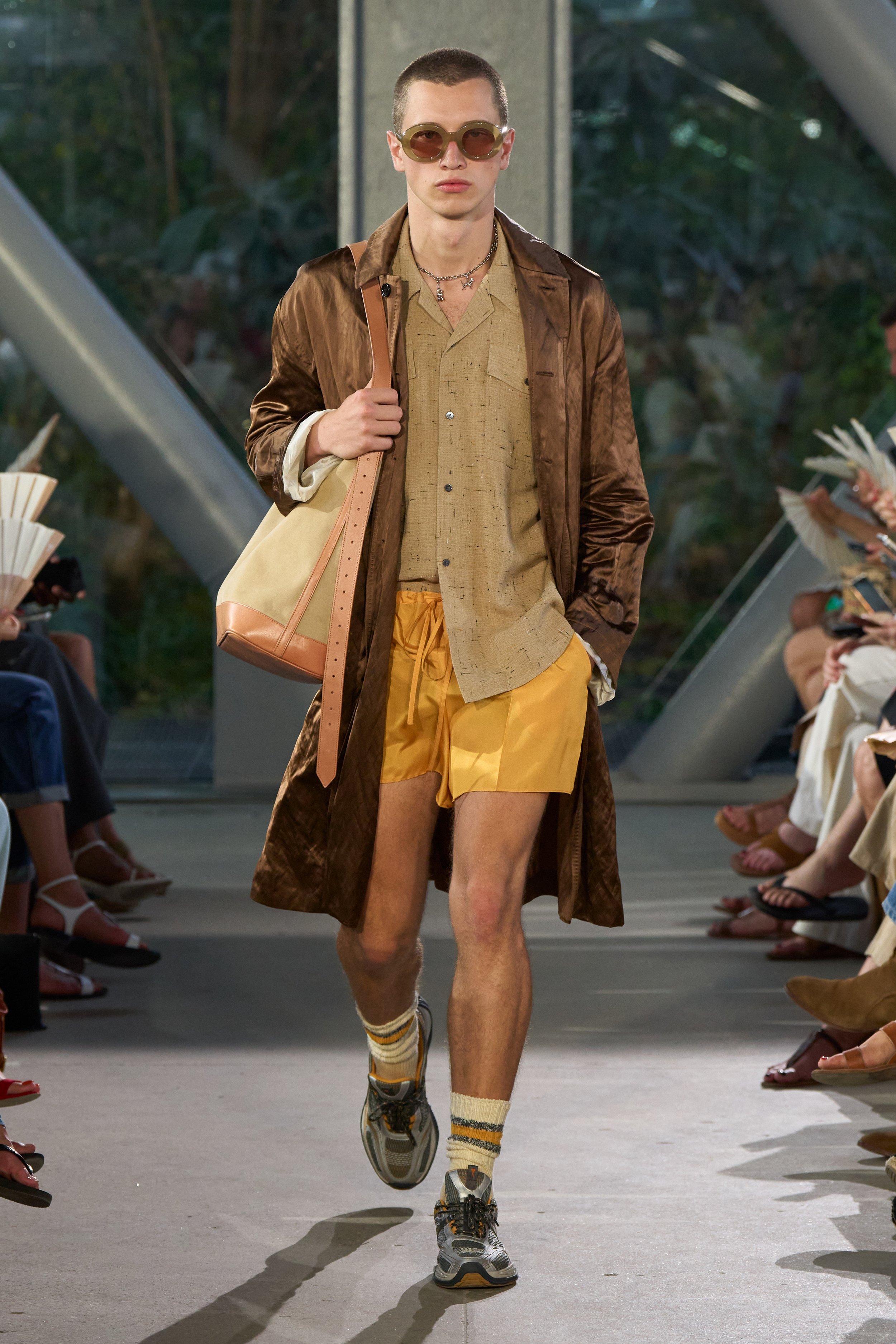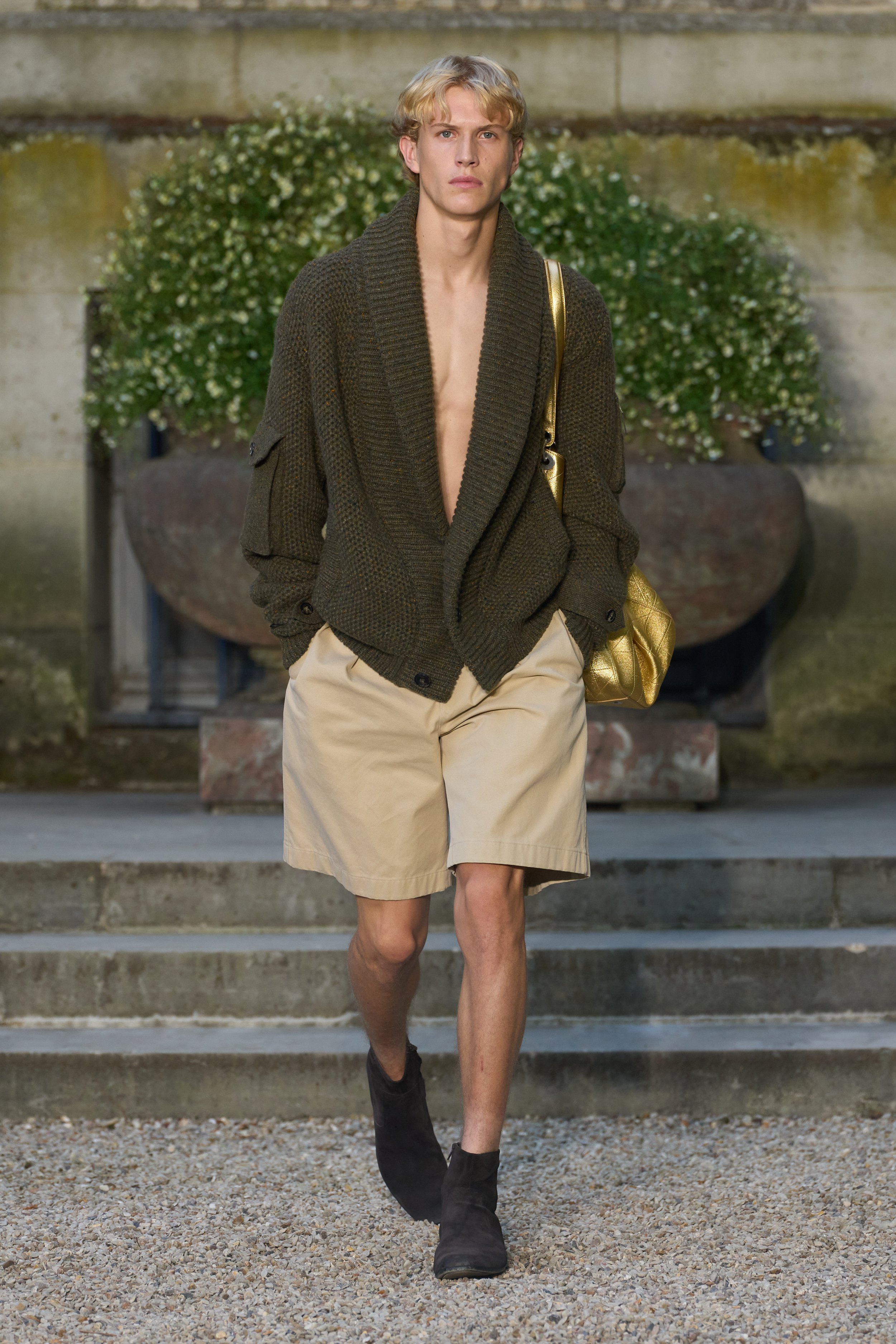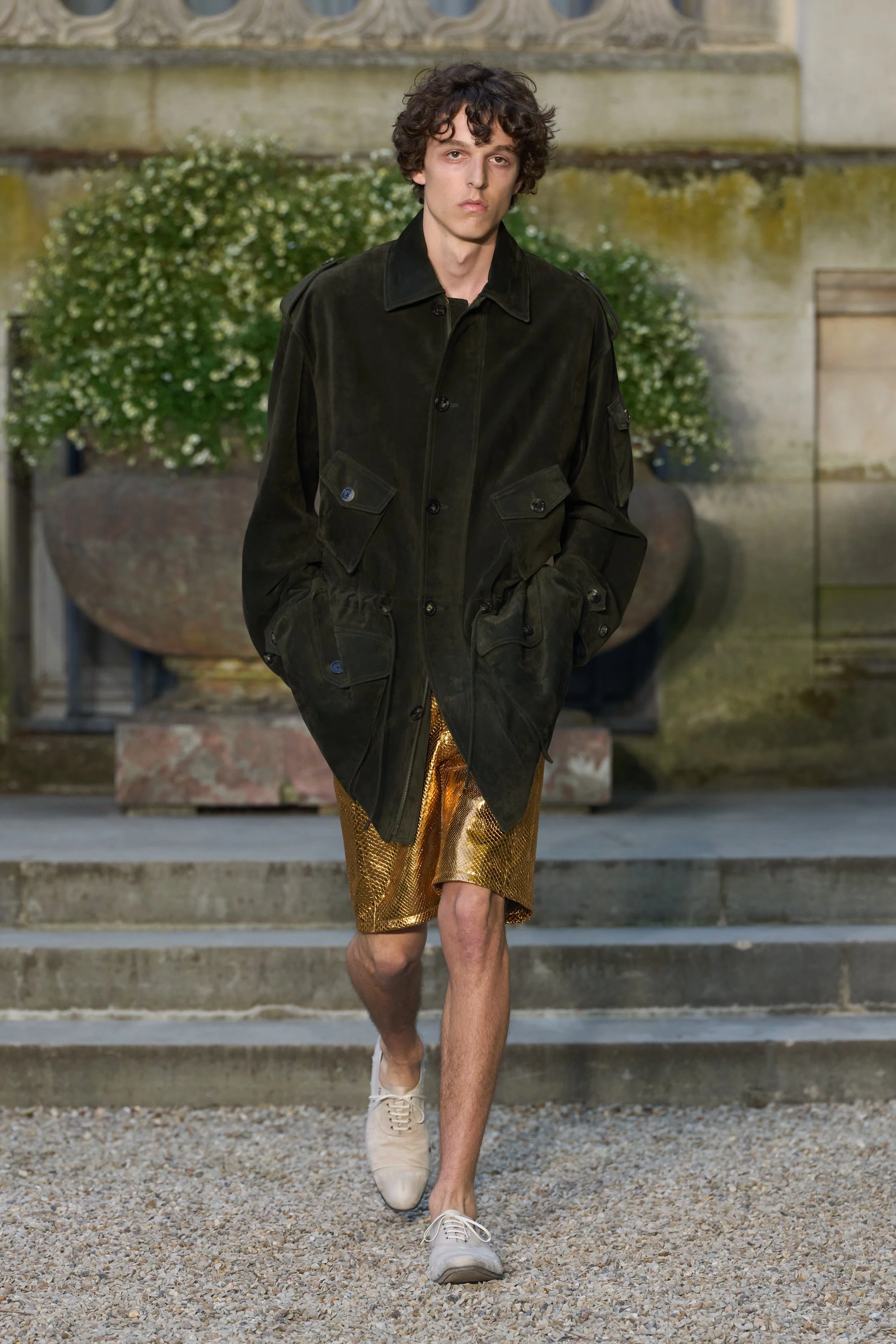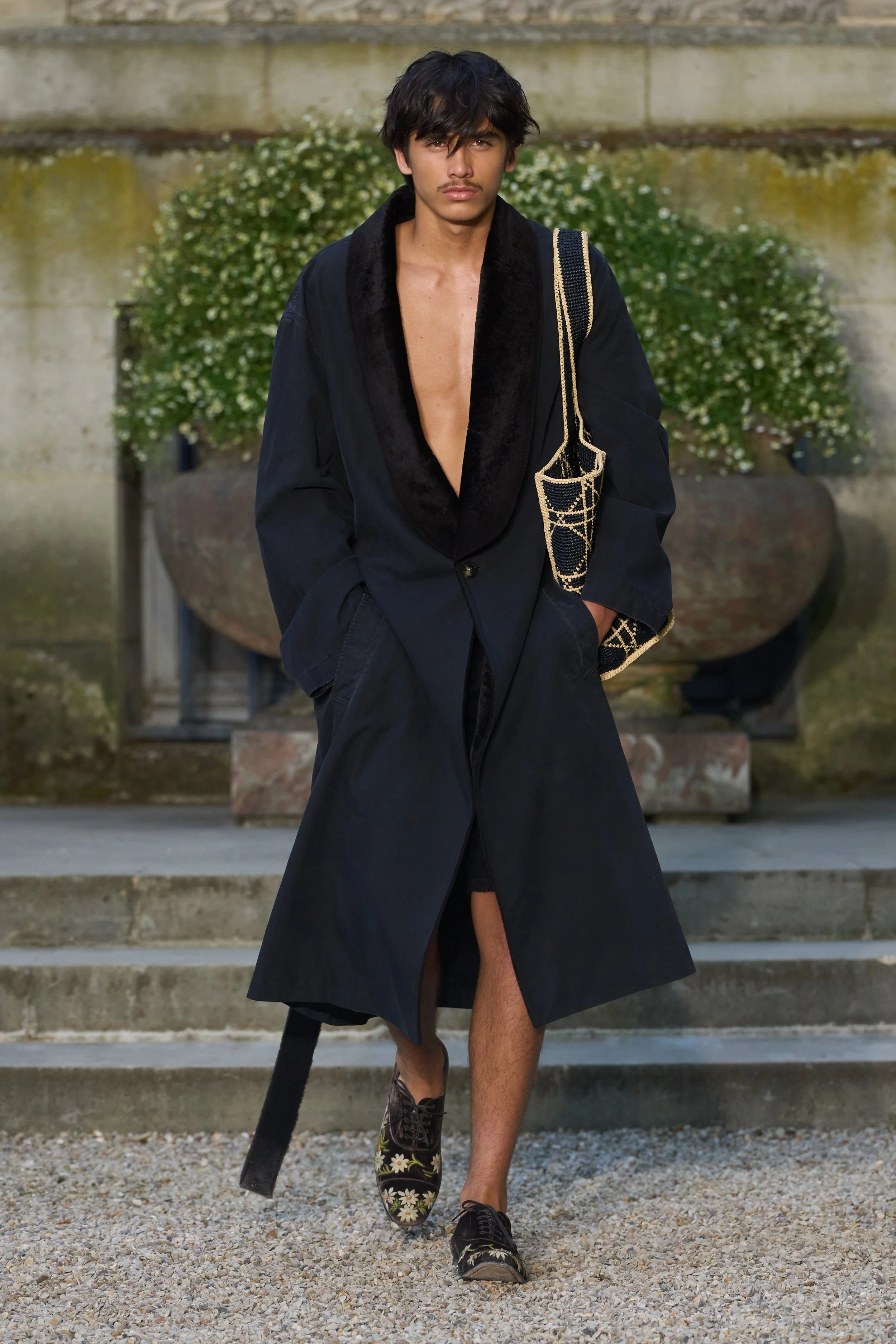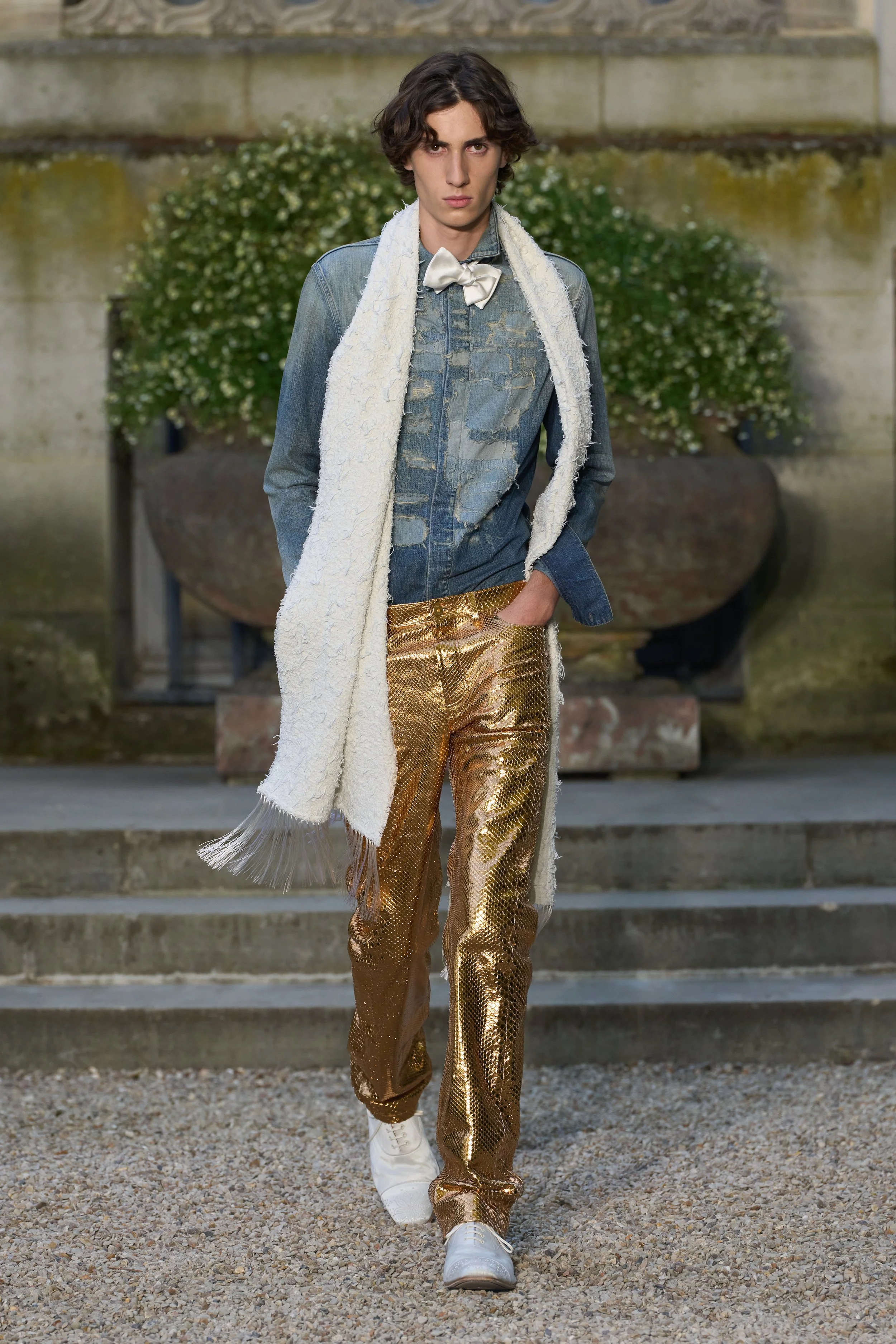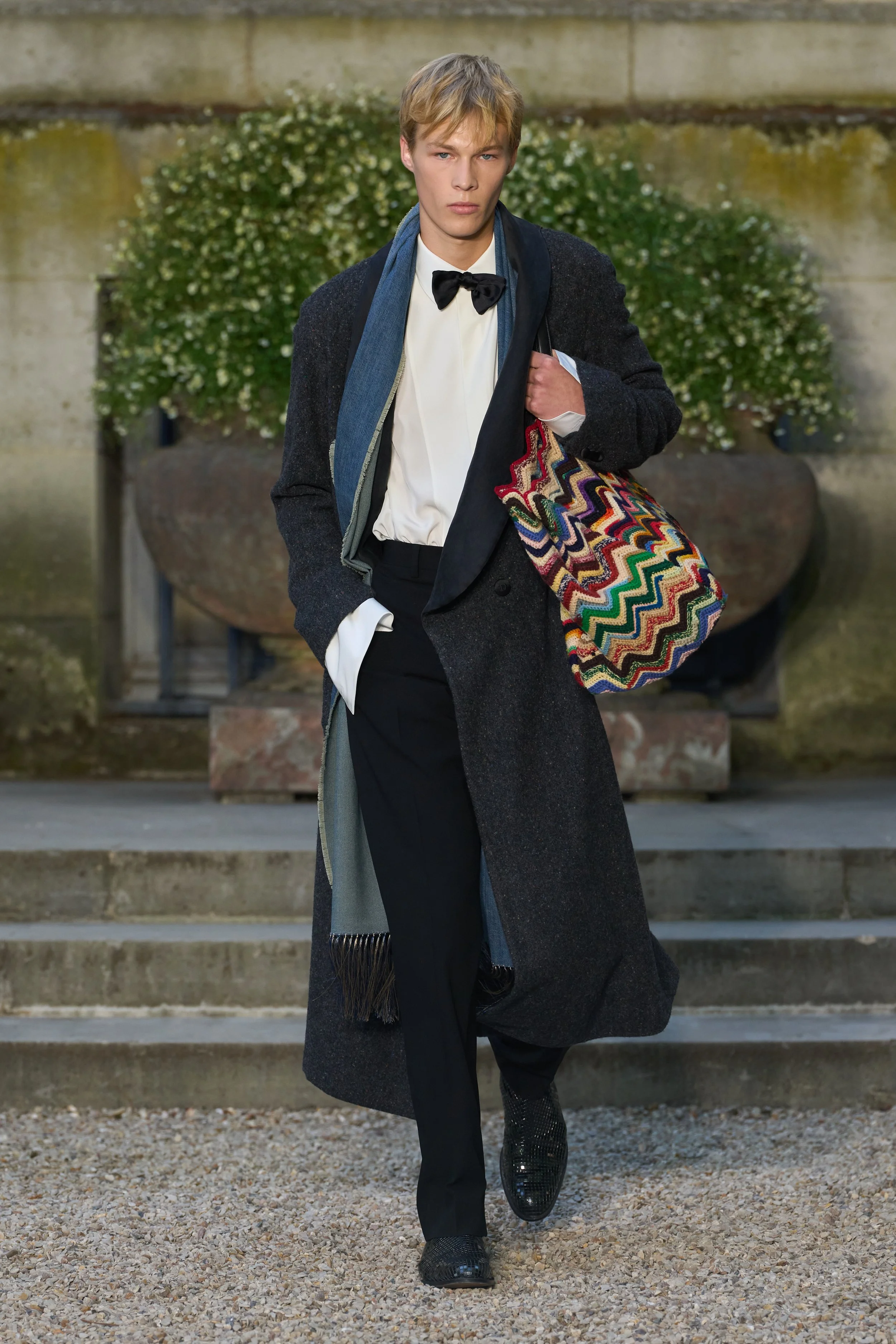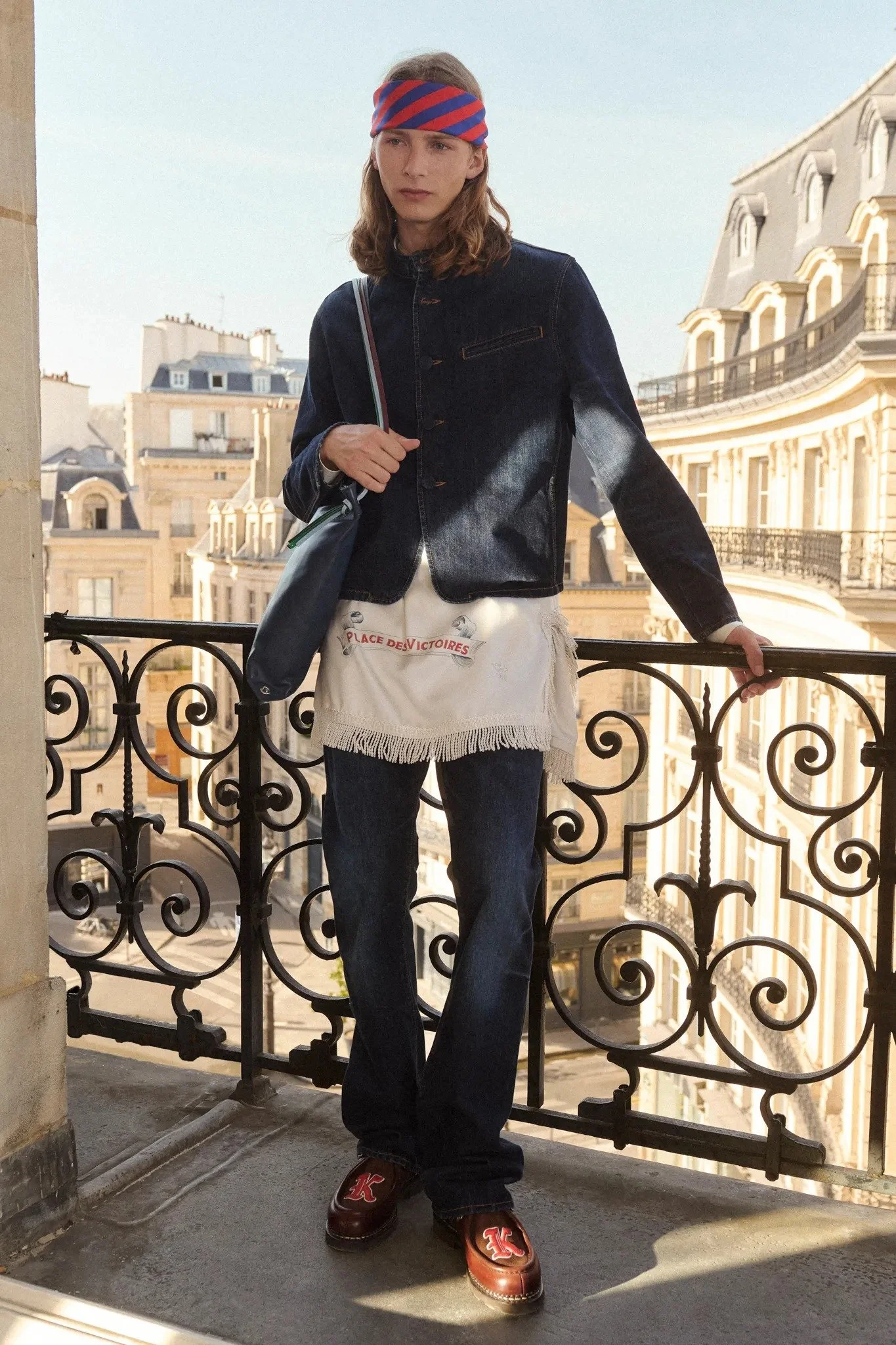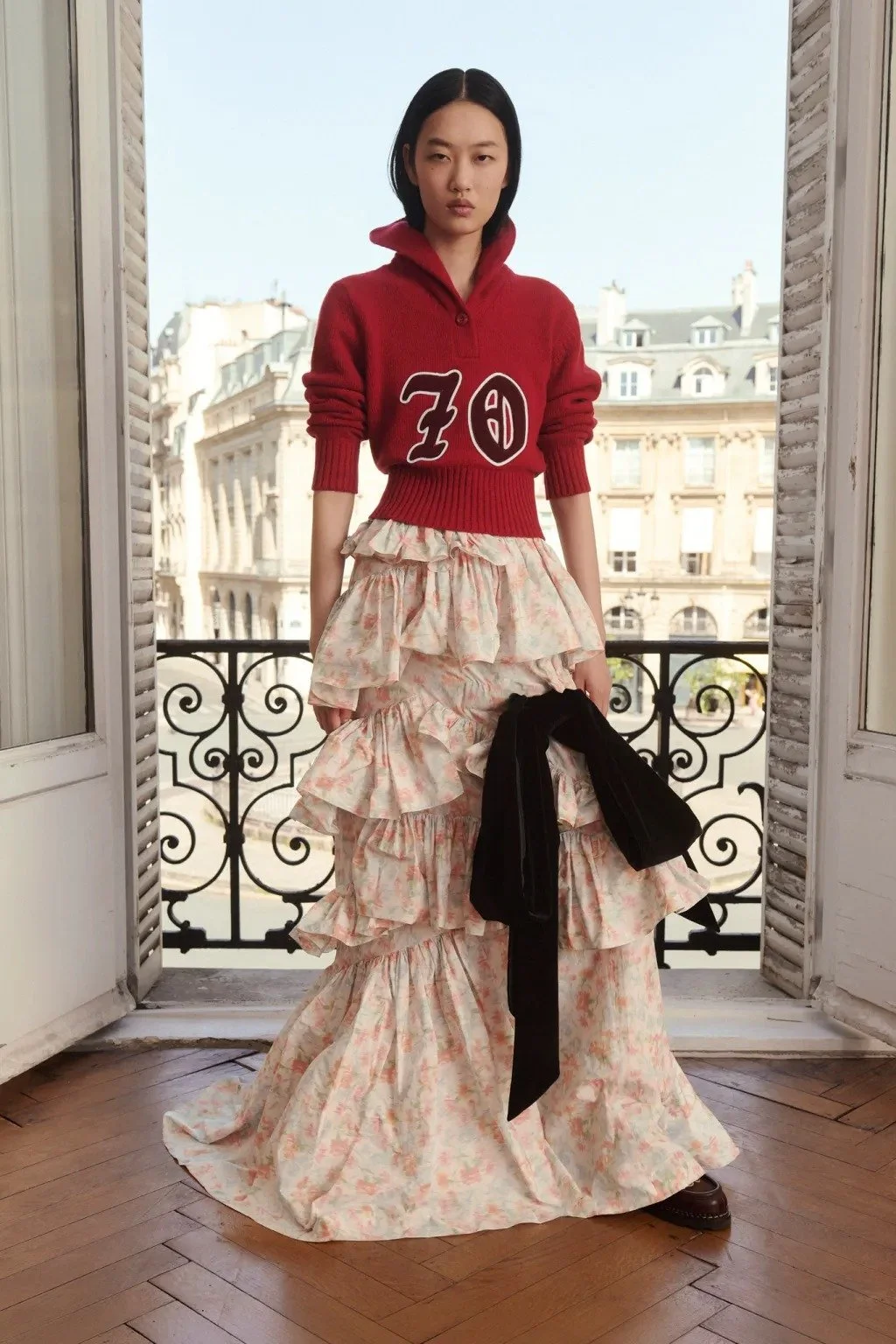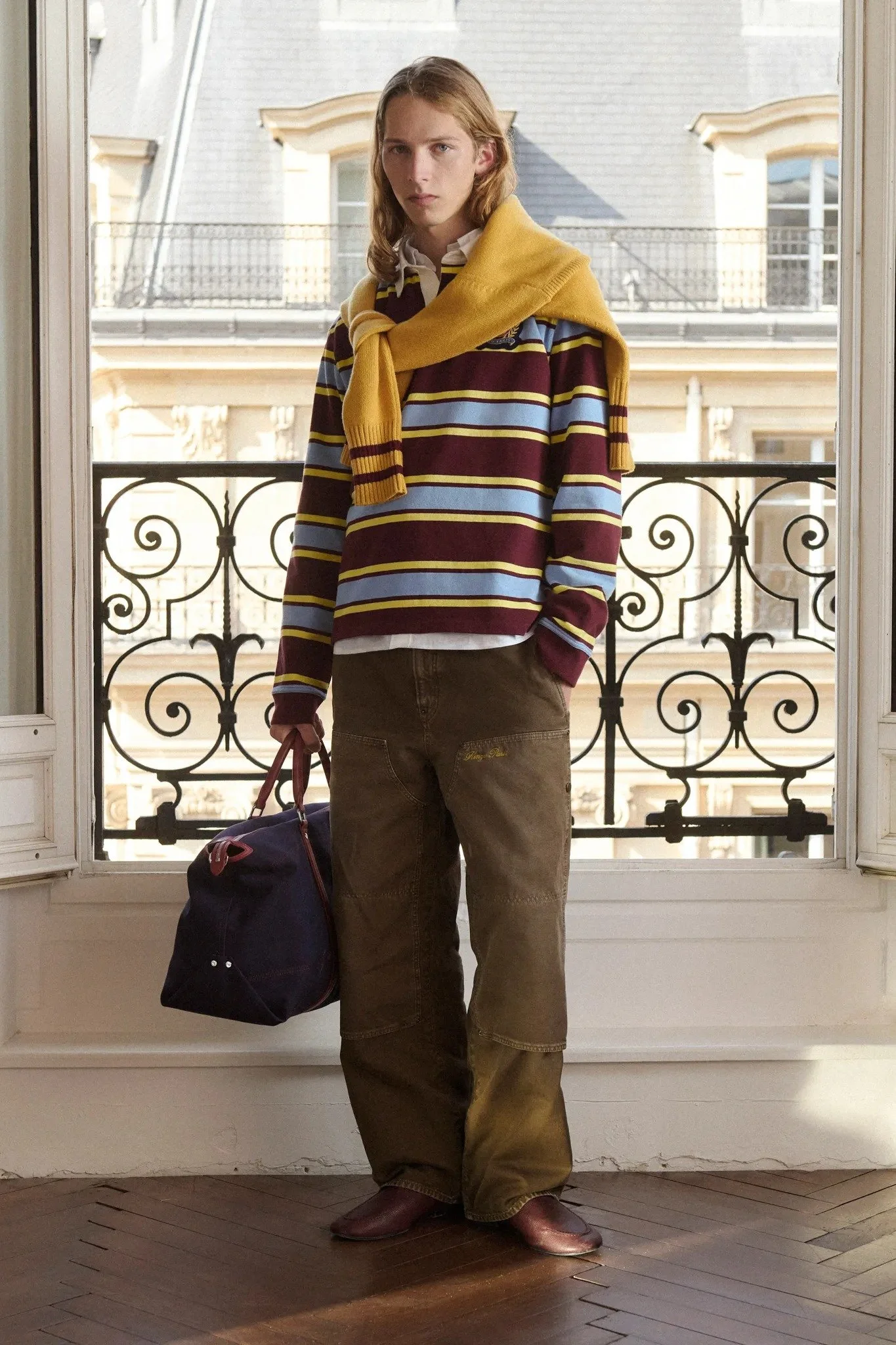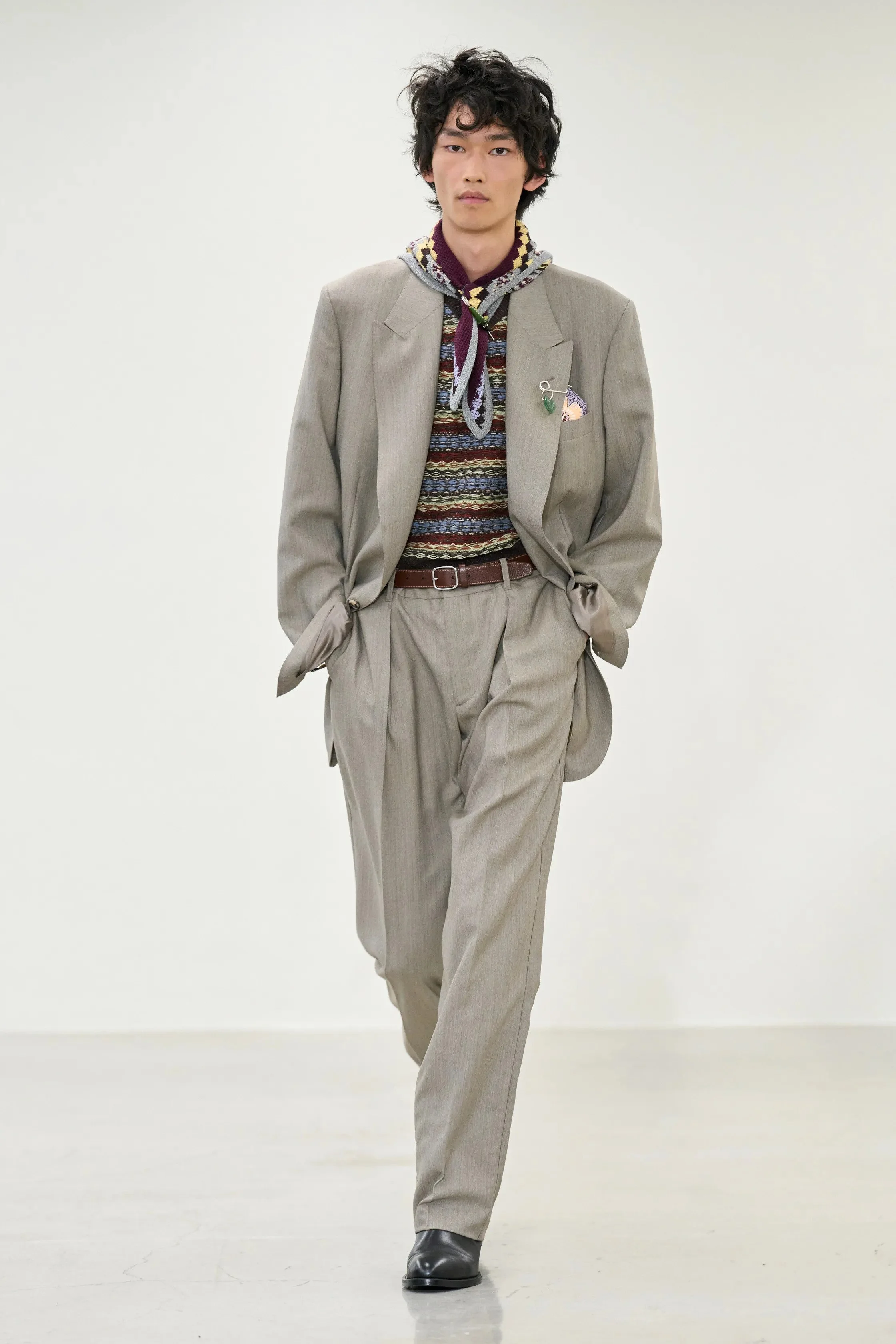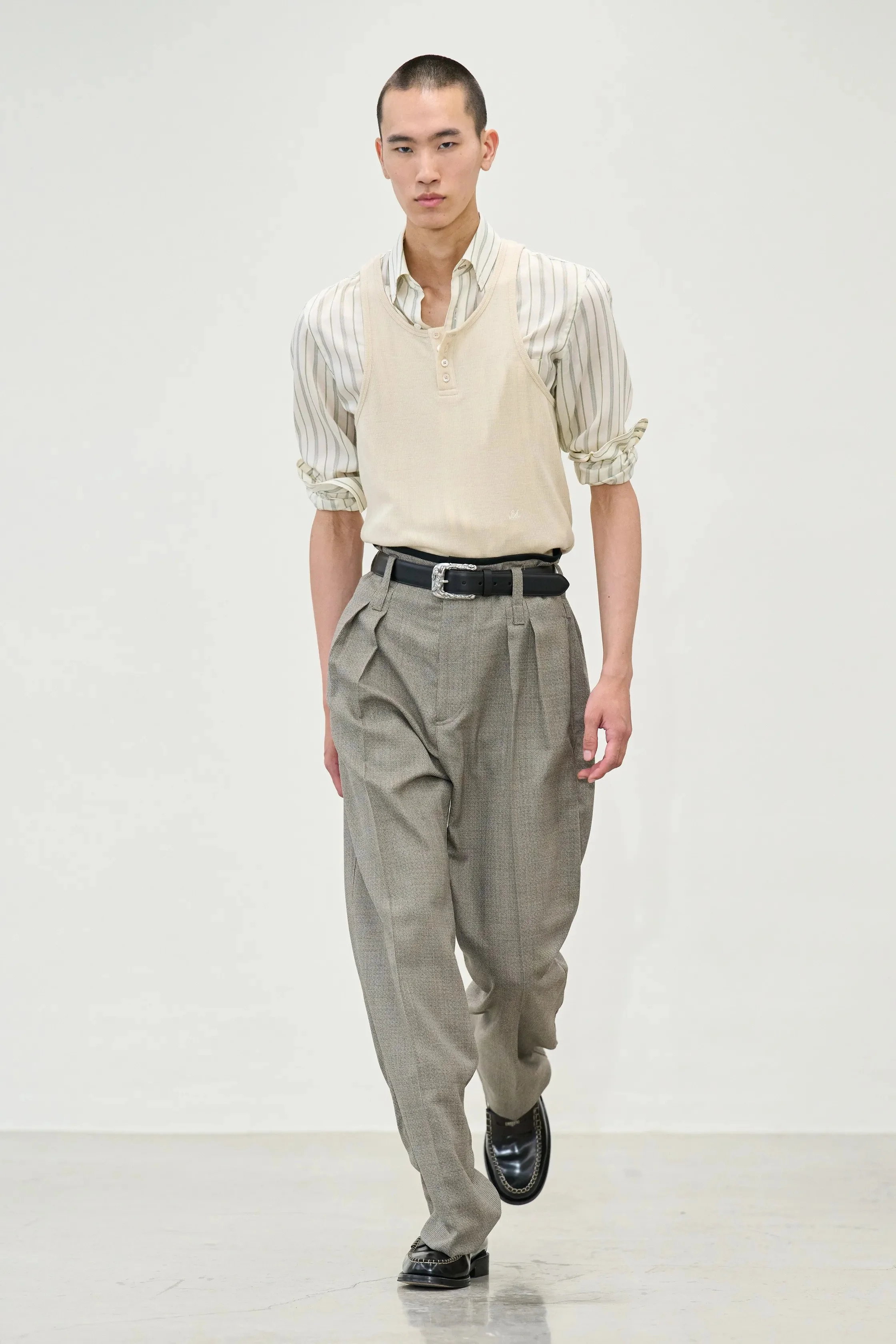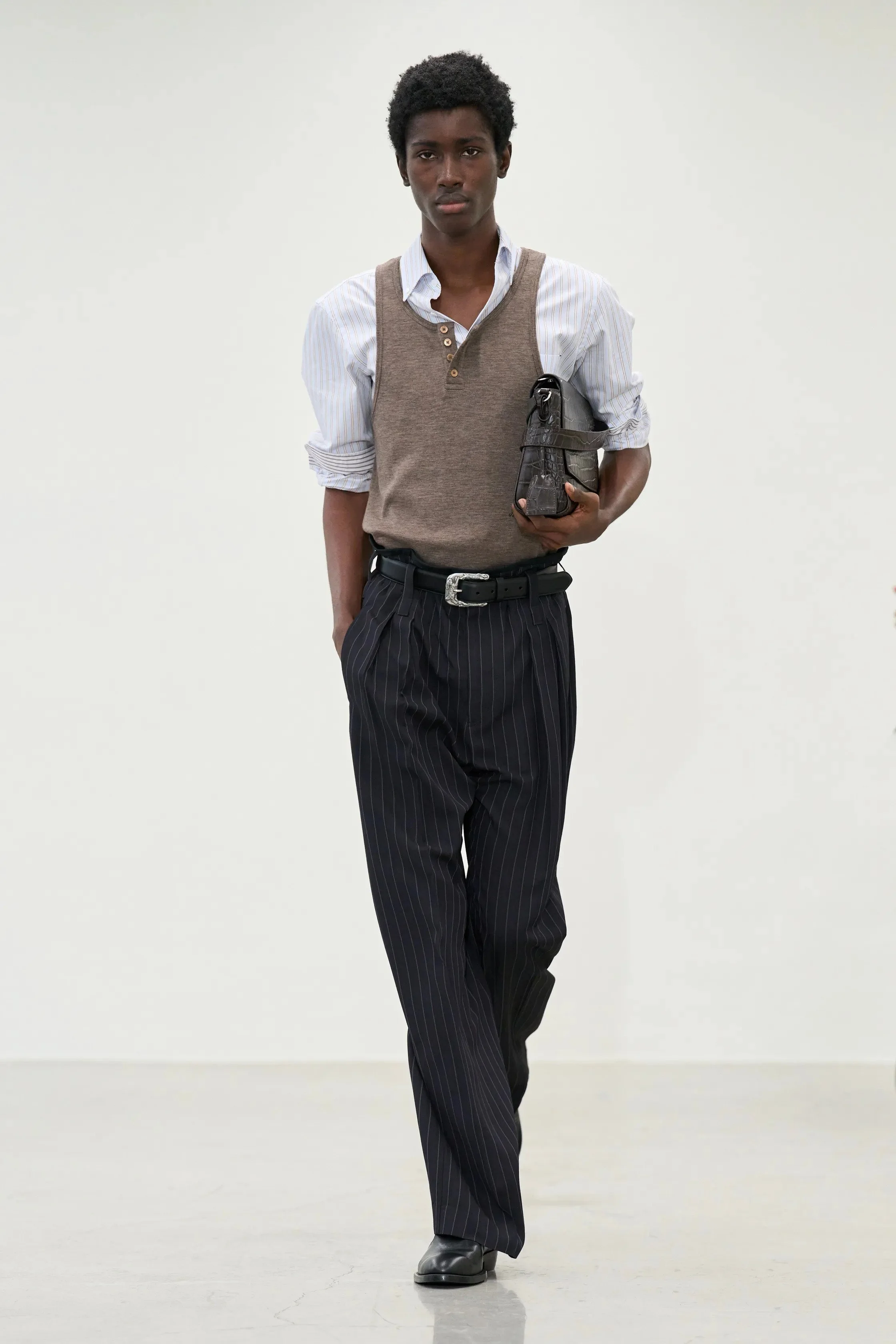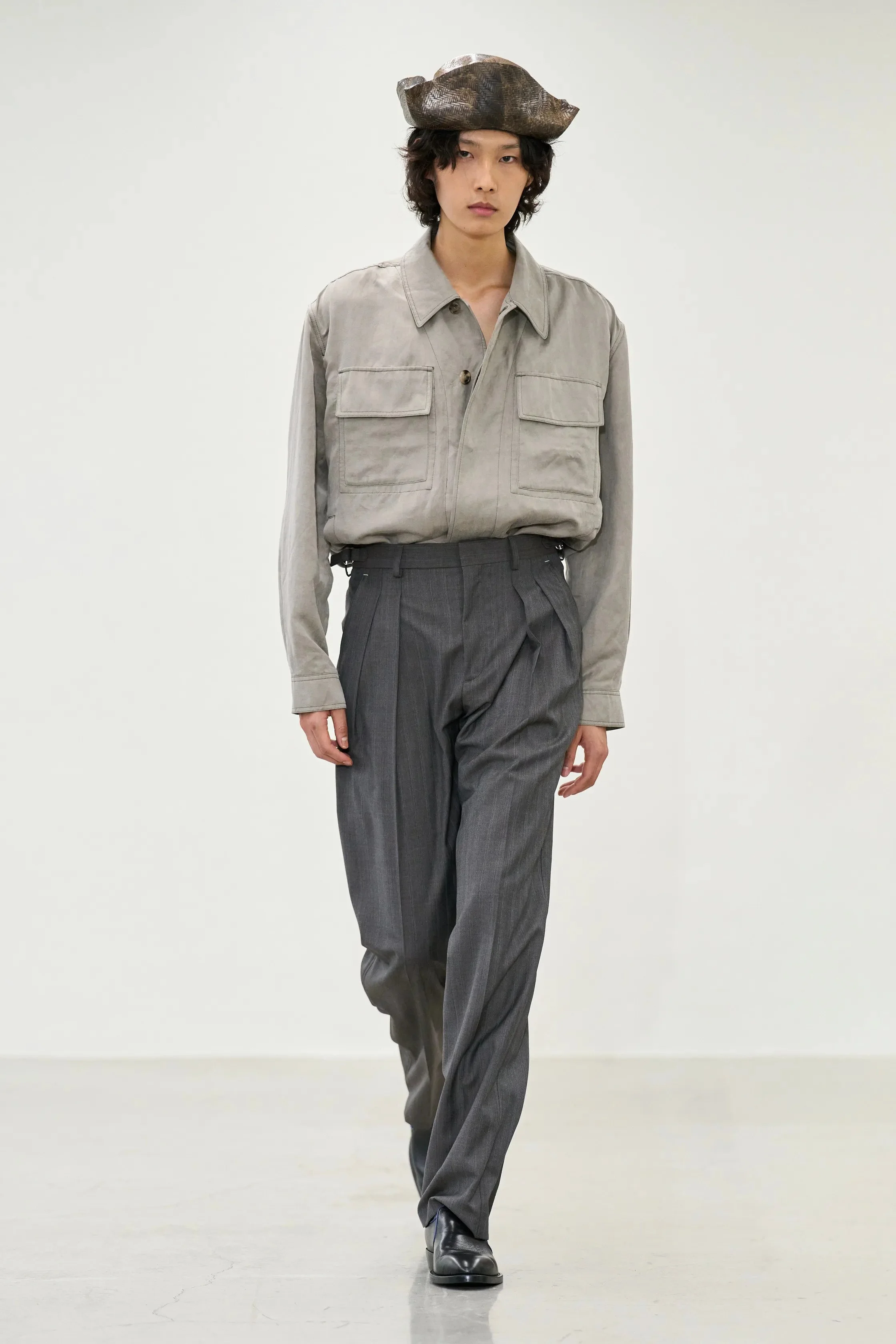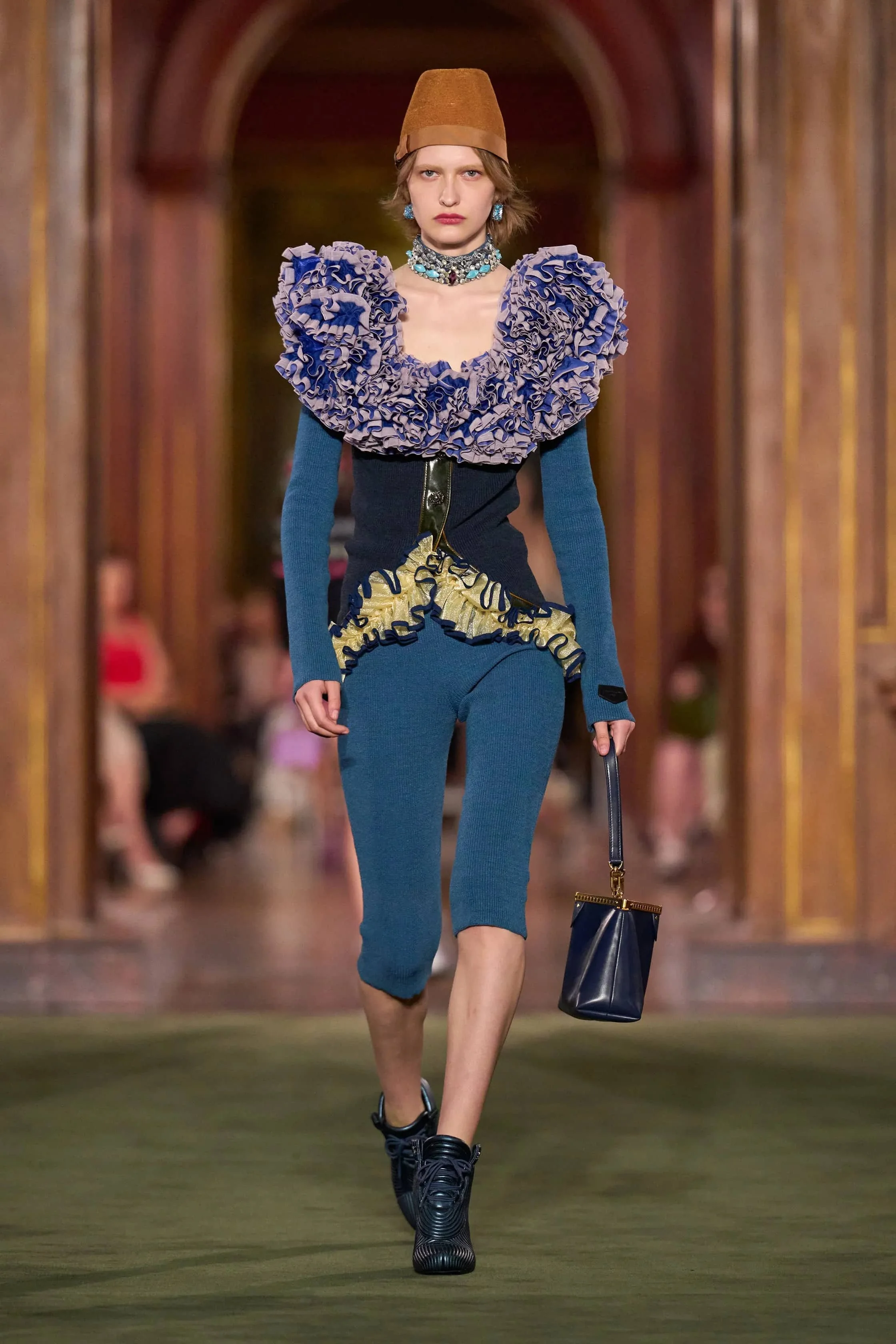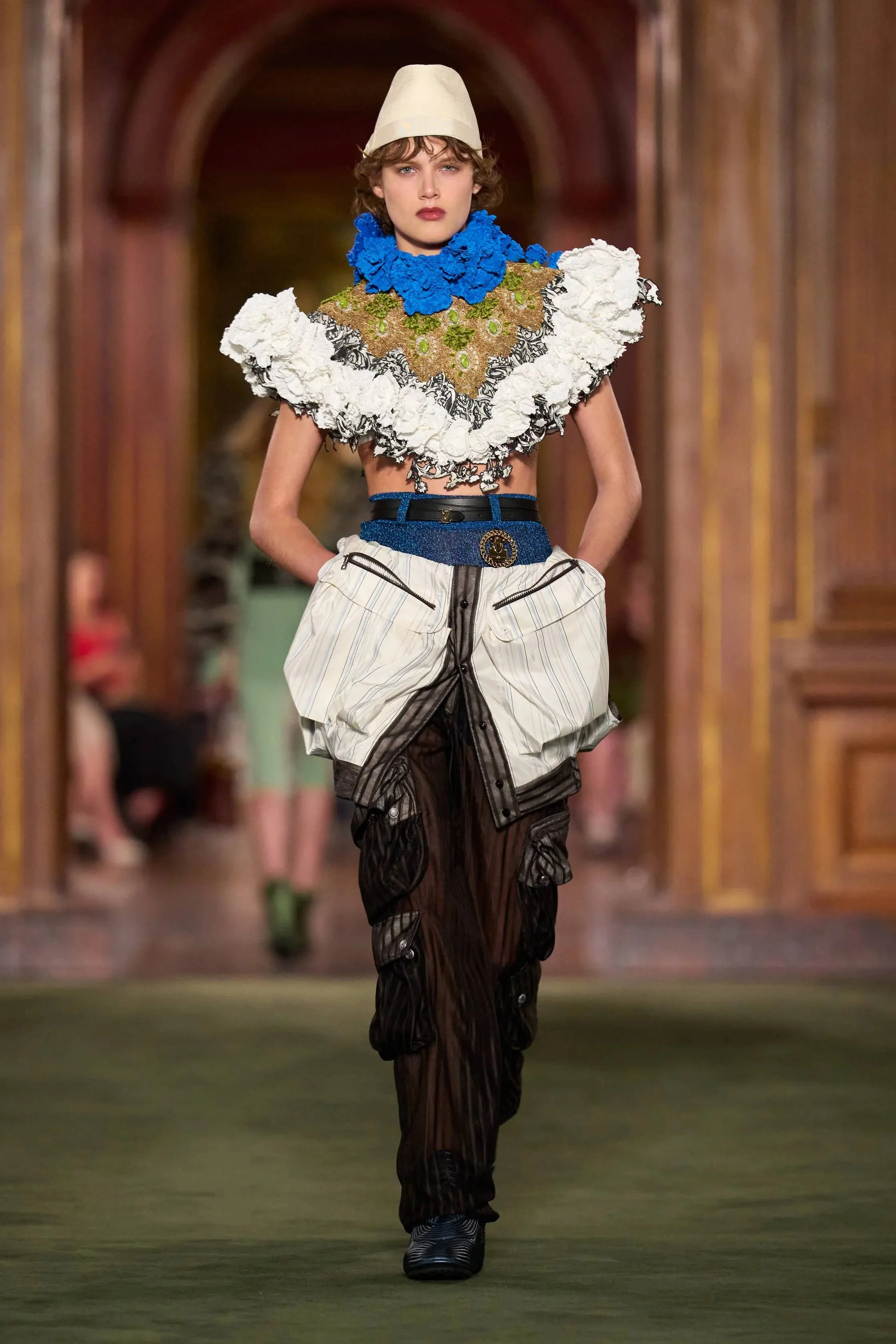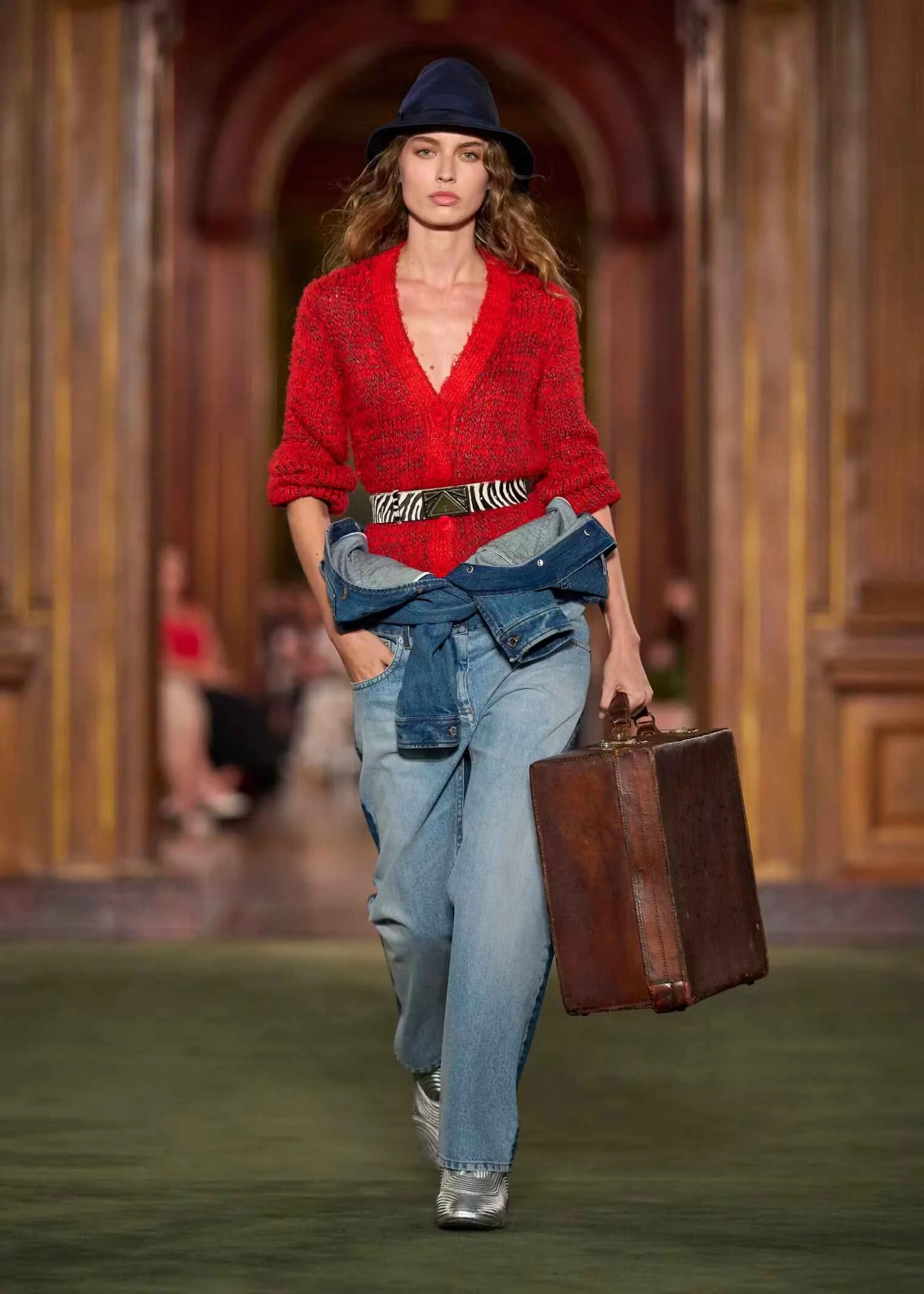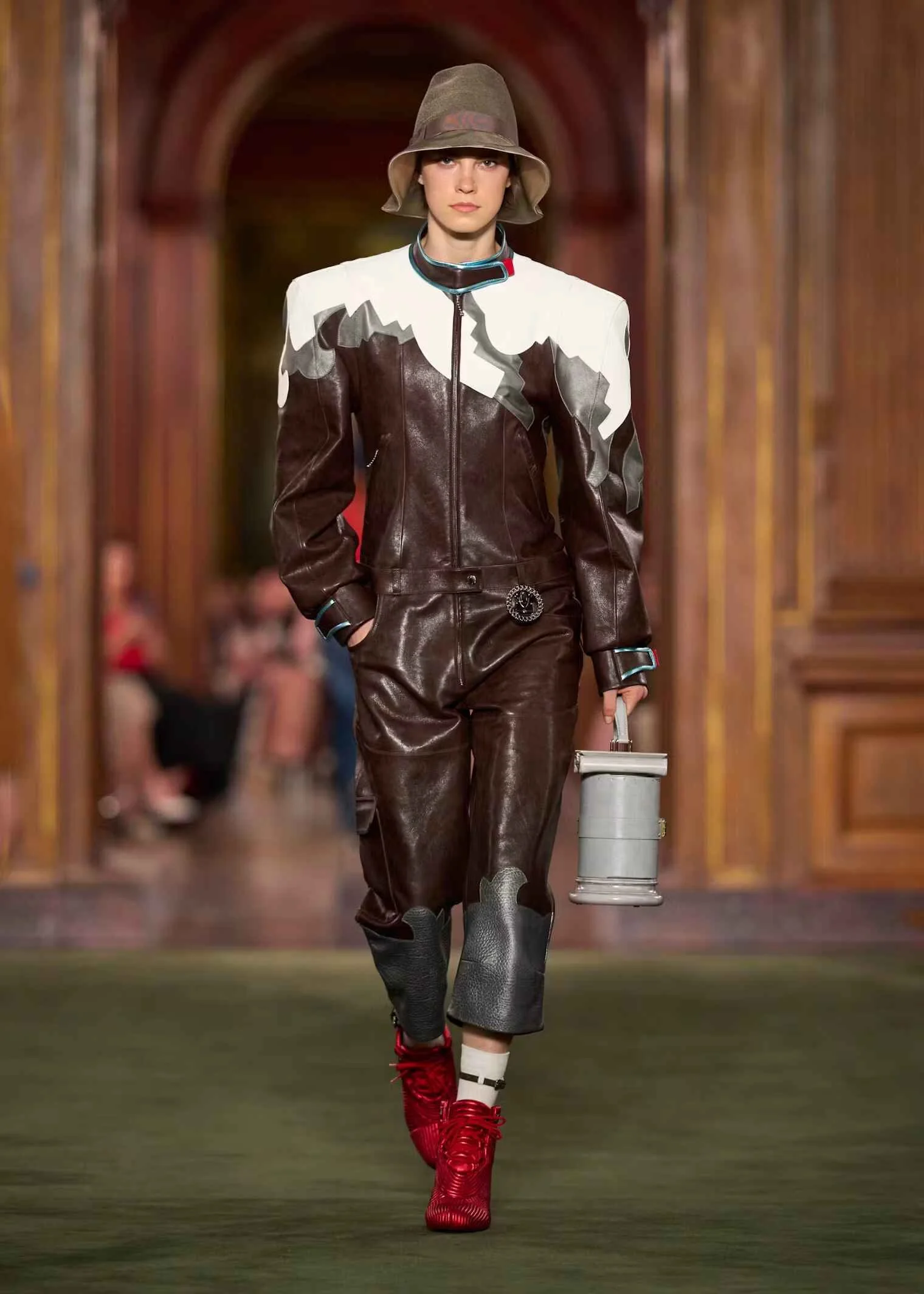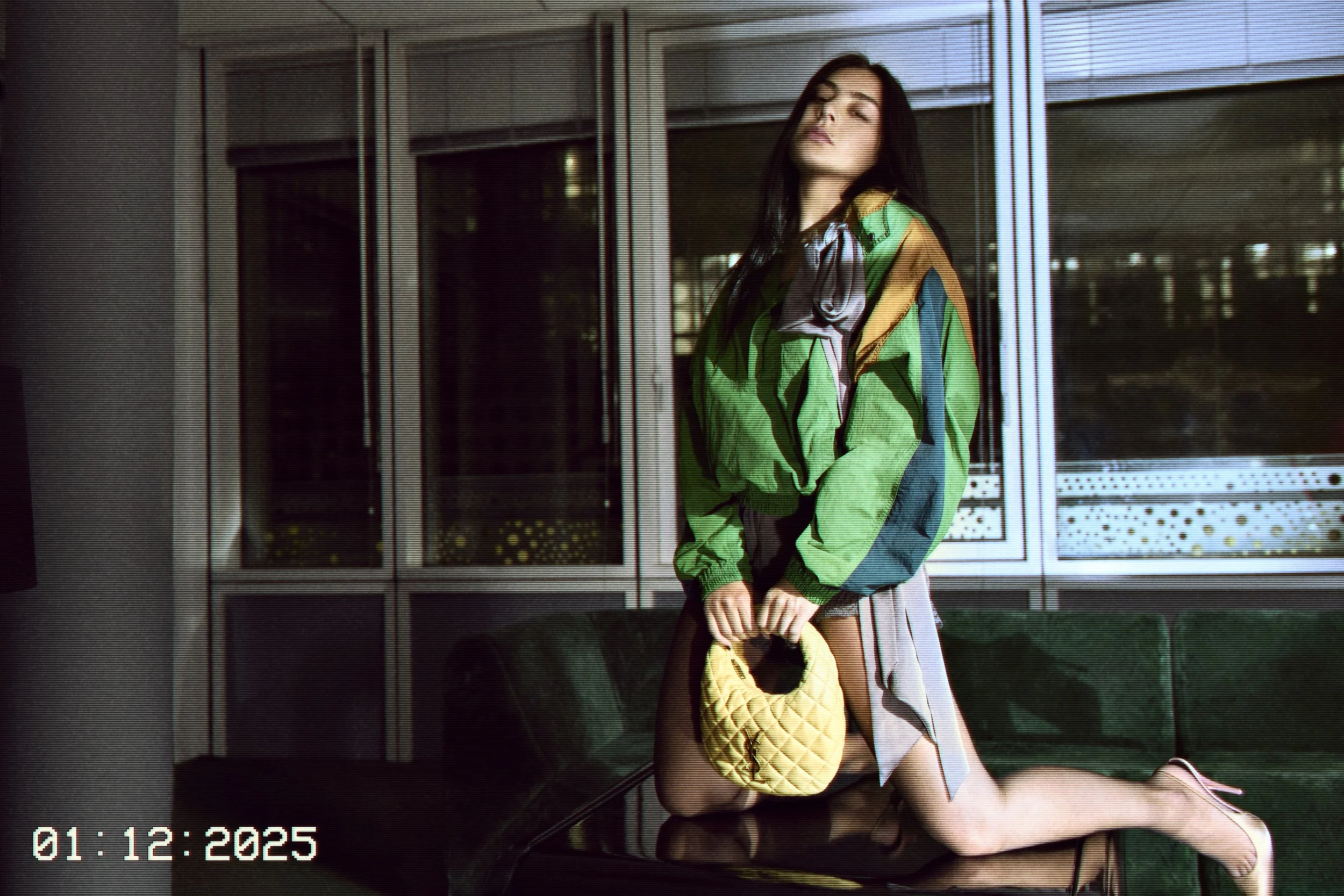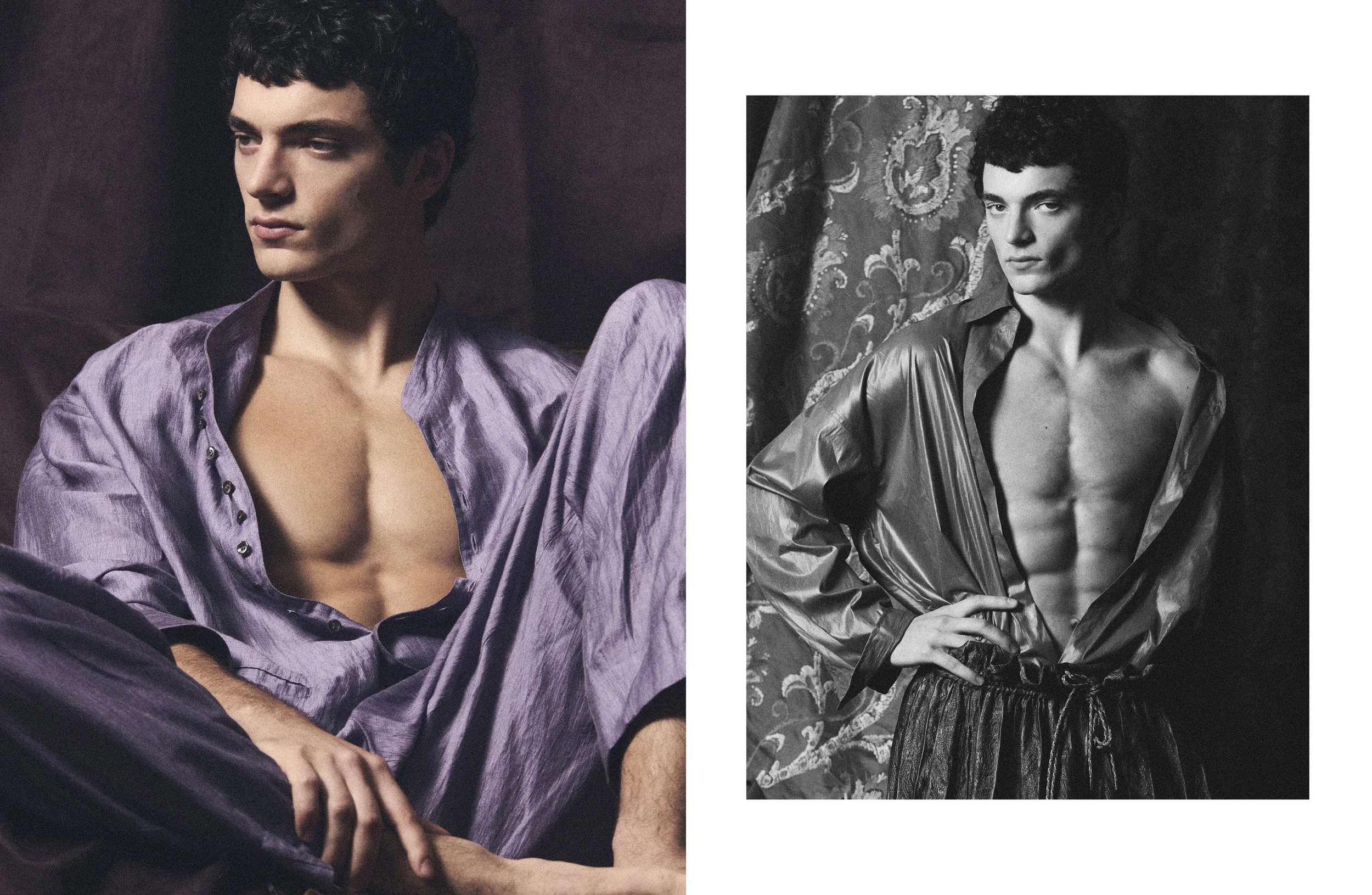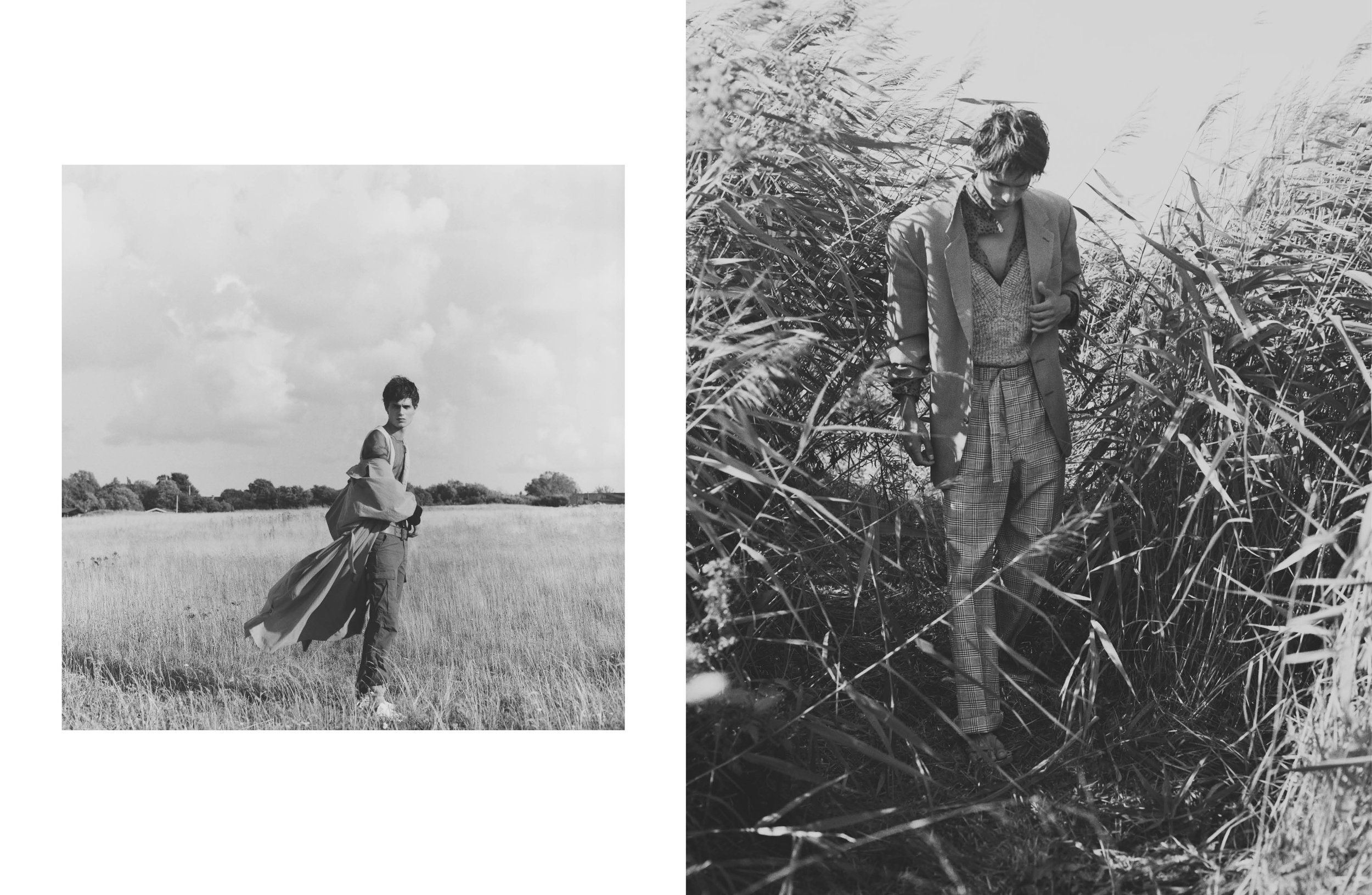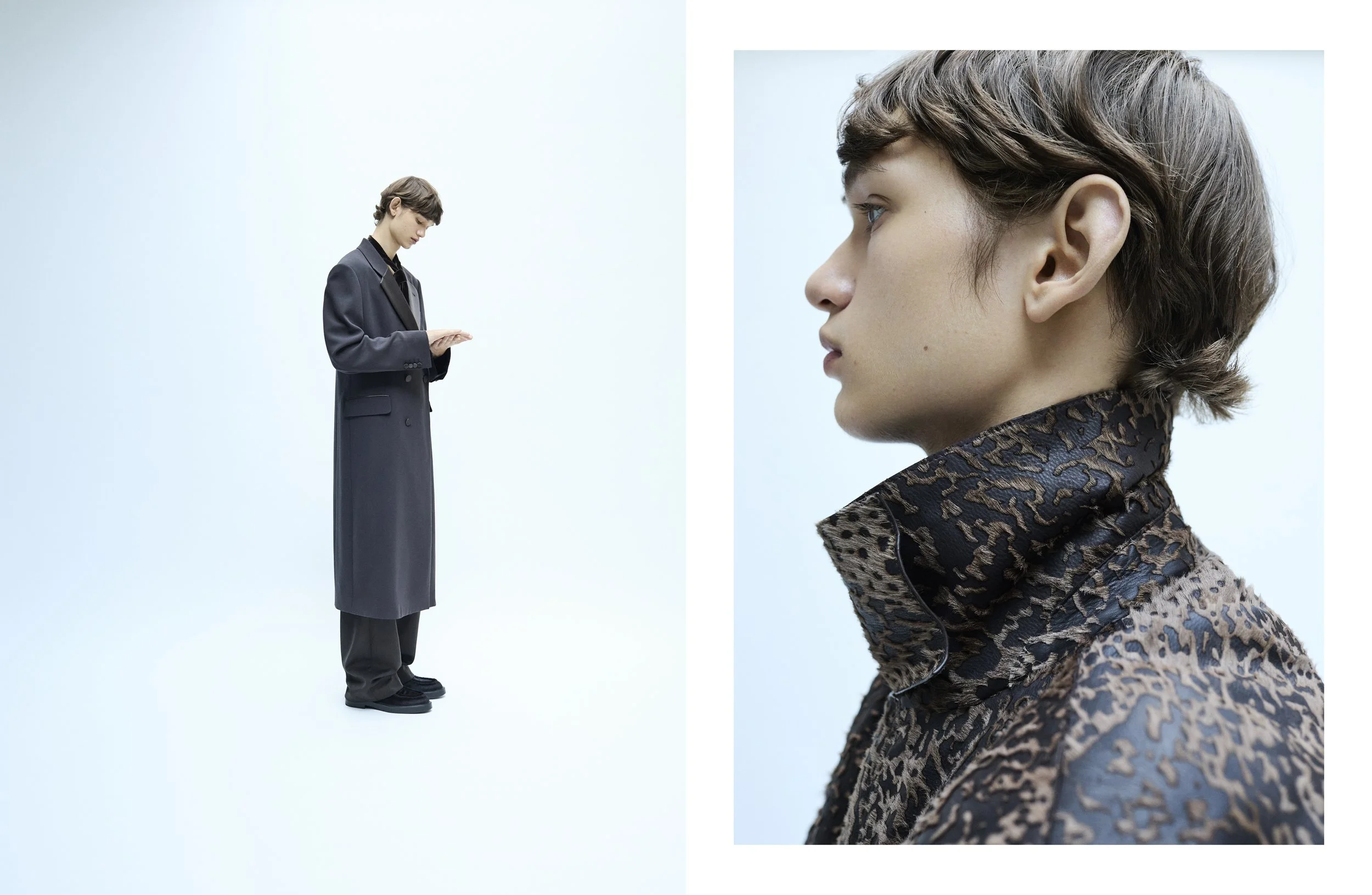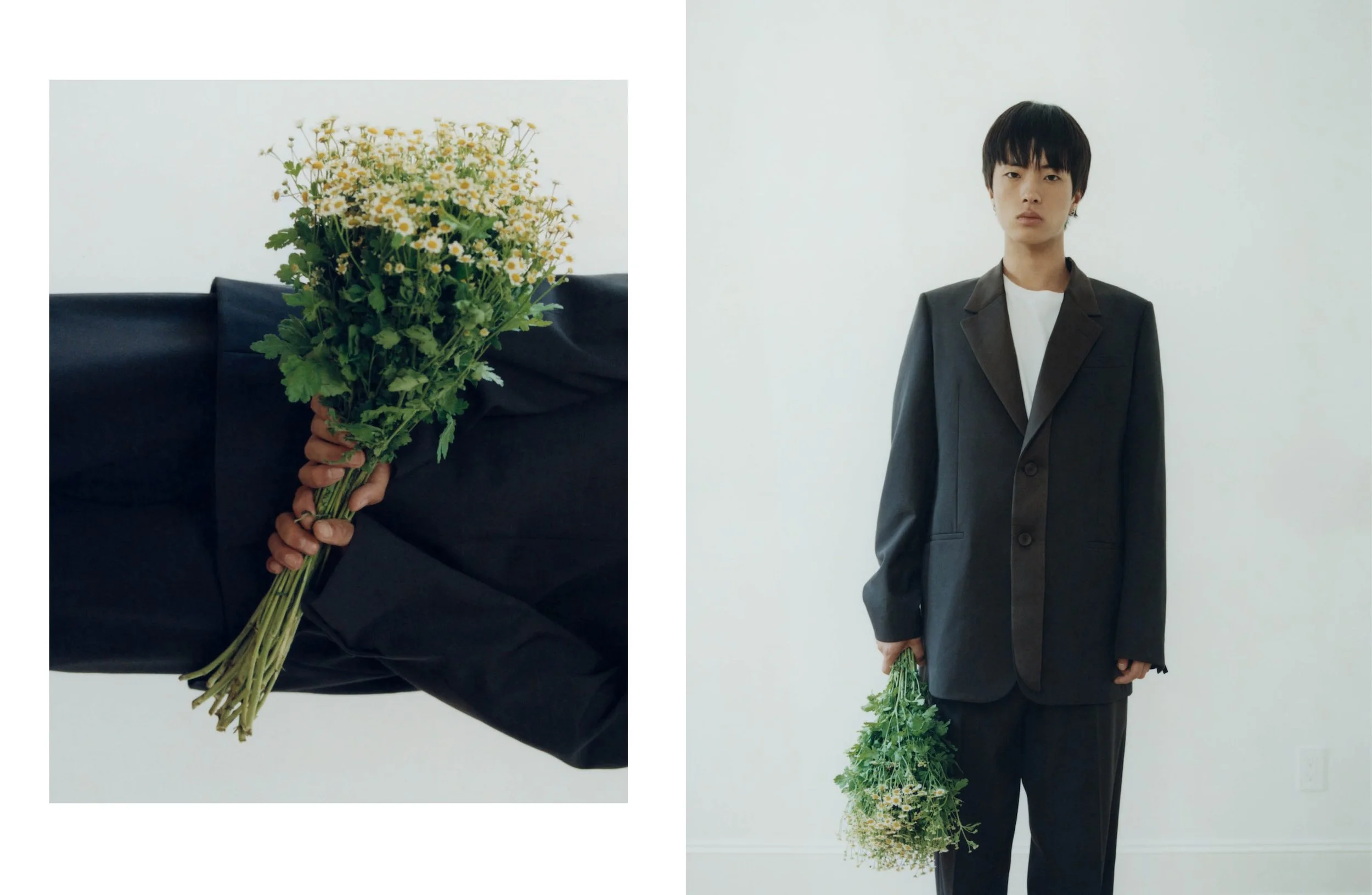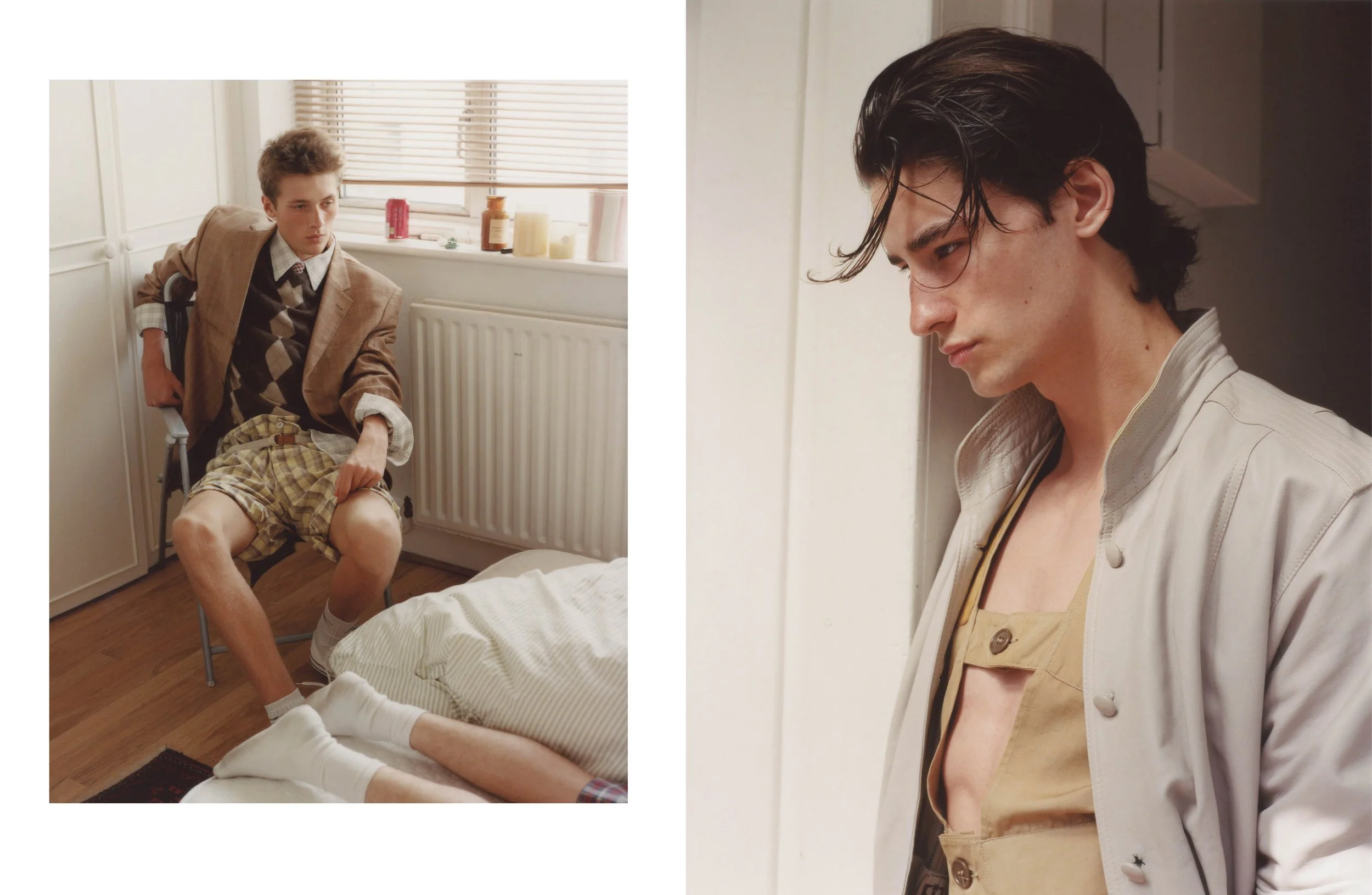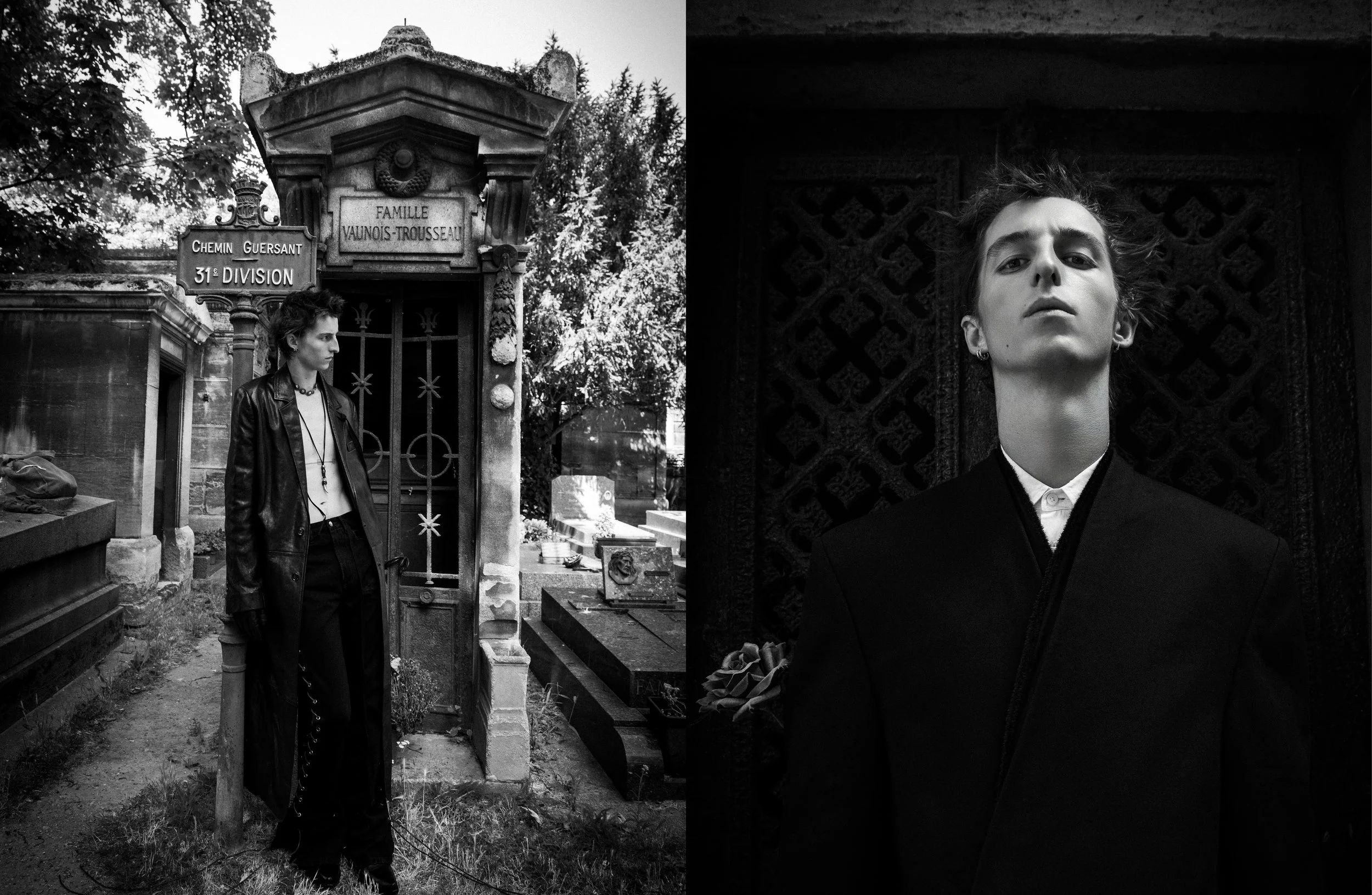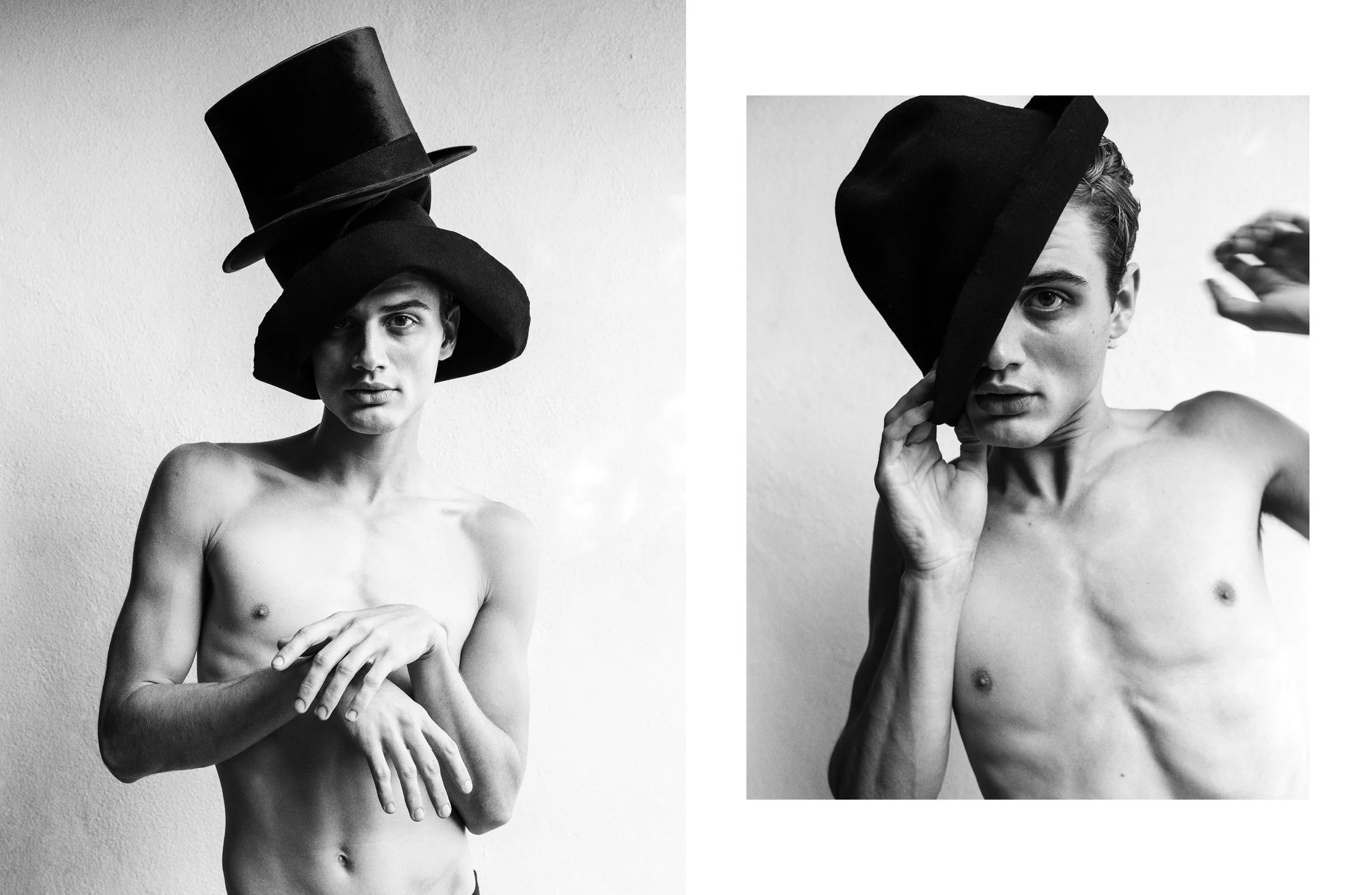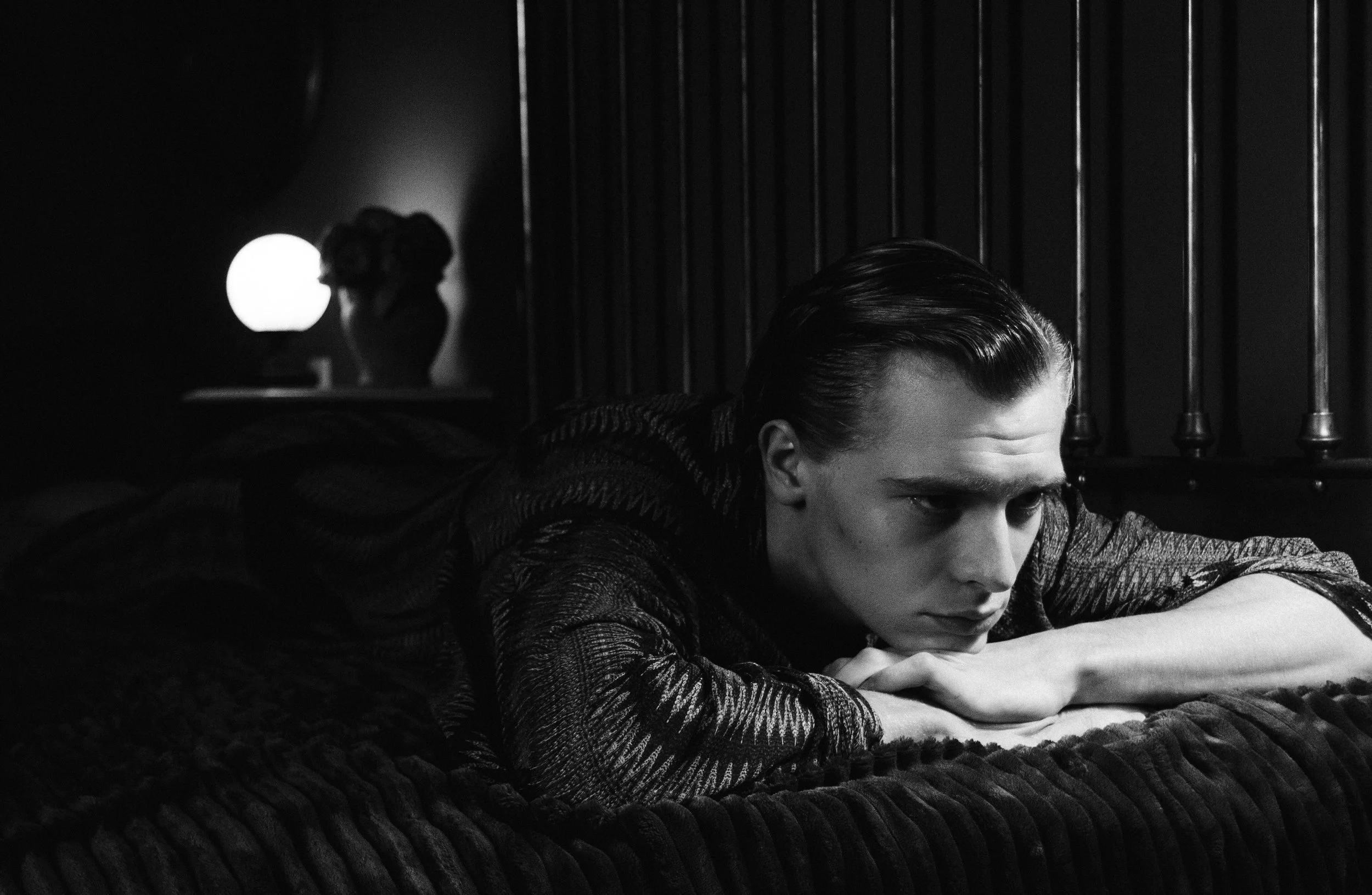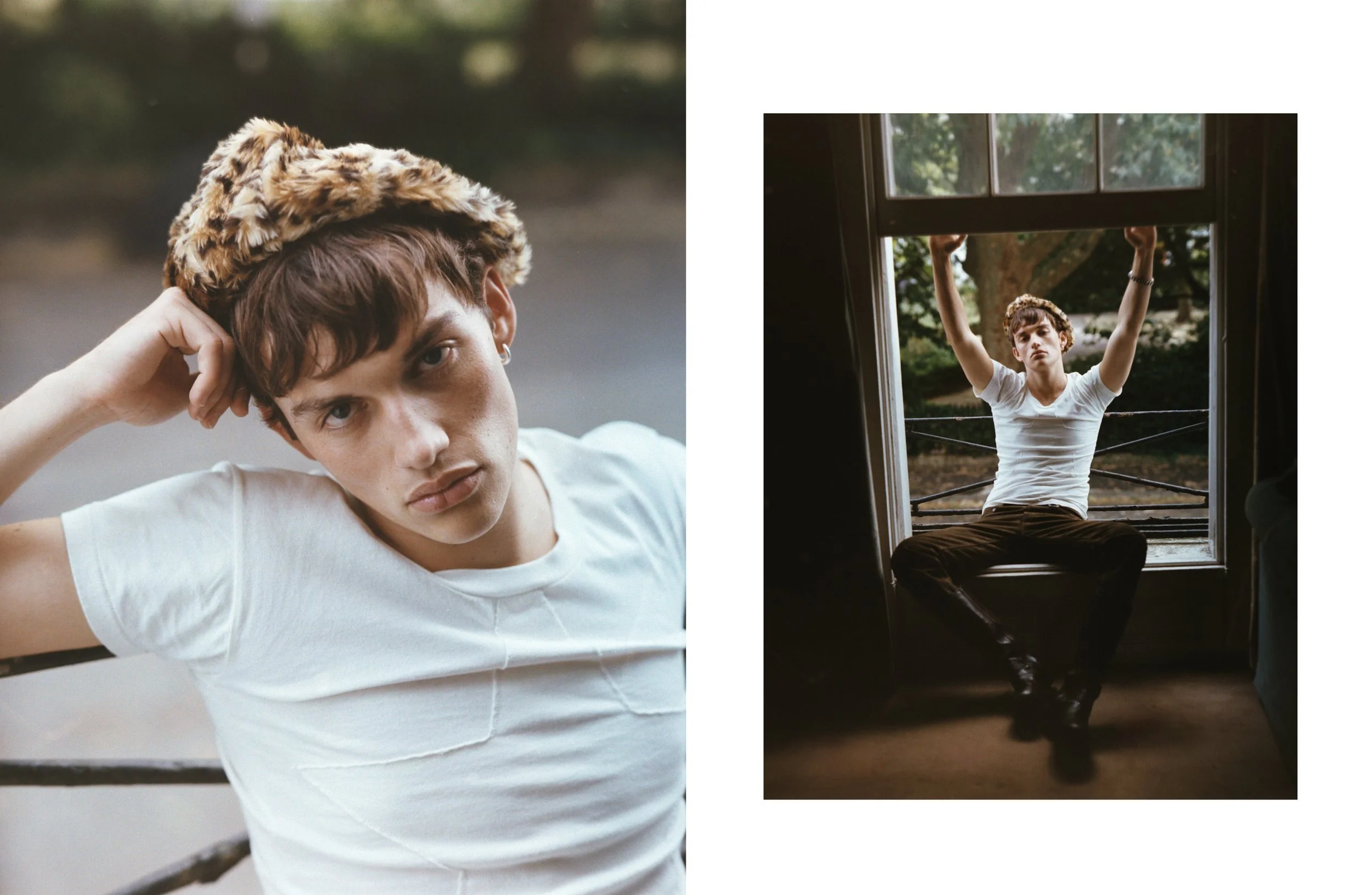
GIVENCHY SS27

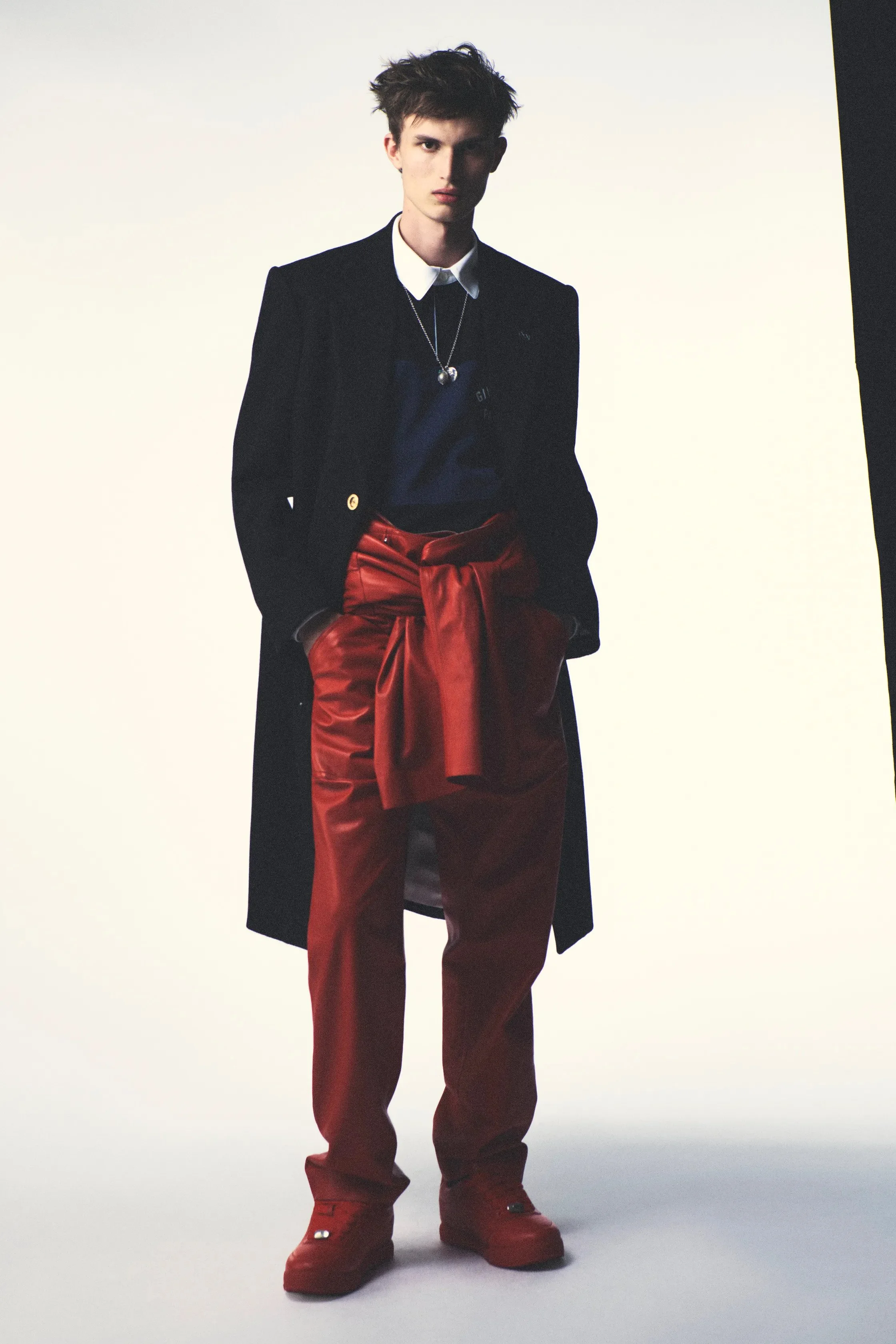
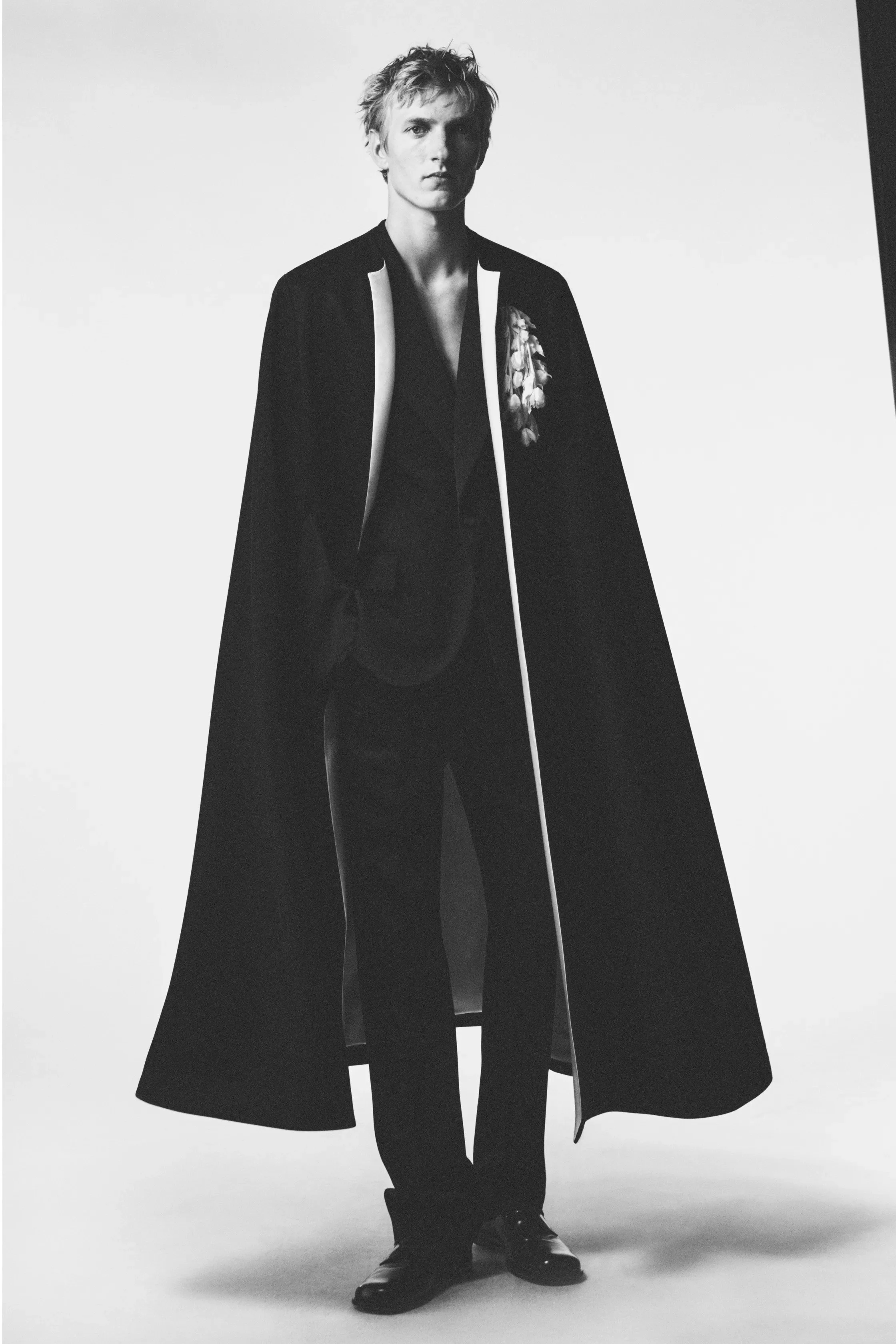
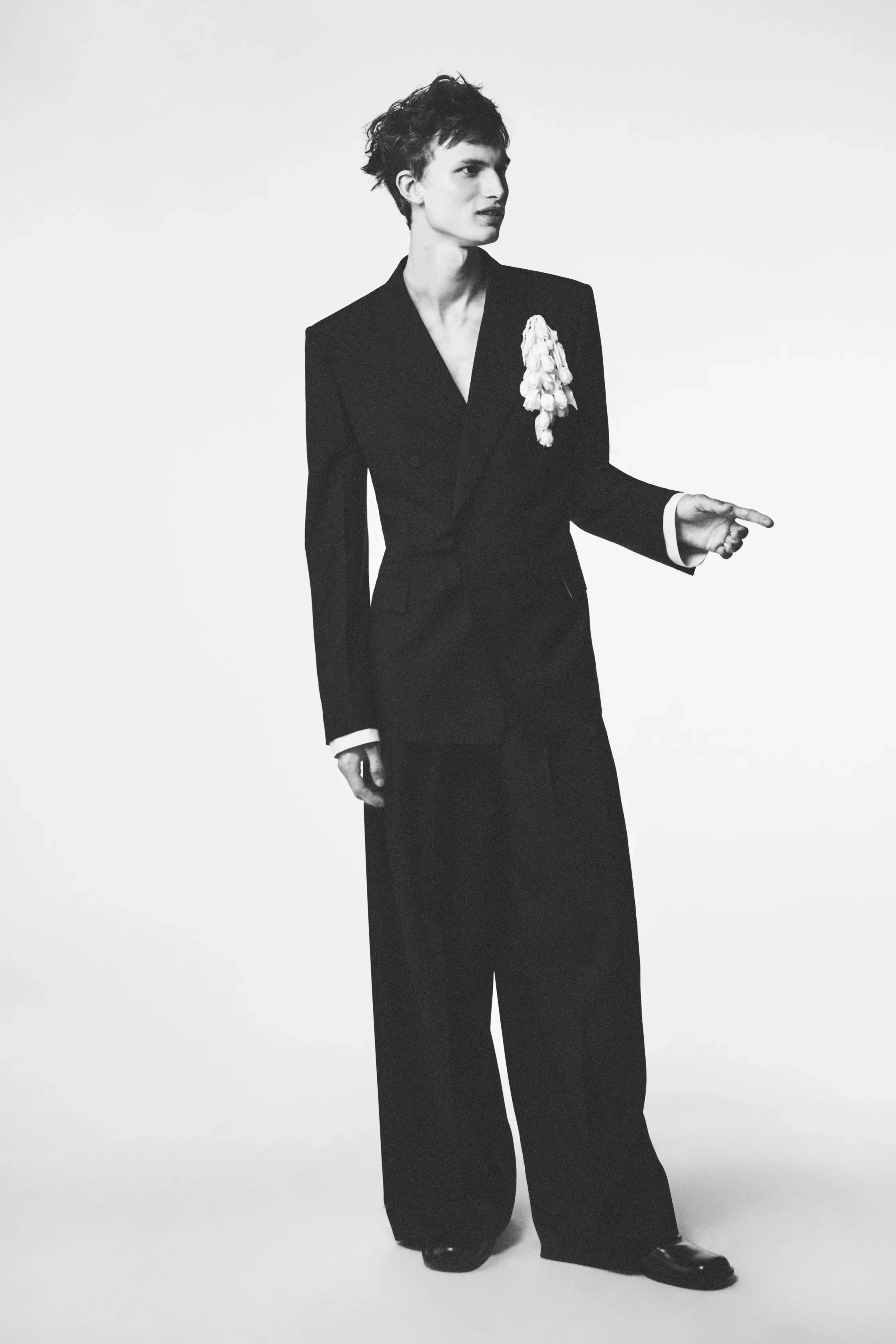
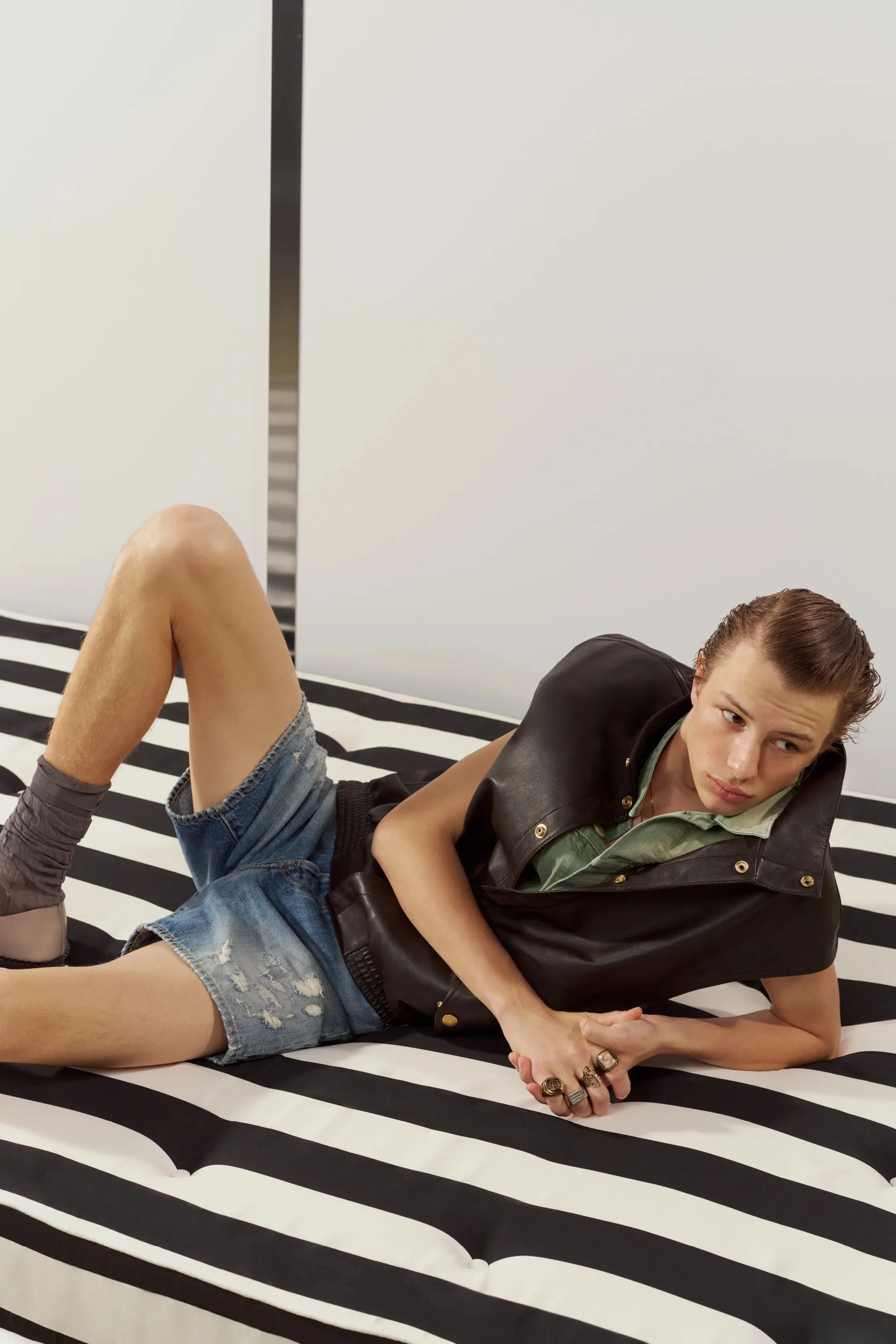
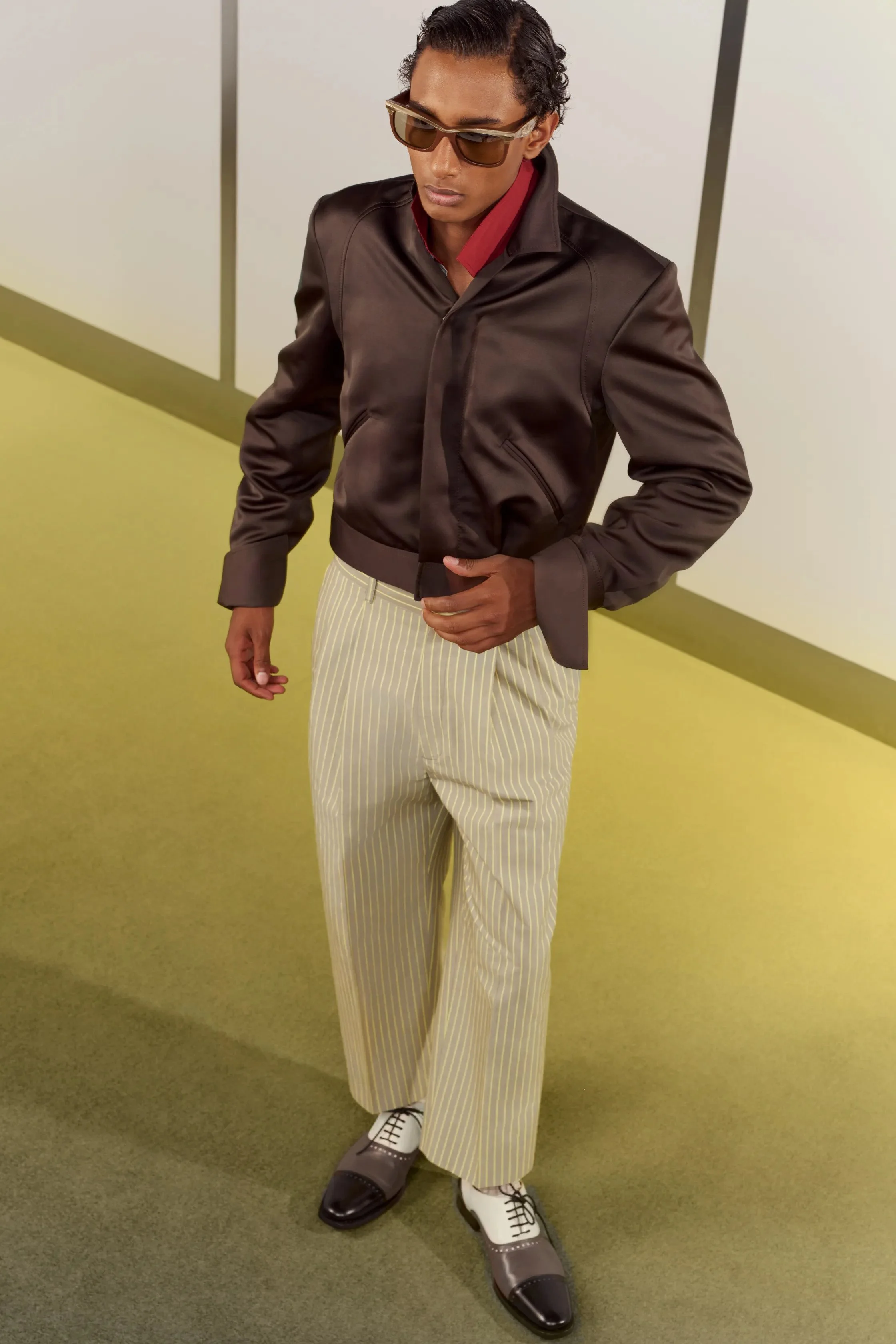
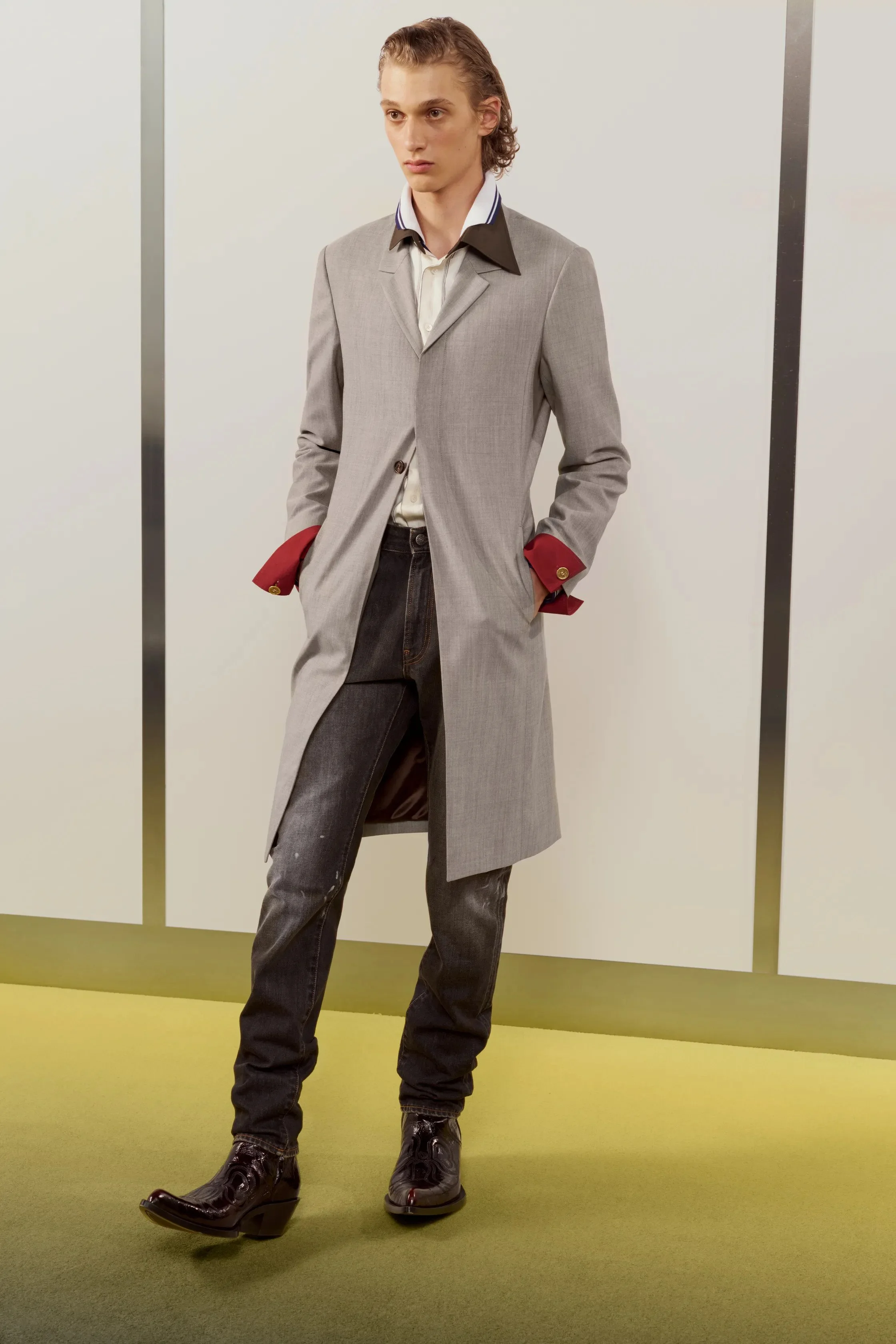
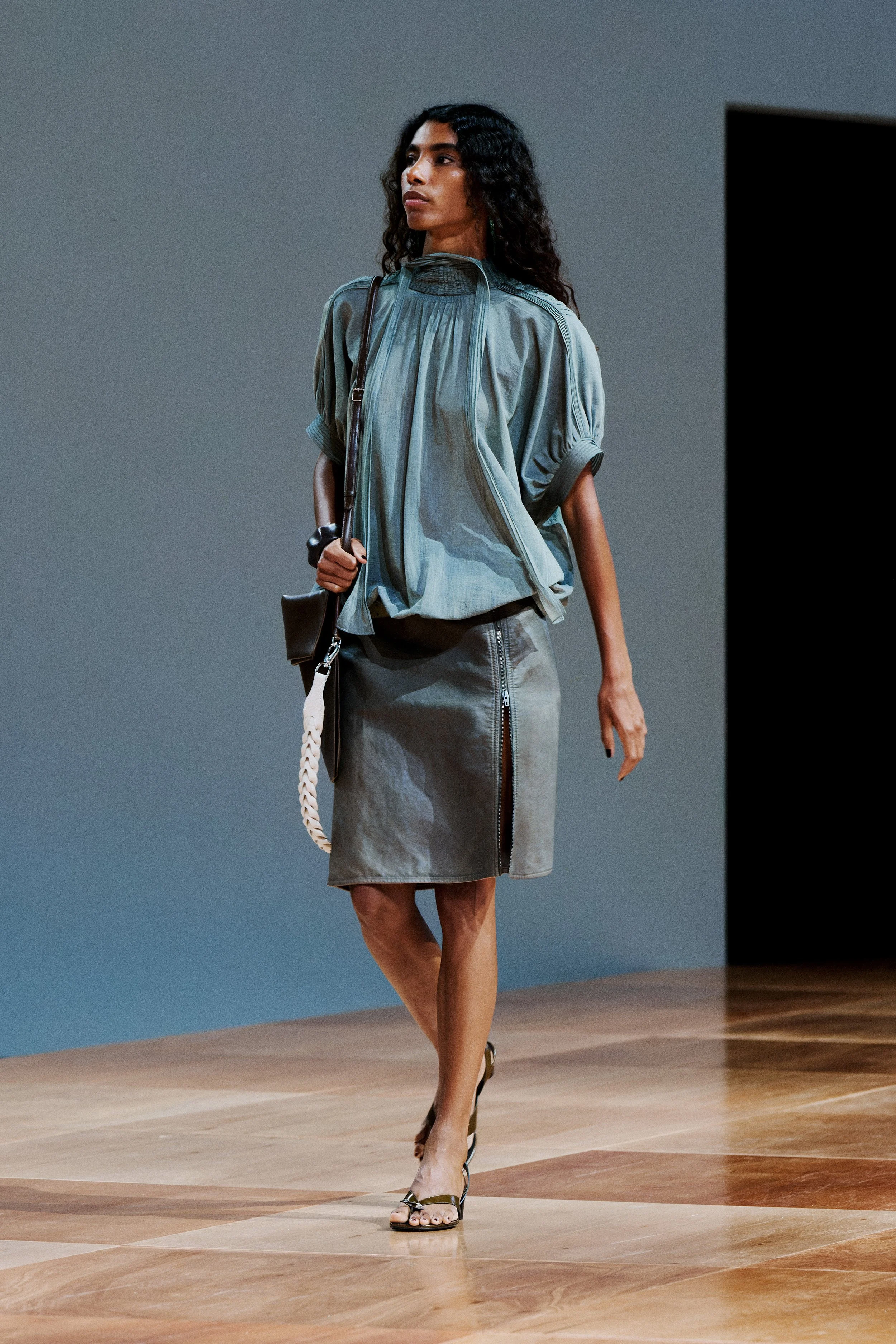
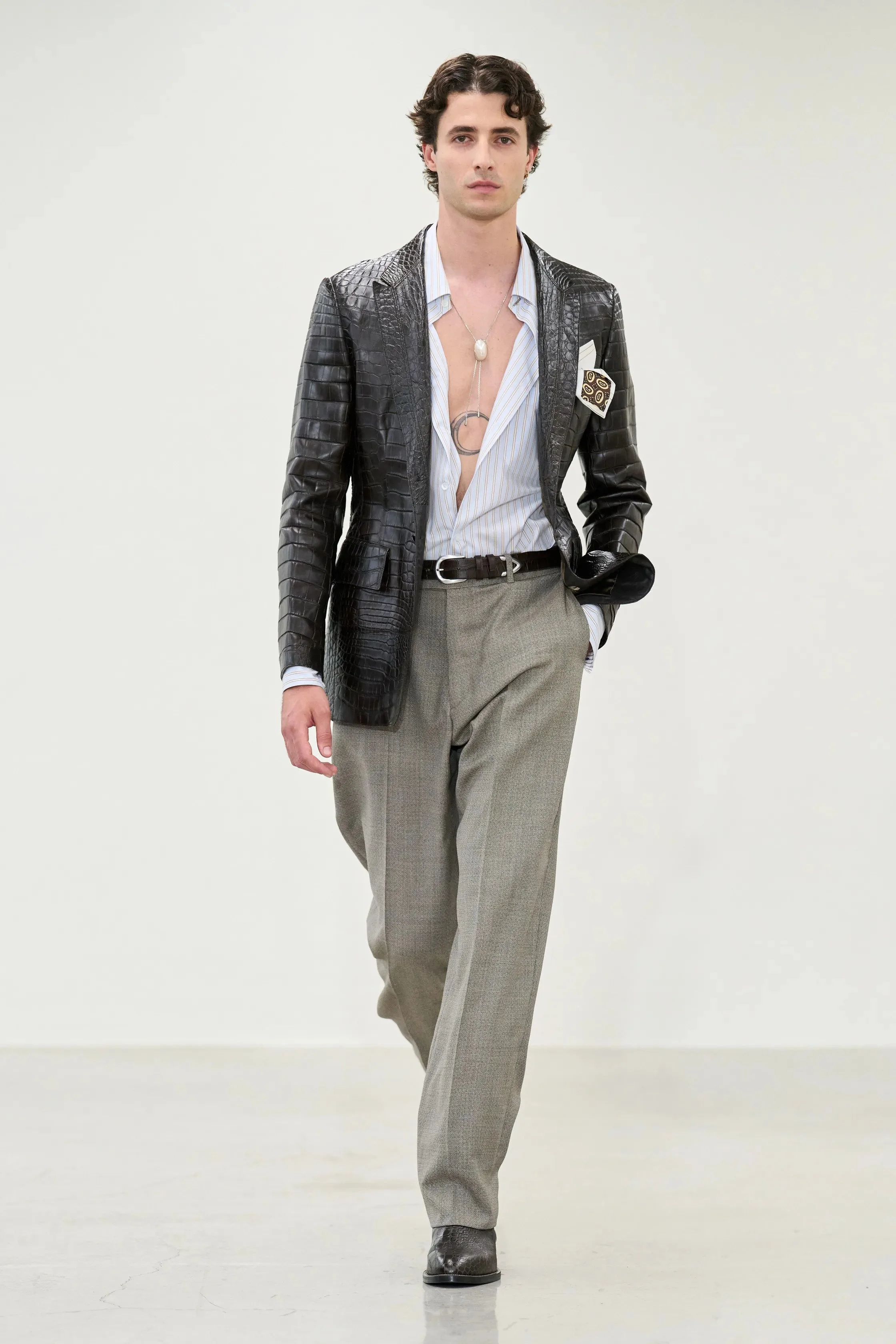
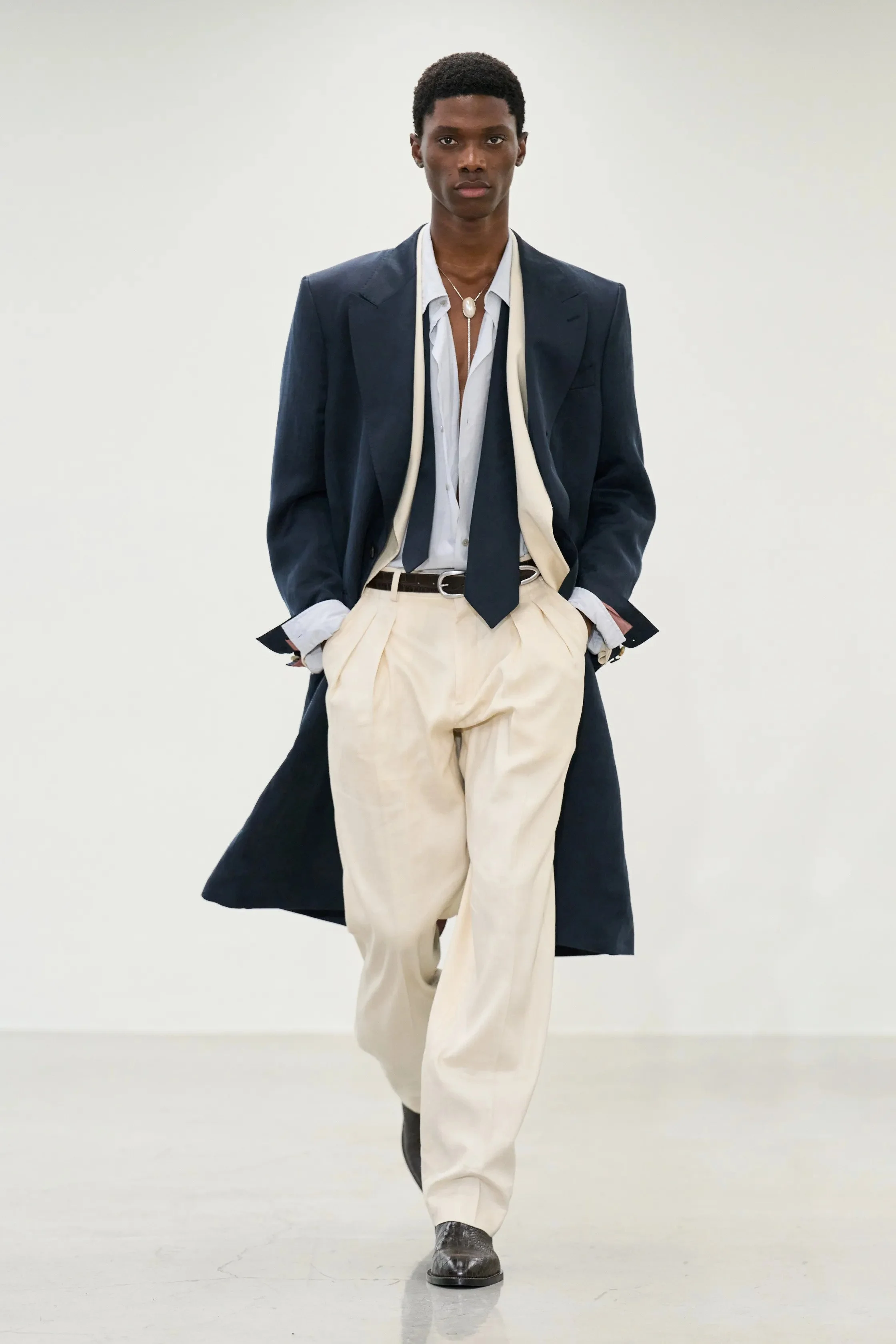
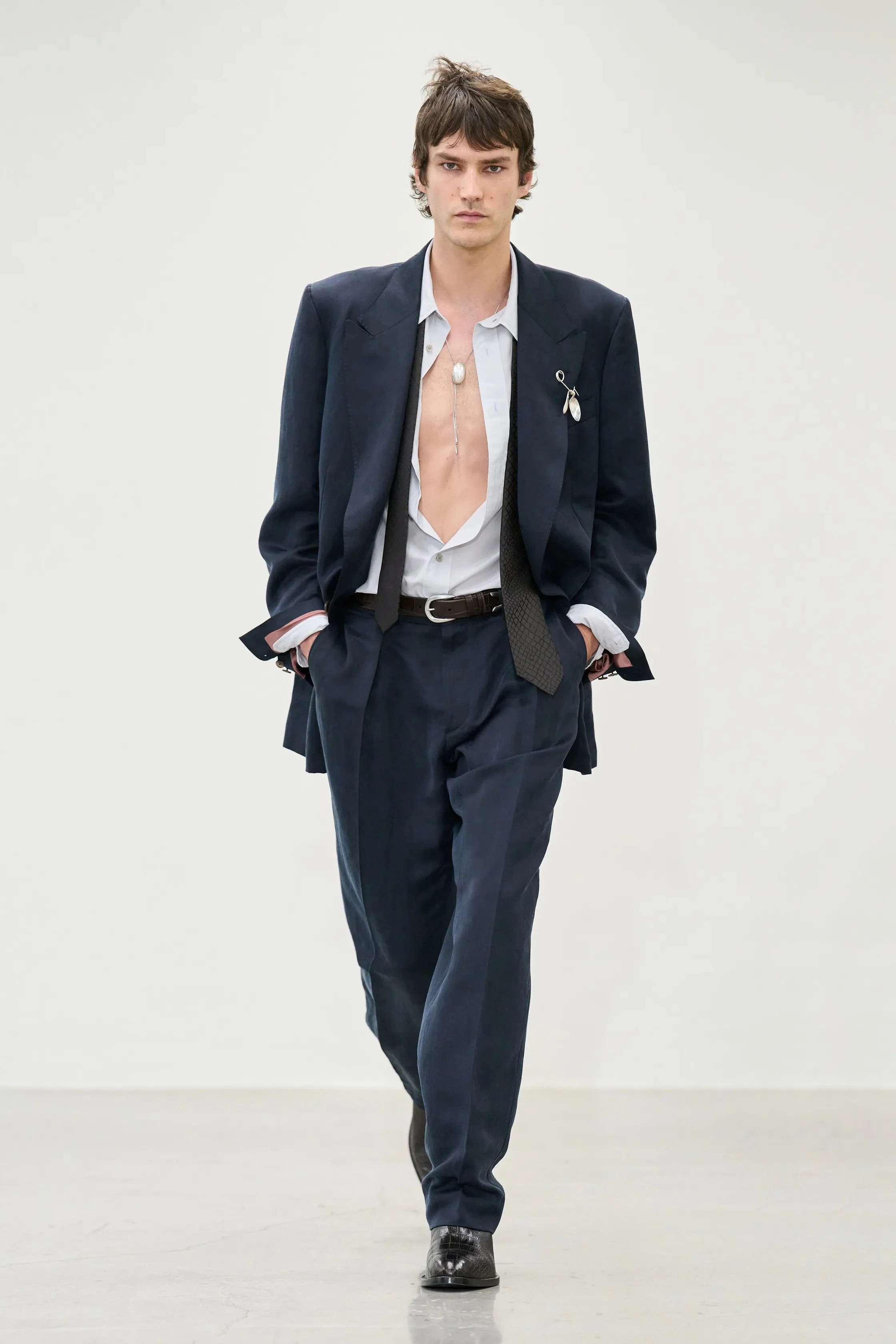
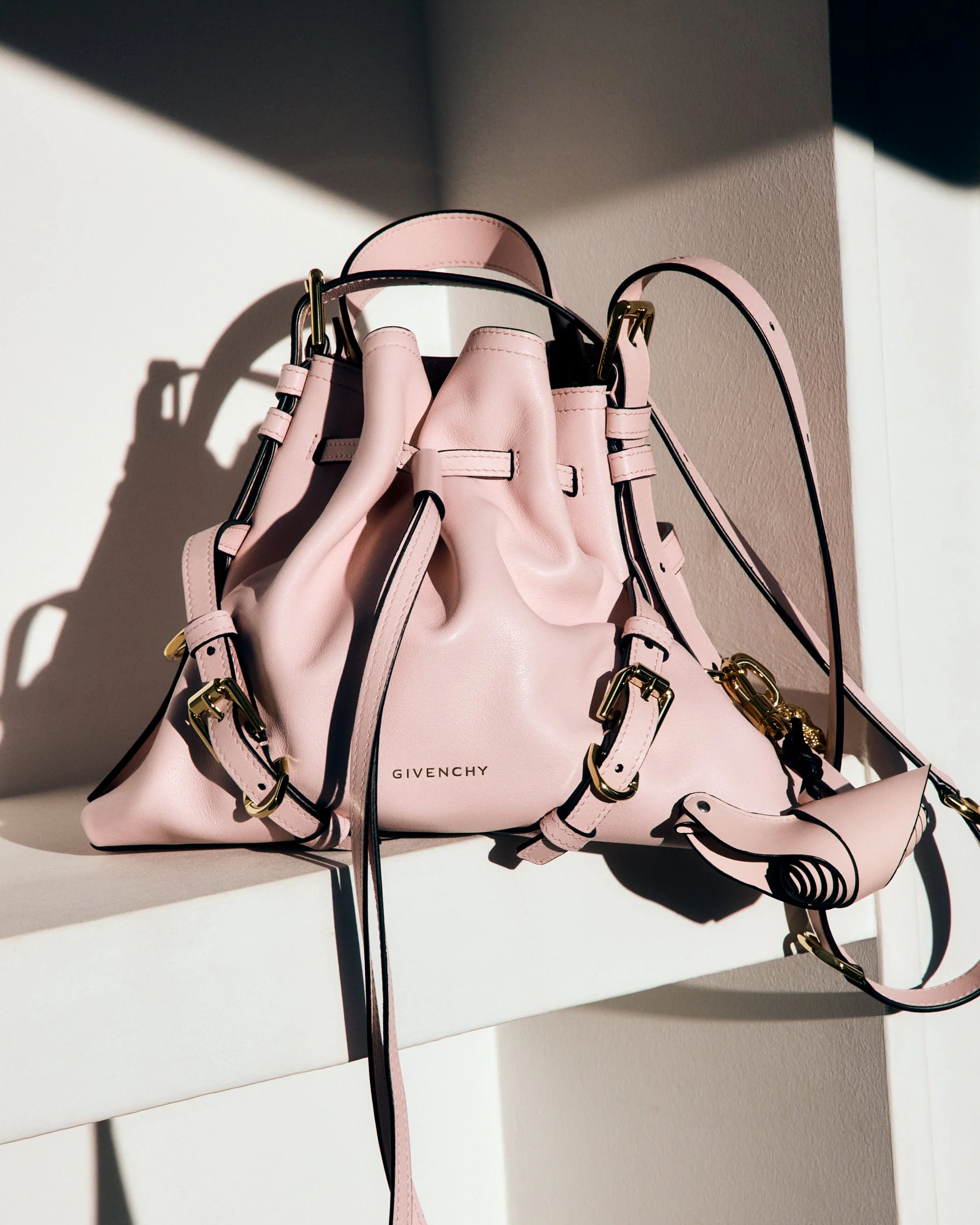
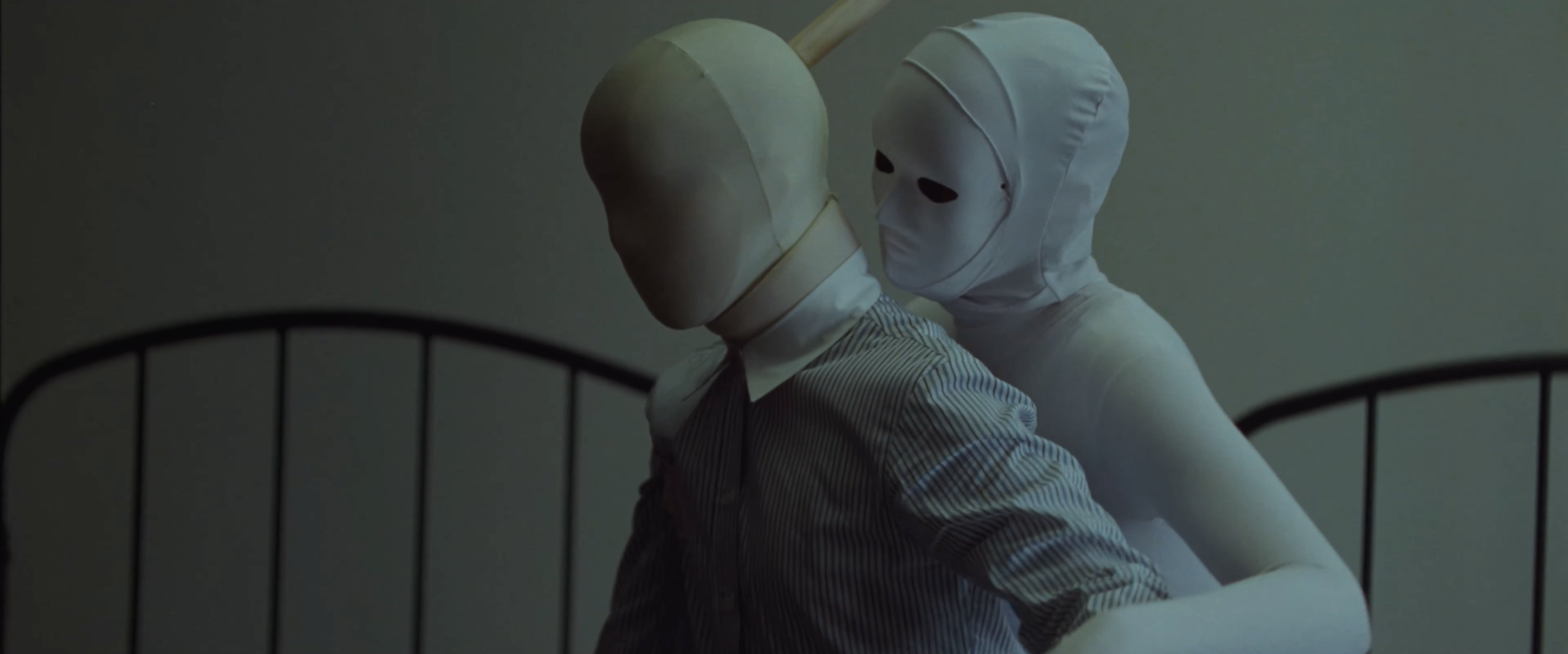
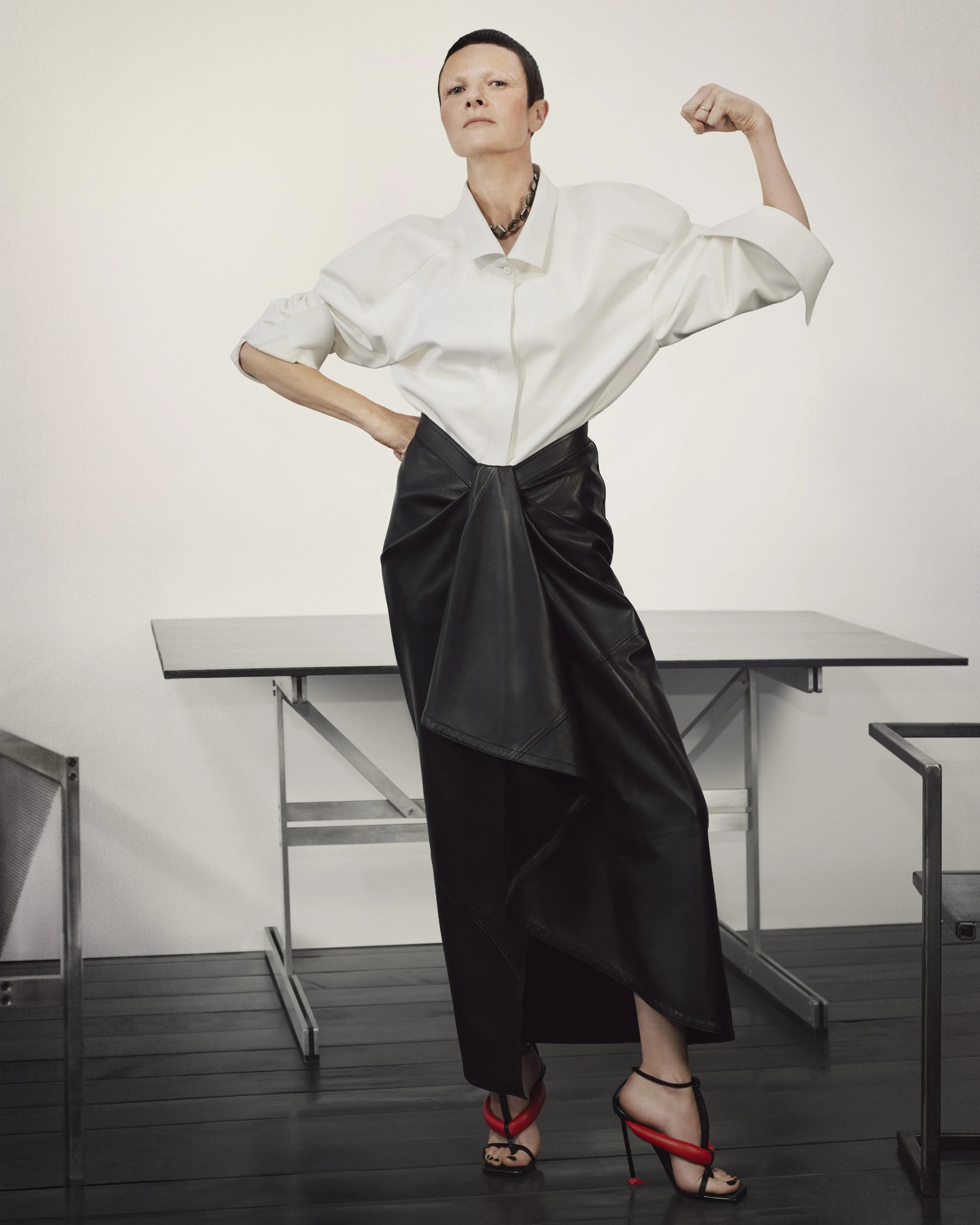
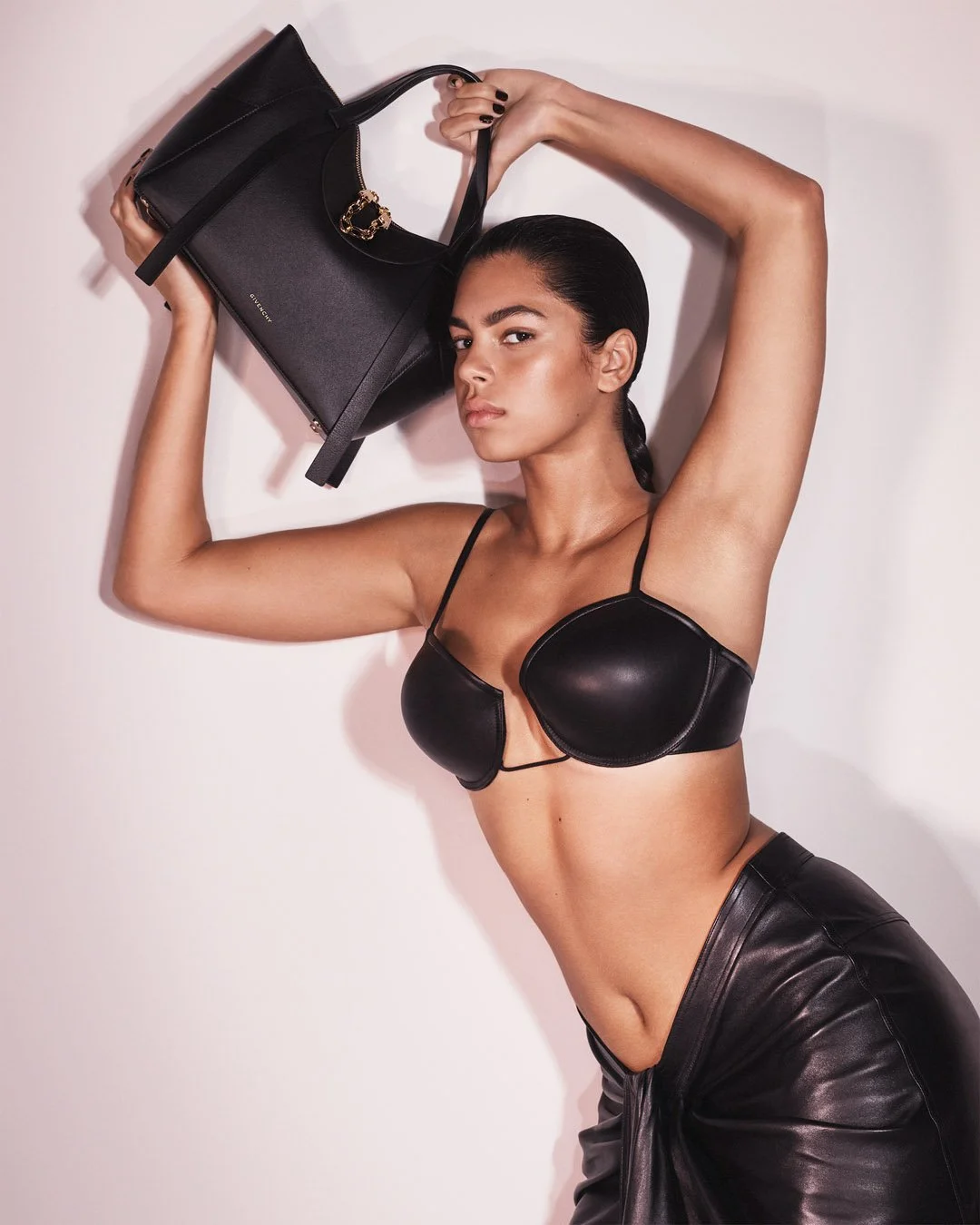
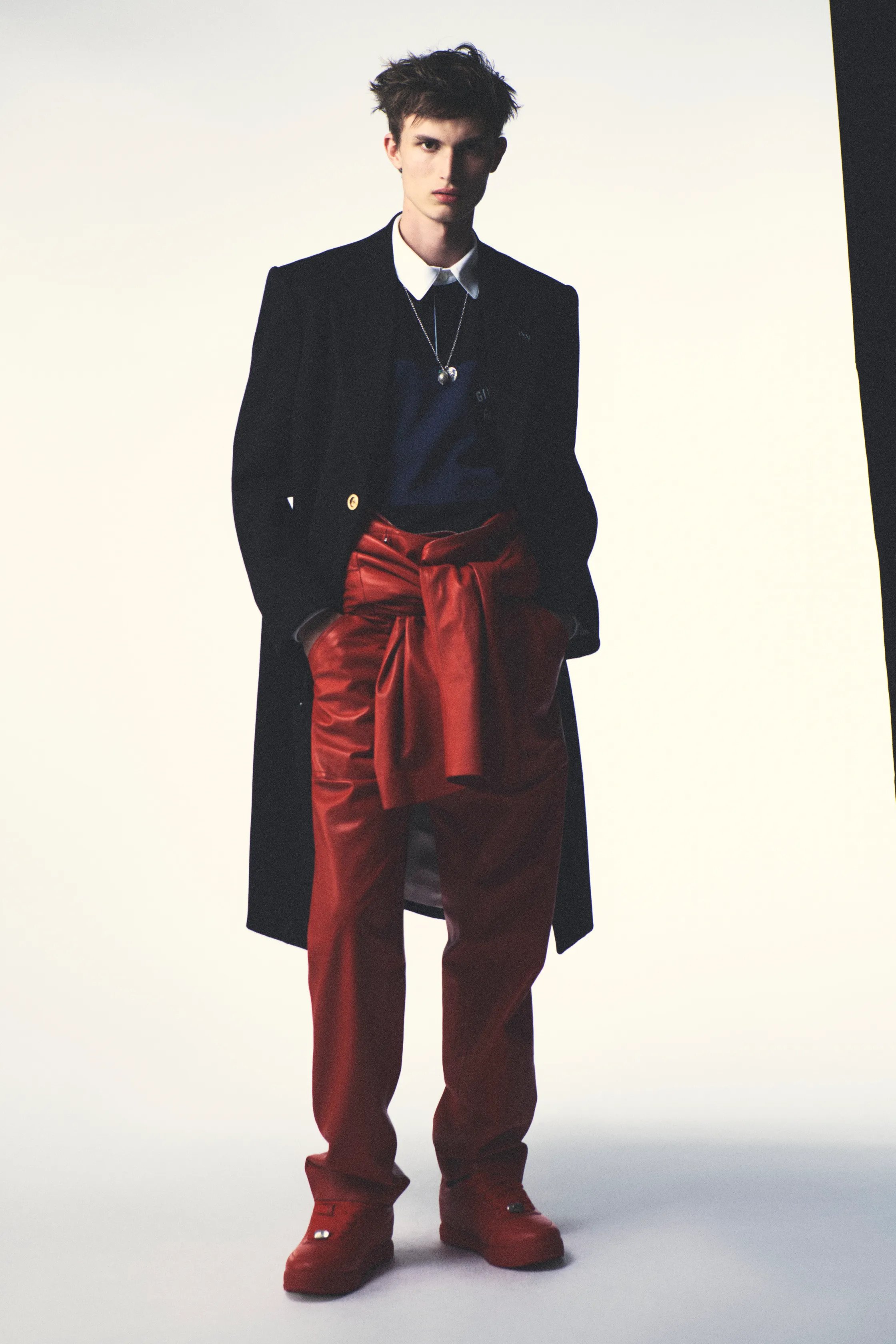
Following an assured womenswear that re-established Givenchy's foundations, Sarah Burton turned her attention to menswear for the first time at the house. Spring/Summer 2027 marked her debut men's collection. Rather than distancing herself from Givenchy's recent, streetwear-inflected identity, Burton carefully began reconciling it with the maison's storied heritage.

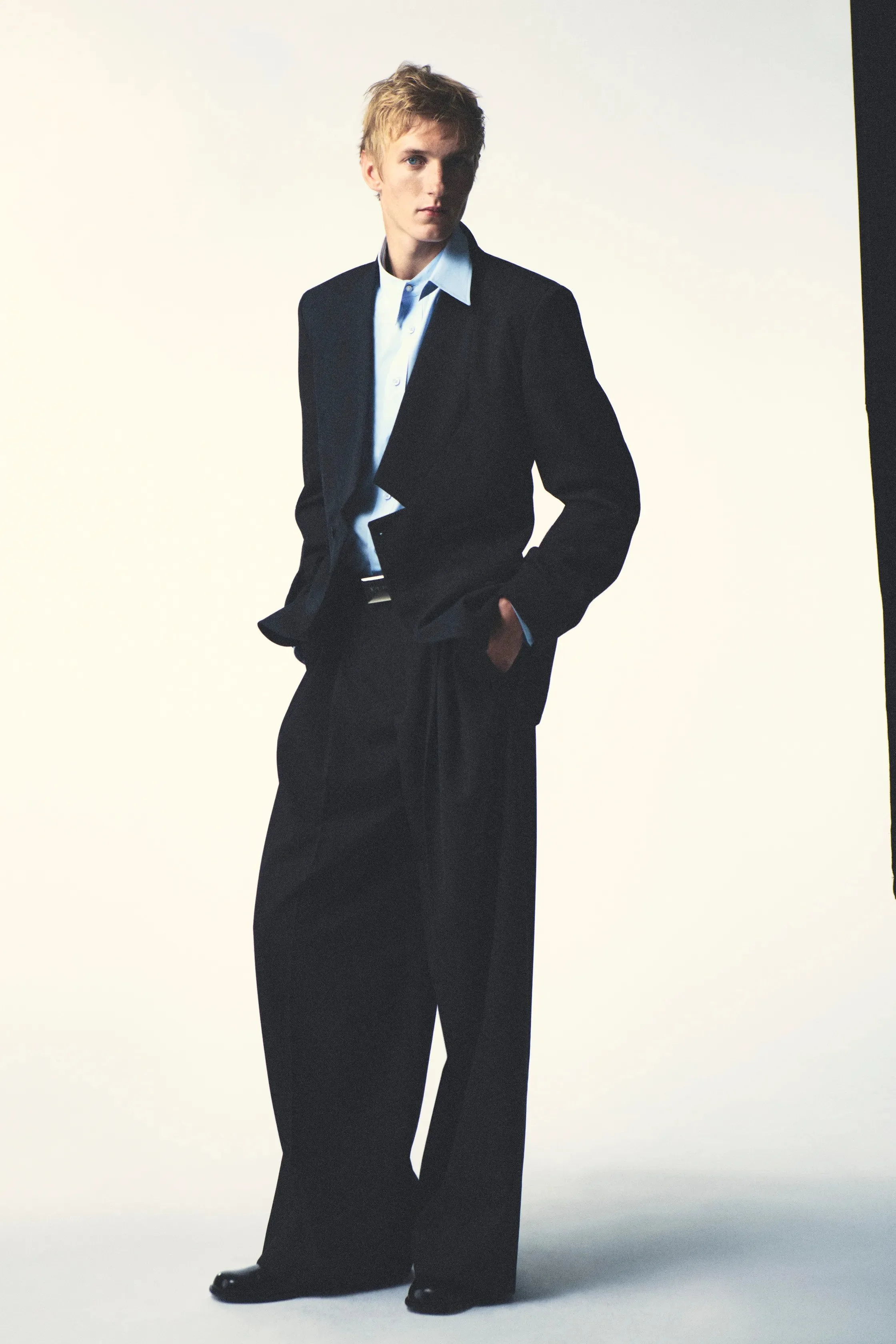
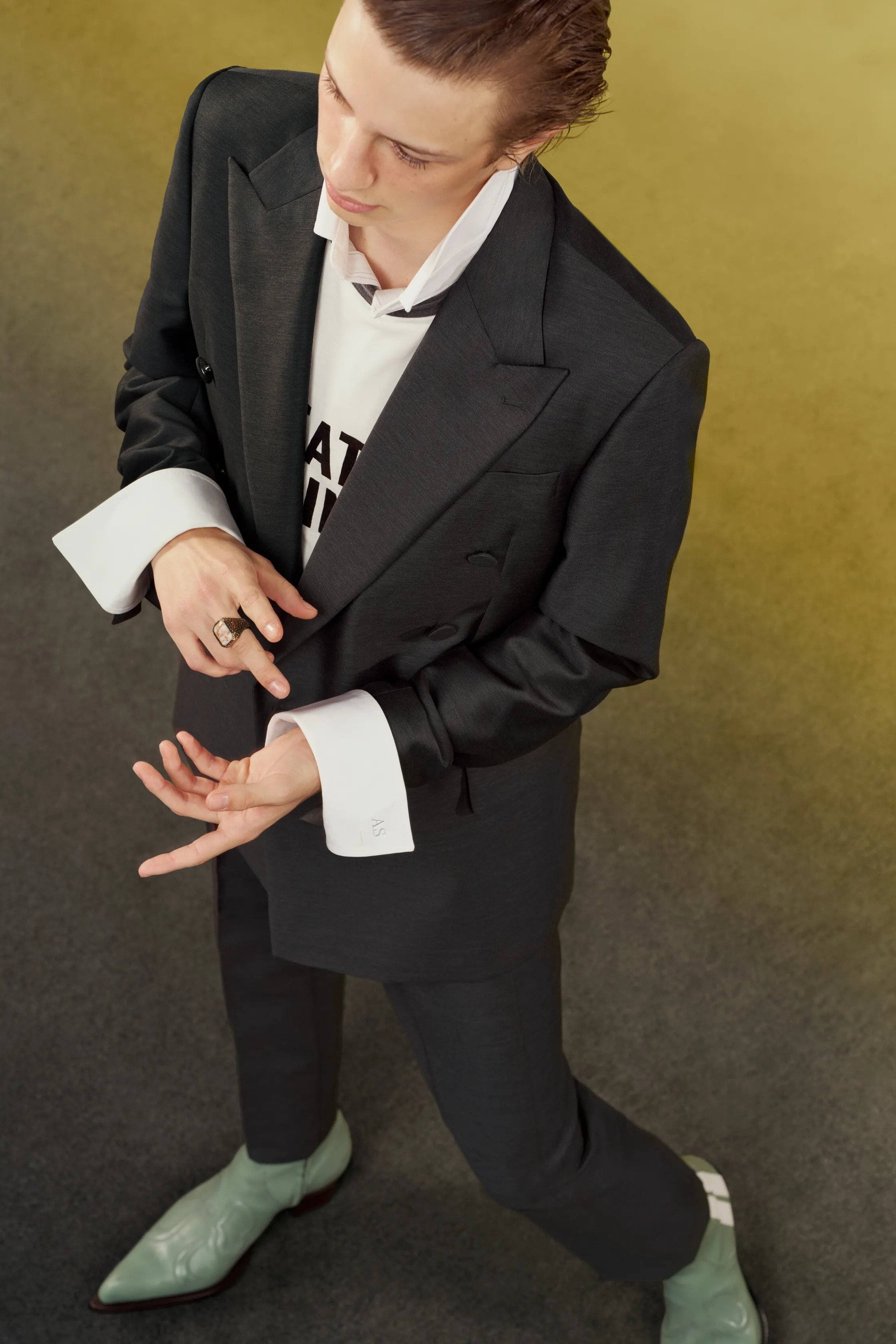
Tailoring was outstanding. Even if that comes as little surprise from a designer like Burton, who has spent much of her career perfecting the craft, its execution here was impeccable. A white coat stood out in particular, its front folds naturally forming a sculptural lapel, a deceptively simple construction that showcased the designer’s precision. It was tailoring at its most intelligent.

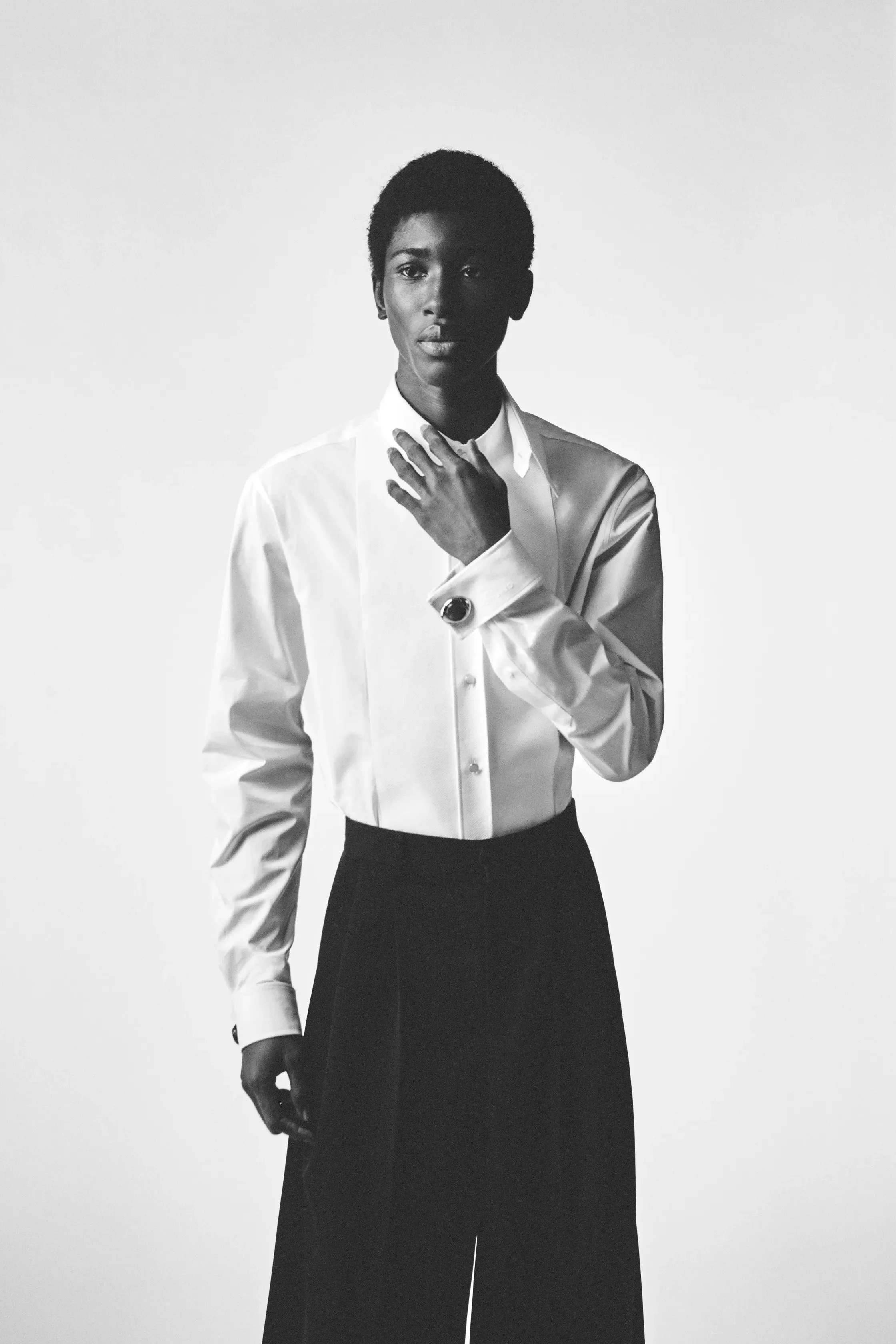
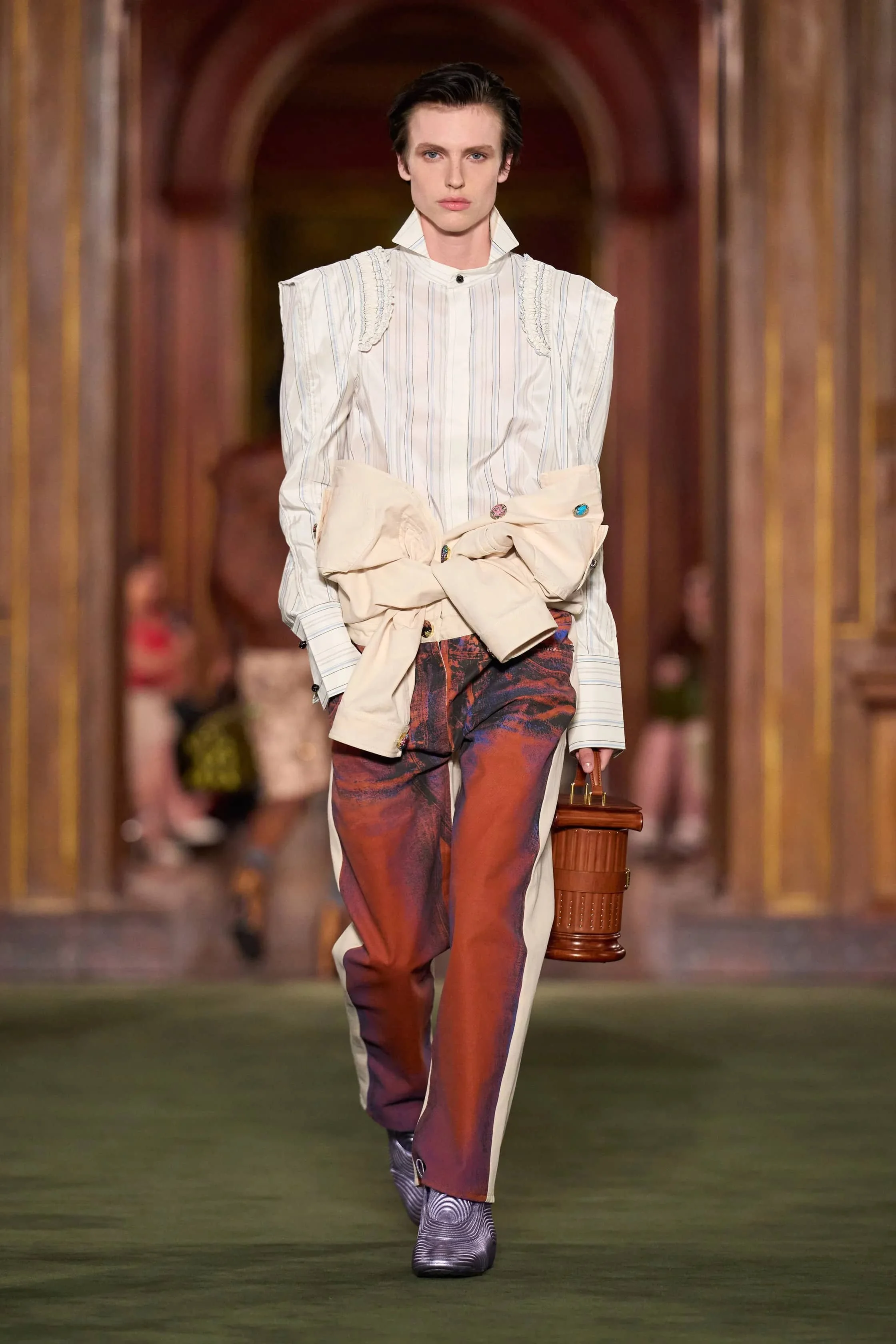
It wasn't all business, though. Classic tailoring staples were given subtle twists throughout the collection. Crisp white shirts were finished with jewelled cufflinks, while a pale blue button-down featured a removable collar.

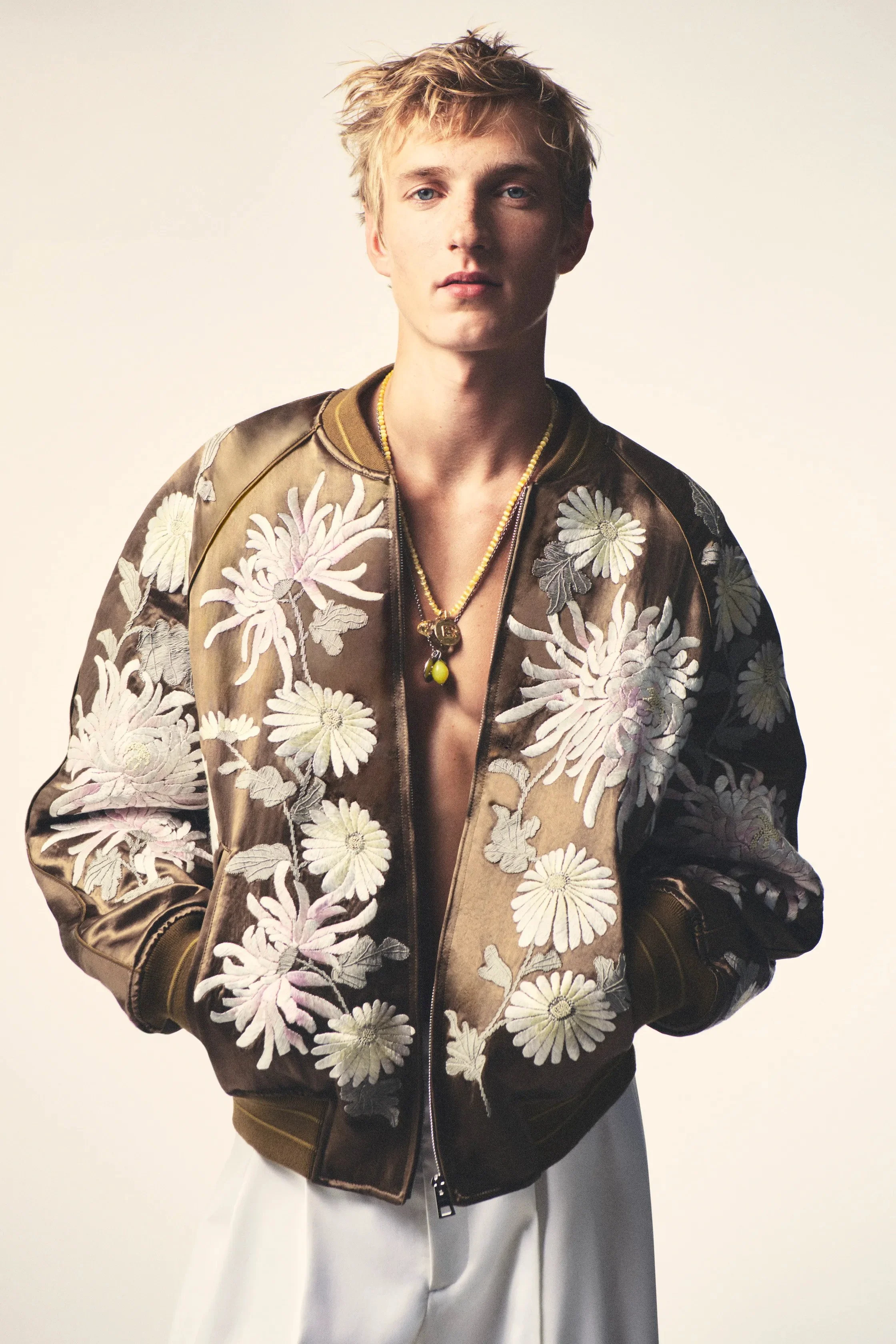
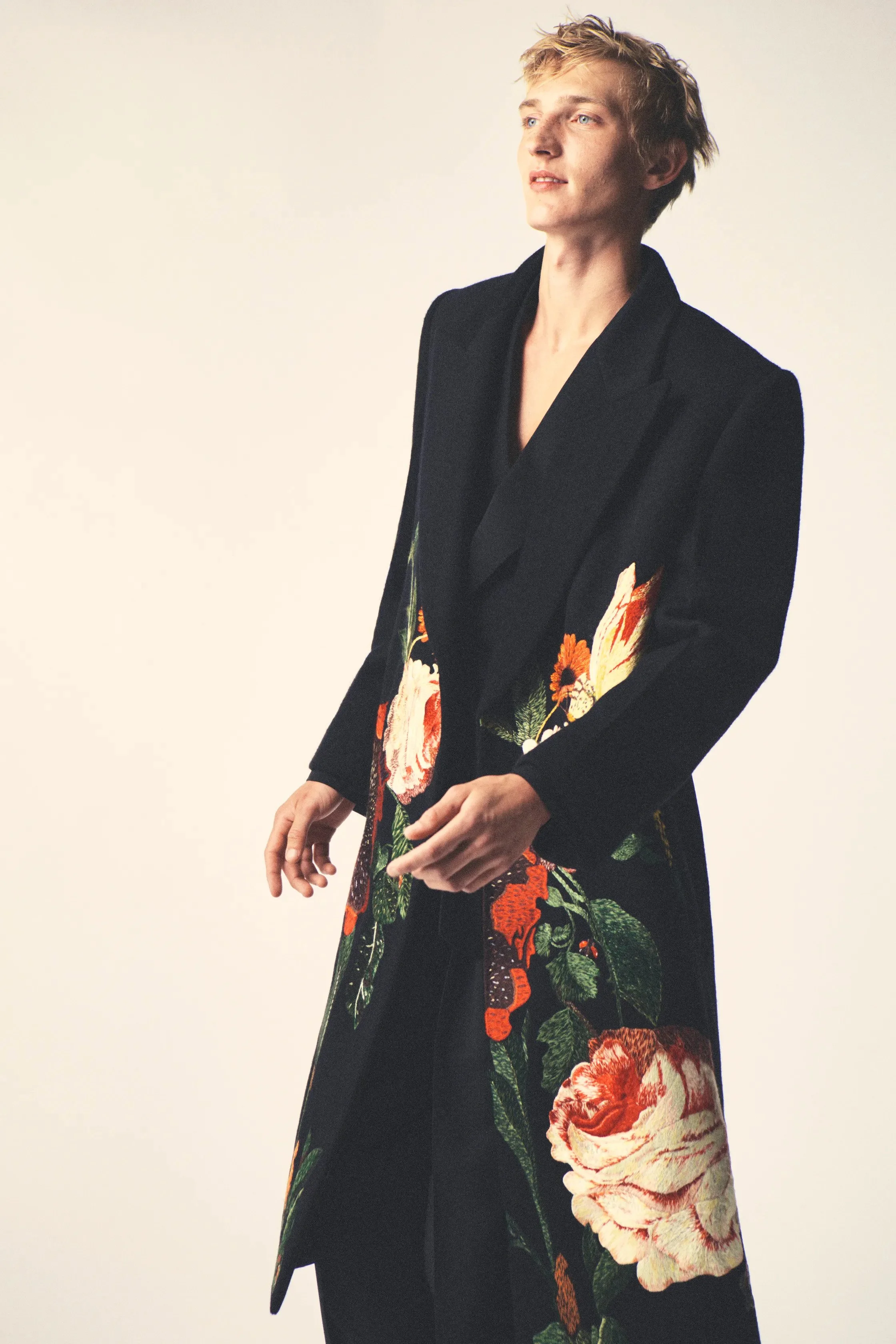
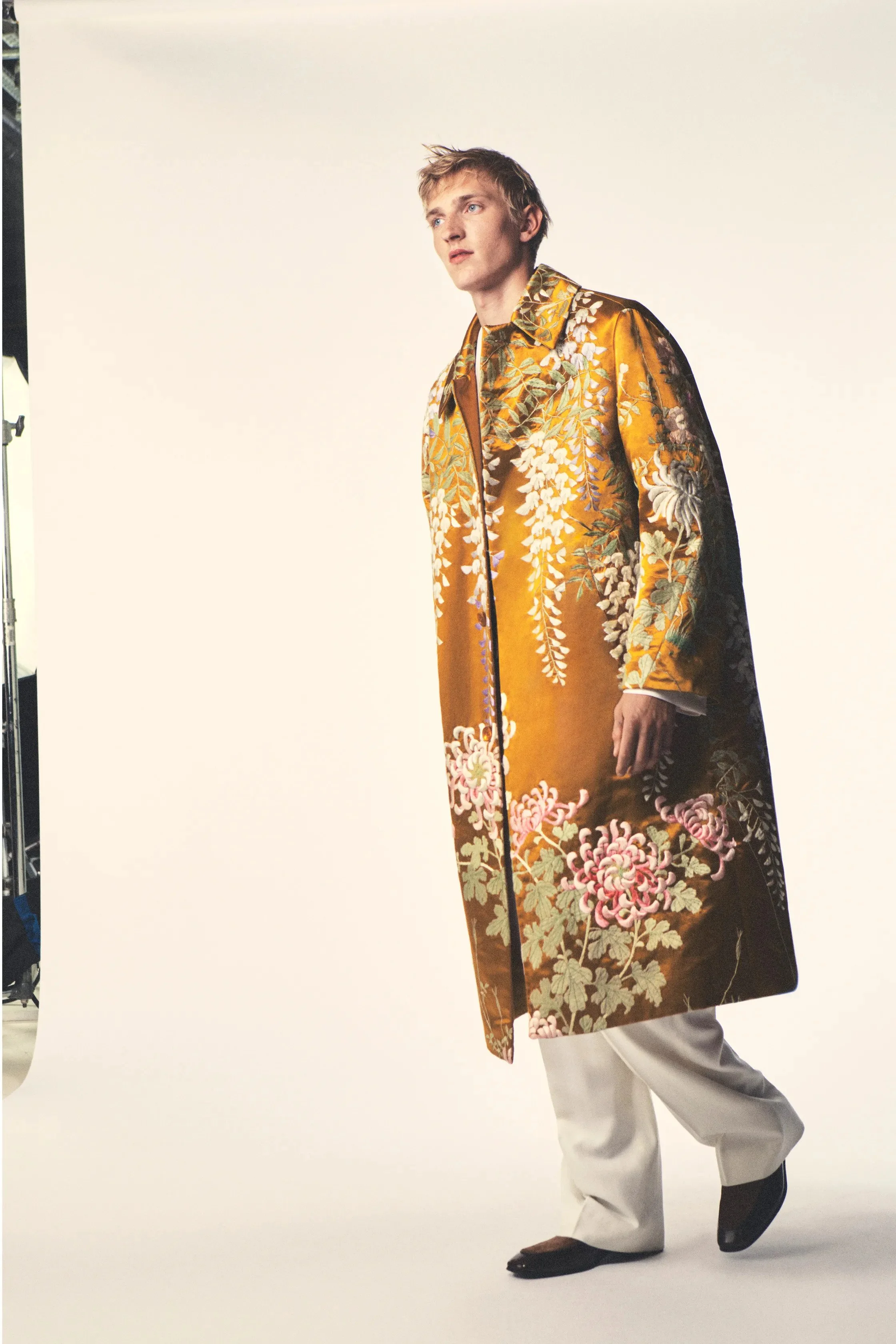
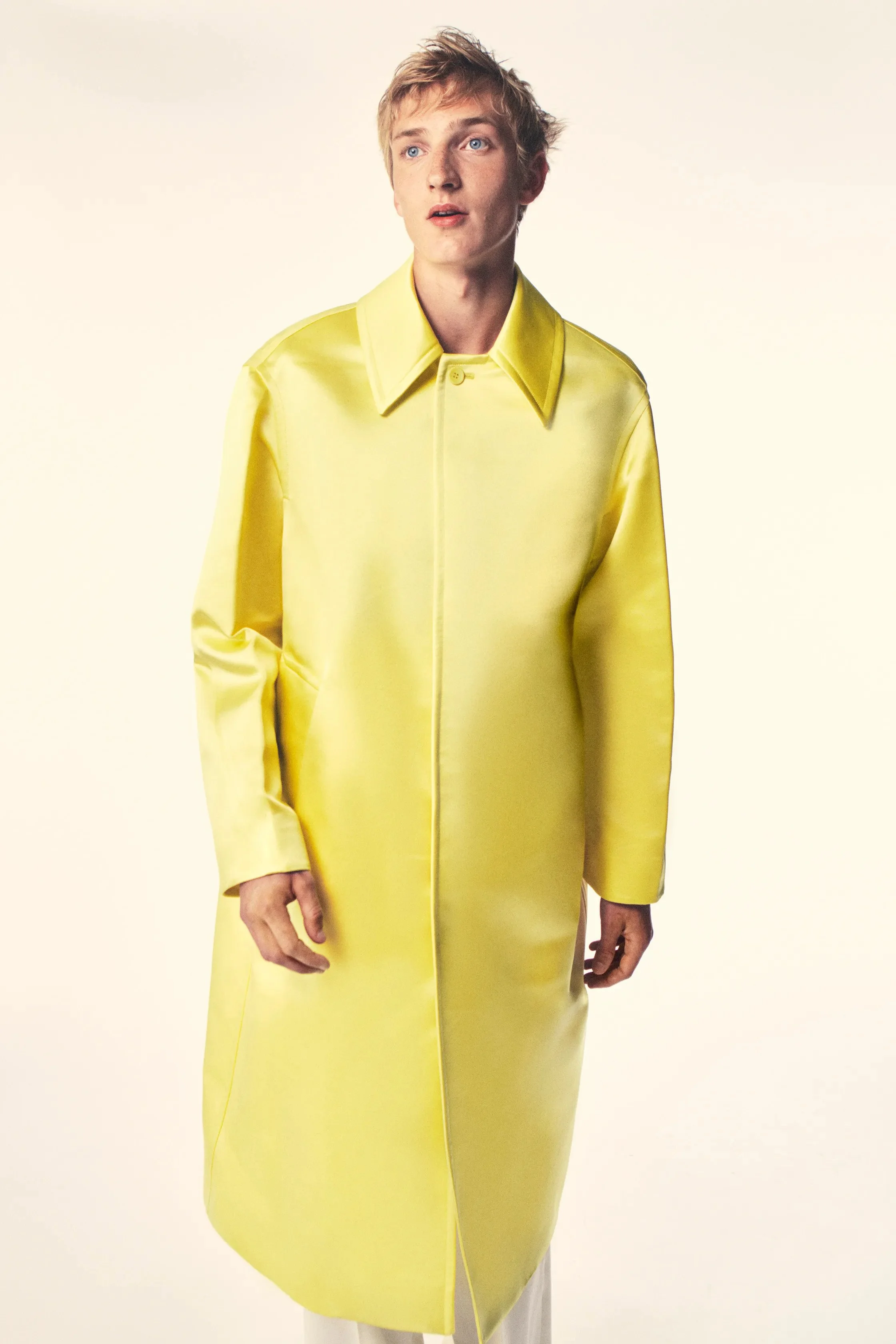
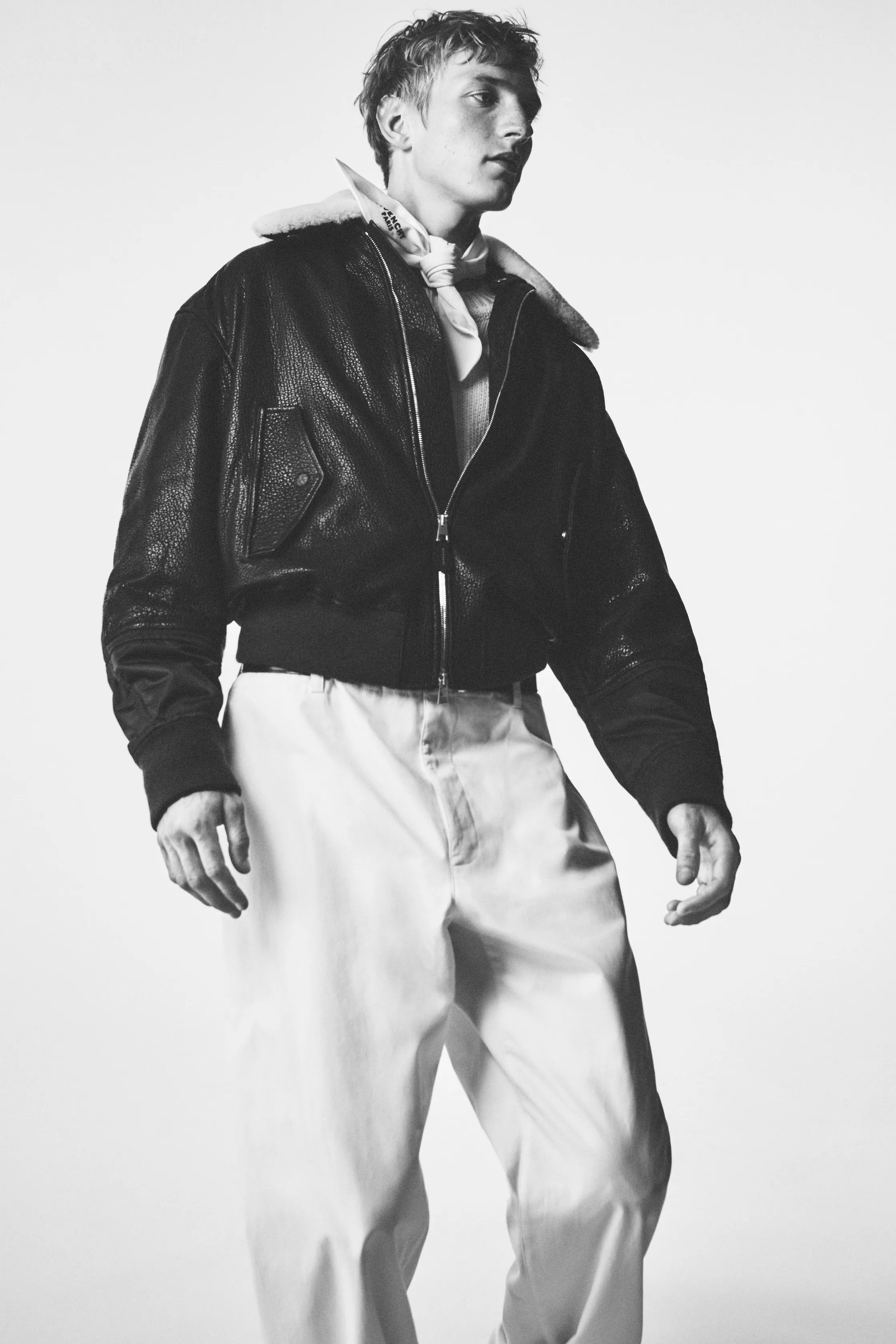
Elsewhere, a brilliant, high-shine yellow coat brought a striking burst of colour. The embroidered rose motif, first introduced in her debut womenswear collection for Givenchy, returned here. Gone were the loose threads that previously extended the embroidery into three dimensions. Instead, the motif was fully integrated into the garments themselves, covering both a sharply structured coat and a bomber jacket in dense, all-over embroidery.

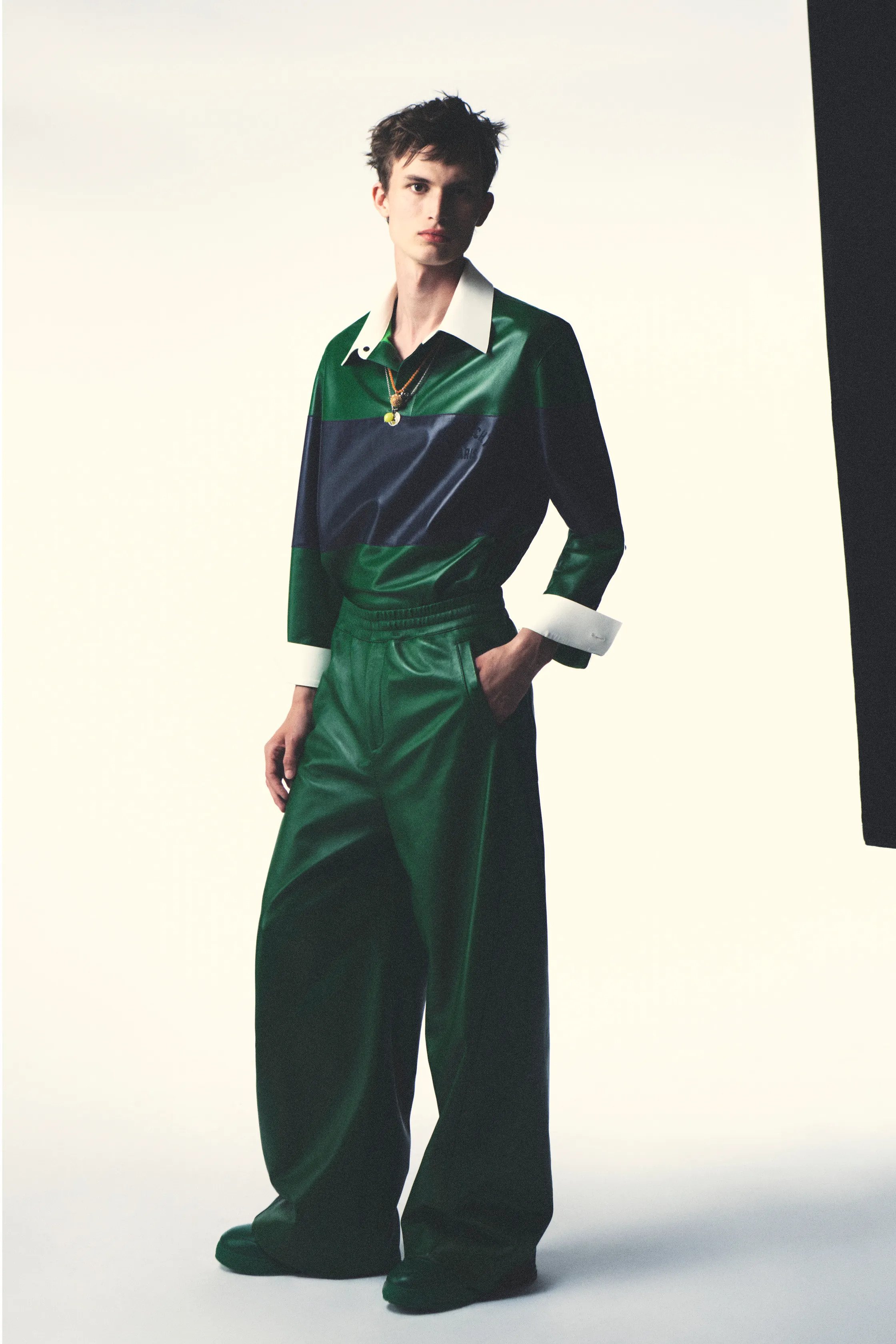
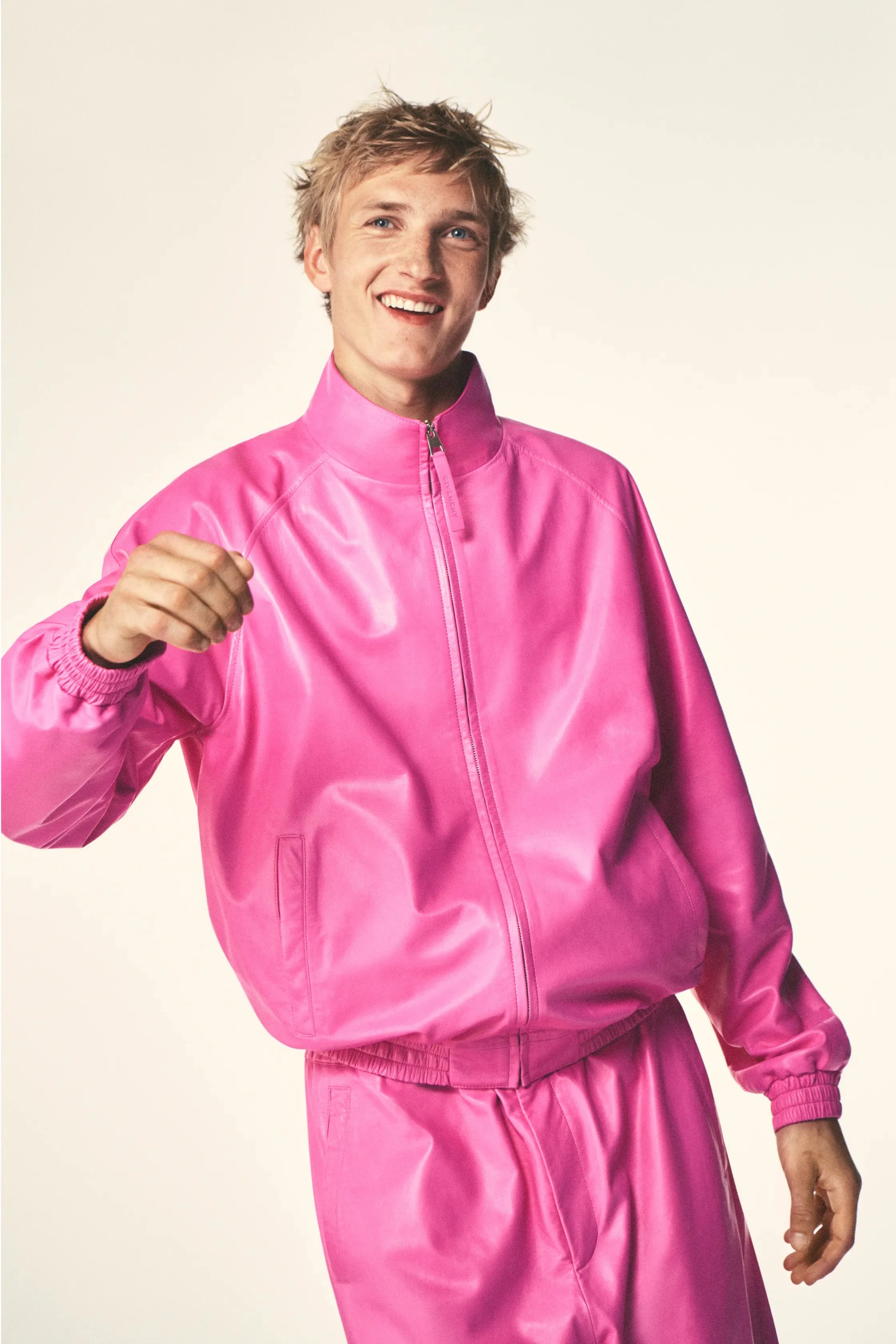
Still, for as rooted in couture as the maison is, Givenchy's past decade has been deeply immersed in streetwear. Burton approaches that legacy cautiously at first. A black coat conceals a vivid blue tartan lining before opening to reveal a matching shirt and trousers in the same pattern. As the collection progresses, she leans further into that language with a series of leather tracksuits in black, pink, yellow, red, and green, each complemented with matching voluminous sneakers.
Words by Pedro Vasconcelos
CDG HOMME PLUS SS27

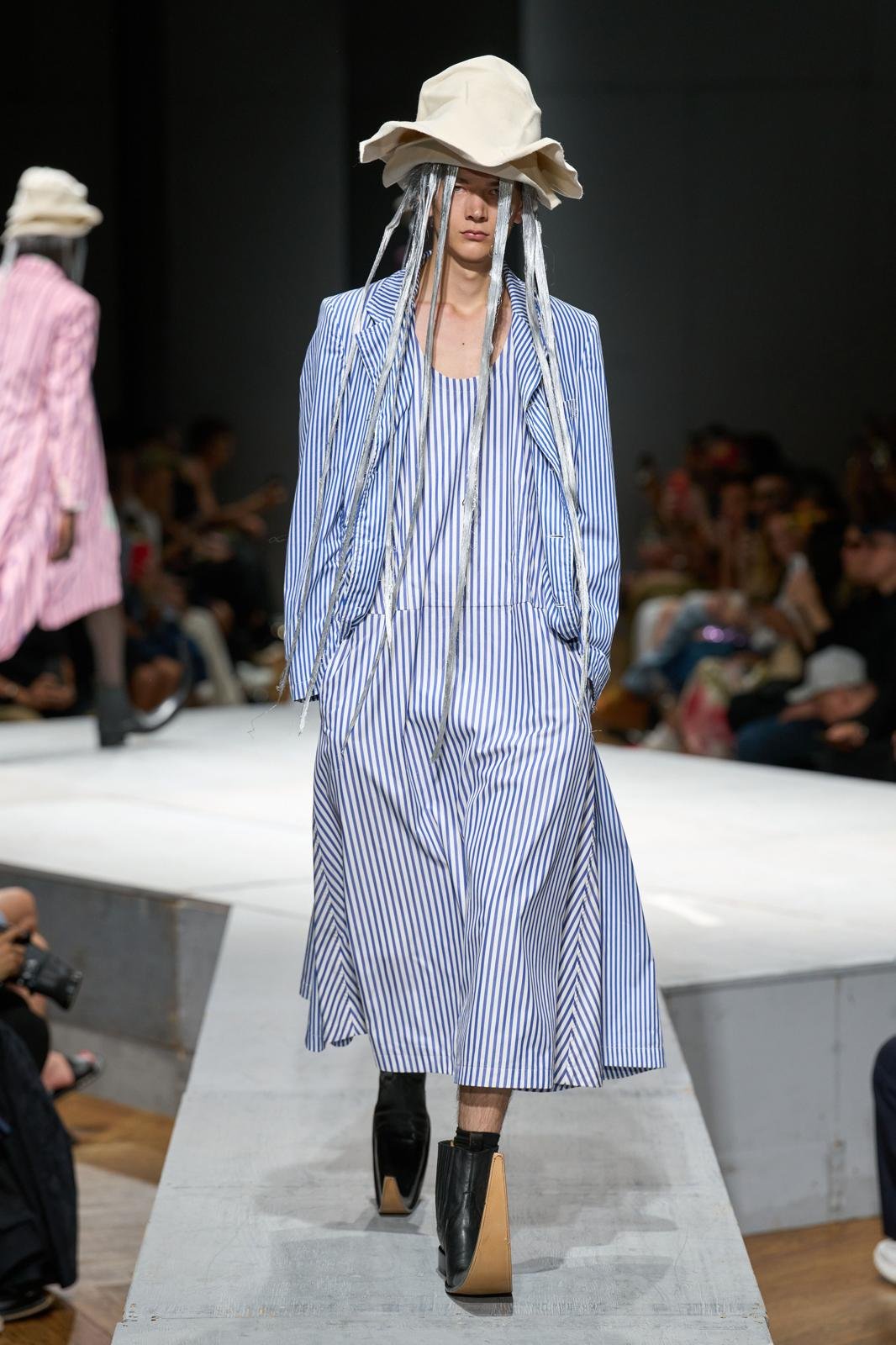
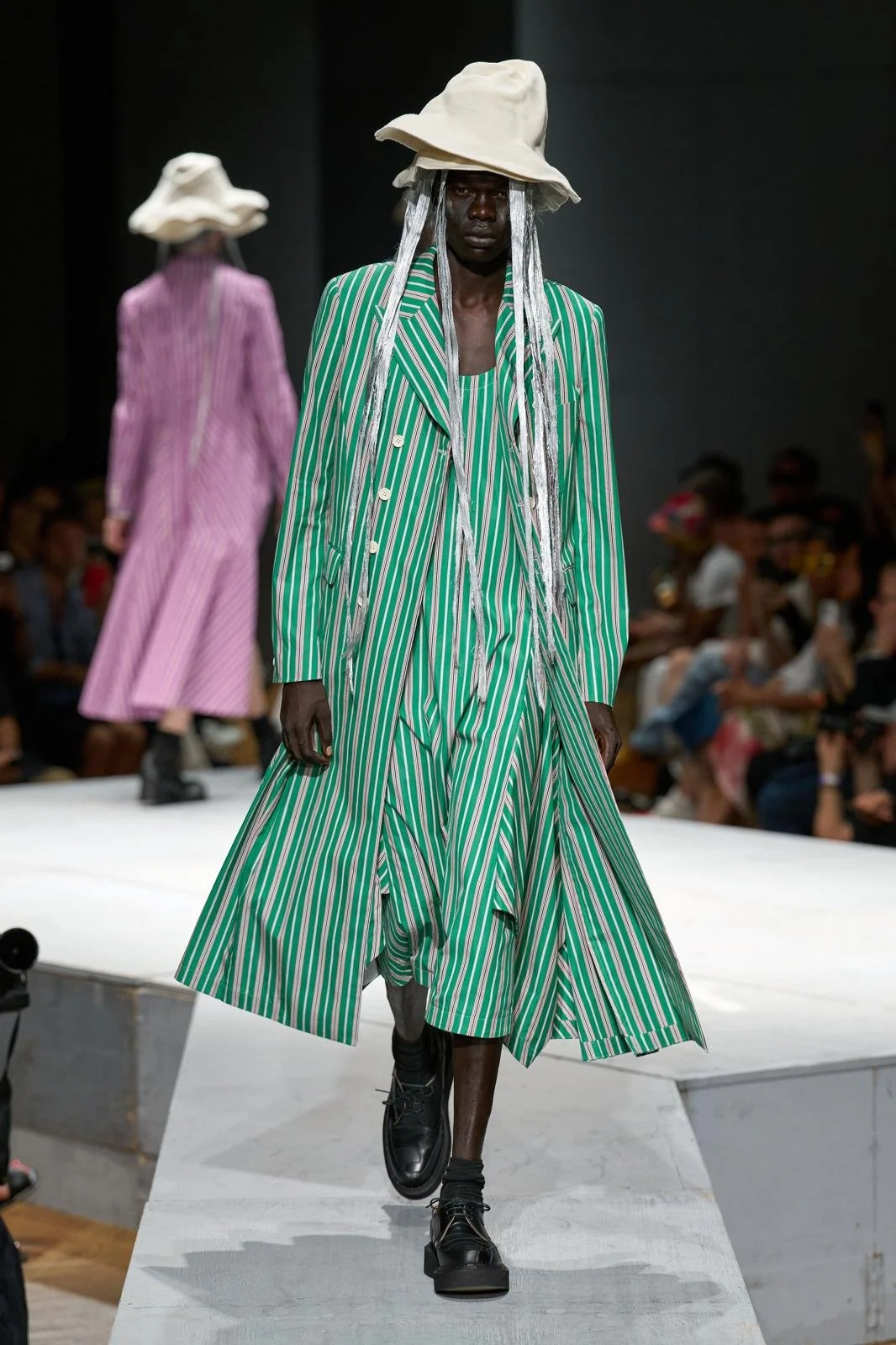
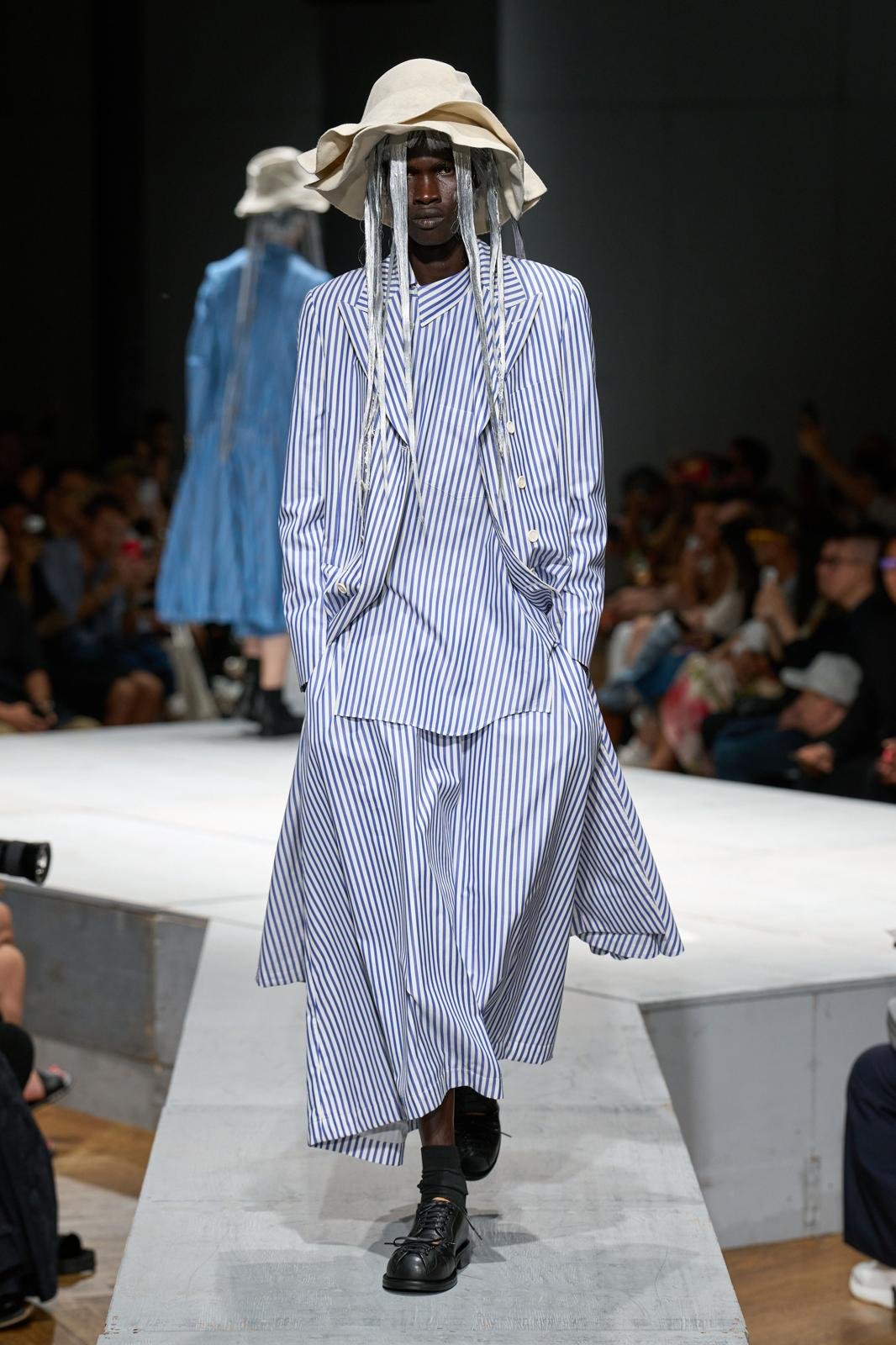
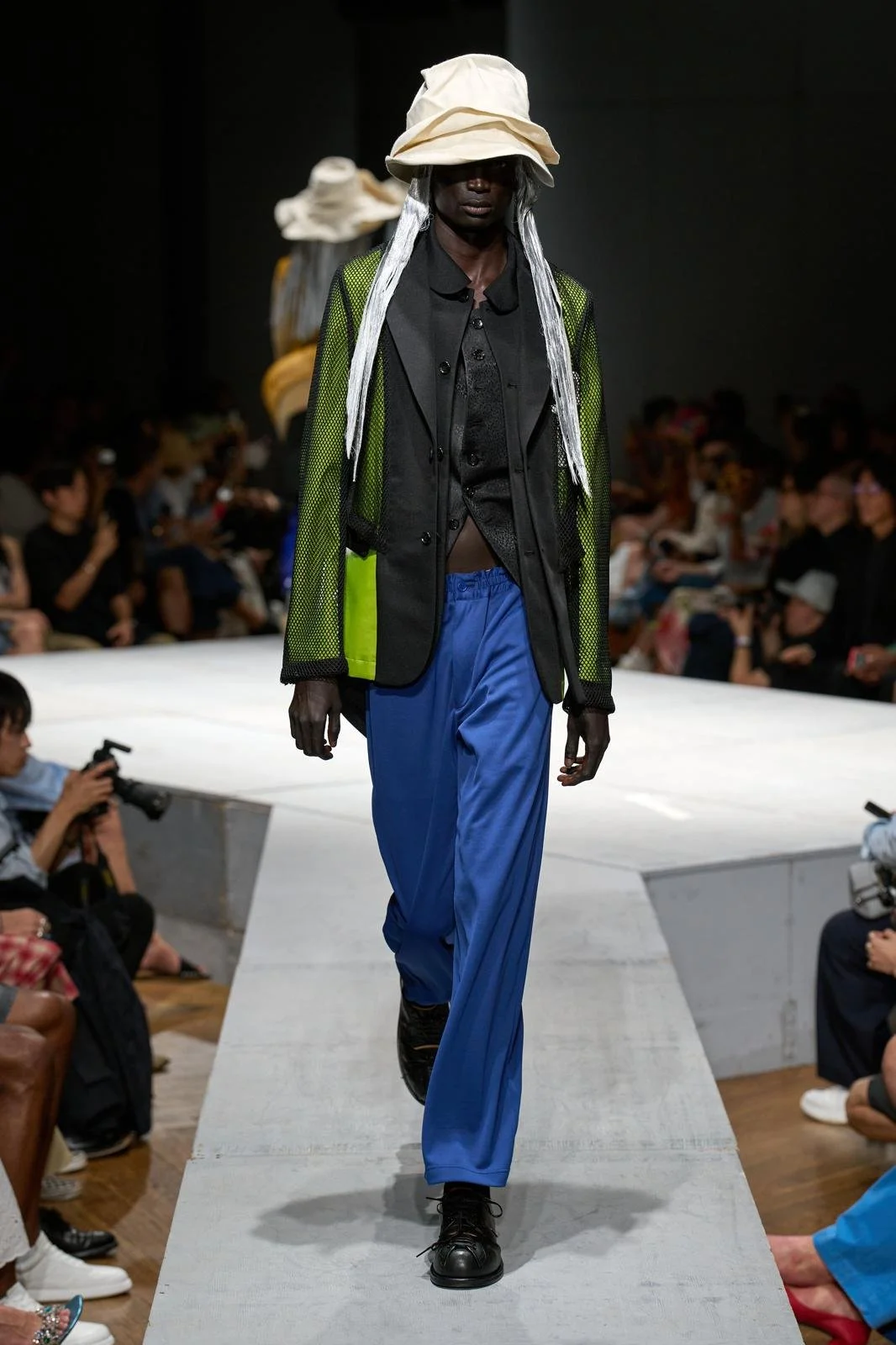
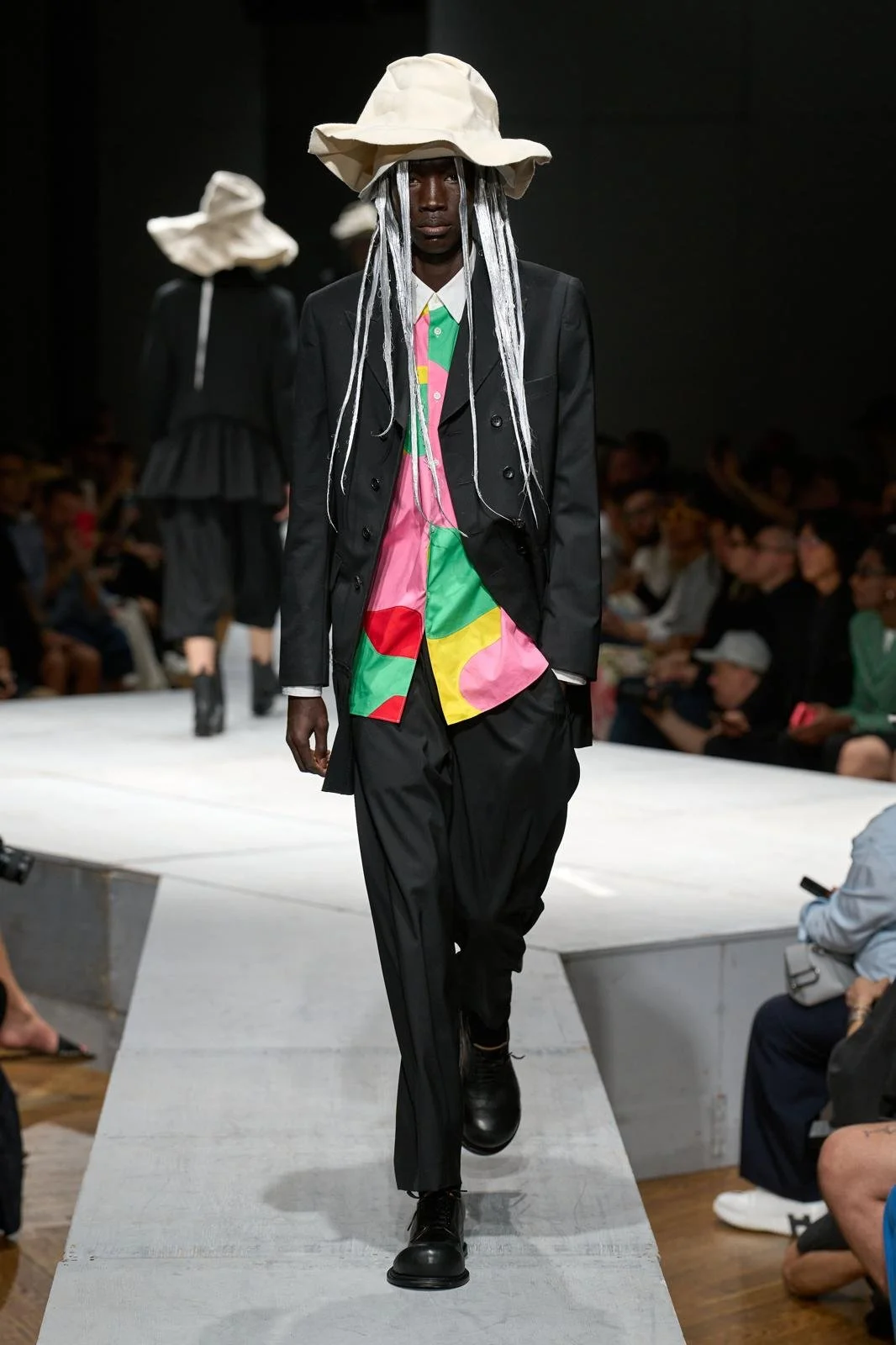
Six fully striped looks in variations of green, blue, and pink hues opened the catwalk at Rei Kawakubo’s Spring/Summer 2027 show for Comme des Garçons Homme Plus. There was an immediate sense of lightness to the garments, most of them airy, pyjama-looking shirts, and frock coats, often layered together and paired over loose skirts and shorts.

Colour took centre stage in the collection from start to finish, especially when comparing this lineup with what Kawakubo presented in the past couple of seasons at the label. Juxtaposed with her deeply emotional and reflective Fall/Winter 2025 collection, To Hell with War, this one was titled If the War Were to End, a more hopeful and dreamlike approach towards a recurring, although not explored enough, theme in contemporaneity. Kawakubo’s design language is still always intentional.

The show progressed with a handful of pastel-printed combos, mostly light coats and jackets. Their patterns recalled camouflage prints that morphed joyfully, as if army apparel had become a distant, blurred memory.

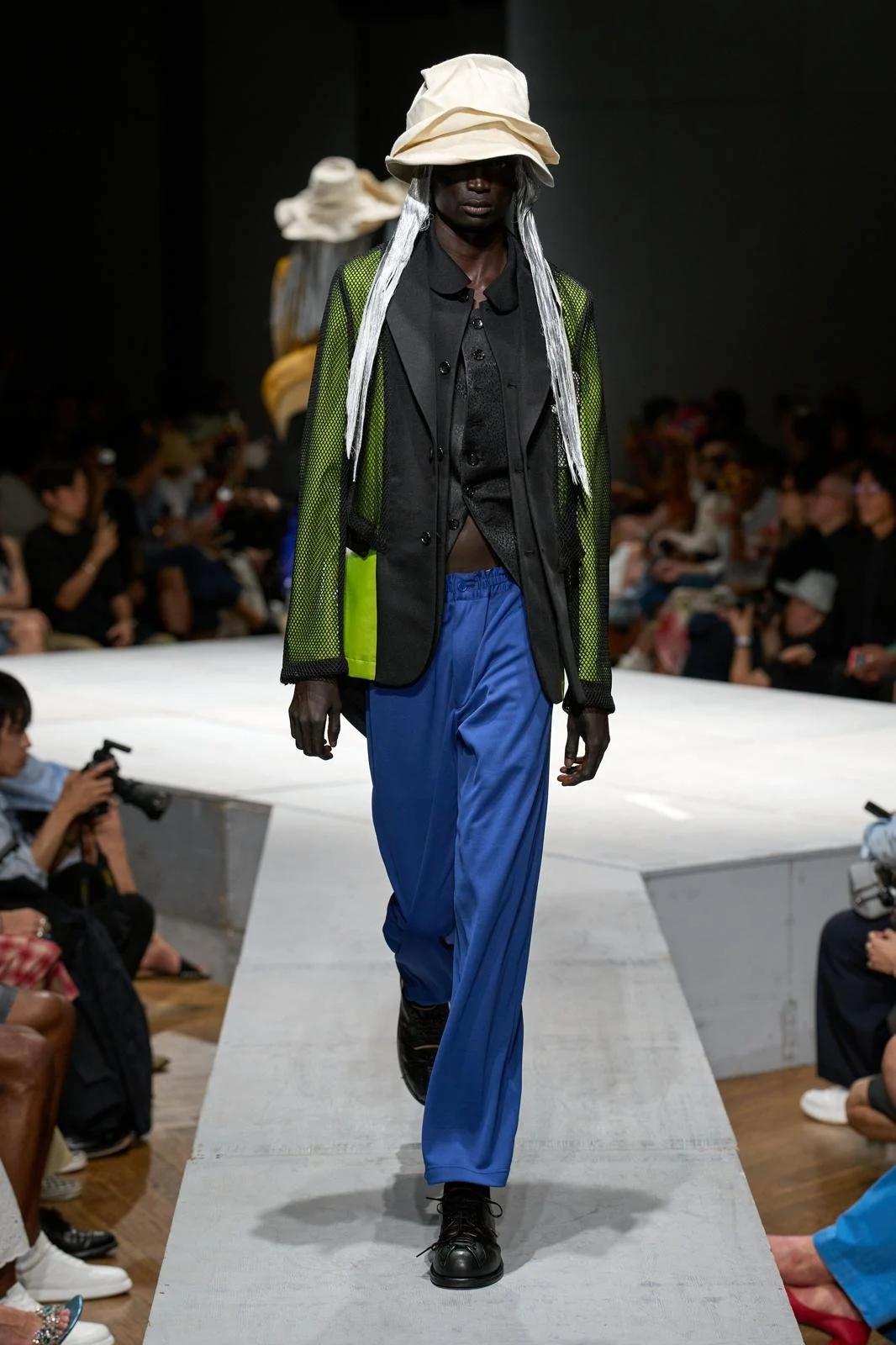
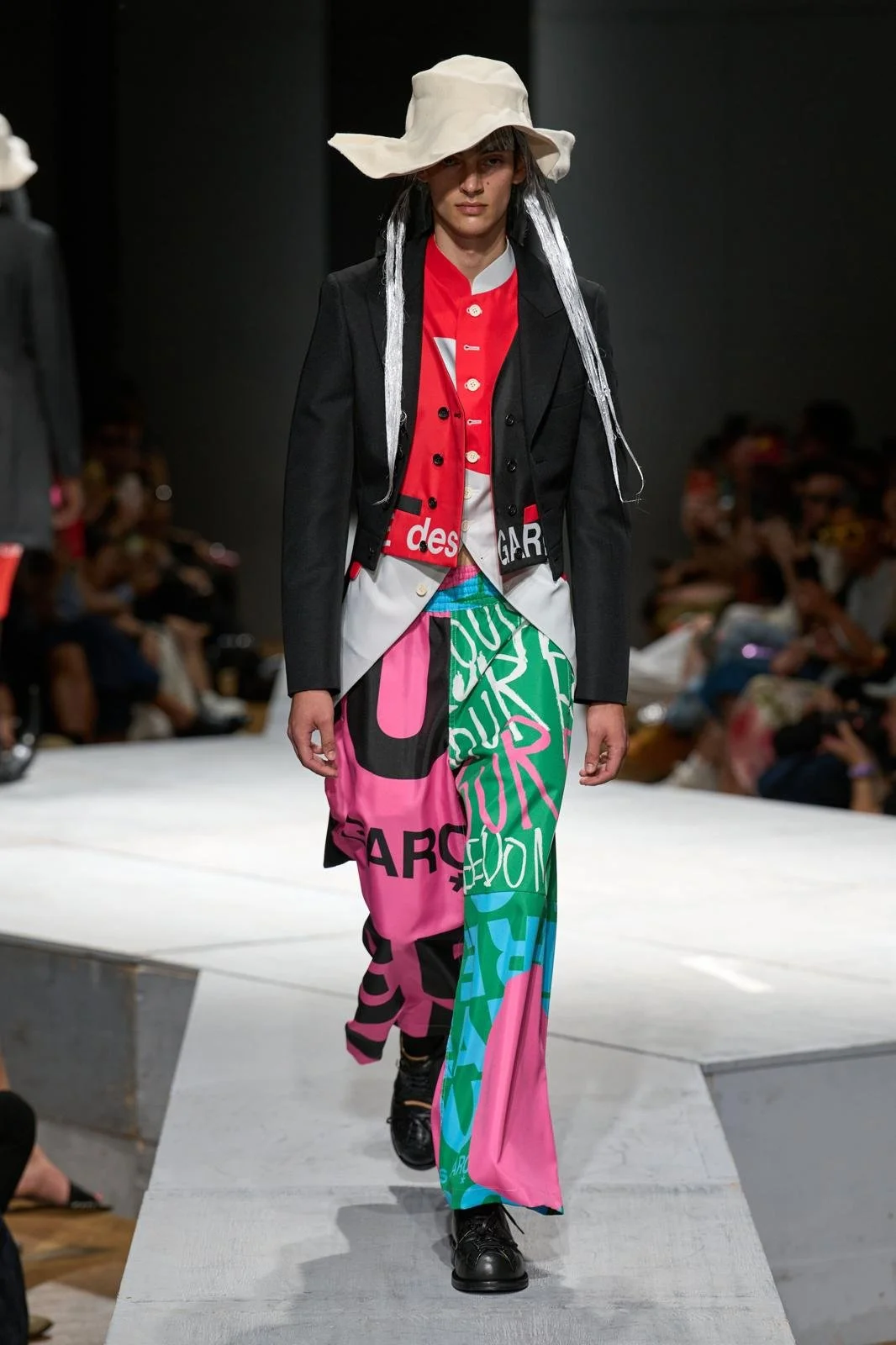
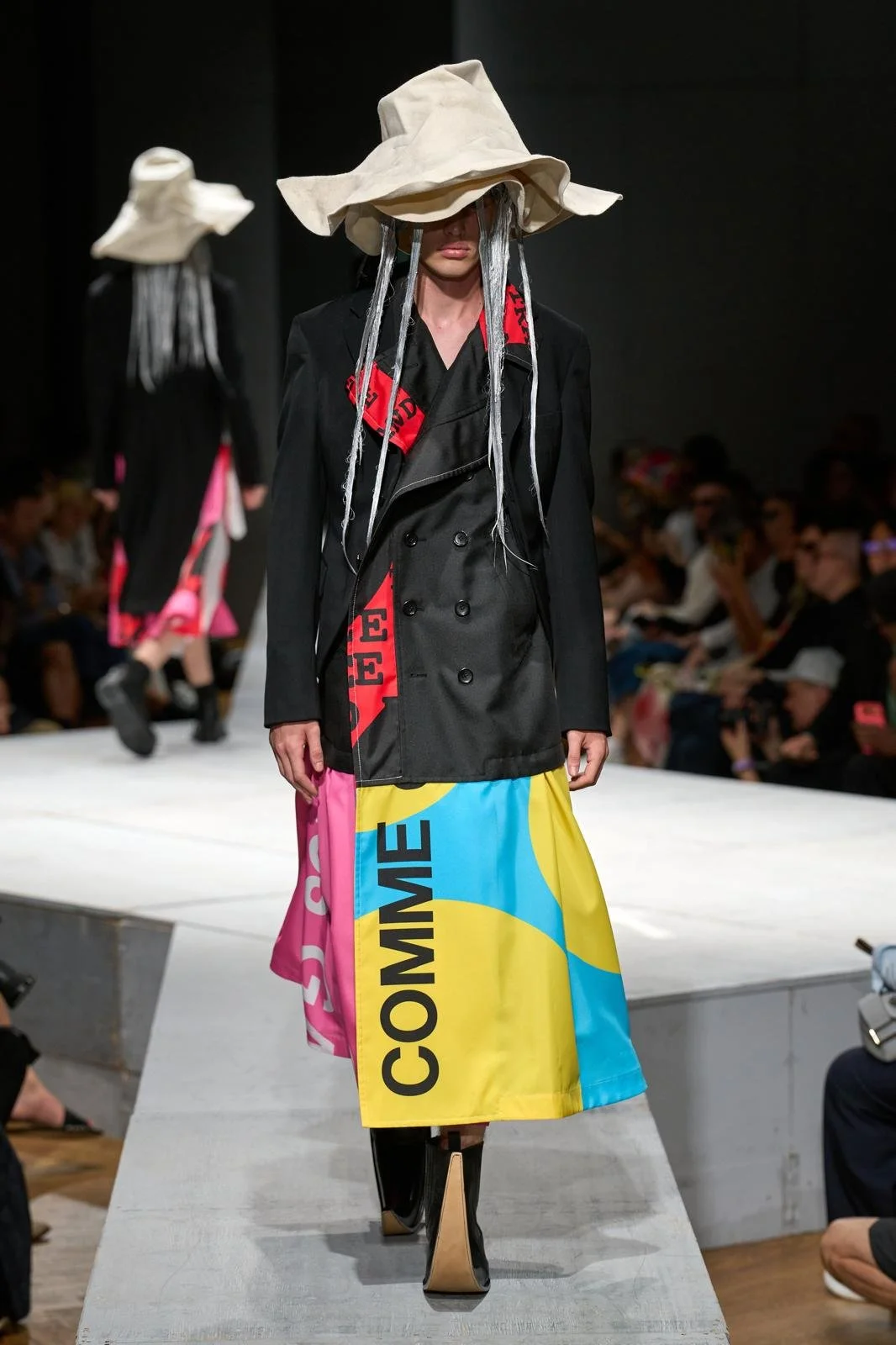
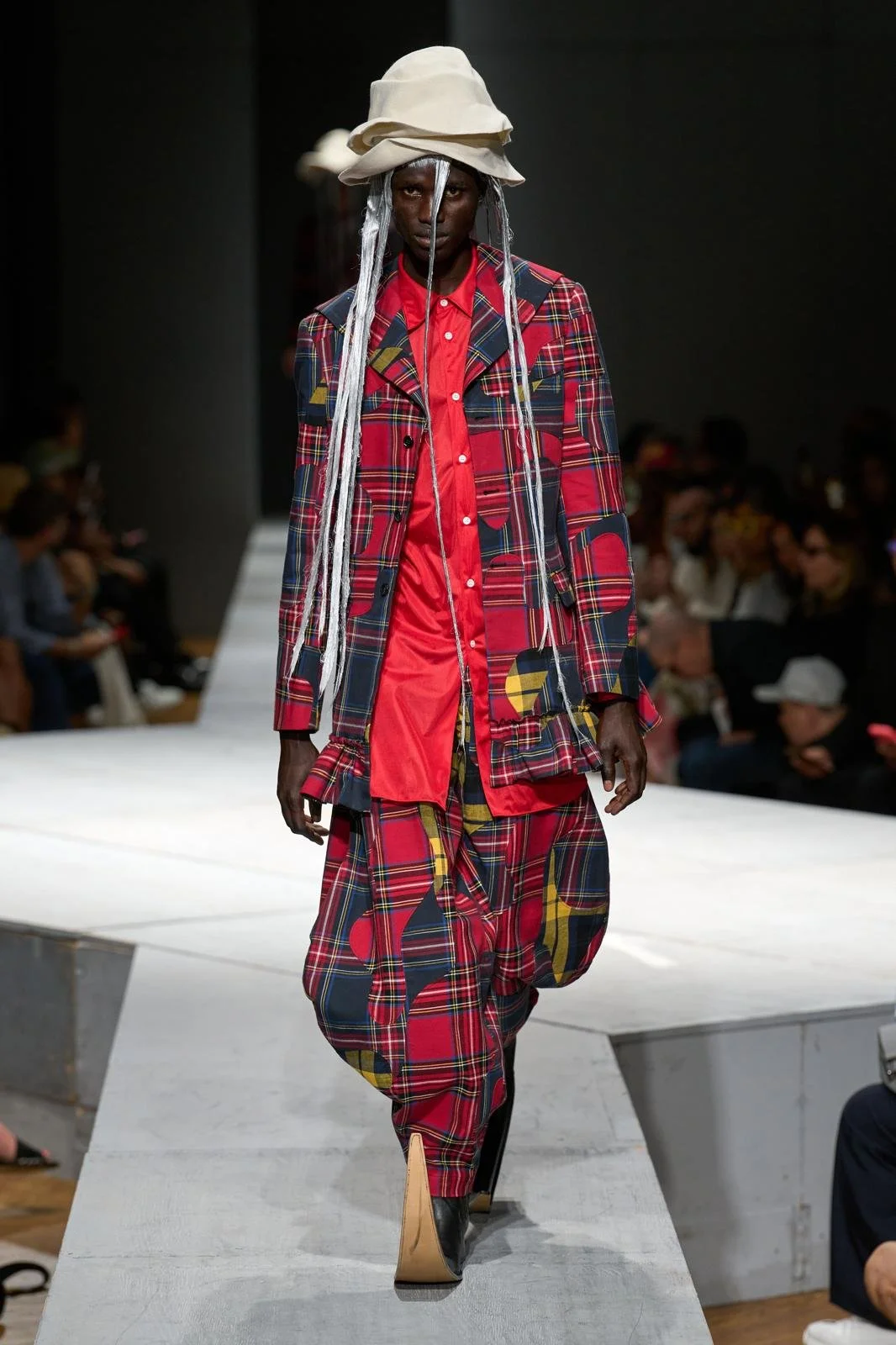
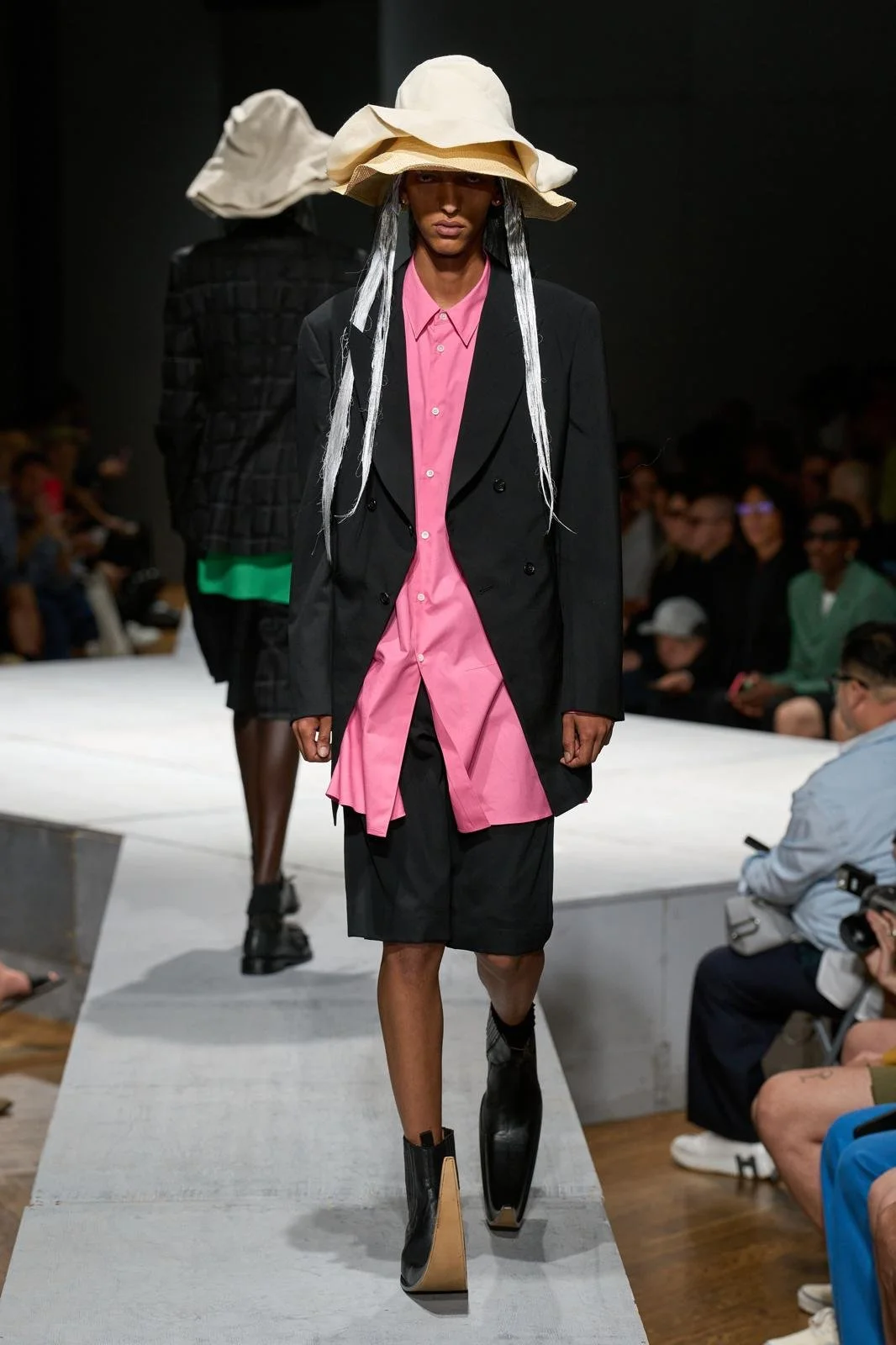
Instead of battle helmets, summer hats in many sizes, with dangling silver hair strings, were worn by every single model, sometimes doubled to maximise proportions. Instead of combat boots, a few ankle boots were crafted with an extremely elongated, pointed-toe silhouette, curved in a way that resembled medieval footwear. How long have we been waiting for the war to be over?

When it comes to both design and philosophy, the vibrancy of it all continued through red tartan sets and graphic logo skirts and shirts in primary yellow, blue, and green, as well as lime and electric blue slung trousers with elastic waistbands.

The colour black, a personal favourite of Kawakubo and the main theme of the Japanese designer’s Comme des Garçons Fall/Winter 2026 collection, was not overlooked but was more subtle. It appeared in tailored jackets and trousers styled with bright-toned button-downs, as well as in the five final looks which closed the show, one of them featuring the words ‘my energy comes from freedom.’ May Kawakubo’s prophecy come true.


Words by Ketlyn Araujo

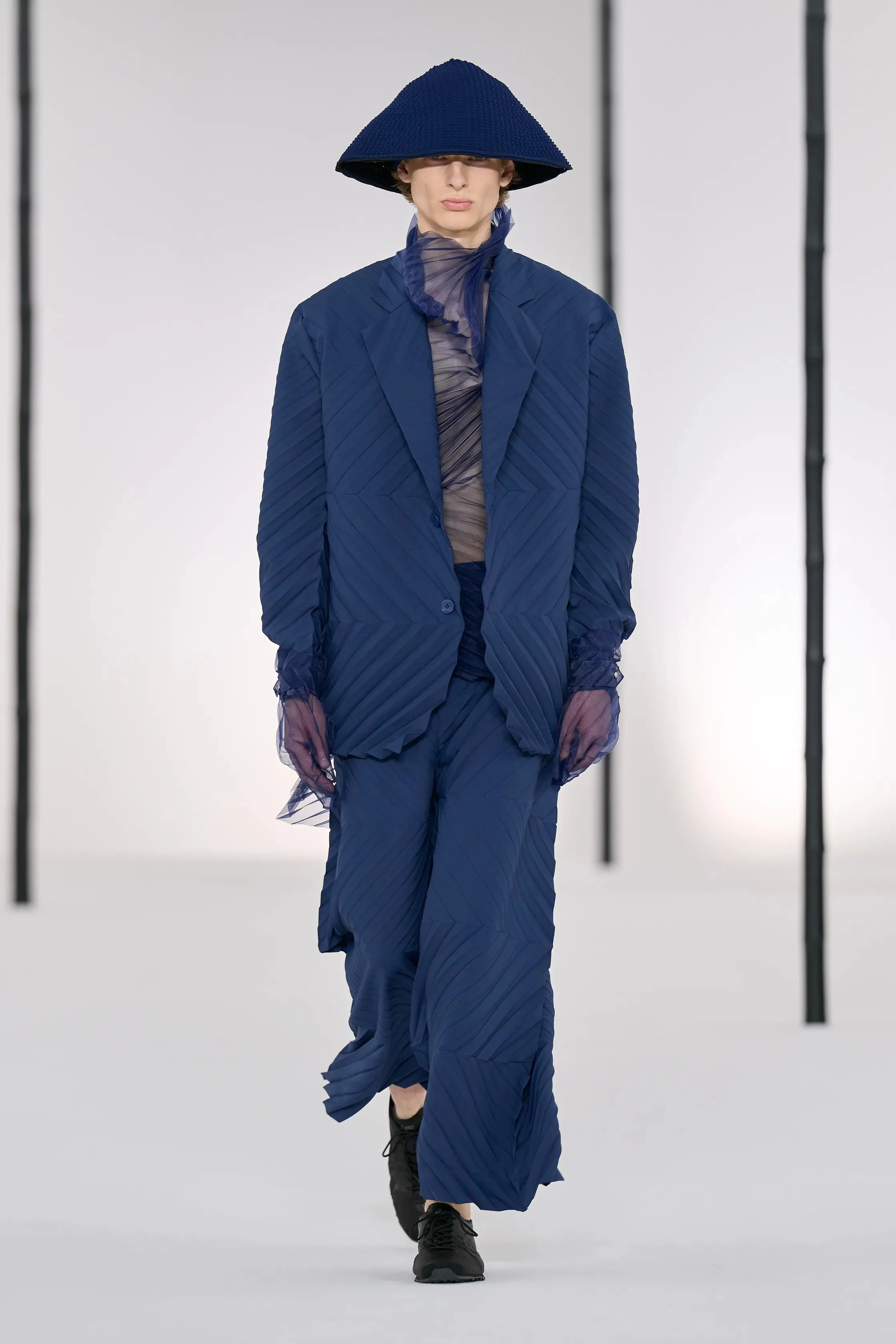
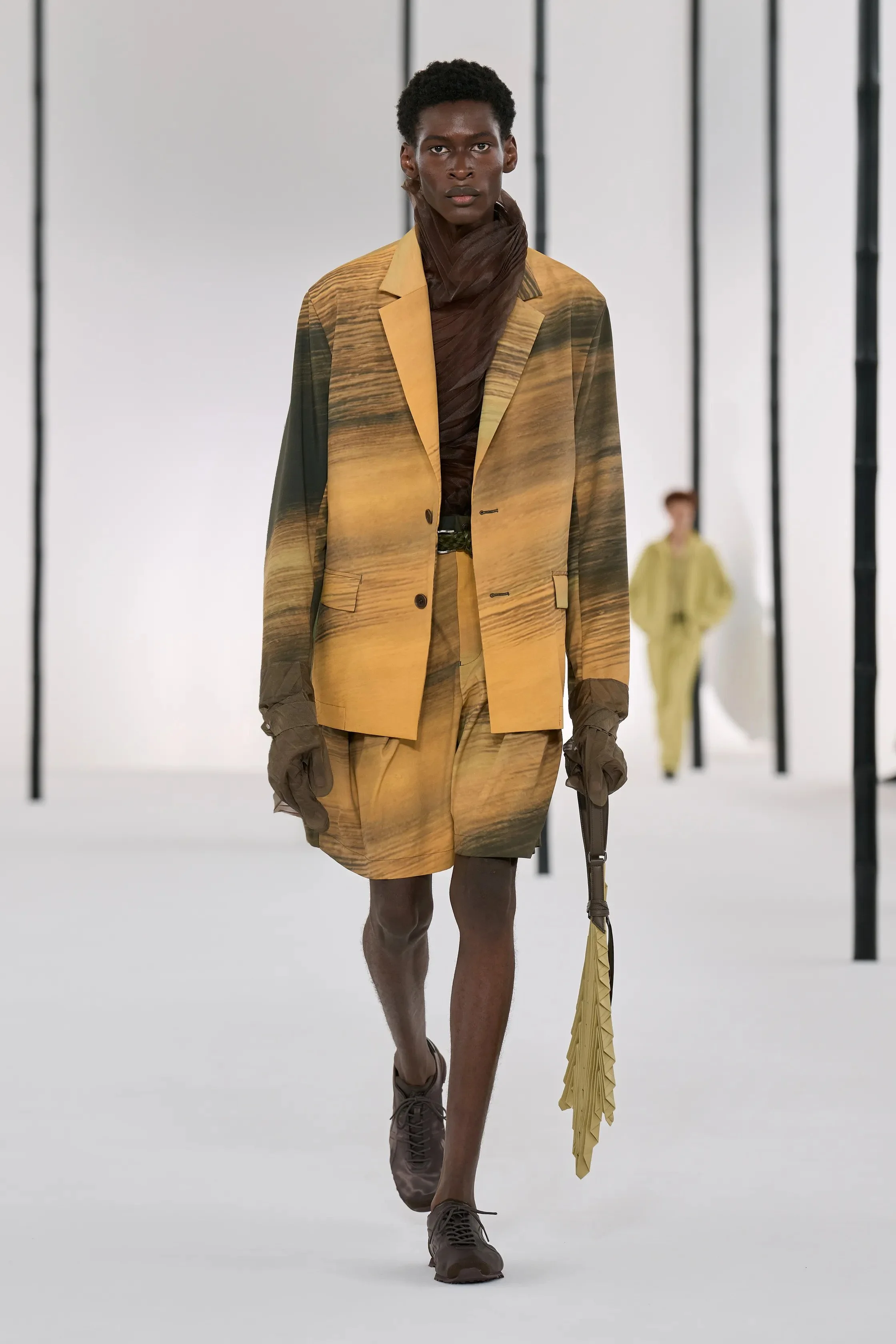
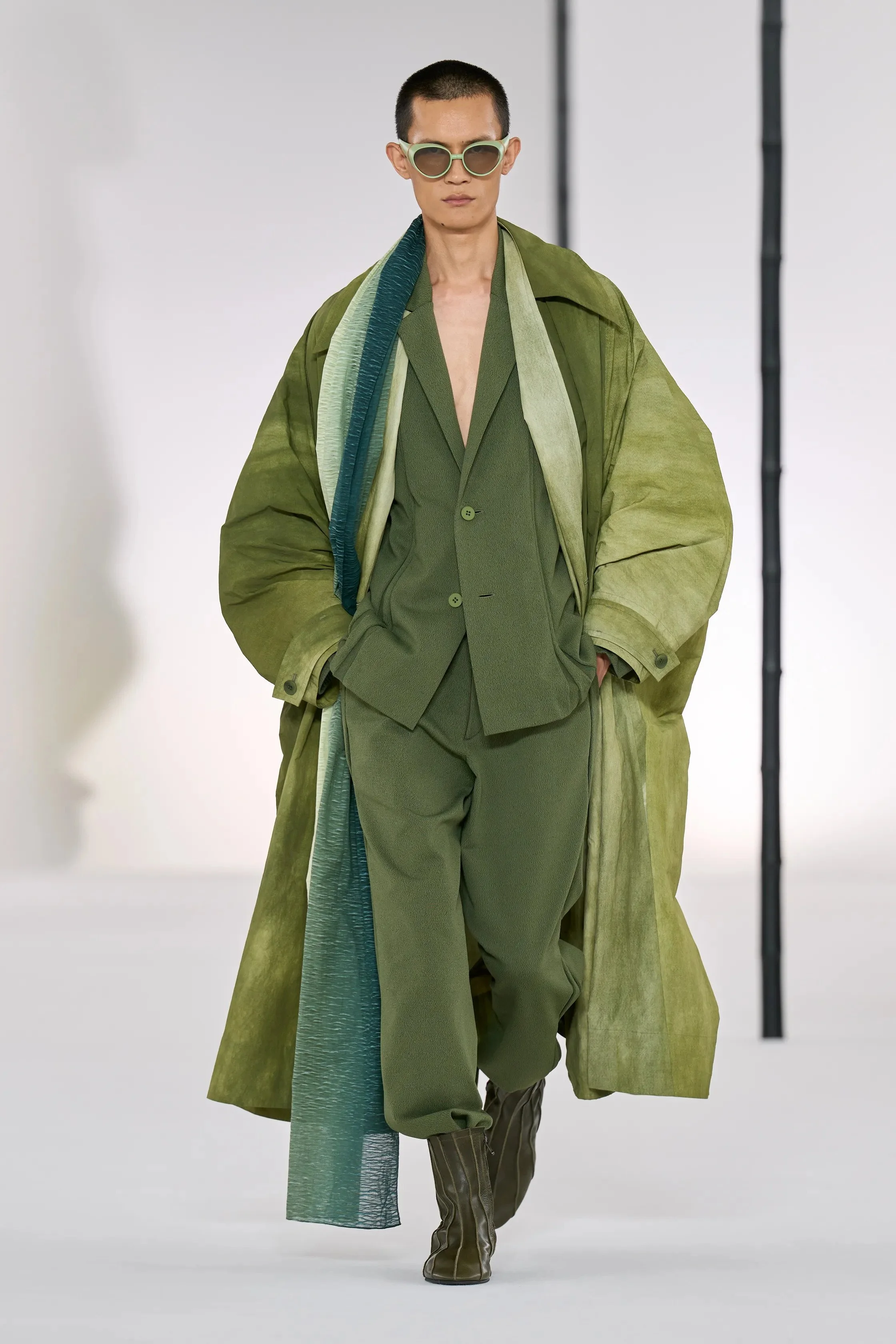
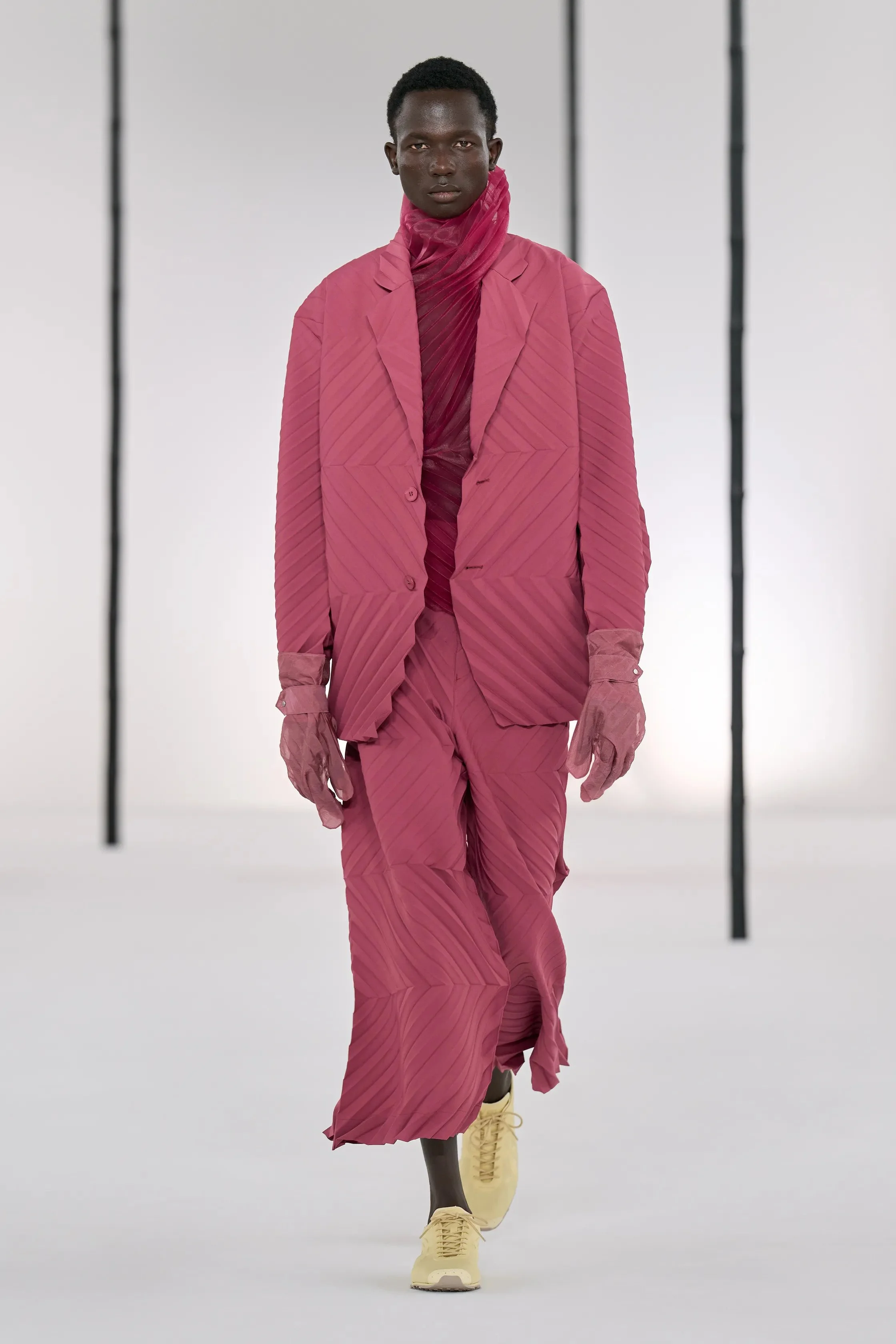
IM MEN SS27

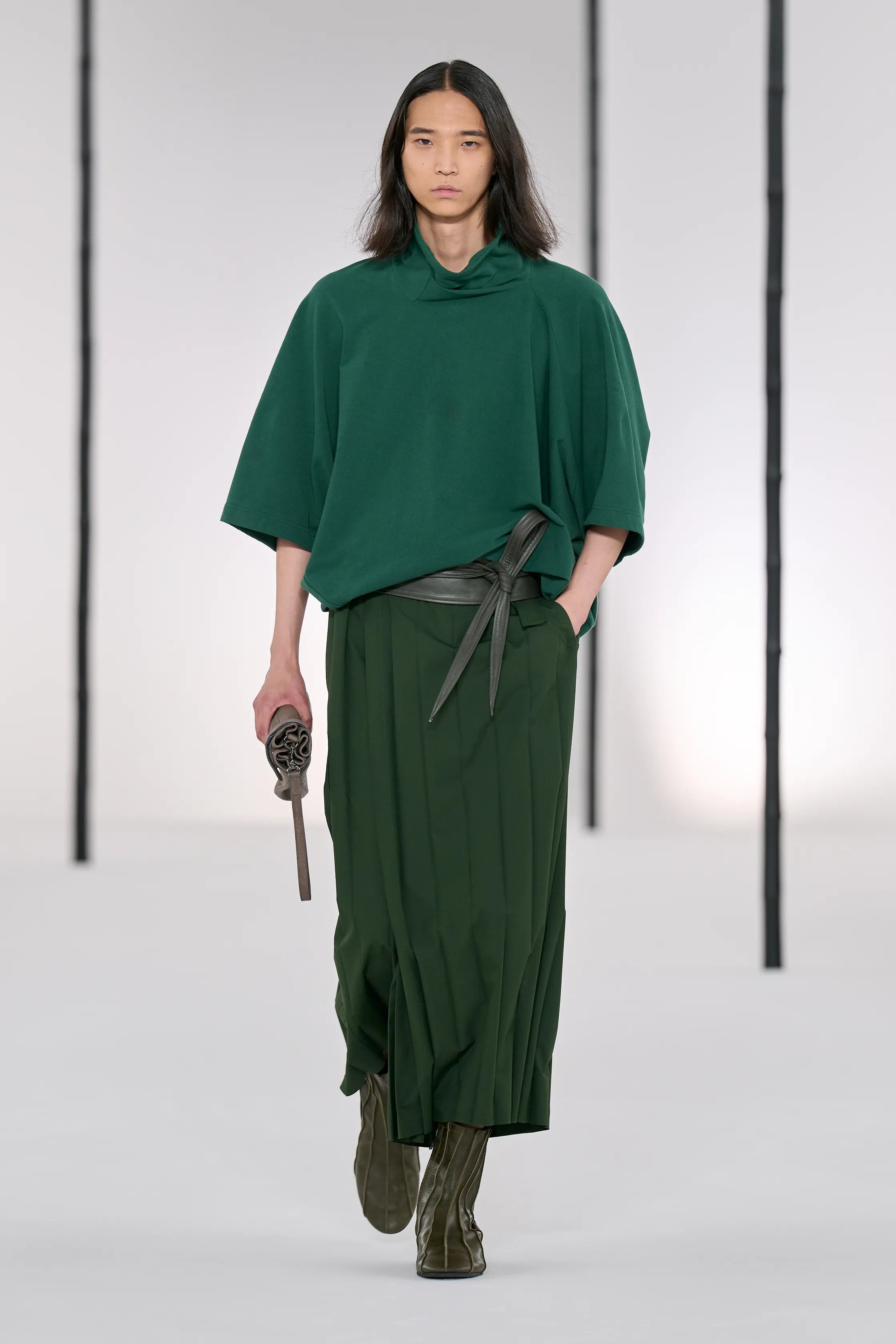
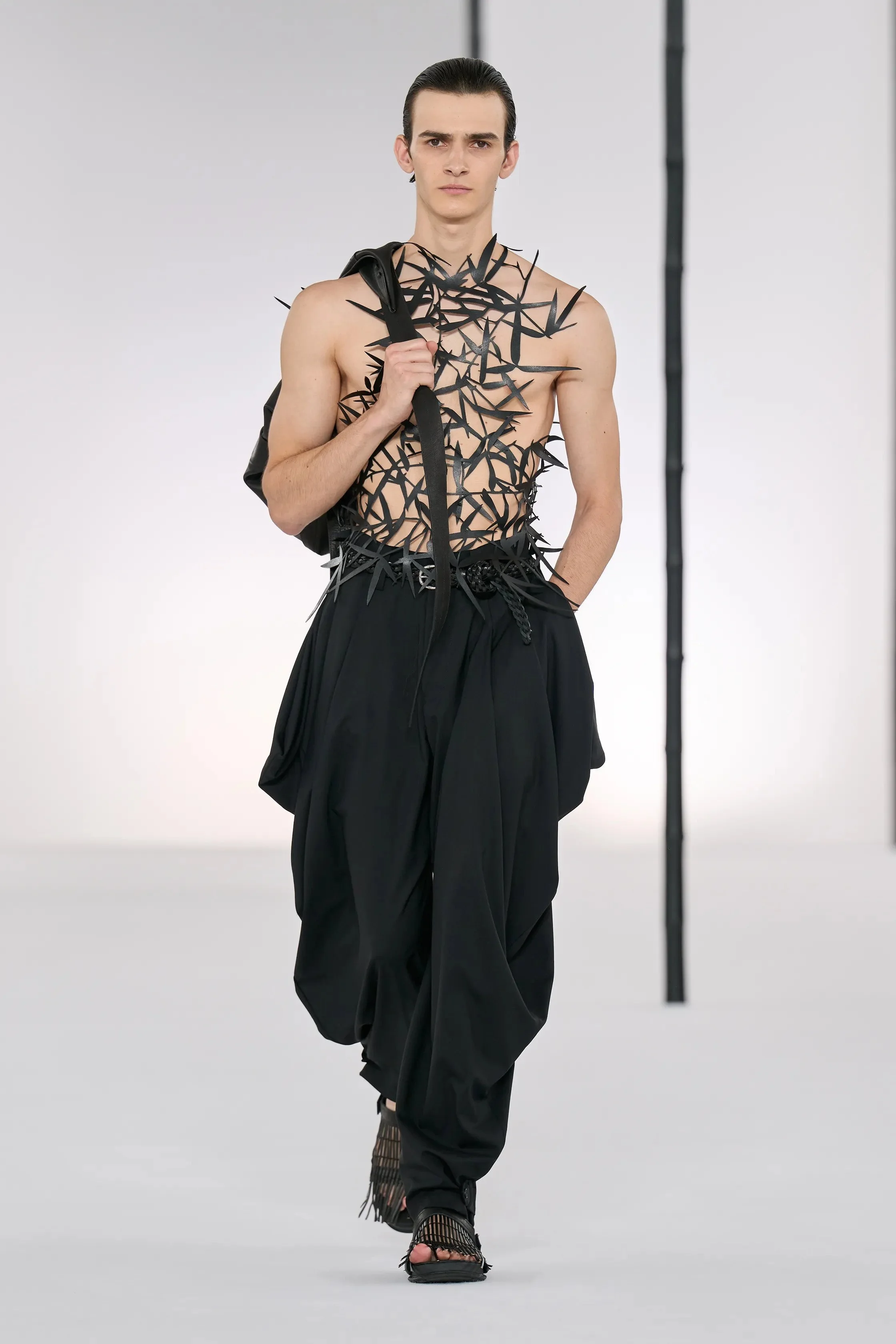
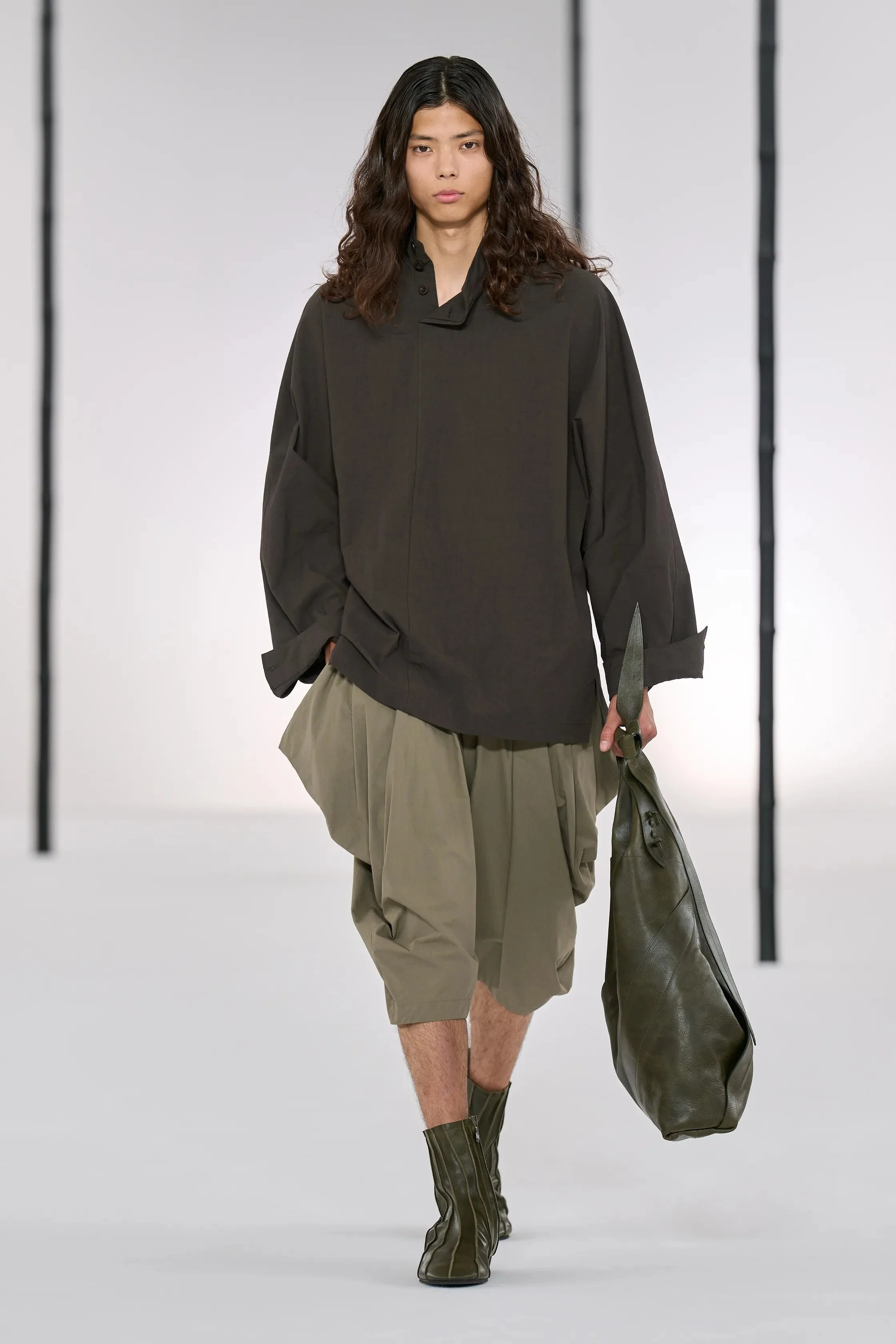
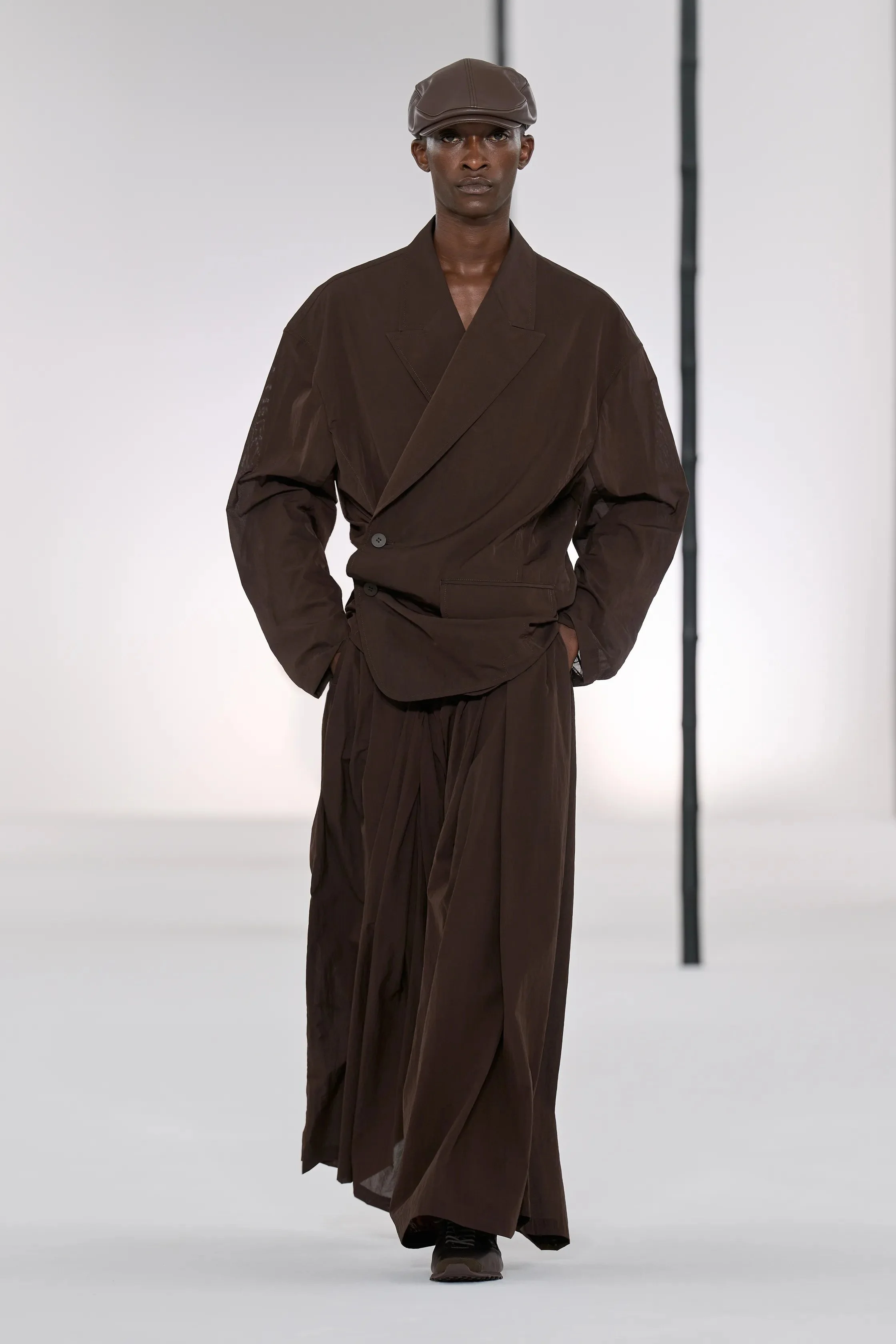
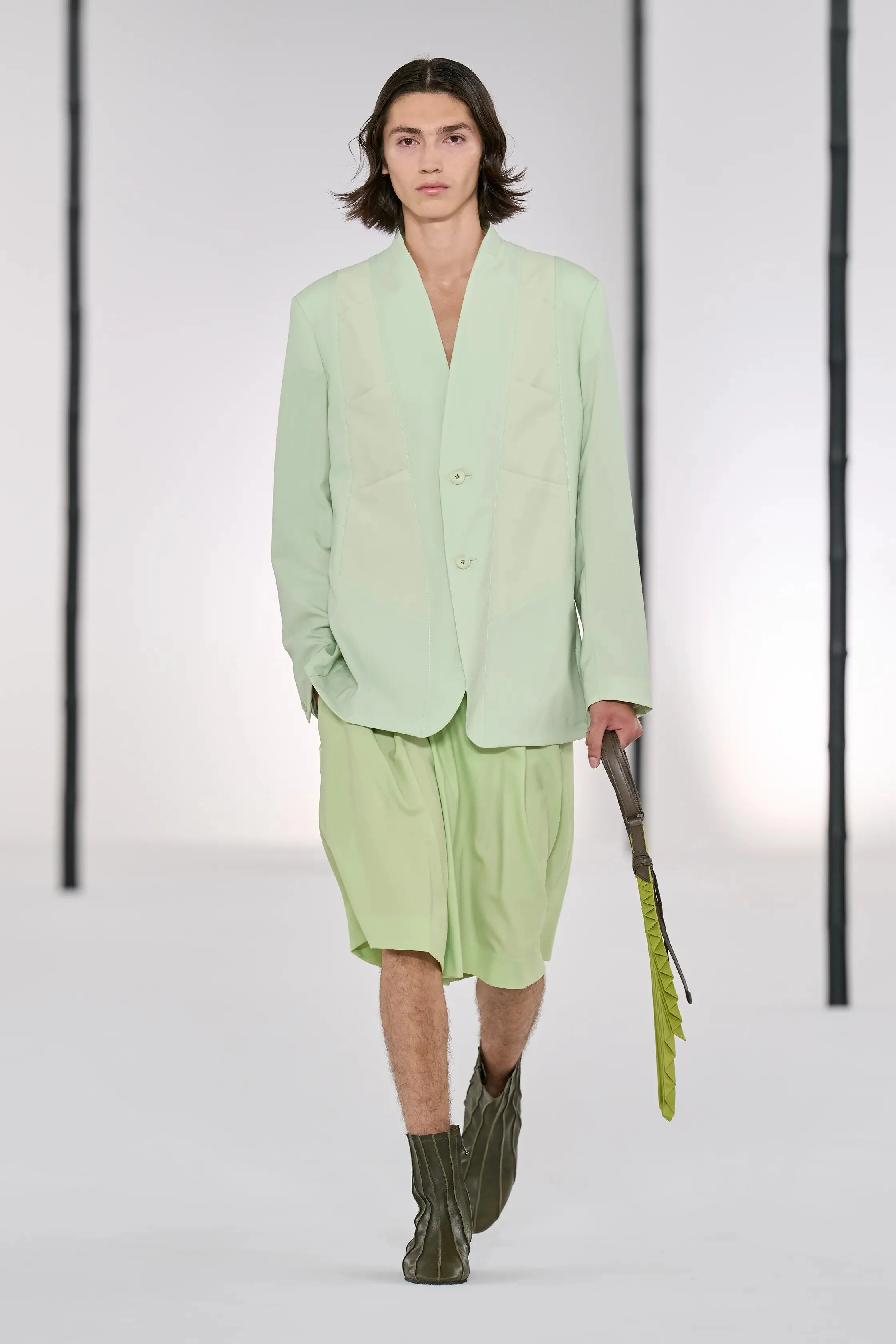
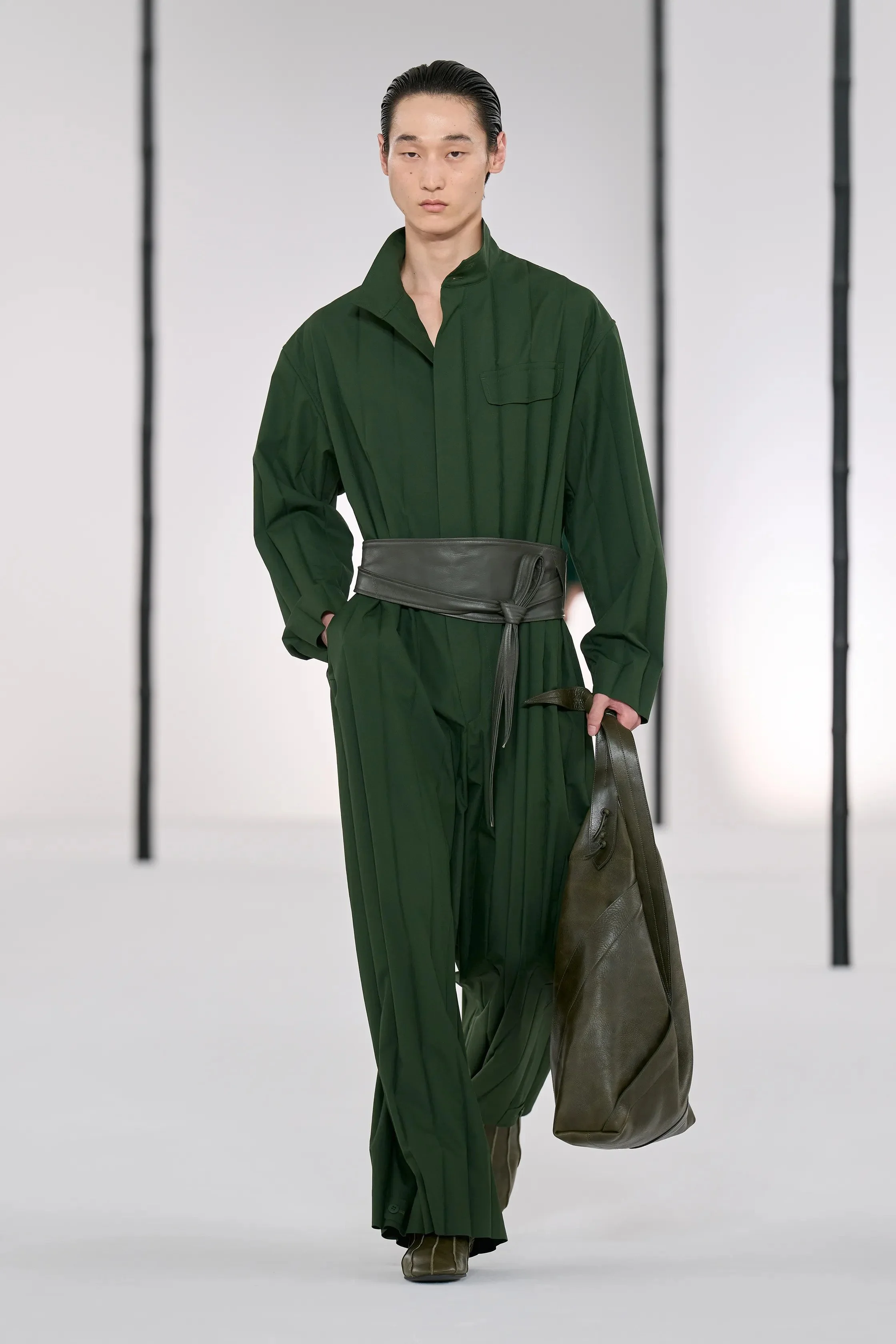
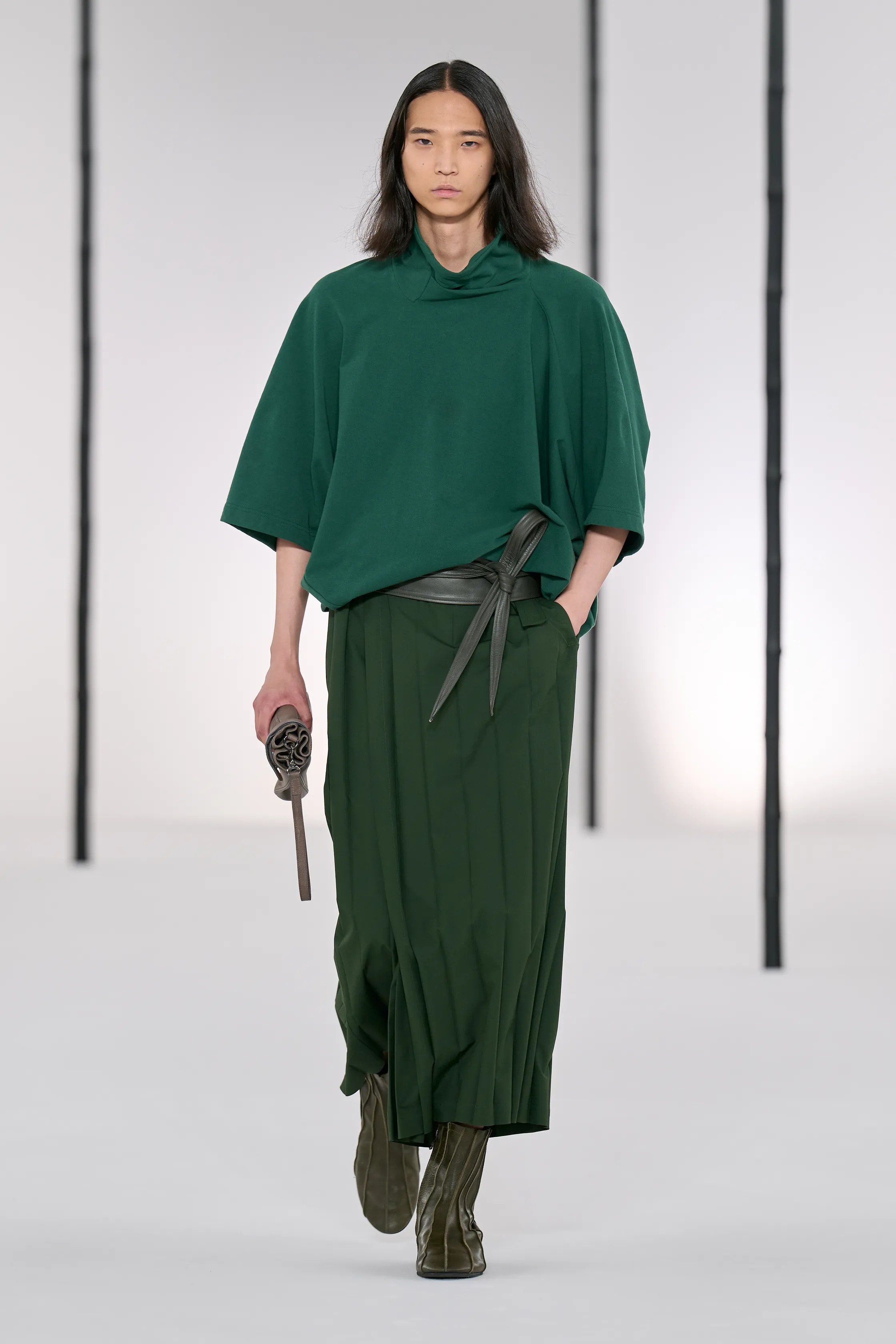
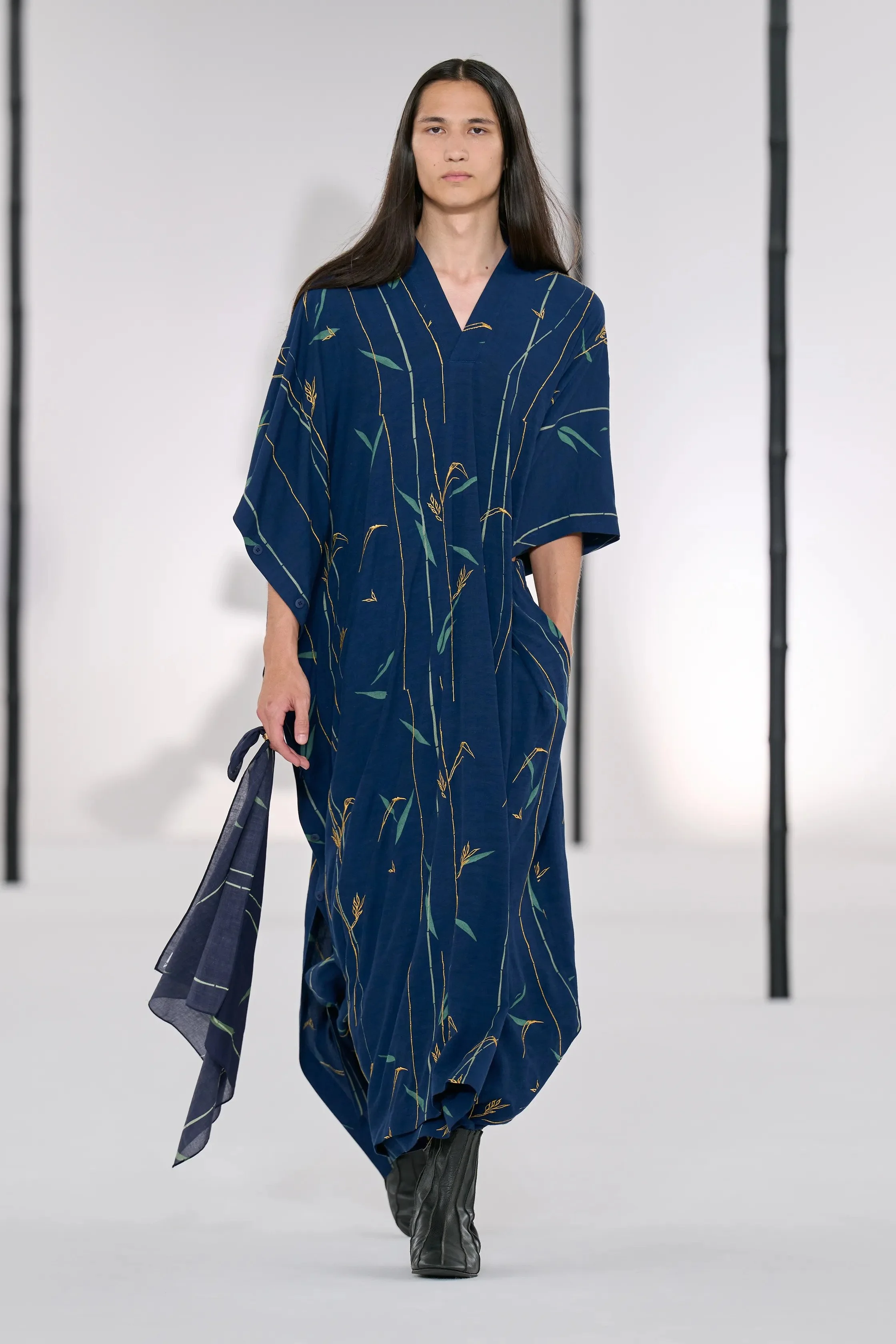
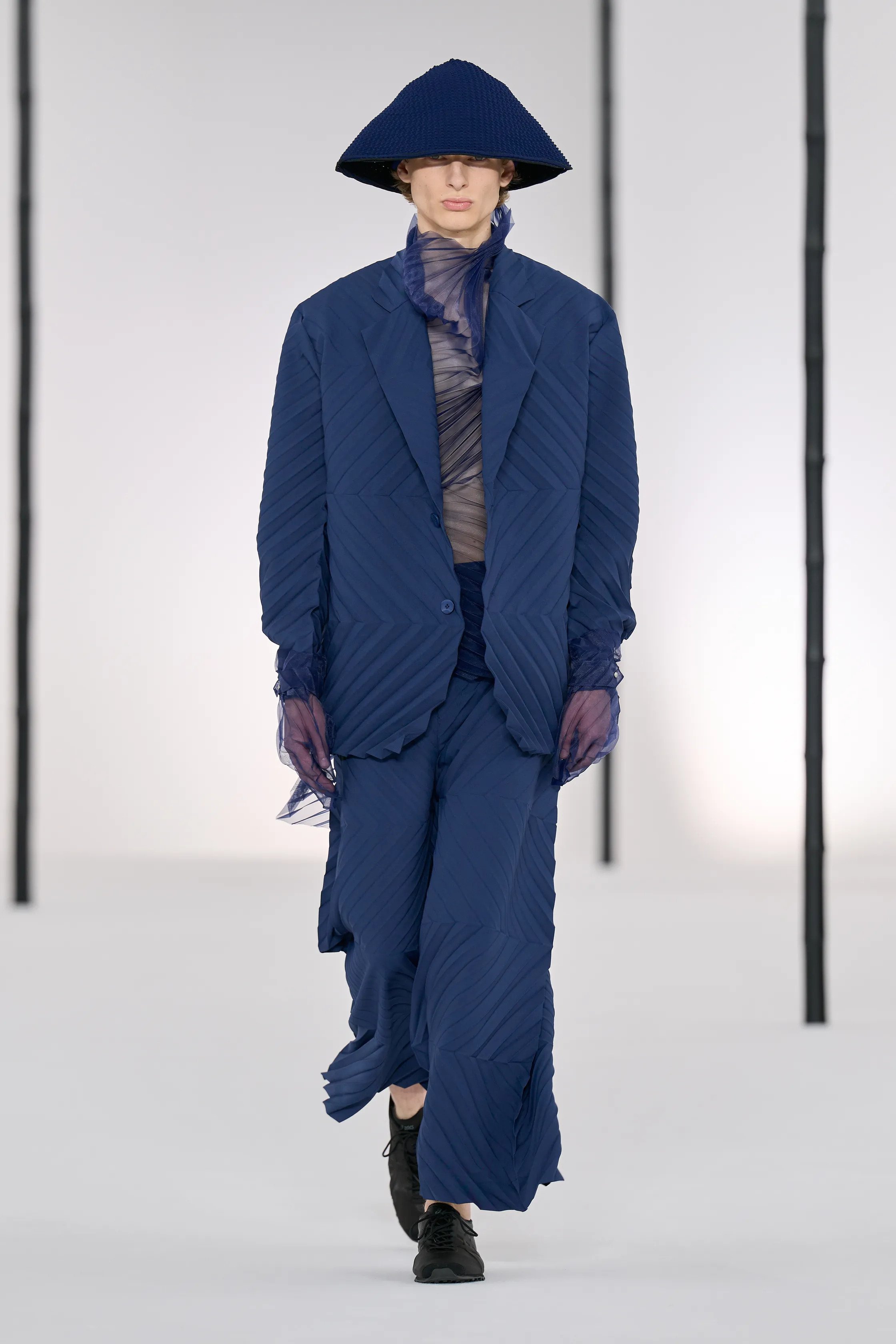
IM MEN’s Spring/Summer ‘27 collection was a fluid and poetic interpretation of menswear. Tailoring, artisanal craftsmanship, and ease came together to create Japanese-inspired silhouettes combined with contemporary tailoring through an artistic approach.

The collection delivered a vision of masculinity that is soft rather than rigid and conventional. Sheer garments, cut-outs, and skin-revealing pieces were part of the language which showcased an expressive masculinity.

Oversized proportions, relaxed tailoring, draped constructions, and fluid garments created a sense of freedom and comfort, while wide-leg trousers, voluminous coats, oversized shirts, and tailored jackets presented the technical mastery of the brand. Jackets featured dropped shoulders, extended lengths, and loose sleeves, with an emphasis on comfort and movement.

The show began with a monochromatic sequence dominated by black, charcoal grey and off-white. As the collection progresses, the palette evolves into vivid shades of green, blue, pink, and metallic tones. Trousers were wide and fluid, while cocoon-like coats, layered tunics, asymmetrical tops, wrapped trousers, and cape-inspired silhouettes evoked an intentional focus on the clothing rather than the body wearing it.


Words by Carolina Benjumea

ACNE STUDIOS SS27

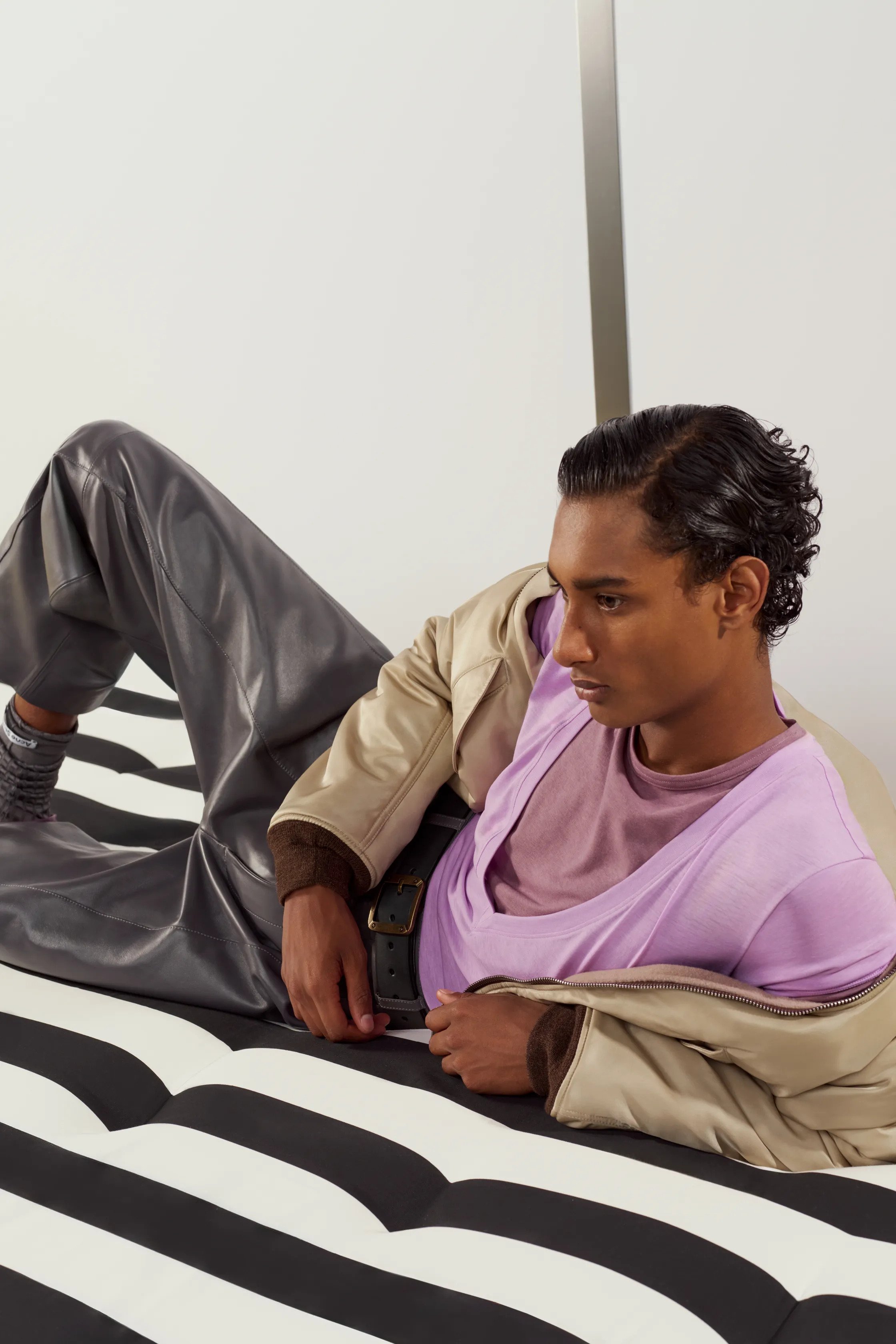
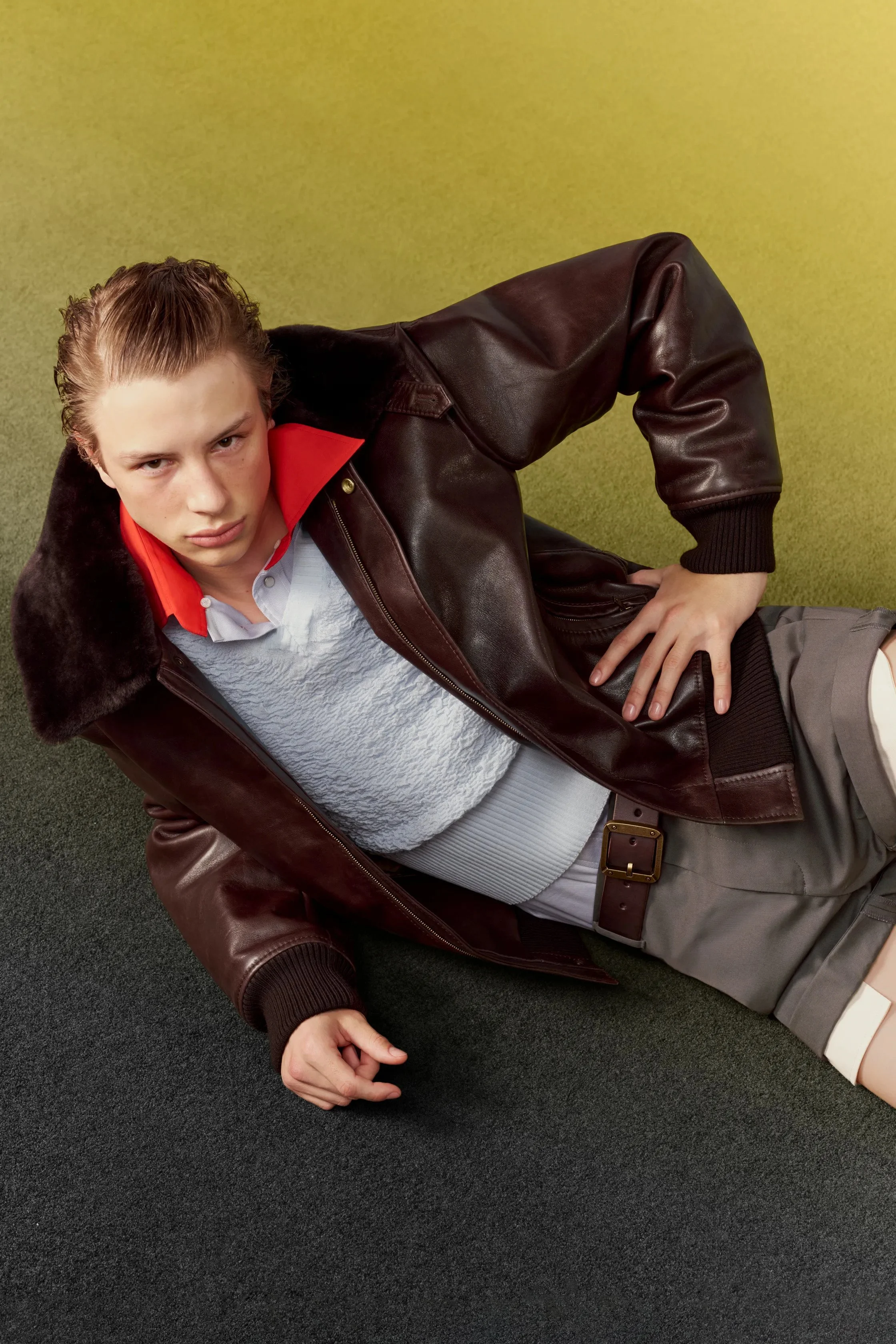
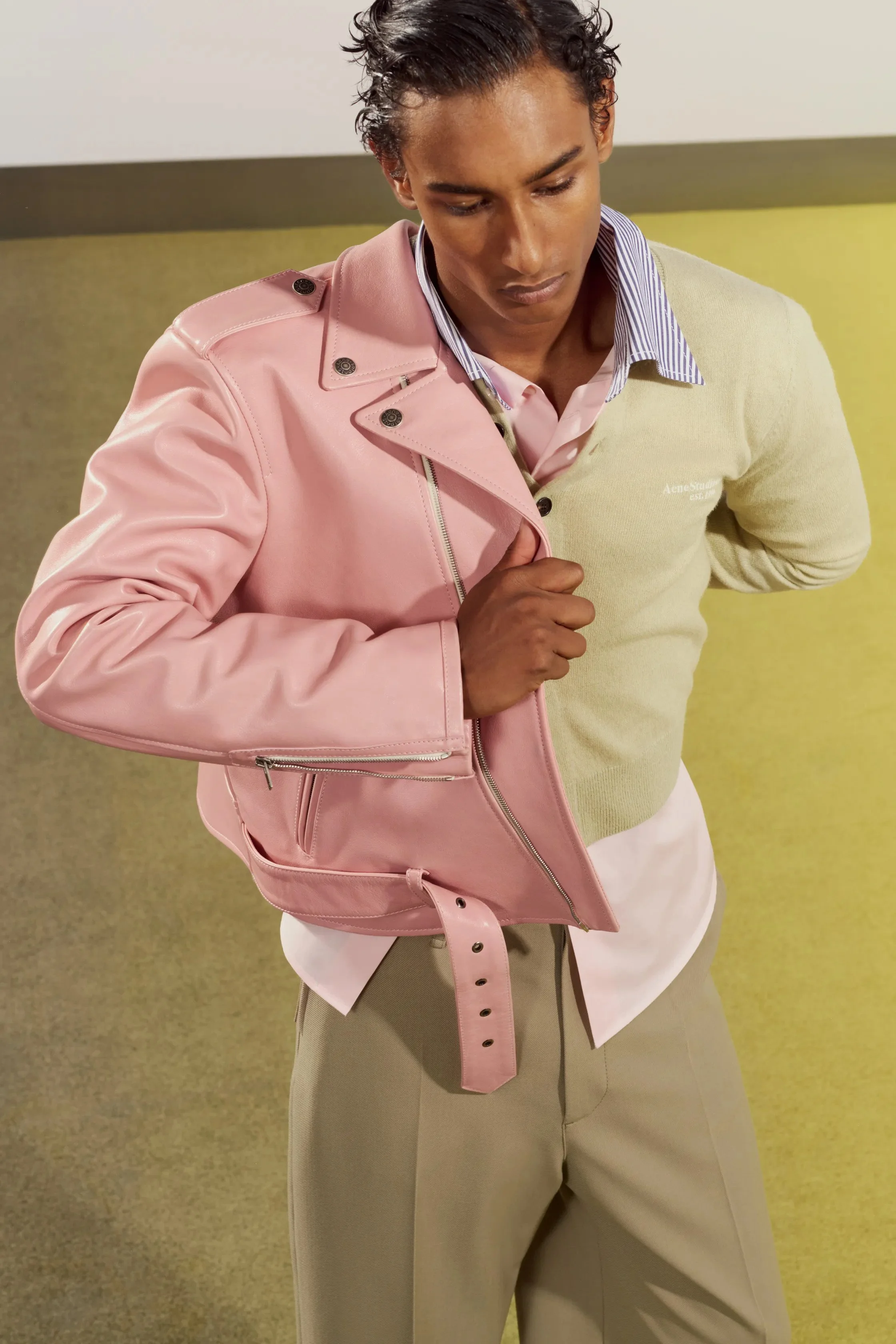
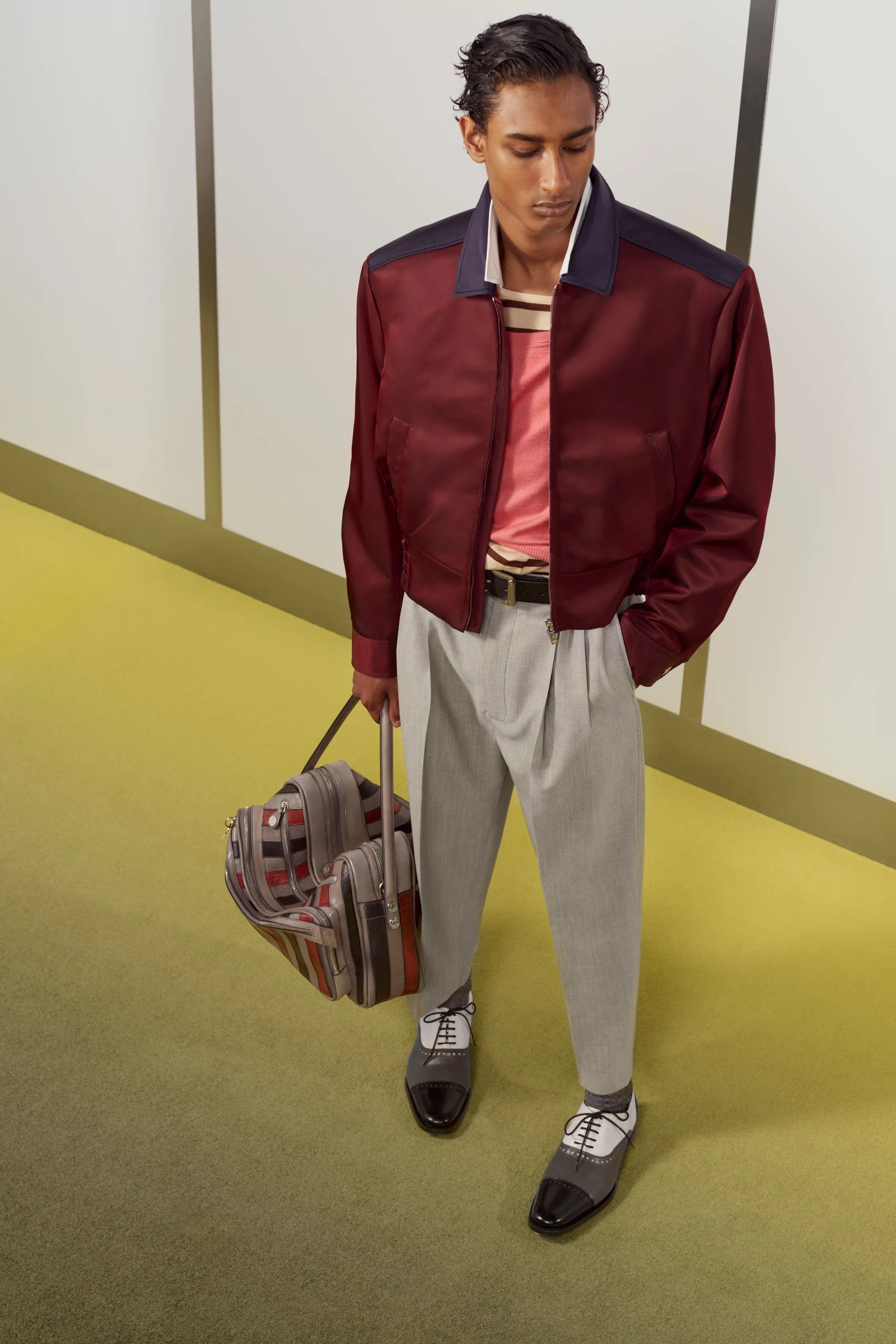
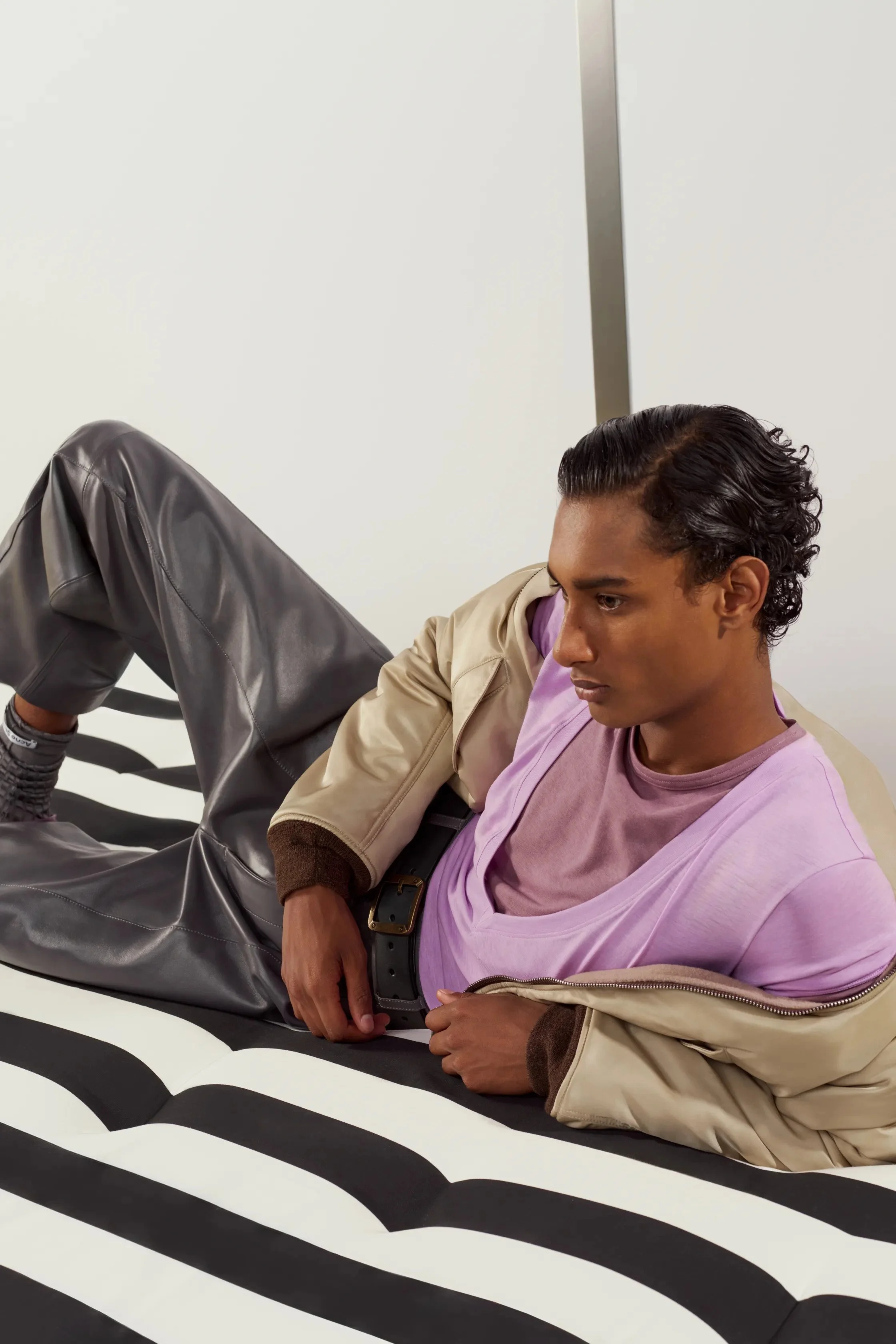
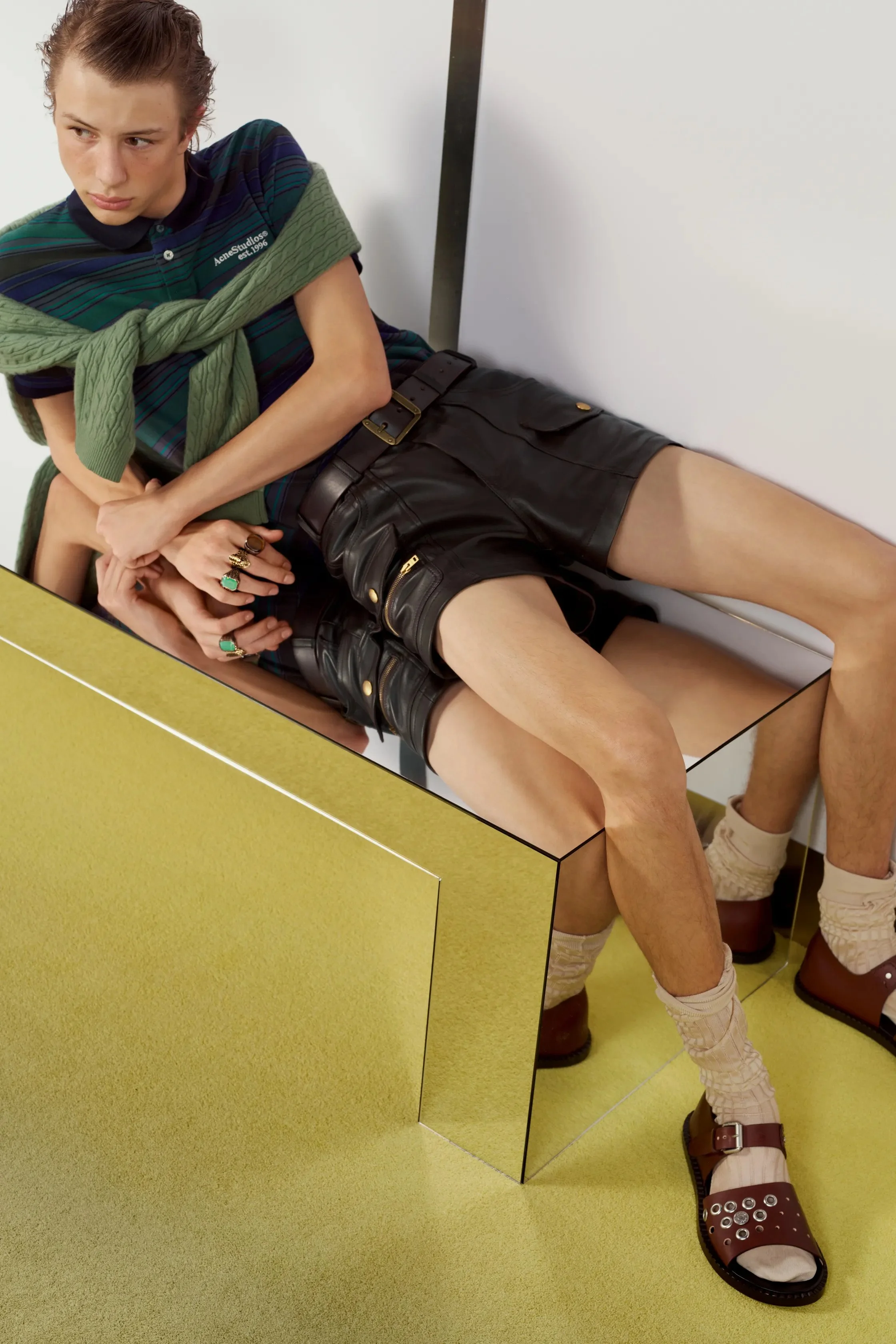
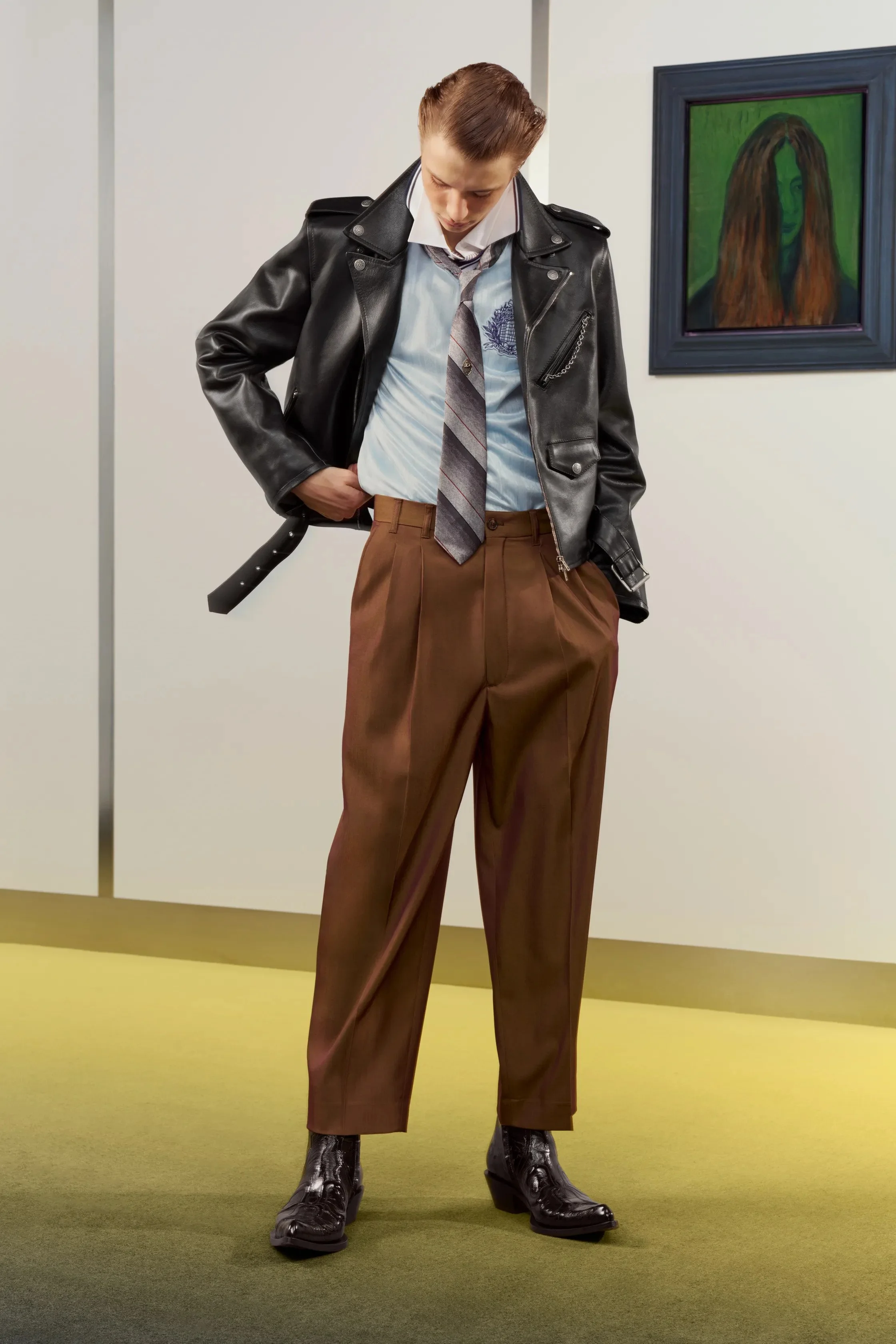
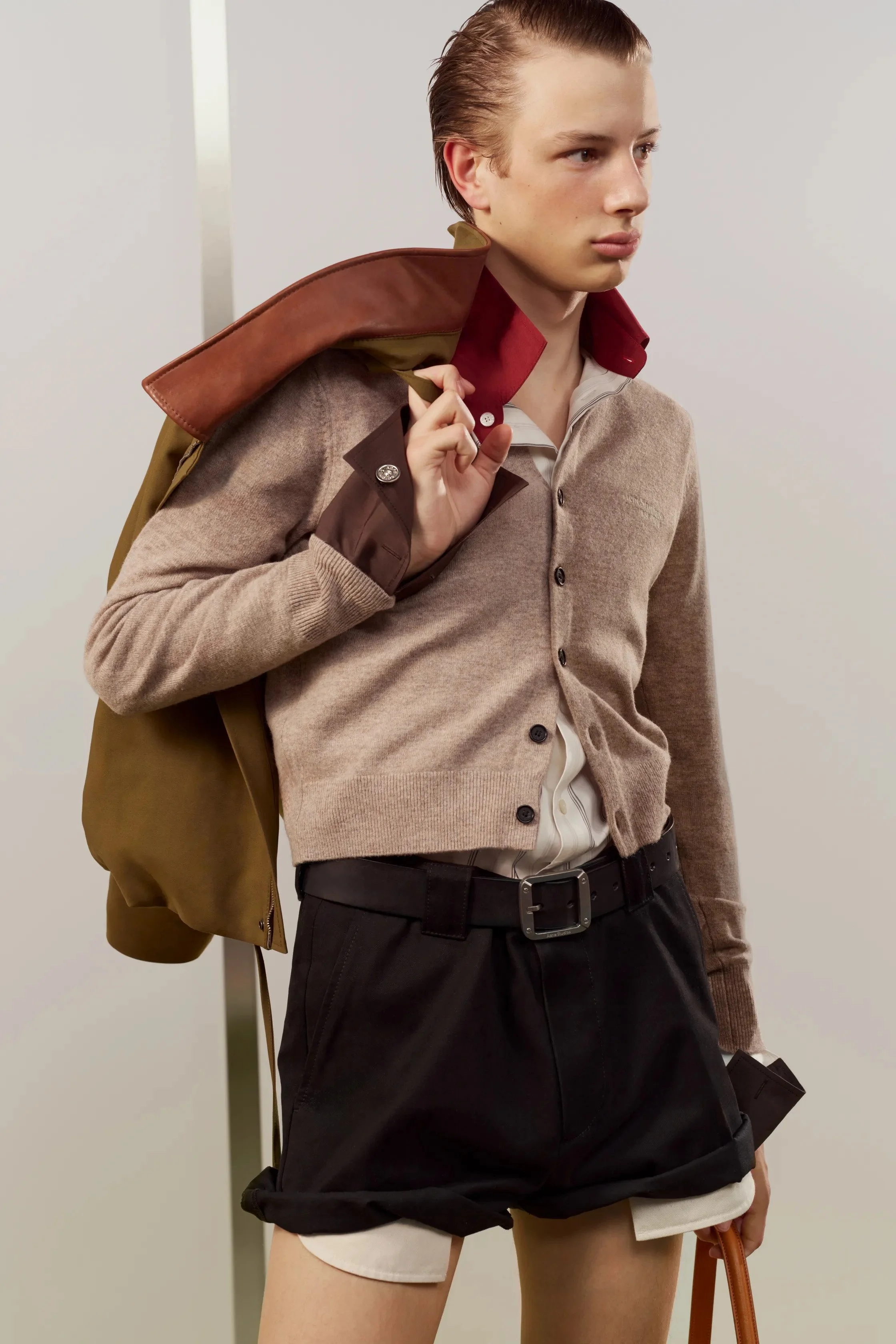
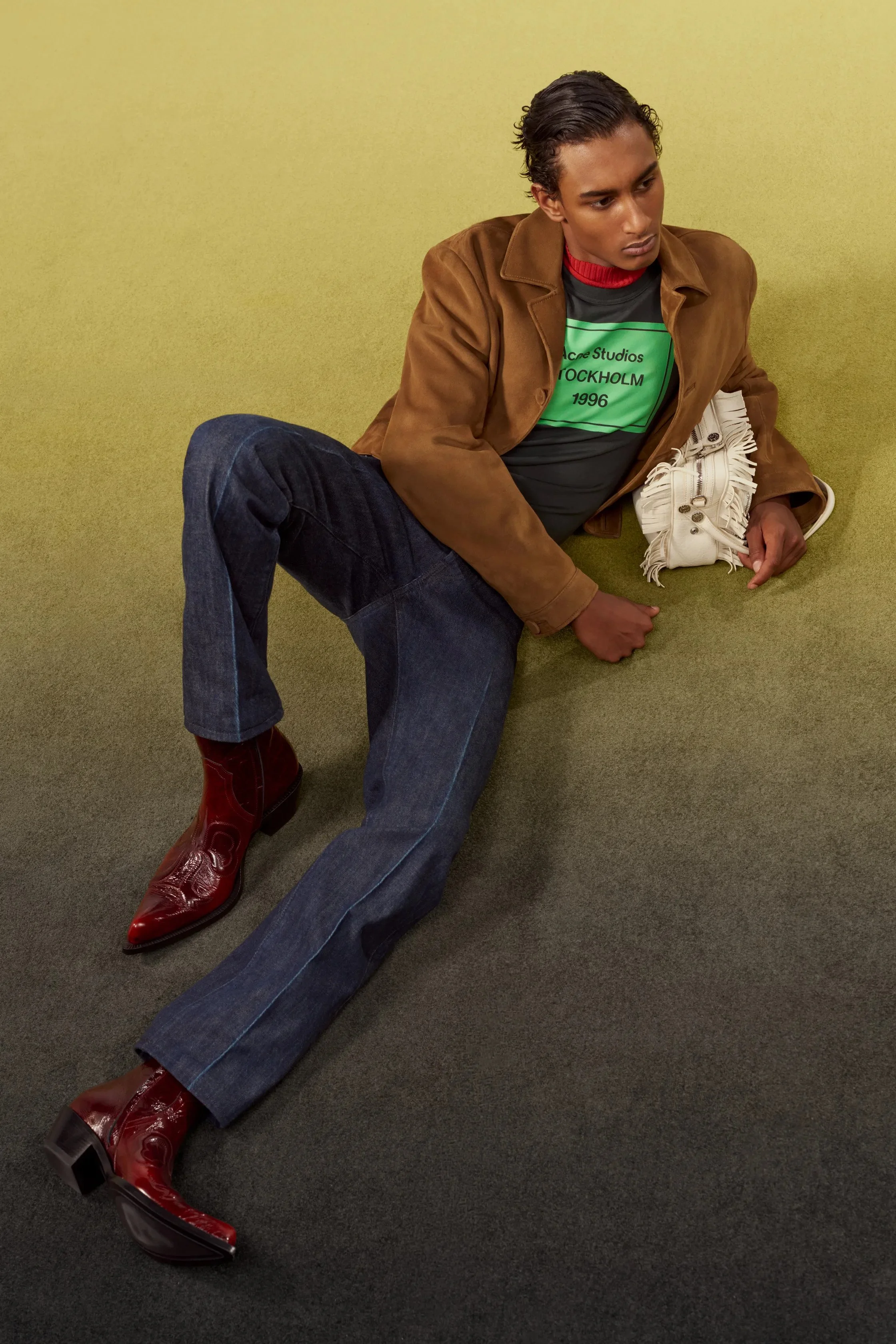
Acne Studios introduced its menswear Spring/Summer ’27 collection, an intellectual yet youthful and playful offering, expressed through pastel tones and classic silhouettes, redefined. The offering has been styled to create a wardrobe for a man who is not afraid of softness and bold colour combinations.

Gender-fluid styling defined the collection.  The colour palette is highlighted by earthy neutrals accented with pastels such as coral pink, mint green, bright orange, emerald green, and turquoise, giving a fresh energy to the looks characterised by their simplicity and wearability.

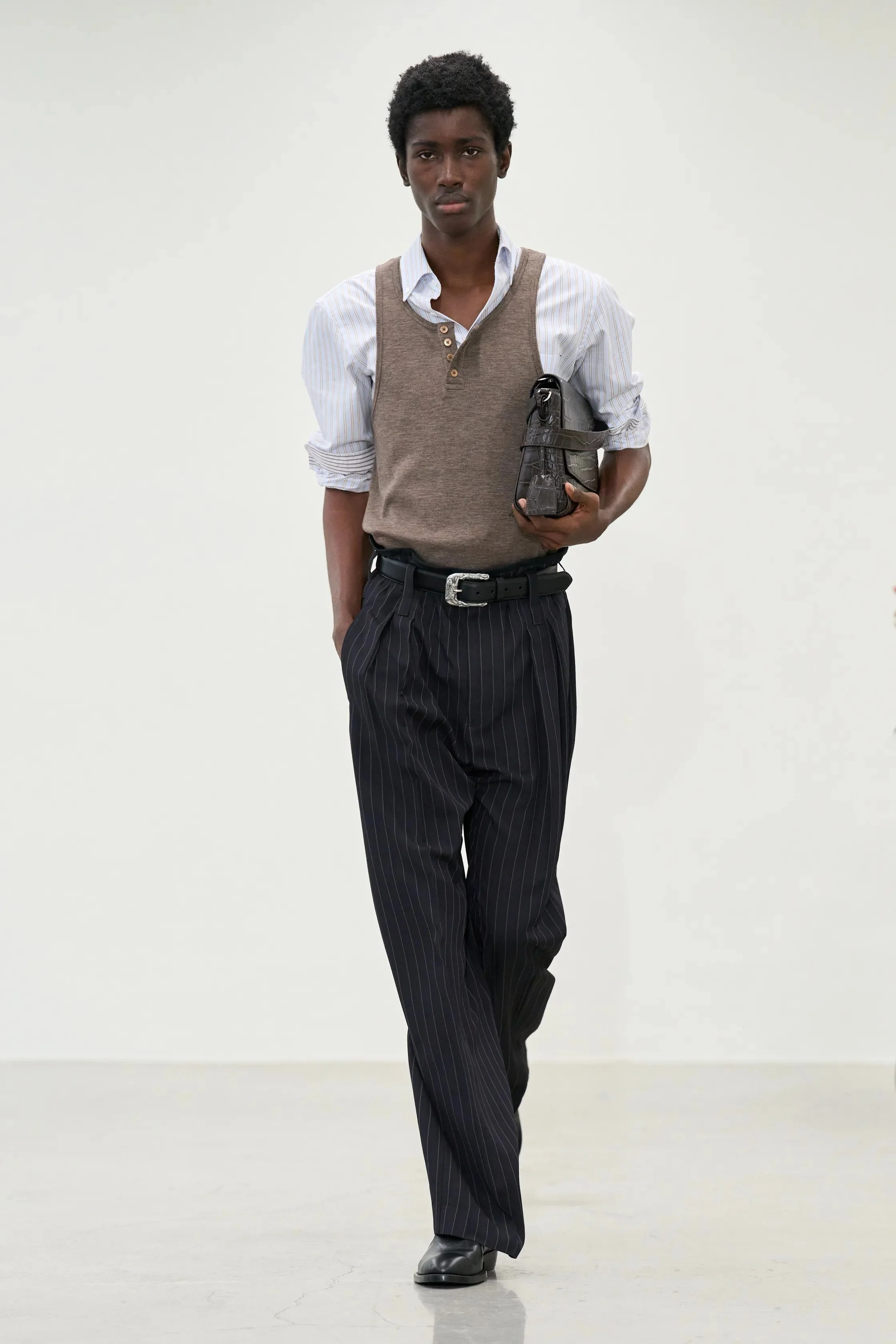
Office staples were reinvented through a relaxed prism, including wide-leg pleated trousers, oversized leather jackets, and slim or loose unbuttoned shirts, while elongated coats featured clean, minimalist lines. Classic tailored pieces were worn with unexpected twists and combinations, allowing for a refreshed and more spontaneous take on wardrobe classics. Cropped leather biker jackets and lightweight suede blousons reinforced the modern approach the brand wanted to bring to casual wear, creating an enticing contrast between the softness of the overall collection and these tougher pieces.


Words by Carolina Benjumea

LEMAIRE SS27

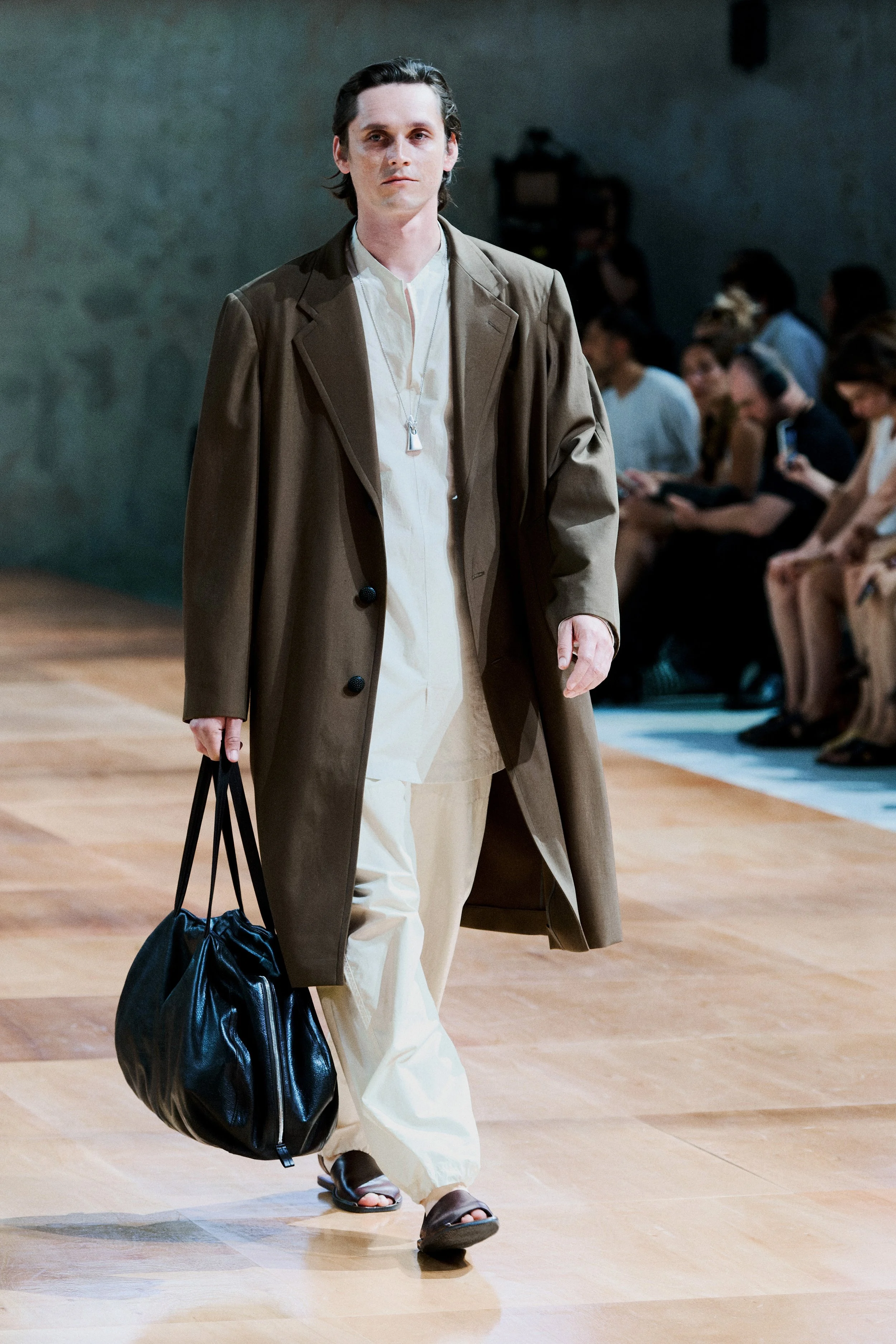
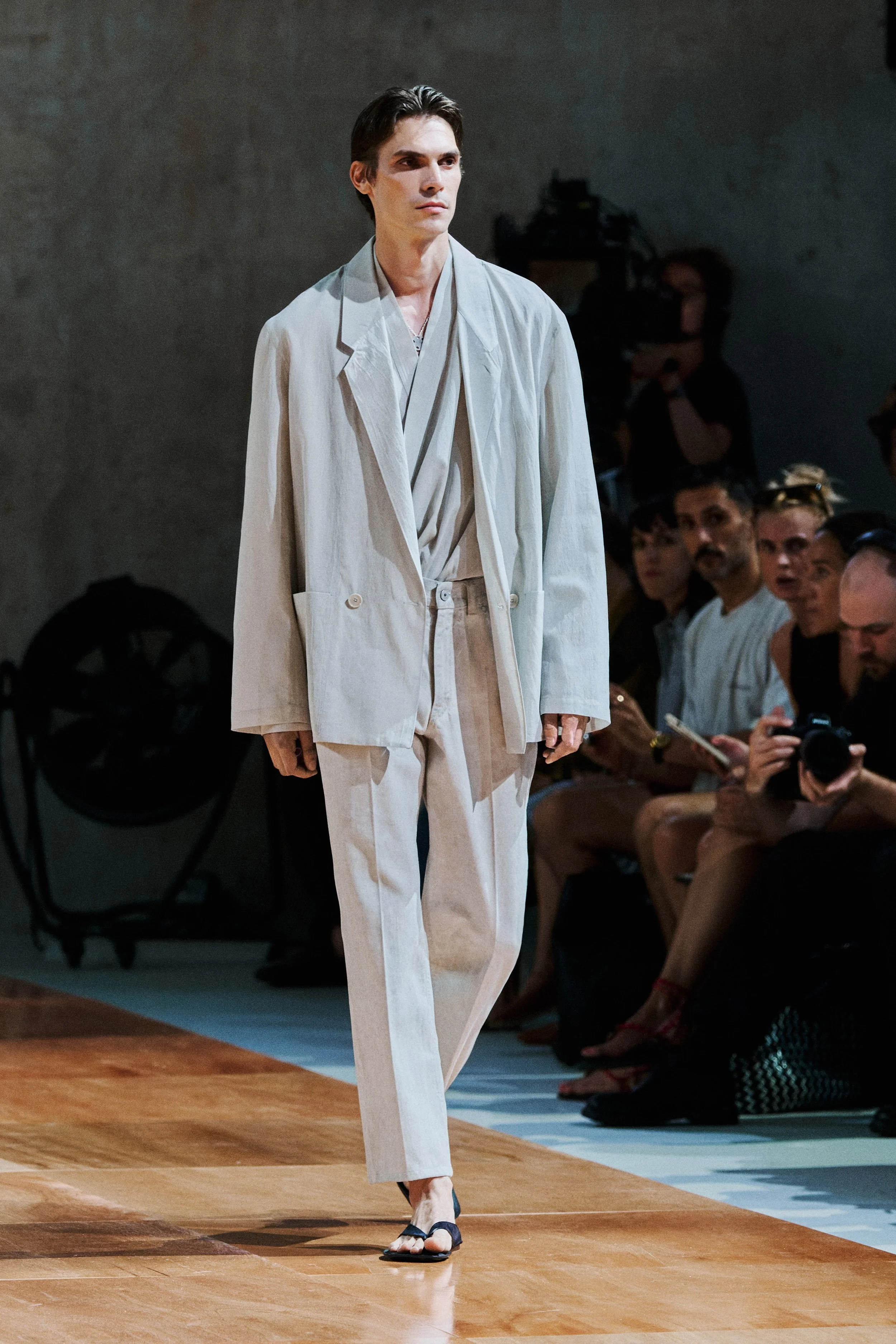
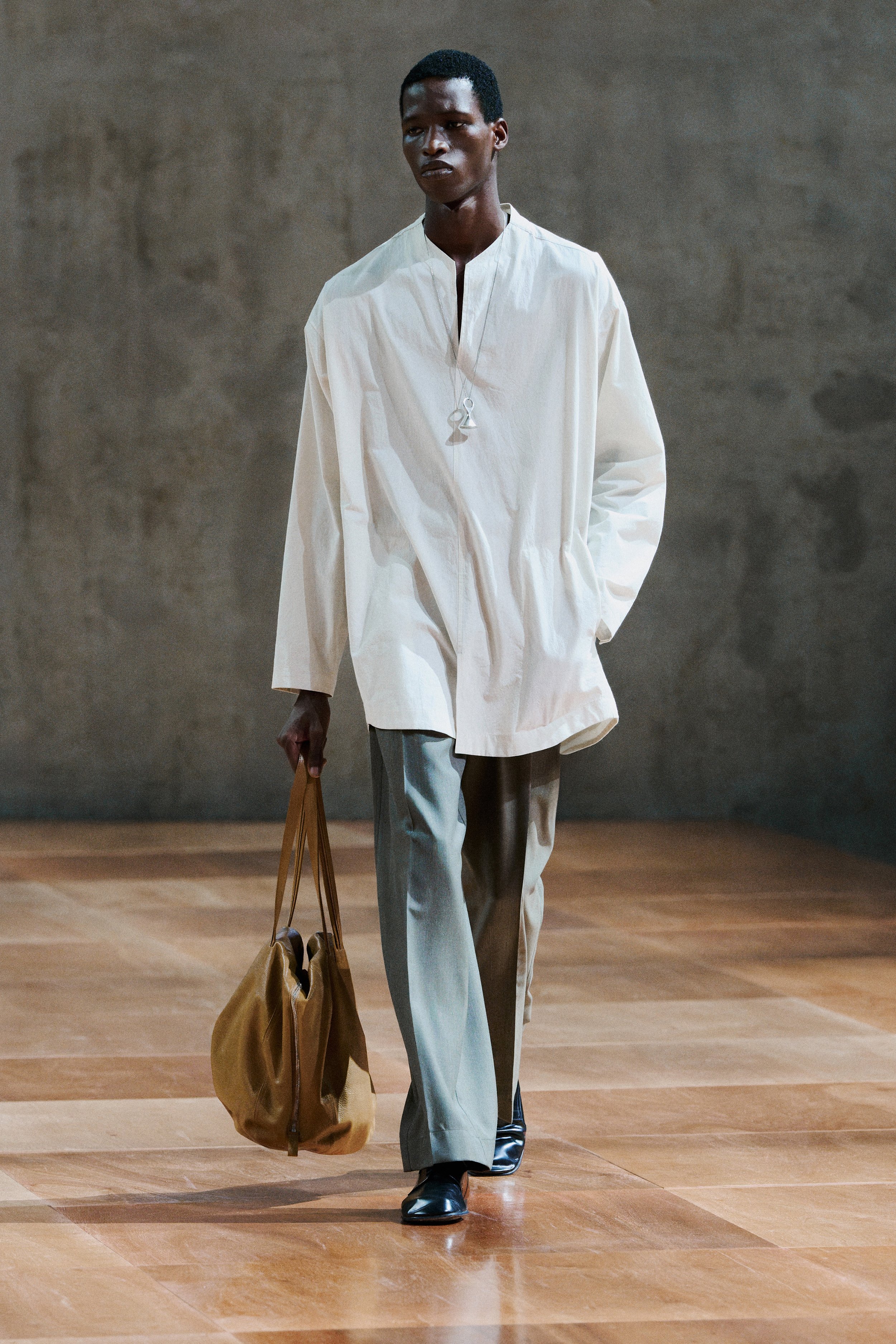
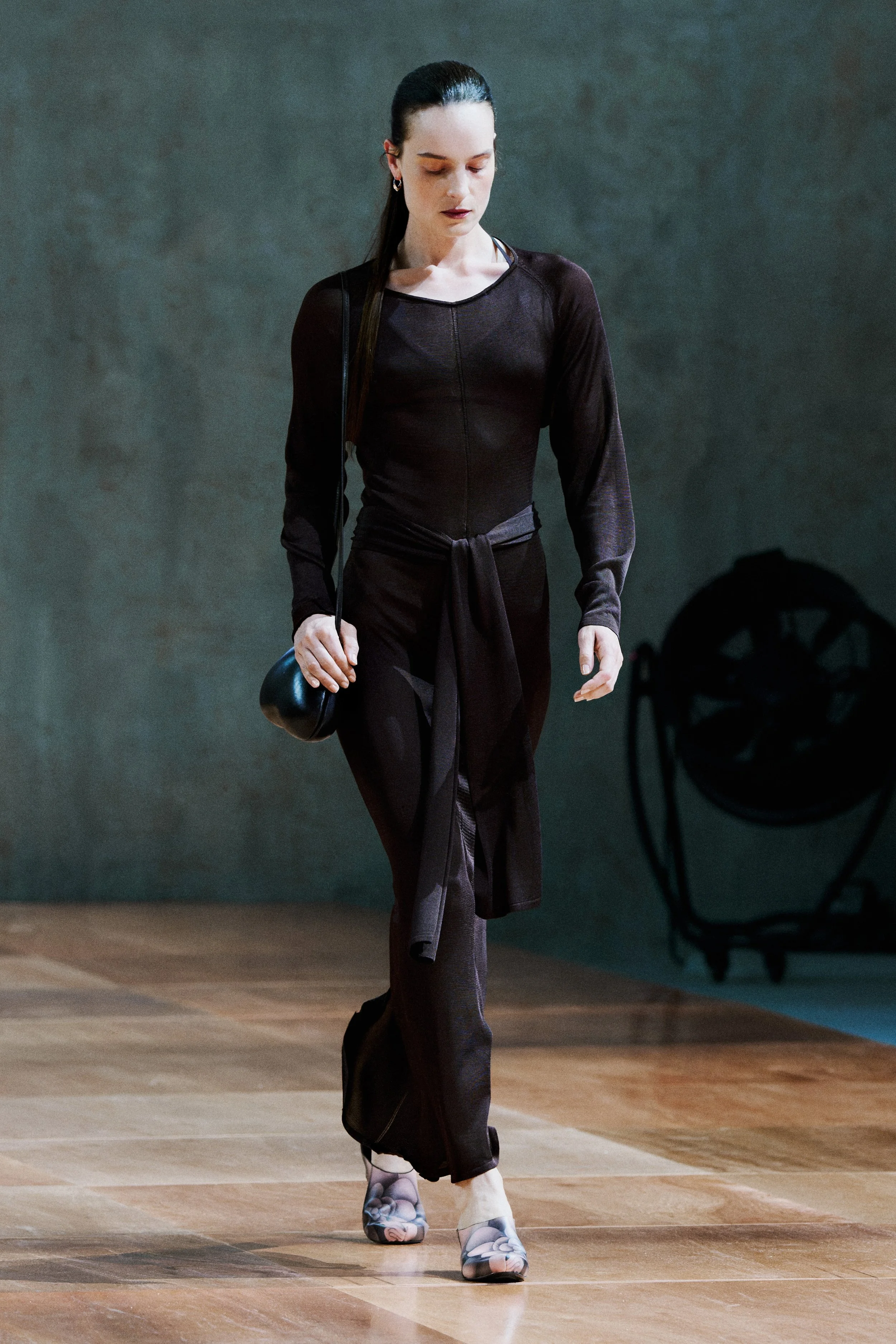
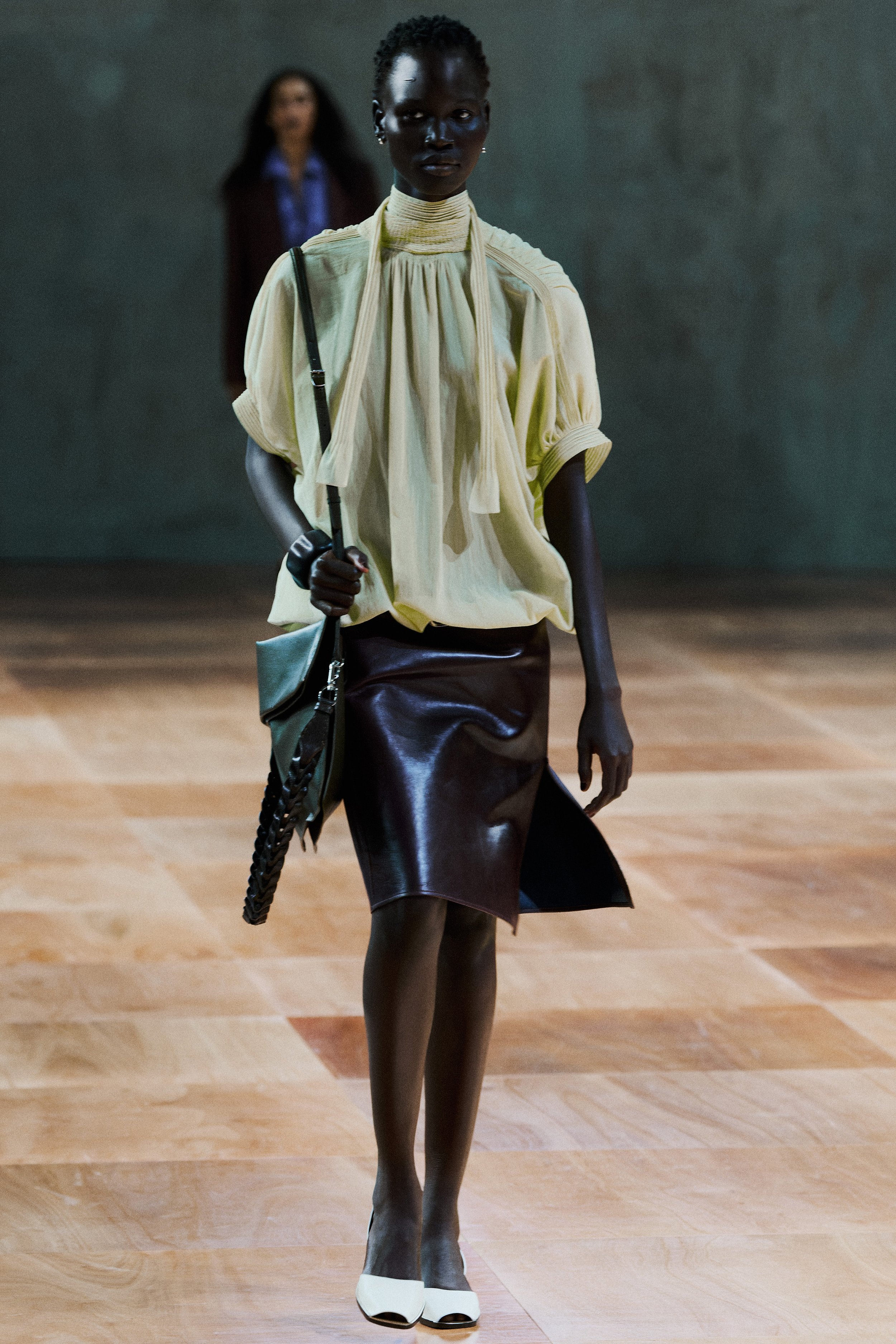
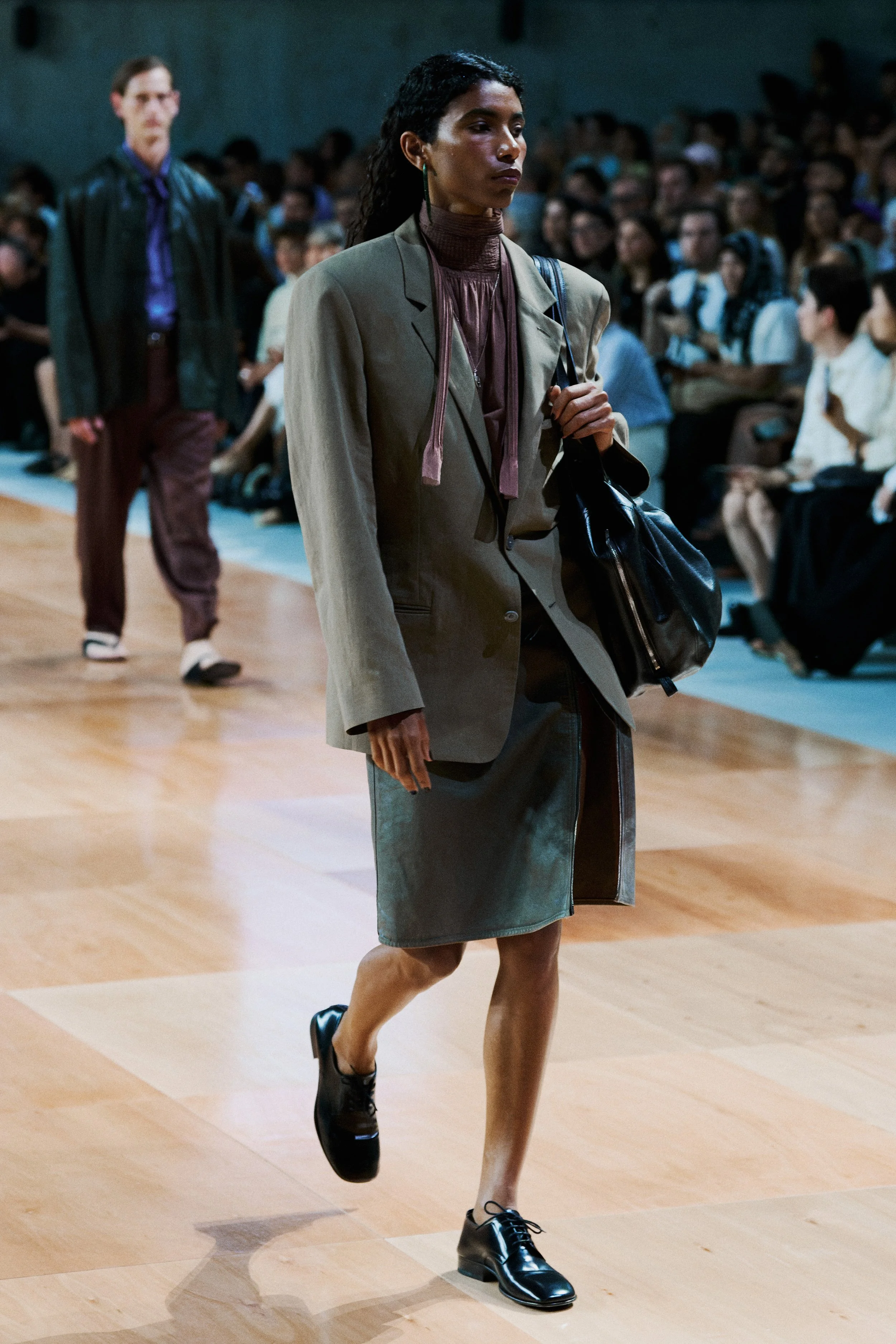
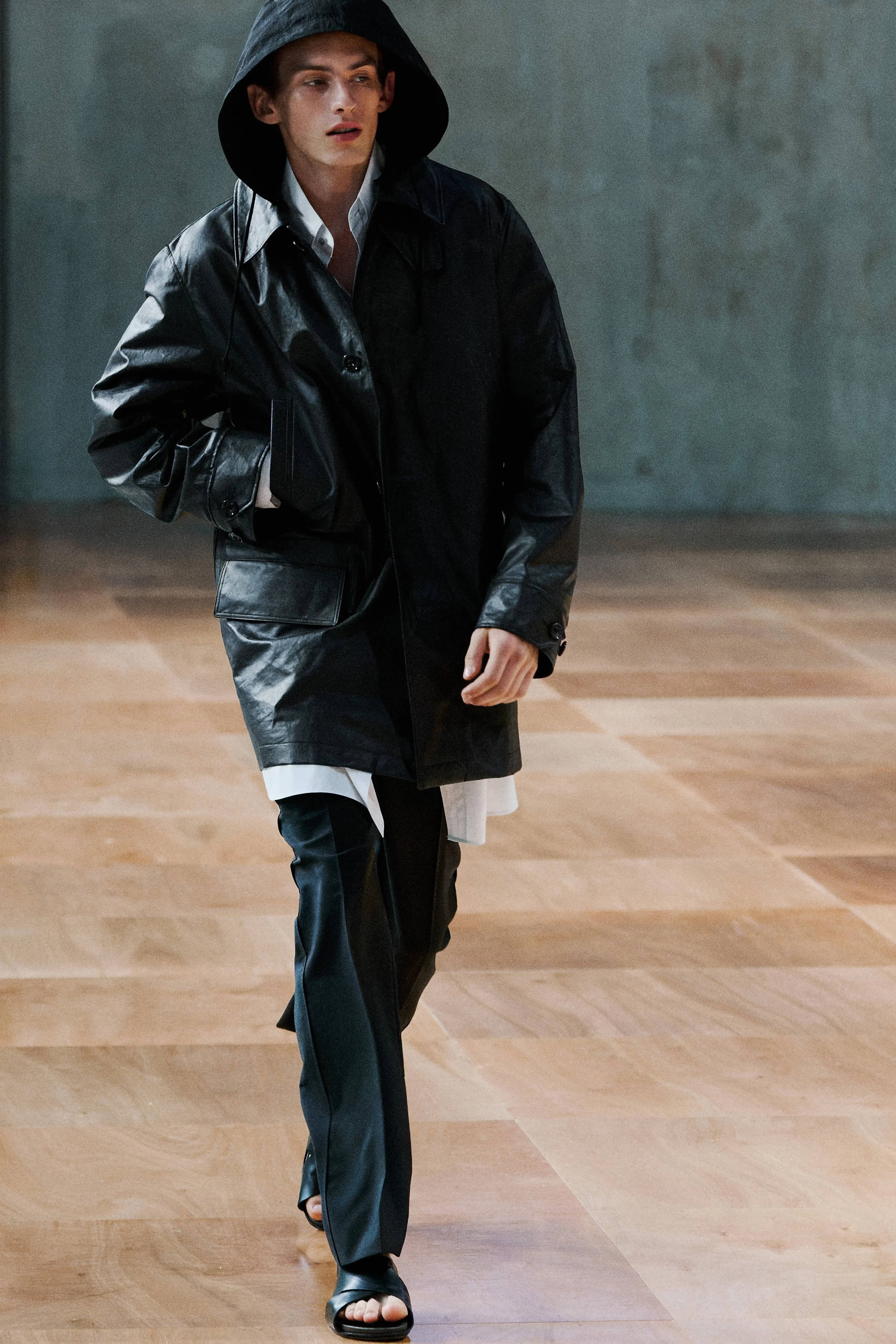
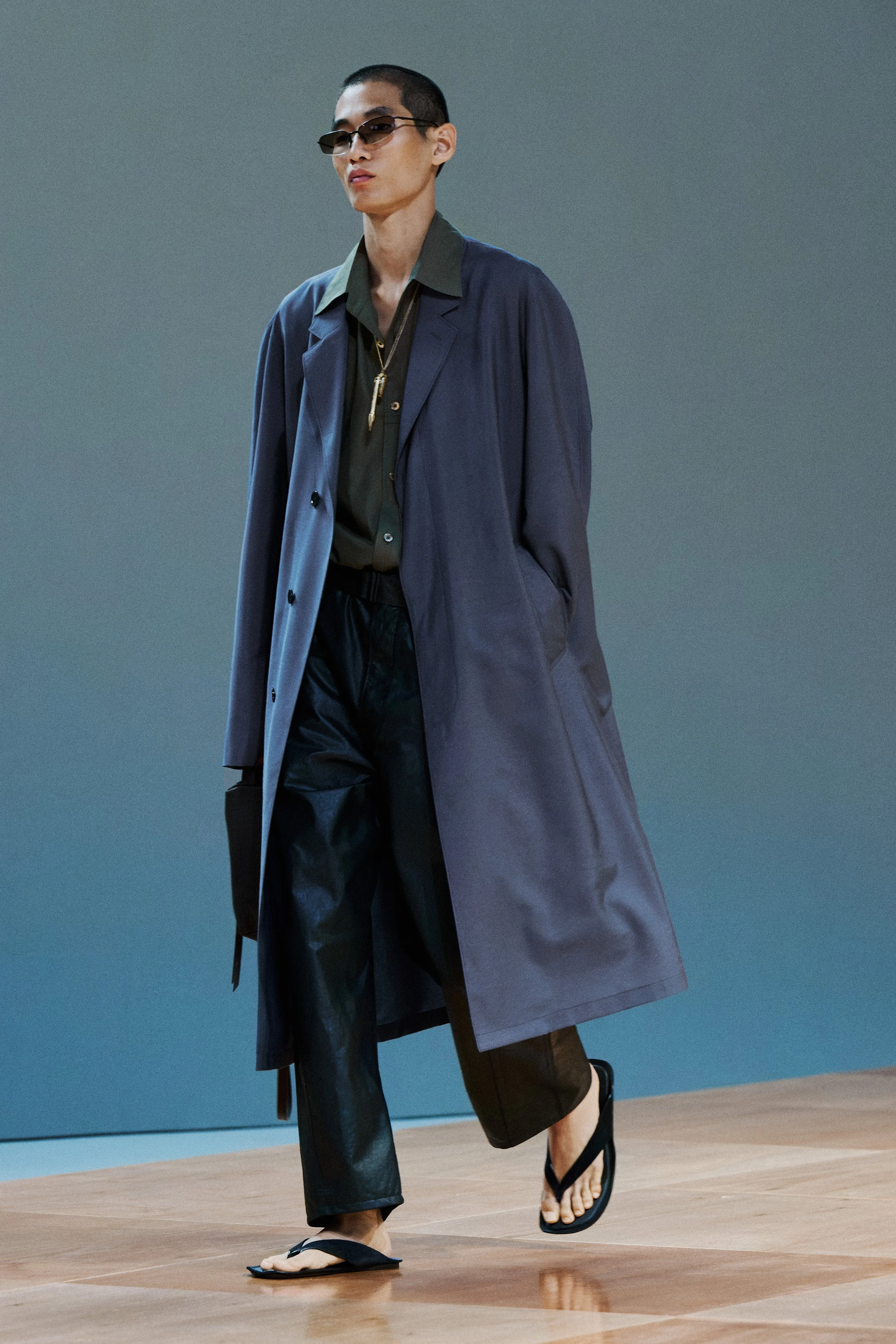
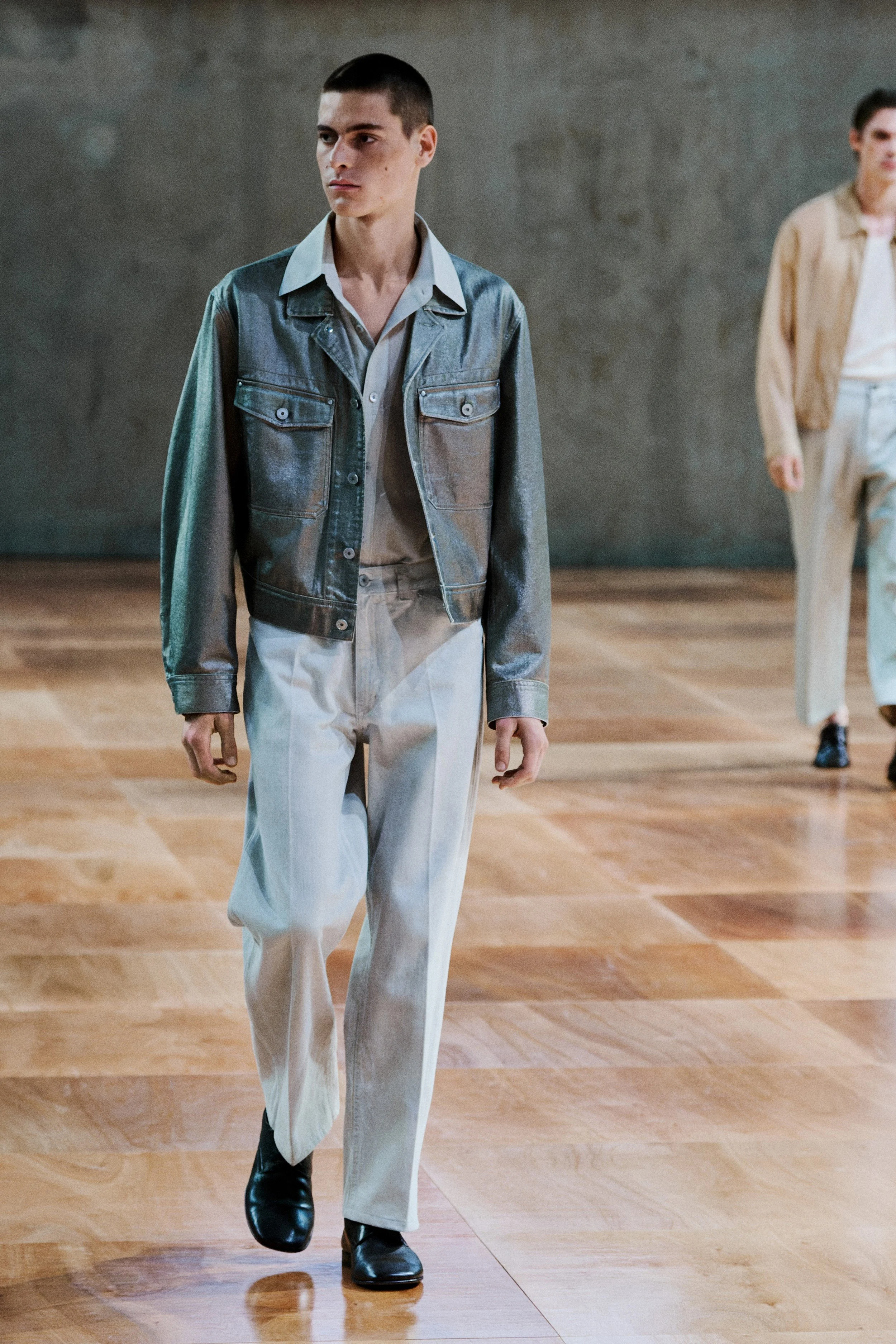
A Lemaire show is good for the soul. Staged at the Opera Bastille in the 12th arrondissement, the Spring/Summer 2027 collection finds beauty in contradiction, where opposing forces coexist seamlessly. Matte surfaces meet subtle shine, while rigid tailoring softens into flowy draping. Across both womenswear and menswear, Christophe Lemaire and Sarah-Linh Tran continue to refine a wardrobe balancing practicality with a poetic sensibility.

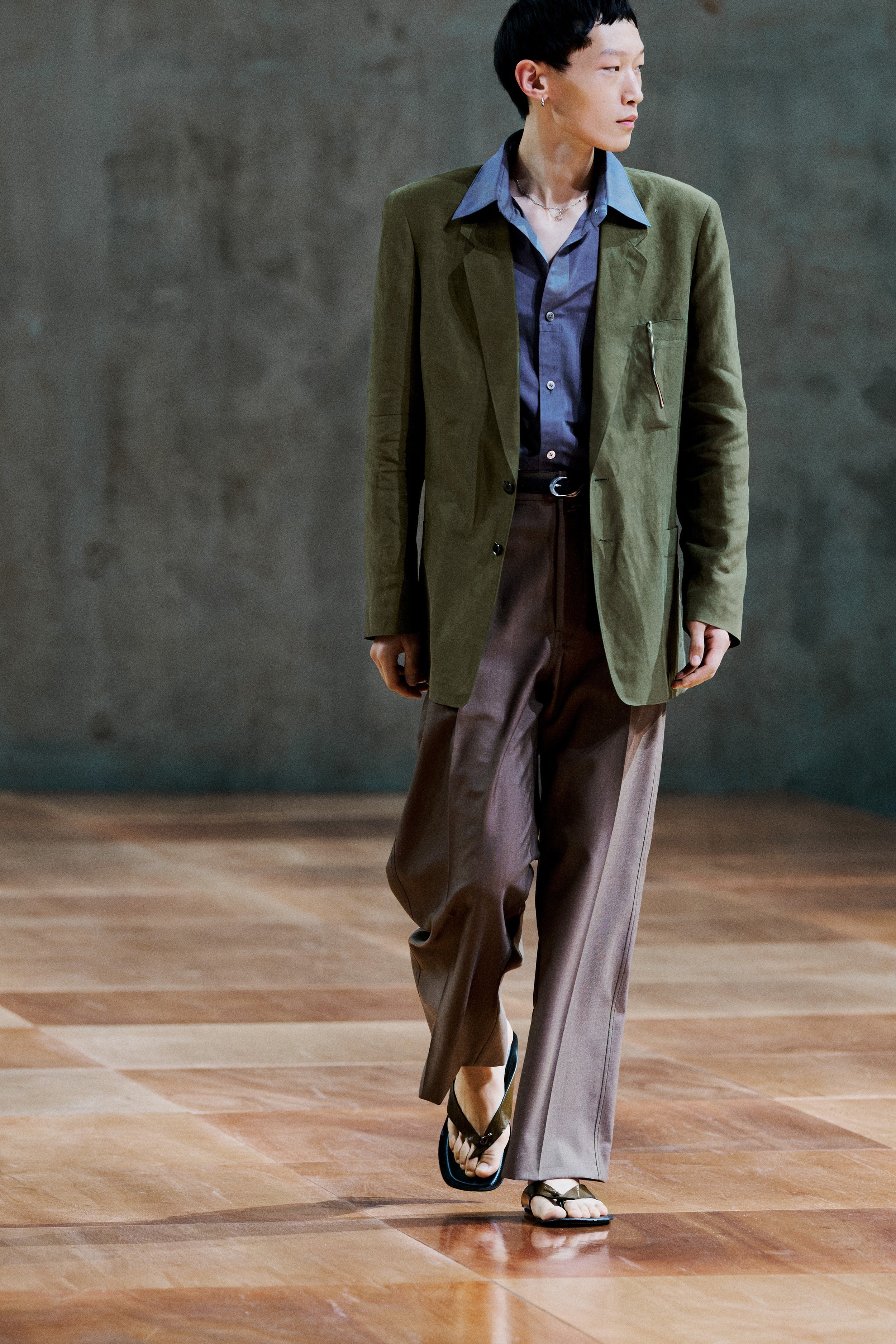
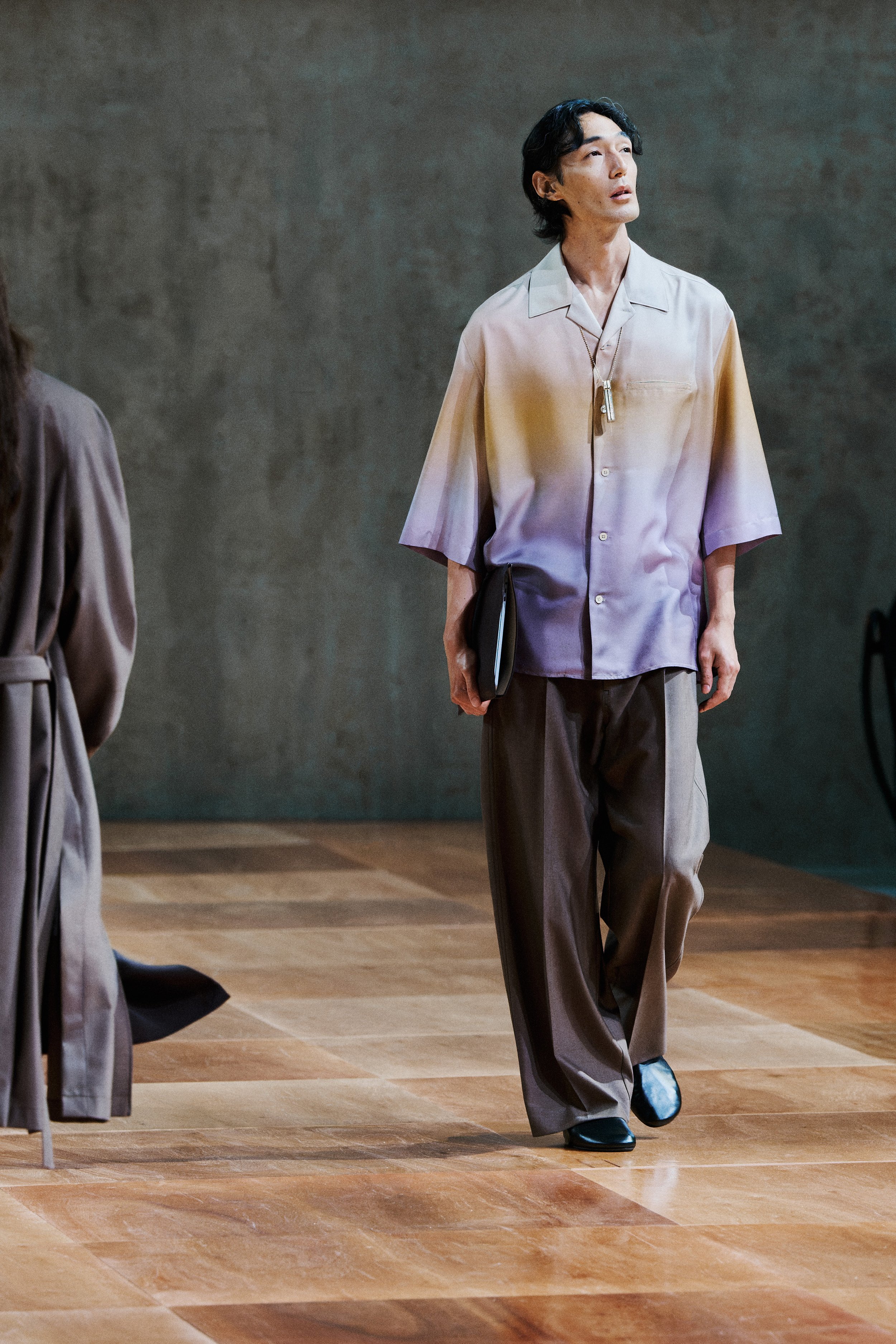
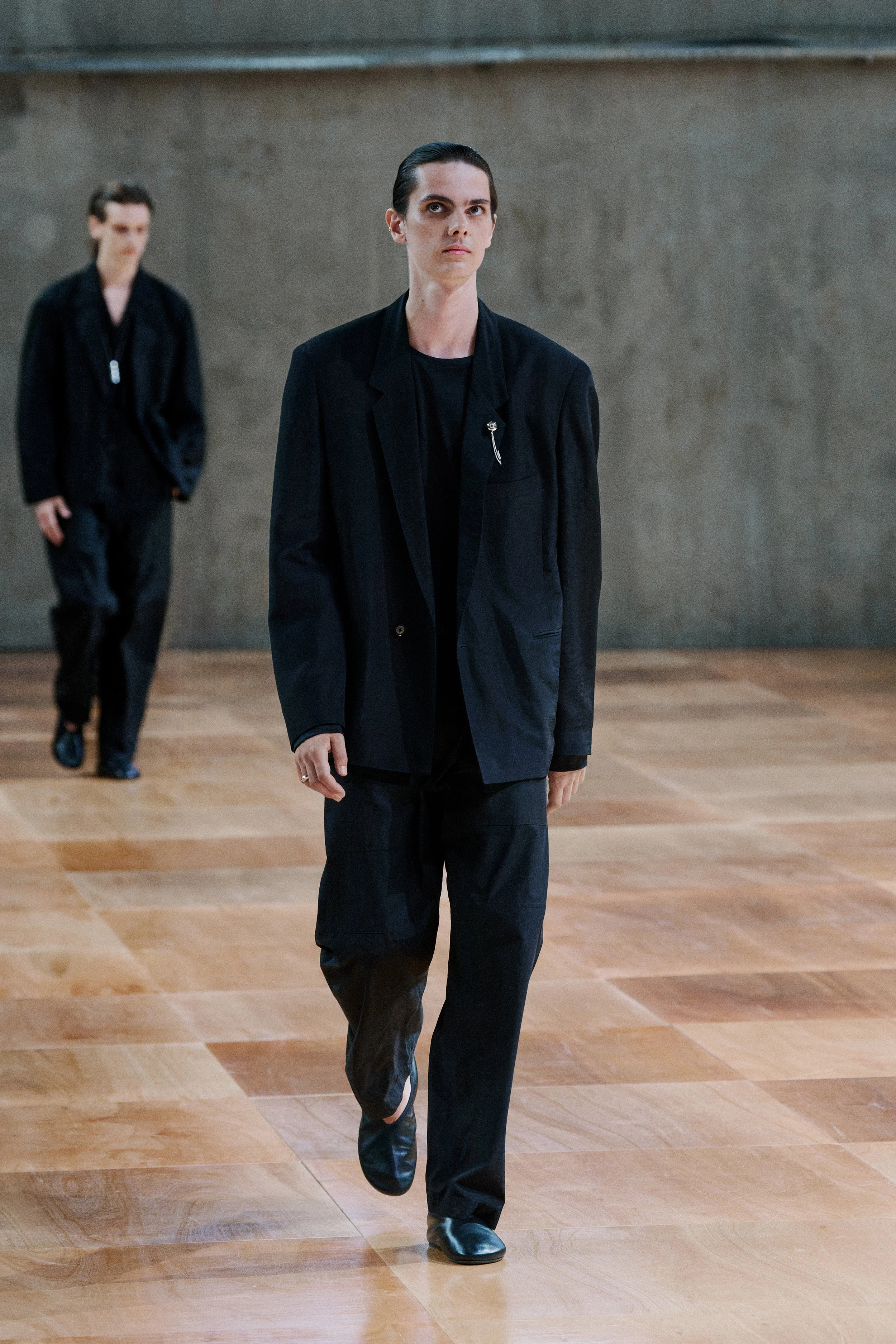
For menswear, the designer duo imagines a tropical-appropriate wardrobe stripped of clichés. Lightweight tailoring, wrap shirts inspired by the yukata and reworked Mandarin jackets speak to a fluid exchange between cultures. Transparent fabrics, airy cottons and relaxed workwear silhouettes embrace heat and ease of movement. A sandy grey set is paired with an elegant take on a flip-flop sandal, while an oversized tie-dye silk shirt evokes the most spectacular sunset. The colour-blocking is refined, creating a soothing feeling: a blue shirt sits underneath an olive blazer, worn with a pair of roomy trousers in muted brown.

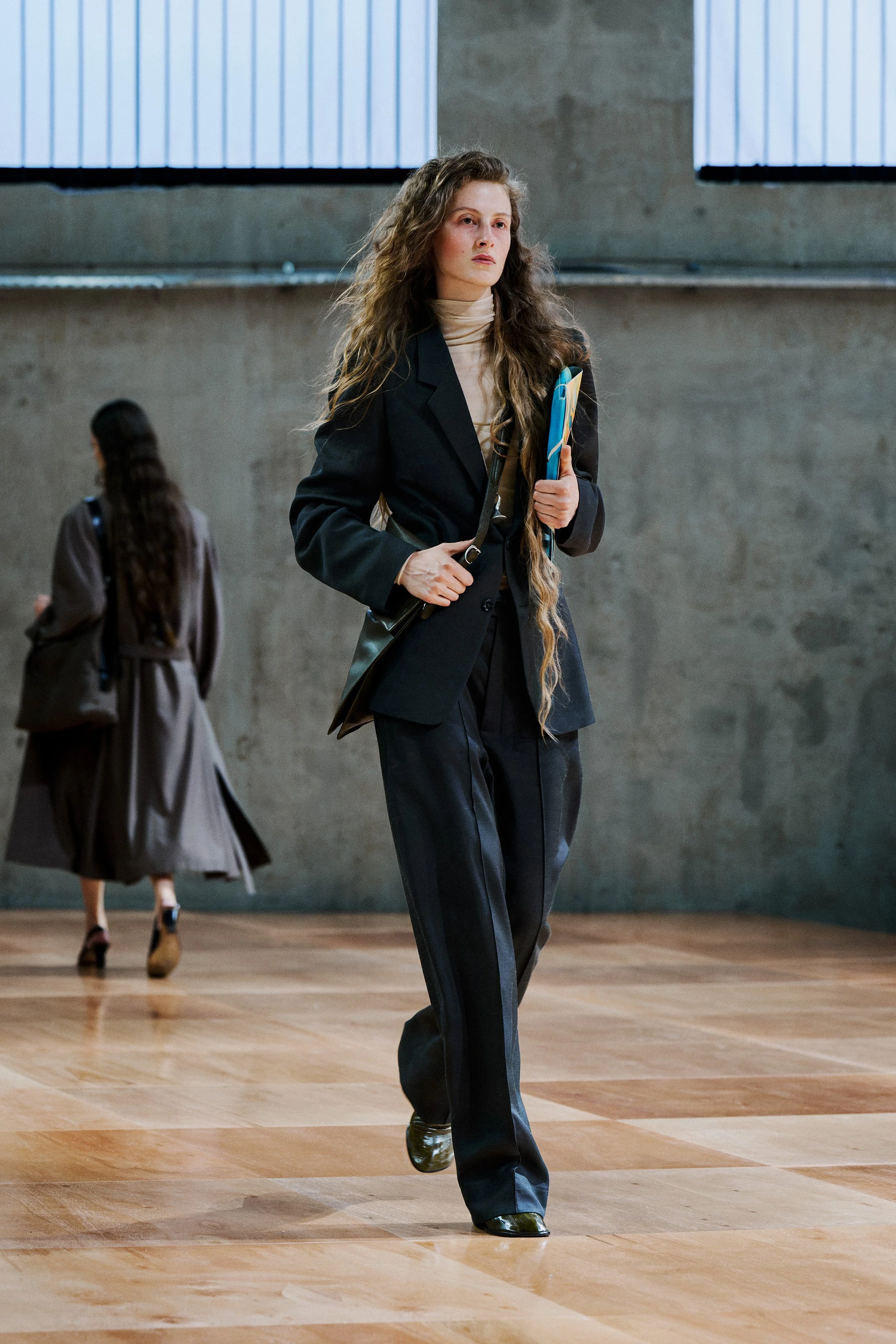
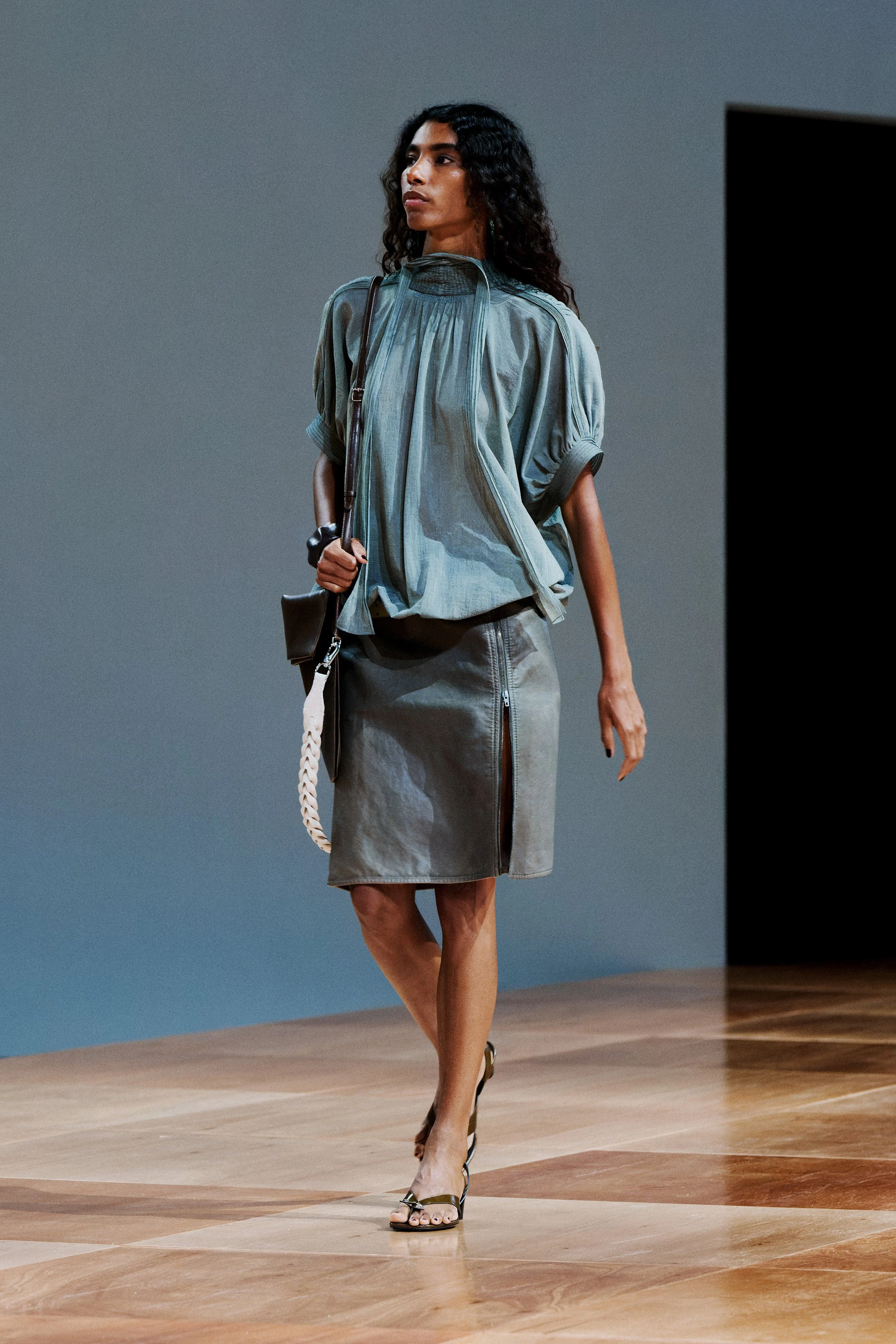
Womenswear looks to the liberated spirit of the 1970s, translating its romanticism into a contemporary language. Delicate blouses are draped elegantly and feature an interesting wrap-around detail at the collar. Their flowy nature is juxtaposed with structured skirts that reach the knee and are open on the side. Psychedelic prints, tactile fabrics and adjustable proportions bring softness and spontaneity, while dreamlike artworks by Claudine Wick lend an atmospheric sensuality to mesh jersey, jewellery and clogs.

Throughout the offering, playful details – a pine cone transformed into an earring, a cigar ash weight reimagined as a pendant – capture the brand’s enduring fascination with the subtle moments of surprise that elevate everyday sophisticated dressing. The result? A vision that creates a world more comforting than the best sound bath ever could.


Words by Martin Onufrowicz

RICK OWENS SS27

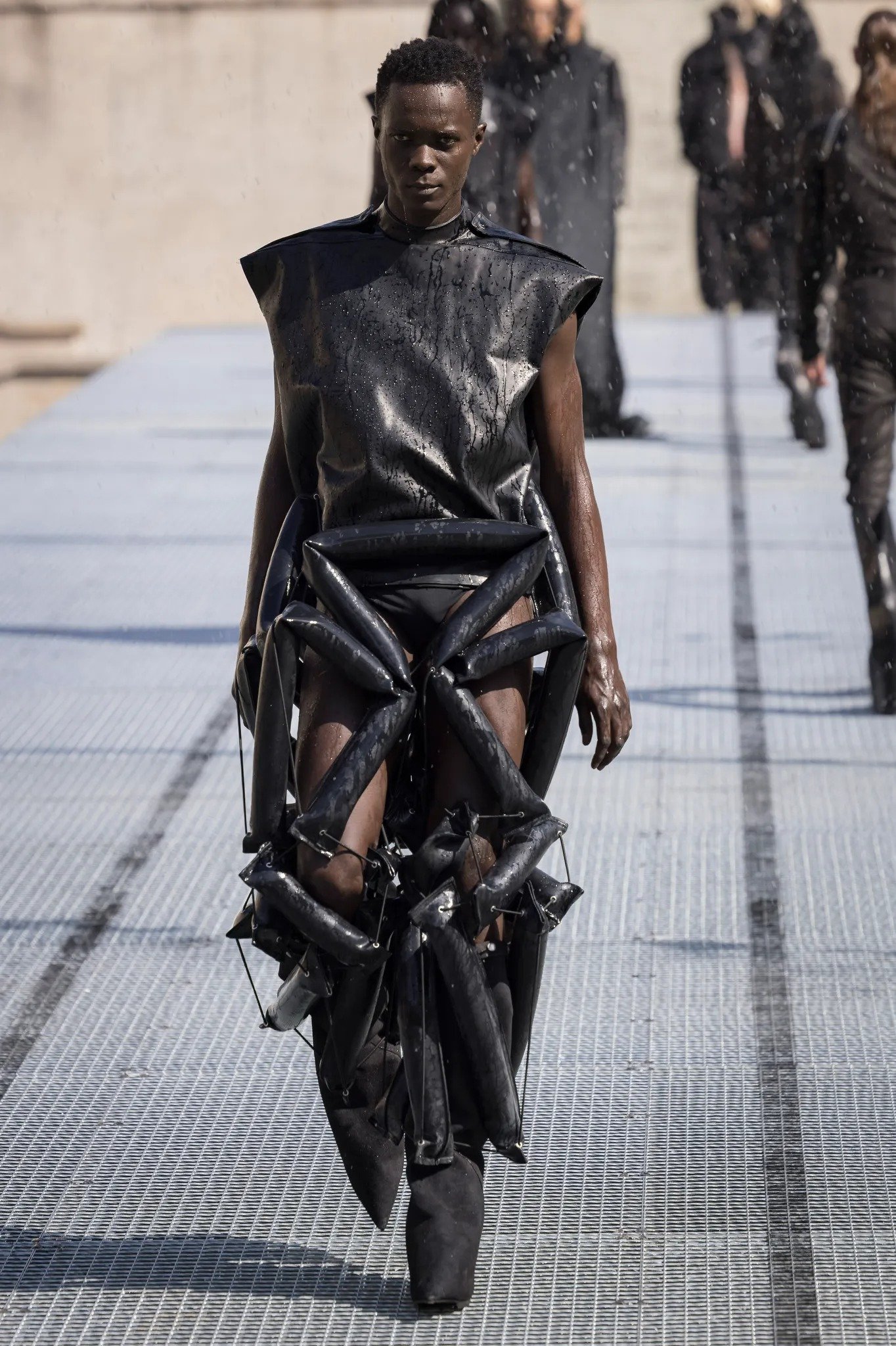
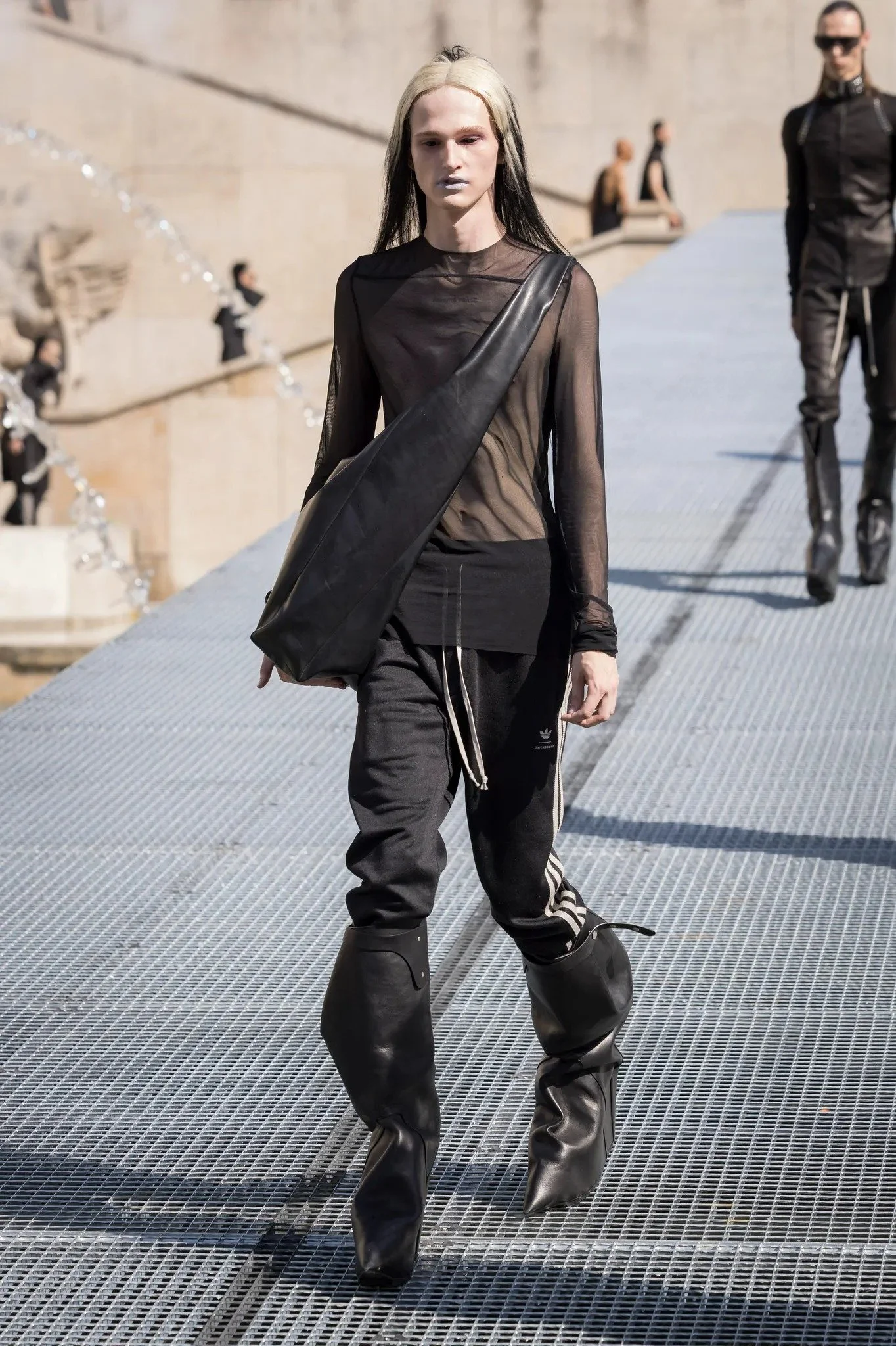
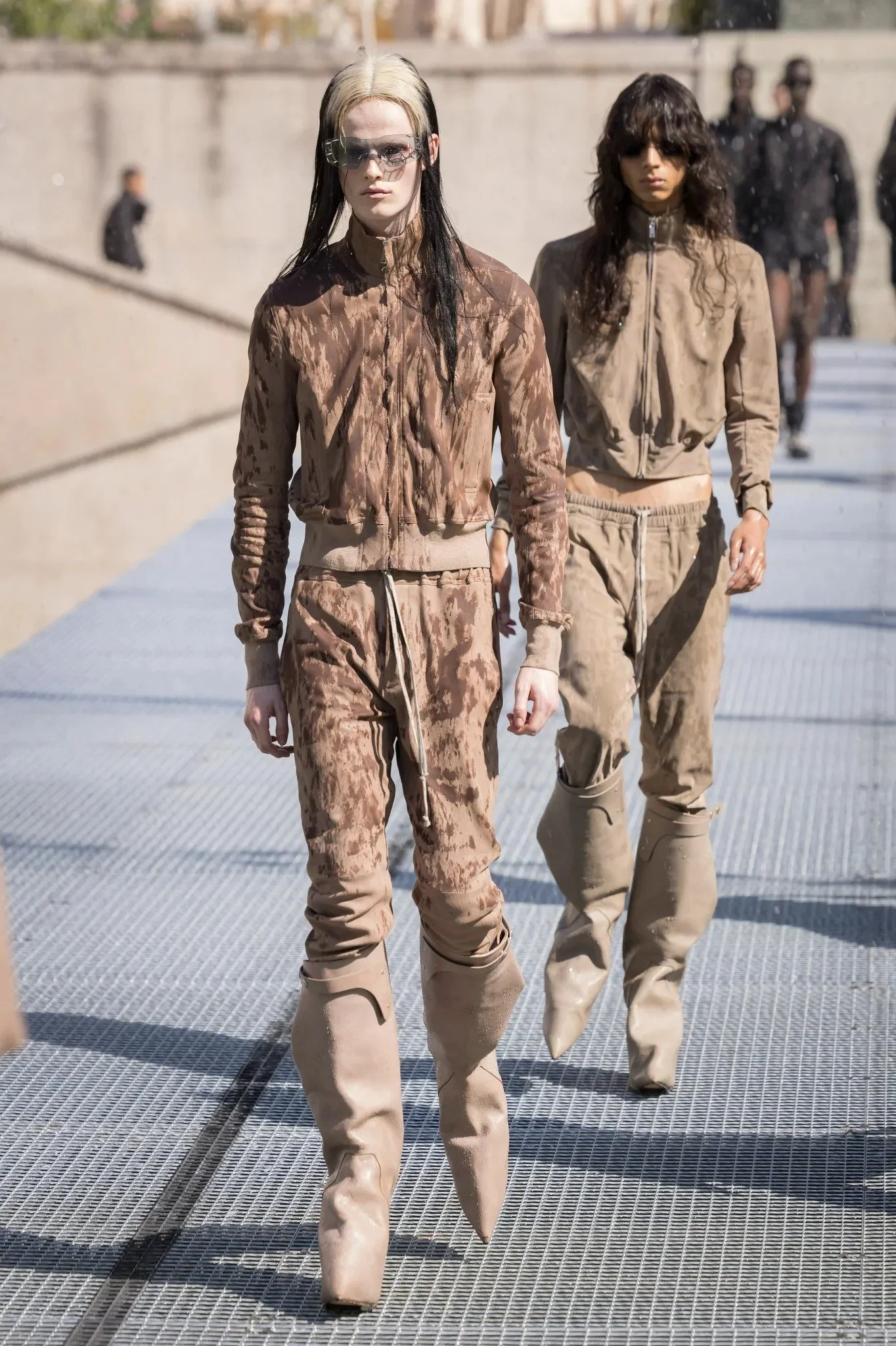
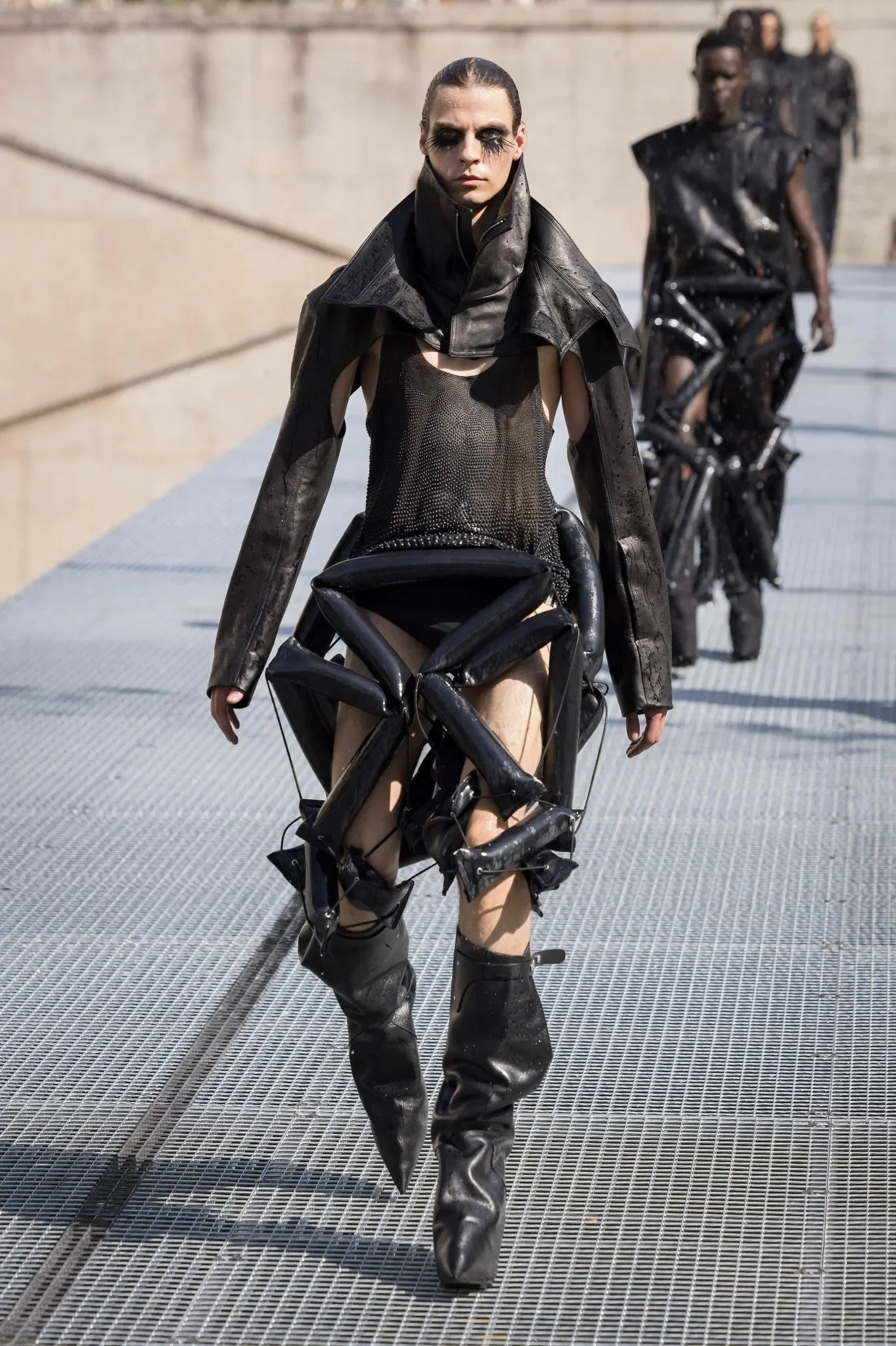
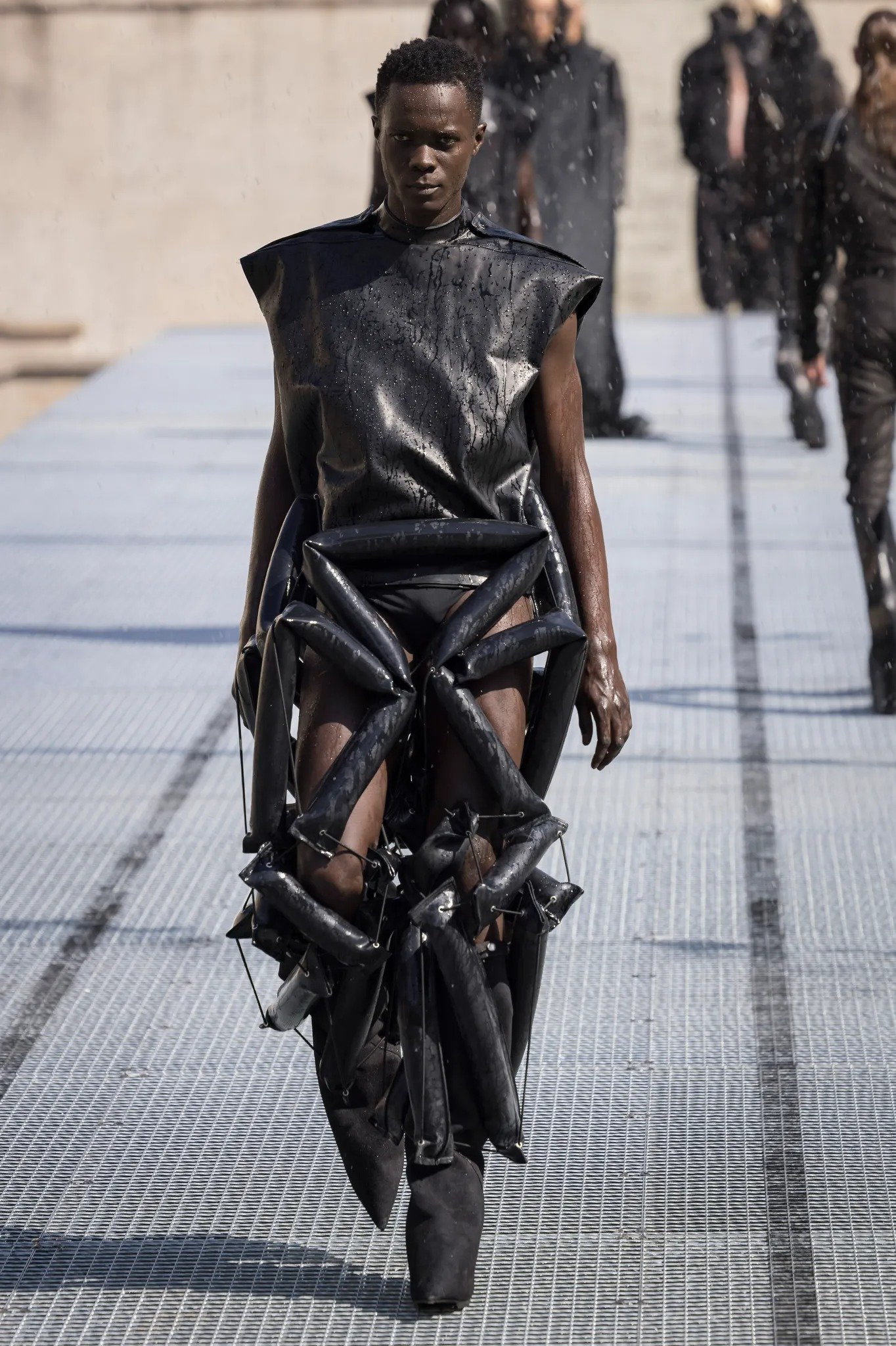
At the Palais de Tokyo, as is customary, Rick Owens played with the open space of the venue to create a ramp above the water, where models walked surrounded by fountains.

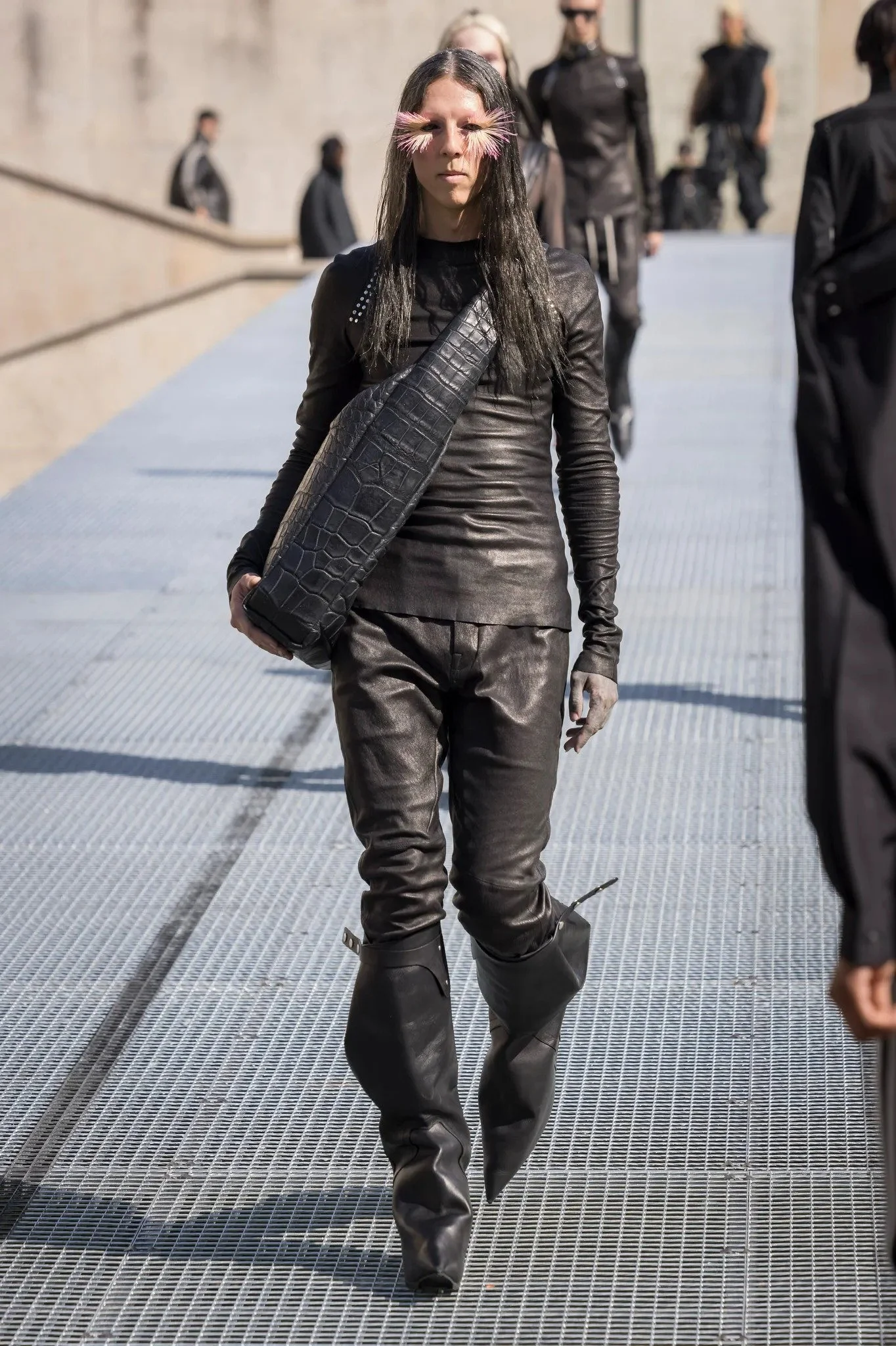
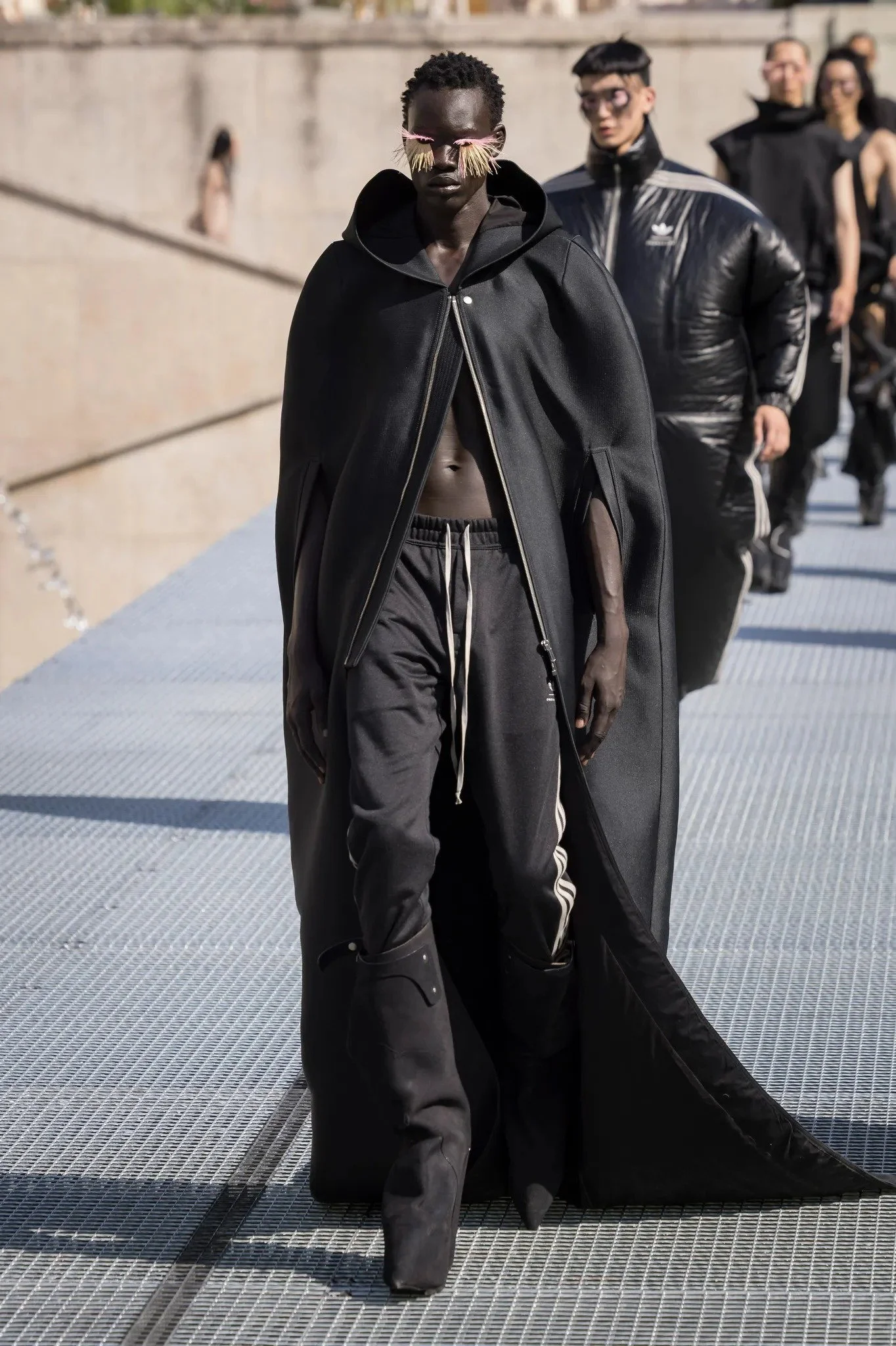
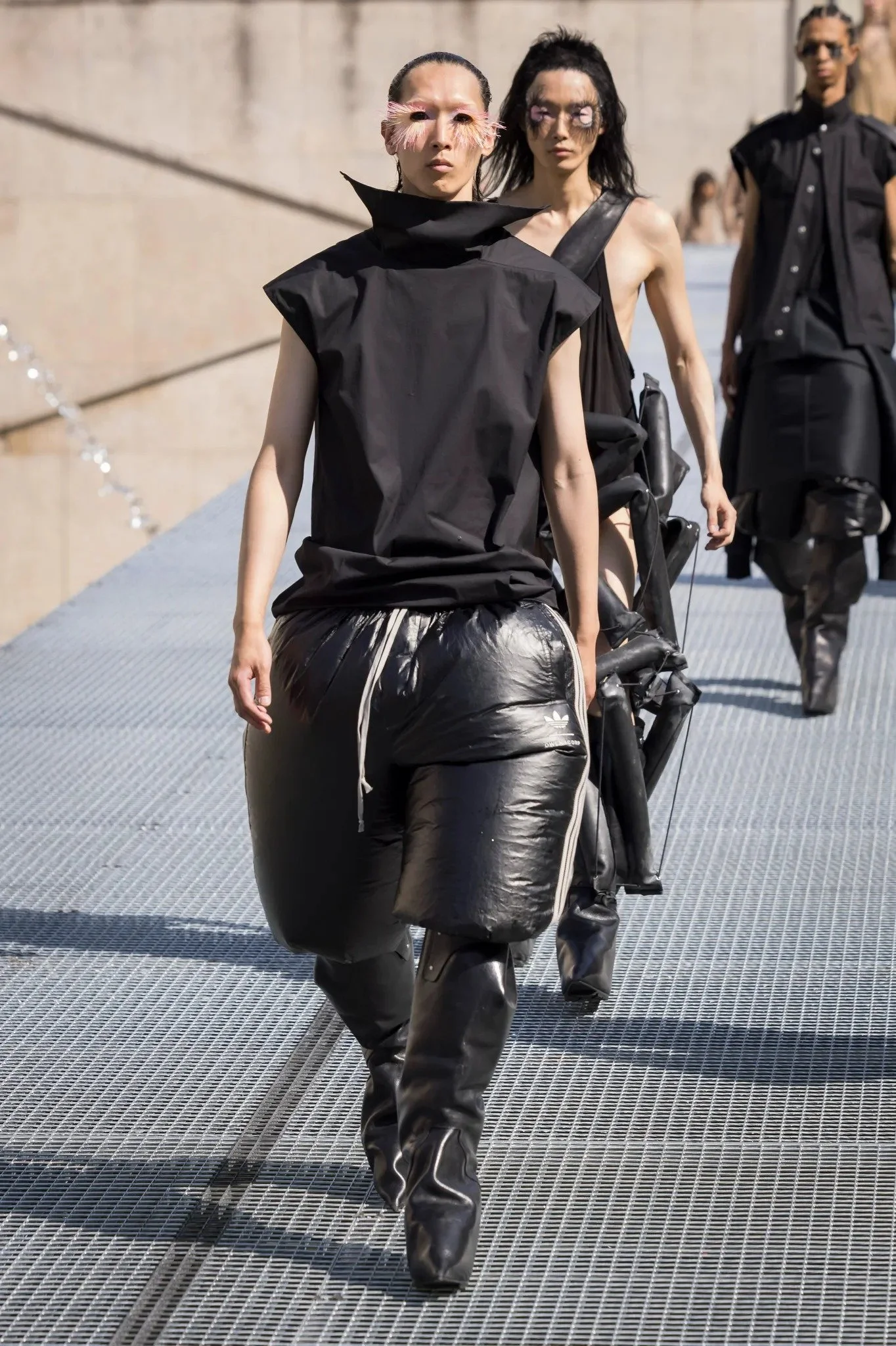
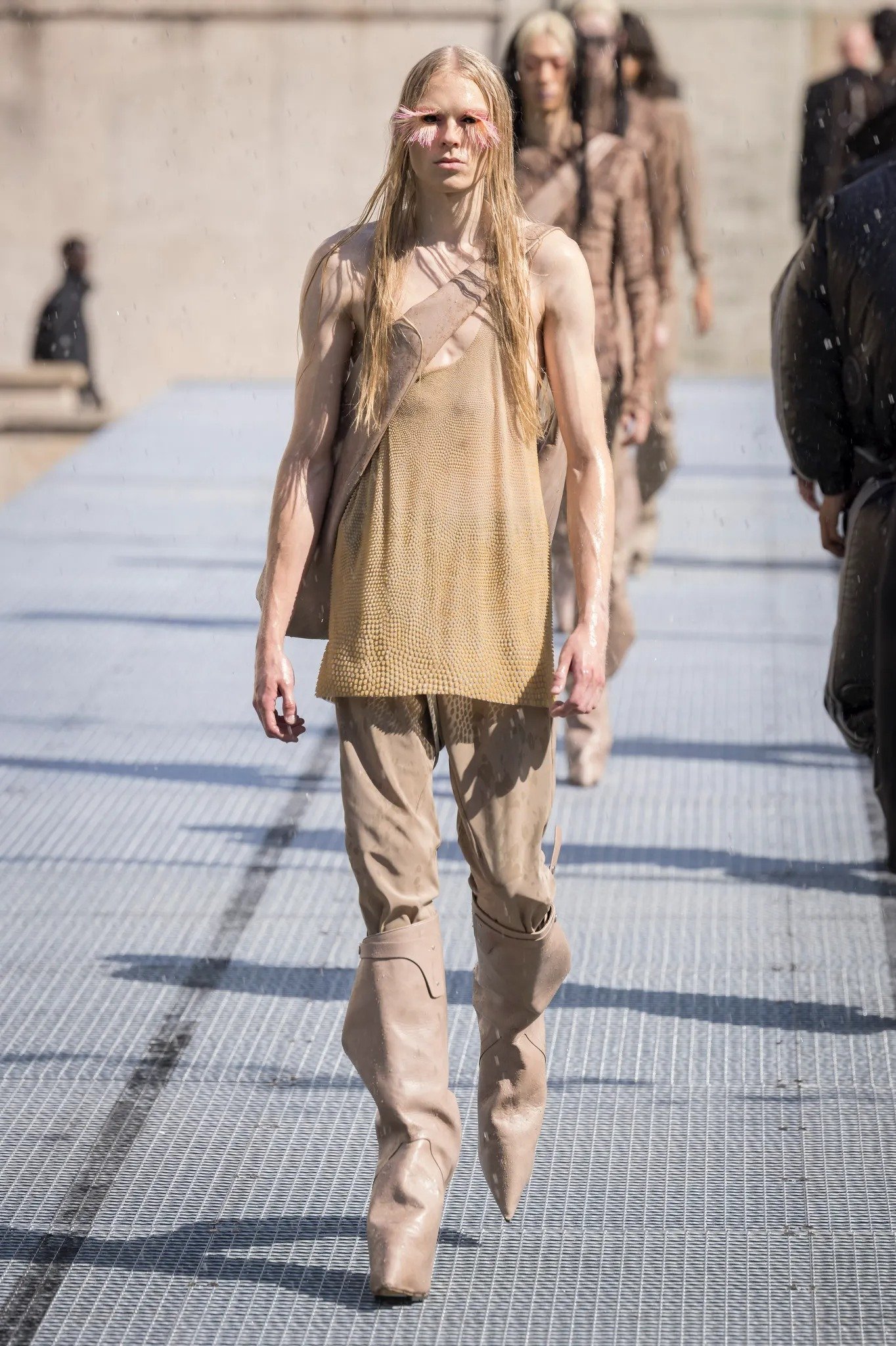
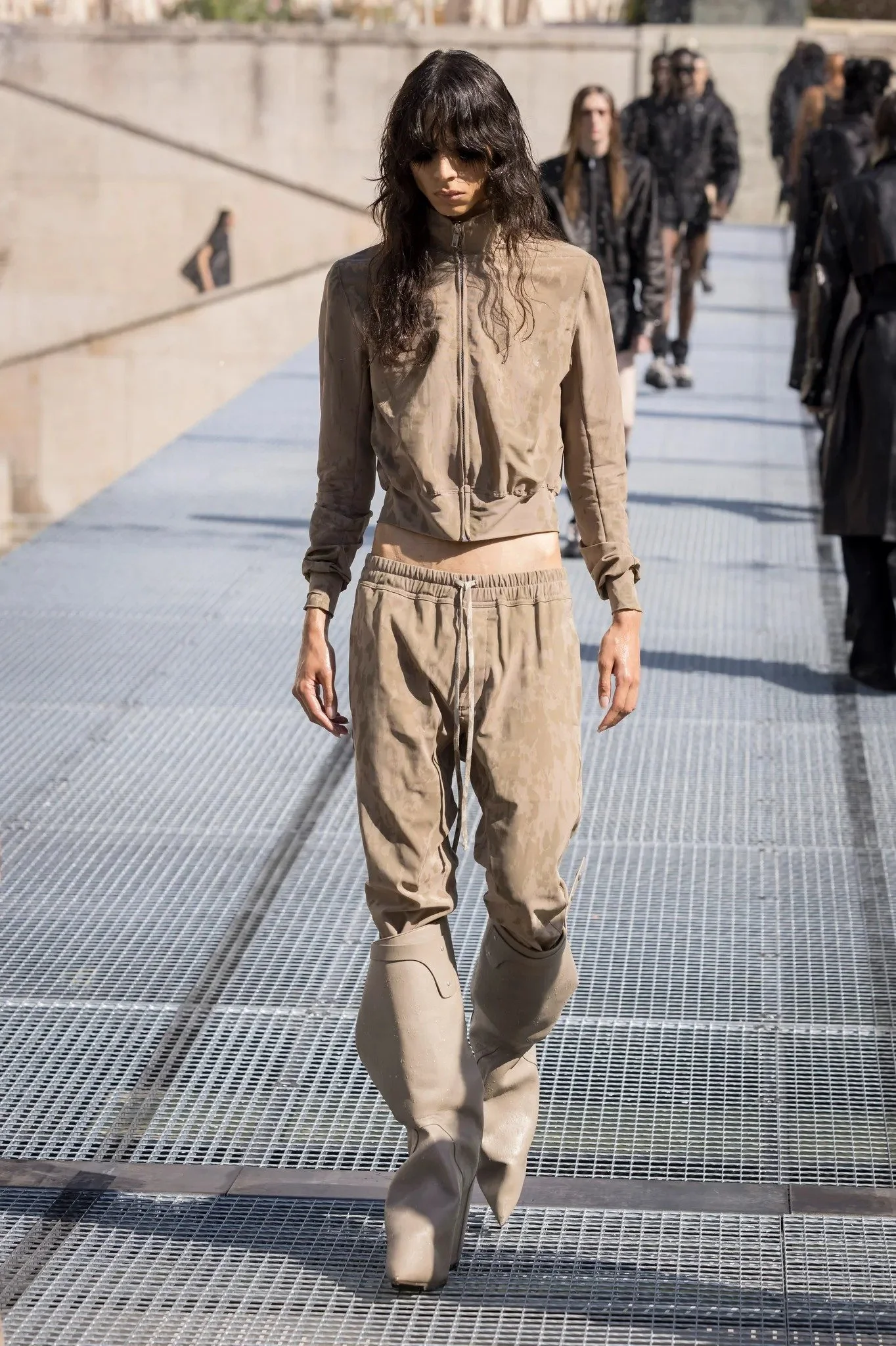
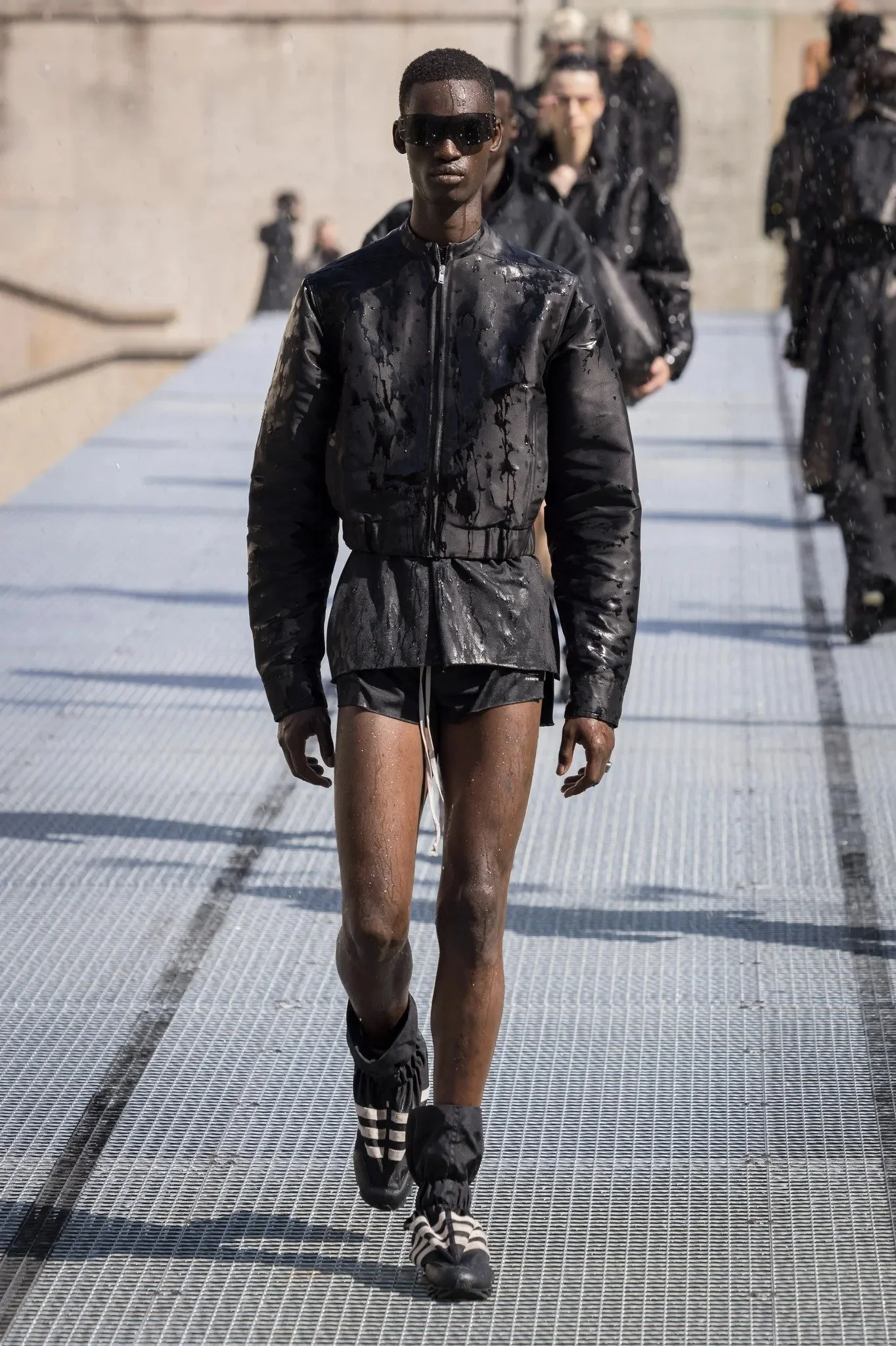
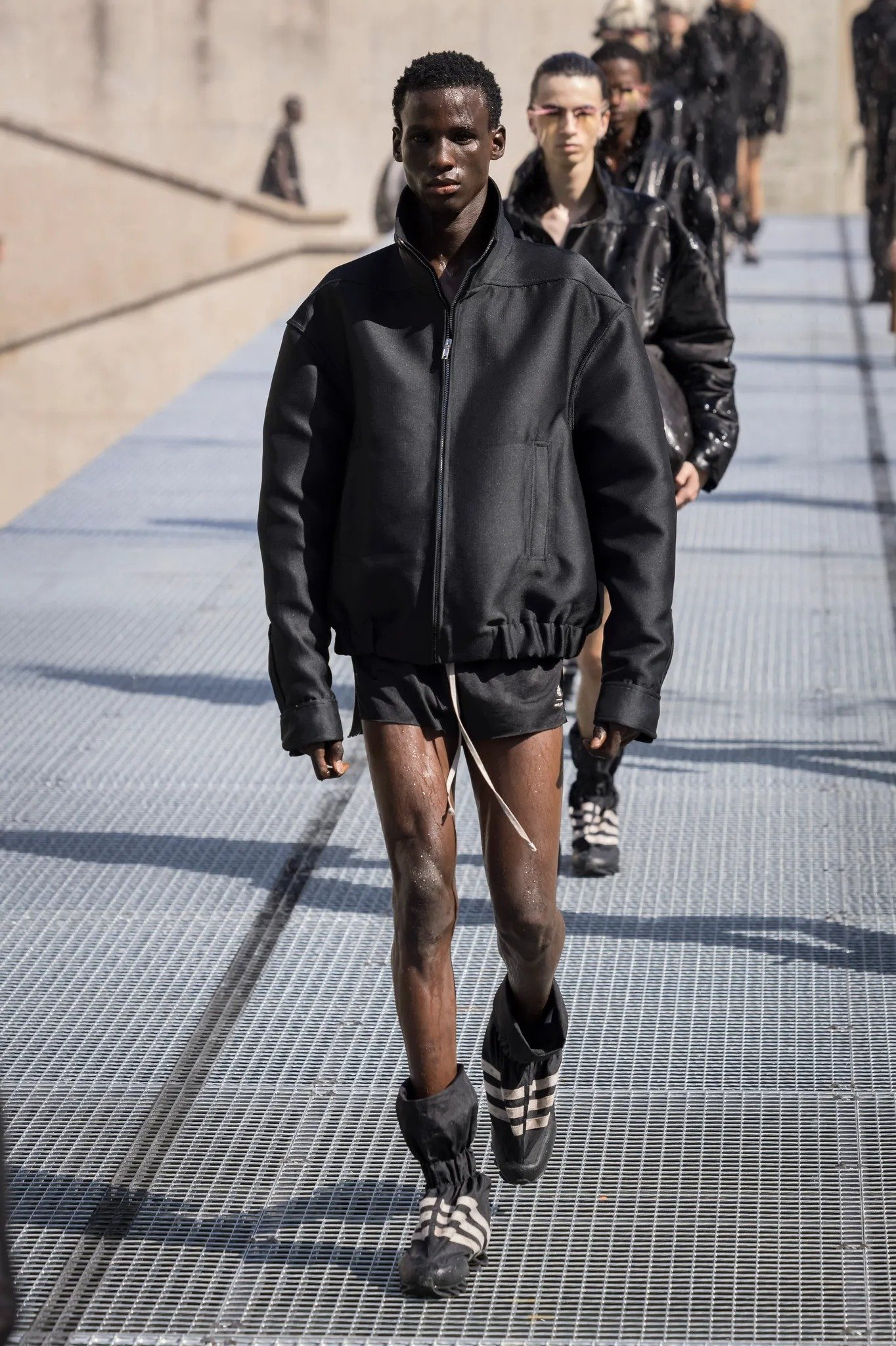
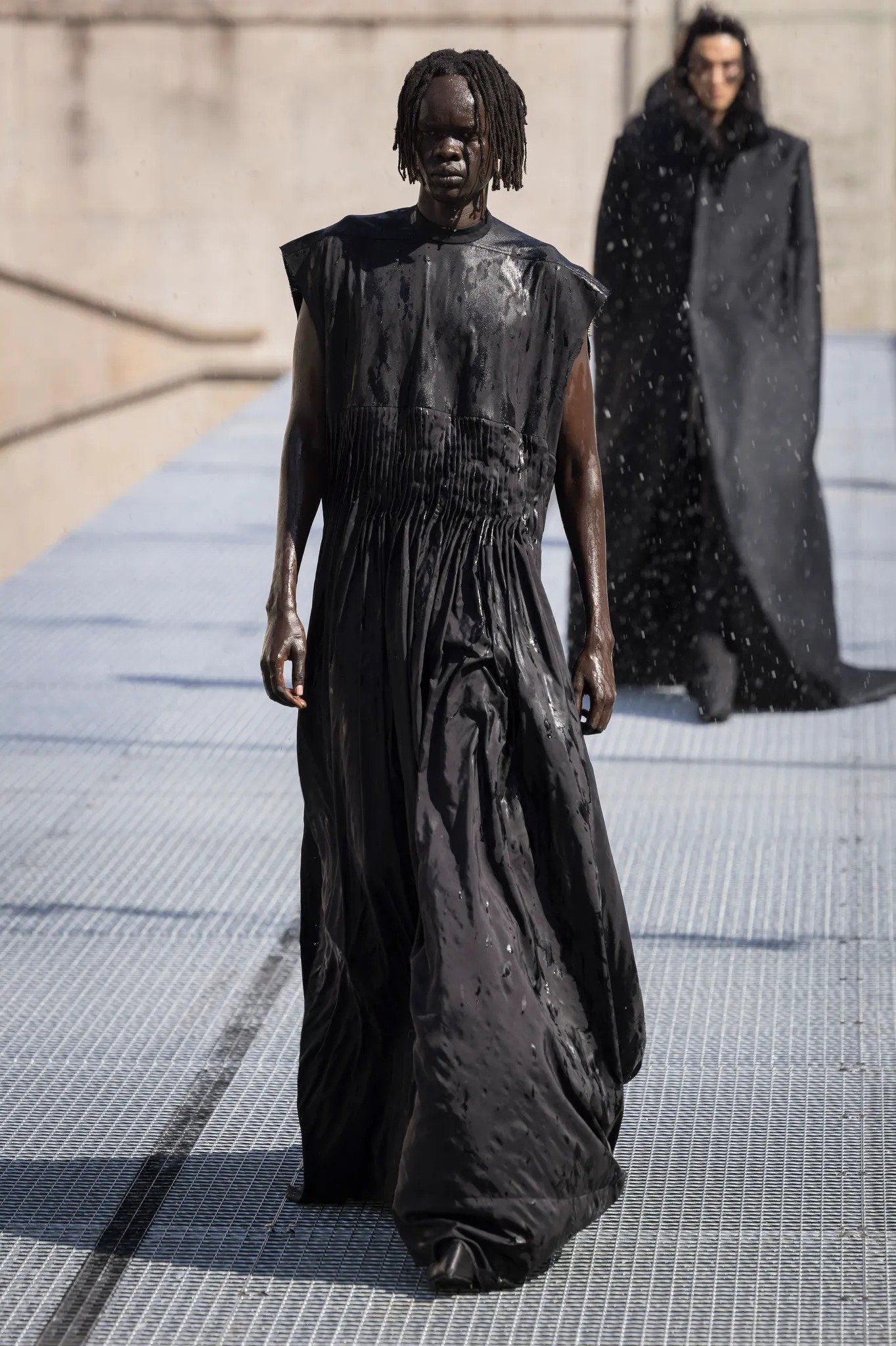
Rick Owens shows always feel introspective, and Spring/Summer 2027 explored the idea of threat, risk, and danger. As per his show notes, this season the designer was thinking about the idea of training: “We are all processing menace, some of us arm, some of us train.” The collection had all the Owens’ codes: an unmistakable dystopian, end-of-the-world feeling expressed through leather pieces, a monochromatic palette, architectural silhouettes, distressed textures, and exaggerated proportions.

Sharply tailored pieces and cocoon-like volumes coexisted with sweatpants, body-hugging garments, balloon-like inflated forms, capes and cage-like pants. This amalgam of styles created a scenario of experimentation and a showcase of the designer’s creative vision, while still considering functionality.

Long coats that extend below the knee introduced a sense of fluid movement throughout the silhouette. They create dramatic proportions while elongating the figure, adding a refined elegance to otherwise utilitarian ensembles.

Sharp shoulders, narrow waists, extended lengths, deep lapels, precise tailoring, and deconstructed garments defined the silhouettes, while cut-out pieces created a sense of chaos and disorder. Low-waist pants emphasised elongated, clean silhouettes, and when paired with the brand’s signature towering boots, created column-like figures. The designer also debuted its new collaboration with Adidas, featuring a slouched boot-sneaker, marking one of the brand’s first high-performance running-inspired pieces.


Words by Carolina Benjumea

AMI SS27

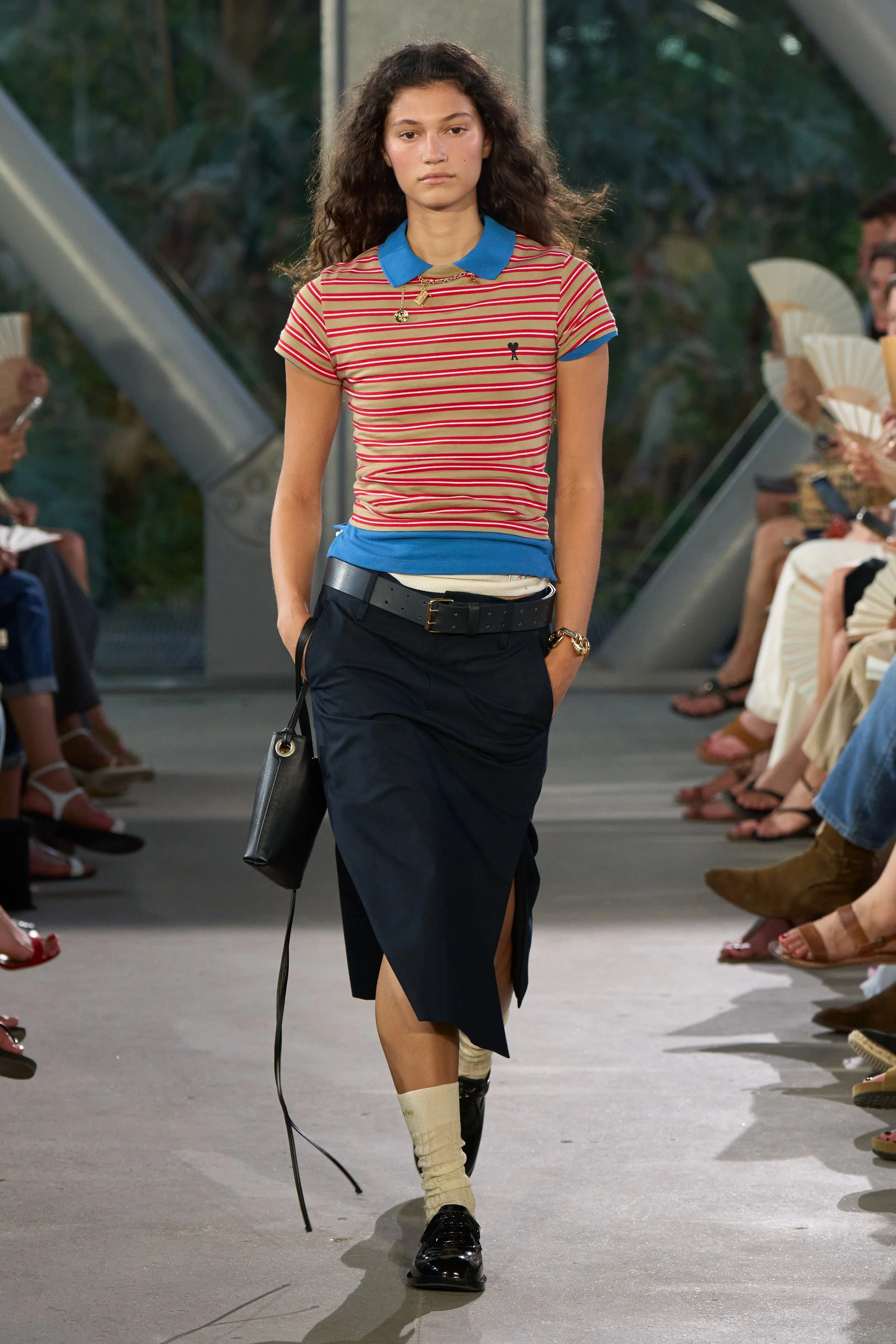
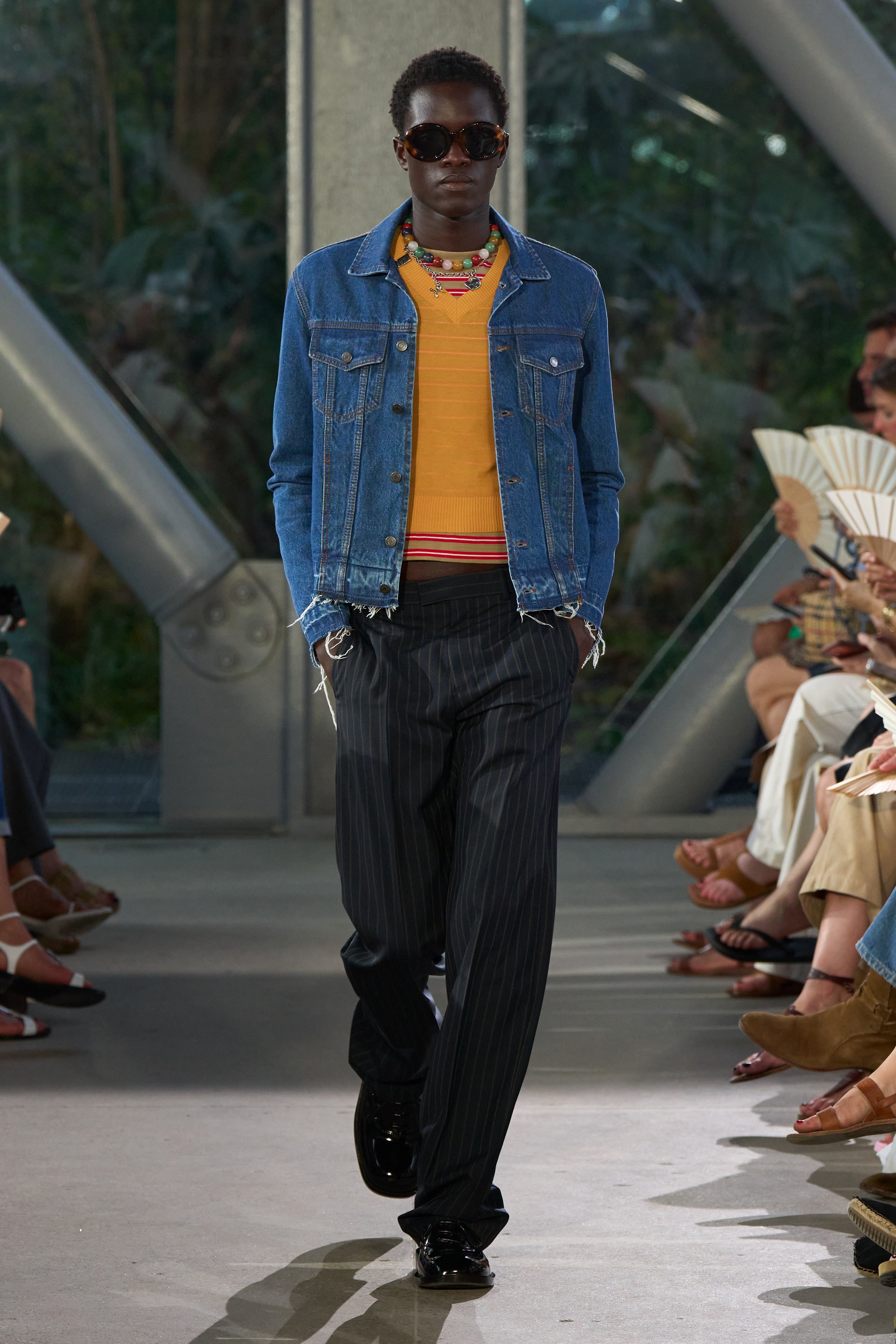
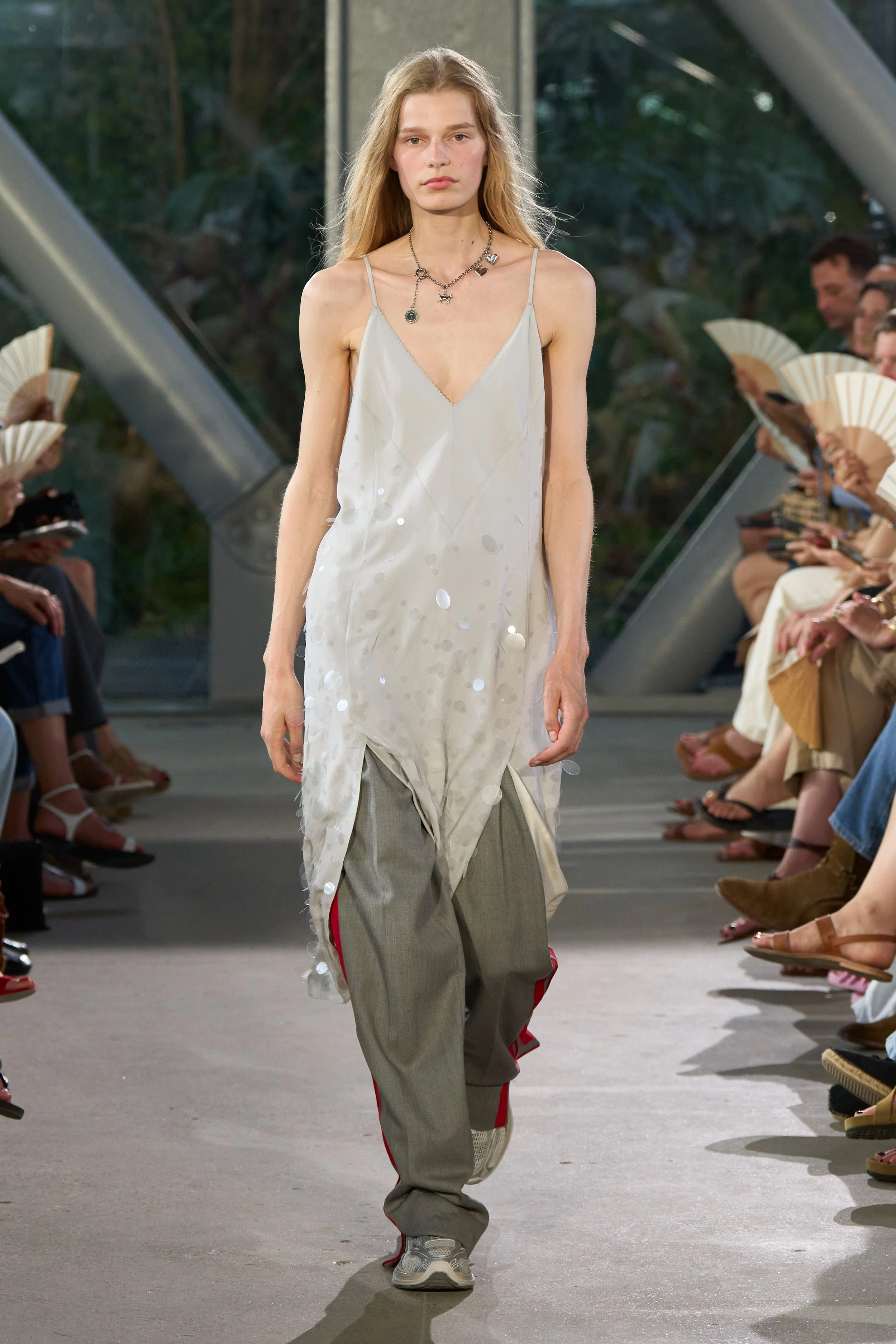
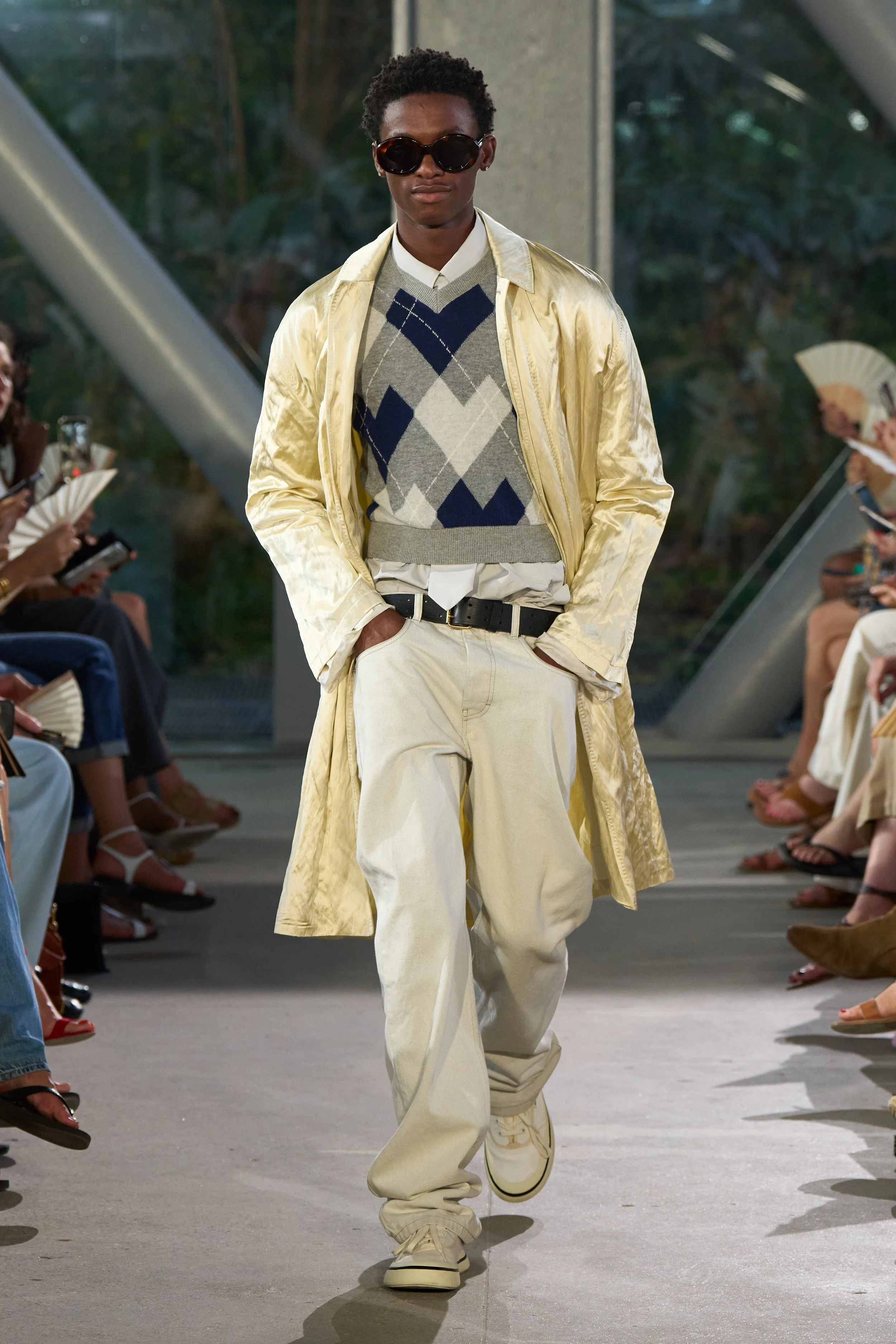
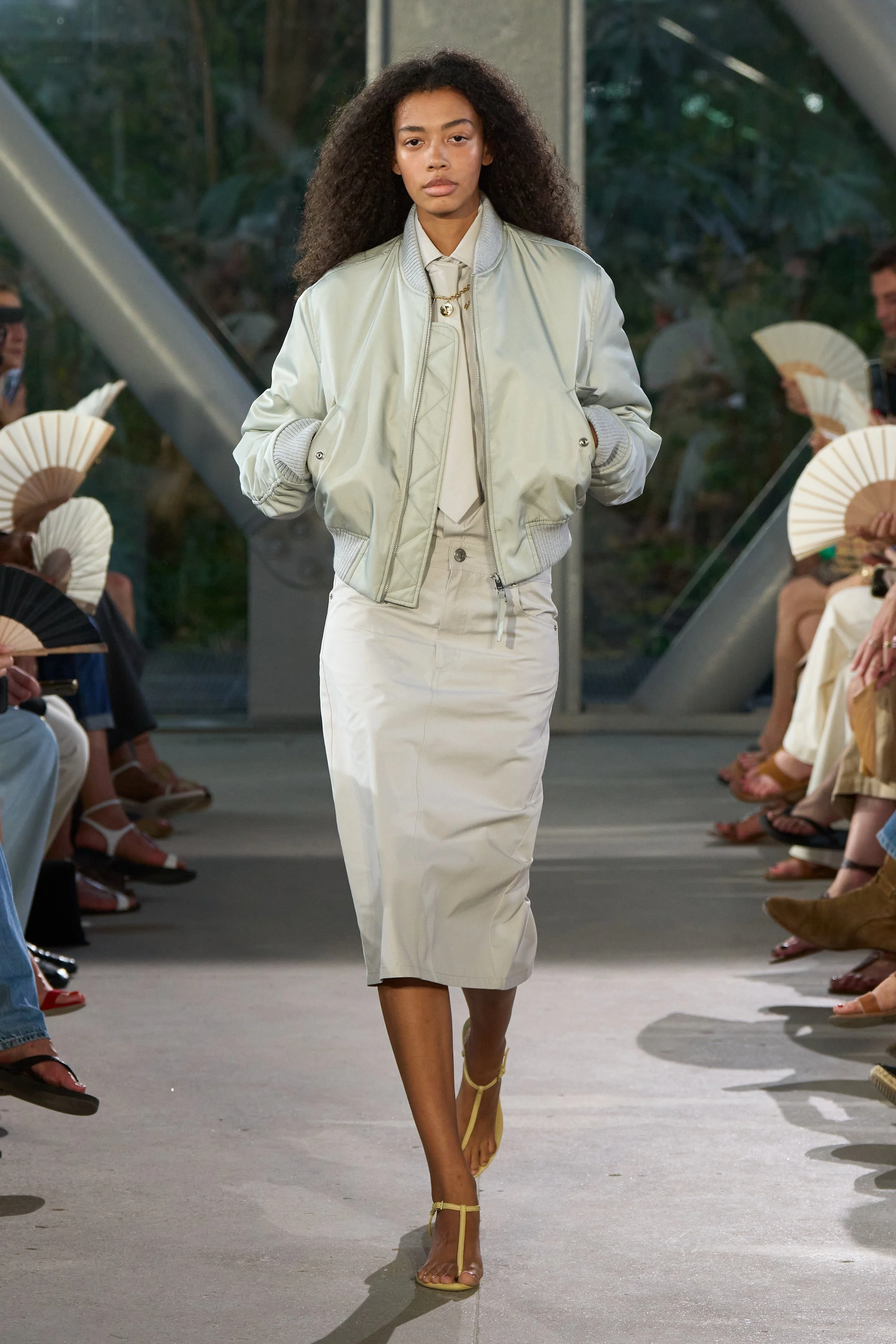
Amid the Parisian heatwave, AMI introduced its Spring/Summer ‘27 collection, in which smart dressing was styled with relaxed codes to create the quintessential wardrobe of modern Parisian style. Honouring its beginnings, which date back 15 years, the collection centred around the white shirt, the canvas from which the label was born and the foundation of the aesthetic that became its signature.

A juxtaposition between urban wear and corporate wear, formal and informal, was present throughout the show. Some outfits felt corporate, while others evoked a Friday-night mood and relaxed Sunday vibes.

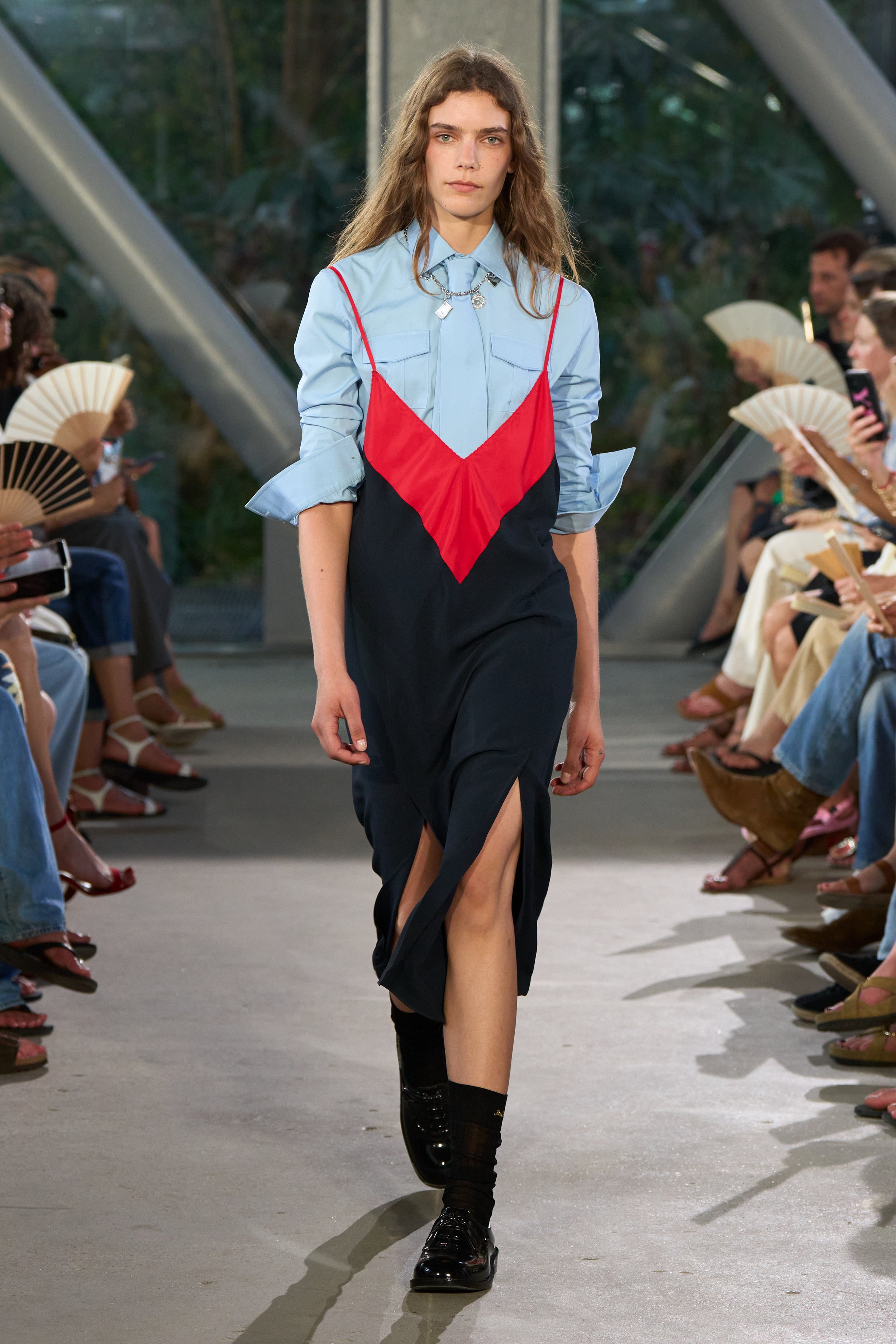
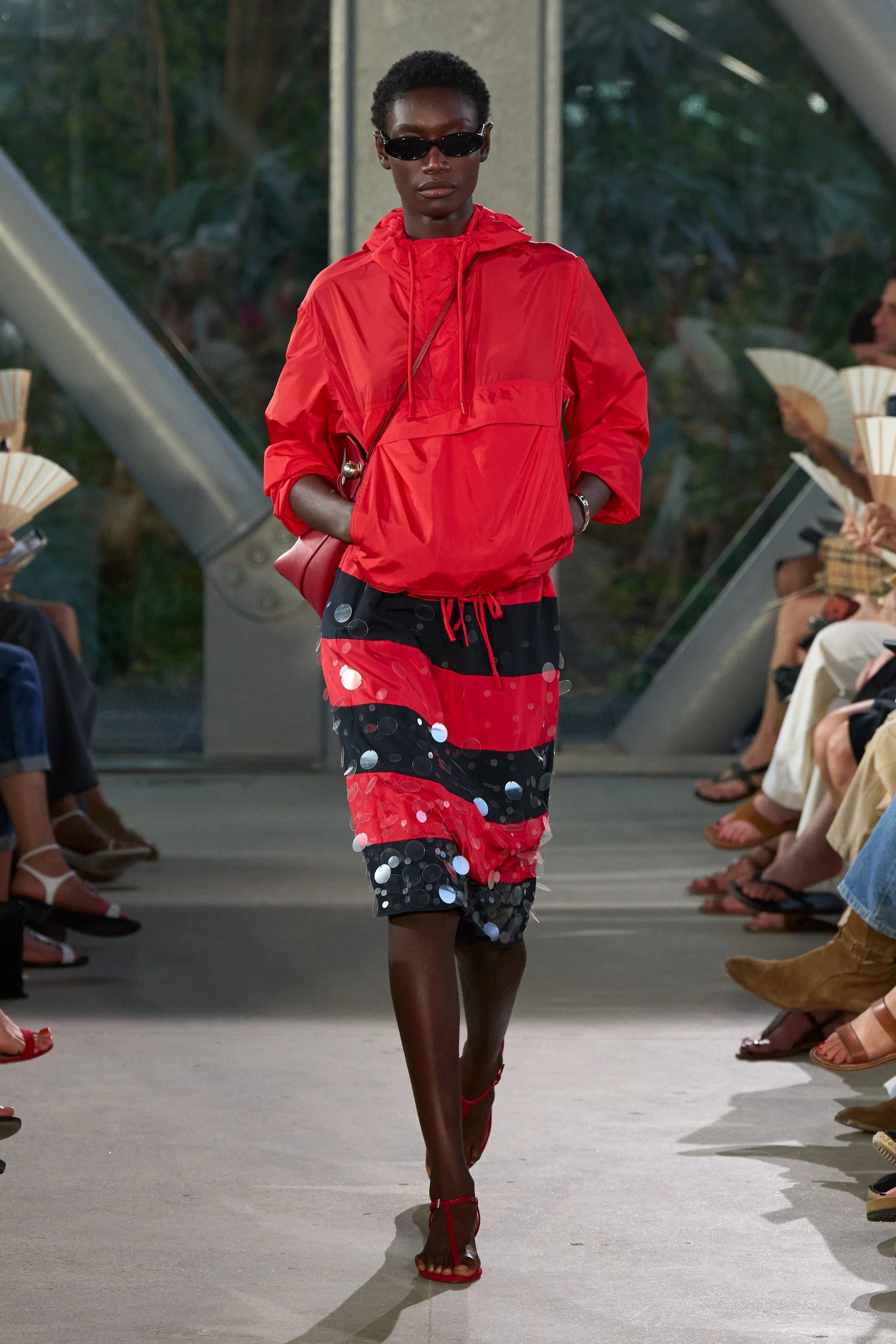
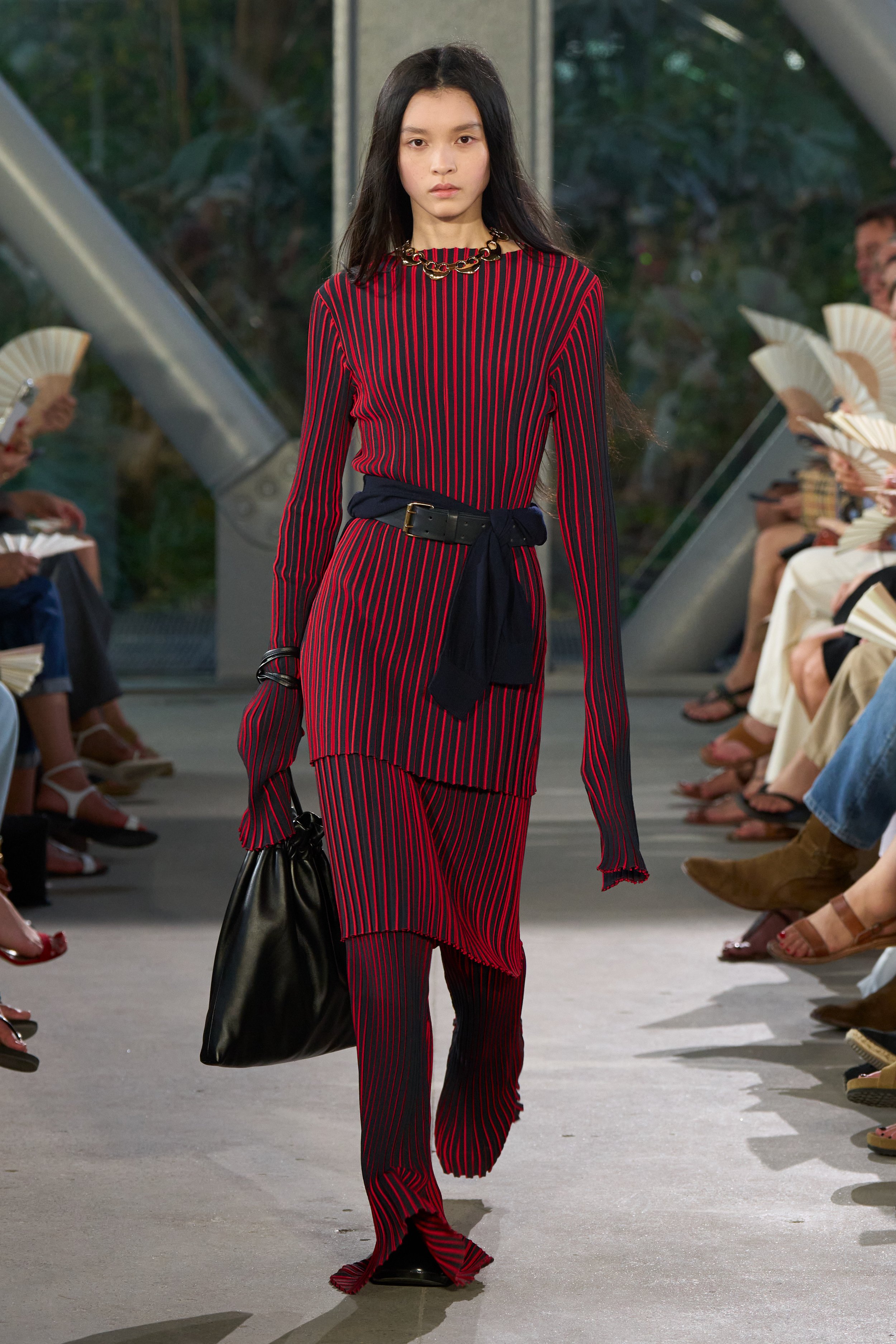
Bermudas were mixed with workwear pieces. Slip dresses were styled with shirts, ties, and trousers. Oversized, laid-back fits ran throughout the collection. Windbreakers were styled with sequin skirts. Some looks were playful and broke the commercial nature of the collection, such as skirts resembling buttoned-up shirts tied around the hips. Low-rise pants appeared in both menswear and womenswear looks, creating a youthful and sensual aesthetic, strongly coded with Y2K influences. Mini and pencil skirts were central, reinforcing a feminine aesthetic.

Signature to the brand, the coats were tailored, structured, and long, crafted in lightweight fabrics and leather. The colour palette ranged from earthy tones to vibrant yellows and blues, with red accents throughout. Breaking with the natural harmony of the body, some looks played with proportions, creating an aura full of personality and strength.


Words by Carolina Benjumea

DIOR MEN SS27

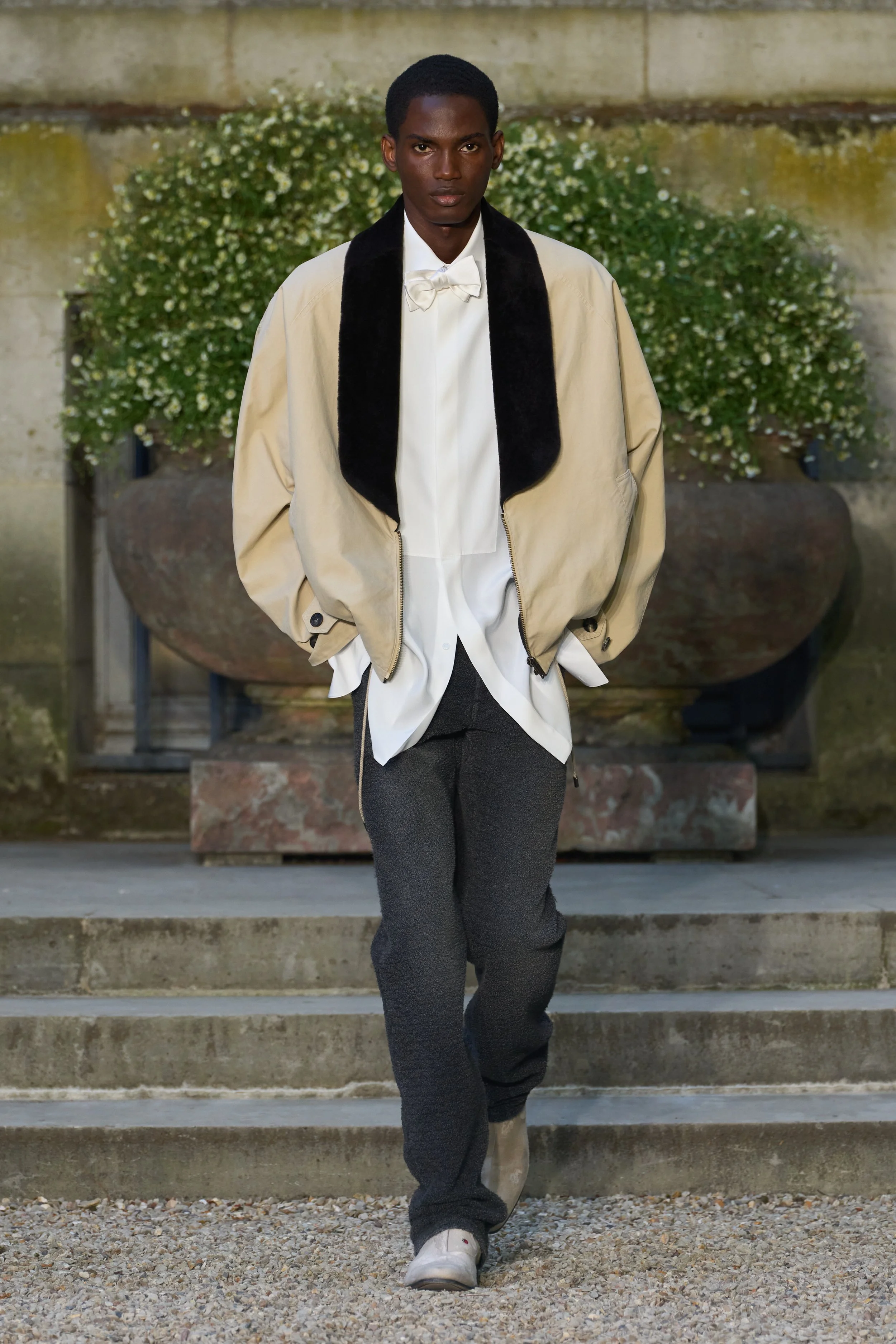
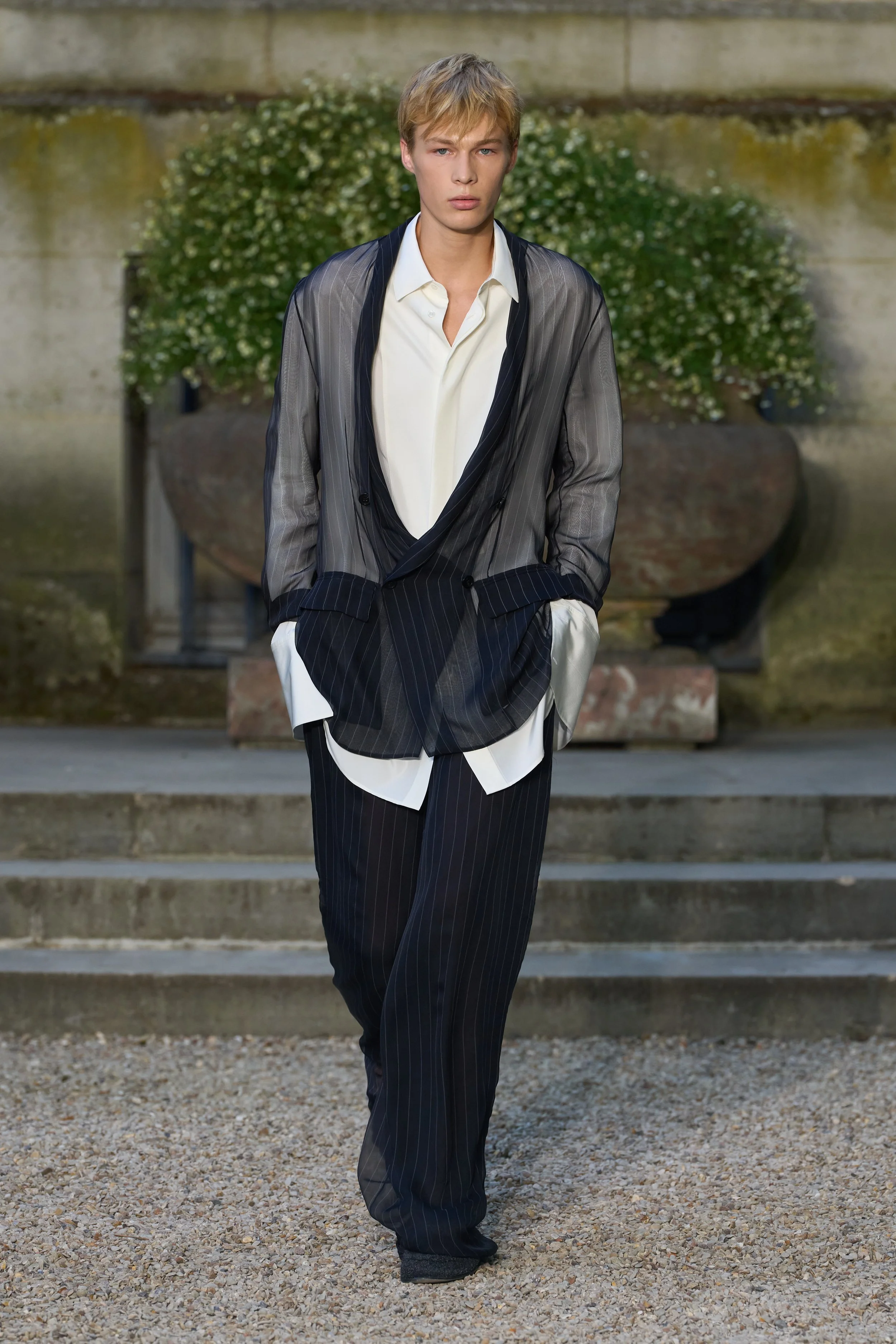
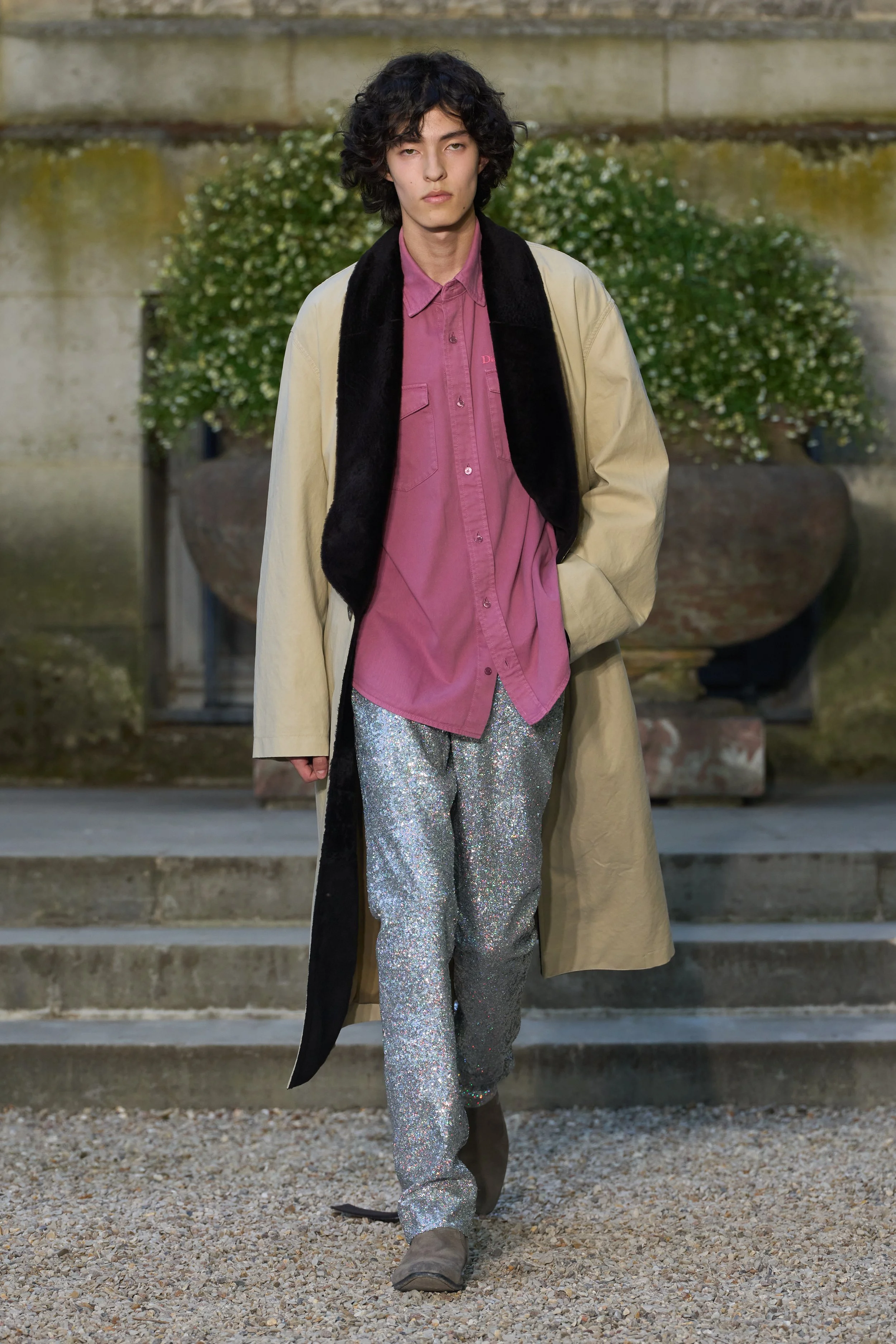
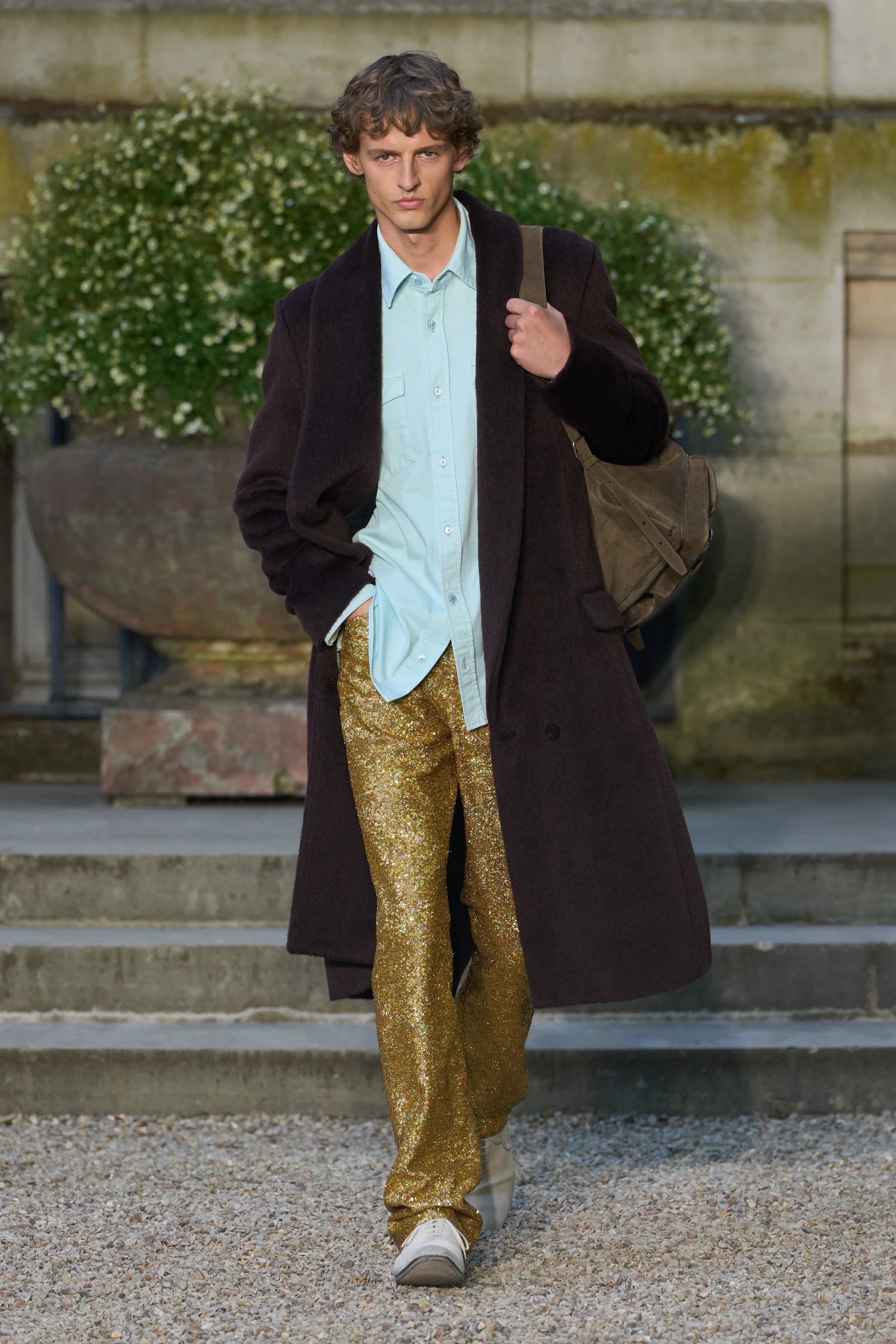
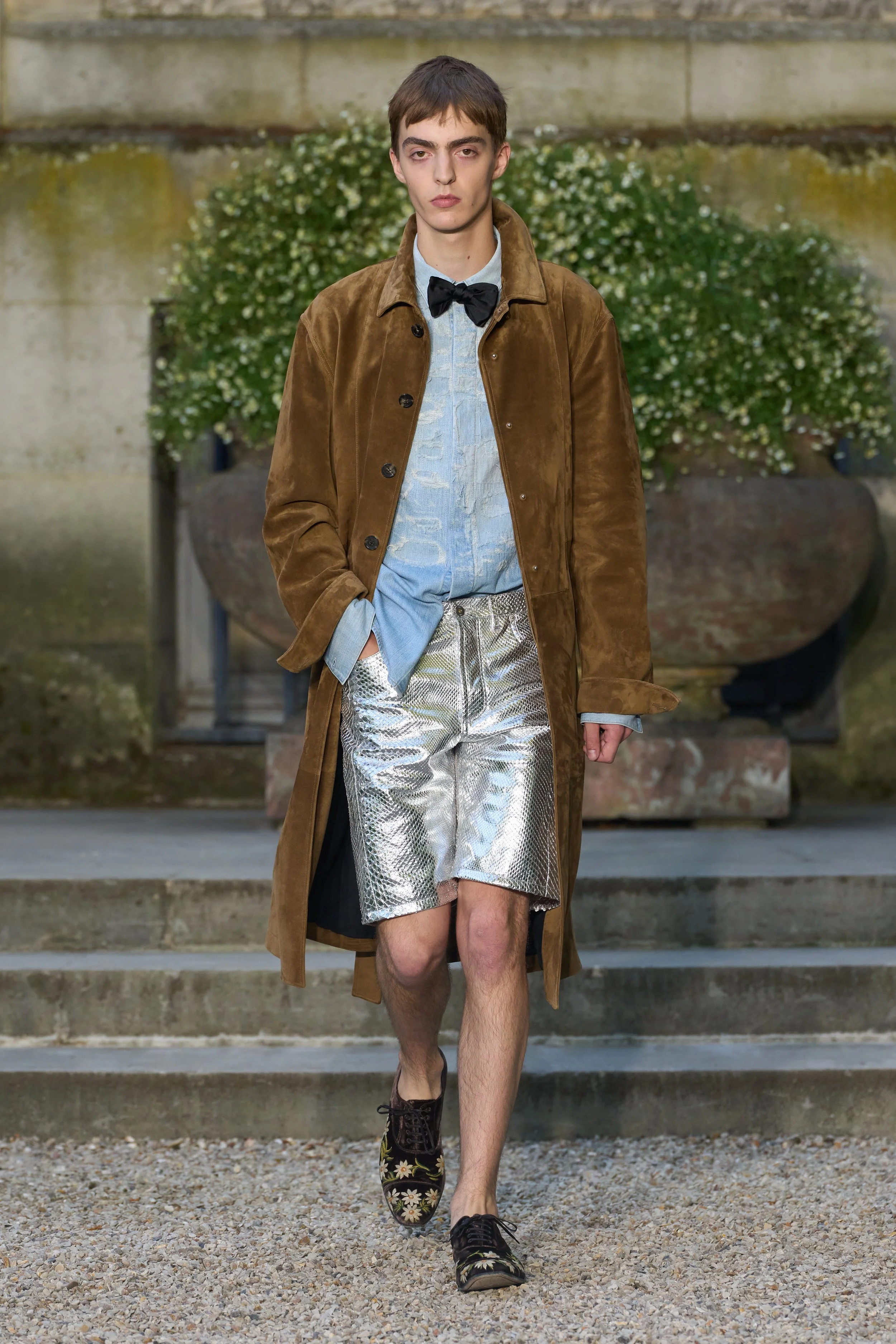
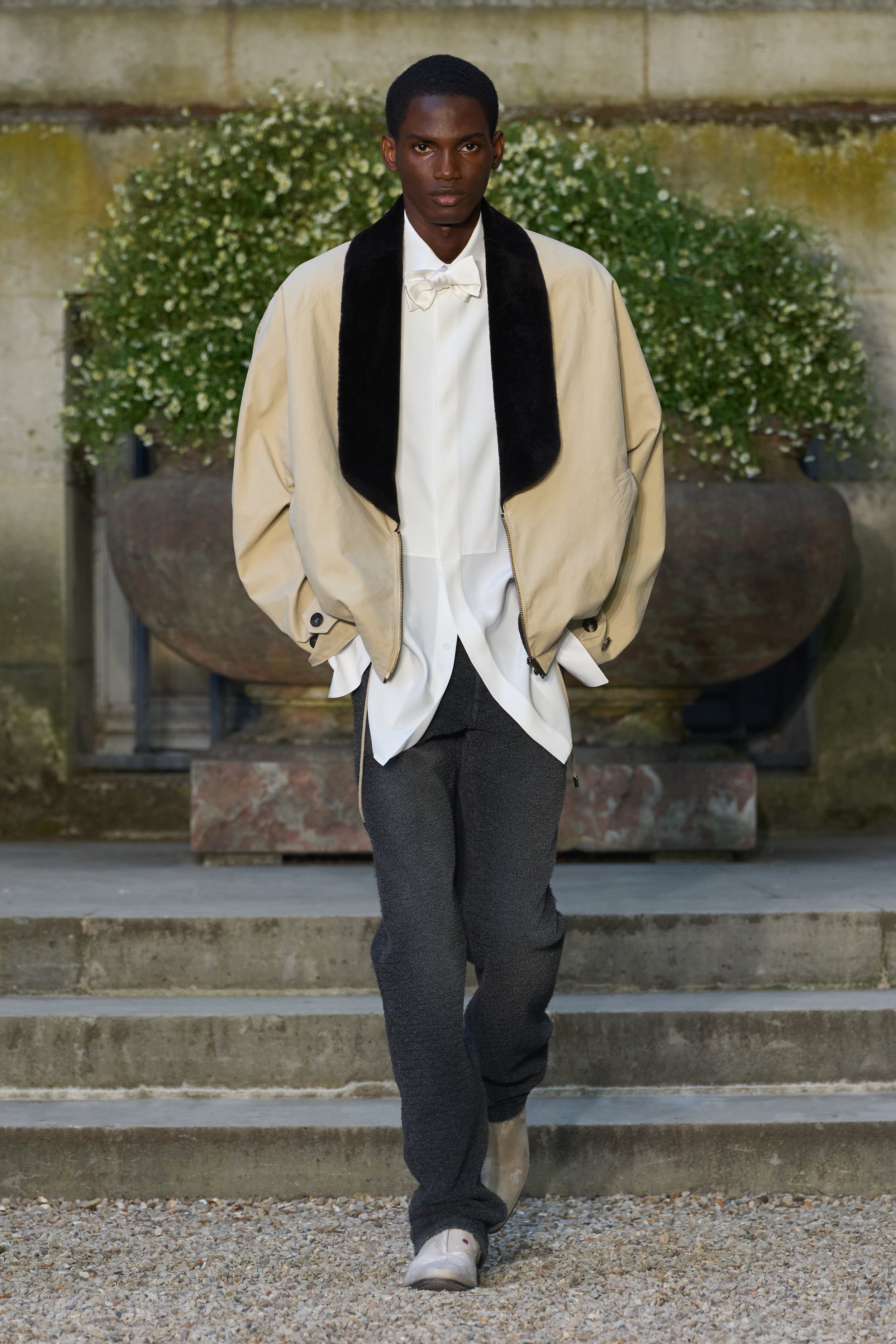
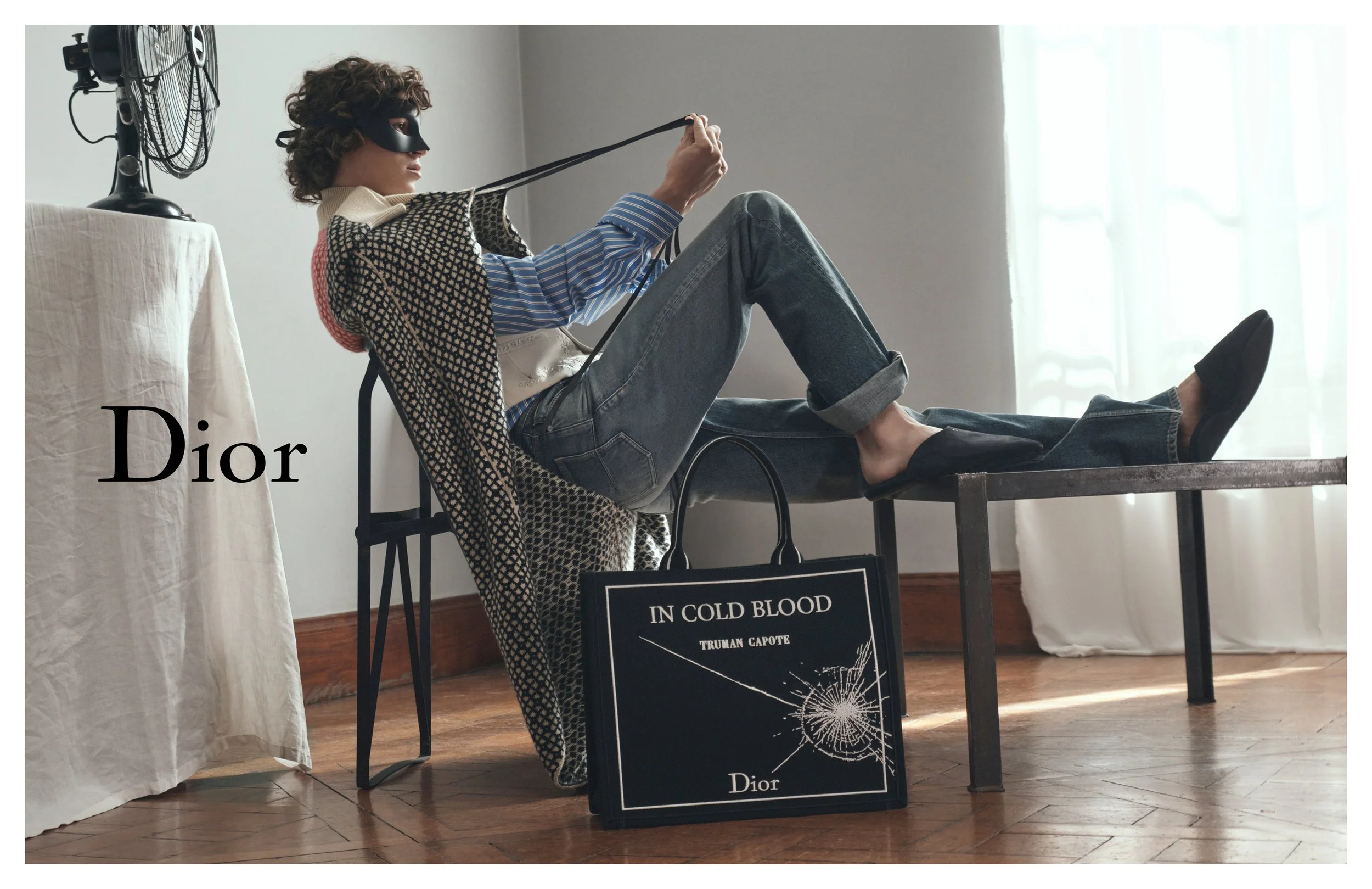
The invite for Dior's Spring/Summer 2027 menswear show was a black disco ball. But down the stairs at the Musée Nissim de Camondo wasn’t partywear, more so the day after. This season, Jonathan Anderson conducts a character study of party attendees as they leave the next morning. To this effect, crisp white shirts are paired with colourful overnight knit bags, and silver bow ties are slightly askew on denim shirts.

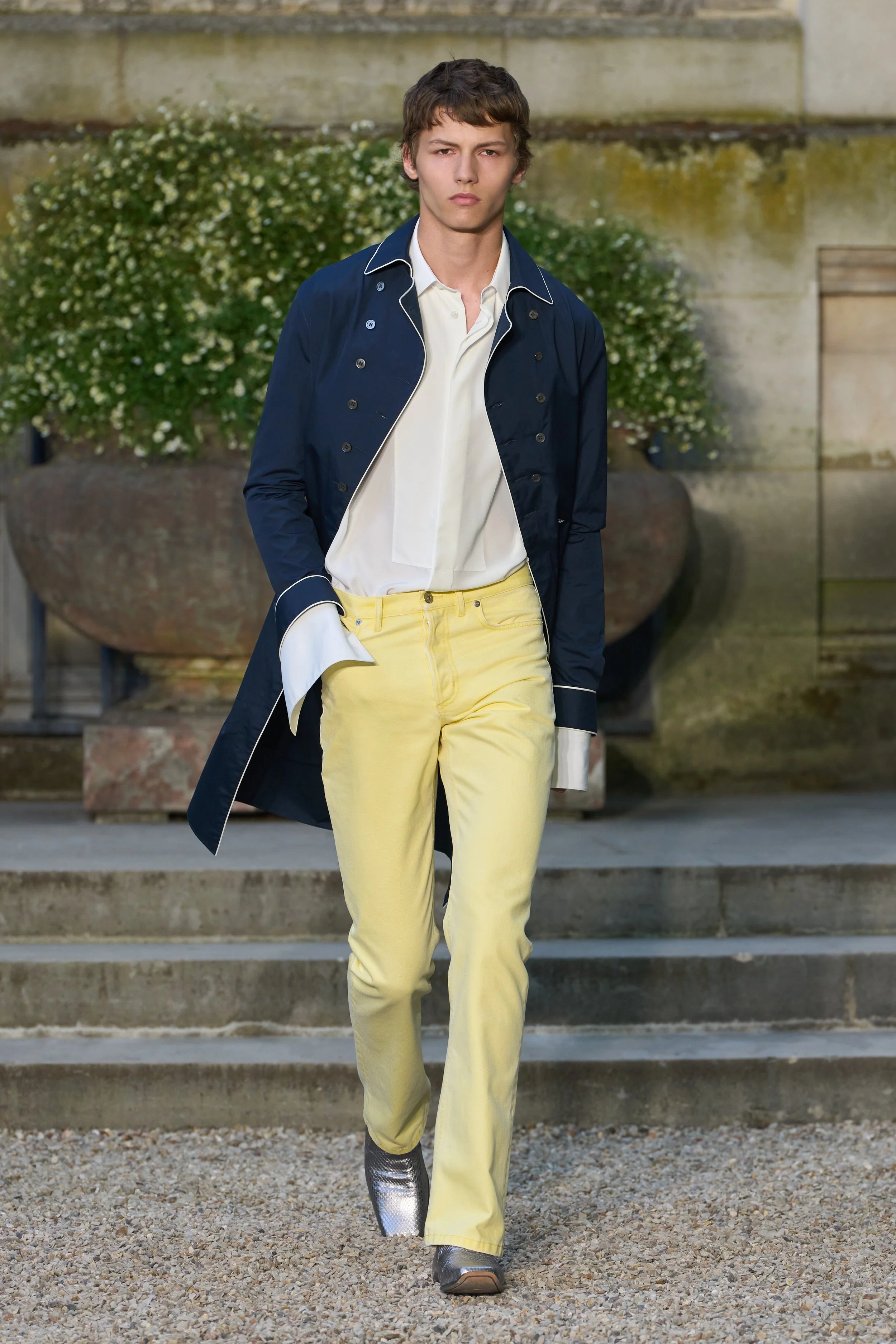
The opening looks – a trio of suits with dropped lapels was translucent, revealing the white, barely messy white shirts underneath. The light suiting felt novel, different for the legacy Anderson has been building at Dior for officially a year now. His vision, which ranges over the entirety of the maison, is built on a reconsideration of his predecessors’ work through the lens of the founder. Hedi Slimane's circulation-defying jeans, for instance, are softened by Anderson's romanticism, rendered in pale butter yellow and paired with a blue coat trimmed in white.

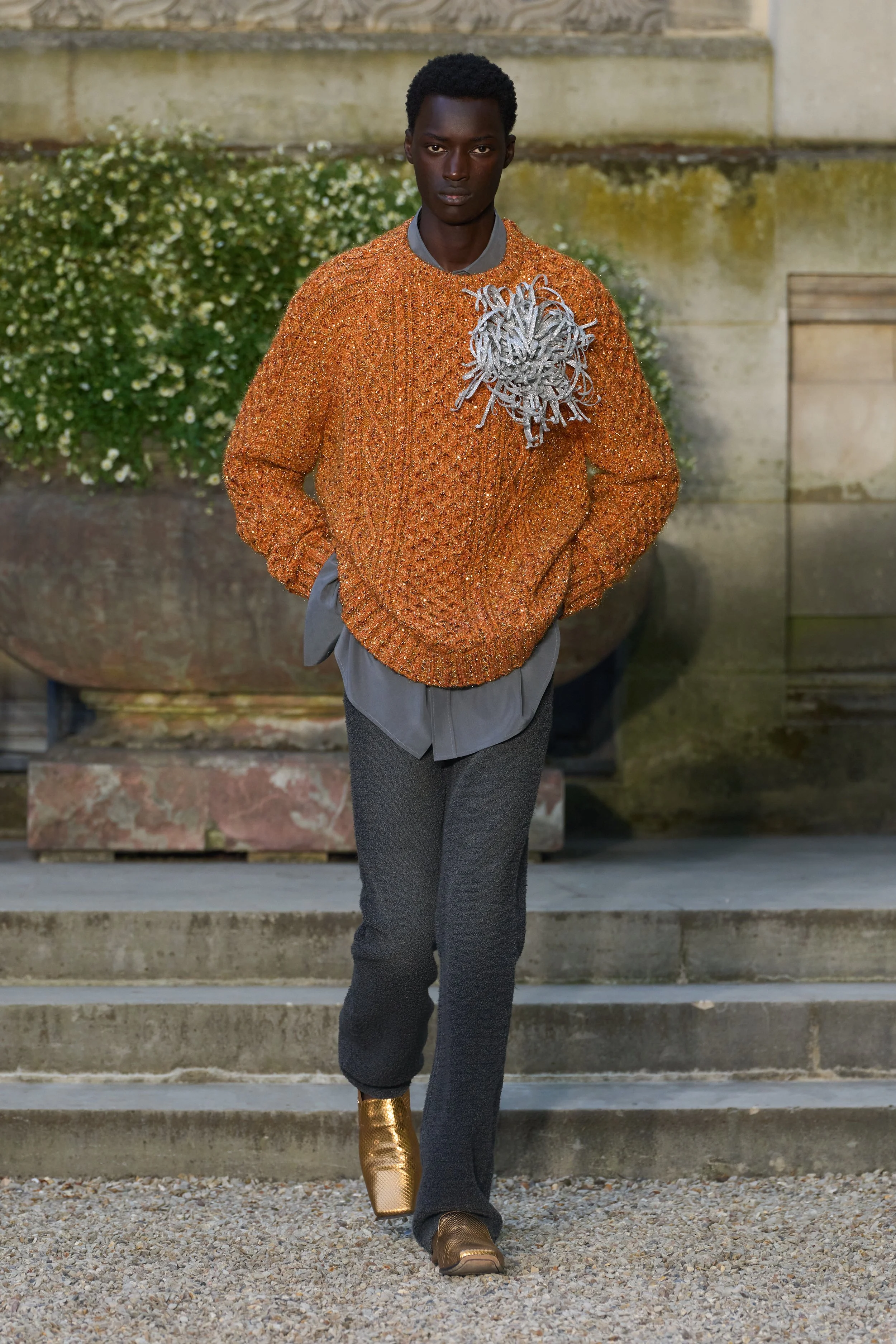
On the subject of trousers, Anderson seems intent on resetting proportions. Skinny silhouettes remain, but they are no longer the aggressive, rockstar uniform they once were; they’re offset by elongated coats and generous shirting. They’re not totally docile, though. Iterations in silver and gold punctuated the collection, giving the otherwise dandy looks a rakish charm. Glittered versions of the same trousers were paired with relaxed pastel shirts, worn untucked. 

That ease was omnipresent. Ties were loosened, collars left open, jackets shrugged on rather than buttoned. House's codes, like the bar jacket, became completely unravelled, fraying at the edges as if disintegrating.

There is an emerging consistency to Anderson's Dior. Rather than imposing an entirely new vocabulary, he continues to excavate the house's archive, filtering familiar archetypes through his own sensibility. One year in, Anderson's party is only just getting started.


Words by Pedro Vasconcelos
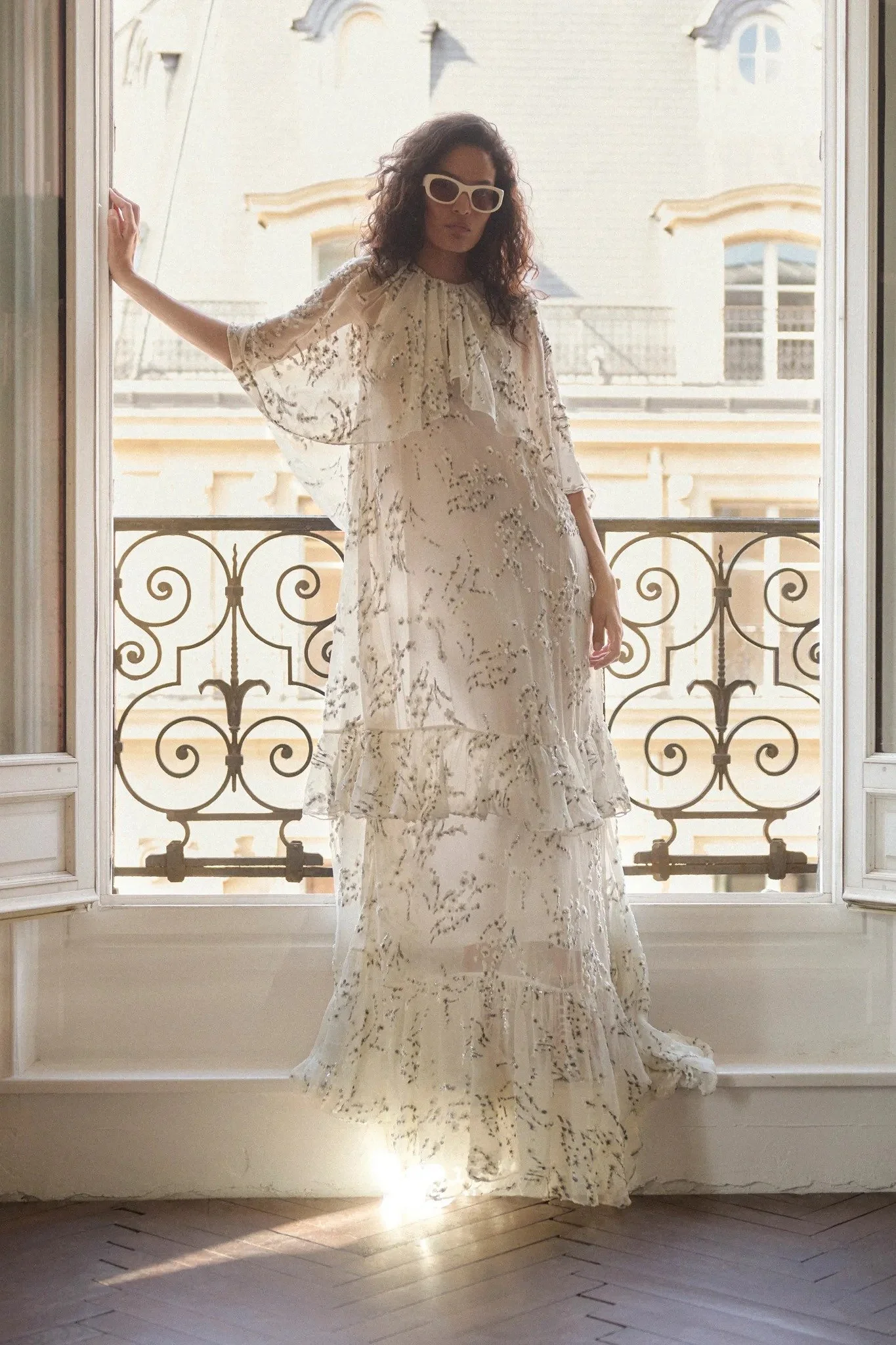
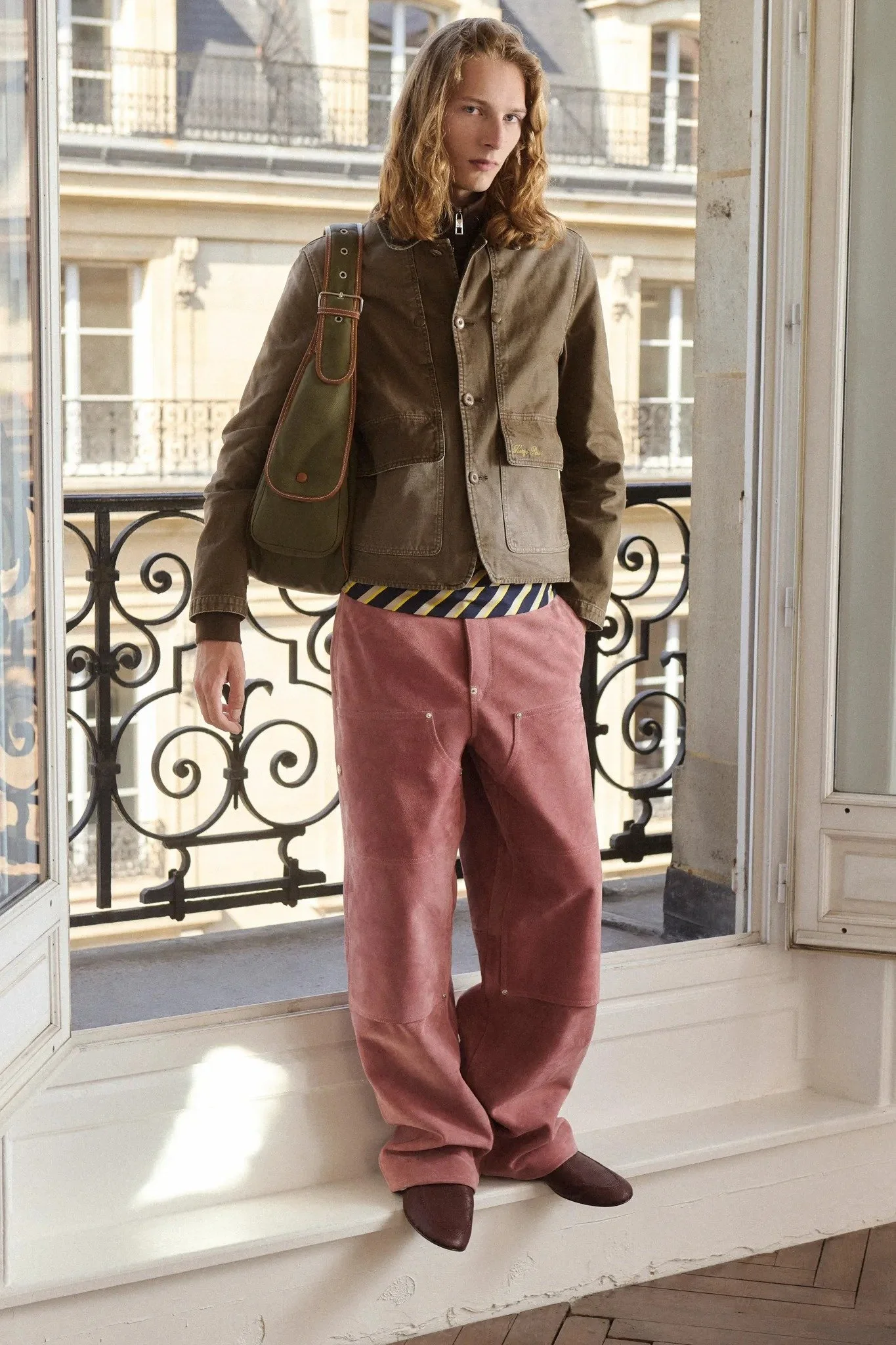
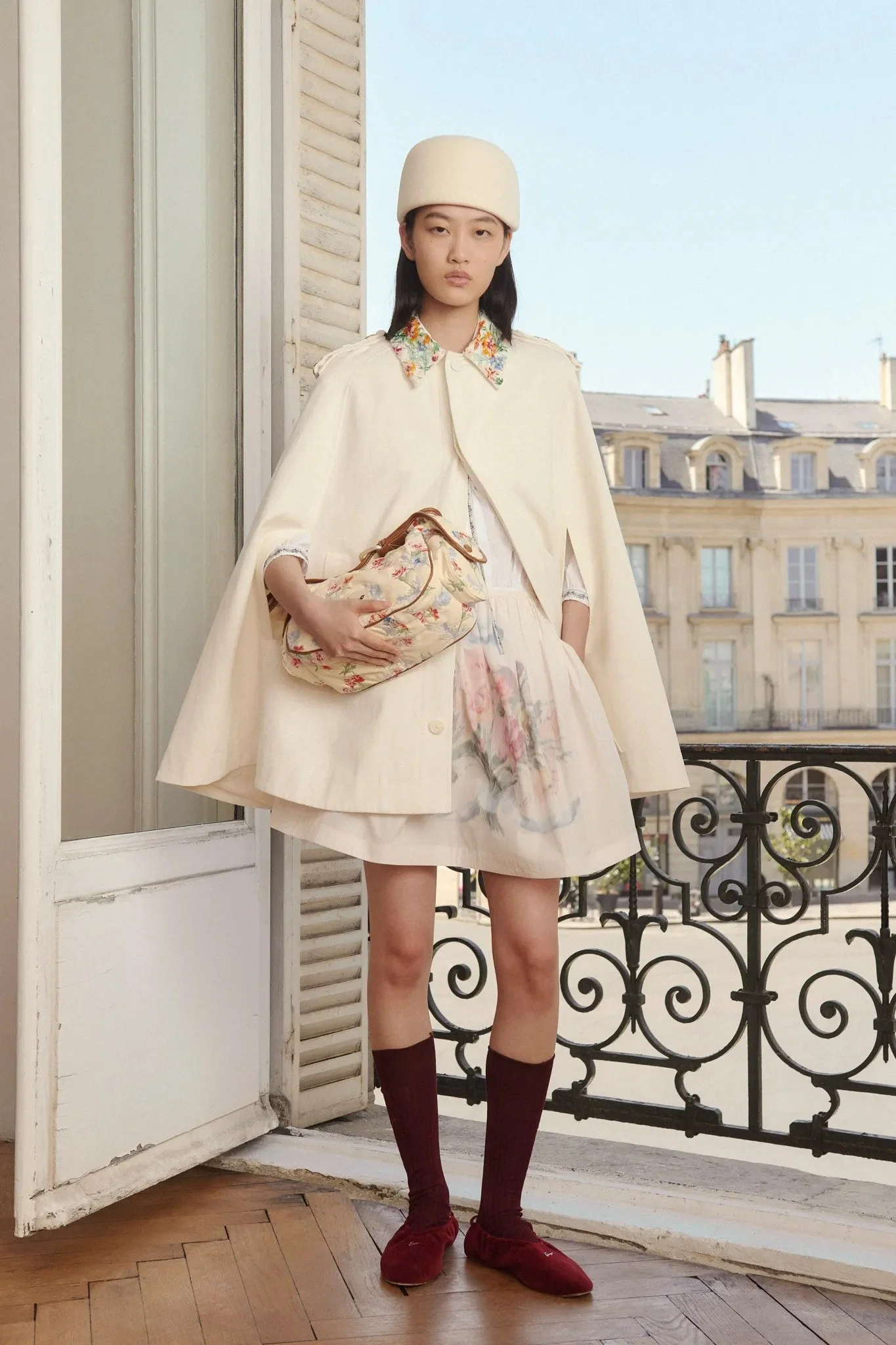
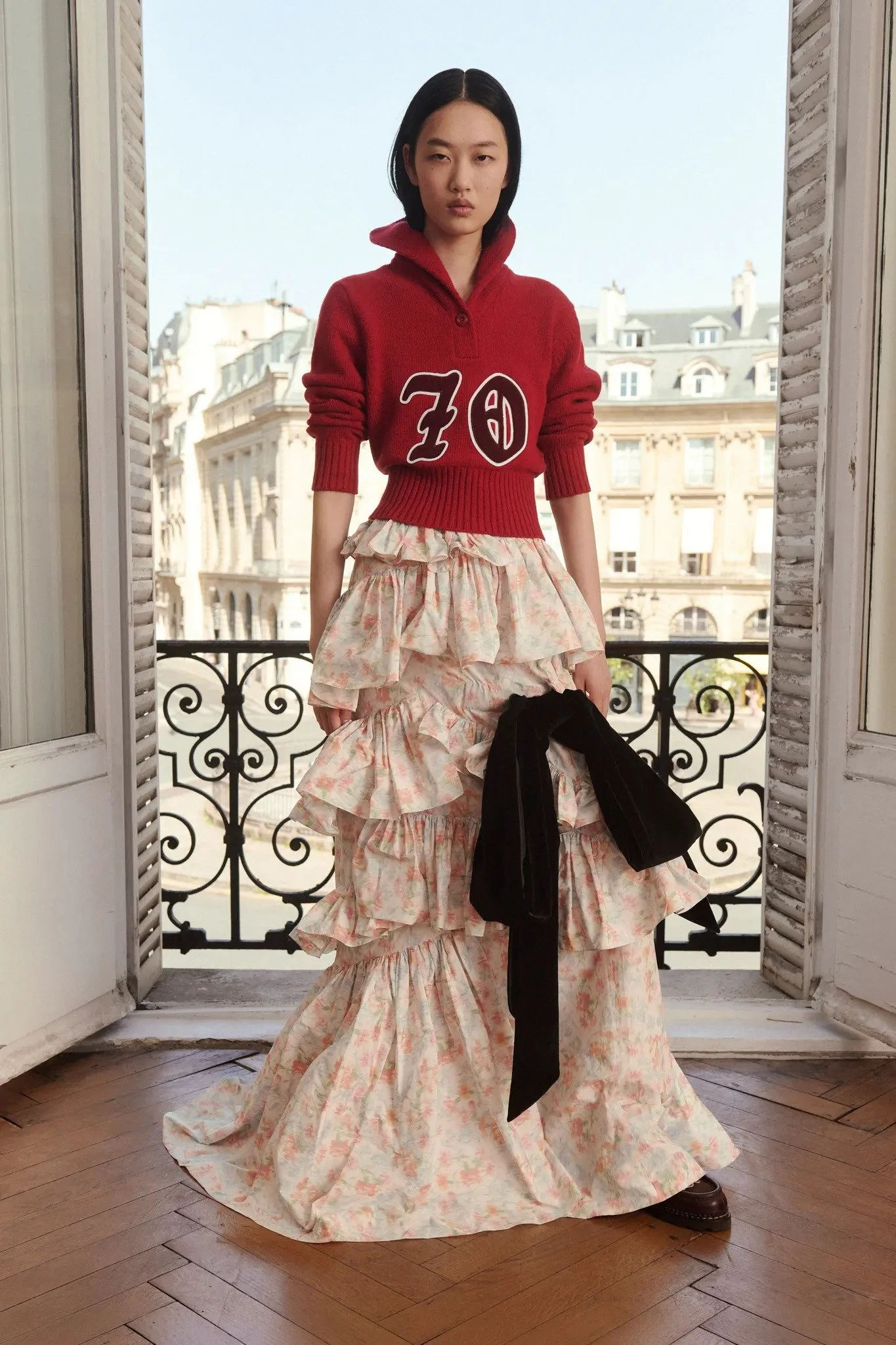
KENZO SS27

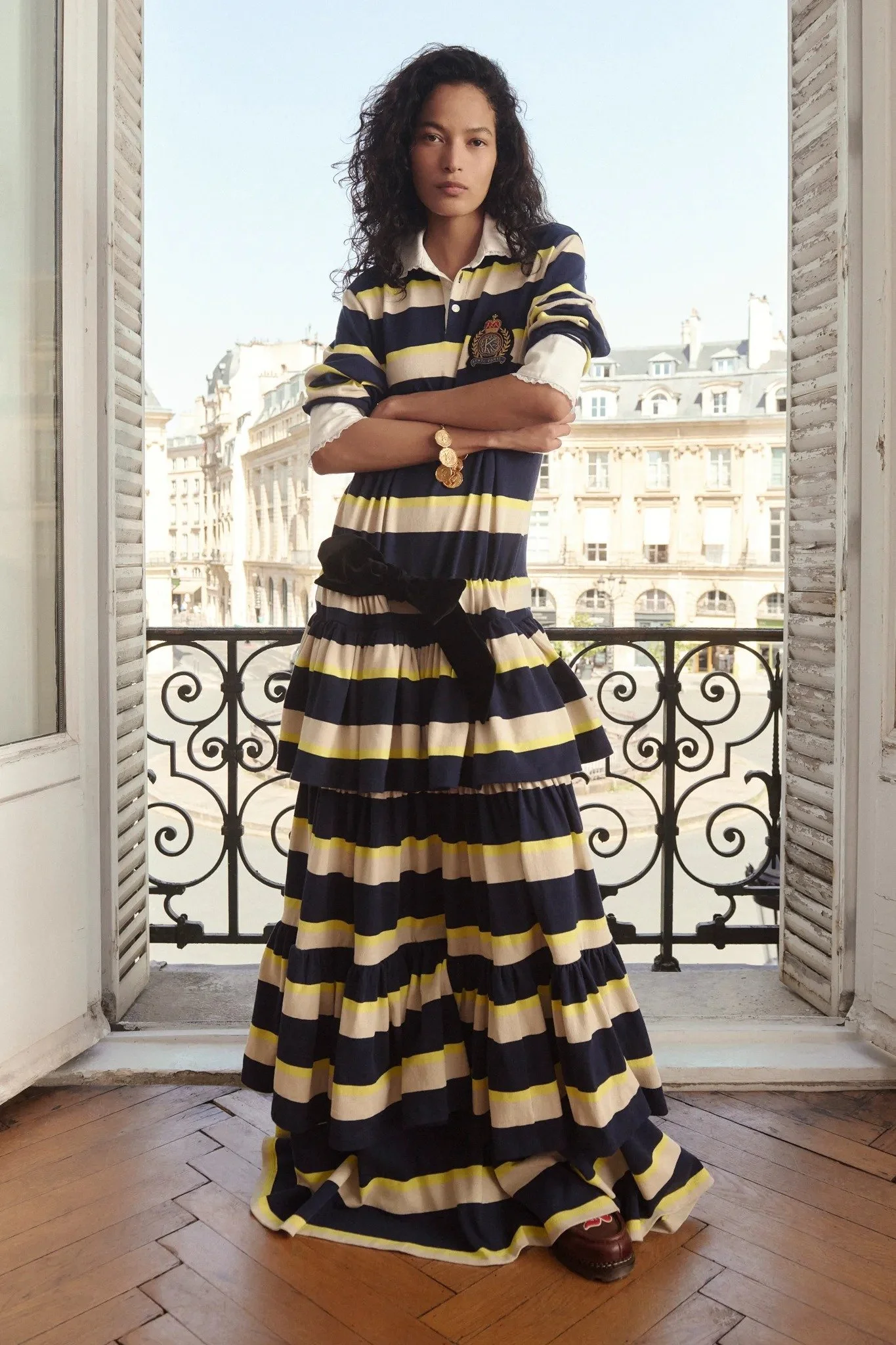
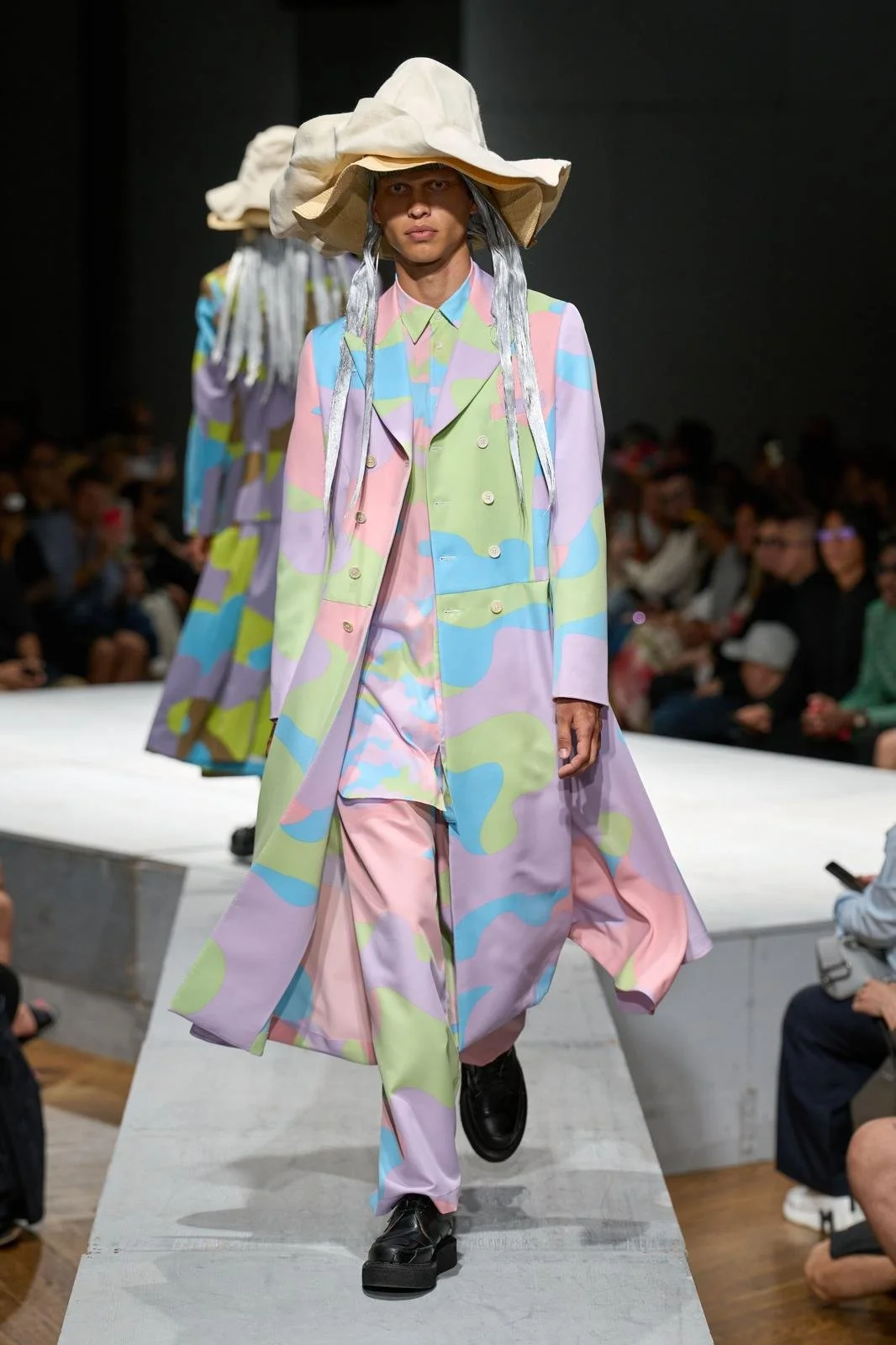
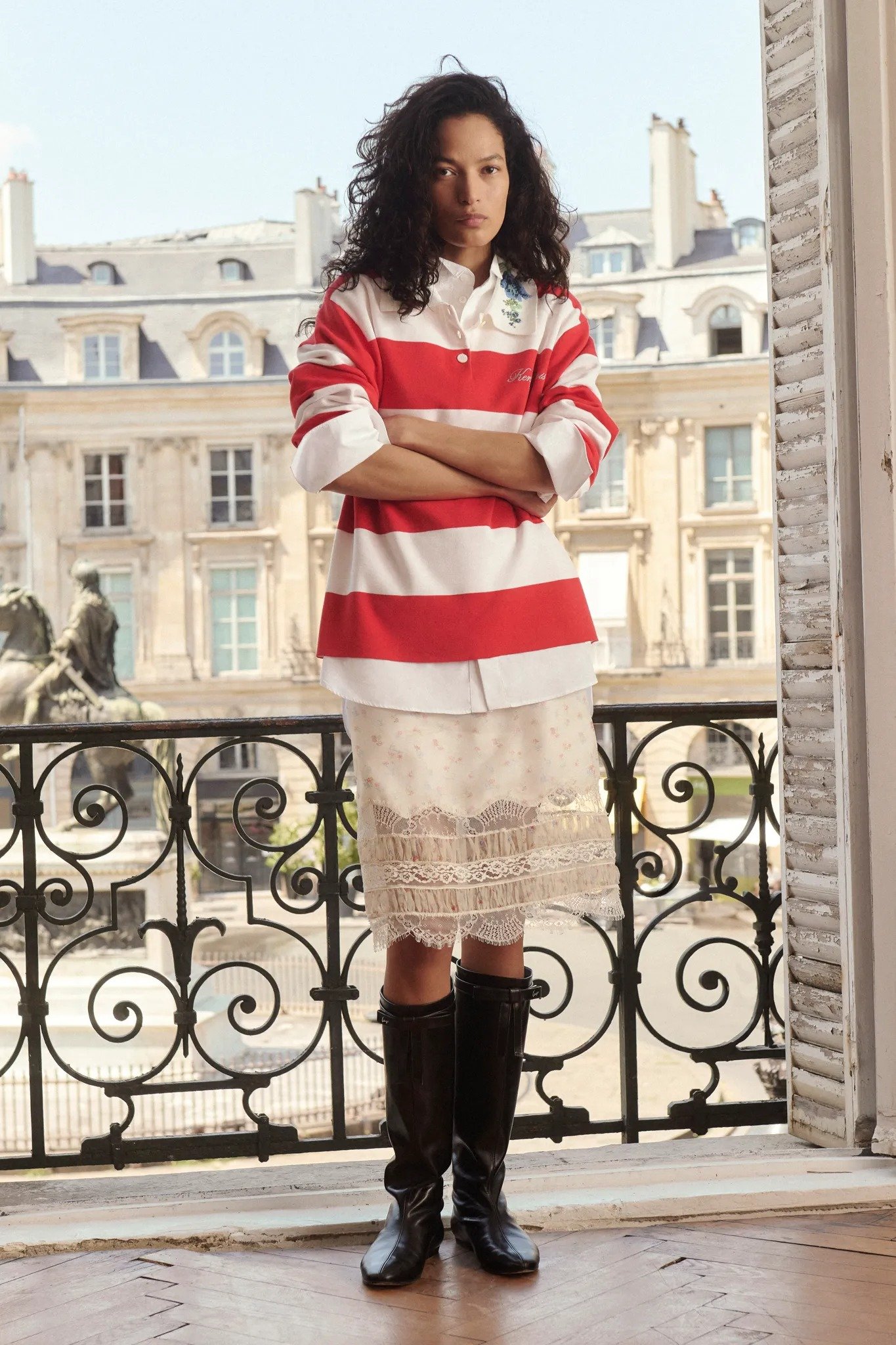
For its Spring/Summer ’27 collection, Kenzo presented a wardrobe where sportswear, bohemian influences, and aristocratic elegance unite through a mix-and-match of styles and patterns.

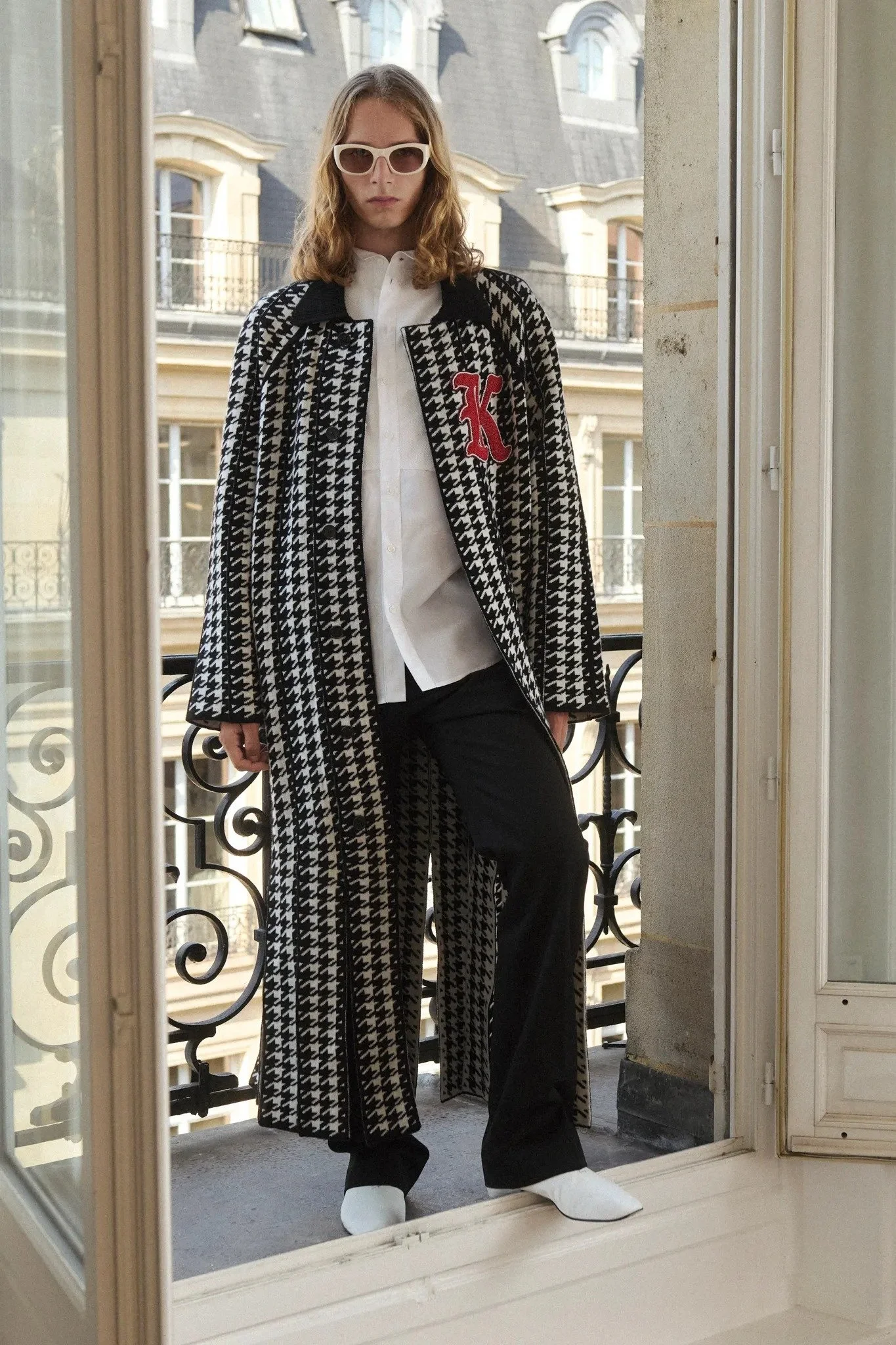
Oversized coats, long cardigans, knitwear, wide-leg trousers, and fluid dresses create an ease and laid-back aesthetic, while structured tailoring and military-inspired jackets give the collection a sense of structure and high-end design.

Layering is key in constructing an aesthetic that is creative and playful, but not overtly dramatic. The accents are on ruffled skirts and prints, while classic silhouettes help tone down the collection, giving it a more commercial and refined aesthetic.

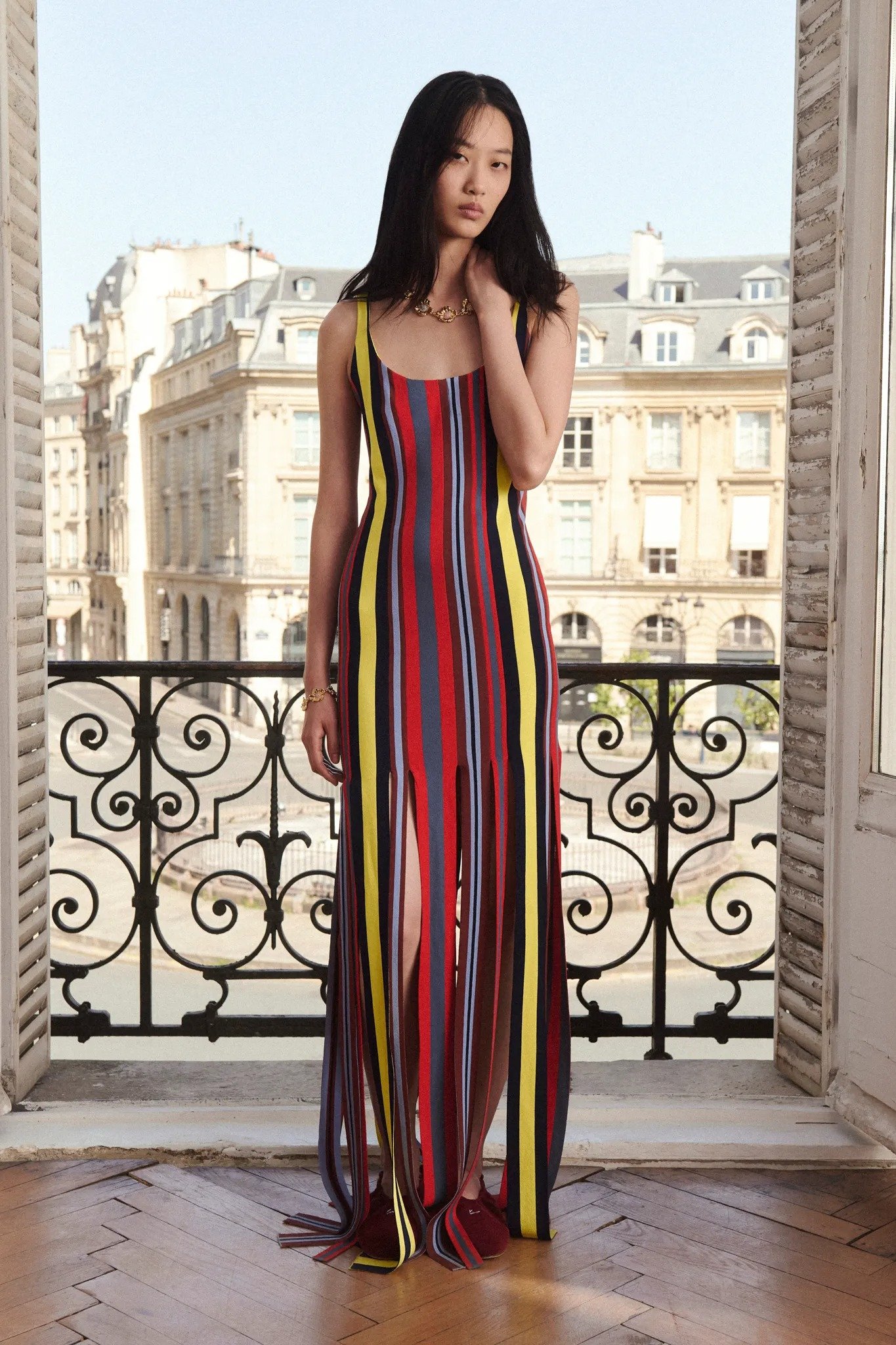
Colour helps create an ethereal feel. Bold stripes appear throughout, while vibrant combinations of yellow, navy, green, red, burgundy, and cream bring energy to the looks. Neutral tones such as camel, beige, grey, black, and ivory ground the offering.

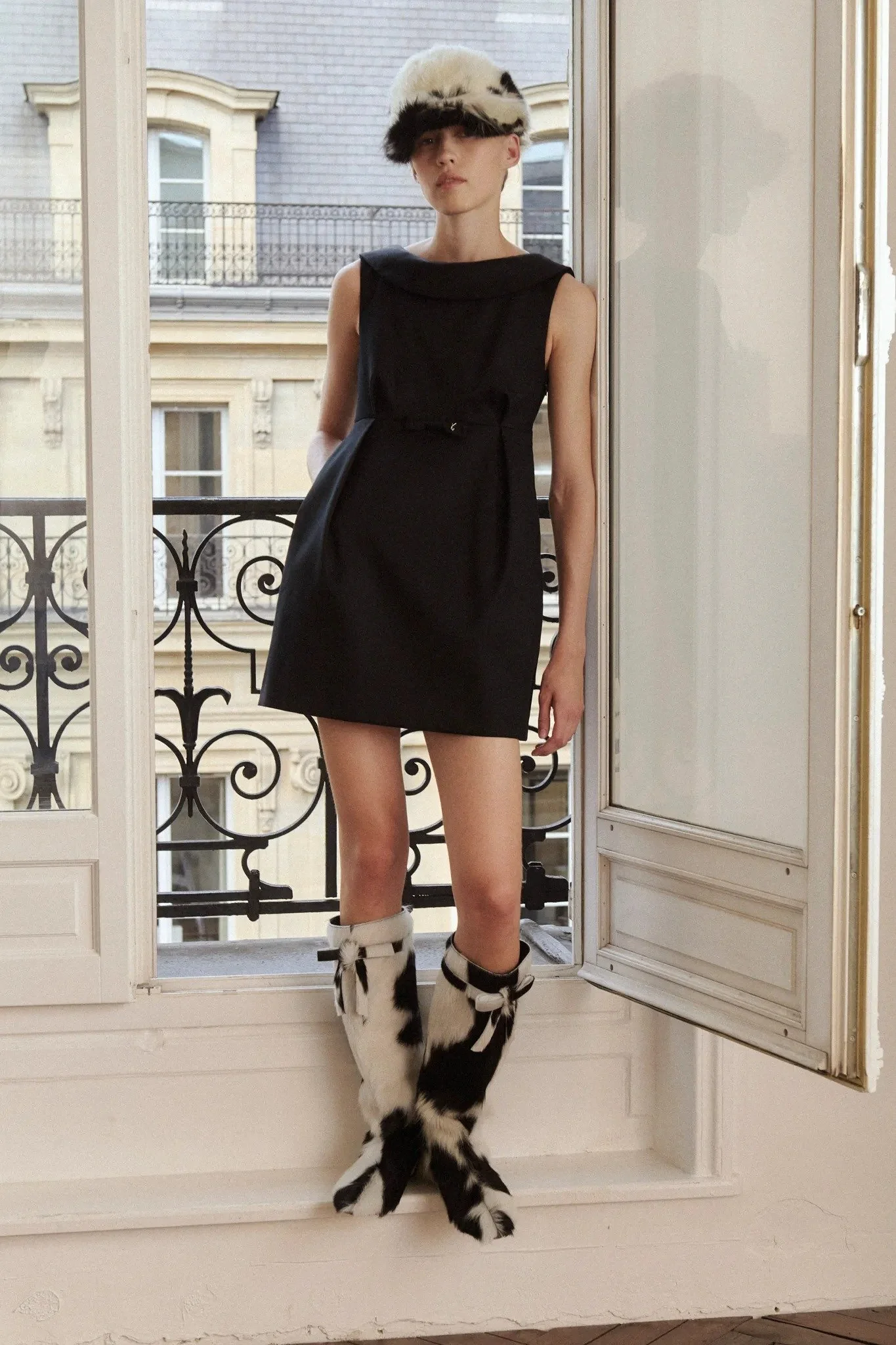
The collection balances romantic femininity with nonchalant masculinity through a series of fluid maxi dresses, lace-trimmed pieces, striped gowns, minis, and soft tailoring, which are styled with knee-high boots, oversized outerwear, and sporty accessories. This juxtaposition creates a femininity that feels modern and fluid rather than restrictive.

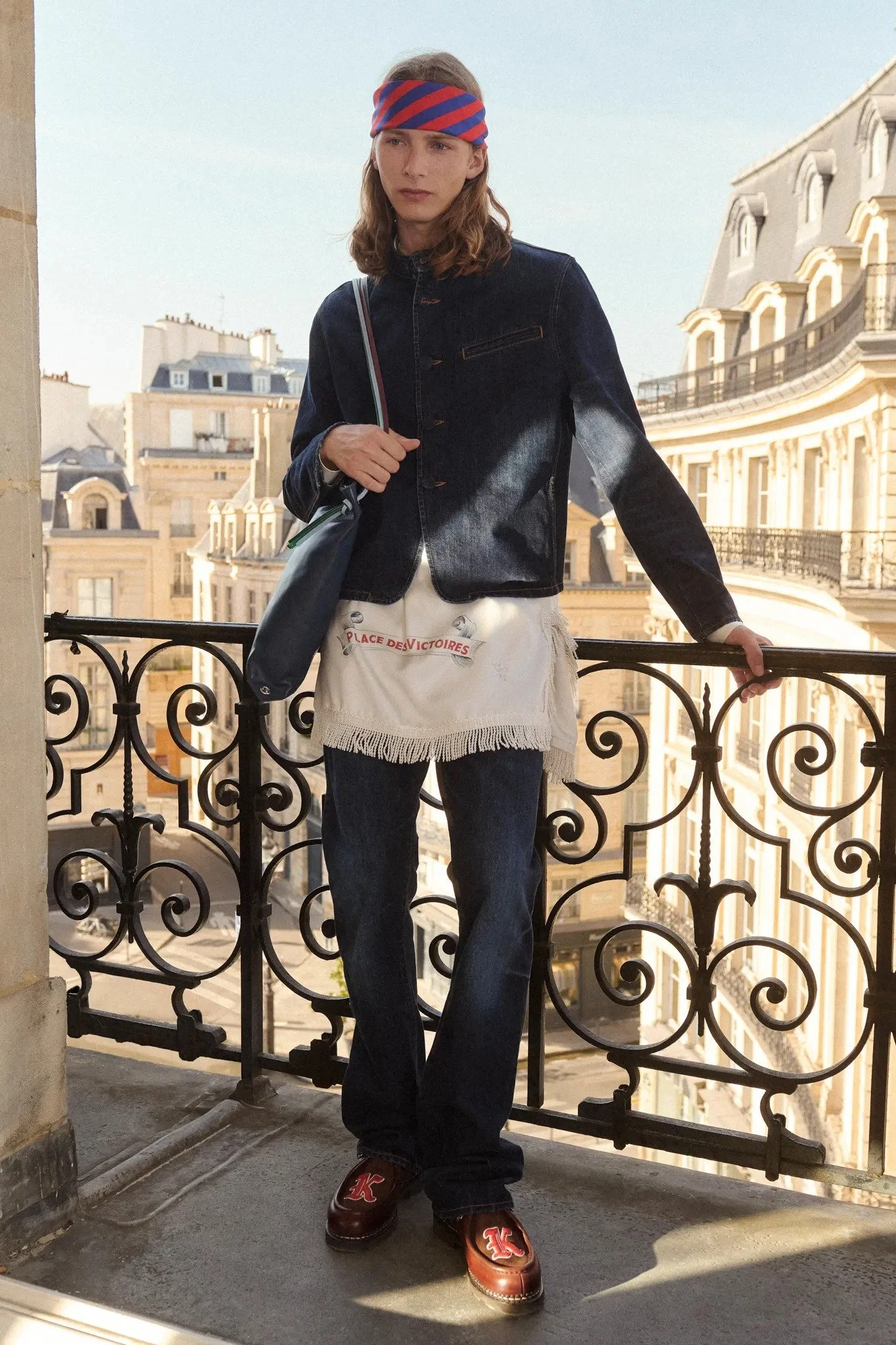
In the same way, traditional menswear codes are softened through hues, embroidery, and playful styling choices. Tailored jackets are paired with loose trousers, layered shirts, cardigans, and casual knitwear.


Words by Carolina Benjumea

LOUIS VUITTON SS27

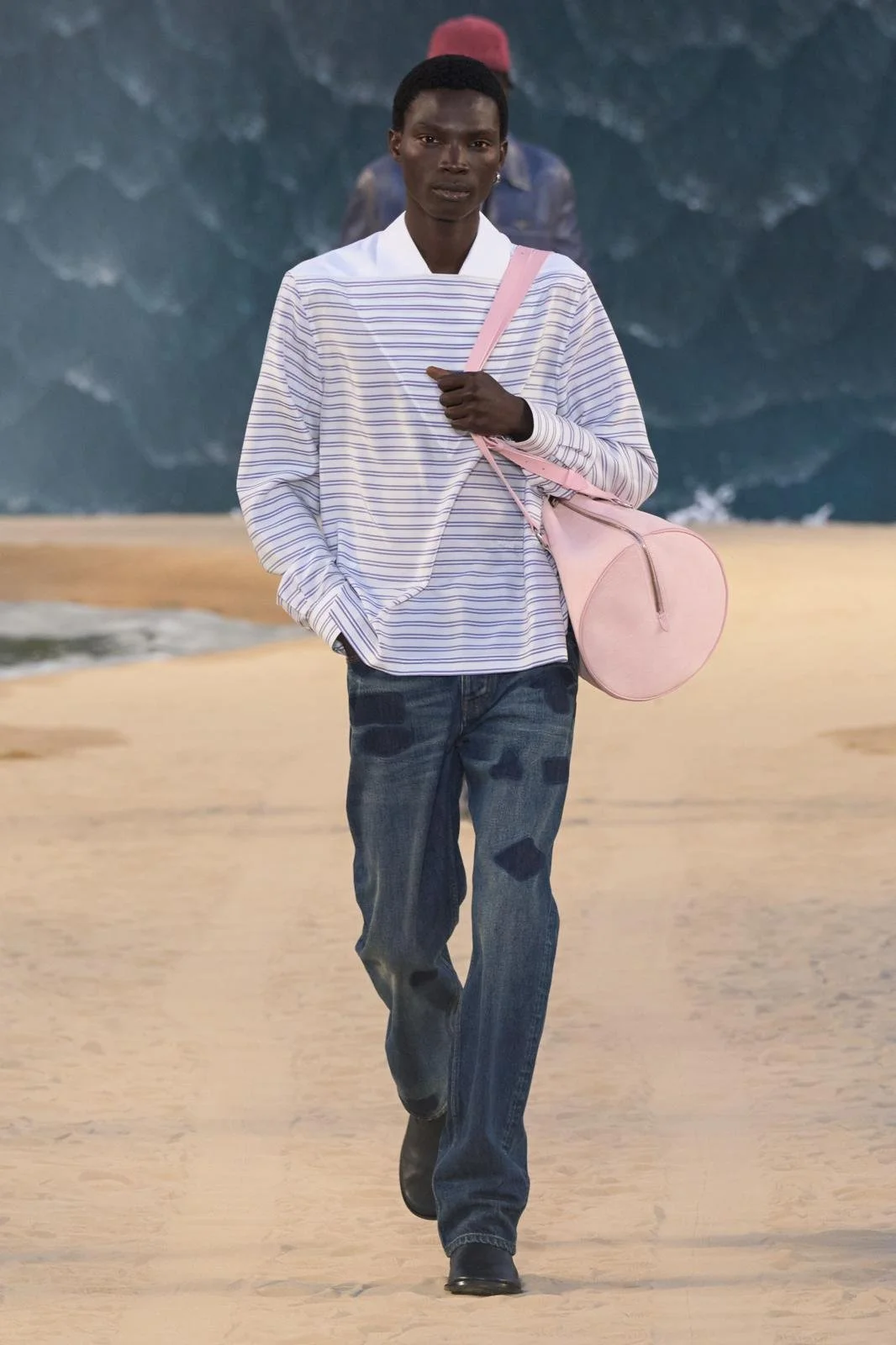
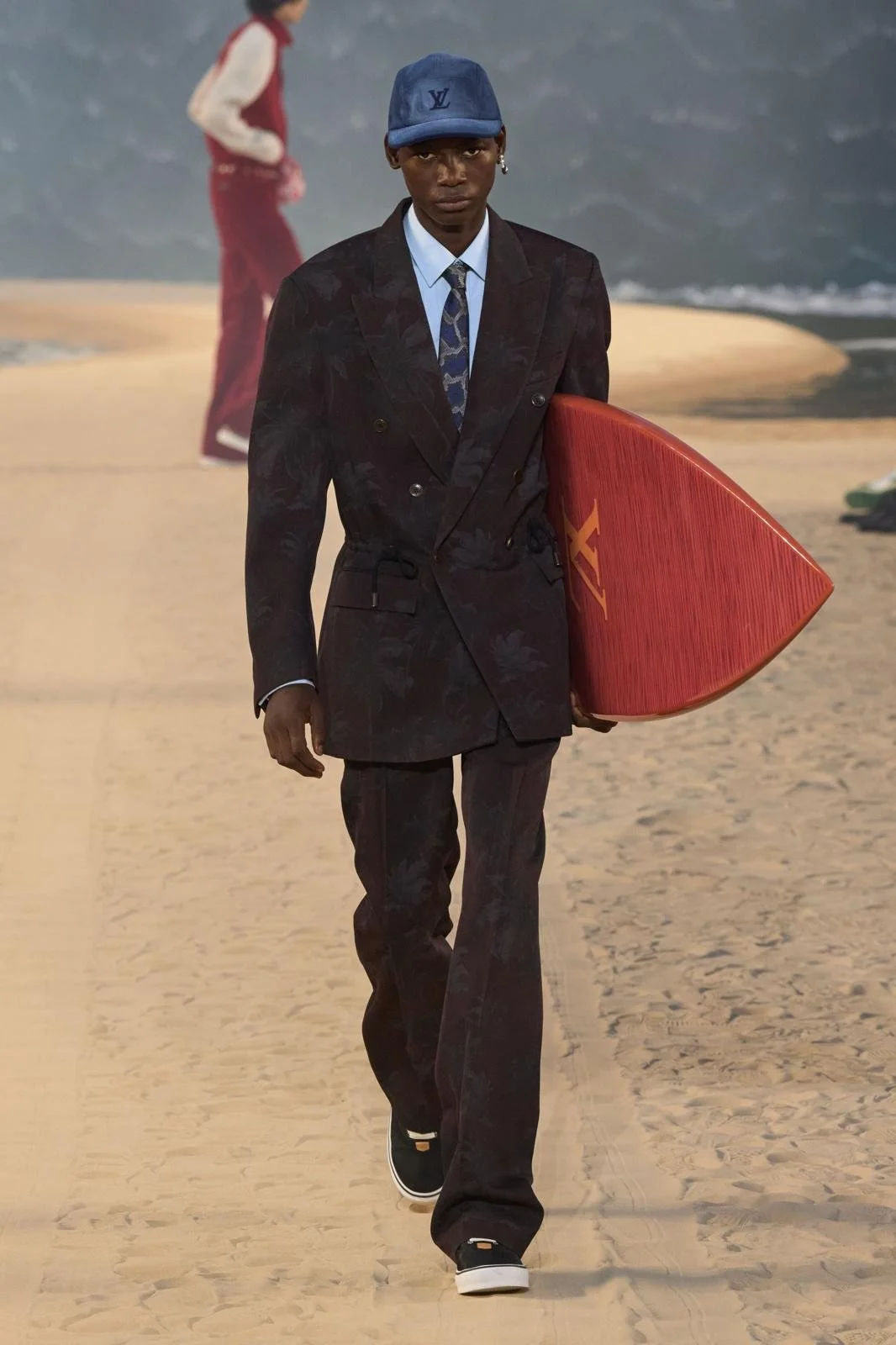
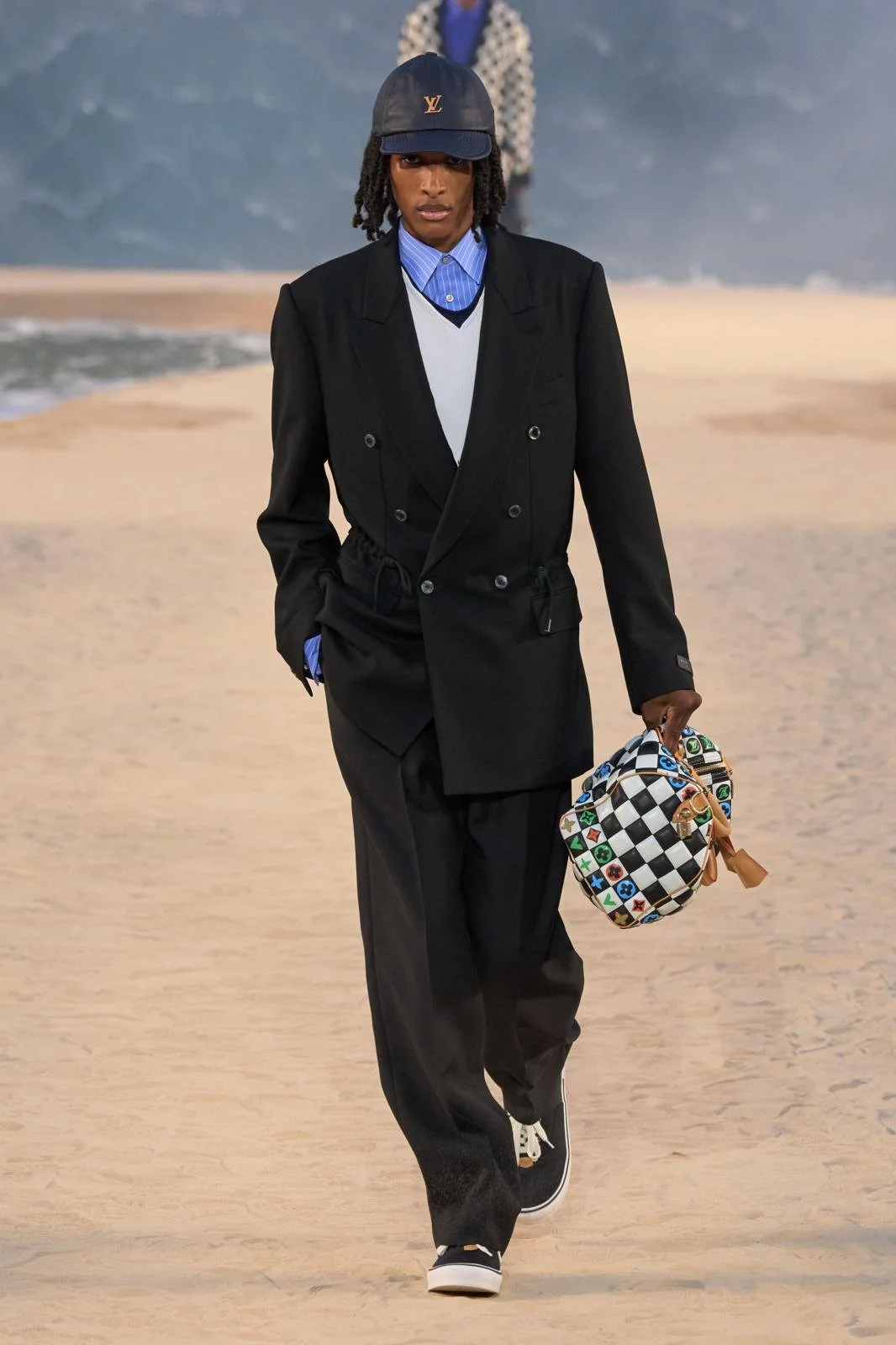
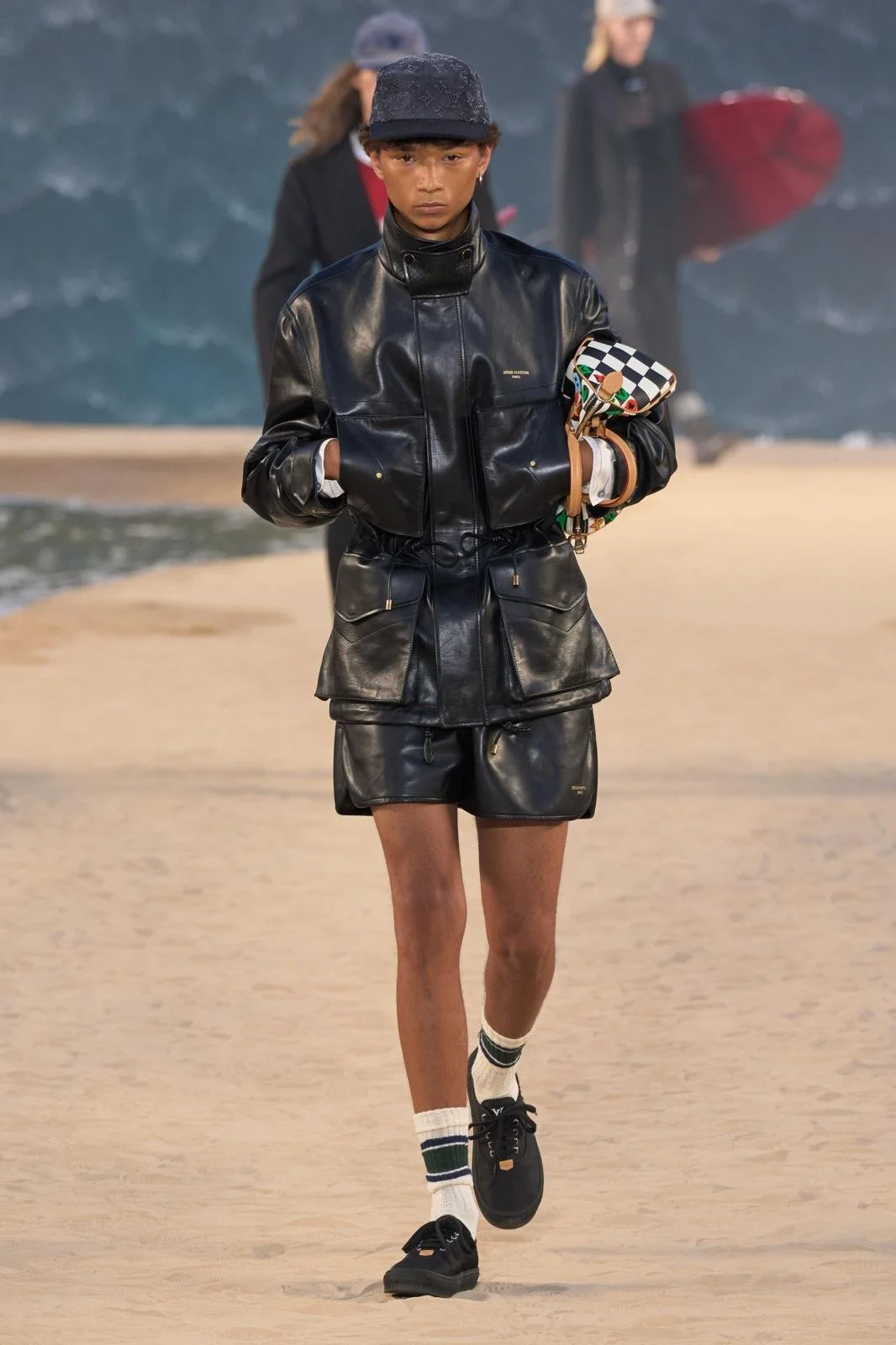
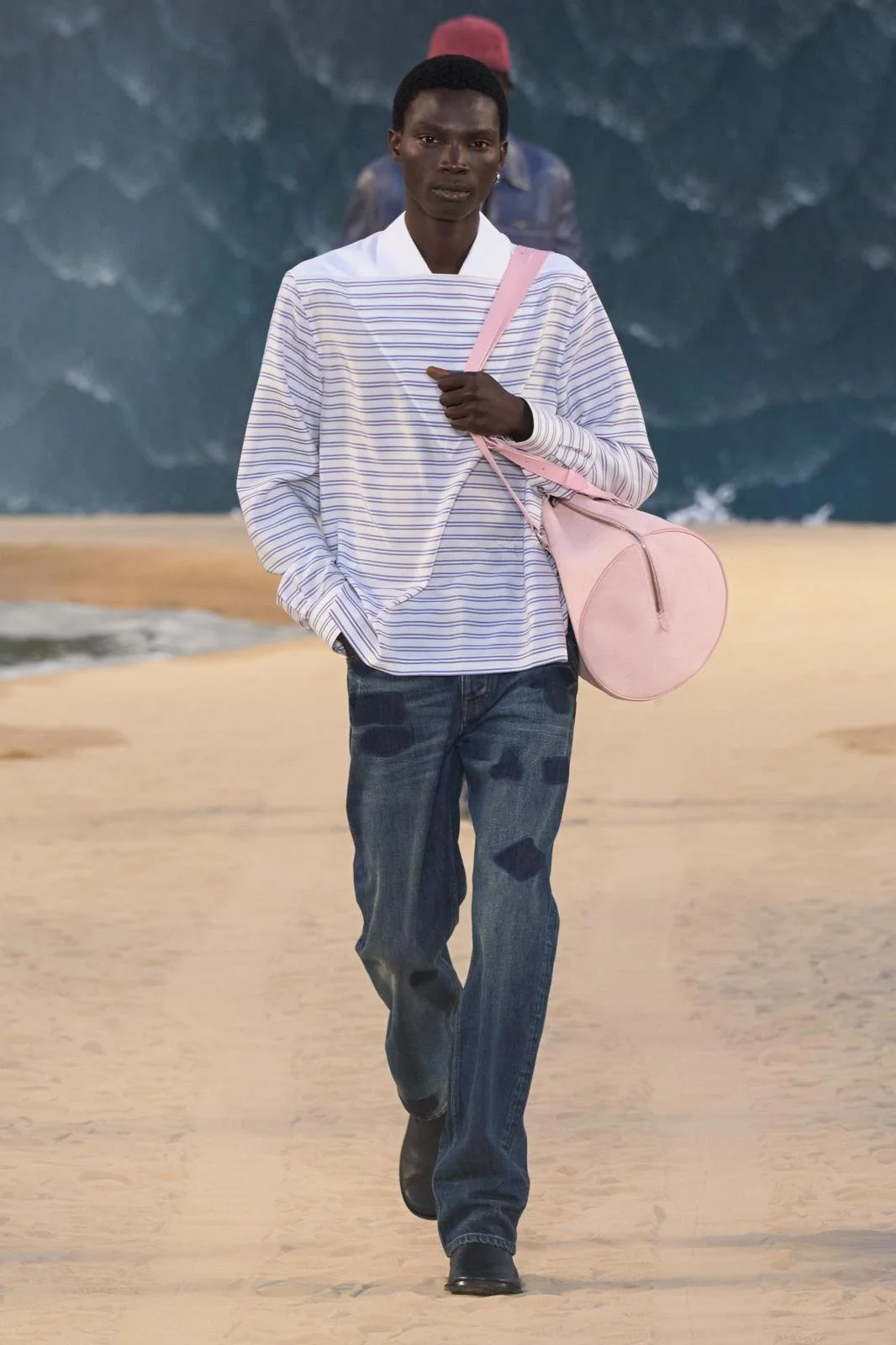
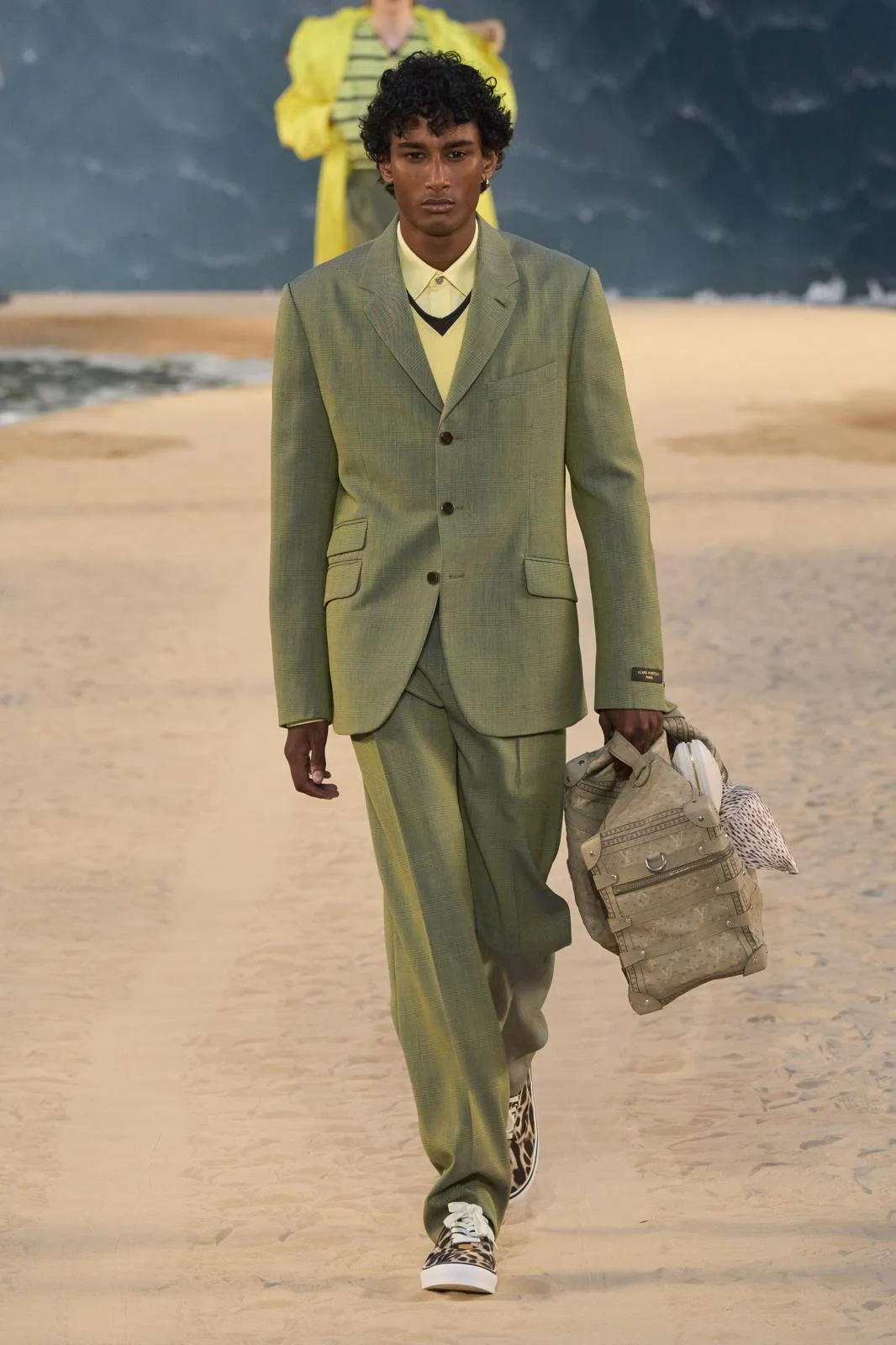
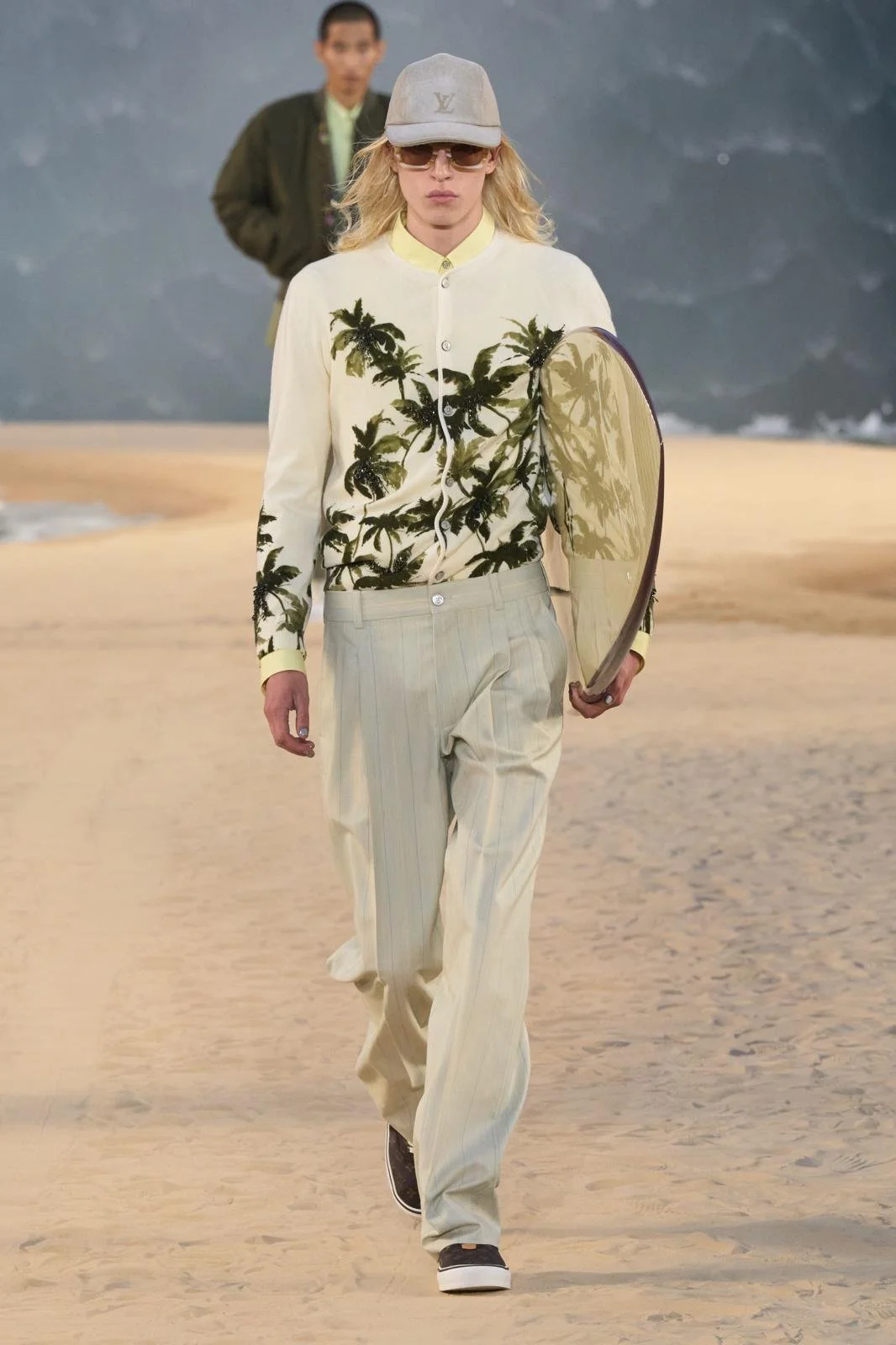
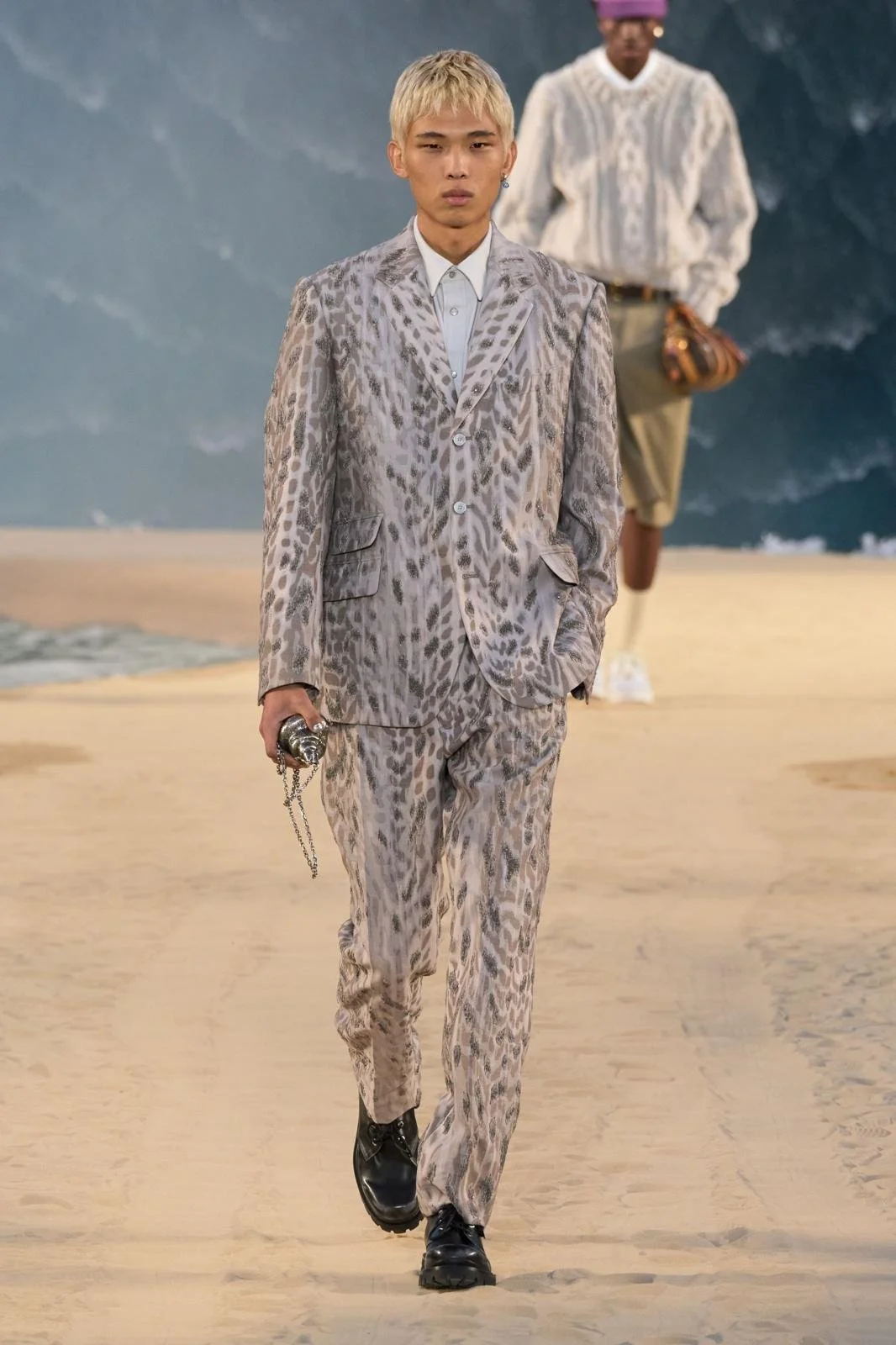
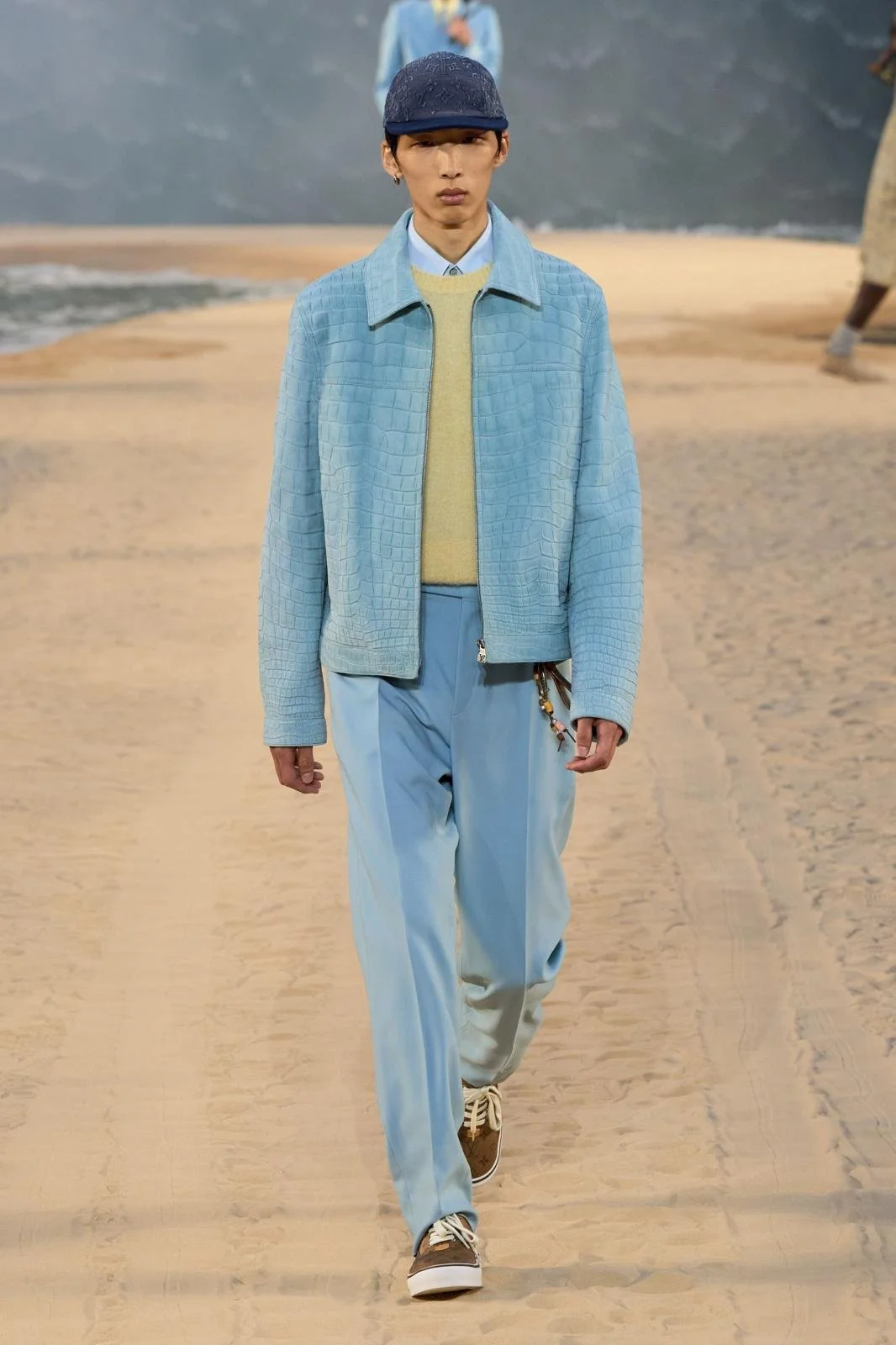
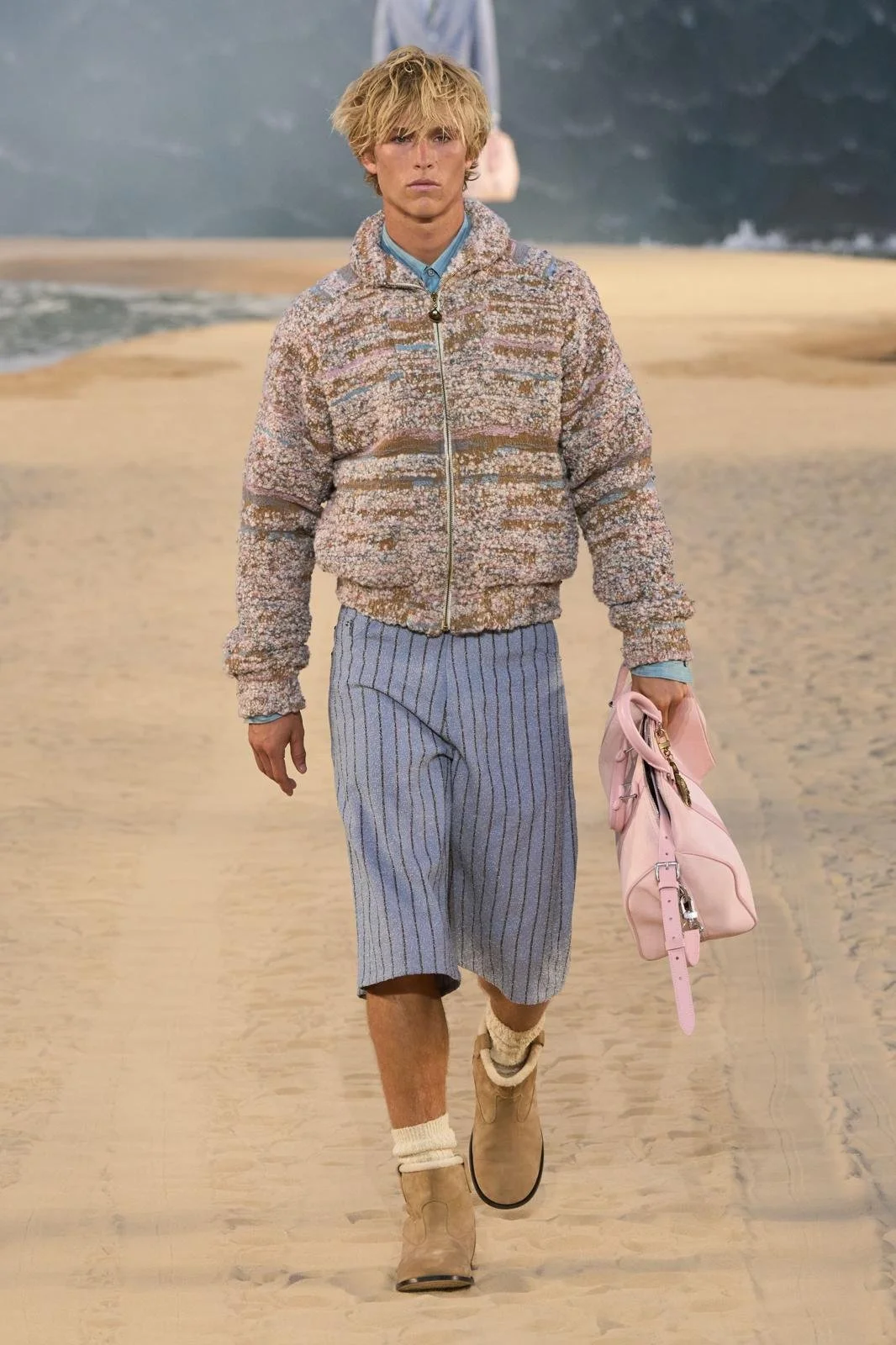
An extreme heatwave hit Paris during this menswear fashion week, making Pharrell Williams’ beach-themed show space for his Louis Vuitton Spring/Summer 2027 collection a timely match. With sandy floors and an impressive replica of breaking waves serving as a magic sea portal, models emerged onto the catwalk, capturing Williams’ mood for the season: surfwear at its finest, but still essentially Vuitton.

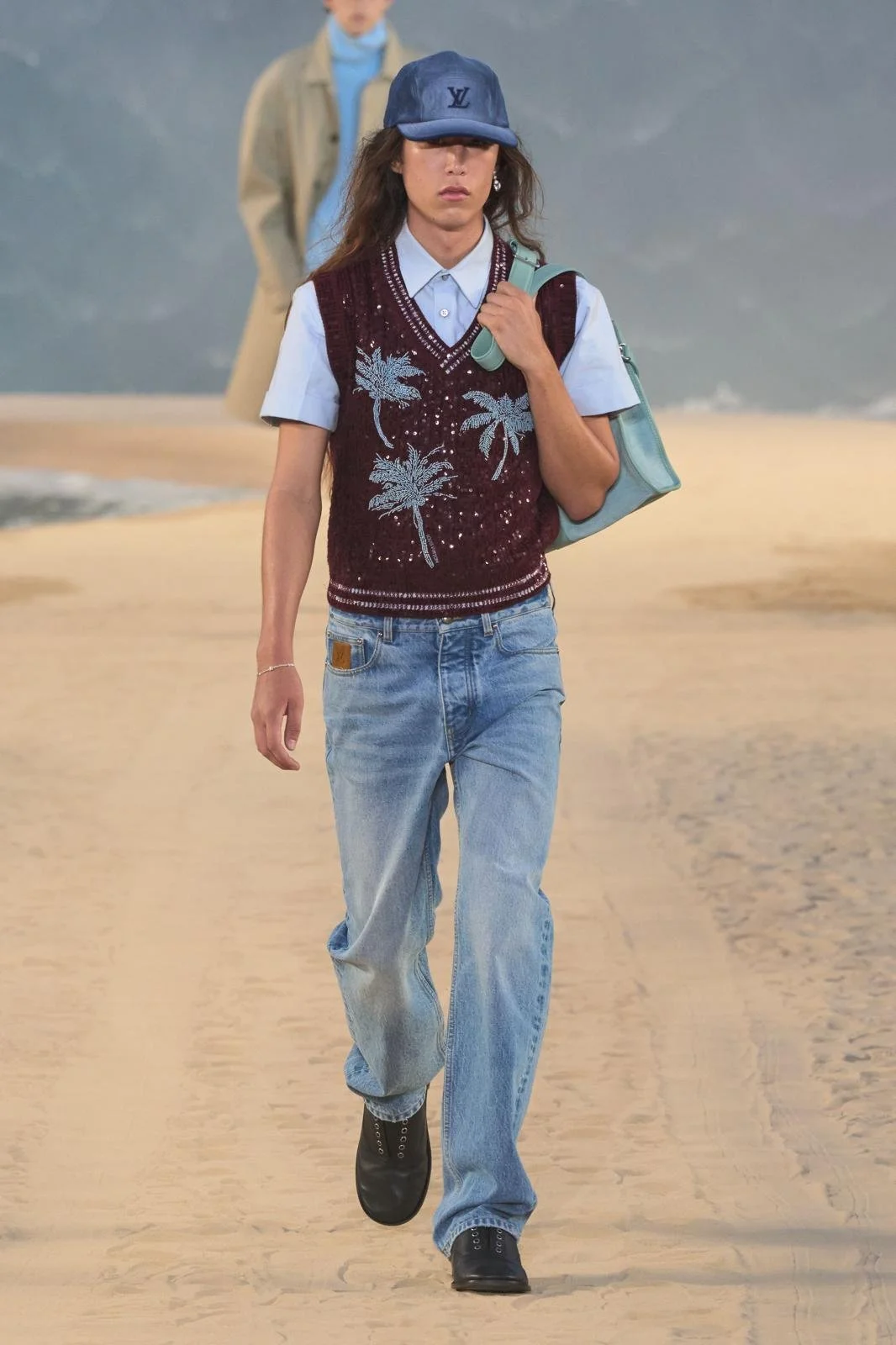
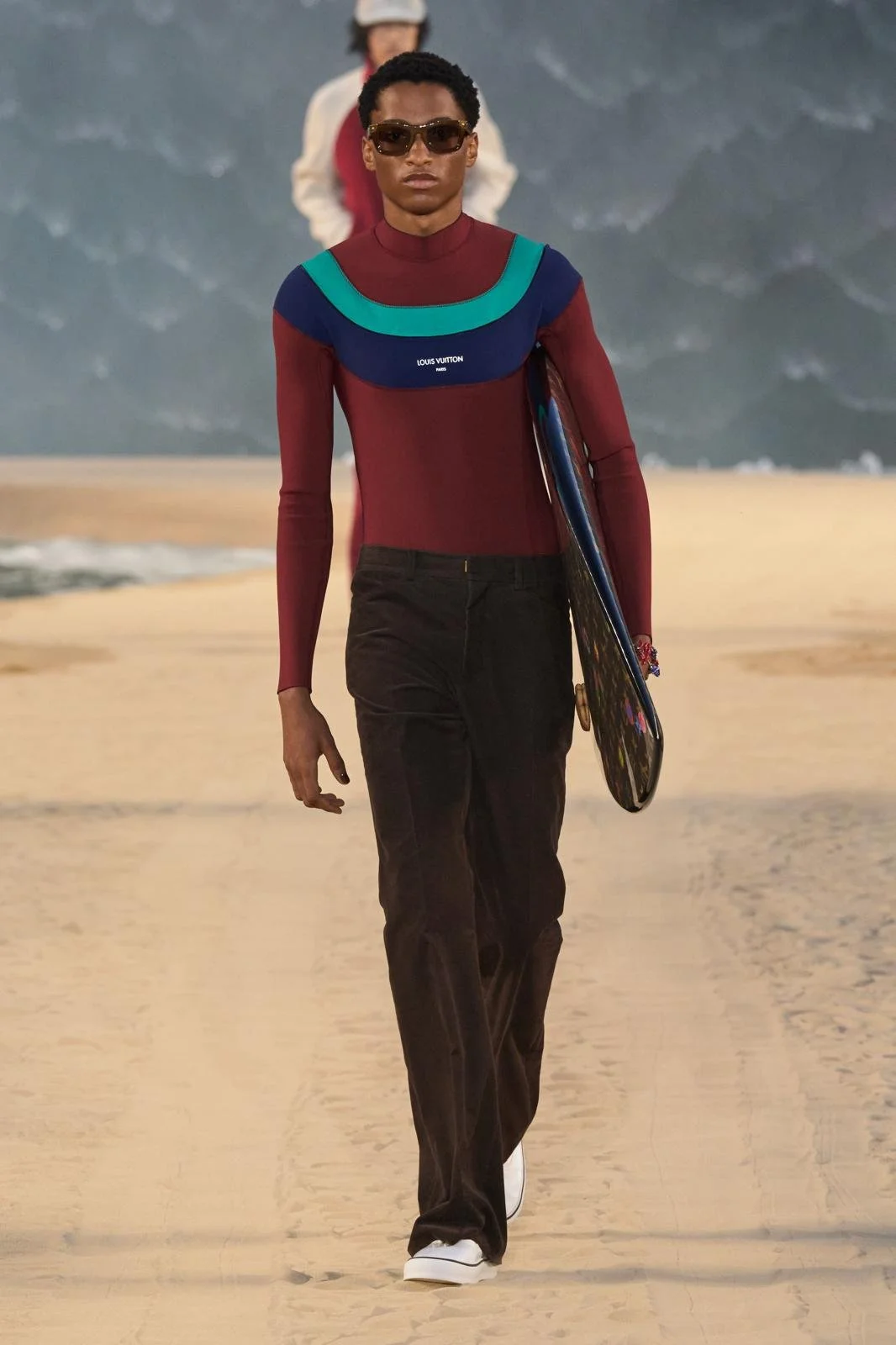
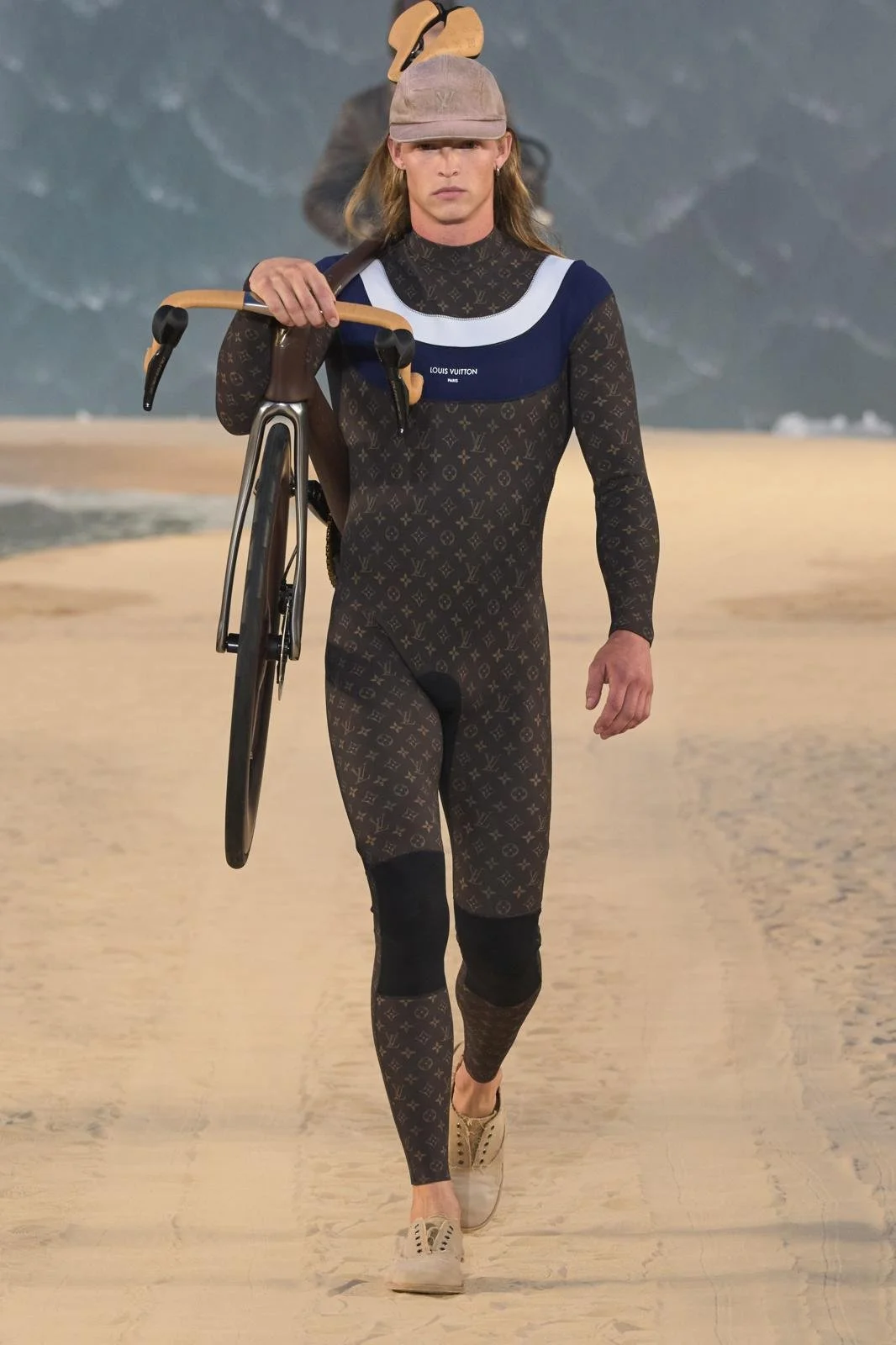
A more literal approach to the theme was shown through actual surfboards and wetsuits, both crafted in monogrammed and logoed versions. Pocket chains, keyrings, sea-themed bag charms, beaded necklaces, and a palm tree print, spotted on summer shirts, slouchier trousers, knits, and short shorts, all added to the vision.

Besides paying homage to surf culture, sports and streetwear influences equally merged with Williams’ modern-day LV dandyism. Skateboarding-style trainers were styled with suits and tailored trousers, and all sorts of baseball caps and hoodies were seen on most looks. Wearing a brown Vuitton wetsuit, one of the models walked the runway carrying a matching bike, also Louis Vuitton-themed.

Pharrell’s effortlessly upbeat, joyful ethos wasn’t left out of the show, now highlighted by his choice of colour and use of animal prints and textures, especially electric-hued crocodile and snake and classic leopard, the latter featured on a few trainers. Handbags in mini and maxi proportions naturally stood out, ranging from bubble-gum and hot pink to black-and-white chequered styles, the pattern also used on a knitted long cardigan.

Zooming in, micro-sequins promoted a glistening effect on wool vests, while patches were placed on jackets, nodding to skateboarding signifiers. Denim was doubled, embroidered, slightly faded and ripped on the hemline.

The Louis Vuitton leather trunks, a historical maison element and one of Williams’ revived signature pieces since the beginning of his tenure as menswear creative director back in 2023, appeared six times during the show. In different iterations, they were all carried by models wearing an ecru Louis Vuitton 'Équipe' uniform-style buttoned jacket, with one of the trunks featuring an underwater landscape. Diving into Vuitton’s spectacle is always a refreshing way to escape the heat.


Words by Ketlyn Araujo

SAINT LAURENT SS27

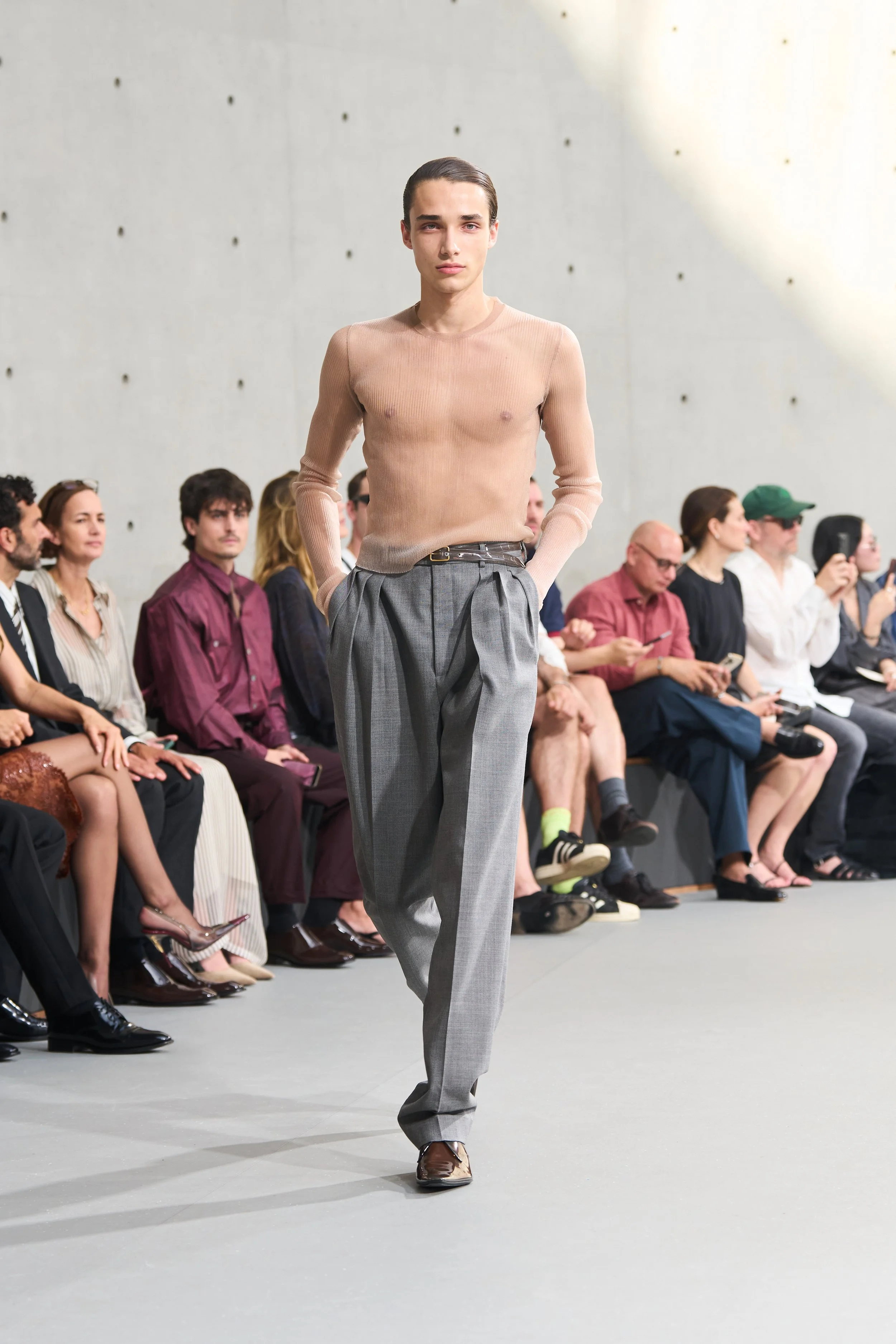
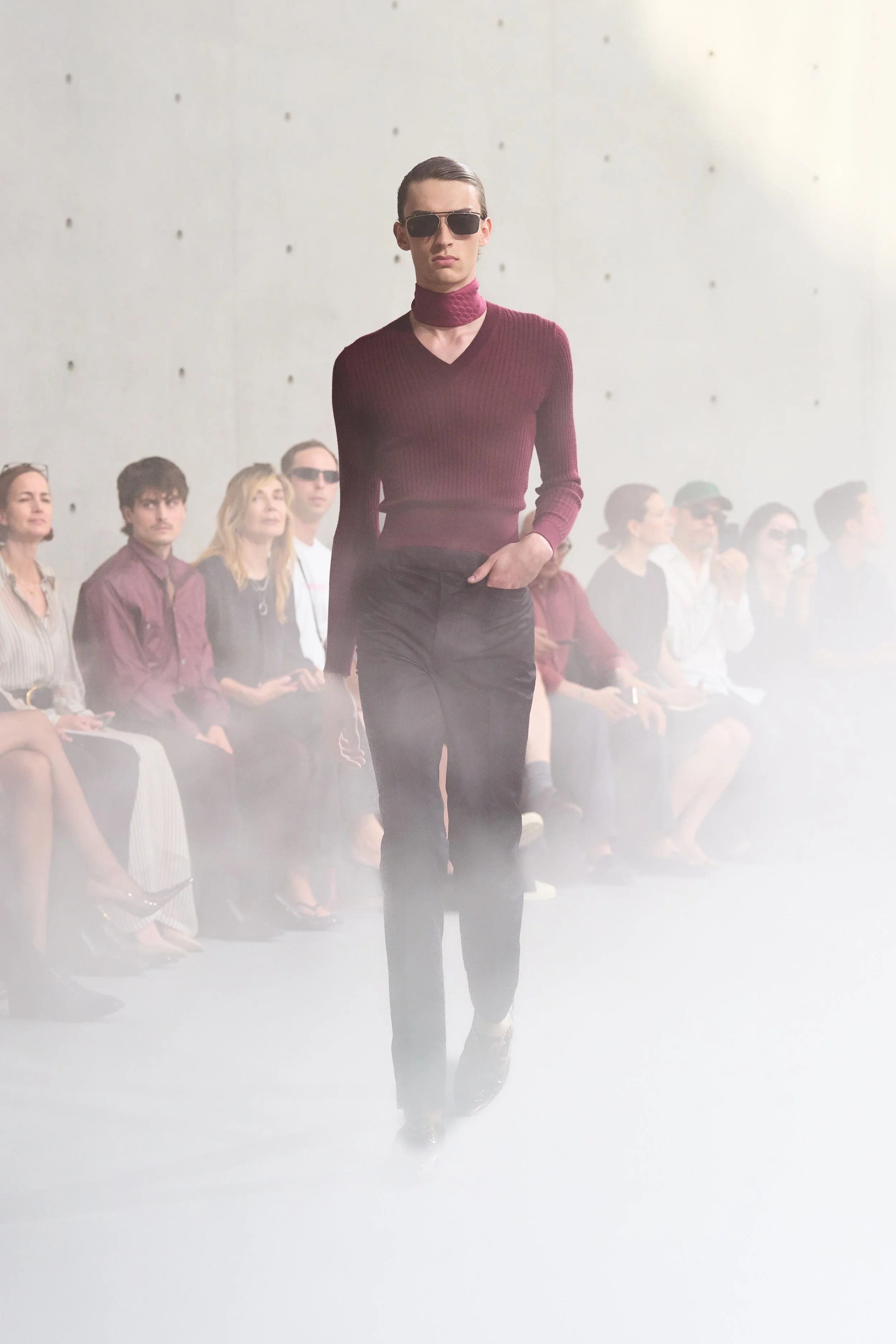
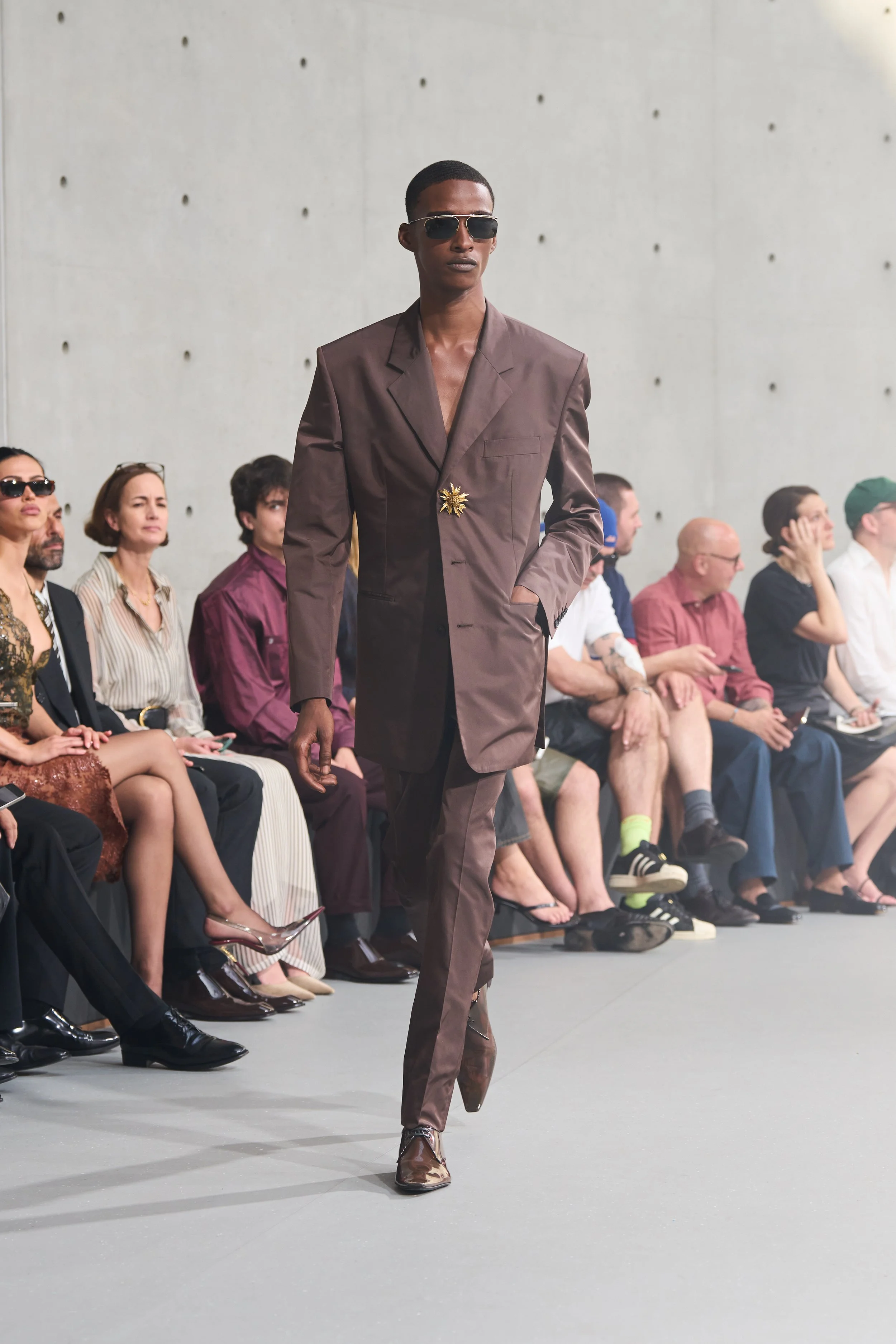
Anthony Vaccarello seduces easily. That much is expected. What remains interesting is how the designer continues to find new objects of desire. For Spring/Summer 2027, it wasn't spectacle or provocation that carried the collection forward, but the subtle interjection of masculinity.

The designer’s engagement with queerness has long been central to his work at the maison, especially as it pertains to menswear. In previous seasons, Vaccarello has referenced icons like Robert Mapplethorpe or even Yves Saint Laurent himself. This season, however, queerness surfaced less through explicit references than through the archive and the subtle reference of womenswear codes.

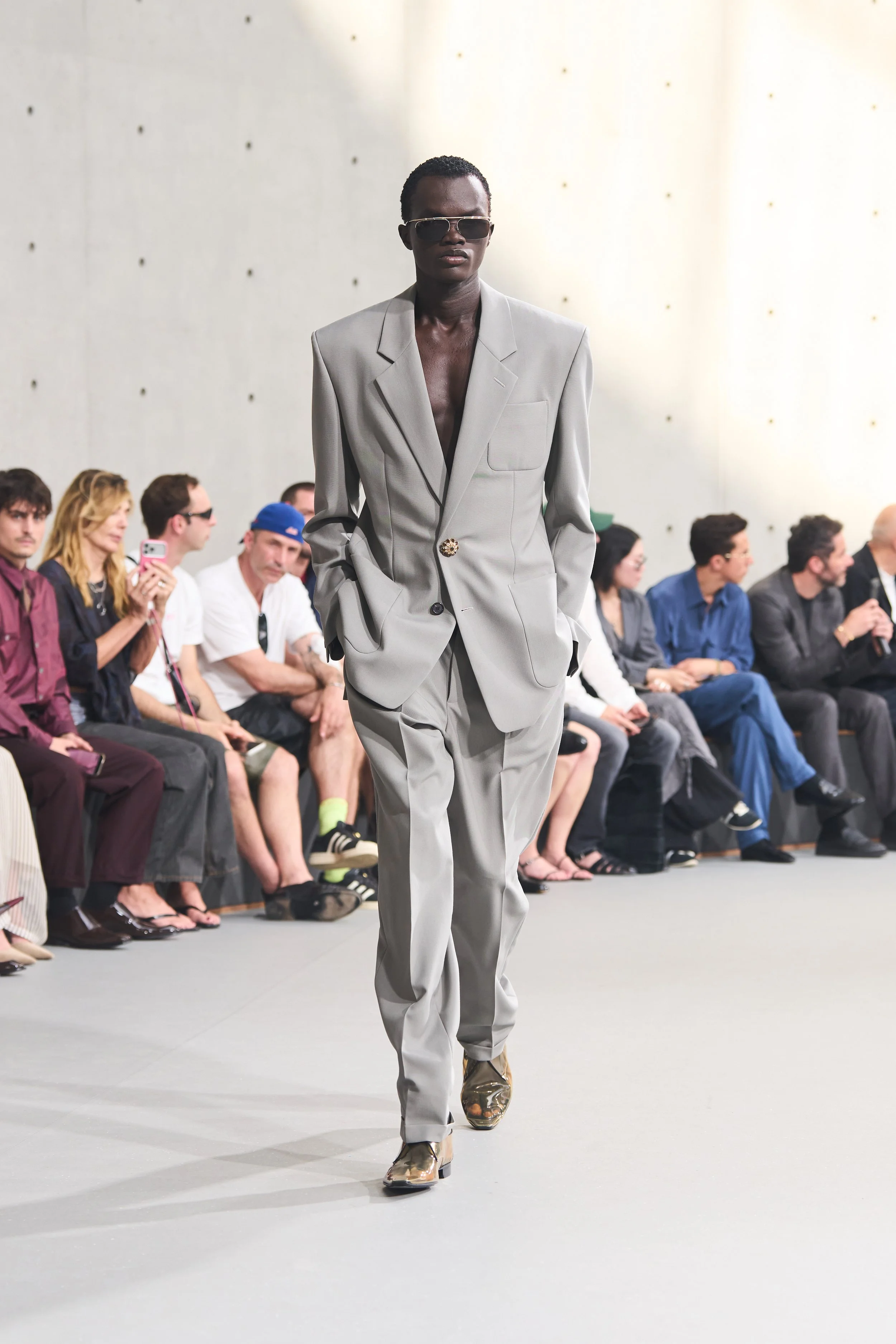
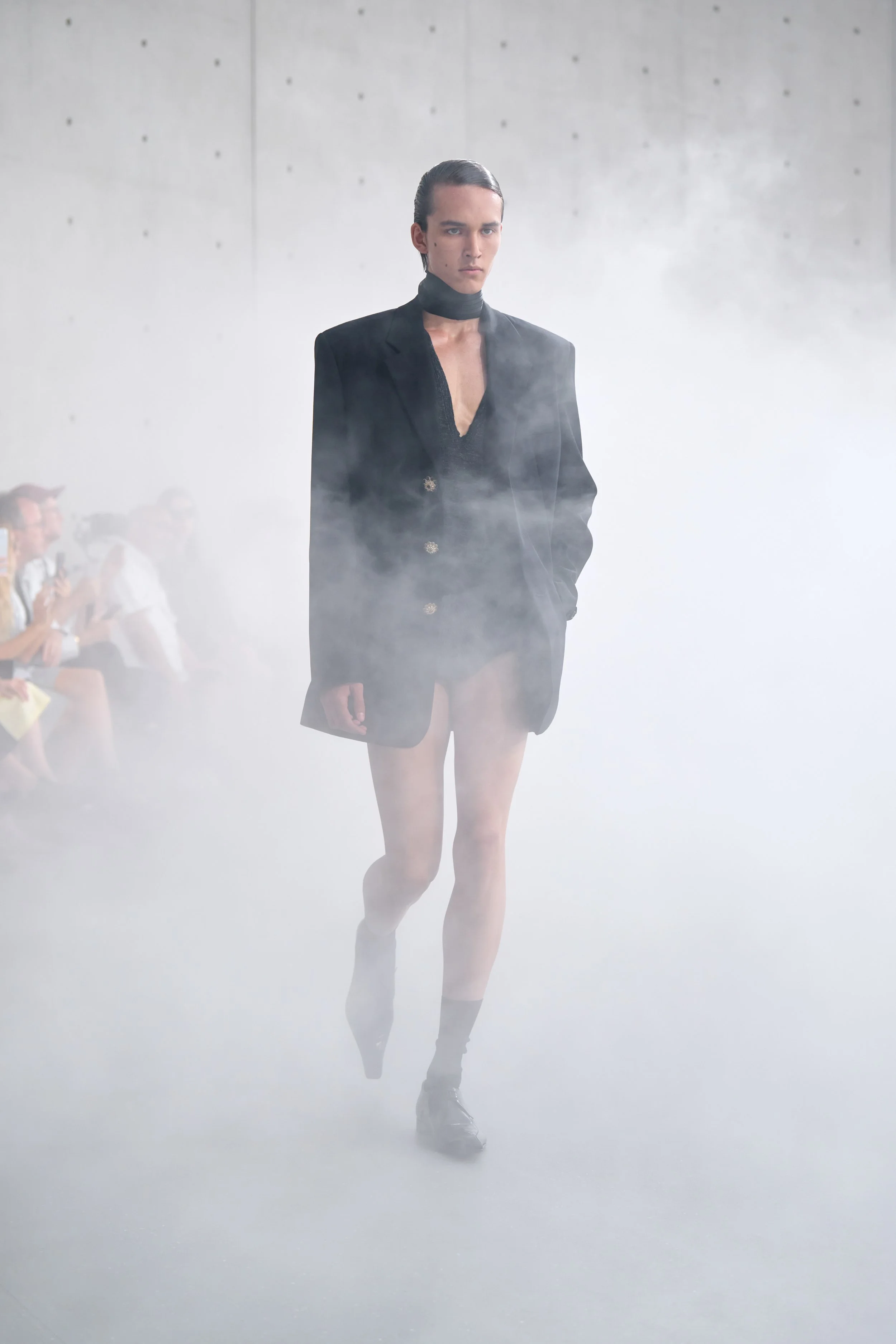
Classic tailoring provided the foundation. Gold buttons on sharply cut jackets were opulent, certainly, but they also carried a distinctly feminine charge. Elsewhere, jewelled embellishments twinkled across slim two and three button jackets, introducing softness into otherwise traditional silhouettes. At first glance, the pieces appeared conventionally masculine, but from a far, the little twinkling buttons relieved that pressure. The idea was reinterpreted in a tailored jacket adorned with a gilded button shaped like a spiky flower.

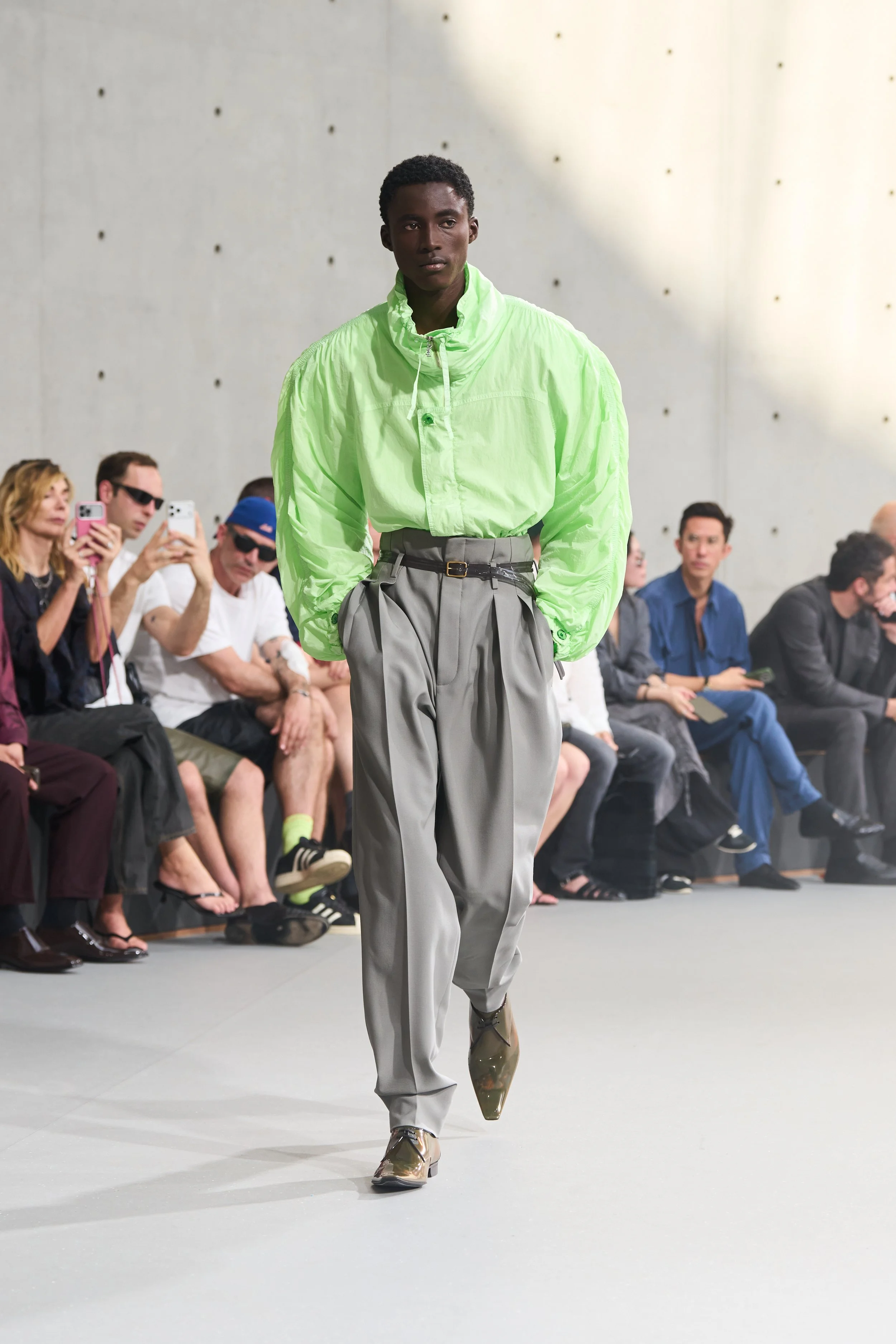
The push and pull of classic and playful is at the centre of Vaccarello’s work. Like womenswear before, sportswear becomes a means to that end. Pastel nylon parkas were tucked neatly into tailored trousers, reconsidering notions of informality. Granted, these were given the Saint Laurent treatment, with padded, rounded shoulders. Backstage, Vaccarello described sportswear as a new frontier.

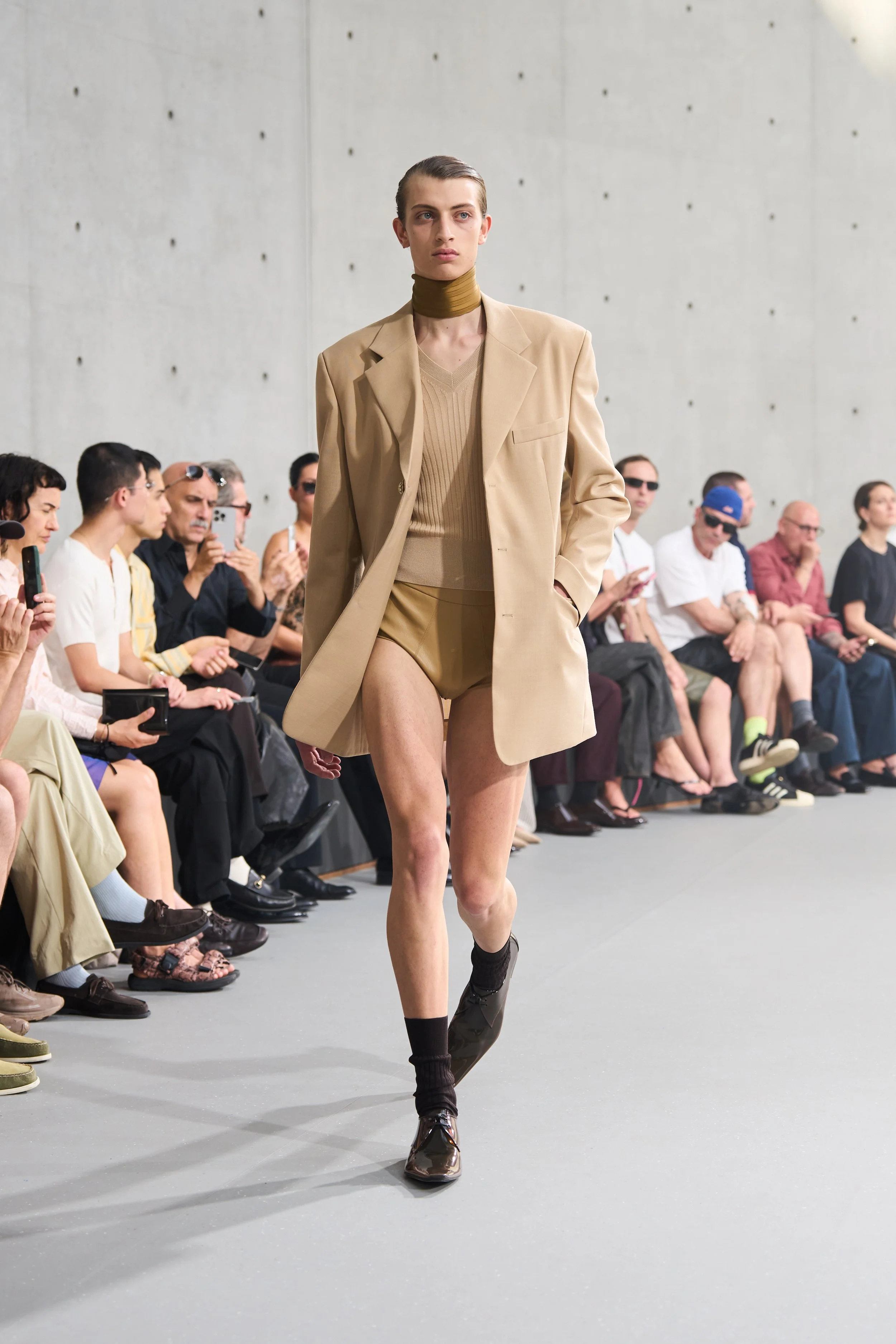
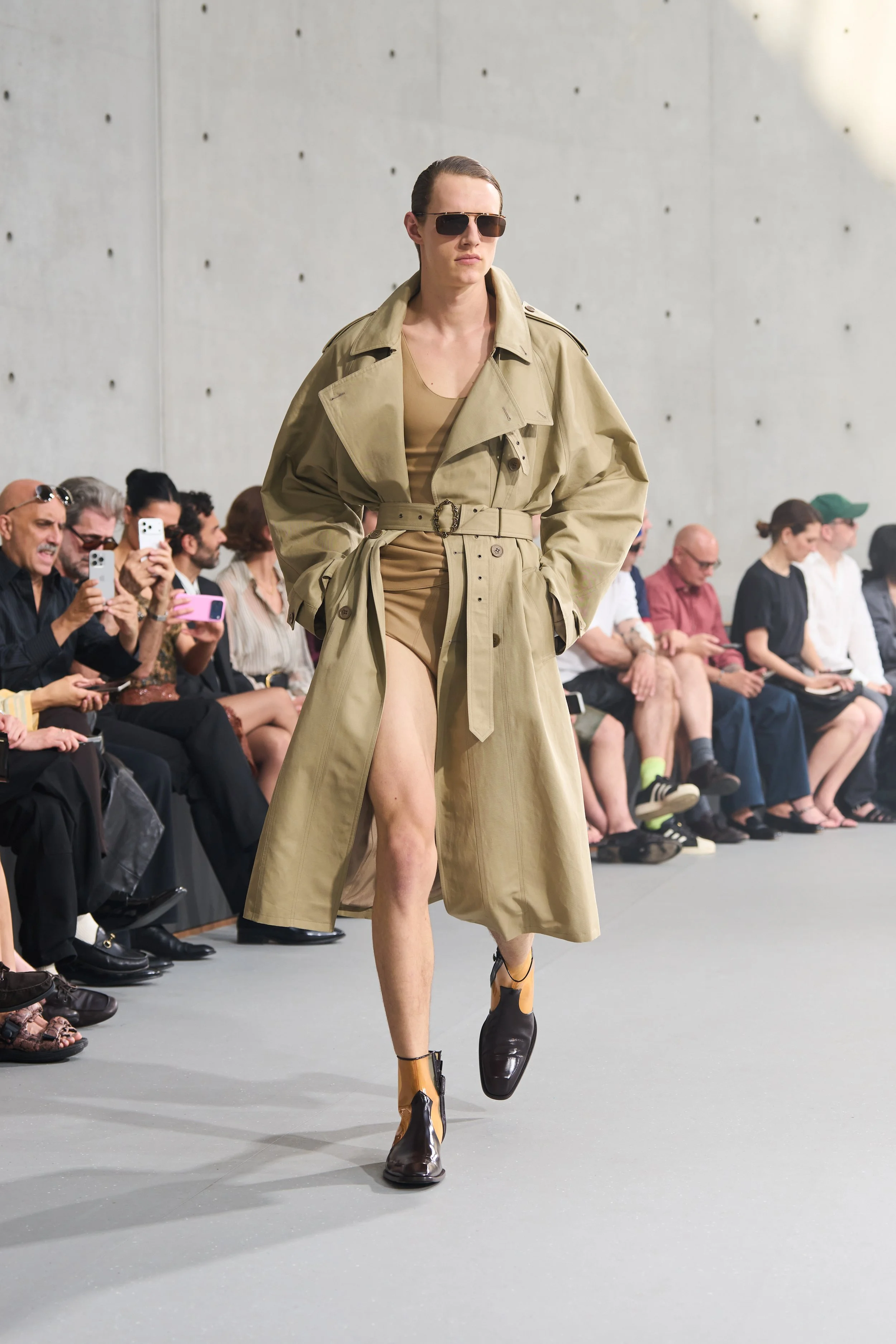
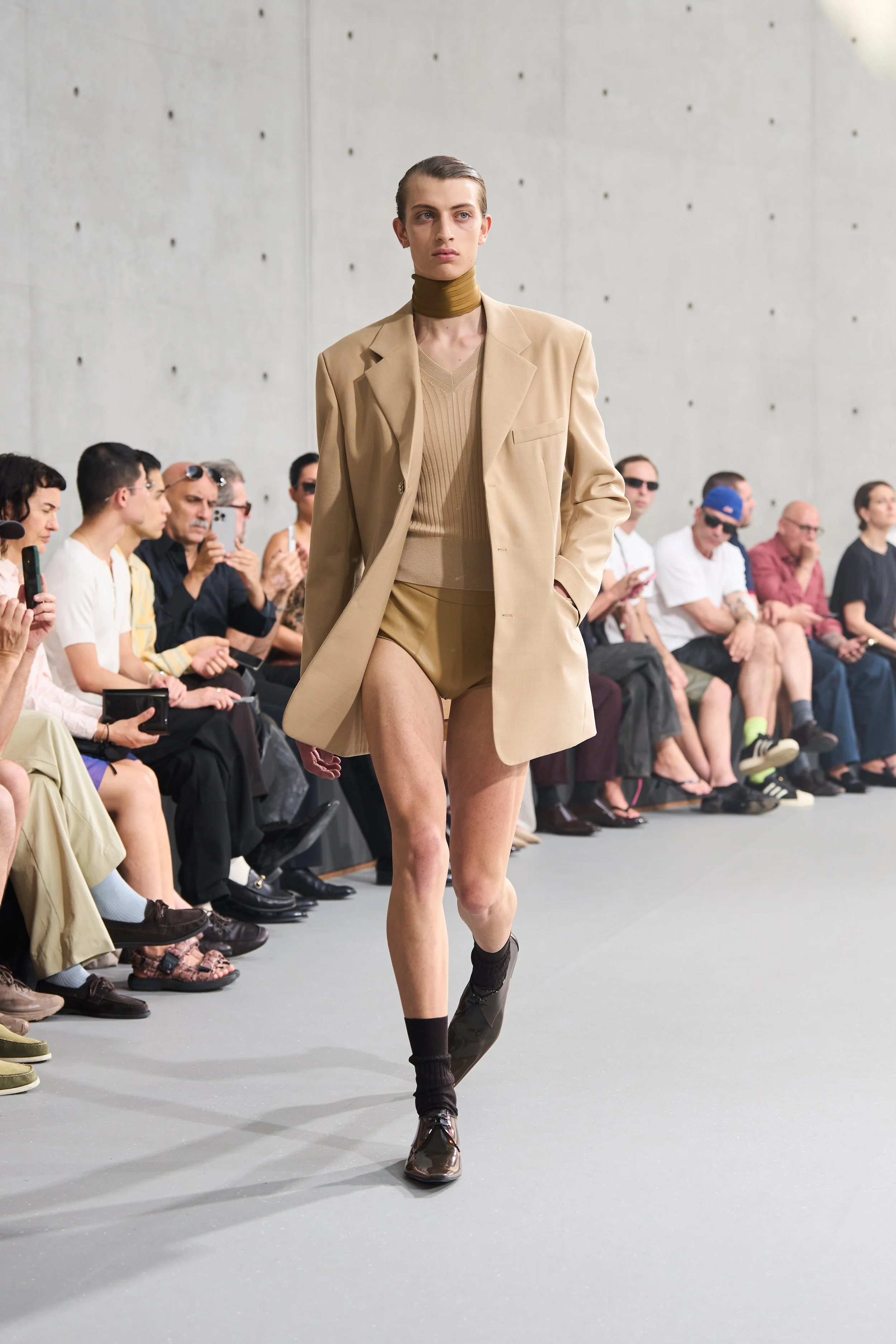
Apropos of the heatwave that has come to define this season’s shows, the collection featured knitted and leather briefs. Perhaps not so appropriate for the heat, but equally as interesting, were the see-through derbies seen on multiple models. On the topic of footwear, elongated toeboxes and reptilian quarters were undeniably strong.

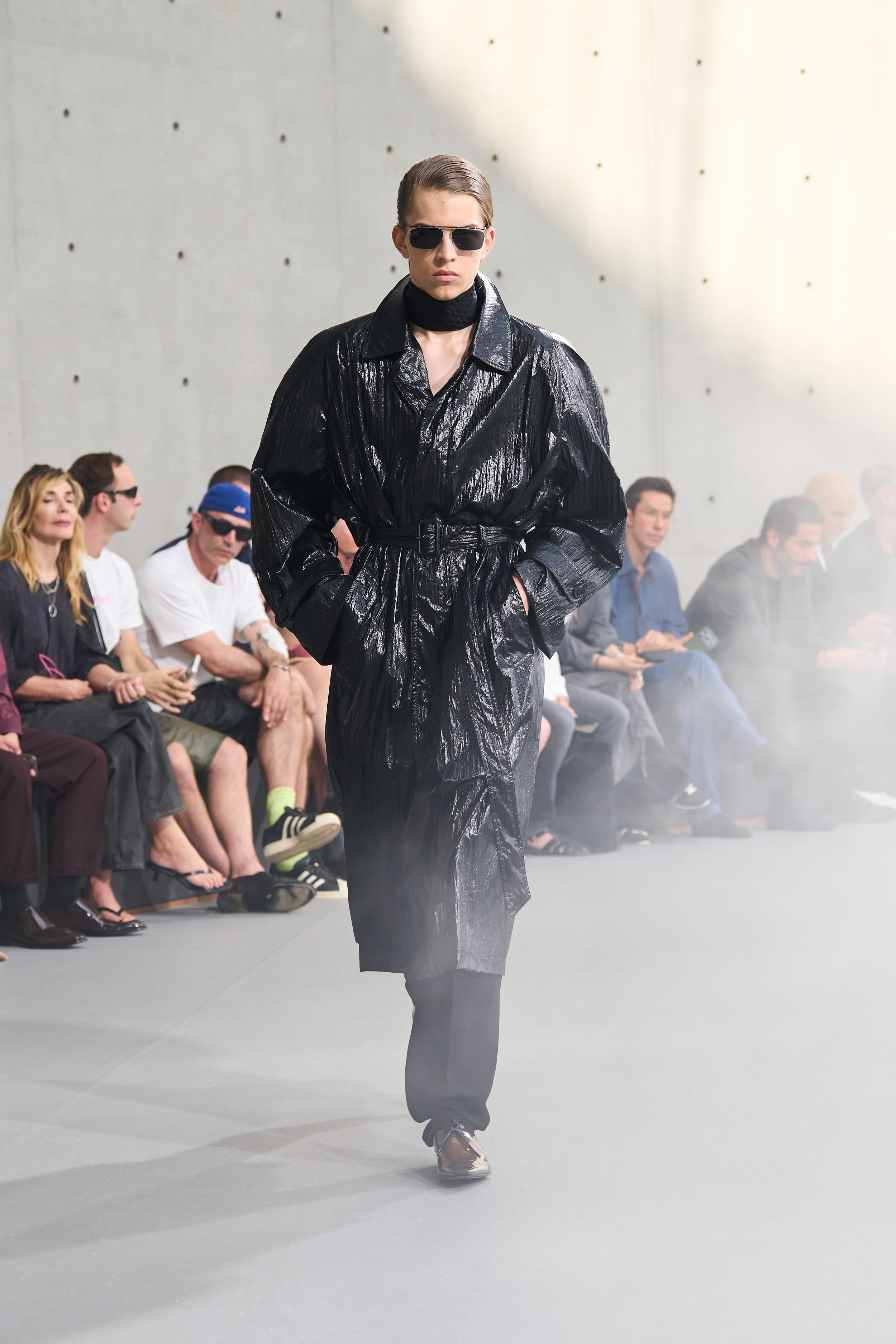
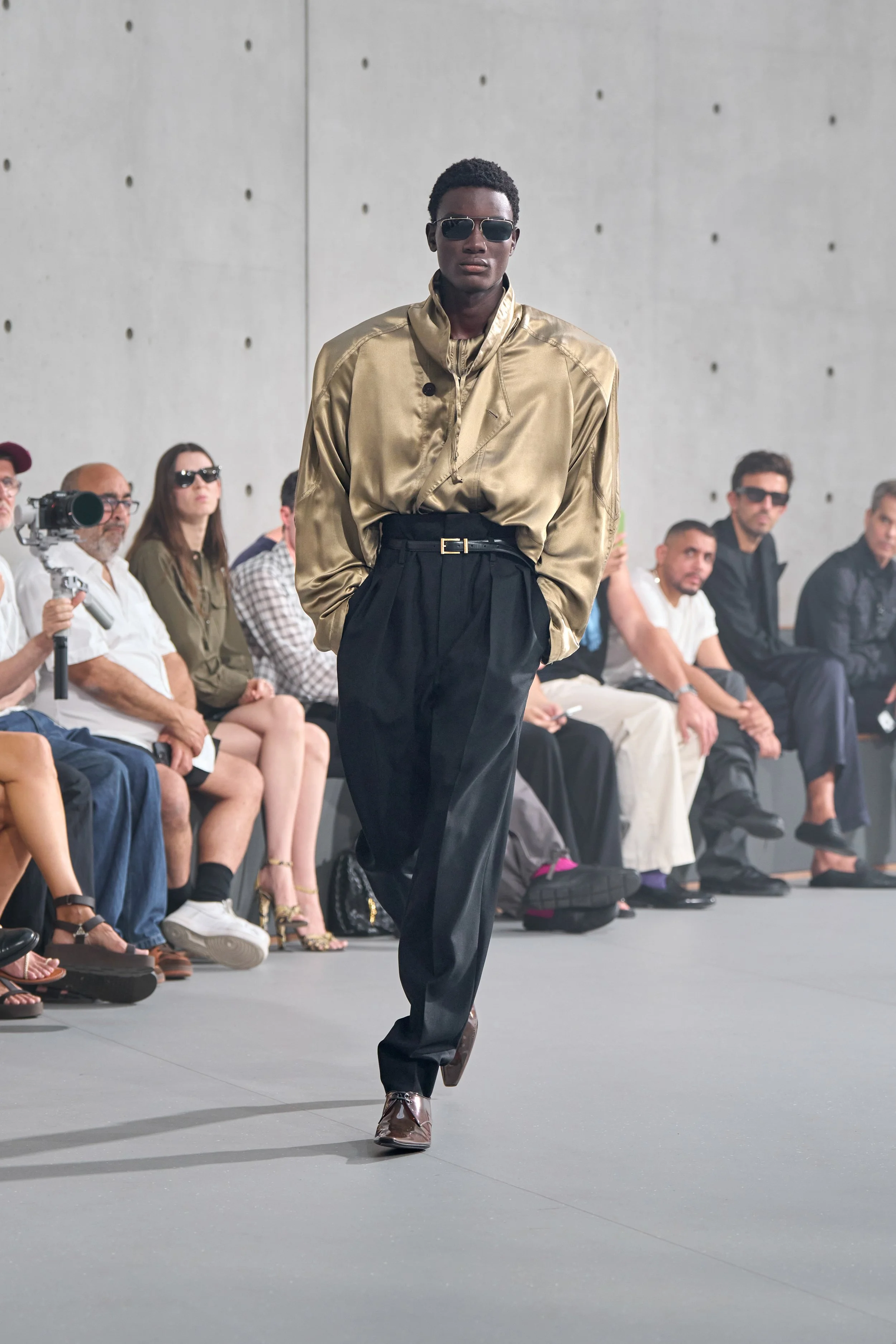
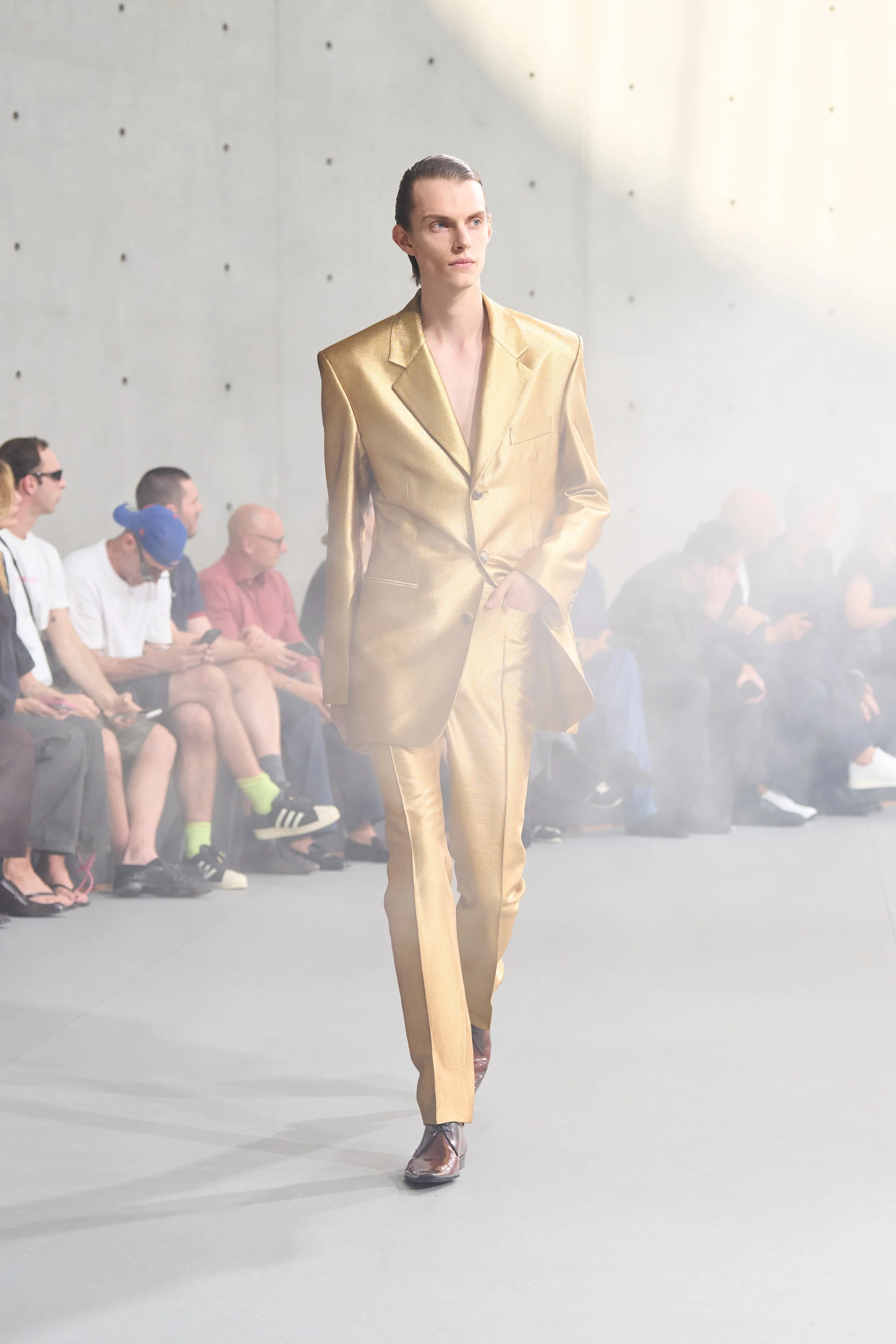
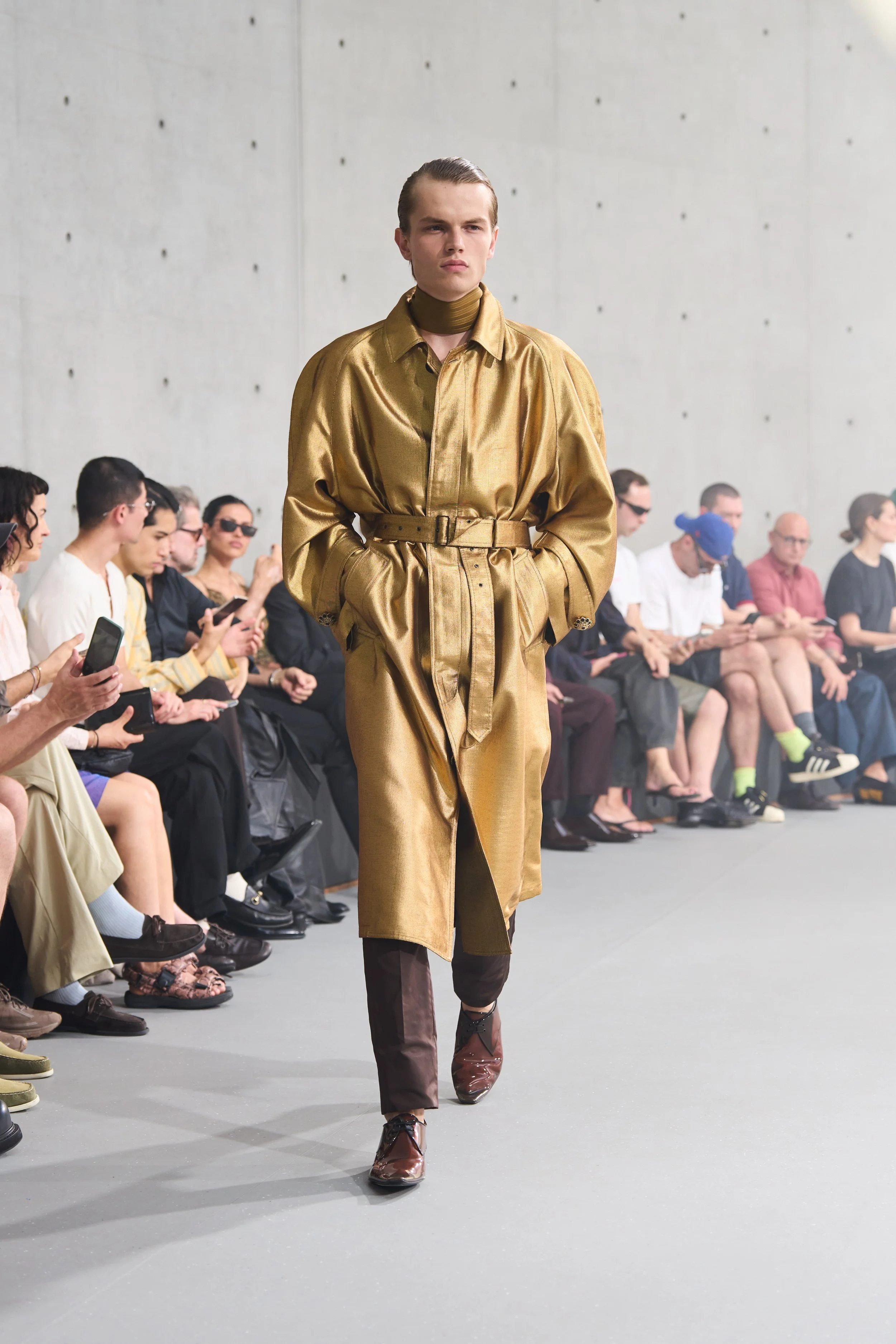
The show concluded with a trio of golden looks. A rounded-shouldered coat, a gleaming suit and a belted trench coat capped off the hottest show of the season – literally.


Words by Pedro Vasconcelos
GIORGIO ARMANI SS27

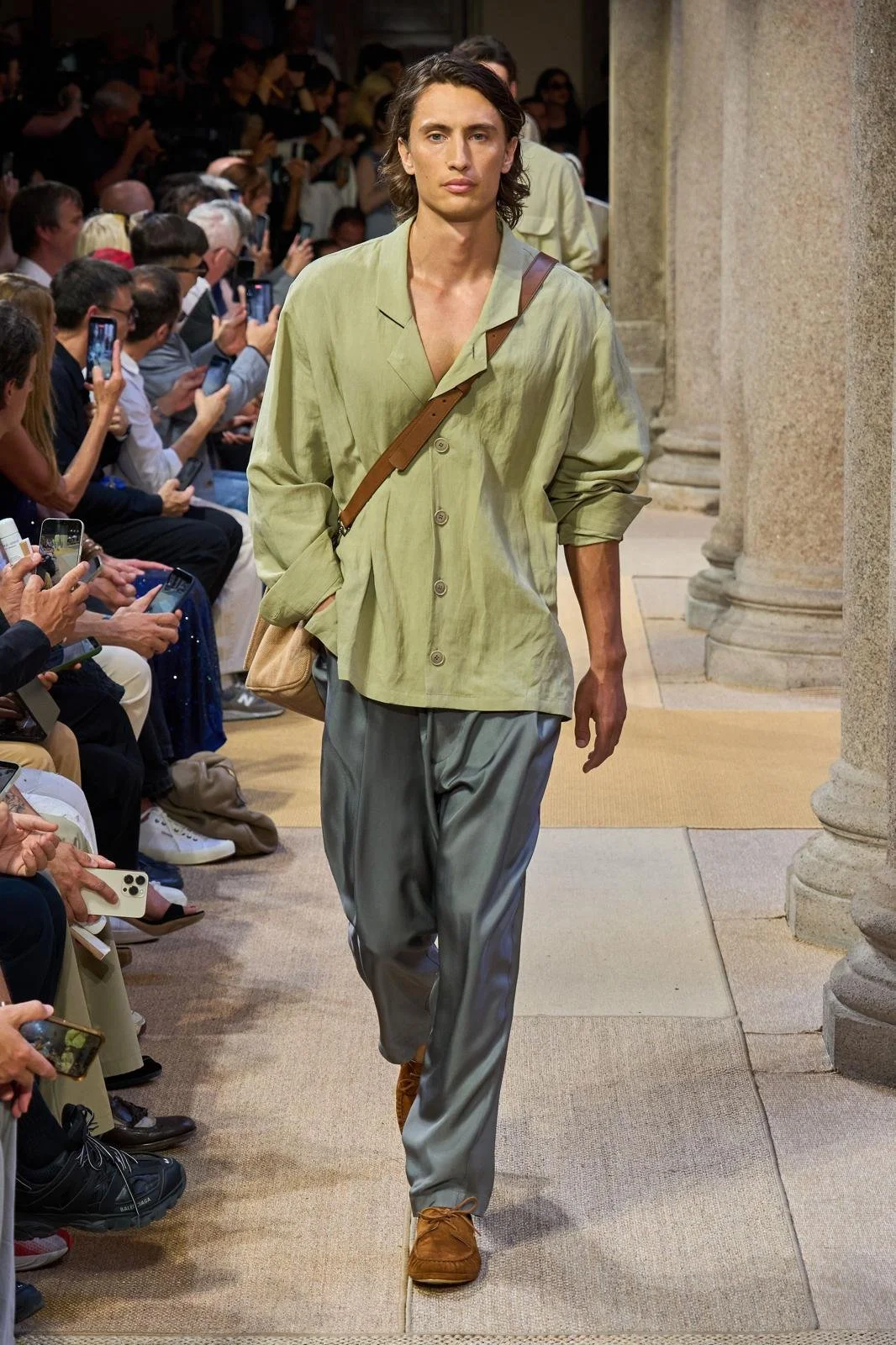
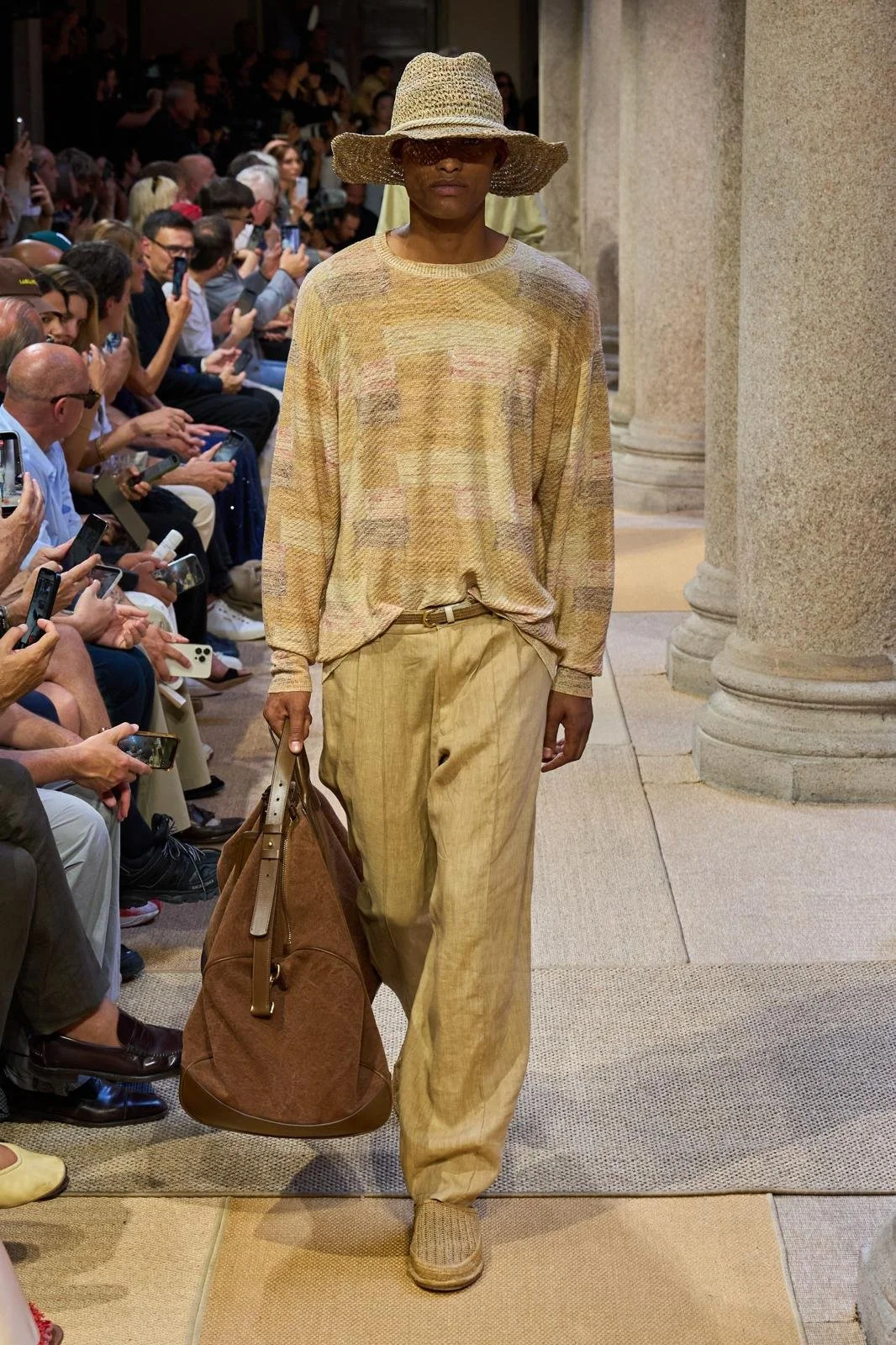
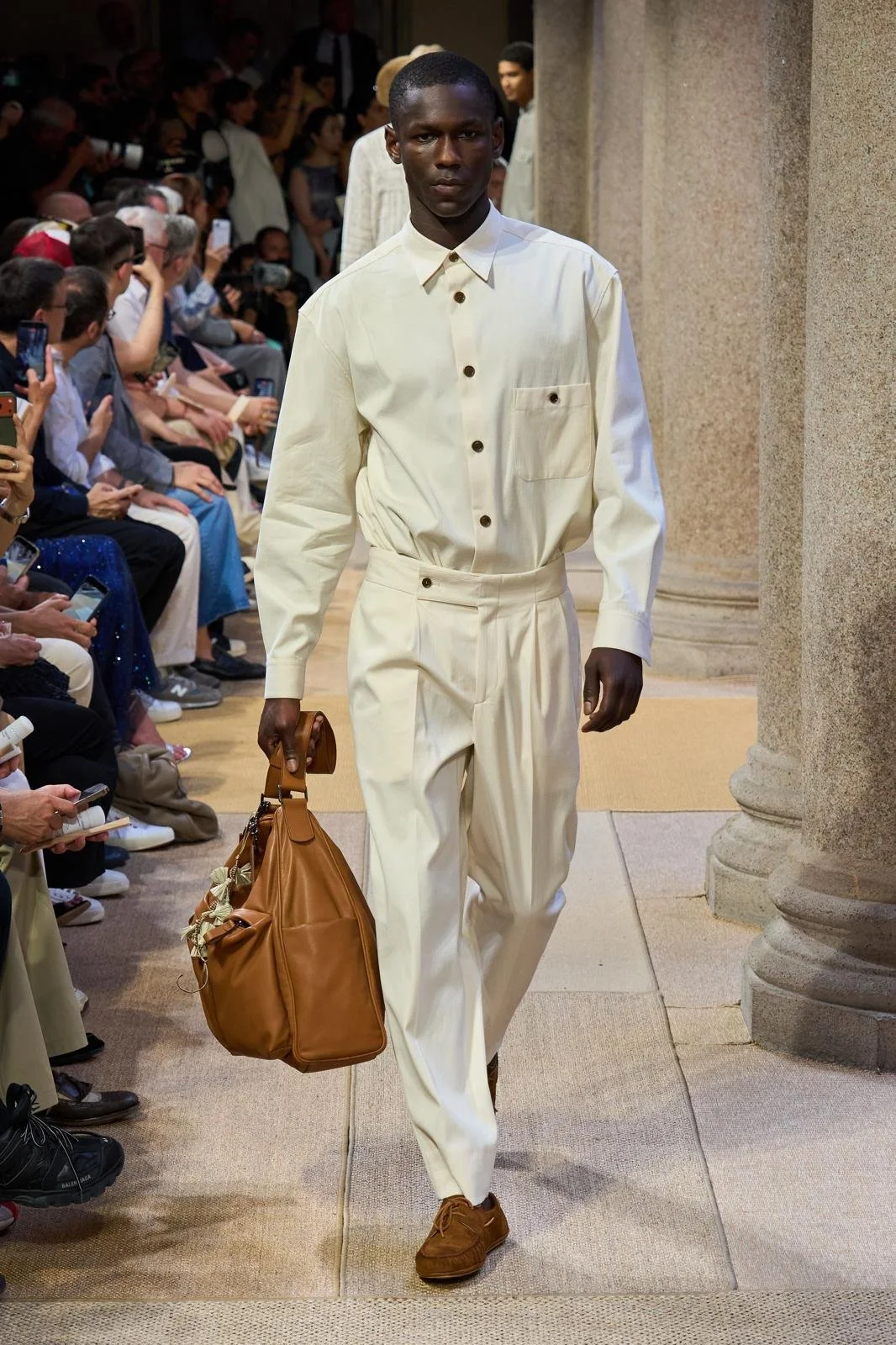
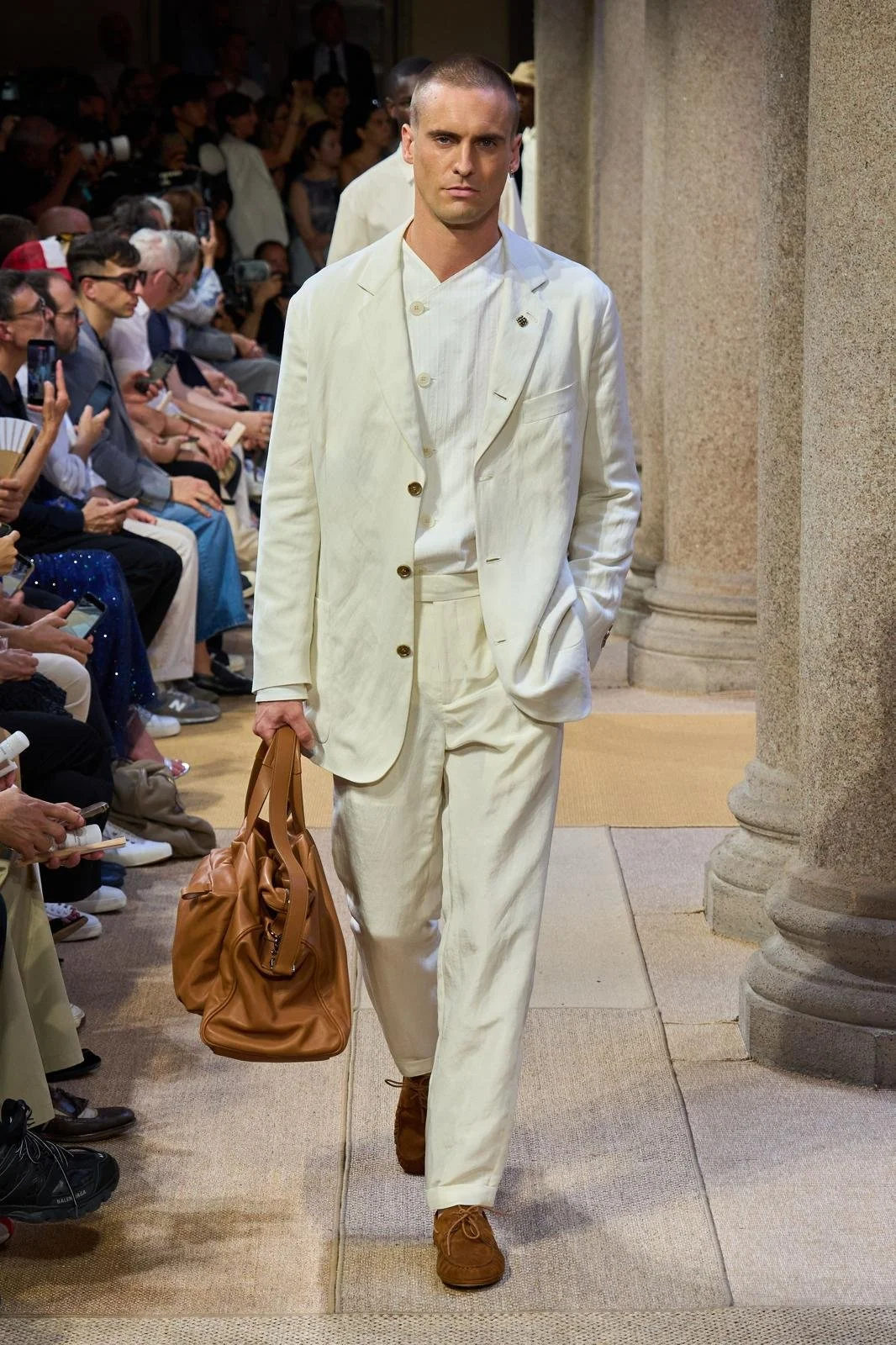
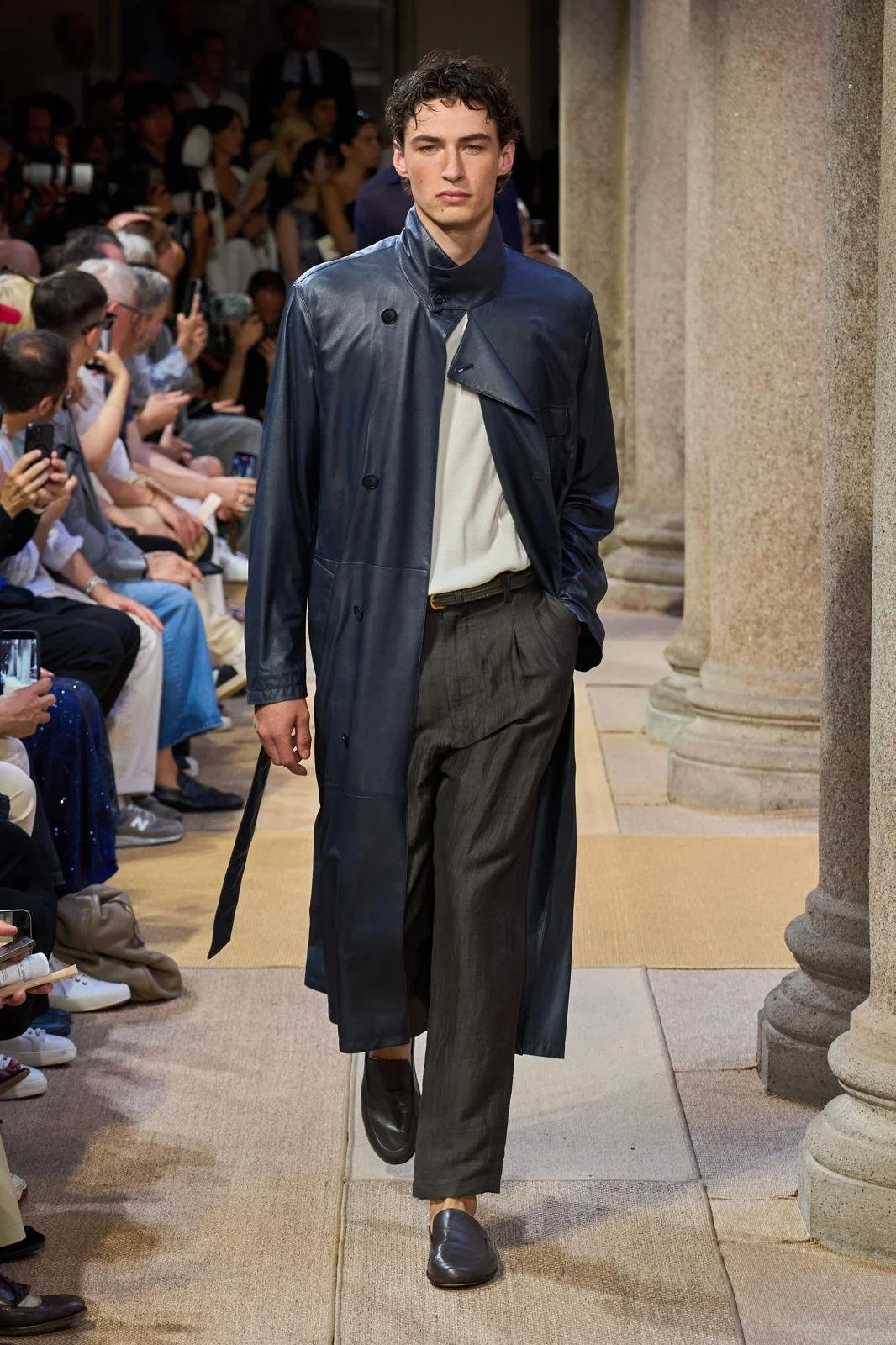
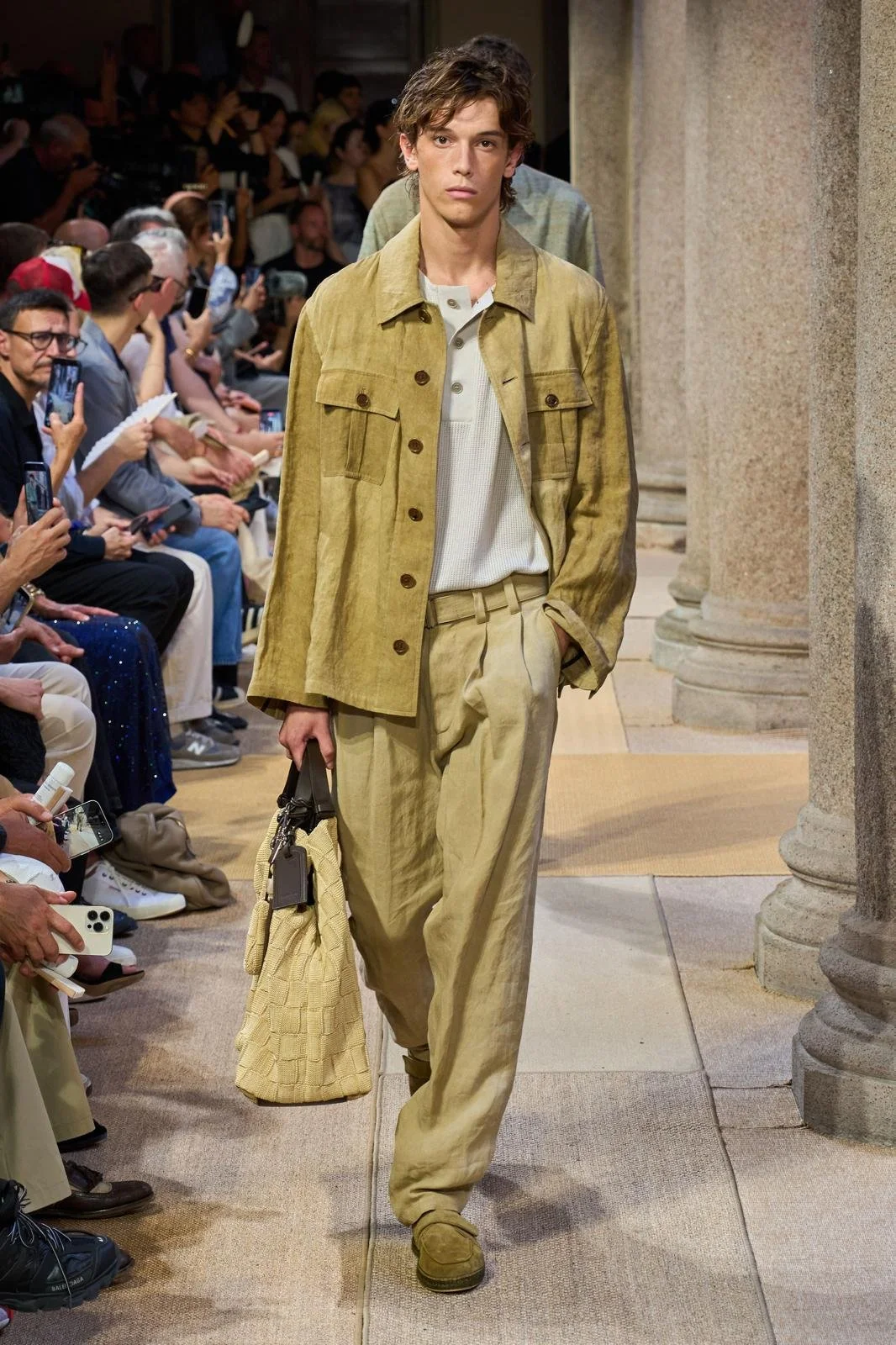
Closing Milan Fashion Week, Leo Dell’Orco and Silvana Armani, Giorgio Armani’s menswear creative director and the label’s head of womenswear, respectively, opted to join forces. While Dell’Orco presented his Spring/Summer 2027 menswear lineup for the Italian legacy brand, Silvana Armani showcased her latest cruise collection. Men’s and women’s looks were blended smoothly, all of them inspired by the Mediterranean atmosphere.

“The Mediterranean, long a place of encounter and exchange, is an open universe shaped by stories, cultures and inspirations that intertwine through travel and the transformation that every experience brings,” read the Mediterranean Market collection notes.

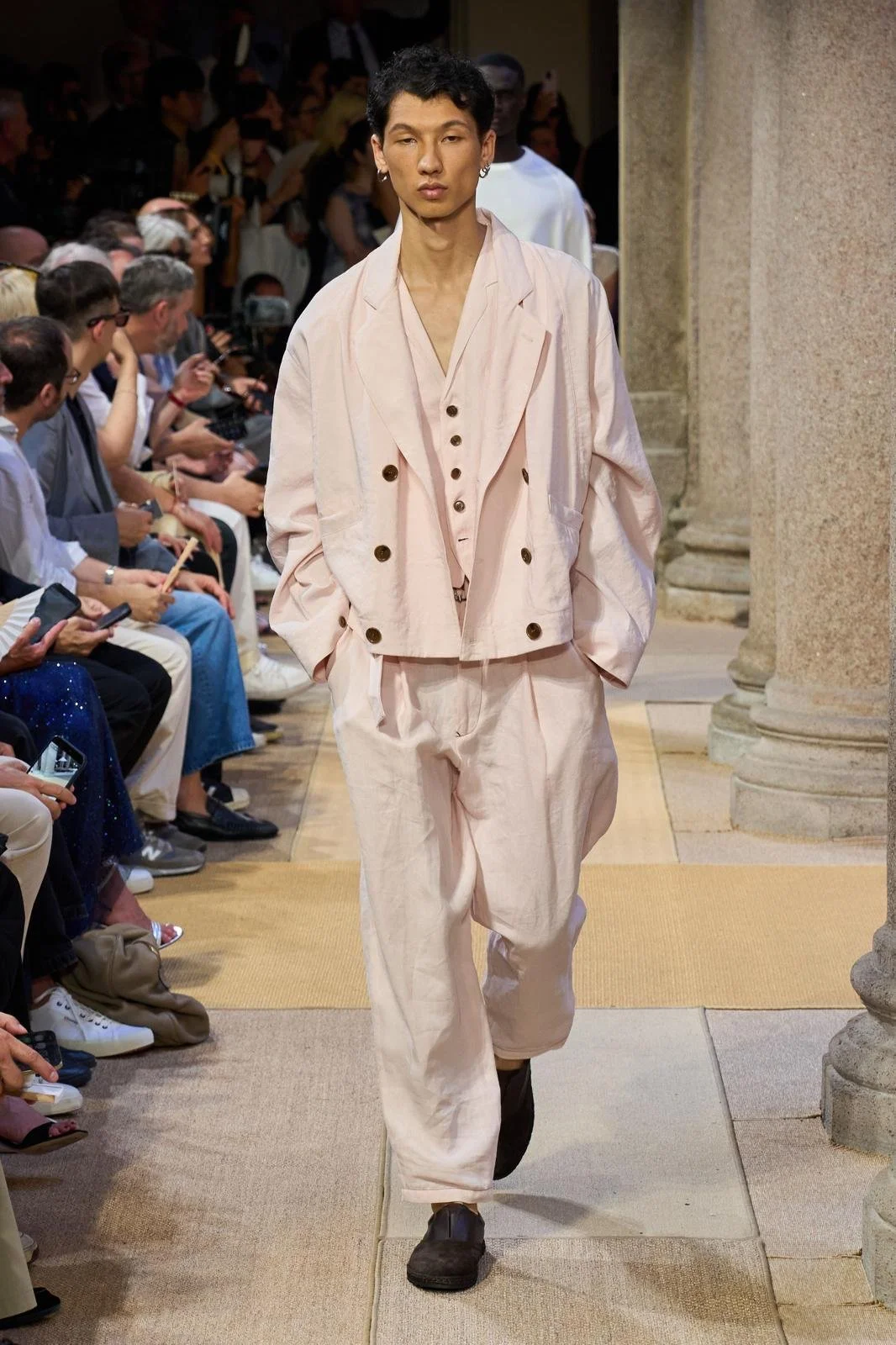
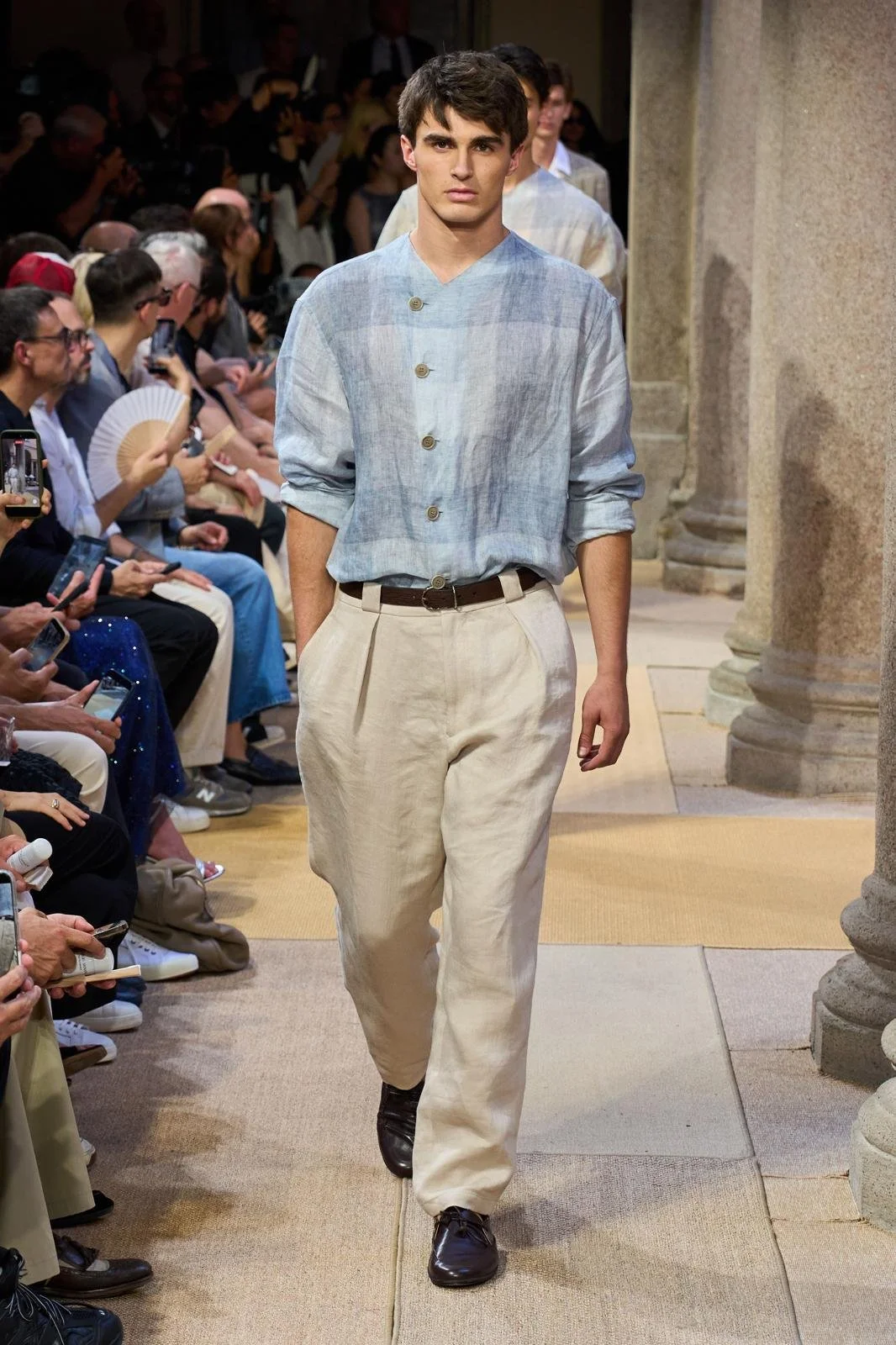
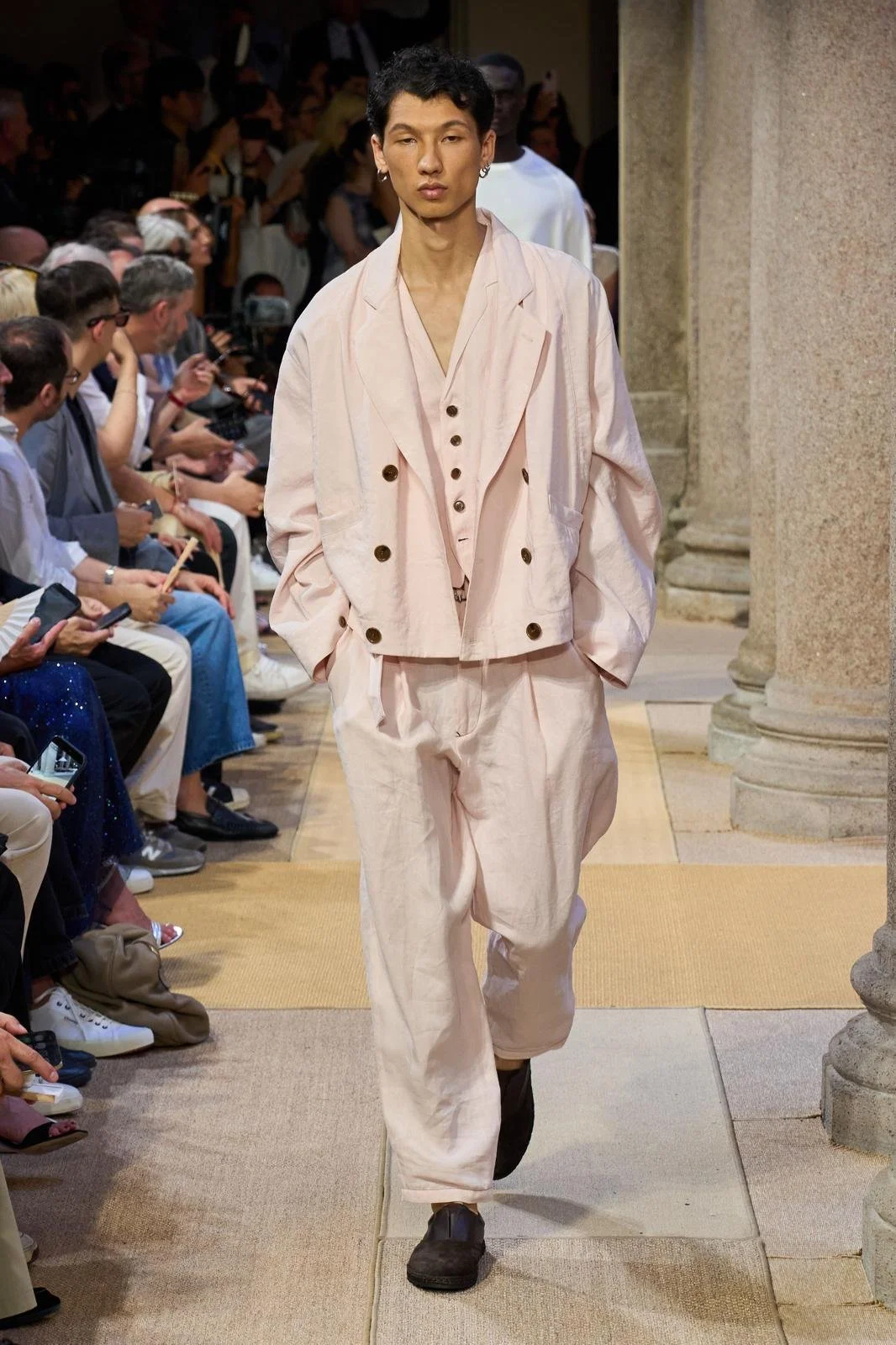
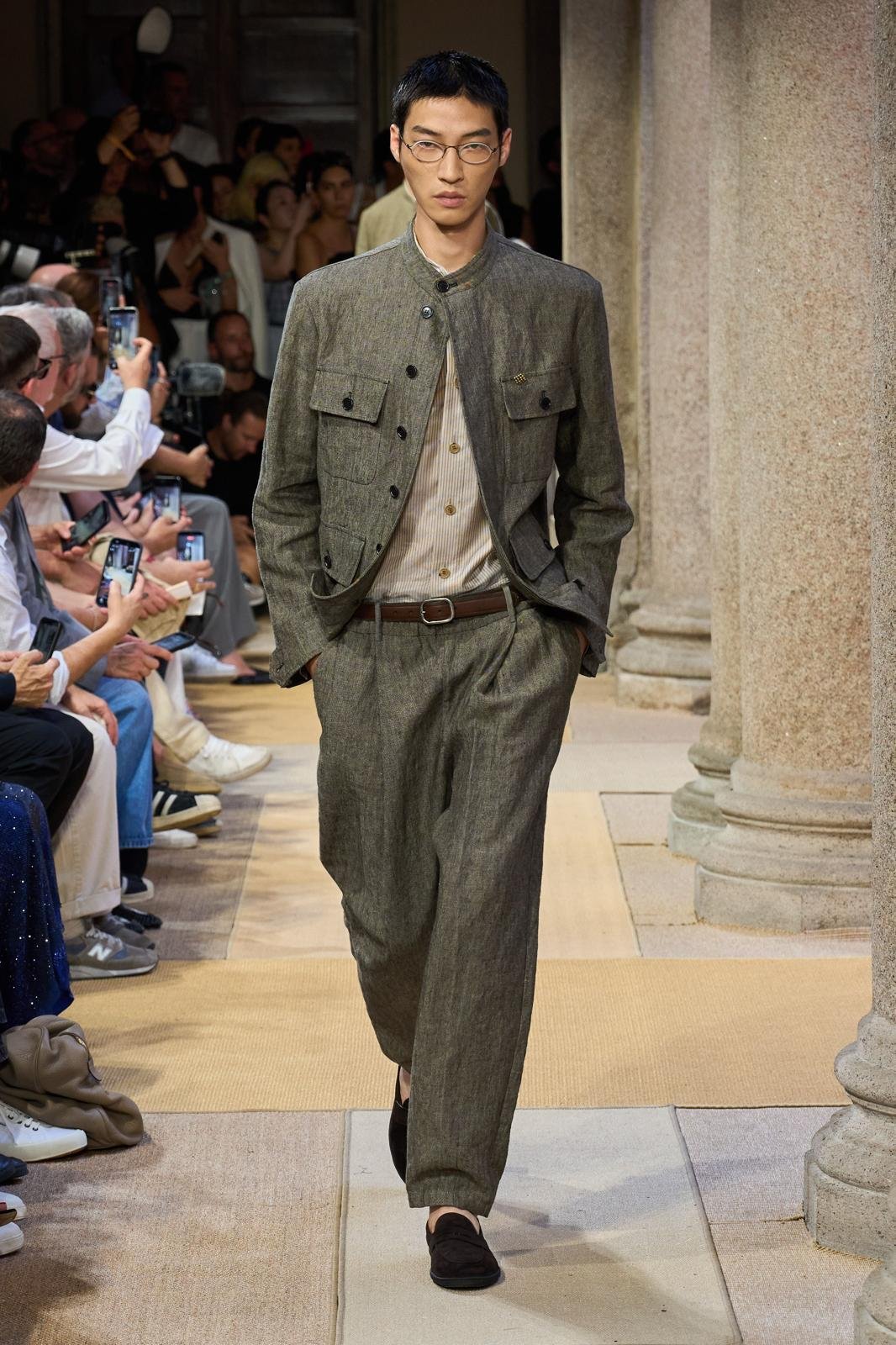
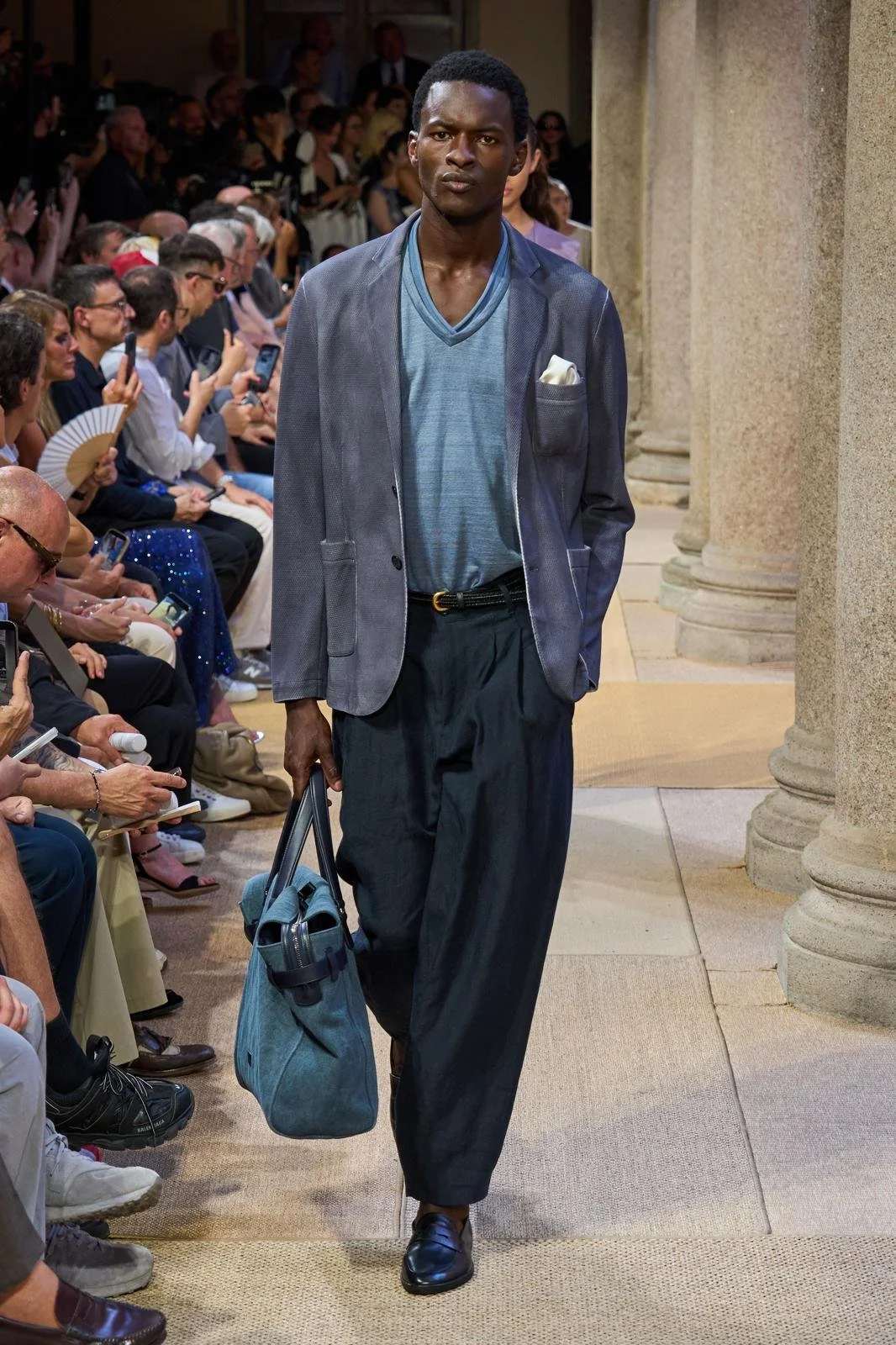
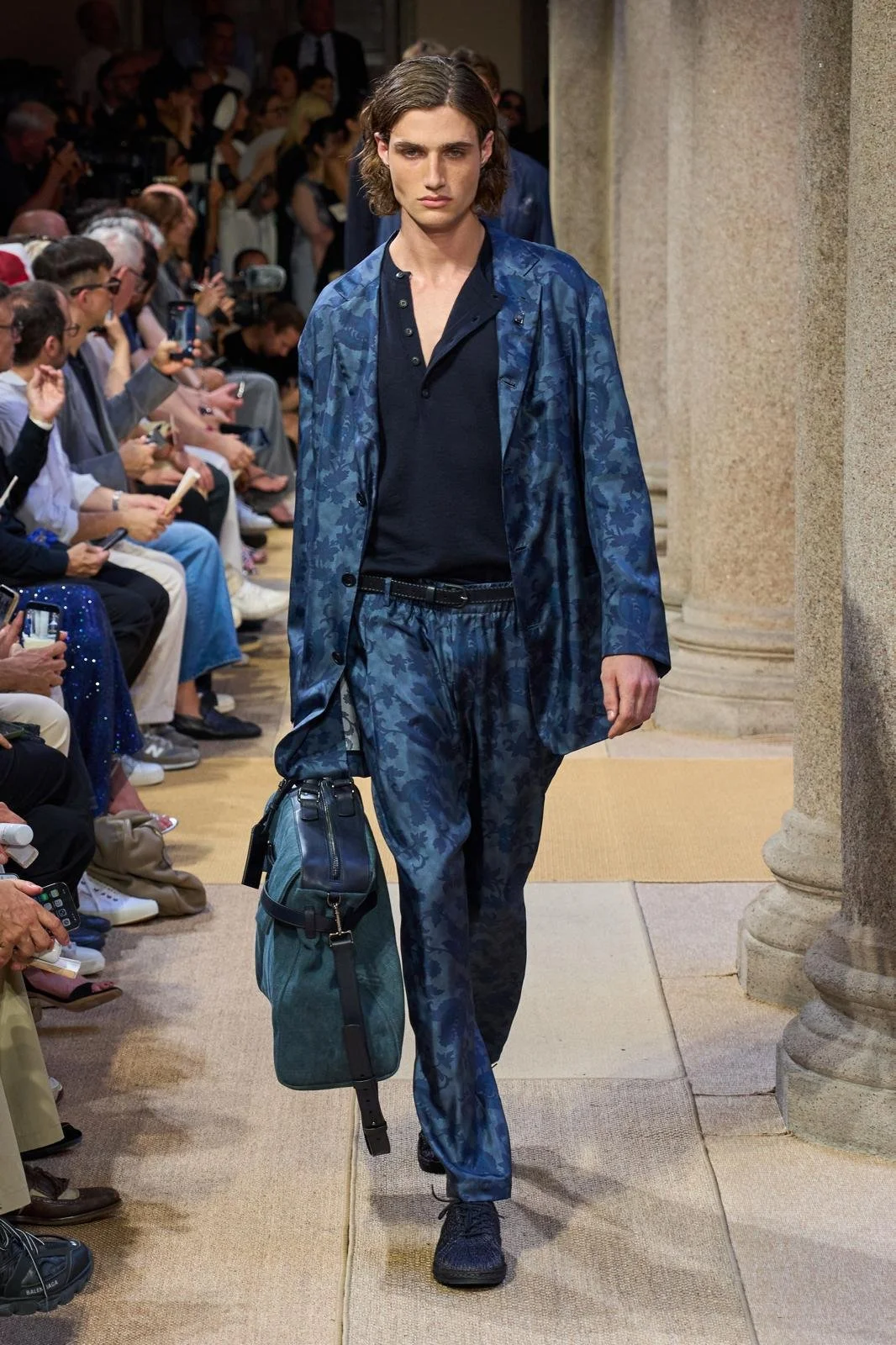
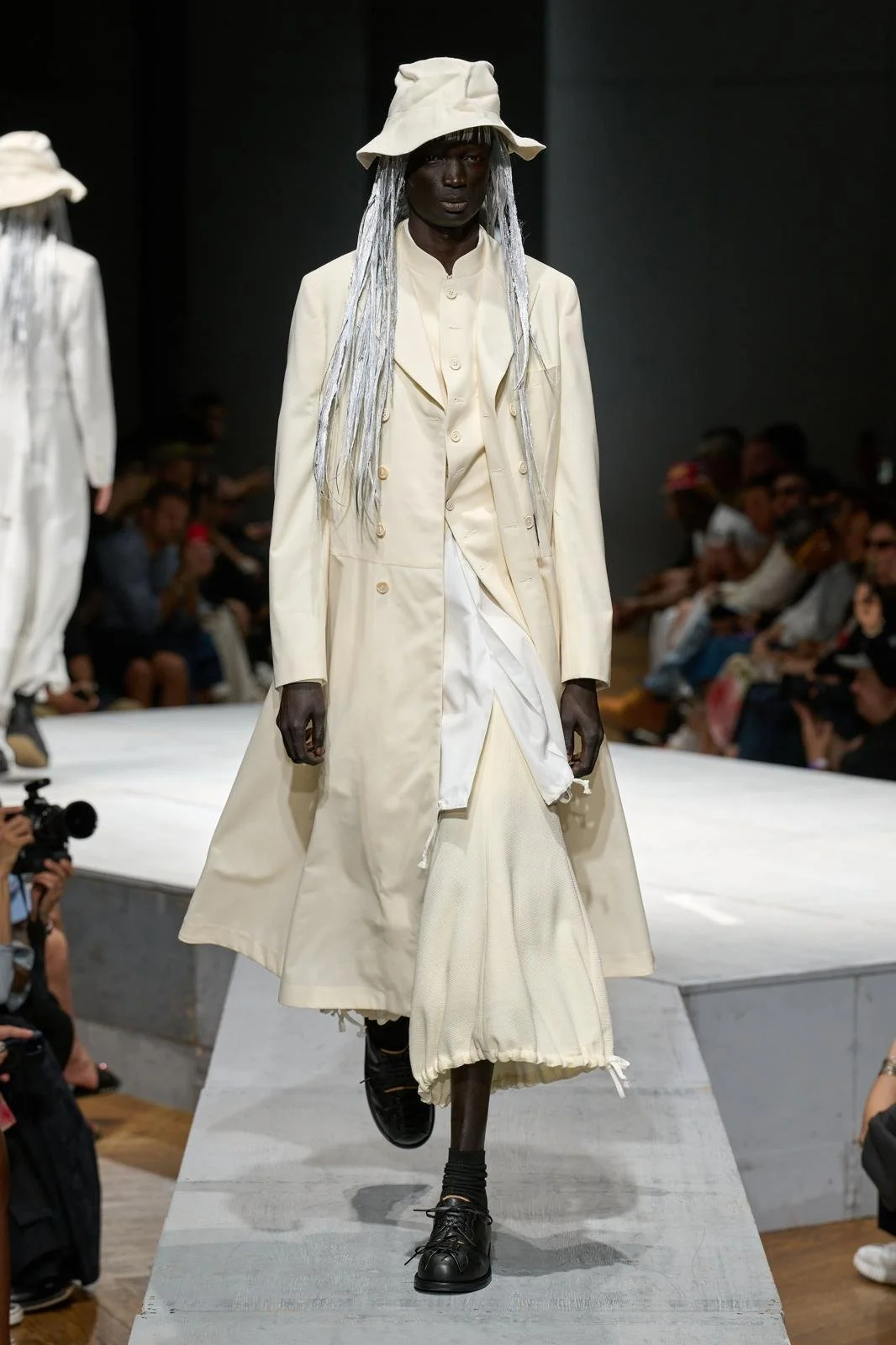
Classic Italian tailoring will always be the foundation of Giorgio Armani, but now it seems like there is progressively more and more appetite for a touch of newness. Take, for example, the denim-looking shirts, which were actually ultralight shantung silk. Or the predominance of more washed-out colours and sandy hues, made to look and feel like lived-in fabrics – a common theme of this and previous seasons.

Speaking of colour, they were drawn from the Mediterranean landscapes, architecture, and lifestyle and transformed into a familiar Armani palette: whites resembled sun-scorched stone shades, while cobalt and midnight blues referred to the sky and the seas. Muted gold referenced glistening sunlight, and spice and earthy tones shared the space with dark blue florals and other cool-toned pieces, added to convey the shade of Italian porticoes.

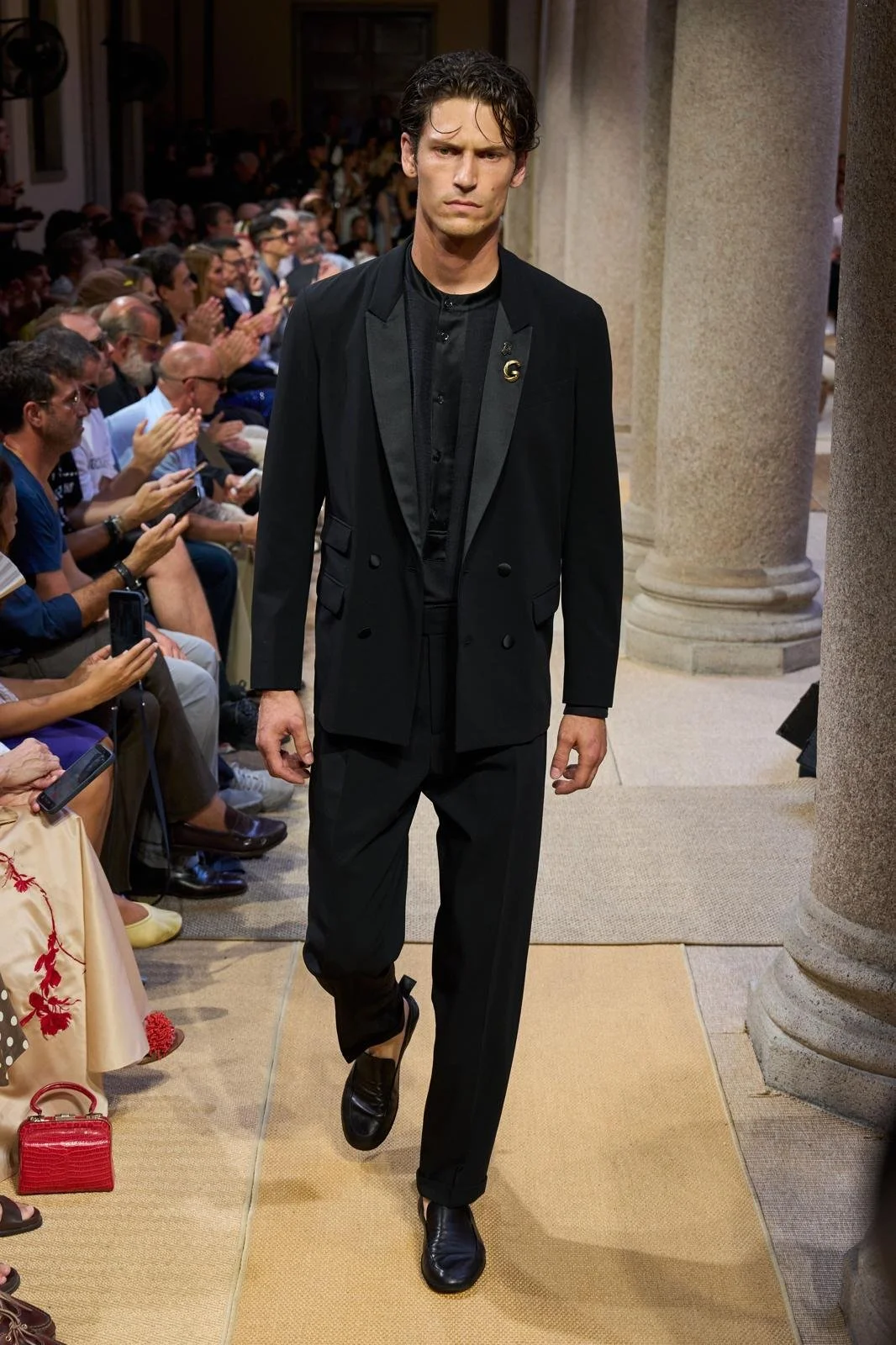
When unveiled, Armani collections often follow a clear order, normally evolving from day-to-day, more casual garments into eveningwear and black-tie or timeless suiting. This time, it wasn’t different: fluid lines and a larger presence of denim, which dominated the catwalk and opened the show, slowly gave room to all-black trousers and jacket sets and suits.

Lapel brooches, another seasonal favourite of multiple menswear luxury labels, appeared in various looks, often in the shape of zodiac signs such as Scorpio, representing Dell’Orco’s sun, and Cancer, a nod to Giorgio Armani’s star sign. The approach was also previously adopted by Silvana Armani in her collections and perhaps will stay as a continuous way to pay homage to the late Armani. There’s no need to look closer, though; his legacy remains.


Words by Ketlyn Araujo

THOM BROWNE SS27

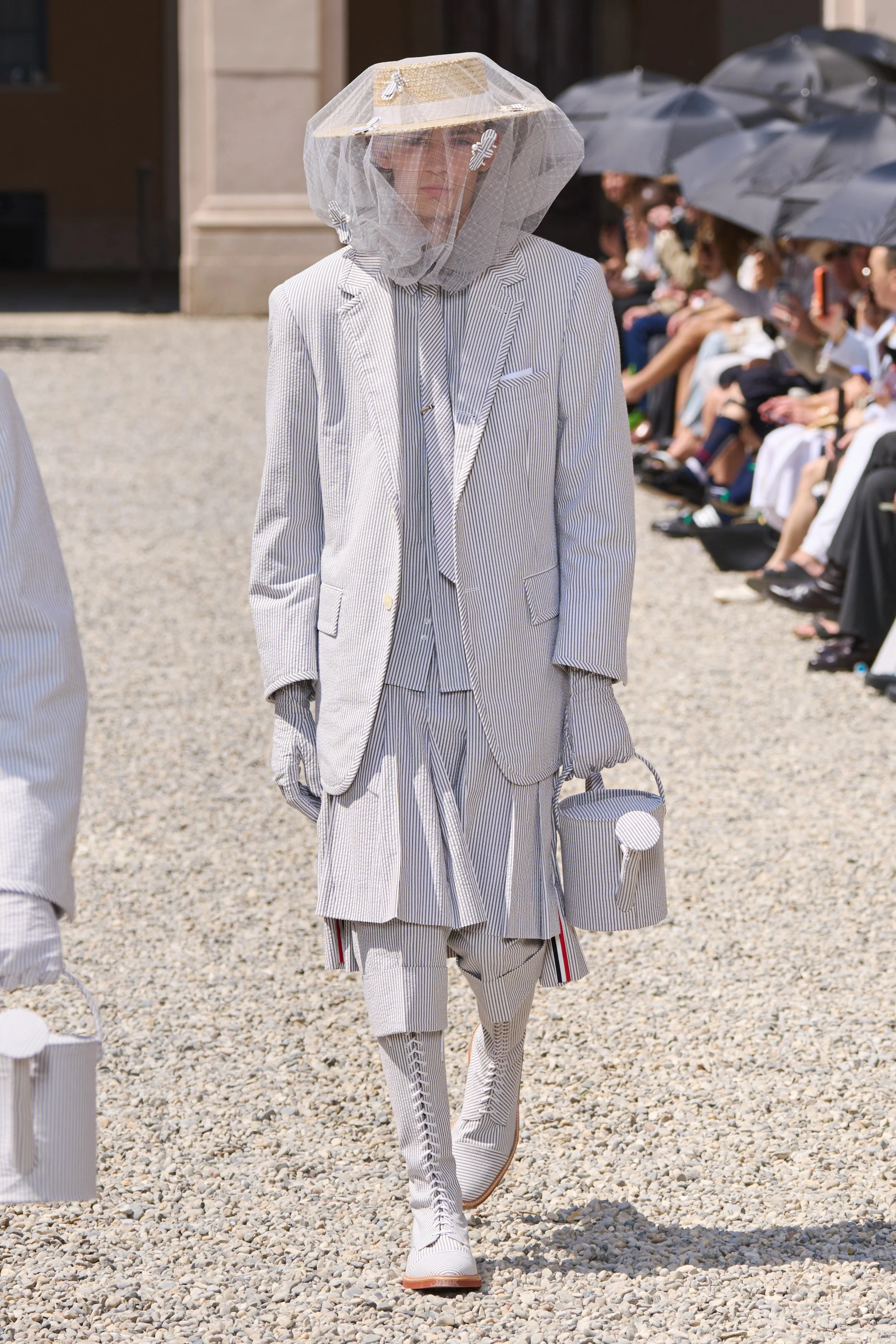
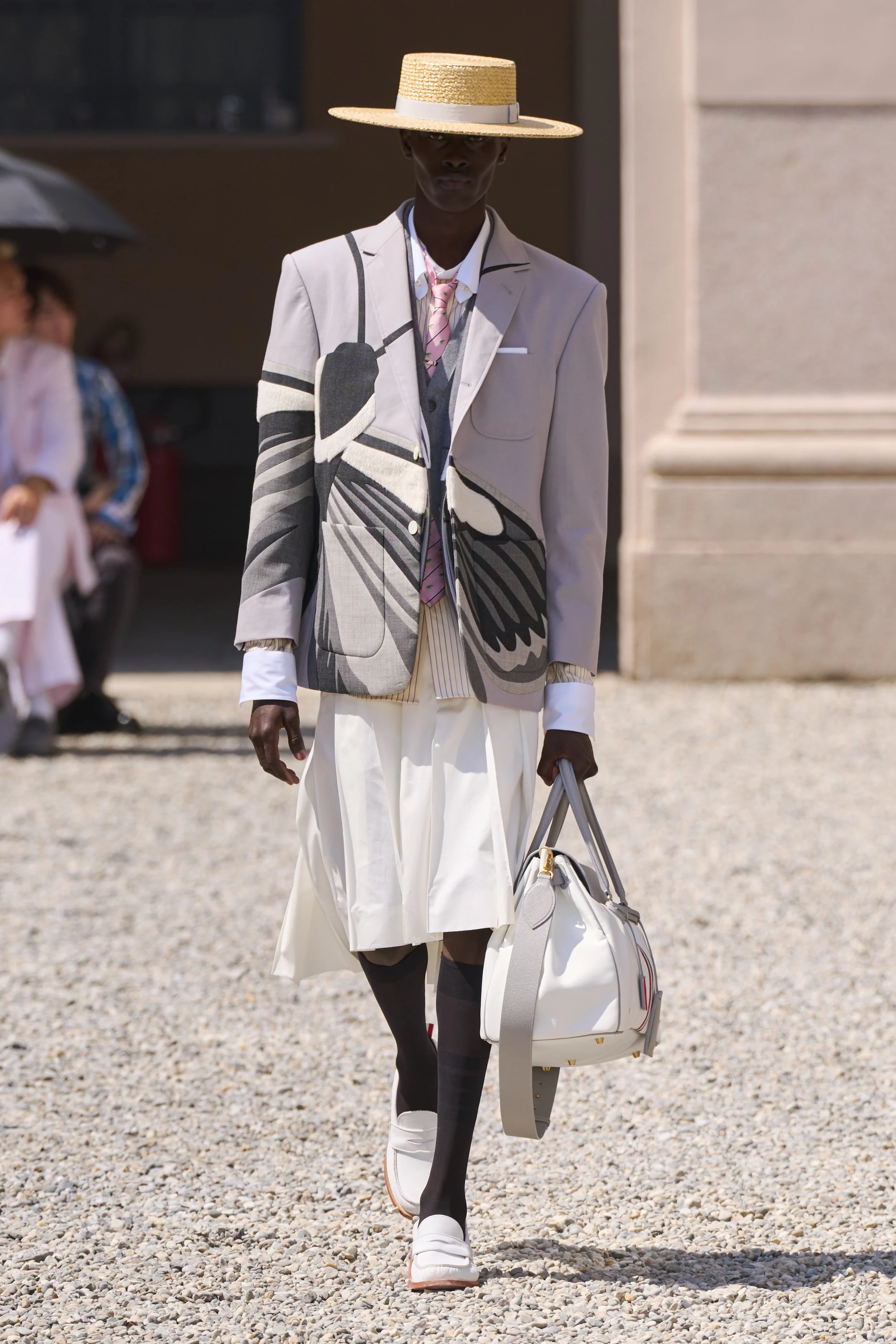
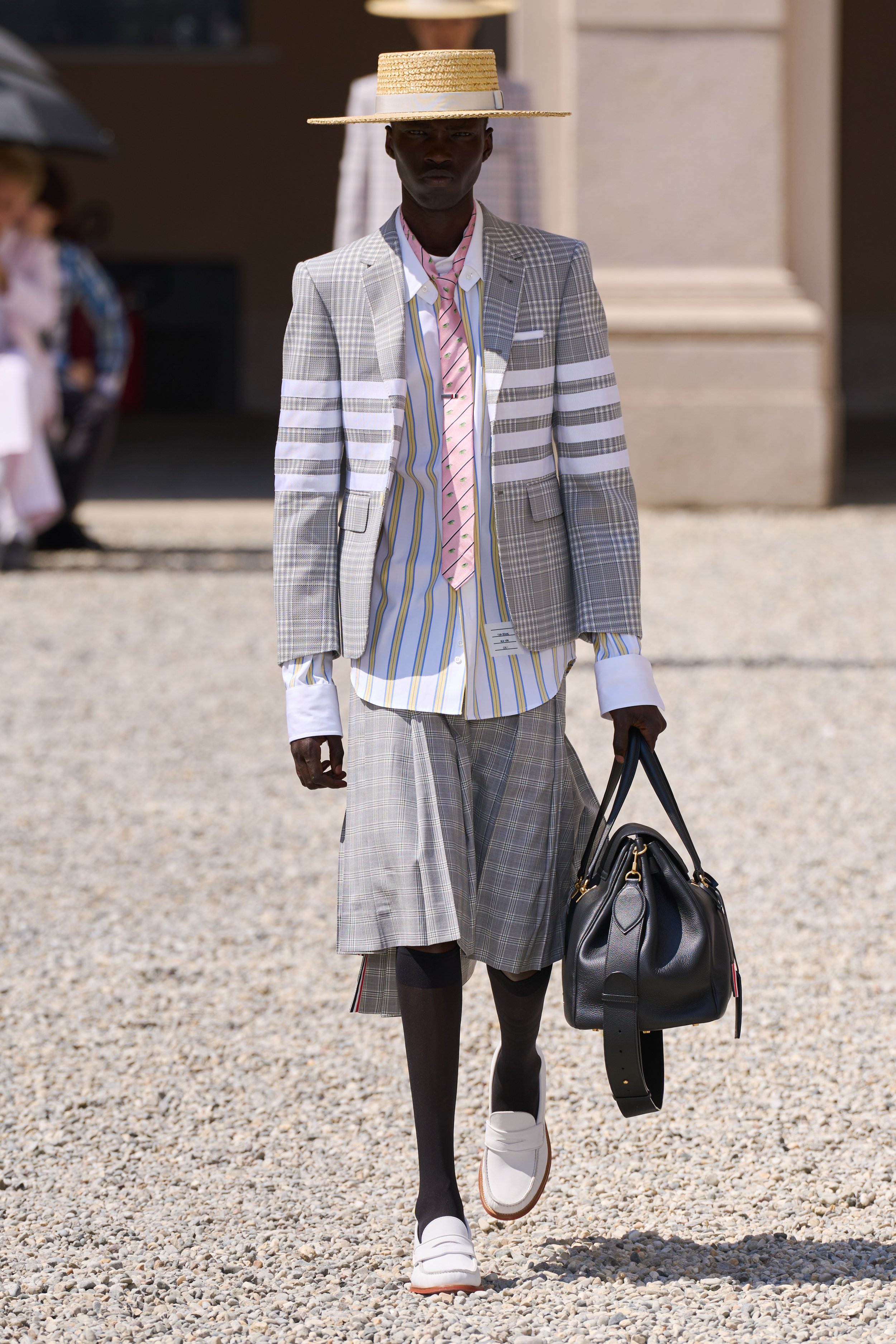
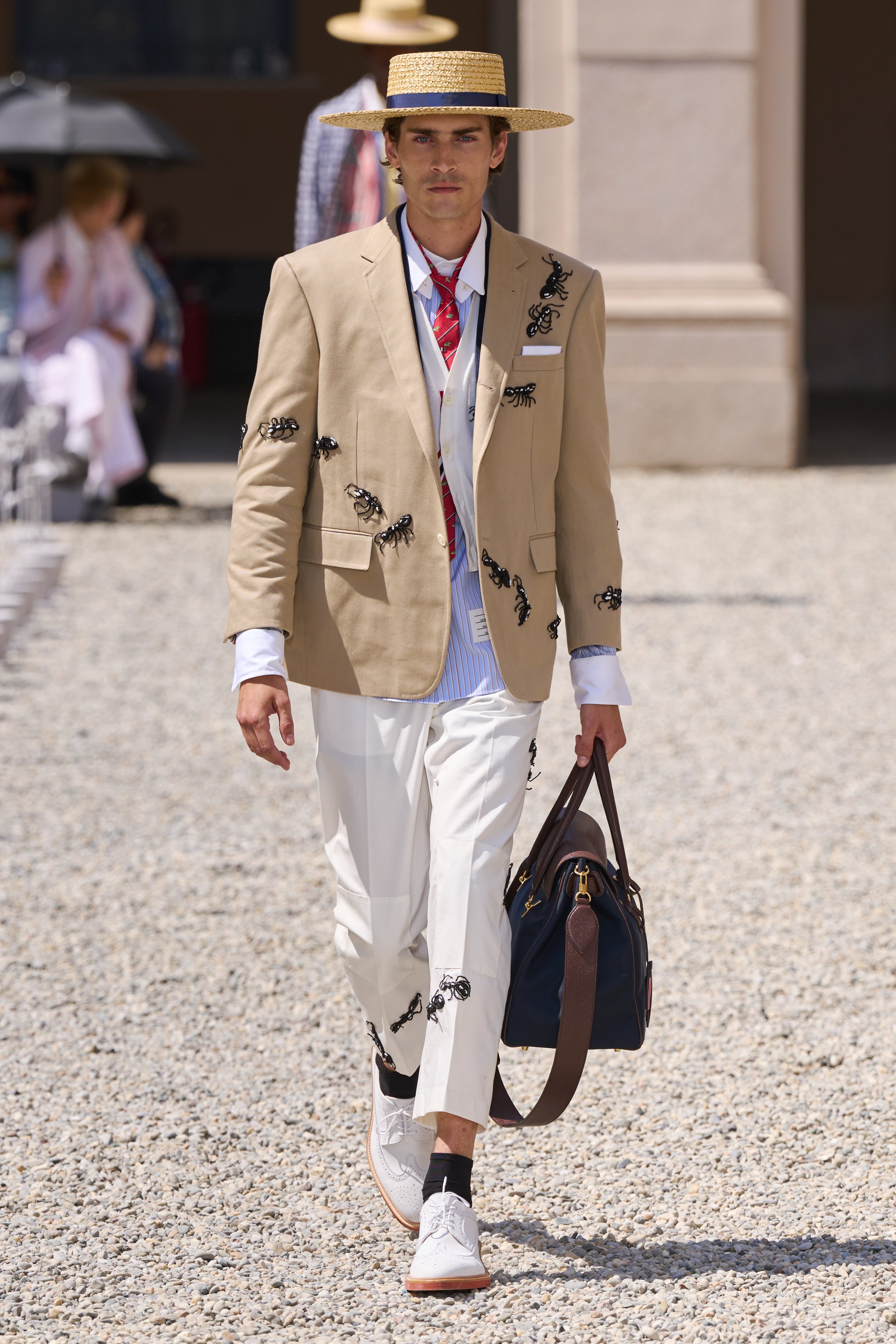
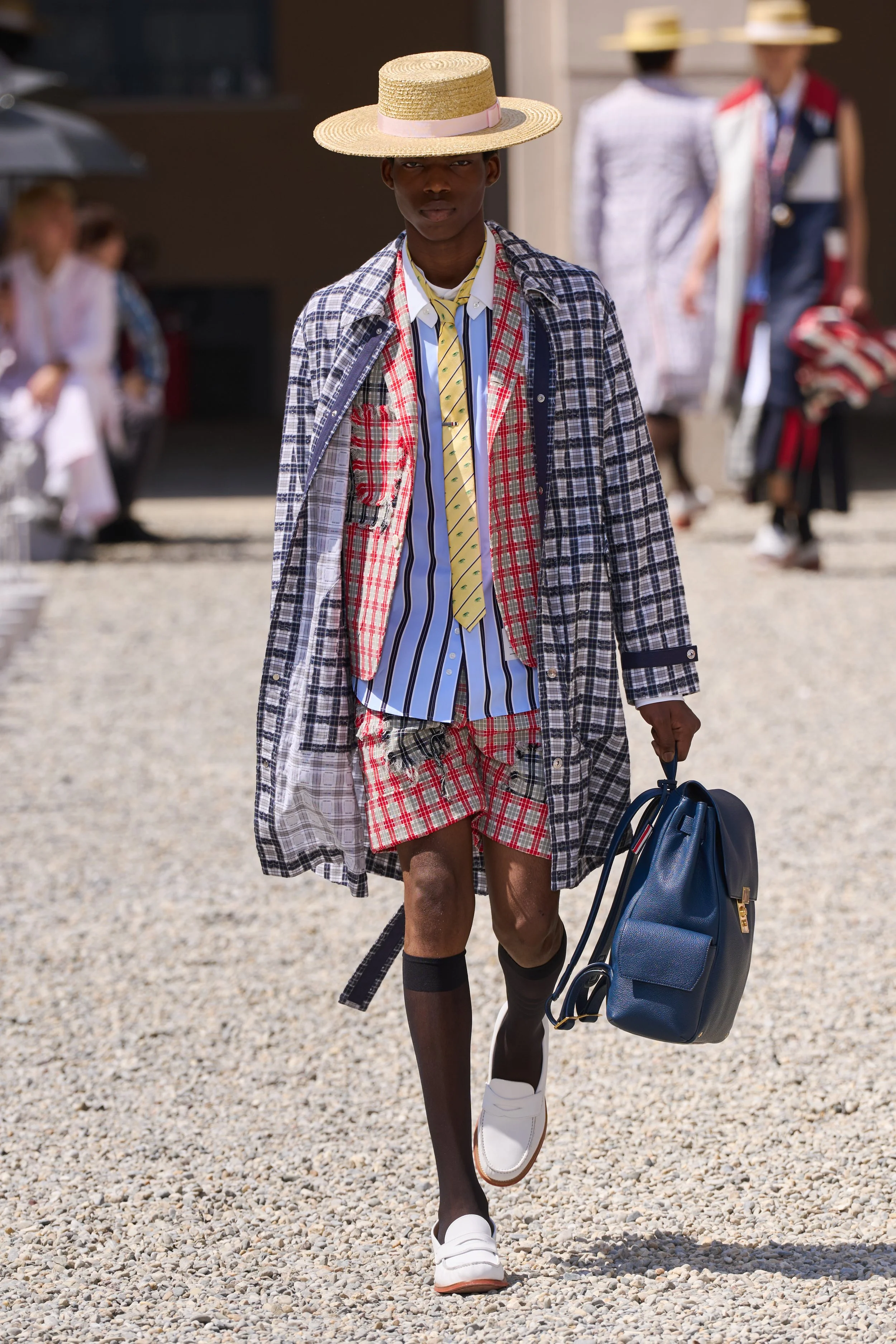
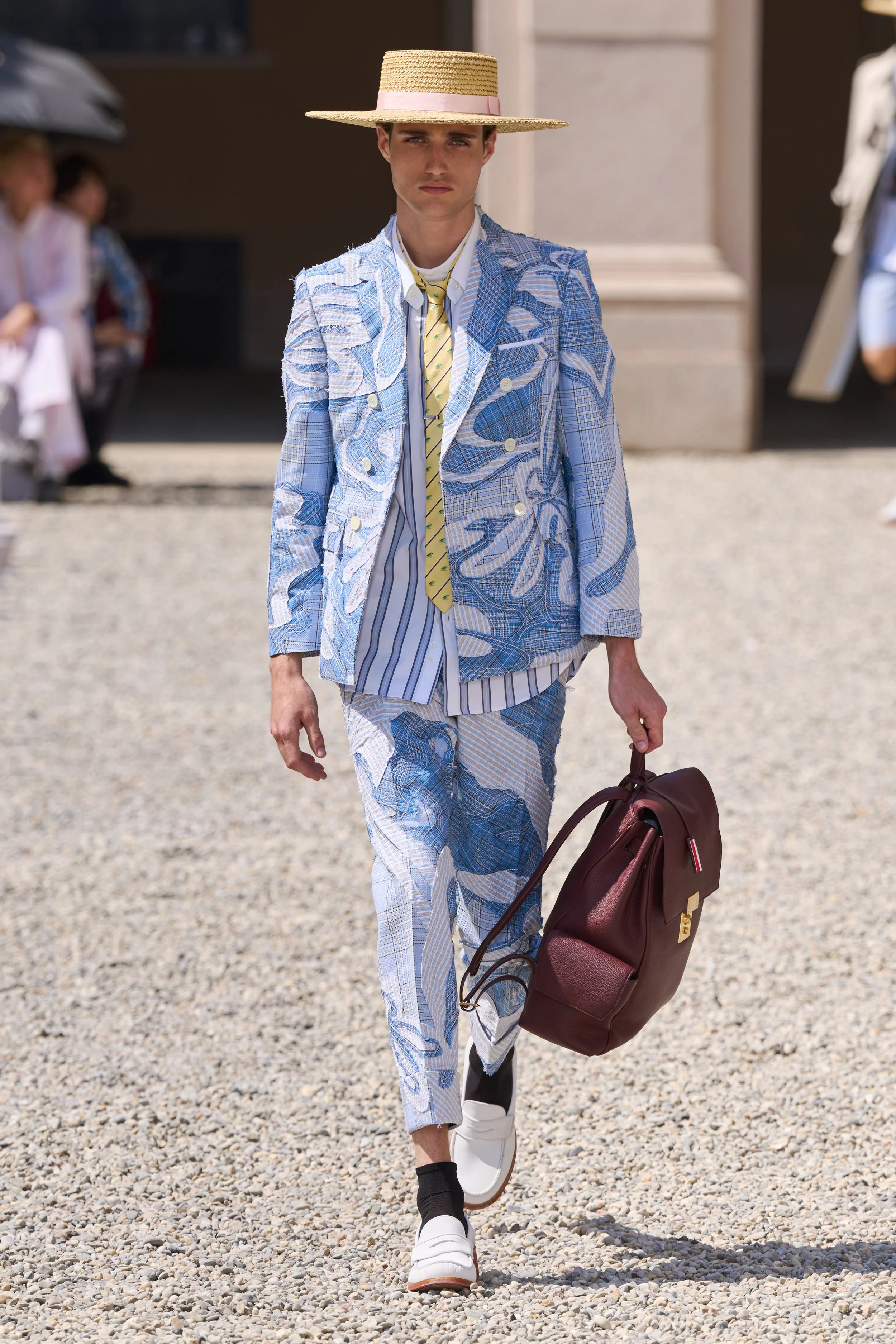
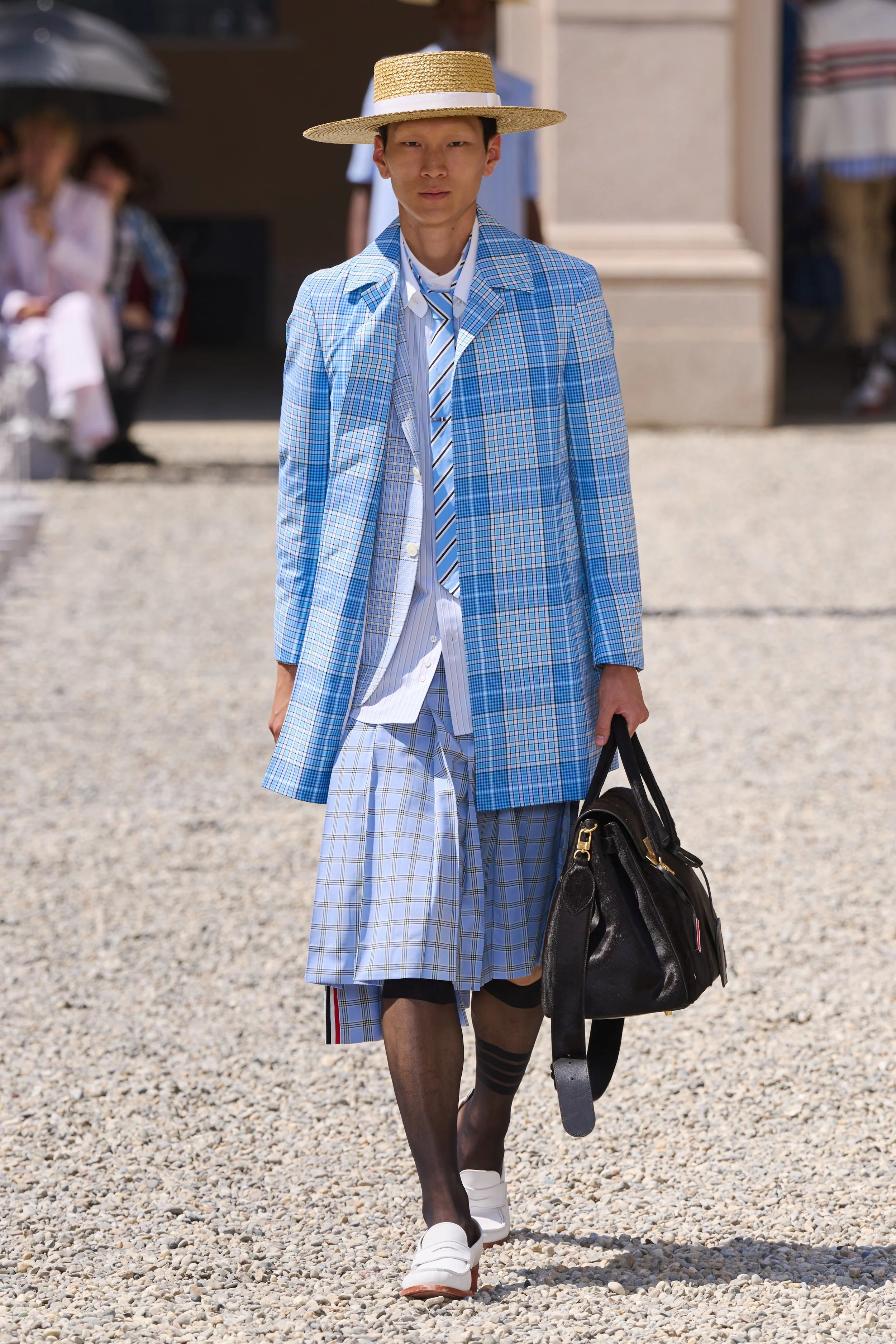
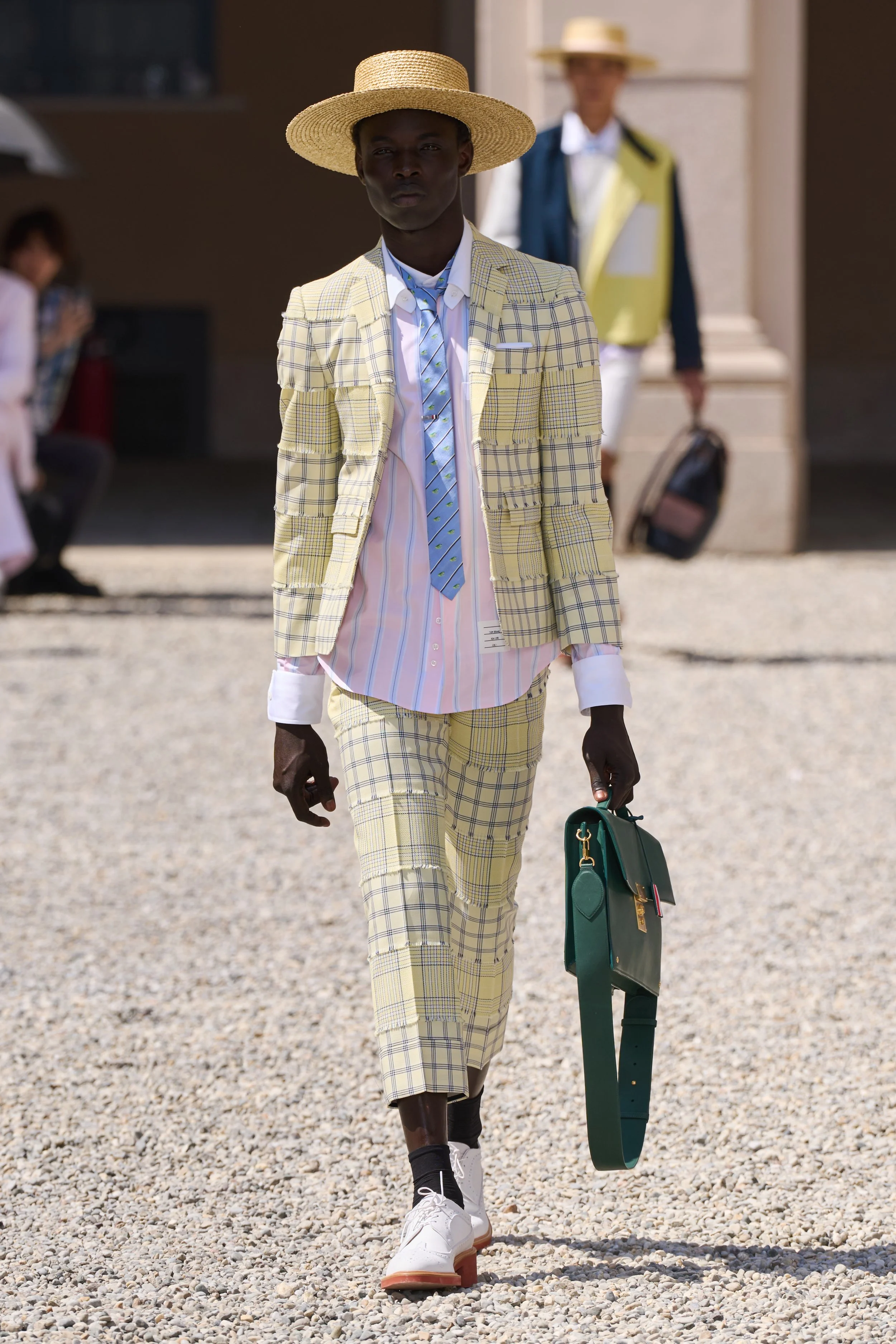
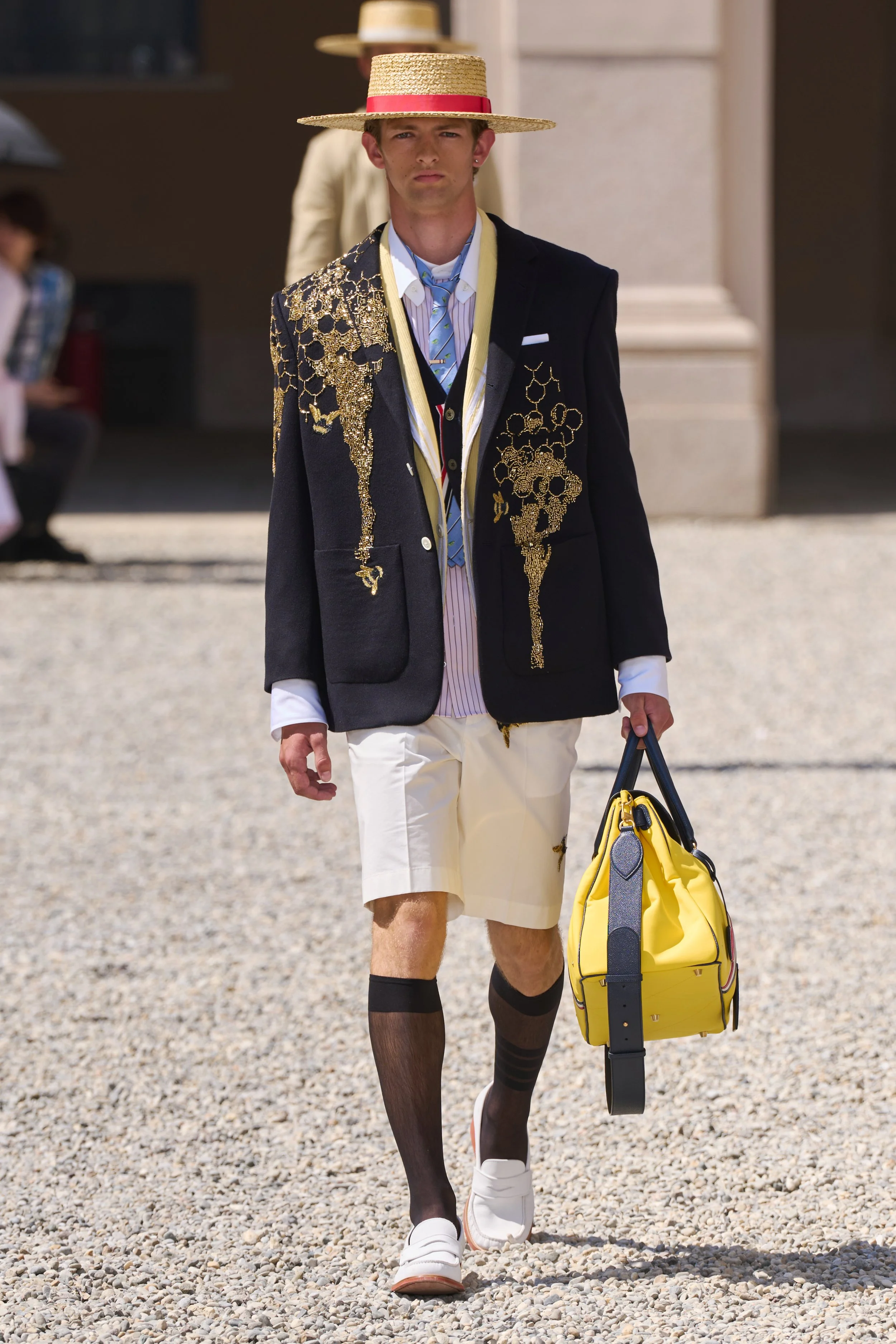
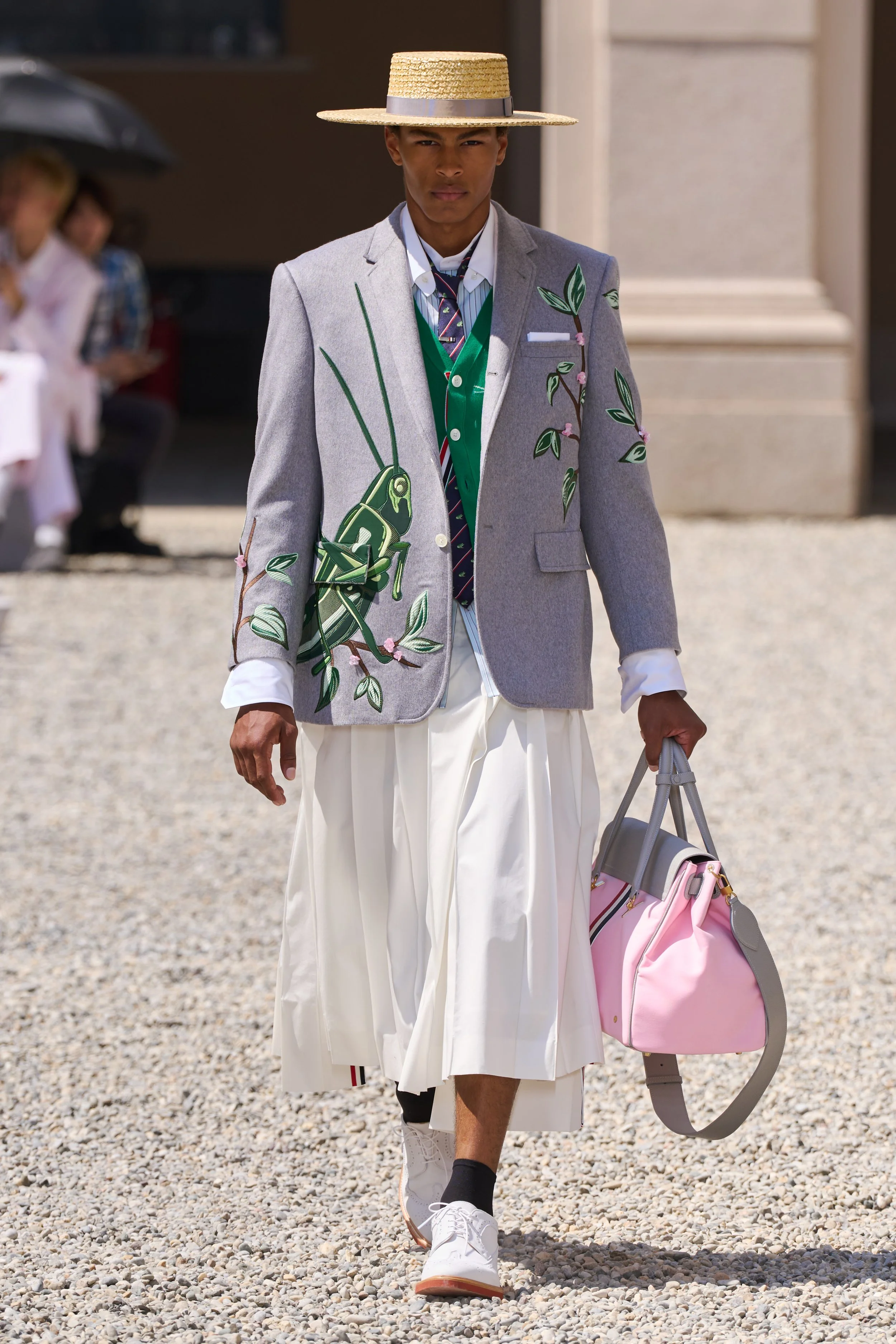
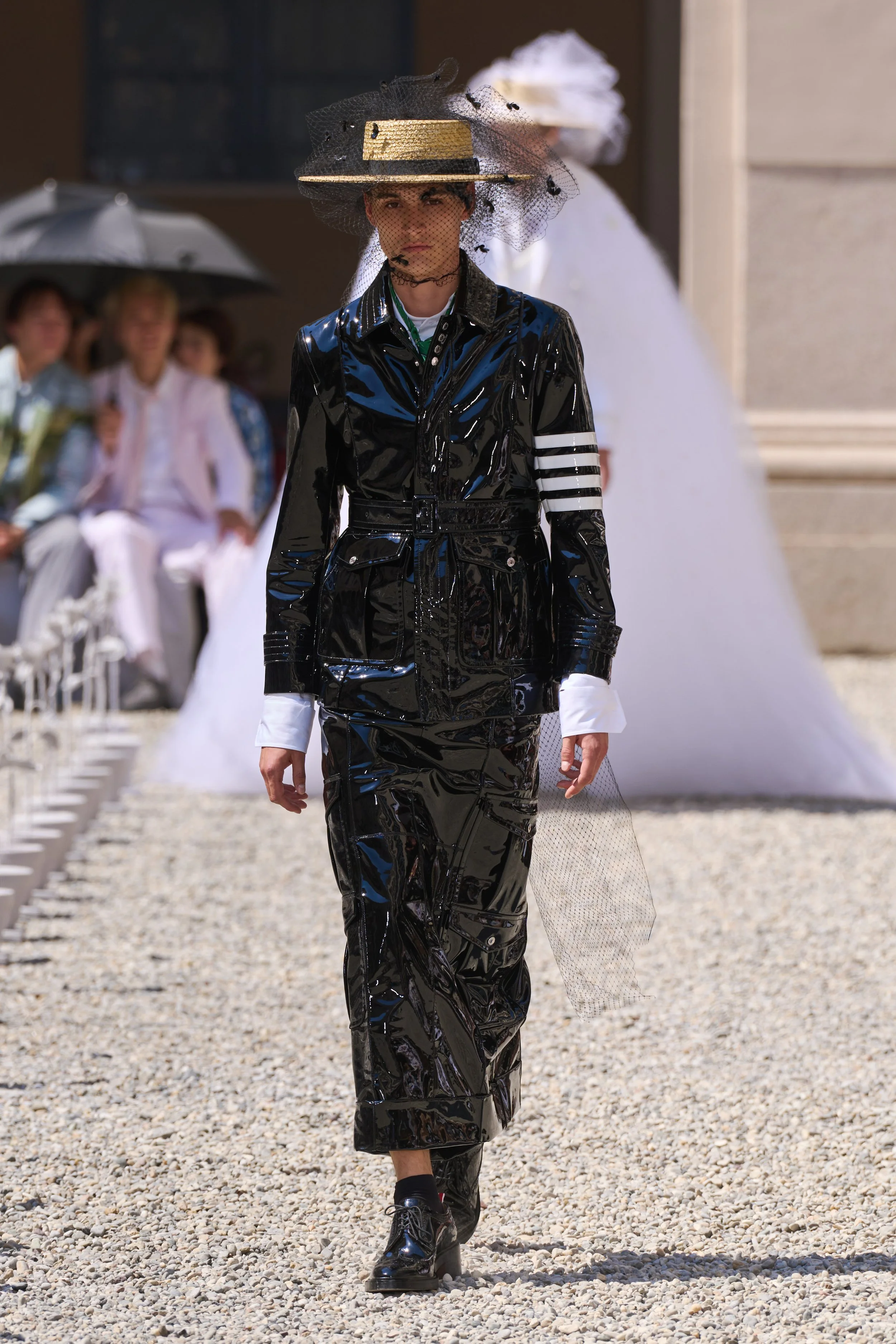
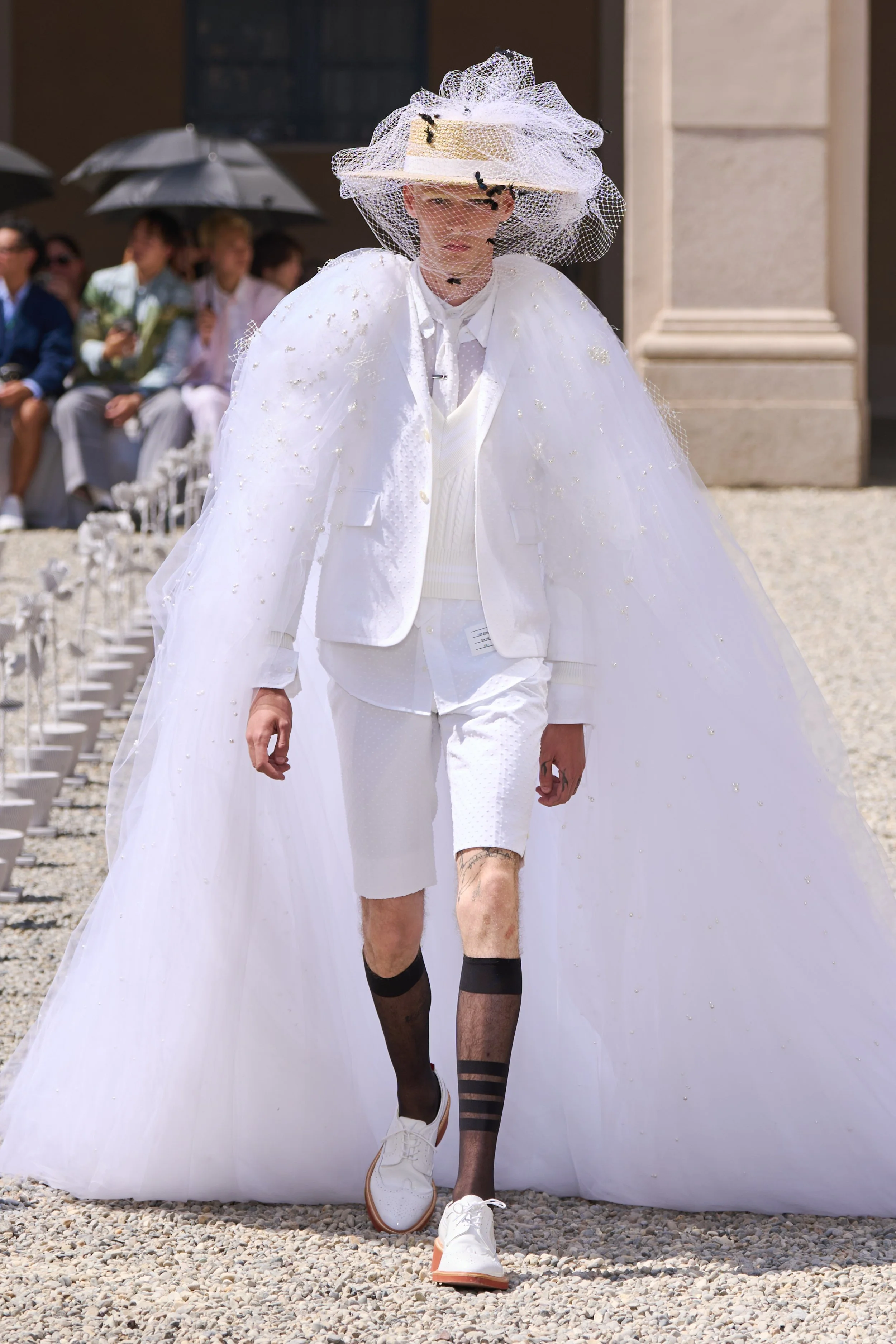
It’s not easy to find fantasy in everyday life. Try as one might, sometimes reality is all you have. The challenge feels particularly acute amid the heatwave currently sweeping Europe. There’s little on the mind besides hyperawareness of the sweat droplets dripping down one’s forehead and a desperate longing for air conditioning. Still, even beneath the blazing sun, Thom Browne manages to transport us elsewhere. For Spring/Summer 2027, the American designer went straight to the source of childhood fantasy.

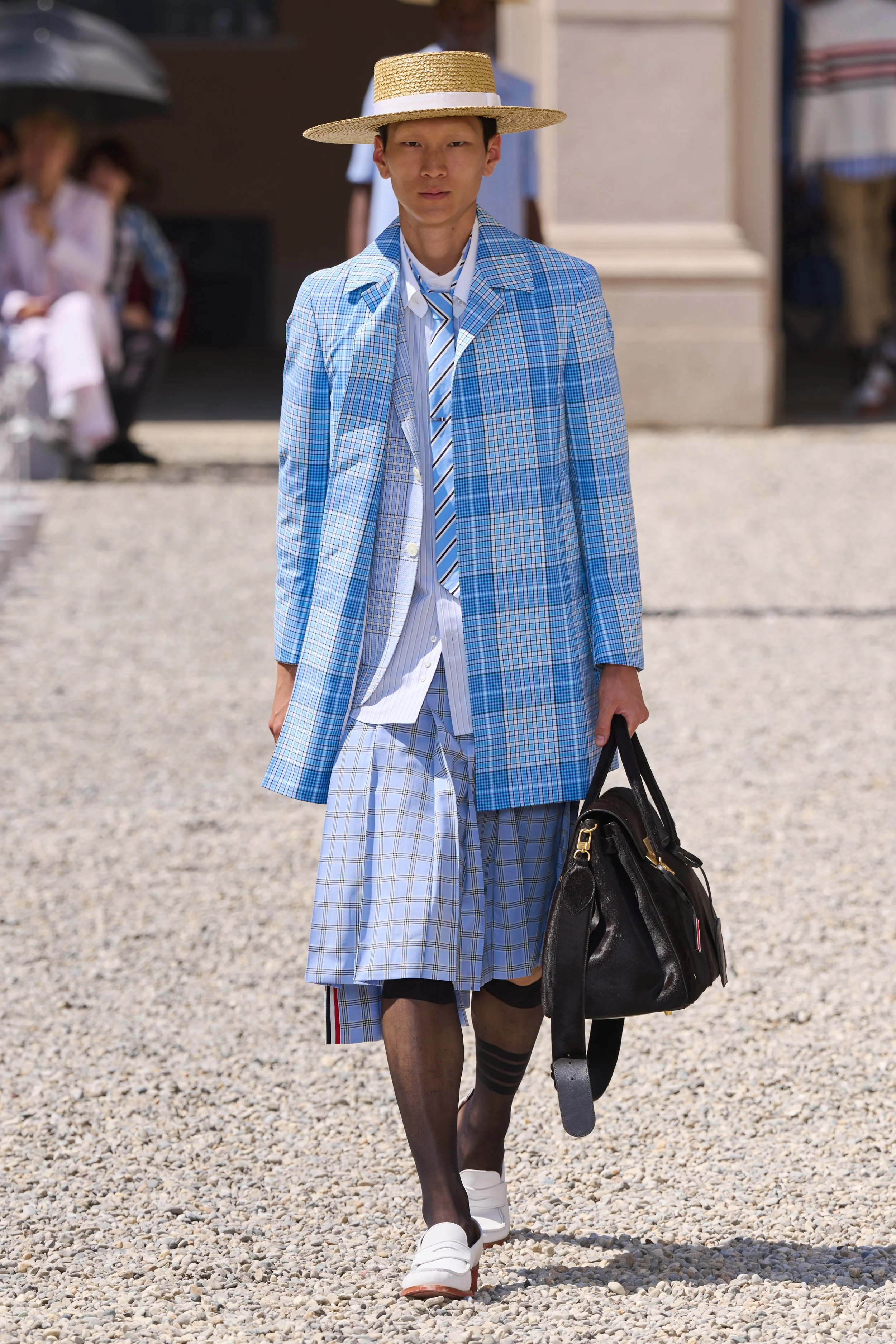
In what marks Browne’s first menswear show in Milan, the designer took a lighthearted approach, infusing the brand’s staples with playful motifs. Flying bees, dripping golden honey, dragonflies, and water lilies appeared embroidered across navy jackets and grey shorts. Nature became both decoration and narrative, transforming familiar tailoring into something a touch more dreamlike.

The theme was literal at times and completely camp at others. The opening look, a striped suit paired with a skirt, was topped with a hat and veil. The closing look echoed the silhouette, this time with the veil swarming with embroidered bees – the same motif seen in two dimensions earlier on a nylon parka.

Drawing from two childhood classics, A Bug’s Life and The Princess and the Frog, Browne rendered structured tailoring whimsical through pastel pinks and soft yellows. Elsewhere, dripped paint across a lightweight jacket created a splashy interpretation of houndstooth. Even at its most playful, however, the collection never abandoned Browne’s precision. The designer’s familiar silhouettes remained intact, merely complemented by moments of wonder.


Words by Pedro Vasconcelos
SAUL NASH SS27

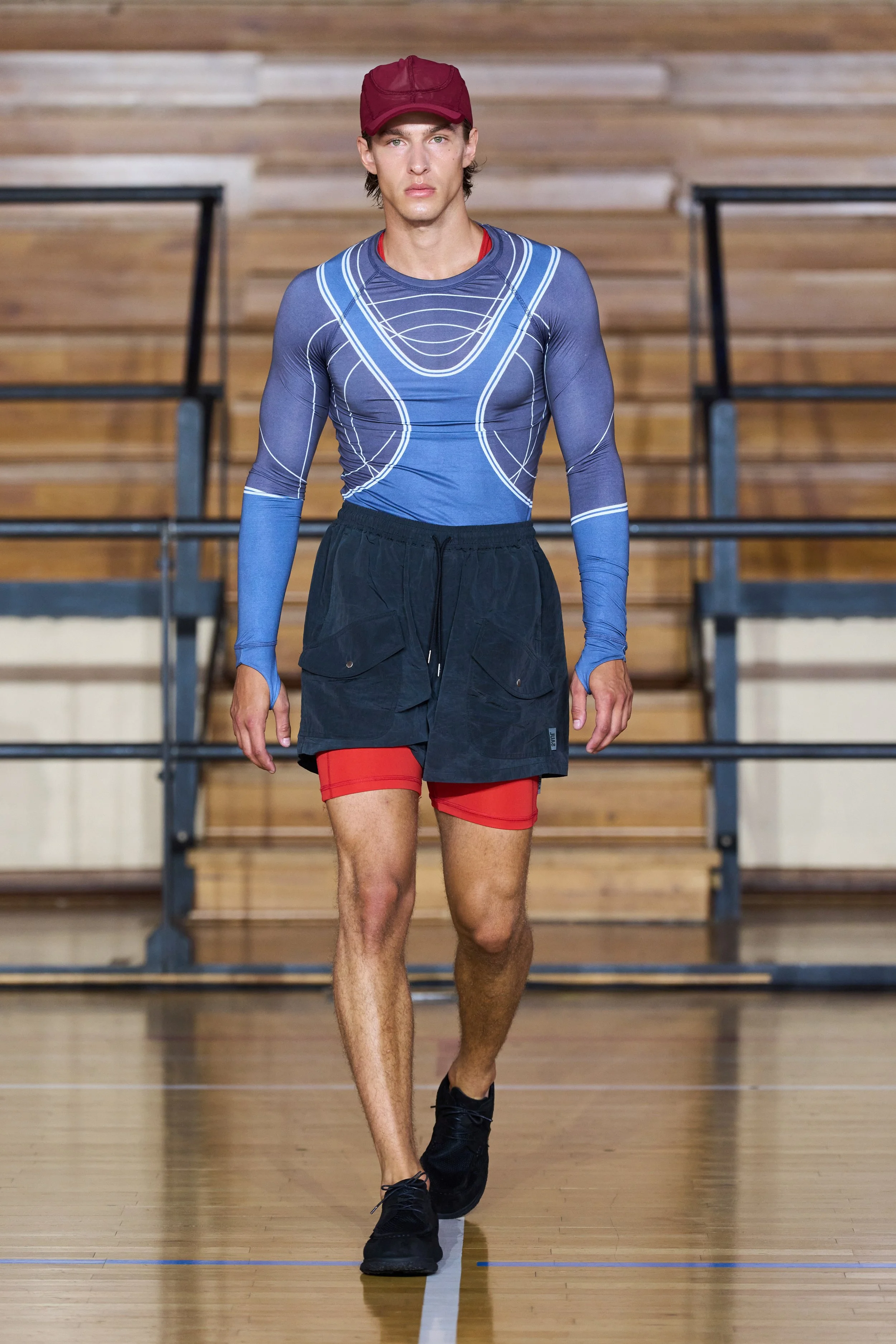
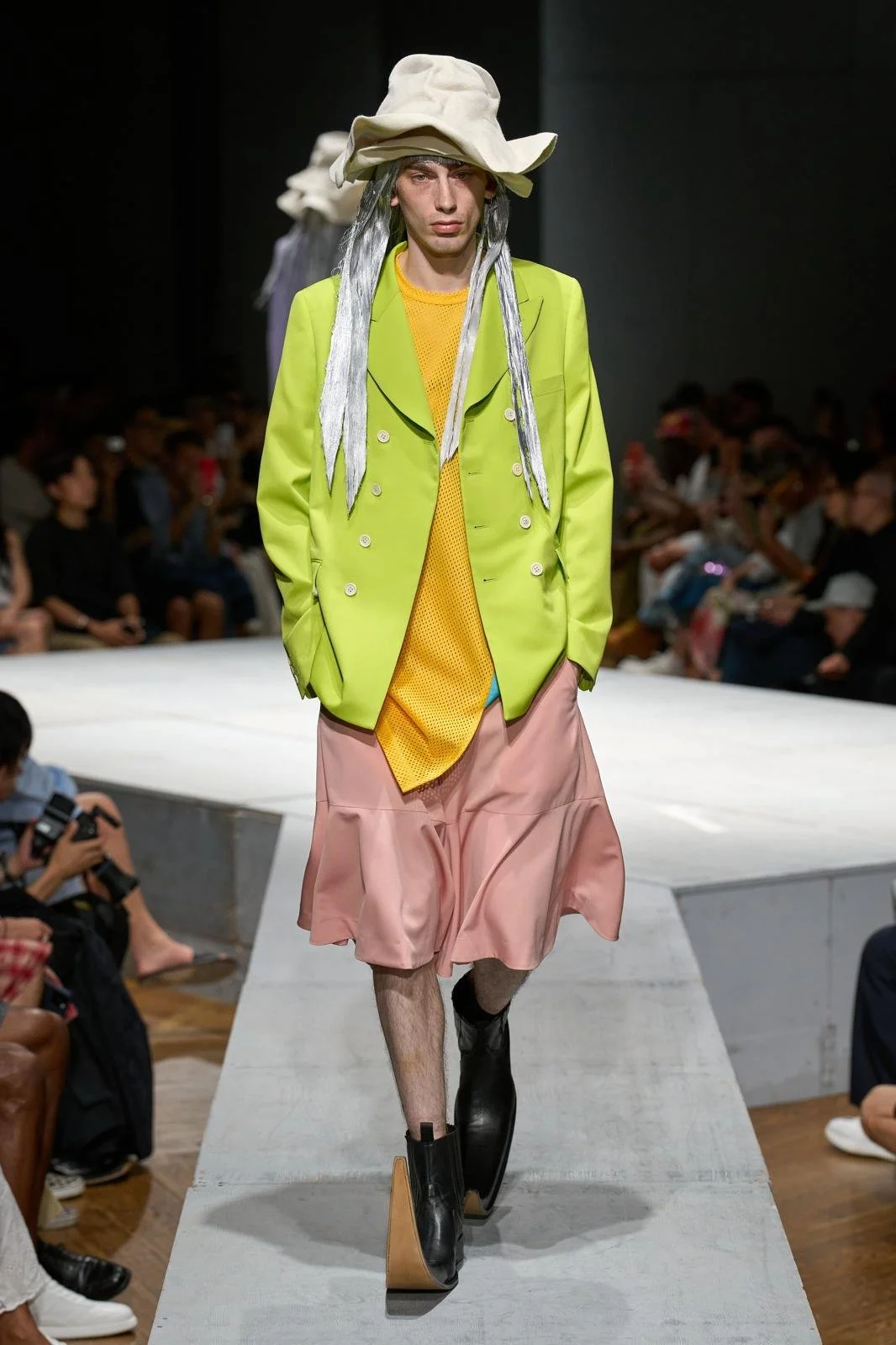
Saul Nash is a connoisseur of the male form. Through the seasons, the designer has made sportswear into a language, allowing him to stay close to the body while studying it. Where is desire, where is attention to the body, clearer than in the act of working on it? Nash utilises this proximity to theorise.

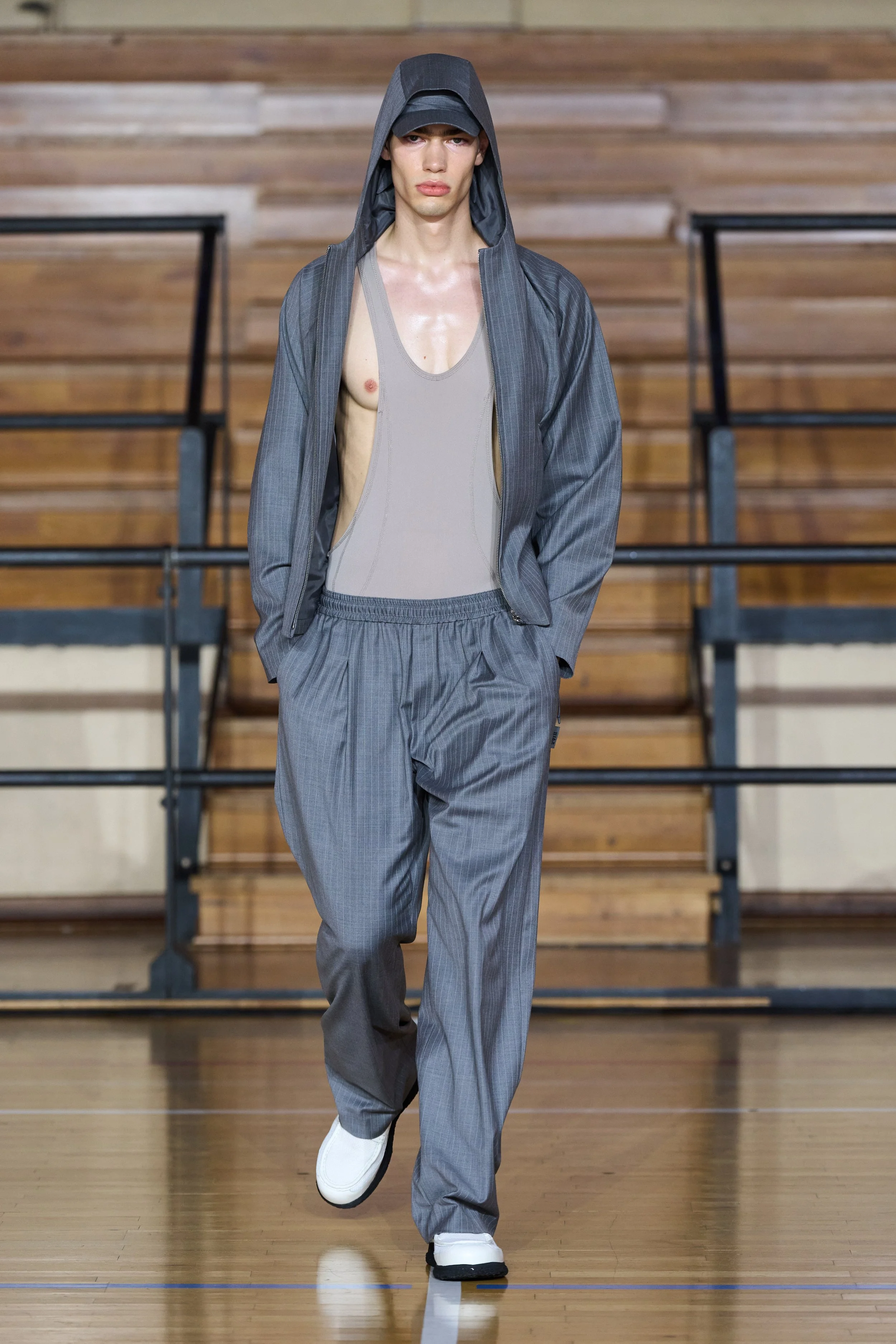
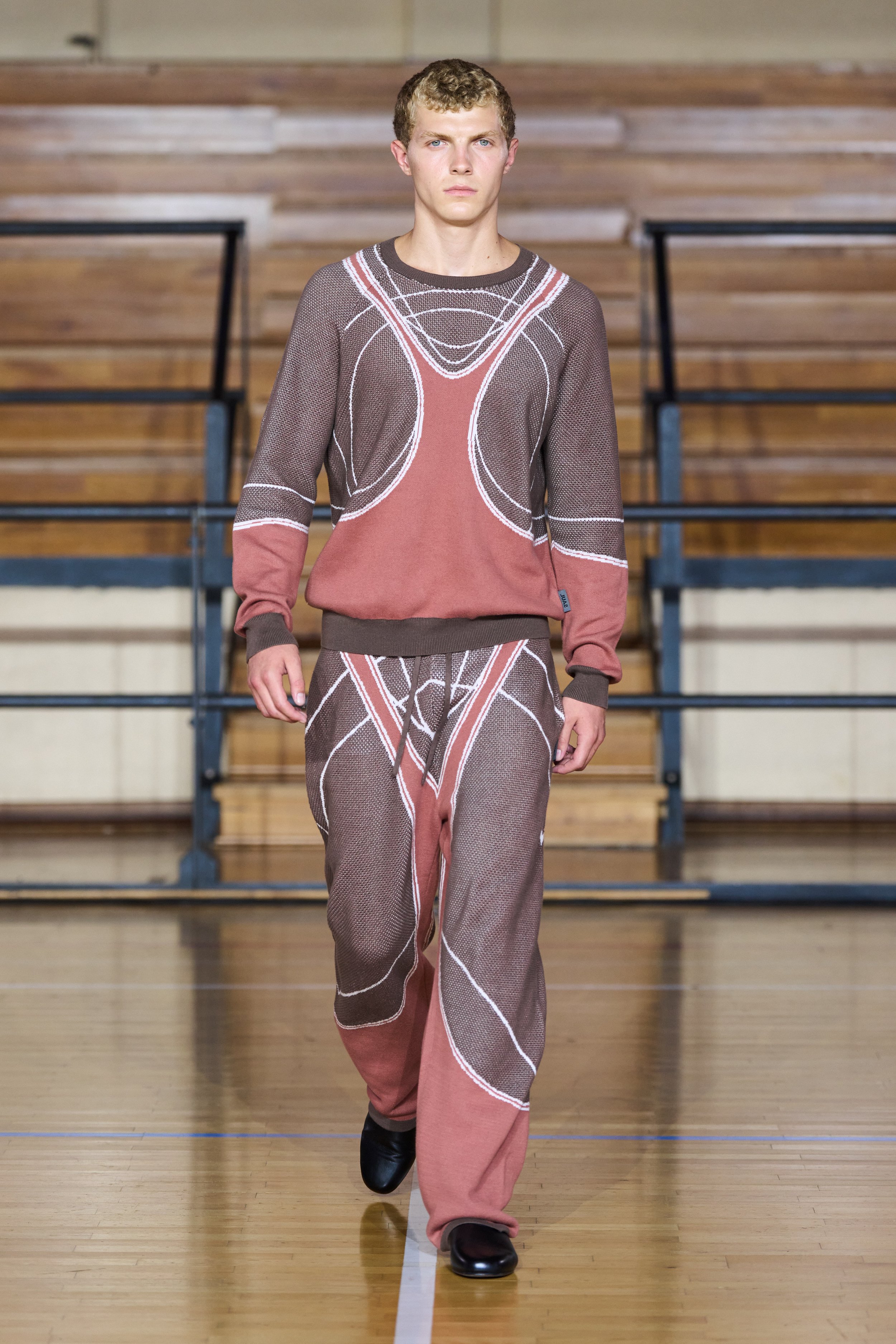
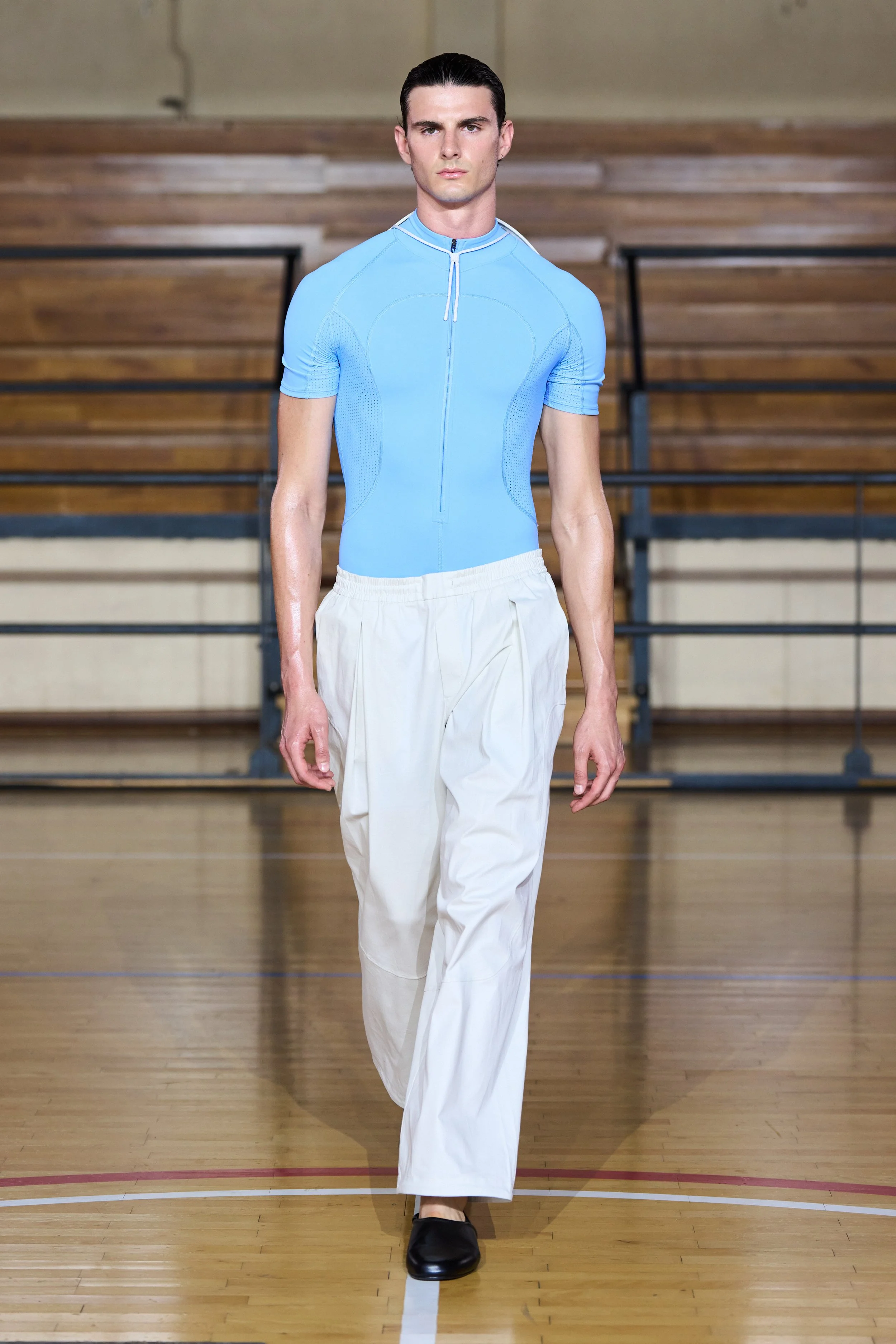
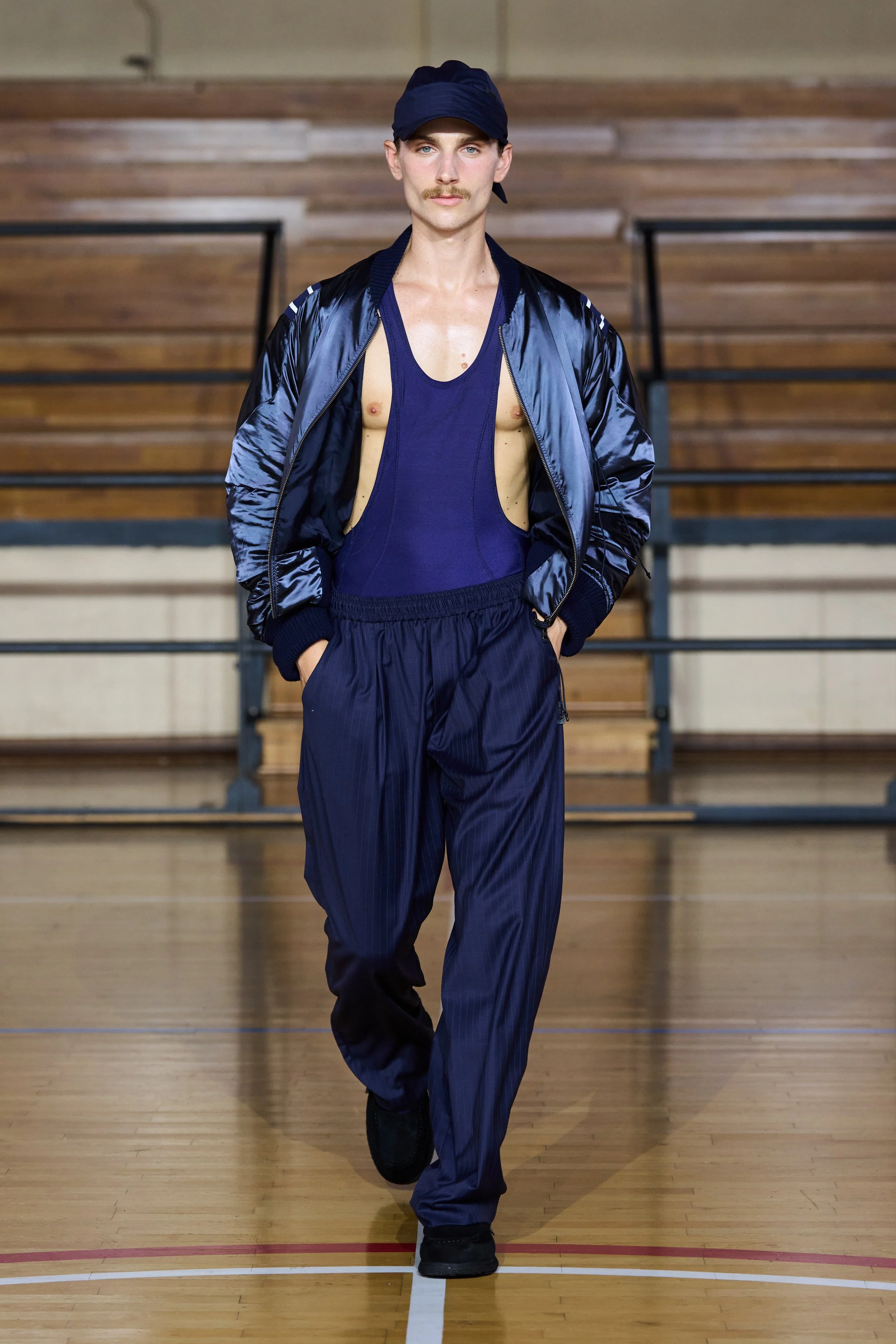
Here, Nash begins with two intersecting ideas: the idolization of male pin-ups from the 1950s and male corsetry from the Victorian era. The first is personalised through the wrestling singlet, shown here in stretchy taupe and bright navy. Hidden beneath shiny tracksuits, their erotic potential is barely concealed, peeking through as the models walk.

Singlets become more than a point of interest; they become a muse of sorts. In compression tops, their shape is manipulated, turned into a pattern that gathers at the waist and expands at the shoulders. In baggy knits, the same motif is used; its initial purpose – to define the body – now completely obsolete.

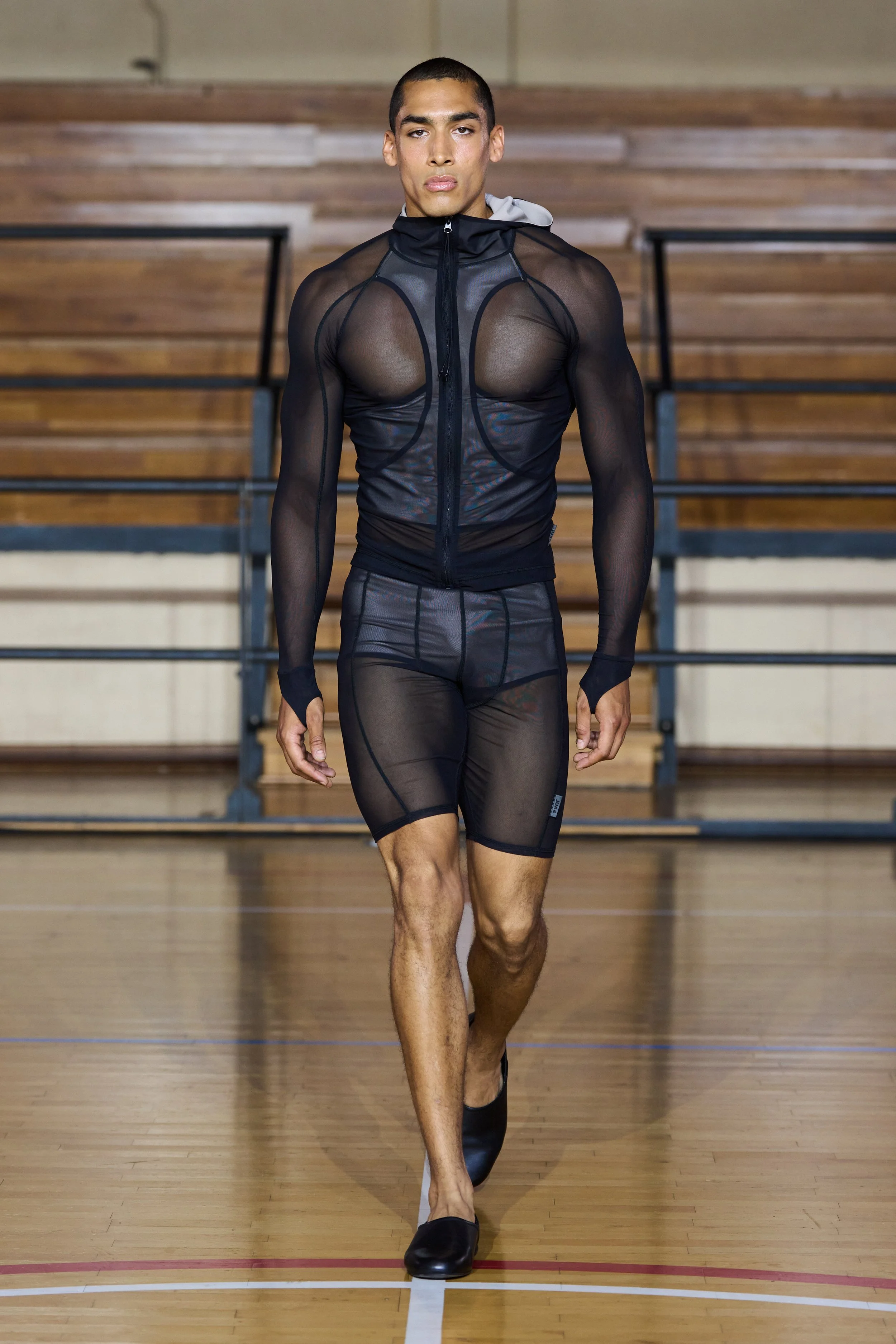
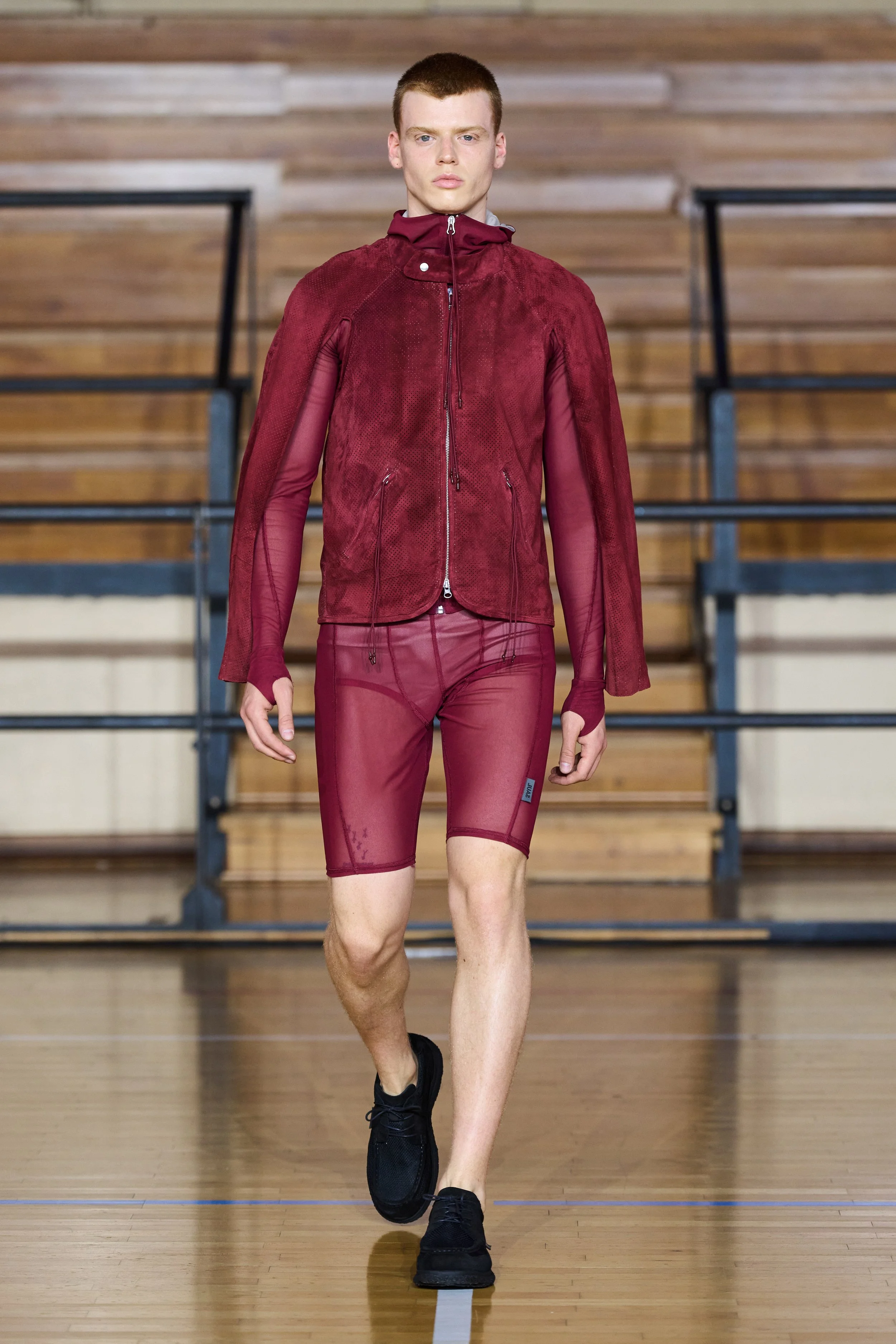
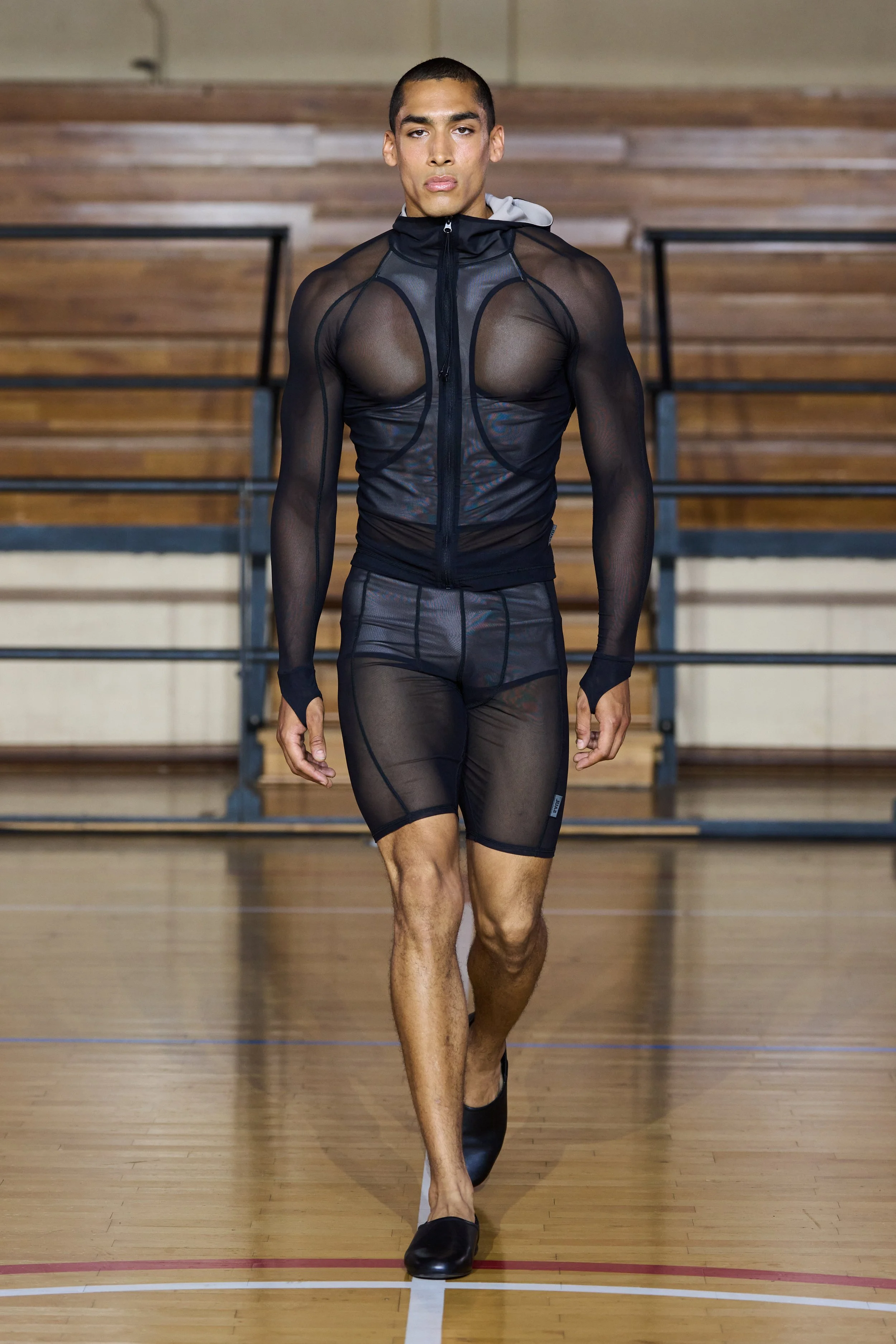
The same can’t be said of the closing look: a sheer compression shirt-and-shorts set whose seams define the body. Gripping the pecs and shaping the shoulders, tracing the quads and framing the abs.

Still, the body isn’t merely a site of sexual tension. The choice to reveal it (or conceal it) is also explored. Technical jackets and hoodies are riddled with two-way zippers, allowing the wearer to expose the physique at their own discretion.


Words by Pedro Vasconcelos
PRADA SS27

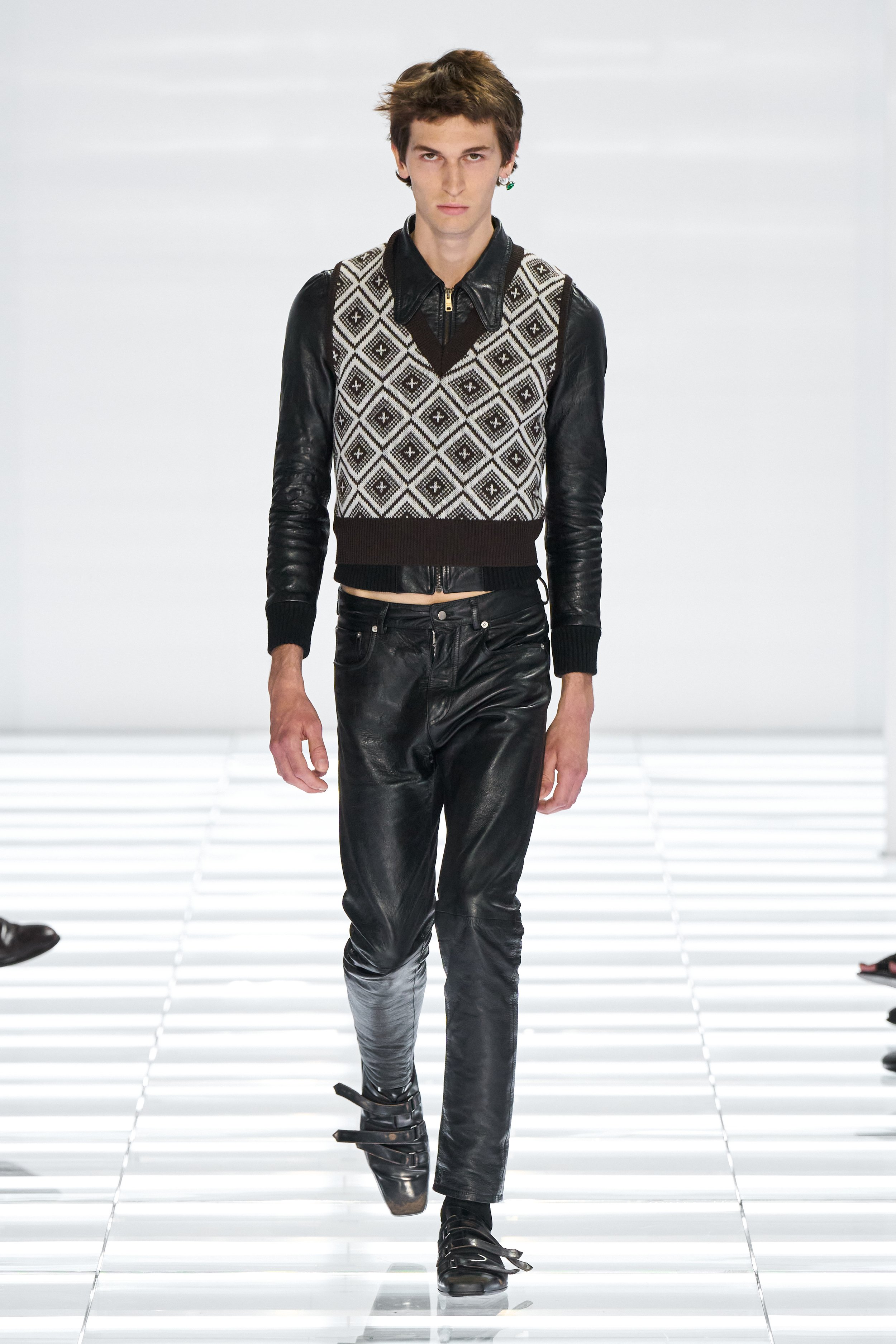
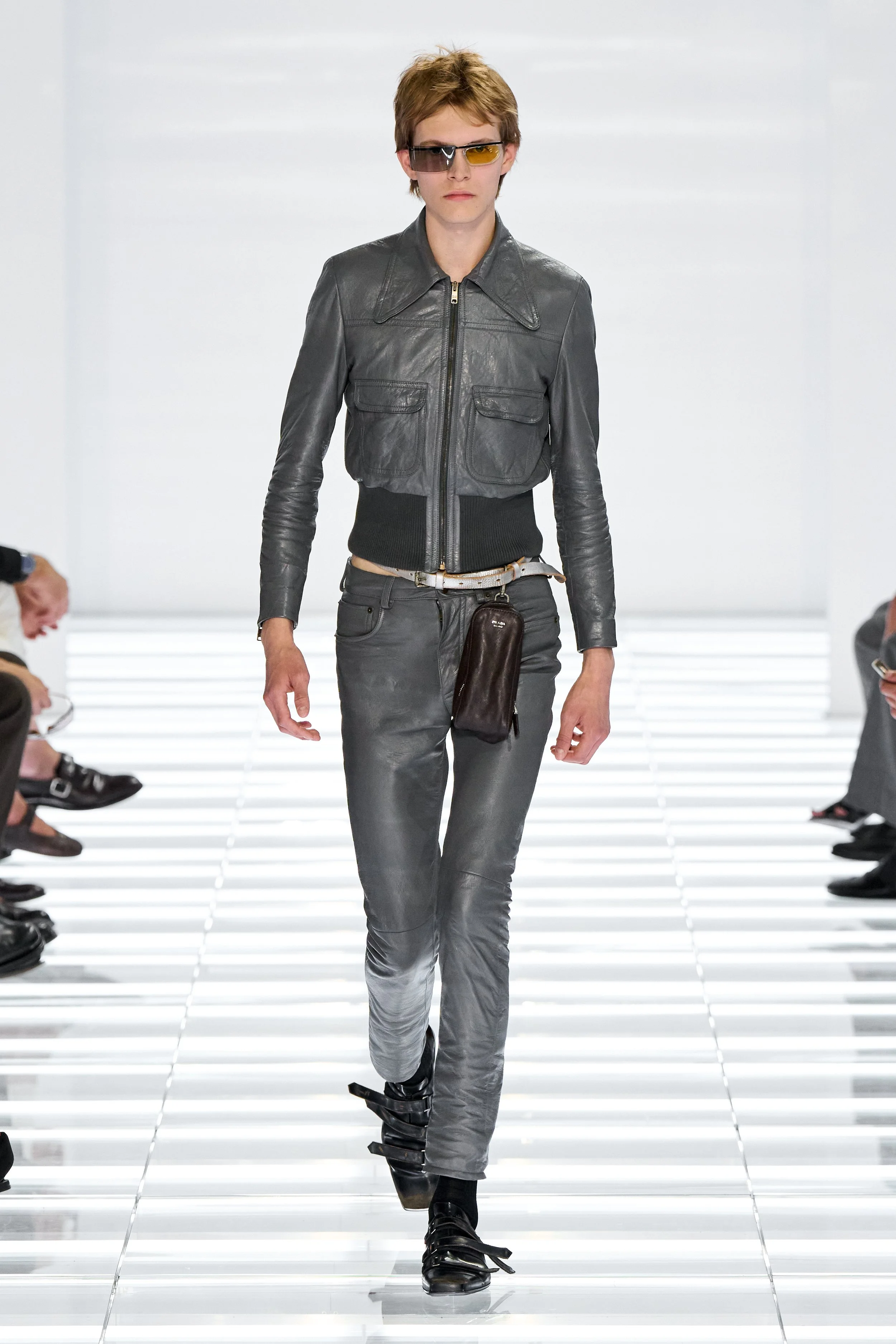
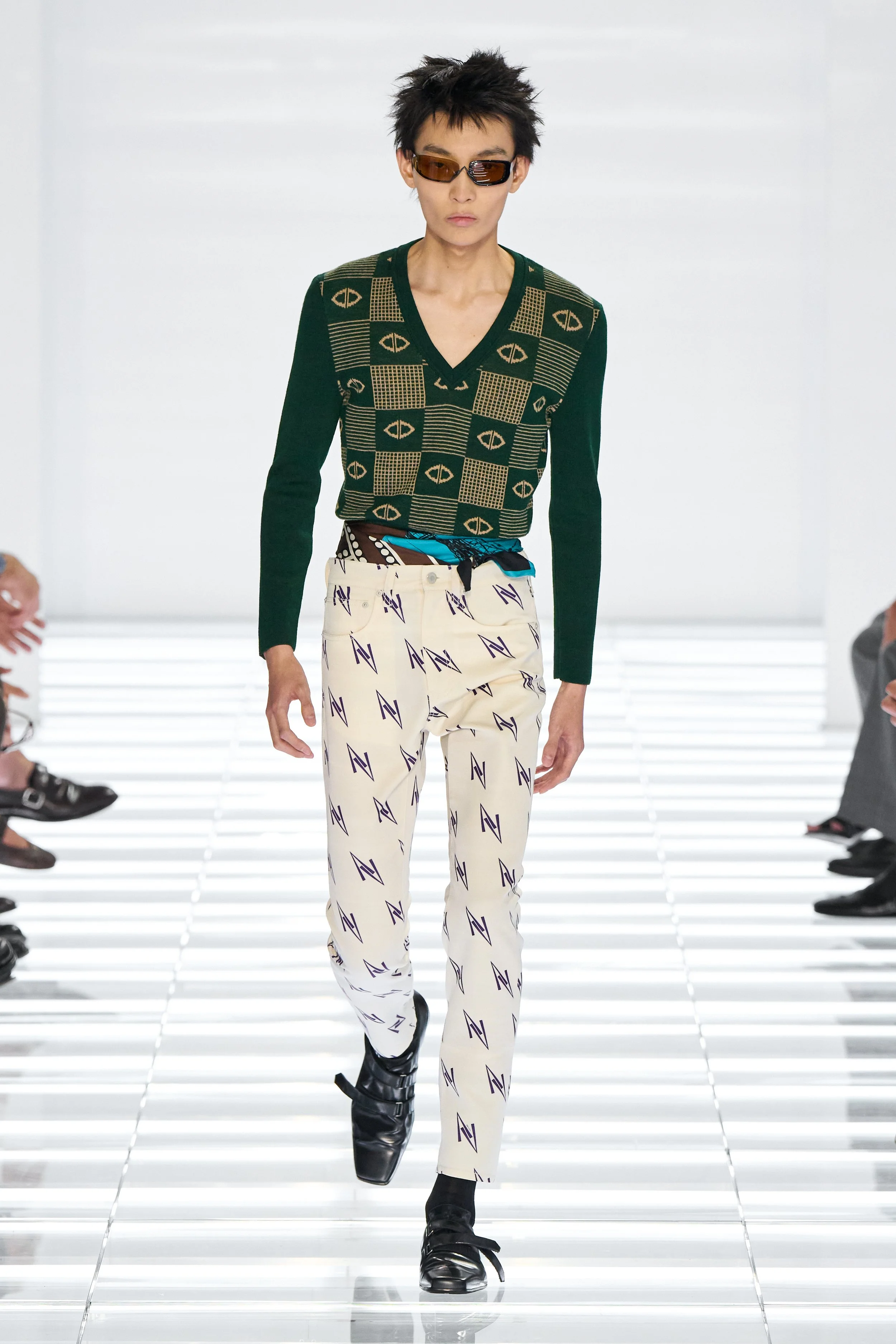
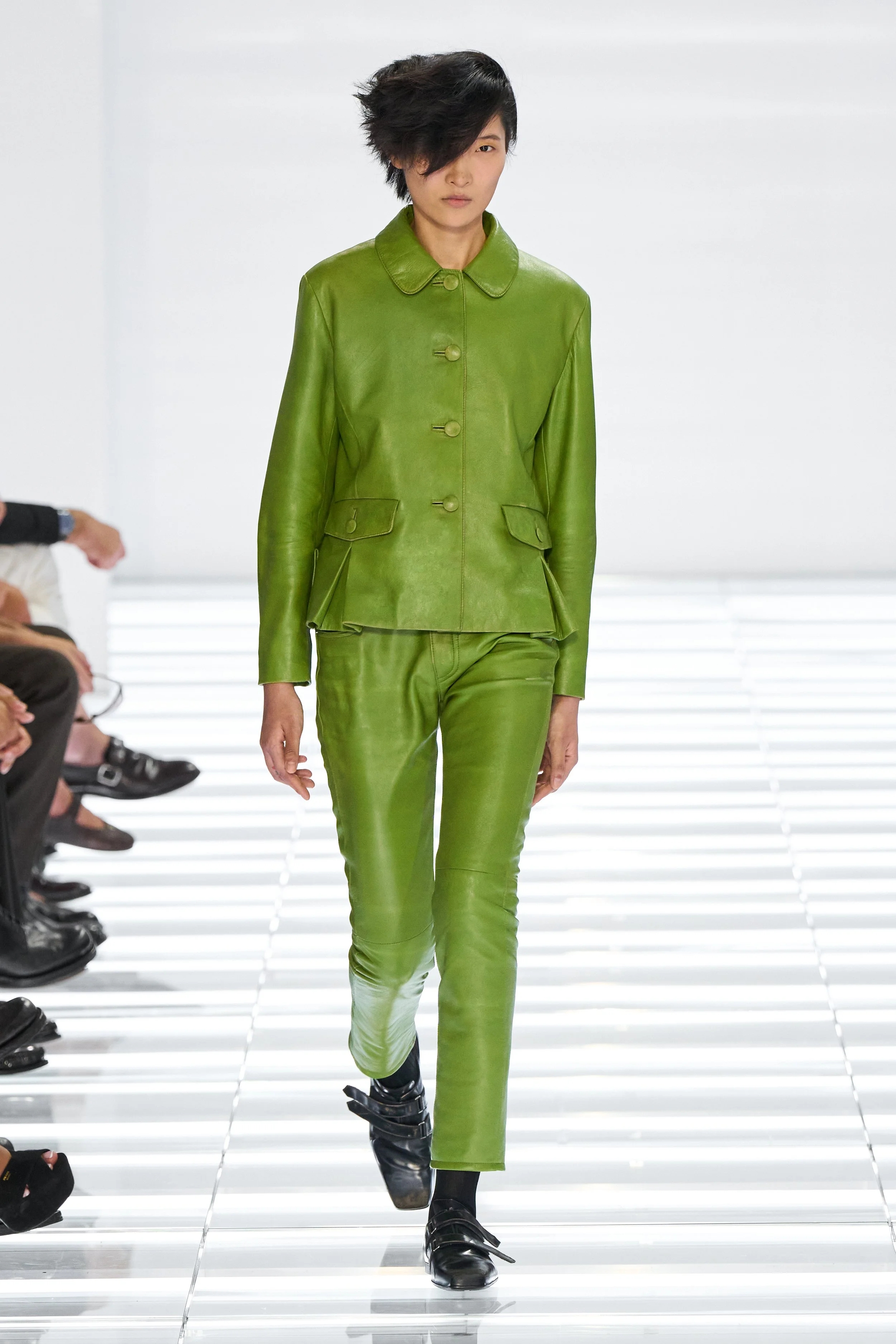
The amount of discourse that follows a Prada show is remarkable. Online, hundreds – perhaps thousands – of voices immediately begin hypothesising about the meaning of what most have only just witnessed through a livestream. From biased criticism to outright fanaticism, the reaction speaks to what Miuccia Prada, and now Raf Simons, do better than almost anyone else in fashion: they create intellectual discourse. Everyone wants to be part of the conversation.

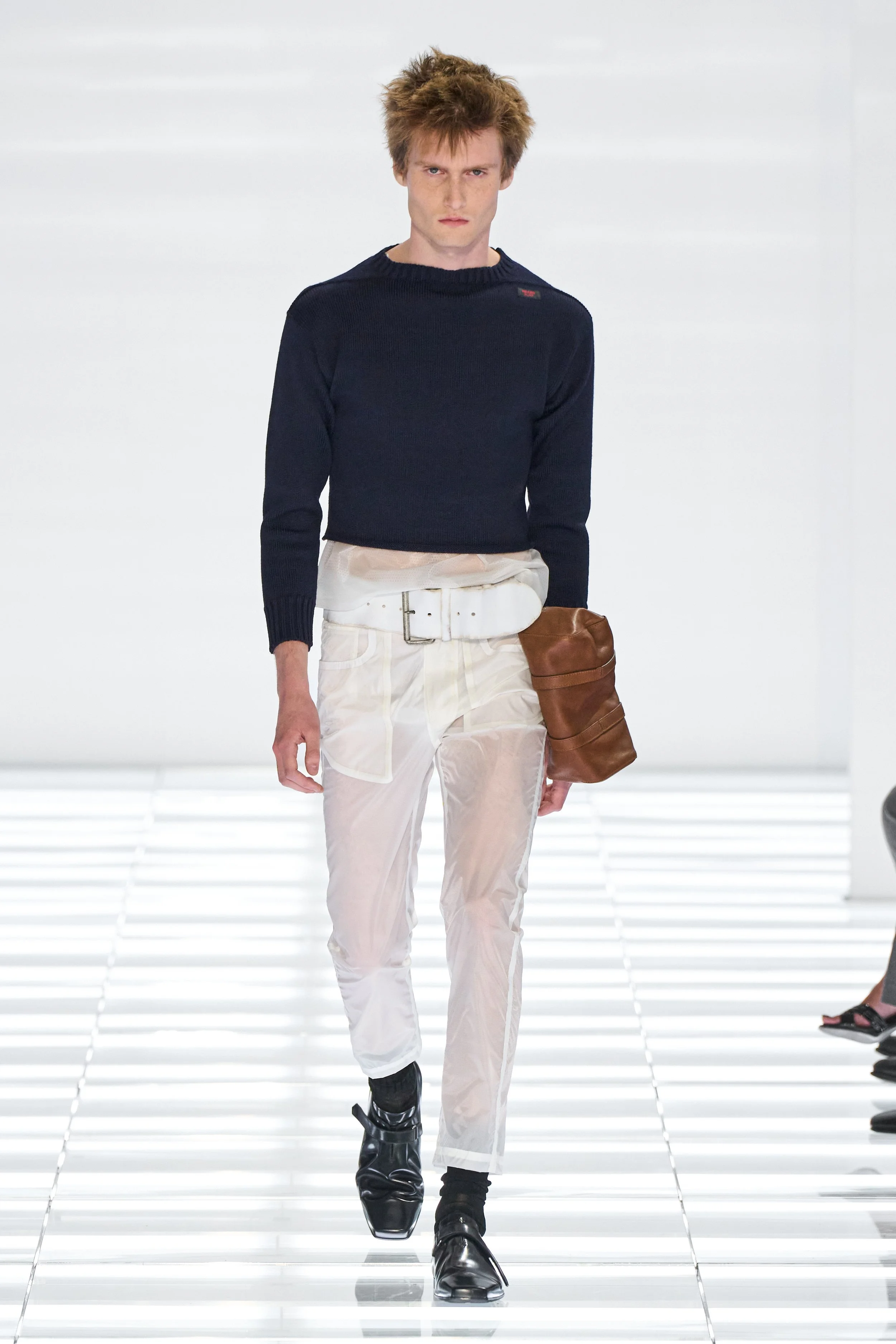
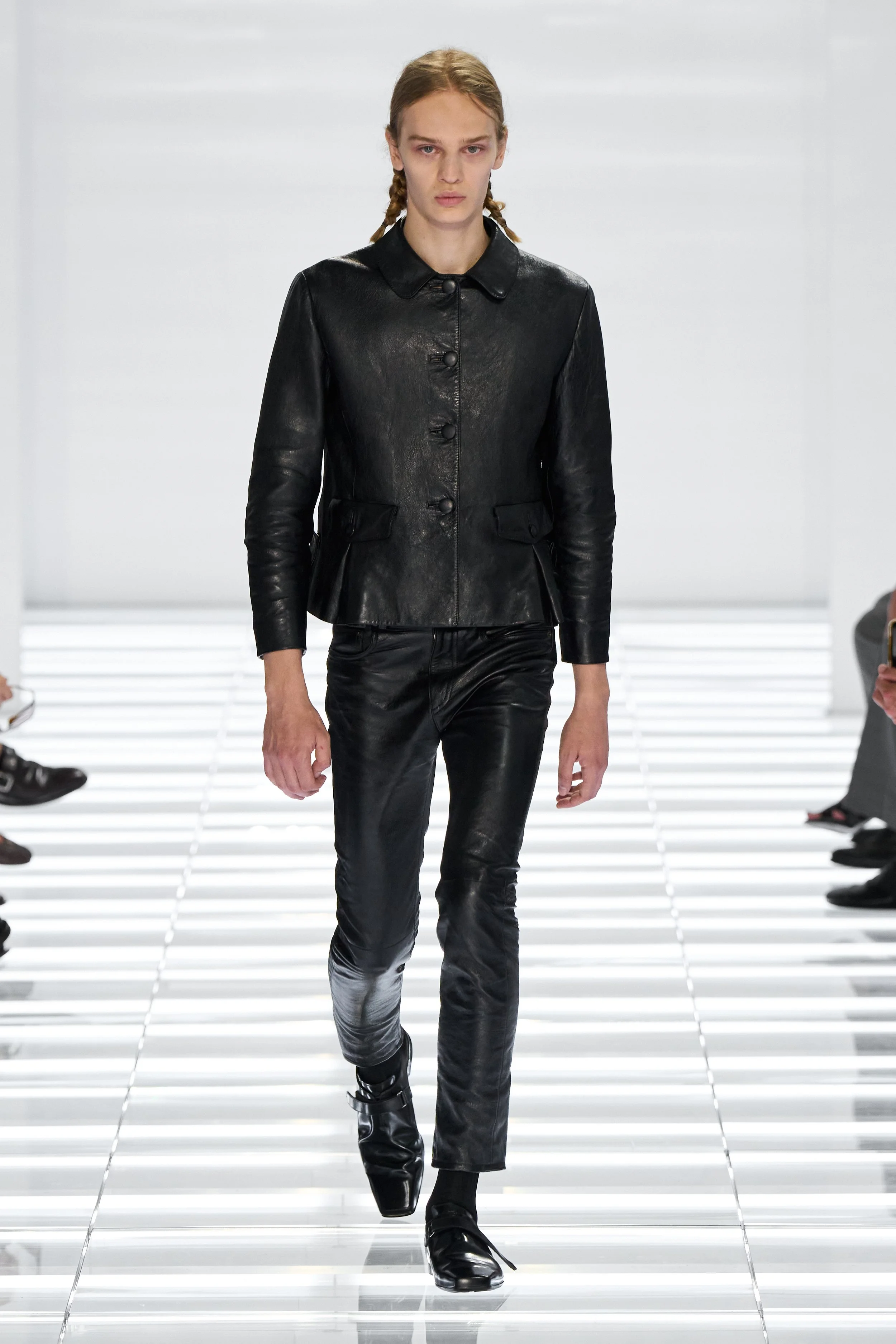
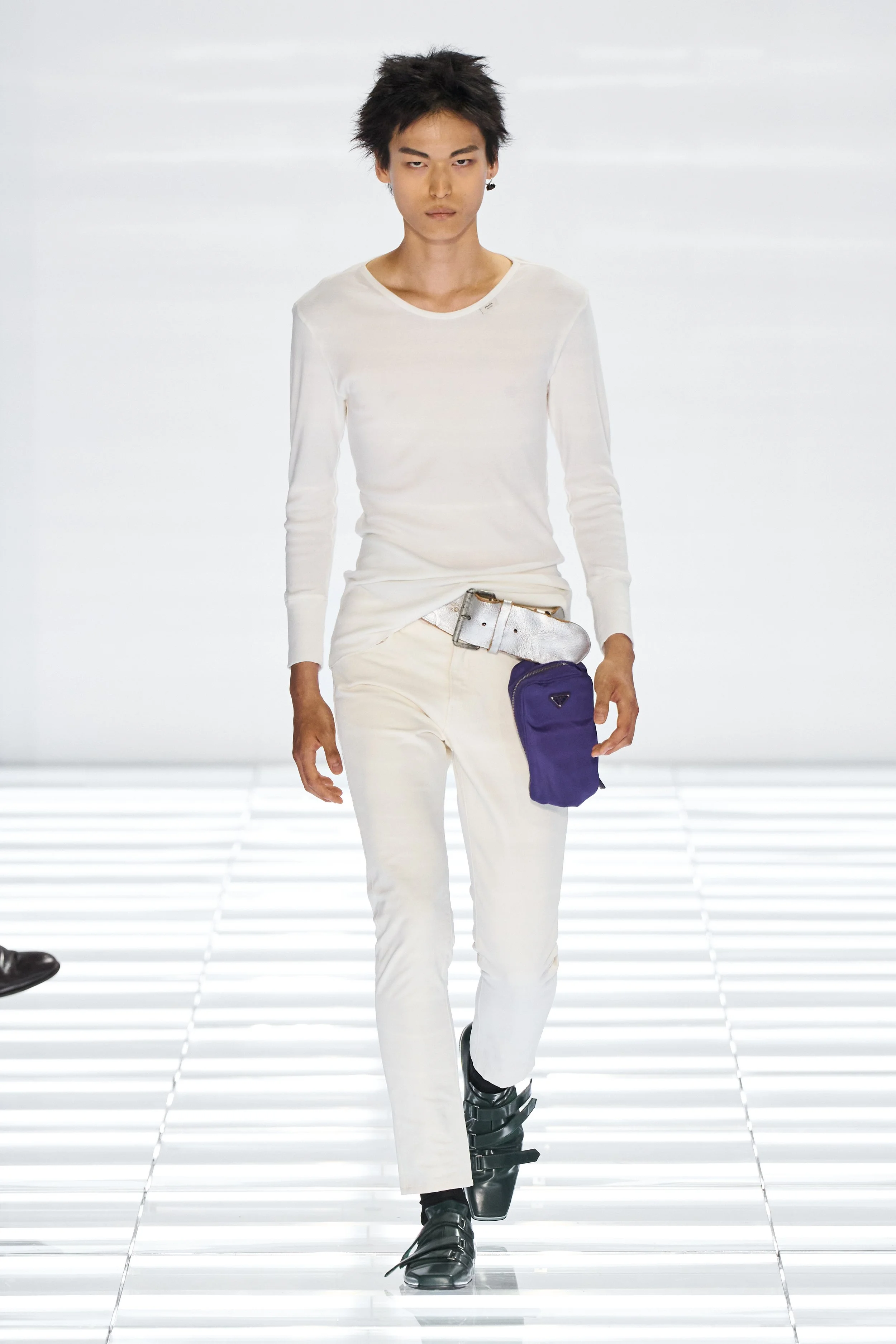
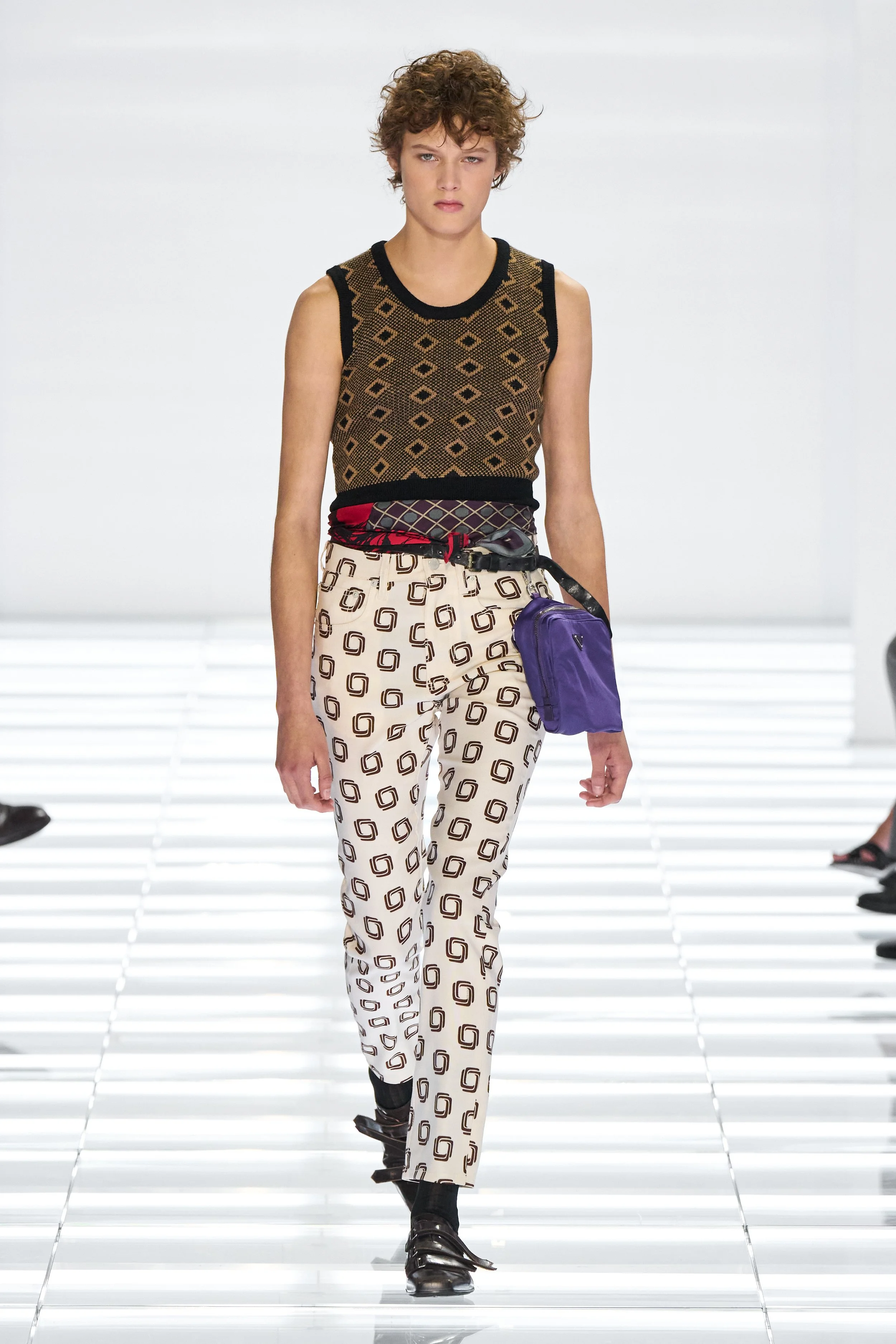
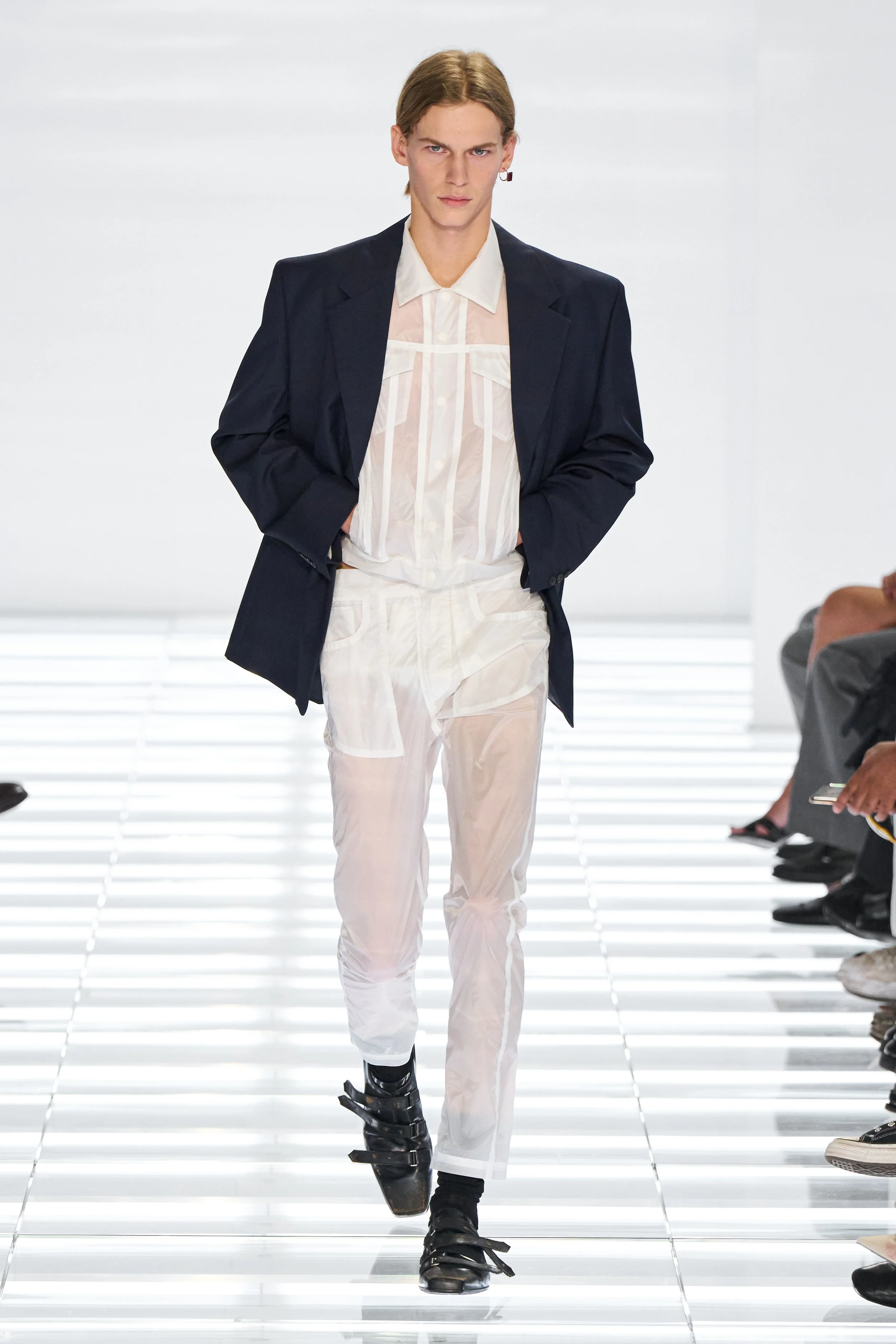
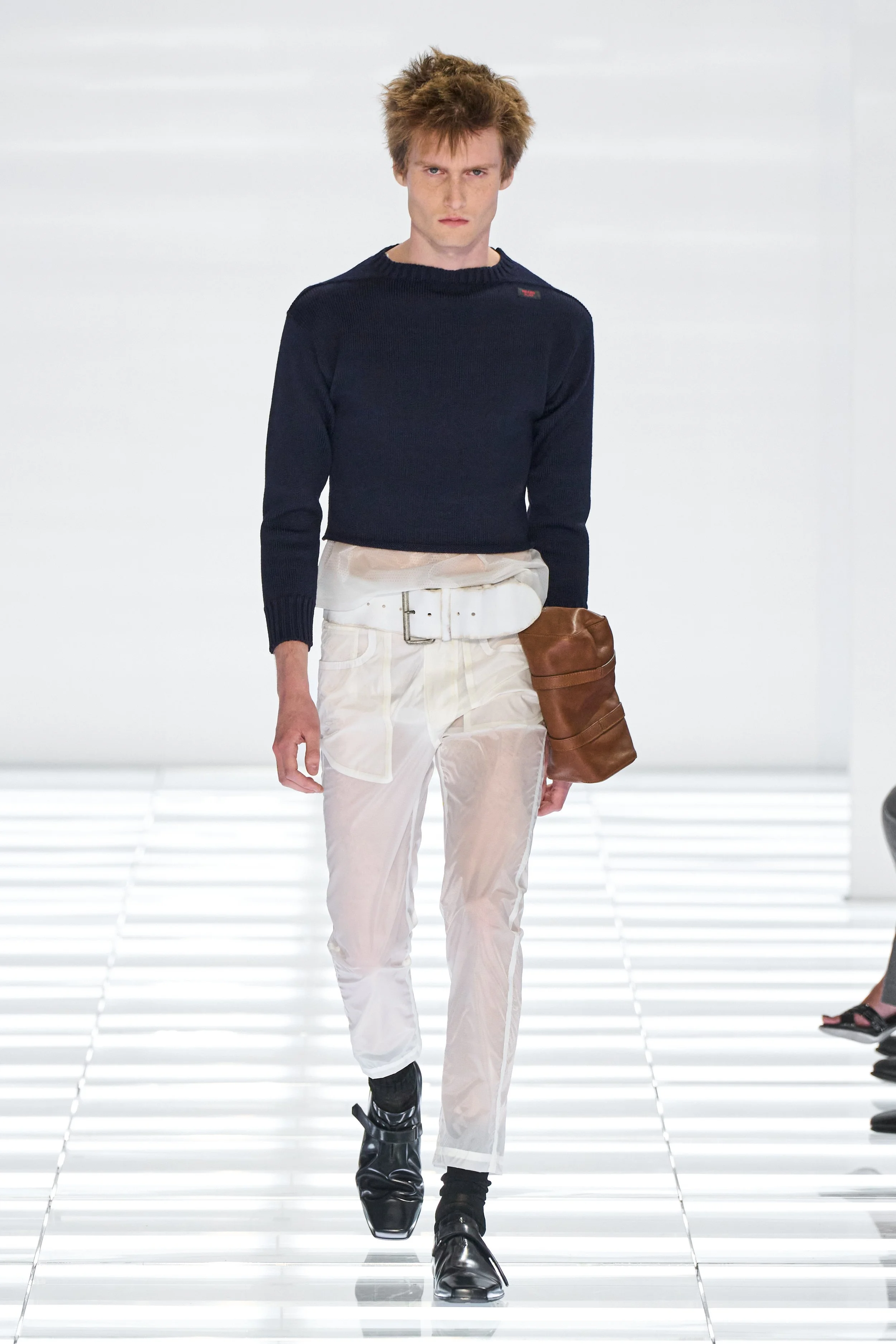
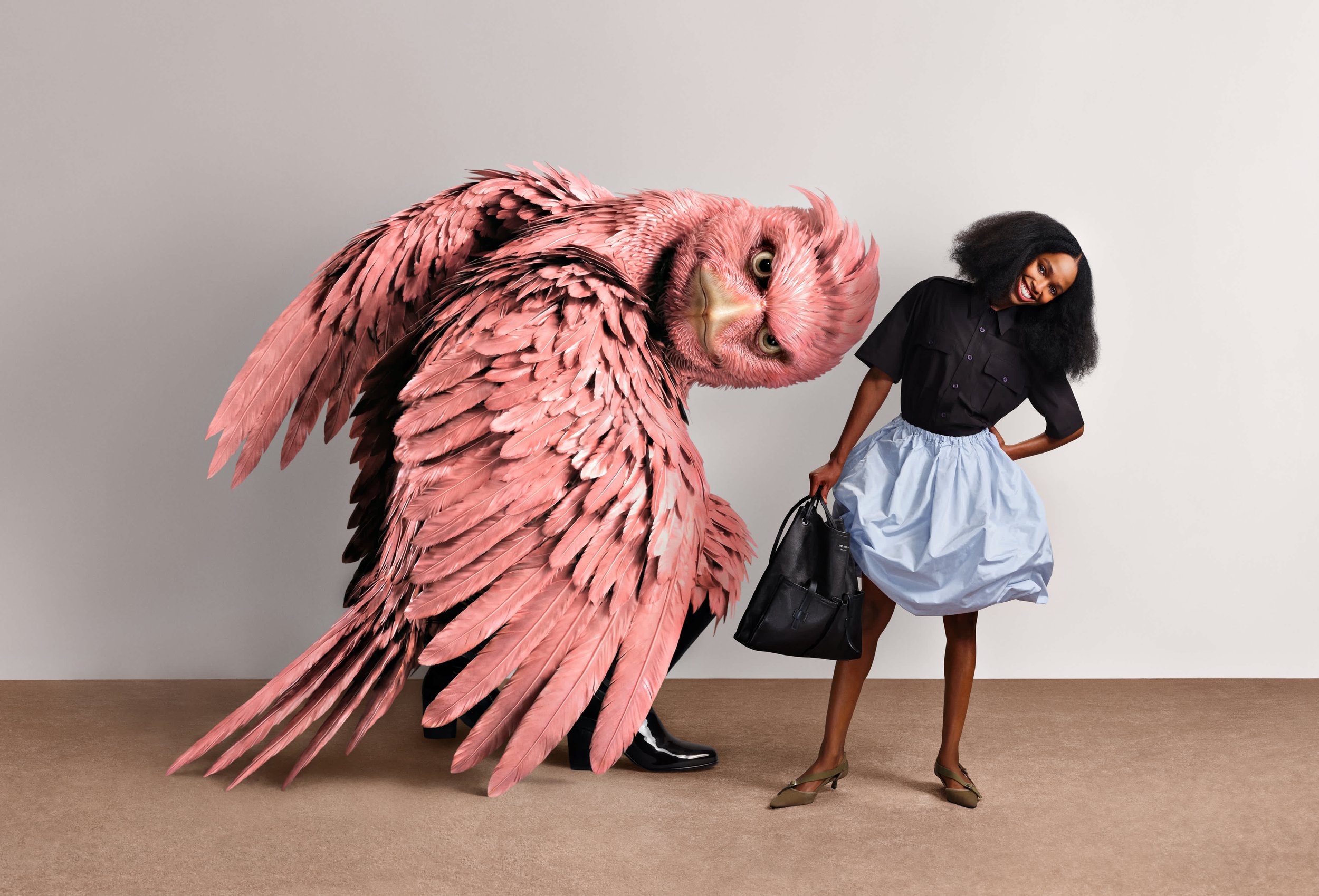
Yet, for all the instant analysis, keyboards poised as each look appears on screen, theories are only truly tested backstage, when the design duo offers its own interpretation of what has just unfolded. This season, above fluorescent lights and along a clear plexiglass runway, came skintight camisoles and oversized belts, cropped jackets and matching leather trousers.

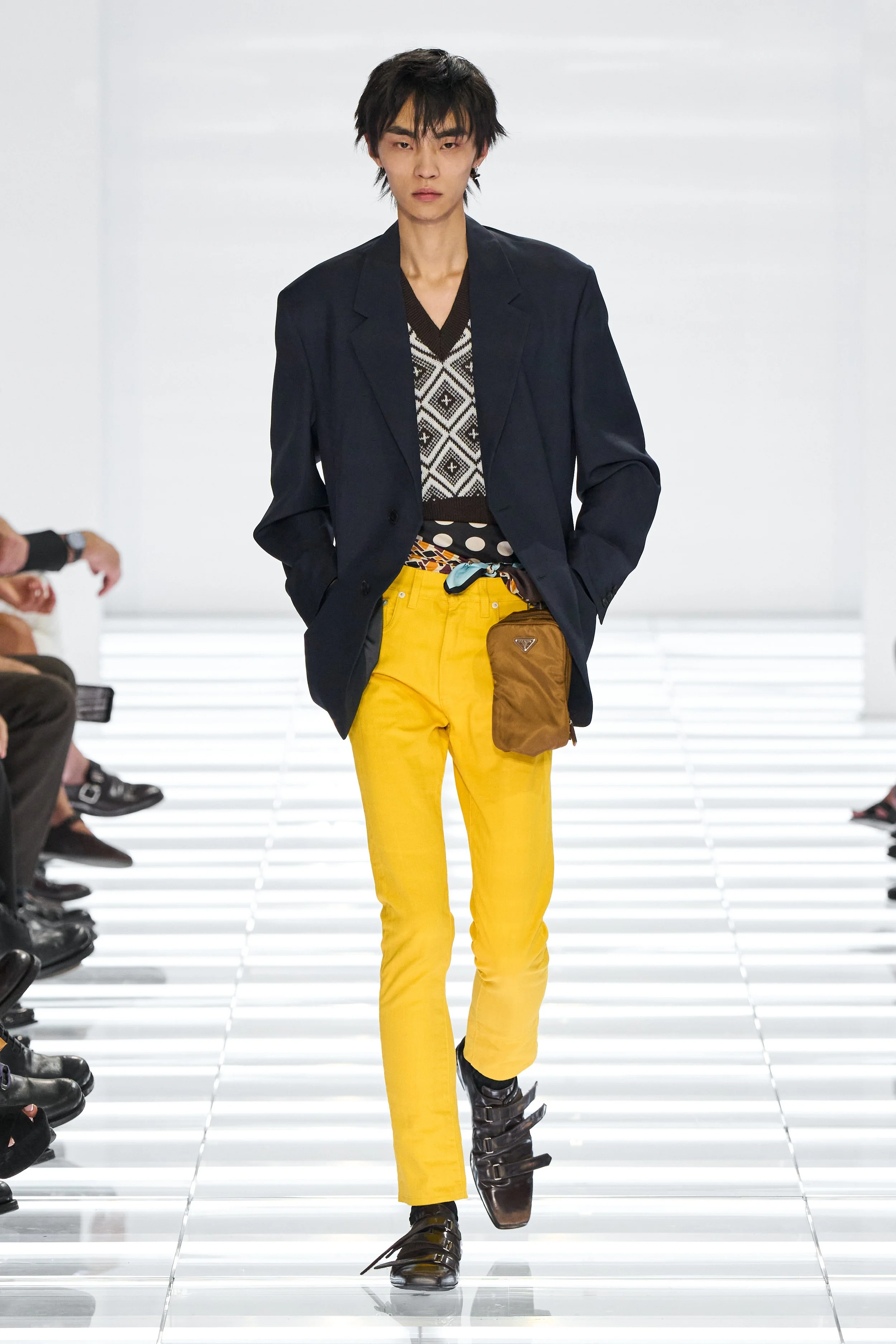
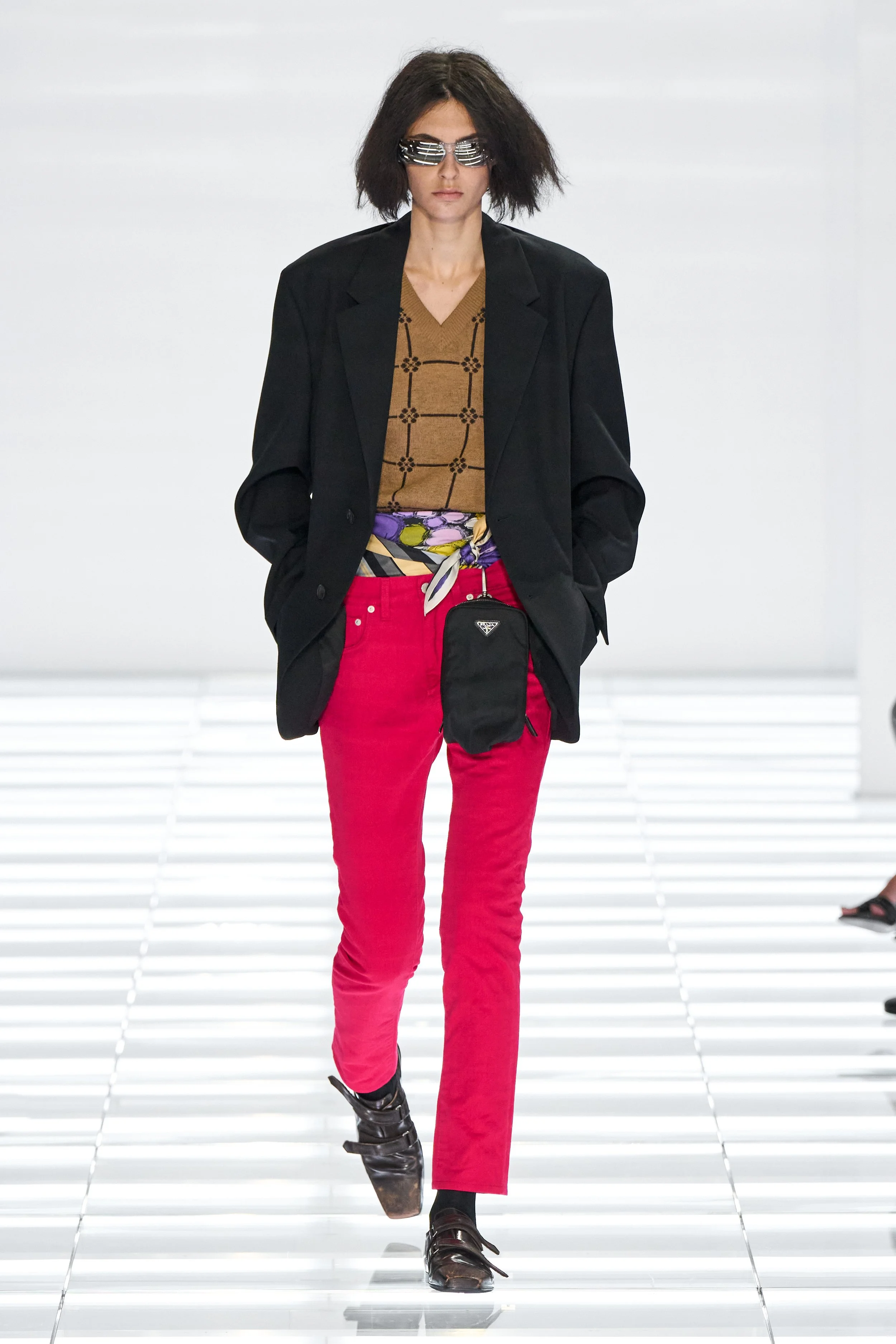
Prada signatures were recalibrated, most notably through silhouette. Knit sweaters, themselves cut close to the body, extended their collars beyond their usual limits, exposing flashes of colourful shirting beneath. Skinny jeans arrived in shades of burgundy, pink, yellow, and white. A Peter Pan collar on a green leather jacket and a pink leather vest felt particularly Prada – here, an adjective.

The Frankenstein sunglasses, asymmetrical and different on each side of the face, were instantly screenshot and dispersed across social media. While their inspiration is still being debated online, Mrs Prada spoke backstage about seeing reality through new lenses, the eyewear serving as a thinly veiled metaphor for that shift in perception.

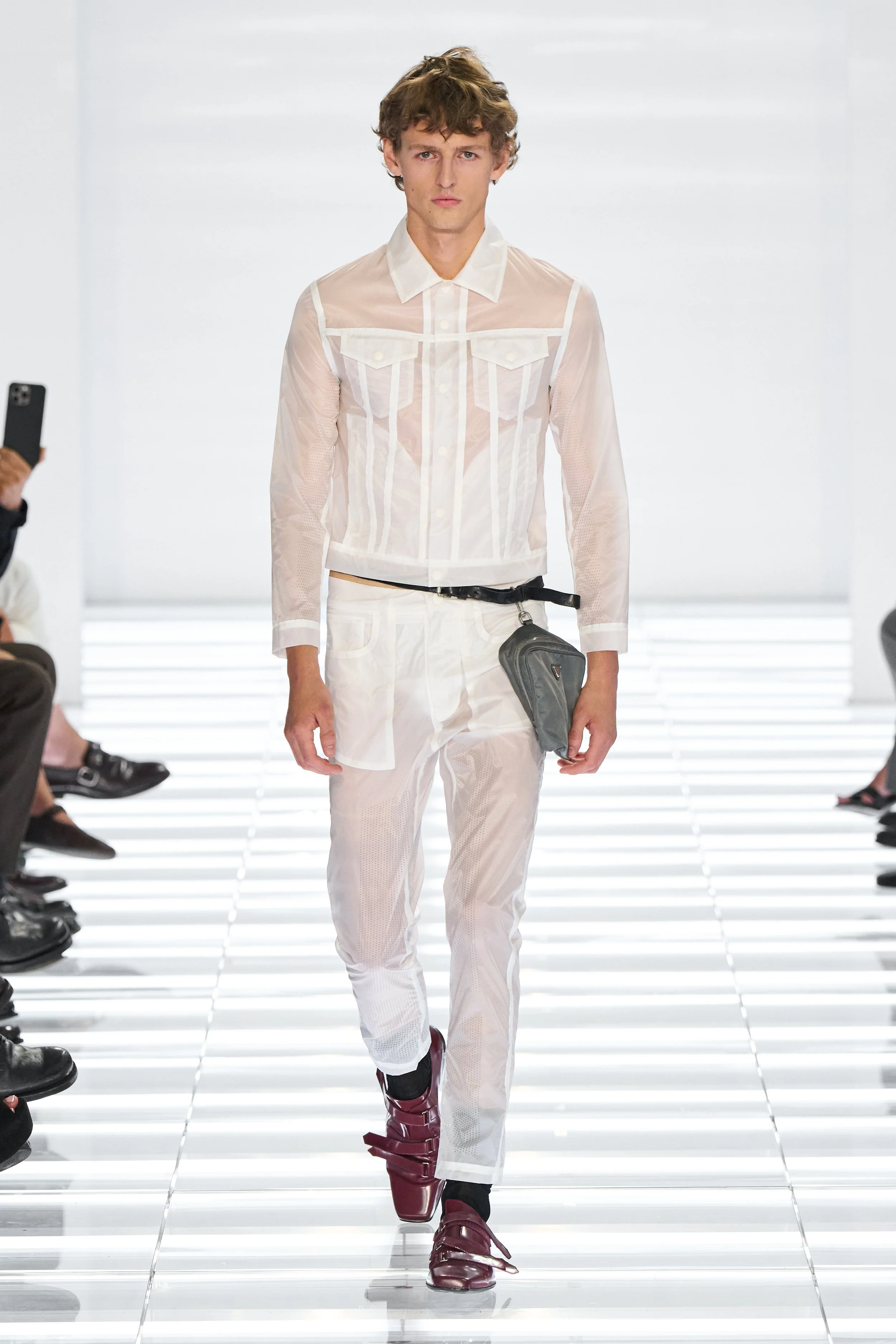
A perforated set echoed the runway on which it walked: translucent enough to reveal what lay beneath. In this case, not only the model's body but also the garment's construction, modelled after a classic denim trucker jacket. Exposure became both an aesthetic device and a conceptual gesture.

Again, as it does almost every season, Prada arrives at ideas that few others would think to pursue, let alone articulate through clothing. The clothes matter, of course, but so does the conversation they provoke. Few brands understand that distinction. Fewer still can sustain it season after season.


Words by Pedro Vasconcelos
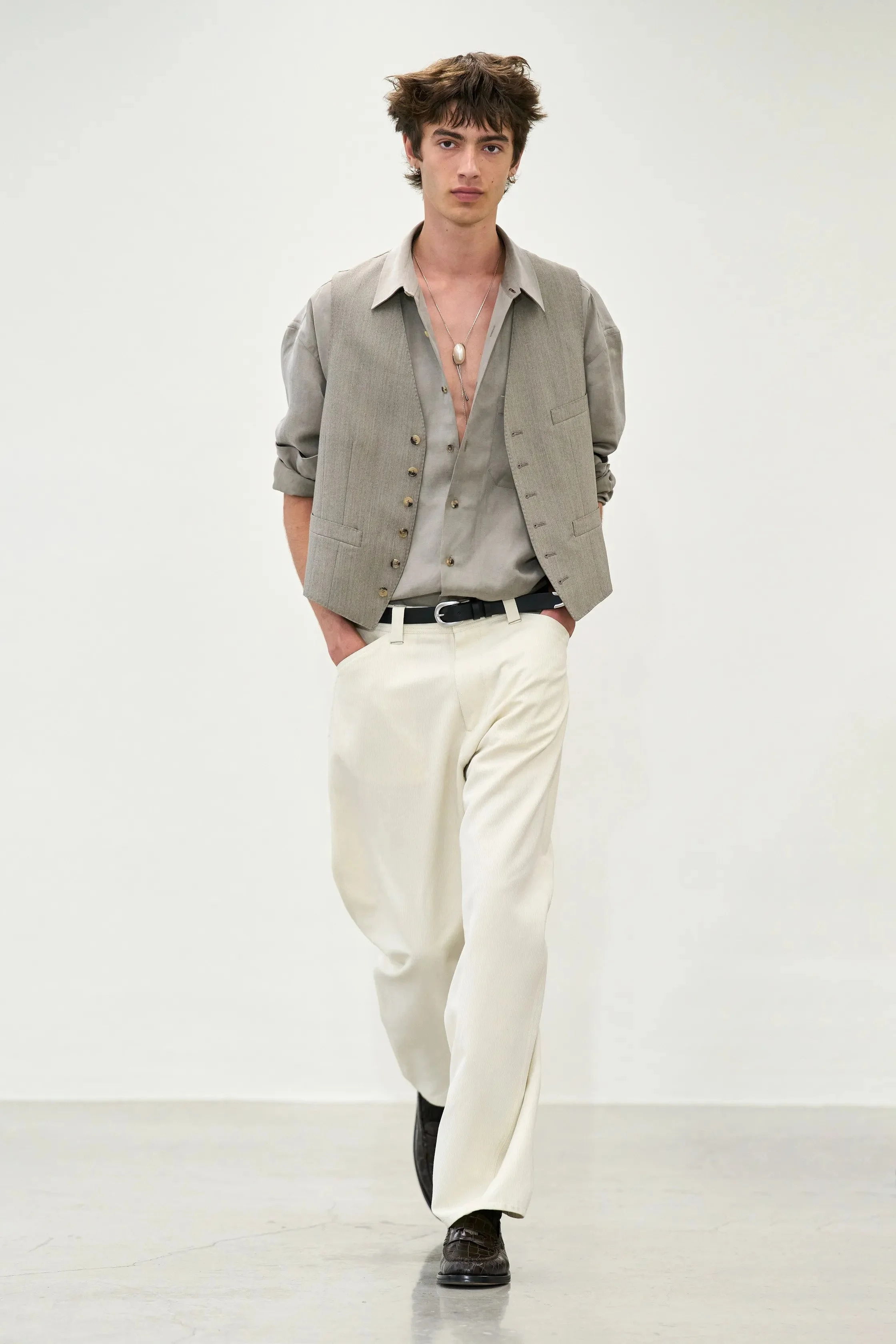
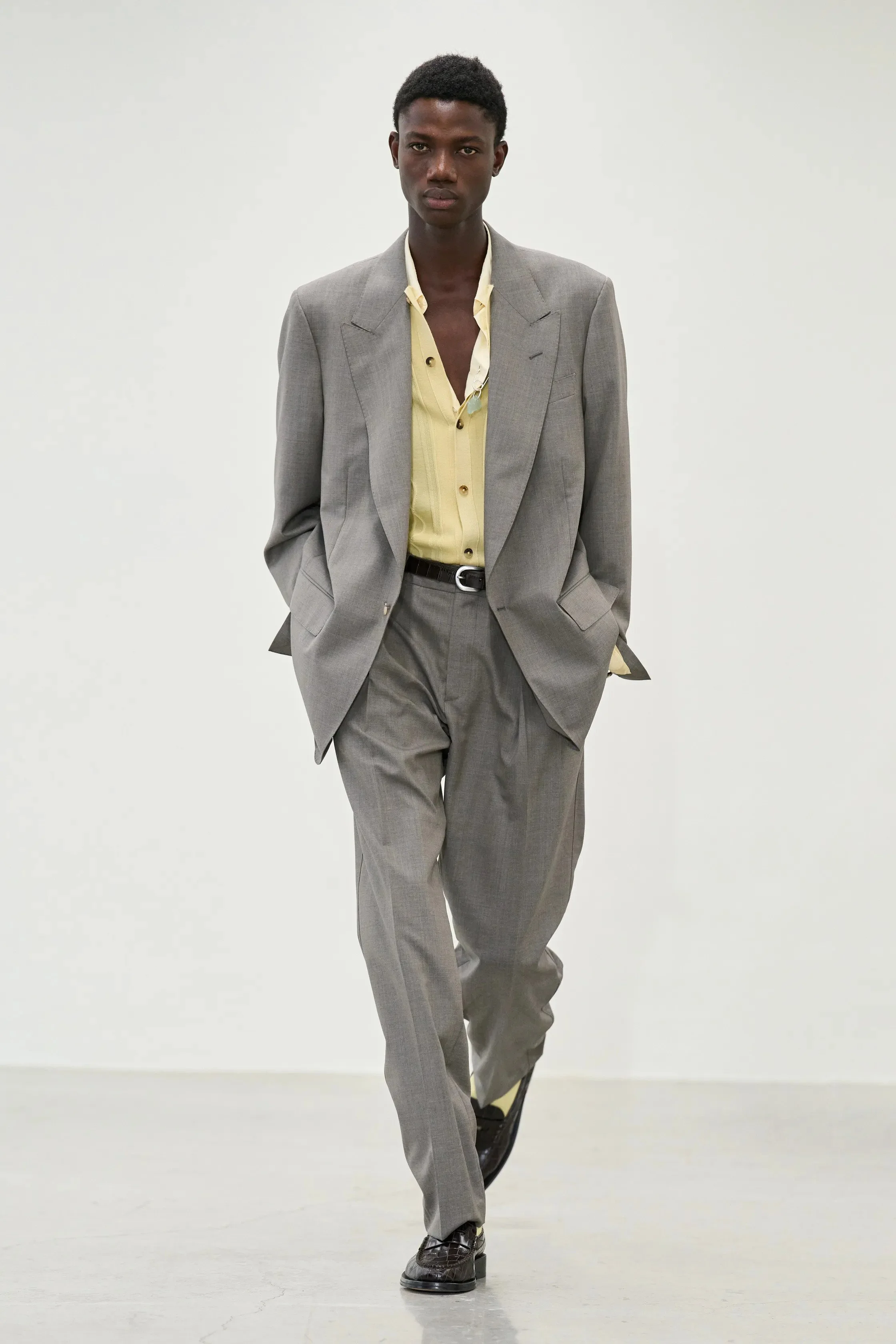
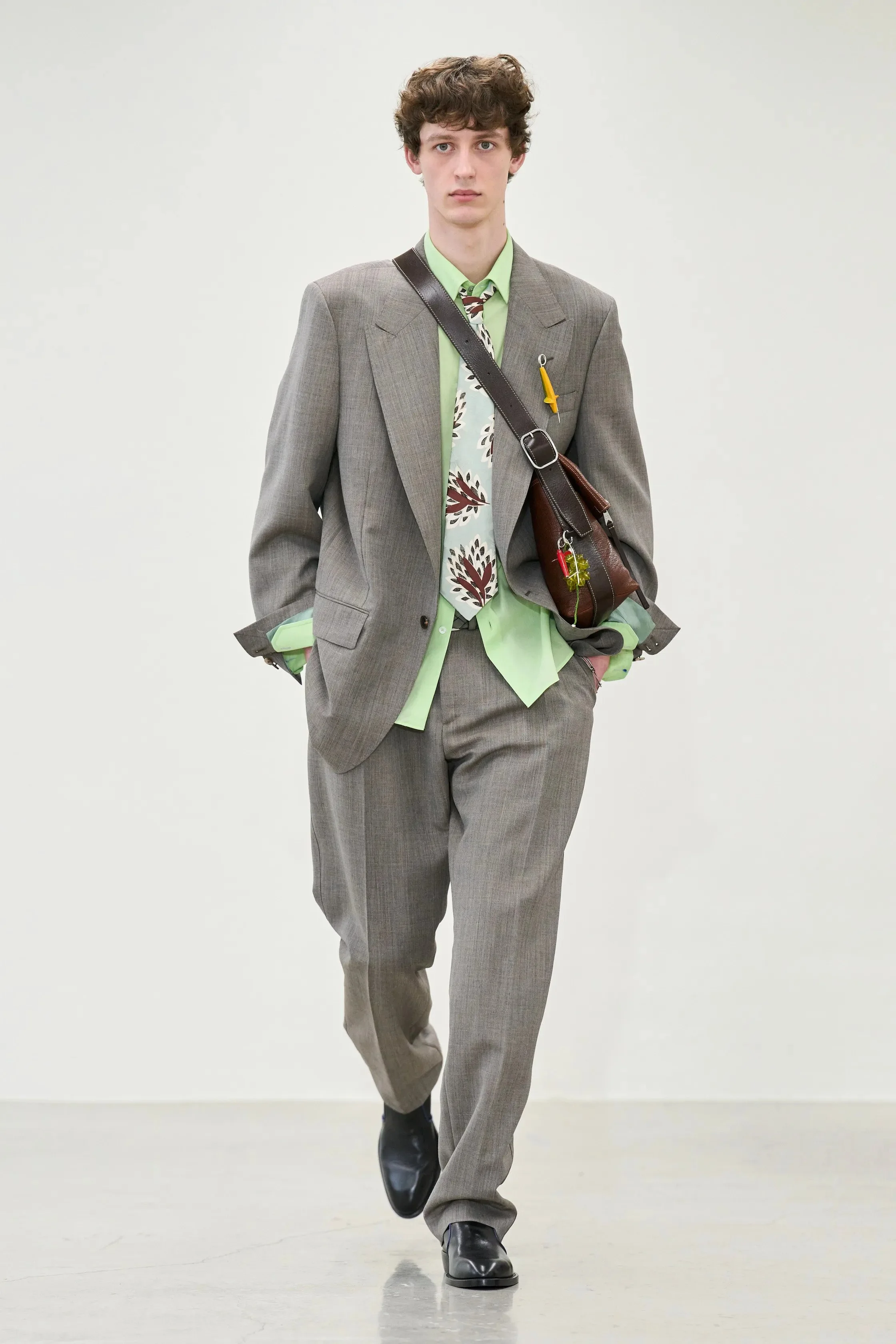
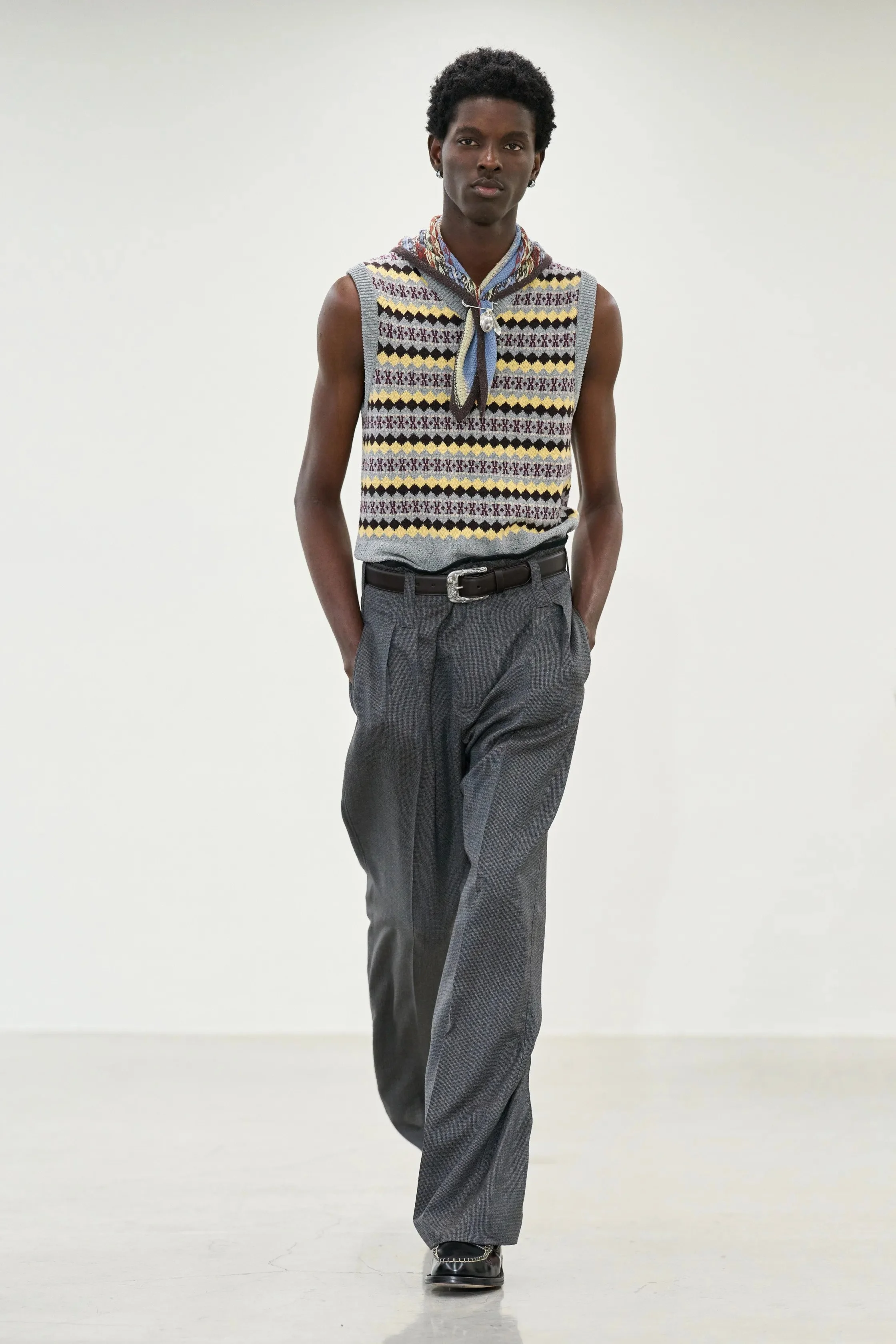
PAUL SMITH SS27

A master in the art of suiting, Sir Paul Smith has been a wearer of the garment for as long as he can remember. Influenced by the dressing habits of his own grandfather, who used to opt for a suit in most scenarios, including going to the beach and standing in the sea, Smith’s Spring/Summer 2027 collection was a celebration of tailoring memories, reinterpreted and adapted to this day under a practical and still refined lens.

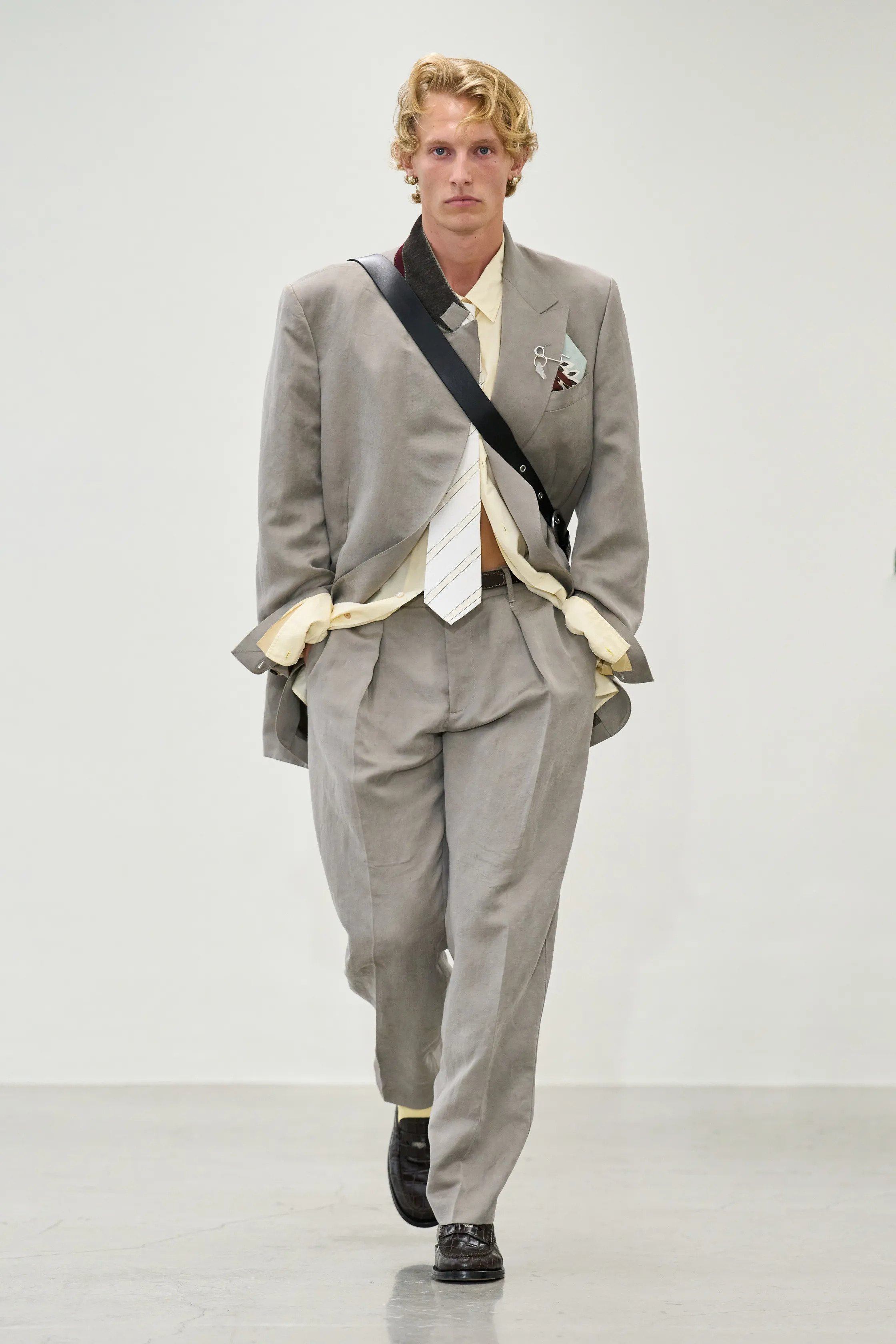
Crafting the perfect suit for hot weather often requires a visit to the label’s archives. Inspired by Paul Smith’s softened and deconstructed tailoring, an important shift in menswear emphasised by the British designer's work throughout the ‘80s and ‘90s, design directors Helen Holmes and Sam Cotton revisited the idea this season by experimenting with fully unbuttoned shirts, loose ties, and slouchier silhouettes.

To ditch rigidity a bit further, clothing was placed on the catwalk conveying a slightly worn-in aspect – made to live in, to cherish, to last. Fabrics were airy, lines were gentle, colours were contrasting, like opposites that clash yet still attract.

Along with the classic soft greys and beiges, bright whites, and navy blues, there was plenty of room for mint and forest greens, butter yellow, and darker but tropical florals, as well as deep purple and lemony hues, the latter mostly seen on vibrant socks peeking out of croc-embossed loafers.

Patterned knitted vests and cardigans, printed silk ties, and quirky leather hats added a touch of summer playfulness to the lineup, as did the lapel brooches and bag charms, which resembled beach keepsakes and fishing gear.

Another fundamental premise for the collection included a white linen suit that Paul Smith himself once wore and stained while harvesting grapes in Tuscany to help a farmer. Suddenly, wearing a suit, even under the sun, looks and feels extremely cool again.


Words by Ketlyn Araujo

RALPH LAUREN SS27

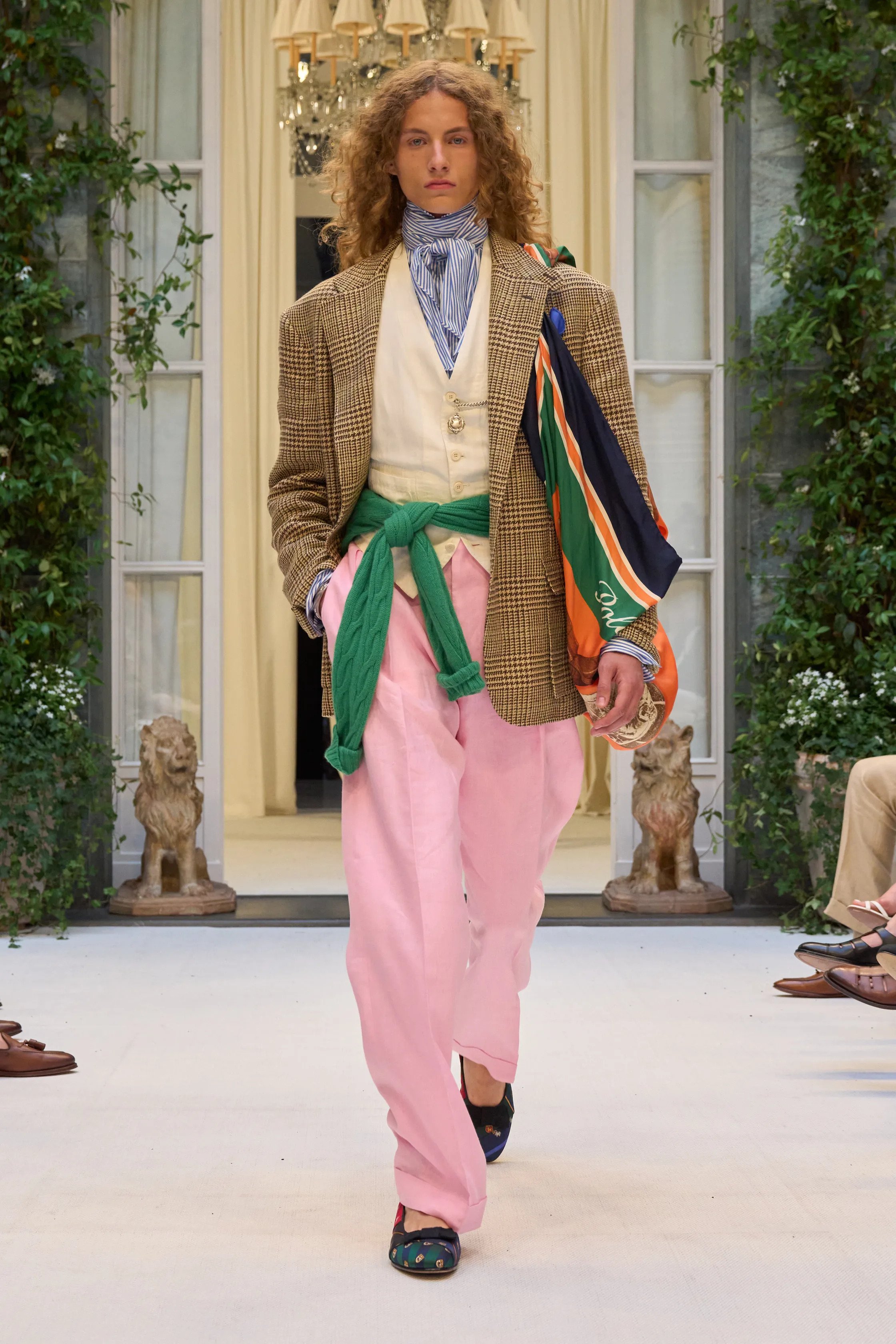
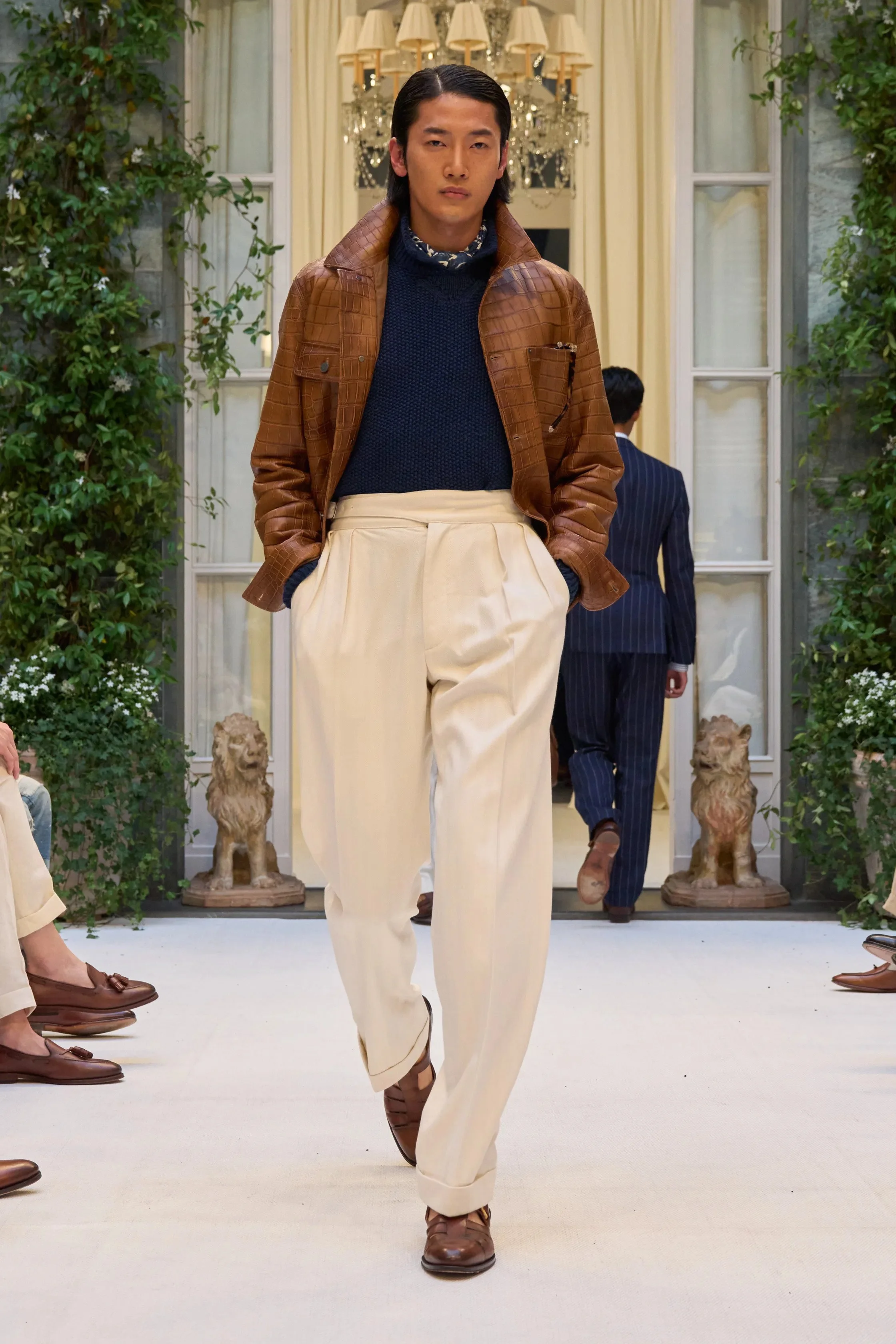
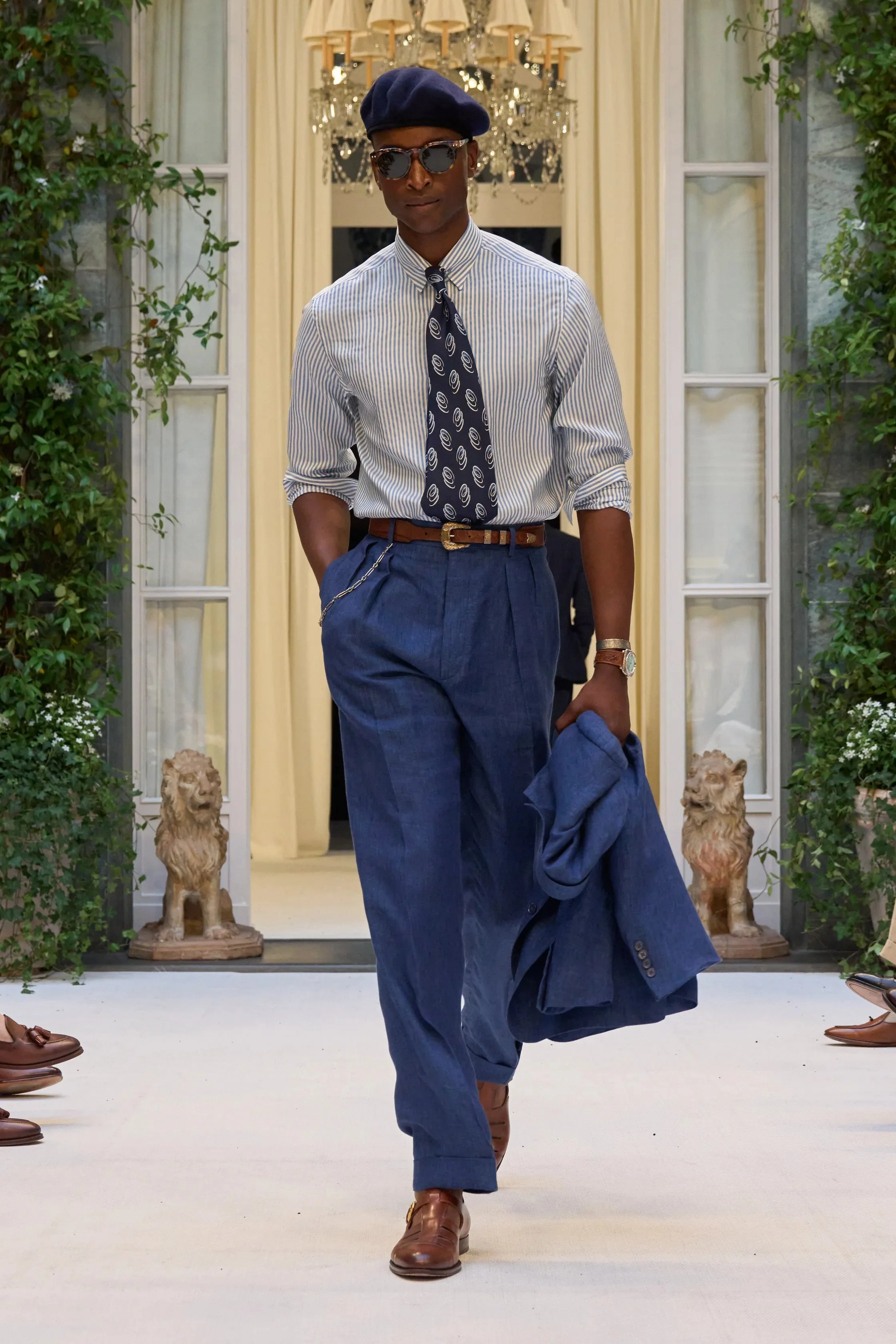
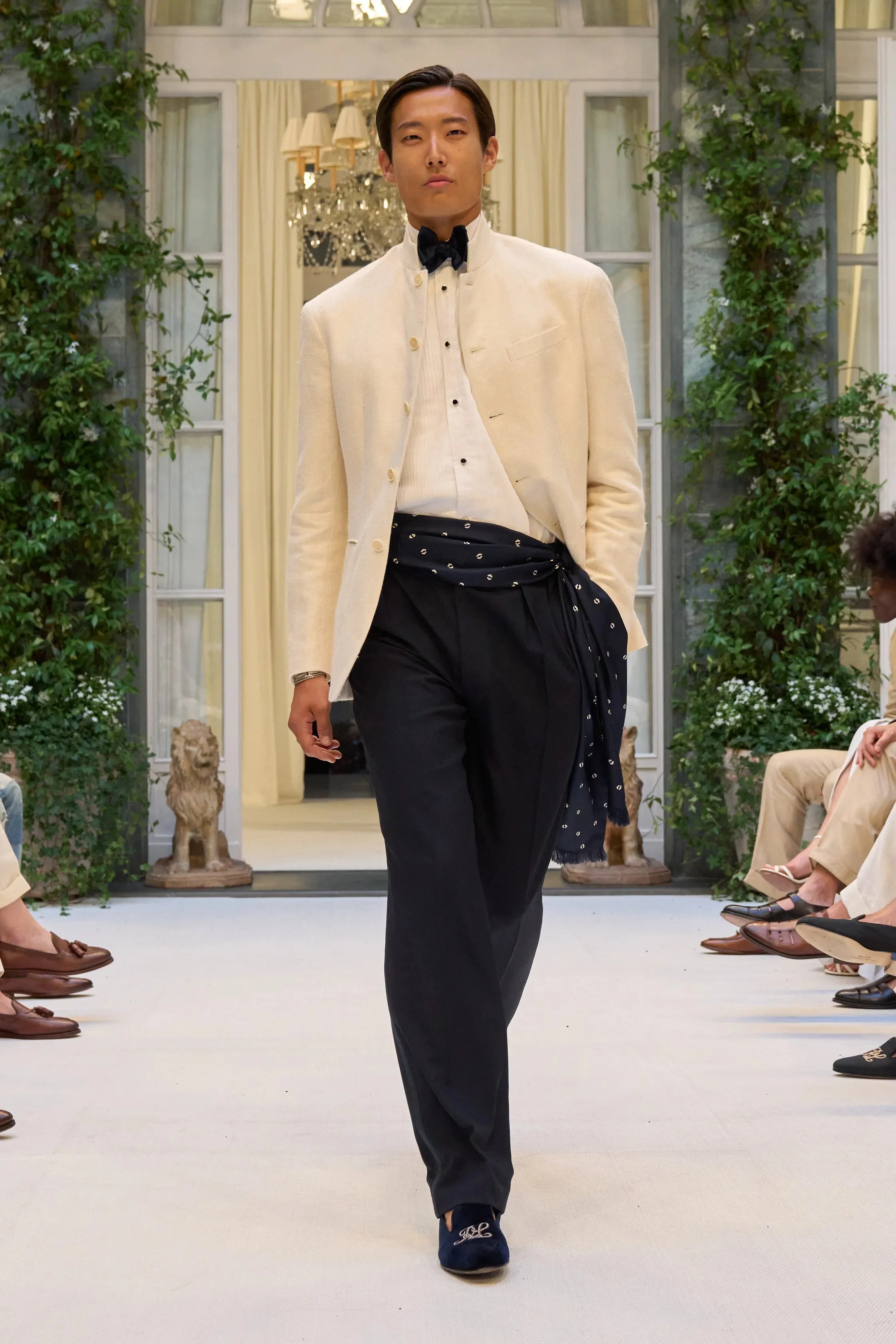
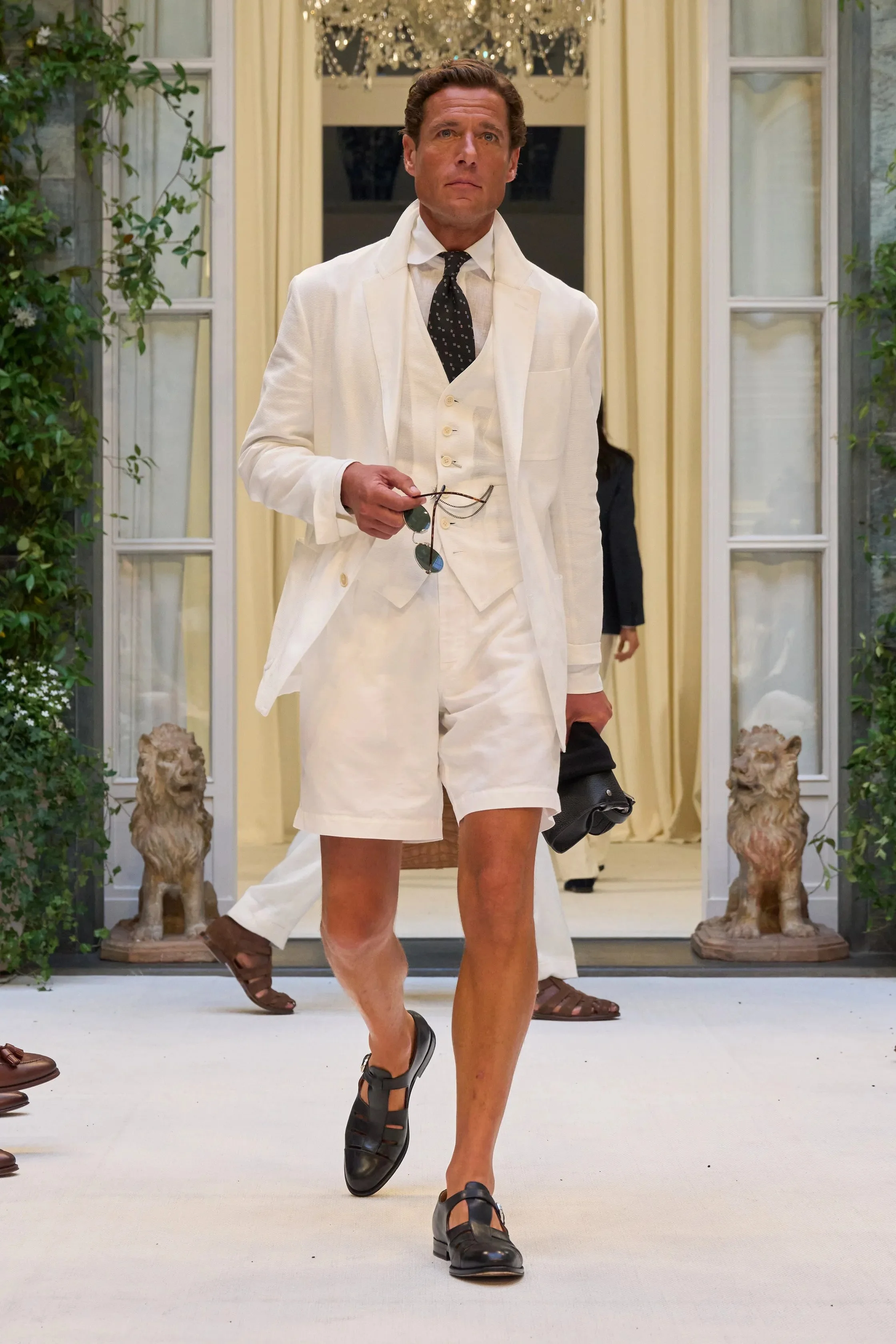
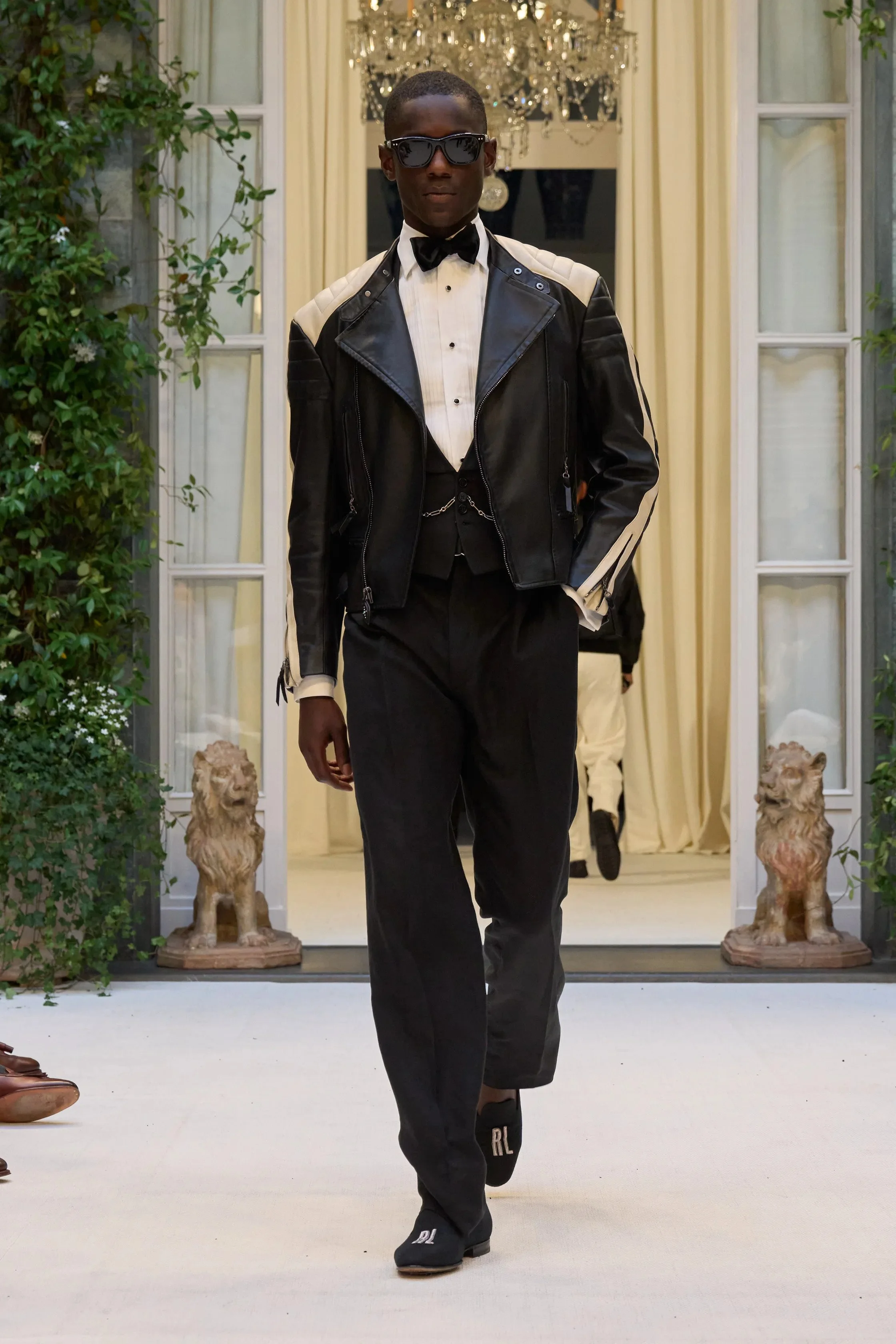
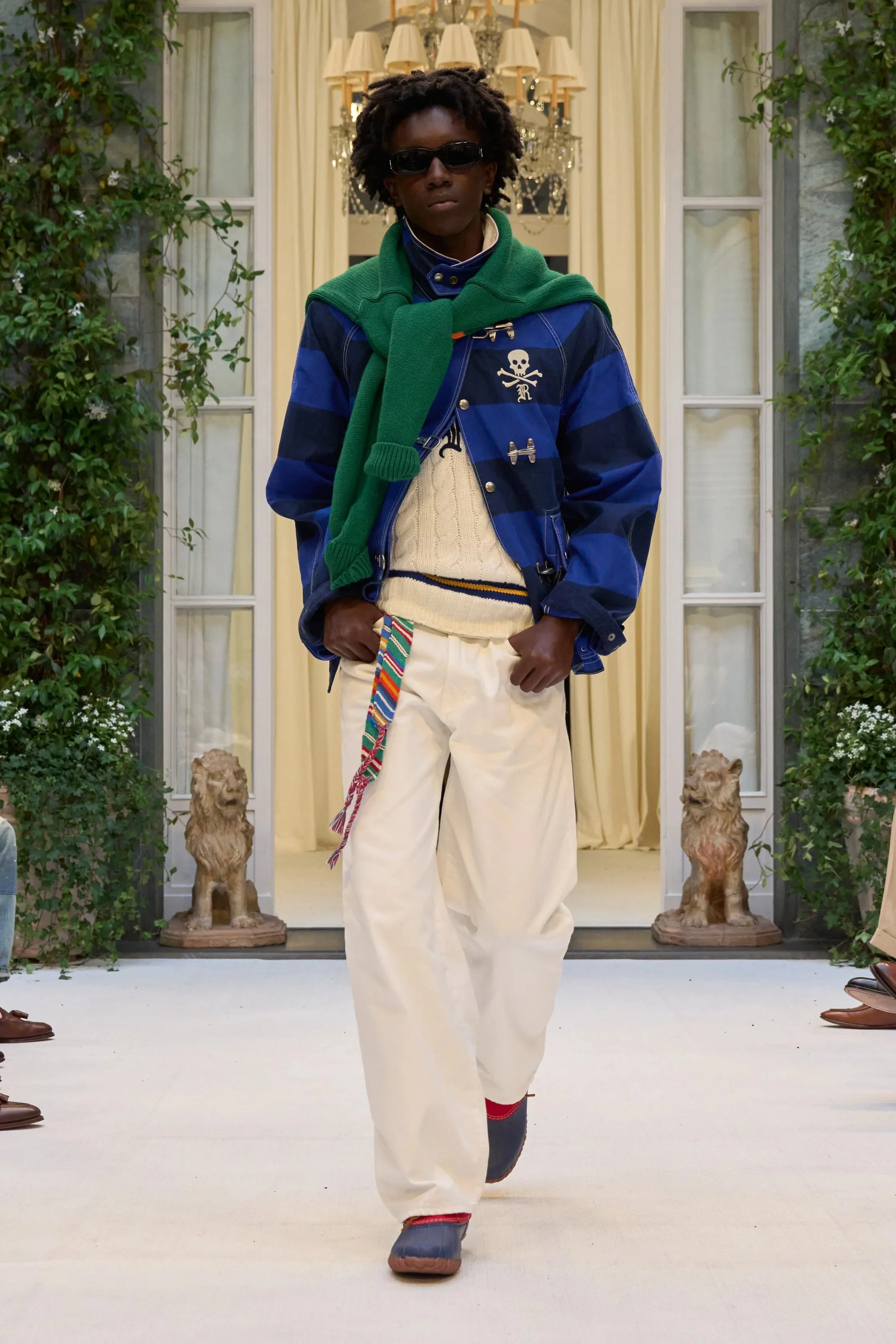
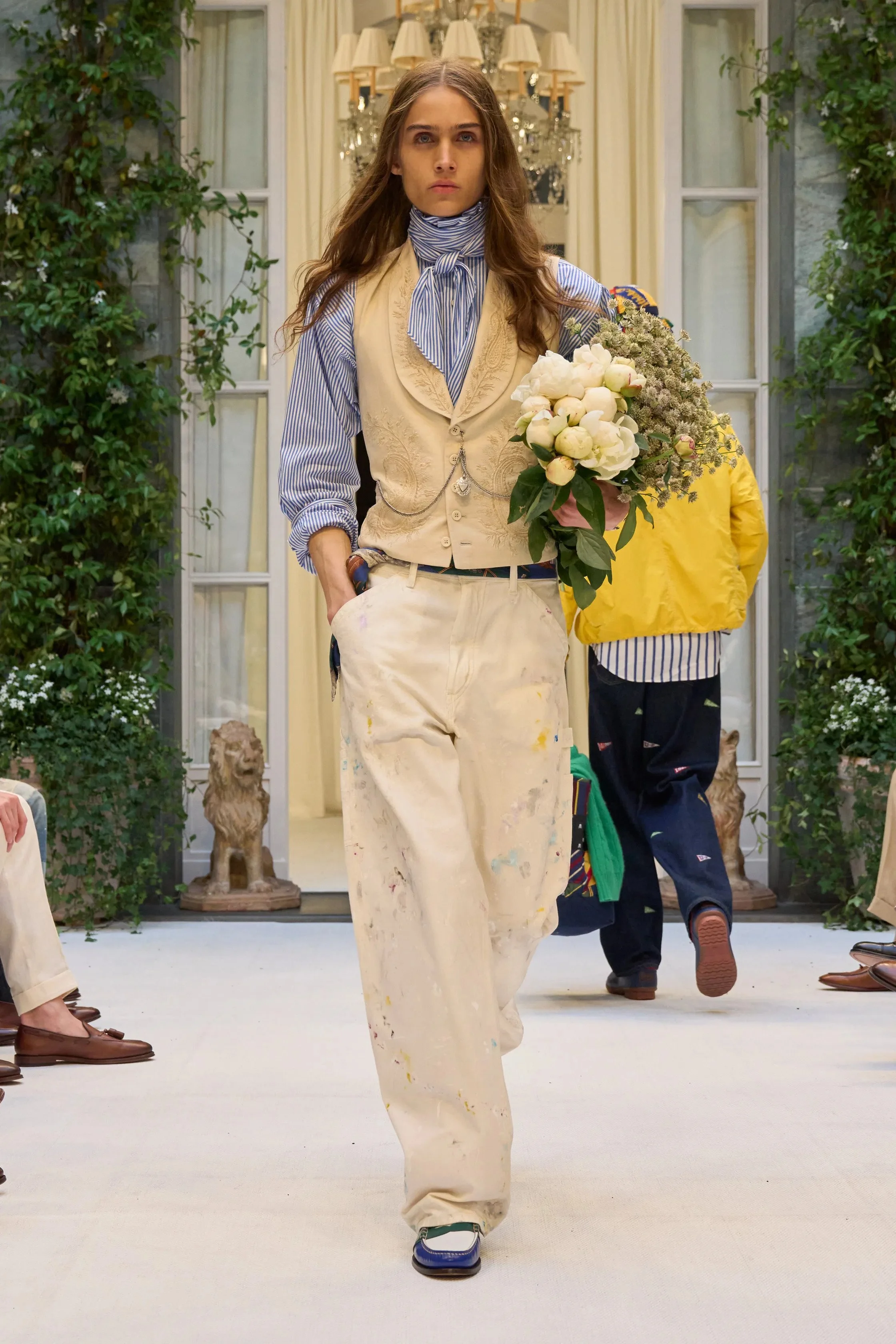
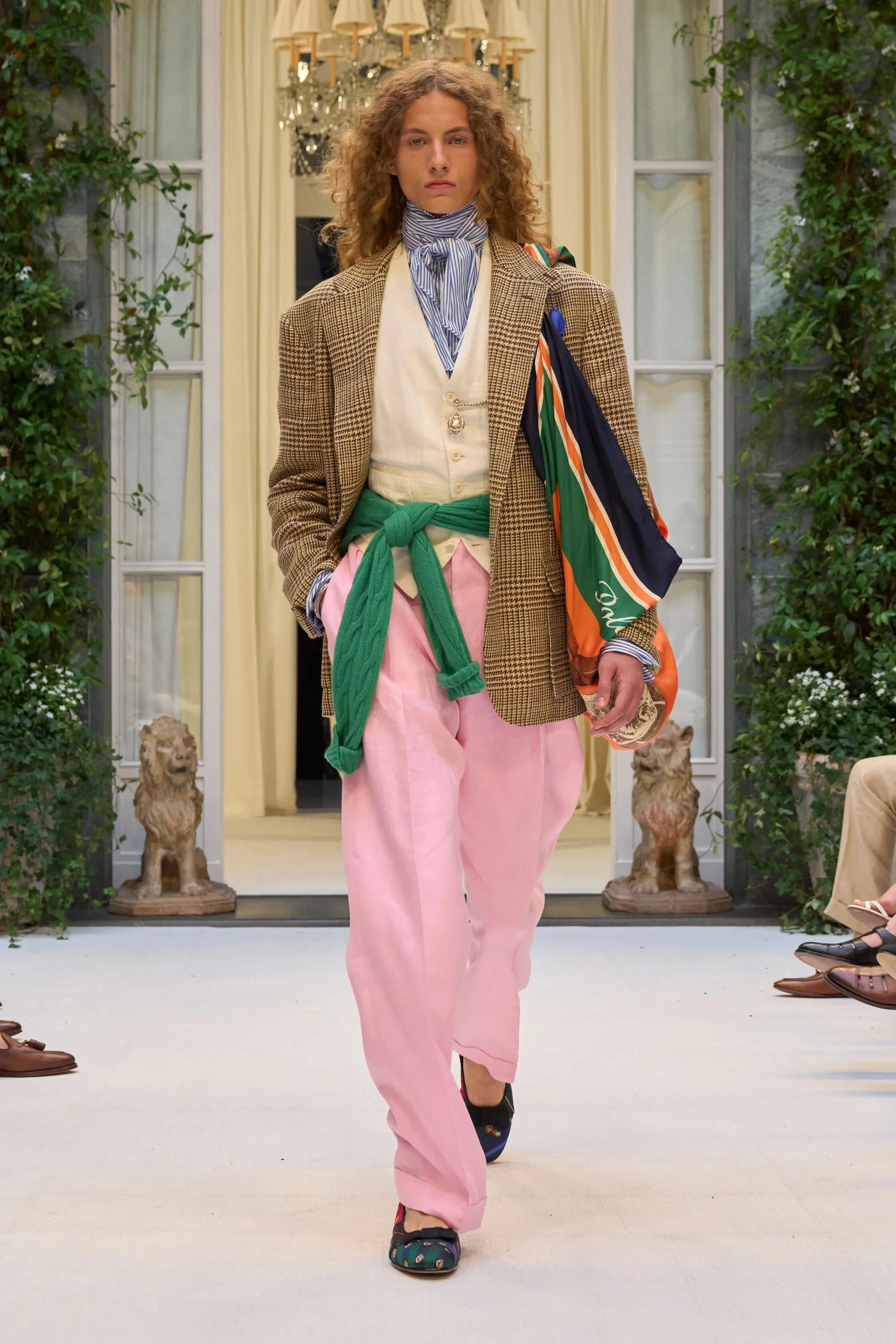
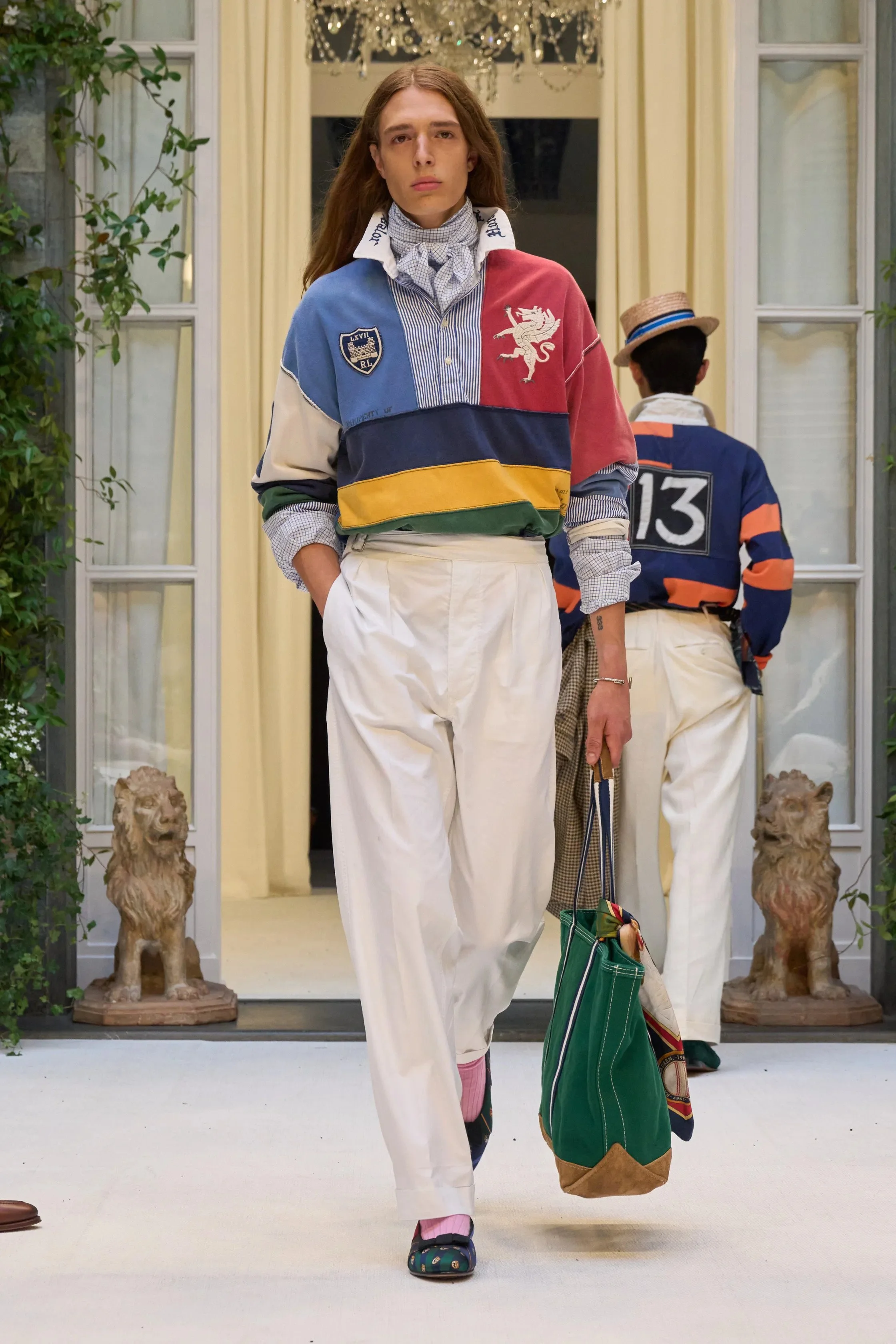
With his latest Milan showcase for Spring/Summer 2027, Ralph Lauren’s collection was a masterclass in classic tailoring and creative, fresh styling.

Tailored pinstripe suits opened the show – a quintessential RL look! Elegance was on point, and the stylish silhouettes reminded us of the true essence of effortless sophistication that the American designer is a master of. Delivering garments for different moments in a man’s life, light fabrics and easy-going tuxedos captured the spirit of a European holiday voyage.

Leather jackets evoked a tougher aesthetic, giving each look a more informal take on the brand while maintaining its signature essence, while espadrilles and loafers referenced the unmistakable Milanese flair. Nautical references were present throughout the collection: Breton stripes, sailor-inspired scarves, cricket sweaters, maritime knitwear, and relaxed resort silhouettes fit seamlessly with the atmosphere of the Mediterranean summer.

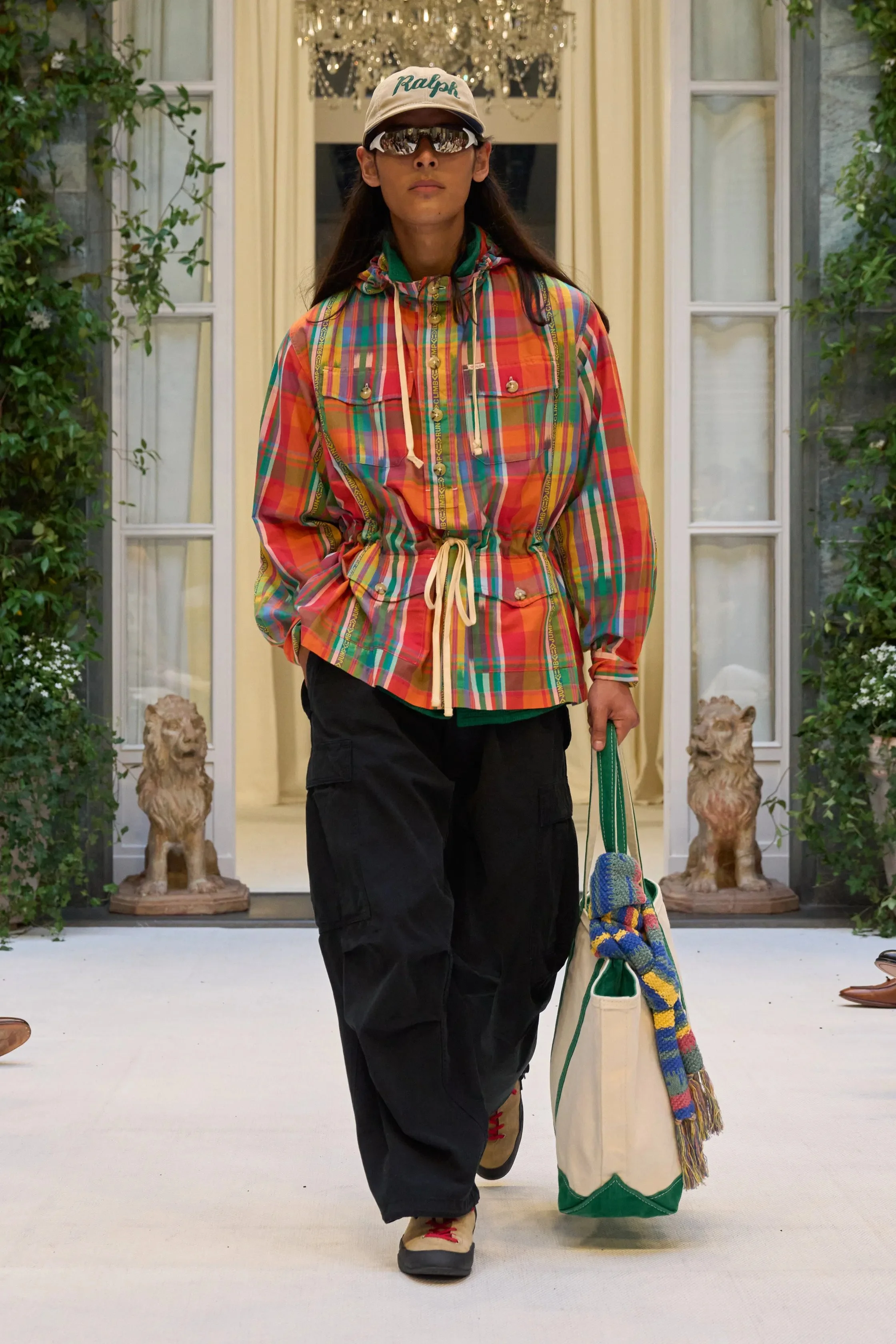
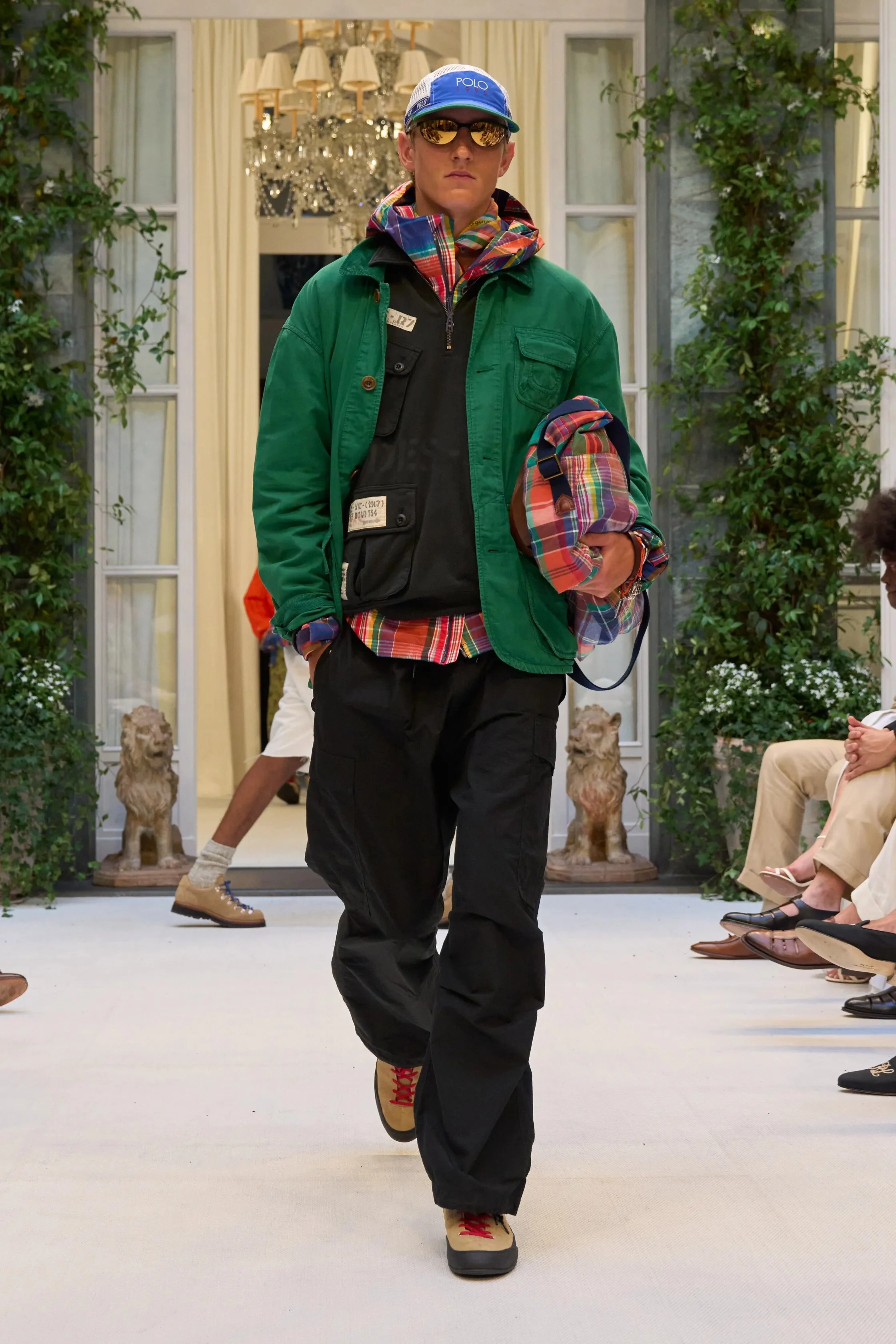
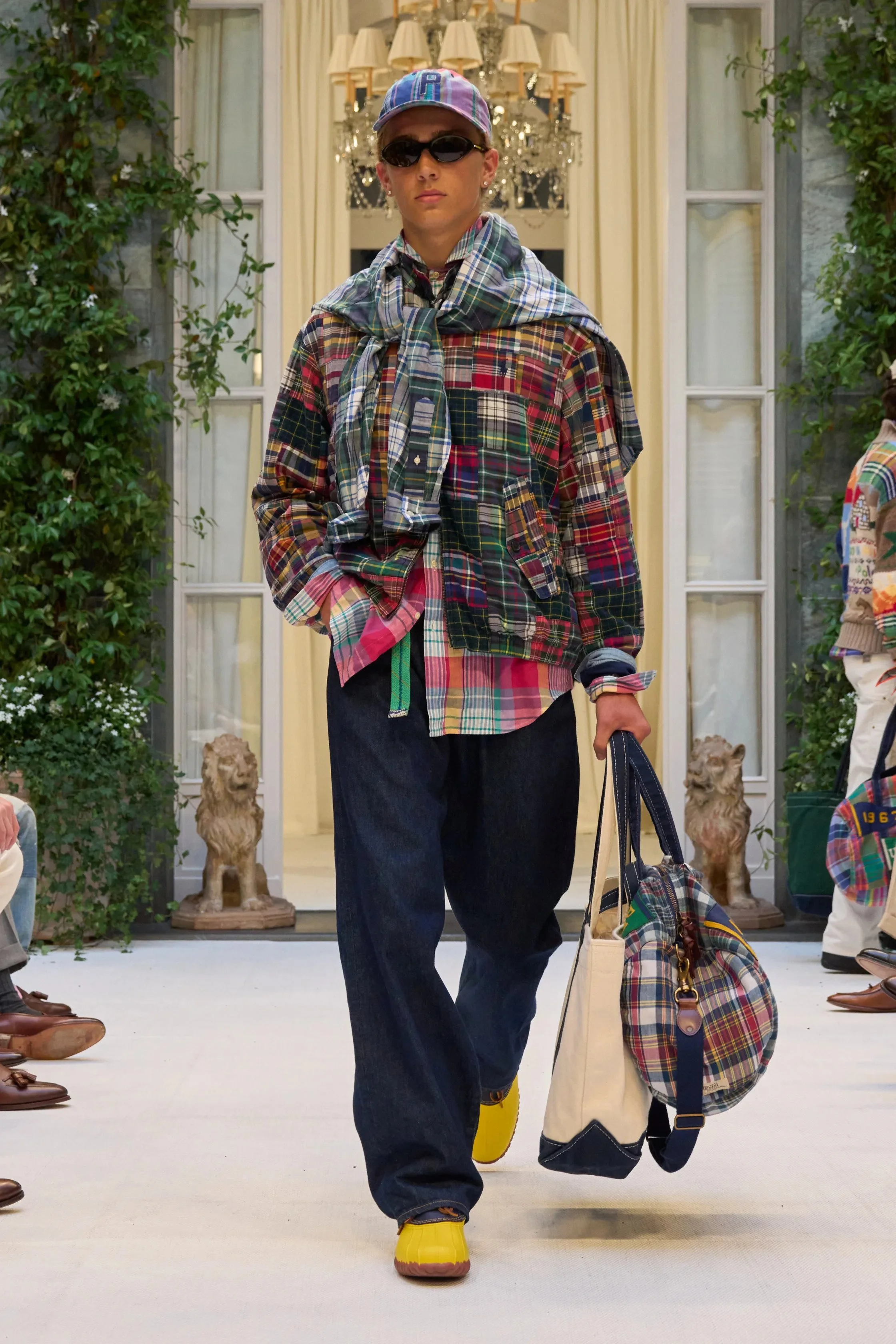
The Polo Ralph Lauren looks presented after were more eclectic. Cargo pants, blue sneakers, polychromatic preppy flannel shirts, chunky knits, and cricket jackets were all part of the showcase. Outstanding layering created a fashion-forward proposition, while Bermuda shorts brought a laid-back aesthetic. Patchwork appeared across sweaters, pants, and jeans. Ruffled shirts added a vintage touch, contrasting with the more modern spirit of the collection.


Words by Carolina Benjumea

LOUIS VUITTON CRUISE 2026/27

Nicolas Ghesquière doesn’t worship at the self-referential altar of the maison he leads. He tends carefully to the legacy of Louis Vuitton, of course, but rarely feels compelled to extrapolate from it. The house’s history — simultaneously one of the oldest in fashion and one of the youngest when it comes to ready-to-wear — affords him such freedom. Louis Vuitton’s Resort 2027 is resonant of this privilege.

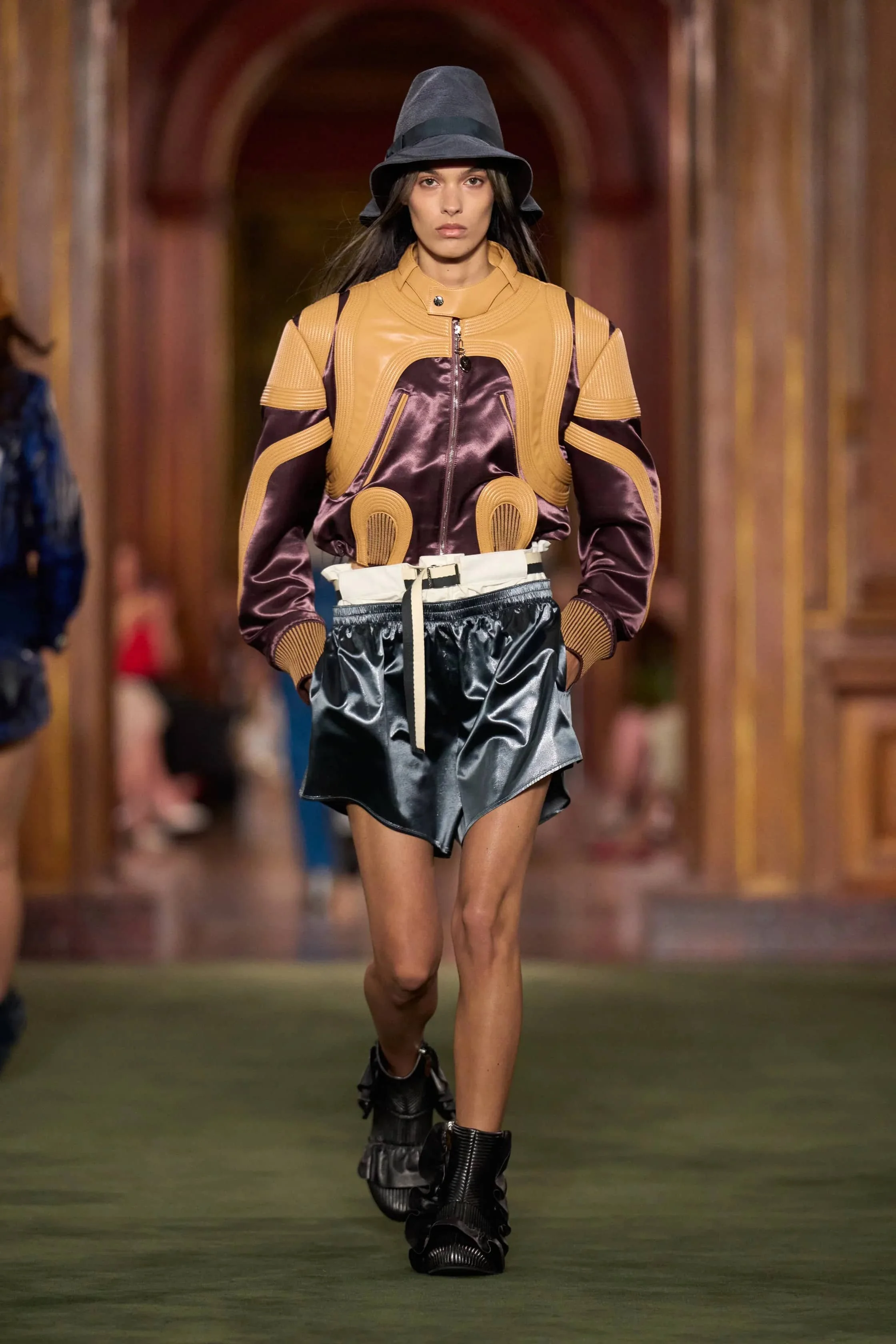
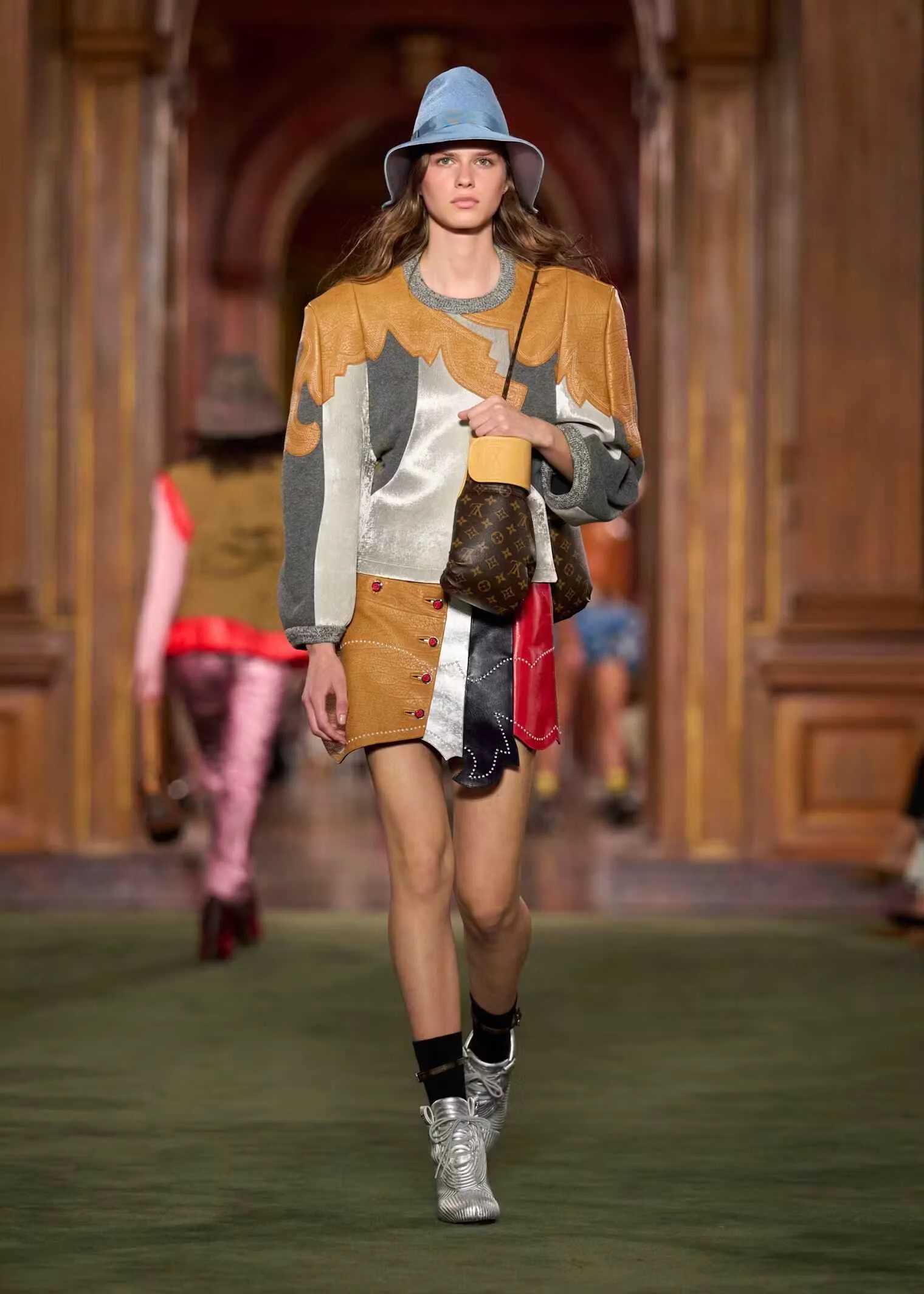
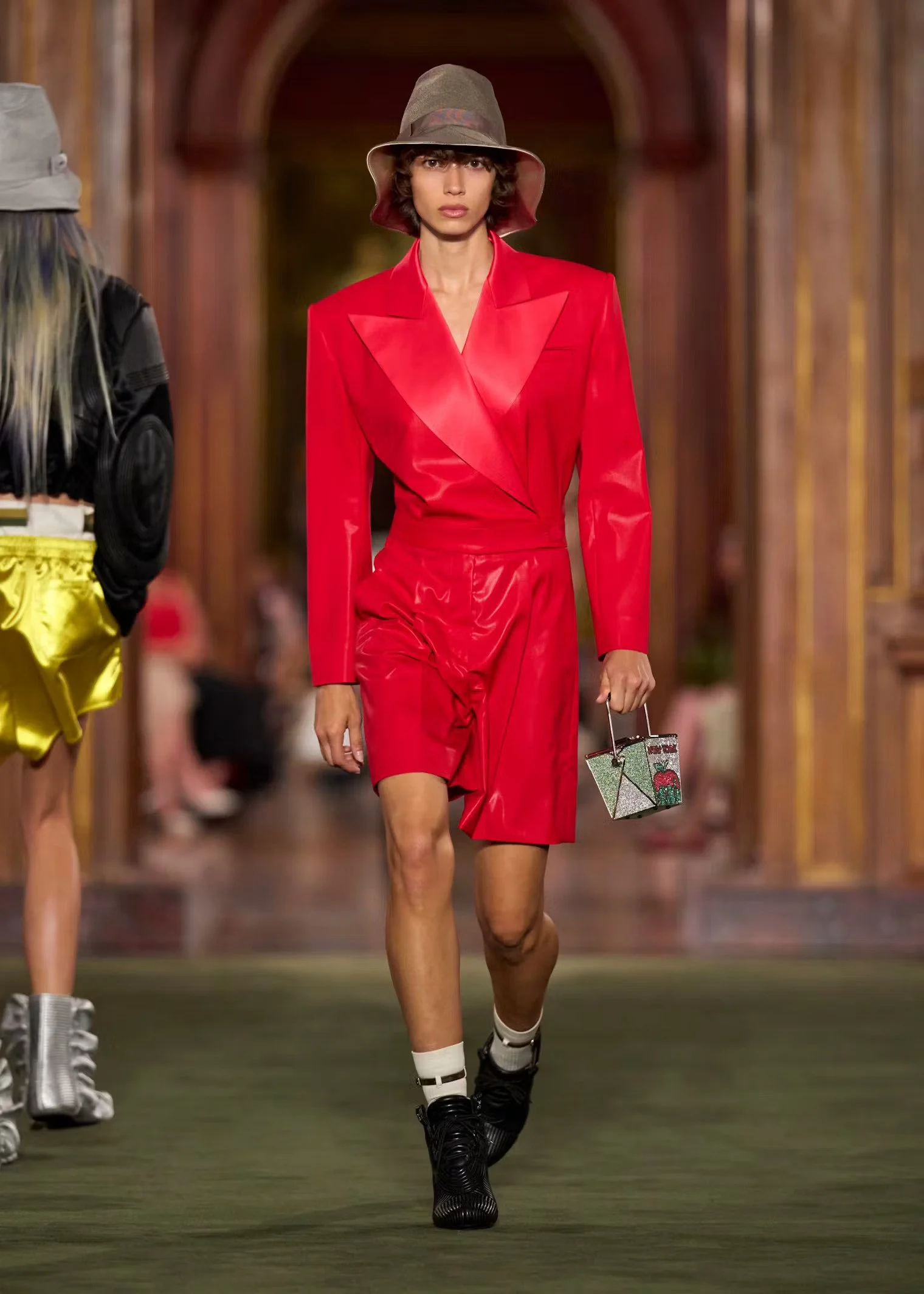
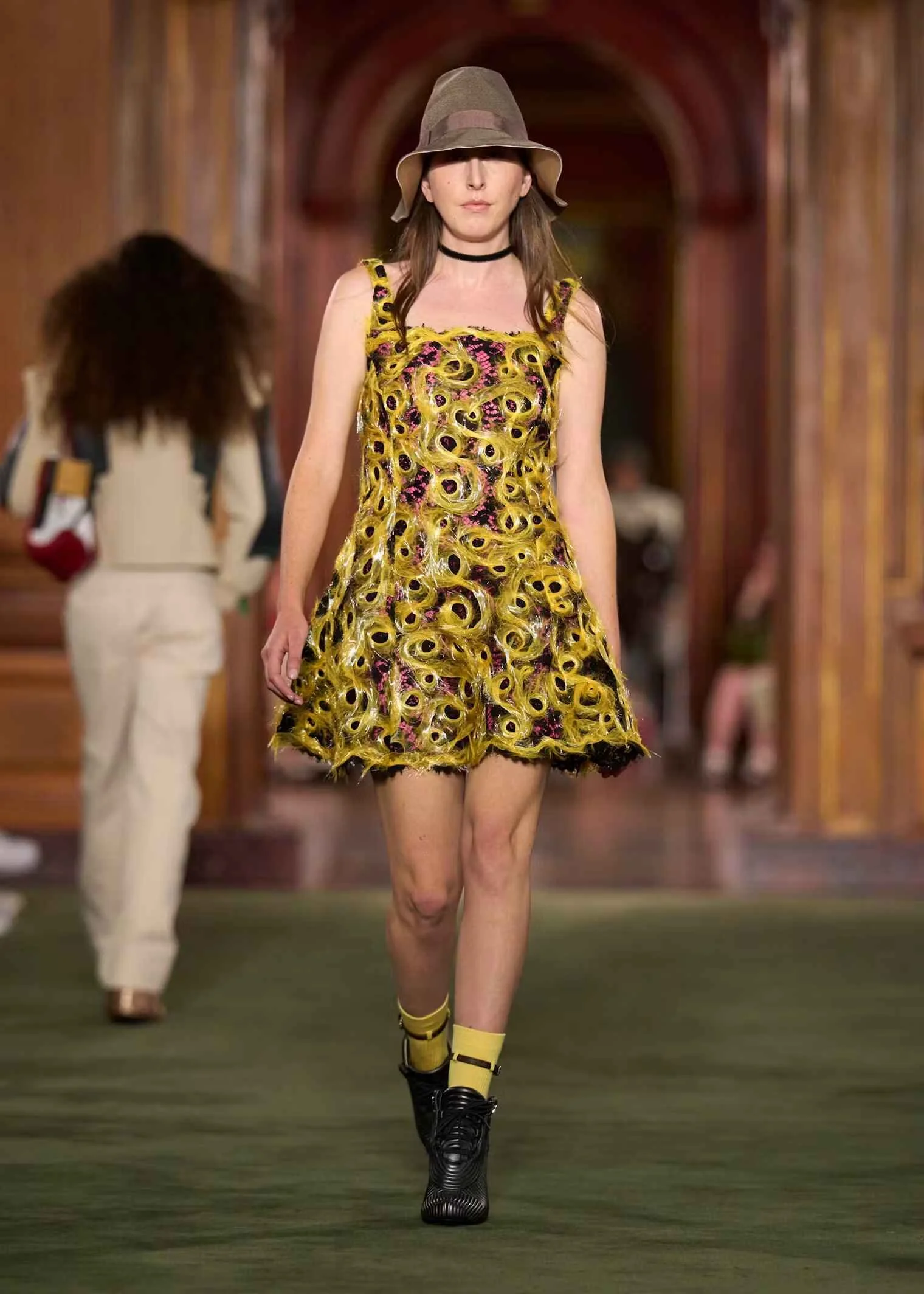
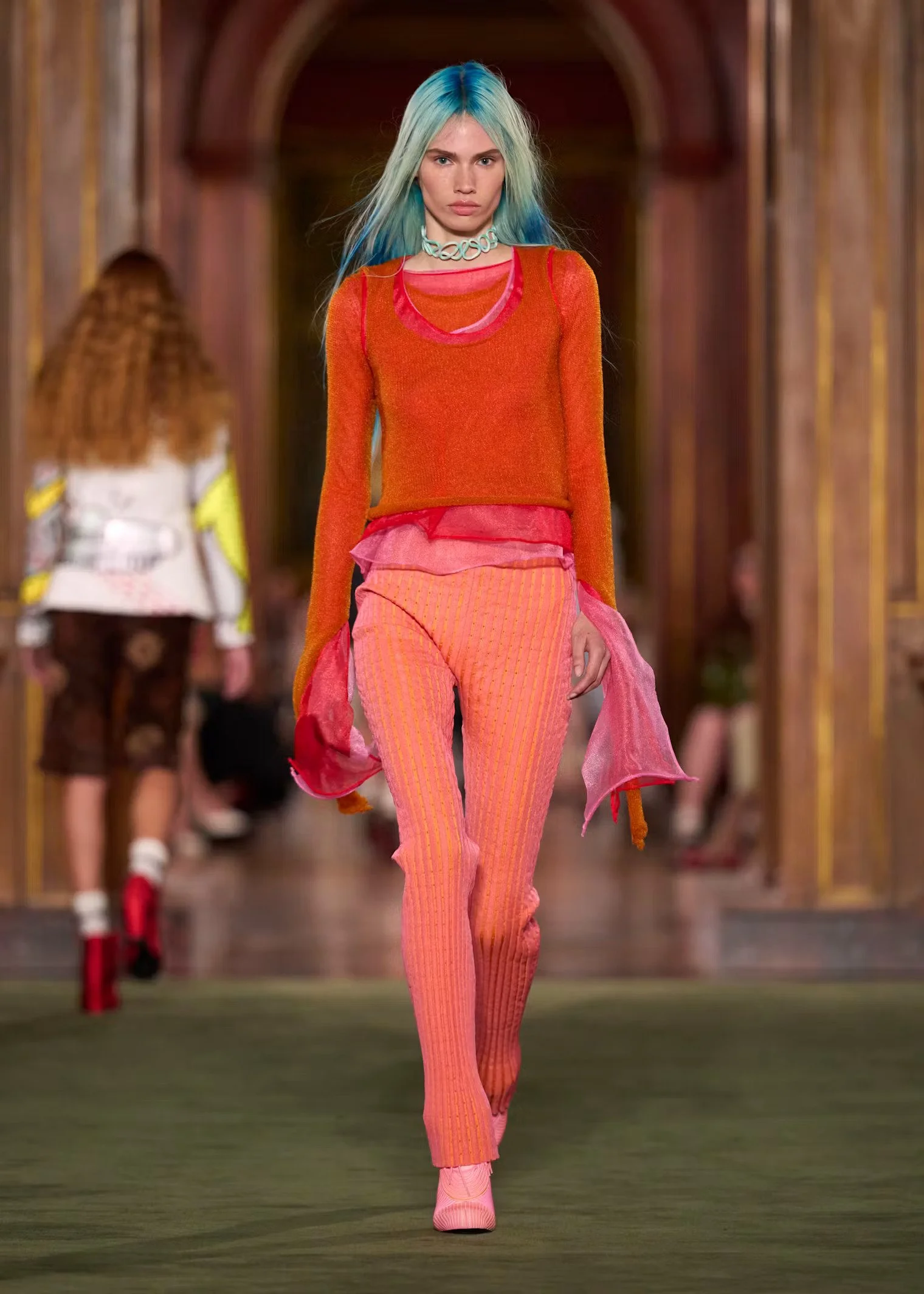
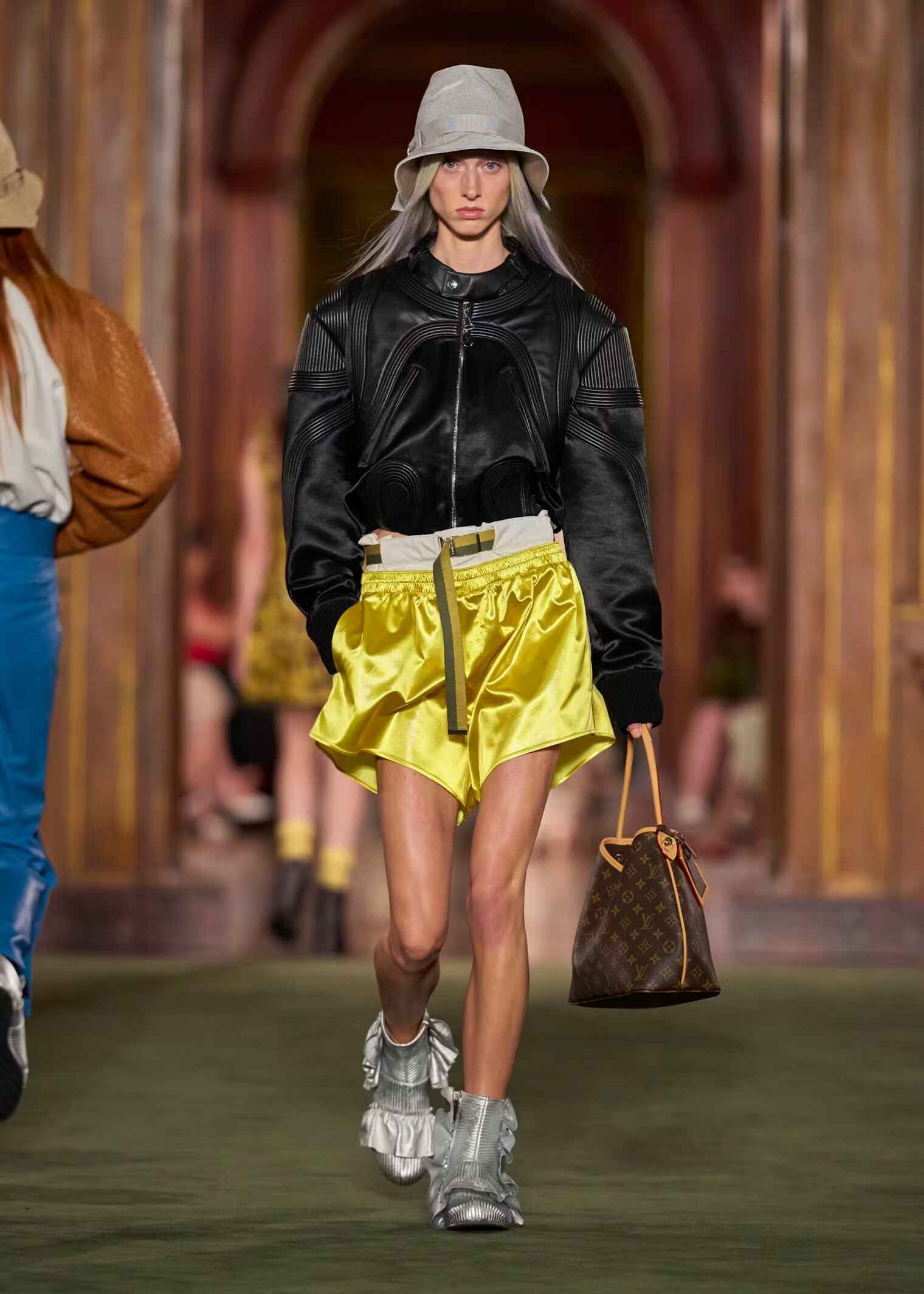
Held at The Frick Collection, a recently renovated museum on Manhattan's Upper East Side, the show was an exercise in contrast. Ghesquière, a Frenchman in New York, utilised the friction between uptown and downtown as a basis for the collection. The first was embodied in exaggerated frills on shirts, protruding organic shoulders, and ruffled hems. Flowy, layered camisoles, ribbed leather jackets, and satin shorts illustrated the second.

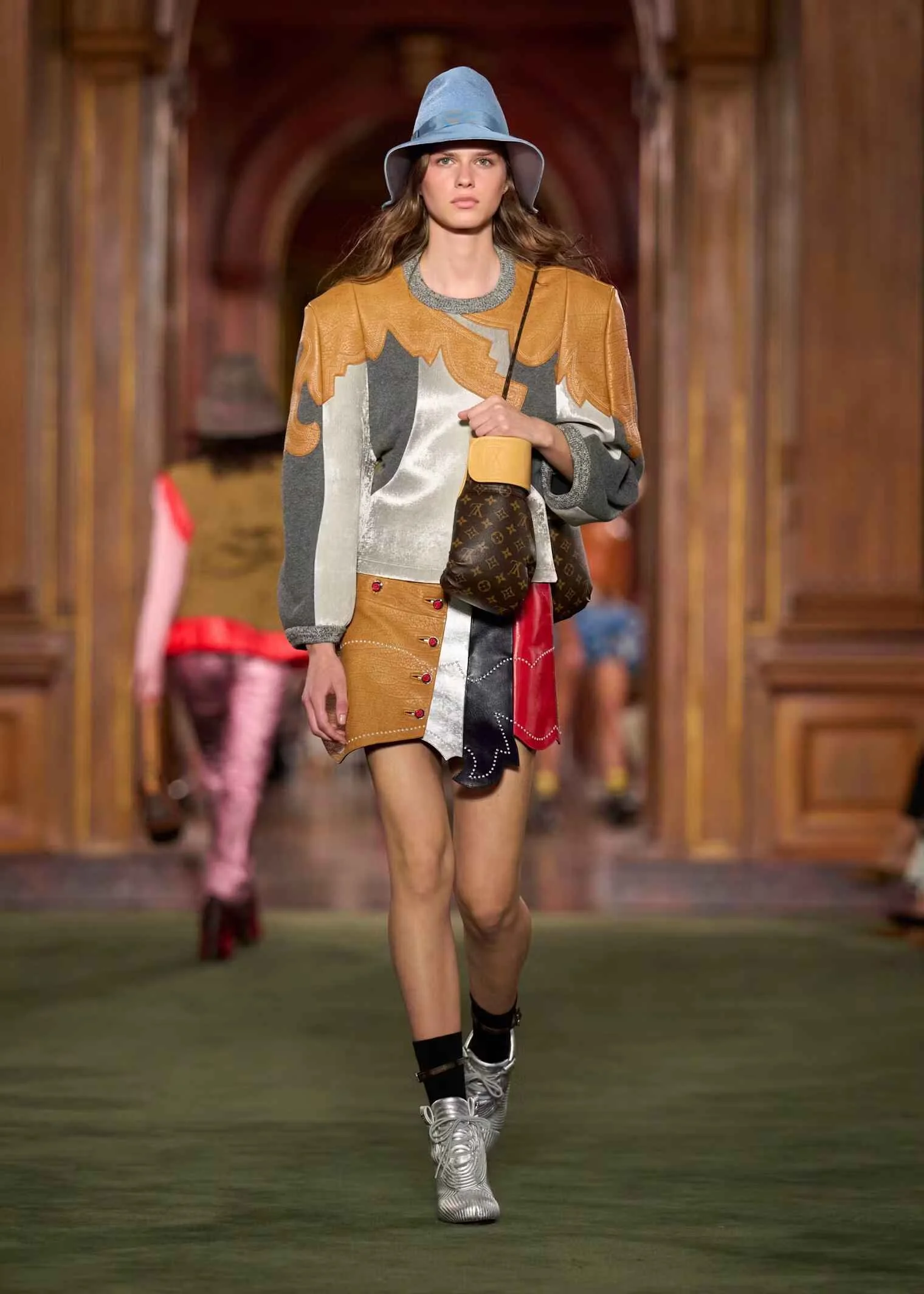
The latter was further embodied by the mythology of art in the city. Keith Haring was made the muse. The choice is justified by the artist’s connection to Louis Vuitton. In 1984, Haring graffiti-ed one of the maison’s suitcases for a friend. The opening look — a chunky knit cardigan with jeans — was paired with that same piece of history (or art, or both). Further references to the artist were seen in hand-printed leather jackets, brightly colored sleeveless tops, and an origami-like folded white dress.

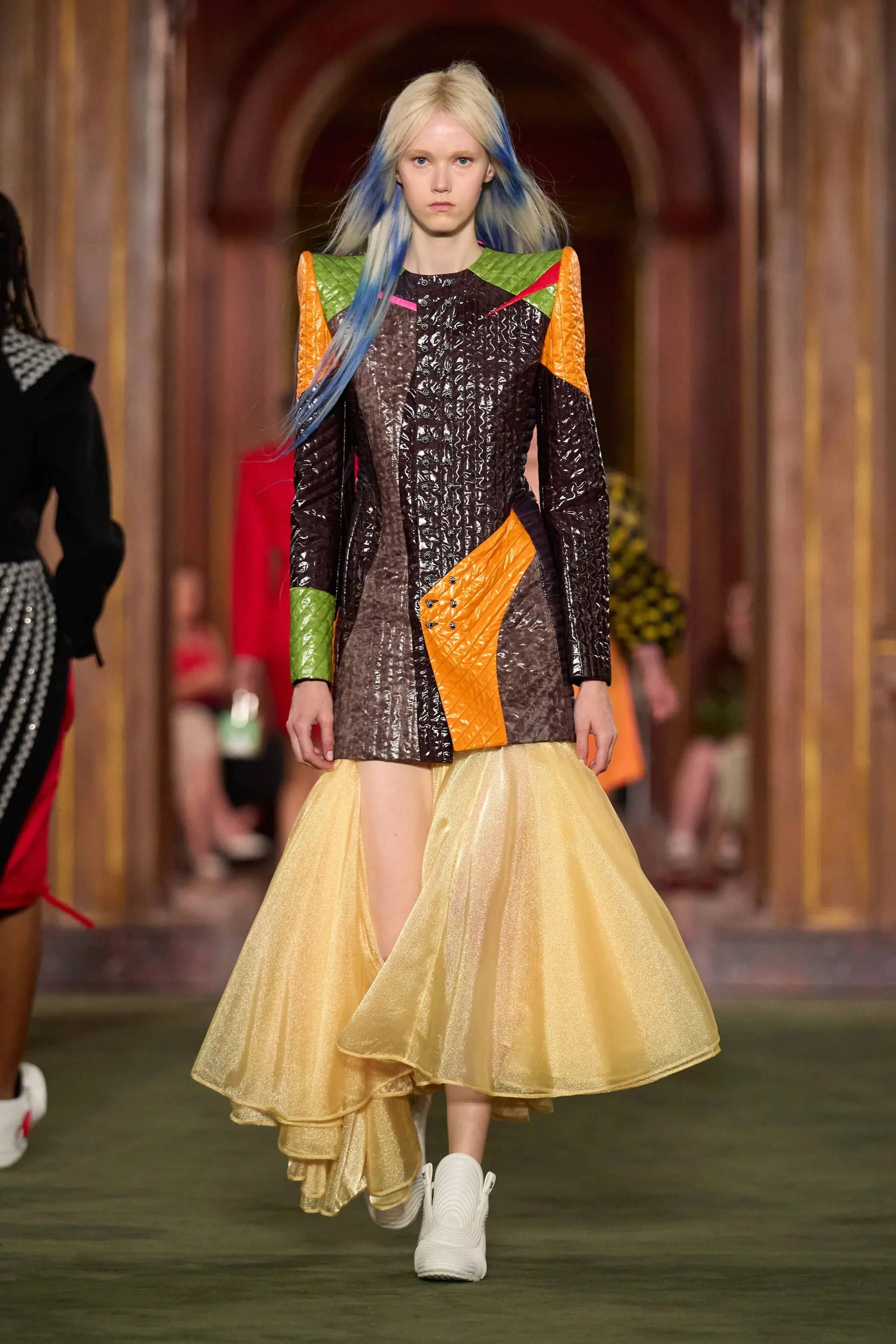
Throughout his tenure at Louis Vuitton, Ghesquière has grown interested in pushing the body outward, sculpting silhouettes that protrude, curve, and resist natural movement. Here, his experimentations were a bit more tame than, say, last season, but even so, rigid leather dresses with villainous shoulders exploded into asymmetrical skirts past their hems.

It wasn’t just New York; Americana as a whole was taken on as a guideline. Strong-shouldered leather bodysuits and patchworked skirts in red, brown, and silver leather spoke to a futuristic fantasy of American nostalgia. That is where the designer shines brightest – Ghesquière’s ongoing project is one that constructs wardrobes for lives that do not yet fully exist.


Words by Pedro Vasconcelos
GUCCI CRUISE 2026/27

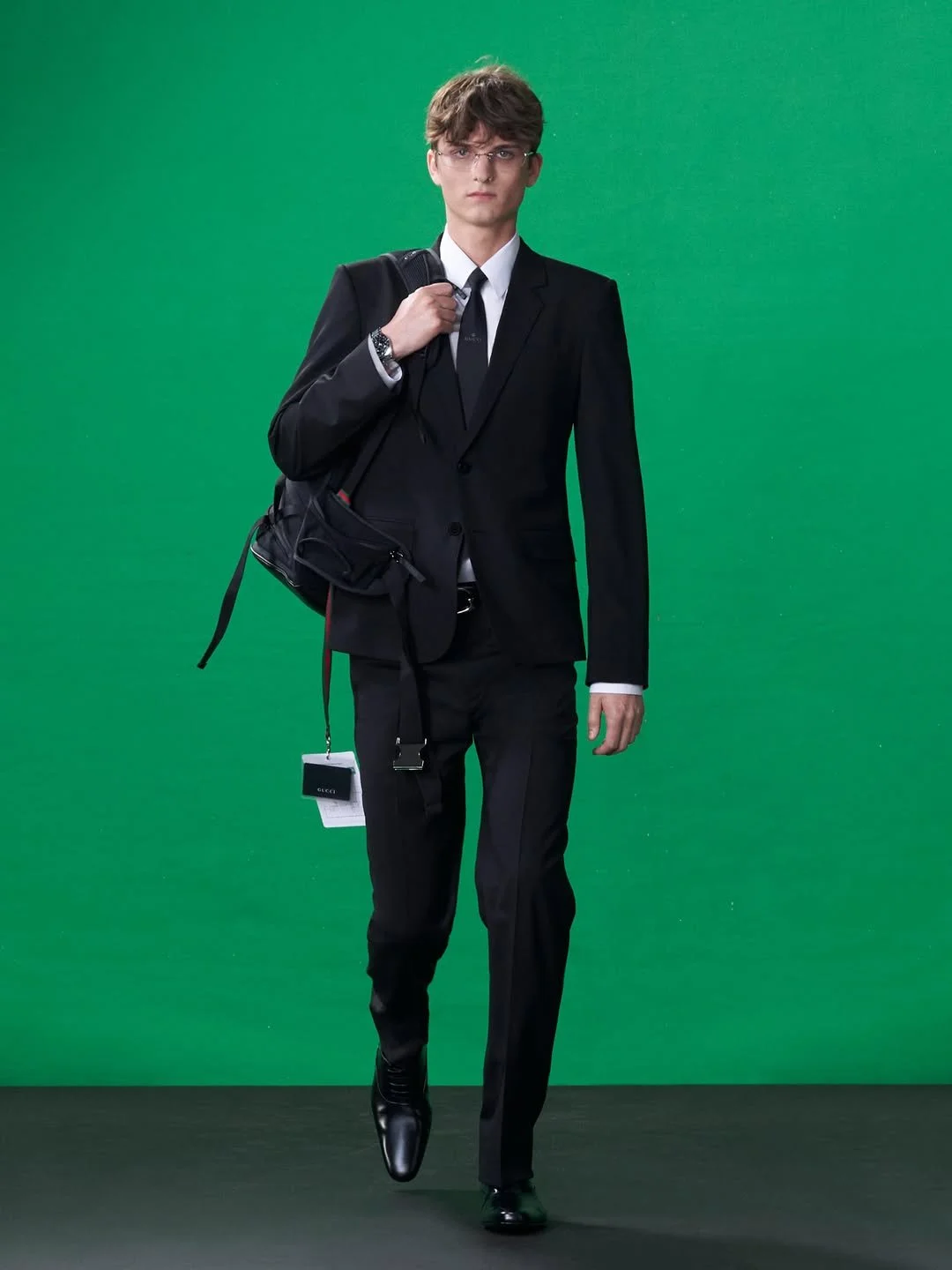
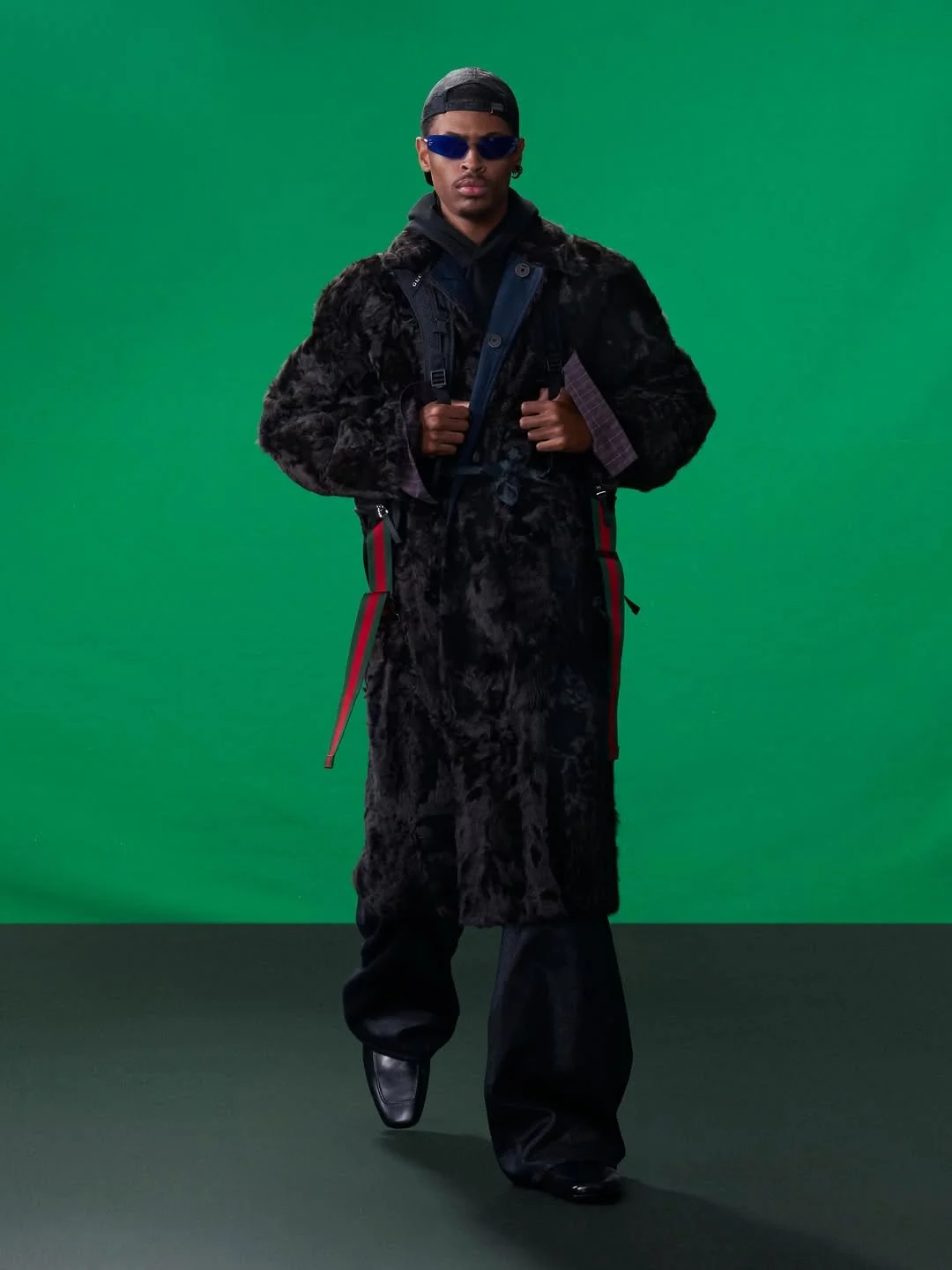
For its Cruise 2026/27 collection, Gucci handed the keys to New York City over to Demna, who went on a cinematic exploration of the metropolis and its endlessly compelling cast of characters. From backpack-clad Wall Street bros to fur-wrapped downtown 365 party girls and jewel-laden Upper East Side socialites en route to charity galas, the collection captured the city through a sharply exaggerated yet deeply observant lens.
Set against the grand backdrop of Times Square, the show unfolded as a full-scale fashion spectacle, amplified by a headline-making cast. Paris Hilton delivered a nostalgic moment in a pussy-bow silk shirt dress and brunette wig, revisiting her unmistakable runway strut with playful self-awareness. Meanwhile, sports superstar Tom Brady embraced a darker, naughtier aesthetic in head-to-boot black leather inspired by the Tom of Finland fineries (did he go to a leather bar after the show?). Model-du-jour Amelia Gray further cuntyfied the runway, elevating a jangling set of keys into a statement accessory through her fierce walk.

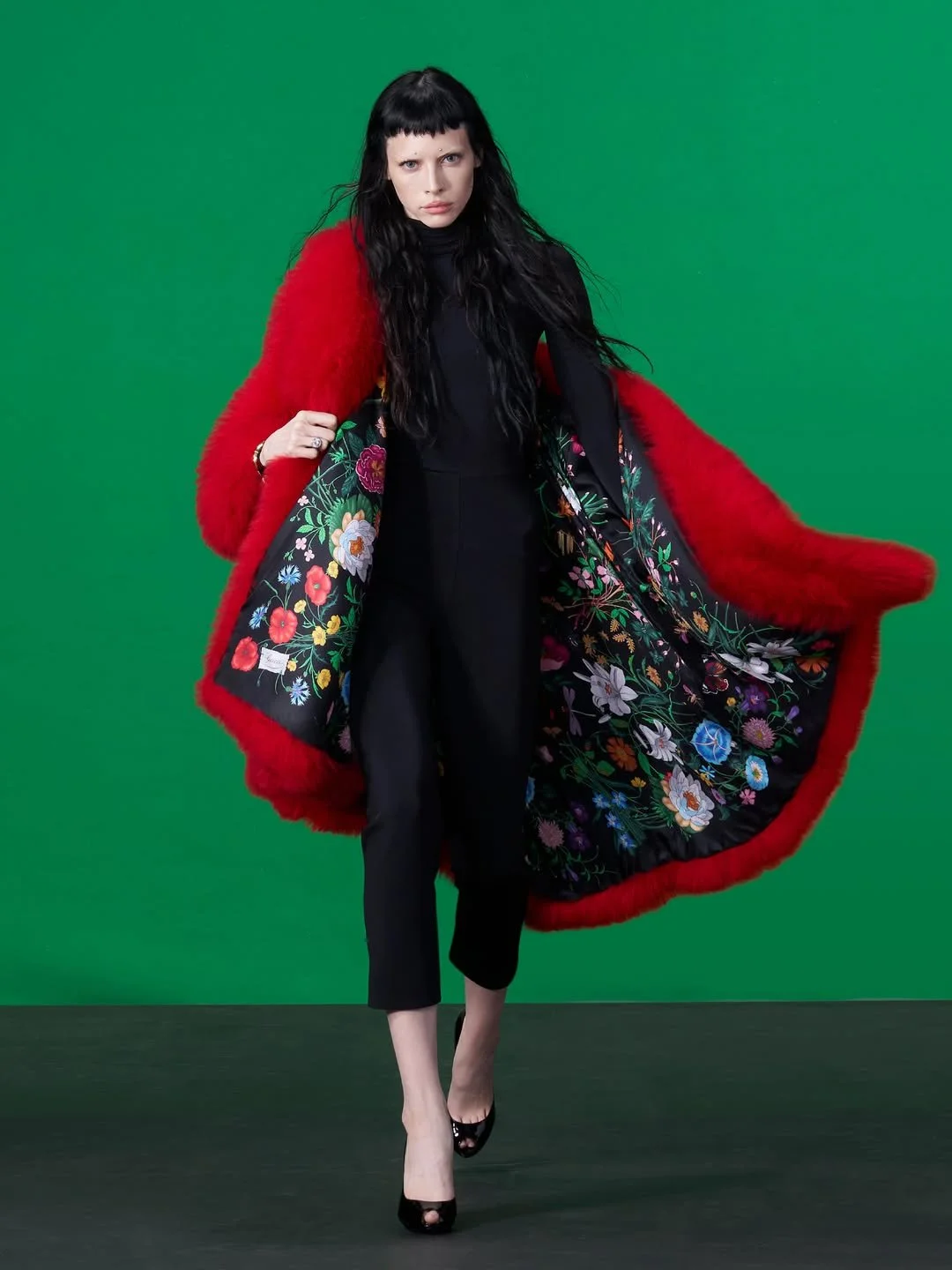
As expected from Demna, the collection rejected convention in favour of exaggerated silhouettes and provocative styling. Outerwear emerged as a central focus: a vivid red fur revealed a striking Flora-print lining, while a sharply tailored coat offered the white interpretation of the motif. Structural peacoats in navy and red matched the energy of sharp, tailored trousers and even sharper, spiky heels. Tailoring itself proved to be another standout category. Traditional suiting was reimagined through both masc office-fantasy cuts and dramatically cinched double-breasted silhouettes that injected theatricality into formalwear.

Although unmistakably filtered through Demna’s aesthetic, the collection remained rich with instantly recognisable brand’s signatures – after all, it was titled GUCCICORE! Horsebit hardware appeared across black heels, while the house’s iconic green-and-red stripe was transformed into lanyard details on backpacks and binder-inspired chest accessories. The result? A collection that fused irony, luxury, and urban character study into a distinctly contemporary vision of Gucci.


Words by Martin Onufrowicz

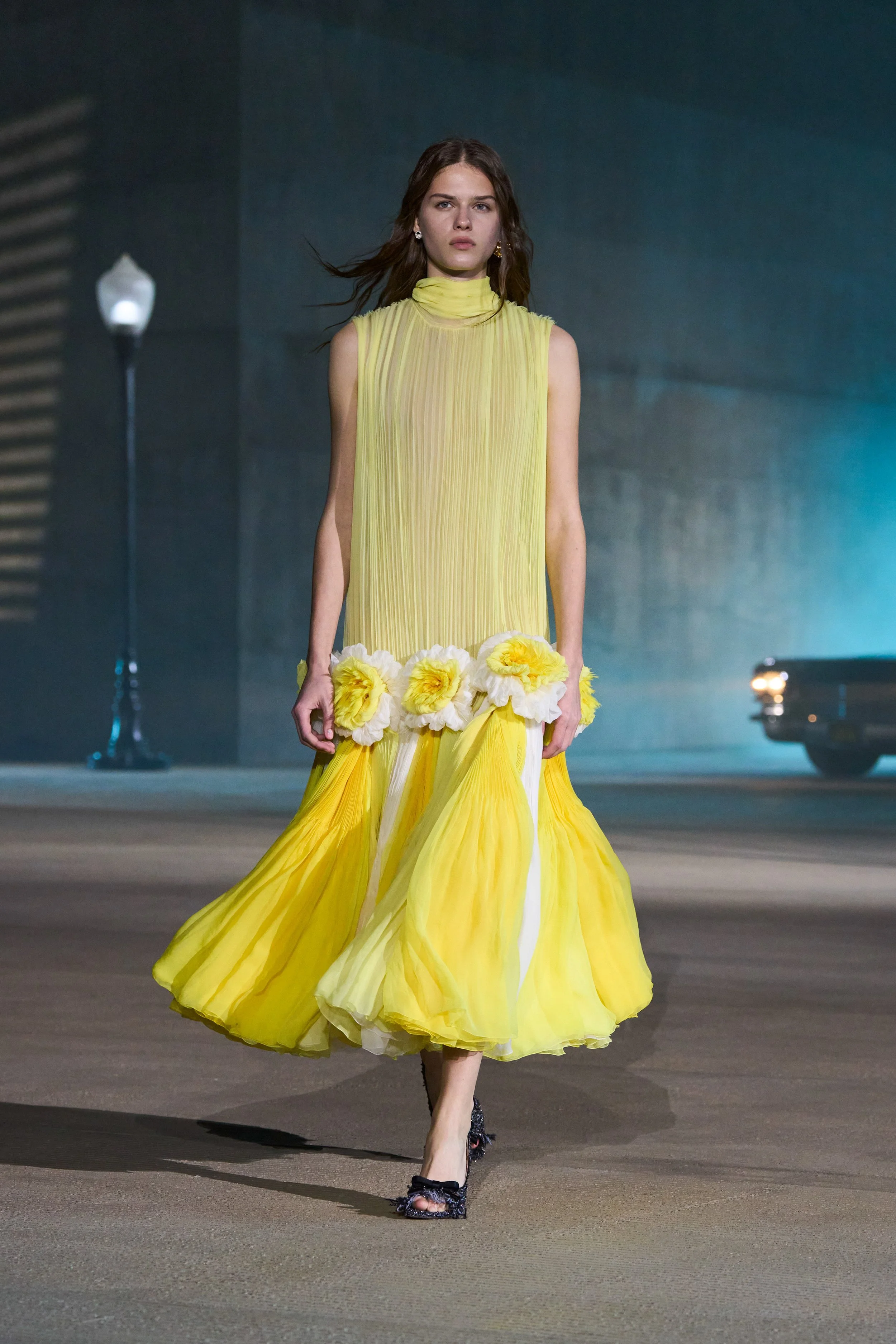
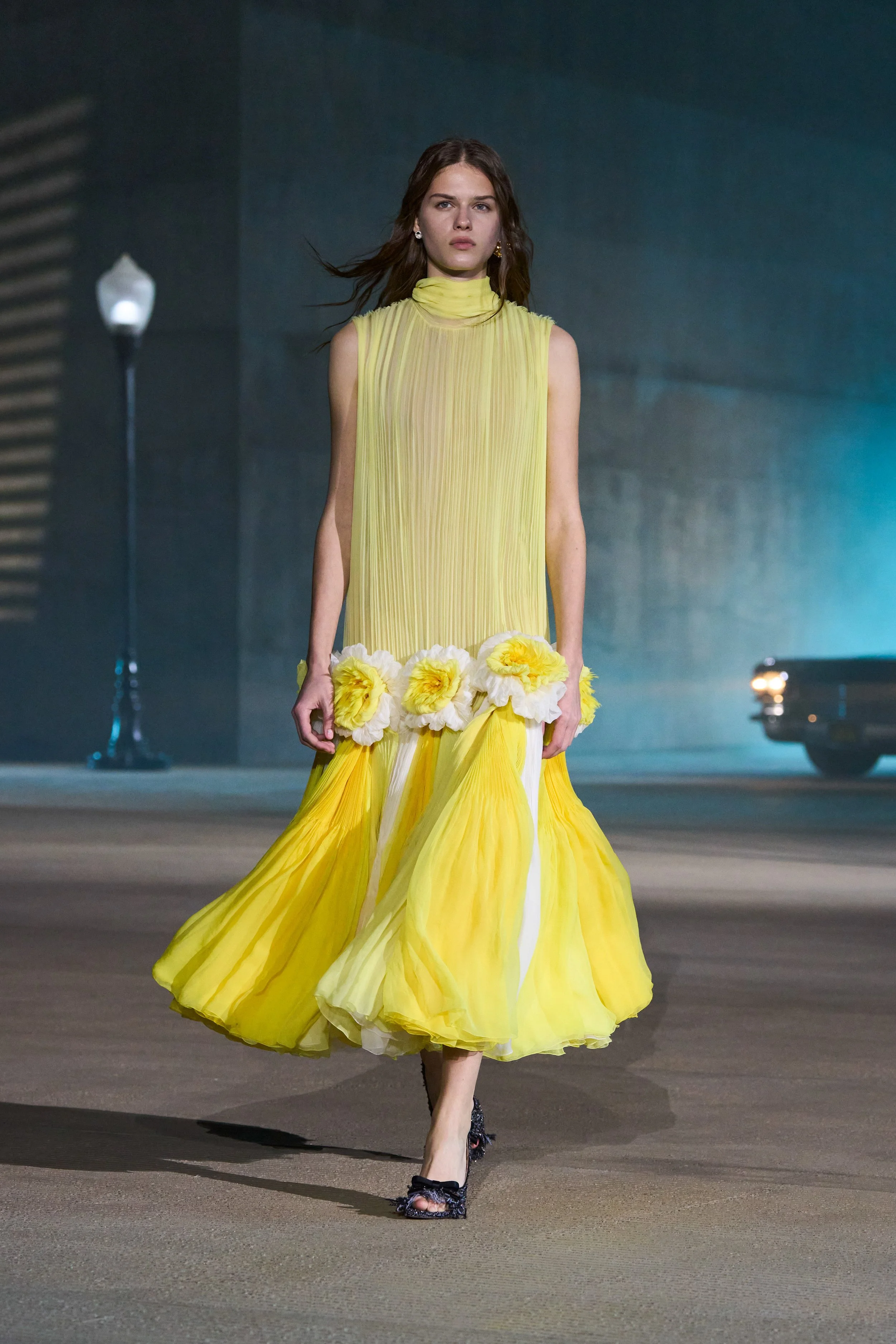
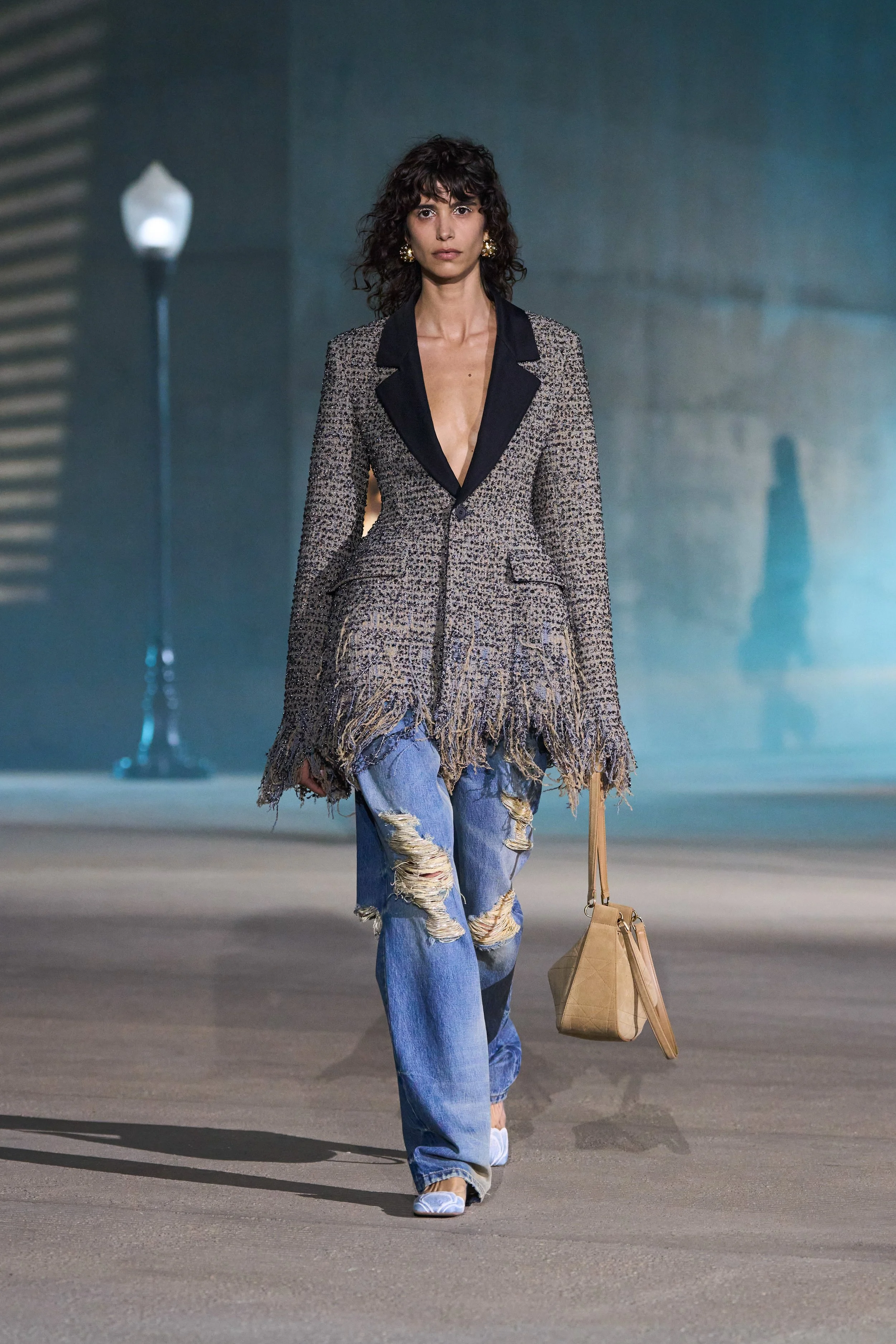
DIOR CRUISE 2026/27

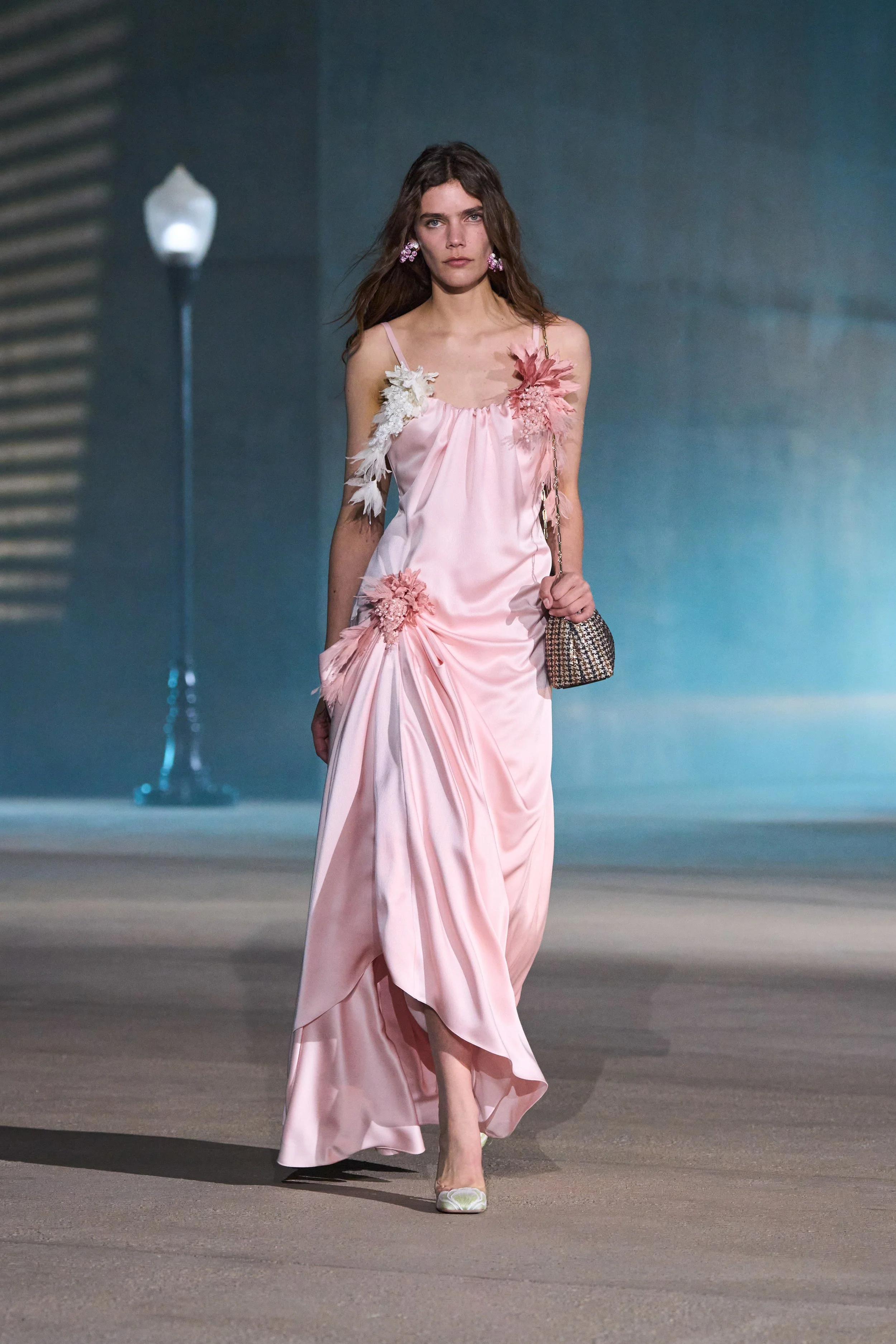
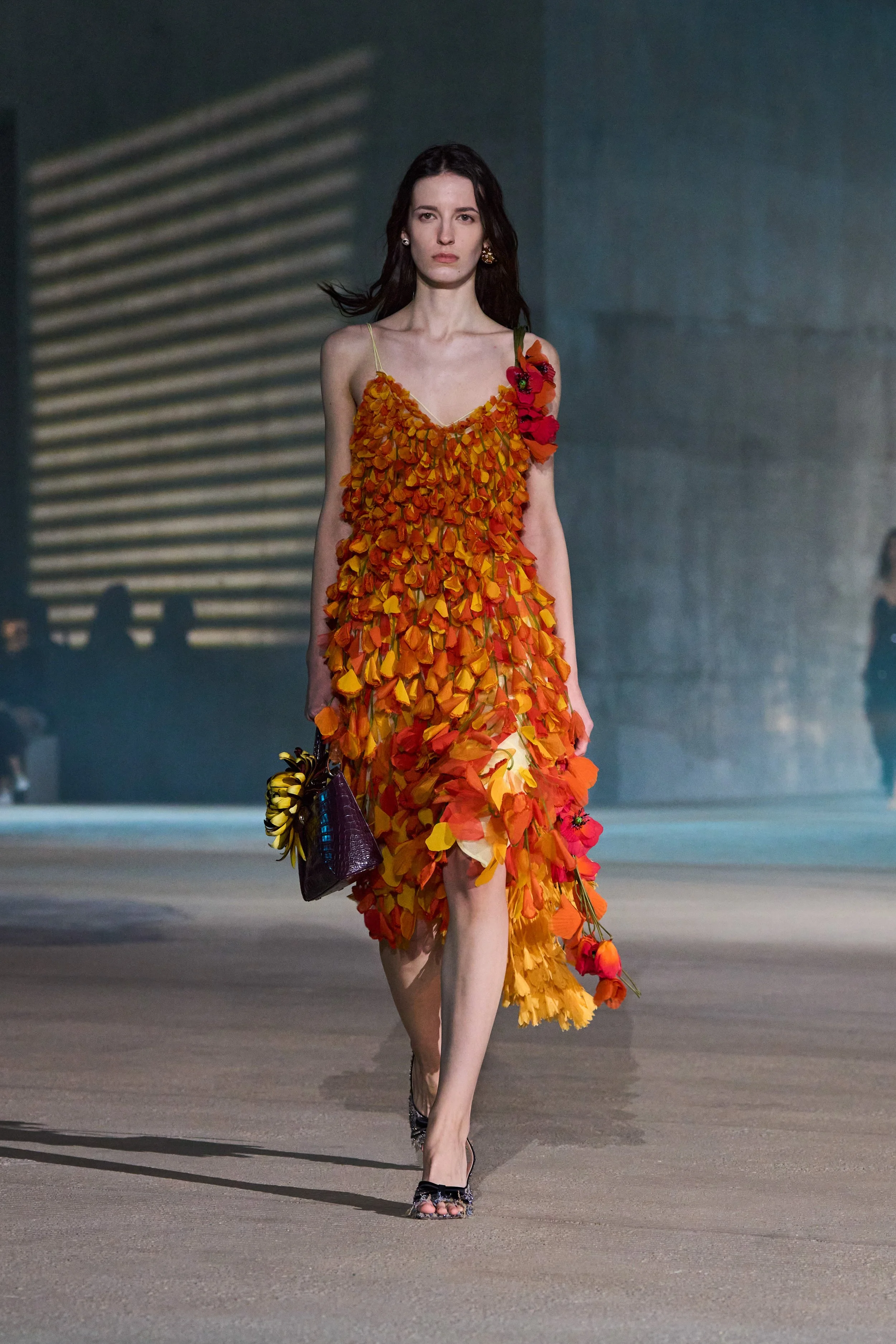
“There’s no Dietrich without Dior.” In 1950, Marlene Dietrich refused to star in Alfred Hitchcock's Stage Fright without a Christian Dior wardrobe – the better part of which she conveniently kept after production wrapped. Dietrich was but one of a clientele that reads as Olympian rather than human: Marilyn Monroe, Grace Kelly, Sophia Loren, Elizabeth Taylor, Audrey Hepburn. Dior’s myth itself is intertwined with that of the golden age of Hollywood.

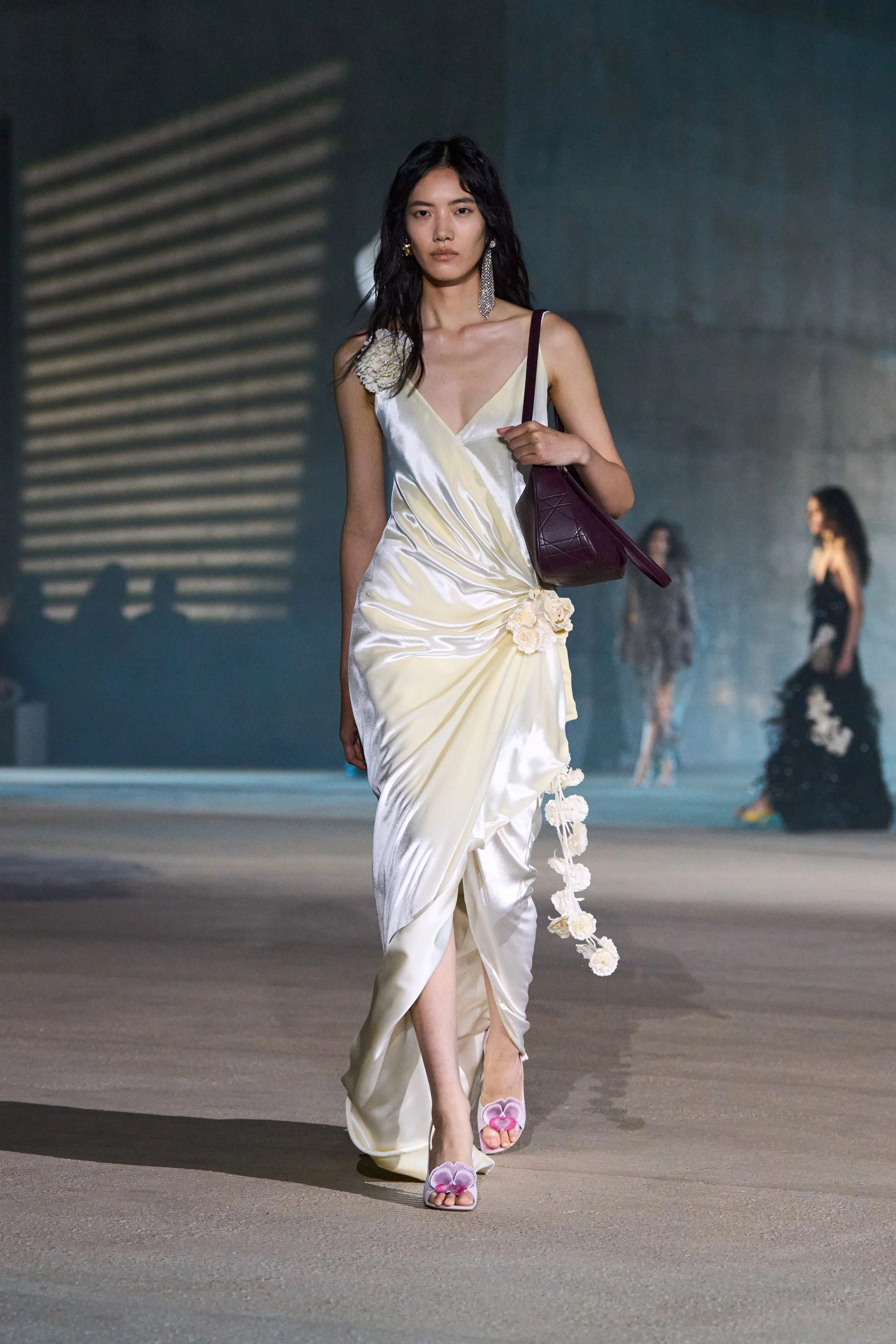
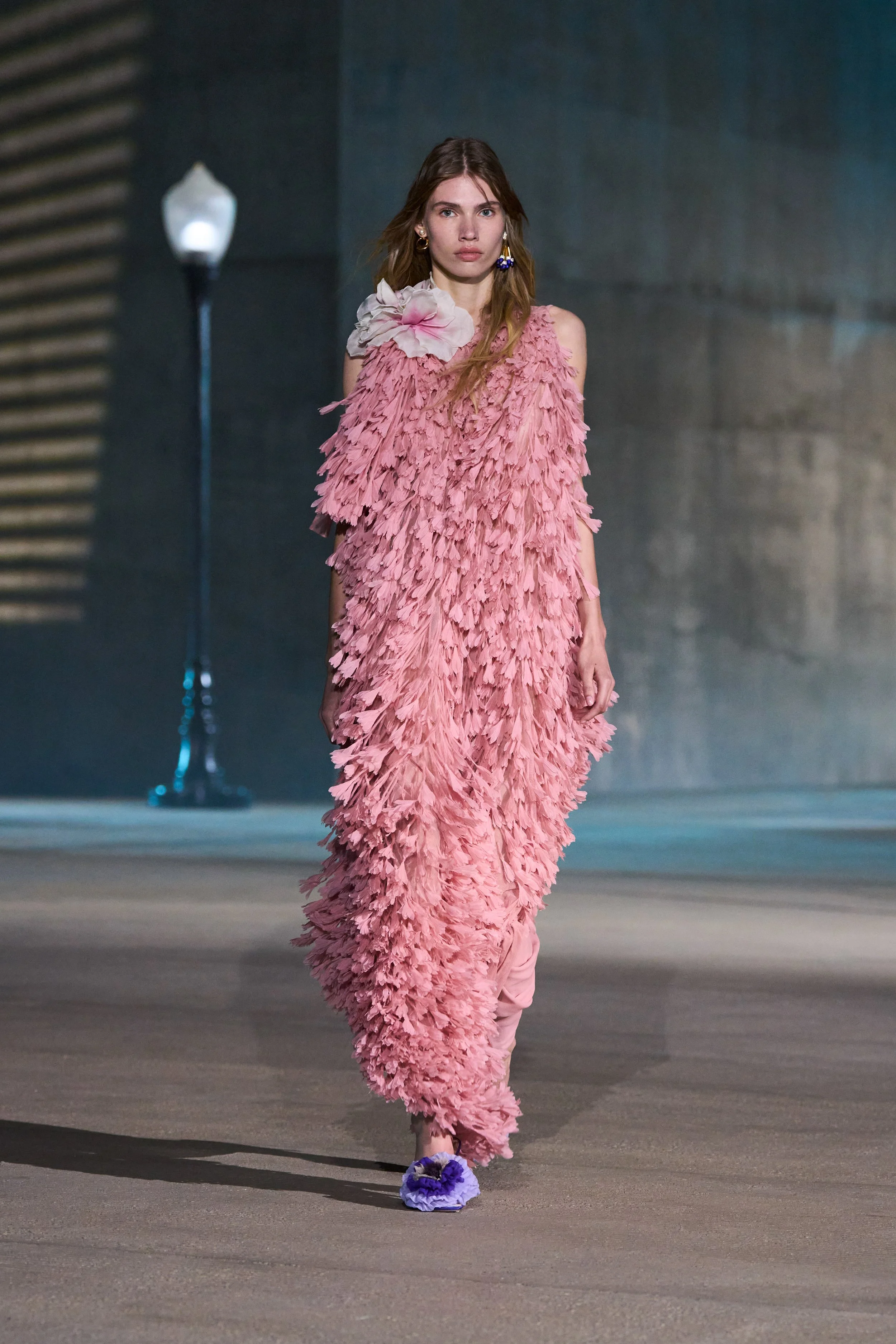
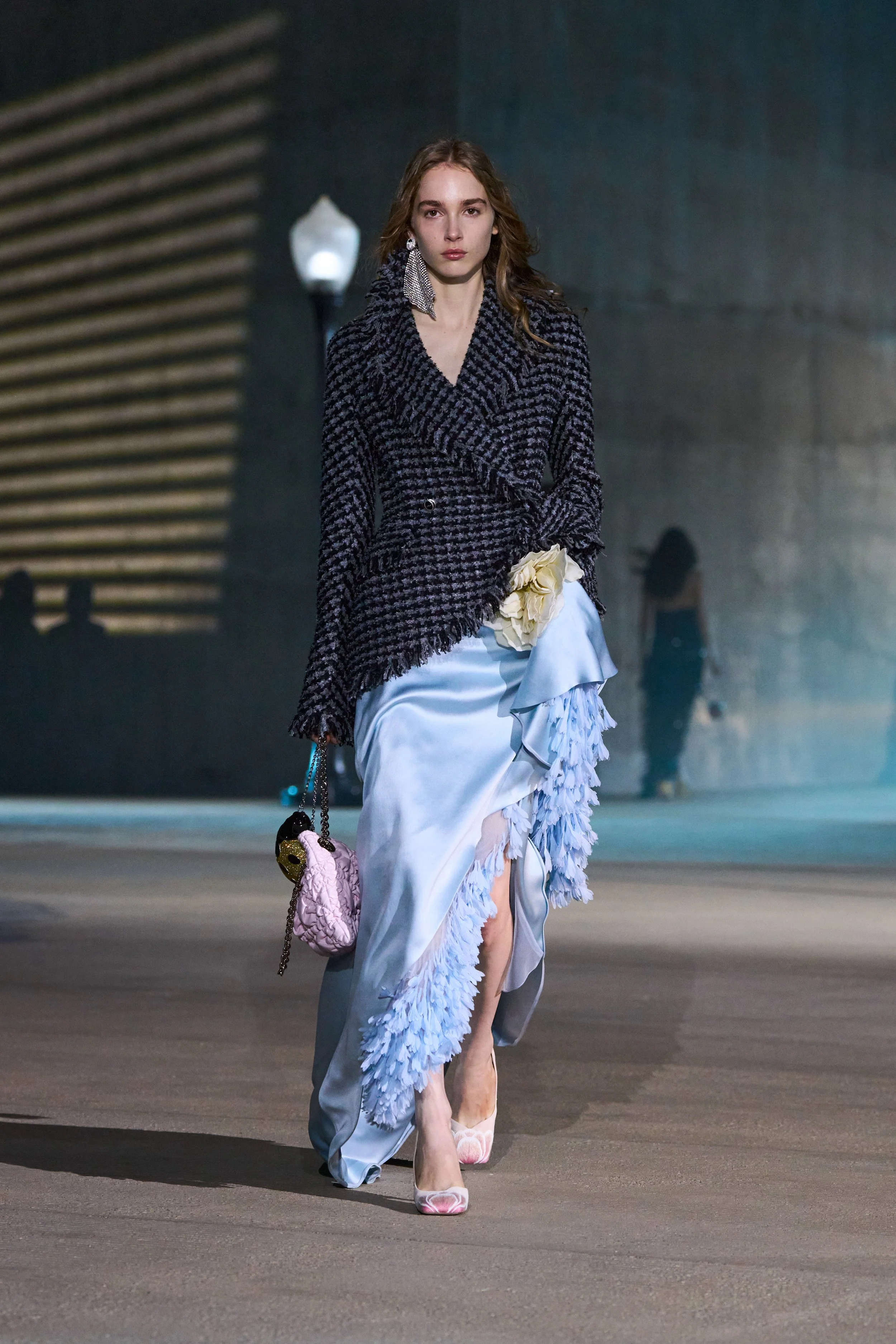
It makes sense, then, that for his first Cruise show, Jonathan Anderson chose Los Angeles as his location. In the recently inaugurated David Geffen Galleries at LACMA, the Northern Irish designer projected the seductive effect of the city of angels. Not that Anderson is not privy to such magnetism. Since 2022, his collaborations with Luca Guadagnino have birthed films like Challengers and Queer – and there are more to come. Anderson revealed he’ll be collaborating on another three movies in the near future. The point is: he’s no stranger to the intersection of cinema and fashion. And therefore, here, a show dedicated to Hollywood was made into a story, a narrative of different characters and stories. It’s a creative strategy that has become quite popular in recent seasons but, under the thematic guideline of Hollywood, has found its most appropriate interpretation.
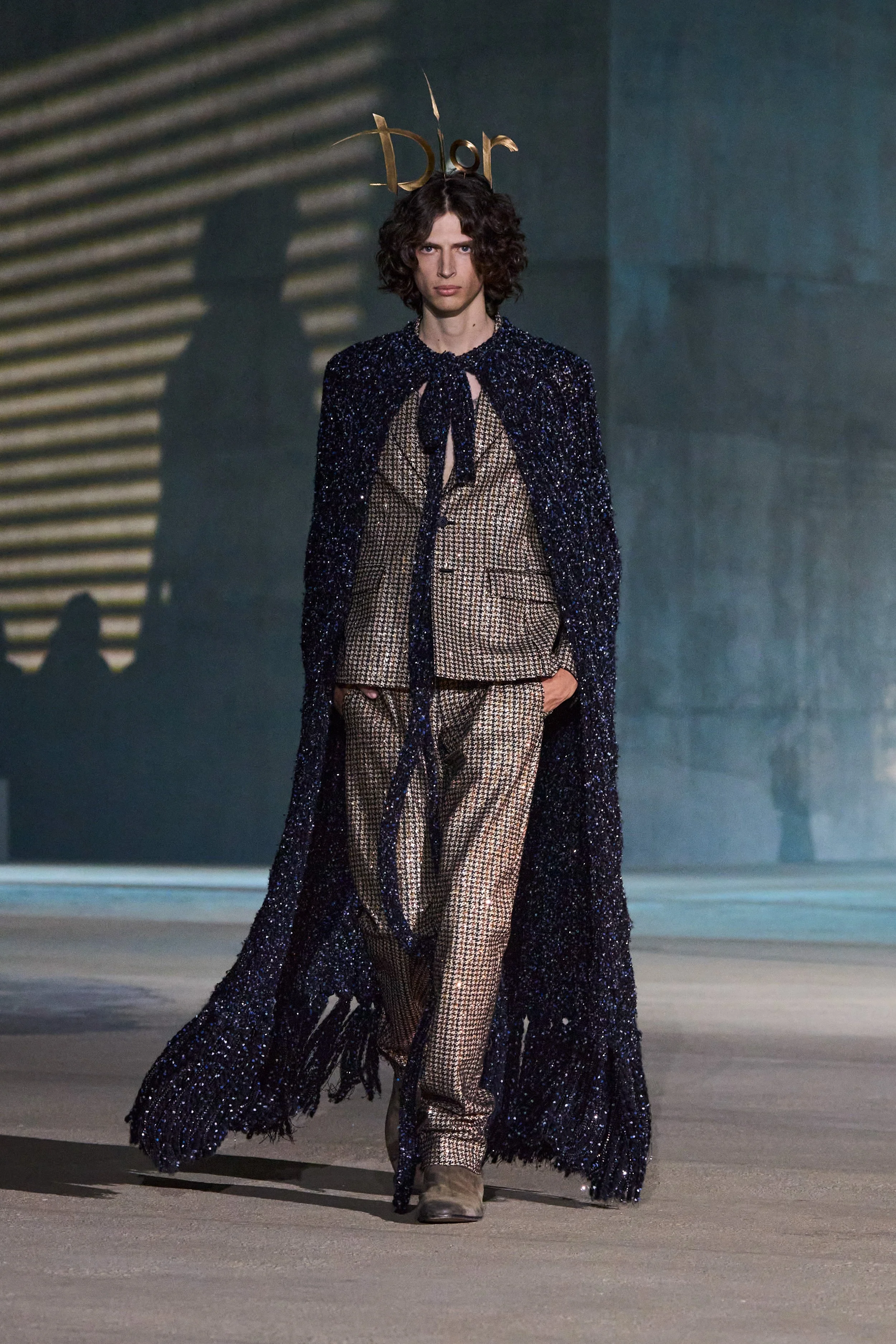
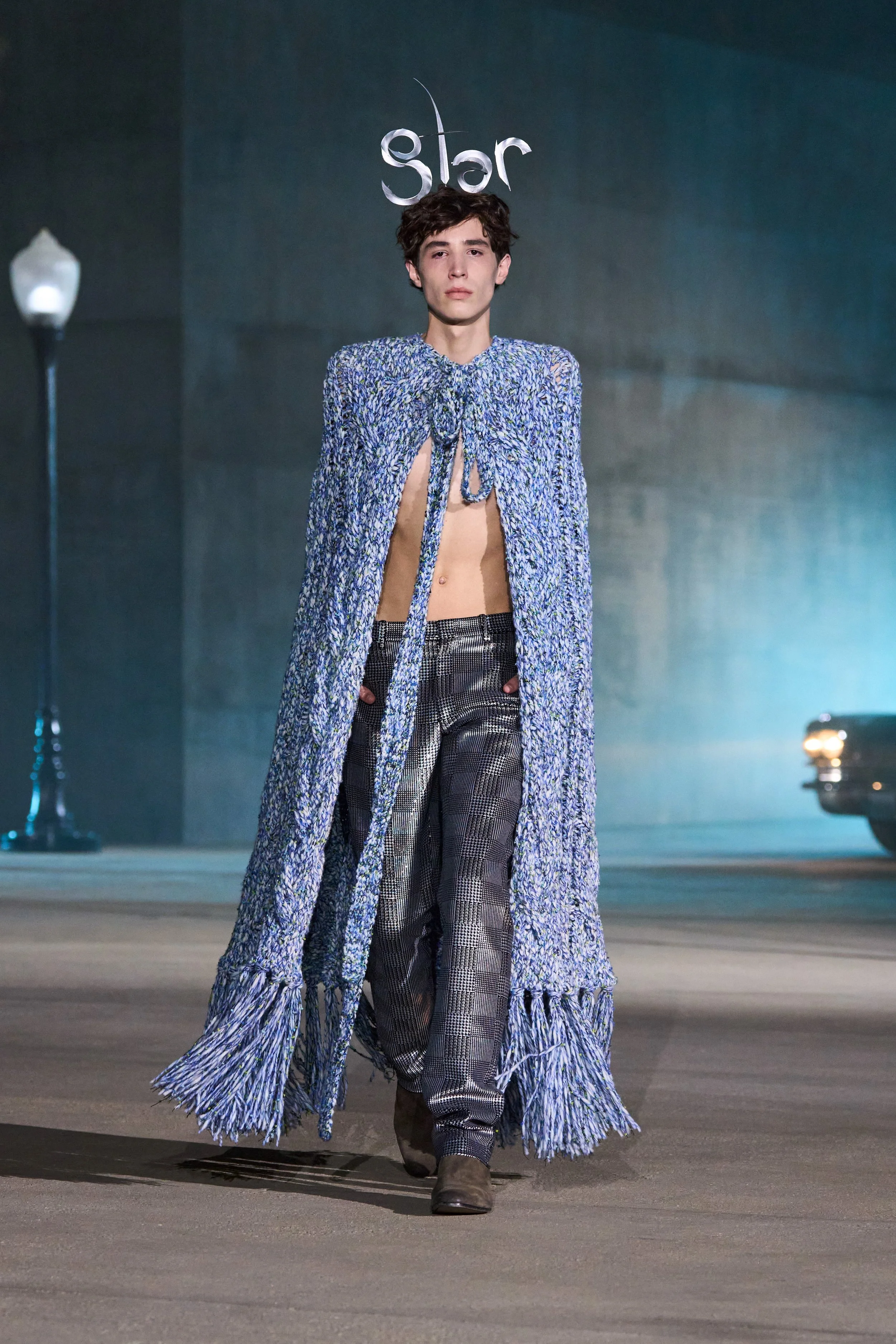
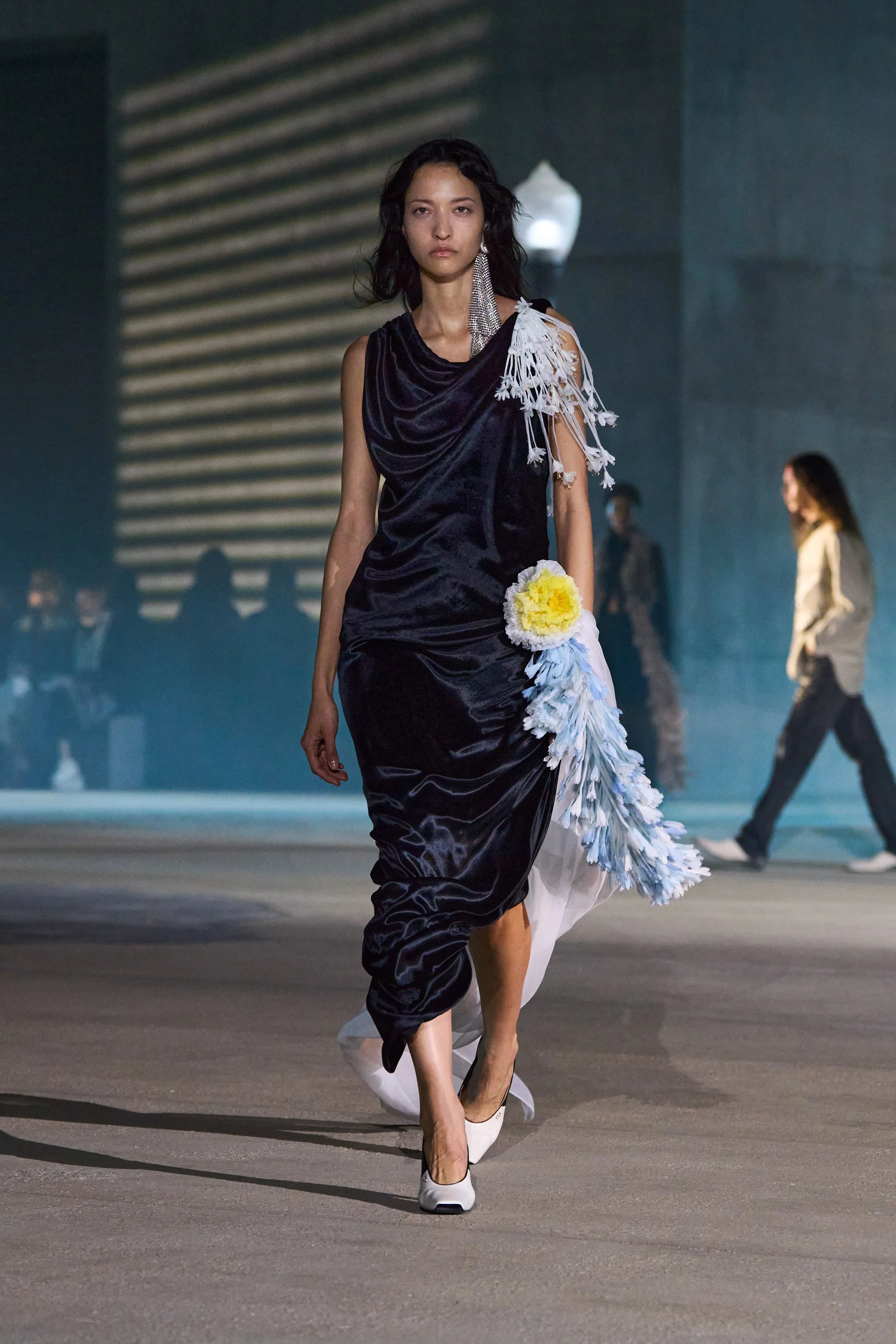
There were some recurring characters, flashes of the body of work the designer has spent the better part of the last year building. The dramatic and colourful flowers on the shoulders flounced similarly to those in the couture show. Tasselled capes worn with nothing but jeans were reminiscent of the latest menswear offering. The Bar jacket remains a protagonist in Anderson’s Dior, this time in frayed versions that untangle at the hems and cuffs.

It wasn’t all new characters, though. John Galliano’s bias dresses and Marc Bohan bags made cameos. Elsewhere, milliner Philip Treacy recreated his feather headpieces, most recognisable from Isabella Blow’s iteration – a timely reference with the news of a movie about the stylist’s relationship with Lee McQueen, the latter played by Behind the Blinds current cover star, Russell Tovey. But no Blow was in sight; here, the milliner spelt Dior, Buzz, or Star atop the heads of male models.

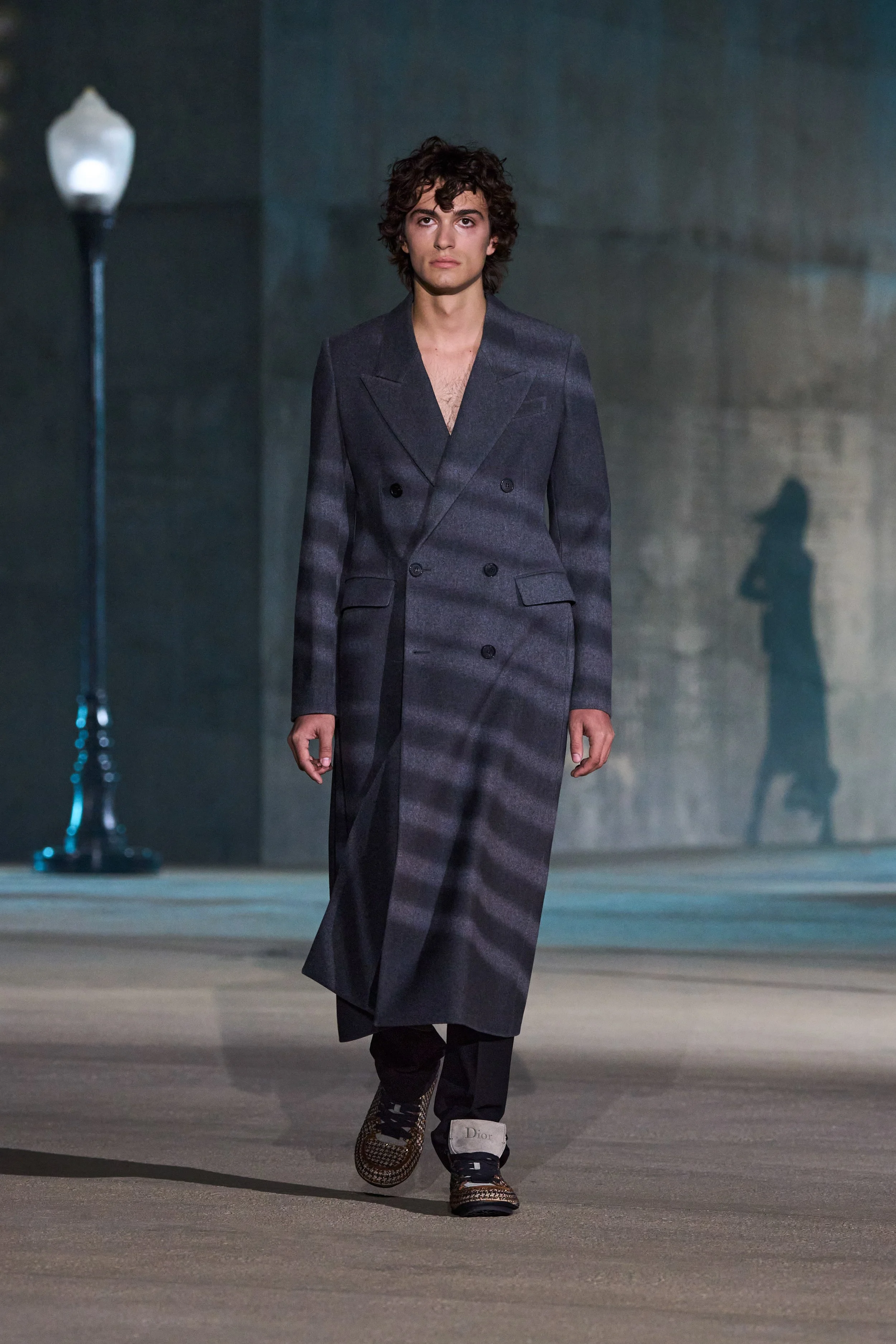
Whereas the womenswear was an array of characters, the menswear presented a tighter vision. Artist Ed Ruscha collaborated with Anderson to create graphic shirts. A particularly impressive wool coat replicated film noir lighting in angled stripes. Perhaps nowhere more than here was Anderson’s perspective concise. Hollywood is an illusion, a machine built to manufacture emotion.

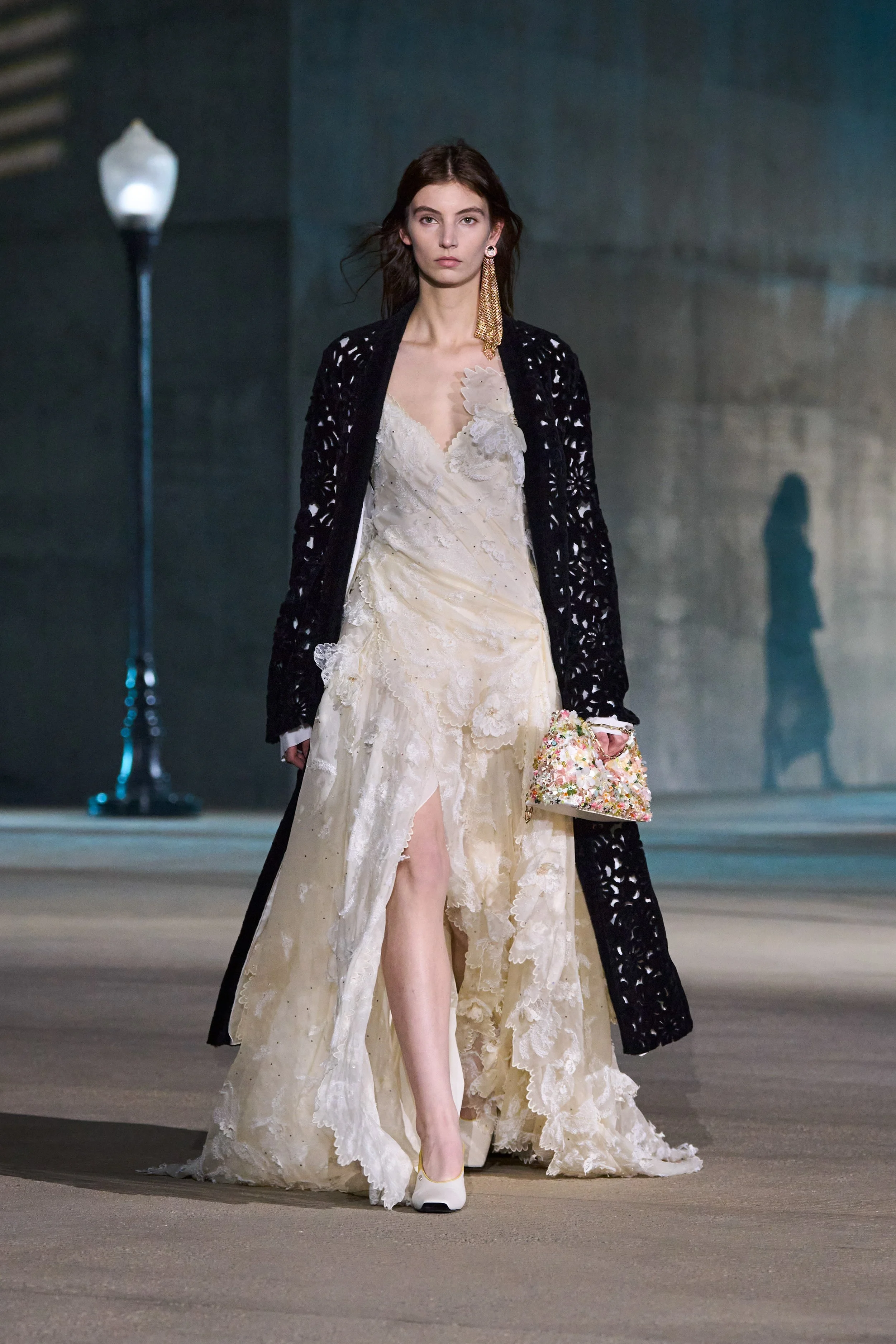
In womenswear, the designer was looking to convey glamour. A white gown scalloped at the edges, a slit swishing open as the model walked. Minute details on scaled dresses were made evident by their sheer repetition. Just shy of the first anniversary of Anderson at the brand – a celebration that will take place at the upcoming men’s show this June – his confidence is palpable. He might’ve had to move things around, put his imprint on the couch, but there’s no denying it: Dior is Anderson’s house.


Words by Pedro Vasconcelos