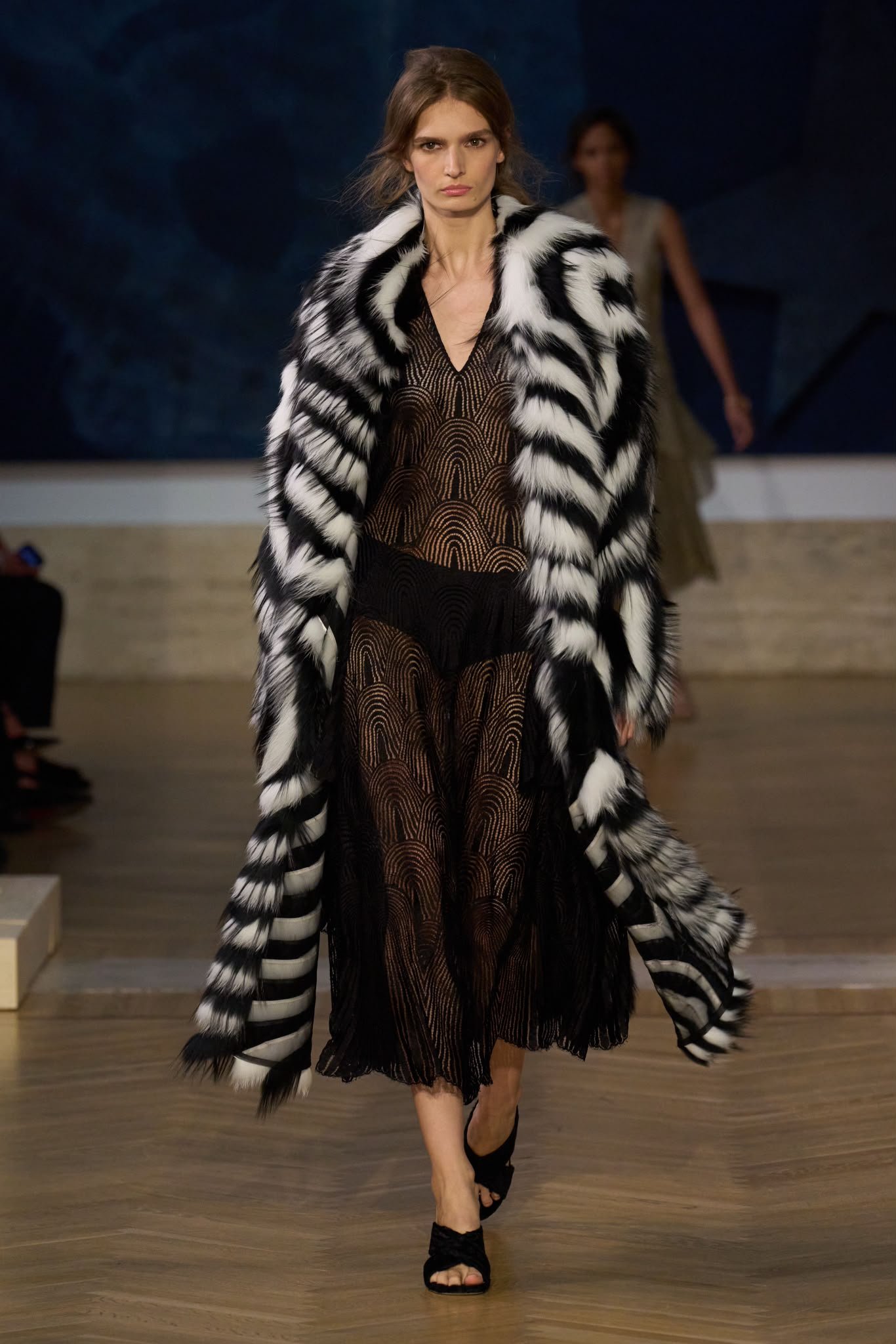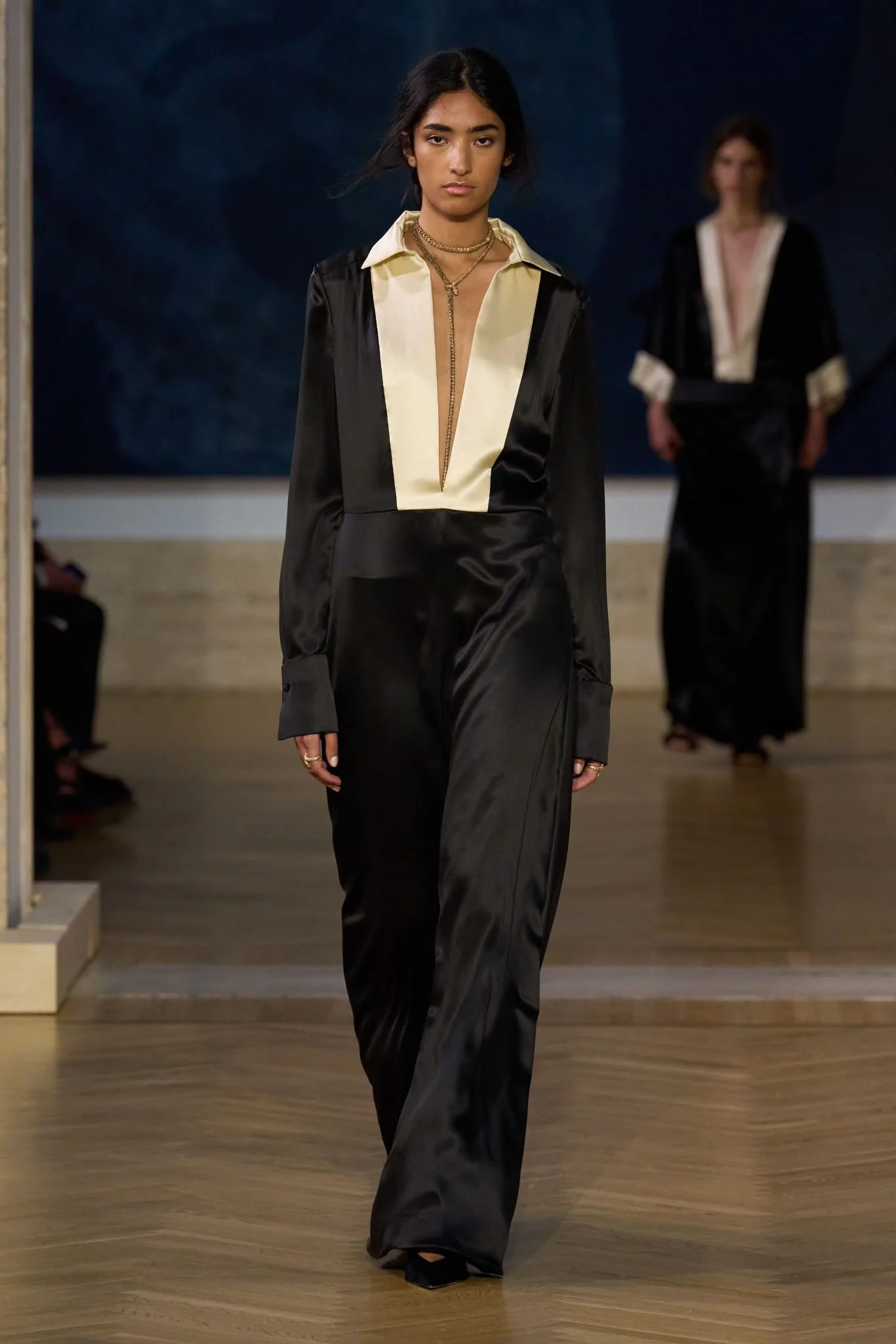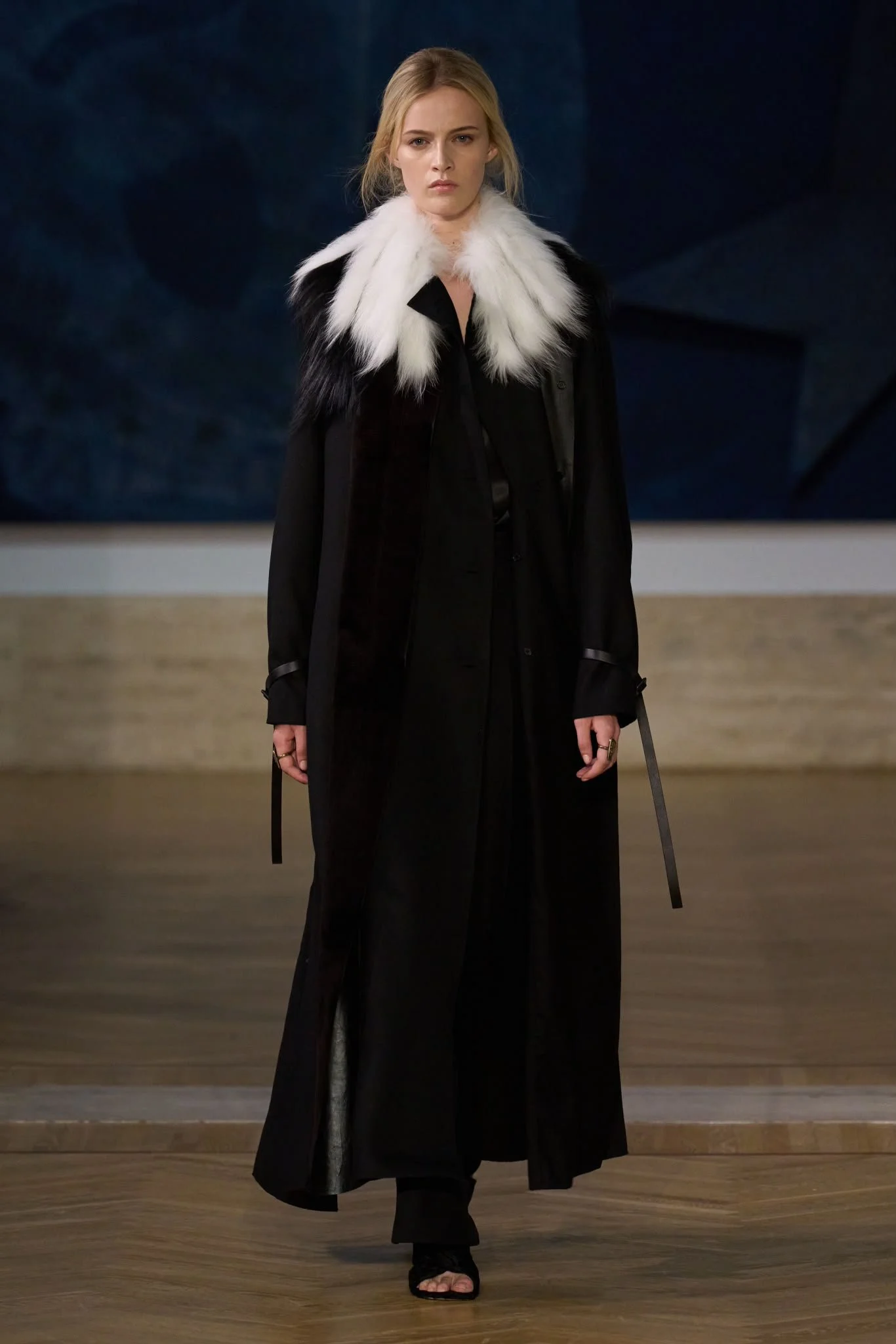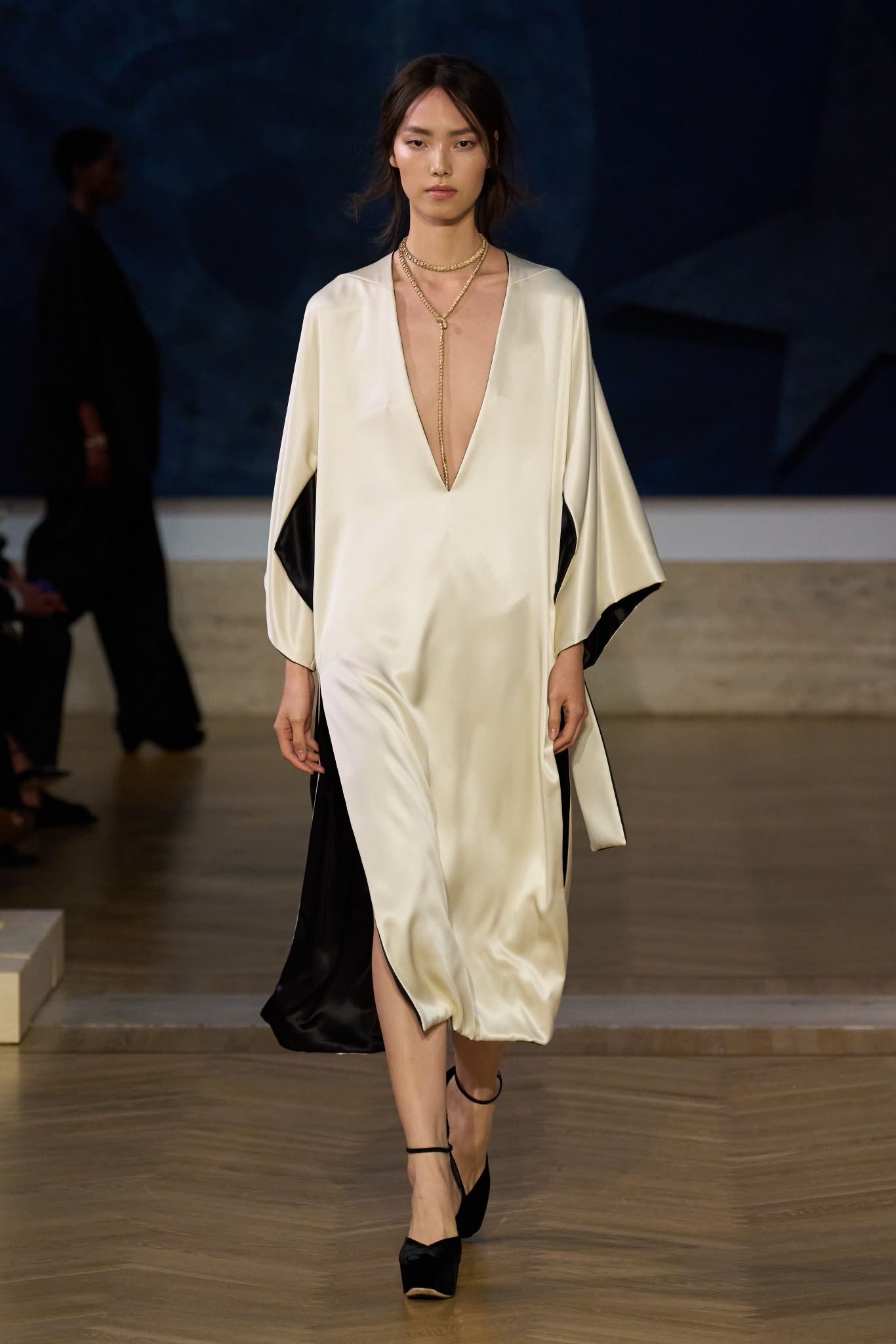
showreport

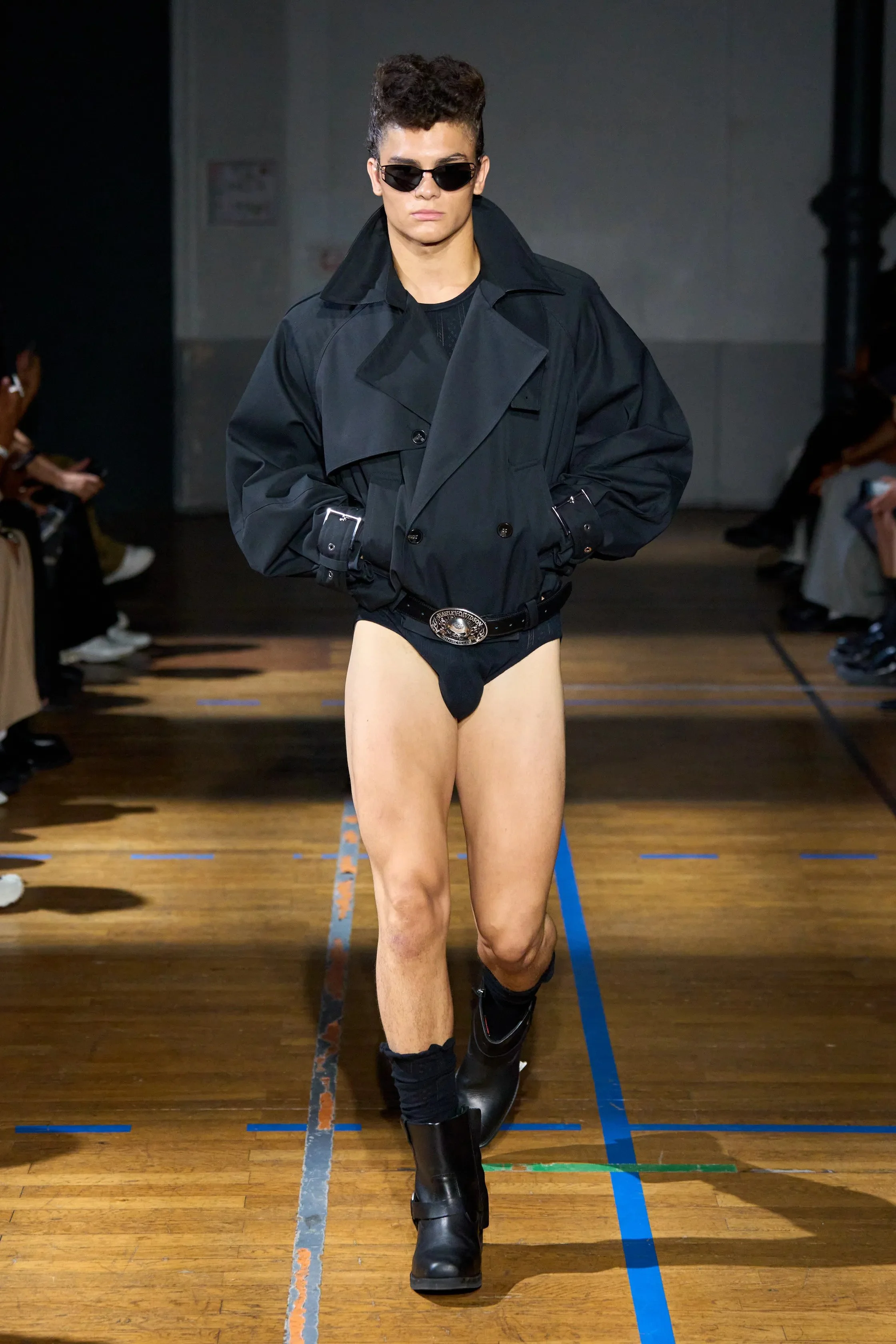
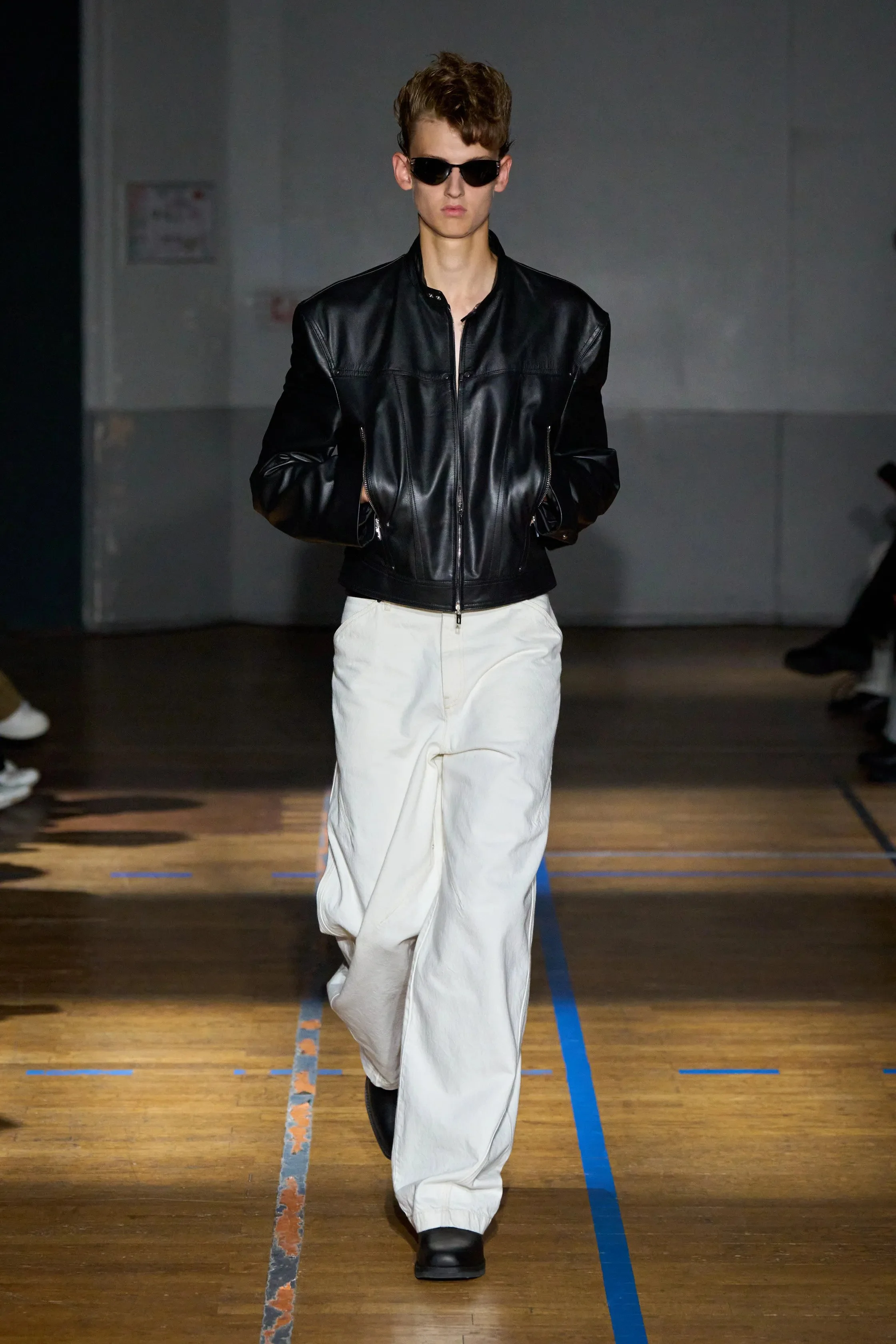
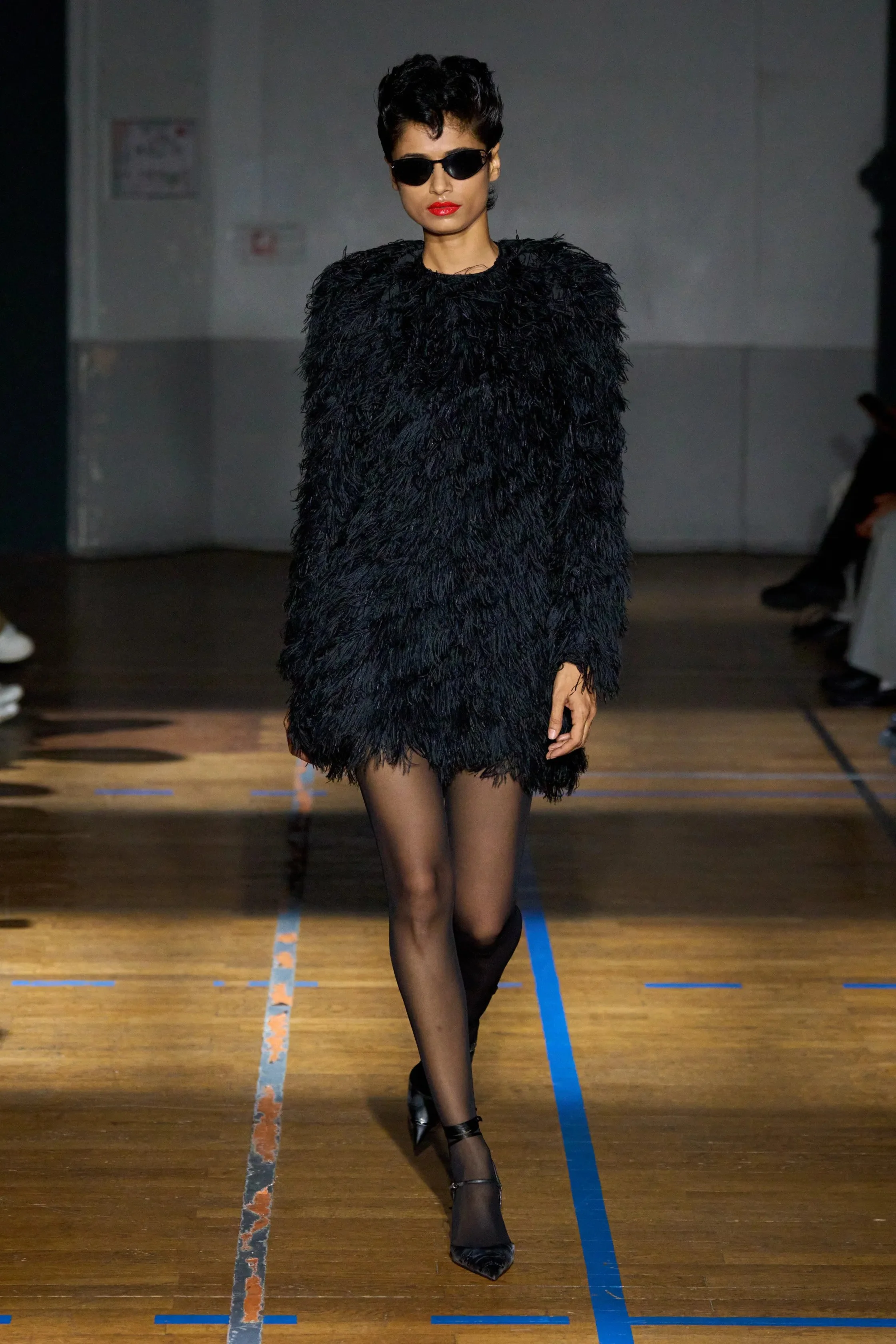
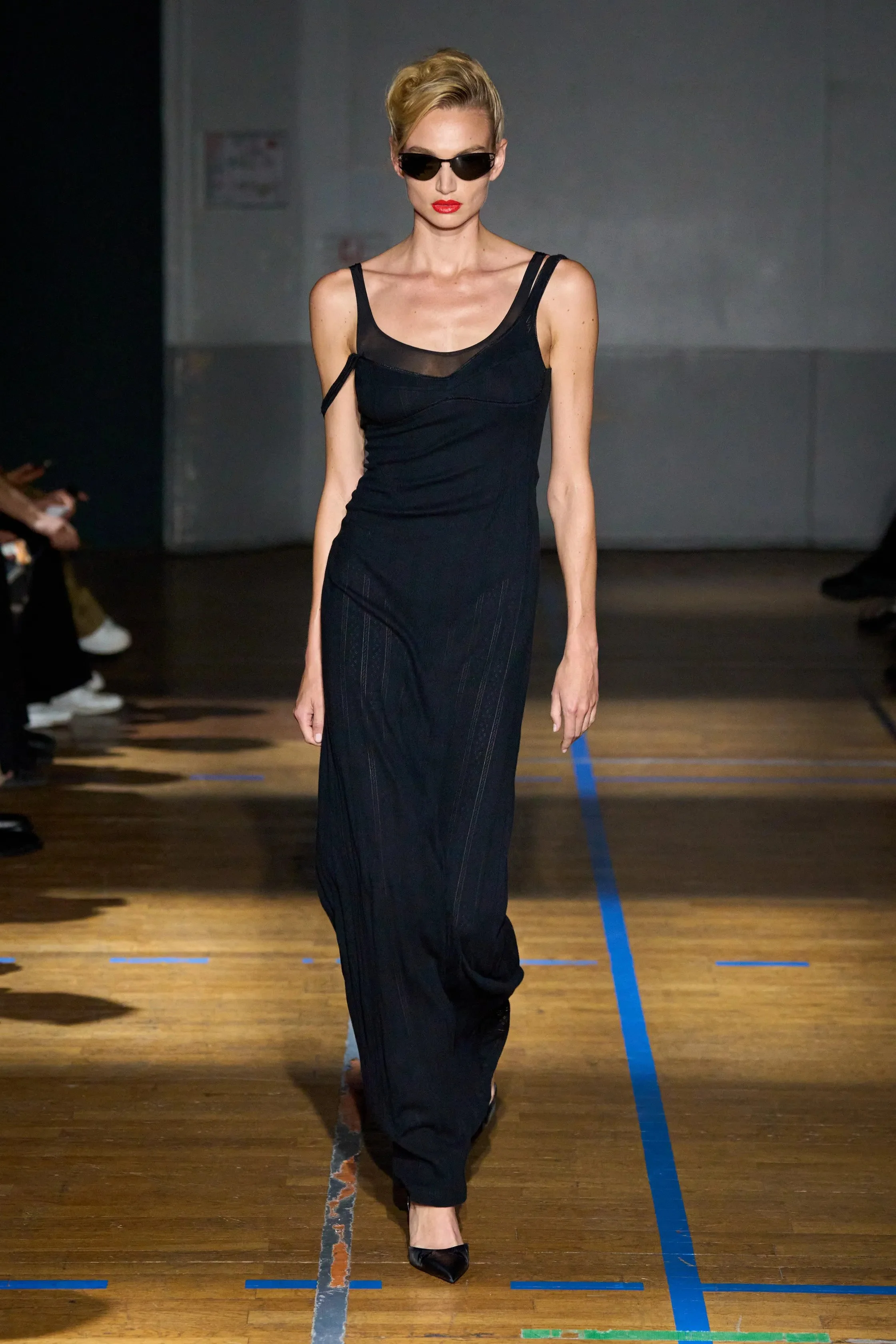
BALMAIN SS27

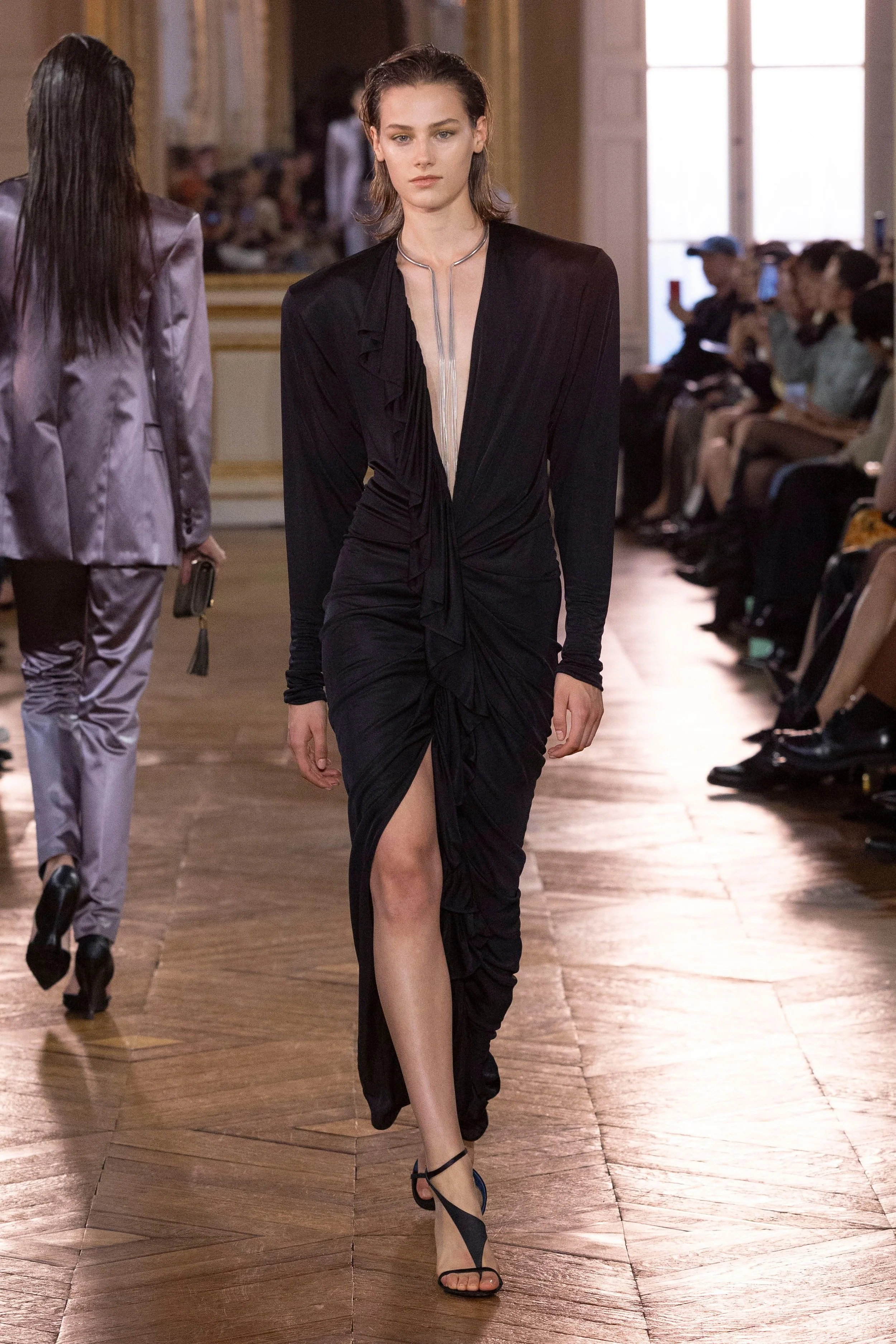
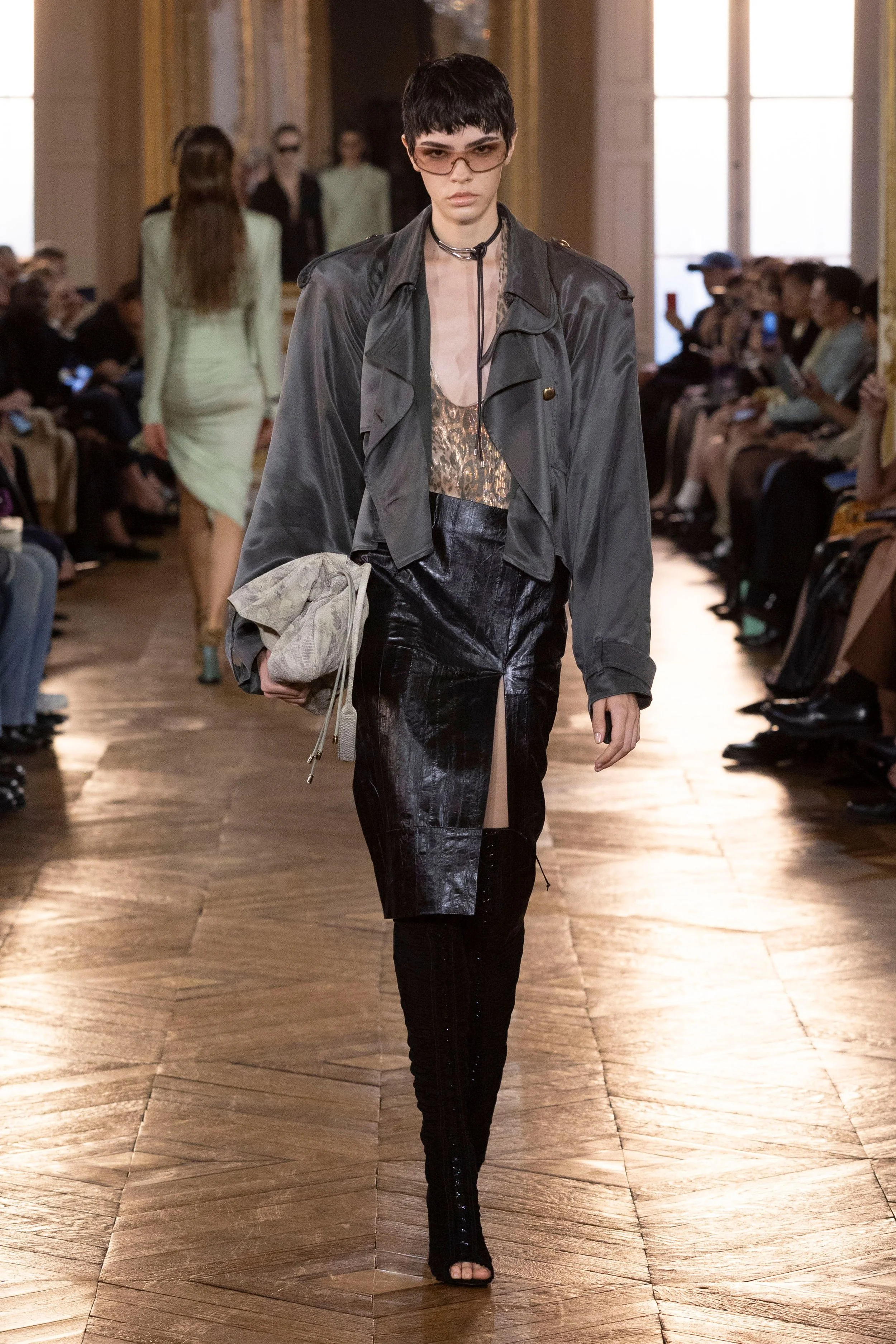
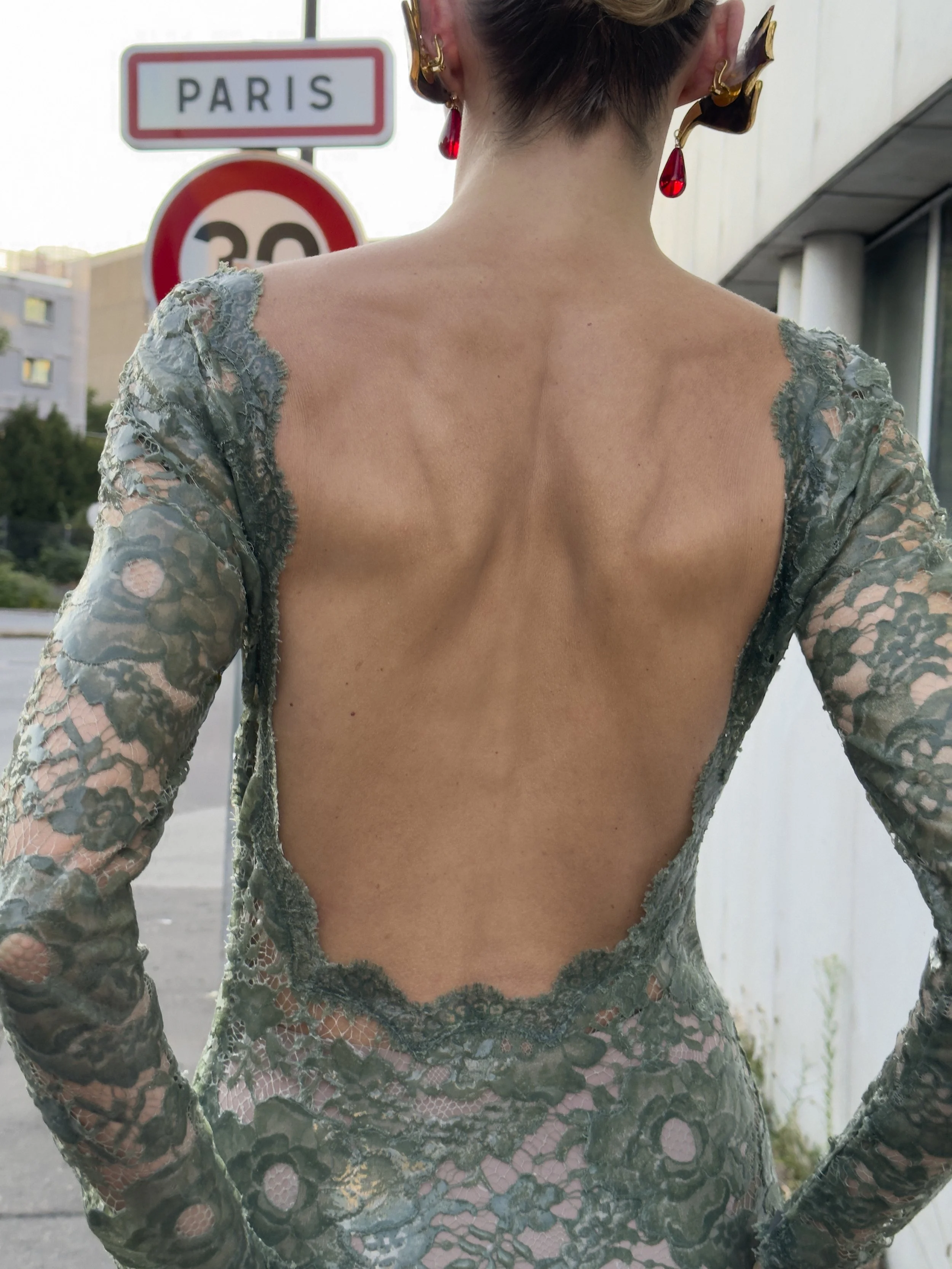
Once the home of Karl Lagerfeld, the Parisian Hôtel de Maisons was Antonin Tron’s chosen venue to showcase his Spring/Summer 2027 collection for Balmain, the French designer’s sophomore show as the house’s creative director. In 1955, before stardom, Lagerfeld began his fashion career as Pierre Balmain’s assistant.

A trio of backstage photos from 1954, taken at one of Pierre Balmain’s shows, were posted on the label’s Instagram page shortly before SS27, serving as a hint for this season’s vision. Tron said the pictures were on his mood board the whole time he crafted the new lineup.

“These images are from Paris of the 1950s, but they could be today. Their sense of fragility and strength feels amazingly modern. The way they catch this crazy rush of women dressed and getting dressed… there’s realness in the glamour, and that’s something I love,” Tron wrote on the images, both in the post’s caption and collection notes, respectively.

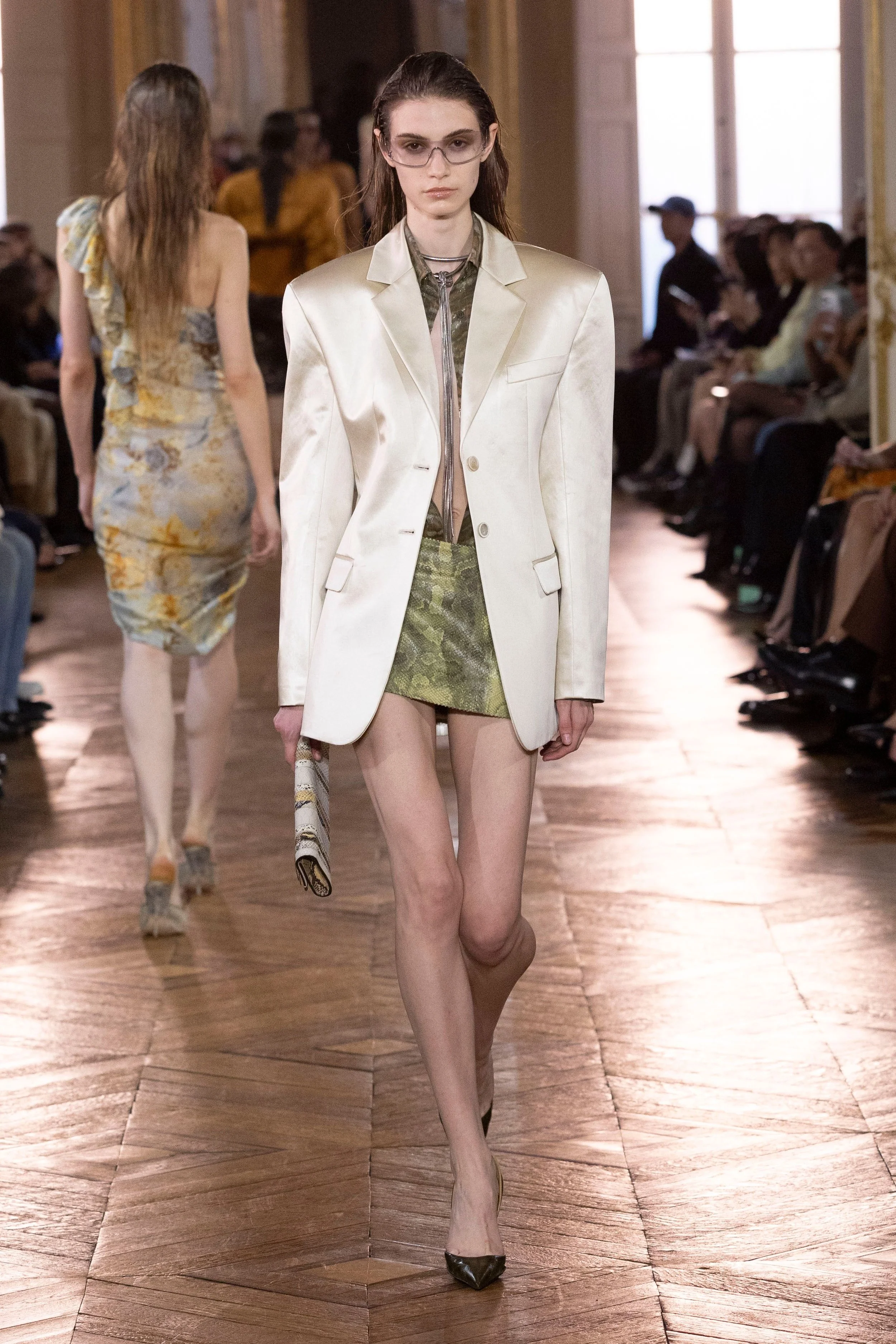
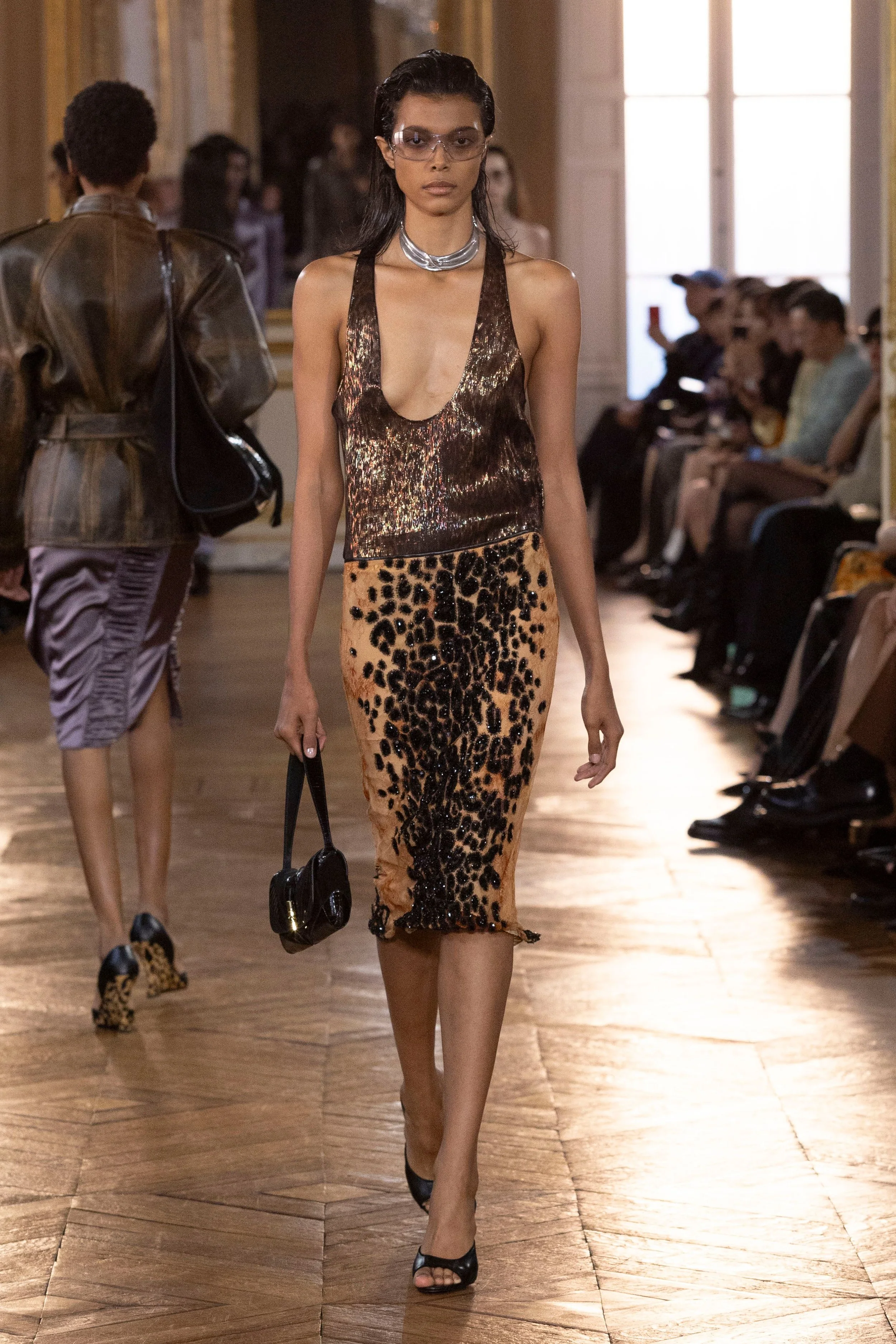
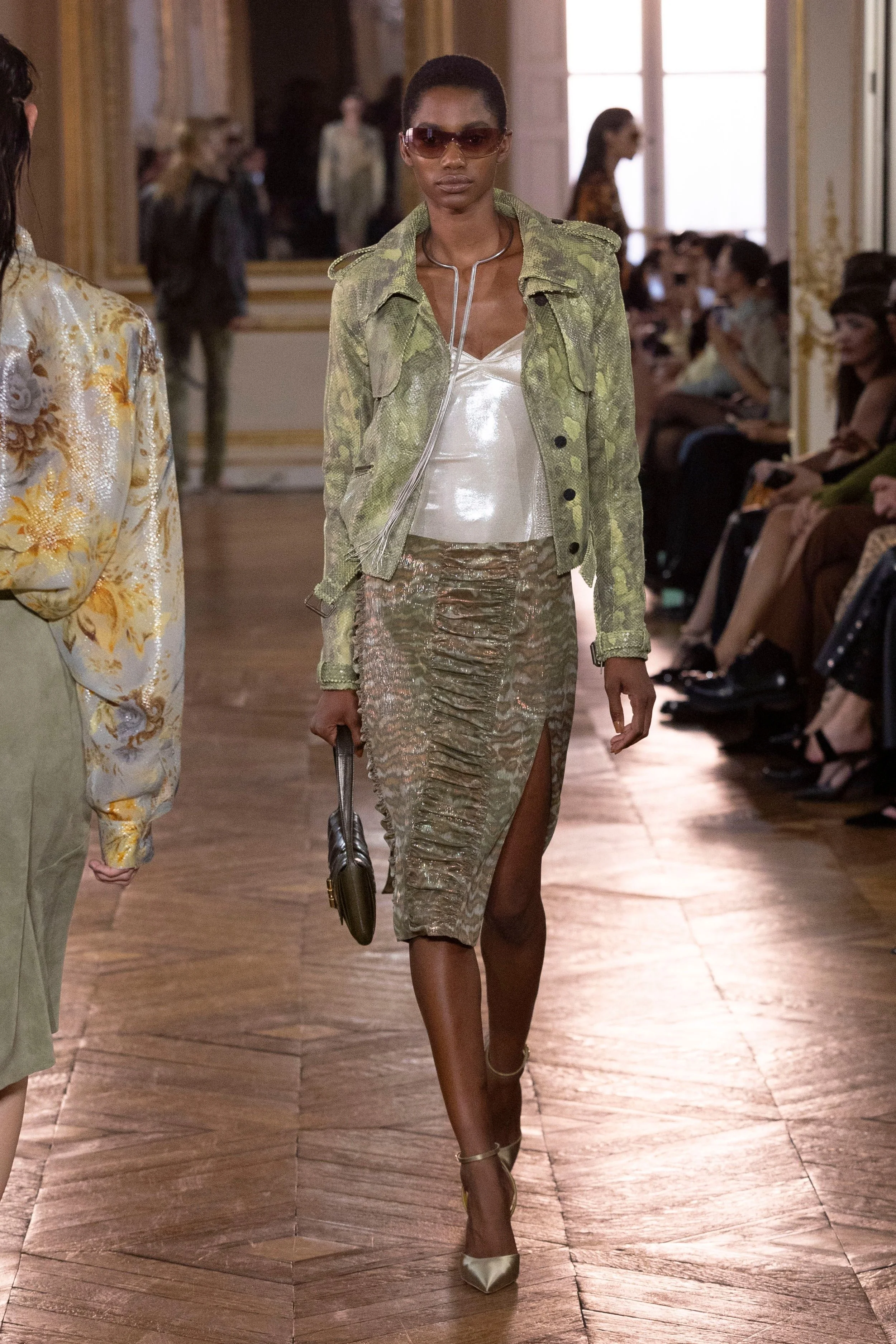
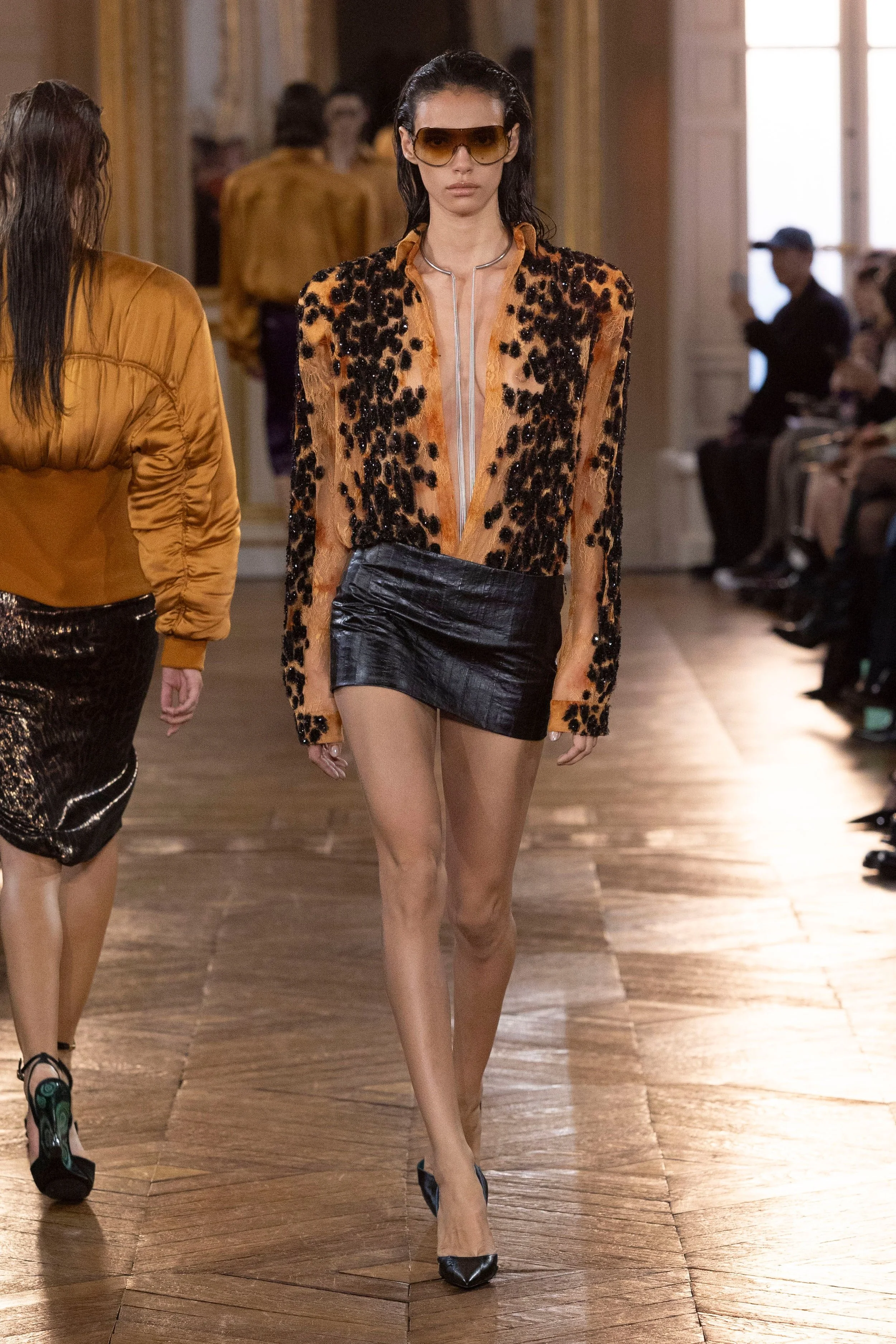
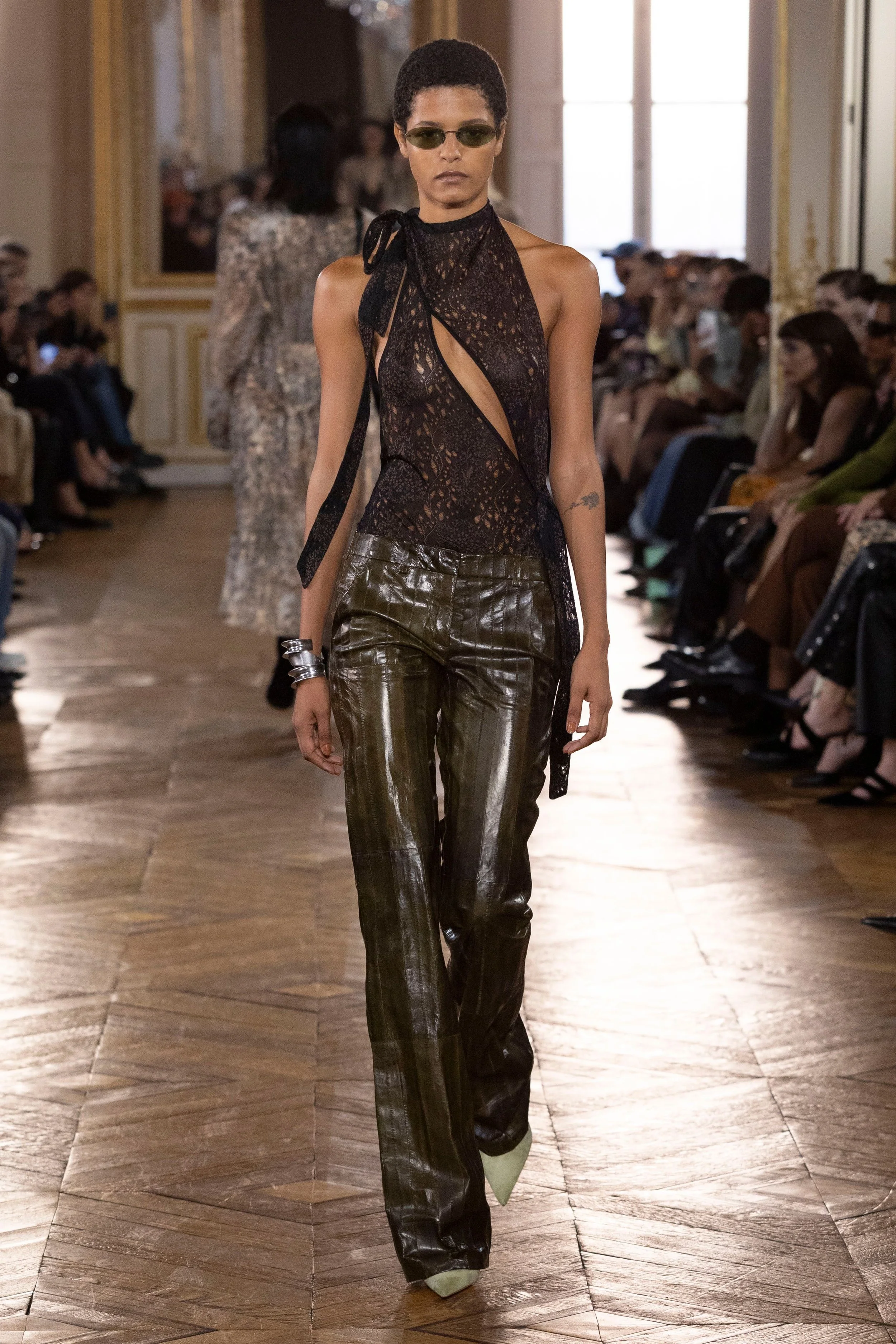
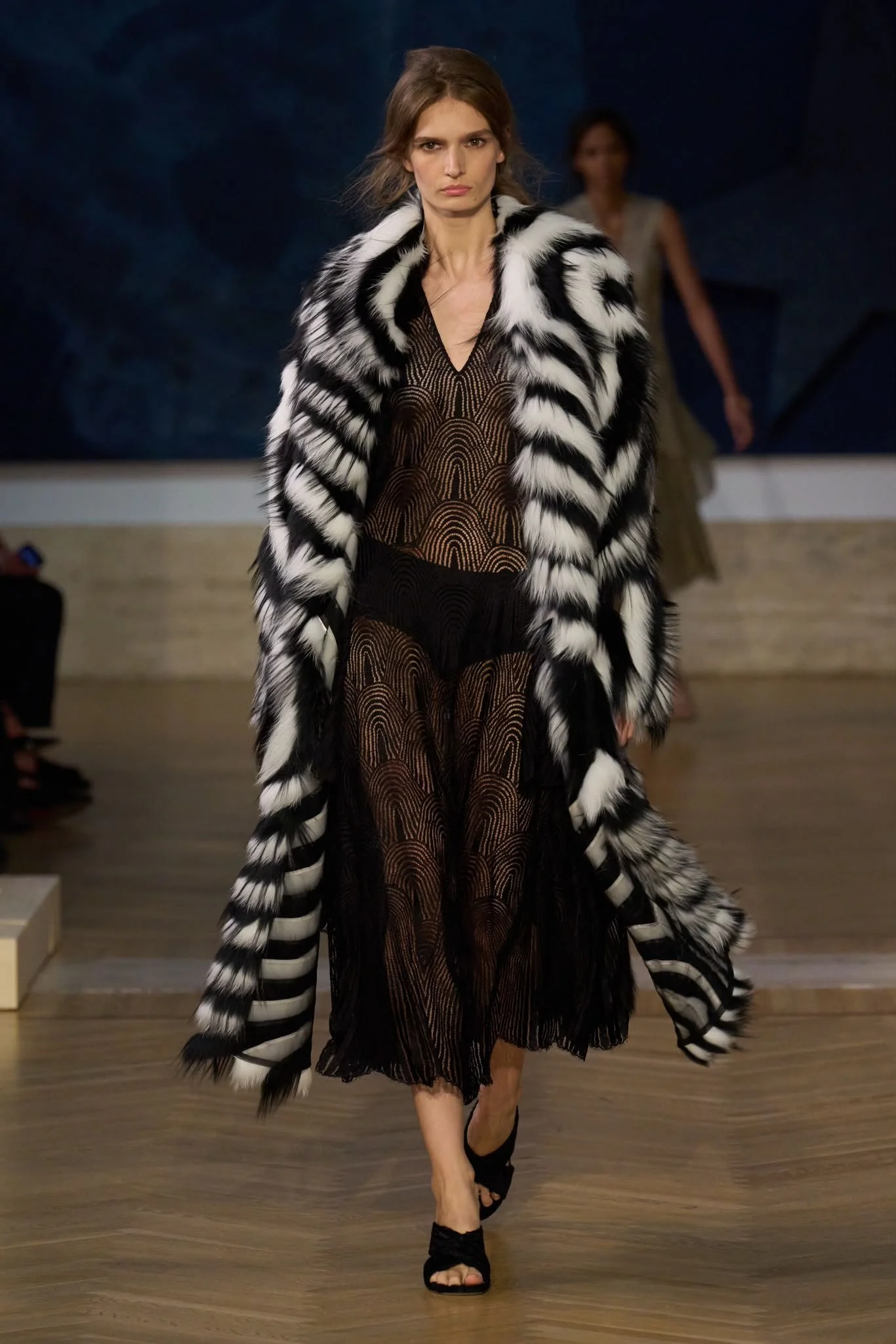
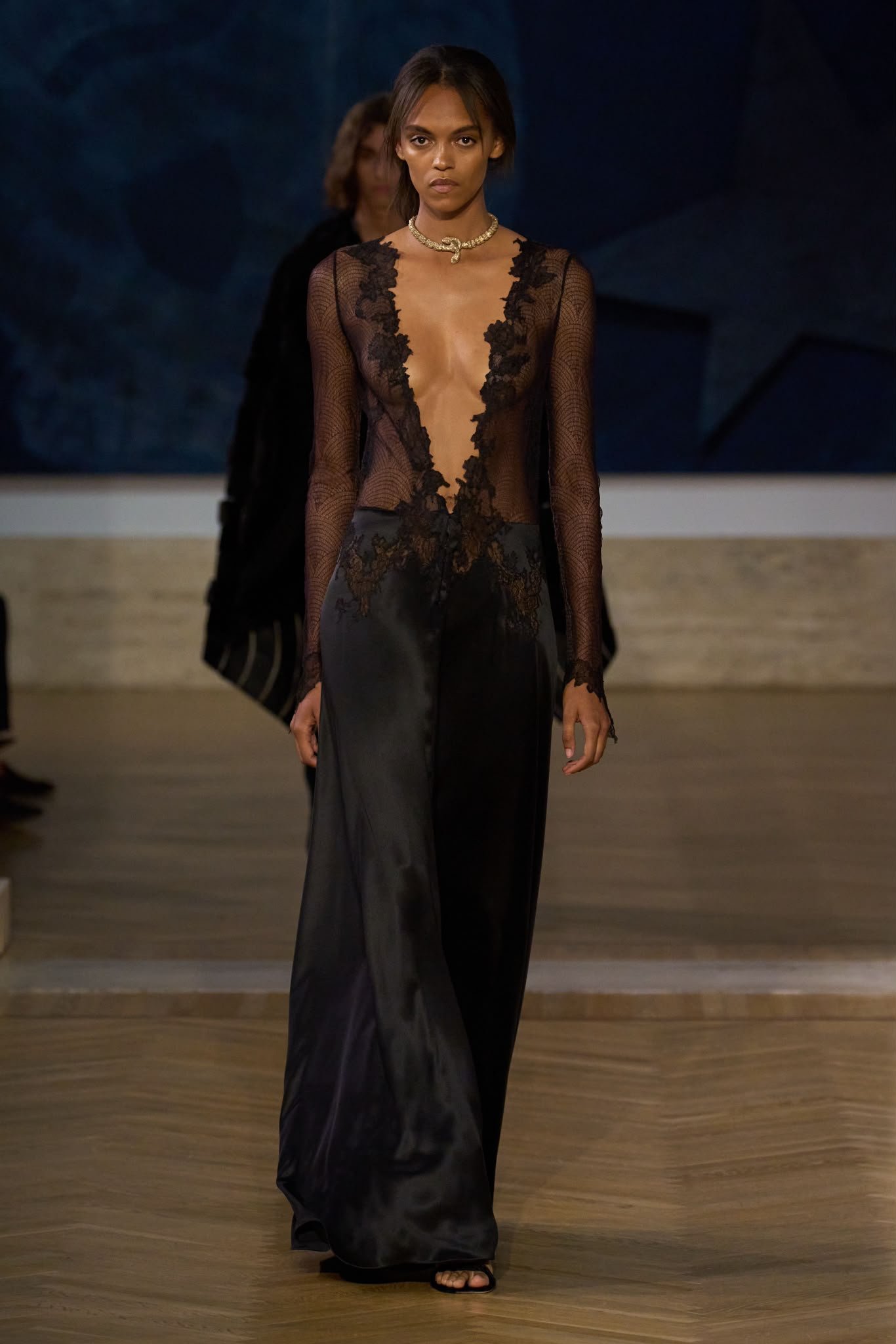
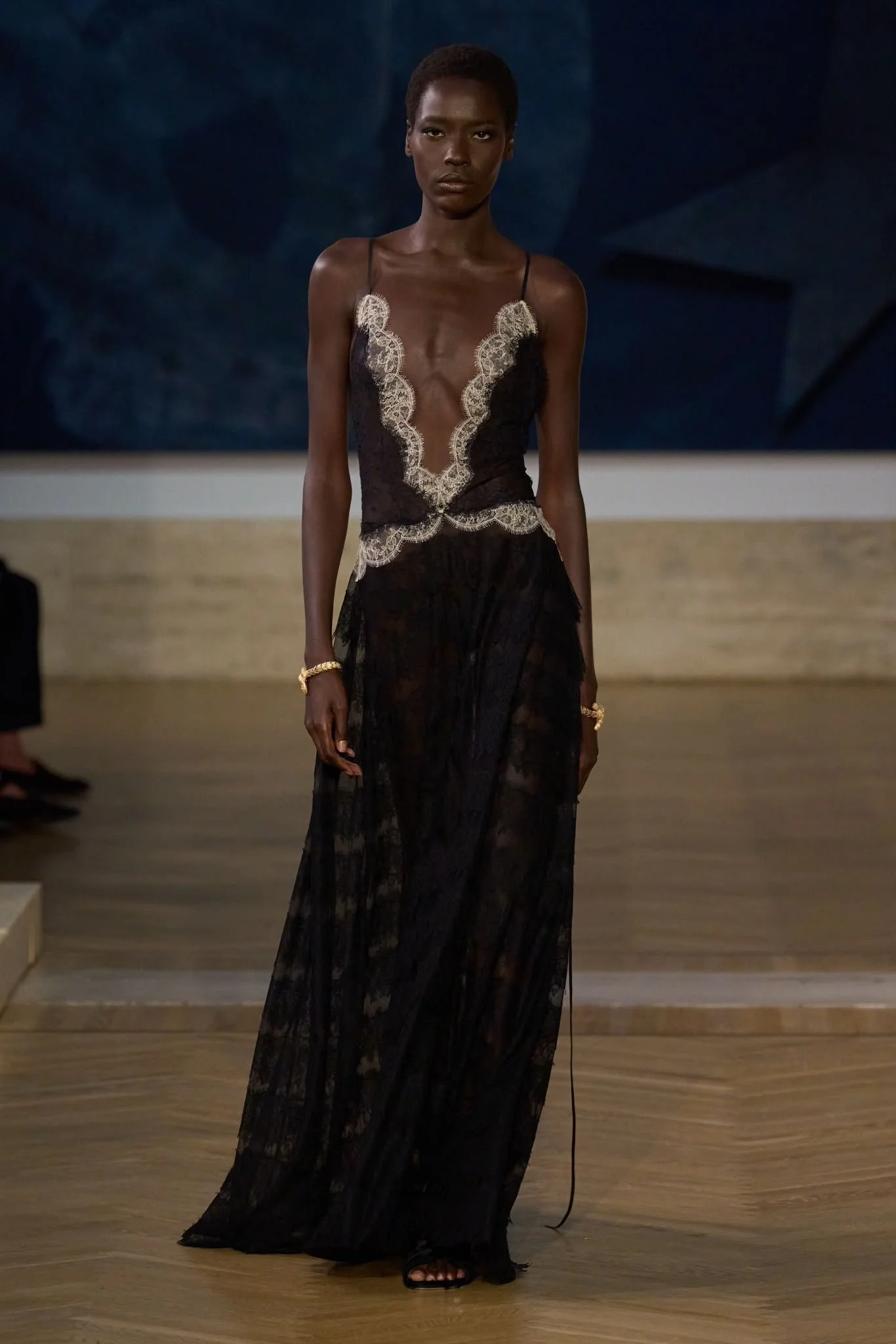
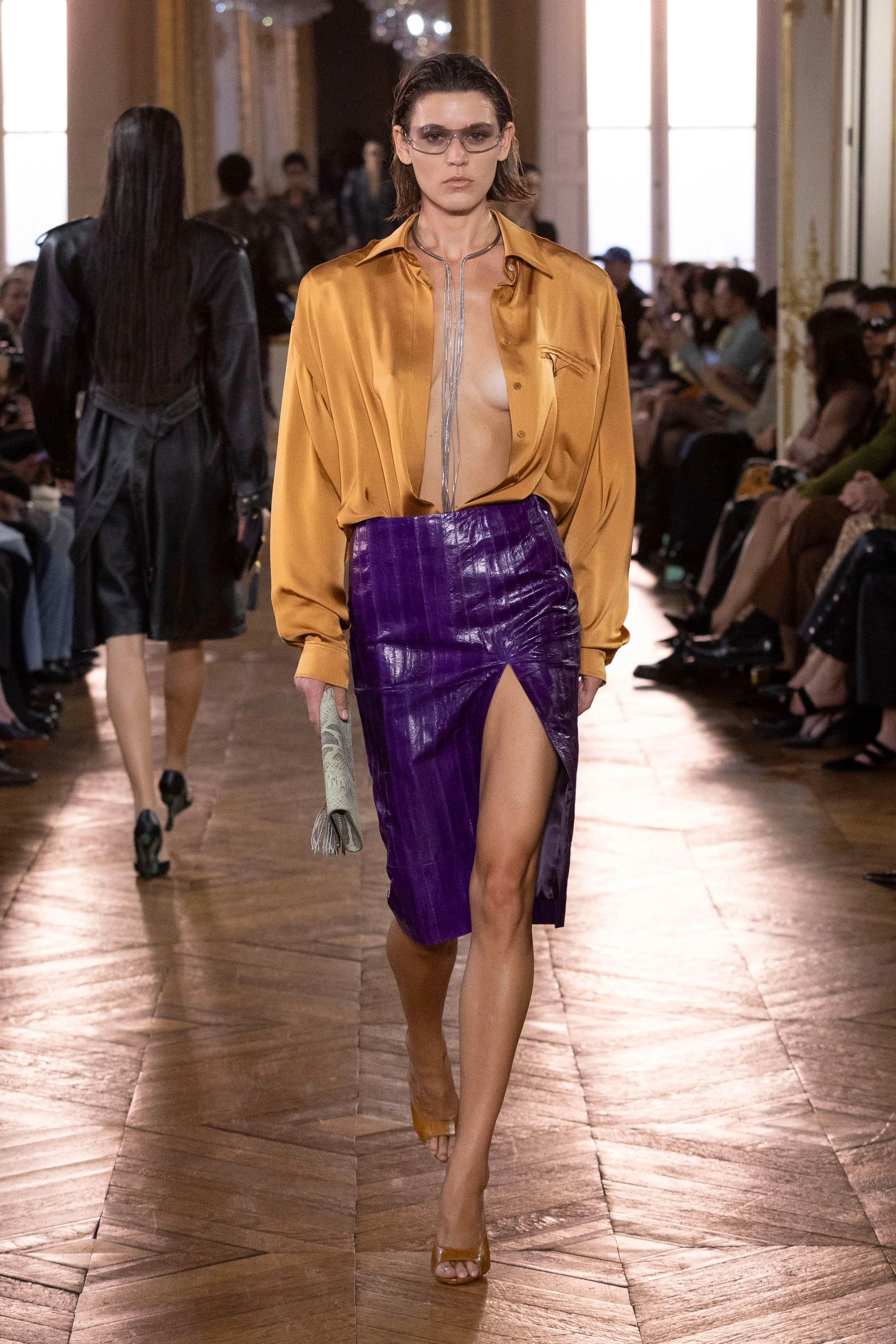
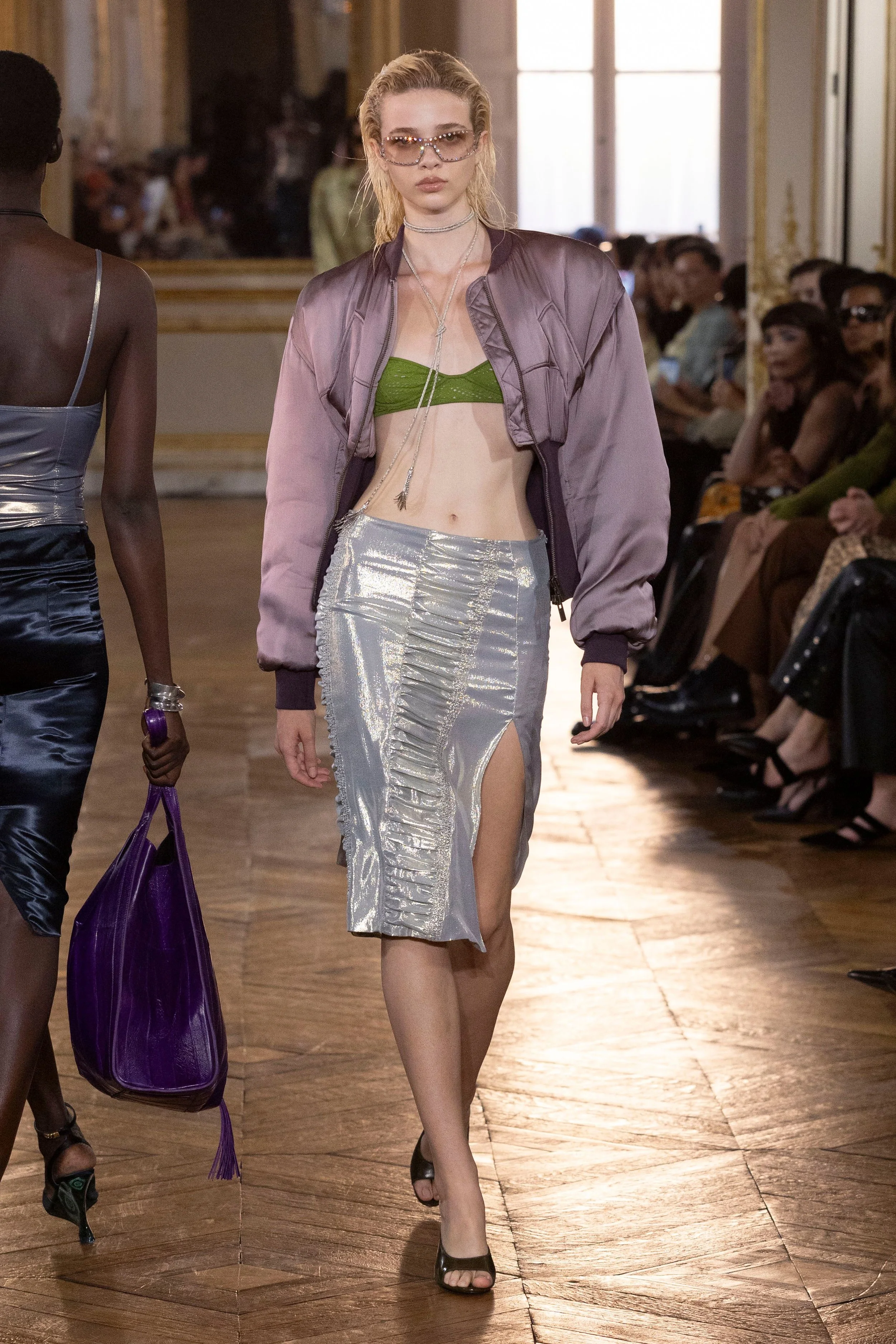
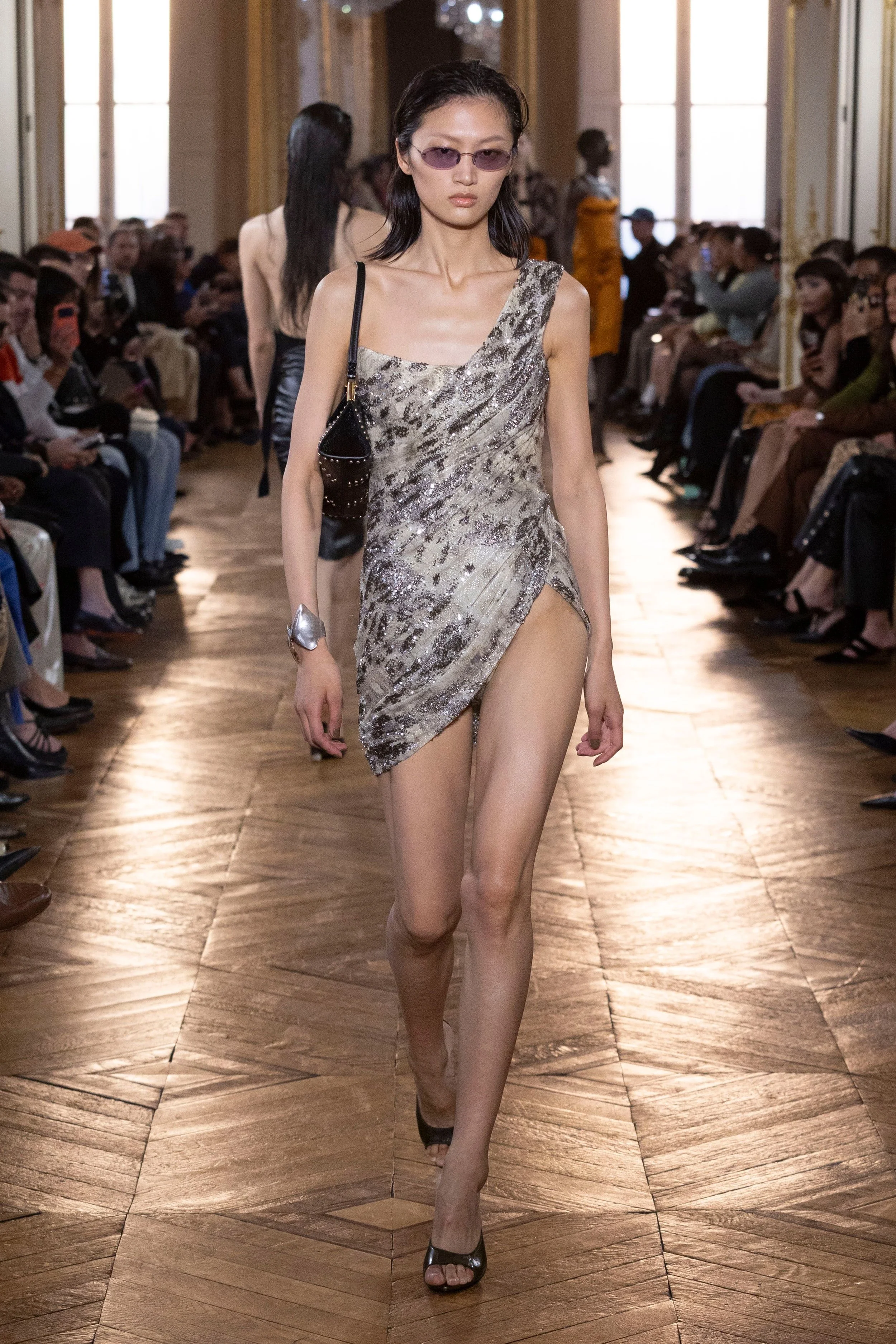
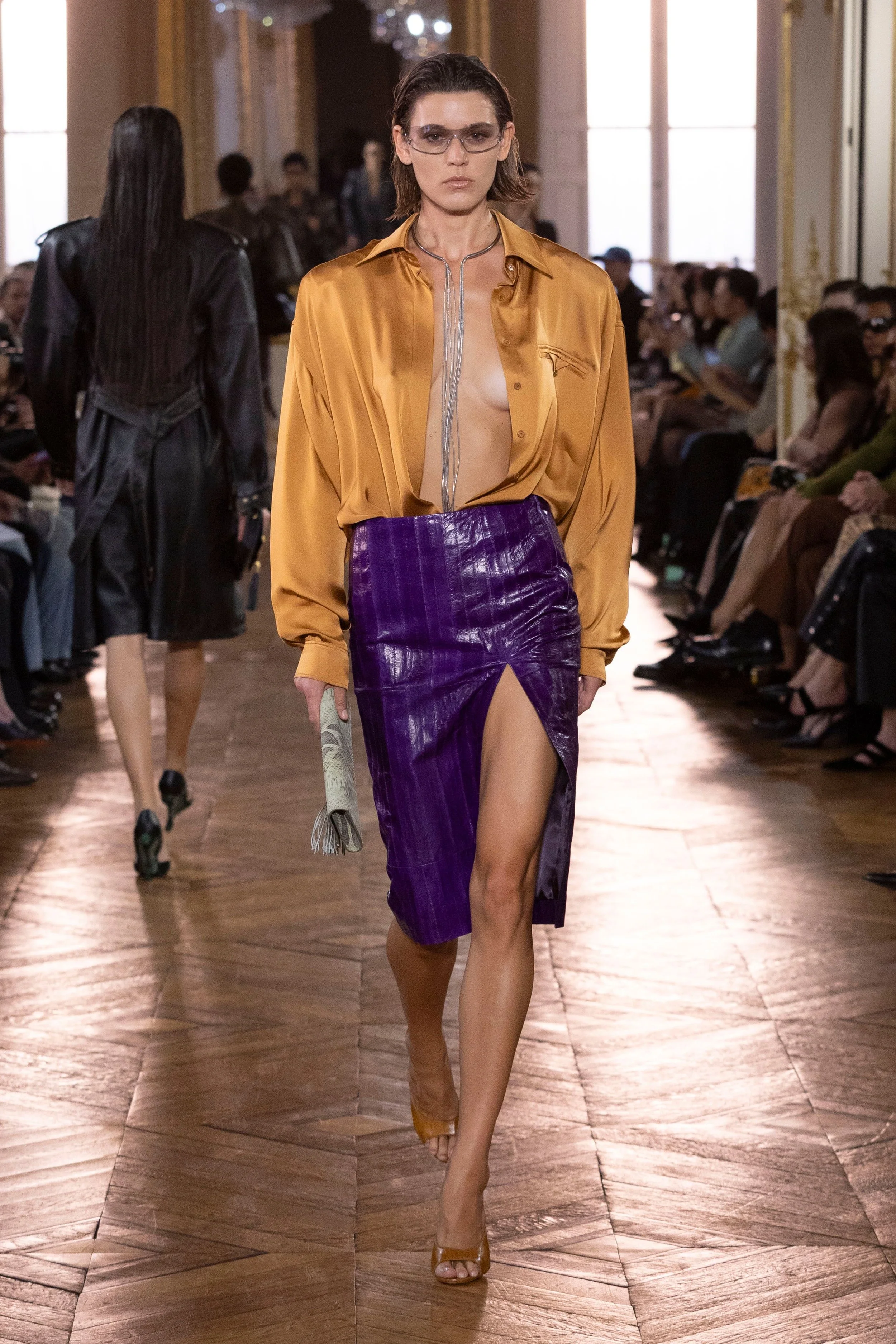
Lingerie-style pieces, a recurrent – and current – trend across fashion weeks in the major capitals, were one of Tron’s proposals, inspired by the aforementioned photographs. Corsetry, bras worn as tops, and satin-made micro mini suspender skirts with hanging garters stood out. Pierre Balmain’s couture history and his fascination with opulent animal prints were, too, incorporated in the collection, along with ruching, draping, beading, and embroidery techniques.

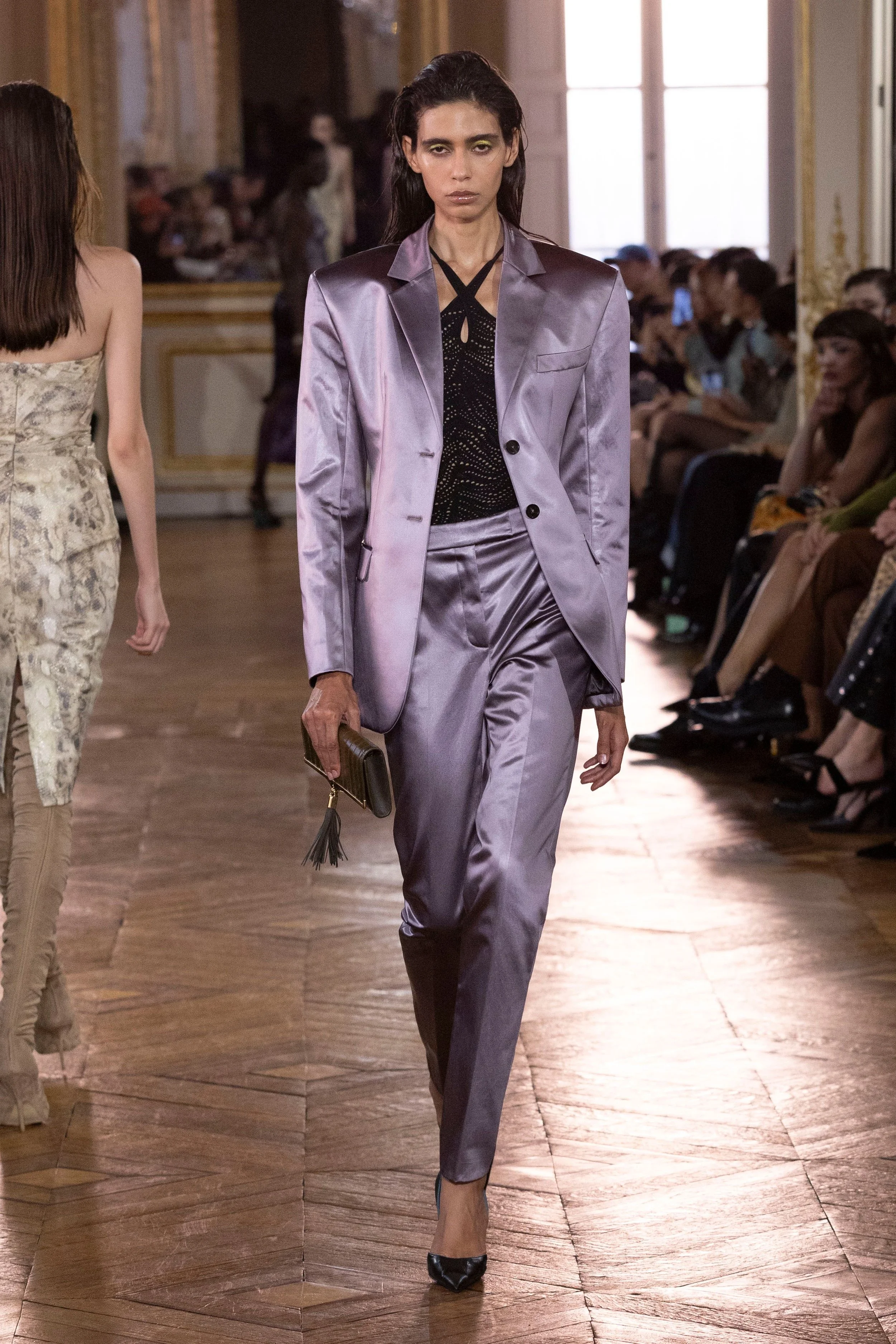
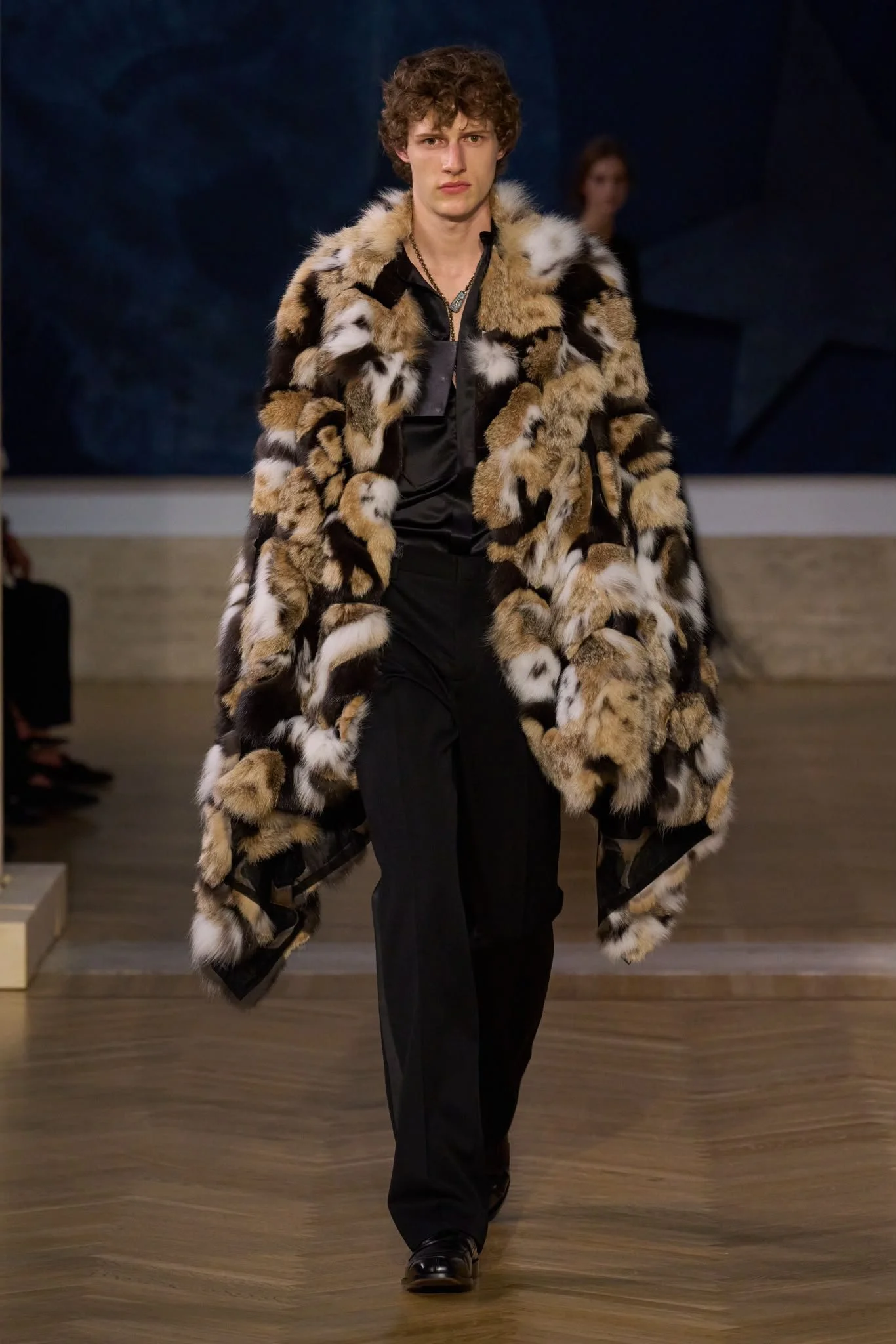
Tailoring came into play with a nod to Christophe Decarnin, Olivier Rousteing’s predecessor and Balmain’s creative director from 20005 to 2011. Sharp-shouldered blazers and loose jackets made of eel skin were created using the Balmain classic 1970s pilot jacket as a silhouette reference, previously brought back by Tron in his debut show for the brand. Snake-printed coats and trousers, polished satin pantsuits and oversized jackets aimed to embody the mood of a ‘70s rockstar.

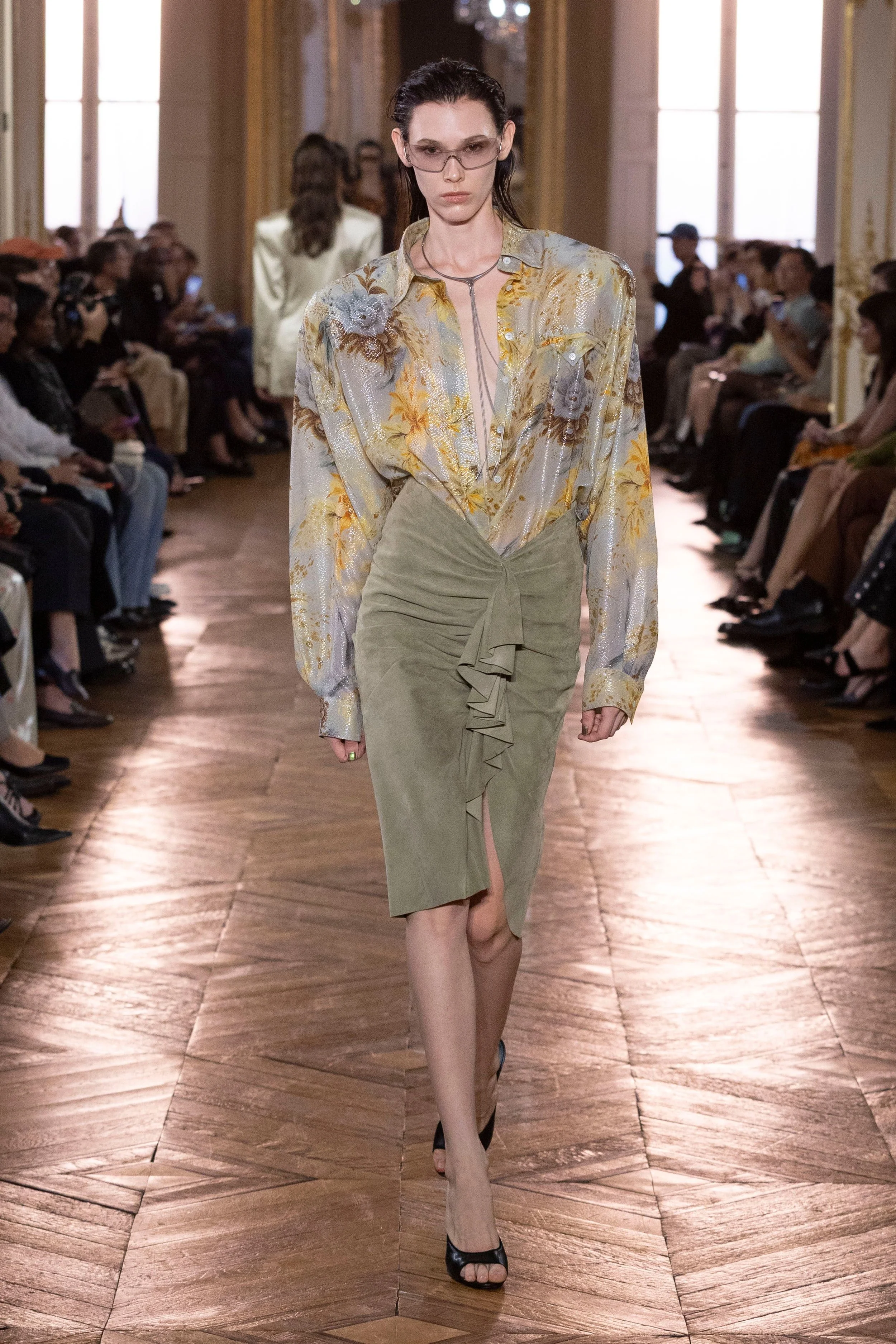
Blended with that were free-spirited, bodycon outlines in ultra-mini dresses, as well as psychedelic scenes of Los Angeles, which were turned into silk floral prints, as if they came out of a Californian fever dream. 1960-dated photos of Michel Foucault in California, while on an LSD trip, were also on the mood board. Tron’s choice of colour recalled the West Coast mineral desert and Hollywood sunrises and sunsets, with black, grey, and ivory paired with pastel green and blush pink, lavender and deep purple, pale yellow and bright gold, burnt orange and bronze.

Back to animal print, the SS27 assortment of wildlife patterns reflected the multitudes of the Balmain woman. A reptile, a feline, an amphibian, or all of them mixed; she’s got the range to choose from.
Words by Ketlyn Araujo
DIOR SS27

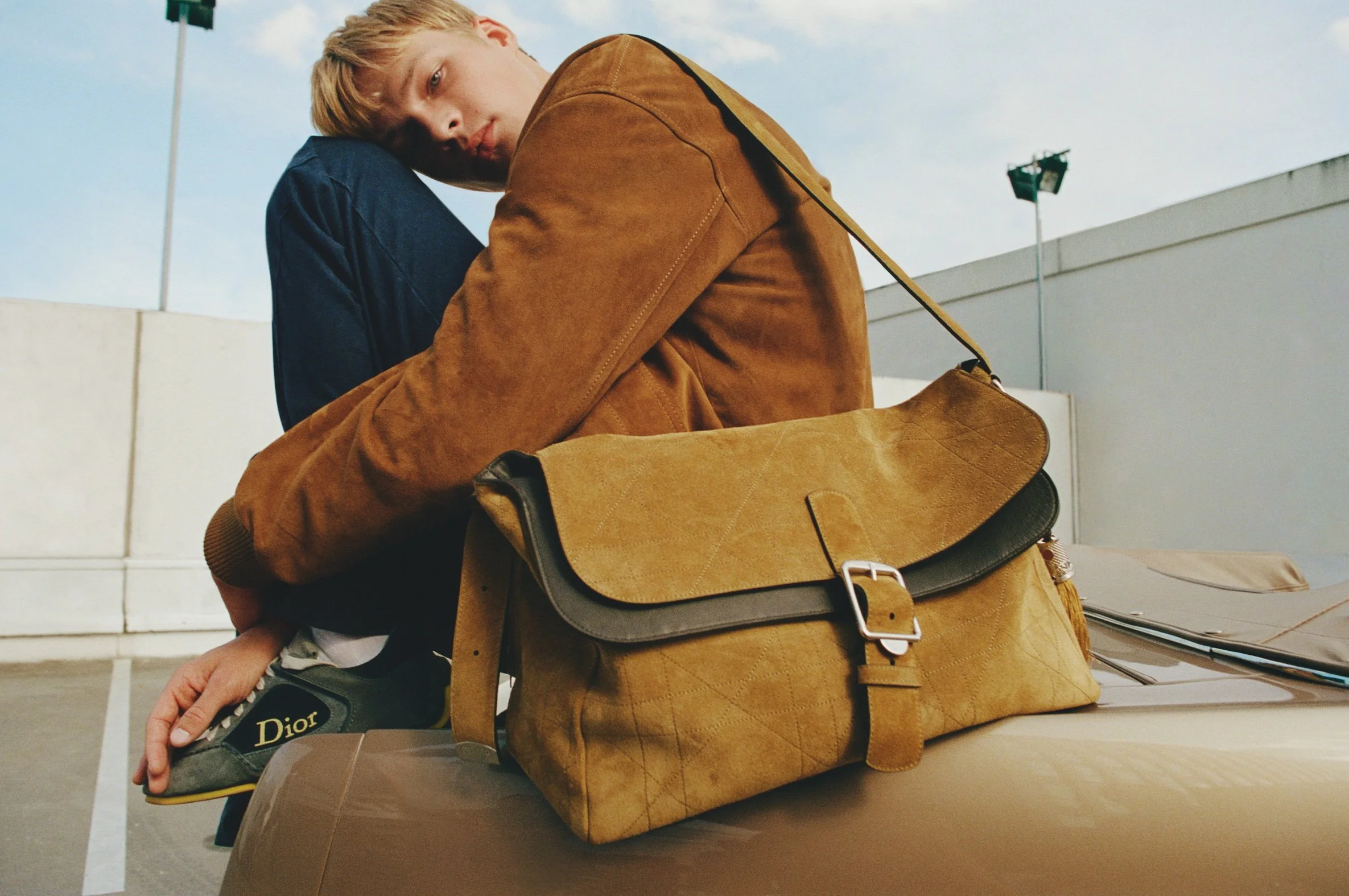
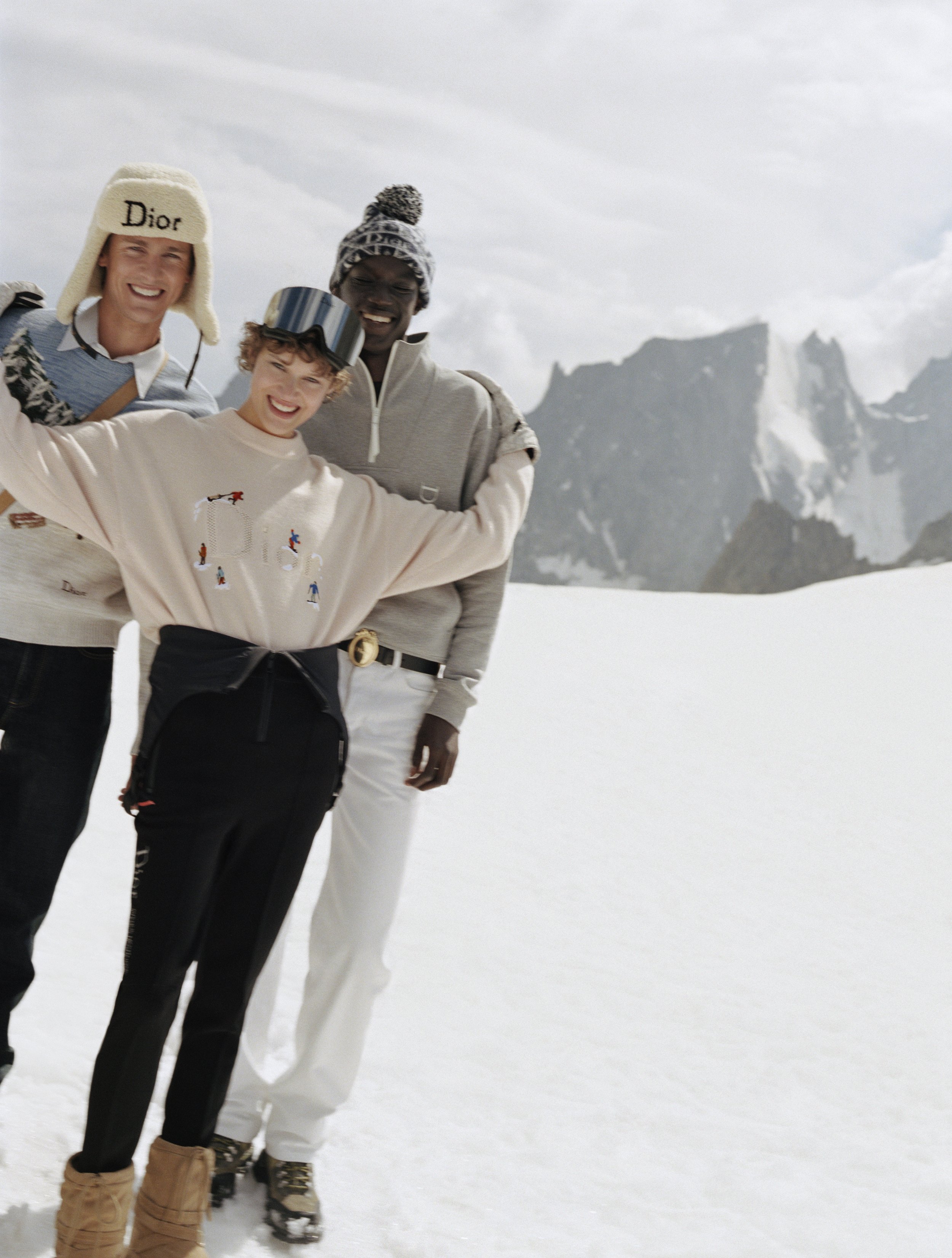
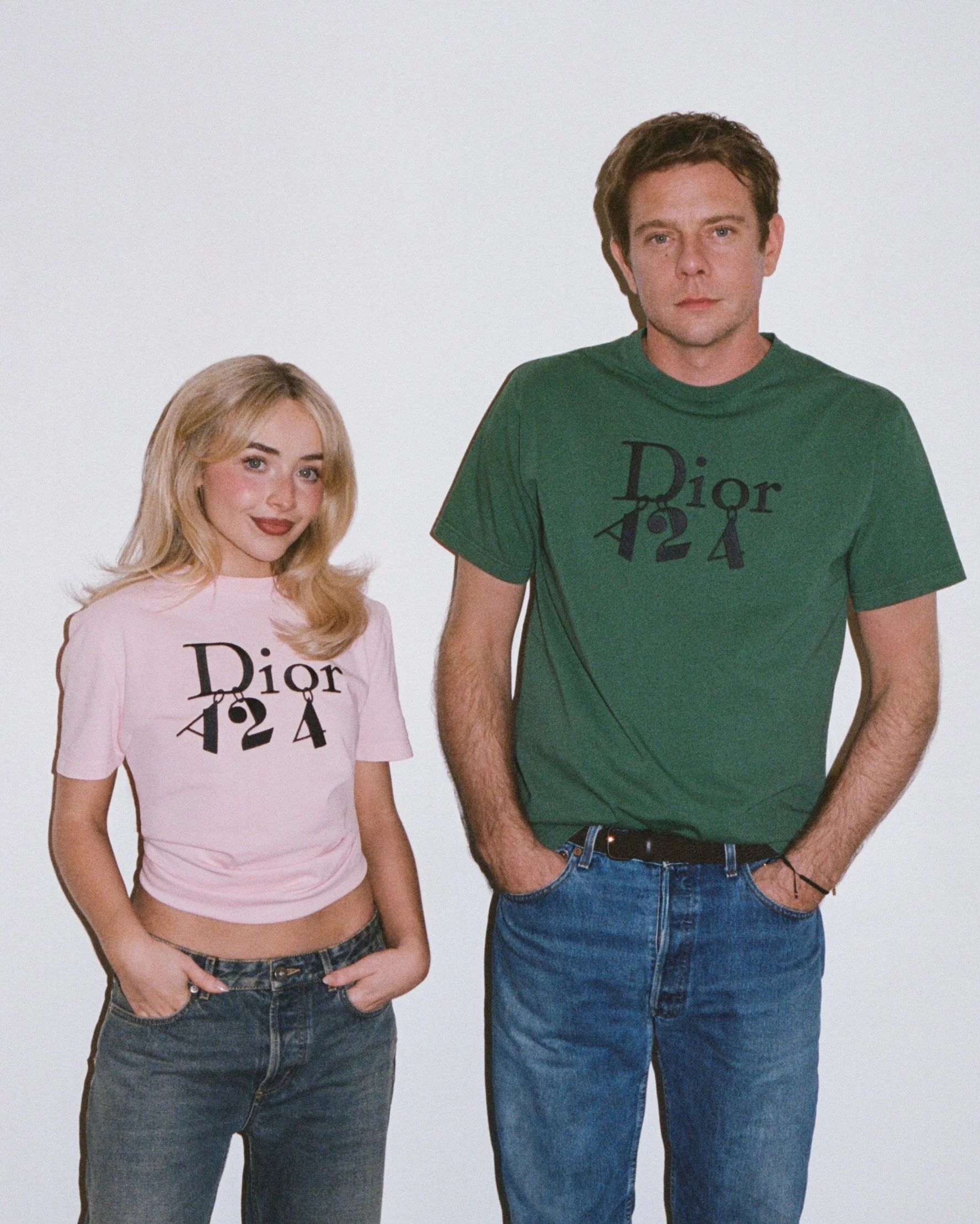
A study of lightness. That’s how Jonathan Anderson summarised his Spring/Summer 2027 womenswear collection for Dior. Clothing that flows with ease but, when looked at up close, hides an infinite array of intricacies.

“Tailleur is imagined as flou, and air is treated almost as if it were a material – an inherent part of lace, silk mousseline or organza,” the collection notes described. It’s the ultimate Anderson way of designing, even though the result this time appeared much slimmer, silhouette-wise, than his previous shows for the maison to date.

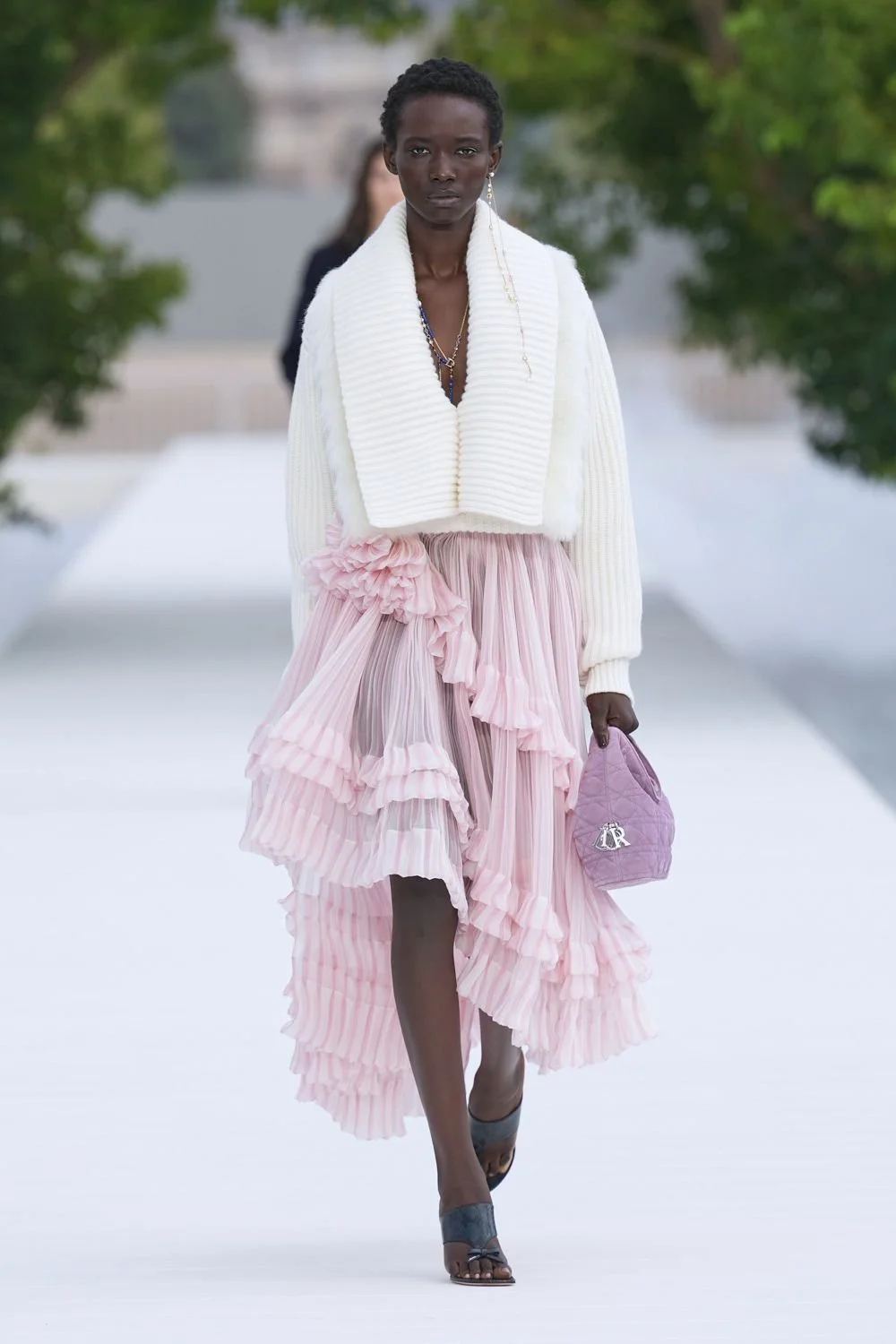
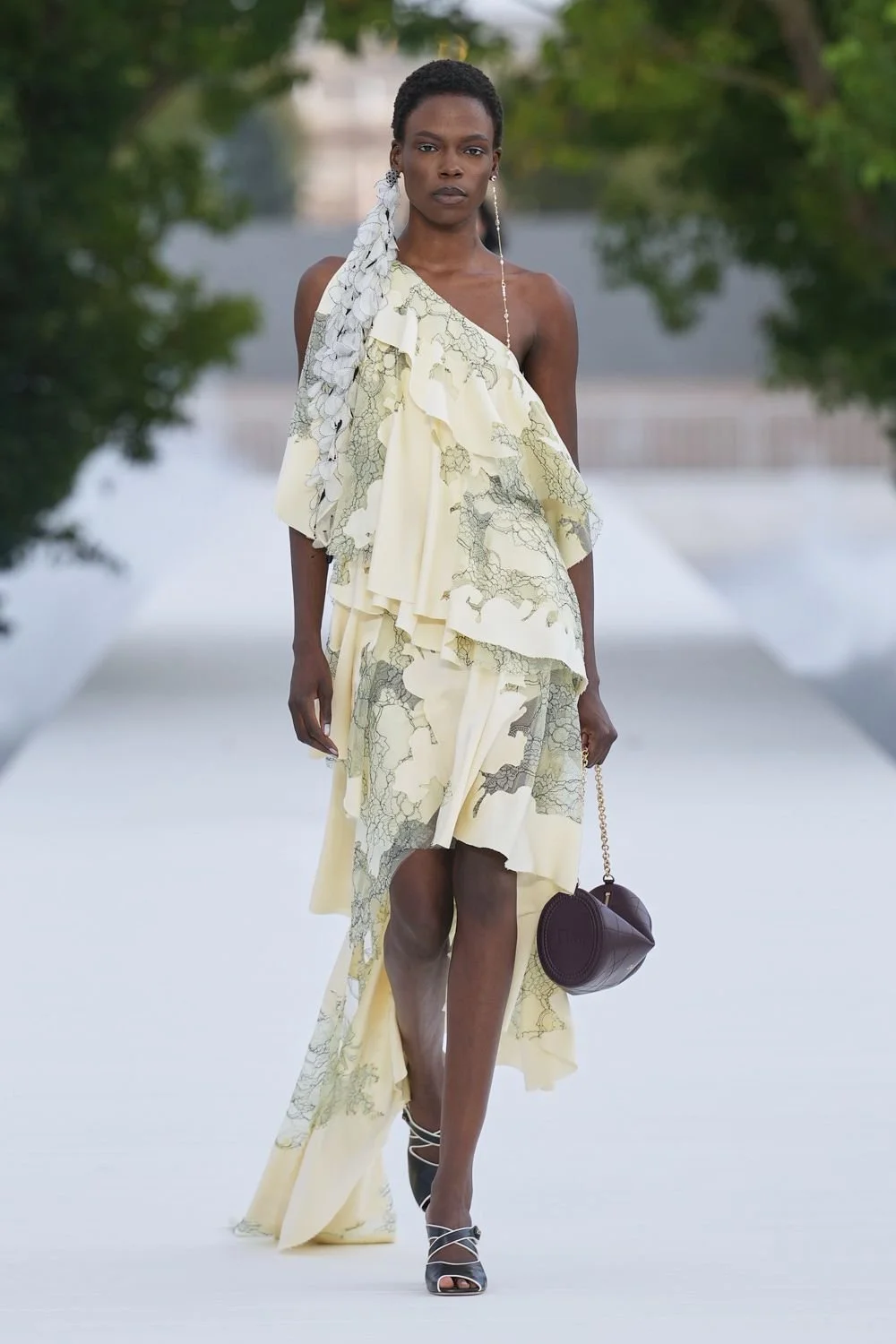
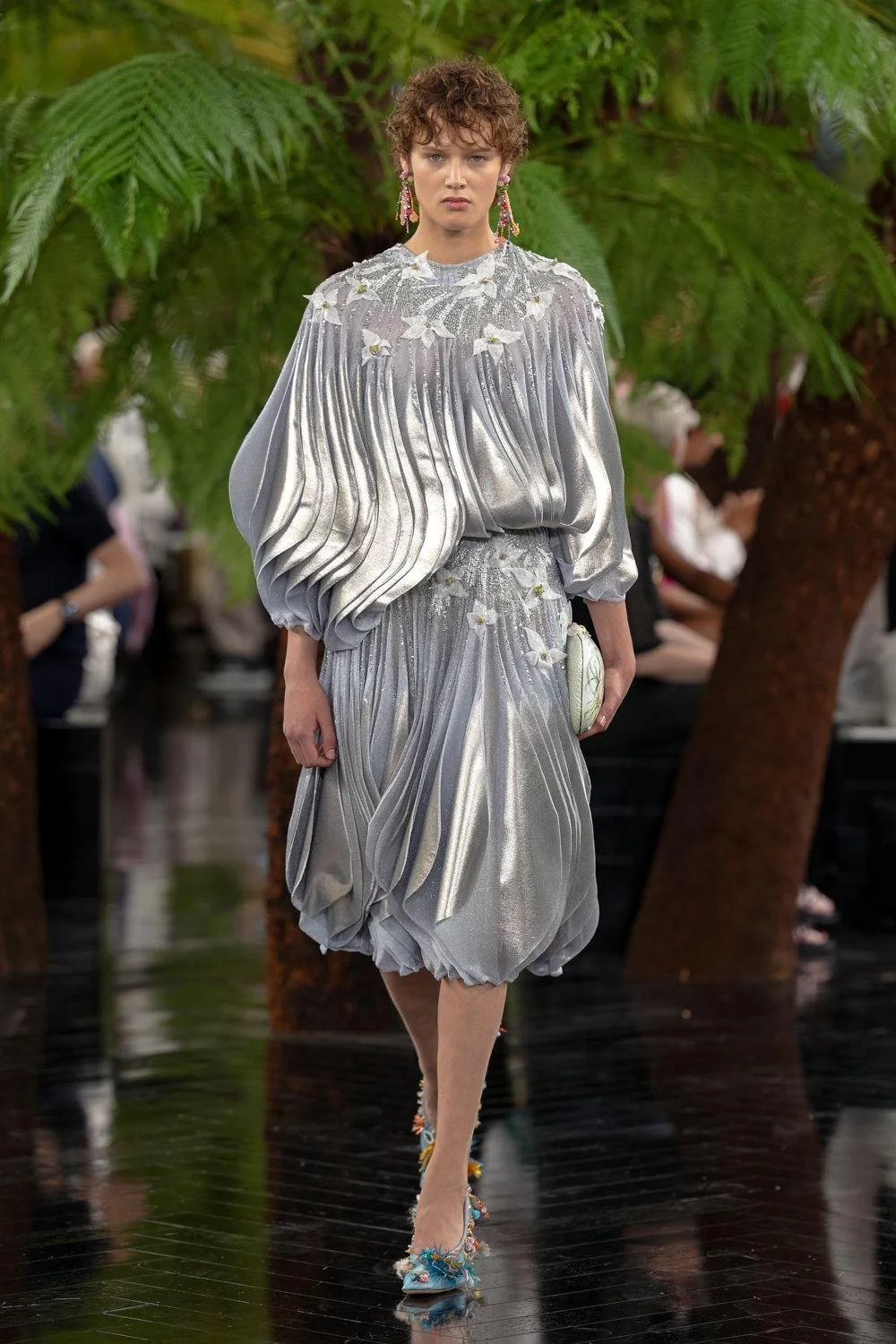
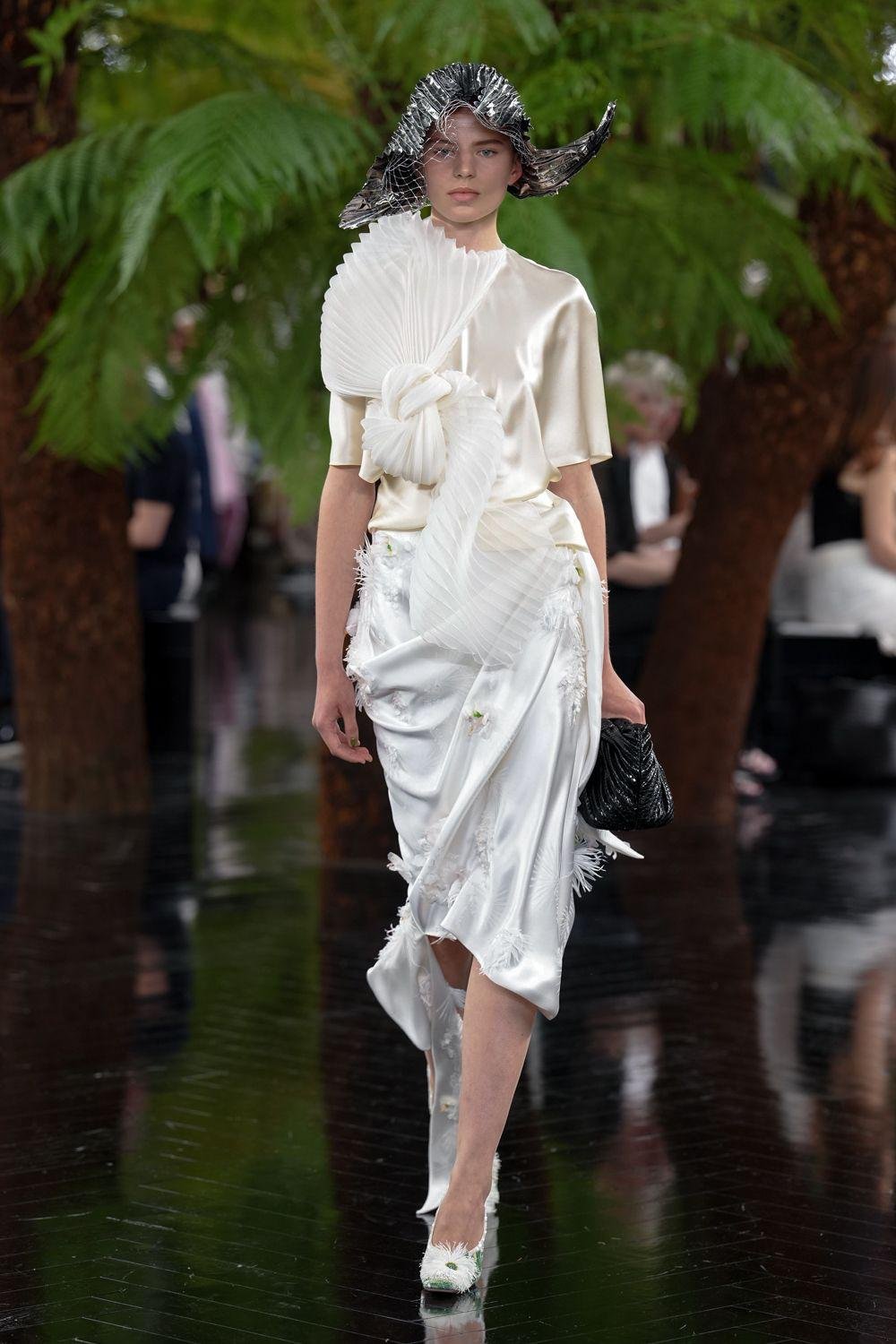
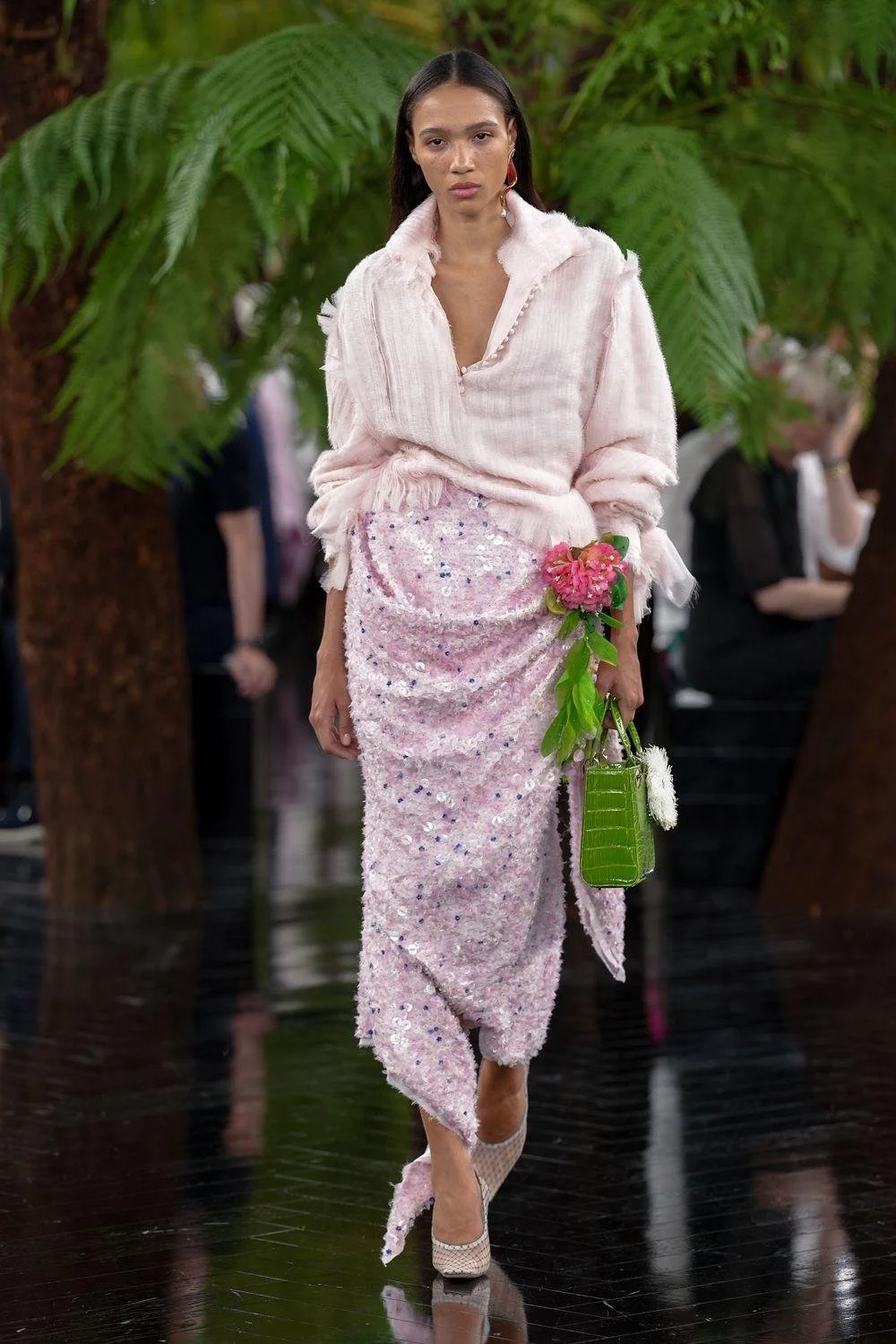
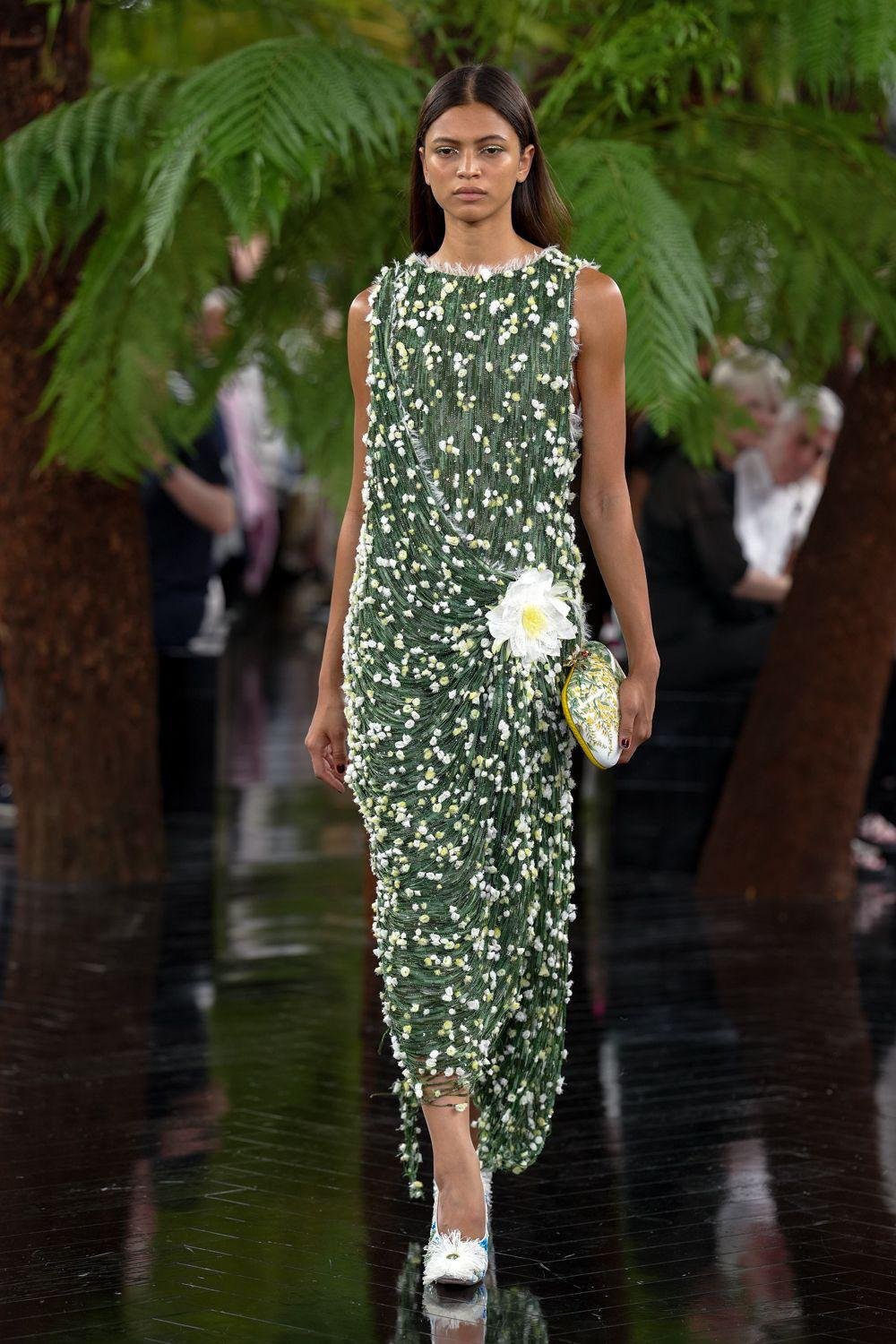
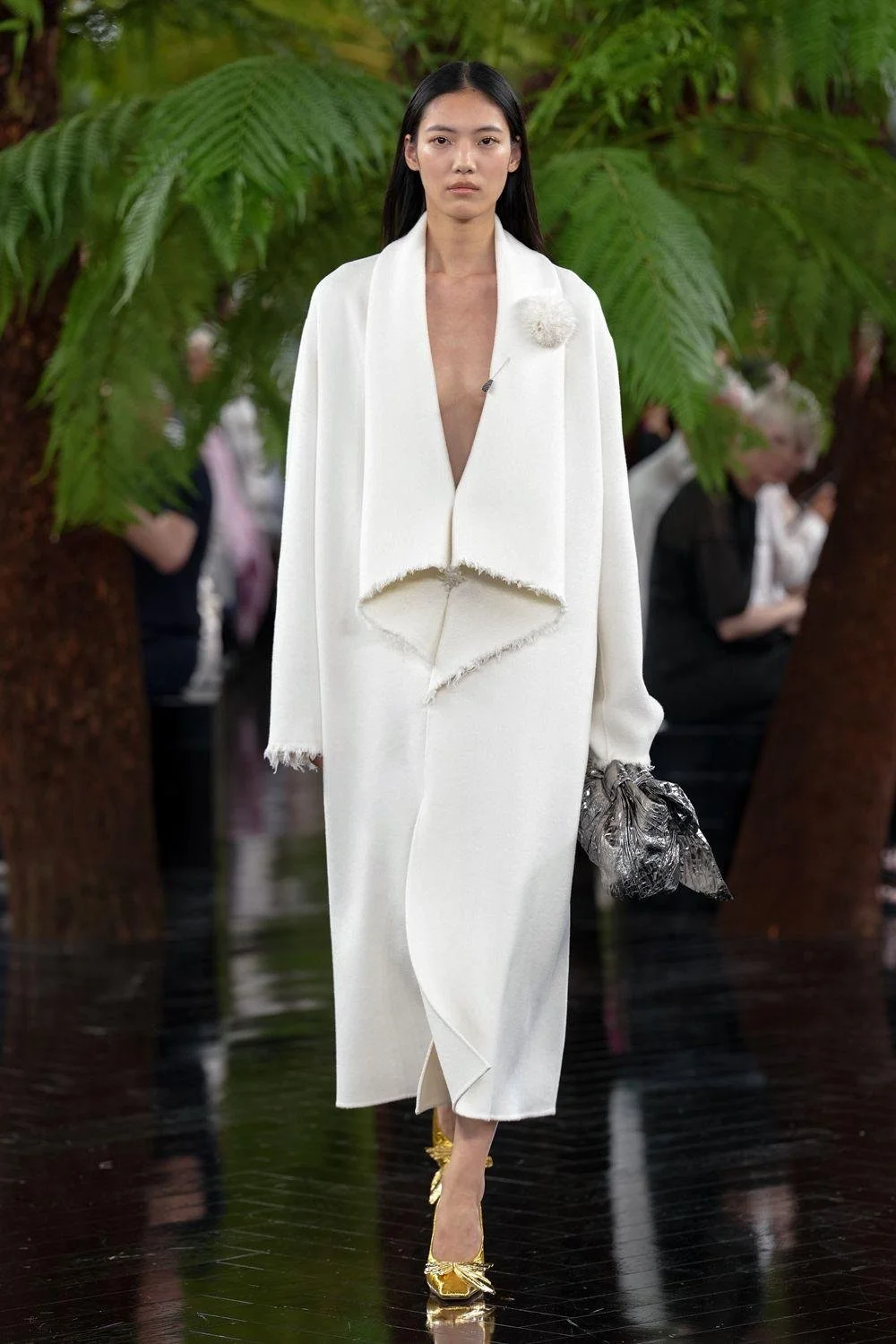
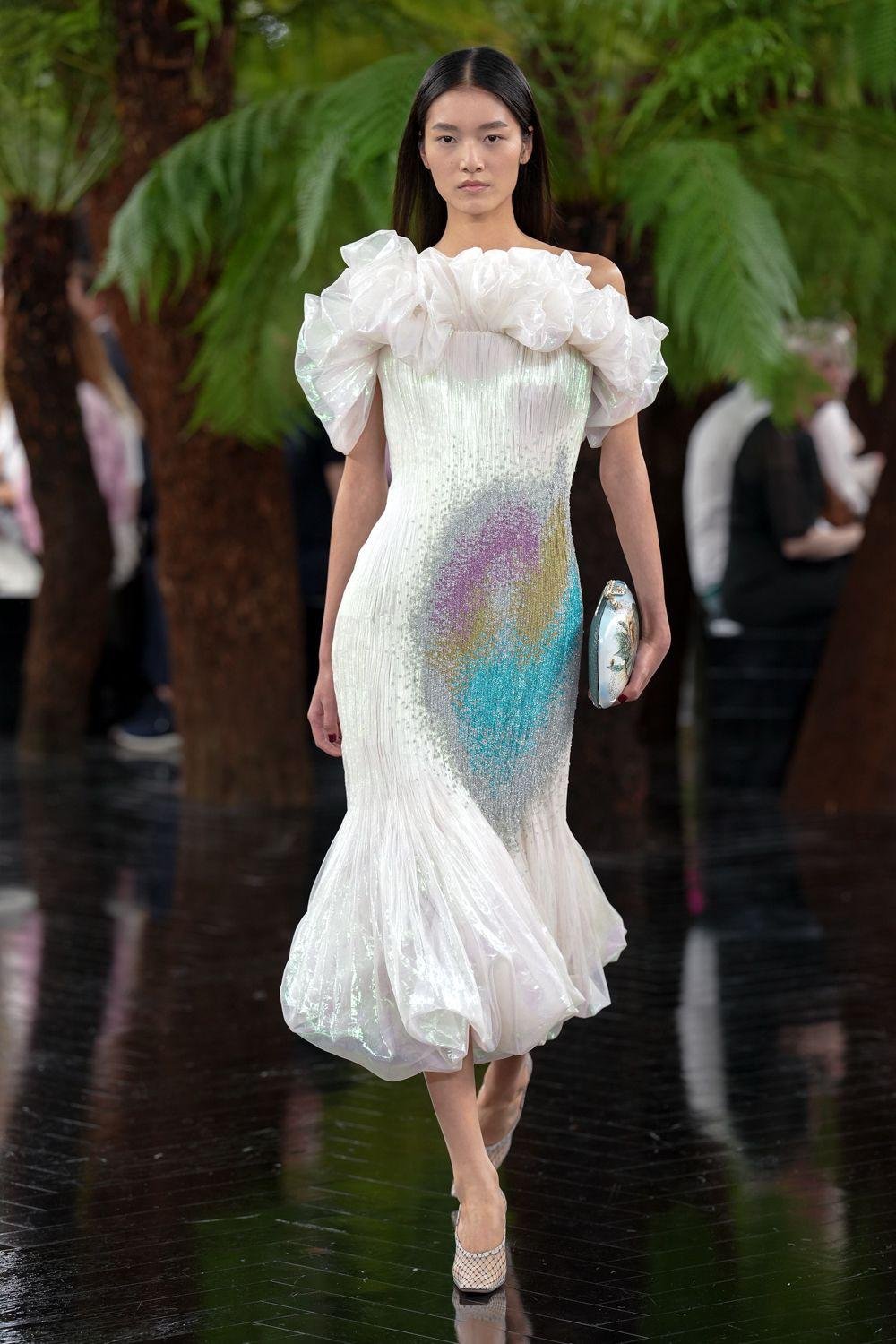
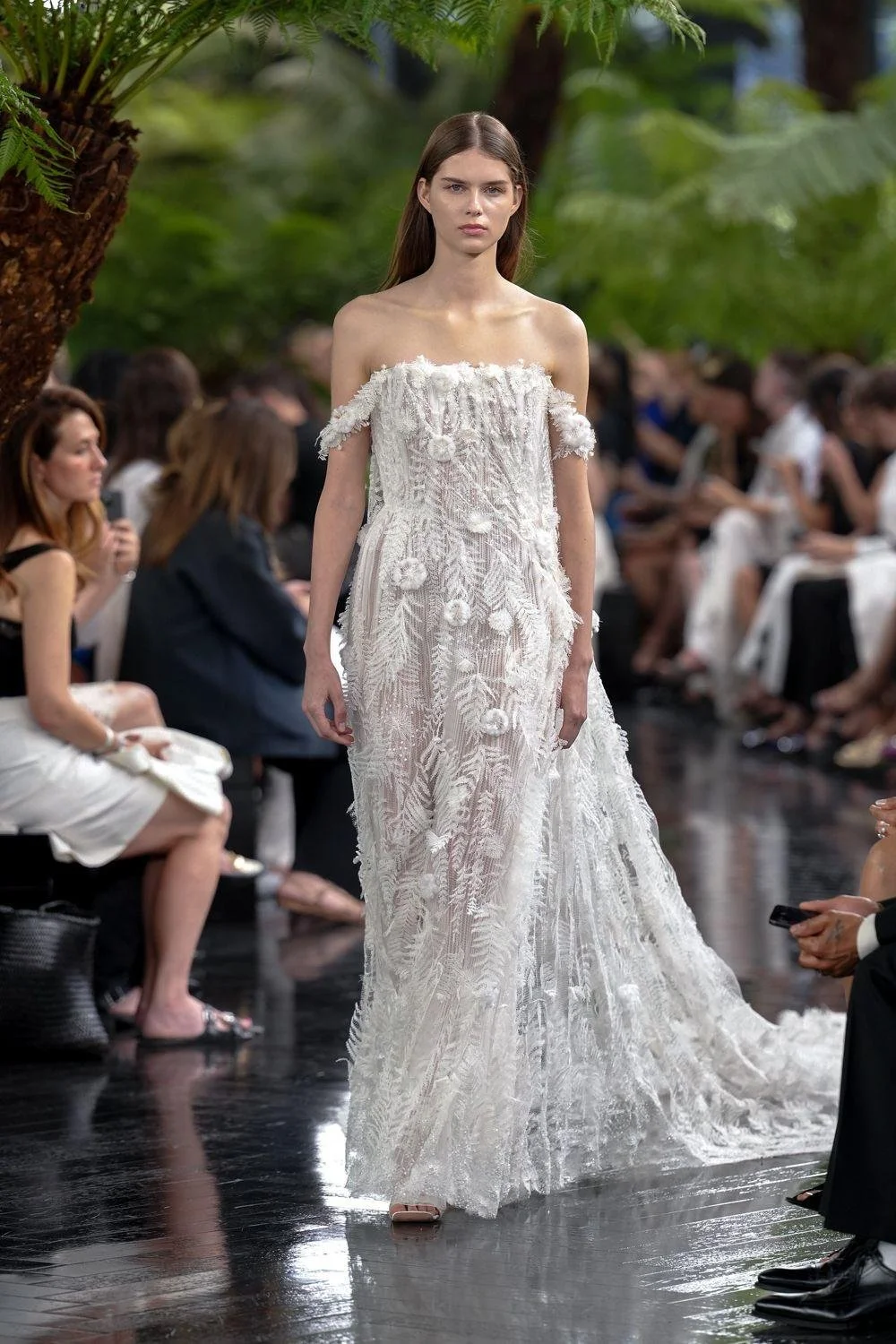
Once again, nature holds protagonism. Both through the set design, marked by camphor trees specially sourced and installed for the show, held at the Bassin Octagonal of the Parisian Jardin des Tuileries, and the organic, circle- and flower-inspired forms and structures of dresses, skirts, and hemlines.

Solo, cascading petal-shaped earrings graced a few looks, as did trailing draped scarves placed over the shoulders to emphasise movement, a direct consequence of breezy, summery softness. Still in the theme of flowers, they similarly surfaced via morphed printed pleats, mostly seen on midi-length dresses and skirts, as well as on patterned flower sandals and heels, crafted with petal shapes in mind.

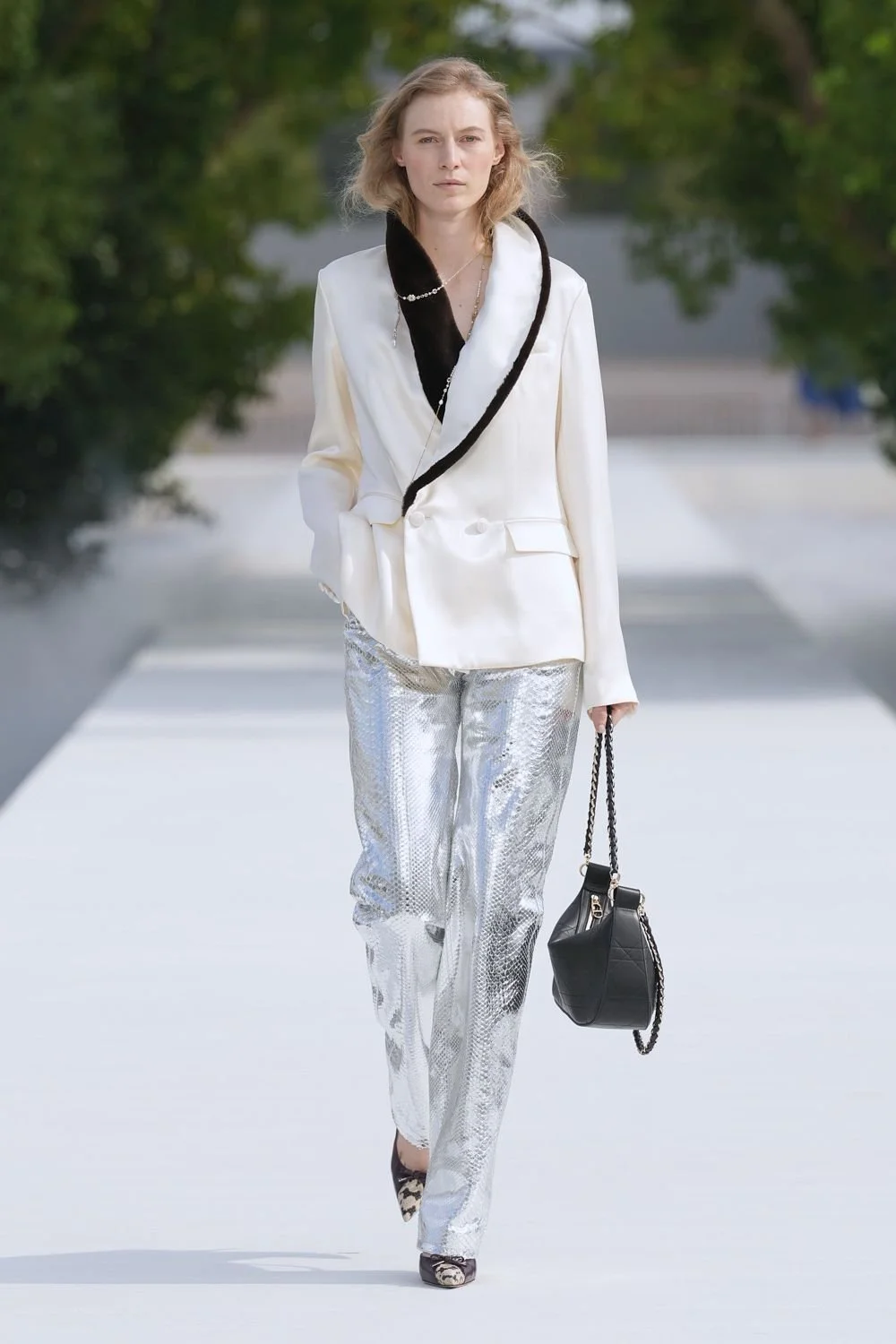
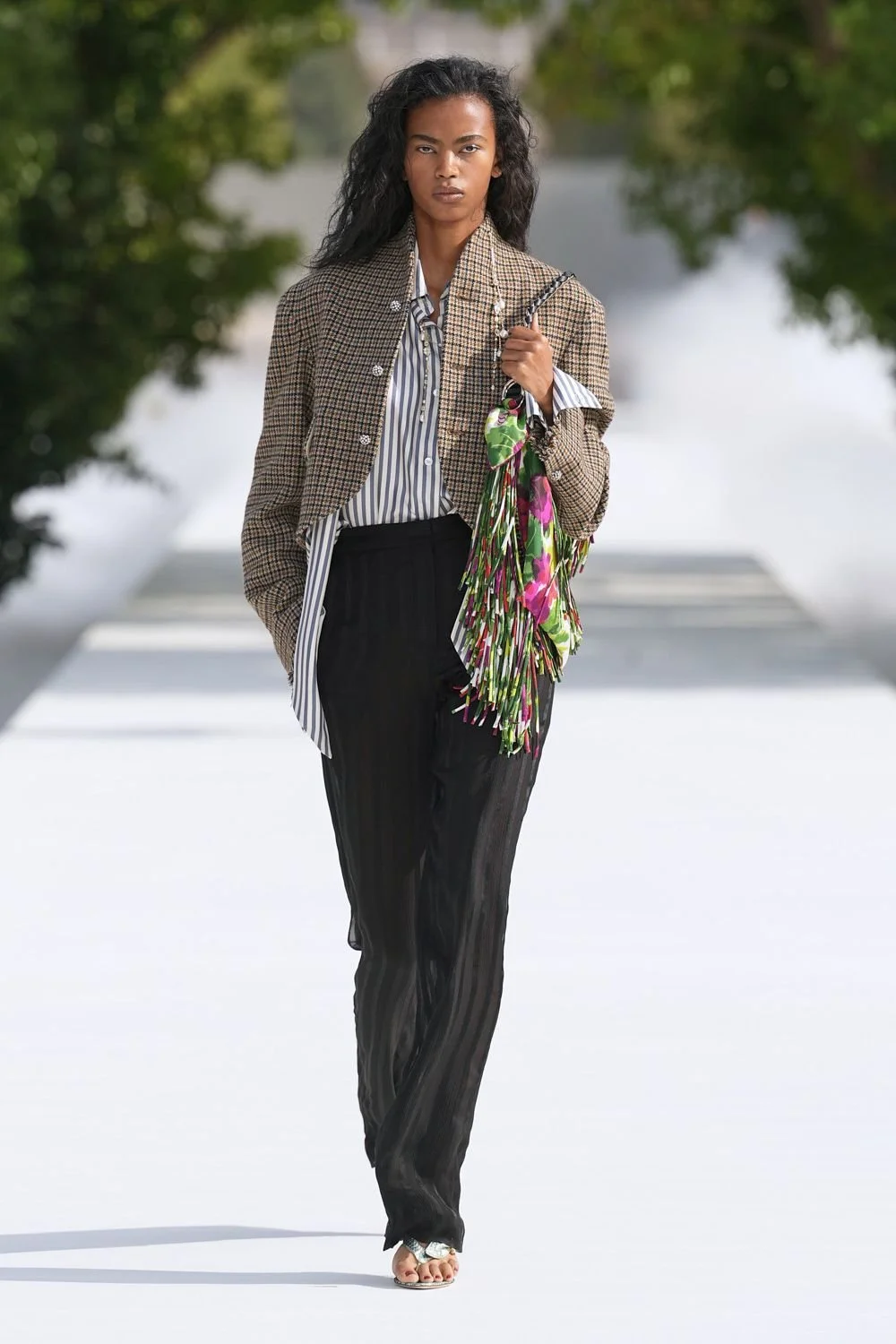
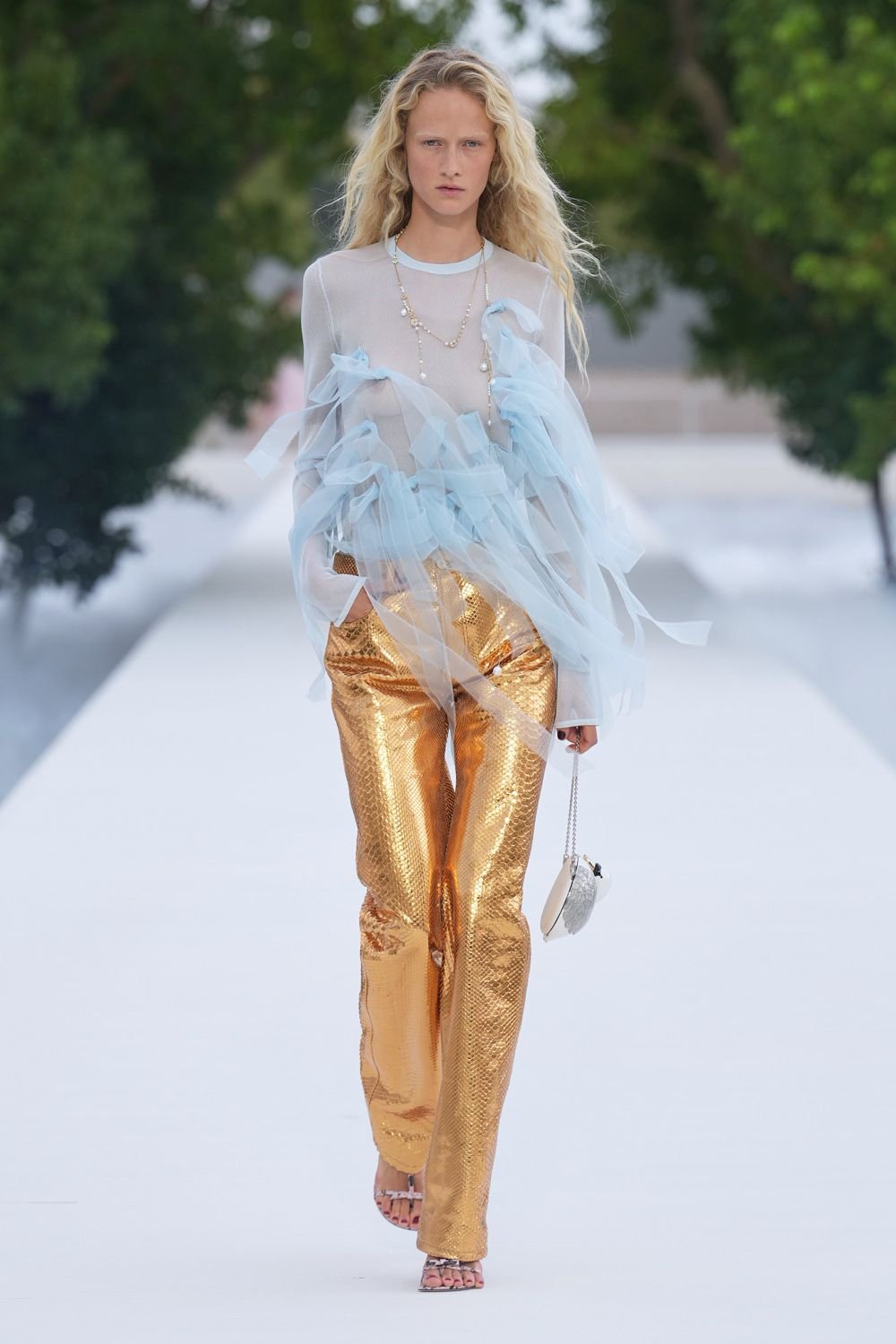
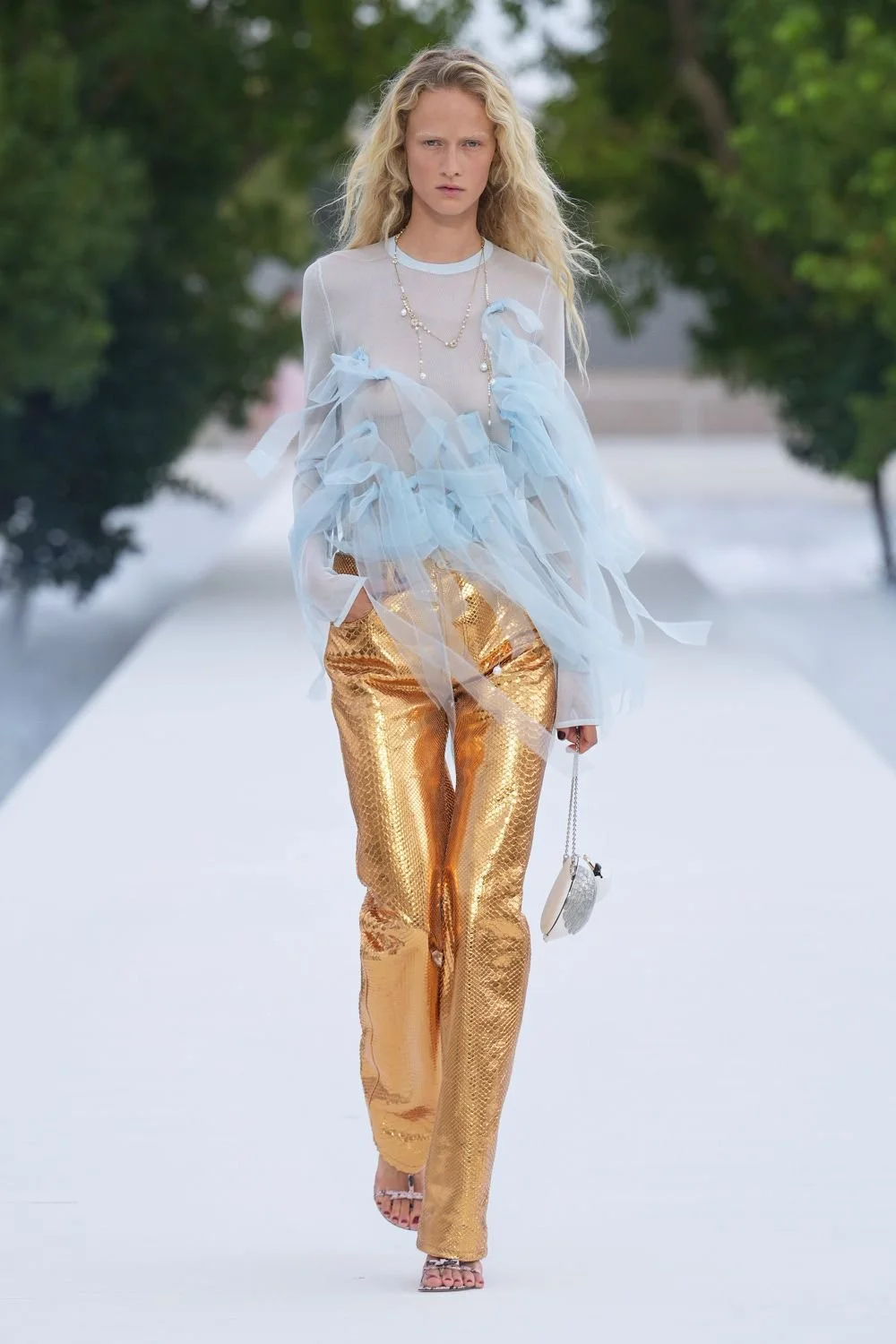
Metallic, five-pocket trousers borrowed from the Men's SS27 collection were featured in golden, silver, and jade green, paired with a flowy, pale blue transparent top, an ultralight cream suit jacket, and a striped, matching button-down completed with a toffee-coloured blazer, respectively.

Iridescent hues and cropped pieces made a comeback from FW26/27, while miniskirts, fitted jackets, and voluminous waists were crucial signifiers of Anderson’s intentional, consistent creative language at the label. Almost a year and seven different Dior by Jonathan Anderson womenswear collections later, matching the clothing with the designer who made them is practically a given.

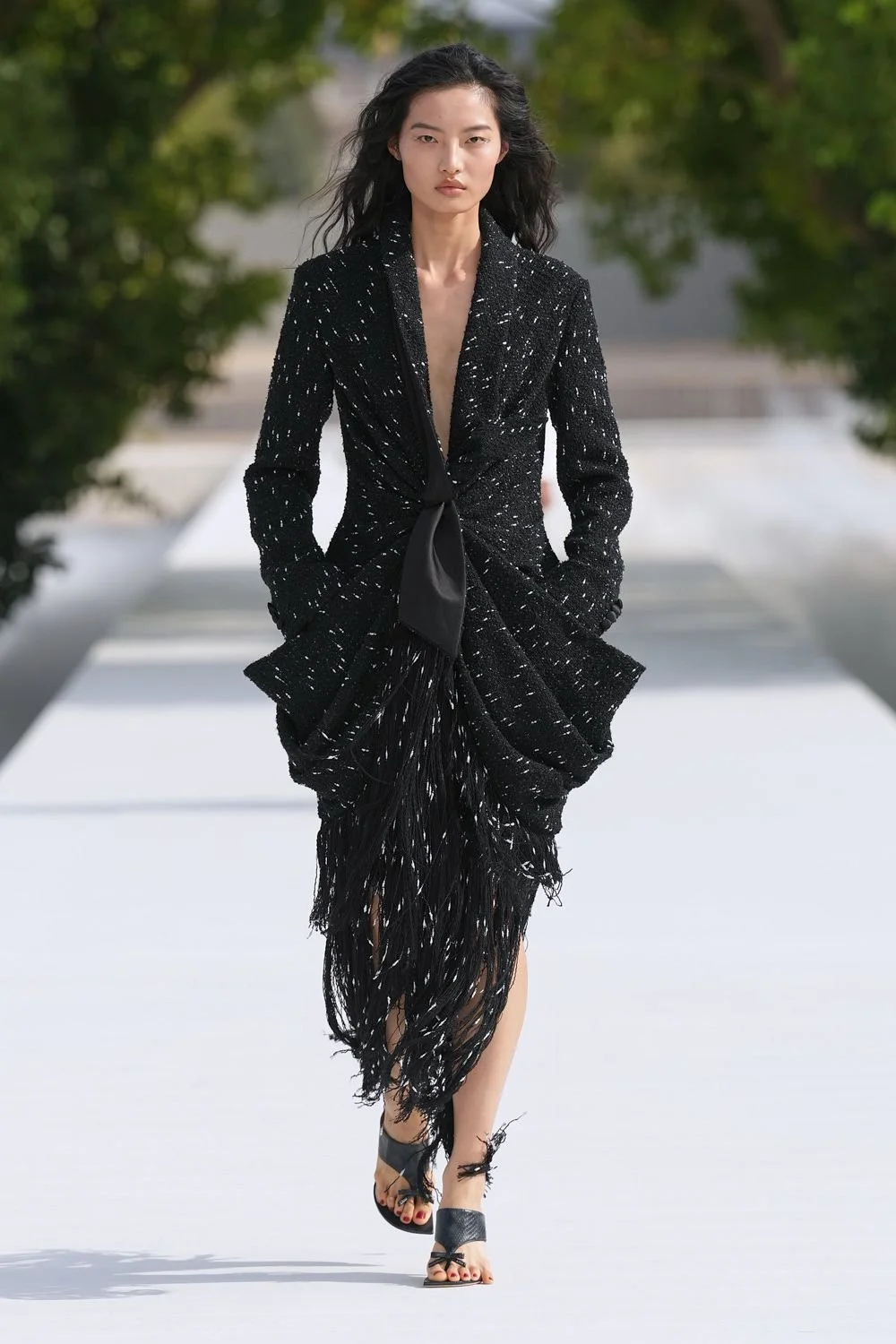
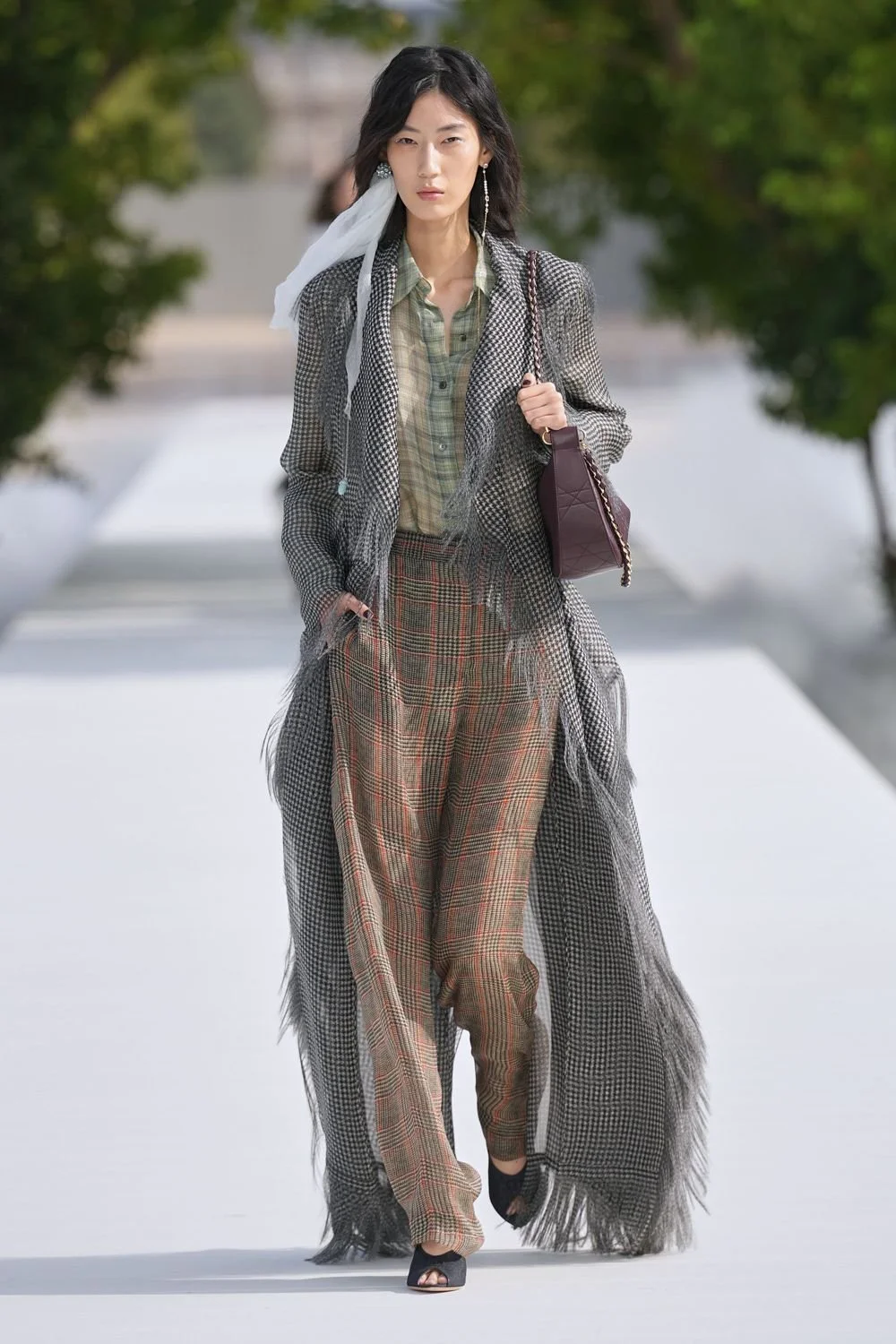
Layers of lightweight materiality recreated the asymmetry of nature, another major driving force for SS27. Zigzagging long-sleeved, striped blouses styled with fluid, loose skirts exemplified the vision. “Perfect symmetry is elusive,” an excerpt from a pre-show Dior Instagram post stated. Playing with proportions and the archives, a textured coat dress resembled the Bar Jacket, as if elongated and fringed, and circular cutting was done under a more fluid lens.

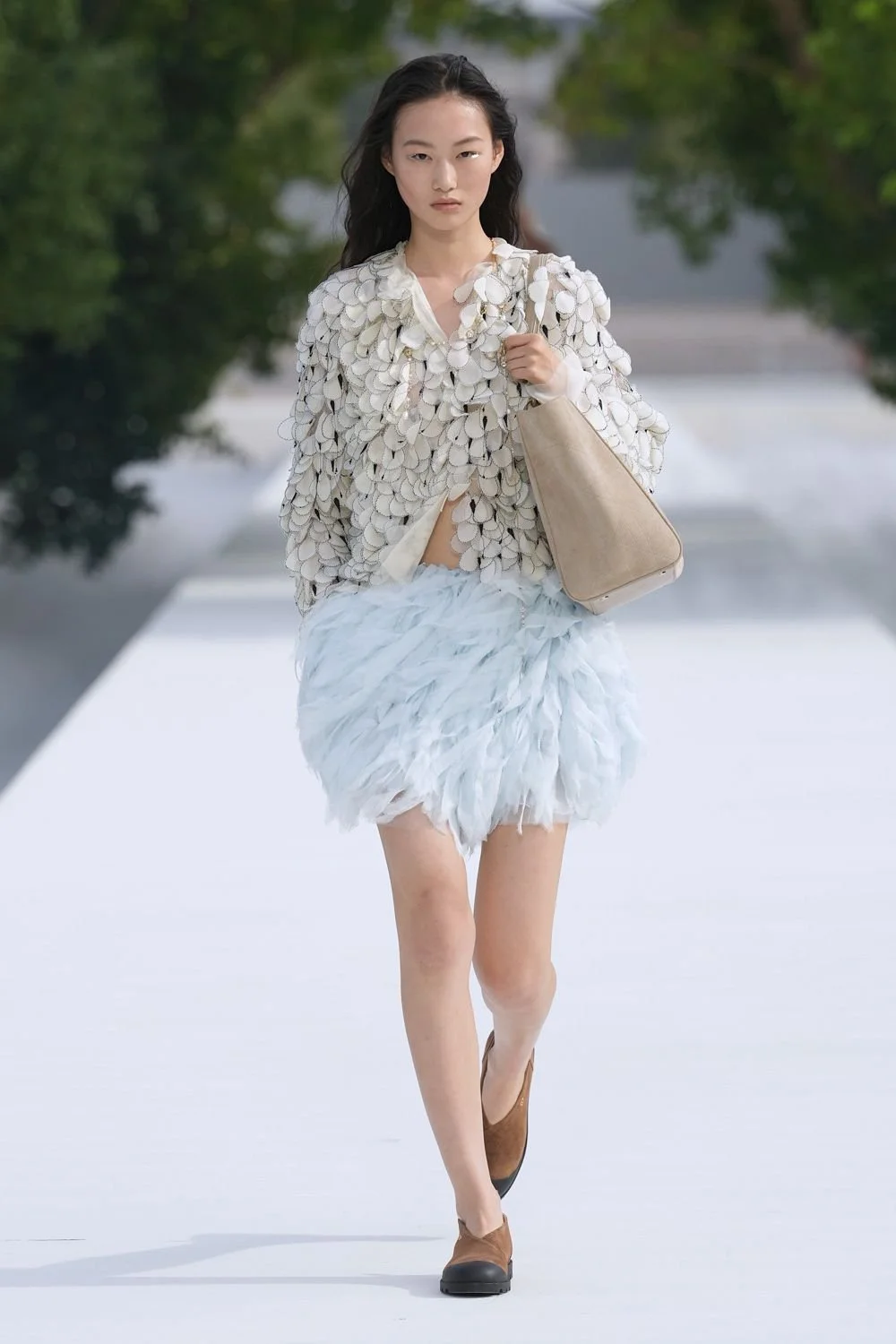
For contrast, ultrafeminine pieces, such as 3D petal-embellished minis, often teamed with utilitarian suede and rubber-soled slip-ons. Amidst the sea of pastels and nature-driven proposals, a few all-black looks also created a sense of juxtaposition, perhaps a subtle way of paying homage to Mathilde Favier, Dior's international director of public relations, who tragically passed away in a car accident in August.

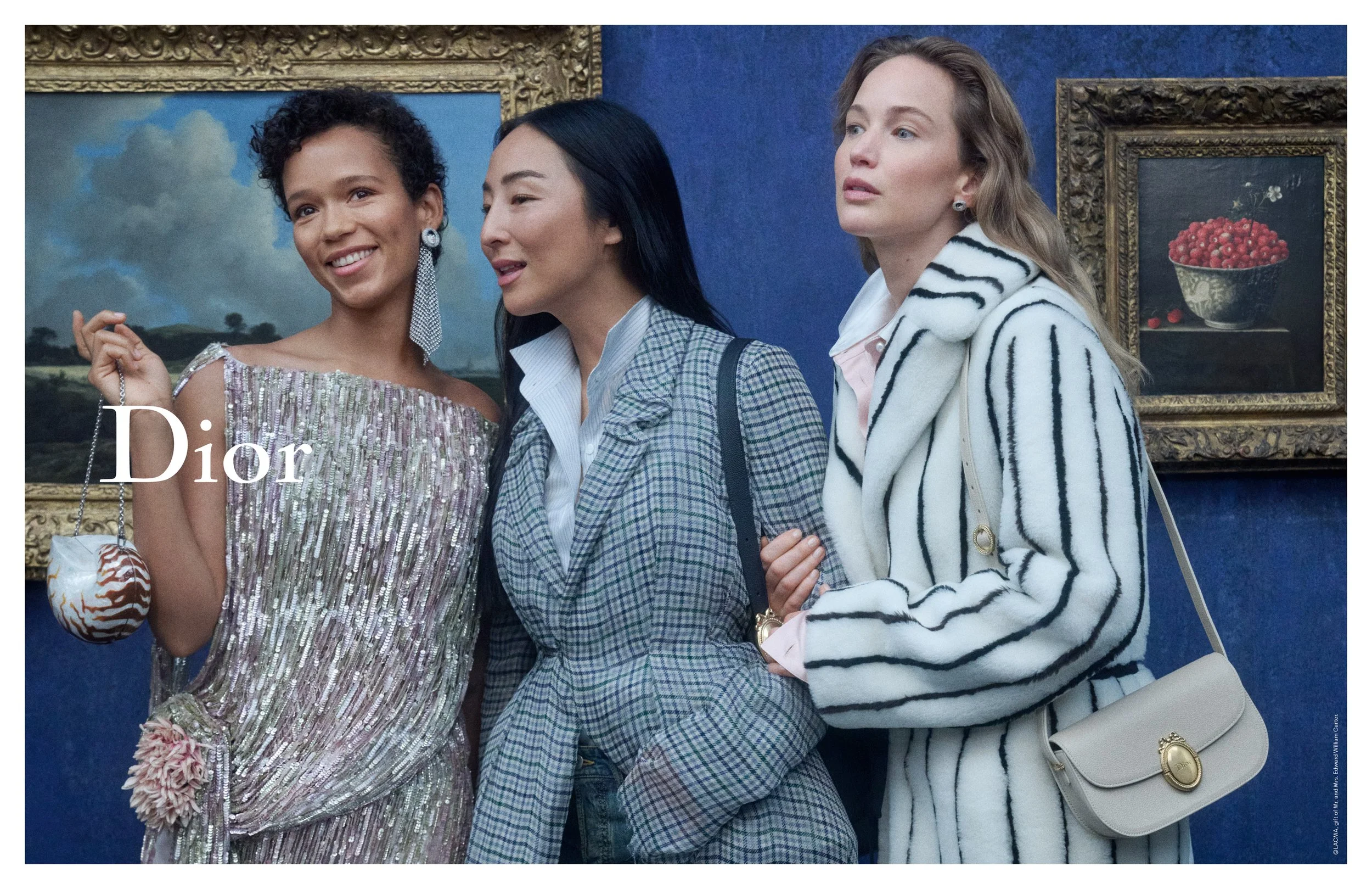
Playful handbags, another Anderson favourite, returned to the catwalk, amplified by the black, white, silver and gold swan-shaped evening clutch revealed online beforehand to tease what was to come. A silver-finished minaudière, crafted to mimic the Chinese wénwán walnut, nodded to this season’s show invite: a pair of hand-rolling walnuts. Following the tradition, one must hold a pair of wénwán walnuts in the same hand, constantly rotating them around to achieve smoothness over time. The invitation noted that similar pairs of the nuts are famously difficult to find, making them highly valued. Everything is thoroughly connected at Anderson’s Dior; you can’t escape it. It’s in the air.


Words by Ketlyn Araujo

GIORGIO ARMANI SS27

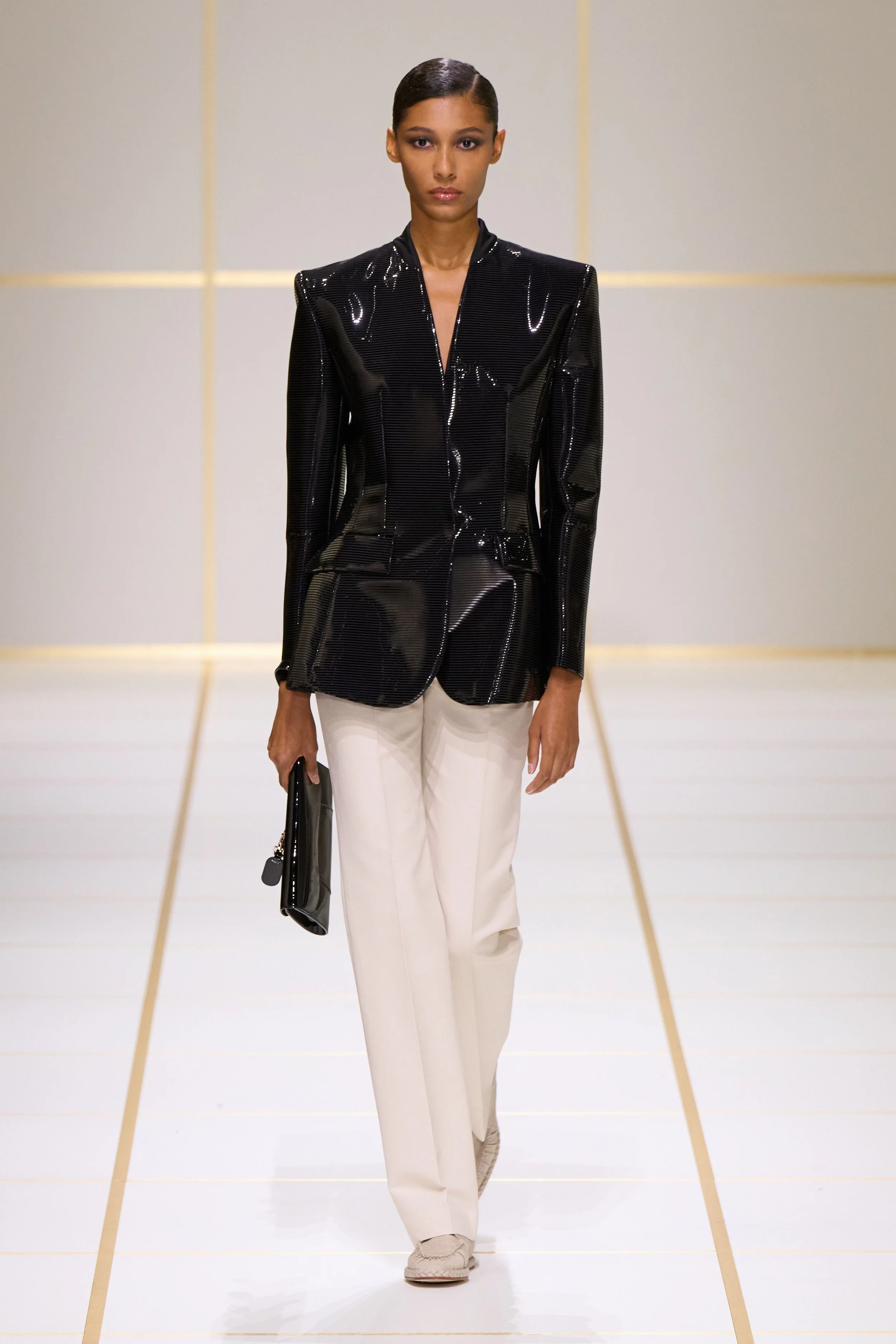
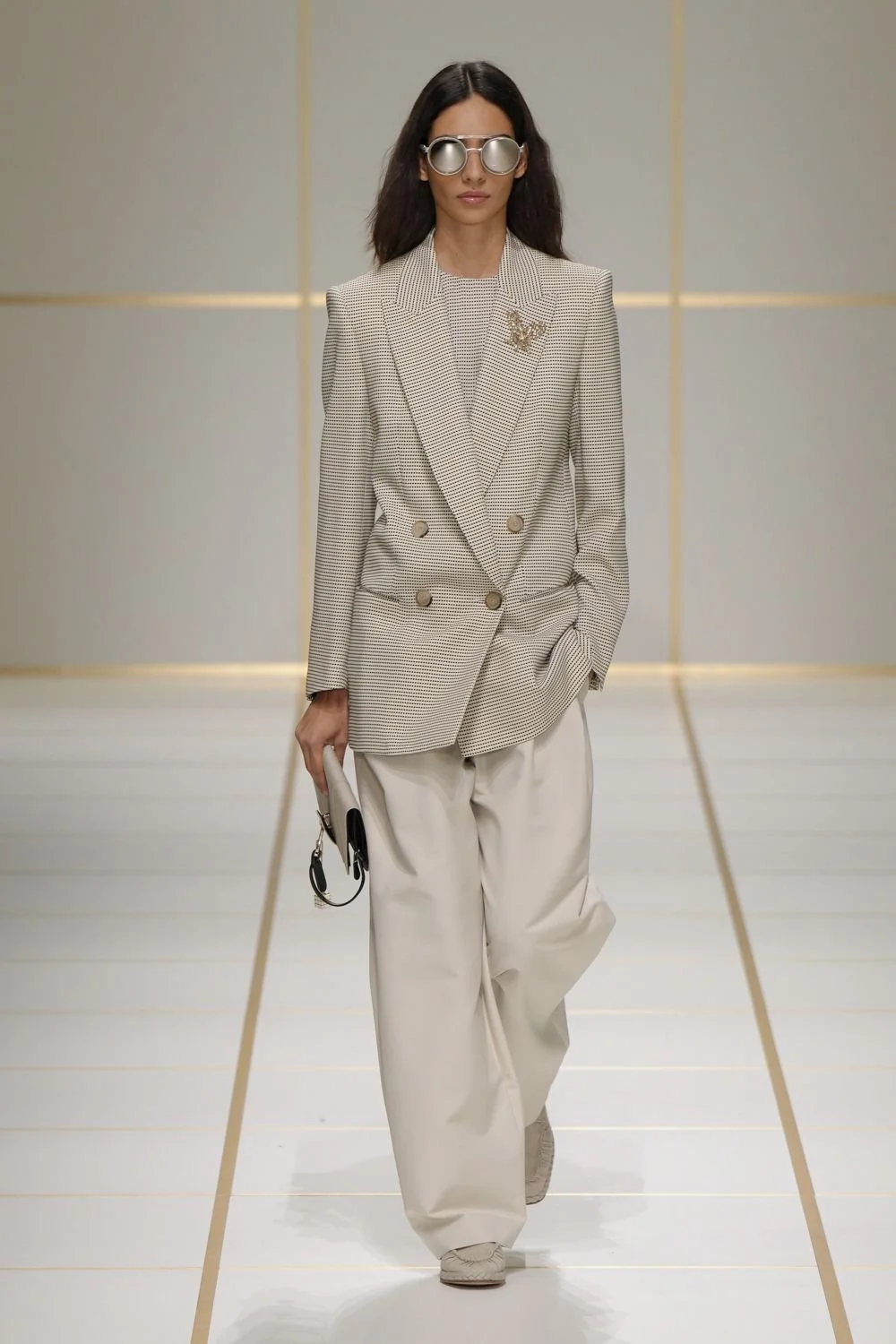
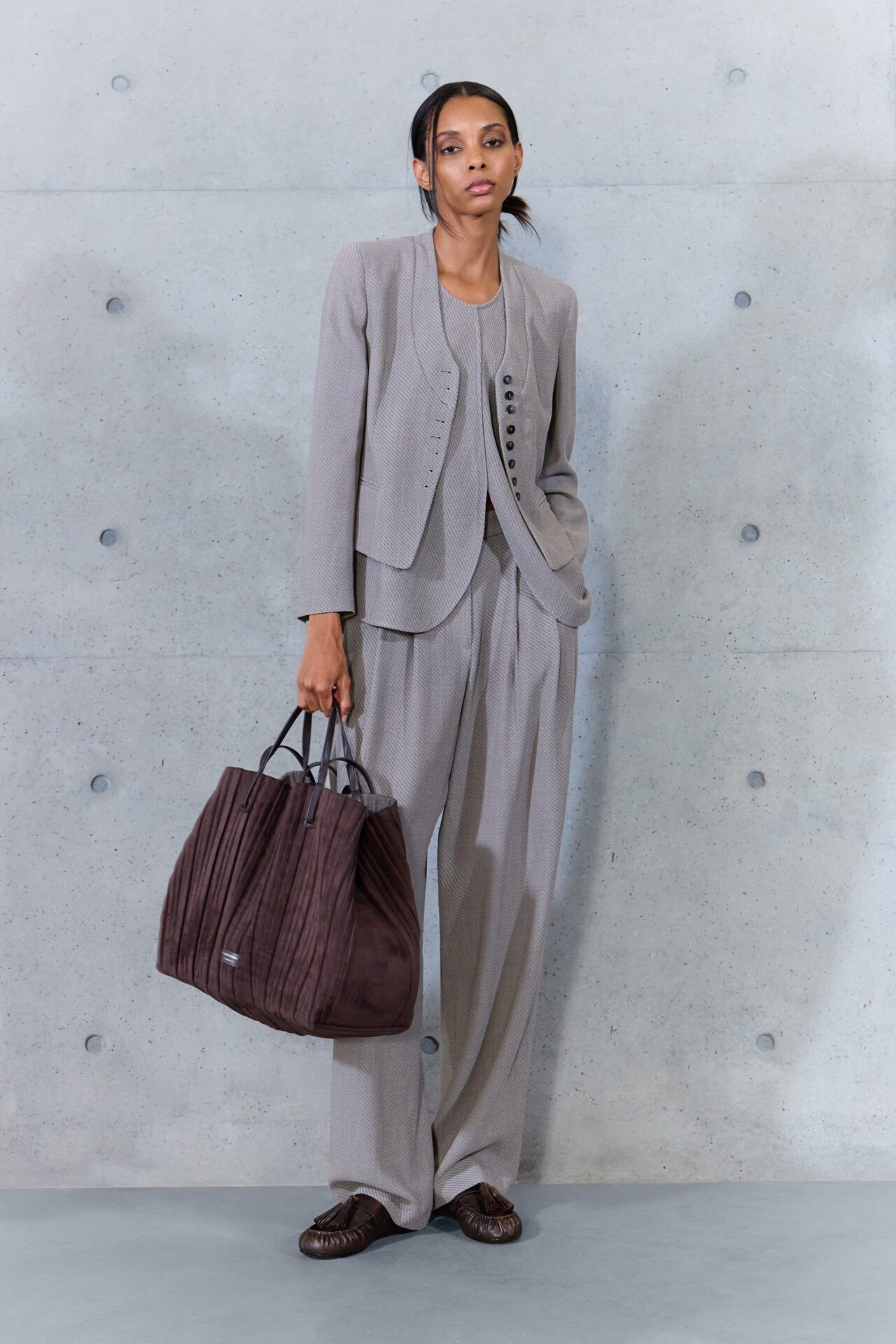
Moving forward, the Armani Group does not seem scared of the future. Such proof is Dario Vitale, appointed earlier this month as creative director of Emporio Armani and Giorgio Armani Accessories, the first to ever do so outside the Armani family. The premise, yet, is more about evolving than completely transforming. Rather, in good Italian, it’s “Evoluzione”, as Silvana Armani purposefully chose to name her Giorgio Armani Spring/Summer 2027 womenswear collection, the designer’s sophomore ready-to-wear lineup for the label.

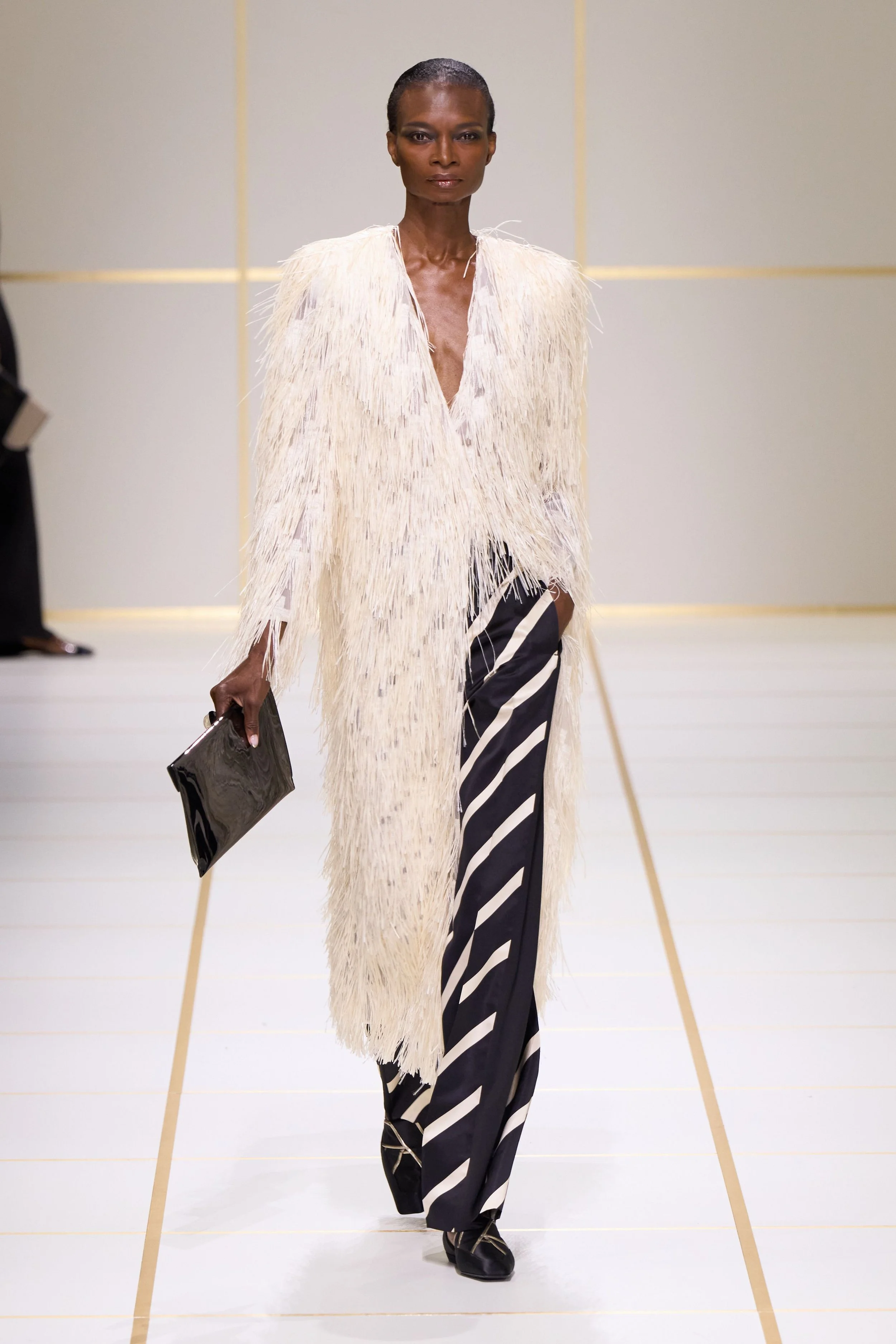
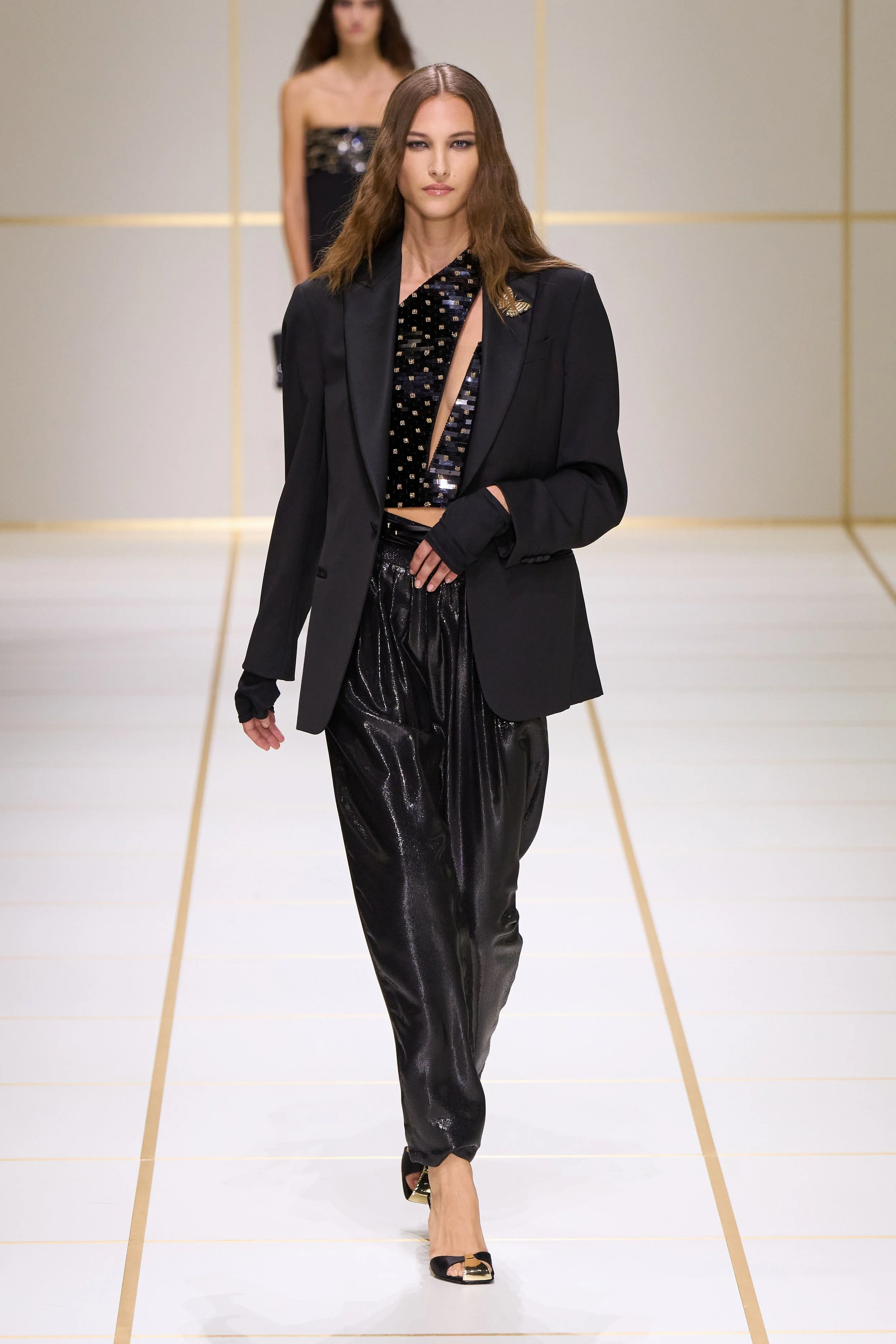
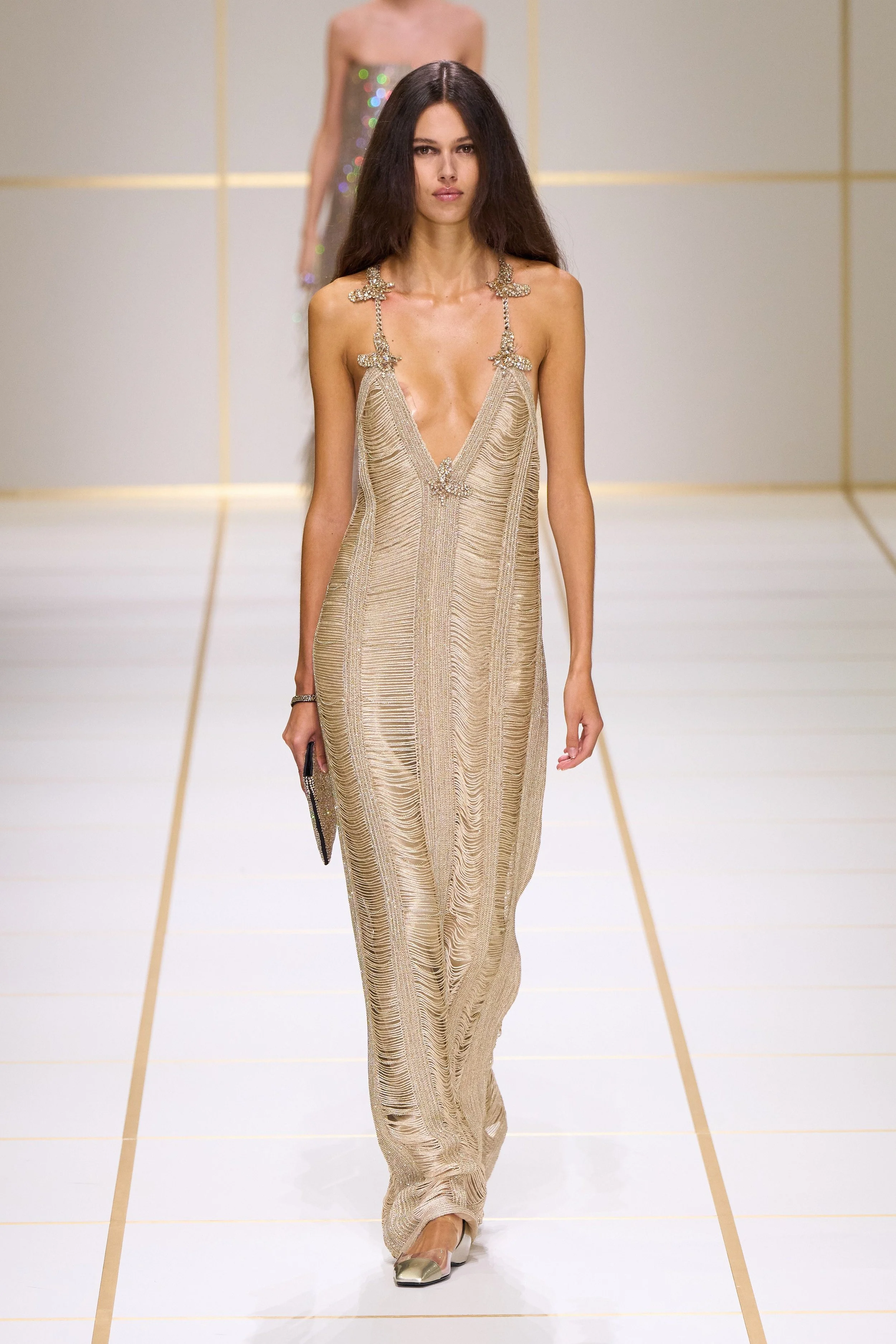
She continued her journey to master the sweet spot between honouring heritage and legacy while still looking ahead, something she'd done since day one in the role. Last Sunday, a few Giorgio Armani traditions endured, among them the habit of opening the catwalk with slightly more casual pieces and ending the show with striking formal and eveningwear. All-time brand favourites, shimmering fabrics, sparkling embroidery, and sleek, sharp tailoring, too, served as stalwarts.

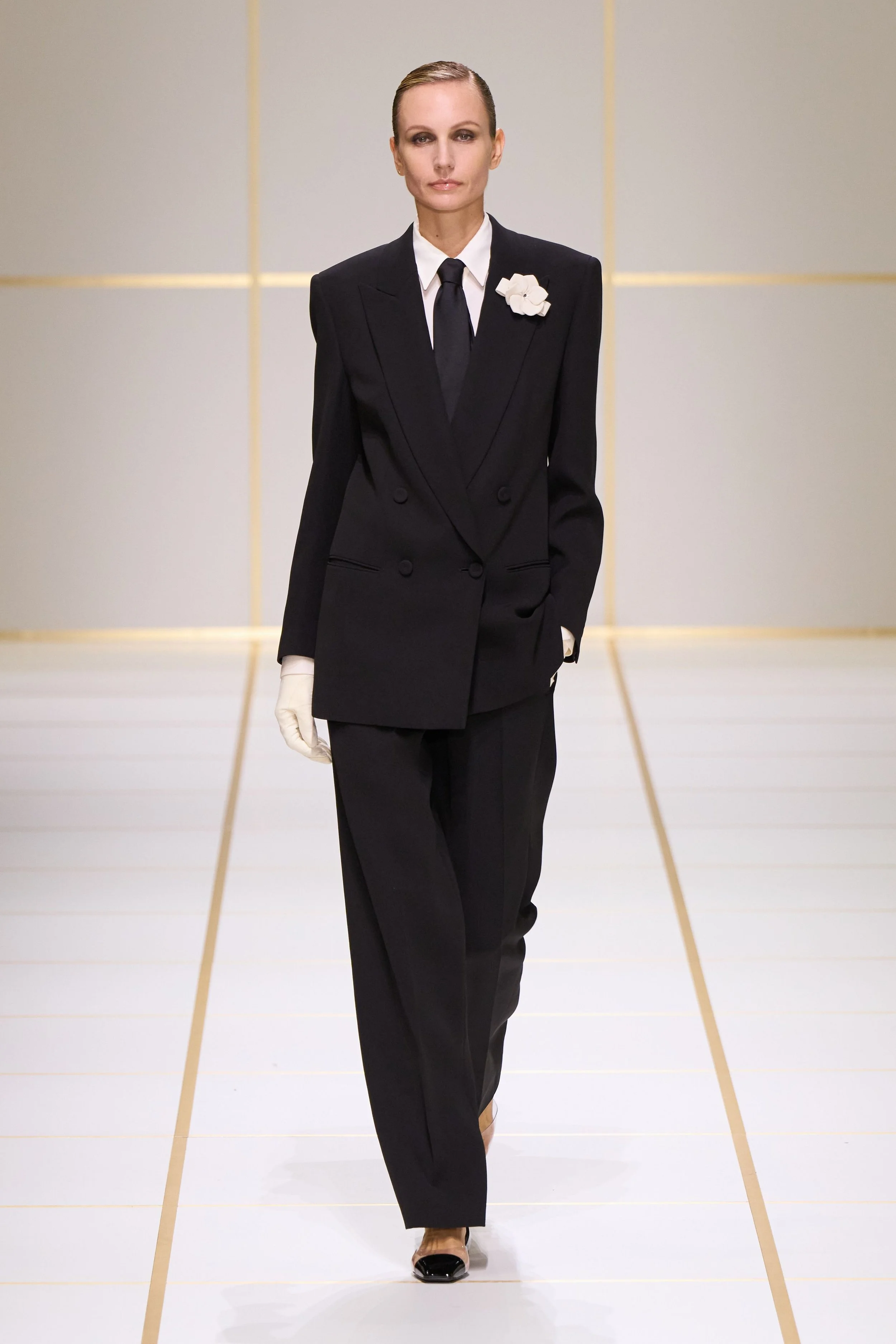
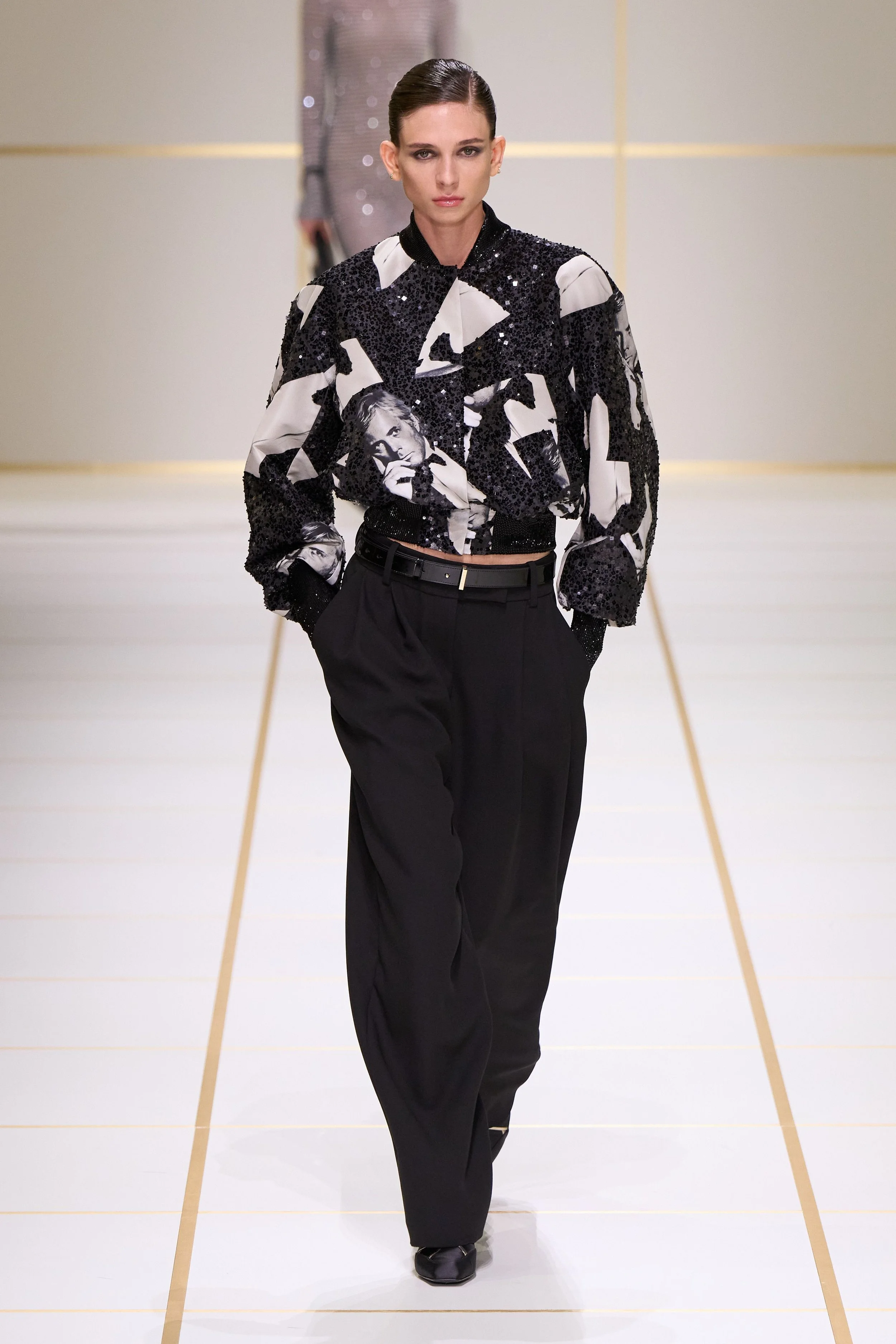
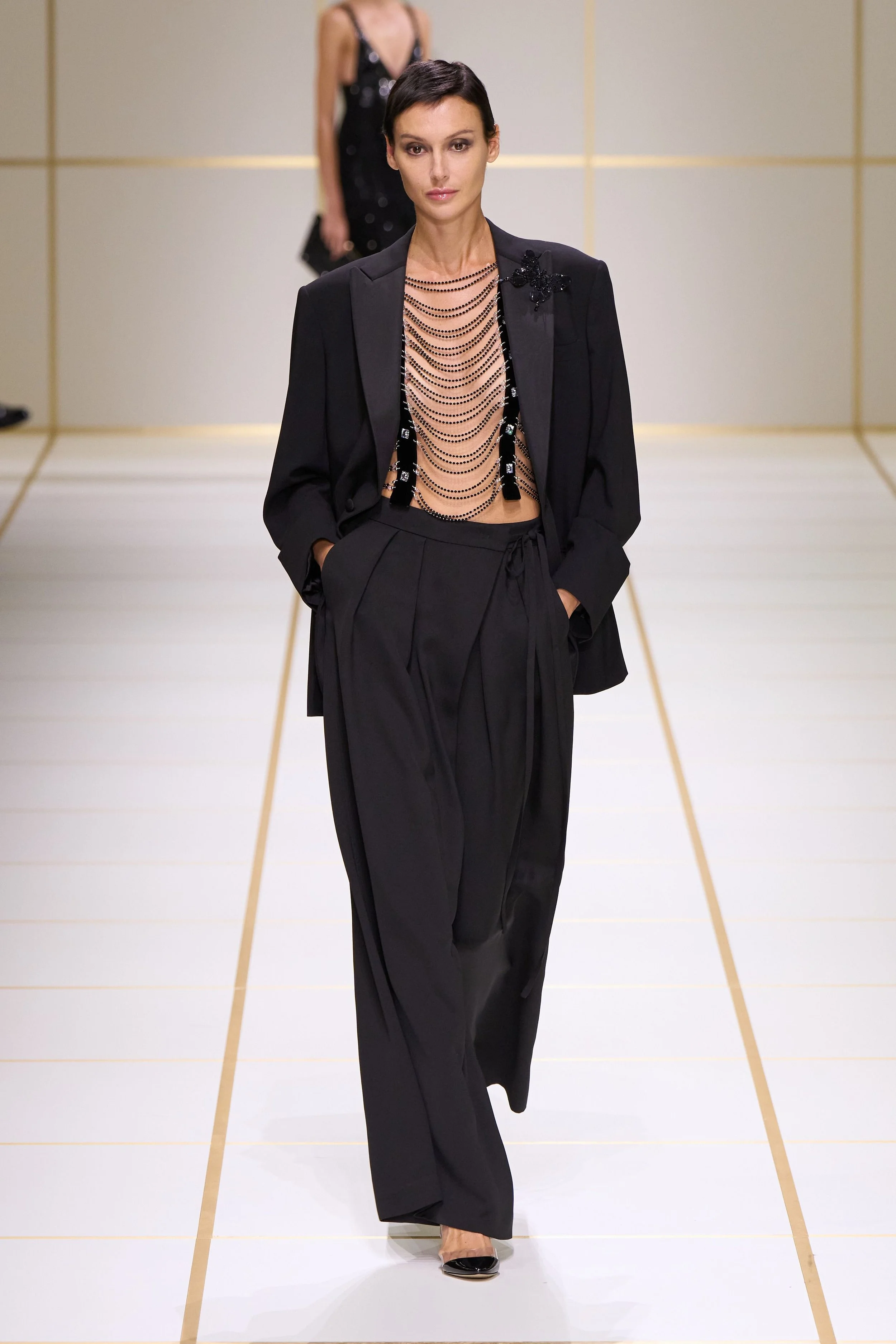
 Butterfly motifs abound signalled the new era, while two distinctive looks paid direct homage to the late Mr Armani. A black, double-breasted suit paired with white gloves and a coordinating white rosette drew inspiration from a childhood photo of Giorgio Armani wearing his First Holy Communion attire, and a sequined, black-and-white bomber jacket featured an archival close-up portrait of Mr Armani posing in a tuxedo.

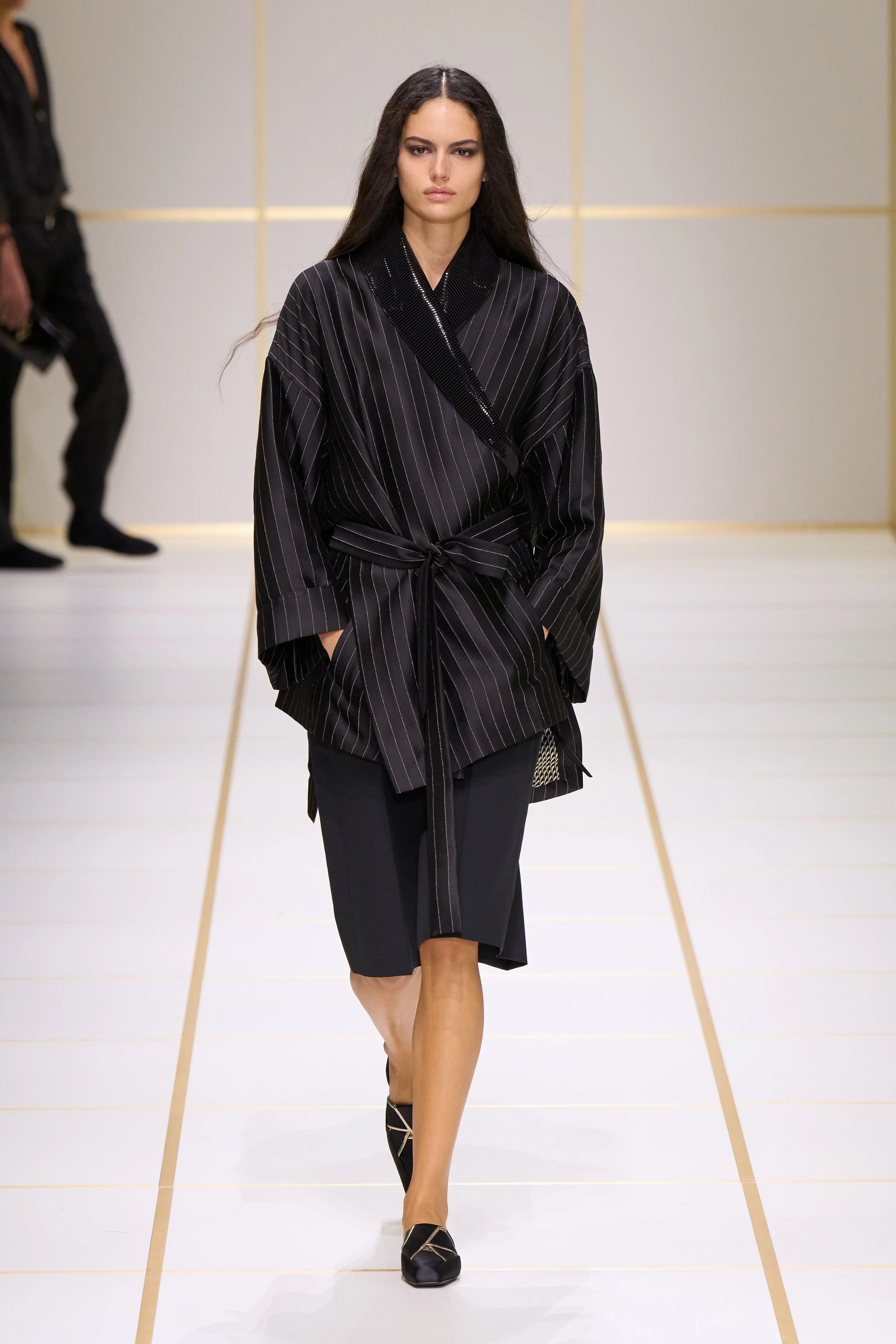
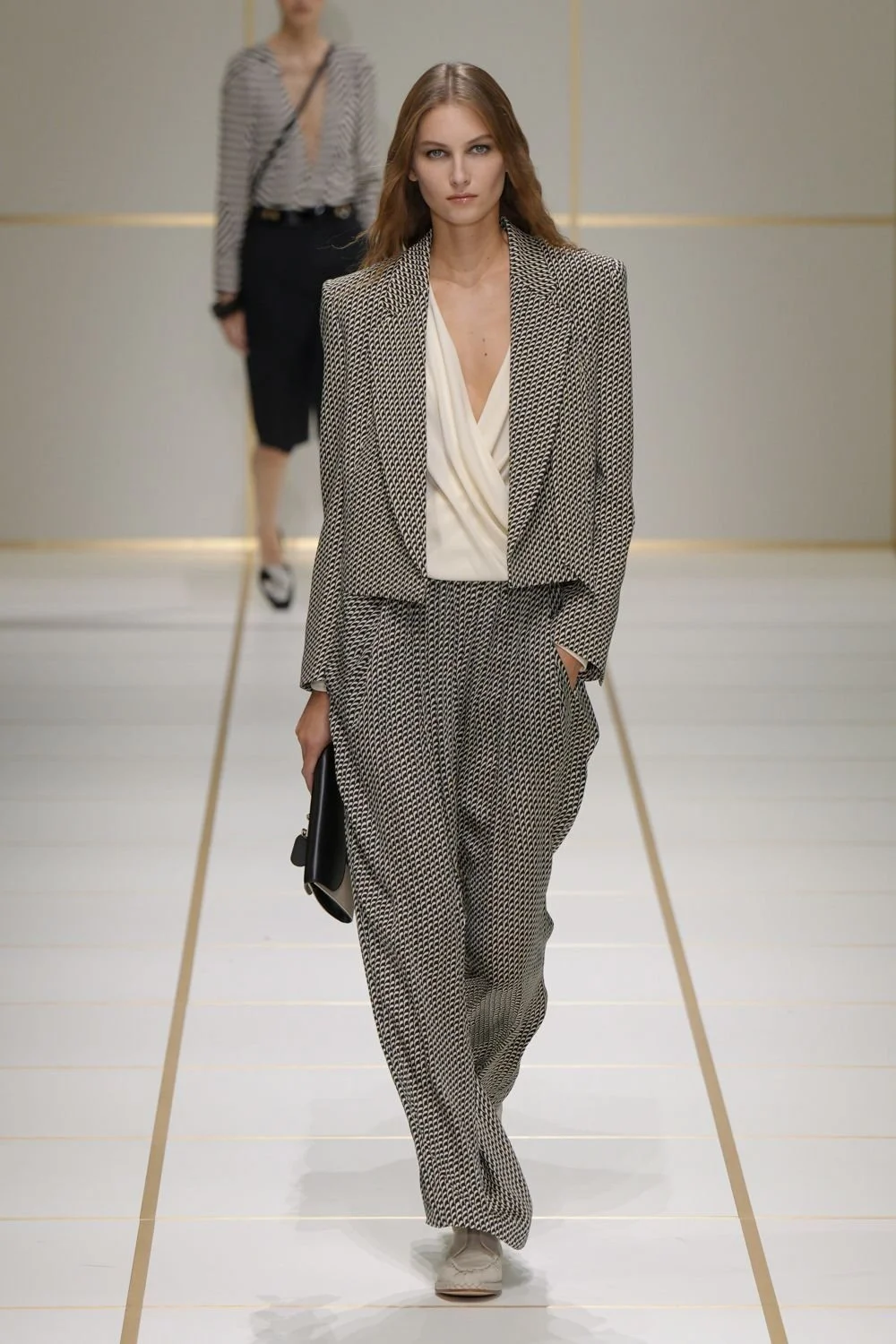
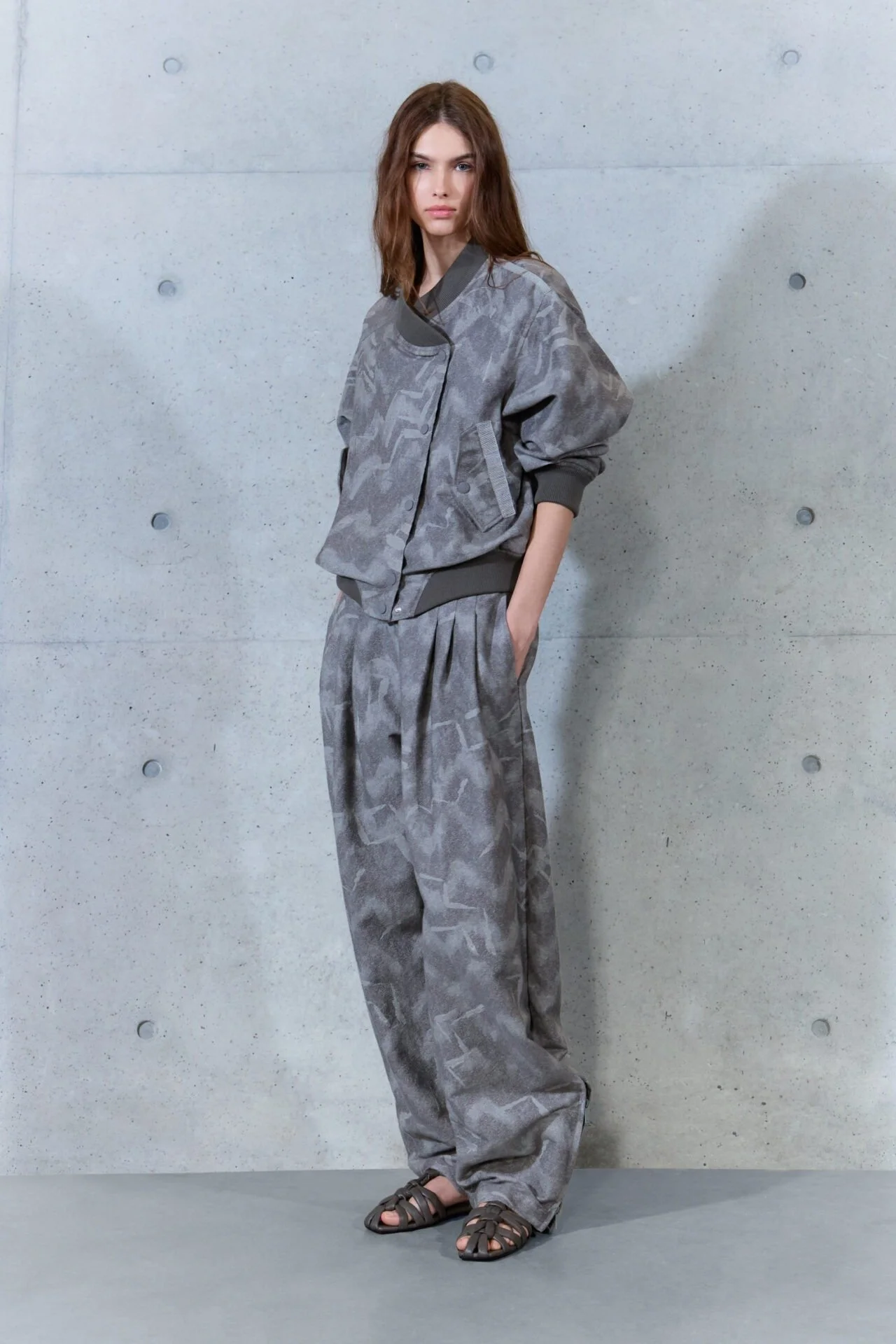
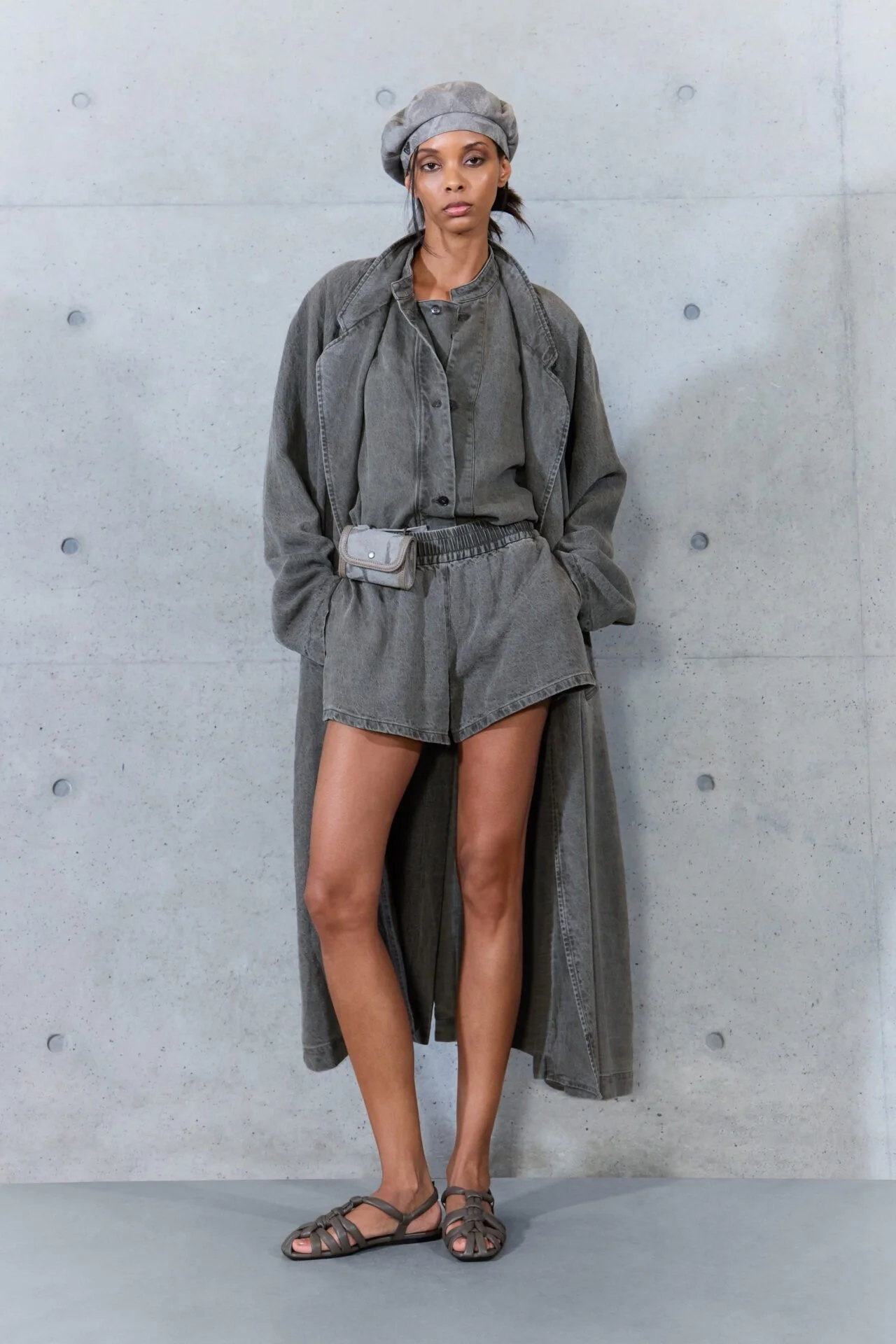
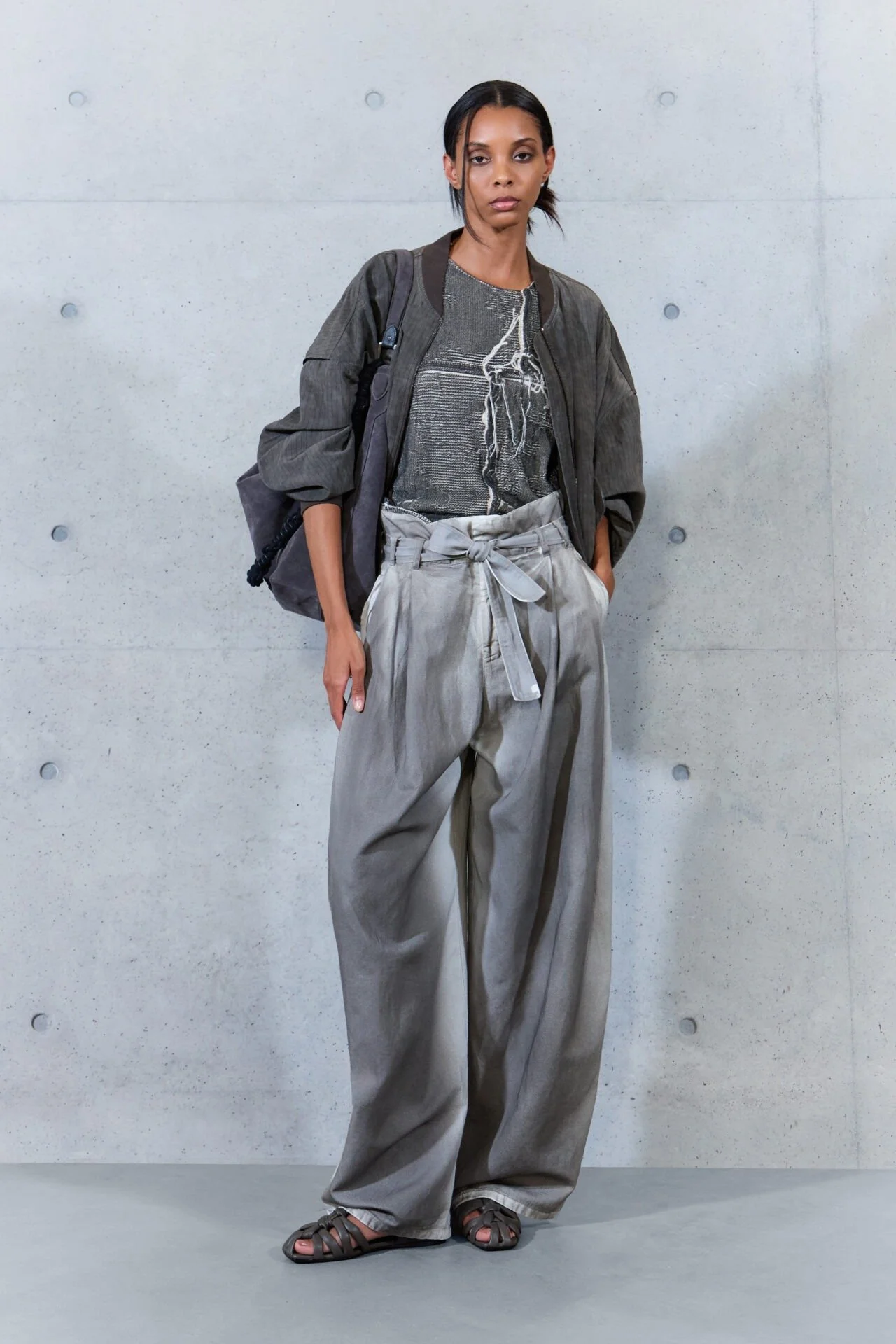
Against her uncle’s wishes, for the first time, Silvana Armani introduced cotton at the premium label via roomy trousers and knee-length shorts, often worn with strong-shouldered fitter jackets. Seen as “too humble” by Mr Armani, the material is one of his niece's absolute favourites. On a similar note, not a single hat was in sight, further going against Giorgio Armani’s famous penchant for headwear.

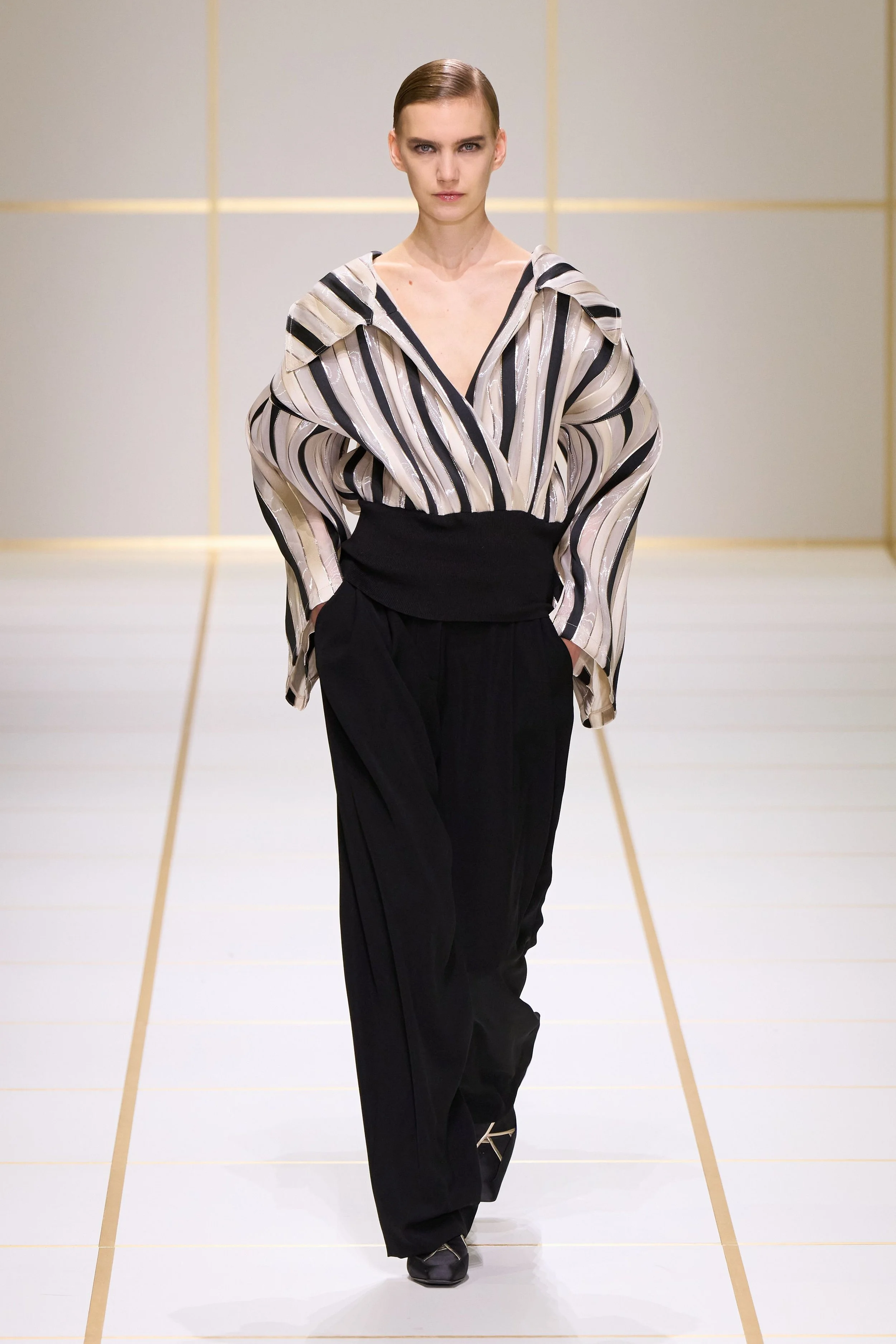
Colour-wise, navy and the classic Armani midnight blue were put on hold this time. Instead, Silvana Armani opted for a much more neutral palette, led by rich shades of black, white, and ivory. Graphic prints and patterns, silver and gold accents, were just as crucial; the latter glistening from start to finish and used as a strategy to sort of blur the lines between garments for day and night. The shimmer of it all also matched the XL disco ball hanging above the all-white, dance floor-inspired show space.

Given her previous Fall/Winter and Couture lineups, another of Silvana Armani’s main mottos is designing for the woman who praises elegance and comfort in equal measure. At SS27, its essence is similarly channelled through continuous fluidity, where garments sit freely on the body, and flat footwear makes total sense when paired with a formal dress. Even the more on-the-nose, objectively sexy codes such as slits, chainmail tops, and pronounced necklines carry a soft, organic sense of lightness. In good, Italian, andiamo.


Words by Ketlyn Araujo

BOTTEGA VENETA SS27

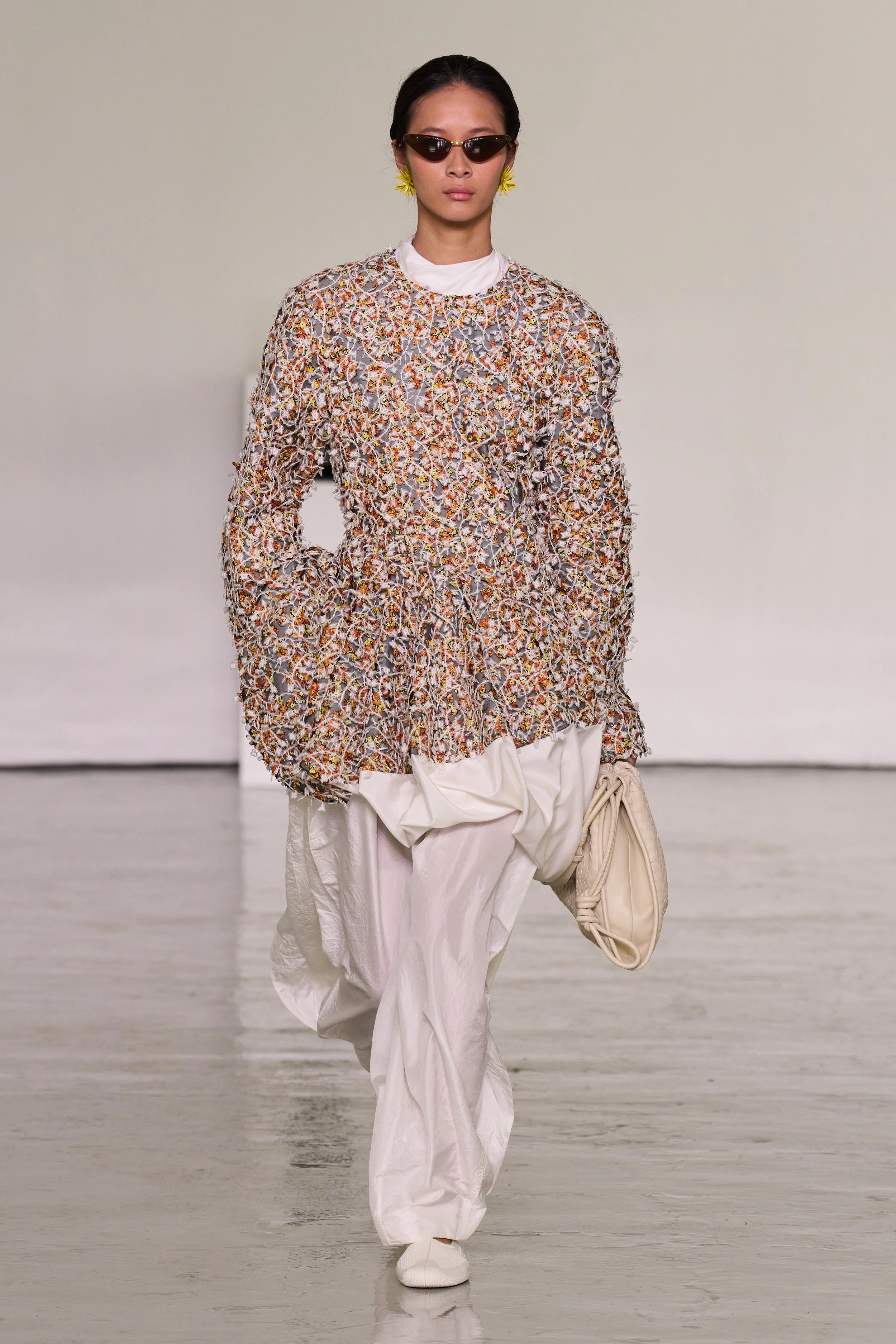
Bottega Veneta’s Spring/Summer 2027 show venue was composed of perfectly aligned cardboard boxes. Made to withstand the duration of the show, these resin-coated cubes were made by artist Illya Goldman Gubin. Even within a rigorous grid, the seats were not uniform – some identical in shape, others severely crumpled. The Ukraine-born, Berlin-based artist utilised these apparently fragile seats as explorations of vulnerability, hugging each of them with varying degrees of emotion. Immediately, online, speculations arose that the severity of the embrace on each seat revealed how Louise Trotter, creative director of the brand, felt about each of her guests. To think the British designer would use her time in such a way was to not witness the collection that walked amongst the Twitter frenzy-inducing seating. For her third season at the brand, Trotter shows an ever-growing prowess in manoeuvring historical codes.

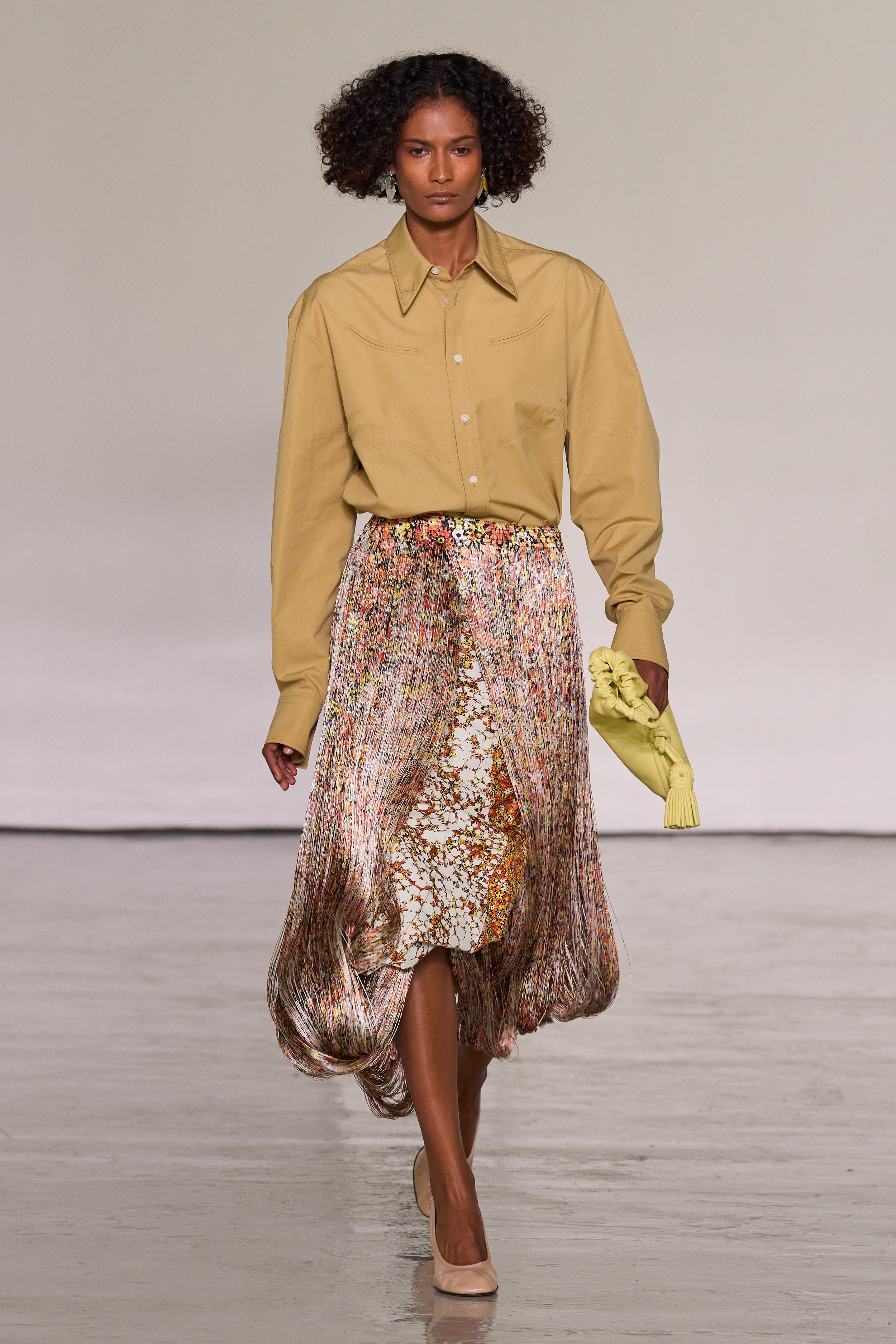
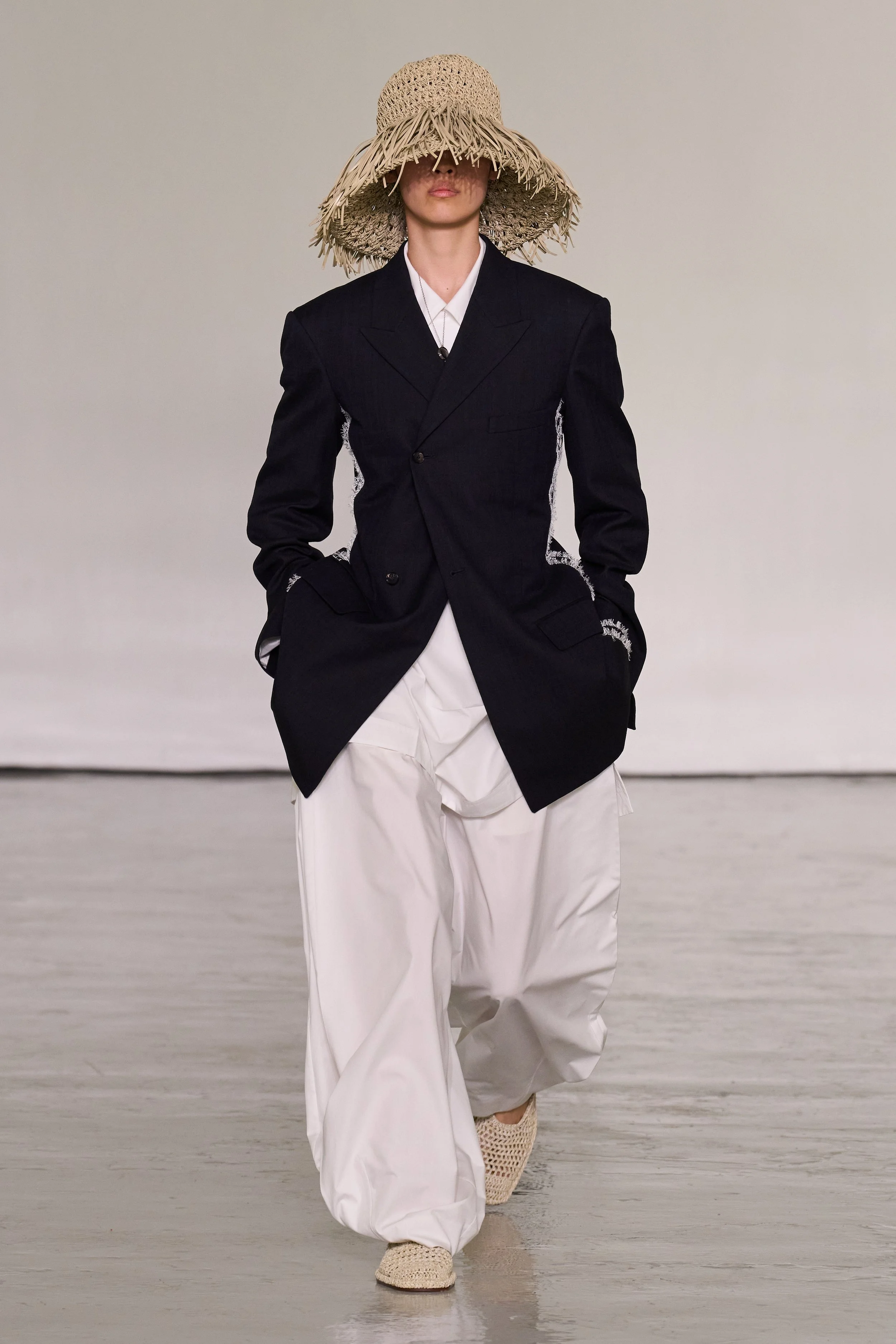
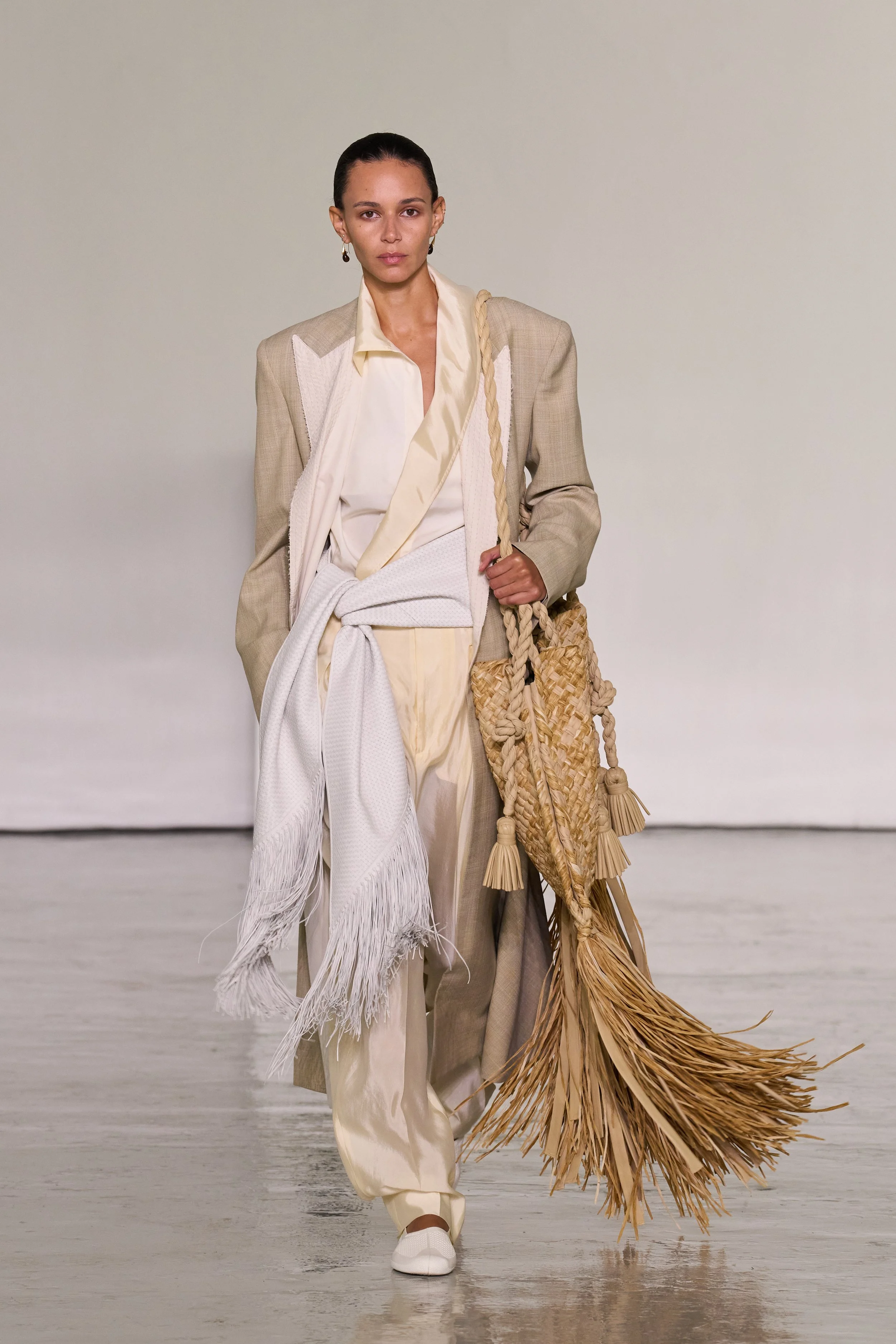
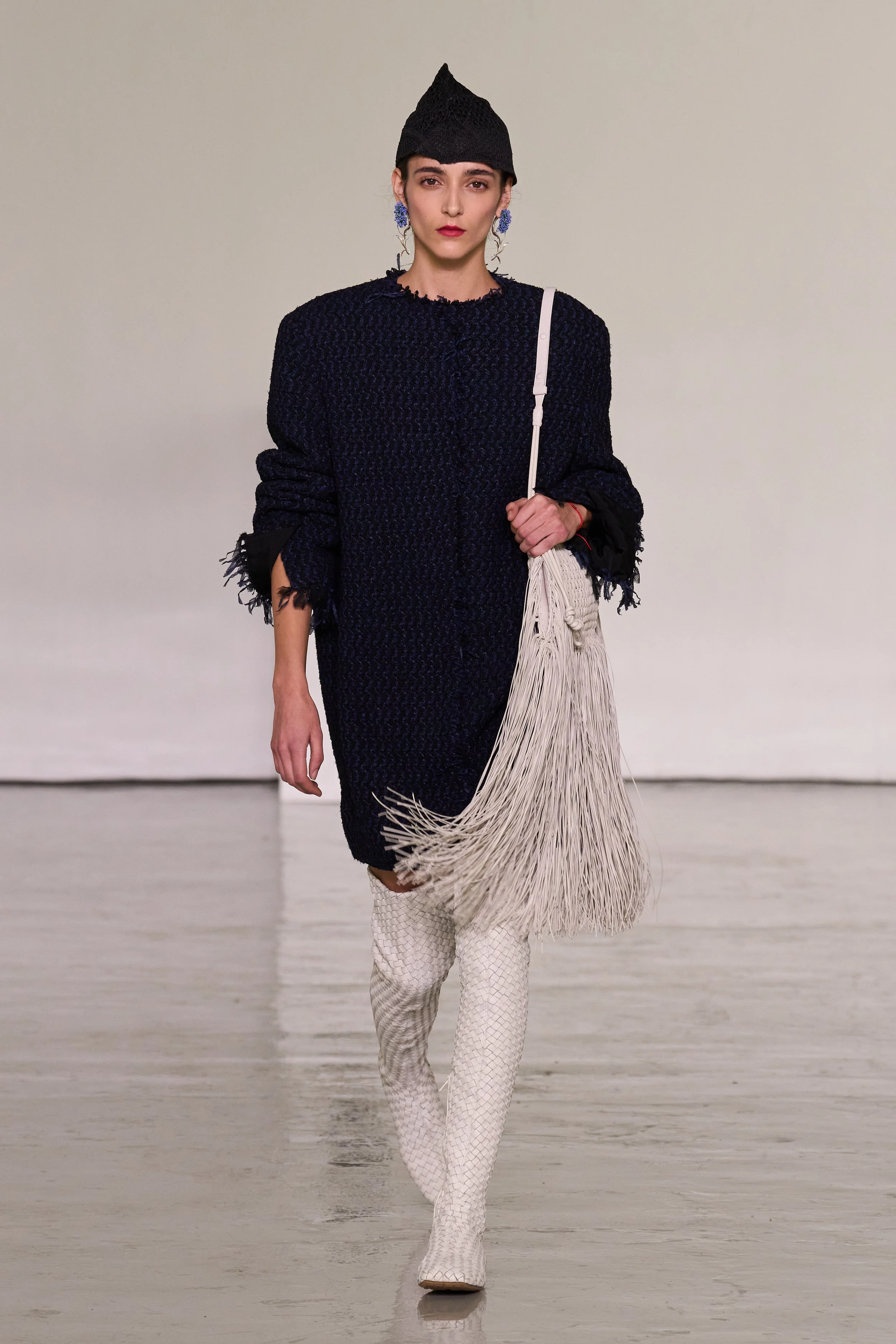
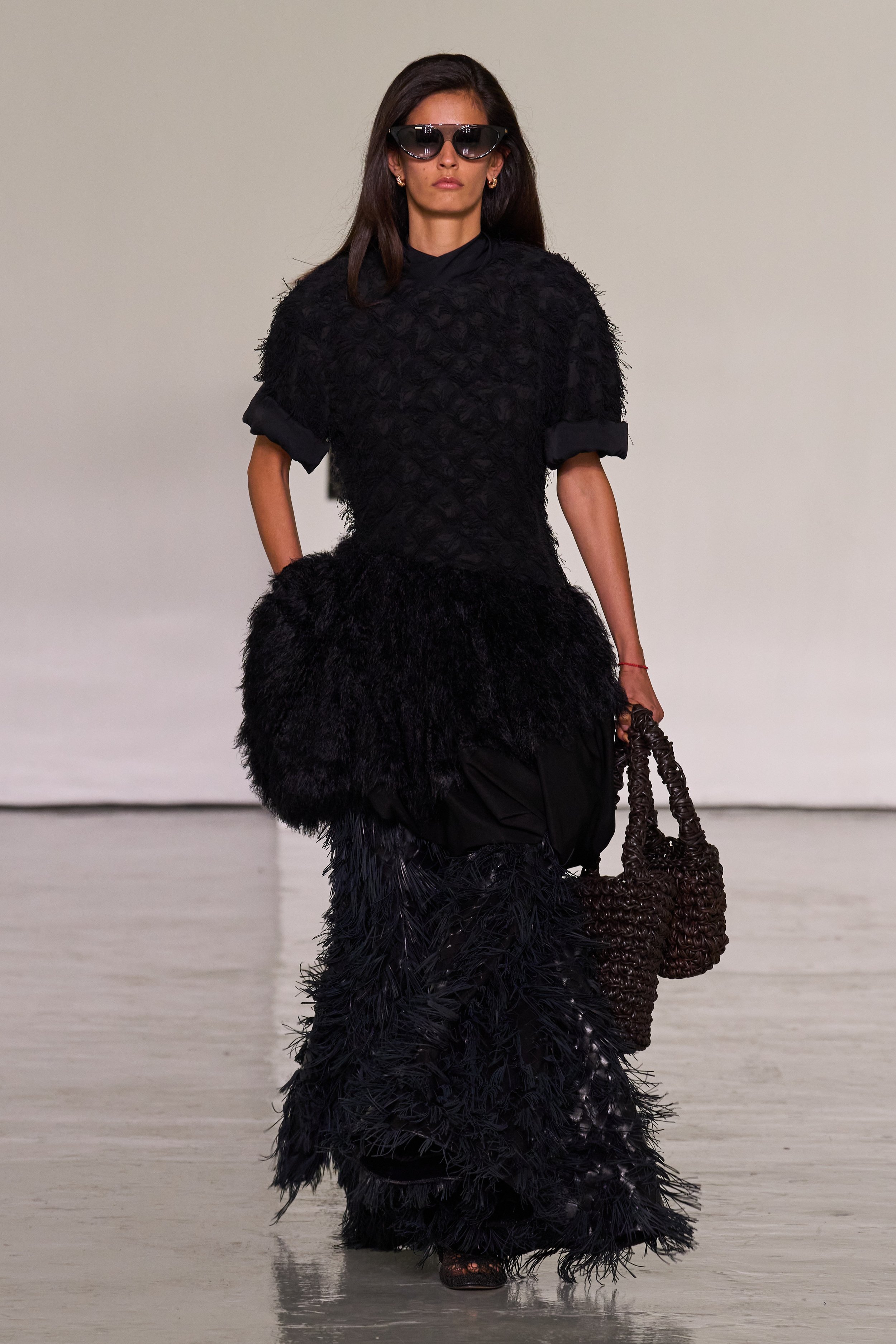
Bottega Veneta is a house with strict symbols; its heritage is solid in the image of its rigorous intrecciato. Even so, Trotter finds a way to add movement. Extrapolating the idiosyncratic craft of the brand, the physicality of material manipulation is felt in raffia bags whose fringe almost skirts the floor, in hard knots on a navy coat’s front panel.  

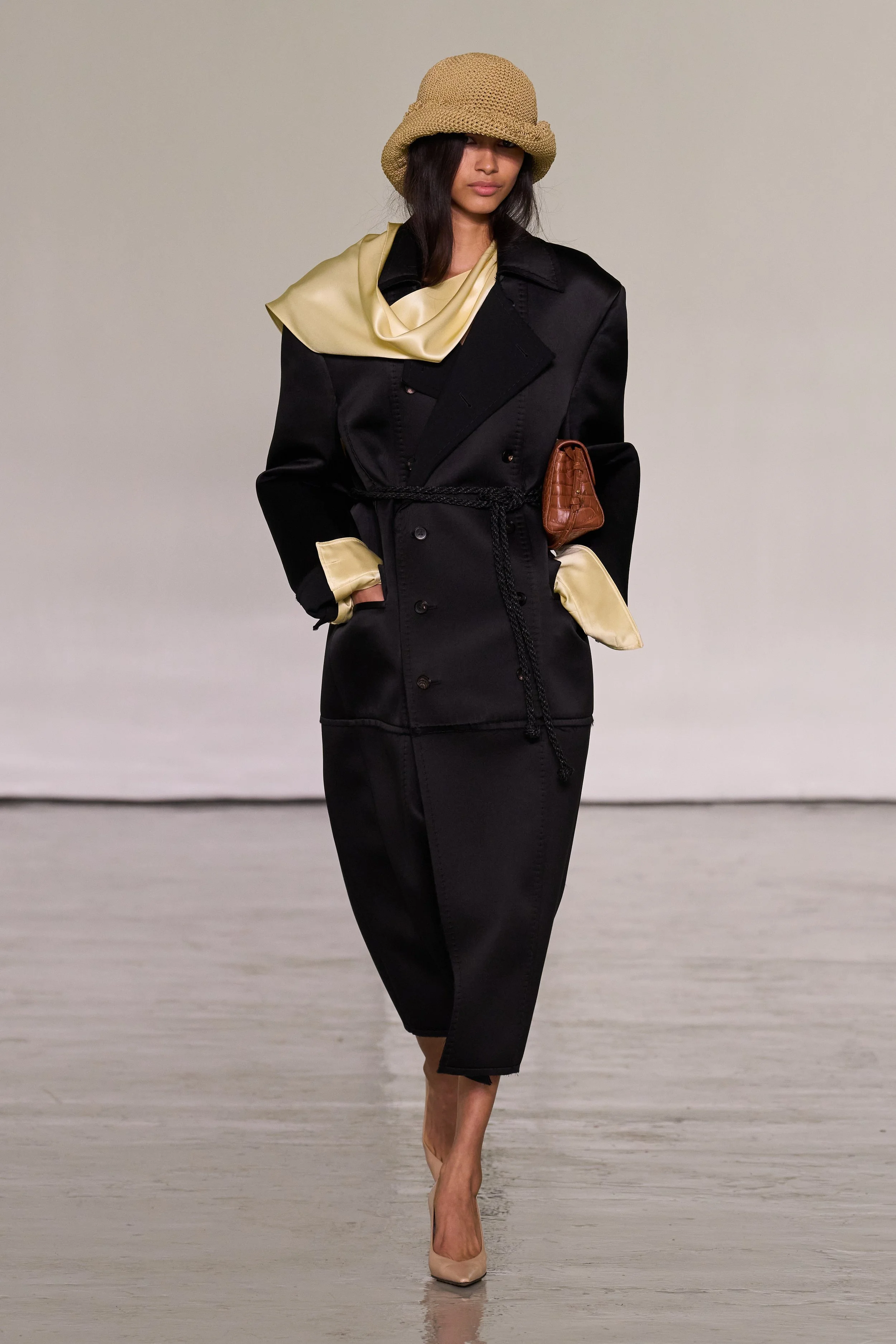
The idea of movement is intrinsic to the brand’s vision under Trotter’s guidance. Billowing pants and fringed scarves around the waist flow both against and with each other, while printed fringed swishes diagonally. Bodies move in tandem with garments, their proportions altered by the clothes that surround them. Incredibly, I hesitate to call it silhouette work. The word paints such a clear picture, one that is stiff, that resists against the body's organic movement. What Trotter does is different. Her use of volumes, the perfectly calculated weight of the silk on pants that pleat as they walk. creates a silhouette that changes its shape as the model walks. The perfectly calculated volumes are highlighted when in contrast with rigid silhouettes – a tight tailored jacket is paired with translucent white trousers.

Inspired by Milan, the city the British designer is now based in, the collection captures the organic borders in between seasons. What delineates their passing? Is it a date in the calendar? Is it the first night out where the jacket remains on the hand rather than over the shoulders? How can manmade borders delineate organic limits?


Words by Pedro Vasconcelos

PRADA SS27

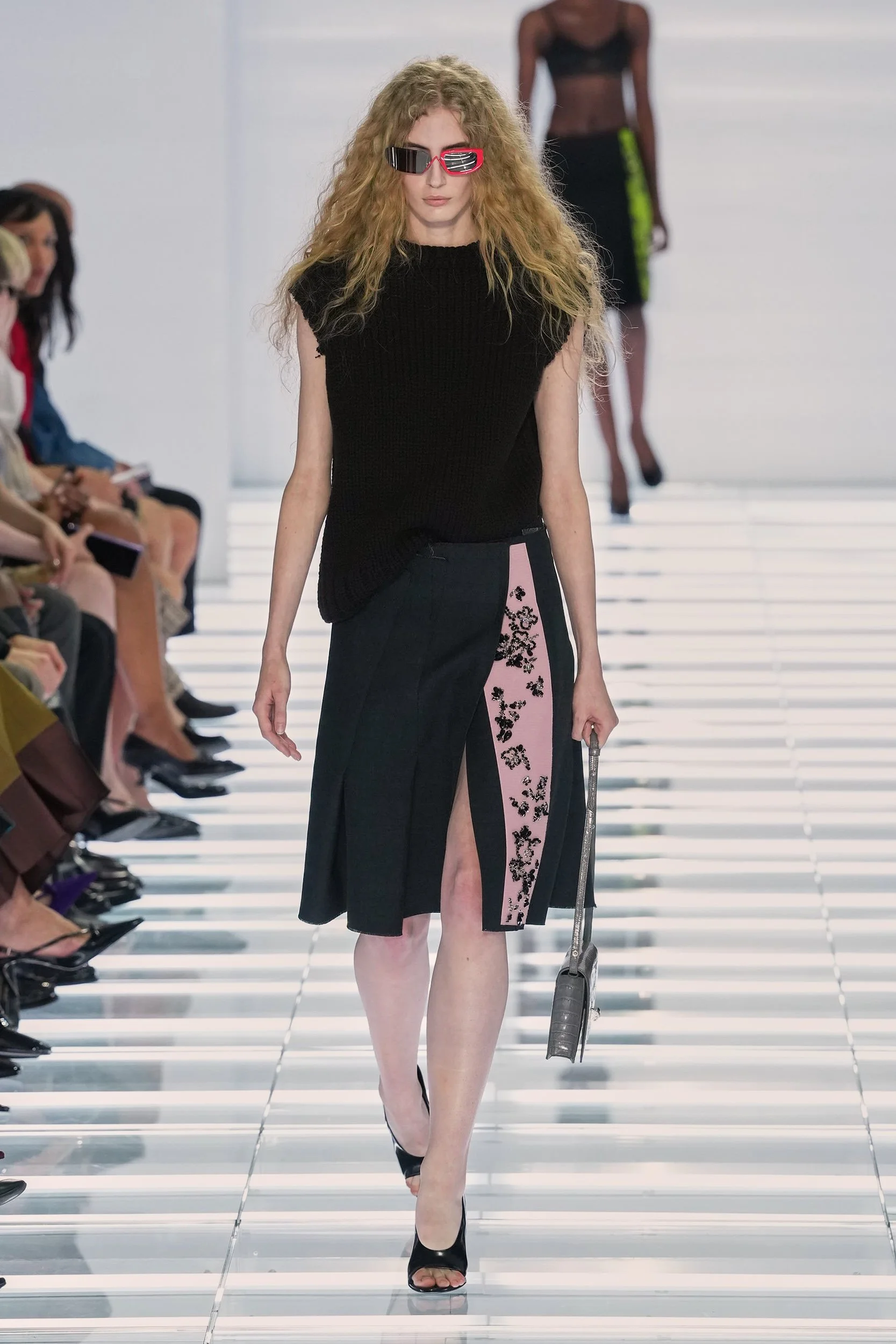
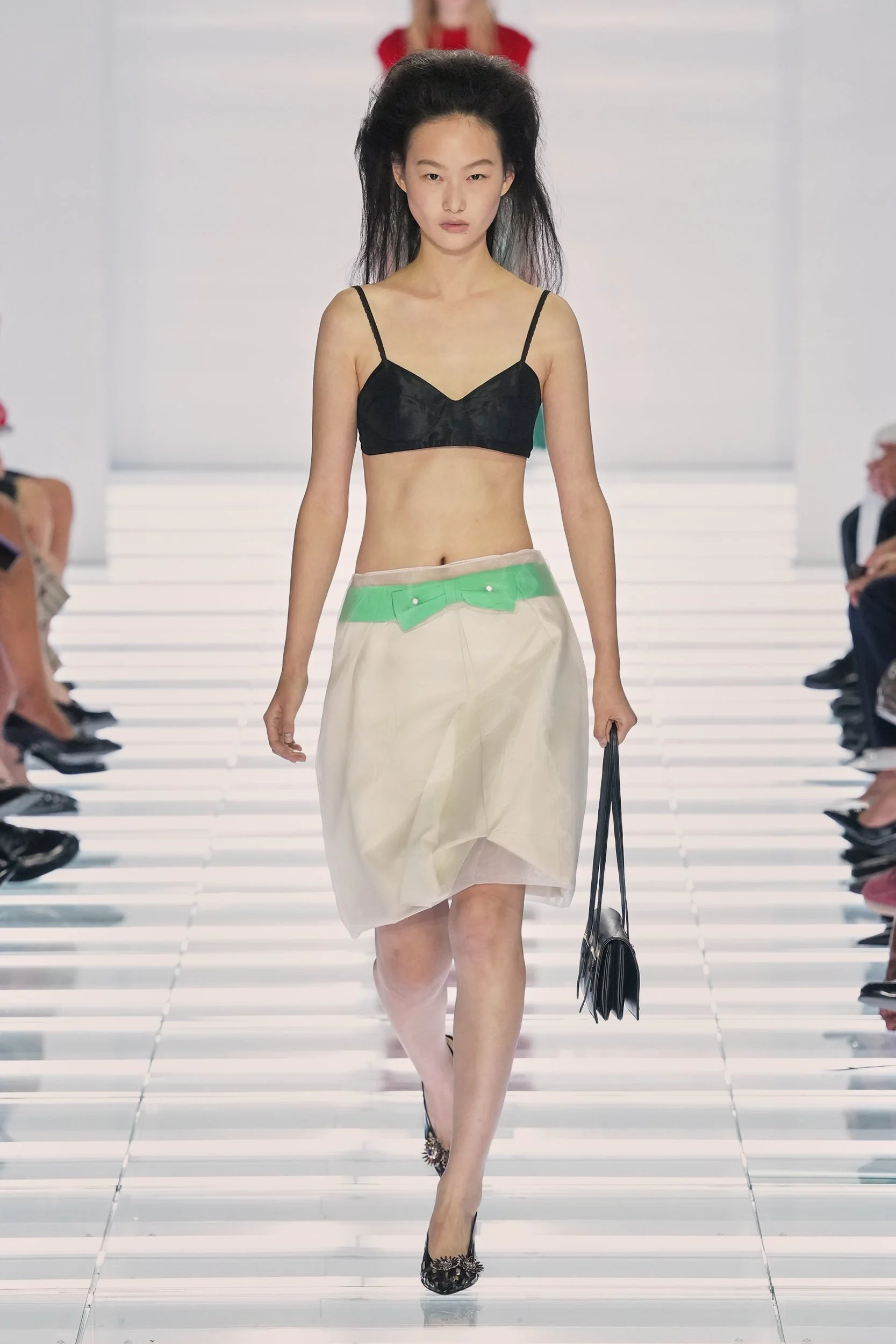
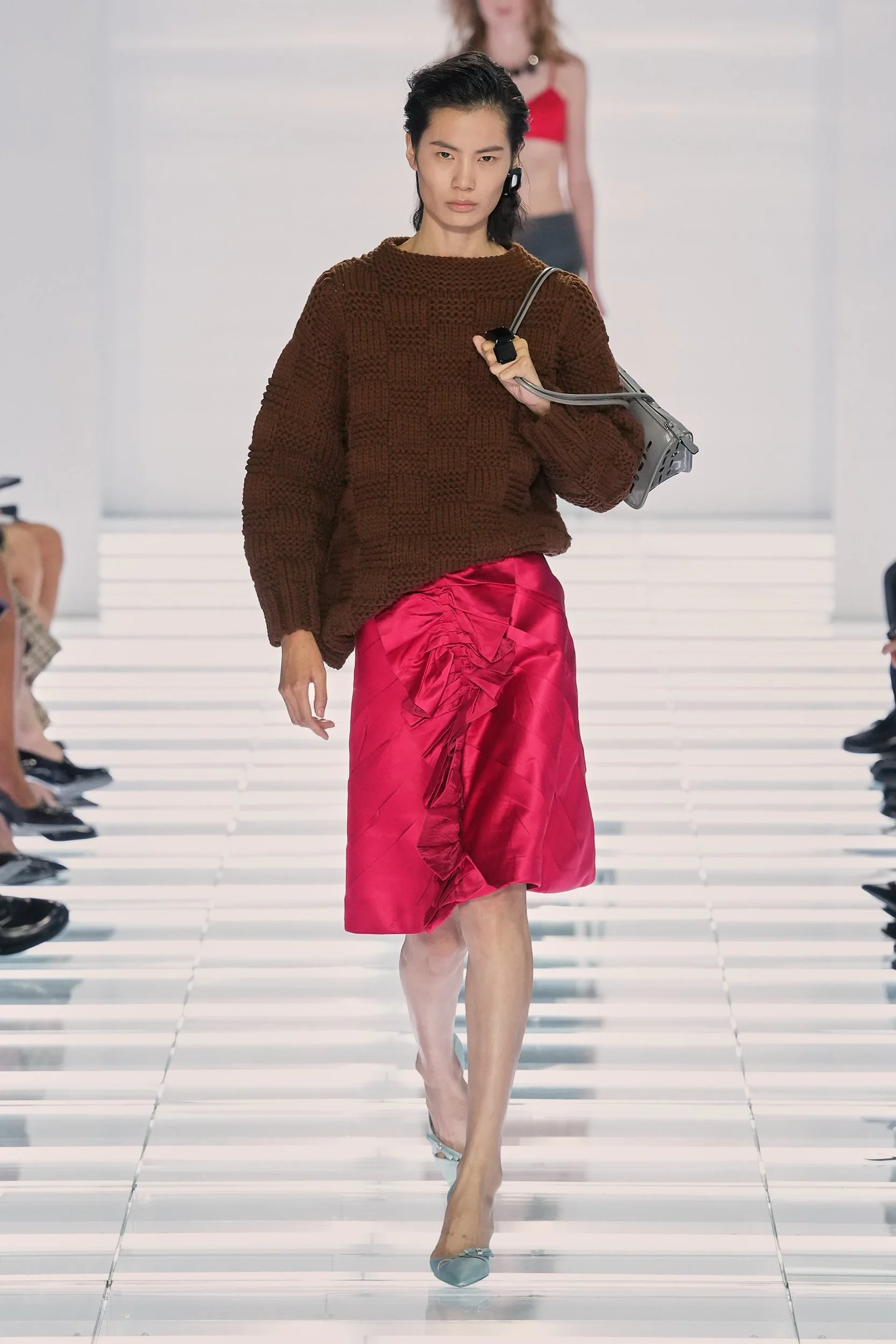
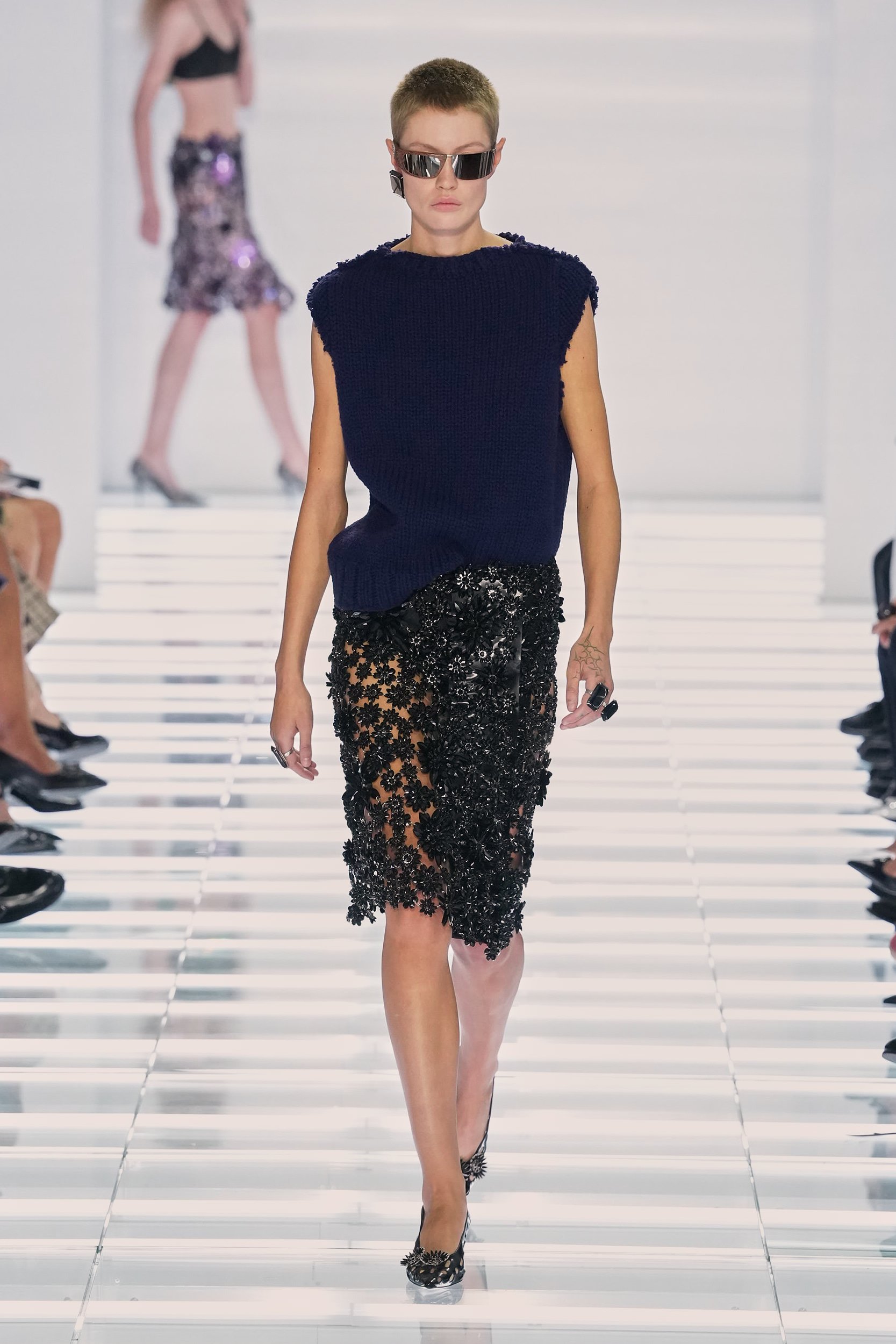
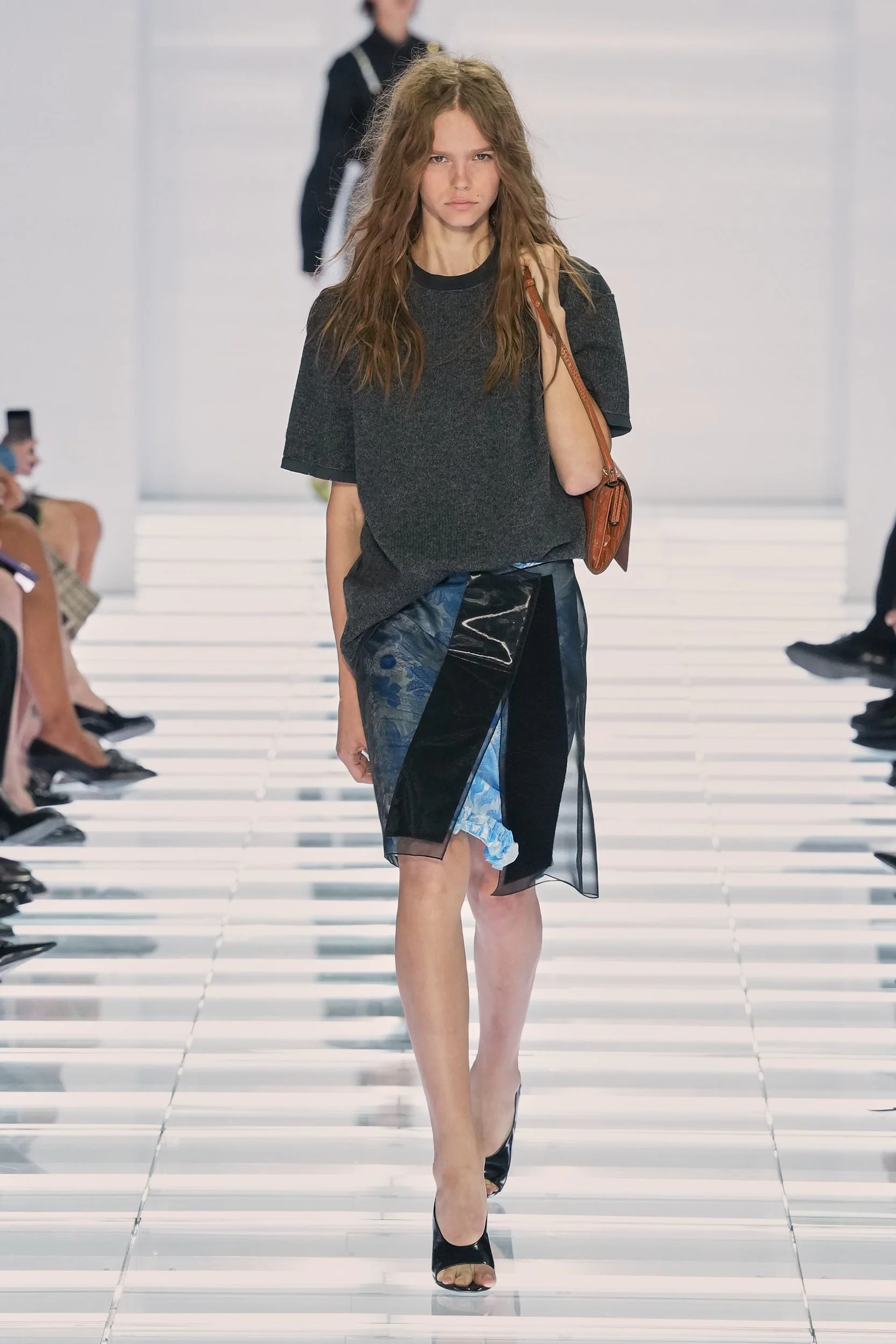
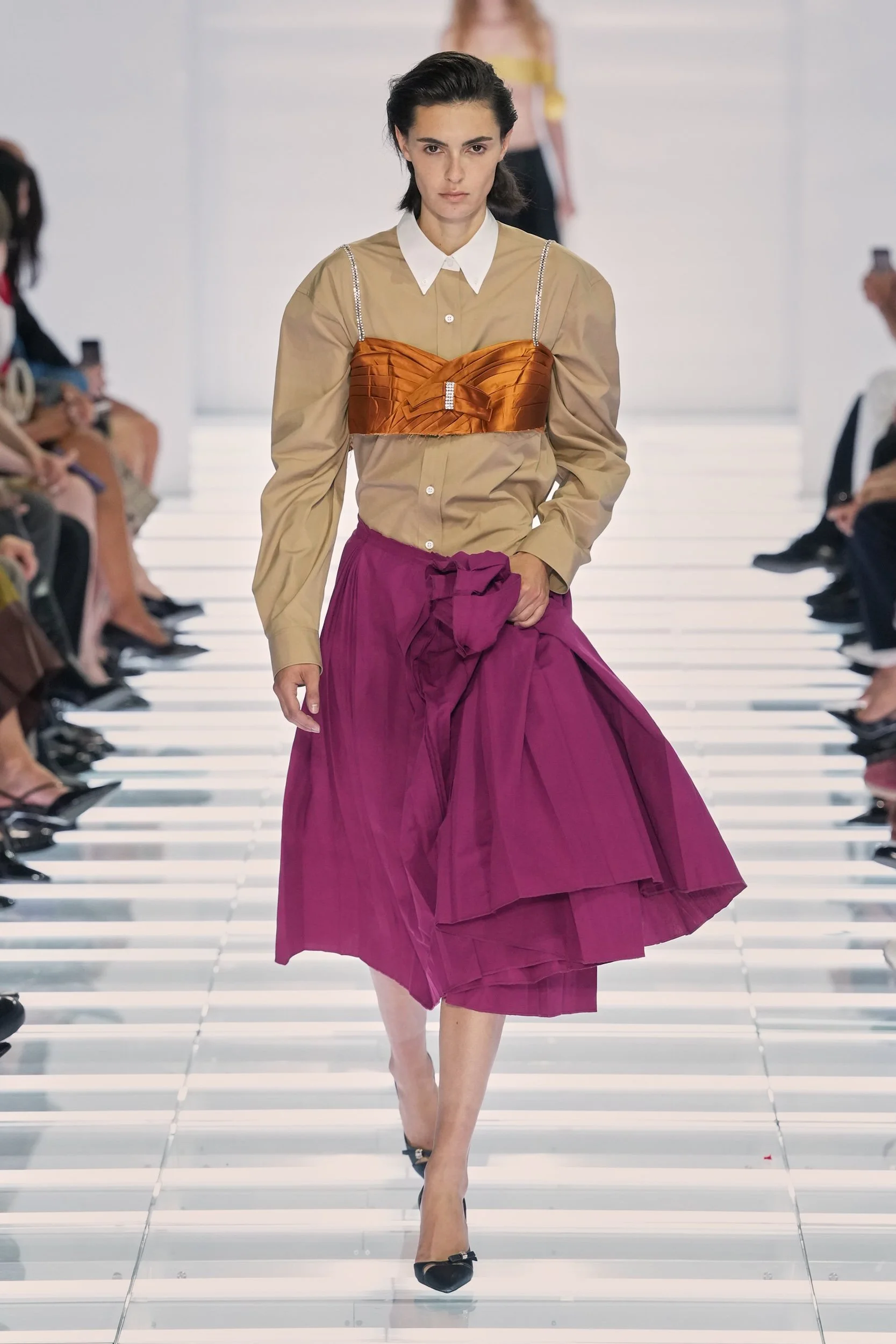
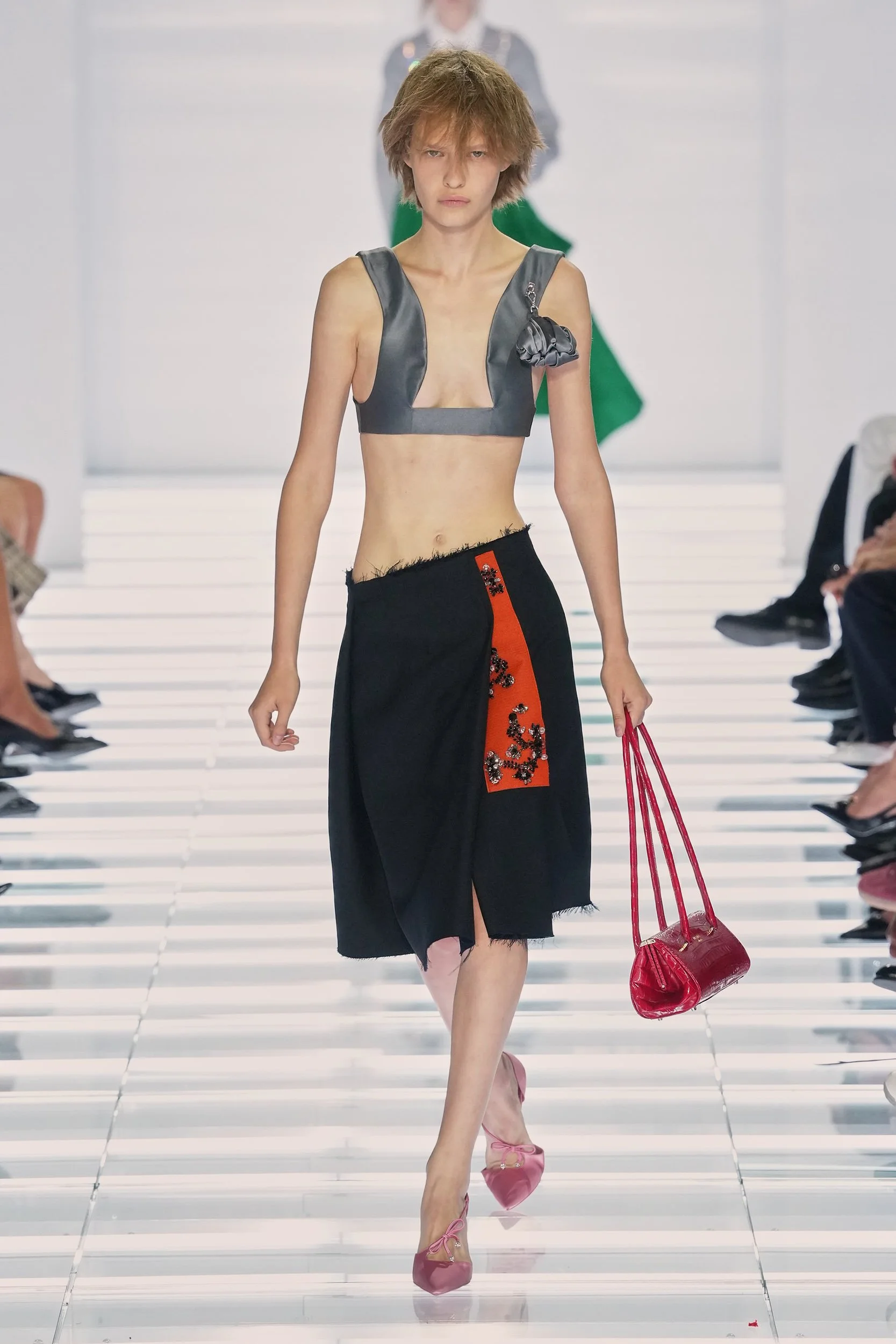
“I don’t wear jeans.” Miuccia Prada and Raf Simons made the divisive statement backstage at their menswear show in June. The comment, seemingly in relation to the collection just presented, was but a small Easter egg, a preview of what was to come three months later. On the same transparent set, filled with LED lights that illuminated models from all angles, Spring/Summer 2027 didn’t present a single pair of pants.

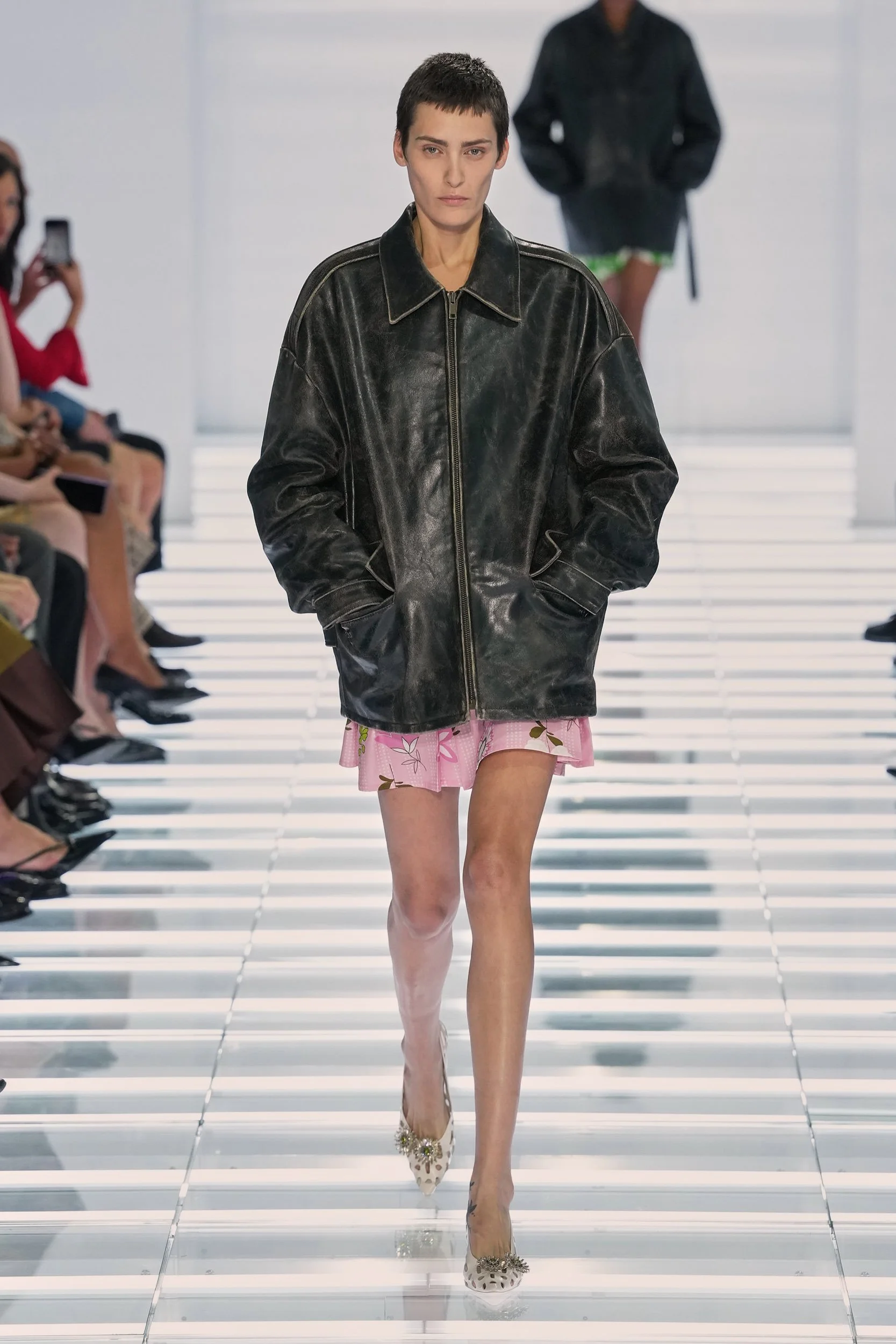
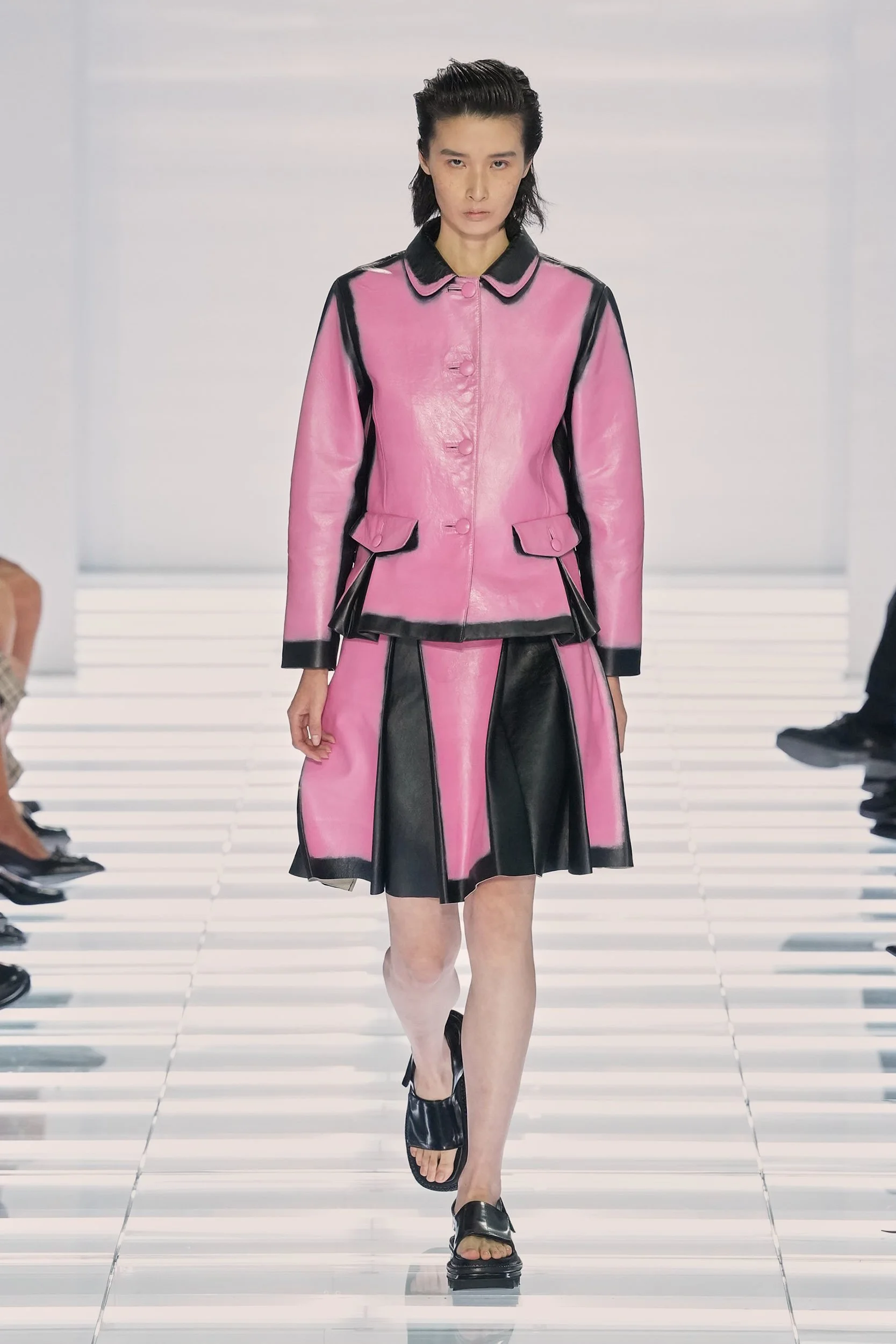
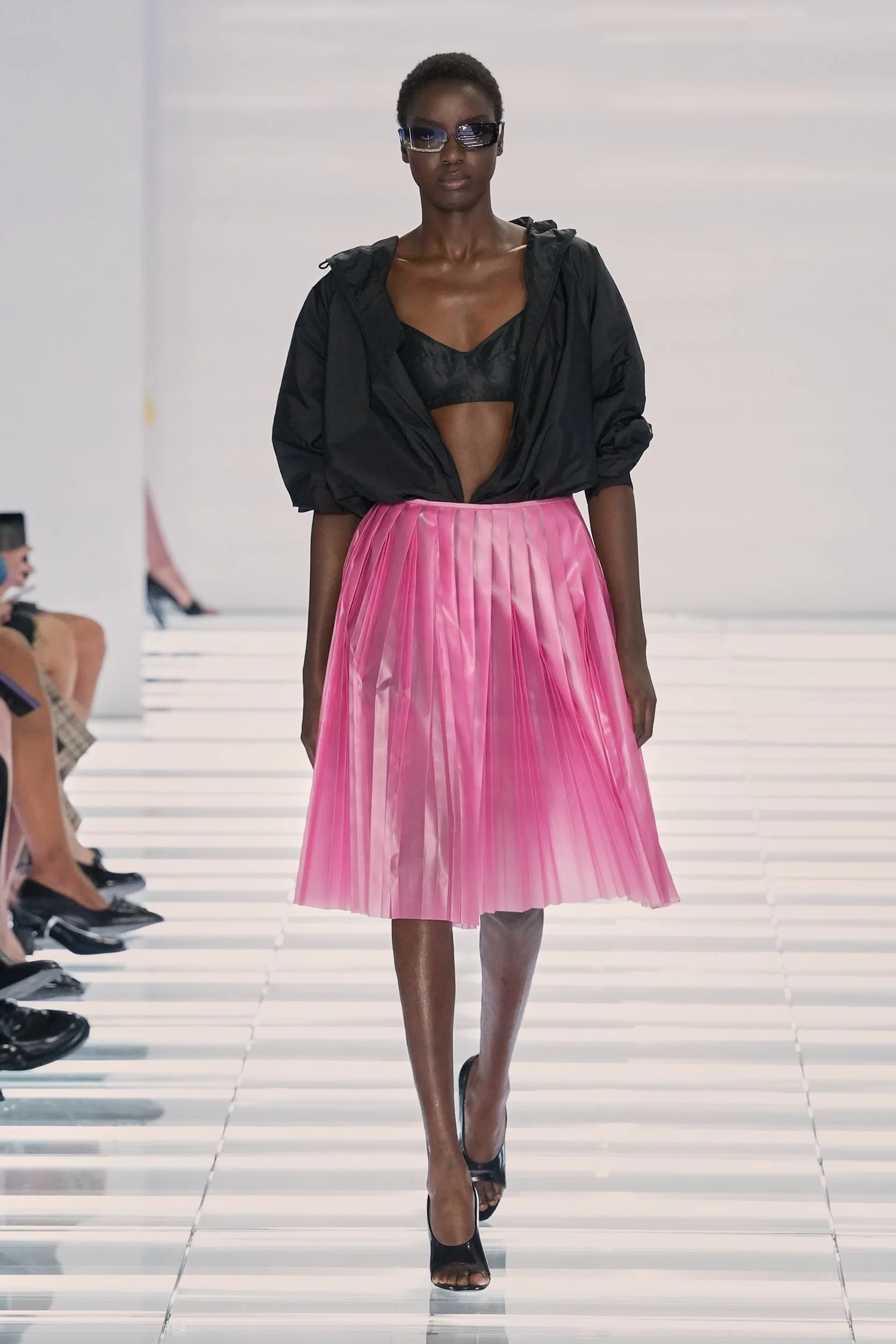
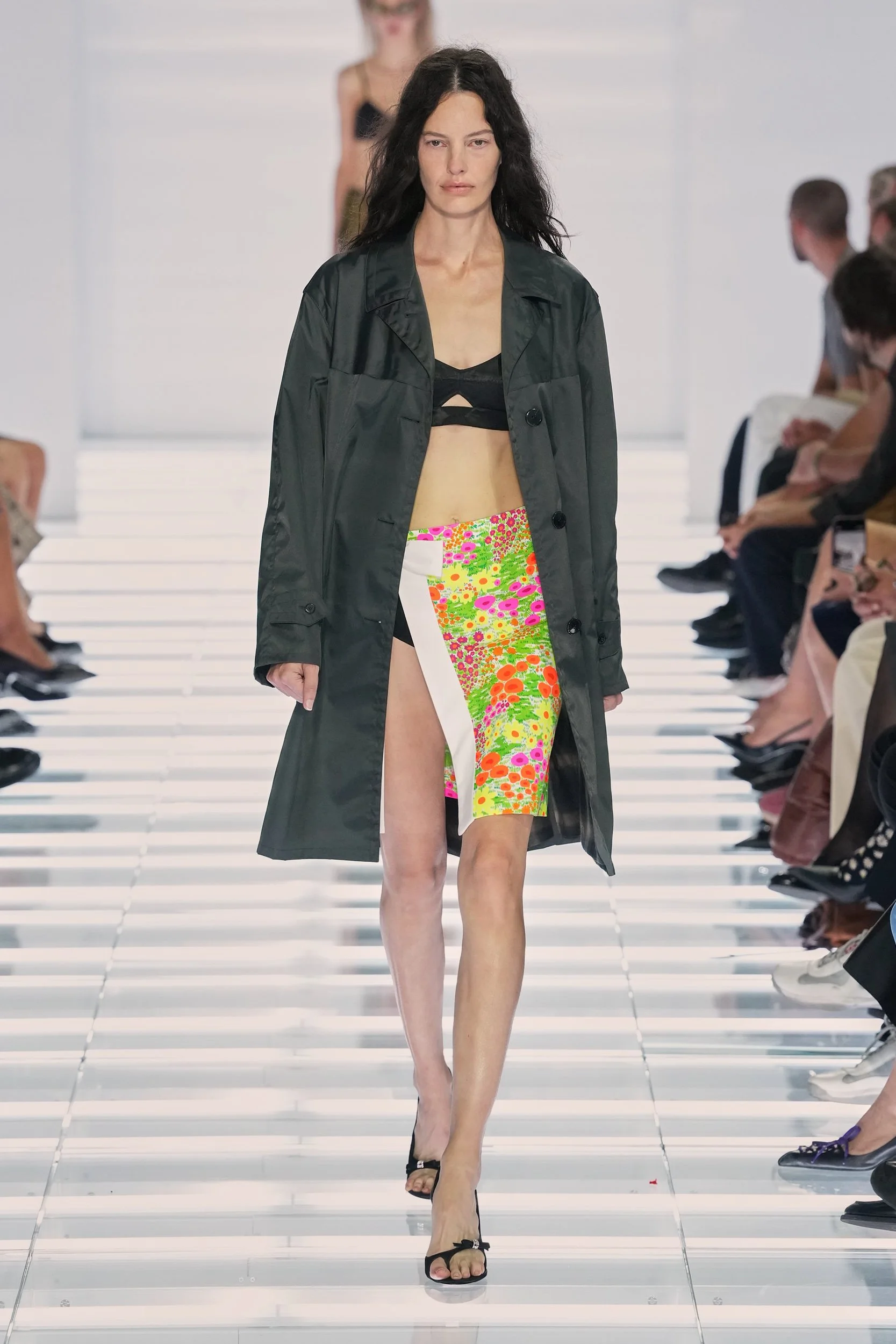
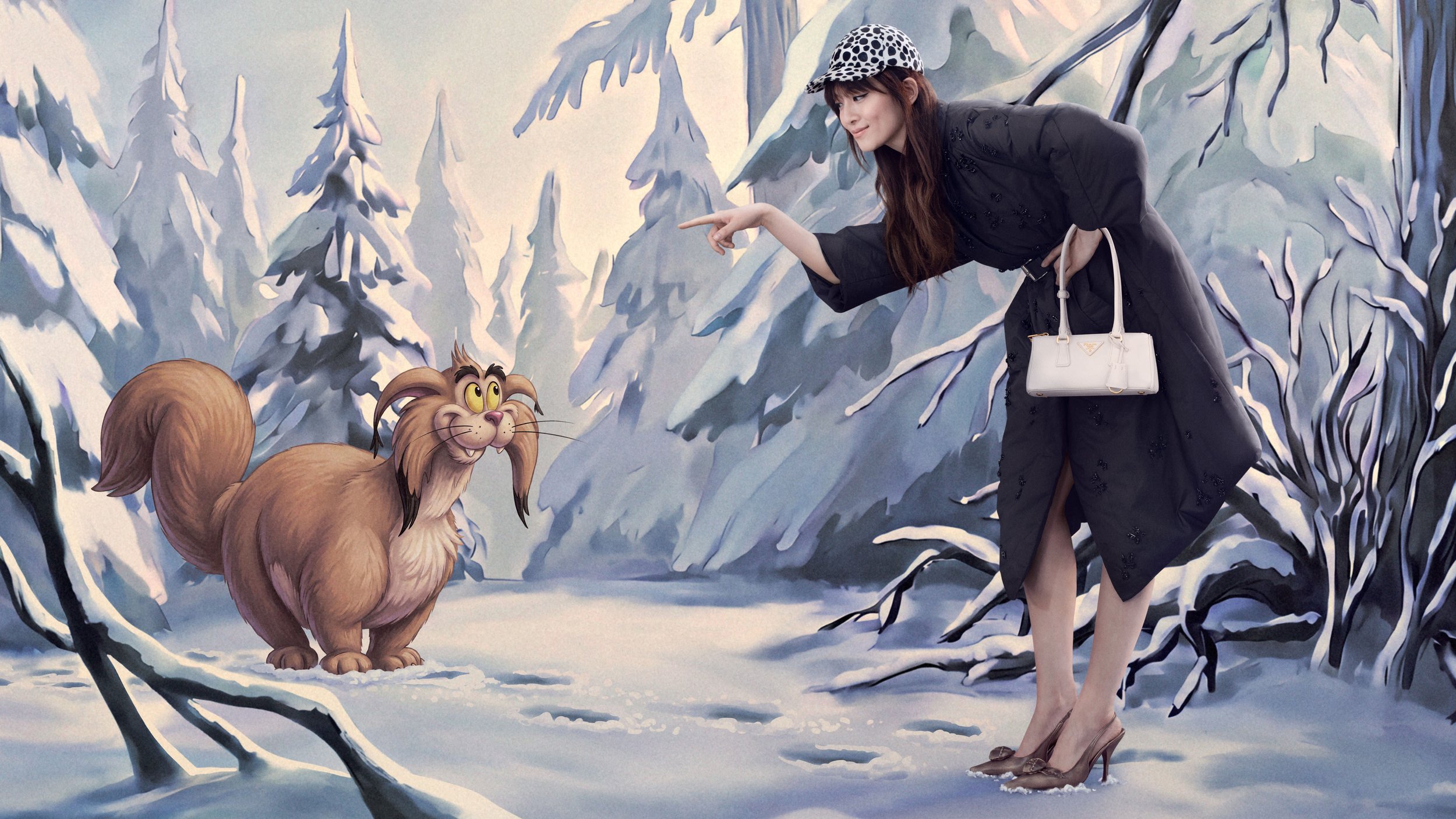
 Mrs Prada has previously confessed on record her love for skirts. “To me, they’re like T-shirts.” For the designer, they’re a democratic blank wall on which ideas are allowed to roam freely. And roam freely they did. Appropriately titled The Skirt, the collection made the garment a pleated canvas through which different stories were told. One of which was the tension between rough and delicate, a story as old as the brand. Heavy distressed leather jackets extended past the waistline, poorly concealing the feminine floral skirts underneath, of which only the hems were visible. Even if only in a flash, a pink skirt with a translucent white grid and animated flowers in different styles was brilliant.

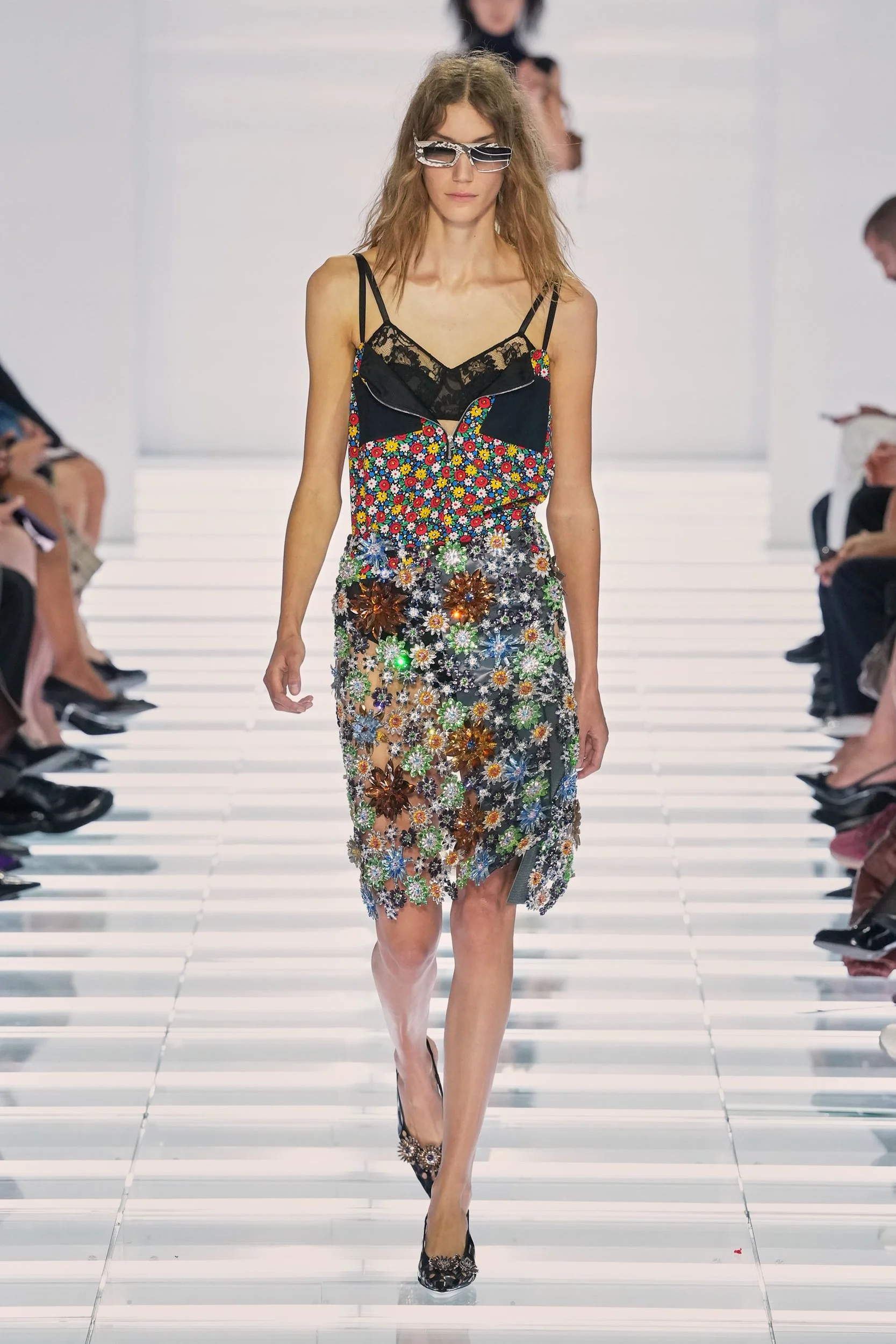
As skirts elongated past the mid-thigh, so did the narrative evolve. Neutral colored mid-length skirts connected only at the upper thigh, seemingly held in place by the thick panel of vibrant Velcro that accompanied the entire length of the garment. The functional flirts with the aesthetic in the rectangles of the gripping fabric, completely embellished with delicate crystal flowers. As the show progressed, these shiny bouquets moved to the waistband in otherwise sober skirts. At one point, they won the war, occupying the entirety of a see-through skirt, their petals shining as the models walked, revealing their legs through the blossoms. 

At first glance, it would be easy to reduce the collection to its titular muse. Prada, of course, can’t be reduced to such superficial readings. Beyond the adornment the eye can see, materiality becomes a playground for those who have the privilege to touch. Thick pleated skirts, seemingly made of leather, are composed of reworked nylon. A particular iteration of these, a set with an oversized vest and thickly pleated skirt in chartreuse, is reminiscent of Simons’ work at Calvin Klein. For both of the creative leaders of the brand, skirts have always been a point of interest. It’s refreshing to see it here expanded as a medium of its own. 

That’s not to say interesting silhouettes were confined to the bottom ratio of the body. Even amongst skirts galore, tops and shirts coexisted interestingly with the main muse. Metallic tops and bras were often left open in the back, their separated backs flipping like wings. U-shaped bralettes resembled the fastenings on a backpack, while bandeau tops gripped the model’s arms closely to their chest, both with attachments for pouches on the side. As the last looks came by, the audio of a feminine moan was replaced with Connie Francis singing Hurt. “To think you’d want someone new breaks my heart.” Yet, we don't. Season after season, Prada is always the one.


Words by Pedro Vasconcelos

EMPORIO ARMANI SS27

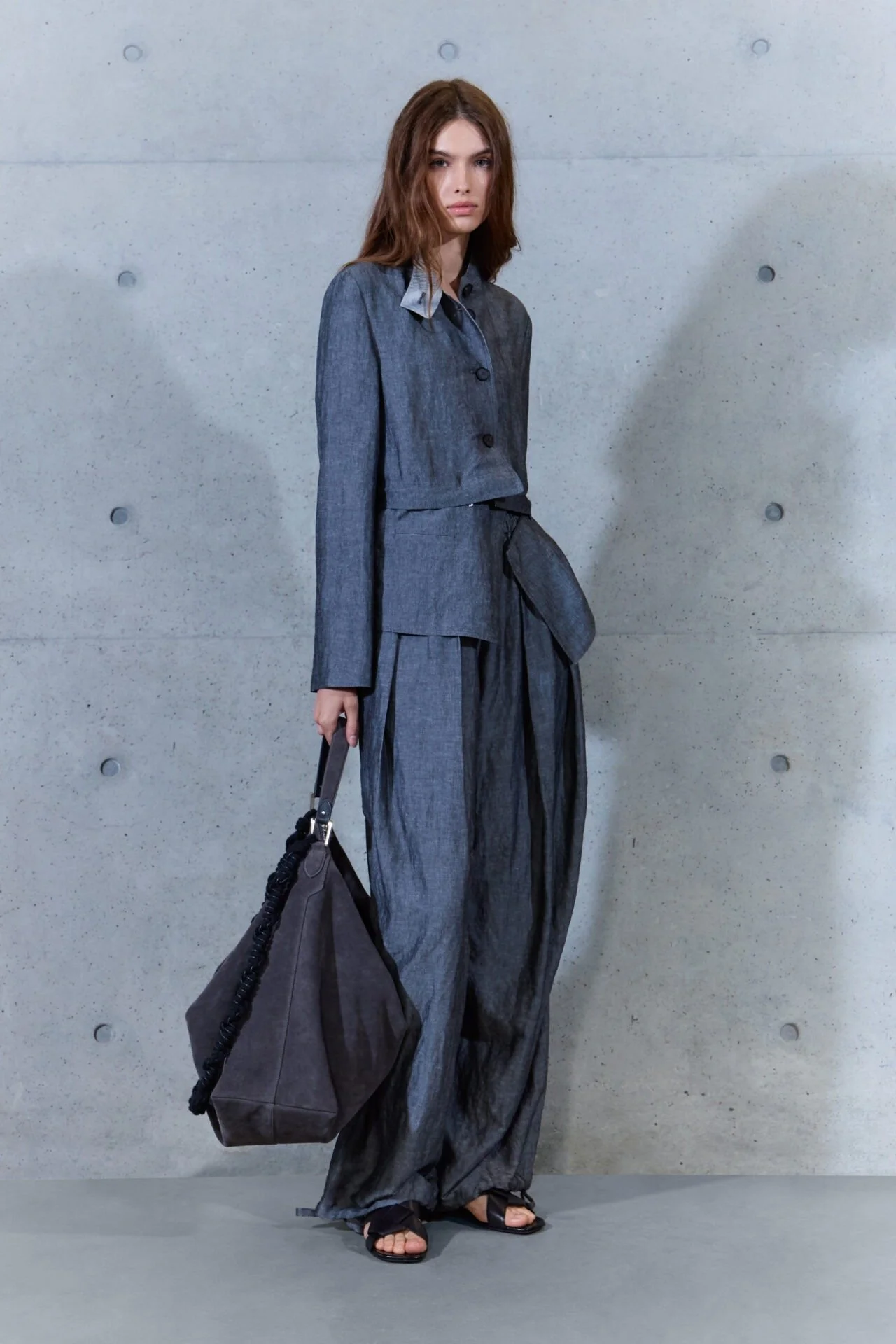
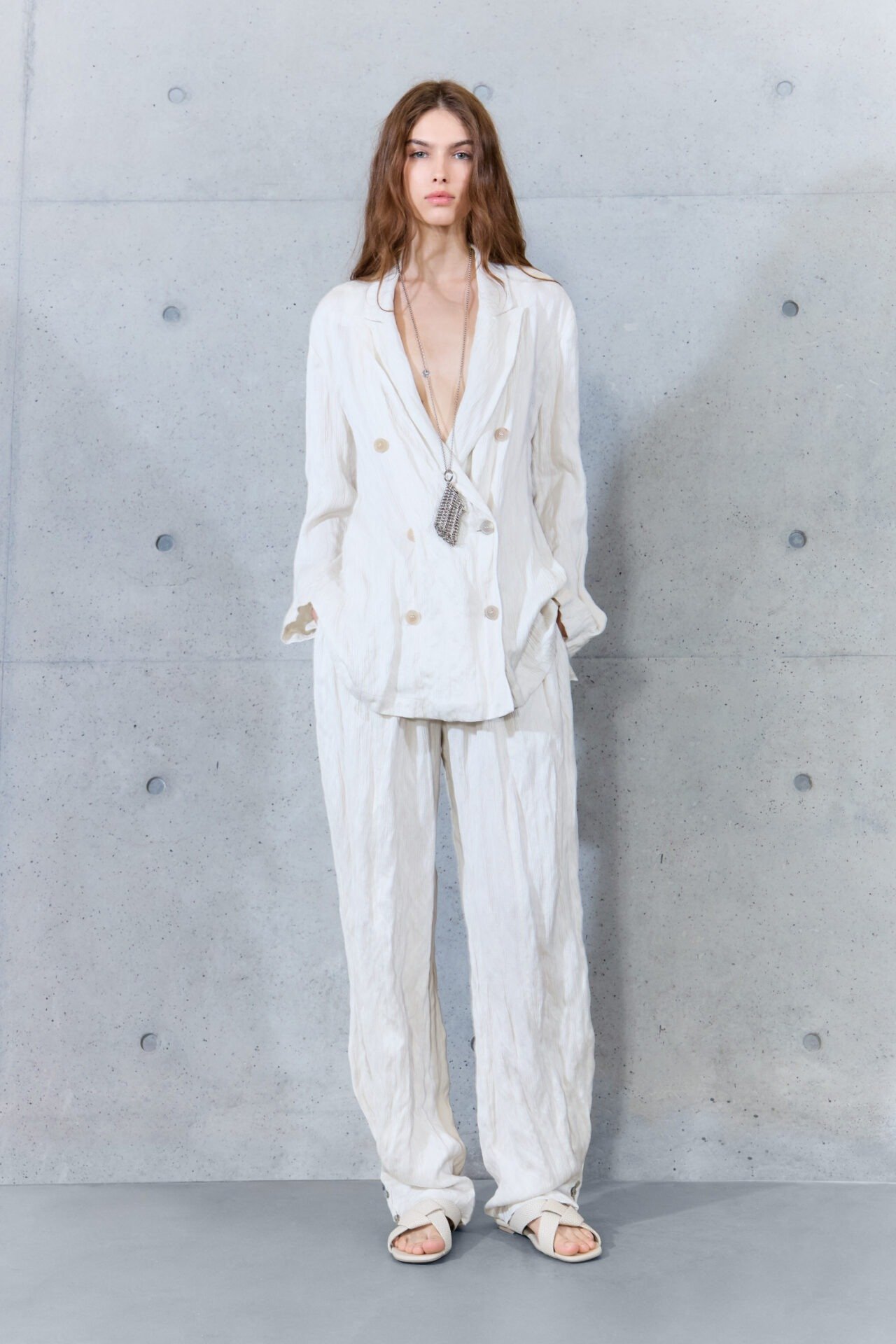
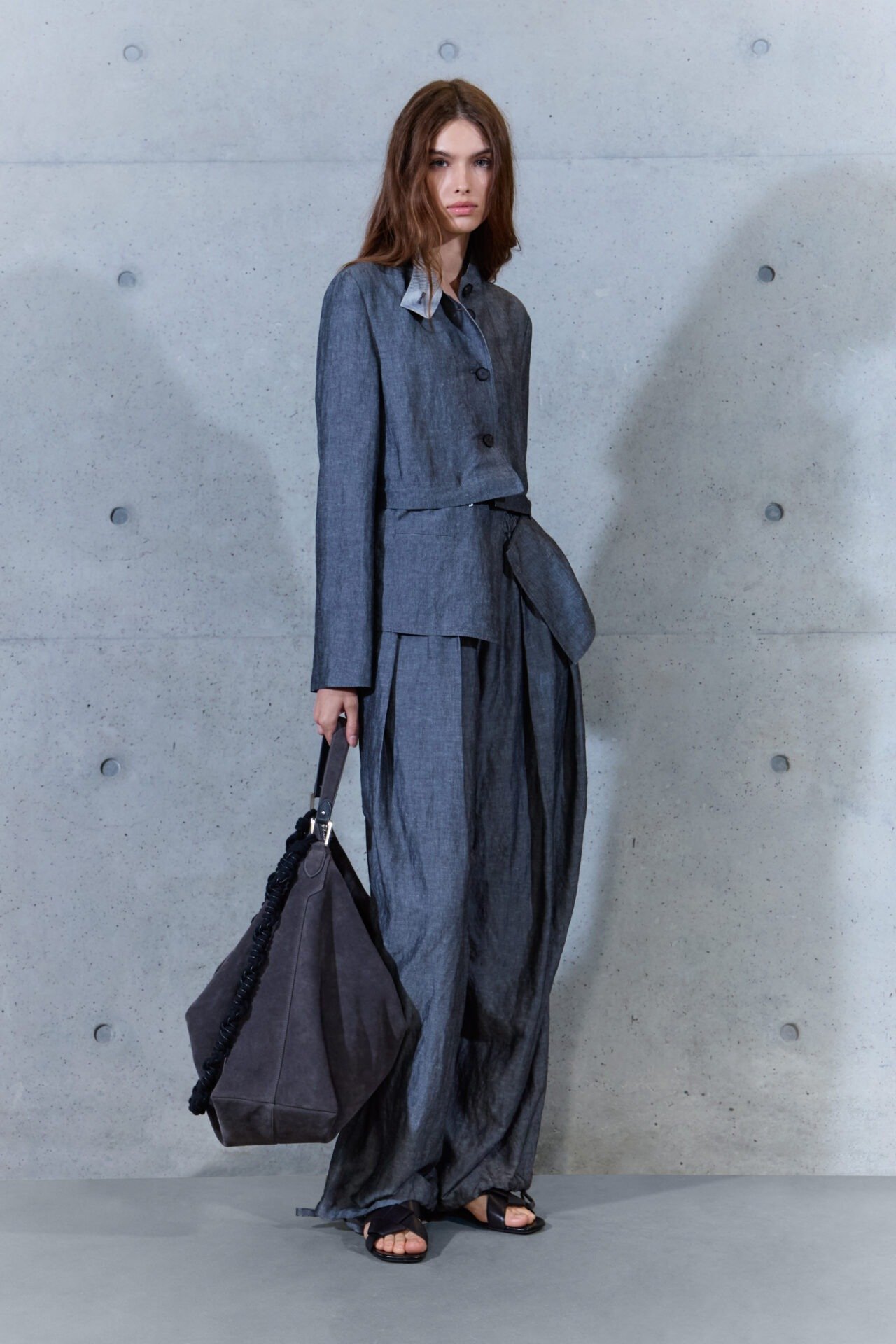
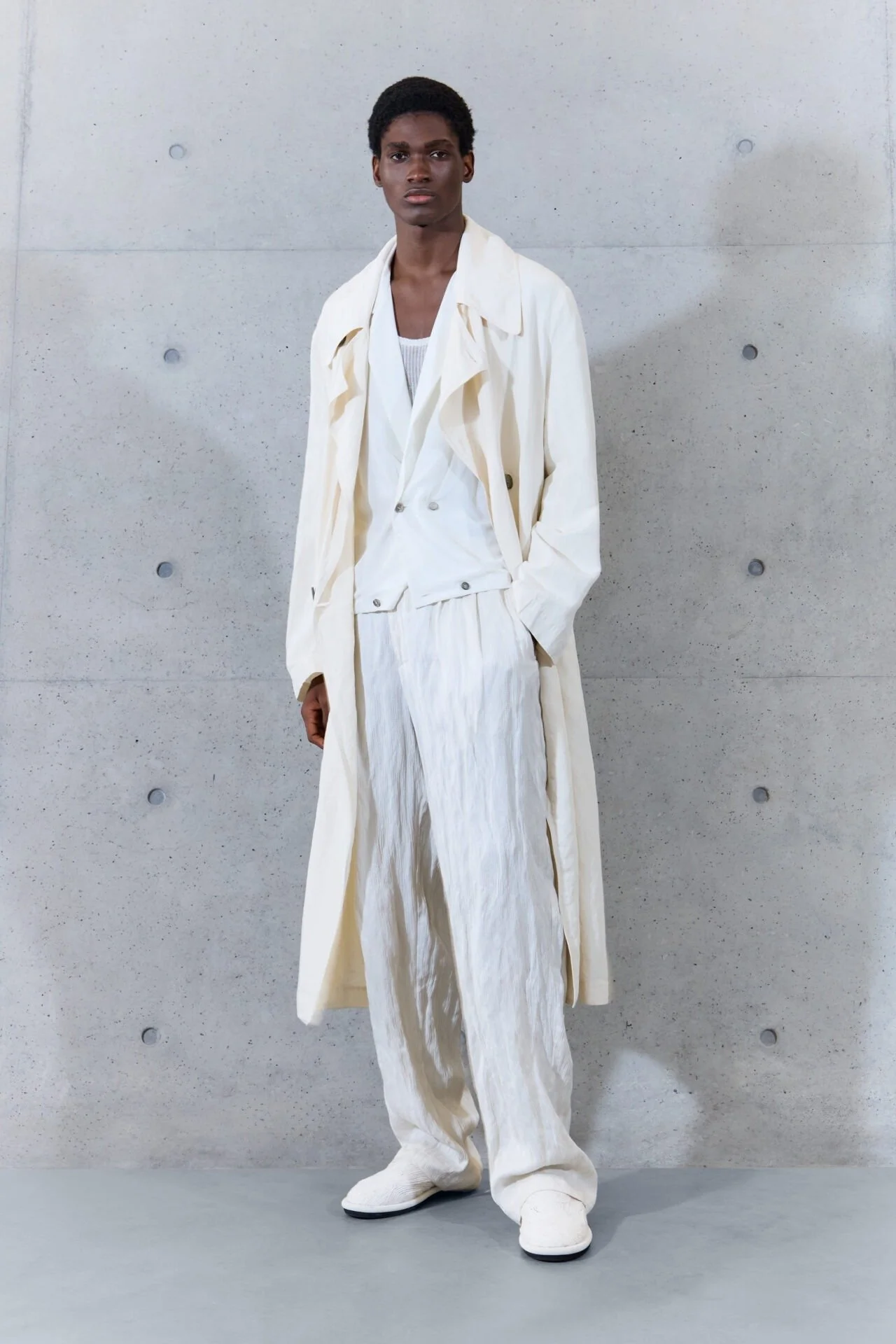
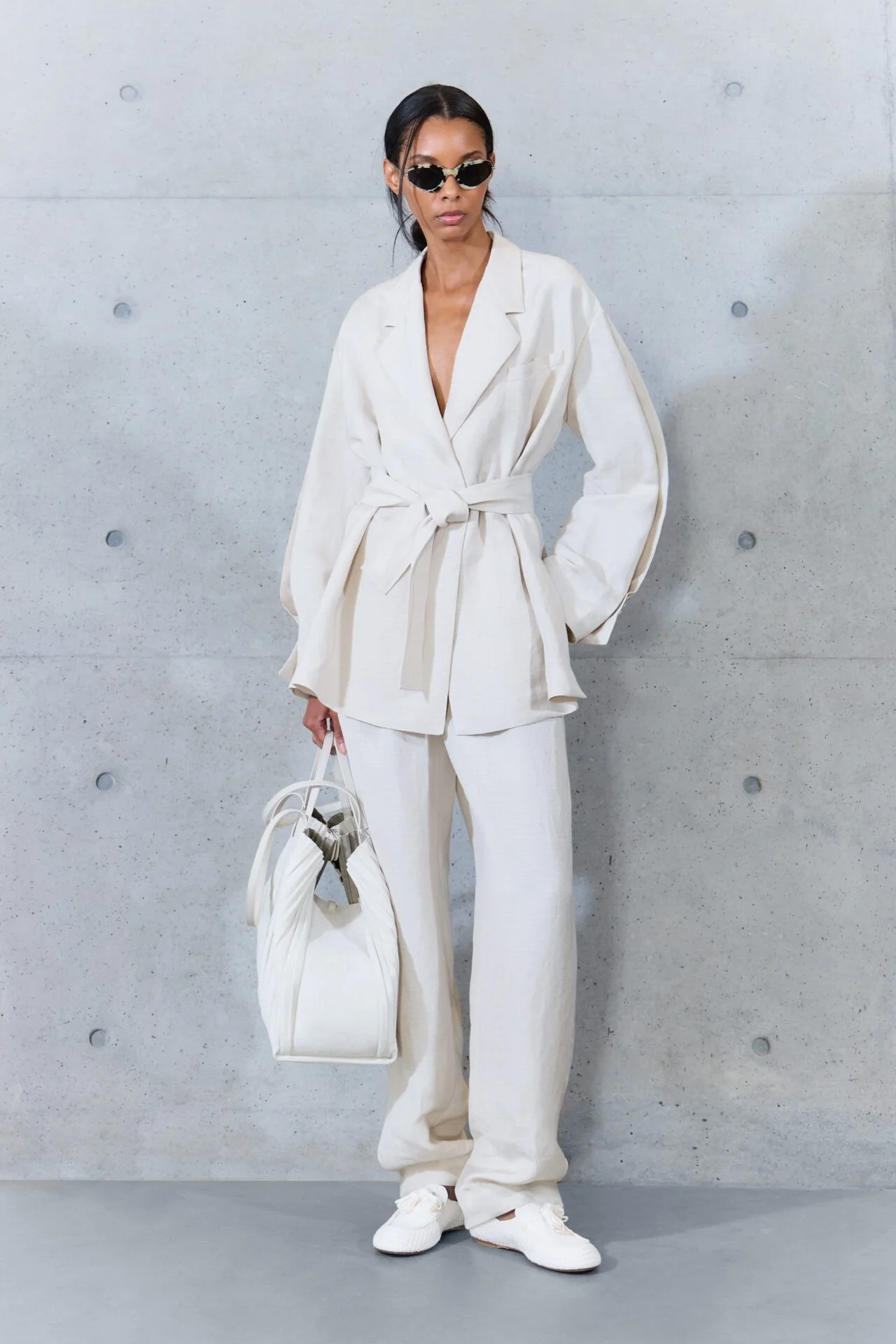
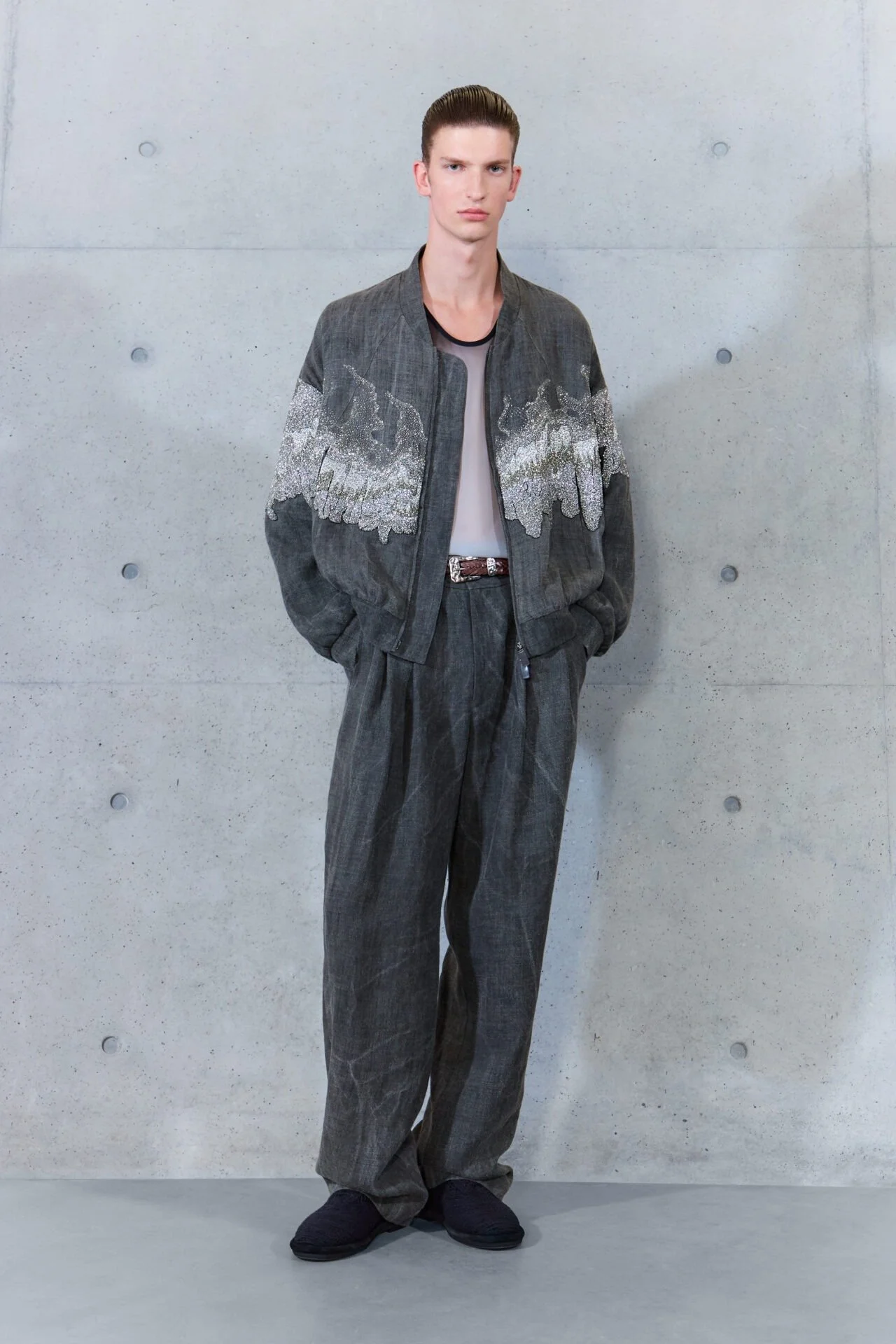
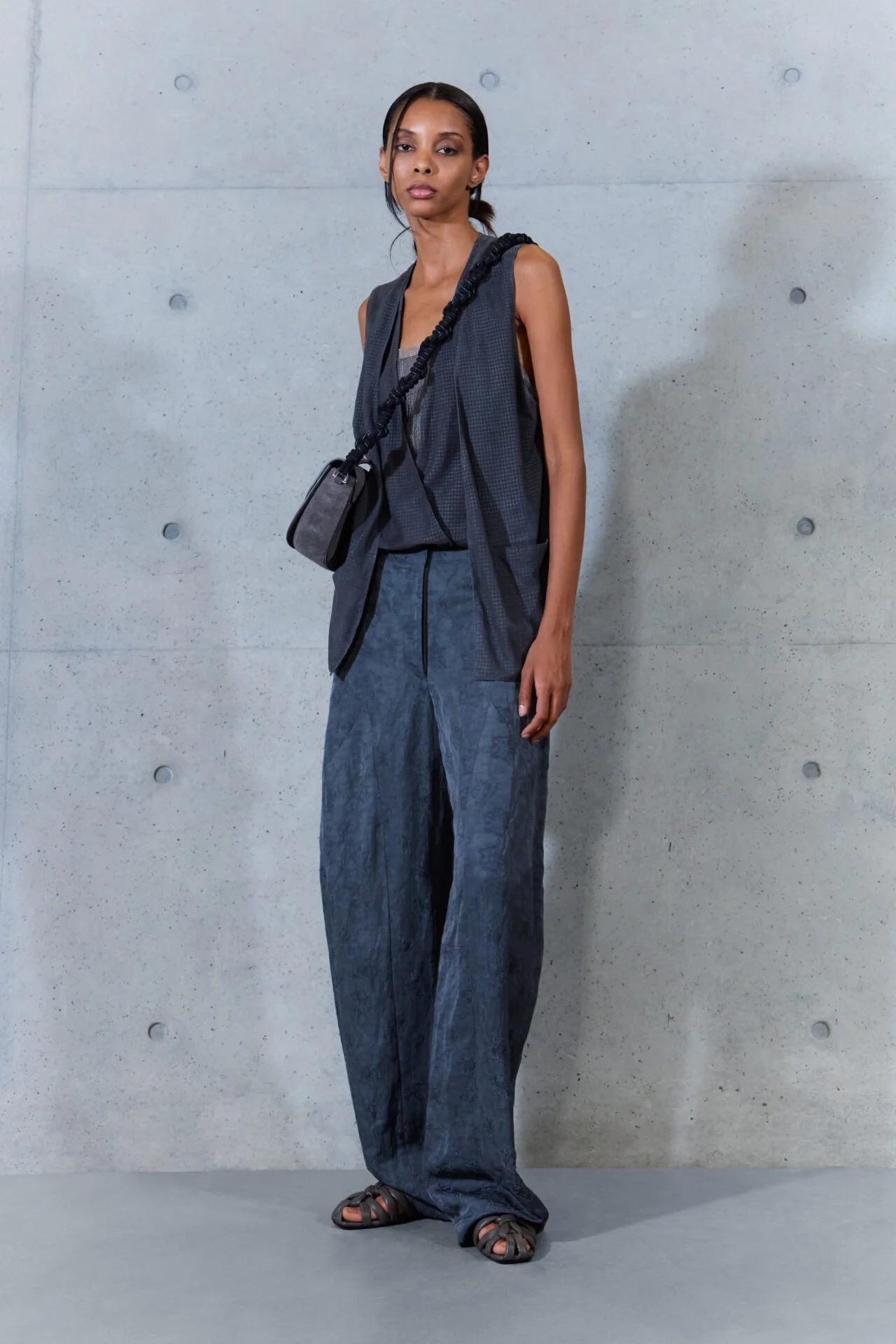
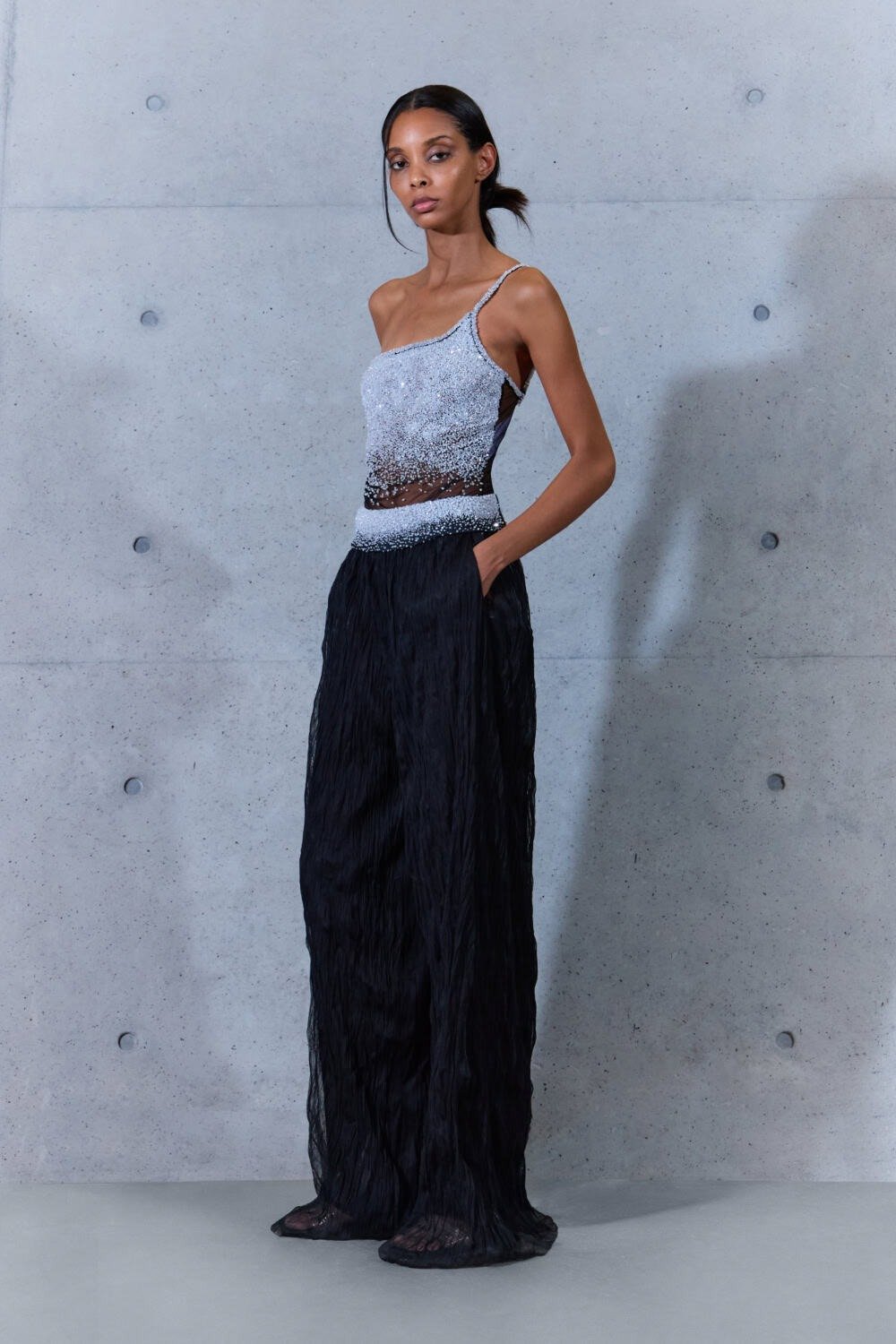
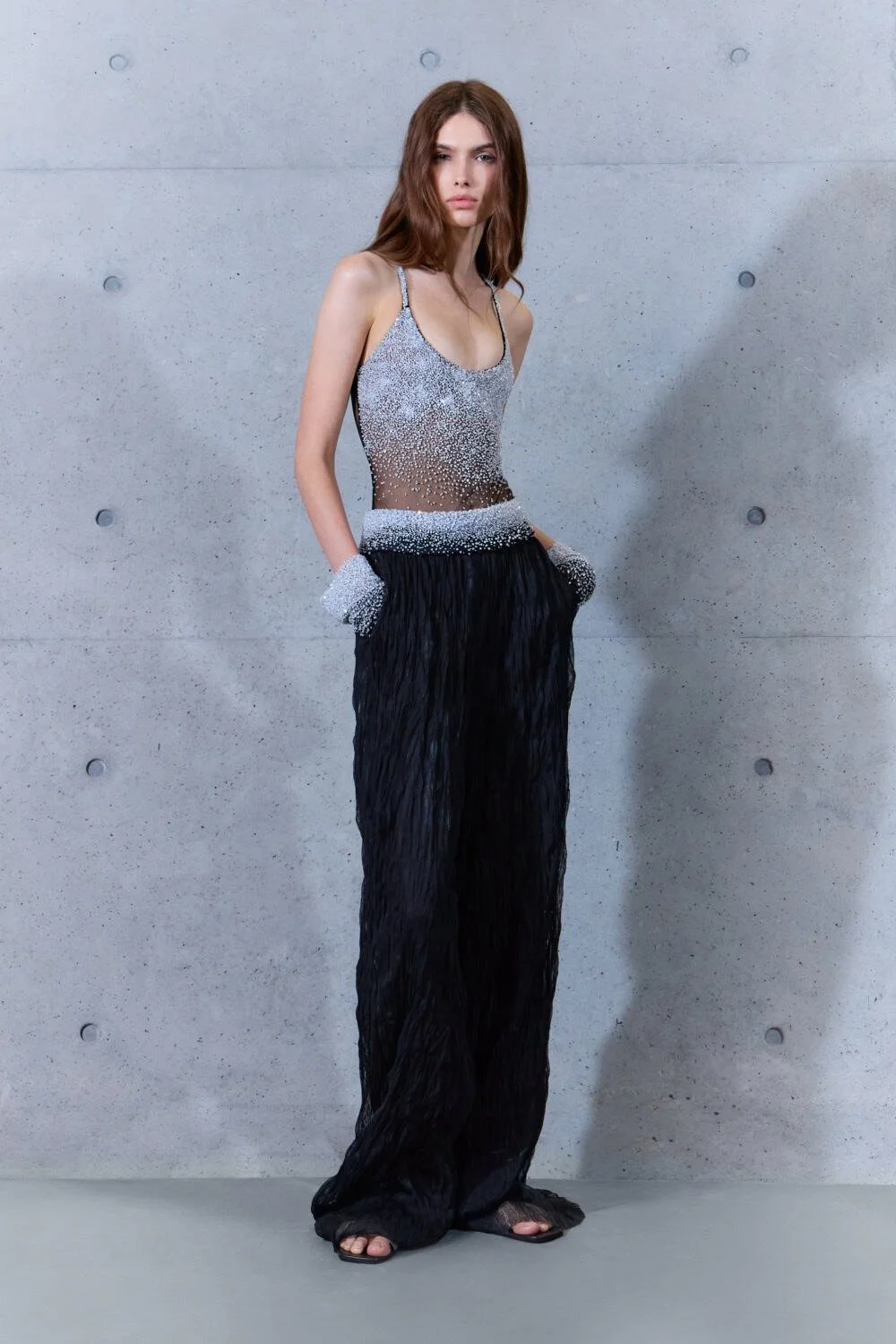
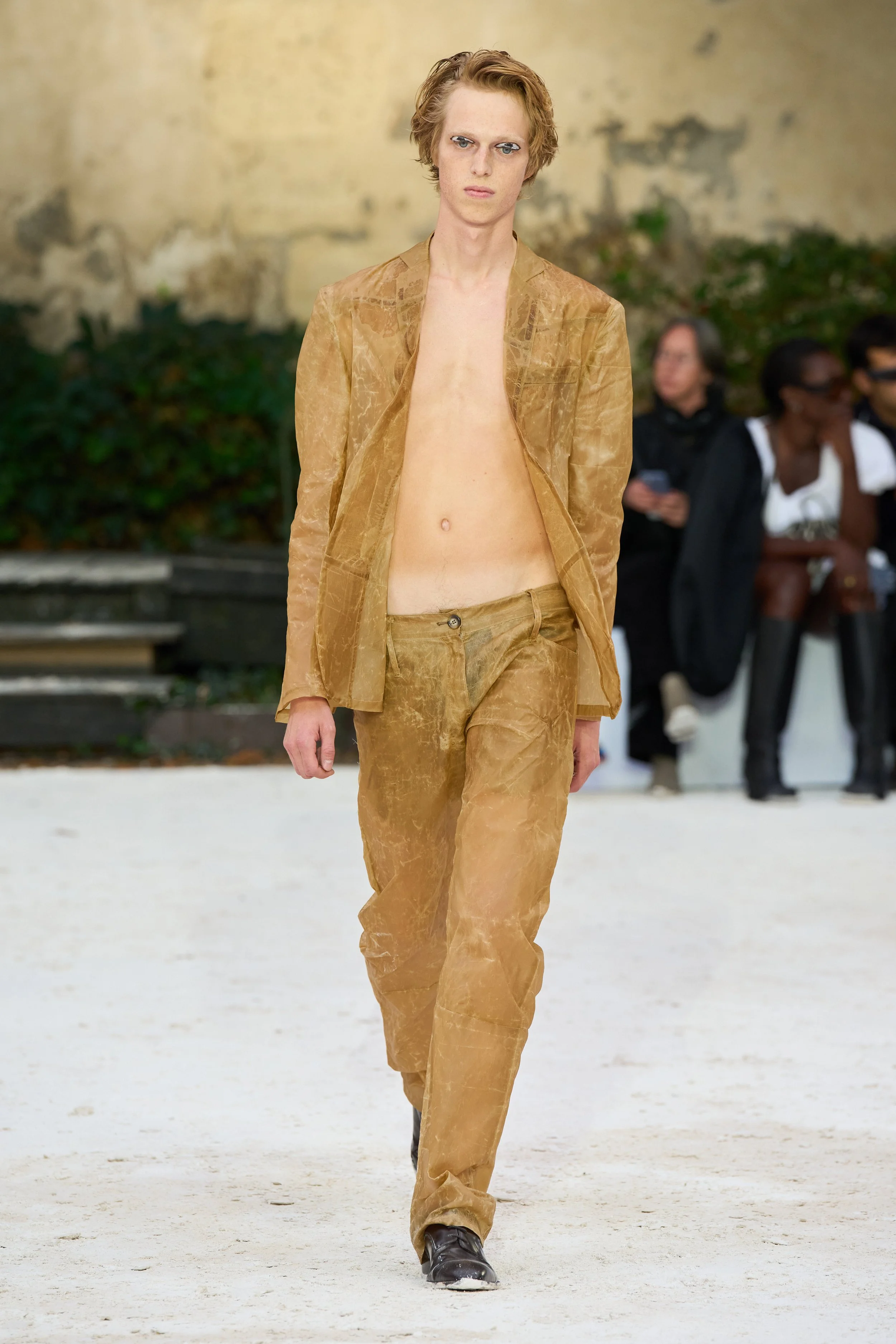
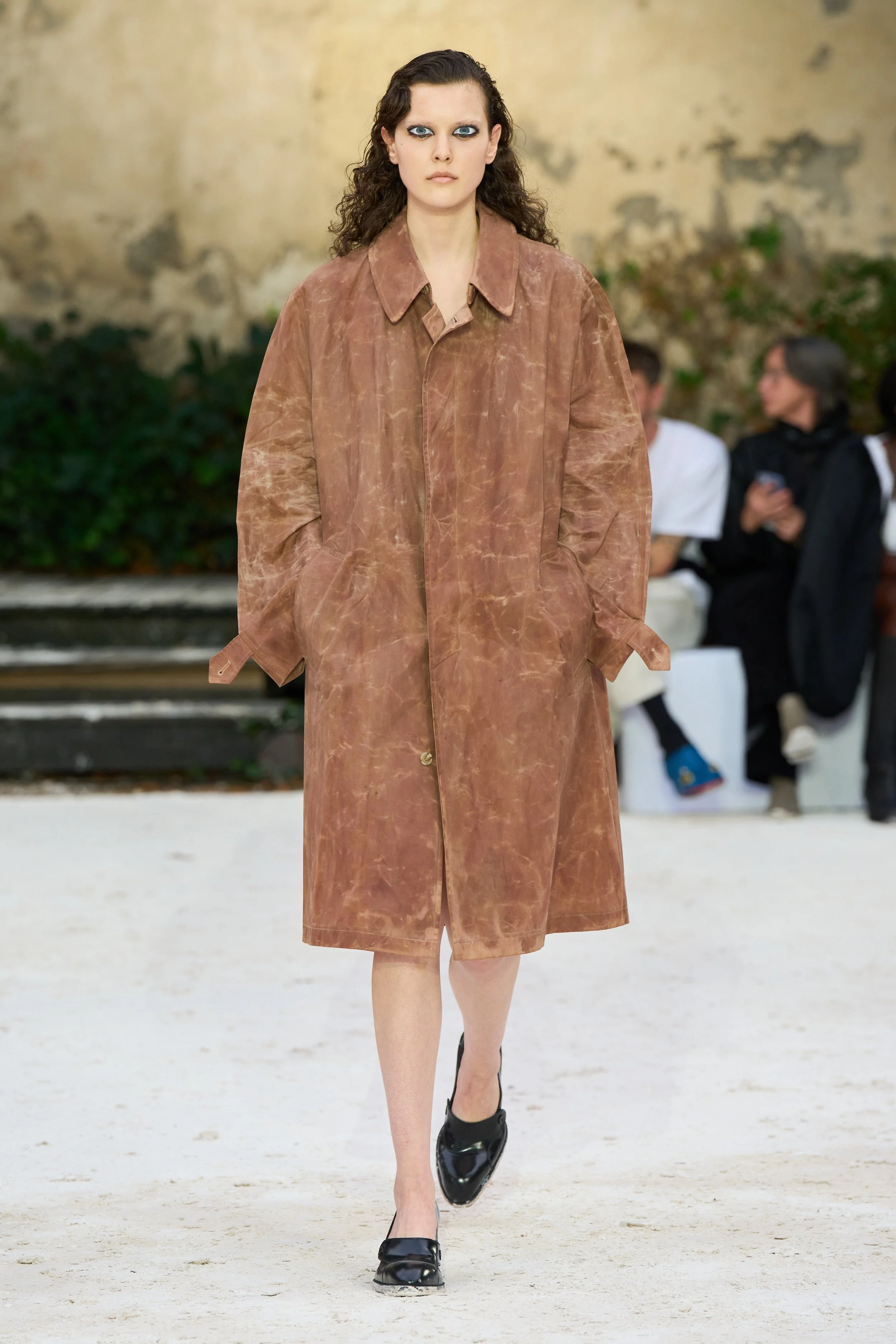
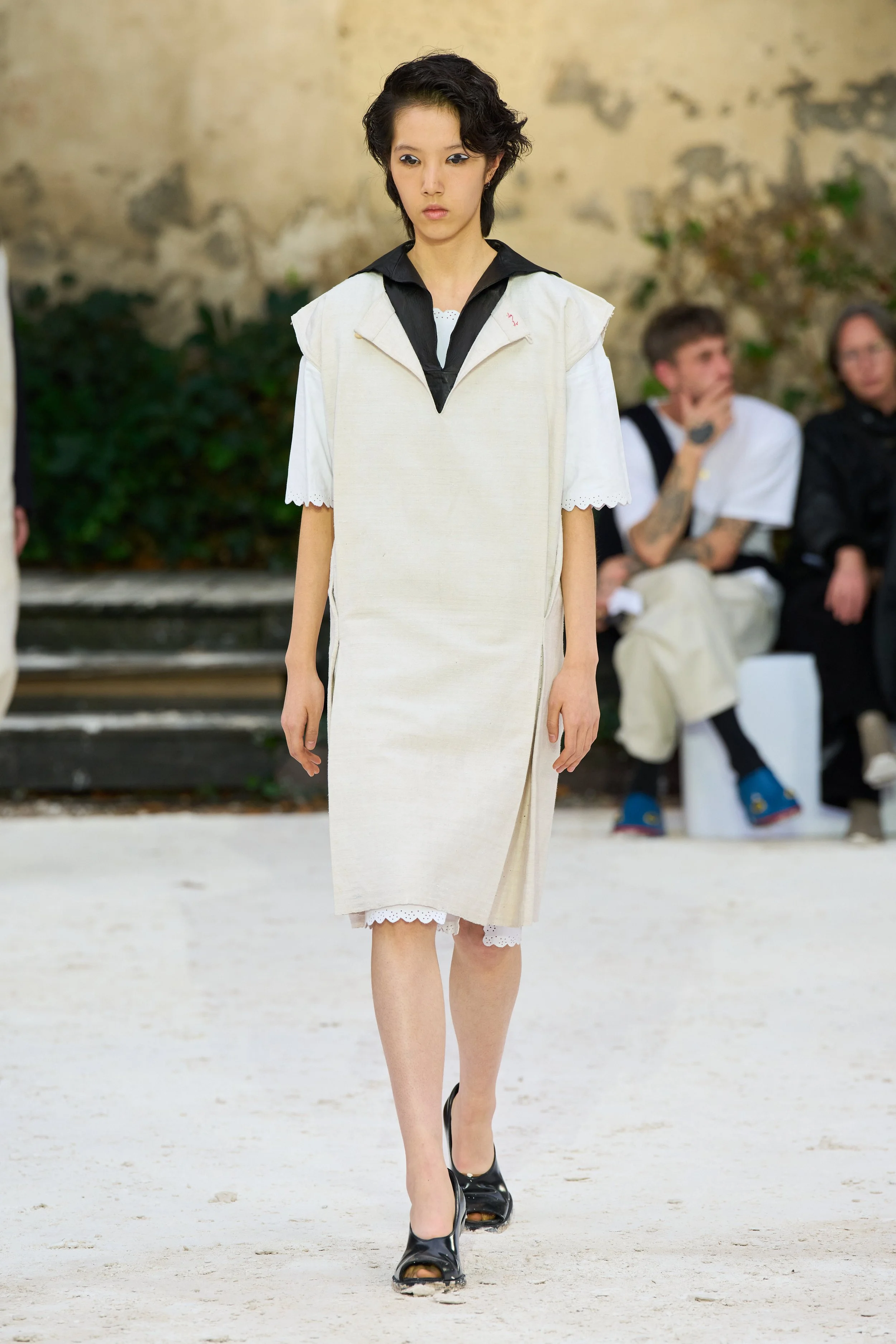
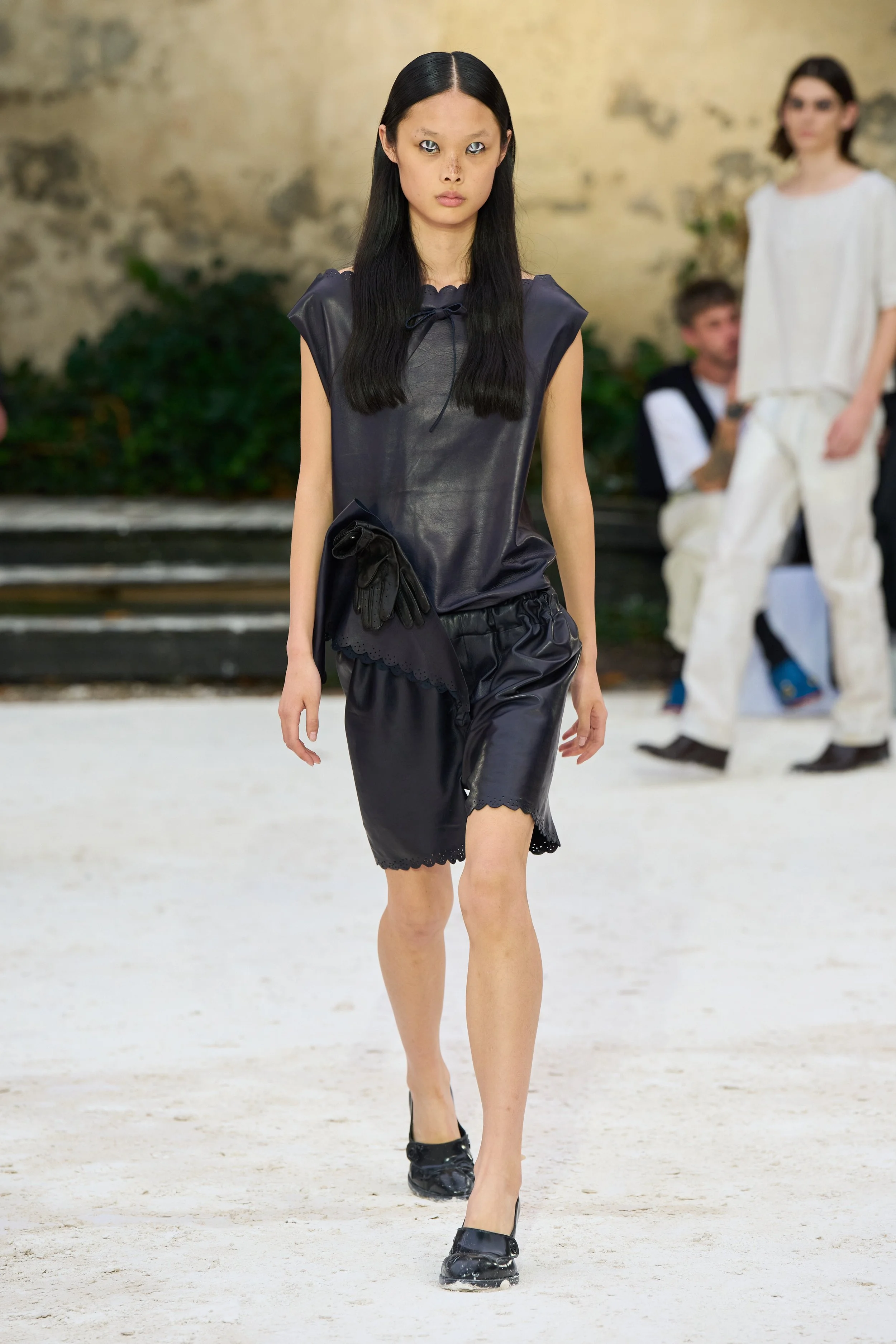
The Emporio Armani SS27 show was the last one for Leo Dell’Orco and Silvana Armani. From now on, it will be Dario Vitale who will imprint his vision on the brand. In their final rendition of Emporio Armani, the designer duo offered a vision that feels timeless yet distinctly contemporary, rooted in the brand’s mission to remain desirable while staying faithful to its own conception of style.

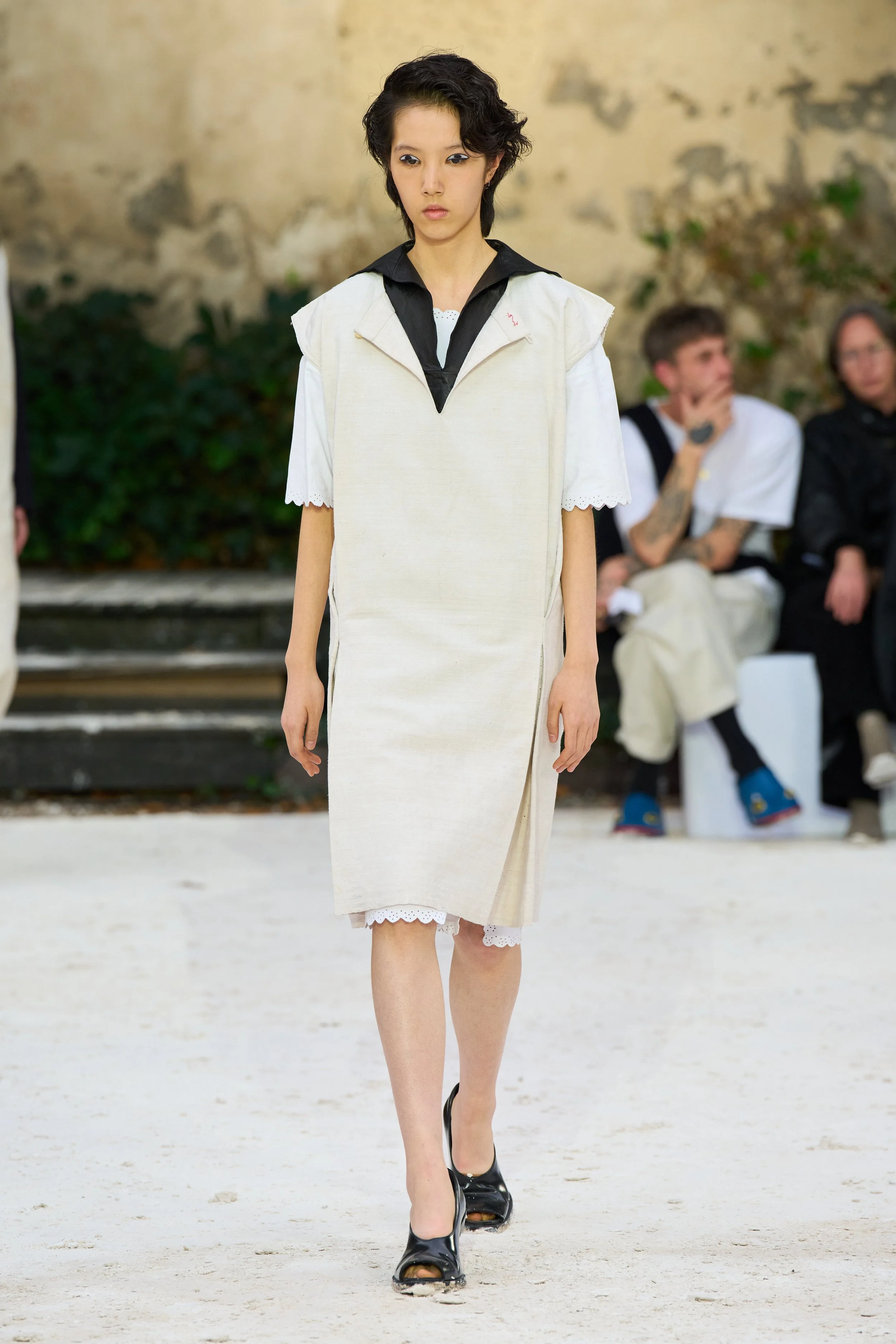
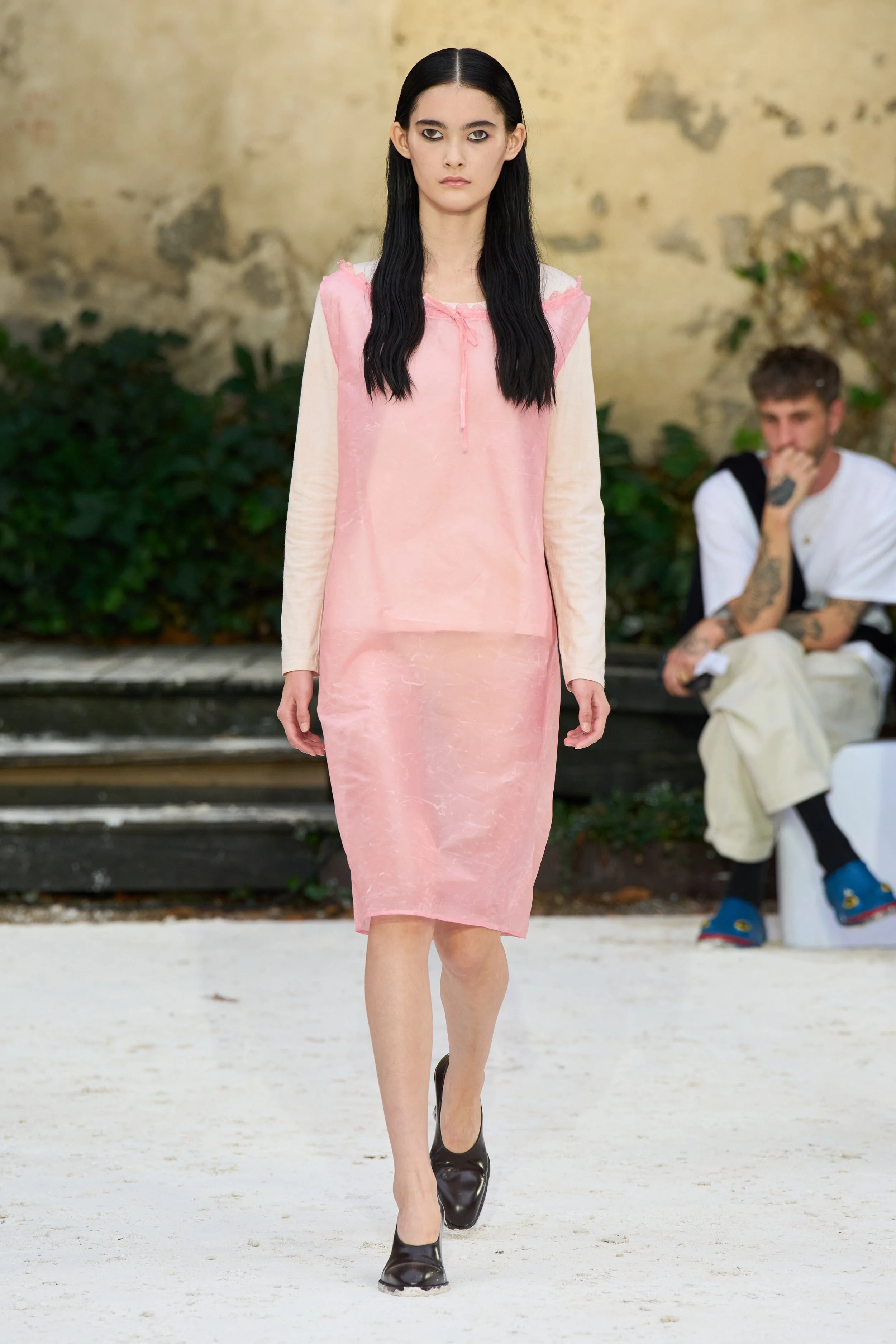
Loose and breathable fabrics, such as linen and organza, are seen throughout the collection. The silhouettes remain classic, but the play with proportions and textured fabrics gives them a very modern feel.

Accessories are scarce throughout the collection. This simplicity is refreshing, allowing the eye to focus on the fabrics, the construction and the details. The colour palette is restrained, with black, white, navy, indigo and grey leading the collection, while the styling remains largely monochromatic.

The collection plays with the concept of time, specifically the traces it leaves on objects. To explore this idea, salt crystals were used to transform fabrics, giving them a raw finish that disrupts the otherwise classic and soft look. Distressed fabrics further evoke the marks and imperfections left by time, introducing a sense of erosion and fragility into the offering.The collection also plays with layering and the characteristic simplicity of Armani through elegant silhouettes. Layering becomes a creative medium to express individuality through clothing, while elegance is conveyed through suits, some of them crafted in organza for a more relaxed approach.

Evening looks are distinguished by beading on sheer fabrics, creating a femininity that never becomes overtly sensual, but rather reflects the restrained elegance characteristic of the brand.


Words by Carolina Benjumea

TOD'S SS27

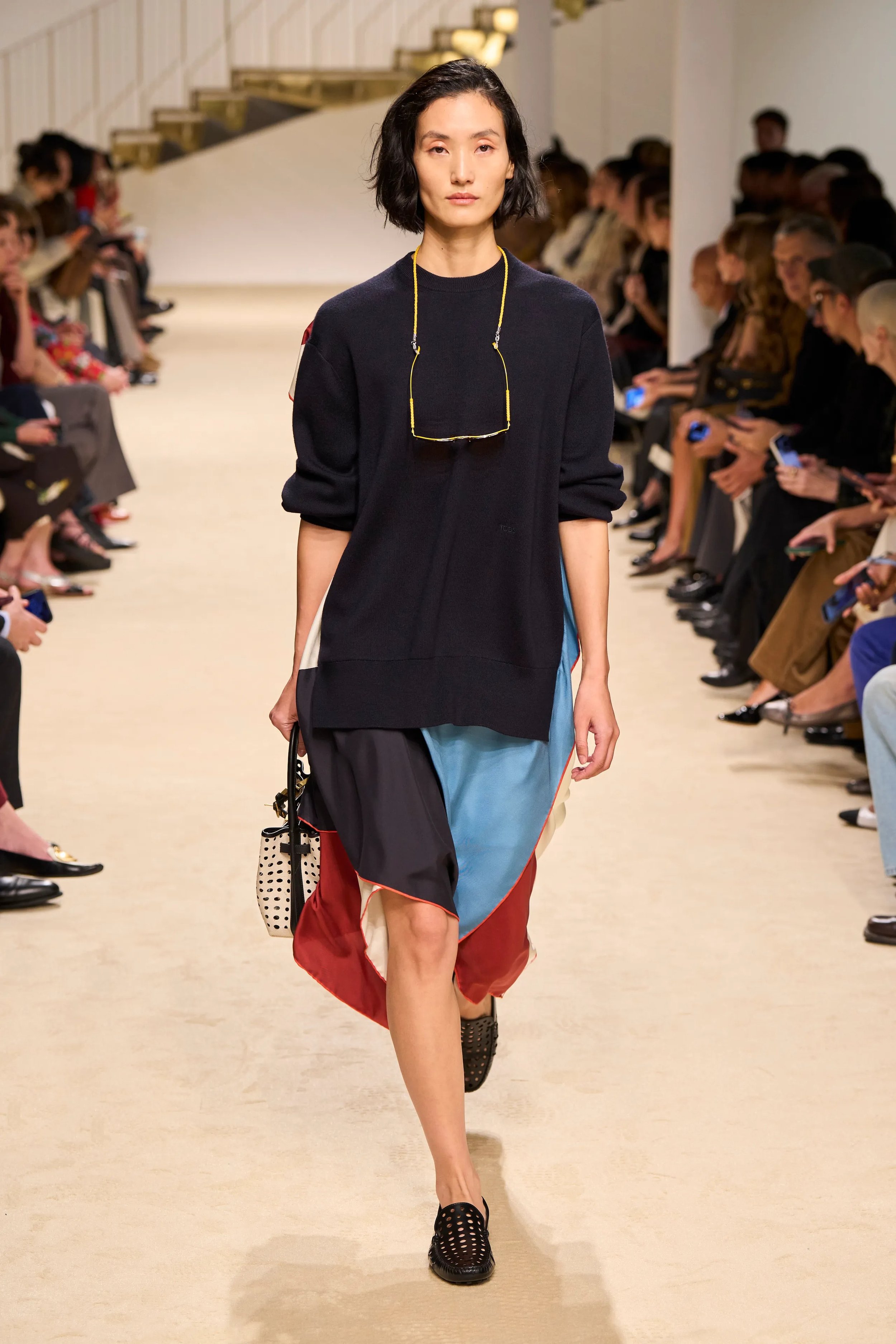
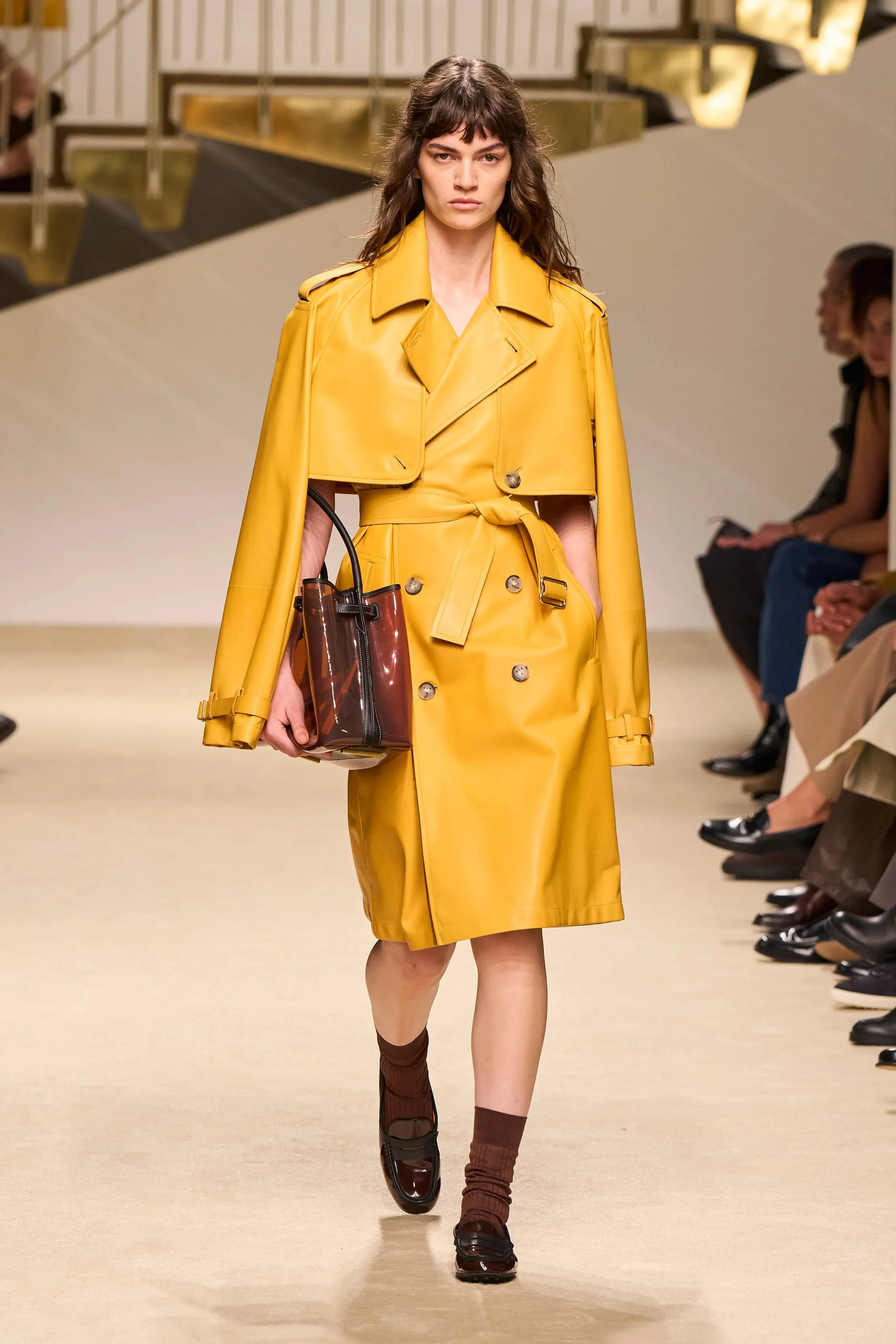
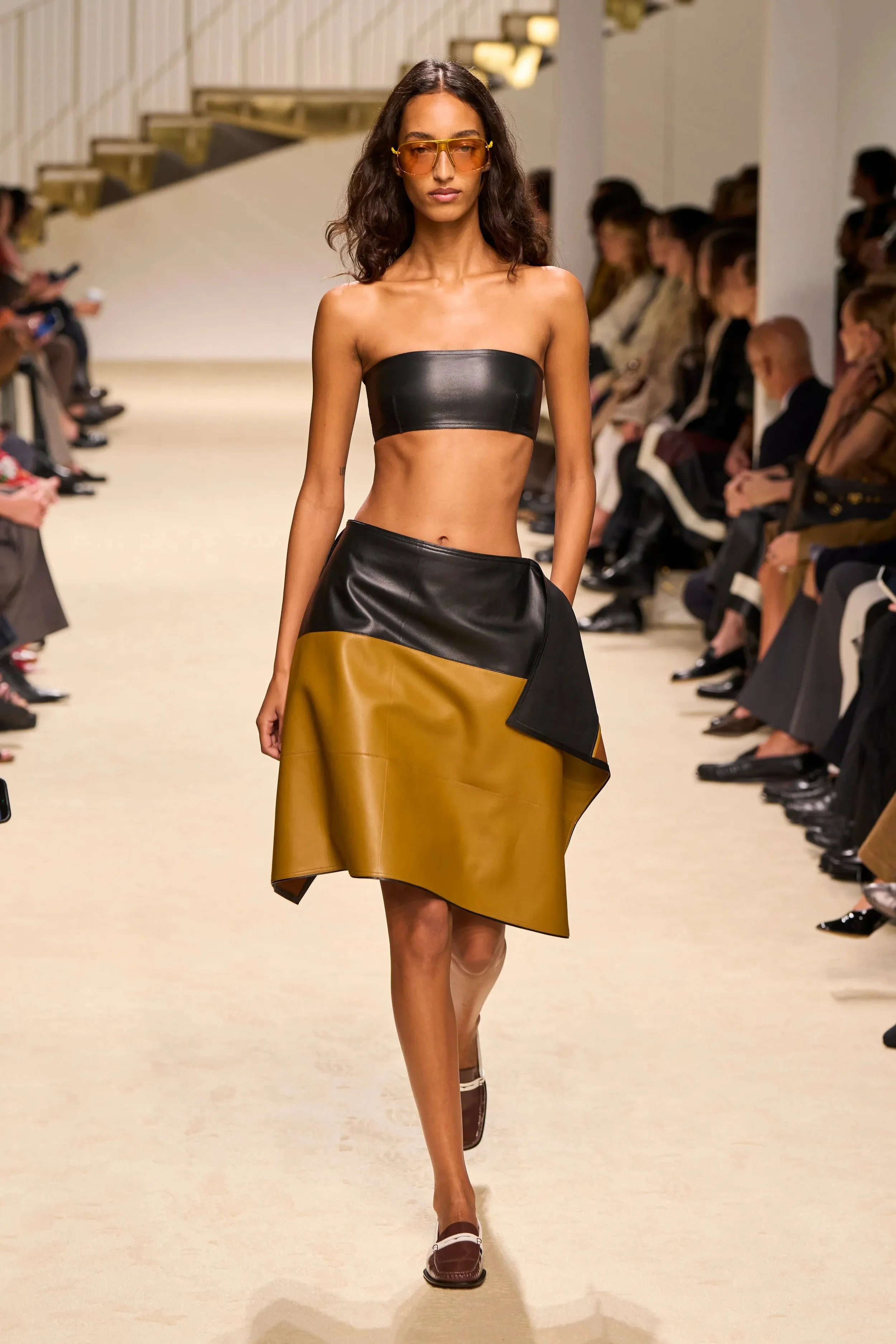
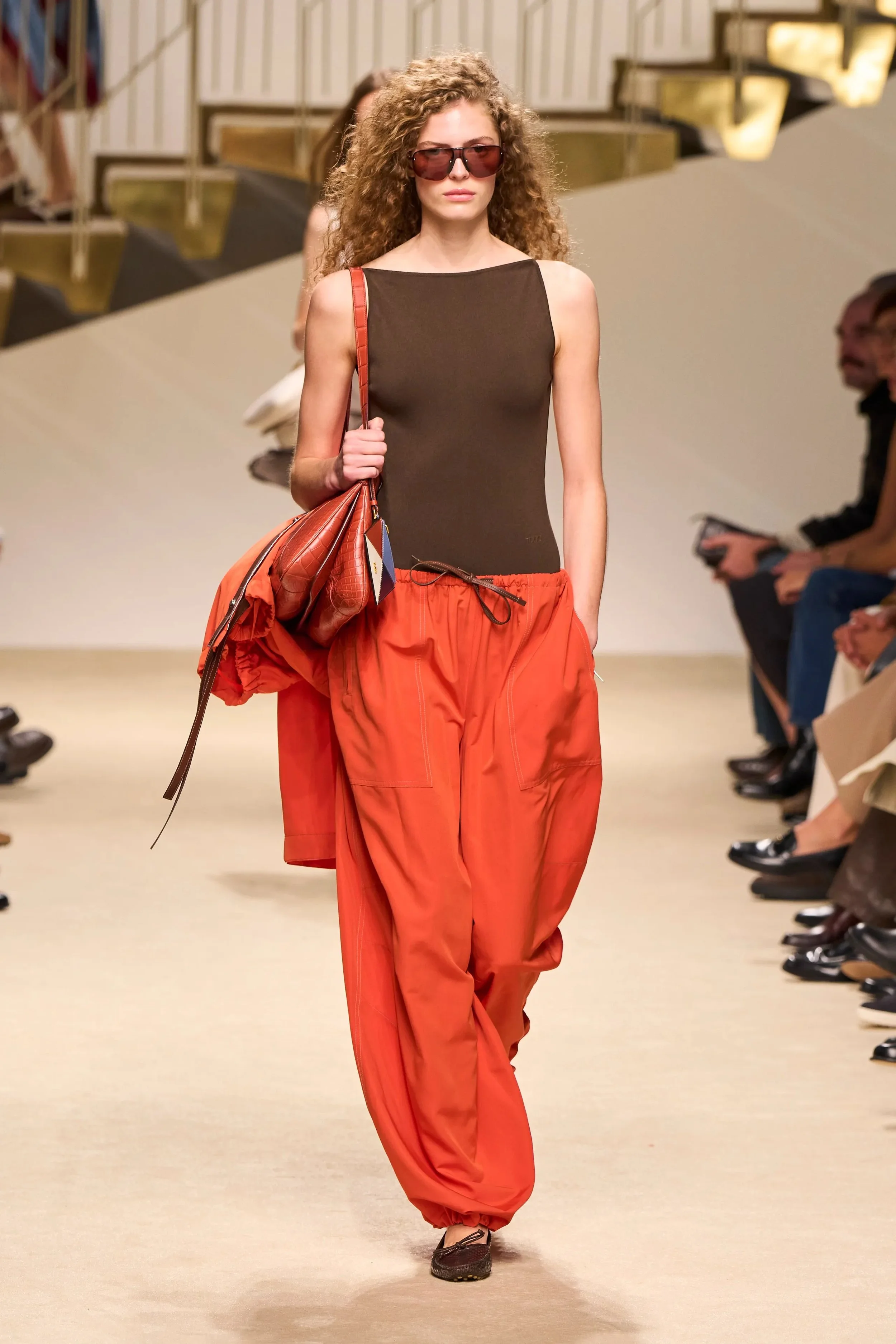
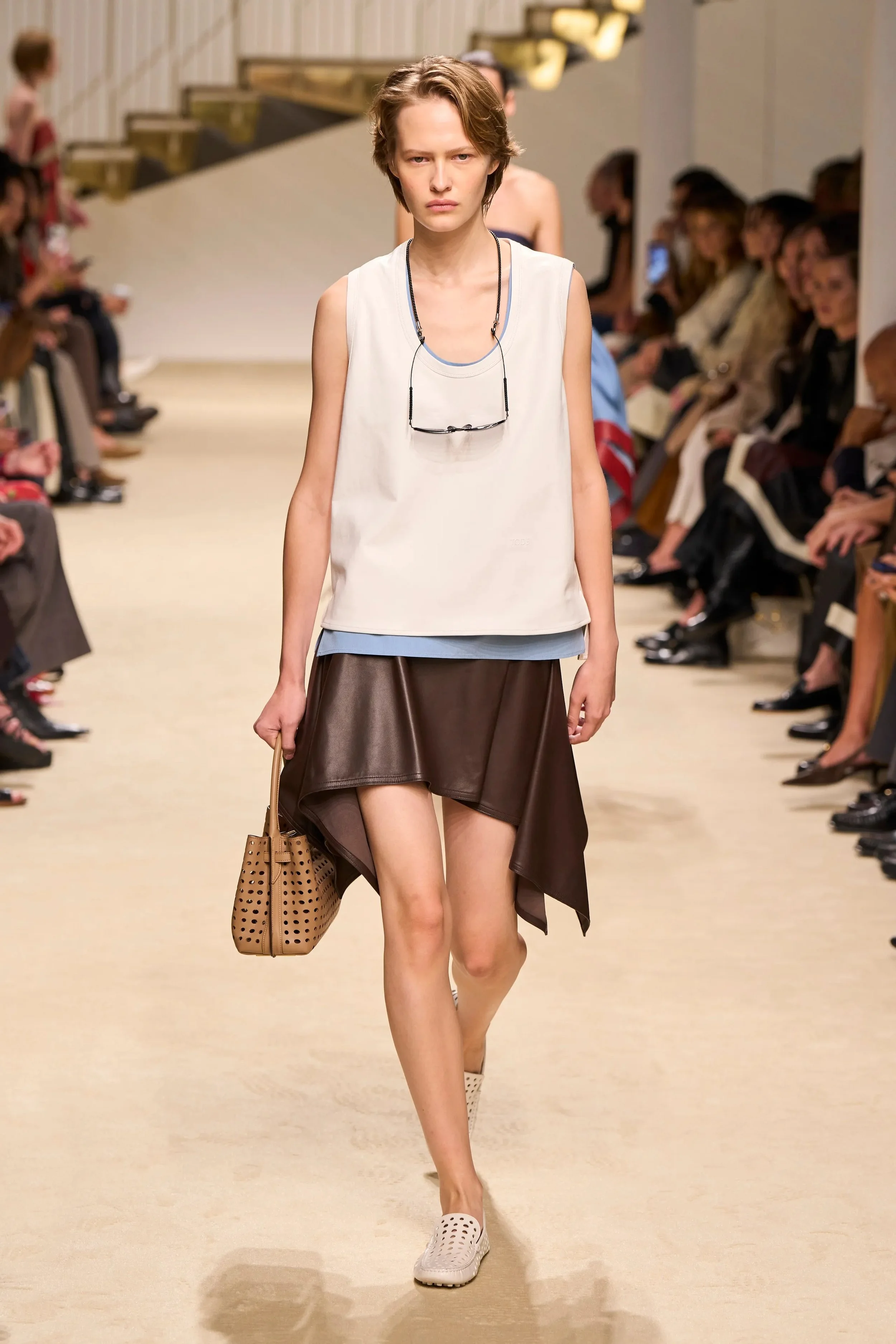
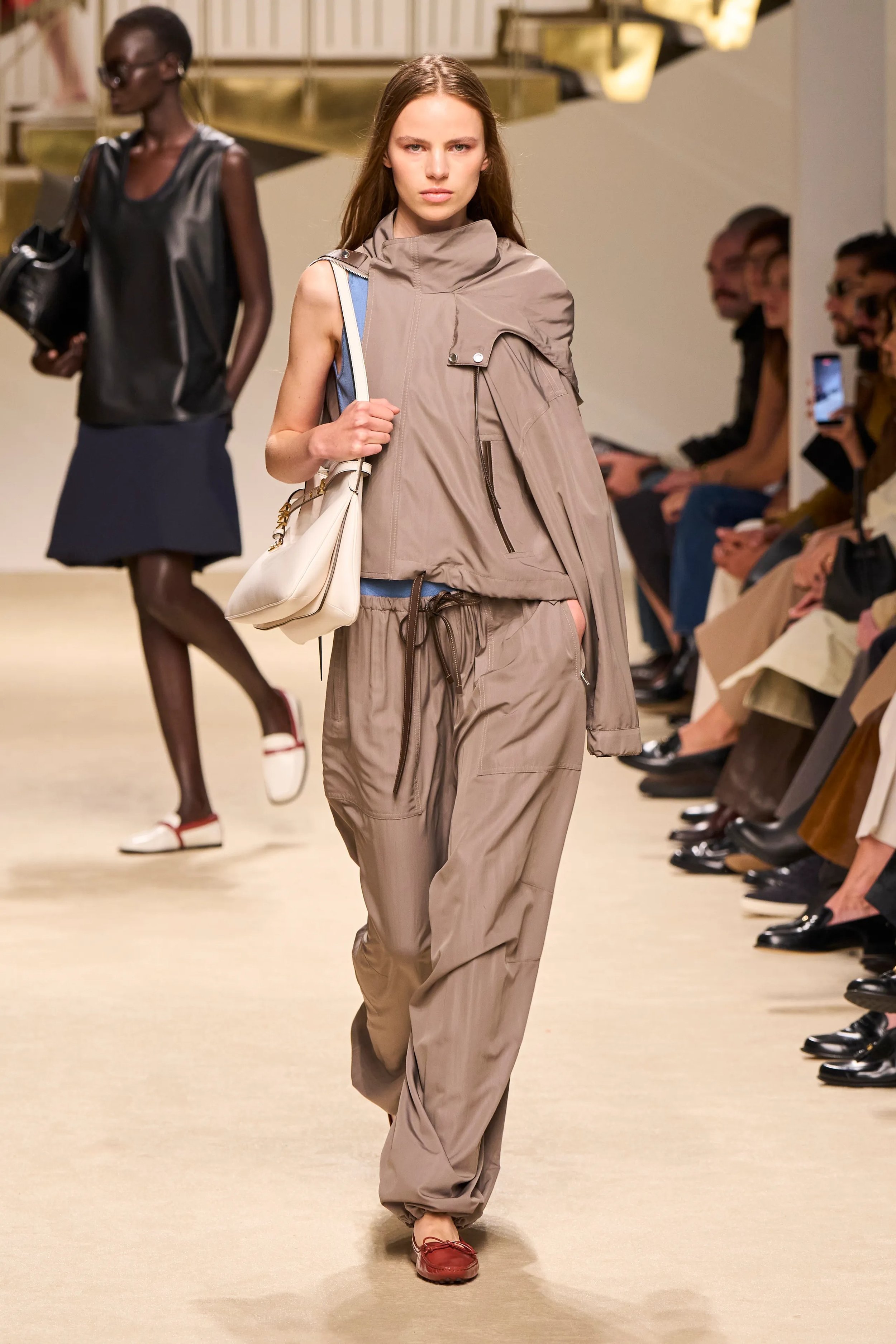
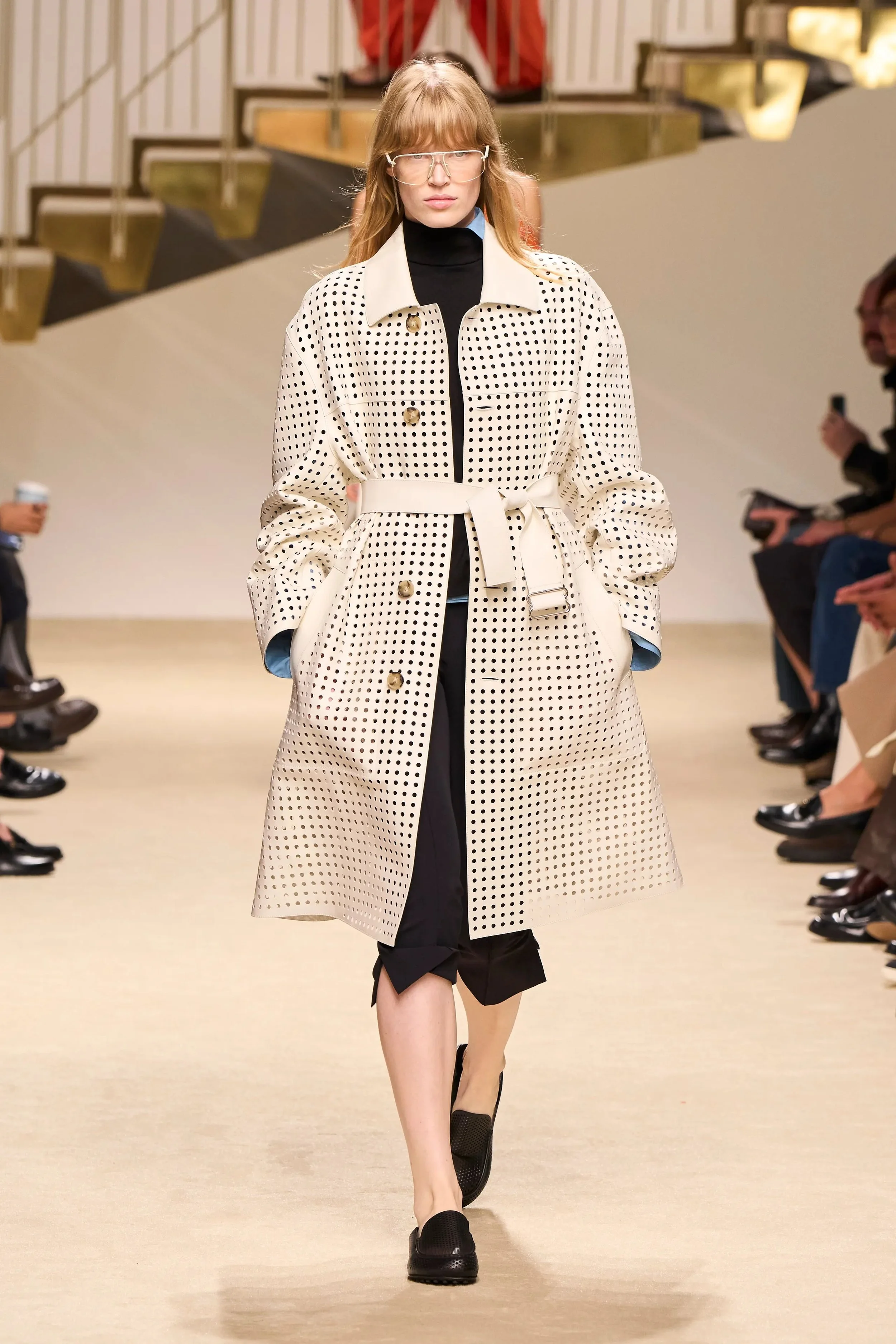
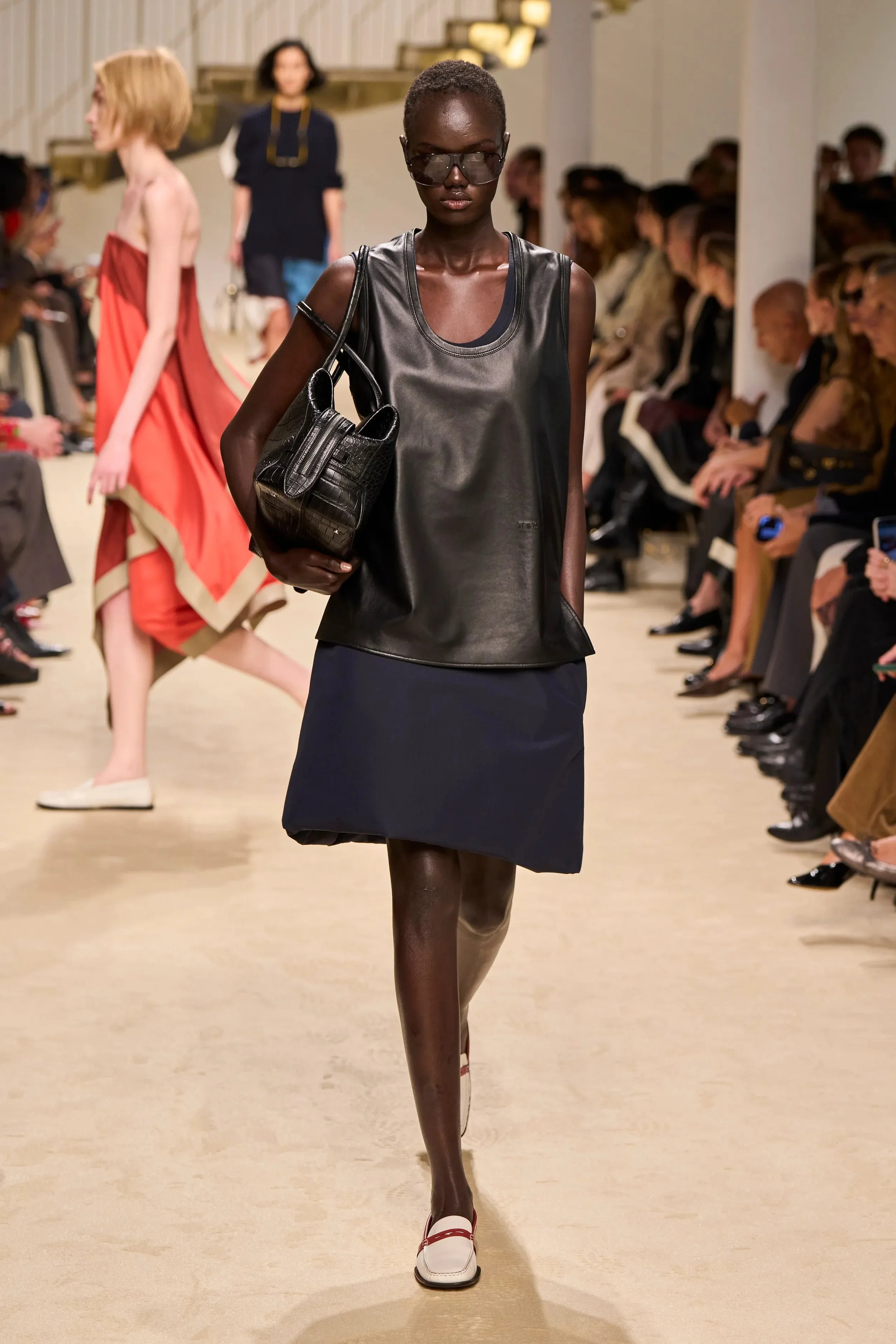
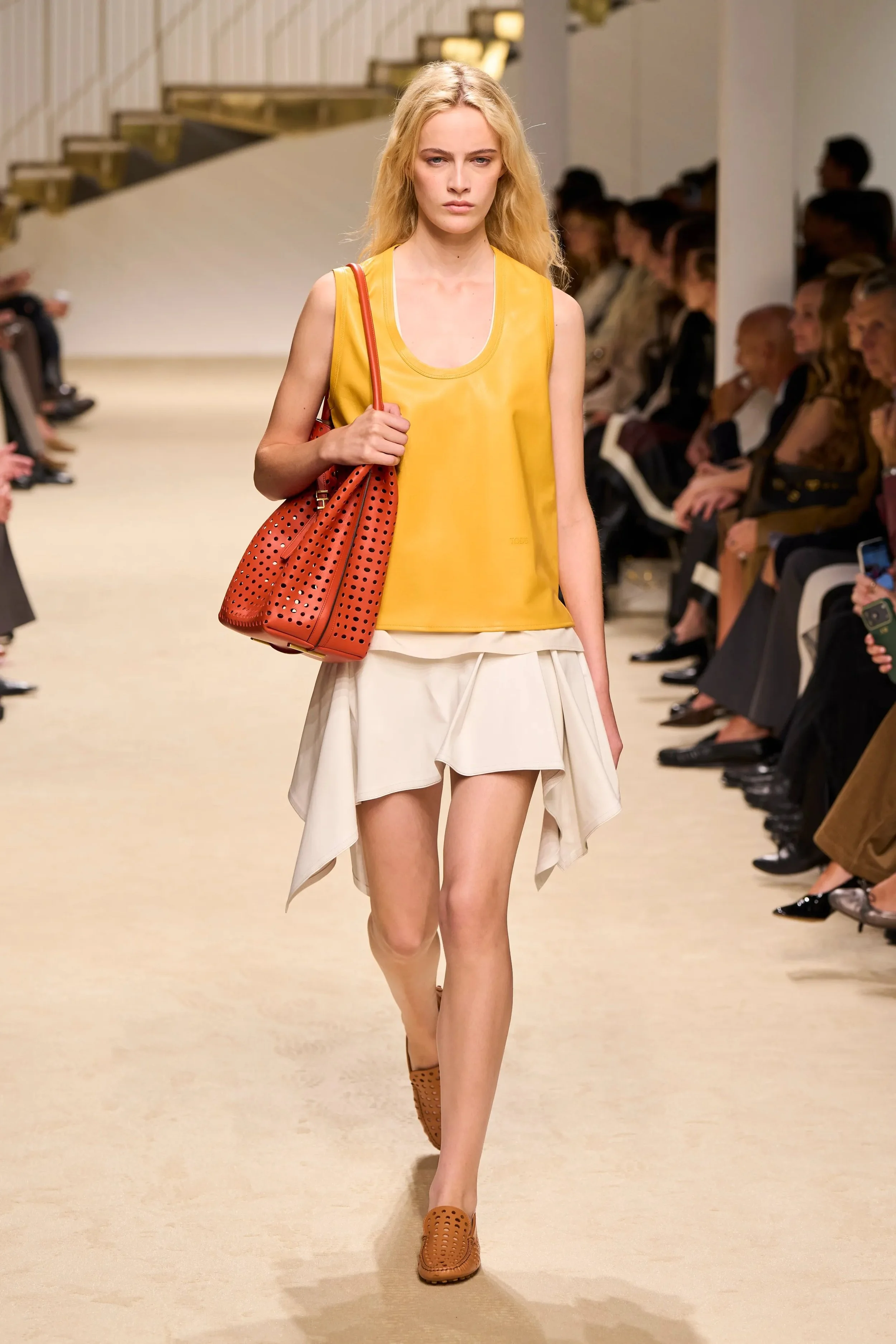
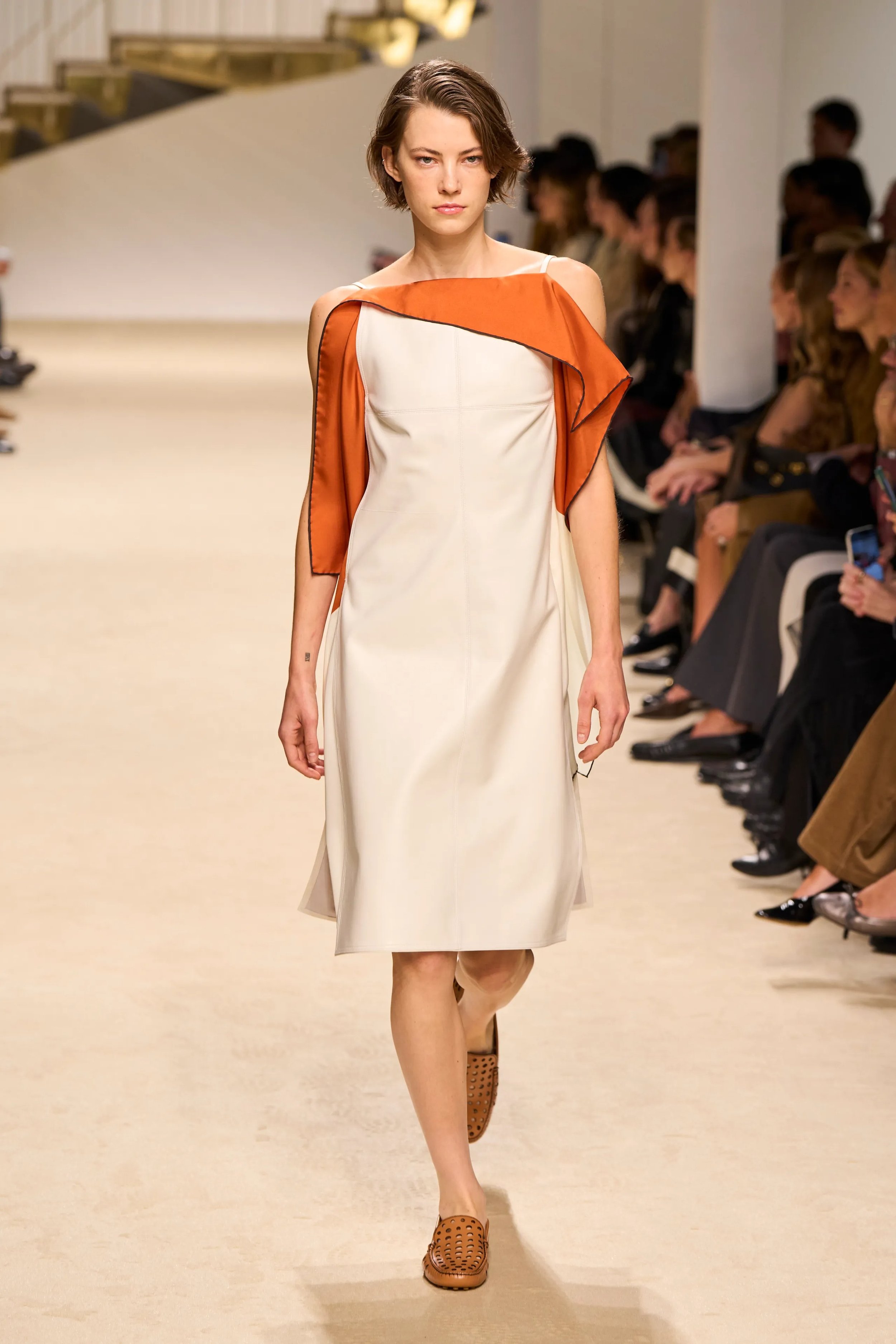
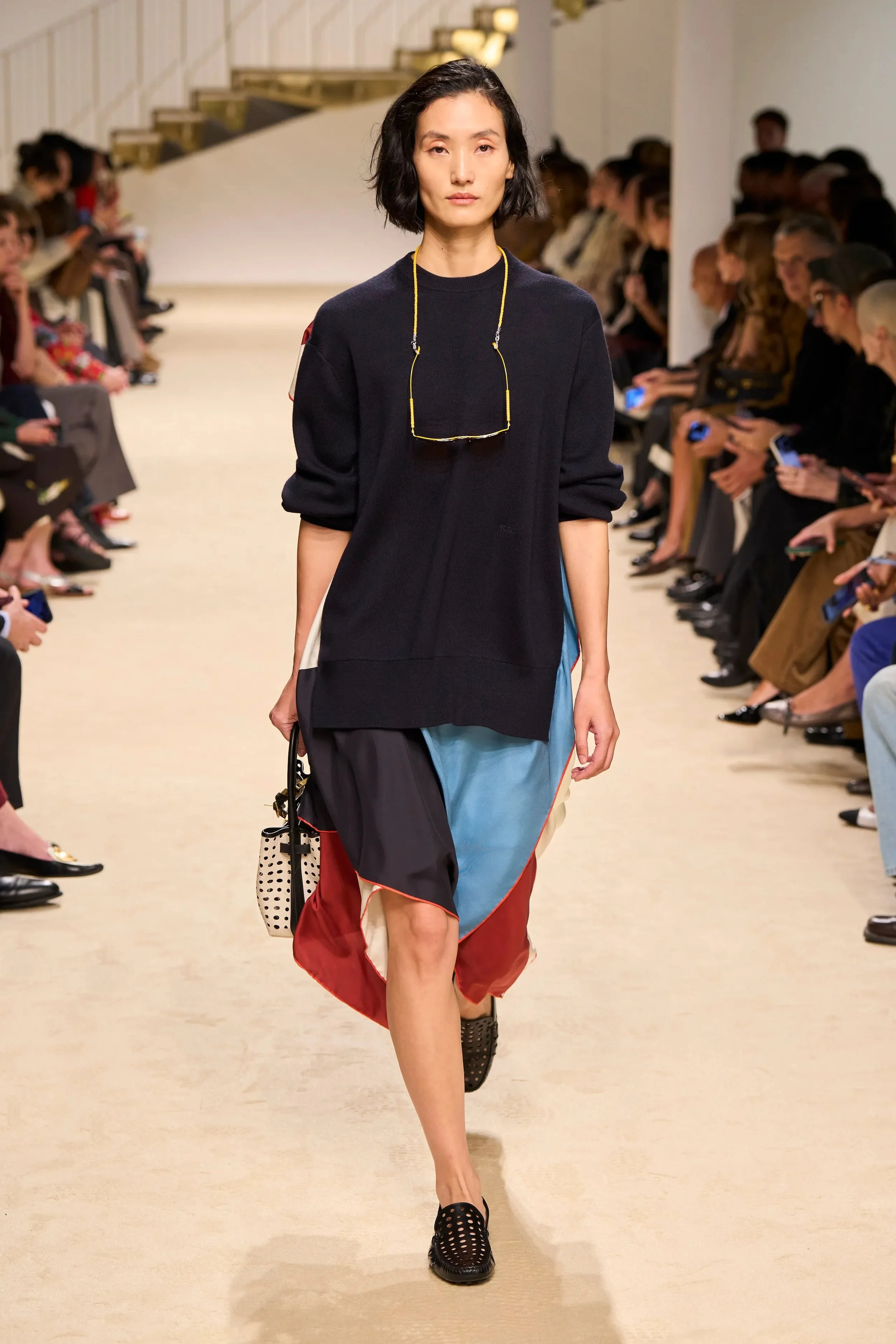
For Spring/Summer ‘27, Tod’s presented  “Italian Attitude,”  a collection rooted in a contemporary interpretation of Italian style through lightweight leathers, new proportions and the return of the Candy Bag. The collection is rooted in effortless elegance, while introducing a more playful attitude.

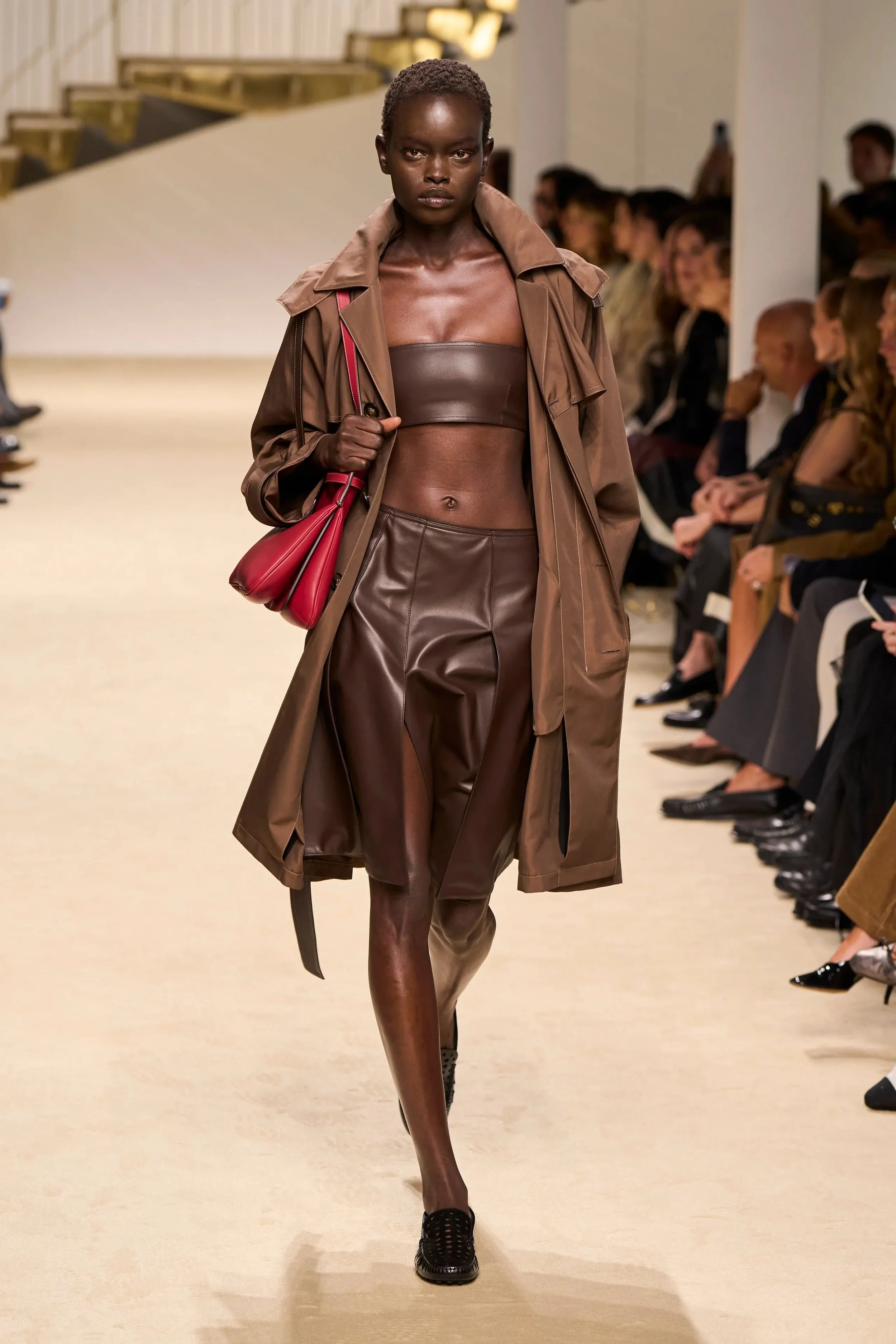
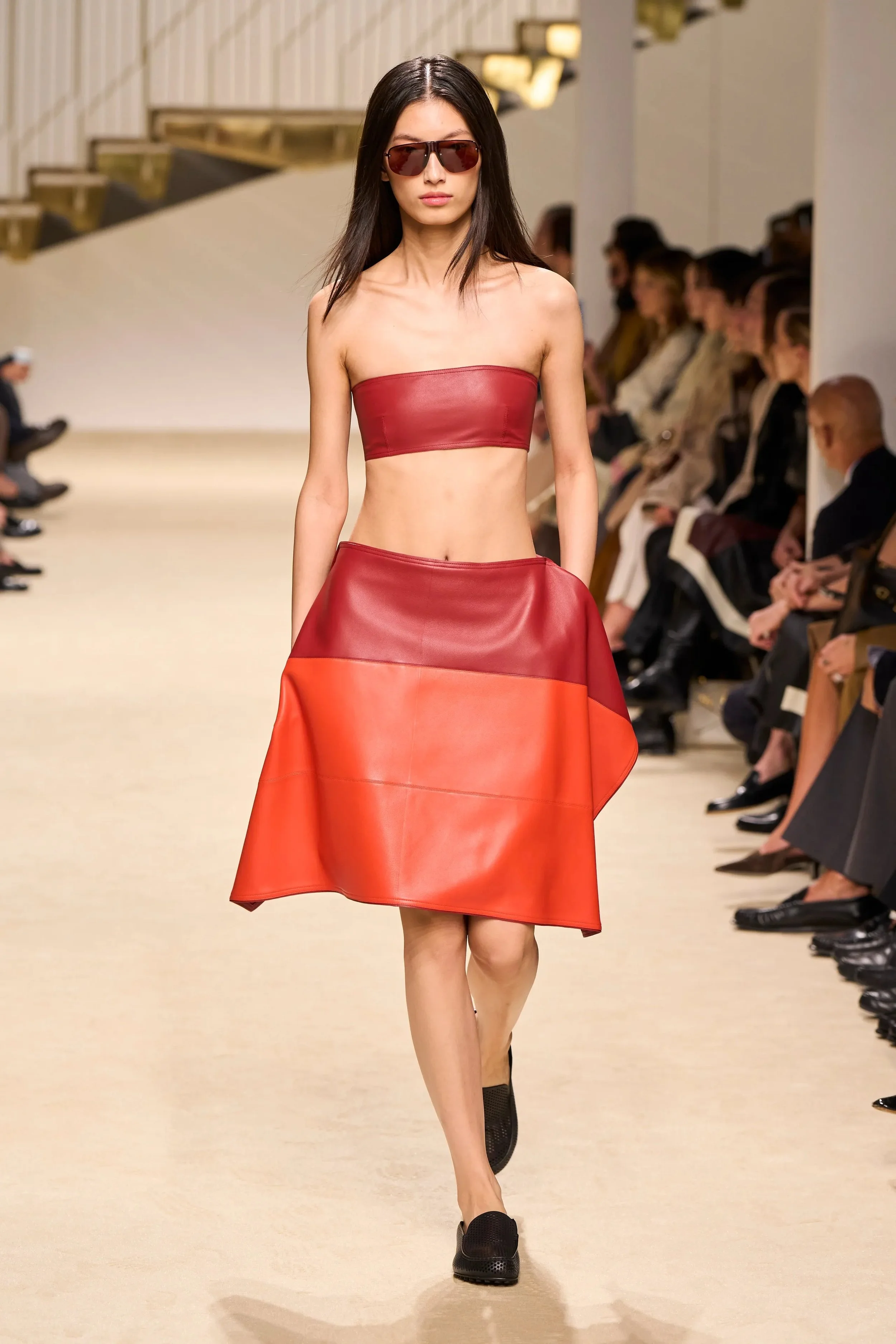
Pashmy techniques are one of Tod’s most recognisable expressions of craftsmanship, while leather becomes a medium for experimentation throughout. Perforations, movement and the way the material catches the light create an interesting interplay of visual textures, making otherwise polished designs feel more dynamic.

Colour blocking is key to the collection’s strong Italian-coded aesthetic, with touches of 1970s inspiration. Mustard yellow, orange and red appear alongside neutrals such as navy, white and brown, creating contrasts that give the looks energy.

Bare skin introduces a sense of sensuality through cropped tops and bandeau bras, contrasting with structured shapes and the technical appearance of the leather. The combination creates a look that is bold and contemporary while remaining grounded in Tod’s understated approach to elegance.

Capris and bermuda shorts contribute to a laid-back aesthetic, while trenches appear in perforated leather, Nappa and Windsilk, giving the outerwear a precise and structured character. Outerwear is a central part of the collection, with trench coats, safari-inspired jackets, belted pieces, shirt jackets and structured coats becoming the statement pieces of the silhouettes.

Skirts with movement play an important role, introducing a sense of deconstruction and fluidity. As the garments move, the leather takes on a different quality, shifting between structure and softness. Perforations, texture, movement and light transform classic silhouettes into creative pieces.


Words by Carolina Benjumea

GUCCI SS27

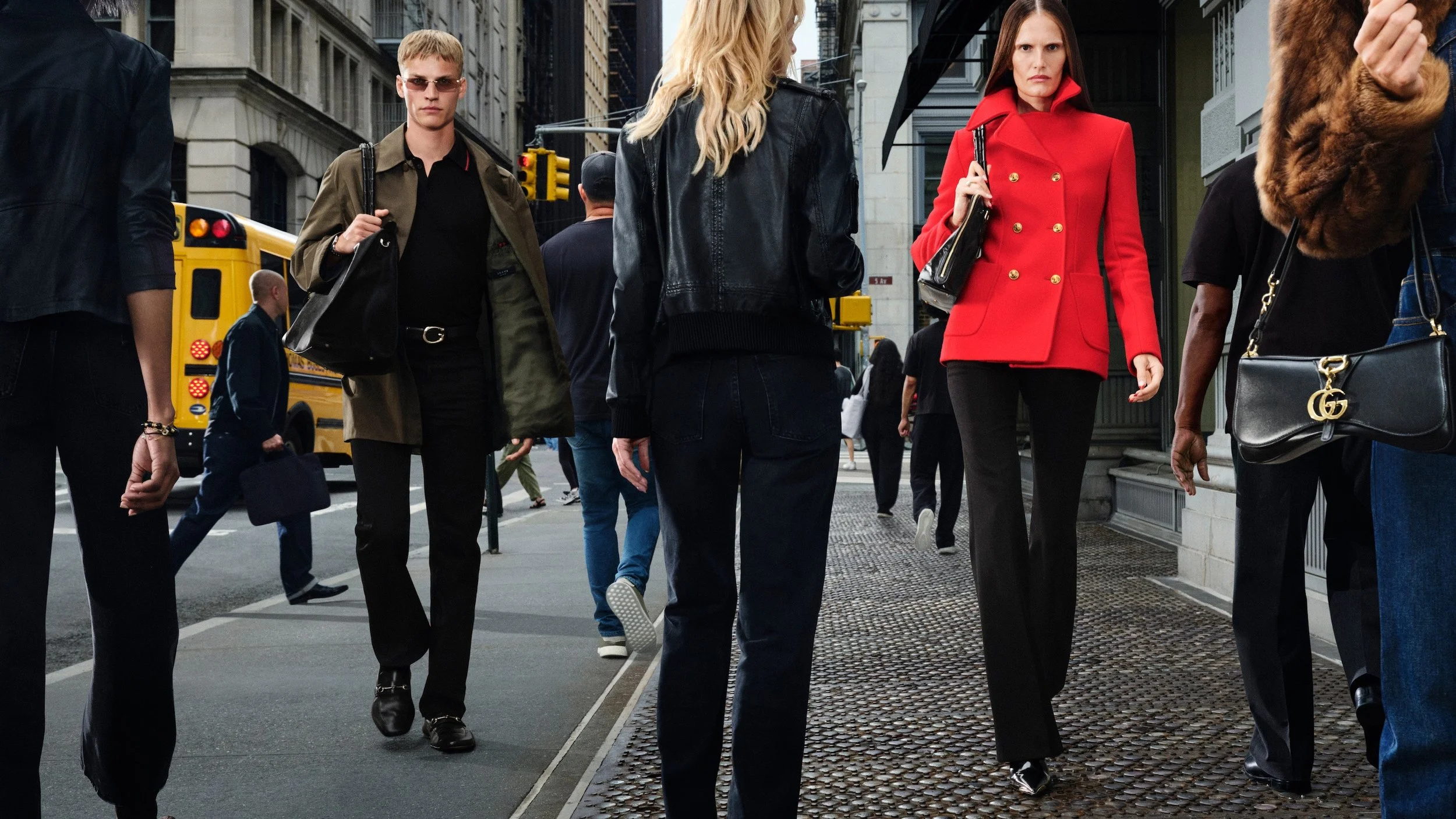
An hour before the Gucci show began in Milan, the brand’s official Instagram posted a letter written by its creative director, Demna. “The Store Show will be the first collection in which I present my complete personal vision for the brand (...).” With the announcement, Spring/Summer 2027 marks the third first collection the creative director has done for the brand. First, the glimpse of his vision came in Pre-Fall 2026 in “La Famiglia”, a collection of characters that cinematically epitomised the different iterations of the house. Then, in Fall/Winter 2026/27, his official first show, where, surrounded by imposing statues, his self-deprecating, decadent idea for Gucci fully emerged.

Immediately after the post went live, three of my group chats blew up. “What could this mean?” “I’m excited; I wonder what the new Gucci will look like?” “Does this mean up until now he’s been trolling us?” It’s hard to know what a designer like Demna is. The Georgian creative director has made a career off subverting the fashion industry’s tropes. His year at Gucci has been a continuation of it, analysing the brand’s relationship to the perception of luxury as a whole. For it, the Gucci client has been his most defined muse. Whereas most designers communicate an idea, a look almost independently of their customer’s, Demna works backwards, allowing his audience to fuel his wearable world. It makes sense then to host Spring/Summer 2027 inside a set made to resemble a Gucci store.

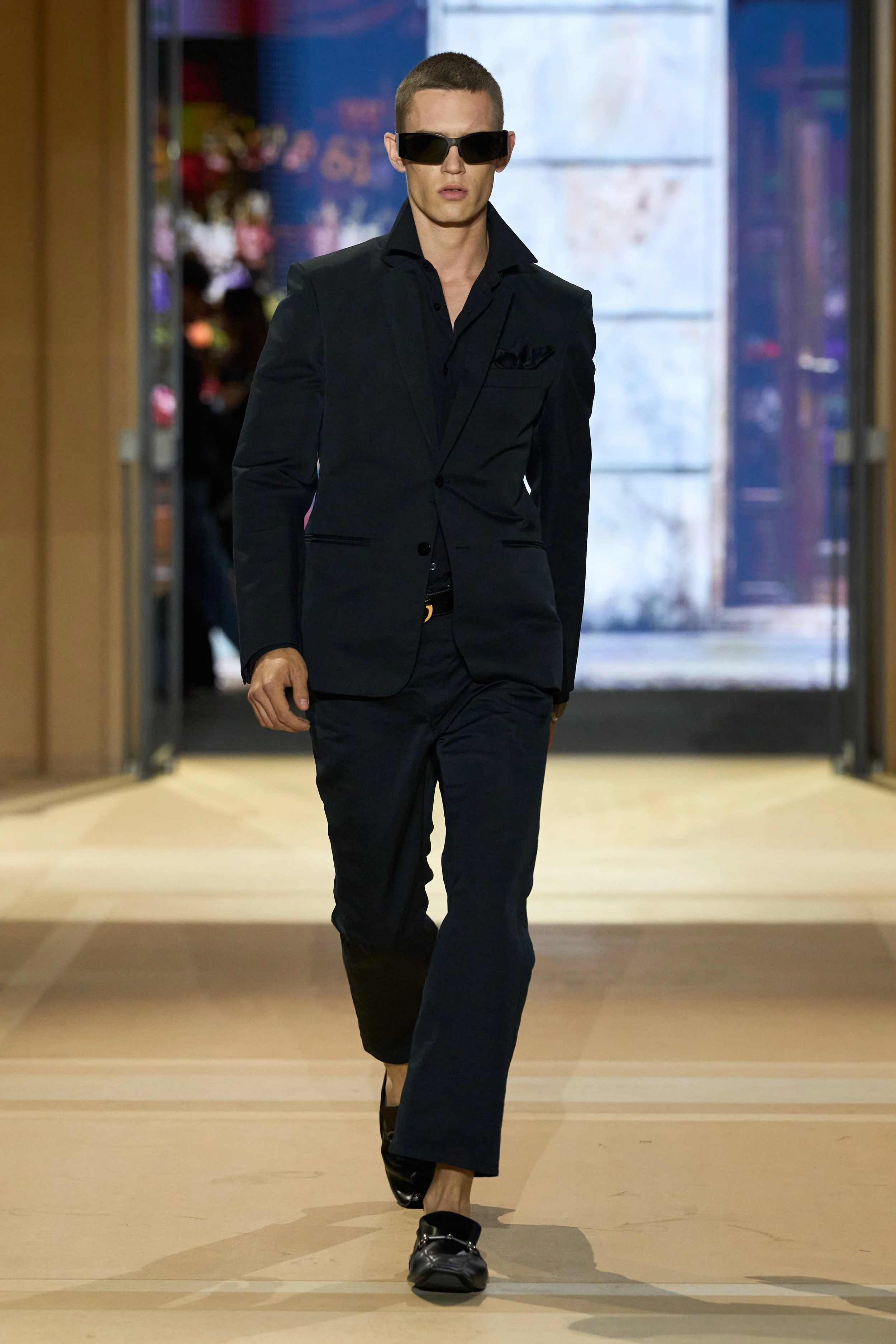
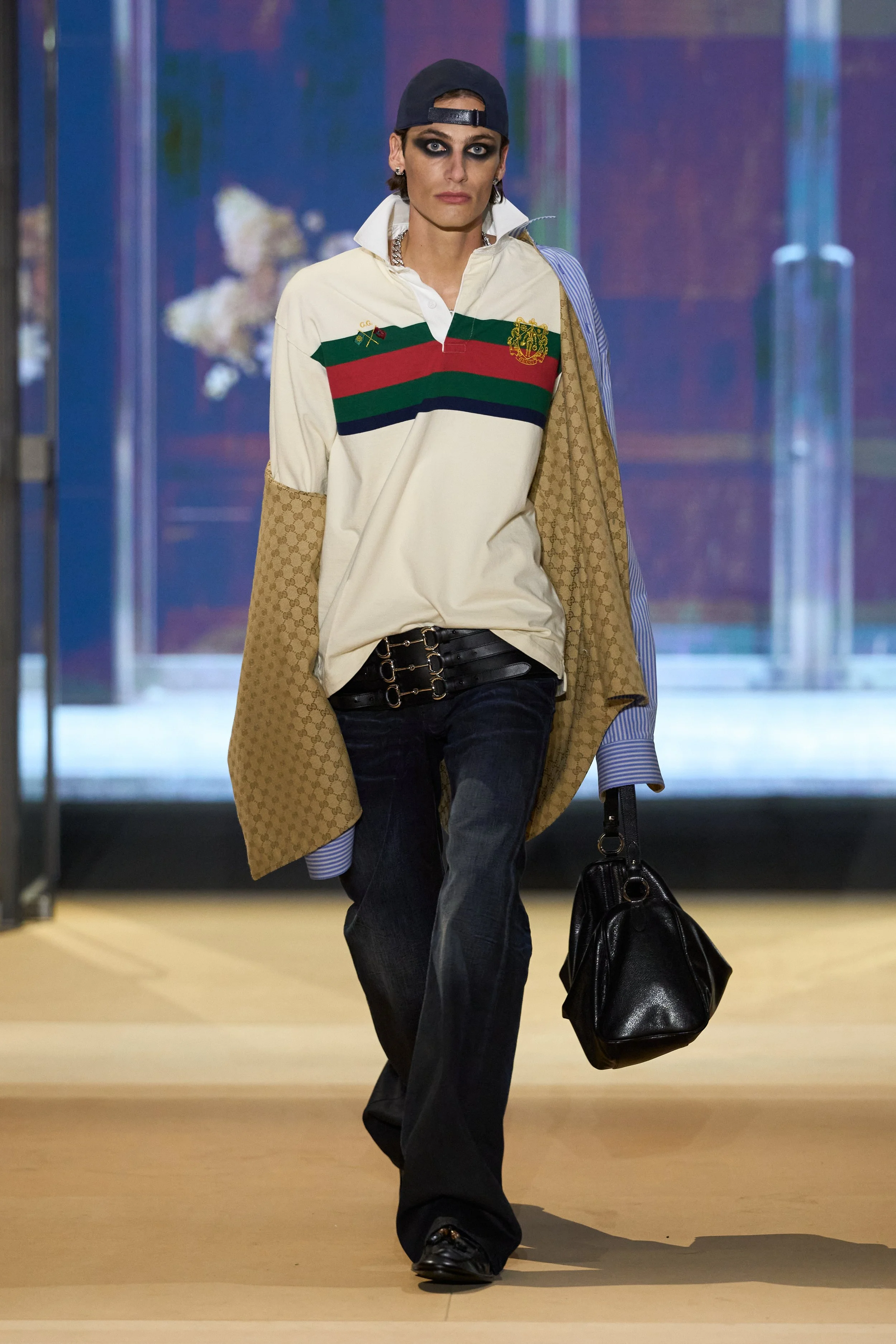
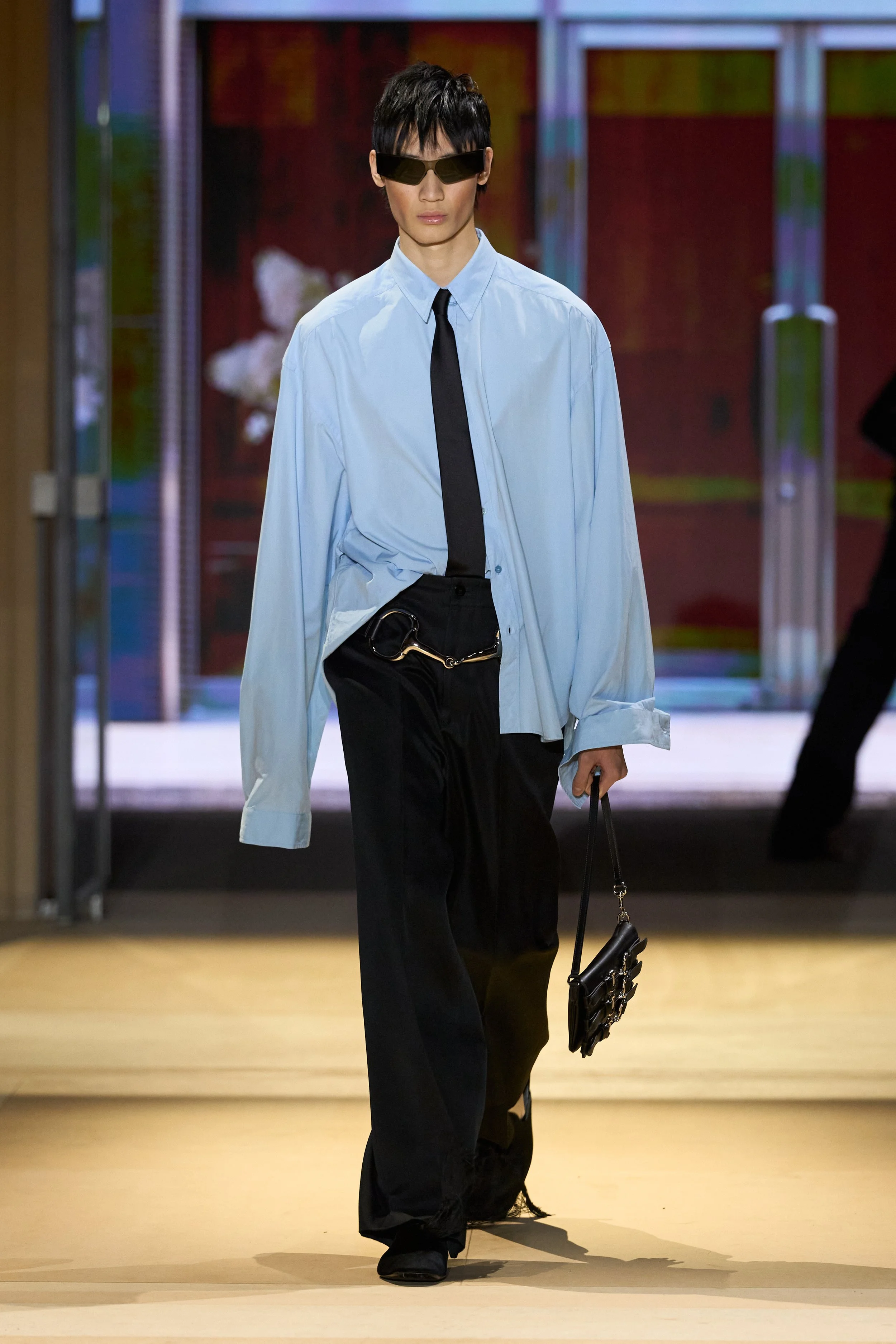
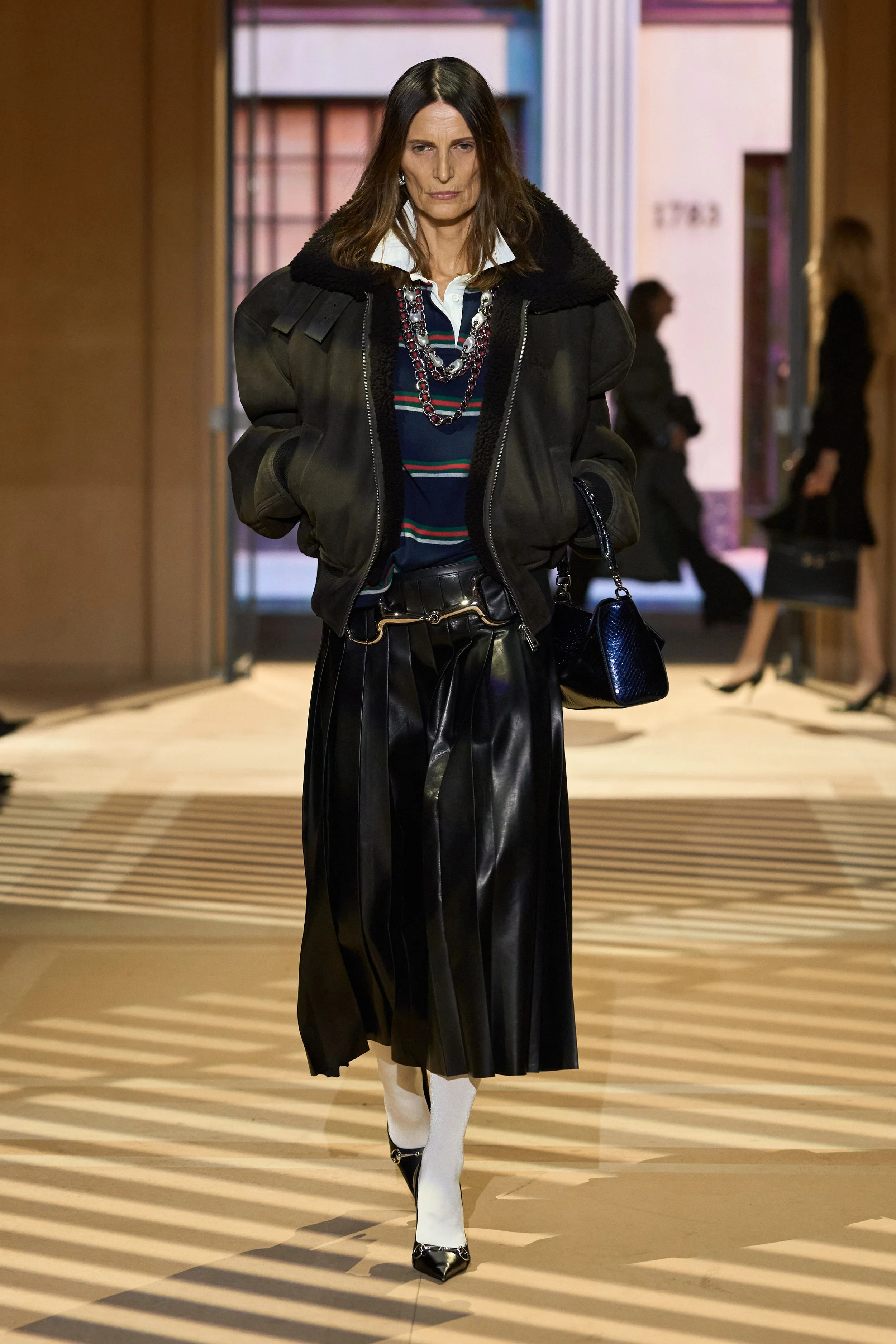
In that nearly perfect simulacrum, the line between store and museum was hard to place. Vases stacked atop impossibly small tables, glass cases filled with purchasable artefacts. To complete the fantasy, the soundtrack sounded like standard music, the type that would play in a store in a movie – agreeable, non-descript. As the smooth bass and drums started playing, the first look came out. A sharply tailored jacket, nipped in at the waist, lays over a shirt with a popped collar. Iterations with the same look follow, gradually filled with Gucci symbols. In shirts, horse bits appeared on collars, while belts grew, eventually taking on the entire waistline.

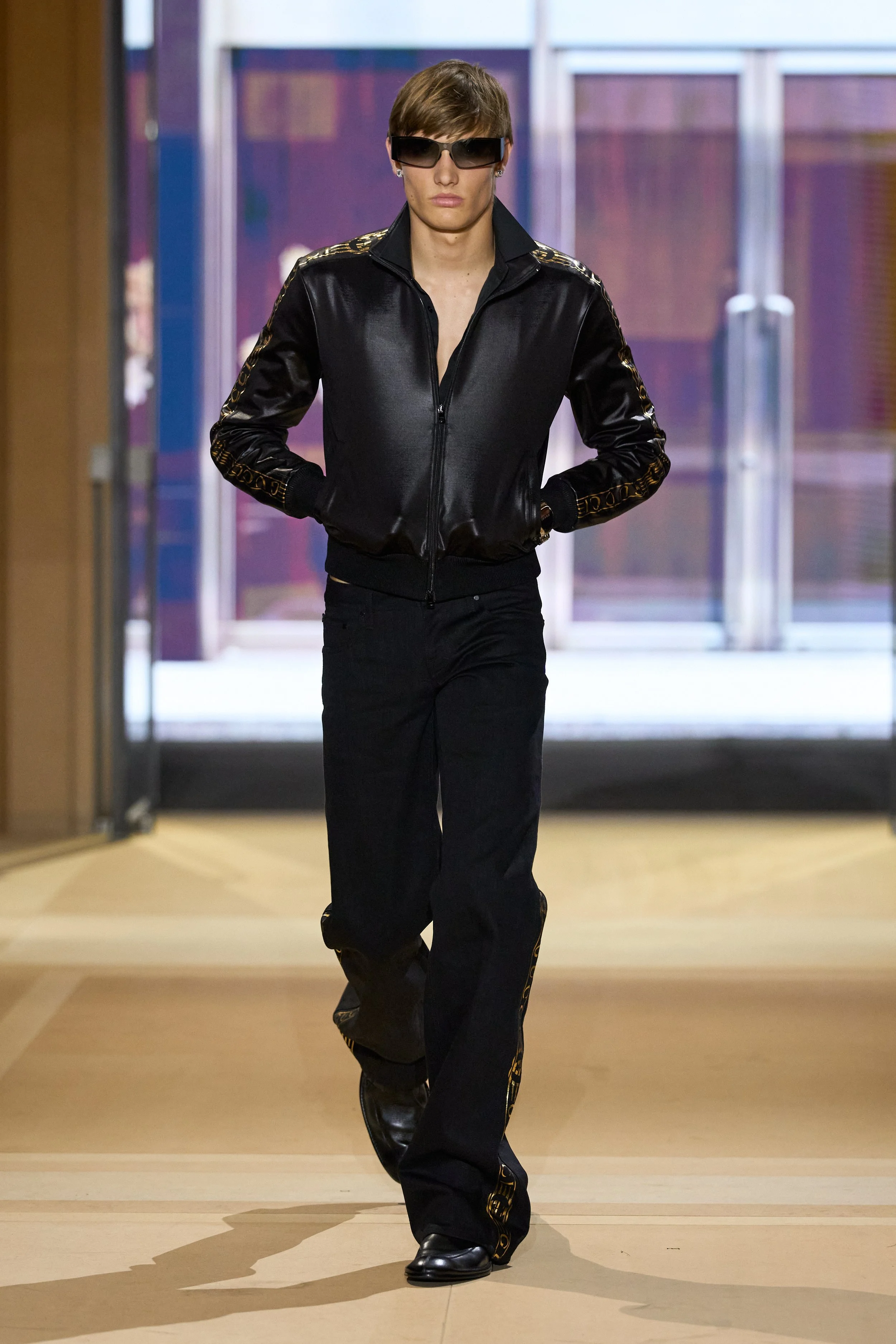
Demna’s idiosyncratic streetwear creeps in slowly. Alongside tailored coats, sweatsuits become more prominent. One particular iteration, in black leather, runs gold Gucci logos down its arms. A triple horse bit belt is worn low, avoiding the risk of being covered by cropped jackets. Silhouette remains the designer’s strong suit. In oversized shirts, shoulders stand separate from the model’s body. In a velvet coat, shoulders curve slightly inward.

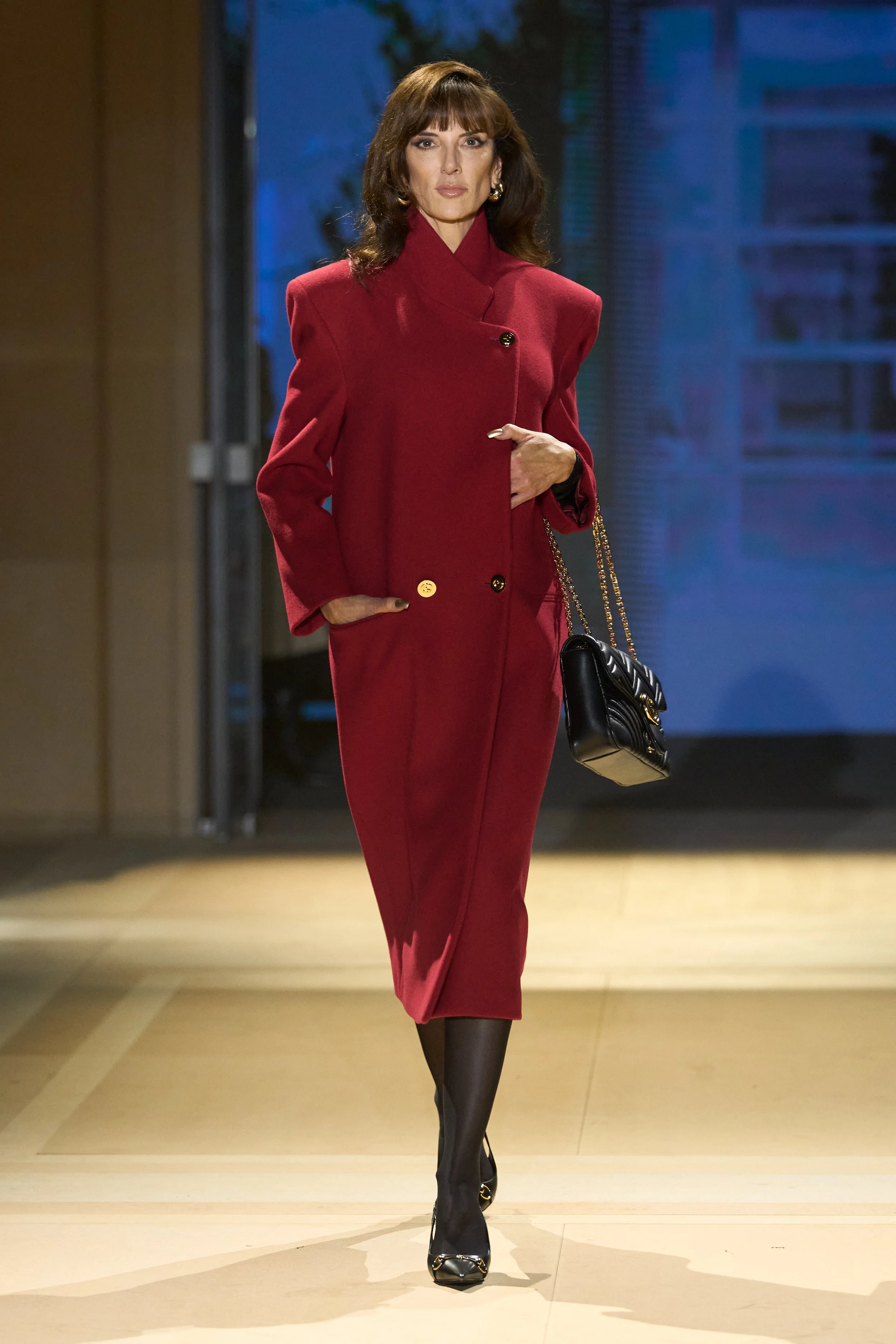
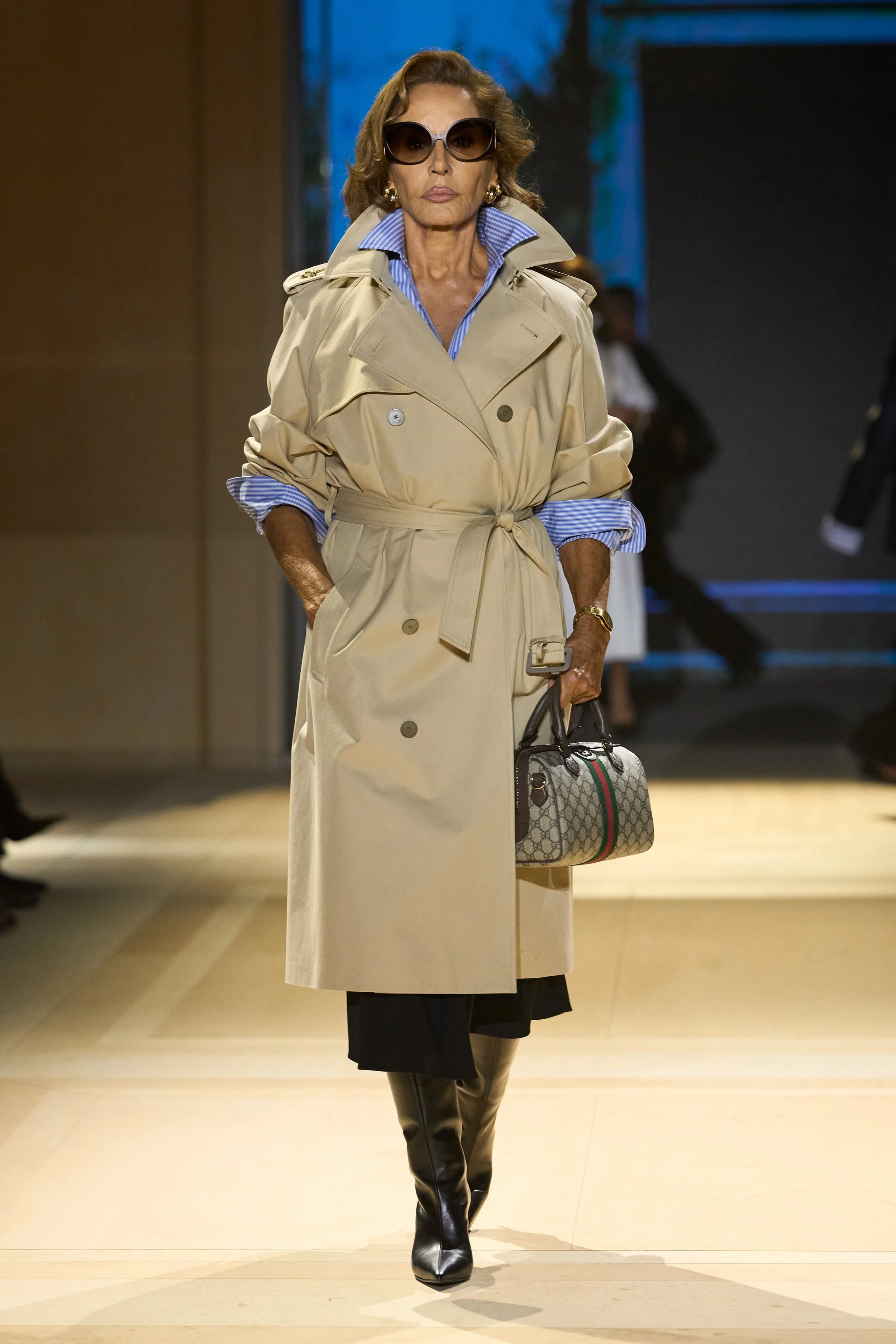
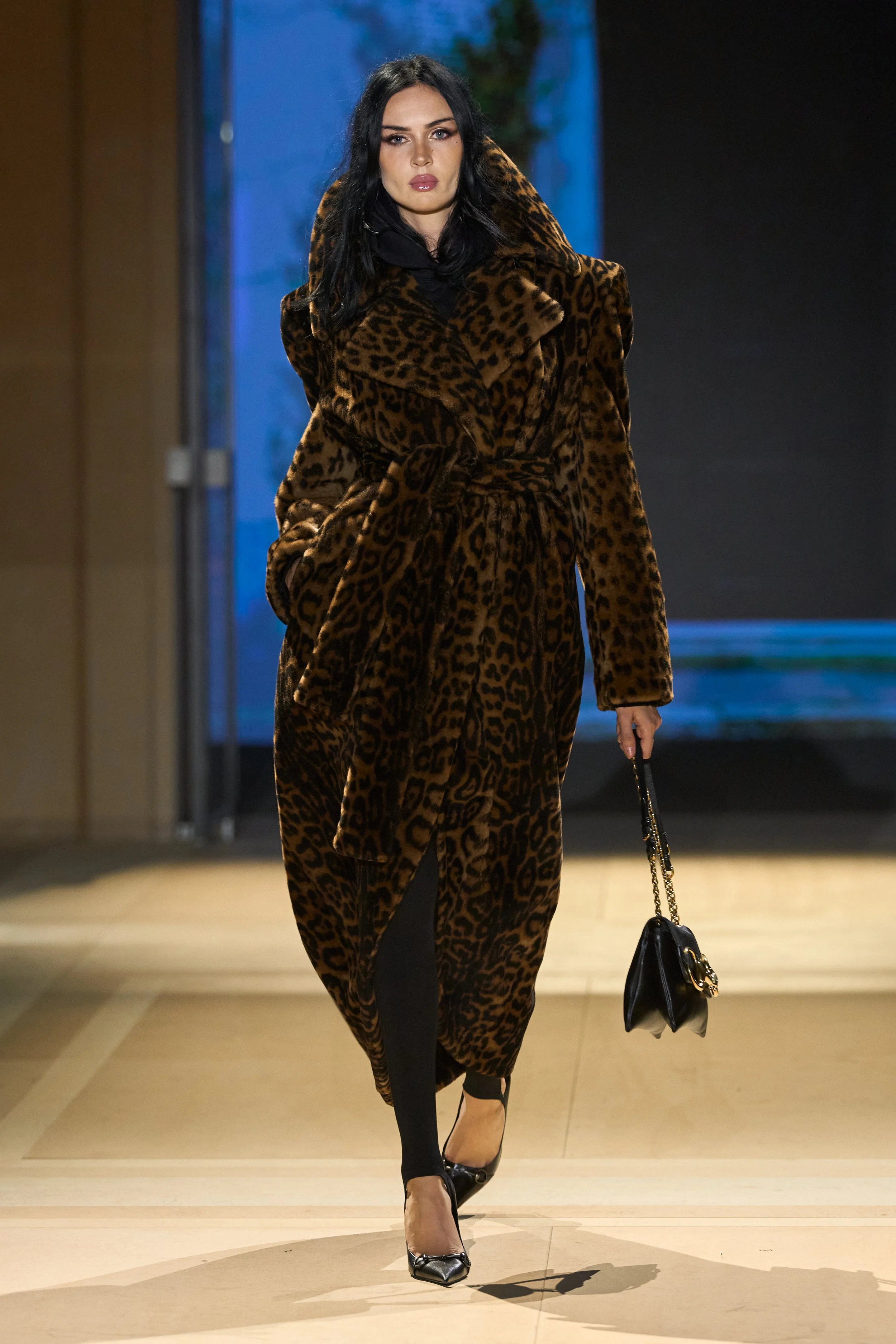
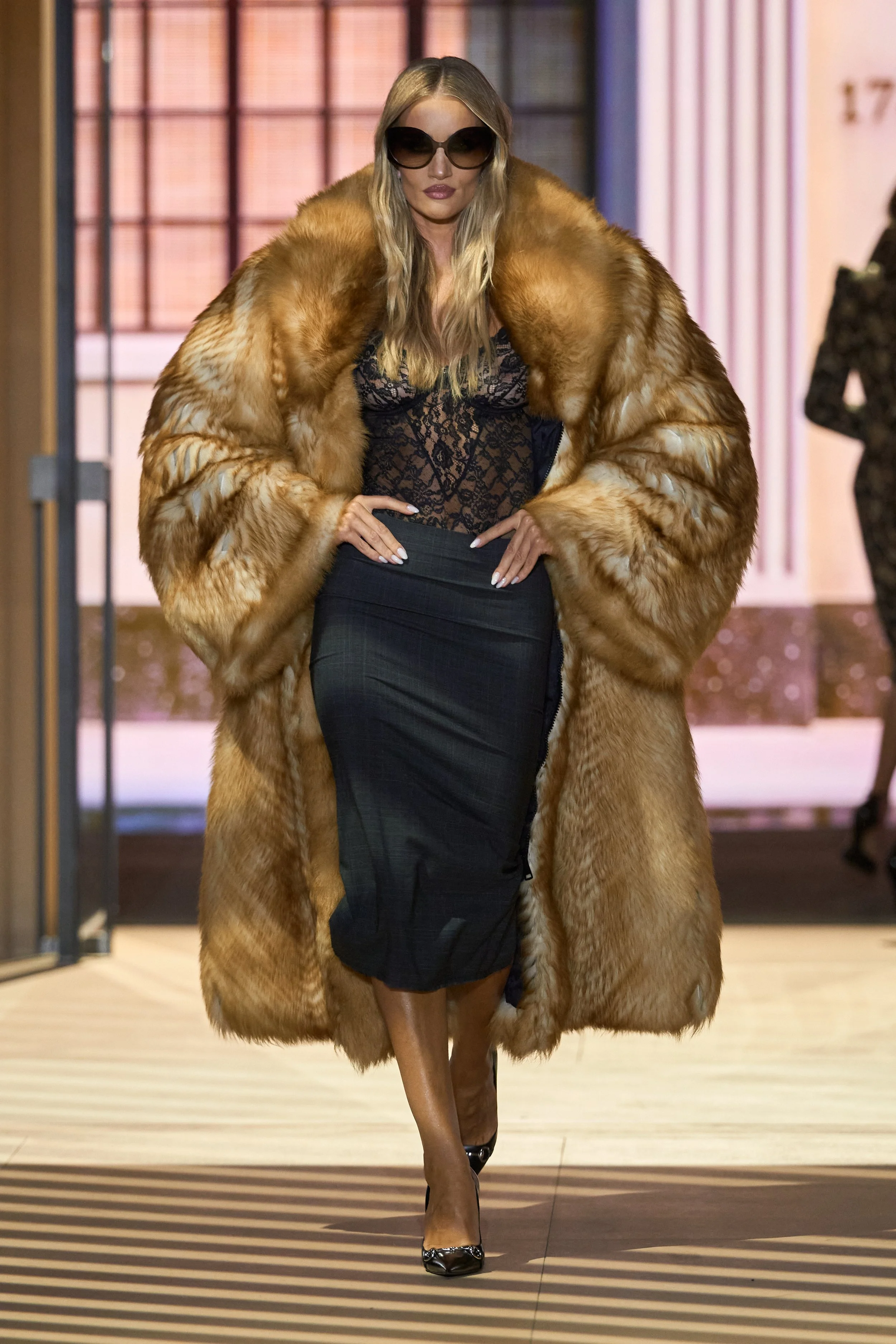
Suddenly, the music's repetitiveness is interrupted. As the beat changed, so did the gender of the models. For the womenswear portion of the show, casting is outstanding. Older models invoke images of a familiar glamour, their lavish heavy coats adorned with perfectly shiny gold buttons. Younger models in tweed suits wear their hair down, while ones in tight dresses have it up. Some with titanic crocodile bags, others with sunglasses somehow even bigger. Animal patterns and textures punctuated the collection. Long leopard print coats walked alongside voluminous fur ones – a particularly striking one was worn by Rosie Huntington-Whiteley.

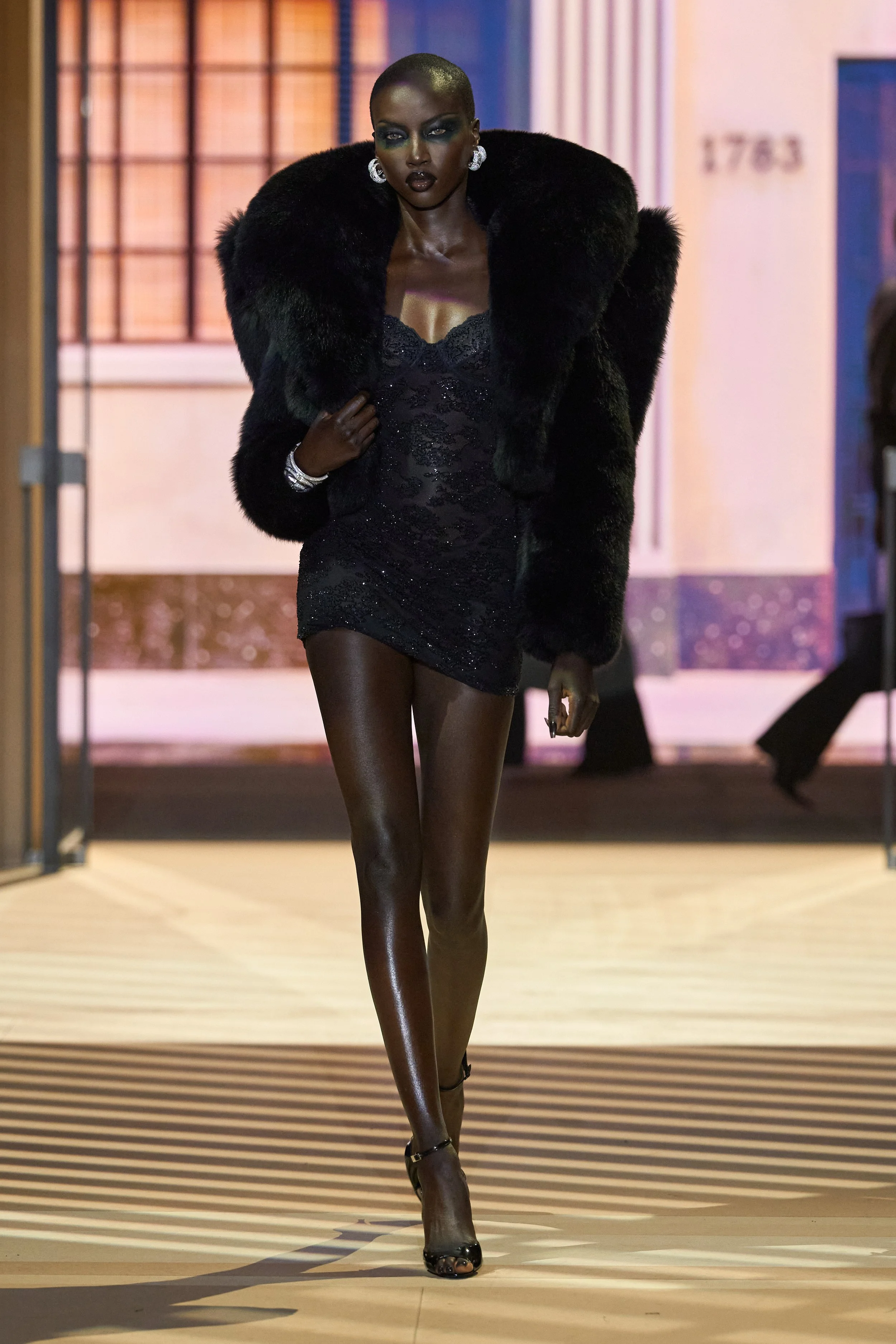
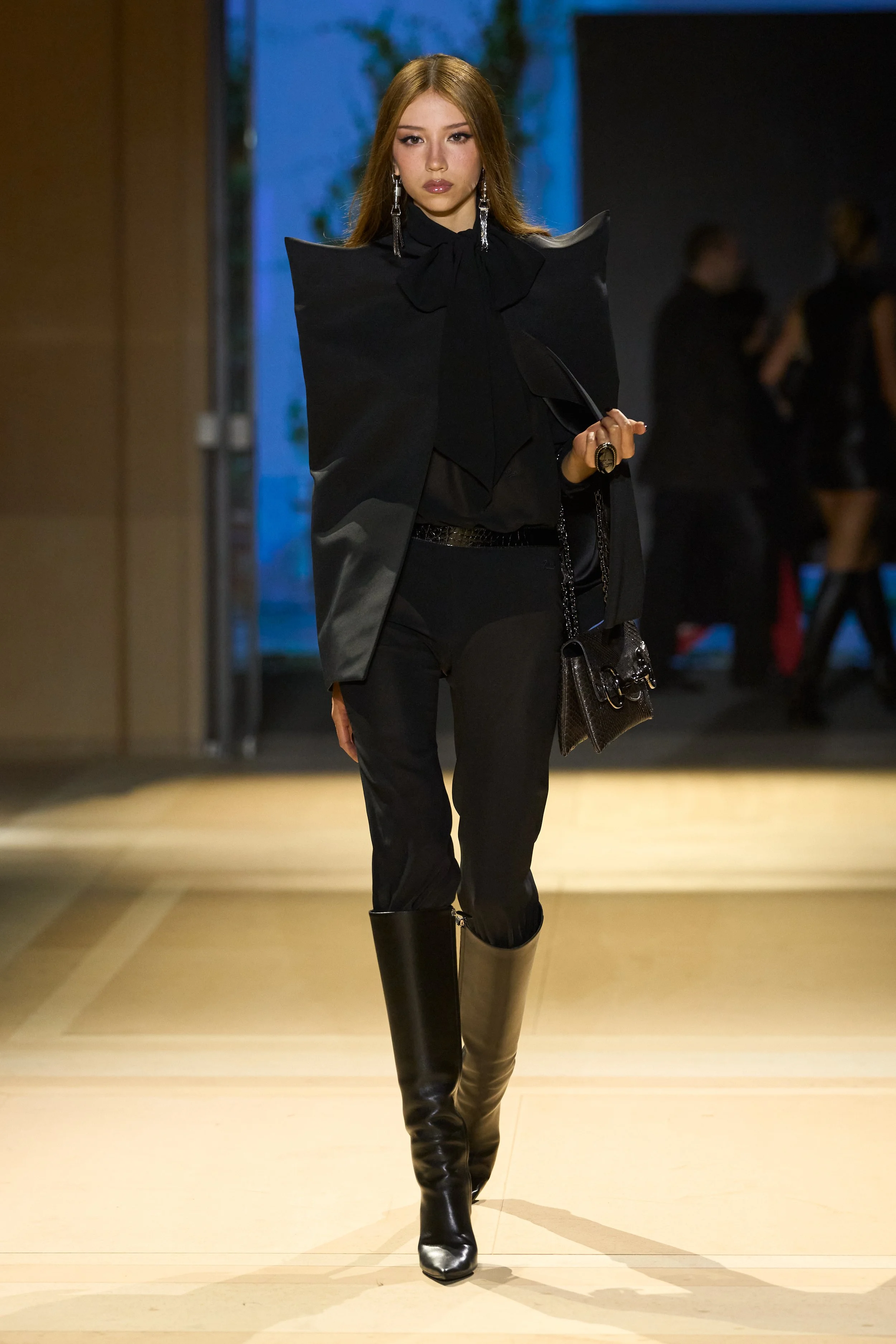
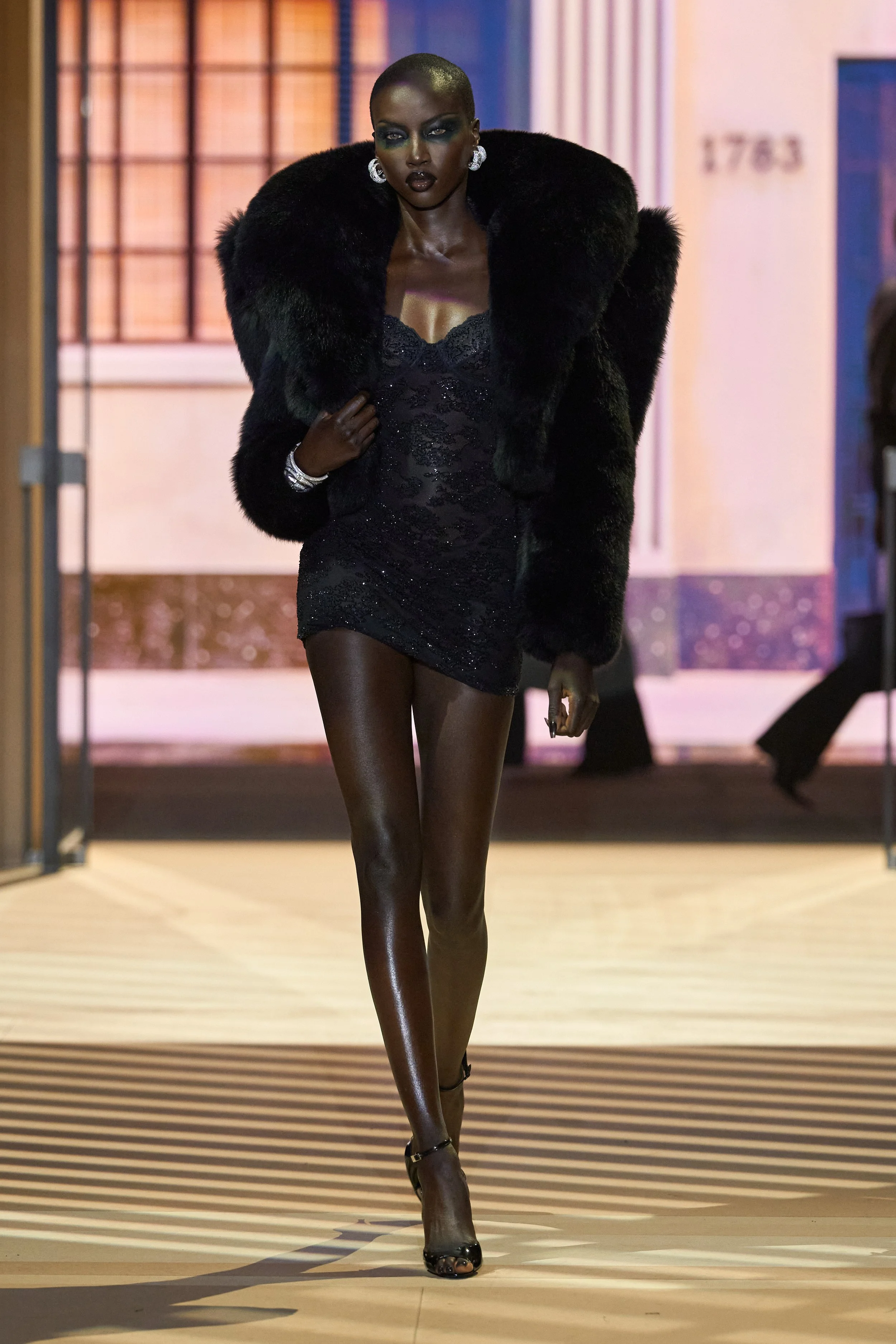
Slowly, the beat started morphing, the lights lowered. Models began appearing with heavier make-up, their eyes covered in black. In tailored capes, shoulders are razor-sharp. Anok Yai walked in a glittering lace minidress topped with a sculptural fur bolero. At Gucci, sensuality is as much of a house code as the horse bit. Just like the latter, the first is a medium for Demna – his ability to manoeuvre the brand’s legacy is undeniable.


Words by Pedro Vasconcelos

FENDI SS27

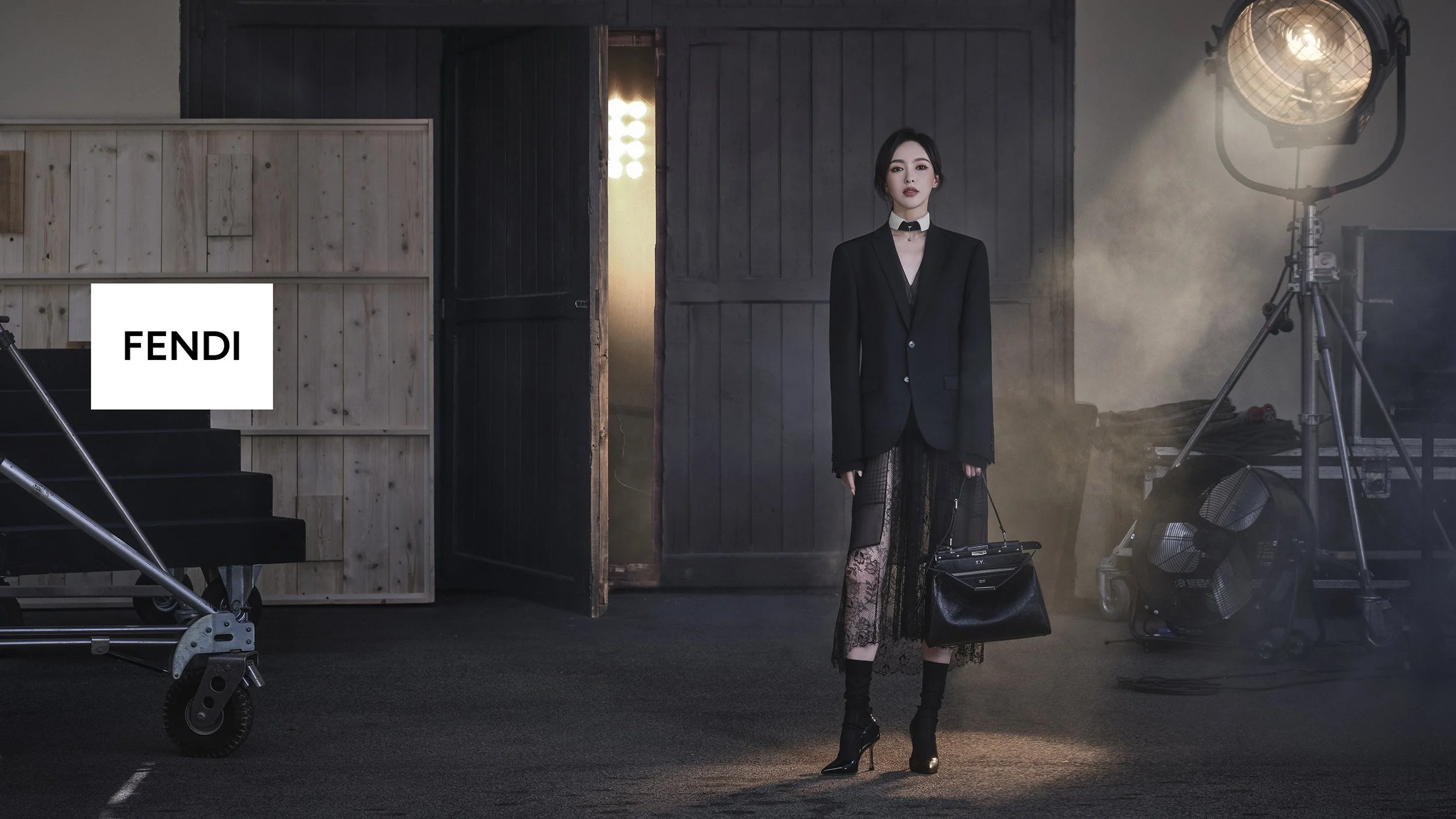
The opening line of a famous poem by American artist E.E. Cummings states: “I like my body when it is with your body.” Welcoming guests to the Fendi Spring/Summer 2027 show, Maria Grazia Chiuri’s third act since taking the creative helm at the Roman house, the phrase served as an invitation to self-reflection and its impact on dressing.

More literally, the label’s mirror-filled Milanese show space created an infinite, modern-day ode to ‘Cubo di specchi,’ a 1967-1975 performance and art piece by Italian conceptual artist Luciano Fabro. For Chiuri, it seems like staring at ourselves - and each other - is more than fundamental. It’s freeing; current.

Added to the vision was a 1974 televised music and dance performance of "Prisencolinensinainciusol,” by singer-songwriter Adriano Celentano and legendary performer Raffaella Carrà. The gibberish song, released in the ‘70s to mimic American English, was Chiuri’s chosen soundtrack for the season, while Carrà’s subversive, independent nature and celebrated body of work served as a major mood reference.

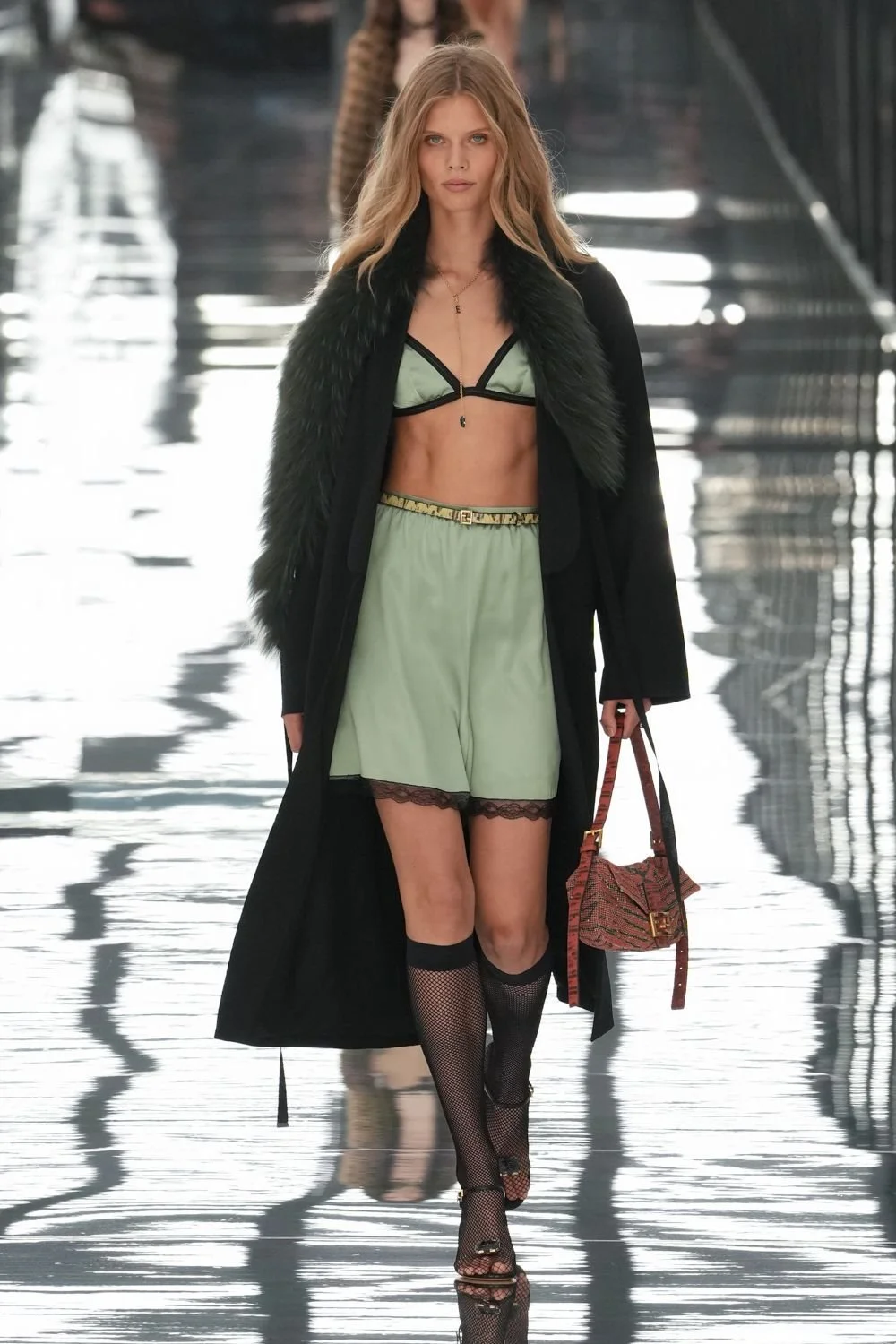
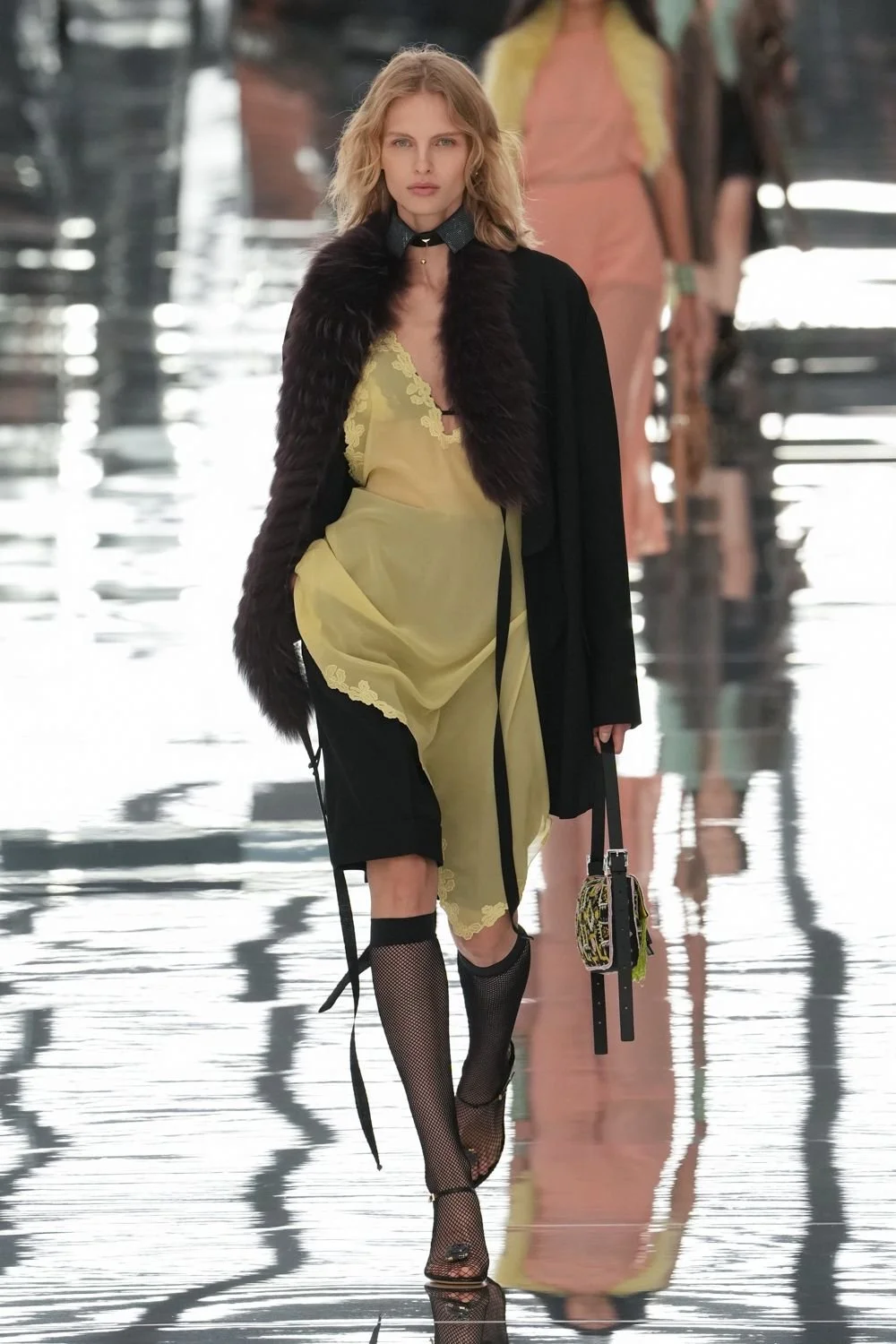
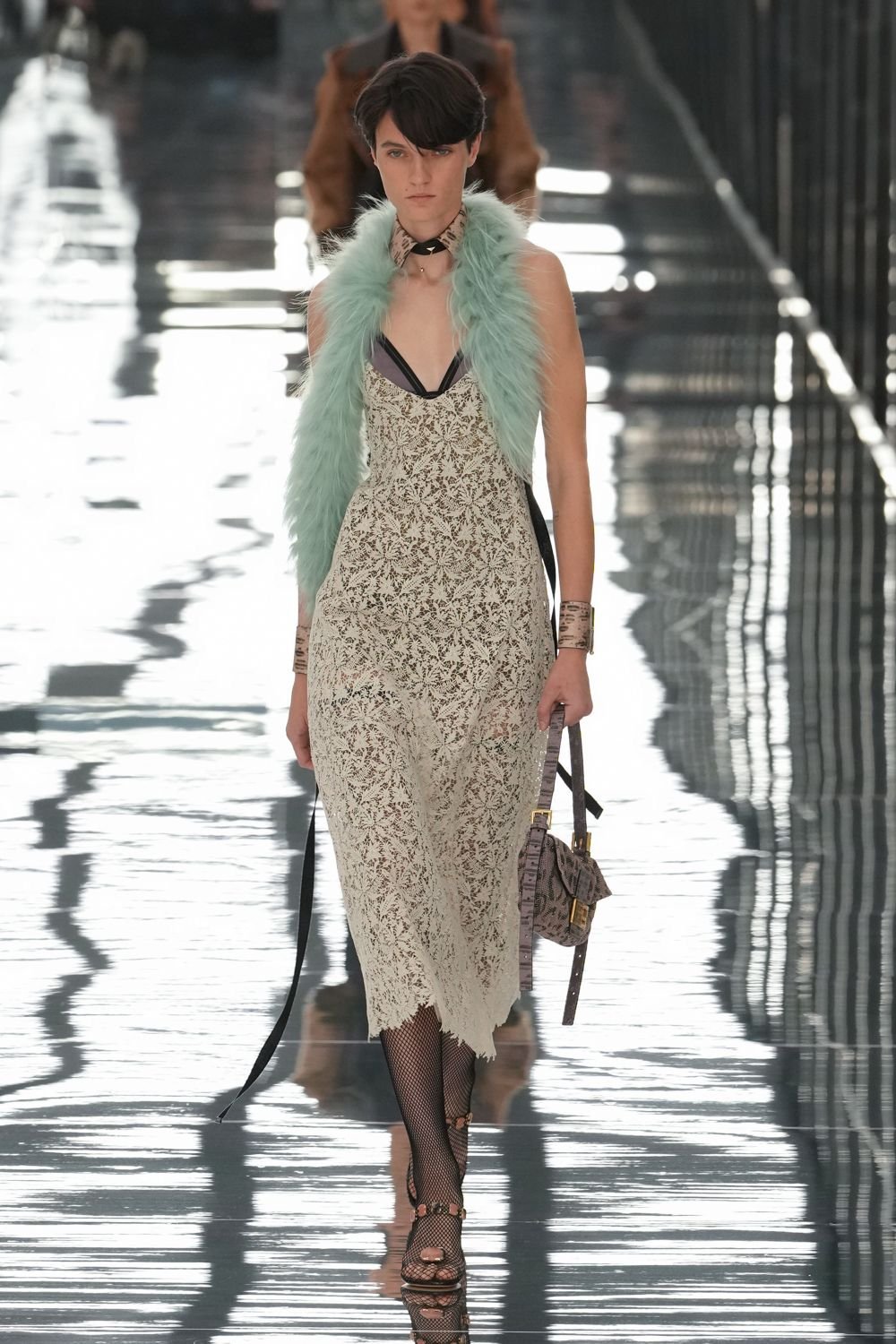
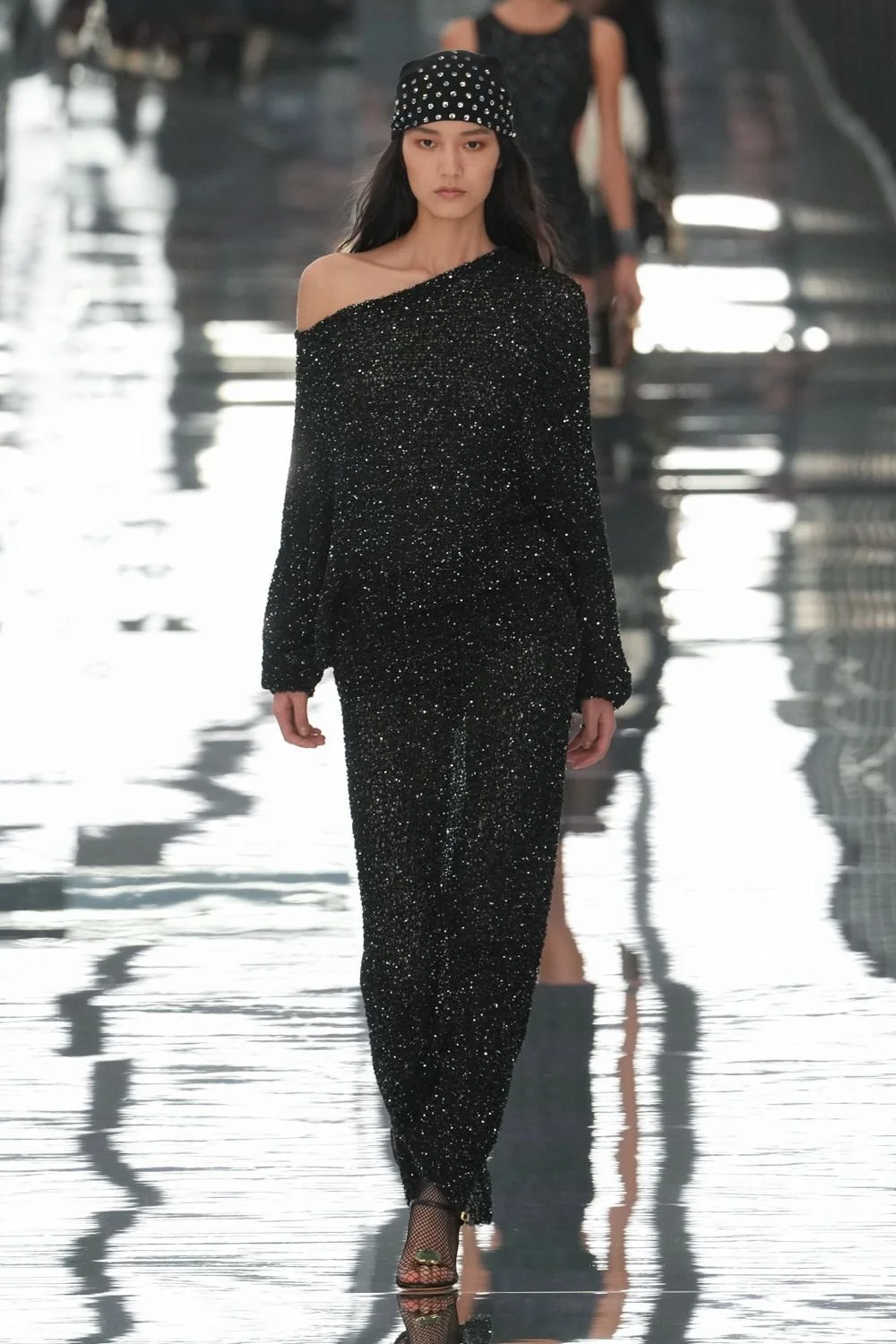
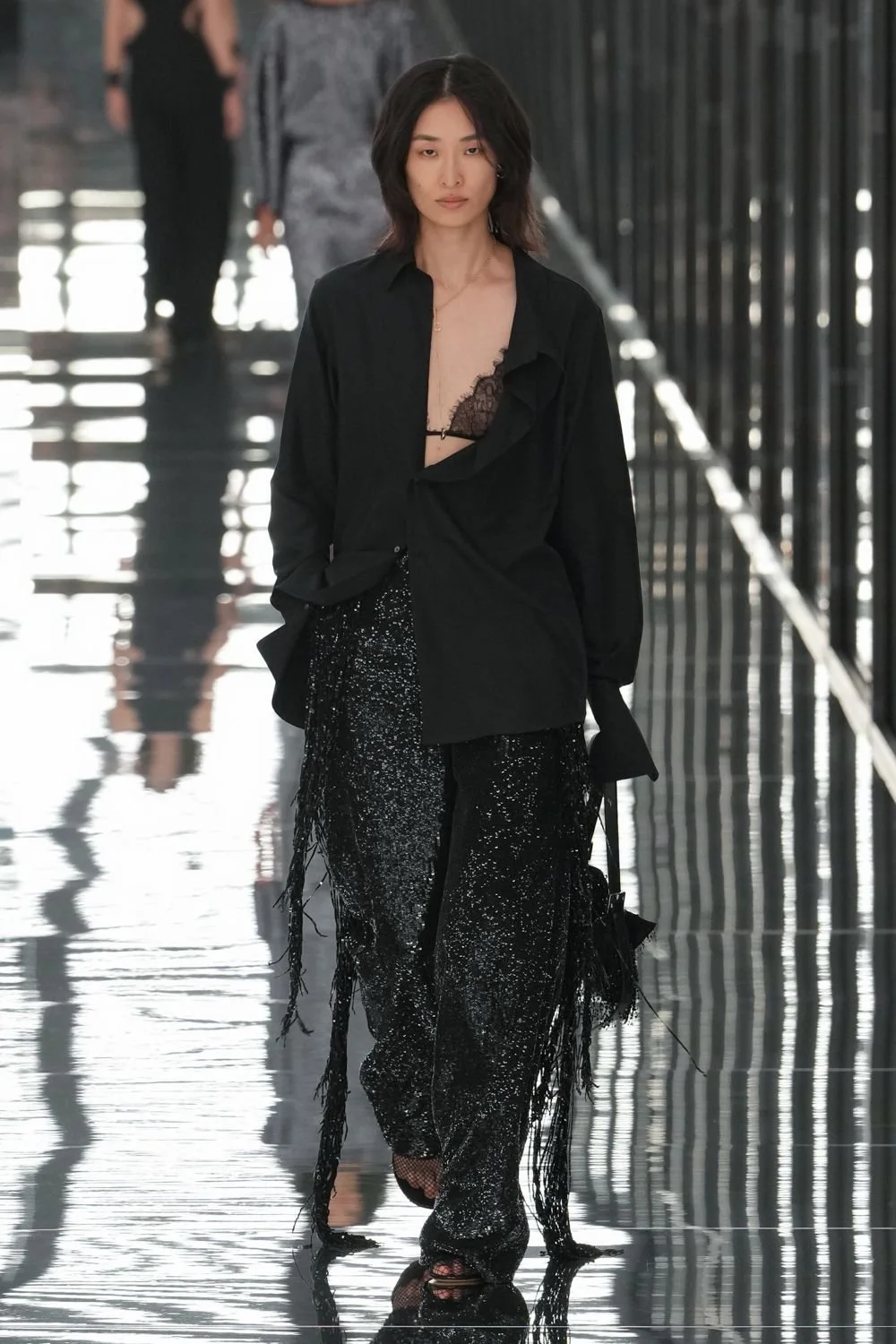
Woven into set design, concept, and music choices were, of course, the clothes, a continuous signifier of Chiuri’s recent aims of exploring how our bodies interpret desire. Compared to her previous Fendi shows, silhouettes remained straight-lined and clean, with lightweight undergarments and sheer, lingerie-themed pieces championed and adorned with embroidery, lace, and mosaic-like knitted elements.

As for the palette, black, white, and their muted variations continued to be a favourite, yet a subtle touch of vibrancy was now introduced through the use of blush pink and peach tones, light lime greens and sky blues.

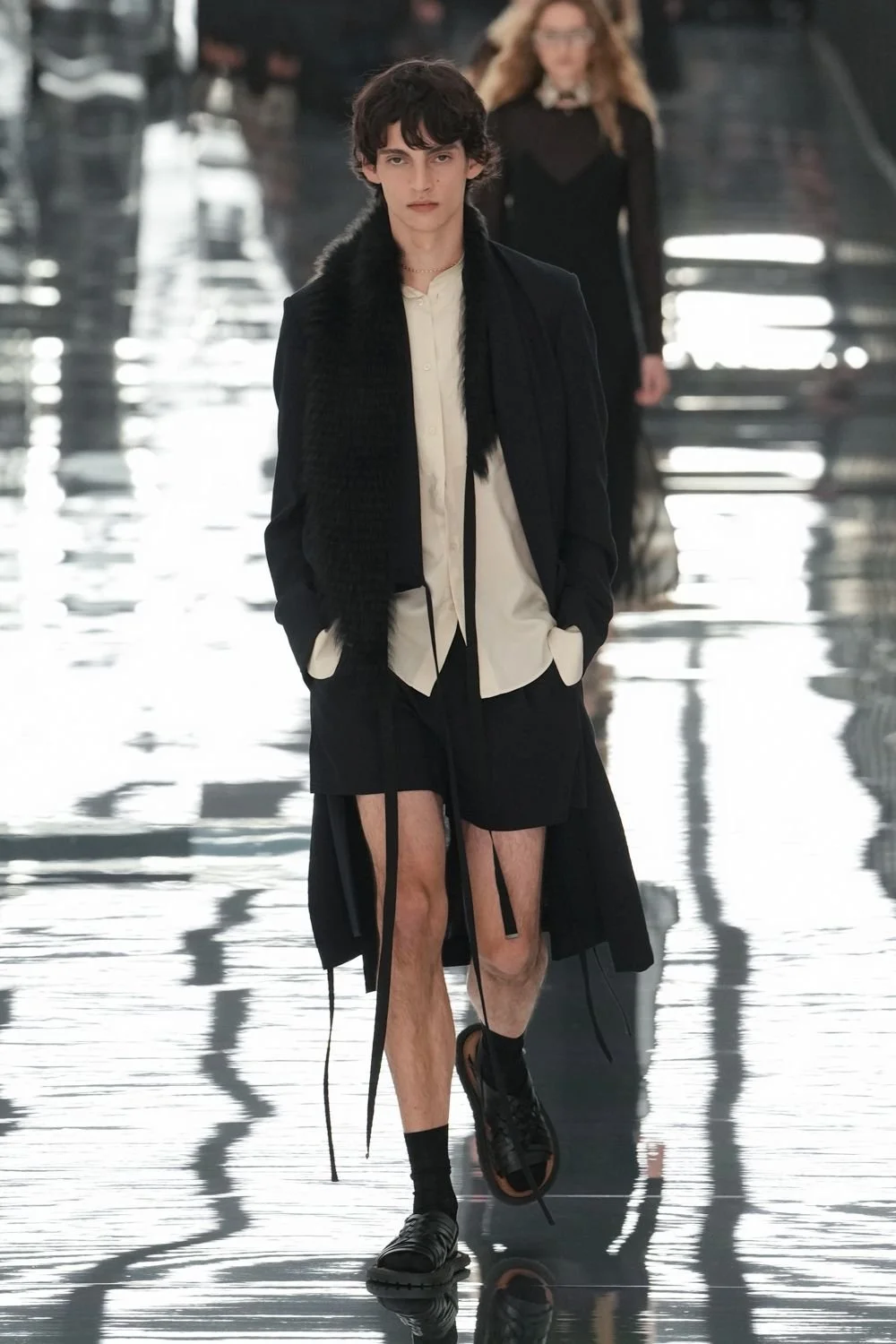
Juxtaposed were fur stoles and mélange fur coats, previously seen on the F/W 2026 couture collection. Materiality and texture represented clashing notions of strength and fragility, contrasting between heavier outerwear and soft underwear, where silk shared the space with velvet, and shiny coatings merged with matte finishes.

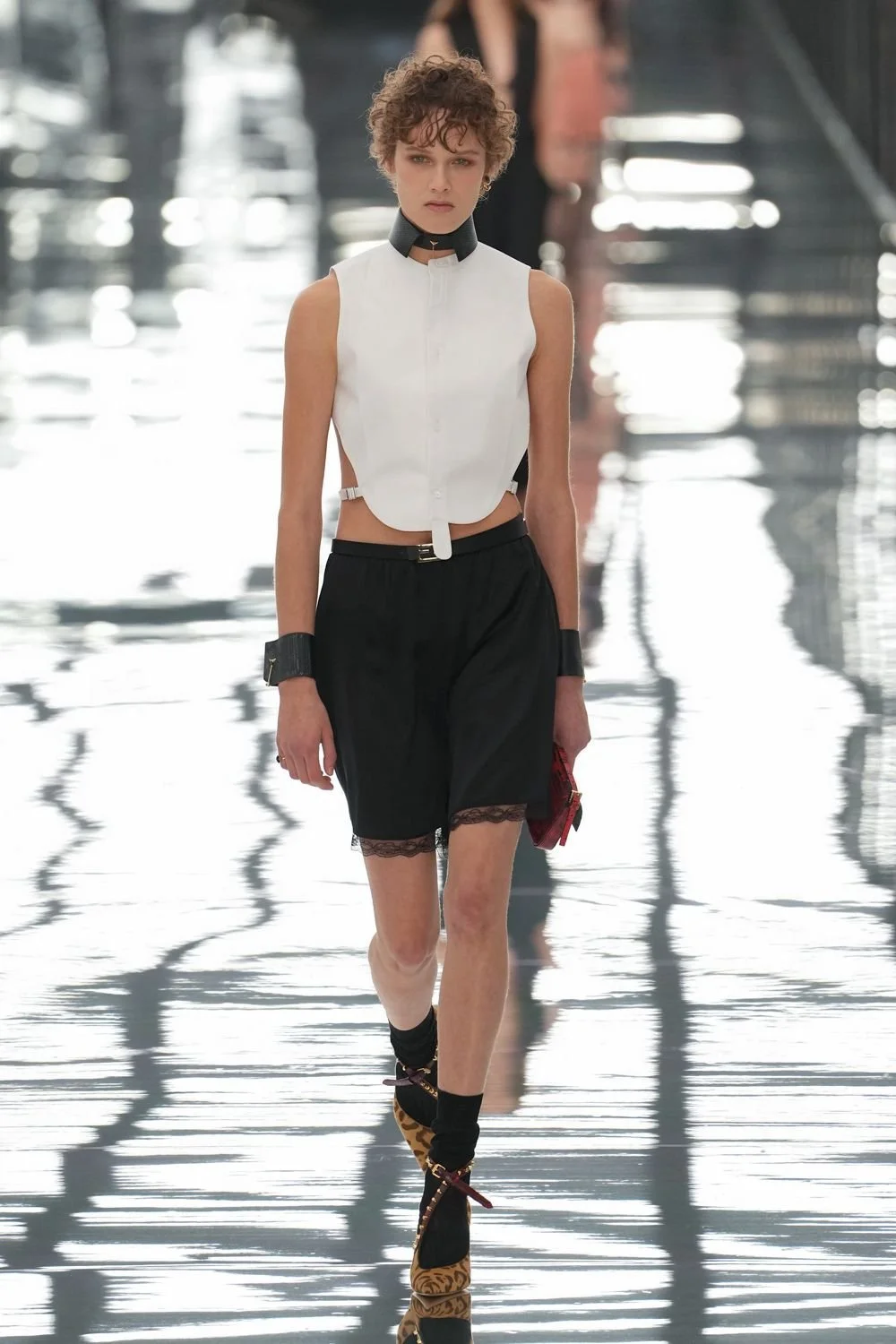
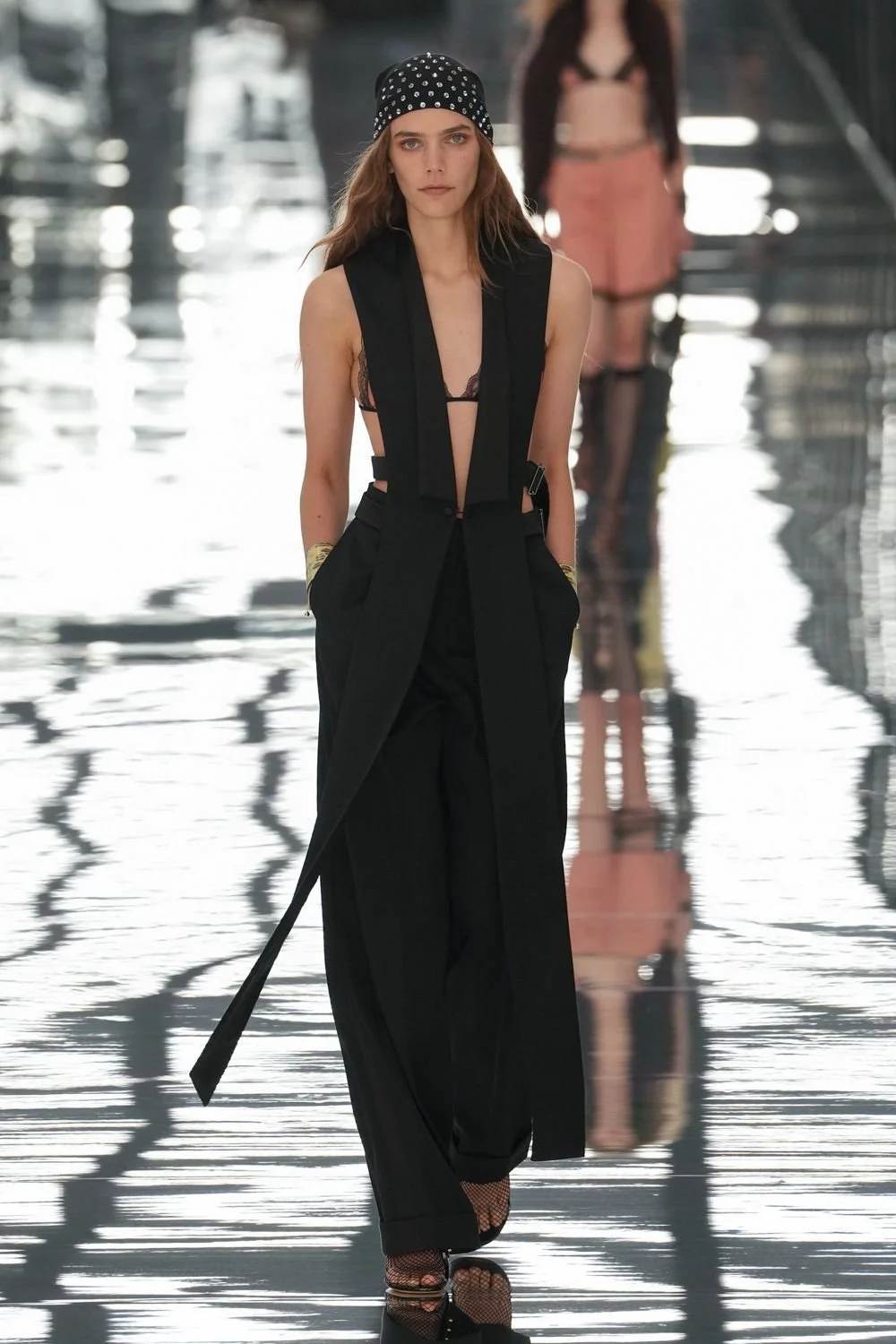
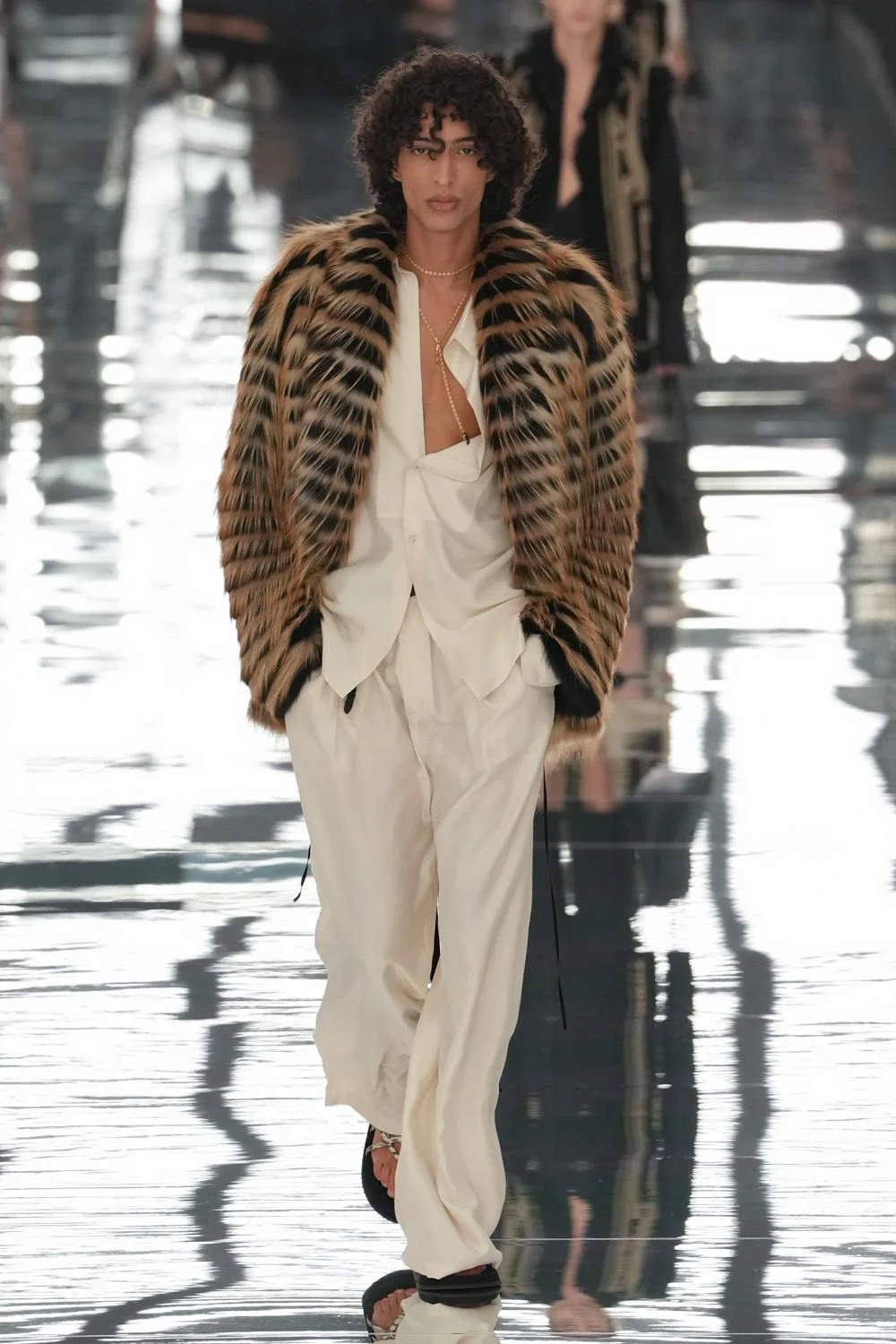
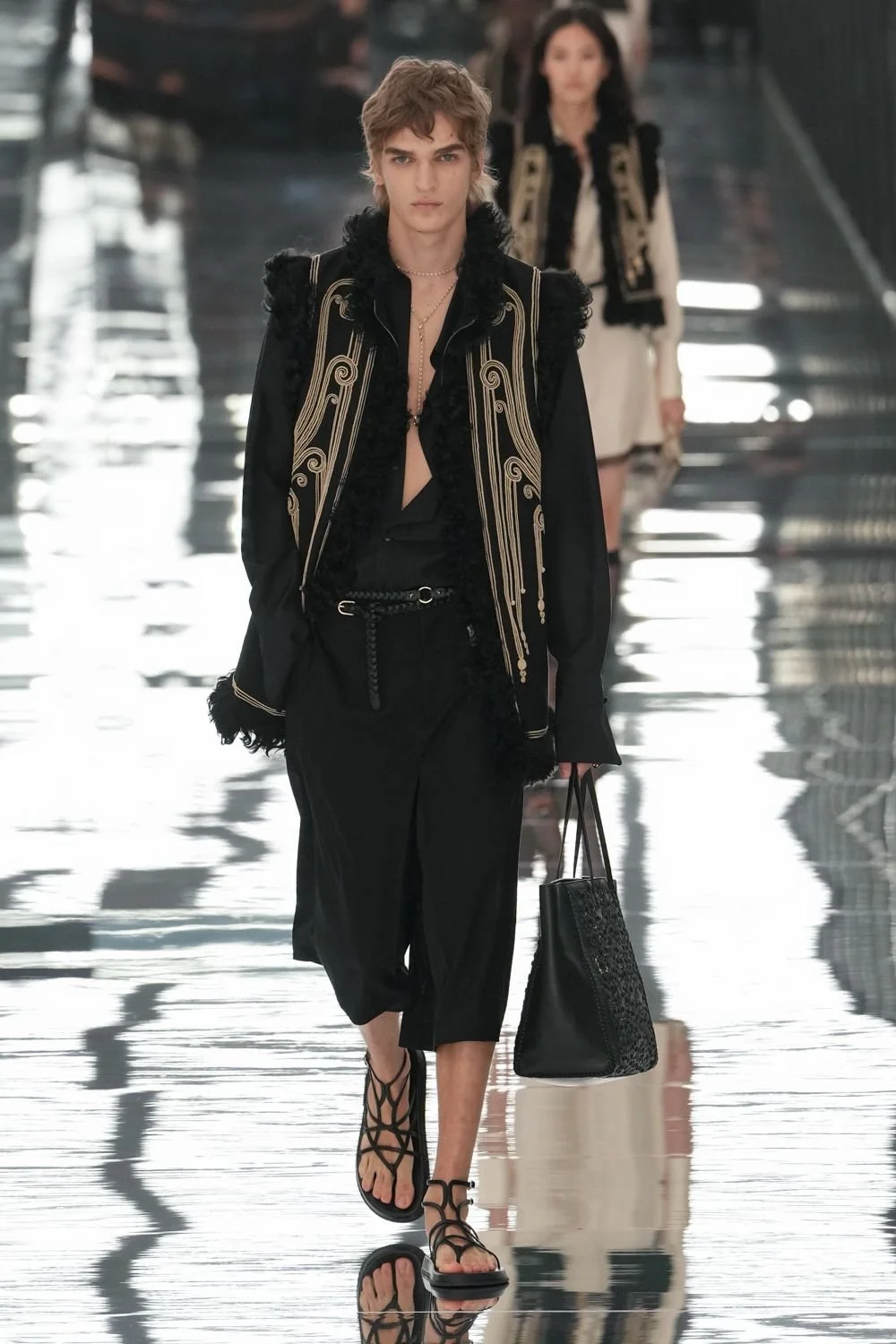
Graphic and animal prints, burnt orange, olive and brown, equally contributed to the context. Leather chokers and fishnet stockings, rope belts and crystal-embellished headscarves, studded heels and deep V-neck cuts, the latter especially highlighted on the men’s looks, made SS27 part sexy, part glitter rock.

New iterations of the Fendi Baguette were placed on the catwalk to increase its all-time desirability factor, including ‘70s-inspired embroidered styles and the debut of a mini, phone-friendly version.

Following this idea of an interchangeable wardrobe, something Chiuri previously mentioned since starting to design for Fendi, the lineup aimed for a metamorphic effect, where masculine, feminine, and everything in between meet each other, with no boundaries. Infinite possibilities, just like in a mirrored room.


Words by Ketlyn Araujo
HODAKOVA SS27

For Spring/Summer 2027, Swedish designer Ellen Hodakova Larsson handed guests a show note folded tightly into a paper sailor hat. Unfolding it revealed a stream of consciousness, a manifesto touching on shame, desire, animals, husbands, climate anxiety, and the quiet violence of being alive. “I didn’t do anything,” one line read as an apology or perhaps a confession of collective paralysis.

 Larsson has become somewhat of the poster child for conscious design, elevating discarded materials into sharp luxury. This season, the designer focused her lens onto our collective numbness. Painted wide-open eyes on models’ closed eyelids created an immediate uncanny valley eeriness. We are moving together in a hypnotic, slow-motion crawl, and the models looked unnervingly present and yet completely unseeing.

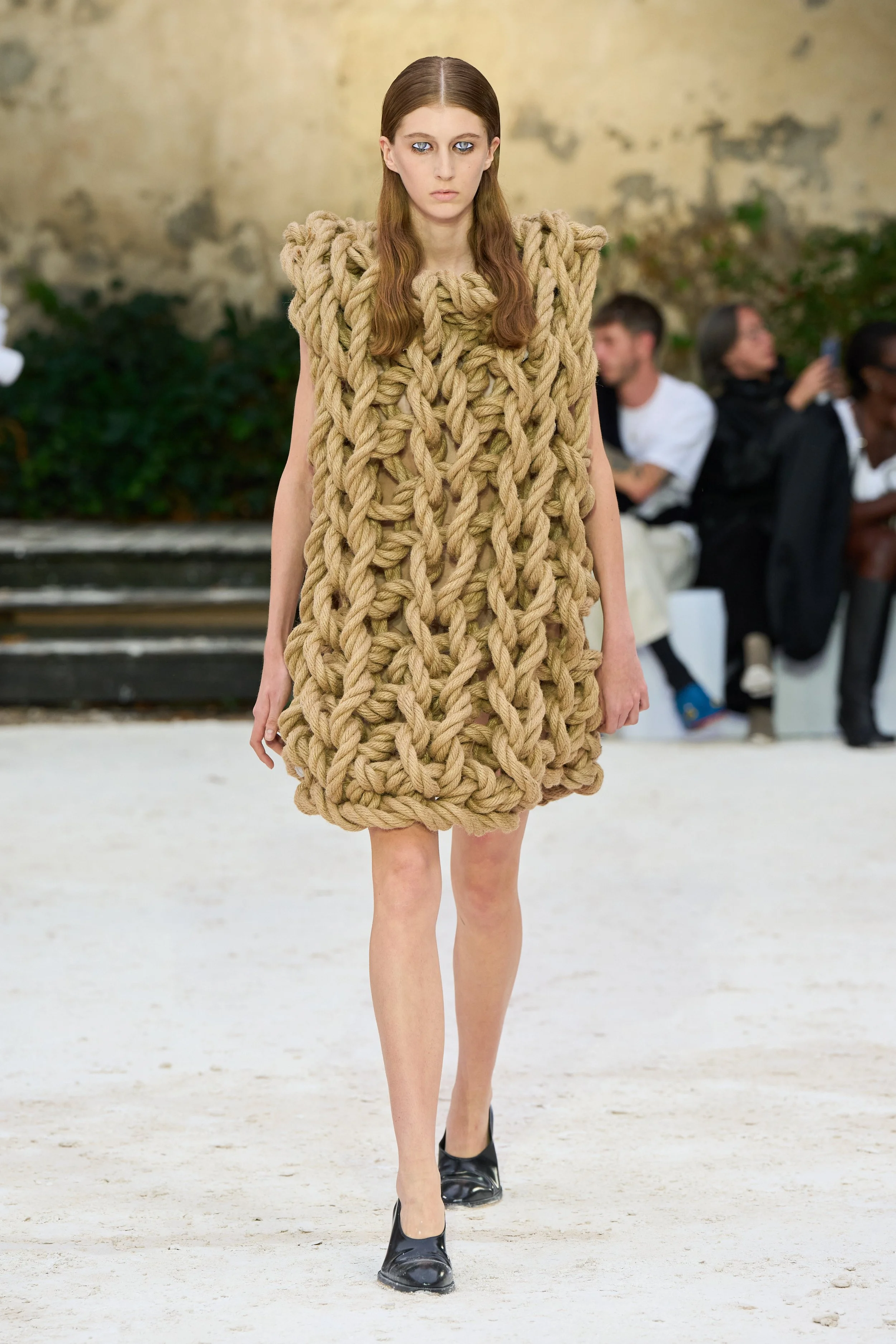
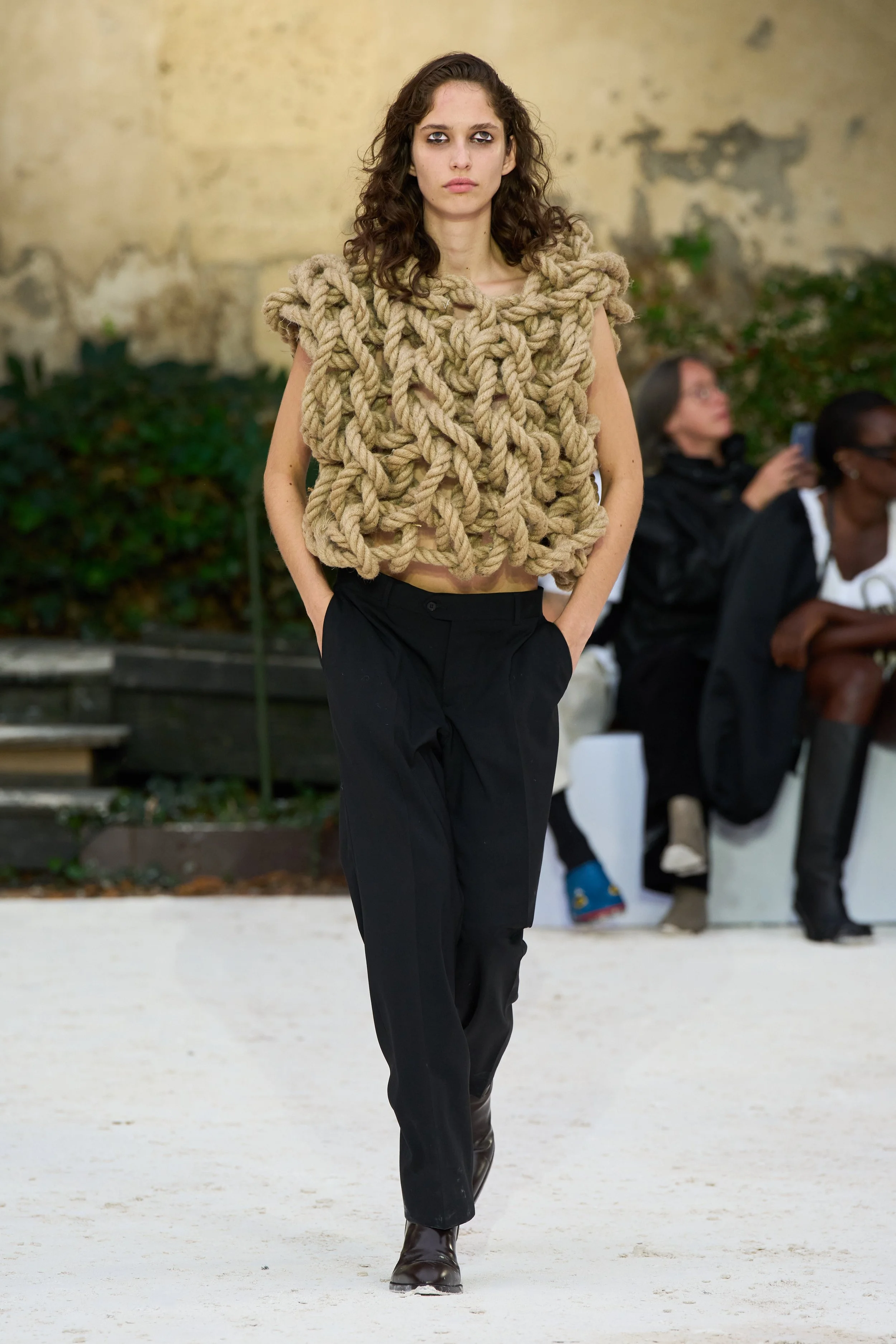
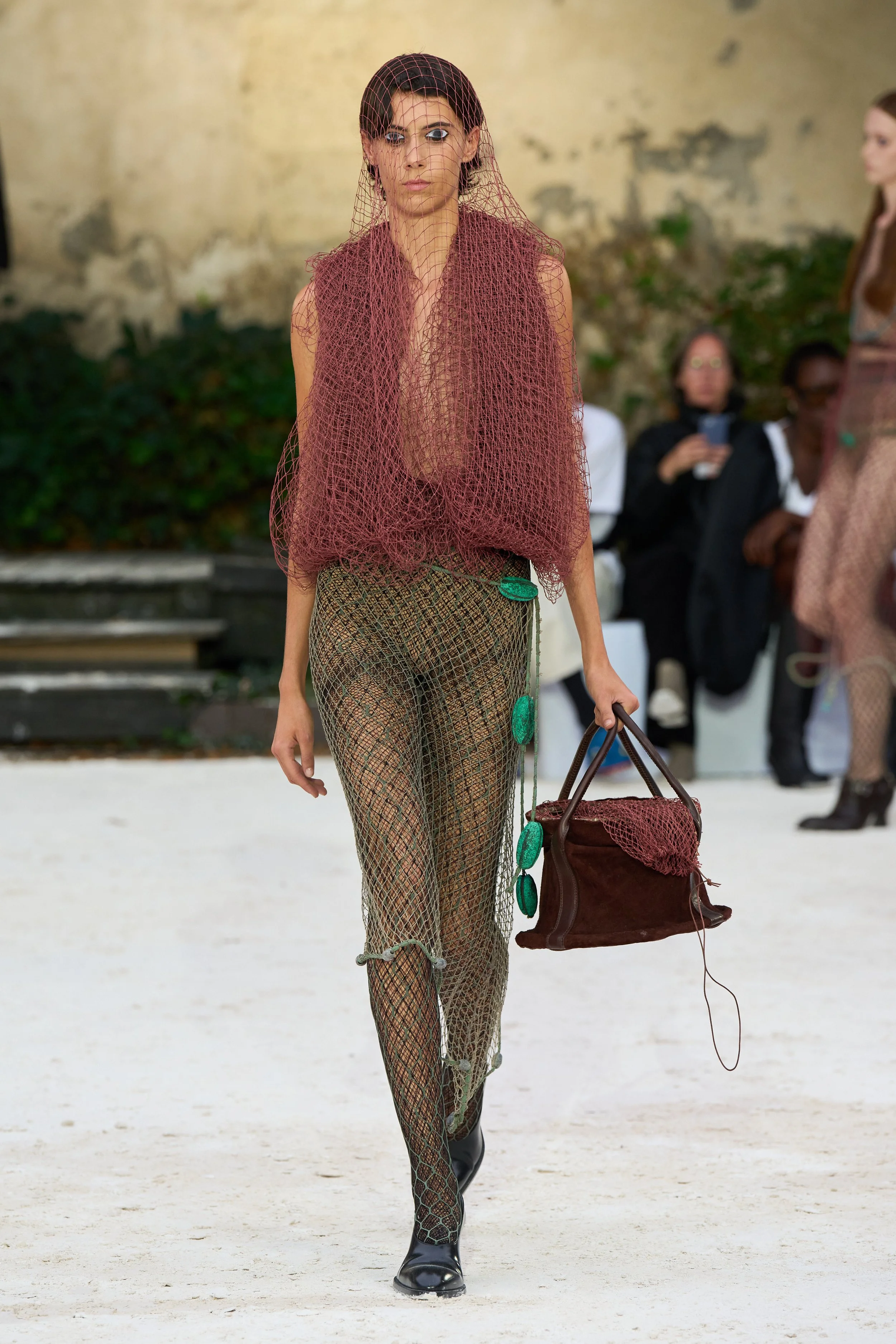
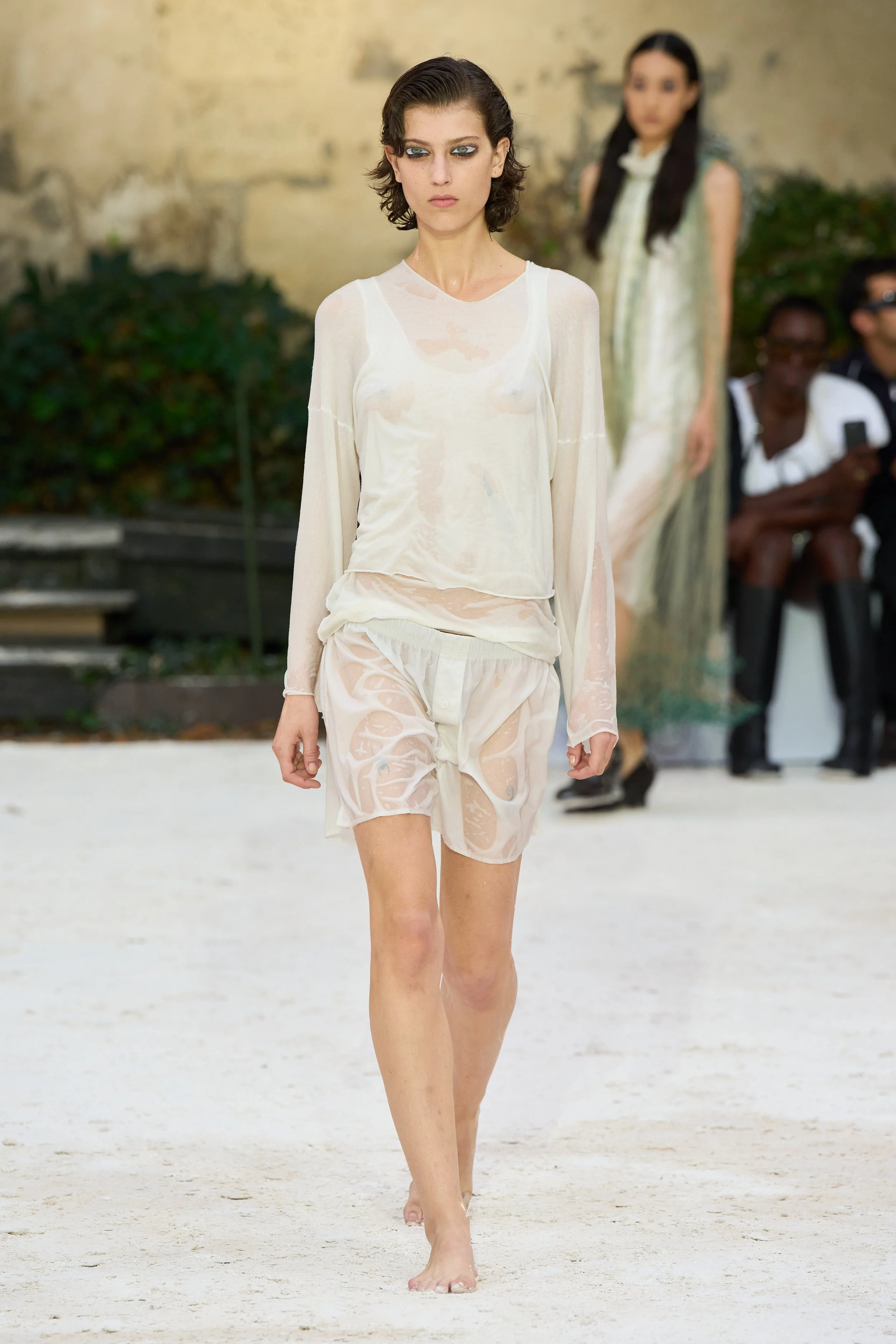
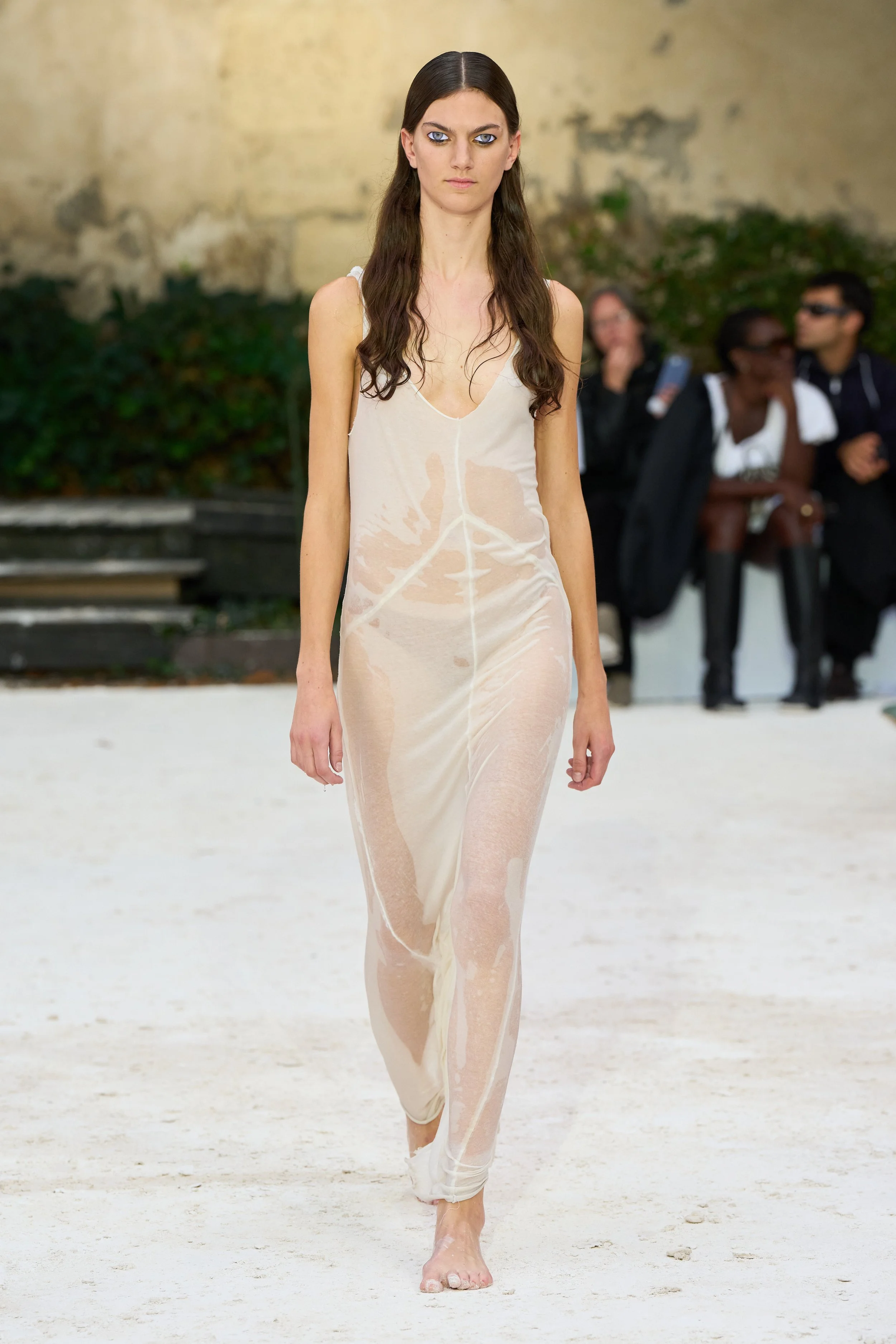
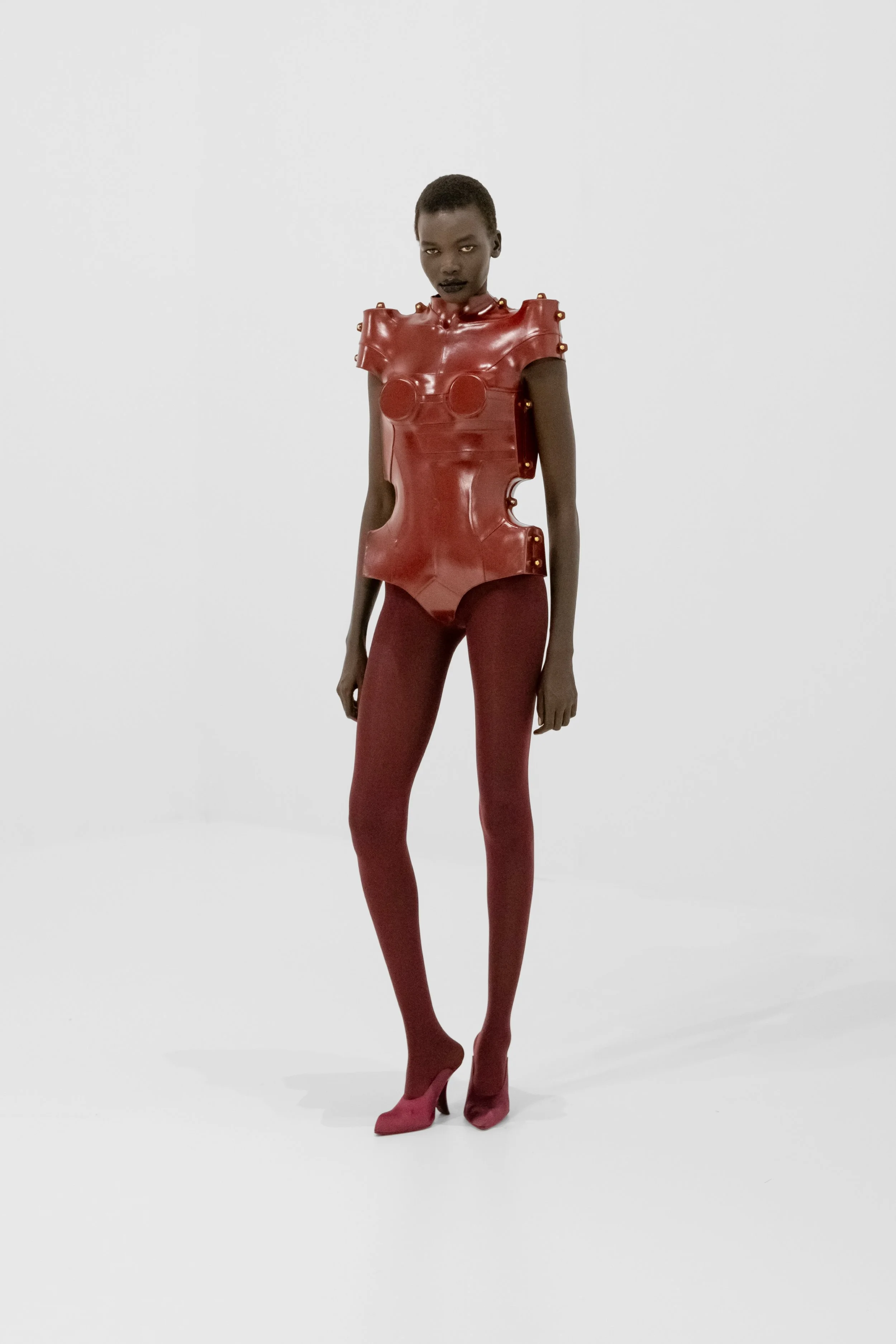
The garment progression mirrored that psychological weight. Opening looks teased a deceptive softness with deliberate pops of blush pink before swiftly yielding to rough blacks, pristine whites, and weather-beaten earth tones. As the show progressed, its message grew more visible. Translucent, wet-looking drapery clung to bodies as if the models had just emerged from the depths of the sea. Heavy rigging rope was hand-knitted into grand sculptural silhouettes, and industrial fishnetting transformed into sheer, body-skimming dresses. Dark armour bodices featured intricate scale textures made from upcycled material. Far from standard nautical attire, garments looked as though they were brought in by the tide, leaving a sea-swept trail behind.

As the models drifted by, a tension began to build. With fake eyes painted over their real ones, the audience was left caught in a bizarre stare-down. It captured our collective state of perpetual oversight, the unsettling realisation that keeping your eyes wide open is often just a mask for total internal detachment. We are looking, sure, but are we actually seeing?

Larsson’s material philosophy centres on memory and time, giving old garments a second life. For SS27, she takes a sharp existential turn, asking what we choose to do with what we inherit. The planet, the clothing, and the lingering aftermath. This evolution represents a crucial development for Hodakova, one that should become standard in an industry built on overconsumption. Here, a direct reaction to world events isn’t shallow marketing. Instead, it’s an urgent plea to reshape the understanding we have of modern luxury.


Words by Nomi Edman

JEAN PAUL GAULTIER HAUTE COUTURE FW26/27

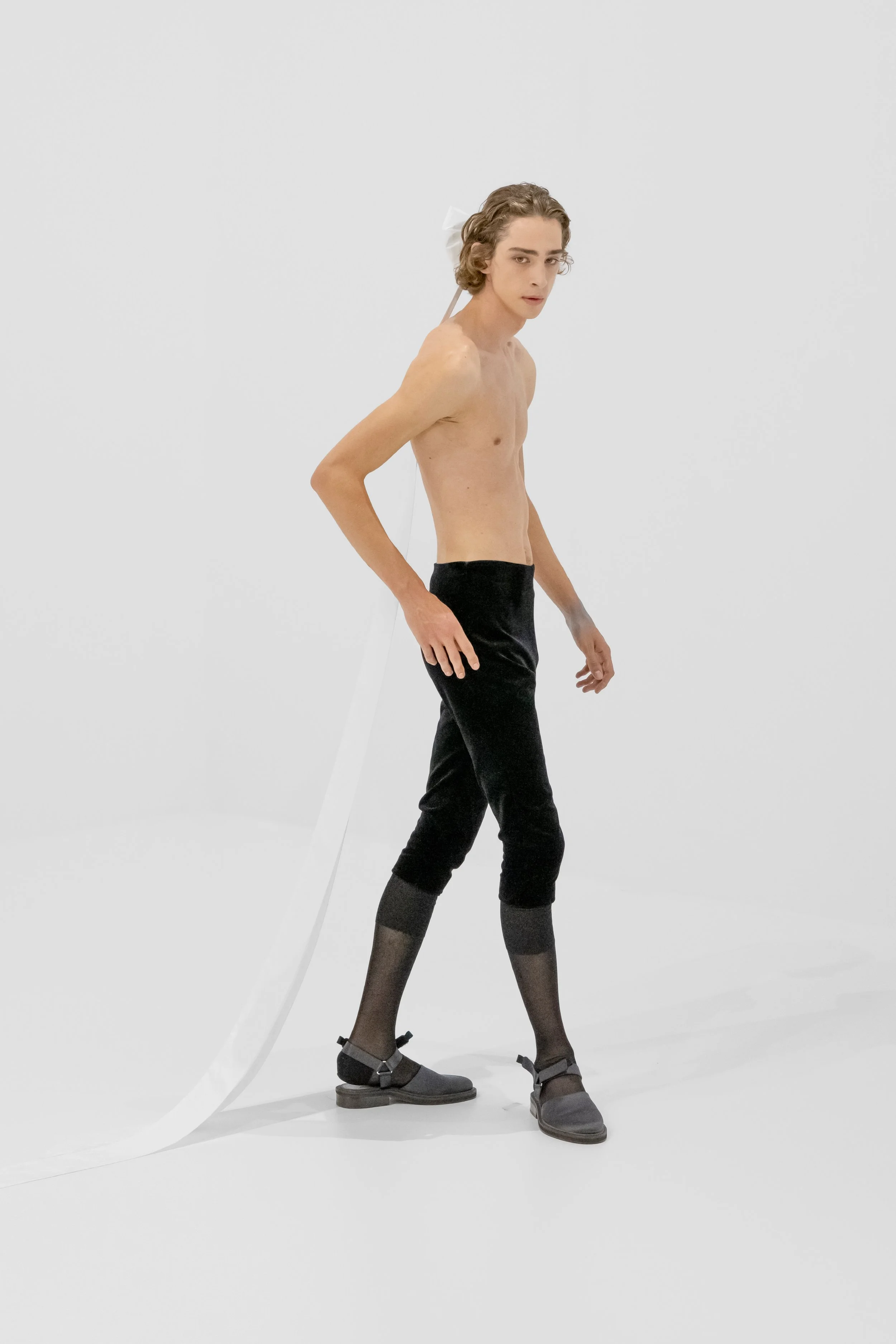
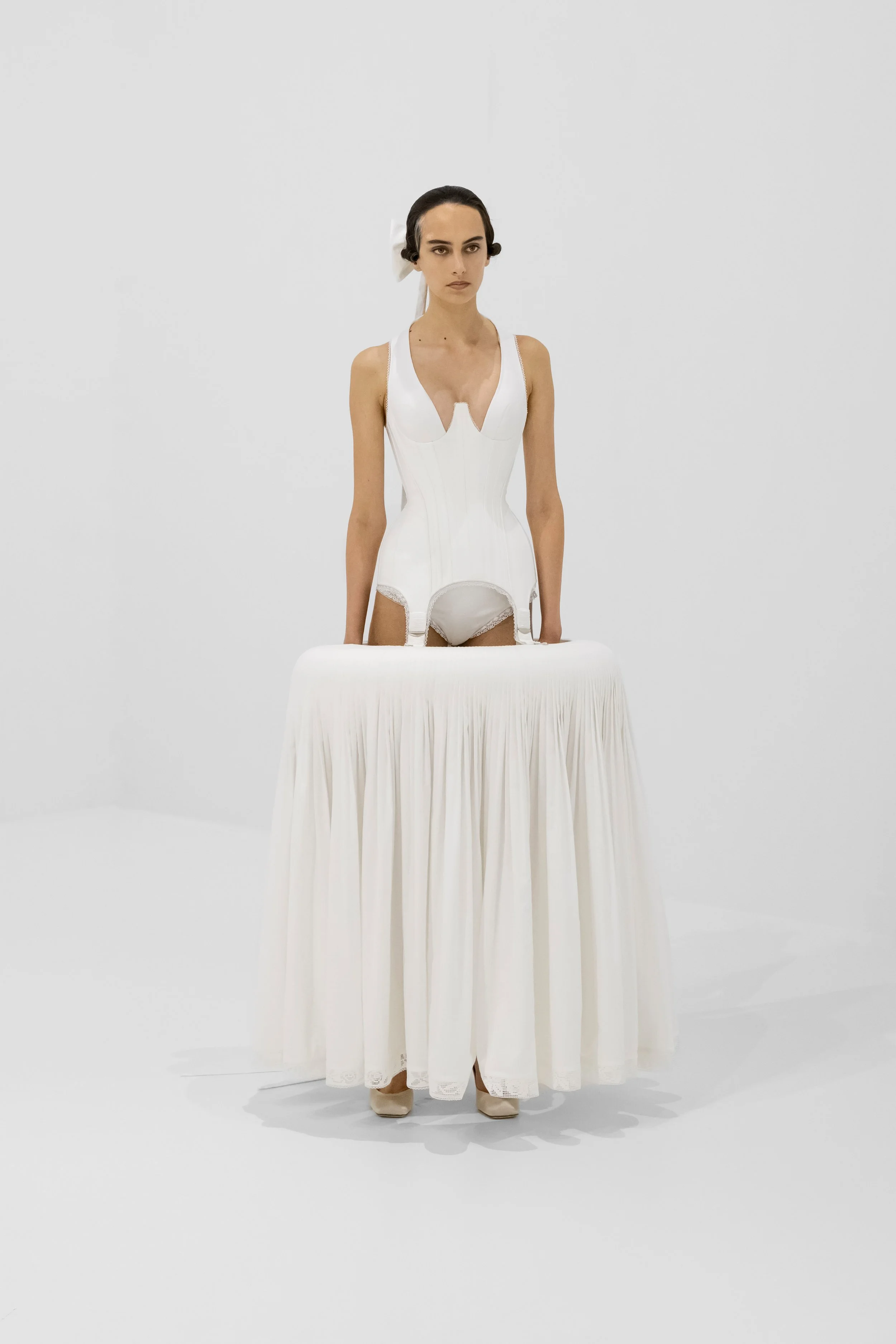
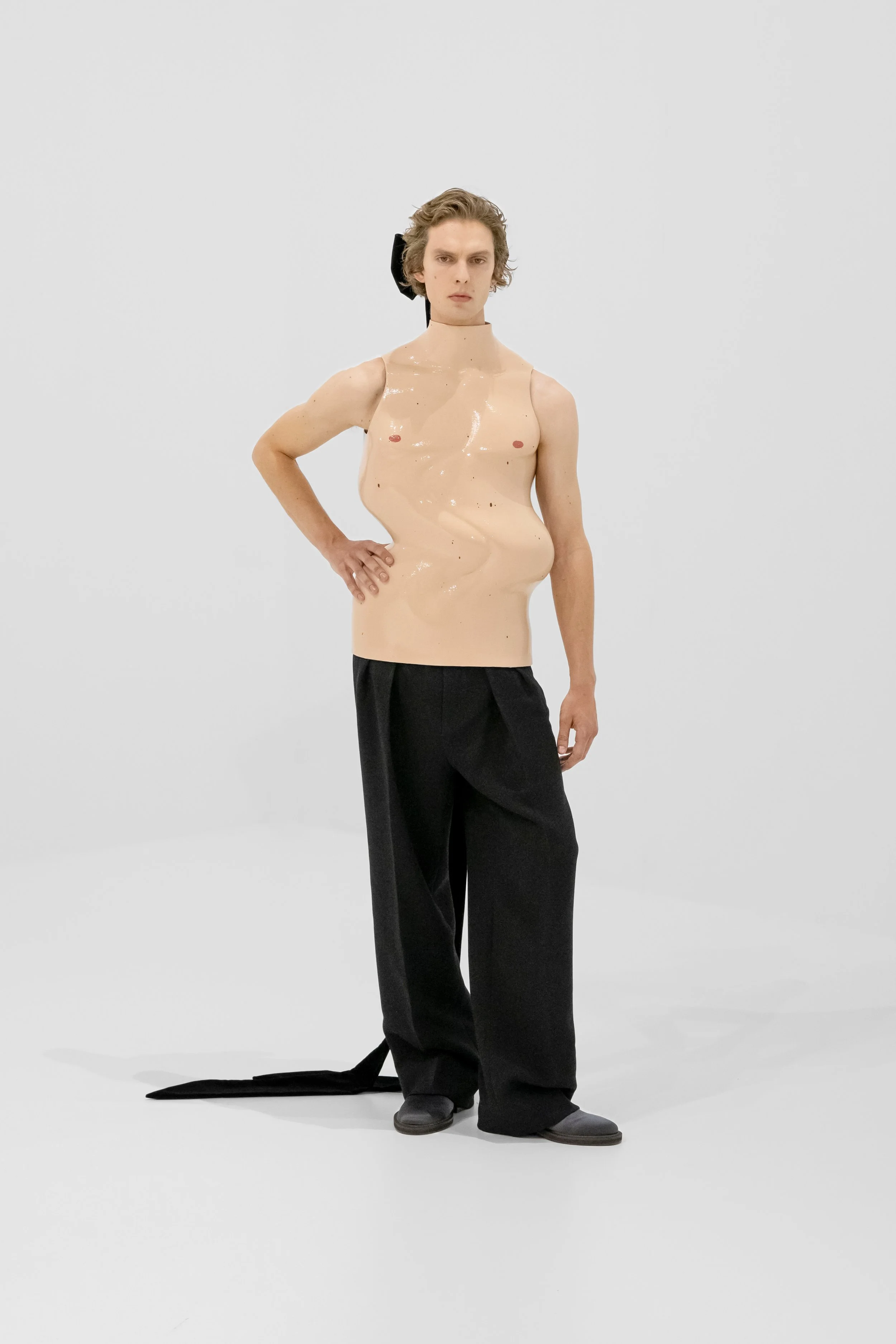
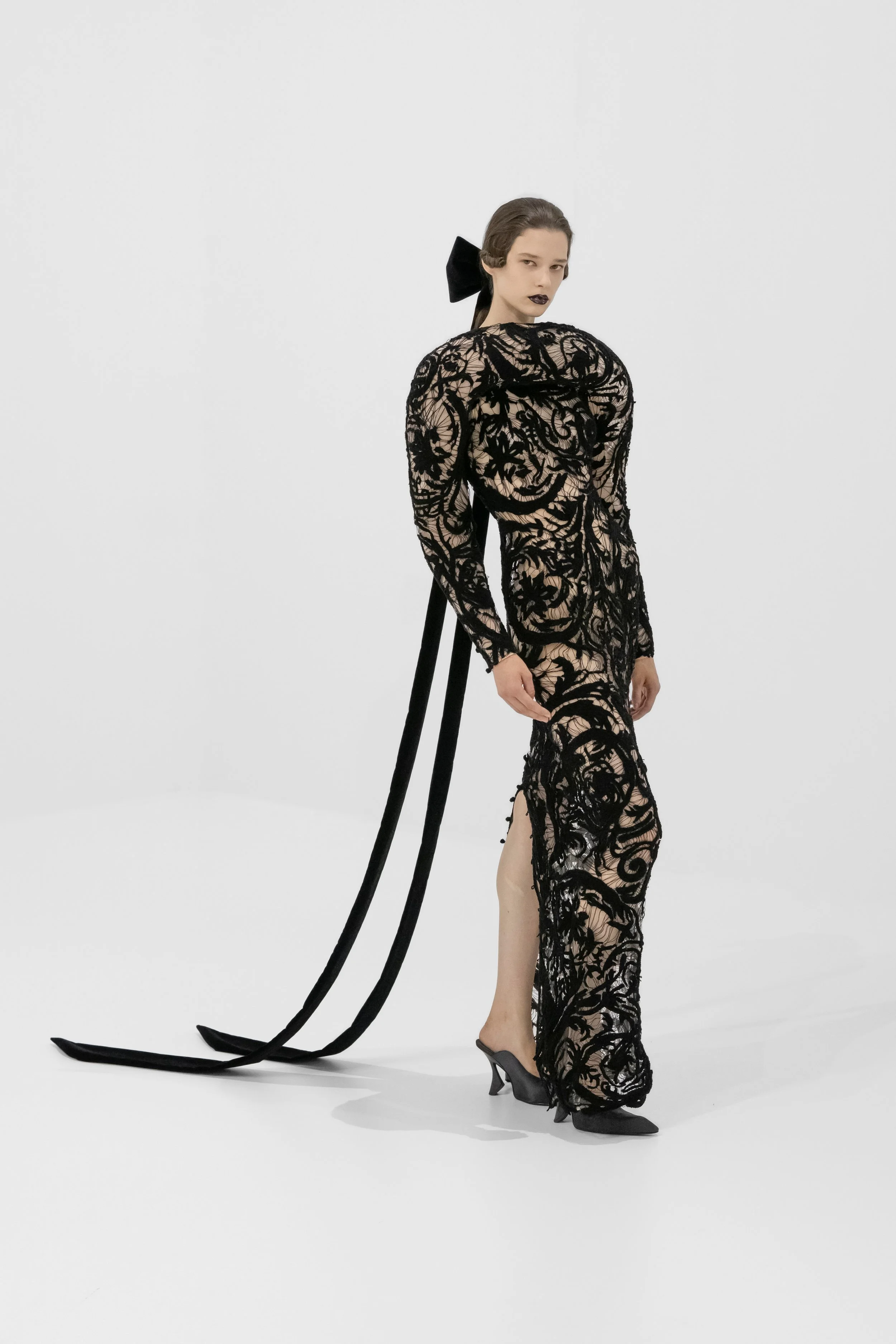
Excitement about Duran Lantink's couture debut has been brewing since the announcement that he would be taking the reins of Jean Paul Gaultier. Ever the rule-breaker, his first foray into such a rule-bound world was an exciting prospect. Over his first two collections, he's bent the JPG archive into a distorted new shape.

The question hanging over this debut wasn't whether Lantink could speak the language of couture but whether he could preserve his irreverence once confronted with its rigid grammar. His answer was to drag Versailles through a body shop. Inspired by 18th-century court dress, particularly the exaggerated silhouettes associated with Marie Antoinette and the Ancien Régime, historical dress is considered through its oddity.

Rigid, tubular gowns had their sculptural frames forcing the body into unfamiliar proportions. Tulle erupted from necklines, hips and backsides like insulation bursting through cracked plaster, while suspended crinolines hovered around the body instead of disappearing beneath it.

Tailoring was equally disrupted: sharply cut jackets sprouted pyramid-like collars, and parkas were elevated through extravagant volumes. There was a new iteration of the male torso bodysuit Lantink sent down the runway in the last showing under his own label. Still on the body of model Leon Dame, this time the human shape is made squiggly.

Deadstock fabrics from the Gaultier archive were reworked into silhouettes that referenced historical couture while 3D-printed structural elements created exoskeletal frameworks beneath garments, replacing traditional boning with something closer to industrial design.

It was unmistakably Jean Paul Gaultier in spirit: irreverent, body-conscious and allergic to nostalgia. But rather than mining the house's greatest hits (the cone bra, Breton stripes or tattoo prints), Lantink distilled Gaultier's deeper ethos of provocation.


Words by Pedro Vasconcelos

FENDI COUTURE FW26/27

After unveiling her first Fendi collection as creative director of the Italian house back in February, Maria Grazia Chiuri chose Rome, the designer’s beloved hometown, to stage her debut couture show, held at the National Gallery of Modern and Contemporary Art.

Similarities between the two collections can be easily spotted, from a more black-and-white-centred choice of colour to a purposeful fluidity present in all the garments, even when crafted from heavier textiles. In case you skipped a chapter in fashion history, it is worth noting that Chiuri started her designing career at Fendi in the late eighties, before working at Valentino and Dior. Anything done now hints at a full-circle trajectory.

Since her comeback, Chiuri has been aiming to combine shared signature codes crafted by both Karl Lagerfeld and the Fendi sisters, her predecessors, while also paving her own vision for the label.

For couture, this approach further proves itself to be a continuation. Throughout the collection, Chiuri shone a light on the meanings of “desire” today, which, for her, signifies creating clothing that moves with the body and embraces its emotions, intentions, and the complexity of being alive. Rather than constraint, freedom; instead of sturdy or architectural, typical couture silhouettes, lighter and flowy forms.

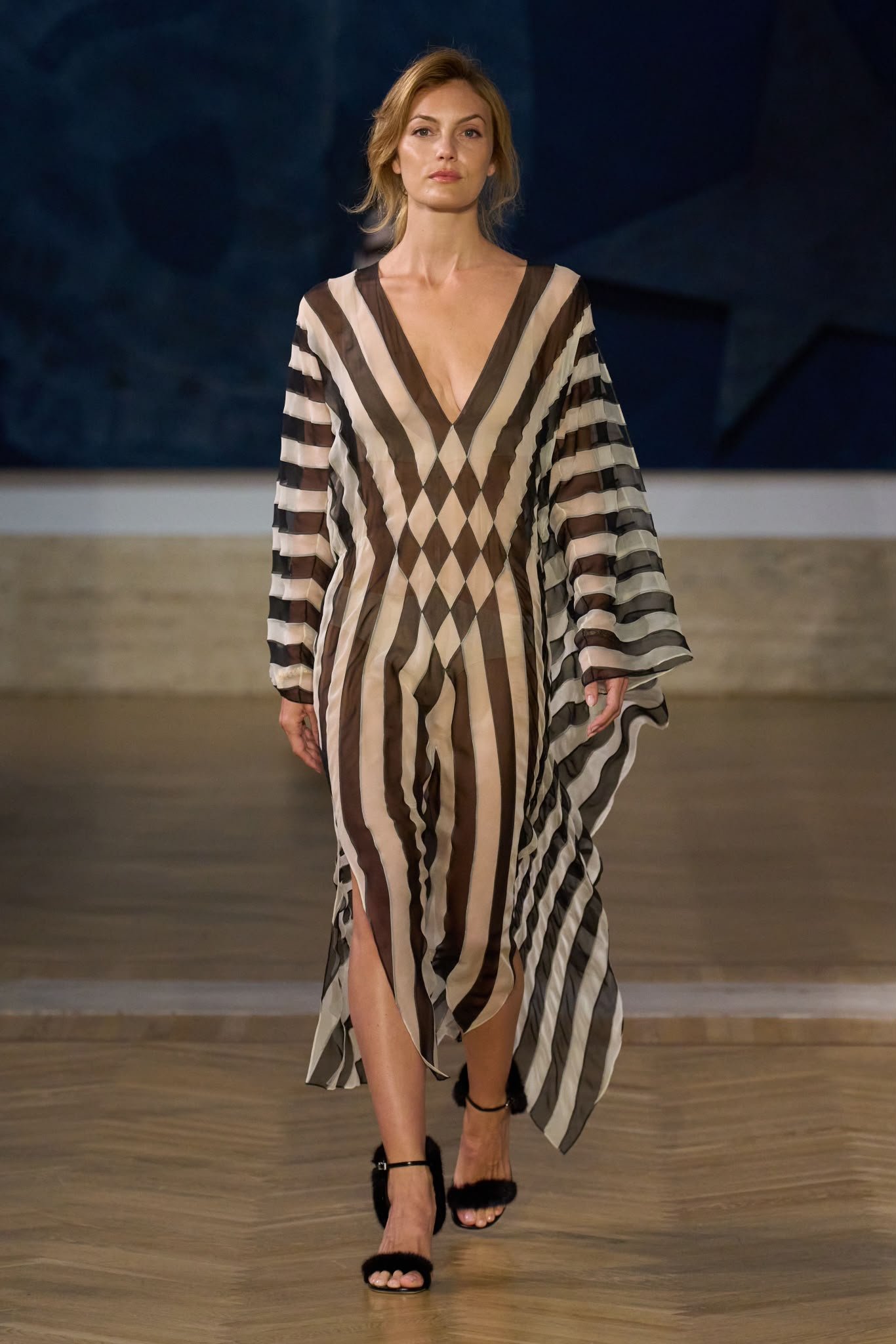
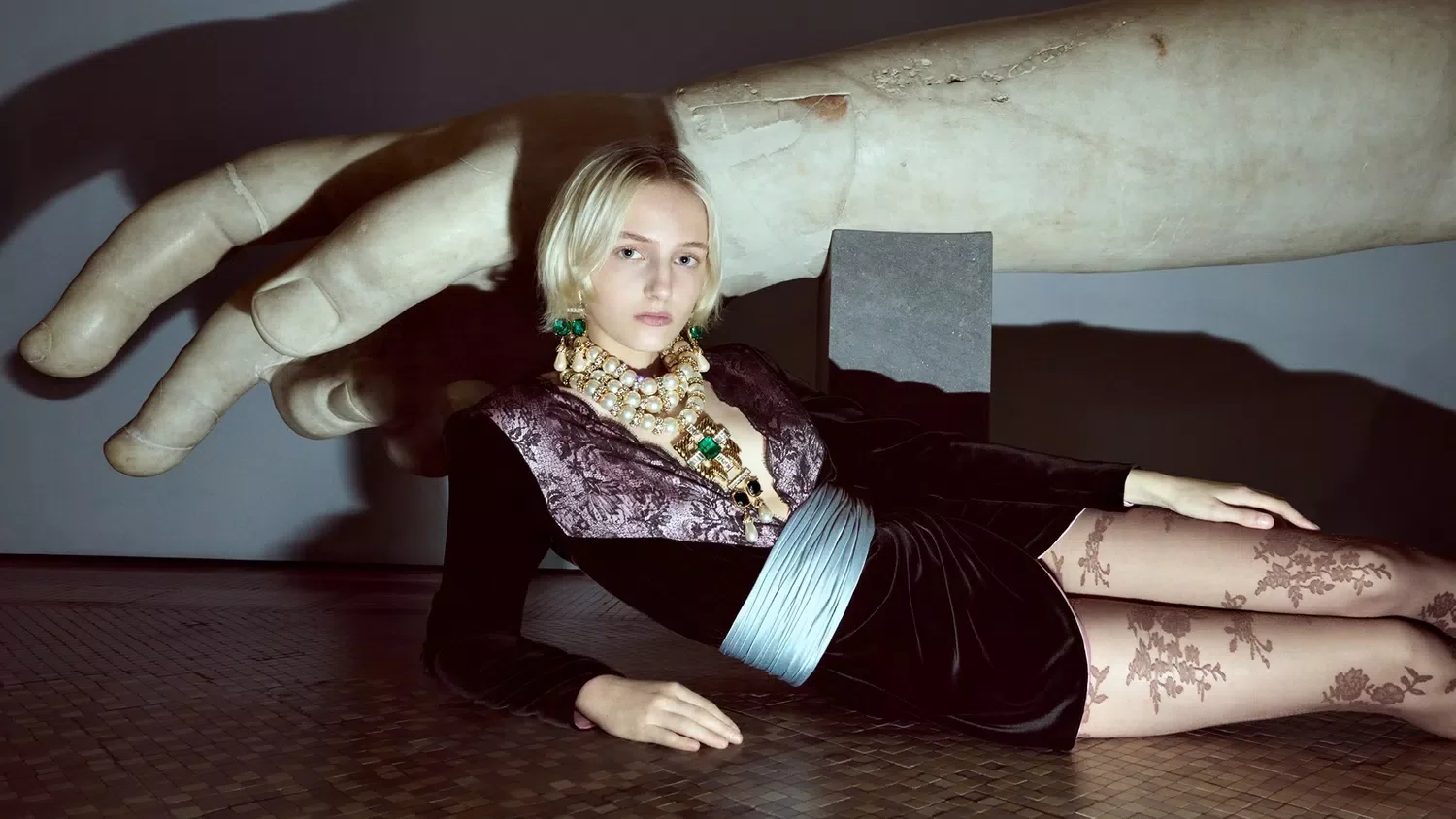
A picture of Austrian fashion designer, businesswoman, and life partner of the painter Gustav Klimt, Emilie Louise Flöge, wearing a striped, black-and-white tunic, inspired a few of the collection’s looks, including the chiffon deep V-neck opening act. Karl Lagerfeld, Chiuri later explained, used to reference The Vienna Secession, a 1987 Austrian art movement of which Klimt was an important part, in his Fendi collections, which puts Flöge’s portrait in a special place on this season’s mood board.

Deep necklines, boudoir-style robes, shorts, and lace dresses, caftans and kimonos were key collection pieces, as were the sheer, clean-lined maxi dresses, intricately embroidered loose tops, mid-length dresses and long cloaks, and the fringed detailing, present in various of the looks.

The use of fur – a Fendi speciality – shone through striped and mélange coats, often done via the ‘Echo of Love’ programme, which recycles vintage fur and turns it into fresh items. To keep Fendi’s couture craft thriving, the maison’s different ateliers, from leather goods to fur, lighter and heavier materials, worked collaboratively in creative synergy to put the collection together.


Words by Ketlyn Araujo
CHANEL HAUTE COUTURE FW26/27

Matthieu Blazy doesn’t design for short attention spans. Our collective image of couture is often one of grandeur and spectacle. For my generation, couture is synonymous with John Galliano’s Dior in the 2000s – its theatricality pushed to the absolute extreme. That isn’t what Blazy is doing.

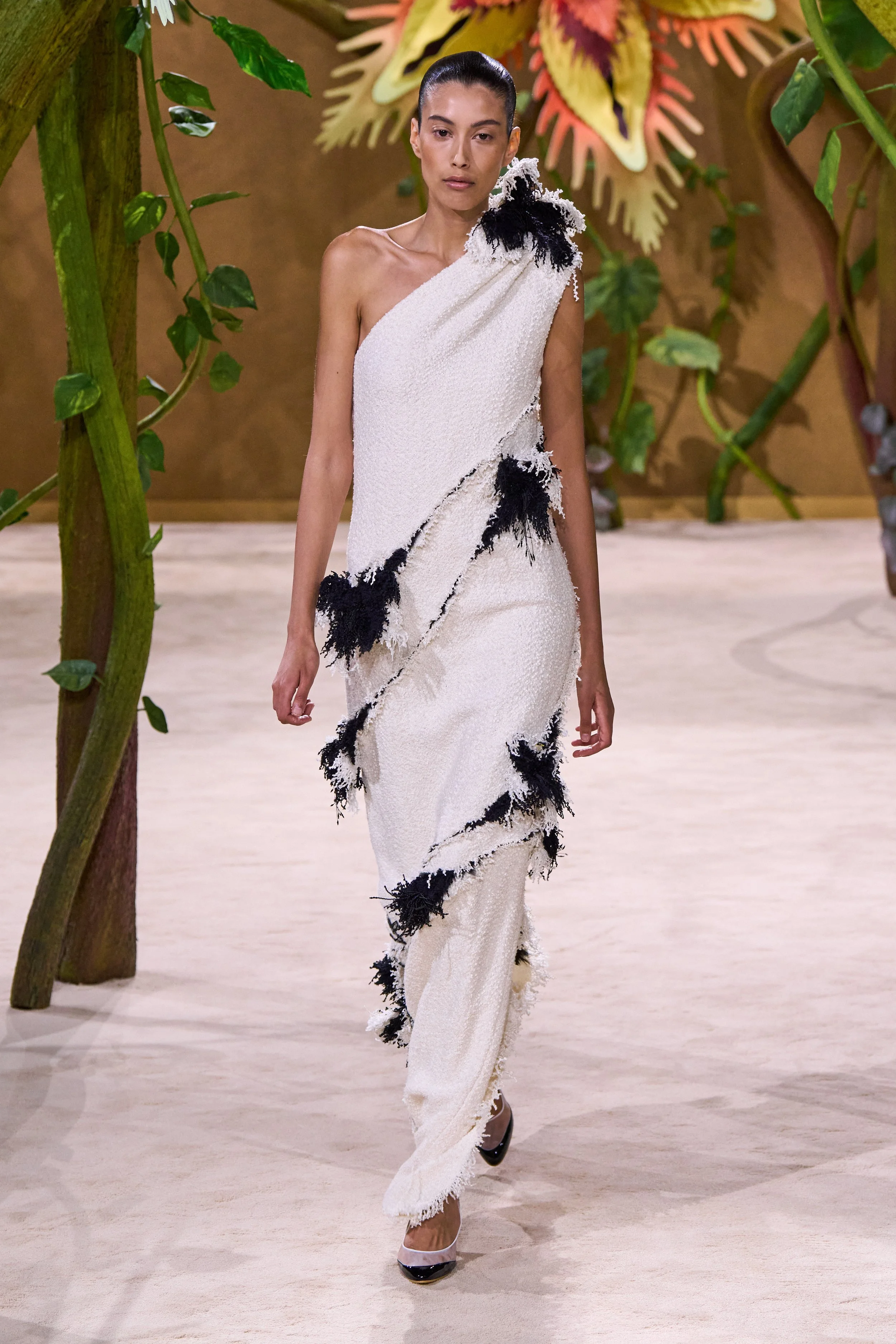
The corseted silhouette so often associated with this kind of glamour is nowhere to be found. Instead, throughout his tenure, Blazy has established a different form as his signature. Returning to the maison's founding principles, he favours ease over constraint: below-the-knee skirts, softly tailored jackets, and generously proportioned tops form the collection's recurring vocabulary. They are clothes designed to move with the body rather than sculpt it into an idealised shape.

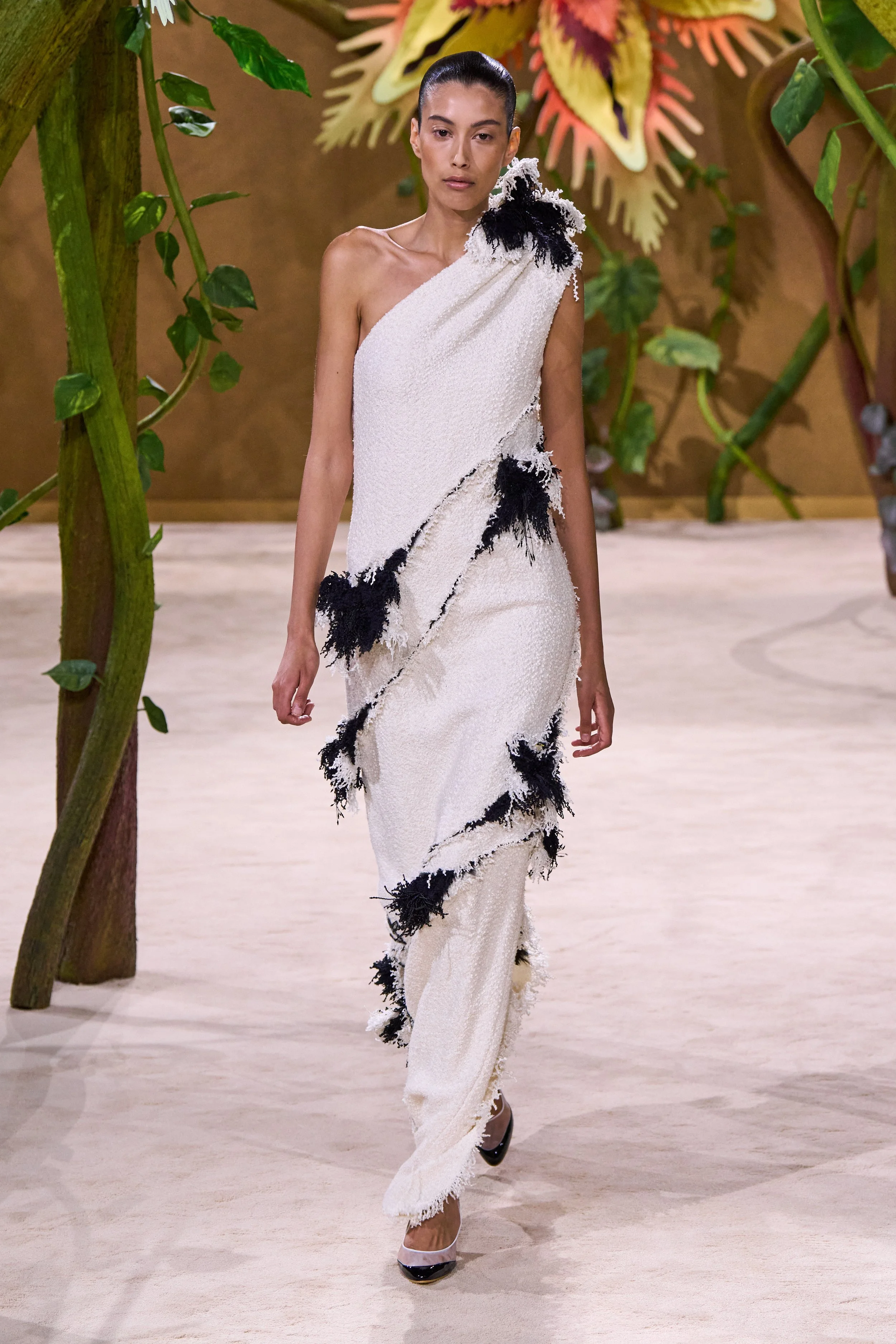
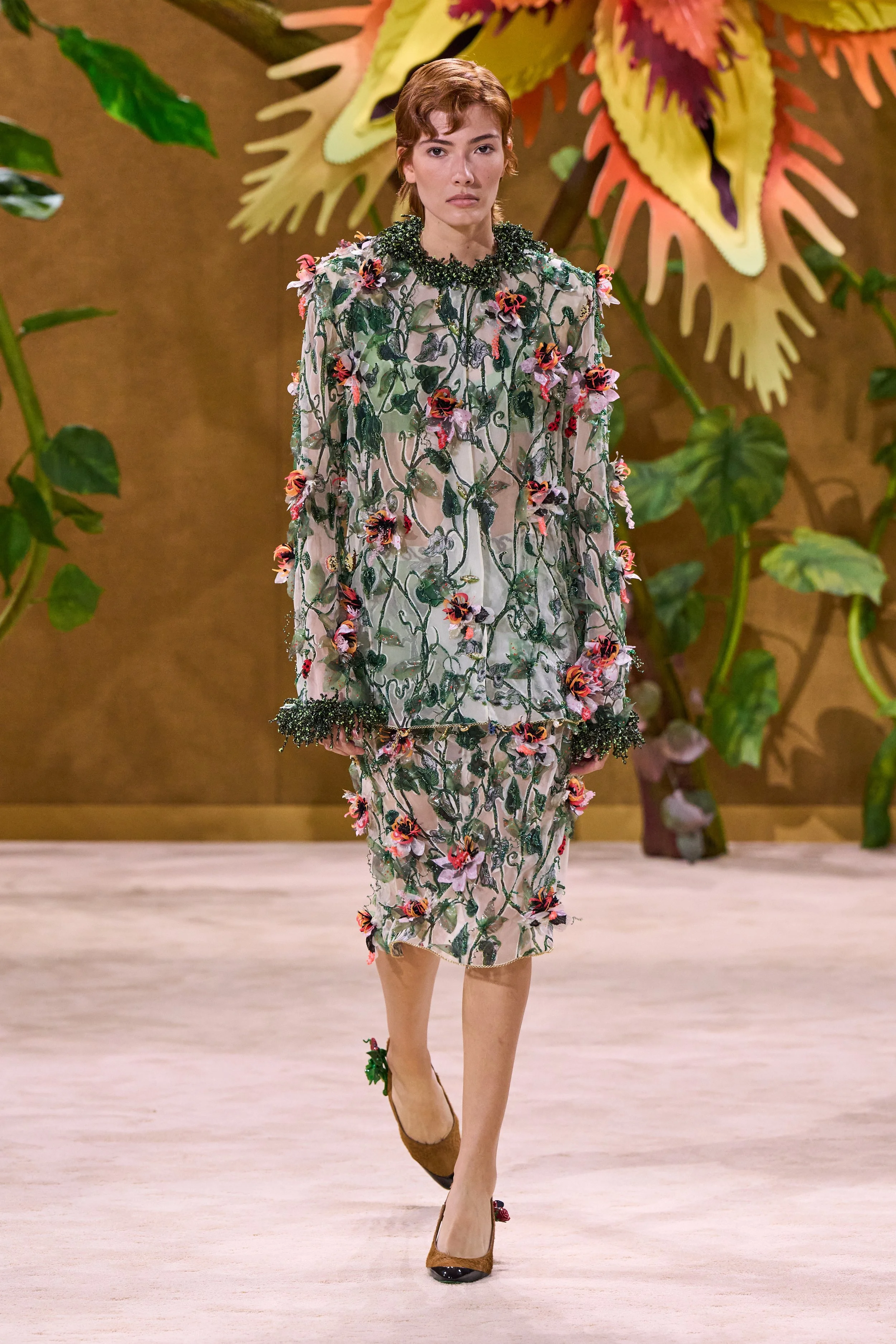
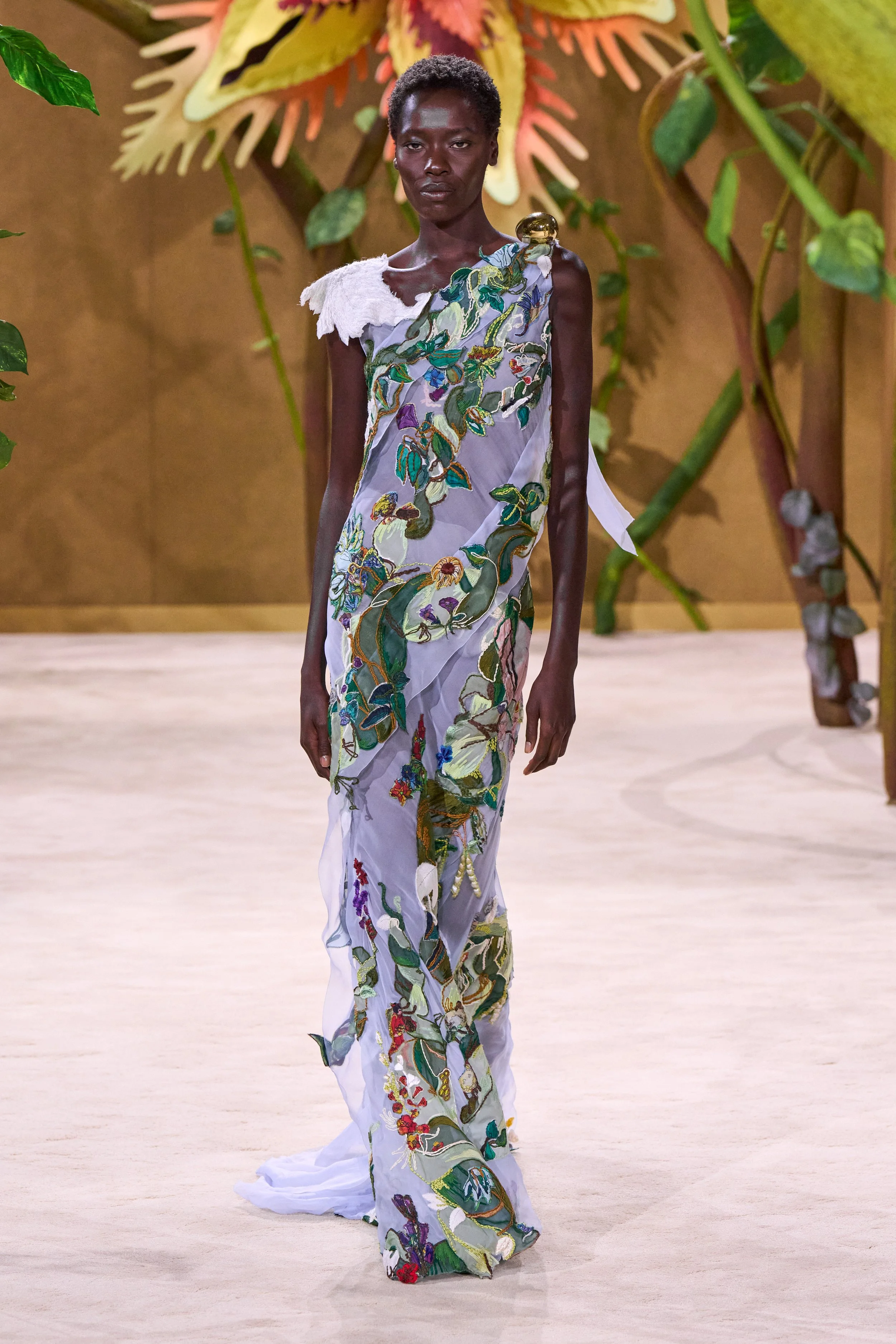
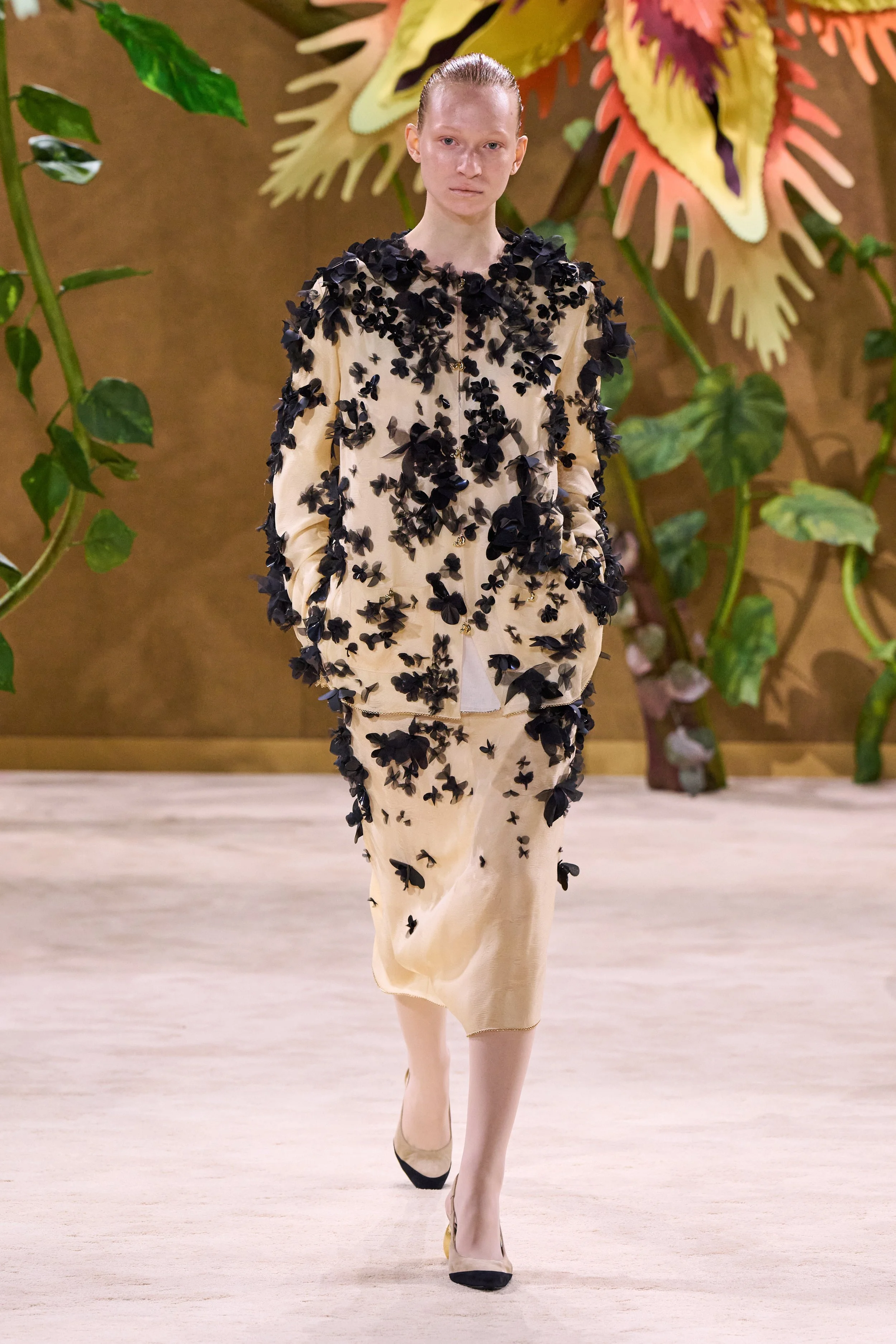
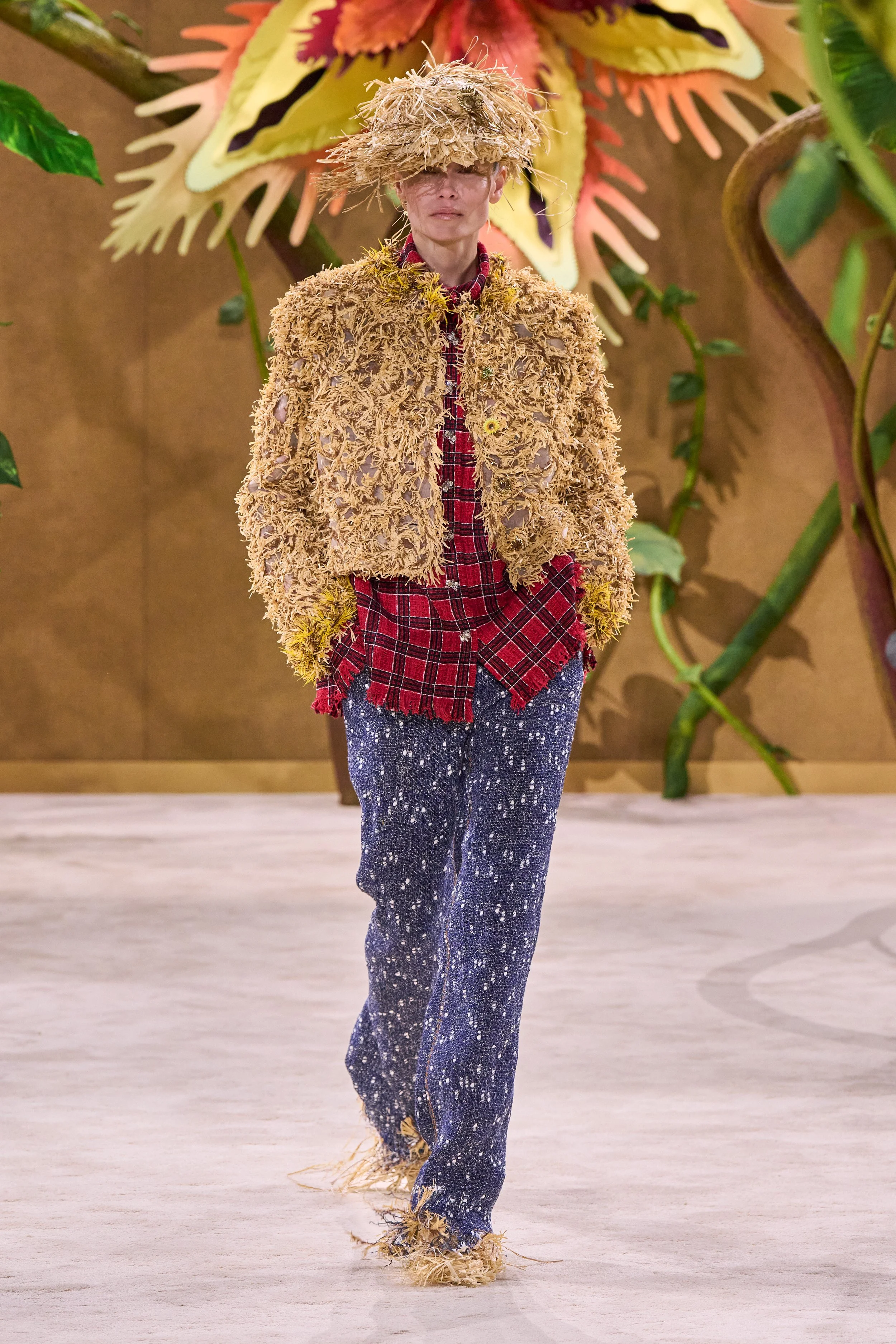
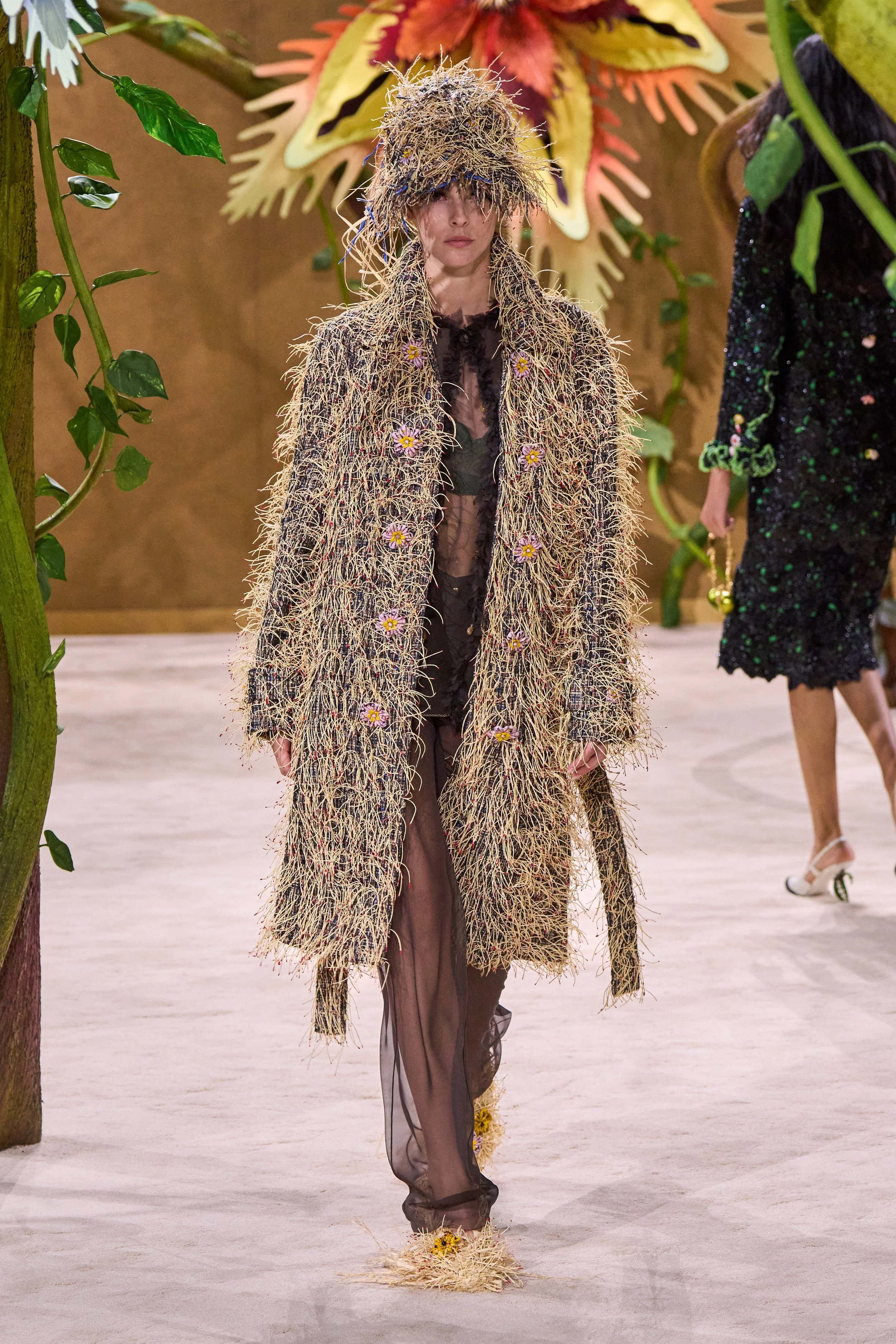
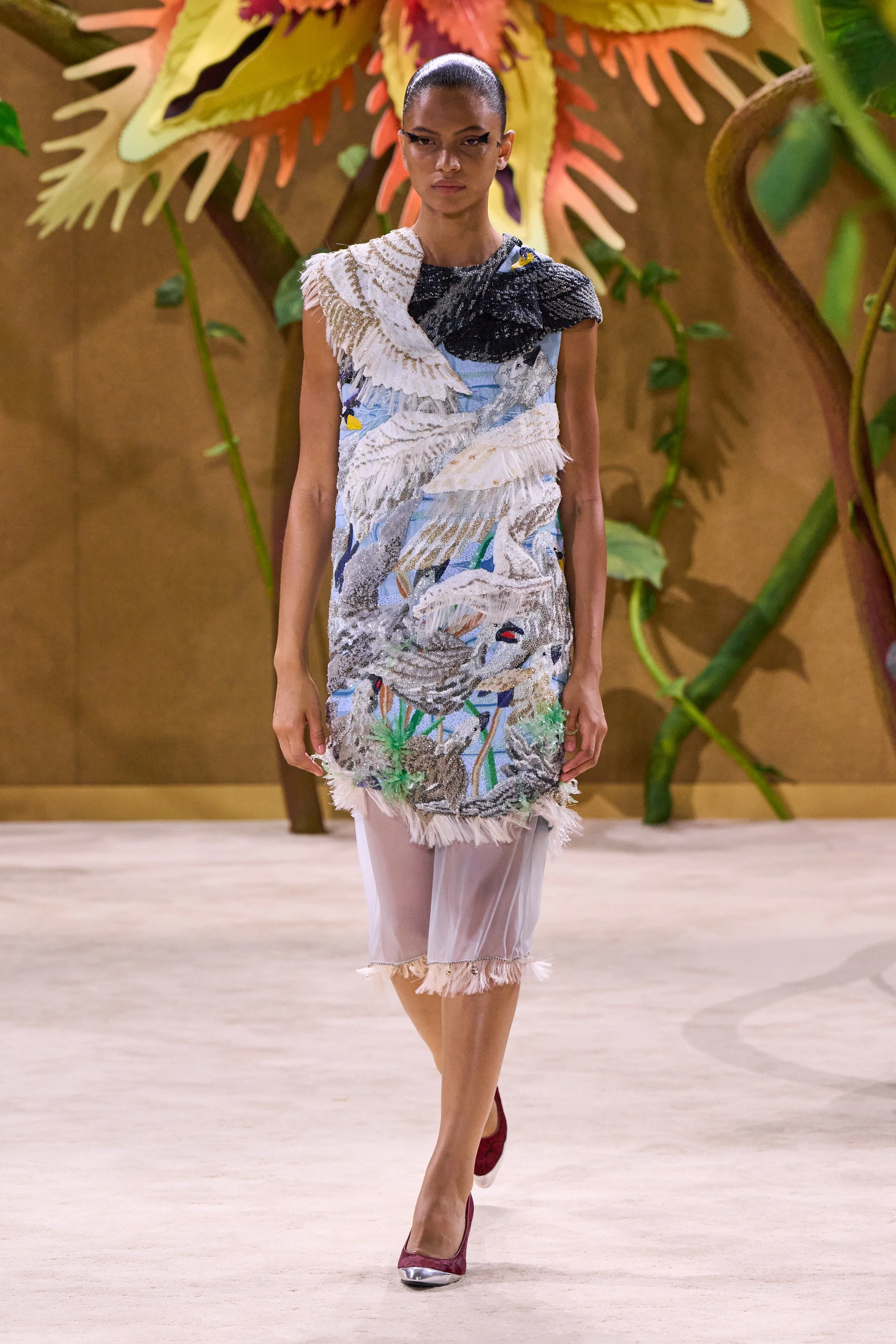
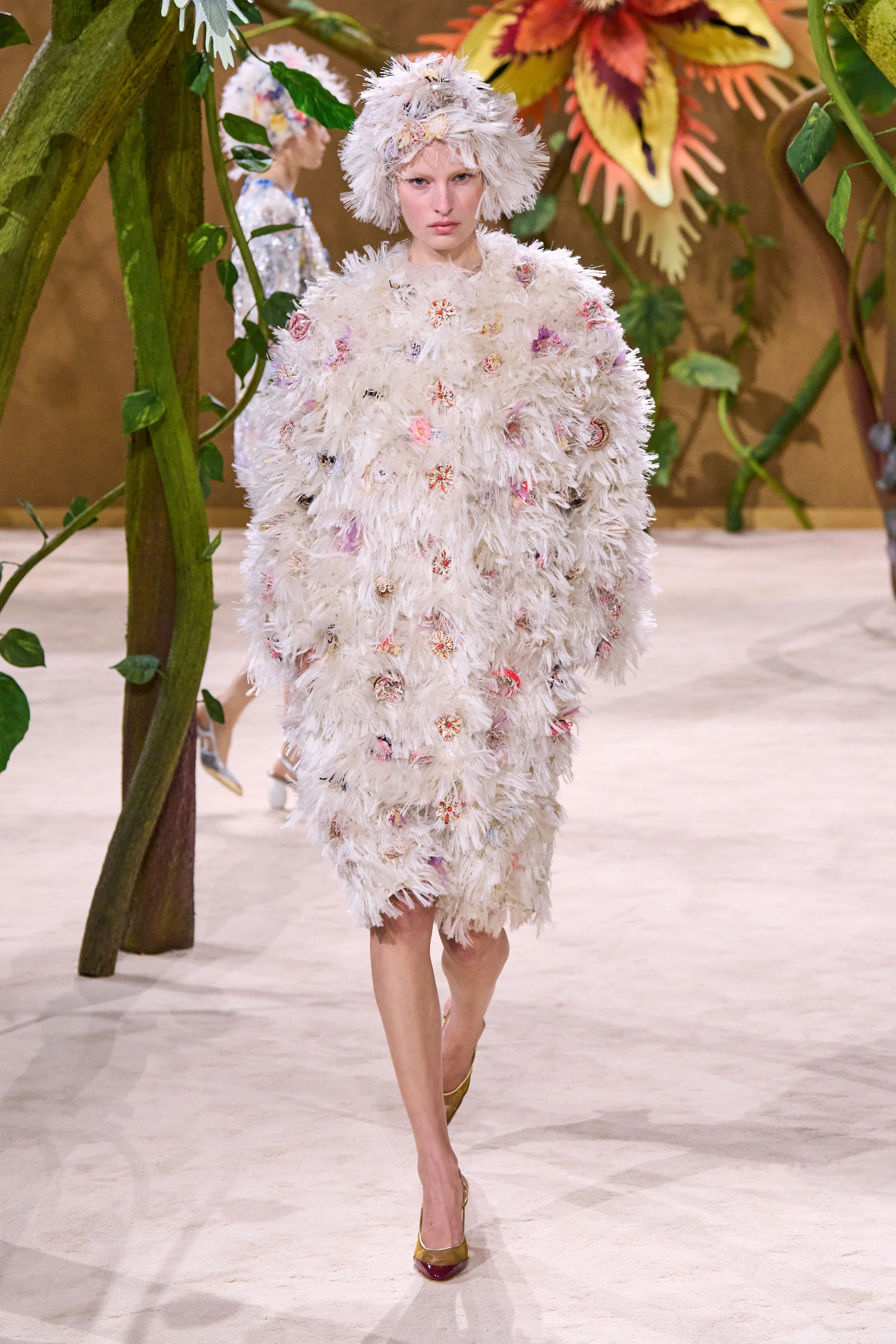
The spectacle lies in Blazy's witty approach to materiality. Tweed becomes something altogether unexpected, transformed into fluffy clouds, delicate rose petals, or prickly hay. Familiar fabrics are made to appear almost impossible, demonstrating the technical virtuosity of the atelier and the savoir faire it established over the course of its 116-year-old history. For Haute Couture Fall/Winter 2026/27, vines and flowers escape three-dimensionally from translucent sets, blossom in black in a butter yellow jacket and skirt. Perhaps most impressively, and most memorably, embroidered birds on a dress wrap their wings around the collar. 

Inspired by fairy tales, the collection is filled with subtle acts of fantasy rather than obvious costume. Tweed jackets are woven to resemble bundles of hay, while tiny dwarfs hide among sculpted leaves on the heels of shoes, rewarding anyone willing to look closely. Footwear was a particular highlight, balancing technical ingenuity with wit.

Ever in conversation with Gabrielle Chanel, the collection also pays tribute to the founder of the house. Both the show's invitation and a leather-bound book carried by one of the models referenced a fairy tale volume that Chanel kept in her apartment on Rue de Cambon. Rather than treating the archive as something to be faithfully reproduced, Blazy uses it as a point of departure.


Words by Pedro Vasconcelos

DIOR HAUTE COUTURE FW26/27

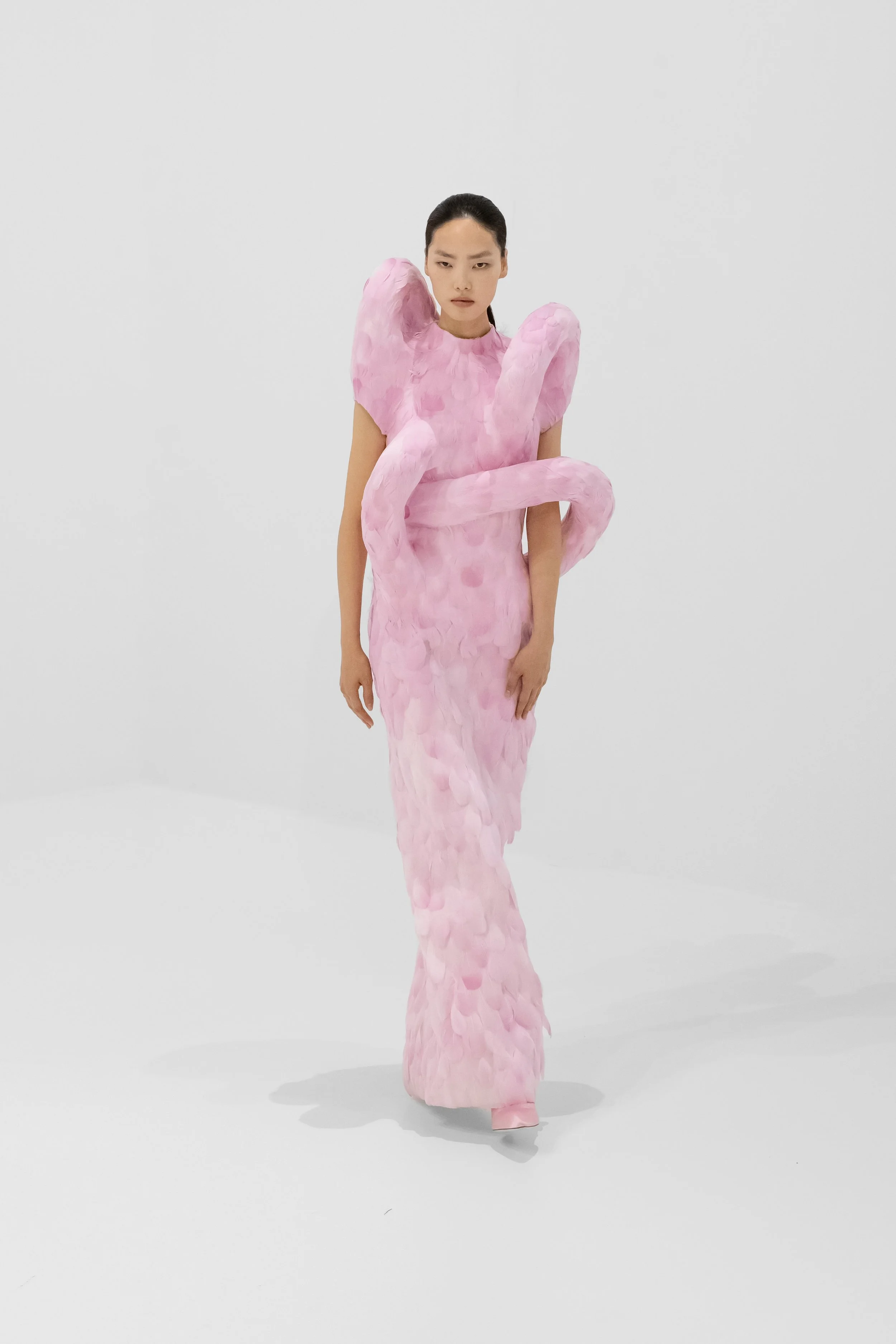
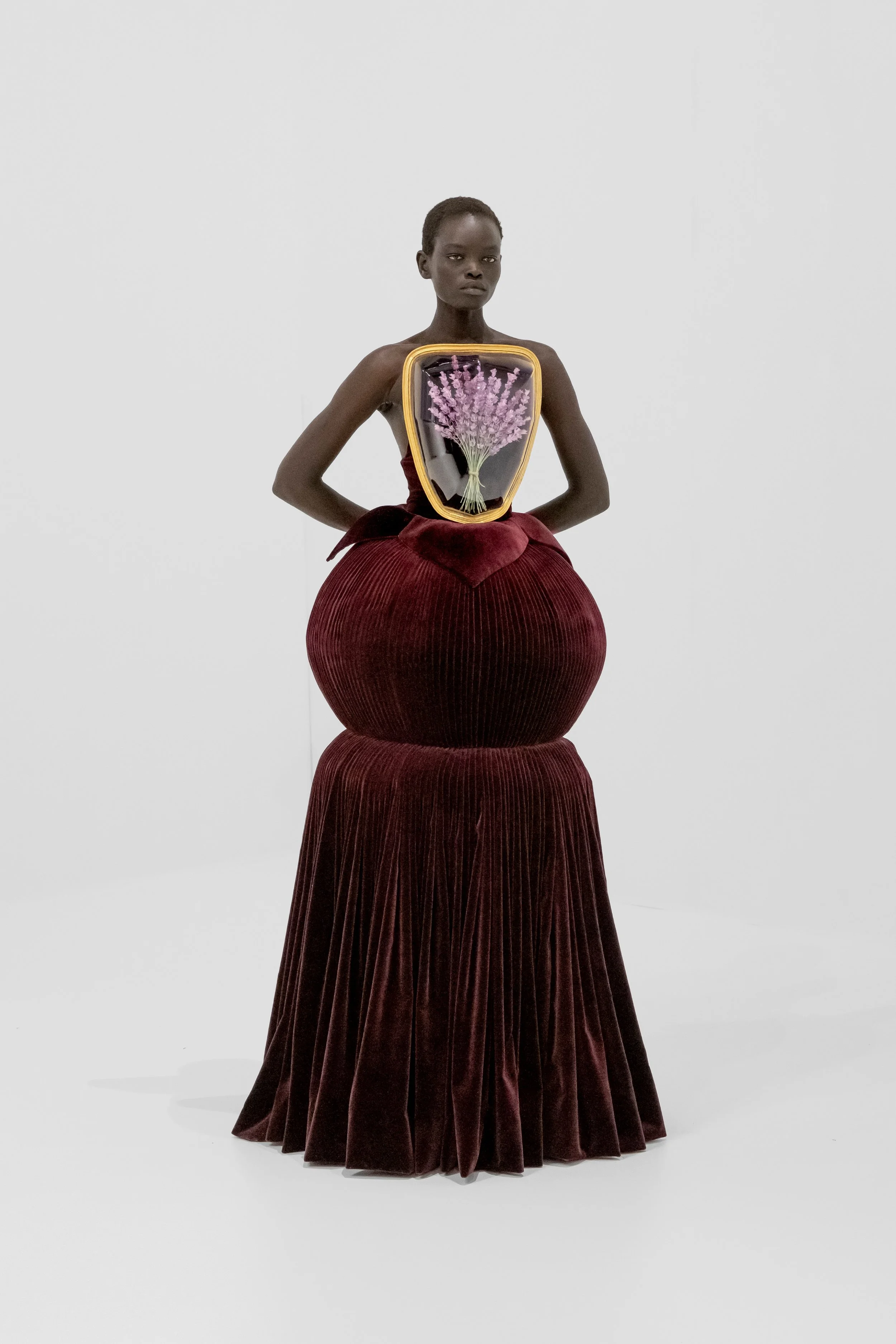
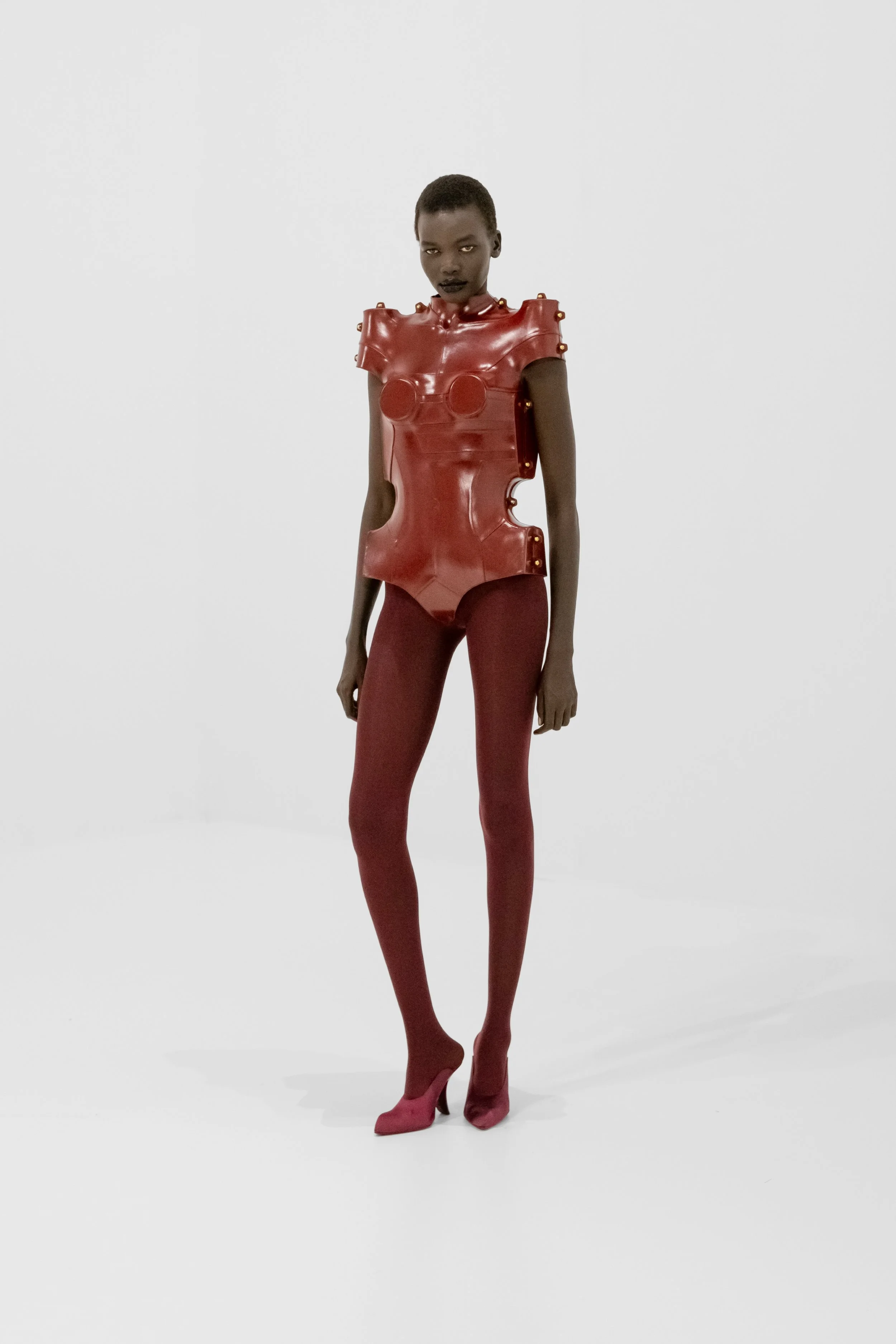
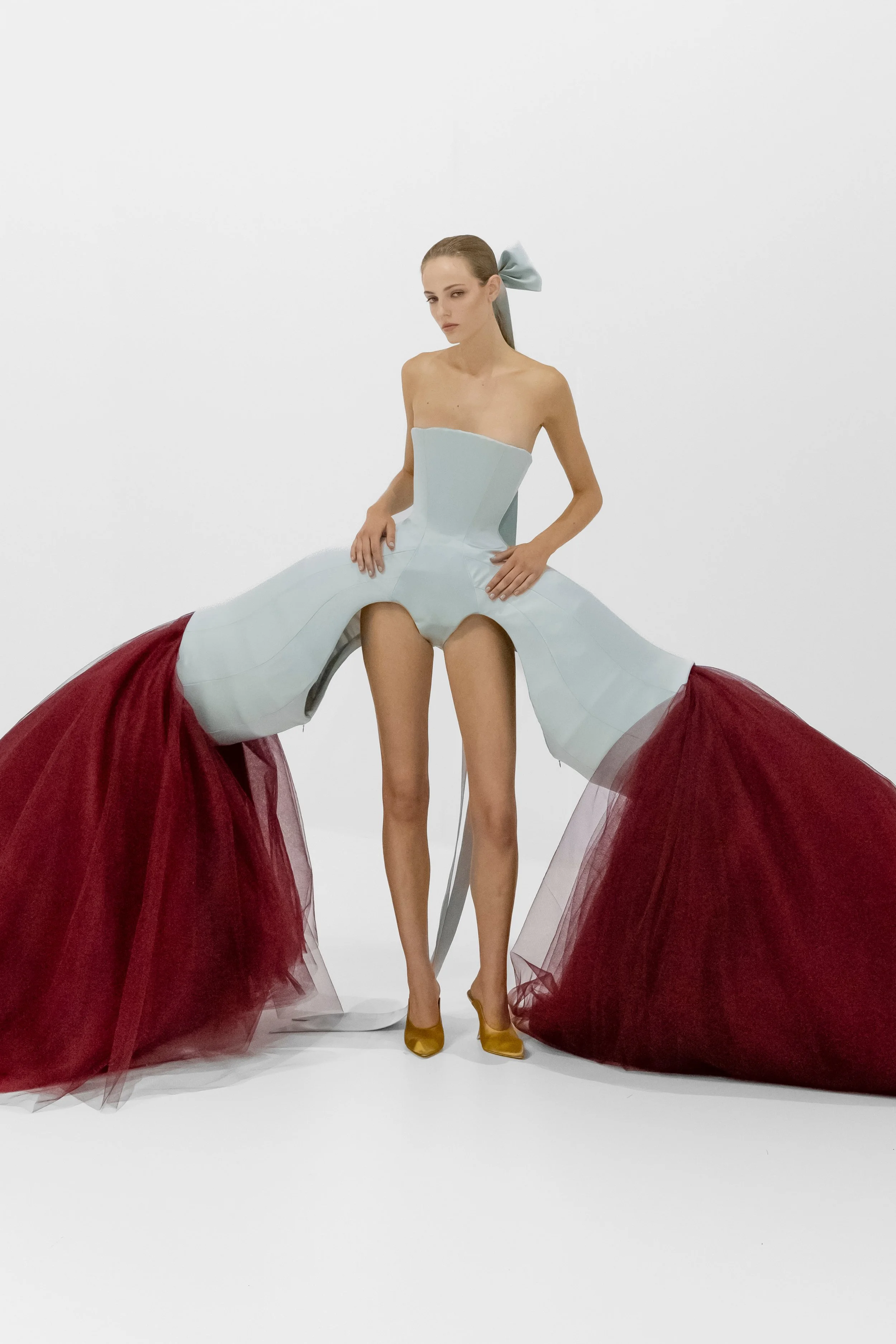
“I’m always begging the question of ‘What is form?’,” says American painter and sculptor Lynda Benglis in a video posted on Maison Dior’s Instagram page ahead of Jonathan Anderson’s sophomore Haute Couture show for the house. In the same clip, Anderson, an experimentalist of form himself, points to Benglis’ practice as one that challenges his viewpoint on how he sees form within his own work. Combined, Benglis’ and Anderson's creative languages laid the foundation of Dior’s Fall/Winter 2026/27 couture collection.

The lineup, as full of intricacies as it normally is whenever Anderson stages a show, directly referenced Benglis’ art, sometimes more literally, other times more subtly. At Dior, the artist’s widely recognised techniques of pouring, knotting, pleating, and moulding were turned into hand-pleated, knotted, draped, and wrapped garments, juxtaposing architectural shapes with liquid, fluid forms.

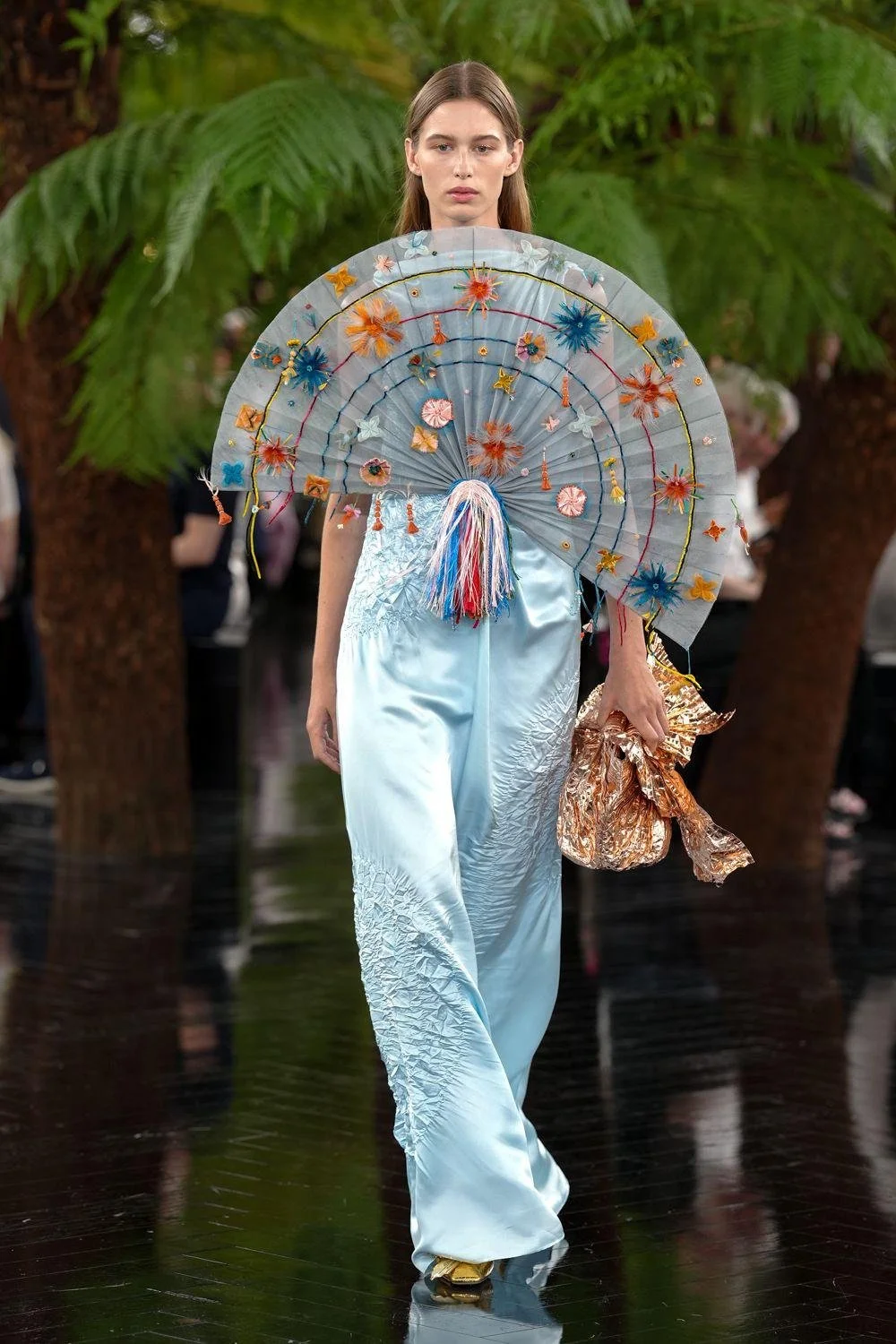
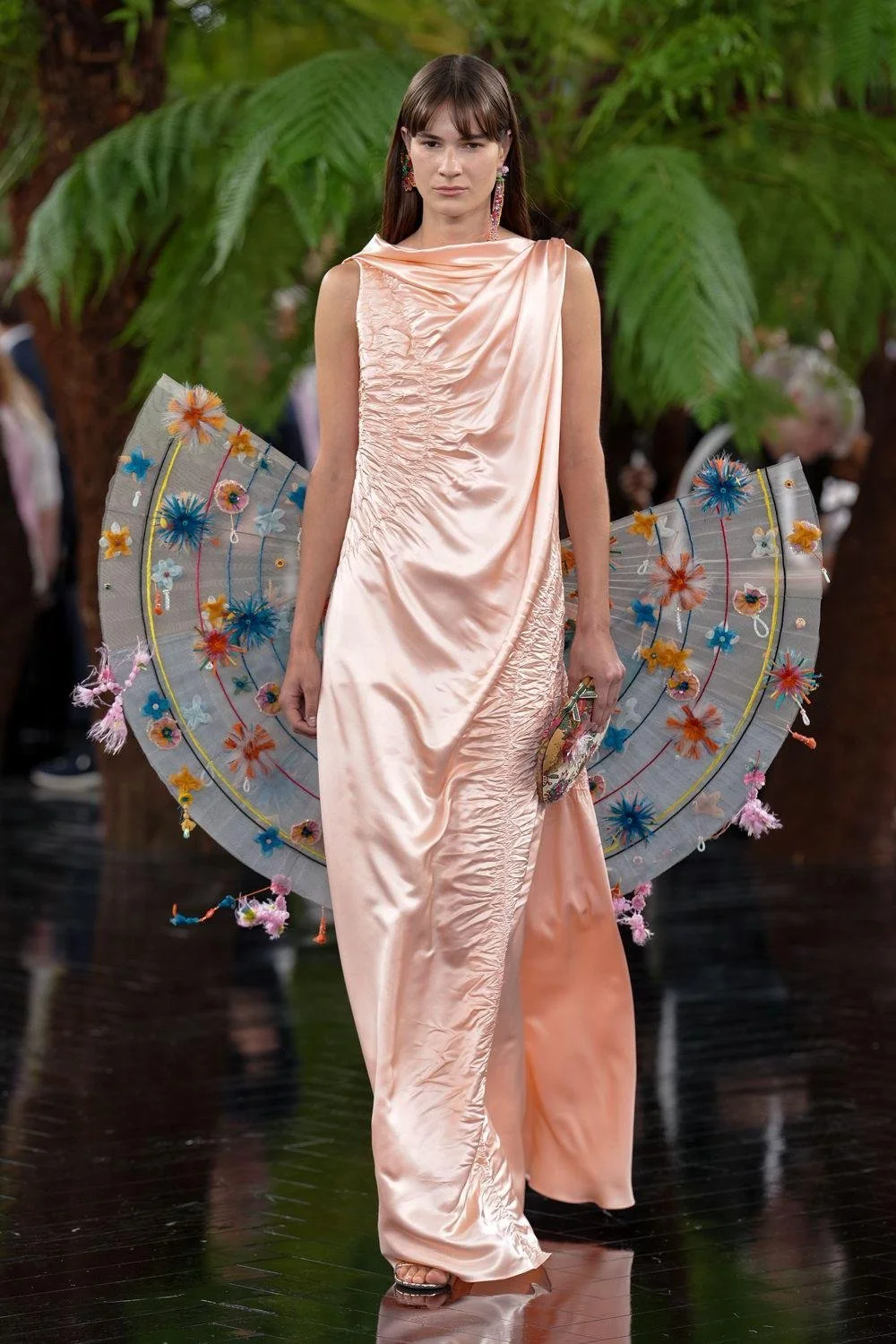
Anderson’s encyclopaedic mood board further explored Benglis’ deep connection with Ahmedabad, in the Indian state of Gujarat, where she created her bird-inspired 1970s ‘Peacock’ series. Those elements became flower-shaped appliqués, as well as beaded and floral embellishments. Nods to one of Benglis’ fan-shaped, pleated creations could be spotted beyond the black fan show invite and were later materialised on two pastel dresses, in blue and pink, featuring a tulle iteration of the fan placed on their front and back, respectively.

Traditional Indian craft was praised in multiple other ways, starting with the incorporation of chintz, the hand-painted or block-printed textiles, which became popular in European décor. In the collection, chintz-like fabrics decorated mini handbags, four of which were developed along with Benglis.

Gemstone jewellery pieces were made in collaboration with artisans from Jaipur, while the broader collection's colour scheme and use of flower shapes as silhouettes and detailing evoked not only the Ahmedabad scenery but also the landscape of Santa Fe, New Mexico, another of Benglis’ treasured addresses.

Various pieces came with a seasonal blanket, towel, or poncho feel, perfectly wrapped around the body, as cosy as they were elegant and yet still modern, thanks to a couture-type frayed, deconstructed materiality. Fringes and tassels, swirls and beads added to the richness of it all. Pleated metallics took the spotlight – another of Benglis’ motifs, seen everywhere from headpieces to footwear, handbags and sculptural dresses. The shoe game, by the way, was dreamy and dotted with embroidery.

With Anderson, what the eye can easily see is only a taster, like his natural complexity in detail becomes infinite in every new Dior collection. Despite the above-mentioned smorgasbord of sources, there was still room for a whimsical, Anderson-esque armadillo handbag, iridescent effects on dresses, jackets, or T-shirts, and a glistening, fringed bar jacket crafted in a shade of green that you can only truly find in nature.


Words by Ketlyn Araujo
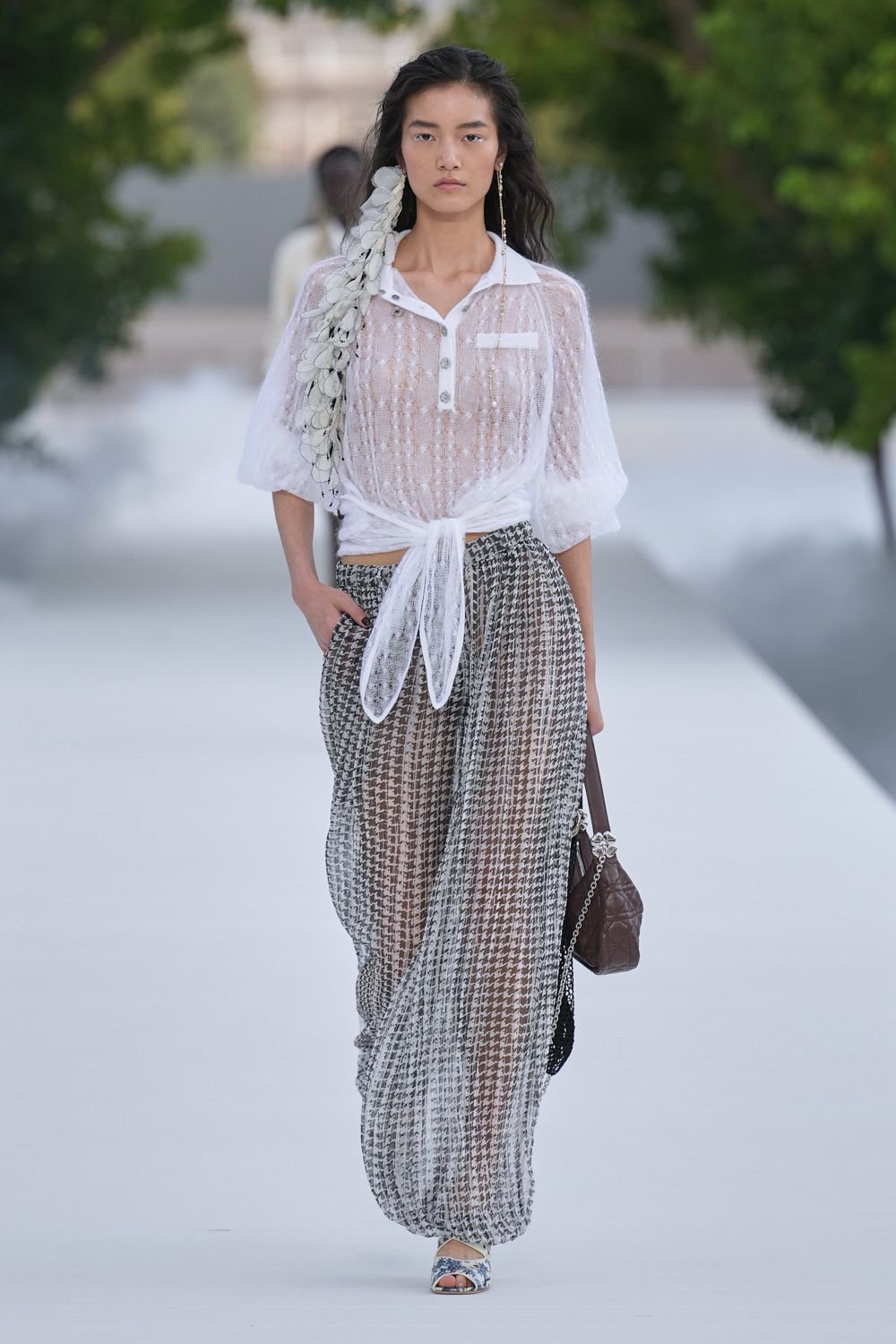
BOLORIA SS27

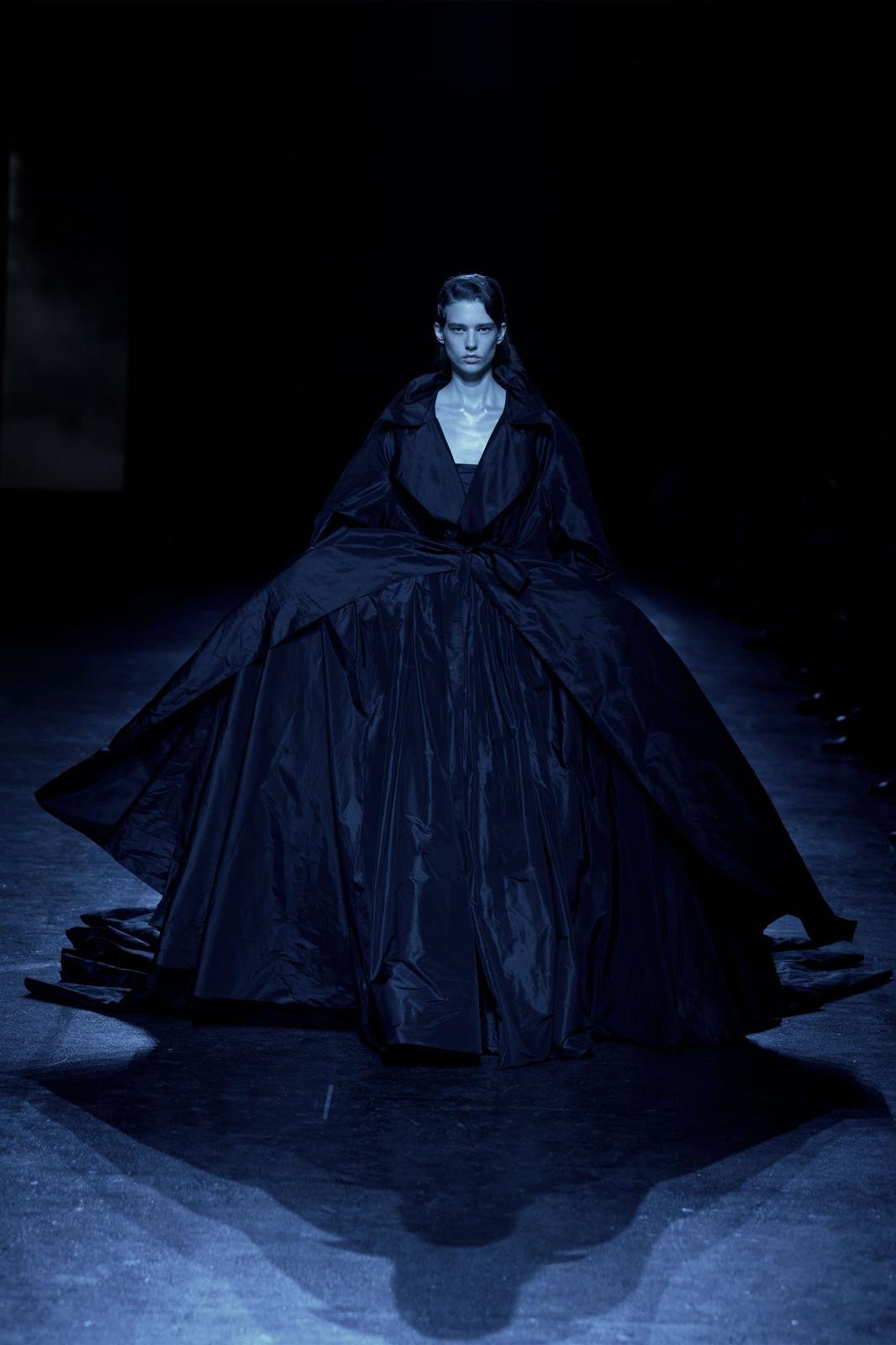
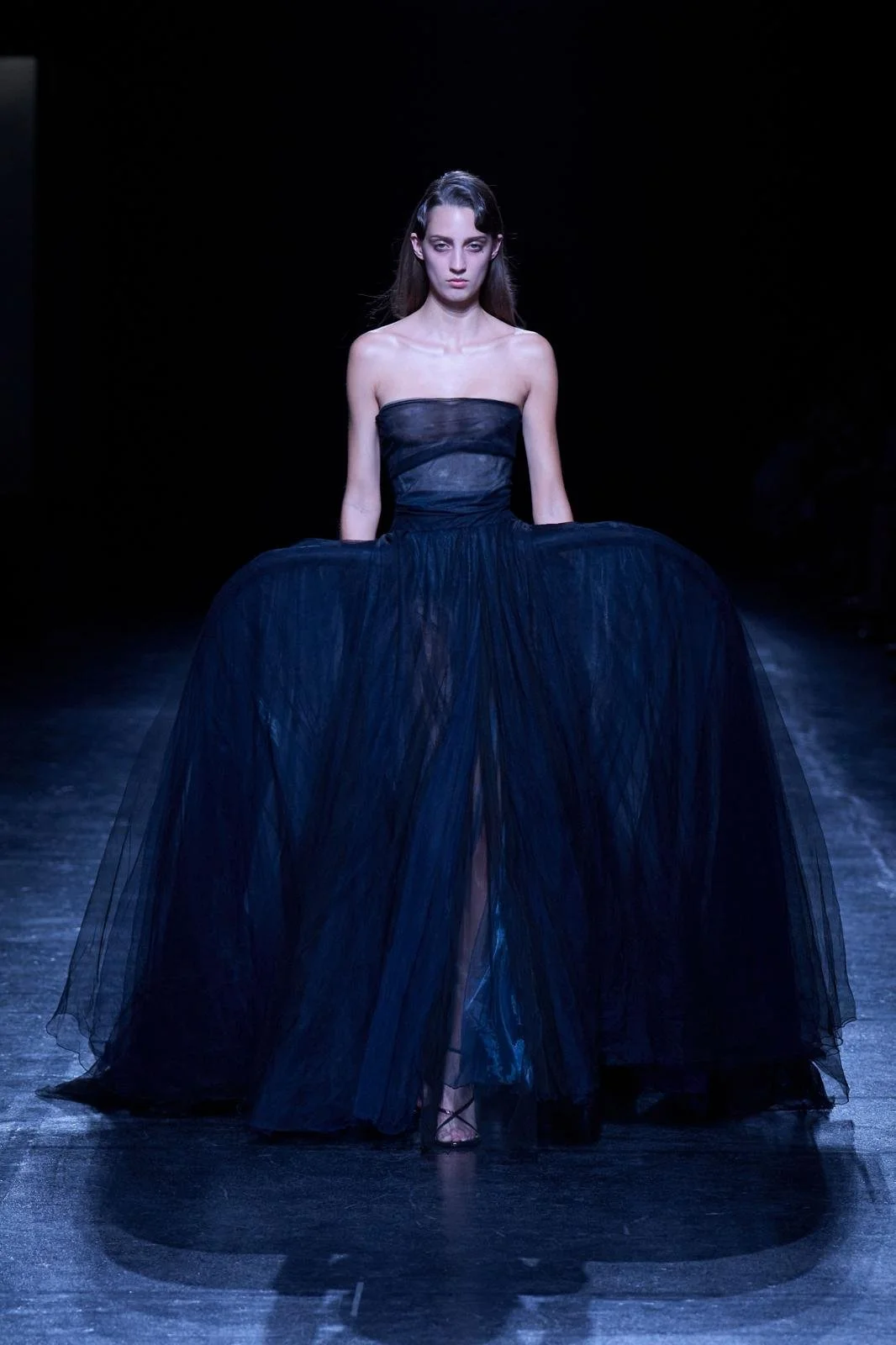
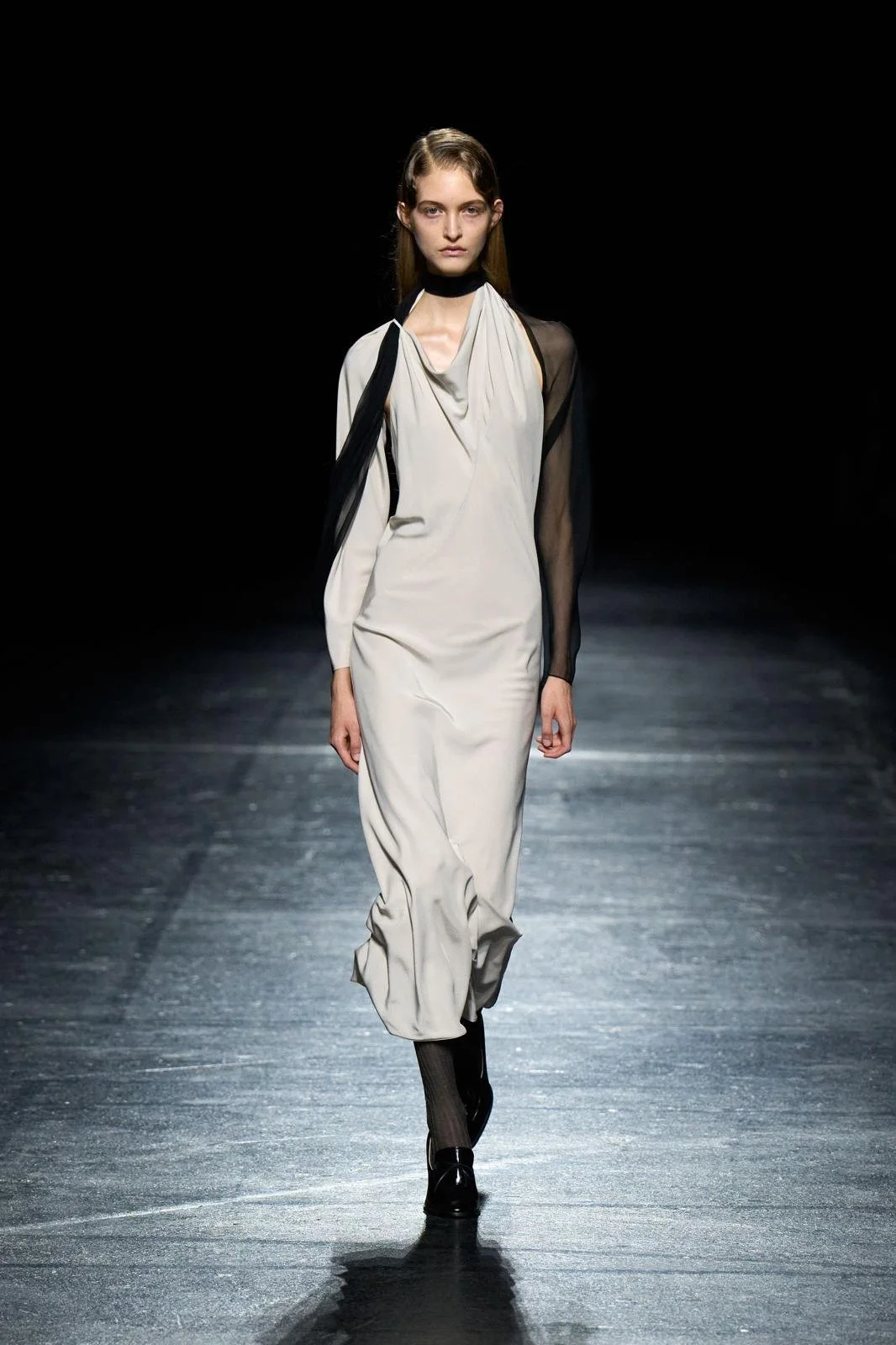
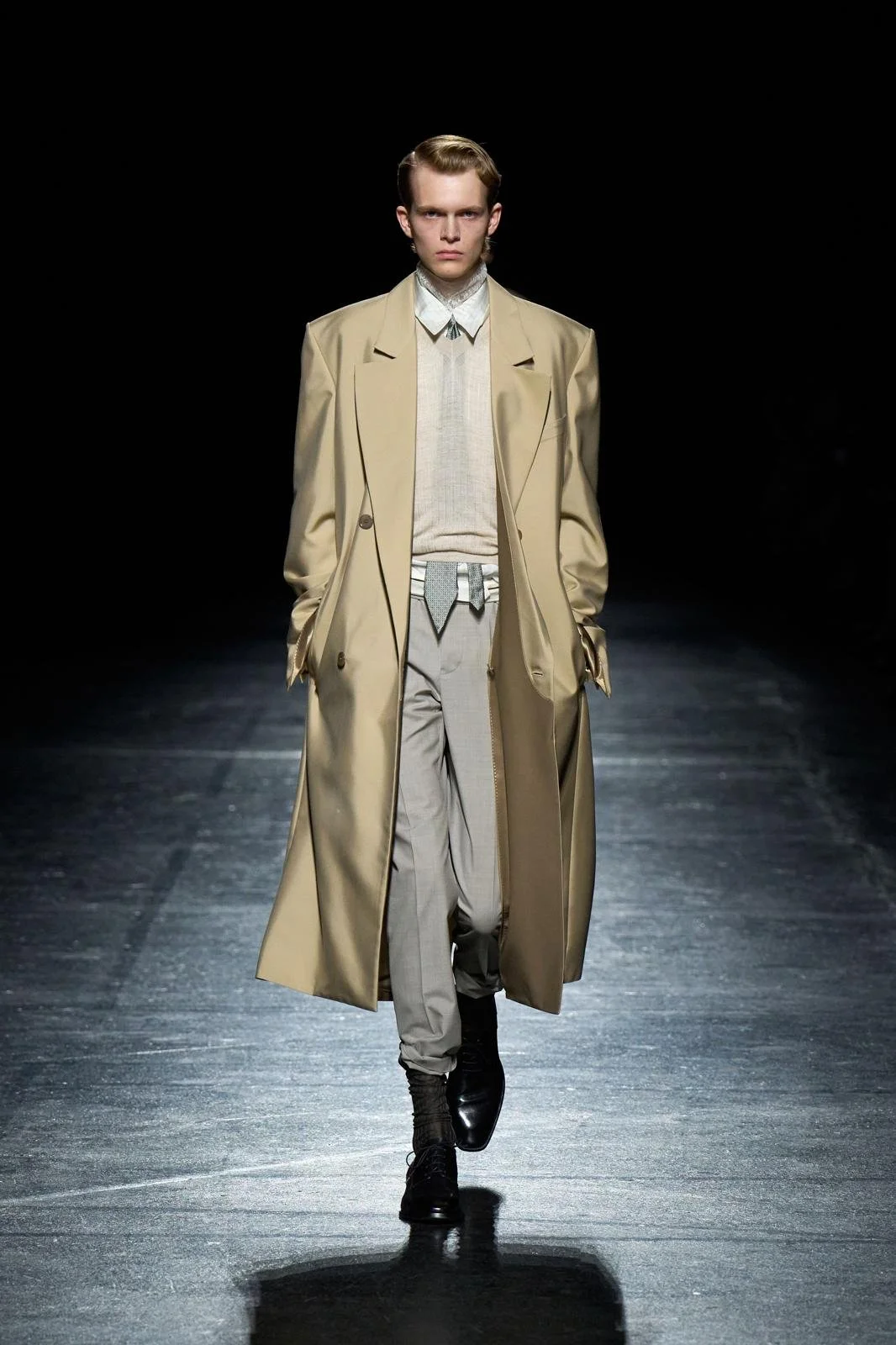
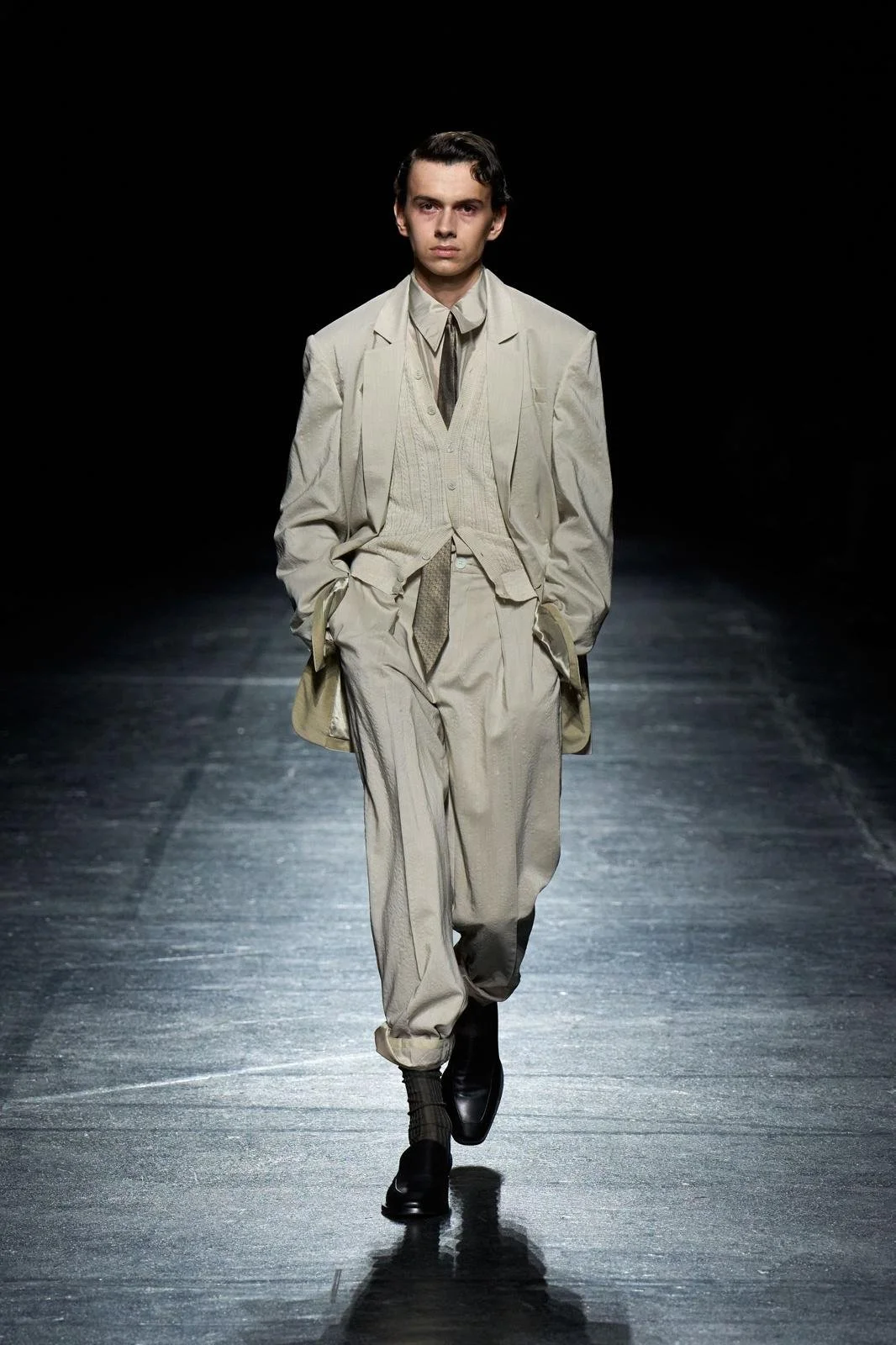
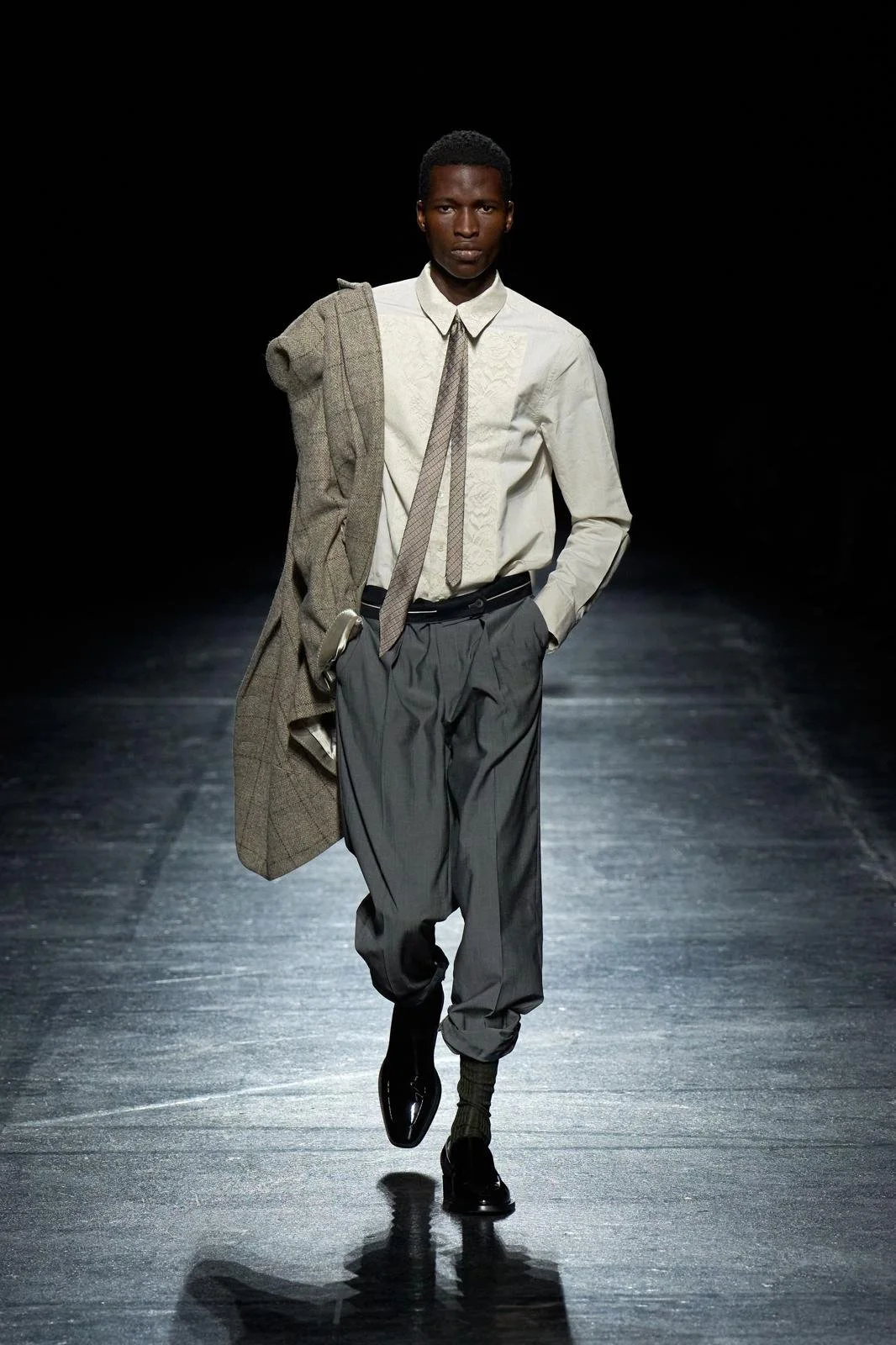
Olivier Theyskens' debut show for Boloria, the Belgian designer’s newest creative direction fashion project, was filled with a touch of dreamlike fantasy. But not the conventional type. Theyskens, known for his penchant for a dark yet romantic aesthetic, brought the vision to the luxury brand backed by the Tomorrowland group that he has been working on for the past two years.

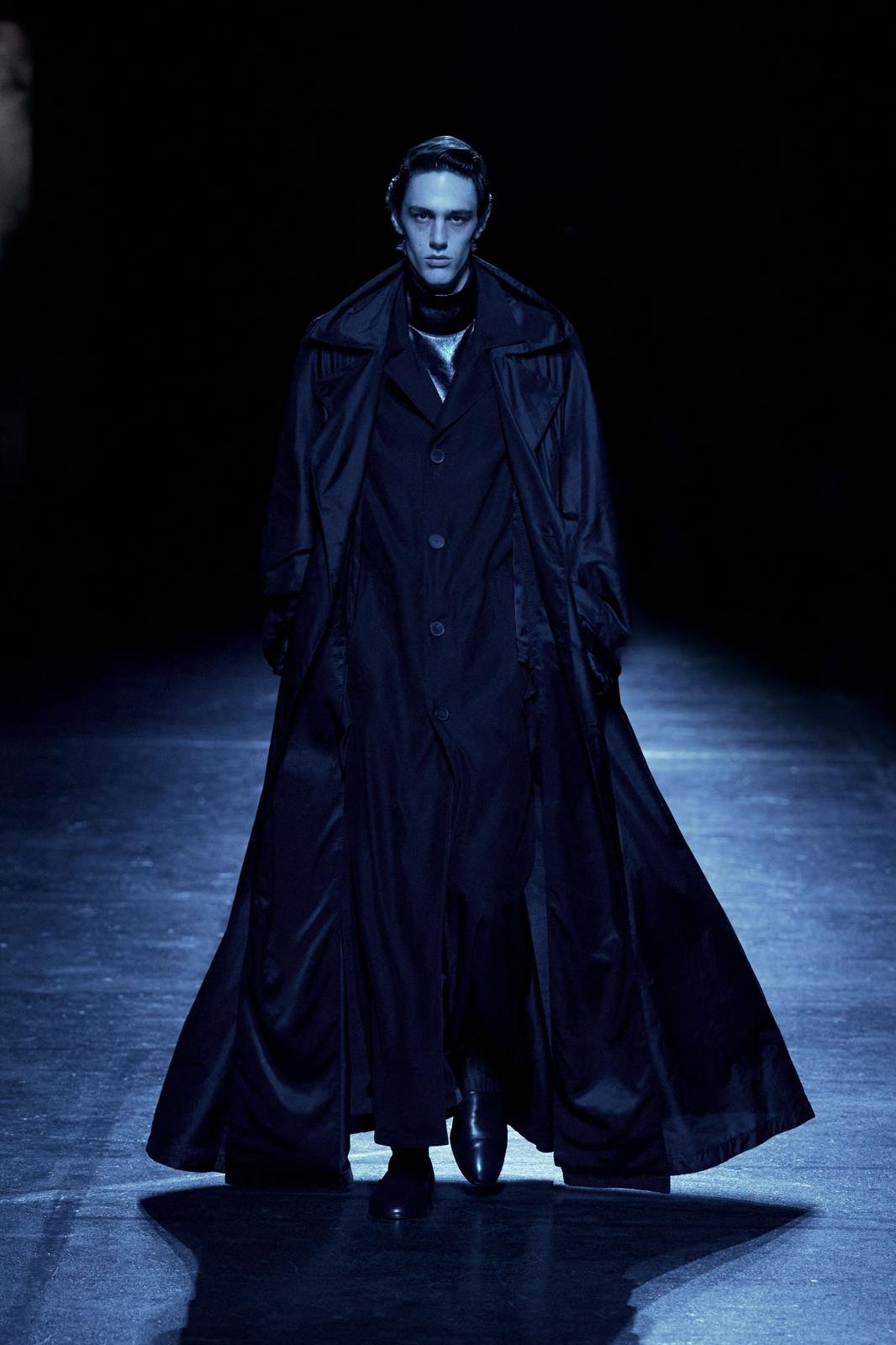
Opulent, big, dark-shaded ballgowns opened the catwalk, according to the designer, as an allegory of dreams and surrealism, a representation of vastness and space. The black and midnight blue dresses were followed by more classic, mostly slouchy, tailored pieces, embodying the transition from dream to reality, from waking up to rushing to start the day.

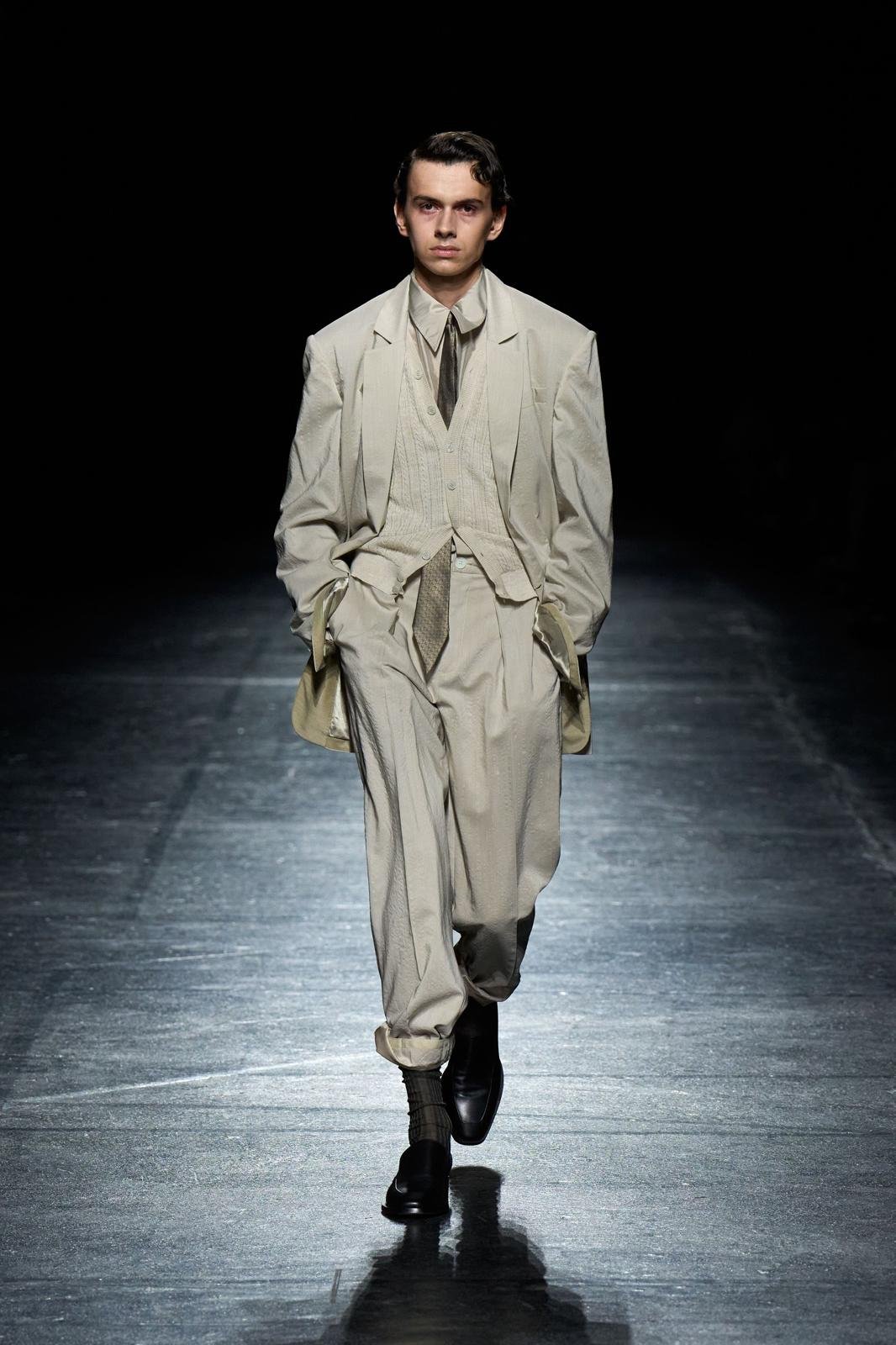
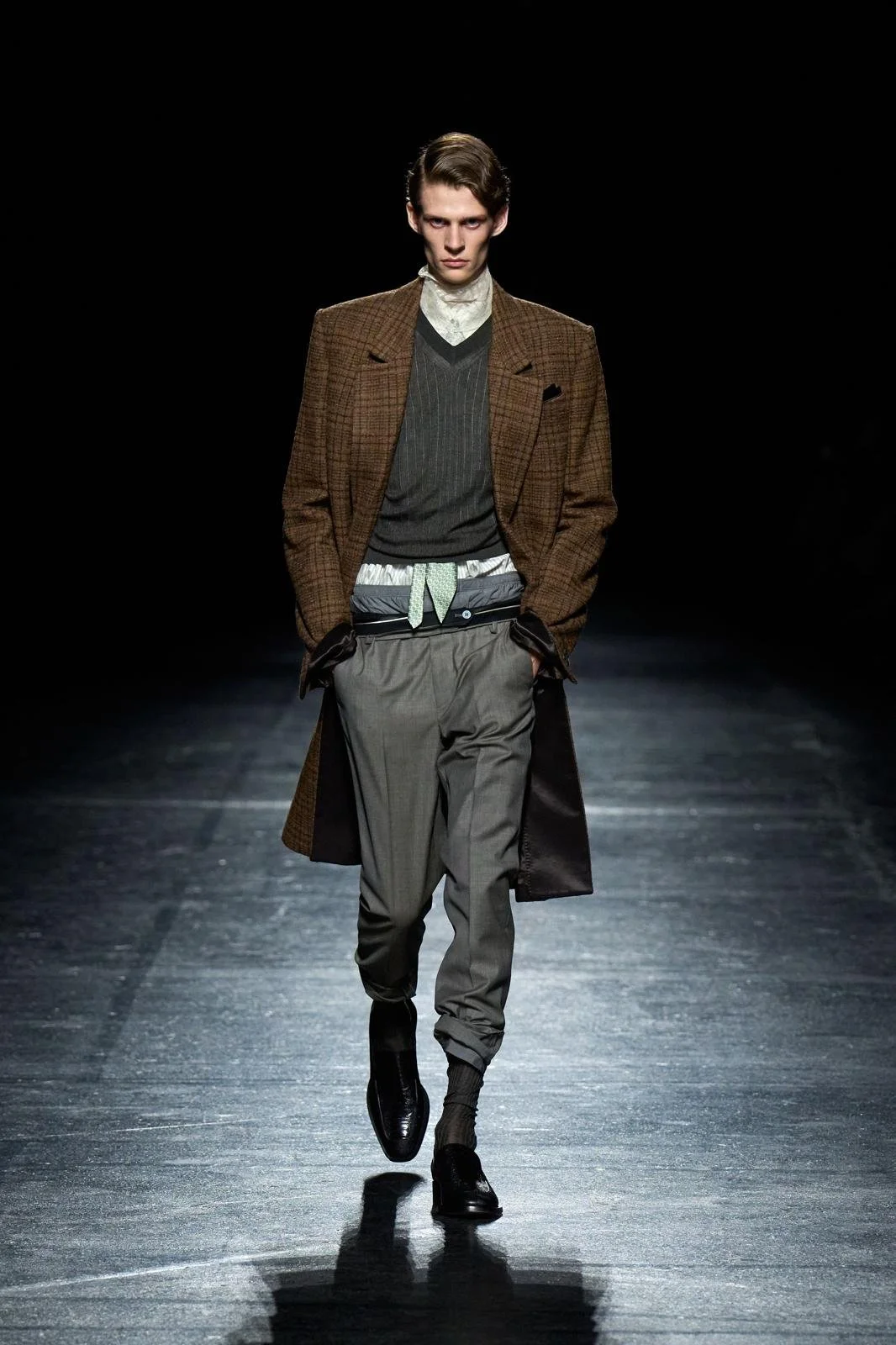
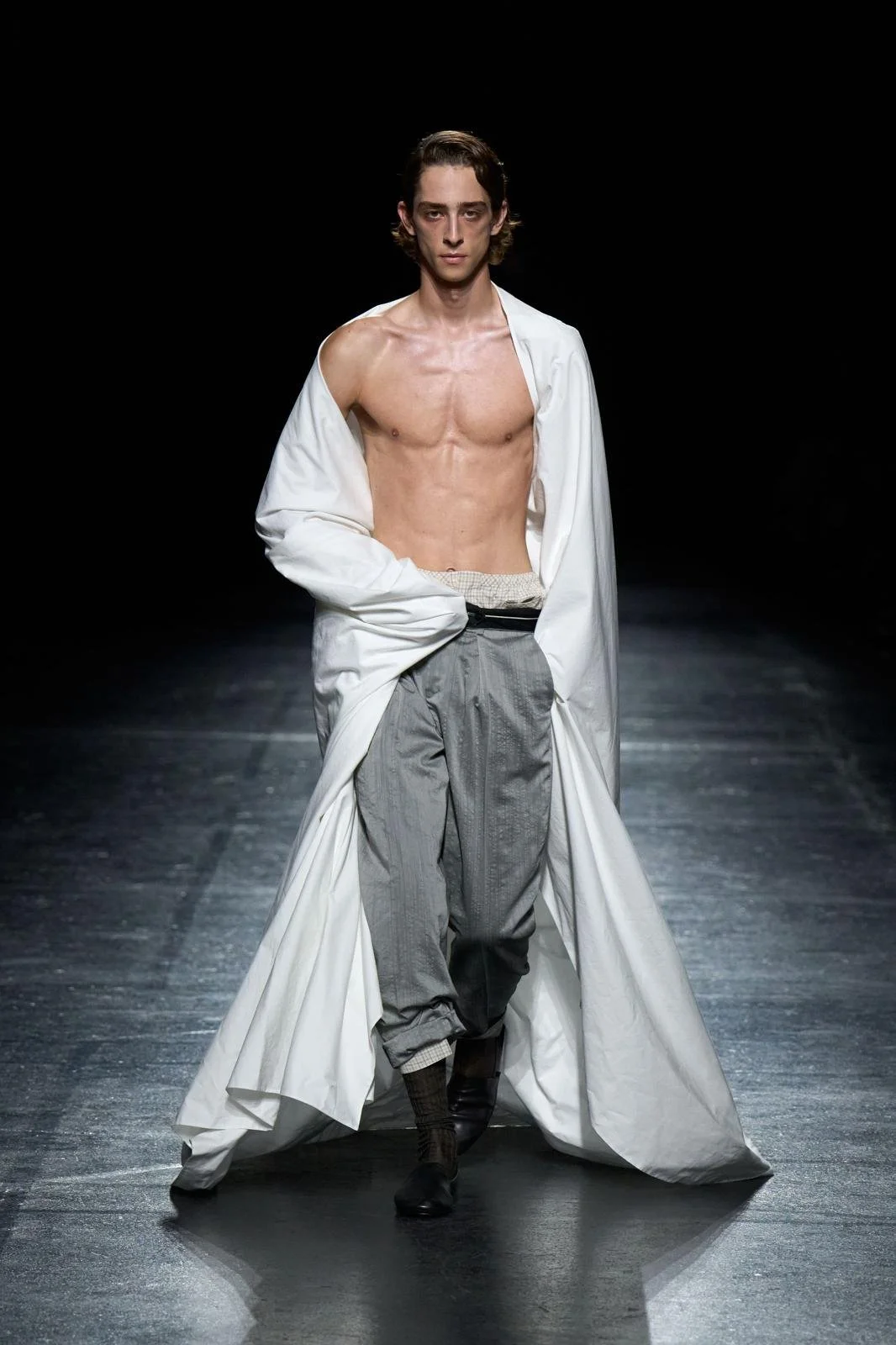
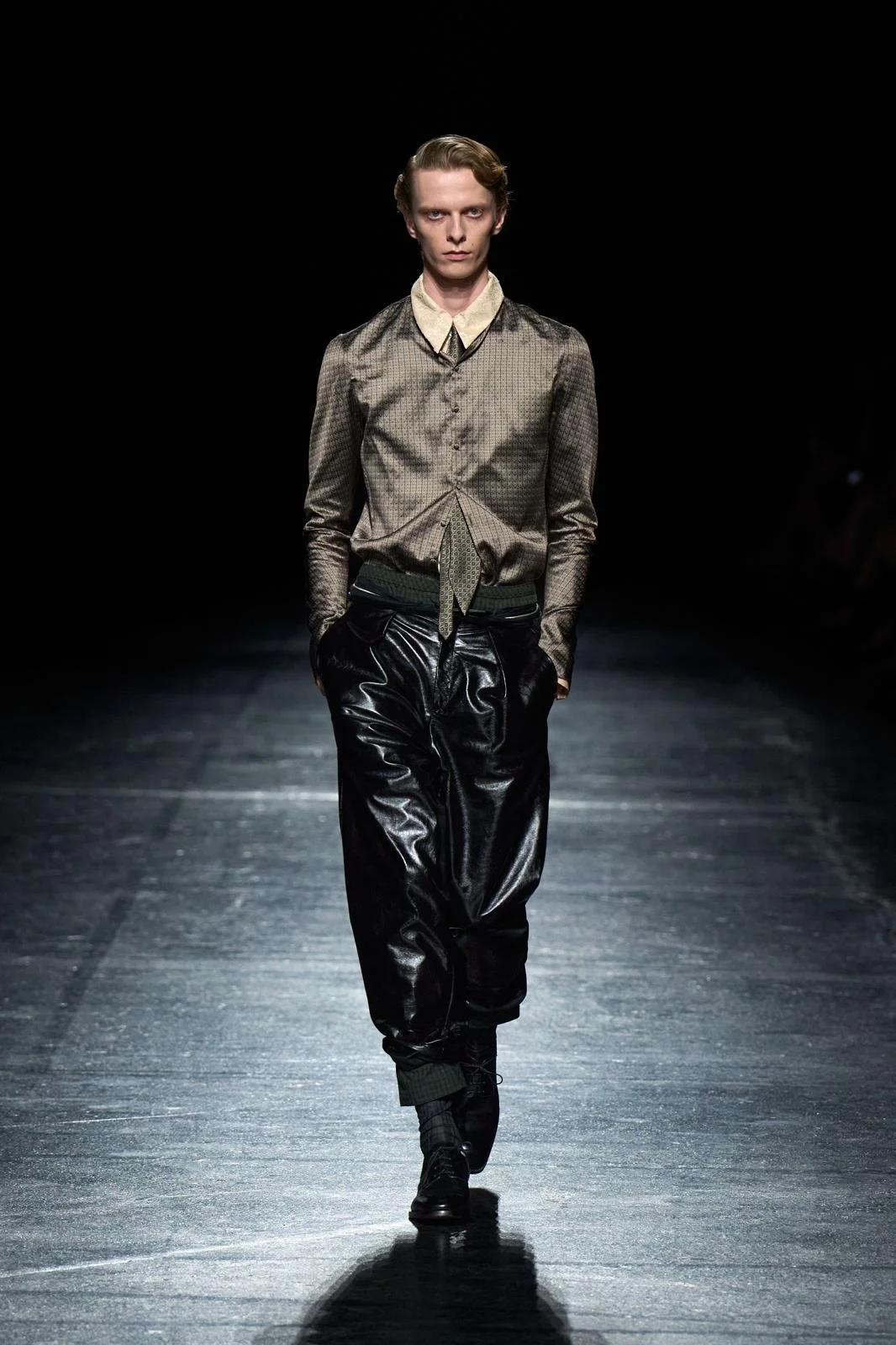
The latter was mastered through a sense of draped undone-ness, especially seen in the menswear looks, which resembled a rushed morning when you jump out of bed, bedding included, put on a shirt, roll up your trousers and try to find a coat that will do the trick. The styling naturally played a key role here, with the tips of ties untucked, trouser hemlines tucked into socks, turned cuffs, and underwear thoughtfully peeking out.

Using the archetype of characters who are about to leave their houses, Theyskens also wanted to create a feeling of unknown time and space: their dressing manner, a clever mix between formal and laid-back, was as current as it was timeless, surpassing decades and enduring in taste.

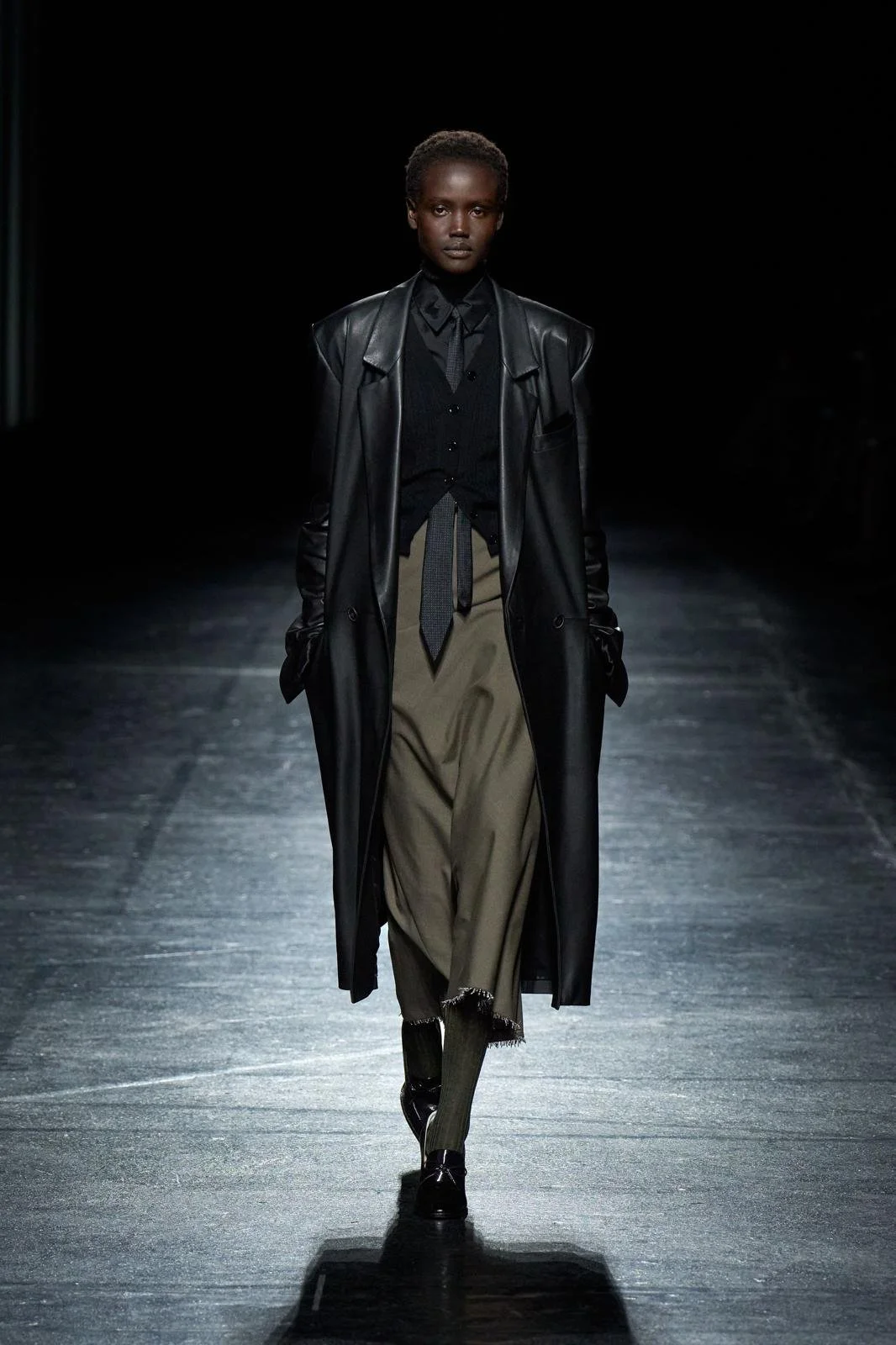
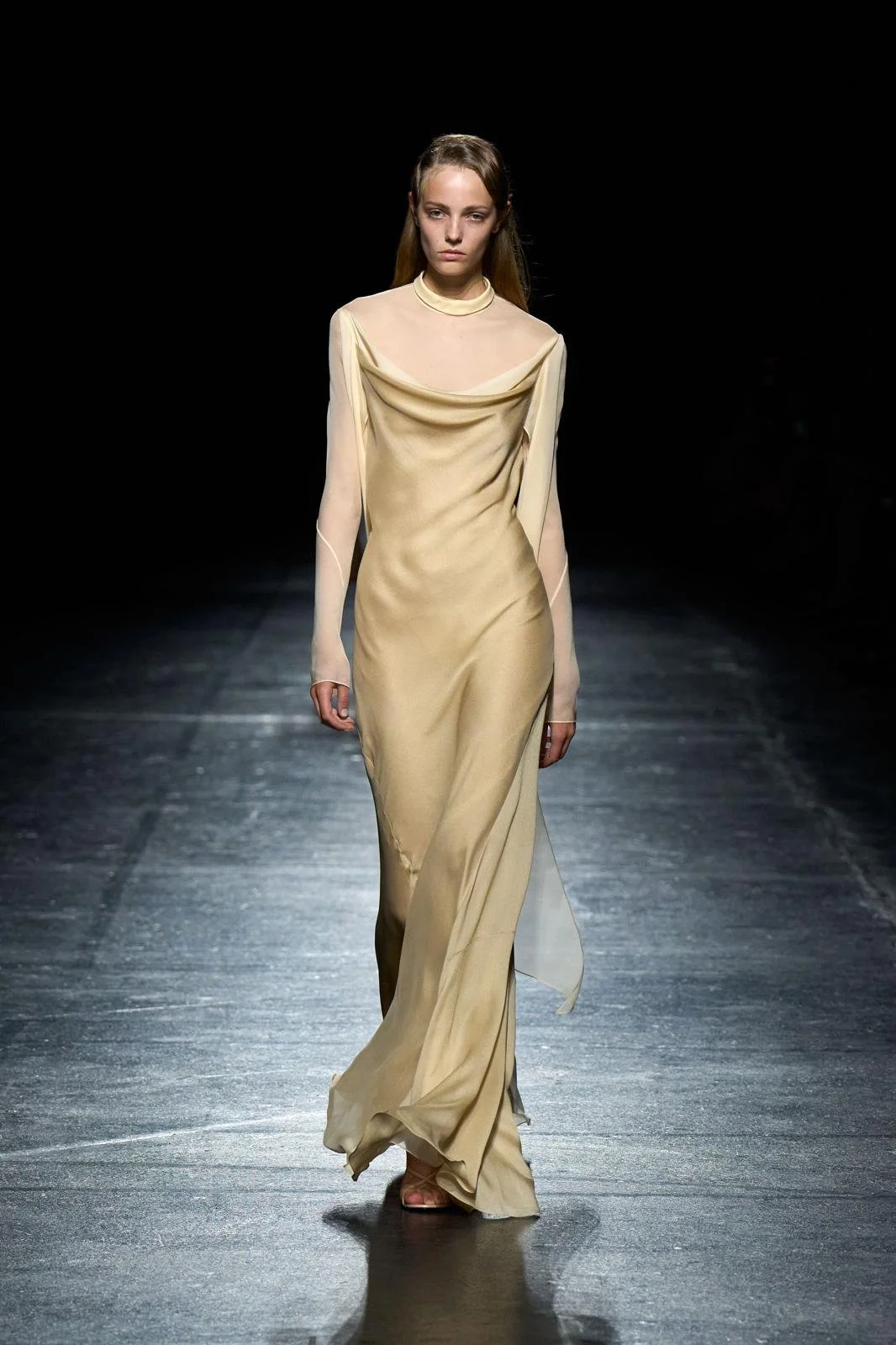
Womenswear was highlighted using purposefully messy-looking tailoring techniques, too, but stood out beyond that with short- and long-sleeved fluid slip dresses cut on the bias, and a few textured skirt suits paired with turtleneck tops or matching button-downs.

Colours were mostly neutral, including black and white, grey and silver, navy, and all sorts of beige, brown, sand, and caramel variations. A pair of striped pale blue trousers resembled pyjama pants, and a salmon knitted vest was one of the few brighter pieces spotted.

On a side note, ‘Boloria’ is a name inspired by the biological group of brush-footed butterflies that share the same nomenclature. Metaphorically, a butterfly is seen as a signifier of transformation and freedom. Theyskens knows we need both.


Words by Ketlyn Araujo
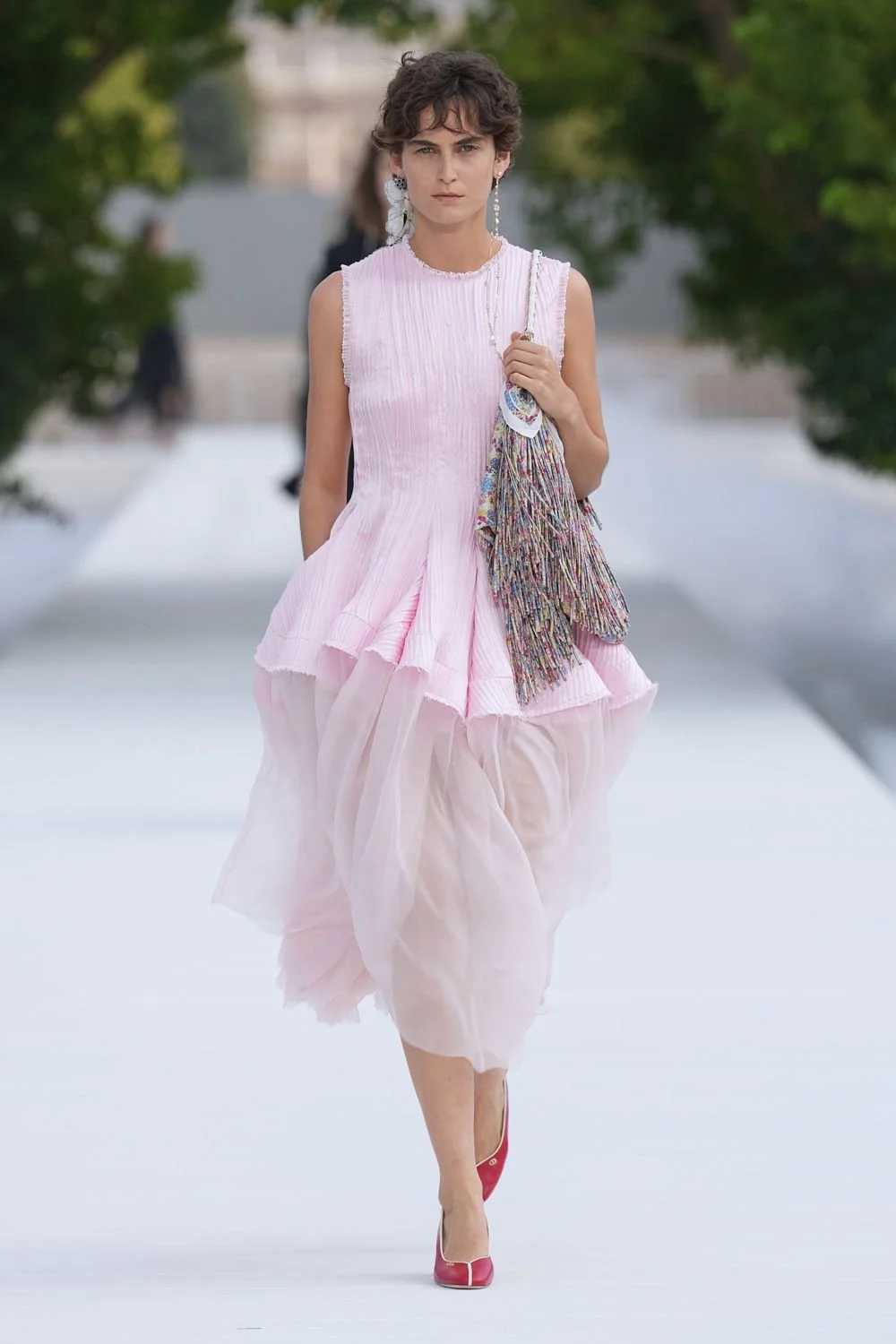
JACQUEMUS SS27

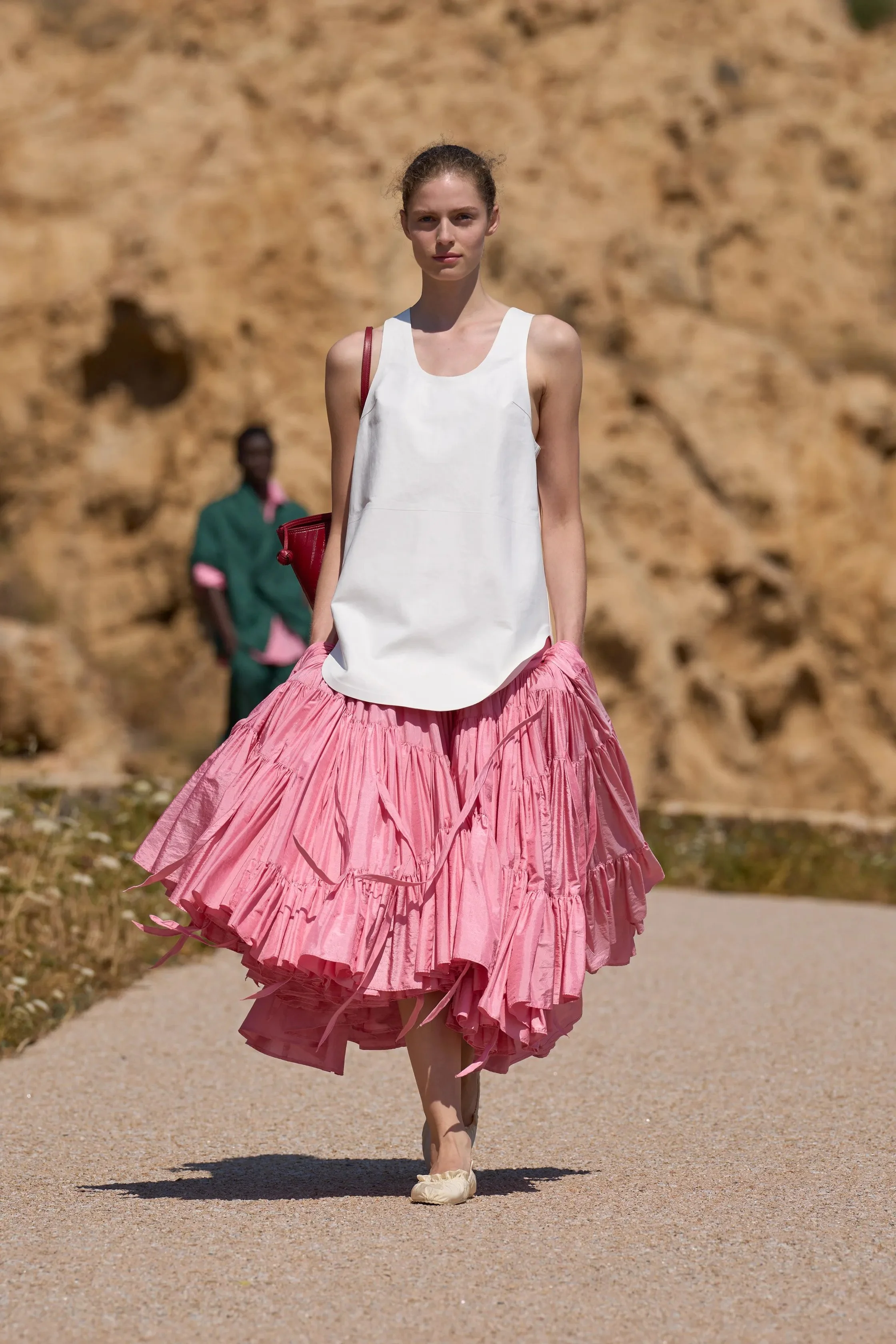
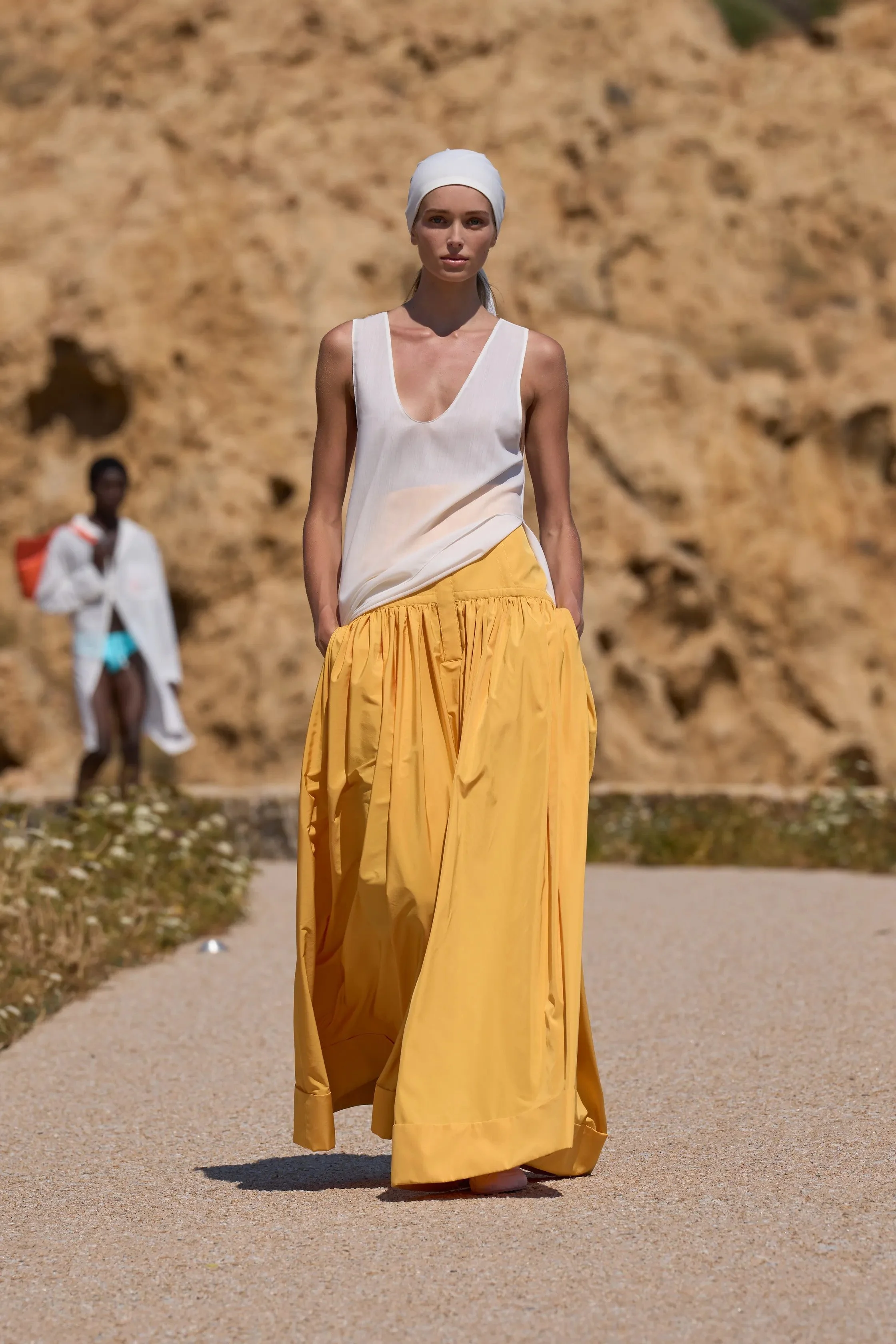
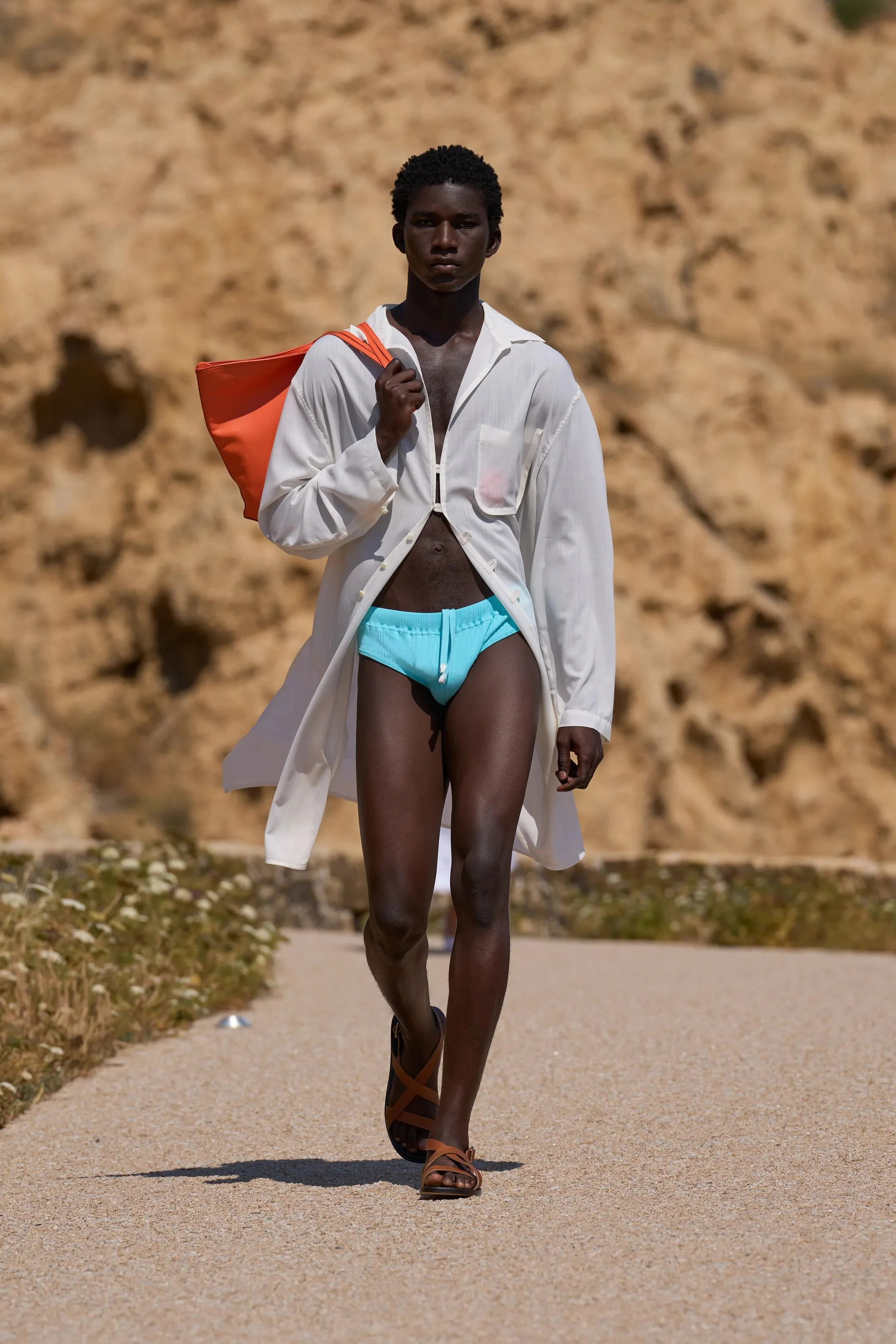
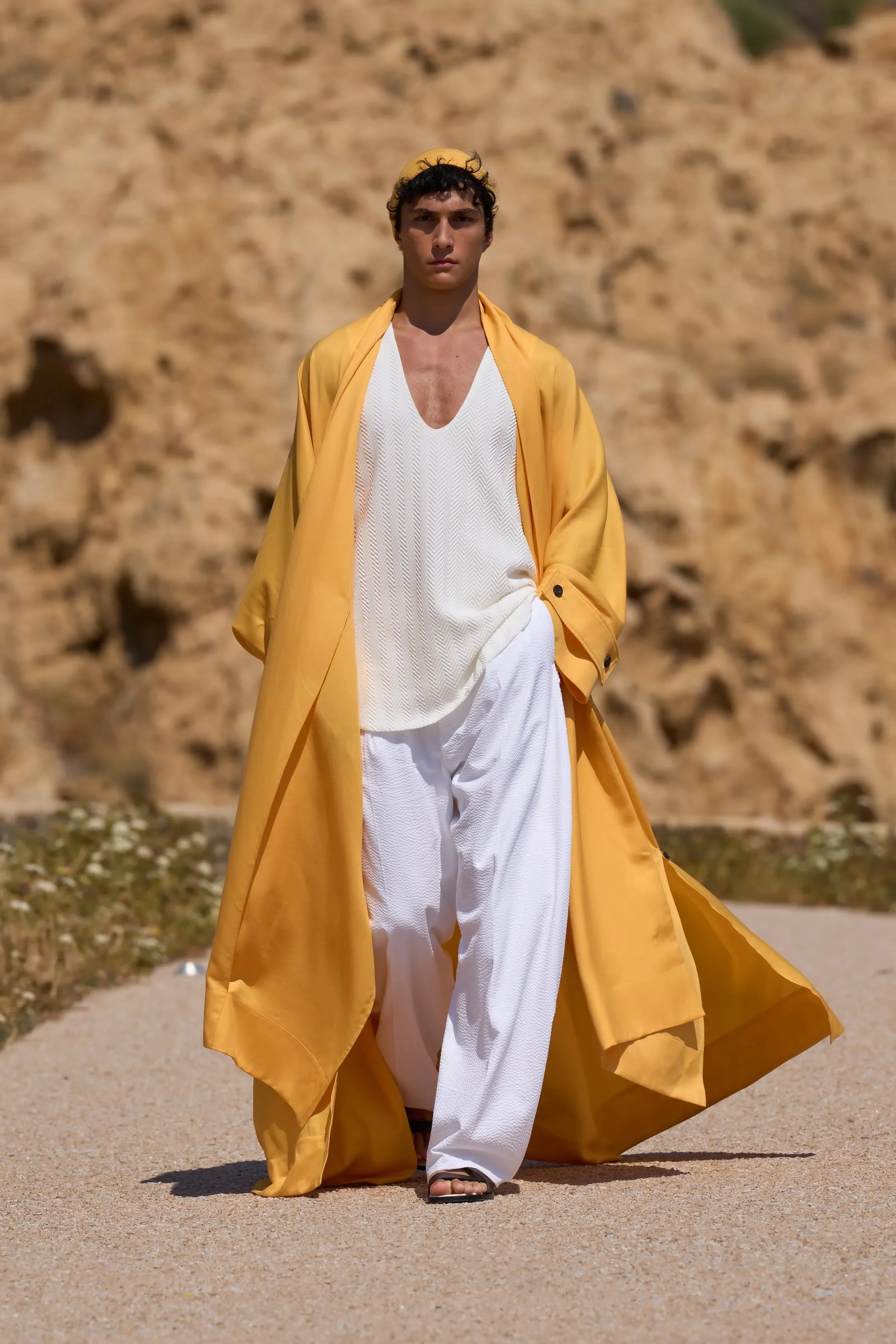
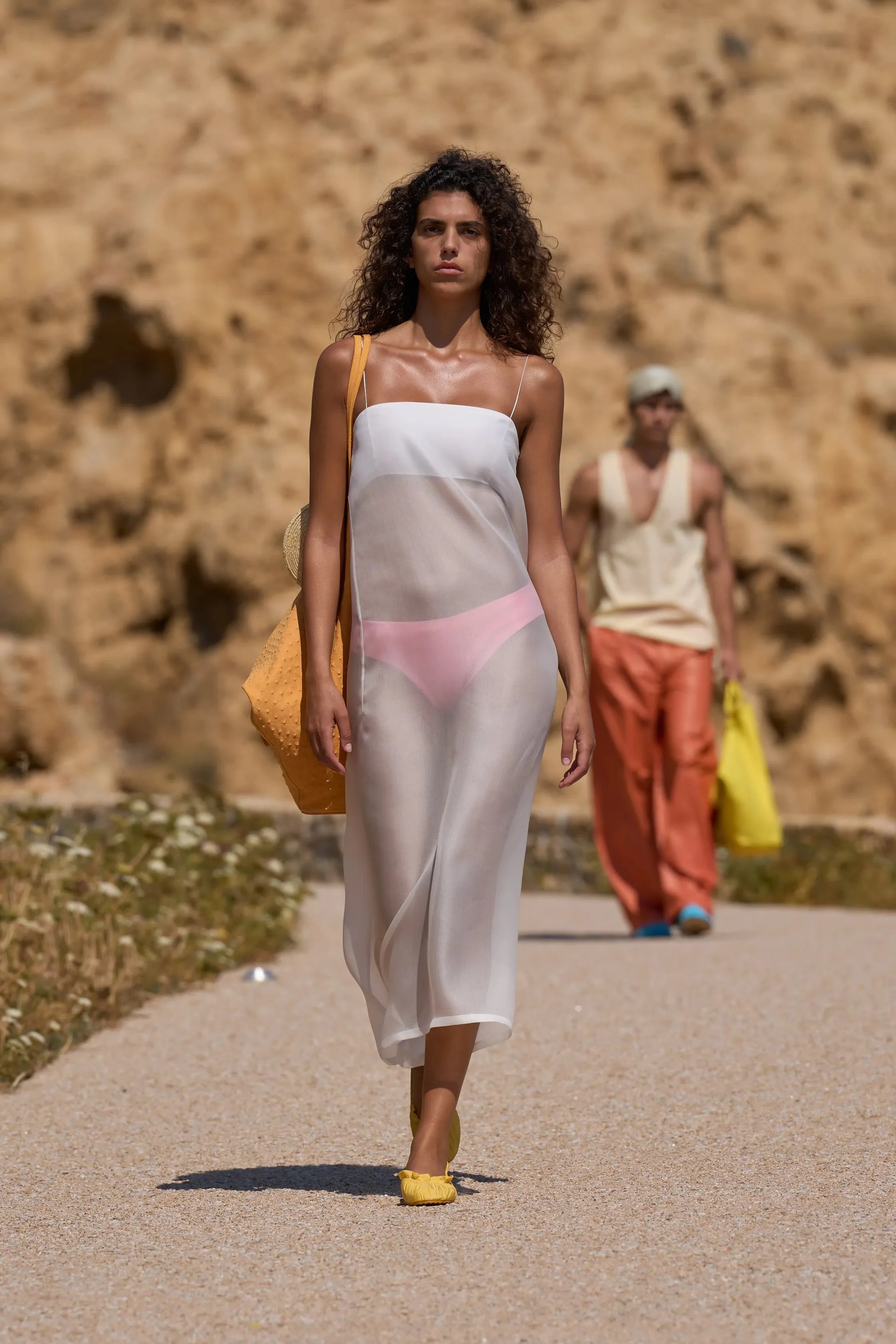
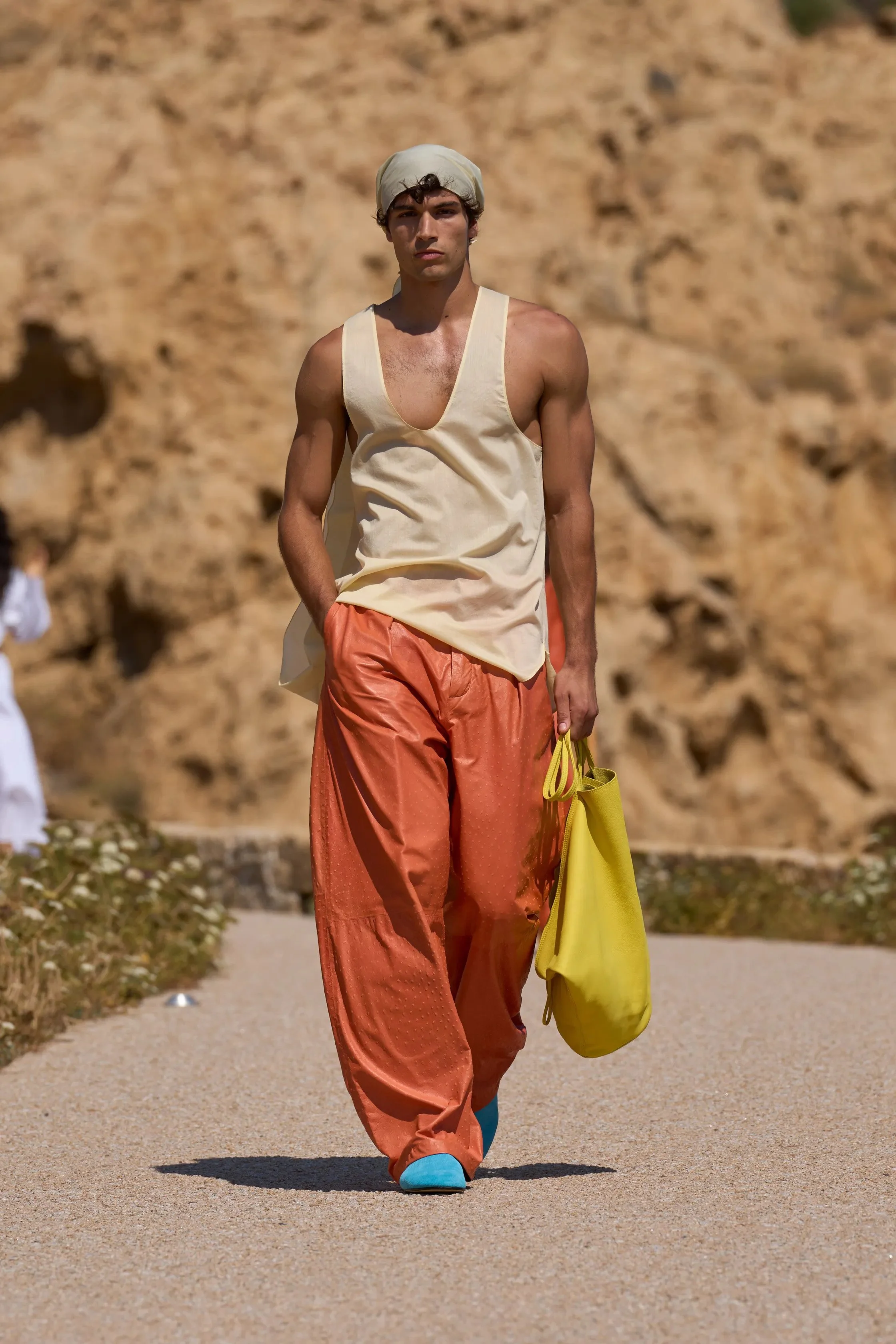
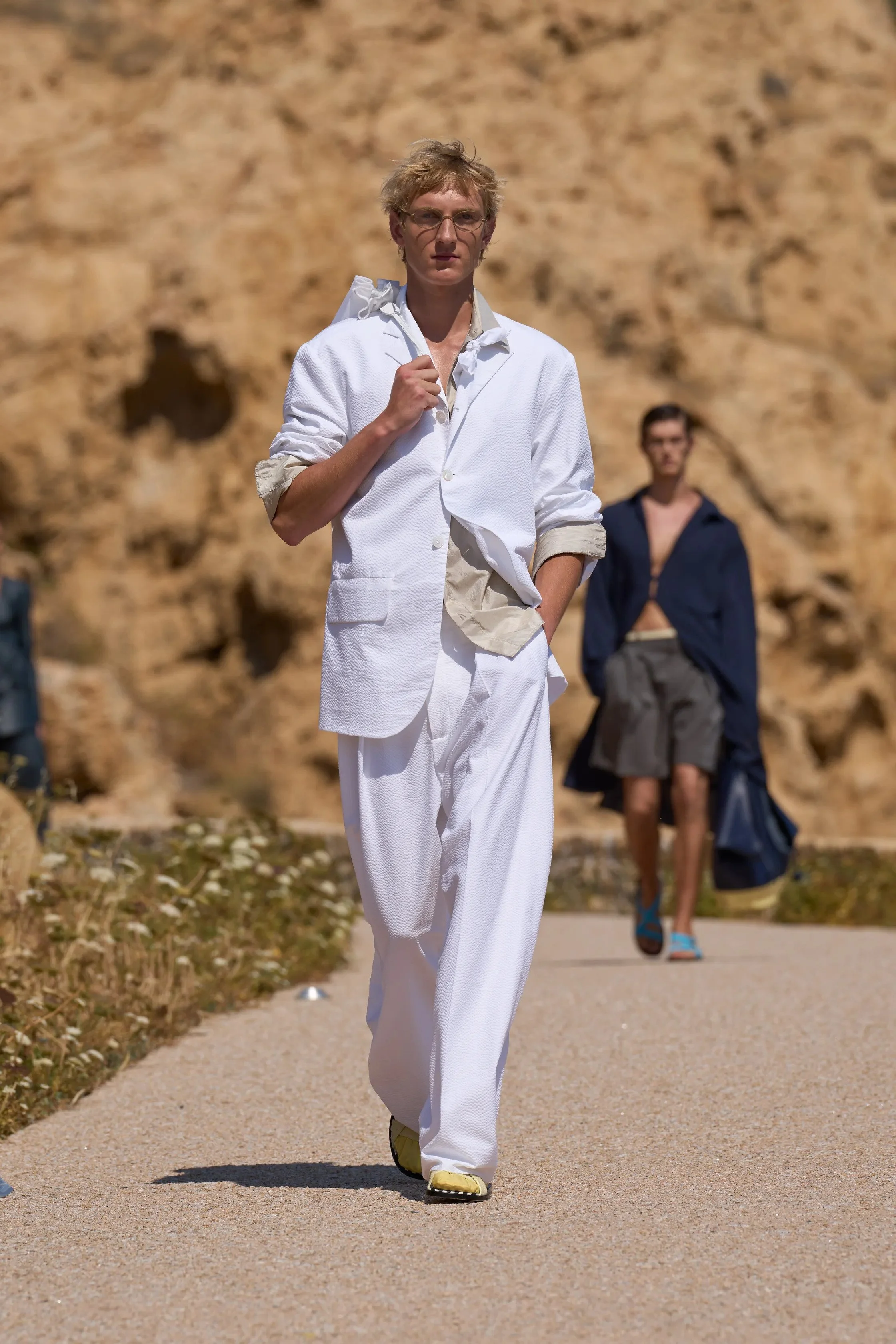
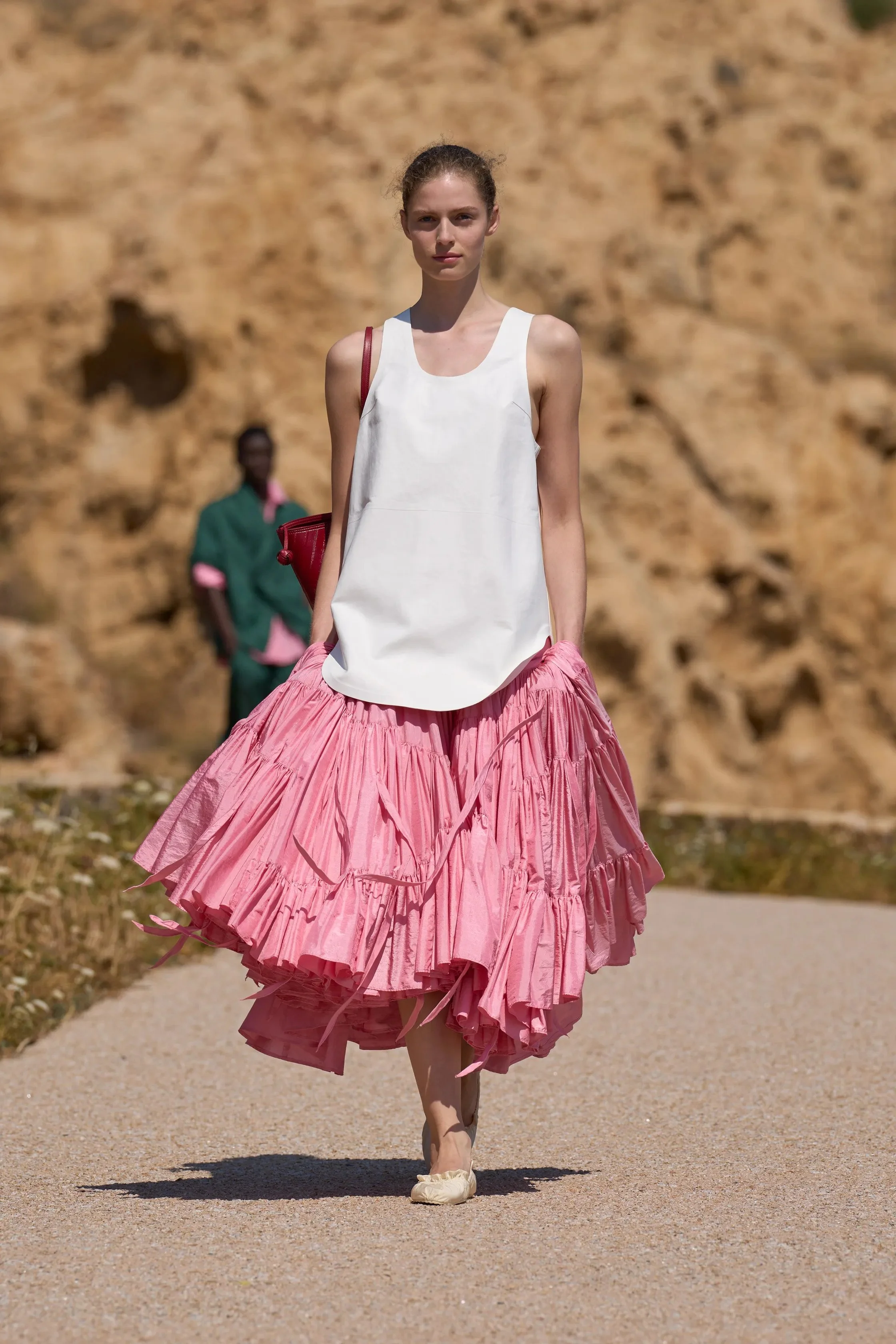
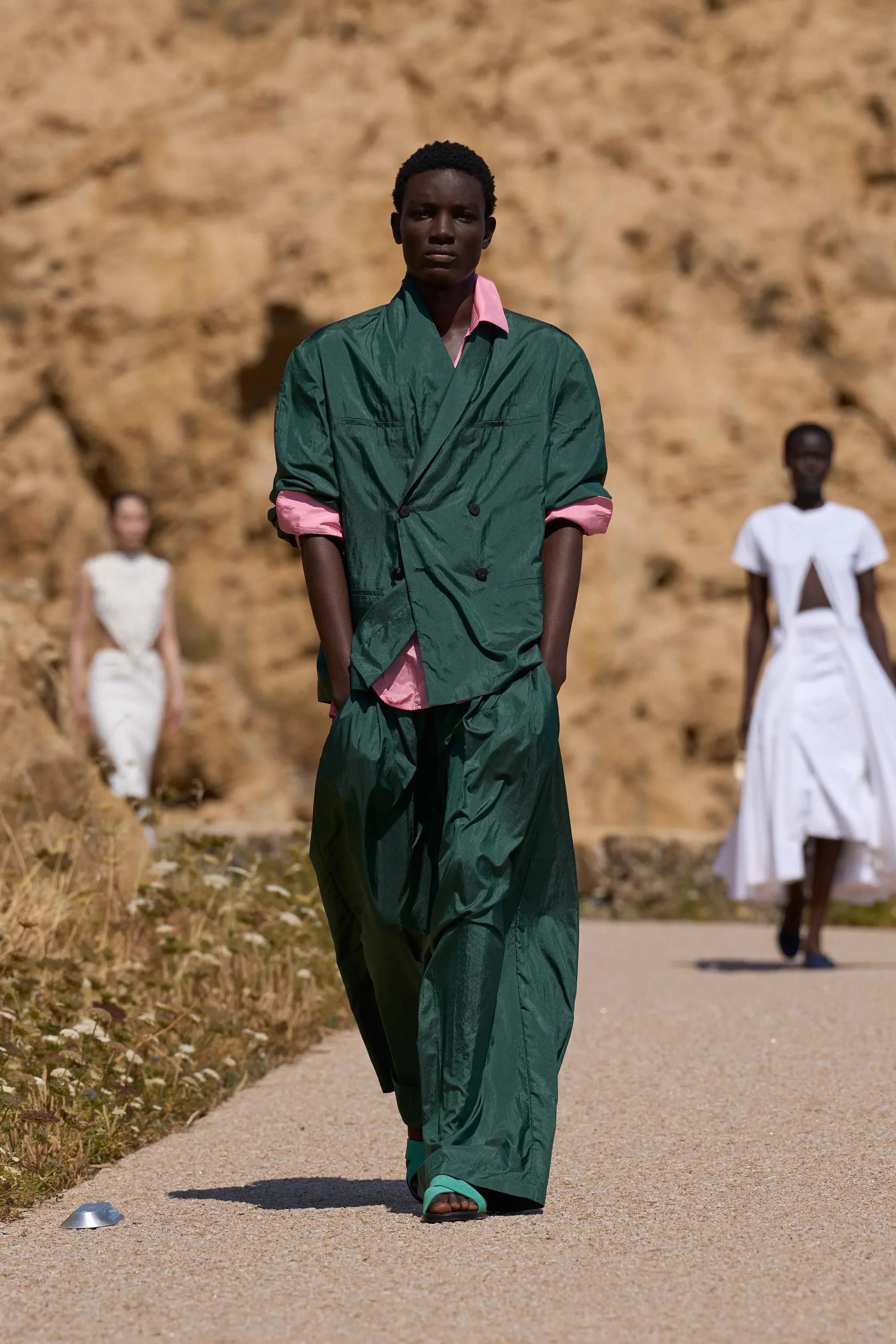
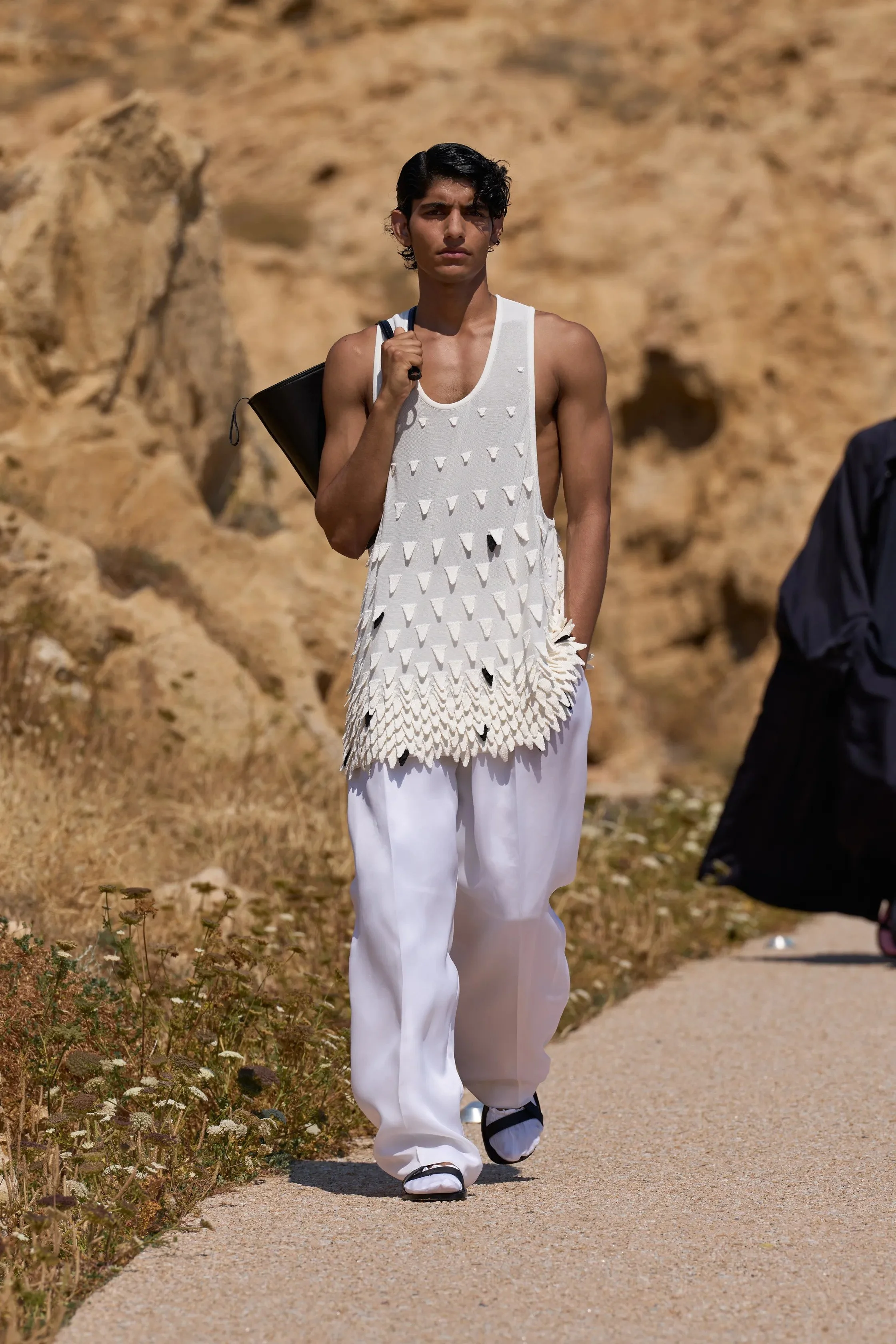
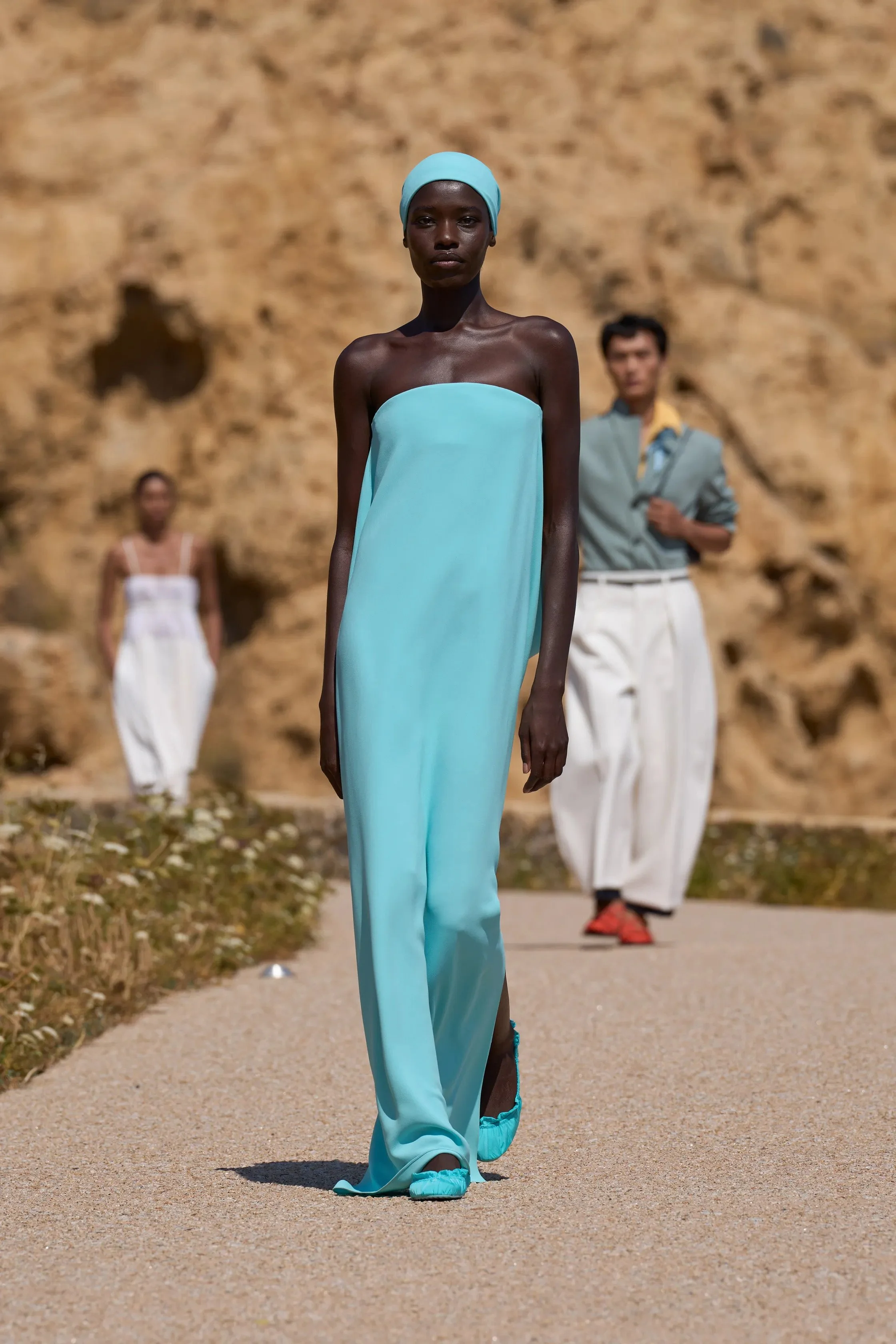
In the colourful and romantic world of Jacquemus, summer never ends, and clothing becomes a reflection of this state of mind rather than of passing trends. For Spring/Summer 2027, the pieces speak about the ease and lightness of the season, the carefree spirit of holidays, and the intensity of the South of France's sunny days.

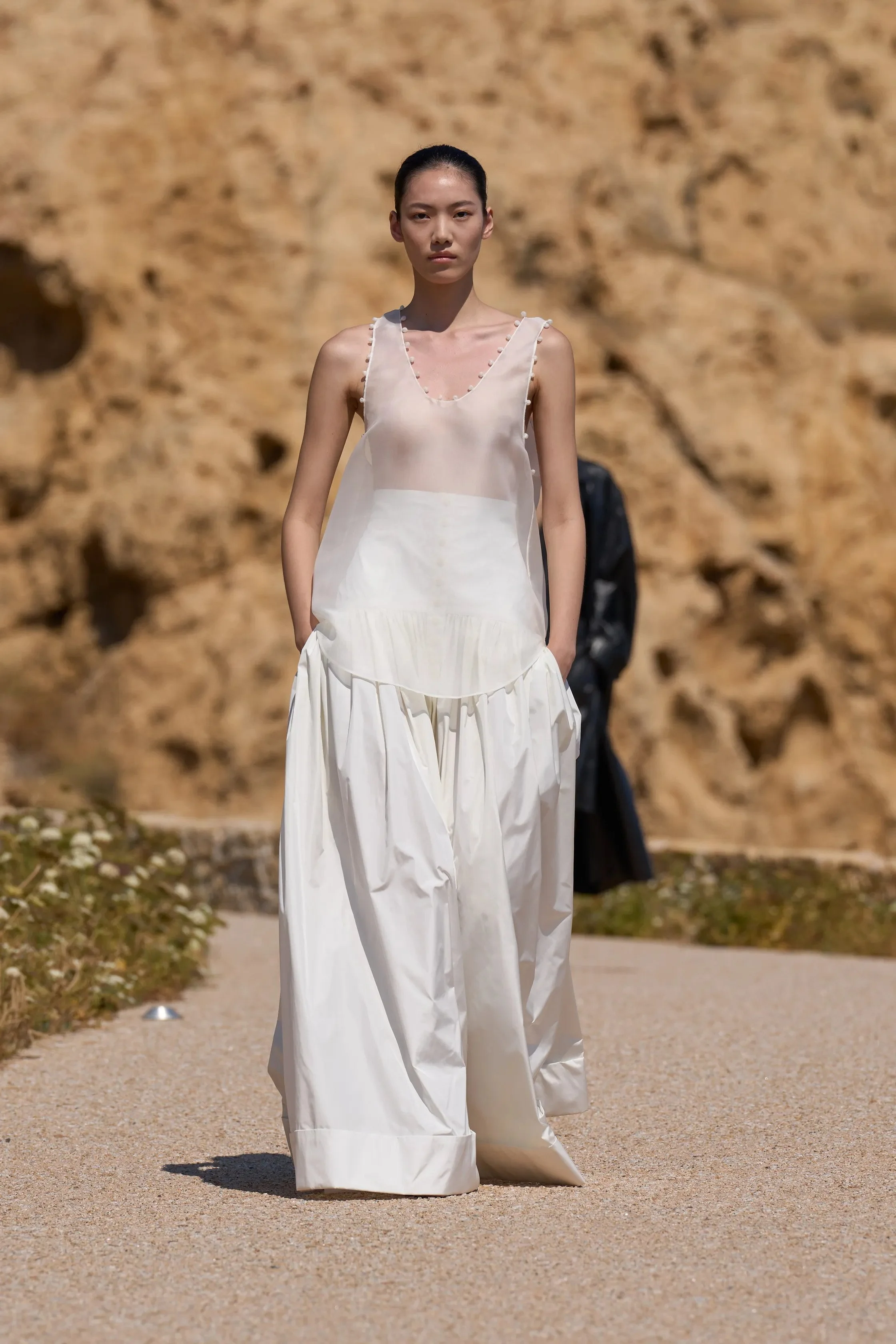
Titled Le Bonheur, the collection was unveiled at the Pietra Lighthouse in Corsica, a setting that perfectly echoed the warmth, freedom, and simplicity that define the collection.

Lightweight fabrics with fluid movement, loose silhouettes, transparencies, cut-outs, feathers, and soft volumes encompassed a wardrobe that felt effortless and weightless. Rounded shapes on skirts and trousers introduced volume, creating a contrast with the lightness of the other looks.

Cocoon dresses, balloon skirts, and bubble-hem silhouettes gave the offering playfulness, while the garments seemed to float around the body as they walked down the runway. Crop tops, tunic dresses, and airy garments reinforced the relaxed mood of the collection.
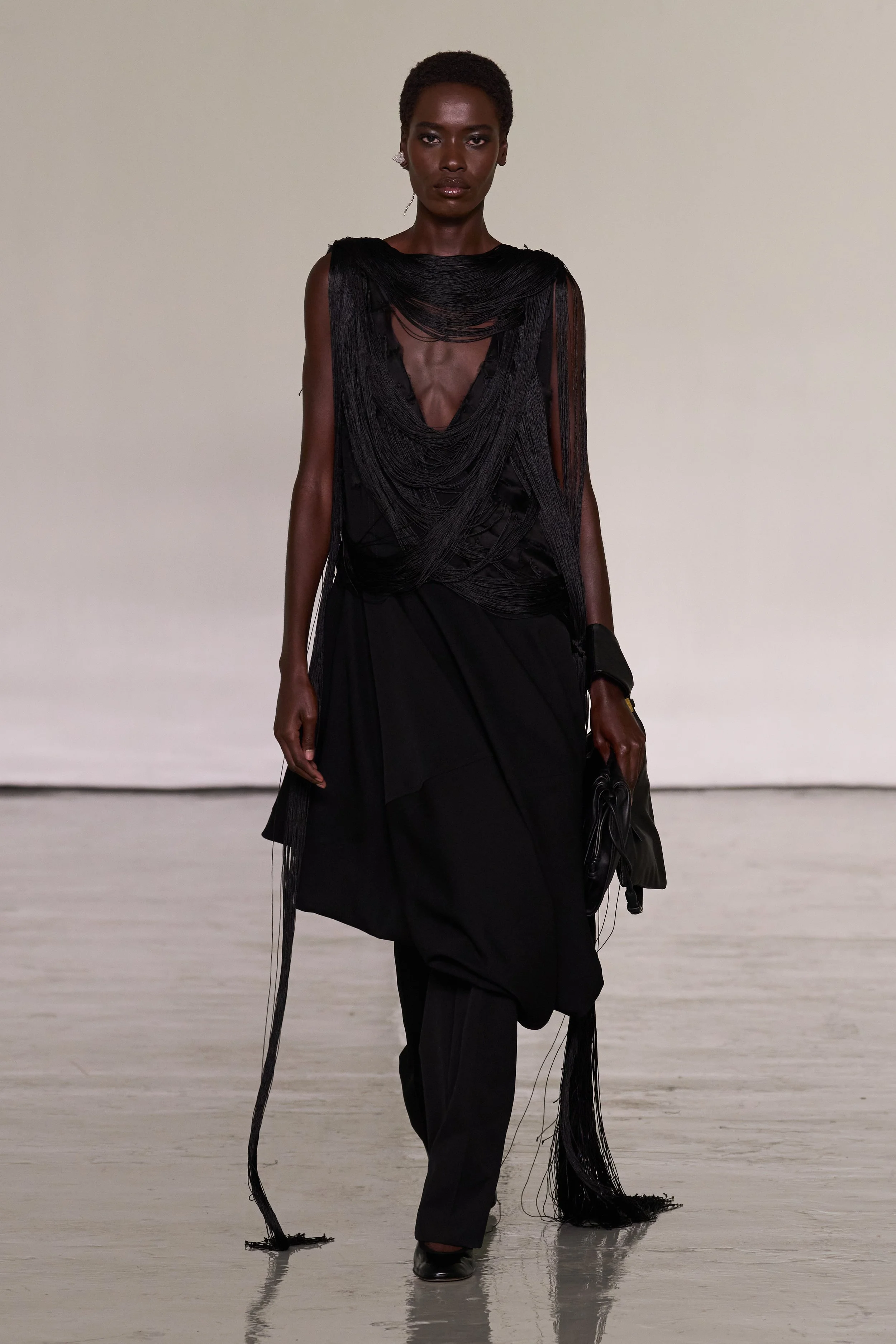
The body is not highlighted; instead, it is lost in the loose proportions of the silhouettes. There is no emphasis on the curves as the focus is on the freedom of movement and the natural way the garments relate to the body.
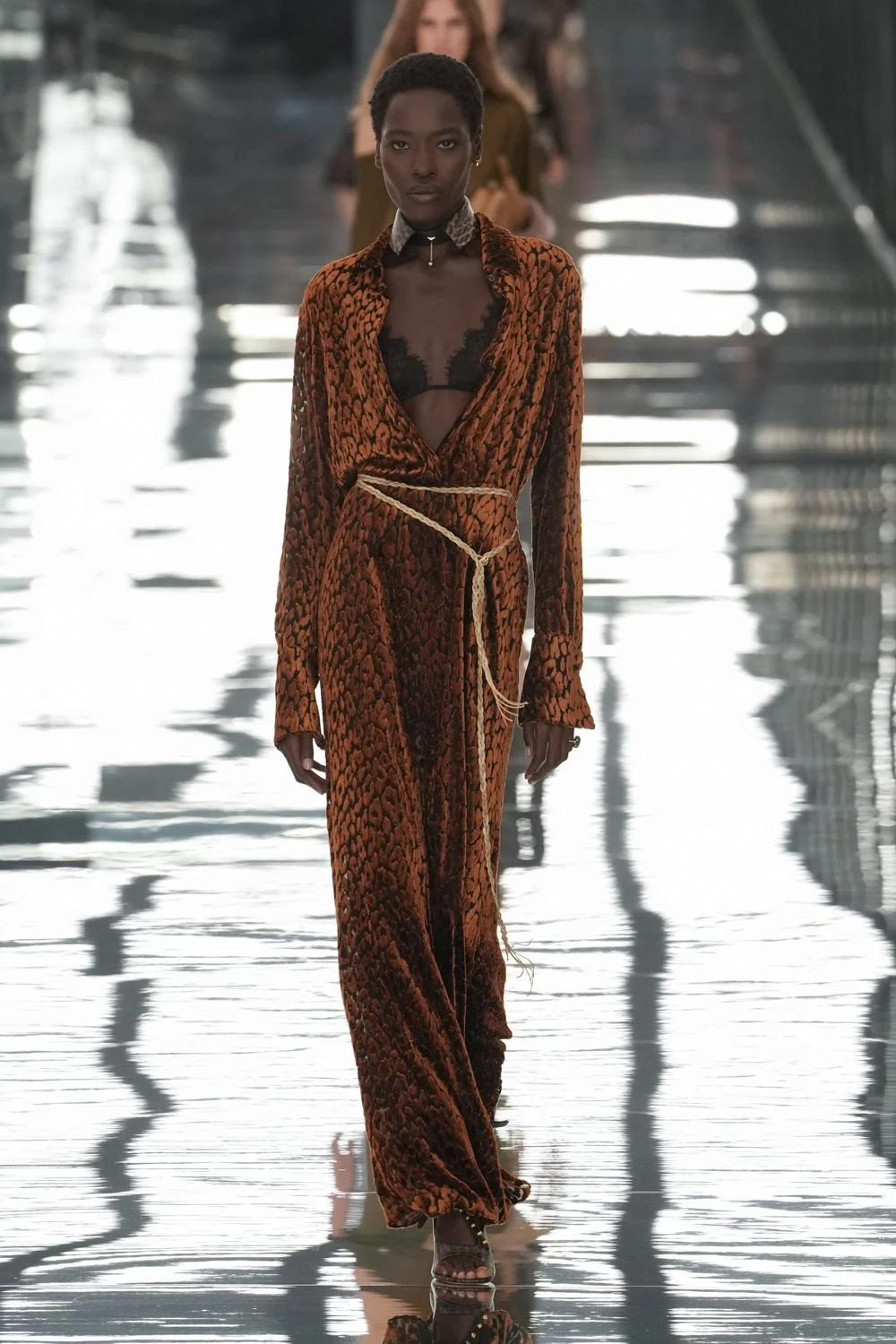
The colour palette was rooted in white and beige, with accents of vivid shades like turquoise, yellow, orange, red, baby blue, and pink. Stripes and polka dots introduced a graphic element, while the rest of the collection remained restrained.

For Jacquemus, holiday dressing is fun and comfortable. Effortless elegance is the mood. It is not about over-styling; instead, it is about letting the body breathe and move freely. Structured tailoring provided moments of sharpness within an otherwise relaxed wardrobe.

Crochet knitwear brings texture to the collection, while sheer fabrics reinforce its sense of freshness and lightness, capturing the carefree spirit that has become synonymous with the Jacquemus universe.


Words by Carolina Benjumea

LGN LOUIS GABRIEL NOUCHI SS27

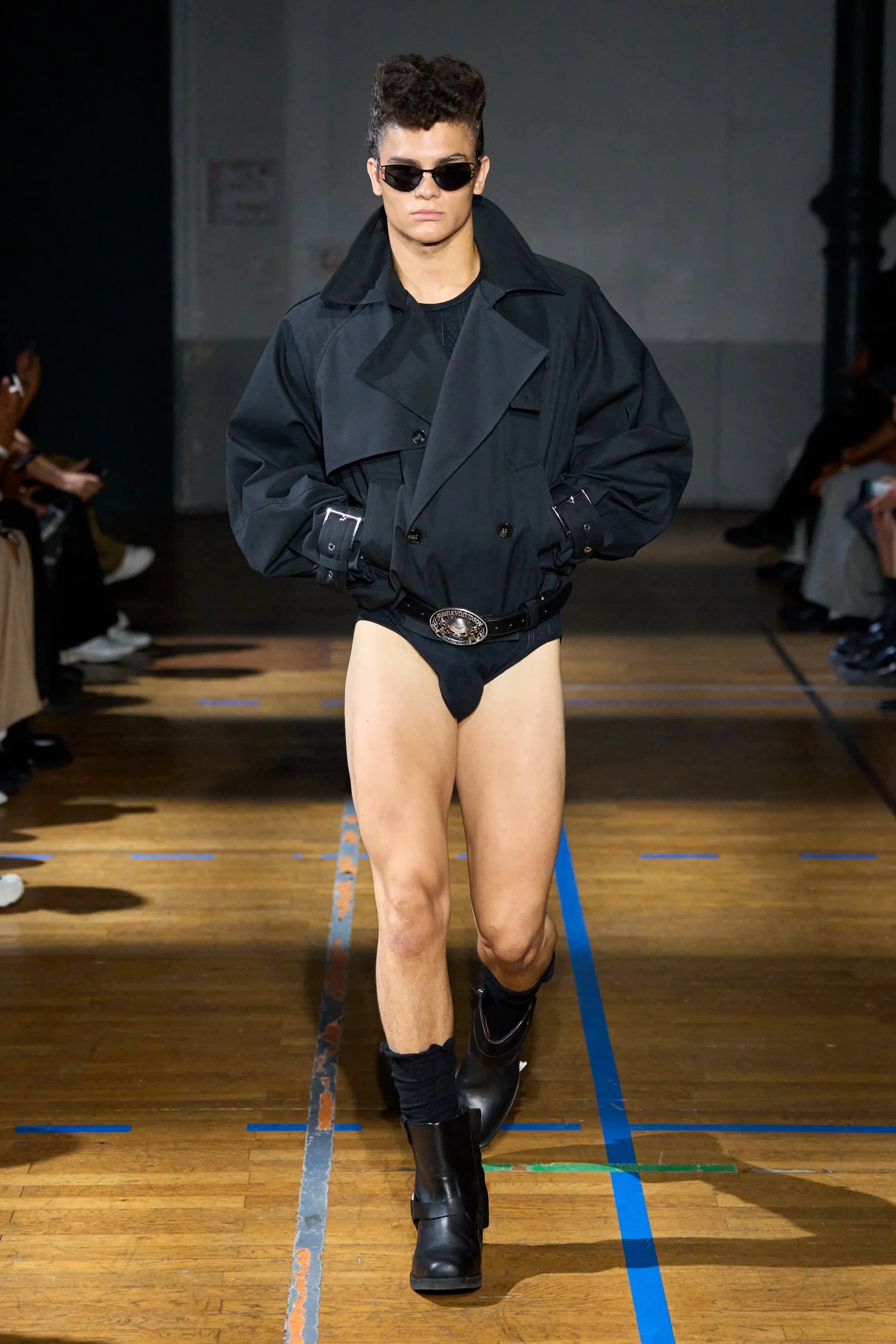
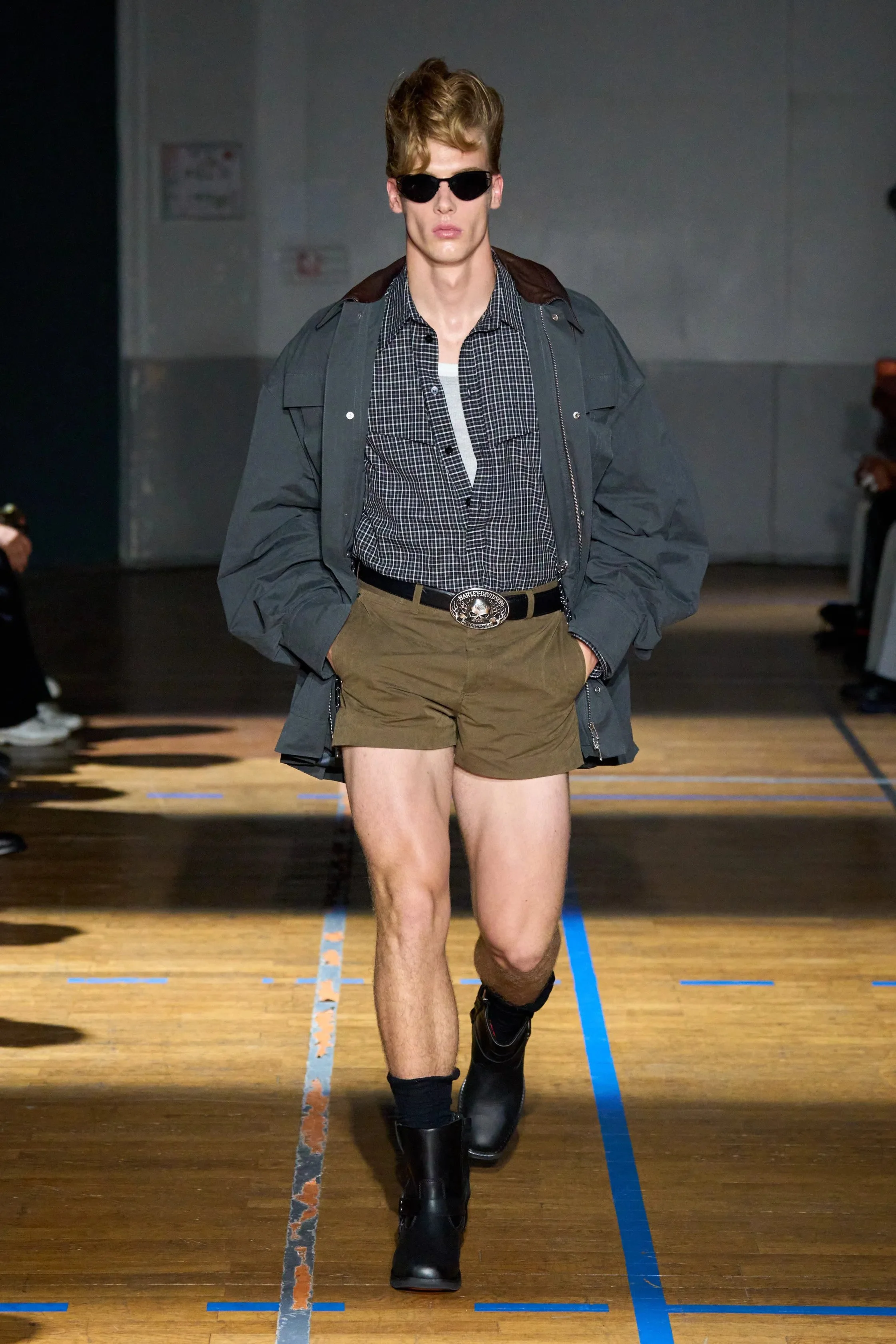
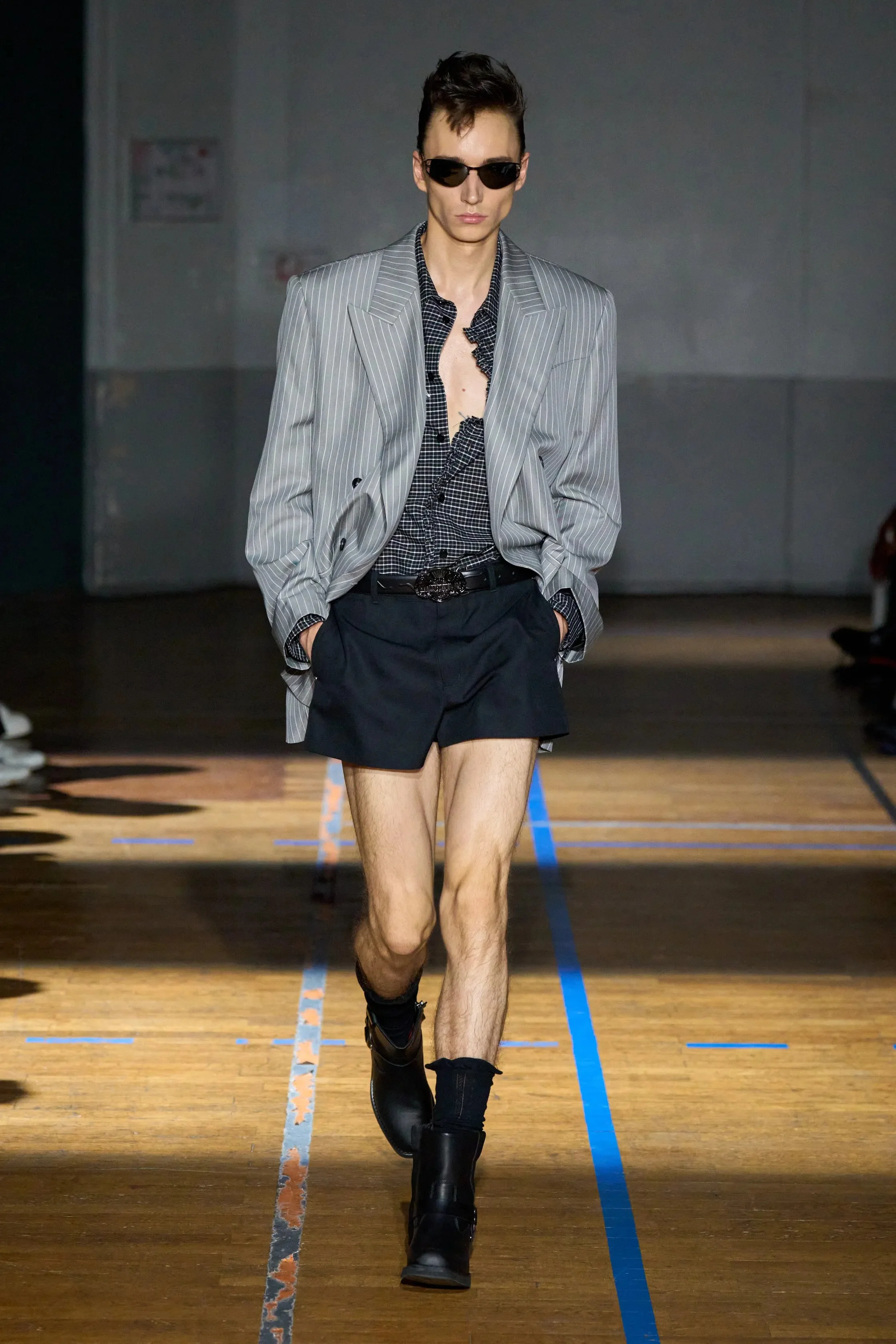
Fashion is a snake hungry to consume itself. With a community that tends to isolate within itself, it’s easy to create in a derivative way. Louis Gabriel Nouchi always makes a point to contradict this tendency. Often finding inspiration in books or movies, the designer tailors his design language to the narrative worlds of others. This season, he found his muse in David Lynch’s Twin Peaks. Spring/Summer 2027 borrowed the mood of the series rather than its imagery, building a wardrobe where familiar garments felt slightly out of place.

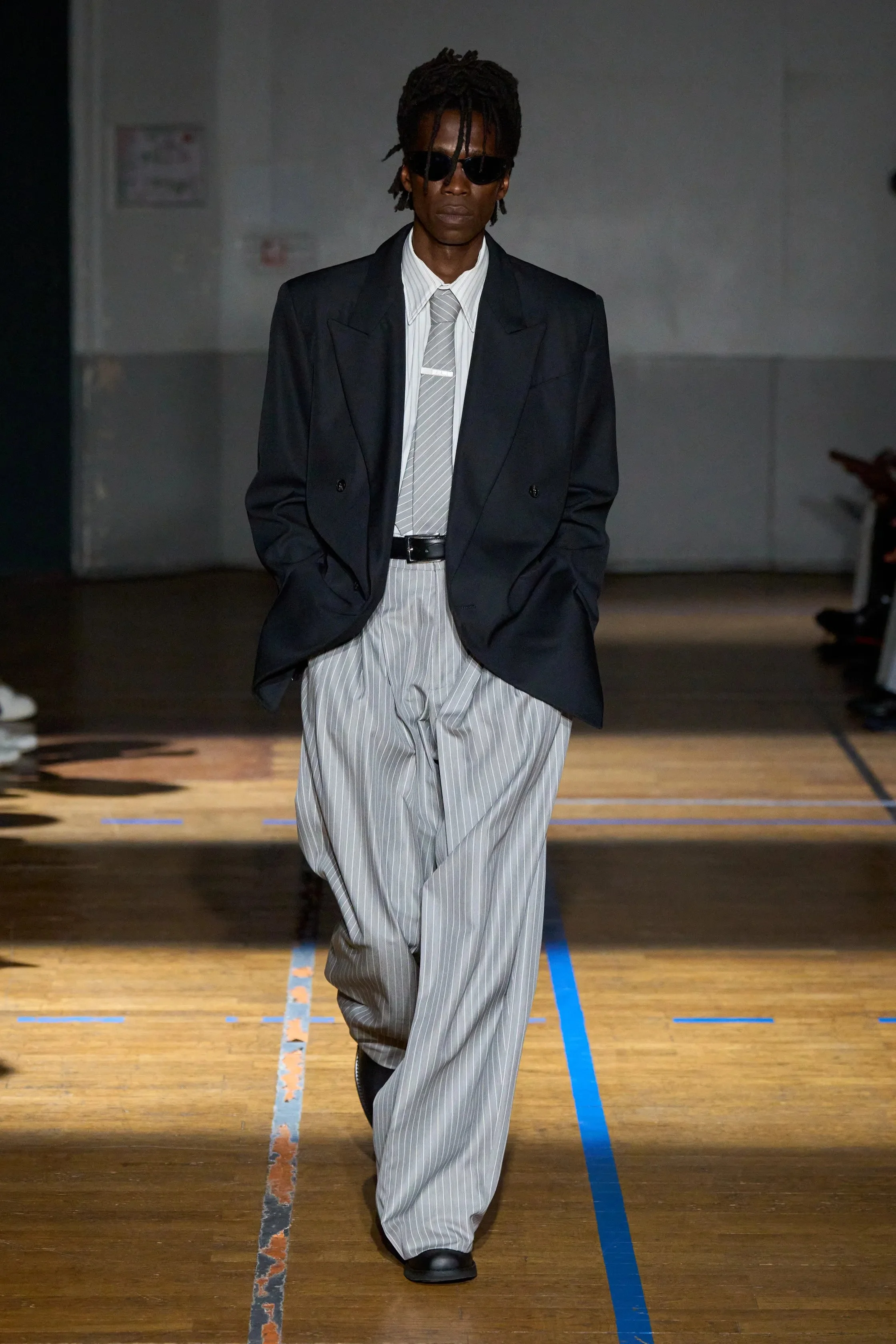
As usual, tailoring provided the collection's foundation. Nouchi introduced what he called the "broken suit", separating pinstriped trousers from checked jackets and pairing formal pieces with garments that disrupted their expected context. The designer’s system challenged tailoring as a signal of certainty. A suit became a flexible system rather than a fixed uniform. A mismatched suit, a shortened proportion or an unexpected fabric combination shifted the meaning of otherwise familiar clothes.

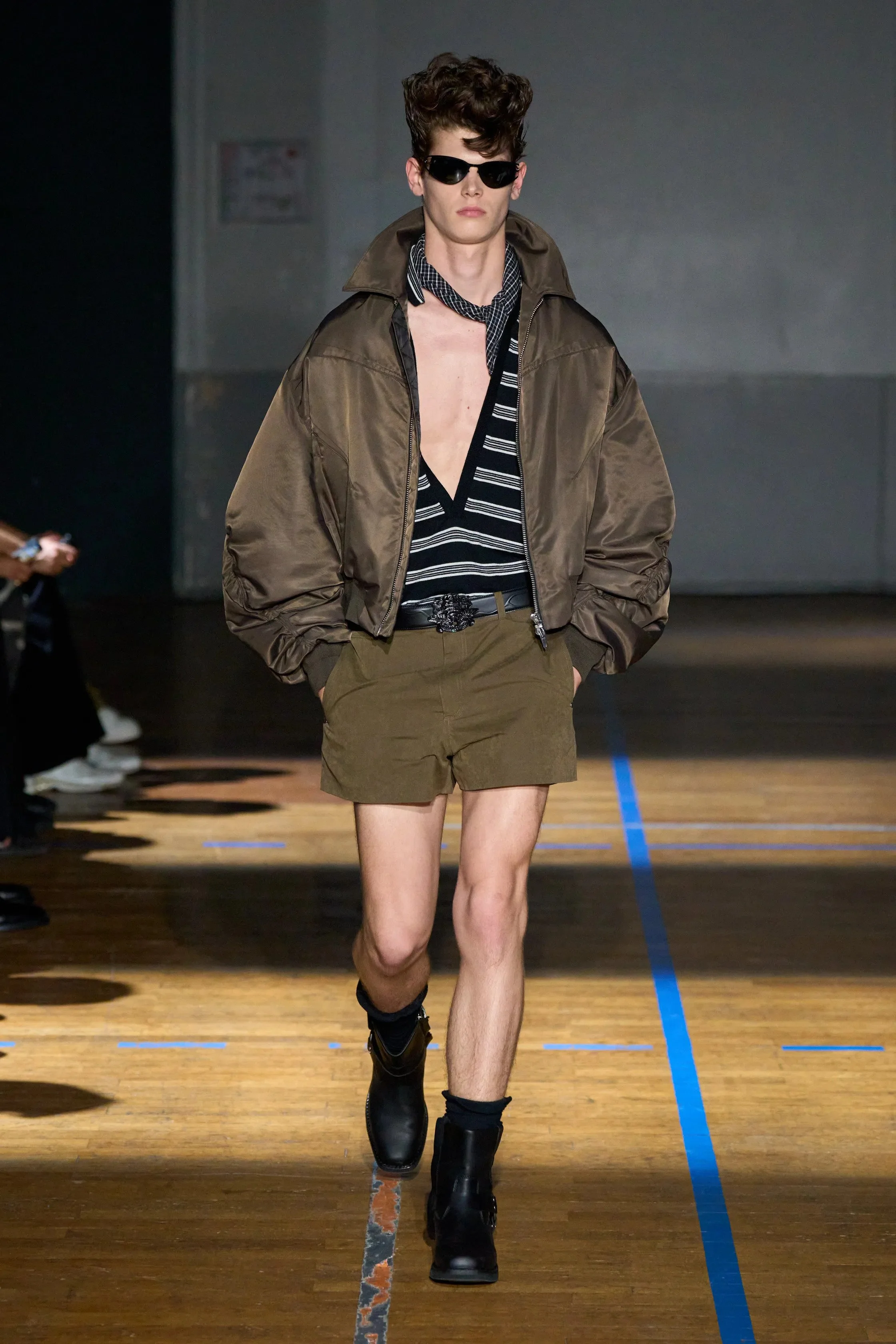
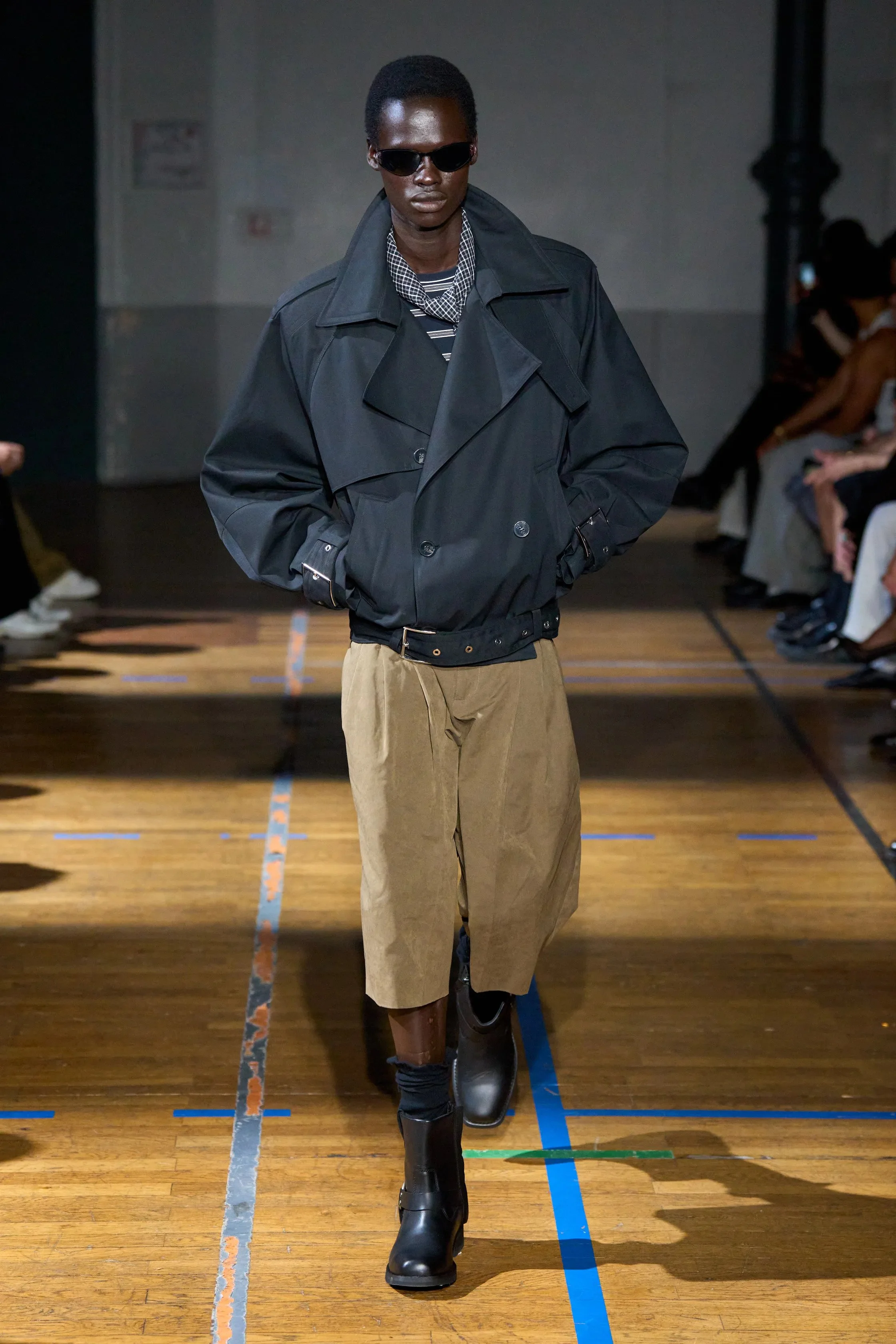
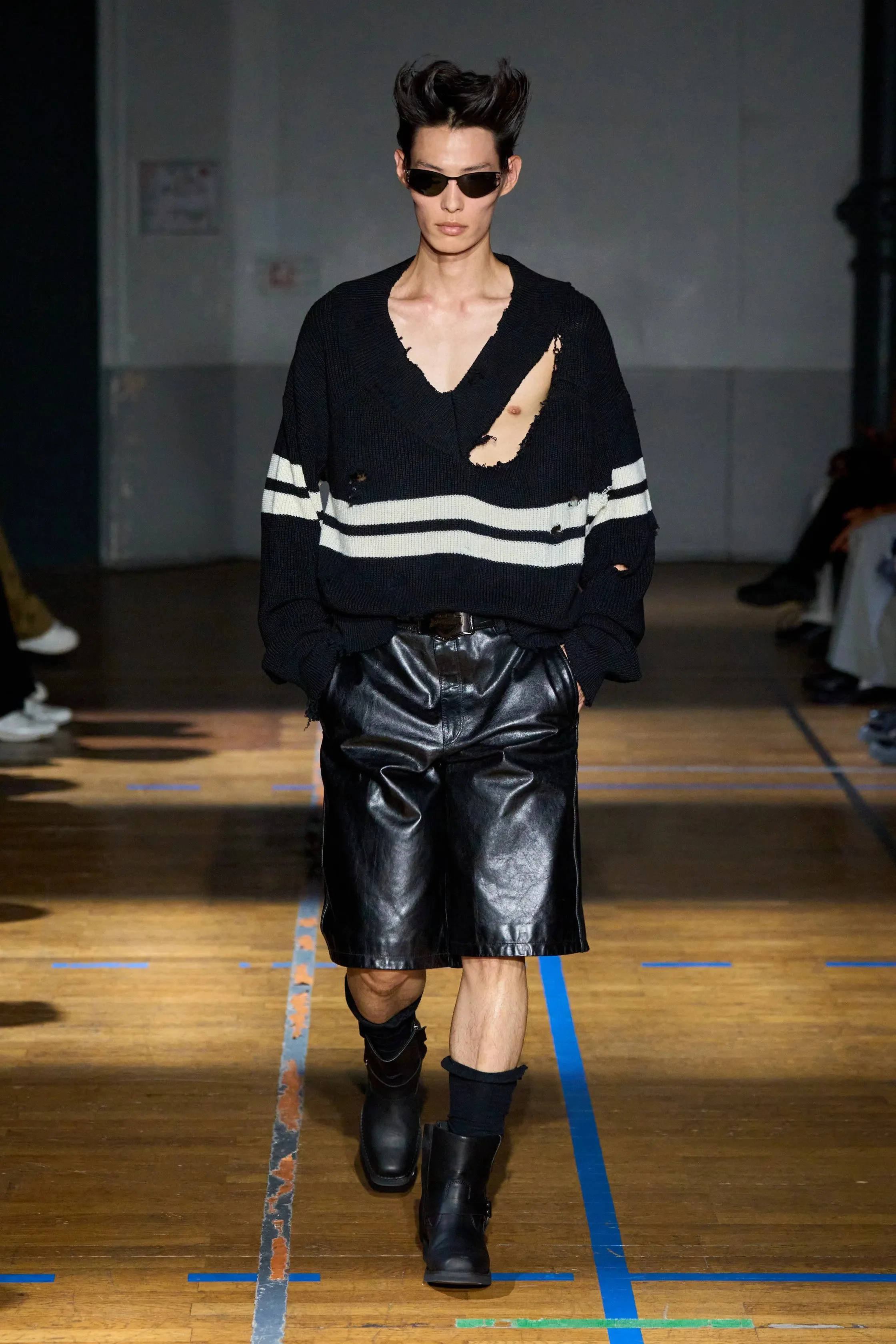
Proportion played an equally important role. Strong shoulders and generous lapels established structure, while cropped trenches and short shorts (or, at times, no pants at all) reduced the formality of the silhouette. Nouchi continues to explore masculinity by exposing the body. Shirts were left open, knitwear cut with deep necklines.

The expanded womenswear offering followed the same logic. Dresses, tailoring and sheer layers shared the same proportions and construction principles, both empowering and exposing the body.


Words by Pedro Vasconcelos

POST ARCHIVE FACTION SS27

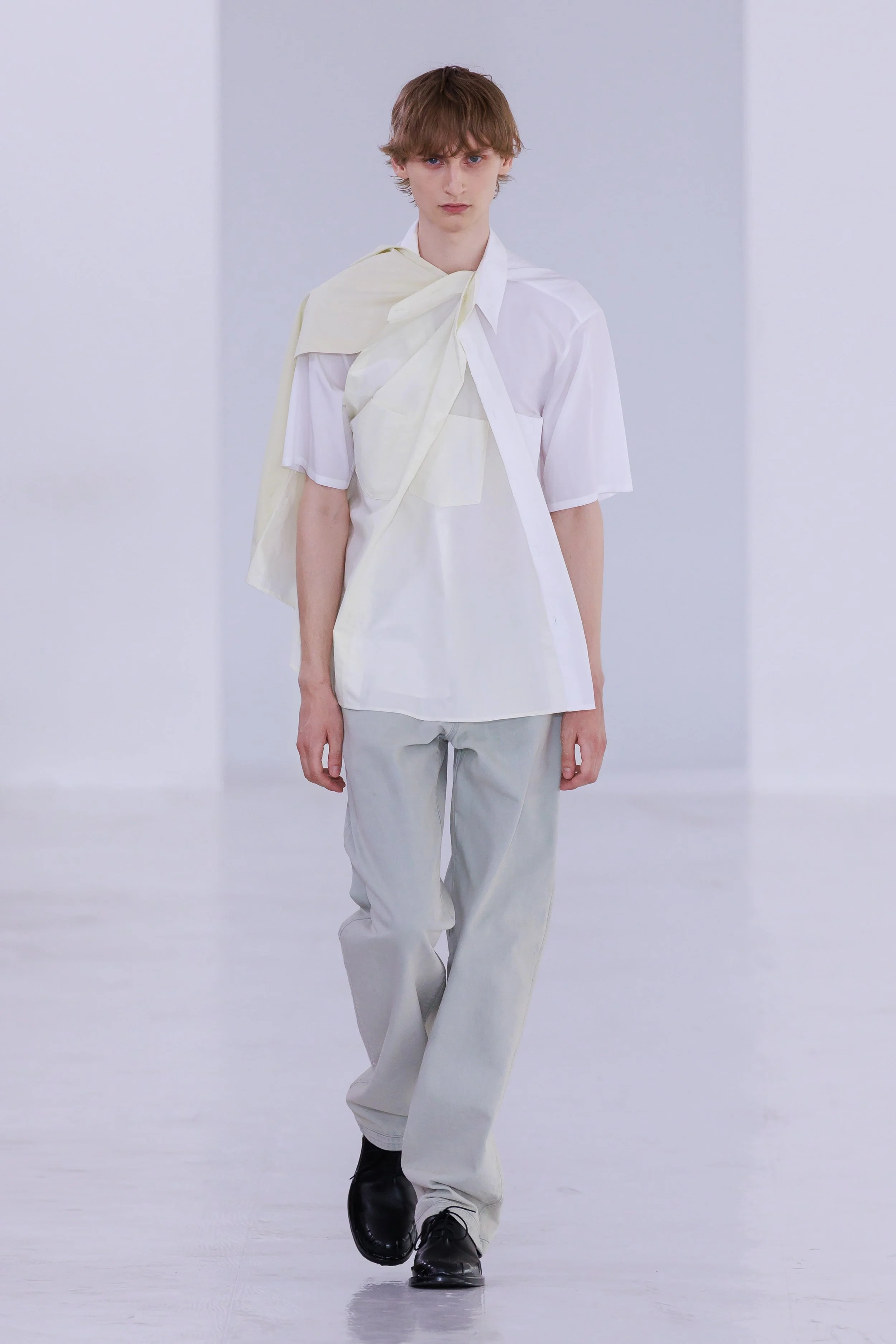
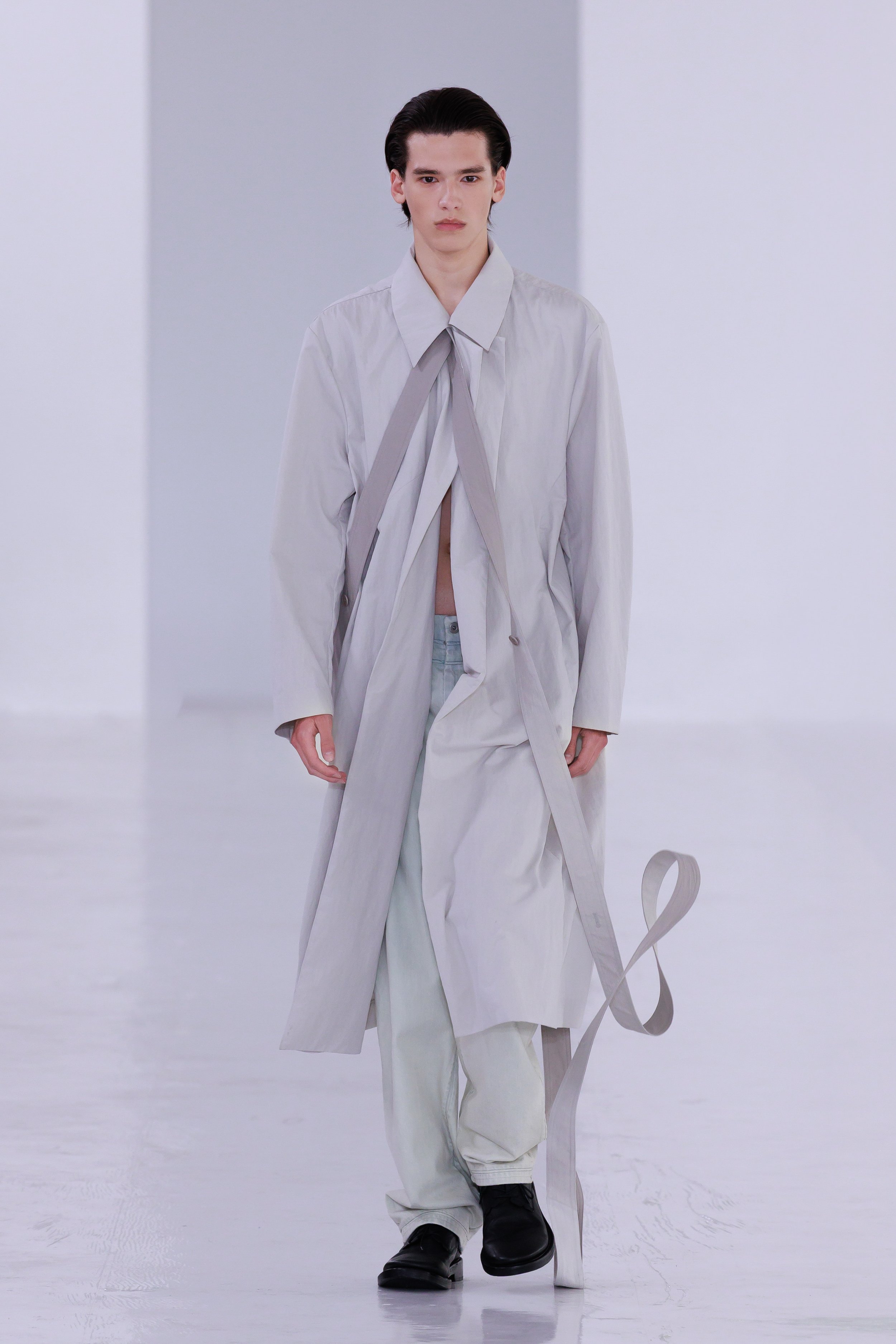
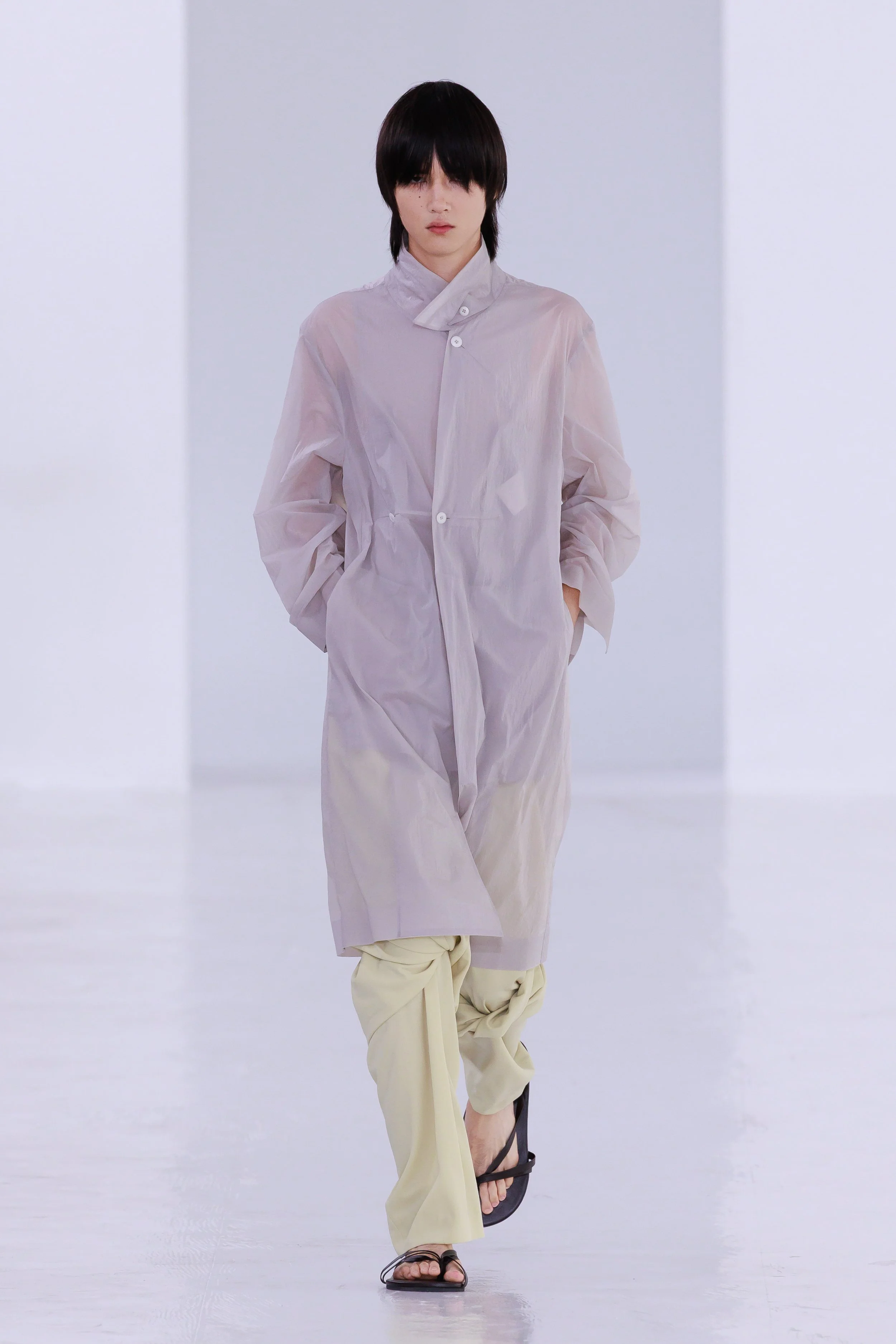
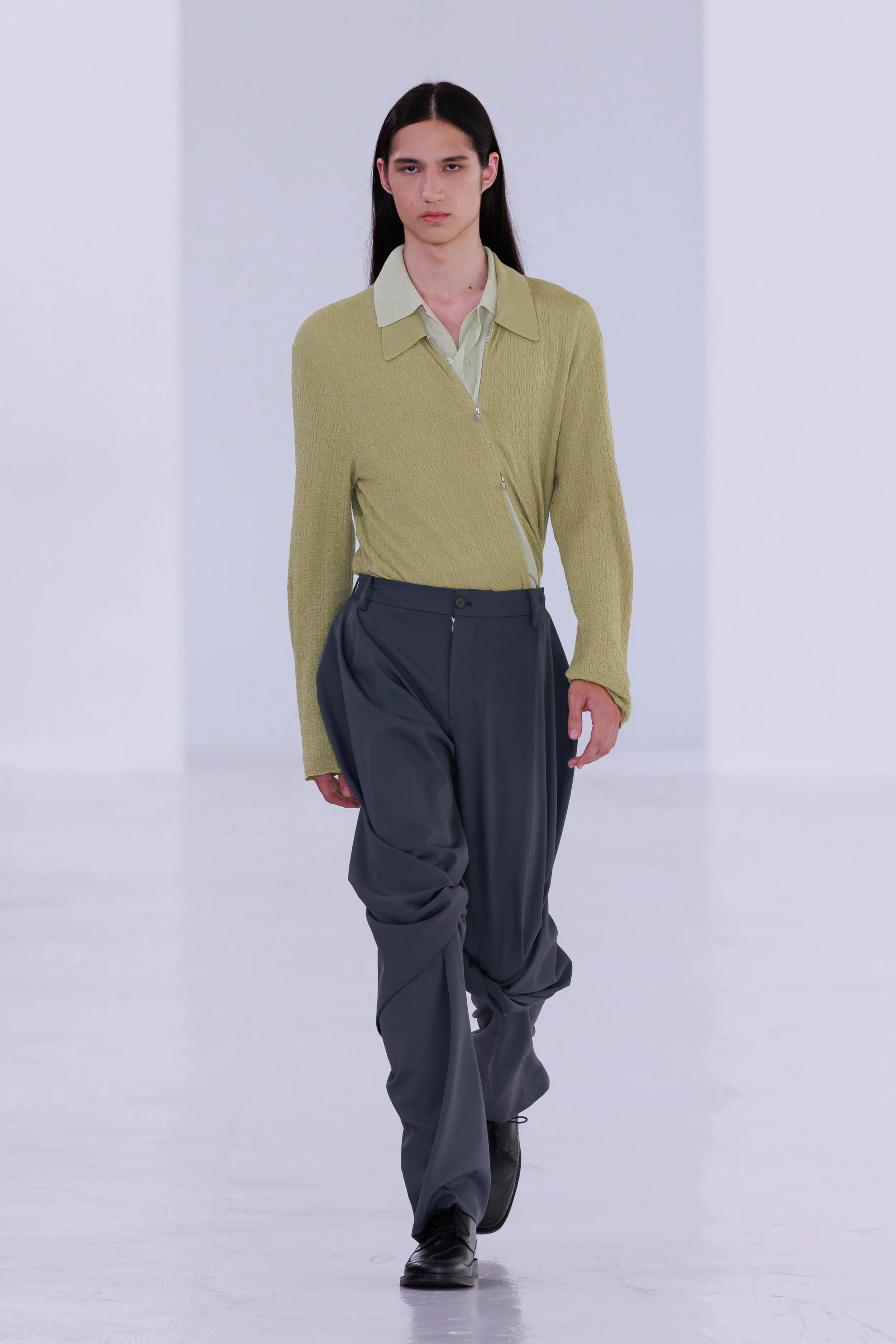
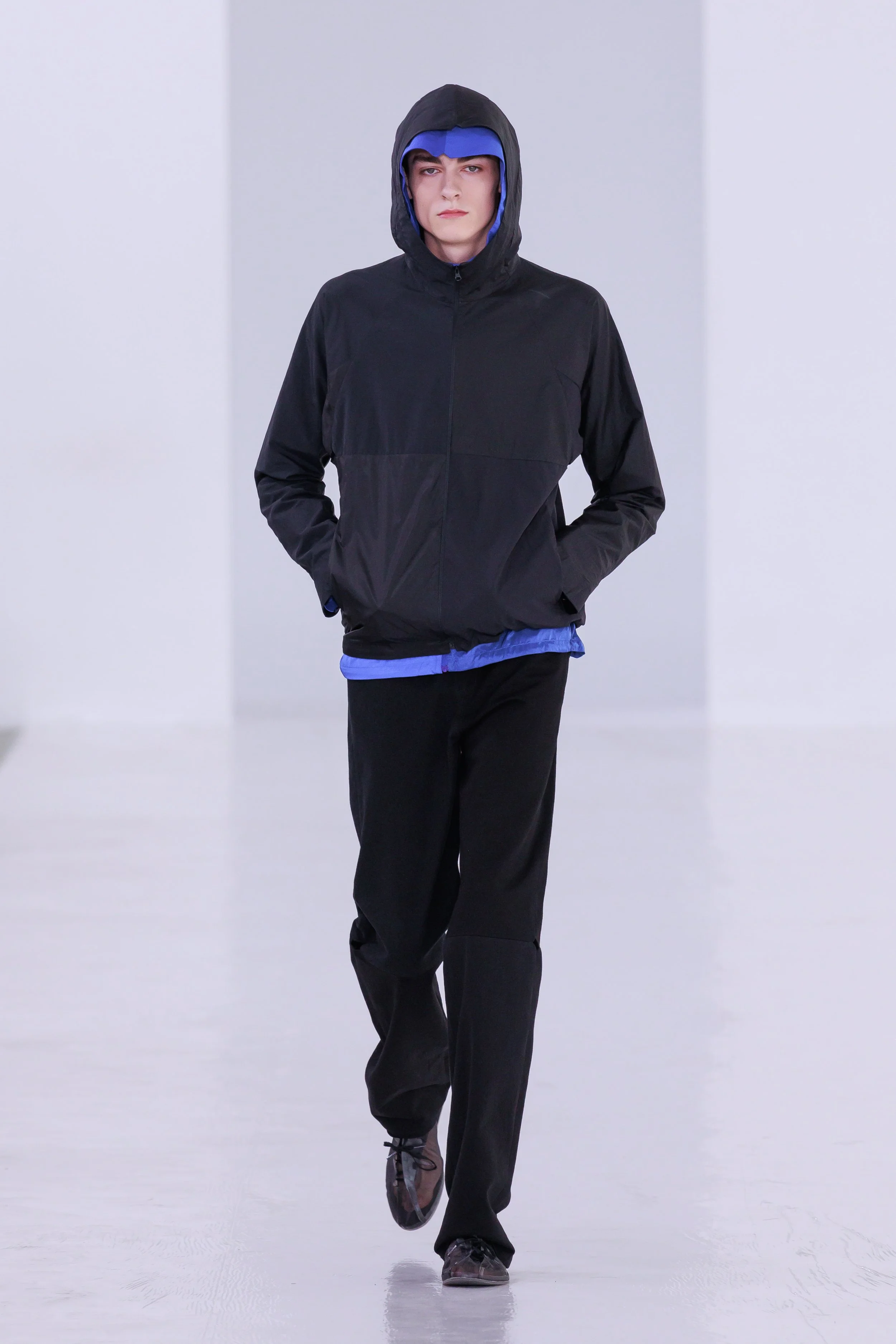
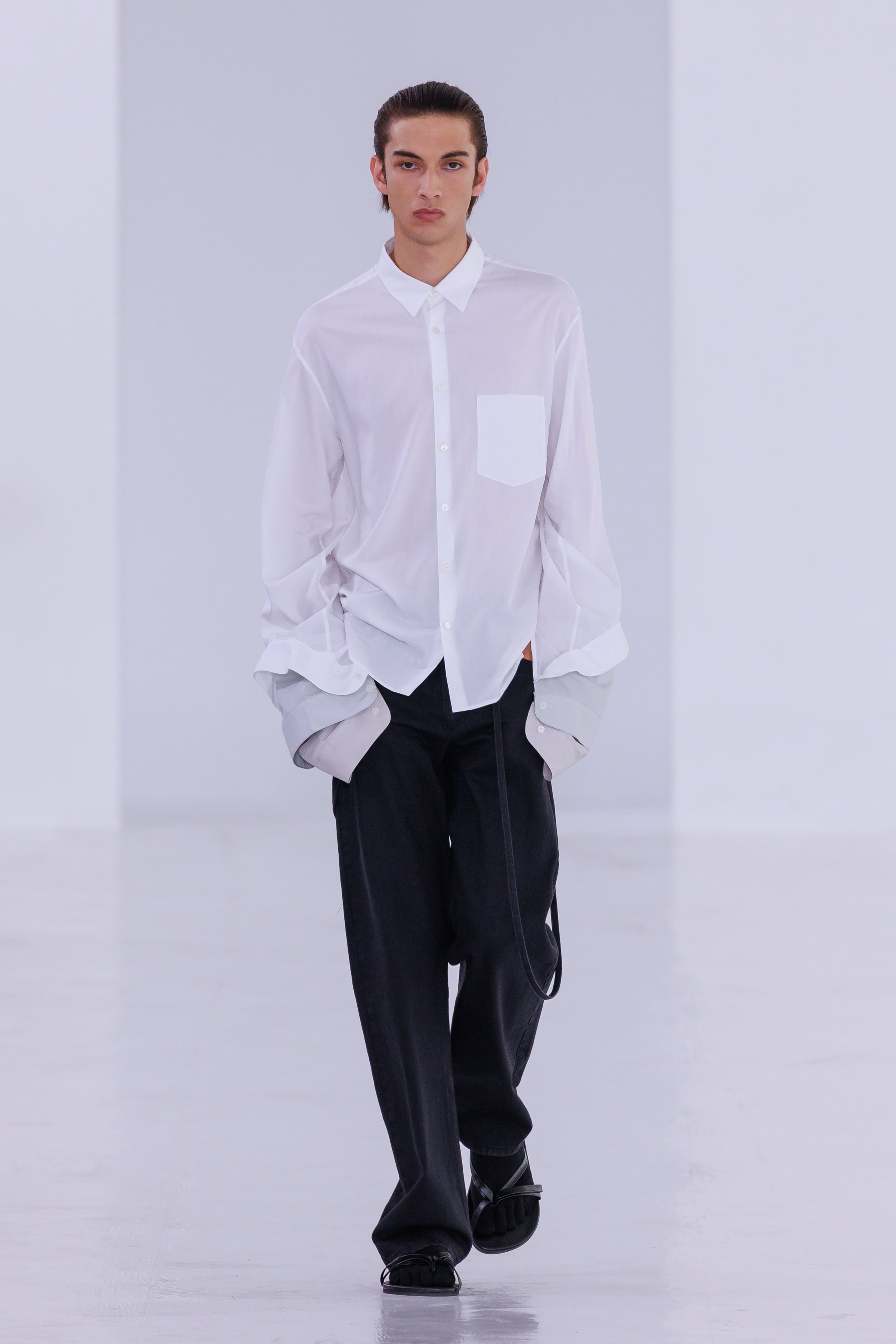
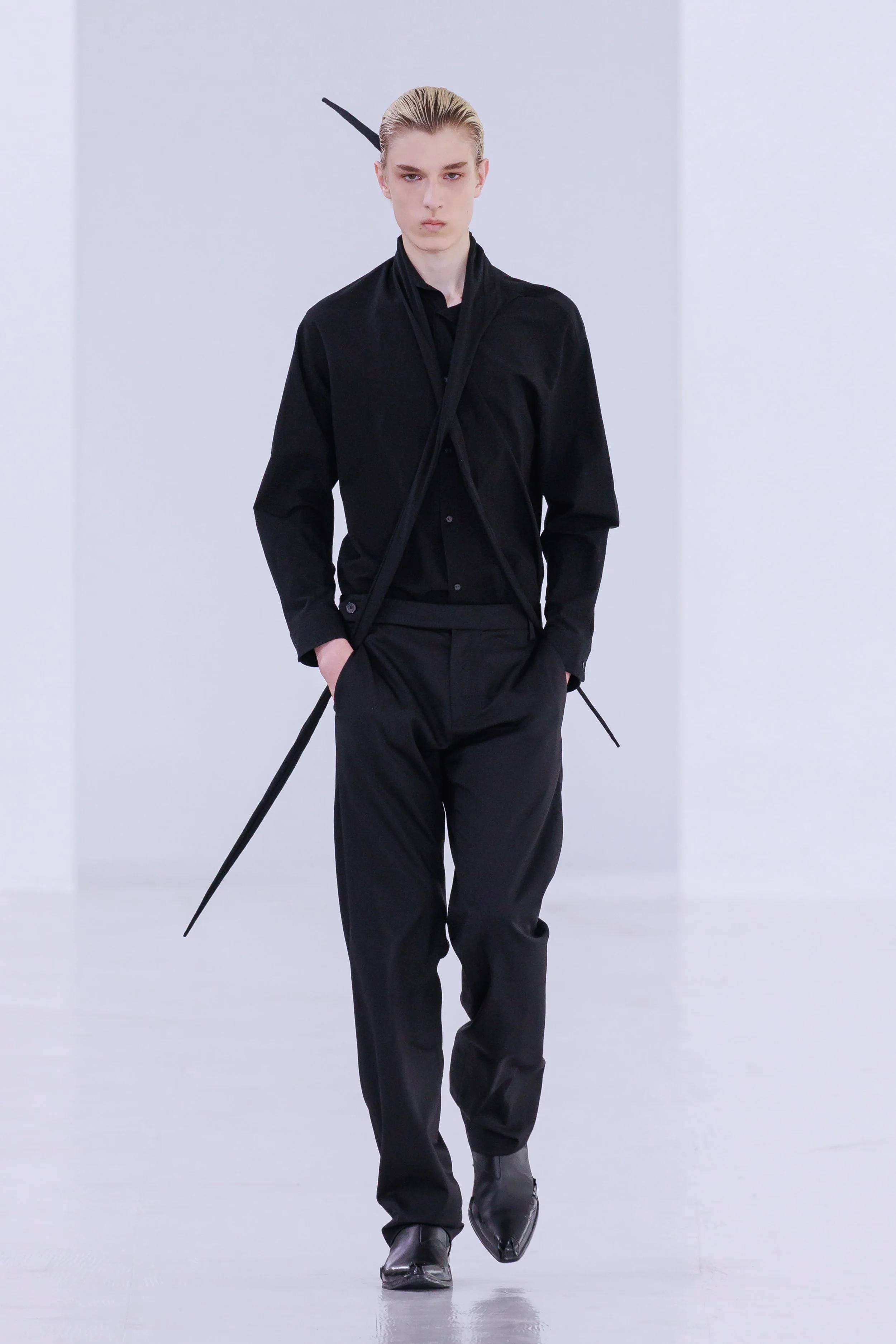
Post Archive Faction’s Spring/Summer 2027 collection was built around tension. Two bodies in constant negotiation – pulling, resisting, yielding – became the framework for clothes that never seemed entirely fixed. The mood was reflected by the two fighters in the middle of the runway, who spent the entire show in a tug of war.

The brand’s creative director, Dongjoon Lim, proposed pieces in motion, reshaped by the body wearing them. The idea played out through construction. Coloured shirts multiplied their own cuffs, short sleeves exposed their linings, and bombers unfolded through successive layers. Leather jackets split their collars apart before reconnecting them elsewhere.

Garments utilised transformation to dictate movement. Straps extended from collared shirts, wrapped around the waist or trailed from technical outerwear, subtly altering the silhouette with each step. Trousers twisted at the knee in washed pinks and pale yellows, while featherweight nylon coats inflated with air before settling back against the body. Even transparent shoes reinforced the sense that the clothes were designed to disappear into movement rather than dominate it.

The strongest looks balanced technical experimentation with familiar tailoring. Linen and silk softened the collection's sharper ideas, while classic outerwear was reconsidered through construction instead of reinvention. Nothing felt needlessly complicated; every intervention had a purpose. The result was a thoughtful exercise in evolution, where the most interesting moments came from subtle shifts in construction and layering.


Words by Pedro Vasconcelos

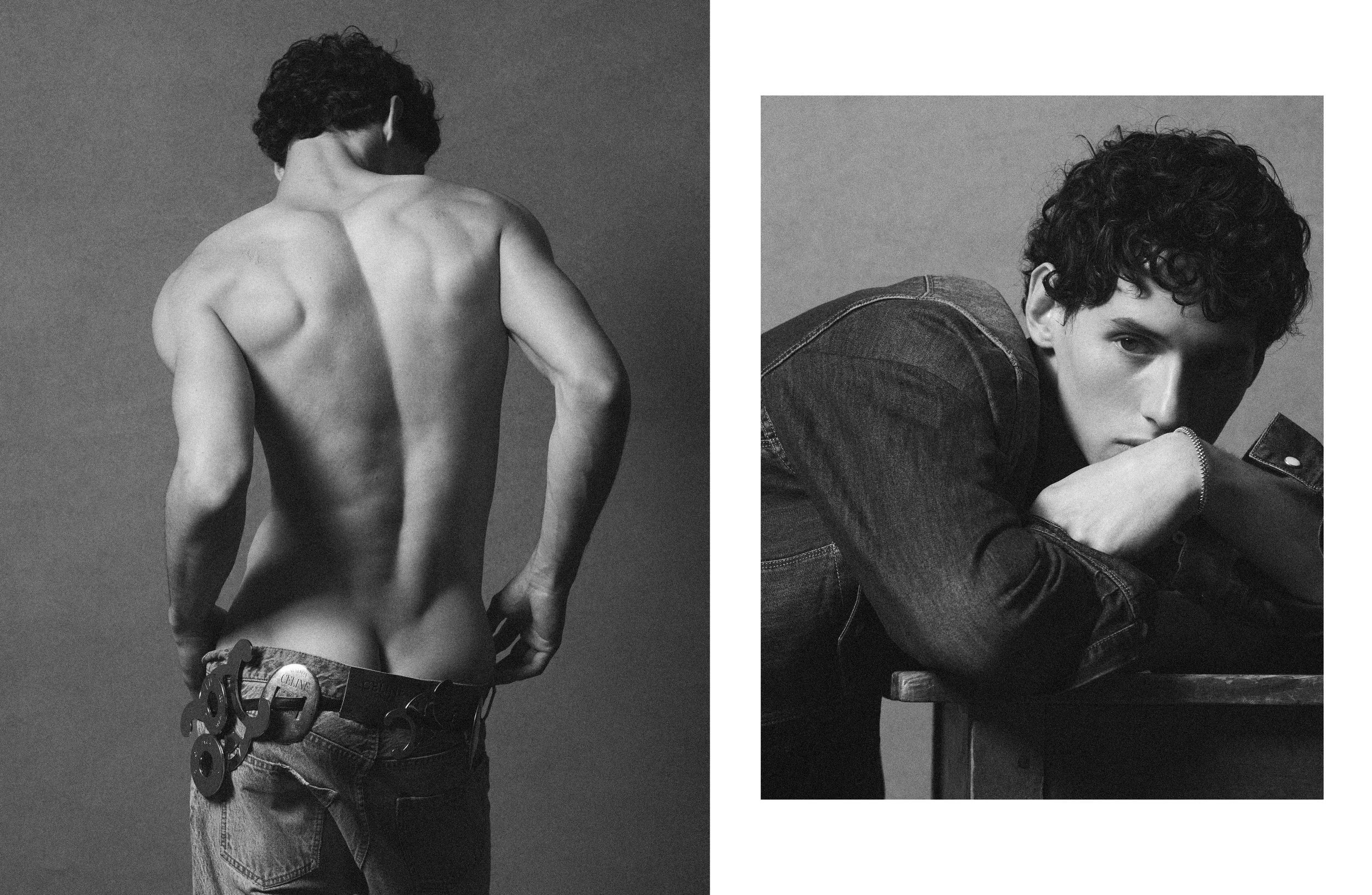
CELINE SS27

Paris hadn’t had a cold breeze in weeks. Michael Rider’s debut menswear show for Celine catalysed it. In the air, a literal and figurative breath of fresh air. The designer’s language of uncomplicated, lived-in French poise continues to expand.

For his first official outing in the menswear space, the American designer captured what makes his tenure at the maison so refreshing: lack of pretension. There’s a tantalising ease with which Rider designs- not overcomplicated, yet not necessarily accessible either. It projects an enviable ease. Both the pieces he creates and the styling that accompanies them suggest a wardrobe of a life well cultivated – collected, borrowed, thrown together, made personal.

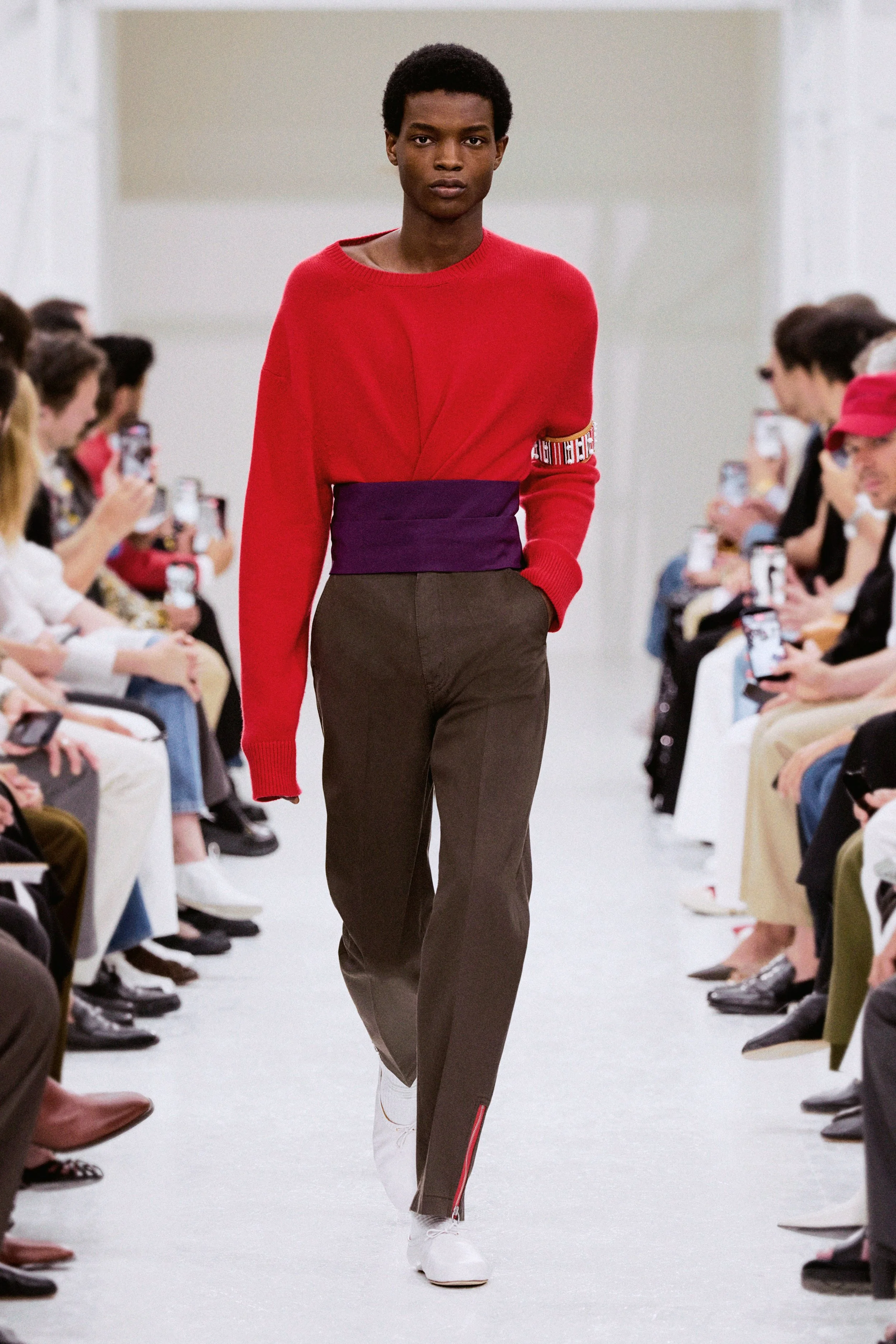
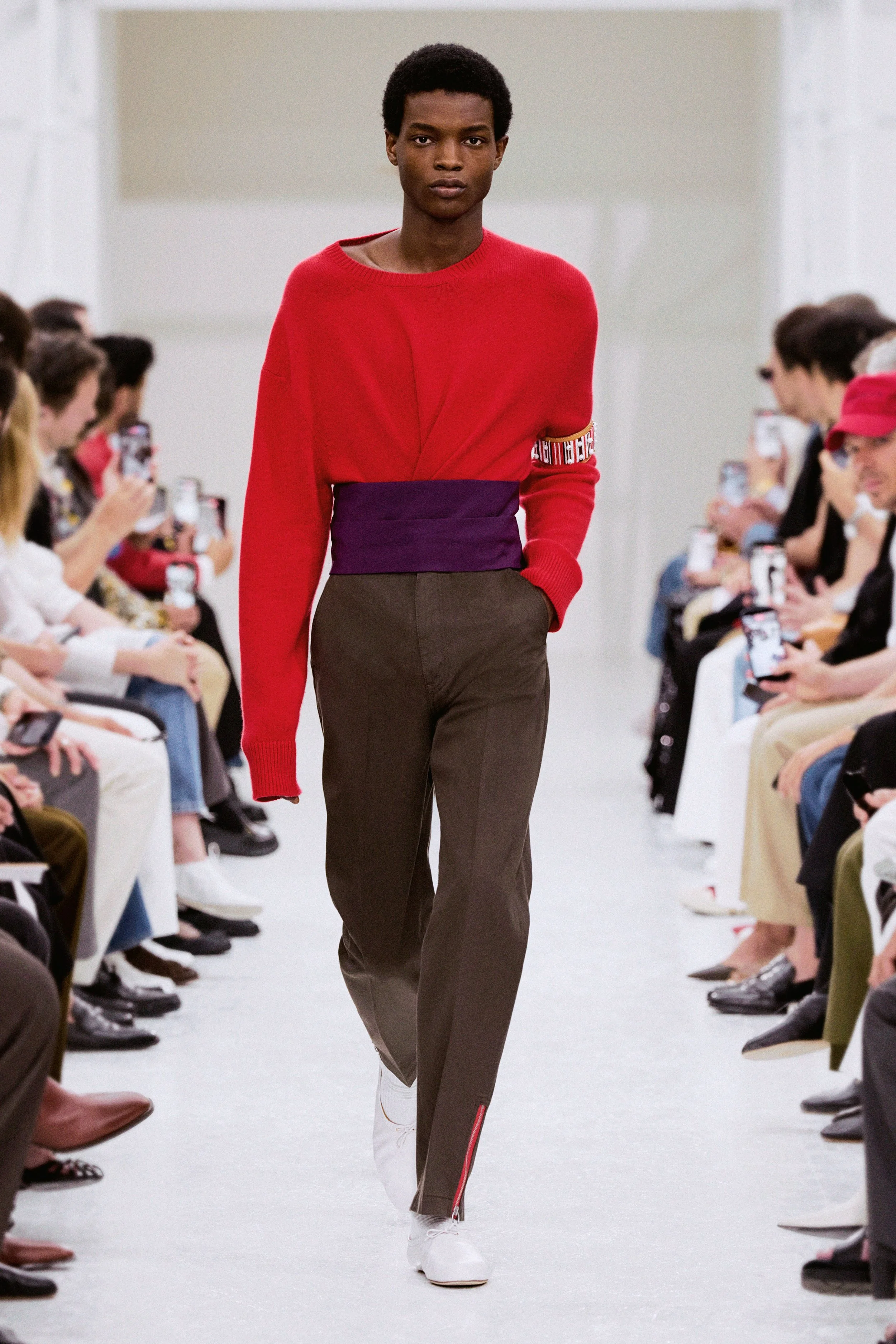
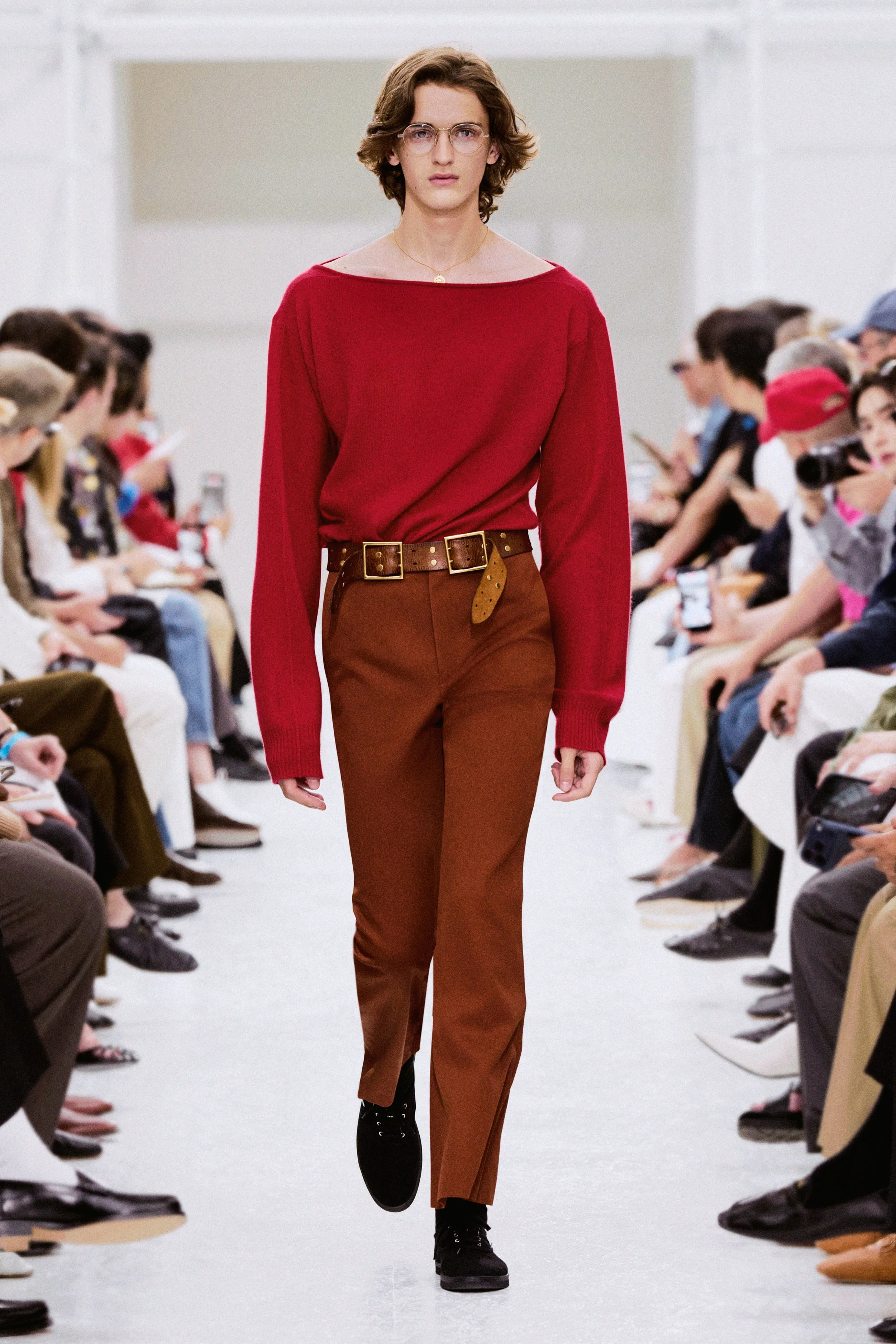
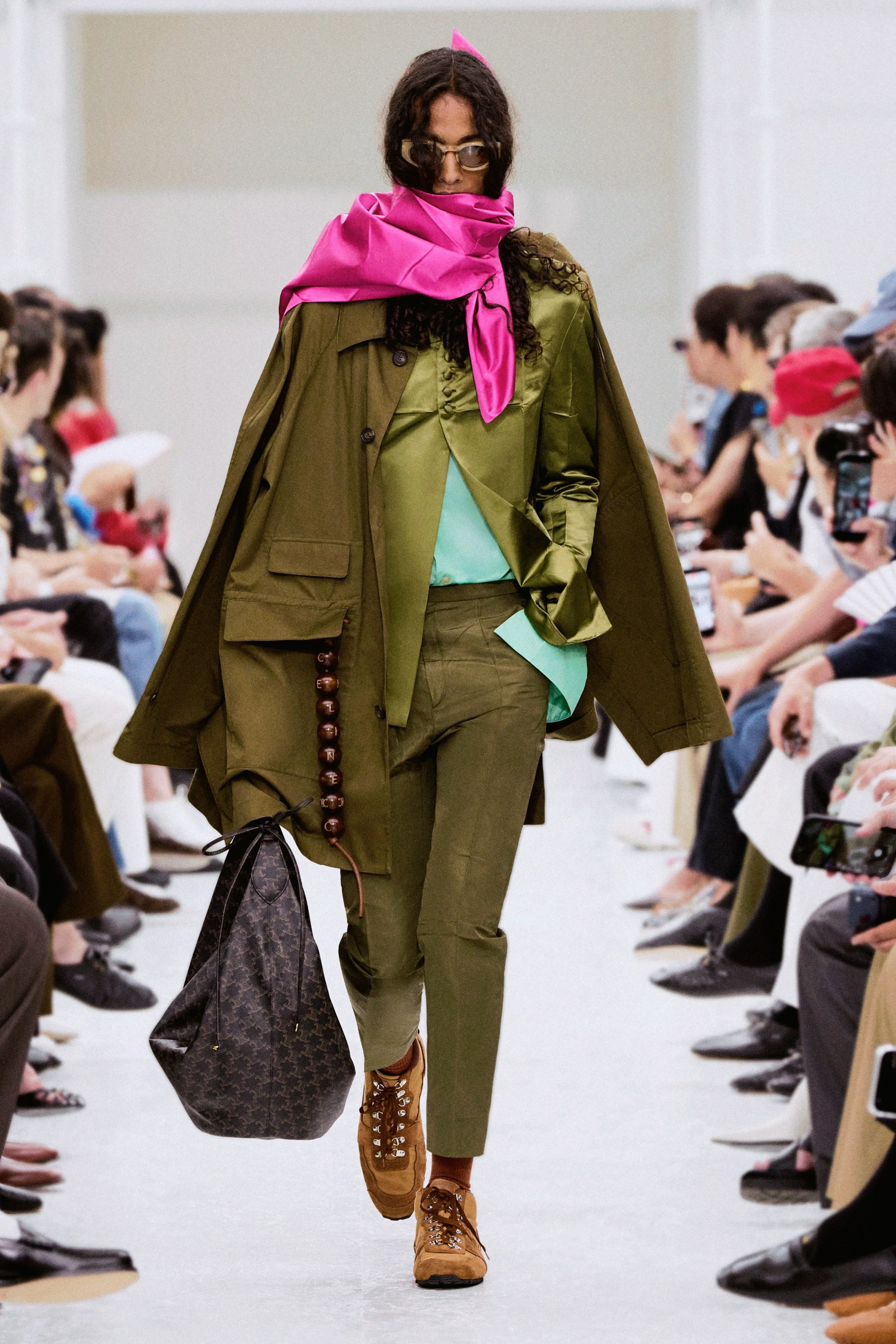
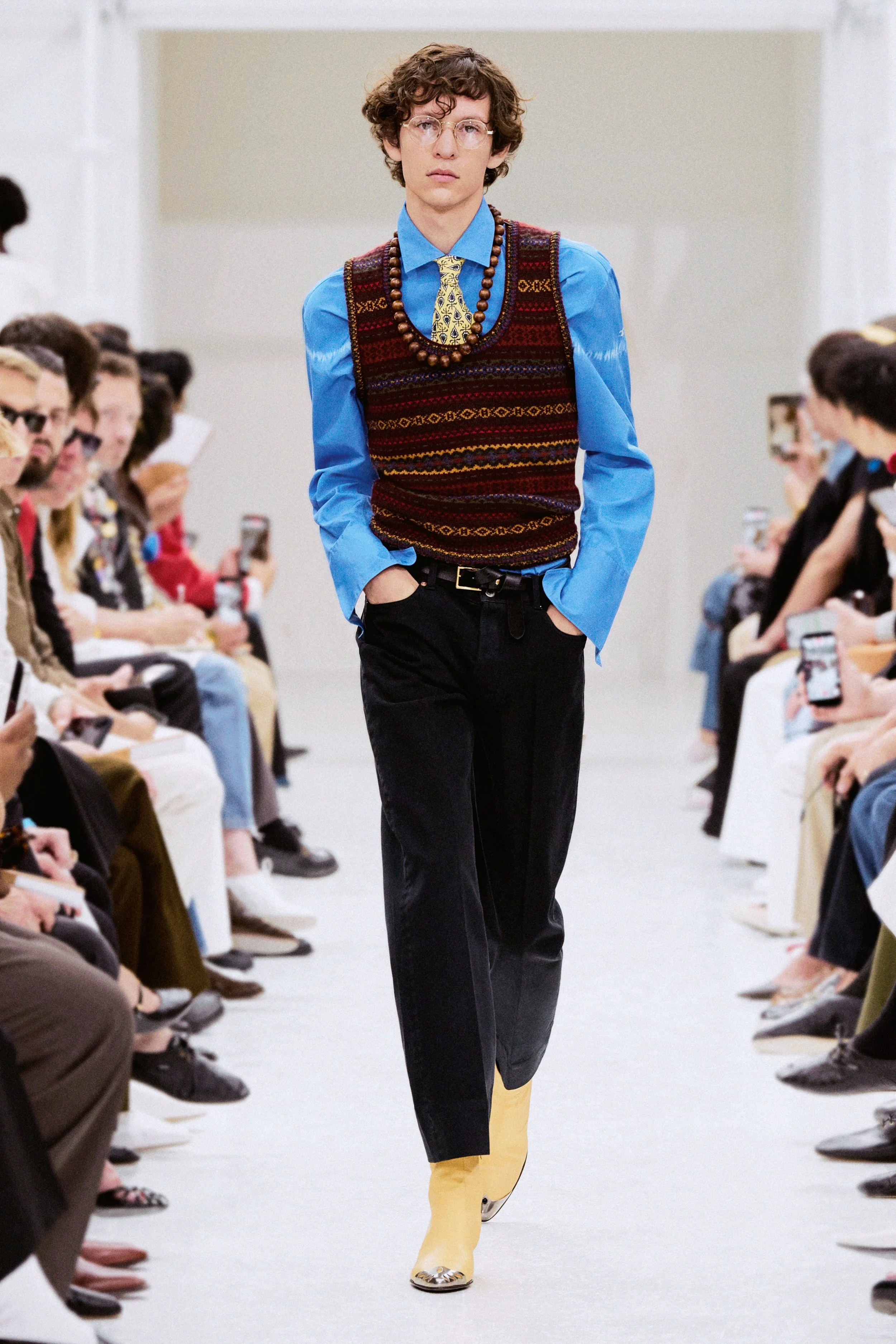
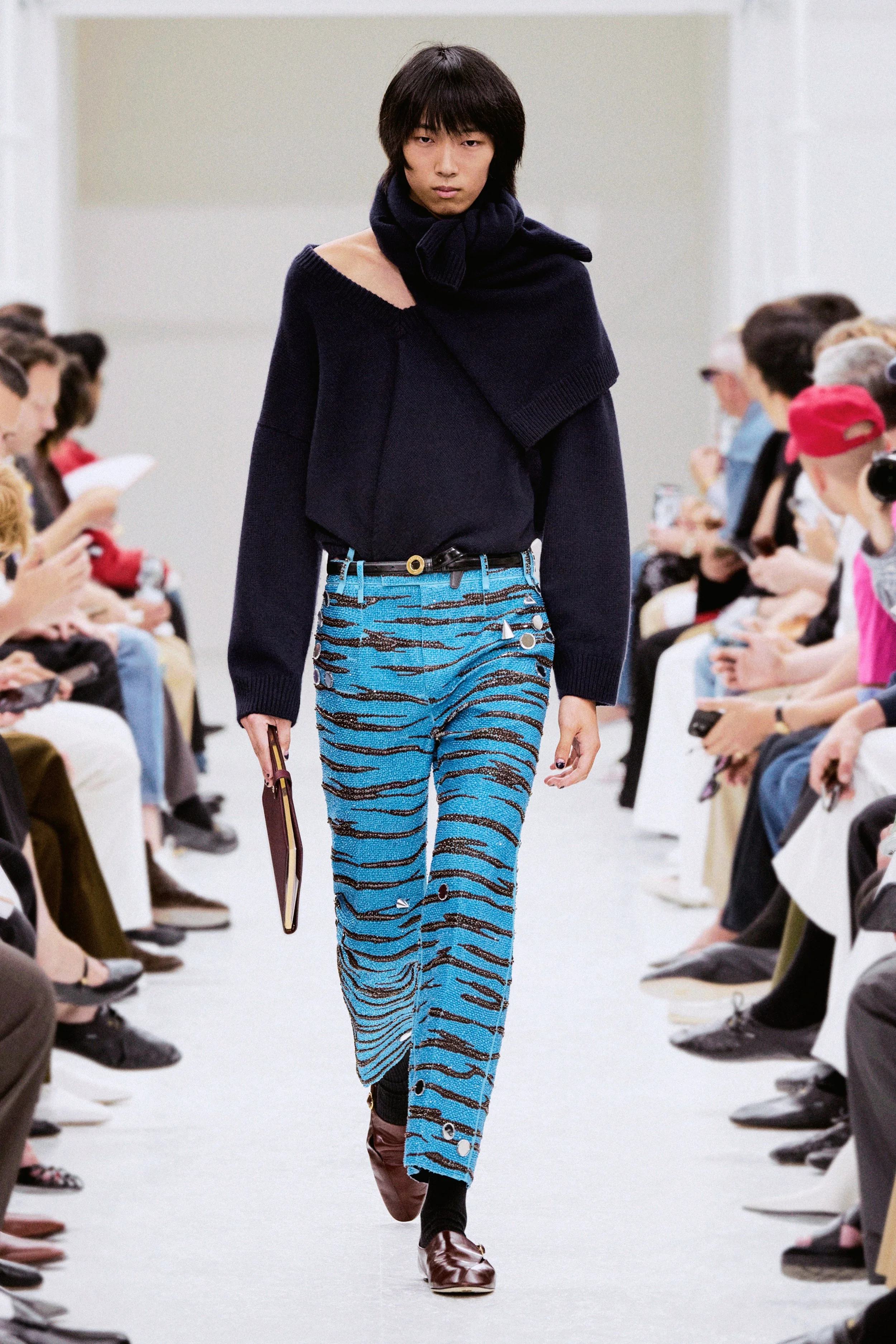
Colour remains one of Rider's strongest tools. Unexpected combinations feel instinctive. A bright red knit sweater tucked in a deep purple cummerbund. A bright blue shirt with a pale-yellow tie. A khaki parka covered a mint shirt and was topped with a pink satin scarf, tied around the neck. The use of pattern seemed to evolve from a similarly idiosyncratic space. A pair of bedazzled blue tiger-print jeans is adorned with crystals and mirrors. The Celine man doesn't take himself too seriously, thank god!

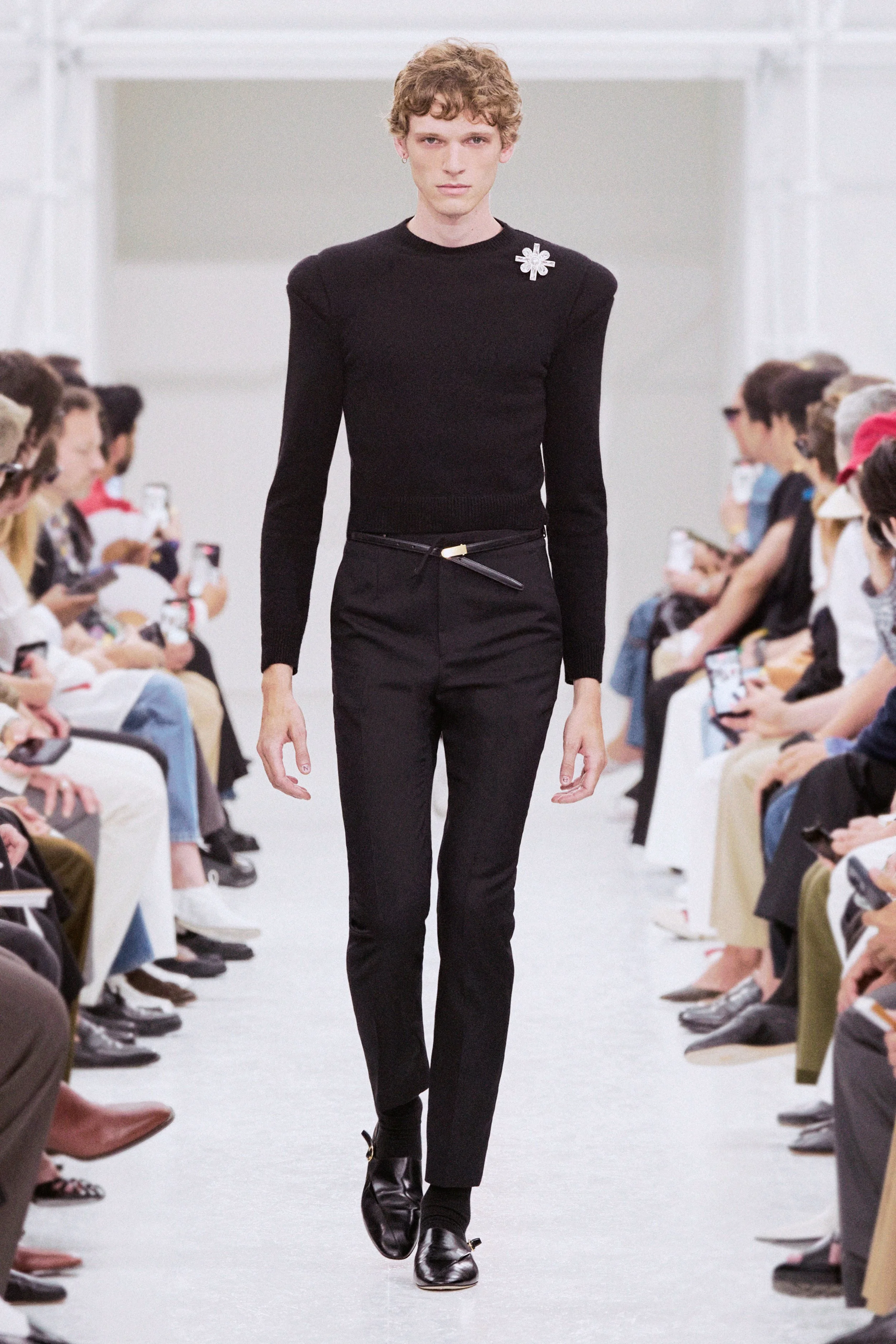
Rider’s design pedigree showed in Nicolas Ghesquière’s reference – both the designer’s admitted design crush and first employer in Paris. Traces of that appreciation emerge in the slightly off proportions and gentle oddness introduced into otherwise restrained silhouettes. The clothes remain close to the body, but pop subtly at the shoulder or jut out at the collar.

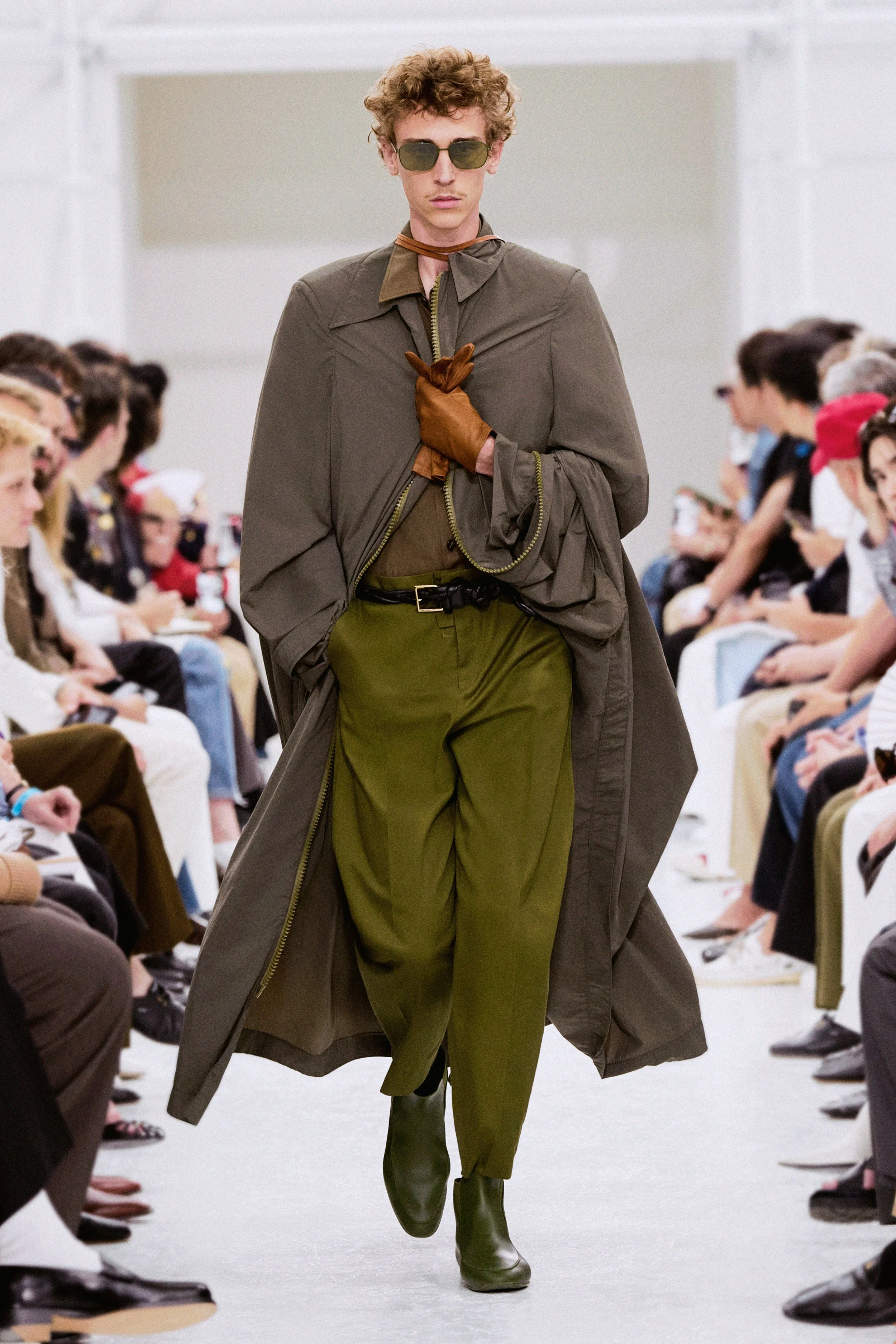
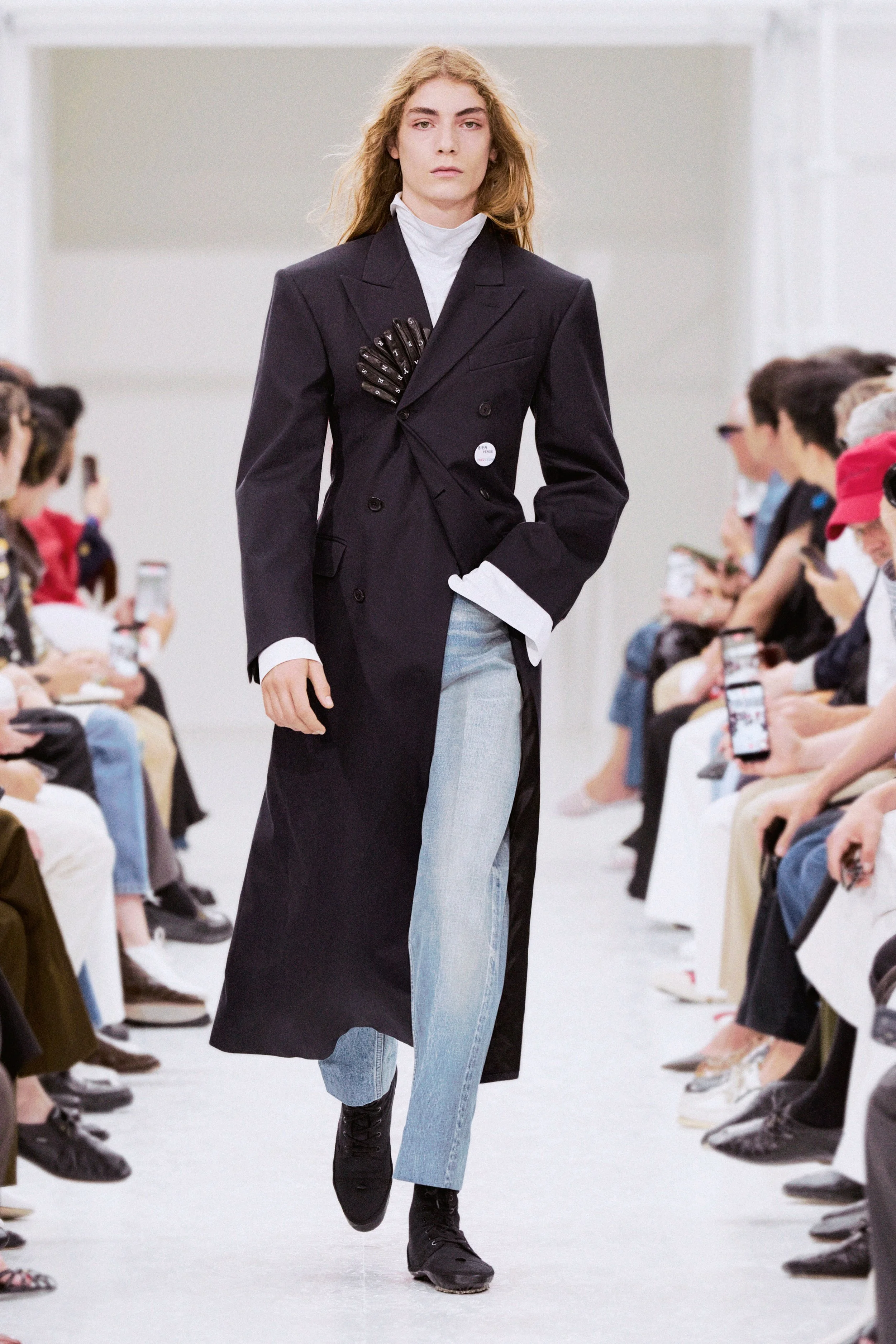
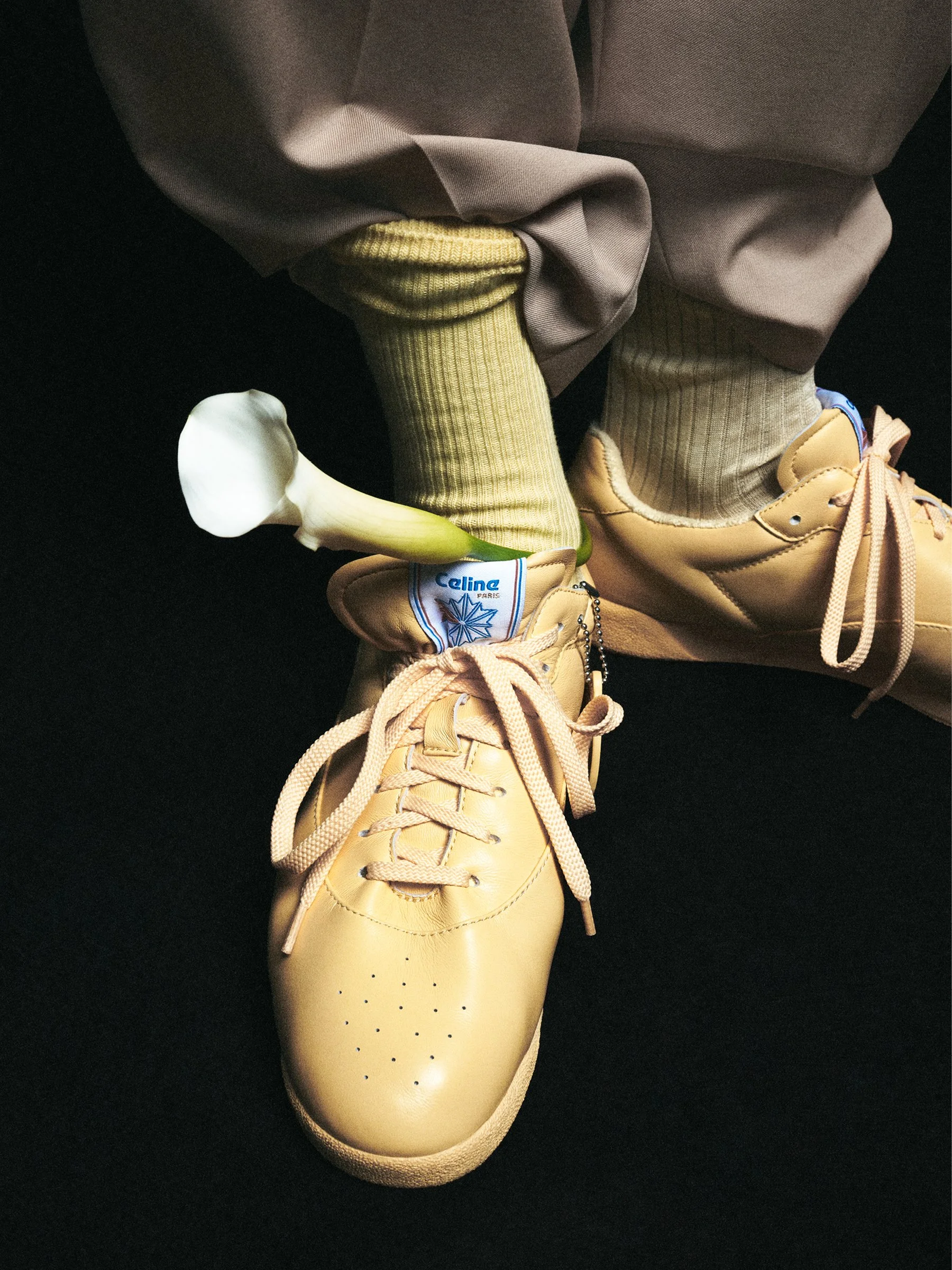
Accessories are displaced with intention. Gloves hang from the lapel of a camel jacket rather than covering hands, becoming accessories to the accessories themselves. These subtle acts of styling inject personality without feeling forced, suggesting garments that have been lived in rather than meticulously assembled.

At its centre is a palpable sense of joy. These are not clothes designed for a single season or a single moment, but garments destined for lifelong partnership.


Words by Pedro Vasconcelos

CAMIEL FORTGENS SS27

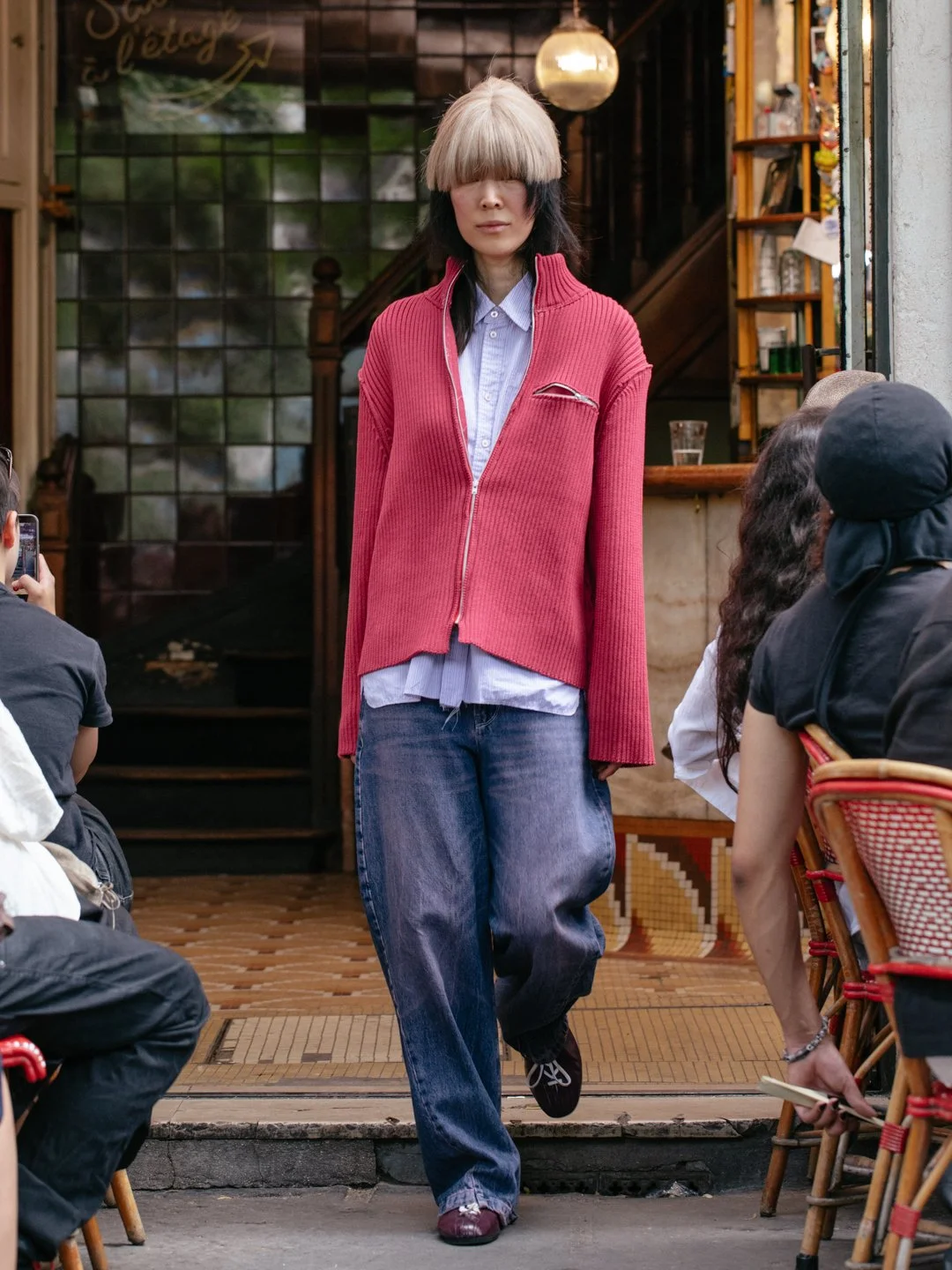
During Spring/Summer 2026, Amsterdam-born label Camiel Fortgens, established by its namesake Dutch fashion designer, explored the Americana aesthetic with a retro feel. For SS27, the brand then turned its focus to the Parisian lifestyle, using its daily archetypes as a source of inspiration.

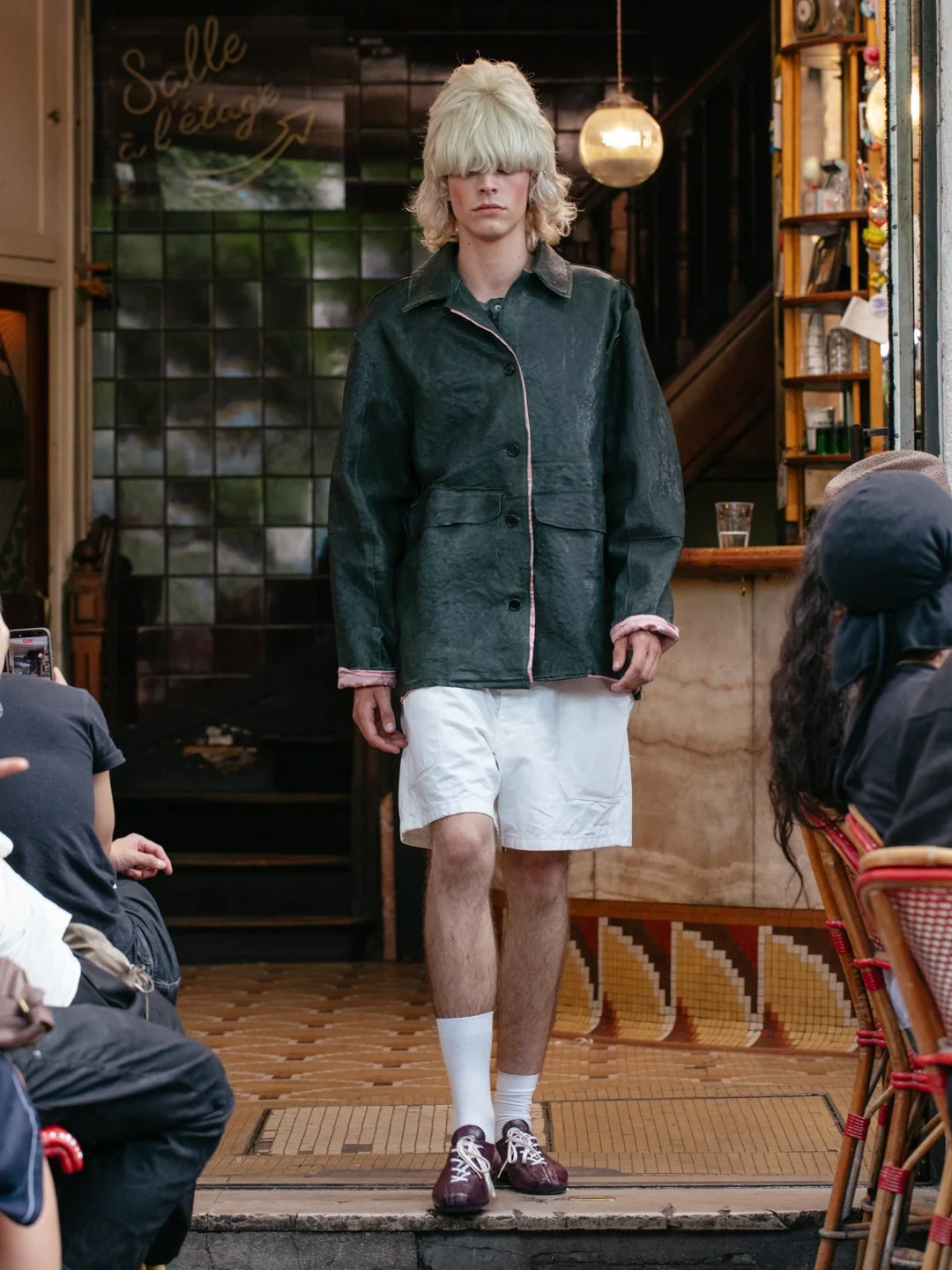
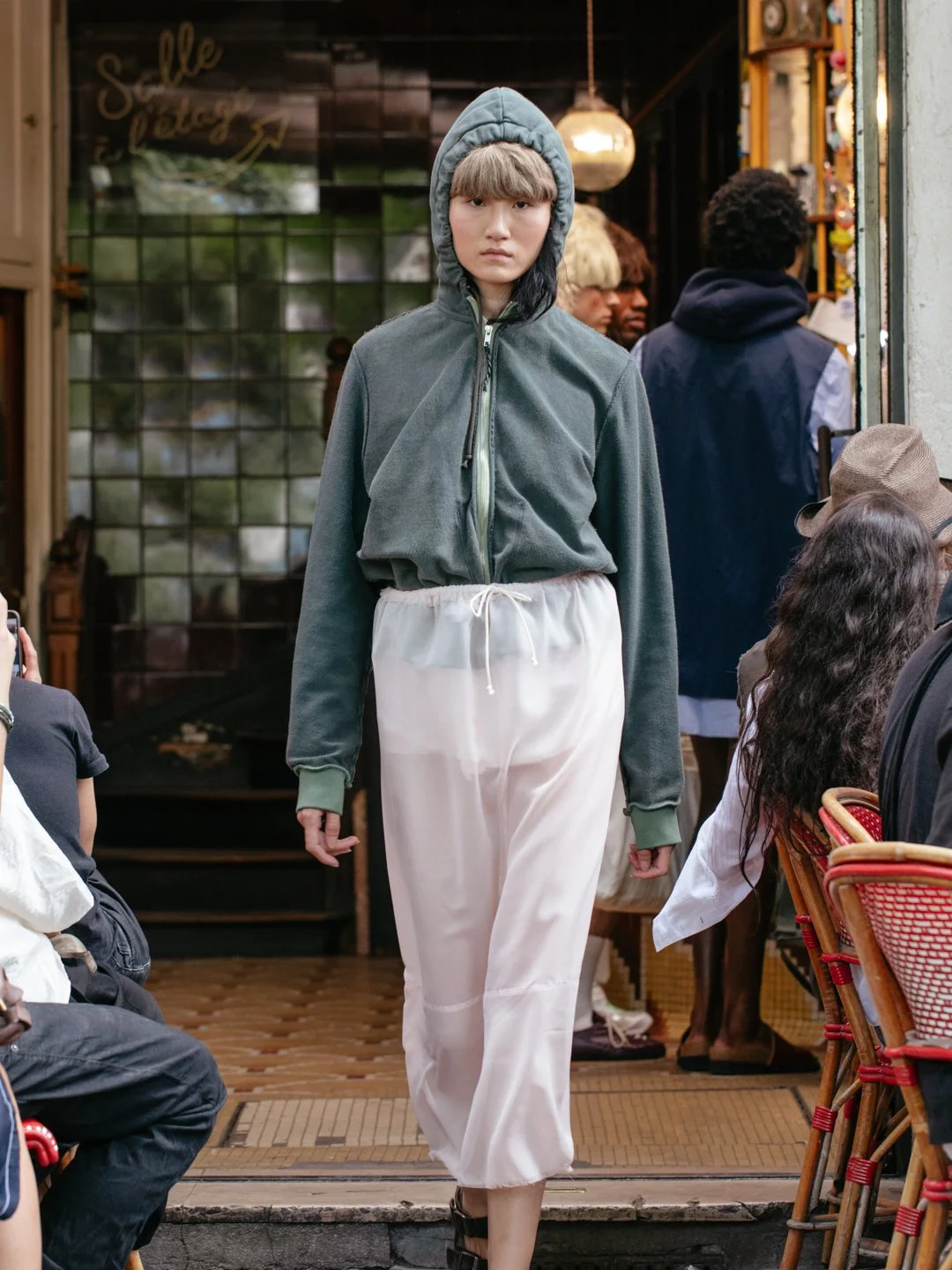
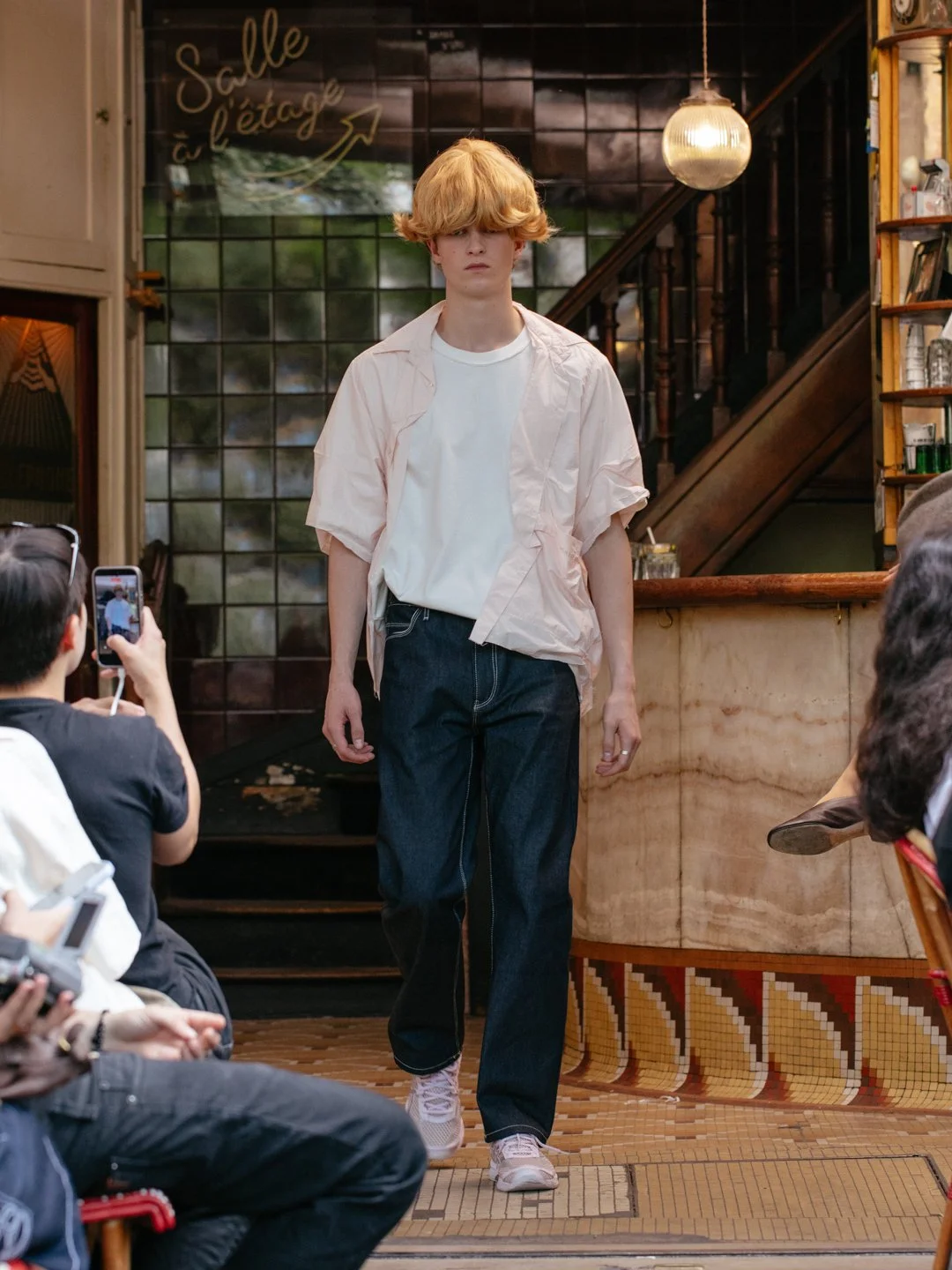
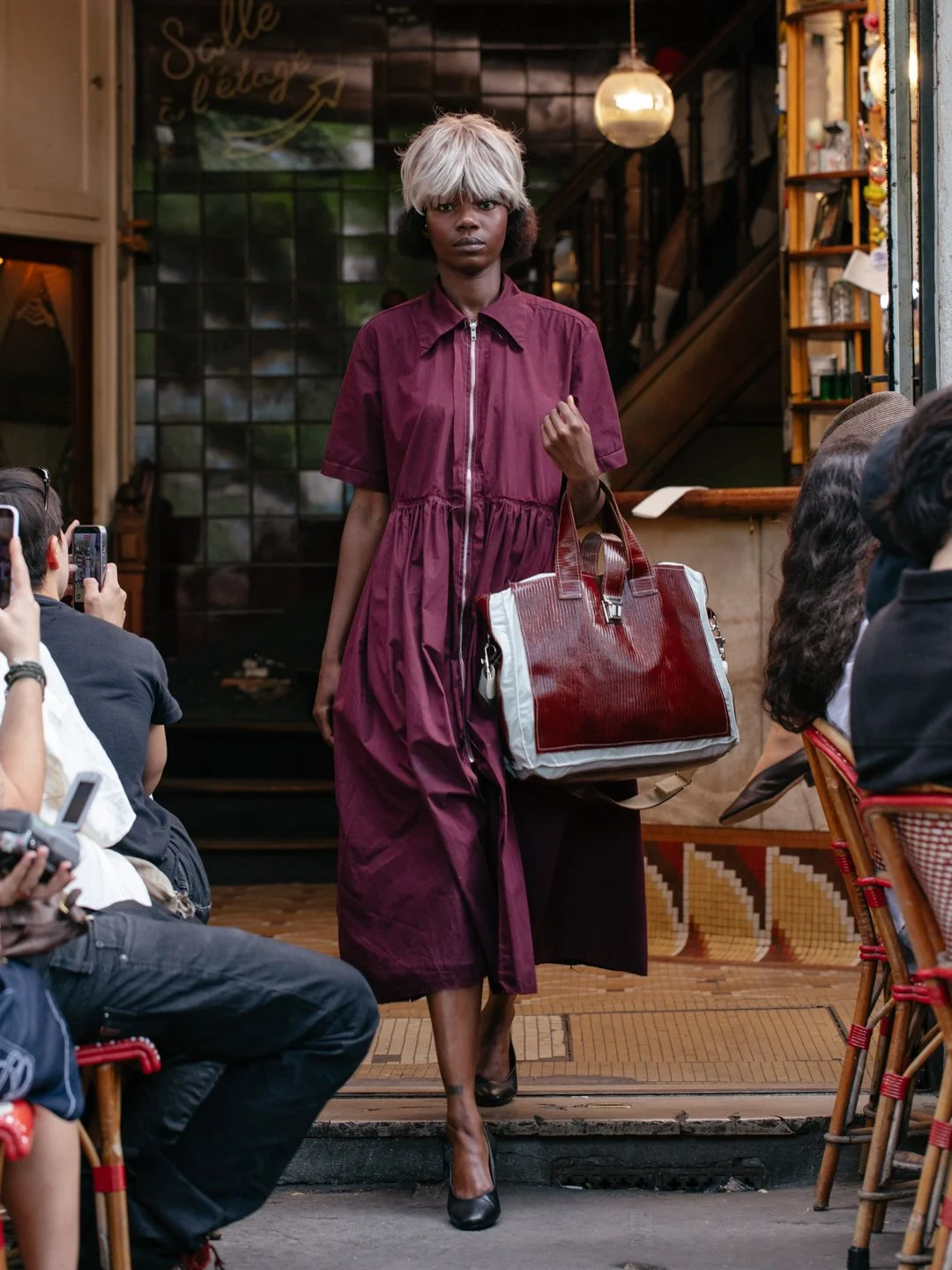
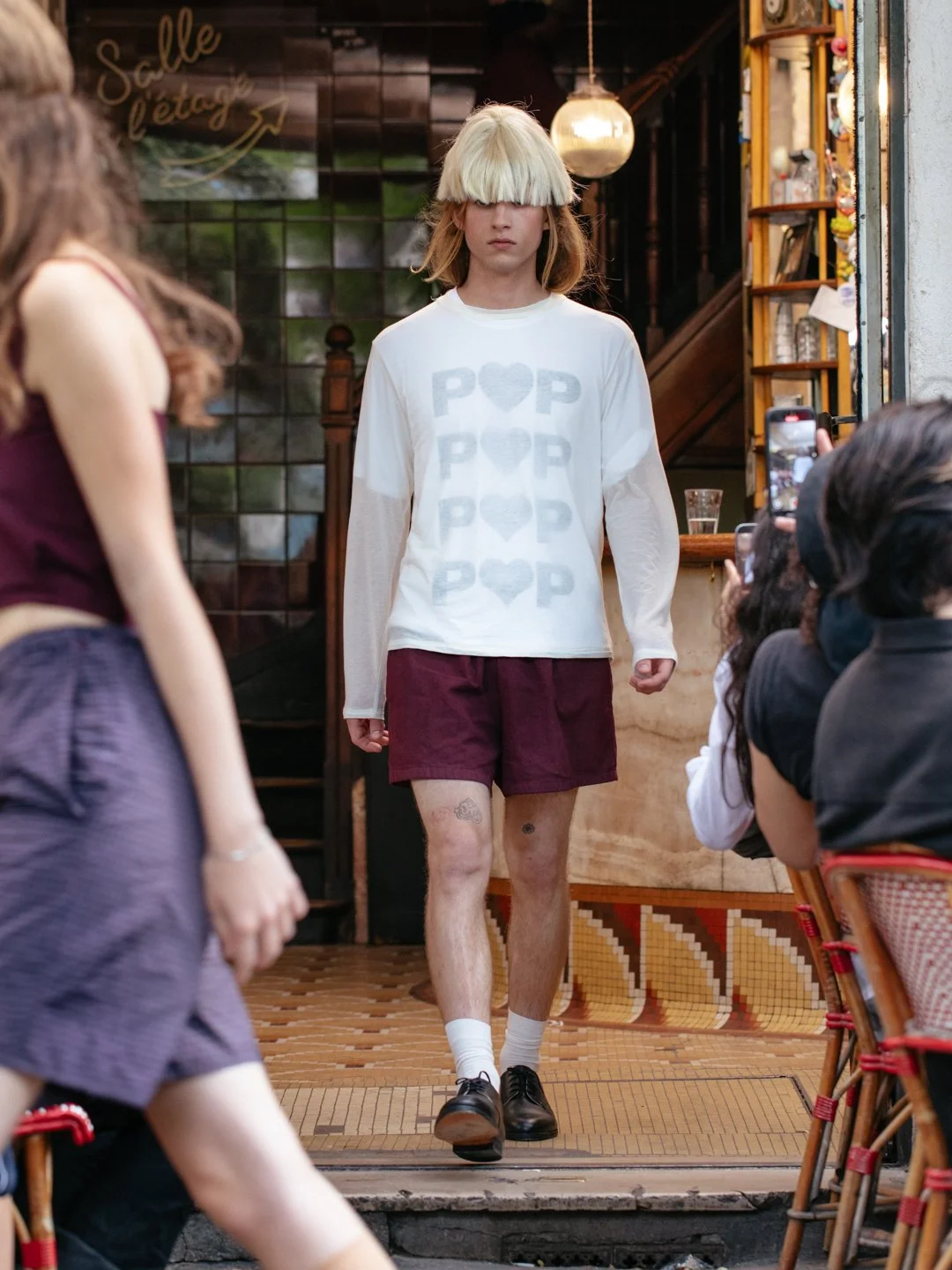
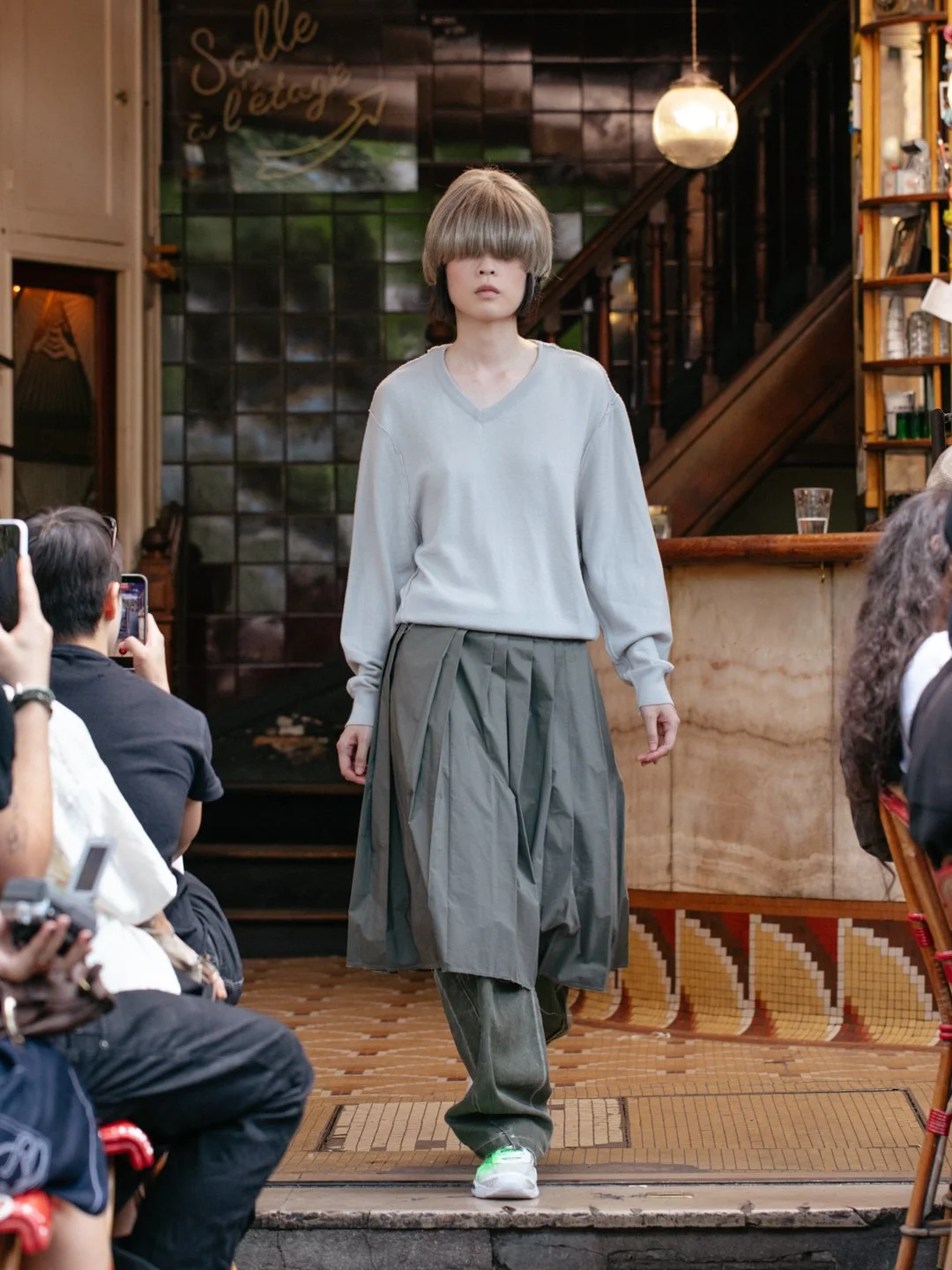
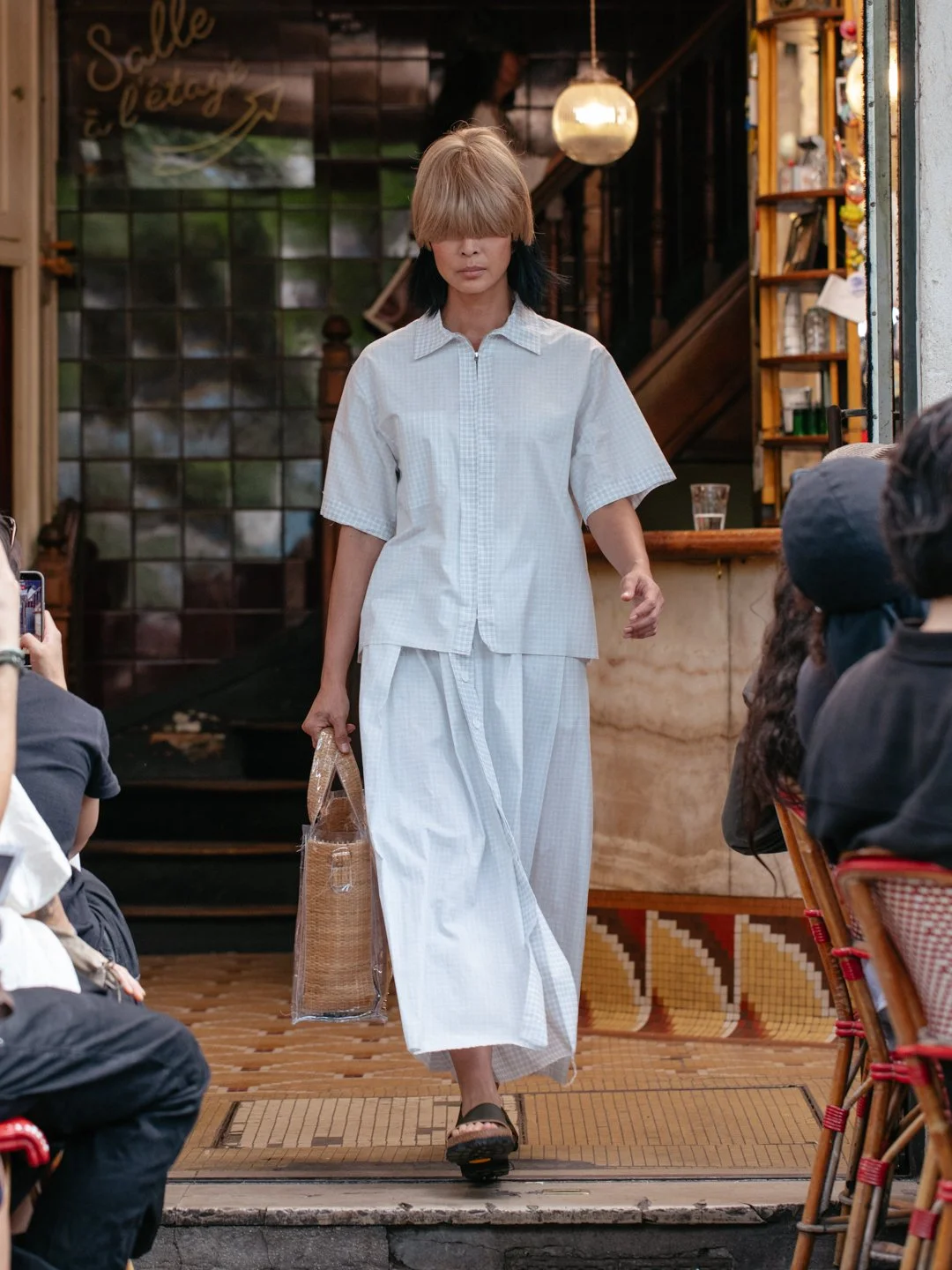
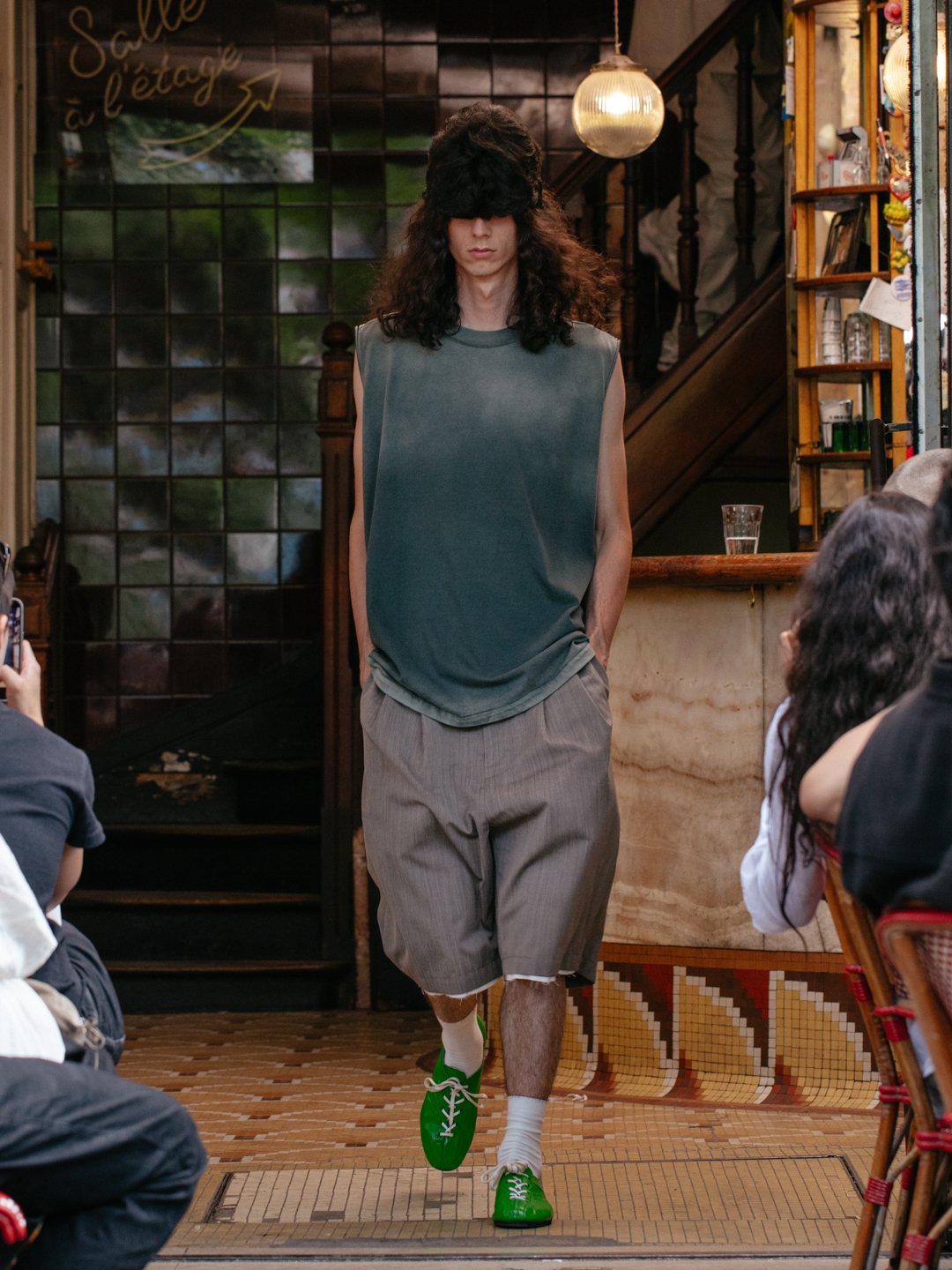
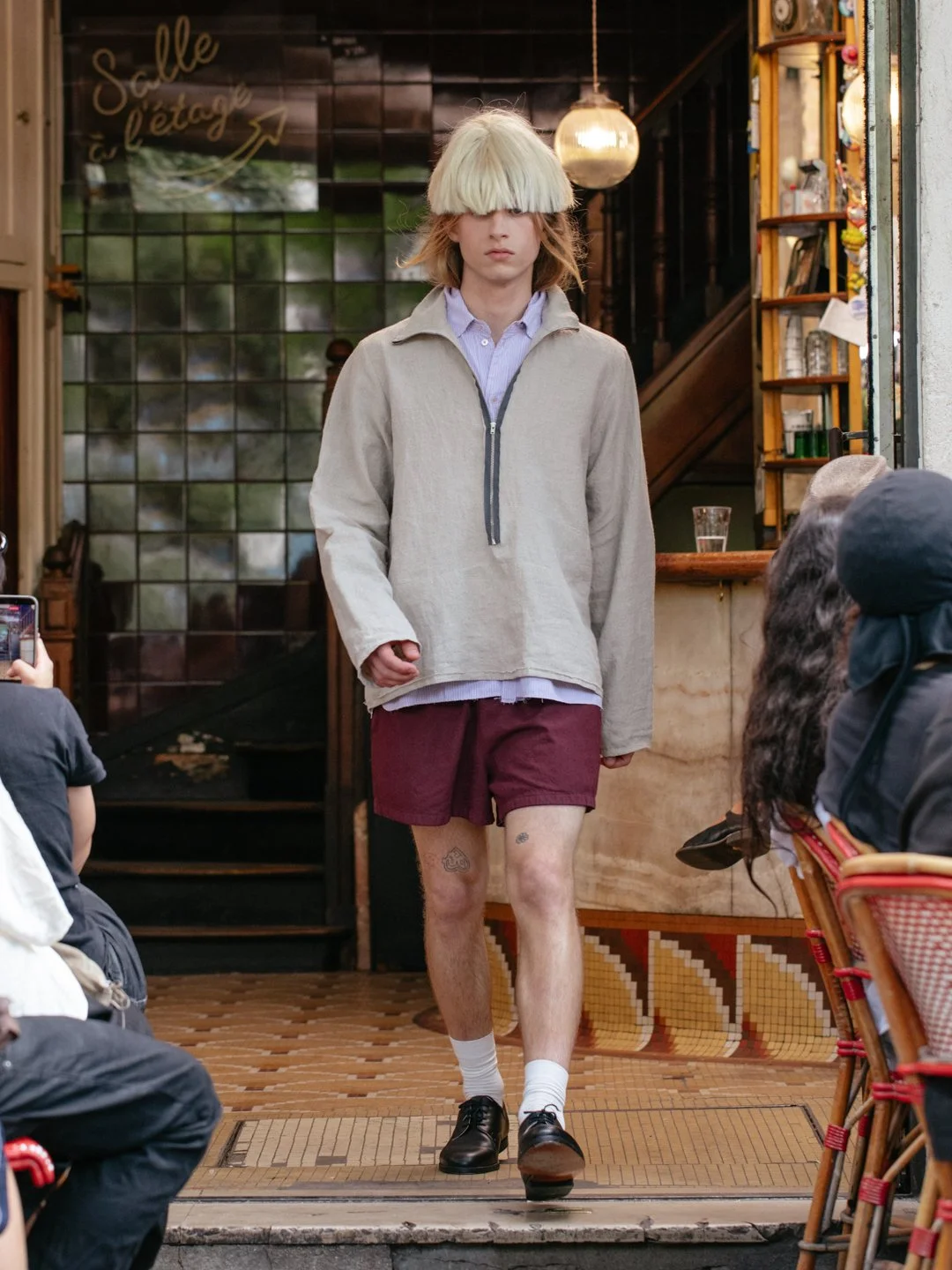
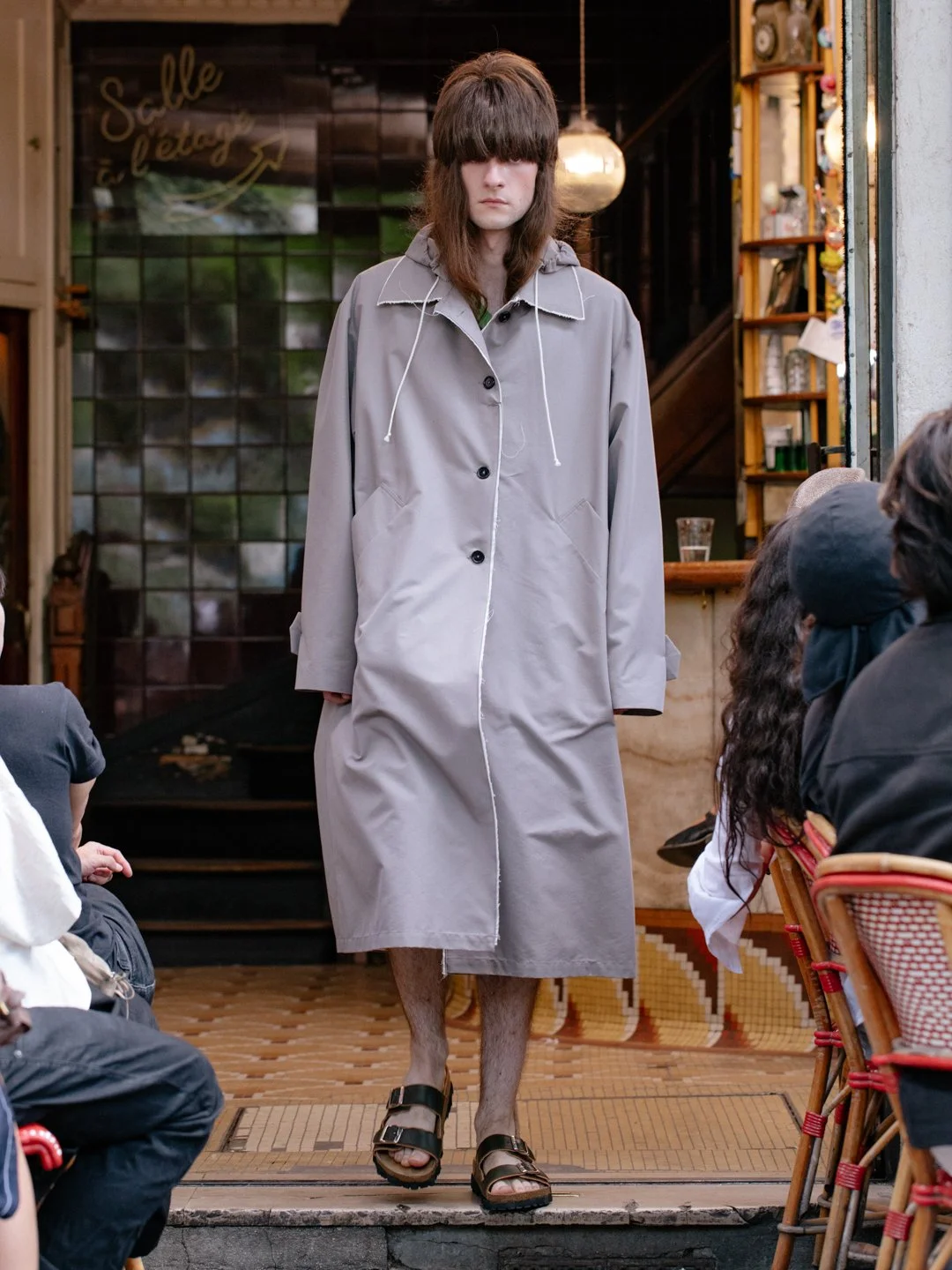
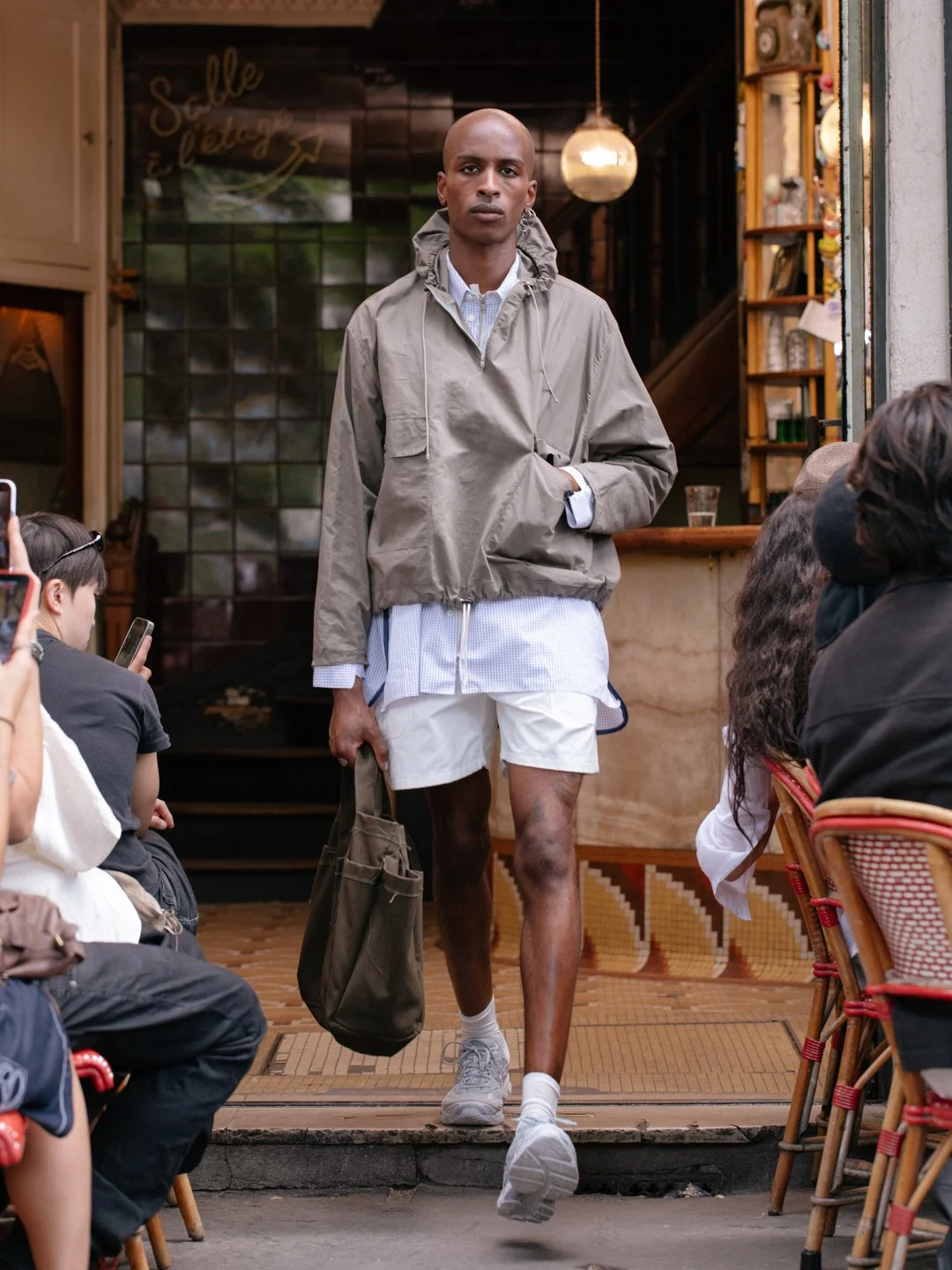
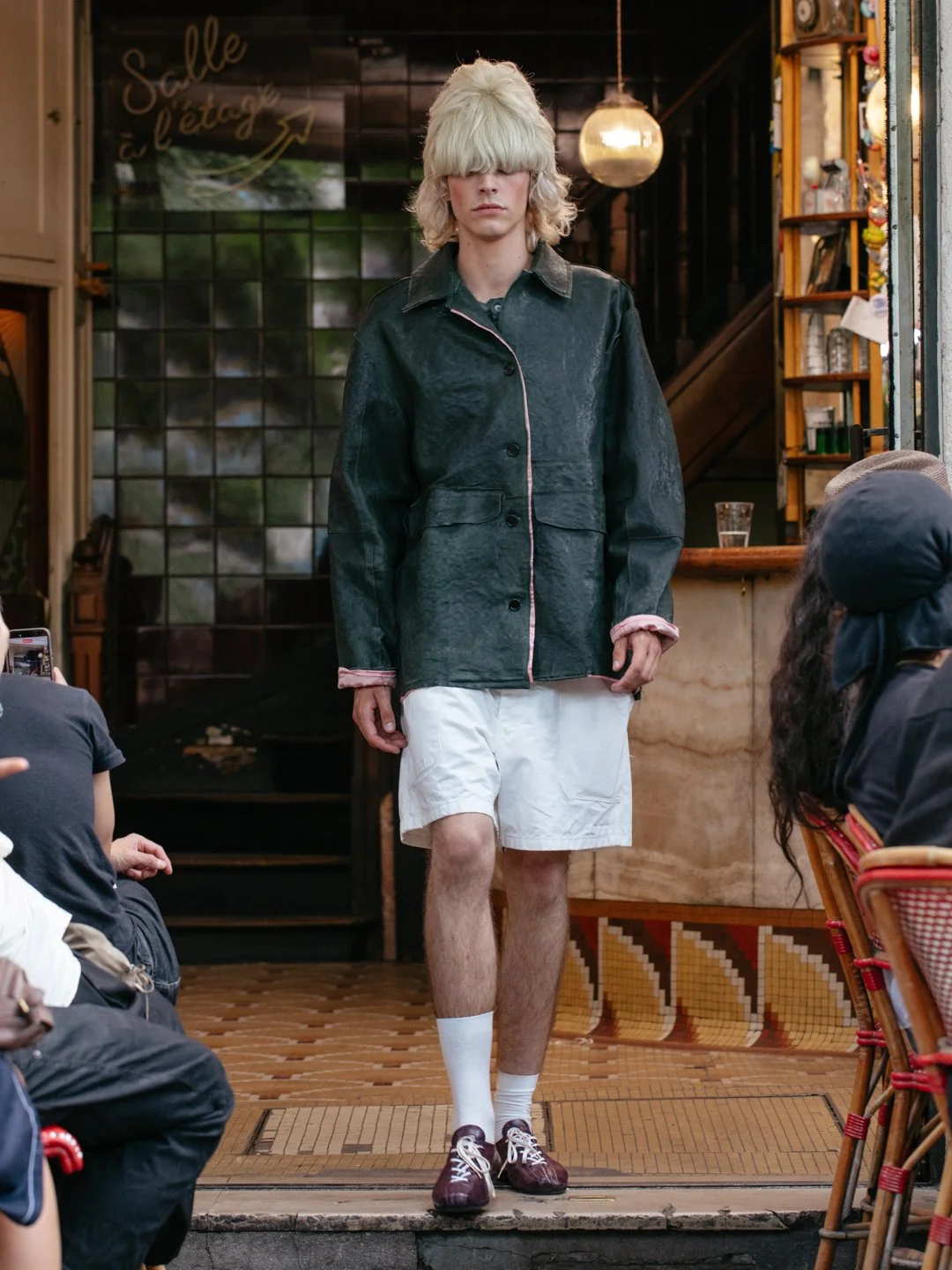
Not by accident, the collection presentation began on the terrace of a classic French café and bistro in Paris and progressed with the models, all of whom wore clothes that blended into the cosmopolitan scenery, as they integrated into the public space among invitees and passers-by.

The above-mentioned intention centred around Fortgens' individual and business's evolving ethos: a reinterpretation of day-to-day, ready-to-wear garments designed with a sense of handwork as “perfectly imperfect,” unpolished pieces.

Following that, SS27 intentionally exposed usually hidden details related to garment construction and sewing. The white handmade stitching on the waist of denim trousers, for example, was chaotic and purposefully contrasted with the darker fabric. Textured linings merged onto button-downs and escaped through the edges of materials. Hemlines were raw and undone, and patterns and prints adorned the inside of long t-shirts, worn completely flipped.

With an innate sense of utilitarianism and practicality, this time mostly drawn from outdoor apparel and borrowed from rural and farming attire, trousers in linen and overall looser forms become comfortable enough for the everyday closet.

Faded and washed colours, green, pink, and burgundy hues in particular, rule throughout the collection, aiming to highlight the idea of treasured items that change, adapt, and stand the test of time, a common theme across a range of men’s labels this season.

Looking up, the fringed, straight-haired wigs mostly caught the eye, but a double take showed that the footwear in the show was also worth praise. From slim, bowling-style lace-up trainers in burgundy and bright green to the leather-like slide flip-flops with cork soles, Fortgens made summer shoe shopping – as well as dressing – an easy, enjoyable task.


Words by Ketlyn Araujo